

Welcome to iGrow News, Your Source for the World of Indoor Vertical Farming

Freight Farms Is Rearchitecting The Concept of Vertical Farming
Freight Farms helped invent the now-thriving farm-in-a-container market, where companies build vertical farms inside old shipping containers to grow pesticide-free produce throughout the year
Freight Farms helped invent the now-thriving farm-in-a-container market, where companies build vertical farms inside old shipping containers to grow pesticide-free produce throughout the year. But now that vertical farming companies are sprouting up almost as fast as the leafy greens they grow, the Boston, MA-based startup wants to completely rebuild the shipping container concept.
Its new product, The Greenery, which the company just announced today, isn’t a reiteration of its existing Leafy Green Machine (LGM). Instead, it’s a complete re-imagining of the shipping container concept that enables just about anyone to farm a large variety of crops. Or in the words of Freight Farms cofounder Brad McNamara, they’re “rearchitecting the whole vertical farm concept.”
To do that, McNamara and fellow cofounder Jon Friedman kept the foundational basics in play: farming still takes place inside a 40-foot shipping container and still involves the usual mix of hydroponics, LEDs, and software to control things like plant nutrients, temperature, and light levels. But inside the walls of that 40-foot container, Freight Farms has introduced some major changes.
One of the biggest tweaks is also one of the simplest: the inclusion of a racking system that’s actually movable. Since its founding in 2010, Freight Farms has used stainless steel vertical towers arranged in rows inside the shipping containers for growing. (SF-based Plenty employs a similar structure to its farms.) While this allows for much more growing space than in most vertical farms — which actually use horizontal rows of shelves — McNamara and Friedman saw a way to make the space inside the container even more productive by enabling customization.
With The Greenery, both the grow racks and the panels that hold the LEDs are now movable, so farmers can customize the layout inside the container based on the type and number of plants they grow. “In order to accommodate a larger variety of crops, rows can expand and contract,” Friedman explains of these mobile racks. For example, some plants are rooted, some grow on vines, and some simply need more space (e.g., tomatoes). Rather than having to grow plants according to what the space inside a container dictates, Greenery allows farmers to change the space based on what they need to grow.
A big impact on growth and yield is lights — that is, LEDs. But more LED power equals more electricity, which is financially constraining on companies and just all-around bad for sustainability. “Indoor agriculture has always struggled because you’re replacing the free resource of sun with lighting,” McNamara explains.
With The Greenery, Freight Farms addressed the lighting issue by redesigning the ropes of LEDs into panels that, according to the company, triples access to light and keep light energy from being wasted. McNamara and Friedman explained to me that the new lighting design produces a light intensity that’s 3x more powerful than its predecessor (the LGM) but doesn’t incur a 3x energy increase.
Arguably, though, the biggest improvement Freight Farms has made with The Greenery isn’t any one piece of technology, but the decision to bring all the tech in-house and build it themselves.
The typical vertical farm takes various off-the-shelf technologies, such as sensors, lighting, and hydroponics, and strings them together. The result is a farm that runs off fairly siloed elements that weren’t necessarily built to “talk” to one another, which can lead to interoperability issues, higher costs, and more time spent making sure these various systems work together. By contrast, the pieces at work in The Greenery were built with interoperability in mind, which in theory at least means a more reliable system and better control over the whole operation. Freight Farms also says it’s easier to automate the farming process with all the tech in-house, thereby making it simpler for anyone to use.
“It’s a turnkey offering in that no matter where you are in the world you can just pick up the instructions and go,” says Friedman. And because of that ease and lower costs, more populations can reap the benefits of vertical farming, including underserved ones most in need of easier access to fresh food. “This platform allows us the opportunity to not only feed a demographic and teach them how to farm,” says McNamara.
And while this vertically integrated vertical farm is a fairly new concept, Freight Farms isn’t the only one trying its hand at the idea. Over in the UK, the Future Farming Hub is attempting a similar one-stop-shop indoor farm, though their project doesn’t officially kick off until April of 2019. Even so, I expect we’ll see more companies in future exploring and offering vertically integrated systems.
Freight Farms currently operates in over 15 countries, including the Everlane factory in Vietnam and a Wendy’s location in Guam. According to Friedman, The Greenery will sell initially for $104,000. The company, meanwhile, plans to expand into new markets, particularly around the non-profit sector in order to help individuals and companies give back to their communities by making it easier and faster to get healthy, locally grown food.

Ellepot Introducing New Paper For Organic Production
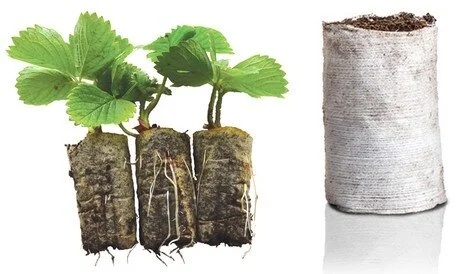
Ellepot has developed and patented a new technology for their Ellepot propagation papers, and the first product in a new line to come is Ellepot Organic 2.0
Ellepot has developed and patented a new technology for their Ellepot propagation papers, and the first product in a new line to come is Ellepot Organic 2.0.
New patented technology
The new propagation paper - Ellepot Organic 2.0 consist of 100% fully compostable and degradable materials. The new patented technology for the paper is the result of six years’ intense product development. A development process to ensure environmental compliance at every stage of the paper’s life cycle, including material selection, handling, testing, & degradation.
Certified and ideal for organic production
With a decomposition time of 6-8 weeks, the new Ellepot Organic 2.0 is ideal for producers of organic crops and crops with a shorter propagation time. The paper is made from wood fibers sourced from FSC certified forests and other controlled sources, and is furthermore approved by the Soil Association in UK. The new product is also approved as input for organic crops in Denmark, Sweden & Canada. Soil Association is one of the world’s leading and oldest certifiers for organic crops, assuring conformity to the highest standards of environmental and social responsibility. On a finishing note, Ellepot have applied to have the Ellepot Organic 2.0 certified according to the “Home Compost” and “Biodegradable in Soil” certifications.
Ellepot Organic 2.0
Based on renewable wood fibers from FSC certified forests and other controlled sources
100% degradable in soil
Certified and approved for organic production (UK, Sweden, Canada & Denmark)
Great root development resulting in faster growth & healthier plants
Suitable for all plant propagation, field planting, & farming of organic produce.
Through the past 6 years of developing the Ellepot Organic 2.0 product, Ellepot have learned what it takes to achieve the best results. Please speak with your technical Ellepot representative about water management, soil mixture, and propagation trays. For further information, samples or testing, please contact Ellepot or its partners.
Head office can be reached at +45 76147676 or visit our website: www.ellepot.com.
SOUTH KOREA: Urban Farming Bonds Communities In Seoul
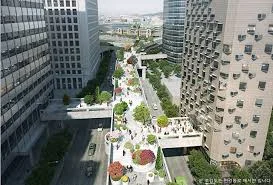
Tucked away in a dark, damp corner of an underground parking lot in Nowon-gu, northeastern Seoul, mushrooms mature under fluorescent lights. The vertical farm is tended by residents who live right above it, in Sanggye Hyundai Apartment Complex.
Residents at Nowon Energy Zero housing complex in Nowon-gu, northeastern Seoul, tend small box gardens earlier this year. / Courtesy of Nowon-gu Office
By Lee Suh-yoon
Tucked away in a dark, damp corner of an underground parking lot in Nowon-gu, northeastern Seoul, mushrooms mature under fluorescent lights.
The vertical farm is tended by residents who live right above it, in Sanggye Hyundai Apartment Complex.
Together, the residents grow, share and sell the mushrooms, donating the profits to local charities and welfare centers.
A community mushroom farm is located under Sanggye Hyundai Apartment Complex in Nowon-gu, northeastern Seoul. / Courtesy of Nowon-gu Office
About five kilometers south, residents of Nowon Energy Zero housing complex, known for its energy-efficient apartment and villa designs, come together to tend small box gardens.
"People who live in the same apartment complexes don't really talk to each other these days," Park Geun-gu, an official from Nowon-gu Office, told The Korea Times recently. "Apart from providing safe locally grown produce, these urban farms help residents get to know each other better, strengthening community bonds."
To create an urban farm in their leftover spaces, usually snuggled between close-knit buildings or on a roof, residents can easily apply for financial and professional support from their local government offices. The city government and district offices fund 80 percent to 100 percent of the initial installation fees of accepted projects.
Seoul is now home to a thriving network of community gardens. The number of urban farms increased six-fold in the last seven years, bringing the total area of such green spaces in Seoul to 170 hectares ― about the size of 238 football fields.
Most are located in patches between apartments or on the roofs of schools and government buildings.
"We refer to these participating groups as urban farming communities," said Lee Byung-hun, a city official in charge of the urban farm projects.
"The main focus of these projects is not supplying food; it's about the social experience the urban farms can bring to residents. We're also providing hands-on gardening experience and environmental education to children at urban farms set up next to kindergartens."
Last year, the city government started allocating a 5 million won ($4,400) annual budget to each district to solicit help from professionals who can give lectures and offer personalized gardening solutions ― ranging from raising soil productivity to using safe pesticides ― to urban farming communities.
Called "farm clinics," these classes are currently held at 4,000 urban farm sites across 19 districts in Seoul. Last month, the city government announced plans to extend the classes to 7,000 sites.
Districts that lie along the green belt, like Gangdong-gu and Gwangjin-gu, can spare more green space for these community farms.
The land, usually located at the foot of a mountain or riverside, is divided up among residents in an open lottery system at the beginning of each spring.
"The competition for a plot of land at these community farms is very high: we get 10 to 15 times more applicants than the number of plots available, depending on the location," a Gwangjin-gu official said. "Residents usually grow lettuce or peppers, and some of the produce is donated to local welfare centers."
A community farm near the Han River in Gangdong-gu, eastern Seoul / Courtesy of Gangdong-gu Office
A rooftop community garden in Seodaemun-gu, northwestern Seoul. / Courtesy of Seodaemun-gu Office
Residents listen to a gardening instructor at an urban farm in Gwangjin-gu, eastern Seoul. / Courtesy of Gwangjin-gu Office
"I Like To Call Us A Technology Partner Instead of Equipment Supplier"
Netled CEO Niko Kivioja was interviewed by the International Association of Vertical Farming, AVF, about the future of Netled and vertical farming. In the first part of the interview, Niko’s thoughts on Netled and the future of the company are shared
Niko Kivioja, Netled:
Netled CEO Niko Kivioja was interviewed by the International Association of Vertical Farming, AVF, about the future of Netled and vertical farming. In the first part of the interview, Niko’s thoughts on Netled and the future of the company are shared.
How did Netled come to regard vertical farming as the future of the company?
My father started organic tomato greenhouse production, one million kilograms annually, in 1987. That was our family business for 25 years until he retired. We started to develop more energy-efficient lighting for that greenhouse in 2005 and established Netled Oy in 2007 to facilitate the R&D. Focus in vertical farming started by joint development, a 500 sq m project to Robbe’s Lilla Trädgård in 2015.
We’ve been supplying technology already in 7 industrial type vertical farms scaling from 100 to 4500 sq m.
How do you select the technologies that you are currently using?
Our core team has 25 years of experience in commercial horticulture and CEA growing. We have learned from the best possible practices and technologies from these fields modified them to fit into vertical farming and topped that with our special design for vertical farms such as automation integration, LED lighting, racking design, climate design, and energy re-circulation as well as processing design, just to mention few.
We differ from many other suppliers by our own integrated design in all parts of our Vera Vertical Farm. There are no third-party suppliers of commercially available equipment. This allows us to have the best knowledge of the technology and take the technology risk to ourselves.
How is Netled’s own Vera the most advanced vertical farming system in the world?
Vera Vertical Farming System is an ecosystem-level combination of technology, services and IT, developed especially for industrial-scale vertical farming. This means that Vera is an all-inclusive technology with verified yields and technical performance, topped with maintenance and outsourced technology risk. I like to call us a technology partner instead of an equipment supplier because we are aiming at long-term partnerships instead of quick sales.
In addition to performance, we’ve also developed the best possible layout and material flow allowing optimized internal logistics expenses and labor costs. So, we are developing our system from the smallest detail to the overall general, making sure all parts are planned to serve the best possible performance.
Our automation level consists of the full-automatic growing environment, growing cycle for crop logistics (transplanting and spacing) and full-automatic harvesting, platform processing and replanting of crops. We have developed Vera OS, high-level software, for advanced care of crops, while our hardware-level automation is designed as robust and highly integrated. Vera OS has 53 parameters for static and dynamic care for each layer/crop, making a total of 318 parameters in each production unit. These parameters are packed into growing programs with the closest description being the recipe.
Standard growing recipes are supplied with the facility, but we also allow our clients to develop their own recipes. We develop constantly our own recipes, so our clients have the best possible recipe for their crops.
From this perspective, Vera constantly improves its yield and performance. The well-working recipe can also be copied to any Vera Vertical Farming System, because of our standardized, but easily scalable and modular technology with the same growing results. This allows Vera growers to make also additional income or focus purely on recipe development and sales.
We offer Vera in proof of concept scale with 96 sq m production area and industrial-scale modular system with 1000 to 7000 sq m production area in a single production unit.
The article is based on an interview conducted by the Association of Vertical Farming.
For more information:
Netled
+358 40 1585528
solutions@netled.fi
netled.fi
Publication date: Fri 3 Jan 2020

Indoor Ag-Con Announces May 2020 Conference Keynote Speaker Sneak Preview
CEOs From Aerofarms, 80 Acres Farms, Crop One Holdings Join Growing Speaker Lineup For May 18-20, 2020 Edition At Wynn Las Vegas
INDOOR AG-CON ANNOUNCES MAY 2020
CONFERENCE KEYNOTE SPEAKER SNEAK PREVIEW
CEOs From Aerofarms, 80 Acres Farms, Crop One Holdings Join Growing Speaker Lineup For May 18-20, 2020 Edition At Wynn Las Vegas
LAS VEGAS (January 2, 2020) -- Attendees will hear from CEOs, thought leaders and industry experts from today’s cutting edge farms and other innovative companies during Indoor Ag-Con, the premier crop-agnostic trade event for vertical and indoor farming, heading to the Wynn Las Vegas from May 18-20, 2020. Among them, keynote speakers David Rosenberg, CEO, Aerofarms; Mike Zelkind, CEO, 80 Acres Farms; and Sonia Lo, CEO, Crop One Holdings.
In addition to these top-notch keynotes – and others to be announced in the coming weeks -- the robust 2020 Conference Schedule will feature three core tracks – Business, Science | Technology, and Alternative Crops.
“We surveyed our past attendees to find out what they need from a conference and our 2020 format and track topics are in direct response to their feedback,” says Nancy Hallberg, co-owner of Indoor Ag-Con LLC along with other event industry veterans Brian Sullivan and Kris Sieradzki. “ The full program will offer a mix of panel presentations, fireside chats, roundtables and other programs that bring together different perspectives and steer clear of commercial pitches.”
Look for more information coming soon on these keynote speakers, their topics and other announcements about additional keynotes, featured speakers and the full conference schedule. In addition to the extensive educational component, attendees will also find more new initiatives and show highlights to explore during the May 2020 edition, including:
NEW LOCATION: WYNN LAS VEGAS
To deliver a top-quality meeting experience for its attendees, Indoor Ag-Con heads to Wynn Las Vegas for 2020. Wynn Resorts is the recipient of more Forbes Travel Guide Five Star Awards than any other independent hotel company in the world and was once again named the best resort in Nevada on Condé Nast Traveler’s 2019 “Gold List,” a title received for the 12th time.
NEW ASSOCIATION ALLIANCES
Indoor Ag-Con is forging new alliances with other events, industry associations and groups that will play an integral role in its marketing outreach and conference programming. Look for partnership announcements coming soon.
NEW START-UP SHOWCASE
Indoor Ag-Con will launch Start-Up Showcase, a dedicated showplace on the exhibition floor for early to mid-stage indoor farming and agtech companies seeking ways to meet investors, farmers/growers and other attendees. Available exclusively to new, first-time Indoor Ag-Con exhibitors, Start-Up Showcase is designed to offer these young companies a cost-effective, easily accessible gateway to indoor ag decision-makers.
EXPANDED EXHIBIT FLOOR & NETWORKING OPPORTUNITIES
In addition to the new Startup Showcase, the Indoor Ag-Con team is working to bring even more resources for farmers/growers to explore across all sectors – everything from government agencies to insurance/finance and other business services to IT solutions, lighting solutions, substrates, vertical farming solutions and much more. Attendees and exhibitors alike will also have even more networking opportunities with daily continental breakfast, coffee break and luncheon sessions, evening receptions, and more.
QUICK FACTS:
WHEN: Monday, May 18 – Wednesday, May 20, 2020 (Exhibits Open May 18-19)
WHERE: Wynn Las Vegas , 3131 Las Vegas Blvd, Las Vegas, NV 89101
INFO: For information on exhibiting or attending visit www.indoor.ag or email
hello@indoor.ag
ABOUT INDOOR AG-CON LLC
Founded in 2013, Indoor Ag-Con has emerged as the premier trade event for vertical farming | indoor agriculture, the practice of growing crops in indoor systems, using hydroponic, aquaponic and aeroponic techniques. Its events are crop-agnostic and touch all sectors of the business, covering produce, legal cannabis|hemp, alternate protein and non-food crops. In December 2018, three event industry professionals – Nancy Hallberg, Kris Sieradzki and Brian Sullivan – purchased Indoor Ag-Con LLC from Newbean Capital, so setting the stage for further expansion of the events globally. More information: https://indoor.ag
SPECIAL THANKS TO OUR GROWING ROSTER
OF MEDIA ALLIES & INDUSTRY PARTNERS
In addition, Indoor Ag-Con is proud
to be a member of the
Hemp Industries Association
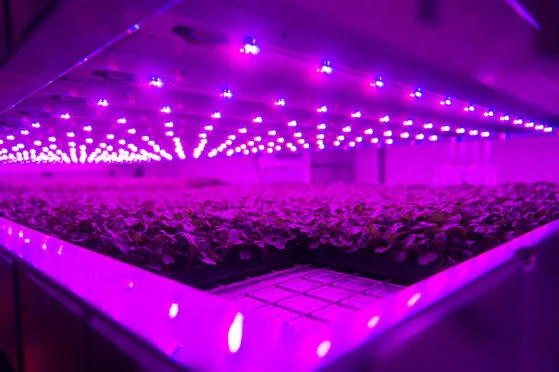
The James Hutton Institute In Invergowrie Has Submitted The First Stage of A £62 Million Masterplan To Build A New International Hub
The James Hutton Institute in Invergowrie has submitted the first stage of a £62 million masterplan to build a new international hub.
The James Hutton Institute in Invergowrie has submitted the first stage of a £62 million masterplan to build a new international hub.
The science facility is using money from the Tay Cities Deal to develop an International Barley Hub (IBH) and Advanced Plant Growth Centre (APGC) which backers believe will allow them to continue competing on the global stage.
The organization has submitted the masterplan to Perth and Kinross Council and it will go on public display for consultation on January 11 at The James Hutton Institute, from 10 am to 4 pm.
Philip Gane, capital projects manager at the Institute, hopes the development will be completed by the end of 2022, now that the initial submission has been filed.
He said: “We’re seeking approval for a site masterplan which shows how we’re going to develop the plan as a whole.“Then we will be submitting plans for individual buildings.
“We’re hoping work will start in the summer of 2020 and we’re hoping it will be completed by Christmas 2022.”
The International Barley Hub will provide the institute with a “unique platform” to translate its barley research into economic benefits for the food, brewing and whiskey industries, while also becoming an internationally recognized training and development center.
Last month, the director of research at the Scotch Whisky Research Institute, Professor James Brosnan, was appointed interim chairman of the IBH.
Prof Brosnan believes the hub provides an opportunity for the links of the barley supply chain to work together to ensure a long term, the resilient supply of a product that is vital for the whiskey industry.
He said: “As a whiskey scientist I know that without barley there is no Scotch whiskey.”
The APCG will help the institute develop their vertical farming technology.
Mr. Gane said: “We’re very excited. What we do has a global impact so we need to compete on the global stage.“This will make us much more able to compete on the world stage in terms of science.
”The organizations believes it could take up to seven years to have both projects fully operational which will see 211 people employed at the hubs, 87 of which will be new roles.
In addition to the new hubs, the masterplan also seeks to develop new farm buildings, demolish the existing buildings and refurbish other parts of the centre.
Groundworks, including new roads, footpaths, and a car park will also be developed.
The submission is the first substantive act in the multi-million Tay Cities Deal spending.

AppHarvest Founder Discusses Agriculture With U.N. Security Council
AppHarvest Founder & CEO Jonathan Webb spoke with members of the United Nations Security Council over the weekend about the benefits of controlled-environment agriculture.
The United Nations Security Council's visit to Kentucky included dinner at the Governor's Mansion. Shown here are business executive Joe Craft, U.S. Ambassador to the United Nations Kelly Craft, AppHarvest Founder & CEO Jonathan Webb, Kentucky Gov. Andy Beshear and Kentucky First Lady Britainy Beshear.
AppHarvest Founder & CEO Jonathan Webb spoke with members of the United Nations Security Council over the weekend about the benefits of controlled-environment agriculture. The practice is key to solving the looming crisis noted in United Nations studies that found we will need to feed at least 50% more people by 2050.
Kentuckian Kelly Craft, who was appointed the U.S. Ambassador to the United Nations earlier this year, organized the trip to Kentucky, which showcased development in Middle America. Webb described AppHarvest's plans to locate a series of indoor farms across Appalachia to improve Americans' access to fresh fruits and vegetables. The first such facility, which will span 2.76 million square feet, is under construction in Morehead, Ky., and will open in the second half of next year.
Attendees included U.N. Security Council representatives from the United Kingdom, China, Russia, Vietnam and Indonesia. Ambassador Craft remarked how the group "saw firsthand how innovation, aspiration, and investing in people can fuel lasting, positive change."
Beyond the panel discussion, the group joined newly elected Gov. Andy Beshear for dinner at the Governor's Mansion on Friday night.
Construction Rapidly Progressing in Morehead
Construction continues on AppHarvest's controlled-environment agriculture facility in Morehead, Ky., which will open in the second half of 2020 and create 285 jobs.
Nearly 20 acres of the 60-acre structure are already under glass with work now starting on walls for remaining parts of the facility.
By starting the company from within Appalachia, AppHarvest can reach nearly 70% of Americans in just a day's drive, reducing diesel use in transportation by 80% compared to foreign imports

Florida: Meet The Brick Street Farms Cultivation Hub!
The Cultivation Hub will house a 2 story 6,500 Sq mixed-use space. In The Hub, we'll be serving coffee, beer, wine, and you'll be able to sit and enjoy healthy grab-n-go food options from our 1,800 Sq farm-to-table market
You wanted more greens, and baby you're going to get more greens! Meet the Brick Street Farms Cultivation Hub! Set to begin construction in February, The Cultivation Hub will house a 2 story 6,500 Sq mixed-use space.
In The Hub, we'll be serving coffee, beer, wine, and you'll be able to sit and enjoy healthy grab-n-go food options from our 1,800 Sq farm-to-table market! We'll be hosting pop-up restaurants, food trucks, private dinners, events and more! Not only that, we'll have 10 container farms, more than doubling our farm size!
Our current Farm Market will be transitioning to a commissary kitchen where Brick Street Canning Company and other local food businesses will be working out of. We are BEYOND excited!
During construction, we will be temporarily relocating off 22nd Ave S. At that time you'll be able to order your greens online and pick up from one of our pick up locations, or you can visit us at the Indie Flea Green Market. We also plan on popping around town in our refrigerated van, so be on the lookout!
We are seeking local food-based businesses to partner up with. Email illene@brickstreetfarms.com if you're interested in finding out more details!
VISIT OUR WEBSITE

How 16 Initiatives Are Changing Urban Agriculture Through Tech And Innovation
The United Nations estimates (PDF) that nearly 10 billion people will live in cities by 2050. According to a recent publication by the Barilla Center for Food & Nutrition
Thursday, January 2, 2020
The United Nations estimates (PDF) that nearly 10 billion people will live in cities by 2050. According to a recent publication by the Barilla Center for Food & Nutrition, urban eaters consume most of the food produced globally and maintain more resource-intensive diets including increased animal-source and processed foods — rich in salt, sugar and fats. At the same time, many urban populations — particularly in low-income areas and informal communities — endure acute hunger and malnutrition as well as limited access to affordable, healthy food.
But there are countless ways that cities can feed themselves and create better linkages between rural and urban food systems. In Mexico City, the organization CultiCiudad built the Huerto Tlatelolco, an edible forest with 45 tree varieties, a seed bank and plots for biointensive gardening. In the United States, City Growers uses New York City’s urban farms as a learning laboratory for children to reconnect with nature. And in the Kalobeyei Settlement in northern Kenya, urban agriculture represents a tool for empowerment by improving food security, nutrition, and self-sufficiency among refugees.
"Agriculture and forestry in the city… answer to a variety of urban development goals beyond the provision of green infrastructure and food, such as social inclusion, adaptation to climate change, poverty alleviation, urban water management and opportunities for the productive reuse of urban waste," says Henk de Zeeuw, senior adviser at the RUAF Foundation.
And thankfully, hundreds of entrepreneurs and organizations are using this opportunity to improve urban agriculture and satisfy the demands of an increasingly urban population. From high-tech indoor farms in France and Singapore to mobile apps connecting urban growers and eaters in India and the United States, Food Tank highlights 16 initiatives using tech, entrepreneurship and social innovation to change urban agriculture.
There are countless ways that cities can feed themselves and create better linkages between rural and urban food systems.
1. AeroFarms, Newark (United States)
AeroFarms builds and operates vertical indoor farms to enable local production at scale and increase the availability of safe and nutritious food. The company uses aeroponics to grow leafy greens without sun or soil in a fully controlled environment. The technology enables year-round production while, they say, using 95 percent less water than field farming, resulting in yields 400 times higher per square foot annually. Since its foundation in 2004, AeroFarms aims to disrupt conventional food supply chains by building farms along major distribution routes and in urban areas. The company also won multiple awards, including the 2018 Global SDG Award, for its environmentally responsible practices and leadership in agriculture.
2. Agricool, Paris (France)
Agricool is a start-up that grows strawberries in containers spread throughout urban areas. The company retrofits old, unused containers to accommodate both an LED-lights and aeroponics system making it possible to grow strawberries year-round. The Cooltainers are powered by clean energy and use 90 percent less water than conventional farming. Agricool also works on building a network of urban farmers through the Cooltivators training program, aiming to open up job opportunities for city residents to work in the agricultural sector. The start-up works on expanding operations to other cities, an effort made possible by the replicability of the container’s design.
3. BIGH Farms, Brussels (Belgium)
BIGH (Building Integrated Greenhouses) Farms, a start-up based in Brussels, works on building a network of urban farms in Europe to promote the role urban agriculture can play in the circular economy. BIGH’s designs integrate aquaponics with existing buildings to reduce a site’s environmental impact. The first pilot — above the historic Abattoir in Brussel’s city center — includes a fish farm, a greenhouse and over 2,000 square meters of outdoor vegetable gardens. It started in 2018 producing microgreens, herbs, tomatoes and striped bass. BIGH Farms also partners with local businesses and growers to make sure the farm’s production is complementary to the existing food community.
4. Bites, Phoenix (United States)
Bites is a mobile platform working to help connect urban farmers, chefs and eaters in Phoenix through farm-to-table dining experiences. Eaters and chefs sign up and meet through the app to organize an in-home dining event. Chefs gather the ingredients from urban growers registered on the platform in an effort to promote local, small businesses. Bites was launched in 2017 by Roza Derfowsmakan, founder of Warehouse Apps, to improve accessibility to farm-to-table experiences and support urban farmers. By using technology to build culinary communities, Bites aims to change consumer choices from shipped-in, trucked-in produce to locally sourced food — involving people in the solution itself.
5. BitGrange, Multiple Locations (North America)
BitGrange is an urban farming tool and learning platform working to help educate children on food and agriculture. The BitGrange device, a hydroponics and internet of things-based system, produces edible plants with little water and energy. BitGrange’s software evaluates environmental variables in real-time and notifies growers through a smartphone app to take necessary actions, such as adding more water or plant food. Founded in 2015 according to its philosophy, Plant-Connect-Sync-Play, BitGrange aims to inspire youth to engage in farming by gamifying agriculture. The nano-farm’s design is available for download at BitGrange’s website for potential growers to 3D print the device in their own location.
Chefs gather the ingredients from urban growers registered on the platform in an effort to promote local, small businesses.
6. Bowery Farming, New York Metro Area (United States)
Bowery Farming, an indoor farming start-up, uses software and robotics to grow produce inside warehouses in and around cities. By controlling every aspect of the growing process, the start-up is able to produce leafy greens and herbs using a minimal amount of water and energy per square foot. The technology also makes it possible to grow customized products for chefs and restaurants, such as softer kale and more peppery arugula. Since its establishment in 2017, Bowery Farming is expanding operations beyond its New Jersey warehouse to build vertical farms in other cities and, ultimately, bring efficient food production closer to consumers.
7. Farmizen, Bangalore, Hyderabad and Surat (India)
Farmizen is a mobile-based platform renting farmland to city residents to grow locally grown, organic produce. The app allocates its users a 600 square foot mini-farm in a community nearby. Users can visit the farm anytime to grow and harvest chemical-free produce. Farmworkers look after the plots when the users return to the city, making a fixed and stable income — up to three times more than that of conventional farming. The app is live in Bangalore, Hyderabad and Surat with 1,500 subscribers and 40 acres of land under cultivation. Farmizen was founded in 2017 by entrepreneur Gitanjali Rajamani, driven by the need to create stable livelihoods for farmers and reconnect city-dwellers to agriculture and nature.
8. Fresh Direct, Abuja (Nigeria)
Fresh Direct is an impact-driven start-up using vertical farming and hydroponics to promote locally grown produce and the involvement of youth in agriculture. When young entrepreneur Angel Adelaja started engaging in eco-friendly farming, she faced multiple challenges with conventional farming practices, including access to land, water and technology. As a response, Adelaja founded Fresh Direct in 2014 to make urban agriculture more accessible to everyone, especially youth. Fresh Direct installs stackable container farms in the city, growing organic produce closer to the market. In the future, Adelaja aims to eradicate the notion among young professionals that agriculture is a line of work for the older generations.
9. Gotham Greens, multiple locations (United States)
Gotham Greens builds and operates data-driven, climate-controlled greenhouses in cities across the United States. The greenhouses, powered by wind and solar energy, use hydroponics to grow salad greens and herbs year-round using fewer resources than conventional farming. In addition to its goal of sustainable food production, Gotham Greens also partners with local organizations, schools, community gardens and businesses to support urban renewal and community development projects. Gotham Greens is also the company behind the country’s first commercial rooftop greenhouse, a partnership with Whole Foods Market to operate the greenhouse above its flagship store in Brooklyn, New York.
10. GrowUp Urban Farms, London (United Kingdom)
GrowUp Urban Farms works on developing commercial scale, Controlled Environment Production (CEP) solutions to grow fresh food in communities across London. The CEP farms use aquaponics to farm fish and grow leafy greens in a soil-less system, turning previously unused brownfield sites into productive areas. The GrowUp Box — a community farm developed together with sister organization GrowUp Community Farms — produces over 400kg of salads and 150kg of fish each year. Over the long run, the company aims to replicate the aquaponics system to build urban farms in other cities, opening employment opportunities for youth and using agriculture as a means to make communities more self-sustaining.
11. InFarm, multiple locations (Europe)
InFarm, a Berlin-based start-up, develops modular indoor farming systems to bring agriculture into cities. Designed to combat the long distances food travels, the InFarms produce leafy greens and herbs using 95 percent less water than traditional farms and no pesticides. The technology, the company claims, can reduce food transportation up to 90 percent. In 2013, the company pioneered the modular system in restaurants, schools, hospitals and shopping centers. Operations have expanded to distribute portable farms in neighborhoods and supermarkets across Germany, Denmark, France and Switzerland. The expansion, AgFunder reports, can be attributed to InFarm’s decentralized, data-driven model.
The farm’s closed-loop system works with used coffee grounds — collected from local businesses — to turn residual flows into food.
12. Liv Up, São Paulo (Brazil)
Liv Up works to deliver healthy meals and snack kits prepared with locally grown food to residents of the Greater São Paulo region. The start-up sources organic ingredients from family farmers in peri-urban areas, in an effort to shorten value chains and better connect small producers to the urban market. A team of chefs and nutritionists prepares the meals, which are later deep frozen to maintain the food’s integrity and extend its shelf life. Liv Up was founded in 2016 by a trio of young entrepreneurs driven by the lack of access to healthy foods in São Paulo. The start-up operates in seven municipalities of the metropolitan area, rotating its menu every two weeks.
13. Pasona Urban Ranch, Tokyo (Japan)
Pasona Urban Ranch, an initiative of the Pasona Group, is a mix of office space and animal farm in the heart of Tokyo’s busy Ōtemachi district. The initiative aims to raise interest in agriculture and dairy farming among city residents by bringing them in close contact with farm animals. The ranch houses eight animal species, including cattle, goats and an alpaca, which are cared for by specialized staff. Visitors and employees of the building can attend seminars on dietary education and dairy farming. Previously, the Pasona Group gained worldwide acknowledgment for Pasona O2 — an underground office farm built by Kono Designs in 2010 growing 100 regional crops in downtown Tokyo.
14. RotterZwam, Rotterdam (The Netherlands)
RotterZwam, an urban mushroom farm, raises awareness on the potential of the circular economy for addressing environmental issues. The farm’s closed-loop system works with used coffee grounds — collected from local businesses — to turn residual flows into food. The mushroom nursery, built out of old containers, uses solar paneling to power the farm’s operations and the e-vehicles used for product delivery. The farm’s team offers tours to educate citizens on circular systems and trains entrepreneurs wishing to start a mushroom farm. RotterZwam’s second location in the Schiehaven area opened in mid-2019 thanks to a crowdfunding campaign to bring back the farm after a devastating fire in 2017.
15. Sustenir Agriculture (Singapore)
Sustenir Agriculture is a vertical farm working to promote high quality, locally grown and safe food with the lowest possible footprint. The farm — in the heart of Singapore — uses the latest technology in hydroponics and smart indoor farming to produce leafy greens, tomatoes, strawberries and fresh herbs. Starting as a basement project in 2012, Sustenir produces 1 ton of kale and 3.2 tons of lettuce per month in an area of 54 square meters.
16. Urban Bees, London (United Kingdom)
Urban Bees is a social enterprise working with communities and businesses in London to help bees thrive in the city. Through education and training, the initiative raises awareness on how to create bee-friendly communities and on how to become responsible beekeepers. The first training apiary was established together with the Co-op Plan Bee in Battersea, South London. The enterprise also advises urban gardening initiatives, including Lush’s rooftop garden, to ensure that green areas install the right forage and create healthy bee habitats. Co-founder Alison Benjamin says that city residents often suffer from nature-deficit disorder and urban beekeeping is one path to reconnect with nature in the city.
This story first appeared on: Food Tank
Lead Photo: Shutterstock Jose L VilchezView of an urban garden in the Panyu District in Guangzhou, China
Tags: Food & Agriculture urban agriculture Technology Innovation
Nature Fresh Farms Focused On Giving Back In 2019 Holiday Season
Nature Fresh Farms continues to give back to their community through their various initiatives providing some much-needed joy for families in need
Nature Fresh Farms continues to give back to their community through their various initiatives providing some much-needed joy for families in need.
On December 21st and 22nd, as part of their Holiday Giveaway initiative, Nature Fresh Farms and South Essex Fabricating visited a total of 45 families; 34 in Windsor/Essex and 11 families in Fulton County Ohio, providing each of them with $200 in groceries and a $500 gift card. This has been the third consecutive year the companies have carried out their Holiday Giveaway. The companies initially set out to sponsor 30 families, however, employees of the companies came together to sponsor an additional 15 families – bringing the total number to 45 families.
In addition to their Giveaway, the cross-company food drive took place over a two-week period where South Essex Fabricating and Nature Fresh Farms employee donations led to a total of 5,128 dry goods collected. The companies brought the non-perishable food items to the local Salvation Army in Leamington, Ontario & The Open Door in Delta, Ohio.
Both initiatives were extremely successful in providing families with some much-needed cheer this season.
“The amount of donations raised for our Holiday Giveaway and cross-company food drive really shows the incredible generosity and kindness of our team members at Nature Fresh Farms and South Essex Fabricating,” said Founder and Owner, Peter Quiring. “It was very humbling to see how everyone was inspired to give back to people in need in our communities in such a meaningful way.”
On December 17th Nature Fresh Farms also presented a $2000 donation to the local organization, The Bridge, where Allocation Manager at Nature Fresh Farms, Justin Guenther, brought the donation on behalf of the participants of their 15-kilometer fundraiser. Beginning in August, participants would walk or run a total of 15 km per week for 12 weeks. Any participant that did not reach the 15 km had to donate $5 for each kilometer they were under. The goal of the fundraiser was to promote a healthy lifestyle while raising funds for the local organization.
“As a team, we always want to challenge ourselves to lead healthy lifestyles,” shared Justin Guenther. “A fundraiser like this encourages that while raising money for an organization that our company already supports heavily. This has been a win-win for our team.”
Nature Fresh Farms constantly seeks to engage with their communities in their ongoing fundraising efforts. Helping support local organizations and providing deserving families with some much-needed cheer is one way they are able to show their appreciation to the community and their commitment to those needing some extra assistance.
For more information:
Kara Badder
Nature Fresh Farms
Tel: +1 (519) 326-1111
Email: kara@naturefresh.ca
www.naturefresh.ca
Publication date: Fri 3 Jan 2020
Indoor Farming Becomes Decade's Hottest Trends, Millions Invest Globally
According to the Union Bank of Switzerland report, food and agriculture innovation have marked remarkable amounts of investor capital in recent years and is expected to become a $700 billion market by 2030
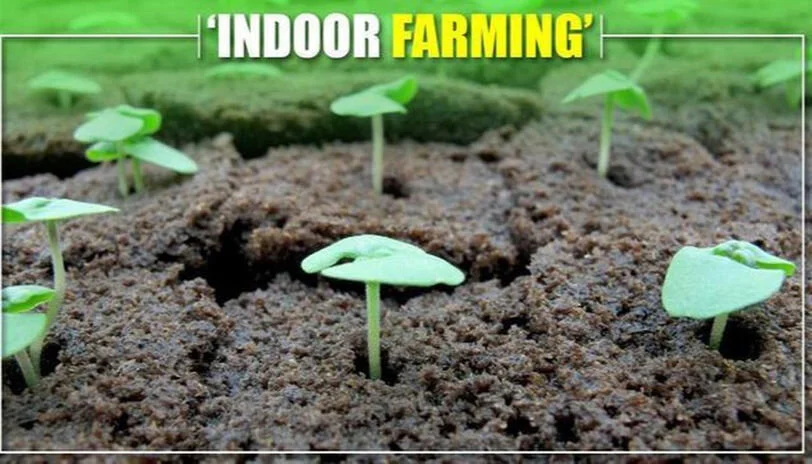
Indoor farming becomes one of the hottest trends in the past 10 years and millions have invested money globally that is expected to become a $700 billion market.
Written By Sounak Mitra | Mumbai
Indoor farming has become one of the hottest trends in the past 10 years. According to the Union Bank of Switzerland report, food and agriculture innovation have marked remarkable amounts of investor capital in recent years and is expected to become a $700 billion market by 2030. A lot of money is being invested globally in indoor urban farms because of their accountability to produce more food with less impact. Dozens of large scale projects have been launched in Dubai, Israel, the Netherlands, and other countries.
Indoor farming may be hampered in the US by high start-up costsBut, it may be hampered in the US by high start-up costs, high urban rents, and lack of safety net in a food system that is highly dependent on subsidies. Trump administration announced in September that it would go back to the Obama era energy-saving measures that would have effectively eliminated the standard pear-shaped incandescent variety. This move is expected to lower the demand for LED bulbs which lasts longer and consumes less electricity as compared to any other type.
The new move to be effective from January is being fought by 15 states and a group of environmental and consumer groups that claim the changes will contribute to climate change and raise consumers' energy bills.
According to Irving Fain, chief executive of Bowery Farming, indoor urban agriculture is a threat to scalability and profitability. The indoor vertical farming company has raised funds of about $122.5 million from celebrity chefs Tom Colicchio, Jose Andres and Carla Hall, Amazon worldwide consumer chief executive Jeff Wilke and Uber chief executive Dara Khosrowshahi.
READ: Schools In Kochi Promote Organic Farming
Department of Energy's proposal
Some indoor farms stack plants vertically to the ceiling in shipping containers or enormous warehouses and the plants' photosynthesis is achieved via high-tech light-emitting diode (LED) bulbs.
According to Fain, the US Department of Energy's proposed reversal of energy efficiency standards could hamper the emerging agricultural sector. Indoor vertical farming became economically viable when LEDs became popular, cheap and efficient.
Previously, indoor growing lights produced an enormous amount of heat. After the passage of energy legislation bill in 2007, the Department of Energy ruled that the general lightbulbs must emit at a minimum efficiency of 45 lumens per watt by the beginning of 2020. Incandescent bulbs and halogen do not basically meet the efficiency standard.
CALIFORNIA: Proposed Ordinance Would Promote And Protect Agriculture
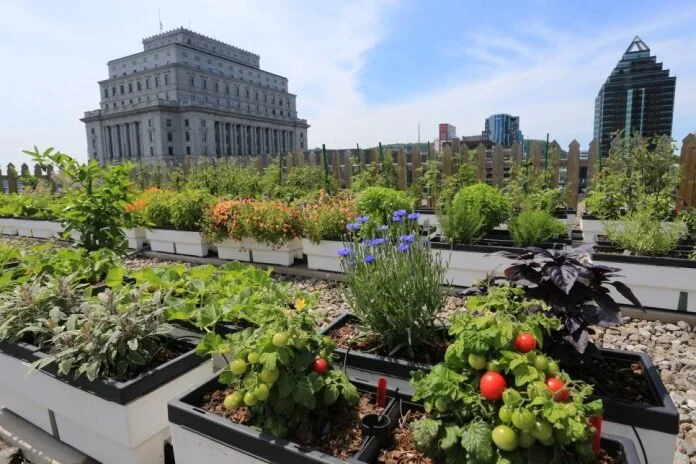
UAIZ is intended to promote small-scale urban agriculture by providing a financial incentive for property owners of unimproved, underutilized, and vacant properties in census-designated urban areas to use their properties for agricultural uses
admin | on January 01, 2020
A proposed county ordinance that would implement California’s AB 551 is seen as benefiting local agriculture by recognizing its benefits, according to the San Diego County Farm Bureau.
The County of San Diego recently made the Urban Agriculture Incentive Zones (UAIZ) Draft Ordinance available for public review. That period will end January 31, 2020.
The draft ordinance can be found at: www.sandiegocounty.gov/content/dam/sdc/pds/advance/UAIZ/UAIZ%20Draft%20Ordinance.pdf
In 2018, the Board of Supervisors directed staff to establish an Urban Agriculture Incentive Zone ordinance within the unincorporated areas of the County. It implements California Assembly Bill No. 551 (AB 551), the Urban Agriculture Incentive Zones Act (UAIZ,) authorizes counties and/or cities to establish Urban Agriculture Incentive Zones whereby the county or city and a landowner can enter into a contract for small-scale production of agricultural crops in exchange for a potential property tax benefit.
UAIZ is intended to promote small-scale urban agriculture by providing a financial incentive for property owners of unimproved, underutilized, and vacant properties in census-designated urban areas to use their properties for agricultural uses.
Hannah Gbeh, executive director of the San Diego County Farm Bureau, told The Roadrunner, “I am encouraged to see the County implementing AB 551, which intends to promote and protect agricultural uses while recognizing the public benefit of agriculture. The County’s proposed Urban Agricultural Incentive Zones Ordinance aims to promote small-scale urban agriculture by providing a financial incentive for eligible property owners. For agriculture in San Diego County, where 69% of our farms are 1 to 9 acres in size, this ordinance has the potential to significantly benefit agriculture.”
Gbeh added, “The Draft Ordinance is available for public review until January 31st and I would encourage anyone interested in urban agriculture to review and provide comments to the County. The San Diego County Farm Bureau stands ready to assist all local growers in starting or expanding agriculture operations within our County lines. We encourage all growers to be active and engaged in activities affecting the regulatory environment of agriculture and are available to assist any members experiencing issues.”
Under this ordinance, a property owner voluntarily enters into a contract with the county for a minimum of five years. While under contract, the property owner pays property taxes based on the assessed agricultural value of the property, which can offer substantial savings.
To be eligible for the program, the property must be located within an urbanized census area; be between 0.1 and 3.0 acres in size; vacant, unimproved, or have only non-residential structures; and be fully dedicated to agriculture.
Lands that are not eligible include (1) property that is currently subject to, or has been subject to within the previous three years, a Williamson Act Contract (current Government Code section 51200 et seq.); or (2) property in the unincorporated County, within the sphere of influence of a city, unless the legislative body of the city consents to inclusion of the property within the County UAIZ Establishment Area.
For more information contact: Project Contact: Timothy Vertino at timothy.vertino@sdcounty.ca.gov or call 858-495-5468

Will Buffalo Become A Climate Change Haven?
“Buffalo is stepping up and preparing to welcome this new type of refugee,” said the city’s mayor, Byron Brown. “We believe that we can accommodate people who have experienced displacement due to harsh weather and natural disaster.”
DECEMBER 5, 2019
The Western New York City possesses a distinct mix of weather, geography, and infrastructure that could make it a potential climate haven. But for whom?
When Hurricane Maria hit Puerto Rico, Maria Robles saw rainfall so severe that it punched a hole through her roof and flooded her home in San Juan. “We lost everything inside the house,” she said. “Everything, everything, everything.”
The storm marked the beginning of a long journey that took her from the convention center in San Juan to a hotel in Florida to an airport in Philadelphia, concluding with an 11-hour bus ride to Buffalo, New York — her husband had once visited the city as a teenager and remembered liking it. She arrived with two of her four children in tow. It didn’t take long for Robles and her family to settle into their new home. She landed a job in a factory that makes face cream, lip balm, and other personal care products, while her husband found a job in a plastics factory. Robles said she still struggles with the frigid weather, but she would gladly take a snowstorm over a hurricane any day.
Robles may not have known it when she moved in, but Buffalo is unusually well-insulated against climate change. Rising temperatures have yet to produce more heat waves or extreme rainfall in Western New York. Experts say the region’s cool climate and ample freshwater could make it an attractive destination as the planet heats up. And Buffalo has room to grow — the city’s population has dropped by half over the last 70 years of industrial decline.
These facts have not gone unnoticed. In his 2019 State of the City address, the mayor dubbed Buffalo a “Climate Refuge City.” Civic leaders are hopeful that the coming wave of climate refugees will revive Buffalo, filling its vacant lots and abandoned storefronts.
“Buffalo is stepping up and preparing to welcome this new type of refugee,” said the city’s mayor, Byron Brown. “We believe that we can accommodate people who have experienced displacement due to harsh weather and natural disaster.”
As Buffalo becomes a more appealing place to migrate, can it remain a haven for refugees like Robles, who come in search of affordable housing and a decent job? Or will Buffalo become a cold-weather haven for the professional class? With ample space for newcomers, Buffalo doesn’t look like cities typically at risk for gentrifying. But what happens if high earners from vulnerable cities like Miami and New York flock to the shores of Lake Erie? Will Buffalo be prepared?
“With climate change, the world is going to suck, but Buffalo may suck less.”
In 2016, SUNY Buffalo State climate scientist Stephen Vermette set out to show how climate change had made life harder in western New York with the hope of galvanizing locals to take up arms against the carbon crisis. He scoured weather records going back to 1965 and found that temperatures have risen a little more than 2 degrees Fahrenheit over that time, roughly consistent with the rest of the Lower 48.
TO READ THE ENTIRE ARTICLE, PLEASE CLICK HERE
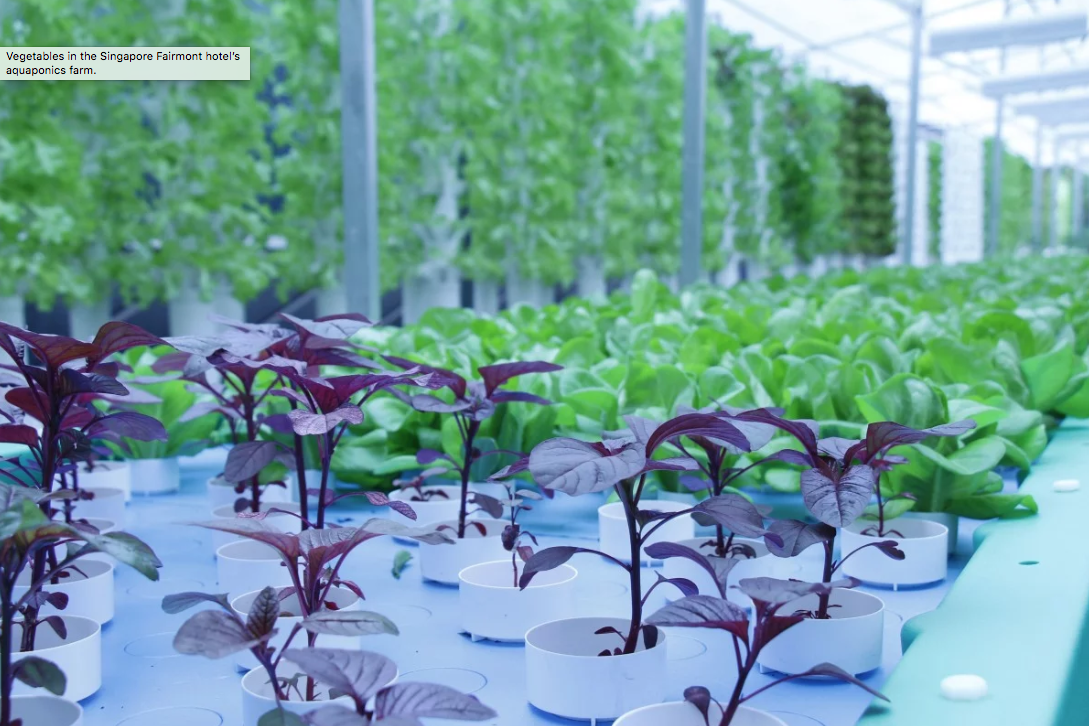
Singapore Hotel’s Aquaponic Rooftop Farm To Produce Vegetables And Fish
Aquaponics involves growing plants without soil, a process that saves resources including water, land, and manpower. By August, the rooftop farm will supply 30 percent of the vegetable and fish requirements for two neighboring hotels
Aquaponics involves growing plants without soil, a process that saves resources including water, land, and manpower
By August, the rooftop farm will supply 30 percent of the vegetable and fish requirements for two neighboring hotels
27 December 2019
This is not a new hotel, why are we featuring it now? True, a hotel has stood here since 1986, when it opened as the Westin Plaza, but now it has an aquaponics farm. Repeat, an aquaponics farm!
What on earth is an aquaponics farm, and why is it exciting news? Aquaponics is a combination of aquaculture and hydroponics; in simple terms, growing plants without soil. It employs a closed, circular system that channels the waste from living fish to fertilize plants, which in turn filter and clean the water for the fish. This process saves resources and reduces the need for water, land, and manpower.
A first for hotels in the city-state, the Fairmont Singapore’s aquaponics farm was launched in late October. The fact the farm is in Singapore – a concrete jungle that imports more than 90 percent of its food – while there’s a growing realization our fragile environment must be protected is inspirational for densely built cities.
Is it one of those “show and tell” herb gardens that resorts create as a talking point but supply only a tiny proportion of the property’s needs? Granted, at just 450 square metres, wedged between the rooftops of the Fairmont Singapore and sister property Swissôtel The Stamford, the “farm” is not large. But through clever configuration, once it’s fully operational in August 2020, it will yield an estimated 2,200kg of vegetables and 350kg of fish monthly for both hotels, or about 30 percent of their needs.
The hotel’s Aquaponics Salad.
More than 40 varieties of vegetables and herbs, including spinach, kang kong, lettuce, and mint, are being grown in compact beds and towers, and about 16,000 tilapia fish are being raised in huge containers at the back of the farm. The first fish will be ready for the dining table in March.
The plan is to plant and harvest in batches so a constant supply is available. To trick the plants into giving healthy yields in unfavourable conditions, they are sheltered from sunlight, kept at 24 to 25 degrees Celsius and exposed to LED lighting.
The proof of the pudding is in the eating. How does the produce taste? My salad at modern grill Skai contained oak leaf, red chard, mizuna, rocket leaves, baby kale and Japanese Pentas flowers, all fresh from the farm, the leaves still luscious and crisp – proof that the less distance your food travels, the better it tastes.
Currently, the farm supplies five of the hotels’ 13 food outlets. The jewel in the crown, Michelin-starred JAAN by British chef Kirk Westaway, will soon incorporate some of the farm’s output in its menu of reinvented British classics.
What is Fairmont doing about food waste? Through the Treatsure app, leftovers from buffets are sold to the public at S$10 (US$7) per box – biodegradable, of course – just before closing. Treatsure users are updated on which member hotels have leftovers up for grabs and can take as much food as they can pack into the provided box. This has reduced Fairmont’s buffet wastage by 40 to 60 percent.
Whatever cannot be sold is fed into the Eco-Wizz digester, together with leftovers from other outlets, to be turned into water and compost. Local charity Food from the Heart collects leftover bread baskets from the breakfast service for distribution to impoverished families.
A Deluxe Harbour View Room.
What else is the hotel doing to make travel less destructive to the environment? Although you’ll still find single-use plastics in your room – laundry bags and slipper wrappers, for instance – the move towards eliminating their use is ongoing, the hotel assures us. Each revamped room and suite in Fairmont’s new South Tower has a nifty Swisspro tap, which dispenses filtered hot and cold water, so no more plastic bottles.
My conscience feels lighter, now what about location? The building was designed more than 30 years ago by the late I.M. Pei, of Hong Kong’s Bank of China Tower fame. The hotel has taken on various guises under different owners, but remains in demand for its location, in the city’s cultural and historical heart. It is within walking distance of the Singapore Art Museum and the National Gallery Singapore.
And the view! Centrally located beds give guests panoramas of the city’s spectacular skyline, an effect heightened by the building’s circular design.
What’s the bottom line? Rates start at S$399 (excluding service charge and tax). A two-course set lunch at Italian restaurant Prego costs about S$30, excluding taxes and service charge. The cost savings from the aquaponics products have yet to be factored into menu prices.

Wisconsin, Meet The Green Bay Woman Who’s Opening The Nation’s First Urban Snail Farm
McDonald, 65, has spent the last four years researching and getting permits for her business, Cupid's Arrow Escargot LLC. She's submitted her initial permits to the U.S. Department of Agriculture and the Food and Drug and Administration
Sandy McDonald Says Americans Can Learn To Love Homegrown Escargot
By Rob Mentzer
December 30, 2019
People have been eating snails for thousands of years.
"They're healthy," said Sandy McDonald — low in fat, high in cholesterol. "They have amino acids, Omega-3 fatty acids, niacin, iron, vitamin D complexes, magnesium. I could go on and on."
Their taste, McDonald says, is rich and earthy, like a mushroom.
Despite all these selling points, it's pretty likely that escargot, as cooked snails are known, isn't part of your regular dinner rotation.
McDonald would like to change that.
Sandy McDonald. Courtesy of Sandy McDonald
McDonald, 65, has spent the last four years researching and getting permits for her business, Cupid's Arrow Escargot LLC. She's submitted her initial permits to the U.S. Department of Agriculture and the Food and Drug and Administration. She's got a space near Green Bay's Titletown district, approved by the city for use as a site of heliciculture, which means raising snails.
She's set to become the first snail farmer in the Midwest, and the first in the nation to do it in an indoor, urban environment.
McDonald sees Cupid's Arrow as connected with the farm-to-table movement and the movement toward local food. Most of the snails served as escargot at American restaurants are imported, and it's illegal to import live snails, which means American diners are getting a less-fresh canned version. McDonald plans to sell snails to chefs around the Midwest for escargot and to harvest snail slime for use by the cosmetics industry. Over time, she hopes to sell snail eggs, too, that can be served as escargot caviar.
The reason for the government's strict controls on snail imports and cultivation is because snails are an invasive species that can harm natural ecosystems. One variety, the giant African snail, is banned from the U.S. in any form, and will be seized and removed by the government if found.
Cupid’s Arrow Escargot will be constructed with required security measures that keep the snails or their eggs from getting out of the building. The pens are escape-proof. The USDA requires the dirt to be processed before it’s disposed of, but McDonald hopes to use vermicomposting to avoid having to dispose of much at all.
It will be "a complete ecosystem," McDonald said. "They'll be born, raised and processed in the same building."
Snails need a consistent temperature of 68 to 70 degrees. They need moisture, so the pens will have humidifiers. They eat grains (McDonald hopes to get some of the byproducts of nearby Titletown Brewing such as spent hops and barley) as well as fruits and vegetables such as tomatoes and cucumbers.
McDonald plans to start with a purchase of 2,000 snails from an Irish snail farm. As long as the conditions are right, she says, they won't require a whole lot of tending.
"They just kind of do their own thing," she said.
The history behind snail-eating is no joke. Pliny the Elder, the ancient Roman historian, describes heliciculture in the first century as having been "brought to such a pitch of perfection" as to produce "fattened periwinkles" that were "quite an object of gastronomy."
Today, escargot is best known as part of French cuisine, though it's also eaten across Europe and in Morocco. In the U.S., the two certified snail farms are in Long Island, New York, and Quilcene, Washington. (She'll be buying her starter snails from Washington's Little Gray Farms.)
McDonald's application to the city of Green Bay says she'll be the only employee at first, but it's possible that she'll hire other snail-minders as the business grows.
She acknowledges that it's taken a long time to get the business up and running — a metaphor about a particular animal's pace of travel comes to mind. But it feels good to be this close to launching. Cupid's Arrow Escargot will begin operations in the spring.
In the long run, McDonald says, it's even possible that escargot could become not the sole province of fancy foodie culture, but something more mainstream.
"I'd like to hook up with a good chef," McDonald said. "Why can't there be, you know, snail poppers? (We can) bring this food into the United States."
Note: An earlier version of this story misstated McDonald's progress on getting federal permits. She has submitted her application.
Year In Produce No. 9 — Urban/Vertical Farming
As consumer interest in topics like locally grown food, sustainability, food deserts, and urban agriculture continues to grow, innovative produce companies continue to meet demand, whether expanding onto the rooftops of cities like Chicago and New York or forming vertical farms in warehouses and containers
December 28, 2019
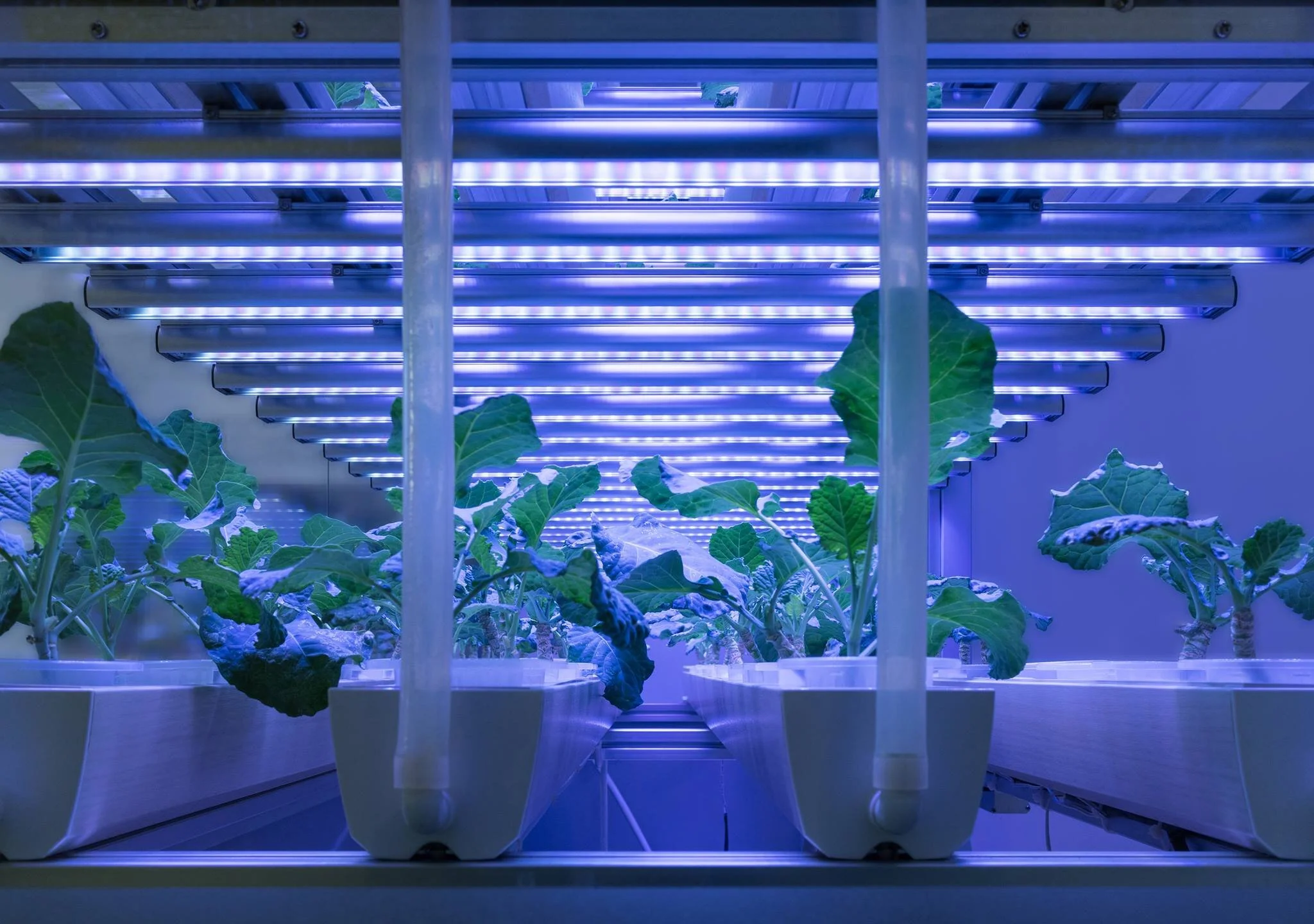
( Photo courtesy Aero Farms; Graphic by Brooke Park )
As consumer interest in topics like locally grown food, sustainability, food deserts, and urban agriculture continues to grow, innovative produce companies continue to meet demand, whether expanding onto the rooftops of cities like Chicago and New York or forming vertical farms in warehouses and containers.
Dec. 16
AeroFarms building its largest facility in rural Virginia
By Chris Koger
Vertical farms company AeroFarms, Newark, N.J., is investing $42 million to build a 150,000-square-foot aeroponic facility in rural Virginia.
The operation, in an industrial park that’s a joint venture for the city of Danville and Pittsylvania, is the 10th facility for Aerofarms. Virginia was in competition with North Carolina for the project, according to a news release from the office of Virginia Gov. Ralph Northam.
Nov. 21
Time magazine names AeroFarms as a best invention
By Chris Koger
AeroFarms, the Newark, N.J.-based indoor aeroponic grower of leafy greens and microgreens, has been named as one of Time magazine’s 100 Best Inventions.
In the online listing, Time calls the company’s patented technology a key advance, specifically the growing medium: “rather than grow in dirt, these crops grow in a reusable cloth made from recycled water bottles. Instead of being doused with water, the crops are hydrated with a gentle mist.”
Nov. 14
Gotham Greens opens large greenhouse in Chicago
By Tom Karst
The 100,000-square-foot facility, built from a portion of the former Ryerson Steel Mill, is the company’s sixth greenhouse for the company and the second one in Chicago’s Historic Pullman Neighborhood. The greenhouse more than doubles the company’s Midwest production to 11 million heads annually, according to a news release. ...
Ten years after its 2009 beginning, Gotham Greens will operate 500,000 square feet of greenhouse farms in five U.S. states by the end of the year, according to the release.
Oct. 16
AeroFarms receives sustainability award
By Amy Sowder
Newark, N.J.-based AeroFarms won the Responsible Business Award for Sustainable Innovation at the Ethical Corporation Awards, a Reuters event.
Members of the indoor vertical farming and agriculture technology company gathered Oct. 2 in Westminster, London, to receive the award, according to a news release.
June 19
Touring Brooklyn’s Gotham Greens atop Whole Foods
By Amy Sowder
BROOKLYN — It was a perfect summer evening on a Brooklyn rooftop, with colorful food spread out on a picnic table and dozens of friendly faces talking about what they love: fresh vegetables and fruit. The evening was hosted by Gotham Greens, an urban hydroponic greenhouse grower, which started in Brooklyn but has since expanded to at least four locations in New York City, plus a couple in Chicago, and more coming to Baltimore and Providence, R.I.Viraj Puri, co-founder, and CEO of Gotham Greens, gave a tour of the basil, arugula, and salad greens greenhouse, explaining the company’s mission, how the greenhouse technology works, and why it benefits retailers, consumers and urban communities as a whole.
March 29
Greenhouses keeping up with demand
By Amy Sowder
Tim Heydon touched the brick of proprietary soil in the first room.“Everything we do is USDA-certified organic, and it starts with the soil system,” said the CEO of Shenandoah Growers, Harrisonburg, Va., one of the largest commercial indoor fresh herb growers in the U.S. As North American greenhouse vegetable growers of all kinds expand and adapt, this company has jumped on board whenever an indoor growing technology’s cost dropped and efficiency improved.
Shenandoah Growers started in 1989 as a field herb farm. When Heydon came on board in 1998, the company had $1 million in sales with 20 employees. Gradually, the company evolved from field and low-tech greenhouse growing to a more controlled environment indoor growing system in 2008. Now, Shenandoah does more than $120 million in sales, with 1,200 employees. Today, the company has a 35% share of the national organic fresh herb retail market, Heydon said.
March 28
Bowery greens available on Peapod, AmazonFresh
By Amy Sowder
Fresh greens from Bowery Farming, New York, N.Y., are now available throughout the greater New York area from Peapod and will be offered on AmazonFresh in mid-April.
The two online grocery service partners will make Bowery’s produce available for delivery across all five of New York City’s boroughs, north to Scarsdale in Westchester County, east to Deer Park, Long Island, and throughout northern and central New Jersey for the first time, according to company spokespeople.
March 27
Rhode Island governor and Providence mayor to welcome Gotham Greens
By Amy Sower
Rhode Island Gov. Gina Raimondo, Providence Mayor Jorge Elorza, Rhode Island Secretary of Commerce Stefan Pryor and other community leaders will join Viraj Puri, co-founder, and CEO of Gotham Greens, Brooklyn, N.Y., in announcing the company’s first urban greenhouse farm in New England.
The greenhouse farm will be at the historic General Electric Base Works facility in Providence, R.I., according to a news release.
The 110,000-square-foot high-tech farm is scheduled to open in early fall. The facility will grow year-round to supply restaurants and foodservice customers in region with 10 million heads annually of lettuce and leafy greens.
March 11
Square Roots expands indoor farms with Gordon Food Service deal
By Chris Koger
Gordon Food Service, Grand Rapids, Mich., has formed an exclusive partnership with indoor farming company Square Roots, expanding the greenhouse company’s reach from its New York base.The agreement gives Square Roots access to more than a dozen Gordon Food Service distribution centers and 175 retail locations, although the news release announcing the partnership doesn’t specify where Square Roots plans to build more indoor farms. Brooklyn, N.Y.-based Square Roots now serves about 30 locations in the New York metropolitan area, according to its website.
Jan. 29
DelFrescoPure and CubicFarms team for new growing technology
By Tom Karst
A partnership between Kingsville, Ontario-based DelFrescoPure and CubicFarms will result in LivingCube, an indoor automated vertical growing machine that continuously produces living lettuce, living basil and microgreens all year long.
According to a news release, the LivingCube system has 12 mechanized growing, germination and irrigation machines, each built inside proprietary insulated 40-foot-long stainless steel growing chambers. The growing machines, according to the release, are individually climate-controlled to optimize the environment for each crop and also connected to a fully enclosed climatized common work area. LivingCube is powered by DelFrescoPure’s off-the-grid electrical cogeneration system, according to the release.

GERMANY: February 12-14, Wageningen Lighting In Greenhouses And Vertical Farms 2020
Do you want to improve the use of LED lighting in greenhouse production or vertical farming?
Do you want to improve the use of LED lighting in greenhouse production or vertical farming? Would you like to know how to reduce energy use and carbon foot print, how to improve production, or how to improve quality? Do you want to understand the different characteristics of light and how they affect physiological plant processes? Then this course might be valuable for you.
In this course on lighting in greenhouses and vertical farms Wageningen UR scientists will share their unique knowledge with international students, researchers, and horticultural and light experts.
For whom?
This intensive course is meant for professionals in lighting, greenhouse production and vertical farms as well as MSc and PhD students, post-docs and junior scientists from all over the world.
Course objectives
The aim of this course is to learn the basic principles behind the effects of LED lighting on plant growth, yield, product quality, and energy use efficiency. It aims that participants also understand how to apply this information in their daily practice by developing strategies to optimize the use of lighting in relation to the whole production system.
Learning outcomes
This course gives participants an in-depth view on:
Perception of light by plants
Major plant physiological and morphological processes affected by light
How lighting can be used effectively in greenhouses and vertical farms
The different characteristics of light and how to measure.
Click here for more information and to register.
Publication date: Fri 20 Dec 2019

UAE Farm Calls On Residents To Buy Local Produce
Madar Farms head of operations Kyle Wagner has implored UAE residents to buy more locally grown produce
Madar Farms head of operations Kyle Wagner said it will help support sustainability
Dec 23, 2019
Madar Farms head of operations Kyle Wagner
Madar Farms head of operations Kyle Wagner has implored UAE residents to buy more locally grown produce.
Speaking during a panel discussion at New York University Abu Dhabi, Wagner said that doing so can help support sustainability and contribute towards solving food and water security.
A UAE-based company, Madar Farms uses hydroponic vertical farming that allows it to grow fresh produce in the country’s arid conditions while using 95% less water than traditional farming.
The company is currently working with the wider industry and education authorities to support the UAE government’s National Food Security Strategy 2051 that aims to solve the region’s food problems and provide enough nutritious food all-year-round.
At the Cooking the Nation: Global perspectives and local insights on culinary nationalism and diplomacy panel discussion Wagner, said: “At Madar Farms, education is already a big part of what we’re doing. Whether that is attending conferences or launching a school sustainability program, creating awareness of what we do and helping people understand what we want to achieve is important for us.
“We are living in a diverse country where the supermarkets are full of different ingredients and products from many different countries. Sometimes, we do not look at which country vegetables come from but if we can help adults to think carefully and choose a UAE-grown produce instead of one from another country, then we are going in the right direction.
“At schools, we launched a sustainability program ‘Sustainable Futures’ where students are getting hands-on learning experiences. This has been a great success so far as it gives them an opportunity to learn more about pressing environmental topics. And by engaging with the younger generation, we can create that change that can have a long-term effect.”
How This Chennai Firm Is Changing The Way We Consume Food
Housed in a bustling commercial complex on GP Road, the Sustenance Agritech office is an oasis of calm
DECEMBER 03, 2019
Akhil Nichani of Sustenance Agrotech | Photo Credit: M Vedhan
Microgreens pack in a lot of power and flavour, and this year-old startup is tapping into their potential by supplying to restaurants around town
Housed in a bustling commercial complex on GP Road, the Sustenance Agritech office is an oasis of calm.
Akhil Nichani, the 23-year-old founder, inspects rows of greens jostling for space in their plastic containers. As he runs a check on the produce to be shipped the next day, he pulls out a radish microgreen, plucks off the root and proffers it to me. “Go ahead. Try it.”
”As I bite into the delicate green, the intensity of flavour in a mere two-inch plant surprises me. The radish green creates an explosion of spiciness; in comparison, a slice of radish itself is much milder.“
That is because microgreens pack in a lot more nutrition and flavour when compared to the actual vegetable,” says Akhil, who supplies to hotels like Crowne Plaza and Radisson Blu Hotel GRT, and a set of restaurants, which include The Summer House Eatery, Patina, Broken Bridge Cafe, Radio Room, Lord of The Drinks and Soul Garden Bistro.
An electronic engineer by qualification, Akhil decided to get into hydroponics and microgreens after stumbling upon the concept in college.“I read up extensively about microgreens. I then walked into the kitchen and asked my mother for mustard seeds and began experimenting,” he laughs. Once he graduated from SRM University last year, he began seriously working on Sustenance.
Currently, Sustenance offers microgreens in radish (red, white, pink and purple), amaranth (red and green), bok choy, cabbage, cauliflower, mustard, clover and broccoli. “I have experimented with beetroot, but the weather in Chennai is not conducive to it. Beets need colder climate. I am experimenting with sunflower too.”Typically, he uses seeds that have a germination rate of 90 to 95%. “At the very least 75%. We also prefer untreated seeds, since seed covers usually linger on microgreens and one doesn’t want to be ingesting chemicals.
Seed growers often use a chemical to coat the seed to protect it from fungus or infection,” he says. His hunt for quality seeds led to a tie-up with Durga Seeds and All That Grows, in Chandigarh.
Micro Facts
Microgreens are plants that are seven to 10 days old.
Once the seeds germinate and grow their first set of leaves, they are harvested and consumed.
Seeds usually have enough energy in terms of starch and carbohydrates to germinate and grow the first set of leaves. So microgreens don’t need any growth mixtures.
Microgreens offer anywhere between 20% to 40% more nutrition than regular vegetables. The flavour profile is more intense as well.
When they first started, deliveries were done by Akhil and his then business partner. Today, he has a team in place, with one person exclusively handling deliveries.“I started off by myself, but soon I had two seniors from school join me. One of them moved on, but Maulin Tolia and I are continuing in the business.” Akhil also runs a 300-square-foot hydroponics farm in Kilpauk, where he grows Thai basil, kankong and watercress.
Akhil says that one of the biggest challenges he faced when he first started out was to be taken seriously due to his age.“Chefs and purchase managers would assume I’d landed up at the wrong place,” he laughs. “But microgreens open a lot of doors. There aren’t many players in Chennai; most of the microgreens used here come from Pune and Bengaluru. I began approaching chefs with samples and they knew I was there to talk business.”
Chennai’s weather also limits variety. “I know people in Mumbai who can offer around 50 varieties, while I offer around 15. Here we keep a watch on temperature and humidity. The air conditioner the humidity in the room at about 40% and we don’t let the temperature go beyond 30°C.”
Akhil adds that microgreens as a concept is still picking up in Chennai. Weather and awareness are major factors, but “it is all about marketing now.”

Freight Farms Aced 2019 – Here's Our Report Card
2019 was a year for the books! We released the Greenery and showed you how it works. We hosted a record number of webinars featuring customers from all backgrounds and levels of experience
December 23, 2019
As we enter a new decade, we look back at all our 2019 accomplishments.
2019 was a year for the books! We released the Greenery and showed you how it works. We hosted a record number of webinars featuring customers from all backgrounds and levels of experience. We also invited you to a record number of open houses, where you were able to meet the team, tour the farm, and ask a local Freight Farmer all your questions. And, as with every year, we expanded our world map with new customers from the United Kingdom, Spain, Germany, and Australia!
2019 was also a banner year for our farm-to-school customers. As an increasing number of K-12 schools and universities add container farms to their campuses, we see the Greenery become more than just a means of food production. Instead, the Greenery can function as a classroom, research lab, after-school club, center for student jobs, and so much more!
Want to keep up with Freight Farms in 2020?
Follow us on Facebook, Twitter, Instagram, Youtube, and LinkedIn!
We also make emails! If you want to hear firsthand about 2020 events, webinars, and company news, make sure to sign up for our emails.