

Welcome to iGrow News, Your Source for the World of Indoor Vertical Farming

Vertical Farming vs. Greenhouse Farming
When starting a farming operation, the first choice you face is what type of farm to start
June 1, 2019
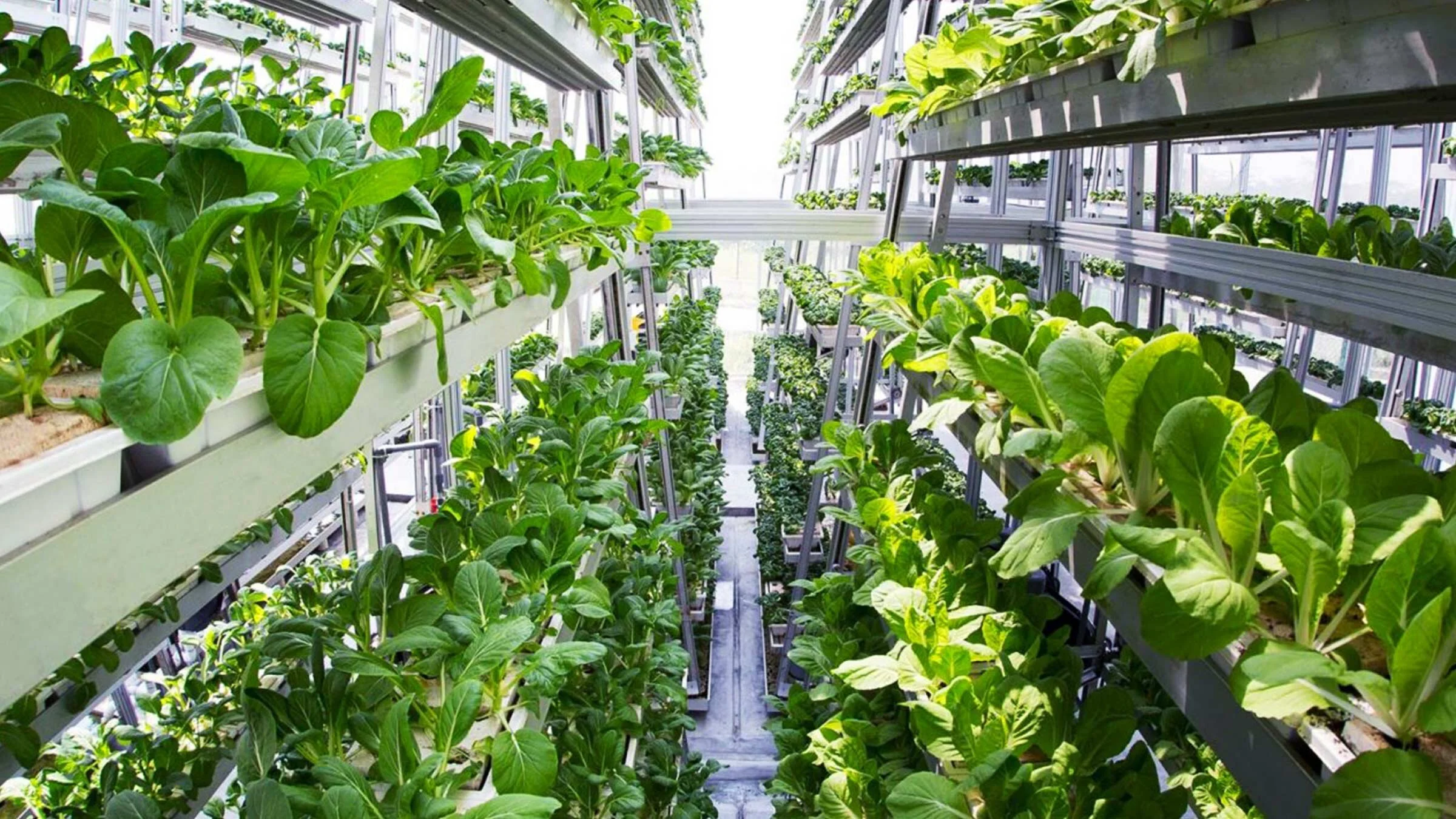
When starting a farming operation, the first choice you face is what type of farm to start. The options are many: indoor vs. outdoor; arable vs pastoral; intensive vs. extensive. For farmers going the indoor route, one of the biggest decisions is between vertical farms and greenhouses. Both vertical farms and greenhouses operate indoors, which means they enjoy benefits like climate control, year-round growing, and chemical-free pest control.
However, there are as many differences between these types of farms as there are similarities. Each one serves a unique purpose; but, they can be compared in terms of efficiency. For a long time, it was thought that greenhouses were more efficient and profitable than vertical farms, due to the lack of a need for artificial lighting. But recently, a study out of Quebec showed that vertical farms enjoy a number of benefits over greenhouses–especially if the farm is operating for commercial purposes.
To understand what those benefits are, we first need to understand the reasons for farming indoors in the first place.
WHY GROW INDOORS?
For most of human history, farming has been an outdoor operation. Plants need sunlight to live, and soil to get water and nutrients from, so it’s no surprise that the traditional farm is an outdoor farm.
But as agriculture developed, farmers gradually realized that there were benefits to farming indoors. For one, it allowed certain crops to be grown all year long. For another, it kept pesticides at bay. And finally, indoor farming in ‘hot’ greenhouses could cause plants to grow faster than they would outdoors. By the late Roman Empire, greenhouse-like methods were already being used for these and other reasons.
In the 1800s, Greenhouses hit their stride, as European farmers started using them to grow tropical plants that otherwise wouldn’t grow naturally on their continent. This fact illustrates the main benefit of indoor farming: it provides the ability to grow crops year round, in a controlled environment, free from pests.
if you want it a bit shorter, this whole section can easily be cut
THE DIFFERENCES BETWEEN VERTICAL FARMS AND GREENHOUSES
Although vertical farms and greenhouses are both indoor facilities, the similarities end there. First, greenhouses rely on sunlight, while vertical farms rely on artificial light. Second, vertical farms have plants stacked in layers, while greenhouses have them arranged on one horizontal plane. Third, vertical farms can operate in urban areas, while greenhouses require a large amount of space and are therefore best suited for rural or suburban environments.
Many people have argued that, because vertical farms require artificial light, they are necessarily less efficient than greenhouses. It is true that artificial light is a major cost at vertical farms. However, the paper “Comparing a Greenhouse to a Vertical Farm in Quebec” showed that growing lettuce in a vertical farm can actually be more profitable than growing it in a greenhouse, owing to two factors: increased yield per square meter, and centralized distribution.
"When starting a farming operation, the first choice you face is what type of farm to start. The options are many: indoor vs. outdoor; arable vs pastoral; intensive vs. extensive"
YIELD
The main advantage that vertical farms have over greenhouses is greater yield per square meter. Although vertical farms have higher light and heat costs, they have the benefit of more produce grown per unit of soil. This means that even though vertical farms cost more to operate, they produce more crops, with the end result being higher revenue.
The policy paper mentioned proves this through the results of a simulation, which showed that lettuce grown in a vertical farm has a slightly higher yield than that grown in a greenhouse.
DISTRIBUTION
One major advantage of vertical farms is centralized distribution. Because these farms can be run in warehouses or almost any kind of building, they can be located in urban areas. This puts them right at the heart of major distribution hubs, in the middle of a big local customer base. So, compared to a rural greenhouse, a vertical farm has less distance to travel to get to customers, and when it does have to ship over a distance, it has better transportation options.
As a result, vertical farm crops can be sold more quickly and at higher margins than greenhouse crops. According to the Quebec paper, this creates a perception of freshness that helps the vertical farm produce sell quicker than the greenhouse equivalent.
GROSS PROFITS
As a result of centralized distribution, vertical farms may enjoy higher gross profits than greenhouses. The Quebec paper showed this to be the case specifically for lettuce grown in the Quebec area. Although the wholesale price of lettuce produced at greenhouses and vertical farms is usually the same, the vertical farm’s lettuce may enjoy a premium when sold in its local market due to the perception of freshness. Additionally, because the vertical farm is located in an urban area, it can ship more fresh produce to more customers, without high transportation costs.
A second reason for the higher gross profits at vertical farms is winter heating costs. It’s almost taken as a gospel truth that greenhouses use more electricity than urban farms. But that’s not necessarily the case. It really depends on the specific farm(s) in question. As the Quebec experiment showed, in areas that get extremely cold in the winter, Greenhouses can be very expensive to heat. Depending on how rural their location is, they may need to be heated by a generator; and depending on their size, they may consume quite a bit of electricity. So while the vertical farm needs to be heated year round, the greenhouse can actually be more expensive to heat in the crucial winter season.
GROWTH POTENTIAL
One area where vertical farms really shine is the potential for growth. While sales from greenhouses are growing at 8% year-over-year, sales from vertical farms are growing at a full 30% annually. That means that vertical farms are growing more than three times as quickly as greenhouses. While part of this can be explained by the fact that vertical farms are newer than greenhouses, it also has to do with centralized distribution. Since vertical farms have access to urban distribution centers, they can get more product out, more quickly, than greenhouses can. The greater yield per square metre of vertical farm space also contributes to this fast growth.
PUTTING IT ALL TOGETHER
Vertical farming is the cutting edge of agriculture. Offering the ability to grow more crops, in a controlled environment, inside major distributions hubs (i.e. cities), it takes advantage of economies of scale in a way no other farming operation can. In the past, many critics have cited lighting costs as a stumbling block to profitability for vertical farms. But as the Quebec research paper showed, vertical farming can actually be more profitable than a conventional greenhouse operation. Especially when situated in major urban centers, and taking full advantage of the distribution benefits that come with that, vertical farms can be highly profitable. And when you add the benefits of automated labor into the equation, the benefits can be greater still.
We see VF as the evolution of the greenhouseWe see VF as the evolution of the greenhouse
Latest developments in LED (less consumption) and solar energy (higher efficiency) will reduce the biggest remaining cost factor (energy) during the next years
Automation will increase the benefits of a VF even further
MORE NEWS
Europe’s most automated Vertical Farm in Basel (CH)
August 1, 2019
Growcer is setting up Switzerland’s first vertical farm in Basel. At the same time, it’s one of Europe’s most automated Vertical Farms using latest achievements in Robotics & AI. The farm is six floors high and can produce leafy vegetables, herbs, shoots and fruit all year round.
How do we feed a growing population most of whom live in cities?
Why We Don’t Use Containers For Our Farms
July 1, 2019
When you decide to start a vertical farm, you’re immediately faced with a number of choices.
Should you put your farm in an urban location, or a rural location?
In a cold environment, or a warm one?
Should you use hydroponic systems, or soil?
About Growcer
May 1, 2019
Feeding the world has always been a challenge. With ever-growing populations and a limited supply of food, innovations are needed to make food better, cheaper, and more abundant. From the early days of agriculture to the mass farming of today, new technologies have arisen to meet the challenge of providing food for the world….
Vertical Farms Grow The Food of The Future
On a cold, blustery day while bare tree branches sway in the winter wind, vibrant, leafy salad greens packed with nutrition and bursting with flavor are flourishing at FreshBox Farms, an indoor vertical farm — where it doesn't matter what the weather is outside — in Millis, Massachusetts, about 30 miles southwest of Boston
Getty
Indoor farms offer a number of advantages, and they can help conserve resources.
By Eileen Abbott
Story at a glance
Indoor vertical farms are expanding across the country.
It still costs more to raise produce inside than out, but prices are dropping, and some indoor farms are profitable.
Yields can be up to 350 times outdoor equivalents, with substantial savings in water, pesticides and food miles.
On a cold, blustery day while bare tree branches sway in the winter wind, vibrant, leafy salad greens packed with nutrition and bursting with flavor are flourishing at FreshBox Farms, an indoor vertical farm — where it doesn't matter what the weather is outside — in Millis, Massachusetts, about 30 miles southwest of Boston.
With the world’s growing population expected to exceed 9 billion by 2050, the U.S. Department of Agriculture sees indoor vertical farms — which can operate year-round — as having potential in addressing food security. In a vertical farm, crops are grown in vertically stacked layers to save space and in a climate-controlled system to optimize growing conditions.
FreshBox Farms, which has been operating since 2015, joins a growing number of indoor vertical farms that have been sprouting up in recent years and spanning the country. These include 80 Acres Farm in Cincinnati, which claims to be the world’s first fully automated indoor farm, all the way to the West Coast, where kale, tatsoi, beet leaves, arugula, and mizuna greens thrive at the California-based Plenty.
For many consumers like Maria Quintas-Herron of Mechanicsville, Virginia, produce grown at indoor vertical farms is desirable, but needs to be pocketbook-friendly. Quintas-Herron is an avid runner who appreciates the value of good nutrition to fuel her runs, but she says, "I would love nothing more than to be able to always go for the best, most natural, organic products available. But at the end of the day, my budget dictates: cheaper is preferable.”
A report in AgFunder Network Partners estimates that it is “3 to 5 times more costly to grow in a vertical farm compared to conventional farming.”
However, Crop One Holdings — the platform under which FreshBox Farms’ brand falls — reports that technology is reducing costs and that the product is competitive as a result. “Crop One now has accumulated the largest database in vertical farming – a critical basis for AI/predictive agriculture,” says a company spokesperson in an interview with Changing America. “The company has invested in best-in-class plant science, software and control systems that control plant growth to generate the best outcomes – increased yields and reduced costs.”
In fact, Crop One says the success of its profitable farm in the Boston area is why it will expand across the globe, growing in Dubai in 2020. “The $40 million joint venture with Emirates Flight Catering will be the world’s largest vertical farming facility — a 130,000 square-foot controlled environment that will produce three U.S. tons daily of high-quality leafy greens at capacity,” reports a company spokesperson.
Headquartered in the Silicon Valley region of California, Plenty, like the other indoor vertical farms across the country, uses technology and science to nurture rows of hydroponic greens. Robots assist in the farming process while layers of produce from floor-to-ceiling are lit by LED lights. According to the company’s website, “Plenty’s vertical farms grow crops up 20-foot towers, achieving yields up to 350 times that of the most productive outdoor equivalent.” Here’s a link to a Plenty company video for an inside look.
These indoor vertical farms may be crucial in fulfilling a key tenet of urban resilience, which is strengthening local food production. “Generally, fresh produce grown in vertical farms travels only a few miles to reach grocery store shelves compared to conventional produce, which can travel thousands of miles by truck or plane,” states the USDA’s website.
This is important, because according to the USDA, by 2050, “two out of every three people are expected to live in urban areas. Producing fresh greens and vegetables close to these growing urban populations could help meet growing global food demands in an environmentally responsible and sustainable way by reducing distribution chains to offer lower emissions, providing higher-nutrient produce, and drastically reducing water usage and runoff.”
FreshBox Farms adds that because their produce is grown in sealed, climate-controlled rooms, the result is a fraction of the pathogen risk compared to conventional outdoor farming. A company spokesman says, “Vertical farming is how we safeguard crops from weather volatility and from pathogen spread such as the romaine e-Coli contamination. Greens grown at FreshBox Farms have 1/600th the bacteria of washed, field-grown greens. Its grow units use 18,000 gallons of water per year — in order to grow the same amount in the field, a farmer would require 46 million gallons of water.”
And the food simply tastes better, according to Plenty, which promotes produce with “zero pesticides and just-picked, cravable flavor” while supporting the local economy and teaching kids to eat healthier: “When kids grow up with access to delicious vegetables, they learn to eat healthier, a habit that will stay with them all their lives.”
Helping the community eat healthier is why Mark Lilly started Farm to Family CSA/The FarmBus, based in the Richmond, Virginia, area, with the mission of distributing food from local, sustainable farms. Lilly doesn’t think indoor vertical farms will replace outdoor agriculture. “Because you can only grow a certain number of things in indoor farms,” he says. “You have to have outdoor space for certain varieties, like pumpkins and watermelons which take a lot of space. You have to have pollination and organic, dense, nutrient-based soil."
Lilly says the food tastes different when grown outdoors. "You’ve got the natural sunlight. You’ve got the natural air.” As far as the different types of farming, Lilly says, “We’re all part of the whole. It doesn’t matter who’s growing what, where. It all needs to be done."
Published on Jan 01, 2020

Business Ideas For 2020: Urban Farming
With urbanization meaning we have less and less arable land for farming and agriculture, urban farming is the solution we need to continue feeding the world in the future. Unsurprisingly, then, this field presents a wealth of business opportunities
With urbanization meaning we have less and less arable land for farming and agriculture, urban farming is the solution we need to continue feeding the world in the future. Unsurprisingly, then, this field presents a wealth of business opportunities.

December 20, 2019
by Robyn Summers-Emler
How much does the food I eat contribute to my carbon footprint? How are we going to continue to feed a growing population in the future?
When it comes to the food we eat, these questions regarding the environment and overpopulation have taken centre stage in recent years – which might explain the growing trend of urban farming solutions.
Urban farming, put simply, is the cultivation and distribution of food in an urban or densely populated areas. More specifically, this can mean the DIY growing of food (or even keeping of bees or farming of bugs!) in your own home or the high-tech setups such as vertical farming and Controlled Environment Production (CEP).
Vertical farming is the indoor cultivation of plants in a stacked formation, allowing for several rows of crops to be grown in vertically arranged layers. The produce is grown in a controlled environment (light and temperature) and, in some cases, even without any soil (thanks to techniques such as hydroponics). The urban spaces used for this farming can be anything from abandoned warehouses to shipping containers.
Finally, as people become more concerned about exactly where their food is coming from, and with ‘field-to-fork’ on the rise, it’s unsurprising that there’s been a surge in restaurants, companies, and individuals wanting to grow food themselves in the city. Whether it be in a city allotment, on a rooftop, or on a tiny London apartment windowsill – we’re becoming much more inventive and resourceful when it comes to finding farming space!
Read on to learn more about the importance of this ‘trend’ (although you’ll probably realize this concept is much bigger than a passing curiosity) and the interesting variety of business opportunities urban farming presents for 2020 – and the future of the planet.
Find out more:
Why is urban farming a good business idea for 2020
Is urban farming a Brexit proof business idea?
Urban farming: business opportunities
Is urban farming a sustainable business idea?
Insider opinion
Interested in starting a business? Why not take a look at these posts for more inspiration and practical advice:
Business ideas 2020 – what business should you start this year?
How to start a business – what steps do you need to take?
Small business statistics – find out how the UK small business scene is evolving
Why is urban farming a good business idea for 2020
“In order to feed the anticipated 10 billion people living on earth by 2050, food production must be increased by 70%,” says Thomas Constant, the founder of the brand new vertical bug-farming product startup BioBea (don’t worry – more on that innovative idea later!).
One reason urban farming is likely to prove a lucrative business opportunity in 2020 (and far beyond) is due to its necessity in an increasingly urbanized world with a crippling demand for more food. In addition, the growth of the industry will continue to be driven by a growing demand for produce that is high-quality and grown without the use of pesticides, in a way that does not negatively impact the environment and climate.
As the Telegraph reported in 2019, the desperate clamoring of the agriculture industry to keep up with the needs of a growing population has a huge environmental impact in terms of emissions.
So, it’s no surprise that urban farming solutions are growing in interest and popularity. By 2022, it is predicted that the global vertical farming market will have an estimated value of $5.8 billion, having grown by 24.8% between 2016 and 2022.
On the home-growing side of things, a 2019 article from Insightdiy reported a 29% increase in millennials enjoying gardening, and that 81% of young gardeners claimed to grow plants specifically for food (53% said they grow their own produce as a cheaper alternative to buying and 45% for well-being and health reasons.)
The buzz around this concept hasn’t gone unnoticed, with publications such as the Guardian writing about how to grow your own food at home “even if you don’t have a garden”, and several companies such as above-mentioned BioBea offering easy-to-use indoor farming solutions.
If you’re still not convinced by the potential of urban farming, the many examples you can see around you in major cities around the UK may tip the balance. Looking to the incredible ‘green-roofing’ projects in Paris, the futuristic Growing Underground salad farm located 100 feet below Clapham High Street, and the 16-storey food towers on the cards for the future – there are plenty of examples which, as The Guardian put it in 2019, “show that urban agriculture is, in some cases at least, not a fad”.
Quick urban farming glossary
Urban farming can mean…
Urban agriculture – this term suggests urban farming on a large scale and with commercial intent (selling of produce).
Homesteading (in relation to farming) – the growing of food to feed yourself, in your own home, garden, allotment, etc. (no commercial intent).
Indoor farming – the umbrella term for growing produce entirely indoors, usually in artificial or controlled environments (light and temperature), like vertical farming.
Is urban farming a Brexit proof business idea?
The Grow Like Grandad blog, a finalist in The Garden Media Guild Awards two years running, explained in 2018 about how new (hard) Brexit importing laws could have a dramatic negative impact on the price and availability of fruit and vegetables in the UK. The proposed solution? Grow your own.
With one of the main focuses of urban farming being local production and distribution of produce, this concept seems to not only be Brexit proof but possibly the answer to agricultural and farming issues posed by the leaving of the EU.
Urban farming: business opportunities
Starting a business as technologically sophisticated and large-scale as a commercial vertical farm may seem daunting, and will certainly require knowledge of the science behind growing produce and the relevant technology. However, there are now plenty of available resources, such as those offered by the Vertical Farming Academy, which offers step-by-step support to launching your own urban or vertical farming project. The UK success-story Growup Urban Farms also offers inspiration in its honest description of the somewhat rocky road it took to get to where it is today.
With the demand for vertical farms increasing, any business providing such projects with the technology they need will likely see demand for its products grow.
Some highly innovative home-farming products have come to the market recently, reflecting consumers’ growing interest in grow-your-own, homesteading, and self-sufficiency. One memorable example of this is BioBea’s new home insect-growing pod, which allows users to farm insects to eat as a high-protein addition to their diets.
“The sustainability of insect farming, which uses a fraction of the land, water and resources needed for traditional livestock while producing greater nutritional benefits, is key to the demand of the product,” says Thomas Constant, the founder of BioBea.
“Empowering people of any age to produce their own sustainable source of protein and make use of their food waste, even in urban locations, is one of the most effective ways consumers can impact the global food supply chain.”
BioBea’s insect-growing pod
Moving from bugs to fungi, another grow-your-own concept comes from Fungi Futures CIC (trading as GroCycle) which operates out of an urban mushroom farm in Exeter selling ‘grow your own gourmet mushrooms’ kits – and there are many suppliers offering iterations of similar grow-your-own products.
Another potential business idea in this field: shipping containers. Yes, you read that correctly. As Johnathan Bulmer, MD at UK-based company Cleveland Containers, explains: “There is a billion-dollar demand for local food, due to environmental, economic and food-quality reasons. Because of this, the appeal of urban farming – specifically container farming – to consumers and businesses will only continue to rise.” With large container units being used as the home for an increasing number of urban and vertical farming projects, you can see why supplying the farmers with this equipment could be lucrative.
If hospitality is your area of expertise, you could take inspiration from an increasing number of restaurants who grow their own food locally, a world-famous example being Michelin-starred Noma in Copenhagen. Farm-to-Fork restaurants are growing in popularity in the UK and beyond, with more people conscious of the environmental impact of their meals and the farming standards behind the growing of the ingredients used.
Finally – and moving on from just-food – the demand for responsibly farmed products is growing. “We are seeing a growing and enduring movement towards consumers selecting sustainably sourced and ethical products,” says Katie Tyndale, the founder of Bee Green Wraps, which offers an eco-friendly alternative to clingfilm, and Let’s Go Plastic Free, a lifestyle platform for eco-friendly products. Farming in a sustainable way to produce food or textiles to sell (at increasingly popular farmers’ markets and farm shops) would be a smart way to capitalize on this trend whilst doing your bit for the planet.
Business ideas in the field of urban farming:
Start a commercial vertical or urban farm
Supply vertical or urban farming technology to related businesses
Create a farming product that consumers can use in their own home, even with limited space
Break into the growing market of edible insects and insect farming
Supply (shipping) containers for indoor farming projects
Start an eatery which grows its own ingredients
Create and/or sell locally farmed, eco-friendly products (urban growing, beekeeping, etc.)
Is urban farming a sustainable business idea?
Sustainability is, essentially, what urban farming is all about. The challenge it aims to solve is the current unsustainable situation of food demand outweighing agricultural production. Compared to traditional farming methods, vertical farming uses an estimated 95% less water. It also encourages food to be grown very close to where it is eaten, meaning the financial and environmental costs of transportation are minimal.
Insider opinion
Urban farming businesses are likely to thrive owing to the absolute necessity for change in how we farm and eat. Thomas Constant explains that “we are currently living in a ‘food enlightening’ period. Consumers are becoming increasingly conscious about where their food comes from, what impact their diet has on the planet, and what nutritional benefits their diet offers them.”
Dr. Richard Anderson, the Head of Learning & Development at High-Speed Training, adds, “Urban farming is on the rise and leading the millennial food revolution.
“The food industry is one that is constantly changing, and many companies may feel that they are not able to keep up with their competition. However, in order to not only compete, but also thrive, they should look at alternative and niche methods that put them a level ahead of the rest.
The implementation of urban farming methods is a fantastic example of how issues relating to the environment and food fraud can be overcome by adopting a forward-thinking approach to the traditional method of farming.”
Robyn Joined Startups as the Deputy Editor in 2019, bringing with her first-hand experience of working in Berlin’s startup scene. Along with the Editor, she helps determine the site's content strategy, and contributes to creating engaging, aspirational articles and campaigns aimed at making a positive impact on your small business and the wider startup community.
US: Little Leaf Farms Doubling Hydroponic, Greenhouse-Growing Operations in MA In 2020
In 2016, Little Leaf Farms opened its doors in Devens, Massachusetts and sent its first truck of fresh baby greens off to grocery stores in New England, and they haven’t stopped since
For many business owners, Paul Sellew has a good problem to solve. The founder and chief executive officer of Little Leaf Farms is producing one million boxes of fresh greenhouse-grown baby green lettuce a month, delivered to every major supermarket chain in New England usually within 24 hours, year-round, and demand cannot keep up with supply.
In 2016, Little Leaf Farms opened its doors in Devens, Massachusetts and sent its first truck of fresh baby greens off to grocery stores in New England, and they haven’t stopped since. New Englanders can’t get enough of the sustainably grown, pesticide free, crispy baby lettuce.
Demand has increased so much that Little Leaf Farms will double its growing capacity in May 2020 to 10 acres in Devens and will expand distribution to New York and New Jersey’s major supermarket chains. Little Leaf Farms also plans to break ground in the Eastern Pennsylvania region on a 20-acre greenhouse to supply stores locally, followed by another 20-acre greenhouse located in Western North Carolina to extend distribution of its signature locally-grown lettuce that has a devoted – some would say cult-like -- following among consumers in New England. Each acre of greenhouse will yield 25 times that of lettuce grown on an outdoor farm. To support this expansion, Bank of America has stepped in with over $18 million of financing today, to be followed by another $20 million to help finance the company’s growth.
“We are changing the way food is grown in New England and changing consumer expectations for fresh produce in this part of the world. And after becoming the number one lettuce brand in New England in just two years, we know there is tremendous opportunity to expand to new geographies and feed families, a fresher, cleaner, more nutritious lettuce than what they can buy today,” Sellew said. Little Leaf Farms is a great business success story.
Little Leaf Farms grows lettuce hydroponically with great efficiency. The company uses 100 percent captured rainwater and utilizes advanced fertilization and irrigation systems that use 90 percent less water than field-grown greens so there is no depletion of groundwater reserves. With the nation’s dual problem of farming issues that are a result of climate change and growing population demands, Little Leaf Farms has a model growing method that brings year-round sustainable farming to New England and the East Coast with a smaller carbon footprint. “California is a state without a lot of water, yet that’s where most of our nation’s lettuce is being grown,” Sellew says. “That’s unsustainable.”
Growing locally and shipping within 24 hours to local stores adds to their efficiency. No human hands ever touch the lettuce as its grown safely, with less risk of contamination. As Little Leaf Farms expands, Sellew said they are also looking at growing new varieties of lettuce.
“We’ve been in an over-demand situation for 18 months,” said Little Leaf Farms’ co-founder Tim Cunniff. “Customers tell us all the time that this is the best lettuce out there. It’s the freshest. It’s the tastiest. It’s the safest. It’s grown the most sustainably. It will last the longest in your refrigerator, and it’s a good price value.”
For more information:
Little Leaf Farms
P.O. Box 2069
Devens, MA 01434
844-LIL-LEAF (844-545-5323)
info@LittleLeafFarms.com
www.littleleaffarms.com
Publication date: Mon 23 Dec 2019
United Fresh 2020 To Feature Inaugural Controlled-Environment Pavilion
To support this growing category of indoor agriculture, the United Fresh Produce Association has joined forces with the Controlled Environment Agriculture Food Safety Coalition (CEA Food Safety Coalition) on a Controlled Environment Pavilion.
By Bridget Goldschmidt - 12/26/2019
Indoor agriculture methods such as hydroponic greenhouses have seen rapid growth over the past few years
To support this growing category of indoor agriculture, the United Fresh Produce Association has joined forces with the Controlled Environment Agriculture Food Safety Coalition (CEA Food Safety Coalition) on a Controlled Environment Pavilion. The new pavilion on the United 2020 expo floor will bring together growers, companies offering tools and technologies for indoor production, and thought leaders helping to grow the farming method.
“We’re pleased to collaborate with United Fresh in hosting this new pavilion,” said Marni Karlin, executive director of the coalition, a member-governed group whose mission is to develop credible, strong, and appropriate food safety standards; educate consumers and regulators on controlled-environment growing; and communicate the value of this type of agriculture. “Our members are pioneering new production models in fresh produce, and we look forward to the opportunity to engage with participants at the United Fresh event – to share perspectives and create an opportunity for conversation across the entire supply chain.”
Among the members of the CEA Food Safety Coalition are BrightFarms, AeroFarms, Plenty, Little Leaf Farms, Revol Greens and Bowery.
The pavilion will feature a discussion area where thought leaders can discuss current issues and growth opportunities for indoor agriculture, hydroponics, vertical farms and rapidly expanding greenhouse production. Retail and foodservice buyers can visit the pavilion to find out more about the category and meet with potential suppliers.
“From first-generation indoor farms growing tomatoes and cukes, to today’s innovators growing berries, leafy greens, microgreens, herbs and more, the Controlled Environment Pavilion is the place to meet with potential customers and service providers, and learn from experts in every phase of the business,” said Tom Stenzel, president and CEO of Washington, D.C.-based United Fresh, which represents companies across every segment of the fresh produce supply chain, including growers, shippers, fresh-cut processors, wholesalers, distributors, retailers, foodservice operators, industry suppliers and allied associations.
Growers and service providers may exhibit their products in stand-alone booths alongside the Controlled Environment Pavilion, or choose from 10-foot-by-10-foot in-line booths or kiosks within the pavilion.
United Fresh 2020 will take place June 16-19 in San Diego.
ALSO WORTH READING
CEA FOOD SAFETY COALITION NAMES 1ST EXECUTIVE DIRECTOR
Marni Karlin previously worked for OTA, Wisconsin U.S. senator
GOTHAM GREENS OPENS LARGEST GREENHOUSE
2nd Chicago facility more than doubles leafy greens supplier’s Midwest production
KROGER TO INTRODUCE HYDROPONIC FARMS IN STORES
QFC banners are 1st locations to grow produce on site
BRIGHTFARMS BUILDING NEXT GREENHOUSE IN NORTH CAROLINA
Henderson County facility to supply local grocers
YOU MAY ALSO LIKE
PRODUCE / FLORAL
CEA Food Safety Coalition Names 1st Executive Director
PR
Making Sense of The Terms In Vertical Farming
What exactly is vertical farming? I know that I picture stacked layers of plants sprouting in organized rows inside some big, bright warehouse
13 JUNE 2018
By Meghan Horvath, EUFIC
What exactly is vertical farming? I know that I picture stacked layers of plants sprouting in organized rows inside some big, bright warehouse.
Putting it all together
This isn’t quite wrong. Columbia emeritus professor Dickson Despommier is credited for making the term mainstream. His definition refers to a method of growing crops, “usually without soil or light, in beds stacked vertically inside a controlled-environment building.”1
Definitions certainly vary. The Vertical Farming Institute in Vienna defines VF as “agricultural production inside buildings, in the metropolitan areas of cities,” therefore often repurposing existing structures for use as vertical farming facilities.2
VF is primarily used for food production, but not exclusively as the process can be applied for horticulture purposes as well. Regardless, when reading about vertical farming, there are several terms that are often used interchangeably, making it hard to understand just what they describe. For clarity, we put into context the following key terms when discussing the topic of vertical farming.
An overview
Controlled Environment Agriculture (CEA)
Vertical Farming
Hydroponics
Aquaponics
Aeroponics
Rooftop Farms
Indoor Plant Cultivation, Indoor Farming
Urban Agriculture, Microgreens
Why not familiarise yourself with the language, —we’ll also link terms within future blog posts back to this page to guide your reading and help when in need of a refresher.
Controlled Environment Agriculture (CEA)
CEA is an umbrella term for the many ways of growing crops indoors.3 An easy way to look at it in the context of VF is that VF can use CEA technology. CEA includes greenhouse agriculture, vertical farms, and some rooftop farms.4 Plants are grown in a controlled environment using technology to ensure crops are growing under optimal conditions, which, in the most advanced forms is without the use of soil.
It is important to note the debate around energy consumption and the CO2 footprint of current CEA systems. Critics argue CEA is expensive and requires a high use of energy as artificial light must be created.5 However, this system also uses less water than traditional methods and allows year-round crop production and thus often higher crop yields.3
Vertical Farming (VF)
VF is a type of CEA and is considered a system of food production where crops are cultivated on vertically stacked levels in buildings.8
Predominantly, VF takes place without soil and natural sunlight. These resources are instead provided via the use of artificial lights and growth systems that give the crops the nutrients they need.9
In some cases one acre of vertical farming can provide the produce equivalent to between 10-20 acres of conventional agriculture.9 With climate change expected to pose a major issue for crop production due to increasing temperatures, carbon dioxide emissions, and severe weather events, vertical farming presents an alternative to existing farming methods that aims to address these issues.10
Critics of VF, however, see even greater increases in pollution and greenhouse gas emissions and argue against how expensive the technology is.10 From a climate standpoint, some argue that going vertical, sustainably, would require advances in renewable energy because of today’s high carbon cost due to light for vertically farmed crops.8
There are three growth systems you can use inside a Vertical Farm:
The first type of CEA is Hydroponics, a water-based growth system without soil in which a nutrient solution is pumped around reservoirs that plant roots grow directly into.6 This system is also widely used in greenhouses.
Next is Aquaponics, which is a combination of hydroponics and aquaculture, so plants grow in an aquatic environment with nutrients that come from aquatic species raised in tanks, i.e. fish.7
Next is Aeroponics, where plant roots grow not in a base of soil or water, but where a water and nutrient solution is sprayed directly onto them.5 The unabsorbed mist then condenses and returns to reservoir tanks to be used again, preventing the plants from becoming water-logged.3
Rooftop farms
The next type of CEA, rooftop farms are found to regulate building temperatures in New York City while using 75% less water than conventional farms.4 Within rooftop farms and VF as well, all production factors can be regulated as crops grow in a closed system.
This allows for a more self-sufficient, circular economy in which crops can grow faster and year-round, producing greater yields without harming more land by overuse and use of pesticides.10
Indoor Plant Cultivation
Indoor plant cultivation is a way to describe how CEA can allow for optimal growing conditions. This method arguably promotes food security by avoiding uncertainties in terms of climate and environmental factors, while making it possible to grow certain plants anywhere, even in cities.6
Indoor Farming
As Dickson Despommier, the Vertical Farming spokesman once said, “Nature will repair itself if you give it a chance, and indoor farming gives it that chance.” While land loss, overuse of pesticides and soil degradation is a serious, global issue, what is often overlooked in the discussions on VF is the very specific local, country and city contexts. Not all areas around the world have the same pressing issue of pesticide over-application, soil degradation and loss of agricultural land.
Urban Agriculture
Still, as the world’s population increases and people increasingly move to cities, our food system and conventional food production is feeling the pressure.13 Urban Agriculture or “the growing, processing, and distribution of food and other products through plant cultivation in and around cities for feeding local populations” is thus becoming a more viable option.4 Urban Ag can provide fresh food where people live, cutting down on food miles and often creating a true community of self-sufficient urban growers in the process. Urban Ag also may use less land, less water, and have less production loss to pests and diseases, while allowing for year-round crop production, as well as increased daylight hours or growing time per day.9
Critics point to the cost of this method and find it hard to alleviate food deserts when producing food in this way is so expensive. Are we not just making hipster food for yuppies? What should be kept in mind as well is that even if urban populations are rising, at present and in the future, many people will still live in rural areas – a factor often overlooked in discussions on sustainable, local food production. It’s important to note as well that there are a lot of crops that simply cannot be grown indoors, at least not yet.
Microgreens
Microgreens, lettuce and herbs, for instance, consist of the bulk of crops produced indoors with this technology.12 However, in a few years and with technology progression, other crops such as cucumbers or tomatoes could be grown at an affordable price. Therefore, indoor farming is not necessarily the solution to solving hunger in the face of a changing climate, but it may be a part of it.11
What do you think about these technologies? Will they become the norm? Let us know your thoughts in the comments below! Also watch for our next blog and series as part of our Cultivating Engagement project, where we’ll expand on how horticulture and agriculture fit into the conversation.
References
Frazier I (2017). The Vertical Farm. The New Yorker.
Vertical Farm Institute. What Is Vertical Farming?
FreshBox Farms (2016). Controlled Environment Agriculture (CEA): More than Hydroponics. Medium.
Game I, Primus R (2015). Urban Agriculture. Sustainable Development UN.
Balch O (2018). This Swedish Indoor Urban Farm Wants To Revolutionize How We Live And Eat. Huffington Post.
Cornell University College of Agriculture and Life Sciences (2012). About CEA.
European Commission. Aquaculture.
Schubert D, Vrakking V, Zeidler C (2013). Feasibility Study: Vertical Farm EDEN. ResearchGate.
Welsh Government (2018). Vertical Farming: A new future for food production? Business Wales.
Coyle B, Ellison B (2017). Will Consumers Find Vertically Farmed Produce “Out of Reach”? Choices Magazine. Agricultural & Applied Economics Association.
Caughill P (2018). Urban Farming Is the Future of Agriculture. Futurism.
Haspel T (2016). Will indoor, vertical farming help us feed the planet – or hurt it? The Washington Post.
FAO. Urban agriculture.
About The Author: Meghan Horvath
I graduated with a bachelor's degree in Journalism from the University of Wisconsin-Madison and am now part of the Communications Team at the European Food Information Council (EUFIC). I began university as a Food Science major, but I found my skill set better suited communicating about food issues rather than scientifically researching them. Food has always been a main passion of mine and I look forward to my involvement in EIT Food Communications, including content creation for the Vertical Farming blog.
The industrialization of the agricultural sector has brought with it a large increase in the number of pesticides we use to protect plants and humans from various diseases. However, these same pesticides can also have a large number of negative health and environmental effects. In this video, entrepreneur Luca Speziga explains how his new technology can produce a completely natural fertilizer that is just as powerful as a chemical fertilizer.
Keep in touch
Receive the latest EIT Food news and event updates by subscribing to our newsletter or following us on social media
EIT Food iVZW
Ubicenter A Philipssite 5 box 34
Leuven (3001 Heverlee)
Belgium
The Evolution of The Vertical Hydroponic Container Farm
On April 11th we hosted our most popular webinar ever: The Evolution of the Vertical Hydroponic Container Farm! We explored how the Greenery has reimagined controlled environment agriculture to bring farmers increased yields, customization, and control.
Don’t have a full hour? No worries! We went ahead and summarized our conversation in this blog post. We’re going to follow along with the webinar’s structure with an overview of CEA and an introduction to hydroponics, followed by a look at the evolution of the container farm: how we got started, where we’ve been, where we’re going with our new Greenery farm!Don’t have a full hour? No worries! We went ahead and summarized our conversation in this blog post. We’re going to follow along with the webinar’s structure with an overview of CEA and an introduction to hydroponics, followed by a look at the evolution of the container farm: how we got started, where we’ve been, where we’re going with our new Greenery farm!
OUR SPEAKERS
CAROLINE KATSIROUBAS
Director of Marketing & Community Engagement
DEREK BAKER
Industrial Designer
WHAT IS CONTROLLED ENVIRONMENT AGRICULTURE (CEA)?
CEA uses an enclosed space (in our case, a container) to bring farmers control over components such as lights, heating, ventilation, AC, pumps, etc. to create the perfect growing environment in any climate, 365 days a year. Hydroponics, specifically, uses nutrient enriched water to replace soil. Here at Freight Farms we use hydroponic techniques because they’re extremely water-efficient and can be adapted to many environments and crop varieties.
In our farms, we use:
A vertical drip system: This system pumps water up to the top of the vertical channel, and gravity allows it to drip down that channel so the roots can access it. Any excess water runs out the bottom and is returned in the reservoir where it is recycled.
An ebb & flow system: This is a horizontal system where nutrient rich water floods a shallow trough to saturate the plants’ roots, then drains back into the reservoir to be recycled.
Read about other systems in Hydroponics 101.
THE EVOLUTION OF THE CONTAINER FARM
The container farm’s story begins in 2009 when Freight Farms co-founders Jon and Brad set out to bring farming into urban centers in an effort to decrease the distance food travels to the people that are eating it. Although they were always certain CEA was the way to do it, their initial focus was in rooftop hydroponic farming.
Rooftop hydroponic farming had several pros, such as activating abundant yet unused space, and taking advantage of sunlight. However, they quickly ran into several cons. For one, they were constantly dealing with red tape and difficult zoning boards. There was also too much customization involved: Each new rooftop setup needed to be created with unique specifications, which led to extreme upfront costs.
Jon and Brad decided to pursue a method of CEA that was easier to standardize while still allowing people to activate unused space in their cities. That’s when the aha moment happened: What about shipping containers?
It was clear from the start that containers could be the perfect modular vessel for the farms. Plus, there was an abundance of decommissioned containers sitting around waiting to be used. The question then was, can you grow in them?
In 2012, Jon and Brad got a container and built the first prototype by hand. After months of testing and refinement, the world’s first container farm–the Leafy Green Machine–came on the market in 2013.
The next five years were spent iterating on the Leafy Green Machine as we learned more and more from our expanding customer base. We made subtle but important changes, resulting in 8 total versions of the Leafy Green Machine. Today, we have 200 farms operating in 39 states and 15 countries. Each has their own unique story, whether it’s a school uses their farms as learning labs, or operating in tandem with a traditional farm to extend their growing season and create revenue year round. All of them are positively impacting their communities 365 days a year.
The Greenery
“We knew that we had to develop a farm that could not only be a leader in production, but could be flexible in suiting the needs of all it’s users”
— Derek Baker
GREENERY EXTERIOR
In the past, we sourced used containers and modified them. Now we’re building new containers to our specifications, giving us unmatched control over weather-proofing and R-28 U.S. Department of Energy insulation rating. The R value is the capacity of an insulating material to resist heat flow. The higher the number, the better the insulative properties. This high value lets us operate in all kinds of harsh weather conditions by maintaining the perfect indoor temperatures.
The new Greenery design features an in-set rear so that all the components fit within the ‘standard’ 40 ft x 8 ft container boundaries. This makes is as easy to ship as possible.
At the back, you can find a 100-amp main breaker to accommodate any additional power draws, and a 36,000 BTU climate control unit with a built in dehumidifier and economizer. The economizer is a simple feature that helps the energy efficiency of the farm. Senses outdoor air and–if it’s below the set temperature in the farm–pulls it in instead of running the A/C (therefore conserving energy).
Audience Q&A with Derek
What’s the maximum temperatures that the Greenery can withstand?
DB: We haven’t seen anything yet that it can’t withstand! We have our previous generation farms operating in 120ºF in Dubai and various negative temperatures in places like Halifax, Colorado, Alaska…and that’s just with the Leafy Green Machine’s R-16 insulation.
How can you protect and secure the Greenery in aversive weather conditions, like hurricanes?
DB: The good thing about shipping containers is that we’re very familiar with them–we know how to secure them down, be it on a ship, on a truck, or on the ground. There is lots of standardized equipment available to lock the container in place as long as you put it on the right foundation. Plus, they weigh a lot–each container is about 8 tons–so they’re not typically going anywhere.
GREENERY SEEDLING AREA
The seedling area features a seedling station that doubles as a worktable. Mounted on the wall above it are dosers and reservoirs that monitor the seedling tank and the main tanks with smart, IoT connected sensors that tell the dosers to pull nutrient and pH solutions from their respective reservoirs to maintain the right water nutrient conditions. The seedling tank is arranged vertically on the right side of the station to make it easy to access and clean.
The seedling table itself is built of food-grade stainless steel and consists of two independently controlled ebb and flow troughs that, combined, hold up to 4,608 plant sites. The troughs were built independently so you can use one for seedlings and one for microgreens, or not use it at all, in which case you don’t end up wasting energy or water.
Audience Q&A with Derek
There is a lot of moisture inside these containers… is there any risk of rusting?
DB: We have chosen specific materials–stainless steel and aluminum–that don’t oxidize the same way as regular steel to avoid rust in the farm.
Can you reuse the water?
DB: Hydroponics in general is a super a water-efficient system. Compared to traditional agriculture we’re using about 95% less water. On a daily basis, you’re using 5-10 gallons. But, when the weather is hot and humid, we’re able to actually generate water. So, yes, the system is built to save and reuse water.
Is the seedling tank easy to move?
DB: The reason we put the tank where it is and made it vertical is so you don’t have to move it. We have all the hookups on the side of the tank along with an app-connected water level sensor. The lid is very accessible if you do have to get in there to clean it… the idea is that you don’t have to move it to perform any of your regular farming activities.
GREENERY MAIN GROWING AREA
The main growing area in the farm is where you can see the most innovative design improvements in the Greenery. Below we’ll first explain the features themselves, and then we’ll dive into the thought process behind the changes.
For one, individual hanging string lights have been replaced with 112 Freight-Farms-developed LED arrays that line the walls and hang between the growing rows and emit directional red and blue light onto the plants.
Our legacy 256 crop columns have been replaced with 88 plant panels that are designed to adapt to multiple crop types and maximize growing space. Combined, the panels have 7,480 potential growing sites.
Finally, both the LED arrays and the plant panels hang on a sliding rack system that allows you to configure the farms layout to best suit your harvesting and maintenance workflow.
Audience Q&A with Derek
Do you only use red and blue lights?
DB: Yes–This is a big debate in the hydroponic and general indoor ag world but we’ve done extensive research and...had great success with the 5:1 red-to-blue ratio lights. In the Greenery, you also have the opportunity to isolate the red and blue lights to create different light environments for different crops.
Can you remove the plant panels to clean them, and how does the hanging/removing process work?
DB: Yes, they are removable. And, to make them easier to hang, they include ribbing on the back that acts as a haptic feedback guide for when you go to hook them onto the racks.
How do you protect plants while you’re moving the rows?
DB: There are a few ways to do that. First is to come up with a compatible planting schedule where you have seedlings and mature plants on opposite walls of the farm so you have space to shift the rows. Then, there’s also spacers built into the racks themselves to maintain a minimum distance that protects most standard sized plants.
THE DESIGN PROCESS
“This design is really the culmination of two years of research, testing, and general gleanings. The Greenery takes the feedback that we’ve received from our customers and combines it with the most recent technology to build a farm that’s focused on creating greater yields, allowing more crop variety, and reducing labor.”
— Derek Baker
Achieving greater yields
THE PLANT PANEL
We upgraded to the plant panel to take advantage of unused space that was going to waste with the individual crop columns. This way, we’ve reduced the number of growing fixtures while drastically increasing the amount of food you can grow.
By planting in channels 1, 3, and 5 (option 1), you’re able to mimic the same row cropping techniques used with the crop columns. This is a great option for large head plants, like lettuce, Swiss chard, and kale. From there, you can also activate channels 2, 4 (option 2) for mixing in small crops, like turnips or radishes, between the larger ones growing in channels 1,3, and 5.
A different planting method involves using all five channels for one plant. This is called linear cropping, and it is very effective for smaller greens and herbs and allows you take advantage of the entire panel.
“I’m very excited to see how each farmer takes advantage of the plant panels and the different cropping techniques they develop in their own farms.”
— Derek Baker
THE LED ARRAY
Our new rigid LED board is specifically designed to create a powerful and uniform lighting environment to accelerate the rate of photosynthesis, the result of which are heavier, fuller, and richer plants.
To understand the value of the new LEDs, we first need to understand PPFD!
PPFD (Photosynthetic Photon Flux Density… say that five times fast) measures the amount of light energy that reaches the canopy. It’s important to understand that it refers to the amount of photons in the visible light spectrum that flow over a square meter in one second. That means that this value does not measure the power of the light fixture itself, but the amount of light that actually reaches the intended surface (in this case, your plants). For that reason, PPFD measurements always need to be paired with a distance measurement.
So, the Greenery’s lights generate 200 PPFD at a distance of 18 inches from the canopy, compared to the LGM, which generate 100 PPFD at 9 inches. This means that the Greenery has double the PPFD at double the distance!
This graph shows that increasing the PPFD in this way results in more than double the rate of photosynthesis. Doubling the PPFD results in more than double the rate of photosynthesis.
We specifically identified 200 PPFD as our preferred light intensity for the Greenery because, as you can see on the graph, anything over 200 PPFD results in a plateau in the rate of photosynthesis. What we wanted to avoid was putting unnecessary energy into our lights that would not be directly translated into a dramatic difference in growth.
More Variety, Simpler Workflow
The moving racks allow you to transform the space based on your needs. This can mean growing exciting new crops that require more space to grow. By moving the grow rows and center LED fixture you have the flexibility to organize the space for any crop type.
Default Position
Harvesting Position
Position 2 - Inner plants receive more intense light, outer plants have more room.
Position 3 - Inner plants have more room, outer plants receive more intense light.
You can space it evenly to allow small to medium crops or move them to any other position to allow for a combination of crop types and sizes (as seen in positions 2 and 3).
Mobile rows also lets you create walkways where you need them. This lets you harvest, transplants, and maintain directly in the rows.
“We wanted to create a space that suits everyone’s needs and could be configured to adapt to each individual’s workflow preference.”
— Derek Baker
There you have it!
For more details about the Greenery, Freight Farms, and our entire 30 minute live Q&A session, check out the complete webinar recording. You can also view more webinars in our portal!
Want information relating to a specific project? Contact our team!

'This Is The Farming of The Future': The Rise of Hydroponic Food Labs
Needing no soil or sun, an underground farm in Liverpool challenges traditional methods
Needing no soil or sun, an underground farm in Liverpool challenges traditional methods
Farm Urban’s operations director, Jayne Goss, carries a strip of hydroponically grown lettuce.
Photograph: Joel Goodman/The Guardian
Nazia Parveen North of England correspondent @NParveenGT
26 Dec 2019
Beautifully arranged rows of bok choi, parsley, tarragon and basil alongside dozens of variety of lettuce grow together in harmony under the pink glow of an LED light in a former sugar factory.
Water infused with nutrients trickles on to the green towers, keeping the rosettes hydrated and fed. This is a technically advanced indoor vertical farm buried deep in a basement at a former Tate & Lyle warehouse and now the Liverpool Life Sciences UTC.
Two academics pooled their resources, recruited Ph.D. and master’s students and are growing food hydroponically in towers – an increasingly popular concept where salads and leafy greens are grown all year round under precise conditions in vertically stacked foam-filled beds without natural sunlight and soil.
The farm is the creation of Jens Thomas and Paul Myers, both with scientific backgrounds, who first met at a conference and then again at a Thai boxing class before deciding to work together. They founded Farm Urban in 2014.
Since then, they have installed systems across the city including at the University of Liverpool, Alder Hey children’s hospital and Ness Botanic Gardens and have carried out a range of public outreach activities.
Jayne Goss, left, technical director, Jens Thomas, and managing director, Paul Myers, in a skate park next to Liverpool Life Sciences UTC. Photograph: Joel Goodman/The Guardian
Their aim is to change our relationship with food: the traditional methods of agriculture, they say, and using acres of land is no longer sustainable. The world’s population is growing – the World Health Organization estimates it will have increased to 9.7 billion people by 2050, with 70% of people living in urban areas
To preserve natural habitats and improve worldwide food security there needs to be a complete overhaul of food production methods, say Thomas and Myers.
They are in precarious territory. Similar schemes have failed, including one in Greater Manchester. The Biospheric Foundation, based in a mill by the banks of the River Irwell in Salford, was supposed to be a state-of-the-art urban aquaponic farm, where fish waste provided the food source for growing plants, and the plants provided a natural filter for the water. Three years after the project opened, it went under more than £100,000 in debt, with the reputation of the whole scheme in tatters.
Can we ditch intensive farming - and still feed the world?
Such food production schemes face very real financial challenges. First, there are the costs that, if not carefully managed, could end up being astronomical. They are mainly associated with the energy use required to maintain a controlled environment and provide artificial light. There is the issue of the carbon footprint of using high amounts of energy amid efforts to reduce greenhouse gas emissions. There has also been criticism of the farms for being geared to producing only leafy greens and not higher-calorie crops.
Thomas and Myers insist their project is different. Their aims are hyperlocal – they want to start small and gear production in tandem with increasing commercial interest in their products. Their current vertical farm, which was shipped over from Canada, has been paid for by First Ark, a Knowsley-based social investment organization. The £150,000 funding is part-loan and part-grant.
Thomas and Myers are hoping to recoup some of the cash by selling salad boxes for £12.50 to individuals and businesses, with annual subscriptions costing £600. They have also launched a crowdfunding campaign, Greens for Good, where every box of greens bought by a local business supports a box of greens going to a local school. They have raised more than £17,000 of their £25,000 goal.
Jens Thomas stands between the rows of optimised LED lighting and vertical strips of vegetables growing on moveable racks. Photograph: Joel Goodman/The Guardian
Myers, 32, the son of a hairdresser and entrepreneur, became interested in food production while working on his Ph.D. at the National Cancer Institute. Billions are spent on drug research, but he feels there needs to be a more holistic approach to look at how diet and food quality can affect health.
“This is the farming of the future. Pesticide-free and moving from the traditional horse and tractor agriculture that is steadily destroying the planet to a more sustainable approach,” he says.
Myers is fully aware of the risks of his chosen career path. “Yes, I am a bit scared – we have taken on a huge debt – but we de-risked it as much as humanly possible and now it’s just a case of carrying on and working to make it work.
”He certainly has the backing of students Emmanuella Aul-Mku and Rhianna Ghalleb, both 14, who have seen firsthand the benefits of growing salad in vertical farms. Their school canteen upstairs serves salad from the farm and pupils are regularly invited into the basement to see the mechanics of the technologically advanced food production.
Ghalleb, who spent some of her childhood in Tunisia, and Aul-Mku in Nigeria, both come from families which grew their own vegetables and fruit in their back gardens.
“My nanna had olive trees and figs and I would do gardening with her all the time and help her grow things but we don’t do that here. We just go to Asda and buy our food in plastic packets – we don’t know what conditions it has been grown in – what has been used to help it grow,” says Ghalleb.
Aul-Mku agrees this reliance on supermarkets affects people’s relationship with food and thinks these new vertical farms could change that.
“We get to see it growing in front of us and that really makes a difference. If there were farms like this everywhere then people would be able to feel part of a community because they would all be growing food for each other,” she says.

LG's Herb Fridge Is A Full-Size Indoor Gardening Center
You've heard of wine and beer fridges, but what about an herb fridge? LG thinks this full-size greens grower will be the next big thing
You've heard of wine and beer fridges, but what about an herb fridge? LG thinks this full-size greens grower will be the next big thing.
December 25, 2019
When you think of growing herbs indoors (calm down, not that kind), most people image terra cotta pots lined neatly on a window sill. Smart indoor gardening has so far been predominantly gadget-size, like the countertop herb growing machines from MiracleGro and Click and Grow. Now, LG is taking on the green indoors with a full-size appliance in 2020. Today, the company announced an "indoor gardening appliance" and "indoor vegetable cultivator," tentatively called the LG Harvester, and plans to exhibit it at CES in January.
The built-in, column style refrigerator uses light, temperature and water controls to create the best environment for gardening in your kitchen. A non-circulating water supply system distributes the right amount of water for each plant type and prevents algae growth. Flexible modules replicate the best outdoor conditions by matching the temperature in the cabinet with the time of day. There are LED lights, forced air circulation, and a wick-based water management system.
The fridge will work with a line of all-in-one seed packages and with a monitoring app to keep watch over your garden from anywhere, manage settings and give you gardening tips along the way.
You'll be able to grow up to 24 seed packages of vegetables and herbs in one appliance. Each package contains seeds, peat moss, and fertilizer. Initial packages will include 20 varieties, including romaine, other types of lettuce, arugula, chicory, and basil.
Vertical farming, smart indoor planters, and micro-gardening are changing the way city dwellers pick their parsley. There are other herb fridge models, out there. Most are wine-fridge-size appointments, like the ones from Viking and Urban Cultivator.
This LG model certainly doesn't look space-saving, so you'll need to really love your leafy greens to be on board. Still, taking the garden full-size is an exciting idea.

United Fresh 2020 Launches Controlled Environment Pavilion
According to a press release, the CEA Food Safety Coalition is a new independent and member-governed coalition whose mission is to develop credible, strong, and appropriate food safety standards; educate consumers and regulators on controlled environment growing; and communicate the value of controlled environment agriculture
Dec. 23rd, 2019
WASHINGTON, DC - Right about now, everybody is experiencing the full swing of the holiday season, but that’s not slowing United Fresh down. The organization announced that it has teamed up with the Controlled Environment Agriculture Food Safety Coalition (CEA Food Safety Coalition) to launch a new Controlled Environment Pavilion at the United Fresh Convention & Expo. This new Pavilion was made to support the growing category of indoor growers and the commitment to drive innovation in fresh produce.
Tom Stenzel, President and CEO, United Fresh Produce Association
“From first-generation indoor farms growing tomatoes and cukes to today’s innovators growing berries, leafy greens, microgreens, herbs, and more, the Controlled Environment Pavilion is the place to meet with potential customers and service providers, and learn from experts in every phase of the business,” said United Fresh President and CEO Tom Stenzel.
According to a press release, the CEA Food Safety Coalition is a new independent and member-governed coalition whose mission is to develop credible, strong, and appropriate food safety standards; educate consumers and regulators on controlled environment growing, and communicate the value of controlled environment agriculture.
This year’s United Fresh Convention & Expo will feature a Controlled Environment Pavilion, sponsored by the Controlled Environmental Agricultural Food Safety Coalition (CEA Food Safety Coalition)
Marni Karlin, Executive Director of the CEA Food Safety Coalition
“We’re pleased to collaborate with United Fresh in hosting this new pavilion,” said Marni Karlin, Executive Director of the CEA Food Safety Coalition. “Our members are pioneering new production models in fresh produce, and we look forward to the opportunity to engage with participants at the United Fresh event—to share perspectives and create an opportunity for conversation across the entire supply chain.”
Members of the CEA Food Safety Coalition include BrightFarms, AeroFarms, Plenty, Little Leaf Farms, Revol Greens, and Bowery. The Pavilion will feature a discussion area where thought leaders will share perspectives on current issues and growth opportunities for indoor ag, hydroponics, vertical farms, and rapidly expanding greenhouse production. Retail and foodservice buyers can visit the pavilion to learn more about the category and meet with potential suppliers.
For more innovative opportunities happening in the produce world, keep reading ANUK.
Trade Association United Fresh Produce Association Controlled Environment Agriculture Food Safety Coalition Innovation Launch Partnership Expo Feature New Feature Discussion Trade Show Event New Partner Marni Karlin Tom Stenzel

Innovative Aquaponics Company Achieves a Greener World’s First Non-GMO Certification For Salmon
Superior Fresh, an industry-leading aquaponics facility specializing in organic leafy greens and Atlantic salmon, is the first company to offer salmon Certified Non-GMO by A Greener World
HIXTON, WI –Superior Fresh, an industry-leading aquaponics facility specializing in organic leafy greens and Atlantic salmon, is the first company to offer salmon Certified Non-GMO by A Greener World. The company’s flagship facility is the largest of its kind, practicing ecologically sound water conservation and native prairie restoration in a closed-loop, zero-discharge system.
Developed at the request of farmers and consumers seeking a meaningful non-GMO label, Certified Non-GMO by AGW guarantees food is produced without the use of genetically modified feed, supplements or ingredients, and comes from animals raised according to higher animal welfare standards using sustainable agriculture methods. On salmon, the Certified Non-GMO by AGW label includes A Greener World’s Salmon Welfare Certified standards, incorporating the UK RSPCA’s respected higher welfare salmon standards. Certified Non-GMO by AGW has meaningful prohibitions on GMO contamination (see comparison chart here for more details), and ensures that at no point in the growing, processing or manufacturing of the product will GMOs enter the system.
Superior Fresh’s announcement follows FDA’s recent controversial approval of genetically modified salmon for human consumption–despite significant opposition from consumer advocates, fishing groups, public health officials and native communities. As public concern for the labeling of GMOs (genetically modified organisms, also known as GE, or genetically engineered) continues to grow, the market for non-GMO products is surging 17% annually and expected to reach 1.1 billion USD by 2023, according to industry analyst, Technavio. Consumers seek out non-GMO products for a variety of reasons, including environmental sustainability, health, corporate consolidation and transparency. A lack of clear labeling around GMOs means that consumers must actively seek out Certified Non-GMO products to avoid them.
Superior Fresh President Brandon Gottsacker says,
“The fish production systems at Superior Fresh are designed and managed using technology that maintains clean water, giving our salmon the opportunity to live in a stress-free environment. It is our duty to make sure our fish have great welfare, leading to the best quality fish for the consumer. In the absence of a USDA Organic standard for seafood, we chose to obtain the AGW certifications for Salmon Welfare and GMO-Free to assure our customers that we meet their standards.”
AGW Executive Director Andrew Gunther says,
“We work with some of the most forward-thinking food producers on the planet, and the team at Superior Fresh is no exception. Wild fisheries are under significant threat–through habitat destruction, industrially abusive production practices, and now genetically modified salmon. Stewardship-based approaches like that of Superior Fresh are essential solutions if we are to meet our current needs without impacting wild ecosystems while we work to rebuild them. This has been an inspiring project and we are thrilled to support the work of independent, sustainable aquaculturists in this sphere.”
ABOUT A GREENER WORLD
A Greener World (AGW) identifies, audits, certifies and promotes practical, sustainable farming systems by supporting farmers and ranchers and informing consumers. AGW’s growing family of trusted certifications includes Certified Animal Welfare Approved by AGW, Certified Grassfed by AGW and Certified Non-GMO by AGW. Each program is designed to have positive and measurable impacts on the environment, society and animals, and to encourage truly sustainable farming practices. AGW’s standards and procedures are robust and transparent and achievable.
A nonprofilt funded by public donations and membership, A Greener World offers a range of resources to help people make informed food choices, including an Online Directory of certified farms and products and Food Labels Exposed–a definitive guide to food label claims (available in print and online). For more information visit agreenerworld.org.
ABOUT SUPERIOR FRESH
Superior Fresh brings together a one-of-a kind sustainable ecosystem that combines the world’s most advanced aquaculture and hydroponic growing techniques. By using the cleanest water and mimicking the natural environment, we provide an ideal and safe growing environment for our fish. Our Atlantic salmon receive only the best care and animal husbandry–they never receive any hormones or antibiotics, and they’re fed a sustainable, organic diet. We’re delivering an unparalleled eating experience with the most premium fish. For more information and availability visit superiorfresh.com.

Meet Angus: A Robotic Field Hand For The Autonomous Farming Revolution
Angus rolls through the Iron Ox warehouse hoisting trays into position for robotic-arms that can plant crops, add nutrients, transplant crops as they grow, harvest and ultimately package their bounty
The farm robot is part of Iron Ox’s aim to build hyper-efficient farms in the urban centers where most food is consumed.
By Carl Engelking December 23, 2019
Angus in action. (Credit: Iron Ox)
For centuries, farmers cajoled Earth’s bounty with oxen and plow. But eventually, grass-fed power gave way to steel workhorses fueled by steam and diesel — and a new era of agricultural efficiency followed. Now, rays of light from a new agricultural dawn are splintering the bucolic horizon: autonomous indoor farms tended by fleets of robots connected to hyper-efficient agro-hiveminds.
For a glimpse at this new twist on the farm workhorse, look no further than Iron Ox’s robotic farmhand nicknamed Angus. Angus’ job on the “farm” — a warehouse in Silicon Valley, technically — is to transport 1,000-pound trays of leafy greens growing in a perfectly-balanced hydroponic bath. Angus rolls through the Iron Ox warehouse hoisting trays into position for robotic-arms that can plant crops, add nutrients, transplant crops as they grow, harvest and ultimately package their bounty.
But Angus isn’t really “Angus” the individual. Rather, Angus is just one appendage of an entire robotic-software-sensor system controlled by “The Brain.” It’s a central computer that monitors the entire operation, from Angus’ next move to the nitrogen levels in tray 2. It’s all part of Iron Ox’s aim to build hyper-efficient farms in the urban centers where most food is consumed.
By locating autonomous farms closer to consumption, you already cut down on the fuel and labor costs needed to get plants from point A to B. But Iron Ox isn’t doing too bad on the productivity side, either. Their farm, on a foot-to-foot comparison, is about five times as productive as a traditional farm.
That’s because Iron Ox monitors every single facet of the growing cycle. Plants are given just the right amount of space, sun (the warehouse allows natural light in) and nutrients to grow. Because computers can run 24/7, the plants are constantly monitored and conditions adjusted to optimize growth. With the aid of machine learning algorithms, every additional crop improves the ability of “The Brain” to grow the next crop. Of course, it also helps that Angus doesn’t need to eat, sleep or collect a wage for his labor.
Iron Ox isn’t the only enterprise taking autonomous, robotic farming to the city. There are now dozens of startups putting their vision of urban farming to the test, and indoor farming is expected to be a $40 billion industry within a decade. Some are vertical farms that bathe walls of plants in LED lights. Aquaponic farms raise fish and veggies in a circular system: the fish poop and feed the plants, and the plants filter the water for the fish. But even old-school farms are getting a hand from robotic labor.
While there’s a lot of buzz about autonomous vehicles on highways, it’s the endless rows of farm fields that will likely first play host to widespread autonomous vehicle operations.
Already, precision-ag giants like John Deere are testing autonomous planters, sprayers and harvesters that chart daily routes and interventions based on data gathered by self-directed drones flying over fields and other real-time sensors. Indeed, though tractors still rule the farm, their days of dominance may be numbered.

Can Far-Red Light Improve Plant Growth
When it comes to using artificial light, especially with LEDs, in controlled environment production, growers are primarily using a combination of red and blue light or white light
CAN FAR-RED LIGHT IMPROVE PLANT GROWTH?
While the focus for using artificial light in controlled environment agriculture has been primarily on red and blue light, growers may be missing out on the benefits that far-red light has to offer.
By David Kuack
When it comes to using artificial light, especially with LEDs, in controlled environment production, growers are primarily using a combination of red and blue light or white light.
“Plants under red and blue light have a decent photosynthetic rate,” said Dr. Shuyang Zhen, who is a postdoctoral fellow in the Plants, Soil and Climate Department at Utah State University. “Adding far-red light, which are photons with wavelengths from 700-750 nanometers (nm), can increase the photosynthetic rate as plants now utilize light more efficiently to produce carbohydrates.
“However, with most LEDs, there is no far-red light at all. If growers are using a broader spectrum white LED like cool white or warm white, they have a small fraction of far-red light, but it is not enough. We tested white LEDs that contain 2-8 percent far-red light and found there was an increase in the photosynthetic rate and efficiency compared to red/blue LEDs, which do not contain any far-red. But the amount of far-red light in white LEDs is not enough to maximize the photosynthetic rate and efficiency. These LEDs can be made more efficient by including additional far-red light.”
Dr. Shuyang Zhen, a postdoctoral fellow at Utah State University, has found that combining far-red light with red and blue light boosts the photosynthetic rate of greenhouse and field crops.
Photos courtesy of Dr. Shuyang Zhen, Utah St. Univ.
Impact of far-red light on photosynthesis
Zhen said many growers are familiar with how far-red light can affect plant morphology.
“Far-red light can cause stems to elongate and leaves to expand,” she said. “Far-red light also has some effect on flower regulation.”
Zhen has focused her research on the effects of far-red light on photosynthesis.
“We have looked in detail at how photosynthesis works,” she said. “There are two photosystems that are connected to carry out the light reaction of photosynthesis. Far-red light only stimulates one of those photosystems. The other photosystem is not really stimulated.
“Overall, there really isn’t much photosynthetic activity occurring by far-red light alone. There is a big decrease in photosynthetic activity when the light goes above 700 nanometers, which is the far-red light region. That is the reason that those light wavelengths have been ignored. But the photosynthetic rate is boosted when red, blue and far-red light are combined. Far-red, blue and red light have a synergistic effect.”
Impact of far-red light on plant growth
Zhen and her colleagues trialed the impact of far-red light on canopy photosynthesis of over a dozen plant species, including greenhouse leafy greens, cucumbers and tomatoes and field crops, including potatoes, rice, wheat, and corn. Sunlight has almost 20 percent far-red light.
“When plants are exposed to a cool white LED, which contains about 2 percent far-red, by adding up to 40 percent far-red light the photosynthetic rate is increased,” she said. “All of the species we trialed benefited from the addition of far-red light in terms of increasing photosynthesis.”
Zhen said the effects of far-red light during long-term plant cultivation varied depending on the plant species.
“Photosynthesis for all of the species benefitted from far-red light, but there were differences in the morphological responses of the plants,” she said. “Lettuce exposed to far-red light had expanded leaves and an increased leaf area. This is a good thing because lettuce can capture radiation more efficiently so they capture more light and grow faster.”
Zhen grew green-leaf lettuce varieties with red and blue LEDs and cool white LEDs, which are commonly used by commercial growers.
“We designed the experiment so the total number of photons (400-750 nm) for all of the light treatments was the same,” she said. “The plants were placed under LEDs with and without far-red light.
“The morphological response for lettuce grown under far-red light was leaves that expanded faster resulting in better radiation capture. Plants produced 30 percent more biomass. Long term there is this benefit with lettuce.”
The study with lettuce was stopped before the plants were ready to harvest. However, based on the results, Zhen said it could be concluded that lettuce grown with far-red light could shorten the production time.
“During the four weeks that the plants were exposed to far-red light they grew bigger and faster,” she said. “It is reasonable to say that the plants could have reached salable size sooner compared to the treatments with no far-red light. For the production of green lettuce, I would recommend incorporating far-red light.
Green-leaf lettuce varieties were grown under red and blue LEDs and cool white LEDs with and without far-red light. Lettuce grown with far-red light produced leaves that expanded faster resulting in better radiation capture. From left: red/blue, red/blue + far-red, white, white + far-red.
“For other species, far-red light may not be as beneficial. The increase in biomass might be in the stem and cause the plants to stretch. Cucumber was one of the species that adding far-red light long term doesn’t have much benefit.”
Based on the results of her trials Zhen said there is compelling evidence that increasing the amount of far-red light increases the photosynthetic rate.
“Further research needs to be done to determine the effects of far-red light on long term crops like cucumber and tomato,” she said. “Does exposure to far-red light and the accumulation of biomass speed up flowering? That part is not as well characterized. I haven’t done much in that area of research. There is research going on at other universities that characterize the long term effects of far-red light.”
The effects of UV light
Zhen is also interested in studying the effects of ultraviolet light on the photosynthetic rate.
“UV-B light wavelengths from 280 to 320 nm tend to trigger secondary metabolite production like the flavoring compounds in plants,” she said. “An example is field-grown tomatoes vs. greenhouse-grown tomatoes. Greenhouse glazing blocks UV light so plants often don’t produce as much of the flavoring compounds. These compounds are important for crops like herbs including basil. UV light may also trigger some stress responses causing plant damage.
Both greenhouse and field crops, including potato, experienced an increase in photosynthetic rate when exposed to far-red light.
“I am interested in UVA wavelengths from 320-400 nm. We started with violet photons that peak around 400-408 nm. These wavelengths are different from UV light. We are looking at the photosynthetic efficiency of these violet wavelengths, which have the potential to be utilized by growers. A typical white LED doesn’t contain any wavelengths below 400 nm.”
Zhen is using violet LEDs to study the impact on photosynthesis and the long term growth of cucumber and lettuce.
“For both of these species, violet wavelengths were as efficient for photosynthesis as commonly used blue LED wavelengths,” she said. “There wasn’t much difference in the photosynthetic rate at plant canopy level. But for cucumber, there was 15 percent more biomass production under violet wavelengths than under blue wavelengths, mainly due to leaf expansion. In the case of lettuce, violet light actually caused bleaching or yellowing of the leaves. We are trying to determine the effects of violet light on photosynthesis and plant growth before looking at the effects of shorter-wavelength UV photons.
“LED technology is moving so fast. Growers have the ability to change the colors and the intensity, but they can’t really take full advantage of that amazing capability because we still don’t fully understand how a particular color and intensity impact short- and long-term plant growth and development. We also need to learn more about how species and cultivars respond to the wavelengths. An increase in the short-term photosynthetic rate may not correlate with a long-term response or an increase in growth.”
For more: Shuyang Zhen, Utah State University, Plants, Soil and Climate Department, Logan, UT 84322; shuyang.zhen@usu.edu.
David Kuack is a freelance technical writer in Fort Worth, Texas; dkuack@gmail.com.

ITALY: Competition Open To Create A Sky Farm In Turin
Myplant & Garden and Fondazione Minoprio, in cooperation with the real estate investment firm SATAC SIINQ S.p.A., which operates under AEDES SIIQ S.p.A., have announced a creative design competition to create a sky farm on a portion on the rooftop of the new destination centre Caselle Open Mall (COM) in Turin
Amy Fitz-Hugh December 23, 2019
Myplant & Garden and Fondazione Minoprio, in cooperation with the real estate investment firm SATAC SIINQ S.p.A., which operates under AEDES SIIQ S.p.A., have announced a creative design competition to create a sky farm on a portion of the rooftop of the new destination centre Caselle Open Mall (COM) in Turin.
The large rooftop garden ( 3,900 sqm) will be dedicated to the learning and spreading of new techniques and technologies for the cultivation of flowering plants and vegetables, both outdoors and in the greenhouse.
The green area will have to include educational and sensory paths. As well as to devise the presence of traditional and automated vegetable gardens, as well as transparent structures for hydroponics, aeroponics, and aquaponics.
The green area, accessible through a panoramic elevator, will welcome visitors of the new mall as well as charities, associations, and schools for didactic, environmental education and sense-rehabilitation projects. With this in mind, also an indoor 100-sqm area dedicated to educational projects such as workshops, didactic activities and labs will have to be developed.
The candidate projects will have to take into consideration the following requirements:
– zero impact on the environment
– low maintenance
– ample use of low-emission equipment
– ample use of plants.
The deadline is 9 February 202 and on 26 February 2020, on the opening day of Myplant & Garden, the first three winning candidates will be announced. The winner of the first place in the competition will receive a € 10,000 prize, and the second and third will receive a prize of € 2,500.
If SATAC SIINQ will decide to build the winning project, that could start approximately in 2022, the designer will be called to coordinate the project with the role of artistic director.

16 Initiatives Changing Urban Agriculture Through Tech And Innovation
The United Nations estimates that nearly 10 billion people will be living in cities by 2050.
The United Nations estimates that nearly 10 billion people will be living in cities by 2050. According to a recent publication by the Barilla Center for Food & Nutrition, urban eaters consume most of the food produced globally and maintain more resource-intensive diets including increased animal-source and processed foods—rich in salt, sugar, and fats. At the same time, many urban populations—particularly in low-income areas and informal communities—endure acute hunger and malnutrition as well as limited access to affordable, healthy food.
But there are countless ways that cities can feed themselves and create better linkages between rural and urban food systems. In Mexico City, the organization CultiCiudad built the Huerto Tlatelolco, an edible forest with 45 tree varieties, a seed bank, and plots for biointensive gardening. In the United States, City Growers uses New York City’s urban farms as a learning laboratory for children to reconnect with nature. And in the Kalobeyei Settlement in northern Kenya, urban agriculture represents a tool for empowerment by improving food security, nutrition, and self-sufficiency among refugees.
“Agriculture and forestry in the city… answer to a variety of urban development goals beyond the provision of green infrastructure and food, such as social inclusion, adaptation to climate change, poverty alleviation, urban water management, and opportunities for the productive reuse of urban waste,” says Henk de Zeeuw, Senior Advisor at the RUAF Foundation.
And thankfully, there are hundreds of entrepreneurs and organizations using this opportunity to improve urban agriculture and satisfy the demands of an increasingly urban population. From high-tech indoor farms in France and Singapore to mobile apps connecting urban growers and eaters in India and the U.S., Food Tank highlights 16 initiatives using tech, entrepreneurship, and social innovation to change urban agriculture.
1. AeroFarms, Newark (United States)
AeroFarms builds and operates vertical indoor farms to enable local production at scale and increase the availability of safe and nutritious food. The company uses aeroponics to grow leafy greens without sun or soil in a fully controlled environment. The technology enables year-round production while, they say, using 95 percent less water than field farming, resulting in yields 400 times higher per square foot annually. Since its foundation in 2004, AeroFarms aims to disrupt conventional food supply chains by building farms along major distribution routes and in urban areas. The company also won multiple awards, including the 2018 Global SDG Award, for its environmentally responsible practices and leadership in agriculture.
2. Agricool, Paris (France)
Agricool is a start-up that grows strawberries in containers spread throughout urban areas. The company retrofits old, unused containers to accommodate both an LED-lights and aeroponics system making it possible to grow strawberries year-round. The Cooltainers are powered by clean energy and use 90 percent less water than conventional farming. Agricool also works on building a network of urban farmers through the Cooltivators training program, aiming to open up job opportunities for city residents to work in the agricultural sector. The start-up now works on expanding operations to other cities, an effort made possible by the replicability of the container’s design.
3. BIGH Farms, Brussels (Belgium)
BIGH (Building Integrated Greenhouses) Farms, a start-up based in Brussels, works on building a network of urban farms in Europe to promote the role urban agriculture can play in the circular economy. BIGH’s designs integrate aquaponics with existing buildings to reduce a site’s environmental impact. The first pilot—located above the historic Abattoir in Brussel’s city center—includes a fish farm, a greenhouse, and over 2,000 square meters of outdoor vegetable gardens. They started in 2018 producing microgreens, herbs, tomatoes, and striped bass. BIGH Farms also partners with local businesses and growers to make sure the farm’s production is complementary to the existing food community.
4. Bites, Phoenix (United States)
Bites is a mobile platform working to help connect urban farmers, chefs, and eaters in Phoenix through farm-to-table dining experiences. Eaters and chefs sign up and meet through the app to organize an in-home dining event. Chefs gather the ingredients from urban growers registered on the platform in an effort to promote local, small businesses. Bites was launched in 2017 by Roza Derfowsmakan, founder of Warehouse Apps, to improve accessibility to farm-to-table experiences and support urban farmers. By using technology to build culinary communities, Bites aims to change consumer choices from shipped-in, trucked-in produce to locally sourced food—involving people in the solution itself.
5. BitGrange, Multiple Locations (North America)
BitGrange is an urban farming tool and learning platform working to help educate children on food and agriculture. The BitGrange device, a hydroponics and Internet of Things-based system, produces edible plants with little water and energy. BitGrange’s software evaluates environmental variables in real-time and notifies growers through a smartphone app to take necessary actions, such as adding more water or plant food. Founded in 2015 according to their philosophy, Plant-Connect-Sync-Play, BitGrange aims to inspire youth to engage in farming by gamifying agriculture. The nano-farm’s design is available for download at BitGrange’s website for potential growers to 3D print the device in their own location.
6. Bowery Farming, New York Metro Area (United States)
Bowery Farming, an indoor farming start-up, uses software and robotics to grow produce inside warehouses located in and around cities. By controlling every aspect of the growing process, the start-up is able to produce leafy greens and herbs using a minimal amount of water and energy per square foot. The technology also makes it possible to grow customized products for chefs and restaurants, such as softer kale and more peppery arugula. Since its establishment in 2017, Bowery Farming is now expanding operations beyond its warehouse in New Jersey to build vertical farms in other cities and, ultimately, bring efficient food production closer to consumers.
7. Farmizen, Bangalore, Hyderabad, and Surat (India)
Farmizen is a mobile-based platform renting farmland to city residents to grow locally grown, organic produce. The app allocates its users a 600 square foot mini-farm in a community nearby. Users can visit the farm anytime to grow and harvest chemical-free produce. Farmworkers look after the plots when the users return to the city, making a fixed and stable income—up to three times more than that of conventional farming. The app is live in Bangalore, Hyderabad, and Surat with 1,500 subscribers and 40 acres of land under cultivation. Farmizen was founded in 2017 by entrepreneur Gitanjali Rajamani, driven by the need to create stable livelihoods for farmers and reconnect city-dwellers to agriculture and nature.
8. Fresh Direct, Abuja (Nigeria)
Fresh Direct is an impact-driven start-up using vertical farming and hydroponics to promote locally grown produce and the involvement of youth in agriculture. When young entrepreneur Angel Adelaja started engaging in eco-friendly farming, she faced multiple challenges with conventional farming practices, including access to land, water, and technology. As a response, Adelaja founded Fresh Direct in 2014 to make urban agriculture more accessible to everyone, especially youth. Fresh Direct installs stackable container farms in the city, growing organic produce closer to the market. In the future, Adelaja aims to eradicate the notion among young professionals that agriculture is a line of work for the older generations.
9. Gotham Greens, Multiple Locations (United States)
Gotham Greens builds and operates data-driven, climate-controlled greenhouses in cities across the United States. The greenhouses, powered by wind and solar energy, use hydroponics to grow salad greens and herbs year-round using fewer resources than conventional farming. In addition to its goal of sustainable food production, Gotham Greens also partners with local organizations, schools, community gardens, and businesses to support urban renewal and community development projects. Gotham Greens is also the company behind the country’s first commercial rooftop greenhouse, a partnership with Whole Foods Market to operate the greenhouse located above their flagship store in Brooklyn, New York.
10. GrowUp Urban Farms, London (United Kingdom)
GrowUp Urban Farms works on developing commercial scale, Controlled Environment Production (CEP) solutions to grow fresh food in communities across London. The CEP farms use aquaponics to farm fish and grow leafy greens in a soil-less system, turning previously unused brownfield sites into productive areas. The GrowUp Box—a community farm developed together with sister organization GrowUp Community Farms—produces over 400kg of salads and 150kg of fish each year. Over the long run, the company aims to replicate the aquaponics system to build urban farms in other cities, opening employment opportunities for youth, and using agriculture as a means to make communities more self-sustaining.
11. InFarm, Multiple Locations (Europe)
InFarm, a Berlin-based start-up, develops modular indoor farming systems to bring agriculture into cities. Designed to combat the long distances food travels, the InFarms produce leafy greens and herbs using 95 percent less water than traditional farms and no pesticides. The technology, the company claims, can reduce food transportation up to 90 percent. In 2013, the company pioneered the modular system in restaurants, schools, hospitals, and shopping centers. Operations have now expanded to distribute portable farms in neighborhoods and supermarkets across Germany, Denmark, France, and Switzerland. The expansion, AgFunder reports, can be attributed to InFarm’s decentralized, data-driven model.
12. Liv Up, São Paulo (Brazil)
Liv Up works to deliver healthy meals and snack kits prepared with locally grown food to residents of the Greater São Paulo region. The start-up sources organic ingredients from family farmers in peri-urban areas, in an effort to shorten value chains and better connect small producers to the urban market. A team of chefs and nutritionists prepares the meals, which are later deep frozen to maintain the food’s integrity and extend its shelf life. Liv Up was founded in 2016 by a trio of young entrepreneurs driven by the lack of access to healthy foods in São Paulo. The start-up now operates in seven municipalities of the metropolitan area, rotating its menu every two weeks.
13. Pasona Urban Ranch, Tokyo (Japan)
Pasona Urban Ranch, an initiative of the Pasona Group, is a mix of office space and animal farm located in the heart of Tokyo’s busy Ōtemachi district. The initiative aims to raise interest in agriculture and dairy farming among city residents by bringing them in close contact with farm animals. The ranch houses eight animal species, including cattle, goats, and an alpaca, which are cared for by specialized staff. Visitors and employees of the building can attend seminars on dietary education and dairy farming. Previously, the Pasona Group gained worldwide acknowledgment for Pasona O2—an underground office farm built by Kono Designs in 2010 growing 100 regional crops in downtown Tokyo.
14. RotterZwam, Rotterdam (The Netherlands)
RotterZwam, an urban mushroom farm, raises awareness on the potential of the circular economy for addressing environmental issues. The farm’s closed-loop system works with used coffee grounds—collected from local businesses—to turn residual flows into food. The mushroom nursery, built out of old containers, uses solar paneling to power the farm’s operations and the e-vehicles used for product delivery. The farm’s team offers tours to educate citizens on circular systems and trains entrepreneurs wishing to start a mushroom farm. RotterZwam’s second location in the Schiehaven area opened in mid-2019 thanks to a crowdfunding campaign to bring back the farm after a devastating fire in 2017.
15. Sustenir Agriculture (Singapore)
Sustenir Agriculture is a vertical farm working to promote high quality, locally grown, and safe food with the lowest possible footprint. The farm—located in the heart of Singapore—uses the latest technology in hydroponics and smart indoor farming to produce leafy greens, tomatoes, strawberries, and fresh herbs. Starting as a basement project in 2012, Sustenir now produces 1 ton of kale and 3.2 tons of lettuce per month in an area of 54 square meters.
16. Urban Bees, London (United Kingdom)
Urban Bees is a social enterprise working with communities and businesses in London to help bees thrive in the city. Through education and training, the initiative raises awareness on how to create bee-friendly communities and on how to become responsible beekeepers. The first training apiary was established together with the Co-op Plan Bee in Battersea, South London. The enterprise also advises urban gardening initiatives, including Lush’s rooftop garden, to ensure that green areas install the right forage and create healthy bee habitats. Co-founder Alison Benjamin says that city residents often suffer from the nature-deficit disorder and urban beekeeping is one path to reconnect with nature in the city.
Andrea Oyuela
Andrea Oyuela is a Food Tank Intern—and chef in the making—with more than 5 years of experience in environmental research, urban agriculture, and healthy urban planning. Until recently, Andrea worked at UN-Habitat in Kenya as manager of the program on Planning for Urban Health. She holds a Master’s degree in Urban Environmental Management from Wageningen University and is the author of a number of published works. Her favorite ingredient is garlic.

Sustainability In Three Dimensions
Picture a snow globe. Inside its crystalline sphere, the conditions are always ideal for a winter wonderland—even in the hottest days of summer. So, what if farmers could take this idea and use it to create optimal, self-contained cultivation environments that allowed them to grow their crops during the dead of winter?
Technology Spotlight December 20, 2018
Picture a snow globe. Inside its crystalline sphere, the conditions are always ideal for a winter wonderland—even in the hottest days of summer. So, what if farmers could take this idea and use it to create optimal, self-contained cultivation environments that allowed them to grow their crops during the dead of winter?
A traditional approach to this challenge is greenhouse farming, in which glass domes heighten and retain solar energy within a growing environment that’s closed off from the surrounding atmosphere. As a result, the temperature inside the dome is warmer and more stable, allowing farmers to cultivate warm-weather crops during the cold seasons.
If farmers can grow their crops through the winter, what if they could grow them through the night?
WHAT IF GROWERS COULD CREATE THE INFRASTRUCTURE TO GET 10 ACRES WORTH OF PRODUCTION FROM ONLY ONE ACRE OF LAND?
It may sound improbable to grow plants in closed environments without relying on the sun, but modern agriculture is already making incredible strides in bringing 24/7 cultivation to reality by augmenting existing practices with indoor vertical farms and robotic technologies.
In fact, vertical farms are on the rise. There are currently 2.2 million square feet of indoor farms operating across the globe, and that number is expected to increase almost tenfold to 22 million square feet in the next five years. Will vertical farming replace conventional farming practices? No, but this dramatic rise in indoor farms will add even more of a boost to our future food production capabilities, complementing the incredible innovations that are being made in traditional sun-soaked, outdoor crops.
Why such the exponential increase in interest and investment in both vertical farms and robotics? In short, this pairing offers profound potential to help agriculture achieve sustainability in the environmental, economic, and societal spheres.
To read the entire article, Please Click Here

Around The World In 7 Futuristic Farms
The United Nations estimates that Earth’s human population will jump from today’s 7.6 billion to 9.8 billion by 2050. That’s 2 billion more mouths to feed, on the same planet that has lost a third of its arable land in the last 40 years
Creative Solutions For The Hungry World of Tomorrow
BY LUKE FATER, GASTRO OBSCURA FELLOW
The United Nations estimates that Earth’s human population will jump from today’s 7.6 billion to 9.8 billion by 2050. That’s 2 billion more mouths to feed, on the same planet that has lost a third of its arable land in the last 40 years. In other words, we’re going to need a lot more food produced in a much different way if our whole human experiment is to have a future. Nothing seems to inspire creativity like the looming threat of starvation.
Enter the farms of tomorrow. With smaller footprints and more efficient use of light, air, and soil, these concepts can also operate far closer to exploding urban centers (68 percent of us are forecasted to live in cities by the same 2050 mark, up from today’s 55 percent) than traditional farms, drastically reducing transportation emissions. To mitigate the perilous effects of climate change, we must reverse thousands of years of human evolution by farming like we’ve never farmed before.
This means converting forgotten spaces such as World War II bomb shelters or subterranean caves into food-productive spaces. This means employing cutting-edge technology by building greenhouses out of giant bubbles, or indoor vertical farms grown under artificial lights. This means a floating home where cows and robots produce fresh yogurt.
Whatever it means, the existence of these unexpected, innovative farms gives us a taste of the future. They give us a taste of hope.
1. LONDON, ENGLAND
Growing Underground
A former World War II bomb shelter is living its second life as the world's first underground farm.
2. BANGKOK, THAILAND
Haoma
Rather than farm-to-table, this upscale Bangkok restaurant puts the table in the farm: Aquaponic and vertical farms within the restaurant itself supply the produce for much of the neo-Indian menu.
3. ROTTERDAM, NETHERLANDS
Floating Farm
This floating farm in the port of Rotterdam is the first of its kind, with 35 cows producing hundreds of liters of milk every day to be distributed throughout the city.
4. NEW YORK, NEW YORK
Farm.One
Despite being a farm beneath the streets of New York City, this is one place you won't get your hands dirty: The hydroponic farm uses no soil or pesticides.
5. BOURRÉ, FRANCE
La Cave des Roches (Mushroom Caves)
Just outside the French city of Tours, a vast, forgotten network of limestone mines is now a spelunking mycophile's dream come true.
6 CORNWALL, ENGLAND
The Eden Project
At the site of a former clay mine, the world's largest greenhouse was erected, hosting a tropical and Mediterranean biome where plants native to each climate thrive.
Lettuce Scare Spurs Sales At Superior's Bay Produce
Recent outbreaks of foodborne illnesses have generally been bad news for lettuce growers nationwide, but one greenhouse operation in snowy Superior reports its sales actually have been bolstered as consumers search for healthy alternatives to field-grown greens
Written By: Peter Passi | Dec 21st, 2019
Greenhouse with a mission delivers safe greens to the local market.
Rich Fisher, Bay Produce's head grower, checks the pH level of the water in flats growing butterhead lettuce at Bay Produce in Superior. (Clint Austin / caustin@duluthnews.com)
Recent outbreaks of foodborne illnesses have generally been bad news for lettuce growers nationwide, but one greenhouse operation in snowy Superior reports its sales actually have been bolstered as consumers search for healthy alternatives to field-grown greens.
Bay Produce, located next door to the Mariner Retail and Business Center, has found a strong market for the red and green butterhead lettuces it grows in the wake of a national lettuce scare.
"It seems like any time there's a lettuce recall, our sales go up," said Don Gitz, a specialist for Bay Produce.
Most recently, the U.S. Food and Drug Administration warned consumers to avoid eating romaine lettuce harvested in California's Salinas Valley — a prolific agricultural region often referred to as the nation's salad bowl. This latest E. coli outbreak resulted in more than 100 reported cases of illness in 23 states. But regulators advised people that there was no reason to avoid hydroponic and greenhouse-grown lettuce.
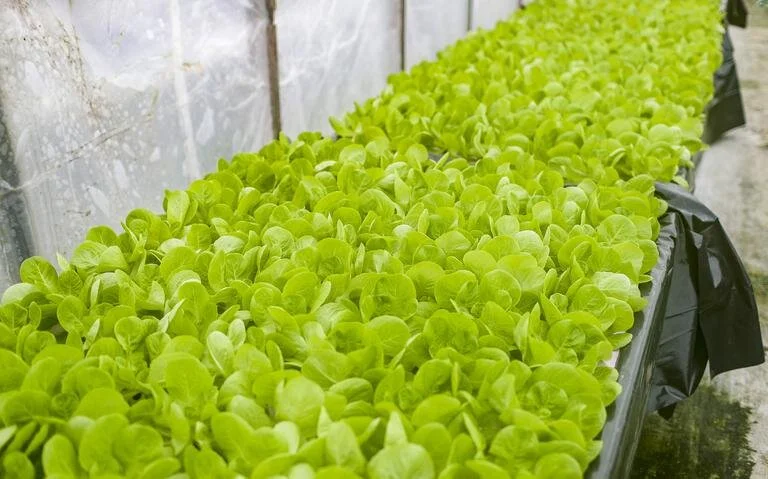
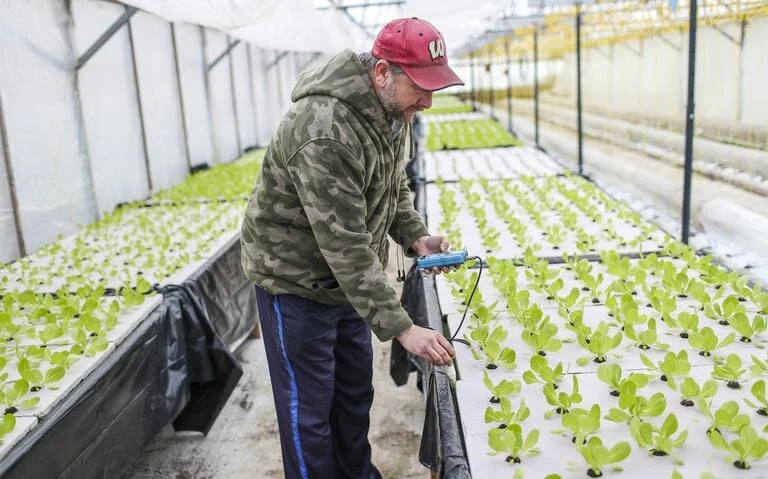
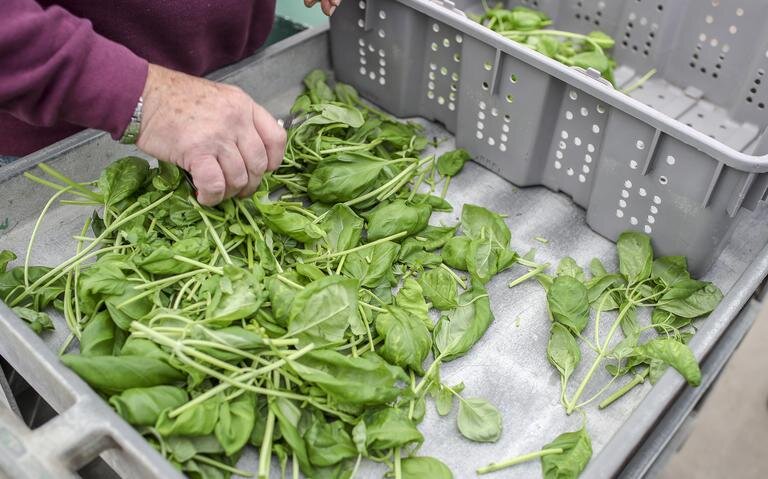
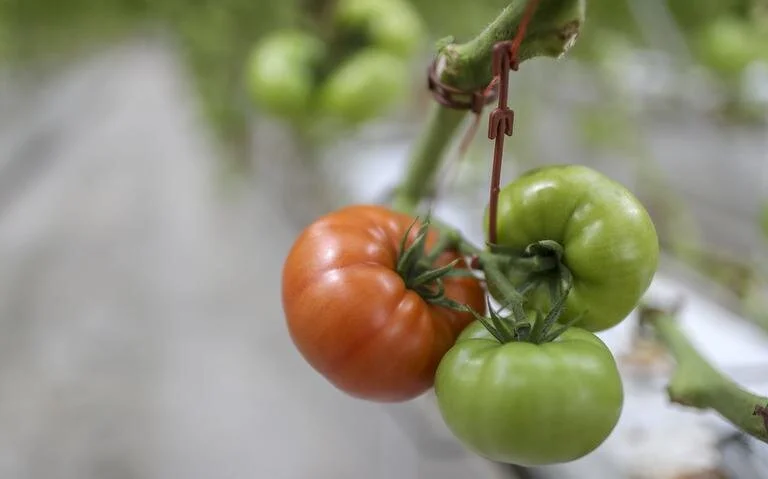
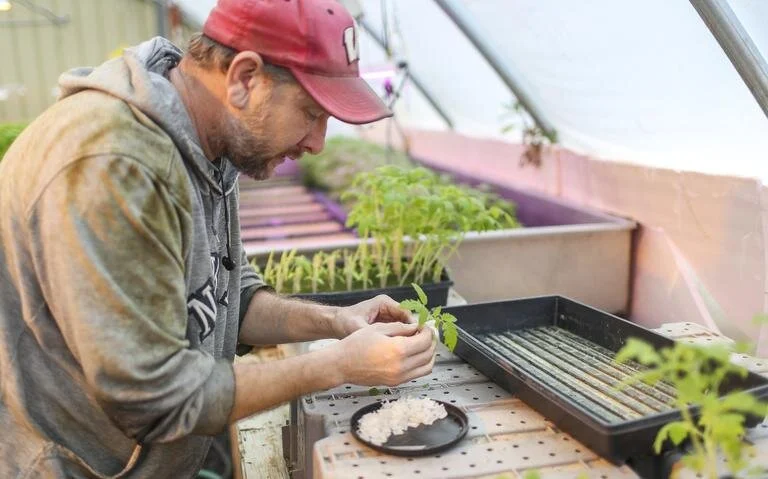
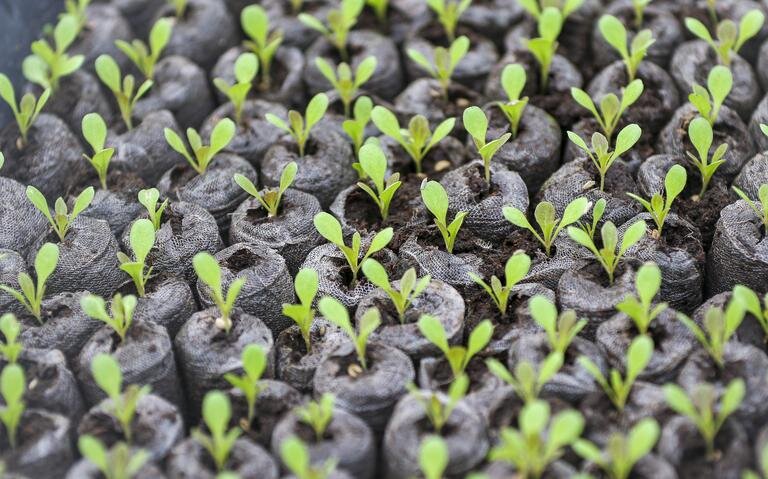
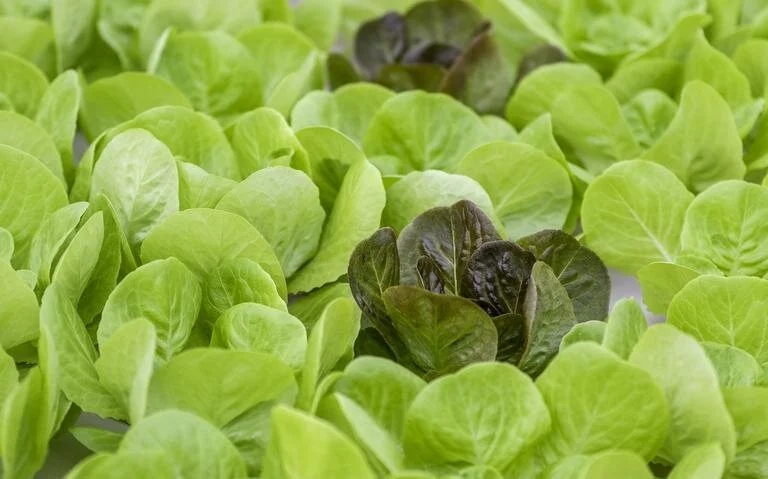
8 / 8
The silver tube at the center of the photo houses a high-intensity ultraviolet light used to kill pathogens in the water at Bay Produce in Superior. (Clint Austin / caustin@duluthnews.com)
Bay Produce fits that bill to a T. It grows lettuce, basil, tomatoes, cucumbers, peppers and eggplant inside a 1 1/2-acre greenhouse equipped with hydroponics.
Rich Fisher, Bay Produce's head grower, said the greenhouse uses Superior city water that has been treated with ultraviolet light, rendering it "99.9% microbe-free."
He contrasted the sterile greenhouse setting at Bay Produce to farm fields where lettuce is often grown on plots adjacent to livestock "where they really have almost no control over runoff."
In addition to producing a consistently safe and tasty product, Bay Produce also has a story to sell. The greenhouse is operated by Challenge Center Inc., an organization established by Catholic Charities 50 years ago to serve children and adults with developmental disabilities. The greenhouse is staffed with 10 Challenge Center staff members and up to about 40 clients at any given time.
Challenge Center Director Mark Kroll said the greenhouse provides a sheltered work setting that can accommodate clients' unique needs, whether that's a short two-hour shift or one accompanied by a job coach.
"We provide sheltered employment for folks with disabilities," Kroll said. "It's an amazing program we have here. So, we already have a lot of local folks looking for our projects anyway, because they support our mission. But this provides a little extra push for us. It's one more reason for folks to look for Bay Produce products."
Bay Produce has enjoyed a safety edge over larger growers in regard to other products, too. For instance, earlier this summer people across the nation were sickened with cyclosporiasis from contaminated basil grown in Mexico. Again, Bay Produce offered a safe alternative.
"It's amazing how things that happen on a national scale that make the national news can really affect local growers," Kroll said.
Bay Produce distributes its products exclusively in the Northland through grocers and restaurants as far north as Grand Marais and as far east as Ashland. Because its produce isn't traveling great distances, Kroll said they are able to deliver a product that's ripe and ready to eat the moment it hits the shelves or lands on a restaurant's sandwich.
Gardening Could Be The Hobby That Helps You Live To 100
Australian researchers following men and women in their 60s found that those who regularly gardened had a 36% lower risk of dementia than their non-gardening counterparts
Many of the world's centenarians share one common hobby: gardening. Could you extend your life and drop your stress by taking up the pursuit, too?
By Jamie Feldmar
10th December 2018
Dan Buettner has studied five places around the world where residents are famed for their longevity: Okinawa in Japan, Nicoya in Costa Rica, Icaria in Greece, and Loma Linda in California and Sardinia in Italy.
People living in these so-called “blue zones” have certain factors in common – social support networks, daily exercise habits, and a plant-based diet, for starters. But they share another unexpected commonality. In each community, people are gardening well into old age – their 80s, 90s and beyond.
Could nurturing your green thumb help you live to 100?
Mood elevator
It is well-known that an outdoor lifestyle with moderate physical activity is linked to longer life, and gardening is an easy way to accomplish both. “If you garden, you’re getting some low-intensity physical activity most days, and you tend to work routinely,” says Buettner.
He says there is evidence that gardeners live longer and are less stressed. A variety of studies confirm this, pointing to both the physical and mental health benefits of gardening.
Okinawa in Japan has one of the world's highest concentration of centenarians (Credit: Getty Images)
In a recent Dutch study, researchers asked participants to complete a stressful task, then split them into two groups. One group read indoors and the other gardened outdoors for 30 minutes. The group that read reported that their mood “further deteriorated”, while the gardeners not only had lower levels of the stress hormone cortisol afterward, they also felt “fully restored” to a good mood.
Australian researchers following men and women in their 60s found that those who regularly gardened had a 36% lower risk of dementia than their non-gardening counterparts.
Australian researchers following men and women in their 60s found that those who regularly gardened had a 36% lower risk of dementia than their non-gardening counterparts
And preliminary studies among elderly people suffering from cognitive issues (such as dementia and Alzheimer’s) report benefits from garden settings and horticulture therapy. Sunlight and fresh air, for example, help agitated elders feel calmer, while the colors and textures of various plants and vegetables can improve visual and tactile ability.
There is no panacea for growing old but, the science suggests, gardening does appear to improve our quality of life as we age.
Let nature nurture you
It’s not just about health effects, either: the social benefits of gardening can also increase longevity. Dr Bradley Willcox of the University of Hawaii studies centenarians in Okinawa, which has the world’s highest ratio of centenarians, at approximately 50 per 100,000 people. Many residents maintain small personal gardens well into old age.
Some research, including studies conducted in France, have shown farmers are healthier than non-farmers (Credit: Alamy)
He says that gardening helps with other essential, if somewhat more ephemeral, factors in increasing longevity. “In Okinawa, they say that anybody who grows old healthfully needs an ikigai, or reason for living. Gardening gives you that something to get up for every day.”
On top of that, explains Willcox, Okinawans value the concept of yuimaru, or a high level of social connectedness. “Getting together at a local market, bringing your produce and sharing your latest creations from the garden is a big social activity,” he says. “That certainly helps people feel grounded and connected.”
Doctors in Scotland can now prescribe a walk in nature to treat a variety of ailments, including reducing blood pressure and anxiety, and to improve overall happiness
A sense of connection to other people is important, but so too is the individual connection to nature. One Harvard University study showed that people who were surrounded by lush greenery lived longer, with a lower chance of developing cancer or respiratory illnesses.
Doctors in Scotland can now prescribe a walk in nature to treat a variety of ailments, including reducing blood pressure and anxiety and to improve overall happiness. Gardening – even on a small plot in an urban area – is a simple way to incorporate more nature into your daily life.
Finally, there is also a dietary component to longevity that gardening can help with. Researchers have demonstrated a link between the “Mediterranean diet” – rich in vegetables, fruits, whole grains, legumes, nuts, fish and olive oil – and slower aging.
Willcox says the fundamental principle of eating an abundance of fresh vegetables, ideally from local gardens and markets, is important to longevity, whether the diet is technically Mediterranean or not. In Okinawa, for example, most people grow vegetables such as bitter melon and sweet potatoes in their gardens.
“When you eat vegetables that you’ve grown yourself, it changes everything – they taste more delicious, and it really makes a difference in the health qualities (vitamins, minerals, phytoactive compounds etc.) of the food itself,” says Willcox. Buettner, the “blue zones” expert, recommends a diet of “90% plants, especially greens and beans”, and points out a simple truth: gardeners are more likely to plant what they want to eat.
Farming for a longer life?
If gardening is good, is farming even better? Many of the lifestyle factors associated with longevity – such as living in the country and getting lots of exercises – apply to farmers as well.
Some evidence suggests that farming is one of the healthiest occupations. One Australian study showed that farmers were a third less likely to suffer from a chronic illness, and 40% less likely to visit a GP than non-farm workers. Researchers from the US compared mortality rates among farmers against rates for the general population and found farmers less likely to die from cancer, heart diseases or diabetes. And studies in Sweden and France have also shown farmers are healthier than non-farmers.
Dr Masahiko Gemma of Waseda University in Tokyo studied self-employed farmers in the central province of Saitama, who were found to have a longer life expectancy that non-farmers and work later into life. Many of Gemma’s respondents were part-time farmers or retirees, and he describes many of their responsibilities as “similar to the work of maintaining a garden”.
Researchers from the US compared mortality rates among farmers against rates for the general population and found farmers less likely to die from cancer, heart diseases or diabetes
“Small family farms are common in Japanese agriculture,” says Gemma, explaining that his survey did not include farmers working for large-scale corporate operations. He found that self-employed farmers enjoyed statistically significant and positive changes in psychological and physical conditions before and after engaging in light farming activities. “Our guess is that farming work contributes to the maintenance of good health and spirits,” he says.
Researchers have demonstrated a link between a diet rich in vegetables, fruits, whole grains, legumes, nuts, fish and olive oil with slower aging (Credit: Alamy)
Reality check
Although Gemma’s findings are heartening, not all farming resembles the traditional, low-tech Japanese model he describes. Agriculture is an industry in most of the Western world, and farmers can experience difficult or dangerous working conditions, high debt and increasingly automated processes.
“The reality of what agriculture is like, at least in America, is staring at a computer for as long as everyone else, running systems for broiler houses or hog containment facilities, or sitting in your air-conditioned combine watching videos while you go across monotonous GPS precision-guided fields,” says Thomas Forester, a New York-based food policy consultant to research organisations and UN agencies.
It’s difficult, then, to view farming as a magic bullet against aging.
Neither farming nor gardening will ultimately guarantee a longer lifespan. But some of the lifestyle factors associated with both – namely going outside, engaging in light physical activity and eating a healthy plant-based diet – just might.
In the end, it’s all about balance.
“I use the analogy of a chair,” says Willcox. “Diet, physical activity, mental engagement and social connection are the four legs. If you don’t have one of them, you fall out of balance, and it can shorten life expectancy. Longevity isn’t about one single factor – it’s about not working too hard to share a constellation of them all.”
To comment on this story or anything else you have seen on BBC Capital, please head over to our Facebook page or message us on Twitter.

Summit Offers Businesses A Chance to Connect
Start-up Sherpa Space will also offer visitors a chance to taste its specially-bred strawberries that are grown in container farms at the fair
A Host of Events On The Sidelines Encourage
Investment And Growth
November 25, 2019
As Korea welcomes Asean for a special summit in Busan today and tomorrow, the state-backed Korea Trade-Investment Promotion Agency (Kotra) is hosting four trade fairs and conferences on the sidelines to showcase the latest technologies from Korean companies and their cooperative efforts with Asean.
The group of 10 countries has increasingly grown in importance as a major trading partner for Korea since a free trade deal went into effect in 2007.
According to the Ministry of Trade, Industry and Energy, Korea exported $100.3 billion worth of products to Asean in 2018, compared to just $41.0 billion in 2009. In fact, taken as a trading bloc, Asean was Korea’s second-largest trading partner last year.
Korea’s efforts to court the group have also picked up under President Moon Jae-in’s New Southern Policy that seeks to improve relations with the group to diversify from Korea’s traditional trade reliance on China and the United States.
At the Busan Exhibition & Convention Center (Bexco), Kotra will offer its ideas for a more collaborative future with Southeast Asia through the Asean-Republic of Korea Innovation Showcase, Invest Asean, Multilateral Development Bank Project Plaza and Smart City Fair.
Innovating with Asean
At the Asean-Korea Innovation Showcase, 45 companies will display technology and projects that is being developed with Asean in four areas: mobility, lifestyle and health care, agriculture and environment and energy sectors.
Automakers such as Hyundai Motor and Renault Samsung Motors will take the stage in the mobility section with six other companies to show off their efforts to develop the sector in collaboration with their Asean-based partners.
Amid Korea’s recent bet into hydrogen technology, Kotra will feature fuel-cell electric vehicles (FCEV) at the fair, including motorcycles and auto rickshaws equipped with the technology as an example of how such vehicles could roll out in the Asean market.
Hyundai Motor’s booth will display its efforts to push FCEVs into the Indonesian and Bruneian markets and its vision of an eco-friendly Asean auto market.
Renault Samsung Motors will showcase its project to deploy its two-seater electric micro car Twizy in Asean.
It currently manufactures the miniature vehicle at its Busan plant.
Korea’s IT heavyweights, including Samsung Electronics and LG Electronics, will be present in the Smart Life section of the show.
Samsung Electronics will showcase its smart home appliances, while LG Electronics and LG U+ will display Internet of Things products designed for the office using the superfast 5G network.
KT will also be present at the show.
The company is currently looking to deploy its 5G network technology in Asean, with support from the Korean Ministry of Science and ICT.
In the Future Environment and Energy corner of the fair, 16 companies will showcase environmentally-friendly smart grid systems and energy storage systems.
Social venture Tree Planet will share its efforts to develop an eco-friendly coffee farm in Indonesia.
Seoul-based Rosign will showcase its road pavement material targeted for the Vietnamese market at the show. The company has created a joint venture with Vietnam’s Bidico and is expected to establish a manufacturing plant in the country next year.
In the Smart Farming section, 13 companies will show off the newest agricultural technologies, including LS Mtron’s small-sized tractor geared exclusively for Southeast Asia.
Start-up Sherpa Space will also offer visitors a chance to taste its specially-bred strawberries that are grown in container farms at the fair.
Smart cities
After Asean launched the Asean Smart Cities Network last year, interest has surged in smart city technology that attempts to connect urban infrastructure through a wider network.
Kotra expects its Smart City Fair to serve as a platform to connect Korean and Asean companies.
Thailand’s Digital Economy Promotion Agency and Surbana Jurong, a Singaporean consulting agency, will hold sessions to explain their projects at the conference.
According to Kotra, 27 companies and institutions from Asean seeking smart city partners and 130 Korean companies will be present at the conference.
The Ministry of Land, Infrastructure and Transport will host the main smart city event at Bexco, the Asean-Republic of Korea Smart City Fair 2019.
The fair, which runs until Wednesday, will host a total of 21 countries including the 10 Asean members and will have 220 booths from 119 smart-city-related companies.
Korea will exhibit its own efforts to develop smart city technology.
Sejong and Busan are currently designated as two of Korea’s smart city test beds. The government plans to incorporate artificial intelligence to introduce a self-driving shuttle service and emergency-response drones in Sejong.
Busan is currently working toward creating a combined control center for planned robot services, such as parking robots and medical centers that utilize robot assistance.
The government has committed 26.5 billion won ($22.5 million) into smart city projects pursued by state-backed institutions this year.
Asean and beyond
Korean companies have aggressively expanded into Asean in recent years.
According to Korea’s Ministry of Economy and Finance, the number of newly registered Korean companies in Asean stood at 1,292 last year compared to 850 in 2014.
Kotra expects the Invest Asean event at Bexco to help provide more investment opportunities in the region as 75 investment agencies and related institutions from Asean countries will attend the event.
Each Asean country will have its own investment booth to share information to Korean companies. There will also be separate sessions on investment opportunities.
Foreign direct investment (FDI) in Asean has swiftly grown to $155 billion in 2018, accounting for 11.9 percent of total global FDI that year, from just $21.8 billion in 2000.
The region is also Korea’s top market for overseas infrastructure orders, at $11.9 billion last year.
Meanwhile, Kotra will host the seventh Multilateral Development Bank Project Plaza 2019, which will provide information for companies to win global infrastructure projects led by development banks.
The annual event, which has run since 2013, will host the World Bank, Asian Development Bank, Asian Infrastructure Investment Bank, Central American Bank for Economic Integration and Inter-American Development Bank.
The projects will focus beyond Asean and into Africa and Central and South America.
BY CHAE YUN-HWAN [chae.yunhwan@joongang.co.kr]