


Welcome to iGrow News, Your Source for the World of Indoor Vertical Farming

Stacked Farm, Australia's First Fully Robotic End-to-End Vertical Farm
Australia may have one of the world's lowest population densities and plentiful farmland, but as farmers know all too well, water is and will continue to be a great challenge for the country's food supply
Written on the 3 December 2019 by Matt Ogg
Whether it be Bowery Farming backed by Google's parent company Alphabet, Square Roots which was founded by Elon Musk's brother Kimbal, or the innovative startup InFarm with leafy green-growing modules installed in supermarkets, vertical farming is a fertile space for development right now.
Australia may have one of the world's lowest population densities and plentiful farmland, but as farmers know all too well, water is and will continue to be a great challenge for the country's food supply.
Innovations abound in the sector, most notably Sundrop Farms in South Australia which has become a global leader in sustainable agriculture by powering its greenhouse with solar power and sourcing irrigation from desalinated seawater.
Now another Australian company Stacked Farm is set to join the ranks of innovators pioneering food solutions for the future.
After four years of research and development, the Gold Coast-based group's fully automated end-to-end vertical farm will soon be supplying leafy greens to national wholesalers including Sumo Salad, QSR, Dnata, Crown Resorts and Morco Fresh.
This means Stacked Farm's urban-grown produce from Burleigh Heads will be supplied to casinos, in-flight airline catering and retail outlets around the country, with plans for expansion with new facilities in 2020.
A spokesperson for the company says the facility is likely the first of its kind in the world to be fully automated.
"Other vertical farms might have a component of automation but one or two components are done by hand whether that's seeding, cutting or packing," she says.
Stacked Farm CEO Conrad Smith (pictured) says the farm is commercially viable, scalable and competitive, from seedling through to packaging with leading-edge technology.
"A good crop is not weather dependent and can be grown using up to 95 percent less water than conventional farming. It eliminates the use of pesticides and other climate-related hazardous processes as the growing is fully contained and controlled," says Smith.
"We also take sustainability very seriously and renewable power is already contributing up to 30 percent of what it takes to power the farm."
"Drought has wiped out so many primary producers in the country. Water is always going to be an issue in Australia it's our most valuable commodity. Vertical farming can help support our farmers in times of drought or crisis."
Efficient water usage is just one of the sustainable aspects that makes this operation appealing to food wholesalers in Australia. Produce growth is fast and shelf-life longer, with the entire process from seed to bag taking only 16-21 days.
"Produce life is increased due to the controlled growing environment, the technology and the fact it's packed within seconds of harvest and there's no need to wash it - which can be a big degrader of product quality," he says.
"It's great for growing in the city, as we can deliver within kilometres of the produce being grown, not like most farms who rely heavily on lengthy transport distances."
While the current facility can produce a couple of tons of produce a week equating to a 20-acre farm in output. Smith doesn't see this as working against traditional agriculture but rather as a means to complement it.
It's a game-changer for the cattle industry. We have identified that we can grow livestock feed en masse very quickly, and again using up to 95 percent less water. A 1000sqm vertical farm will have enough output to feed hundreds of cattle daily."
"The impact that this could have on farming communities that are suffering through the drought is enormous."
While the production is currently focused on leafy greens, herbs and livestock feed, Stacked Farm is also working with the CSIRO to develop additional products suited for indoor vertical farm growth.
Discussions are also underway with property owners in Victoria and Queensland to build farms suitable for produce growing, as well as a major farming operator in NSW to grow livestock feed.
Roto-Gro on track for Freshero JV and first facility
In other recent horticultural news, ASX-listed Roto-Gro International announced Friday that it had made significant progress in negotiations for a joint venture with Freshero, an aspiring organic produce grower with longstanding relationships across the wholesale, retail and foodservice space in Australia, Southeast Asia and the Middle East.
The company expects to execute the terms of an agreement by the end of 2019, in a move that will see the construction of a fully automated state-of-the-art facility Roto-Gro's patented and proprietary cultivation technology with standard agricultural seeding and harvesting equipment.
This technology includes rotational garden systems, fertigation units, the company's iGrow Software as well as material management systems.
Roto-Gro said Freshero CEO Tony Mahoney had strategically positioned Freshero to lead the development of organic urban vertical farming and distribution centres for fresh organic produce grown in proximity to large urban centres.
Despite the positive news, the RGI share price is currently less than half of what it was a year ago, most likely due to the collapse of cannabis stocks to which its growing technology is also closely aligned.

E. coli Outbreak Numbers Climb; Canada Adds Romaine Import Rules
Federal agencies have increased the number of cases in the E. coli outbreak linked to Salinas, Calif., romaine, and investigators continue to seek the exact source of the lettuce
Chris Koger November 26, 2019
A note to consumers at a Kansas City-area store lets them know the store is not stocking romaine from the Salinas, Calif., region. ( Amelia Freidline )
Federal agencies have increased the number of cases in the E. coli outbreak linked to Salinas, Calif., romaine, and investigators continue to seek the exact source of the lettuce.
The Food and Drug Administration continue to advise consumers to avoid all romaine products, including whole heads, hearts of romaine, and salad kits or mixes that include the lettuce from Salinas. A test on an unopened Ready Pac Foods Bistro Chicken Raised Without Antibiotics Caesar Salad obtained from a Maryland patient included romaine that tested positive for the same strain from patients in other states. But people with E. coli in other states don’t recall eating that salad.
Epidemiologic, laboratory and traceback information indicates the lettuce came from Salinas, according to the FDA.
“No common grower, supplier, distributor, or brand of romaine lettuce has been identified,” according to the Centers for Disease Control and Prevention.
Nov. 26 updates from the FDA and CDC increased the number of patients in the outbreak from 40 to 67, and added three states to the list of where they live. The number of hospitalized patients went from 28 to 39 in the update. The previous update was Nov. 22. The most recent case was reported Nov. 21.
The FDA again reported that hydroponic- and greenhouse-grown lettuce is safe to eat, as well as any romaine grown outside of the Salinas area, which includes Santa Cruz, Santa Clara, San Benito and Monterey counties. The FDA advises consumers to check romaine labels, which should have the harvest region listed, a voluntary addition following a similar outbreak just before Thanksgiving 2018.
Health officials in states that have patients in the outbreak are testing lettuce samples purchased by the patients, if those samples are still available.
Canada mandates proof of origin
As with the 2018 fall E. coli outbreak linked to romaine, the Canadian Food Inspection Agency is requiring a proof of origin for imports of romaine from the U.S.
According to Canada’s Fruit and Vegetable Dispute Resolution Corp., the CFIA requires a new declaration process in the import procedure.
“Their website states: Shipments of romaine lettuce from California must be accompanied by a letterhead, on a separate page, showing a Proof of Origin with the date of signing and the signature of the exporter declaring that the lettuce was not harvested in the Salinas, California, growing region,” DRC President and CEO Fred Webber wrote in an e-mail to industry members.
Webber said the DRC has been contacted numerous times by importers who have paid for romaine that they cannot sell.
“In our previous notes to you, we urged all stakeholders to be calm,” Webber said in the e-mail. “It seems many of you have, but we are seeing indications that others are seeking to recover losses from their trading partners.”
Most disputes arising from the question of who accepts the loss in such cases will be “decided based on who owned the product when it became unmerchantable,” according to the DRC e-mail.
In simple terms, Webber said, in an F.O.B. sale, the shipper owns the loss before it’s loaded on a truck, but the buy owns the loss after the truck is loaded.
“It is understandable that companies do not want to accept a loss they did not cause,” Webber said. “But in a case like this where neither party to the transaction may be at fault, the decision must be made based on long-standing principles like the warranty of merchantability, Acts of God or force majeure.”
Related Topics: Romaine Outbreak E. coli FDA CDC Canada
"Montreal Will Be The Home of The World's Largest Rooftop Greenhouse"
Lufa Farms has announced the construction of their fourth commercial rooftop greenhouse, soon to be completed in the borough of Saint-Laurent, Montreal
Lufa Farms Announces Expansion
Lufa Farms has announced the construction of their fourth commercial rooftop greenhouse, soon to be completed in the borough of Saint-Laurent, Montreal. The greenhouse will measure 163,800 square feet (about 3 football fields), making it the largest rooftop farm in the world. Construction began in September of this year and is expected to be finished by March 2020. This milestone also coincides with the tenth anniversary of Lufa Farms' founding in 2009.
This greenhouse repurposes an existing industrial rooftop to further Lufa's vision of growing food where people live and doing so sustainably. "With each greenhouse, we hold ourselves to an ever-higher standard for sustainable design. Our new farm will be the most energy-efficient to-date and integrate all our learnings from the last ten years to responsibly grow more vegetables year-round," says Lauren Rathmell, Co-Founder and Greenhouse Director.
Responsible agriculture meets innovative greenhouse technology
The greenhouse will feature double-paned glass and two sets of energy-saving screens for improved insulation, and its integration with the building below provides additional thermal benefit to both structures. The greenhouse will also capture rainwater to be used in the closed-loop irrigation system, as well as offset waste with an on-site composting system. At this fourth and largest site, Lufa Farms will be growing eggplants and more than ten unique tomato varieties without the use of synthetic crop protection.
Scaling urban agriculture to feed Montreal
Lufa Farms' most recent greenhouse will have a greater surface area than their three current greenhouses combined. "This rooftop greenhouse will double our growing capacity and allow us to feed 2% of Montreal with fresh, local vegetables. It's an unbelievable step forward for hyper-local, sustainable urban farming," says Mohamed Hage, Co-Founder, and CEO.
Saint-Laurent's Mayor, Alan DeSousa, further stated that "as a sustainable municipal territory, Saint-Laurent is proud to welcome the fourth greenhouse for Lufa Farms. Located in the heart of Saint-Laurent's biodiversity corridor, this greenhouse will facilitate residents' access to local, sustainably-grown products and further promote healthy habits. It will also make it possible to fight against heat islands in our district, where more than 70% of the surface area is devoted to industrial and commercial activities. And lastly, it confirms Saint-Laurent's position at the forefront of the new 4.0, particularly innovative green technologies."
Lufa Farms' mission is to create a better food system by growing food sustainably on city rooftops and partnering with hundreds of farmers and food makers, to provide customers with fresh, local, responsible food via their online Marketplace.
See one of Lufa Farms' other rooftop greenhouses in action in the video below.
Lufa Farms
(514) 669-3559
info@lufa.com
montreal.lufa.com
Publication date: Mon 25 Nov 2019

Babylon Is Excited To Share That We Have Made It Onto The FoodTech 500's Shortlist!
The final list will be released in February, so keep an eye out for our final ranking
The list recognizes companies in all sectors of the AgriFoodTech industry, that are entrepreneurial success stories and have disrupted norms within the industry. The final list will be released in February, so keep an eye out for our final ranking.
hashtag#FoodTech hashtag#Agtech hashtag#futureoffood hashtag#babylonmicrofarms hashtag#successstories

Fourth Edition of Aquafarm To Be Held On 19 And 20 February
On 19 and 20 February, AquaFarm and NovelFarm are back, the two simultaneous events on current and future food production trends, devoted to the breeding of aquatic species and the cultivation of algae, indoor crops, and vertical farming
On 19 and 20 February, AquaFarm and NovelFarm are back, the two simultaneous events on current and future food production trends, devoted to the breeding of aquatic species and the cultivation of algae, indoor crops, and vertical farming.
The 2020 edition will be totally geared to innovation and environmental sustainability
AquaFarm, now in its fourth edition, is the yearly appointment for operators of the whole aquaculture supply chain. Since its debut, it has been developed in collaboration with API and AMA, the two leading Italian associations in this sector.
The event bears witness to the growing role of aquaculture worldwide. According to the most recent data published by FAO, 53% of aquatic species destined for human nutrition worldwide are produced by farming, to which about 30 million tons of aquatic plants and macro and microalgae must be added. Overall consumption is estimated at 20.5 kg per person, with an average yearly increase of 3.2% from 1961 to today, surpassing both population growth and protein intake derived from terrestrial species. With the total number of fisheries products essentially at the levels of the late 1980s, growth is upheld and will be even more so in the future, by aquaculture.
An interesting fact emerging from the FAO survey is that half of the production from breeding is related to aquatic species that are defined as "extractive". They are the ones that get their nourishment filtering water from the environment; in this way they also use the waste produced by those species which must instead be nourished by man, thus achieving an integrated production and reducing the environmental impact. FAO and producers are relying heavily on these farms to combine sustainability and increased food production with aquaculture.
The 2020 program focuses on three themes. Environmental sustainability, intended both as a reduction of the impact of farming on the ecosystem and as a resilience of production in presence of environmental changes, not only climatic but also due to chemical and microplastic pollution. Research and innovation in all sectors of the supply chain with particular attention to cooperative projects at the European level. The finished product from aquaculture also narrated through tastings aimed at the distribution and to individual and collective catering
NovelFarm, at its second edition, is the international exhibition-conference event dedicated to innovation in Agritech sector, with in-depth information on soilless crops, the circular economy of new crops and the urban farming.
The NovelFarm 2020 conference program will analyze some challenges for our planet in the coming years, to which the agricultural innovation of soilless soil tries to give answers. Feeding the growing population by reducing food waste and the impacts of logistics and transport by bringing primary food production as close as possible to places of consumption; adopting cultivation methods that multiply the yields and guarantee maximum quality and stability of the organoleptic and nutritive characteristics.
In the exhibition area, companies will display systems for soilless cultivation and vertical farming, LEDs, biostimulants, biotechnologies, sensors, robots and automation systems.
Click here to check out our photo report of last year's edition

For more information:
Aquafarm
Viale Treviso, 1
33170, Pordenone (PN), Italy
aquafarm.show
Marco Comelli
marco@studiocomelli.eu
+39 347 8365191
Aurora Marin
aurora@studiocomelli.eu
+ 39 347 1722820
Publication date: Mon 25 Nov 2019

Is High-Risk Romaine Simply The New Normal?
We’re in the midst of the fifth E. coli outbreak from leafy greens in just two years. It’s also the second outbreak announcement in the last month
We’re in the midst of the fifth E. coli outbreak from leafy greens in just two years. It’s also the second outbreak announcement in the last month.
November 25th, 2019
by Jesse Hirsch
Update 11/26/2019, 5:22 p.m.: CDC updated the number of victims from 40 to 69 since this story published yesterday. The number of states involved has increased from 16 to 19, and hospitalizations increased from 28 to 39. We will continue to update this story.
You’re forgiven if you mixed up Friday’s announcement of an E. coli outbreak in romaine lettuce with the other E. coli outbreak in romaine lettuce announced earlier this month. Or, perhaps you’ve confused it with the E. coli outbreak in romaine lettuce around Thanksgiving 2018, or that other one near Thanksgiving 2017.
“Our leafy green supply chain is simply not good,” says Angela Anandappa, supply chain expert and executive director of product safety watchdog Alliance for Advanced Sanitation. “What’s particularly bad is it’s starting to seem like we’re licked.”
The latest outbreak, unfortunately, timed to coincide with one of this country’s biggest food holidays, is a new strain of Shiga toxin-producing E. coli 0157:H7 that appears to be particularly virulent. Of the 40 victims across 16 states identified thus far, 28 have been hospitalized. Five of these victims have developed hemolytic uremic syndrome, a very dangerous type of kidney failure. Laura Whitlock, communications lead for the Centers for Disease Control and Prevention’s (CDC) Outbreak Response and Prevention team, says the agency will likely announce more victims before Thanksgiving.
Related: What if we could detect E. coli in an hour?
“This is very much an ongoing investigation,” she says. “New data is coming in hourly, and we’re out there trying to tell restaurants and retailers what they should tell their customers.”
This particular E. coli outbreak seems to have roots in Salinas, California, one of the two main growing regions in the United States, also known as the country’s “salad bowl.” Past outbreaks have stemmed from Yuma, Arizona, where most of our lettuce is grown in the winter.
As with past outbreaks, CDC and the Food and Drug Administration (FDA), which regulates about 75 percent of our food supply, are trying to walk a line between overbroad recommendations (i.e,. “Avoid all romaine lettuce”) and hyper-specific information that could confuse the public. The agencies’ current advice—avoid any romaine lettuce with a label showing it’s grown in Salinas, or doesn’t say where it was grown, unless it’s hydroponic lettuce, which is probably okay—skews closer to the latter. Additionally, FDA advises: “Consumers ordering salad containing romaine at a restaurant or at a salad bar should ask the staff whether the romaine came from Salinas.” (FDA declined to provide comment for this story.)
“It’s an unfair burden to place on consumers!” says Bill Marler, a Seattle-based attorney who works on behalf of food poisoning victims and founded the industry publication Food Safety News in 2009. “I’m of the mind we should follow that lovely advice, ‘When in doubt, throw it out.’”
E. coli is a large group of bacteria that makes its home in human and animal digestive tracts. So whenever an outbreak turns up in vegetables, that’s not where it began. Often, there is an element of contaminated water, either used to irrigate or wash vegetables. In the first prominent case of E. coli poisoning in leafy greens—a 2006 outbreak in spinach that resulted in 199 victims and three deaths—the culprit was likely feces from wild pigs or contaminated irrigation water from a local livestock farm.
“It’s starting to approach the level where you need warning labels on romaine, calling it a high-risk food.”
Romaine surpassed iceberg years ago as America’s most popular lettuce; Marler believes its ubiquity is largely why it keeps popping up in E. coli outbreaks. “There’s more of it to contaminate,” he says. This, combined with its large surface area to absorb bacteria, nooks, and crannies that defy washing, and the fact that—unlike E. coli-tainted meat—lettuce is rarely cooked, makes romaine a particularly challenging conduit for foodborne pathogens.
Investigators say it is too soon to know what the specific root of this outbreak is, and have yet to pinpoint a common supplier or region in Salinas (one voluntary bagged salad recall was issued, though Whitlock says that particular product was not consumed by many of the victims). If the recent past is any indicator, water contaminated by livestock could be the likely culprit here.
After last fall’s E. coli outbreak, the industry groups United Fresh Produce Association and the Produce Marketing Association created a task force to identify root causes of the ongoing contamination. Improved water quality management and testing was the very first recommendation from their final report, as well as a suggestion that the proximity between lettuce farms and concentrated animal feeding operations—commonly called CAFOs—is strongly indicated as a risk factor.
The task force also pushed for improved origin labeling on lettuce packaging, so consumers and retailers can more readily identify if a particular item falls under an official product warning. Of course, this method only works if the consumer goes shopping armed with the knowledge that this outbreak started in Salinas, unlike the last one.
Related: Could Yuma, Arizona’s trained falcons prevent the next E. coli outbreak?
“It’s starting to approach the level where you need warning labels on romaine, calling it a high-risk food,” says Marler. “We aren’t there yet, but almost.” Though FDA will be publishing a list of “high-risk foods,” and has made recommendations against, say, alfalfa sprouts for vulnerable populations, there are not currently produce warning labels like the ones you’d find on a pack of cigarettes.
Whitlock says it’s possible CDC could recommend stronger advice in the coming days, such as avoiding all romaine lettuce, regardless of origin. “That is certainly not off the table,” she says.
People usually get sick anywhere between 2 and 8 days (average of 3 to 4 days) after exposure to Shiga toxin-producing E. coli. If you have a high fever, bloody diarrhea, or severe vomiting, or if diarrhea lasts longer than 3 days, CDC recommends seeing a doctor immediately.
We will update this story as more information becomes available.
Before joining The New Food Economy as managing editor, Jesse Hirsch was an investigative food editor at Consumer Reports, where he tackled stories on food safety, health, and nutrition. Jesse was a founding editor at Modern Farmer magazine, and he was restaurant critic at The San Francisco Examiner and The East Bay Express in Oakland, California. His stories have appeared in The New York Times, The Wall Street Journal, Bon Appetit, The Guardian and more.
He can be reached via email at jesse.hirsch@newfoodeconomy.org or on Twitter at @jesse_hirsch.
FARM, HEALTH, HOME FEATURE, PLATE E.COLI FDA LABELING OUTBREAK ROMAINE LETTUCE
West Village Farms’ Indoor, Vertical Style A Growing Success
Inside the old Hewlett-Packard printer factory in east Vancouver, Ken Kaneko walks among towering rows of scaffolding that hold sprouted plants growing under LED lights
East Vancouver Company Sells Lettuce, Microgreens
To Chuck's, New Seasons, High-End Grocers
By Will Campbell, Columbian Assistant Metro Editor
November 10, 2019
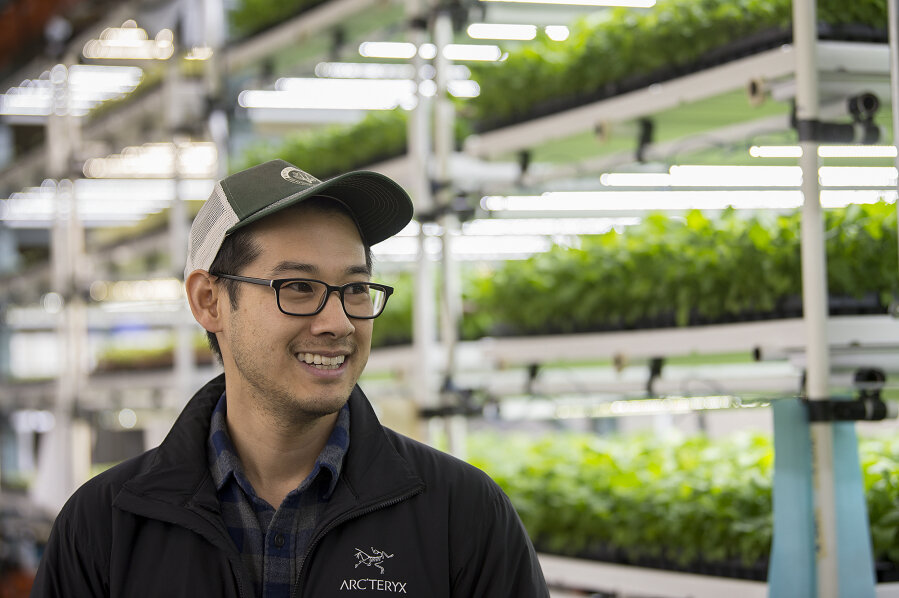
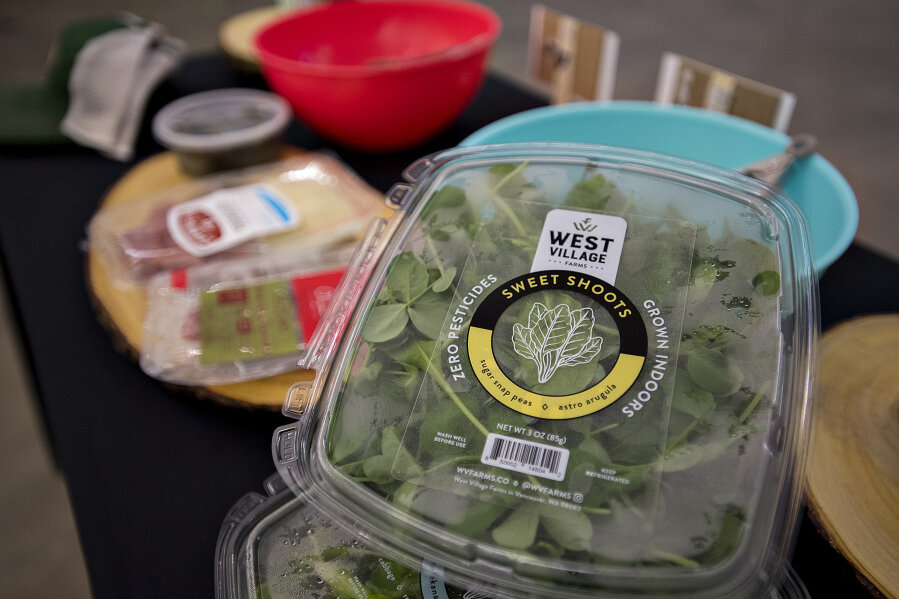
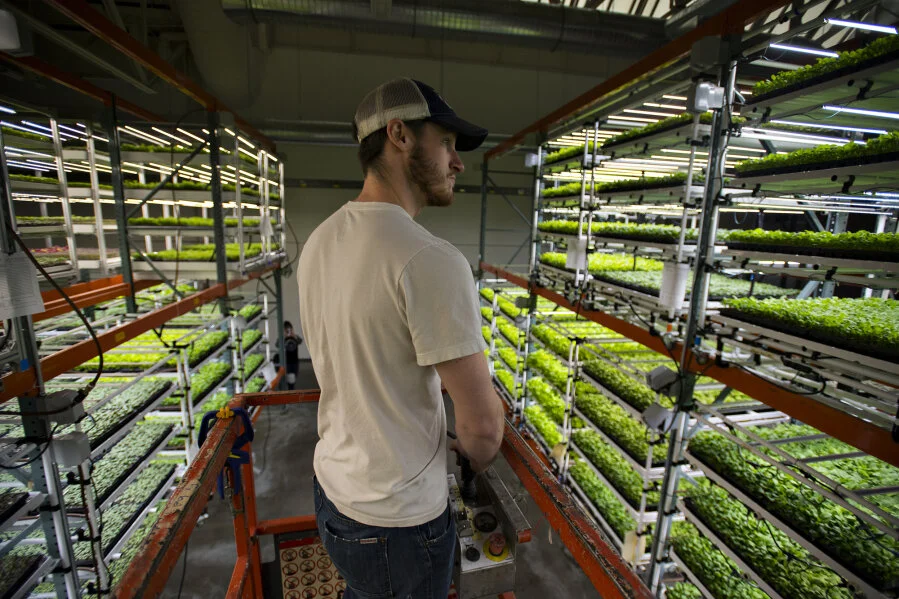
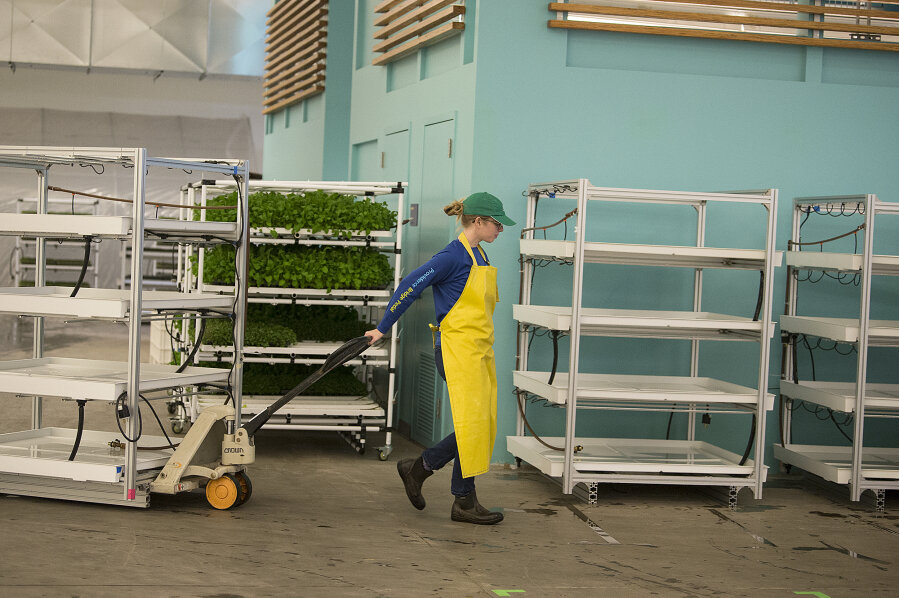
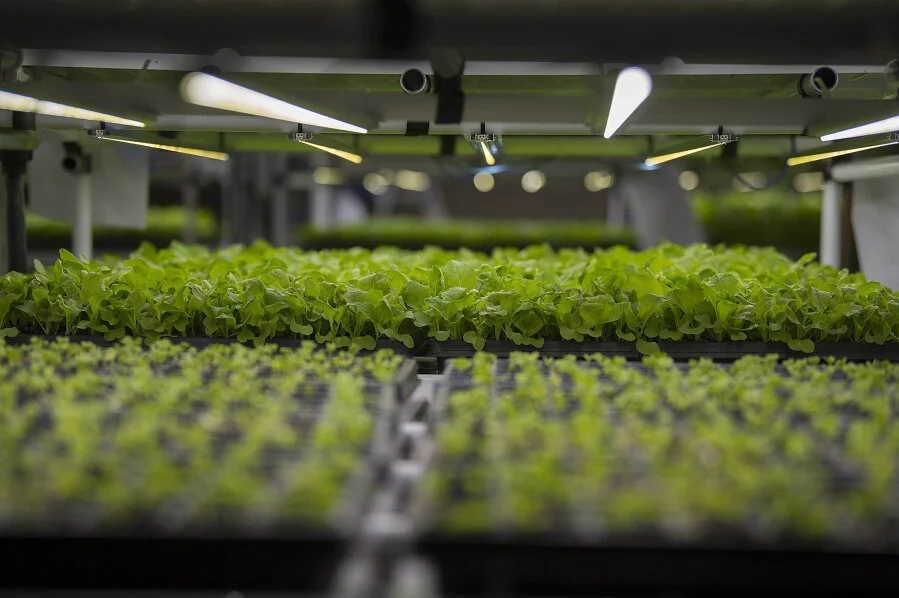
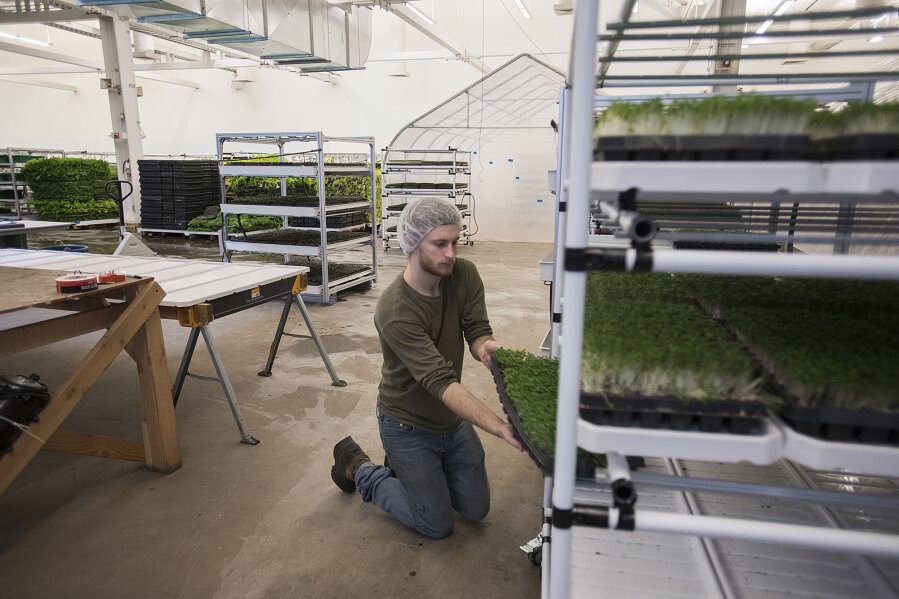
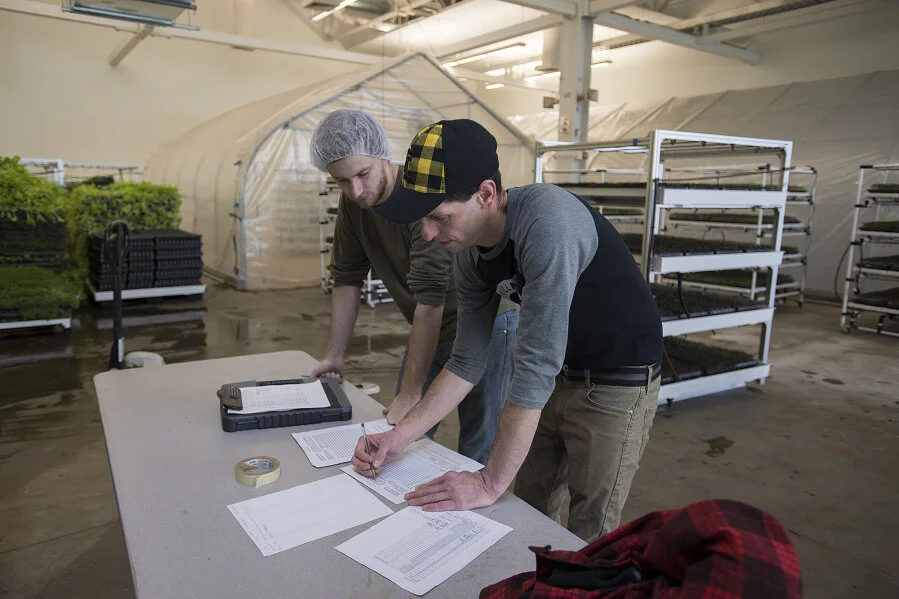
Inside the old Hewlett-Packard printer factory in east Vancouver, Ken Kaneko walks among towering rows of scaffolding that hold sprouted plants growing under LED lights.
Kaneko is the co-owner and CEO of West Village Farms, a company harnessing a new type of agriculture called “vertical farming,” and it’s among the first in Clark County that’s growing food indoors using marijuana-industry methods.
Every factor of the farm can be controlled because the operation is indoors: the temperature, the amount of light and what touches the plants — never bugs or pesticides. Growing the plants in dirt trays stacked eight rows high allows the farm to conserve space.
West Village is about a year into selling its lettuce and microgreens at high-end grocers in Oregon and Washington, including New Seasons and Chuck’s Produce, where a plastic container retails for $4.99. The young company is in a state of rapid growth as it works its way into more stores on the West Coast.
In October, the farm began harvesting three times a week, up from twice, to get fresher products to customers. It’s also seeing double or triple revenue growth each month, Kaneko said.
“Compared to last year, we made 80 times more,” he said of the revenue. “But we’re still in the infant stages of the company.”
Kaneko expects to expand operations inside West Village Farm‘s rented space at 18110 S.E. 34th St. It’s using a little more than half its 25,000-square-foot space and plans to be at full capacity by the first quarter of 2020.
Unlike any outdoor farm, West Village also plans to expand operations upward by adding at least four more rows, which are bundled into a “pod” reaching nearly to the ceiling.
Kaneko touts both health and environmental benefits of consuming indoor-grown plants. Even outdoor-grown food labeled organic can sometimes be exposed to herbicides or pesticides, he said.
Another advantage is having a short farm-to-table time. Compared with plants harvested on outdoor farms and trucked long distances to the grocer, harvesting plants in Vancouver means putting them on shelves in one or two days.
“A lot of microgreens are shipped here from (California), but it takes two weeks before they hit the shelves,” he said. “With West Village Farms, the product arrives at grocery stores a day or two after it’s harvested. That’s how we provide quality to our customers.”
West Village Farm’s method uses 95 percent less water compared with an outdoor farm, Kaneko said. Part of that is due to the company’s patented irrigation system.
Technology company
Before Kaneko co-founded West Village, he worked for Apple in California and often traveled for work. He recalls a business trip to Japan, where he saw a vertical farm operating out of a defunct semiconductor factory.
“I thought it was an interesting idea,” he said. “It was a thing in Japan, especially after the Fukushima disaster, to secure the supply chains of food.”
The vertical farms also reminded Kaneko of his time at Stanford University studying computer hardware manufacturing. At Stanford, where Kaneko earned a degree in materials science and engineering, he learned about two of the legends to come out of the department: Craig Barrett, former CEO of Intel, and Ko Nishimura. Nishimura fell victim to American internment during World War II but eventually became CEO of Solectron, one of the world’s largest electronics manufacturing companies.
“I idolized both those people,” Kaneko said.
After Kaneko toured the vertical farm in Japan, he learned that Nishimura owned one in California called Ecopia, so he reached out to him via email.
The two met for lunch, and Kaneko began to materialize his interest in starting his own vertical farm in the Pacific Northwest, where Kaneko held his first job after college at Intel’s Hillsboro, Ore., complex.
Over the next year, Nishimura “probably was vetting me out,” Kaneko said. “Afterward, when we felt comfortable with each other, we decided to create this new company.”
Kaneko, Nishimura and some other investors eventually decided to name the company after Nishimura, which in Japanese translates to “West Village.”

US: Wisconsin - From Groceries to Growing: Ernessi Farms Aiming to Buy Market Fresh Site, Turn It into ‘Vertical Farm’
Ernessi Farms grows plants indoors hydroponically. According to its website, “In vertical farming our growing levels are stacked on top of each other in unused urban spaces. With our space saving design and proprietary technology, our vertical farm allows us to grow 80% more produce while using 90% less water.”
Bryan Ernst shows how the roots of the plant extend below the growing bed into the water tray during a February 2017 tour of Ernessi Farms in downtown Ripon.
Ian Stepleton, Editor
11/27/2019
Bryan Ernst speaks with the Ripon Common Council, including Ald. Doug Iverson, seen in the background.
Ripon’s downtown grocery store has been for sale for some time.
Soon, it may have a new owner — but the building will be used to grow food, not sell it.
Ernessi Farms, which first opened in the lower level of the Bluemke’s building downtown, is planning to purchase the Market Fresh building at 111 E. Fond du Lac St. There, it’s expected to greatly expand its ability to grow produce, increase its market share and hire new employees.
“With this expansion, this will make us the largest vertical farm in the state by far,” said Bryan Ernst, owner and founder of Ernessi Farms. “The only other vertical farms that are getting close to the size by the time we’re done would be found in cities like Chicago, New York, and Minneapolis.”
A closing date has not yet been set for the proposed sale.
“We’re a little further past the negotiation process right now; we’re finalizing some final details,” Ernst told the Commonwealth Tuesday, noting negotiations have been ongoing for a few months. “I’d like to be able to close by a little after the first of the year, but it’s looking like it should be relatively soon, assuming all things go well between the attorneys.”
Ernessi Farms grows plants indoors hydroponically. According to its website, “In vertical farming, our growing levels are stacked on top of each other in unused urban spaces. With our space-saving design and proprietary technology, our vertical farm allows us to grow 80% more produce while using 90% less water.”
Meanwhile, specifics about what will happen to Market Fresh, such as when it is expected to close, are unclear.
When called by the Commonwealth Tuesday, owner John Maczuzak declined to comment.
Read the full story in the Nov. 28, 2019 edition of the Ripon Commonwealth Press.
These Vertical Hydroponics Systems Are Growing Fresh Lettuce Anywhere With An Outlet
Tyink was an opera singer then and like the arias he performed onstage, the process of growing food captivated him. So Tyink started doing it, too — growing food in the middle of the city for friends and family. Any extra went to a food pantry
Sarah Hauer Milwaukee Journal Sentinel
November 29, 2019
Alex Tyink, a partner in Fork Farms, is shown looking down at a vertical hydroponics unit on Tuesday, November 26, 2019 at Butte des Morts Elementary School in Menasha, Wis. Fork Farms LLC has expanded a lot in the last year going from just selling in Wisconsin to 18 states. Three of these goods are harvested each week, producing about 60 pounds of fresh Romaine lettuce, which is used by the food service at Menasha High School. MARK HOFFMAN/MILWAUKEE JOURNAL SENTINEL
Mark Hoffman/Milwaukee Journal Sentinel
Years ago, Alex Tyink met a guy who was farming on a rooftop in New York City.
Tyink was an opera singer then and like the arias he performed onstage, the process of growing food captivated him. So Tyink started doing it, too — growing food in the middle of the city for friends and family. Any extra went to a food pantry.
Tyink helped start more rooftop gardens around New York. But he found the farms difficult to scale.
Five years, 30 prototypes and a move back to Wisconsin later, Tyink is the founder of Appleton-based Fork Farms LLC. With his product, dubbed a Flex Farm, food can be grown nearly anywhere with an outlet. The company produces a vertical hydroponics system for indoor agriculture, requiring lower energy and labor resources than other systems Tyink used.
The Flex Farm is catching on and growth is ramping up. Fork Farms is set to double its revenue this year, Tyink said. Fork Farms' systems are now in schools, restaurants, private clubs and in health care systems in nearly 20 states.
"Everyone is tired of paying for food to go bad," he said.
The Flex Farms are best for highly perishable foods like lettuces and tomatoes. One four-foot-tall system can grow more than 150 pounds of leafy greens a year, according to the company. The Flex Farm starts at $2,995.
Hydroponics is a method of growing plants that deliver nutrients through water, rather than soil. The Flex Farm system requires water and electricity to run, light is reflected throughout the system so the plants will grow.
"Sometimes people think about it as being unnatural and I don’t think about it that way," said Neil Mattson, associate professor of plant science at Cornell University. "Roots take up nitrogen in the same molecular form if it's in soil or a water solution and photosynthesis takes the same form if its sunlight or another beam."
Hydroponics takes up less space and uses less water than traditional agriculture. It can be done indoors, allowing for year-round food production. Highly perishable crops are among the most common to grow using hydroponics, Mattson said.
While Tyink's initial vision was to sell to schools, all sorts of would-be hydroponics farmers are buying the units. Fork Farms has installed its system in almost 300 locations, Tyink said. Some of those installations are one Flex Farm while others have a dozen or more.
The Marshfield Clinic's community health center purchased 17 farms to be placed in Rusk County to see if the increase in fresh food available affects public health, he said. Medinah Country Club outside Chicago is using Flex Farms to ensure fresh produce year-round.
The Oak Creek-Franklin Joint School District has four Flex Farms kept in the 9th Grade Center's cafeteria at Oak Creek High School. The farms supply fresh lettuces and herbs daily to around 2,000 students a day who eat lunch served by the district.
"I don't have a green thumb," said Jill Fehler who serves as the district's hydroponic farmer. " I had a fear of failure, but it's not hard to grow the lettuce and things. Cucumbers and strawberries are a little harder."
Fehler said she spends less than 15 minutes a day on the farm. The ph levels need to be checked and water added to the tanks, said Fehler, a food service director for Teher Inc., the school district's food management company.
"I also sing to them," she said. "They like Sinatra."
It takes about four weeks for the plant to grow from a seed to something to harvest. She's looking to start growing jalapenos next.
Six full-time employees comprise Fork Farms' core team. Nearly every component that goes into one of the units is produced within 50 miles of Fork Farms headquarters in Appleton. All of the plastics work, gasketing, and metal fabrication is done in Wisconsin.
It's the social mission that keeps the team going, Tyink said. Fork Farms developed a curriculum with FIRST Educational Resources LLC in Oshkosh for kindergarten through grade 12 students to accompany the hydroponics system, covering science, arts, health and other disciplines.
"We have to keep selling stuff to stay alive but that’s not really why we’re here," Tyink said.
Sarah Hauer can be reached at shauer@journalsentinel.com or on Instagram @HauerSarah and Twitter @SarahHauer. Subscribe to her weekly newsletter Be MKE at jsonline.com/bemke.

QFCs In Bellevue And Kirkland To Begin Growing Produce In-Store
QFCs in Kirkland and Bellevue appear to be taking the whole farm to table concept to a new level, since the grocer will now be growing some of their own food as well. It’ll probably require a new aisle
BY MYNORTHWEST STAFF
DECEMBER 1, 2019
QFCs in Kirkland and Bellevue appear to be taking the whole farm to table concept to a new level, since the grocer will now be growing some of their own food as well. It’ll probably require a new aisle.
The Kroger Company has teamed up with urban farming network Infarm that would bring modular living produce farms to a few of their stores. This doesn’t mean there will be vast fields in the QFC parking lot; rather, they will allow some of their produce to grow onsite using hydroponic technology, potentially producing items like kale, cilantro, and lettuce, among others.
QFC’s new self-checkout cameras may send you back to human checkouts
“Kroger believes that everyone deserves to have access to fresh, affordable and delicious food, no matter who you are, how you shop or what you like to eat,” said Suzy Monford, Kroger’s group vice president of fresh. “Our partnership with Infarm allows us to innovate by combining ground-breaking in-store farming technology with our passion for fresh, local produce and ecological sourcing. Kroger is excited to be first to market and offer the best of the season, and we’re proud to lead the U.S. on this journey.”
Infarms are stackable and controlled through a cloud-based farming platform that adjusts lighting and temperature remotely. In addition to freshness, the idea is also intended to eliminate unnecessary transportation and storage.
Believe it or not, some people actually call QFC ‘The Q’
The two QFCs in Kirkland and Bellevue will be the first in the county to undertake such a partnership with Infarm, with the company planning to expand to 15 QFCs in Washington and Oregon by April, reports The Seattle Times. The new greens are expected to be ready within weeks at the two Washington locations.

Watch: 5 Acres of Greens In 55m²? No Imports…Hyper-Local Food
Two re-purposed shipping containers, fitted with a ‘Farmony’ – 55m² in size, can produce 55,000 heads of lettuce per year or 408 trays of micro greens per week
November 20, 2019
Two re-purposed shipping containers, fitted with a ‘Farmony’ – 55m² in size, can produce 55,000 heads of lettuce per year or 408 trays of microgreens per week.
John Paul Prior sees these “5ac farms” as a way to compliment an existing farming enterprise.
His vision is to have as many Farmony models across the country as possible, complementing an existing beef enterprise for example and providing another income, all while replacing food imports into this country.
These salads, herbs and microgreens will be grown using hydroponic technology – no soil involved – and will be highly nutritious and free of pesticides.
That IT input into the farm provides a controlled environment.
Anyone who owns a Farmony solution can control it from anywhere in the world with a mobile device. The controlled environment means no pesticides are used and growth cycles are efficient.
Salads and microgreens are grown inside this controlled environment
“The growing season in Ireland is obviously from May to September. In a Farmony, a producer can grow all year round – 365 days a year,” John Paul explained.
This provides a whole new window of opportunity for Irish growers to have a continuous supply of fresh and local produce.
The business model allows for crops to be grown in small spaces. Restaurants could have their own source of salads and herbs all year round for example.
A restaurant’s beef supplier could provide the beef, the herbs to season it and the salad to accompany it.
“With microgreens your grow cycle is just six-to-seven days, so in terms of output one module can grow 24 trays of micro-greens per week and multiply that by 17 and you’re at 408 trays of micro-greens every week, so it’s an impressive output.”
Replacing Imports
At present, Ireland is heavily dependent on imports in this sector, which can be clearly seen on the supermarket shelves.
“We’re encouraging people to apply for the horticultural grant in 2020,” John Paul noted.
“The country imports about €300 million worth of produce, so we’re trying to basically offer a solution for producers to replace those imports.
You’re talking about hyper-local produce. These farms could be placed in urban centres or farmyards.
John Paul noted that while there are some farming sectors struggling at the minute, one of his company’s solutions could fit into a current farm business.
John Paul estimates a total workload of 25-30 hours/week and noted that there is a 40% grant available to set up the farm.
The system can also be used in an existing farm building. Mushroom houses, which are no longer in use for example, are ideal for these modules.
How Does It Work?
John Paul explained a small bit about how the farm works. The modules – which from the outside look like shelves – are basically flat-packs and can each be assembled in 45 minutes.
Water and nutrients flow through these modules feeding the plants. The gallery below shows the root structures of some of the plants and the water in the trays which is filled with artificial fertilisers.
“We use hydroponic technology so there’s a constant water flow throughout the module.
First of all the process is you seed sow. Then you transplant and the roots take the nutrients from the water solution that’s ebbing and flowing throughout the module.
Once the initial work of sowing and transplanting is carried out, the remainder of the work can be completed from a mobile device until harvest.
Lighting and temperature, as well as electrical conductivity and pH levels in the water, are all monitored and used to decide on the different “plant recipes”. The information is all sent to the master controller and sends nutrients to the plants accordingly.
Lights go on and off automatically, nutrients go in and out.
The irrigation system and lighting can all be changed from anywhere in the world. The amount of light hours can be changed for example, depending on the different plants.
Some plants like basil might require more white lights, while mustard or chard will have more blue lights.
As well as plant recipes, John Paul thinks he has the recipe to “supplement and compliment” current farming businesses, which he thinks can be made more sustainable and profitable by building a Farmony on site.

The Future of Food: Why Farming Is Moving Indoors
Ten shipping containers dominate a corner of the Brooklyn parking area, each full of climate control tech, growing herbs that are distributed to local stores on bicycles. This is urban farming at its most literal
November 27, 2019 Staff Writer
A car park opposite the infamous New York City housing estate where rapper Jay-Z grew up seems an unlikely place for an agricultural revolution.
Ten shipping containers dominate a corner of the Brooklyn parking area, each full of climate control tech, growing herbs that are distributed to local stores on bicycles. This is urban farming at its most literal.
The containers are owned by Square Roots, part of America‘s fast-expanding vertical farming industry, a sector run by many tech entrepreneurs who believe food production is ripe for disruption.
The world‘s best basil reputedly comes from Genoa, Italy. Square Roots grows Genovese seeds in a container that recreates the city‘s daylight hours, humidity, Co2 levels – and all fed hydroponically in nutrient-rich water.
“Rather than ship food across the world, we ship the climate data and feed it into our operating system,” says co-founder Tobias Peggs.
High costs
An artificial intelligence expert, Mr. Peggs founded Square Roots with investor Kimball Musk (Elon‘s brother) two years ago. They‘ve signed a deal with one of America‘s big distribution companies, Gordon Food Service, to locate herb-growing containers at some its 200 warehouses.
He says the deal represents everything about indoor farming‘s potential: locally grown, quick-to-market, fresh produce that can be harvested year-round and is free of pesticides and harsh weather.
“Indoor farming can answer many of the questions being asked by today‘s consumers about the provenance, sustainability and health of the food they eat,” he says.
Jeffery Landau, director of business development at estimates the global value of the vertical farming market will rise to about $6.4bn by 2023, from $403m in 2013, with almost half that attributed to growth in the US.
Despite the sector‘s high costs and limited food range, the potential is not lost on investors. Recently, AeroFarms, a producer of lettuce and other leafy greens, raised $100m, including from Ingka Group, Ikea‘s parent company. Bowery Farming raised $90m in a funding round backed by Google Ventures and Uber boss Dara Khosrowshahi.
Plenty, another major US player, raised funds from Softbank chief executive Masayoshi Son and former Google head Eric Schmidt. The company has ambitions to build hundreds of vertical farms in China. In the UK, food delivery and robotics company Ocado is investing in indoor farming.
But there have also been failures. “Vertical farms are a highly intensive capital expenditure,” says Mr. Landau. “Your lighting system will be one of your highest capital costs.” And then there‘s ventilation, air conditioning, irrigation, and harvesting. “Make a mistake and you will have one costly upgrade on the horizon,” he adds.
Mr. Peggs chose a modular system based around shipping containers because he says it is quickly scalable according to demand. “We can put a herb farm in a new city for less than $500,000 and be growing within two months. We just press the ‘basil button‘ – or mint, or tarragon – and the box configures itself to grow in optimum climate conditions.”
In neighboring New Jersey, however, Bowery Farming takes a different approach. The five-year-old company runs industrial-sized farms. Outside one huge, grey windowless warehouse a heat haze shimmers off the concrete. It‘s a sharp contrast to the chilly interior where an aroma of fresh farm produce hits you immediately.
Robots
Produce is grown on trays stacked ceiling-high to maximize acreage. Everything from the automatic seeding machine to harvesting is run by Bowery‘s proprietary operating system (OS) which controls light, adjusts water nutrients and takes camera images of each plant to monitor its health.
“The OS is our central nervous system. There are millions of data points,” says founder Irving Fain. “The artificial intelligence is constantly learning and predicting how to produce the best quality product.”
Running the farm manually would be difficult, he says. Staff operates things from computer screens and iPads. In the cavernous farm room itself, the only sound is robots moving the shelves.
Growing food indoors has been around for decades, but the industry got a kick-start from advances in the performance of lower-cost LED lighting. Combine that with robotics, innovations, and AI, and you have an industry that Mr. Fain says is both viable and scalable.
“The big question was, how can we grow in large volumes at a consistently high quality? Suddenly, the economics changed,” he says. “We can grow 365 days a year – a major departure from thousands of years of agriculture. Unlike outdoor farming, our yield is virtually 100% guaranteed.”
Vertical farmers talk with a zeal you‘d expect of entrepreneurs with tech world backgrounds. With population growth and climate change putting pressure on food production, they think they may have answers.
But this highlights one of the industry‘s limitations. You can‘t feed the world on leafy greens. That said, for Mr. Fain, if Bowery only ever grew lettuce or kale, “it‘s still a win”. But his ambitions are greater. Bowery is growing radishes and turnips that he expects to come to market with two years.
Square Roots hopes to soon start commercial production of beetroots and strawberries and is experimenting with so-called heirloom produce from rare and long-forgotten seeds.
Carbon footprint
Mr. Peggs says: “It makes sense to grow perishable produce in the same neighborhood as the consumer – stuff that doesn‘t travel well. A lot of produce – tomatoes, strawberries – are grown for travel, not for taste. It doesn‘t make sense to vertically farm food with a long shelf life.”
But different produce presents different challenges, says Mr. Landau. Where plants are concerned, not all light is created equal. Fruiting and flowering crops such as tomatoes, strawberries, and peppers have different needs.
“Lights for these types of crops will generally be more expensive, require more electricity, and produce more heat, meaning additional cooling,” says Mr. Landau. “Harvesting these crops can be a significant operational cost.”
But it is being done. In the US, Oishii vertically farms the much-prized Japanese Omakase strawberry year-round. And Farm One produces more than 200 products, including 34 edible flowers. Plenty is experimenting with watermelons. As technology costs fall and R&D intensifies, the crop variety will expand.
That may also ease criticism of the industry‘s carbon footprint. In the artificial light versus sunlight debate, the latter often has the upper hand. But, then, indoor farmers point to the transportation costs and waste in traditional agriculture.
For the moment, Mr. Landau says, the carbon footprint concerns are valid, although he expects indoor farms to increasingly draw on renewable energy.
“And when you look at markets located in extreme climate environments or island nations where they import a majority of food, indoor farming could be a viable option,” he says.
Mr. Peggs stresses that the industry is still young and is trying to work out the right business models and direction. The entrepreneurs don‘t agree on everything, though they certainly agree on this: vertical farming has the potential to transform global food production as we know it.
High-Tech Farm In Shipping Container Cutting Growth Time In Half
A shipping container and a lot of ingenuity -- is changing the way produce is grown. "It's a 3.4-acre farm inside a 320 square foot shipping container," explained Dale Speetjens, CEO & Co-founder ShipShape Urban Farms.
To View The Video, Please Click Here
MOBILE, Ala. (WALA) -- A shipping container and a lot of ingenuity -- is changing the way produce is grown.
"It's a 3.4 acre farm inside a 320 square foot shipping container," explained Dale Speetjens, CEO & Co-founder ShipShape Urban Farms.
Calling it a "Business in a Box" -- Speetjens gave us a tour. Inside the container garden was several varieties of lettuce in various stages of growth.
"Inside here right now it's a balmy 70 degrees and it's this temperature whether it's 100 degrees outside or 30 degrees," said Speetjens.
Every variable is controlled by a computer system.
"This here is I would say the brain of the container... This is actually the control," said Carlos Augusto, VP of Marketing ShipShape Urban Farms.
From the temperature, PH levels, lighting, and right amount of water -- Augusto manages the day to day operations using hydroponic technology.
They're able to recycle the water - using only 10% of what a traditional farm uses and cutting down the growth time from 10 weeks to five weeks. The process all starts with employees planting seeds into individuals cells.
While they're seeding each cell by hand -- machines will eventually take over the process. The seedlings are then placed into the nursery section of the container.
Each container is designed for one person to work about 15 to 20 hours a week. The containers producing 1,200 heads of lettuce weekly.
INFORMATION BOOK
"So one of the steps we did to help is to make more efficient. We developed these lids and all the farmer needs to do to harvest is to pull the lid out and they harvest all the lettuce at once," Augusto demonstrated.
Each container costs $95,000 and upward. Debuting their prototype in New Orleans at the Louisiana Restaurant Association Expo in August -- ShipShape Urban Farms generated a lot of interest.
"Over 3,000 people walked through garden close to 300 to 400 people say they were interested in becoming a ShipShape Urban farmer," said Speetjens. "Eventually we'd like to create a network of urban farmers where all of us work together to produce food for our local communities.
Because it's all done on the computer and backed up every 15 minutes on a server -- ShipShape can monitor every stage of growth and share success stories with other farmers. There's also an app that allows the farmers to control settings from their phones.
"We will be able to monitor all the urban farms through the computer system -- not only to assist them but if we have a container that is producing more than average -- we can contact that farmer and share their experience with other farmers," explained Augusto.
The company hopes to build about 850 over the next five years. So far they have more than 30 orders and say while their focus is on the southern region of the U.S. -- they've had interest from as far away as the Galapagos Islands, India, Canada, and South America.

AmericanHort Adds Two To Its Staff
Holly Scoggins is the new director of educational programming, and Nicolas Leas is the digital web manager
Holly Scoggins (left) and Nicolas Leas (right) Photos courtesy of AmericanHort
Holly Scoggins is the new director of educational programming, and Nicolas Leas is the digital web manager.
November 23, 2019
AmericanHort has added two new staff members: Holly Scoggins, the new Director of Educational Programming, and Nicolas Leas, the Digital Web Manager.
Scoggins has her Ph.D. in Horticultural Science from North Carolina State University and has been a professor in the Department of Horticulture at Virginia Tech since 1999. She has deep experience in areas that include undergraduate and graduate education, research and extension/outreach. She has also led research and education programs in a variety of industry areas.
Scoggins will be based out of Blacksburg, Virginia. She will be combining her expertise with Meagan Nace and help us grow the capacity of the AmericanHort Education Team. She is the president-elect of the Perennial Plant Association and enjoys gardening, beekeeping and saltwater sports like snorkeling and fishing.
Leas was born in Belgium, lived in Switzerland for 11 years and grew up primarily in Dublin, Ohio. He graduated from Ohio State with a degree in international relations and diplomacy and has more than 15 years of experience working in website design and development. His most recent role was with a company in Korea where he designed, managed and developed e-commerce websites in the beauty and pet product industries.
Leas will be the hands-on, digital web expert on our AmericanHort marketing team. He'll be responsible for helping AmericanHort grow and manage our digital content and services including websites, SEO, SEM, email campaigns and more.
He loves to travel, is a fitness buff and is active with Pilot Dogs where he raises and trains future seeing-eye dogs.
Nature Fresh Farms Partnering With Hiram Walker In Sustainable Initiatives
Nature Fresh Farms has recently teamed up with Hiram Walker & Sons Limited– the whisky producer is now providing the greenhouse operation with a renewable fuel source in the form of whisky cull barrels
Leamington, ON (November 25, 2019) – Nature Fresh Farms has recently teamed up with Hiram Walker & Sons Limited– the whisky producer is now providing the greenhouse operation with a renewable fuel source in the form of whisky cull barrels.
Beginning in 2018, whisky producer Hiram Walker & Sons reached out to Nature Fresh Farms seeking help in reducing their surplus of whisky cull barrels. To date, Hiram Walker has provided them with over 25,000 barrels as fuel for their biomass boiler. The successfulness of the arrangement has expanded the program, where in addition to the barrels, Hiram Walker sends other scrap wood material including used bungs, wood shavings, and damaged pallets.
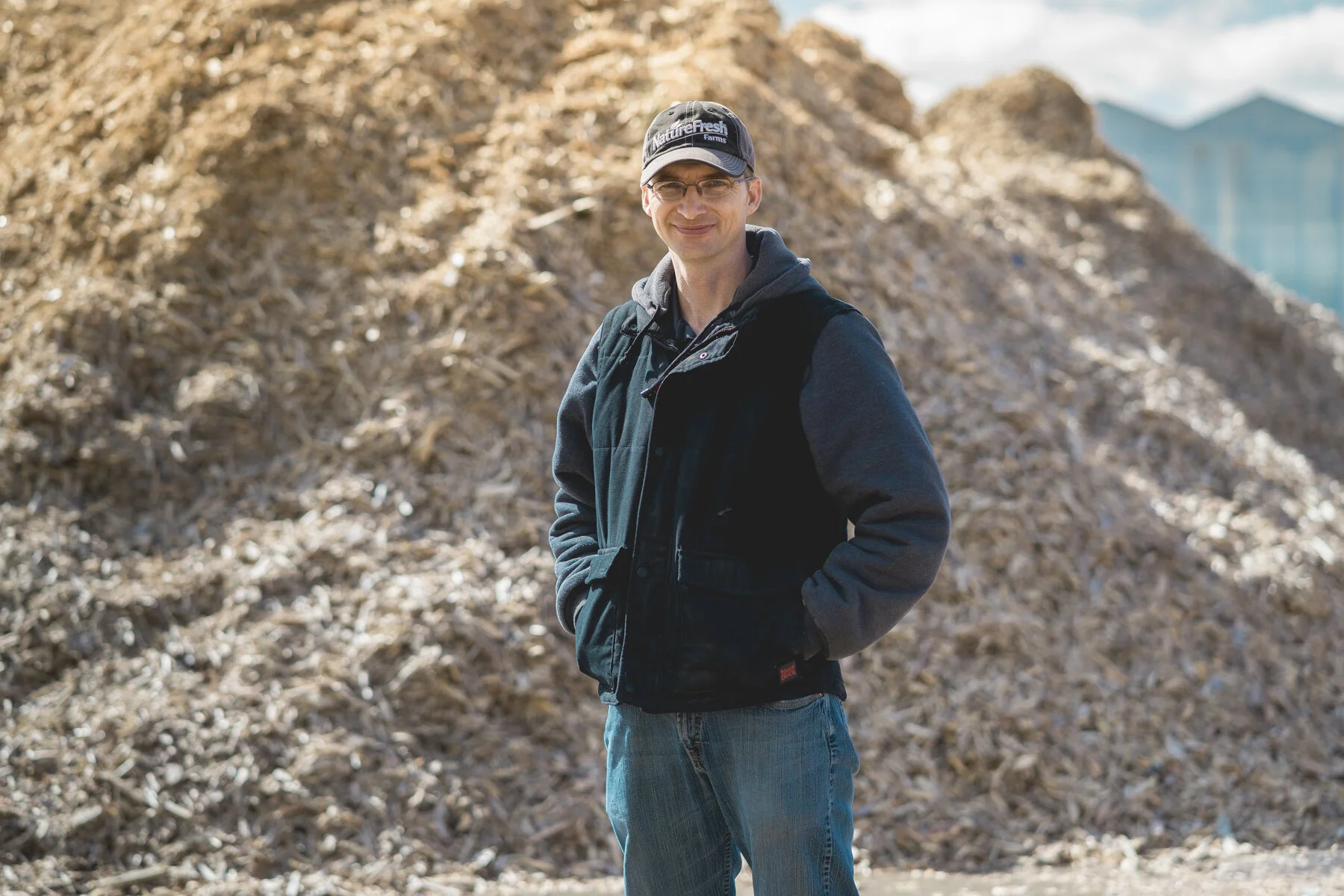
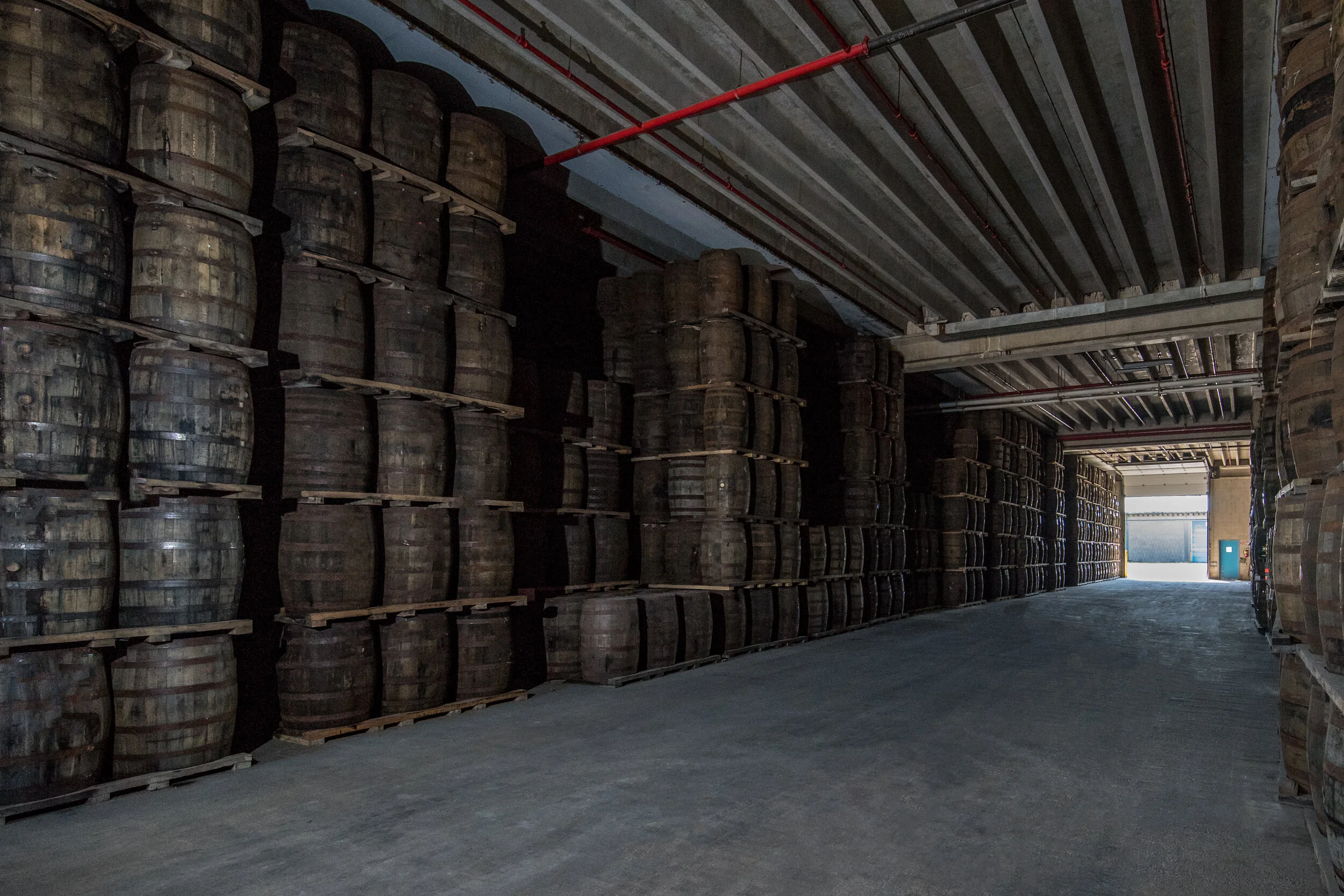
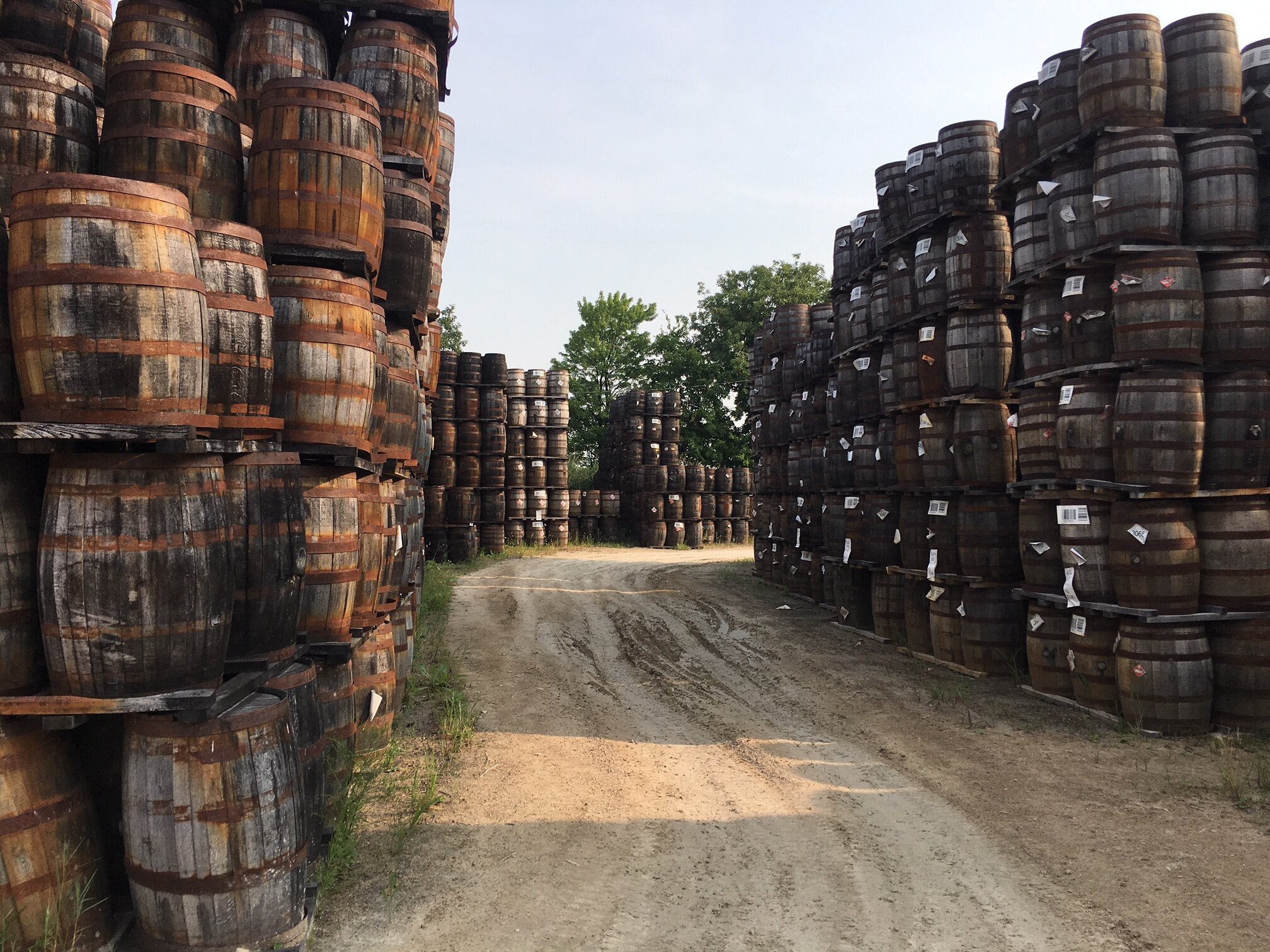

Every month Nature Fresh Farms receives approximately 400 barrels that are shredded and stockpiled for the colder seasons. The wood chips are fed to the biomass boiler’s fire box, heating the water that is pumped through rails throughout each row of plants to warm the greenhouse. To date they have burned over 25,000 barrels equaling about 1,125 tons of wood, producing about 20,000 gigajoules equivalent to nearly 520,000 cubic meters of natural gas. By burning the 25,000 barrels it saves Nature Fresh Farms 520,000 m3 of natural gas. That would heat the average home in Canada for 192 years, saving 1,000 tons of CO2 emissions.
“The partnership between Hiram Walker and Nature Fresh Farms can best be described as a win-win situation for both companies,” said Darren Taylor, Customer Service & Planning, Bulk Operations at Hiram Walker & Sons Limited. “Hiram Walker has an environmentally friendly way to dispose of barrels and Nature Fresh Farms receives a good supply of clean-burning oak wood.”
The two companies will continue to effectively work together to recycle wood and the metal whisky barrel rings, thus reducing the amount of waste that ends up in landfills. This partnership allows both companies to maintain their values of sustainability while finding new opportunities to integrate eco-friendly alternatives within their operations.
“We are in an industry that has the capacity to produce significant positive change,” said Dave Froese, Energy Manager at Nature Fresh Farms “Teaming up with Hiram Walker & Sons gives us the opportunity to continue to make a difference by reducing the amount of materials that end up in landfills.”
Using biomass boilers to create greener energy is just one part of the overall energy strategy at Nature Fresh Farms. Nature Fresh Farms has prioritized sustainability to make impactful efforts, and that commitment has only strengthened. Marked by its 20 years of growing, Nature Fresh Farms continues to innovate and introduce more viable and sustainable growing and packaging solutions.
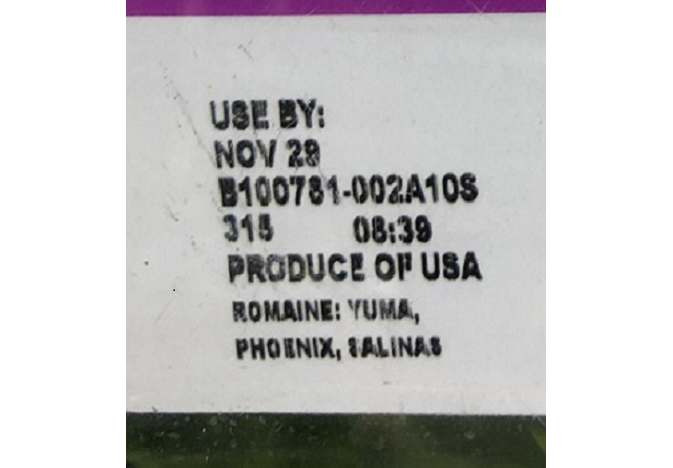
FDA: Do Not Eat Salinas Romaine, E. coli Traceback Continues
As the number of E. coli cases linked to romaine has risen to 40, federal health and regulatory officials are warning consumers not to eat romaine lettuce originating from Salinas, Calif., and the Food and Drug Administration has asked the industry to stop shipments from there
Chris Koger November 24, 2019
As the number of E. coli cases linked to romaine has risen to 40, federal health and regulatory officials are warning consumers not to eat romaine lettuce originating from Salinas, Calif., and the Food and Drug Administration has asked the industry to stop shipments from there.
The FDA issued a similar advisory days before Thanksgiving 2018 covering all romaine, but the current warning involves only product is grown and Salinas, as well as products included in a Nov. 21 recall by Missa Bay.
“At this stage in the investigation, the most efficient way to ensure that contaminated romaine is off the market would be for the industry to voluntarily withdraw product grown in Salinas, and to withhold distribution of Salinas romaine for the remainder of the growing season in Salinas,” according to a Nov. 22 notice from the FDA.
FDA investigators are in Salinas following the outbreak, which as of Nov. 22 included 40 cases in 16 states; 28 people have been hospitalized, according to the Centers for Disease Control and Prevention. Cases were reported from Sept. 24. to Nov. 10.
Investigators have yet to pinpoint a source. The FDA said it doesn’t have enough traceback information to identify a specific source that would allow it “to request a targeted recall from specific growers.”
But epidemiologic, laboratory and traceback evidence has led the FDA, CDC and state health agencies to suspect romaine lettuce from the Salinas area as a likely source.
Genetic analysis of the E. coli O157:H7 strains from patients in the current outbreak are similar to those from the fall 2017 and fall 2018 in the U.S. and Canada. In the 2017 outbreak, Canadian officials named romaine as the source, while the U.S. named leafy greens, not specifically romaine.
An outcome of the November 2018 E. coli outbreak was the industry’s voluntary acceptance of labeling romaine products with the growing region and harvested-by dates. The Nov. 22 notice from FDA advises consumers to throw away or return romaine products if “Salinas” is on the label, or if there is no harvest area listed.
However, if the label indicates it is hydroponic or greenhouse-grown, the FDA advises it is safe to eat. The 2018 FDA advisory covered all romaine, regardless of where it was grown or if it was field or indoor grown, bringing a backlash from greenhouse/indoor growers.
“At this time, romaine lettuce that was harvested outside of the Salinas region has not been implicated in this outbreak investigation,” according to the FDA. “Hydroponically- and greenhouse-grown romaine, which is voluntarily labeled as ‘indoor grown,’ from any region does not appear to be related to the current outbreak.”
If a restaurant or retailer is unable to determine where romaine from a menu item or salad bar is from, consumers should not eat it, according to the FDA advisory.
According to the Romaine Task Force, convened in the wake of the 2018 outbreak, the Salinas growing region includes Santa Cruz, Santa Clara, San Benito, and Monterey counties.
The investigation focused on romaine after the Maryland Department of Health tested an unopened Ready Pac Foods Bistro Chicken Raised Without Antibiotics Caesar Salad that had been purchased by one of the patients with E. coli, and found the pathogen on romaine in the salad.
The states, and how many patients from each one in the outbreak, are: Arizona, 2; California, 4; Colorado, 1; Idaho, 3; Illinois, 1; Maryland, 3; Michigan, 1; Minnesota, 1; Montana, 1; New Jersey, 1; New Mexico, 2; Ohio, 5; Pennsylvania, 3; Virginia, 1; Washington, 1; and Wisconsin, 10.
UAE: DUBAI - Regions’s First Instore Hydroponic Farms Open in Carrefour
The region’s first hydroponic in-store farms were inaugurated at Carrefour, operated by Majid Al Futtaim, in the capital on Sunday. Located at the hypermarket’s stores in Abu Dhabi’s My City Centre Masdar and Yas Mall, the hydroponic farms are part of the company’s Net Positive strategy that aims to overcompensate its water and carbon footprint by 2040
25kg of Fresh Herbs, Microgreens To be Produced Everyday
Published: November 24, 2019, Staff Report
Dubai: The region’s first hydroponic in-store farms were inaugurated at Carrefour, operated by Majid Al Futtaim, in the capital on Sunday.
Located at the hypermarket’s stores in Abu Dhabi’s My City Centre Masdar and Yas Mall, the hydroponic farms are part of the company’s Net Positive strategy that aims to overcompensate its water and carbon footprint by 2040. The farms were inaugurated by Dr. Thani bin Ahmed Al Zeyoudi, Minister of Climate Change and Environment.
Speaking on the occasion, Dr. Al Zeyoudi said: “The UAE spares no effort in leveraging new technologies and innovative solutions to reach high levels of sustainability across the board. In this context, MOCCAE supports technological development and innovative techniques in the agricultural sector, including vertical and hydroponic farming that reduces water consumption by at least 90% and increases the productivity of multiple agricultural products.”
Carrefour’s hydroponic farms are the result of a recently renewed memorandum of understanding (MoU) between MOCCAE and Majid Al Futtaim Retail to sell locally grown agricultural products across all Carrefour stores in the UAE and enhance the use of innovative farming methods. The two farms are the first of their kind to be installed in the region. They use 90 percent less water and less space than traditional farms to deliver around 25kg of fresh herbs and microgreens a day.
The isolated and temperature-controlled glass farming chambers were designed in line with the highest standards of hydroponics. While not accessible, the farms are visible to consumers at the stores, significantly enhancing their shopping experience. With virtually no food miles involved, customers are free to choose from a select range of herbs and microgreens, once fully grown, at the store.

Liberty Produce And Partners Are Transforming The Vertical Farming Landscape
Liberty Produce and Partners have launched their ambitious programme to coordinate the development of the technology needed to make Controlled Environment Agriculture (CEA) more effective, efficient and sustainable
2nd December 2019
London, UK
Liberty Produce and Partners have launched their ambitious programme to coordinate the development of the technology needed to make Controlled Environment Agriculture (CEA) more effective, efficient and sustainable.
The joint venture, co-funded by Innovate UK (the UK’s innovation agency), is supporting the creation of an integrated technology system focussed on reducing operational costs by 25%, improving crop yield by 30% and reducing necessary grower intervention through improved decision support and automation in lighting, nutrient and environmental control technologies.
The project involves several partners and experts in CEA, including Crop Health and Protection (CHAP). In work being carried out at CHAP’s Fine Phenotyping Lab, based at Rothamsted Research, experts are assessing ways in which plants react to light throughout the day, determining how to activate and make them most receptive to light, particularly through the manipulation of wavelength and light intensity. They have already found evidence that plants photosynthetic response to light levels off and reaches saturation. Within CEA systems, avoiding the unnecessary application of light is crucial in reducing operational cost and making systems more sustainable.
The data collected on how different crops respond to artificial LED lighting systems will inform the development of further technologies around sensing and automation - work packages being led by FOTENIX and Iceni Labs.
As the new technologies are developed, they will be evaluated at the IHCEA facilty, a vertical farming commercial demonstrator established by Liberty Produce in partnership with Crop Health and Protection (CHAP) and located at the James Hutton Institute, in Dundee, Scotland.
Zeina Chapman, Director of Liberty Produce commented, “Vertical farming is not yet sustainable - the capital and operational costs limit the adoption of these systems. This vital research and development will enable the build of innovative new technologies that will ensure CEA becomes an essential and sustainable element of crop production as the global population grows.”
Dr Ruth Bastow, Innovation Director of CHAP said, “CEA has great potential to be part of a global solution to produce food in more efficient, resilient and sustainable ways. However, there are still bottlenecks to be overcome for large-scale adoption, and this project will help accelerate the development of new technologies and approaches to improve the overall efficiency of CEA utilising capabilities across the CHAP network.”
Crops growing in the IHCEA facility. Credit: Liberty Produce 2019.
***Ends***
About Liberty Produce
Liberty Produce is a farming technology company, enabling the growth of local produce year-round, using a fully-controlled, industry-leading, indoor vertical farming system. With expertise in lighting and nutrient delivery technology, Liberty develops and builds systems that reduce operational costs and improve yields of crops grown in controlled-environment farms. Their vision is to drive innovations that will enable the UK to meet our crop requirements over the next century, without harming the planet.
https://www.liberty-produce.com/
For further information contact:
Benita Rajania
+44 20 3290 8801
About CHAP
Crop Health and Protection (CHAP), funded by Innovate UK, is one of four UK Agri-Tech Centres. CHAP’s vision is for the UK to be a global leader in the development of applied agri-technologies, to help secure our future by nourishing a growing population sustainably while delivering economic, environmental and health benefits to society.
CHAP acts as a unique, independent nexus between UK government, researchers and industry, building innovation networks to identify and accelerate the development of cutting-edge solutions to drive incremental, transformative and disruptive changes in sustainable crop productivity and to establish controlled environment agriculture (CEA) as a core competency.
www.chap-solutions.co.uk/
For further information contact:
Darren Hassall
Darren.hassall@chap-solutions.co.uk
+44 (0)1904 462062
About Innovate UK
Innovate UK drives productivity and economic growth by supporting businesses to develop and realise the potential of new ideas. We connect businesses to the partners, customers and investors that can help them turn ideas into commercially successful products and services and business growth. We fund business and research collaborations to accelerate innovation and drive business investment into R&D. Our support is available to businesses across all economic sectors, value chains and UK regions. Innovate UK is part of UK Research and Innovation.

Urban Crop Solutions Makes Indoor Farming Technology For Mars Biosphere
Will the first people to bake and eat bread on Mars do it due to a Belgian breakthrough? This is the challenge facing the SpaceBakery project, a unique consortium composed of seven Belgian organisations using technology provided by Urban Crop Solutions
Will the first people to bake and eat bread on Mars do it due to a Belgian breakthrough? This is the challenge facing the SpaceBakery project, a unique consortium composed of seven Belgian organisations using technology provided by Urban Crop Solutions. However, before they use their research to help feed the first people on the red planet later this century, the project aims to have a clear impact on Earth today. The project will focus on how we can produce food more sustainably and will help provide a nutritional staple food for many regions across the globe. The consortium has just been awarded a subsidy of 4.5 million euros by the Flemish Community (VLAIO, Flanders Innovation & Entrepreneurship), contributing to a total of over 6.3 million euros in funding.
Together with Puratos group, Urban Crop Solutions started a journey of R&D for plant growth on the planet Mars in 2018. Now, almost 2 years later, both companies gathered the top of the Belgian scientific community to put their ideas in to practice and create added value for the planet earth as well.
Four large inter-connected containers will soon be installed at Puratos’ headquarters near Brussels, Belgium. From the outside they may seem ordinary, but on 1 January 2020 researchers will start work in the enclosed ecological plant cultivation system and bakery that could have a huge impact on our food production on Earth, as well as on Mars once humans launch their space exploration efforts.
“This project allows us to take our technology again one step further. By implementing AI, plant production will be maximized while further minimizing use of electricity and water. This is essential for plant production on Mars, but just as important here on planet Earth.” explains Maarten Vandecruys, co-founder and CTO of Urban Crop Solutions.The environment on Mars is very different from ours on Earth. The lack of atmosphere, cold temperatures, high radiation and dust storms don’t provide the right conditions to grow crops. It is for this reason that the research will take place in the containers, a completely sealed and self-sustainable environment, for which the climate can be adapted to make it suitable for both crop growth and for human life.
To obtain this knowledge, 5 separate research rooms will be dedicated for the coming 2.5 years in which over 50 different variables related to plant growth will constantly be monitored, which will result in individual plant growth models and algorithms.
Dr. Oscar Navarrete, Chief Plant Scientist at Urban Crop Solutions: “During this research, the challenge lies in the number of biological variables and parameters that will be tested to measure plant responses and their quality. This will deliver insights which helps us to unlock the full potential of plants in a controlled environment.
”In parallel to the research on crops, the consortium will also study many other aspects involved in the entire food production cycle, such as the use and recycling of resources, the monitoring of microbial climate, influence of radiation, and pollination through automated drones.
Urban Crop Solutions is a Belgium based pioneer in the fast-emerging technology of ‘Indoor Vertical Farming’. Throughout 5 years of research more than 220 plant growth recipes were developed. All drivers for healthy plant growth, such as optimal LED spectrum and intensity, nutrient mix, irrigation strategy, climate settings are tested and validated daily in its Indoor Farming Research Lab in Beveren-Leie (Belgium). To date, Urban Crop Solutions has manufactured 24 Container Farms and 1 Plant Factory for clients throughout Europe and North America. Urban Crop Solutions’ commercial farms are being operated for vegetables, herbs, micro-greens for food retail, food service and industrial use. Research institutions operate grow infrastructure of Urban Crop Solutions for scientific research on banana seedlings, flowers and hemp.
For more information on this press release, on Urban Crop Solutions or on the products and services of Urban Crop Solutions you can contact Tom Debusschere, Managing Director (tode@urbancropsolutions.com), or Maarten Vandecruys, Co-founder and CTO (mava@urbancropsolutions.com ) or visit our website (www.urbancropsolutions.com):
Company headquarters: Regional headquarters:
Grote Heerweg 67 800 Brickell Avenue, 1100 Suite
8791 Beveren-Leie (Waregem) Miami (FL 33131)
Belgium Florida
Europe USA
Facebook: www.facebook.com/urbancropsolutions
Twitter: www.twitter.com/U_C_Solutions
LinkedIn: bit.ly/UrbanCropSolutionsLinkedIn
YouTube channel: bit.ly/UrbanCropSolutionsYouTube

Romaine Has Had A Tough Go. Here’s What Has To Happen To Make it Safe
The Centers for Disease Control alerted consumers on Nov. 22 to not eat romaine lettuce from California’s Salinas Valley due to E. coli contamination
To View The Video, Please Click Here
By Stephen M. Ostroff
November 26, 2019
Stephen M. Ostroff is a former deputy commissioner for foods and veterinary medicine at the Food and Drug Administration.
Exactly a year ago, during Thanksgiving week, I was involved in the government’s decision to recommend removing romaine lettuce from grocery store shelves and restaurants. We also advised people not to eat any romaine they had purchased and to throw it away instead.
Now, right before Thanksgiving, it’s happening again.
Nobody wants to scratch romaine off the nation’s Thanksgiving menu. But these recommendations were easy ones to make.
Last year, an outbreak of E. coli bacteria linked to romaine was sweeping the country. Contaminated romaine was likely still on the market. We were unsure where the contaminated product came from, so all of it had to be removed. Even if we knew its origin, romaine wasn’t labeled to allow consumers to determine where it was grown. At least the labeling has improved since last year. But more needs to change.
Romaine lettuce on the shelves of a grocery store in Simi Valley, Calif., in 2018. (Mark J. Terrill/AP)
During the 2018 Thanksgiving outbreak, the government’s actions clearly prevented additional illnesses. But, unfortunately, 62 people still became ill. Symptoms of an E. coli infection can include severe stomach cramps, bloody diarrhea, vomiting, and fever. Some people experience only mild symptoms, but for others, a severe infection can be life-threatening.
Fast forward to now, and there’s another outbreak of the same strain of E. coli linked to romaine, likely from California’s central coast. As of Nov. 22, 40 cases had been reported across 16 states, with 28 hospitalizations but no deaths. The Food and Drug Administration and Centers for Disease Control and Prevention are recommending that consumers avoid romaine from the Salinas region.
Remarkably, the specific E. coli strain (O157:H7) causing the new outbreak is genetically indistinguishable from last years and another one in late 2017. Last month, the FDA retroactively identified an outbreak involving romaine lettuce that occurred in late summer, causing 23 illnesses. The CDC has not posted information about that outbreak, so the epidemiologic patterns of illness and causative strain are unknown.
Notably, the 2018 Thanksgiving outbreak was not the first one that year either. It was preceded by the biggest outbreak in the United States of E. coli illness in more than a decade, with 210 illnesses, including five deaths, linked to romaine from the winter growing region around Yuma, Ariz.
With five multistate outbreaks in less than two years, it’s clear there’s a serious continuing problem with E. coli O157:H7 and romaine lettuce. The natural reservoir for this pathogen is ruminant animals, especially cattle. Moreover, one particular strain of E. coli seems to have found a home in the growing regions of central coastal California, returning each fall near the end of the growing season.
It’s not clear where this strain is hiding. Cattle? Water sources? Elsewhere? What is clear is that additional steps must be taken to make romaine safer.
Other commodities such as meat and flour also cause foodborne illness. But at least with these, cooking and baking eliminate the risk. That isn’t the case with romaine. Washing the lettuce may remove surface contamination, but the crinkly leaves make eliminating all of it almost impossible.
The Food Safety Modernization Act, signed into law in 2011, places the responsibility on food producers to prevent contamination from occurring and to assure their product is safe. The leafy greens industry, with input from the FDA, the CDC, and others, has recently taken steps to meet this obligation. In September, an industry-led task force issued a set of recommendations to address the problem.
One of the most significant recommendations is that any open-source water in contact with edible lettuce in the three weeks before harvest should be treated to remove contamination. E. coli O157:H7 was found in untreated surface water in both the Yuma and 2018 Thanksgiving outbreaks.
The task force recommendations should be immediately adopted and implemented. But even more should be done. Surface water used for romaine irrigation should be treated throughout the growing cycle, not just in the three weeks before harvest. The FDA should also quickly issue agricultural water standards that have been postponed but are required by FSMA’s produce-safety rules.
Another concern that must be addressed: concentrated animal feeding operations, where tens of thousands of cattle potentially carrying E. coli O157:H7 are housed if they are located near leafy green growing areas. Buffers between the cattle operations and growing fields are required, but bigger ones may be needed.
E. coli can cause terrible illnesses. Just ask any of the victims of the five most recent outbreaks. The romaine lettuce market has managed to rebound from the outbreak after the outbreak. But consumer loyalty is unlikely to be limitless. The industry should not take this resilience as a given.
Read more:
Letters: Blame E. coli contamination on our agriculture policy
The Post’s View: A great first step to protect antibiotics for the future