

Welcome to iGrow News, Your Source for the World of Indoor Vertical Farming

How Urban Agriculture Can Contribute To Food Security
Urban agriculture has a major role to play in providing healthy, affordable and accessible food to poor urban households in South Africa, according to Prof Juaneé Cilliers, chair of the Urban and Regional Planning Unit for Environmental Sciences and Management at North-West University
October 23, 2019
Urban agriculture has a major role to play in providing healthy, affordable and accessible food to poor urban households in South Africa, according to Prof Juaneé Cilliers, chair of the Urban and Regional Planning Unit for Environmental Sciences and Management at North-West University.
Worldwide, an average of three babies are born every second. This means that the global population grows by about 162 600 people per day, roughly equivalent to the population of George (157 000) or Midrand (173 000).
At the same time, spatial change is at a peak within the urban landscape, with 65% of South Africa’s population currently residing in cities.
READ How agriculture can ease the global urban water shortage
Our growing cities are also increasingly expensive living places characterized by urban sprawl and amplified travel distances, growing carbon footprints, increased energy consumption, and complicated distribution networks.
All this leads to higher food prices and greater food wastage, neither of which are beneficial to the urban poor. Recent data from Statistics South Africa suggests that 70% of urban households in South Africa live in conditions of food insecurity.
Bringing green spaces to urban areas
The world’s growing cities host more people, but less nature. Green spaces in cities have been susceptible to urban development pressures, evident in the depletion of green spaces and the associated downward spiral of living conditions.
In the search for “inclusive, safe, resilient and sustainable cities”, one of the UN’s Sustainable Development Goals, the interrelated role of nature as a catalyst to reach the objectives of sustainability, is emphasized.
READ Eastern Cape urban agri projects to be rejuvenated
There is a consensus that we need to reclaim nature in cities in order to mitigate the challenges associated with these growing urban sprawls while capitalizing on the range of ecosystem services provided by nature.
Cities, which were once viewed as places where nature ends and urbanization begins, are today considered as a central nexus in the relationship between people and nature.
It is within these contemporary cities that we need to find sustainable future solutions as a matter of urgency because the challenge of sustaining life as we know it is becoming more complicated by the day.
Growing cities, increasing populations and escalating poverty levels mean that we cannot continue with a business-as-usual attitude.
One of the most important conservation issues of the 21st century is where and how food is produced in order to feed a growing and fast-urbanizing population.
Traditional agricultural practices have been widely criticized for their negative environmental impact.
This includes deforestation, threats to wild species, the destruction of habitats and biodiversity, pollution of water, air and soil, high water consumption and water quality degradation, as well as greenhouse gas emission and climate change.
Growing cities place further pressures on agricultural practices. With urban sprawl comes prolonged distribution networks, complex food supply chains, more costly processing, and packaging, and ultimately, more expensive produce, greater food waste and increased food insecurity.
Despite these negatives, agriculture remains one of the most important frontiers for conservation at the moment due to the industry’s deep connections with the global economy, human societies, and biodiversity.
Our challenge lies in finding ways to best utilize space, energy, and logistics in order to sustain an increasing urban population. In short, we need to rethink our cities, but we also need to rethink traditional agricultural practices.
Smart cities: easier accessibility and greater choice
The concept of smart cities is increasingly recognized as part of the discourse on sustainable cities.
To most people, a ‘smart city’ is one that is technology-driven and futuristic, where real-time intelligence informs decision-making and anticipates and mitigates a range of societal problems. From a spatial planning perspective, a smart city implies accessibility and choice.
Accessibility refers to better-structured networks and connections between communities and their host cities, while choice refers to a range of housing and transportation options. From an agricultural perspective, accessibility and choice pertain to options to ensure food security within the contemporary city.
Agricultural technologies and smart data and analytics are set to increase food production within cities. They will also help meet the ever-growing global demand and logistical distribution of food without further disturbing the urban environment. This smart city solution is encapsulated in the notion of urban agriculture.
Grow food in places where it was previously impossible
Urban agriculture offers innovative, sustainable solutions to the improvement of food security in cities, and simultaneously assists with mitigating the environmental challenges faced by cities.
Urban agriculture can be as simple as small, outdoor community, rooftop and backyard gardens, or as complex as indoor vertical farms with nutrient-enriched water and UV lighting to mimic the effects of the sun.
READ Women in agriculture are key to boosting food security
New technologies enable food to be grown in places where it was previously difficult or impossible, making urban agriculture a viable option for cities where space is limited.
Although not all crops can be grown indoors, urban agriculture has the potential to become a dynamic economic sector that can quickly adapt to changing urban conditions and demands, diversifying the functions of the city.
Urban agriculture makes it possible to produce fresh, nutritious food with low carbon and water footprints, while conserving land, reducing emissions and waste and providing healthy, affordable, accessible food to a city’s poorest residents.
It is, therefore, not surprising that a growing number of cities worldwide have already designed policies and programs to include urban agriculture as part of city planning.
Perhaps South Africa, too, should consider the integration of urban agriculture in mainstream spatial planning, and guide cities towards the creation of demarcated zones for urban agricultural production.
When urban agriculture is formalized as a land use, it has the potential to change the entire urban and agricultural landscape, increase access to healthy food options in urban areas, and mitigate the environmental impact of feeding the world.
Although urban agriculture might not be the only solution to solving food security across the world, it is certainly part of the solution to feed the 70% of urban poor households in South Africa, adding to the development of sustainable, socially inclusive, food-secure and environmentally healthy cities.
The views expressed in our weekly opinion piece do not necessarily reflect those of Farmer’s Weekly.
Email Prof Juaneé Cilliers at juanee.cilliers@nwu.ac.za.
New York City - Essex Crossing Organic Farm Launches In Lower East Side
Located on the sixth floor of The Essex at 125 Essex Street, the quarter-acre farm will be run by Project EATS—a nonprofit that operates farms across the city—and will grow organic carrots, radishes, beets, turnips, and baby greens, such as kale, mustards, and arugula
The farm will hawk fresh produce including carrots, radishes, and arugula

August 1, 2019
Delancey Street Associates
A new farm, now among the largest in the borough, launched Wednesday at the Essex Crossing megaproject in the Lower East Side.
Located on the sixth floor of The Essex at 125 Essex Street, the quarter-acre farm will be run by Project EATS—a nonprofit that operates farms across the city—and will grow organic carrots, radishes, beets, turnips, and baby greens, such as kale, mustards, and arugula.
“We’re looking forward to welcoming the LES community to the farm and providing fresh produce for the neighborhood in the Market Line,” said Debbie Kenyon, vice chair and senior partner at L+M Development Partners, in a statement.
Produce from the urban grange will be sold at the Farmacy, a stand at the mega development’s upcoming Market Line, which will run below Essex Street Market. Until then, the Farmacy will temporarily sell the fresh veggies at a recently opened public park that was similarly developed by Essex Crossing’s development team, Delancey Street Associates (a collaboration between L+M Development Partners, BFC Partners, Taconic, Prusik Group, and the Goldman Sachs Urban Investment Group).
That stand will be open for business on Wednesdays and Saturdays from 11 a.m. to 4 p.m until the Market Line stall is up and running.
The farm will also feature programming for public schools on the importance of nutritious food and will offer free Saturday breakfast for seniors living in the neighborhood. Healthy lifestyle workshops, neighborhood forums, and community dinners are also in the works.
Opportunities for workforce development are another component of the project, as Project Eats will train and employ students from Seward Park High School to work at the farm and the Farmacy.
Just over a month ago, Essex Crossing debuted its 15,000-square-foot park, and earlier that month, the new version of Essex Street Market opened its doors to much fanfare.

Grand Rapids Next-Gen Farmer Cohort 2019 - 2020
Each year, a new cohort of farmers participates in the Next-Gen Farmer Training Program, taking a step along their journey to becoming leaders in urban farming. Here’s a glimpse into why they’re drawn to urban agriculture.
Square Roots | 10.16.19
Next-Gen Farm / Farmers / Program / Perspectives
Each year, a new cohort of farmers participates in the Next-Gen Farmer Training Program, taking a step along their journey to becoming leaders in urban farming. Here’s a glimpse into why they’re drawn to urban agriculture.
Michigan Next-Gen Farmers: Alyssa Patton, Amal Jennings, Savie Sonsynath, Winn Hermanski, Rebekah Box, Jarad Jaent, Katie LaRue, Jacob Smaby, and Joshua Van Kleeck
Rebekah Box
“My family has a history of farming. My grandparents were sweet corn farmers and I grew up gardening with my parents every summer. After moving into my first apartment, I quickly realized that having a garden of my own was going to be far from easy. I was determined to make access to fresh, locally grown food easier for those in similar situations. With this, my love for gardening and educating others on how to grow their own food has flourished and given me a clear path to a future career. While job searching, I came across the application for the Next-Gen Farmer Training Program at Square Roots in Grand Rapids, Michigan. From their mission statement and further research, I knew that this was the perfect opportunity to help others in urban areas and to gain the skills and knowledge needed to educate future generations.”
Winn Hermanski
“While studying at the University of Oklahoma’s Entrepreneurship and Venture Management program, I developed a business plan to create affordable housing and job opportunities for the homeless. Shipping containers would be retrofitted to create tiny homes and a hydroponic farm to sustain the community. While working on this business, I discovered Square Roots and felt like the company was poised to disrupt the broken agricultural system.”
Katie LaRue
“While in college, I had the opportunity to study abroad in Costa Rica where I fell in love with food. There were markets at every corner, meals were prepared with real food, and meal times were respected in the home and at the workplace. I later moved to Stuttgart, Germany to pursue a Masters in Sustainable Agricultural Food Production. I learned the inner workings of what it takes to feed a growing population sustainably and found Square Roots after moving back home to Michigan. I hope the Next-Gem Farmer Training Program will enable me to continue disrupting the current food system.”
Savie Sonsynath
“Born and raised in Michigan, I’m a first-generation Lao-American. It’s a culture centered around food and community, and I see a lot of value in integrating my two cultures. While pre-med at Ferris State’s Biology program, I discovered the importance of nutrition on human health. This, paired with my strong cultural foundation, lead me to seek a platform to engage the public about food choice. Square Roots’ mission to connect people with real and local food deeply resonates with me, and I plan to use this opportunity to connect with the community over the healthy food options available.”
Jacob Smaby
“As an educator at heart, I started my career studying to be a high school English teacher at Grand Valley State University. After spending time working with kids in the public school system, I realized my true passion is teaching future generations about environmental issues. With the knowledge gained through the Next-Gen Farmer Training Program, I hope to inspire upcoming generations to change the way we feed our cities and communities.”
Jarad Jaent
“I grew up in the West Michigan area and spent most of my time camping, hiking, and exploring nature. My passion for the outdoors became something that I wanted to pursue a career in. Throughout my experience at Hope College, I struggled to imagine how a business degree with biology and environmental science minors could lead to the career I wanted. After meeting the cofounder of H.O.P.E Gardens and helping the non-profit establish gardens at elementary schools in the Grand Rapids area, I realized that urban agriculture was something I wanted to be a part of. I'm excited to join the Next-Gen Farmer Training Program and can’t wait to see what doors it opens in the future.”
Joshua Van Kleeck
“Born in Michigan, I grew up raising fruits and vegetables with my brother to sell at our roadside stand and local farmer's markets. I developed a passion for horticulture and business and went on to study business at Northwood University. In college, I discovered Square Roots and was immediately intrigued, thinking it could be an amazing fit. When I heard Square Roots was coming to Michigan, I jumped on the opportunity to join the Next-Gen Farmer Training Program in this pioneering endeavor.”
Alyssa Patton
“Throughout my childhood, I was surrounded by farmland in Allegan, Michigan. My family even had a small garden with chickens. Soil farming was all I had known until my internship with Hunger Education and Resource Training where I was exposed to aquaponics, sustainable agriculture, and rooftop gardens. I began to question how people in cities could grow or have access to fresh food and I developed a passion for community development and farming. I couldn’t be more excited to join Square Roots in its endeavor to bring fresh, local produce to cities."
Amal C. Jennings
“While studying chemical engineering at the University of Oklahoma, I developed an interest in environmental stewardship and sustainable practices. I started working for Provision Organic Farm in Oklahoma City and later went on to work for CommonWealth Urban farms of OKC. After seeing the many challenges that small, organic, urban farmers face, I turned my interest to climate-controlled indoor farming and found the Square Roots Next-Gen Farmer Training Program.”
Learn more about our Next-Gen Farmer Training Program.

Start of Realization Horti Center In Shandong
Dutch horticultural manufacturers, system suppliers, training and education partners, the Chinese government and related investors have jointly attended the official announcement last week of the start of the realization of the first Chinese Multi-Functional Horti Center in Shandong (DHC)
For Structural Transformation of Horticulture In China
Dutch horticultural manufacturers, system suppliers, training and education partners, the Chinese government and related investors have jointly attended the official announcement last week of the start of the realization of the first Chinese Multi-Functional Horti Center in Shandong (DHC).
(from left to right: Perry van Adrichem (Hortitech), Marcel Schulte (Holland Netting International), Peet van Adrichem (Hortitech & DCA & member of strategy and designer team within DSG), Ruud Schenkels (De Gier Drives), Pim van Adrichem ( Hortitech), Pascal den Heijer (Holland Screening International), Fokke Kracht (Valk Horti Systems), Don Kester (Priva), Jörgen Kint (DSG & DGOG & DCA) and Frank Boers (BOAL), Oscar Niezen (representative for Lentiz C&C) is missing in the photo, as well as Theo Stolze (Stolze))
The purpose of this fully functional Horti Center is to be the co-creator and supporter of a modern horticultural industry in China with its base in Shandong, the vegetable province of China. Shandong has 300,000 ha of solar greenhouses and 675,000 ha of multi-span plastic greenhouses and tunnels. An active platform on the highest cooperation level for Chinese transformation to modern horticulture and cluster industry for horticulture. Gathering knowledge, engineering, manufacturing and innovation power for support to the structural turnaround of rural areas and create the consent modus for a Chinese standard.
This ambitious plan has been adopted recently by major big Chinese companies taking part in Shandong Dutch Standard Greenhouse Agricultural Technology Co., Ltd. (DSG). Comprising the Dutch partner Dutch Greenhouse Operation Group B.V. (DGOG), China National Minorities Economic Technology Development Company by Zhongmin Jingkai Technology Development Co., Ltd. (CNMED-T) and Capital Development Investment Fund Management (Beijing) Co., Ltd. (CDIFM) which is a collaboration of 11 Chinese banks and financial institutes.
Both national companies have started, by order of Government, to spearhead rural areas and improve living standards.
DSG is the operational partner for upcoming project investments and developments in the horticulture sector.
DSG announced to plan to construct more commercial greenhouse developments throughout China starting next year growing to 150 till 250 ha yearly by own funds and those for third-party projects. DSG’s vision stated that one can not exist without the other so growth from Horti Center output has to be in balance with the availability of proper build commercial greenhouses and right grow support solutions.
Producing food-safe vegetables is a topic for DSG and for third-party projects. For the guarantee there will be an autonomous Horti Quality Office for governance on constructing and the quality of total greenhouse production machines. As well as one that ensures that operations are carried out in accordance with food safety and production requirements. Within the implementation, protocols for distribution, tracking and origin apply. Supplementary DSG has a sophisticated market approach to get paid slightly more for premium products.
It seems DSG will become a major developer with close ties to the Horti Center in Shandong in which there is close cooperation among the Dutch companies and institutes who are members of the Dutch Chinese Association for the Promotion of Horticultural Cooperation (DCA)
(photo 1 – Official start of realization of the Horti Center; photo 2 - Official announcement of the Horti Center in the presence of governments, investors and the Dutch delegation; photo 3 - Earlier visit of AAB BM International to DSG in Dezhou from left to right Mr. Lei Xu Chairman of DSG, Anton Hanemaaijer architect, Jörgen Kint DSG; photo 4 - Impression Horti Center in Shandong)
In addition to the fact that several companies have already registered with DSG with the desire to participate and are currently deepening, DSG indicates that more companies are welcome. There is certainly a need for more disciplines, specialisms at all levels to arrive at a sector-wide interpretation that can grow with the desired expansion plans. In addition to the Dutch horticulture industry and sector, international companies operating at Dutch level are also welcome for DSG. According to DSG, there is sufficient work so localization, cost price reduction and capacity growth is more important than internal competition thoughts because market-conform prices are always on the agenda.
DSG will provide appropriate support, unburdening, co-investing and financing where necessary for the connecting companies. The position of the cluster of companies is paramount and DCA will represent the face for projects and the brands and products within the Horti Center. In addition, every effort is made to ensure that the Horti Center guarantees sufficient upscaling of high-quality people.
In short, DSG stated that first comes cooperation second localization, third upscale capacity and subsequently preserve the Dutch export position from out China.
The attraction to the cluster in Shandong, for projects throughout China directly connected to DSG’s investment partners and its huge companies structures, national and local investors, governments at local and provincial level looks very promising for both the Dutch and the Chinese sector. DSG is open to jointly investigating the possibilities for sector-wide collaborations and hope to succeed together to leave a footprint behind for next generations.
For more information:
DHC – DCA - DSG – DGOG
info@greenhouseoperation.nl
www.nl-dca.com
www.cn-dsg.com
www.greenhouseoperation.nl
Publication date: Tue, 22 Oct 2019

Research Into The Combination of Geothermal Heat, Lettuce Cultivation And Fish Farming Started
Under great interest, the project Geofood has been started. The aim of Geofood is to investigate whether geothermal heating can not only be used to heat greenhouses but also to breed fish
Under great interest, the project Geofood has been started. The aim of Geofood is to investigate whether geothermal heating can not only be used to heat greenhouses, but also to breed fish. As a symbol for opening the new aquaponic facilities, a floater with lettuce plants was placed on an aquarium with tilapia during the opening operation. Geofood is a collaboration between the Business Unit Greenhouse Horticulture of Wageningen University & Research and partners from Iceland, Slovenia, and the Netherlands.
A constant water temperature is required for fish farming all year round. Supply and demand are less constant in greenhouse horticulture: relatively much is heated in the winter and hardly ever in the summer. In addition, there are more and more cultivation companies with a geothermal source. This creates a surplus in the summer. Selling geothermal heat could be another revenue model for geothermal resources.
To this end, WUR developed an energy model for the combination of geothermal-greenhouse horticulture-aquaculture. To validate this model, an advanced fish farming system was installed at WUR in Bleiswijk in early 2019. It is a so-called recirculating aquaculture system (RAS). The largest tanks in this system contain around 10,000 liters of water containing thousands of fish. Data is collected from, among other things, the water quality, temperature, water consumption and CO2 produced by the fish.
WUR carries out this research in collaboration with partners from Iceland, Slovenia and the Netherlands. Algae production and food processing processes are also being investigated as potential applications for circular food systems that run on geothermal energy. Funding for the research comes from the European GEOTHERMICA - ERA NET Cofund Geothermal. Dutch participation in the project is supported by RVO and Top Sector Horticulture & Propagation Materials.
Source: Wageningen University & Research
Publication date: Wed, 23 Oct 2019

Vertical Farming Is On The UP In London
Square Mile Farm’s crops are grown vertically as a means of optimizing space, maximizing yields, reducing waste and producing nutritious plants. This means that they do not have to compete with natural habitats for space or resources
Phoebe Young - 24 October 2019
The growing techniques are centuries-old, the agricultural technology is cutting (v)edge and the aesthetics look as if they are from the far-off future.
Say hello to an amazing, vertical hydroponic farm that produces ultra-fresh and highly-nutritious crops. What’s even more exciting is that Square Mile Farms have set up in Paddington Central, London’s busy work and social hub.
They have picked this unlikely location because their aim is to bring sustainable agriculture into the urban environment in the form of vertical farm crops.
What is Vertical Farming and how does it work?
Square Mile Farm’s crops are grown vertically as a means of optimising space, maximising yields, reducing waste and producing nutritious plants. This means that they do not have to compete with natural habitats for space or resources.
Their crops are grown ‘hydroponically’ in a controlled environment. This means that they are cultivated using small amounts of nutrient-rich water and no soil. Square Mile are producing fresh, nutritious produce including kale, fennel and basil in their vertical garden, which is nestled on the rooftop of 2 Kingdom Street.
Why Paddington Central?
Paddington Central joins the previously industrial gap between Paddington Station and the West End and is home to some of the world's biggest organisations. It's not exactly the first destination you'd think of for a farm.
Crops are grown ‘hydroponically’ in a controlled environment
How will farm and community connect?
The farm hopes to integrate itself with the community in Paddington, and inspire the city dweller to latch on to the growing trend of making food production sustainable, nutritious and local again. It will do this through organising events centred around food, well being and the environment.
Johnathan Ransom, Square Mile Farms Co-owner, explains that “Square Mile Farms is a business passionate about the food we eat, the impact it has on our environment and the growing demand to bring the farm back to the centre of the community it feeds. We take pride in offering professional insights and specialist expertise, as consultants, nutritionists and growers.”

Square Mile Farms is a business passionate about the food we eat
Workshops and events at Square Mile Farms
The farms will partly achieve this through hosting events. These will include talks on topics like The Basics Of Healthy Eating and Managing Stress and Anxiety. Guests will learn how what they eat affects their physical health and mental well being. A seminar on minimizing Food Waste will also take place.
To give you an idea of what will be on the cards, they recently held talks on ‘Nutrition: Essential For Sports; and ‘Nutrition: Good Food, Good Mood’.
Ongoing workshops about How To Grow Your Own Microgreens are another way in which Square Mile will get the fingers of these city dwellers greener. Attendees will be offered a personal session with the farm’s chief grower, who will be on hand to discuss everything from equipment, to the different varieties of microgreens and the conditions they require. Guests can also visit the farm by appointment to learn more about the project and take away some greens!
Events at the Square Mile Farm are priced from £5 to £25. For more information and to book an event please visit www.paddingtoncentral.com

These 5 Start-Ups Are Revolutionizing The Concept Of Urban Farming In India
Growing urbanization has pushed farms out of the towns to the peripheries. But a new breed of farmers is taking farming by storm by helping us harvest superfoods sans chemicals and pesticides in our kitchen. Meet some of the urban farmers from around the country who ensure that these tiny shoots or microgreens provide a palate full of health, wealth and goodness.
Growing urbanization has pushed farms out of the towns to the peripheries. But a new breed of farmers is taking farming by storm by helping us harvest superfoods sans chemicals and pesticides in our kitchen. Meet some of the urban farmers from around the country who ensure that these tiny shoots or microgreens provide a palate full of health, wealth and goodness.
Image credit: Entrepreneur India
Junior Feature Writer
October 21, 2019
Opinions expressed by Entrepreneur contributors are their own.
You're reading Entrepreneur India, an international franchise of Entrepreneur Media.
Hamsa V and Nithin Sagi broke away from their lucrative IT jobs with Infosys to pursue their dreams. Sagi had earlier taken up food photography and later partnered with Hamsa to open Growing Greens. The company is a business-to-business venture that sells microgreens, edible flowers, salad leaves, sprouts and herbs to five-star hotels, high-end restaurants and cafes in Bengaluru. “When we had started back in 2012, hotels would import microgreens from other countries due to the lack of local produce,” shares Hamsa.
Microgreens are young, small-sized, approximately one to three inched, tall vegetable greens with an aromatic flavor that chefs mostly use to decorate and dress food. These young plants are said to have concentrated nutrient levels that can go 40 times higher than the normal size produce.
Sagi and Hamsa did thorough market research before starting Growing Greens. They interacted with various chefs to understand their requirements and, in the process, were introduced to microgreens. Hamsa recalls, “Chef Manu Chandra helped us immensely in our journey. He was also our first client.” Growing Greens has grown gradually and consistently over the years. Sagi shares, “We started from a small terrace and today we are farming in four acres of land. We plan to take it up to 10 acres in the next two to three years.”
Hamsa V and Nitin Sagi, Founders, Growing Greens
Soil-less Cultivation for Urban Dwellers
The impediment to farming in a city is the lack of availability of space. But technology, with all its wonders, has made farming possible in small spaces through urban vertical farming and hydroponics. Instead of soil, a nutrient-rich water solution is used to grow the plant in hydroponics or soil-less farming. Urban vertical farming is a method in which such hydroponic or other technology used planted plants are grown vertically, one over the other in a small space. As there is no soil, the weight on the wall or a roof is significantly reduced and there is no structural damage caused to the building.
Urban farming also ensures more control over the way food is produced. Hamsa shares, “We do not use any pesticide or chemicals on our food. We also provide live microgreens to hotels and restaurants, i.e., microgreens that are not cut but with their roots intact.”
Mumbai-based banker turned farmer Linesh Pillai was introduced to urban farming in 2010 when he was in Poland. Disturbed by the high levels of contamination in food here upon his return, Pillai decided to grow his own vegetables. He started Terra Farms in 2012 and later renamed it as Urban Fate Farms or UGF Farming. He divides the operations of his company into four verticles broadly—Education, Dead Space Activation, Retailing and Zero Carbon Food Project. Under education, UGF visits schools and organizations to teach people how they can easily grow their own vegetables in the city. The Dead Space Activation is done for big hotel chains and high-end restaurants where UGF sets up a hydroponic plant and handholds them through the entire process until they learn to do it themselves. Some of their clients are Hyatt Moscow, Hyatt Delhi, Olive Bar and Kitchen Mumbai. Under retailing, UGF sells their live microgreens and leafy greens at Hypercity, BigBasket and Big Bazaar.
Zero Carbon Food Project tries to minimize carbon emissions created by our food habits. Pillai shares, “We have created a greenhouse at Don Bosco School, Manori. Growing the food where it is consumed reduces the carbon emission otherwise caused in logistics and cold storage.” UGF currently operates in Mumbai, Bengaluru and USA. The company plans to expand and open its office in Dubai by June 2020.
Linesh Pillai, Founder, UGF Farming
Start Your Kitchen Garden
Homecrop, founded by four graduates from Vellore Institute of Technology Manvitha Reddy, Sharmila Reddy, Sai Krishna and Krishna Reddy, brings urban farming to your backyards, terraces and balconies. The company sets up edible farms for urban households who want to grow their own vegetables. Manvitha feels that “people can become more empathetic and understand a farmer’s challenges by growing one’s own vegetables.”
Homecrop’s journey has not been an easy ride. Manvitha divulges, “It was very hard to convince people to pay someone to set up a kitchen garden for them.” The organisation now has a dedicated set of clients in Hyderabad. It also sells its DIY farming kits online pan-India through its website as well as through Amazon. Manvitha is grateful that she and her co-founders who have no background in farming are incubated at a-IDEA (Association for Innovation Development of Entrepreneurship in Agriculture), the technology business incubator hosted by ICAR-NAARM (Indian Council of Agricultural Research; National Academy of Agricultural Research Management) in Hyderabad.
“The incubation gave us the levy to experiment and learn. There was a lot of trial and error but we are lucky to have received solid mentoring,” claims Manvitha. However, in terms of funding an urban farming enterprise, things are still bleak in India. Homecrop not only sets up customized edible farms for its clients but also provides impeccable maintenance services. For the first two months, it regularly pays visits to the client’s garden who can later opt for ad hoc visits.
Krishna Reddy and Sharmila Reddy, Co-founders, Homecrop
Home-grower of Hydroponic Produce
Somveer Singh Anand, much like Pillai, is also a banker turned farmer. Upon his return to India from New York where he was working as a banker, he again like Pillai, found it impossible to source organic and uncontaminated food. Using his knowledge to develop indoor hydroponic technology suitable for Indian climatic conditions, Anand started Pindfresh in 2016. Anand confesses, “Selling mutual funds and insurance policies as a banker in the US was dreadful. I did not enjoy what I was doing.”
Pindfresh sets up indoor and outdoor hydroponic plants for people who want to farm using the technology. Anand’s knowledge of hydroponic did come in handy but there were other obstacles to overcome before coming out with the perfect technology. “The climatic conditions in the US and in India are completely different. What worked there did not work here. So, I had to control lighting, humidity and temperature. It is all science and once I got it right, the first feat was achieved,” professes Anand.
Pindfresh manufactures the pipes, lights and all the other equipments required to set up a hydroponic plant. The company earlier would outsource these components for the plant but were dissatisfied with the quality. Anand shares, “The quality of individual components would affect the overall quality of the plant. So we started manufacturing everything in-house to provide top quality to our customers. It gave us better quality control.”
Pindfresh is headquartered in Chandigarh but that doesn’t stop the company from being available to its customers across India. “We get on a video call and guide our clients accordingly. We are also just a call away for any query. We believe if the client has invested their money in something, they should get the maximum value out of it,” he declares.
Somveer Singh Anand, Founder, Pindfresh
Ensuring Food Traceability
Akash K Sajith, Founder, Living Food Company started the business after a personal tragedy befell him when both his parents were diagnosed with cancer. Taking charge of things, he informs, “There are 1.5 million cancer deaths in our country and only one-fourth of them are caused due to tobacco while the remaining three-fourth are due to contaminated food.”
Sajith, who has worked for Myntra and Lookup in the past, had a fair understanding of how start-ups function. With his knowledge, he gave his heart and soul to his new venture Living Food Company. The company is the largest B2C player selling microgreens to households. He shares, “We didn’t want to sell microgreens to just five-star hotels and big chefs as my main aim was to deliver healthy, organic and quality food to Indian households.”
80 per cent of Living Food Company clients are B2C consumers. Sajith started Living Food Company by selling microgreens and then later expanded it by selling fresh oven to table sour bread, spreads, probiotic drinks, among other products. Sajith wants to bring the missing transparency in the food sector. “Currently, no vendor gives you the traceability on where your food is coming from, where it is grown, and under what conditions they are grown. With Living Food, I want to bring about a change in the system,” he declares.
From his wide experience of working with start-ups, Sajith has learnt to never give up even in the face of adversity. He shares, “In the first six months, Living Food had 500 consumers which in the next six months had risen to 4,500. We are consistently growing.” He is happy that Living Food Company is changing the food sector in India, even though in a small way. The company has its own farms where it grows fresh microgreens and vegetables.
Akash K Sajith, Founder, Living Food Company
To Heart’s Delight
They might have traded away their lucrative careers but none of them are regretful about it. A common thread that binds all these urban farming entrepreneurs is the high degree of job satisfaction. Anand who relocated from Mumbai to New York to Chandigarh, says, “I’ve realised you don’t need much in life. I am happy that my small business is able to generate employment and give something worthwhile back to society.”
Pillai has a retirement plan chalked out for himself. “I am working towards building my retirement abode. It will be a self-sustaining house with no electricity and power connection. I will generate my own electricity through solar panels and engage myself in rainwater harvesting,” he mentions.
Taking pride over the best decision of her life, Hamsa confesses that farming has made her more content and happy. But her journey as an urban farmer has been riddled with challenges. “Farming is a difficult profession that requires a lot of patience and perseverance. There are many things that are not in your control like natural calamities. We have had forest fires in our farm and our crops have been spoilt because of heavy rains but I do not ever regret getting involved in farming,” she happily shares.
Benefits of Hydroponic or Soilless Farming
80 per cent less water used than regular farming.
Minimum 20 per cent faster plant growth.
Allows indoor, terrace, roof and farming in small spaces.
Better space optimization.
The plant is protected from all the contamination and toxins that can enter it through the soil.

Start-Up of The Day: From Sunlight To Fish, Blue Planet Ecosystems Wants To Shift Pisciculture to Computerized Container Systems
The start-up Blue Planet Ecosystems, based in San Francisco and Vienna, wants to shift pisciculture (fish farming) to computerized container systems. The ecosystem is to be simulated in such a way that nature is able to grow in self-sustaining LARA systems (Land-based Automated Recirculating Aquaculture)
About Blue Planet Ecosystems
Founders: Paul Schmitzberger (Chief Executive Officer), Georg Schmitzberger (Chief Technology Officer), Thomas Daniele (Chief Scientific Officer);
Founded in: 2018
Employees: Six permanent employees and students who work on projects every semester;
Money raised: We were at the IndieBio Life Science Accelerator in San Francisco from February to June 2019. That was a $250,000 venture capital investment with an 8% stake. We are currently busy with finalizing the seed round.
The ultimate goal: To reproduce nature with a computer and a container.
Climate change and dwindling agricultural land are major challenges for food and feed production. The supply of animal protein is particularly problematic.
The start-up Blue Planet Ecosystems, based in San Francisco and Vienna, wants to shift pisciculture (fish farming) to computerized container systems. The ecosystem is to be simulated in such a way that nature is able to grow in self-sustaining LARA systems (Land-based Automated Recirculating Aquaculture).
“We built everything ourselves, including the hardware,” says Paul Schmitzberger, CEO and co-founder of Blue Planet Ecosystems. We are a team of engineers, biologists and computer scientists. The hardware are LARA systems wherein the three stages of an aquatic ecosystem are reconstructed. From algae (phytoplankton) to zooplankton and then to the final product: fish.
Phytoplankton are photosynthetic organisms that produce their own food from the energy of sunlight. A further characteristic is their high propagation rate. They can be harvested within four to seven days under ideal lighting and temperature conditions. This is a level of productivity that is far above that of traditional agriculture.
Zooplankton are microscopic and semi-microscopic invertebrates that are found in water. Zooplankton such as Daphnia has brief life cycles that go from the egg stage to maturity within just a few days. In nature, their population explodes when the environmental conditions are right. A condition that Blue Planet Ecosystems utilizes. The environmental parameters are optimized with a sufficient supply of food (microalgae). Daphnia are even more efficient than insects when it comes to converting vegetable biomass into valuable animal protein. This efficiency significantly reduces the environmental impact compared to keeping warm-blooded animals such as cattle.
Fish nourished naturally
Health-promoting nutrients synthesized by algae are bioaccumulated through the natural food chain into the end-product – as in fish. This food chain is interrupted in conventional aquaculture. Water protein is replaced by plant-based (fish meal) and animal-based (blood meal) proteins. Microplastics and other environmental toxins from industry and agriculture are invariably fed to farm animals. As a result, fish largely loses its health-promoting properties. At Blue Planet Ecosystems, the fish diet meets the physiological requirements of the organisms.
Our start-up company is researching the LARA system, which is based on renewable energy. To put it simply, it is a process in which sunlight is converted into fish. The algae unit that CTO Georg Schmitzberger designed has the ability to optimally “harvest” light and make it available for the algae.
The system enables the production of food largely independent of climate-related environmental factors. It avoids any price fluctuations associated with feed such as fish meal. LARA systems are also to be used in desert areas because of their greatly reduced dependence on water.
Paul Schmitzberger in an interview with Innovation Origins:
What motivates you? What problem do you resolve and why is that so important?
We are interested in the topic on an intellectual level – and we enjoy building things. First we researched how biological ecosystems work out of curiosity and then found out that we could resolve a major problem with them.
Over the next few decades, we will have to double animal protein production as the world’s population rises. Humankind is turning ecological treasures into agricultural land as a result of this. We solve this problem by decoupling animal protein production from the usual agricultural value chains. We do not need a feed from vegetable or animal proteins which are affected by climate change.
Another aspect is the pollution of the world’s oceans caused by microplastics and environmental toxins such as lead or fertilizer. These toxins accumulate in the food chain and have potentially negative effects on sensitive people and those with health issues.
What has been the biggest obstacle you have had to overcome? Was there ever a moment when you wanted to give up?
No, luckily we haven’t had that moment yet.
What have been the best moments so far?
We received a pre-seed investment from IndieBio in San Francisco, the most important Life Science Accelerator in the world. When we presented our laboratory-scale prototype to 1200 people on Demo Day, it was really wonderful.
What achievements are you particularly proud of?
That we managed to go from a PowerPoint presentation to a prototype within a very short time. And build a good team – and find support for a technically challenging idea.
How difficult was it to get funding?
Funding is certainly the most difficult part of any start-up project. In Silicon Valley, it is said that you need 120 contacts with venture capitalists for five Term-Sheets and five Term-Sheets for one investment. We’ve also been in a lot of discussions and have managed that.
How are the conditions in Vienna? Can you imagine a more ideal location for your start-up?
Since August we have been back in Vienna after five months at IndieBio in San Francisco. But we still have a branch in San Francisco. Silicon Valley certainly offers tremendous advantages in terms of location. Yet we also have very good scientists and great conditions in Europe. Above all, Vienna is an affordable location. Silicon Valley is incredibly expensive.
Where would you like to be with your company in five years’ time?
A stable, prosperous company and a well-functioning product that is well received by the market.
What makes your innovation better/different than other existing ideas?
We believe that the value of industries of the future lies more in software than in hardware. But there has to be coordination between hardware and software – as well as with biology in our project.
What sets us apart is our software. We are building a system that simulates the natural ecosystem and are striving for a solution that is able to learn faster and more independently. Our Head of Data Science is a particle physicist. She spent ten years at Cern working on machine learning systems for Atlas experiments. Using extremely large amounts of data and sophisticated models. With us, she’s not simulating the universe, she’s simulating the ecosystem. Our expert in agriculture has designed fish farms in Sri Lanka, among other places.
Thank you for this interview
Learn more about Blue Planet Ecosystems on this link here.
Are you interested in start-ups? Read more of our articles on this theme here.
| Tags: ecosystem, fish farming, pisciculture, Start-up of the day, start-ups


The Food As Medicine Movement
The basic idea behind Food as Medicine is that what we eat has an effect on our overall health. Research shows that our dietary habits can influence our risk for disease. Certain foods may trigger chronic health conditions, while other foods can help lower risks
BY AMBER GRAY | OCTOBER 18, 2019

You know the saying, if only there were a magic pill for (fill in the blank). It could be weight loss, a cure to the common cold, lowering your risk of heart disease, the possibilities are endless. While there may not be a magic pill, a new movement is on the rise: Food as Medicine. As Hippocrates put it, “Let food be thy medicine and let medicine be thy food.”
The basic idea behind Food as Medicine is that what we eat has an effect on our overall health. Research shows that our dietary habits can influence our risk for disease. Certain foods may trigger chronic health conditions, while other foods can help lower risks.
According to a study by AI tech firm, Spoon Guru, 40 percent of Americans are worried that an unhealthy diet will lead to them developing a serious illness. Less than 30 percent believe grocery retailers are doing enough to help promote healthy eating. Better labeling on shelves and packaging, promotion, sampling events and recipes in-store, and healthier snacks at checkout can all help to improve the visibility of healthier options.
Dietary changes alone are not a cure-all for all chronic conditions, but eating a diet full of whole foods, especially fruits and vegetables, has a positive impact on our overall health. As the fresh produce industry, this is a movement we should all be on board for. How can your brand embrace the Food as Medicine movement?
Highlight Your Products Unique Health Benefits
We all know fruits and vegetables are good for us, but how, specifically, are they beneficial? It’s one thing to list all the vitamins and key nutrients in your product, but consumers need more information than that. Most consumers know vitamin C helps boost our immune system, but beyond that most probably can’t tell you how all those nutrients really benefit them — that’s where you step in.
Tomato and watermelon brands should talk up lycopene and how this antioxidant protects against cell damage. Magnesium-rich foods like spinach and almonds should talk about its importance in bone and heart health, among other things.
Does your product or commodity help fight inflammation, reduce the risk of heart disease or help control insulin levels for diabetics? Make sure to communicate that to consumers in a way they can understand.
Partner with Credible Influencers
In today’s world of Instagram influencers and fad diets, it can be hard to know where to turn to for reliable and trustworthy information. There is a lot of misinformation circulating on the internet. We see this even in our own industry with things like the Dirty Dozen list or conversations around GMOs, pesticides, and packaging.
Partnering with a credible source, like registered dietitians, doctors or reputable organizations, to serve as a spokesperson for your brand or commodity is a great place to start. Always double-check that certifications and credentials are up-to-date and maintained.
This spokesperson can provide content, like recipes or blog posts, for your website, speak on your behalf to consumers on social media and in videos, or offer facts for packaging and signage.
Food Rx
At Produce for Kids, we announced our new Food Rx series centered around the Food as Medicine movement. Partnering with Jessica DeLuise, a physician assistant, and culinary medicine specialist, we’re focusing on the important role food plays in overall health, plus sharing kid-friendly recipes and highlighting how those items can contribute to overall health.
Recently, Jessica has tackled topics like probiotic-rich foods, how to avoid added sugars and use fresh fruit as your sweetener, and how nutrients in onion may help fight cancer.
As more consumers are looking to fight inflammation, control diabetes or decrease their risk of heart disease with what they put on their plate, the produce industry is poised to lead the Food as Medicine charge.
(Amber Gray is the marketing manager for Produce for Kids)

US: Arlington, Virginia - Arlington’s Only Commercial Urban Farm
Tucked in an unassuming strip mall on Lee Highway, with no signage or disclosed address, Fresh Impact is under the radar of most Arlingtonians, but well-known among local chefs, particularly higher-end chefs
October 21, 2019
If you’ve dined in D.C. at Jose Andres’ minibar, Johnny Spero’s Reverie, or Robert Wiedmaier’s Marcel’s, chances are you sampled produce grown in Arlington.
It’s no secret that interest in urban farming has skyrocketed in recent years, however Arlington-based Fresh Impact remains the county’s only commercial urban farm.
Tucked in an unassuming strip mall on Lee Highway, with no signage or disclosed address, Fresh Impact is under the radar of most Arlingtonians, but well-known among local chefs, particularly higher-end chefs.
Founded in 2017, the company has grown over 300 different rare herbs, varieties of greens, and edible flowers based on the needs of the local restaurant industry.
“One of the primary reasons we located in Arlington was to be as close to D.C., and our customer base, as possible,” said founder Ryan Pierce.
“Being able to grow indoors, not only is it sustainable but our produce is free from pesticides, fungicides, and herbicides,” Pierce said.
At any given time, employees at Fresh Impact are maintaining between 30 to 40 varieties of produce depending on the season. Despite this, the farm still has room to grow and add more products.
“We’re hoping to sell out completely by the end of 2020, we want to get to where we simply can’t grow anymore,” Pierce said. “When that happens, then we’ll look at opportunities to expand our operations to other facilities and look to provide more local products to other restaurants.”
The company has grown primarily via word of mouth, through recommendations from chefs to other chefs. Everything is harvested and delivered to the restaurants on the same day to maintain maximum freshness.
New Trend Is "Growing Local" To Provide Fresher Produce, Reduce Energy Costs, And Help Eliminate Contamination
"GrowPods" - proprietary, automated micro-farms, can significantly reduce transportation and energy costs associated with food production, and provide fresher, healthier food than traditional farming and distribution methods
According to Brian Halweil, author of Eat Here: Reclaiming Homegrown Pleasures in a Global Supermarket, food travels an average of 1,500 miles to get to your plate.
Additionally, the longer foods are out of the soil, the less nutritious they become, losing on average 45 percent of their nutrition before being consumed.
Researchers at Iowa State University also looked at a typical meal and found it gobbled up 17-times as much energy in transportation as that same meal raised locally.
Dr. Jennifer Wilkins, a researcher at Cornell University, said that 20 percent of all fossil fuel use is just for getting food on our table.
"GrowPods" - proprietary, automated micro-farms, can significantly reduce transportation and energy costs associated with food production, and provide fresher, healthier food than traditional farming and distribution methods.
Placing a GrowPod-type system near where food is consumed not only reduces transportation costs but also uses 90 percent less water than traditional agriculture.
GrowPods provide year-round cultivation, and incorporate automated climate controls and optimized LED lighting to grow more plants per square foot - with yields up to 8 times greater than outdoor farms - while using just a fraction of the water.
GrowPods also provide:
• Portability - GrowPods can be set up virtually anywhere
• Scalability - Expanding is easy - just add additional pods
• Security - Controlled access and entry notification
• Pesticide and Bacteria Free - Sealed environment protects from contaminants and pests
These types of Plug & Grow systems are designed for easy operation - allowing users with all levels of experience to rapidly start growing nutritious, robust, and profitable crops.
Perfect for entrepreneurs, farmers, schools, grocers, restaurants, and non-profits.
For information, visit: www.growpodsolutions.com , or call (855) 247-8054
InvertiGro Has Scale-Up Plans For Its Innovative Vertical Farming Solution
“We can grow anything that requires a controlled environment — all the way from micro-greens to proteins to fibres to medicinal plants.” One example is traditional farmers, who can use the InvertiGro system to grow additional livestock feed to back up their crops “Another interesting thing that’s popped up is we’re now working closely with property developers to incorporate productive green spaces into their buildings.”
(Pic: Getty Images)
October 20, 2019 | Sam Jacobs
Developing advancements in food and agriculture technology have been cited as a key area of opportunity for Australian entrepreneurs.
Earlier this year Phil Morle — a partner at Main Sequence Ventures (the CSIRO’s $230m innovative venture fund) told Stockhead that Australia can be a world leader in sustainable food solutions.
Already there’s a number of interesting narratives within the space. And Sydney-based agtech InvertiGro is one company looking to drive some innovation of its own with a sustainable indoor farming solution.
Speaking with Stockhead, founder and CEO Ben Lee said the company has been pleasantly surprised by the local market, since starting the business in 2017.
That launch followed an initial proof-of-concept that the founding team established in Singapore — a country that imports more than 90 percent of its domestic food supply.
“Going through that process, it became apparent that rather than compete in food production, the opportunity was far greater to give players in the market the option to adopt our technology and build out efficient indoor farming systems in their own right,” Lee said.
While developing the tech, the InvertiGro team came into contact with Mark Adams, Dean of Agriculture at Sydney University, who was enthusiastic about the prospects for the business in the Australian market.
That helped prompt the move in 2017, and Sydney Uni maintains an ongoing partnership with InvertiGro along with other tertiary institutions including Swinburne University of Technology and Newcastle University.
Customer foot-print
Lee said the company has a diverse range of customers for indoor farming technology, although existing players in the food-produce supply chain are the “mainstay” of its client base.
“That’s wholesalers and distributors looking for a reliable and profitable supply of fresh produce,” he said. “But we can grow anything that requires a controlled environment, so in that manner, the hardware systems we developed aren’t limited to fill a particular gap — it can be adapted to a whole range of produce.”
“We can grow anything that requires a controlled environment — all the way from micro-greens to proteins to fibres to medicinal plants.”
One example is traditional farmers, who can use the InvertiGro system to grow additional livestock feed to back up their crops.
“Another interesting thing that’s popped up is we’re now working closely with property developers to incorporate productive green spaces into their buildings,” Lee said.
“That’s for both new developments, and to convert underutilised spaces (eg car parks) into profitable urban farms to supply local residents and communities with fresh produce.”
Raising funds
To finance its early growth, InvertiGro has raised seed funding from private investors and venture capital.
Lee said investors have fallen into two distinct categories — “those who understand the model and are willing to support and those who don’t and are essentially more cautious”.
The company has taken investment from Australian VC fund Artesian Capital in connection with the Clean Energy Finance Corporation — a federal government-owned bank that facilitates capital flows into the clean energy sector.
“We’ll look to carry out a Series A capital raise in the next two years, in order to accelerate growth into global markets and develop our technology offering,” Lee said.
For now, InvertiGro is focused on execution for its existing customer commitments, developing the tech and growing out its footprint in the Asia-Pacific region.
Lee also highlighted the opportunity to leverage InvertiGro’s crop database to provide unique industry insights — a form of intellectual property that will prove valuable as the customer base expands.
“It’s still a very nascent space, and for people who want to adopt tech but who aren’t sure, we take away the uncertainty,” Lee said. “It allows agriculture companies to grow with much less hassle, and essentially establish a profitable business.

Why Indoor Ag Is Like 3D Printing
As a student, Maarten Vandecruys was looking for a way to scale his impact. After seeing the waste and inefficiency of the old food supply chain, he decided indoor agriculture was how he’d make his mark. He’s kept this focus on impact as Founder and Managing Director of Contain vendor Urban Crop Solutions
As a student, Maarten Vandecruys was looking for a way to scale his impact. After seeing the waste and inefficiency of the old food supply chain, he decided indoor agriculture was how he’d make his mark. He’s kept this focus on impact as Founder and Managing Director of Contain vendor Urban Crop Solutions, working with diverse partners on projects to reduce food waste at IKEA and simulate growing on Mars. We sat down with Maarten to hear what he’s learned in the process.
Maarten Vandecruys, image courtesy of Urban Crop Solutions
What’s Urban Crop Solutions’ signature approach?
We’ve always looked at the industry rather holistically, not as an engineering company, building systems or technology, and not as purely biologists, looking at how to grow things. For us, it always starts with the customer and starts with the customer’s market. It’s the end-user that defines the needs of a producer.
Then we have our plant scientists find the most optimal conditions and then they optimize the yields our client can produce to maximize their profits. Based on that, we can maximize their system, using different lights, sizes, etc.
We see that our growers have enough challenges as it is. At the end of the day, they’re producing living things, so we want to take tech and biological challenges away from them.
You’ve collaborated on projects ranging from reducing waste and supplying greens to IKEA, to simulating life on Mars with Puratos. What did you learn from these diverse partnerships?
One thing that you always see, looking at the two — the Mars project, which is more of a fundamental research approach, while with IKEA, it’s a practical applied project — what you always see is there is still so much about the growth and production of crops that is learning, daily, about new methods and which process is happening inside the plant.
The potential is far from unlocked. In initial trials with Puratos, we are already increasing the yields of wheat fivefold, per square meter of growing surface, not accounting for multiple layers of growth, as in a vertical farm. Economically, it’s still not viable enough, that’s the downside, but we continue to focus on optimizing.
IKEA had a very strong focus on sustainability. We are trying to approach our clients’ projects as holistically as possible. That’s the essence of what we did with IKEA, where we’re producing food from food waste. All waste from their restaurants included in our project were brought to a biogas facility, which provided electricity for our containers, and CO2 for our plants. It’s a real circular system, which functions well as a business case, and also increased interest in IKEA’s dishes using our greens, once they started communicating with the public about where it came from. This is what I see as the start of something very big for the industry.
Image courtesy of Urban Crop Solutions
Some people say indoor farming has overstated its potential to the media and investors. What do you think?
There’s really a lot of similarities with the 3D printing industry. When it was new, it was this big thing attracting lots of investment, only for people to initially find out that it was all too expensive. However, as the tech improved, the costs have gone down, and now there are multiple niches that create huge and sustainable added value.
Indoor vertical farming is very similar in that regard. Will indoor vertical farming feed all of humanity in ten years? Let’s be honest, likely no. Will it offer huge benefits to specific industries and shorten the supply chain with better quality? Yes. This will happen in food, pharmaceuticals, the floriculture industry, and it’s already happening now. It’s not moving as fast as five years ago, but it’s for the best. You start walking before you can run.
What are some of the biggest challenges you see when new growers want to get into indoor ag, especially around financing?
Financing is very important. We always conduct a feasibility study with our clients. It’s mainly an industry of new entrants, people or companies with no experience in food production or distribution. They have a lot of challenges coming towards them. We look at who is their customers, what is the location, what to grow, how are they funded.
It’s a new industry, so traditional funders and lenders aren’t as interested in this. What’s important is that growers can improve their case by covering their risk, and one of the things to help with that is working with a tech provider with a proven track record and customer base. It’s still not as easy as it seems, which is why having an industry-specific provider, like Contain, which knows what the field looks like, benefits each side.
The larger companies are slowly moving into the field, like IKEA and some of the airlines, which creates more credibility towards the banks. Five years ago, that wasn’t happening. It’s only for the best, especially because they are successful.
What’s the common feature among the most successful indoor growers you see, and what can our readers learn from them?
Understand the complexity of the industry. In the end, you are producing a living organism. You’re getting way more output than input, which is pretty unique. In order to do that properly, you need tons of expertise: plant physiology, food safety, etc. It’s not easy to have all of that, especially as a small company. That’s why having the right team is so important, or to put yourself with the right partners. That’s the best way to succeed.
What industry trends are you most excited about?
What I’m most excited about is breeding for indoor ag. In the past, our plants have been bred for disease-resistance and yields. But right now we have more and more interest in collaborations to breed for indoor farms, which unlocks way more potential. We can drop the disease element and focus on quality. This will open us up to new perspectives on food, thinking about the functionality, putting new vitamins in food. If we can maximize the number of crops we grow, while reducing the necessary water, waste, and transport, the impact will be incredible. It’s happening already, whereas in the past it was too little. The impact will slowly drip to the market, and that’s what I’m really excited about.
This conversation transcript has been lightly edited for length and clarity.
Learn more about Contain and funding your indoor ag business at our website, and subscribe to Inside The Box, our weekly newsletter.
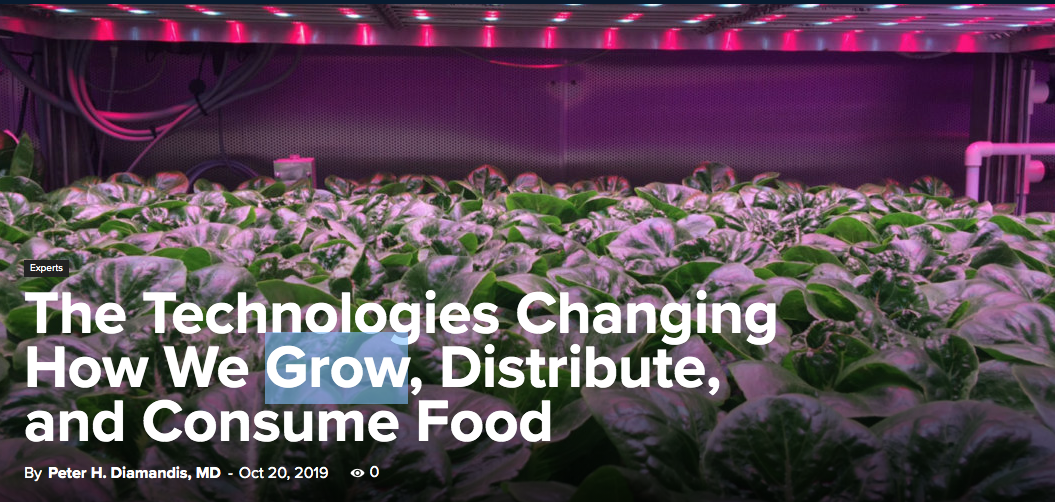
The Technologies Changing How We Grow, Distribute, And Consume Food
Already, indoor farming is projected to be a US$40.25 billion industry by 2022, with a compound annual growth rate of 9.65 percent. Meanwhile, the food 3D printing industry is expected to grow at an even higher rate, averaging 50 percent annual growth
October 20, 2019
Food. What we eat, and how we grow it, will be fundamentally transformed in the next decade.
Already, indoor farming is projected to be a US$40.25 billion industry by 2022, with a compound annual growth rate of 9.65 percent. Meanwhile, the food 3D printing industry is expected to grow at an even higher rate, averaging 50 percent annual growth.
And converging exponential technologies—from materials science to AI-driven digital agriculture—are not slowing down. Today’s breakthroughs will soon allow our planet to boost its food production by nearly 70 percent, using a fraction of the real estate and resources, to feed 9 billion by mid-century.
What you consume, how it was grown, and how it will end up in your stomach will all ride the wave of converging exponentials, revolutionizing the most basic of human needs.
Printing Food
3D printing has already had a profound impact on the manufacturing sector. We are now able to print in hundreds of different materials, making anything from toys to houses to organs. However, we are finally seeing the emergence of 3D printers that can print food itself.
Redefine Meat, an Israeli startup wants to tackle industrial meat production using 3D printers that can generate meat, no animals required. The printer takes in fat, water, and three different plant protein sources, using these ingredients to print a meat fiber matrix with trapped fat and water, thus mimicking the texture and flavor of real meat.
Slated for release in 2020 at a cost of $100,000, their machines are rapidly demonetizing and will begin by targeting clients in industrial-scale meat production.
Anrich3D aims to take this process a step further, 3D printing meals that are customized to your medical records, heath data from your smart wearables, and patterns detected by your sleep trackers. The company plans to use multiple extruders for multi-material printing, allowing them to dispense each ingredient precisely for nutritionally optimized meals. Currently, in an R&D phase at the Nanyang Technological University in Singapore, the company hopes to have its first taste tests in 2020.
These are only a few of the many 3D food printing startups springing into existence. The benefits from such innovations are boundless.
Not only will food 3D printing grant consumers control over the ingredients and mixtures they consume, but it is already beginning to enable new innovations in flavor itself, democratizing far healthier meal options in newly customizable cuisine categories.
Vertical Farming
Vertical farming, whereby food is grown in vertical stacks (in skyscrapers and buildings rather than outside in fields), marks a classic case of converging exponential technologies. Over just the past decade, the technology has surged from a handful of early-stage pilots to a full-grown industry.
Today, the average American meal travels 1,500-2,500 miles to get to your plate. As summed up by Worldwatch Institute researcher Brian Halweil, “We are spending far more energy to get food to the table than the energy we get from eating the food.” Additionally, the longer foods are out of the soil, the less nutritious they become, losing on average 45 percent of their nutrition before being consumed.
Yet beyond cutting down on time and transportation losses, vertical farming eliminates a whole host of issues in food production. Relying on hydroponics and aeroponics, vertical farms allows us to grow crops with 90 percent less water than traditional agriculture—which is critical for our increasingly thirsty planet.
Currently, the largest player around is Bay Area-based Plenty Inc. With over $200 million in funding from Softbank, Plenty is taking a smart tech approach to indoor agriculture. Plants grow on 20-foot-high towers, monitored by tens of thousands of cameras and sensors, optimized by big data and machine learning.
This allows the company to pack 40 plants in the space previously occupied by 1. The process also produces yields 350 times greater than outdoor farmland, using less than 1 percent as much water.
And rather than bespoke veggies for the wealthy few, Plenty’s processes allow them to knock 20-35 percent off the costs of traditional grocery stores. To date, Plenty has their home base in South San Francisco, a 100,000 square-foot farm in Kent, Washington, an indoor farm in the United Arab Emirates, and recently started construction on over 300 farms in China.
Another major player is New Jersey-based Aerofarms, which can now grow two million pounds of leafy greens without sunlight or soil.
To do this, Aerofarms leverages AI-controlled LEDs to provide optimized wavelengths of light for each plant. Using aeroponics, the company delivers nutrients by misting them directly onto the plants’ roots—no soil required. Rather, plants are suspended in a growth mesh fabric made from recycled water bottles. And here too, sensors, cameras, and machine learning govern the entire process.
While 50-80 percent of the cost of vertical farming is human labor, autonomous robotics promises to solve that problem. Enter contenders like Iron Ox, a firm that has developed the Angus robot, capable of moving around plant-growing containers.
The writing is on the wall, and traditional agriculture is fast being turned on its head.
Materials Science
In an era where materials science, nanotechnology, and biotechnology are rapidly becoming the same field of study, key advances are enabling us to create healthier, more nutritious, more efficient, and longer-lasting food.
For starters, we are now able to boost the photosynthetic abilities of plants. Using novel techniques to improve a micro-step in the photosynthesis process chain, researchers at UCLA were able to boost tobacco crop yield by 14-20 percent. Meanwhile, the RIPE Project, backed by Bill Gates and run out of the University of Illinois, has matched and improved those numbers.
And to top things off, The University of Essex was even able to improve tobacco yield by 27-47 percent by increasing the levels of protein involved in photo-respiration.
In yet another win for food-related materials science, Santa Barbara-based Apeel Sciences is further tackling the vexing challenge of food waste. Now approaching commercialization, Apeel uses lipids and glycerolipids found in the peels, seeds, and pulps of all fruits and vegetables to create “cutin”—the fatty substance that composes the skin of fruits and prevents them from rapidly spoiling by trapping moisture.
By then spraying fruits with this generated substance, Apeel can preserve foods 60 percent longer using an odorless, tasteless, colorless organic substance.
And stores across the US are already using this method. By leveraging our advancing knowledge of plants and chemistry, materials science is allowing us to produce more food with far longer-lasting freshness and more nutritious value than ever before.
Convergence
With advances in 3D printing, vertical farming, and materials sciences, we can now make food smarter, more productive, and far more resilient.
By the end of the next decade, you should be able to 3D print a fusion cuisine dish from the comfort of your home, using ingredients harvested from vertical farms, with nutritional value optimized by AI and materials science. However, even this picture doesn’t account for all the rapid changes underway in the food industry.
Join me next week for Part 2 of the Future of Food for a discussion on how food production will be transformed, quite literally, from the bottom up.
Join Me
Abundance-Digital Online Community: Stay ahead of technological advancements and turn your passion into action. Abundance Digital is now part of Singularity University. Learn more.
Image Credit: Vanessa Bates Ramirez
TAGS Future of Food
Dr. Peter Diamandis was named by Fortune Magazine as one of the World’s 50 Greatest Leaders.
He is the Executive Founder of Singularity University, a Silicon Valley institution that counsels the world’s leaders on exponentially growing technologies.
He is the Founder and Executive Chairman of the XPRIZE Foundation which leads the world in designing and operating large-scale incentive co... Learn More
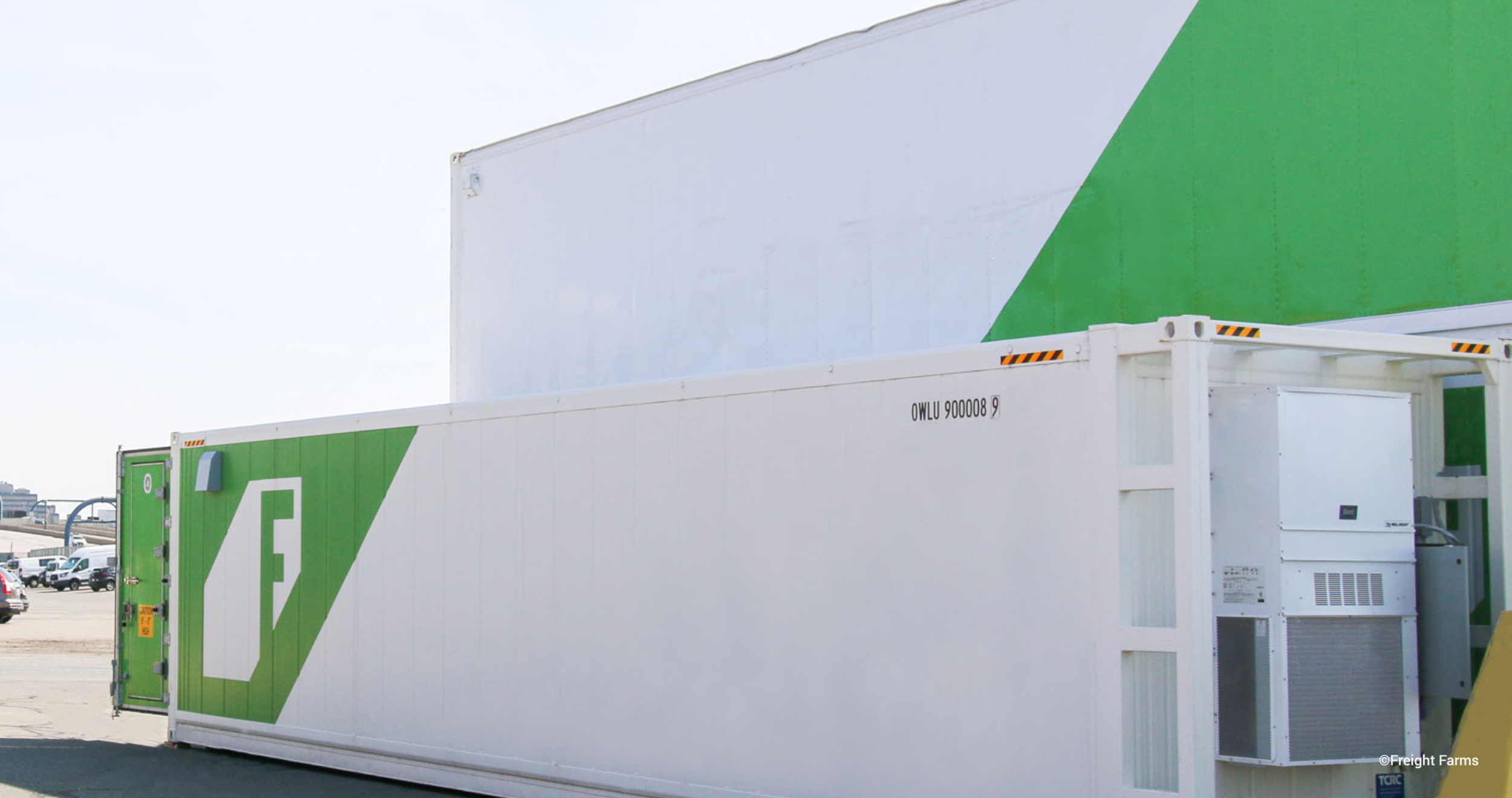
Growing Food Anywhere With Freight Farms
Freight Farms was founded by Brad McNamara and Jon Friedman in 2010, before the “ag tech” industry existed. McNamara and Friedman were pioneers who envisioned the need for urban agriculture as a competitive industry to make local food a reality around the globe. Their initial focus was on rooftop greenhouses, but it quickly became clear that there was a need for a modular and scalable design that could yield produce 365 days a year
By SOLIDWORKS October 8, 2019
Freight Farms was founded by Brad McNamara and Jon Friedman in 2010, before the “ag-tech” industry existed. McNamara and Friedman were pioneers who envisioned the need for urban agriculture as a competitive industry to make local food a reality around the globe.
Their initial focus was on rooftop greenhouses, but it quickly became clear that there was a need for a modular and scalable design that could yield produce 365 days a year. To perfect logistics and reduce costs, McNamara and Friedman designed their new technology to be housed inside shipping containers, which are widely available, even in areas unsuitable for traditional farming methods.
Now Freight Farms is at the forefront of the fast-growing ag-tech industry and the first company to build a farm inside a shipping container. Its customers include restaurants, hotels, entrepreneurs, small businesses, corporate campuses, universities and non-profits in addition to traditional farmers. The company is constantly working on new technology to modernize farming.
The Leafy Green Machine
The mission of Freight Farms is to empower anyone to grow food anywhere. Its miniaturized commercial-scale farm, the Leafy Green Machine, fits inside an intermodal freight container, so it’s protected from the elements and erratic changes in climate.
The hydroponic, atmospherically controlled, tech-connected farm was the first containerized farm on the market. With maximization of every bit of cubic space, the Leafy Green Machine produces about a thousand baby heads of lettuce or 500 full heads of lettuce a week with an ebb and flow system (intermittent water flow) for seedling propagation and initiation and a vertical drip system for mature plants.
The plants begin in horizontal beds and are harvested from vertical beds. These ergonomic beds enable easy access to plants—no more stooping to work with seeds and plants in the ground!
SOLIDWORKS Makes Every Stage More Efficient
When designing within a literal box, it’s vital that every piece of equipment and its interaction with the operator and the plants is seamless. SOLIDWORKS 3D CAD was instrumental in the design of the Leafy Green Machine as the team was able to test designs with meticulous accuracy and make modifications without creating expensive physical prototypes.
Freight Farms also uses SOLIDWORKS on a daily basis to quickly grasp the reality of a space. Using SOLIDWORKS mates they quickly identify interference points, and they block out the size of a head of lettuce or other plant to determine how the space must change to accommodate each week of the growth cycle.
According to Freight Farms Designer Derek Baker, SOLIDWORKS’ sheet metal feature is a game changer because it helps him understand the constraints the fabricators encounter when building a part: “When I have that understanding, I’m able to bring that part to conclusion just so much quicker.”
The Internet of Things and Farming
Internet of Things (IoT) farm management and automation have become a way of life with Freight Farm’s easy-to-use digital platform that lets you manage, analyze, and remotely control your farm from any location.
The platform enables you to know exactly how things are running by viewing the current status of all your growing equipment including real-time views of temperature, humidity, carbon dioxide, and pH levels. You also receive alerts if your farm’s temperature falls above or below your threshold.
Farmers are now no longer confined to where they can farm—urban, suburban, or rural—Freight Farms makes geography a non-issue. Even the unpredictable ways of Mother Nature are minimized with the Leafy Green Machine.
The potential impact of the Leafy Green Machine excites Baker: “I want to make food accessible to the world, and that’s what I would hope people will think about when they think about me or Freight Farms.”
CAN (ON): Container Farm To Provide Food Hub With Year-Round Fresh Produce
On Saturday, Oct. 19, 2019, The Growcer, Abbey Gardens, community members, and project partners, FedDev Ontario and Laidlaw Foundation, came together for a ribbon-cutting to celebrate the addition of the hydroponic container farm to the community. The new addition will allow Abbey Gardens to provide fresh produce year-round through its Food Hub initiative
The Growcer, an Ottawa-based start-up enabling local food production with hydroponic container farms, has partnered with Abbey Gardens to make locally and sustainably grown food available year-round for the Haliburton community.
On Saturday, Oct. 19, 2019, The Growcer, Abbey Gardens, community members, and project partners, FedDev Ontario and Laidlaw Foundation, came together for a ribbon-cutting to celebrate the addition of the hydroponic container farm to the community. The new addition will allow Abbey Gardens to provide fresh produce year-round through its Food Hub initiative.
The team (from left to right: Jamie Laidlaw (Laidlaw Foundation), Patti Tallman (The Haliburton County Development Corporation), Heather Reid, (Abbey Gardens), Alida Burke, Corey Ellis (The Growcer), John Patterson (Abbey Gardens)) in front of the Growcer system at the ribbon-cutting ceremony in Abbey Gardens, in Haliburton, Ont. Photo credit: Morgan Hector.
Abbey Gardens is a local farm and social enterprise in Haliburton, Ont. that focuses its efforts to reduce its carbon footprint and foster sustainable initiatives. It runs a Food Hub that sells fresh food from its two-acre market garden as well as goods from local businesses. However, what can be grown on its two-acre farm outside is limited by the climate and length of the growing season in Haliburton, which is shorter than its counterparts in southern Ontario. By adding a Growcer system, Abbey Gardens extends its growing season by months enabling them to supply their community with fresh and sustainable green produce year-round.
With the new system, Abbey Gardens plans on establishing a year-round produce subscription box and partnering with local restaurants to supply produce. The addition of a hydroponic growing system will also add to the educational opportunities available for the community about sustainable growing techniques.
The Growcer system will allow Abbey Gardens to extend its growing season to be all year-round. Photo credit: Morgan Hector.
Beyond selling food, The Food Hub operates as a social enterprise and profits go directly back into Abbey Gardens to help support educational programs for the local community and facilities. For Abbey Gardens, partnering with The Growcer was aligned with the organization’s interest in supporting local entrepreneurs in Canada.
“We’re super excited to have invested in the Growcer here at our property both as a demonstration for year-round growing and to be able to provide leafy greens to our community", said Heather Reid, Operations Director, Abbey Gardens.
“Growcer is extremely excited to partner with Abbey Gardens in order to bring fresh, local produce to the Haliburton community year-round. We support their strong focus on sustainability and cannot wait to see the ripple effect this will have for food accessibility”, Corey Ellis, Co-Founder and CEO, The Growcer, commented.
For more information:
The Growcer
www.thegrowcer.ca
Abbey Gardens
abbeygardens.ca
Publication date: Tue, 22 Oct 2019
Vertical Farming Firm Secures £4m In Seed Funding
London FoodTech firm Vertical Future has secured £4m in a seed round designed to power its sustainable food production technology. The firm’s technology allows for the growing of primarily baby leaf vegetables and herbs in a controlled, indoor environment
The London Company Uses Technology To Grow Plants In A Technique
Known As ‘Vertical Farming’
Alistair Hardaker 8th Oct 2019
An example of a 'vertical farm'
London FoodTech firm Vertical Future has secured £4m in a seed round designed to power its sustainable food production technology.
The firm’s technology allows for the growing of primarily baby leaf vegetables and herbs in a controlled, indoor environment.
The method has been developed with a vision to improve health and reducing CO2 emissions in ‘plant factory’ sites in London Fields and Mayfair, with a new development in its existing Deptford site.
Its new funding will support the first phase of the firm’s growth strategy – increasing crop production at these sites, with a target of a ten-fold increase in its B2B restaurant business alongside expansion into a B2C model under its MiniCrops brand.
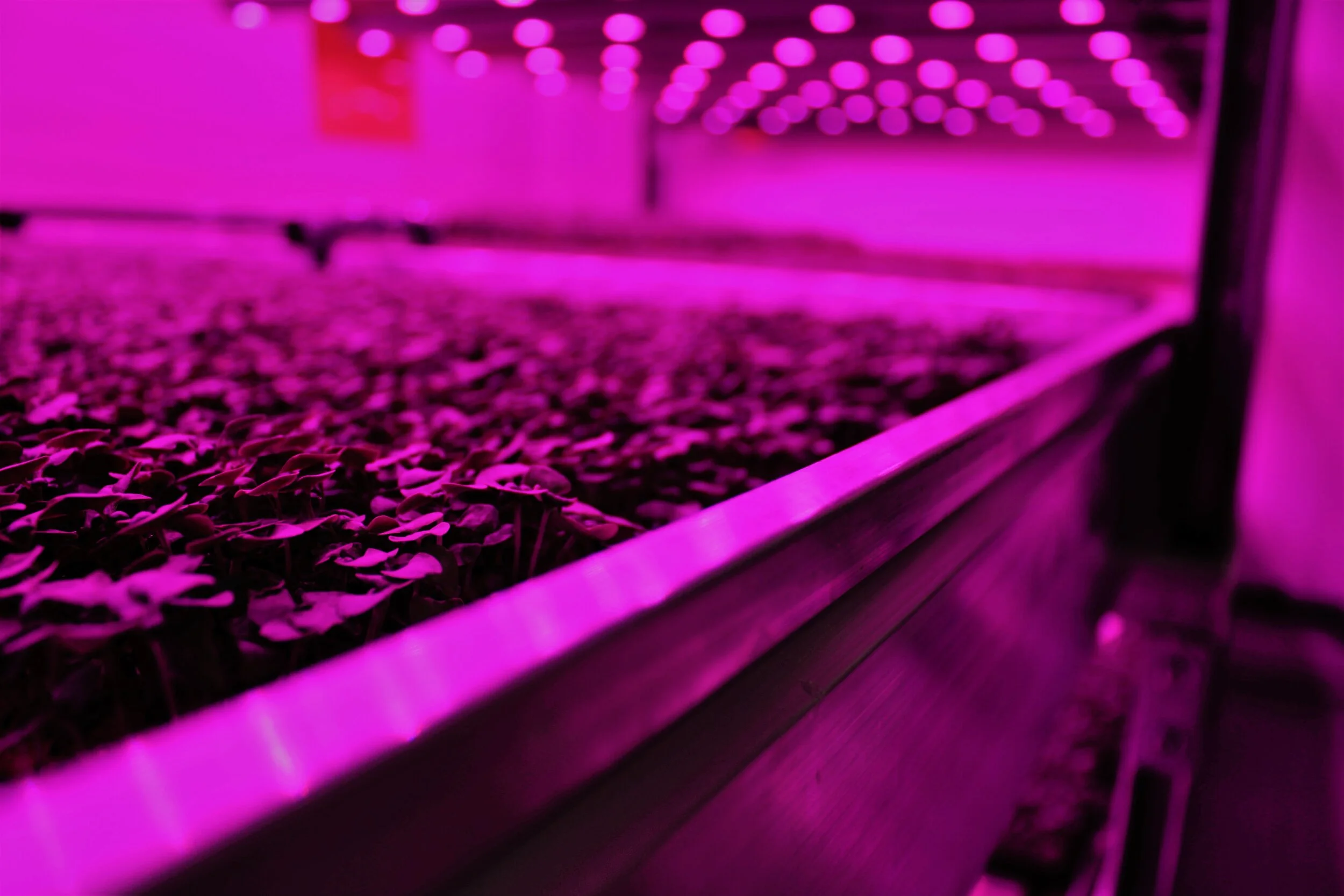
Its more than 100 existing clients include Chop’d, Tom’s Kitchen and Mindful Chef.
Jamie Burrows, founder and CEO of Vertical Future, said the raise follows several years of hard work.
“Today’s raise validates our growth strategy and strong position in the London market, furthering our mission to improve the food and health of urban inhabitants, starting in London,” he said.
Ben Prior, CEO of Earthworm, added: “Vertical farming offers huge potential in solving one of the biggest issues of our time – how to feed a growing population sustainably.
“We are really impressed with Jamie’s vision and work ethic, and the team at Vertical Future has a very special business poised for growth.”
The technique’s popularly was recently bolstered after Ocado invested £17m into its own vertical farming venture.

US (NM): NMSU To Host Aquaponics Workshop In Albuquerque - November 2, 2019
New Mexico State University’s Extension, in collaboration with Santa Fe Community College and Sanctuary at ABQ, is hosting an introduction to aquaponics workshop from 8:30 a.m. to 3:30 p.m. Saturday, Nov. 2, at the Bernalillo County Extension 4-H Building, 1500 Menaul Blvd NW in Albuquerque
The increasing awareness of limited land and water resources, coupled with an interest and desire to grow food sustainably, has led people across the country, and here in New Mexico, to look more closely at aquaponics as a strategy to address these issues.
Aquaponics is an integrated food production system that combines aquaculture, the cultivation of aquatic animals, and hydroponics, the growing of plants without soil, in a recirculating system.
New Mexico State University’s Extension, in collaboration with Santa Fe Community College and Sanctuary at ABQ, is hosting an introduction to aquaponics workshop from 8:30 a.m. to 3:30 p.m. Saturday, Nov. 2, at the Bernalillo County Extension 4-H Building, 1500 Menaul Blvd NW in Albuquerque.
Registration is $40, lunch will be provided. Payment is due by Oct. 25.
Register online here or call 505-243-1386
The workshop is limited to 60 people. A waiting list will be available.
“This workshop will teach people how to set up an aquaponics system, how to grow fish and plants, and the importance of water quality, as well as permits, safety and other unique aspects of an aquaponics growing system,” said John Garlisch, NMSU Extension agricultural agent in Bernalillo County. “A tour of an aquaponics greenhouse will be included.”
Workshop presenters will be Rossana Sallenave, NMSU Extension aquatic ecology specialist; Charlie Shultz, lead faculty in the aquaponics and controlled environmental agriculture program at Santa Fe Community College, and Pedro Cordero Casas, an instructor in the aquaponics program at Santa Fe Community College.
“The fish and plants are cultivated together in a recirculating ecosystem that utilizes natural nitrogen-fixing bacteria to convert fish/aquatic animal waste into plant nutrients,” Sallenave said. “The waste products of the aquaculture system serve as nutrients for the hydroponic system.”
With such a combined recirculating system, there is no need to discard any water, and plants obtain most of their required nutrients without the need of added fertilizers, making it both sustainable and environmentally friendly.
Aquaponics systems require only about one-tenth of the water that would normally be used in traditional agriculture, making such systems particularly attractive in water-scarce regions of the country, such as New Mexico.
“There has been an increased interest in aquaponics in New Mexico,” Sallenave said. “This workshop will provide the participants with a good overview of aquaponics as well as the necessary information that they need to consider prior to undertaking this method of agriculture.”
The afternoon portion of the workshop will include a tour of Sanctuary at ABQ’s greenhouse and aquaponics system, led by its director, Danny Lilly. In addition, there will be demonstrations on how to build a system and how to monitor water quality.
Source: New Mexico State University
Publication date: Tue, 22 Oct 2019

‘We Really Need To Wake Up Quickly’: Al Gore Warns of A Looming Food Crisis Caused By Climate Change
Some 40 panelists, most of them farmers and scientists, took the stage to discuss topics from healthy soil to carbon sequestration, but the main event was Gore’s slide show, delivered with his characteristic mix of bravado and humility, detailing the impacts of climate change on food systems worldwide
Former vice president Al Gore backstage at the Time 100 Health Summit in New York in October. (Craig Barritt/Getty Images For Time 100 Health)
By Amanda Little
Oct. 22, 2019
CARTHAGE, Tenn. — “I’ve done so many presentations I just never get nervous anymore, but I was nervous before this one — so much new material,” Al Gore said last week as he launched into the latest iteration of “An Inconvenient Truth,” the slide show that won him an Oscar, a Nobel Prize and a Grammy. Gore had invited 300 guests — chefs, farmers, food executives, and activists — to “The Climate Underground,” a two-day conference last week at his family farm here that explored the intersection of food, climate change and sustainable agriculture.
Some 40 panelists, most of them farmers and scientists, took the stage to discuss topics from healthy soil to carbon sequestration, but the main event was Gore’s slide show, delivered with his characteristic mix of bravado and humility, detailing the impacts of climate change on food systems worldwide.
Will technology or tradition save the global food supply? Why not both?
“This is in Georgia; a heatwave cooked these apples before they could be harvested,” he said, issuing forth rapid-fire examples alongside bone-chilling images and video. “This is the Australia wine region that’s going to be untenable. . . . Rice yields in 80 percent of Japan have declined due to the rising temperatures. . . . In nearby Murfreesboro, Tenn., we’ll see a quarter decline in soybean yields within the next 30 years.”
Gore spent the better part of 90 minutes detailing the pressures of drought, heat, flooding, superstorms, “rain bombs,” invasive insects, fungi and bacterial blight on food producers. “We may be approaching a threshold beyond which the agriculture that we’ve always known cannot support human civilization as we know it,” he declared in a low growl. “That’s something we need to avoid.”
Alice Waters, who Gore said catalyzed his interest in food and who had volunteered to cook the vegetarian lunches served to attendees (using local, seasonal and organic ingredients, natch), said the presentation was bittersweet: “I am deeply depressed. But on the other hand, the solution seems so, so unbelievably transformational. . . . We can restore the health of the planet while also restoring the health of people and communities.”
Naomi Starkman, editor-in-chief of Civil Eats, which covers news on sustainable agriculture, was similarly fraught: “Gore spoke with such devastating and fierce clarity, connecting the dots between the ways agriculture is implicated in and impacted by the climate crisis. But it also felt like a hopeful moment wherein agriculture, and farmers in particular, are taking a front-and-central place in solving one of the most urgent issues of our time.”
Mark Bittman, the former New York Times food columnist, was more circumspect: “There are ways in which the conversation here isn’t quite realistic. Regenerative agriculture is not about increased yield, it’s about producing more of the right food in the right ways. ... But kudos to Al Gore for taking it on. There’s no more important conversation to have.”
I sat down with the former vice president to dive deeper into the details. Edited excerpts of our conversation follow:
Q: The main way most humans will experience climate change is through its impact on food: Is this a fair statement?
A: Ever since 2015, it’s been clear that the impact on the food system was underestimated in previous years. And there is a natural resistance that many of us have had to getting too concerned about the food system. Food insecurity had been declining steadily for the last couple of decades, just as extreme poverty had been declining. But in the last couple of years, that too has changed, and the principal reason is the climate crisis.
Africa, by mid-century, will have more people than either China or India. And by end of century, more people than China and India combined. And you combine that with the impact of the climate crisis on subsistence agriculture in Africa, the importance of subsistence agriculture in Africa, the poor quality of the soils, the persistent problems of land tenure, and the economic and social structures that discourage good stewardship of the land, then, wow. We really need to wake up quickly to the serious crisis that could develop there.
We have no idea yet how to feed the planet without frying it
Q: What are the most crucial policy measures that need to be taken to encourage regenerative farming in the U.S. and climate-smart agriculture broadly?
A: We need leadership to completely refocus USDA to completely change the system of farm subsidies to stop the massive subsidies for crops that are not eaten by people, that go to biofuels, that go to animal feed. We should eventually work our way toward a system for compensating farmers for the buildup of soil carbon. That’s not possible yet, partly because we are still developing a measurement of soil carbon buildup that is necessary for the confidence of policymakers and voters that this is not some boondoggle. But eventually, that’s where we need to be.
Q: On one hand you have Bill Gates saying, “The time has come to reinvent food,” and on the other you have Alice Waters and others saying, “Let’s de-invent food, let’s go back to preindustrial agriculture,” essentially. What do you think the role of tech should be?
Alice Waters, at The Washington Post in 2017, has advocated for a return to traditional farming. (Kristoffer Tripplaar/For The Washington Post)
A: We want a single, magic answer that’s going to solve a big, complicated problem, and I think that in agriculture and food and climate, these systemic approaches are usually more likely to be successful. But technology and science has an important role to play. Measuring soil carbon is one. That team at the Salk Institute has a really interesting proposal to modify roots to sequester more suberin, a form of carbon that stays in the soil for a long time. If their hypothesis is correct, the root structures of food plants can be made much more robust in a way that simultaneously sequesters more organic carbon and increases yields. So that’s technology that is worth exploring and evaluating.
In general, the solutions in agriculture are more to be found in going back to some traditional approaches that worked but were discarded because of the pressure for short-term profit maximization. And that includes crop rotation. It includes cover crops to put key chemicals and nutrients back in the soil after it’s been used for a particular cash crop. It includes rotational grazing, which is not without controversy but has been proven to work, at least on farms of this scale.
Climate change is sapping nutrients from our food — and it could become a global crisis
Q: What role must consumers play in the shift toward sustainable food systems and climate resilience?
A: There’s a danger in focusing on consumer behavior. There’s a danger of giving the impression that the solutions to the climate crisis have to be shouldered by women and men who care enough about it to change their personal choices. They do. But as important as it is to change a lightbulb, it is way more important to change policies. And in order to change policies, we have to have new policymakers. So the most important role that individuals can play is in taking their concern and passion for a better world into the voting booth and turning out in large numbers to overcome the dominance of our political system by big money.
Q: Some permaculture and regenerative farmers that I met with have said that it’s more expensive to farm this way. They can’t afford their own products. How do we address that?
A: I don’t want to deny the premise of your question, but some regenerative farmers have saved a lot of money on their input costs. Now, how do we develop markets for healthier, organic, regenerative-agriculture food? That’s one of the reasons we’re incorporating efforts to get school systems and hospitals and nursing homes and long-term care facilities to provide markets for healthier food.
Q: Still, there are real concerns from middle- and low-income consumers that this is an elitist movement.
Solar panels on a home in Maryland in 2016. (Benjamin C Tankersley/For The Washington Post)
A: It hasn’t been very many years since solar panels were considered an elitist movement. And you heard exactly the same critique. “For those who can afford them, that’s fine. But don’t tell me that’s going to be a significant development, because only the wealthy elite are doing it.” Well, that’s not true anymore, because that was the beginning of a movement that drove scale and accelerated the cost reduction curve. And now you’ve got people putting rooftop solar on and community solar, and it is really taking off dramatically. But it started as an elitist movement. The same thing is beginning to be true of electric vehicles. If we can democratize and widely distribute the soil carbon assessment technologies, I don’t think it’s that hard to imagine technology driving the cost down to the point where this can spread more rapidly.
Q: The agriculture industry is so interesting because it is a major driver of the climate problem, but it is also more vulnerable than any other industry to the pressures of climate change.
A: Many pioneers of regenerative agriculture are finding that their farms are more resilient to drought and flood and extreme weather than with the older established farming techniques. Building the health of the soil does not mean just more organic carbon. It also means building the ability of the soil to absorb the higher rainfall events and to withstand drought events more effectively.
Q: One scientist said to me the most delicious fruits are dying because the specialist crops, the ones that we love the most, are hardest to adapt to new circumstances. Of all the crops that are most vulnerable, which would be the hardest for you to live without?
A: Chocolate. Cacao. Absolutely.
Little is author of “The Fate of Food: What We’ll Eat in a Bigger, Hotter, Smarter World” (Harmony, 2019).