


Welcome to iGrow News, Your Source for the World of Indoor Vertical Farming

Could Rooftop Gardens Save Our Cities From Climate Change?
Lucent, a 17-storey residential tower at trendy Newstead in inner-city Brisbane, is one of those, winning local, state and national design awards. The tower, completed in November 2017, included a 1,600 square metre rooftop area with expansive views over Brisbane
09-05-19
Rooftop gardens could save our cities from climate change, but archaic planning laws are holding back a green revolution.
Australian cities are heating up, with an alarming report this year finding temperature increases from climate change and urban growth will make Brisbane "a difficult place" to live by 2050.
Key points:
Rooftop gardens are considered a storey of a building, so it is not financially viable to have one as a garden instead of sellable space
Research shows rooftop gardens promote physical activity and psychological wellbeing and have a positive impact on air pollution, noise levels and temperature regulation
Town planners want the Brisbane City Council to legislate to enforce rooftop gardens in all new apartments
Scientists blame what is called the urban heat island effect, which means cities are hotter than nearby rural areas due to development.
But it is not too late to turn it around, and plants could be the solution.
Green rooftops could help to take the heat out of the city, but Brisbane's property developers and planners said local laws were holding them back.
Cities like Singapore and New York have long embraced sky gardens and while Brisbane is late to the garden party, there are dozens of developments in the pipeline that would use clever ways to provide greenspace, when room on the ground is at a premium.
In September 2018, then-Brisbane lord mayor Graham Quirk announced the Council would amend the Brisbane City Plan to formalise the Council's support for rooftop gardens and green spaces, but 12 months on, that had not happened.
Currently a rooftop garden is considered a storey of the building, so if a developer has planning permission for a certain number of storeys, it is not financially viable to have one as a garden instead of sellable space.
Developers hamstrung by poor planning laws
Brisbane town planner Mia Hickey said the majority of large-scale inner-city apartment developments in Brisbane wanted to incorporate rooftop spaces, but were hamstrung by the poor planning laws.
"There are definitely some developers who are shying away from adding rooftop gardens for this reason," she said.
"It's not a good look when they [council] said they were going to do this [change planning laws] and it hasn't been done."

Ms. Hickey said research showed rooftop gardens promoted physical activity, psychological wellbeing, and had a positive impact on air pollution, noise levels and temperature regulation.
"It's no longer just OK to put a half-shaded BBQ area up there with a little bit of grass," she said.
"We're now starting to see developments that incorporate resort-style amenities that are winning awards.
Newstead rooftop garden a 'sky retreat'
Lucent, a 17-storey residential tower at trendy Newstead in inner-city Brisbane, is one of those, winning local, state and national design awards.
The tower, completed in November 2017, included a 1,600 square metre rooftop area with expansive views over Brisbane.
The luxury development by Cavcorp described its rooftop garden as a "sky retreat" complete with "lifestyle-enhancing amenities".
It claims to have Australia's longest infinity pool, along with a detox sauna and spa, yoga lawn, Zen gardens and even a golf green on the rooftop.
With more families abandoning the suburbs in favour of inner-city living, Ms Hickey said even those on more restricted budgets were demanding rooftop garden space.
Consumers looking for the 'up-yard'
"It's just as important as the local school catchment," Ms Hickey said.
"It's no longer about the size of the backyard, but about the size and amenities of the rooftop, or as I like to call it — 'the up-yard'."
There are numerous inner-city apartment proposals with ambitious rooftop gardens on the drawing boards.
Cbus Property is building a 47-storey apartment block at 443 Queen Street in Brisbane's CBD.
Claiming to be Australia's first "subtropical-designed" building, construction is underway on the riverside development.
The building will have a "breathable facade" with gardens on every floor as well as on the rooftop, aiming to reduce energy consumption by up to 60 per cent.
At New Farm in Brisbane, the Maison project by Frank Developments will have cascading gardens on every floor of the proposed five-storey development.
The development, yet to receive Brisbane City Council (BCC) approval, claimed it would be one of the most heavily landscaped buildings in the city, with more than 86 per cent of the site to be planted, when the current council requirement was just 10 per cent.
Further afield, a Victorian property developer has plans for a "sustainable shopping centre" at Burwood in suburban Melbourne.
Frasers Property group is building a 2,000 square-metre urban farm on the shopping centre's rooftop, which it said is a first for Australia.
Failure to move quickly hampering rooftop landscaping
The Urban Development Institute of Australia (UDIA) agreed the BCC's failure to move quickly is hampering rooftop landscaping in Queensland.
UDIA Qld CEO Kirsty Chessher-Brown said currently there was "really no incentive for our members to be able to do this — it's actually disincentivised".
"The current situation is that our members can provide communal space on rooftops, but the minute that any roof structure is added to that rooftop space, it's then considered to be an additional storey to the building.
"That then impacts on our members' ability to comply with acceptable rules for building heights.
"If our [UDIA] members do put a structure on the roof, which is incredibly important for our climate, we see our members lose a complete storey, which could obviously be habitable space."
She said these spaces provided "really critical opportunities for landscaping".
"People can provide community or productive gardens and the real lure is being able to reduce some of the heat-island affect, traditionally associated with built-up environments," she said.
Ms Chessher-Brown said there was also a need for further incentives for developers.
"The next step is to replicate other programs in place across the world including Singapore, where there's actually a program to encourage developers to consider greater landscaping and use of planting on rooftop spaces," she said.
Legislation needed for developers to do rooftop gardens
In 2009, Singapore introduced its Landscaping for Urban Spaces and High-Rises (LUSH) Program, which encouraged developers to provide green roofs in all new developments and gave financial incentives for those that went beyond the minimum requirements.
The Property Council of Australia (PCA) is more forgiving of the council for the delay.
Acting Queensland deputy executive director Nathan Percy said the PCA supported the action contained in the BCC Brisbane Future Blueprint to make it easier for new developments to include rooftop gardens.
"We are working with Brisbane City Council on the implementation of this action, but it is important to remember that planning amendments do take time," he said.
"As Brisbane grows, we need to ensure that we continue to deliver spaces that allow people to enjoy our subtropical climate and rooftop gardens are one way that we can achieve this."
In a statement, BCCs planning chairman, Matthew Bourke, acknowledged there was a need for rooftop gardens but admitted it would take until the end of the year to make changes.
"Brisbane is a great place to live, work and relax, and we are increasingly seeing residents and visitors enjoying the city's vistas and subtropical weather from the rooftops of inner-city dwellings," he said.
"Increasing green spaces means a healthier and more sustainable city and Brisbane City Council has proposed an amendment to make it easier to include rooftop gardens for new developments as part of its review of City Plan.
"Investigations, research and drafting of the amendment package is underway and Council plans to be able to send it to the State Government for review soon, before opening up the proposed amendment for public consultation in late 2019."

These UMD Researchers Are Helping Farmers Grow Crops on Urban Roofs
With the help of University of Maryland researchers, farms across Washington, D.C., are taking watermelons, cucumbers and cherry tomatoes to the next level: the roof
September 6, 2019
The green roof at the top of the Physical Sciences Complex is just one among many around campus that serve as drainage and an ecosystem. (Joe Ryan/The Diamondback)
With the help of University of Maryland researchers, farms across Washington, D.C., are taking watermelons, cucumbers and cherry tomatoes to the next level: the roof.
John Lea-Cox, a plant science and landscape architecture professor at this university, and Andrew Ristvey, an affiliate faculty in the department, are working with the D.C.-based farming foundation Up Top Acres to grow crops on urban rooftops.
Kristof Grina, co-founder and farm director of Up Top Acres, said he initially connected with Lea-Cox and Ristvey a few years ago for help with research and data collection surrounding stormwater management and water retention on their rooftop farms.
Lea-Cox and his team monitor the rainfall, soil temperature and soil moisture on Up Top Acres’ rooftop farms, Grina said. Lea-Cox said he was impressed by the quality of the rooftop produce, which grows across eight farms in Maryland and D.C. The crops are delivered to restaurants downstairs or sold in a community-supported agriculture system.
“There’s like a little bit of Little Italy on the roof down in D.C.,” Lea-Cox said.
Relish Catering, a catering company in North Bethesda, started working with Up Top Acres about a year ago. The company operates about half a mile away from the rooftop farm at Pike and Rose.
The rooftop farm cuts transportation costs for the company, said chef Laura Calderone, since it’s both walkable and bikeable. When she needs ten pounds of pea shoots, for example, she can just load them in her backpack.
“They will literally pick it that morning, and it is going out to our clients that afternoon for the following day,” Calderone said. “Sometimes there are still bugs in it that are moving around, but that’s okay.”
Calderone said Relish Catering has incorporated local rooftop ingredients into salads, salsa verde and tarts, among other dishes.
“Their greens are sweeter and they are not as fibrous,” Calderone said. “You don’t have to manipulate it much. We can let it shine as it is.”
This university’s researchers collect data that gives the farm’s operators “better insight” into how the systems are functioning, Grina said. It lets them know how they’re doing with irrigation practices, and can spur ideas for design improvement.
Lea-Cox and his team also monitor nitrogen and phosphorus levels in the crops. An excess of these nutrients can runoff into local waterways and trigger excessive algae growth. When algae grows too quickly and too abundantly, oxygen levels decline, ultimately killing the fish.
La Betty, an American-style restaurant on K Street in D.C., featured wild rooftop-sourced bouquets on the tabletops. Owner and head of operations Tessa Velazquez said that the flowers last longer than alternatives.
“The story behind it is great,” Velazquez said. “To say that we’re featuring local farmed flowers makes us feel good, makes our customers excited … they’re beautiful and they’re colorful and you really just get that sense of how natural and fresh that they are.”
La Betty is located about two miles from Up Top Acres’ 55 M Street farm in the Capitol Riverfront neighborhood, which opened in 2016. Soon, Velazquez said, she hopes to feature produce from a rooftop farm on her menu.
“I love that they’re actually engaged with the community, as well as really trying to bring that fresh farm-to-table experience — which is a fuzzy term, but they’re really doing it,” Velazquez said. “They’re your neighbors. They’re down the street. They’re not two hours away in Pennsylvania, they are really here.”
Investment Brings New Life, New Jobs For RecoveryPark
After working for more than a decade to launch its first social enterprise, RecoveryPark is poised to break ground in November on a commercial-scale hydroponics greenhouse that will create jobs and eventually, equity ownership for Detroiters facing employment barriers
September 08, 2019
Project has attracted investments from three high-profile investors
Will establish Detroit's first commercial-scale hydropronics grower
Expected to sow and harvest first crop, baby leaf lettuce, in August 2020
Justin Phillips, farm associate at RecoveryPark, harvests greens from the nonprofit's pilot hydroponics growing operation. Photo: Bill Bowen
After working for more than a decade to launch its first social enterprise, RecoveryPark is poised to break ground in November on a commercial-scale hydroponics greenhouse that will create jobs and eventually, equity ownership for Detroiters facing employment barriers.
The $10 million project on East Palmer Street near Chene will bring farming — albeit a different type — back to a part of the city that was once home to flower and vegetable seed producer D.M. Ferry & Co. and establish Detroit's first commercial-scale hydroponics grower.
It's attracted three high-profile investors: Stephen Polk, CEO of Birmingham investment company Highgate LLC.; Jim M. Nicholson, co-chairman, PVS Chemicals Inc.; and Walter Tripp Howell, retired international director of Jones Lang LaSalle in Washington, D.C., and an ex-pat of the Detroit area, who learned of the project during the 2018 Detroit Homecoming.
Detroit-based Nextek Power Systems is also considering an equity investment, its CEO Paul Savage confirmed.
Those investments will make up about a third of the $12.5 million raised to cover bridge operational funding for the nonprofit RecoveryPark over the past several months and construction and startup costs for the climate-controlled greenhouse operation, which is set to launch in August 2020, RecoveryPark CEO Gary Wozniak said last week.
A 28-year loan backed by the U.S. Department of Agriculture and U.S. Small Business Administration and a 10-year loan backed by the U.S. Small Business Administration, both made through the Greater Nevada Credit Union's Greater Commercial Lending arm to for-profit company RecoveryPark JV LLC, are set to close in October, rounding out funding, Wozniak said.
Wozniak projects the greenhouse operation, run by the for-profit company, will yield $6 million in revenue its first year and $18 million annually within four years with two planned expansions that will triple its "acres under glass."
RecoveryPark has already proven the business model through pilot hydroponics and high-tunnel or soil-based growing operations a couple of blocks away near its headquarters on Chene, Wozniak said. It has contracts to supply lettuce to Detroit wholesale distributor Del Bene Produce that produced $180,000 in revenue last year and are set to do about the same this year.
It's now in talks with retailers including Nino Salvaggio and Meijer, Wozniak said.
Next to tomatoes, leafy greens are the second most in-demand vegetable, he said. And recent romaine lettuce recalls have spurred demand for hydroponically grown lettuce and greens even more.
The greenhouse will help RecoveryPark achieve its social mission, said Wozniak, who is himself a recovering addict and ex-offender.
"Our mission is to create jobs for people with barriers to employment: people coming out of prison and/or drug treatment programs," Wozniak said. "Our vision is to do that by creating jobs in the food industry and eventually we'll transfer majority ownership to the workforce in those businesses."
The new greenhouse will also help change the way consumers view food by establishing local, hyper-fresh options and local accountability for the quality of that food, he said.
Joint venture
RecoveryPark JV will be jointly owned by the nonprofit RecoveryPark as minority owner and the equity investors holding a combined 70-percent stake. RecoveryPark will look to buy back equity from the investors over 10 years, before transitioning ownership to employees, Wozniak said.
Charles Motley, COO, RecoveryPark JV LLC; and Gary Wozniak, president and CEO of the nonprofit RecoveryPark. Photo: Bill Bowen
Automotive and manufacturing veteran Charles Motley has joined the new company as COO.
Motley, 47, brings 25 years of experience at manufacturing companies, most recently serving as vice president of manufacturing at Wixom-based gun sight manufacturer Trijicon Inc.
With his experience and expertise in construction and team management, process flow, lean systems and continuous improvement skills, "he's taking us from being a church committee to being a real business," Wozniak said.
Motley, a native Detroiter, said he was attracted by the opportunity to give back at this point in his career.
"We're committed to taking ... not just the greenhouse (but) the whole area ... from being blighted to being a stronger economic centerpiece for the city," he said.
Beyond their investments, each of the equity investors brings specific expertise and is helping mentor the startup greenhouse company, Wozniak said. Polk has given advice on managing the stress of pulling together financing for the greenhouse while balancing operational and funding needs for the nonprofit. Nicholson was instrumental in driving to hire someone like Motley to lead the greenhouse operations. Howell has brought an understanding of the farm-to-table movement and marketing for the food industry.
The RecoveryPark greenhouse venture has a lot of interesting facets and is a good approach to helping Detroit, Polk said. "It's early on, (but) we're excited about it."
When you look at the neighborhood where the new greenhouse will be located, it's a tough area to build a food economy, he said. But RecoveryPark's plan will reclaim land and put it to good use.
The goal of helping people come back from addiction and other challenges is also a beneficial project for Detroit, Polk said.
And the opportunity to turn it into a profitable venture is also interesting. "They've had a good start getting their products from the existing test facility into local restaurants. People like the homegrown aspect of it," he said.
"With the local food scene in Detroit, I think the drive for local produce will continue to grow."
Howell said he's been interested in agriculture since he was growing up in Grosse Pointe. That interest and his desire to make a difference in Detroit drew him to the RecoveryPark greenhouse project.
"I've been an investor in a series of restaurants in the Washington, D.C., region, and I've found that the lettuce product is hard to get a hold of, expensive, and when we receive it on the East Coast, there's so much that's thrown away," he said.
The opportunity to have something grown locally, harvested locally and consumed within days of being harvested is attractive, he said.
Coupled with that, "I think the fact that the Department of Agriculture is getting involved in a farm that's in an urban setting ... is a next-generation move," Howell said.
"The way the social side meets the for-profit side is just a good model for so many things. I really want to see this succeed."
Demolition of a former Kroger store and former potato chip manufacturing building at 2259 East Palmer St. near Chene, about two miles north of Detroit's Eastern Market, is underway to make room for the new, 2-acre greenhouse. Site preparation is set to begin Nov. 1.
The hydroponics greenhouse will be located in an Opportunity Zone, but the deferment of capital gains tax associated with those low-income zones was not a factor in attracting the initial investments to the greenhouse project, Wozniak said.
Gakon Horticultural Projects
RecoveryPark and a group of investors plan to break ground Nov. 1 on Detroit's first commercial-scale hydroponics greenhouse, similar to this Gakon Horticultural Projects building in the Netherlands.
The greenhouse itself will be assembled from a kit shipped here by Netherlands greenhouse manufacturer Gakon Horticultural Projects.
Hamilton Anderson Associates is the local architect on the project and O'Brien Construction as general contractor.
Next summer, Motley said, he'll look to hire and train 12-15 people coming out prison and/or drug recovery programs. Through a contract with the nonprofit RecoveryPark, they'll be lined up with supportive services like transportation.
The greenhouse will operate year-round with a continuous growth cycle, with seeding at one end of a large pond of water and trays of plants slowly moving across the water over 12-14 days for harvesting on the other end.
Motley projects the annual costs to operate the greenhouse will run about $800,000.
RecoveryPark will get three cents of every dollar of revenue from the joint venture as a royalty, he said, projecting that will be about $350,000 the first year and increase with each expansion. The joint venture company will also pay a set amount each month per employee to RecoveryPark to provide wrap-around support services.
By the time the greenhouse has 6 acres of crops, RecoveryPark should be receiving about $1 million each year from the for-profit joint venture, enough to be self-sustainable, Wozniak said.
While the greenhouse takes shape, Motley is working with Detroit companies Skidmore Studio and Nebulous Concepts LLC on brand development and marketing. He believes it's important to include RecoveryPark's mission on packaging, if possible, to help people understand why buying the product is important, he said.
The new company plans to take taste testing of its leafy product — possibly under the "RecoveryPark Farms 313" brand — directly to retail locations in January and hopes to have contracts with retailers in place by about the end of the first quarter, Motley said.
"We're building brand awareness through wholesale, (but) expect to see retail sales really be a big part of the growth."
Initially, the greenhouse will focus on growing baby leaf lettuce "but we're doing a lot of research over the next three or four months to say 'OK, these are other options that consumers are looking at that might fit our portfolio,'" Motley said.
Going forward
As Motley takes on oversight of the greenhouse operations, Wozniak and RecoveryPark will look to new pastures.
The nonprofit will look to shift the high-tunnel growing it's done in recent years to a niche farming business or education and community gathering program, Wozniak said.
The nonprofit will shrink to four to six employees. It will focus on providing support services for greenhouse employees and developing other social enterprise pilots such as new lines of tomato seeds, an indoor fish farm and/or a small greenhouse to grow starter plants for other growers.
RecoveryPark currently operates on a $1.2 million budget with nine full-time employees after laying off employees last year when it shut down the high-tunnel growing operation to save money on heating costs over the winter and let the ground regenerate.
Part of moving forward will be settling old debts.
"We've got a lot of debt on our balance sheet and are looking for creative ways (to settle it)," Wozniak said.
RecoveryPark has pitched the idea of converting debt to stock ownership in RecoveryPark Farms, the nonprofit's holding company for the social enterprises, and is working on deals to convert $1.8 million of debt into stock ownership in the holding company. If it's successful in those conversions, it will be left with 57-percent ownership in the holding company.
The Max M. and Marjorie S. Fisher Foundation, which made a $400,000 program-related investment loan to the nonprofit in 2016, is in the process of looking at the conversion terms, said Meredith Freeman, who is serving as interim executive director of the Fisher Foundation while Executive Director Doug Stewart is on sabbatical.
Max M. and Marjorie S. Fisher Foundation
Meredith Freman
"I really applaud them for their commitment not only to the city and the neighborhood but to keeping that social aspect in place around making sure they are employing those who have challenges to employment. ... they've never let that go," she said.
"It could have been easier business-wise to let that go, but they made that commitment, stuck to it, and we are really happy to support that."
Letter

Sustainable Farming On The Rise In UAE
We import a huge amount of goods, and need to find ways of being not only more sustainable but more self-sustaining as well, meeting local demand through local production," said Mustafa Moiz, managing director of Uns Farms, a local indoor hydroponic farm growing fresh, locally produced leafy greens with no chemicals or preservatives
8/31/2019
(MENAFN - Khaleej Times)
Vertical farming is boosting the UAE's crop-producing capacity, helping the country build a sustainable future.
According to statistics, the UAE imports 80 per cent of its food, which is a major challenge for the country's food security. To address the situation, steps are being taken to restructure the food supply chain.
Vertical farming, a practice of growing local fruits and vegetables with minimal resources, is currently making waves.
"Vertical farming is the future of sustainable agriculture in the UAE. We import a huge amount of goods, and need to find ways of being not only more sustainable but more self-sustaining as well, meeting local demand through local production," said Mustafa Moiz, managing director of Uns Farms, a local indoor hydroponic farm growing fresh, locally produced leafy greens with no chemicals or preservatives.
"We're able to offer a wide variety of salad leaves, kale leaves, various types of lettuce and basil leaves at 30 to 40 per cent less than the cost of imported produce. Once the 30,000 sq-ft facility reaches its full capacity, we'll be producing about 1.5 tonnes per day and, therefore, meet the growing demand in the country," added Moiz.
Agrotech company VeggiTech, on the other hand, focuses on addressing the key challenges of traditional farming - soil, temperature and water - through its design of "protected hydroponics" and "grow-light-assisted hydroponics".
The company has over 15 hectares of farms in the UAE with protected hydroponics and 4,500sqm indoor vertical farms that use grow-light-assisted hydroponics. "The UAE currently produces between 10 per cent and 15 per cent of its food locally. We are committed to expanding the local farming footprint in a sustainable manner," said Hemant Julka, co-founder and COO of Veggitech.
A VeggiTech-designed hydroponics greenhouse is functional at GEMS Modern Academy in Nad Al Sheba, offering a hands-on curriculum that teach students, parents and teachers sustainable farming techniques.
"The adoption of thermal insulation material used in Veggitech greenhouses allows farms to be operational 12 months a year. Hydroponics is a growing technique that consumes 75 per cent to 95 per cent less water, as compared to traditional farming methods. Soil-less farming means there is no need for pesticides, thus providing safe products to consumers," said Julka.
Radical measures like harvesting water with alternative energy sources have also yielded positive results. Erik Smidt, agricultural counsellor from The Netherlands, said: "The state of agriculture in the UAE is rising. The Netherlands is extending assistance in horticulture through techniques that allows one to produce vegetables with almost no water and with the use of alternative energy resources (solar, wind).
"Circular agriculture is a new priority in The Netherlands. As the world population is growing, set to reach 9.5 billion by 2050, we need to produce more. For this, we need to produce food using all available materials and minimise waste. The Netherlands is willing to assist the UAE in implementing this concept," he added.
National strategy
Aside from promoting sustainability, the UAE's food security strategy also aims to ensure access to safe and nutritious food.
This is why organic farming - a method that doesn't rely on synthetic fertilisers - has also been gaining traction.
"I have seen a huge evolution, from not being able to find organic produce to seeing a wide array of companies in the market. There is a rise in the demand for organic produce. And many of the farms have grown significantly over the last few years to meet this demand," said Ripe founder Becky Balderstone, who has been in Dubai for the past 13 years. Ripe works with farms that follow strict organic farming procedures and have organic certification from the Emirates Authority for Standardisation and Metrology.
The availability of these local crops has also encouraged more residents to adopt a healthier lifestyles.
Harvest water from the air
Dutch firm SunGlacier has been selected to design a new and innovative 'solar-powered' unit that can generate water for the Dutch Pavilion at the World Expo 2020 in Dubai. The unit shall harvest an average of 800 litres of freshwater per day from the surrounding desert air.
The SunGlacier team is maximising a new and natural configuration of sunlight, air and gravity that can produce potable water from air nearly anywhere on the planet, even in hot and dry desert areas.
Quinoa: Most promising crop for UAE farmers
It may be surprising to hear, but one crop that is showing a lot of promise in the UAE is quinoa, according to scientists at the agricultural research-for-development centre International Centre for Biosaline Agriculture (ICBA). The number of farmers cultivating quinoa in the UAE has been steadily increasing since 2016, with ICBA scientists distributing quinoa seeds to 12 pioneer farmers in Abu Dhabi, Ajman, Sharjah, and Fujairah.
Established in 1999 by the UAE and the Islamic Development Bank, the ICBA has been working with farmers in the UAE to introduce crop varieties and technologies that have performed well during trials under local conditions.
Dr Ismahane Elouafi, director-general, ICBA, said: "The UAE has improved its ranking on the Global Food Security Index (GFSI) from 33rd in 2017 to 31st in 2018, based on three core categories of affordability, availability and quality and safety. However, its rank is fifth within the Mena region based on the country's commitment to food security."
Different organisations based in the UAE, including ICBA, are supporting the great initiative for the sustainable food production in the region with innovative technologies like growing crops that need less water or can thrive with the brackish water or producing nutritious food (like quinoa and millet) from marginal lands with poor quality water.
"The UAE must further invest in innovation and science to develop and adopt new food systems that can fulfil their national targets," added Elouafi.
The UAE has appointed a Minister of State for Food Security to strategically address food security and nutrition challenges. The country ranks fourth in food affordability, but 50th in availability, hence a large amount of the food security is based on the import of food products.
Harsh desert climate and scarce freshwater resources have been considered major challenges
Sandhya D'Mello
Journalist. Period. My interests are Economics, Finance and Information Technology. Prior to joining Khaleej Times, I have worked with some leading publications in India, including the Economic Times.
The Epstein-Funded MIT Lab Has An Ambitious Project That Purports To Revolutionize Agriculture. Insiders Say It's Mostly Smoke And Mirrors
An ambitious project that purported to turn anyone into a farmer with a single tool is scraping by with smoke-and-mirror tactics, employees told Business Insider
September 7, 2019
Insiders told Business Insider that MIT Media Lab faked key elements of its "personal food computer" project, which aimed to grow plants without soil.
An ambitious MIT project that purported to turn anyone into a farmer with a single tool is scraping by with smoke-and-mirror tactics, employees told Business Insider.
Ahead of big demonstrations with MIT Media Lab funders, staff were told to place plants grown elsewhere into the devices, the insiders said.
In other instances, devices delivered to local schools simply didn't work.
"It's fair to say that of the 30-ish food computers we sent out, at most two grew a plant," one person said.
MIT didn't provide a comment. The original version of this story misidentified an MIT Media Lab manager who allegedly instructed staffers to place store-bought plants in the devices. It has been corrected.
An ambitious project that purported to turn anyone into a farmer with a single tool is scraping by with smoke-and-mirror tactics, employees told Business Insider.
The "personal food computer," a device that MIT Media Lab senior researcher Caleb Harper presented as helping thousands of people across the globe grow custom, local food, simply doesn't work, according to two employees and multiple internal documents that Business Insider viewed. One person asked not to be identified for fear of retaliation.
Harper is the director of MIT's Open Agriculture Initiative and leads a group of seven people who work on transforming the food system by studying better methods of growing crops.
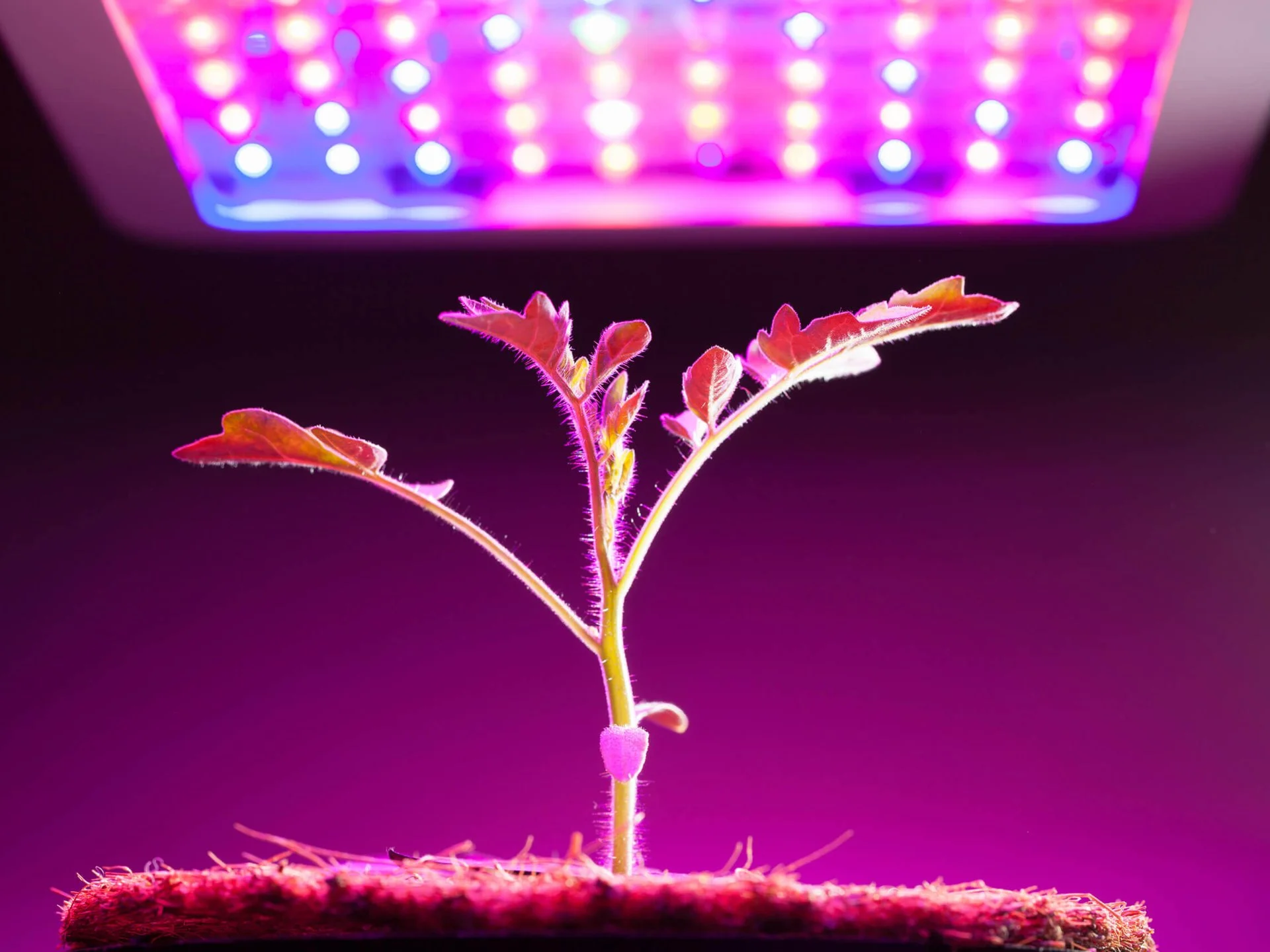
The food computers are plastic boxes outfitted with advanced sensors and LED lights and were designed to make it possible for anyone, anywhere to grow food, even without soil, Harper has said. Instead of soil, the boxes use hydroponics, or a system of farming that involves dissolving nutrients in water and feeding them to the plant that way.
"We design CO2, temperature, humidity, light spectrum, light intensity, and the minerality of the water, and the oxygen of the water," Harper said.
On Saturday, Joi Ito, the director of the MIT Media Lab, resigned following a lengthy expose in the New Yorker about the Media Lab's financial ties with late financier Jeffrey Epstein. Epstein died by suicide while in jail and faced sex-trafficking charges.
Staff placed food grown elsewhere into the devices for demos and photoshoots, they say
Ahead of big demonstrations of the devices with MIT Media Lab funders, staff were told to place plants grown elsewhere into the devices, the employees told Business Insider.
In another instance, one employee was asked to purchase herbs at a nearby flower market, dust off the dirt in which they were grown, and place them in the boxes for a photoshoot, she said.
Harper forwarded an email requesting comment on this story to an MIT spokesperson. The spokesperson didn't provide a comment.
The aim was to make it look like the devices lived up to Harper's claims, the employees said. Those claims, which included assertions that the devices could grow foods like broccoli four times faster than traditional methods, landed Harper and his team articles in outlets ranging from the Wall Street Journal to Wired and National Geographic.
Harper's vision for the personal food computer is bold: "You think Star Trek or Willy Wonka, that's exactly what we're going for," he said in a March 2019 YouTube video produced by the news site Seeker.
Harper's coworkers told Business Insider a different story. They said the devices are basic hydroponic setups and do not offer the capabilities Harper outlines. In addition, they simply don't work, they said.
MIT Media Lab's Caleb Harper speaks at TEDGlobal Geneva. James Duncan Davidson/TED
'They were always looking for funding'
Paula Cerqueira, a researcher and dietitian who worked as a project manager at the Open Agriculture Initiative for two years, told Business Insider that the personal food computers she worked with were "glorified grow boxes."
Cerqueira was part of a team that, on several occasions, delivered the personal food computers to schools. She also helped demonstrate the boxes to big-name MIT Media Lab investors.
During the organization's "Members Weeks" — once-a-semester events that drew donors including Google, Salesforce, Citigroup, and 21st Century Fox — Cerqueira and her coworkers would show investors how the technology worked.
On one occasion, Cerqueira said, her coworkers were told to fetch basil grown from a nearby location and place it into the personal food computers to make it look like it had been grown inside the boxes.
"They wanted the best looking plants in there," Cerqueira told Business Insider. "They were always looking for funding."
Cerqueira said in another instance, she was told by another MIT Media Labs manager to buy edible lavender plants from a nearby flower's market and place them in the boxes for a photoshoot, she said. Before any photos were taken, she carefully dusted off the tell-tale soil on the plants' roots.
The boxes simply didn't work, one employee told Business Insider
The central problem with the personal food computer was that it simply didn't work, Cerqueira and another person with knowledge of the matter told Business Insider.
"It's essentially a grow box with some sensors for collecting data," Cerqueira, a dietitian who worked as a project manager at the Open Agriculture Initiative for two years, told Business Insider. Cerqueira left her post after becoming increasingly frustrated with working conditions at the Media Lab, she said.
The boxes were not air-tight, so staff couldn't control variables like the levels of carbon dioxide and even basic environmental factors like temperature and humidity, Cerqueira and the other person said.
Other team members were aware of these issues, according to several internal emails that Business Insider viewed.
One email, on which Harper is copied, also said that team members weren't given the chance to test the devices' functionality for themselves. Another person with knowledge of the matter also described these issues to Business Insider.
'Of the 30-ish food computers we sent out, at most two grew a plant'
In the Spring of 2017, Cerqueira was part of a pilot program that delivered three of Harper's devices to local schools in the Boston area. Initially, the idea was for the students to put the devices together themselves. But Cerqueira said that didn't work — the devices were too complex for the students to construct on their own.
"They weren't able to build them," Cerqueira said.
In response, Cerqueira's team sent three MIT Media Lab staff to set up the computers for them. Of the three devices the staff members tried to setup, only one was able to grow plants, she said. That one stopped working after a few days, however.
When Cerqueira and her coworkers would visit the school, students would joke that the plants they were growing in plastic cups were growing better than the ones in the personal food computers, she said. The pilot ended shortly thereafter.
On another occasion, her team sent two dozen of the devices to classrooms across greater Boston as part of a curriculum being designed by one of MIT Media Lab's education partners.
"It's fair to say that of the 30-ish food computers we sent out, at most two grew a plant," Cerqueira said.
No one knew exactly what was wrong, but in general, the team was aware that the devices weren't functioning as they should be. In a last-ditch attempt to make the devices deliver, Cerqueira's team sent new packages of fresh seedlings to the school. When that didn't work, they tried it again. No matter what, the plants just kept dying, according to Cerqueira.
At one point, a representative from the Bezos Family Foundation, a private nonprofit foundation cofounded by Jackie and Mike Bezos, stopped by the school for a visit, Cerqueira said. Harper had been hoping to entice the group to help fund a new foundation that he was just getting off the ground. Even then, the devices wouldn't work.
"It was super embarrassing," said Cerqueira.
Correction, September 9, 2019: This story initially reported that Cerqueira said Caleb Harper instructed her to place store-bought lavender plants in a food computer for a photo shoot. It has been updated to reflect the fact that Cerqueira says another MIT Media Lab manager, and not Harper, issued the instruction. Business Insider regrets the error.
Want to tell us about your experience with MIT Media Lab? Email the author at ebrodwin@businessinsider.com.
Lead photo: Shutterstock

Intensive Course In Hydroponic Lettuce And Leafy Greens At University of Arizona
The controlled Environment Agriculture Center Is Offering An Intensive Course In Hydroponic Lettuce And Leafy Greens October 5th Through The 9th
By urbanagnews
September 4, 2019
The Controlled Environment Agriculture Center is offering an intensive course in Hydroponic Lettuce and Leafy Greens October 5th through the 9th.
Lettuces and leafy greens – we eat them every day! (or we SHOULD!) But how do we grow them sustainably with delicious flavor? Join the Controlled Environment Agriculture Center to answer these questions and more during our Intensive Hydroponic Lettuce and Leafy Greens course.
Our esteemed staff and faculty will provide 40+ hours of classroom time and hands on application in the Greenhouses on the CEAC Campus to ensure your hydroponic leafy greens are a success.
About CEAC: The Controlled Environment Agriculture Center (CEAC) is a research institution of The University of Arizona. The CEAC provides Education, Research, Outreach, and Extension activities, and is heavily involved with Agriculture & Biosystems Engineering, Plant Sciences/ES, and Agricultural Technology Management Departments.
Dates: October 5th through 9th 2019
Cost: $1,195
Instructor: Myles Lewis
Location: Controlled Environment Agriculture Center 1951 E. Roger Rd, Tucson, AZ, 85719
For more information on our upcoming courses visit https://ceac.arizona.edu/events/intensive.
To register for this exciting event visit here. Please contact Megan Dragony With any further questions at dragonym@email.arizona.edu or 520-626-9566.
This Company Grows Crops Inside, Stacked on Top of One Another
Is it an agriculture or a tech venture? AeroFarms is blurring the lines between the two with its vertical farm. Crops are grown inside, under lights, one on top of the other
These crops grow all year and have less environmental impact than traditional farming.
Image: Our Planet, Netflix
Image: Our Planet, Netflix
The advantages are numerous: higher productivity in a much smaller area; shorter growing times; lower water use; fresh produce grown much closer to where it’s eaten; and, AeroFarm executives say, improved food taste.
Here at AeroFarms, our aeroponic technology is a closed loop system, recycling water and nutrients with virtually 0 waste, resulting in 95% less water use than field farming. That also means no soil contamination and no toxic runoff into our waterways - https://aerofarms.com/environmental-impact/ …
“On one hand we’re a farming company,” explains Chief Executive David Rosenberg. “On the other hand, we’re a technology company.”
The perfect growing conditions
Technology is central to making a vertical farm work.
AeroFarms uses an aeroponic system to provide the right amount of water and nutrients, with temperature and humidity constantly fine-tuned, so that each crop has the perfect growing conditions.
Image: Our Planet, Netflix
As a result, they can grow a variety of produce all year round, defying the seasons.
All of this adds up to farms that use 95% less water than traditional ones, while yielding up to 390-times more crops per-square-foot.
Circular and nutritious
And all these wins start with recycled bottles.
That’s how AeroFarms make the cloth on which the crops grow, which is also completely reusable.
There are benefits both for the environment – including lower carbon emissions as a result of growing crops right in the centre of a city rather than having them transported – and for our health.
“One of the most exciting opportunities about changing the environment is improving nutrition,” says Dr. April Agee Carroll, Vice President of Research and Development at AeroFarms.
“We know if we can really improve that with different environmental conditions, then we can have a product that’s more nutritious, that can bring a better value to people in their diets as well as really improving human health.”
Food for thought.
About the series: Each week we’ll bring you a new video story about the people striving to restore nature and fighting climate change. In collaboration with @WWF and the team behind the Netflix documentary #OurPlanet. #ShareOurPlanet
Want to raise your #VoiceForThePlanet? Life on Earth is under threat, but you can help. People around the world are raising their voice in support of urgent action. Add yours now at www.voicefortheplanet.org
Share
Written by
Joe Myers, Writer, Formative Content
The views expressed in this article are those of the author alone and not the World Economic Forum.

Ultra-Locally Grown - Urban Farming Takes Off In Germany
Recent experiments in sustainability mean you can now purchase shrimp from Bavaria and pike perch from Berlin. "Urban gardening" promises healthy and fresh products without long transportation routes
Recent experiments in sustainability mean you can now purchase shrimp from Bavaria and pike perch from Berlin. "Urban gardening" promises healthy and fresh products without long transportation routes.


Photos: Diephotodesigner.de
September 03, 2019
When Christian Echternacht gets invited to dinner, he likes to bring tilapia and basil rather than wine or flowers. His friends have grown used to it by now. They know that the fish and the plants have something in common: Both are harvested by Echternacht himself. They make great fish burgers topped with basil mayonnaise.
The ingredients prosper in the urban farm that Echternacht has run with his partner, Nicolas Leschke, for several years. It's located in central Berlin, on the grounds of the Malzfabrik, a startup hub in the city's Schöneberg district.
Tilapia at various stages of growth swim around in 13 different tanks, their skin varying shades of silver and pink. The fish don't weigh much when they arrive at Echternacht's ECF Farmsystems, as his company is called, but after a few months in his tanks, they plump up to half a kilogram (1.1 pounds) and are ready for harvesting.
Next door on this warm summer's day, shirtless gardeners are working in the greenhouse where they grow basil from seed, an intensely aromatic sea of leaves. The plants sit atop gigantic grow tables onto which water from the fish tanks is diverted -- filtered and full of nutrients. The water contains ammonia from fish excrement and is transformed into optimal fertilizer by bacteria. This symbiotic circuit made up of fish farming (aquaculture) and plant cultivation in water (hydroponics) is called aquaponics, a technique that is thought to have been used hundreds of years ago in China and by the Mayans.
The Berlin duo markets their products as "capital city tilapia" and "capital city basil," and they are part of an international movement that seeks to bring food production closer to consumers in the city, thus making it more sustainable. Doing so is an absolute necessity, because traditional rural agriculture and forestry is responsible for 23 percent of manmade greenhouse gas emissions.
Bringing Production Closer to Home
Alternative forms of food production, such as city farms, are currently just as popular as modern aquaculture facilities. Saltwater shrimp are being raised in the village of Langenpreising, near Munich; and in supermarkets and restaurants, one increasingly finds futuristic glass cabinets from the Berlin-based startup Infarm, where consumers can watch herbs and lettuce grow and buy them freshly harvested.
All the producers are united by the mission of producing high-quality natural foodstuffs using modern technology and unconventional methods. In their indoor gardens, they use no pesticides for growing vegetables and eschew antibiotics in aquaculture facilities. Aquaponics has the added benefit that 90 percent of the water is reused. Shorter transportation routes result in fresher food and lower emissions, especially due to the reduced need for refrigeration.
A surprising number of those involved in such production are self-taught or mid-career beginners and don't have backgrounds in agriculture.
That also holds true for Christian Echternacht. He initially studied medicine before founding an internet agency in the mid-1990s. Later, he spent a few years on the road with Roxy Music icon Brian Eno, helping out with his video installations.
His new career was born out of his interest in high-quality foodstuffs, the 48-year-old explains, and the beginnings were rather modest. He initially used a shipping container for the fish tanks, and he built a greenhouse on his roof. The remains of this container farm can still be seen on the premises of the Malzfabrik in Schöneberg, just a few meters from the current facility, which is 1,800 square meters in size (almost 20,000 square feet) and cost around 1.4 million euros to build. The money came from private investors and from the Investitionsbank Berlin, a state owned development bank.
The early years were difficult. The city farmers soon had to abandon their hopes of a completely circular economy in which nutrient-rich fish water would be cleaned by the plants' roots and sent back to the fish tanks. "We realized that for optimal results growing the plants and raising the fish, we needed water with different pH values."
They also experimented with a wide variety of different sorts of vegetables -- from eggplants to tomatoes to peppers -- before ultimately arriving at basil. And why did they choose a fish species that originated in Africa? Primarily because it is particularly efficient at utilizing food: 1.4 kilos of food produces 1 kilo of fish. Furthermore, the species is rather undemanding. "We would also like to raise pike perch," Echternacht says, "but they are sensitive, require peace and quiet and are quick to stop eating if conditions aren't perfect."
'The Experimentation Phase Is Over
Echternacht and his partner also experienced a steep learning curve when it came to marketing their products. Initially, they tried to sell on-site in addition to offering a subscription produce box for 15 euros a week. For a time, they also had a stand at a market hall in the district of Kreuzberg. But it was a partnership with the supermarket chain Rewe that provided the breakthrough. Rewe now buys up the farm's entire production of basil, with 7,500 plants per week ending up in stores in the region just one day after harvest. The price at the store is around 2 euros per plant. Currently, more than 400,000 basil plants and around 30 tons of fish are produced each year at the facility right in the heart of Germany's capital city.
"The experimentation phase is over and we're going to be profitable this year," says Echternacht, though the work done by the three gardeners and two fish farmers is only part of the business plan. The farm, after all, is also a showroom, with tours almost every day for schoolchildren and people interested in the facility from around the world. Just recently, Echternacht hosted a delegation from Bangladesh who were interested in learning more about aquaponics.
Echternacht and his partner have also branched out into consulting, offering feasibility studies for individual projects at a price of 15,000 euros in addition to planning complete facilities. Farms designed by the team are currently operating in Brussels and in Bad Ragaz, Switzerland.
Traditional farms will always cover the lion's share of the demand, Echternacht says, but he says his farms show that agriculture in city centers is also a viable option. Far from being a short-lived trend, he believes the model presents a real alternative. "It makes economic sense for any Germany city with a population of more than 500,000, so they will spread."
Another Berlin-based produce start-up is located just a few kilometers away -- one that is currently working on an international growth strategy. The founders of Indoor Urban Farming, known as Infarm for short, have only recently secured funding for their expansion. The venture capital firm Atomico invested tens of millions, accounting for a significant share of a financing round totaling $100 million. It would seem that even large investors from the tech industry have faith in the concept of urban produce cultivated indoors.
Infarm was founded by three Israelis who moved to Berlin six years ago from La Gomera in the Canary Islands, where they grew a broad array of vegetables for their own consumption. Once they moved to Berlin, they were put off by the quality of standard vegetables at the supermarkets. "The vegetables only had an echo of the flavor that we had grown used to from our own," says co-founder Osnat Michaeli. But they were faced with the problem of too little sun and no garden of their own. So, they began growing lettuce and cherry tomatoes in their apartment -- and the very first harvest was so good that they decided to professionalize the operation.
'We Sell Living Plants'
They developed mini greenhouses that look a bit like glass display cases. Inside, the herbs and lettuce grow on plastic trays, arranged on seven levels -- a principle known as vertical farming, the goal of which is to grow lots of produce in a tight space.
"We have a specific strategy for each seed," says head biologist Ido Golan as he stands in the corridor between dozens of growing cabinets at company headquarters. "The basil here is currently sleeping," he says, pointing to an incubator where the grow lamps have been switched off. The incubators are computer controlled in an effort to create the ideal growth conditions for each plant, which can mean simulating a Mediterranean climate for many of the herbs.
The plants' roots are in water into which nutrients are added by way of canisters in the floor of the cabinets. That means that each of the miniature greenhouses is completely autonomous from the others. Once the lettuce and herb plants reach maturity, they are only separated from their root balls at the supermarket. "We sell living plants, which makes a huge difference," says Golan. Standard produce, he says, loses valuable vitamins and antioxidants during transportation. "Normal growing practices are focused primarily on keeping produce fresh longer so they can withstand the transportation and storage phases. Nutrition and taste are last on the list of priorities."
There are already around 200 connected and remote-controllable Infarm cabinets in German supermarkets, with an additional 150 at wholesalers. The company hopes that the number will rise to over 1,000 by the end of the year and they are currently focusing on expansion throughout Europe. It's not the vertical farms themselves that Infarm is selling, though, but the produce inside. Supermarket operators and wholesalers then sell the produce onward at a markup. Infarm employees take care of the harvesting and restocking, referring to the business model as "farming as a service."
Yet the reliance on grow lamps raises questions about energy consumption -- concerns that Infarm head Michaeli immediately counters: "We rely on green energy and our CO2 footprint is less than 20 grams per plant. A traditionally produced head of iceberg lettuce is responsible for many times more than that.
At its production site in the Berlin district of Tempelhof, the company isn't just producing seedlings for supermarkets, but also for Germany's star chef Tim Raue, whose name is written on two of the vertical farming units. At the moment, they contain Peruvian basil, a special type of coriander and a kind of edible flower. Because he farms independently of climactic zones and seasons, Golan is also able to handle special requests. The biologist pulls a stalk of arugula from a harvest container that produces a wasabi-like aroma in your mouth. He also raves about a rare type of oregano found in the Middle East and coveted by Moroccan chefs.
Restaurants are important buyers for most of the new urban farming operations. They include the one belonging to Fabian Riedel, who has established a modern aquaculture facility in Langenpreising, located just northeast of Munich. The 36-year-old is actually a lawyer by training, but these days, his mobile phone contains the numbers of several high-end chefs, who are able to place orders directly via WhatsApp. As proof, he reads a recent message from a chef on Austria's Wörthersee lake: The previous day, the chef wrote, Jon Bon Jovi ate at his restaurant and praised his food. Now, the chef needed to lay in fresh supplies.
Raising Shrimp in Bavaria
The supplies grow in a large warehouse in an industrial zone in the town, not far from the Munich airport. Behind a hygienic gate that leads to rooms containing eight shallow pools, the climate is tropical, with high humidity and temperatures above 30 degrees Celsius (86 degrees Fahrenheit). That's how the pool residents, of the species litopenaeus vannamei, prefer it. The shrimp species is native to mangrove forests, but here in Bavaria, the grayish-blue animals seem to be doing just fine. The edges of the pools are lined with white curtains because the creatures can sometimes jump quite high out of the water.
Riedel buys the shrimp as larvae for around 15 euros per 1,000 and then spends three to four months feeding them a nutritious diet of peas, wheat and sustainably produced fish meal. They are then caught in fish traps, killed with electricity and packed by hand to be sold in select supermarkets and through the company's own online shop. About half of the shrimp go to restaurants.
Riedel says that although his operation "may not be romantic, it is a contemporary industrial farming enterprise." In contrast to production in Asia, he says, no mangroves are harmed, no water is polluted and no antibiotics are used -- and because transportation distances are short, there is no need to freeze the shrimp. They can even be eaten raw in the form of sashimi or tartare.
'Indoor Farming Will Play a Significant Role'
The launch of his exotic business concept of raising shrimp in Bavaria wasn't exactly easy. The state of Bavaria provided a significant financial grant, but Riedel's co-founder soon backed out for health reasons. Later, there was a several-month period with larvae supply difficulties. Riedel says he also initially underestimated the seasonal demand for fish. "Having only a single product is risky," he says. These days, his brand CrustaNova also sells caviar, lobster and salmon from other producers with similar quality standards. He says the company has become profitable and is investing in growth. His facility can be expanded modularly and he has secured the neighboring property.
For now, Riedel only sells around 30 tons of product each year, making him something of a niche producer, just like the urban farmers in Berlin. But it doesn't have to stay that way. In the United States and Asia, larger aquaponic facilities are in operation and one company is trying to establish a mass-production shrimp farm on land.
Infarm co-founder Michaeli says she believes the development is unavoidable. "Because of climate change and depleted soil, we need methods to produce more with fewer resources. Indoor farming will play a significant role."

The EPA's Rollback of the Clean Water Act Could Impact Drinking Water For Millions of Americans
"They're effectively sending us back 30 years in our protections of U.S. waters," says Peter Gleick, co-founder of the Pacific Institute and a MacArthur "genius" Fellowship winner for his work as a climate and water scientist
It exposes small streams and wetlands nationwide to pollution
By Ula Chrobak
September 13, 2019
The Trump Administration just announced yet another blow to the country's environmental protections. On Thursday, officials from the EPA and the U.S. Army Corps of Engineers repealed an Obama administration update to the 1972 Clean Water Act, which had expanded protection to wetlands and streams that are disconnected from navigable rivers. "They're effectively sending us back 30 years in our protections of U.S. waters," says Peter Gleick, co-founder of the Pacific Institute and a MacArthur "genius" Fellowship winner for his work as a climate and water scientist.
The 2015 rule has broadened the definition of "waters of the United States," which allowed the EPA to regulate pollutants in a much greater proportion of waterways than before. Dry washes and streams may only flow intermittently, but according to an EPA report, they make up about 59 percent of streams in the U.S. and 81 percent of those in the Southwest. Another EPA report, which supported the 2015 rule, reviewed more than 1,200 studies on small streams and wetlands and found that they're critical to the health of downstream rivers: "There is ample evidence that many wetlands and open waters located outside of riparian areas and floodplains, even when lacking surface water connections, provide physical, chemical, and biological functions that could affect the integrity of downstream waters." And yet, many of these waters now have no protection under federal law.
The original definition of "waters of the United States" mainly covered large rivers, their tributaries, and adjacent wetlands. The Clean Water Act requires industrial and municipal polluters discharging to these rivers to obtain permits from the EPA and the 2015 update expanded those regulations to include smaller streams and wetlands. Thursday's repeal will soon be followed by a rule change, and the replacement text would basically revert to the '70s-level protections. Officials have stated that the change would remove a current "regulatory patchwork"—the 2015 update only applies to 22 states, Washington D.C. and U.S. territories because other states have challenged the rule in court. In a press release, EPA Administrator Andrew Wheeler said redefining "water of the United States" would "provide greater regulatory certainty for farmers, landowners, home builders, and developers nationwide."
But despite whatever uncertainty there may have been, the 2015 update was enacted for a reason: the streams and wetlands that aren't flowing into or right next to major rivers are still crucial for wildlife and humans. Drinking water for one in three people in the lower 48 comes from same waters that just lost their federal protections in the repeal, as PopSci has reported previously. "The weakening that we're seeing today is really serious—It's really cutting protection for drinking water for a lot of Americans," says Gleick. "A lot of our groundwater resources and a lot of our surface water resources are now going to be vulnerable to far more pollution."
The 2015 rule also regulated pesticides and nutrients leaching from many farmers’ fields—a diffuse but cumulatively significant source of pollution. In the Mississippi basin, for example, the pollutants from numerous farms that trickle into small streams and wetlands eventually flow into the river and then into the Gulf of Mexico says, Gleick. This impacts water quality and leads to the growth of massive algal blooms and fish die-offs. “Some farmers would have had to get permits to discharge pollutants into the streams and wetlands,” says Gleick. But now that requirement has been lifted, and our waters will suffer for it.
Lead Photo: Small streams could be in danger / Joao Branco/Unsplash

Brookwood Teacher Wins National Award From EPA
Carrie Settles Livers is the only teacher in Georgia to be recognized with the Presidential Innovation Award for Environmental Educators, which recognizes teachers from kindergarten through 12th grade for using the environment as a context for learning for their students
Brookwood High School science teacher Carrie Settles Livers, right, helps seniors Ellie Schutter, center, and Michael Hopf tend to plants on Thursday at Brookwood High School. Staff Photo: Taylor Denman
Carrie Settles Livers
A Brookwood science teacher who operates an aquaponics lab in her classroom was recognized by the Environmental Protection Agency for her innovative approach to teaching environmental science.
Carrie Settles Livers is the only teacher in Georgia to be recognized with the Presidential Innovation Award for Environmental Educators, which recognizes teachers from kindergarten through 12th grade for using the environment as a context for learning for their students.
Settles Livers receives a Presidential Award plaque and an award of up to $2,500 to be used to further professional development in environmental education along with a congratulatory letter from a senior official from EPA and the White House. Gwinnett County Public Schools will will also receive up to $2,500 to fund environmental educational activities and programs.
Up to two teachers from each of EPA’s 10 regions, from different states, were selected to receive this award. The White House Council on Environmental Quality in partnership with the EPA aims to honor, support and encourage educators who incorporate environmental education in their classrooms and teaching methods.
In a Natural Resource Management Course, Brookwood students operate an aquaponics lab and harvest the produce with an entrepreneurial mindset. The produce has been produced and sold at events such as the Lilburn Farmers Market to help raise money for other academic experiences.
“Instead of just having a school garden, we decided we want to fuse (Ag-STEM) with the entrepreneur mindset,” she told the Daily Post earlier this year. “I wanted this program to be sustainable to have seed money to feed people year after year.”
During the aquaponics project, her students learn about the importance of sustainable farming practices and how agricultural farming using scientific concepts of genetics, botany, physics, and environmental engineering can help tackle issues that contribute to food deserts in their community.
The course also provides students with examples of career opportunities in environmental science. The National Sales Director from Organic Valley Farms spoke to students about the company’s sustainable business model. The Chief Executive Officer of Hatponics, which produced the equipment for Brookwood’s lab, shared the story of his startup company.
A representative from the University of Georgia’s extension center discussed fall gardening practices, water consulting firm contracted by Gwinnett County spoke about water conservation and the City of Snellville’s Economic Development Advisor spoke about his honey bee farm and concerns of colony collapse disorder.
Settles Livers has also been named to the University of Georgia’s 40 Under 40 list, was a recipient of a Leavey Award for Excellence in Private Enterprise Education and has organized applications for grants to fund Brookwood environmental science projects.

US (NJ): Mobile Greenhouse Gives Residents Education In Healthy Eating
Onboard the mobile greenhouse and cooking school is a registered dietitian, whose guests on one particular day included the students of Barringer High School
RWJBarnabas Health’s Wellness on Wheels van is traveling around New Jersey, equipping everyone from kids to seniors with knowledge about nutrition, gardening and how healthy foods like fruits and vegetables affect their health. In a country where millions of people don’t eat enough fruits and vegetables, it’s an important service.
Onboard the mobile greenhouse and cooking school is a registered dietitian, whose guests on one particular day included the students of Barringer High School. They were tasked with carrying fresh romaine lettuce from the Newark Beth Israel Medical Center’s Hydroponic Greenhouse to the van, where it was prepped, cooked and eventually eaten.
Source: NJTV News (Lauren Wanko)

Vertical Farming, The Future For Food Production
The cost price for vertical farmers (wherever they are in the world) needs to be reduced. All experts are in agreement about this. Enza Zaden would like to help with this
Vertical Farms would appear to be a Valhalla for plant cultivation. Growing crops under the perfect climate (always the same) conditions, throughout the year. Continuous production with constant quality. And then preferably in multiple layers on top of each other. Or perhaps are Vertical Farms, not the Holy Grail that they at first appear?
Setbacks
All new developments go through their teething problems. And the first Vertical Farming companies suffered quite a few setbacks resulting in some having to close again due to technical problems, high costs and disappointing sales results. And yet, the number of new Vertical Farms is growing steadily. At least 200 were established worldwide over the last two years; a trend that Enza Zaden's Senior Product Specialist Jan van Kuijk expects to continue over the next decade.
24/7 monitoring and adjustment
This is because things are developing rapidly: ‘Fluorescent lighting has been replaced by more efficient LED lighting and companies have - together with the lighting industry - developed various light recipes tailored to specific crops,’ summarised colleague and Lettuce & Endive Portfolio Manager, Anh Nguyen. ‘In the 3rd development phase, we will see customised light recipes and remote crop management. Using sensors, vision, smartphones and apps, the cultivation process can - in principle - be monitored and managed from anywhere in the world, 24/7.’ She is expecting the technology to become increasingly cheaper, with increasingly higher output, enabling Vertical Farms to reduce their cost price and compete with conventional growing.
Big in the East
The latter expectation will take somewhat longer in Europe than in the East, where countries such as Taiwan, Singapore, China and Korea are already very enthusiastic about vertical farming. ‘In Japan and Taiwan, consumers in large cities have an urgent need for fresh vegetables that are guaranteed to be clean and safe. Due to the high standard of living, they are willing and able to pay a lot for this,’ explained Jasper den Besten (Lecturer at HAS University of Applied Sciences in Den Bosch and Board Member of the globally active Association for Vertical Farming). ‘In addition, these countries are very focused on new technology. It is therefore not surprising that vertical farming has taken off in these countries in particular. Japanese cities already have about 200 plant factories and there are about 100 in Taiwan. Together, this is more than in the rest of the world.’ In North America, it is mainly investors and marketeers that find the concept interesting, and interest in Europe is somewhere in between, according to Den Besten. ‘For European countries, the cost price is too high for now, but the consistent quality that you can achieve in a Vertical Farm is still very interesting. Because supermarkets don’t like the fluctuating product quality that is associated with conventional production methods.’
Vertical Farming at Enza Zaden
The cost price for vertical farmers (wherever they are in the world) needs to be reduced. All experts are in agreement about this. Enza Zaden would like to help with this. ‘Seed companies have always selected their varieties under varying climatic and light conditions,’ explained Van Kuijk. ‘In a Vertical Farm, these conditions are in principle always constant. In order to know how varieties will perform under such conditions, they should also be tested under these conditions. So that’s what we’re doing. And we are already seeing that this results in different choices than in the selection programmes for conventional cultivation methods.’
Leafy greens behind the glass wall
Area Manager Japan & Korea, Young Han, encountered a new phenomenon in the metro stations of Seoul this year: lettuce factories behind glass walls, with machines that allow hungry commuters to take a locally grown, automatically harvested and freshly packaged head of lettuce from the wall. Every day, millions of commuters see there how the crops grow under LED lights and how they are automatically harvested and packaged. Maybe a great idea for the long walkways at Schiphol?
For more information
Publication date: 9/2/2019
The History of Hydroponics
The history of hydroponics has been around since Ancient times. The worlds rice crop has been grown hydroponically in Ancient time to modern day. The first known of water based hydroponics is in the hanging gardens of Babylon
The history of hydroponics has been around since Ancient times. The worlds rice crop has been grown hydroponically in Ancient time to modern day. The first known of water based hydroponics is in the hanging gardens of Babylon.
Hanging Gardens of Babylon
The hanging garden of Babylon is growing beside the river Euphrates and is one of the 7 wonders of the world.The garden was hand watered using a chain system to water the garden.
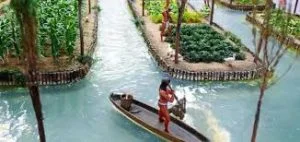
The Aztecs gardened on Chinampa which were fertile land that were surrounded by water on shallow lake. Chinampas are located where Mexico City is today.
The Aztecs gardened on Chinampa
Chinampas are artificial islands that were created by interweaving reeds with stakes beneath the lake’s surface, creating underwater fences.
A buildup of soil and aquatic vegetation would be piled into these “fences” until the top layer of soil was visible on the water’s surface.
These agricultural lands received this nickname due to the illusion they caused. The bodies of land appeared to be islands.
Mexico valley is Mexico city now.
The earliest published work on growing terrestrial plants without soil was the 1627 book Sylva Sylvarum or ‘A Natural History’ by Francis Bacon, printed a year after his death. Water culture became a popular research technique after that.
The earliest modern reference to hydroponics (last 100 years) was by a man named William Frederick Gericke. While working at the University of California, Berkeley, he began to popularize the idea that plants could be grown in a solution of nutrients and water instead of soil.
The earliest food production in greenhouses was possibly the growing of off-season cucumbers under “transparent stone” for the Roman Emperor Tiberius during the first century. The technology was rarely employed, if at all, during the following 1500 years.

Farmland Is Vanishing, And Old Agricultural Practices Are Dying. Local Innovators Are Looking For The Future of Farming.
With Papa Spuds, which delivers more than two hundred products to households throughout the region, customers can select fruits, vegetables, meats, and other locally sourced foods—even custom-ordering recipe kits the way you might with a meal-planning service like Blue Apron
BY ANDREA RICE, MELISSA MCGOVERN
August 27, 2019
Jade Wilson
Vera Fabian, a co-owner of Ten Mothers Farm in Cedar Grove
Raleigh native Rob Meyer says he took inspiration from the local food supply chains he observed in Ecuador while working with the Peace Corps when he founded the online delivery service Papa Spuds in 2008. Ecuadorian families support each other’s businesses, he says, selling food and homemade goods at community markets. He wanted to build a similar model in the Triangle.
With Papa Spuds, which delivers more than two hundred products to households throughout the region, customers can select fruits, vegetables, meats, and other locally sourced foods—even custom-ordering recipe kits the way you might with a meal-planning service like Blue Apron.
This is a form of community-supported agriculture, or CSA, an emerging model designed to create a direct line between farmers and consumers. Based on what’s in season or abundance, most CSAs offer boxes of pre-selected produce for consumers to pick up weekly or biweekly at a designated location (some, like Papa Spuds, deliver). There are about twenty-five hundred CSAs around the country, including about a hundred in North Carolina—among them Infinity Hundred Urban Farms in Raleigh, Maple Spring Gardens in Cedar Grove, In Good Heart Farm in Pittsboro, and Transplanting Traditions Community Farm in Chapel Hill.
Their goal is to create a more localized—and thus sustainable—food system that works for farmers, consumers, and the environment.
“People need to start caring more about the local land,” says Vera Fabian, a co-owner of Ten Mothers Farm in Cedar Grove, who previously ran the CSA program at Transplanting Traditions.
The old system is no longer viable. Farmland is vanishing. During a twenty-year period from 1992–2012, the American Farmland Trust documented some thirty-one million acres of farmland lost to urban and rural development. In North Carolina, the average farmer is sixty years old, according to a 2017 agricultural census; nationally, there are six times as many farmers over age sixty-five as there are under thirty-five. In the near future, many of today’s farmers will fund their retirements by selling their land to developers. Their large legacy farms, which have in some cases raised livestock and commodity crops for generations, will vanish.
There are lots of factors at play, but the bottom line is that, for new farmers, margins are tighter than they used to be. Land costs are rising, and unpredictable weather patterns associated with climate change are reducing crop yields.
CSAs allow farmers to reduce packaging and transportation costs, which puts more money back in their pockets. Fabian says she’s seen a trend of younger farmers developing smaller operations with less overhead and less risk, much like the one-acre farm she and Gordon Jenkins started in 2015. CSA programs enable them to leverage support from their communities in ways bigger farms can’t.
This, she says, may be the future of farming.
But a sustainable supply chain will also require us to throw away less food away. Nearly a third of all food produced around the world, and half produced in the U.S., ends up in a landfill. Farms account for some of this waste—less than 20 percent—but the bulk comes at the consumer level, from households to restaurants to grocery stores that toss “defective” produce.
Here again, innovators are tackling this problem in creative ways.
In June, the five-year-old Baltimore-based company Hungry Harvest—a recipient of a $100,000 prize on the TV show Shark Tank—which repurposes food that would have otherwise been discarded, merged with the Durham-based produce-delivery service Ungraded Produce. The company, which has locations in Raleigh, Detroit, New York City, Miami, and other big cities, encourages farmers and growers to embrace the idea that a bruised peach or apple is still valuable—and edible—and delivers these imperfect products to consumers.
Most grocery store chains don’t accept suboptimal produce, so farmers don’t bother harvesting these fruits and vegetables but instead till them back into the soil to recycle their nutrients. For many farmers, the so-called ugly produce movement might seem like a fad; for their livelihoods, it’s far less consequential than rising land costs and declining crop yields.
Still, these things go together: Reducing farm waste and stimulating the local food economy is one small step in rethinking how we produce what we eat and decrease the carbon footprint it leaves behind. And in the process, we might just make farming a viable enterprise again.
Comment on this story at food@indyweek.com.
Support independent local journalism. Join the INDY Press Club to help us keep fearless watchdog reporting and essential arts and culture coverage viable in the Triangle.
TAGS
FARMING COMMUNITY-SUPPORTED AGRICULTURE TEN MOTHERS FARM FOOD UNGRADED PRODUCE AGRICULTURE HUNGRY HARVEST
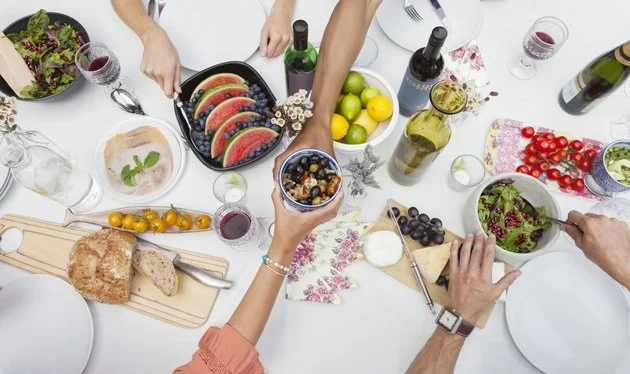
Flavonoids Have Amazing Health Benefits — Here's How To Eat More
You've heard that eating the rainbow is good for your health. But do you know why? Plant foods contain special compounds called flavonoids, which are plant-based nutrients that offer countless health benefits from reducing inflammation and slashing your risk of certain diseases
SARAH PFLUGRADT, RDN AUGUST 19, 2019
You've heard that eating the rainbow is good for your health. But do you know why? Plant foods contain special compounds called flavonoids, which are plant-based nutrients that offer countless health benefits from reducing inflammation and slashing your risk of certain diseases.
Flavonoids act as antioxidants, which may play a significant role in heart health and may help to prevent diseases such as cancer caused by free-radical damage. Eating foods rich in flavonoids reduced the risk of cardiovascular disease and cancer, and the impact of this was even stronger in those who smoked or drank a lot of alcohol — two groups with historically high levels of inflammation, according to an August 2019 study published in Nature. What's more, flavonoids may also provide benefit in the prevention of other chronic conditions such as osteoporosis and diabetes.
Now that you know what flavonoids are, note that they fall under six subgroups: flavonols, flavones, isoflavones, flavanones, chalcones and anthocyanins, according to a December 2016 study in the Journal of Nutritional Science.
While it's easy to get confused with all of the fancy antioxidant names, think of it this way — the overarching group that encompasses flavonoids is called polyphenols. Flavonoids are then divided into the subgroups, and pretty much all the good-for-you plant-originating foods fall into these categories.
Read more: Top 10 Healthiest Fruits and Vegetables
Flavonols
Flavonols are the largest and most well-known subgroup of flavonoids. Flavonols, especially quercetin, have been studied extensively for their role as an antioxidant. Oxidative damage to the body is responsible for neurodegenerative diseases like Alzheimer's and Parkinson's and many cancers. Flavonols help protect the body against this type of damage, according to an extensive July 2016 review study published in Pharmacognosy Review.
Foods rich in flavonols include:
Berries
Tomatoes
Onions
Kale
Apples
Cherries
Broccoli
Grapes
Red wine
Green tea
Flavones
One of the major health benefits from flavones is their anti-inflammatory effect, according to a June 2016 study in Plants. Inflammation is usually the common thread between many chronic conditions, such as obesity, diabetes, and cancer as well as in people who smoke.
"Some research suggests that certain flavonoids (flavones and flavonols) are beneficial for reducing the risk of breast cancer," Cathy Leman, RD and founder of Dam. Mad. About Breast Cancer, tells LIVESTRONG.com.
Foods rich in flavones include:
Celery
Broccoli
Green pepper
Carrots
Olive oil
Navel oranges
Parsley
Thyme
Oregano
Dandelion
Peppermint
Rosemary
Chamomile tea
Isoflavones
The king of all plant proteins is the soybean, which is high in catechins and a particular type of flavonoid, isoflavones. Isoflavones have a mixed reputation because of their similarity in structure to estrogens. In fact, isoflavones have been found to block estrogens that can cause breast cancer, cervical cancer and prostate cancer, according to June 2016 research published in Nutrients.
Countries with a high intake of isoflavone-rich foods typically have lower rates of these types of cancer. Isoflavones are found in legumes and other common soy foods, such as miso and tofu.
Foods rich in isoflavones include:
Soybeans (and soy products such as tofu)
Alfalfa sprouts
Peanuts
Legumes
Flavanones
Flavanones are found in citrus fruits, in the juice and in the peel — and yes, you can eat the peel. The flavanones are responsible for that bitter taste, which most people stay away from. Flavanones are antioxidants and anti-inflammatory, and they have been shown to lower cholesterol.
Read more: What's The Difference Between Plant-Based, Vegetarian and Vegan Diets?
Hesperidin, the most common flavanone found in lemons, oranges and grapefruit, is currently being studied for its possible role in helping protect against neurodegenerative diseases, such as Alzheimer's, Huntington's, Parkinson's Disease and multiple sclerosis, according to February 2019 research published in Molecules.
Foods rich in flavanones include:
Grapes
Oranges
Lemon
Lime
Chalcones
The word chalcone comes from the Greek word "chalco," which means copper, and is an indicator of the color of some of the natural sources of this flavonoid. As with many of the other subclasses of flavonoids, chalcones are studied because of their potential to stop the development of cancer, according to a 2015 study in Current Medicinal Chemistry.
Foods rich in chalcones include:
Wheat products
Licorice
Shallots
Potatoes
Tomatoes
Pears
Strawberries
Anthocyanins
Anthocyanins are the actual pigments in red-orange to blue-violet plant foods and are linked to heart health, brain health, vision improvement, antidiabetic and antiobesity properties, anti-inflammatory effects and chemoprevention and cancer protection, according to September 2015 research published in Advances in Nutrition and an August 2017 review study published in Food and Nutrition Research.
Foods rich in anthocyanins include:
Berries
Grapes
Red wine
Sweet potatoes
Plums
Cherries
How to Get More Flavonoids in Your Diet
Ready to reap flavonoids' multitude of health benefits? "If you want to increase flavonoids in your diet, eat an abundance and variety of vegetables and fruits and aim for at least 3 daily cups of vegetables and 2 cups of fruit a day, varying the colors to vary the micronutrients," Hayden James, RD and founder of Satiate Nutrition, tells LIVESTRONG.com.
"Put more plants on your plate! Build meals and snacks around fruits, vegetables, whole [unprocessed] soy, legumes and whole grains," says Leman.
Get creative with it: Zest citrus peels into your favorite foods or blend an array of fruits into your morning smoothie to get more flavonoids in your diet.
Warning
There are some fruits and vegetables that can interact with medications, so if you regularly take medication, speak with your doctor to find out which foods you should avoid. For example, grapefruit, which is high in flavonoids, should be avoided if you take certain statins. In addition, foods high in vitamin K, such as flavonoid-rich leafy greens, may interact with blood-thinning medication warfarin.
Read more: High Antioxidant Fruits & Vegetables
Lead Photo: (Image: Compassionate Eye Foundation/Natasha Alipour Faridani/DigitalVision/GettyImages)
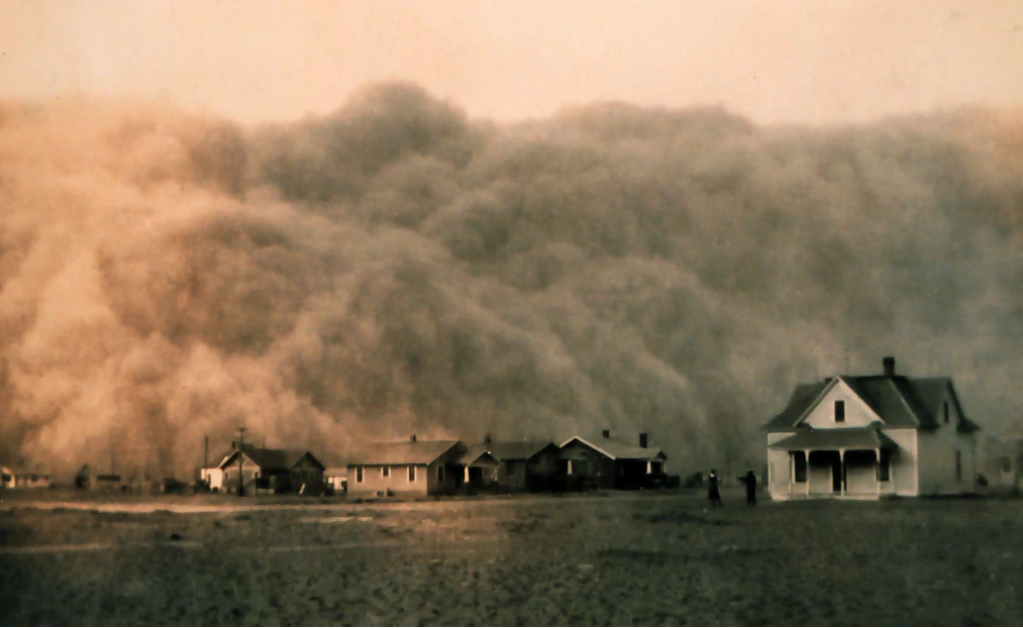
We're Barreling Towards Another Dust Bowl
In 1935, the Dust Bowl came to Washington—and if we don't change our ways, it could come back. A new report from the UN climate committee warns that much of the world risks the kind of land degradation that turned fertile farmland into desert during the 1930s
We Have To Fight Fast To Keep Our Soil From Slipping Away
August 19, 2019
In 1935, the Dust Bowl came to Washington—and if we don't change our ways, it could come back. A new report from the UN climate committee warns that much of the world risks the kind of land degradation that turned fertile farmland into desert during the 1930s. Luckily, this desolate stretch of history doesn't just serve as a warning. It also provides potential solutions.
The District of Columbia was an unlikely place for a dust storm. Though the Midwest had been shrouded in clouds of dust since 1932, the lawmakers discussing the Dust Bowl in March 1935 were more than 1,000 miles away from the disaster. Then, something uncanny happened: As lawmakers deliberated the very issue of how to stem a series of droughts and the erosion and catastrophic dust storms that followed, a literal cloud fell on the city. Soon, the capital's familiar marble monuments were covered in a layer of reddish dust. "A clay-colored veil hung before the Washington Monument, the Lincoln Memorial, the Capitol and the Library of Congress," a reporter observed. That scenario may come to mind when you read the Intergovernmental Panel on Climate Change's new Climate Change and Land Report, which details the ways humans have stripped the planet and calls for sustainable land management practices, many of which were developed in the wake of the Dirty Thirties.
If we continue to use land the way we do now, the report concludes, our species faces a grim future indeed. Humans directly affect more than 70 percent of Earth’s terrain, and it shows: Population growth, farming, and other land use have taken their toll, fueling rapid shifts in climate and threatening Earth’s ability to sustain both humans and itself. Land can only absorb 29 percent of humans’ total CO2 emissions per year. And desertification—the same kind of land degradation that caused dust to fly during the 1930s—further threatens Earth’s climate.
It's been called "the greatest environmental challenge of our time," and for good reason. In desertification, areas with scarce water get even less moisture, and irrigated farmland goes from fertile to desiccated. Climatic trends play a role, but humans' land management mistakes fuel desertification, too.
Severely eroded farmland during the Dust Bowl.USDA
The Dust Bowl is a classic example. White settlers poured onto the United States' Great Plains during the mid-19th century, spurred by free property the federal government offered in exchange for cultivation. The semiarid prairie was home to a variety of native grasses, but the notion that it could be converted into productive farmland was misguided. The would-be farmers had no idea that the region went through extended wet periods followed by drier ones. Local plants had adapted to survive, and settlers thought that the existence of moisture meant more would follow. They also believed that "rain follows the plow"—a long-abandoned theory that the presence of farmers and settlers could bring humidity to dry climates—and the maxim set them up for disaster.
"They removed windbreaks and trees to plant fields in a relatively semi-arid area that had been wet," says climatologist Marc Svoboda, who directs the National Drought Mitigation Center at the University of Nebraska. Then, during the 1920s, Great Plains farmers planted huge amounts of wheat in response to international demand. Investing in the drought-intolerant crop meant uprooting resilient prairie grasses, which had previously helped the soil survive dry seasons by storing moisture in their deep roots. "When the drought came, that landscape was much more vulnerable," Svoboda says.
Come it did, and with catastrophic results. Beginning in 1931, the region experienced a series of four major drought episodes considered the worst in the nation's history. Farmers weren't prepared for this, or for the erosion that followed. Failing crops left soil rootless and loose, leaving it vulnerable to high winds.
Soon, epic dust storms swept the region. The same tempest that blew through Washington, DC left 12 million pounds of dust in Chicago alone. A month later, one of the most severe storms of the era, nicknamed "Black Sunday," enveloped the Great Plains. It was 1,000 miles long, contained 300,000 tons of dust, and traveled up to 100 miles per hour. This weather didn't just affect the land: Farm animals choked on dust and suffocated. At least 7,000 people died from "dust pneumonia" as a result of breathing in the fine particulates, and countless more were driven from their homes and livelihoods by the endless, swirling dirt. The storms are also thought to have hastened the spread of measles and other infectious diseases. It was an environmental catastrophe—and one that humans had the power to sidestep.
A farmer's son in Cimarron County, Oklahoma during the Dust Bowl era.Arthur Rothstein, for the Farm Security Administration
A farmer's son in Cimarron County, Oklahoma during the Dust Bowl era.Arthur Rothstein, for the Farm Security Administration
The IPCC's latest predictions sound awfully familiar. The committee warns that ongoing soil degradation will hasten desertification, which can fuel climate change. When soil degrades, it can't trap as much carbon, releasing this greenhouse gas (along with nitrous oxide) into the atmosphere. That means a warmer climate, which means more droughts and still more desertification. Resource-intensive uses of land, like massive farming operations, will cause water scarcity and degrade the soil—a vicious cycle like the one farmers faced during the Dust Bowl. During that event, human-induced land degradation not only led to dust storms, but made the droughts worse.
But the Dust Bowl might offer more than a warning. The event actually led to sensible land management practices that are still used today, says Charles Rice, a distinguished professor in Kansas State University's department of agronomy. In the wake of the Dust Bowl, he explains, the concept of soil conservation—protecting soil's fertility and keeping it from eroding—finally got traction in the United States.
Soil conservation has three guiding principles, he explains: don't till the soil, keep it covered, and keep crops diverse. Reduced tillage preserves the root pathways forged by preexisting plants. Those paths act like pores, allowing the ground to store water for use in dry times and soak it up more effectively during floods. Cover crops, like alfalfa, clover, and sorghum, keep the soil loose after a cash crop has been harvested. When cover crops become part of the soil during preparation for a crop like corn or wheat, they increase soil moisture and provide larger yields. Since they keep a field's precious soil covered and preserve its pores, cover crops also prevent earth from becoming so fine it turns into dust. Planting diversely prevents the nutrient drain that occurs when the same crops grow season after season. Rotating through different varieties acts more like a multivitamin, adding a variety of nutrients to the soil over time. Drought-resistant crops can step in occasionally to save water, and use the water that's already in the soil more efficiently.
Farmers can also conserve their soil by diversifying their farmland's portfolio, notes Rice. They might plant several kinds of crops in one area and keep livestock on another, so that drought doesn't put the entire swath of soil at risk.
Those post-Dust-Bowl practices have paid off. “Over time, we got better fertility and crops that have been bred for more drought tolerance,” says Rice. The United States’ investment in soil conservation has made the land more resilient than it was before the days of dust pneumonia.
But that doesn't mean it can't happen again. Rice warns that 21st-century farmers have to do more than just follow the basic tenets of soil conservation if they want to stave off further desertification. Landowners must rethink their approach to crops, profits, and technology. By sharing data and creating advanced computer models, he says, farmers could use better drought forecasting to dictate which crops they choose. Dust Bowl-era farmers didn't have computers to help them adapt.
Rice looks forward to a future where high-tech sensors help provide real-time data about soil moisture, and robots that water just the individual plants in need of moisture instead of soaking entire fields. "I guess I'm an optimist," he says. "The right investments could really help reduce desertification and provide some resilience to those Dust Bowl type events."
Despite a heaping dose of bad news about humanity’s use of land, the IPCC strikes an optimistic note, too. Not only can we prevent future desertification, but we can take the action required to do so in the near-term—if we’re willing to acknowledge the dust clouds ahead.
Lead photo: Dust storm approaching Stratford, Texas in 1935.NOAA George E. Marsh Album

A Look Inside The First Certified Organic Rooftop Farm In The Country
"A small working farm that provided food for a restaurant, provided a community center and place for people to learn how to grow food and a place for us to teach people about local food and why that's so important," Co-Owner Helen Cameron said
To View The Video, Please Click Here
For eleven years, Devon St. has been home to the first certified organic rooftop farm in the country.
By Jalyn Henderson
July 12, 2019 CHICAGO (WLS)
On the corner of Devon and Glenwood Ave. in Edgewater, sits Uncommon Ground.
"A small working farm that provided food for a restaurant, provided a community center and place for people to learn how to grow food and a place for us to teach people about local food and why that's so important," Co-Owner Helen Cameron said.
A restaurant with an all-natural, organic farm, you can find on the roof. The first of its kind in the country, certified by the Midwest Organic Services Association.
"You know, we're a zero spray farm so we're not killing the good bugs or the bad bugs, we kind of let them battle it out so we're working with nature instead of working against nature," said Allison Glovak-Webb, Uncommon Ground's Farm Director.
The farm grows a variety of crops including peas, carrots, peppers, garlic and hops.
"I mean we just are growing all manner of goodies here," Cameron said.
But running a farm takes a lot of work, work that Cameron couldn't handle on her own.
"Then we decided we were going to create an internship program," Cameron said. "In exchange for interns coming to help us with this, we would teach them about urban agriculture, sustainable food systems, organic farming and try to give them as much input as we could to make this kind of thing happen."
More than 100 students have interned at Uncommon Ground from all across the city, some interns even travel internationally.
Cameron's goal is to make her businesses as sustainable as possible. So the restaurant is solar-powered, locally sourced, and everything that comes out of the kitchen is organic.
"We don't use any conventional fertilizers, herbicides or pesticides. We don't use anything that's genetically modified," Cameron said.
"We about the furthest thing from a monoculture you can possibly get. A lot of farms focus on one crop and we focus on a diverse amount of crops. That's not just because that's what our kitchen prefers, but it's also because it's what's best for the environment and the ecosystem. We kind of have our own little ecosystem here," Glovak-Webb added

Aquaponic Inventor Neil Whichelow Left To Flounder
Neil Whichelow will have to find a home for scores of trout and tilapia after he was told he would be turfed out of his greenhouse by Plumpton agricultural college
20 August 19
Laurie Churchman @lauriechurchman Reporter
AN INVENTOR who built an aquatic experiment that could “save humanity” has been told to pack his bags – with 70 fertiliser-generating fish.
Neil Whichelow will have to find a home for scores of trout and tilapia after he was told he would be turfed out of his greenhouse by Plumpton agricultural college.
Over the past six years in Brighton’s Stanmer Park, Neil has built a world-leading test bed for aquaponics – a novel, soil-free farming technique that uses waste from fish farming to grow crops.
The doors at Neil’s experimental biome open to a blast of tropical air and the sound of trickling water.
Hundreds of exotic plants grow in clay bead beds propped on top of fish tanks.
Luffa sponges droop from the ceiling. Fairy lights illuminate orange seed-pod lanterns. Trout swim beneath clusters of strawberries. There are yams, goji berries, and spiky bitter gourds.
Water is pumped through a tangle of pipes and tubes, running through the seed beds into a bubbling nitrogen chamber below, and back into tanks.
Neil said: “The brilliance is, the plants clean the water for the fish. There’s no soil, and it’s all pesticide-free. It’s a whole ecosystem under one glass roof.”
On an aquaponic farm, bacteria convert the ammonia in the fish excrement into nitrogen – which is in turn used to feed the plants without the need for soil. It is a radical farming technique that Neil believes could help feed a planet in climate crisis.
But as Plumpton Agricultural College shifts site, Neil will have to dismantle everything he’s worked on. He said: “It’s a tragedy.
“For years now I’ve been working unpaid seven days a week because I believe in this. Others believe in it too. They rely on it.
“Our designs help thousands of people, from hard-pressed farmers to refugees. Using our research, people all over the world can grow food. That’s not bad for a project we started with a £10 fish tank from a car boot sale.”
Today, the greenhouse’s glass panels are being packed up, and Neil is wondering what to do with all the fish.
“I might actually have to stick them in the freezer,” he said. “If we can’t find a new site fast, we’ll have to eat them. It’s a shame because I don’t know how long it will take me to raise this number again.
“The aim was to feed the 5,000. But that’s going to take some thinking through now. I’m hoping we can use this as a chance to expand.”
A spokeswoman for Plumpton College said: “The current campus will no longer exist in the present space, and unfortunately Neil’s project won’t be included in new site.”

USA - Indiana - 'FARMacy' Restaurant/Greenhouse To Launch Here, With Global Hopes
Pending city council rezoning approval and the issuance of building permits, Barber intends to construct a $5 million to $8 million prototype aquaponics greenhouse, restaurant and exercise facility, to be called FARMacy, on West Jackson Street, a block west of the St. Mary's Church
Seth Slabaugh, Muncie Star Sept. 6, 2019
Glynn and Kellie Barber stand in a client's greenhouse in Daleville.
(Photo: Jordan Kartholl/The Star Press)
MUNCIE, Ind. — Glynn Barber, an urban-agriculture entrepreneur, sets a container of ripe, black-cherry heirloom tomatoes on the conference table in his Briarwood Lane office on a recent morning.
"Do me a favor," he says. "Take one of those tomatoes home and set it in a window. Tell me if it rots. I guarantee it will never rot, it won't draw the first gnat, it won't draw fungus, it won't draw mold. It'll dry out, and take almost a year to do it, guaranteed."
Besides being sweet and juicy, he believes the tomatoes taste so clean and pack so many nutrients that it warrants marketing them —and similarly grown produce — as "pharmaceutical grade."
Pending city council rezoning approval and the issuance of building permits, Barber intends to construct a $5 million to $8 million prototype aquaponics greenhouse, restaurant and exercise facility, to be called FARMacy, on West Jackson Street, a block west of the St. Mary's Church.
Barber has patented an aquaponics system — a combination of aquaculture, or raising fish in tanks, and hydroponics, or raising plants in troughs of water — called Environmentally Controlled Sustainable Integrated Agriculture (ECSIA).
The cherry tomatoes used in his demonstration to The Star Press were raised in an ECSIA greenhouse in Daleville doing business as Healthy Life Organics.
Barber's greenhouse systems also are operating in a number of other locations across the country — including one owned by the city of East Chicago; the North Central Indiana Teen Challenge in Elkhart; Wapahani High School; and Urban REAP in Waco, Texas — plus Haiti.
Tomatoes grow year-round inside a Daleville greenhouse. (Photo: Jordan Kartholl/The Star Press)
And Barber has much, much bigger plans.
The Muncie FARMacy is intended to be a model for 50 to 75 more of these facilities to be built across the country over the next three to five years, says another person at the conference table, venture capitalist Peter Florio, of Capital Gains Corp., Palm Harbor, Fla.
"Peter brought 100 percent of the money to the table," Barber said.
"Looking at these products," Florio said of the ECSIA system and related ventures, "I can tell you it's probably a long time before anybody catches up with the technology or innovation. It really is that far ahead. It's so far advanced and run so efficiently that it's not close to the realm of traditional aquaponics. We think it's huge. We see it as a global market."
Peter Florio, Palm Harbor, Fla., is an investor in Glynn and Kellie Barber's planned aquaponics chain. (Photo: Seth Slabaugh, The Star Press)
Capital Gains Corp. says it is planning an initial investment of $200 million. The company is associated with Barclay Group, a real estate firm with the same Palm Harbor street address as Capital Gains. Barclay Group's name appears on FARMacy architectural drawings by EMPAD Architecture, Clearwater, Fla.
► Daleville aquaponics startup grows powerhouse food
The FARMacy facility in Muncie would include a juice bar and The Blue Crayz restaurant with seating for 67 patrons; two research labs; a commercial kitchen for locally made food products like barbecue sauce; an exercise center with patented, low-impact machines; and a 9,000-square-feet aquaponics greenhouse, to contain about four fish tanks, 90 troughs and 450 growing trays.
"To help us tell our story, the restaurant name, The Blue Crayz, was chosen as spin from the fresh water lobster, also known as the Australian red claw crayfish, that is grown in our system underneath the floating plants," said another person at the conference table, Barber's wife Kellie. "It is also one of our mascot cartoon characters used in the educational materials and coloring books for children."
An architectural rendition of the proposed FARMacy facility in Muncie. (Photo: Photo provided)
The restaurant will offer salad blends using greens for healthy diets targeting individual health concerns, such as diabetes, hypertension, and gastrointestinal disorders, she said.
"We also will offer several healthy, chemical-free protein options to add to salads … With the nutrient-dense, intense-flavored produce we grow, we guarantee you won’t have a tasteless salad from our restaurant," she went on.
Glynn Barber gives a demonstration, piling leafy greens onto a scale on the conference-room table. "Two ounces is a lot of greens," he says, as it takes him a couple of handfuls to tip the scale at two ounces.
The FARMacy will include a drive-thru window where Barber envisions customers picking up two-ounce salads of healthy fruits and vegetables prescribed by doctors.
"This product will keep for weeks," Barber said. "The shelf life on our product is fantastic, the reason being it is so nutrient dense it doesn't rot or draw pests. We are growing pharmacy-grade food. We are not out to compete with the big-box stores. We're literally looking at food-prescription-type programs."
The salads won't include lettuce. It's not nutrient-dense enough.
The Healthy Life Organics ESCIA greenhouse in Daleville, for example, grows produce that ranks high on a Centers for Disease Control and Prevention list of "powerhouse fruits and vegetables," including watercress (No. 1), chard (No. 3), chives (No. 14), kale (No. 15), arugula (No. 18), tomatoes (No. 27), and strawberries (No. 30).
A Daleville-based aquaponic greenhouse grows a variety of vegetables year-round. (Photo: Jordan Kartholl/The Star Press)
Longevity spinach, turnip greens and beets are among many other crops Barber's systems are growing.
Powerhouse foods are strongly associated with reduced chronic disease risk on the basis of 17 nutrients of public health importance, such as fiber, protein and vitamins A, B-12 and C.
"We are targeting disease with fruits and vegetables," Barber said, holding up a copy of the book "Eat to Beat Disease: The New Science of How Your Body Can Heal Itself."
Barber has approached a major heath insurance company about coverage for "prescription food." He's also working with local doctors and faculty at Ball State University.
Glynn and Kellie Barber are growing food to fight disease. (Photo: Seth Slabaugh, The Star Press)
"I am a huge advocate for this food production system and believe it can transform communities," Scott Truex, an associate professor of urban planning at Ball State and co-founder of the Sustainable Communities Institute, told The Star Press. "All of these projects integrate the ECSIA system with other value-adding objectives that we believe will allow a community to create a new food eco-system that is a catalyst for change."
The institute believes that food, water, and energy are the triggers to transform a community.
"When a community must depend on systems that can fail at any moment, its members are vulnerable," the institute says. "Systems must be developed that maximize resources and build wealth for the local economy, rather than outsourcing the resources to Wall Street."
► BSU students build mobile greenhouse
Here's how the ESCIA system works: fish waste is mineralized to make nutrient-rich water that flows into troughs where plants float in growing trays. Freshwater lobsters, aka crayfish, eat the dead ends on the plant roots. Plant-filtered water flows back to the fish tank, fresh and clean, after going through a water-polishing system.
Barber says FARMacy's 9,000-square-feet aquaponics greenhouse — much larger than the "satellite" or "family farmer" greenhouses like the ones at Wapahani, East Chicago and Elkhart — can replicate a 40-acre farm field while using less water than a family of four, while operating on only 22 amps of power.
Members of a Gary church visits the Teen Challenge ECSIA greenhouse in Elkhart. (Photo: Photo provided)
The FARMacy's "farmer's commercial" greenhouse module is designed to grow up to 3,600 pounds of produce weekly, along with 4,800 pounds of yellow perch annually.
"That's a lot of salad," Barber said. "We don't mention a lot about aquaculture because we don't grow enough fish to make a dent. The fish are just a nutrient source for us. We're much like a pet store. We're not breeding fish, not raising fish, we are feeding fish and mineralizing that fish waste to grow fruits and vegetables."
The IU Health Ball Memorial Hospital Foundation will ask city council at its Sept. 9 meeting to approve a change in zoning to allow construction of the FARMacy project in the 2500 blocks of West Jackson/Main streets, south of BMH. The foundation owns the property, which is mostly vacant lots used for storage.
"We are excited to lease the land for a project which has the potential to improve access to fresh produce, forge community partnerships and provide a mechanism for health education and research," physician Jeff Bird, president of the hospital, told The Star Press.
A Daleville-based aquaponic greenhouse grows a variety of vegetables year-round. (Photo: Jordan Kartholl/The Star Press)
The rezoning request ran into some opposition when it was introduced at the council's August meeting.
Heavy-equipment operator and unsuccessful city council candidate Audie Barber (no relation to Glynn Barber), warned council that "if you open it up for a fish farm, then you've got to open it up for a pig farm, a dairy farm … We are opening ourselves up to bringing farms inside the city limits. Chicken farms. The next thing you know, Tyson will want to put up a big grow house over here for their chickens."
Attorney Maura J. Hoff, representing the hospital foundation, responded that city ordinance prohibits industrial livestock farms like Audie Barber was talking about. She provided council little information about the project.
Council President Doug Marshall and councilman Jerry Dishman voted against introduction of the the rezoning ordinance, but seven other council members approved it.
► Funny farmer makes headlines
When The Star Press first wrote about Barber's ECSIA system, in 2014, there were literally hundreds of people designing and building their own aquaponics systems, ranging from a fish tank with herbs in the kitchen to small systems capable of supplying farmers markets or local restaurants.
At the time, Laura Tiu, aquaculture extension specialist at Ohio State University, told the newspaper, "I've yet to see a large, commercial-scale operation. We've not yet seen a model system that is economically proven that can be replicated. I believe that this is what Glynn, as well as many others, are trying to achieve."
She compared characterized aquaponics primarily as a hobby. But that was then.
What does Tiu — now a fisheries/aquaculture/marine education extension agent at the University of Florida — say now?
She still remembers Barber, whom she calls "an aquaponics pioneer in the Midwest."
Tiu is now seeing a few commercial-scale aquaponics operations that appear to be profitable, including northeast Florida's Traders Hill Farm, which advertises leafy greens "that grow faster, taste better, last longer and waste nothing." Its customers include grocery stores and restaurants.
As far as a $200 million investment in Barber's venture, Tiu said, "In my experience, just throwing money at something is not what makes it work — careful business planning is. With aquaponics, the ability to access and serve specialty markets seems to be one of the keys.
"I believe that farms located in areas with high demand of organic/natural produce, unique produce, willingness to pay more for produce, will have the best success rate. I still don’t think it’s a cheap way to grow food, but it certainly opens up areas where traditional crop practices are not available."
A Daleville-based aquaponic greenhouse grows a variety of vegetables year-round. (Photo: Jordan Kartholl/The Star Press)
An Air Force veteran and former tool and die maker, Barber exudes confidence, energy and enthusiasm.
After giving The Star Press a 45-minute presentation of his business plan, he asked: "Are you getting the picture? Are you disappointed? Isn't this amazing?"
The components that make up the ECSIA system, such as pumps, clamps, fiberglass and plastic, are all being manufactured in Indiana, including Anderson, Redkey, Eaton, Lafayette, Elkhart and Muncie. A fresh water lobster hatchery is set up in New Castle.
Barber invented the system in his garage in Redkey out of necessity — treating his son's schizophrenia with healthy food — after consulting potheads growing elite marijuana; university researchers; doctors and others.
His business plan includes a partnership with Marion-based Insurance Management Group to provide ECSIA growers insurance coverage, including greenhouse structures, equipment, ECSIA system modules, business income, system breakdowns, off-premise power interruption, liability, and workers compensation.
"We are the only company that has this," Barber said. "We don't make a dime on the insurance, which costs $1,183 a year."
The red claw crayfish is the inspiration for the name of the FARMacy's Blue Crayz restaurant. (Photo: Kellie Barber)
In addition to the proposed chain of FARMacy facilities, Barber has taken steps to construct his first commercial-size ECSIA module in Daleville, with 48 fish tanks, 1,080 troughs and 5,400 grow trays. It is designed to produce up to 45,000 heads of leafy greens, 6,000 pounds of fruiting vegetables and 700 pounds of fish per week.
"We've never built one that big," Barber said. "It will have robotic harvesters and things that we've developed to put there. It will be a big research and development center and a full-blown production center."
Barber says he's also getting ready to build a factory in Daleville to manufacture ECSIA components.
The staff at ECSIA headquarters, doing business in the Lyndenbrook Place office park as Balance Holdings LLC, includes an office manager, an environmental scientist, a marketing manager, and an artist.
A drawing of a freshwater lobster/crayfish that is the namesake of a FARMacy restaurant proposed on West Jackson Street in Muncie (Photo: Seth Slabaugh, The Star Press)
Barber expects each FARMacy facility across the country to attract 10 to 15, easy-to-maintain "satellite" or "co-op growers" using ECSIA technology.
"We will partner with and buy from those satellites but we won't own them," Barber said.
A "satellite greenhouse" similar to the one in Elkhart, managed by an ex-heroin addict, can generate $300,000 to $400,000 in revenue per year at a cost of less than $50,000 a year, according to Barber, who says it takes three men two hours a day to operate the greenhouse.
Anyone with an eighth-grade education can follow the greenhouse's operating manual, which runs a couple of hundred pages long, he added.
Joey Sarver manages the Teen Challenge ECSIA greenhouse in Elkhart. (Photo: Photo provided)
A graduate of the Central High School class of 1986, Barber said he chose to headquarter his venture here because "Muncie was the birthplace of sustainable agriculture with the Ball jar."
Ball Corporation was a manufacturer of glass jars used for home canning of fresh, high quality food.
"This isn't a feel-good thing," Barber says of his undertaking. "This is about the health of a community."
Contact Seth Slabaugh at (765) 213-5834 or seths@muncie.gannett.com

AmHydro’s Joe Swartz On The “Shiny Object” Problem Plaguing Indoor Ag
All photos courtesy of American Hydroponics and Joe Swartz. Joe Swartz, Vice President of Contain vendor American Hydroponics (AmHydro), is a fourth-generation farmer from Western Massachusetts. When it came time for him to take over, he went looking for a way to do things differently
All photos courtesy of American Hydroponics and Joe Swartz.
Joe Swartz, Vice President of Contain vendor American Hydroponics (AmHydro), is a fourth-generation farmer from Western Massachusetts. When it came time for him to take over, he went looking for a way to do things differently. His family had faced numerous challenges with conventional outdoor agriculture, from the state’s short, 120-day growing season, to an uncle who died prematurely due to pesticide exposure.
Joe decided the solution was indoor agriculture, and since 1984, he’s grown just about everything you can imagine with every possible setup. We caught up with Joe to talk about why it’s important to educate the public about indoor ag, and how media hype can distract from the fundamentals of good farming.
What’s AmHydro’s approach, and what makes it unique?
Ironically, AmHydro started about the same time I started to grow, unbeknownst to each other. We have always focused on the philosophy of making growers successful by employing the correct technologies in the appropriate situation, not trying to sell this system or that system, but looking at a given situation and assembling the correct technologies to effectively grow.
In fact, I think AmHydro has more successful growers around the world than any other hydroponics company. We have growers in 66 countries around the world, soon to be 67, and we’re really very, very pleased with that.
What are some of the most common challenges about getting started in indoor agriculture?
There are lots of different technology companies trying to get your attention. The biggest challenge I see right now is a lot of inappropriate technology that’s being promoted, especially in the media and online, because people think certain things look really interesting or cool. We call it “shiny object” technology. These are not effective technologies.
A lot of vertical farming technology, where you’re essentially trying to cram as many plants into a give area as you can, from a horticultural standpoint, that isn’t correct. Plants have very specific needs in terms of environmental management and space management, and a lot of these systems ignore the basic horticultural concepts that are required for successful production.
You’re saying you think all vertical farms and plant factories don’t work?
Not all plant factories, but unfortunately that model is by far—and I mean by a factor of thousands—by far the most challenging segment of controlled environment agriculture in terms of making an economic return.
If you look at the industry, look at where the expansion is in hydroponics. Companies like Gotham Greens and BrightFarms are expanding rapidly because they have a cost-effective production model. Tomato operations such as Houweling’s and NatureFresh and Sunset are all expanding rapidly. Again, they’re utilizing effective technology.
What’s been the main benefit of working with Contain?
We were actually one of the first companies that Contain worked with. They believed in our model, and we believed in the model they had, which was helping provide financing solutions so that more people could enter this industry. We thought it was a great model — people who understood controlled environment agriculture and were offering financing models. Good people and proper technology is a good combination.
We’ve had a few projects where there would have been difficulty in locating financing, and they went through Contain and were able to do it, so it was an effective model. We hope to do more of that in the future.
What advice do you wish you got when you started growing?
I think I would’ve pushed myself to focus on the basics of correct horticulture. That means to learn as much about the lifecycle of the plant, the lifecycle of insect and disease pests, to understand the different living ecosystems that go on in a facility like that. At the end of the day this is still farming. With a lot of the technological advances, people forget that.
Why are some banks and investors reluctant to get into indoor ag, and how can we change that as an industry?
It’s a very capital-intensive business. It is expensive to set up and to get started. That’s always been one of the big pain points of getting into the industry.
And I do think that investment and interest in technologies that are not productive damages the industry. In the 1980s, Weyerhaeuser and Pepperidge Farms and General Electric and all these huge corporations began building large greenhouses here on the East Coast, and utilizing the pond system, and talking about lettuce factories, and these are all automated systems, and by 1990 all of our food is going to be grown in these indoor food factories. They all failed spectacularly, and millions and millions of dollars in investment were lost, and it damaged the credibility of the industry. It’s taken a long time for the industry to recover. Unfortunately, we’re heading down the same path today.
AmHydro does a lot of public education. Why is that important?
We feel very strongly that education is the key to everything. Basically you are looking at a very intensive form of growth that requires knowledge in terms of growing and business management to be successful. The more we educate our growers, the more successful they are.
What’s the most exciting trend in indoor agriculture?
The most exciting trend is the level of public awareness about the business, both from a consumer buying hydroponically grown produce, to people who want to get involved in the industry. This is the highest level ever.
When I was in agricultural college in the ‘80s, I was in a classroom of young people with 30, 35 students. I come back now to the University of Massachusetts and I lecture to 300 students, so the level of involvement has skyrocketed, and that’s tremendous, and I couldn’t be more excited.
This conversation transcript has been lightly edited for length and clarity. Learn more about Contain and funding your indoor ag business at our website.
Tags: Agriculture Indoor Agriculture Startup Finance Contain
WRITTEN BYNicola Kerslake