


Welcome to iGrow News, Your Source for the World of Indoor Vertical Farming
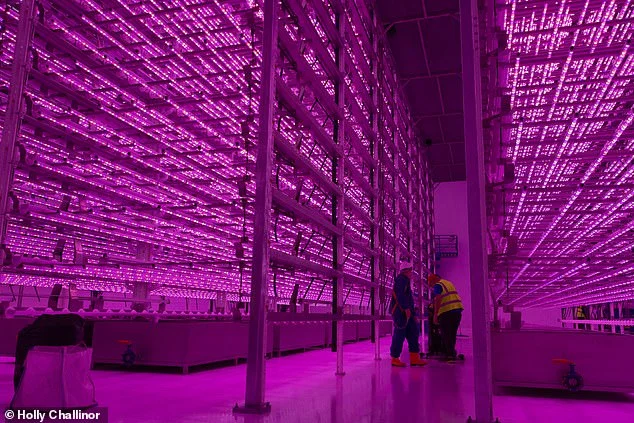
US: Utah - World’s First Commercial, Indoor Strawberry Farm Coming To Murray
It could be the world’s first private, commercial, vertical, indoor strawberry farm, and the Murray City Council approved it during their June 18 meeting. In a first for an urban Utah city, the City Council amended the Murray City Municipal Code to allow for indoor, vertical farming
August 29, 2019 ● By Shaun Delliskave
By Shaun Delliskave s.delliskave@mycityjournals.com
It could be the world’s first private, commercial, vertical, indoor strawberry farm, and the Murray City Council approved it during their June 18 meeting. In a first for an urban Utah city, the City Council amended the Murray City Municipal Code to allow for indoor, vertical farming.
This clears the way for Chihan Kim, a businessman whose holdings include a Sandy coffee shop, to develop what would be Utah’s first large-scale commercial, indoor, hydroponic farm in a vacant warehouse building located at 158 E. 4500 South.
“(I) will collect all the material to build the facility and…grow vegetables and some fruits, like strawberries, that will benefit from the omittance of herbicides,” Kim told the Murray City Planning Commission on May 2.
Vertical farming has become a buzzword in agriculture. The process includes producing food in vertically stacked layers, such as in a skyscraper, unused warehouse, or stacked shipping containers, with controlled-environment agriculture technology, where all environmental factors can be controlled. Such facilities utilize artificial light control, environmental control (humidity, temperature and gases) and fertigation. Some vertical farms use techniques similar to greenhouses, where natural sunlight can be augmented with artificial lighting and metal reflectors.
One of the most successful vertical farming operations is in Jackson, Wyoming. There, Vertical Harvest produces 100,000 pounds of vegetables a year on a plot 30 feet high by 150 feet long. Their 1/10th-of-an-acre site grows an annual amount of produce equivalent to 10 acres of traditional farmland. However, other ventures have failed.
Vertical farms are expensive to set up and take a long time to expand. Technology is changing at such a rapid pace that a newly opened competitor in the field could offer produce at a lower rate than an established producer. Still, indoor farming is appealing as a sustainable solution to growing food with little need for pesticides, water and land.
Before the code change, “Indoor Farming” was not listed as an allowable use in any zone in Murray City. For Kim to move forward with his zoning request, he needed to go through the extreme measure of having Murray change its code to allow for such a business.
This won’t be the first vertical, indoor farm in Utah, as an 11,000-square-foot facility sits on farmland in Charleston. Strong Vertical Garden supplies produce from that building to Smith’s grocery stores and microgreens to several chefs and restaurants in Utah.
The building that Kim intends to transform into an indoor farm is the former Electrical Wholesale Supply building. That building will allow Kim’s company, City Farm, to have 40,609 square feet for operations. LED lighting will be the primary source of light for the plants.
Murray City planning staff noted in their recommendation to the City Council that the indoor farm, “…will create the best opportunities to adaptively re-use and potentially revitalize older buildings and vacant spaces… (and) have the potential to place year-round access to fresh food closest to populations with limited transportation options, creating a positive impact on public health.”
“The main crops that we are considering at this moment are strawberries,” Kim said. Strawberries, he said, are one of the most contaminated fruits because of outdoor pesticides. This process will save them from harmful chemicals that get trapped in their seeds and pores and don’t all wash out with water.
“The farm operations will be maximum automation. Pollination—I am going to use drones. Drones will produce wind that will promote pollination. The farm will be open to the public with large windows. Strawberries will be supplied to grocery stores, but we will also make strawberry smoothies and food like that,” Kim said.
Councilwoman Diane Turner stated, “I think it is a great idea. I am really pleased you are doing this in Murray.”
Lead photo: An example of vertical farming shows stacks of crops growing in an indoor building. (Photo courtesy Murray City)

Video: Learn How To Use The Bluelab Pulse Meter To Measure Moisture on A 10 x 20 Tray of Microgreens.
Pulse connects directly to your smartphone via the Pulse app for automated data collection, measurement comparison, storage and exporting
Quickly and consistently measure moisture, nutrient (measured in conductivity) and temperature directly in the root zone without the need for pour-throughs, slurries or extractions.
Pulse connects directly to your smartphone via the Pulse app for automated data collection, measurement comparison, storage and exporting
THE NICK GREENS GROW TEAM CAN HELP YOU
ANSWER THESE TOUGH QUESTIONS:
Do you have an efficient and dependable grow room and system?
Are your crops food safe?
Do you have a sustainable farm and a proven business model?
Can you determine crop yield, cost $/lb, and labor costs on a daily basis?
Is your crop mix optimized for production and profitability?
Ontario Greenhouse Growers Look At Cutting-Edge Advances
“As a vertically integrated grower, we’re using all the latest technologies available to us to grow the best possible vegetables,” said Chris Veillon, chief marketing officer for Pure Hothouse Foods Inc. in Leamington, ON
In an effort to contend with labor shortages, pests, food safety, and other challenges, Ontario’s greenhouse growers are tapping into a number of innovations.
“As a vertically integrated grower, we’re using all the latest technologies available to us to grow the best possible vegetables,” said Chris Veillon, chief marketing officer for Pure Hothouse Foods Inc. BB #:170379 in Leamington, ON.
Some growers use high-pressure sodium lights to supplement natural sunlight.
Pure Hothouse Foods installed the lights in a few facilities, and Carl Mastronardi, president and CEO of Del Fresco Produce Ltd. BB #:194101 in Kingsville, ON, said this the type of light used in Del Fresco’s strawberry greenhouses.
Automation is another increasingly common theme.
“Automation to offset the growing shortage of general farm labor is constantly added where it makes good financial sense,” said Ray Wowryk, director of business development with Nature Fresh Farms Sales Inc. BB #:274537 in Leamington, ON, adding that many growers are using upgraded artificial intelligence (AI) and other technologies to assist in crop management.
Some growers are also exploring indoor vertical farming, including Del Fresco.
“Our vertical farming is a very unique system—it doesn’t work like others where you’re growing in a warehouse on shelves,” Mastronardi said.
Called the LivingCube, he said it’s a very efficient growing method “where the plants actually get bathed by the light in the container. We’re going to grow microgreens and lettuce this way.”
The system produces living lettuce, basil, and microgreens all year, featuring 12 mechanized growing, germination, and irrigation machines, each built inside a proprietary insulated, 40-foot, stainless-steel growing chamber. The growing machines are individually climate controlled to optimize the environment and create a complete standalone growing system and independent growing facility.
Next, is packaging, and recent years have seen an uptick in demand for sustainability.
“Consumers are requesting more sustainable packaging,” Wowryk said.
In response, Nature Fresh has been working with retail partners to provide more eco-friendly options.
“Recently, we introduced a compostable tray for our mini cucumbers. Response has been very positive from our retail community, and customers have expressed gratitude through our social channels welcoming the change.”
Pure Hothouse Foods is also striving to reduce its carbon footprint with packaging alternatives.
“We’re transitioning our snacking tomato line to packaging that uses lidding film, which can reduce up to 25 percent of the plastic,” Veillon said. “The use of alternative bases such as palm fiber or sugarcane are emerging solutions that can be recyclable, biodegradable, or even compostable.”
Tagged greenhouse, ontario
Bowery Farming Hires Execs From Starbucks And Walmart
In a move to broaden consumer awareness and increase retail distribution, Bowery Farming has made two key executive hires for the company’s marketing and sales operations.
Wednesday, Aug. 28th, 2019
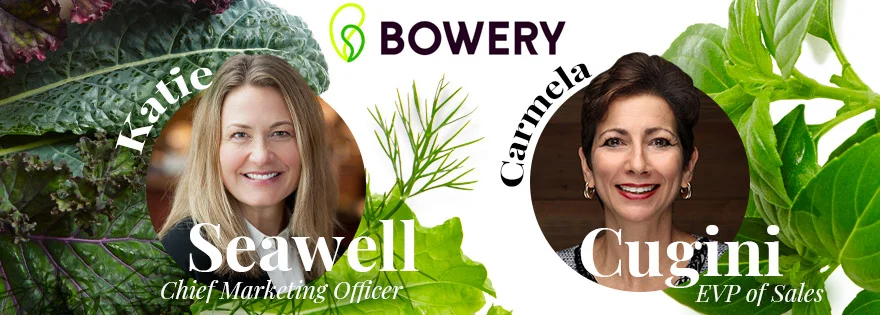
NEW YORK CITY, NY - In a move to broaden consumer awareness and increase retail distribution, Bowery Farming has made two key executive hires for the company’s marketing and sales operations. The company appointed Katie Seawell (formerly of Starbucks Coffee Company) and Carmela Cugini(formerly of Walmart) as the company’s Chief Marketing Officer and EVP of Sales, respectively.
Irving Fain, CEO and Co-Founder, Bowery Farming
“We are thrilled to have Carmela and Katie join the Bowery team,” Irving Fain, CEO and Co-Founder, stated in the press release. “We are committed to building a smart and passionate team that is dedicated to our mission of growing food for a better future. Katie and Carmela will be tasked with sharing our mission—and the work we are doing to revolutionize agriculture—to retail partners and consumers, ultimately bringing Bowery’s safe, fresh, and delicious locally-grown produce to more homes."
Bowery Farming appointed Katie Seawell (formerly of Starbucks Coffee Company) and Carmela Cugini (formerly of Walmart) as the company’s Chief Marketing Officer and EVP of Sales, respectively
Both Seawell and Cugini come to Bowery with vast experience in the food retail industry and are set to play a vital role in expanding the company’s operations and supporting Bowery’s mission of growing safe, fresh produce for a better future as the company plans to expand its network of farms to new markets over the coming months.
Katie Seawell, Chief Marketing Officer, Bowery Farming
“I was immediately drawn to Bowery’s approach to re-thinking the agricultural system and offering sustainable, fresh produce that meets the needs of our growing population,” Seawell commented. “I look forward to helping grow the Bowery brand, uncovering ways to connect directly with customers who believe in our mission.
Seawell led a variety of leadership roles at Starbucks, where she spent over a decade within the marketing and product organization field including driving brand campaigns, developing go-to-market strategies, product innovation, and most recently as SVP of Siren Retail Operations. Her new role with Bowery as the Chief Marketing Officer will include leading the marketing team, spearheading initiatives to build the company’s brand, consumer outreach in both existing and new markets, and partnering with the agriculture science team pertaining to innovation strategy to provide insights on consumer produce trends.
Carmela Cugini, EVP of Sales, Bowery Farming
“I’m excited to join Bowery at a pivotal moment for the company’s growth,” stated Cugini. “Now more than ever, consumers are demanding more transparency on where their produce comes from and how it was grown. For retailers, Bowery provides that insight and accountability. I look forward to working with our partners—existing and new—to ensure Bowery’s produce is top of mind for consumers looking for fresh, delicious produce.”
Cugini’s experience stems from her vast experience with e-commerce retail, consumer packaged goods, financial planning, and sales. Prior to her role as Vice President and General Manager of Walmart’s US e-commerce and Jet.com for three years, Cugini spent over 13 years at PepsiCo and four years at Merrill Lynch. Her strong background in sales management, key account sales, revenue management strategy, and marketing and brand development made her a key choice as Bowery’s new EVP of Sales. Cugini’s new duties with Bowery will include growing its network of retail partners and distribution channels while educating grocers on the benefits of indoor-grown, pesticide-free produce.
Congratulations to both Seawell and Cugini on their next adventure!
Packaged Salads Value-Added Bowery Farming Executive New Hires New Hires Starbucks Walmart Sales Marketing Sustainable Fresh Produce Katie Seawell Carmela Cugini Irving Fain

8th Biocomposites Conference Cologne 14–15 November 2019, Maternushaus, Cologne, Germany
The “8th Biocomposites Conference Cologne” is the world’s largest conference and exhibition on this topic. More than 300 participants from all over the world and 25 exhibitors are expected to benefit from the rapidly growing interest for plastic alternatives
Biocomposites - Find The Real Alternative to Plastics
Plastics can be replaced by biocomposites with wood or natural fibres
Biocomposites, especially wood and natural fibre plastic granulates, are being utilised for consumer goods such as music instruments, casings and cases, furniture, tables, toys, combs and trays. The unique look and touch convey high quality and value and are therefore well received by customers. These biocomposites offer a range of possibilities for product differentiation. The biocomposite markets continue to grow: They are stable in established markets like construction and automotive and show strong growth in the more recently developed markets for consumer goods and packaging. This provides ample opportunities for innovative applications from new players.
The “8th Biocomposites Conference Cologne” is the world’s largest conference and exhibition on this topic. More than 300 participants from all over the world and 25 exhibitors are expected to benefit from the rapidly growing interest for plastic alternatives.
Preliminary Programme Here:
Franck Baradel, Omya International (CH): Enhancing Biopolymer Biocomposites with Functional Minerals
Levin Batschauer, Coperion (DE): Processing of Bio-based and Biodegradable Products - Sustainable Compounding Co-rotating Twin Screw Extruders
Michael Carus, nova-Institut (DE): Sustainability of Natural Fibres and Biocomposites
Gary Chinga Carrasco, RISE PFI (NO): Biocomposites for 3D printing – Bioplastics and the Reinforcement Potential of Lignocellulosic Fibres and Lignin
Jeremiah Dutton, Trifilon (SE): Trifilon Biocomposites – Advancing Sustainability & Performance with Hemp Fibres
Andreas Haider, Kompetenzzentrum Holz (AT): PLA/PHA Bio-based Blends for Injection Molding and 3D Printing Process
Jürgen Leßlhumer, Kompetenzzentrum Holz (AT): Weathering-resistant Powder Coating of WPC – Challenges and Results
Hans Korte, DR. HANS KORTE Innovationsberatung Holz & Fasern (DE): How the Environment Benefits from a Wood-based Composite Nail Compared to a Steel Nail
Daniel Lang, CORDENKA (DE): Cordenka Cellulose Fibres – Properties and Opportunities in Plastic Reinforcements
Asta Partanen, nova-Institut (DE): Market Development, Volume and Trends of Biocomposites
Heidi Peltola, VTT Technical Research Centre of Finland (FI): Improving the Performance of Wood Fibre Reinforced PLA Biocomposites
Arne Schirp, Fraunhofer WKI (DE): How Durable are Extruded Wood-polymer Composite (WPC) Sidings with Fire-retardants? – Reaction-to-fire Performance of WPC before and after Artificial Weathering
Amélie Tribot, Université Clermont Auvergne, CNRS (FR): Valorization of Kraft Lignin and Corn Cob by-Products into PLA-Matrix based Biocomposites: Characterization of Injected-molded Specimens
Dirk Zimmermann, Amorim (DE): Biocomposite Innovation with Natural Cork - Natural Born Technology with AMORIM
Main topics of the conference:
Market opportunities for biocomposites in consumer goods such as music instruments, casings and cases, furniture, tables, toys, combs and trays as well as rigid packaging
Latest development in technology and strategic market positioning
Trends in biocomposite granulates for injection moulding, extrusion and 3D printing
Biocomposite Award Session: “Biocomposite of The Year 2019”
Latest developments in construction and automotive
Topics of the conference
Market opportunities for biocomposites in consumer goods such as music instruments, casing and cases, furniture, tables, toys, combs and trays as well as rigid packaging
Latest development in technology and strategic market positioning
Trends in biocomposite granulates for injection moulding, extrusion and 3D printing
Biocomposite Award Session: “Biocomposite of the Year 2019”
Latest developments in construction and automotive
Call for abstracts and posters
Abstract submission is open now. You are welcome to present your latest products, technologies or developments. Submit your abstract here as soon as possible. Want to present a poster? Submit your poster here.
Innovation Award “Biocomposite of the Year 2019”
The Innovation Award “Biocomposite of the Year 2019” will be granted to the innovative biocomposites industry for finding suitable applications and markets. Click here to lean more about the call for innovation!
Exhibition and sponsoring opportunities
Would you like to increase your visibility in public? You are very welcome as a sponsor of the conference! All sponsoring opportunities are available here.
The fee of a booth (6 m2) is 600 EUR (excl. 19% VAT). We provide you with a table, tablecloths, a pin board, a chair and a power connection. You are welcome to use your own booth system.
After booking your booth, submit a printable logo and company profile to Mr. Dominik Vogt.
Organiser: nova-Institute
nova-Institute is a private and independent research institute, founded in 1994; nova offers research and consultancy with a focus on bio-based and CO2-based economy in the fields of food and feedstock, techno-economic evaluation, markets, sustainability, dissemination, B2B communication and policy.
Every year, nova organises several large conferences on these topics; nova-Institute has 30 employees and an annual turnover of more than 3 million €. Get the latest news from nova-Institute, subscribe here.

Growing Up: Inside Infarm’s Plans To Feed The World
It is projected that by 2050 two-thirds of humanity – or 6.5 billion people – will be living in urban spaces. The challenge will be building and managing urban spaces to sustain such a massive population. In theory, industrial agricultural produces enough food to feed the world as a whole, but the current model is unsustainable
September 3, 2019
Infarm founders Osnat Michaelli and Erez and Guy Galonska
Editor’s note: This is the first installment of a series focusing on social impact startups. Stay tuned for more.
It is projected that by 2050 two-thirds of humanity – or 6.5 billion people – will be living in urban spaces. The challenge will be building and managing urban spaces to sustain such a massive population. In theory, industrial agricultural produces enough food to feed the world as a whole, but the current model is unsustainable.
Large-scale agriculture has led to deforestation on a mass scale – as we are currently seeing in the Amazon – along with soil degradation, water waste, and plant diseases that require the use of pesticides (and are constantly mutating). Moreover, due to energy use and lengthy transportation routes, the CO2 footprint of food currently represents 17% of total global emissions. Climate change will, in turn, have an increasing impact on agriculture – with changes in rainfall, rising temperatures, an increase in pests, and extreme events such as heatwaves, droughts, storms, and floods affecting our ability to provide food for a growing global population.
These challenges have been the driving force behind the global agtech movement. For two straight years, agtech startups have received $2 billion in funding and 2019 is set to be another banner year for agtech.
Leading the pack in Europe is Berlin-based agtech startup Infarm, which recently closed an €88 million Series B investment led by Atomico.
From concept to reality
Founded in 2013 by Osnat Michaelli and brothers Erez and Guy Galonska, Infarm pioneered putting ‘indoor vertical farms’ in city locations such as supermarkets, shopping malls, restaurants, schools, hospitals and similar spaces where the produce can directly reach the end customer.
“My two co-founders and I came together around the idea that being close to the land and particularly its produce is vital to our health and creativity as a society. And from the beginning we began to explore – through travel, growing and experimentation – ways to bring natural vitality of the local farm into the city and the freshness and flavour back into our lives,” explained Infarm CEO and co-founder Erez Galonska.
“We also realised that our current food system’s biggest deficiency is that it is too far removed from the people it is trying to feed. At infarm, rather than asking ourselves how to fix these deficiencies in the current supply chain, we looked to redefining the entire chain from start to finish; Instead of building large-scale farms outside of the city, optimising on a specific yield, and then distributing the produce, we decided it would be more effective to distribute the farms themselves throughout the city.
“In 2013 we converted a 1955 Airstream trailer into our first vertical farm in one of Berlin’s most well-known urban farm spaces, ‘Prinzessinengarten’. This trailer became a hub for our early experimentation, where visitors could harvest herbs and microgreens and we could welcome a vibrant community of urban planners, designers, food activists, bio-dynamic farmers, architects, chefs, biologists, and hackers to explore the diverse challenges behind making urban farming a reality. This research station and lab would form the beginnings of what we today call Infarm.”
Today, ‘infarms’ can be stacked to fit any space and size, and are designed to easily plug into the city’s existing infrastructure. Infarm controls the farms remotely using sensors and a centralised, cloud-based platform that adjusts and improves itself continuously, so each plant grows better than the one before – providing plant seedlings with an ideal combination of light spectrums, temperature, pH, and nutrients for optimal growth.
The concept was further refined with inputs from biologists and cooks. The startup’s farms use no pesticides, 95% less water than traditional farms, and reduce transportation by 90%. Infarm’s largest module can grow up to 680,000 plants each year on only 25 square metres, making it 420x more efficient than soil-based agriculture.
In 2016, Infarm received a grant of €2 million from Horizon 2020, Europe’s biggest research and innovation programme. The grant was awarded on the basis of Infarm providing sustainable agriculture using hydroponics, proprietary lighting algorithms combined with indoor vertical farming, along with its patented modular ‘growth trays’ to create an incredibly efficient growing environment. The same year Infarm partnered with Metro Group, one of Europe’s biggest wholesalers, and in 2017, the startup received an early VC investment of €4 million.
2018 was a banner year for Infarm – both in terms of increased presence and funding. It secured a partnership with supermarket chains EDEKA and REWE in addition to partnering with several restaurants including Tim Raue and Good Bank. It also raised a Series A funding round of €20 million led by Balderton Capital. By mid-2018, Infarm was present in more than 50 customer-facing locations and launched its first Infarm in France via Metro Nanterre in November 2018.
Infarm has been rapidly growing and scaling since, and with its impressive €88 million round. Today, Infarm has over 200 in-store farms, over 150 farms in distribution centres and harvests more than 150,000 plants every month. In addition to its early partners Metro and Edeka, Infarm has partnered with major food retailers including Migros, Casino, Intermarche, Auchan, Selgros, and Amazon Fresh in Germany, Switzerland, and France.
Infarm’s team has grown from 40 people in 2016, to 150 in 2018, and the startup now employs over 250 people in several locations across Germany, as well as in Denmark, France, Switzerland, UK, and the US.
Today the total market for fruit and vegetables is €2.2 trillion worldwide, with an average of 10 kilos of salad per year, per person. This market is expected to grow to €5 trillion by 2030 as people’s diets are shifting to healthier and fresher food.
With this growing market size, Infarm sees a great opportunity for expansion while filling a societal need. The startup is planning to land in the UK this month, and is setting its sights on foreign markets; the startup is already in advanced discussions with retailers in the US and Japan. Its ultimate vision is to feed the 10 billion people living in urban centers by 2050.
Agriculture-as-a-Service
What makes Infarm attractive to supermarkets and other similar establishments is its ‘Agriculture-as-a-Service’ business model. The modular ‘farms’ themselves remain the property of Infarm, which receives income per harvested plant. Infarm coordinates with retailers and takes care of the farm including installation, cultivation, harvesting, and maintenance. Its farm unit becomes part of the retailer’s vegetable department. Aside from the regular visits by a service personnel to plant new plants, the farms are controlled remotely. This modular, data-driven and distributed approach — a combination of big data, IoT, and cloud analytics — sets Infarm apart from competitors.
From a price point, Infarm is attractive for supermarkets, which get a better product at the same price. In addition, the plants, especially herbs, are harvested fresh; preserving color, smell, flavour, and nutrients.
Sustainable cities with responsible production
Before there was agtech and its cousin foodtech, it was all under one banner: agrifood tech. This vertical is now split in two: upstream or agtech is closer to the farmer, while downstream is foodtech, closer to the consumer. Infarm sits perfectly at the intersection, innovating in farming while at the same time drastically reducing or even eliminating the farm to market supply chain and bringing its produce directly to consumers. In effect, Infarm addresses two United Nations sustainable development goals: impacting both building sustainable cities (SDG #11) and communities and responsible production (SDG #12).
Infarm is redesigning the entire food supply chain from start to finish by distributing the ‘farms’; farming directly where people live and eat. It claims to be 400x more efficient than traditional agriculture.
The impact of its instore farms is best illustrated by the following numbers:
2 square metres of instore farms is equivalent to 400 square metres of traditional farmland
Only 0.5% space usage for each instore farm
95% less water than traditional agriculture
90% less transportation
75% less fertilizers, 0 pesticides
150,000+ plants per month harvested
The future of farming
Infarm’s goal for the future is to gain an even deeper understanding of the optimal conditions for plants, and for supermarkets to source all their needs for herbs from Infarm alone. With its data collected from sensors that measure and control plant growth, Infarm possess a unique plant database and may well be on track to achieving this goal.
Although experts agree that feeding a rapidly burgeoning urban population cannot be solved by vertical urban farming alone, Infarm and similar agtech startups are hailed as trailblazers. They form part of the solution, while appealing to people who care about what they eat and where it comes from.
The signs are clear that in the near future, Infarm and similar companies will become the norm and not a novelty.
Maricel Sanchez has over 10 years of experience in various fields including trading, supply chain management, logistics and manufacturing. As well as helping startups to raise funds, she is an award-winning public speaker and the current President of Toastmasters Nice, a bilingual club that promotes public speaking and leadership.

Crop One Grows Food Hydroponically With Unique Formulas For Each Plant
Crop One is a vertical farming holding company for two subsidiaries – FreshBox Farms, Millis, Mass., and a joint venture with Emirates Flight Catering, Dubai South, United Emirates
Crop One is hardware agnostic but develops its own proprietary software and data analytics platform that governs its growing process as well as it farms.
Hydroponic Technology and Data Analytics in Vertical Farming
Dave Vosberg, CFO & SVP Strategy | Crop One
07/30/19 Indoor & Vertical Farming
Tell us about Crop One and your role with the company.
Crop One is a vertical farming holding company for two subsidiaries – FreshBox Farms, Millis, Mass., and a joint venture with Emirates Flight Catering, Dubai South, United Emirates. Crop One has been in commercial production longer than any other major vertical farmer in the U.S. It produces the highest crop yield per square foot, at 25% of the capital cost, of any vertical farm, due to its unique combination of proprietary technology platform and best-in-class plant science. For more information about Crop One and vertical farming follow the link to CropOneHoldings.com. Crop One’s mission is to solve the world’s food problems one crop at a time. The first crop we are successful with is leafy greens, but soon we will be growing fruits, proteins, some cereals and many specialty crops. My role with the company is as CFO and SVP Strategy, helping to provide the vision for corporate financial success.
Please tell us what advantages and benefits Crop One provides?
Crop One Holdings is transforming the ag tech industry, using advanced hydroponic technology and proprietary data analytics to provide pure, safe and consistent produce year round. Crop One’s differentiated technology stack and growing process make it the most advanced company in the vertical farming space. The company delivers industry-leading environmental benefits with technology that is centered around lowering costs and increasing yields. Additionally, the company is also actively experimenting with growing new crop types and cultivars, and has partnered with leading seed and research companies to develop seeds specifically bred for the controlled indoor environment.
Since sustainably feeding a growing population is a paramount interest globally, what type of international interest do you have for your farms?
Crop One Holdings, the world’s leading vertical farm operator through its FreshBox Farms brand and Emirates Flight Catering (EKFC), announced a $40 million joint venture the build the world’s largest vertical farm in Dubai, United Arab Emirates. The 130,000 square foot controlled environment facility will produce three US tons (6,000 pounds) of high quality, herbicide and pesticide-free leafy greens, harvested daily, using 99 percent less water than outdoor fields. Its location will enable quick delivery of fresh products within hours of harvest, maintaining the food’s nutritional value and reducing carbon emissions associated with transportation.
How big of an issue is distribution?
Distribution is the key issue. Crops are now grown far from the point of consumption often times traveling weeks before reaching supermarkets and are vulnerable to disruptions related to climate, pathogens, and chemical intervention. Addressing these challenges will require a combination of plant science, AI, agtech, software analytics, environmental sustainability and operations management to address. Crop One’s differentiated technology stack and grow process makes it the most scalable company in the vertical farming space, delivering industry-leading environmental and economic benefits.
What role have Sensors and LEDs played?
Vertical farming that can control the environment in which it grows can be liberated from climate and geography enabled by the advent of cheap LED lighting and cheap sensors. Both have allowed us to improve economics of leafy greens and will continue to allow us to permanently change the infrastructure of agriculture, one crop at a time.
What are the innovative aspects or the technological advances that make Crop One unique?
Crop One grows food hydroponically with unique formulas for each plant. Crop One is hardware agnostic but develops its own proprietary software and data analytics platform that governs its growing process as well as it farms. Crop One is technology enabled and plant science forward - it has a strong plant science team led by Dr. Deane Falcone, enabling the company to manage its cost and increase yields. The company’s plants are supported by more than 250M+ data points for maximum growth and give the exact, correct amount of water, light, and nutrients, all grown without the use of soil. The final products (leafy greens) are fresher, safer and cleaner.
What are the biggest hurdles currently facing Vertical Farming and its expansion?
To date, the biggest hurdle facing Vertical Farming has been operators who can demonstrate consistent operational and financial success in order to attract debt financing. This is an asset-heavy industry, and without debt or third-party project capital, the business is un-scalable. Crop One has consistently proven its operations and financial performance being the only vertical farm that has consistently delivered product every week for the past four years, and at positive gross margins the past two and a half years. As such, Crop One is now on a growth trajectory to significantly expand production.
Where do you see Vertical Farming and Crop One 5 years down the road?
5-10 years from now, Vertical Farming will supply roughly 50% of the value of the leafy greens market. It will also have made inroads into fruits, proteins, cereals and specialty crops. Similar to data centers, we are at the beginning of this industry and vertical farms will soon become as plentiful. Crop One will be a leader in this space, but this is a multi-winner market. Crop One will be distinguished by its leadership in plant science, technology and business model innovation.
About David Vosburg, CFO & SVP Strategy
Dave has spent his life's work founding, growing and scaling technology businesses. Crop One Holdings, trading as FreshBox Farms, is his fifth successful startup he has lead at the CXO level. As CFO and SVP Strategy for Crop One, Dave leads the finance and strategy of the company.
Dave is passionate about businesses which use technology to disrupt markets while creating significant social value. Previously, Dave was CFO of Southern Africa's largest money transfer company, outside of South Africa, CEO of Zambia's leading HR consulting and outsourcing company and CCO of an Ed-Tech startup which translated the entire Zambian primary curriculum into 5,000 flash-animated lessons.
Mr. Vosburg also served as the past President of the American Chamber of Commerce in Zambia and holds a BA from the University of Notre Dame and an MBA from Yale University."
The content & opinions in this article are the author’s and do not necessarily represent the views of AgriTechTomorrow

EDEN-ISS: Substantial Vegetable Harvest In Antarctica
“In just nine and a half months, we produced a total of 268 kilograms of food on just 12.5 square meters, including 67 kilograms of cucumbers, 117 kilograms of lettuce and 50 kilograms of tomatoes.”
EDEN-ISS ©Hanno Müller, AWI
Posted by Almut Otto | Aug 24, 2019 | Tags: Antarctic Neumayer III Station, Antarctica, DLR, greenhouses
No, luckily the climate in Antarctica is still inhospitable. And this is precisely why the German Aerospace Center (DLR) set up the EDEN-ISS greenhouse there in 2018. This is because food production of the future and future space missions are being researched in the immediate vicinity of the German Antarctic Neumayer III Station. In the meantime, the winter crew from the Alfred Wegener Institute (AWI), including DLR researcher Dr Paul Zabel, has spent a year surrounded by constant ice. The team presented the results on 23 August: There was an unexpectedly rich harvest. According to Zabel:
“In just nine and a half months, we produced a total of 268 kilograms of food on just 12.5 square meters, including 67 kilograms of cucumbers, 117 kilograms of lettuce and 50 kilograms of tomatoes.”
EDEN-ISS ©Hanno Müller, AWI
Before his trip, by the way, Zabel had been smart enough to look into artificial vegetable cultivation in Dutch greenhouses. Zabel adds:
“The taste of the fresh vegetables and their smell left a lasting impression on the winter crew and had a visibly positive effect on the team’s mood throughout the long period of isolation.
A correlation that is now also being researched from a psychological perspective.
Lower energy consumption than expected
Additionally, the scientists were surprised that they needed much less energy than they had initially expected. The average power consumption during the analog Antarctic mission was 0.8 kilowatts per square meter of cultivated area. It was consequently less than half as much as previously assumed for aerospace greenhouses, which were estimated at 2.1 kilowatts per square meter.
“This is an important aspect for a subsequent space venture and gives us confidence about the future of this idea”.
… says Project Manager Dr. Daniel Schubert from the DLR Institute of Space Systems. Aside from that, he stresses the potential and useful addition to space food that can be supplied by the earth:
“In one year in the Antarctic we have seen very clearly how enough food can be produced in a very small space in order to supplement the food of a crew of six by a third with freshly grown food.”
High workload should be reduced
Notwithstanding this, the researchers still see some potential for development. Because in order to save valuable astronaut time, the amount of work required for support and maintenance has to be significantly reduced in the future. Zabel needed an average of three to four hours a day in order to cultivate the plants:
” I spent about two thirds of my time operating and maintaining the greenhouse technology, another third on sowing, harvesting and maintenance. In the future, a space greenhouse needs to significantly reduce the amount of an astronaut’s valuable time.”
On top of that, the time required for experiments was about four to five hours per day. The aeroponic cultivation system, i.e. nutrient solution without soil, enabled the plants to flourish successfully. Some pumps caused problems in the intervening period and the biofilm in the nutrient tanks were unexpectedly high, yet these problems could be remedied.
New EDEN-ISS designed for the Falcon 9 rocket
Based on the results and experiences of the EDEN-ISS project, a new design concept for a space greenhouse has now been developed. This greenhouse is fairly compact in its design so that it can be launched aboard a Falcon 9 rocket. At the same time, it is expandable and large enough to provide sufficient food for the astronauts on the moon or on Mars. “The area used for cultivation is around 30 square meters, almost three times the size of the Antarctic greenhouse container. Using this system, around 90 kilograms of fresh food could be grown per month, which corresponds to half a kilogram of fresh vegetables per day and per astronaut if six astronauts are present,” Schubert explains.
The concept may also be combined with a biofilter system (C.R.O.P.). Its purpose is to produce a fertilizer solution for plant cultivation that is able to be utilized from biowaste and urine directly. This makes the greenhouse concept almost a fully bio-regenerative life support system for future habitats. Prof. Hansjörg Dittus, DLR Executive Board member responsible for space research and technology, elaborates further:
“The newly proposed concept for a space greenhouse is an invaluable foundation on which we intend to further expand our research work.”
EDEN-ISS is open to research teams worldwide
Following Paul Zabel’s return to Germany, the Antarctic greenhouse was initially in “sleep mode”. Previously, the DLR team had maintained all systems on site in January 2019 and completely overhauled the container. The Bremen researchers then woke the system up from its sleep at the beginning of May using a remote control system and powered it up again. A seed sown at an earlier stage began to flourish.
“This step served to test another space scenario. Because a provisional greenhouse is expected to arrive before the astronauts and ideally start its operation remotely.
… DLR researcher Schubert explains and he adds: “The test run was a complete success. Now the current AWI winter crew is continuing to operate the greenhouse with strong support from the Bremen Control Center, from where we monitor as much as we possibly can from a distance. The procedures developed last year are currently proving their worth in minimizing the crew’s workload and simplifying procedures as far as practicable”.
The greenhouse is also now available to various research groups worldwide who are interested in conducting plant cultivation experiments in the Antarctic.
“As one of the first new collaboration partners, the American space agency NASA has already sent us original NASA salad seeds, which are also cultivated on the International Space Station ISS and now thrive here in Antarctica,” Schubert adds.
Findings are interesting for global food production
The frozen continent of Antarctica is one of the most exciting research regions in the world. “It is primarily here that we gather data on global climate change and Antarctic biodiversity. However, the greenhouse is an excellent example of how we can conduct research at Neumayer Station III on other important questions for the future. After all, we have a lot in common with space travel when we travel to regions that are hostile to humans in order to gain new insights. At the same time, the permanent supply of fresh fruit and vegetables has a very positive side effect on our winter crew this year once again,” says Prof. Antje Boetius, Director of the Alfred Wegener Institute, who, during her stay at the station, was able to convince herself of the wonderful flavor of a juicy giant radish from the greenhouse. The cultivation of vegetables is consequently also interesting for future missions by the research icebreaker Polarstern.
Moreover, global food production is one of the central challenges facing society in the 21st century. An ever-increasing world population and the simultaneous upheavals caused by climate change call for new ways of cultivating crops even in climatically unfavorable regions. A self-contained greenhouse enables harvests that are independent of weather, sun and season, as well as lower water consumption and the elimination of pesticides and insecticides for deserts and regions with low temperatures, as well as for space missions to the moon and to Mars. In the EDEN-ISS project, such a model greenhouse for the future is undergoing long-term testing under extreme Antarctic conditions.
EDEN-ISS partners
EDEN-ISS is developed by DLR in cooperation with the Alfred Wegener Institute, Helmholtz Center for Polar and Marine Research (AWI) as part of a winter mission at the German Neumayer Station III in Antarctica. Numerous other international partners are working together as part of a research consortium under the leadership of DLR with the aim of ensuring that the Antarctic greenhouse functions properly. These include Wageningen University and Research (Netherlands), Airbus Defense and Space (Germany), LIQUIFER Systems Group (Austria), National Research Council (Italy), University of Guelph (Canada), Enginsoft (Italy), Thales Alenia Space Italia (Italy), AeroCosmo (Italy), Heliospectra (Sweden), Limerick Institute of Technology (Ireland), Telespazio (Italy) and the University of Florida (USA). The project is funded by the European Research Framework Program Horizon 2020 under project number 636501.
SUPPORT US!
Innovation Origins is an independent news platform, which has an unconventional revenue model. We are sponsored by companies that support our mission: spreading the story of innovation. Read more here.
On Innovation Origins you can always read articles for free. We want to keep it that way. Have you enjoyed this article so much that you want to contribute to independent journalism? Click here:
Share this article!
ABOUT THE AUTHOR
Almut Otto
Almut Otto is a writer and has over 30 years of know-how in the communications industry. She learned the trade of journalism from scratch in a daily newspaper and in a special interest magazine. After studying communication sciences in Munich, she worked as an international PR manager in the textile, shoe, outdoor and IT industries for a long time. For some years now, she has been concentrating more on her journalistic background. As a passionate outdoor and water sports enthusiast - her hobbies include windsurfing, kitesurfing, SUP boarding, sailing and snowboarding - she is particularly interested in keeping the oceans clean and shaping a sustainable future. In addition, she is always fascinated by the latest developments from the world's hardware and software laboratories.
Climate Change And Land An IPCC Special Report
The IPCC approved and accepted Climate Change and Land: an IPCC special report on climate change, desertification, land degradation, sustainable land management, food security, and greenhouse gas fluxes in terrestrial ecosystems at its 50th Session held on 2 – 7 August 2019
Climate Change And Land Report
An IPCC special report on climate change, desertification, land degradation, sustainable land management, food security, and greenhouse gas fluxes in terrestrial ecosystems
Download report
The IPCC approved and accepted Climate Change and Land: an IPCC special report on climate change, desertification, land degradation, sustainable land management, food security, and greenhouse gas fluxes in terrestrial ecosystems at its 50th Session held on 2 – 7 August 2019. The approved Summary for Policymakers (SPM) was presented at a press conference on 8 August 2019.
Press Release: Land is a Critical Resource, IPCC report says ( Arabic, Chinese, French, Russian, Spanish)
Presentation (6.5 MB)
Background
At its 43rd Session (Nairobi, Kenya, 11 – 13 April 2016), the IPCC Panel decided to prepare a special report on climate change, desertification, land degradation, sustainable land management, food security, and greenhouse gas fluxes in terrestrial ecosystems.
Experts met on 13 – 17 February 2017 in Dublin, Ireland to prepare a draft outline for the report.
At its 45th Session (Guadalajara, Mexico, 28 – 31 March 2017), the Panel approved the outline for Climate Change and Land: an IPCC special report on climate change, desertification, land degradation, sustainable land management, food security, and greenhouse gas fluxes in terrestrial ecosystems.
The Special Report was developed under the joint scientific leadership of Working Groups I, II, III in cooperation with the Task Force on National Greenhouse Gas Inventories, and supported by the Working Group III Technical Support Unit.
Authors and Review Editors
107 experts from 52 countries were selected as Coordinating Lead Authors and Lead Authors – who are working on each individual chapter – and Review Editors, who ensured that comments by experts and governments were given appropriate consideration as the report developed.
40% of the Coordinating Lead Authors are women. 53% of the authors are from developing countries, making this the first IPCC report to have more authors from developing countries than from developed countries. The full list of Coordinating Lead Authors, Lead Authors and Review Editors is here.
A call for nomination of authors was sent to governments, observer organizations and IPCC Bureau Members on 5 April 2017. Graphics that provide background information about the nominees are available here
Lead Author Meetings
First Lead Author Meeting: Oslo, Norway, 16 – 20 October 2017
Second Lead Author Meeting: Christchurch, New Zealand, 26 – 30 March 2018
Third Lead Author Meeting: Dublin, Ireland, 3 – 7 September 2018
Fourth Lead Author Meeting: Cali, Colombia, 11 – 15 February 2019
Pre-Scoping
The Steering Committee for the Special Report on climate change, desertification, land degradation, sustainable land management, food security, and greenhouse gas fluxes in terrestrial ecosystems circulated a questionnaire to IPCC Focal Points and Observer Organizations ahead of the Scoping Meeting in February 2017 to get input on the structure and contents of the report. You can download the questionnaire and stakeholder consultation report here.
Scoping
A scoping meeting for the Special Report on climate change, desertification, land degradation, sustainable land management, food security, and greenhouse gas fluxes in terrestrial ecosystems was held on 13 – 17 February 2017 in Dublin, Ireland. The meeting resulted in a draft scoping paper describing the objectives and an annotated outline of the Special Report as well as the process and timeline for its preparation.
All the details of the scoping meeting are available in the scoping meeting report.
Adopted outline – (The dates of the 1st Lead Author Meeting have been corrected to read 16-20 October 2017)
Steering Committee
List of expertise
Scoping meeting programme
Background report for the scoping meeting
List of participants
Questionnaire and stakeholder consultation report
Timeline
Second Lead Author Meeting 26-30 March 2018
Expert review of First Order Draft Deadline 5 August 11 June-5 August 2018
Third Lead Author Meeting 3-7 September 2018
Literature deadline : Literature for consideration by report authors must be submitted to publishers
by this date 28 October 2018
Expert and Government review of Second Order Draft 19 November-14 January 2018-19
Fourth Lead Author Meeting 11-16 February 2019
SPM drafting workshop 20-21 March 2019
Literature deadline :Literature for consideration by report authors must be accepted for publication
by this date 7 April 2019
Final Government distribution 29 April-19 June 2019 Approval Plenary Joint WGI-II-III session 2-6 August 2019
Download PDF here.
Graphics
Graphics and statistical reports concerning the initial nominations and shortlisting of each stage are available in the public portal. Statistical reports include nominations by:
Nominations by Date
Citizenship
Gender and Region
Graduated Year
Observer Organizations
Nominating Countries
Previous IPCC Experience
Distribution by Region and Country
Regional Expertise
Sectors
Statistics
and more
Relevant Links
Adopted outline – (The dates of the 1st Lead Author Meeting have been corrected to read 16-20 October 2017)
IPCC-XLV/Doc. 7 – Sixth Assessment Report (AR6) Products – Outline of the Special Report on climate change, desertification, land degradation, sustainable land management, food security, and greenhouse gas fluxes in terrestrial ecosystems
IPCC-XLV/INF. 7 – Sixth Assessment Report (AR6) products – Outline of the Special Report on climate change, desertification, land degradation, sustainable land management, food security, and greenhouse gas fluxes in terrestrial ecosystems
IPCC-XLIII/INF. 7: Special Reports – Proposed themes for Special Reports during the Sixth Assessment Report (AR6) cycle
IPCC-XLIII/INF. 8: Special Reports Commentary from the Co-chairs of Working Groups I, II and III on each of the proposals for Special Reports contained in document IPCC-XLIII/INF. 7
IPCC-XLIII/INF. 9: Special Reports – Commentary from the Co-Chairs of Working Groups I, II and III on clusters of proposals for Special Reports contained in document IPCC-XLIII/INF. 7
IPCC-XLIII/INF. 19: Sixth Assessment Report Products – Information document

Paris Is Opening The World's Largest Urban Rooftop Farm
Just outside of the French capital, an urban farm is being built that will supply a tonne of food a day
23 August 2019
Charlotte Edmond Formative Content
Europe’s most densely populated city is growing. But we’re not talking about people here: it’s growing fruit and vegetables.
Image: Agripolis
At the edge of the French capital, an urban farm is being built that will supply residents with a tonne of food a day. Currently being renovated, the Paris Expo Porte de Versailles is set to become home to the world’s largest urban rooftop farm next year.
Image: Agripolis
The 14,000 m² of space – equivalent to about two football pitches – will be loaded with around 30 different types of plant. They’ll be grown in columns without soil and fed with nutrient-rich solutions and rainwater. This aeroponic method uses little water and means a large number of plants can be grown in a small area.
Image: Agripolis
Visitors will be able to purchase produce as well as sample it in the rooftop restaurant. The farm will also host educational tours and various events. And citizens will also be able to rent space to grow their own crops.
Image: Agripolis
Urban farming is a growing trend – in fact Agripolis, the company behind the farm, already runs other rooftop farms around France. Founder Pascal Hardy wants more urban spaces to take up the mantle: “Our vision is a city in which flat roofs and abandoned surfaces are covered with these new growing systems. Each will contribute directly to feeding urban residents who today represent the bulk of the world’s population,” he told The Guardian newspaper.
Image: Agripolis
Since being elected in 2014, the city's Mayor Anne Hidalgo has been on a mission to make Paris a greener city. The French government’s Parisculteurs initiative aims to cover 100 hectares of the city’s rooftops, walls and urban spaces with plants by 2020. One-third of this space will be dedicated to urban agriculture.
Image: Agripolis

Test For Organic Produce Detects Food Fraud
“Our method does not reveal whether pesticides have been used, but whether organic plants have been fertilized correctly. As such, the method complements existing analytical controls and, overall, provides a much more detailed picture of the growing history,” explains Laursen
TEST FOR ORGANIC PRODUCE DETECTS FOOD FRAUD
AUGUST 28TH, 2019
BY MICHAEL SKOV JENSEN-COPENHAGEN
A new method can determine whether an “organic” piece of produce is legit or fraudulently labeled.
By looking at fertilizer for organic plants, the method provides a deeper, more accurate portrayal of whether eco-labelled produce is indeed organic. According to experts, imported organic fruits and vegetables are susceptible to food fraud.
Increased consumer demand and higher profits for producers have made organic foods susceptible to food fraud.
“While a major eco-labelling scandal has yet to occur in Denmark, we often forget that our diet is sourced globally, and that our foods are often imported from countries where problems have been documented. For example, in southern Europe, where a large quantity of organic fruits and vegetables are sourced,” according to Kristian Holst Laursen, assistant professor in the plant and environmental sciences department at the University of Copenhagen. He has been developing food fraud detection methods for the past decade.
“Our method can be used to distinguish organic vegetables from conventionally farmed produce by looking at how plants have been fertilized,” says Laursen. The scope of fraudulently labeled tomatoes, potatoes, and apples and other produce is unknown as there has never been an examination of their fertilizers.
ISOTOPES, NOT PESTICIDES
The new method focuses on the isotope signature in a plant by isolating sulfate, a chemical compound that can reveal how a particular plant was grown. Humans, animals, and plants all have isotope signatures that provide information about the environment in which we live and how we live—diets included.
The current way of finding out whether an item is organic or not focuses on identifying pesticide residue. According to Laursen, this method is far from secure. For example, the use of pesticides on a neighboring field or traces from former conventional production on a now organic field can taint crops. Moreover, the analysis of pesticide residues is unable to reveal whether all of the rules for organic production have been complied with, such as the absence of inorganic fertilizers.
“Our method does not reveal whether pesticides have been used, but whether organic plants have been fertilized correctly. As such, the method complements existing analytical controls and, overall, provides a much more detailed picture of the growing history,” explains Laursen.
FOOD FRAUD
When a consumer purchases an organic vegetable, they’re often paying a premium for the method of cultivation, such as in soil without synthetic pesticides or fertilizers. Organized criminals are trying to exploit these conditions and profit in a global food fraud industry worth billions.
“Nobody really knows the extent of this type of fraud, but we have seen bad examples from abroad that extend well beyond organic products. Rice made of plastic, wine with toxins, artificial honey, etc. There is not always a health risk associated with food fraud, but it is clear that when you pay a higher price, you expect the product that you are paying for. And, of course, honest producers must be protected,” says Laursen.
Laursen’s research group is working with the Danish Veterinary and Food Administration and the method is ready for further testing, approval, and use by public agencies and commercial interests. The paper appears in Food Chemistry.
Source: University of Copenhagen
Original Study DOI: 10.1016/j.foodchem.2019.03.125
Lead photo: (Credit: Getty Images)
TAGS AGRICULTURE CRIMES FOOD

Aramark Gears Up For 2019 Back-To-School Season On College Campuses
Freight Farms - East Carolina University's Freight Farm supplies the dining hall with organic produce, grown in a shipping container behind a residence hall. The shipping container provides ideal conditions for seeds to germinate, grow and be ready for harvest in eight weeks
8/28/2019
BACK TO SCHOOL: Aramark is welcoming back three million higher education students to campus, by introducing a new wave of offerings customized to the ever-changing needs of Gen Zers, including new breakfast and dessert menu items added to True Balance, Aramark's allergen solutions station.
PHILADELPHIA -- Aramark, a foodservice and facilities partner of more than 400 colleges and universities across the U.S., is ready to welcome back three million higher education students to campus by introducing a new wave of offerings customized to the ever-changing needs of Gen Zers.
"Every year, our higher education team members elevate the student experience with custom campus solutions tailored for them," said Jeff Gilliam, president of Aramark's Higher Education business.
Aramark's team of more than 450 higher education chefs develop menus using flavors and food trends from around the world, in-depth research and healthy, fresh and authentic ingredients, to satisfy and expand students' taste buds.
Some highlights of new menu items include:
Sushi Cones -- A new concept that puts a fun spin on a student favorite. Made to order, sushi cones are easy to eat and completely customizable, from the vegetables, to the protein of choice.
Kimchi Quesadilla -- Inspired by a concept that helped lead the popularity of gourmet food trucks, this quesadilla features spicy kimchi, baby spinach, queso fresco and Kogi Salsa Roja.
Beet Hummus -- Alternative hummus options have risen in popularity in the U.S. Beet hummus packs many nutrients and brightens recipes with a subtle, earthy, mildly sweet and smooth flavor.
Cooking Up Meal Kits
Aramark research found that 58% of undergraduates would be very likely or likely to use a meal kit at school, so the company is partnering with Home Chef, the second largest U.S.-based meal kit brand, to offer meal kits as a component of a meal plan this fall. Debuting on 25 campuses this September, the new plan provides meals on campus and meal kits delivered directly to students' doorstep, providing a new solution for those who enjoy or want to learn to cook.
Expanding Allergy Solutions
This academic year, students can expect breakfast and dessert menu items added to True Balance, Aramark's allergen solutions station.
Aramark's culinary team developed six new recipes utilizing products from Enjoy Life Foods, which are entirely gluten free and exclude nuts, dairy and soy. All Enjoy Life foods are free from 14 allergens and are made with 100%, all natural, non-GMO ingredients. Featured recipes include various types of muffins, banana pancakes, chocolate brownies and chocolate chip cookies.
Growing Campus Gardens
Campus gardens are sprouting up across the country, giving students the chance to eat local and see how produce is grown, first-hand. Through innovative technologies, Aramark is helping students embrace a plant-forward lifestyle.
Aeroponic Gardens - At the University of California, Irvine, 30 aeroponic towers grow over 1,320 bunches of vegetables. Harvested every three weeks, the bundles of produce go directly into the dining hall, where they are incorporated into the menu and enjoyed by UCI students. The towers also supply vegetables and herbs for the on-campus food pantry and resource center.
The University of Florida uses two aeroponic tower gardens to grow leafy greens and herbs that are donated to the on-campus food pantry that assists food insecure UF staff, faculty and students who utilize the pantry.
By utilizing aeroponic gardens, campuses are using less water, growing more product and eliminating the use of pesticides.
Freight Farms - East Carolina University's Freight Farm supplies the dining hall with organic produce, grown in a shipping container behind a residence hall. The shipping container provides ideal conditions for seeds to germinate, grow and be ready for harvest in eight weeks.
Use Of Artificial Intelligence
Aramark has expanded its use of artificial intelligence (AI) to college campuses through a partnership with Mashgin, a Palo-Alto, CA-based technology company, that creates express self-checkout kiosks that use computer vision to scan multiple items at once without barcodes.
This technology provides a frictionless customer experience with faster checkout times and shorter lines for the convenience time-pressed students and staff want. Students also can purchase grab-and-go choices without sacrificing a fulfilling meal.
Rolling Food Delivery Onto Campus
Aramark recently acquired Good Uncle , an innovative, app-based on-demand food delivery service that brings freshly prepared, restaurant quality meals to conveniently located pick-up points around college campuses. The addition of this concierge service to the Aramark portfolio furthers the company's commitment to advancing innovation through culinary-and technology-driven solutions that better serve customers and clients.
Good Uncle, launched in 2016, utilizes centralized production and a fleet of specially equipped vehicles to deliver meals to the most popular spots on and off campus. Its world-class culinary team, led by a Michelin-rated chef, crafts a diverse menu of healthy and indulgent items that rotates frequently to keep the experience enticing.
Hydroponic Farming Having A Huge Impact On Agri Sector
Hydroponics farming has created a huge impact on Qatar’s agriculture sector as local fresh produce is becoming sustainable all-year round, prominent Qatari agriculturist and Agrico managing director Nasser Ahmed al-Khalaf has said
August 19, 2019
Nasser Ahmed al-Khalaf
Hydroponics farming has created a huge impact on Qatar’s agriculture sector as local fresh produce is becoming sustainable all-year round, prominent Qatari agriculturist and Agrico managing director Nasser Ahmed al-Khalaf has said.
“We continue to grow and develop more farms (in Qatar) even during the summer. We never stop and have been producing every day since 2015,” he told Gulf Times.
Agrico, a private Qatari agricultural development company established in 2011, aims at helping the country achieve self-sufficiency.
The company developed a highly sophisticated hydroponics system capable of producing various types of organic and pesticide-free vegetables and fruits such as tomatoes, cucumbers, lettuces, green leafy vegetables, spring onion, egg plants, zucchinis, mushrooms, hot and sweet peppers, and melons, among others, all year long.
Al-Khalaf said all their production is hydroponic-based, which gives higher yield, better quality of vegetables and fruits, and consumes 90% less water compared to conventional system of farming.
Between farms and backyards, he noted that eight different areas (and still increasing) in the country are being developed for hydroponic farming.
“We have three major farms, which we developed other than Agrico, and they are now producing even during the summer,” al-Khalaf stressed.
“I have one farm at 20,000sqm and still increasing in size. Another farm at 10,000sqm and another farm at 100,000sqm, he added.
“All these farms have been developed, operated and marketed by Agrico using its technology,” al-Khalaf said. “We provide for them the total solution from development, operations and marketing.”
It is learnt that local farms recorded a substantial increase in the production of fresh vegetables since the blockade on Qatar.
According to al-Khalaf, similar hydroponic systems designed for backyard farming are also being built, which aims to sustain every family’s vegetable needs.
The development of farms in the country is also unlocking their full potential and further increase yields that would meet the growing demand for fresh produce, according to al-Khalaf.
He encouraged compatriot entrepreneurs to invest in agriculture, especially in hydroponics farming. He described it as “a good and healthy” business.
“Hydroponics is the future of agriculture”, al-Khalaf stressed.

Korean Agritech Startup To Export Smart Farm Solution To Middle East
South Korea’s agricultural technology startup n.thing said on July 8 it has started exporting an autonomous modular indoor farming solution Planty Cube to the United Arab Emirates
South Korea’s agricultural technology startup n.thing said on July 8 it has started exporting an autonomous modular indoor farming solution Planty Cube to the United Arab Emirates.
The autopilot farm system will allow farmers to grow greens in fully insulated indoor operations in areas with high aridity, the startup said.
The company said it is working with an undisclosed information technology partner in the Middle East.
According to the current plan, the company will grow and sell Romaine lettuce in Abu Dhabi with Planty Cube. Depending on the local market response, the type of greens will be diversified while the production volume of greens will rise, n.thing said.
Source: The Korea Herald (Son Ji-hyoung)
Climate Change Threatens The World’s Food Supply, United Nations Warns
The world’s land and water resources are being exploited at “unprecedented rates,” a new United Nations report warns, which combined with climate change is putting dire pressure on the ability of humanity to feed itself
Cattle grazing outside Sokoto, Nigeria, where large-scale farming is in conflict with local communities. Credit Credit Luis Tato/Agence France-Presse — Getty Images
Aug. 8, 2019
The world’s land and water resources are being exploited at “unprecedented rates,” a new United Nations report warns, which combined with climate change is putting dire pressure on the ability of humanity to feed itself.
The report, prepared by more than 100 experts from 52 countries and released in summary form in Geneva on Thursday, found that the window to address the threat is closing rapidly. A half-billion people already live in places turning into desert, and soil is being lost between 10 and 100 times faster than it is forming, according to the report.
Climate change will make those threats even worse, as floods, drought, storms and other types of extreme weather threaten to disrupt, and over time shrink, the global food supply. Already, more than 10 percent of the world’s population remains undernourished, and some authors of the report warned in interviews that food shortages could lead to an increase in cross-border migration.
A particular danger is that food crises could develop on several continents at once, said Cynthia Rosenzweig, a senior research scientist at the NASA Goddard Institute for Space Studies and one of the lead authors of the report. “The potential risk of multi-breadbasket failure is increasing,” she said. “All of these things are happening at the same time.”
The report also offered a measure of hope, laying out pathways to addressing the looming food crisis, though they would require a major re-evaluation of land use and agriculture worldwide as well as consumer behavior. Proposals include increasing the productivity of land, wasting less food and persuading more people to shift their diets away from cattle and other types of meat.
“One of the important findings of our work is that there are a lot of actions that we can take now. They’re available to us,” Dr. McElweesaid. “What some of these solutions do require is attention, financial support, enabling environments.”
The summary was released Thursday by the Intergovernmental Panel on Climate Change, an international group of scientists convened by the United Nations that pulls together a wide range of existing research to help governments understand climate change and make policy decisions. The I.P.C.C. is writing a series of climate reports, including one last year on the disastrous consequences if the planet’s temperature rises just 1.5 degrees Celsius above its preindustrial levels, as well as an upcoming report on the state of the world’s oceans.
Some authors also suggested that food shortages are likely to affect poorer parts of the world far more than richer ones. That could increase a flow of immigration that is already redefining politics in North America, Europe and other parts of the world.
“People’s lives will be affected by a massive pressure for migration,” said Pete Smith, a professor of plant and soil science at the University of Aberdeen and one of the report’s lead authors. “People don’t stay and die where they are. People migrate.”
Between 2010 and 2015 the number of migrants from El Salvador, Guatemala and Honduras showing up at the United States’ border with Mexico increased fivefold, coinciding with a dry period that left many with not enough food and was so unusual that scientists suggested it bears the signal of climate change.
Winnowing wheat at a grain market in Amritsar, India.Credit Raminder Pal Singh/EPA, via Shutterstock
Harvesting in Xinjiang, northwest China.Credit China Daily/Reuters
Barring action on a sweeping scale, the report said, climate change will accelerate the danger of severe food shortages. As a warming atmosphere intensifies the world’s droughts, flooding, heat waves, wildfires and other weather patterns, it is speeding up the rate of soil loss and land degradation, the report concludes.
Higher concentrations of carbon dioxide in the atmosphere — a greenhouse gas put there mainly by the burning of fossil fuels — will also reduce food’s nutritional quality, even as rising temperatures cut crop yields and harm livestock.
Those changes threaten to exceed the ability of the agriculture industry to adapt.
In some cases, the report says, a changing climate is boosting food production because, for example, warmer temperatures will mean greater yields of some crops at higher latitudes. But on the whole, the report finds that climate change is already hurting the availability of food because of decreased yields and lost land from erosion, desertification and rising seas, among other things.
Overall if emissions of greenhouse gases continue to rise, so will food costs, according to the report, affecting people around the world.
“You’re sort of reaching a breaking point with land itself and its ability to grow food and sustain us,” said Aditi Sen, a senior policy adviser on climate change at Oxfam America, an antipoverty advocacy organization.
In addition, the researchers said, even as climate change makes agriculture more difficult, agriculture itself is also exacerbating climate change.
The report said that activities such as draining wetlands — as has happened in Indonesia and Malaysia to create palm oil plantations, for example — is particularly damaging. When drained, peatlands, which store between 530 and 694 billion tons of carbon dioxide globally, release that carbon dioxide back into the atmosphere.Carbon dioxide is a major greenhouse gas, trapping the sun’s heat and warming the planet. Every 2.5 acres of peatlands release the carbon dioxide equivalent of burning 6,000 gallons of gasoline.
And the emission of carbon dioxide continues long after the peatlands are drained. Of the five gigatons of greenhouse gas emissions that are released each year from deforestation and other land-use changes, “One gigaton comes from the ongoing degradation of peatlands that are already drained,” said Tim Searchinger, a senior fellow at the World Resources Institute, an environmental think tank, who is familiar with the report. (By comparison, the fossil fuel industry emitted about 37 gigatons of carbon dioxide last year, according to the institute.)
An ethanol refinery in Tianjin, China.CreditChina Stringer Network/Reuters
A cattle market in Lagos, Nigeria.CreditFlorian Plaucheur/Agence France-Presse — Getty Images
Similarly, cattle are significant producers of methane, another powerful greenhouse gas, and an increase in global demand for beef and other meats has fueled their numbers and increased deforestation in critical forest systems like the Amazon.
Since 1961 methane emissions from ruminant livestock, which includes cows as well as sheep, buffalo and goats, have significantly increased, according to the report. And each year, the amount of forested land that is cleared — much of that propelled by demand for pasture land for cattle — releases the emissions equivalent of driving 600 million cars.
Overall, the report says there is still time to address the threats by making the food system more efficient. The authors urge changes in how food is produced and distributed, including better soil management, crop diversification and fewer restrictions on trade. They also call for shifts in consumer behavior, noting that at least one-quarter of all food worldwide is wasted.
Read more about food and climate change
Your Questions About Food and Climate Change, Answered
April 30, 2019
From Apples to Popcorn, Climate Change Is Altering the Foods America Grows
April 30, 2019
Central American Farmers Head to the U.S., Fleeing Climate Change
April 13, 2019
But protecting the food supply and cutting greenhouse emissions can also come into conflict with each other, forcing hard choices.
For instance, the widespread use of strategies such as bioenergy — like growing corn to produce ethanol — could lead to the creation of new deserts or other land degradation, the authors said. The same is true for planting large numbers of trees (something often cited as a powerful strategy to pull carbon dioxide out of the atmosphere), which can push crops and livestock onto less productive land.
Planting as many trees as possible would reduce the amount of greenhouse gases in the atmosphere by about nine gigatons each year, according to Pamela McElwee, a professor of human ecology at Rutgers University and one of the report’s lead authors. But it would also increase food prices as much as 80 percent by 2050.
“We cannot plant trees to get ourselves out of the problem that we’re in,” Dr. McElwee said. “The trade-offs that would keep us below 1.5 degrees, we’re not talking about them. We’re not ready to confront them yet.”
Rice cultivation outside Prayagraj, India.CreditRajesh Kumar Singh/Associated Press
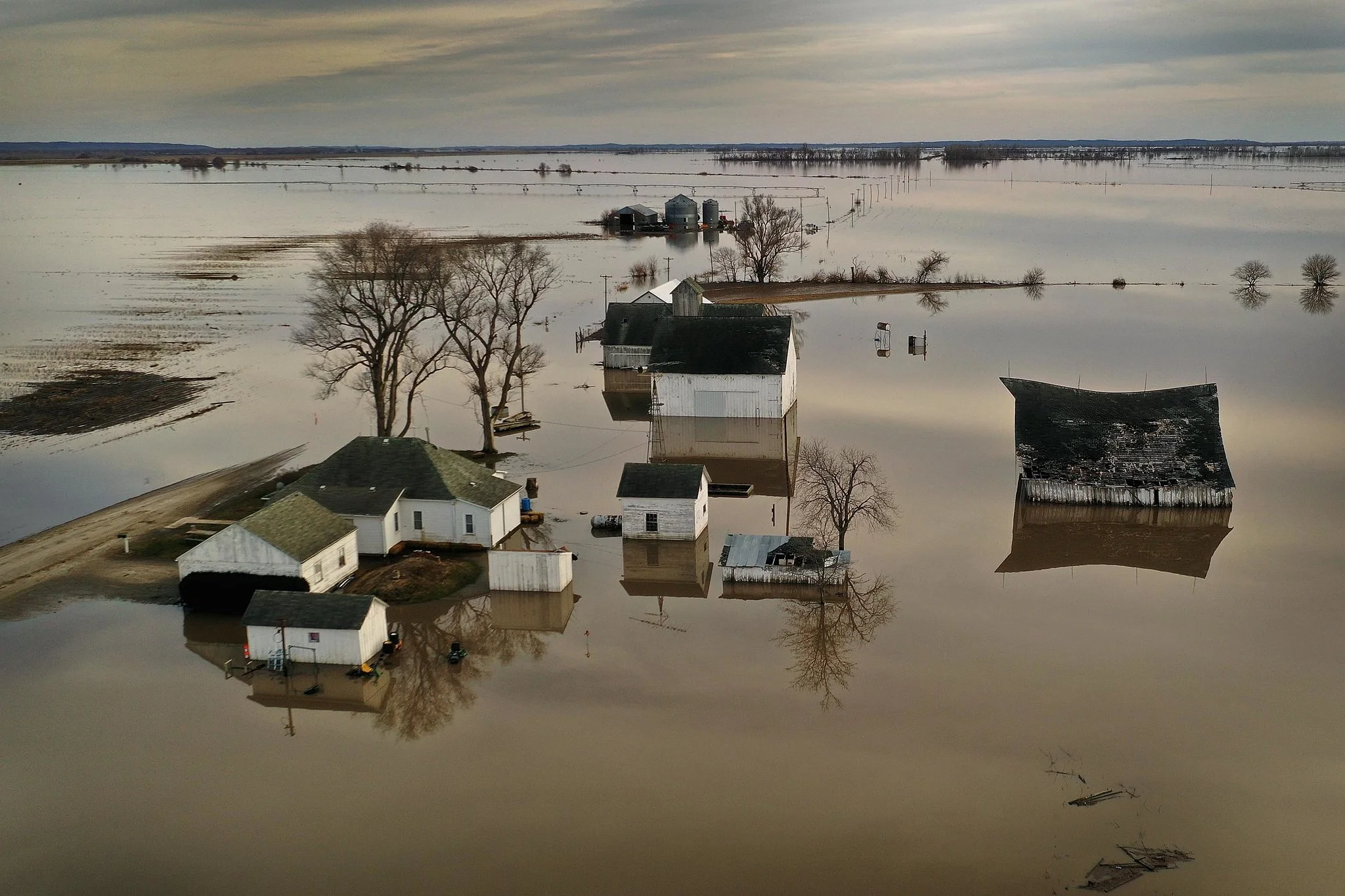
Flooded farms near Craig, Mo.CreditScott Olson/Getty Images
Preventing global temperatures from rising more than 1.5 degrees Celsius is likely to require both the widespread planting of trees as well as “substantial” bioenergy to help reduce the use of fossil fuels, the report finds. And if temperatures increase more than that, the pressure on food production will increase as well, creating a vicious circle.
“Above 2 degrees of global warming there could be an increase of 100 million or more of the population at risk of hunger,” Edouard Davin, a researcher at ETH Zurich and an author of the report, said by email. “We need to act quickly.”
The report also calls for institutional changes, including better access to credit for farmers in developing countries and stronger property rights. And for the first time, the I.P.C.C. cited indigenous people and their knowledge of land stewardship as resources to be tapped. “Agricultural practices that include indigenous and local knowledge can contribute to overcoming the combined challenges of climate change, food security, biodiversity conservation, and combating desertification and land degradation,” the report’s authors wrote.
It comes at a time when indigenous people are currently under threat. According to a report released this year by the nonprofit organization Global Witness, which looks at the links between conflicts and environmental resources, an average of three people were killed per week defending their land in 2018, with more than half of them killed in Latin America.
Overall, the report said that the longer policymakers wait, the harder it will be to prevent a global crisis. “Acting now may avert or reduce risks and losses, and generate benefits to society,” the authors wrote. Waiting to cut emissions, on the other hand, risks “irreversible loss in land ecosystem functions and services required for food, health, habitable settlements and production.”
For more news on climate and the environment, follow @NYTClimate on Twitter.
Correction: Aug. 9, 2019
An earlier version of this article misquoted and misattributed comments about proposals to address a possible food crisis. Those comments were made by Pamela McElwee, not Cynthia Rosenzweig. In addition, part of the quote was rendered incorrectly. Dr. McElwee said, “What some of these solutions do require is attention, financial support, enabling environments.” She did not say, “But what some of these solutions do require is attention, financial support, enabling environments.”
Christopher Flavelle covers climate adaptation, focusing on how people, governments and businesses respond to the effects of global warming. @cflav

Have You Seen 'Hydroponically Grown' On Your Produce? Here's What It Means
Have you been perusing the produce area at your store and noticed fruits or vegetables that say “hydroponically grown?” They just kind of popped up one day, and we noticed there wasn’t much explanation
By Dawn Jorgenson - Graham Media Group
August 21, 2019
Image by engin akyurt from Pixabay.
Have you been perusing the produce area at your store and noticed fruits or vegetables that say “hydroponically grown?” They just kind of popped up one day, and we noticed there wasn’t much explanation.
If you’re anything like us, you may have bypassed it just because you’re unsure about what a hydroponically grown product is.
As it turns out, unless you’re attempting to try this growing process yourself (spoiler alert: it can be tricky), the advantages seem to outweigh the disadvantages.
How it works
The fruits or vegetables are grown in a liquid solution that contains minerals they need to thrive. There is no soil used, and instead, the root system is supported by a medium such as perlite, rockwool, clay pellets, peat moss or vermiculite, according to Full Bloom Hydroponics. Doing so allows the plant roots to have direct contact with the nutrient solution, as well as access to oxygen.
The process allows the plant to not work as hard to obtain the nutrients, therefore allowing it to mature 25% faster and produce up to 30% more than the same plant growing in soil.
Growing plants hydroponically also uses less water than soil-based produce because the system is enclosed, preventing much evaporation.
Are hydroponically grown produce good for you?
Because hydroponic fruits and vegetables are not exposed to outdoor elements, they do not need the same level of pesticides to protect the plants from insects or pathogens, according to LiveStrong.com. This often allows organic farming methods.
This is good news, but there does seem to be a possible drawback to hydronic produce. Because of the high humidity of the greenhouses, the produce can be more susceptible to salmonella contamination. However, washing and cooking vegetables thoroughly should remove and help destroy any possible salmonella.
LiveStrong made a special note to remind consumers that even though hydroponic farming appeals to some because of environmental concerns, any diet high in vegetables can improve health, regardless of whether it was grown conventionally or hydroponically.
Have you tried hydroponically grown produce? What did you think about it? Let us know in the comment section below.

Modular Farms Australia Will Be The Training Partner For The Greenhouse Technical Management Course Hosted by Graeme Smith And Rick Donnan In Conjunction With Gotafe
Modular Farms Australia is pleased to announce that they will be the training partner for the Greenhouse Technical Management Course hosted by Graeme Smith and Rick Donnan in conjunction with gotafe
Modular Farms Australia is pleased to announce that they will be the training partner for the Greenhouse Technical Management Course hosted by Graeme Smith and Rick Donnan in conjunction with gotafe.
Whether you're considering becoming a modular farmer or already own a farm, this hydroponics course covers all you need to know about growing the most delicious hydroponic crops!
Email: LTaig@gotafe.vic.edu.au
Website: http://www.gotafe.vic.edu.au/
SIGN UP NOW
If you would like further information please contact the course coordinator Leigh Taig on the above details.
Email: LTaig@gotafe.vic.edu.au

What Is Hydronic Cooling?
“As Surna’s projects have become larger and more complex, we have added several products to our fan coil product family to meet the climate control needs of our customers”
Boulder, Colorado, August 27, 2019 — Surna Inc. (OTCQB: SRNA) introduces a full line of purpose- built fan coil products providing a wide range of choices for both ducted and ductless applications for small to large commercial indoor cannabis cultivation facilities.
“As Surna’s projects have become larger and more complex, we have added several products to our fan coil product family to meet the climate control needs of our customers”. These new products are part of our strategy to enhance our position as a trusted climate control advisor to our customers and offer more products and services to meet their specific requirements,” said Troy Rippe, Surna’s Director of Engineering and R&D.
The introduction of the IsoStreamTM product family allows Surna to serve:
Ductless environments where climate control systems circulate water, not air.
Ducted environments that provide economical solutions while still serving multiple grow
rooms.
Surna provides efficient and economical environmental control systems across a larger array of indoor cannabis cultivation facilities. Our new, whisper quiet fan coil units use electronically commutated motors to optimize airflow while specialized chilled water modulating valves are used to fine-tune for minimizing energy consumption.
If you want to learn more about our full line of Surna IsoStreamTM fan coils, please contact us at
www.surna.com
About Surna
Surna Inc. (www.surna.com) designs, engineers and manufactures application-specific environmental control and air sanitation systems for commercial, state- and provincial-regulated indoor cannabis cultivation facilities in the U.S. and Canada. Our engineering and technical team provides energy and water efficient solutions that allow growers to meet the unique demands of a cannabis cultivation environment through precise temperature, humidity, and process controls and to satisfy the evolving code and regulatory requirements being imposed at the state, provincial and local level.
INDIA: Growing Crops Without Soil: Here’s How Hydroponics Works
At HMA Greens Hydro Farm there are over 14 varieties of greens being grown at any given point using hydroponics. Launched in early 2018 by 30-year-old Akil Murthi, the farm started with three varieties of lettuce before scaling up to its present stage
AUGUST 05, 2019
We head to HMA Greens Hydro Farm to understand how hydroponics works
The air in the polyhouse is thick with the fragrance of basil. A variety of lettuce, baby spinach, arugula, mustard greens, kale, mint and the aforementioned basil thrive in little net pots, nestled in troughs with varying levels of water.
Workers are busy checking the roots and shoots of the plants before deciding whether to move them to the next stage. All one can hear is the gentle whirring of fans, constantly running to maintain a conducive temperature inside the polyhouse. It is hard to believe that bustling OMR is just 500 metres away from these lush surroundings.
Meeting market demand
At HMA Greens Hydro Farm there are over 14 varieties of greens being grown at any given point using hydroponics. Launched in early 2018 by 30-year-old Akil Murthi, the farm started with three varieties of lettuce before scaling up to its present stage.
“I first came across hydroponics when I was doing my MBA in Singapore. I wanted to replicate it since we didn’t have anything of the sort here then. Land is becoming premium and you can do so much more with hydroponics: better quality control, more yield in a smaller patch of land and lower water usage as well,” he says, adding, “It took about eight months to get the project moving.”
Akil explains how hydroponics allows one to tailor crops as per market demand. “There was a report by the World Economic Forum that stated that a lot of Southeast Asian countries grow crops that are not really required in the market at that point of time. This leads to wasted produce,” he says. He adds, “With hydroponics we can change that, since harvesting times are a lot shorter than in traditional farming.”
In hydroponics it takes an average of 45 days to harvest crops like lettuce, basil and baby spinach. The same would take around 90 days when grown the traditional way. Water consumed to grow these crops is 90% less. “A nutrient solution is mixed into the water in the control room. From here it is pumped into troughs which house the net pots with the crops. Since the water directly reaches the roots, it is absorbed much better and you need much less water as well since nothing is lost in soil absorption,” says Akil.
Less water, good yield
Typically, HMA Greens farm uses around 700-800 litres of water a day. In winter that consumption goes down to 500 litres. This is why his farm has managed to consistently produce good yield despite the water scarcity in the city this year.
No chemicals are used in the farm and only natural ingredients such as neem oil are used to keep away pests. “We also use sticky pads and a solar powered insect trap,” says Akil.
They also use the Nutrient Filled Technique (NFT) system, which Akil says is ideal to grow crops like salad greens. The polyhouse also uses the pad and fan technology — cooling pads line the wall on one side, while on the opposite wall are fans — to maintain temperature and humidity levels inside. “Since this was a pilot project we did not get into vertical farming. If we decide to, it’d mean changing our entire system and bringing in LED lights for the plants.”
On an average the HMA farm produces a total yield of 2,500 kilograms during summer and in the cooler months manages to churn out as much as 4,000 kilograms. Excess produce is turned into compost. HMA farm delivers to customers’ doorsteps for a fixed charge. Alternatively, customers can pick up their orders from the office at HMA Land, Thapar house, 37, Montieth Road, Egmore. 28553550.

Federal, State, And City Officials Join Project Renewal To Break Ground on Bronx Supportive and Affordable Housing Development Featuring Rooftop Fish And Produce Garden And Living Green Façade
The project will feature a number of unique and innovative elements including a rooftop aquaponics greenhouse, a living green façade, and a community playground
Bedford Green House will house more than 160 residents and include an aquaponics greenhouse, along with other innovative features
The U.S. Department of Housing and Urban Development (HUD), the New York State Office of Temporary and Disability Assistance (OTDA), the New York City Housing Development Corporation (HDC), New York City Department of Housing Preservation and Development (HPD), the Corporation for Supportive Housing (CSH), Bank of America, Deutsche Bank, and TD Bank today joined Project Renewal at a groundbreaking ceremony to mark the start of construction on Bedford Green House in the Bedford Park section of the Bronx. The $58.8 million, 118-unit development will provide supportive and affordable housing for more than 160 residents, including families, singles, and seniors.
The project will feature a number of unique and innovative elements including a rooftop aquaponics greenhouse, a living green façade, and a community playground. Located at 2865 Creston Avenue, the 13-story, block-and-plank building will meet or exceed LEED Gold standards for energy efficiency and environmentally friendly design.
“We are thrilled to break ground on Bedford Green House, a development that will provide high-quality affordable and supportive housing for hundreds of individuals and families. Throughout our 50-year history, Project Renewal has provided innovative programs to help New Yorkers in need. We will continue to do that at Bedford Green House with comprehensive services and cutting-edge features like aquaponics to ensure that residents can lead healthy, stable lives,” said Mitchell Netburn, President & CEO Project Renewal.
The rooftop greenhouse will be filled with nutritious produce in an innovative vertical farming system called aquaponics, in which residents will raise delicious, nutritious fish and vegetables in a symbiotic ecosystem. Edible tilapia fish will live in large tanks connected to a bio-filter that breaks down fish waste and carries nutrients to the plant roots; meanwhile the plants will clean the water for the fish. Because the aquaponics growing platforms can be stacked vertically, produce yields per square foot will be many times higher than with traditional soil-based farming.
Project Renewal will use the rooftop space outside the greenhouse for organic farming in planter boxes to grow vegetables that are less suited to aquaponics. Residents will work with Project Renewal’s horticultural therapist to grow their own food in the airy and light-filled greenhouse, year-round, alongside their friends and neighbors. Horticultural therapy in the greenhouse will be especially beneficial to elderly residents who can often be isolated at home, and for residents who suffer from Seasonal Affective Disorder, which is common during winter months.
The rooftop will also feature a demonstration kitchen with healthy cooking classes for residents and community members, taught by professional chefs from Project Renewal’s Culinary Arts Training Program.
Bedford Green House’s active design was influenced by the theory of biophilia—the innately emotional affiliation of human beings to other living organisms. Scientific studies have supported biophilia, showing that exposure to the natural world reduces stress levels, shortens recovery times for hospital patients, lowers blood pressure, reduces depression, and increases insulin sensitivity among diabetics.
In light of these findings, Bedford Green House will feature an exterior living green façade at the building frontage, featuring vines cascading from planters. In addition to transforming the visual character of the neighborhood, the vines will reduce the building’s energy usage by absorbing solar radiation during the hot summer months when the vines have leaves. During winter months, the vines will shed their leaves and allow solar radiation to warm the building, bringing in heat and light when it is most needed. The vines will also remove airborne pollutants, which is especially important in the Bronx where children are hospitalized by asthma at a rate that is 21 times higher than more affluent areas of New York City.
Bedford Green House will create an inviting streetscape through landscaping along the sidewalk frontage, and seats at the setbacks that will encourage residents and neighbors to engage with the building. Highlighting the front yard will be a colorful community playground—with two slides, jungle gym, and musical instruments—that will be accessible to children of families who live in the building, as well as community residents.
The project is the first phase of the Project Renewal’s larger Bedford Green House project, the second phase of which will add another 116 supportive and affordable homes through the development of an adjacent site.
Bedford Green House’s development team is led by Mitchell Netburn and Sam Wells at Project Renewal, and by Jonathan Rose and Dale White at The Jonathan Rose Companies. Hollister Construction Services is serving as the general contractor. Architectural design services are provided by Edelman Sultan Knox Wood Architects, with structural engineering by Robert Silman Associates, MEP engineering by Allen Rosenthal, geotechnical engineering by Mueser Rutledge, landscape design by Billie Cohen, Ltd., waterproofing and façade design by The Façade Group, lighting by Jim Conti, aquaponics by A&A Epiphany, LEED design by Steven Winter Associates, cost estimating by SBI Consultants, environmental consulting by The Hillmann Group, Sam Schwartz Engineering, Genesis Environmental, surveying by Montrose Surveying, title search by Chicago Title Company, and expediting by Design 2147.
Bedford Green House was financed under HDC’s Extremely Low- and Low-Income Affordability (ELLA) program and HPD’s Supportive Housing New Construction program. The total development cost for the project is over $58.8 million. HDC provided more than $28.2 million in tax-exempt volume cap bonds, $1.7 million in recycled tax-exempt bonds, and nearly $7 million in corporate reserves. HPD provided $8.85 million in City subsidy, inclusive of $2 million in HOME funds. HPD also provided an allocation of annual Low-Income Housing Tax Credits (LIHTC), which generated nearly $24 million in tax credit equity. Bank of America served as tax credit investor and provided the construction letter of credit. NYS OTDA provided $6.22 million under the Homeless Housing and Assistance Program (HHAP). Additional grant funding was provided TD Bank and Deutsche Bank Foundation.
“Healthy homes lead to healthy residents, a principle that Secretary Carson knows from experience to be true and one that will prove itself for the formerly homeless families and individuals that will call Bedford Green home. Financed in part through $2 million in HUD HOME funds, this extraordinarily designed project will nurture the minds, bodies, and spirits of its clients, helping set them on the path to economic recovery and self-sufficiency,” said Lynne Patton, HUD Regional Administrator for New York and New Jersey.
“We are proud to be contributing $6.2 million through our Homeless Housing and Assistance Program. Projects like this highlight Governor Cuomo’s ongoing commitment to increase the number of affordable and supportive housing units available in New York City and throughout the state,” said Samuel D. Roberts, Commissioner, Office of Temporary and Disability Assistance.
“A critical pillar of the Jerome Avenue Neighborhood Plan is creating sustainable, high-quality, affordable housing. The start of construction of Bedford Green House – a LEED designed supportive housing development that will provide 118 homes and a rooftop garden and vertical farm to foster healthy living – represents a significant milestone towards that commitment. Through HNY 2.0, our accelerated and expanded housing plan, we will continue to build on the policies and programs already set in motion to ensure that neighborhoods like those surrounding Jerome Avenue are anchored by affordability and opportunity for generations to come," said HPD Commissioner Maria Torres-Springer. “I want to thank Project Renewal and our many government and private partners for their creativity and hard work to advance this dynamic project for the community.”
“Bedford Green House will bring 118 low-income and formerly homeless households into safe, high-quality affordable housing, with a built-in network of critical social services and amenities. This project underscores how vital all our government, private, and non-profit resources are to creating new affordable and supportive housing,” said HDC President Eric Enderlin. “I congratulate Project Renewal and all our partners, including many agencies across federal, state and city government, for their commitments to this project and their dedication to building a more affordable New York.”
"Project Renewal is an exceptional partner committed to solving the homelessness crisis here in New York City. CSH is investing $5.3 million in loans in Bedford Green Phases 1 & 2 because these new affordable, supportive housing units will go a long way toward providing real homes to New Yorkers who have struggled through homelessness on our streets," said Jennifer Trepinski, Director of Loan Originations, CSH.
“In addition to delivering much needed affordable and supportive housing options to the residents of the Bronx, Bedford Green House brings innovative, sustainable design elements that will advance healthy living in the Bedford Park neighborhood. Bank of America Merrill Lynch is excited to have provided over $54MM of debt and equity investments to support Project Renewal’s vision for transforming lives in the communities that it serves,” said Todd A. Gomez, Market Executive - North Region, Bank of America Merrill Lynch.
"We take our commitment to our communities seriously, and the Housing for Everyone campaign enables us to enhance our economic support for the neighborhoods we serve. We are honored to partner with organizations that are providing individuals with a chance to live in their own home and build a future," said Mike Rayder, Donation and Foundation Manager, TD Charitable Foundation.
“Deutsche Bank is proud to support Project Renewal in the development of the Bedford Green House. This will provide critically needed affordable and supportive homes to hundreds of residents, many of whom have experienced homelessness, as well as facilities shared with the local community. Bedford Green House will be a true asset to the neighborhood and city,” said John Kimble, Vice President / Philanthropic Initiatives, Deutsche Bank.
“Architecture at its most fundamental is an expression of societies’ aspirations. In that context Bedford Green House is a statement that we take care of the people of our community who are disadvantaged. These individuals are deserving of an exceptional building that has the capacity to make their lives better, through the choice of layout, materials, amenities, and greenhouse for teaching healthy living. And we extend that aspiration into the community, making a building with a neighborhood play area, a 24-hour doorman watching the street, green infrastructure that will help clean the air and brighten lives, and by leaving exposed the bedrock of the site, which is the history of the Bronx. In this way the building contributes to the neighborhood, making it greener, healthier, and more connected. Bedford Green House is an embodiment of the best that New York City, New York State and the Bronx has to offer its community,” said Andrew B. Knox, Partner, Edelman Sultan Knox Wood / Architects LLP.
“Hollister is very proud to be part of this team bringing to life such a unique building in the Bronx. Knowing that this facility will change the lives of many people makes the project even more special. Since our inception, we’ve made a constant effort to involve ourselves with projects that benefit and transform communities and Bedford Green House is a great example. We are all looking forward to seeing many happy faces when the facility makes its grand opening,” said Christopher Johnson, CEO, Hollister.