


Welcome to iGrow News, Your Source for the World of Indoor Vertical Farming
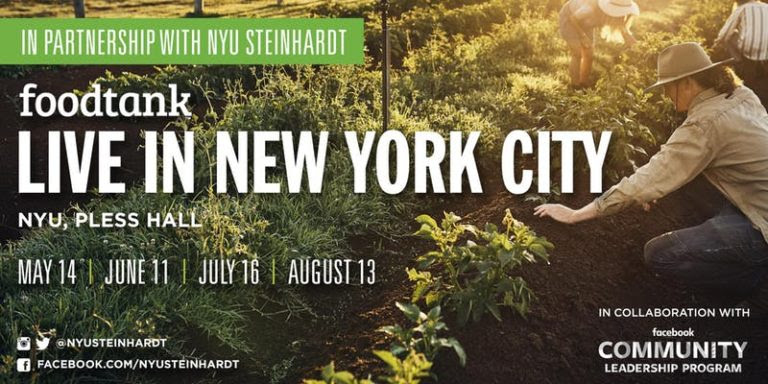
Conversations About Food: Food Tank Live in NYC Speakers Series
A year-round event series by Food Tank featuring incredible speakers followed by a delicious reception/networking held in partnership with NYU Steinhardt, the NYC Food Policy Center at Hunter, and Salon.com
Tue, Jul 16 (7:00 PM) Tue, Aug 13 (7:00 PM)
A year-round event series by Food Tank featuring incredible speakers followed by a delicious reception/networking held in partnership with NYU Steinhardt, the NYC Food Policy Center at Hunter, and Salon.com.
May 14: "Equity in the Food System." Speakers: Joel Berg, CEO, Hunger Free America; Manny Howard, Salon.com; Qiana Mickie, Executive Director, Just Food; Danielle Nierenberg, Food Tank; Krishnendu Ray,NYU Steinhardt; Raymond Figueroa, Jr, President, New York City Community Garden Coalition; Chloe Sorvino, Forbes; Noreen Springstead, Executive Director, WhyHunger; and Ellen J. Wulfhorst,Reuters.
June 11: "Good Tech in Good Food." Speakers: Roee Adler, SVP, Global Head of We Work Labs, WeWork; Emma Cosgrove, Supply Chain Dive; Alexander Gillett, CEO, HowGood; Jennifer Goggin, Co-Founder, Startle Innovation; Manny Howard, Salon.com; Bertha Jimenez, CEO, RISE Products; Jenna Liut, Heritage Radio Network; and Danielle Nierenberg, Food Tank.
July 16: "Eating for a Healthier and Sustainable Planet." Speakers: Lisa Held, The Farm Report; Manny Howard, Salon.com; Martin Lemos,Interim Executive Director, National Young Farmers Coalition; Chris McGrath, Chief Sustainability and Well-Being Officer, Mondelez;Danielle Nierenberg, Food Tank; Alex Sammon, The New Republic; Shino Tanikawa, Executive Director, NYC Soil & Water Conservation District; Beth Weitzman, Professor of Health and Public Policy, New York University’s Steinhardt School of Culture, Education, and Human Development; Walter Willett, EAT Lancet primary author, Harvard University; and more to be announced.
August 13: "Healthy Food at Every Age." Speakers: Meserete Davis, Culinary Education Training Developer, NYC DOE School Foods; Dan Giusti, Founder, Brigaid; Manny Howard, Salon.com; Danielle Nierenberg, Food Tank; and more to be announced
In partnership with Great Performances Catering, a leading caterer committed to balancing inequalities in our communities, the events will be followed by networking opportunities as well as some delicious food.
Each of the talks will also be aired as part of a Facebook Live series in partnership with Facebook Community Leadership Program and released on our charting iTunes podcast, “Food Talk with Dani Nierenberg.”
Hurry each event has limited availability!
To join the waitlist for a full event,
please apply at www.foodtank.com/waitlist.
Tags United States Events New York EventsThings To Do In New York, NY New York Appearances New York Charity & Causes Appearances

Urban Greenhouse Brings New Meaning To Eating Local In Montreal
Often, when you buy fruits and vegetables at your local grocery store, they were actually grown far away. A new initiative east of downtown aims to totally change the relationship between Montrealers and their food. It’s called the Emily De Witt greenhouse
By Dan Spector Photojournalist Global News
WATCH: A coalition of community groups has created an urban oasis where fruit and veggies are grown and sold locally. Global's Dan Spector explains.
Often, when you buy fruits and vegetables at your local grocery store, they were actually grown far away. A new initiative east of downtown aims to totally change the relationship between Montrealers and their food.
It’s called the Emily De Witt greenhouse.
“We want to offer local produce, a product of quality, and we want to do it in partnership with the community,” explained Maxime Comeau, project manager for the greenhouse with Sentier Urbain.
RELATED
Lufa Farms takes gardening to a whole new level
Urban farming business finds success in Saskatoon
Montreal SPCA launches campaign to help protect farm animals
On Tuesday, Comeau was tending to the beans growing in the greenhouse. There are also tomatoes, eggplants, watermelons and and much more.
READ MORE: Urban farming business finds success in Saskatoon
While it may look like a fairly run-of-the-mill operation from the inside, what’s different about the greenhouse is that it’s right in the middle of a park east of downtown.
“It’s pretty unique,” said Comeau.
The greenhouse is right next to a baseball field at Walter Stewart Park in the Sainte-Marie district.
WATCH: (June 15, 2018) Southern Alberta producers team up to teach Calgary kids about modern farming
Since 2017, the urban greenhouse has been run by a coalition of community groups.
“Food security was a concern over here in the neighbourhood, so we wanted to create a short circuit. The food is produced, delivered, transformed right here in the neighbourhood,” said Amelie Fraser Pelleter of Société écocitoyenne de Montréal.
Food is grown in the greenhouse and then sold at the Solidaire Frontenac Market at the Frontenac Metro station just a few blocks away.
With the small size of their operation, making money is not the goal. The urban gardeners just want to bring people closer to the food they eat and give some Montrealers a better idea of where their fruits and veggies come from.
READ MORE: Lufa Farms takes gardening to a whole new level
“We want people to be a more active part of their own food,” said Fraser Pelletier.
The greenhouse gets support from Centraide and the city of Montreal.
Not only do they provide food and education, but also jobs for vulnerable members of society.
It’s a concept the urban farmers believe can sprout up all over the city.
“We believe it’s possible,” said Comeau.
They’re encouraging people to speak to their own local officials, and plant the seed in their minds to help grow the initiative.
© 2019 Global News, a division of Corus Entertainment Inc.
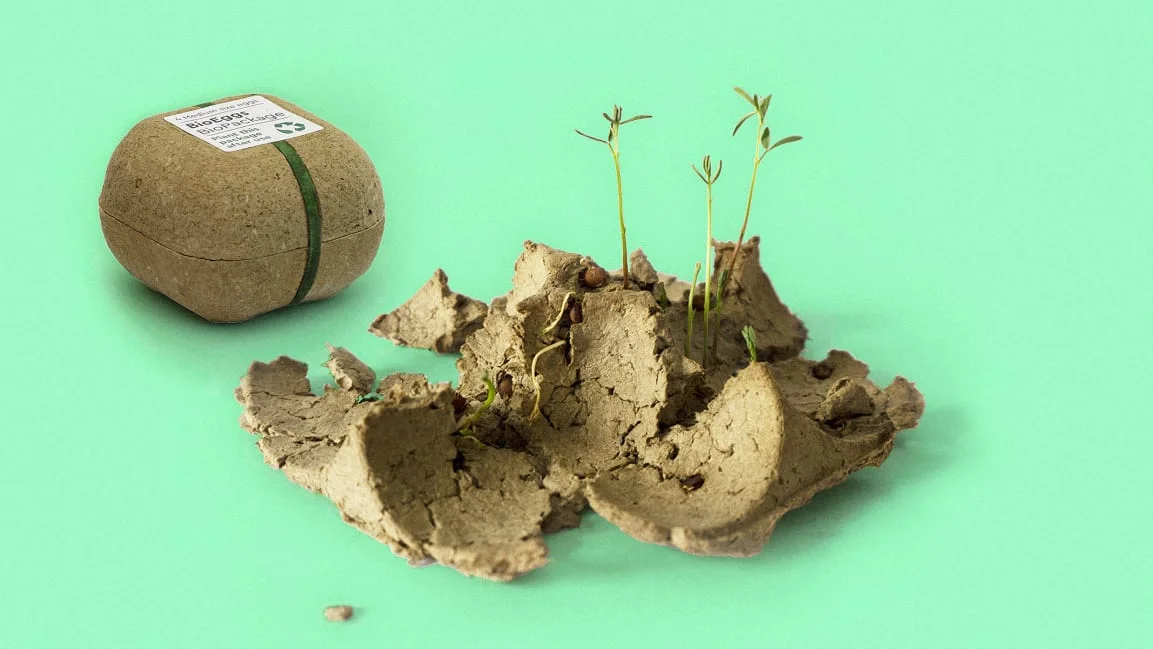
It’s Fine If You Litter This Container, Because It Just Turns Into A Plant
This concept egg carton shows that, with a little ingenuity, packaging can be regenerative instead of wasteful
07.09.19
This concept egg carton shows that, with a little ingenuity, packaging can be regenerative instead of wasteful.
When you’re ready to throw out this new type of packaging, it shouldn’t go in the recycling bin. Instead, the carton is designed to be planted in your backyard, where legume seeds embedded in the material can start to grow, improving soil health and helping the dirt sequester more carbon from the air.
“Recycling is important but costs money, time, and electricity,” says George Bosnas, the Greece-based designer who developed the concept for the Biopack. There are other problems in broken recycling systems: Occasionally, items that are picked up from recycling bins aren’t actually recycled, as in cities that struggled to adapt when China stopped importing low-quality recyclables. When they are recycled, they might be “downcycled” to a lower-grade material. While some startups work on trying to solve those problems, Bosnas saw an opportunity to bypass the recycling system completely.
[Photo: courtesy George Bosnas]
The package, conceived for a circular economy design competition, is a simple egg carton. Bosnas wanted to focus on a common item that often ends up in the trash. (In Greece, egg cartons are usually made from plastic; in the U.S., where cartons are often made from paper, someone with access to composting could compost a carton if they wanted to circumvent recycling.) The package is made from paper pulp, flour, starch, and legume seeds. After use, it’s meant to be planted in the ground and watered, and then the seeds will sprout.
[Photo: courtesy George Bosnas]
“I chose legumes because they are used as nitrogen fertilizers in nature,” says Bosnas. The plants make the soil healthier. Though Bosnas wasn’t specifically focused on climate change, his product can have an additional benefit: boosting the amount of carbon that is stored 30% more carbon in the ground. Studies suggest that legumes can store soil than other plants. On farms, proponents of “regenerative agriculture”—who plant legumes among other methods to improve soil health—argue that these techniques are an important tool in fighting climate change. Most of that work has happened on farms, but it could also happen in backyards.
It’s not clear how much this type of packaging could replace traditional alternatives, or what happens when someone doesn’t have a yard or runs out of room to plant new containers. But something like this might work for some applications, just as others, such as architect William McDonough, have talked about the concept of wrappers that could be safely littered by the side of the road to decompose. Bosnas says that he’s already in talks with potential producers. He points out that it could also be a better experience than just recycling. “Besides [being] ‘more than biodegradable,’ it’s actually fun watching plants grow from packaging,” he says.
ABOUT THE AUTHOR
Adele Peters is a staff writer at Fast Company who focuses on solutions to some of the world's largest problems, from climate change to homelessness. Previously, she worked with GOOD, BioLite, and the Sustainable Products and Solutions program at UC Berkeley.
Lead Photo: courtesy George Bosnas]

"If There Is A Will, It Can Go Fast"
Last year the TBM-Irisweg biomass plant in Bleiswijk was put into operation. The installation - with a capacity of 14.8 MW - is connected to the RoCa pipeline
John Ammerlaan, Plantenkwekerij Leo Ammerlaan, about biomass plant:
Last year the TBM-Irisweg biomass plant in Bleiswijk was put into operation. The installation - with a capacity of 14.8 MW - is connected to the RoCa pipeline. John Ammerlaan from Plantenkwekerij Leo Ammerlaan/Plantise is a co-owner and user of TBM-Irisweg. "The great thing is that we only purchase heat when we need it."
TBM-Irisweg is a collaboration between the Brabant company TBM and Plantenkwekerij Leo Ammerlaan/Plantise. In addition to heat, also 1.1 MW of electricity is generated in the installations by a number of steam generators.
How did the biomass plant come about?
“In 2014 we had plans for geothermal energy on the Irisweg. During the discussions about this, we got into conversation with a party with plans for biomass. So that was TPM. Initially, it was about a biomass plant in an existing location because of an existing scheme. In retrospect, it was better to place the boilers and biomass storage in a separate building at our company’s location. After we submitted a project change, things started moving fast."
What happened next?
“In June 2016, it turned out to be possible to build the power plant in a new location; in July work started with drawing up the plans and the power plant was put into operation last April. If there is a will, it can occur fast. That is therefore different compared to the discussions around the heat network: That is not progressing fast. And that is not in the interest of horticulture."
How does the plant work in practice?
“The wood chips come from the region. These are incinerated: the heat is supplied to the grid, to the RoCa pipeline. We also purchase the heat from the biomass plant via the grid. The great thing is that we only purchase that heat when we need it. This is good for us, but also for the installation: if it were only dependent on us, then you would often have to deal with excessive power fluctuations in the biomass installation, which can have negative effects.”
And what does your own energy management look like?
“Because of the biomass plant we use decentralized heat production for part of our company and we use less gas. We still have a number of CHPs and a boiler: but now we use these a lot less. But I expect that horticulture will still need gas and CHPs in the coming ten years. We are not off the gas yet.”
Source: Greenport West-Holland
Publication date: 7/18/2019

Flower Tower: Landscapers Show Property Owners How To Turn Rooftops Into Gardens
A Greenpoint-based urban landscaping group is pushing Kings County property owners to take a top-down approach to environmental sustainability by transforming their rooftops into verdant gardens.
Alive Structures
The Kingsland Wildflowers rooftop is located atop Broadway Stages in Greenpoint.
BY ELIZABETH WINN
These green thumbs are taking gardening to new heights!
A Greenpoint-based urban landscaping group is pushing Kings County property owners to take a top-down approach to environmental sustainability by transforming their rooftops into verdant gardens.
“I believe that New York City needs nature and green roofs are the only place left in New York City to create a natural habitat,” said Marni Majorelle, founder of Alive Structures, located at 130 Diamond St. between Meserole and Norman avenues.
Last month, Majorelle and her team at Alive Structures hosted a panel to discuss their green-roof movement alongside other environmental advocates at a rooftop meadow, called Kingsland Wildflowers, located atop Broadway Stages in Greenpoint, which the green thumbs used as an example of rooftop gardneing done right, before discussing how sky farms can help their borough weather global warming.
“Green roofs are not just pretty or decoration,” Majorelle said. “[Green roofs are] an absolute necessity in this city as we move into a hotter and wetter climate.”
The elevated oases provide a variety of environmental benefits, including absorbing and retaining stormwater, reducing temperatures, cutting energy costs, improving air quality, and creating more homes for birds, bees, and creepy crawlies high in the sky, according to Majorelle.
However, specific structural requirements and hefty installation cost make Majorelle’s green-roof movement a tough sell for many property owners, and she praised Broadway Stages — a sound stage and equipment supplier for television productions — for jumping on the bandwagon!
UK: Onwards And Upwards! Vertical Farms Could Come To York Central
In a bid to meet City of York Council’s pledge for the city to be carbon neutral by 2030, Cllr Christian Vassie said creating urban farms is just one of the initiatives the organisation is looking at
July 30, 2019
By Chloe Laversuch - Local Democracy Reporter in Environment, Life
Urban farms to grow food for residents could be built on new developments in York.
The plans could see salad leaves, tomatoes and even more exotic crops grown in greenhouses on major housing schemes like York Central.
In a bid to meet City of York Council’s pledge for the city to be carbon neutral by 2030, Cllr Christian Vassie said creating urban farms is just one of the initiatives the organisation is looking at.
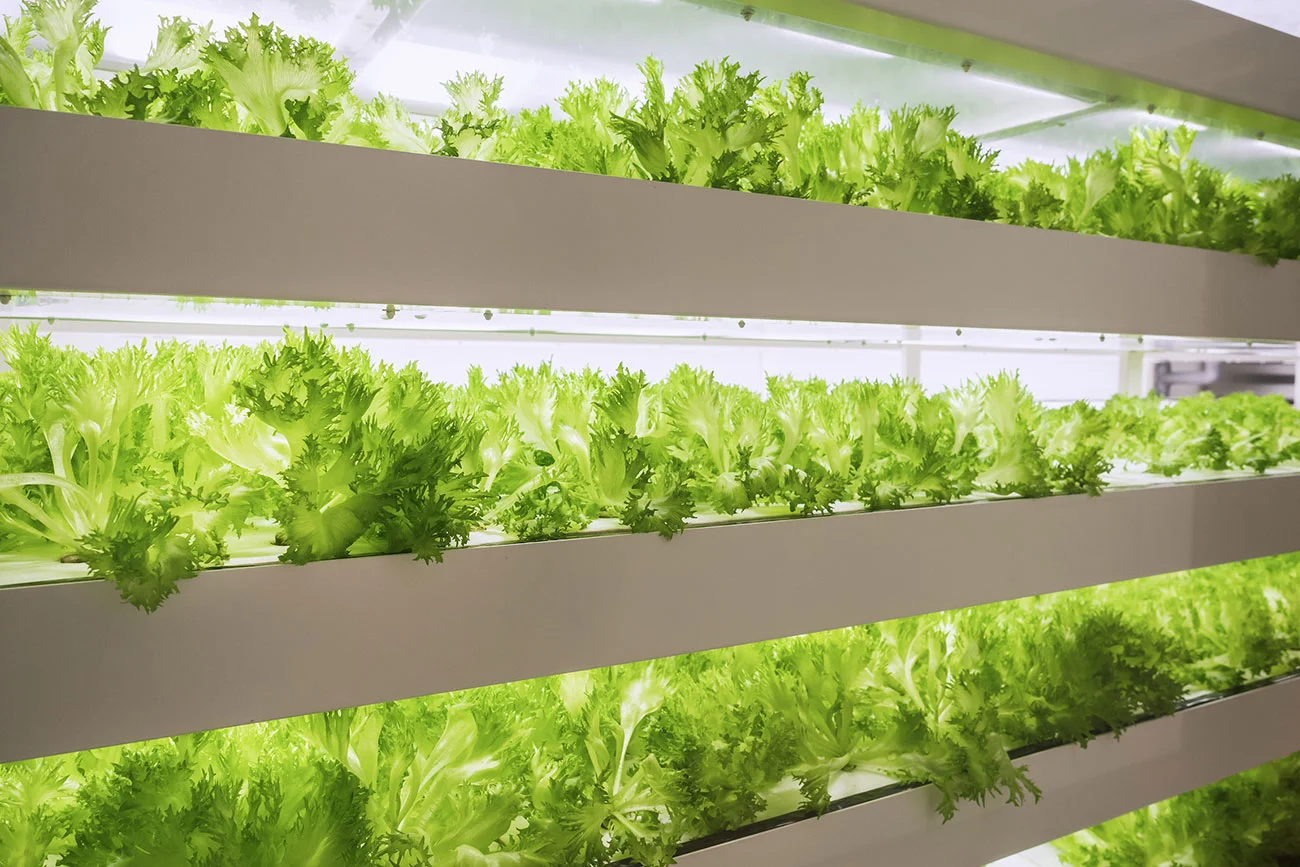
Cllr Vassie, chair of the council’s new climate change committee, said York could follow in the footsteps of the Netherlands, where produce is grown in small vertical farms with six or seven layers of vegetables stacked on top of each other.
He said:
The key is how we can produce our food closer to home.
Food like lettuces may be grown in one part of the country and transported all over the UK before they reach us. It’s not good for the environment.
Vertical farms are innovative. Space to grow food costs a lot more in a city so it’s about making best use of our land.
Surprised by what you can grow
Speaking at a council meeting about the design guide for new council developments, he asked if urban farms could be included in proposals for schemes – including York Central.
He said:
We could have small farms on new developments. We talk about York Central being innovative – this is exactly the kind of thing you would want to see there.
It’s one of many things that the climate change committee is looking at. I’m proud that the council declared an ambition to be carbon neutral by 2030.
But delivering it is going to be really tough, it requires more creative decisions.
Food is just one part of that. I think people would be surprised by what we can grow here that we currently do not.
The climate change committee will have to consider everything. The challenge we face is massive.
While the urban farms would not be able to feed the whole city, he said they would be a good start, adding that it may even be possible to grow exotic crops such as bananas could be grown in the UK.
And that growing food close to where it is eaten is one way to tackle carbon emissions.
The first meeting of the council’s new climate change committee is due to take place on September 10.
Lead photo: Vertical farming makes maximum use of limited space. Photograph: verticalfarming.net

Forging A Way Forward In Urban Agriculture
With the population of Americans living in rural parts of the country growing ever smaller, the agricultural community must begin to consider the ways in which it engages with the urban population

By Bailey Corwine
With the population of Americans living in rural parts of the country growing ever smaller, the agricultural community must begin to consider the ways in which it engages with the urban population. Recently a group of key stakeholders, including state and county Farm Bureau leaders and staff, met to discuss the role Farm Bureau plays in cultivating agriculture in an urban setting.
The Urban County Farm Bureau Coalition Summit II was the second such meeting of the coalition, which is working to broaden conversations and develop relationships between traditional farmers and ranchers in rural settings, modern agriculturalists in urban settings, elected local officials, Capitol Hill lawmakers and consumers in a variety of demographic areas.
“We’re always looking for ways for Farm Bureau to be more active and engaged on the county level when it comes to promotion and education, member engagement and building relationships, especially with urban legislators,” said Zippy Duvall, president of the American Farm Bureau Federation.
Summit attendees heard presentations from Jason Henderson, associate dean of the College of Agriculture at Purdue University, and Hubert Hamer, administrator of the National Agricultural Statistics Service, as well as thoughts from Marie Ruemenapp and Katherine Williams, chair and vice chair of the National Urban Extension Leaders, respectively.
The urgency of connecting urban America with rural America was stressed by each speaker.
“We’re at a crossroads in many different ways,” Henderson said. “But this is the exact right time to engage urban consumers.”
Ruemenapp echoed this statement, saying “the time is now” to have conversations about bridging the gap between America’s farmers and ranchers and the people they feed. She also highlighted the potential for partnerships between Farm Bureau and the Extension service.
The summit wrapped up with a discussion between Randy Kron, Indiana Farm Bureau president, and Jamie Johansson, president of the California Farm Bureau Federation, covering perspectives from their states and the work that is being done to connect with the urban population.
“Going forward, it’s going to be even more important that we are engaging our urban members,” Johansson said. “Those people in our urban centers really are on the front lines in terms of explaining what we do out in the countryside.”
The Urban County Farm Bureau Coalition is led by a steering committee, which is chaired by Marion County (Ind.) President Jack Haefling. The county Farm Bureau surfaced the idea of a coalition focused on connecting urban county Farm Bureaus after a strategic planning exercise. The group has exhibited at two AFBF annual conventions and at the 2019 Farm Bureau FUSION Conference.
Bailey Corwine is an intern in the American Farm Bureau Federation’s Communications Department. She will graduate from the University of Arkansas in December with a degree in agricultural communications.

CanadaGAP To Phase Out Aquaponics Certification
CanadaGAP will begin phasing out certification for aquaponics operations in 2020, citing "potential chemical hazards (antibiotics, for example) associated with aquaponic production" and possible uptake of contaminants through leafy greens
Photo: josefkubes Adobe Stock
July 25, 2019
According to a press release, CanadaGAP will begin phasing out certification for aquaponics operations in 2020, citing "potential chemical hazards (antibiotics, for example) associated with aquaponic production" and possible uptake of contaminants through leafy greens.
The government organization will stop GAP certifying businesses on April 1, 2020 and begin revoking certifications from businesses in 2020.
The organization says it uses a generic HACCP model establish food safety requirements. According to CanadaGAP, using that model means more research is needed before aquaponics can be GAP certified again.
GAP stands for "good agricultural practices," and means that growers are sticking to certain practices designed to ensure food safety for consumers. The definition of GAP varies from country to country.
The Aquaponics Association, an advocacy group based in Washington D.C., said in a statement that CanadaGAP's decision was "based on faulty and/or incomplete information," and says it is working with experts to provide the research to combat what it deems as false statements.
In the United States, the USDA established pilot program for GAP certification in aquaponics that runs through Dec. 31, 2019. At this time, it is unclear if the program will continue into 2020.
Tags: GAP Aquaponics Tomato Leafy greens Lettuce Food safety
UAE Delegation Visit To Japan Opens Avenues For Environmental Collaboration
A UAE delegation, headed by Dr. Thani bin Ahmed Al Zeyoudi, Minister of Climate Change and Environment, MoCCAE, has concluded its visit to the Japanese capital Tokyo. The agenda included a visit to ‘Techno Farm Keihanna’, the largest automated vertical farm in the world
30-07-2019



TOKYO, 30th July, 2019 (WAM) -- A UAE delegation, headed by Dr. Thani bin Ahmed Al Zeyoudi, Minister of Climate Change and Environment, MoCCAE, has concluded its visit to the Japanese capital Tokyo. The visit aimed to promote collaboration on various environmental fronts and allow the delegation to explore best practices and technologies in Japan’s agricultural and fisheries sectors.
The delegation comprised Salah Al Rayssi, Acting Assistant Under-Secretary for the Biodiversity and Marine Life Sector at MoCCAE, and a host of representatives of private sector companies in the UAE.
Commenting on the visit, Dr. Al Zeyoudi said, "The UAE enjoys deep-rooted economic and environmental ties with Japan. Our visit aimed to build on our strong synergies and identify new opportunities for collaboration in the environmental sector. We also sought to exchange expertise in relevant areas."
"The UAE strives to boost international cooperation and learn from successful experiences of friendly nations with the aim of ensuring sustainable development across all sectors," the minister added.
Al Zeyoudi held multiple bilateral meetings with high-level environment officials, in the presence of Khalid Omran Al Ameri, UAE Ambassador to Japan. Among these was a meeting with Yoshiaki Harada, Japan’s Minister of the Environment, who reiterated the importance of the Comprehensive Strategic Partnership Initiative that will elevate relations between the two countries to new heights.
The UAE Minister also met with Mitsuhiro Miyakoshi, Japan’s Minister of State for Consumer Affairs and Food Safety, who applauded the strong UAE-Japan relations, and highlighted the UAE’s leading role in supplying natural gas and other energy resources to Japan following the Fukushima earthquake.
Dr Al Zeyoudi met with Kohjiro Takano, Japanese Parliamentary Vice-Minister for Agriculture, Forestry and Fisheries, who praised the recent measures taken by the UAE to relax the restrictions on all imports from Fukushima.
He also met with Saito Ken, Chief Secretary of Japan-UAE Parliamentary Friendship Association, to explore ways to enhance the strategic bilateral relationship.
In a meeting with Yuriko Koike, Governor of Tokyo, Al Zeyoudi discussed further boosting bilateral relations through creating investment opportunities in renewables as well as twinning Abu Dhabi and Tokyo.
The agenda included a visit to ‘Techno Farm Keihanna’, the largest automated vertical farm in the world, where Dr Al Zeyoudi and delegates from Madar Farms, the UAE-based vertical farming company, gained insights into the latest developments and technologies in vertical farming that significantly accelerates food production.
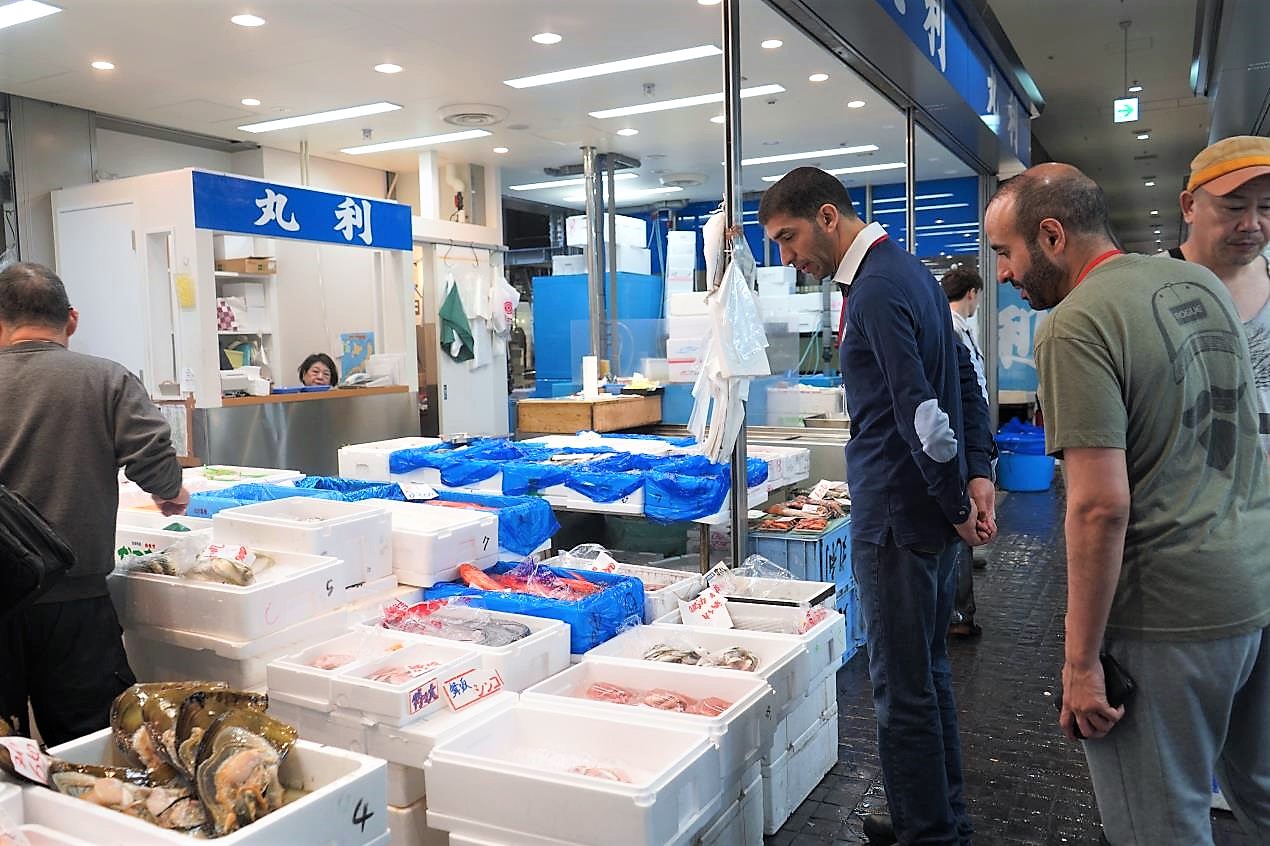
The delegation also visited Toyosu Fish market, the largest wholesale fish and seafood market in the world, the Institute of Energy and Economics, Japan International Cooperation Agency, a governmental agency that coordinates official development assistance for the government of Japan, and Mebiol, a Tokyo-based technology corporation that invented the sustainable agro-tech concept of using films to cultivate plants and ensure zero wastage of water.
On the sidelines of the visit to Japan, Dr Al Zeyoudi attended the second round of the fifth edition of the Abu Dhabi Grand Slam Jiu-Jitsu World Tour that witnessed athletes from 35 countries competing for the top honour.
WAM/Nour Salman/MOHD AAMIR

Live In Your Own Farm In The Sky In This Plant-Covered Apartment Building
The concept for Farmhouse shows a vision of city living where people are more connected to their food—and get time in nature just by going out to their balcony.
07.24.19
The concept for Farmhouse shows a vision of city living where people are more connected to their food—and get time in nature just by going out to their balcony.
In the design for this new apartment building, each kitchen connects to a massive greenhouse. If you need a salad for dinner, you can harvest it yourself, or go to a farmers’ market in the lobby to buy greens from a neighbor.
[Image: courtesy Studio Precht]
The design is one variation on a modular system called Farmhouse—ranging from simple A-frame houses to multifamily buildings—intended to reconnect residents with the food system. The architects, from the Austria-based firm Studio Precht, were inspired by their own experience moving from Beijing to an off-grid life in the Austrian mountains that includes growing their own food. “It’s a very direct connection to nature,” says architect Chris Precht.
Read the complete article here.
OId MacDonald Had A Farm…And A Robot, And Racks of plants, And Lots of Plastic To grow Plants In…
How about farms that go up vertically – measured in stories high, instead of in acres wide? How about farms that are inside buildings, instead of outdoors? How about farms that are in a city, instead of out in the country? How about farms that use water, instead of dirt?
The future of farming?
How about farms that go up vertically – measured in stories high, instead of in acres wide? How about farms that are inside buildings, instead of outdoors? How about farms that are in a city, instead of out in the country? How about farms that use water, instead of dirt? How about farms that use plastic, instead of dirt? Not to mention robots and drones working the crops.
All possible. All happening, in fact. And perhaps, the future of farming.
Over the year to come, we’ll tell you more in detail about these innovations, and other changes in how we grow our food. But the future of farming has more in common with the past and the present than you might think. Petrochemicals, for instance. Past, present or future, you can’t farm without the products made from them: from the strong, lightweight plastics used to build the racks (and even the “ground”) plants grow on, to the carbon fiber-reinforced resin used to make many of those drones and robots and other equipment used on the indoor farms of the future – to the fuels that move the tractors, combines and other equipment used on the outdoor farms of today, as well as the fuels that move the food those farms grow to us – farming has deep petrochemical roots.
*****
Today, we’ll start with an introduction, and we’ll start in – in San Carlos, California.
That’s where Iron Ox has turned a warehouse into a grow house: a dirt-free indoor farm growing romaine lettuce, kale and other leafy greens. What replaces dirt at Iron Ox, is water (water supercharged with nutrients) – and racks, rows and rows of horizontal and vertical racks of plants…
(Photo from Iron Ox)
…fresh food grown for people living in cities (like so many of us), grown in the cities where we live, and grown year round (which even in California, isn’t possible outdoors).
And the “Iron Ox”? Much of the work on this farm is done by robots (like the one in that picture, lifting and moving racks of plants). Those robots can move in any direction, so they can place those racks closer together and get the most out of those indoor spaces. The robots move on Mecanum wheels made from a high-tech synthetic rubber derived from petrochemicals like ethylene, propylene and toluene. Even the robot arm that plants seeds and transfers plants? That bends and flexes thanks to polypropylene joints.
*****
In Houston, Moonflower Farms has replaced the dirt with vermiculite that contains a mineral blend. In their mini-warehouse (more of a shack really), their micro-greens are racked vertically…
(Photo from Moonflower Farms)
…under hot pink lights.
That meant, after Hurricane Harvey swept over the Gulf Coast, Moonflower had 10 inches of water on the floor – but almost all of their crop was just fine (since it was up above the ground, and the flood water).
(Those racks, by the way, must be light-weight and strong, which requires engineered polymers like high-density polyethylene, ABS and HIPS. And yes, those high-tech polymers are made from petrochemicals such as ethylene, propylene, butadiene and benzene.)
*****
Also in Houston is Acre in a Box. In this case, the “box” is an old shipping container. And inside that 320 square feet, is an acre (and a half, actually) of produce…
(Photo from Acre in a Box)
…growing hydroponically day and night, come rain or come shine, or even come hurricane.
*****
At Urban Organics, in St. Paul, Minnesota – it’s easy to see one advantage of indoor farming. The average high temperature in January is 23 degrees. And unless you like a hot bowl of pine needle soup (think Euell Gibbons), there’s not much of anything growing fresh in that weather.
Urban Organics is an aquaponics farm – meaning they also grow their plants in a nutrient-rich water – but in this case, the fertilizer comes from fish (fish poop, that is). In turn, the plants filter the water as they absorb those nutrients, the clean water goes back to the fish, and round and round the system goes.
(Photo from Urban Organics)
And this type of advanced agriculture wouldn’t be possible without the engineered plastics made from petrochemicals. Companies like Pentair Aquatic Eco-Systems use polyethene and fiber-reinforced resins, made from the petrochemical ethylene, to make fish tanks and filter tanks. Ethylene is also used in the polyethylene and vinyl liners. And the advanced membrane technology that allows for water recycling depends on petrochemicals as well (like the xylene, that makes the polyamide, that makes those membranes).
*****
But maybe the most far-out farming is going on in Japan – where Mebiol Research and Development is growing tomatoes – indoors – on a plastic sheet.
(Photo from Mebiol)
This plastic (polymer) sheet is a hydrogel called polyvinyl acetate – a material like a super sponge which soaks up water and nutrients. The tomatoes (and there are other plants too), grow ON the polymer, spreading their roots across the surface, and absorbing the nutrient-steeped water. That polymer starts with ethylene, again – which as you know by now, is a critical part of future farming.
*****
Oh, and those drones? Drones nowadays inspect crops – check for plants that are underwatered – spot diseased plants – evaluate smoke contamination after a fire. And after a fire, drones can plant new trees (as seeds), to help restore burned-over wilderness areas (and since they are drones, getting into a wilderness to plant is not a problem).
(Photo from DroneSeed)
The drones, by the way, don’t dig holes and plant seeds – these drones “shoot” seed pods into the ground. The pods are packed with nutrients, and coated with capsaicin (the stuff in chili peppers), to keep animals from eating the seeds.
(These sophisticated, seed-planting drones have to be tough, to withstand a wide variety of weather conditions and constant stress from the multiple blades – so fiber-reinforced resins are used because they are as strong as steel and much lighter in weight. The resins are a special type of plastic called epoxy, and the petrochemical propylene is their foundation.)
*****
All of these methods of farming use far less water (as much as 90 percent less water) as conventional farming – they take up far less land – they can grow food year round – and they can grow food in the same place where most of it is being eaten, our cities. All good, and all important at a time when there is less and less good farmland, and more and more of us needing to be fed. And as we told you at the beginning of this peek at the future, all of this depends on farming’s deep petrochemical roots.
*****
Right after World War I, there was a hit song: “How ya gonna keep ‘em down on the farm (after they’ve seen Paree)?”
Millions of American soldiers came home after the war, having left their home town for the first time, their state for the first time, their country for the first time – and maybe, so the song went, soldiers who’d left small towns across America, might have a taste now for big city life, and wouldn’t want to go home.
That might be different in years to come though. Because “down on the farm” might be very much a part of big city life. And it won’t be “down” on the farm anyhow. Those future farms will go up, up into the air. Skyscrapers filled with vegetables? Stay tuned throughout the year as we follow this story.

NASA-Inspired Speed Breeding For Crop Improvement To Feed The Future
NASA experiments to grow wheat in space using continuous light on wheat which triggered early reproduction in the plants were the inspiration for University of Queensland scientists to develop the world’s first ‘speed breeding’ procedures here on planet Earth
June 20, 2019 . | . Ken Ecott
Crop improvements can help us to meet the challenge of feeding a population of 10 billion, but can we breed better varieties fast enough?
Farmers and plant breeders are in a race against time. The world population is growing rapidly, requiring ever more food, but the amount of cultivable land is limited. Warmer temperatures have extended growth seasons in some areas — and brought drought and pests to others.
While a host of fascinating innovations are primed to change the face of agriculture, there remains a stubborn limiting factor for plant breeding. This is the long generation times of crops that allow only one or two generations per year.
This roadblock to progress has been alleviated by speed breeding protocols developed by research teams at the John Innes Centre and the University of Queensland.
Fast-growing plants in the crop-speed breeding facility at The University of Queensland. The plants featured are barley plants. Credit: The University of Queensland
“We face a grand challenge in terms of feeding the world,” said Lee Hickey, a plant geneticist at the University of Queensland in Australia. “If you look at the stats, we’re going to have about 10 billion on the planet by 2050 and we’re going to need 60 to 80 percent more food to feed everybody. It’s an even greater challenge in the face of climate change and diseases that affect our crops that are also rapidly evolving.”
NASA experiments to grow wheat in space using continuous light on wheat which triggered early reproduction in the plants were the inspiration for University of Queensland scientists to develop the world’s first ‘speed breeding’ procedures here on planet Earth.
The team tricked the crops into flowering early by blasting blue and red LED lights for 22 hours a day and keeping temperatures between 62 and 72 degrees Fahrenheit. Last November, in a paper in Nature, they showed that they can grow up to six generations of wheat, barley, chickpeas and canola in a year, whereas traditional methods would only yield one or two.
Dr Lee Hickey in his speed breeding lab at University of Queensland, 20 June 2016.
Botanists first started growing plants under artificial light — carbon arc lamps — 150 years ago. Since then, advances in LED technology have vastly improved the precision with which scientists can adjust and customise light settings to individual crop species.
So far, the researchers have mainly experimented with one parameter, light, but they have plans to investigate several other method of increasing, growth and generation times.
The team highlight that speed breeding combines well with a range of other developing technologies. These include speed gene cloning a technique developed by Dr Wulff’s team at the John Innes Centre to rapidly scour the genomes of wild relatives of modern crops to identify disease resistance genes which can be bred into elite crops.
This involves using hydroponic culture which gives plant roots quicker access to nutrients and oxygen. A carbon dioxide-enriched atmosphere is also under investigation and one of the most productive areas of research is likely to be temperature.
“One technology alone is not going to solve our problems,” Dr. Hickey said. “We’re going to need all the tools in the shed.”
Dr Hickey believes the sky is the limit for the new technology and he is now investigating the integration of speed breeding with other modern crop breeding technologies.
“It could also have some great applications in future vertical farming systems, and some horticultural crops,” Dr Hickey said.
A review published in the journal Nature Biotechnology outlines continuing efforts to harness speed breeding to a raft of crop technology innovations required to meet the 2050 challenge.

Get Ready For New Forms of Extreme Weather: Hurricanes Plus Heat Waves
Most discussion of climate change and extreme weather focuses on how existing weather hazards such as heat waves, floods, and droughts are likely to become more frequent and intense
by Sarah DeWeerdt | Jul 23, 2019
Most discussion of climate change and extreme weather focuses on how existing weather hazards such as heat waves, floods, and droughts are likely to become more frequent and intense.
But climate change could also spark the emergence of new forms of extreme weather that are especially difficult to prepare for because we’ve never seen them before.
Suppose, for example, a powerful tropical cyclone causes widespread power outages and then, before the grid can be repaired, a heat wave hits. The lack of power for air conditioning to mitigate the heat could put a lot of people at risk.
Until now, such events have been rare. But according to an analysis published yesterday in Nature Climate Change, if high carbon emissions continue these combined tropical cyclone-heat events could be an annual occurrence by the end of the century.
Researchers gathered records of 121 major tropical cyclones that made landfall in the Northwest Pacific, South Indian, and North Atlantic basins between 1979 and 2017. They computed the probability of a cyclone affecting given location on land for each day of the year.
They also used temperature records to compute the probability of locations experiencing a heat index of 40.6 °C (105 °F) for each day of the year. This enabled them to model the likelihood of a heat wave occurring in the 30 days after a storm’s landfall. A 2015 map of global population added the final piece: how many people might be affected by these tropical cyclone-heat events.
Such events can be expected to occur about once a decade, the researchers calculated, and to affect about 400,000 people. In fact, four tropical cyclones were followed by heat waves between 1979 and 2017. But as luck would have it, they all occurred in remote areas of northwest Australia, with only about 1,000 people affected.
Several other major storms have been followed by heat that fell just short of the 40.6 °C cutoff, including Cyclone Marian that hit Bangladesh in 1991, Hurricane Emily that struck the Caribbean and Mexico in 2007, and Typhoon Rammasun that smashed into the Philippines in 2014.
And as climate change proceeds, such storms will become more and more likely to be followed by heat waves. For example, with 2 °C of global warming, there’s a greater than 70% chance that a storm like Cyclone Marian would be followed by extreme heat.
Heat waves following tropical cyclones would be expected to occur 7 out of every 30 years and affect 1.2 million people with 1.5 °C of warming, and 11 out of every 30 years affecting 2 million people with 2 °C of warming. If global average temperature increases by 4 °C, they could occur once a year or more with 11.8 million people at risk.
If anything, the analysis probably underplays the risk. That’s because the calculations don’t take into account the fact that tropical cyclones are predicted to happen more often with climate change, nor do they account for future population growth in regions prone to both tropical cyclones and extreme heat. Plus, the heat index tends to be elevated in the days before a tropical storm – meaning evacuations in the path of a coming storm could also become increasingly dangerous.
Source: Matthews T. et al. “An emerging tropical cyclone-deadly heat compound hazard.” Nature Climate Change 2019..
US: OHIO: 80 Acres To Create 125 New Jobs As It Opens New Hamilton Headquarters
A $26.9 million investment from San Francisco private equity firm Virgo Investment Group will allow 80 Acres Farms to carry out planned phases for continued expansion of its operations in Hamilton and enable the company to create 125 new jobs in the city
July 29, 2019
Eric Schwartzberg, Staff Writer
Hamilton, Ohio
A $26.9 million investment from San Francisco private equity firm Virgo Investment Group will allow 80 Acres Farms to carry out planned phases for continued expansion of its operations in Hamilton and enable the company to create 125 new jobs in the city.
As a result of that investment and the commitment to create those new jobs, the Ohio Tax Credit Authority this morning approved a Job Creation Tax Credit for the project for 1.647 percent over eight years.
80 Acres Farms also has moved its corporate headquarters, as well as 15 employees, to newly renovated office space in downtown Hamilton, company officials said Monday. The company derives its name from its ability to grow 80 acres worth of food in a quarter of an acre space, all starting in its original location in Cincinnati.
MORE: A Hamilton facility will be the first of its kind in North America after new investment
80 Acres Farms is now producing tomatoes in downtown Hamilton. They purchased the former Miami Motor Car Co. building on S. 2nd Street in February 2017 and have renovated it to create an indoor farm facility. NICK GRAHAM/STAFF
Its vision is to establish year-round indoor farming operations in major cities around the world growing more nutritious produce, according to Mike Zelkind, 80 Acres Farms’ co-founder and CEO.
80 Acres Farms’ closed-loop, modular systems grow crops more sustainably, and their proximity to consumer locations dramatically decreases the distance produce must travel, thereby increasing shelf life and more importantly taste.
“Hamilton is a rising community looking for diversified growth and is strategically located near multiple large population centers,” Zelkind said. “Sustainability continues to be an essential part of our business, and Hamilton’s commitment to emissions-free, renewable energy through hydropower was also an important component in our decision to become an even bigger part of the Hamilton community.”
MORE: Hamilton’s large indoor growing operation is so advanced they want it around the world
Hamilton City Manager Joshua Smith said 80 Acres Farms’ decision to call Hamilton home is catalytic for three reasons.
“First, they will soon be one of our largest utility customers,” Smith said. “Second, their presence in Hamilton is attracting interest from other innovative companies. And third, their multiple locations throughout the city will have a positive impact on local businesses.”
The company was founded in 2015 by Zelkind and Tisha Livingston, two veteran food industry executives. It is supported by a board of directors representing executive and leadership experience at leading food, healthcare and other companies.
80 Acres Farms provides customers with a variety of locally grown, just-picked leafy greens, microgreens and vine crops, including the world’s only tomatoes and cucumbers grown completely indoors using proprietary technologies. That includes modular grow zones, customized LED lighting, precisely tuned climate controls and an artificial intelligence-powered growing system.
The company said that allows to produce flavorful and nutritious locally grown fruits and vegetables at affordable prices.
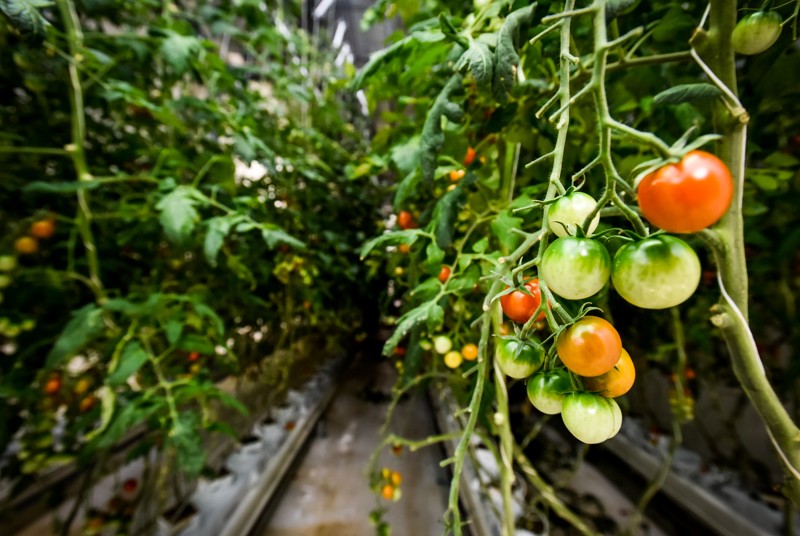
80 Acres Farms is now producing tomatoes in downtown Hamilton. They purchased the former Miami Motor Car Co. building on S. 2nd Street in February 2017 and have renovated it to create an indoor farm facility. NICK GRAHAM/STAFF
MORE: Dilapidated Hamilton building transforms into an industry-changing grow facility
80 Acres Farms launched renovations on the former Miami Motor Company building on South 2nd Street in early 2017, with plans to create 30,000 square feet of office and food production space downtown. The company is growing vine crops in that renovated location, where it started harvesting its first crops in April.
In September 2018, 80 Acres Farms broke ground on the first phase of its Hamilton Enterprise Park facility and in late March the first phase of the site started when the company started growing its first crop there.
It is set to become the country’s first fully automated indoor farm.
Most recently, the company moved its corporate headquarters, as well as 15 employees, to a newly renovated office space in downtown Hamilton. The company’s planned investment in Hamilton is expected to be more than $26.9 million.
MORE: Company with large Hamilton indoor growing operations joining international food effort
Future phases will add around 150,000 square feet of controlled environmental agriculture, or CEA, space. That space will allow 80 Acres to “dramatically increase” distribution with its growing list of retail and food service partners, which includes Whole Foods, Jungle Jim’s International Market, Dorothy Lane Market and Green Bean Delivery, Zelkind said.

How Tech Is Helping The Agriculture Sector Curb Carbon Emissions
UN Deputy Secretary-General Amina J. Mohammed stated that 2018 was a record-breaking year for climate, but 2019 doesn’t look much better. As the list of extreme weather events and climate shocks grows, so does our shared responsibility to act
A worker harvests Image: REUTERS/Edgar Su at a vertical farm in Singapore.
26 Jul 2019
Alzbeta Klein Director and Global Head, Climate Business , International Finance Corporation (IFC)
UN Deputy Secretary-General Amina J. Mohammed stated that 2018 was a record-breaking year for climate, but 2019 doesn’t look much better. As the list of extreme weather events and climate shocks grows, so does our shared responsibility to act.
For the agricultural sector, these weather events are particularly devastating, with increased cycles of more frequent floods and drought hitting many farmers. The good news is that, two years ago in Bonn, the world’s governments finally acknowledged for the first time that agriculture has a major role to play in our changing climate. Following a series of intense all-night discussions and years of division and deadlock, governments at COP23 finally agreed on the connection between industrialized farming and our warming climate.
The world’s leading climate scientists have concluded that how we farm and use our land (whether for food production, forestry, or other types of land use) is responsible for about one-quarter of global greenhouse gas emissions. If we include emissions caused by the processing, transport, storage, cooling and disposal of the food that we consume, then that figure rises to more than 40% – an unthinkable price for how we farm and eat.
With the global population set to rise from 7.3 billion to 9.7 billion between now and 2050, world governments are faced with an overwhelming dilemma: how to feed the future without putting irreparable strain on our planet’s already overburdened soils and oceans? I believe that technology can get us there.
Agricultural technology – or agtech – approaches like precision farming, drought- and pest-resistant seeds, mobile phones and digital technology platforms are a solution. They boost farmers’ profits by cutting costs and increasing yields and benefiting customers the world over. But more technological innovation is needed. Fortunately, some of the International Finance Corporation’s partners are at the forefront of innovation when it comes to agtech.
Take Planet Labs, an innovative geospatial start-up that uses 149 earth-observing satellites to generate a daily stream of high-resolution images of the earth’s surface for farmers to understand crop and soil changes from pre-season to harvest.
Planet Lab’s goal is to take images of the Earth’s entire surface every day to make climate change visible, accessible and actionable, according to Tara O’Shea, Planet’s director of forestry. Founded in 2010 by three former NASA scientists, the company visualizes daily changes across the Earth’s surface in real time. Until now, satellite imagery data was not frequent enough to react to crop stress in a timely manner. Planet’s daily imagery has been a game changer in the digital ag space – enabling farmers to manage their precision agriculture at scale and farm more efficiently, profitably, and sustainably.
Agriculture isn’t just a rural concern. As urban density increases around the world, and more and more people move to cities, locally sourced food is taking on greater importance. Crop One Holdings is a “vertical farming" company that is transforming the landscape of indoor farming in urban areas.
The term vertical farm is relatively new. It refers to a method of growing crops – in Crop One Holding’s case, leafy greens and lettuce – usually without soil or natural light, in beds stacked vertically inside a controlled-environment building. One of the company’s 320 sq ft units can substitute up to 19 acres of farmland and use 1/2500th of the water usage of field-based growing. In Boston, a Crop One Holding one-acre farm produces yields equivalent to that of a regular 400-acre farm.
Crop One drastically reduces the length of transportation as well as carbon use, due to the farms’ proximity to consumers. There is no soil used in the growing, nor any chemical intervention or pesticides. Competitive field products are usually 12 to 15 days old by the time they are delivered to a store, resulting in significant losses for the retailer.
Vertical farms that rise to the challenge of climate change are still in the early stages of development, but a recent $40 million joint venture between Crop One and Emirates Flight Catering to build the world’s largest vertical farming facility in Dubai suggests that agtech business models are showing potential to scale across markets.
That’s good news for my climate business team at IFC, who are helping existing and potential agribusiness clients acquire and leverage new agricultural technologies for both large scale and smallholder farms. Our “climate-smart” approach targets animal protein, land and crops, and food losses, yielding $1.3 billion in investments since 2017. Agtech can accelerate these investments and help farmers adopt more sustainable agronomic practices.
At this year’s One Planet Summit, IFC signed two agreements with the Kenya Tea Development Agency Power Company Ltd. (KTDA Power): one that enables carbon credits, and another that will support KTDA with various advisory activities such as financial literacy training for farmers, soil testing for productivity improvement and development of a wood-sourcing strategy.
How we farm matters. In addition to record-breaking temperatures, super typhoons and drought, Deputy Secretary-General Mohammed has also spoken about how 5G technology and AI can build smarter agricultural systems.
Feeding our growing population requires revolutionary transformations in farming and land cultivation. Adopting pioneering agricultural technologies with the potential to increase yields while limiting greenhouse gas emissions is an essential step. If agriculture is to continue to feed the world, then we must enable technology to shape the farms of the future.

Progressive Farming Developments For The Indoor And Vertical Farming Industry
Now into its third successful year, Urban Agri World
is the region's leading agriculture event focused on Agritech,
Controlled Environment Agriculture and Indoor Farming
It brings together Growers, Investors, Produce Buyers, Academics, Policy Makers, Technology & System Integrators and CEA Business Owners.
Featuring practical sessions on the hottest topics, exhibits, lunch table discussions and unlimited networking opportunities, it connects services and solution providers from all over the world to serious local buyers and partners.
About Urban Agri World (UAW 2019)
Many countries and companies are expressing strong interest in vertical farming business & urban agriculture. It is a solution to the weather and pests problems, food security, climate change and environmental preservation challenges.
Commercialization of vertical farming is catching on in Asia, Europe, USA, Russia & now Africa. Many private companies are interested in growing crops in hydroponic, aquaponics & aeroponics systems in warehouses, greenhouses, containers & high skyscrapers.
There is also a burgeoning interest in the production of medicinal plants in vertical farms following the new rulings on cannabis production for medicinal use. UAW 2019 will touch on the pressing issues pertaining to progressive farming developments for the Indoor and vertical farming industry.

"AGrowth AgTech Accelerator - 12 week programme"
The AGrowth Accelerator is a 12-week programme supporting innovative and scalable AgTech companies, from late seed through Series B stage. This programme focuses on delivering breakthrough innovations and technologies to impact the future of farming
The AGrowth accelerator programme is a 12-week programme commissioned by National Innovation Agency (NIA) and powered by Nest. Aimed at innovative and scalable AgTech startups, this accelerator programme supports startups and entrepreneurs from around the globe in delivering breakthrough innovations and technologies in AgTech to make an impact on the future of farming.
We are seeking AgTech companies that have established product-market fit and have
developed innovative solutions addressing the following areas:
Data transparency and analytics: data capture and analysis tools to maximise productivity
Automation & digitisation: technologies that can help reduce manual processes and increase efficiency
Logistics and supply chain visibility: platforms that create price transparency and visibility of logistic options and provide alternatives to incumbent solutions
New market identification and access: tools and platforms enabling farmers to access new buyers / markets
Urban agriculture: technologies to enable the creation of self-sustaining ecosystems in city environments, including but not limited to vertical and indoor farming
AGrowth Accelerator participants will be guided through their business growth and development with the help of business mentoring from NIA and Nest, as well as two leading corporates. It’s a great opportunity to establish a foothold in Thailand, or to expand your existing presence in the region through commercial partnerships.
The selected startups can expect a highly supportive and collaborative environment, with an opportunity to pitch their solutions. If chosen for the programme, startups will:
Be immersed in the innovation ecosystem in Thailand and establish a foothold to build a broader network in Asia as a foundation for future expansion
Be guided through a 12-week structured process working towards a potential PoC and possible commercial integration opportunities with two corporate sponsors
Gain exposure to business leaders and receive mentorship opportunities
Receive access to a network of investors as well as investment advice from Nest,
with the chance to pitch to investors at a demo day
Access customer insights regionally and internationally
Receive one round-trip flight as well as accommodations for the duration of the time
spent in Bangkok, Thailand
Applications close on August 11th, 2019
To learn more about the programme: http://bit.ly/32h2H5y
To apply: http://bit.ly/2NHobp8

Can Conveyors Improve Yield For Vertical Farming Systems?
Conveyors are sometimes used in indoor farming to optimize the density of the plants as they grow and to move the plants through automated systems to reduce labor in planting and harvesting
Vertical farms or indoor farms have the potential to achieve great efficiency in food production, promising less use of water and delivering fresh food produced efficiently from nearby geographic locations. However challenges remain – and conveyors and better vertical farming technology will likely be part of any economically viable solution. This is what the conveyor technologies company Ultimation is looking to provide to the sector.
Conveyors are sometimes used in indoor farming to optimize the density of the plants as they grow and to move the plants through automated systems to reduce labor in planting and harvesting. High efficiency LED lights have greatly enabled more efficient vertical farming technology. However replicating the efficiency of the sun remains a major challenge that indoor farming companies hope to achieve through improved control of all other plant growth variables.
Automation for vertical indoor farms
Conveyors and industrial automation equipment used in vertical farming automation systems can include many of the traditional conveyor types such as gravity roller conveyors, belt conveyors and skate wheel or flow rail conveyors. But more recently the technology used in larger systems is including motorized conveyor systems and overhead conveyors. Power and Free conveyors are the ultimate in space and volume optimization for vertical farming systems as they enable tight concentration of product in some areas while then enabling separation of the products as and when required for movement to processing areas.
Ultra high-density vertical farming systems aim to optimize plant production relative to the productive space employed for the task. Conveyors are essential in that optimization process to use all the available vertical space of a facility. Vertical farming automation can enable spacing to change as plants grow throughout a facility. Technology used can include robots as well as overhead conveyors, floor conveyors and specialized plant processing equipment.
According to Ultimation food safe materials and lubricants are used for all of their vertical farming conveyor systems. Vertical farms can help reduce “food miles” which is the distance that food items travel from the point of production to the table. High volume indoor farms located near to major consumption areas have the potential to reduce CO2 emissions from transport as well as deliver fresher and better tasting products.
For more information:
Ultimation Industries
15935 Sturgeon St.
Roseville, Michigan 48066-1818, USA
Tel: +1 (586) 771-1881
info@ultimation.net
www.ultimationinc.com
Publication date: 7/17/2019

AeroFarms Raises $100 Million In New Capital
Last year, AeroFarms raised $40 million in Series D funding with the INGKA Group, chef David Chang and retired U.S. general David Petraeus among the investors. At that time, AeroFarms had raised over $130 million; the new investment pushes its total over $230 million
Photo courtesy of AeroFarms
The New Jersey-Based grower Is Valued At $500 Million
According To Its Latest Round of Funding
July 19, 2019
According to an article in the Financial Times, Newark, New Jersey-based indoor farming company AeroFarms has raised $100 million in its latest round of funding. The lead investor is the INKGA Group, the parent company of furniture company IKEA. After this round, AeroFarms is valued at $500 million.
According to the Financial Times, the company's latest round of investment included no new backers. The company has not yet publicly disclosed the new funding.
Last year, AeroFarms raised $40 million in Series D funding with the INGKA Group, chef David Chang and retired U.S. general David Petraeus among the investors. At that time, AeroFarms had raised over $130 million; the new investment pushes its total over $230 million.
As of 2019, AeroFarms has two commercial farms in the U.S. - its flagship 70,000 square foot facility 30,000 square foot farm. The locations opened in 2016 and 2015, respectively.
In March of this year, it was announced that AeroFarms greens would be served on Singapore Airlines flights from Newark to Singapore. It also hired Roger Post, formerly of Danone Foods and Kraft Nabisco,as its new COO in February.

Signify Supports Bryte For Its New Greenhouse Equipment With Hybrid Philips LED Lighting System
Signify (Euronext: LIGHT), the world leader in lighting, announces today that it will start an extensive horti project in cooperation with Stolze at Bryte, one of the largest tomato growers in the Netherlands
Signify Supports Bryte, One of The Largest Dutch Tomato
Growers, For Its New Greenhouse Equipment (83,000 m²)
With A Hybrid Philips LED Lighting System
Eindhoven, the Netherlands - Signify (Euronext: LIGHT), the world leader in lighting, announces today that it will start an extensive horti project in cooperation with Stolze at Bryte, one of the largest tomato growers in the Netherlands. For the location in 's-Gravenzande, an 8.3 hectare greenhouse will be equipped with a combination of Philips GreenPower LED top lighting compact and HPS lighting. This solution allows greenhouses to benefit from the advantages of LED top lighting: higher predictability, better quality and an improved yield, as well as lower energy costs.
Bryte was founded in early 2019 as a combination of two renowned growers in the Westland and Voorne Putten areas: Kwekerij Dukker and Zwinkels Tomaten. Two different family businesses, but with a shared DNA. Identical in size, comparable in the way of working and thinking about cooperation in horticulture. For years, these companies have been growing tomatoes that are only known for one thing: their taste.
The introduction of the Philips GreenPower LED top lighting compact as a one-to-one replacement for the existing HPS lighting was the time for Bryte to think about a partial implementation of LED as a hybrid lighting solution for one of the company's seven locations. Compared to a 1,000 W HPS lamp, the Philips GreenPower LED top lighting compact produces the same amount of light using 40% less electricity. The lamp also produces very little radiant heat. Compared to a 600 W HPS lamp, the new energy-efficient LED top lighting compact produces 80% more light with the same amount of electricity.
A total of 180 μmol/m²/s will be realized over a total area of over 8.3 ha of glass, of which 90 μmol/m²/s will come from the HPS lighting and 90 μmol/m²/s from the LED top lighting. The heat and light in the greenhouses can be controlled independently, allowing for a very specific response to the natural lighting conditions. This creates the right balance between the amount of growing light and heat in the greenhouse, resulting in an increased yield and lower energy costs.
"It's good to see one of the largest Dutch greenhouse vegetable growers expressing confidence in LED," says Udo van Slooten, Business Leader Horticulture at Signify. "Bryte recognizes that the Philips GreenPower LED top lighting compact is not only an ideal replacement, but also the ideal addition to the existing HPS lighting in tomato cultivation."
Bryte's starting point is a more efficient growth too: "Our locations must meet the requirements of today and tomorrow in terms of efficiency, food safety, and sustainability. Together, we produce tomatoes on an area of 40 hectares. In summer and in winter, because a large part of the production area is lighted. Our customers are thus assured of a continuous supply, even when outdoor conditions produce poor lighting. We expect that the new hybrid LED installation will enable us to grow more efficiently, while reducing our energy and maintenance costs. A better balance in the greenhouse will result in higher profits," says Tom Zwinkels, Bryte's owner and director.
The whole project will be implemented in close cooperation with Philips horti LED partner Stolze.
