


Welcome to iGrow News, Your Source for the World of Indoor Vertical Farming
Giovanni Del Brenna – Paris Agricole
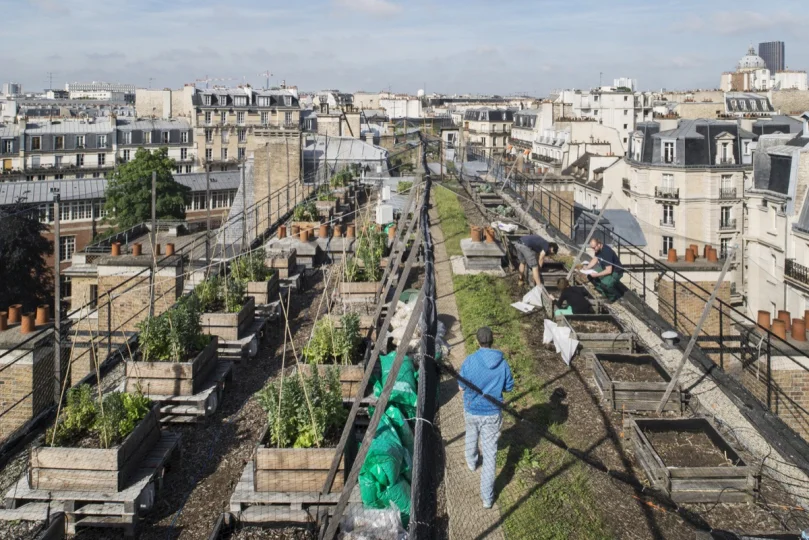
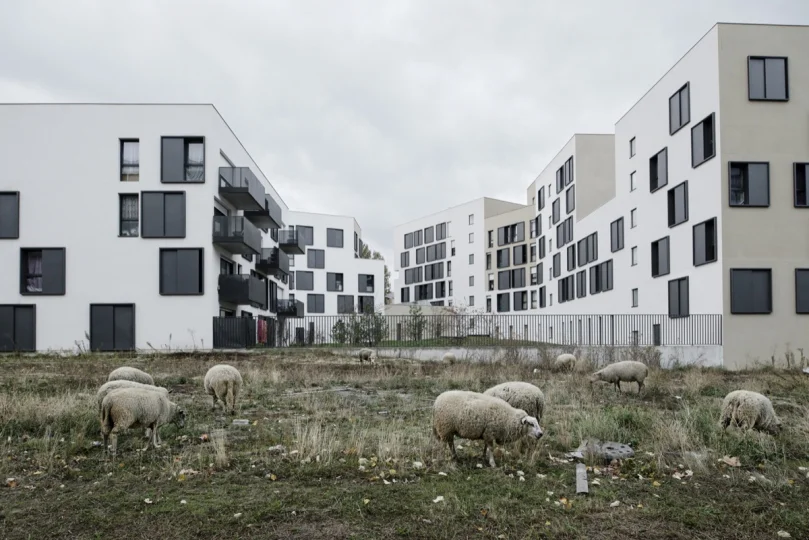
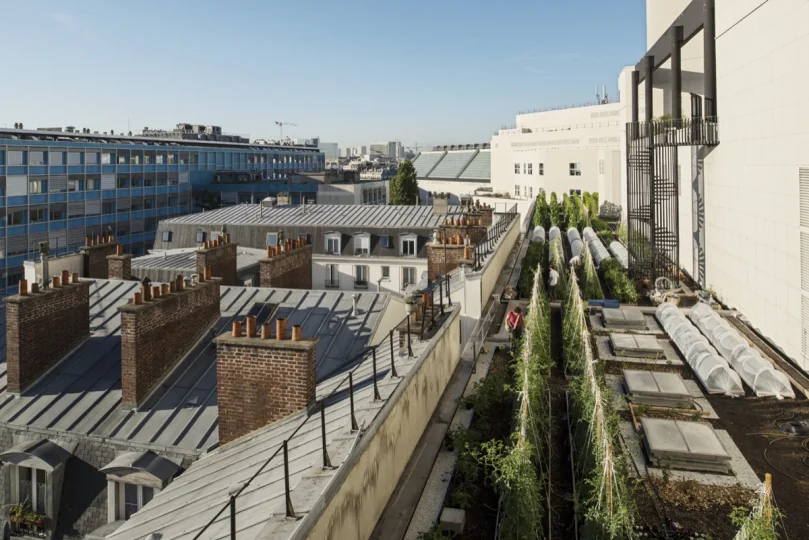
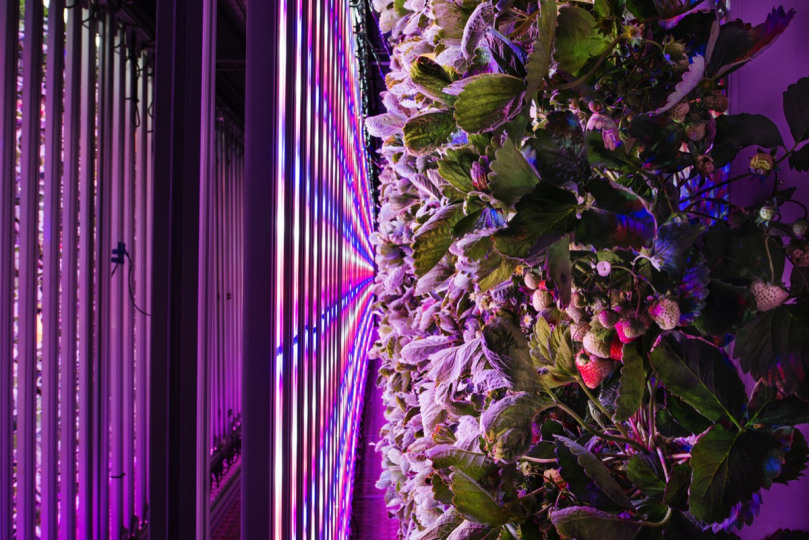
Each photograph reveals innovative ways to grow organic products in the very heart of one of the main European capitals

JUNE 6, 2019
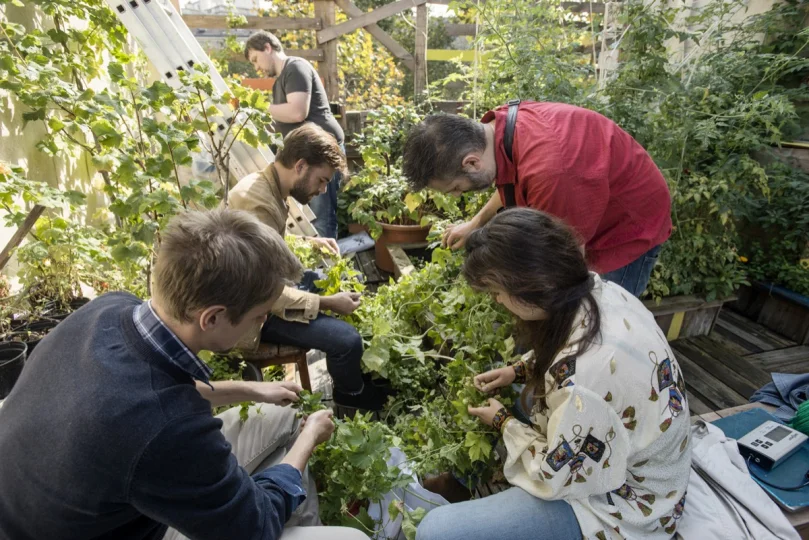
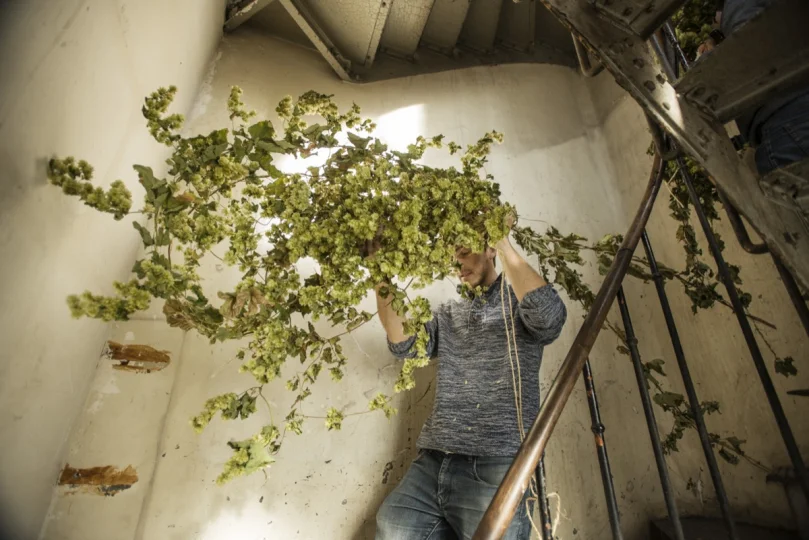
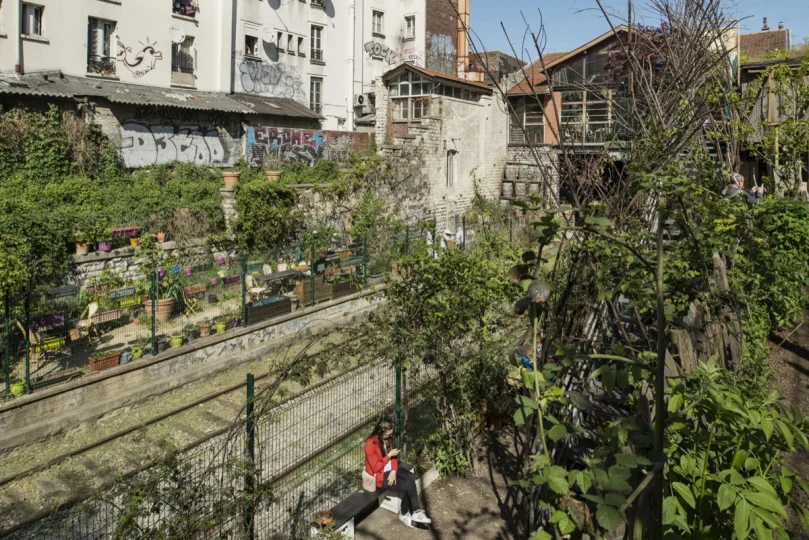
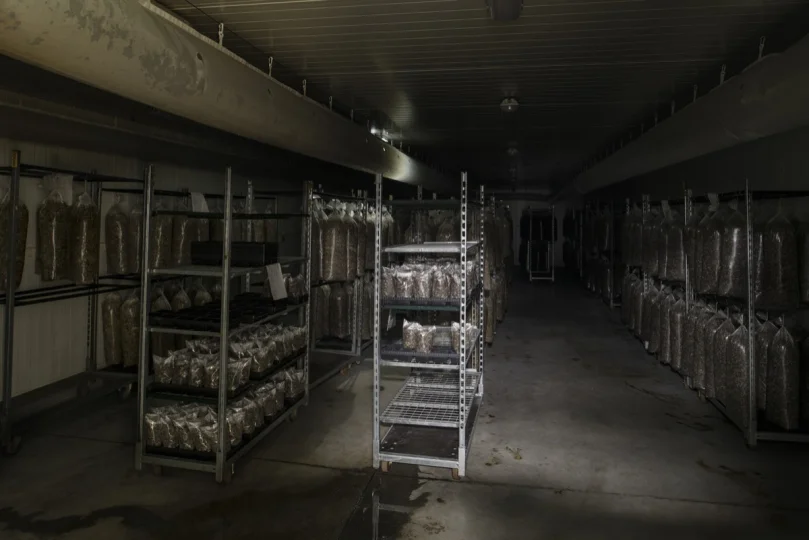
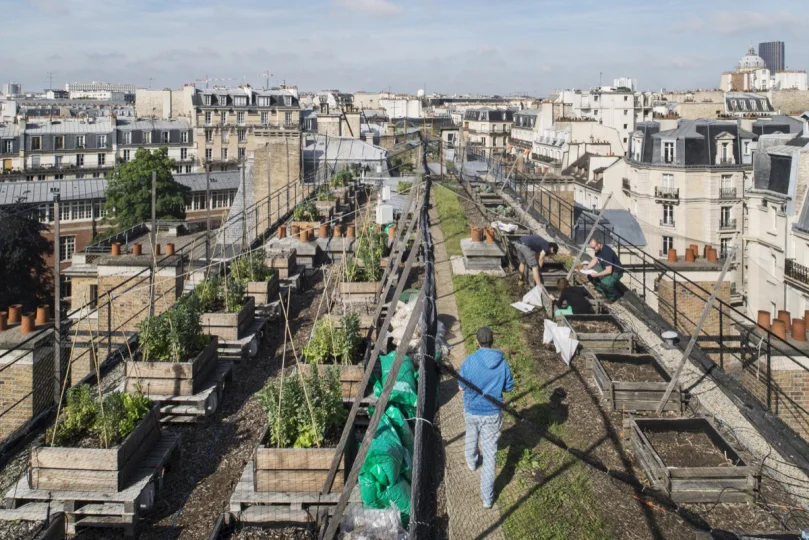
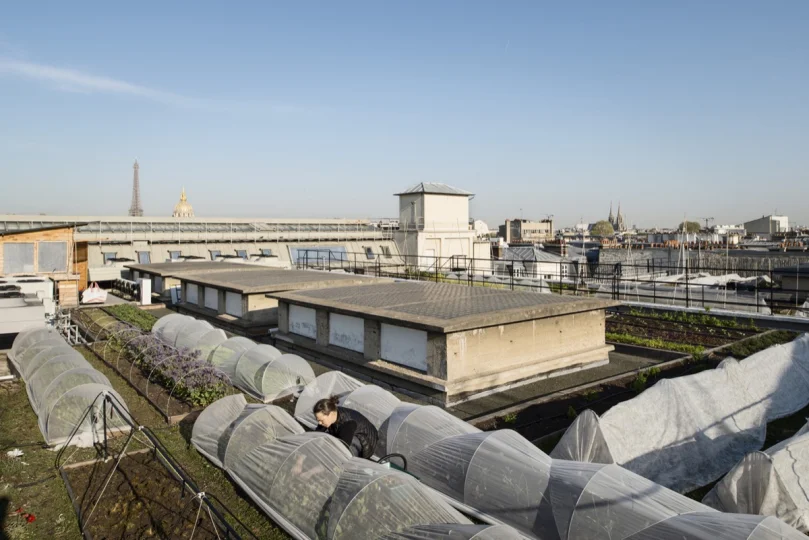
Giovanni Del Brenna documented the evolution of a particular Parisian urban project that aims to turn more than 100 hectares into areas intended for agricultural production.
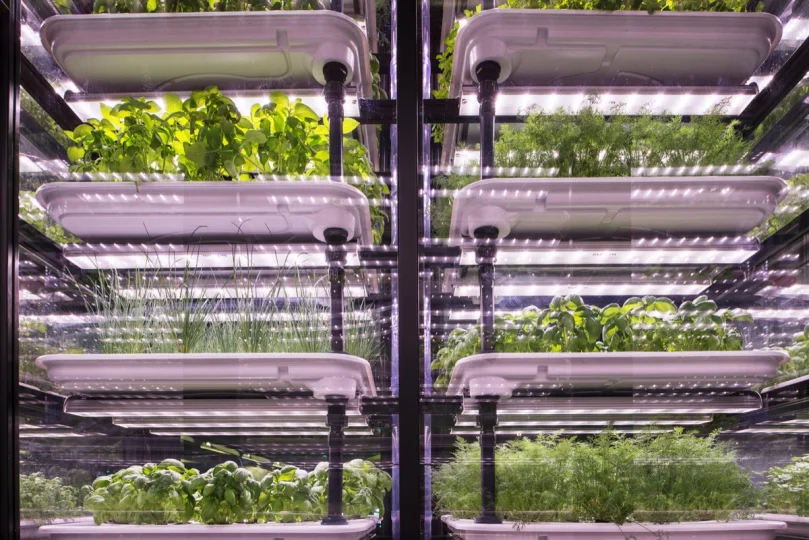
Each photograph reveals innovative ways to grow organic products in the very heart of one of the main European capitals: strawberries grown in containers, vertical farms that are directly connected to one of the biggest French supermarket, vegetable gardens on the rooftop of some historical buildings as the Opera Bastille.
“Urban agriculture” is an oxymoron that has become reality, a new way of life that challenges the photographer’s eye. A magnificent visual playground that shows a very positive evolution in Paris – two worlds, a priori contrasting, connected: the countryside and the city, the natural and the artificial.
Giovanni Del Brenna – Paris Agricole
3rd June • 1st July 2019
Hotel de Ville
rue de Lobau – rue de Rivoli
75004 Paris

AgraME Launches AgraTech To Showcase Tech Innovations In Agribusiness
21 May 2019, Dubai, UAE:
The Internet of Things (IoT) has revolutionised the world we live in, pervading into our daily lives through our homes and businesses. Revolutionising agriculture, IoT has provided the industry with invaluable data that may have not been accessible previously.
AgraME has recently introduced ‘AgraTech’ – A platform for the display of technological advancements to the regional market and to promote knowledge sharing between global and local industry leaders.
With a variety of innovative products and services now available, including cloud solutions, farm automation, UAVs, soil sensors, farm management platforms, climate control, robotics and more, AgraTech will open a wealth of opportunity in the agricultural industry in the Middle East and Africa.
Governments in the region are also backing the move to modern farming techniques through various projects as well as investment in to the sector.
In the UAE, the Crown Prince of Abu Dhabi has approved a series of incentive packages totalling up to AED1 billion ($272 million) for local and international AgTech firms.
The UAE has also seen a pilot project that used UAVs, commonly known as drones, to create a highly accurate agricultural database that supports decision-making and forward planning by enabling the best use of resources and determining the optimum areas for crop growth.
In Saudi Arabia, Red Sea Farms, another AgTech company, will utilise engineering and plant science to grow saltwater-tolerant crops with plans to produce 50 tons of tomatoes annually by 2020.
Commenting on the addition to the show, Sheetij Taneja, Exhibition Manager, AgraME said, ‘AgraTech is an overarching sector that covers all our present sectors – Animal Farming and Health, Aquaculture and Crop farming.’
‘By providing the industry with access to products, solutions and technical know-how to implement AgTech, we hope to help farmers in the Middle East and Africa automate processes, improve efficiency, increase monitoring, and capture meaningful, actionable data.’
In addition to the exhibition, the AgraME Conference will bring together local and international experts to discuss the AgTech landscape in the Middle East and Africa, best practises to improve the technical know-how of farmers within the region.
Key AgTech exhibitors at AgraME 2019 included Sage, Aritmos, Apisa, Certhon, Deep Trekker, Delta T Devices, Intravision Group, Roam Technology, Veggitech and more.
Focusing on the United Nations’ Sustainable Development Goals, AgraME will continue to focus on goal 2, zero hunger through AgraTech. ‘By increasing analytics within farms, we can ensure sustainable food production systems and implement resilient agricultural practices that increase productivity and production, help maintain ecosystems and strengthen capacity’ noted Taneja
Taking place from the 3 – 5 March 2020 at the Dubai World Trade Centre, UAE, AgraME welcomes global leaders in Animal farming and health, Aquaculture and Crop farming to the UAE, providing the Middle East and Africa with valuable information and knowledge.
For More Information,
Please contact Sheetij Taneja at +971 4 336 5161
or info@agramiddleeast.com
Russia: City Farming In Tomsk
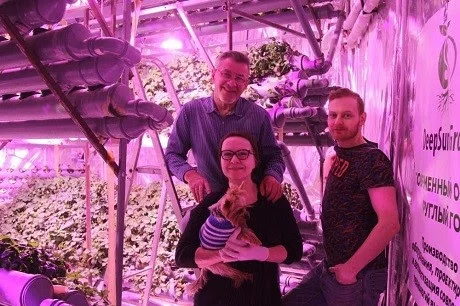
The Orlov family started an unusual business two years ago. Despite Siberian frosts, they successfully grow strawberries year-round with the help of their own engineering inventions
Growing Strawberries In The Basement of a Block of flats
The Orlov family started an unusual business two years ago. Despite Siberian frosts, they successfully grow strawberries year-round with the help of their own engineering inventions.
In the basement of a regular 5-storeyed block of flats, the city farmers grow their berries, without a single ray of sunshine and natural warmth.
“The agricultural method is based on hydroponics and aeroponics”, explains Alexander Orlov, demonstrating the small farming facility. “These are important factors, but lighting is even more vital. The technology was worked out by my son; it is his know-how that formed the basis of our business”.
The family have various technical devices, but the main factor is lighting, due to which the berries get all the needed warmth and light for growth, aroma and color.
The inventive son, Kirill Orlov, is a professional engineer, who specialized in applied mathematics in Tomsk University. His lamps allow for reduced energy consumption and stabilize the temperature regime. One lamp lasts 7.5 days, if used 18 hours a day. With these lamps, strawberries grow and ripen faster, productivity increases up to four times.
“I had already retired when one day my son came and suggested growing strawberries. He experimented with light before and grew greenery like onions, parsley and spinach quite successfully. The volume wasn’t big and nobody had thought he was going to start big production”, shares the father, Alexander Orlov.
The local government supported the idea; they liked the systematic approach and the idea of growing and selecting strawberries in Tomsk all year round. The first grant that was received for the complex creation came from the local government. Currently the growers have three rooms, two of which are occupied with beds for 3000 berry bushes and various systems, and the third one contains the enterprise management system: water conditioning, fertigation and irrigation unit and other equipment.
“We get a lot of positive feedback from customers on our Instagram page, both private persons and restaurant business representatives. Parents write that they are happy that our strawberries cause no allergic reaction with children”, shares Mrs. Alla Orlova.
“Our dream is to create the best greenhouse not only in Siberia but also in the world”, shares Kirill. “We have an opportunity to pick a suitable land plot for the construction and we want to show that Siberia can boast the most advanced agricultural technologies and contemporary profitable greenhouses. Any plant can be grown with our technology, not only strawberries but also greenery and tulips that we purchase in huge amounts form the Netherlands. I feel we can do it with the support of the family. Further development will be related to expansion of our interest and gradual fulfillment of the plans”.
The vegetation period in Orlov’s greenhouse lasts 45 days, after which harvesting is done every day all year round. 40 thousand bushes can produce 40-60 tons of berries per year.
Source: rg.ru
Publication date: 5/15/2019

BREAKING NEWS: Infarm Raises $100 Million To Expand Its Urban Farming Platform To The U.S. And Beyond
JUNE 11, 2019
Infarm @ Auchan, Luxembourg
Infarm, a Germany-based startup that distributes “modular farms” to grocery stores and other urban locations, has raised $100 million in a series B round of equity and debt funding led by Atomico, with participation from existing investors including Balderton Capital, Cherry Ventures, Astanor Ventures, and TriplePoint Capital.
The CO2 emissions produced by growing, farming, and transporting food around the world is significant, with some estimates pegging the food footprint(“foodprint”) at around one-quarter of the total global greenhouse gas emissions. By creating a system of vertical micro-farms in cities, which entails producing food indoors within a stack of glass cases in a controlled environment, Infarm is pushing to reduce the environmental burden that food production has on the planet.
Founded out of Berlin in 2013 by Osnat Michaeli alongside brothers Erez and Guy Galonska, Infarm has partnered with a number of food retailers across Europe, including Amazon Fresh, Metro, Edeka, Migros, Casino, Auchan, and Intermarche to install vertical indoor farms inside their outlets.
Infarm @ Metro in France
Infarm said that its technology is designed to be built and distributed in any available space, and there is no need for a centralized warehouse or other infrastructure setup costs. The farms can be found in restaurant kitchens, supermarket aisles, and warehouses, and are designed to scale and make cities self-sufficient in producing their own plant-based food.
Each farm is “connected,” with sensors collecting and recording growth data, while they can be controlled remotely by the Infarm platform that “learns, adjusts and improves itself continuously,” according to the company.
Infarm
Prior to now, Infarm had raised nearly $34 million, and with another $100 million in the bank, it’s now gearing up to add additional markets to its roster, including the U.K., where it’s launching in September. The company said that it’s also in “advanced discussions” with retailers in the U.S. and Japan, while it plans to invest in various R&D, commercial, and operational initiatives.
“Infarm was founded with an ambitious vision to feed the cities of tomorrow by bringing farms closer to the consumer, and with this round of funding we aim to grow our presence further — sowing the seeds for a delicious and sustainable food system in urban centers across North America, Asia, and Europe,” noted Erez Galonska, Infarm cofounder and CEO.
Vertical
Infarm isn’t alone in its quest to introduce indoor farming to market. U.K. supermarket giant Ocado yesterday announced it was investing $22 million and joining a vertical farming joint venture, while back in December Alphabet’s VC arm GV led a $90 million investment in New York-based Bowery, taking its total funding to nearly $120 million. And San Francisco-based Plenty has raised north of $200 million for a similar proposition.
For Atomico, Infarm represents the latest in a line of “sustainable”-focused investments. Just yesterday, the London-based VC firm announced it had led a $25 million investment in Norway’s Spacemaker, which is working toward optimizing urban development projects with AI-powered simulation software, to cater to the expected population surge over the next few decades.
“The consumption of fresh produce is a huge environmental burden on our planet, one that will only increase as urban populations increase,” added Atomico partner Hiro Tamura, who now joins Infarm’s board of directors. “This is not sustainable long-term. Infarm has perfected the holy trinity when it comes to solving this massive global problem; their unique technology makes fresh food production sustainable, their solution has a global audience which means they have operated internationally from day one; and this has resulted in the company being a commercially attractive proposition for all stakeholders in the supply chain.”
Infarm also fits into a broader sustainability investment trend that has seen startups across urban mobility and waste reduction rake in investor cash. And in the food realm, meat substitute company Beyond Meat raised $122 million in funding ahead of its IPO last month — the company’s shares are currently red hot.

New York City: Elected Officials, Urban Ag Coalition Rally for Development of Comprehensive Urban Agricultural Plan
Urban Ag Coalition Rally for Development of Comprehensive Urban Agricultural Plan
Council Member Espinal,
Brooklyn Borough President Adams,
Elected Officials,
Urban Ag Coalition Rally For
Development of a
Comprehensive Urban Agricultural Plan
WHO: Council Member Rafael Espinal, Brooklyn Borough President Eric Adams, Urban Farmers, Community Gardeners
WHEN: Tuesday, June 11th, 10:30am
WHERE: Jacob Wrey Mould Fountain in City Hall Park, New York, NY 10007
WHAT: Elected officials, supporters of urban agriculture, environmental allies, along with leaders of the City's community gardens will rally in City Hall Park for the development of a comprehensive urban agriculture plan prior to the City Council Hearing on the legislation.
In lifting restrictions and clearing up land use policy, the plan will promote the expansion of large-scale urban agriculture, making it easier for the City to protect New Yorkers' health and the environment while bolstering the economy. Advocates have long argued that the expansion of green spaces and access to local food is necessary in closing the 'freshness gap’ in the under-served communities of the city.

BREAKING NEWS: Ocado Invests In 'Vertical Farms' To Grow Produce Near Distributors
£17m Investment Includes Formation of Venture to
Develop Systems to Sell to Other Retailers
Jones Food’s vertical farm in Scunthorpe, which grows fresh herbs under lights in a warehouse. Photograph: Holly Challinor
10 Jun 2019
Ocado is investing £17m in high-tech farming with the aim of growing herbs and other produce alongside its robot-run distribution centres around the world.
The online grocery specialist has bought a 58% stake in Jones Food, a “vertical farm” that grows 420 tonnes of basil, parsley and coriander a year in stacked trays under 12km (7.5 miles) of LED lights in a warehouse in Scunthorpe. The grower currently supplies businesses such as sandwich maker Greencore.
Duncan Tatton-Brown, finance director of Ocado, said the group could open at least 10 more similar farms within five years. He said it could take less than a year to build a Jones Food facility and the two companies were now considering how Ocado’s expertise in robotics and AI could be used to make Jones Food more efficient.
James Lloyd-Jones, chief executive of Jones Food, said the group’s Scunthorpe farm recycled all its water, did not use pesticides and was powered by renewable energy, such as wind turbines and solar panels.
Ocado’s £17m investment also includes the formation of a new joint venture – Infinite Acres – with US-based vertical farming business 80 Acres and Priva, a Netherlands-based horticultural technology provider, on a four-year project to develop off-the-shelf vertical farming systems that can be sold to retail and other businesses worldwide. The 80 Acres farms, which are based in Ohio, Arkansas, North Carolina and Alabama, are able to grow tomatoes and courgettes as well as leafy salads and herbs, without using pesticides.
Tim Steiner, Ocado’s chief executive, said: “We believe that our investments today in vertical farming will allow us to address fundamental consumer concerns on freshness and sustainability and build on new technologies that will revolutionise the way customers access fresh produce.
“Our hope ultimately is to co-locate vertical farms within or next to our [distribution centres] and Ocado Zoom’s micro-fulfilment centres so that we can offer the very freshest and most sustainable produce that could be delivered to a customer’s kitchen within an hour of it being picked.”
Ocado Zoom is a new one-hour delivery service offering a more limited range of goods, launched earlier this year and being trialled in west London.
Only eight people work at the Jones Food facility, where the herbs are grown hydroponically – getting all the nutrients they need without soil. The plants, the first of which were only grown last year, are not touched by humans from seed to bagging ready for stores. A robot called Frank stacks trays of plants ontoon to towers of shelving while machinery automatically harvests them when ready.
Every element inside is monitored to ensure it is clean and primed for growing the herbs quickly. Anyone entering must wear protective clothing including overalls, wellies and hairnets and step through an air shower that blows off any dust. Air is filtered to ensure insects cannot enter.
Ocado currently sells Waitrose groceries via its website in the UK and provides distribution for Morrisons’ website. Next year it will swap Waitrose for Marks & Spencer under a £750m joint venture, raising the prospect of specialist robot farms serving the 134-year-old high street retailer.
Ocado has sold its hi-tech robot grocery picking and packing technology around the world to retailers wanting to develop online businesses. In one blockbuster deal it is to build 20 warehouses for US supermarket giantKroger. It has also struck grocery delivery technology partnerships with Groupe Casino in France, Sobeys in Canada and ICA Group in Sweden, creating a ready-made potential market for its robot farms
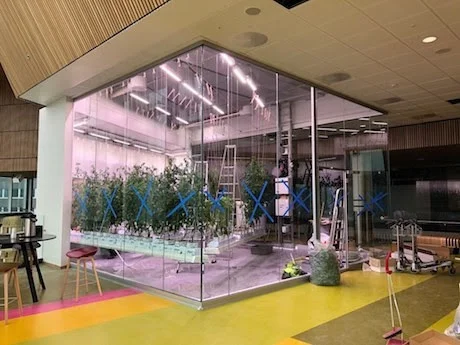
Norway: Vegetables Grown At Stavanger Airport Arrival Hall
On Friday, April 26, the official opening of the new arrival hall of the Stavanger Airport took place. The hall is unique in comparison to other halls. The passengers might be most surprised to see a greenhouse, where organic vegetables are grown
On Friday, April 26, the official opening of the new arrival hall of the Stavanger Airport took place. The hall is unique in comparison to other halls. The passengers might be most surprised to see a greenhouse, where organic vegetables are grown.
It’s part of the plan of the airport to gradually introduce more sustainable and ecological solutions. They have also announced that they will become completely energy self-sufficient by 2025.
The development of the new arrivals hall, almost 3000 square meters in size, will certainly surprise those visiting the airport - from the opening onwards, a greenhouse full of tomatoes, which are supposed to go to a restaurant on the same floor, awaits the passengers. In this way, Avinor, which serves most airports in Norway, wants to combine transport activities with caring for the environment.
"For many years, we have been making our own honey, and we have just planted the first apple and elderberry trees, so we’ll be making elderberry syrup. In addition, we will be testing how to grow food in densely populated areas, starting by growing tomatoes at the terminal", says Ingvald Erga from the airport in Stavanger.
Special sections of the airport have also been dedicated to testing and research in the field of agriculture and energy.
Representatives of the airport have also announced that these are not all the changes that await them. In the coming years, they are planning the construction of almost 20,000 square meters of solar panels around the building, as well as considering the use of wind energy - that way, the airport wants to ensure it's energy self-sufficiency by 2025.
Source: www.mojanorwegia.pl
Publication date: 5/29/2019

Hydroponic Lettuce Farm Offers Room To Grow
By JESSE ADCOCK
JADCOCK@ADIRONDACKDAILYENTERPRISE.COM
PUBLISHED: MAY 12, 2019
A column of lettuce is ready to receive transplants at Dandelion Farms in Saranac Lake.
JESSE ADCOCK/ADIRONDACK DAILY ENTERPRISE
Aurora White, owner of Dandelion Farms in Saranac Lake.
SARANAC LAKE — Inside a 40-foot cargo container at the old village landfill site near McKenzie Pond Road, Aurora White transplants lettuce into columns under the glow of fuchsia grow lights. Hundreds of lettuce transplants grow vertically inside the container, hanging from dozens of columns, gravity fed by tubes full of water and green and orange nutrients.
She calls this place Dandelion Farms, even though she mainly grows lettuce.
Last April, the Saranac Lake village Board of Trustees approved a lease for the container, and last month, they approved a one-year lease extension, for $1.
After a year on site, White’s hydroponic cargo container farm is growing and selling about 25 to 30 pounds of lettuce a week.
“Right now we’re harvesting about 400 to 500 plants a week,” White said. “We could do probably twice as much as we do now.”
In order to double her yield, all she needs is more regular customers.
White said she and Master Grower Jennie Evans spend about 10 hours a week at the facility, otherwise monitoring and adjusting the inside environment from an app on their phones.
The temperature remains around 68 degrees while the plants are active and about 59 degrees during the plants’ rest period.
“The trailer is rated down to negative 40,” White said. “So this last winter was kind of the testing period. We wanted to see if it was really rated down to negative 40, and it worked.”
The operation uses about five gallons of water per day — as both the air conditioning system and dehumidifier recycle fluid from the air.
Water is the one thing they’ve got to bring into the site. White said they haul in a 300-gallon tank every three months or so. They paid to get the electricity hooked up last April.
White said the operation is about halfway to profitability. With their regular sales, they pay for the trailer itself but not the utilities and the staff.
Currently, she said her two largest and regular customers are the Adirondack Medical Center and Fiddlehead Bistro, both in Saranac Lake.
“It has really allowed us to incorporate more fresh greens year round without going to the commercial lettuces that you traditionally see in the off-growing seasons here,” said Carl Bowen, Adirondack Health’s director of nutritional and environmental services. “It has helped us stabilize our menus with fresh vegetables all year long.”
That’s why White said she started researching the idea. She wanted to find a way to grow fresh greens throughout the year. That led her to the cargo container from Freight Farms.
“Right now we grow lettuce and arugula and spinach,” White said. “Once we get those things down, because we’re still in a learning phase, then we’ll probably bring in some herbs and start growing some herbs.”
It all starts in a small plug of peat and adhesive.
“That’s the only growing medium it needs throughout the whole life cycle of the plant,” White said.
Once large enough to be transplanted, White and Evans place the plants into columns, sandwiched between two bars of foam. The plants then grow sideways and are watered and fed from the top the of the column.
Bowen said that because of how the lettuce is grown, it makes it easier to process at AMC.
“When we received their samples and tried them, they were beautiful products,” Bowen said. “There’s not even any dirt to worry about because of how it’s grown. It comes in clean, we rinse it again, and that’s it.”
Additionally, the lettuce columns can be arranged with different blends.
“We can actually customize a person’s blend,” White said. “Fiddlehead Bistro gets what’s called an ovation blend. So we take all the different lettuces, and we mix them all together. And when we harvest we have a custom blend of salad.”
In 2018, Dandelion Farms also sold some of its greens at the Saranac Lake Farmers Market.

Q&A: Kim Hookway On Buckeye Fresh’s Giant Eagle Deal
Buckeye Fresh’s co-founder and president explains why the deal makes sense for the business, if it has met her expectations and why it’s important to market locally.
March 25, 2019
Chris Manning
Photo: Allison Krieg
In late 2018, Buckeye Fresh — a Medina, Ohio, vertical farm — expanded its relationship with a one-year deal with Midwest grocery chain Giant Eagle. As part of the agreement, some of Buckeye Fresh’s lettuce blends will be sold in clamshells designed with Giant Eagle’s Market District branding, marked as “grown locally” and placed in endcaps reserved for locally grown products at different stores.
“It’s been great,” says Buckeye Fresh co-founder and president Kim Hookway. “I think it was better received than they anticipated.”
Produce Grower: Why do you think the program has gone better than expected?
Kim Hookway: So going into a new product launch, and not having any data points whatsoever, they gave us a certain projected number [that we’ve beat]. Promoting it through ads I think is helping. You have those shoppers that shop those flyers weekly and when you see a good deal on a great product, if you’re like most consumers you’re going to jump on that. A lot of them have been, which has been great. Their goal this year is to promote this Market District brand and see how far they can take it. And so we have ads planned every month. It’s been good.
PG: Has this deal lived up to your expectations?
KH: It’s definitely exceeded ours. Although I will tell you, going in the beginning, they gave us their numbers, which I thought were very conservative. But I guess from the initial launch I thought their numbers were light. So I guess the numbers to me, not that I knew what the numbers would be exactly, but I knew they were a little conservative only because we had Buckeye Blend [Buckeye Fresh’s main lettuce mix] out there under our brand, so it was already a product that I kind of had history on myself of what Giant Eagle and other stores were taking. We do have another product for them that was introduced [Summer Crisp, a crunchier lettuce] — I didn’t have a good feel on that one. But I did anticipate Buckeye Blend would be a winner.
PG: When you’re working with a brand, how important do you think it is that they know that you’re a local business and market that to the end consumer?
KH: I think it does matter, and I think the goal is, on their marketing side, to have more about the farmers and the growers — a little side note. Whether it’s a display in the store of how things are done and where things are located, I think there is more of an education focus that will be placed on this whole local branding. So I think there is more to come, I don’t think this is it.
Vertical farms Lettuce Local food Retail Grocery Instagram

Many Unanswered Questions, Concerns About CBD Products, Says FDA Acting Chief At First Public Hearing
The acting head of the Food and Drug Administration launched the agency’s first hearing on CBD products Friday with a laundry of list of questions about cannabidiol, better known as CBD, which is already being sold in pills, tinctures, skin lotions, sodas and dog food
You can buy CBD in oils, supplements, soda, even dog food. But most of them violates federal food and drug regulations, prompting concerns over safety and deceptive marketing.
A jar of CBD gummy candies at The Cannabis World Congress & Business Exposition trade show in New York City. REUTERS/Mike Segar (Mike Segar/Reuters)
By William Wan
May 31, 2019
The acting head of the Food and Drug Administration launched the agency’s first hearing on CBD products Friday with a laundry of list of questions about cannabidiol, better known as CBD, which is already being sold in pills, tinctures, skin lotions, sodas and dog food.
How much of the cannabis extract is safe to consume daily, he asked at the jam-packed, all-day hearing at FDA headquarters in Silver Spring. How will it interact with other drugs? What if a consumer is pregnant? What is CBD’s effect on children? What happens if someone takes it over the course of years?
Acting Commissioner Norman “Ned” Sharpless said answers to most of those questions are still unknown despite the popularity of many CBD products.
“There are important reasons to generally prohibit putting drugs in the food supply,” Sharpless said. And cannabis extracts like CBD “are no exception.”
During the 10 hours of testimony that followed, hemp growers, start-up businesses, academic researchers and consumer advocates argued about how FDA should regulate the already booming CBD industry. Some demanded strict oversight. Others — especially companies with millions at stake — lobbied for looser regulation.
But the common theme among them all: FDA needs to figure out its rules sooner, rather than later.
Even though FDA’s regulations make adding CBD to food and supplements illegal, the CBD industry has exploded in recent years with thousands of unproven products flooding the market. Companies have trumpeted the compound’s alleged health benefits — claiming it can reduce anxiety, pain and insomnia and treat conditions from Parkinson’s disease to cancer. But almost all such claims lack rigorous scientific proof, prompting concern among health officials and scientists about safety and deceptive marketing.
Without clearly defined regulations, no one knows for sure how much CBD is in products available on the market, or how safely the chemical compound is being manufactured and incorporated into them.
“It’s a wild West kind of environment right now,” said Yasmin Hurd, a psychiatry professor at the Icahn School of Medicine at Mount Sinai in New York City, who has researched CBD for almost 10 years. “I’m inundated every day with patients wanting to know how much CBD they should take, which ones to buy. But we don’t know what’s in the stuff now being sold. . . . We’ve had this explosion without guidance to the public or regulation.”
How the FDA will choose to regulate the industry and how long it will need to figure that out remain unclear. Those prospective regulations have become a fierce battleground: More than 400 people and groups applied for a chance to speak at Friday’s hearing, with roughly 120 speaking slots parsed out.
CBD can be derived from the marijuana plant or hemp. Congress in December legalized hemp as part of the Farm Bill, clearing the way for industrial production of the nonintoxicating compound from that plant. But the FDA quickly made it clear to companies that while hemp was legal, CBD extract remained under government regulation. In recent months, the agency has sent warning letters to some companies that it said were “illegally selling CBD products that claimed to prevent, diagnose, treat, or cure serious diseases, such as cancer.”
Billions are at stake in how the FDA decides to regulate the compound, with business analysts projecting the industry could grow to be worth as much as $22 billion in the next five years.
Market research firm New Frontier Data estimated that sales of CBD products in the United States more than tripled between 2014 and 2017, to $367 million.
Retailers like CVS and Walgreens have announced plans to sell CBD lotions and creams. Food and beverage companies have eagerly jumped in, too, with burger chain Carl’s Jr. selling CBD-infused burgers.
At Friday’s hearing, hemp growers argued that the CBD market represented thousands of jobs and a booming source of growth for the economy. CBD retailers relayed anecdotal evidence of patients who found relief to longstanding medical problems in their products.
Health advocates spoke equally passionately about the dangers posed by an unfettered CBD market.
So far, the agency has approved only one CBD-based drug, Epidiolex, which treats severe forms of childhood epilepsy.
In a phone interview, Orrin Devinsky, a New York University researcher who helped develop the drug, said the government’s haphazard approach has been frustrating to scientists trying to help suffering patients.
“You have researchers having to struggle through enormous expense and obstacles to study CBD,” he said. “At the same time, you can walk down to your neighborhood bodega and buy a CBD soda off the shelf. The nation and marketplace are in a horribly confused state.”
So far, treating epilepsy is the only application for CBD supported by rigorous scientific data, Devinsky said. Though less rigorous, some promising findings have emerged for CBD’s possible effect on anxiety and inflammation.
“The thing we worry about is someone with cancer forgoing real treatment like chemo and taking CBD instead,” said Devinsky, a neurology professor at NYU.
At Friday’s hearing, scientists and consumer advocates also warned that for the thousands of CBD products being sold, there is little data to guide dosage levels, expiration dates, and manufacturing protocols to make sure they don’t also contain other elements like tetrahydrocannabinol, or THC, the main psychoactive component in marijuana, which has been found in some CBD products.
Whatever the FDA decides, many in the industry are pressing for it to move quickly.
“I’ve talked to beverage companies and they want to get into this space, but they are not interested in just throwing themselves headlong into an area without science and engagement with regulators,” said Coleen Klasmeier, a former FDA staff lawyer and now partner at law firm Sidley Austin.
“For years now, the agency’s position has been just to throw up their hands and say it’s a confusing issue,” said Daniel Fabricant, a former FDA official overseeing dietary supplements, who is now chief executive of the Natural Products Association representing the supplement industry.
In addition to Friday’s hearing, the FDA has set a deadline of July 2 for written comments on the issue. It also convened a working group led by Deputy Commissioner Amy Abernethy to explore ways CBD products might be sold legally, the impact of such products on public health, and whether new FDA rules or congressional legislation may be needed.
In a string of tweets on Friday, Abernerthy summed up main points she and FDA officials were hearing over and over at the meeting: “Key questions about product safety need to be addressed. Data are needed to determine safety thresholds for CBD...There are both positive supporters of cannabis-cannabis derived products including CBD and also concerned citizens worried that widely available products can be harmful.”

Micro Farm, Macro Impact
March 25, 2019
Brooke Bilyj | Photography by Erin Elliott, except where noted
Micro Farms in Nappanee, Indiana, Hopes to Revolutionize Food Production With its Patented Hydroponic System.
From left to right: Nick Graber, Steve Kiefer and Dion Graber
Nestled in the heartland of northern Indiana’s Amish country sits a shimmering glass greenhouse where fresh produce is grown, 365 days a year, without any pesticides or herbicides. Although the facility occupies a mere quarter of an acre, the owners of Micro Farms hope to revolutionize global food production with their innovations.
“Our big-picture goal for Micro Farms is to develop technology and growing systems to provide wholesome food to people globally,” says Loren Graber, who established the hydroponic greenhouse about five years ago.
“There are too many people who go to bed hungry,” adds Dion Graber, Loren’s son and head grower. “With all the technology and resources available, we should be able to feed them.”
Building on a long farming history, the Graber family has been producing food on this property for generations. Back in the ’80s, before Dion was born, Loren ran the family’s corn, soybean and dairy farm in Nappanee, Indiana. One day, he jokingly mentioned to the farm’s agronomist, Steve Kiefer, that he would start a greenhouse operation someday.
But then, soon after Dion was born, milk prices plummeted — forcing Loren to find work in another field. At the time, he didn’t realize that his new job in vinyl fencing would inspire the innovation to bring his greenhouse to life.
“Since he was in the vinyl business and he has PVC connections, vertical farming was right up his alley,” Dion says. “He’s always been an inventor at heart, and he has multiple patents. He just loves thinking outside the box and trying to come up with new things that are more efficient.”
Leveraging his inventive curiosity, his knowledge of vinyl and his drive to make traditional agriculture more efficient, Loren designed and patented his own vertical hydroponic/aeroponic tubes. He asked Kiefer to team up with him again, and they established Micro Farms in late 2013 with the dream of farming differently. Dion jumped onboard as head grower, and several years later, his younger brother Nick joined the family business to execute their father’s dream.
Lettuce growing at Micro Farms
“Vertical” integration
Loren considered using traditional, single-layer hydroponic systems that used floating rafts — deep water culture (DWC) — or the nutrient film technique (NFT), where nutrient-rich water circulates past the bare roots of plants in enclosed channels. But these horizontal layouts required too much space — pointing him toward vertical farming instead.
“You get so much more product per square foot when you grow vertically,” Dion says. “We have 320 tubes in a 4,000-square-foot area, and we can fit 46,823 plants in that 4,000 square feet. That’s roughly 10 plants per square foot.”
Micro Farms’ “Verti Tubes” are 12 feet tall and eight inches in diameter. Loren’s patented design features removable growing cups and trays that pop out of the tube for cleaner, easier harvesting. Prongs in each cup hold a foam cube in place to support the plant’s roots, and a small groove in the bottom of each cup channels water down as it trickles through the tube.
“The biggest thing that separates us when it comes to our Verti Tubes is the removable cup,” Dion says. “Most of them are molded in and you can’t take them out, so our design is better for cleaning purposes. It’s easier to harvest your plants, because if the roots are too long, they’ll get caught when you try to pull them out.”
The foam cubes can be removed with the roots still intact, allowing Micro Farms to harvest and sell living lettuce with a shelf-life of at least two weeks — leaving minimal cleanup behind.
Micro Farms’ Verti Tube Home Growing System
Finding the right mix
The Grabers broke ground in fall 2012, and then a team of builders from Rough Brothers constructed the Venlo greenhouse in 2013. The glass structure contains a 3,000-square-foot head house for seed-starting, a 4,000-square-foot space filled with Verti Tubes, and another 4,000-square-foot space for vertical vine crops.
Dion didn’t have any experience with hydroponics, so he and Kiefer attended the Controlled Environment Agriculture Center at the University of Arizona for a “quick crash course” that packed “six months’ worth of college courses into five days, and then another four months in two days,” he says. “That’s where my knowledge started, but at least 80 percent of my growing knowledge is just hands-on.”
When Dion started growing, he experimented with 23 varieties of leafy greens that he seeded weekly. Through trials, he whittled that collection down to 10 varieties, based on what grew and sold best.
The front half of the greenhouse is dedicated to leafy greens like butterhead and oakleaf lettuce, kale and pak choi grown in Graber’s hydroponic/aeroponic Verti Tubes. In the back half, vine crops like tomatoes, red bell peppers and snacker cucumbers are strung up toward the ceiling from hydroponic Bato buckets below — which are filled with recycled glass Growstone that can be rinsed and reused.
Dion and Nick continue to explore new varieties together — switching up greens in the summer to include basil and other heat-loving plants. They’re even trying strawberries in the Verti Tubes.
“We’re constantly experimenting,” Dion says.
Micro Farms grows tomatoes in addition to its Verti Tube-grown lettuce.Photo: Brooke Bilyj
Watering the natural way
In addition to Loren’s innovation, the design of the greenhouse also drives efficiency at Micro Farms.
For example, each peak of the Venlo greenhouse roof has a vent on each side. “Whichever way the wind blows, the opposite side opens, so you don’t have a dramatic change in temperature,” Dion explains. “And then every valley has a gutter where we collect rainwater, which is stored in a 25,000-gallon tank under the floor of the headhouse.”
The roof of the warehouse next door also collects rainwater to supplement the operation. They have access to well water, if needed, but they rarely need to tap into that supply.
“The plants just respond better to rainwater,” says Dion, who also uses an O2 Grow system to “supercharge” the water with dissolved oxygen. “We’re trying to imitate exactly what a plant would get out in the ground, but with no soil.”
To that end, Kiefer formulated a mix of granular fertilizers mined from the ground — including Epsom salt, potash, potassium nitrate, monopotassium phosphate and calcium nitrate — that’s added to the water.
Building on a long farming history, the Graber family has been producing food in Indiana for generations.Photo: Brooke Bilyj
Bugging out for pest control
To keep greenhouse insects in check, Dion and Kiefer rely on beneficial bugs to provide biological pest control at Micro Farms.
“We try to keep our population up, so when pests come, we’re ready for them,” Dion says. “Pests seem to multiply quicker than your beneficial bugs, so we’re constantly ordering them.”
Dion regularly releases parasitic wasps to control pesky aphids. Meanwhile, small sachets of swirski mites hang from the plants, inviting the tiny predators to go after the eggs of thrips that can threaten crops. Beneficial insects are released once or twice a month, negating the need for sprays.
“One thing that separates us is that we do not spray any pesticides or herbicides on our plants,” Dion says. “We don’t even have to rinse our produce after harvesting, because nothing was sprayed on it.”
Ronda Kuhns, greenhouse worker at Micro Farms, harvests lettuce from its Verti Tubes.
Harvesting fresh for market
Using scissor lifts to access crops all along the 12-foot-tall tubes, Micro Farms employees harvest produce daily. While some is sold fresh to local restaurants and retail customers, Micro Farms also sells produce through an online farmers market called Market Wagon.
Founded by a fellow former dairy farmer, the online platform allows customers throughout the state to order locally grown or handmade products from various vendors, who get to set their prices and availability weekly. Then, orders are either delivered directly to consumers’ doorsteps or to local pickup points.
There are too many people who go to bed hungry. With all the technology and resources available, we should be able to feed them. — Dion Graber
Every Thursday morning, Dion drives a truckload of produce to the Market Wagon hub in Indianapolis, two hours south of Micro Farms. On the way home, he swings by another hub in LaPorte, an hour west. At each hub, he distributes orders into customers’ bags, which are delivered after every vendor drops off their goods.
Market Wagon extends Micro Farms’ reach across the northern half of Indiana. But word travels fast in the small, rural town of Nappanee — and local consumers started asking how they could get fresh hydroponic produce, too. So last November, Micro Farms began selling to the public on Saturday mornings from 9 a.m. to noon.
“At 9, you’ll see half a dozen buggies and a dozen cars in the parking lot,” Dion says. “Local people have responded very well to our products.”
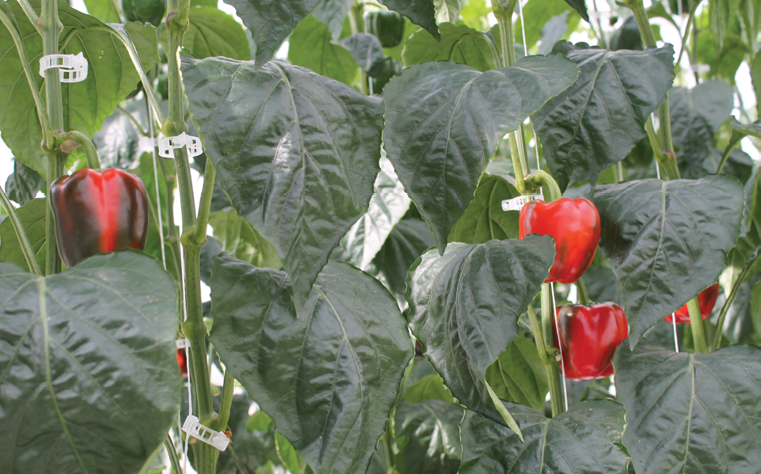
Photo: Brooke Bilyj
Looking to the future
The Graber family is eager to share their hydroponic innovations with other growers. The first phase of this long-term plan is their home growing unit, which is slated to hit the retail market later this year.
A smaller version of their greenhouse Verti Tubes, the home hydroponic units, are mounted on a rolling cart that can be wheeled outside. Or, the unit can sit in a kitchen, using an optional LED strip and rotating function to provide sufficient light inside. The home unit features Loren’s patented removable cups and trays, allowing consumers to hydroponically grow 24 plants with minimal mess or maintenance.
Looking even further into the future, the Grabers’ dream of improving food production around the world by providing greenhouse supplies, resources and knowledge to communities in underserved nations like Haiti and Africa, where they’ve been involved in mission work.
“We want to teach other people how to grow. Ultimately, our big goal is to feed the hungry by educating them and setting them up for success,” Dion says. “Because our tubes maximize product per square foot, we think it could definitely make a difference.”
Brooke is a freelance writer based in Cleveland.
Vertical farms Irrigation Hydroponics Aeroponics Cucumber Lettuce
Kale Bok choy Basil Pepper
CANADA: Truly Northern Farms Establishing 23,000-Square-Foot Indoor Growing Facility
New Industry, Jobs Coming to Opasatika
05-17-19
by: Lindsay Kelly
Truly Northern Farms is establishing a new indoor hydroponic growing facility in Opasatika, about 30 minutes west of Kapuskasing. (Truly Northern Farms photo)
A freshly established hydroponic farming operation is bringing the promise of new industry and employment to the small community of Opasatika.
This spring, Truly Northern Farms (formerly Smart Greens-Sudbury) will establish the first crops of lettuce and basil inside a 23,000-square-foot growing facility that was previously used for cultivating mushrooms.
Located about a 30-minute drive west of Kapuskasing, the Town of Opasatika has a population of about 200 people, but no major industry to sustain it.
The mushroom facility had sat vacant and unused for three years before Stéphane Lanteigne was approached by the owner about the building’s potential.
“We went up there, and the amount of infrastructure that’s in that building is unreal,” said Lanteigne, who now owns and operates the facility with his partner, Jeremy Gallanders. “So for us, we’re able to launch at a significantly lower price than if we were building up from new.”
With 90 per cent of the needed infrastructure already in place, the cost of production hovers around $3 per plant, Lanteigne said.
That’s a huge decrease from what Lanteigne and his wife, Erin Rowe, see at their hydroponic container farms in Chelmsford, outside of Sudbury, where the per-plant cost is about $63.
Since the couple began growing kale there in 2017, a strong market has developed for their product, which they sell to local restaurants and grocery stores, and at the local farmers market.
But early on in the process, the couple quickly realized that this type of “boutique” growing was only suited to small, specific crops, and they were eager to explore farming on a larger scale.
“We're not moving away from kale – we still have a healthy market for kale – but we very much want to expand,” Lanteigne said.
The Chelmsford operation requires constant monitoring to ensure the plants are receiving optimal levels of water, nutrients, and light. But the Opasatika operation will take a different approach to growing that will be much less labour-intensive.
Seedlings will be placed into long metal racks, which float on a bed of water, and the entire structure moves around like a giant conveyor belt as the plants grow. Once they’re ready to harvest, the entire plant is plucked from the rack and packaged for shipping.
“You buy a live lettuce plant or a live basil plant,” Lanteigne explained. “That means it gets packaged with a little bit of water on the roots, so it literally stays living until you eat it. It’ll be even fresher than what we’re doing right now in Sudbury.”
They key is the water, he noted. Because the operation uses such a large volume of water, the plants don’t have a chance to deplete its nutrients. That means the water can constantly be recirculated, and Lanteigne said they’ll only have to check their water tanks once weekly instead of twice a day.
At 70 feet long, four feet wide, and 12 feet high, the racks can hold thousands of seedlings at a time. Initially, Lanteigne estimates they’ll be harvesting about 10,000 to 20,000 heads of lettuce every week, along with 10,000 basil plants. And that’s just using the one-third of the facility that’s ready to go.
An estimated six to eight harvesters will be needed to work at the facility, and Lanteigne said he already has a list of names of people eager to work there.
For a community of 200, where the closest industry is a half-hour away, eight full-time jobs will make a huge impact on the economy.
Though their goals are small in the interim, Lanteigne said Truly Northern eventually hopes to target the wholesale market.
“We have to make sure that we can grow well and consistently before we start targetting the Independent (Grocers) and Metros,” Lanteigne said.
Following excitement over renewed activity at the former mushroom facility, Lanteigne has fielded enthusiastic phone calls from city officials in nearby municipalities eager to discuss what possibilities their aging, unused buildings could present.
Lanteigne emphasized that it was the existing infrastructure in the Opasatika building that really made the business case for him. But that doesn’t mean other facilities can’t be used for indoor growing, he added; it might just mean using a different business model.
Encouraged about the future of hydroponic indoor growing, Lanteigne said he and his partners are happy to share their knowledge and support the agricultural community where they can. It’s an industry where they see plenty of opportunity ahead for the North.
“We’re feeling really optimistic, and it’s been a lot of work in the last two years, but it’s been really fulfilling,” he said. “I don’t think we see ourselves doing anything differently. We’re exactly where we’re meant to be.”
VA Grow Vertical Farm
KE GrowAir and Orange Climate Agri have combined their expertise in this area in order to develop an ideal growth climate for vertical farming. Their product has been nominated for the Impact category of the GreenTech Innovation Awards, the winners of which will be announced at GreenTech (11 to 13 June)
"Ideal Growing Conditions Wanted 365 Days A Year"
Growers around the world are striving toward the best conditions for achieving ideal growth and production 365 days a year. This includes vertical solutions, as the world needs more production growth per square metre. Vertical farming is really taking off, and there are plenty of innovations, especially when it comes to lighting. Another important aspect here is the growth climate surrounding the plant.
VA Grow Vertical Farm
KE GrowAir and Orange Climate Agri have combined their expertise in this area in order to develop an ideal growth climate for vertical farming. Their product has been nominated for the Impact category of the GreenTech Innovation Awards, the winners of which will be announced at GreenTech (11 to 13 June).
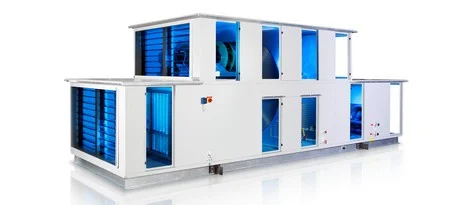
The VA Grow Vertical Farm is an air conditioning system from Orange Climate Agri, equipped with air distribution hoses from KE GrowAir. "It is the combination of our expertise in the utility sector, that we are now translating knowledge and experiences about a good climate into innovations in vertical farming", they explain.
"In vertical farming, a lot of attention is paid to innovations in LED lighting. The climate in the room is often forgotten. The VA Grow Vertical Farm provides the desired temperatures, humidity and ventilation options. With the patented hoses of GrowAir this is subsequently homogeneously distributed."
Every vertical farm requires a customized solution to maintain a constant climate, close to the plant and 365 days a year. "The specific technical installation and associated hoses are viewed and calculated per project, so that each vertical farm is supplied with its desired climate. Production can also improve significantly through optimum growth conditions."
Background of the companies
KE GrowAir specialises in sustainable ventilation solutions for healthy indoor climates and energy savings using textile air distribution systems. Thanks to its patented discharge pattern, it achieves a uniform horizontal and vertical temperature gradient. These advantages and the expertise developed in the air distribution utility sector are now being exploited in the horticultural sector, resulting in a more homogenous climate. "It makes it easier to grow plants in closed, semi-closed and vertical systems", they summarise.
Orange Climate has been supplying utility air handling units since the 1960s, and is the market leader in the Netherlands, trading as OC Verhulst. The company utilises its expertise to help growers, breeders and greenhouse builders achieve the indoor climate they require. Its air handling units are equipped with a wide variety of ventilation options (these could include cooling, heating, dehumidification, humidification or drying). The specific climate conditions are created in a sustainable, energy-efficient way. Some examples include heat recovery with more than 90% efficiency or active recirculation with CO2 retention. It results in stable temperatures and humidity levels that create ideal growing conditions. KE GrowAir’s air distribution systems are then used to distribute the conditioned air evenly.
Unique combination
"By uniting our areas of expertise, our solution guarantees growers the best growing conditions all year round, and frees them from local climatic and geological constraints", the companies say. "It’s an unbeatable combination that ensures optimal growth conditions and significantly better production 365 days a year."
Find both companies during the GreenTech (11-13 June in the RAI in Amsterdam) in stand 08.126.
For more information:
KE GrowAir
info@ke-growair.nl
www.ke-growair.nl
Orange Climate
www.orangeclimate.com
Publication date: 5/29/2019
Best New Field Technology And Best New Indoor Growing Technology
Innovation Award finalists - Part 2
United Fresh announced 48 new products as finalists for the United Fresh Produce Association’s 2019 Innovation Awards. This year’s finalists will compete in seven categories for the title of Best New Product at United Fresh 2019, June 10-12 in Chicago, where attendees will be able to vote for those winners during the trade show.
Earlier, FreshPlaza presented the finalists for Best New Fruit product and Best New Vegetable product, and today we look at the finalists for Best New Field Technology and Best New Indoor Growing Technology.
Best New Field Technology
Automated Storage and Retrieval System (ASRS)
Stemilt Growers, LLC – Booth # 6015
"Stemilt’s new distribution center welcomes a piece of technology they call the “brains” of the operation: the automated storage and retrieval system (ASRS). ASRS is the one-stop-shop for order fulfillment to make the process flawless and speedy, resulting in an experience that is delightful from farm to table."
Produce Plan
Frontera Produce – Booth # 13046
"This technology enhances your supply chain data visualization, actively updates production plans, and protects your crop investment through cultural practice performance monitoring. Soil moisture, heat units and estimated harvest dates per field and lot are just a few examples of how this technology can change traditional farming."
RipeTime
RipeTime – Booth # 18045
"RipeTime has developed world-first patented technology that measures and reports in real-time of ethylene in post-harvest operations from 1PPB. This monitoring and alerting allows post-harvest operators to make decisions to assure the quality of their fruit and assist with prioritizing the load-out operations."
SC iOn™ Trak SC1204
CalAmp – Booth # 18025
"The SC iOn Trak™ SC1204 eliminates the manual processes of automatically logging location and environmental condition data using a wireless gateway (fixed or mobile) that can communicate with several Bluetooth tags for transport and storage applications. The solution is reusable, which helps to increase the technology investment ROI."
Best New Indoor Growing Technology
Hoogendoorn Analytics
Hoogendoorn America Inc. – Booth # 18045
"Our online platform for data storage and data analysis. Convert real-time data into valuable information that can give you the possibility of producing more and better. We use this information to track the growth of the plants and look for the best combination to achieve high yield production."
LivingCube™
Del Fresco Produce Ltd. – Booth # 12027
"The LivingCube™ is a system of automated vertical growing machines that continuously produces living lettuce, living basil and microgreens all year long. It's powered using an off-the-grid electrical cogeneration system, which is environmentally sustainable due to its minimal footprint, reduction in greenhouse gases, usage of recycled water and pesticide-free integration."
Virgo
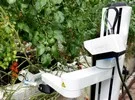
Root AI – Booth # 9028
"Root AI is building autonomous systems that care for specialty crops. Our first product, Virgo, uses the latest advancements in robotic hardware and artificial intelligence software to delicately harvest tomatoes with precision, efficiency, and dependability."
The 2019 United Fresh Innovation Awards finalists will be displayed on the trade show floor at United Fresh 2019 in Chicago, where attendees will have the opportunity to cast their votes for their favorite new and innovative products on Tuesday, June 11 and Wednesday, June 12. United Fresh will announce winners from the Main Stage on Wednesday, June 12 at 2:00 pm at Chicago’s McCormick Place Convention Center.

For more information:
Mary Coppola
United Fresh Produce Association
Ph: +1 (202) 303-3425
mcoppola@unitedfresh.org
www.unitedfresh.org
Publication date: 5/14/2019

The Early Bird Ticket Deal Expires This Saturday, June 15.
The Early Bird Ticket deal expires June 15
this is a super discount!
This ticket includes THREE days of programming, ALL conference digital content, ALL conference lunches and snacks, ALL conference tours and transport, and the Saturday evening Aquaponics Banquet!
Most importantly, you will feel the camaraderie of an aquaponics conference!
See you soon :)
Brian Filipowich, Chairman
Aquaponics Association
TICKET INFORMATION

Startups, Join Us At The Vertical/Indoor Farming Pavilion GreenTech Tradeshow & Café Round Table Talks June 11 - 13, 2019
Agritecture (AGR), FarmTech Society (FTS) , Vertical Farm Institute (VFI) and Greentech RAI are partnering to organize café round table talks with panel discussions and showcase international vertical/indoor farming startups along with established companies at the world's most important horticulture technology fair. This is your chance to visit Amsterdam and share your unique approach to transforming the food system through vertical/indoor farming.
Join us at the Vertical/Indoor Farming Pavilion café where a program of round table talks featuring representatives of the global indoor farming community will be held. All startups accepted will get to join the cafe round table talks where they can pitch and then answer moderator and audience questions about the future of vertical farming! The panels will be moderated by Agritecture's Henry Gordon-Smith, Gus van der Feltz from the FarmTech Society and by Daniel Podmirseg from the vertical farm institute.
“In Amsterdam, we are going big in 2019, with the largest edition of GreenTech to date. Discover products and solutions, inspiring sessions and business opportunities that we know is going to change the way you look at horticulture.” — MARISKA DRESCHLER, DIRECTOR OF HORTICULTURE
Benefits:
10 minute talk at the VF pavilion @Greentech
Be part of a 40-minute Q&A panel about the future of vertical farming after your talk Pre-event blog post about your company on agritecture's
Live social media promotion throughout the event
(Optional) Inclusion in the Vertical/Indoor Farming pavilion at Greentech (small booth) so you can showcase your brand and technology
Airbnb accommodation and uber rides to the venue (June 11, 12, 13) - LIMITED FIRST COME FIRST SERVE
Requirements:
Must be a startup
The registration fee of 750 euros (includes a small booth)
DOWNLOAD THE BOOTH REGISTRATION FORM
You must fill out and submit your registration form within 7 days of being accepted as a speaker at the event.
All completed registrations should be emailed to Thijs van der Meulen at t.vd.meulen@rai.nl

First Clarke Freight Farm Harvest in Massachusetts Exemplifies the Importance of Fresh Food and Superior Food Preservation
Source: Clarke
05/07/19
Clarke, New England’s Official Sub-Zero/Wolf/Cove Showroom and Test Kitchen, once again exemplifies kitchen industry innovation with its investment in a 40-foot self-contained hydroponic farm to exemplify the importance of fresh food as part of a healthy lifestyle. “Our farm was delivered outside our Milford, Massachusetts showroom eight weeks ago and our farmer Francesca Mazzilli has been planting and tending to our crops inside the corrugated shipping container ever since,” said Sean Clarke, president of the family-owned company. “We are really excited about our first harvest happening on May 7th.”
Built by Freight Farms, an innovative Boston-based company launched in 2010, Clarke’s exciting initiative will allow every showroom visitor to go home with a gift of fresh butter bibb lettuce. The farm will also supply fresh produce (delicately preserved in Sub-Zero refrigerators) to be used by the Clarke Culinary Team for cooking demonstrations, events and daily tastings in all three of its showroom locations (Boston Seaport, Milford, MA and South Norwalk, CT.) In addition, every Clarke employee will enjoy a weekly share of the produce to take home for their own families.
Farmer Francesca’s first harvest will include a lettuce mix, mint, parsley, thyme, swiss chard, mixed radishes, red veined sorrel, sorbet mix viola and arugula. She will continue to add new crops to the mix and harvest fresh vegetables every week throughout the year.
“When I learned about Freight Farms, I could think of no better way to exemplify the Sub-Zero and Wolf mission of superior food preservation and preparation than launching a year-round Freight Farm right here,” said Clarke. “As New Englanders, we crave fresh food year-round and many of our own employees can’t wait to get back into their gardens each year. Now we will have fresh produce all year round to cook with in our showrooms and share with customers and employees.”
The arrival of Clarke’s Freight Farm launched their “Live Deliciously” initiative to encourage all members of the design community and the homeowners they serve to remember that kitchens are about gathering to enjoy fresh, delicious meals. As the icing on the cake, Clarke is powering the farm with the solar panels that provide electricity for their entire Milford complex. “We achieved net zero electrical consumption in Milford when we installed 2304 solar panels on our Milford headquarters in 2011,” said Clarke. “It makes it all the more satisfying that we are now also able to power a hydroponic farm from this source.”
For more information on Clarke’s “Live Deliciously” campaign featuring Sub-Zero, Wolf and Cove appliances, visit clarkeliving.com.
About Clarke
Clarke is New England's Official Sub-Zero & Wolf Showroom and Test Kitchen, with locations in Milford, MA, Boston Seaport and South Norwalk. Clarke's hallmark is an exclusive Appliance Test Drive, where homeowners can actually cook on Wolf appliances to best select the models that will enhance their lives. Visitors can see more models of Sub-Zero and Wolf at Clarke than anywhere else in New England.
Clarke sells its brands through a network of authorized retail dealers in all six New England states. In addition, the company also offers Clarke Customer Care, a dedicated Sub-Zero, Wolf, Cove and ASKO repair service that has earned them top customer satisfaction ratings in the U.S. For more information, visit clarkeliving.com.
Indoor & Vertical Farming, Processing & Supply Chain | Containers

Aquaponics Is Coming To France
Widely used in Africa or the United States, aquaponics is now arriving in France. It is a form of market gardening that consists of growing vegetables in water that comes from fish farm tanks
Widely used in Africa or the United States, aquaponics is now arriving in France. It is a form of market gardening that consists of growing vegetables in water that comes from fish farm tanks.
It should not be confused with hydroponics, since in aquaponics, there are no inputs used but only natural products. "It is by feeding the fish that we will indirectly feed the plants," explains Matthieu Geyelin, a market gardener at the Terr'eau farm in Noth en Creuse.
After staying in the middle of trout and carp in fish farming basins, the water loaded with fish effluent is filtered and then assimilated by the plants.
"We will sow directly into the substrate where there is a stream of water passing through," explains Elise Geyelin maraichère, Terr'eau farm. The young plants are then transplanted, not into the soil, but directly into the water enriched by the fish. There is therefore no need for soil or weeding. And apart from root vegetables, everything grows whether it is salads, aromatic plants, tomatoes or strawberries.
Once filtered by the roots, the water flows back to the fish. "It is a significant saving, we will use 85% less water compared to open field market gardening. A technique that is almost unknown in France but which works," concludes the farmers' couple.
Source: france3-regions.francetvinfo.fr
Publication date: 5/28/2019

Aquaponics In The Classroom Sets Up Students For A Growing industry
by Dustin Bonk
May 11, 201
A bed of edibles at UNE's aquaponics facility. (WGME)
Aquaponics is increasingly popular in Maine. It's a way to grow fish and plants at the same time indoors, allowing for a fresh supply of locally grown produce all year round.
Kale, oregano, basil, and more - all thriving inside the aquaponics facility at the University of New England in Biddeford.
"Aquaponics is a way to produce a lot of food in a small footprint virtually anywhere," says Zach Miller-Hope, Assistant Director for Education at UNE and Assistant Lecturer in Aquaculture and Aquarium Science.
He says aquaponics is ideal in urban environments where farm-fresh produce may be further away and in wintry climates when you can't grow locally in the cold weather, like in Maine. With an indoor aquaponics set-up, you can grow fresh fish and vegetables just about anywhere, like on walls and rooftops, which can result in a very efficient use of space to grow food. He adds that aquaponics can often produce food more efficiently than common agriculture in soil.
Miller-Hope describes aquaponics as the "marriage between aquaculture and hydroponics". Aquaculture is the practice of growing fish or aquatic plants, and hydroponics is the practice of growing plants in water instead of soil. Aquaponics combines the two - growing fish and plants in the same system.
The fish waste feeds the plants like a fertilizer, and the plants clean the water for the fish in return. It forms a symbiotic relationship helped along by a bit of mechanical filtration.
UNE's Marine Science Center houses a 600 gallon tank with 15 rainbow trout. It is surrounded by about 1,000 different plants at a time from about 25 different species. UNE grows mostly vegetables and spices through aquaponics, but does grow some ornamental plants as well.
The Aquaponics Club manages the daily maintenance: feeding the fish, tending the plants, monitoring water quality and temperature, planting and transplanting, repairing leaks, and even building apparatuses to house new plants. These undergrad student volunteers, mostly science majors, work hard for a tasty result.
Sophomore Aubrey Jane is the president of the club. She's a marine biology and medical biology double major. She says "it is exciting to be involved in the entire process - watching the plants grow from seedlings all the way until you eat them."
"One of my favorite things about this system and working with this system is that it connects them to food. They're seeing food growing, and it's a direct result of their efforts," adds Miller-Hope.
Miller-Hope says the program has been around for a few years and grows and improves with each school year. The university offers a one credit five week workshop on aquaponics, but the club is almost entirely extracurricular. While a few staff members help facilitate, the students run the system and decide what to grow.
When the edible plants are mature enough, they move on to the Living Wall in nearby Ripich Commons. It's a part of UNE's Edible Campus Initiative. They stay there until ready to be sold. Each May, the club holds a farmers' market selling their vegetables on campus as a fundraiser for the next year.
Incorporating the results of aquaponics into other aspects of campus is something both UNE and the University of Southern Maine have in common.
The USM aquaponics team in Gorham grows vegetables for the school's dining services. In the 2018-2019 school year, they've sent over 85 pounds of produce to Sodexo, which manages the dining services on campus. Sodexo aims to use as much locally grown food as possible.
"It's organic, it's local, it's fresh produce, it's available in winter. It's all win-wins," says Theo Willis, Adjunct Research Scientist at USM. Willis runs the aquaponics lab.
In exchange for bags of spices and vegetables, like lettuce, arugula, and parsley, Sodexo helps Willis and his students purchase things like fish food and supplies.
Aquaponics at USM is a constant experiment with a focus on edibles. The students are always growing something new. Some vegetables thrive, like their bell peppers, and others don't do as well, but they are always learning. For the spring semester, they just planted some mint with the hopes of eventually sending it over to Sodexo.
Their facility is arranged differently from UNE's. The USM lab contains ten different fish tanks of tilapia, a warm water fish, totaling 1,000 gallons of water, each with a connection to various beds of plants. A different set up, but these students manage the same responsibilities as those at UNE.
For graduating senior Luke Mango, it's all training for his future.
"I love working with my hands. I love agriculture, the ability to farm. I love fish, grew up loving fish. It definitely gets to integrate all those different components, all those different traits into one potential career," said Mango, who has just graduated with a degree in environmental science. Mango says he plans to pursue a career related to aquaponics.
"We're really about the teaching component. So, the business component, if I get students that spin businesses off of this, I can't ask for anything better than that, but we're here to train," said Willis.
Aquaponics at USM is maintained mostly by students that are interns or part of a work study. It is growing immensely, and getting a lot of university support. Over this summer, Willis and his students are moving down the hall to a room three times the size of their current lab, which will allow even more educational and growing opportunities. Willis says they plan to experiment with new fish, possibly salmon or trout.
For spring 2019, USM offered a brand new online course in land-based aquaculture, with aquaponics at the heart of it, in an effort to prepare students for a growing list of aquaponics opportunities. Many of the students in the course were working members of the community seeking training for upcoming aquaponics and aquaculture jobs in Maine.
Maine-based Whole Oceans is building a new facility in Bucksport, and Norway-based Nordic Aquafarms is building a facility in Belfast, both centering around fish. American Unagi offers more aquaculture opportunities.
Springworks Farm in Lisbon has been in operation for several years. They're seeing success distributing vegetables to Maine businesses, and they have recently expanded their aquaponics greenhouses. They also sell small aquaponics "Microfarms" that can fit inside any home.
In nearby Brunswick, Canopy Farms is an aquaponics greenhouse that is partnering with Tao Yuan restaurant. They are still under construction, but say they hope to be open this summer.
With more aquaponics-related jobs on the horizon, it is sure to become increasingly popular in STEM education. Scarborough High School launched a small aquaponics operation in late 2018.

Don't 'Kiss' or 'Snuggle' Backyard Chickens or You Could Get Salmonella, CDC Warns
May 17, 2019
Backyard chickens are the main culprit in a national salmonella outbreak, the Centers for Disease Control and Prevention announced Friday.
The birds, which have become a status symbol among the elite in Silicon Valley, are now responsible for 52 people contracting salmonella in 21 states, the CDC said. Despite their trendiness in California, it's Ohio that has reported the highest number of salmonella cases, with 9 people falling ill. About one-quarter of the victims of the outbreak are under 5 years old, reports USA Today.
"Epidemiologic and laboratory evidence indicate that contact with backyard poultry from multiple hatcheries is the likely source of these outbreaks," the CDC said. "People reported obtaining chicks and ducklings from several sources, including agricultural stores, websites and hatcheries."
Youngsters and adults alike are likely unaware that the fowl are contagious because they appear "healthy and clean," USA Today reports. Within 12 to 72 hours after being infected, victims often experience diarrhea, fever and abdominal cramps. To prevent the spread of the bacteria, the CDC is warning pet parents to refrain from kissing and snuggling their at-home fowl.Tatyana Bellamy-Walker