

Welcome to iGrow News, Your Source for the World of Indoor Vertical Farming

New York To Convert Poo To Fuel
Some New Yorkers will soon be utilizing their own personal byproducts as fuel thanks to an innovative wastewater reuse project in the city

May 10, 2019
Some New Yorkers will soon be utilizing their own personal byproducts as fuel thanks to an innovative wastewater reuse project in the city.
“The poop of Big Apple residents is being turned into methane at Brooklyn’s Newtown Creek Wastewater Treatment Plant — and the gas will now be used to fuel up to 5,000 local homes,” according to the New York Post. “The decade-in-the-making farts-to-fuel project — a joint venture between the city Department of Environmental Protection and National Grid — is slated to be up and running by the end of the year.”
National Grid, a natural gas and electricity provider, will capture excess methane at the wastewater treatment plant and remove the moisture and carbon dioxide, thus producing higher-quality methane that can be used to fuel households. Food waste from local hotels and restaurants totaling 130 tons will also be leveraged for the project.
Officials hope that the project will save an equivalent of 19,000 cars’ worth of carbon emissions per year, according to the Post.
“We’re basically building a fancy filter,” said Donald Chahbazpour, gas utility of the future director for National Grid said, per The Blaze. “It’s indistinguishable from a molecular perspective [to traditional methane]. The only difference is the feedstock is us.”
Though the project is a first for New Yorkers, the concept of reusing wastewater byproducts is not novel. Wastewater treatment operations, also known as wastewater reuse facilities, have been harvesting and reselling biosolids as fertilizer for years. In Southern California, power utilities are also looking to expand the conversion of wastewater methane into gas for use by consumers.
It all appears to be part of increasing efforts around the country to improve sustainability and cut back on energy use. Wastewater offers a clear opportunity to leverage natural byproducts and put them to good use. Though it hasn’t even launched yet, the methane project in New York is already expected to expand.
“While the Greenpoint facility is the city’s only human-wind farm for now, Chahbazpour said officials are hoping the project will extend to its 13 other wastewater plants in the future,” according to the Post.
To read more about how wastewater operations reuse their byproducts, visit Water Online’s Sludge And Biosolids Processing Solutions Center.
Image credit: "New York City," Jörg Schubert © 2017, used under an Attribution 2.0 Generic license: https://creativecommons.org/licenses/by/2.0/

Growing Up Instead of Out
From hobbyists to industrial operations, few growers wouldn’t happily increase their yield size. Unfortunately, square footage is at a premium. A lack of space to expand crop size has been a limiting factor for growers and farmers for as long as agriculture has existed, but thankfully, technology has answered the call for help with an increasingly popular solution – grow up.
by Ted Tanner, CEO and Co-Founder of Growlink
While extra floor space is often hard to come by, vertical space is often readily available. In fact, it could be argued that the vertical space in most indoor grow operations is outright wasted. By finding new ways to use that wasted space, growers can supersize their yields without ever having to expand a single square inch on the ground.
Options for vertical expansion
Growers looking to expand vertically have some decisions to make as to how they want to do it. The first and most common method is stacked growing – taking the same equipment and layout as horizontal growing and adding new layers stacked one on top of the other in the vertical. The second option is actually growing in the vertical plane – using towered infrastructure to grow plants one on top of another instead of in side-by-side rows.
There are benefits and drawbacks to both, but simplicity and cost are two of the major factors. A grower looking to expand their operation by stacking has a lot of options available to them. Hanging potters, wall mounted shelving, mobile growing platforms, or even just multi-level rolling racks from Walmart are all completely viable ways to start expanding upwards. The downside is that stacking also requires all of the other infrastructure – like lighting and irrigation – to be figured out for each additional level.
Growing in the vertical plane requires more customized infrastructure, but it also provides some major benefits over stacking, including better natural airflow and less complex lighting and irrigation. The tradeoff is that there are far fewer off-the-shelf options for growing in the vertical plane than there are for stacked horizontal growing, making this technique far more appropriate for large-scale industrial growers than smaller commercial or hobby operations.
Overcoming the challenges of going vertical
Expanding vertically certainly solves the square footage problem, but it does come with its own unique set of challenges. With that in mind, regardless of the method chosen, the associated challenges can generally be addressed relatively easily through careful planning and the right equipment, and the benefits to overall output far outweigh the potential drawbacks.
Ergonomics
One easy to overlook challenge is that as infrastructure gets taller and taller, the grow environment becomes less and less ergonomic for the humans involved in the growing process. That’s not necessarily a huge deal for small hobby growers that might only be going a couple of levels high, but for larger operations, it can have a big impact on labor – including costs.
The solution to this problem could be as simple as a step-ladder depending on the heights involved, but for some industrial growers, crops become stacked so high that scissor lifts become necessary for employees to access the higher levels. Scissor lifts are extremely dangerous without proper training, so grow operations looking to employ them absolutely must ensure their employees are properly certified.
Air, water, and light
Stacking vertically introduces some complications with providing plants with the resources they need to grow. Plants are selfish, and they generally don’t respond well to overcrowding, which is a real risk in vertical growing. Overcrowded plants suffer from a lack of airflow and needless competition for water and light, and the result is that while crop yields might go up, quality will almost certainly go down.
The solution is to carefully plan spacing and resource delivery. Stacking requires that plants be given enough space both vertically and horizontally to allow proper airflow. It also requires fans to be employed to continuously move bad air out and distribute fresh, clean air in its place. Irrigation and lighting need to be planned to ensure that no single level is starved by the ones above it. That can be done by ensuring that each level is individually plumbed and lit, which is simple enough, but does mean extra costs.
From a lighting perspective, growers looking to maximize use of vertical space can gain a lot by switching over to LED lighting. Because LED lights give off a fraction of the heat of fluorescents or incandescent, far less space is required between bulb and plant. That means growers can pack more levels in from floor to ceiling without having to worry about burning or heat damage as their plants grow taller.
Control
More plants mean more work and more potential for human error. There is no point in expanding a crop if the new plants are going to suffer due to lack of attention, lack of labor, or lack of ability to handle the expansion. Unfortunately, it isn’t uncommon for indoor farms to fail for exactly that reason.
The solution is to implement automated controls as much as possible, reducing or eliminating the potential for human error and maximizing the chances of large, healthy yields. Advances in crop sensors, control units, and automated systems have shifted agriculture from an art to a science, and it’s now possible for growers to automatically monitor and control their operations with such accuracy that it’s possible to ensure each individual plant is getting the exact amount of water, light, nutrients, and air that it requires.
Vertical growing offers a highly promising solution to limited ground space and it’s rapidly gaining in popularity as a result. The future may very well be one in which the majority of crops are grown vertically indoors, but for now, expanding into otherwise wasted vertical space is a great way for growers both big and small to significantly boost their yields without having to expand their physical footprint.
For more information:
Growlink
875 Kalamath
Denver, CO 80204
+800-432-0160
info@growlink.com
growlink.com
Publication date: 5/13/2019

Part of Something Bigger - Promote Jobs And Improve Diets
February 1, 2018
Growers Create Community Partnerships And Educational Programs to
Promote Jobs And Improve Diets.
From left to right: Traders Hill Farm's Nichole Curry, Tracy Nazzaro and Victoria Caba
When it comes to doing good, some growers set a high bar. They form integral community partnerships and educate people about health and nutrition through offering locally grown produce, all the while creating jobs and committing to strict food safety and environmental standards. These growers exude a sense of altruism, and their passion provides clear benefits to their and other communities.
Although it is rare to succeed in these many ways, examples are being set by Traders Hill Farm, an aquaponics and leafy greens operation in Hilliard, Florida; and the Rid-All Green Partnership, a nonprofit urban farm in Cleveland.
Beta steps
Traders Hill Farm began small and is now a commercial agribusiness, says company president Tracy Nazzaro. The operation built its aquaponics beta system in a retrofitted chicken barn in 2013. “The structure itself was in pretty good shape, but it had that tin roof to it, so we cut out sections of the roof and put in corrugated plastic just to let the light in,” Nazzaro says. Traders Hill no longer grows produce in the former chicken barn, but it plans to turn it into an aquaculture hatchery in 2018.
The greenhouse operation specializes in romaine lettuce — both red and green varieties — but also grows Bibb, Lollo Rossa, Oscarde, frisée and a spring mix. It sells fresh produce to mostly restaurants, but also a handful of retail stores.
To fuel growth and advance food safety protocols, Traders Hill built a 10,000-square-foot commercial structure in 2015, and the following year, built a larger 40,000-square foot structure. It also began another major development in 2016 — its internship program.
Traders Hill’s aquaculture team measures feed amounts and dissolved oxygen in fish tanks.
Students in the Sunshine State
For the past two summers, paid interns have shadowed growers and their colleagues at Traders Hill. Working with the aquaculture team, the interns measured greenhouse temperatures, as well as feed amounts and dissolved oxygen in the fish tanks for the operation’s approximately 10,000 tilapia. Afterward, the students mapped the data they gathered.
In their internships, students have worked in Traders Hill’s aquaculture, horticulture, general farm and office environments. All high school interns so far have been local, and college interns have come from the University of North Florida, Jacksonville University, Southern Illinois University, Auburn University and Valdosta State University in Georgia.
Nazzaro suspects many young people are drawn to this work because it is technical. “This is a different farming from what we think of as traditional ag — although traditional ag isn’t what it used to be either,” she says. “But it’s not tractors and hoes and garden tools. This is a much smaller footprint. There are a lot more moving parts. I think that they gravitate toward that.”
Victoria Caba worked at Traders Hill as an intern in 2017 and was subsequently hired in the farm's aquaculture department.
Traders Hill awarded a full scholarship to a local student who worked at the farm during his senior year of high school and is now a sophomore at Southern Illinois University studying agricultural systems and education. Looking ahead, the operation is considering offering partial scholarships to benefit a greater number of students.
The greenhouse has hired interns following completion of their internships. In September 2017, the farm hired Victoria Caba, an intern from that summer and a Jacksonville University marine science and sustainability graduate, to work in its aquaculture department. And the farm hired summer 2017 intern Nichole Curry, a freshman studying finance and accounting at the University of North Florida, to work part-time while she attends college.
Traders Hill participates in community partnerships, such as working with the Nassau County School District to supply students with lettuce, engage them in health fairs and invite them on tours. Additionally, it works with professors at nearby Jacksonville University and provides tours for students in the university’s marine science program.
“One of our core values is developing people,” Nazzaro says. “So we seek out and hire people who are a good fit for our company and our culture, and then we’ll provide them with opportunities and training.”
Emphasizing local produce
Traders Hill Farm sells its popular romaine lettuce to markets spanning the area from Daytona, Florida, to the south; to Tallahassee, Florida, to the west; and Savannah, Georgia, to the north. “Where we’re located on the East Coast, that’s a pretty big deal,” Nazzaro says. “From being in the ag industry, almost all romaines are grown either in Yuma [Arizona] or Salinas [California].” But Traders Hill’s customers can expect their produce to be grown within 130 miles and delivered promptly.
Local produce is one of many benefits the Nassau County School District sees in partnering with Traders Hill. The 16-school district previously received its lettuce from a national supplier at a low price. But Traders Hill conducted a test whose results convinced the district to switch lettuce providers to its nearby aquaponics farm.
“We took what they got from their supplier and we took ours, and over a week we looked at what kind of shrink we had,” Nazzaro says. “The commercial stuff was getting between 40 and 50 percent shrink, which was just not usable product, and ours was in the 5 percent range. They were like, ‘Wow.’”
In many ways, local produce is healthier than that which has traveled a long distance. Produce with fewer miles on it contains more nutrients and nutrient variety, according to Kathleen Frith of the Harvard School of Public Health. And children have something to gain from eating local produce, because according to the Mayo Clinic, they need the same types of nutrients as adults, just in different amounts.
Traders Hill visits the district schools to discuss the greenhouse's process and the importance of eating healthy eating. “We are really proud of the fact that we provide the cleanest food possible, both from a food safety standpoint — we take our food safety very, very seriously — and that we aren’t adding anything into this food supply that doesn’t need to be there, just from a pure health standpoint — no pesticides, no herbicides, no fungicides.”
One of roughly 10,000 tilapia at Traders Hill
Photo courtesy of Traders Hill Farm
Fulfilling consumer demand
Valuing health and safety, Nazzaro and her colleagues at Traders Hill Farm were excited when the National Organic Standards Board voted in November 2017 to allow USDA Organic certification for hydroponic and aquaponic produce operations. Prior to the decision, Nazzaro says, hydroponic and aquaponic growers found themselves in a precarious position in declaring certification.
Traders Hill joined the debate to ensure aquaponics would be certified USDA Organic. “We had six team members write arguments for why we should be allowed to do that,” Nazzaro says. “I reached out to my local university professors. They also wrote arguments. We delivered verbal comments at the recent hearing, and we were really pleased about that.” Within the next year and a half, Nazzaro says Traders Hill plans to determine if USDA Organic certification is viable for the operation — aiming to officialize the practices it already intently follows.
Also, in the future, Traders Hill will consider adding other types of produce. “We’re a regional player,” Nazzaro says. “We developed this regional market and they’re buying all our leafy greens. Then it’s like, ‘Okay, what else would you guys like that grows well in our system?’”
Produce markets might need more greenhouses like Traders Hill to step up their output. The United Nations Department of Economic and Social Affairs expects the world population to reach 8.6 billion by 2030, 9.8 billion by 2050 and 11.2 billion in 2100, according to the report, 2017 Revision of World Population Prospects.
“We’re feeding people,” Nazzaro says. “This is part of a bigger plan, and we need more food. This is really important, because on a global scale our food production needs to exponentially increase. I don’t know if we need a lot of lettuce, but on a lot of levels it needs to exponentially increase. It’s fun to be a part of something that’s bigger.”
From left to right: Rid-All Green Partnership’s David Hester, Keymah Durden, Damien Forshe, Randell McShepard and Marc WhitePhoto: Gary Yasaki | From forthcoming “Soil Brothers” documentary
Meet the Soil Brothers
Another grower creating jobs and improving diets is the Rid-All Green Partnership, a nonprofit urban farm thriving in Cleveland’s Kinsman neighborhood. Produce Grower first featured Rid-All’s work in the community in the December 2014 issue (Editor’s note: Read the story here). But we decided to provide an update as the farm has continued expanding over the past several years, in part through strengthening its aquaponics and composting efforts, and by influencing urban farmers outside of Cleveland.
Childhood friends Damien Forshe, Keymah Durden and Randell McShepard began Rid-All Green Partnership in 2009 with broad ambitions to clean up and revitalize toxic soils, develop meaningful community partnerships and provide fresh produce to city residents.
Operating in an area known as the “Forgotten Triangle” for its history of illegal dumping and burned-out cars, Rid-All cuts through the area’s discord to bring community members together. “We encourage everybody to come and get involved,” Forshe says, “because that’s what we all have in common — food.”
Rid-All’s output includes lettuce; heirloom tomatoes; kale greens; collard greens; chili, ghost and cayenne peppers; rosemary; lavender; thyme; basil; beets; and Swiss chard. On 1.3 acres, Rid-All runs one 30-by-80-square-foot hoop house, two 30-by-60-square-foot hoop houses, two 30-by-60-square-foot greenhouses, a treehouse office and a teepee (used for events such as weddings and concerts, as well as relaxation for the farmers). In 2017, Rid-All expanded its aquaponics footprint by 7,200 square feet and added a five-acre compost facility.
The farm sells produce to restaurants and caterers, and directly to end consumers. “We operate a CSA — community-supported agricultural program — where members from the community can sign up for one of three tiers — gold, silver or bronze,” Durden says. “Based on their membership, they can come and pick up food weekly that they take home and consume.”
Rid-All established Soil Brothers, a soil compost business, in 2016.Photo: Matt McClellan
Overcoming the unknown
Rid-All, whose partners include the Cleveland Metropolitan School District, Ohio State University and Central State University in Wilberforce, Ohio, places a strong emphasis on job creation. The farm’s main staff consists of six people, but they require help with tasks such as growing, groundskeeping, landscaping and driving to pick up food waste. “Since our beginning we have created over 15 to 20 jobs for local residents,” Durden says. “Some only stay with us for a short time before moving on to manage their own project.” Over the course of a year, the operation adds around 300 volunteers.
Durden stresses the importance of educating people about healthy eating habits. “Most days, many folks, particularly in low-income areas, are making food choices with their wallet — ‘I can buy what I can afford’ — instead of making an educated choice based on knowledge of the food that they’re consuming,” he says. “We believe that if we can educate folks about how to make healthy choices, then that fear of the unknown won’t be as prevalent.”
But, Durden says, people are more educated about food choices now than they ever were in the past. When organizations like Rid-All teach children to develop healthy eating habits, those children will retain those habits as they transition into adulthood. Simultaneously, Rid-All teaches children and other community members about making smart decisions in other aspects of life, from the TV they watch to the environment they find themselves in.
Many of the partnership’s educational offerings are specific to growing produce, but a generous portion of them extend into other areas as well. “Our main tracks deal with our composting, our aquaponics operations and urban farming as our main core of classes that we teach,” Durden says. “But that branches out anywhere to wastewater management, it goes into animal husbandry, dealing with trees and agriculture. But then we spin off even further into arts and entertainment, where we engage local students and residents about how to become creative again.”
Rid-All’s work isn’t limited to Cleveland, either. When Columbus, Ohio’s Linden neighborhood was facing many of the same issues as Kinsman, its Saint Stephen’s Community House decided to address them. In 2014-15, the community house linked with Rid-All, which built it a greenhouse with aquaponic tanks, a compost bin and double-wide hoop houses. Since then, the community house, like Rid-All, has been providing educational programs, creating jobs and making compost. It even has its own teepee.
To make good happen in the community, growers need to put in “manpower and blood, sweat and tears,” says David Hester, Forshe and McShepard’s cousin and a farmer at Rid-All. “When you’re not getting paid, or anything that you still have the passion with, keep on moving it forward, as long as you’re doing something,” he says. “Don’t just talk about it — actually do something. For us, a lot of times, we recommend starting with the soil, because that makes the hugest difference in how your place is going to turn out.”
“Since our beginning we have created over 15 to 20 jobs for local residents,” says Rid-All co-founder Keymah Durden.Photo: Gary Yasaki | From forthcoming “Soil Brothers” documentary
Remediating the soil
The soil is a major component of the Rid-All Green Partnership. The toxins that saturated the former dump site created a challenge for the urban farmers, who had to improve soil conditions. They tried remediation via clay, as well as using soil they received from a rural area. Ultimately, they succeeded when they layered the ground with wood chips. “What I found out is that wood chips are the best remediation that you can use for lead, arsenic, things like that, so we were layering our ground [with them],” Forshe says. “Wood chips eventually break down from a carbon to a soil.”
With a commitment to minimize food waste, Rid-All established a soil compost business with the name Soil Brothers in 2016. As a whole, Rid-All has produced more than 500 tons of compost since 2011. In 2014, Soil Brothers became the only compost facility in Greater Cleveland to earn a Class II Compost Facility license through the EPA. The soil business is one of Rid-All's biggest revenue streams, working with local Starbucks stores, the Greater Cleveland Food Bank, AVI Foodsystems and other partners.
In June 2017, former Ambassador to the United Nations and civil rights activist Andrew Young visited Rid-All for the purpose, Young says, of partnering with Soil Brothers. A Cleveland public broadcasting station filmed Young telling an audience at the event, “I think it’s our calling to kind of pull the world together in peace, and peace starts with a good, balanced diet.”
“The Soil Brothers’ whole concept is relative to fortifying our bodies with nutritionally rich soil first,” says Marc White, Rid-All’s operations manager. “If [nutrients] are not in the soil, they can’t get in the food. We’ve been eating empty food for the last 20 years. That’s why everybody’s sick.”
Over the past eight years, the urban farm has helped redefine the area and even earn it a new name. “As society has shifted and the economies have changed, a lot of neighborhoods got left behind,” Durden says. “We believe that we can go into those neighborhoods and transform them from desolate to places of hope. This area that we’re in now, the Kinsman area, which was called the ‘Forgotten Triangle’ is now referred to as the ‘Urban Agriculture Innovation Zone.’”
We're excited to see what Rid-All does in the future. Look out for the forthcoming “Soil Brothers” documentary for more coverage.

Indoor Farming Technology
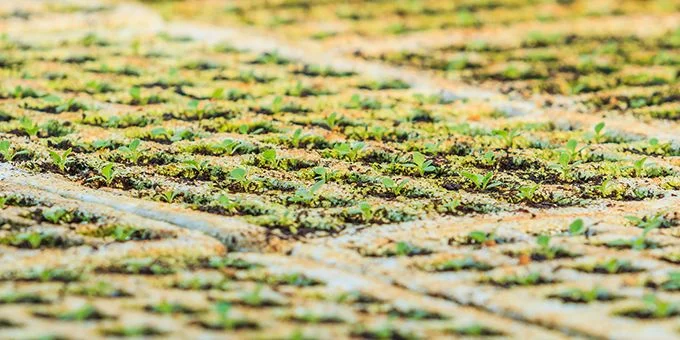
Indoor farming technology creates an artificial environment inside an enclosed facility using technologies that help plants grow and become more nutritious in a short span of time as compared to traditional farming
Enclosed facilities used in indoor farming create optimum growing conditions for farmers to grow a crop from the seed to its harvesting stages in lesser time and obtain higher yields in each cycle with limited land area.
Indoor Farming Technology
Narendran B | MarketsandMarkets
04/25/19
Indoor farming technology creates an artificial environment inside an enclosed facility using technologies that help plants grow and become more nutritious in a short span of time as compared to traditional farming. The growth, productivity, and quality of plants depend on technologies such as climate control, air purification, lighting systems, and pump & irrigation systems. Indoor farms are located close to the point of sale or where efficiency can be maximized. One of the main advantages of indoor farming is its higher yield compared to traditional farming, which makes it a viable option.
Enclosed facilities used in indoor farming create optimum growing conditions for farmers to grow a crop from the seed to its harvesting stages in lesser time and obtain higher yields in each cycle with limited land area. According to the USDA data, in 2016, the average yield of tomatoes grown in greenhouse hydroponics was 10.59 pounds per square foot, and that of traditionally grown tomatoes was 1.85 pounds per square foot.
Therefore, indoor farms can help in increasing the overall crop yield per unit area with the usage of stacked layers of potted seeds. According to MarketsandMarkets the indoor farming technology market was valued at USD 23.75 Billion in 2016, and is projected to reach 40.25 Billion by 2022, at a CAGR of 9.65% during the forecast period.
Global Protected Cultivation Area, 2016
Source: ResearchGate Publications, FAO, FICCI, NAIP (ICAR), International Horticulture Congress, and MarketsandMarkets Analysis
The aeroponics segment is projected to grow exponentially during the forecast period for its effective use of growing conditions and crop inputs
In aeroponics, the plant roots are inserted in containers filled with plant nutrients, instead of soil, which is ideal for oxygenation and moisture and helps the plant absorb nutrients effectively, thereby aiding faster development and cultivation. This system can be controlled externally through computers or timers for the release of moist air at regular intervals and does not require frequent use of pesticides, weeding, and other maintenance processes as compared to conventional farming. Thus, with a high adoption rate of this technology, the market for aeroponics is projected to grow at the highest rate during the forecast period.
INDOOR FARMING TECHNOLOGY market, BY GROWING SYSTEM, 2017 (USD million)
Source: Secondary Research, Expert Interviews, Related Research Publications, Government Publications, Company Press Releases, Company Websites, Company Publications, and MarketsandMarkets Analysis
The rise in demand for fresh foods with higher nutritive value is expected to increase the demand for indoor farming technology
Indoor farming is used for growing crops or plants suitable for both large- and small-scale farming. On a larger scale, indoor farming is followed to bolster local food supplies and provide nutritious, fresh produce to urban and suburban consumers. This method of farming controls the input of plant-fertilizing nutrients, so the food that is grown using this technique is highly nutritious. Indoor vertical farming systems provide organic food that is not contaminated with the use of agrochemicals. Hence, the driving forces for indoor vertical farming are the increasing consumer demand for pesticide- and herbicide-free food and the growing requirements to reduce the carbon footprint of traditional agricultural practices.
The key players in the indoor farming technology market include Philips Lighting (Netherlands), Argus Controls Systems (Canada), Netafim (Israel), LumiGrow (US), Illumitex (US), and EVERLIGHT Electronics (Taiwan). These companies are developing new processes or products to help improve productivity and achieve overall market growth. For instance, Philips Lighting (Netherlands), which provides lighting solutions for indoor farming, has been undertaking R&D operations for providing energy-efficient lighting systems. In January 2018, Philips Lighting introduced GreenPower LED top lighting at IPM Essen, Germany.
This new version offers higher light efficacy, longer lifetime of 35,000 burning hours, and high energy efficiency compared to the former top lighting module. Furthermore, companies are focusing on investments, partnerships, and agreements. For instance, in July 2017, Softbank (Japan) invested USD 200 million in Plenty (US), a Silicon Valley start-up for vertical farm technology. In August 2014, FarmedHere LLC (US) partnered with Illumitex, Inc. (US), a leading lighting solution provider, to cultivate crops using less energy and lighting systems provided by Illumitex, Inc.
Future opportunities through the production of biopharmaceutical products can intensify the adoption of indoor farming technology
The cultivation of crops such as tobacco and cannabis for large-scale production of biopharmaceutical proteins is a recent development in indoor vertical farming. Biopharmaceuticals are proteins or compounds produced by a living organism, used for diagnostic and therapeutic purposes in human or animal health. Conventional methods of manufacturing biopharmaceuticals involve the usage of organisms that are highly expensive.
However, using existing agricultural technologies such as indoor vertical farming to produce biopharmaceuticals in plants is cost-effective, requires less time and efforts, is pollution-free, and easy to produce. Indoor vertical farms are being used not only for food production, but also for aiding in applications that can support human health. For instance, Caliber Biotherapeutics, LLC (US), the world's largest plant-made pharmaceutical facility that has an 18-story, 150,000-square foot warehouse facility, which contains a 2.2 million tobacco-like plants, stacked 50-feet high. These plants are grown for making new drugs and vaccines. These indoor vertical farms are carefully monitored and controlled by technicians, thus eliminating the chances of possible diseases and external contamination.
About Narendran B
Narendran currently holds the role of Team Lead with an experience of 4.5 years in research and consulting practice for Food & Agriculture domain in MnM. He has provided influential market solutions involving market sizing, supply chain analysis, opportunity analysis, and market & competitive intelligence to clients in support of their strategic decision making.
He has authored 50+ business reports related to agrochemicals, fertilizers, seeds, biologicals, equipments, feed, and feed ingredients. He has been an integral part of successful consult studies conducted for leading market players such as Monsanto, Elanco, Arysta, and Vilomix (Danish Agro Group).
The content & opinions in this article are the author’s and do not necessarily represent the views of AgriTechTomorrow
04/25/19, 08:52 AM | Indoor & Vertical Farming | Analysis and Trends
Urban Farming In The US: Breaching The Urban-Rural Divide
Farming is one of the oldest professions there is. But as society has urbanized, we have gradually lost our connection with the industry that puts food on our plates
Tuesday, June 04, 2019
Farming is one of the oldest professions there is. But as society has urbanized, we have gradually lost our connection with the industry that puts food on our plates. One jarring survey in the U.K. found that nearly 1 in 10 elementary school children think that tomatoes grow under the ground.
In parallel with urbanization has come the severing of our relationship with the people and land that grows our food. But now we are hearing that a new urban revolution in food is apparently sweeping through our city centers… so, can urban farming change our relationship with food? And can it be part of our reimagining of urban land uses?
Cutting down the food miles
Politically, agriculture tends to be treated as a "rural" issue — remote from the concerns of urbanites and left for farmers to battle over, as long as the food arrives on our supermarket shelves safe and sound.
So why bother bringing food production back into our cities? Surely we don’t have enough space left as it is.
When our societies were far less urbanized than they are today, food growing was woven into communities — indeed, the extraordinary and complex way we have developed to eat and source our food is a relatively new phenomenon.
Well before the advent of the Brooklyn urban-homesteading-hipster, the first settlers in the U.S. were growing their own, as were abandoned inner-city neighborhoods in the 1960s. Globally, small farmers still control the largest share of the world’s agricultural land.
One of the major benefits of farming within the city is that it brings the grower much closer to where it is eaten, cutting down dramatically on food miles. It can act as green infrastructure — absorbing storm water, combatting the urban heat island and filtering the air — and has a key role in injecting fresh produce into the nation’s "food deserts."
Finally, urban farms can transform the fractured relationship between farm and city into something more symbiotic. At Chicago’s City Farm, growers make use of one resource that is all too plentiful in American cities — food waste — to enrich the poor urban soil for producing vegetables. The strategy harks right back to that used by market traders in 19th century Paris, where the mess left behind by the horses of the market traders would be used to nourish local urban gardens.
Finding fertile ground
With a growing population, space within our cities is at a premium as never before. We also have more mouths to feed. But that doesn’t mean there is no fertile ground for growing.
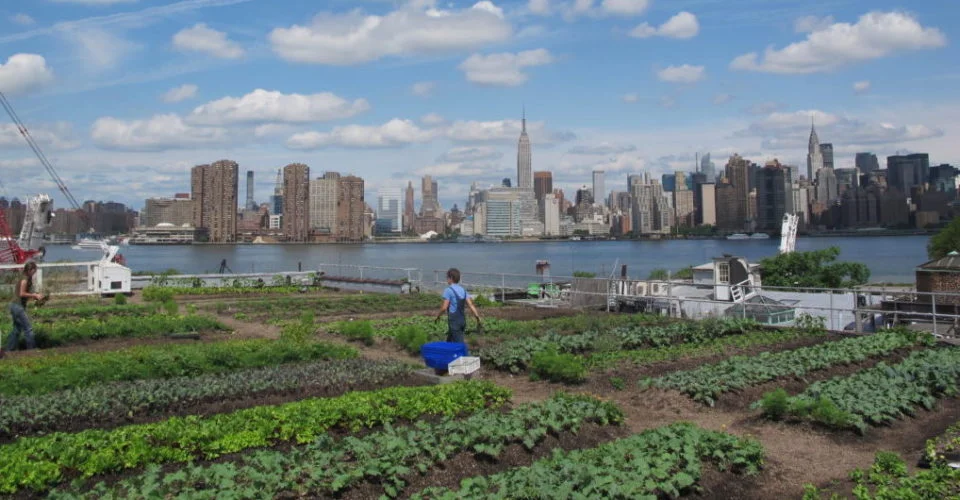
The pressure on cities like Tokyo and New York have also been forcing agriculture onto rooftops.
But there are some obvious benefits to rooftop farms once you give it some thought. There are not quite so many rats on rooftops, and certainly fewer deer to nibble at your wares, even if dealing with high winds can take a bit of ingenuity.
In contrast, in some post-industrial cities like Detroit, urban agriculture has sprouted up in disused lots left over as the inner city was deserted as manufacturing declined. Indeed it was in such urban areas where the roots of the modern community gardening movement began in the 1970s.
The Michigan Urban Farming Initiative in Detroit has been described — only slightly wincingly — as one piece in the nation’s first urban "agrihood." Taking it up a level is the Hantz Group, who are controversially attempting to build the world’s largest urban farm, on land they snapped up in 2008 when land prices plummeted.
Scaling up urban farming
For many of us, our vision of urban farming is the rustic urban allotment or volunteer-led community garden. While those ventures are empowering and provide huge dividends in social capital and physical and mental health, urban farming is attracting the attention of commercial growers, too. They are trying to prove that urban farms can not only be environmentally beneficial but can turn a profit as well.
For many, this means embracing new technologies — and this is where we depart from the nostalgic vision of the urban homestead. Tokyo, one of the cities with famously intense pressures on land use, has been one of the cities experimenting with vertical urban farming — where crops are stacked up in warehouses and lit with UV lights.
Many of these crops use hydroponic technologies, which are a method of growing plants without soil. Instead of being embedded in the soil, nutrient-rich water or very moist air (known sometimes as “liquid soil”) is trickled or misted over their roots. New York-based Gotham Greens grow bok choy, basil and lettuce like this.
Others, including celebrated Milwaukee-based urban farm Growing Power have gone a step further by experimenting with aquaponic solutions — which throw fish into the mix.
NASA has been testing hydroponics out with a view to feeding colonies on the Moon. But, at the other end of the spectrum, hydroponics also made an appearance this year at the staunchly traditional Chelsea Flower Show in London.
Despite some teething problems (not least around energy use), the benefits of this "controlled-environment agriculture" (CEA) are considerable. The sun can always shine, and conditions can be controlled to an extent impossible on traditional farms.
As a consequence, the yields tend to be much higher and plants grow faster. The burden on water resources is also much lower compared to traditional methods and — handily for deindustrializing cities — the systems pack well into disused carpet factories.
We might recoil from this vision of vertically stacked lettuces, so distant is this futuristic image from the rural agricultural idyll we grew up with. But the precision that these technologies allow enable these growers to grow pesticide-free, which is more than can be said for most traditional farms.
Whether or not it makes you feel warm and fuzzy about the source of your food, we are likely to see a lot more of technologies like this.
Planning cities for a food revolution
Like many of the best ideas, urban farming is not a new idea but the revival of a tried and tested one. But despite the immediacy of the food crisis, one of the most exciting things about the supposed urban farming "revolution" are its co-benefits.
Urban growing projects are not only a response to the environmental and nutritional crisis posed by a growing population and a hungry planet, but it is also a response to the breakdown of community.
As advocates of "food sovereignty" tell us, the act of urban farming also answers a deep need in the modern world to take back control, and gardening has long been a reaction to periods of economic instability. The Victory Gardens encouraged during the Second World War are the most well-known example, and Cuba’s self-sufficiency experiment a more recent one.
Urban planners and city authorities have to lend a hand. Planners until recently have seen urban farms as too "low value" of an activity to afford urban space, but that is starting to change.
This might mean tweaking zoning laws to allow these uses to creep back into the city. In 2013, Detroit’s urban agriculture ordinance finally made the city’s hundreds of gardening plots legal, which is at least somewhere to start.
About the Author
Lucy is a UK-based urban and environmental planner, with a background in Open Data policy and energy policy. She is fascinated by how we grow our cities and towns, and how we can learn from place, as well as how apparently dull policy details can transform the experience of our everyday built and natural environment. She writes here about urban spaces in the U.S. and beyond from all kinds of perspective — from the busker to the policy maker.

‘Are Vertical Farms Even Remotely Efficient?’ Putting A Figure on Plant Factories
By Flora Southey
15-May-2019
©GettyImages/LouisHiemstra
Researchers in the Netherlands are calculating the feasibility of vertical farming in urban areas. “The main goal is to put a figure on vertical farming,” Wageningen University & Research’s Luuk Graamans tells FoodNavigator.
It is estimated that by 2050, the world’s population will have risen from today’s 7.6 billion to 9.8 billion. Of these 9.8 billion, 67.2% are expected to live in urban areas.
In order to feed this growing, increasingly urbanised population, the United Nations estimates food production must increase by 70%.
Vertical farms or ‘plant factories’ – terms which describe vertically-stacked, fully controlled environments used to produce food – have the potential to help societies meet this elevated demand, without the need for additional farmland.
But are vertical farms a viable solution? Taking the amount of energy, water, and CO₂ required for production into consideration, do vertical farms make technical and financial sense?
Researchers from the Greenhouse Horticulture business unit of Wageningen University & Research (WUR) and the Department of Architectural Engineering and Technology of Delft University (TU Delft) in the Netherlands are working to provide an answer.
“We strive to quantify the resource requirement for the production of food in vertical farms, and to compare that to agricultural systems,” explained researcher Luuk Graamans.
Resources analysed include water, electricity, CO₂, land area, and financial input.
The team has developed a five-step methodology to calculate the feasibility of vertical farming, looking at how plants process energy in a closed cultivation system, how much energy is required to run vertical farms in varying locations, how energy consumption can be optimised, how vertical farms can be integrated into cities, and finally, at what expense.
Ultimately, these five steps can help stakeholders assess the technical and financial feasibility of food production in vertical farms.
“We are trying to determine whether vertical farming is feasible, both technically and financially, and whether it can and should be implemented in cities – or elsewhere. This can have great consequences for food supply, primarily to metropolitan areas,” said Graamans.
The ongoing study is expected to be completed by the end of 2019.
How do we know if vertical farms are even 'remotely efficient'?
Originally a building engineer, Graamans first became interested in urban farming while living and working in Hong Kong – a city that, with limited local production, depends greatly on food imports.
Researcher Luuk Graamans
Approximately 90% of Hong Kong’s food is imported. According to its health and food bureau, 94% of fresh pork, all beef, 92% of vegetables and 66% of eggs are sourced from mainland China. Fresh fruit is predominantly imported from mainland China, the US, the Philippines and Thailand.
”I found myself wondering, what if something inhibits imports into this massive, dense city? Would it be possible to increase the resilience of this city by bringing food production closer?” he relayed.
Preliminary research into modern, closed cultivation systems quickly revealed a lack of technical and financial data, he continued. The existing body of research largely focused on the effects of various environmental factors on crop physiology but little focused on the engineering and expenditure of the production system itself.
It can be assumed that closed vertical farms could reduce the amount of water and CO₂ required when compared to the ‘traditional’ greenhouse. However, the combination of high-density crop production, limited volume and lack of natural ventilation are likely to induce a high demand for cooling and vapour removal – requiring additional energy.
This increased cooling/dehumidification leads to residual heat. ‘Can this residual energy be leveraged for other purposes, for instance, to heat surrounding urban environments?’ Graamans wondered. Could this offset some of the energy expenditure to reduce total costs?
“No one was really providing any accurate numbers on these aspects, yet I wanted to calculate the cost – to answer the question: Are vertical farms even remotely efficient?”
A five-step methodology
“The main goal of this research is to put an accurate figure on vertical farming,” Graamans told us. His team has developed a methodology comprising five steps:
1. How do plants process energy in a closed cultivation system?
Applying different levels of temperature, humidity and light to a plant will produce varying reactions. It is necessary to determine the relation between sensible and latent heat exchange, as well as the corresponding transpiration for the production of crops in closed systems. Transpiration is an important design parameter for the interior energy balance and consequently the climatisation of a vertical farm.
The developed model can be used to approximate the crop’s energy output and provide greater insight into the energy expenditure of closed systems. This can help determine the most efficient and effective way to extract heat from the system.
2. How much energy does a vertical farm require?
Next, the researchers calculate how much energy is required for production within the closed systems.
“We integrated the method we developed in the first step into a more comprehensive engineering model, in order to simulate, analyse and compare the energy required in plant factories with that required in greenhouses, across various locations.”
Simulated areas included northern Sweden – which has a cold climate and limited solar radiation during certain periods – and the Netherlands, which is known for its moderate climate and developed greenhouse industry. The team also applied the model to the high temperatures and solar radiation of Abu Dhabi.
A vertical farm under LED lighting ©GettyImages/Andrew Linscott
The thinking behind these three locations? “The relation between the costs (heating and cooling) and benefits (solar radiation) of greenhouse production largely depends on the latitude and external climate conditions of the location,” Graamans explained.
“It can be expected that at high latitudes solar radiation no longer offsets the energy being lost through the greenhouse cover. The opposite may occur at low latitudes, where the incoming solar energy cannot be discharged by natural ventilation and active cooling is required.”
The researchers calculated that vertical farms in the Netherlands required more than three times as much electricity as greenhouses for the production of the same crop. Yet, in the extreme climates of northern Sweden and Abu Dhabi, this difference in electricity requirements diminished in comparison – suggesting that plant factories may be the preferred indoor farming model in locations with extreme climates.
3. Optimising energy consumption
Graamans and his team also looked into minimising the energy required in the closed system – a step that required extensive analysis of the vertical farming facility itself. Design, materials, installation and structural dimensions could all contribute to lower energy consumption.
The location also plays a major role, Graamans told us, suggesting this is not always conveyed in media and marketing messages.
“Plant factories are often touted as a single, standard solution that you can simply drop in any location and immediately start producing.
“That approach is definitely sub-optimal. From both a construction and agricultural engineering perspective, vertical farms should always be optimised for its specific client, production requirements and local climate. Our research strives to investigate these aspects and formulate rules of thumb.”
The researchers conclude that land, CO₂, and water can be reduced when using the vertical farming model compared to the ‘traditional’ greenhouse. Additional design measures can be taken to significantly decrease energy consumption in comparison to standard vertical farms, exact figures for which Graamans plans to publish later this year.
4. Integrating the vertical farm into the city
This step quantifies whether residual energy from plant factories can be used to heat surrounding urban environments. “If we are adapting systems to be used in metropolitan centres, can we be re-using waste energy?” asked Graamans.
According to the researchers, appliances, machines or buildings that have a medium to low energy demand – such as housing – could benefit from this vertical farming side-stream.
“The goal is to minimise the total energy requirement and energy footprint of the city as a whole. Residual energy can be collected and applied to other urban functions. This process could integrate additional heat pumps in order to increase the temperature of the waste heat and consequently the number of its potential applications.”
5. Calculating the financial feasibility of urban vertical farming
“Once we have an overview of the best strategies for production, saving as much on resources as possible (step 1-4), we can determine how to lower operational costs,” explained Graamans.
The initial investment for closed cultivation systems – depending on production requirements and whether a pre-existing site is used or if a new build is required – presents little variation. However, operational costs and how these are related to exterior climates and location, can vary greatly.
By inputting this data, including location choice and exterior climate information, the researchers aim to offer a financial assessment of the system’s feasibility to more precisely inform a stakeholder’s business case.
Is vertical farming the ‘end-all’ solution?
Graamans said he hopes this research will help provide stakeholders running, investing in or designing vertical farms with “clearer focus”.
“An increasing number of vertical farms is popping up, and some have proven more successful than others.
“I hope that all stakeholders would benefit from this research.”
The study may also help open up opportunities for collaboration between members of the broader agricultural industry.
‘Traditional’ farming and vertical farming are often viewed as opposing concepts. However, Graamans suggested the sectors would benefit from collaborating with each other.
“Hybrid solutions are possible. This research could be very important for growers, who might have specific stages of crop production that could benefit from the completely closed, precise environment.
Render of a hybrid vertical farm ©Luuk Graamans
“We hope that there will be a shift in viewpoint. When people stop seeing vertical farming in opposition to the current agricultural system, but as a contributing factor.”
The million dollar question remains: Is vertical farming the solution to feeding more than 9 billion people by 2050?
“In my view, vertical farming can provide a new, additional element to food production.
“It won’t be the final solution to shift everything into the vertical farming model. That simply isn’t the most efficient way of food production,” responded Graamans.
“In order to truly tackle the food issues presented by the UN, for the development towards 2050, the solution will likely have to be a combination of open field production, greenhouse production around cities, and fresh food production in the city.”
He predicts food of high caloric content will be produced in areas surrounding cities, with fresh food cultivated and consumed within. “Vertical farming is key for minimising the required land area for production and precisely steering crop production.”
USDA National Organic Program Holds Firm Against Efforts to Impose Special Restrictions Against Growers Using Container and Hydroponic Methods
Groups opposed to certification of production systems incorporating containers and hydroponics failed in their most recent attempts in the last few weeks to convince the USDA and the National Organic Standards Board to initiate the process for new standards for those production systems.
Several groups including the Real Organic Project, the Organic Farmers Association, the National Organic Coalition and others presented testimony at the recent National Organic Standards Board meeting in Seattle and in recent press campaigns to call for a moratorium on certifications for organic production systems using containers and hydroponics. The moratorium would be followed by the revocation of certification for existing operations. However, if the USDA does not agree to those terms, the groups insist that new more restrictive regulations must be drafted, implemented and then applied to container and hydroponic organic production systems.
Those groups have begun the tactic of inventing hypothetical scenarios about production practices, and they then ask for clarification from USDA regarding the legality of such an approach. USDA indicated that they would not likely give opinions regarding hypothetical situations, but USDA will look at specific cases and instances of operations performing actual activities to review for compliance. The CSO expects that opponents of certifications for containers will refer operations for review, and USDA will respond regarding those practices.
However, this activity will not be unofficial rule making or regulations that are created without any opportunity for public input. USDA does not have the authority to implement standards through the guidance process that would create special restrictions for container operations. Any new restrictions would have to go through the formal rule making process.
Organic producers must follow all applicable USDA standards for organic production systems. Specifically, growers need to show that their production system is managed to respond to site-specific conditions by integrating cultural, biological, and mechanical practices that foster cycling of resources, promote ecological balance, and conserve biodiversity.
Here are the requirements copied from 7 CFR 205.201 that lay out the elements required to be included in the organic production and handling systems plan.
§205.201 Organic production and handling system plan.
(a) The producer or handler of a production or handling operation, except as exempt or excluded under §205.101, intending to sell, label, or represent agricultural products as “100 percent organic,” “organic,” or “made with organic (specified ingredients or food group(s))” must develop an organic production or handling system plan that is agreed to by the producer or handler and an accredited certifying agent. An organic system plan must meet the requirements set forth in this section for organic production or handling. An organic production or handling system plan must include:
(1) A description of practices and procedures to be performed and maintained, including the frequency with which they will be performed;
(2) A list of each substance to be used as a production or handling input, indicating its composition, source, location(s) where it will be used, and documentation of commercial availability, as applicable;
(3) A description of the monitoring practices and procedures to be performed and maintained, including the frequency with which they will be performed, to verify that the plan is effectively implemented;
(4) A description of the recordkeeping system implemented to comply with the requirements established in §205.103;
(5) A description of the management practices and physical barriers established to prevent commingling of organic and non organic products on a split operation and to prevent contact of organic production and handling operations and products with prohibited substances; and
(6) Additional information deemed necessary by the certifying agent to evaluate compliance with the regulations.
(b) A producer may substitute a plan prepared to meet the requirements of another Federal, State, or local government regulatory program for the organic system plan: Provided, That, the submitted plan meets all the requirements of this subpart.
Your Membership and Activity Still Needed
The efforts of growers and other members of the organic community like yourself helped to create more regulatory certainty and to safeguard your rights to select the most appropriate growing methods in your organic operations continues.
Join the CSO if you have not done so already. Our sustained efforts on behalf of the hydroponic, aquaponics and container industry around the country and in Washington, DC rely on dues from farming operations like yours.

Vertical Farming For Cannabis Gets Trial Run in Langley
Leo Benne, chief growing officer of Zenabis, with the converted shipping container that will become a testbed for a vertical cannabis farm. (Matthew Claxton/Langley Advance Times)
Grower Zenabis Will Start With Industrial Hemp And May Move to
Commercial Marijuana
Jun. 6, 2019
Zenabis, which merged with longtime Langley greenhouse firm Bevo last year, has received a hemp cultivation license from Health Canada, with growing to take place in Langley, Pitt Meadows, and Aldergrove facilities.
“We expect the seed to come in this week,” said Leo Benne, chief growing officer for Zenabis.
A small portion of that seed will be planted not in one of the greenhouses facilities, but in a converted shipping container, as a test on whether cannabis can be vertically farmed.
Bevo has already helped develop a vertical farming system through CubicFarms, a Pitt Meadows-based spin off.
Vertical farming involves growing large amounts of crops on small amounts of space, indoors, and usually without any soil.
Plants are reared in racks, stacked as high as the building or container can accommodate, and grown either hydroponically or aeroponically.
Energy efficient LED lights allow the plants to grow 24 hours, seven days a week, in any weather.
In theory, the cost of the equipment and intensive rearing is offset by the ability to grow non-stop and to place the growing site much closer to the end-consumer. Rather than trucking lettuce from California or Mexico, it could be grown just a few miles outside of Canadian cities and shipped just a few kilometres.
The hemp vertical farm is just a test at this point, said Benne. A single converted shipping crate has been hauled into one of the Zenabis greenhouses in Langley and will be ready for its test run at about the same time as 20 acres of industrial hemp is planted in the three facilities, from Langley to Pitt Meadows.
While most crops planted in vertical farms are extremely low-growing, allowing for many racks close together, cannabis is usually a tall-growing crop.
Benne said that a combination of the plants chosen and growing practices is expected to keep the plants shorter for the vertical farm project.
If the project goes well, vertical farming facilities could be used for growing commercial marijuana, said Zenabis CEO Andrew Grieve.
The industrial hemp isn’t being grown for commercial marijuana sales. Instead, the hemp will be processed into CBD oil, fibre, or other derivatives. The project is separate from Zenabis’s plans for growing commercial cannabis in Langley.
While Langley’s other large cannabis cultivator has caused controversy in Aldergrove over smell issues, Benne doesn’t believe that will be an issue for Zenabis.
“We’re doing things a lot differently,” he said. “First of all, we’re constructing a closed greenhouse facility. We’re able to keep most of the air inside the greenhouse.”
There are to be no roof vents, which should not only control odour, it helps the growers control humidity and other issues.
“Because we don’t have that exchange of air with the outside, we don’t have a lot of pest issues,” he said.
Air exhaust is to be controlled through carbon filters, and if those aren’t sufficient, biofiltration. That means basically pumping all the air exhaust through a big box full of bark and cedar chips to absorb the smell.
Vertical Roots Innovation Emerges
BY KATHY HARRELSON | MAY 15, 2019
Imagine growing conditions when weather, disease and insects come as second thoughts.
Enter the enclosed, controlled world of hydroponics — farming indoors with vertical or horizontal root preparations.
The indoor farming involves nourishing roots by placing them in a liquid nutrient solution. There is no soil.
One 3-year-old, start-up company, based in Summerville, SC, Vertical Roots, has just completed a hydroponics farm in Charleston, SC, which includes 24 grow pods and has started the construction of a farm in Columbia, SC, which will have more than 120 grow pods.
It takes a committed staff to nurture the Vertical Roots crops. Bottom: Vertical Roots keeps its plants in pods, in a controlled environment, growing indoors with nutrient-enhanced water channels.
Hydroponic systems are touted for using up to 98 percent less water than traditional agriculture, and at Vertical Roots, the company aims to be as sustainable as possible.
Labor and maintenance are also minimized.
Vertical Roots grows leafy greens — green and red oak, Bibb, romaine, red butter and arugula.
“We consider ourselves to be the future of farming, so everything we do is innovative and focused on technology that monitors and controls our farms,” said Shelby Weimer, marketing strategist for the company.
The system has had its skeptics relative to scalability, Weimer said, but being on the ground floor of development has the company and team excited and optimistic.
“We truly feel that we have a model that will set us up for success,” Weimer said. “We are here to change the game.”
A key factor is turnaround time in distribution.
About 95 percent of leafy greens come from California and Arizona, she said.
“We aim to bring lettuce as close to distribution as possible, sometimes with a turnaround of 24 hours from harvest to table, compared to weeks on a truck,” she said.
In what she referred to as “hyper-local,” she said the company could distribute lettuce that is fresher, tastier and safer.
“We also want to provide the next generation of farmers with a sustainable living for years to come and open the ag-tech world to a new way of farming,” Weimer said.
In that sense, the company clings to a list of values within its mission. They are:
• Empowerment for every team member to have a voice.
• Precision in paying attention to detail.
• Fun, with a positive attitude.
• Consistency. Do it the right way, every time.
• Respect.
• Integrity, by being trustworthy and honest.
Vertical Roots also sees its role within the community as significant. It promotes the model within schools, in restaurants and in local businesses.
“We offer tours of our facility and educational opportunities to learn about our growing methods,” Weimer said. “As a company, we are focused on sustainability, so we try to educate our customers and community as much as possible.”
There is also a flair for philanthropy and zero tolerance for waste. The company donated about 7,000 pounds of lettuce to those in need earlier this year, and routinely gives excess to the hungry.
The company takes the future and innovation seriously as well, company co-owner Andrew Hare said.
“We never want to stop learning and growing, so at any given time we have a variety of test products in our panels,” he said.
Automation For Hydroponics
One of the biggest costs for any hydroponic business, regardless of the crops they produce, is labor
Incorporating Automation Can Help Hydroponic Operations Become
More Efficient And Grow More Productively
March 25, 2019
Fig. 1. Rafts for deep-flow technique (DFT) systems are quickly and effectively sanitized using this wash station.Photo: Christopher J. Currey
One of the biggest costs for any hydroponic business, regardless of the crops they produce, is labor. Mechanizing processes to reduce the amount of labor required for crop production is a sure way one way to reduce input costs. While the primary reason for using mechanization and automating processes is to reduce labor costs, there are other benefits to automation.
For example, in addition to saving on labor costs, it can also make more labor available for other jobs in the greenhouse, make certain tasks easier to execute and increase employee productivity. But benefits of automating extend beyond labor. Automation also reduces the time it takes to accomplish tasks and expedites processes and may open additional space in your facility and help you turn crops.
Regardless of what scale you are producing on, there are steps you can take to improve your efficiencies by integrating automation and mechanization to improve productivity. Plus, there are some relatively easy steps to take to start automating processes in your greenhouse. Investing in a seeder is going to be one of the first things any producer should do. A vacuum seeder is going to be one of the first and easiest ways to incorporate equipment to improve productivity. Manifold seeders seed one row of plugs at a time, whereas plate seeders will seed an entire flat at once; large facilities may benefit from using the larger drum or cylinder seeders.
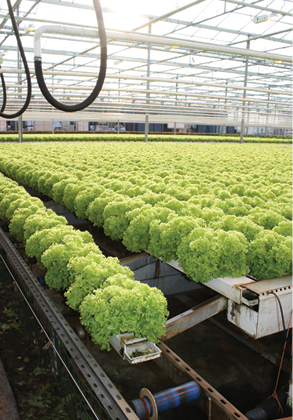
Fig. 2. This leaf lettuce grown in nutrient-film technique (NFT) troughs is planted in one location in the greenhouse and, throughout production, the trough moves throughout the facility until it is fully grown, after which the trough moves down a conveyor to be harvested.Photo: Christopher J. Currey
In the greenhouse, regardless of size, automation can be key to maintaining a productive growing environment. Nutrient solutions for recirculating systems require adjustment to keep the pH and electrical conductivity within target ranges. This can be achieved by hand, spot-checking nutrient solution EC and pH and making the adjustments as-needed. However, automated pH and EC measurement of nutrient solution properties and subsequent adjustments moderates root-zone conditions and minimizes unwanted fluctuations. Sanitizing the troughs for nutrient-film technique (NFT) systems and rafts for deep-flow technique (DFT) or raceway systems can also be a laborious process. The opportunity to sanitize NFT channels and DFT rafts keep your system clean and reduces disease incidences and increases food safety, but it can be a laborious task. Equipment simplifying routine sanitation reduces labor costs and helps maintain best management practices (Fig. 1).
The larger the scale an operation and production, the possibilities to automate become even greater; the return on investment increases with the scale of production. In order to centralize labor, from planting to harvest, in the same part of the facility, some production systems are designed to move crops through a growing environment throughout production.
For instance, the lettuce grown in the NFT system in Fig. 2 is planted in the same area of the greenhouse where it is harvested. The NFT troughs move throughout the greenhouse and returns to be harvested. There are also opportunities to automate post-harvest processing and packaging. For common Dutch cucumbers produced hydroponically, conveyor belts facilitate transporting fruits from harvesting carts to shrink-wrapping machines, then onto cardboard containers for bulk packaging.
And there are some very exciting robots in the CEA industry. Grafted tomato plants are increasingly popular, but grafting is a very labor-intensive process. While these grafting robots still require labor to operate, they can complete up to 800 grafts per hour, greatly improving productivity. On the other end of production, we are not far from having automated harvesting as well! There are robots designed to selectively harvest hydroponically grown fruits such as cucumbers and strawberries.
Christopher (ccurrey@iastate.edu) is an assistant professor in the Department of Horticulture at Iowa State University.
Automation Hydroponics NFT pH EC Employees Labor Harvesting
DFT Robotics
Homegrown Hydroponics Project Spreads Around The World
May 14, 2019 - Mike Enright '88 (CLAS), University Communications
Christian Heiden ’20 (ENG), center, started a non-profit organization Levo International to bring hydroponics to those in need in Haiti.
The idea began when UConn junior Christian Heiden ’20 (ENG) was working on his Eagle Scout project in high school. It has developed into a non-profit organization that is helping the poor of Haiti and inspiring the curiosity of students in the UConn Child Development Labs.
Through his scout work, Heiden, of Bloomfield, Connecticut, first built a hydroponic greenhouse for his high school, Northwest Catholic in West Hartford. Then, Heiden and his father, Bill, and brother, Nathaniel, traveled to Haiti and built a demonstration hydroponic greenhouse for a community in that nation.
Hydroponics is a method of growing plants without the use of soil and instead relying solely on mineral nutrient solvents in water. While it has been used on a large-scale basis for growing vegetables like tomatoes and lettuce, Heiden says, he has broken it down for the most simplified use yet.
“We wanted something that would only cost a few dollars a day to operate, so we designed our Babylon System which is a 5-by-2 foot system and grows 16 plants at a time,” said Heiden. “It allows people not just to grow produce for their family, but also at market. So they are gaining a way not to just eat but gain money for their family.”
Heiden started the non-profit organization Levo International in his freshman year at UConn to bring hydroponics to those in need in both Haiti and in Connecticut. He soon reached out to Jonathan Moore, an instructor at the operations and information management department (OPIM) in the School of Business.
“Through our emerging tech initiative OPIM Innovate, we have worked on a number of projects,” said Moore. “Christian reached out to me looking for advice on how we could incorporate technology into this work and what the cost would be. He also brought up the path of wanting to develop the for-profit side of the business in order to fund the non-profit side.
“I thought it would be a great idea for him to donate a prototype right here on campus and the Child Development Labs was a natural choice.”
The Child Development Labs are run by the Department of Human Development and Family Sciences and provide care for children up to five years old. Much of its staffing includes UConn students in the early childhood development and education program.
Anne Bladen, director of the Child Development Labs, said she liked the idea of situating a hydroponics greenhouse there for several reasons, including that the student-teachers would be able to see what happen when you increase nature experiences in your young students.
“We have a big commitment to having our children being outside in nature and being active,” said Bladen. “Having the hydroponic greenhouse at the Child Lab helps us get the children invested in learning where their food comes at a young age. It also gives us the opportunity to talk about Haiti and those less fortunate.”
UConn senior Eli Udler ’19 (CLAS) has been assisting Heiden and his company in the use of 3D printing in hydroponics as part of his work as a member of the team at OPIM Innovate.
“The goal is to make hydroponics more accessible in terms of cost and how easy the greenhouses are to build from ready made components,” said Udler. “I am interested in exploring this with the use of biodegradable material.”
Heiden sees a great future for the hydroponic greenhouses all over the world.
“Our goal is to bring sustainability into the agriculture system on a global scale,” said Heiden. “We think we have a really unique product that will allow us to leverage and accomplish that both here in the United States and the worldwide market.”

Is The United States "Under Greenhoused"?
Peter Tasgal: The author is a consultant focused on the agriculture space with previous experience as CFO and board member of a $100 million CPG business headquartered in Montreal, Canada prior to which he was an investment banker for over 10 years.
US Greenhouse Trends - Comparison to Netherlands and Finland
May 28,2019
Peter Tasgal: The author is a consultant focused on the agriculture space with previous experience as CFO and board member of a $100 million CPG business headquartered in Montreal, Canada prior to which he was an investment banker for over 10 years.
His contact information is as follows: Peter Tasgal, ptasgal1@gmail.com, 617-794-4058.
The United States has over 10,000 vegetable and herb growing greenhouses according to the 2017 US Census of Agriculture. However, the majority of production occurs in only a small slice of these. A mere 296 of these greenhouses (2.7% of the category), make up what is termed as the “Large Commercial Greenhouses” category - characterized as being 40,000 square feet or larger. However, the Large Commercial Greenhouse category represents 68% of total square footage and sales. United States production is highly concentrated and much of the growth in vegetable greenhouses has been in “Small Greenhouses” – characterized as being less than 10,000 square feet. As of 2017, there are 9,658 greenhouses of less than 10,000 square feet, a 3.5x increase from 2002, when there were just 2,726.
The United States is “under-greenhoused” when it comes to vegetable production. Below is a comparison of the United States, The Netherlands, and Finland’s greenhouse vegetable production on a per capita basis:
United States: 0.35 square feet of greenhouse per capita
Finland: 4.12 square feet of greenhouse per capita
Netherlands: 31.4 square feet of greenhouse per capita
The reasons for the significant discrepancies among countries include Finland’s climate being much less conducive to outdoor farming than the US, and in the case of The Netherlands, it is a significant exporter around the world. However, these discrepancies are massive. Finland has 12x the production of the US per capita and The Netherlands has 90x the production of the US per capita. Why is this and more importantly how do we increase US production in a significant way?
Commercial Greenhouses – US
The focus of this document is commercial greenhouses, which I classify as those 10,000 square feet or greater. 10,000 square feet was chosen as the US Census shows an average sales figure of just over $6 per square foot for greenhouses of 10 to 20 thousand square feet, implying a minimum $60,000 revenue per greenhouse in the category. Please note this is a minimum and there are farmers doing hundreds of thousands of dollars in revenue in greenhouses less than 10,000 square feet. For analytic purposes it is useful to delineate those greenhouses which are 10 to 40 thousand square feet (“Medium Commercial Greenhouses”) as compared to Large Commercial Greenhouses, those over 40 thousand square feet. The following table summarizes data from the 2017 Census of Agriculture for:
“Total greenhouse vegetables and fresh cut herbs”:
The 1,191 commercial greenhouses represent 81% of greenhouse vegetable production. Within commercial greenhouses, those defined as medium sized are quite small, averaging less than 17 thousand square feet. A 17 thousand square foot greenhouse selling product at a rate of $6 per square foot is generating in the range of $100,000 in revenue per annum. As in any analysis, these figures are averages, and many greenhouses are doing far more in revenue on a per square foot basis. Like anything else, greenhouses are not all the same. Revenues are dependent on crop types, cycles per annum, efficiency of farm, location and sales method.
Benchmarking “Best of Breed”
Finland
Given that Finland is one of the world’s northernmost countries, outdoor vegetable growth is limited. This makes Finland ideally suited for greenhouse production, as well as imported products. Finland imports significant amounts of outdoor grown produce from the likes of Spain, Italy, Greece and other parts of the world. However, there is a significant concern from the Finnish people regarding pesticide levels of imported fruits and vegetables. According to the Luke Natural Resources Institute of Finland, the country is more independent in terms of greenhouse vegetables than it was 10 to 15 years ago.
According to the Natural Resources Institute of Finland, as of 2018, there were 484 enterprises involved in greenhouse vegetable production. This represents 2.1 million m2 of production. 2.1 million m2 equates to 22.8 million square feet of production and an average of over 47 thousand square feet per enterprise. As a comparison, the average vegetable producing greenhouse in the US is just over 10 thousand square feet.
The Netherlands
The Netherlands has been the leader in greenhouse production for decades. In a September 2017 article in the National Geographic it was noted that The Netherlands is the “globe’s number two exporter of food as measured by value, second only to the United States, which has 270 times its landmass.” Comparing US greenhouse production to The Netherlands’ is difficult as the Dutch made a national commitment toward sustainable agriculture in the early 2000’s. However, it does give the US direction as to production and methodologies for the future.
According to Statistics Netherlands, there were 4,990 hectares (approximately 537 million square feet) of vegetable production under glass in 2018 across 1,180 greenhouses. This represents an average of over 455 thousand square feet per greenhouse. For comparison purposes, the average size of a Large Commercial Greenhouse in the US is about 257,000 square feet, just over half the size of the average of all vegetable greenhouses in The Netherlands.
Trends in the US Compared to Best of Breed Countries
When analyzing 10 and 20-year trends in the US vegetable greenhouse industry, findings show them to be in almost direct contrast to the trends for a similar period in Finland and The Netherlands. In the US there has been a rapid increase in the number of greenhouses and total production space, but the average size of each greenhouse has gotten smaller. Similar trends exist relating to commercial vegetable greenhouses in the US, those 10,000 square feet and greater. The number of greenhouses and production space has increased, but the average size of each greenhouse is smaller. In 2007 the average size of a commercial vegetable greenhouse was 118 thousand square feet and in 2017 averaged 76 thousand square feet, a 35% decrease over the decade.
In Finland and The Netherlands the number of enterprises have decreased dramatically. There is a slight discrepancy in terms of average production space. In the Netherlands average production space has increased nominally and in Finland it has decreased, but these trends are much more moderate than those trends in the US. In both the Netherlands and Finland the average size of each greenhouse has risen dramatically over the period. The tables on the following page highlight the long-term trends:
Table 1. US Vegetable Greenhouse Industry
The contrast between countries is quite staggering. The Dutch are the clear industry leaders, distantly followed by the Finnish, and even more distantly followed by the US. Additionally, the trends in each of Finland and the Netherlands are highly consistent on a year-over-year basis over the long-term. Looking to the future of the US commercial vegetable greenhouse industry, similar trends are expected to those that Finland and The Netherlands have experienced over the past 10 to 20 years. Looking forward 10 years from now, I would expect the average commercial greenhouse in the US to be significantly larger than 76 thousand square feet.
Basis for Trends in The Netherlands and Finland
Some of the underlying reasons for the trends outlined above for the Finnish and Netherlands greenhouse industries are outlined below:
Aging Farmers – The farmer population is aging. Those next generation farmers who have chosen to remain farmers have invested in larger greenhouses with more modern cultivation technology which will allow them to compete on a global scale.
Professionalism – Maintaining a competitive presence requires professional operations, especially in the highly competitive export market.
Mergers / Alliances – Given that economies of scale are reached through larger facilities; there has been significant merger / alliance activity. In Finland, for example, there are currently 3 to 4 entities representing 70 to 80% of the production of lettuce and herbs.
Desire for Local – In Finland there is less dependence on imported produce than 10 to 15 years ago. People want local produce. At those times when local is not accessible, consumers still want to know the origin of their produce. There is a major concern in Europe regarding levels of pesticide use by outdoor farmers in the major European growing areas - Spain, Italy, Greece.
Renewable Energy Sources – The latest technology in greenhouses is expected to utilize “renewable energy resources”, potentially making greenhouse production carbon neutral. This would quell a lot of the discussion regarding the balancing act between greenhouses using less water than outdoor growing; but using more energy resources for lighting and temperature maintenance.
The basis for trends in The Netherlands and Finland are directly relevant to the United States applying to:
Aging farmers
Desire for locally grown food
Concerns as to farming practices of food exporters
Pesticides
Energy usage / Ability to use renewable energy
Environmental volatility
Population growth
Water scarcity
A significant number of these could be mitigated through the building of technologically advanced greenhouses and other forms of CEA within the United States. There are highly experienced commercial greenhouse manufacturers in the United States, The Netherlands and around the world who can bring the latest technology to the US market (See Appendix A – Overview of Greenhouse Manufacturers).
Summary:
Currently the United States is “under-greenhoused”. There are many reasons why it is important and possible for the United States to have more greenhouses over the near and long-term. The United States can be an efficient operator of greenhouses, similar to best of breed countries - The Netherlands and Finland, if some trends over the past two decades are steadily reversed. Growth in vegetable greenhouses will need to be focused on Large Commercial Greenhouses as compared to Small Greenhouses. The technology and capital needed to build large greenhouses is expensive. However, the end result of building such greenhouses will help mitigate some of the biggest issues of our time – energy usage, water scarcity, consumer knowledge of food origin, and growth inputs.
© 2019 - The Under-Greenhoused U.S. - Peter Tasgal
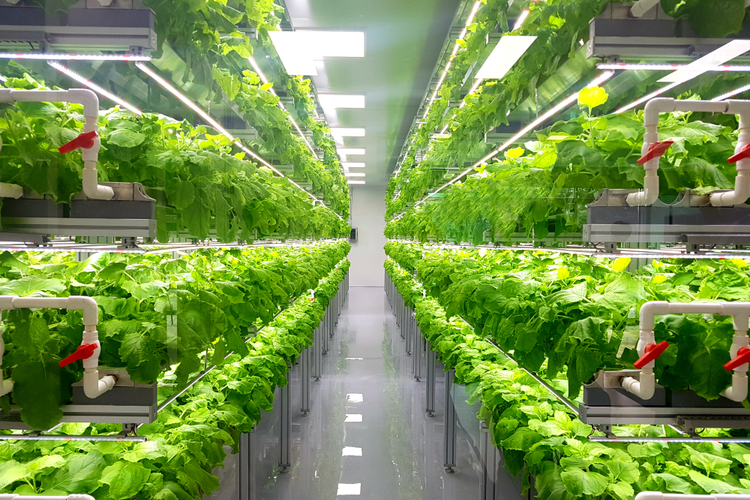
Growing Up: The Potential of Vertical Farming
Vertical farms grow upwards, engaging with shelf-style structures that tend to operate via hydroponics or aeroponics. Robotics, data analysis, computerized controls, and sophisticated algorithms do the heavy lifting of optimizing every inch of the growing environment — all day long, every day of the year
May 22, 2019
When most consumers consider vertical farms, they think of grocery store lettuces. They’re not wrong — leafy greens are an excellent crop for a controlled, hydroponic growing setup. But are year-round edible flowers and spring salad mixes enough to disrupt the future of food?
What Is Vertical Farming?
Growing fresh food has traditionally been subject to the elements: location, climate, seasonal conditions, and weather trends are just the start of the challenges that can impact plant health and crop yield.
Indoor, or greenhouse, farming creates a controlled environment to combat troubles like pests and drought. The strategy dates as far back as the Roman Emperor Tiberius, and its latest iteration bears the promise of an efficient “Plantopia” that we’ve yet to truly tap.
Vertical farms grow upwards, engaging with shelf-style structures that tend to operate via hydroponics or aeroponics. Robotics, data analysis, computerized controls, and sophisticated algorithms do the heavy lifting of optimizing every inch of the growing environment — all day long, every day of the year.
Perks Of Production
Two words: perpetual growing. The high tech engineering of vertical farms makes them practically invincible. Pests, poor weather, diseases, and even seasonal temperature changes carry no weight in these environments of complete control. Their products are organic by default — there’s no need for pesticides, and they grow with very little water for maximum efficiency.
All of that fine-tuning makes for fast growth, too. Vertical facilities can turn around a crop in significantly less time than the traditional field, with growth rates up to 390 times more productive than competitors.
The Trouble with Tech
High-efficiency growing facilities hosting plants at ten and twenty deep, growing at double time, and with less of an environmental footprint? It all sounds too good to be true... And it just may be.
These brilliant feats of agricultural engineering come with a steep price tag — one large indoor vertical farm costs millions of dollars. Agritecture Consulting estimates the cost of a 30,000-square-foot-facility for leafy greens and herbs near New York City at almost $4 million in startup capital - and that’s without labor.
Most of the costs come from high-end equipment including custom ventilation, shading devices, and high-powered lights. Sophisticated heating, cooling, and ventilation systems add to the mix, along with the immense amount of electricity needed to power it all: think nearly a $350,000 annual tab for lighting, power, and HVAC at the same facility near NYC.
Along with the obvious concerns of carrying such a large carbon footprint, vertical farming faces another serious challenge: competition. Smart greenhouses with advanced automation and the advantage of sunlight, while they may not host the same level of engineering, can operate at well less than a third of the cost per square foot.
Trans-Plantation
While vertical farming may have a host of complications, it’s particularly effective at one task: growing starter plants.
For many growers, starter plants, or transplants, are extremely valuable. These fledglings can be grown rapidly, at extremely high densities, in the controlled environments of vertical farms before being inserted into the agricultural supply chain. They offer hardiness and ease of planting, saving growers the time and labor of having to start the young plants from fragile seeds in a greenhouse or field.
The quality of these transplants is consistent and immune to shifting outdoor conditions: hiccups in weather or seasonal conditions don't alter their growth, making for a very uniform product with higher dry mass. They serve as an exceptional base for field growers and greenhouses who bring the final crops to market.
While these starter plants may not be the answer to the operational challenges faced by vertical farming facilities, it’s safe to say there’s more innovation in store. Between 2016 and 2017, investments in such facilities saw a boost of 653% and hundreds of millions of dollars.
Forthcoming research from Cornell University, funded by the National Science Foundation, will help to tell us whether those investments will come to harvest — and we can’t wait to find out.
Image Credit: Yein Jeon / Shutterstock.com
Boston, MA - Farm To Sprout On A Mattapan Street
By adamg on Fri, 05/10/2019
Rendering of proposed Flint Street farm from filing with BPDA.
The Urban Farming Institute of Boston is getting ready to break ground on quarter-acre farm on Flint Street in Mattapan, behind the Wave gas station.
The institute will use $135,000 in city funds - allocated from the revenue from the Community Preservation Act surcharge on local property taxes - for a permanent farm that will train local residents in urban farming - and to develop better techniques for urban farming - while adding a new source of fresh food to the area.
The institute has used the site for a couple of years for several temporary raised beds in which to grow vegetables. The city money will help pay to clear the entire site of poison ivy and ready it for more permanent cultivation.
The new farm will be a couple blocks from the institute's Fowler Clark Epstein Farm on Norfolk Street.
More details and schematics (10.7M PDF).
Tags: Flint Street Urban Farming Institute of Boston
Rendering of proposed Flint Street farm from filing with BPDA.

UK: Sheffield Scientists Are Growing Food Ten Times Faster Without Soil At An Urban Farm in Tinsley
Jacob Nickles at the urban farm in Tinsley where scientists are using pioneering hydroponics techniques to grow food without soil. Picture by Chris Etchells.
By BEN BARNETT
05-19-19
“It is estimated that 35 Mount Everest’s
worth of soil a year is lost to erosion.”
Ceaseless world population growth and worrying levels of soil erosion mean new ways of producing food perhaps matches mitigating climate change as the biggest global challenge of our time.
Some 24 billion tons of fertile soil is being lost globally to erosion every year and such is the mounting crisis that academics at the University of Sheffield predict the UK has fewer than 100 harvests left.
Enter hydroponics, the science of growing plants using nutrient solutions in a controlled unit without using soil. It is a ground-breaking technique that is now gaining greater traction internationally as scientists explore ways of ensuring the world does not go hungry in the future.
An attempt to harness the potential of hydroponics is underway on the border of Sheffield and Rotherham, where a team of scientists are using a disused building at the former Tinsley Infant School to grow a range of fresh produce, from salad to tomatoes, using specialist foams that chemically, physically and biologically resemble soil - a product developed by University of Sheffield PhD student Harry Wright.
Such has been the so-called “urban farm” project to date that scientists have found that they can grow plants up to 10 times faster than in soil.
A public open day at the facility was held on Saturday, where project leader Jacob Nickles, a knowledge exchange associate from Sheffield University’s new Institute for Sustainable Food, explained how the system worked.
“This technology is the way forward,” Mr Nickles said.
“By 2050, we are facing having to feed 10bn people worldwide and we don’t have the space or resources to do so. Both hydroponics - and aquaponics to raise fish - solve a number of issues in one go.
“For example, you can build these units upwards rather than outwards.”
He said there was “absolutely” still a place for traditional farming methods but it was important globally to help soils recover.
“The whole purpose of using synthetic soil is an attempt to move away from conventional soils,” the scientist explained.
“It is estimated that 35 Mount Everests worth of soil a year is lost to erosion. We need to give our soil time to recover by pulling some of the growth away from traditional technology.”
Mr Nickles has grand hopes for the technology.
“The unit we have here is small at the moment but an ambition for the future is to repurpose an derelict urban building, like a warehouse, so that people can use it for hydroponic growing.”
He anticipated a mixed reaction to soil-free food production from the public.
“Most people mistrust something foreign to them but we have done a lot of analysis and this system can produce food that is just as healthy, if not more so. It’s about getting the knowledge out there.”

US (NC): Vertical Farm in Former Factory Site Doubling in Production Capacity
17,000 square feet
In Burlington, North Carolina, a nondescript building belies the busy hive of a salad greens farm inside. Your Local Greens, the new venture of successful serial entrepreneurs and mental health philanthropists Doug Calaway and John Battle, is presently expanding in response to market demand. "Our customers just can’t get enough of the fresh and nutritious lettuces and microgreens."
Food markets and restaurants
Prior to the arrival of Your Local Greens, regional food markets and restaurants were dependent upon faraway farms to put salads on the menu for much of the year. "Unfortunately, long farm-to-table distances can increase prices and reduce flavor and nutrition. They also exact an untenable carbon footprint", they explain.
Seeking to change that, Calaway and Battle assembled a team of controlled environment agriculture (CEA) experts and investors to bring a sustainable vertical farm to North Carolina. It took over ten months to transform the former factory site into the productive farm it is today.
Abbey Noah and Darren Gilbert of Your Local Greens
Combination of CEA techniques
To help his growers realize their vision of efficiently growing high-quality, pesticide-free greens in a cleanroom, Your Local Greens brought in the Bluelab team along with other leading hort tech providers. Your Local Greens’ Director of Horticulture and Food Safety Abbey Noah (M.S., Horticulture, NC State, ‘17) said, “Our farm is an example of industry pioneering a novel combination of CEA techniques. We want to see the academic research community keep up.”
The farm’s patent-pending design spans four 20-foot (6 m) towers to make the most of the 17,000 square feet (approximately 5,200 m2) of growing space. Each tower supports trays of floating lettuces, illuminated with energy-efficient LED lights from Signify and fed by miles of pipes dispensing a proprietary nutrient solution. Bluelab Guardian monitors continuously measure pH and EC levels while Bluelab Pro Controllers manage pumps to dose nutrients in specified ratios, ensuring peak crop health without waste.
Proper pH, EC, moisture and temperature management
Bluelab representative Darren Gilbert noted, “Growers know the importance of proper pH, EC, moisture and temperature management. But because old-school measurement methods are tedious, best practices sometimes get skipped when production deadlines loom. We understand that growers need simplicity and accuracy, so that’s what we deliver.” The Bluelab product line enables quick readings, historical reporting and dosing automation to increase productivity and drive continuous performance improvement.
Doubling production capacity
Prompted by a growing wait list of prospective customers, Your Local Greens is expanding into the adjacent warehouse space. More than doubling the current production capacity, the expansion will include a fourth level of growing space.
Among Your Local Greens' many good neighbor initiatives is providing living wage employment and rewarding internship opportunities to individuals with Intellectual and Developmental Disabilities (IDD).
“A thriving business can support community health in unlimited ways,” said Calaway. “The expertise and quality we receive from Bluelab allows us to focus on what matters most.”
For more information:
Your Local Greens
yourlocalgreens.com
Bluelab
bluelab.com
Publication date: 5/23/2019

June 12, 2019 - LED Conference During GreenTech
The application of the LED technology can propel a cultivation business or a plant research project forward but can also pose challenges. Firstly, the LED offer on the market is vast, complex and confusing and secondly, LED is only one of the available lighting technologies.
The best way to understand how to advance properly onto LEDs is by hearing the stories of those who have done it before. Experts from the fields of crop science, vertical farming and medical plants cultivation will gather in the LEDs & Innovators Conference 2019 to discuss the application of the LED technology and more. The conference will be held during GreenTech at the RAI premises and is free of charge for the GreenTech participants but with a very limited number of seats available.
The 3-part event consists of a Crop Science and Light session, a Hard Science Talk on Cannabis session and a Vertical Farming Innovators Panel. Participants can choose which one to participate in and thus hear first-hand experiences from those who have ventured into the world of LEDs already. The scope will expand beyond just lighting and additionally participants will have a chance to ask their own questions.
In the Crop Science and Light session, we will try to show what kind of light is most useful for researchers and how to successfully transition from trialed and tested protocols made with fluorescent and other, more traditional technologies onto LEDs. In the Hard Science Talk on Cannabis, Dr. Grassi, one of Europe’s most prominent Cannabis sativa researchers, with two decades in the field will discuss terpenes.
The scent molecules of the cannabis plant are sought after almost as much as the cannabinoid compounds and our understanding of their value is still scarce. Finally, the Vertical Farming Innovators Panel will gather vertical farmers as well as industry specialists who will discuss not only lighting for vertical farming, but the ins and outs of this field which is on the exponential rise. You have a chance to propose a topic you wish to be discussed by the panelists. You will have an opportunity to do so in the registration form for the event.
The participation in the event is FREE of charge, however the number of seats is very limited so it is best to register right away.
To learn more about the event and register, please click here.
Conference Program
10:15 – 11:15 Crop Science and Light
Stefanie Linzer, Biologist, Valoya
High Quality White LED Light for Crop Science Applications
11:30 – 12:30 Hard Science Talk on Cannabis
Dr. Gianpaolo Grassi, Head Researcher, CREA-CI, Italy
How Does the Light Spectrum Affect the Terpene Profile of Cannabis?
13:00 – 14:30 Vertical Farming Innovators Panel
Mark Korzilius, Co-Founder & CEO, Farmers Cut, Germany
Rasmus Jakobsen, Manager, Greenlandic Greenhouse
Gus van der Feltz, Chairman, Farm Tech Society
Henry Gordon-Smith, Managing Director, Agritecture
Lars Aikala, CEO, Valoya
About Valoya
Valoya is a provider of high end, energy efficient LED grow lights for use in crop science, vertical farming and medical plants cultivation. Valoya LED grow lights have been developed using Valoya's proprietary LED technology and extensive plant photobiology research. Valoya's customer base includes numerous vertical farms, greenhouses and research institutions all over the world (including 8 out of 10 world’s largest agricultural companies).
Additional information:
Valoya Oy, Finland
Tel: +358 10 2350300
Email: sales@valoya.com
Web: www.valoya.com
Facebook: https://www.facebook.com/valoyafi/
Twitter: https://twitter.com/valoya

US - OHIO - New 'Micro Farm' Model Tested At OSU Mansfield Urban Agriculture Project
During a recent project training session, growers gathered around their trial run beds of radishes and baby lettuce. [ideastream / Lecia Bushak]
AUTHOR: Lecia Bushak
PUBLISHED: May 20, 2019
During a recent training session, a group of urban farmers in Mansfield, Ohio huddled around a small raised bed of radishes, examining the crop’s growth after a cold spring week.
They aren't on your typical farm. Dozens of small beds of greens are lined up under tunnels in this “micro farm” on the Ohio State University Mansfield campus, which is built on top of a parking lot.
They’re being trained as part of a project at the school, which recently received a $2 million grant from the Foundation for Food and Agriculture Research to create a new model for urban agriculture. The project connects and supports dozens of small micro farms so they’re both economically and environmentally sustainable.
The long-term goal is to expand the project to hundreds of micro farms and to bring healthy foods to urban food deserts — neighborhoods where access to grocery stores or fresh foods is lacking — all while researching and tracking the project's impact on the community, on green space, and on the environment.
Increasing Yield Per Acre
While urban farms have taken off in recent years, it’s difficult to keep them afloat. A study out of NYU found that about two-thirds of urban farmers were failing to make a living, with sales under $10,000 per year.
Project lead and assistant professor of environmental history Kip Curtis says the micro farm system is different from a typical urban farm because it maximizes the number of crops produced in a small space — in this case, only one-third of an acre — and takes a whole food system approach to be more profitable.
That involves training, growing the same things in the same way, and marketing and selling all the produce before it’s harvested.
The small, nimble size of the micro farm may also allow the model to complement city living well. Squeezing rows of crops into beds without needing the space between rows for the use of trucks can be 4 to 5 times more productive per acre than field agriculture.
“So it’s sustainable in kind of a systemic way,” Curtis said. “We anticipate being a positive part of the life of the community, and that’s really what sustainable means.”
Micro Farms and the Environment
Agriculture currently contributes 10 to 12 percent of global greenhouse gas emissions, making it a significant contributor to climate change. Fertilizer, for example, produces high levels of nitrous oxide, a greenhouse gas; cattle produce methane during the digestive process.
Sustainable farming, meanwhile, aims to reduce the negative impact on the environment by incorporating practices like avoiding pesticides or chemicals, conserving ecological resources, and reducing soil degradation.
One of the main goals of the project is to be sustainable and environmentally sound, while still being efficient and profitable. Researchers will also be tracking if the micro farm model could reduce the carbon footprint.
“One, [the micro farms] are organic, so we’re not going to be using excessive amendments, toxic chemicals, none of that stuff will be in the garden so it won’t be washing out into the surrounding environment,” Curtis said.
He added that small, sustainable farms like this one provide food directly to the local community, cutting travel emissions.
“The second is, because these are production sites in the community where the food is being consumed, you’re shrinking your supply chain — which means instead of driving your vegetables from Arizona or California, you’re literally bringing them across the street," Curtis said. "So you’re reducing your carbon footprint of agriculture as well.”
Health Benefits
The 10 participating farmers, or producers, used their most recent gathering to check up on their first test run of crops — radishes and baby lettuce. Once more of their micro farms are up and running, they plan to expand to more participants and a diverse variety of vegetables.
“Over across the way we’ve got some bok choy, swiss chard, basil, tomatoes, carrots, beets, ocra, eggplant,” Curtis said. “You name it, we’ve tried to get some of it in there.”
Researchers will track the finances of the micro farms over the next three years but will also try to measure if they’ve had an impact on the health of the local community.
“It’s exposing people to local food, which we know is a subtle way of going, you know, you should eat better,” Curtis said. “And so, what if we saw diabetes reduction, we saw obesity reduction, we saw some of the health benefits of fresh food production. This is an effort to say, can we apply, and study, and leave something behind.”
Walter Bonham is one of the producers who was born and raised in Mansfield.
"We can try to take better care of ourselves in our own communities, versus needing to depend on other states, or even other countries sometimes to provide all of our produce," Bonham said. "Doing it locally would help our economy, and help our communities. By having this program and by them pursuing this ambitious goal, it allows other people to attach themselves to this, which makes it easier for the community to make changes."
This year’s pilot growing season will be a good indicator of the micro farm project’s potential to deliver on its goals.
TOPICS Health & Science
TAGS Be Well

TotalGrow Launches New Mult-HI Light Fixtures
The team of lighting experts at TotalGrow are pleased to announce the launch of the new TotalGrow Mult-HI fixture line. These high intensity, multi-bar light fixtures from 170-640W at up to 2.7 µmol/J provide exceptional growing power, quality and uniformity with excellent affordability and ease of implementation, all at only 2” thick.
Various options allow Mult-HIs to provide ideal solutions for any vertically-confined, high intensity growing situation. These include:
· 170W, 240W, 320W and 640W lights styles with 3-8 light bars and 18-43” widths for PPFDs up to 1000+ µmol/m2/s.
· Direct-connecting daisy-chaining for remarkably clean and simple large installations, or built-in power cords for smaller setups.
· Standard or High Efficacy versions of almost any light spectrum to precisely match growth and business goals, or the very versatile Venntis Full Grow Spectrum for almost any crop.
Built-in power supplies inside of the lights further simplify installations and reduce spacial needs. Perhaps most helpful of all is individualized, patient horticultural lighting expert attention to make sure lighting opportunities and challenges are well understood and the optimum light plan is provided for grows of any size and type.
TotalGrow HI-Top Updated for Improved Costs
In addition to the launch of the Mult-HI lights, TotalGrow has released a new generation of High Intensity Top-Lights (HI-Tops). When the thin, wide form factor of the Mult-HI is not needed, such as in greenhouses or larger-spaced warehouse grows, the newest generation of HI-Top generates an ideal light spectrum for diverse supplemental and sole source applications with a versatile output pattern, exceptional efficiency and profound total value in a pleasant work environment. This plug-and-play solution is simple to implement, low on upfront and ongoing costs and makes it possible to sustainably grow high quality plants year-round over a very long lifetime.
· 330 or 530W of power at up to 2.6 µmol/J for the light intensities your plants need
· Robust, reliable and streamlined design for simple utilization
· Full spectrum for exceptional versatility
Spectrum Customization Available
With over 7 years of research, development and diverse experience in the horticultural lighting market refining these designs and informing application recommendations, the TotalGrow team is well equipped to provide custom lighting plans for any lighting need. Contact info@venntis.com with your project goals to explore how you can shorten growth cycles, improve yields and quality, reliably produce year-round and drastically reduce energy costs.
For more information:
Jeff Mastin – Biologist
315.373.9716
jeffm@venntis.com
totalgrowlight.com

"Vertical Farming Is A Viable Solution For Urban Environments"
Ali Ahmadian, Heliospectra
Heliospectra CEO Ali Ahmadian will join AVF at Urban Future Global Conference to provide a keynote speech on May 22. AVF’s Head of Science and Education Ramin Ebrahimnejad sat down with Mr. Ahmadian to learn more about the company and their vision for the future of lighting control in vertical farming.
What are the key factors to operating a successful vertical farm?
I think the two key factors for creating a successful and profitable vertical farm are 1) the choice of crop and 2) the choice of technology.
Today, vertical farms have proven success with a wide variety of herbs, lettuce or leafy greens and berries as these crops respond well in compact production areas with artificial lighting. And it is exciting to see many of these operations as well as research organisations like NASA and DLR’s EDEN ISS push the envelope with successful cultivation of even more vegetables and seed varieties. Vertical farmers know well that the only constant is change and we see vertical farming operations rapidly diversifying the types of crops they are taking to retail markets.
Choosing proven technologies that deliver reliable control and crop performance is essential. Growers and vertical farmers need to recognise that lighting controls and environmental controls, or the lack thereof, impact businesses’ ability to deliver consistent, highest quality produce to market, harvest after harvest. Predictable, repeatable production cycles and consistent crop results rely on a solid control system to ensure predictable and stable revenue streams for the business.
How important are associations like AVF for growing the industry?
AVF and other partner associations are important because they provide standardised guidelines, best practices and collaboration opportunities for established growers and, also for new businesses who may be interested in starting up a vertical farm. AVF represents and advocates on behalf of a huge community of professionals and experts. The knowledge that this community shares with each other ensures the future and the success of the vertical farming and horticulture industries. And most importantly AVF helps businesses and the supply companies like Heliospectra attract new scientists, product developers and technologists who will create the new growing environments, cultivation methods and innovations for future generations.
Can you evaluate the importance of UFGC in regard to connecting vertical farming with decision makers?
The Urban Future Growing Conference is an opportunity to demonstrate the difference that vertical farming and indoor farming applications are making in communities across the globe. We need to show urban planners and city planners that vertical farming is a viable solution for urban environments and that it will provide significant contributions and fresh, sustainably grown and nutritious food supplies back to local communities. My expectation is that we as an industry and as business decision makers can partner with AVF and other UFGC participants to create a new mindset or type of thinking. We share a vision that local communities will benefit from better quality crops and produce, that businesses and vertical farms will create local jobs, that industry will collaborate with universities to create more educational opportunities and vocational training programs, and that we as a society can reduce carbon footprint worldwide while securing our future food supply.
Read the full interview here.
Publication date: 5/20/2019