


Welcome to iGrow News, Your Source for the World of Indoor Vertical Farming

Vertical Farming, Blockchain And The Circular Economy Are Bringing ‘Farm to Table’ Into The 21st Century
Your groceries are getting a 21st-century reboot thanks to a new research centre focused on the future of food.
Australia’s population is forecast to hit 30 million by 2029 and reach almost 50 million – double the current population – by 2066. That’s a lot of mouths to feed, and with most of this growth concentrated in cities, the question needs to be asked: how can food production keep pace?
A new Future Food Systems Cooperative Research Centre (CRC) has received funding to the tune of $35 million to help answer that question over the course of the next decade.
The new CRC will focus on advanced food manufacturing, as well as how the sector can be more sustainable as Australia’s population continues to grow.
A cornucopia of challenges
Modern food production faces problems on many fronts. Growing populations demand increased output. Meanwhile, fewer people are choosing a life on the land, and climate change will create obstacles, some of which are hard to predict.
Minister for Industry, Science and Technology Karen Andrews said the new Future Food Systems CRC is designed to help Australia stay on the front foot in this area by bringing industry and research together.
“What we have to do is make sure we are looking towards the future and we’re clear what the issues are that we need to address,” she said at the launch event at UNSW.
These challenges include boosting the productivity of regional and peri-urban food systems, making it easier for innovators to bring their prototypes to market, and managing farm-to-table supply chains with extreme accuracy.
The CRC will initially work with regional stakeholders in six ‘food hubs’ to apply the latest innovations in advanced manufacturing, logistics and food science to farms, greenhouse complexes, factories and freight.
Besides putting food on local tables, streamlining food systems and making them more sustainable would place Australia in a good position to become the breadbasket of Asia.
“If I look at food in particular, we have almost half of the world’s population directly north of us … Australia is ideally located to play a key role in this area,” Andrews said.
Agriculture 2.0
This investment comes with opportunities for engineers who are interested in the intersection of food and technology. From genetic engineering to robotics, there are myriad forms this research can take. UNSW Engineering Dean Professor Mark Hoffman said this will be achieved through partnerships between engineers, technologists and primary producers.
“This CRC will move Australia into a new era of high-technology food production, transforming one of our most important industries and reinforcing our place as a major world food producer,” Hoffman said.
Plans are already in place for developing high-tech agrifood precincts in Liverpool, NSW, and Peel, WA. The Liverpool precinct will be developed in parallel with the new Aerotropolis in western Sydney. Developing these precincts includes providing design and circular economy solutions for water and energy use.
The Future Food Systems CRC website states it will partner with major growers and technology entrepreneurs to develop indoor and vertical farming facilities to increase the amount of food production taking place near existing infrastructure. Developing indoor urban agriculture could be worth up to $395 billion globally by 2030, according to a Food Innovation Australia report.
Circular economy solutions like water recycling, renewable energy and water management will facilitate this. Blockchain platforms and automation will also make an appearance as the CRC works with freight and logistics providers to get goods from A to B.
Queensland University of Technology’s Professor Doug Baker, who is also involved in the project, said there needs to be more integration between planning policy, design and infrastructure, and high-tech growing facilities around transport hubs.
“It’s about being smarter with agriculture and infrastructure, and integrating technology and robotics into that,” he said.
He said an example of a well-integrated future food system was automated, vertical-farming greenhouses located near airports or ports so crops could be picked, packed and shipped with minimal fuss.
Dr Chris Lehnert, a robotics researcher at the Australian Centre for Robotic Vision, sees enormous potential for robotics and automation in future food systems, particularly indoor protected cropping.
“The future potential of robotics in indoor protected cropping will be their ability to intelligently sense, think and act in order to reduce production costs and maximise output value in terms of crop yield and quality,” he said.
To further build this capability, the CRC will support 60 PhD students and train future generations interested in using technology to create more sustainable food production systems.
This funding, which will be doled out over the next decade, is on top of $149.6 million the CRC has previously received from more than 60 industry partners interested in this work.
Rachael is the digital editor for create. She loves having a job that lets her go down rabbit holes, ask interesting people (hopefully) interesting questions, and indulge her need to know why things are they way they are and how they got that way.
Tags: AGRICULTURE AGTECH AUTOMATION CIRCULAR ECONO MYFOOD ENGINEERING MANUFACTURING RESOURCE MANAGEMENT ROBOTICS SUPPLY CHAINS SUSTAINABILITY SUSTAINABLE DEVELOPMENT GOALS

Spreading Hydroponic Farming Technologies Across India
AmHydro And Farms 2050
On April 9th, Farms 2050 of Bangalore and AmHydro of Arcata, CA celebrated the grand opening of what is the largest commercial hydroponic farm in India to date.
A rich agricultural heritage that has been challenged by a harsh climate, water scarcity and a rapidly growing population to feed has created an urgent need for newer, more sustainable farming methods in the region. In response to this need, Farms 2050 and AmHydro partnered to develop effective controlled environment agricultural (CEA) facility that provides local growers with the ability to produce large volumes of nutritious, high quality crops, all while using 95% less water than conventional farming techniques.
Construction nearly complete on state of the art greenhouse and packing house facilities
The first (of many) new hydroponic farms in Bangalore include a 45,000+ square foot climate controlled greenhouse, highly productive AmHydro hydroponic growing systems, and a 5,000 square foot packing house with processing, cooling, and shipping facilities. Each technology was carefully chosen to provide the highest level of performance while also remaining economically sustainable and providing growers with a fast return on investment. The initial farm features systems to produce both leaf crops (culinary herbs, lettuce, and greens), as well as vine crops (peppers, tomatoes, and cucumbers).
High performance AmHydro NFT leaf crop system, ready to plant
Prior to the grand opening event, AmHydro CEO Jenny Harris and VP Joe Swartz traveled from California, USA to Bangalore to fine tune and test the greenhouse and hydroponic growing system. When this was complete, they trained the local farming team in all aspects of high level hydroponic crop production; from proper seed selection, germination, crop production techniques to harvest, processing, storage and food safety. Professional film crews were on hand to assist in the production of instructional videos, providing present and future farmers with growing guidance and information.
Instructional videos of microgreens seeding techniques being filmed
In a lavish public ceremony, Farms 2050 and AmHydro then signed a mutual MoU with the support of Indian government officials to develop additional sustainable, high producing hydroponic farms across the region. Sharing the stage with the Minister of Water Resources, Minister of Revenue, and the Minister of Agriculture, Farms 2050 CEO Basan Patil and AmHydro CEO Jenny Harris signed a historic MoU to develop more hydroponic farms and controlled environment agricultural technologies in various locations within India. The primary goal of this venture is to dramatically improve the economic empowerment of local farmers as well as providing high quality vegetables, greens, and fruits to their communities.
Left: Indian Government Officials along with Farms 2050 and AmHydro Right: AmHydro CEO Jenny Harris
The signing event receiving national press attention
On the final day of the visit, local religious leaders stopped by to bless the new operation with good luck and success. Planting is now underway and plans for the next farm are already in development.
For more information:
AmHydro
amhydro.com
Ag Foundation Funds Groundbreaking Indoor Farming Research
April 08 , 2019
The Foundation for Food and Agriculture Research (FFAR) is pushing the boundaries of traditional agriculture with a new public-private partnership that will develop crops specifically suited for indoor environments.
To achieve this, the Precision Indoor Plants (PIP) Consortium is studying the environmental and genetic factors that help agriculture thrive indoors, says FFAR’s executive director Sally Rockey.
According to Rockey, this research will provide unique insight for the industry as most other studies on this type of farming focus on design elements for indoor systems, such as vertical productions facilities and lighting, rather than the plants themselves.
The PIP collaborative has joined together world-class indoor growers, breeders, genetics companies, and agricultural equipment leaders, including AeroFarms, BASF, and Benson Hill Biosystems, among others. These participants are pooling resources to fund research on the best means to present nutritious, flavorful crops that can grow anywhere, year-round, profitably.
Specifically, PIP says its research will explore how to improve nutrient content and yields, decrease the amount of energy needed for production, and help crops perform their best in indoor conditions.
So far, FFAR has committed to investing US$7.5 million in PIP, and with matching funds from participants, the consortium will grant a minimum of US$15 million to its studies.
This move is just part of the growing trend of indoor agriculture, also called controlled environmental agriculture (CEA).
The “booming” interest in this type of agriculture has been attributed to the new needs of our growing world. The challenge of feeding a rapidly rising global population in a sustainable way has influenced researchers to examine innovative food production approaches, says PR Newswire.
Producing crops indoors could also be a solution for challenges arising from a changing climate, adds the company.
Today, lettuce and other leafy greens have successfully become profitable CEA, while PIP’s research seeks to expand this to include a variety of other crops, such as herbs, tomatoes, strawberries and blueberries.
Initial PIP projects will focus on increasing nutritional content and changing the size and shape of the plant.
“This research has implications for a wide variety of agricultural environments, including outdoor agriculture and space,” the entity said.
“For farmers planning outdoors, PIP’s research has the potential to reduce strain on the environment, make crops more resilient to stresses, bolster food and nutritional security and shorten the supply chain for producers.
“The research is also useful for government agencies and corporations interested in growing food in space for long-term space exploration.”

US (SC): Indoor Urban Micro Farm Could Be Coming To Myrtle Beach
“I think my family will be glad to have me out of the dining room,” Margot Tennant smiled after getting the nod from Myrtle Beach’s Planning Commission to start an indoor urban micro farm.
Tennant has been operating Seedside Greens from her home in Plantation Point but she’s “kind of at max capacity.”
The business involves growing vegetables on vertical racks under grow lights, she explained. The vegetables are sold to restaurants such as Kindbelly Cafe and Fire & Smoke Gastropub.
Tennant said she is hoping to lease an 850-square-foot facility in the St. James Square area near the Food Lion off 38th Avenue North.
Her micro farm could be the first of its kind inside the city, if approved by the Myrtle Beach City Council. Tennant had to get the planning commission’s approval because micro farming was not included in any zone.
The planning commission is recommending it be allowed in mixed use medium density zones. It is also recommending a one-year pilot program so any negative impacts can be addressed. The pilot program is limited to six permits for urban micro farming and it includes a two-year amortization limit in case the city would decide they do not want micro urban farming allowed in the city.
Other limits in the pilot program include the production and growing has to be done indoors and the space can’t be more than 2,000 square feet.

The Future of Container Farming & Controlled-Environment Agriculture
There are positives and negatives of growing produce far from the end consumer, but most would agree that all else being equal, local is better

Peter Tasgal: The author is a consultant focused on the agriculture space with previous experience as CFO and board member of a $100 million CPG business headquartered in Montreal, Canada prior to which he was an investment banker for over 10 years.
His contact information is as follows: Peter Tasgal, ptasgal1@gmail.com, 617-794-4058.
Over the past two decades many industries including the auto industry and the retail environment have seen drastic evolutions. At first glance, the agricultural space seems to be lagging behind. Produce at your local grocery store largely comes from seasonally favorable climates. For example, tomatoes from Canada during summer and peppers from Mexico during winter. Increasingly, produce is coming from areas of the world in close proximity of the equator to limit seasonality. Today, more than half of the fresh fruit and over one-third of the fresh vegetables that Americans buy is grown outside of the United States. This share has been growing steadily for decades and is expected to continue to grow over the future decade and beyond. 1
There are positives and negatives of growing produce far from the end consumer, but most would agree that all else being equal, local is better. Chilean grapes stored in refrigerated containers for 1 to 5 months at a temperature of 30 to 32 degrees Fahrenheit and which have traveled 5000 miles are not going to taste as good as freshly picked grapes from your local farmers market.
Community desire for local produce, combined with improvements in hydroponic, lighting and other technologies, have attracted participants looking to grow in controlled environments. Controlled environments include greenhouses – both ground level and rooftop, buildings, and 40 to 53-foot shipping containers re-purposed for growing.
The table below provides a high-level comparison of some prominent forms of farming today:
Please click on the above to enlarge
The fundamental reliance on rain and sun makes traditional farming the most efficient and environmentally friendly form of agriculture. However, generally it is furthest from the end consumer. Shipping containers on the other hand can be located at or are very close to the consumer but are the least efficient in terms of cost per delivered pound. Greenhouses and contained structures are in the middle of the two. Depending on their locations, greenhouses and other contained structures can be close to the consumer. Also, they can deliver produce at a competitive price for certain items.
1 https://www.nytimes.com/2018/03/13/dining/fruit-vegetables-imports.html
Technological innovation is happening in all areas of agriculture. The biggest evolutions are happening in environmental control systems, data collection, material handling/logistics , traceability/food safety and crop management.
Examples of innovators in the agricultural space include:
2 companies founded out of Boston based Flagship Pioneering, Indigo Ag, Inc. and Inari have raised $600 million and $40 million respectively. Indigo Ag is using natural microbiology and digital technologies to improve grower profitability, environmental sustainability and consumer health. Inari is building the world’s first seed foundry to reintroduce genetic diversity to achieve desired field experiences.
New Zealand based BioLumic is introducing Ultraviolet light to transplant crops at nursery stage to increase crop yield.
Philips recently introduced its GreenPower LED production module, optimized for closed, climate- controlled cultivation facilities. The module allows for a dedicated combination of spectrum, intensity, timing, uniformity and positioning of light to optimize production.
Let’s make the assumption that assumption that the consumer prefers locally grown produce, and that locally grown produce tastes best. The question I am then posing is: Can produce grown in a shipping container be priced competitively with traditional farm grown produce? Or, alternatively, does the consumers’ mindset need to be changed for them to be willing to pay a large premium for local products to enable container farming to work? Essentially, does the industry need a “Starbucks model” to motivate people to pay a premium price for a premium product when lower cost, albeit less quality product is available?
The University of California Cooperative Extension Agricultural and Natural Resources – Agricultural Issues Center did a complete analysis in 2015 of a range of crops. One of these crops was romaine hearts from the Central Coast Region (Monterey, Santa Cruz & San Benito Counties). They determined that based on a range of assumptions it costs an average of $0.65 to deliver a pound of romaine hearts to a blend of regions across the United States (See Appendix A for Cost Analysis – Conventional Farming). Traditional retailers in the United States look for 40 to 45% gross margins in their produce departments. This allows retailers to sell a pound of romaine hearts for just over a dollar to meet their return targets.
Grown in a container farm, the cost to deliver a similar product as described above is at best 3.6x the cost of conventional farming ($2.38 per pound), and more realistically 10.9x ($7.14 per pound - See Appendix B for Cost Analysis – Container Farming). This is impressive for container farming, especially given the square footage of a container is equal to approximately 1% of the square footage of an acre of land.
To determine the viability of selling container grown produce at the retail store level, I did a store check on a range of greens at a local supermarket. Greens were chosen as they are the easiest to grow in a container because they stay at a vegetative stage and do not go to a flowering stage. The flowering stage requires additional lighting of different color for optimum growth.
The chart below depicts pricing for a range of greens at a recent store check of a Whole Foods Market in Newton, Massachusetts. A 40% store level gross margin is assumed for the analysis below:
Please click on the above to enlarge
As shown above, container farming can provide a competitively priced source for many of the locally grown items, as well as small packages of specialized herbs. The items for which container farming can be competitive are largely niche products. Examples of this are products sold in low volumes at a Whole Foods Market in an affluent Boston suburb. For example, there were 30 small boxes of organic herbs on the shelf during my visit, equating to less than 2 total pounds of herbs.
Where are likely efficiencies to be found in container farms?
There are 4 high-level variables that determine the efficiency of a container farm:
Product yield
Cost of the container
Labor
Power
Product Yield
According to American Hydroponics (“AmHydro”) the maximum number of plants per year that can be grown in a container are 46,592. This is based on the assumption of 3,584 plant sites are turned 13x per year. This case assumes a 2oz plant, which equates to 5,824 pounds of annual production. This is the most aggressive yield case and assumes each of the following: (i) 4-week grow time; (ii) No loss; and (iii) no downtime. A much more realistic yet still aggressive yield case would be closer to 4,000 pounds of production. This is based on a 5 to 6 week grow period, 10 turns per year, and some downtime for container maintenance and cleaning. After discussions with container farmers, their estimation of actual yields are closer to 3,000 pounds per year. Efficiency improvements are likely to be limited in terms of yield, given the size constraints of a container.Container Cost
Freight Farms is listing its containers at $85,000 prior to delivery and set-up. AmHydro projects a delivered figure of $87,000. Each of these figures assume use of a container typically purchased from shipping lines and/or container lessors once determined the containers are no longer seaworthy, retrofit for hydroponic farming. CAI International, a major container lessor, published in its 2017 annual report a 3-year average residual price for a 40-foot standard dry van container of $1,101 and $4,045 for a 40-foot high cube refrigerated container. Therefore, the vast majority of the cost of a container ready for farming lies in its retrofitting and profit margin to the container farm seller / lessor.
Determining the true cost of retrofit for a container is difficult. Dan Backhaus, the number 2 person at now defunct PodPonics, a company which had raised $14 million in funding, estimated the cost of retrofit at approximately $20,000. Additionally, a Google search of container farms for sale depicted several Freight Farm units originally purchased in 2016 and now being listed for sale between $55,000 and $68,000.
Efficiencyimprovementsarelikelytobegreatestintheareaofcontainercosts. Ifthemarketgrowsthere will be additional container farm suppliers which will bring prices down. In Appendix B, under the likely scenario, the amortization of the cost of the container represents $2.25 per pound of production.
Labor
The amount and cost of labor is a function of several variables:
Proximity – For example, if one person is going to be responsible for several containers which are far
apart, this will require more staffing hours than if containers are clustered together;
Product type (s) being grown – Certain crops require more care than others and growing multiple crops
will require more labor;
Singular vs multiple cycles – One consistent cycle where an entire containers’ crop is ready at one time
will be more efficient compared to staggering the cycle so that product is being harvested on a more
frequent basis.;
Container layout – More efficient container layout could optimize labor efficiency, although the
efficiency may come with the cost of lower production levels; and
Cost of labor in the region.
Improvements in labor efficiencies are likely to be a function of what is trying to be achieved in the container farm. As the popularity of container farming increases, labor is likely to become more skilled and containers will be in closer proximity. Technological advancements have been very effective in reducing labor costs (eg. viewing plants and monitoring pH levels and other internal variables from a distance). However, most of these technological advancements are what has made container farming viable today. Most of these technological enhancements are not since but rather prior to the advent of the container farm. There has been limited research on the use of robotics to improve harvesting and seeding in container farms. This could potentially have a great impact on labor efficiency but will be very expensive.
Power
Based on my discussions, the item that farmers underestimate the most is the cost to provide heating and cooling to the container farm. The containers themselves are solid steel masses but then are being modified for an alternate function. Modifications are frequently made to provide multiple entrances and exits. Additionally, provisions for ventilation, heating and cooling are needed to achieve optimal temperatures and humidity levels for plant growth. Each of these modifications reduces the solidity of the container and can require further power. Additionally, as high levels of lighting are required for growth, these lights can generate significant levels of heat.If the container is expected to be mobile, there may be limitations to types of power which can be used. Copious work has been done on the use of solar, with limited benefits to date. The limiting factor largely is the square footage of the container (typically 8ft x 40ft). Increased lighting efficiency, predominantly within LED, has improved power efficiency. These improvements are likely to increase steadily.
Summary of Efficiencies
The greatest cost improvement will be the pricing of the retrofit container. In a blog posting in March of 2018 by the Indoor-Ag Conference, it was estimated that branded containers cost in the range of $50,000 and $120,000 to purchase (our analysis uses $85,000 to $87,000) and those which were “homegrown” cost between $15,000 and $20,000. The cost of the branded containers should come closer to those which are homegrown. In the same blog, it was estimated that the cost of LED lighting, representing 25% of the fixed cost of a container, is expected to fall 40% from 2017 to 2020.
Labor is a second area where efficiencies will likely occur. However, gaining short term efficiencies in labor will likely be capital intensive. Given there are an estimated 500 container farms in the world, the incentive to infuse large amounts of dollars into container farms by R&D focused entities, is likely limited. The efficiencies will likely initially come to greenhouses and other contained environments; then the technology will be transferred to container farms.
Container Farms vs. Other Types of Controlled Environments
One of the many benefits of a container farm is related to being close to the customer. Another is that production is occurring in a fully contained environment. However, what are the benefits of container farming as compared to other forms of farming in controlled environments? The Indoor-Ag Conference Blog from March 2018 described the 5 most important benefits of container farms (paraphrased below):
The typical farmer is aging and 80% of container farmers are new to growing – Therefore, this brings new farmers into industry.
Investors have shown interest in providing funding to the industry.
Container can be in place and ready to grow in a few months, versus many months to over a year for
a fixed structure.
Containers can be placed almost anywhere due to size and having been retrofit offsite.
Comparatively low priced to set-up.
However, the question still remains, why choose a container instead of other forms of controlled environment farming facilities. This is a complex question because the constraints of the container footprint can impact the efficiencies of the container. I outlined 2 major reasons that could spur the growth of the container farm industry, as outlined below.
Reason 1: The primary reason that I can see for growth in container farms is that new farmers want to get into the industry with a limited investment. In no other form can one own a farm and all the necessary equipment for less than $100,000, and be up and running within a few months. This is an enticing motivator for an individual interested in going into farming. However, why the need for container farming. If a product can be grown in an alternative contained environment at a location within a day’s transport from the end consumer, at a cost that is far below that of produce grown in an on-site container farm; then there seems limited need for the container form for farming. Potentially container farming would be practical in an extremely cold location, where building a solid structure would be problematic.
Reason 2: Marketing! Wouldn’t it be a great marketing tool for a high-end restaurant or other type of food establishment to tell customers that the food they are eating was grown on-site and picked just prior to serving. An interesting example is the Boston based Cultivar restaurant, that touted on their homepage “Chef Dumont’s menu is informed by the restaurant’s on-site Freight Farm hydroponic garden, enabling fresh food production year-round, along with seasonal market produce, foraged ingredients, sustainable seafood and dry-aged meats”. In this example and others, the container was a great marketing tool and provided a premium product. However, it required great amounts of time and expense. I visited Cultivar l
to see the container and noted that it was covered in a fine wood exterior (see picture below) and was seeming less than a 20-foot container (less than 160 square feet). The container was located in a very public and expensive location and has a singular entrance point outside of the restaurant requiring an individual to go outside of the restaurant to harvest. Per Cultivar’s website, the container produced 225 heads of lettuce, brassicas and herbs a week.2
Summary:
Following a full analysis herein, my conclusion is that container farming is and will continue to be a niche product. It appears that fewer new farmers will buy container farms as they learn the results others have experienced. I believe container farming will become an increasingly niche product focusing on area’s that cannot get recently harvested produce at a reasonable price as well as niche restaurants and other food establishments that are willing to invest their resources to tout the growth of produce on-site.
The benefits of growing in a container, versus growing in an alternative contained environment are largely supply-side benefits: (i) Need for more farmers in the market; (ii) Investors seeking returns in the space; (iii) Entry into market with limited capital; (iv) Time to market; and (v) Limited footprint. It is on the demand side that the viability of the business comes into question. What do you get by growing right next to your location, versus, growing within a short distance of your location? The answer lies in the marketing of the container farm. It is my belief that the entities whom are willing to invest time and money to gain this marketing appeal will be very limited.
2 Please note that in January of 2019 it was announced that Cultivar was closing after being opened for less than 2 years. Speaking to Cultivar’s owner, Mary Dumont, she stated that the farm would be for sale in the near future.
Please click on the above to enlarge
Please click on the above to enlarge
Please click on the above to enlarge

DelFrescoPure Introduces The LivingCube
BY DELFRESCOPURE | APRIL 19, 2019
Our exciting partnership between DelFrescoPure and CubicFarms has resulted in the LivingCube -- a system of automated vertical farming growing machines that continuously produces living lettuce, living basil and microgreens all year long.
LivingCube - Vertical Growing System
LivingCube is powered by DelFrescoPure, which produces power by using an off-the-grid electrical cogeneration system. The growing chambers are all individually climate controlled to optimize the environment for each crop to create an independent growing facility.
"We wanted to offer our retail partners innovative and local commodities and the ideal solution was to partner with CubicFarms," stated Carl Mastronardi, President of DelFrescoPure.
The LivingCube living lettuce, living basil and microgreens are always fresh, nutritious and flavor-filled. LivingCube finally offers you the freshness you love without sacrificing nutrition and flavor!
Living Lettuce
Who says you need to compromise quality for flavor? Our LivingCube allows our living lettuce to be vertically grown without pesticides in multiple varieties. Available in a 3-count lettuce bag, our living lettuce is convenient and delicious; you can grow it in your fridge or on your counter. Lettuce grow for you!
Basil Microgreens
With 12x the nutrients of mature leaves, LivingCube microgreens are a small way you can add health benefits to food! We offer multiple varieties and customized packaging combinations. Our LivingCube machines are flexible -- allowing quick crop changes that adjust seasonally. It's convenience with flavor!
"Our LivingCube microgreens allow you to add flavor, quality and fresh health benefits to your food without having to put in hard work to get it," stated Fiona McLean, Marketing Manager of DelFrescoPure.
Our packaging is made from 100% post-consumer recycled PET and comes in 50g and 100g, making our microgreens versatile and easy to buy, store and use. No need to chop, just sprinkle!
For Indoor Ag Startup Freight Farms, Competing With The Mass Market Produce Industry Was Never The Plan
Indoor agriculture, a generalized term used to refer to farms inside structures such as greenhouses, container farms, and multi-level warehouse operations housing thousands of rows of plant space, has been touted as a way to meet the demand for local food, help consumers learn more about food production, and provide a fresher source of produce with fewer food miles.
But some are skeptical about the scalability of an inherently localized industry and whether it will ever truly compete with traditional mass market produce, especially when it comes to container farming where production is housed in an old shipping container.
“The confines of the retrofit shipping container make it inherently inefficient compared to other forms of CEA (controlled environment agriculture) and therefore the audience for container grown produce will be a highly niche one over the long term,” agriculture consultant Peter Tasgal recently wrote in the AgFunderNews guest post What is the Future of Container Farming?
Tasgal also noted that there are significant costs involved with container farming, including retrofitting the box, labor, and the cost of power for the LED lights. He concludes that container farming is at least four times as expensive per pound to produce leafy greens in a container compared to traditional farming methods.
“There is technological innovation that will improve the efficiency of container farming, but I don’t see anything on the horizon that will allow container-grown produce to compete with the quick turning leafy greens sold at your local grocery store or those sold by wholesale distributors,” Tasgal wrote.
Did you know that AgFunder is one of the most active agrifood tech investors?
We are democratizing access to venture capital. Learn how you can invest with us.
Funding for novel farming systems like indoor agriculture and insect farming dropped between 2018 and 2017 according to AgFunder’s AgriFood Tech Funding Report 2018, which you can download here, raising $596 million. There were 17% fewer deals and only two of those deals were over $100 million after US vertical farming operation Plenty closed a record-breaking $200 million round in 2017.
Different Routes to Market
Indoor ag companies’ route-to-market approaches differ just as much as their approaches to cultivating produce under a roof. Some companies like BrightFarms and Bowery, for example, are offering packaged salads to local retailers to compete with traditional supermarket produce offerings.
But for Boston-based Freight Farms, however, competing with grocery store produce was never the plan.
Founded by Brad McNamara and Jonathan Friedman, Freight Farms has been a longstanding player in the container farming space, raising over $12 million in venture capital funding to-date, including backing from accelerator group Techstars, Right Side Capital Management, Spark Capital, Morningside Group, and The Startup Playbook author Will Herman.
As many startups often say, the idea is to disrupt existing markets, not necessarily to conquer them. For a startup that spends most of its time thinking about how to grow food inside a box, its technology is based on thinking outside of the traditional produce cultivation box.
“They compare container farming to the iceberg lettuce industry. We are not interested in that market,” Friedman told AgFunderNews. “We are interested in a distributed food system and some of the incredible changes that are happening throughout the whole food system like ugly produce, food waste, yield maximization. The entire system is in flux and that’s exciting.”
Introducing Greenery, the Leafy Green Machine 2.0
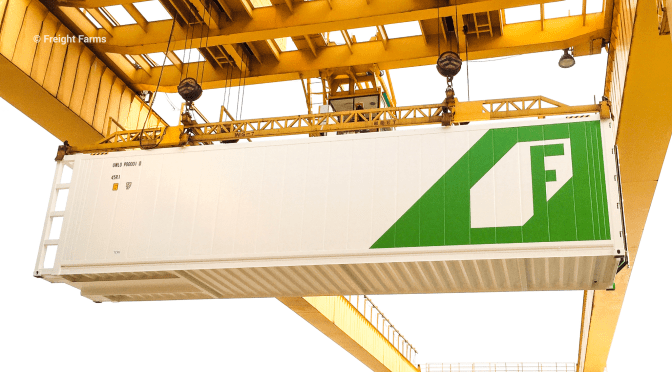
Freight Farms offers a ready-made shipping container called the Leafy Green Machine (LGM) that can be placed in a wide variety of locations including dense metropolitan areas. It just launched its newest product, Greenery, which is the first deviation from the LGM model.
Within the same 320-square-foot space as the LGM, Greenery boasts 70% more growing space and new IoT technology driven at improving yield, efficiency, and automation. With its real-time transparency feature, a single head of romaine can be traced back through every growing stage to the exact hour its seed was planted. It also features recipes that allow farmers to replicate ideal environmental conditions for specific crops like non-native produce. It supports a variety of crops beyond greens, as well, including tomatoes and root vegetables.
The University of Georgia has already purchased two Greenery containers. An independent farmer operating WhyNot Farms, which supplies pasture-raised meat to chefs in North Carolina and Tennessee, also made a purchase.
Although the duo has been pleased with the LGM’s success, Greenery was developed in response to their clientele’s feedback and ever-changing needs. Freight Farms has diverse users throughout the world, including schools, hospitals, NGOs, corporations, and private owners who develop niche businesses offering locally grown produce to restaurants and chefs in the area.
“The joys of standardizing something is that you get a lot of feedback. We have a network of 200 farmers around the world including Guam, Puerto Rico, Europe, and UAE. When we talk about greenhouse farming or traditional farming, no one farms the same way so it’s hard to collect these metrics,” Friedman says. “We looked at workflow considerations and where operators were spending the most time such as fixing things or having to remove a column to replace a part.”
“We benefited from having hundreds of customers in all these varied segments but at the end of the day, there is overlap among what they want, like more yield, fewer operating costs, flexibility, and customization. Our core, bread-and-butter customers are small business entrepreneurs,” McNamara told AgFunderNews. “And because we had experience developing four generations of the LGM, we were able to move faster and to save development dollars because we had real experience. Something John and I talk about all the time is human centric design. When it came to Greenery’s design process, it was equal parts human and plant-centric.”
Tech Developments
Some of the biggest differences between the LGM and Greenery have to do with workflow and appearance. Greenery has mobile LED light boards and grows rows that are both adjustable. This allows farmers to grow a larger variety of crops and makes it easier to maneuver through the grow rows.
“After the fourth evolution of the LGM, there was a significant design jump to increase yield, bring in new tech, and to hit the metrics that all of our customers want, which are things like increased yield and improved workflow,” Friedman adds. “One of the bigger things we ran into is that we felt like we had exhausted as much of the off-shelf tech as we could. We realized we had to go back to the beginning and build from the ground up.”
As a testament to its outside-the-box ethos, NASA selected Freight Farms for a Small Business Technology Transfer grant to fund work with Clemson University exploring how to grow food in extreme climates. NASA is hoping that Freight Farms can help create an off-grid crop production unit that would help facilitate deep space exploration.
It’s a Dynamic Time for Agriculture
As far as the future of container farming, McNamara and Friedman want to remind people that the industries are not static entities, especially when they are so heavily focused on technological innovation.
“What frustrates us is that articles are written as if everything is in a static state. We are in a dynamic time for indoor agriculture. If you could have told us back in 2010 how things would be today, it would have been beyond our wildest dreams,” McNamara says.
“With LGM and Greenery, we offer a new way of growing to build a distributed food system, which is exciting to us. You can lower the bar to entry for agriculture with this technology, making it possible for people who want to get into this professionally but who don’t want to build a warehouse or who don’t have a background in ag,” says Friedman. “If they want to grow their own brand or have a private label deal for a restaurant, we want to give them the tools to achieve that and to bring the other half of the world into farming and agriculture.”
How Urban Indoor Farming Technology Is Changing
Lana Bandoim Contributor
Some of the crops are available to taste and buy during a tour at Square Roots Urban Growers in New York. Photo credit: DON EMMERT/AFP/Getty Images
As automation and data collection processes become more common, they are affecting more areas of the food industry. Urban indoor farming technology is also changing. Tobias Peggs, CEO and co-founder of Square Roots, shared more about how tech is transforming the industry.
Located in Brooklyn, Square Roots focuses on urban indoor farming. Its scalable “farmer first” technology platform brings fresh, healthy food to urban areas year-round, while simultaneously training future generations of farmers. The company recently announced its first major national expansion and partnership with Gordon Food Service.
"Gordon Food Service is one of North America's leading food service providers. It is a massive $15 billion per year food company with distribution operations spanning North America, as well as 175 retail locations in the U.S. Together, we will be building new campuses of our Square Roots indoor farms on or near Gordon Food Service distribution centers and retail stores across the continent," Peggs says.
Square Roots
Square Roots' technology focuses on data, insights and tools that help farmers learn to grow non-GMO, pesticide-free and delicious food all year round. Its platform also has a network of cloud-connected, modular farms, which are built inside shipping containers. Each farm has its own controlled climate that is optimized for growing certain crops.
"This means better speed to market. Using a modular container, we can open a new farm in three months and be very efficient with capital instead of taking years and spending millions of dollars to build a plant factory or a large scale industrial indoor farm or greenhouse. We can test a new market very quickly and can also be very creative with existing city infrastructure. We can pop up in a parking lot or take over a disused warehouse," Peggs explains.
The company's farms can be built in the same zip code as the end consumer. This means fresher products for the customers and more engaged urban communities. The setup can help customers feel connected to their local farm and farmers through events like regular farm tours. For example, in Brooklyn, Square Roots can go from harvest to store shelf in 24 hours or less.
Urban indoor farming is also easy to scale. To meet increasing customer demand in any market, they can simply add another container to any existing farm. Each of the container farms can grow 100 pounds per week of products, so they can add farms to meet the market needs when necessary.
Square Roots
"This means just-in-time capital deployment (very efficient) and also just-in-time technology deployment, which is important, as technology in this industry is improving fast, and you do not want to spend years and millions to open a big farm full of old tech," Peggs shares.
Another advantage is faster learning. The farms are cloud-connected and collect millions of data points in real-time that they can analyze with machine learning techniques to determine how changes in certain environmental parameters can impact the yield and taste of the final produce. More climates in more containers mean more feedback loops, which means faster learning. For example, the system has learned how to bring down the time to grow basil from 50 days to 28 days. That same system will also help them develop new "recipes" for new SKUs later this year, like strawberries or tomatoes, faster.
Peggs explains the company's mission is to bring local, real food to people in cities across the world and empower the next generation of leaders in urban farming. The company has plans to build, scale and expand, while training more farmers to grow delicious food on a global scale.
Lana Bandoim Contributor
I am a freelance writer and editor with more than a decade of experience. My work has appeared on Yahoo! News, Business Insider, The Huffington Post, The Week, MSN Money...
Read More
Taylor Farms Acquires Earthbound Farm
Earthbound Farm will join the Taylor Farms Retail Group and help lead growth in the dynamic organic fresh produce category
APRIL 11, 2019
Taylor Farms acquired Earthbound Farm from Danone, SA.
"We are grateful for Danone’s stewardship of Earthbound Farm during the past two years and for the opportunity to return ownership of this organic fresh produce leader to local roots and family ownership," Taylor Farms said in a statement.
Earthbound Farm will join the Taylor Farms Retail Group and help lead growth in the dynamic organic fresh produce category. "We will build on Earthbound Farm’s tradition of organic authenticity, new variety development and quality focus with expanded regional organic growing and processing capability to better serve Earthbound Farm’s customers and consumers across North America," the company said.

Germany: Infarm Installed Greenhouses At 2 Edeka Stores In Münster
Berlin start-up brings "small garden in the supermarket" to NRW
Grow herbs and salads locally in the market and get them, freshly harvested, in the shopping cart. With the "small garden in the supermarket", the word "freshness" takes on a new dimension. The department stores in Loddenheide and Gievenbeck welcome a new farmer in the city: start-up company Infarm from Berlin has entered the markets with its high-tech greenhouses.
With its modular farm system, the cultivation of herbs and salads is moving to the Münsteraner's shopping center, catering to a trend that is becoming increasingly important today: buying fresh local produce.
Image: Infarm GmbH
Alternatives for local cultivation
"You can hardly find these products locally," says Uwe Marx, market leader in Loddenheide. "We want to offer our customers Infarm's herbs an alternative to basil, mint or coriander, which are currently imported from other countries. The special twist is that customers can watch the herbs being grown."
The herbs grow without the use of soil in a multi-storey facility. In the so-called vertical farms, the processes of nature are reproduced. Temperature, light and nutrients are matched to the plants. Pesticides are not used. Other negative influences such as heat, cold or drought are excluded from the small ecosystem.
On the 7th of May, customers can taste the new harvest for the first time.
For more information:
InFarm – Indoor Urban Farming GmbH
Glogauerstr. 6
10999 Berlin
Phone: +49 (30) 9919165 90
E-Mail: info@infarm.com
www.infarm.com

Canada: Using Hydroponics To Provide Northern Communities With Fresh Produce All Year Long
Alexander Wilkinson, research analyst on the University of Calgary’s Sustainability Studies team, is developing a database so that UCalgary has an inventory of its sustainability-related researchers, providing the ability to build an interdisciplinary sustainability community of practice.
“We want to bring researchers together and be leaders for interdisciplinary sustainability research. Currently I’m cataloguing all sustainability and sustainability-related research being done across campus,” says Wilkinson.
In addition to the community of practice, Wilkinson also conducts applied sustainability research as a PhD student through UCalgary’s Faculty of Environmental Design. In his PhD, Wilkinson is conducting research on two case studies with a focus on community health and well-being, sustainable development, resilience and capacity development for effective local responses to change.
The first case study is a project in partnership with the Artic Institute of North America (AINA), amongst other external partners. Together, Alex, AINA and external partners are implementing a food security intervention project where they are using a containerized hydroponic system, with a complementary renewable energy system, to sustainably grow fresh produce in rural northern communities.
“One goal of this research is to use hydroponics to provide northern communities with fresh produce all year long,” says Wilkinson. “We’re trying to determine if we can produce food in an off-grid scenario in the middle of winter in the Yukon when it’s -40 degrees and there is only one hour of sunlight.”

Fusion Farms In Puerto Rico An Investment Opportunity With Brains, Heart, And Guts
It's an intelligent investment opportunity with a social conscious and serious punch and it's opened its arms to investors to go from start-up to success.
Apr. 15, 2019 / PRZen / MAYAGüEZ, Puerto Rico -- It's an intelligent IMPACT investment opportunity with a socially conscious and serious punch and it's opened its arms to investors who want to own a piece of a Hurricane-Protected Aquaponics Vertical Farm.
For the past year, husband-and-wife business partners Kendell Lang and Lisa Jander have worked tirelessly through government bureaucracy, the language barrier, and the tendency of things to grind along at "island time" in Puerto Rico to get their start-up to germinate and put down roots. Now, with milestone after milestone under their belts, Kendell and Lisa are presenting investors with a unique opportunity to contribute positively to the environment and help Puerto Rico rebuild itself after the devastating landfall of Hurricane Maria in September 2017, all the while benefiting from fund capital gains reduction and deferrals.
It's called Fusion Farms, a hurricane-protected, indoor, controlled environment aquaponics farm model that leverages the natural relationship between fish and vegetation to grow a quality, fresh, and reliable source of non-GMO, pesticide-free, all natural proteins and greens. This is particularly needed in Puerto Rico because it is estimated that the island imports upwards of 95% of their fresh produce, which, after weeks of travel, is not-so-fresh and not very nutritious when it arrives.
Learn more about Controlled Environment Aquaponics
Hurricane-protected agriculture
Read: Hurricane Protected Farming in Puerto Rico
The model can be applied anywhere, but Fusion Farms' "secret sauce" is its location inside one of the many unused Puerto Rico Industrial Development Company (PRIDCO) buildings that pepper the Island. The Pilot Project is in the Mayagüez district of Western Puerto Rico. These steel-reinforced concrete structures have withstood the ravages of hurricane season in the Caribbean, making them the perfect facility to house an indoor farming operation. And with farming encouraged in Puerto Rico – farming that is sheltered from even the most wrathful of storms – Fusion Farms aims to establish the island's food sovereignty, vastly reduce its reliance on imports, encourage local commerce and agriculture, and restore fresh, healthy, locally-grown produce to grocery store shelves.
"Importing is expensive and the final product lacks the labelled nutrient value," says Lisa Jander. "All those food miles also contribute immensely to the condition of the produce when it arrives. There are thousands of farmers and ancillary service providers that have taken a hit or even lost their jobs due to hurricane damage. Fusion Farms is here to contribute to Puerto Rico's food sovereignty, to give the people back their jobs, and to encourage prosperity on the island."
This is an IMPACT investment with a socially conscious, renewable energy, sustainable agriculture focus, and a heart.
A unique investment opportunity
And now: the brains. The start-up is offering investors a smart investment opportunity with a bevvy of attractive benefits, many of which stem from the start-up being in a Qualified Opportunity Zone and a Qualified Small Business Stock:
"We are a Qualified Opportunity Zone investment, as well as a Qualified Small Business Stock, both of which have tremendous capital gains tax benefits for investors," says Kendell Lang. "Additionally, investors can work directly with us without having to deal with a third party administrator, which gives them the benefit of the capital gains reduction and deferrals without the overhead/management fees that fund managers charge.
"In other words, investor dollars go further with us than with non-self qualified investments."
Another attractive aspect of Fusion Farms' equity investment opportunity is that it is being presented through an Online Public Offering. This eliminates the middleman and the pressures and costs associated with having an investment banker or broker sell and manage the opportunity for investors. Everything potential investors need to see is presented on Fusion Farms' Campaign Page and if they like it, they can go right ahead and invest. But this also means that investors have to take action so they don't miss out when offering closes.
The demand for what Fusion Farms is setting out to do is enormous and has been confirmed by several local food distributors and hospitality businesses. Lisa Jander provides an example of just one agricultural product that's in demand:
"We have upscale hotels, bars, and restaurants on the island begging for fresh mint because Puerto Rico's iconic drink is the mojito; you cannot make a mojito without mint," says Lisa. "What's currently available is expensive or wild grown, limited in supply, and isn't great quality, yet these establishments don't have much of a choice. If we can supply a dependable, fresh, local source of mint, we could support a large part of the tourism market."
Read: How a Holiday in Puerto Rico Became a Calling to Change its Future
Fusion Farms' outlook on fresh produce
Fusion Farms' choice of agricultural products reflects the need for crops that are in high in local demand, grow easily and prolifically, and are considered valuable, such as basil, butter lettuce, microgreens, cilantro, mint, and whole Tilapia fish. Year two would provide the opportunity for Fusion Farms to reconfirm market demand for its existing agricultural products while exploring the feasibility of expanding this portfolio. This could happen initially with the planting of fruit trees. Year three could see the introduction of strawberries, green beans, Swiss chard, peppers, and tomatoes.
"Our diversification is attractive to investors who might otherwise worry about their investment if anything were to go wrong with, for example, the lettuce crop," explains Kendell Lang. "Our plan offers diversity, stability and market flexibility."
Tax-free exports
A specific strategy and interesting twist to Fusion Farms' ultimate business plan is Kendell and Lisa's intention to apply for a Value Added Producer Grant for the purchase of equipment to extract essential oils from herbs such as basil and mint as an additional revenue stream. These oils are not only considered a highly valuable commodity but, more important to investors, they also qualify Fusion Farms as an Act 20 company under the Export Services Act.
Act 20 provides tax incentives for companies that establish and expand their export services businesses in Puerto Rico. Under Act 20, income from eligible services rendered for the benefit of non-resident individuals or foreign entities (Export Services Income, or EIS) is taxed at a reduced tax rate of 4%. Moreover, dividends or benefits distributed out of EIS are 100% exempt from Puerto Rico taxation.
This means that all of Fusion Farms' revenues derived from export sales would be tax-free.
"If there's uncertainty or price fluctuation in the local markets for basil or mint, we have a multi-tiered alternate plan model," says Kendell. "We can sell fresh farm-to-table leafy green vegetables, turn excess basil into pesto, excess mint into mint jelly, and both into essential oils."
The whole package
With its keen environmental awareness, warm social conscious, sharp and comprehensive business plan, and numerous investment benefits, it's clear that Fusion Farms presents the investment community with an opportunity with brains and heart, while Kendell and Lisa's fierce determination and ambition prove they have guts!
Learn more about this investment opportunity.
About Fusion Farms
Fusion Farms PR is CEA farming which allows crops to grow faster, all year round in a hurricane-protected, climate-controlled indoor facility, using less water and minimal labor while eliminating crop failures. Fusion Farms, in the beautiful Mayagüez district of Western Puerto Rico, is the ideal location to use an existing PRIDCO facility to grow mint, basil, cilantro, heirloom tomatoes, and leafy green vegetables, which are in high local and organic demand.
For more information about Fusion Farms and to become an investor in this opportunity, go to www.fusionfarmspr.com or email: Info@FusionFarmsPR.com
Media Contact
Kendell Lang
7604453315
Follow the full story here: https://przen.com/pr/33294020
Read more:http://www.digitaljournal.com/pr/4256802#ixzz5lFYOERki

Grow Your Business Master Class
On April 25, branding expert Dino H Carter, will host a limited space business growth master class in Los Angeles.
Dino who helped our community with branding in the past, including the iGrow Branding Webinar two months ago, works with different cannabis businesses among others and has more than 20 years of marketing experience.
Dino is a speaker, guest on cannabis, business, and marketing podcasts, and writes about branding and marketing on the cannabis industry magazine - MG Magazine.
This intense master class is for business owners, entrepreneurs and sales people who seriously want to grow their business and learn the proven method successful businesses use these days for their own growth.
As part of supporting iGrow community, Dino offers iGrow readers a 20% discount on tickets!! Use code igrow on registration: https://www.dbrandingla.com/master-class-registration
Agenda:
In part one, you will learn:
The new rules of commerce, branding, and marketing
How to use these rules to make more sales
How to use content marketing to generate more sales
How to sell more "without selling"
How to get more returning clients to your website
The new era of segmentation: Psychographics Vs Demographics
How to use values and brand positioning for business growth
And more...
In part two, we will have a mastermind to work, and fix, problems you, the event's attendees, have with your actual businesses:
How to implement learned topics in your business
How to change your marketing and sales to increase sales, traffic and customer retention
Q & A
Free bonus you get (regularly priced at $880)
Free strategy session *$480 value
Free brand discovery worksheet *$200 value
Free social media worksheet *$200 value

Signify Expands In Belgian Horticulture Market With New TOMCO Project
Signify today announced its second horticulture project with tomato grower Luc Coghe to install full LED lighting in a newly built 10 hectares greenhouse in Roeselare, Belgium. Since 2014, Luc Coghe, Owner of TOMCO and his wife, Greet Biesbrouck, have increased yields and improved the quality and taste of high wire tomatoes grown under a combination of Philips GreenPower LED interlighting and high-pressure sodium (HPS) lighting at their Biesbrouck Company. Based on this success, they are moving to a full Philips LED lighting system for their newest greenhouse.
The new greenhouse is equipped with a combination of Philips LED toplighting and interlighting that produces a total of 225 µmol/m2/s. LEDs produce little heat so planting can start earlier and therefore the plants can be given more light in the spring and summer. “I expect this system to bring in higher yields and more predictable production for my customers. LEDs should also help us differentiate ourselves in terms of quality and taste, as we have experienced at our Biesbrouck location,” said Coghe. “More importantly, my greenhouse is future proof with full LED.”
“We are seeing a great demand for our Philips GreenPower LED solutions in the Belgian market,” said Udo van Slooten, Business Leader Horticulture at Signify. “Not only has Luc Coghe decided to reinvest in LEDs. Other companies in Belgium that have made that move recently include Den Boschkant and Tomaline with hybrid toplighting combining LED and HPS and Ceulemans. That is because they trust that our Philips products will help them achieve higher yield and a better-quality crop.”
TOMCO is planning to grow the variety Xandor in the new greenhouse. The project is being carried out with Philips LED Horti Partner MAIS AUTOMATISERING NV and the plants are expected to go in in June 2019

Innovative Consortium Reduces Post-Harvest Loss and Food Waste
WASHINGTON and AMES, IOWA (April 17, 2019)
Food loss and waste is a global problem that negatively impacts the bottom line of businesses and farmers, wastes limited resources and damages the environment. The Foundation for Food and Agriculture Research (FFAR), The Rockefeller Foundation and Iowa State University today launched the Consortium for Innovation in Post-Harvest Loss and Food Waste Reduction at the 2019 Iowa International Outreach Symposium. Through this consortium, thought leaders and experts from across the globe will work in tandem with industry and nonprofit organizations to address social, economic and environmental impacts from food loss and waste.
“Feeding a growing global population demands innovation at all levels — from planting to processing to consumption. This consortium will help farmers across the globe use technology to continue using resources efficiently,” said Sally Rockey, FFAR’s executive director. “Optimizing food production practices is critical for ensuring that farmers are profitable, food is plentiful and accessible, and the environment is preserved.”
Due to the volume of food that is moved globally, food loss and waste affects producers, manufacturers, distributors and end-users. More than 40 percent of fruits and vegetables in developing regions spoil before they can be consumed. These goods include mangoes, avocadoes, pineapples, cocoa, and bananas, many of which are exported to the United States. This loss negatively impacts the bottom line for farmers, who are not compensated for their products. Consumers then don’t have access to these popular foods. Additionally, food waste forces farmers to use precious natural resources producing food that either never makes it to the supermarket or is otherwise thrown out by consumers due to quality issues, creating a significant drain on environmental resources.
In 2016, The Rockefeller Foundation launched the YieldWise Initiative aimed at reducing both food loss in developing nations like Kenya, Nigeria and Tanzania, and food waste in developed markets like the United States. In sub-Saharan Africa, YieldWise provides farmers with access to segmented markets, technologies and solutions that curb preventable crop loss and facilitates training that helps them solidify buyer agreements with markets in African communities.
“To nourish, sustainably, nearly 10 billion people by 2050, we must implement a menu of solutions that simultaneously shift diets toward plant-based foods, close the yield gap, and reduce food loss and waste,” said Rafael Flor, Director, Food, The Rockefeller Foundation. “This is paramount to meeting both the Paris Agreement on Climate Change and the United Nation’s Sustainable Development Goal 12. Failing to reduce food loss and waste will make the challenge of achieving a sustainable food future significantly more difficult.”
Food loss and waste highlights the inefficiencies in our food system. According to the FAO*, nearly 1.3 billion tons of food—costing roughly $940 billion—are either lost or wasted yearly, generating about 8 percent of annual global greenhouse gas emissions. Food is lost more at the consumption stage in higher-income countries, while more food is lost at handling and storage stages in lower-income regions.
This consortium will work collaboratively to develop a scalable approach for adoption of the YieldWise model and provide farmers with cost-effective strategies and technologies that link their crop supply to the market demand. This will allow farmers to gain more value from their crops and become more profitable, while also stimulating local economic growth and improving the resiliency of rural communities.
“Our consortium approach will build academic and entrepreneurial capacity of the next generation by engaging researchers and students in multi-national, multi-disciplinary teams in the project identification, planning, and execution phases together with professionals from the private and public sectors,” said Dirk Maier, a professor in the Department of Agricultural and Biosystems Engineering at Iowa State University and the consortium director.
FFAR is contributing $2.78 million for this three-year project, which partner organizations from around the world are matching for a $5.56 million project budget. Participating institutions include The Rockefeller Foundation, Iowa State University, USA; University of Maryland, USA; Wageningen University and Research, Netherlands; Zamorano University, Honduras; University of São Paulo, Brazil; Stellenbosch University, South Africa; University of Nairobi, Kenya; Kwame Nkrumah University of Science and Technology, Ghana; and the Volcani Center, Israel.
###
Foundation for Food and Agriculture Research
The Foundation for Food and Agriculture Research (FFAR), a 501 (c) (3) nonprofit organization originally established by bipartisan Congressional support in the 2014 Farm Bill, builds unique partnerships to support innovative and actionable science addressing today's food and agriculture challenges. FFAR leverages public and private resources to increase the scientific and technological research, innovation, and partnerships critical to enhancing sustainable production of nutritious food for a growing global population. The FFAR Board of Directors is chaired by Mississippi State University President Mark Keenum, Ph.D., and includes ex officio representation from the U.S. Department of Agriculture and National Science Foundation.
Connect: @FoundationFAR | @RockTalking
About The Rockefeller Foundation
The Rockefeller Foundation advances new frontiers of science, data, policy and innovation to solve global challenges related to health, food, power and economic mobility. As a science-driven philanthropy focused on building collaborative relationships with partners and grantees, the Foundation seeks to inspire and foster large-scale human impact that promotes the well-being of humanity throughout the world by identifying and accelerating breakthrough solutions, ideas and conversations.
*FAO. 2015. Food wastage footprint & climate change. Rome: UN FAO.
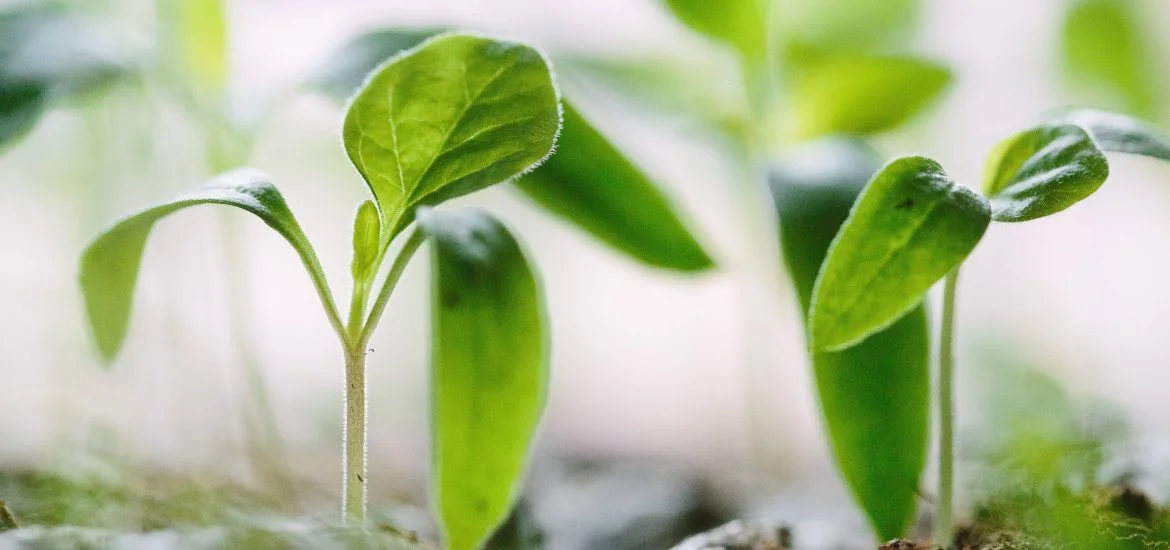
In Places Like NYC Urban Agriculture May Not Be A Panacea
By Vitaliy Soloviy on April 17, 2019
Commercial urban agriculture in New York provides the city with tons of green salad. Yet, according to a new study in the journal Land Use Policy, its environmental outcomes are far less green.
Indoor and rooftop farms are becoming increasingly popular. In the case of New York, which is featured in the study, the city’s commercial controlled-environment agriculture (CEA) includes large-scale rooftop farms, vertical farms, and indoor farms. In theory, they should increase food security, reduce the local ecological footprint and curb emissions connected to transporting food. Only in theory, though.
To find out what happens in practice, the researchers looked at 10 roof and indoor commercial farms, exploring how much food they produce, where it is going and what the energy demands and future expansion opportunities are. While rooftop farms did quite well when it came to their energy demands and ecological impacts, most of the indoor farms have even larger environmental footprints than conventional outdoor ones. Meanwhile, the tech they rely on, including multiple sensors and climate-control features, increase energy demands further.
When it comes to claims regarding food security, such expensive conditions result in premium prices for consumers that can afford them like luxury food stores and restaurants. These benefits, however, mean no contribution to food security for most people. Another issue is the high price of real estate in New York, which makes new indoor agriculture startups a risky bet considering the limited size of the premium market and competition from traditional farms outside the city, which have far better expansion opportunities.
However, the researchers note that no globally applicable conclusions can be drawn from the case of New York City alone. Some cities like Tokyo are global success stories of vertical agriculture and they might prove more vital for local food security. The researchers also point out that the efficiency of high-tech urban agriculture might be higher in places that require little additional heat and sunlight, while crop and vegetable choices can be better tailored to actual local needs and not just the luxury segment.
The team sees a brighter future for non-commercial urban agriculture driven by citizens, including initiatives such as community gardens. Built on values and local vision, such projects might go much further in strengthening local food security, improving community resilience and providing actual environmental gains.
AVF Speaker Announcement: Unlocking The Potential of Indoor Farming In Cities of the Future
AVF Speaker Announcement
22-23 May in Oslo, Norway @ Urban Future Global Conference
We are excited to announce the first round of confirmed speakers for our conference entitled: Unlocking the Potential of Indoor Farming in Cities of the Future. Event details here: https://pretix.eu/associationverticalfarming/urban-future-2019/
This conference will be the only part of the wider Urban Future programme to focus on food production in the city.
Our first confirmed speakers are:
Dr. Joel Cuello, Professor of Biosystems Engineering and Director of the Global Initiative for Strategic Agriculture in Dry Lands (GISAD) at The University of Arizona.
Dr. Leo Marcelis, PhD., Head of chair group Horticulture and Product Physiology, Wageningen University
Josef Schmidhuber, Deputy Director, Trade and Markets Division, FAO
The AVF will run two half-day sessions, which will include:
Keynote speeches from industry experts
Roundtable discussions on the industry and society's most pressing topics
Guided workshops to create realistic strategies for the industry's future
We will connect cities and industry to create solutions for food in the city.
Your ticket also includes:
Access to the conference venue on May 22 and May 23
Access to all sessions (except the Mayors Only sessions)
Access to the Green Business Village
Food and beverages at the conference venue
Participation in field trips on May 24
Access to the event app
Access to speakers presentations
Get your Early Bird Ticket now! This is the lowest price you will find anywhere for this event.

We look forward to seeing you in Oslo! Should you have any questions, please don't hesitate to contact us at re@vertical-farming.net.
Sincerely,
The AVF Team
How Can Controlled-Environment Growers Improve Energy Efficiency And Grow Light Optimization?
Greenhouse Lighting and Systems Engineering (GLASE) consortium researchers are looking for ways to reduce grow light electricity use and improve light uniformity to maximize controlled-environment crop yields.
April 3, 2019
By David Kuack
Are you using or thinking about using grow lights to produce your controlled environment crops? If so, would you be interested in how to reduce the amount of electricity needed to operate those lights?
Researchers with the Greenhouse Lighting and Systems Engineering (GLASE) consortium at Cornell University in Ithaca, N.Y., are studying the use of control algorithms to optimize the light used on controlled-environment crops while reducing the amount of electricity used to operate grow lights.
“These control algorithms that deal with lighting were developed over 20 years ago,” said research associate Dr. Kale Harbick. “Unfortunately, this technology, which was under patent until about four years ago, never achieved large scale commercial use.
“The algorithms are related to delivering a constant amount of light to the plants every day, which is called daily light integral (DLI). Controlled-environment crops like lettuce prefer to receive a constant amount of light every day. This enables the plants to maximize their growth and helps to avoid problems with tipburn, which can make the crops unsalable.”
Even though this technology is off patent, Harbick said some growers are still hesitant to incorporate it into their environmental control systems.
“As part of the GLASE research program we are putting this control technology into two commercial pilot facilities in New York,” he said. “We are going to run multi-year experiments so that the growers in those facilities can compare the performance under our control system with what they are currently using. Incorporating this technology, we are looking to demonstrate a large amount of energy savings for the crop yields produced.
“We’re specifically focused on lettuce, tomato and strawberry. The first two pilot facilities are growing leafy greens, primarily lettuce. Lettuce is the crop the Cornell controlled-environment agriculture group has studied the longest and we understand the best. Tomato and strawberry are newer crops to us so we are doing a lot of greenhouse experiments right now with these plants to analyze the relationship between light, carbon dioxide and growth. We have the information well established for lettuce, but it’s not as well established for fruiting crops. We would eventually like to roll out pilot programs for tomatoes as well. We have some tomato growers in the state who have expressed interest in using the technology.”
GLASE researcher Dr. Kale Harbick is studying the use of control algorithms to optimize light while reducing the amount of electricity used to operate grow lights.
Photos courtesy of Kale Harbick, Cornell Univ.
Harbick said New York State Energy Research and Development Authority (NYSERDA), which is financially supporting GLASE, is interested in trying to meet greenhouse gas emission production targets. CEA has the potential to use a lot of energy. Any energy savings that the GLASE research can realize has a corresponding large reduction in greenhouse gas emissions.
Lack of light uniformity
One of the problems that Harbick often sees with grow lights is growers don’t install enough fixtures.
“The most basic problem is light intensity,” he said. “We often see greenhouses where growers are trying to produce lettuce with grow lights, but they only have installed half the number of fixtures they should have in order to grow lettuce optimally. What that means is even if they ran those lights 24/7 they wouldn’t be able to achieve the DLI needed to reach the target amount.”
Harbick said the issue of not installing enough lights is related to measuring light.
“Trying to measure the light is not a trivial thing to assess,” he said. “If there is an array of lights that are regularly spaced in the same plane, the problem is the light is not uniform on the crop. It kind of has a bullseye effect where there is a lot of light in the center and not very much on the edges. Lighting manufacturers and designers often provide growers with designs that show the light intensity at the center of the space, which is not representative of the light that is received in the rest of the space. The lights might be sized according to that center spot which is just fine, but everything else is undersized. We hear regularly from growers who’ve spent a lot of money on a lighting system and then realize later that it was undersized.”
Harbick has done a lot of work on lighting uniformity to try to address this issue of undersizing.
“We’ve looked at techniques to change the positon of the lights to make it more uniform,” he said. “We’ve looked at changing the brightness of the lights depending on where they are in the space to make the light more uniform. We have a couple of greenhouse spaces at Cornell that have this uniformity optimization. These are the only greenhouses on campus to have uniform lighting.”
One of the common issues encountered by growers who have installed grow lights is the lack of light uniformity which can be caused by undersizing the number of fixtures.
Harbick said this lack of light uniformity is not often noticed because of the way humans see light distribution.
“We could look out at a crop and the lighting looks uniform to our eyes because our eyes are so good at attenuating brightness levels,” he said. We don’t notice these differences very easily. The brightness level differences have to be measured.”
Although the lack of light uniformity can be related to the number of light fixtures installed, Harbick said there could be other factors involved.
“In the research greenhouse that we have optimized light uniformity, initially we received a design from the manufacturer that called for 20 LED fixtures,” he said. “I modified the design using a computer program that I wrote that was able to reduce the number of fixtures to 16, but improved the light uniformity. The light is much more uniform and we were able to do it with fewer fixtures.
“It’s not always a case of installing more fixtures to increase light uniformity. It can also be things like changing the brightness of the fixtures or changing the position of the fixtures. There are other possibilities to improve uniformity besides the number of lights.”
Loss of crop yields
One of the reasons that there continues to be light uniformity issues is how the fixtures are spaced in greenhouses and indoor farms.
“It’s a status quo thing,” Harbick said. “Lights have always been placed in a plane and regularly spaced out. This is how it has always been done. Until recently most grow lights have had a fixed intensity. Under those conditions it is difficult to overcome this light uniformity problem.
“Lack of light uniformity is less of problem in large greenhouses because there is a lot of interior space and not much edge space. However, this is a major problem in indoor farms where there are long rows or shelves. These indoor farms don’t have the background natural light like greenhouses to mitigate some of these effects. I have seen warehouses where they were growing a high DLI crop and the plants in the center of the room were a foot taller than the plants on the edge. It was simply because the plants in the center were receiving more light. In indoor farms, whether it’s lettuce, tomatoes or other high DLI crops, that is where the payoff really comes for optimizing light uniformity. For indoor farms light uniformity is something that people aren’t looking at yet. They just kind of live with it. They just move plants around to try and even out the growth. But that creates a lot of extra labor and logistic issues. They’re not optimizing the total yield of the crops. Every plant on the edges that is shorter than the ones in the center of the room is lost sales.”
GLASE researchers are conducting greenhouse experiments on tomato and strawberry to analyze the relationship between light, carbon dioxide and plant growth.
Harbick said that the issues with light uniformity may improve as changes are made to lighting fixtures.
“As the lights become more capable in terms of adjusting brightness and spectrum, there are opportunities for GLASE researchers to share some of that optimization technology with lighting manufacturers to try to get these improvements out to the industry. But it’s going to take some time. We’re still doing a lot of the research ourselves. We don’t have an active grant in this area right now so this is something that I have been doing on my own. It’s definitely an opportunity for future study.”
For more: Kale Harbick, Cornell University, School of lntegrative Plant Science, Horticulture Section, Ithaca, NY 14853; kh526@cornell.edu.
David Kuack is a freelance technical writer in Fort Worth, Texas; dkuack@gmail.com.
Moving Forward With Urban Farming
April 8th, 2019, Economy | News
by SHAZNI ONG / pic by ISMAIL CHE RUS
URBAN farming could be the answer to the ever increasing cost of living, amid the rapid development that has resulted in limited space for food production.
Urban Farm Tech Sdn Bhd founder Francis Chuah (picture) said almost every space — be it a balcony, front yard or backyard — is a potential plot for urban farming.
He said farming is no longer only about having a wide-open agriculture land out in the countryside.
“Other than the rooftop or any horizontal vacant space, we can even develop a wall farming system that utilises the vertical surface of a building,” he said in an exclusive interview with The Malaysian Reserve recently.
With a relatively small space — perhaps a balcony of just 8ft (2.44m) wide and 10ft high — one can grow organic vegetation that would satisfy the need of a whole family sufficiently.
Chuah said the new farming technique, otherwise known as urban agriculture or urban gardening, could contribute in providing people with locally produced food and within the city limits, if not the world.
The engineer-turned-entrepreneur also said it is possible to help the needy in coping with food scarcity and hunger through the growing of plants within and around cities, communities and rooftops.
“If you see our design or concept of the urban farming system, we can grow food wherever there is a surface and sunlight.
“When I talk about surface, it does not only mean horizontal surface but also vertical. We have the idea, technicalities, technology and skills to build, make and grow food,” he said.
Chuah added that one can even utilise the indoor space that’s originally not able to grow plants due to insufficient light.
“Implementing urban farming in an office space is also a brilliant idea, as it is not only producing food for employees, but would make the environment greener and eco-friendly too,” he said. The world population is expected to rise by about three billion by 2050.
It is estimated that nearly 80% of the population will be living in urban areas or centres.
The rapid process and development of urbanisation in developing countries is accompanied with subsequent issues and problems such as urban food insecurity and urban poverty.
Most developed countries have established urban farming as a solution for urban food insecurity.
Chuah said there is a bright future for such an agriculture concept in Malaysia.
“I have seen transformation over the past two years since I began urban farming. I saw how the market grew and I can still see that there are many potential places that can be turned into urban farming,” he said.
While it is subjective to the kind of vegetation that one grows and how the crops would be marketed afterwards, urban farming can serve as a decent supplementary income for the planters.
“According to our record, one could generate a revenue of about RM600 per month from growing vegetables for a space of about 30ft x 8ft,” Chuah said.
Three years ago, the former project manager for water treatment engineering projects looked at the organic farming concept seriously by putting some research and development works before setting up a farm at a house in Bandar Saujana Putra, Selangor.
With just a capital of about RM100,000, his intention was clear — to get urban communities closer to nature by growing food in their own areas.
“This urban farm is about 2,000 sq ft, and it combines different types of aquaponics systems and concepts.
“Why the variety? That is because we want to show people that you can use different vacant places to grow your food through the aquaponics system.
“Through the system, we manage about 1,800 pots of vegetables,” he said.

Ikea Harvests First Lettuce From Stores Helsingborg and Malmö
We're not going to make jokes about putting your own salad together at Ikea, but it can be done from now on. The furniture giant has been growing lettuce in a container farm near their stores in Helsingborg and Malmo sinds early this year. Yesterday Catarina Englund, global sustainability innovation manager, announced the harvest of their first lettuce from what they call their "on-going circular urban farming tests".
"Together with Bonbio we are testing how to become self-sufficient in growing our own local salad", Catarina explained. "We can harvest 15-20 kg per day from this container. In addition, we are using our own food waste from the IKEA store to produce a nutrient solution in Bonbio/OX2 biogas plant. The aim is to establish a closed circular food loop. We all look forward to follow this interesting tests", Catarina explains.
Waste processing
Bonbio is a waste processing company and has been working with Ikea to evaluate their food waste for a longer period by now. "The majority of IKEA Sweden's food waste already goes into various biogas plants, including the biogas plant in Helsingborg, which is run by our sister company OX2 Bio", they explain. "At the biogas plant, Bonbio refines the food waste into plant nutrients, which are then used to grow leafy lettuce in the specially built cultivation containers right next to the IKEA department stores. By controlling light, temperature, irrigation and nutrient supply, we are independent of the seasons and can secure a large production of locally grown and fresh plants all year round."
Hydroponic Ikea
Ikea has been active for a longer period in the hydroponic industry. Back in 2016 the introduced a line that lets consumers grow their own lettuce and herbs on water. Last year, they've invested in Click & Grow, a producer of smart indoor gardens. This year in May they are to announce the results of their collaboration with Tom Dixon, a UK based industrial designer that will 'explore urban farming, making homes the new farm land.' The ambition is to find affordable and forward thinking solutions that can be used to grow plants and vegetables at home and beyond.
Salads first
But now it's all about the harvest of the first lettuce. Initially, the salad will be served in the department stores' staff dining rooms. "We're hoping to serve the salad in the customer restaurants in the coming year."
Publication date : 3/28/2019
Author: Arlette Sijmonsma
© HortiDaily.com