


Welcome to iGrow News, Your Source for the World of Indoor Vertical Farming

Philips GreenPower LEDs Help Prime Delica To Grow Healthier And Safer Crops For 7-Eleven Customers In Japan
Prime Delica’s new vertical farm facility in Sagamihara ensures year-round supply of high-quality lettuce, spinach and coriander
Prime Delica conducted research with Tamagawa University, CCS and Signify to determine the optimal light recipe to increase vitamin levels and nutritional value of lettuce
The entire seeding-to-harvest process is automated and can produce up to 3,200 kg of lettuce daily
Signify helps Japanese food supplier Prime Delica to grow high-quality lettuce varieties, spinach and coriander all year round using the Philips GreenPower LED production module range and offer customers of 7-Eleven crops with higher vitamin levels and nutritional value.
Demand for quality
Prime Delica has been a longtime premium delicatessen supplier to 7-Eleven. To meet increasing demand for fresh, healthy and pesticide-free food, Prime Delica built a new large-scale vertical farm in the city of Sagamihara in the Kanagawa prefecture, Japan.
“It’s difficult to get a good quality and stable food supply from the open field due to the effect of climate change on crop growth,” said Mr. Kazuki Furuya, President of 7-Eleven. “We believe the Sagamihara vertical farm is a great step to guarantee safe and healthy food for our customers.”
Backed by research
“We always aim for the best quality crops and want to guarantee customers a stable supply of healthy vegetables,” said Masayoshi Saito, president of Prime Delica. “LED lighting makes it possible to steer the cultivation process by adjusting the color, duration and positioning of the lighting. After years of research with Tamagawa University, CCS and the plant specialists at Signify, we have found our recipe for growth with Philips GreenPower LED production modules, which allow us to fully control the growth cycle of our crops with the right lighting strategy.”
High value crop
Prime Delica uses different light recipes at different growth stages for each of the crops, with a pre-harvest treatment to increase the vitamin C level to meet functional food requirements. Apart from the premium quality, crops coming from their vertical farm also have a much lower bacterial count and are grown using no pesticides, a big advantage for 7-Eleven.
“We do not use any pesticides because our crops grow in a closed environment, which also means there is no air contamination,” explained Mr. Saito. “Our crops can be delivered to 7-Eleven stores within 48 hours from harvest and are very fresh and full of vitamins. The cost price per crop is higher than in the open field. However, the overall costs of processing are vastly reduced in terms of logistics, checking and washing with very little waste. It’s a cost reduction mechanism if we consider the factory in total.”
Increased automation
Prime Delica has automated the entire process from seeding to harvest, minimizing manual operation time and improving the hygiene of the crops. Robots carry out logistical operations. A total lettuce growth cycle (frillice, red leaf and bimittuce varieties) from seeding to harvesting now only takes about 39 days, compared to 70 days in the open field. Production can even reach up to 3,200 kg of lettuce a day.
The new Sagamihara facility started operating in January 2019, and the company is looking to expand further in 2019 and 2020. Prime Delica is considering to grow other crops like strawberries in similar vertical farm facilities in the future.

The 2nd Annual Investment Forum & Exhibition “Orchards of Russia 2019” (22-23 May 2019, Moscow)
Moscow - May 22-23
Country's flagship investment projects in the field of gardening, viticulture, and wine-making will be presented at the 2nd International Orchards of Russia Forum and Exhibition.
The 2nd Annual Investment Forum & Exhibition “Orchards of Russia 2019” (22-23 May 2019, Moscow) is a high-end international platform for attracting investment to Russian commercial horticulture, discussing industry development strategy, sharing best practices among key market players, and securing new win-win contracts.
Gold sponsor: Fitomag, Silver sponsor: Sumiagro, Bronze sponsors: Advice&Consulting SRL, Irrikom, Plattenhardt + Wirth, Sponsor of Session: Stoller
Programme Highlights:
Plenary session and discussion: federal and regional government, regulators, investors, project initiators will discuss the national support policy, project financial terms, legislative landscape for starting nurseries, for planting stock coming from abroad, and many other crucial issues for the prosperous development of commercial fruit and grape growing industry within 2020-2021
Presentation of 60+ flagship investment projects in the field of commercial fruit and grape growing to be executed within 2020-2025 from all over Russia
Planting stock and nurseries – what is needed to accelerate the development?
Special economic keynote: success of the industry and growth points. Assortment policy and what to grow?
Processing – wonderful opportunity to generate extra revenue? How to build and optimize processing capacities?
Inspirational case studies from the most successful companies from Russia and the CIS; showcase of innovative technologies and equipment useful for your business upswing!
Specialized and technology-focused discussions: fruit growing, viticulture, berry production. Learn from your peers what experience to adopt and what mistakes to avoid!
Selling at home and abroad – how to get things going and generate more revenue?
To go organic. Legislation and workable strategies to grow ecologically clean food
Dedicated exhibition of technologies and equipment from the global leaders from Holland, Israel, South Korea, Spain, Poland, France, and other countries
FOCUS DAY: APPLE FROM RUSSIA:
• Specialised workshops on apple orchard establishment and treatment. Modern work strategies and novel developments
• Cultivation technologies and nutrition systems to improve fertility of apple orchard: modern innovative means, methods, techniques, technologies, and machinery
Among the speakers and VIP-guests:
Olga Lesnykh, Acting Chairman, National Committee of the Russian Federation on Testing Varieties (Gossortkomissia)
Zamir Balkizov, General Director, Sad-Gigant Ingushetia
Aidyn Shirinov, Chairman of the Board of Directors, Sady Stavropolia
Yury Belov, General Director, AFG National
Sergey Lebedev, General Director, Alma Valley
Sergey Tarakhno, Executive Director, Yuzhnaya Agrofirma
Oleg Rianov, General Director, Yuzhnye Zemli
Alexander Akimov, General Director, Yuzhnoye AAA
Alexey Zatoplyaev, General Director, AgroGroup Solnechny
Yulia Portnova, General Director, Frukti Starogo Krima
Lechi Khunarikov, General Director, Rodina
Viktor Gorodov, Chairman of the Board of Directors, Korochansky Fruit Nursery
Ilia Shatilov, General Director, Batyrevsky Fruit Nursery
Igor Alimenko, General Director, Logus-Agro
Alexander Kesoyan, General Director, Chihachi
Alexander Prodan, Chairman, Malinovy Don, and a lot more.
To register, please contact me using details below or follow the link: https://www.gardensforum.ru/en/registration/
Organised by: Vostock Capital
Contact person: Project Producer Olga Zhogal
E-mail: OZhogal@vostockcapital.com Tel: +44 207 394 3 090 (London)
Official website: https://www.gardensforum.ru/en

Video: Underground Farming Could Transform The Way Your Coriander, Watercress And Rocket Is Grown
March 22, 2019
KEY POINTS
In London one farm is using LED technology and hydroponic systems to produce greens 33-meters below the surface.
Growing Underground has been collaborating with the University of Cambridge’s Energy Efficient Cities Initiative to analyze a range of data from its facility.
While we may associate farming with sunshine, fresh air and pretty patches of land, innovation and technology are beginning to change where food is grown.
In London, for instance, one farm is using LED technology and hydroponic systems to produce greens 33-meters below the surface. The company, aptly named Growing Underground, says its process uses 70 percent less water than a traditional, “open-field farming.”
Hydroponics, as the Royal Horticultural Society puts it, relates to “the science of growing plants without using soil, by feeding them on mineral nutrient salts dissolved in water.”
With a focus on reducing food miles, Growing Underground says its produce – which includes mustard leaves, pea shoots and coriander – can be delivered within four hours of picking and packaging.
For several years now, Growing Underground has been collaborating with the University of Cambridge’s Energy Efficient Cities Initiative to analyze a range of data.
“We automatically log temperature and humidity but also manually record crop growth,” Melanie Jans-Singh, a PhD student at Cambridge, told CNBC’s Sustainable Energy.
“We try to analyze all these relationships between energy, crop growth and environmental conditions in order to be able to grow plants as best as possible with a minimal amount of energy,” Jans-Singh added.
The utilization of underused areas of urban space – Growing Underground’s site is located in a former air raid shelter – is set to play an increasingly important role in the way people grow crops.
“The Growing Underground farm is a very good example where a derelict space has been put to good use,” Ruchi Choudhary, reader in architectural engineering at Cambridge, told CNBC.
This idea, Choudhary explained, could be pushed further by tapping into environments that were rich in waste heat and carbon dioxide, such as hospitals and school buildings.

Perspectives on Business Strategy and Economics of Vertical Agriculture
Indoor Ag Science Café is a monthly based open forum for indoor growers and scientists. Anyone is welcome to participate to better understand and support this emerging industry
By urbanagnews
March 26, 2019
Two economists at MSU Product Center Food-Ag-Bio, Michigan State University, Chris Peterson and Simone Valle de Souza were presenting “Perspectives on the business strategy and economics of vertical agriculture”.
Chris started out this month’s Café presentation by giving a strategic overview of indoor agriculture industry, followed by Simone’s proposed model-based optimization approach including crop yield model, market demand and costs.
Simone emphasized the need of data usable for analyses. Increasing profitability by minimizing the costs alone does not seem to help establish profitable indoor ag industry, and so value proposition seems to be critical to feed into this optimization model.
They are recruiting potential partners of indoor farms in this project.
Indoor Ag Science Café is a monthly based open forum for indoor growers and scientists. Anyone is welcome to participate to better understand and support this emerging industry.
TAGS Business Chieri Kubota Indoor Ag Sci Cafe Michigan State University

Vertical And Urban Farming With Henry Gordon-Smith, Founder & Managing Director of Agritecture
Founder & Managing Director of Agritecture
February 20, 2019
In this interview we talk all about urban and vertical farming: What it is, what the challenges are, and why you should use these farming technologies to grow food in your city. If you’re curious about urban and vertical farming, then don't miss this article!
Henry could you please introduce yourself and you company?
Hi Marek! I’d be happy to, thanks for talking with me today. My name is Henry Gordon Smith, and I am the founder and managing director at Agritecture.
Agritecture is a global urban agriculture consulting firm. So what this means is we assist entrepreneurs and organizations around the world who are looking to start farms of their own or get into the vertical farming space. A lot of entrepreneurs don’t know what they should grow, they don’t know whether they should do a greenhouse or vertical farm. They don’t know what policies or what technologies they should be aware of to be successful. We help them answer those questions through data and our interdisciplinary approach.
A little bit of background about me. I started actually as a blogger, so about 9 years ago I got really interested in urban agriculture and I was dissatisfied with the amount of information available online. The information available wasn’t clear, it wasn’t honest, it wasn’t connected to the way that cities develop and so I created agritecture.com as a blog all about the future of agriculture in cities. Over the years that blog has grown up into a global consulting business which has been very exciting.
Henry how would you define Urban and Vertical farming?
That’s a great question because depending on how you look at them the two things are quite different, but also very similar in a number of important ways.

Urban farming means growing food in the city, and there are many different ways that you can do that. It’s also important to note that urban and local aren’t the same: you can have local farms that are in peri-urban and nearby rural areas, but when we talk about urban farming we’re really talking about growing food right in the city. You can have urban farming on rooftops, you can have it in vacant public spaces, and you can have it in and around private buildings as well. Most people think only about soil-based farming when they think about urban agriculture, but within that definition there should also be greenhouses, hydroponic farms, aquaponic farms and vertical farms.
Vertical farming is one specific type of urban farming, and the specific definition has been evolving I would say. The first definition that was put out there was really by doctor Dickson Despommier, author of The Vertical Farm, who was a mentor of mine as well, and his definition was basically indoor farms are like stacked greenhouses that are two stories high or more. I think that definition is OK but I think it excludes the reality of vertical farming that sometimes happens in basements and sometimes is only one level high, and frequently happens without natural light of any kind. So there's many different kinds of vertical farming today and the definition has really evolved since doctor Dickson Despommier publish his book about 10 years ago. So you know I think it's important to recognize that there are some varieties within vertical farming, and it’s not all the same thing anymore.
I think vertical farming is really about 3D farming. It's about designing with a 3 dimensional space in mind and trying to maximize the layers as much as possible. So vertical farm is typically stacked layers of cultivation and typically this is done hydroponically—although sometimes it can be done with soil—and is typically done indoors with no natural light although sometimes you can have them within some greenhouse models.
What is the relationship between these two farming methods?
I think that vertical farming is typically done in and near cities. When you think of vertical farming one of the main benefits is that you can produce high volumes of local food or food closer to the customer. But vertical farming doesn't have to be urban. You can think about a large scale vertical farm near a food distribution center somewhere far away. You can think about a vertical farm that's growing for scientific purposes and some research center far away from the city. You can think about vertical farms that are on the edges of cities away from the center. But I think most commonly you're trying to reduce the distance between the farm and the customer and so vertical farms tend to be in or very close to urban areas. So I see vertical farming as a subset of urban agriculture.
Why to use vertical and urban farming instead of traditional farming?
There are a couple different reasons and it really depends on where you are. The first thing is that every city is different and the drivers that are going to make urban or vertical farming successful are different in each city.
For example, if I look in New York City the driver for going indoors and growing in a vertical farm (which is very expensive and requires a lot of equipment) is the cold winter. In the winter time you can't get local food and all of our fresh produce comes from places like California, Arizona, Florida and Mexico. Now we have an economic reason to disrupt that situation and grow local food.
If you look at a place like Dubai, the reasons for doing indoor farming are very different than NYC. For example, the heat in Dubai is so significant that most of the greenhouses need to shut down in the summertime. They also import about 90% of their total food supply from abroad. So there are different drivers for vertical farming there than in NYC but the important point is that vertical farming makes sense in both contexts, they just might have slightly different systems that are tailored to the specific local needs and context.
Looking around the globe, there are also a lot of issues with people cutting down forests to build farmland, and also farmland being paved over to make room for growing cities. Urban agriculture and these new methods of growing local produce can be a way to save that land and make sure that you have enough trees to absorb carbon and make sure the ecosystem is performing properly. It's not a solution that’s meant to totally replace traditional agriculture but it should be a significant part of the entire system and I think a lot of people are surprised to learn that actually 15 to 20% of our global food supply comes from urban agriculture according to the FAO.
Henry, could you please talk about the main market issues that these farming methods solve?
Sure, the main system that urban agriculture actually disrupts is distribution. I think a lot of people think about the production and sure there's benefits from clean and pesticide free food, but distribution is the main disruption. Distribution in its most general sense is the major source of the carbon impact coming from traditional agriculture that urban agriculture helps to reduce. The reason you have distribution is actually why sometimes you have to have a lot of chemicals used for packaging. Food waste is a big part of that system as well. The economic opportunity around urban agriculture and vertical farming really comes from providing the product faster and fresher and cleaner and I think distribution is the main disruption point with urban agriculture.
World Vegetable Map 2018, Source: Rabobank, 2019
Vertical and Urban farming is rising right now based on market research, is that true?
Yeah I think it's a hot trend. I think the media is talking about it, and we're seeing some cities get involved in it from a governmental perspective as well. A lot more funding is going to the space so there's lots to talk about I think there's a bit of hype. I think that people are also too excited about it in some ways. I mean look, I'm very excited about it I talked about all the time and my blog writes about it every single day, but at the same time I think the hype isn't that helpful when you see articles like “Vertical farming will save the world” or “Vertical farming will feed the future”. I always try to explain: vertical farming it's a part of the solution, it is not the solution alone.
I think it's really important to understand that you can't grow everything at the vertical farm today. There are very difficult models that you have to operate very carefully and I think also you need to raise a lot of money. It's not an easy business and I think looking at the big picture hydroponic greenhouses are actually a bigger part of the future farming. I think hydroponic greenhouses provide more variety and they are more economically viable today, but it really depends on where you are located. Vertical farming is getting a lot of attention right now but I hope that attention turns into action and science-based knowledge.
What key challenges are these technologies now facing?
I don't think there's anything wrong with the technology. I think the technology works. If you would have asked me a couple of years ago there would have been a lot of challenges with the lighting, a lot of challenges with heating and ventilation, a lot of challenges with automation but now we're seeing that all those technologies of advancing quite rapidly and they are improving every year really.
We are on really good track to have economically viable vertical farming, but the problems that still exist that haven't been solved are the operational problems such as: managing waste, managing food safety, managing labor, hiring the right staff. All these things are still the challenge.
I think there are 2 major problems right now for vertical farming: one is sales and marketing, and the other is operations. I don't think it's the technology. When we see farms fail it's mostly because they struggled with one of those two core challenges.
What do you think will be the next big thing in this field?
I think whatever the next big thing is will have to solve a specific problem. The major problem for urban and vertical farms right now is labor. Labor costs are rising. The labor can be up to 35-40% of your operations costs. That's usually the biggest single chunk of your cost as a vertical farmer. Those costs need to be reduced and I think automation technology is probably the most exciting.
I don't mean necessarily high tech robots that perform every farm task, I’m really talking about specific farm tasks that right now take up a lot of labor time: packaging tasks, washing tasks or harvesting tasks. If we can build farms where the staff are paid more and they only focus on monitoring and maintenance and dealing with problems that arise, this would be the ideal. This would mean you get the talent to create the jobs, those jobs are paid better they are focused on complex challenges not on repetitive activities.
I think automation technology and robotics have a lot of promise for vertical farming. We're making progress there. I think other technologies like artificial intelligence (AI) or computer vision have a lot of potential as well.
Could you please describe today’s typical urban farmer?
The typical vertical farming entrepreneur today is a man, age 35 to 60, who has made money off some kind of business beforehand and is looking to invest it in this new emerging field. They usually feel a strong need to change the world and they know that agriculture is one of these major problems. They see this technology as really exciting because it's going to allow them to do more than they could do on their own. It's going to allow them to solve the problem in a really interesting way. But it’s really important to note that although this is the norm, there are people of all backgrounds who decide to become vertical farming entrepreneurs, and I sincerely hope that the diversity in our industry will only increase as the industry continues to grow.
How do you recognize produce that comes from a vertical farm?
The short answer: The day and the place would be the right way to do it. Otherwise you can't really tell, other than the fact that there’s no soil or dirt on any of the produce, but this is tough because most produce is washed clean regardless. Usually the marketing on the package will give you some indication: it will tell you that “we are vertical farm, we are local, we are fresh, we are pesticides free.”
Do you thinks it's better to say it's from Vertical farm?
No, I don’t think that is what the consumers need to see. I think the consumers wants to see local or they want to see clean.
Henry, why did you choose these farming methods? What drives you?
I was studying political science in Canada and Vancouver wanted to be the greenest city by 2020, and I was looking at these policies and I noticed that food wasn't really part of it. They had plans to managing food waste but they didn’t have a plan for growing enough food. I thought that this was very disappointing, why isn’t food security part of the green planning process? And the truth is that if you look globally it’s really not. Cities don’t consider agriculture as part of their plan which I think is really problematic, and I also was disappointed because I saw hydroponic websites talking about hydroponics technologies but it was disconnected from how the business models work in the city. How the technology would work with the people, with the customers.
I wanted to create a space to explore and share these ideas publicly, which led to the creation of the original agritecture.com blog. And as I started getting more interest in the topic I learned more about the gaps in the market and when I see gaps in the market I see an opportunity to create change. The major gap that existed as that there was no technology agnostic advice that’s available online that's consistent and quality and honest and transparent and so I wanted to solve that problem and fill that gap. That’s when I launched Agritecture Consulting as a technology agnostic consulting service to help entrepreneurs and companies grow local food successfully and sustainably.
My last question: what was the most challenging thing for you and Agritecture?
For me the most challenging thing has been my openness. I think I really want to answer everyone’s questions and I want to solve everyone's problems and I think as a new entrepreneur I didn’t learn quickly enough that you have to focus in and filter out some of the noise and distraction.
My advice to new entrepreneurs would be finding that one thing that you're really good at and focus on that, because there's always new opportunities, there are always going to be new ideas and new ways of doing things and new business potential, but if you don't focus on the core thing you're great at, you’re not going to have a consistent story and you're not going to have a profitable business.
So I think at the beginning the challenge was that I wanted to solve everyone problems, for every single audience, and answer everybody's questions. But the fact is that when you have a team like I do now (we've got 8 full-time employees) you have to be responsible as a leader and you have to be very focused, and that was a real challenge for me.
What is the thing that you would say you’re best at?
I'm good at understanding people’s core needs. I grew up around the world. I grew up in Hong Kong, Tokyo, Germany, Czech Republic, Russia and Canada and so I've lived in all those countries. I’ve been living in New York now for 6 years—the longest I've lived anywhere! I am always moving around and all of that variety allowed me to be very adaptable and very good at understanding people. I can read people very easily and I can understand their needs and motivations and I know how to adapt to meet them and communicate with them in a way that makes the most sense to them. As a consultant, this is a very important skill to make the most of your own time, as well as that of your client’s.
Henry, thanks for calling today. You are doing a great job and I wish you best of luck. Marek Hrstka

Gordon Food Service To Build 'Urban Farm Campus' At Headquarters
Author: Krishna Thakker@krishna_thakker
March 26, 2019
Dive Brief:
Indoor farming startup Square Roots has announced the location for its first "urban farm campus" at Gordon Food Service's headquarters in Wyoming, Michigan, according to a press release emailed to Grocery Dive. The two companies first announced their partnership a few weeks ago.
The flagship farm campus will include 10 specially designed Square Roots shipping containers for direct production and four more for operational support. The containers will take up less than two acres of land on Gordon’s 50-acre site and will generate more than 50,000 pounds of non-GMO, pesticide-free herbs and greens a year.
The herbs and greens grown on the campus will be sold commercially to chefs and to consumers who shop at Gordon Food Service’s retail stores. The construction and installation of the farm campus is expected to be complete this fall and will be operational immediately.
Dive Insight:
This will be the first of several urban campuses that Square Roots builds on Gordon Food Service sites, and launching at Gordon Food Service's headquarters will give the food distributor the ability to oversee the operation and have a better understanding of how it will distribute and sell the herbs and greens that Square Roots produces.
"This partnership brings together technology, agriculture, young farmers, and scalability, in a model that could revolutionize our food systems," Rich Wolowski, North American President and CEO of Gordon Food Services, said in a statement. "And it’s wonderful to be starting in our own backyard.”
Until now, all of Square Roots’ containers have been located in Brooklyn, but with the limited amount of space available in that area, the only way to expand is to go outside the region. This first farm campus will serve as a template for its future farms on other Gordon sites, giving both companies the flexibility to see what works and what doesn't before deploying to other locations.
In addition, Square Roots is bringing its Next-Gen Farmer Training Program to Gordon’s headquarters, and this new location opens the opportunity to more people who see a future in farming. This is especially useful in the Midwest where agricultural production is a big business, and also helpful as indoor farming gets more popular in the U.S. With the training program, Square Roots will have a lineup of future employees and the hands-on-deck it needs for additional campuses.
Indoor farming is projected to be a $3 billion market by 2024 as unpredictable weather conditions, the push for sustainability and more impact traditional farming. Some states offer tax benefits and incentives for sustainable farming as well, such as Michigan's Farmland and Open Space Preservation Act.
Recommended Reading:

Soilless Agriculture: An In-Depth Overview
Everything you need to know about soilless agriculture. Agriculture without soil? It sounds like another hipster trend that pops up in places like Berkeley and San Francisco. In reality, soilless agriculture is an agricultural method that enables a stable and sustainable food supply
February 11, 2019
Everything you need to know about soilless agriculture
Agriculture without soil? It sounds like another hipster trend that pops up in places like Berkeley and San Francisco. In reality, soilless agriculture is an agricultural method that enables a stable and sustainable food supply. It allows us to run high-yield grow operations in completely controlled indoor environments. So, why does that matter? Well, there are a few very important reasons that may enlighten you to the real potential in soilless agriculture.
No need to use pesticides (less poison sprinkled on plants means healthier food and less cost).
Extreme decrease in water use (you need 90% less than soil-based methods).
Flexibility in use (use it indoors or outdoors, and if indoors you can grow whatever you want, wherever you want, whenever).
Now, I want to focus on the flexibility of soilless agriculture and why this is so important in today’s world. As you know, people around the world are getting used to buying whatever kinds of produce they want — even if it’s not in season. This means importing a lot of produce from other countries. That’s a decent solution, but it has many side effects. First, it costs more money to buy food and have it shipped to your country than just growing it locally (you’re outsourcing taxable labor and covering transportation costs). Second, the emissions from whatever vehicles that are shipping the produce pollute the earth and bring us closer to climate catastrophe. Third, if a natural disaster occurs in the other country, you can’t import food from there for a while. If your country heavily depends on the damaged country for food, you may have a nationwide food shortage. Just think about what would happen to the world’s wheat supply if a disaster occured in North America. In summary, the extreme interconnectedness of the global food system creates an unsustainable and potentially unstable situation. Soilless agriculture helps to address this issue because it’s a perfect method for localizing agriculture and bringing food production closer to the consumer. This localization of food production stabilizes the food system and improves the freshness of the food.
Since we know the benefits of soilless agriculture, how did it come about? I thought it was invented by a Silicon Valley genius in midst of the current technological explosion, but it’s roots go much deeper than that. Primitive examples of soilless techniques were discovered at the Floating Gardens in China and the Hanging Gardens of Babylon! Ancient wisdom at work. <Image of either Chinese or hanging gardens>
Although soilless agriculture has been utilized throughout human history, the modern introduction to the technology was lead by William Frederick Gericke when he grew 25 foot high tomato vines without soil, using a nutrient rich water solution. This grand achievement drove more and more research to the technology, and its advantages were discovered on a mainstream level.
So, how do you actually implement hydroponics? Let’s start with the definition. According to Google, hydroponics is “the process of growing plants in sand, gravel, or liquid, with added nutrients but without soil.”. So basically hydroponics is the sciency way of saying soilless agriculture. Simple, right? Well… not so much when you get into the implementation details.
There are quite a few ways to implement hydroponics. The simplest way is to put a plant in a pot with a growing medium — a substance that doesn’t supply nutrients to the plants but supports the roots — and hand water it with a solution infused with the needed nutrients. This is the essence of soilless agriculture. All the plant needs is oxygen, a variety of nutrients, light, and it will grow. No need for soil or the constraints that come with it. While this may seem simple, getting an optimal yield requires knowing the intricacies of plant growth and applying this knowledge to each aspect of the hydroponic environment. For clarity, I’ll break down the different complexities associated with each part of hydroponic growth: The Solution, The Growing Medium, The Lighting, and The System.
The Solution
The solution is the lifeblood of your hydroponic system. The yield, health, and resilience of the crops you grow depends on a well-crafted solution. Sometimes it’s difficult to create a perfect solution, however, because the exact amount of specific nutrients in the solution depends on the plant you’re growing.
What are the steps to creating a balanced and fruitful solution for your system? It all starts with the water. Whether you’re using tap, filtered, or water from rain buckets (not recommended — I would filter it first) you should get a laboratory analysis of your water. In this analysis, pay close attention to the alkalinity of your base water — it will give you a good indication of how to devise your fertilizer strategy. If you have high alkalinity, the pH of your end solution will tend to be higher. The pH of your solution is one of the key factors in determining the health of your plants, and you want to keep it in the range of 5.5 to 6.5 for most plants.
After you have your water source figured out, you need to gather all the needed nutrients. The types of nutrients in your solution are primary and secondary nutrients (nutrients that plants need a lot of) and micronutrients (trace amounts of specific materials).
The primary nutrients are Potassium, Nitrogen, and Phosphorus. Without the a healthy dosage of these, your plants won’t grow correctly and will be more susceptible to disease. The role of each nutrient is as follows:
Nitrogen (N): Assists in protein manufacture, promotes plant strength, and makes use of the plant’s carbohydrates.
Phosphorus(P): Facilitates photosynthesis, controls cell division, and regulates use of sugars within the plant.
Potassium(K): Enforces disease resistance, helps metabolize nutrients, and regulates water usage.
Each primary nutrient plays an essential role in the health and yield of the plants, so make sure there is a balance of each one in your solution.
Secondary nutrients include Calcium, Magnesium, and Sulfur. These nutrients are needed in only moderate volume by plants, but are also essential for healthy growth. They play the following roles:
Calcium(Ca): Regulates internal pH, facilitates disease resistance, fuels cell division and cell wall formation.
Magnesium(Mg): Assists internal oil, sugar, and fat formation, boosts photosynthesis.
Sulfur(S): Assists seed production, adds flavor, is building block for proteins and amino acids.
Micronutrients are a bit different from primary and secondary nutrients in that they’re optional and applied in trace amounts. Usually you would only add extra micronutrients if your plants were showing signs of deficiency (discoloration, hollow fruits, limited growth, etc). There are quite a few micronutrients but the main players you’ll want to know about are zinc, copper, iron, manganese, chlorine, molybdenum, and boron. The cool thing with micronutrients is that they can boost absorption of other nutrients.
For the ongoing maintenance and fine-tuning of your solution, the two measurements to pay attention to are pH and electrical conductivity (EC). The pH should fall into the range of 5.5–6.5, and the electrical conductivity should be between 1.5 and 2.5. A high EC rating means your solution is too nutrient dense, so in this case add water until it comes under 2.5. Here’s a great article that gives a step-by-step breakdown on how to make your own solution.
The Growing Medium
Since hydroponics are systems without soil, you may need a static substance to support the roots of the plants. The vast variety of growing mediums and different mixes can overwhelm and confuse so i’ll just talk about the characteristics of different types of mediums and the circumstances in which you want them.
The key characteristics in your growing medium are water retention, aeration, and pH neutrality.
Water retention describes how slowly it takes for solution to filter through the medium, and how long it stays available to the plant. Use mediums with high water retention in drip systems, and lower water retention mediums in flood-and-drain type systems.
Aeration is an indicator of how much oxygen is getting to the roots of the plant. Roots need oxygen to convert their stored energy into growth, so it’s a super important characteristic. You can increase aeration by making the medium more porous, with cracks and slivers for oxygen to seep through. Aeration to the roots also makes them more effective at uptaking water, so if they don’t have space to breathe, the plant may show signs of water shortage.
pH neutrality tells you how the growing medium may affect the pH of a plant’s growing environment. Grow mediums should normally be neutral so they don’t have side effects on the solution or the environment
Common Growing Mediums
Coco Coir (The discarded husks of coconut) protects seedlings from harmful fungi and salt damage, has high water retention, and is biodegradable and cheap. These advantages make it perfect to use in drip or wick hydroponic systems, where water comes little by little. You won’t want to use it in flood systems though — it can have poor aeration if irrigated poorly. It also can draw down some of the calcium in the nutrient solution. To mitigate it’s high water retention, you can mix the fibers with a chunkier medium to create some drainage.
Best Use Case: When you want a cheap and sustainable medium with good water retention.
Expanded Clay Pellets are a great medium to use if you want fast drainage and an infinitely reusable medium. They also don’t affect the solution’s nutrient balance. They also have great aeration, although this can mean a plant’s roots dry out quickly. Another issue with clay pellets is that they’re sourced from strip mines, so the environment may have been harmed in their creation.
Best Use Case: When you’re worried about overwatering or nutrient disruption.
I decided to pair Perlite and Vermeculite together because they’re almost always mixed in use. Perlite is superheated volcanic rock. It’s a lightweight, neutral medium that will sometimes float on water when flooded. A downside of perlite is that it leaches nutrients easily, disrupting the delicate balance of solution. Vermiculite is very similar to perlite, a lightweight mineral that draws nutrients upwards and retains water at a high rate. When combined, these make a soil — like mixture with great oxygen and water retention. One thing you must be careful of is the particles of this mixture that can infiltrate your solution without a great filtration system.
Best Use Case: Same as Coco Coir, but will be a little bit more expensive.
Wood Chips are a simple, cheap (probably free), and organic growing medium. Wood chips are a great way to grow hydroponics, and will leave your environmental conscience clean too! There are a few downsides, as wood chips can degrade over time and aren’t the most reusable medium. It also might not be sterile, and attract pests.
Best Use Case: When you want to save money, and are running an indoor grow operation where pests and diseases won’t be as much of an issue.
Those are some tried-and-true growing mediums that you can use in your systems. When selecting growing mediums, keep in mind the requirements and orientation of your system(see: The System). You need to customize a combination of mediums based on the irrigation methods, types of plants, and environment (inside or outside).
If you want to go into more depth on growing mediums read this article, this article, and this article.
The Lighting
There are a few different types of lighting for your hydroponic system with their own advantages and disadvantages. In lighting, you want to find the right balance of intensity, spectrum, and cost. The most useful types of lighting for hydroponics are Fluorescents, High intensity Discharge Lamps (HID lamps) and Light Emitting Diodes.
Fluorescents are great for the growers that are just starting out. They’re efficient, widely available, and produce a spectrum of light that is conducive to plant growth. But, they emit weaker intensity light — which makes them sub-optimal for larger plants and grow operations.
One type of fluorescent lamp is the Compact Fluorescent Lamp (CFL). This type of lamp is cheap, easy to install (just screw it in), and efficient. One downside of CFL’s is that they emit light in all directions, so you’ll have to use a reflector to make sure you’re not wasting light and energy.
Another type of fluorescent light is the regular Fluorescent lamp. These are a larger version of the CFL’s and they emit more focused but weaker intensity light — which makes it sub-optimal for larger plants. The advantages are the same as CFL’s, but they might require a little more set-up to get working properly. A disadvantage with these and the CFL’s is the life span. To keep the system working optimally, these lamps should be changed out every year. This increases costs overtime and brings upon the question of disposal, as fluorescent lights contain mercury and other harmful chemicals.
The final type of fluorescent is an induction fluorescent. These have the same advantages (efficiency, spectrum) and disadvantages (intensity) as the other fluorescents with one catch: the lifespan is 10X longer than the previous two lights!
High Intensity Discharge Lights are great for experienced growers with large operations. The frequency of their light closest matches sunlight compared to the other types. The high intensity characteristic makes them the go-to choice for growing large plants indoors. This high intensity also leads to higher heat production, which can be mitigated by putting them in an open space where the heat can dissipate
Metal halide (MH) HID’s emit a bluish light that benefits leafy and vegetative plants while high pressure sodium (HPS) lights emit an orange light that work best for flowering plants and fruits.
Light Emitting Diodes are the newest option out of the three. They are also the most expensive. However, this upfront cost will be paid off in the long run because of their industry leading efficiency (they use around ⅓ the energy of fluorescents) and lifespan. If you don’t have tight upfront budget constraints, I recommend these because of the long-term savings (around $5,000 a year in recouped energy spending). The spectrum is a bit less optimal than fluorescents, but the difference isn’t very significant.
As you can see, the correct lighting setup will be determined by your budget, the plants you’re growing, and the size of your operation. As we look to the future, LED costs will go down and this will drive adoption of them over fluorescents.
The System
Whew, I just went through A LOT of stuff (don’t worry, we’re almost done :) ). Now, let’s put it all together! All the different types of growing mediums, solutions, and lighting setups can be put together in different ways. It all depends on your circumstances, budget, and expertise. Here are all the different types of systems, what they look like, and which situations they work for.
Hand Watering
Use this system if: You are a beginner in hydroponics or growing in general who doesn’t have extra time or money to spend on setting up a complicated hydroponics system with a lot of equipment.
Setup: Mix together your growing medium and nutrient solution, then put the plants/seeds in the medium and start watering!
Best medium: A mix of vermeculite/perlite and coco coir.
Best Practices: Make sure your nutrient solution is stored in a stable place where levels of nutrients wont fluctuate and other living things can’t get into it. Also, remember to water the plants!
Deep Water Culture
Use This system If: You want a relatively simple hydroponic system that is more intricate than hand watering — and you have a small budget to get started.
Setup: As It would be incredibly tedious for me to write words about how to setup this system, a video would do a much better job. So watch this for setup instructions!
Best Medium: Expanded clay pellets, or a similar medium with ph neutrality
Best Practices: Make sure the nutrients in your solution are very accurately measured, as a little mistake can go a long way in this system. Check the ph and electrical conductivity of the solution thoroughly before setup.
Ebb and Flow
Use This system If: You want a lower cost, flexible homemade hydroponics system and want to put the time in to a more complex setup.
Setup: Epic Gardening on youtube does a great job making these hydroponic system setup tutorials. So watch this for setup instructions!
Best Medium: The exact medium depends on how often you want to flood your plants, but a heavier medium like coco coir or expanded clay pellets is highly recommended.
Best Practices: This method requires more attention after setup than the previous two. Make sure you’re flooding the plants at different intervals throughout the year to match the change in light exposure and temperature, as the water will evaporate at different rates. Also, make sure the grow tray (see diagram/setup video) is level so all the plants get the same level of nutrients.
Drip System
Image From: https://www.pinterest.com/pin/54887689187136114/
Use This system If: You want to grow larger, greedier plants with a simple setup but don’t want to use a lot of water doing it.
Setup: Epic Gardening on youtube does a great job making these hydroponic system setup tutorials. So watch this for setup instructions!
Best Medium: The exact medium depends on how often you want to flood your plants, but a heavier medium like coco coir or expanded clay pellets is highly recommended.
Best Practices: This method requires more attention after setup than the previous two. Make sure you’re flooding the plants at different intervals throughout the year to match the change in light exposure and temperature, as the water will evaporate at different rates. Also, make sure the grow tray (see diagram/setup video) is level so all the plants get the same level of nutrients.
Wick System
Use This system If: You are going to grow a relatively low-water plant (like rosemary or a fast-growing lettuce), and want to build the system quickly and simply.
Setup: Here’s a nice tutorial on wikibooks that explains what materials you need and how to put it all together!
Best Medium: With a wicking system, choose a medium that absorbs and retains water well, like coco coir, perlite, or vermeculite.
Best Practices: Make sure there are multiple wicks when you set this system up so you’re sure the plants get enough water and nutrients. Keep the water levels in the reservoir high and wash growing mediums frequently to prevent nutrient buildup.
Aeroponics
Note: Aeroponics is not hydroponics. It differs because it uses a spray to diffuse the mineral-rich water onto exposed roots instead of a model where the roots are submerged in water or a growing medium.
Use This system If: You’re an experienced with hydroponic or diy projects with hands-on and technical knowledge that’s ready to build a more complex system with some automated parts. Another good reason to use this system is if you need to grow stuff quickly, for commercial sale or to feed your family.
Setup: Check out this video series by Peter Stanley for a step-by-step instruction on how to set up a cheap aeroponics system.
Best Medium: No medium needed!
Best Practices: Since the roots are exposed, aeroponic growing presents a large opportunity for disease and nutrients clogging the root system. Make sure the roots stay clean on a daily basis. Also, the misters tend to clog as well, so keeping them clear of debris with frequent maintenance can mitigate that risk. Just be sure to keep close tabs on the most vulnerable parts of the system.
There you have it! Hopefully all of this knowledge on hydroponics helps you get started with your own growing operation or helps you transition to a new growing method that fits. I enjoyed learning about all the complexity and the advantages of unique technology, and I’m excited to see what advancements may be made in the future! Thanks for reading :)
Adam French
I love learning and writing about programming, agricultural innovation, and design.

Opportunities For Evolving Horticulture
Greenhouse Technology Village
Macfrut (8th-10th May 2019) introduces the Greenhouse Technology Village, showcasing the producers of technologies, materials and technical means, seed producers and specialized nursery gardeners with the aim of increasing protected crops to extend the supply calendars and defend them against extreme events.
The brains behind the Greenhouse Technology Village is Luciano Trentini, who explained that "the area will showcase opportunities for an increasingly evolved agriculture. Everything focuses on competitiveness. Horticulture is evolving in Italy and it will grow over the next few years as well: we need to keep up to date with what the others are doing and with the latest technologies. We need to increase productivity while diminishing inputs, saving water and limiting treatments."
The exhibition will be accompanied by the "Il futuro della serricoltura e la serricoltura del futuro" convention (The future of greenhouse production and greenhouse production of the future - 9th May). Organized with the scientific collaboration of Cecilia Stanghellini from the Wageningen University & Research Greenhouse Horticulture Unit. The meeting will discuss production trends for the European and global fresh produce market and new technological trends.
Speakers from the Netherlands (Cindy van Rijswick, Fresh Produce Analist, Rabobank), Spain (Roberto García Torrente, Director Innovación Agroalimentaria Cajamar, Almeria), Morocco and Eastern Europe (Paolo Battistel, Ceres) will attend.
These countries believed in the new soil-less production techniques (substrate, NFT systems, Floating System, greenhouse air conditioning and artificial lighting) and are now the protagonists of the international vegetable market.
The convention will analyze the strengths and weaknesses of the sector, which can now benefit from the advantages determined by renewable energy, which can contribute to their development. Stefania de Pascale (University of Naples), Giorgio Prosdocimi Gianquinto (University of Bologna), Massimo Lucchini (Idromeccanica Lucchini) will the topic. There will also be a round table "Cosa serve per rendere la serricoltura italiana a prova di futuro?" (What do we need to make Italian greenhouse cultivation future-proof?).
Contacts:
Cesena Fiera
Via Dismano 3845
47522 Cesena (FC) - Italy
Tel.: +39 0547 317435
Fax: +39 0547 318431
Email: info@macfrut.com
Website: www.macfrut.com
Publication date : 3/18/2019
© FreshPlaza.com
Russia's iFarm on Whether Vertical Farming Could Herald A New Era of Urban Agriculture - Interview
By Joe Baker | 25 March 2019
iFarm eyeing Luxembourg, the Netherlands and Spain
Vertical farming is seeing increasing investment as food growers, suppliers and retailers analyse whether there are benefits of farming closer to where consumers live. Yury Fedorov, an expert behind the iFarm project, one of several start-ups seeking to get ahead in the urban farming stakes, explains why this concept could revolutionise food farming in the future. Joe Baker reports.
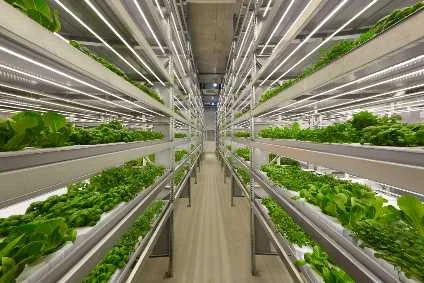
In the future, the food we eat could be grown by an AI farmer and plucked from vertically-stacked trays in a high-tech urban greenhouse. This is vertical farming, which is making strides as hydroponic technologies evolve and concerns about arable land proliferate.
The global vertical farming market hit approximately US$2.1bn last year, and, by some projections, is projected to grow by around 25.7% over the next decade. Tech companies are increasingly exploring the potential of 'urban farming' – moving crops from fields to inner-city greenhouses, and from temperamental weather to AI-perfected conditions.
The iFarm project is one such initiative. Founded in 2017 by Russian entrepreneurs Alexander Lystovsky, Maxim Chizhov and Konstantin Ulyanov, the start-up's 30-strong workforce is seeking to revolutionise farming through the provision of modular, automated greenhouse units to urban environments.
Recently, iFarm landed $1m in backing from Gagarin Capital, a Russia-based, venture-capital investor in high-tech start-ups, and is working with a number of restaurants and grocery stores in a bid to grow their business. But why take farming indoors, and what does this actually entail?
According to Yury Fedorov, head of Europe at iFarm, the project sprouted from the founders desire to source their own fresh salad and vegetables where they live. When they found technology lacking, they opted to do it themselves.
"We have been able to build a technological platform to grow salad from vegetables, but also build showrooms to find our first customers, who are really happy to get fresh salad on a constant basis all-year-round," says Fedorov. "We've been able to prove [that] the technology we have developed is working really well and can grow more than 100 different salads, herbs and vegetables."
Aimed at small and medium-sized businesses, iFarm's modular automated greenhouses are able to accommodate all manner of crops, and are designed to fit in a variety of urban spaces – from defunct warehouses to building roofs. Inside these greenhouses, cloud-connected software automatically controls all aspects of the environment – including the temperature, water supply, and lighting, right down to the nutrients mixed into the soil – allowing the company to effectively 'programme the qualities of the plant'.
Using a centralised database, urban farmers are able to download growing recipes designed to maximise the quality of specific crops, based on data collected and analysed by a team of iFarm scientists.
"We collect more than 50 different [data] parameters from every square meter of fertilised soil," says Fedorov. "We have computer vision, which verifies the stages of growth and gives signals on when to harvest and what to do with every crop."
Fedorov says so far the idea has so far appealed to farmers who might be unable to produce the same high-quality vegetable produce for local stores throughout the entire year. However, because recipes can be easily downloaded it could appeal to a new type of urban farmer – one who might be tech-savvy but doesn't know their onions when it comes to growing actual onions.
"In many cases, these are tech entrepreneurs who understand cloud-based technologies and that fresh food is in very high demand, but they don't really see themselves going outside the city," says Fedorov. "They see themselves operating technology with the help of their computer or their mobile phone."
One criticism of vertical farming has been energy demand. A recent article from UK newspaper The Independent noted lettuces grown in vertical farms required 3,500kWh a year for each square metre of growing area, compared to an estimated 250kWh seen in traditionally heated greenhouses.
iFarm's representatives say it has developed agricultural techniques that significantly reduce the electricity, water and fertiliser needed for cultivation compared to conventional methods. One innovation they say is unique to the company's farms is its energy-efficient LED lighting, which has significantly reduced the cost of its farms.
Because iFarm's greenhouses are modular they can be adapted to a variety of sizes and indoor spaces. Closer proximity to food suppliers in cities means pesticides and chemical treatment aren't required – food can be delivered quickly to restaurants and food suppliers. The company has also developed display pods for restaurants that keep food fresh and add a wow factor to the dining room.
"In traditional farming, people would harvest plants when the taste is not formed yet when the qualities of vegetables are not finalised," says Fedorov. "We can act when the [food] is really in the best state to be served and that's what restaurant owners want."
One major area where vertical farming can help restaurants is in trimming food waste. UK-based watchdog WRAP (The Waste and Resources Action Programme) says of the total 3,415,000 tonnes of waste disposed of in the food sector every year, 600,000 tonnes of waste is from pubs, restaurants and hotels.
Fedorov says iFarm had one customer who was forced to consistently waste 50% of their mint supply, after being compelled to buy too much of the ingredient to meet demand.
"Herbs and certain salads are very difficult to preserve at the site," he says. "Just by having contracted us, [the client's] waste was significantly reduced."
Having opened six greenhouses and vertical farms in Russia, iFarm's founders now seek to use the Gagarin investment to help develop technology, expand its construction, engineering and agricultural projects teams, and start construction on a location in Europe for the first time in April.
Fedorov says Luxembourg, the Netherlands and Spain could be potentially ripe avenues to explore. However, one of the biggest challenges in entering the international market is navigating the heavy regulations on the food industry.
"For every market where we enter we need to build our own showroom or our own farm and then prove to local authorities and to local consumers that what we do is really is really worth it," he says.
"We were setting up the company with growth in mind – that's why we developed this modular system for all our vertical farms which allows us to adjust the construction of the farms to basically every size and form of indoor space. It also simplifies and speeds up the construction process for every farm or greenhouse which we build."
The iFarm project is one of a number of fledgling businesses driving vertical farming. US-based Freight Farms makes a crust turning old shipping containers into thriving crop production centres. Another company in the US, Bower Farming, is opening a swathe of new facilities following a $90m investment led by GV (formerly Google Ventures).
The energy requirements of vertical farming may be a caveat that producers will need to provide a strong counter to in the future. However, as projects like iFarm show, the trend is showing no signs of withering any time soon.
This article was originally published on just-food sister site www.foodprocessing-technology.com

Retail View: Amazon’s Bricks And Mortar Move ‘Not Surprising’
A cadre of retail experts had different opinions on reports that Amazon is looking to increase its physical footprint in the grocery sector, but they all agreed that it makes sense and is not unexpected.
BY TIM LINDEN | MARCH 15, 2019
A cadre of retail experts had different opinions on reports that Amazon is looking to increase its physical footprint in the grocery sector, but they all agreed that it makes sense and is not unexpected.
“It is not surprising that Amazon would be on an acquisition binge and as they move forward they would want a bigger footprint in our industry,” said Anthony Totta, CEO of FreshXperts LLC.
“It didn’t surprise me at all,” echoed Ed Odron of Ed Odron Produce Marketing & Consulting about a recent Wall Street Journal article exploring the online giant’s future grocery store plans. “Amazon realizes there is much more out there than just online business. They are covering all the bases.”
“Amazon is big and it makes sense that they keep pushing to the next level,” said Ron Pelger of RonProCon.
Dick Spezzano of Spezzano Consulting Service said selling groceries online profitably is a challenging proposition. He indicated it is a natural next step — after Amazon’s purchase of Whole Foods — to increase its physical presence in the supermarket arena.
Each of these experts has spent decades in the produce industry, mostly on the retail side, and have an informed view of the challenges and opportunities that Amazon faces, and who just might be the losers as that giant expands.
Spezzano said that while Amazon has revolutionized the world of online shopping, groceries are a unique proposition. He noted that an online shopper can buy two pairs of shoes — with the idea of returning one — and have them delivered in a small box with a retail ring north of $200. “You know how much space it takes to buy $210 worth of groceries,” he asked rhetorically, indicating that groceries, including perishables, just don’t fit neatly into small, efficient spaces.
The longtime Southern California retail veteran believes that Amazon’s foray into bricks and mortar is somewhat of an admission that online grocery sales are not a big winner for them.
Most people are still reluctant to buy perishables online and delivering groceries, customer by customer, is just not very efficient, said Spezzano. While it can work in a very densely populated location, it’s much harder to justify when there is distance between customers. He believes online ordering that involves picking up your purchases at the store is a better fit for most retailers and many shoppers. For that to succeed, it makes sense for Amazon to have more physical stores across the country.
The Wall Street Journal article said Amazon is going to launch its new effort with a few stores in the Los Angeles area. Spezzano believes the long-term strategy would be to grow through acquisition. He said one rumor he heard in early March was that Amazon was going to buy Stater Bros., a mid-sized, family-owned Southern California retailer.
Spezzano believes that makes sense, as it is a good exit strategy for some of these smaller, family-owned grocery stores, and can give Amazon some instant heft.
Pelger believes Amazon’s desire to have more of a physical presence is tied to that company’s knowledge that it has to continue to grow. “They have to always concentrate on growth to continue to thrive,” he said. “They are always going to be looking at the next thing.”
He knows that online grocery sales have not taken off yet but he likened the concept to organic produce. Pelger said it took many years for organic produce sales to even register a blip on the scale, and now that sector represents about 10 percent of produce department sales. Of course, he also joked that it took organics 30 years to achieve 10 percent.
“At that rate, in 300 years they will have 100 percent,” quipped the former A&P produce executive.
Pelger believes the order and pickup model is the one that has the best chance for success for fresh produce. “Our biggest challenge in produce [for online shopping] is its perishability,” he said.
He sees more and more retailers carving out opportunities to serve their customers through the pick-up model. Pelger lives in Reno and he said the local Walmart has huge tower-type lockers in the front of its store that serve as holding places for online orders.
“These are new developments,” said Pelger. “It just shows you that as time moves on, things change. Anything you are doing today (businesswise) is obsolete. If you don’t change, you become history.”
Odron said the reports that Amazon is looking at smaller footprint stores (35,000 square feet) makes sense, as he believes the large-format stores are just too big. With their ownership of Whole Foods, he said the online giant has a foothold in the upscale supermarket sector. He believes it makes sense to now operate physical stores in blue-collar neighborhoods where it can bring its low-cost model directly to consumers.
With regard to online shopping, Odron said he thought it would never catch on, but he sees it gaining traction. He also likened it to the growth of organics, which he said grew very slowly but has seen tremendous growth in recent years. “Online shopping is still at its infancy, but it’s going to grow.”
He’s another observer who has noted the trend toward buying online and picking up at the store. He lives in Stockton, CA, and said his local Raley’s Market has two full-time employees devoted to filling online orders in the store and then delivering them to the shopper as he or she pulls up in the parking lot in a preferred space.
Odron believes every retailer should be cognizant of what Amazon is doling. “They are aggressive. They are going to go forward at 160 miles per hour and they have deep pockets.”
Totta subscribes to that same theory. He expects Amazon to grow via acquisition, targeting independents with multiple units. “I don’t think they will go coast to coast [with a big acquisition]. I think they will be more selective and not compete head-to-head with Whole Foods. But there are plenty of pockets where Whole Foods does not have a big presence.”
He indicated that Amazon’s desire to be all things to all people may be driving this move to more of a physical presence.
“I haven’t seen the data, but my gut feeling is that the online business is much more efficient with non-perishables than with perishables,” said Totta.
It follows that Amazon would then want to increase its reach as a supplier of perishable items by having a physical presence.
Spezzano said it is an accepted fact that the United States is currently “over-stored and over-sized,” meaning there is more retail grocery space than necessary. So as Amazon enters the space in a bigger way, it stands to reason that there will be some losers.
Each of the experts interviewed agreed.
Spezzano said although retailers rarely make big announcements about store closings, there has been significant downsizing. He said the major retailers are closing more stores than they are opening each year and there have been some smaller chains go out of business. He believes smaller-footprint stores, like the ones Amazon is reportedly looking at, make the most sense.
Odron mused that if you hang around long enough, you see the cycles play out. “When I first started, the average store was 20,000 to 25,000 square feet — and then they kept getting bigger and bigger. You couldn’t have a store big enough. Now everyone is talking about scaling back, especially in California where the real estate is so expensive.”
Totta also believes that bigger might not be better. He opined that it is the huge box-store discounters that may have the most to lose as Amazon gets deeper into the grocery business, and he argues that the perishable-focused, smaller retailers who are concentrating on giving shoppers a positive and enjoyable experience by inspiring them will survive.
On the other hand, Totta said the broad line huge discounters that don’t provide a pleasant shopping experience could have trouble competing against Amazon.
Canada: Lettuce Lads Launch: Hydroponics Technology in Canmore
Date & Time
Tuesday, April 23, 2019
5:00 PM – 9:00 PM MDT
Location
The Greenhouse
60 Lincoln Park
Canmore, AB T1W 3E9
Canada
Lettuce Lads are opening the greenhouse doors and you're invited!
From January until now, the Lads have been building a proof of concept for their innovative system in the greenhouse on Lincoln Park (Canmore, AB). Now it's time to swing the doors open and show everyone how their patented design has come to life.
Launch Event details:
'Open house' style event from 5-9PM on Tuesday, April 23rd
Learn more about hydroponics and check out the Lettuce Lads system (currently growing Quinoa and Lettuce)
Snacks and beverages provided by local Bow Valley businesses
Short presentation from the Lads at 730PM about the system and long-term plans
Get your 'Early Bird' tickets now to receive a free Lettuce Lads Jute Grocery Bag and a chance to win an assortment of local Bow Valley products. Limited quantities of this ticket type available.
Presentation happens at 7:30PM, so be sure to be in attendance at that time to hear about locally grown produce in Canmore and the plans for the future.
Agricultural Technology in Canmore?
Yes! To be specific, it's an innovative hydroponics system for sustainable, local, year-round food production! The design can be implemented indoors or inside shipping containers to create portable farms that can operate anywhere.
Check out a timelapse of the build process for the system's structure on YouTube.
A New, Sustainable Food System
Lettuce Lads have big plans, and their high-density hydroponics technology is only step one. They want to see positive change in the food system, and they believe that it starts with an emphasis on sustainability and local development.
To learn more about the Lettuce Lads - their current hydroponics system and future plans - be sure to get your tickets for the April 23rd Launch today!
FAQs
What are my transportation/parking options for getting to and from the event?
On-site and street parking is available but limited. Public transportation and/or carpooling is recommended but not required. The Greenhouse is located at 60 Lincoln Park in Canmore, Alberta.
What is happening at the event?
The event is 'open-house' style so attendees are encouraged to visit at any point between 5PM and 9PM. During that time, the Hydroponics System will be on display and members of Lettuce Lads will be available for questions. However, the Lettuce Lads presentation will happen at 7:30PM. The presentation will briefly cover Lettuce Lads' plans for growing produce in Canmore, their long-term goals, and how they plan to move forward.
How can I contact the organizer with any questions?
Lettuce Lads can be contacted in the following ways:
Email: info@lettucelads.co
Website: LettuceLads.co
Facebook: @TheLettuceLads
Instagram: @TheLettuceLads
Do you plan to sell produce in the Bow Valley?
Yes. While we don't plan to be farm operators on a large scale, we do plan to have 1-2 shipping container farms in Canmore in the near future. We will offer our produce via local grocery stores and restaurants.
Do you only grow lettuce varieties?
No. We are currently growing quinoa and lettuce as an example of what our system can do. We plan to expand into other types of produce as we move forward.
Is your system available for in-home usage?
No. We are focused on large-scale food production, but we would be happy to direct you to other companies that provide indoor growing options for homes or offices.
Tags: Things To Do In Canmore Party Business

Ohio: Hillel Day School Students Learn Across Curriculum With Microgreens
Avi Gilbert (L) and Menachem Simon harvest microgreen crops at Hillel Academy Jewish day school, March 7. Photo: Marshall Weiss.
By Marshall Weiss, The Dayton Jewish Observer
Hillel Academy Jewish day school, which champions a project-based approach to learning, has made indoor farmers of its fifth- and sixth-grade students.
With help from a registered dietitian nutritionist — and now from a hydroponic farming educational initiative in Israel — Hillel students began growing and harvesting microgreen crops in January.
Microgreens are edible herb and vegetable seedlings. According to a study at the University of Maryland published in the Journal of Agricultural and Food Chemistry, microgreens have up to 40 times more vital nutrients than mature plants.
“It’s crazy how this tiny little plant has so many nutrients,” says fifth grader Avi Gilbert as he harvests a crop of radish microgreens. “It’s really cool how we actually have a farm inside. There are a bunch of variables that are different from when it is outside.”
Dietitian and nutritionist Shari Jacobs, a parent of Hillel alumni, approached Hillel Curriculum/Instruction Director Dr. Kathy Mecoli with the idea for the farm because of Jacobs’ passion for promoting nutrition, pesticide-free growing, and eco-friendly agriculture, which reduces water use in farming.
“They’re learning science, they’re learning food safety, and nutrition,” Jacobs says.
With funding from Hillel families and alumni, a local farmer installed the school’s microgreen system and showed faculty and students how to get started.
Among their crops are arugula, kale, parsley, radish, mustard, and broccoli.
Through meticulous data collection, the students learn how to maximize their crop yields. And they’re figuring out how to learn from their mistakes.
Fifth grader Logan MacDonald recorded in his microgreens blog, “Some of the microgreens they have been growing recently started dying. The class brainstormed and realized the problem probably was because of saturation, microfiber wicks being cut into thirds, depth in the soil or the soil was too deep. The intermediate class decided to establish a clear step process of jobs to increase the likelihood of less plant death. The class decided to cut the microfiber wicks into halves instead of thirds to stop the problem.”
Mecoli says the school’s approach is to model how to learn.
“What we find is that because they’ve become such good thinkers, they can pretty much solve the problems once you set them in a certain direction,” she says.
“They’re going to be blogging a lot,” says Todd Brisco, Hillel’s instructor of integrated project-based learning. “They’re putting data on spreadsheets to see whether we’re keeping them in the blackout (germinating) period long enough. We don’t know: how long should we let them grow before we harvest, because we made a mistake of harvesting too soon.”
Chaya Simon sprays trays of seeded soil before putting them into ‘blackout’ for germination. Photo: Marshall Weiss.
Once the students get the system down, Mecoli says, they’ll train the fourth graders, who will carry the project forward next year.
Now, Hillel’s fifth and sixth graders are sharing their data with students working on the same project in Jerusalem. Hillel is the first school affiliated with Israel’s Start Up Roots program outside of the Jewish state.
Robin Katz founded the non-profit Start Up Roots four years ago to bring hydroponic farming to a school for girls from impoverished Haredi families in Jerusalem. The girls also learn how to market their products to the student body.
“In one cycle,” Katz says, “It changed the handout mentality they had, to their hands out with something to give — so proud and excited.”
Katz adds that the school also hired a chef who taught the students what they could do with the vegetables, from drinks to appetizers to desserts.
“They started with a summer camp and then they ended up revamping the whole school lunch program,” Katz says.
In Israel, Start Up Roots is taught in three middle schools, about to enter a fourth, and recently received approval from Israel’s Ministry of Education, which will help it expand.
“Entrepreneurship, life skills, and nutrition: those aren’t taught in schools and that’s such a growing problem,” she says.
Katz reached out to Jacobs when Start Up Roots began to add microgreens at a school.
“We’re learning a lot from Shari,” Katz says. “She’s implementing in a very methodical way that will enable us to really understand how to improve it, how to replicate it, expand it in the most efficient way possible.”
Jacobs is now Start Up Roots’ American educational liaison; she and Katz aim to bring the program to other schools in America.
Hillel is connected to the Shaarei Tziyon school in the Neve Yaakov settlement neighborhood of Jerusalem.
“We’ve been emailing them about things we’re doing for the microgreens, our problems,” says Hillel fifth grader Yiyi Li Kudera.
The Hillel students email their Israeli counterparts in Hebrew, guided by Hillel’s Hebrew instructor, Rina Thau.
“Now there’s a back and forth,” Katz says. “And the kids hope that they’ll meet one day.”
Katz and Jacobs have also developed a Start Up Roots microgreen curriculum that melds science and Jewish values related to food justice, such as why there are blessings over food and the obligation to those in need.
“We did a project on world issues,” says DeLaine Niesley, who teaches Hillel’s fifth and sixth graders reading and writing. “We’re finding out conditions that cause poverty, including what’s here in Dayton. Because there’s this assumption that we’re America: we don’t have that here.”
Radish microgreens grown at Hillel Academy. Photo: Chaya Simon.
“There are so many parts to it,” Mecoli says of the program. “Each day at lunch, the children put out microgreens on a tray and they go around and give everybody microgreens if they want them with their lunch.
“The little kids see it as cool because the older kids are doing this. I don’t even say anymore, ‘Go get the microgreens.’ They come to me and say, ‘Can we get the microgreens?’ So there’s a lot of independence and a lot of ownership with it.”
Once the students have mastered the science of growing their microgreen crops most efficiently and effectively, Hillel plans to bring its produce to market.
Mecoli says they’ll learn the cost to produce them, the profit, and entrepreneurship.
“Bernstein’s Fine Catering, they are committed to buying them from us to use as garnishes,” Mecoli says. “We’ll engage markets that could buy some from us every week.”
For now, they’re starting small. At Purim, the school was sending shalach manot gift packages to its Life & Legacy donors.
“We’re coming up with a little tower with three boxes of one-ounce of microgreens, and then we’re going to have crackers and hummus in one, and (parent) Rochel Simon is going to bake hamantashen that are more savory, with the microgreens in them, and then we’ve created a little card that says thank you for supporting Hillel,” Mecoli says.
For Passover, the school hopes to have parsley available for order.
TAGS: Hillel Academy of Greater Dayton Kathy Mecoli Robin Katz Shari Jacobs Start Up Roots

Rhode Island Governor Raimondo And Providence Mayor Elorza Welcome Gotham Greens To Providence, R.I.
From lamps to leaves: leading indoor agriculture company expands to New England with 110,000 square foot high-tech greenhouse facility at historic GE Providence Base Works site
NEWS PROVIDED BY Gotham Greens
March 28, 2019
PROVIDENCE, R.I and BROOKLYN, N.Y., March 28, 2019 /PRNewswire/ -- Link to additional Gotham Greens media resources
Pictured is a rendering of Gotham Greens' forthcoming 110,000 square foot high-tech greenhouse farm. Located on the banks of Providence’s Woonasquatucket River, the project will create approximately 60 permanent and 100 construction jobs.
On the banks of Providence's Woonasquatucket River, Rhode Island Governor Gina M. Raimondo, Providence Mayor Jorge O. Elorza, Rhode Island Commerce Secretary Stefan Pryor, and community leaders joined Viraj Puri, co-founder and CEO of Gotham Greens, to officially announce and preview construction progress on the company's 110,000 square foot state-of-the-art greenhouse farm that will create approximately 60 permanent and 100 construction jobs. The facility is slated to open in early fall 2019 and will operate year-round to supply residents, restaurants, and foodservice customers of Providence and the greater New England region with 10 million heads annually of delicious farm-fresh lettuce and leafy greens grown with minimal environmental impact to preserve our natural resources.
Located at 555 Harris Avenue, the site, which had been vacant for two decades, was once home to Providence Base Works—a bustling General Electric facility that employed hundreds of workers to manufacture lamp bases. "Gotham Greens is a shining example of the type of innovative, sustainable, and community-minded businesses we envision will help to reinvigorate the Woonasquatucket River Corridor," said Providence Mayor Jorge O. Elorza. "By supplying fresh, healthy produce and well-paying jobs for Providence residents, Gotham Greens will serve as a driver of economic growth in the capital city while generating a creative source of energy that will help better connect the neighborhoods along the River." "We are excited by the tremendous progress Gotham Greens has made on this project, as well as the potential this project holds for Rhode Island," said Rhode Island Commerce Secretary Stefan Pryor. "Beyond the creation of jobs in its construction and ongoing operations, this project will further strengthen the state's already strong food sector, a vitally important industry in Rhode Island."
The $12.5 million project is a collaborative community effort, bringing in diverse stakeholders from local and state government agencies including the Office of the Governor, Rhode Island Commerce Corporation, Rhode Island Coastal Resources Management Council, Rhode Island Department of Environmental Management (DEM), the Office of Providence Mayor Jorge O. Elorza, Providence Redevelopment Agency (PRA), Providence Office of Economic Opportunity, as well as many other City of Providence staff and community members. Gotham Greens has deeded a portion of its property to the City and is collaborating with the PRA in order to create a publicly accessible bike path along the Woonasquatucket River that will connect riverbank communities to downtown Providence. Gotham Greens will partner with community organizations to increase access to healthy foods and support wellness and nutrition education, ag-tech research, and environmental education programs across the region.
In support of this project, the Rhode Island Commerce Corporation has committed up to $2.3 million in tax credits, payable over a 10-year period contingent on actual job creation. In addition, DEM has awarded $250,000 as part of their Brownfield Remediation and Economic Development 2016 Green Economy Bond program, and the Providence Department of Economic Opportunity has committed $200,000 for job creation and training.
Using advanced growing methods that include recirculating hydroponics, big data-driven climate control intelligence, and renewable energy, the facility is expected to produce approximately 30 times the yield of conventional agriculture per acre, while using 90 percent less water. "Gotham Greens is an exciting, innovative company, and I'm thrilled to welcome them to Rhode Island," said Governor Gina M. Raimondo. "Rhode Island's green economy is growing, and we're emerging as a national leader in sustainability. Gotham Greens' commitment to reducing their environmental impact makes them a perfect fit for our state."
With this project, Gotham Greens is continuing its rapid growth of building high-tech indoor greenhouse farms across the U.S. Since its pioneering greenhouse launch in 2011, Gotham Greens has grown from a single urban rooftop greenhouse in Brooklyn to a multi-state indoor farming leader and one of the largest hydroponic leafy greens producers in North America. Gotham Greens currently operates more than 180,000 square feet of greenhouse in New York and Chicago and has an additional 500,000 square feet of development underway across five U.S. states, including previously announced projects in Chicago, Ill. and Baltimore, Md.
"We are thrilled to partner with the City of Providence and State of Rhode Island on this project," remarked Gotham Greens Co-Founder and CEO Viraj Puri. "Providence is the perfect location for us, strategically located at the gateway to New England, the city has a rich legacy of manufacturing, world-class institutes of higher education, and a thriving local food culture. Geographically, New England is farthest from the West Coast, where the majority of leafy greens distributed across the U.S. today are grown. Once we're operational, Gotham Greens will be able to supply this region's supermarket retailers and foodservice operators with a consistent and reliable supply of fresh produce grown right here in New England year-round. Furthermore, using our proprietary indoor growing methods, we can implement rigorous health, safety, and traceability measures—from seed to harvest—that far exceed those of conventional commodity agribusiness to ensure that we are growing the highest quality, safest products on the market today."
About Gotham Greens
Gotham Greens is a global pioneer in urban greenhouse agriculture and a leading consumer brand of premium-quality local produce and fresh food products. The company grows its produce using ecologically sustainable methods in technologically sophisticated, climate-controlled, urban greenhouses. Gotham Greens provides its diverse retail, restaurant, and foodservice customers with a local, reliable, year-round supply of salad greens, herbs, and fresh food products grown under the highest standards of food safety and environmental sustainability. The company operates more than 180,000 square feet of greenhouse across five facilities in New York and Chicago and currently has 500,000 square feet of greenhouse under development in five U.S. states. Gotham Greens was founded in 2009 in Brooklyn, New York, and currently employs over 160 full-time team members and is growing.
For more information, visit www.gothamgreens.com
Facebook | Instagram | Twitter | LinkedIn | Newsletter
SOURCE Gotham Greens
Related Links
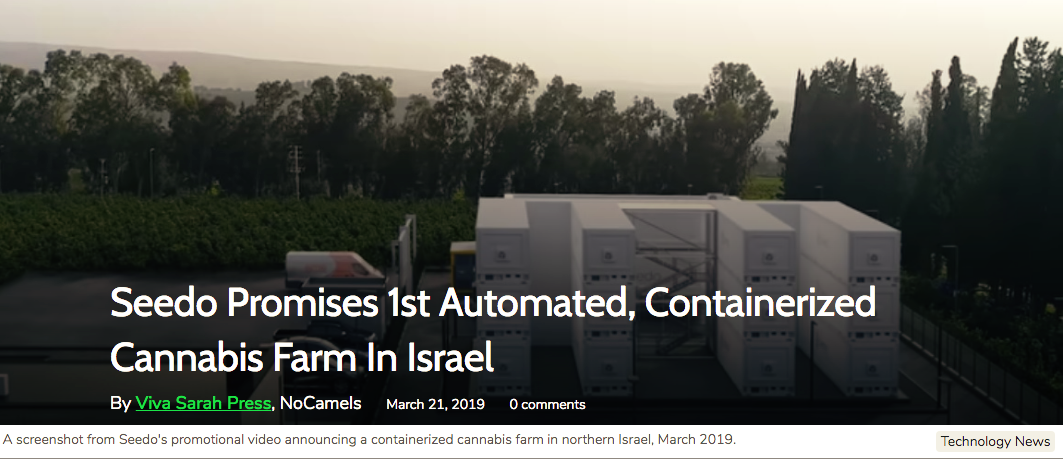
Seedo Promises First Automated, Containerized Cannabis Farm In Israel
Seedo, the high-tech firm known for its fully-automated grow device for medical cannabis, has announced a plan to develop “the first fully automated, commercial-scale, pesticide-free containerized cannabis farm in Israel,” saying it will be partnering with Kibbutz Dan in northern Israel to do so.
The agro-tech firm from Israel last month began supplying its intelligent automated hydroponic system technology in home-grow units to customers in California.
Now, the company says its AI-powered, turnkey systems enable anyone -from average consumers to large-scale producers – to grow without prior experience or ample space.
“We are entering a new era of growing where demand for pesticide-free products will only continue to increase,” Seedo CEO Zohar Levy said in a statement this week.
“We’re thrilled to partner with Kibbutz Dan to provide a business model with governments that the world can look to. We’ve built our commercial-scale system to reflect our philosophy that technology can provide precise and reliable results without sacrificing yield,” Levy said.
The need for clean growing environments is growing, especially as legal cannabis markets around the world expand. A prevalence of pesticides, solvents, and bacteria present in the current supply chain pose a threat to consumer safety, especially for patients that are increasingly dependent on medical cannabis for treatment of a variety of illnesses.
Seedo says its revolutionary technology can control the purity of the crop to meet strict standards set by pharmaceutical and beverage companies looking to supply clean and consistent products to the market.
Its proven technology, originally developed for home-grow devices, is now being applied towards containers for commercial scale.
Each container features maximum daylight illumination, built-in carbon filters, automated air conditioning, and a smart post-harvest drying system that allows farmers to minimize cultivation costs and provide high-quality food with extended shelf life, according to a company statement.
Seedo. Via Seedo’s website
Levy tells NoCamels that Seedo’s team of experts have more than “15 years of experience in container farming in the vegetables and herbs sector.”
By taking the guesswork out of the cultivation process, communities will be able to grow both native and non-native products with less labor, energy and water than before. The airtight, stackable containers will allow cultivators to optimize land-use and reduce the environmental footprint of their farming operations.
Within 36 months of operation, the Seedo project is estimated to produce a minimum of 14 tons of dry cannabis bud, generating an estimated revenue of $24 million dollars, according to a press statement.
Of course, Seedo is not the only company to offer containerized cannabis farming. There are at least a dozen indoor container farming systems globally, offering growers climate-controlled temperature, precise airflow, water, light, and nutrients.
Medical cannabis. Photo by Eyal Basson,/The Israeli Health Ministry
One such company is BH Synergy Group. The company has 15 container systems already up and running in Canada and the US, and is planning on bringing the system to Israel.
BH Synergy Group mixes automation with manual labor.
“I believe in both systems (manual and automated). However, the higher quality tending of plants is always going to be, in my opinion, from manual labor,” Adam Shuster, CEO BH Synergy Israel and USA, tells NoCamels.
“The automatic systems are for heavy lifting, the robot is lifting pots that weigh 25-50 pounds, so for that you definitely want a robotic system. When it comes to tending the plants and the bud and making sure that you get maximum quality THC and CBD levels consistently month after month, you need qualified manual labor.”
Shuster likens the proper gardening care needed for marijuana plants to bonsai trees or orchid flowers.
“People take care of bonsai trees and orchid plants very meticulously. In return, they get a meditative pleasure from this care and ensure a quality bonsai tree or orchid plant. It gives beauty and value. With the cannabis, you want the medical value of CBD and THC levels on the same specific strain. For that you need human touch,” says Shuster.
A screenshot from Seedo’s promotional video announcing a containerized cannabis farm in northern Israel, March 2019.
But Levy tells NoCamels that his firm’s automatic system “can ensure high-quality yields and no [ill] effect on the plants because [Seedo] can provide the plant with the ultimate conditions it needs to grow healthily without being affected by the environment or by workers.”
With Israel’s recent approval of medical cannabis exports, the world’s requests for blue-and-white cannabis bud are expected to rise.
Levy tells NoCamels that Israel’s tech prowess is accepted in the canna field as well.
“Seedo’s headquarters are based in Israel because we believe the Israeli employees are very innovative and creative, the Israeli mind is known to think out of the box. This availability gives us the advantage on the market,” says Levy. “The Seedo team has the availability to create new standardization in the agro-tech sector.”
Viva Sarah Press is a journalist and speaker. She writes and talks about the creativity and innovation taking place in Israel and beyond. www.vivaspress.com

Red Otter Farms: One of The First And Biggest Aquaponics Growers of India
When Red Otter Farms started out, they looked for out-of-the-box solutions for a range of issues – from environmental controls to input and output management.
Out of The Box Thinking From The Start
"We are a soilless farming company, growing our produce in water. The otter is a fun-loving aquatic mammal and symbolizes our efforts. The Red Otter is a rare species of the otter family, much like us. We were one of the first movers in the space in India and are pioneering commercial aquaponics farm systems."
That's what Srishti Mandaar, co-founder of Red Otter Farms, says when asked about the name of the company - one of the first and biggest aquaponics growers in India. At their farm in Uttarakhand, they grow leafy greens and other crops on an acreage of 10,000 sq.ft.

Aphria Shows Automation in New Video
Automated seeding, cloning, multi-layer propagation, processing in a highly automated machine line. In a new video, Aphria shows what they believe to be the future of this industry. "Innovation: the sky's the limit."
In the video, the team explains the importance of their horticultural background and their horticultural founders, who grew in greenhouses. Also their suppliers are well-known from the horticultural industry: Bosman Van Zaal, AgriNomix LLC, Indigo Logistics B.V. and Flier Systems took care of the automation of the farm.
In the video Aphria also show their global expansion plans, including South Africa, Lesotho, Colombia, Argentina, British Columbia, Ontario, Jamaica, Denmark, Germany, Italy & Malta.
Want to stay updated on the news on medicinal marijuana production? Sign up for our new publication MMJDaily.com.
For more information:
Bosman van Zaal
+31 297 344 344
info@bosmanvanzaal.com
www.bosmanvanzaal.com
Nebullam and LEAH Laboratories Selected Into Y Combinator
Photo courtesy of flickr.
Nebullam and LEAH Laboratories
Selected Into Y Combinator
Two Iowa-based companies, Nebullam and LEAH Laboratories, were selected into Y Combinator’s winter cohort accelerator program.
Their acceptance into the program comes with a seed investment of $150,000 along with mentorship throughout the 90-day program that culminates this week with a demo day in San Francisco.
“One of the biggest takeaways that we’ve had from YC is the fact that the community is just as open when talking about failure as they are with talking about success,” said Clayton Mooney, CEO and co-founder of Nebullam “That openness to sharing what doesn’t or didn’t work is healthy and required for growing a technology startup ecosystem. I believe Ames has the potential to become a powerful technology startup hub over the coming years, but only if the community reaches the point where it wants to optimize for the upside, while not sweating the downside.”
Prior to the winter cohort, Nebullam went through Y Combinator’s Startup School, a 10-week online program that provides mentorship and a startup network.
“Coming into the program, we had been developing this idea for about a year and really needed a ton of flam to light all the gas that we had and Y Combinator really provided that for us,” said Wesley Wierson, co-founder and CEO of LEAH Laboratories.
Out of approximately 12,000 applicants, 205 were selected for the YC winter cohort. This is the first time that two Iowa-based startups have been selected for Y Combinator.
“This was the lowest acceptance rate by YC to date,” said Joel Harris, co-director of Ag Startup Engine. “In spite of that, two Iowa built and based companies, both from the Ag Startup Engine portfolio and with ties to Iowa State University, were selected. Recognition from a leading program like Y Combinator is terrific for Nebullam and LEAH Laboratories, but also an inspiration for other entrepreneurs about the quality of technology businesses being started in the Heartland.”
Both companies will be pitching to investors later today as part of Y Combinator’s Demo Day.
Previous coverage
Leah Laboratories receives seed investment from Ag Startup Engine -Jan. 16, 2019
Middlebit: Nebullam one of six finalists for inaugural IFT Next Food Disruption Challenge -July 20, 2018
Nebullam: Indoor farming -April 17, 2018
Indoor Farms Full of Dandelions Could Be Our Future Source of Rubber
03.22.19
Rubber plantations are a major source of deforestation, but there’s another place to get the material: inside a dandelion’s roots. Now scientists are engineering the weed to grow in indoor farms–and with as much latex as possible.
[Photo: Clare Knebusch]
Inside a lab at an Ohio State University research center, scientists are genetically engineering a dandelion that could soon be grown in large amounts in hydroponic farms. The goal: to harvest latex from the plant’s roots, which could help supply rubber for tires, flooring, toys, and tens of thousands of other products that currently use rubber from plantations that displace tropical rainforests.
“Demand for rubber is constantly increasing,” says Katrina Cornish, a professor in “bioemergent” materials at the university and the scientific advisor for a startup called American Sustainable Rubber that is commercializing the dandelion system. As more consumers in emerging markets can afford cars or motorcycles, demand for rubber in tires has driven deforestation in Southeast Asian forests. (Companies like Goodyear and Michelin now have anti-deforestation policies, so rubber plantations can’t easily continue to expand to increase supply.) While tires can sometimes be made partly from synthetic rubber, it doesn’t have the same functionality. Tires on planes, for instance, typically use 100% natural rubber, for example, because synthetic rubber can’t survive the extreme change in temperature on landing. The Hevea rubber tree is also grown as a clone, making it susceptible to a disease called South American leaf blight. “If that got a hold in Southeast Asia, the rubber plantations could be wiped out within a year,” says Cornish.
[Photo: Clare Knebusch]
Since the invention of the car in the late 1800s–when demand for tires turned the rubber capital of Manaus, Brazil, into a place where rubber barons reportedly gave their horses champagne and sent their laundry to Europe–most natural rubber has been produced in essentially the same way. “Someone still goes out with a tapping knife and makes an incision and collects latex into a little cup,” Cornish says. “It’s amazing that we’re still doing it that way.”
This isn’t the first experiment with an alternative. Rubber production eventually shifted to Southeast Asia, and during World War II–when Japan occupied prime rubber-producing areas–the U.S. discovered that a variety of dandelion produces a latex that could feasibly be used as a replacement. Latex-filled pipes run through the roots, just as latex-filled pipes run through the bark in rubber trees. The challenge is that dandelions are difficult to farm efficiently; grown in a field, it’s hard to control for weeds (there’s also a lot of by-product, a waste stream that needs to be dealt with sustainably). That’s why Cornish is working on a system that could grow in indoor farms. “We can control growth rates, we can harvest the same plants multiple times, and it’s all very clean rubber,” she says. The scientists are using genetic engineering to optimize the root growth of the plant, a specific species usually found in Siberia. They’re also selecting plants that are the most successful at growing in hydroponic systems.
This year, the researchers are working on the hydroponic system to make it commercially scalable, and next year, they plan to have a much larger facility. Ultimately, American Sustainable Rubber plans to meet the gap in rubber supply through large-scale indoor farms. “I would like to see, certainly within the next 10 years, us becoming self-sustainable in natural rubber in the U.S., so that we produce the million tons-plus that we need for our own manufacturing concerns,” says Cornish. “I think that is doable. And beyond that, we could start turning into a rubber exporting country.”
ABOUT THE AUTHOR
Adele Peters is a staff writer at Fast Company who focuses on solutions to some of the world's largest problems, from climate change to homelessness. Previously, she worked with GOOD, BioLite, and the Sustainable Products and Solutions program at UC Berkeley.

Hershey GC Sees Climate Change As Compliance Challenge
By Alison Noon
Law360 (March 14, 2019, 7:21 PM EDT) -- The Hershey Co. is exploring the possibility of moving its cocoa production indoors to save chocolate production from the effects of climate change, the company's general counsel said Thursday, delving into his expectation that global warming will jump from corporate research and risk management to the compliance desk.
The Hershey Co. is exploring indoor farming in light of climate change and the company's top lawyer thinks compliance officers should take note. (Credit: AeroFarms)
Speaking at a corporate ethics conference, Damien Atkins said one of the world's leading chocolate manufacturers is exploring not only the science of indoor cocoa, but whether it could insulate Hershey's supply chain and ease the stress over global warming that will come down the line for his coworkers in compliance.
"I think the geopolitical risk is something you have to manage," Atkins told a ballroom of compliance officers in Manhattan. "With respect to climate change, you see it now in terms of the quality and nature and types of trees and the way that you manage trees, and we're looking at things like indoor farming."
He indicated it's not a far-fetched idea, mentioning that one of the world's largest indoor agriculture facilities was located in nearby New Jersey, where AeroFarms LLC grows vegetables in trays stacked high in climate-controlled warehouses.
"You have to think of ways of how you actually get that product when your core supply can disappear," said Atkins, who worked at Oath Inc. predecessor AOL and Panasonic before Hershey.
But throwing supply chains into disorder will only be the beginning of the disruptive effects of climate change on business, Atkins said. Global warming could sneak up on compliance departments years from now if they let it, which they may — compliance officers interviewed by Law360 at the conference said they did not foresee global warming earning a place in their work. Atkins indicated they have another thing coming.
"Climate change is one of those things that has a slow velocity but high impact, and those are the worst things to plan against, right, because there's no immediate pressure but you know that it's coming," he said on stage at the Ethisphere conference.
He further explained to Law360 after the panel that raising the stakes will increase pressure on employees. As compliance officers know, high pressure invites white collar misconduct.
"As that comes under stress, the dollars to process the systems, the procedures, all kinds of bad things happen," he said.
The prospect of growing cocoa indoors is in research and development, Atkins said. The company currently sources cocoa from family-run farms in Africa and South America that employ 2 million people, according to the company's website. Atkins said the company is wholeheartedly committed to them, recently pledging to invest $500 million over the next decade in West African cocoa communities.
The flip side, Atkins told the conference, is the occasional report that Hershey's family-run farms are employing children. Nothing is without risk, especially in the age of social media.
"You just have to, as my former CEO [at Panasonic] would say, stay on strategy," Atkins said on stage. "You have to keep doing it."
Hershey and other major chocolate manufacturers recently beat several lawsuits that sought to put a disclaimer on chocolate products saying it may have been made using child or slave labor. A Massachusetts federal judge and the Ninth Circuit dismissed those claims.
Increasingly, Atkins said, Hershey's supply chain is thrown off course due to political unrest.
"We have areas in Mexico now where we ship trucks of chocolate and raw material and maybe once or twice a month these trucks get hijacked," Atkins said. "I mean, it's a common occurrence. And how do you plan around areas where you can't go to the police because the police were probably into it?"
He said the hijacking has become "more pervasive" absent government intervention.
"That happens to us a lot."
--Editing by Michael Watanabe.
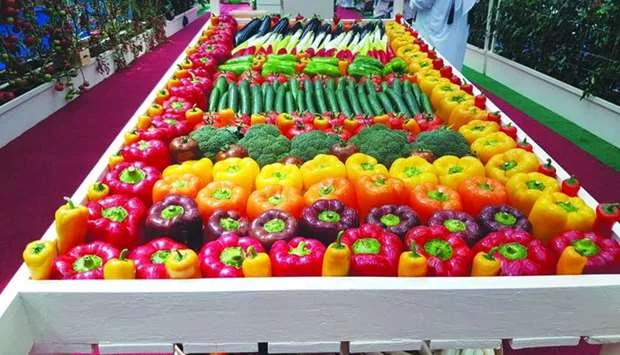
Qatar's Hydroponic Farms To Cover 100 Hectares By 2021
Qatar’s local hydroponic farms aim to further expand their operations in the next two years to reach 100 hectares in order to meet the growing demand for organic vegetables
A colourful display of fresh local vegetables at AgriteQ 2019. PICTURE: Joey Aguilar
March 22, 2019
Qatar’s local hydroponic farms aim to further expand their operations in the next two years to reach 100 hectares in order to meet the growing demand for organic vegetables.
"We are hoping to achieve this target by 2021 under our operations, management, and distribution,” prominent Qatari agriculturist and Agrico managing director Nasser Ahmed al-Khalaf told Gulf Times.
Agrico, a private Qatari agricultural development company established in 2011, is helping the country achieve self-sufficiency in food. It is currently developing other local farms and involved in a number of agri projects in Qatar.
Nasser Ahmed al-Khalaf at Agriteq 2019
AgriteQ 2019 attracted a large number of visitors. PICTURE: Shaji Kayamkulam
"We are now focusing on improving efficiency and increasing yields by building more greenhouses for farm investors with the use of modern technology," he explained on the sidelines of the Qatar International Agricultural Exhibition 2019, which concluded yesterday at the Doha Exhibition and Convention Centre.
The event, dubbed as ‘AgriteQ and EnviroteQ 2019’, brought together 90 local farms and more than 50 international companies under one roof, highlighting the importance of innovation in agricultural techniques, in addition to showcasing an array of new equipment and technologies.
“There is nothing to improve on our system (made in Qatar) but we want to increase the density per square metre, utilising the fertilisers and nutrients in a more efficient way to increase our production,” al-Khalaf said.
The Qatari agriculturist pointed out that the demand for organic fresh produce in Qatar rose dramatically due to people’s “high level of awareness” on the health benefits of organic foods.
Agrico currently exports products to Kuwait (1.5 tonne weekly by plane) and Oman, and it is also eyeing European markets.
“People might see Agrico in European markets this year. Why Europe? Because in the winter, they cannot produce vegetables and they cannot have this type of quality and not organic,” al-Khalaf said.
He added that the company received its US Department of Agriculture certification recently and it is on the process of applying for Global Good Agricultural Practices (GAP) certification to be able to export to Europe.
Agrico produces at least 10,000 tonnes of various vegetables such as cucumber, tomatoes, and mushrooms, among others, per day, according to al-Khalaf.
The company has also invested in aquaponics farming and will start raising organic chickens in Qatar early next year, he added.
Last updated: March 23 2019 12:32 PM