

Welcome to iGrow News, Your Source for the World of Indoor Vertical Farming

Lettuce Grow’s Subscription Service Promises to Make Texas Gardening Much Simpler
Actress Zooey Deschanel at the Lettuce Grow launch party. Photo by: Julia Keim.
BY PAULA FORBES
March 13, 2019
Growing plants in Texas involves a steep learning curve. Even if you grew up seeding and weeding at the side of a knowledgable green thumb, there’s a lot of collective wisdom to internalize before you’re harvesting your own vegetables. Our warmer winters mean an entirely different planting schedule than is suggested on the backs of seed packets. Scorching hot summers require vigilant water management. Plus, the bugs more than live up to that old cliche that everything is bigger in our state.
Lettuce Grow, a startup from Emmy- and Grammy-nominated actor and singer Zooey Deschanel (known for New Girl, 500 Days of Summer, and the musical duo She & Him) and her husband, entrepreneur Jacob Pechenik, is an attempt to make that curve a little less steep. On March 10, 2019, at the South Congress Hotel, they hosted a launch party for the Austin-based company, which will begin shipping to its first subscribers soon.
The couple, who have two young children, split their time between Austin and Los Angeles and are familiar with the peculiar challenges of growing veggies here. “In a place like Texas, you have these [weather] extremes,” Pechenik says. With their backyard hydroponic system and accompanying subscription service, he claims, they want to enable people to “grow twenty percent of their food.” It’s an ambitious goal, but Lettuce Grow automates many aspects of gardening, effectively giving its customers a shortcut to homegrown produce. “You might not have a green thumb,” Deschanel says. “We want to do all the extra work that might stop people from growing a garden at their house.”
Here’s how it works: When you sign up, Lettuce Grow ships you one of their “farms.” Made from ocean-bound plastic (plastic that wouldn’t have been recycled otherwise), the farms are vertical hydroponic gardening systems. Hydroponics is a method of growing plants without soil. You set the grower in a sunlit area, fill it with nutrient-enriched water, plug it in, and then add the seedlings that Lettuce Grow ships you monthly. That’s it, more or less.
Deschanel and Pechenik in front of two of Lettuce Grow’s “farms” at the launch party on Sunday, March 10, 2019. Photo: Laura Hajar
The plant varieties have been selected to work well based on your geographic location, and the types of plants Texans can expect to receive through the subscription service will be tailored to the seasons and the weather. Lettuce Grow works with local farms to grow the seedlings. In Austin that farm is Agua Dulce, owned by Deschanel and Pechenik’s Farm Project. Varieties are tested and chosen for flavor, yield, insect resistance, climate compatibility, and more.
The goal is to get your Lettuce Grow farm to a point where it’s producing enough vegetables that you can harvest some every day. That way, says Pechenik, “you can start to build a lifestyle around eating at home, cooking at home.” The company has an accompanying app that advises when to harvest; advises when to clean, add nutrients, or add water to the Farm; and provides recipes and tips for eating your bounty. You can even send in photos of your plants if they seem to be struggling, and they’ll offer advice—or change the variety of plants in your subscription box to some better suited to your space.
All of this hand-holding comes at a price: Farms range from $399 to $469 depending on size, and the accompanying subscriptions cost between $49 and $69 monthly. But Lettuce Grow claims that, at peak season, the smallest farm produces $78 worth of produce a month—so if you stick with it, you’ll eventually save money. For those who want to garden and can afford the system, it removes plenty of hurdles to starting a garden. (Lettuce Grow also donates one farm and accompanying membership to “a school or community-based organization” for every ten subscriptions it sells.)
Pechenik discusses one of the company’s hydroponic growing systems.
Laura Hajar
“I am drinking the Kool-Aid,” says Stephanie Scherzer of Austin’s Rain Lily Farm, who has worked closely with Lettuce Grow in selecting varietals and growing seedlings. She admires the system for being accessible to children and the elderly as well as its performance. Scherzer says she’s been able to grow watermelon, eggplant, and peppers in her prototype farm and that the cooling properties of the hydroponics system extended the Texas growing season for crops like thyme, watercress, and kale. (For now, the service sends members mostly greens and herbs, but greater variety is planned.)
Deschanel says she’s enthusiastic about Lettuce Grow because “it’s really such an advantage to grow your own food.” She notes that freshly picked vegetables retain the most nutrients and that picking only as much food as you need to eat can reduce food waste. She adds that her daughter loves picking the vegetables, and the Lettuce Grow system provides a starting point to get kids involved in gardening. “It’s a great way to explore the food you’re eating and explore healthier options too.”
Lettuce Grow is taking preorders for its first round of subscriptions. Farms begin shipping in three to five weeks, and it’s available nationwide.
Watch: This Futuristic Vertical Farm Would Farm Fish, Bugs And Plants in The Middle of The City
March 25, 2019
Futuristic vertical farm would grow food in the middle of the city
French design company Studio NAB has come up with the idea of creating a large vertical farm called the Superfarm to promote sustainable living.
Designers at Studio NAB have come up with the idea of creating a large vertical farm called the Superfarm to promote sustainable living.
The designer’s nifty solution is to focus on the production of super foods, or foods with a high nutritional value.
The six-storey building would incorporate renewable energy to farm fish, insects, and plants including aloes and seaweed.
French design company Studio NAB has come up with the idea of creating a large vertical farm called the Superfarm to promote sustainable living.
It forms part of their idea to combat future food shortages as the world’s population increases to 10 billion and brings food to where, by 2050, 80% of the world's population will be living: urban spaces.
Feeding the world would require new land the size of Brazil to be farmed in order to produce enough food, if farming practices continue as they are practiced today, according to the Food and Agriculture Organisation of the United Nations,
“Nowadays, the agri-food system and its production methods are poorly organised and unsustainable over the long term, we see its limits and misdeeds everyday,” the design company says.
The designer’s solution is to build indoor vertical farms which can produce sustainable food for the consumer in urban areas.
Far from the traditional urban farm producing salads or other fruits and vegetables, the Superfarm project, as its name suggests, focuses its production on the culture of foods with a high nutritional value.
The Superfarm would be six stories tall, with its topmost layer containing solar panels and wind turbines to produce renewable energy.
Level two would feature an open terrace with plants such as ginseng, spirulina and aloe vera cultures.
Levels three and four would be dedicated to insect breeding and algae cultures.
The fifth floor would farm aquatic creatures such as trout and tilapia and young plant cultures, while the sixth story would contain a greenhouse that would include plants such as acai berries and goji berries.
Each floor would have a specific purpose and would work in unison with other floors to create a viable ecosystem.
The project strives to recreate an ecosystem in an urban environment that incorporates seaweed, beekeeping, insect farming, aquaponics and also various greenhouse cultivations and outdoor cultures, allow each living being to serve the growth of the others.

Video: Australian Gardener Harvests Over 400 Kilos of Food From Her Gardens
The garden is maintained with approximately half a day each week, though this is unevenly distributed throughout the season. Surplus is preserved using bottling, drying, freezing and fermenting to supply the kitchen during the leaner months
Kat Lavers describes her approach to gardening, including vertical and biointensive growing, and how important it is – and possible! – for city dwellers to be food resilient in the face of natural, financial and social crises.
Happen Films
Feb 22, 2019
(Must see film. Mike)
Excerpt:
In response to space constraints, Kat trades homegrown persimmons for an annual supply of pumpkins, and buys a bag of potatoes every year. Almost all other herbs, veg and fruit are grown onsite. Gifting and swapping with family and friends adds extra variety to the diet. The garden emphasizes highly productive, resilient fruit trees and perennial vegetables like wild rocket, perennial leeks and bunching onions that thrive with minimal maintenance.
In 2018 the site recorded 428 kg of fresh produce, a figure which the household believes could ultimately grow to around 500kg when the full design is implemented. About half this produce is from the 20m² kitchen garden (30m² including paths).
The garden is maintained with approximately half a day each week, though this is unevenly distributed throughout the season. Surplus is preserved using bottling, drying, freezing and fermenting to supply the kitchen during the leaner months.
A covey of Japanese quails provides the household with eggs and occasional meat. The small aviary has trigger feeders and waterers for easy maintenance, as well as a deep litter floor of thick wood chips and autumn leaves that eventually breaks down into compost for the kitchen garden.
Read the complete article here.

Video: London Farm Experiments With Growing Underground
By CBS
March 19, 2019
LONDON (CBS) Farmers in London are taking their crops from tunnels to tables. The underground technique is changing the way city consumers get their greens.
One-hundred below London's busy streets there are rows of green farmland like you've never seen before.
''Leafy greens are possible, microgreens, heads of lettuce,' said Richard Ballard, the founder of Growing Underground.
The project relies on a World War II air raid shelter to hold its tasty harvest. The first of its kind, this farm provides an innovative alternative for urban agriculture by growing herbs like parsley, chives, and cilantro.
Unlike traditional farms, the sun is replaced with LED lighting. The temperature is also carefully controlled, allowing crops to grow year-round. Farms based in cities have a smaller carbon footprint.
'Here we can harvest, we can deliver to our customers. Some of them very, very close by, in just a few hours," said Eric Nynkson, a chef at the restaurant Esca. It's one stop on their delivery route -- located just above the farm.
Nynkson uses the herbs in his signature dishes. ''It makes it very good looking and presentable," he said.
The crop concept surprises custormers like Steven Watson.
Steven Watson: 'Really? I didn't know that. I mean it tastes amazing. It tastes really good.
Reporter Gwen Baumgardner: You can't tell the difference?
Steven Watson: No, no different, really good, really fresh.
Growing underground's success has encouraged other cities, like New York, to start planting similar farms.
''There's a vast amount of underground space all over the world," Ballard said.
Meaning, the next farm could soon be growing right under your feet.
Farmers hope to expand their underground crops from herbs to full sized vegetables. The founders of Growing Underground say they don't want to replace traditional farming, just provide more alternatives for cities.

Food Security On Rise In Gulf
BY RICHIE SANTOSDIAZ
19th March 2019, London
The Agra Middle East exhibition in Dubai demonstrated the growth of vertical farming in the region, as well as other environmentally smart production methods
According to the organisers of the Agra Middle East exhibition in Dubai, which took place at the start of March, vertical farming is gaining in importance across the Gulf region, along with other Controlled Environment Agriculture (CEA) methods, and is generating interest and a rise in investment from across the globe.
The vertical farming market in the Middle East and Africa is expected to reach US$1.21bn by 2021 at a combined annual growth rate of 26.4 percent from only US$0.38bn in 2016, according to Orbis Research.
One of the GCC countries leading this is the UAE, having upcoming projects facilitated by the government, in addition to private players, helping increase food security.
The UAE Ministry of Climate Change and Environment, for instance, has allocated space for 12 vertical farms to be built by Shalimar Biotech Industries. There is also the world’s largest vertical farm for Emirates Airlines by Crop One Holdings.
As 90 per cent of food in the UAE is imported, and given territorial problems over water scarcity and available arable land, vertical farming is pivotal to ensuring food security within the region.
Food security equally forms part of the national strategy of Saudi Arabia, as well as wider economic development and diversification, as witnessed by its Saudi Vision 2030.
At a recent preparatory workshop for next year’s G20 meeting, which Saudi Arabia will be hosting, Abdulrahman bin Abdulmohsen Al-Fadhli, Minister of Environment, Water and Agriculture, said that digital technologies and artificial intelligence would have a growing role in the Kingdom’s efforts to maintain food security. Arab and foreign institutions were looking for modern and innovative technologies and solutions, he said, with the aim of discovering alternative food resources.
The agriculture sector faces major challenges, from price increases of agricultural products to climate change. A big part of the G20 discussions under the Kingdom’s presidency in 2020 includes topics such as the development of natural resources to reduce degradation, sustainable food security and water scarcity, to name a few.
Agra Middle East, which took place at Dubai’s World Trade Centre, brought some of the leading innovators and urban farming experts to the UAE to provide the industry with valuable information and knowledge.
Exhibition director Samantha Bleasby commented: “With the aim of increasing food security in the Middle East and attaining the UN Sustainable Development Goal (SDG) of zero hunger, we are excited to present the industry with new technologies from around the globe and free-to-attend learning and networking opportunities that will increase productivity in the region with sustainable use of water and land resources.”
Singapore Airlines Steps Up In-Flight Sustainability Initiatives
Özgür Töre
21 March 2019
Singapore Airlines is contributing more to greener skies by further reducing food wastage on board, cutting back on the use of plastics for in-flight items and increasing the use of sustainable ingredients in in-flight meals.
“We are proud to have embarked on a new era of greater sustainability, with an enhanced focus on environmentally responsible practices on board that will significantly reduce our carbon footprint and improve the sustainable travel experience of our customers,” said SIA’s Senior Vice President Customer Experience, Mr Yeoh Phee Teik, at SIA’s World Gourmet Forum today.
Cutting down on Food Waste
SIA currently employs customer surveys, data analytics and staff feedback, and works with its caterers to reduce food wastage after flights.
The Airline plans to automate data collection and further leverage on technologies such as artificial intelligence and machine learning to better predict customers’ consumption patterns and further reduce cabin food waste.
Through an improved monitoring system of customers’ consumption patterns and data analytics, SIA will be able to better adjust the quantities of certain food items uplifted to minimise wastage without compromising on the customer experience.
Reducing use of plastics in-flight through alternative sustainable materials
SIA is also committed to reducing the use of single-use plastics with alternative sustainable materials for more in-flight items.
The Airline aims to become entirely plastic straw-free by September 2019. Since September 2018, SIA has removed all plastic straws on board, apart from children’s straws. The latter will be substituted with environmentally friendly paper straws. These changes will reduce about 820,000 plastic straws each year. The Airline also has plans to replace its current plastic swizzle sticks with wood-based ones by September 2019.
From May 2019, SIA will also be replacing polybags from children’s toys with recyclable paper packaging.
Several of the Airline’s paper products, such as menu cards, tissue paper and toilet rolls, are made with FSC-certified paper, which have been sourced in an environmentally and socially responsible manner.
Other upcoming green initiatives include the printing of children’s colouring books and activity kits using eco-friendly soy-based ink.
Sustainable Food Sourcing
Expanding on the Airline’s “From Farm to Plane” concept introduced in 2017, which promotes environmental sustainability and supports local farming communities, SIA will be embarking on an exciting new collaboration with AeroFarms, the world’s largest indoor vertical farm of its kind based in Newark, United States.
Produce at AeroFarms is grown indoors without soil, pesticides or sunlight, using AeroFarms’ award-winning aeroponic technology.
“As vertical farms are not weather dependent but operate under a controlled environment, crops can be grown year-round, thereby increasing the amount of sustainable produce to support more of the Airline’s needs,” Mr Yeoh said.
Aerofarms will provide a customised blend of fresh produce for SIA’s Newark to Singapore flights from September 2019.
“Imagine boarding a plane and enjoying a salad harvested only a few hours before takeoff – literally the world’s freshest airline food,” said SIA’s Food & Beverage Director, Antony McNeil.
In Singapore, SIA through its catering partner SATS currently sources certain types of produce from two local farms for flights departing Singapore. It plans to work with SATS to identify local vertical farms to work with.
Other ingredients obtained from sustainable sources include selected locally farmed fish from fisheries that are certified by Best Aquaculture Practices (BAP).

NatureFresh™ Introduces New Sustainability Initiatives and Team Member
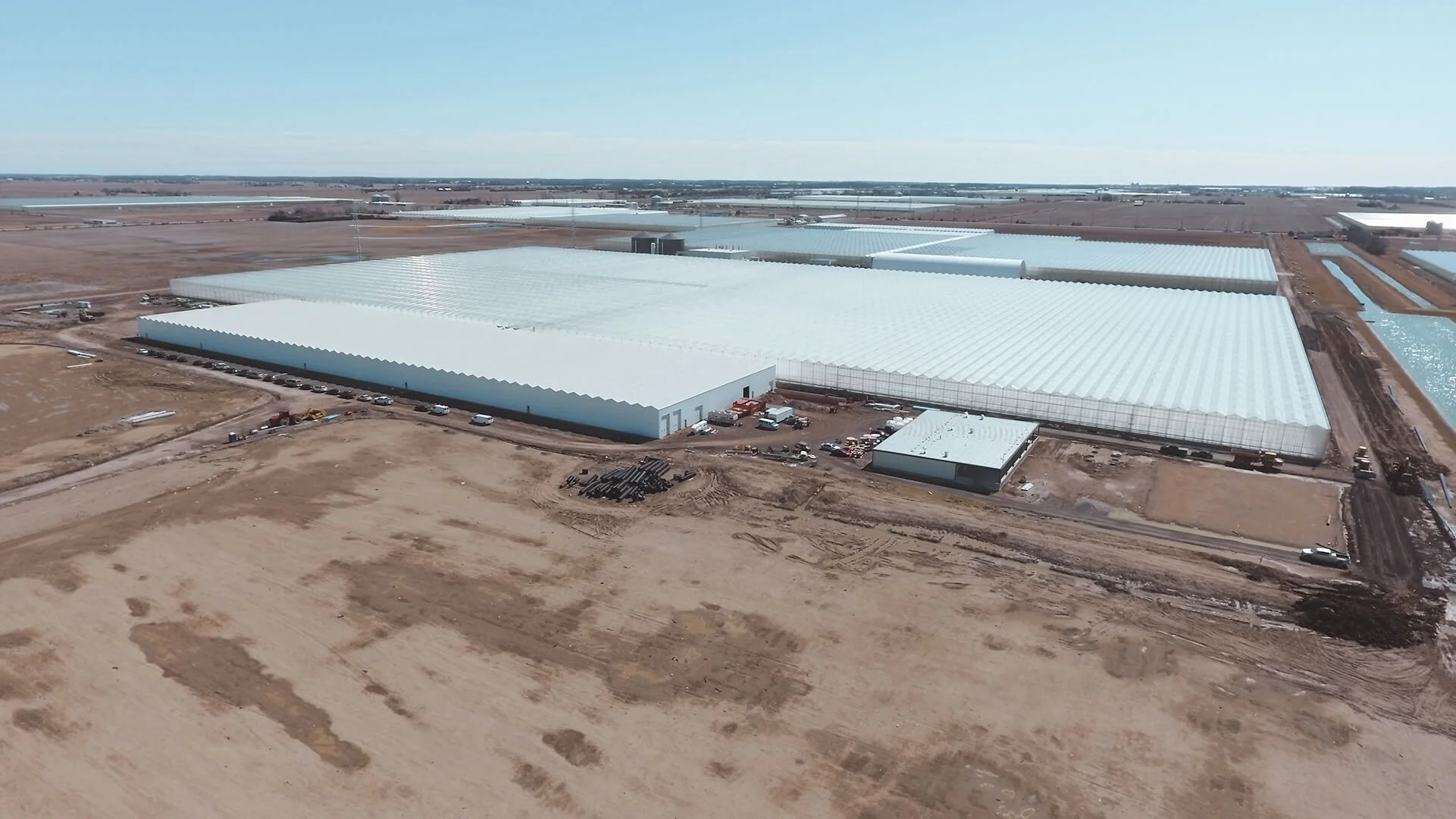
Leamington, ON (March 29, 2019) - NatureFresh™ Farms is leading the way in the farming industry by expanding their facilities, providing year-round Ontario grown produce and introducing their new sustainable practices along with their most recent addition to the NatureFresh™ Farms team.
On April 3rd to 4th, NatureFresh™ Farms will be sharing their achievements in sustainable development by featuring their new eco-friendly compostable tray at this year’s Canadian Produce Marketing Association convention & tradeshow. Sustainability is a topic that has continued to be a focus of the company since the beginning and has seen an increased amount of interest throughout the industry. NatureFresh™ Farms maintains sustainability as a priority by continuously working with suppliers to develop new technology in their greenhouse operations and packaging.
By launching this new compostable packaging for both their conventional and Organic Mini Cucumbers, attendees will get an opportunity to see the tray while learning more about the role of sustainability within the produce industry.
In addition to their compostable tray, their greenhouse expansion will also assist in meeting their sustainability initiatives by reducing food miles with more locally-grown produce in their greenhouses. The expansion has been a large project that will be occurring over the coming months and once complete will increase their production and efficiency in the growing process, while consistently providing high-quality products, giving Canadian consumers a greater opportunity to purchase locally-grown produce throughout the year. The new facility will grow more Tomato assortments, with supplemental lighting assisting in year-round production.
NatureFresh™ Farms is also thrilled to announce the expansion of their team with Retail Sales Account Manager, Conor Chilvers. Conor joined the company early this March and will be accompanying them at the convention this spring. “I am excited for my first show as part of the NatureFresh™ Farms team,” shared Conor. “I’m really looking forward to introducing my customers to the brand and telling the NatureFresh™ story”.
Executive Retail Sales Account Manager; Paul Schockman, also shared his excitement for the upcoming show and the arrival of Conor. “We are very pleased to welcome Conor to our team, having multiple years of experience in the produce industry, he will be a great asset in supporting our rapid growth and servicing our customers in the best way possible,” said Paul. “NatureFresh™ Farms has a lot of exciting things occurring this year with our sustainable initiatives, the expansion of our facilities and the growth of the team, which we are eager to share at the convention, along with showcasing our new products and packaging alternatives.”
With 20 years of providing quality greenhouse grown vegetables all year-round, NatureFresh™ Farms looks forward to the future with their continued advancements in sustainable technology and product innovation. Be sure to visit the NatureFresh™ Farms booth #408 from April 3rd to 4th and connect with their team to learn more about their sustainable efforts.

Bigger Produce, Better Crops With Vertical ‘Container Farms’, Scientists Claim
By Dominic Cuthbert -
25th March 2019
Professor Chungui Lu in one of the container farms
A UK university has created two vertical ‘container farms’ capable of producing natural crops which, scientists claim, are more nutritious, have bigger yields and are ready to harvest in half the time.
Thought to be the first of their kind in the UK, the farms are housed inside two converted shipping containers and use a variety of innovative and automated feeding and environmental control systems to create perfect growing conditions all year round.
Each container farm is capable of producing three to five tonnes of crops a year.
Scientists at Nottingham Trent University’s School of Animal, Rural and Environmental Sciences plan to use them for teaching and research – and to showcase the potential for ‘precision agriculture’ in a time of global challenges for food security and safety.
Nearly 70% of the UK’s fruit and vegetables currently comes from outside the UK and there is concern that food imports could become more expensive post-Brexit and that there could be significant disruption to the UK’s food supply chain.
An increasing world population, climate change, and pressure on natural resources which threaten global food security, are other major challenges.
The farms, located at the Brackenhurst Campus, have been created as part of a project with scientists at Huazhong University of Science and Technology in China.
Produce is grown vertically on racks using various LED light and nutrient ‘recipes’ to stimulate growth, depending on the particular species, variety of crop and its different developmental stages.
Suitable wavelengths of light enhance plant growth, giving crops higher yields, more flavour and increased nutrition.
Plants are also grown using include hydroponics – growing plants without soil in a nutrient-rich solution – and aeroponics, whereby plant roots are suspended mid-air in high humidity, whilst being intermittently misted with a nutrient solution.
Unique recipes of the 17 different nutrients which control crop quality and flavour are automatically monitored and delivered to each plant via a software-based control system.
Delivering these directly to the roots ensures almost all nutrients are taken up by the plant – hence bigger yields, faster growth and improved nutrition.
Only about 30%-40% of nutrients are taken up by the roots when grown in soil.
In addition to this, the project tackles the need to increase efficiency of nutrients and the protected conditions of the container mean there is no need for pesticides or fungicides.
“We want to address food security and sustainable agriculture issues by developing new farming systems which can provide an improved crop quality and yield,” said Chungui Lu, Professor of Sustainable Agriculture in the university’s School of Animal, Rural and Environmental Sciences.
“We believe that there is enormous potential for urban agriculture and ‘”vertical farming to meet these emerging challenges.
“Container farms have optimum growing conditions from germination right through to harvest. It is a hugely efficient and sustainable way of growing very fresh vegetables and some fruit all year round.
“Container farms the size of ours would be able to produce three to five tonnes of crops per year. Producing natural and sustainable local food under such protected conditions could be very attractive for a range of organisations, such as supermarkets and restaurants.
“The system is also completely autonomous so people wouldn’t need to know how to operate it.”

Video: 7,000 sq.m. of Hydroponic Lettuce
Lettuce is a short growing season plant, that is why it is more and more popular as a spring vegetable cultivated under the cover. It is mainly grown on substrates such as mineral wool and hydroponic systems. In heated greenhouses, lettuce can be produced all year round. Seedling production lasts from 3 to 6 weeks. Optimal germination temperature is within a range from 18°C to 20°C.
Similarly to other crops, light is one of the most important production factors. Light deficiency might be particularly harmful for seedling and lettuce at the time of the head increase.
Inappropriate lighting, can cause the internodes to lengthen and slow the absorption of nitrogen compounds. Lettuce belongs to the long day. To ensure its optimal growth conditions, it needs at least 12 hours of light access. Especially in autumn and winter periods, it is necessary to use additional lighting sources.
One of the key issues of using LED technology for lighting crops, is its ability to adjust the spectrum, to achieve favorable commercial values of a given plant.
Thanks to the LED COB Leafy spectrum, which has been developed jointly with world specialists engaged in the cultivation of lettuce, plants are characterized by much better growth and visual condition. Furthermore, lettuce stays fresh longer, even on the shop shelf.
In January 2019, Plantalux's horticulture LED COB lamps have been installed on 7000 sq.m. area, as seen in the video below.
For more information:
Plantalux
Jakub Lachowski.
+ 48 730 730 478
jakub.lachowski@plantalux.pl
http://plantalux.pl/en/home/
https://pl-pl.facebook.com/plantalux/
Publication date : 3/25/2019
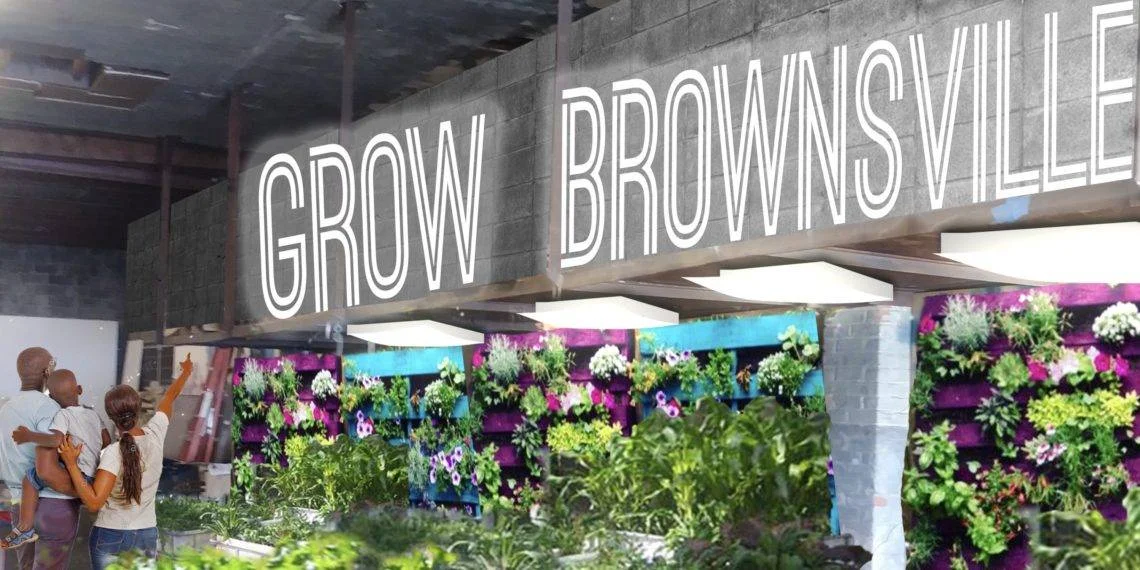
First Aquaponic Farm Warehouse Set To Launch Soon In Brownsville`
Grow Brownsville is a unique new project designed to bring locally grown food to underserved communities by way of aquaponic farming
The aquaponic farm prototype. Rendering courtesy Alexis Mena of Grow Brownsville
The Farm Will Serve As A Sustainable Local
Food Source For Brownsville Residents
by Gabriella Thalassites March 13, 2019
in Brownsville, Business & Innovation, Featured News
Grow Brownsville is a unique new project designed to bring locally grown food to underserved communities by way of aquaponic farming.
Aquaponics is a form of agriculture that combines raising fish in tanks with soilless plant culture (hydroponics). In aquaponics, the nutrient-rich water from raising fish provides a natural fertilizer for the plants while the plants help purify the water for the fish. Aquaponics can be used to sustainably raise fresh fish and vegetables to generate profit in a commercial farming venture, year-round, in any climate.
Aquaponic farming can be done anywhere, providing fresh local food that is free of pesticides, herbicides and chemical fertilizers.
Set to launch in May, the Grow Brownsville aquaponic farming project is a shared vision of co-founders Jill Mellovin, brothers Frank and Alexis Mena, and Brittany Markowitz. It first took shape in 2017, when Brittany and Jill met Alexis while he was working on a different project for ARTs East NY.
A prototype of an aquaponic farm, created by Grow Brownsville co-founder Frank Mena. Photo courtesy Grow Brownsville.
Jill and Brittany mentioned the idea for an aquaponic farm to Alexis and the ideal space to hold it in Brownsville, and Alexis was immediately on board.
“My brother called me and said, ‘Hey, these two girls talked to me about having a warehouse, and I need your help!” Frank laughs, as he recalls the urgency in his brother’s voice.
Frank finished out his last year of teaching to fully dedicate himself to the cause, and the project officially began in August 2017.
Brownsville, notorious for its limited access to quality food, is often described as a “food desert,” with mostly fast food options. The warehouse at 234 Glenmore Ave will house an aquaponic farm, growing in-demand fruits, vegetables, fish, prawns and herbs for the community.
The farm is a true community effort. Outreach by the founders has gained support from Oko Farms and Eden Works, among others, to lend resources and assist with the build out.
Currently, the warehouse is a production venue serving local artists who rent out studios for anything from runway shows, to music videos, photoshoots or recording booths. Artists membership profits fund “Grow Brownsville.”
Grow Brownsville co-founder Frank Mena. Photo credit: G. Thalassites for BK Reader
The warehouse is swarming with creatives partnering on the project and renting out studio space. Ultimately, the warehouse will continue as a studio space for local artists, as well as serve as a hub for the aquaponic farm.
Going through the warehouse there are several different rooms of different themes, all inspired by chakras; all decorated beautifully and designed with the purpose of invoking unique inspiration for the artists using them.
After touring the space and meeting with not only the founders, but also some of the key partners of the project, the energy is invigorating. While the project is still underway, the progress it has made in such a short amount of time is impressive.
“We all had a dream and it was like, it came together. It is still coming together every single day,” says Don McCoy, Grow Brownsville brand ambassador and studio director.
Grow Brownsville will launch May 18, 2019. For more information, visit ioby.org.
Tags: aquaponic farmbk readerBrooklyn urban farmsBrownsville.food desertgrow brownsville
Future of Food Is Fishy
Darren Handschuh - March 29, 2019
It's a marriage made in heaven.
One that produces food faster and uses far fewer resources than traditional growing methods – and it is happening right here in the Okanagan.
With the right equipment, aquaponics can be done just about anywhere.
“Aquaponics is the perfect marriage of hydroponics and aquaculture,” says Jeff Smith with the Aquaponics Training Institute in Vernon. “Aquaculture is the raising of aquatic species in a closed system, and hydroponics is a soilless growing of plants within a closed system.”
Put the two together, and you get a method of producing food that leaves almost no environmental footprint.
Smith will be hosting information sessions and workshops to teach people how to set up their own systems.
Information sessions will be held this Saturday, from 9 a.m. until noon, and then again on April 6.
From there, people can sign up for workshops on how to build their own system.
“That's a full hands on, face-to-face workshop here in our facility, so they will get to learn all about aquaponics,” said ATI's Barbara Bonnough.
“The workshops are geared toward people who want to run their own facility in their own home, up to someone who might want to do it in an outdoor greenhouse and set up an aquaponics facility that would feed a community.”
More information can be found at the Aquaponics Training Institute website.






What Does The Future of Vegetable Growing Look Like?
What does 2019 hold for mass fruit and vegetable production? CREDIT: INFARM
21 MARCH 2019
Thanks to technology, vegetables can now be grown in outer space and deserts, even subterranean tunnels, and soon, the most hostile environment of all: supermarkets. During your rush hour shop, instead of fighting over ready meals you may find yourself in pick-your-own strawberry bliss on aisle 12, free of plastic packaging and air miles.
Energy-efficient LED grow lights, robots and internet-connected vertical farms are some of the technical breakthroughs that are revolutionising edible gardening, notably in places with no outside space at all. And with our global population closing in on eight billion - a majority in garden-less urban apartments - this futuristic tech promises to remove pressure from our natural world (and our own to-do lists) in the nick of time.
Supermarket farming aisles
German company InFarm has more than 100 vertical microfarms already in shops across Germany, Switzerland and France with plans to bring them to the UK. Shelving units with grow lights and hydroponic trays of nutrient-rich water, they resemble shop refrigerators growing live salads, veg, herbs and fruit. Staff simply slide trays in to grow and out once customers have picked everything.
One Bristol-based start-up also hopes to bring vertical farms to high streets using aeroponics that spray roots in a nutrient mist. India Langley, of LettUs Grow, says aeroponics give plants “better access to oxygen and carbon dioxide which results in them growing much faster: we have shown a 70 per cent increase in growth rate compared with hydroponics.”
Langley is keen to highlight benefits including lack of pesticides, “by reducing food miles, we can help slash food waste and reduce the carbon footprint of fresh produce, around 50 per cent of bagged salad we buy in the UK ends up in the bin.”
InFarm, German microfarm company CREDIT: INFARM
Yield per metre can be many times that of in-ground farming, making it possible to feed dense urban populations in very little space. It sounds futuristic but soilless growing has been used for decades, the step change is the cheap-to-run LED grow lights and internet connectivity.
“Our aeroponic grow beds are fully automatable,” says Langley, excited about the fact their system has central control from LettUs Grow’s headquarters, so shop staff won’t need to worry about nutrient formulas, “it makes this technology accessible to everyone.”
Restaurant kitchen gardens
Around the world many restaurants are following suit, two Michelin-starred Atera in New York has its own indoor vertical microfarm supplied by Farm.One. In the basement directly next to the kitchen, the farm grows a large variety of unusual herbs and salads for fresh flavour and choice, reducing supply cost and environmental impact.
“By communicating with the farm we are able to get herbs picked just a couple of hours before use and they are to our exact specifications,” says James Moore, Atera’s head chef, “they have so many varieties of herbs that we can sample and use the variety we want to get the best balance out of the dish.”
Australia-based Farm Wall produce another, attractive-looking vertical farm designed to be seen in cafes and restaurants, and Evopro sell an industrial hydroponic unit in the UK for a cool £8,000. Other options include hydroponic plastic towers housing ten or more plants in a column, which, like all vertical farms, can be used with sunlight (on a rooftop for example) or LED lights.
Terminology
Aeroponics
Aeroponics is a way of growing plants without soil, where the roots are watered using a fine mist. Not only does this allow more oxygen to the roots, delivering better flavour and faster growth, but it uses up to 95 per cent less water than traditional agriculture.
Hydroponics
Hydroponics is the process of growing plants in sand, gravel, or liquid, with added nutrients but without soil.
A new kitchen appliance
For those with no outdoor space, IKEA has an indoor vegetable growing solution to slot next to the dishwasher. Its low-cost hydroponic grow towers with the familiar Scandinavian aesthetic are easy to use. Customers scarred by attempts to keep herbs alive on a windowsill can look to these as a living pantry.
Tom Dixon, designer and mastermind behind IKEA’s ‘gardening will change the world’ show garden at the RHS Chelsea Flower Show, certainly believes in the idea. In May he and the home superstore will construct a two-tiered garden with an underground urban farm beneath a garden for wildlife and wellbeing in the Great Pavilion at Chelsea.
Robot weeding
Robot vacuums not only amuse cats, they often clean better than we ever did and the future of robot lawn mowers looks assured, but what of the neverending task of veg plot weeding? Roll forward Tertill, a weeding robot crowdfunded through Kickstarter, created by Joe Jones, inventor of best selling robot vacuum, the Roomba.
Jones explains that Tertill patrols the garden constantly with “a small weed whacker cutting down weeds that have just emerged and are under about an inch tall.” Solar powered, the device constantly weeds during the day keeping plots spick and span.
For those who find weeding challenging, Tertill could be the answer, and it’s certainly appealing for those fiddly vegetables that require regular hand weeding, such as asparagus, garlic and onions. To these Jones hopes to answer prayers of gardeners plagued by rabbits and deer with “functions that will let Tertill chase pests from the garden and collect extensive data about growing conditions and possibly individual plants.”
Automated watering and weather monitoring
Everyone forgets to water sometimes, usually in times of summer drought but Hozelock’s new Cloud Controller and irrigation systems mean you need not panic, you can water the garden from anywhere in the world using an app on your phone.
In conjunction with Netatmo, a WiFi connected outdoor thermometer and rain gauge, you can mollycoddle courgettes while on holiday. Why stop there, by installing outdoor Foscam cameras you can even watch your tomatoes being eaten by slugs.
Futuristic mass production
When it comes to vegetable technology, farming leads the way, the sector often first to adopt growing technology. In California, Naio produces three different sized electric weeding robots for crops, removing the need for herbicides. It’s the stuff of sci-fi films and Iron Ox, another farming tech start-up in California is trialing a fully computer operated indoor farm claiming to produce 30 times the quantity of lettuce of a traditional farm.
Sterling Sussex is a new hydroponic tomato farm in the UK with state of the art smart glasshouses. “We have a central computer constantly monitoring and controlling temperature, nutrition, humidity, light and CO2 levels,” explains director David Scrivens, “we use climate corridors to raise and lower temperatures, while LED lights and shading allow us to produce crops year round, even in winter.”
Drones have been trialled for spraying and large scale rooftop farms are planned for cities around the world, including London. If eating plants fed on nutrients in water doesn’t appeal, it’s worth remembering that’s how plants transport nutrients naturally from soil and the trade off is crops without pesticides or chemicals used to prolong shelf-life. As for flavour, well, there’s no technology for that, yet.
Find Jack’s blog at jackwallington.com. Follow him on Twitter @jackwallington and on Instagram @jackwallingtongardendesign
What do you think the future of vegetable growing looks like? Would you like to see these technological advances? Tell us what you think in the comments section below.
Association for Vertical Farming (AVF) Announces Partnership With Urban Future Global Conference
AVF brings indoor farming forum to Europe’s largest conference on sustainable cities
After successful annual conferences in Beijing, Amsterdam and Washington, D.C., the AVF is excited to host the 2019 edition at Oslo’s Urban Future Global Conference on May 22-23. The AVF and Urban Future look forward to welcoming entrepreneurs, companies, technologists, growers, city planners, research institutions, governmental bodies and enthusiasts from all over the globe to Oslo, the 2019 European Green Capital.
Adding to Urban Future’s already extensive audience, the AVF will host a gathering of over 200 experts to discuss developments and propose solutions for the future of indoor and vertical farming. The AVF will facilitate keynote speeches, roundtable discussions and workshops over two half-day time slots. This conference-within-a-conference will touch on all of Urban Future’s main thematic areas but will be the only forum to specifically focus on food production.
Entitled “Unlocking the Potential of Indoor Farming in Cities of the Future,” this conference will give citizens and stakeholders alike unparalleled access to the most pressing topics in the indoor farming industry.
Keynote speakers include:
Dr. Joel Cuello, Professor of Biosystems Engineering and Director of the Global Initiative for Strategic Agriculture in Dry Lands (GISAD) at The University of Arizona.
Dr. Leo Marcelis, PhD., Head of Chair Group Horticulture and Product Physiology, Wageningen University
Josef Schmidhuber, Deputy Director, Trade and Markets Division, FAO
Gertjan Meeuws, Co-Founder, Seven Steps to Heaven
More speakers will be announced in the coming weeks.
Workshop Sessions
Establishing High-Tech Urban Food Systems in Cities of the Future
How can cities keep pace with the rapidly-evolving value chain
The next decade will bring rapid change in the technologies and techniques used to grow food in cities. How can businesses and entrepreneurs keep pace with this level of innovation? Join us in guided workshops to learn how to manage this influx of new technologies and apply them successfully to drive down costs, integrate renewable energy, and improve citizens’ access to healthy, sustainably-produced food.
Topics:
A. Can Blockchain technology advance the vertical farming industry? Moderator: Bernhard Hecker
B. Potential of renewable energy sources in the industry and energy efficiency in indoor farms. Moderator: Ramin Ebrahimnejad
C. Indoor/Vertical Farming Designs and Strategies. Moderator: Joel Cuello
Roundtable Discussion
The Science of Food Production in the City
Food and future cities -- growing food where the people live: what, why and how
Moderated panel discussion with public Q&A session.
Food production meets all of the UN’s 17 Sustainable Development Goals; accordingly, it also touches on all of Urban Future’s thematic areas. Why then is food production so often left out of city planning? This roundtable discussion will cover the importance of placing food at the centre of city planning, and the best ways to go about doing so. Hear unique industry perspectives on what is working and what needs to change, and then take the opportunity to ask questions in a 20-minute public Q&A session.
Event info and tickets are available here: https://pretix.eu/associationverticalfarming/urban-future-2019/
Student tickets are available at a reduced price of €220. Please contact kb@vertical-farming.net for a voucher code.
Please send any questions or special requests to info@vertical-farming.net

Gordon Food Service And Square Roots Reveal Location of First Urban Farm
March. 27, 2019
BROOKLYN, NY and WYOMING, MI - Early this month, Gordon Food Service made headlines when the foodservice provider unveiled a new partnership with Square Roots and new plans to erect indoor farming campuses throughout North America. And this week the two partners announced the first location to serve locally-grown produce to Gordon Food Service’s network of foodservice partners—along with additional details about the site. The two companies will build their pilot in Gordon Food Service’s hometown of Wyoming, Michigan.
Rich Wolowski, North American President and CEO, Gordon Food Service“
This partnership brings together technology, agriculture, young farmers, and scalability, in a model that could revolutionize our food systems,” said Rich Wolowski, North American President and CEO of Gordon Food Service. “And it’s wonderful to be starting in our own backyard.”
According to a press release issued by the two companies, the partnership’s local, fresh produce offerings will be non-GMO, pesticide-free, and meet Gordon Food Service’s high quality and safety standards. Product will be available for purchase by both commercial chefs and consumers at Gordon Food Service’s area retail stores.
Construction and installation of the first container farm campus is expected to be completed by the fall of 2019, with growing operations beginning immediately thereafter.
Gordon Food Service made headlines when the foodservice provider unveiled a new partnership with Square Roots and new plans to erect indoor farming campuses throughout North America
Plans for the new campus include ten specially designed Square Roots shipping containers in direct production, with four additional containers providing operational support. Containers will occupy less than two acres of the Gordon Food Service HQ’s fifty-acre site, yet are projected to produce more than 50,000 lbs of herbs annually.
Tobias Peggs, Co-Founder and CEO, Square Roots“This partnership means we will grow delicious, local, real food at huge scale,” said Tobias Peggs, Co-Founder and CEO of Square Roots. “We’re so happy to be working with a mission-aligned partner in Gordon Food Service—leveraging technology to bring real food to a huge number of people across the country, while delivering real social impact by empowering thousands of young people to become our country’s future farmers.”
The two companies also noted that Square Roots is expected to recruit and hire a class of new farmers to participate in its unique, year-long Next-Gen Farmer Training Program at the new Wyoming, Michigan farm campus. The recruitment process will start in early summer, and the program will begin in the fall. Interested applicants can find out more about the program on the Square Roots website and sign up for early access to applications here.
Jack Poll, Mayor, City of Wyoming, Michigan“
Our community is proud to be home to an international business leader like Gordon Food Service and to support new, game-changing innovations in fresh, local food production and distribution,” Jack Poll, Mayor of the City of Wyoming, Michigan, noted.
The new campus is expected to function as a template for future farms, and the partnership plans to develop additional farms at or near Gordon Food Service’s U.S. and Canadian distribution centers.
Will Gordon Food Service’s pilot have transformative effects on the supply chain? AndNowUKnow will continue to report as the program expands.
Gordon Food Service Square Roots
Gordon Food Service Urban Farming Protected Agriculture Michigan Expansion Rich Wolowski Tobias Peggs Jack Poll
COMPANIES IN THIS STORY
Gordon Food Service
Gordon Food Service is the largest privately-held, family-managed broadline foodservice distributor in North America-and...
The Practicality of Container Farming
Container farms can be found in cities and backyards, parking lots and warehouses around the world. This kind of farming has interested millions of people, who like the idea of using discarded containers for farming.
The Practicality of Container Farming
Len Calderone for | AgritechTomorrow
03/07/19, | Indoor & Vertical Farming | Len Calderone - Contributing Author | Analysis and Trends, Containers
Container farming is the growing of plants in shipping containers instead of planting them in the ground. Both edible as well as non-edible plants can be grown in containers. Container farming lessens the problem of soil-borne diseases, and eliminates weeds. This type of gardening allows for easier monitoring of moisture, temperature, and sunlight.
Container farms can be found in cities and backyards, parking lots and warehouses around the world. This kind of farming has interested millions of people, who like the idea of using discarded containers for farming. They’re modular and easy to move, along with being compact, self-contained, cheap and available.
The key advantage of farming in a container is that you don’t need a lot of land or a greenhouse. This allows for a farmer to drop a container behind a restaurant or school cafeteria or anywhere near to where the food will be consumed. Because the container must be level for drainage, the location might need a concrete pad.
There are millions of used containers almost everywhere as container shipping is very popular and many used containers are available. When there is a problem with a container, it is usually cheaper for the logistics company to buy a new one rather than fix the old one. For a few thousand dollars a container shell can be built out for a farm.
Of course, there are some drawbacks as with any business. When using a container, the farmer must install environmental controls, such as light and heat. The structural integrity of the container is also a factor. It must be able to be outfitted with the growing materials and strong enough to be moved.
In an indoor farm, the lights are generating heat, water is evaporating, plants are transpiring, gasses are accruing and being exchanged. All the heat and humidity that are caused by these processes are amplified in a compact growing environment. This means that environmental control must be recognized and prioritized in the design of the farm.
A container farmer can set up a farm from scratch or buy a complete farming system in- a-box. Leafy Green Machine is a container that comes fully assembled to allow a farmer to easily kickstart a farm. The Leafy Green Machine is a complete hydroponic growing system in a box, helping a container farmer to perform every farm-related task from seeding to harvesting and packaging inside the container.
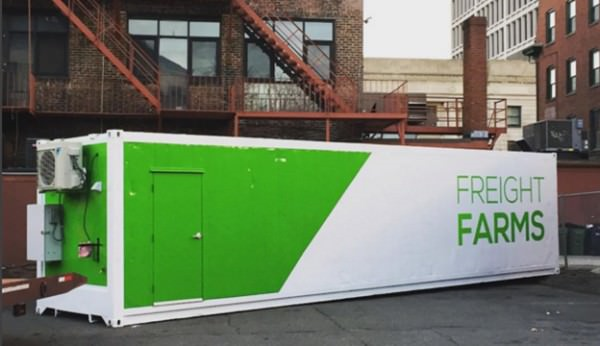
These containers are climate controlled, which automatically responds to air and water sensors inside the farm to guarantee a perfect growing environment for the crops. Each farm has a central brain that is programmed to automatically adjust all the components inside the farm so that it's creating the perfect environment. It even has remote monitoring and control. The modular and stackable design of the Leafy Green Machine allows a farmer to quickly scale up or start a new business from scratch. A Freight Farms’ unit runs over $85,000 and the cost to operate the farm is about $10,000 to $18,000 a year.
Photograph: Freight Farms
If you are a soil farmer, but can only farm outdoors during certain growing seasons, a container farm would allow growing 365 days, which would add additional income to the farm. A container farm allows for harvesting standing up, while forgetting about weeds and pests.
A farmer, who adds a container, can ignore unexpected frosts, droughts, or even hurricanes. With a controlled environment, there would be a stable income. There is always some part of the farm that is unproductive, but with a container, that land can be used for additional farming.
A container allows for a wider product line throughout the year adding to the farm’s revenue and keeping employees that would normally be released during the off season.
Shipping containers have been modified into offices, vacation homes, and even bars and public libraries. Their corrugated steel construction makes them strong. They are able to hold up to vertical and horizontal forces when they are stacked or interlocked. Because they are so strong, they are ideal for container farming.
The reason to build a container farm is to grow crops closer to market and fill the demand for fresher food. If demand doesn’t exist, then there goes the business. Like any business location, location, location is the key.
Just because the technology exists to grow food in a container, the would-be container farmer still has many questions to answer. If a farmer is unable to sell the food, the farmer best avoid growing it. Just because a farmer can grow it doesn’t mean that it can be sold.
In addition to matching the crop to the local market, it’s important to understand how to transport the produce from the container to customers. Therefore, a farmer must know the customers and locate the farm as close as possible to them.
Next item to consider is the power requirements. Controlled environment farms require substantial amounts of electricity and water. Not all nearby buildings have the type of electricity at the capacity a container needs to operate. A farmer needs know how much power the farm will need to support the automation equipment, growing equipment, lighting, pumps, HVAC, dehumidifiers, fans, and computers.
Pricing the product is important. Most new farmers check the prices in the local grocery store and price their product to compete. Big mistake. A container farmer should not compete with the local grocer. Today’s savvy customers will pay more for a product that was not grown in some unknown field, using unidentified chemicals, handled by foreign workers and possibly shipped hundreds or even thousands of miles. They will spend more just for the known quality and peace of mind. Just look at the recent problem that grocery market had with Romaine lettuce. Customers feel that local products are fresher, more trustworthy.
Photo by Jatuphon Buraphon from Pexels
There are many hard-working farmers, who invest their time, energy, and financial resources into questionable ideas that are not practical, taking their money and dreams away at the same time.
To be successful at container farming, a farmer needs to sell food with the growing technology taking a back seat. Trying to sell and develop more technology at the same time will lead to failure.
The content & opinions in this article are the author’s and do not necessarily represent the views of AgriTechTomorrow
Len Calderone - Contributing Author
Len contributes to this publication on a regular basis. Past articles can be found with an Article Search and are listed below. He also writes short stories that always have a surprise ending. He has also written a book on wedding photography on a budget. These can be found at http://www.smashwords.com/profile/view/Megalen
Other Articles
By positioning sensors, farmers can understand their crops at a micro scale, sustain resources, and reduce environmental impact.
LED Lighting for Indoor Agriculture
As used in commercial indoor growing, LED lighting technologies have been around less than ten years. LED lights are less understood than other types of grow lights, which have been studied for several decades.
Will Robots be the Future of Farming?
The robotic industry is estimated to be worth $2.75 billion in farming with a projected annual growth rate of over 20% a year until 2022. We can expect this industry to eventually reach a market capitalization of $13 billion.
More about Len Calderone - Contributing Author
03/07/19, 07:48 AM | Indoor & Vertical Farming | Len Calderone - Contributing Author | Analysis and Trends, Containers | Monitoring & Growing | Precision Farming
Singapore Airlines Announces “Farm-to-Plane” Initiative With Aerofarms
Abandoned Steel Mill near Newark Airport Becomes World’s Largest Vertical Farm of its Kind – To Produce the World’s Freshest Airline Meals
March 21, 2019
Airplane food is about to get a lot fresher! Reflecting passengers’ growing interest in healthy travel, Singapore Airlines has launched its first Farm-To-Plane partnership with AeroFarms, the leader in indoor vertical farming, bringing the benefits of the world’s freshest inflight produce to SIA flights from Newark to Singapore later this year.
“Imagine boarding a plane and enjoying a salad harvested only a few hours before takeoff — literally the world’s freshest airline food,” said Antony McNeil, director of food and beverage for Singapore Airlines. “The only way to get fresher greens inflight is to pick them from your own garden.”
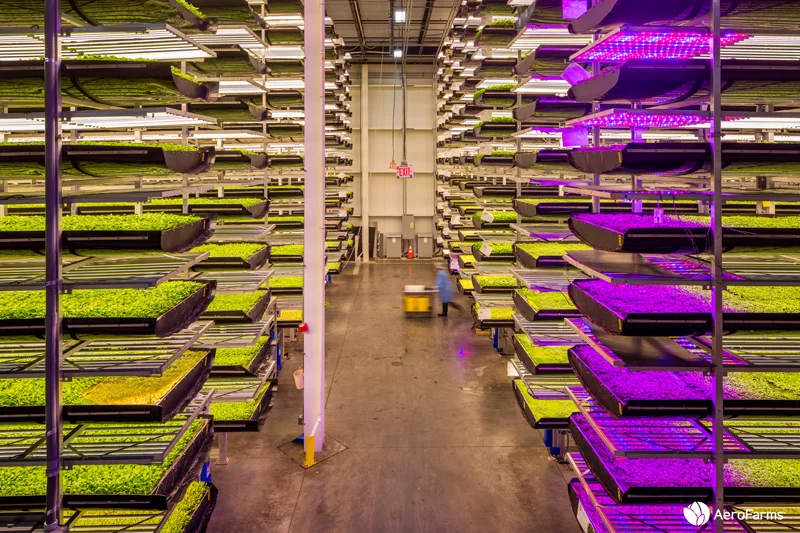
AeroFarms has reclaimed an abandoned steel mill in industrial area near Newark International Airport, transforming it into a 1-acre, indoor vertical farm producing the equivalent of 390 acres of locally grown produce with up to 30 harvests each year – all without soil, pesticides or sunlight – even at the height of winter. AeroFarms will grow a customized blend of fresh produce for SIA’s Newark-to-Singapore flights from September 2019.
At conventional farms, salad greens are generally harvested days or even weeks before being served – even longer during winter months in the Northeast, when produce must be shipped thousands of miles from Florida, California or Mexico. In comparison, greens for SIA’s Farm-To-Plane flights are picked within 24 hours of flight departure at AeroFarms’ indoor growing facility less than 5 miles from the airport. SIA is planning additional Farm-To-Plane initiatives throughout its global network.
AeroFarms’ Indoor Vertical Farming Technology: How It Works:
SIA’s AeroFarms greens are grown “aeroponically”: Instead of using soil, seeds grow indoors on a specialty growing cloth medium under LED lights calibrated to provide the ideal spectrum for plant development. Under strict temperature and humidity controls, plant roots are misted with precise amounts of water and nutrients, and the formula and lighting can be adjusted to optimize the plant’s nutritional value and maximize flavor. Plants typically grow from seeds to fully mature produce in as little as a few days, using 95 percent less water and a fraction of the fertilizers used in conventional farming. All AeroFarms’ produce is grown without pesticides, herbicides and fungicides.
SIA’s Expanding Focus on Enhancing the Passenger Experience
SIA’s Farm-To-Plane initiative complements a series of wellness-oriented partnerships SIA has recently developed to enhance the passenger experience. For U.S.-originating travelers, the carrier has partnered with Canyon Ranch, the world’s premiere integrative wellness brand, to provide an extensive range of menus and other offerings to enhance comfort, relaxation and general well-being aboard SIA’s ultra-long-haul flights to Singapore. For Asia-based customers, SIA has recently announced a partnership with Singapore-based COMO Shambhala to create a series of meals featuring a range of specific nutrition profiles promoting wellness, to be introduced on selected flights departing from Singapore later this year.
About AeroFarms:
Founded in 2004, AeroFarms has been on a mission to grow the best plants possible for the betterment of humanity. A global, mission-driven company and certified B Corporation, AeroFarms has been named one of the World’s Most Innovative Companies by Fast Company two years in a row and by Inc Magazine as one of the Top 25 Disruptors in the world. AeroFarms patented, award-winning aeroponic technology provides the perfect conditions for healthy plants to thrive, taking indoor vertical farming to a new level of precision and productivity with minimal environmental impact and virtually zero risk. Customers can enjoy locally grown, pesticide-free produce that bursts with flavor and nutrition, all year round, and their brand Dream Greens can be found at major retailers.


Minnesota Food Bank Second Harvest Heartland Turns Shipping Container Into Lettuce Farm
It's Part of a Growing Focus on Getting
Fresh Produce to Minnesota Food Shelves
By Kelly Smith Star Tribune
MARCH 18, 2019
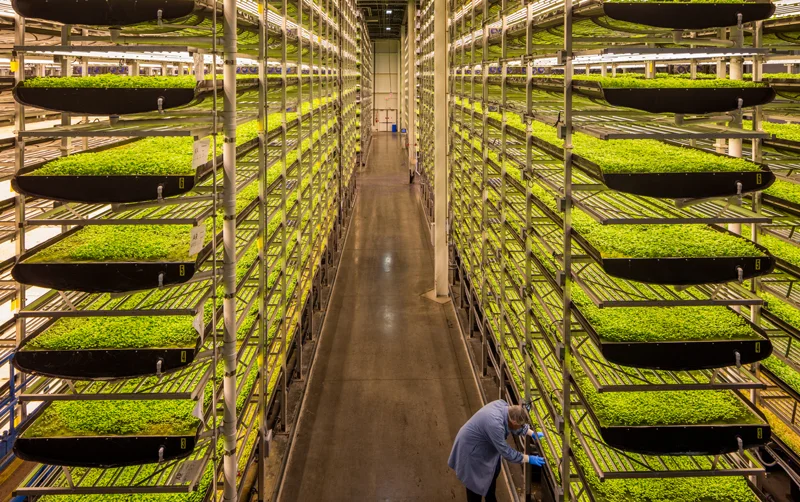
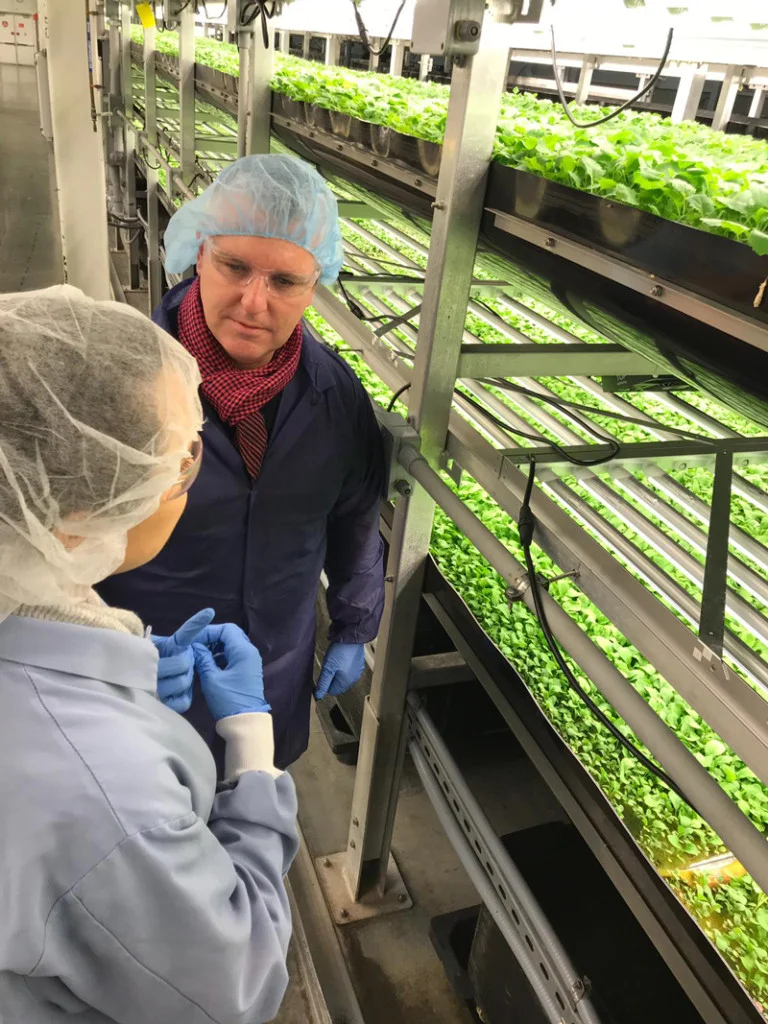
Eric Reller, master grower with Second Harvest Heartland, took stock of the plants growing in a shipping container at the organization's warehouse in Brooklyn Park. ANTHONY SOUFFLE – STAR TRIBUNE
It’s the busy planting season for Eric Reller all year round inside a dark shipping container in Brooklyn Park.
The freight container holds a mini hydroponic farm where he plants seeds and rows of lettuce under LED lights. But the leafy greens aren’t for sale.
Instead, the lettuce is sent to Twin Cities nonprofits that provide meals to people in need through a new pilot program from Second Harvest Heartland, Minnesota’s largest food bank.
“It’s the future of food and we want to see if a food bank can be a part of that,” said Bob Branham, director of produce strategy at Second Harvest. “There’s a need.”
Second Harvest is the first food bank in the nation to do a program like this, Branham said, adding that other food banks across the country are watching to see its progress.
As one of the nation’s largest food banks, Second Harvest specializes in “food rescue,” taking millions of pounds in produce donated by farmers, manufacturers and grocers to repackage and distribute to food shelves. And part of the nonprofit’s growing focus is on fresh produce, doubling the quantity in the last six years.
Eric Reller, master grower with Second Harvest Heartland, sorted through the columns of plants growing that hang from the ceiling of the shipping container. ANTHONY SOUFFLÉ • anthony.souffle@startribune.com
Since lettuce wasn’t as feasible because it doesn’t last long and grocers prefer to sell it, Second Harvest stepped up to grow its own, buying the container hydroponic farm last year for $100,000, paid for by a donor. While hydroponic farms aren’t new, food banks aren’t often in the business.
“What’s innovative is a food bank, usually at the end of the supply chain, is putting itself at the front of the supply chain,” said Branham, a former leader at General Mills. “We don’t have access to leafy greens in food rescue.”
A new home
The farm is part of Second Harvest’s new warehouse in Brooklyn Park, which it moved into last year after closing a smaller Golden Valley site.
On Tuesday, officials will celebrate the groundbreaking for the renovation of the 233,000-square-foot facility, funded largely by $18 million in bonding money approved by the Legislature — the largest amount of public money Second Harvest has gotten. The organization is fundraising to pay the rest of the $52 million total price to buy the building and create programming.
The new renovated warehouse near Interstate 94 and Hwy. 100, which is expected to be done by 2020, will add more space for volunteers packaging meals and more than triple the space for coolers and freezers.
That will allow the nonprofit to provide more fresh produce and protein, boosting the number of meals it supplies from a record 89 million in 2018 to nearly 112 million by 2025. Food is distributed to food shelves and pantries in 59 counties in Minnesota and western Wisconsin.
Second Harvest will share the space with the Brooklyn Park community food shelf, Community Emergency Assistance Programs, which will open a free food market there.
With the new space, Second Harvest is also starting a new initiative this year, seeking money to buy bulk quantities of chicken and beef from manufacturers that can be repackaged into smaller quantities for food shelves.
“It’s exciting to know it’s going to people who don’t have the opportunity for that kind of food,” Branham said.
The lettuce farm could also grow. Branham has mapped out where the full-scale farm could go in the warehouse, if the nonprofit chooses to fundraise for the larger operation. For now, Second Harvest’s small hydroponic farm harvests 8,000 pounds of lettuce a year. To grow 250,000 pounds of leafy greens a year, enough to supply food shelves and clients, it would cost an estimated $2 million.
Farm-to-table for all
Inside the 480-square-foot shipping container, which is the equivalent to the growing space of nearly 2 acres over the year, seeds are planted in coconut fiber and then transported into towers.
Reller, the master grower, has help from two volunteers to grow 21 varieties of lettuce and herbs such as basil, cilantro and parsley — all without any dirt, sunlight or pesticides in the 8-foot-tall hanging towers.
“The plants look pretty much immaculate,” Reller said, adding that they don’t have to ward off pests or cope with bad weather.
About five weeks later, lettuce is harvested and sent to Loaves & Fishes, which provides 3,000 meals a day at 30 dining sites in the Twin Cities, and Waite House, a community center in south Minneapolis that dishes up free lunch for 100 to 140 people a day.
A rendering of the new volunteer center at Second Harvest Heartland in Brooklyn Park.
Loaves & Fishes uses the lettuce to supplement donated bags of lettuce from grocery stores, which isn’t as fresh.
“By the time we get it, it is pretty far gone, so this lettuce is special because it’s so fresh,” said Cathy Maes, the executive director of Loaves & Fishes. “It’s genius.”
Pillsbury United Communities, which operates Waite House in south Minneapolis, also relies on Second Harvest’s lettuce, part of a broader movement to expand locally grown fresh foods to people in need. Pillsbury United Communities also has its own hydroponic farm in a shipping container to grow lettuce and herbs for its North Side community meals.
“How do we make farm-to-table accessible for everyone?” said Ethan Neal, the food systems manager for Pillsbury United Communities. “People, even if they don’t have money, should have the choice to eat healthy.”
Kelly Smith covers nonprofits/philanthropy for the Star Tribune and is based in Minneapolis. Since 2010, she’s covered Greater Minnesota on the state/region team, Hennepin County government, west metro suburban government and west metro K-12 education.
Video: How Urban Farming is Helping to Feed Tokyo
Japan currently produces just over a third of the food consumed at home. But it's hoping to raise its food self-sufficiency rate to 45%. It’s a challenging task because the number of full-time farmers has been falling.
Japan currently produces just over a third of the food consumed at home. But it's hoping to raise its food self-sufficiency rate to 45%. It’s a challenging task because the number of full-time farmers has been falling.
As part of our Leading Cities series, Mariko Oi looks at how creative urban farming is helping to feed the city’s residents.
India: "The First Large-Scale Automated And Soilless Greenhouse In The Country"
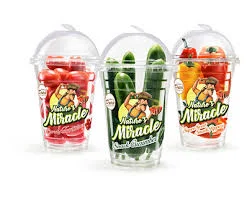
The world is now waking up to agricultural practices which are environment-friendly and guarantee healthy produce. India is also channeling into this growing consciousness. We are witnessing an organic food revolution in the country. Taking this a step further, the D.S. Group has now brought hydroponic technology to India with its latest venture, Nature’s Miracle. The term hydroponics means “working water”. It is a soil-less technology for growing high-quality, tasty and healthy fruits and vegetables in a natural way.
Located in Greater Noida, the facility is India’s first large-scale fully automated hydroponic glass greenhouse. In this kind of farming, plants are grown without any soil and all the required minerals and nutrients are supplied through water. So how does this work? The roots of the plants are put in an absorbent inert medium, like coconut husk, a substitute for soil. At the Greater Noida facility, cocopeat is used as a seed base instead of soil. Completely pesticide-free, hydroponic farming is miles ahead of organic farming, as it nullifies the effects of harmful chemicals that might be present in the soil. Thus, consumers get the healthiest produce possible.
About bringing hydroponic farming to India, Ravi Kumar, co-founder of Nature’s Miracle, said, “We realised that hydroponics was the future and started exploring more about it. We wanted to bring this world-class agricultural technology to India. Initially we faced issues in terms of location, weather, consistency in taste etc. But now we are facing the bigger challenge of changing the mindset of consumers and making them try our produce.”
To this, Anchal Kumar, Partner at Nature’s Miracle, added, “These products are so healthy and fresh. The taste is consistent and they are a great option to snack on.”
The official launch of the brand was celebrated at the greenhouse over the course of three days, from 7-9 March. For the occasion, celebrity chefs Vicky Ratnani and Manish Mehrotra curated dishes using the fresh produce from the greenhouse.
Chef Vicky Ratnani talked to us about his views on this advanced agricultural technology and the importance of healthy produce. “Technology and innovation are there for the wellness of people. It should extend to the agricultural sector. You pay the farmer, and not the doctor. It’s a global cause. Knowing the traceability of products is important for us as chefs. But I think consumers should also know where the produce is coming from,” he said.
Please Click Here