


Welcome to iGrow News, Your Source for the World of Indoor Vertical Farming
CNBC Transcript: Benjamin Swan, Co-Founder And CEO, Sustenir Agriculture
January 10. 2019
Below is the transcript of an interview with Sustenir Agriculture’s Co-founder and CEO Benjamin Swan. The interview will play out in CNBC’s latest episode of Managing Asia on 11 January 2019, 6.30PM SG/HK (in APAC) and 11.00PM BST time (in EMEA). If you choose to use anything, please attribute to CNBC and Christine Tan.
Christine Tan: Okay Ben, so you were working for Marina Bay Sands, Citibank, and UOB, what made you leave corporate life and do something crazy like vertical farming?
Benjamin Swan: It all started with an article on Facebook. I was on my way home from work and I read an article by Dickson Despommier on the future of farming and vertical farming very specifically. I was looking at a lot of the illustrations and thought to myself, you know, this space that is being used in these illustrations just wouldn’t work for Asia given our land scarcity, especially here in Singapore and even in Hong Kong. So I went home that night and jumped on archiCAD and actually rendered up pretty much what you see up the back of the facility today. I was inspired by that and then started learning about indoor farming. I went on to Professor You and Dr. Google, which is YouTube and Google, and actually learnt what is traditional farming and applied a hypothesis on how growing could happen inside of a building using those renderings. I came up with an excel sheet and came up with a hypothesis and took it for a very long test drive. I used that excel sheet to effectively solve problems of indoor farming.
Christine Tan: Why this passion on farming? Did you think you could really make a difference?
Benjamin Swan: I felt that everything I have done in my life kind of boiled down to this point. My construction days, working as a banker, all my skills that I had learnt, I felt that this was my opportunity to do something that would make a difference, an opportunity to fight the good fight. And why farming? Farming right now we know is a problem. We are reliant on techniques that have been used for centuries and whilst we are trying to bring in automation, and improving the ways we’re using machinery and so forth, the thing that we can’t improve is land usage. So vertical farming can solve that problem. Growing our kale indoors, we’re 127 times more efficient than traditional farms per square foot.
Christine Tan: You have no background in agriculture. Did you not think of the risk you were taking when you started the business?
Benjamin Swan: Absolutely, it was a calculated risk. So I did all of this whilst working full time. So I’d finish calls from New York when I was working for Citibank in the early hours of the morning, and I’d go underneath my business partner’s pool to go and take measurements of plants so I could understand, you know, all the inputs and outputs of the plant, the diminishing returns on those imports so I could optimize growing. And to be completely frank for the first six months of exploring this space, it just didn’t work. The numbers weren’t making sense especially on the capex. I mean this is a very capex heavy industry. It wasn’t until about six or seven months after starting to trial different lights, different techniques. When the cost for LEDs started to come down, then it started to make sense. So obviously I started pushing a bit harder.
Christine Tan: So your first project was to try to grow kale, a crop notoriously difficult to grow in a place like Singapore and is usually imported from overseas. Why kale?
Benjamin Swan: So kale is a superfood. It actually has three times the nutritional value of, say, lettuce. The importance of growing a superfood meant that we could go out more on the branding aspects and talk about the value of quality over quantity. So our consumers can start to think about the environmental impact of the produce they’re buying in-store. We do have to focus on products and get us a high margin in order to break even on the cost. We’re paying real estate here, electricity, a lot of manpower. So, we need to make sure that we can grow products that will break even.
Christine Tan: To increase the yield in vertical farming is all about squeezing and more growing racks to maximize the confined space you’re actually growing in?
Benjamin Swan: Absolutely we need to maximize not only the real estate, but then also the electricity that is being consumed. We haven’t reinvented the wheel here with indoor farming or vertical farming. We’ve simply optimized it.
Christine Tan: So, in June you launched your own vertically grown strawberries, the first fruit is locally produced here in Singapore. How did you make such a breakthrough?
Benjamin Swan: Just by trying. Just by thinking big and we know the Singaporeans love strawberries. All Singaporeans wait for the seasons of Japan and Korea. Why can’t Singaporeans have local strawberries all year long? And with indoor vertical farming, we can make that happen.
Christine Tan: So how long did it take for you to get it right?
Benjamin Swan: It actually took about three and a half, to four months.
Christine Tan: Really?
Benjamin Swan: Absolutely. In 54 square metres we’re doing about 400 kilos right now. We’ve just introduced bees into space to help with the pollination. Right now all our guys...
Christine Tan: You’re introducing bees into the space?
Benjamin Swan: Into the space to help us with the pollination. Pollination, to date, has been done by hand with a forensic brush. It’s very laborious and you’ll never get it as perfect as a bee can. So we’re expecting the yield will increase a further 40 to 50 percent just by bringing the bees into the space.
Christine Tan: Where do you get your bees from?
Benjamin Swan: Locally. We’re working with the local bee partner and he brings his bees in and then we rotate them so they have a healthy lifestyle of outdoors and indoors. And look, this has never been done before. All we can do is try.
Christine Tan: So now, you’re growing lettuce, arugula, basil, two types of kale, strawberries. What’s next? What else do you want to grow?
Benjamin Swan: The sky’s the limit, not just metaphorically, but physically. We can do anything in this space. We’ve literally grown every single leafy green, edible flower. Anything is possible with indoor farming. Obviously some products aren’t feasible to grow indoors, those that have a very long life cycle, so we need to choose products that have a shorter life cycle.
Christine Tan: You’re not the only vertical farm in Singapore, and you’re clearly not the first mover. Are you worried about competition in this space?
Benjamin Swan: Absolutely not. Absolutely not. Everyone needs to eat and we need to find more and innovative ways to produce food.
Christine Tan: In terms of margins that you want, doesn’t that affect how much you can sell your produce to? Given all the competition coming online?
Benjamin Swan: We’re not even scratching the surface on the demands required just for Singapore. So there is plenty of room for even other operators to come into this space and bring good quality local produce to Singaporeans.
Christine Tan: So when you look at the entire business model of vertical farming, there are high set-up costs where a lot of money is ploughed into equipment, into technology. How long did it take for you to break even, to become profitable?
Benjamin Swan: We actually just broke even (in 2018). So it took about three years of full commercial operations to get there. For us, we started off very heavily focused B2B and obviously we had a lot of volume, a lot of exposure in the market about our brand and what our brand could deliver. The end-state for us is always to push directly to the end consumers because the value propositions of our product factors is 100% clean, it’s traceable, it’s local. That affects the end consumer more than it does the wholesalers.
Christine Tan: Can you talk about your margins? What are they like?
Benjamin Swan: The margins are very profitable here. Obviously we’ve just broken even but that’s at 70 percent of our capacity within the facility. We’ve made some changes in the produce that we’re growing right now. We were growing cherry tomatoes, for example, but with the strawberries now becoming our hero product, we want to expand on that. So we decommissioned one of the rooms, which was a tomato room, to grow the strawberries. So in that transition, there’s a little bit of down time. And we’ve still been able to break even. The point is here that the infrastructure we have is completely agile. As our consumer demands change, we can change with them.
Christine Tan: So what your margins like? What are you targeting for?
Benjamin Swan: What we targeting for? Circa 40-45 percent EBITDA figures.
Christine Tan: So it’s been five years, can you talk about your revenue figures? How did you manage to do this year?
Benjamin Swan: In 2018, we’ve had year-on-year growth of about 83% which is very huge for a brick-and- mortar business.
Christine Tan: How many tons of vegetables or fruits do you sell every year? Do you try to sell every year?
Benjamin Swan: We sell, right now, per month we sell about almost five tons of produce into market. That’s both business and retail. So we are 80 percent, 83 percent into retail and the rest of it is into our wholesale partners.
Christine Tan: So both you and your business partner Martin, invested something like S$3 million into the venture. You are now in the process of building another vertical farm, a bigger one, in Hong Kong. So is your next phase of growth all about replicating and scaling up your business model overseas?
Benjamin Swan: Exactly. The way that the infrastructure has been designed is that it can be retrofitted into any existing footprint. That, on the construction perspective, makes us very sustainable.
Christine Tan: So what are your expansion plans? Which cities do you want to be in?
Benjamin Swan: Well. We’ve got to be focused on Asia-Pacific for now. But I want to be in every major city across the globe.
Christine Tan: And you have plans to further expand in Singapore? Is this ten thousand square feet facility enough for you here in the city?
Benjamin Swan: Well, we’ve got another 50,000 square feet that will start in Q1 (2019). So, 50,000 square feet in Hong Kong, our existing 10,000 here in Singapore, with another 50,000 coming next month.
Christine Tan: How exactly will you fund all this expansion? I understand you just completed your Series A funding.
Benjamin Swan: We have. We’ve just raised S$22 million to expand into Hong Kong and a further expansion into Singapore.
Christine Tan: Where will this money go into?
Benjamin Swan: Just purely into the deployment of capex for the expansion, some operational costs in building, the core competencies, to build brand, and to manage the space.
Christine Tan: Has it been easy finding investors for your vertical farming business?
Benjamin Swan: Given it’s a sunrise industry, a lot of investors I guess were a little bit hesitant about investing in the space. They want more proven cases in order to invest. I think the industry right now is very fragmented. You’ve got a lot of vendors and suppliers supplying all different parts of technology, a lot of them are untested right now. So I think a lot of investors are waiting for more of a steady state before they will invest big. And that’s why we have a lot of investment in smaller companies or startups right now to push and innovate and this space.
Christine Tan: Did it take a lot longer for you to complete a Series A funding as a result?
Benjamin Swan: Yeah. In total it took about seven months, a lot of road shows, a lot of snappy no’s. But we did manage to find a few investors who were very forward thinking.
Christine Tan: When you say investors that are forward thinking, are they key cornerstone investors? Anyone we know about?
Benjamin Swan: There are a few, but given that we’re kind of closing up the back end of the Series A, I can’t disclose exactly who.
Christine Tan: Any sovereign wealth fund investors?
Benjamin Swan: Potentially yes.
Christine Tan: Ben, now, as an urban farmer, how big a challenge was it for you to find this 10,000 square feet facility to set up your vertical farming business? Did you explore other areas to find the optimal growing environment?
Benjamin Swan: What actually happened was, we went out and spoke with the AVA about taking a space inside a building. That was very new for them. So the biggest challenge that we had was finding ways to rewrite the policies that would enable us to grow inside of this building. It’s more so the paradigm from traditional farming to indoor farming. And the way we assess it, needs to be very different. So it’s about setting up different policies and guidelines around how indoor farms are assessed, and how licenses are issued.
Christine Tan: Why not explore a rooftop garden? Where you can actually save on energy costs?
Benjamin Swan: In the future we could, but rooftop has its limitations. Obviously it will reduce your electricity consumption for the likes of the LEDs, but you’re limited to only growing local produce. That’s why growing bok choy and gai lan on rooftops is ideal. That’s one of the reasons why we don’t choose bok choy or gai lan inside of our environment. Not only is it not sustainable for other local farmers, to flood the market with a lot of those produce, but if we can grow the impossible, shouldn’t we?
Christine Tan: In a land scarce place like Singapore, obviously vertical farming has received a lot of support when it comes to food security. But there are some who argue that vertical farming requires a lot of energy use when it comes to climate control, when it comes to lighting. And that doesn’t really cut down on the production of greenhouse gasses. How would you respond? And is it a sustainable form of agriculture in your opinion?
Benjamin Swan: I believe today it is already. When you think about the logistics required getting the produce over to where it’s being consumed, there’s a lot of logistics right now with the centralized farming systems. What we’re really not talking about is, right now in Singapore alone, 33 percent of produce is wasted just through logistics, this is common knowledge. What we’re not talking about is the 15 percent that’s wasted through the retailers and then as well for the end consumers, there’s another 15 percent. This is very conservative, so 60 percent of produce is wasted just getting it to the end consumer. Not just farming and transportation, but also the amount of land required in order to produce the products to get to the end consumer. So that’s an extra 60 percent of farming land required to get that produce to the end consumer. So, how much carbon will be reduced from the ozone had it still been forest?
Christine Tan: So unlike traditional farming, you leverage a lot on technology and innovation. To what extent do you use AI, artificial intelligence, robotics to actually help you in your growing process?
Benjamin Swan: Right now, what we’ve done is everything that you see out the back is 100 percent designed by Sustenir. We are working in the space of AI and computer deep learning, as well as, robotics. We’re in the process of developing our own AI system called “SARA” which is Sustenir’s agricultural real-time assistant. That helps us not only to monitor the environment but to also, through its lifecycle, detect what the plants are doing. We’re integrating robotics as well and given the cost of robotics now, they’re coming down, it’s actually becoming a lot more feasible for us.
Christine Tan: Where do you see the future of vertical farming? What will it look like?
Benjamin Swan: Vertical farming is going to be a supplement to all farming systems. And it will really decentralize the food value chain as it’s seen today. Because we can grow as impossible crops locally, vertical farmers will be used to bring those products that can’t be grown into market so communities can have great temporal products all year round. And then we can work with outdoor farmers to help them integrate smart technology very bespoke to their footprints to help them optimize their farming.
Christine Tan: So you see vertical farming existing alongside traditional farming?
Benjamin Swan: Yes I do. What we’re doing here with indoor farms, is we’re creating clean data. It’s something that you can never do with outdoor farming. One day you’ll get temperature change, cloud cover. So with this environment we can find out the precise way to grow the product as optimally as possible. And then taking that data into outdoor farms, we can help outdoor farms optimize their farming footprint.
Christine Tan: You and your business partner Martin, are both in your thirties. Are you both what some people call the next generation of farmers?
Benjamin Swan: Absolutely. I guess we are.
Christine Tan: What drives you? What motivates you? What keeps you going?
Benjamin Swan: We are both very passionate about sustainability. In fact, when we first talked about starting a business together, we were looking at doing sustainable condominiums. This was just after the GFC and it’s a little bit harder to find funding for that. So it was then that I read the article on vertical farming and had that “Aha!” moment. And I call Marty up after I did the renderings, I was speaking earlier and I asked him, “Do you know about vertical farming?” He was like, “Kinda...” I was like “Stay tuned”. And it just kind of kicked off from there.
Christine Tan: How did both of you meet?
Benjamin Swan: We actually met in a pub when I moved to Singapore. I think about two months after I moved to Singapore and I think I was talking about my job in Marina Bay Sands and the initiatives I was doing towards using more sustainable products inside of the construction and so forth. And then we found a common ground that...
Christine Tan: You hit it off?
Benjamin Swan: We hit it off yeah.
Christine Tan: So at Sustenir, you’re the CEO while he remains the Managing Director. But both of you own half of the company. Who makes the decisions? Who calls the shots?
Benjamin Swan: As the CEO, it does all boil down to me. Obviously I’ve always used him as a very strong sounding board, as well as my board of directors.
Christine Tan: Building up your skills a farmer, is one thing, but really trying to get your cash flow in order is another. Did the entrepreneurial instincts come to you easily?
Benjamin Swan: They did. I surprised myself. I definitely surprised myself and never in my wildest dreams thought I’d be a farmer nor did I think I was going to be an entrepreneur and here we are today, and I’m on CNBC.
Christine Tan: What advice would you give other people on how to do a startup?
Benjamin Swan: No one ever told me that, that being an entrepreneur would be so difficult and what I did find was that having a good routine is something that really pushed me through those times where I really had to dig my heels in deep. And that routine of you know healthy lifestyle, going to the gym. Those are the things that really allow me to persevere and get things done.
Christine Tan: When do you get your best ideas?
Benjamin Swan: Actually, when I go to the gym in the morning. So every morning I do go to the gym, and I actually say it’s a part of my work day. It’s time that I use to get my body ready to get the blood pumping. But then also to think about how am going to plan out my day. The ideas come best when I’m actually at gym.
Christine Tan: You’re 38 years old, worked for MBS, Citibank and UOB, you co-founded Sustenir in 2013. How would you describe your leadership and your management style?
Benjamin Swan: I try to bring in people that are passionate, as passionate as I am about this business. I want them to take ownership on this space. I create an environment for all my leaders inside of this company, to craft the way they want to get their job done. I give them that freedom, I set the KPIs as what needs to be achieved but allow them to do it in the way that they want to do it, thereby giving them full ownership.
Christine Tan: Do you ever get mad? What frustrates you the most being an entrepreneur?
Benjamin Swan: Competency. Of course I get mad and if you met me as a younger man, you would probably think I was a little bit crazy. But I think becoming an entrepreneur and becoming a leader has humbled me in a way. And I need to think of myself as the foundation of this company, the rock that keeps everyone stable.
Christine Tan: You need to set a good example.
Benjamin Swan: I need to set a good example.
Christine Tan: You’re in charge of about 30 employees now. Has it been hard to attract talent to work for you? How does farming resonate with the younger generation of workers?
Benjamin Swan: It’s very difficult because when people think of farming they think they’re going to be out in the soil, in the sun. It’s not until we bring them into this environment that they actually go “wow, this is pretty cool”. We like to think of this as more of a tech company. We’re actually using technology to create great products.
Christine Tan: And finally, it’s been five years. You have this 10,000 square feet facility here in Singapore, building a bigger one here, as well as in Hong Kong. Where do you see the company in the next five years? What is your ultimate ambition for Sustenir?
Benjamin Swan: The ultimate ambition for Sustenir is to have one of our farms in every major city across the world. But what we want to do is - we want to have the excellence that we create within this environment and apply that into local farming around it, like a hub and spoke system. So we want to have ubiquity, no matter where you’re eating our produce you know that it’s local, you know that it’s sustainable, and you know it’s 100% clean.
Christine Tan: You just completed your Series A funding, any plans for public listing one day?
Benjamin Swan: One day potentially.
Christine Tan: What happens if somebody comes up to you and says, “Let me buy over Sustenir” What would you say?
Benjamin Swan: I’m not in this to make money. I’m in this to make a change.
Christine Tan: So you’d say no?
Benjamin Swan: If I can maintain control of the company, then I would definitely consider it.
ENDS
For more information:
Clarence Chen
Communications Manager APAC, CNBC International
D: +65 6326 1123
M: +65 9852 8630
E: clarence.chen@cnbc.com
About CNBC:
CNBC is the leading global broadcaster of live business and financial news and information, reporting directly from the major financial markets around the globe with regional headquarters Singapore, Abu Dhabi, London and New York. The TV channel is available in more than 410 million homes worldwide.
CNBC.com is the preeminent financial news source on the web, featuring an unprecedented amount of video, real-time market analysis, web-exclusive live video and analytical financial tools.
CNBC is a division of NBCUniversal. For more information, visit www.cnbc.com.
About Managing Asia:
Managing Asia is the Asia Pacific region’s ground-breaking interview programme featuring CEOs, entrepreneurs and other business leaders.

Westland Promofilm 2019
Pioneering solutions to meet global challenges.
Westland is a dynamic municipality. In this relatively small area of just 9 000 hectares, we come up with pioneering solutions to global challenges. We produce high quality food products, flowers and plants, sustainably and innovatively, to improve the well-being and welfare of people all over the world.
The Westland area is the world’s main greenhouse horticulture cluster. Over the last 120 years, Westland has become the international hotspot when it comes to growing indoor crops. As early as 1918, Westland growers started planting indoors to extend the growing season of their tomato crop. The development and exchange of knowledge make innovation possible.
An unparalleled cluster of greenhouse horticulture companies and related industries. Importers, exporters, packaging and repackaging companies, growers, breeders, R&D, suppliers, transporters and warehouses, and many more. A cluster like this concentrated in such a small area is found nowhere else in the world. With the opening of the World Horti Center, the region now has a campus where the business community, education and government can come together.
The international innovation hub is also the main innovation centre of the international greenhouse horticulture sector, where business, research, demonstration, teaching and education converge. It is also where local and international greenhouse companies innovate and do business. Westland’s geographical location is unique. Situated close to Schiphol and the Port of Rotterdam, our logistics hub can reach 500 million European customers within 24 hours.
Our mentality is our defining feature: we work hard and efficiently, while always looking for ways to create synergy through partnerships. Many companies have chosen to establish their business in Westland. www.westlandhortibusiness.com

Keep Calm And Carrot On: How Agritech Could Transform Farming In Singapore
What agritech entails, why investors are sitting up, and how it could transform farming in Singapore
January 19, 2019


KEEP CALM AND CARROT ON: How agritech could transform farming in Singapore.
BT ILLUSTRATION: SIMON ANG
THINK fast: which countries come to mind when you hear "agriculture"? China? Yes. Japan? Probably. Singapore? Not so much. The country has never had a large role to play in agriculture. Yet in the past two years, the authorities cannot seem to stop waxing lyrical about the potential of Singapore as an agrifood tech hub for the region, almost as if to say: There's so much we can do. Lettuce grow together.
But jokes asides, agritech is becoming serious business here. Just earlier this week, Enterprise Singapore (ESG) investment arm Seeds Capital appointed seven co-investment partners to pump more than S$90 million into Singapore agrifood tech startups. The last year also saw notable movements within the private sector as well. Catalist-listed Trendlines announced plans to open an innovation centre to develop agrifood technologies here, and wants to raise a US$40 million venture fund. Global agrifood tech accelerator network The Yield Lab rode into town too, basing their regional operations in Singapore.
And yet when it comes down to it, most of us in Singapore might go our whole lives never being in the presence of a crops farm or livestock. A single mysterious wild cow on Coney Island - which has since died - was novel and exciting enough to gather a religious following.
So what does Singapore have to do with agriculture technology, and why is the buzz getting louder? Here's why you should even carrot all.
Agritech refers to the use of technology in agriculture to improve yield, efficiency and sustainability. It is different from foodtech in that it involves innovation higher up the supply chain, and tends to be business-to-business instead of consumer-facing.
Categories of agritech include biotechnology, farm management, novel farm management systems, and supply chain technology or marketplaces. So it could mean doing research into vaccines for fish in sustainable and traceable indoor farming, or growing vegetables on the rooftops of shopping malls, or developing cutting-edge technology to monitor operations in a farm.
In Singapore, the topic of agritech has gained colour over the years because of push-pull factors. Globally, countries are facing challenges such as arable land scarcity, overfished oceans and resource constraints. Research has projected 37 per cent post-harvest losses in agricultural production by 2050 amid population growth and urban migration.
Though Singapore ranked top of the Global Food Security Index last year, more than 90 per cent of its food is imported, signalling heavy reliance on other countries. Innovation in food production has hence been touted as a possible solution to ensuring greater self-sustainability.
It is a nascent sector, but the interest in agritech has already yielded some startups in Singapore. Sustenir, for instance, has perfected the art of growing strawberries - a cold weather crop - indoors right here. In February last year, VertiVegies clinched a land parcel in Yio Chu Kang from the Agri-Food and Veterinary Authority (AVA) to build nine six-storey modular structures to grow vegetables.
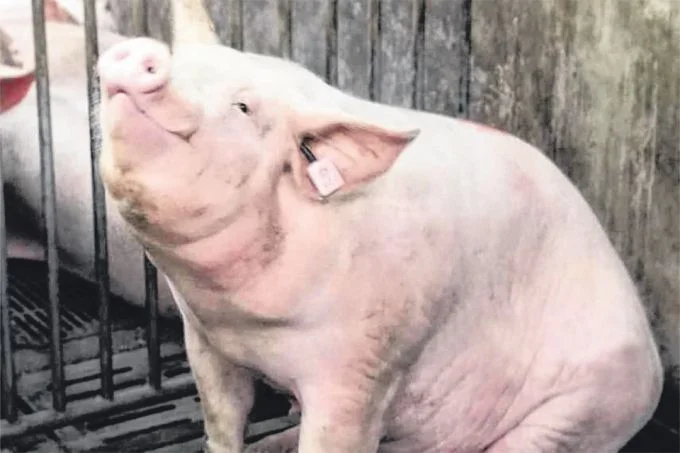
Not all of these startups are food-producing ones. "Agriculture doesn't equate to farming," Howard Tang, CEO and co-founder of Smart Animal Husbandry Care (SmartAHC), tells The Business Times. SmartAHC uses wireless sensors and a smart system to analyse a pig's health and readiness to breed, through movements in vital measurements such as temperature and weight.
The company currently has customers in five of the top 10 pig farms in China, home to the largest market for pork. But things were not always smooth-sailing - being in tech didn't take the toil and patience intrinsic to agriculture out of the experience.
The early days of SmartAHC involved prolonged trips by the founders to China to study pig farms there (to get their hands dirty, they had to first get squeaky clean - humans are a major carrier of viruses, which is detrimental to pig farms).
Back in Singapore, the earliest version of the sensors had to be inserted into the heads of dead pigs, which would then be shaken hard to see whether the device could stay put. It was only after establishing a small office in China with live pigs nearby that the R&D time for the prototypes significantly reduced.
Mr Tang says one of the biggest challenges in operating an agritech startup in Singapore is lacking the resources to understand the industry. He laments that a lot of attention is being given to the technology itself.
"Agriculture needs to come first; it shouldn't be the technology coming first," says Mr Tang.
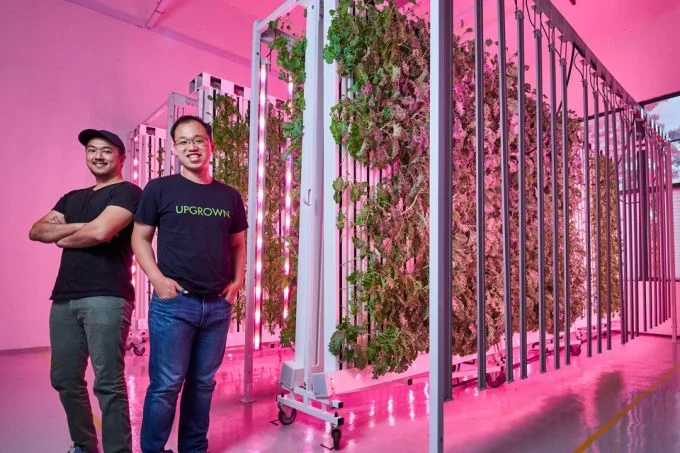
For Upgrown Farming Asia, its industry experience of more than five years is its biggest selling point. Upgrown has clients in Korea, Japan, the Philippines and Vietnam, among others.
The company designs commercial indoor farms and greenhouses, providing their clients with system integration and agri-business consulting. Its products include a range of technology, from automation and climate control to data analytics and artificial intelligence, depending on the client's needs.
Founding director Lionel Wong tells BT: "The latest issue in urban farming, especially for new entrants, is how you sell your product. Marketing strategy is not so simple; farming is simpler."
For vertical farming projects, the cost of production can be quite high. Mr Wong recommends that indoor farms develop their own niche crop instead of competing with commodity suppliers. Players can also adapt a farm to the needs of a specific group of clients that are looking for an exclusive product.
Land of opportunities?
With Singapore increasingly gearing up towards agritech, a small number of foreign startups are beginning to turn their gaze towards the city in search of good fortune.
Isabelle Decitre is founder of Singapore-based Future Food Asia Platform, which helps startups connect with large corporations. She says the platform has seen 45 Singapore agrifood tech startups to date and about 230 across the Asia-Pacific in 2018. "Singapore is a place of highest repute to get funding from and conduct business transactions in, and this is definitely a big draw for startups," says Ms Decitre, who moved to Singapore from France in 2012 and established her agrifood tech venture capital firm ID Capital that year.
ID Capital is one of ESG's chosen co-investment partners. It invests in Series A rounds with ticket sizes ranging from US$2 million to US$5 million.
"If foodtech is the core focus, Singapore has also chosen two particular sectors in agritech: aquaculture and indoor farming. Both represent very high stakes for the country and there is still a lot of room for technology innovation," says Ms Decitre, echoing what Trendlines told BT back in November.
Examples of those dabbling in aquaculture are small-and-medium enterprise (SME) Apollo Aquaculture Group, and Japan and Singapore-based startup Umitron. SGX-listed Oceanus has also pumped significant capital into R&D for its abalone aquaculture operations.
At Indoor Ag-Con Asia this week, finalists in the running to bag S$50,000 from ESG and substrates and technical advice from Smithers Oasis included startups from Israel and the US.
Two startups BT spoke to had travelled from their headquarters overseas to set up booths at Indoor Ag-Con. One of them, a startup from Tokyo called Farmship, is on the hunt for a partner to bring its container-based vertical farm to Singapore. Farmship already has a joint venture with a local enterprise in Indonesia.
Amid the flurry of activity in the startup scene, corporates and investors are oiling their gears too. According to agrifood tech VC firm AgFunder, global agritech investments in 2017 grew 24 per cent year on year to US$4.2 billion.
Mainboard-listed paper mill firm Avarga said in June last year that it was acquiring a 23.08 per cent stake in urban farming tech solutions provider Archisen for up to US$1.5 million. A few months later, Vanda Global Capital, Shenzhen Dayshine Fund Management and Raffles Capital announced they are launching a US$1.5 billion Asia AgriTech Fund.
Temasek Holdings has made a few agritech investments as well, the most recent being its participation in a US$90 million round in New York-based Bowery Farming, a two-year-old startup that uses robotics to cultivate crops indoors.
Temasek Lifesciences Accelerator (TLA) CEO Peter Chia tells BT that the firm just obtained its fund manager's licence and set up The Life Sciences Innovation Fund (TLIF) to inject seed funding into startups.
TLA is a joint venture between Vertex Ventures and Temasek Life Sciences Laboratory (TLL). It supports agritech startups by providing specialised wet lab spaces such as growth chambers, greenhouses and urban aquaculture facilities.
While the capital currently floating around in the agrifood tech space is limited, investors are of the opinion that it will pick up.
The amount of funding available in Singapore for agrifood tech is not more than S$10 million, according to a ballpark estimate by Sirius Venture Capital founder Eugene Wong.
"However, because the government is keen on promoting this industry, I can envisage more incubators and early stage VCs coming to set up presence in Singapore," he says. "I think in the next two three years, there will be a tenfold jump in available funding."
For Openspace Ventures, the total addressable market size stemming from agrifood tech is a huge draw. Consultancy firm Frost and Sullivan said the global smart agriculture technology market generated revenue of US$4.5 billion in 2015 and will reach US$9 billion in 2020, growing at a compound annual growth rate of 14.8 per cent.
Openspace Ventures is the only sector-agnostic co-investment partner of ESG, and is rather known for being an early backer of Gojek.
The firm has made some undisclosed investments in agritech overseas. Founding partner Hian Goh says tech has sewn itself into the fabric of society, so it is natural that sectors like healthcare and agriculture will see change.
"We're looking at a revolution," says Mr Goh. "We want to encourage more people to use these kinds of fundamental technologies that were born out of the mobile phone revolution to apply to agritech." An interesting agritech startup will have a fighting chance to become a very large business, he adds.
Seeding pains
Still, challenges remain in this budding sector. Like most startups, agritech suffers from a lack of skilled talent. But the problem is exacerbated by the estrangement of the sector with Singapore. How many spare a glance at agriculture and see an opportunity to start a business?
Mr Wong pointed out that up till recently, agrifood tech-related courses were geared towards training students to do lab work for large companies like Nestle and Unilever.
"You need to instill an entrepreneurial spirit," says Mr Wong. "Programmes mixed with entrepreneurial skills are the best; we need to replicate what we did with ICT and fintech."
For now, agritech startups rely heavily on partnerships for relevant experience. Archisen, the startup that Avarga invested in, works with local and overseas institutes for knowledge transfer and to identify and groom local talent.
And as it stands, Singapore's agriculture sector remains fairly fragmented.
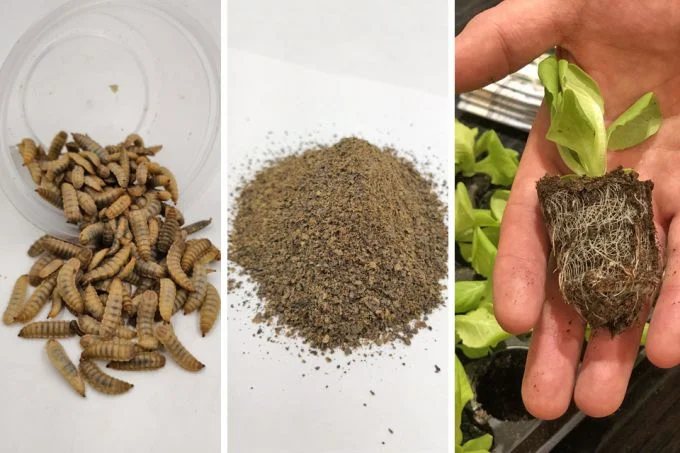
Leo Wein is founder and managing director of Protenga, a Singapore startup that builds farming systems for black soldier flies in order to make insect-based feed for livestock, packed full of nutrients. He tells BT that when he first approached the authorities in 2016 regarding land to set up an R&D farm, he encountered some apprehension.
"They couldn't really grasp the idea that I wasn't farming produce, like vegetables," he says. "But insect-based feed is part of the ecosystem too; food waste is broken down by black soldier fly larvae, and the feed that we make enables farmers further downstream."
Protenga eventually established operations in Johor, while its headquarters remained here.
Singapore's understanding of agritech has matured since then, and Mr Wein is excited to establish a larger presence here.
But the ecosystem remains a work in progress.
Darren Ho, head of urban farm set-up Citizen Farm, says retailers in Singapore can be more open to communicating and working with local farmers instead of prioritising margins.
Citizen Farm currently sells its produce straight to consumers. In this vein, education about better food choices is something that resonates with many in the agritech sector.
Mr Wein, whose company also produces edible insect products for humans, can't agree more. "People tell me that eating insects is so wild. You know what is wild? It's going into the supermarket, picking up a bag of food, looking at the ingredients list, and still putting that in your body."
As the country attempts to charge ahead with agritech, the government has turned its attention to local heritage farms as well.
Singapore is home to a small community of farmers, some of who are in the Kranji countryside, a 45-minute drive from town.
The authorities have been pushing for tech adoption in these farms, awarding grants for R&D and including an "innovation" component in its review of land tenders.
But Chelsea Wan, a second-generation farmer who heads Jurong Frog Farm, says money is not the only big concern for these farmers. Tech adoption also touches on the issue of labour and maintenance of new technologies, which farmers need more support for.
That said, she is a believer that local farmers need to be creative too, in order to edge out the competition. Her farm has worked with startups DeNova Sciences and Collagreen to spin off frog collagen skincare products. Collagreen was co-founded by Ms Wan; it processes agricultural byproducts for more advanced applications.
"You also do have to think out of the box. I think that would be what the younger generation of these family-owned farms are looking at," she says. "So it's not only pertaining to infrastructure or using tech in operations. It's also being innovative in your product offering and really knowing what you're selling."

University of Arizona Greenhouse Crop Production & Engineering Design March 2019 Short Course
By urbanagnews - January 25, 2019
Combine lectures with hands-on workshops at the Controlled Environment Agriculture Center of the University of Arizona on March 11-15, 2019.
Three days of lectures from prominent Controlled Environment Agriculture experts from Arizona and around the country.
A full day of hands-on workshops that focus on different aspects of Controlled Environment Agriculture.
Great Networking Opportunities with peers, industry experts, and educators from all over the world.
Like tending to the vine closest to the wet-wall on a hot day, CEAC’s Short Course may be exactly what your operation needs for relief! Get your questions answered and increase your hydroponic growing know-how at the Greenhouse Crop Production & Engineering Design Short Course – A four day conference, put on by the University of Arizona Controlled Environment Agriculture Center, including three full days of lecture, one day of hands-on training workshops at CEAC, and an optional commercial greenhouse tour at NatureSweet Tomatoes.
Hydroponic Crop Production
Greenhouse Structure & Design
Greenhouse Site Selection
Developing Urban Ag Systems
Medicinal Crops & CEA
Emerging Greenhouse Crops
Sole-source Electric Lighting
Energy Conservation
Environmental Controls
Greenhouse Plant Lighting
Plant Physiology & Nutrition
Crop Layout, Care & Maintenance
Integrated Pest Management
Greenhouse Structure & Design
Organic Hydroponics
Myco-culture & Mushrooms
Business Considerations
Click here for more information and to register!

VIDEO: EPIC Urban Farming On Top of a Whole Foods | Gotham Greens Tour 🏙️🌿
A mythical urban farm on top of a Whole Foods in Brooklyn, NY, where they grow 13+ different types of greens and herbs.
It was called Gotham Greens, which is just about the best name for a hydroponic greenhouse you'll ever hear. They use nutrient film technique (NFT) channels to grow basil, arugula, leaf lettuce, and more. And better yet, it's all automated, down to CO2 monitoring, shade clothes, and more. They even make their own line of salad dressings, pestos, and other value-added products with the produce they grow!

South Jakarta Residents Turn Urban Spaces Into Vegetable Gardens
Residents of Pengadegan sub district in Pancoran, South Jakarta, have been running a successful urban farming program using hydroponics.
Jakarta / January 16, 2019
Residents of Pengadegan in South Jakarta prepare the walls along an alley in their neighborhood to start a vertical garden. (Via wartakota.tribunnews.com/Istimewa)
Residents of Pengadegan subdistrict in Pancoran, South Jakarta, have been running a successful urban farming program using hydroponics. On Tuesday, they started transferring the plants to a soil medium.
Pengadegan subdistrict head Mursid said that transplanting would start in the RW 05 community unit, as it had several open spaces.
“RW 05 fits the characteristics of the space required to grow plants in soil,” he said as reported by wartakota.tribunnews.com.
He added that growing plants in soil was more efficient, easier and cheaper, and that the results would be as satisfying as hydroponically grown plants.
The urban farming program was initiated at the Pengadegan subdistrict office to provide a model for residents to copy in their neighborhoods, said Mursid.
“We’re planting different kinds of vegetables like water spinach and Chinese mustard. They’re useful for people,” he said.
Earlier, urban farming groups in Kebayoran Lama Selatan subdistrict had harvested 150 kilograms of vegetables from their gardens, located in the dense neighborhoods near Tanah Kusir Cemetery. (vla)

Deep-Sea Drilling To Shed New Light on The Stability of The Antarctic Ice Sheet
AWI geoscientists lead international IODP expeditions to the Antarctic Ocean


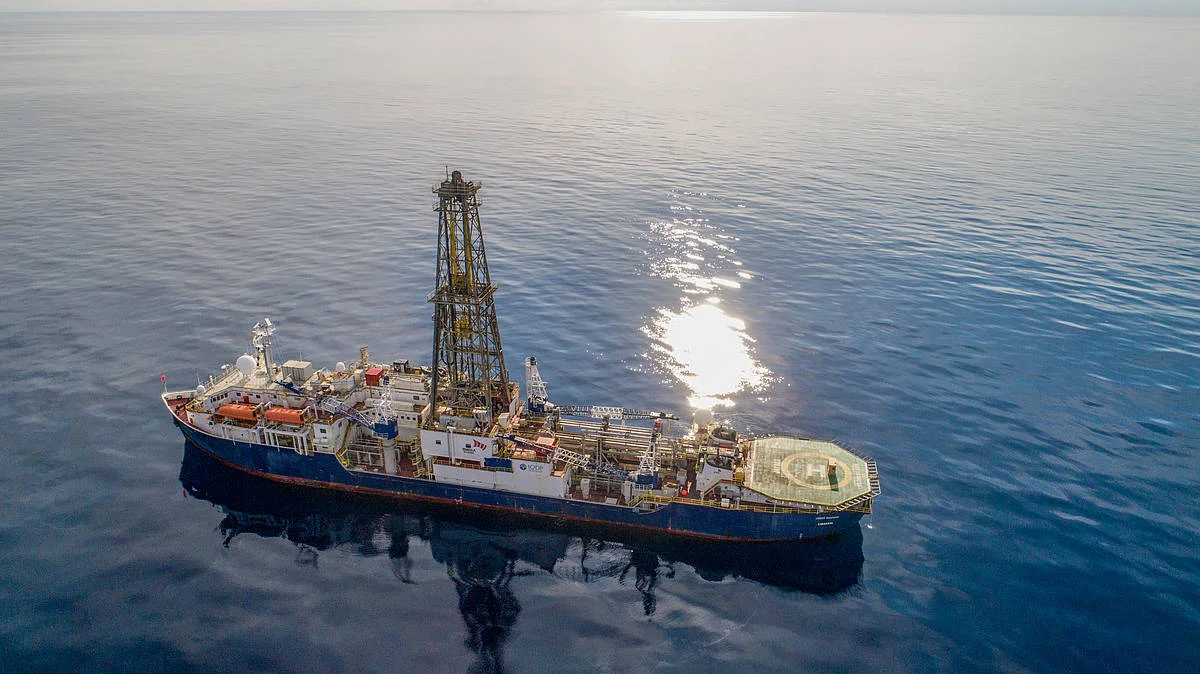


Over the next few months, geophysicists and geologists from the Alfred Wegener Institute, Helmholtz Centre for Polar and Marine Research will gain unprecedented insights into the climatic history of the Antarctic Ice Sheet as part of the International Ocean Discovery Program (IODP). The experts will take part in three Antarctic expeditions on board the IODP drilling ship “JOIDES Resolution”, and will lead two of the three legs. By collecting the drilled cores, the researchers hope to find evidence of how the ice masses of the Antarctic have reacted to sudden temperature climbs in past interglacial periods – information that is urgently needed in order to more accurately predict future sea-level rise. In terms of modelling, the behaviour of the Antarctic Ice Sheet is still considered one of the greatest question marks.
How will Antarctic ice masses respond to climate change, and to what extent will they contribute to sea-level rise? Climate researchers still don’t have a satisfactory answer to that question, partly because they lack information on how ice sheets have behaved in previous interglacial periods. Geophysicists and geologists from the Alfred Wegener Institute, Helmholtz Centre for Polar and Marine Research (AWI) in Bremerhaven have now made it their goal to remedy the situation. Over the next seven months, they will join three international expeditions to the Antarctic Ocean on board the US-based drilling ship “JOIDES Resolution”, and will serve as the scientific directors for two of the three expedition legs. These journeys will be undertaken as part of the International Ocean Discovery Program (IODP), which is dedicated to investigating the history of our planet and its climate on the basis of deep-sea cores.
The first expedition (IODP 379) started in Punta Arenas (Chile) on 23 January 2019, and takes the 29-member team of international researchers, accompanied by technicians, drilling experts and ship’s crew (altogether 125 people) to the Amundsen Sea – and with it, to the region broadly considered to be the Achilles heel of the West Antarctic Ice Sheet. “Large sections of the West Antarctic Ice Sheet lie on land that is below sea level, which means these ice masses can easily be reached by warm ocean currents, and are therefore especially vulnerable to the effects of climate change,” explains Dr Karsten Gohl, an AWI geophysicist and one of the expedition’s two chief scientists.
Seeking signs of an eroding West Antarctic Ice Sheet
At the moment, those glaciers that empty into the Amundsen Sea are losing ice faster than all other ice streams in the Antarctic or in Greenland. Moreover, ice sheet simulations and sediment samples from the Ross Sea indicate that the ice masses of the West Antarctic retreated extensively during past interglacial periods – e.g., 3 million years ago in the Middle Pliocene, when the average global temperature was roughly 3 degrees higher than today. In other words, it was essentially the same temperature as that predicted for the year 2100 if greenhouse-gas emissions remain constant.
Back then, the researchers believe, the West Antarctic Ice Sheet suffered a near-total collapse. However, there’s still no evidence to back their hypothesis. The planned deep-sea drilling missions in the Amundsen Sea are intended to change all that. “By drilling down as far as 100 metres below the seafloor, we hope to find sediment deposits from the Pliocene and other warm epochs, where we should be able to see the remains of algae, foraminifera and other typical pelagic organisms. And these remains will prove that, in these warmer periods, there was little to no ice in West Antarctica,” says AWI geologist and expedition member Dr Johann Klages.
Finding these microfossils would also allow the researchers to reconstruct the past water temperatures, and to investigate which climate changes led to the retreat or decline of the West Antarctic Ice Sheet. For example, insights into how warm the deep-sea currents were back then are desperately needed. The researchers plan to subsequently compare these historical values with current observations of deep-sea currents in the Amundsen Sea, in order to determine whether or not they could be considered the harbingers of a potential future collapse.
In addition, the experts hope to find evidence of increased iceberg occurrence. “As they drift, icebergs lose sand, gravel and pebbles that were trapped in their ice,” explains Johann Klages. “If we encounter coarse sand and gravel deposits when we drill, it will tell us that large quantities of ice broke off from the ice sheet in past interglacial periods and drifted through the Antarctic Ocean.” Further, these stony deposits’ geochemical fingerprint would allow the researchers to identify the ice masses’ region of origin, and to reconstruct which glaciers lost the most ice in each respective interglacial period.
Drilling on a main route for icebergs
The participants in the second expedition (IODP 382), which will take them to the Scotia Sea from 20 March to 20 May, will rely on the same research principle. The waters between the Antarctic Peninsula and the Falkland Islands are considered both the main route for large icebergs and their graveyard. If the Antarctic did indeed lose substantial ice during the interglacial periods of the Pliocene and Pleistocene, there should be corresponding deposits in these waters – from West Antarctica and East Antarctica alike. But if they are there, they’re quite far down; as AWI geologist and expedition member Dr Thomas Ronge explains: “At the planned drilling sites, the water is roughly 4,000 metres deep. We’ll have to drill for several days before we reach our target depth of 600 metres below the seafloor. Another important consideration: while we’re drilling, we have to hope that we don’t cross paths with any icebergs.”
For any other research ship, the moment an iceberg drew near, the drilling site would have to be abandoned – but not for the “JOIDES Resolution”: in the event the 143-metre-long drilling ship has to evade an iceberg, the borehole on the seafloor will be sealed with a specially designed, funnel-shaped borehole plug. The plug can be relocated later, so that, once the ship has successfully avoided the iceberg, the team can easily resume drilling, right where they left off.
In the world’s largest ocean current
The third leg of the expedition (IODP 383), which will be co-led by AWI geologist Dr Frank Lamy and the German climate researcher Gisela Winckler from Columbia University (USA), will take the ship to waters west of the Drake Passage, starting in late May. Once they’ve arrived there, in the southeast Pacific region of the Antarctic Circumpolar Current, the most powerful ocean current in the world, the researchers will have to drill 500 metres down into the seafloor in order to gather sediment samples from the Pliocene and Pleistocene. “For our work, above all we’ll be considering the question of how wind and ocean currents in the Southern Hemisphere reacted to global warming trends in the past, and what major interactions there were between the atmosphere, the ocean, and the ice masses of the Antarctic,” relates Frank Lamy.
Once analysed and combined, the outcomes of the three expeditions are expected to allow the researchers to precisely reconstruct the ice masses’ behaviour during past interglacial periods. If all goes as planned, they will not only arrive at a much better grasp of one of the most central, yet poorly understood processes in the Earth’s climate system, but will also be able to more accurately predict the future development of the West and East Antarctic Ice Sheets. Taken together, the two sheets contain enough freshwater to raise the global sea level by roughly 58 metres.
The IODP is an international research programme in which the USA, Japan, China, South Korea, India, Brazil, New Zealand, Australia and 15 European countries, including Germany, are participating. The US-based IODP ship “JOIDES Resolution” can accommodate up to 50 researchers and 65 crewmembers. Its operations are financed by the National Science Foundation (USA), and by support organisations in all other IODP member states.
Notes for Editors
For further information on the International Ocean Discovery Program and the individual expeditions, please visit: http://iodp.tamu.edu/scienceops/expeditions.html
Printable images and graphics can be downloaded using the following link:
https://www.awi.de/en/about-us/service/press/press-release/deep-sea-drilling-to-shed-new-light-on-the-stability-of-the-antarctic-ice-sheet.html
Your academic contact partners at the Alfred Wegener Institute are:
IODP Expedition 379 to the Amundsen Sea:
∞ Chief Scientist Dr Karsten Gohl (tel.: +49(471)4831-1361; e-mail: Karsten.Gohl@awi.de)
∞ Dr Johann Klages (tel.: +49(471)4831-1574; e-mail: Johann.Klages@awi.de)
The expedition’s second chief scientist is the American Prof. Julia Wellner from the University of Houston (tel. +1(713)743-2887; e-mail: jwellner@uh.edu).
IODP Expedition 382 to the Scotia Sea
∞ Dr Thomas Ronge (tel.: +49(471)4831-2087; e-mail: Thomas.Ronge@awi.de)
IODP Expedition 383 to the Southeast Pacific / Circumpolar Current
• Chief Scientist Dr Frank Lamy (tel.: +49(471)4831-2124; e-mail: Frank.Lamy@awi.de)
The expedition’s second chief scientist is Prof. Gisela Winckler (tel.: +1(845)365-8756; e-mail: winckler@ldeo.columbia.edu).
At the AWI’s Communications and Media Relations department, Folke Mehrtens (tel.: +49(471)4831-2007; e-mail: medien@awi.de) will be pleased to help you with any questions.
The Alfred Wegener Institute, Helmholtz Centre for Polar and Marine Research (AWI) conducts research in the Arctic, Antarctic and oceans of the high and mid-latitudes. It coordinates polar research in Germany and provides major infrastructure to the international scientific community, such as the research icebreaker Polarstern and stations in the Arctic and Antarctica. The Alfred Wegener Institute is one of the 19 research centres of the Helmholtz Association, the largest scientific organisation in Germany.

Solar Microgrid To Power Indoor Farm All Year Round
January 22nd, 2019 by Erika Clugston
So you want to buy local produce, but you also want strawberries in December? Soon you can have your cake – scratch that – vegetables, and eat them too. Up to 100 varieties of vegetables, including lettuce and kale, will soon be grown in an indoor warehouse in New Jersey, supported by a solar microgrid to keep plants growing all year round.
Photo by Jatuphon Buraphon, via Pexels
Bowery Farming’s facility will be be powered by batteries, solar panels, and on-site gas generators to enable it to operate independently from the electric grid. Scale Microgrid Solutions will build, own and operate the microgrid, and Schneider Electric will provide most of the infrastructure and software for the indoor farm.
Bowery is well acquainted with high-tech agriculture, making waves with its “post-organic” vertical farming which landed it $20 million in investment in 2017. In fact, its produce is grown in trays and requires no soil at all, using 95% less water than traditional farming due to a finely-tuned hydroponic system. Now, it is adding microgrids to its tech-repertoire.
One doesn’t normally associate microgrids with the realm of agriculture, and Scale Microgrid Solutions CEO Ryan Goodman thinks it might a first. “I believe no one has ever done microgrids in the indoor agricultural space like we’re doing here,” Goodman said, according to the Energy News Network. “There are some differences, but primarily they’re related to the load profile and how we’re using the assets.”
15% of the power will come from solar, while some of the power will still come from the grid, and the rest from the natural gas generator and batteries. So while New Jersey winters will bring cold winters, with short days lacking in sunlight, the indoor farm will be unaffected. Schneider Electric’s lithium-ion battery energy storage system will store solar energy that can be released to lower demand from the grid.
Schneider currently has more than 300 microgrid projects on the go in the US, and is using its EcoStruxure Microgrid Advisor software platform for cloud-connected, demand-side energy management. It’s integrated into the system to enable a look at current electric rate tariffs and optimization of energy usage – but does so faster than any human could.
This, combined with Bowery’s hydroponic system that uses 95% less water than is normally needed to grow plants, enables the creation of a super high-tech urban agriculture startup that will perhaps change the way we think about farming. Bowery Farming is set to begin the microgrid project this year, we can’t wait to see some tasty results.

Signify Makes It Easier To Switch From HPS to LED Toplighting Using Existing infrastructure
January 16, 2019
Philips GreenPower LED toplighting compact provides easy 1-to-1 switch while re-using your existing HPS plug and infrastructure
Replace 1000W HPS lighting and get the same amount of light with 40% less electricity use
Replace 600W HPS lighting and get 80% more light for the same amount of electricity
Eindhoven, Netherlands – Signify (Euronext: LIGHT), the world leader in lighting, today unveiled its new concept for the Philips GreenPower LED toplighting compact. This compact, passively cooled LED toplighting provides a 1-to-1 replacement for HPS lighting that fits seamlessly in existing HPS connections and trellis constructions. The goal is to make it easier for growers to make the switch to LED lighting as a way to improve their crop results or reduce energy costs.
Compared to a 1000-W HPS light, the Philips GreenPower LED toplighting compact will produce the same amount of light, while using 40% less electricity and producing very little radiant heat. This gives growers more independent control over heat and light in their greenhouse climate. Compared to a 600-W HPS light, the new energy efficient compact produces 80% more light, using the same amount of electricity.
Robust solution
“Many growers are looking for an easy way to step into LED lighting and generate the additional benefits of LEDs, including higher yield, better quality crop and more predictability. They often would like to see this happen in their existing greenhouse and structure mounted on the trellis. I’m delighted that we are working on a really robust solution with minimal light interception and without the need for active cooling, so they can take advantage of all the benefits that LED toplighting offers for a whole range of light-loving crops,” says Udo van Slooten, business leader horticulture at Signify. “Together with the plant specialists, account manager and application engineer, the optimized lighting solution for your greenhouse situation shall be determined.”
Easy fit for low installation costs
The new compact module is being developed to fit seamlessly in existing HPS connections and trellis constructions, so growers can easily switch from HPS lighting to LED toplighting or create a hybrid LED and HPS lighting system. This new concept has the potential to give growers the flexibility to increase light intensity for a specific crop or expand the illumination area, using the same or much less electricity.
The Philips GreenPower LED toplighting compact is expected to be commercially available in Fall 2019 as an extension to the existing Philips GreenPower LED toplighting program.
Signify became the new company name of Philips Lighting as of May 16, 2018.

HCMC Welcomes Advanced Technologies In Agriculture
Urbanization has gradually increased its pressure on agriculture land of Ho Chi Minh City (HCMC) year by year. Yet thanks to the application of advanced technologies, especially biotechnology, into crop growing and harvesting, agricultural performance witnessed an impressive rise.
January 15, 2019
Urbanization has gradually increased its pressure on agriculture land of Ho Chi Minh City (HCMC) year by year. Yet thanks to the application of advanced technologies, especially biotechnology, into crop growing and harvesting, agricultural performance witnessed an impressive rise.
Flower growing in nethouses in the HCMC Biotechnology Center. Photo by Thanh Tri
The production value per hectare was able to reach VND502 million (approx. $21,638) last year, a growth of 11.5 percent compared to this time the year before. The general agriculture development rate of HCMC was twice as fast as the national one, with the Gross Regional Domestic Product increasing by 6.2 percent.
Expansion of 4 main projects
Recently, various new agricultural models that implement cutting edge technologies, particularly biotechnology and information technology, have achieved spectacular results. Take for example the Mokara Greenhouse for tropical flowers in Cu Chi District, the hi-tech melon farm in Hoc Mon District, the hi-tech shrimp ponds in Can Gio District, the dairy farm in Cu Chi District. They are all eminently suitable for urban agriculture development.
Appreciating these updated models, Standing Vice Chairman of the HCMC People’s Committee Le Thanh Liem has encouraged the implementation of information technology into agricultural manufacturing in the hope for the city to possess a high-tech agriculture area.
HCMC is also exercising various advantageous policies for businesses and individuals to invest in these models. In 2016, the HCMC People’s Committee issued Decision No. 6150/QD-UBND for the program ‘Developing Agriculture via the Use of High Technologies in HCMC from 2016 – 2020, with Orientation to 2025’.
Thanks to all these efforts, in 2018, HCMC owned 407ha surface area of hi-tech farms in various districts such as Cu Chi, Hoc Mon, Binh Chanh, Nha Be, and Can Gio, an increase of 4.8 percent compared to this time in 2017 (with only 389ha).
Besides the land growth, many new models have been formed in the suburban areas like hydroponics vegetable, melon, or bell pepper farms using drip irrigation and substrates in plastic greenhouses. The rate of hi-tech application in agriculture in the period from 2015 – 2020 has been quite impressive, rocketing from 10 percent in 2010 to 35.8 percent in 2016 and then 38.2 percent in 2018.
The city is planning to continue carrying out its 4 major projects of expanding the 200-hectare hi-tech agricultural area in Pham Van Coi Commune of Cu Chi District, constructing a new hi-tech aquaculture area in Can Gio District, enlarging the 23-hectare hi-tech agricultural area in Phuoc Vinh An Commune of Cu Chi District, and building a hi-tech breeding farm in Binh Chanh District.
Human resources training for high tech
To meet the upcoming urgent demands in human resources, it is necessary to organize training sessions, make technology transfers related to urban agriculture.
According to Mr. Nguyen Phuoc Trung, Director of the HCMC Department of Agriculture and Rural Development, there are now 31 biotechnology startup businesses participating in the incubation centers and 600 companies as well as co-operatives taking part in training classes to improve their trade capacity, brand name building, management ability in agricultural manufacturing.
Related agencies of the government are also holding workshops for 600 rural workers and 80 officers regarding dairy farming, shrimp farming, and decoration flowers using advanced technologies. In addition, 13 officers have been sent to training courses in Japan, South Korea, China, Taiwan for high tech applications in agriculture.
Various local short-term classes in the country have also been organized for technicians to obtain cutting edge knowledge about disease diagnosis for plants using molecular biology, genetic engineering in selecting mushroom types, milk cow quality improvement, plant seed selection using biotechnology, melon growing, hydroponics in vegetable growing, nutrition monitoring in raising milk cows, hi-tech growing techniques for orchid growing.
There have been 243 local workshops to help transfer new technologies to farmers in suburban areas, along with the publication of handbooks, flyers, and guiding CDs to popularize necessary new knowledge to the public.
According to Dr. Duong Hoa Xo, Deputy Director of the HCMC Department of Agriculture and Rural Development cum Director of the HCMC Biotechnology Center, it is essential that educational institutes cooperate with other agencies to prepare suitable training programs for both farmers and agriculture businesses to reach the most promising outcome for the urban agriculture of the city.
By CONG PHIIEN – Translated by Vien Hong
Tags: HCMC advanced technologies agriculture

The Effect Of Light Leaks On A Sealed Growroom
Kent Gruetzmacher | January 4, 2019
Takeaway: Light leaks in your sealed growroom can be disastrous for some kinds of plants. They can also be a sign that more than just light is getting in, including pests and other environmental variables.
When planning and setting up indoor gardens, growers spend time and money in the creation of environments where plant species thrive. For sealed growrooms, this process represents a careful balancing act between temperature, humidity, light, and CO2. However, once an indoor grow is operational, these synthetic environments create challenges for growers that are non-existent in the natural world. The reaction of indoor plants to light leaks during dark periods (nighttime) presents one of these unusual phenomena.
Certain species of plants are subject to photoperiodism, in which the varying duration of light cycles between day and night cause plants to enter new phases of growth. To illustrate, uninterrupted 12-hour periods of darkness (nighttime) causes some plant species to start flowering. This process occurs when a hormone called photochrome reacts to sunlight intensity and durations, directing plants towards the different phases of growth.
If a sealed growroom is not 100 percent dark during the nighttime period, photoperiodism cycles can be interrupted, causing photochrome imbalances as related to specific plant processes. These hormonal imbalances can have negative and sometimes detrimental effects on an indoor harvest.
For those looking to avoid issues with light leaks in their sealed growrooms, consider the following points.
Inconsistencies and Stress
Indoor gardeners should always strive for consistency in their growroom environments. Most crops perform best in stable environments, and bountiful harvests are the result of constant environmental balance—including stable lighting intervals—during both vegetative growth and flowering. A common misconception amongst indoor growers is that light leaks during the vegetative growth phase won’t disrupt crop growth. However, any irregularities in lighting patterns can stress plants out. Along this line of thought, all environmental stressors inhibit essential plant functions, such as nutrient uptake, and retard growth.
Light leaks can also prove troublesome regarding photochrome levels in plants, as unexpected or irregular doses of light can alter stable hormonal conversion processes. During flowering phases, excess light during dark periods can push photochrome activity to the point of converting a plant back into vegetative growth.
(Check out Three Considerations to Make When Designing Growroom Lighting.)
Hermaphrodites
One of the most widely known negative side effects of growroom light seepage has to do with the transformation of female plants into hermaphrodites. For those looking to grow seed-free flowering plant varietals, hermaphrodites can prove devastating for a crop. This is because male flowers on a single plant can pollinate an entire growroom and greatly devalue a harvest.
Expert horticulturists agree that certain plant species turn hermaphrodite as a result of environmental stressors, and light leaks are notorious for being associated with this phenomenon. However, it should be noted that the occasional beam of light on a garden from a headlamp won’t cause plants to “herm.” While indoor growers should strive to avoid any disruptions in regular light cycles, it takes rather consistent light exposure to force a plant into hermaphrodite growth. These sorts of leaks come from constant sources, such as under doorways and walls, that occur on a daily basis.
Light Leaks Mean Other Leaks
Indoor growers can be assured that if their sealed growroom is leaking light, it has issues with other leaks. Seasoned cultivators go to great lengths to ensure that their sealed gardens are functioning at their best when it comes to atmosphere, temperature, and sterility. All these contingencies are compromised with an improperly sealed growroom.
If leakage issues arise, growers, sacrifice the total environmental control that is so essential in sealed room growing. With this issue comes potential problems with maintaining ideal, static levels of temperature, humidity, and CO2. Moreover, as sealed rooms are wholly dependent upon CO2 injection technology, the regular loss of CO2 to leaks is financially burdensome and operationally threatening.
If light leaks can penetrate the confines of a sealed garden, so can airborne pathogens. As such, it is virtually impossible to fully sterilize an indoor grow if bugs and spores (of powdery mildew and botrytis) can continuously access the grow space via leaks.
Locating Light Leaks
Many indoor growers don’t know that their rooms have light leaks until it is too late, and the problem expresses itself by way of hermaphrodites and seeded flowers. As a result, it’s a good idea for cultivators to regularly check their growrooms to make sure they are 100 percent dark during the nighttime period.
To inspect an indoor garden for light leaks, it’s best to enter the grow with a green light when the primary lights are off. Once situated in the garden, turn off the green light and sit still for a while to let your eyes adjust to the blackness. At this point, it should be easy to canvass the walls and ceilings of the room and discern any potential points of light leak trouble. Also, this inspection process should be done during various parts of the day, as different angles of sunlight outside can cause light leaks during isolated time frames.
Gardeners should also be advised that control panels on grow equipment, such as atmospheric controllers and AC units, often give off light. This light is usually red or green and is residual from the digital readout. As such, it is recommended that growers cover up these light sources with electrical tape or some sort of removable opaque material.
Compared to any other form of controlled environment agriculture, sealed room growing provides the most mastery over environmental factors. However, these growrooms present novel challenges of their own, as seen with the issues surrounding light leaks. For the conscientious gardener, regular inspections of one’s garden should alleviate any light leak problems. All things considered, this knowledge will provide a better platform for troubleshooting on the macro-level moving forward.
(For info on new lighting technologies, check out You Light Up My Leaf: New Lighting Technologies for Growrooms.)
Written by Kent Gruetzmacher
Kent Gruetzmacher is a California-based freelance writer and the west coast director of business development at Mac & Fulton Executive Search and Consulting, an employment recruiting firm dedicated to the indoor gardening and hydroponics industries. He is interested in utilizing his Master of Arts in humanities to explore the many cultural and business facets of this emerging industry by way of his entrepreneurial projects.

Masdar City Unveils Sustainable Smart Home Farming
Exhibition at Eco-Villa highlights Masdar’s support of the UAE’s National Food Security
Published: January 17, 2019 Staff Report
Abu Dhabi: Masdar City in Abu Dhabi has unveiled a Smart Home Farming Showcase called ‘Bustani’ at its Eco-Villa prototype to demonstrate emerging farming solutions that will help UAE residents produce their own food at home.
The exhibition, which will be open to the public throughout 2019, will demonstrate more than 15 innovative home solutions, around food production, water and waste recycling, said a press release issued on Thursday. These solutions, which Masdar sourced from local and international suppliers before being installed at the Masdar City Eco-Villa earlier this month, will be tested throughout the year.
The showcase is a collaboration between Masdar and the UAE-based agri-tech specialists Madar Farms, and is one of the outcomes of a partnership between the UAE Office for Food Security and Masdar.
The objective of the showcase is to highlight how progress in technology has allowed the emergence of solutions to increase food security at the home level, as well as raise awareness of the broader global challenges of sustainably and nutritiously feeding a growing population.
Mariam Al Muhairi, Minister of State for Food Security, officially opened the showcase in the presence of Mohammad Jameel Al Ramahi, CEO of Masdar; Yousuf Baselaib, Executive Director, Sustainable Real Estate at Masdar; and Abdul Aziz Al Mulla, CEO and Founder from Madar Farms.
Mariam commented that Smart Home Farming as showcased in Masdar City encourages self-sufficiency and reduces the burden on commercial food producers and suppliers by enabling villa-dwellers to produce food from facilities on their own premises. Smart Home Farming turns consumers into ‘prosumers’ and if initiated on a wide enough scale, could result in a new paradigm of food security for the nation, she said.
Al Ramahi, Masdar CEO, said: “Global food systems are faced with the challenge of sustainably feeding more than nine billion people by 2050. Today’s food systems are falling short of these objectives and remain both unsustainable for the environment and unable to adequately nourish a major part of the global population.” He said the smart home farming showcase demonstrates Masdar’s commitment to exploring innovative and sustainable approaches to farming.
Masdar is supporting start-up companies and entrepreneurs to develop an innovation ecosystem focused on improving food and water security for the region. One of Masdar City’s key themes for 2019 is sustainable agriculture.
Al Mulla, founder Madar Farms, said: “By showcasing innovative smart farming solutions from all over the world, we hope to raise awareness of the exciting change that is currently taking place in the ag-tech landscape.”
Launched during Abu Dhabi Sustainability Week 2017, the Eco-Villa pilot project at Masdar City incorporates various water and energy saving technologies. The 405 square-metre residential property is the first villa to achieve a 4-Pearl rating under the Estidama Pearl Building Rating System (PBRS), introduced by Abu Dhabi’s Department of Urban Planning and Municipalities.
It uses around 72 percent less energy and 35 per cent less water than a typical Abu Dhabi property of the same size, while displacing an estimated 63 tonnes of carbon dioxide annually, said the press release.

Aerofarms Inks New COO To Help Expand Indoor Vertical Farm
Roger has a bachelor’s degree in industrial engineering from the New Jersey Institute of Technology and an MBA from the Lake Forest Graduate School.
By Emily Bader
Newark | January 17, 2019
Aerofarms
Roger Post has been named chief operating officer at Aerofarms in Newark.
AeroFarms, an indoor vertical farm based in Newark, announced it has named Roger Post as its new chief operating officer.
In this role, Post will oversee the company’s operations, food safety and quality assurance, engineering, farm construction, data systems, and research and development.
Post, who has more than 28 years of manufacturing and supply chain experience, most recently served as senior vice president of manufacturing operations and fulfillment at Danone Foods North America.
“AeroFarms continues to lead the way for commercial production for indoor vertical farming, and Roger Post, with a proven track-record, is a great addition to our team to ensure the highest levels of safe, high quality production all year round for our key global selling partners as we look to transform agriculture overall,” David Rosenberg, CEO of AeroFarms, said.
Roger has a bachelor’s degree in industrial engineering from the New Jersey Institute of Technology and an MBA from the Lake Forest Graduate School.
“I am excited to join AeroFarms on their mission to build sustainable farms globally to feed the world by leveraging my deep experience in large-scale food and supply chain, and I am looking forward to helping them create a positive culture where business can be a force for good,” Post said.

"Producing Within 5 Miles of The Customer Makes Us 'Hyper Local'"
First Vertical Farm in Putney opens for business
There's something else than Brexit news coming out of the UK this week. Yeeld, the vertical farm in Putney, is happy to announce that they have commenced the sustainable growing of fresh produce.
The start-up is the brainchild of ex-city trader Doug Barr who left his job as a commodities trader to tackle one very large problem. How will we efficiently feed the next 2 billion people who come onto the planet?
To do so, Doug designed and built a vertical growing system over the summer of 2018, with initial growing trials commencing in September. "The next stage was perfecting the cultivation. We struggled a little at first with climate control but finally managed to get the temperature, humidity and air flow just right to achieve a perfect controlled climate to grow our microgreens all year round", he explains.
Nowadays the 1000 square feet farms is lit by T5 OMNIPower strips by Mirror Lighting, which are run on 12 hours on 12 hours off cycle. "We have found this gives the best results for growing our microgreens. They are very efficient at 20 watts."
The microgreens are grown on a recycled wool medium that gives the plant roots something stable to ground themselves into. As a whole, the plants are grown in flooded water beds. The company is currently process of raising capital to expand to a 500 sq ft facility. As they expand in the coming months, they hope to increase their line of vegetables and eventually start to include fruits, namely strawberries.
Three microgreen mixes
Yeeld is currently harvesting their microgreens, something that has been talked about extensively as wel. "We decided after many deliberations to focus, at least initially, on three different microgreen mixes. Initially we planned to offer individual varieties but felt at this early stage it would be better to focus on three solid product offerings instead of doing a small amount of many varieties. We found very early on that each variety of microgreen has a whole host of different characteristics that either make them simple to grow or tricky."
Microgreens
Nowadays Yeeld is offering a range of microgreens to customers in London. “Microgreens are young, immature versions of every day vegetables that you would typically buy in the supermarkets. The main difference is we harvest them after 12 days”, says Doug. The reason they do this, according to Doug, is because at this early stage in their growth the nutrient content is extremely dense, some studies have shown up to 40 times the difference between mature vegetables and their micro versions.
Hyper local
Branding wise, the team felt they should really lean on the locality concept to get this across to their customer base. Location is key to the Yeeld team. "First off, before going any further we will no longer use the term “local”, normal farmers have overused that word, instead going forward we will use “hyper local” which refers solely to produce grown by Urban Vertical Farms like ours and any others out there", he explains. "Most of the produce that is marketed as local will still be a minimum of 50-100 miles away from where it is consumed, assuming we are talking about central London here. We will bring that down to sub 5 miles, so you see we really are “hyper local”."
"We named each of our three mixes after a few of our catchment areas in West and South West London: Richmond Radish Mix, Putney Pea Shoot Mix and Fulham Fresh Mix. - and these will no doubt evolve as we grow. We feel this will help to drive the image of fresh, hyper local produce that is harvested that morning, packaged and then delivered in under 90 minutes. Yeeld is Farm-To-Table 2.0."
For more information or trying the produce:
Yeeld
Unit 103
210 Upper Richmond Road
SW15 6NP
Putney, London
Website: www.yeeld.co.uk
Instagram: TheRealYeeld

Giving Shipping Containers A Second Life
View inside an Agricool cooltainer. © Agricool
BY MAREX 2019-01-20
CMA CGM is supporting the financial and industrial development of Agricool, a young company specializing in urban agriculture, in order to enable it to launch its industrialization phase.
Founded in 2015 in Paris, Agricool aims to create urban farms in recycled containers. With its agricultural model, the young company wishes to produce fruit and vegetables without pesticides, picked and sold on the same day. Several containers are currently being tested.
In Paris, Agricool grows strawberries and saves on water and nutrients by 90 percent compared to classical agricultural methods. The system uses renewable energy only. The strawberries contain an average of 20 percent more sugar and 30 percent more vitamin C more than retail store strawberries.
In the Fall of 2018, the CMA CGM Group provided its first concrete support to Agricool by offering technical and logistical support for the delivery and installation of a "cooltainer" in Dubai.
In December, Agricool completed a €25 million ($28 million) fundraising campaign to finance the industrialization of its innovative project. At the time, CMA CGM acquired an equity stake in the company through its investment fund, CMA CGM Ventures.
In parallel, CMA CGM wants to support Agricool's development by providing it with its industrial and logistics expertise. The Group thus becomes the main supplier of containers and the primary logistics and supply partner for the company.
The collaboration is part of the innovation support strategy implemented by Rodolphe Saadé, Chairman and CEO of the CMA CGM Group. The strategy involves equity investments and commercial partnerships with start-ups with strong entrepreneurial values and innovative industrial projects. In line with CMA CGM's commitment to sustainable development, this solution allows the company to recycle containers and give them a second life.

Germany: Edeka Grows Some Products In Stores
Vertical farming is meant to make the climate-damaging part of agriculture a thing of the past. Fruits and vegetables could also be grown in the supermarket, manufacturers promised.
Customers can spot a large black box with Plexiglas windows stands in the middle of the vegetable department of the Oberhausener Edeka market. The box is a device allows the vertical farming. This is the “greenhouse of the future,” explains Kaufmann Pascal Gerdes. In fact, it is a digitally networked herbal farm in which plants should grow under optimal conditions.
Only a few weeks ago, the futuristic-looking farm was in the store of the Gerdes family. It comes from the Berlin start-up Inform, which is one of the major suppliers in the field of vertical farming. Inform also cooperates with other retailers. The farm is to be tested for one year in the Edeka market. If mint, Greek basil, mountain coriander prove worthwhile articles from a sales standpoint, the farm may remain.
Source: internationalsupermarketnews.com
Publication date : 1/21/2019

US, Harrisburg, PA: Cyber School Aquaponics Program Draws Springetts Student
John Pavoncello York Dispatch
January 15, 2019
Nathaniel Saxe doesn't mind driving almost an hour to school from his Springettsbury Township home.
The 17-year-old junior has been enrolled in the Commonwealth Charter Academy (CCA) since sixth grade, but his love of biology, and aquatics in particular, has led him to a unique learning experience in Harrisburg.
Nathaniel Saxe, a CCA junior from Springettsbury Township, harvests kale at the Agworks aquaponics facility in Harrisburg, Tuesday, January 8, 2019. John A. Pavoncello photo The York Dispatch
Agworks, a state-of-the-art learning aquaponics lab, is located across the street from the Pennsylvania Farm Show Complex. The facility was officially opened by CCA in December and is the largest public educational aquaponics facility in the country.
Funded through a federal grant, the facility lets cyber charter school students gain hands-on experience in agriculture, environmental science and trades.
Commonwealth Charter Academy (CCA), a public cyber charter school, unveiled Agworks at CCA in December. Nathaniel Saxe, a CCA junior from Springettsbury Township, is planning a career in aquaponics and hopes to someday open an agriculture center in York City. John A. Pavoncello photo The York Dispatch
For Nathaniel, Agworks means that he is already focusing his education on his career.
"It's been an amazing experience," Nathaniel said. "I've been able to study how plants and fish can interact and produce a lot of food."
Students involved with the aquaponics facility do everything from feeding the fish, tilapia to be exact, to planting and harvesting plants such as romaine lettuce and several varieties of kale. The produce and fish raised by the students are donated to feed the local community, and some is even being sold to local restaurants and retailers.
Nathaniel's dream is to purchase an old warehouse in York City and convert it to an aquaponics farm.
"I hope I can use that as an opportunity to revitalize York," he said. "I love York City, I think it's a beautiful place."

How Does Hydroponics Work? (A Beginner's Guide)
Look:
If you're interested in agriculture at all, you likely have heard of "hydroponics".
Yet you may still be wondering:
"What is hydroponic growing, and how does it work?"
Or Maybe:
"What are the main differences between hydroponic farming and normal farming?"
Or Maybe Even:
"Can I do it on a small scale myself?"
Well:
All of these answers and more are discussed in this Beginner's Guide To How Hydroponics Works.
But here's the most important part:
At the end of this article, you should have enough knowledge to start planning your own, personal hydroponic mini-farm.
So let's get started...
What is hydroponic farming?
Many people think that hydroponic farming is sticking seeds in water and letting them grow.
But these people have it all wrong.
Let me explain:
The definition of hydroponic growing is:
"The method of growing plants without soil, using mineral nutrient solutions in a water solvent."
What does this mean, in plain english?
Hydroponics does not just mean plants growing in a container of water.
Now, here's the key:
The water continually circulates, instead of forming a stagnant pool.
Also, only the roots are exposed.
This is often accomplished by using a tank and a pump (image below).
An example of Nutrient Film Technique (NFT) Hydroponic System: Source
Now:
This likely isn't exactly what you originally had in mind when you heard about hydroponics.
Hydroponic growing systems can be complicated to design and operate.
So if you are trying to truly understand hydroponics, where do you start?
To truly understand hydroponics, let's start at the very beginning.
Then we will cover:
- Pros and Cons
- Real Life Examples
- A More Detailed Breakdown of Hydroponic System Design
Keep on reading below!
What is the history of hydroponic farming?
The first hydroponic growing techniques were developed by the ancient Mesopotamians around 600 BCE (source)
Now,
You may be shocked to hear this, but:
The precursors of hydroponic farms date back to prehistoric ages.
How long ago?
Before the common era. Like, 600 BCE.
Yes...seriously.
Now, what's the back story on this?
King Nebuchadnezzar built the "hanging gardens" of Babylon for queen, Amyitis.
According to legend, she grew up in a mountainous area and so the King wanted to expose Amyitis to the beauty of agriculture.
How did this system actually work?
Technically the water was carried in buckets by slaves instead of with a pump.
Plus, one other technicality to keep in mind:
The system did use irrigated soil so was not technically hydroponic.
But, despite this fact:
Agricultural historians conclude it is the earliest known example of a precursor to true hydroponic techniques.
Now...
We've covered so far:
1) the definition of hydroponics
2) the history of hydroponics
But you're also likely curious:
"What are the pro's and con's of hydroponic farming?"
Or:
"What are current examples of large scale hydroponic farms?"
Or:
"How does hydroponic farming actually work (step-by-step)?"
Well you're in luck.
Why?
We are covering all of those parts next...
Pro's and Con's of Hydroponic Farming
Now, here's the skinny:
Many experts have actually highlighted the disadvantages of hydroponics.
But:
If you can do it the right way, you can grow some serious vegetable volume...
So let's walk through the upside and downside, step-by-step:
Here are common criticisms, according to The University of Florida Institute of Food and Agricultural Science (IFAS):
Cons:
- High Upfront Cost: Hydroponics are expensive to set up compared to conventional farming style.
- Restricted Growing Options: Some types of produce are not ideal for hydroponics, particularly heavy plants with tall stalks.
For example: you won't be able to grow large hedges or trees hydroponically!
- Nutrient Solution "Links" All Plants: In a soil-based system, soil can act as a temporary buffer between plants. If one plant is diseased, the others have the soil to separate plants.
This isn't the case with hydroponics. If the nutrient content in a hydroponic solution is not correct or a disease enters the solution, the entire crop could be destroyed.
Now:
there's also tons of benefits to hydroponic growing, namely (also via IFAS):
Pros:
- More efficient harvesting: Although this is more important with increasing scale, harvesting in a hydroponic system is typically less expensive than harvesting conventionally
- Less Pests: Growing crops off the ground results in a cleaner crop with less pests.
- Space: Less space is required for growing.
- Water: Less water is required.
Now:
We've covered the pros and cons.
So let's move onto current examples of hydroponic farms...
A Current Example of a Hydroponic Farm
Clearwater Organic Farms
Clearwater Organic Farms Hydroponic Aerial Overview Source
Clearwater Organic Farms in Rochester, New York, USA is a brand new, still under-construction, state of the art 15-acre hydroponic farm.
According to part-owner of Clearwater Organic, Alex Wasilov, (via this Rocherfirst.com article):
"Clearwater Organic Farms has created a controlled environment organic hydroponic greenhouse system that grows baby leaf vegetables,"
The farm will employ over 100 people upon completion in 2017/2018. Over 92 million consumers will be within a 4 hour truck drive of Clearwater.
"We plan to grow baby leaf vegetables here in Rochester. Our facility phase one will be about 15 acres, under glass, and we hope to double that size within the next three to five years."
Still interested to learn more about Clearwater?
Check out the YouTube overview from the designers of their facility below.
Now:
After all this info, you're probably at least a little interested (or dying to know) exactly how a hydroponic farm functions.
In other words:
"What are the actual components of a hydroponic farm?"
Well:
We cover a simple, step-by-step walk through of the components of a hydroponic farm below...
How Hydroponic Farming Works (Specifically)
The bottom line:
There are four key areas to analyze the function of urban farming:
(1) physical layout
(2) lighting
(3) growing medium
(4) sustainability features
We can use the following example and break down the key characteristics and functions of a hydroponic farm:
Source: The 6 main hydroponic techniques
First things first:
(1) Physical Layout
There are actually 6 main "techniques" for uban farming:
1. Wick Technique
2. Ebb and Flow Technique
3. NFT Technique
4. Water Culture Technique
5. Drip Technique
6. Aeroponic
Each of these techniques have a different layout.
There will almost always be a reservoir of nutrient solution, a pump, a structure to hold plants, "plugs" that hold the plants in place, and drains.
The most common component for building hydroponic infrastructure is plastic.
(2) Lighting if indoors, is often accomplished with LED lighting.
Hydroponic The first hydroponic growing techniques were developed by the ancient Mesopotamians around 600 BCE(source)farming can also occur outdoors in some climates.
(3) Hyrdoponic farming never uses soil. If a growing medium is used, it will be soil-less.
(4) As previously noted, hydroponics are incredibly efficient with water. This is perhaps their most sustainable feature.
Additionally, hydroponic systems are efficient with nutrients, because nutrient solution can be recycled.
Source: The 6 main hydroponic techniques
Did you like this article?
You now know the basic background information relating to hydroponic farming.
Why is that important?
Here's your real takeaway (if you forget everything else):
Hydroponic farming is here to stay!
Getting to know the background of hydroponic farming, is just the start of your urban farming journey.
If you liked this article....
Subscribe to our newsletter and we will send you a FREE e-book,
"9 Core Lessons For Urban Farming Beginners"
Click the link above to download!
Grow Lights Hydroponics Vertical Farming Urban Farming FREE Guides
Home / Blog / How Does Hydroponics Work? (A Beginner's Guide)

The Pace At Which The World’s Permafrost Soils Are Warming
New global study reveals rising soil temperatures in permafrost regions around the world
[16. January 2019]
Global warming is leaving more and more apparent scars in the world’s permafrost regions. As the new global comparative study conducted by the international permafrost network GTN-P shows, in all regions with permafrost soils the temperature of the frozen ground at a depth of more than 10 metres rose by an average of 0.3 degrees Celsius between 2007 and 2016 – in the Arctic and Antarctic, as well as the high mountain ranges of Europe and Central Asia. The effect was most pronounced in Siberia, where the temperature of the frozen soil rose by nearly 1 degree Celsius. The pioneering study has just been released in the online journal Nature Communications.
Roughly one sixth of the land areas on our planet are considered to be permafrost regions, which means the soils there have remained permanently frozen for at least two consecutive years. In most of these regions, however, the cold penetrated the ground millennia ago; as a result, in the most extreme cases, the permafrost continues to a depth of 1.6 kilometres. Especially in the Arctic, people rely on the permafrost soil as a stable foundation for houses, roads, pipelines and airports. Yet in the wake of global warming, the integrity of these structures is increasingly jeopardised, creating enormous costs. In addition, permafrost soils contain massive quantities of preserved plant and animal matter. If this organic material thaws along with the permafrost, microorganisms will begin breaking it down – a process that could produce enough carbon dioxide and methane emissions to potentially raise the global mean temperature by an additional 0.13 to 0.27 degrees Celsius by the year 2100.
A new comparative study released by the GTN-P (Global Terrestrial Network for Permafrost) shows for the first time the extent to which permafrost soils around the world have already warmed. For the purposes of the study, the participating researchers monitored and analysed the soil temperature in boreholes in the Arctic, Antarctic and various high mountain ranges around the world for ten years. The data was gathered at depths greater than 10 metres, so as to rule out the influence of seasonal temperature variations.
The complete dataset encompasses 154 boreholes, 123 of which allow conclusions to be drawn for an entire decade, while the remainder can be used to refine calculations on annual deviation. The results show that, in the ten years from 2007 to 2016, the temperature of the permafrost soil rose at 71 of the 123 measuring sites; in five of the boreholes, the permafrost was already thawing. In contrast, the soil temperature sank at 12 boreholes, e.g. at individual sites in eastern Canada, southern Eurasia and on the Antarctic Peninsula; at 40 boreholes, the temperature remained virtually unchanged.
In individual cases, temperature spiked up to 1 degree Celsius
The researchers observed the most dramatic warming in the Arctic: “There, in regions with more than 90 percent permafrost content, the soil temperature rose by an average of 0.30 degrees Celsius within ten years,” reports first author Dr Boris Biskaborn, a member of the research group Polar Terrestrial Environmental Systems at the Potsdam facilities of the Alfred Wegener Institute, Helmholtz Centre for Polar and Marine Research. In northeast and northwest Siberia, the temperature increase at some boreholes was 0.90 degrees Celsius or even higher. For the sake of comparison: the air temperature in the respective regions rose by an average of 0.61 degrees Celsius in the same period.
Farther south, in Arctic regions with less than 90 percent permafrost, the frozen ground only warmed by 0.2 degrees Celsius on average. “In these regions there is more and more snowfall, which insulates the permafrost in two ways, following the igloo principle: in winter the snow protects the soil from extreme cold, which on average produces a warming effect. In spring it reflects the sunlight, and prevents the soil from being exposed to too much warmth, at least until the snow has completely melted away,” Biskaborn explains.
Significant warming can also be seen in the permafrost regions of the high mountain ranges, and in the Antarctic. The temperature of the permanently frozen soils in the Alps, in the Himalayas and in the mountain ranges of the Nordic countries rose by an average of 0.19 degrees Celsius. In the shallow boreholes in the Antarctic, the researchers measured a rise of 0.37 degrees.
“All this data tells us that the permafrost isn’t simply warming on a local and regional scale, but worldwide and at virtually the same pace as climate warming, which is producing a substantial warming of the air and increased snow thickness, especially in the Arctic. These two factors in turn produce a warming of the once permanently frozen ground,” says Prof. Guido Grosse, Head of the Permafrost Research Section at the Alfred Wegener Institute in Potsdam.
Permafrost monitoring calls for an institutional framework
These revealing insights are the reward for a decade-long international collaboration that involved experts from 26 countries. The majority of the boreholes used in the study were drilled and equipped with measuring equipment during the International Polar Year 2007/08, and offered a first “snapshot” of the permafrost temperatures. Since then, more than 50 different research groups have performed regular maintenance on the measuring stations, and recorded their readings on an annual basis. In the virtual network GTN-P, the findings were subsequently collated and standardised, ensuring their inter comparability.
According to Prof. Hanne H. Christiansen, co-author of the study and President of the International Permafrost Association (IPA), “Monitoring global permafrost temperatures and gathering the data in the freely accessible GTN-P database is tremendously important – and not just for researchers, educators and communicators, but for various other users.”
“The permafrost temperature is one of the most universally accepted climate variables. It offers a direct insight into how the frozen ground is reacting to climate change,” the researcher explains. This information is above all essential in those permafrost regions where the soil has already grown warmer or begun thawing, producing major damage when the ground buckles, destabilising roads and buildings. Accordingly, the researchers plan to continue monitoring the boreholes.
Unlike weather observations, there is still no single international institution that, following in the footsteps of the World Meteorological Organization (WMO), successfully bundles national interests. Such an institution would be an essential asset in terms of coordinating these important scientific measurements, and to ensure the monitoring sites continue to be used in the future.
To date, the permafrost boreholes and the temperature sensors installed in them have been kept up and running by individual research groups in the context of various small-scale projects. The Global Terrestrial Network for Permafrost (GTN-P) offers a web-based data management system (gtnpdatabase.org), which was jointly developed by the Alfred Wegener Institute and the Iceland-based Arctic Portal, and was made possible by the financial support of the European Union.
Original publication
Biskaborn, B.K., Smith, S.L., Noetzli, J., Matthes, H., Vieira, G., Streletskiy, D.A., Schoeneich, P., Romanovsky, V.E., Lewkowicz, A.G., Abramov, A., Allard, M., Boike, J., Cable, W.L., Christiansen, H.H., Delaloye, R., Diekmann, B., Drozdov, D., Etzelmüller, B., Grosse, G., Guglielmin, M., Ingeman-Nielsen, T., Isaksen, K., Ishikawa, M., Johansson, M., Johannsson, H., Joo, A., Kaverin, D., Kholodov, A., Konstantinov, P., Kröger, T., Lambiel, C., Lanckman, J.-P., Luo, D., Malkova, G., Meiklejohn, I., Moskalenko, N., Oliva, M., Phillips, M., Ramos, M., Sannel, A.B.K., Sergeev, D., Seybold, C., Skryabin, P., Vasiliev, A., Wu, Q., Yoshikawa, K., Zheleznyak, M., Lantuit, H., 2019: Permafrost is warming at a global scale. Nature Communications 10, 264. DOI: 10.1038/s41467-018-08240-4
Downloads
AWI permafrost scientists investigate the, jpg | 2 MB
Image from the Lena spring flood at Samoylov., jpg | 2 MB
Lena spring flood at Samoylov jpg | 2 MB
Aerial photo of the Russian tundra jpg | 3 MB
Lake and ponds at the foothills of the Brooks, jpg | 3 MB
AWI permafrost expert Dr. Guido Grosse (left), jpg | 3 MB
AWI permafrost expert Dr. Guido Grosse, jpg | 4 MB
AWI permafrost expert Dr. Guido Grosse, jpg | 2 MB
AWI permafrost scientists investigate the, jpg | 4 MB
Drainage channel of a freshly drained basin, jpg | 3 MB
Contact
Science
Boris K. Biskaborn
+49(331)288-2194
Boris.Biskaborn@awi.de
Guido Grosse
+49(331)288-2100
guido.grosse@awi.de
Hugues Lantuit
+49(331)288-2216
Hugues.Lantuit@awi.de
Press Office
Folke Mehrtens
+49(471)4831-2007
Folke.Mehrtens@awi.de
The Institute
The Alfred Wegener Institute pursues research in the polar regions and the oceans of mid and high latitudes. As one of the 18 centres of the Helmholtz Association it coordinates polar research in Germany and provides ships like the research icebreaker Polarstern and stations for the international scientific community.
More information
Topic pages
Related pages
Last update: 16.01.2019

Demonstration Polyhouse Showcases The Future of Closed Cultivation In India
On 18th of January 2019 the partners of FoodTechIndia being Future Consumer Limited, Broekman Logistics, Rijk Zwaan, TNO, Larive International and the Ministry of Foreign Affairs of the Kingdom of the Netherlands have inaugurated a demonstration polyhouse of 1 acre in Tumkur, Karnataka, India.
India Food Park - Demonstration Polyhouse FoodTechIndia
The aim of the demonstration polyhouse, built at the India Food Park in Tumkur is to showcase the future of closed cultivation in India. In the polyhouse vegetables such as cherry tomatoes, cucumber, capsicum and eggplant are being grown in a temperature-controlled environment. High quality seeds, biological crop protection and technology and knowledge from the Netherlands are being used and implemented to reduce the usage of pesticides and fertilizers, improve the yield and produce better, safe and higher quality vegetable products.
Demonstration Polyhouse Tumkur
With the demonstration polyhouse, the FoodTechIndia partners want to show the farmers in Karnataka the benefits of growing crops in a controlled environment and train them on closed cultivation practices. Demonstrations and trainings in the greenhouse will take place the upcoming three years until April 2022.
Demonstration Polyhouse Tukmkur
Facility for Sustainable Entrepreneurship and Food Security
The Dutch Government is supporting the FoodTechIndia project and partners via the Facility for Sustainable Entrepreneurship and Food Security (FDOV). The FDOV facility aims to contribute to the achievement of various sustainable development goals in developing countries. It encourages the establishment of Public-Private Partnerships for joint initiatives of private sector development for food security. The FDOV facility focuses on a/multiple of the following goals:
Reducing malnutrition;
Promoting growth in the agricultural and fisheries sector;
Creating sustainable and ecologically sound food chains;
Creating better labour conditions and efficient working procedures;
Causing an increase in private investments.
FoodTechIndia
FoodTechIndia (FTI) is a public-private initiative combining the strengths of Dutch agro-food companies, knowledge institutes, governmental agencies and their Indian counterparts to reduce food wastage in India through the establishment of an improved supply and cold chain. The objective of FTI is to reduce food wastage in India through the implementation of an integrated supply and cold chain infrastructure for fruits and vegetables in the state of Karnataka. Furthermore, the project focuses on enabling sustainable inclusive economic growth amongst local small-scale farmers.
For more information:
Larive International
info@larive.com
www.larive.com
Publication date : 1/21/2019