


Welcome to iGrow News, Your Source for the World of Indoor Vertical Farming
80 Acres Farms Secures Significant Financing Round Led By Virgo Investment Group To Accelerate Indoor Vertical Farming Growth
NEWS PROVIDED BY 80 Acres Farms
January 15, 2019
Cincinnati, Ohio
80 Acres Farms, a leader in the rapidly growing indoor vertical farming industry, announced it has received a significant investment from Virgo Investment Group, a San Francisco Bay Area based private equity firm that invests in companies transforming and disrupting high-potential industries. Terms of the financing were not disclosed.
80 Acres Farms provides customers with a wide variety of locally grown, just-picked leafy greens, microgreens, and vine crops, including the world's only tomatoes and cucumbers grown completely indoors using just LED lighting. The company has developed its own artificial intelligence-powered growing system, sophisticated data monitoring, and automation technologies to deliver high quality and nutritious products at an affordable price. By locating its indoor farms close to customers, 80 Acres Farms is able to eliminate the costs, time and environmental impact of cross-country transportation, providing customers with a fresher, longer lasting product while drastically reducing food waste. 80 Acres distributes to major national grocers, local retailers, restaurants, and food service companies from its facilities in Ohio, Arkansas, North Carolina and Alabama.
"Virgo Investment Group joins our existing notable and experienced food industry investors in supporting the Company to rapidly commercialize the indoor vertical farming technology we have developed over the past three years," said Mike Zelkind, co-founder and chief executive officer of 80 Acres Farms. "We are optimizing every aspect of our production processes and driving down costs, which is crucial to scaling an indoor farming business like ours."
"We are excited to partner with highly experienced food industry leaders Mike Zelkind and Tisha Livingston to bring great tasting, freshly picked produce to local markets year round," said Eli Aheto, partner of Virgo Investment Group. "80 Acres Farms has created a unique and automated growing process and has built great relationships with its retail customers. We want to help accelerate the company's growth in this multi-billion-dollar market. The 80 Acres investment is an expression of Virgo's longstanding focus on investing in energy efficiency opportunities driven by reduced equipment costs. Virgo has completed investments in utility-scale wind, community solar, electric vehicle charging and now an LED lighting driven business."
The Virgo investment will enable 80 Acres Farms to complete the previously announced facility in Hamilton, Ohio, which will be the first fully automated indoor farm in North America. The first phase of the Hamilton project under construction is expected to be operational in early 2019. It will be automated from seeding to growing to harvesting for the highest quality and food safety standards. The Hamilton facility will feature handling robotics, artificial intelligence, data analytics, and around-the-clock monitoring sensors and control systems to optimize every aspect of growing produce indoors. The facility will allow 80 Acres Farms to begin to service the substantial and growing demand for fresh, locally grown produce year-round from both retailers and restaurants.
"Over the past three years we have provided our customers with fresh, flavorful and nutritious produce grown locally in our facilities with no pesticides and highly efficient usage of water and nutrients," Zelkind said. "We are rapidly increasing yields for our produce, while advancing each generation of our grow zone designs to lower capital costs, production costs and reduce the use of natural resources. Our facilities represent the realization of the next generation of farming. Our vision is to prove that indoor farming can be fully-automated, commercially scalable, higher-yielding, and profitable.''
About 80 Acres Farms
80 Acres Farms is an indoor farming pioneer providing customers with flavorful, and nutritious locally grown fruits and vegetables at affordable prices. Utilizing state of the art proprietary technologies, including modular grow zones, customized LED lighting, precisely-tuned climate controls, and an artificial intelligence powered growing system, the Company is able to offer customers a wide variety of pesticide free produce with a longer at home shelf life that exceeds the highest standards in food safety. 80 Acres has demonstrated early success distributing major national retailers and food service distributors. Based in Cincinnati, Ohio, the company was founded in 2015 by veteran food industry executives Mike Zelkind and Tisha Livingston who are supported by a deep team and a board of directors representing executive and leadership experience at leading food, healthcare, and other companies. For more information, please visit www.80acresfarms.com.
About Virgo Investment Group
Founded in 2009, Virgo is a thematic investor with the mission of building meaningful businesses. Virgo partners with Founder-led or Family-owned businesses where both existing owners and management have a material equity stake in the business. Virgo targets companies undergoing industry or company-specific change, which are executing on an identified inflection point in value. The Firm has invested over $1.1 billion, completing 52 investments to date.
Virgo has flexible capital that allows the Firm to provide differentiated solutions to current asset owners and existing shareholders. Virgo is an actively engaged investor. We don't just buy value; we work to create value. The Firm's Spica Alpha Unit drives value-add initiatives post-investment via a focus on human capital transformation, business process enhancement and technology implementation. We find our meaning at Virgo in creating and in reviving the soul of companies. It always starts with and ends with the soul. For more information, please visit www.virgo-llc.com.
SOURCE 80 Acres Farms
Related Links

Jardins Réunis And Cheminant First In France To Grow Cucumbers Year-Round With Full Philips GreenPower LED Lighting Installations
Eindhoven, Netherlands – Signify (Euronext: LIGHT), the world leader in lighting, today announced that Jardins Réunis and Cheminant have both installed Philips GreenPower LED toplighting and Philips GreenPower LED interlighting in their new cucumber greenhouses in the Nantes region of France. The growers are the first to grow high-wire cucumbers with LED lighting in the country, showing their leadership as members of the Océane grower cooperative.
“We have experience growing high-wire cucumbers under LED lighting in other parts of the world, and can predict quite well how much production will increase after installing our LEDs,” says Udo van Slooten, Business Leader Horticulture at Signify. “In general, cucumber production goes up with increased light levels. But with LEDs we can truly optimize production by steering light and heat separately. The Philips LEDs have the right spectrum for cucumber growth – the plants use this color spectrum for optimal photosynthesis, resulting in greater production of a high-quality crop.”
Unique benefits
Both growers expect an increase in production, but that’s not the only reason they’ve opted for full LED lighting. Unlike HPS lighting, LED enables growers to increase light levels without increasing heat. The ability to control light and temperature more precisely guarantees high-quality production as efficiently as possible throughout the year.
“LEDs give a better heat-light balance, generating a significant increase in production without the heat that you would get with HPS lighting,” explains Antoine Cheminant, co-owner of Cheminant. “As per Signify’s calculations, we’re aiming for 30% more production in our 20,000 m² semi-closed lit greenhouse compared to a traditional non-lit greenhouse.”
Productive partnerships
“Signify has worldwide experience in growing high-wire cucumbers under LED lighting, so they can provide us with good advice and support from their plant specialists,” says Vincent Olivon, co-owner of Jardins Réunis. “LED lighting will help us to improve energy efficiency and to reduce gaps in production, especially in the more profitable winter period. This is critical in sustaining our position in the market year-round.”
Like Cheminant, Jardins Réunis installed their lighting in a newly built semi-closed greenhouse. The 25,000 m² greenhouse will use LED toplighting (145 µmol/s/m2) and LED interlighting (67 µmol/s/m2). Installations for both greenhouses were carried out by the French certified Philips Horti LED Partner Eiffage Énergie Systèmes in November 2018. This is the first growing season for both companies to make use of the system.
Visit us at SIVAL 2019
Are you attending SIVAL 2019? Visit us at booth E226 from January 15–17 in Angers Exhibition Center to learn more about Philips Horticulture LED Solutions.
In case of any questions, pls let me know!
Regards.
Daniela Damoiseaux
Global MarCom Manager Horticulture
+31 6 31652969
High Tech Campus 7
5656 AE, Eindhoven, The Netherlands

2019 Virginia Innovation In Greenhouse And Vertical Farming Conference
By urbanagnews
January 12, 2019
Join us on Tuesday, March 12, and explore additional tools for expanding farm revenue through vertical farming innovations.
Virginia Tech and Virginia Cooperative Extension invite you to register at http://bit.ly/Register-2019-Vertical-Farming for the 2019 Virginia Innovation in Greenhouse and Vertical Farming Conference
Tuesday, March 12, 2019
Virginia Farm Bureau
12580 West Creek Parkway; Richmond, Virginia
Keynote Speaker
Neil Mattson, Ph.D., Cornell University
Special Guest Speaker
Chris Higgins, Hort Americas
In addition, you will hear from:
Jerry Conner, Four Oaks Farms
Travis Higginbothan, Fluence Bioengineering
John McMahon, Schulyer Greens
Ryan Pierce, Fresh Impact Farms
Join academic and industry experts in exploring the latest advances in vertical farming, greenhouse technology, sensor technology, lighting, and automation. Hear from technical experts and Virginia producers who have been successful in incorporating controlled environment agriculture into their business models.
Register by visiting http://bit.ly/Register-2019-Vertical-Farming before Thursday, February 28.
TAGS: Chris Higgins Conference Cornell University Education Hort Americas Neil Mattson

Teshuva Agricultural Projects (TAP) Is Proud To Present the TAPKIT
Mindanao, TAPKIT
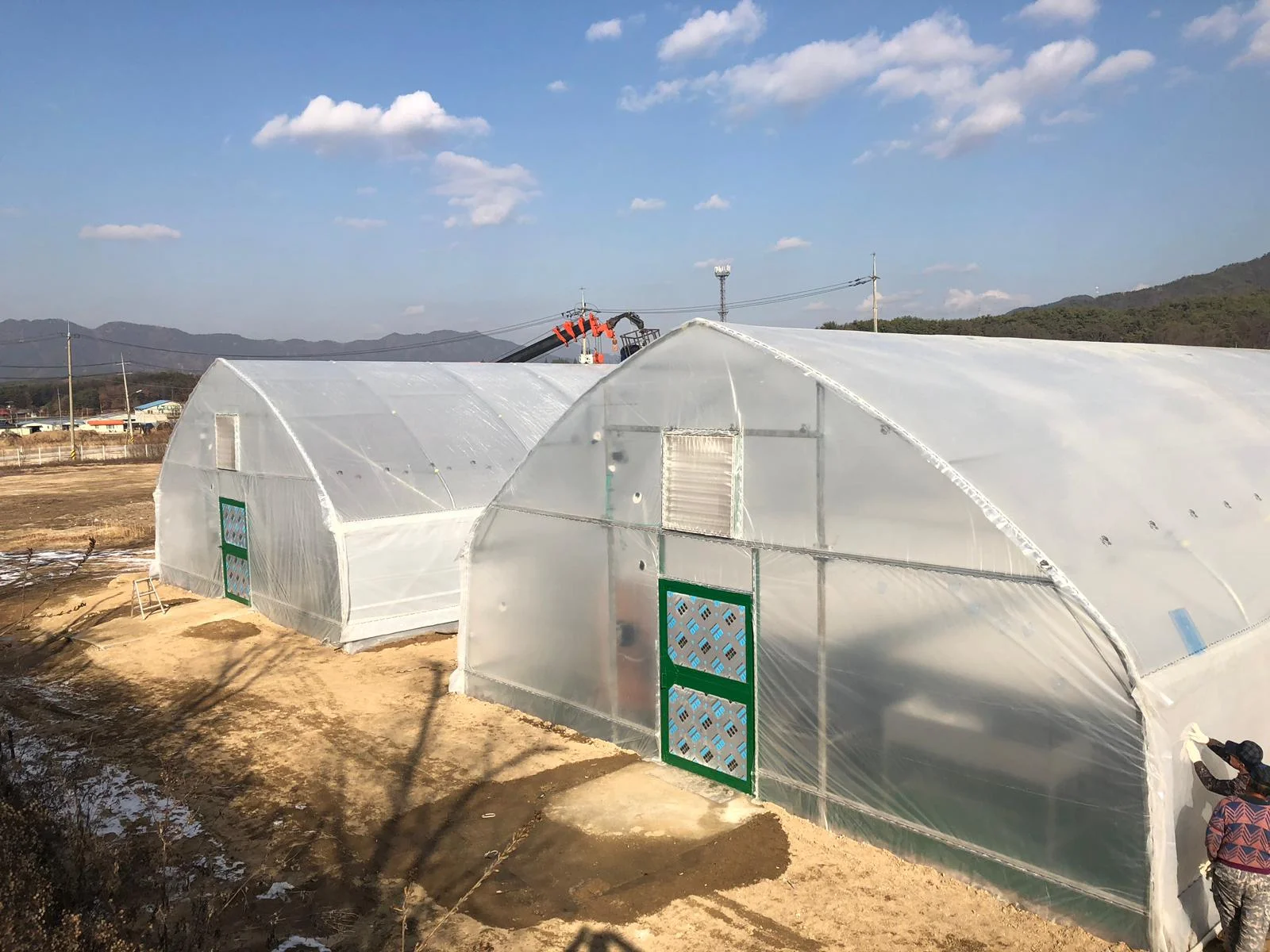
TAPKIT is a 500 m2 Hydroponic unit.
The unit , produces 6-10 Tons of leafy vegetables per you on NFT system.
Mindanao, TAPKIT
TAP developed the unit as a solution for family farming, resorts, restaurant, senior citizens homes and more. It is called the affordable hydroponic solution because of its price- $60,000- 70,000US $.
TAPKIT Korea
Since its launching on May 2018, it has been installed in Israel, S. Korea, and The Philippines, the next two units will be installed in Mauritius next month.
TAPKIT Korea

Denver, Colorado: A Look Inside Rino's Rooftop Urban Farm
January 8, 2019
If you’ve recently walked down Lawrence Street in RiNo, you have probably have been stopped in your tracks by the sight of a rooftop garden. At the very least, you’ve probably wondered what was going on above Uchi. This beautiful greenhouse space is home to Altius Farms. As one of the largest vertical aeroponic rooftop gardens in the country, Altius currently grows varieties of lettuce, herbs and edible flowers galore.
Part of the new S*Park condo community, Altius landed at the RiNo location where the land historically has been farmed since the 1930s. The greenhouse itself offers 8,000 square feet to run operations, and the community garden outside will double the growing space once the spring comes. S*Park and Altius are planning to team up for great farm-to-table events and community dinners come warmer temperatures.


Sally Herbert, co-founder of Altius, is excited to open the flagship location of Altius Farms in Denver and partner with S*Park to do so. Short for Sustainability Park, the condo community is an incubator for sustainable living and community development. Centered around wellness for human bodies and the earth, Altius Farms is a great addition to the RiNo living complex.
Herbert commented that their mission is to “bring urban farming back into our communities.” They are currently focusing on their partnerships with restaurants to do so. Altius works with some of Denver’s top-rated restaurants – including Beast + Bottle, Butcher’s Bistro and Urban Farmer. The team at Avanti Food & Beverage asked Herbert to grow a mix of greens to pair well with a particular dressing the restaurant is concocting for a special event.
“There’s a real demand for produce that’s safe, nutritionally dense, that’s got good flavor, that doesn’t have 1,500 food miles on it,” Herbert explained. Most of Altius’ customers are located in the surrounding neighborhoods, so the produce is fresh when restaurants receive their orders. This cuts back on food waste both within the farm and in restaurants – however the produce that Altius can’t sell before its prime, they donate to We Don’t Waste and Denver Food Rescue.
“We are a for-profit company with a social impact mission,” Herbert commented. And in addition to engaging the community in learning more about their food, Altius operates on a sustainable business model. The aeroponic tower system uses 10 percent of the water and 10 percent of the space to produce 10 times the yield of a conventional soil farm. Herbert also gets to see an eye-level view of each plant every day – making it easy to identify the needs of particular plants throughout the greenhouse.
The greenhouse itself was designed to recognize the plants needs by pooling the environment. Sensors around the greenhouse cue the processing system to turn on fans or heaters, open up roof and side vents to adjust the humidity and temperatures to make the greenhouse the perfect environment for growing leafy greens.
The greenhouse also provides a controlled environment for their plants to grow. Altius Farms has a separate water system and a controlled environment that is not affected by the state of surrounding farms. In result, Altius was able to supply their customers with romaine when the rest of the country was having an e. coli scare.Transversely, if Altius had a scare in their own farm, it wouldn’t affect any growing site except the greenhouse location.
The horticulturalist for Altius, Don Dwyer, has been in the growing business since the 1970s. More and more he sees that people want to “establish a relationship with their food.” Altius helps facilitate a positive relationship with food by providing fresh produce with interesting flavor profiles to Denver residents. Dwyer also understands that so many Denverites want to support local farms and Altius gives residents a way to learn about growing food in an urban location.
As Altius approaches full growing capacity, they are looking forward to living into their mission and engaging the community in their work. “Food is important in [illness] recovery and in education and just having nutritious meals for our kids,” Herbert explained. Once they have the capacity, Altius hopes to serve the community beyond restaurants – including schools and medical centers.
For the time being, Altius takes great care of their restaurants. Herbert enjoys offering tours and tasting to their chef partners and helping them to design a menu around Altius greens. With flavors like wasabi arugula to mustard greens and a number of edible flowers, Altius Farms caters to many chefs and their various dish innovations.
These partnerships excite Herbert, who has never worked with chefs in this way. “What’s been interesting,” Herbert commented, “is that they are – pun intended – hungry for this kind of food. They want to have the conversation with us.” In the future, Altius wants to expand their produce and grow specific plants for restaurants – working with chefs from the inception of a dish idea to the culmination.
Altius Farms is located at 2500 Lawrence Street #200, Denver. Their restaurant customers in RiNo and LoDo are Urban Farmer, Uchi, Crema, HiTide Poke, Port Side, Stowaway, Famous Original J’s Pizza, Butcher’s Bistro, Goed Zuur, Beast + Bottle and Dio Mio. Altius greens are available in both Marczyk’s Fine Foods.
All photography by Evans Ousley.
ABOUT THE AUTHOR
When not working one of her three jobs, Evans walks the streets of Denver to discover more about the city's food scene. On the weekends, Evans loves to stroll around Denver's many parks – mostly to obsess over all the dogs she can't have.
‘Our World Is Entering A Fourth Agricultural Revolution’, Says UK Environment Secretary
Embracing a fourth agricultural revolution post-Brexit could help the UK to alleviate poverty and scarcity, replenish its stores of natural capital, and secure investment to tackle waste, pollution and emissions, he said.
(Image: Getty/JIRAROJ PRADITCHAROENKUL)
By Flora Southey
04-Jan-2019
RELATED TAGS: Brexit, Agriculture, gene editing
UK environment secretary Michael Gove has urged industry to embrace the potential of a fourth agricultural revolution: “We can guarantee a future for the UK as a major, global food producer.”
Industry is on the verge of a food production revolution, UK secretary of state for environment, food and rural affairs, Michael Gove, told delegates at the Oxford Farming Conference yesterday (January 3).
And according to Gove, the timing couldn’t be better for the UK farming industry: “In 2016 and 2017, more than half of the UK’s farms earned less than £20,000, and a fifth made no profit at all.”
Embracing a fourth agricultural revolution post-Brexit could help the UK to alleviate poverty and scarcity, replenish its stores of natural capital, and secure investment to tackle waste, pollution and emissions, he said.
The UK’s withdrawal from the European Union (EU) will help local farmers and food producers “escape from the bureaucratic straitjacket” of the Union’s Common Agricultural Policy (CAP) and access technologies the EU is “turning its back on”, he continued.
So just what does a fourth agricultural revolution entail?
Technological advances
In the next agricultural revolution, technological developments, such as artificial intelligence, the analysis of big data, drone development, machine learning, and robotics will allow us to improve productivity on traditionally farmed land, Gove told delegates.
“Not least by reducing the need for labour, minimalizing the imprint of vehicles on soil, applying inputs overall more precisely, adjusting cultivation techniques ore sensitively, and therefore using far fewer natural resource – whether carbon, nitrogen, or water – in order to maximise growth.”
The secretary also flagged data analytics, which together with advancements in sensor technologies, can monitor the health of livestock and develop optimal environmental conditions for animals.
The can help to “get their nutrition right, safeguard their welfare, and improve both dairy and meat production,” he added.
Gene editing
In June last year, the European Court of Justice (ECJ) ruled that crops obtained by mutagenesis – a technique that genetically alters the material of a plant – are to be classified as GMOs.
Gene edited plant and crop varieties, modified using methods known as new plant breeding techniques (NPBTs), for example, can help plant and crop varieties produce higher yields.
CRISPR-Cas editing technology has received significant attention in the agricultural sector, for its ability to help scientists make cuts at specific locations in a plant genome that introduce precise changes to facilitate crop breeding.
As a result of leaving the EU and its strict policies controlling the use of genetically modified crops and animals, the UK could open up to opportunities in gene editing, Gove suggested.
“The ability of giving Mother Nature a helping hand by driving the process of evolution at higher speed should allow us to develop plant varieties and crops which are more resistance to disease and pests and less reliant on chemical protection and chemical fertiliser.”
Farming advances
In a future that comprises vertical farming and innovative manufacturing techniques for alternative proteins, industry can minimise the land used for food production, said Gove.
“With vegetables growing in temperature-, moisture- and nutrition-controlled indoor environments, we can guarantee improvements in yield while at the same time limiting environmental externalities.”
Departure from the EU also presents an opportunity for hydroponic and vertical farm producers to attain organic status. Under current EU law, organic farming is ‘based on the soil’, which disqualifies these soil free systems from organic certification.
In addition, the fourth revolution may see animal products, from gelatine and egg whites, to milk and even meat, made in labs, Gove continued.
Challenges
Such technological advancements come with their own set of challenges, Gove explained, highlighting the significant capital required to invest in precision technology, robotics, and data analytics.
Gene editing also poses important ethical questions, and the energy required to maintain vertical farming systems can be costly and carbon-intensive, he told delegates, adding that despite these challenges, “No change is not an option.”
“Reform is vital to modernise the sector and to capitalise on technological advances.”
Copyright - Unless otherwise stated all contents of this web site are © 2019 - William Reed Business Media Ltd - All Rights Reserved - Full details for the use of materials on this site can be found in the Terms & Conditions
RELATED TOPICS: Organics, GM food, Brexit, Alternative proteins, Sustainability, Policy, Fruit, vegetable, nut ingredients

You're Invited Tuesday, February 5, 2019 - Ronald Reagan Building - Washington, DC
The Foundation for Food and Agriculture Research invites you to explore food and agriculture research at our all day event, Foster Our Future. Join FFAR to:
Demonstrate game-changing research technology and innovation
Bring scientific breakthroughs to life
Celebrate the impact food and agriculture has on consumers and producers
Showcase research talent
Highlight the importance of continued research investment
For event and registration information:
REGISTER NOW!
CLICK HERE to add event to calendar.
FFAR thanks our current sponsors as of January 7, 2019.
AgLaunch Initiative, Conagra Brands, Institute for Feed Education & Research, Select Milk Producers
Agritecture Consulting
American Society of Agronomy, Crop Science Society of America, Soil Science Society of America
Association of American Veterinary Medical Colleges
Biotechnology Innovation Organization
Commonwealth Scientific and Industrial Research Organization (CSIRO)
Corn Refiners Association
Food Marketing Institute Foundation
The Grange Foundation
International Fertilizer Development Center
McDonald's Corporation
Meridian Institute | AGree
National Pork Producers Council
NOBLE RESEARCH INSTITUTE, LLC
Potomac Grange #1
Soil Health Institute
The Sugar Association
Supporters of Agricultural Research (SoAR) Foundation
Weed Science Society of America
Special thanks to the American Dairy Science Association
and the American Society of Animal Science.
For more information on how to sponsor contact:
Renée Bullion, rbullion@foundationfar.org.
Foundation for Food and Agriculture Research | 401 9th St NW, Suite 630, Washington , DC 20004


Local Grown Salads Launches Indoor Vertical Farms In Opportunity Zones
Local Grown Salads launches Indoor Vertical Farms in Opportunity Zones in Washington DC, Baltimore, and Nashville. Farms produce organic Ready-To-Eat Salads.
BALTIMORE, MD, UNITED STATES, January 10, 2019 /EINPresswire.com/ --
Local Grown Salads is opening Indoor Vertical Farms in Opportunity Zones located in Baltimore, Washington DC, and Nashville.
Local Grown Salads will be providing Ready-To-Eat salads, Ready-To-Use Herbs and vegetables that are GMO Free, Organic, Herbicide & Insecticide free, and certified insect free.

Wonderfully Fresh - Harvested and delivered on the same day.
Massive Selection - 25 different salads.
No prep needed - these are ready-to-eat.
No Food Safety concerns - FSMA & SFQ Quality Code level.
Good For The Environment - Reduced Carbon Footprint, No nasty runoff. No killing the bees.
Local Grown Salads is looking to provide LGS First Account status to a small set of restaurants, caterers, or food delivery companies prior to the official launch.
The LGS First Accounts will have special pricing, guaranteed availability, first access to product, and other advantages.
LGS First Accounts are select food service companies that will use Local Grown Salads' Ready-To-Eat Salads to provide extra-ordinary products to consumers.
LGS First Accounts will be located within 2 hours of one our locations and sell at least 5,000 high quality meals a week.
Local Grown Salads has limited the volume available and will be selective about who will receive this market advantage.
About Local Grown Salads Patent Pending Indoor Vertical Farming technology:
• Grows fresh produce year-round in a controlled environment with the highest standards of food quality and food safety
• Creates product that is organic, pesticide free, herbicide free, and GMO free
• Decreases transportation costs, thereby reducing the carbon footprint
• Helps to address the problem of food deserts
• Allows indoor farming that helps save the planet’s arable land
About Local Grown Salads and Opportunity Zones:
Opportunity Zones are a tax incentive established by Congress in the Tax Cuts and Jobs Act of 2017. 8,700 Opportunity Zones have been designated. The Opportunity Zones are low-income and food desserts. Local Grown Salads is expecting to create 20 jobs in its farms and provide fresh healthy food at wholesale prices to the community.
The Local Grown Salads farms can re-purpose older (heritage) buildings which are not challenged for other uses.
Zale Tabakman
Local Grown Salads
+1 416-738-2090
email us here
Visit us on social media:
LinkedIn

On the Heels of Digital Sales Boost, Kroger Launches First-Ever Unmanned Delivery Service
Since August, the companies have operated a self-driving grocery delivery service in Scottsdale, AZ, with an autonomous Prius fleet accompanied by vehicle operators.
Nuro and The Kroger Co. announced the launch of the first-ever unmanned delivery service available to the general public.
Since August, the companies have operated a self-driving grocery delivery service in Scottsdale, AZ, with an autonomous Prius fleet accompanied by vehicle operators. The autonomous vehicles have completed nearly one thousand deliveries to the general public.
With this launch, the fleet is expanding to include Nuro's custom unmanned vehicle known as the R1. The R1 travels on public roads and has no driver, no passengers and only transports goods. Nuro has been developing the R1 since 2016, and announced its partnership with Kroger, America's largest supermarket retailer, in June.
"Nuro envisions a world without errands, where everything is on-demand and can be delivered affordably. Operating a delivery service using our custom unmanned vehicles is an important first step toward that goal," explained Nuro President and co-founder Dave Ferguson.
"Kroger customers are looking for new, convenient ways to feed their families and purchase the products they need quickly through services like pickup and delivery," said Yael Cosset, Kroger's chief digital officer. "Our autonomous delivery pilot with Nuro over the past few months continues to prove the benefit of the flexible and reliable technology. Through this exciting and innovative partnership, we are delivering a great customer experience and advancing Kroger's commitment to redefine the grocery experience by creating an ecosystem that offers our customers anything, anytime, and anywhere."
Kroger experienced 60 percent digital sales growth in the third quarter, and its seamless coverage area now reaches more than 90 percent of customer households.

Disruptive 'Precision Farming' Spells Opportunities for This AgTech Company
The world is going to run out of food. Don't worry, the best minds are on it. They are using robots, better seeds, lighting and irrigation systems to reimagine farming.
Jon Markman Dec 19, 2018 9:00 AM EST
The world is going to run out of food. Don't worry, the best minds are on it. They are using robots, better seeds, lighting and irrigation systems to reimagine farming.
Bowery Farming Inc. calls the process precision farming. According to a report from Bloomberg, the indoor agriculture technology company is about to secure $90 million in funding.
It is a larger opportunity for investors with vision.
Like many technology startups, Bowery founders are determined to solve the big problems confronting the world. The United Nations projects that the world population will swell to 10 billion people by 2050. To keep up, global farmers will have to produce 70% more food. Unfortunately, most of the world's water resources are used for food production, and 30% of arable agricultural land has been lost to poor planning, pesticides and urbanization.
There is not enough water or land to possibly meet future demand.
Engineers are Bowery set out to do more with less. The solution began with controlling as many variables as possible. Crops are grown indoors under ideal conditions, without pesticides. Complex, LED lighting mimics the full spectrum of the sun. Irrigation systems deliver nutrients with exact specificity, resulting in 95% less water use than traditional farming and a 100x improvement in crop yields.
The urban farm company is using all of the tools of modern technology -- robotics, machine learning, computer vision and data science - to fine tune the entire process.
Bowery is not the only company in the game. Last year, Plenty, another indoor farm company from made headlines when it secured $200 million in financing from Softbank (SFTBY) , the Japanese firm led by billionaire Masayoshi Son, and investment companies associated with former Alphabet chairman Eric Schmidt and Amazon founder Jeff Bezos.
The gigantic investment in the tiny San Francisco startup sent shockwaves through the burgeoning ag-tech community. Early investors understood the potential of marrying sensors, robotics and data science with agriculture. The Softbank vote of confidence underscored the urgency.
The latest $90 million round was led by GV, the new name of Google Ventures. Alphabet (GOOGL- Get Report) , the parent company of Google, has made a cottage industry out of developing businesses models around machine learning. Its investment in Bowery is on brand.
Farming has not changed much in centuries. Yes, there are now self-driving tractors and even drones to monitor the growing process, but the basic premise still involves sowing seeds and waiting patiently for mother nature to bless the soil with bountiful crops. Companies like Bowery and Plenty completely disrupt that notion.
They want to control every aspect of the growing environment. They are cutting mother nature out of the loop in an effort to reduce costs, speed up growing cycles and reduce the footprint of farms. It's a revolution made possible by automation, better information and data science.
Even five years ago the economics of this revolution did not make sense. However, falling prices for cloud computing, robotics, sensors and machine learning have opened new doors. Information technology is being commoditized, just like fruits, vegetables and livestock.
Cognex Corp. (CGNX - Get Report) is the leading maker of sensors and vision systems for smart, industrial robots.
For a long time, truly smart machines were a pipe dream. Robots were impressive for their might. They stamped or welded or pushed items along a precision conveyor belt. But they were dumb. They didn't have eyes. They could not make sense of their place in the process.
The Cognex Insight Vision system gave industrial robots eyes. Machine learning and better software systems gave them intelligence. These attributes that are in high demand as factories get smarter, and ambitious startups push the limits of ag-tech.
The Massachusetts company has an impressive history of growth. Since 2013, sales are up 2.2x to $748 million. During fiscal 2017, the last full year of financial data, revenues shot up 43.5% while income ballooned 18% to $177 million. These metrics are certain to increase as more industrial robots gain sight, and smarts.
Cognex shares have been cut in half amid concern about the health of the global economy. The stock has fallen from a high of $73 in October 2017, to the lower $40s, bringing the market capitalization to only $7.2 billion.
At 29x forward earnings, Cognex shares are still expensive, but not ridiculous, for a unique, patent-protected, cutting-edge tech company in a growing field. Long-term investors with vision should consider using weakness in the weeks ahead to establish positions.

Square Roots Implements “Transparency Timeline” for Greens
An indoor farm in Brooklyn, N.Y., wants to do its part to restore consumer confidence in greens.
Tom Karst December 19, 2018

Urban farm Square Roots has unveiled what they call a transparency timeline, accessed via QR code on their packaging.
( Square Roots )
An indoor farm in Brooklyn, N.Y., wants to do its part to restore consumer confidence in greens.
Urban farm Square Roots has unveiled a new food packaging system that the company says will give consumers a comprehensive story of how the firm’s basil, sage, chives, and mint traveled from seed to the retail shelf.
In a Dec. 19 blog post by co-founder Kimbal Musk (younger brother of Elon Musk) headlined “After the Romaine recall nightmare, here’s how Square Roots is going to get Americans to trust their food again," the company said it was introducing a labeling program that would allow consumers to see “the complete story of where and how their food was grown, and who grew it, with a simple #knowyourfarmer scan.”
“By simply scanning a QR code or typing in the lot number found on every package of Square Roots fresh produce, you are now able to see the complete story of where and how your food was grown and who grew it — tracing the entire path from seed-to-store,” Musk said in the blog post.
The QR code scan — readable by most smartphone cameras — informs consumers of what Musk called the “transparency timeline” for the commodity. The timeline includes information about the crop’s development, including:
Seeding: the scan tells where the seeds were sourced from, when and where they were seeded and the first name of the worker who seeded the commodity;
Nursery: The date the commodity was placed in the company’s climate-controlled nursery in the specified farm and the first name of the individual that transferred the tray;
Transplant: The date the seedlings were moved from the nursery to the hydroponic grow towers i in the specified farm, and the name of the worker who moved them;
Harvest: The date the herb commodity was hand-harvested and the first name of the worker that harvested it;
Packing: Date of packing and first name of the worker who packed it; and
Delivery: Date of delivery to retail store, with a note that delivery was done with “low impact transport.”
Musk said future versions of the transparency timeline could add information about the specific climate that food was grown in, recycling information relevant to the packaging for the product and perhaps other data. “If you would like see any other information added to the timeline, just let us know,” he said in the post.
With recent the recent E. coli outbreak linked to romaine lettuce — the third outbreak in two years — Musk said that consumers are at risk from foodborne illnesses.
“The situation was compounded by opaque supply chains in the Industrial Food System, making it ridiculously difficult to accurately trace the source of guilty pathogens,” he said in the blog post. “To their credit, the big lettuce producers did eventually react, and agreed to start labeling their products with a mark of the state in which their products are grown. But that’s not enough. Consumers demand — and deserve — to know more.”
Musk said that indoor climate-controlled farming “has many advantages” over open field growing when it comes to minimizing the risk of such outbreaks. He said that Square Roots’ distributed, modular farm network reduces that risk even further.
“Square Roots customers can enjoy our products not just because they taste great and are grown hyper-locally, but also because they come with the comfort and confidence of being able to see exactly how and where your food was grown and who grew it,” he said.
Musk said blockchain technology has created buzz but so far hasn’t delivered much information to consumers.
“We’re optimistic on that long-term vision (of blockchain), and we know many of the people working hard on blockchain solutions right now,” he said in the post. “But the reality is that initial implementations, while heavily buzzword-compliant, have been distinctly underwhelming in terms of the information they provide.”

Applied Technology: Putting The Hyper In Local
December 21, 2018
For some retailers and restaurants, proximity to local food is key—like next door, on the next floor, or on the roof— and you can’t get much fresher than that.
This technology is already gaining traction across the nation and worldwide with vertical farms in skyscrapers, vegetable and herb gardens at restaurants or near retailers, and container farms in areas where growing can be nearly impossible.
Local Roots, a Los Angeles-based startup, has created a twist on greenhouse growing. The company does grow produce and herbs in a protected setting, but instead of a greenhouse, the indoor farms are in 40-foot shipping containers.
The four student founders say that by using robotics, microbiology, and data analytics, their indoor container “TerraFarms” produce up to 300 times higher per square foot densities than traditional farms.
The containers “have also achieved cost parity with greens and other produce grown out in the field,” says Gary Hawkins, founder and CEO of the Los Angeles, CA-based Center for Advancing Retail & Technology, LLC.
Better yet, he says, “they use a fraction of the water and no pesticides or herbicides.”
Local Roots believes it has eliminated many hazards of the supply chain and is partnering with area businesses, restaurants, and retailers, notably Walmart.
And if a retailer or processor has the desire, Local Roots will not only sell and set up a TerraFarm, but oversee the entire growing process from seed to harvest for the freshest, local vegetables and herbs.

Trump Jr. Invested in a Hydroponic Lettuce Company Whose Chair Was Seeking Trump Administration Funds — “Trump, Inc.” Podcast Extra
The president’s eldest son last year became the most prominent shareholder in an indoor-lettuce farm while the company’s co-chairman, a friend of Donald Trump Jr.’s and presidential fundraiser, sought federal support for his other business interests.
by Jake Pearson and Peter Elkind
December 4, 2018 THE TRUMP ADMINISTRATION
The 45th President and His Administration
Exploring the Mysteries of the President’s Businesses
Find “Trump, Inc.” wherever you get your podcasts.
Donald Trump Jr., the president’s eldest son, took a stake last year in a startup whose co-chairman is a major Trump campaign fundraiser who has sought financial support from the federal government for his other business interests, according to records obtained by ProPublica.
The fundraiser, Texas money manager Gentry Beach, and Trump Jr. attended college together, are godfather to one of each other’s sons and have collaborated on investments — and on the Trump presidential campaign. Since Trump’s election, Beach has attempted to obtain federal assistance for projects in Asia, the Caribbean and South America, and he has met or corresponded with top officials in the National Security Council, Interior Department and Overseas Private Investment Corporation.
Beach and others at the startup, Eden Green Technology, have touted their connections to the first family to impress partners, suppliers and others, according to five current and former business associates. Richard Venn, an early backer of Eden Green, recalls the company’s founder mentioning “interest from the Trump family.” Another associate said Beach bragged about his ties to the Trumps in a business meeting.
The investment is one of just a handful of known business ventures pursued by Trump Jr. since his father moved into the White House almost two years ago. In addition to being a top campaign surrogate and public booster, Trump Jr. serves as an executive vice president of his father’s company and one of just two trustees of the trust holding the president’s assets.
Ethics experts have consistently criticized these arrangements, arguing that they invite those seeking to influence the government to do so by attempting to enrich the president or his family members with favorable business opportunities.
Trump Jr. invested in the startup, a company that grows organic lettuce in a hydroponic greenhouse, last year, records show. Those records don’t state how much money — if any — Trump paid for his 7,500 shares. But the shares would have been worth about $650,000 at the end of last year, based on a formula used by another shareholder in a recent court filing. Neither Trump Jr. nor the company have disclosed his investment publicly. Trump Jr. obtained the stake through a limited liability company called MSMDF Agriculture LLC, which was set up by a Trump Organization employee last fall.
The key ethical question, said Virginia Canter, chief ethics lawyer at the nonprofit Citizens for Responsibility and Ethics in Washington, is whether Beach’s involvement with Eden Green, and Trump Jr.’s investment in it, are based on the business merits — or on the possibility of cashing in on connections to power. “Why is Trump Jr. being given this opportunity?” she asked. “It definitely has the appearance of trying to gain access by any means to curry favor with the administration.”
The willingness of Eden Green to invoke the Trump name in its business dealings raises further ethical concerns, experts said, particularly if potential customers understand that they are giving contracts to a startup whose success could enrich the president’s son.
Neither Trump Jr. nor his spokesman responded to messages seeking comment on his relationship with Beach and investment in Eden Green. A White House spokeswoman didn’t respond to emailed questions. Alan Garten, the Trump Organization’s top lawyer, said in a statement that Trump Jr.’s investment is a personal one. The entity through which it was made “is not owned or controlled by, or affiliated in any way with, The Trump Organization,” Garten said.
Last fall, Eden Green concluded a deal with Walmart. Today, the giant retailer sells the company’s lettuce, kale and other greens at about 100 stores in the Dallas-Fort Worth region. (Eden Green’s sole facility is a 44,023-square-foot greenhouse outside Fort Worth, where it grows the greens in 18-foot vertical tubes.)
Walmart interacts with government regulators on an array of matters — everything from labor practices and land use to securities filings — but there is no indication that Walmart is aware of Trump Jr.’s connection to Eden Green. (Separately, Walmart contributed $150,000 to Trump’s inaugural committee. Beach was a finance vice chair of that committee, but a Beach spokesman says he has never met with Walmart executives.)
Molly Blakeman, a Walmart spokeswoman, declined to comment on Eden Green or its investors. “We don’t talk about our relationships with our suppliers,” said Blakeman, who added that Walmart has “supported inaugural activities” in the past.
Get More Trump, Inc.
Stay up to date with email updates from WNYC and ProPublica about their ongoing investigations.
Andrew Kolvet, a spokesman for Beach and the other Eden Green executives, said it’s “categorically false” that the Trump name was invoked by Eden Green officials. Kolvet cited a corporate policy that forbids discussing investors “with any current or potential client.” He also said Trump Jr. isn’t involved with company operations and bought into Eden Green during “U.S. friends and family fundraising efforts.”
A recent lawsuit asserts that Eden Green is in financial trouble. In October, the company’s largest shareholder, an entity controlled by a wealthy oil and gas family from Midland, Texas, filed suit in state court in Dallas, alleging “gross project mismanagement.” The suit accused Beach and six executives, all of them board members, of paying themselves extravagant salaries (allegedly $250,000 to $300,000 per year) and putting the company “on the precipice of failure.” A financial consultant hired to examine the company’s books asserted that Eden Green executives spent more than $19.4 million in the first nine months of 2018 — a daunting sum for a company that reported having raised a total of $22 million as of June — while generating $9,000 in revenues.
In late November, less than a month after the suit was filed, it was settled on confidential terms. Kolvet disputed the compensation figures asserted in the litigation, saying that the company’s pay is “in accordance with industry standards.” He maintained that Eden Green’s prospects are good. As with many startups, he said, “things don’t go in a straight line.” Kolvet asserted that the company has plenty of operating cash.
Trump Jr., now 40, and Beach, now 43, met at the University of Pennsylvania two decades ago. Both are the sons of wealthy businessmen, one in real estate, one in oil and gas. Beach’s father has since been laid low: Last month he was sentenced to four months in federal detention, plus two years of supervised release, for bankruptcy fraud.
Beach was a groomsman at Trump Jr.’s wedding (Trump Jr. and his wife recently separated). Beach and Trump Jr. like to hunt and once considered buying a hunting preserve in Mexico together. According to a 2010 deposition testimony by Trump Jr., they talked business during lunches at Rothmann’s steakhouse in New York.
Both have struggled in business at times. In 2009, Trump Jr. and others (including one person who pleaded guilty to an unrelated criminal fraud charge in 2010) formed a company that would sell concrete panels for home constructions out of a warehouse in North Charleston, South Carolina. The business quickly became mired in lawsuits seeking payment for unpaid bills. Trump Jr. made the situation more precarious by personally guaranteeing a $3.7 million loan for the project. Days before the note was due, the Trump Organization purchased the debt, eventually taking over the warehouse and selling it all back to Trump Jr.’s original business partner, according to press accounts.
For his part, Beach’s career path has also included some travails. He spent a year or so at Enron and then moved into finance. Beach worked for a hedge fund and remains locked in litigation with it more than a decade later. (He claims he wasn’t paid his full compensation; the fund claims he was “responsible for the destruction of millions of dollars of investor capital.”) Beach now runs a “family office focused on private equity investments” out of a Dallas office that Eden Green uses as its corporate address.
Trump Jr. has at least twice before invested with Beach in deals that didn’t pan out. Trump Jr. put $200,000 in a dry Texas oil well managed by Beach’s father, according to testimony by Trump Jr. He also lost an unknown sum in a failed African mining company affiliated with Beach’s uncle.
But Trump Jr. stuck with his friend. The Associated Press reported this year that the two formed a company last October to pursue technology investments.
Then there was Eden Green. By the time Trump invested last fall, the company had already run into problems. It first launched in 2013 in South Africa with an ambitious mission: to feed the world through a highly efficient indoor farming system deploying patented technology intended to yield 10 to 12 harvests a year, compared with two or three for conventional agriculture.
Butter lettuce and other leafy greens at a Eden Green vertical farm on June 27, 2018, in Cleburne, Texas. (Brandon Wade/AP Images for Eden Green)
There’s a market for vegetables grown in controlled greenhouse environments as big retailers increasingly push for cleaner, more reliable and locally grown alternatives. But the challenges are significant. Energy costs run high, and there are myriad difficulties associated with scaling up to an industrial-size system.
That’s what happened in Eden Green’s first iteration, according to a half dozen early backers and associates. The produce may have been sustainable — but the business model wasn’t. The CEO of its European unit wrote in an October 2017 email obtained by ProPublica that the company had “been bleeding money and resources for almost 2 years now.” In the fall of 2017, Eden Green’s founders cemented a deal to hand over majority control to a group of U.S. investors led by Beach, current and former business associates said.
This was the company Trump Jr. bought into. He used an innocuous-sounding limited liability company, called MSMDF Agriculture LLC, to make the investment. ProPublica discovered MSMDF after the Trump Organization listed it in New York City filings among dozens of other entities it controlled. (Because the Trump Organization has contracts with the city to run the Wollman skating rink in Central Park and a golf course in the Bronx, the city requires the company to file disclosures.) The Trump Organization told ProPublica that MSMDF is not in fact owned by the Trump Organization but was included in the disclosure form because it’s controlled by Trump Jr., who was described in the form as MSMDF’s president, secretary and treasurer.
MSMDF was formed by a Trump Organization employee in September 2017 in Delaware, according to incorporation papers. Eden Green Holdings UK, Ltd., an affiliate of the Texas-based company, then listed MSMDF among its roughly two dozen shareholders in a 2018 report filed with British regulators.
The Trump Jr.-Beach connection has been most visible in the political arena. Last year, for example, Trump Jr. publicly thanked Beach and their mutual friend Tommy Hicks Jr., another wealthy investor from Dallas, for their fundraising during the 2016 campaign. “We couldn’t have done it without you guys,” Trump Jr. said of his buddies to a crowd of Republican donors in March 2017. “It was just absolutely incredible.”
In the foreword to a recent book, Trump Jr. reiterated the message, writing that a “rag tag army” — Trump Jr., Beach, Hicks and Charlie Kirk, the firebrand chief of the pro-Trump organization, Turning Point USA — barnstormed the country in 2016, raising “over 150 million dollars in ninety days.”
Watch Donald Trump Jr. Thank Gentry Beach, Tommy Hicks Jr. for Trump Campaign Fundraising
Trump Jr. mentioned Beach and Hicks Jr. at a dinner hosted by the Dallas County Republicans in March 2017 and invested in Beach’s company Eden Green through an LLC created months after President Trump’s inauguration.
Since Trump’s election, Beach has met with top administration figures on multiple occasions. For example, according to the AP, he lobbied National Security Council officials to relax sanctions against Venezuela to create opportunities for U.S. companies. He attended a private lunch with Republican donors and Interior secretary Ryan Zinke.
Beach has denied leveraging his ties to the first family. Last month, Beach told a TV interviewer in Croatia, where he said he was exploring a “truly spectacular” $100 million real estate development, “I don’t need anything from the government, thankfully, except normal police protection in my hometown.”
But newly obtained emails show that Beach wanted government backing for his private business interests at the same time he was running Eden Green. In October 2017, Beach pitched Ray Washburne, who heads the Overseas Private Investment Corporation, a government agency that offers loans and guarantees to American companies looking to expand into emerging markets, according to emails obtained under the Freedom of Information Act. (Before joining OPIC, Washburne was a Dallas investor and a top fundraiser for Trump. He and Beach move in the same circles and have friends in common.)
“The Dominican Republic could really use some US investment and support,” Beach wrote in one email to Washburne, describing his various projects there, which included “a power plant upgrade to an existing tin mine” as well as liquid natural gas infrastructure. He invited OPIC officials to travel with him to the Dominican Republic “If permitted, we would be happy to handle all transportation from DC to DR and back,” he wrote in a follow-up note. (Such a trip never occurred, according to an OPIC spokesperson.)
A month later, the emails show, Beach also lobbied on another project, arranging a call with his business partner and one of Washburne’s top deputies regarding an “India Oppty,” which appeared to involve an energy fund. Separately, Beach also introduced Washburne to the head of oil giant Exxon Mobil’s Africa operations, with whom Beach said he had gone shooting at Blenheim Palace in England, where the Churchill family resided for three centuries. And Beach connected another Washburne aide with a South African mining executive who Beach described as “one of my partners.”
OPIC spokeswoman Amanda Burke said Beach has not submitted any formal applications for agency funding. “OPIC routinely meets with a variety of businesses and stakeholders,” she said, adding that formal applications trigger background and credit checks and “go through several levels of agency vetting and approval.”
Asked whether having a Trump connection would disqualify a person from receiving OPIC support, Burke emailed that “in general, an individual’s personal or legal business interests would not disqualify them from applying. However, certain relationships may cause board members or other decision makers of OPIC to be conflicted out of the decision-making process on potential projects.”

Retail Executive Michael Kramer Joins MedMen as CFO
Now he will bring that knowledge to MedMen, where he is tasked with advancing the company’s growth plan, focusing on execution, maintaining a strong balance sheet, and moving toward profitability.
A veteran finance executive with more than three decades of experience in the retail industry, Michael Kramer has a proven track record at retailers such as Apple Inc., Abercrombie & Fitch, and Forever 21.
Now he will bring that knowledge to MedMen, where he is tasked with advancing the company’s growth plan, focusing on execution, maintaining a strong balance sheet, and moving toward profitability.

“Michael’s extensive experience, and his success in scaling high-growth businesses will be instrumental as MedMen moves to operationalize the balance of our footprint,” said Adam Bierman, MedMen co-founder and chief executive. “Today, we have the most talented and experienced leadership team in the industry to drive strategy, growth and competitive advantage.”
Kramer’s experience includes serving as CFO of Apple Retail, where he developed successful brick and mortar retail strategies. While at Abercrombie & Fitch, he oversaw 12 quarters of increased year-over-year earnings.
Kramer has been on advisory boards for organizations such as Martha Stewart Living Omnimedia, the Wharton School of Business at the University of Pennsylvania, and Kansas State University’s Business School.
“I cannot imagine a more exciting time to join the MedMen team,” said Kramer. “Rarely do you find an opportunity to build an industry that could truly define future generations. It was immediately clear to me that MedMen has the vision, the strategy and the talent to capitalize on the tremendous growth opportunity in the sector today."
For more information
MedMen
Publication date : 12/19/2018
Why Hydroponics Are The Hottest Thing In Vertical Gardening
Some say that hydroponic gardening is the future of gardening and farming. Save space and increase your crop yield by learning how to build a hydroponic garden yourself.
By Michelle Ullman
Why Hydroponics Are The Hottest Thing In Vertical Gardening
Some say that hydroponic gardening is the future of gardening and farming. Save space and increase your crop yield by learning how to build a hydroponic garden yourself.
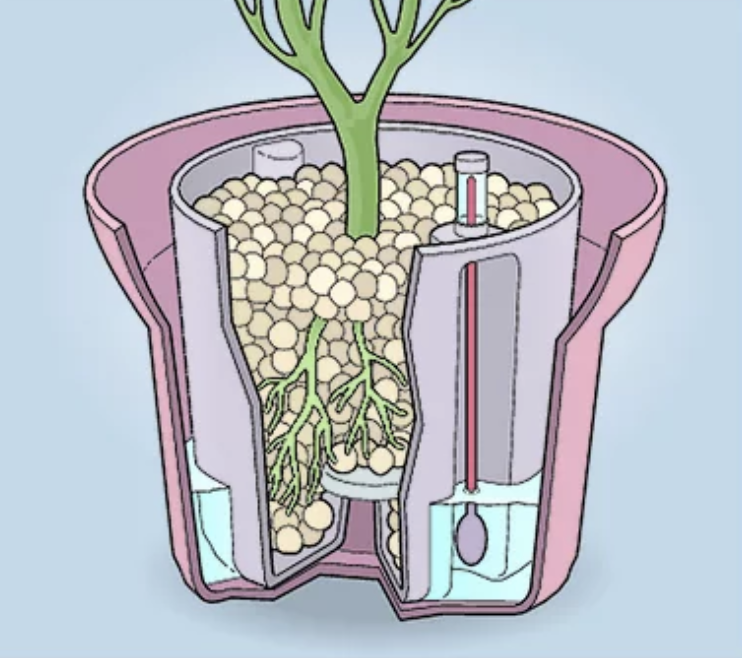
Ditch the dirt and try hydroponic gardening, or the growing of plants without soil. There are two methods of hydroponic gardening: Either roots are submerged directly in nutrient-enriched water, or the plant is grown in a container filled with a soilless mixture of perlite, sand, and/or coconut fiber. This container is then submerged into or suspended above a water-filled reservoir. While just about any type of plant can be grown hydroponically, the technique is most often used for growing vegetables or herbs. Benefits of hydroponics include larger harvests, faster growth, and less trouble with pests, disease, or outdoor growing conditions.
If you’d like to try this soilless method of gardening, you can purchase one of the many hydroponic kits for home use or create one yourself. Here are the basics of hydroponic gardening.
Types of Hydroponic Water Systems
There are three basic types of hydroponic grow systems. The simplest type of hydroponic garden is a wick system. In this very basic hydroponic water system, a wick connects the planting container and the water reservoir, providing a steady source of nutrient-rich water to the plants’ roots. This is an easy system to DIY but is only suitable for small plants such as microgreens or herbs.
Learn more about growing microgreens.
Flood and drain hydroponic systems require a submersible pump but are still fairly simple to create. The plant containers sit in a shallow tray or grow tube suspended over a reservoir filled with hydroponic nutrients. Periodically, the tray is flooded with water from the reservoir, thus allowing the plants to soak in nutrients through the drain holes in the bottoms of the containers. After a set period, the water drains back into the reservoir. This prevents root rot caused by excessive moisture. Usually, the system floods and drains two to four times each day.
In a water culture hydroponic system, the plants’ roots are continuously in the nutrient-rich water of the hydroponic tank. Planted containers float on a “raft” in the reservoir or are suspended directly overhead so the roots extend down into the water. A small bubbler—such as those used in fish tanks—aerates the water and prevents it from becoming stagnant. This is one of the easiest DIY hydroponic grow systems and works well for lettuce, herbs, and other lightweight crops.
Caring for Your Hydroponic Garden
Once you’ve set up your hydroponic kit or built your own grow system, installed your lights, and planted your crops, it’s time for basic maintenance.
Add hydroponic nutrients to the water reservoir, following the directions on your particular brand. There are many available in both liquid and powder form.
Fill the water reservoir with filtered—not tap—water. Tap water often contains fluoride and other elements that might harm your plants.
The ideal water temperature for your hydroponic garden is 65 to 75 degrees F, with a pH level between 5.7 and 6.3.
Keep the water moving in the reservoir with a bubbler or pump to prevent stagnant water and bacterial growth.
Empty, clean, and refill your hydroponic nutrient reservoir every two weeks.
Clean the entire hydroponic system after harvesting crops.
Choosing Your Crops for Hydroponic Gardening
If you’re a newbie to the world of hydroponic gardening or only have enough space for a very small system, it’s best to start with the plants that are easiest to grow in this method. As a general rule, plants with shallow root systems do very well in hydroponic grow systems. Consider a hydroponic herb garden of dill, basil, oregano, cilantro, and/or parsley. Leafy greens are also great choices: lettuce of all types, kale, chard, watercress, and spinach are all healthy, tasty, and easy to grow.
If you have a large growing area or want to experiment with slightly larger and more challenging crops, consider tomatoes, peppers, strawberries, celery, or bok choy.
Using Grow Lights
As hydroponic systems are usually indoors, one of the most basic requirements is light. For almost all hydroponic gardeners, grow lights are necessary for maintaining a healthy garden.
There are several different types of bulbs used as hydroponic grow lights, but for the beginner with a relatively small budget, fluorescent tubes are a great choice. For a large garden, you’ll want full-length fluorescent grow lights in the 6500K range. For smaller gardens, however, or if you aim to save money, compact fluorescent bulbs provide lots of light and are easy to use. You’ll need to direct the light towards your hydroponic seedlings with a plastic or metal grow light reflector or shield.
Serious hydroponic gardeners with large setups and big budgets typically choose LED grow lights or high-intensity discharge (HID) lights, but these are considerably more expensive than fluorescent bulbs.
As a general rule, your grow lights should be on for 15 to 20 hours each day.

Future Farm: Crops Grown With LED Lighting Might Lead To New Markets
The plan is to see if the cost of using electricity to power the new frontier of “indoor agriculture” is feasible compared to traditional agriculture.
By Powergrams - 2018
Alabama Power engineer Blair Farley and Cheryl McFarland, Commercial and Industrial Marketing Support manager, inside the hydroponic container where they're testing the feasibility of indoor agriculture. (Joseph De Sciose/Powergrams)
Alabama Power’s penchant for pushing the innovation envelope can be seen in a refurbished Freight Farms shipping container outside the Technology Applications Center at the General Services Complex in Calera.
Employees are growing lettuce and other vegetables, herbs and edible flowers in an insulated container retrofitted with LED lighting and climate-control equipment. The plan is to see if the cost of using electricity to power the new frontier of “indoor agriculture” is feasible compared to traditional agriculture.
Alabama Power engineer Blair Farley steps out of the indoor agriculture unit in Calera where the company is test-growing lettuce, carrots, basil, dill, arugula and radishes. (Joseph De Sciose/Powergrams)
Indoor agriculture could be a game-changer for farmers, stores, restaurants, consumers and Alabama Power, in part because:
Crops could be grown in a controlled environment year-round with nutrients in circulated water without soil and few or no pesticides.
Crops could be grown in urban settings and areas classified as food deserts (locations where fresh food is not easily accessible).
Transportation costs could be drastically reduced or eliminated, as food could be grown near consumers and stores.
Indoor farming can produce 12 more lettuce harvests a year, and uses up to 90 percent less water, than a traditional outdoor farm.
Energy-efficient LED lighting and other components can be programmed for off-peak hours to take advantage of cheaper electric rates.
With electricity needed to operate the lighting and climate control systems, indoor farming could usher in a new stream of opportunities for the company.
From an economic development standpoint, vacant warehouses or buildings, including those with existing utilities, could be repurposed for controlled-environment agriculture, providing jobs for Alabamians.
Other advantages include growing during drought or excessive rainfall; producing fruits and vegetables not native to a geographic area; and uninterrupted growing seasons.
Engineer Blair Farley and Cheryl McFarland, Commercial and Industrial Marketing Support manager for Alabama Power, walk alongside the modified shipping container where the company is testing the feasibility of indoor agriculture. (Joseph De Sciose/Powergrams)
There is a viable market in Alabama, with $67 million spent on lettuce annually for households and about 70 percent of people buying organic products.
“Indoor agriculture can be a great addition to the already thriving agriculture industry in our state,” said Cheryl McFarland, Commercial and Industrial Marketing Support manager.
But there are challenges. Like any new, fast-growing concept, scarce data is available to determine long-term pros and cons. High startup costs and unavailable labor could be viewed as making it a financial risk. Vague or unfavorable city laws could be a barrier to an indoor agriculture operation.
Cheryl McFarland and Blair Farley monitor the towers where they’re growing vegetables inside a refurbished shipping container. (Joseph De Sciose/Powergrams)
Exploring the container farm concept at Alabama Power originated from an increasing interest in indoor agriculture and the need to fully understand the benefits of using electricity to enhance the process.
Alabama Power employees installed a 40-foot hydroponic container in January 2017 and began producing lettuce one month later. The container has a seed germination table and 256 vertical towers holding up to 17 small heads of lettuce each. Food production at the GSC is not limited to lettuce and includes basil, arugula, carrots, dill and radishes.
Because of automation, the APC container is fairly self-sufficient. However, one to two employees with other work responsibilities spend a little of their time each week planting, harvesting and performing routine maintenance in the container.
“Interest in indoor agriculture or controlled-environment agriculture is growing either in completely enclosed settings, such as our container, augmented greenhouses or empty buildings, like a vacant mall or Walmart,” McFarland said. “It’s a great way to provide access to fresh foods and jobs in rural communities and urban settings, particularly in areas of food deserts.”
Alabama Power’s next move on the chessboard that is indoor agriculture is to assess produce production and water and electricity usage, then compare findings with similar projects within Southern Company.
“We feel the interest in indoor agriculture is continuing to grow as consumers demand more fresh, local and healthy food options in stores and restaurants,” McFarland said. “Alabama Power has always tried to find ways to improve the way of life for our customers, and indoor agriculture is another avenue we are exploring.”
Samson Ogbole Is A Nigerian Farmer Who Wants To Bring Aeroponics To The World
Ogbole says that there are many advantages to aeroponics, the biggest being that you can grow crops at any time of the year.
by Perry Miller
Samson Ogbole is a Nigerian farmer who is trying to solve the problem of land shortages in his native country. Nigeria’s population has now reached 190 million, but there isn’t enough land in the country to grow the food needed for the ever-growing population. So, Ogbole has found a solution — aeroponics.
This unconventional method is the process of growing plants in the air without using soil. Ogbole first got involved with soilless farming in 2014, and just two years later founded PS Nutraceuticals, a company that puts cutting-edge agricultural technologies into action to improve the efficiency of food production and to ensure food security.
“Soilless growing entails removing the soil component, bringing in substitutes, and applying fertilizer to enable the plants to grow,” Ogbole says. “With soilless farming, we have been able to push for what you call urban farming, where we now have farms in cities such that we are able to cut off the middlemen and marketers.”
Ogbole says that there are many advantages to aeroponics, the biggest being that you can grow crops at any time of the year. The method has also allowed them to eliminate pathogens that naturally exist in the soil and affect crops.
Nigeria needs an estimated 78.5 million hectares of land to produce enough food for the population. But, right now there are only 30 million hectares of farmland under cultivation, according to the International Trade Administration of the United States.
And, Ogbole says that only 46 percent of Nigerian soil is fertile to grow crops, so the country needs to take steps towards self-sustainability in food production and let technology play a more prominent role. He believes that the “war of the future will be fought through agriculture.”
“We’re bringing in technology into agriculture so that the youth can actually see this as a viable option,” explains Ogbole. “We also want to ensure that food production is no longer seasonal, and we’re also bringing in smart sensor technologies into agriculture so that you’re able to get feedback from your plants.”
The farmer added that the future of the economy depends on a few people who have bright ideas and can think outside the box. It is ideas, not money, that solves problems.
Via CNN
Images via Shutterstock

Urban Farm In Brooklyn Looking To Attract Young Farmers
Located in a former Pfizer factory in the Williamsburg district, the company said one of its main aims is to offer young people careers in agriculture.
So-called 'urban', or 'vertical', farms have been making their way into some US cities over the past few years. With limited land in major metropolitan areas, indoor urban farms offer the chance for city stores and restaurants to get their hands on locally-grown produce. Square Roots in Brooklyn, New York, is one of these next generation indoor farms. Located in a former Pfizer factory in the Williamsburg district, the company said one of its main aims is to offer young people careers in agriculture.
"The average age of the American farmer is 58," noted Karsten Ch'ien of Square Roots. "With more young people living in cities, we bought shipping containers into the city because that is where many of them live. Young people are very technology literate, and with the rise in demand for healthy, locally-grown foods, this is the perfect combination for them to get involved in the produce industry. As a result, the average age of our farmers is just 24."
Ch'ien said that Square Roots offers training and skill building as part of helping young farmers establish a firm foundation in the industry. "At the heart of Square Roots is the Next-Gen farmer training program, which creates opportunities for more people to become farmers—and future leaders in urban farming—through a year-long commitment on the Square Roots team."

Produce is grown in modified shipping containers. Ch'ien is on the far right.
Growing in shipping containers
Produce at Square Roots is grown in shipping containers, which have been climate controlled and fitted with the latest in vertical farming gadgetry. All the operations are controlled in the company's offices overlooking the parking lot where the ten containers lie. The shipping container model gives the company great flexibility.
"Growing in shipping containers requires less upfront capital to establish and maintain," Ch'ien explained. "They are easy to retrofit and move if we need to. Additionally, it's very simple to expand the farm. Instead of remodeling or building an extension, we simply add another shipping container and fit it out in the same manner. Here in the parking lot, we have plenty of room to grow horizontally. At this stage, it's not practical for us to stack containers due to the need for climbing up and down ladders with produce."
According to the company, each shipping container yields between 50 and 70 pounds of produce each week. The containers have been engineered to be environmentally friendly and food safe. "The mineral nutrient system cycles and recycles, so each container only requires eight to ten gallons of water per day. Any kind of food safety issue can be contained in each farm," Ch'ien said.
Culinary herbs the focus
Vertical farms still have a way to go to become a mainstream source of produce. Currently, they are typically restricted to leafy greens and other plants that have minimal energy requirements. Square Roots focuses on culinary herbs. The herbs are grown and packed inside the container and then delivered to local independent retailers on one of the company's tricycles.
"Leafy greens are the easiest to grow vertically," Ch'ien observed. "We can also grow things like grape tomatoes and other small vegetables. It really depends on the energy requirements of each plant. Here at Square Roots, we focus on culinary herbs, with each container specializing in a herb. Typically, the timeframe of maturity to harvest is four to six weeks, depending on the herb. We grow in sections and harvest each container twice per week, so that there is always produce that is ready to be picked."

Square Roots uses these tricycles to deliver their produce direct to customers in the NYC area.
Ch'ien notes that growing more energy-intensive commodities such as tomatoes and small root vegetables is not economical at this stage but said that this may soon become viable as technology continues to improve. "Outside of leafy greens and herbs, it's very challenging to grow other crops economically right now. However, technology is improving each year, providing us with increased opportunities to scale and moderate costs. Additionally, we want to ensure we balance sellable yields with quality."
As to the question of whether vertical farming is a threat to traditional farming, Ch'ien believes the two are not mutually exclusive, but rather the whole system can work side by side. "We don't see it as a competition between traditional land-based farming and urban, vertical farming. All growers have the same goal which is to deliver the freshest, best quality produce to customers. We believe vertical farming can work in tandem with traditional farming, each serving a useful purpose in the industry."
For more information:
Karsten Ch'ien
Square Roots
Ph: +1 (740) 337-6687
karsten@squarerootsgrow.com
www.squarerootsgrow.com
Publication date : 12/18/2018
Author: Dennis Rettke
© FreshPlaza.com
Why Food Dominated 2017?
In 2017, we care, and we care a lot.
The world of food is changing in front of our eyes. Just 10 years ago, companies had total freedom from consumer oversight to create whatever would sell. Ingredients mattered only as a cost item. For many companies, cheaper meant better.
The results have been disastrous. More than 70 percent of Americans are overweight or obese. Especially among our poor. Companies put artificial ingredients and preservatives in their products almost without any basis. No one cared.
Now that is no longer the case. In 2017, we care, and we care a lot.
Many people — especially our most underserved communities — are at the mercy of industrial food. The industrial food system ships in high-calorie, low-nutrient processed food from thousands of miles away. It leaves us disconnected from our food and the people who grow it. The results are awful, from obesity and diabetes to a total loss of community in our food system. And it tastes terrible! No wonder people are turning against this system en masse.
Food is a gift we give each other three times a day. Millions of Americans are starting to realize the need for real food. That also comes with the need for more real-food farmers. One is not possible without the other.
In 2017, we saw massive investments in food. Amazon’s $13.7 billion acquisition of Whole Foods Market. Agtech investing literally tripled in 2017 over 2016. A $17 million investment round helped propel Memphis Meats, a clean-meat company that develops animal proteins that are delicious, harm no animals, and use no antibiotics or growth hormones. (I invested in this round.)
In 2017, our restaurant company, the Kitchen, purchased $7.4 million worth of real food from American farmers and served more than 1 million guests. Our affordable, urban casual concept, Next Door, opened locations in Colorado and Memphis, meeting the demand for real food. We kicked off season two of Square Roots, and, yes again, we received more than 500 applications from young entrepreneurs interested in becoming real-food farmers; we had just 10 spots to fill. Our learning gardens grew to 450 schools across America’s heartland, reaching 250,000 kids every school day.
Here are a few 2018 food predictions for fun:
Land prices farming corn for ethanol will take a nosedive. Ethanol from corn was never a good technology, but with electric cars coming online, we simply don’t need it anymore. Ethanol from sugar is eight times more efficient to produce and will replace any need in the short term for ethanol in cars.
Restaurants and food companies will move toward total transparency.(I like to think we are leading the way with our Next Door concept joining the Good Food 100). In today’s world, hiding what you do from consumers is a losing strategy. Trust is the currency of our generation. In the age of the internet, everything you do will eventually be public. Transparency from the beginning is the only path forward to building a great food company.
Thousands of millennials will quit their jobs in other sectors for jobs in food. Thousands more will become real-food farmers. The demand for farming among our youth is bright. As the real-food industry grows, the farms they’ll take on will be urban as well as soil based. No more corn and soybeans!
There will be an avalanche of supply of farmland in the heartland.More than 25 million acres of land is set aside for corn to produce ethanol. It takes a gallon of oil to produce a gallon of corn ethanol. Every acre loses money for the farmer. You couldn’t invent a worse technology or business if you tried. This combined with the age of the typical corn farmer will open up millions of acres to our youth across the heartland.
Restaurants will join the connected world. Automation in the back end connecting to chefs in the home office, digital front ends that connect a guest directly to the chef, and on-demand delivery of any food to your family within 20 minutes will change the way we think about restaurants today.
Large U.S. companies will focus their philanthropic support on getting real food to underserved Americans. Obesity and diabetes are the epidemics of our day. Companies will have an amazing and powerful impact on their communities by focusing their philanthropy on creating healthy, thriving communities through food.
Sales of processed, low-nutrient food will continue to crater. The business of real food—food you trust to nourish your body, your farmer, and the planet—will thrive in 2018.

Now That Hemp And CBD Are Legal, What Comes Next For Food And Beverage?
…they still face regulatory obstacles from the Food and Drug Administration,…
AUTHOR Cathy Siegner
Dec. 20, 2018
Dive Brief:
Now that the 2018 Farm Bill is signed into law, hemp and its derivatives are no longer classified as controlled substances by the Food and Drug Agency, and can legally be regulated by state and tribal governments and commercialized in foods and dietary supplements, New Hope Network reported.
U.S. hemp and CBD companies are expected to pursue listings on Nasdaq and other exchanges soon, according to Bloomberg. However, they still face regulatory obstacles from the Food and Drug Administration, the New Hope Network noted, because the agency's position has been that CBD can't be legally sold in conventional foods or dietary supplements.
While hemp and marijuana are both members of the cannabis family, hemp extracts contain CBD, a non-psychoactive compound that doesn't produce marijuana's trademark high from THC. Hemp does contain very low levels of THC, but hemp products legally sold in the U.S. must have no more than 0.3% of the chemical.
Dive Insight:
Besides removing hemp from the list of controlled substances, the new Farm Bill also expands research into commercial uses for the plant. Currently, hemp ingredients such as CBD oil, powders and seeds are being used to infuse beverages such as iced tea and are being added to a wide variety of other foods, including ice cream, salads, milk and even children's cereal.
The market for CBD and hemp products is already significant and likely to become more so. According to the Capital Press, a New Frontier Data report found that U.S. CBD sales jumped almost 40% in 2017, hitting $367 million. And, according to the Agricultural Marketing Resource Center, the total retail value of all U.S. hemp products last year was estimated at $820 million.
Major food and beverage makers are keeping an eye on the trend and considering how they might adapt forms of THC and CBD to their brands. Bloomberg recently reported that Coca-Cola has been talking with a Canadian cannabis company about marijuana-infused beverages following that country's recent nationwide legalization. A Coca-Cola spokesman told Bloomberg News the company has made no decision yet but is closely watching the growth of CBD as an ingredient in global functional wellness beverages.
THC, CBD and non-psychoactive terpenes from cannabis have appearing in beverages in states where such products are legal. Last year, Heineken-owned Lagunitas Brewing debuted a non-psychoactive, cannabis-flavored IPA brewed with terpenes — organic compounds that give plants their flavors — and the company introduced a THC-based sparkling water this year.
It's not a big stretch to combine cannabis and hops in beer brewing since they are genetically related. The key ingredient they share are terpenes. It's another question whether beer products containing both ingredients will spark a nationwide trend, although with hemp no longer a controlled substance, there could be many more drinks with some form of CBD or THC showing up on shelves and in coolers. Just this week, AB InBev and marijuana grower and distributor Tilray announced a joint $100 million investment to research cannabis-infused nonalcoholic beverages.
Other recent product introductions containing CBD are a nutrition bar from California-based SNAAK Bar that markets itself as optimizing sports performance — and is only available in California and online — and Spring's line of CBD-infused sodas sold in New York, Florida, Nevada, and Illinois.
One big unknown for this market is how the FDA will handle regulating hemp and CBD in products since the agency states that "it is a prohibited act to introduce or deliver for introduction into interstate commerce any food (including any animal food or feed) to which THC or CBD has been added." But because of the new Farm Bill's action regarding hemp, it's possible the agency will institute a rulemaking process to realign its regulation and enforcement of the crop and its products. Dave Donnan, a senior partner in A.T. Kearney's food and beverage practice, told Food Dive the regulatory machine will probably be figuring out how to make CBD a safe and legal ingredient.
“There's all these tactical things that 2019 will be the year to work through,” Donnan said.
Some concerns stem from the cannabis industry's poor food safety record and a tendency to market some edible and supplement products as miracle cures. The FDA took action last year against four firms selling supplements based on marijuana that were advertised as curing cancer. Such claims may not be as likely with CBD products, although the oil is said to help with pain, inflammation, anxiety, depression, insomnia and seizures, among other conditions. Critics say these benefits aren't based on science, but advocates counter there has been plenty of recent research to bolster health claims.
Whether hemp and CBD will be appearing across the board in foods and beverages is unclear at this stage since the ink is barely dry on the new Farm Bill. But as research grows into more commercial applications and companies innovate with new products testing public interest — and FDA's tolerance under its current policies — there could be a newly crowded segment attracting investors, retailers and consumers.