


Welcome to iGrow News, Your Source for the World of Indoor Vertical Farming

Jan 15-16, 2019 Indoor Ag Con Asia Just Days Away!
All Registrants Receive IoT, Funding and Startup Positioning Papers
Meet VertiVegies At Indoor Ag-Con Asia
Be sure to stop by VertiVegies’ booth in the Singapore pavilion at Indoor Ag-Con Asia next week. The newest Indoor Ag-Con Asia sponsor, VertiVegies is a Singaporean Indoor Vertical Farming Company that was established with a simple objective – to empower consumers with the choice of eating healthy and safe food. It uses best in class technology to solve concerns around transparency, safety and security of the food your family consumes. Come chat with the team at Indoor Ag-Con Asia!
About VertiVegies ›
Download IoT, Funding and Startup Positioning Papers
For the first time at Indoor Ag-Con Asia, we’re trialing three unconferencing sessions where you can take your ideas and questions to debate and collaborate with fellow Indoor Ag-Con participants.
They cover topics from funding to IoT for indoor farms. We’ve prepared positioning papers for each session, and they are available to our Indoor Ag-Con Asia participants now so they can prep for the event next week.
Not registered yet? Online registration will be available through Monday at 12pm Singapore time, on-site registration from Tuesday morning onwards.
Register For Position Paper Access! ›
Meet One-To-One At Indoor Ag-Con Asia
We’re putting the final touches on our event app for Indoor Ag-Con Asia. Aside from housing plentiful information on our exhibitors, sponsors and speakers, it allows our participants to tee up one-to-one meetings at dedicated networking tables. The app is available only to Indoor Ag-Con Asia participants, there’s still time to join us by registering on our website
Register Today ›
Thank You to Our Sponsors & Allies!

Fossil Fuel Emissions Climb For 2nd Straight Year
Global fossil fuel emissions are on track to rise for a second year in a row, primarily due to growing energy use, a new study warns.
DECEMBER 6TH, 2018POSTED BY JOSIE GARTHWAITE-STANFORD
Global fossil fuel emissions are on track to rise for a second year in a row, primarily due to growing energy use, a new study warns.
The projections come in a week when international negotiators are gathering in the coal-mining city of Katowice, Poland, to work out the rules for implementing the Paris climate agreement. Under the 2015 accord, hundreds of nations pledged to cut carbon emissions and keep global warming “well below” 2 degrees Celsius above pre-industrial temperatures.
“We thought, perhaps hoped, emissions had peaked a few years ago,” says Rob Jackson, a professor of Earth system science at Stanford University’s School of Earth, Energy & Environmental Sciences. “After two years of renewed growth, that was wishful thinking.”
Researchers estimate global carbon dioxide emissions from fossil fuel sources, which represent roughly 90 percent of all emissions from human activities, will reach a record high of just over 37 billion tons in 2018, an increase of 2.7 percent over emissions output in 2017.
That compares to 1.6 percent growth a year earlier. Emissions from non-fossil sources, such as deforestation, are projected to add nearly 4.5 billion tons of carbon emissions to the 2018 total.
“Global energy demand is outpacing powerful growth in renewables and energy efficiency,” Jackson says. “The clock is ticking in our struggle to keep warming below 2 degrees.”
BLAME THE WEATHER (AND BIGGER CARS)
In the United States, emissions of carbon dioxide are projected to increase 2.5 percent in 2018 after a decade of declines. Culprits for the increase include unusual weather—a cold winter in Eastern states and a warm summer across much of the nation ramped up energy needs for seasonal heating and cooling—as well as a growing appetite for oil in the face of low gas prices.
“We’re driving more miles in bigger cars, changes that are outpacing improvements in vehicle fuel efficiency,” Jackson says. Overall, US oil use is on track to rise by more than 1 percent this year compared to 2017.
Consumption of one fossil fuel, however, is no longer on the rise: coal. The study shows coal consumption in Canada and the United States has dropped by 40 percent since 2005, and in 2018 alone the US is expected to take a record-setting 15 gigawatts of coal-fired capacity offline.
“Market forces and the drive for cleaner air are pushing countries toward natural gas, wind, and solar power,” Jackson says. “This change will not only reduce CO2 emissions but will also save lives lost to air pollution.”
OIL & NATURAL GAS
Yet the study shows renewables around the world are largely coming online as add-ons to fossil fuel energy sources—particularly natural gas—rather than replacements. “It isn’t enough for renewables to grow,” Jackson says. “They need to displace fossil fuels. So far, that’s happening for coal but not for oil or natural gas.”
The researchers warn that over time, increased coal use in regions where large swaths of the population lack access to reliable electricity could eventually exceed the steep cuts to coal use elsewhere.
India’s emissions, for example, are projected to grow 6 percent this year as the country races to build new power plants for both industrial and consumer needs. “They’re building everything—wind, solar, nuclear, and coal—very quickly,” Jackson says.
Energy demand is rising around the world. “It’s the first time in a decade that the economies of essentially all countries are growing,” Jackson says.
CHANGE IN CHINA
The biggest change in carbon emissions this year compared to 2017 is a substantial uptick in both energy consumption and emissions in China, according to the study. After four years of stable emissions amid pressure to improve air quality, the country has now hit the accelerator.
Global economic growth has increased demand for iron, steel, aluminum, and cement manufactured in China. Meanwhile, a recent slowdown in China’s own economy prompted the country to shift its approach to energy development.
“China is jump-starting coal projects that were on hold,” Jackson says. As a result, the country’s emissions are expected to rise 5 percent in 2018, up from an increase of roughly 3.5 percent the previous year.
In some ways, this year’s estimates mark a return to an old pattern, in which economies and emissions rise more or less in sync. Yet recent history suggests the two can be decoupled. From 2014 through 2016, emissions held fairly steady despite growth in global gross domestic product, thanks in large part to reduced coal use in the US and China, improved energy efficiency, and an expansion of renewable energy around the world.
“We can have economic growth with fewer emissions,” says lead author Corinne Le Quéré, a climate scientist at the University of East Anglia. “There’s no question about that.”
Over the past decade, at least 19 countries, including Denmark, Switzerland, and the United States, reduced carbon dioxide emissions from fossil sources while their economies grew.
In 2019, barring a global economic downturn, the researchers anticipate carbon dioxide emissions will rise further despite urgency to reverse course. “We need emissions to stabilize and quickly trend toward the zero line,” Jackson says.
The study appears in Environmental Research Letters and in Earth System Science Data.
Additional coauthors are from Stanford; the University of East Anglia; the Center for International Climate Research in Oslo, Norway; the Commonwealth Scientific and Industrial Research Organization (CSIRO) in Canberra, Australia; and Laboratoire des Sciences du Climat et de l’Environment in Gif-sur-Yvette, France.
Stanford University, Future Earth, the Gordon and Betty Moore Foundation, the Australian Government’s National Environmental Science Programme’s Earth Systems and Climate Change Hub, and the European Commission Horizon 2020 project VERIFY funded the work.
Source: Stanford University
Original Study DOI: 10.5194/essd-10-2141-2018

The Technology of Berries
High-tech strawberries are flourishing in Paris. French urban tech farming start-up Agricool has just picked up a cool €25m to grow more fruit
High-tech strawberries are flourishing in Paris. French urban tech farming start-up Agricool has just picked up a cool €25m to grow more fruit. It plans to use the cash to establish more growing operations in the centre of Paris and to expand across France, as well as to launch in Dubai.
Argricool has been using old shipping containers in the heart of Paris to grow its produce. There’s no pesticide use and the method requires 90% less water and nutrients than regular strawberry rearing. It also leans solely on renewable energy.
The outfit claims it is 120 times more productive than conventional farming. Its output is currently available in four supermarkets in the French capital and in one on the outskirts.
Container farms are sprouting everywhere right now. One high-profile venture is Square Roots operated by Kimbal Musk – brother of Elon – which propagates fresh herbs for stores across New York City. The company has just launched new packaging featuring a QR code which unlocks the story of how and where the food item was grown. The goal is to boost food supply chain transparency.

Despite Hemp Legalization, FDA Will Still Consider CBD Products Largely Illegal
FDA maintains hemp oil is a drug ingredient, and requires approval for products.
Published: Dec 23, 2018
Reuters
By ASSOCIATEDPRESS
SEATTLE — The hemp industry still has work ahead to win legal status for hemp-derived cannabidiol, or CBD oil, as an ingredient in food or dietary supplements despite the big farm bill President Donald Trump signed last week designating hemp as an agricultural crop.
CBD oils have become increasingly popular in lotions, tinctures and foods, but their legal status has been murky and the Food and Drug Administration has sent warning letters to some companies making health claims for CBD.
In a statement following Thursday’s bill signing in Washington, FDA Commissioner Scott Gottlieb restated his agency’s stance that CBD is a drug ingredient and therefore illegal to add to food or health products without approval from his agency.
“Selling unapproved products with unsubstantiated therapeutic claims is not only a violation of the law, but also can put patients at risk, as these products have not been proven to be safe or effective,” Gottlieb wrote.
CBD is a non-psychoactive compound found in hemp, a version of the cannabis plant that is low in THC, the part of cannabis that gives pot its high.
An FDA-approved drug for the treatment of seizures, Epidiolex, contains cannabis-derived CBD. GW Pharmaceuticals’ GWPH, +3.72% syrup became the first prescription drug derived from the cannabis plant in June.
The FDA statement also specified parts of hemp that are safe as food ingredients, but the CBD stance disappointed advocates. Courtney Moran, a lobbyist for Oregon hemp farmers, said she plans to work with U.S. Sen. Ron Wyden, an Oregon Democrat, to nudge the FDA toward greater acceptance of CBD.
“We do hope the FDA does clear a pathway for these products that have already hit store shelves and are out in the marketplace,” Moran said. She said it’s an “opportunity for industry to educate the FDA.”
The FDA statement said three ingredients derived from hemp — hulled hemp seeds, hemp seed protein and hemp seed oil — are safe as foods and won’t require additional approvals, as long as marketers do not make claims that they treat disease.
Hemp, like marijuana, already was legal in some states before Trump signed the farm bill. But now hemp farmers will be able to buy crop insurance, apply for loans and grants, and write off their business expenses on their taxes like any other farmer.
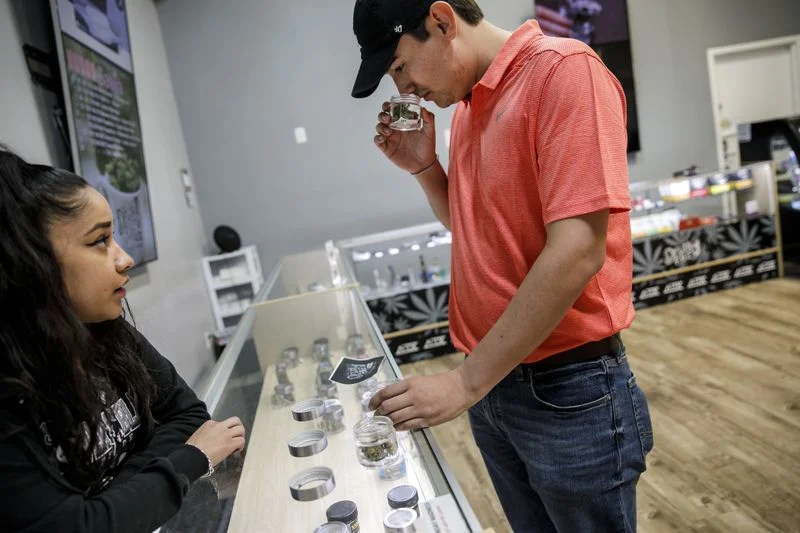
One Year of Legal Pot Sales and California Doesn’t Have the Bustling Industry it Expected. Here’s Why
Retailers and growers say they’ve been stunted by complex regulations, high taxes and decisions by most cities to ban cannabis shops.
DEC 27, 2018 | 12:05 AM
When Californians voted in 2016 to allow the sale of recreational marijuana, advocates of the move envisioned thousands of pot shops and cannabis farms obtaining state licenses, making the drug easily available to all adults within a short drive.
But as the first year of licensed sales comes to a close, California’s legal market hasn’t performed as state officials and the cannabis industry had hoped. Retailers and growers say they’ve been stunted by complex regulations, high taxes and decisions by most cities to ban cannabis shops. At the same time, many residents are going to city halls and courts to fight pot businesses they see as nuisances, and police chiefs are raising concerns about crime triggered by the marijuana trade.
Gov.-elect Gavin Newsom, who played a large role in the legalization of cannabis, will inherit the numerous challenges when he takes office in January as legislators hope to send him a raft of bills next year to provide banking for the pot industry, ease the tax burden on retailers and crack down on sales to minors.
Hundreds of new California laws take effect Jan. 1. How will they affect you? »
“The cannabis industry is being choked by California’s penchant for over-regulation,” said Dale Gieringer, director of California NORML, a pro-legalization group. “It’s impossible to solve all of the problems without a drastic rewrite of the law, which is not in the cards for the foreseeable future.”
After voters legalized marijuana two years ago under Proposition 64, state officials estimated in there would be as many as 6,000 cannabis shops licensed in the first few years. But the state Bureau of Cannabis Control has issued just 547 temporary and annual licenses to marijuana retail stores and dispensaries. Some 1,790 stores and dispensaries were paying taxes on medicinal pot sales before licenses were required starting Jan. 1.
(Los Angeles Times)
State officials also predicted that legal cannabis would eventually bring in up to $1 billion in revenue a year. But with many cities banning pot sales, tax revenue is falling far short of estimates. Based on taxes collected since Jan. 1, the state is expected to bring in $471 million in revenue this fiscal year — much less than the $630 million projected in Gov. Jerry Brown’s budget.
“I think we all wish we could license more businesses, but our system is based on dual licensing and local control,” said Alex Traverso, a spokesman for the state Bureau of Cannabis Control, referring to the requirement that cannabis businesses get permission from the state and the city in which they want to operate.
Less than 20% of cities in California — 89 of 482 — allow retail shops to sell cannabis for recreational use, according to the California Cannabis Industry Assn. Cities that allow cannabis sales include Los Angeles, Oakland, San Francisco and San Diego.
Coverage of California politics »
Eighty-two of Los Angeles County’s 88 cities prohibit retail sales of recreational marijuana, according to Alexa Halloran, an attorney specializing in cannabis law for the firm Solomon, Saltsman & Jamieson. Pot shops are not allowed in cities including Burbank, Manhattan Beach, Alhambra, Beverly Hills, Inglewood, Compton, Redondo Beach, El Monte, Rancho Palos Verdes and Calabasas.
“While some cities have jumped in headfirst, we've taken a deliberate approach,” said Manhattan Beach Mayor Steve Napolitano, “to see how things shake out elsewhere before further consideration. I think that's proven to be the smart approach.”
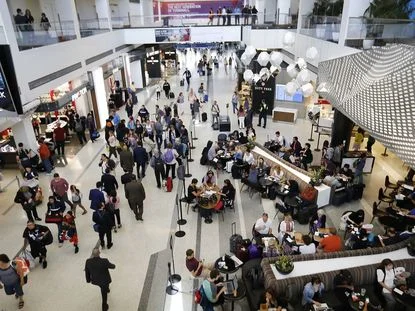
Can you carry marijuana in LAX? Yes, but it’s more complicated than that
SEP 28, 2018 | 6:40 AM
Voters have also been reluctant to allow cannabis stores in their communities.
Of the 64 California cities and counties that voted on cannabis ballot measures in the November midterm election, eight banned the sale of cannabis or turned down taxation measures, seven allowed sales and 49 approved taxes on pot businesses, said Hilary Bricken, an attorney who represents the industry. Among them, voters in Malibu approved pot shops while Simi Valley residents voted for an advisory measure against allowing retail sales.
Javier Montes, owner of Wilmington pot store Delta-9 THC, says he is struggling to compete with a large illicit market unburdened by the taxes he pays as a licensed business.
“Because we are up against high taxes and the proliferation of illegal shops, it is difficult right now,” Montes said. “We expected lines out of our doors, but unfortunately the underground market was already conducting commercial cannabis activity and are continuing to do so.”
Montes, who received his city and state licenses in January, says his business faces a 15% state excise tax, a 10% recreational marijuana tax by the city of Los Angeles and 9.5% in sales tax by the county and state — a markup of more than 34%.
He says there isn’t enough enforcement against illegal operators, and the hard times have caused him to cut the number of employees at his shop in half this year from 24 to 12.
“It’s very hard whenever I have to lay people off, because they are like a family to me,” said Montes, who is vice president of the United Cannabis Business Assn., which represents firms including the about 170 cannabis retailers licensed by the city of Los Angeles.
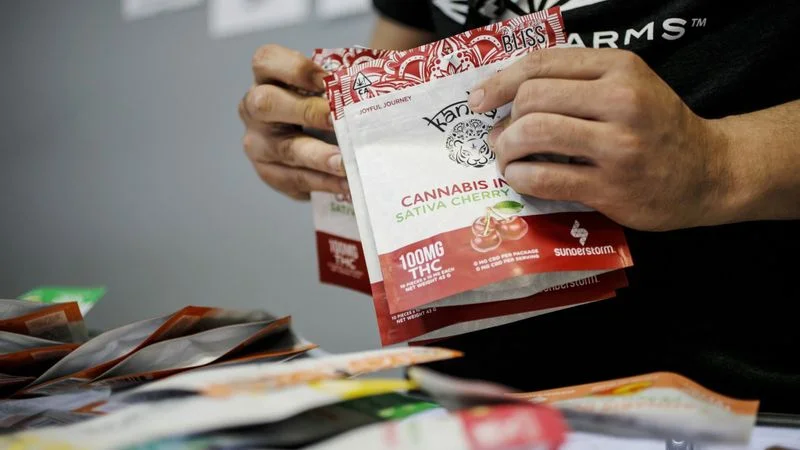
DELTA-9 faces a 15% state excise tax, a 10% recreational cannabis tax by the city of Los Angeles and 9.5% in sales tax by the county and state, the shop owner says. (Marcus Yam / Los Angeles Times)
Sky Siegel, who operates a cannabis business in Studio City, said he recently gave up trying to open another store in Santa Monica because of its restrictions on such businesses.
“It turns into this ‘Hunger Games’ to try to get a license,” said Siegel, who is general manager of Perennial Holistic Wellness Center, which has a dozen employees in Studio City and also operates a delivery service.
He says his firm is up against thousands of unlicensed delivery services going into cities where storefronts are banned.
“To me, it doesn’t make sense” that many cities have prohibited shops, he said. “Banning does nothing. It’s already there. Why not turn this into a legitimized business, which is what the people want.”
Marijuana use is rising among pregnant patients. Not so fast, doctors warn »
California has also issued fewer cultivation licenses than expected in the first year of legalization, with about 2,160 growers registered with the state; an estimated 50,000 commercial cannabis cultivation operations existed before Proposition 64, according to the California Growers Assn. Some have given up growing pot, but many others are continuing to operate illegally.
The trade group hoped to see at least 5,000 commercial growers licensed in the first year, said Hezekiah Allen, the group’s former executive director who is now chairman of Emerald Grown, a cooperative of 130 licensed cultivators.
“We are lagging far behind,” Allen said. “It’s woefully inadequate. Most of the people in California who are buying cannabis are still buying it from the unregulated market. There just isn’t a reason for most growers to make the transition.”
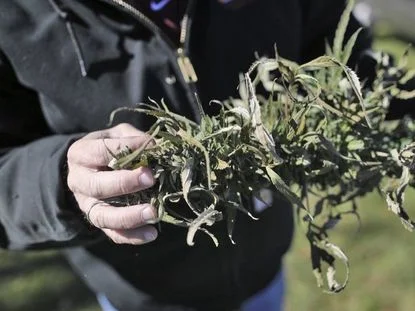
Assemblyman Jim Wood (D-Healdsburg), who has crafted cannabis regulations, said the licensing system had not yet lived up to its promise.
“The state licensing process this past year has been a painful one,” said Wood, adding that the complex rules are particularly difficult for small businesses. “I recognize that this has been a significant undertaking for the state, and you combine that with the cannabis industry learning how to navigate the process — it’s been difficult for them both.”
The legalization of recreational pot has also created tension in areas of the state where cannabis growers are operating close to residents.
Jesse Jones said he moved his family to Petaluma from Marin County six months ago so his three children could enjoy more open space, but he is now fighting a proposal for a cannabis farm to operate a few hundred feet from his home, in part because of safety issues.
“You are going to have what is still a [Schedule 1] narcotic being produced in line of sight of my kids’ trampoline, on a shared road that was never intended for this type of commercial operation,” said Jones, an energy industry executive.
Sanjay Bagai, a former investment banker who lives with his family next door to a new cannabis farm in Sonoma County, is a leader of a residents group called Save Our Sonoma Neighborhoods, which has obtained a preliminary court ruling against one cannabis-growing operation.
Bagai said his group was “not anti-cannabis” but added that pot cultivation “is not something that fits into our neighborhood here.”
“The smell is horrific,” he said of the marijuana plants. “It’s like rotting flesh. And the traffic is insane.”
Quality-of-life complaints have also surfaced in neighborhoods where cannabis sellers have set up shop.
Van Nuys Neighborhood Council President George Thomas said he had received about a dozen complaints in the last year from residents living near pot stores who were concerned about loitering, the smell of marijuana smoke and other issues. Thomas, who is the publisher of the Van Nuys News Press and is an LAPD volunteer, passes complaints on to police officers.
“If they are not in compliance,” Thomas said, “if they are within a thousand feet of a school or church, we are totally against them and we are happy to work with the neighborhood prosecutor in the city attorney’s office to shut them down.”

At the same time, he said, the neighborhood council has worked with licensed cannabis stores to get them involved in improving the community and has asked the Los Angeles City Council to devote some of the tax revenue from Van Nuys shops to solving local problems, including homelessness and crime.
Meanwhile, despite concerns from law enforcement, the state is finalizing a proposal to allow deliveries throughout California — including in cities that ban retail stores. The new rule by Lori Ajax, chief of the state Bureau of Cannabis Control, is expected to be implemented in January.
Ajax says she believes that as the system is refined and is shown to operate successfully in some cities, other local governments will allow retail pot sales. But opponents of pot legalization, including Kevin Sabet, president of Smart Approaches to Marijuana, are happy that most cities are saying “no” to selling the drug.
“The residents of Compton and these other cities have seen the ills that come with allowing marijuana in the door,” Sabet said, “including skyrocketing drugged driving; the promise, then failure of social justice; and the targeting of children through the use of colorful and deceptive candies, gummies and sodas.”
Even in cities that allow cannabis sales, businesses face big hurdles.
The various taxes and fees could drive up the cost of legal cannabis in parts of California by 45%, according to the global credit ratings firm Fitch Ratings.
There is less of a tax burden in Oregon, where voters legalized recreational pot in 2014, and state and local taxes are capped at 20%. With nearly a tenth of the population of California, that state has more licensed cannabis shops — 601. On a per capita basis, Alaska has also approved more pot shop licenses than California, — 94 so far. The state imposes a tax on cultivation, but there is no retail excise tax on pot.
Assemblyman Rob Bonta (D-Alameda) tried and failed this year to push for a temporary reduction in California’s pot taxes to help the industry get on its feet.
“It’s a work in progress,” Bonta said of the current regulatory system. “We knew we weren’t going to get it exactly right on Day 1, and so we’re always looking for ways to achieve the original intentions and goal.”
Bonta said he may revisit the taxation issue in 2019 and is exploring the idea of having the state do more to get cities to approve businesses, possibly by providing advisory guidelines for local legalization that address cities’ concerns.
California cannabis businesses, like their counterparts in Colorado and Oregon, also face costs to test marijuana for harmful chemicals.
“The testing costs are excessive — $500 to $1,000 per batch, and most crops involve multiple batches,” said Gieringer, the director of California NORML. “No other agricultural product is required to undergo such costly or sensitive tests.”
Another problem hampering the legal market is a lack of banking for cannabis businesses. Federally regulated banks are reluctant to handle cash from pot, which remains an illegal drug under federal law.
“Banking continues to be an issue in terms of creating a real public safety problem with significant amounts of cash being moved for transactions,” said Bonta, who co-wrote a bill this year that would have created a state-sanctioned bank to handle money from pot sellers. It failed to pass after legislative analysts said the proposal faced “significant obstacles,” including no protection from federal law enforcement.
Industry leaders and activists said they knew it would be a slow process to establish a strong legal market, noting other states with legal pot, including Colorado, Washington and Oregon, also faced growing pains and problems along the way.
But Ajax, the state pot czar, says her agency has had a productive first year, issuing initial licenses, refining the rules and stepping up action against unlicensed operations, including partnering with the Los Angeles Police Department to seize $2 million worth of marijuana products from an unlicensed shop in Sylmar in October.
“I am optimistic about the coming year, where our focus will be primarily on getting more businesses licensed and increasing enforcement efforts on the illegal market,” Ajax said.
Kamchatka Won’t Get Its Vegetables: Renova Greenhouse Project Is Frozen
“…It is hard to say what has caused the delay, but the project is not developing. Possibly it is related to the minimization of state support”
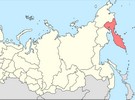
The Renova company, owned by a Russian billionaire, Victor Vekselberg, has stopped the construction of the greenhouse complex within the Kamchatka Priority Social and Economic Development Area. The decision is allegedly related to the fact that the ministry of agriculture are considering minimizing state support in the greenhouse construction sector.
The price of a kilo of tomatoes and cucumbers in the Kamchatka markets and trade chains has reached 10.60 euros. The local authorities during the presentation of the full-scale project of the greenhouse complex construction promised that the produce of Renova would cost significantly less. Thus, the cucumbers were supposed to cost no more than 1 euro and tomatoes up to 1.50 euros per kilo. The local administration shrug their shoulders.
“We had high hopes for the Renova project. The land plot is completely ready for the construction. It is hard to say what has caused the delay, but the project is not developing. Possibly it is related to the minimization of state support”, mentioned the minister of Food and Food Production for the Kamchatka region, Mr. Aleksandr Kurchenko.
Strangely enough, even the administration of the Kamchatka region are not aware of the actual reasons for freezing the project within the Priority Social and Economic Development Area. It seems that the resident company have not informed the authorities about their decision.
In April 2018 the governor of Kamchatka, Mr. Vladimir Ilyukhin, personally presented the project of the Renova greenhouse complex construction within the Priority Social and Economic Development Area to the general public.
“One of the companies within the GK Renova are ready to construct the greenhouse complex in the Elizovsky region on an acreage of 15-20 ha. According to the preliminary calculation made by the investor, a kilo of cucumbers produced there will cost 1 euro and a kilo of tomatoes up to 1.50 euros”, mentioned mister Ilyukhin in April.
It was intended that the greenhouse complex produce would cover the need for fresh vegetables in the region by 40-43%.
In addition to other favorable conditions, a certain amount of gas from a Kamchatka gas field was specifically reserved for the Renova project.
The news on freezing the project has been very negatively taken by the local residents.
“What do they mean 'frozen'? The electric power line alone costs more than 6 million euros. And now what?”
“We will never have cheap vegetables”, Kamchatka residents write on social media.
Unfortunately, the disappointment of not getting cheap vegetables is not the only bad news for the locals. The administration have ensured them that most likely they will not have cheap meat or milk either.
Source: k-vedomosti.ru
Publication date : 12/4/2018

Kroger to Sell Groceries, Meal Kits in Walgreens Stores
The concept will offer 2,300 Our Brands and national products, including produce, meat, dairy, grocery and meal kits.
DECEMBER 04, 2018
The Kroger Co. and Walgreens announced two initiatives, building on the exploratory pilot the companies announced in October, combining America's food and grocery authority with Walgreens global expertise in pharmacy, health and beauty.
Kroger and Walgreens are expanding their exploratory pilot to introduce Kroger Express and Home Chef retail meal kits. The concept will offer 2,300 Our Brands and national products, including produce, meat, dairy, grocery and meal kits.
"We are redefining the customer experience in a variety of ways through Restock Kroger, including innovative partnerships like our test-and-learn pilot with Walgreens. We are excited to enter the next phase of the pilot," said Robert Clark, Kroger's senior vice president of merchandising. "The Kroger Express concept creates easy access to our most popular Our Brands products through a fill-in grocery shopping experience for Walgreens customers, and our Home Chef Express meal kits provide customers with an on-demand solution for tonight's dinner."
"We're pleased to continue working together to explore new concepts that expand product selection to provide a better shopping experience and greater value for our customers," said Richard Ashworth, Walgreens president of operations.
Kroger Express — a curated assortment of 2,300 products, selected using customer data and insights provided by Kroger subsidiary 84.51° — will soon be offered at the 13 Walgreens test stores in northern Kentucky, near Kroger's Cincinnati headquarters. The Kroger Express selection will include Home Chef meal kits, national products and Kroger's popular Our Brands products, highlighting America's largest natural and organic brand Simple Truth, along with dairy, meat, produce, frozen and meal solutions.
The first concept is operational in Florence, KY. The remaining 12 pilot stores will be operational early next year.
As announced in October, the participating pilot stores are offering a one-stop shopping experience where customers can access products from both brands and order groceries on kroger.com for pickup at Walgreens. Kroger Express marks an expansion of the original offering.
Today also marks the launch of Home Chef Express meal kits in 65 Walgreens locations in the Chicago area.
The new offering enhances the reach of Home Chef's Express products, already available at certain Kroger Family of Stores, including select Mariano's stores in the Chicago area. During the pilot, Walgreens will offer three unique Home Chef Express meal kit options, with recipes rotating bi-weekly. Other recipes are available for delivery through homechef.com, where shoppers can find additional weekly variety.
Each meal serves two and starts at $8.50 per serving. Information about participating locations is available at homechef.com/grocery.
"Customers have responded favorably to the retail meal kits at our Mariano's stores in the market and other Kroger Family of Stores located in different cities. The Walgreens expansion provides more Chicagoans convenient access to a quick, simple meal," added Clark.
"Making Home Chef Express meals available at Walgreens is another way Home Chef is making meal time easy," said Pat Vihtelic, Home Chef CEO and founder. "The Express recipes, which cook in 15 minutes, are meals anyone can cook and everyone will love."
Food Security Issues Drive Wealthy But Civic Conscious Singaporeans To Become Farmers Abroad
Besides applying the vertical model to urban agriculture — experimenting with rooftop gardens and vertical farms in order to feed its many residents — farmers (both the wealthy and the not-so-moneyed) have ventured abroad to try their agricultural luck so that they can help ease up their country’s need for adequate food supply
December 29, 2018
To alleviate Singapore’s potential of becoming a nation of “starving” citizens, a number of well-meaning and audacious Singaporean farmers have endeavored to go overseas and establish farms so that they may be able to send food products back home.
Globally, Singapore ranks 4th as most food-secure nation on the Global Food Security Index. This catalog considers the affordability, availability, quality and safety of food supply. While Singapore has limited land capacity to produce its own food, it has designed a resilient food supply system which enabled it to reach a state of good food security. However, recent reports reveal that there exists food insecurity in several segments of its society and highlights how the expensive cars and bright lights of the cosmopolitan city-state very well concealed this relevant issue.
Currently, only 7% of Singapore’s food is grown locally. Every day, the country imports most of its fresh vegetables and fruits from neighboring countries like Malaysia, Thailand and the Philippines, as well as from more distant trading partners like Australia, New Zealand, Israel and Chile.
Besides applying the vertical model to urban agriculture — experimenting with rooftop gardens and vertical farms in order to feed its many residents — farmers (both the wealthy and the not-so-moneyed) have ventured abroad to try their agricultural luck so that they can help ease up their country’s need for adequate food supply.
When Apollo Aquaculture Group chief executive officer Eric Ng realized that his fish farm lease in Lim Chu Kang would expire in 2019, the 44-year-old began scouting for other options which include going overseas.
“Land is very limited here, and the cost of setting up a farm in Singapore is very high. But Brunei has vast land and abundance of sea water,” he said.
Today, he owns a parcel of land in Brunei that can generate 5,000 tons of trout, groupers, snappers and sea bass when operating at full capacity. In comparison, he only can produce about 110 tons of fish annually from his farms in Singapore.
Another daring farmer is former civil servant Lai Poon Piau, who recalled how he had to settle for plain prata after the roti prata stall near VivoCity ran out of eggs a few years back, due to the global food crisis which saw prices of food go sky-high. It was then that he realized how vulnerable Singapore was, in terms of food security.
Seeking to reconnect with his farming roots, Mr. Lai eventually acquired 80ha of land in Kampot, Cambodia in 2010 and started farming peppercorns three years later.
From the 50 tons of pepper he produces annually, only 100 kg is being exported to specialty stores and restaurants in Singapore. But he is gradually trying to build up his distribution channels for export. “I would like to sell all of it to Singapore if I can…Eventually, the idea is to use Singapore as a hub to export (my pepper) to other parts of Asia as well,” he said.
Ng and Lai Poon are just two of the handful of Singaporean farmers who have started farming on foreign soil, a concept that many experts think could help Singapore reinforce its food resilience despite its burgeoning population and its limited land resources.

How Osram Is Investing in Horticulture Technology Partnerships
The deal was a key part of Osram’s mission of moving beyond its role as a lighting company, and becoming a leading provider of intelligent plant growth solutions.
By Brian D. Sparks|December 3, 2018
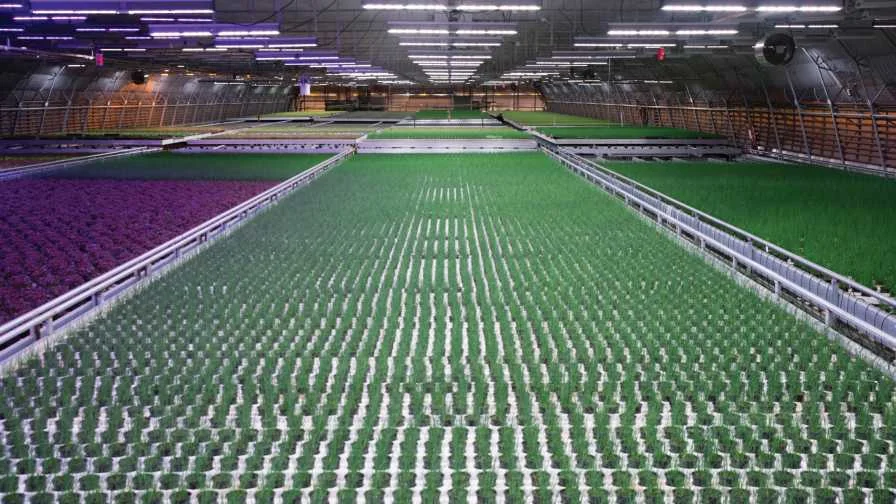
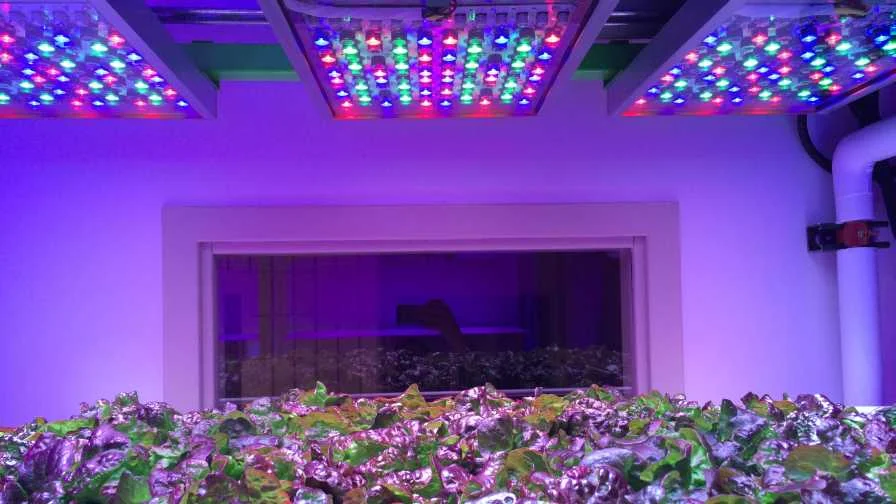
Hällnäs Handelsträdgård in Northern Sweden is using Fluence’s VYPRx PLUS with PhysioSpec Greenhouse spectrum for full-cycle plant growth and development, along with Fluence’s VYPRx PLUS with AnthoSpec as a finishing spectrum to increase anthocyanin accumulation in lettuce. This has resulted in a deep-red color and higher antioxidant properties, which were previously impossible to produce under HPS or sunlight.
Photo courtesy of Osram
Earlier this year, Osram, a Munich, Germany-based tech company, acquired Fluence Bioengineering, which specializes in LED-based horticulture lighting systems. The deal was a key part of Osram’s mission of moving beyond its role as a lighting company, and becoming a leading provider of intelligent plant growth solutions.
Osram’s 110-year history in lighting is based on four pillars:
Mobility
Security and safety
Connectivity, particularly in smart buildings and cities
Health and well-being
Initially focused on the automotive and entertainment industries, the company became more engaged in horticulture when old traditional light sources were disrupted by the growth of LEDs.
“Our products changed over to LEDs for many of the same original applications, in addition to use in the medical and horticulture industries,” says Timo Bongartz, Senior Innovation Manager for Smart Farming at Osram. Now, Bongartz says, we are seeing the next industry disruptor: the Internet of Things.
“Light source alone is not enough anymore,” Bongartz says. “We saw a need to create more value around lighting, and that’s why we are shifting more from a lighting company to a technology company. We do not just want to provide components, but lighting solutions for all types of indoor production, from ornamental greenhouses to vertical farms to cannabis production facilities.”
This innovative mission was the basis behind Osram’s acquisition of Fluence, as well as its partnership with Motorleaf, a software service solutions provider.
“We want to allow growers to make more efficient use of their time, so we’re looking to provide tools for microclimate management and disease and yield prediction,” Bongartz says. “If growers know early how their yields will be, they can hopefully get higher prices.”
Bongartz says Osram also wants to stay in the loop on when a grower’s production system or crop mix may be changing, so it can place lights accordingly.
We see growers wanting to bring more intelligence and cloud-based control into their intelligent lighting systems,” he says. “On a light prediction level, we are making lights connectible and controllable through the cloud. This is how we are bringing more value to lighting solutions.”
Phytofy RL is an LED horticultural lighting system for research applications with real-time control and scheduling features for each individual channel. The calibrated system is capable of delivering light treatments with varying spectra (wavelength and intensity) for horticulture research, including far-red end-of-day treatment, brief UV light, night interruption lighting, etc.
Photo courtesy of Osram
Osram and Fluence Partner on New Lighting Systems
RAZR4 Array
From seed germination and cutting propagation to full-cycle microgreen and leafy green cultivation, RAZR4 is optimized to decrease consumption and increase production for vertical farm applications. At 2.3 µmol/J, RAZR4 is 169% more energy efficient than standard vertical farm lighting systems, while providing up to 350% more photosynthetic photon flux.VYPRx PLUS
With energy efficiency reaching 2.3 μmol/J and output surpassing 1,190 μmol/s, VYPRx PLUS is key to establishing a path to sustainability and productivity in a greenhouse. Whether extending the day or growing season for low daily light integral (DLI) crops, VYPR has the power, energy efficiency, and longevity to grow consistent crops year-round.SPYDR 2i
The SPYDR series is designed for controlled environment horticulture applications requiring efficient, precise, and uniform levels of photosynthetic photon flux density (PPFD). The SPYDR 2i is streamlined to quickly deploy in multi-tier vertical farm applications for high-DLI crops and single-tier applications including growth chambers, adjacent aisle tables, and tents.
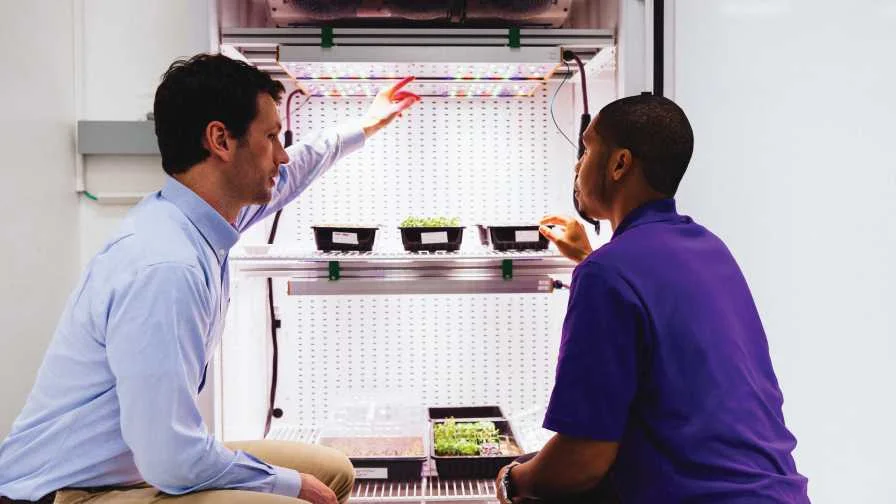
NASA is studying lighting combinations and recipes that it can then apply to crops grown in the International Space Station.
Photo courtesy of Osram
New Research Is Out of This World
While it is focused on offering growers new lighting systems and components, Osram is also doing its own research to help growers become more innovative by enabling them to develop their own light recipes. Using a tool called Phtyofy, growers can set up trials, changing light spectrums throughout the day based on how the plants are reacting.
This tool has also been developed through partnerships with Michigan State University (MSU) and even NASA. When MSU horticultural lighting expert Dr. Erik Runkle was planning a new controlled environment lighting lab, he reached out to Osram’s Semiconductors division. Partnering with Runkle gave Osram access to plant science from a horticulture perspective, while enabling MSU students to carry out lighting research on the wavelengths and light quality that may be optimal for certain crops.
The NASA partnership started through HortAmericas, whom NASA approached when it was looking for a lighting source. At Cultivate’18, one of the NASA researchers visited with the Osram team, who provided them with three lighting units for use in NASA’s advanced plant habitat lab. The objective of NASA’s research is to study lighting combinations and recipes that it could apply for crops grown in the International Space Station.

The Next Frontier of Agriculture
I gave a TEDx Talk at Wabash College that gave a glimpse as to why I chose to co-found Heliponix. We could only fit so much content in a 10 minute segment, so I saw it fitting to provide a written explanation to tell the full story. Follow the link below to see the full talk.
I was extremely fortunate to receive an internship the summers of 2014 and 2015 after my freshman and sophomore years at Purdue University working as a mechanical engineer for a company in the oil and natural gas industry that manufactured fluid control equipment in my hometown of Evansville, Indiana of about 120,000 people. Although I was surrounded by great co-workers who enriched my technical knowledge, I did not feel like this industry was right for my career.
Then one day during my junior year (Jan. 2016), I received a mass email from my college about a job opening at the horticultural college looking for an engineer familiar with fluid control systems for a hydroponic research project. I responded out of curiosity to see if I could at least learn more about other industries to strength my project experience portfolio, but I knew absolutely nothing about plant science. With luck, my email with resume and cover letter was well received, and I was invited into an interview with Dr. Cary Mitchell.
Dr. Mitchell expressed concerns for my generation's ability to grow enough food to meet the growing, global demand. Global food outputs must increase by 70% as we exceed 9 billion people in 2050 according to the UN. Agriculture accounts for 50% of land use, and 80% of freshwater consumption in the USA. To put it simply, we will run out of the land and water needed to produce enough food with our current consumption/production rates within the next thirty years.
Dr. Mitchell explained a new concept to me called CEA, controlled environment agriculture. It is exactly as it sounds, the practice of making an fully automated, indoor farm that used hydroponics. Hydroponics is a method of growing plants using no dirt, but only nutrient rich water recycled over the roots in a closed loop. By keeping the nutrients dissolved in the water in near constant curriculation, plants could grow three times faster than they would in a field. To put this in perspective, a lettuce farmer can typically grow a full head outdoors in 90 days, but hydroponics could grow lettuce in just 30 days or less in some circumstance. Most hydroponic systems are in controlled greenhouses, so a hydroponic farmer could harvest every month of the year without any pesticides and 95% less water by eliminating runoff. CEA was essentially a twelve times increase in productivity compared to conventional soil farming methods limited to one season a year. Additionally, a vertical farm that stacked layers of growing planes could multiply yields even further!
Dr. Mitchell was seeking assistance in the fluid control design for a hydroponic research apparatus called the minitron 3 funded through a NASA grant. Within my lifetime, permanent space colonies will be established on Mars which creates a need for a sustainable food supply. It is not feasible to regularly ship tons of food shipments from Earth, so they must be able to grow their own food. However, there are still challenges holding back the industry’s fruition.
The main challenge to creating a crop-growth module for space travel has been the staggering energy cost of the 600- to 1,000-watt conventional high-pressure sodium lamps traditionally used to mimic sunlight and stimulate plant photosynthesis in contained environments. The lamps also scorch plants if placed too close and require a filtration system to absorb the excess heat they create.
"Lighting was taking about 90 percent of the energy demand," Poulet said. "You'd need a nuclear reactor to feed a crew of four people on a regular basis with plants grown under traditional electric lights."
The focus of the Purdue-NASA research study was to measure the carbon dioxide concentration of air going into the minitron, and concentrations of oxygen leaving the growth chamber. This allowed researchers to measure photosynthetic efficiency rates under different wavelengths of light under an addressable LED array. If you only used LEDs of the right color plants need to grow, then you could eliminate the colors that the plants are not uptaking. The goal was to provide valuable insights about which spectrum of LEDs would be the best to reduce the energy consumption of an indoor growing operation, a major operational cost. This is why many vertical farms have “pink” lights, plants primarily need red and blue light. LEDs have become much more efficient than previous lighting options, and release little heat to greatly improve the energy efficiency of growing indoors.
With the youthful naivety of a 20 year old, I applied to every commercial, hydroponic facility in the US with little to no responses. I quickly learned that the research study I was a part of was not just an attempt to reduce the operational cost of CEA, but it was trying to make it more profitable for more people to pursue. Most indoor farming operations have access to reduced agricultural rates which is 90% less than what most residential consumers pay for energy. Without these subsidies, the industry would be reduced to very low margins, so paying for an engineering intern was out of question.
So I went back to the career fairs at Purdue desperate to find an internship opportunity anywhere outside of my hometown to see new things. I finally found my break when I was given an internship offer as a project manager in Hawaii for the summer of 2016. I immediately accepted the offer, but was told by the HR manager to not worry about the “TBD” stamp on my location of the contract I signed in March.... For the rest of the spring semester, I was ignored on all communication channels to this HR manager until I was finally called back during dead week at the end of the semester after canceling all interviews with the expectation I would be in Hawaii. I was informed that I was reassigned to build section-8 low income, government housing in El Paso, TX along the border to Juarez, Mexico.
A quick google search informed me that Juarez was a murder capital and major drug corridor for Mexican cartels bringing narcotics into the United States. The movie Sicario is based on the cartel violence in Juarez in this exact location. With no other options on the table, I packed my bags for a cross country roadtrip to the desert.
At the time, I spoke virtually no spanish and grew my beard out to appear older to the laborers working on the construction sites. My primary responsibility was to oversee a Spanish-speaking workforce for labor jobs such as toxic asbestos removal. Many of the workers had previous gang affiliations, and narcotic use was rampant. The section of El Paso I managed was originally called the “Angel's Triangle”; a triangular shaped subdivision situated between the Franklin Mountains range, the US Army’s Fort Bliss, and the border wall to Mexico. However, this portion of town was called the “devil's triangle” due to the gang activity, narcotics and prostitution that now plagues the area.
One day I woke up, and envisioned this career defining my entire life, and realized that this was not the industry for me either. I then began to look at my time in the desert as an opportunity to build a business model that could solve the food desert I was living in. A food desert is defined as, an urban area in which it is difficult to buy affordable or good-quality fresh food. Residents (who often lacked private transportation) often resorted to buying highly processed, non-perishable foods which are cheap and readily available at the local corner stores. These corner stores had little to no fresh produce which contributed to a high obesity and abnormally high diabetic rate. I knew that indoor farming could account for the poor soil quality and limited amount of water in the desert to bring these residents the fresh produce they needed, but the following points prevented this from happening.
Indoor, vertical farms require huge amounts of capital from investors to build the infrastructure with a long ROI.
Energy costs for indoor lighting greatly reduced the profitability of the facilities. Without reduced agricultural energy rates, many of these facilities would not be profitable.
Labor rates can be variable, and pose new liabilities for workman’s comp claims in the event of a workplace injury using equipment such as scissor lifts to reach top shelves. Although automation is the best solution, this is a tradeoff for an even higher infrastructure cost, and recurring maintenance cost from skilled laborers.
These points in mind, I concluded that the likelihood of a twenty-one year old being funded to build a multi-million dollar vertical farm was very unlikely. But this revelation posed a new question, “Could the technology be broken up into decentralized devices?”.
Que my TEDx talk… For inspiration I looked towards the ice industry which up until the 1800’s was made up of ice harvesters who could only cut ice from frozen bodies of water when the climate allowed water to freeze. This seasonal availability was disrupted by ice factories that could deliver ice year round in any climate. Today, 99.9% of Americans now own their own personal ice factories called refrigerators.
Much like the early ice industry, agriculture has always been dependant on the narrow window of growing seasons restricted by climates for crops to grow once a year. Since the explosion of microcontrollers and LEDs drastically increasing efficiencies and decreasing prices, indoor vertical farming has become financially viable for the first time. Much like the ice industries continual decentralization, we believe that agriculture will follow suit for many vegetables. In addition, decentralized, hydroponic farms eliminated the three concerns that limit the scalability of massive vertical farms.
Customers buy into for the hardware, not the investor.
The energy cost could be greatly reduced through a new, innovative design.
Contract manufacturing is highly competitive, and keeps manufacturing labor prices low.
This theory in my mind was validated by the success of the keurig recurring k-cup business model that could be emulated with hydroponic appliances sending monthly shipments of seed pods™ and fertilizers directly to the consumers.
Initial concept of recurring seed pod to be produced in an automated production line.
I spent the remaining time I had in El Paso creating conceptual designs this hydroponic appliance called a GroPod™. I then filed the first provisional patents on the new design before building the first prototype, and entered into business plan competitions at Purdue University my senior year. I quickly recruited my purdue-NASA-hydroponic coworker, Ivan Ball to be my Co-Founder because he was a brilliant electrical and computer engineer to close the skills gap we needed to keep improving upon our design. What happened afterwards could be a series of articles on its own, but at least this article can provide a deeper explanation of where I started, and where we are growing!
Follow us on social media as we continue growing to become the world’s largest farm without owning a single acre of land!
Instagram, Facebook, Linkedin, and Twitter: @heliponix
Conventional Problems, Unconventional Solutions: Birth of Triton Foodworks
03 January, 2019 By: Sheetal Dhamecha
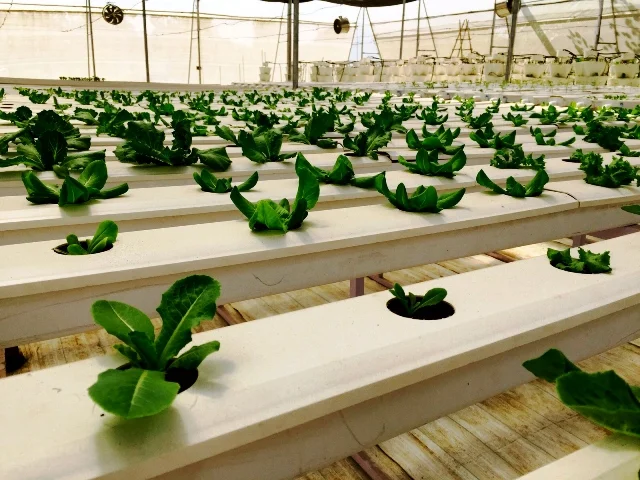
The conventional problems associated with agriculture can be solved through unconventional means, the belief was turned into reality by the young entrepreneurs in Delhi. Deepak Kukreja, Dhruv Khanna, Ullas Samrat, and Devanshu Shivnani, the friends who wanted to do something that was economical and ecological gave birth to Triton Foodworks.
What an idea! But how this idea?
Back in 2014, Ullas was keen on developing a farm in Mohali as a defense mechanism for his mother diagnosed with Interstitial Lung Disease. The doctors however advised that the life on farmhouse shall cause more harm than good due to dust and various issues linked to farming. He was then determined to find ways to make a clean farm for his mother. Dhruv, then based in Singapore did a lot of field research there and the two of them zeroed in on Hydroponics. They later collaborated with Deepak and Deevanshu to look after tech and finances.
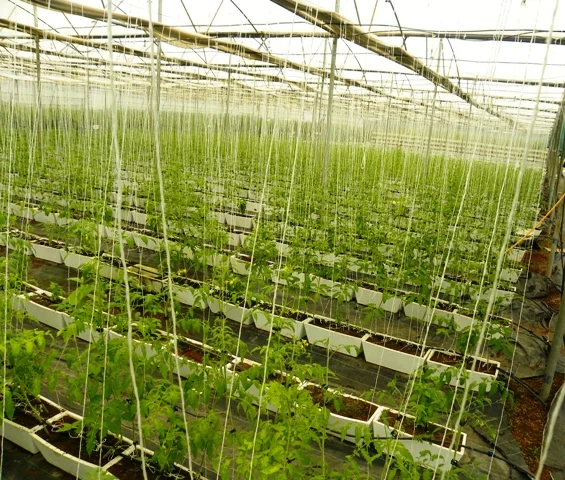
Started as an experiment in the urban landscape, Triton Foodworks works on clean, accountable and reliable farming methods. The founders define a new generation of farmers, farmers who live in apartments, hang out in bars, and are social media addicts but also care deeply for the environment.
Say Hello to Hydroponics and Aeroponics
Hydroponics is the science of growing plants without soil. Nutrients are supplied to the plant through the water. In the present scenario of depleting water resources, hydroponics has an advantage over traditional farming. It consumes around 90 per cent less water, in turn, prevents topsoil erosion, requires no pesticides, and provides a better yield. Along with hydroponics, Triton uses aeroponics, a method of growing plants without a growing medium. The roots are suspended in air and nutrients are given through fine mist.
Both techniques are win-win methods, sustainable and profitable methods of food production.
Triton Foodworks now operates around 150,000 ft. of greenhouses in India and has managed to produce more than 700 tonnes of vegetables and fruits on their hydroponic farms. Be it bell peppers or strawberries, tomatoes or mint, they offer it right.
Related Links:
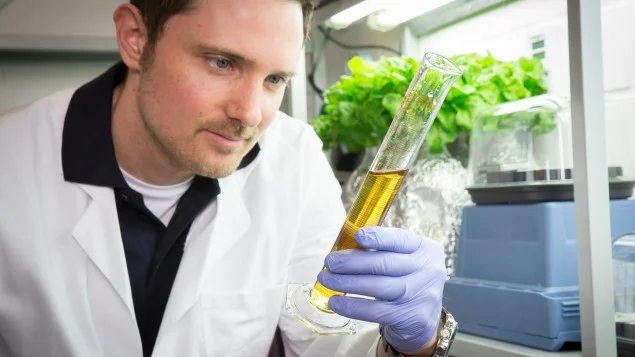
The Vegetable Farmer from the Antarctic
Paul Zabel from the German Aerospace Center operates a greenhouse in the Antarctic, where tomatoes, lettuce and cucumbers flourish
By Dirk Asendorpf

The greenhouse EDEN: tomatoes, cucumbers and lettuce grow up to -40 degrees outside. (DLR)
Paul Zabel from the German Aerospace Center operates a greenhouse in the Antarctic, where tomatoes, lettuce and cucumbers flourish. For future space missions, plant cultivation is to be tested under difficult conditions.
"Zabel. Hello. "- A call in Antarctica. Just started there the polar day.
"We have 24 hours of sunshine when we have no clouds. Today it is very nice. We have the second right summer week. It's only
about minus 13 degrees. " In recent months, Paul Zabel had to cope with significantly worse weather conditions. For one polar winter, he was responsible for the research greenhouse of the German Aerospace Center. This is located 300 meters from the German Neumeyer Station in a container.
"We had the lowest temperature with minus 43.4 degrees in August. There were a few days where there were stronger storms, and I did not go because that was just too dangerous. "
He has a satellite connection at all times in the greenhouse 13,500 kilometers away in the view. A dozen screens fill a wall of the control room.
"We can not touch the plant itself. But we could say for example: The container is now two degrees warmer, we put this here and then the container would be up to two degrees warmer. We could control the light and, for example, we could also give a different nutrient mix to the plant. We can control everything from here. "
A full greenhouse for the first visitors to Mars
The complete remote control of vegetable cultivation in a hermetically sealed container is the prerequisite for its application to future interplanetary space missions.
"Scenarios provide that the greenhouse system flies to Mars in advance, unfolds there automatically and already plants are grown automatically. And when the first humans come to Mars, they can almost find a fully grown greenhouse. That's the theory. "

The tomatoes and salad are well grown. Only the strawberries and peppers did not really thrive in the EDEN greenhouse. (DLR)
However, the practice was still a long way away. Almost every day Paul Zabel had to look to the right in the Antarctic greenhouse.
"For example, we had a broken LED lamp from the plant LEDs relatively early in the year. I could then replace it with a spare part. We had several failures of electrically controlled valves and pumps in our cooling system, which are now being replaced by other models. "
The repairs will be carried out by project manager Daniel Schubert personally in January. Then he also brings the seeds for the next test run, including seeds for ten different types of lettuce that Nasa has already tested on the International Space Station. In the Antarctic container they should germinate and grow as independently as possible. A gardener will not exist in the next polar winter.
The greenhouse should be completely remotely controlled
"We could not find anyone who would like to hibernate again. And then we thought: Could we do a self-sufficient mission? So really just observe and control the greenhouse system only from Bremen, out of our mission control center. And we say to the overwinterers: Only go in an emergency - or to harvest. "
Paul Zabel flies back in mid-December to Bremen. There he missed a century summer.
"I also talked regularly with my colleagues and then I was a bit jealous here and there. But I was just a year in the Antarctic. But chirping birds and being able to go out into the forest again, these are things that you just can not do here. And I'm definitely looking forward to that. "

Take A Look At America’s First Robotic Farm
December 30, 2018
America’s first robotic farm claims to use less energy than other modern forms of farming. The hydroponics system uses 90% less water than traditional farming and this is while producing 30 times more crops/ac.
The farm, which is just 8,000ft² in size, is said to take a human-led, robotics first approach. This, it says, allows plants to be grown at their best from seed to harvest.
By using the hydroponics system, the farm provides the same products all year round; which are not affected by seasonality.
What is hydroponics?
Instead of soil, plants are grown using a mineral nutrient solution and misting methods. LED lights are often used as the light source.
However, hydroponic farms require a lot of labour, such as transferring individual plants at different growth stages.
To see the robots in action, take a look at the video below.
Quality Produce
Iron Ox – the company behind the robotic farm – states on its website that: “Quality shouldn’t be a luxury or compromise.”
The company claims that it is “using robotics and intelligence to grow better food for less. In a way that uses less; less of what we can’t get back or can’t afford to waste.”
The farm plans to provide a secure food supply and access to premium produce for everyone.
According to reports, the farm plans to grow 26,000 heads of lettuce, greens and herbs. Restaurants will be the first port of call for the produce, which is set to hit the market soon.

Cannabis Hits Fifth Avenue
Fifth Avenue, is New York’s premier thoroughfare. It is considered one of the most expensive and glamorous streets in the world. Major global luxury brands have their flagship stores on this avenue. So for a cannabis dispensary to have a presence on Fifth Avenue only says one thing; a seismic shift is happening in the way marijuana is branded and sold to the public.
Through a reverse takeover, MedMen bought a public shell company in Canada and then merged with it to enable MedMen to get listed on the Canadian Securities Exchange (CSE) under the ticker MMEN. US marijuana companies are currently barred from listing on NYSE or Nasdaq. So by listing on the CSE, people living in the US can buy and sell stock in a company whose product, marijuana is still illegal under federal law.
But while federal law is still backwards looking in its approach to marijuana’s legal status, states are waking up to the realization that popular sentiment for the legalization of marijuana has been growing. In fact, a pew research conducted in October 2017 found that 61% of Americans or about six in ten favored its legalization.
On July 13, 2018, New York State Department of Health issued a report recommending the legalization of marijuana. They found that the positive effects of a regulated marijuana market in NYS outweighed any potential negative impacts. It therefore seems to be only a matter of time before NYS joins the ever growing list of states that are legalizing marijuana. And then maybe even Federal Law will follow this trend and overhaul their outdated and repressive laws.
State sanctioned cannabis sales in the US are estimated at about US$7 billion annually and according to the Cowen Group, are expected to reach US$75 billion by 2030. MMEN has positioned itself to tap into this burgeoning market. It has more than 800 employees and 18 licensed facilities in California, Nevada and New York. It has branded cannabis as a consumer product. And by opening its store on Fifth Avenue, is positioning itself as a trendy designer dispensary. The Fifth Avenue store has come to be known in some circles as the “Barneys of Weed”. The company says, “we do not run pot shops, we manage leading retail stores that happen to sell marijuana and marijuana products.”
My approach to analysis of a company’s security is technical. Since MMEN was only listed on May 29, 2018, there is insufficient data to do a proper analysis of this company’s stock price. After opening at 5.63 on May 29, 2018, price declined to a low of 3.43 on June 8, 2018. This is not an unusual occurrence for a newly listed company. A rebound saw price rising to a high of 5.90 on June 21, 2018, but since then it has traded sideways, closing on August 2, 2018 at 4.21.
DISCLAIMER
This piece is for information and educational purposes only. I am not recommending you take a position in this stock. If you are interested you must do your own research and make a decision accordingly.
Written by Stella Osoba, CMT

How to Sell Your Produce and Microgreens to Top Restaurants | Episode 3 - Wilson Gibbons (Farm.One)
Published on Dec 27, 2018
In our 3rd episode we chat with Wilson Gibbons, sales manager at Farm.One -
One of the most unique and innovative vertical farms in the country that grows for top Michelin starred restaurants in NYC. He gives the best sales and marketing advice so you can get your foot in the door at restaurants.
Do you have or are you thinking about starting a vertical farm?
Do you want to know how to get your produce and microgreens into some of your top local restaurants? Then you need to watch this episode!
Thanks to Wilson for taking the time and sharing his knowledge and insight.
If you have further questions you can reach out to him at wilsonrgibbons@gmail.com. Also, thanks to everyone who asked questions for this interview across Facebook, Instagram and Reddit. I tried to fit as many as I could into this interview!
ABOUT FUTURE FARMS AND FOOD
Hi everyone! My name is Albert Lin and I'm a farmer, entrepreneur and advocate for all kinds of farming technology that can help feed the world! This is part of a vlog series from VegBed where I interview farmers, entrepreneurs and academia to talk about the future of food.
If you are interested in the best hydroponic growing medium check out ours! (https://www.vegbed.com/products/vegbe...)
Connect with us! Instagram: https://www.instagram.com/vegbed/
Facebook : https://www.facebook.com/vegbed
LinkedIn: https://www.linkedin.com/company/vegbed/
Subscribe! YouTube: https://bit.ly/2EeAejT
Please make sure you hit the subscribe button and hit the notification bell so you can follow Future Farms and Food interviews!
If you would like to be on an episode of Future Farms and Food or know someone that would be a perfect fit send me an email (info@vegbed.com).
Thanks!
Category: Science & Technology
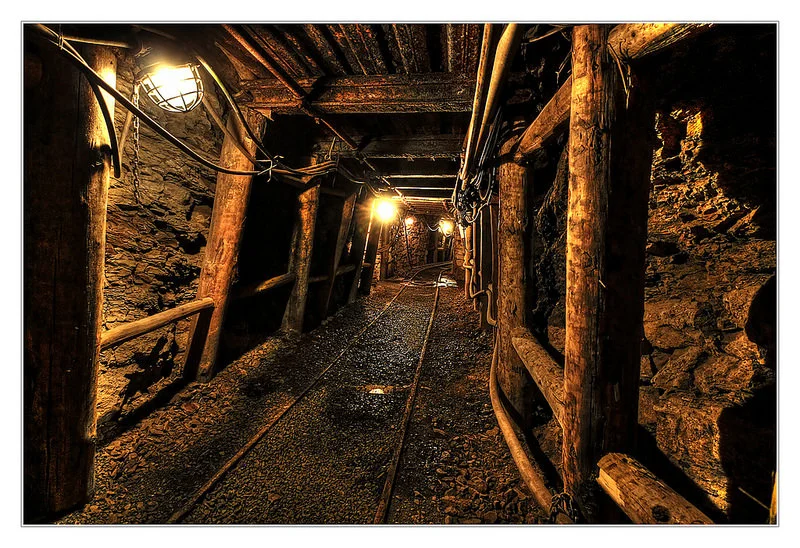
Abandoned Mines Could Become The Farms of The Future
Academics are exploring the use of abandoned mines and other subterranean facilities in the UK and China as alternatives to traditional agricultural land.
December 22, 2018 | By John McKenna
Coal mines and inner-city tunnels could be transformed into farms to help feed the planet’s growing population.
Academics are exploring the use of abandoned mines and other subterranean facilities in the UK and China as alternatives to traditional agricultural land.
“There are millions of redundant coal mines and tunnels in the world which could be linked to new tunnels for crop production,” says Professor Saffa Riffat, Chair in Sustainable Energy at the University of Nottingham.
“In the UK there are over 1,500 redundant coal mines, and in China, there are over 12,000 abandoned coal mines (0.6 million m3), 7.2 billion m3 of tunnels and about one billion m3 of civic air defence tunnels.”
Farm demand
The United Nations predicts the world’s population will grow by 1 billion to reach 8.6 billion in 2030, and 9.7 billion by 2050.
This increase – coupled with an expanding global middle class that is demanding higher-quality food – will require a near doubling of current food production levels, which today still leave 815 million people chronically undernourished.
Instead of simply doubling the amount of agricultural land and all of the economic and environmental implications that would come with that, farmers and scientists are exploring new techniques for growing our food.
Riffat and his University of Nottingham colleagues are embarking on a two-to-three-year study of underground facilities in the UK and China.
They claim that a variety of crops could be grown in the subterranean farms using hydroponic planters, where plant roots are fed with nutrient-rich water. This water could be sourced from groundwater used directly or water that is condensed from ambient air.
Coloured LED units would enable photosynthesis in the absence of sunlight, while plants could breathe CO2 that has been captured from industrial emissions and stored underground.
Dome grown
Growing food inside in artificial conditions is nothing new: in Iceland, where winter can last for six months, crops have been produced in geothermal domes all year round for the past 20 years.
However, today hydroponics is being combined with digital technology to make indoor farming more efficient than ever before, leading some to call it the future of agriculture.
And in many cities – where the majority of the planet’s projected population growth will occur – vertical farms are appearing. These “skyscraper farms” are claimed to yield more than 32 times the level of crops per square metre as agricultural land.
However, Riffat warns that “vertical farming systems are expensive to manufacture and install, and require a large amount of water and energy for heating and cooling”.
“They are also vulnerable to extreme weather conditions, wars and terrorism,” he adds.
He argues that underground farms would be less exposed to many of these risks.
Such underground farms already exist: in London one company has converted old Second World War air raid shelters into a hydroponic farm that produces herbs and salads for London’s hotels, restaurants and supermarkets.
The article was published on the World Economic Forum’s website.
Photo credit: Daniel Mennerich on Foter.com / CC BY-NC-NDCopy

Space Tech That Feeds High-End Diners In Toronto Could Help Canada's North
Lush, leafy greens could be locally grown with innovative vertical farming system
James Dunne · CBC News · Dec 25, 2018
A look inside We the Roots vertical farm in Toronto. Wired with LED lights, the hydroponic facility can grow up to 20,000 leafy green plants at a time. (Yan Jun Li/CBC)494 comments
Technology being used to stock high-end Toronto restaurants with designer leafy greens could provide Northern Canadians with locally grown produce.
That's the view of academic experts and entrepreneurs involved with a high-tech vertical garden housed in an east-end Toronto warehouse.
"We're going to grow food using light recipes to make economic food, to make food cost-effective" says Amin Jadavji, "and I think that's the North story".
Jadavji is CEO of We the Roots, a company he co-founded in 2017 with six others, including celebrity chef Guy Rubino.
Recently, the federal government increased funding for shipping food to Northern Canada and expanded the Nutrition North program. That move comes as advances in hydroponics and LED lighting coming from research to grow food in space are expanding the prospects for northern farming.
Amin Jadavji, CEO of We the Roots, says vertical farms can produce cost-effective food, including in Canada's North. (James Dunne/CBC)
The vertical farm of We the Roots is a commercial test of the new tech. The most traditional farm-like thing about it is the pickup truck parked outside.
The structure inside a former factory is roughly 14 metres long by three metres wide and four metres tall. It houses from 15,000 to 20,000 plants at a time. "We're growing wild Italian arugula, mizuna, which is a Japanese mustard green, Tuscan kale, basil," Jadavji says, "and a little bit of cilantro."
See how hydroponic technology grows vegetables:
The operation is hydroponic and almost entirely automated. Water in the system carries nutrients and is recycled.
Plants are nested in trays and stacked seven layers high, each one under strips of LED bulbs. The bulbs provide a tailored light combination (cool white, green, deep red, ultraviolet, far red), created to bring out specific qualities in the plants, changing their size, texture and even taste.
Then there's the nutrition factor. "We can increase things like calcium and phosphorus and various vitamins by as much as 50 per cent just by changing light recipes," says Jadavji.
Young plants nestle inside the We the Roots vertical farm. The system features custom LED lighting from a company called Intravision. ( Yan Jun Li/CBC)
The system at We the Roots is the first commercial use of a concept developed by the University of Guelph in collaboration with a Norwegian company called Intravision, says Jadavji.
The university's Space and Advanced Life Support Agriculture program, which focuses on trying to grow plants in hostile environments like space, began using Intravision's LED lights in research. That developed into a stacked system that both light and water flow through.
Though this technology was created to help feed astronauts of the future, the first customers are already enjoying lunch and dinner at five upscale Toronto restaurants, including Parcheggio.
In the hierarchy everything clicks into place with this product, which is awesome.— Andrew Piccinin, Parcheggio executive chef
Parcheggio's executive chef Andrew Piccinin dropped romaine lettuce from his salad menu after California's E. coli problem. With greens from We the Roots, he doesn't worry about E. coli because hydroponics aren't vulnerable to the same contamination.
Besides safety, he loves that the greens are flavourful, local, and environmentally friendly. "In the hierarchy everything clicks into place with this product, which is awesome."
Chef Andrew Piccinin of Parcheggio displays his 'Nonna's Salad,' an old family recipe made with arugula grown in a new high-tech vertical farm. (James Dunne/CBC)
Vertical farming is part of a recent explosion in urban agriculture, a broad agriculture practice that dates back to ancient Egypt.
According to the United Nations, urban agriculture doubled from the early 1990s to 2005. Now, the UN Food and Agriculture Organization says 800 million people in cities are growing fruits and veggies or raising animals, accounting for 15 to 20 per cent of the world's food.
Vertical farming operations are a leading part of the trend.
Analysts suggest the vertical farm market will shoot up to $13 billion US a year by 2024, from just under 1.8 billion US in 2017.
Though vertical farming has seen some high-profile failures in Vancouver and Chicago, entrepreneurs and investors see fresh opportunity.
Aerofarms' massive vertical farm in New Jersey is not hydroponic, but aeroponic. It uses less water by spraying plants with mist instead of soaking the roots. (Aerofarms)
CBC News reported on a massive investment in the sector in 2016. Inside Aerofarms' large 6,500-square-metre facility in New Jersey aeroponics are used, spraying plants with mist instead of submerging them in water. The farm has the capacity to produce two million pounds of food a year.
In Canada, McCain Foods invested in a Nova Scotia vertical farm company called TruLeaf in the spring of 2018.
We the Roots plans to expand its Toronto operations next year. Jadavji is also opening two new farms, one about 135 kilometres from Toronto and one in New Jersey, each of them 1,850 square-metre facilities to produce 1.3 million pounds of greens per year.
Going big isn't the only way to get into vertical farming though.
Tiny turnkey vertical farms built inside shipping containers can be seen in cities such as Victoria, Calgary and Dartmouth, N.S.
Plants are densely packed into vertical towers inside the Very Local Greens container farm on the waterfront in Dartmouth, N.S. (Emma Smith/CBC)
Container operators can grow from 3,000 to 5,000 plants and sell at farmers' markets and to restaurants and caterers. Prices for container farms range from just over $50,000 to more than $200,000.
American container farm makers have clever names like Freight Farms and Crop Box, and Canadians are doing the same with brands such as Growcer and Modular Farms, which sells new custom containers.
While many vertical farms are in large cities, Ottawa-based Growcer has six of its high-tech containers in Alaska and three in Northern Canada, with systems in Kugluktuk, Nunavut, Kuujjuaq, Que., and Churchill, Man. Another system is going to Manitoba and one to Yellowknife as well.
Growcer's vertical farm in Churchill, Man., is made from a repurposed shipping container. The operator supplies stores, restaurants and individual or families with a weekly subscription. (Carley Basler)
Its units are insulated to function in temperatures as cold as –52 C. Growcer CEO Corey Ellis says the company began in 2015 deeply concerned about improving the supply of fresh food in the North.
It was the high food prices in the North that also gave the company a buffer period to improve its technology. The company was able to win Northern customers as it was working to lower operating costs.
"It was a great testing ground because you know with a $7 head of lettuce that's on the shelf before we show up," says Ellis, "we knew that if we could even do a $3 head we would be doing well." Ellis says Growcer's systems have advanced so much some units can match wholesale prices of greens from California.
It galls me, quite frankly, to think this Canadian technology will find its first expression in a large scale pilot in the deserts of Kuwait.— Mike Dixon, University of Guelph
Experts believe it's time to try large scale vertical gardens in the North.
University of Guelph professor Mike Dixon is frustrated technology from the school's space agriculture program isn't being used to help address Northern food security.
University of Guelph Prof. Mike Dixon believes large vertical gardens can help provide food security in Canada's North. But he says, 'It galls me, quite frankly, to think this Canadian technology will find its first expression in a large-scale pilot in the deserts of Kuwait.' (Joe Fiorino/CBC)
We The Roots wants to try the system Dixon helped create in the North, but it will be tested in extreme heat before severe cold. Why? Because Kuwait is willing to invest in it.
"It galls me, quite frankly," says Dixon, "to think this Canadian technology will find its first expression in a large-scale pilot in the deserts of Kuwait."
ABOUT THE AUTHOR
James Dunne
Producer, CBC News Business
James Dunne researches, produces and writes stories for the business unit at CBC News. He has a decade of experience in business programming including on the shows Venture and Fortune Hunters. An award winning video journalist, he's also worked on special projects and as the late lineup editor for the World at Six on CBC Radio 1.

US (RI): University Launches Hydroponics Educational Program
Acopia Harvest International, member of Irving A. Backman & Associates and University College at Roger Williams University are partnering to create hydroponics education and training programs for students, military personnel, senior citizens, homemakers and career-chasers.
The new program provides opportunities for students to receive an education enabling them to join one of the fastest-growing industries worldwide. Programs begin in summer 2019.
Hydroponics, the art and science of growing plants in water, is an effective learning tool stimulating students of all ages by allowing them to engage in and explore all areas of STEMM (Science, Technology, Engineering, Math and Manufacturing). Students develop transferable skills in water management, plumbing, electricity, agriculture, nutrition, sustainability, marketing, business management and economics.
According to Ameth Alzate, Acopia International Founder, "Hydroponics is a rapidly-developing industry providing year-round plant growth. Delivering fresh, locally grown produce at all times of the year is a key strategy for growing food in parts of the world with harsh environments and/or limited growing seasons."
Jamie E. Scurry, RWU's Vice President of University College said, "University College is pleased to partner with Acopia because hydroponics technology provides knowledge and training to pursue this proven method of cultivation."
For more information:
ibaglobal.co
www.rwu.edu
Publication date : 12/18/2018
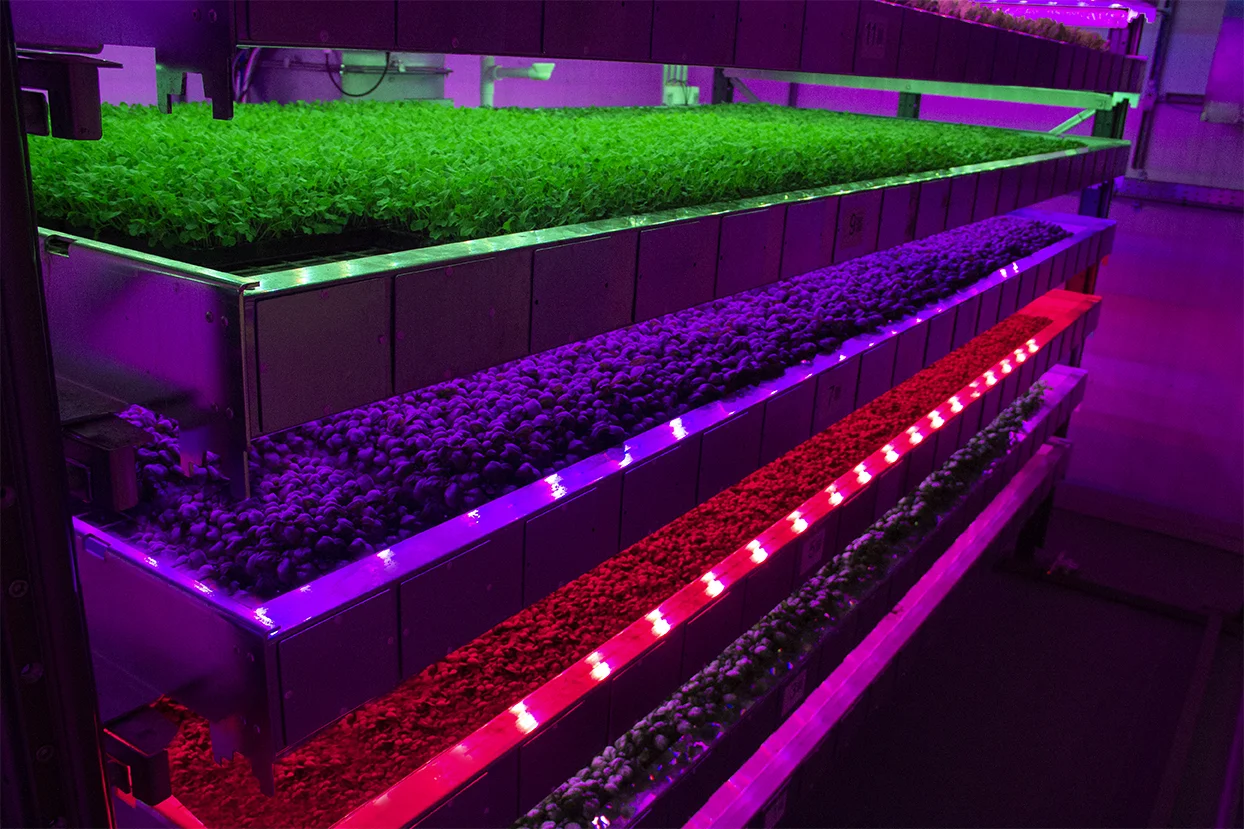
11 Indoor Farming Companies Taking Agriculture Indoors
“Vertical farming,” “low-impact farming,” and “urban farming,” are just some of the ways to describe the move towards indoor farming using smaller footprints than traditional farming
In our last article on precision agriculture, we talked about how global poverty is plummeting and there are fewer starving Africans that we need to feel guilty about every time we chuck out the leftover quiche because it gets too rubbery when zapped in the microwave. Now that we’ve sorted out all those poor people living in that far away country called Africa, we can move on to solving problems that hit a bit closer to home.
We’re talking of course about the whole “farm to table” trend where everyone wants to know that the baby spinach they’re nibbling on was grown by farmer Dick who lives two blocks away, a stern but likable old man, who tenderly nurtured the growing leaves every day in worn denim overalls while his golden retriever named Maggie frolicked alongside a small herd of free-range cows grazing in an idyllic pasture nearby. Story has now become an important part of the foodie experience, and being able to say that you grew something yourself means a lot to consumers. Which of course means you can then charge them more.
“Vertical farming,” “low-impact farming,” and “urban farming,” are just some of the ways to describe the move towards indoor farming using smaller footprints than traditional farming. The folks over at Finistere Ventures put together an awesome market map which listed out 10 startups working on indoor farming (to which we added one extra). If your amazing indoor farming startup isn’t on this list, drop us a note in the comments section below and the thousands of lovely readers that grace our site every day will still get to know about your venture. Please note that the main focus of this article is on indoor farming platforms that operate on a commercial scale.
Indoor Farming Platforms

Founded in 2014, San Francisco startup Plenty has taken in $226 million in funding so far to develop plant sciences for crops to flourish in a pesticide- and GMO-free environment. While the website contains all sorts of whimsical banter with little about what’s actually being done with this massive chunk of money that was raised, an article by Forbes last summer talks about how they’re poaching talent from Tesla to “create high-yield vertical farms that use a fraction of the energy and water needed for field-grown crops.” The numbers thrown around sound impressive. A 250,000 square foot space that equates to 5 acres because plants are being grown sideways on walls up to 20 feet high with only 1% of the water required to grow compared to traditional farming.
An indoor farming operation at Plenty – Source: Plenty
It’s all about using the latest technologies, which is why they made our list of 9 AgTech Startups Using AI to Grow Smarter. So did this next startup.
Founded in 2015, New Yawk startup Bowery Farming has taken in $141 millionin funding so far for their high-tech approach to indoor farming that uses robotics, LED lighting, and data analytics to grow leafy greens indoors using 95% less water and with 100X more yield on the same footprint of land that traditional farming requires. Again, it’s all about using technology, and Bowery Farming claiming to have the most technologically sophisticated indoor farming operation in the world. They’ve been selling produce for a few years now, and are now looking to start producing at scale.
Artisanal salads from Bowery – Source: Bowery
In addition to being featured in local restaurants, products like the ones seen above are being sold in Whole Foods at prices that are “comparable to most of the retailer’s other greens.” That’s according to an article by Fast Company that goes on to talk about how the system is automated such that “humans barely need to interact with the growing plants.” It also mentions our next company which is located nearby in New Joisey.
Founded in 2004, New Jersey startup AeroFarms has taken in $138 million in funding so far to develop an aeroponic growing system that can grow produce with neither soil or sun, in any location. We’re only a third of the way through this list of companies, and already the talking points seem to be getting redundant. They use 95% less water, the flavor is better, 390 times more land efficient, 30 crops a season, yada, yada, yada. A few things stood out though, like how they use cloth instead of water to grow plants in, and that every crop generates 130,000 data points. And also, this picture shows quite an impressive grow operation:
One massive indoor farming operation – Source: AeroFarms
If the market for designer salad gets too crowded, maybe they can throw one of those together up north in Canada and start a high-tech cannabis growing operation, eh. Speaking of crowded markets, here’s another startup in the same locale trying to build the next romaine empire.
Founded in 2011, New York-based startup BrightFarms has taken in $113 million in funding so far to “pioneer the future of local, low-impact farming.” They build, own, and operate greenhouse farms that create permanent green-collar jobs and deliver fresh, great-tasting produce to homes across the country. Sensing the fact that the local salad market might be getting a bit crowded, they’ve opened up greenhouses in three other States besides New York. The produce is grown locally, picked at the height of freshness, and delivered to supermarkets within 24 hours. Consequently, the world becomes a better place as a result:
The usual banter about how much better indoor farming is – Source: BrightFarms
We’re not sure there is too much more we can add here, so lettuce move on.
Founded in 2009, Brooklyn startup Gotham Greens has taken in around $30 millionin funding so far to design, build, and operate commercial-scale, technologically-advanced, urban greenhouse facilities located in New York City and Chicago. Their flagship greenhouse, built in 2011, was the first ever commercial-scale greenhouse facility of its kind built in the United States. Measuring over 15,000 square feet, it produces over 100,000 pounds of fresh leafy greens annually.
Lettuce growing on the rooftops – Source: Gotham Greens
For as much salad as they say they grow in those cities, spend some time there and you’ll hardly be convinced that salad constitutes a meaningful portion of anyone’s diet.
Founded in 2015, San Carlos, California startup Iron Ox has taken in $6.1 million in funding so far to develop robotic farms that will churn out better produce, everywhere. We decided to include them on this list when we saw that they’ve been featured in all kinds of media publications with headlines like “the first farm in America run entirely by robots.” Turns out, it’s not fully autonomous but they have certainly taken the use of robotics pretty seriously. That’s according to an article by The Verge which talks about a 1,000-pound robot porter, named Angus, that moves pallets of plants around, and another contraption that moves single plants around using a robotic arm:
Indoor farming + robotics = Iron Ox – Source: Iron Ox
With any of these indoor farming operations we’ve talked about so far, there is some element of automation. The question is, how much cost savings can be realized by removing humans from the equation entirely? These are some serious questions to think about, but maybe not as serious as our next startup.
Founded in 2012, Berlin startup Infarm has taken in $34.1 million in funding so far to develop farming tech for grocery stores, restaurants, and local distribution centers. It’s another take on vertical farming, but since it’s run by zee Germans, they’ve managed to make it even more efficient – by squeezing all the fun out of it.
One serious grow operation – Source: Infarm
According to an article by political commentary site Tech Crunch a few years ago, Infarm was the first company in the world to put vertical farming in a supermarket with Metro Group – one of the biggest wholesalers in Europe – and has since seen a big demand from other supermarkets that want to do the same thing. Nothing says fresh like letting customers pick the produce themselves.
Founded in 2015, Paris startup Agricool has taken in $41.4 million in funding so far to grow and produce fruits and vegetables inside shipping containers. Their focus on the moment is strawberries, that’s according to an article by Tech Crunch which talks about how you can already buy their strawberries in a couple of shops in Gay Paree. The company plans to use the $28 million in funding they raised last month to launch 100 containers in Paris and Dubai by 2021. When you get to Dubai lads, try not to be too intimated by what our next startup is building there.
Last but not least, we have Crop One. Founded in 2012, this Silicon Valley startup has taken in $18.3 million in funding so far to develop a market-leading technology platform for indoor growing. They grow in modular boxes and claim to be the largest operator and developer of vertical farms in the world. Their superior technology – they say – allows them to achieve 20% to 60% higher yields per square foot than anyone else in the industry, and at a cost basis that’s 25% that of any other vertical grower. These are some mind-blowing numbers, and it’s all found in the below video which says at the end of this year, their combined output will exceed six tons per day:
One interesting area they’re looking at is growing in remote locations, like offshore oil platforms or extreme environments like Antarctica. They’ve partnered with Emirates Flight Catering to launch a $40 million joint venture to build the world’s largest vertical farming facility in Dubai.
Picks and Shovels for Indoor Farming
Founded in 2005, Austin, Texas startup Illumitex has taken in $83.8 million in funding so far to build beautiful LED lights for industry and architecture as well as groundbreaking LED grow lights for horticulture lighting applications. Think of them as a picks-and-shovels play for indoor farming. “Lighting, very often, is the single most expensive and critical part of a successful Controlled Agriculture Environment (CEA),” says the company which needs to compete with some pretty solid players out there, like the ones we discussed in our past article on Investing in LED Lighting Stocks.
Founded in 2008, Albuquerque, New Mexico startup Growstone has taken in $1.2 million in funding so far to develop a patented manufacturing process that takes waste glass from the landfill and recycles it into customizable products ranging from substrates for advanced hydroponic growing systems to soil amendments to improve soil structure and texture. The process involves crushing the glass bottles into an extremely soft powder, so soft, it feels like flour. That powder is then transformed into various products like this one:
Source: Growstone
The production facilities are located at landfills so it’s even more green.
Conclusion
It seems like some MBA put together a financial model for an indoor farming operation that looked too good to be true, shared it with every venture capitalist out there, and then everyone started throwing money at pretty much the same idea. It’s basically about using technology to grow stuff you can sell at a premium in local supermarkets and restaurants while saving money on things like transportation costs, pesticides, tractors, and humans. It must be really lucrative because these eleven startups have collectively raised more than $900 million so far. The indoor farming market seems a bit crowded though, so we’ll check back in a few years’ time and see which startups are still growing and which startups have died on the vine.
Are you paying too much in transaction fees to your broker? Check out a brokerage firm called Zacks Trade that's offering $1 trades on U.S. stocks and options until 2019. After that, you'll pay just $3 a trade or a penny a share, whichever is greater. It's one of the cheapest brokers out there and you can also trade stocks on 91 foreign stock exchanges. Click here to trade US stocks and options for as low as $1 per order until July 4, 2019.

Belgian Supermarket to Introduce In-Store Vertical Farms
The retail group sees multilayer cultivation as part of its wider aim of pursuing more sustainable products, shortened chains and innovation.
Colruyt Group is testing a system developed in-house for 'vertical farming' or multilayer cultivation in climate-controlled conditions. The retail group sees multilayer cultivation as part of its wider aim of pursuing more sustainable products, shortened chains and innovation. Colruyt Group aims to start stocking the shelves of its retail formula Bio-Planet with the first herbs from its vertical farm from the autumn of 2019, under its own label Boni Selection, which is strongly committed to a sustainable product range.

Ambition: herbs with a very small ecological footprint
Consumers are making increasing demands regarding responsible consumption. Colruyt Group wants to offer a possible solution using vertical farming. "Our multilayer cultivation creates the perfect conditions for plants", explains Stefan Goethaert, Director at Colruyt Group and responsible for product sustainability. "Air, light, water and nutrients are dosed in the ideal quantities. As a result, we only use the amount of energy and raw materials that is strictly necessary, whilst still allowing the plant to achieve optimum growth. And it's no longer necessary to use pesticides. The plants are therefore 100% natural. Moreover, they reach maturity twice as fast than when conventionally cultivated. And the quality remains high throughout the year, regardless of the weather conditions."
The first results after a year of testing confirm the story, says Stefan Goethaert. "We are already using 90% less water and 50% less nutrients than in conventional cultivation. We reuse all of the nutrients that the plant doesn't use. Moreover, we only work with filtered rainwater. Our LED lighting is twice as efficient as the current standard on the market. And the system runs on green electricity from our own wind turbines and solar panels." It is Colruyt Group's ambition to sell herbs that have a very small ecological footprint. That's why the entire lifecycle of the plants is looked at, from seed to consumer's home. The retailer is therefore also working on recyclable packaging and a long shelf life, and will minimise the number of kilometres driven by integrating the vertical farm in a distribution centre in the future.
Home-grown innovative technology
Colruyt Group is the first retailer in Belgium to test a vertical farm that was developed in-house. The technology used has been fully developed within its own R&D department. In the current test set-up, biotechnologists and engineers continue to work on optimising growing conditions.
For Colruyt Group, this project isn't a leap into the unknown: recent innovation projects around water purification, LED lighting, renewable energy, automation, eco-design and refrigeration have formed the basis. In addition, the R&D department works together with a number of knowledge institutions. "We are also in talks with potential partners", adds Stefan Goethaert. "We also want to make some of the plants available to innovative entrepreneurs who work on food trends. Together we can explore the possibilities for using our products."

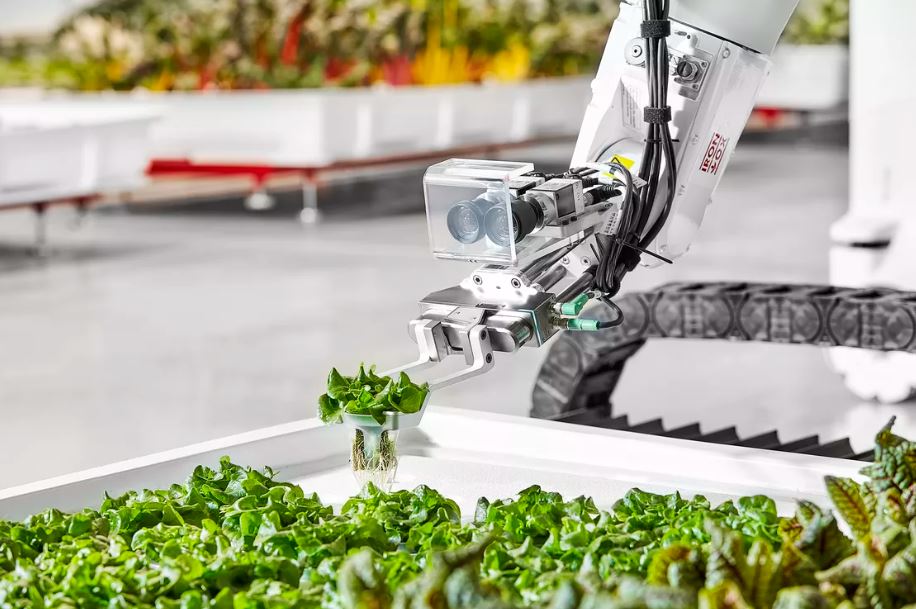
First trial at Bio-planet in 2019
"We are still in the testing phase, but the goal is to sell the first herbs at Bio-planet within a year", says Jo Ghilain, business unit manager of Bio-planet. "Vertical farming fits perfectly with our brand positioning. Bio-Planet stands for healthy, natural and local products. Furthermore, our customers are early adopters and are looking for added value. They are the people demanding products with a sustainable story." The herbs are currently grown using certified organic seed and substrate. "That was a decisive argument, in addition to the sustainability score of the plants", says Jo Ghilain.
Meanwhile, Bio-Planet customers were the first to taste test basil plants in three stores: on 27 November in Uccle, on 28 November in Grimbergen and Jambes. Jo Ghilain emphasises the added value of this co-creation: "The people of Uccle, Grimbergen and Jambes will help us determine the eventual flavour of the plants. Based on their opinions, we will adjust the cultivation process and the taste. This means that our customers actually choose the end result themselves."
For more information:
Colruyt Group
www.colruytgroup.com
Publication date : 12/5/2018