


Welcome to iGrow News, Your Source for the World of Indoor Vertical Farming

Disruptor of the Year: Constellation Brands
Constellation Brands' stake in Canopy Growth, the largest investment in the marijuana market to date, could fan the flames of a cannabis arms race between U.S. alcohol manufacturers.
AUTHOR
Emma Liem@emma_liem
PUBLISHED
Dec. 3, 2018
CEO: Rob Sands
Total investments in marijuana: $4.07 billion
Outlook: Constellation Brands' stake in Canopy Growth, the largest investment in the marijuana market to date, could fan the flames of a cannabis arms race between U.S. alcohol manufacturers.
When Constellation Brands invested $3.9 billion in Canopy Growth this summer, it not only made the largest investment in the marijuana market to date, but broke an industry taboo that had kept many beverage players on the sidelines.
The cash infusion increased the beer giant’s stake in the Canadian cannabis supplier to 38%, and Constellation will nominate four directors to the company’s seven-member board as part of the deal. The partnership has legitimized a trend that beer makers and analysts have been buzzing about for years: cannabis is set to become a cash cow for the alcohol industry.
“I cannot imagine a more disruptive development within the alcohol industry in the last couple of millennia, to be honest,” Spiros Malandrakis, head of alcoholic drinks at Euromonitor International, told Food Dive of the rise of cannabis in the beer space.
But while many bemoaned the marijuana industry’s impending threat to alcohol sales, Constellation identified cannabis as a potential growth driver in the sluggish U.S. beer space.
"Over the past year, we've come to better understand the cannabis market, the tremendous growth opportunity it presents, and Canopy's market-leading capabilities in this space," Constellation CEO Rob Sands said in a company release following the August investment. "We look forward to supporting Canopy as they extend their recognized global leadership position in the medical and recreational cannabis space."
Constellation isn't a first-mover in this budding segment, however. Craft brewers were the first to begin dabbling with marijuana-infused product. Heineken-owned Lagunitas Brewing rolled out a non-psychoactive, cannabis-flavored IPA brewed with marijuana terpenes in 2017. This year, it debuted a THC-based sparkling water, complete with the marijuana high.
But Constellation’s formidable advantage in the Canopy partnership can’t be ignored. The cannabis supplier, valued at $5.4 billion, will use the American beer titan’s financial backing to enter emerging recreational cannabis markets, as well as achieve global scale in the nearly 30 nations working toward federal medical cannabis programs. Though the company doesn't plan to sell marijuana-based beverages domestically before the U.S. fully legalizes the substance, this market reach — combined with Canada's legalization of recreational marijuana use in October — has driven rival beer brands to enter the space.
"Once Constellation broke the taboo, people started discussing [cannabis innovation] much more openly, and the other thing we have to remember is that not many cannabis companies in Canada are right now available for M&A."
Spiros Malandrakis
Head of alcoholic drinks, Euromonitor International
"In a way it's a game of musical chairs. There aren't many chairs left. So even for the biggest players in the alcohol space, they're not going to have the luxury of an infinite amount of time to choose their chair before the music actually stops."
Less than a year after Constellation's initial investment in Canopy Growth, Molson Coors announced that its Canadian business had formed a joint venture with Hydropothecary Corp. to make nonalcoholic, cannabis-infused drinks to sell in Canada. As part of the deal, Molson Coors Canada gained a 57.5% controlling interest in the firm.
But the most striking result of the M&A domino effect that began with the Constellation-Canopy partnership came from beyond the alcohol segment entirely. In September, Coca-Cola announced it was in talks with Canadian marijuana supplier Aurora Cannabis about developing marijuana-infused drinks. The soda behemoth's stock climbed 0.72% to $46.32 on the news, and boosted the stock of other cannabis companies as well.
"We are closely watching the growth of non-psychoactive CBD as an ingredient in functional wellness beverages around the world," Coke spokesman Kent Landers told Bloomberg News. "The space is evolving quickly. No decisions have been made at this time."
On a conference call in October, Coca-Cola CEO James Quincey said the company "doesn't have any plans at this stage" to enter the CBD market.
As interest in the medicinal properties of cannabinoids grows and stigma around marijuana use relaxes, alcohol manufacturers face a new path to growth. Whether or not these players can unseat Constellation's lead, however, is an open question.
"You’re looking at an arms race which, in my mind, is already in full swing," Malandrakis said. "There’s no doubt in my mind that the 'green tide' is inevitable at this stage, and it's just going to gain more momentum moving forward."

Danone Among Backers of French Urban Farming Start-Up Agricool
French urban agriculture start-up Agricool has secured $28 million in its latest funding round, including an investment from Danone’s investment arm, Danone Manifesto Ventures.

Posted By: Contributor on: December 07, 2018
French urban agriculture start-up Agricool has secured $28 million in its latest funding round, including an investment from Danone’s investment arm, Danone Manifesto Ventures.
In the past three years, Agricool has developed a technology to grow local fruits and vegetables more productively and within small and controlled spaces, known as ‘Cooltainers’ (recycled shipping containers transformed into urban farms).
The Paris-based business said it is responding to reports which suggest that by 2030 20% of products consumed worldwide will come from urban farming – compared to 5% today.
Other investors in the round – which adds to $13 million previously raised – include Bpifrance Large Venture Fund, Antoine Arnault via Marbeuf Capital, Solomon Hykes and a dozen other backers.
With the new funding, Agricool aims to position itself as a key player in the vertical farming sector. The start-up hopes to multiply its production by 100 by 2021, in Paris first, then internationally, starting in Dubai, where a container has already been installed in The Sustainable City.
Agricool said that its challenge, and that of urban farming, is to help develop the production of food for a growing urban population which wants to eat quality produce, while limiting the ecological impact of its consumption.
In a statement, the start-up said: “Agricool strawberries are harvested when perfectly ripe and contain on average 20% more sugar and 30% more vitamin C than supermarket strawberries.
“The production technique makes for strawberries which require 90% less water to grow compared to traditional agriculture, with zero pesticides, and a reduced transportation distance reduced to only a few kilometers between the place of production and point of sale.”
Agricool co-founder and CEO Guillaume Fourdinier said: “We are very excited about the idea of supporting urban farming towards massive development, and it will soon no longer be a luxury to eat exceptional fruits and vegetables in the city.”
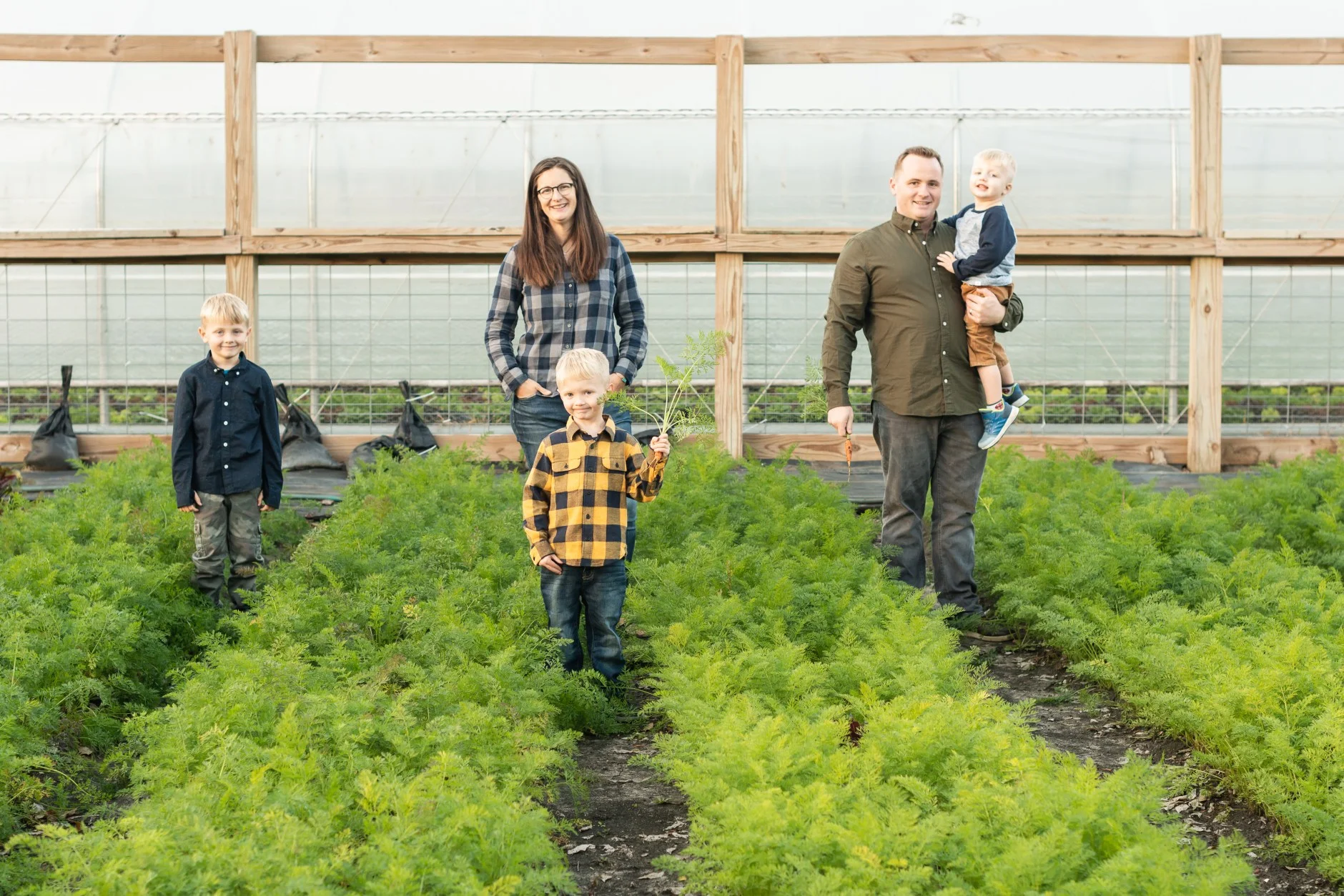
Jenny Quiner Brings Local Produce To Des Moines With DogPatch Urban Gardens
In the fall of 2015, Jenny Quiner launched Dogpatch Urban Gardens (DUG), the only for-profit farm inside Des Moines city limits.
In the fall of 2015, Jenny Quiner launched Dogpatch Urban Gardens (DUG), the only for-profit farm inside Des Moines city limits.
Before starting the farm, Quiner was a high school science teacher for six years.
“It was a great gig, but in those six years I had three little boys and was just feeling compelled to do something else in my life,” said Quiner.
Just a few years later and Quiner has wrapped up her third successful season and Dogpatch Urban Gardens has become a well-known name within the Des Moines food scene.
The garden’s biggest source of revenue comes from its onsite farm stand, Quiner told Clay & Milk. The DUG FarmStand is a seasonal onsite locally-sourced store that sells DUG products as well as other items from growers and producers throughout the state of Iowa. DUG also sells products to the Iowa Food Coop, local restaurants and through a subscription service called “Salad Subscription”.
In addition to selling food, the farm also contains an Air BnB called the “Urban FarmStay.”

Dogpatch Urban Gardens is located in the middle of Des Moines and has turned an acre of land to a garden and farm stand selling other local producers goods. (Photo courtesy of DogPatch Urban Gardens).
An expensive roadblock
Earlier this year, county officials told Quiner that the farm stand operates more like a commercial business and would need to make changes in order to follow commercial business requirements.
The unplanned costs and changes forced the Quiners appeal for help from supporters with a Kickstarter campaign.
“We raised around $27,000 and our goal was $15,000,” Quiner said. “We were very excited with how the community rallied and supported us.”
Looking ahead
Quiner recently took part in the Fall 2018 cohort of Venture School to help her better understand who her primary customers are.
“It’s been fabulous connecting with other entrepreneurs in the area. I’ve really enjoyed the program,” Quiner said. “It has really allowed me to better get to know my customers and helped me pinpoint who I need to target my marketing towards.”
Next season, Quiner plans to start holding events to the farm including farm-to-table dinners and wellness workshops.
“We’ve also just added a commercial kitchen space,” Quiner said. So next season we’re going to be focusing in on grab and go options like ready-to-eat salads and sandwiches that people can come and by at the farm stand.”
This Hidden U Of T Rooftop Farm Helps Feed the Hungry—and Could Impact How Cities Eat
Plus, find out how some U of T alumni are keeping the project alive.
By Kimberly Lyn
To feed Toronto, we must import more than 6000 tonnes of food every single day. As a result, more than 30 per cent of Toronto's environmental footprint is food-related—including the impact of shipping, pesticides and packaging. In fact, Toronto's food footprint affects the environment even more than its car traffic. And the reliance on imports also comes with a social cost: for those in poverty, fresh, organic produce can be hard to access.
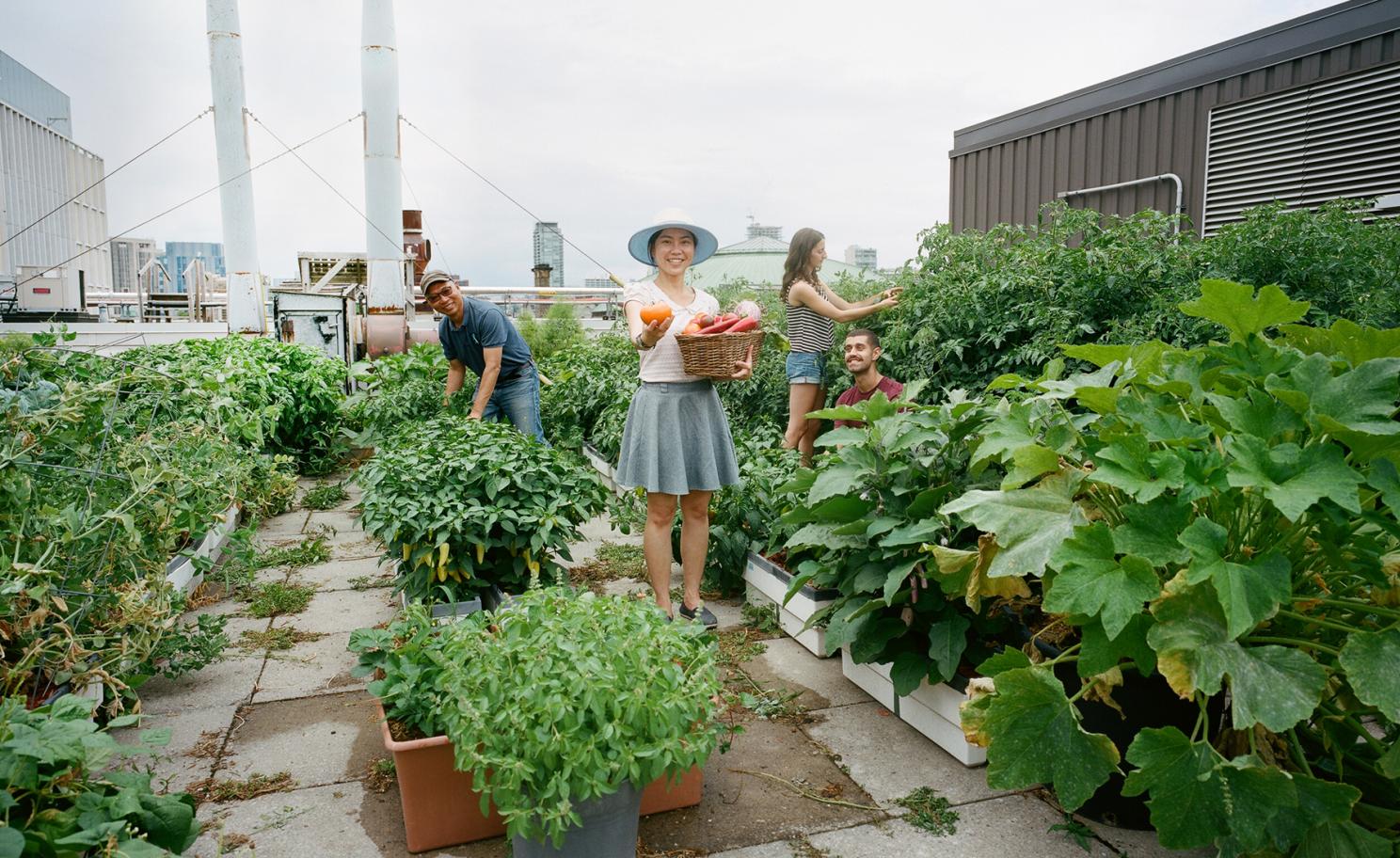
But atop an engineering building at the University of Toronto, students are conducting a living experiment in doing food differently: one of the city's biggest and most innovative food-producing rooftop gardens.
For more than eight years, Sky Garden's student and alumni volunteer farmers have planted, watered, weeded, and harvested produce on the bright, windswept rooftop of U of T's Galbraith Building. Their yield clocks in at an impressive 500 pounds of fresh, organic produce a year, and they send more than half of it directly to nearby Scott Mission—so that people in need can receive hot meals made with organic, locally grown produce.
“The garden takes inanimate concrete and transforms it into something that’s growing things,” says Matt Stata, a PhD student in the department of ecology and evolutionary biology, who helps oversee the project.
“It’s an example of what's possible,” says Stata. “There are so many unused roof spaces in Toronto that could be producing food... and so many people who would love to garden, but don't have any space to do it. And the people at Scott Mission are ecstatic when we bring over bags and bags of fresh produce. There's a real need.”
That vision is shared by U of T's affinity partners and alumni, who help fund the Sky Garden project. When alumni use a U of T MBNA credit card, or sign up for insurance through Manulife or TD Insurance, these affinity partners contribute a portion of the proceeds to Sky Garden—as well as to other key U of T alumni and student initiatives that are making an impact on our community.

Sky Garden's unique containers
Sky Garden is catching on: its volunteers have been called on to help set up similar rooftop gardens for other Toronto buildings and residences.
Rooftop gardens are a compelling idea because they offer all the benefits of a conventional green roof—stormwater retention, heat reduction, and air quality improvement—but with the added benefits of producing food, building a stronger sense of community, and helping connect people to food, nature, and each other.
Of course, farming on a roof comes with its challenges. Sky Garden's volunteer farmers use special, lightweight semi-hydroponic containers (featuring only a thin layer of soil) instead of covering the whole roof in soil, to ensure the farm doesn't exceed the roof's weight limit—since older roofs like Galbraith's can only bear so much.
They've also learned to cultivate shorter plants, as tall plants such as sunflowers can be bowled over by the strong rooftop wind. "We're actually growing corn this year," Stata says, "but it's a dwarf variety."
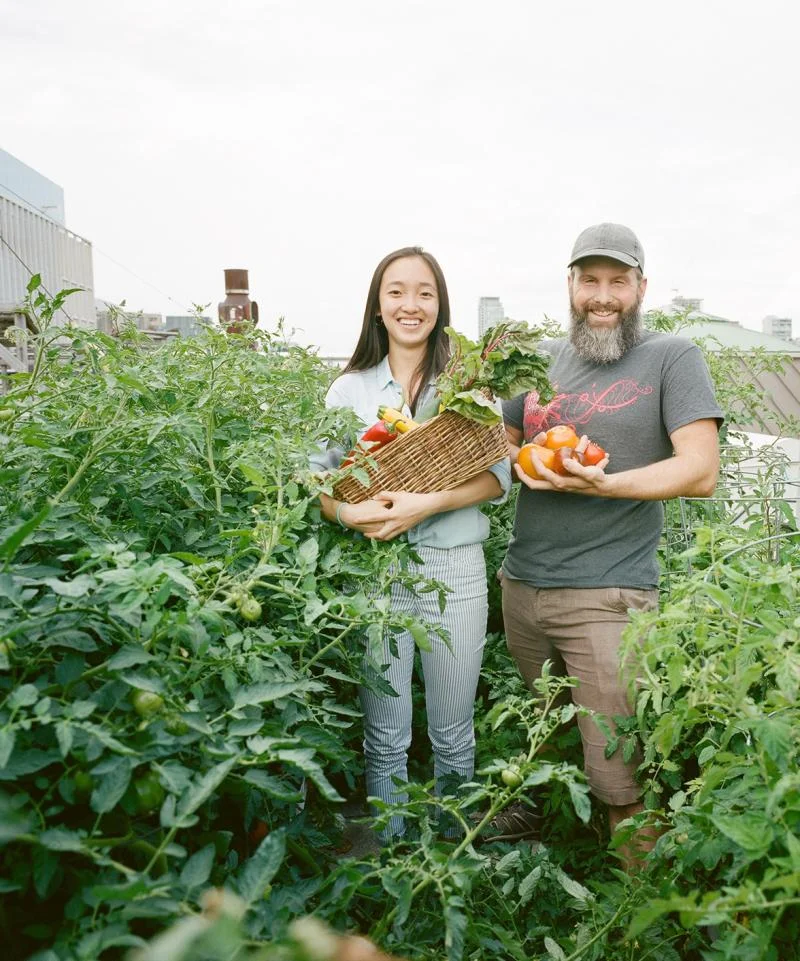
Sky Garden volunteers, Cindy and Matt.
Plus, not all produce works out. "We can't seem to grow kale," Stata muses. "We don't get too many pests up here, but for some reason, aphids just go bonkers for our kale."
But with every year that passes, the students have learned more and more about rooftop farming.
Give pumpkins and squash a few buckets to stretch out in, like they would in a real field.
Rip out plants as soon as they've stopped producing, and replace them with ones that are ready to produce—that way you use your containers more efficiently, and get a much bigger yield.
And don't even think about hand-watering and hand-fertilizing—it might work for a small garden, but it isn't viable for a farm of Sky Garden's size. Instead, the students installed an automated drip irrigation system, so each plant can suck up as much fertilized water as it needs, without drowning or drying out.
Sky Garden has also become a hub for other urban agricultural experiments. It's home to a year-round beekeeping operation, a solar-powered fruit dehydrator, and an array of unusual and heirloom produce—from ghost-white pumpkins to blue (yes, blue) tomatoes.

Sky Garden tomatoes. Photo by Jesse Milns
Student farmers are also trained in seed collection and preservation, and are encouraged to grow their own pet projects. In 2018, Sky Garden is hosting a student's struggling goji berry plant, testing out baby bok choy, and tackling their very first crop of mushrooms—grown in buckets of used coffee grounds, acquired "from a deal we struck with the local Second Cup," says Stata.
And the results have been mouth-watering. "There's a noticeable difference between our melons and grocery store melons," says Stata. "By letting our melons ripen on the vine, they're so much sweeter."
But the sweetest thing of all, according to Stata?
"Seeing how excited the students are to learn."
When you use U of T alumni financial services, you support Sky Garden too. Learn more »

Company Finds New Way to Grow Lettuce, Cut Risk of Foodborne Illness
One rooftop greenhouse company in Chicago says their lettuce is safer and longer-lasting.
3:25 PM, Dec 5, 2018
4:16 PM, Dec 6, 2018
The romaine lettuce outbreak has many consumers thinking about where their crops are grown.
One rooftop greenhouse company in Chicago says their lettuce is safer and longer-lasting.
Jenn Frymark, the chief agriculture officer and manager of Gotham Greens, pulls out a head of lettuce and immediately starts to eat it.
"No, you don't need to wash it,” Frymark says. “We don't have that on our package, but there's no reason for me to wash it. I never wash any of our lettuce at home. It's amazing; nothing touches it; it’s so clean.”
Here at Gotham Greens, lettuce is grown differently.
They do it hydroponically. That means it’s grown without soil, but in a nutrient-rich water. Instead of a traditional farm field, this lettuce is grown on rooftop greenhouses.
Their space on Chicago's south side is the largest rooftop greenhouse in the country. Because of the controlled environment, crops can grow in a third of the time of a traditional field.
“We're giving this plant everything it wants: the right day temp, the right night temp, the nutrients, CO2 levels, air circulation, the water,” Frymark explains. “I mean, these are very coddled plants and they have everything they need, and they can just grow in this perfect environment and reach maturity very quickly.”
Gotham Greens sells to grocery stores in the Chicago and New York metro areas, as well as select Whole Foods stores. The product goes from the greenhouse directly to grocery shelves in a day and a half.
The company’s lettuce also lasts longer than the traditional grocery lettuce out here. Frymark says their product can last up to two to three weeks in the fridge. Additionally, Gotham Greens prices are comparable to other organic produce.
Frymark also says their method dramatically lowers the risk for foodborne illness.
“There [are] no manures, there’s no water sources that could be contaminants,” she says. “We don't have birds and animals getting into the field.”
She says the company is expanding and plans to open more rooftop greenhouses in the near future.
Young, Hip Farmers: Coming To A City Near You
People want to know where their food is coming from, and the agricultural industry is responding.
Date:December 3, 2018
Source:Purdue University
Summary:The population of American farmers is aging, but a study shows a new generation of farmers is flocking to cities with large populations, farmers markets and the purchasing power to support a market for niche goods.Share:
FULL STORY

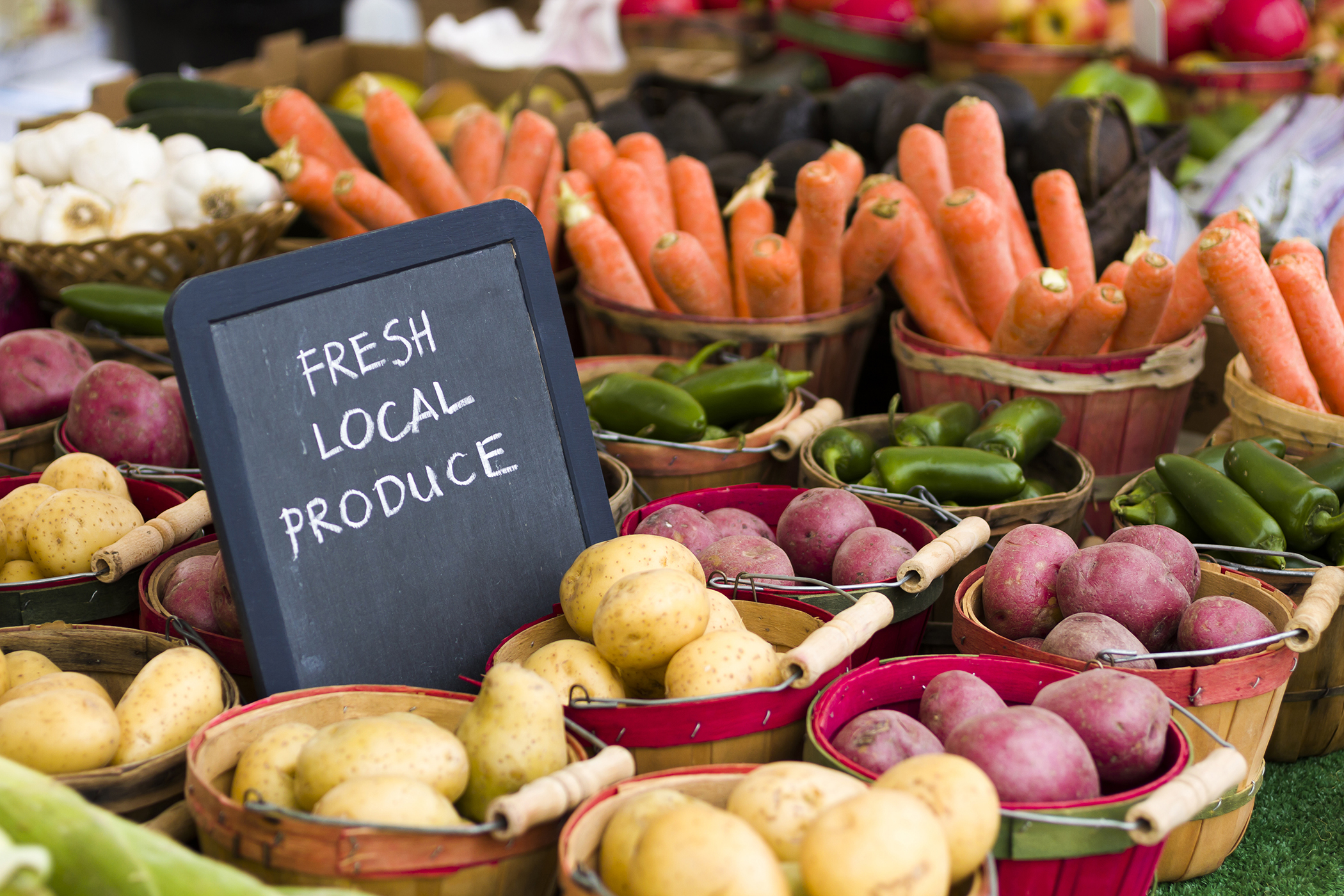
Farmers markets in larger cities are supporting a new, younger faction of American farmers.
Credit: Purdue University/Mark Simons
If you've been to your neighborhood farmers market or seen a small "local" section pop up in your grocery store, you may have noticed a trend: People want to know where their food is coming from, and the agricultural industry is responding. The number of farmers markets in the U.S. has skyrocketed in recent years, but with an aging population of farmers, who's supporting this growth?
Enter the new American farmer. It's a term used by Andrew Flachs, an environmental anthropologist at Purdue University, to describe a movement of younger people new to agricultural work who do it for different reasons than the conventional farmer. They may be motivated through higher education, personal politics, disenchantment with urban life or in search of an authentic rural identity, he says.
In a new paper in the journal Rural Sociology, Flachs identifies several hot spots where this movement is really taking shape: the West Coast, central Texas and Oklahoma, central Florida and the Great Lakes region.
"We're seeing these hot spots pop up in the peripheries of hip cities," Flachs said. "Some of these places might seem obvious, like the West Coast and the northern Midwest around Madison, the Twin Cities and Chicago. But we also see some things that aren't totally expected."
Among the unexpected trends he found, east Texas and the southern Midwest are becoming increasingly important for this kind of agriculture. Appalachia, which has historically been a hub, essentially disappeared from the map.
In collaboration with Matthew Abel, an anthropologist at Washington University in St. Louis, Flachs built a model that counts how many traits associated with new American agrarianism appear in each county. With data from the USDA agricultural censuses from 1997 to 2012, they considered factors such as average sales per farm, number of certified organic farms, owners under age 34, number of farms selling directly to individuals, proximity to farmers markets and more.
The findings show that newer farmers appear to thrive on the outskirts of cities that provide high demand and purchasing power, a large population and healthy number of farmers markets.
The price of real estate is another important factor in determining where these markets can flourish. Rural developers have steadily increased farm real estate over the last few decades, which could deter newer farmers from settling down there. Concentrations of urban wealth drive up real estate costs in the city while simultaneously creating new niche markets, making space for younger farmers to exist between urban and rural landscapes.
Identifying where new and small farmers live and work will pave the way for further research on what's motivating this budding sector of the agricultural economy. New American farmers occupy an important intersection of niche marketing strategies, environmental politics and rural demographic change that could have a significant impact on food production and social life in agrarian landscapes, according to the paper.
Flachs points out that many new American farmers approach agriculture with hopes to embody a nostalgic past where food and environments were healthier, but others may be simply trying to make a living as farmers amid dissatisfaction with conventional agribusiness. Although it's easy to stereotype, it's unlikely that all new American farmers fit this description.
"Sometimes when we think about these farmers, we picture young people with liberal arts degrees looking for some kind of connection to the earth or wanting to work with their hands," Flachs said. "What we found is that that's probably not the most representative view of who these people actually are. I'm glad to have my stereotype broken up by the data."
Story Source:
Materials provided by Purdue University. Note: Content may be edited for style and length.
Journal Reference:
Andrew Flachs, Matthew Abel. An Emerging Geography of the Agrarian Question: Spatial Analysis as a Tool for Identifying the New American Agrarianism. Rural Sociology, 2018; DOI: 10.1111/ruso.12250

This Entrepreneur Left Wall Street to Count the World's Calories. Now She's Warning of a Global Food Disaster Equal to the Financial Crisis.
Menker's path to counting the world's calories is a bit unorthodox.
ARIA BENDIXDEC 8, 2018, 09.45 PM

Michael Cohen/Getty Images for The New York TimesSara Menker at the 2018 New York Times Dealbook in November.
Entrepreneur Sara Menker traded in her Wall Street gig to help solve the world's mounting food crisis.
In the next decade, she warned, the world's food shortage could rival the financial crisis or dot-com crash in terms of its threat to government stability and economic safety.
Menker's company, Gro Intelligence, aims to create a universal language that helps companies, countries, and industries earn money and eliminate food shortages.
When it comes to feeding every person on the planet, the world could fall short of demand by 214 trillion calories per year in less than a decade. That's more Big Macs than McDonald's has ever sold, said Sara Menker, the founder and CEO of the software company Gro Intelligence.
Menker often uses this reference to help people understand the extent of the global food crisis - a disaster she believes is imminent.
At Gro, she collects all sorts of data about the world's agricultural system, from what types of coffee beans are most lucrative to the rise of avocado exports in Mexico. Her company then uses that data to uncover major patterns, like the fact that grain prices tend to follow trends in the oil market.
The global food shortage is often defined by the weight of crops needed to feed all citizens. But the words "kilogram" or "ton" haven't done much to convey the threat of food scarcity around the world.
What matters more, according to Menker, is calories - the actual thing that keeps people from going hungry. But even this metric can be confusing.
"It becomes this massive problem that is physically not possible for a human being to process," said Menker.
Menker said her team floated countless comparisons, including the weight of elephants, before landing on the Big Mac. The anecdote made its way into her 2017 TED Talk, which has been viewed nearly 1.5 million times.
From Wall Street to counting calories
Menker's path to counting the world's calories is a bit unorthodox. Before Gro, she was a vice president at Morgan Stanley, where she worked in commodities trading. While there, she went from trading sacks of potatoes for gold to investing in farmland.
Like any good Wall Street exec, she started off looking for the best deal.
She soon realized that the best purchase wasn't a $1 per acre plot in a developing country, but a $15,000 to $20,000 per acre plot in the Midwest. That's because investing in the cheaper farmland required borrowing money, obtaining crop insurance, paying for her own trucking service, building her own roads, and leveling her own land.
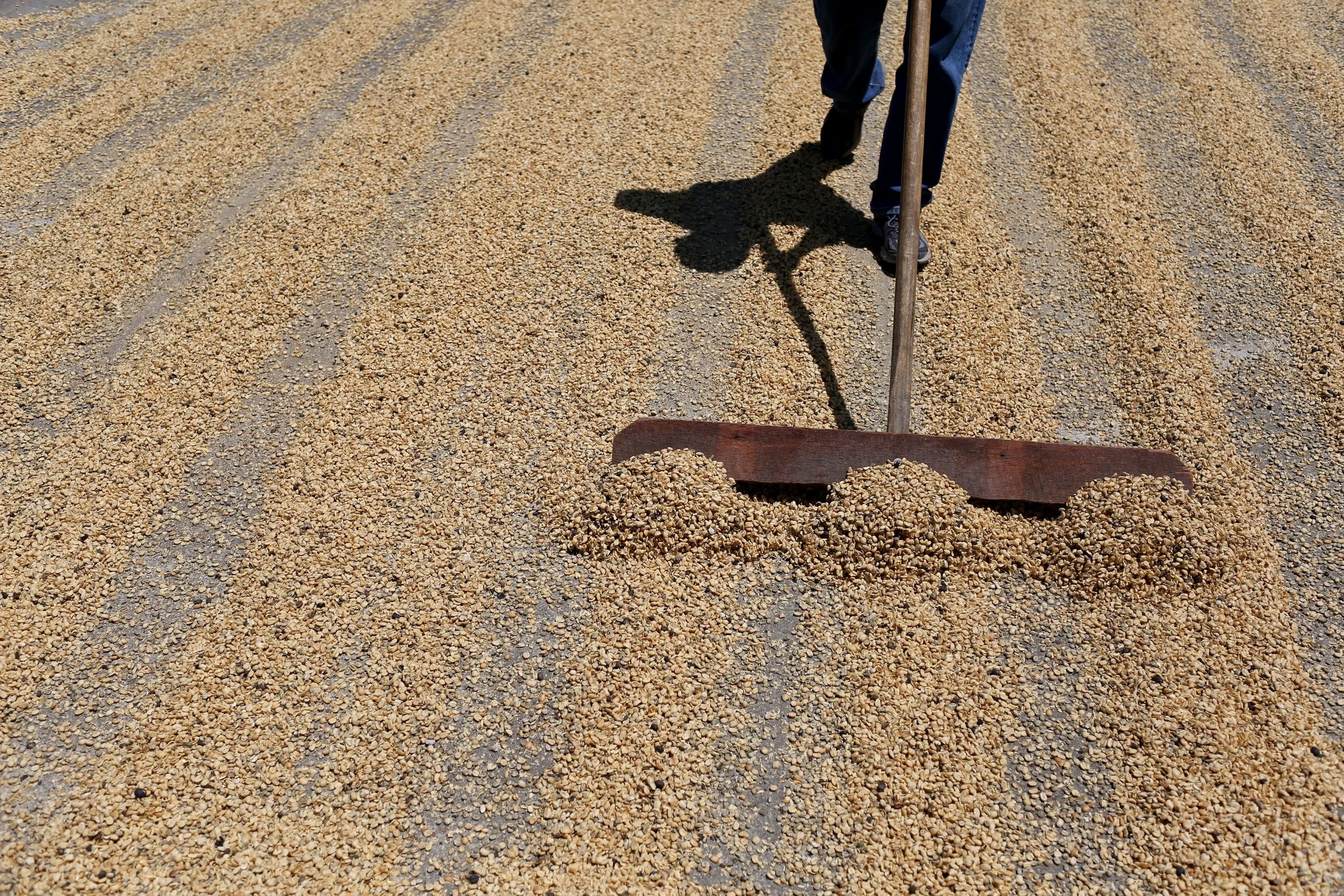
Joe Raedle/Getty ImagesA worker dries green coffee beans at a farm in Costa Rica.
The process was inefficient. Governments and investors hadn't taken the time, or devoted the resources, to figure out how to grow smarter in these areas. With Menker's help, they can learn how how to fix the system, and begin investing in it.
At Gro, Menker said, "our greatest challenge is actually getting clients to look at all the data."
Climate data, she said, has been particularly difficult for people to understand, since it "has always sat in the hands of the scientific community."
By presenting information in a way that clients can digest, Gro has created something of a universal language in agriculture.
Food security involves everyone
Gro not only makes it easy for people like Wall Street traders to understand weather patterns and temperature trends, but it also demonstrates why these trends matter, according to Menker.
"You can't really tackle trade without understanding climate risk," she said.

AP Photo/Eduardo Verdugo, FileA man works at an avocado orchard owned by the Cevallos family in Michoacan, Mexico.
Gro has an altruistic component as well. Consider a grain like quinoa, which has become increasingly popular in Europe and the US. As the global demand for quinoa rises, farmers who grow the crop can no longer afford to purchase it.
Gro allows companies to find areas that yield similar grains, which helps to feed communities. West Africa, for instance, produces a grain called fonio that Menker described as a "quinoa equivalent."
In this way, her company makes the case for emerging markets - and new companies to go along with them.
Traditional agriculture isn't going away
The practice of vertical farming has risen in popularity as Menker's company has grown. Since founding Gro in 2014, Menker has started to anticipate the question: Why care about climate when some farms make it possible to grow massive amounts of crops indoors?
The answer, she said, is that vertical farming is limited to certain crops - mainly leafy greens, which, despite their health benefits, aren't very caloric.
"The economics work to move leafy greens from outdoor to indoor," she said. "But you're not going to solve your rice problem through vertical farming."

PlentyInside Plenty, a Silicon Valley-based urban farming startup that scored the largest ag-tech investment in history.
Menker said the process is also geared toward solving food problems in wealthy communities.
"We're talking about feeding the world the basics, let alone the fanciest lettuce or basil," she said. "Getting a leafy green that's as close to your home as possible is a privileged economic decision."
"There are lots of great impacts," said Menker. "But it won't solve our looming global food crisis."
The most viable solution, she said, isn't to overhaul the world's agricultural system. It's to make it more efficient.

Adelaide Puts Food, Not Developments at the Top of the City-Fringe Menu
So much so, its city fringe farm land is being legally protected.
By national rural and regional correspondent Dominique Schwartz
Updated Sun at 4:37am

Scott Samwell lives on brussels sprouts.
His Adelaide Hills family is one of Australia's biggest growers of the vegetable and the only producer of the kale-brussels sprout hybrid, the kalette.
Restaurant dishes such as twice-cooked brussels sprouts sautéed with bacon and sprinkled with parmesan have made the once-maligned vegetable hugely popular.
But the family is not able to expand its Mt Barker farm to keep up with demand because they would literally run into a brick wall.
"When we first came out to Bald Hills Road we were the only property out here, the only house out here," Scott's uncle Leigh Samwell said.
Thirty years on, "there are houses everywhere".

Mount Barker is one of Australia's fastest-growing urban centres.
Just half an hour's drive from Adelaide by freeway, the once rural hamlet is now a satellite town of more than 35,000 people and is projected to grow 60 per cent within the next two decades.
Developers have offered the Samwells eye-watering sums of money for their land, but they have resisted selling.
And even if they wanted to cash in, from April next year they will not be allowed to sell to make way for housing.
South Australia appreciates the value of good food and wine
So much so, its city fringe farm land is being legally protected.

Agriculture is the state's economic driver and a lot of it happens around the fertile fringe of Adelaide.
Two years ago, the then-state Labor government introduced Environment and Food Production Areas (EFPA) to restrict urban sprawl across a massive 8,000 square kilometres of land.
It's illegal to subdivide rural land for residential housing within these protected areas.
The ban takes full effect in April 2019, and has the backing of the current Liberal government.
The Barossa Valley and McLaren Vale already have tough development restrictions in place.

"It's about protecting some of our best lands for food production," South Australian Primary Industries Minister Tim Whetstone said.
"Horticulture is worth $22.5 billion and growing [and] peri-urban farms are critically important."
What's the main benefit of farming on the fringe?
In a word, water.
In Mount Barker, the Samwells might not be able to expand, but they do have ready access to three key ingredients often not available to farmers further afield.
Labour
Markets
Recycled household waste water
That last one is especially important in Australia's driest state.
During a drought, the rain may stop and rivers may dry, but people still wash, clean and flush.
Maybe not as much, but enough to guarantee an abundance of irrigation water for the Samwells, who are tapped into Mt Barker's waste water treatment plant.
"We don't want to have to grow in poor soil away from infrastructure, transport and water because it would increase the cost of what is already an expensive operation," Scott Samwell said.
"So preserving what we have got close to cities and regional areas is important."
Fringe farms serve up 80pc of Melbourne's food
Dr Rachel Carey is a research fellow on sustainable food systems at Melbourne University and says we have "overlooked how important cities are for food production".
She said Melbourne's food bowl served up 80 per cent of the vegetables eaten by the city's nearly 5 million residents.
In South Australia, the market gardens and orchards north of Adelaide alone account for one-fifth of the state's horticulture.

"It's really important that all of Australia's states now introduce much stronger protection for farmland on the city fringe," she said.
Dr Carey said city fringe farms would become increasingly important as food supply was affected by climate change.
"We should see them as an insurance policy if you like, as a buffer against the future pressures and also potential shocks that we are likely to face to our food supply," she said.
"We should be planning for at least 50 years and beyond in terms of saying there are areas that will not be touched for the long term, then the other crucial thing, of course, is to hold the line."
Growers divided on food protection zones
"You can almost split my growers into two," Jordan Brooke-Barnett, head of the SA branch of the grower association AusVeg, said.
Mr Brooke-Barnett said some AusVeg members were opposed to the development restrictions imposed by the EFPA.
"[They would] like the opportunity to subdivide land potentially one day to houses and the economic benefits that could potentially bring," he said.
Others who deal with urban encroachment and "fight for the right to have their business exist" supported stronger protection of city fringe farms, according to Mr Brooke-Barnett.
In Queensland, fourth generation vegetable farmer Ray Taylor did move to a regional area, but he was happy to.
His family started farming just 11 kilometres from Brisbane's CBD in 1914, but every generation was pushed further out as the city expanded.
Now, the Taylor's main operation is near Stanthorpe, 225 km south-west of the capital.
"That enables us as a family to go and find a larger parcel of land in another area, so … obviously we can grow the business," he said.
The Taylors grow 25 million vegetables per year, and while they can benefit from the economies of scale space brings, water security is a "massive issue".

Without rain, the farm's 27 dams were only 20-60 per cent full and the main creeks had not run for 20 months, Mr Taylor said.
"We're down about 30 per cent on [vegetable] production this year due to water scarceness."
The family is planning to sell its last foothold on Brisbane's urban fringe — a 40-acre waterfront property at Redland Bay.
"It's too small … and you can't expand it," Mr Taylor said.
"We're the last ones left there, so all the services have shut up and moved on and we get a lot of pressure from urban sprawl — spray drift, dust, noise — so it's very difficult to operate in that environment."
It is that situation South Australia is trying to avoid, according to the state's Primary Industries Minister who makes no apologies for restricting urban sprawl.
"The government has to draw a line, [it has to] give a secure future to farmers and food production in South Australia, but also certainty to those developers looking to move into peri-urban areas of Adelaide and South Australia," Mr Whetstone said.
SA plans $1 billion horticultural export hub on city fringe
The state is aiming is to ensure it has enough fresh produce not just to survive, but thrive.
Protecting farm land along the city edge is part of a greater plan to turn the Northern Adelaide Plains into an export hub and a global leader in intensive food production.
Work is underway to more than double the amount of treated waste water being piped to growers from Adelaide's Bolivar waste water plant, and to open up new areas within the protected EFPA for irrigation.
The goal is to treble the value of northern Adelaide's annual horticulture production to $1 billion within two decades and the plan has the backing of industry and all levels of government.
Providing certainty around land and water helped boost business confidence and available capital, Mr Whetstone said.
Meet investor Henry Liu
Henry Liu is one person investing heavily in South Australia's food future.

Mr Liu had one of the first greenhouses in Virginia north of Adelaide 18 years ago.
Now he has eight hectares of hydroponic vegetables growing in state-of-the-art, climate-controlled glasshouses.

That number will rise to 12 hectares when his new glasshouse starts production early next year.
"The future is great, very bright," Mr Liu said.
Glasshouse crops use 95 per cent less water than those grown in the field and carbon dioxide can be captured and used to boost plant growth, he said.
"The advantage of glasshouses over field production is that you can control the growing conditions," Mr Liu said.
But they are energy-hungry and solar power is not yet enough to run them.

Mr Liu believes hydroponic cropping will increase, but there will always be a place for soil-based growing and that however food is produced, being close to water, markets and labour is reason enough to protect city food bowls.

Farm Bill Creates Office For Urban Agriculture and Innovative Production
By Brian Filipowich
The 2018 Farm Bill (H.R.2) passed both the House and Senate and will be signed into law by the President imminently. The Bill creates the USDA Office of Urban Agriculture and Innovative Production which should boost aquaponics, hydroponics, and other sustainable growing methods.
The Bill establishes the Office “to encourage and promote urban, indoor, and other emerging agricultural production
practices.” Related to this new Office, the Bill:
Provides for the assignment of a farm number for rooftop, indoor, and other urban farms.
Provides authority to award competitive grants to operate community gardens or
nonprofit farms, educate a community on food systems, nutrition, environmental impacts,
and agricultural production, and help offset start-up costs for new and beginning farmers.Establishes an Urban Agriculture and Innovative Production Advisory Committee.
Establishes pilot projects to increase compost and reduce food waste, and create urban
and suburban county committees.
In addition to the Office for Urban Agriculture, the Farm Bill also establishes the Urban, Indoor, and Other Emerging Agriculture Production Research, Education, and Extension Initiative. This Initiative does the following:
Authorizes competitive research and extension grants to support research, education, and
extension activities for the purposes of enhancing urban, indoor, and other emerging
agricultural production.Provides $4 million mandatory for each fiscal year 2019-2023.
Requires the Secretary to conduct a census of urban, indoor, and other emerging
agricultural production.
Unfortunately, there is plenty of bad along with the good: this Farm Bill continues negative policies that stifle smaller growers and wastefully support large industrial monoculture growers. Nevertheless, it is welcome to see the Federal Government acknowledging the need for investment in urban and sustainable growing.
Hopefully the Office of Urban Agriculture and Innovative Production can meaningfully support the expansion of aquaponics!
Brian Filipowich serves as Chairman of the Aquaponics Association

Urban Harvest: Holyoke Freight Container Home To High-Tech Produce Farm
By GRETA JOCHEM
Staff Writer Friday, December 07, 2018
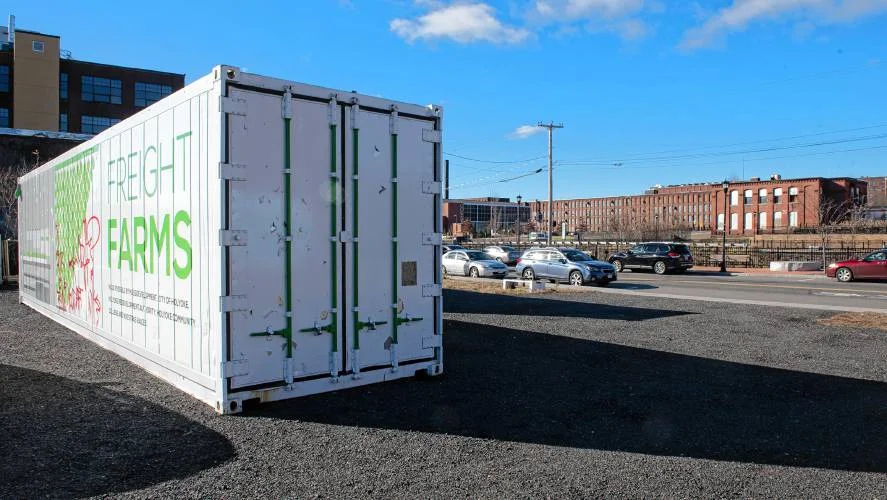
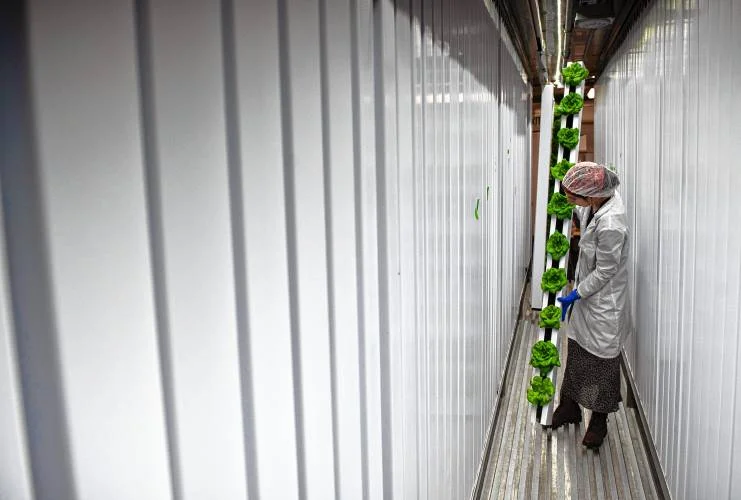
HOLYOKE — Two 40-foot shipping containers sit in an empty lot in the middle of downtown Holyoke on Race Street.
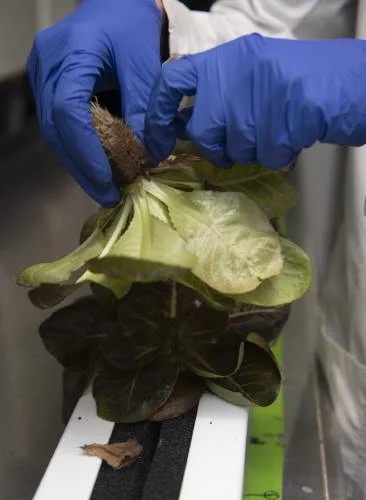
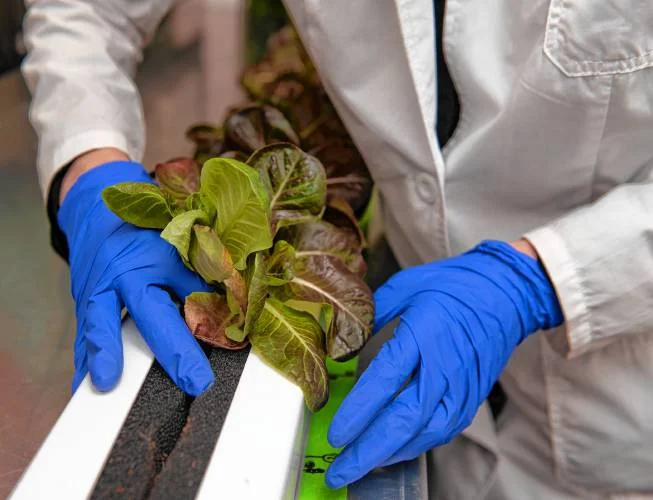
A passerby may not think twice about them, but inside one container an acre of lettuce is growing hydroponically, without the use of soil.
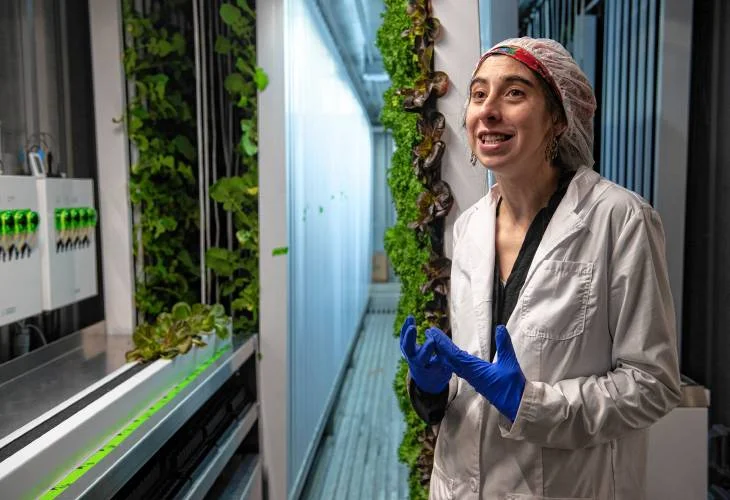
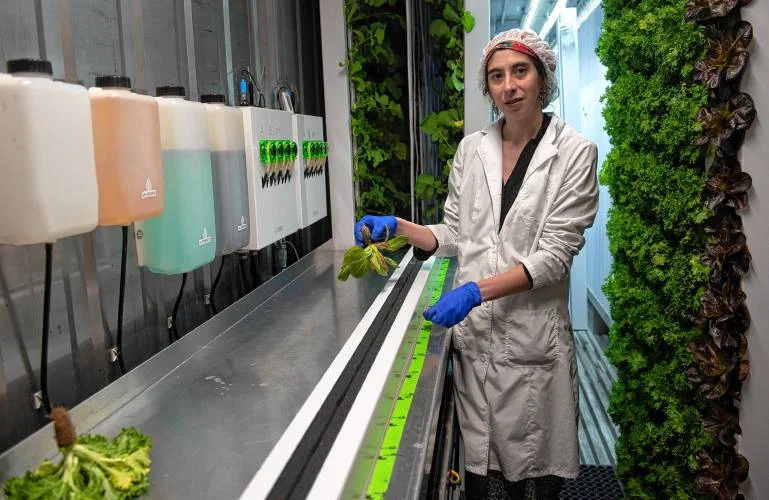
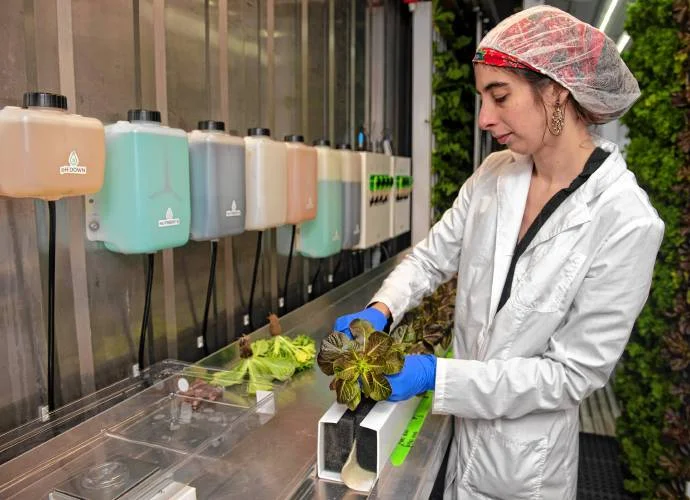
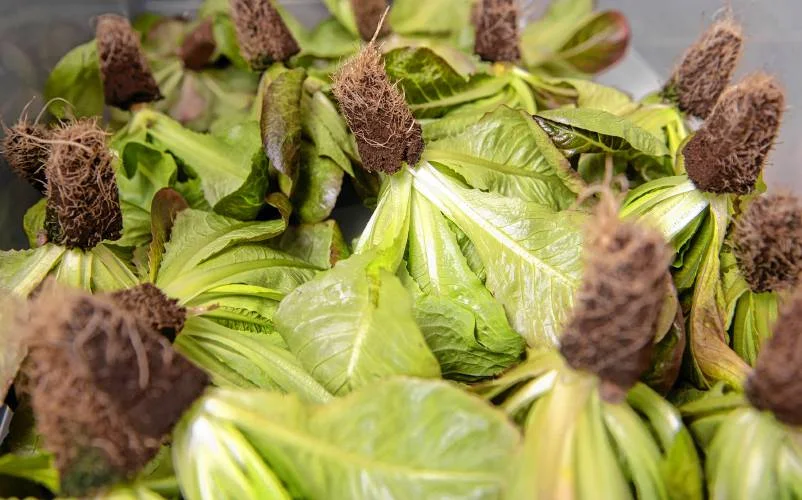
The inside of Holyoke Freight Farms looks more like a futuristic science lab rather than a farm. Sleek containers of romaine and butterhead greens hang vertically from the ceiling in neatly packed rows. The space is just big enough for a handful of people to stand inside with the plants.
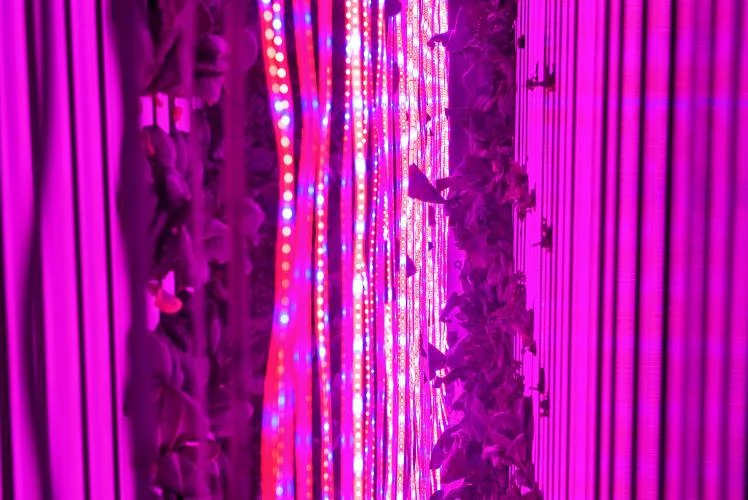
The farmers have a lot of control: an electronic panel allows them to change the temperature and dispense nutrients, while lights can be turned on to give the plants a “daytime,” said Claire McGale, an intern with Holyoke Freight Farms and a sustainability studies student at Holyoke Community College. Inside the container she pointed out piping on the ceiling that helps deliver water to the plants.
It takes about eight weeks to grow the plants from seeds, and the container farm can produce 500 lettuce plants weekly, McGale explained.
MassDevelopment’s Transformative Development Initiative, which aims to spur economic growth in the state’s Gateway Cities, provided funding for the project. Holyoke Community College is leading the project; other partners include the City of Holyoke and the grassroots urban agriculture organization Nuestras Raíces. The refurbished shipping container is from the Boston-based company Freight Farms, which sells growing systems it has nicknamed “Leafy Green Machines” all around the world.
Some produce is sold to Gateway City Arts just down the street, and they are currently working to get more customers, said Alina Davledzarova, farm manager and a HCC alumna. Right now, she said, growing is happening in one of the two containers until demand picks up.
Roughly 10 percent of the produce will be donated to the college’s food pantry. “It’s the first time they’ve had fresh produce in the pantry,” said Insiyah Bergeron, Holyoke Innovation District manager and a fellow at MassDevelopment.
The project is also educational. “This is meant to be a training project,” Bergeron said, “to train interns from HCC and the community in the basics of hydroponic food production.”
The plan, Bergeron said, is to soon bring in a few Holyoke residents in an apprenticeship program to work in the freight containers and learn skills for a job in hydroponic growing.
“It’s also to get people to think about what farming could look like beyond the limited growing season,” she added.
In Holyoke – a city without a lot of farmland – the growing containers are useful, McGale pointed out. Plus, she added, they are not affected by erratic weather and storms. For example, farm fields have been dumped with a heavy rain this year and this fall was one of the rainiest on record for several areas around New England.
Another advantage: Greens can be grown all year.
“How many people can say that they’re farming an acre of lettuce in New England year-round and giving it to people down the street?” asked Davledzarova.
It is a lot of work though, Davledzarova and McGale agreed. The inside of the freight container needs to be kept very clean to avoid issues like algae growth and plants need to be handled with gloves and protected by hairnets.
How do the hydroponically grown greens taste? Said McGale of the lettuce: “My daughter eats spinach now … she’s seven.”
Greta Jochem can be reached at gjochem@gazettenet.com

Hydroponic Farming Lets You Grow Your Food Indoors
By Kristine Wen | Published on Friday, December 7, 2018
Urban farming is hardly a new concept. Watch “Edible City,” and you’ll discover the trend was really taking root (see what we did there?) around 2008. But today, tonier restaurants on both coasts have gone beyond simply growing mint on the roof or kale next to the patio. Indoor farming, or sometimes called vertical farming, a highly technological, grow-your-own-indoors method, has been having a moment the last couple of years.
Glass-paneled hydroponic vertical farms, often doubling as interior designporn or art pieces, grow fresh produce—think butter lettuce, wasabi, cucumbers—in soil-less containers next to where your Manhattan is being made. Water and nutrients are delivered directly to a plant’s roots, allowing food to be grown in perfectly controlled conditions inside.
Former college roommates Andrew Carter and Adam DeMartino started their own indoor farming business called Smallhold in 2016, with the aim of growing hard-to-find mushroom varieties they knew chefs were on the hunt for. Smallhold grows a dozen different mushroom varieties, from coral-like pink oyster clusters to the cloud-shaped formations of young lion’s mane, in shipping containers in Bushwick. (Similar to fellow Brooklynite indoor farm Square Roots.) Before they are ready to harvest, the mushrooms are distributed to customers in what Smallhold dubs “minifarms,” which house the fungi in climate-controllable encasements as they continue to grow. Like the custom installations of Melbourne’s Farmwall, Smallhold’s minifarms are designed and built to match their customers’ aesthetic needs. At New York’s beloved Mission Chinese, for example, the minifarm’s display of amorphous, brightly-colored mushrooms is part art installation, part fresh mushroom vending machine.
Smallhold
It sounds complicated, but that’s kind of the point. “Our customers don’t have to understand how to grow mushrooms,” says Carter. “With our technology, we’re able to tell what’s going on, on a shelf-by-shelf basis in each of our minifarms. We can also run programs depending on the species we put in—changing the humidity, the CO2 levels—to create the best growing conditions for each type of mushroom,” adds DeMartino. All chefs and vendors have to do is pick the mushrooms when they’re ready to harvest, serving food that’s grown-to-order.
So why only mushrooms? “Restaurants like Bunker Vietnamese and Mission Chinese are looking for quality produce first and foremost,” says DeMartino. “It’s really hard to get high-quality mushrooms. You might start out with high-quality harvested mushrooms, but by the time they’ve gone through the harvesting and shipping processes, their taste and appearance have deteriorated quite a bit.”
And when you’re ready to try these grown-to-order mushrooms yourself, DeMartino has a few suggestions. “You can’t go wrong with the Mission Chinese mushroom fried rice,” he says. “And one of the best chefs in New York, Tara Novell of Honey’s, makes a tempura from the lion’s mane mushrooms we grow. The lion’s mane is perfectly encapsulated in the batter. You can taste the full mushroom, but with that tempura crunch.”
All featured products are curated independently by our editors. When you buy something through our retail links, we may receive a commission. For more great hand-picked products, check out the Chowhound Shop.
Header image courtesy of Farmwall.

Trump Administration Approves Antibiotic Residue On Citrus Fruit
Medically important antibiotic oxytetracycline allowed on oranges, tangerines
Medically Important Antibiotic Oxytetracycline Allowed On Oranges,Tangerines
The Trump administration has approved a maximum level of the medically important antibiotic oxytetracycline allowed in citrus fruits. The Environmental Protection Agency decision opens the door for widespread use of the drug in California, Florida and other states on crops like grapefruits, oranges and tangerines.
This week’s approval, which failed to fully assess risks to human health or endangered wildlife, comes as leading researchers caution against expanding use of antibiotics like oxytetracycline that are critical in combating certain respiratory infections like pneumonia.
“This short-term agricultural fix is a horrible precedent that ignores the dangerous, long-term implications of overusing these medically important antibiotics,” said Nathan Donley, a senior scientist at the Center for Biological Diversity. “The more we use these medicines in agriculture, the more likely they’ll lose their effectiveness when people fall desperately ill.”
This week’s decision was prompted by a 2016 Geo Logic Corp. request that the EPA permanently approve oxytetracycline for use as a pesticide to suppress citrus greening disease on roughly 700,000 acres of citrus trees in states like Florida and California.
The EPA has indicated that it intends to approve this request, but it has yet to issue a final approval. The establishment of an allowable level or “tolerance” on food crops is one of the last steps in the approval process.
In setting the tolerance level the EPA failed to analyze how the antibiotic could affect gut bacteria in humans that play a critical role in digestion, metabolism and immune system health.
The agency also failed to assess how fruit trees treated with the antibiotic year after year could affect the development of human pathogens resistant to the tetracycline class of antibiotics. And the EPA failed to consider the potential harm increased use of the antibiotic could cause to the nation’s most endangered wildlife.
In 2016 the EPA approved an emergency use of up to 1.6 million pounds of oxytetracycline and streptomycin, another medically important antibiotic, on citrus trees in Florida. This was followed by another emergency approval in 2017 for Florida and for Florida and California in 2018.
The Centers for Disease Control and Prevention estimate that more than 2 million people are infected with antibiotic-resistant organisms each year, leading to an estimated 23,000 deaths.
“We’re using more of these antibiotics on fruit trees than to treat disease in humans,” said Donley. “Citrus greening disease is a serious issue, but using important antibiotics with limited effectiveness against the disease isn’t the solution.”
Antibiotics such as oxytetracycline and streptomycin have transformed human and veterinary medicine, making once-lethal infections and diseases readily treatable and curable. For more than 10 years the World Health Organization has recognized these drugs as being “highly important” or “critically important” to human medicine.
But the misuse and overuse of antibiotics has resulted in the spread of bacteria resistant to them, triggering growing international concern over the continuing long-term ability of these drugs to tackle disease.
For more information:
Nathan Donley
Tel: (971) 717-6406
Email: ndonley@biologicaldiversity.org
www.Biologicaldiversity.org
Publication date : 12/7/2018

Indoor Ag Sci Cafe Discusses How Industry and Academia Can Work Together
How Industry and Academia can Work Together’, Colangelo discussed the current status of indoor farming industries.
By
October 19, 201801337
This month’s ‘Indoor Ag Science Café’ featured Robert Colangelo, Founder of Green Sense Farms, as a speaker. In his presentation ‘Growing the Vertical Farming Industry – How Industry and Academia can Work Together’, Colangelo discussed the current status of indoor farming industries, gaps and cultural differences between businesses and academia, as well as possible strategies to work together on R&D for common critical technologies. Indoor Ag Science Café is a monthly online forum organized by three scientists (Chieri Kubota, Ohio State U; Erik Runkle, Michigan State U; and Cary Mitchell, Purdue U).
Please contact kubota.10@osu.edu to join the café.

Key Findings From Climate Adaptation Report
By Joyce Coffee
At the request of Kresge, a leading philanthropy focused on adaptation in the US, I joined with Dr. Susi Moser with Susanne Moser Research and Consulting and Aleka Seville at the time with Four Twenty Seven Inc. to conduct interviews and surveys with almost 100 leaders representing the public, private, and NGO/civic sectors and academia, covering a wide range of adaptation-related expertise and perspectives.
Read Article

You Can't Legally Trade In Cannabis In South Africa Yet, But The dagga business is booming Anyway After Possession Was Decriminalised By The Constitutional Court
Hydroponics suppliers that would not speak on the record about their current trade or plans hinted at everything from massive import orders to local manufacturing
The Dagga Business Is Booming Already – Even Though Nobody Is Officially Selling Any Yet
Phillip de Wet , Business Insider SA
December 04, 2018
You can't legally trade in cannabis in South Africa yet, but the dagga business is booming anyway after possession was decriminalised by the Constitutional Court.
Hydroponics systems are suddenly very popular.
A Cannabis Expo in Pretoria next week is sold out – even though it will have a strict no cannabis rule.
Next week, The Cannabis Expo will open in Menlyn, Pretoria, for three days of "industry, health, and agriculture" exhibits.
Early ticket sales, at R150 a pop, point to a visitor attendance of around 20,000 people, organiser Silas Howarth told Business Insider South Africa, double what exhibitors had been promised. And exhibition space is long sold out while a waiting list for spots that open up due cancellations continues to grow. A similar exhibition in Cape Town in April is likely to be three times the size of the Gauteng event.
"It's been insane," says Howarth. "It's getting to the point where we're quite quickly turning away certain types of exhibitors."
Interest in the expo has been big even though the organisers have been very clear: no actual marijuana will be allowed on the premises. As best legal experts can tell it remains illegal to trade in dagga, or in seeds, following a historic Constitutional Court ruling that effectively legalised cultivation and possession in personal spaces.
Exhibition visitors are liable to be searched on entry - they may have the right to carry cannabis on their person, but the owners of private spaces can still impose restrictions.
See also: 5 things you need to know about growing dagga at home
"This is an ordinary exhibition, just like any other exhibition," where organisers could ban legal alcohol or guns, says Howarth. "That is what people in the industry have been fighting for, for cannabis to be treated like anything else."
Many industry players are playing their cards very close to their chests as they prepare for what is expected to be a flood of business following full legalisation of dagga. Even so, it is clear that a great deal of frantic preparation is underway.
Several organisations at the Cannabis Expo will be seeking investors to fund rapid expansion and one, the White Lion Seed Company, will be launching a brand for a company that can not yet sell its primary wares, cannabis seeds.
Specialist fertiliser companies are gearing up, consultants are offering advice, legal firms are positioning themselves as experts, and even packaging-design companies are putting themselves in line for business that is already trickling in, ahead of an expected flood.
One headline exhibitor, Cape Town based Hydroponic.co.za business has been selling home hobbyists equipment to grow better vegetables since 1994. It is just hiring another staffer, after adding two new employees recently.
"We don't know what people are using it for," Megan Hinde, manager for the shop with a strong online presence, told Business Insider South Africa. "We don't ask."
But equipment is certainly flying off the shelves, more so than seems likely to have been caused by the breaking of the Western Cape drought and an uptick in interest in hydroponic vegetables.
See also: Smoking dagga is being decriminalised, but you can still be fired for it – maybe
"People often phone and ask advice, but even then sometimes you don't know what they are growing; tomatoes grow very similarly to cannabis plants," she says. "If lighting is involved it is a little bit it of a clue, but people also want to grow vegetables all year round."
Hydroponics suppliers that would not speak on the record about their current trade or plans hinted at everything from massive import orders to local manufacturing.

Moving The Farm Bill Forward
This week, the final draft of the farm bill was released by the House and Senate Conference.
Here's a summary:
• Creation of a new office within the USDA (Office of Urban Agriculture and Innovative Production) with a mandate to encourage and promote urban, indoor, and other emerging agricultural practices.
• A $10 million annual appropriation for competitive grants to support research, education, and extension activities for urban, indoor, and other emerging agricultural activities.
• An amendment to the Rural Energy for America Program (REAP) making loan guarantees of up to $25 million available for the purchase and installation of energy efficient equipment or systems for agricultural production or processing.
The next step? The president's signature and it becomes law!
Hemp, High-Speed Internet And Other Highlights From The New Farm Bill
December 13, 2018
Congress passed a 10-year, $867 billion farm bill Wednesday that would reauthorize a variety of agricultural programs and food aid for low-income Americans.
Debate on the legislation took months, with funding for the food stamp program one of the major sticking points during negotiations. The Senate approved the bill on 87-13 vote Tuesday. The House passed the measure with a 369-47 vote Wednesday, sending the bill to President Donald Trump’s desk.
Here’s what is in the legislative package, which Trump is expected to sign next week:
Rejects limits to the Supplemental Nutrition Assistance Program, better know as food stamps. The bill final left out a proposal from House Republicans and the president to impose stricter work requirements that would have cut roughly 1.1 million households from the program, according to a 2018 study by Mathematica Policy Research. The program currently serves more than 40 million low-income Americans.
Expands the safety net for dairy farmers. The bill lowers insurance premiums in the dairy margin protection program, a risk management programauthorized by the 2014 farm bill that protects farmers’ revenues when when production margins fall. The renewed support comes as the dairy industry faces a fourth year of depressed milk prices.
Legalizes the cultivation of industrial hemp. Senate Majority Leader Mitch McConnell, R-Ky., played a key role in negotiations to remove the crop from the federal list of controlled substances. The new classification will benefit McConnell’s home state of Kentucky, whose farmers are part of a growing hemp industry that’s predicted to expand into a $20 million industry by 2020.
Extends forest management. The finalized bill did not include a proposal by House Republicans and the Trump administration to ease environmental rules to allow more logging and forest-thinning projects, something they argued could help prevent wildfires. But it does create a program to encourage utility companies to clear bush near power lines on federal land.
A host of other, lesser-known provisions also made it into the bill:
Permanent funding for veteran and minority farmers. The bill guarantees $435 million in permanent funding to educate military veterans, socially disadvantaged and beginner farmers by tripling the current budget of the Farming Opportunities Training and Outreach Program.
The bill provides other benefits for veterans as well, including decreasing the price of risk management tools, improving access to capital and land, and improving access to training.
Urban farming. The farm bill establishes a new office at the Department of Agriculture to advocate for and promote urban and indoor agriculture, such as community gardens, rooftop farms, and hydroponic and aquaponic farms. The office’s responsibilities also include helping identify best practices for navigating local urban farming policies and enhance existing business training programs for urban farmers.
Funding for organics. The bill permanently secures $50 million in annual funding for a Department of Agriculture research program that focuses on organic farming practices and expanding organic agriculture. It also offers funding to support farmers transitioning to organic production.
Scholarships at historically black colleges and universities. About $40 million in new funding will be allocated for new scholarships at 19 African-American land-grant universities for students to pursue careers in agricultural and food sciences.
The bill also provides $50 million for at least three “centers of excellence” based at HBCUs with specific areas of focus, including farming systems and emerging technologies.
Rural high-speed internet. Under the bill, funding for high-speed internet in rural communities will increase from $25 million to $350 million annually.
Funding for specialty crop farmers. The bill continues a number of research, disease control and grant programs fort specialty crop farmers (such as fruit, vegetable and tree nut producers.) It also provides $125 million in funding over five years for a new research program into citrus pests and diseases.
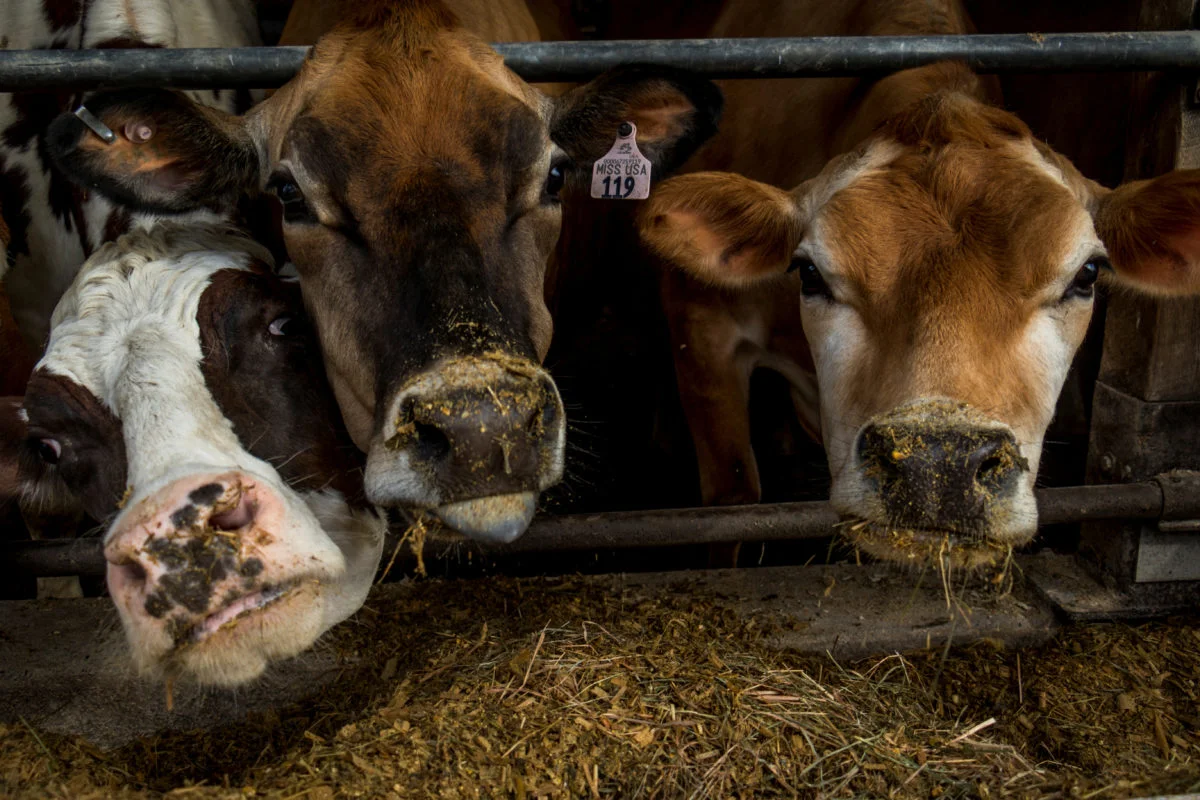
Left: Dairy cows eat their breakfast after their morning milking at EMMA Acres dairy farm, in Exeter, Rhode Island, U.S., 7 April, 2018. REUTERS/Oliver Doyle
Related
House passes farm bill and sends it to Trump’s desk
By Juliet Linderman, Associated Press
For farmers, talking about mental health used to be taboo. Now there’s #AgTwitter
By Courtney Vinopal
Go Deeper
What Is The Best LED Light Recipe?
Mickens has published two manuscripts on the effect of light quality on ‘Outredgeous’ red romaine lettuce and “Rubi F1’ red pak choi, a Chinese cabbage.
By urbanagnews -
November 15, 2018

As a result of his postdoctoral research tenure at NASA Kennedy Space Center, Mickens has published two manuscripts on the effect of light quality on ‘Outredgeous’ red romaine lettuce and “Rubi F1’ red pak choi, a Chinese cabbage.
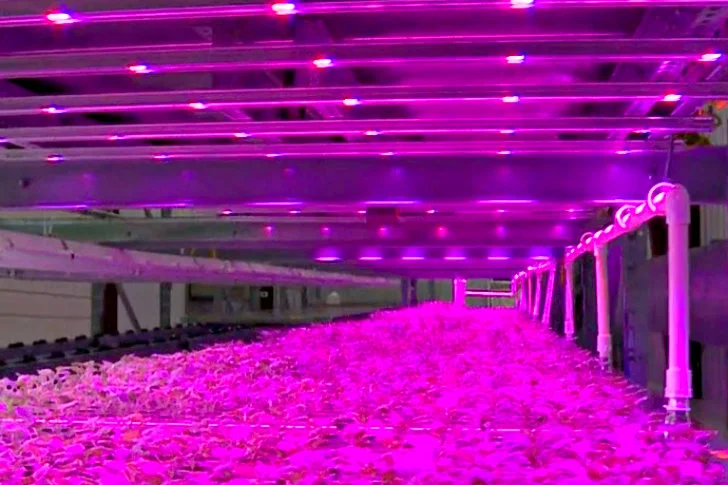
It was found that various combination of colors, or “light recipes” could be used to manipulate plant morphology (shape), yield, and nutrient content of any crop species. It was also discovered that not all plants respond the same to the same recipe, but that each crop has an ideal lighting regime that can be identified, but it all depends on the needs of the grower. Some recipes are more effective only during certain points of the cycle, and some are more beneficial when provided over the entire cycle. We are only at the beginning of discovering the numerous strategies in which light can be used to optimize plant growth.
Abstract:
To optimize crop production/quality in space, we studied various “light recipes” that could be used in the Advanced Plant Habitat currently aboard the International Space Station (ISS). Lettuce (Lactuca sativa cv. ‘Outredgeous’) plants were grown for 28 days under seven treatments of white (W) LEDs (control), red (635 nm) and blue (460 nm) (RB) LEDs, W + blue (B) LEDs, W + green (520 nm) (G) LEDs, W + red (R) LEDs, W + far red (745 nm) (FR) LEDs, and RGB + FR LEDs with ratios similar to natural sunlight. Total PAR was maintained near 180 μmol m−2 s−1 with an 18 h photoperiod. Lettuce grown under RGB + FR produced the greatest leaf expansion and overall shoot biomass, while leaves from WB and RB showed the highest levels of pigmentation, secondary metabolites, and elemental nutrients.
All other supplemental treatments had varying impacts on morphology that were dependent on crop age. The WG treatment increased fresh mass early in the cycle, while WR increased biomass later in the cycle. The plants grown under WFR exhibited elongation of petioles, lower nutrient content, and similar shoot biomass to the W control. The findings suggest that supplementing a broad spectrum, white light background with discrete wavelengths can be used to manipulate total yield, morphology, and levels of phytonutrients in lettuce at various times during the crop cycle.

Indoor Ag Sci Cafe Discusses Lighting Strategies for Energy Savings
Funded by NASA and USDA SCRI, Cary has a long research history focusing on energy savings while maximizing crop productivities
By urbanagnews
November 2, 2018
The second ‘Indoor Ag Science Café’ of this month had Dr. Cary Mitchell, as a speaker.
Funded by NASA and USDA SCRI, Cary has a long research history focusing on energy savings while maximizing crop productivities through his in-depth understanding of plant physiology under controlled environment.
In his presentation ‘Lighting Strategies for Energy Savings’ introduced his innovative approach to optimize the lighting environment.
Indoor Ag Science Café is a monthly online forum organized by three scientists (Chieri Kubota, Ohio State U; Erik Runkle, Michigan State U; and Cary Mitchell, Purdue U). Please contact kubota.10@osu.edu to join the café.

Marijuana Is Now Legal In Michigan – What You Need To Know
Retail shops aren't expected to open until sometime in 2020, but beginning Thursday, people 21 and older can buy or possess marijuana in the state
December 3, 2018
MADISON HEIGHTS, Mich. (WXYZ) - On December 6, Michigan became the first state in the Midwest to legalize recreational marijuana.
Retail shops aren't expected to open until sometime in 2020, but beginning Thursday, people 21 and older can buy or possess marijuana in the state.
You can have up to 12 plants inside your home, and a total of 10 oz.
According to Barton Morris with the Cannabis Legal group, whatever you grow on those 12 plants is all yours. However, you need to keep anything over 2.5 ounces in your home locked up.
So how do you get seeds if you’re thinking about growing plants?
"Seeds are readily available. You can use the internet to do a search and find them pretty much anywhere," Grant Gamalski with Northern Lights Hydroponics and Garden Supply said.
"Instagram is becoming a great resource for getting seeds. Breeders can sell directly from them to the end user, which cuts the seed bank out of the mix and saves the consumer some money," Gamalski said.
Keep in mind attorney Barton Morris says it’s technically illegal to purchase seeds.
As for business, Grant says they’ve seen an increase with the legalization date just days away.
"We’re trying to up the consciousness of all humanity, as far as I’m concerned it’s a good thing," Gamalski said.
Remember when marijuana officially becomes legal, you can’t smoke in public places. If you're caught, you could face a fine.