Welcome to iGrow News, Your Source for the World of Indoor Vertical Farming

March Indoor Ag Science Cafe Recording Is Now Available!
This presentation 'USDA SBIR Grants Program Overview' was given by Dr. Steven Thomson & Melinda Coffman (USDA NIFA) during our 28th cafe forum on March 30th, 2021
"USDA SBIR Grants Program Overview"
Dr. Steven Thomson & Melinda Coffman
USDA NIFA
SBIR = Small Business Innovation Research
Please contact Melinda Coffman for SBIR questions.
This presentation 'USDA SBIR Grants Program Overview' was given by Dr. Steven Thomson & Melinda Coffman (USDA NIFA) during our 28th cafe forum on March 30th, 2021. Indoor Ag Science Cafe is organized by the OptimIA project team funded by USDA SCRI grant program.
Upcoming Cafes:
Tuesday, April 20th, 10 AM Eastern - 'Plant Factories and Indoor Farming Innovations in Japan' by Eri Hayashi (Japan Plant Factory Association)
Tuesday, May 18th, 11 AM Eastern - 'Smart Sensors for Indoor Farming' by Dr. Krishna Nemali (Purdue University)
Interested in giving a talk to share your thoughts and experiences? Please contact us!
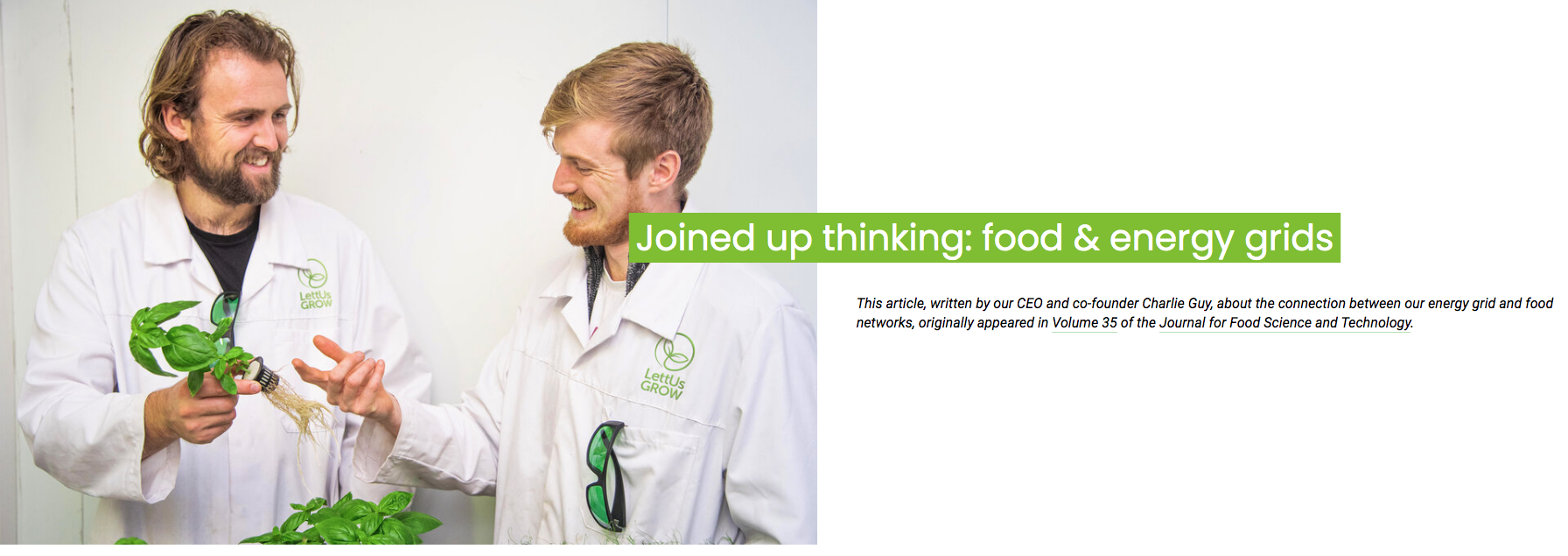
Joined Up Thinking: Food & Energy Grids
This article, written by our CEO and co-founder Charlie Guy, about the connection between our energy grid and food networks, originally appeared in Volume 35 of the Journal for Food Science and Technology.
It may not always feel like it at this time of year, but on our planet we are blessed to bathe in a constant and abundant stream of energy and warmth. Effectively, all of this energy comes from the sun before being transformed, stored or used in some way. From the organic matter that once formed our fossil fuel sources, to the climatic differences that drive our weather systems and the solar panels you might have on your roof.
Food is our fundamental energy source as individuals - it powers everything that we do in our daily lives. For almost all food types, the energy used to produce it is derived from the sun (ok, mushroom-heads may argue against this, but they are still feeding on organic matter). Because of this simple concept, our food and energy systems are intrinsically intertwined. Bizarrely though, this fact is often overlooked in the food supply chain, from producers, all the way through the distribution and cold chain, right up to ourselves, the end consumers. Our current food system separates out different energy types. Heat, electricity, fuel and light often end up as mere balance sheet inputs to the production of food and many energy inputs don’t get recorded at all.
This simplified way of thinking leads to us cutting corners for the sake of cost and not considering the absolute energy impact of our food production. There are no individuals at fault here, our economic system has lined us up to think in a linear fashion for the past few centuries and this has muddied the long-held practices of stewardship for the land. Effectively, our understanding of what we give and take from nature and the sun to produce our food is no longer in balance.
If we look at the inputs and flows of energy that make up global food production, we see many areas that we may not consider when we buy food products in our local supermarkets or greengrocers. Berners-Lee et al (2018) produced a high-level analysis of the global energy flows in food production, shown in Figure 1, ultimately showing that we grow enough calories to feed everyone on our planet, but we do not use or distribute them efficiently.
Figure SEQ Figure \* ARABIC 1 - The flows of global food energy (kcal/person/day) from the amount grown to the amount eaten. For crops fed to animals, the units are based on the global human population, not animal population. The left-hand bar divides the crops grown into those that are directly edible by humans and the grass, pasture & stover that is only edible by animals. The right-hand bar divides the nutrients eaten into that required for healthy human living and net excess consumption. Animal losses include all the losses inherent in animal husbandry, such as energy used for respiration, growth, movement, and reproduction and the wastage of animal parts not used as food. DOI: https://doi.org/10.1525/elementa.310.f1
When you consider the journey of a simple soil-grown lettuce, you must consider the following energy inputs and flows as a minimum:
- Preparation – soil, seed production, transportation of seeds, drying and storage of seeds, farming infrastructure, fertilizer/pesticide production
- Growing - the sun, soil, fertilizer/pesticide application, and waste, machinery, human labor, energy use if in a greenhouse/vertical farm
- Harvesting and storage – farm machinery, fuel, refrigeration and spoilage
- Processing and packaging – transforming raw materials into products
- Transportation - cold chain refrigeration, freight by lorry, boat or long haul air travel
- Consumption - home energy usage including storage and cooking
- Waste - throughout the chain and in the home
Through each of these processes, we are either adding energy to our food on its journey to our plates or we’re losing energy through losses along the way. This is why the impact of wasting food in the home is so severe, as we are not only wasting the energy that went into producing the food, but we are also wasting the energy that was used in the supply chain along the way too. Each of these losses, even if they seem small at each stage, adds up. Taking Berners-Lee’s analysis and comparing this to electrical energy usage, the average food wasted per person is equivalent to all 7.8 billion people on our planet leaving a reasonably-sized LED TV (64W) on for 24 hours a day, 365 days a year.
Ever more work is being done in the field of lifecycle analyses to understand and bring to light the impact of our foods. These individual losses need to be understood, quantified and then reduced in our vision of a more efficient combined food and energy system.
There is a clear comparison that can be made between our current food systems and the journey that our energy systems have been on over the last few centuries. Through the various energy revolutions, we have transitioned from distributed to centralized energy and food systems. Centuries ago, we were required to balance the use of wood and food, to heat and fuel ourselves, to sustain our communities, and avoid overconsumption of either energy source. Food and fuel tended to be distributed locally to fulfill the energy needs of the community and we had a better understanding of the link between the sun, our food, our energy and the need to prevent over-consumption to remain in balance.
Fast-forward to the 21st Century and the current paradigm of large power stations that distribute electricity through grids to people, whose only connection is the vibration of their phone when they plug it in to charge. There is zero connection to how or where the energy was produced. The equivalent analogy in food production sees swathes of industrialized monocropping, focused in certain areas of the globe. Products and ingredients are shipped halfway around the world and our only connection is to open the packet and experience their flavors. Arguably there are substantial “efficiencies” and economies of scale in this kind of production model, but at what cost? Is this what we want the next chapter of our food and energy systems to look like?
Renewable energy has a huge opportunity to bring us back to a more decentralized system. In simplistic terms, the fact that the wind and sun are well distributed around the world gives the potential for much more equitable access to energy production. Renewables also bring us much closer to the only real source of energy that we have, the sun, whilst revealing our true reliance upon it as well. There are some known issues regarding renewable energy storage, but the humble chloroplasts in plants long-ago worked out how to capture this energy and store it for use later on. We can learn from this and begin to look forward with a more joined-up view of our food and energy systems. Putting our farmers and stewards at the heart of this system, ensures that links can be rebuilt between food and energy production.
So how do we link our food and energy systems back together in a way that can provide enough food for all of us in the most sustainable way? Firstly, this challenge needs to be undertaken with the concepts of sustainable intensification and circular economy principles in mind. If these are new to you, do check out the Ellen Macarthur Foundation. Secondly, we need a diversity of thinking and solutions, including both technical and business innovations. There is no silver bullet here for such a complex problem.
Many solutions in both energy and food supply are coming to the fore already, albeit independently at the moment – local energy schemes and community-supported agriculture schemes (CSAs) both enable communities to benefit from locally produced energy and food. Can we imagine a future where we bring these together into combined food and energy schemes?
Controlled environment agriculture (CEA) is one emerging practice that allows us to do things in ways that previously we have not been able to do in open-field agriculture. Using CEA, indoor farms such as greenhouses and vertical farms, enable the inputs to the growth of fresh produce to be understood, controlled and optimised. Water, nutrients, light energy and environmental conditions can all be tweaked to optimise the output of the crop and to reduce the use of resources.
These farms allow us to understand the system of growing without impacting the local environment, by ensuring efficient energy and resource flows along with recapture technologies. They enable us to build farms anywhere in the world, to grow produce in a more decentralized, resource-efficient way that can help build resilience into our food system.
Opponents of CEA will point to the increased use of energy, but this is offset by the reduced energy requirements in transportation, processing, storage, fertiliser and pesticide usage. If you understand and match your local energy and food production, this is no longer such an issue. There are still challenges for the CEA industry, but the winds are blowing in the right direction.
Increasing the renewable energy mix on the grid will reduce the cost of energy over time and is the perfect power source for indoor farms. Spiky supply and storage may appear to present an issue, but the energy profile of an indoor farm can be tuned to the supply of the grid. Plants are great at storing energy and have inherent redundancy too, hence the possibility of using plants as a new form of battery becomes very real when we see our food and energy systems as one.
There are numerous flagship examples of CEA projects implementing many of these principles worldwide. From the advanced Dutch greenhouse networks, to Sundrop Farms in Australia, to new combined heat, power and greenhouse projects in the UK such as Beeswax Dyson’s new strawberry growing facility. From Growing Underground’s vision of circular farms, to LettUs Grow’s partnership with Octopus Energy and the many projects in the pipeline with farmers around the UK looking to incorporate indoor vertical farms with existing anaerobic digestion plants. These projects show that things are moving rapidly in the right direction to bring our food and energy systems back together again.
There are still big questions to answer and challenges ahead when looking at the sustainable future of our combined food and energy systems, but we are on a very exciting journey as part of a new industry and a whole new way to look at food and energy. Joined up thinking is needed and bridges need to be rebuilt - energy and food producers will be working much closer together. To address climate change we know that we need to seriously address our energy system. And to address our energy system in full, we need to include food as a fundamental part of it.
Charlie is co-founder & Chief Executive Officer at LettUs Grow. With a background in renewable energy consultancy & engineering design, Charlie is a proponent of tech for good & passionate about all manners of sustainability, whether in food, energy, resource efficiency or waste valorisation. Charlie is also on the UKUAT (UK Urban AgriTech collective) advisory board.
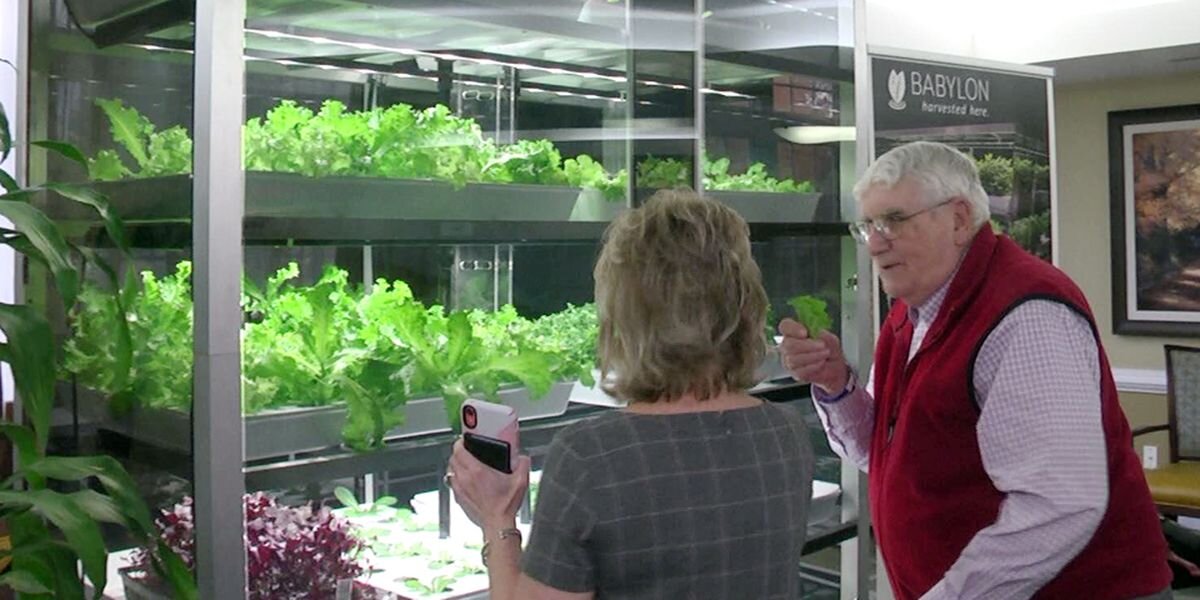
Babylon Micro-Farms Expanding Its Impact With New Partnership
Babylon Micro-Farms makes indoor growing aimed at providing more farm-fresh options for college students. It is now partnering with Harvest Table Culinary Group to bring fresh produce to more colleges

April 1, 2021
CHARLOTTESVILLE, Va. (WVIR) - A company that started at the University of Virginia is hoping to expand its impact.
Babylon Micro-Farms makes indoor growing aimed at providing more farm-fresh options for college students. It is now partnering with Harvest Table Culinary Group to bring fresh produce to more colleges.
“Self-contained vertical farms use hydroponics to grow plants with 90% less water. There are no pesticides or chemicals. We can grow plants 2-3 times more quickly,” Babylon Micro-Farms CEO Alexander Olesen said.
The planting of the farms is mostly done by designated operators assigned by Babylon, but they often get students involved.


Green Life Farms Breaks Ground On Second Hydroponic Greenhouse
The hydroponic technology allows Green Life Farms to grow leafy greens in oxygenated water – without soil – then harvest and package them in a controlled environment, reducing the risk of contamination and preserving flavor and freshness
04.05.2021
By Emily Park
LAKE CITY, FLA. - Green Life Farms announced on April 1 that the company is building a second hydroponic greenhouse in Lake City, Fla.
The hydroponic technology allows Green Life Farms to grow leafy greens in oxygenated water – without soil – then harvest and package them in a controlled environment, reducing the risk of contamination and preserving flavor and freshness.
Following the success of its flagship hydroponic greenhouse in Lake Worth, Fla., and significant customer demand for its products, the new greenhouse will be 400,000 square feet and is expected to begin commercial operations in early 2022.
“Following our very successful launch in South Florida, we are proud to announce this new facility to serve North Central Florida - the Jacksonville, Gainesville, and Tallahassee regions,” said Forrest Sawlaw, chief operating officer of Green Life Farms. “In light of ongoing food safety concerns across the country, now more than ever customers are looking for locally grown, clean produce. Our innovative hydroponic technology will deliver the cleanest and freshest leafy greens, all free from GMOs, pesticides and contaminants.”
Green Life Farms will incorporate specialized ozone water management technology to filter, sanitize and store rainwater for use in the growing process, and will rely on Florida sunshine – meaning the facility will use significantly fewer natural resources.
The new greenhouse will be able to produce 18 harvests each year and use 90% less water than conventional farming. At full maturity, the greens are gently moved using a floating conveyor system to be harvested, cooled, and packaged to reach customers within a few days of harvest, instead of the 8 to 10 days it may take conventionally farmed produce to reach customers in the region.
Green Life Farms’ products include Baby Arugula, Baby Kale, Baby Romaine, Farmer’s Blend, and Butterhead Lettuce, and are currently sold at more than 120 grocery store locations throughout South Florida.
Invitation To F&A Next 2021: The Impact of Innovation!
While our aim was to physically host the upcoming edition of F&A Next at the Campus of Wageningen University & Research, another virtual summit is today’s reality. Postponing is definitely not an option. Irrespective of Covid-19, a great deal happened in 2020. Investments in global food- and agtech were increased by over 30% to some USD 26 bilion!
F&A Next invites investors, entrepreneurs, and experts to address the next challenges of our sector on Wednesday, 26 May 2021 at the 6th annual F&A Next Summit. We look forward to showcasing the next scaling food and agtech companies. Yes, we‘ll miss meeting you in person, but we’ll make sure that dialing in will be as close as possible to the real thing!
During this year's 3-hour live, virtual summit we will
bring you up to speed on the Impact of Innovation in the agrifood industry,
present eight 'Next Heroes in Food- & Agtech', and
offer you ample opportunity to virtually connect and meet with (other) startups, scale-ups, investors, and corporates in the agrifood space.
GET YOUR EARLY-BIRD TICKET WITH A 25% DISCOUNT
Book your ticket before 12 April to get a 25% discount! Apply the code: FaN@21
Stay safe, stay healthy!
The partners of F&A Next
2021 Theme: "The impact of Innovation"

Get Your eTicket to F&A 2021, 26 May
Food & Ag Innovation only started around 2014 and has definitely gained momentum ever since. in 2020 investments in global food and agtech have risen, irrespective of Covid-19 influences. The pandemic did, however, trigger changes in consumer behavior. Has ‘life as we know it’ irrevocably changed? And what about the much-needed innovation earlier in the value chain?
At F&A Next, Rob Leclerc, founding Partner of Agfunder and Nick Ferreday, Executive Director Food & Agribusiness at Rabobank, will compare notes.
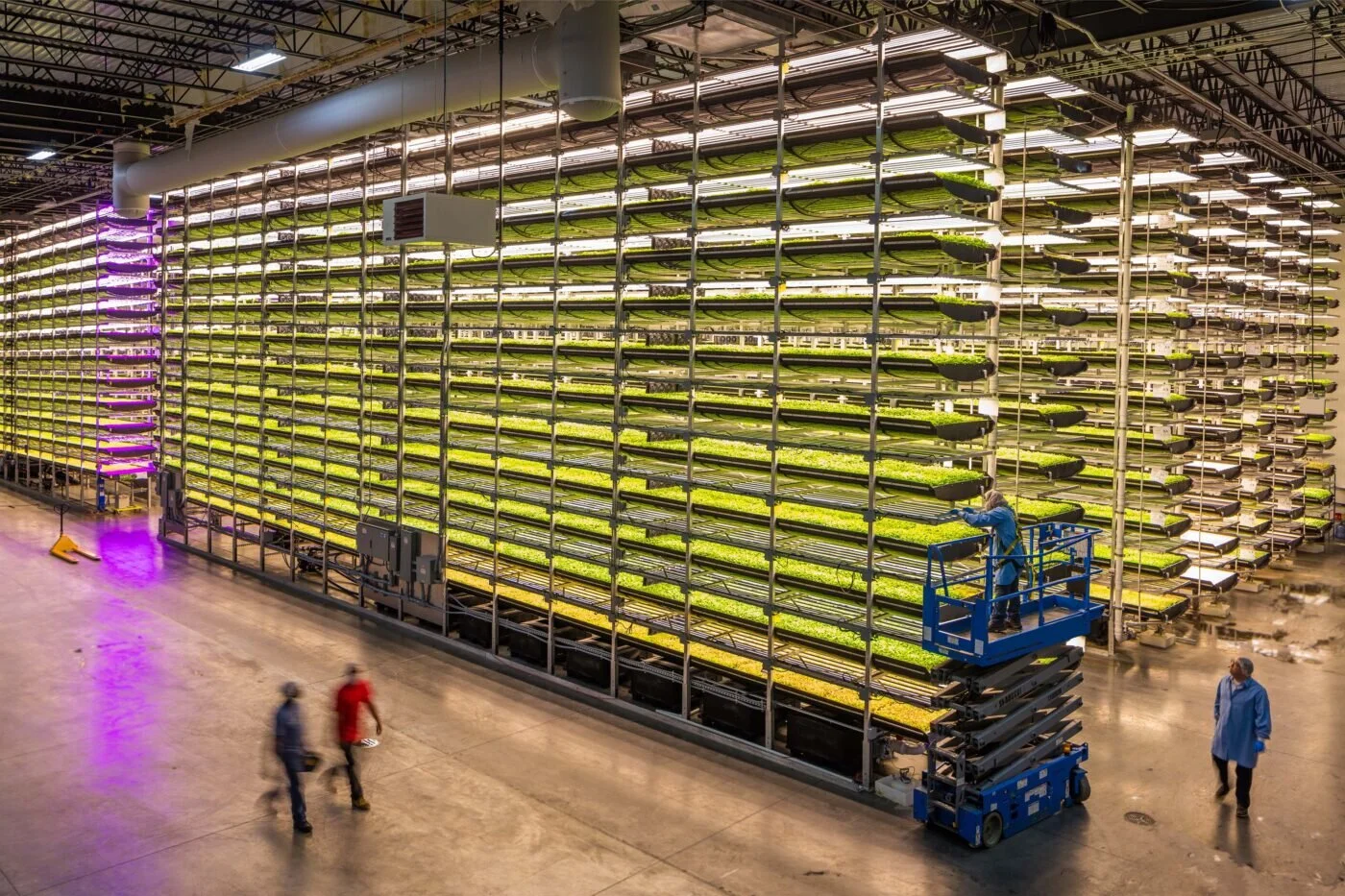
AeroFarms To Go Public in $1.2 Billion Spring Valley SPAC Deal
AeroFarms was established in 2004. The company’s goal is to, “Transform agriculture by building and operating environmentally responsible farms throughout the world.”

APRIL 4, 2021
New Jersey-based company AeroFarms is set to go public in a $1.2 billion Spring Valley SPAC deal. AeroFarms was established in 2004. The company’s goal is to, “Transform agriculture by building and operating environmentally responsible farms throughout the world.”
According to a recent Bloomberg report, AeroFarms will go public in a merger with Spring Valley Acquisition Corp. Thanks to the pending merger, the two companies will have a combined equity value of $1.2 billion. AeroFarms was co-founded by David Rosenberg, Ed Harwood, and Marc Oshima. Rosenberg now serves as the CEO. Harwood is the Chief Science Officer, and Oshima is the Chief Marketing Officer.
AeroFarms: An Explainer
How does AeroFarms achieve its aim of transforming agriculture? The company utilizes a technique called indoor vertical farming. The benefits of indoor vertical farming include reduced space which results in greater productivity per square foot.
AeroFarms says this method makes productivity per square foot 390 times more effective than traditional farming methods.
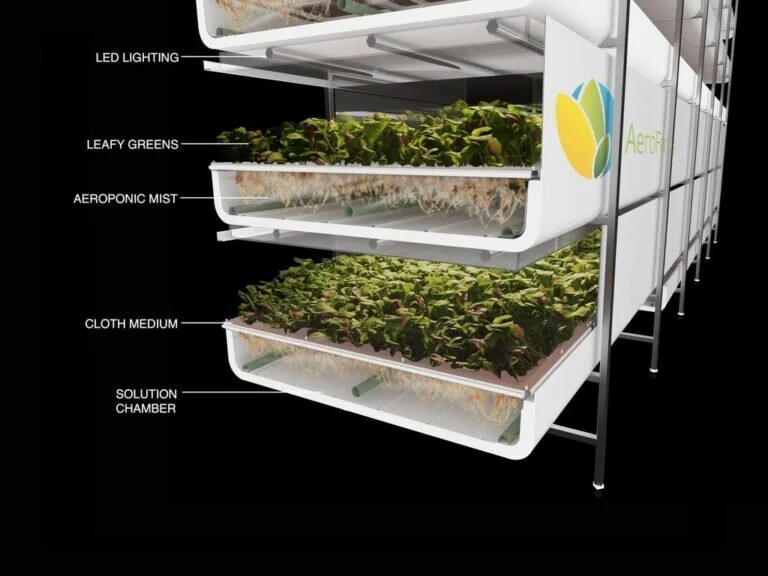
The indoor vertical farming method also, as AeroFarm purports, results in using 95% less water and zero pesticides. AeroFarms has a smart strategy for keeping plants healthy. This includes a combination of smart aeroponics, light, nutrition, data, substrate, pest management, and scaling.
The AeroFarms method means that the agriculture involved is fully controlled by one entity. This allows AeroFarms complete control over every aspect of greens, herbs, and more that they grow for clients.
From the size, color, shape, and most importantly, the flavor, AeroFarms has complete control. Besides curating custom greens for food clients, AeroFarms also sells their own products at local retailers that are called Dream Greens. According to AeroFarms, Dream Greens are grown on indoor vertical AeroFarms locations in New Jersey. They are organic, pesticide-free, and non-GMO.
Potential clients can choose to use AeroFarms’ food service. The benefits of their customized food service includes year-round availability, a longer shelf life, consistent pricing, no weather interruptions, heirloom greens varieties and more.
More About AeroFarms
The AeroFarms technology was named one of TIME’S best food and drink inventions of 2019. Some of AeroFarms other financial partners include Ikea, Prudential, and Goldman Sachs. Rosenberg, who is also the CEO of AeroFarms said this about the upcoming merger and initial public offering via a Business Wire report.
“At AeroFarms, our mission is to grow the best plants possible for the betterment of humanity, and we are executing on this by taking agriculture to new heights with the latest in technology, innovation and understanding of plant science. Our technology empowers our operations – this is how we get closer to where the problems, opportunities, and solutions are. We also have the capabilities to innovate fast by turning our crops a typical 26 times per year that allows us to continuously learn and improve yield and quality while simultaneously reducing capital and operating costs.”
After the merger is completed and closed, AeroFarms will be publicly traded on Nasdaq under the ticker ARFM. The official date for the AeroFarms IPO has yet to be confirmed.
Published in Business and News
Katherine Stinson
Katherine Stinson is an award-winning journalist and Staff Reporter at Grit Daily News, where she covers Texas and Southern states' startup and entrepreneurship news. Based in San Antonio, Texas, she also contributes to ScreenRant, Outlander TV News, and San Antonio Magazine.

How Sustenir Group Makes Sustainable Farming Possible In The Island Nation
Undertaking large-scale farming is near to impossible in a country like Singapore with a land area of just 724.2 square kilometers (279.6 square meters)
The Indoor Farm Uses Methods Like Controlled Environment Agriculture, Vertical Farming, And Hydroponics To Grow Kale, Spinach And More


2 April 2021
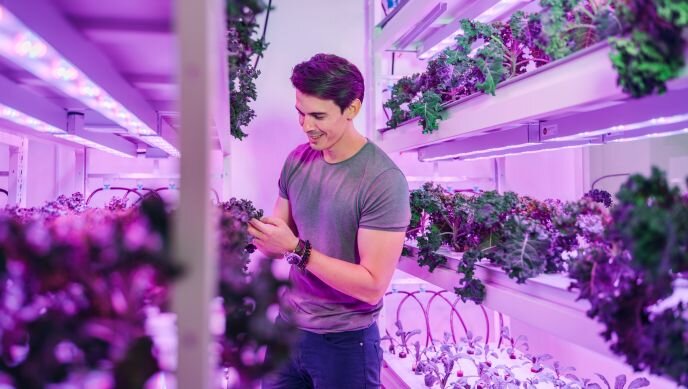
Undertaking large-scale farming is near to impossible in a country like Singapore with a land area of just 724.2 square kilometers (279.6 square meters).
According to Singapore Food Agency, only two square kilometers of the country’s land is available for farming, which is much lesser when compared with Malaysia, which uses more than 11 times the land for farming. This explains why over 90 percent of the food items in the island nation is imported.
Despite the active measures taken by the Singapore government to transform the agriculture sector, local farmers often whine that highly nutritious items like root vegetables, fruits, herbs, goat milk and frog meat aren’t getting adequate support.
But this issue is just the tip of the iceberg — when the environmental implications of conventional farming methods are taken into account.
In general, traditional farming methods are the largest contributors to greenhouse gas emissions. Coupled with the rising population, farmers often heavily rely on nitrogen-based fertilizers to increase the yield, which inadvertently leads to nitrous oxide emissions, which further exacerbates climate change.
To take this problem head-on, Benjamin Swan started an agritech company in Singapore six years ago, which relies on a more efficient and sustainable way of farming.
The green stop
As offbeat as it may sound, the idea for a vertical farm occurred to the Australian when he couldn’t find fresh salads in Singapore’s grocery stores.
“When I first moved here from Australia over 12 years ago, I was frustrated that it was so difficult to get good produce here,” he told e27 in an interview.
But he knew that the problem did not lie with distributors or farmers because, by the time the produce is flown to Singapore from different countries, the greens are already wilting in the bag.
“The other thing that frustrated me was the food waste that would accumulate at the bottom of the bag if I didn’t eat the greens within 12 hours,” he said.
Also Read: How Fefifo aims to make farming cool again for the younger generation
But funnily enough, it was a Facebook post that brought in the real motivation for Swan to go deeper into vertical farming.
“When I read a Facebook article about vertical farming, I thought to myself, ‘hey, this is cool and I can grow myself a great salad at home’,” he said.
To gain more knowledge of the industry, Swan traveled to different countries and met experts in traditional farming. As he gained more knowledge, he realized that traditional farming is harmful to the environment.
This is when he started testing out by growing plants indoors while still holding on to his full-time job as an engineer.
Initially, he began to grow kale in the basement of a swimming pool at over 42 degrees, which was hitherto unheard of, as the item generally grows at a temperature of 18 to 20 degrees.
After 18 months of heavy research, he, along with his co-founder Martin Lavoo, launched Sustenir Group, a vertical farm that sells its products in stores like Redmart and Cold Storage.
How it works
Sustenir Group uses methods like controlled environment agriculture (CEA), vertical farming, and hydroponics to grow 52 varieties of plants like kale, lettuce, spinach, and more.
The indoor farming facility has sensors operating 24 hours to provide the company with data on the health and status of all its plants. The parameters used include humidity, temperature, and light.
After receiving data from the sensors, its system adjusts the environment for each plant accordingly.
While the majority of farmers use pesticides to manipulate the physical appearances of fruits and vegetables, Sustenir Group doesn’t use any.
“We use zero pesticides. Our produce is 100 percent clean, meaning they go beyond organic. As we know, organic products still use pesticides, albeit lesser harmful ones. Not only do we use zero pesticides, but we also make sure haze/pollution doesn’t come to the room,” Swan said.
Since Sustenir uses no chemicals, Swan claims its vegetables and fruits are not only more nutritious but also taste better — with customers coming back in surprise, seeking where he gets the vegetables from because their children enjoy the vegetables very much.
Also Read: Tunas Farm raises pre-seed funding from Gayo Capital to launch its urban farming technology
While traditional farming is a highly laborious occupation with hours spent toiling under the parched sun, the farming experience for employees at Sustenir is far different.
“Instead of someone working day and night, what happens is that everything inside the indoor farm is pre-scheduled. So we know when a plant needs to move and be harvested because we can control exactly how much solar radiation goes to the plant. It is all pre-planned,” he explained.
“It’s not like outdoor farms where you might have too much cloud coverage this month. So we have to leave the plants in for another couple of days. Everything is planned and scheduled. It’s all within our stride,” he remarked.
The future plans
In the future, Sustenir Group plans on leveraging both indoor and outdoor farming methods.
“As of now, it’s not possible to grow products like bok choy on an indoor farm. That’s why it is necessary for us to still leverage outdoor technology and improve it somewhat, so we can become more efficient with our products that are going out on land. Because the reality with indoor farming is that we can only grow limited products here,” he said.
Last year, Sustenir expanded into Hong Kong and Malaysia.
“We have just got the third market under our belt with big ambitions to build across Southeast Asia and North Asia in the coming years,” he said.
Although Sustenir’s farm is cash-flow positive, Swan said that the company is more focused on growth rather than profits.
Image Credit: Sustenir Group

Greenhouses Can Grow Lettuce And Generate Solar Power: Study
A recent study shows that lettuce can be grown in greenhouses that filter out wavelengths of light used to generate solar power, demonstrating the feasibility of using see-through solar panels in greenhouses to generate electricity

March 30, 2021
By Matt Shipman
A recent study shows that lettuce can be grown in greenhouses that filter out wavelengths of light used to generate solar power, demonstrating the feasibility of using see-through solar panels in greenhouses to generate electricity.
“We were a little surprised – there was no real reduction in plant growth or health,” says Heike Sederoff, co-corresponding author of the study and a professor of plant biology at North Carolina State University. “It means the idea of integrating transparent solar cells into greenhouses can be done.”
Because plants do not use all of the wavelengths of light for photosynthesis, researchers have explored the idea of creating semi-transparent organic solar cells that primarily absorb wavelengths of light that plants don’t rely on, and incorporating those solar cells into greenhouses. Earlier work from NC State focused on how much energy solar-powered greenhouses could produce. Depending on the design of the greenhouse, and where it is located, solar cells could make many greenhouses energy neutral – or even allow them to generate more power than they use.
But, until now, it wasn’t clear how these semi-transparent solar panels might affect greenhouse crops.
To address the issue, researchers grew crops of red leaf lettuce (Lactuca sativa) in greenhouse chambers for 30 days – from seed to full maturity. The growing conditions, from temperature and water to fertilizer and CO2 concentration, were all constant – except for light.
A control group of lettuces was exposed to the full spectrum of white light. The rest of the lettuces were divided into three experimental groups. Each of those groups was exposed to light through different types of filters that absorbed wavelengths of light equivalent to what different types of semi-transparent solar cells would absorb.
“The total amount of light incident on the filters was the same, but the colour composition of that light was different for each of the experimental groups,” says Harald Ade, co-corresponding author of the study and the Goodnight Innovation Distinguished Professor of Physics at NC State.
“Specifically, we manipulated the ratio of blue light to red light in all three filters to see how it affected plant growth,” Sederoff says.
To determine the effect of removing various wavelengths of light, the researchers assessed a host of plant characteristics. For example, the researchers paid close attention to visible characteristics that are important to growers, grocers, and consumers, such as leaf number, leaf size, and how much the lettuces weighed. But they also assessed markers of plant health and nutritional quality, such as how much CO2 the plants absorbed and the levels of various antioxidants.
“Not only did we find no meaningful difference between the control group and the experimental groups, we also didn’t find any significant difference between the different filters,” says Brendan O’Connor, co-corresponding author of the study and an associate professor of mechanical and aerospace engineering at NC State.
“There is also forthcoming work that delves into greater detail about the ways in which harvesting various wavelengths of light affects biological processes for lettuces, tomatoes and other crops,” Sederoff says.
“This is promising for the future of solar-powered greenhouses,” Ade says. “Getting growers to use this technology would be a tough argument if there was a loss of productivity. But now it is a simple economic argument about whether the investment in new greenhouse technology would be offset by energy production and savings.”
“Based on the number of people who have contacted me about solar-powered greenhouses when we’ve published previous work in this space, there is a lot of interest from many growers,” O’Connor says. “I think that interest is only going to grow. We’ve seen enough proof-of-concept prototypes to know this technology is feasible in principle, we just need to see a company take the leap and begin producing to scale.”
About this article:
The paper, “Balancing Crop Production and Energy Harvesting in Organic Solar Powered Greenhouses,” appears in the journal Cell Reports Physical Science. Co-lead authors of the paper are NC State Ph.D. students Melodi Charles and Eshwar Ravishankar. The paper was co-authored by Yuan Xiong, a research assistant at NC State; Reece Henry and Ronald Booth, Ph. D. students at NC State; Jennifer Swift, John Calero and Sam Cho, technicians at NC State; Taesoo Kim, a research scientist at NC State; Yunpeng Qin and Carr Hoi Yi Ho, postdoctoral researchers at NC State; Franky So, Walter and Ida Freeman Distinguished Professor of Materials Science and Engineering at NC State; Aram Amassian, an associate professor of materials science and engineering at NC State; Carole Saravitz, a research associate professor of plant biology at NC State; Jeromy Rech and Wei You of the University of North Carolina at Chapel Hill; and Alex H. Balzer and Natalie Stingelin of the Georgia Institute of Technology.

Our Monthly Webinar For April Is “Training The Next Generation of Aquaponic Farmers” From Researcher Sarah Milliken At The University of Greenwich, U.K.
Ms. Milliken will introduce an open access aquaponics curriculum, Aqu@teach, specifically developed for college students with a focus on entrepreneurial and transferable skills
The Webinar Will Take Place Live, Saturday,
April 17 From 11 am To 12 pm EST And Feature A Live Q&A.
Click Below To Register:
REGISTER: Training the Next Generation of Aquaponic Farmers
Ms. Milliken will introduce an open access aquaponics curriculum, Aqu@teach, specifically developed for college students with a focus on entrepreneurial and transferable skills. As soilless food production technologies become increasingly important in light of climate change and the threat of food insecurity, there is an urgent need to provide an appropriately trained workforce.
The Webinar is free to the public during the live broadcast. The Webinar will remain available for free, in perpetuity, to all Aquaponics Association Members in the Member’s Area of our Community Site.
Special thanks to Ed "Aqua-Eddie" Tivnan, Association Director of STEM Aquaponics, for organizing the webinar.
Hope to see you there!
Brian Filipowich, Chairman
Aquaponics Association
The Aquaponics Association
1240 Evarts Street, NE
Washington, DC 20018

Continuing Education: Urban Agriculture
It’s been 10,000 years since the agricultural revolution gave rise to cities. Agriculture now covers more than half of the world’s habitable land, and is spreading at a rate of about 15 million acres annually
April 1, 2021
It’s been 10,000 years since the agricultural revolution gave rise to cities. Agriculture now covers more than half of the world’s habitable land, and is spreading at a rate of about 15 million acres annually. Cities, meanwhile, now comprise more than half the global population (over 80 percent in developed countries), and the numbers are rising. Using current farming methods to feed a global population expected to hit 10 billion by midcentury would require adding new farmland equal in size to the continental United States.
This alarming situation is not even factoring in the impact of the climate crisis, which is expected to alter growing seasons and disrupt the phenological cycles that keep plants and their pollinators in sync. What’s more, new agricultural land mostly comes from felling biodiverse, carbon-sequestering forests to make room for mono-crops that stash very few greenhouse gases and for livestock that actually generate them. That makes the climate crisis worse and farming more difficult.
In addition to land consumption, agriculture guzzles three-quarters of the fresh water used globally each year, while runoff from fields treated with herbicides, pesticides, and fertilizers contaminates significant amounts of the water that’s left. Then there’s transportation. As farms extend farther and farther from the cities they supply, food is trucked, shipped, and flown vast distances: farm to plate, the ingredients in a typical American meal travel an average of 1,500 miles. From a security perspective, the fact that most of the world’s food production is controlled by just a handful of corporations is unnerving. And from a public health perspective, the emergence of Covid-19 and other new diseases offers yet another indicator of ecological imbalance. It’s time to rethink the way we farm.
Food security, as defined by the United Nations, means that all people, at all times, have physical, social, and economic access to sufficient, safe, and nutritious food that serves their food preferences and dietary needs for an active and healthy life. Key to achieving food security in a way that’s more sustainable than current practices is urban agriculture—not as an outright replacement for rural farming, but as a crucial component in a balanced system.
Urban agriculture can take many forms: rooftop greenhouses raised beds, and community-farming initiatives such as the City of Atlanta’s “Aglanta” program, which turns underused parcels in utility rights-of-way into farm plots eligible for U.S. Department of Agriculture certificates and associated loans. Ultimately, though, horizontal strategies are not productive enough to make a real dent in the food needs of a city. (If raised beds covered every rooftop in Manhattan, the produce grown would feed only about 2 percent of the borough’s population.) Just as cities grow vertically, so too must urban agriculture, and that means bringing it indoors.
“Controlled environments have been used for many years,” says Chieri Kubota, a professor of controlled environment agriculture (CEA) in the Department of Horticulture and Crop Science at Ohio State University. “Now that multiple issues are making conventional production outdoors more difficult, putting controlled environments in and near cities brings food production closer to potential markets—and also to younger generations of potential farmers who want to live in urban centers.”
Vertical agriculture is a type of CEA that—like high-rise buildings—stacks layers to provide usable area many times the footprint of the site. Instead of growing in soil, which is a heavy way to deliver nutrients, plants in vertical farms are grown hydroponically, aquaponically, or aeroponically. In hydroponics, plants are cultivated in nutrient-enriched water, which is captured and reused so that the system uses as little as a tenth of the water conventional agriculture needs. An aquaponic system pairs hydroponics with fish production, circulating the nutrients in the fish waste to feed the vegetables, and using the plants as a biofiltration system that returns clean water to the fish. Reducing water consumption even further—by as much as 98 percent, compared to field growing—aeroponic systems deliver nutrients in a fine mist to plant roots that are just hanging in the air. And because controlled environments exclude the weeds and pests that trouble field-grown produce, the use of herbicides and pesticides is all but eliminated.
Stacked plants may need to be rotated to make the most of available sunlight, which can be supplemented (or even substituted altogether) with LED grow lights. These can be calibrated to provide blue and red light in optimal doses for each type of plant, and timed to increase plant growth with extended days and growing seasons. (While it’s technically possible to grow any type of crop this way, for now it’s mainly leafy greens and tomatoes that are economically viable.) Cool enough to be strung right in among the plants without burning them, LEDs reduce site electricity consumption (and costs) per square foot of grow area by about a third compared to older technologies, such as high-pressure sodium. “Energy is a game-changer,” says Dickson Despommier, an emeritus professor of microbiology and public health at Columbia University, whose seminal 2010 book, The Vertical Farm: Feeding the World in the 21st Century, is widely credited with kick-starting vertical agriculture in North America. Cost-effective LED lighting opens up the possibility of converting urban and urban-adjacent building types such as parking garages, big-box stores, and shopping malls into productive local farms, he says.
With productivity rates that are orders of magnitude greater than conventional farming, high-rise growing is gaining traction worldwide. The world’s first such system began operations in 2012 in Singapore. The land-strapped city-state, which imports about 90 percent of its food, aims to grow a third of its produce locally by 2030. Indoor vertical farms in the country now produce about 80 tons of greens a year, and the Singapore Food Agency is supporting research into and development of the method as its main bet on the future.
In China, great swaths of arable land have been lost to development (more than 30 million acres between 1997 and 2008) and 20 percent of what’s left is contaminated. At the same time, the country has a strong tradition of urban-adjacent farming. When a 247-acre agricultural site, midway between Shanghai’s main international airport and the megacity’s center, recently came up for redevelopment, global design firm Sasaki proposed that, rather than create yet another tech park, the client take its agricultural mission to the next level. As a result, the Sunqiao Urban Agricultural District is slated to become one of China’s first comprehensive national agricultural zones. Sasaki’s master plan, which has received approval from the Pudong District and is now proceeding for formal approval from the City of Shanghai, expands the district’s role in Shanghai’s food network, integrating vertical agricultural production, research, and education into a dynamic public domain. In addition to research and development facilities and an agriculture production zone, the plan provides for a civic plaza showcasing productive landscapes, a science museum, an interactive greenhouse, an aquaponics display, and a destination market. “It’s urban agriculture on steroids,” says Michael Grove, chair of landscape architecture, civil engineering, and ecology at Sasaki.
The Sunqiao project will include a civic plaza with productive landscapes (top), a science museum, and an interactive greenhouse (above), among other elements. Image courtesy Sasaki.
Grove identifies three primary drivers for prioritizing urban agriculture globally: the need to curtail agricultural sprawl and thereby protect ecosystems, to reclaim economic agency by diversifying control of food production, and to build community: “Food brings us together,” he says. Behind Asia’s early adoption of urban agriculture, he sees a historic understanding among the region’s societies that the well-being of the population requires systemic support. That may also be a factor in Europe, where the Netherlands is a global leader in controlled-environment technology, and Denmark is home to the world’s latest and largest vertical farm, a partnership between a Taiwanese CEA tech company and a local start-up: with growing shelves stacked 14 deep, the 75,000-square-foot wind-powered facility has the capacity to produce 1,000 metric tons of greens a year.
A hub for teaching, research, and community engagement, located within sight of downtown Columbus and designed by Erdy McHenry Architecture, supports Ohio State’s CEA efforts. Brad Feinknopf
North America has been slower to adopt vertical farming, a lag that Ohio State’s Kubota attributes in large part to the year-round, nationwide availability of produce from California, Arizona, and Florida. But now, she says, climate disruptions and shortages of viable farmland in those states, along with the increasing urbanization of the workforce, strengthen the rationale for controlled environment agriculture. To support Ohio State University’s multidisciplinary research into CEA, a one-acre vertical greenhouse is under construction within sight of downtown Columbus. As part of the facility, the recently completed Kunz-Brundige Franklin County Extension Office serves as a hub for teaching, research, and community engagement around food, health, agricultural production, and sustainability. Both buildings are designed by Philadelphia-based Erdy McHenry Architecture.
Although still tiny, vertical farming is the fastest-growing sector in U.S. agriculture. A projected compound annual growth rate (CAGR) of more than 20 percent from 2020 to 2026 is expected to bring sales to around $10 billion a year. And while significant numbers of start-ups in the capital-intensive sector have failed—as indicated by the track record of several initiatives profiled in this magazine eight years ago —experts say that’s an inevitable aspect of an emerging technology.
Among the growing number of enterprises going strong, however, is Vertical Harvest, the first vertical hydroponic greenhouse in North America. Cofounded by architect Nona Yehia, principal at GYDE Architects, the company began operations in 2016 in Jackson Hole, Wyoming. Jackson is a rural town, but it performs like a city in relevant ways: 97 percent of its developable land is already in use, and, with a four-month growing season, 98 percent of its food is imported. Inspired by Despommier’s work, the need for a local food supply, and the opportunity to provide meaningful work for community members with intellectual and physical challenges, Yehia designed a three-story greenhouse for a 30-by-100-foot municipally-owned lot next to a parking garage. “The town councilor who showed us the property thought we’d put up a plastic hoop structure to extend the growing season a couple of months, employ a few people, and call it a day,” recalls Yehia. But she and her business partners wanted to grow as much food as possible, to employ as many people as possible, and to do both year-round. “That’s where the idea to grow up came from,” she says.
Vertical Harvest’s three-story CEA facility in Jackson Hole, Wyoming, produces as much food on a tenth of an acre as on a 10-acre conventional farm. Photos © Vertical Harvest (1), Hannah Hardaway (2 & 3)
With a footprint of a tenth of an acre, the greenhouse produces as much food as would a 10-acre conventional farm. It employs 30 people, more than half of whom have a disability. And it’s profitable. “It would have been easier as a nonprofit,” Yehia says, “but we were committed to creating a replicable model that is not about charity: it’s about empowerment.”
After five years of operation, Vertical Harvest is ready to expand. Construction is scheduled to start this year on a second location that incorporates affordable housing and municipal parking in Westbrooke, Maine. The new 70,000-square-foot greenhouse is expected to provide the equivalent of 50 full-time jobs and to produce 1.3 million pounds of produce a year, supplying hospitals, corporate cafeterias, schools, chefs, restaurants, and caterers, as well as individual customers. “These ecosystems can put out a lot of food,” says Yehia. “Making sure you have customers who can buy at scale is as essential to success as growing plans.”
Vertical Harvest intends to build up to 15 farms in the next five years, with agreements already in place for projects in Philadelphia and Harrisburg, Pennsylvania, and Chicago, and discussion is under way for five other locations. Like the Wyoming and Maine projects, they will integrate social value and community engagement with their agricultural mission. “It’s the perfect intersection to show what architecture can achieve in its social role in our communities,” Yehia says. And while she has run Vertical Harvest as designer, entrepreneur, and urban farmer, it’s entirely possible for architects to advocate for urban agriculture in their more usual role as prime consultants, coordinating the work of other experts.
As CEA picks up speed, the time may not be far off when every municipality will incorporate vertical farming into its civic infrastructure, valued the way public libraries and recreation centers are. “It should be something that we all expect to see when we go to cities,” Yehia says: “infrastructure that grows food and futures, and bolsters the sustainability of the community.”
Continuing Education
To earn one AIA learning unit (LU), including one hour of health, safety, and welfare (HSW) credit, read the article above and watch this video.
Then complete the quiz. Upon passing the test, you will receive a certificate of completion, and your credit will be automatically reported to the AIA. Additional information regarding credit-reporting and continuing-education requirements can be found at continuingeducation.bnpmedia.com.
Learning Objectives
Explain how conventional agricultural methods contribute to climate change.
Define terms such as urban agriculture, controlled environment agriculture (CEA), and vertical agriculture.
Describe technologies relevant to CEA, such as hydroponics, aeroponics, and aquaponics.
Discuss how CEA can enhance food security and bring social value to underserved communities.
AIA/CES Course #K2104A
Complete the Quiz
Lead Image: KEYWORDS cities / climate change / urban planning
PODCAST: Vertical Farming Podcast - Season 3 Episode 29 - Nicholas Dyner. Nick Is The CEO of Moleaer
In this episode, Harry and Nick discuss Nick’s extensive background working in the water treatment industry
Join Harry Duran, host of Vertical Farming Podcast, as he welcomes to the show Nicholas Dyner. Nick is the CEO of Moleaer, an organization that produces commercial nanobubble generators to deliver sustainable, chemical-free water quality improvement for agriculture, reservoirs, lakes, ponds, and more.
In this episode, Harry and Nick discuss Nick’s extensive background working in the water treatment industry. Nick expounds on nanobubble technology, what it is and how it can be used to improve vertical farming and the agricultural industry as a whole. Finally, Harry and Nick talk about the ongoing struggle for universal access to safe water and how advancements in technology can help restore and improve the quality of sea life.
Listen & Subscribe

BrightFarms Founder And CEO Reflect On 10 Years of Growing Leafy Greens Indoors And Talk Future Plans
Valued at $6.8bn in the US alone (according to Research&Markets), the market for hydroponically-grown produce is no longer niche
31-Mar-2021 By Mary Ellen Shoup
Valued at $6.8bn in the US alone (according to Research&Markets), the market for hydroponically-grown produce is no longer niche and poised for strong growth over the next several years, predicts BrightFarms, a company growing a variety of leafy greens hydroponically in massive indoor greenhouses.
Please Click Here To Read The Full Article

Vertical Farming Startup Oishii Raises $50m In Series A Funding
“We aim to be the largest strawberry producer in the world, and this capital allows us to bring the best-tasting, healthiest berry to everyone.”

By Sian Yates
03/11/2021
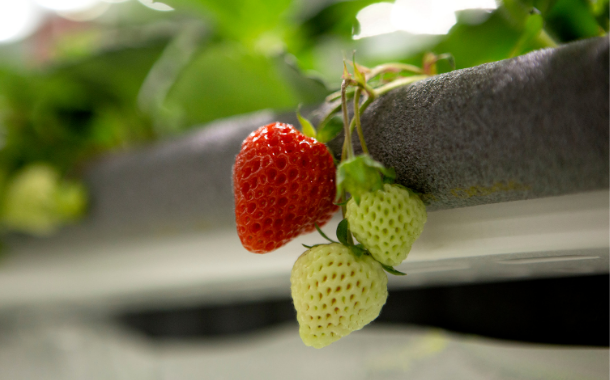
Oishii, a vertical farming startup based in New Jersey, has raised $50 million during a Series A funding round led by Sparx Group’s Mirai Creation Fund II.
The funds will enable Oishii to open vertical strawberry farms in new markets, expand its flagship farm outside of Manhattan, and accelerate its investment in R&D.
“Our mission is to change the way we grow food. We set out to deliver exceptionally delicious and sustainable produce,” said Oishii CEO Hiroki Koga. “We started with the strawberry – a fruit that routinely tops the dirty dozen of most pesticide-riddled crops – as it has long been considered the ‘holy grail’ of vertical farming.”
“We aim to be the largest strawberry producer in the world, and this capital allows us to bring the best-tasting, healthiest berry to everyone. From there, we’ll quickly expand into new fruits and produce,” he added.
Oishii is already known for its innovative farming techniques that have enabled the company to “perfect the strawberry,” while its proprietary and first-of-its-kind pollination method is conducted naturally with bees.
The company’s vertical farms feature zero pesticides and produce ripe fruit all year round, using less water and land than traditional agricultural methods.
“Oishii is the farm of the future,” said Sparx Group president and Group CEO Shuhei Abe. “The cultivation and pollination techniques the company has developed set them well apart from the industry, positioning Oishii to quickly revolutionise agriculture as we know it.”
The company has raised a total of $55 million since its founding in 2016.
JD’S Plant Factory Sparks Children's Early Interest In Agriculture
JD hosted nearly 100 primary school students and their teachers for a field trip at its hydroponic plant factory in the Tongzhou district of Beijing on March 22
by Ella Kidron
March 31, 2021
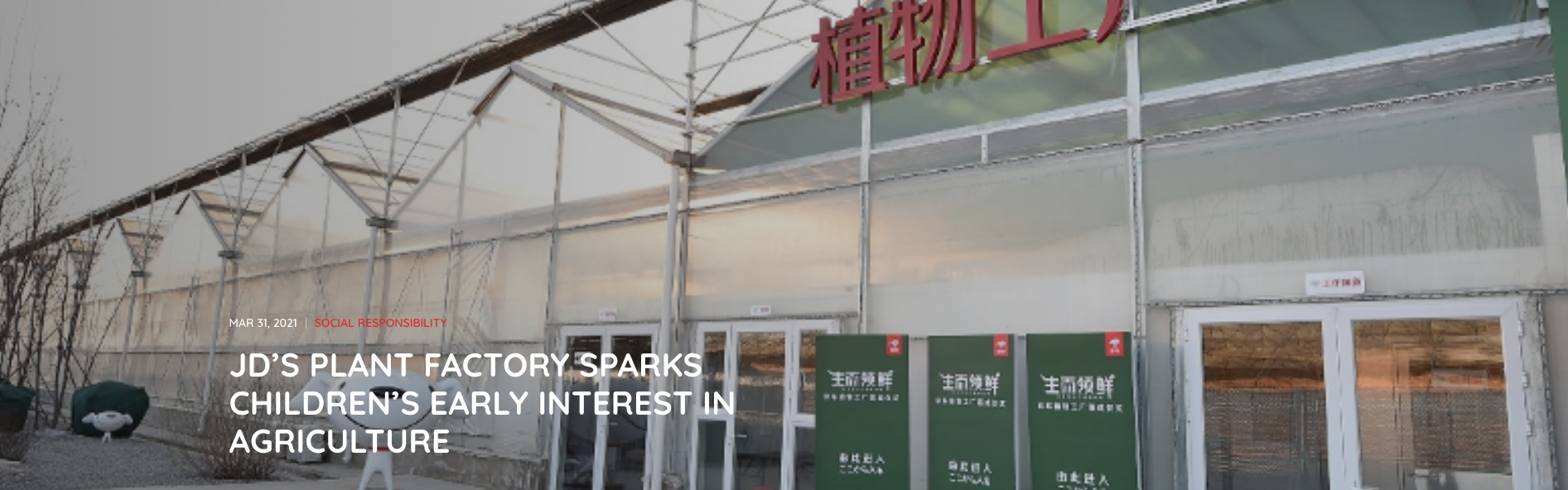
JD hosted nearly 100 primary school students and their teachers for a field trip at its hydroponic plant factory in the Tongzhou district of Beijing on Mar. 22. The event was part of a larger program which started last year in which JD offers the plant factory as a high-tech educational facility for elementary and middle school students as well as families to learn hands-on.
JD Plant Factory in the Tongzhou district of Beijing
During the activity, the general manager of the plant factory, Zhongsheng Wu, gave a lecture on basic crop growth knowledge, providing the group with a preliminary understanding of hydroponic planting. Following the lecture and observation, the children got to have a taste test.
As quality and food safety is of utmost importance to JD, every student and teacher donned a white lab coat, shoe covers, masks and head coverings, and stepped into the air shower for a disinfection prior to entering the factory.
Zhongsheng Wu, general manager of JD Plant Factory, teaches students about hydroponic planting
On the weekends, the factory is usually full of parents and their kids. It is a good way for kids to get outside and have much-needed contact with nature. Parents are also delighted by their kids’ newfound love of vegetables. Wu said: “Parents come to us and say, ‘my kids never eat vegetables at home no matter what, but here they are eating veggies like little rabbits!’”
Parents show their children veggies at the plant factory
They often come home with bags of vegetables, and will also adapt to buying them online through JD.com, enhancing omni-channel conversion. Furthermore, parents will often post on their WeChat Moments (similar to a Facebook wall) too, helping raise overall awareness of the plant factory.
A boy excitedly enjoys a salad with veggies from JD Plant Factory
As the younger generation becomes increasingly tech-savvy, there are concerns that fewer people will choose to go into agriculture. According to Statista, the percentage of the workforce in agriculture from 2009 to 2019 has declined from 38.1% to 25.1%. The plant factory visit can help to pique children’s early curiosity. Wu explained: “Children are the foundation of the future of agriculture. Through our programs, they learn that agriculture can be fun, interesting, and high-tech.”
One of the teachers said at the end of the activity, “It was so well-organized. Students not only got to learn and understand the growth of a seed but also have hands-on practice.” Immersion education for kids is much needed and critical to their development. “Apart from ensuring the farm-to-table supply chain, being able to provide this type of education gives the plant factory an even greater purpose,” said Wu.
Built by JD in partnership with Mitsubishi Chemical of Japan, the plant factory gives JD an entry point at the very beginning of the supply chain and creates high-end vegetables using advanced hydroponic technology, artificial LED light source, and Internet of Things technology in a fully-closed environment. Covering 11,040 square meters, it is the largest plant factory with the combination of sunlight and artificial light in China.
(ella@jd.com)
Tags: Social Responsibility
Providing Farming Solutions At Every Customer Level
Currently, the company is running a pilot farm in Japan, in collaboration with Kaneya Co., LTD. Kaneya operates the farm, whereas Own Greens patented growing technology is used
“Since we’ve started the pilot farm in Japan, we’ve had several parties reaching out for large-scale projects throughout the country," says Lennart Bijl, Operation Manager at Own Greens. The Dutch-based company is currently finetuning farming techniques in order to create a concept that can be quickly rolled out throughout Japan, and later on worldwide.
"We’re focusing on promoting our Own Greens brand in the fresh produce market. Whereas we’re also currently expanding partnerships with market players,” Lennart adds.
Japan pilot
Currently, the company is running a pilot farm in Japan, in collaboration with Kaneya Co., LTD. Kaneya operates the farm, whereas Own Greens patented growing technology is used. The facility grows up to 300.000 crops per year, which is supplied to several local supermarkets in the area.

The growing facility in Japan
“Our large-scale solution is designed to produce large quantities of leafy greens and fresh herbs in the most efficient way possible. This unique technology makes full automation possible and ensures an ultra-clean growth chamber to prevent contamination in the system. Key terms in this concept are Safe, Simple and Scalable and multiple elements are patented by Own Greens.” The company provides solutions with a floor space of 1000-5000m2, with a cultivation area that consists of more than 5000m2.
Own Greens' products and services, can be divided into three divisions. Namely, large-scale farming projects, B2B growing chambers (PlantHome Pro) and Own Greens Home, a small grow-kit used by consumers. The Vitro Plus-owned company, works closely with Nijssen, Bever Innovations, KV techniek and Kaneya. These collaborations are focusing on three keystones, namely production, presentation and product.
Lennart Bijl checking the PlantHome Pro produce
Product testing
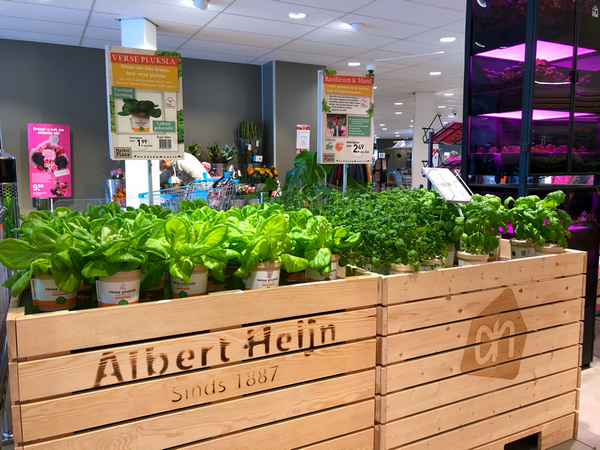
Own Greens has been piloting its products, at a local supermarket, Albert Heijn. “Initially we started the project to gain more awareness on vertical farming and its benefits, says Lennart. “We used flyers that visitors could take along, and our product packaging has a removable paper wrap around it which explains the production process of each product.”
As the project gained lots of attention from visitors, Own Greens is now supplying its vertically grown basil, mint and lettuce crops to the store. The living herbs and lettuce are sold on bamboo paper pots, which contain water to increase the shelf life. Customers can keep the products in their home outside the fridge for up to a month.
PlantHome indoor garden
The PlantHome can be installed in any space wanted. It’s just a case of plugging in and growing. Both the PlantHome Pro and regular PlantHome home-kit make use of separated containers that contain plugs or pads with seeds. The PlantHome Pro device has multiple layers and can grow up to 30 plants per layer. Whereas it doesn’t include automation and a climate system, the indoor farm is easy to use. The mineral- and plant capsules can easily be applied into the trays so the crops will intake all nutrients needed. Customers now include restaurants, day-care centers, and canteens.
For more information:
Lennart Bijl, manager of operations
Own Greens
lennart@owngreens.com
www.owngreens.com
Publication date: Tue 30 Mar 2021
Author: Rebekka Boekhout
© VerticalFarmDaily.com
Grower Turns To Indoor Saltwater Farming To Grow Sea Beans
Heron grows its sea beans via an indoor saltwater farm using hydroponic technology for a few reasons
Salicornia. Picklegrass. Sea asparagus.
Sea beans are a salty, long, thin vegetable that grow in saltwater.
These are just a few of the monikers Sam Norton has heard in talking to chefs about his new vegetable. However, he prefers to call them sea beans--them being a thin, long asparagus-like vegetable that grow in saltwater. It was a vegetable Norton knew of growing up in Southeastern U.S. and in turn, he studied sea beans and seawater agriculture in grad school at College of Charleston. It was there he won the Department of Agriculture’s inaugural ACRE (Agribusiness Center for Research and Entrepreneurship) startup competition in 2018 and so, Charleston, SC-based Heron Farms was born.
Seawater agriculture
Heron grows its sea beans via an indoor saltwater farm using hydroponic technology for a few reasons. “We found after a few experiments that if we kept growing them outdoors that we would run into the same problem other outdoor growers were running into--land-use constraints, salt management, seasonality, etc,” says Norton. “We decided we could solve those problems by taking them indoors.”
Sea beans are grown using hydroponic technology at an indoor saltwater farm.
Heron’s first harvest was April 14th of 2020--admittedly a challenging time. “We realized on March 10th all the restaurant customers that were going to carry our products were about to shut down,” says Norton. So the company, which was growing indoors in a shipping container farm temporarily on loan via fellow Charleston grower Vertical Roots, pivoted to retail to position its product as a premium vegetable versatile enough to eat raw, boiled, sautéed and many more ways. It’s since moved out of the Vertical Roots facility to launch its own indoor farm where it has been since August of 2020 with 30,000 square feet of saltwater marsh planted.
Retail interest
Heron’s pivot to retail has paid off in an age where home cooking and trying new products are trends that have emerged in the pandemic. Consumers are sharing on Instagram the different ways they’re using sea beans. (Norton notes it’s largely used as a garnish or as a replacement for micro greens.)
Consumers use sea beans in a number of ways, though most often as a garnish or a replacement for micro greens.
Yet, as the vaccines roll out throughout North America, restaurants and other foodservice operations are coming back online, demand could change again for Heron. “We’ve seen demand pick up actually in the past 30 days, especially in the Northeast,” says Norton.
However, that increased demand is in rhythm with Heron Farms’ plan to scale up its indoor production by launching another site in Charleston in the next six months.
For more information:
Sam Norton
Heron Farms
Tel: +1 (847) 224-3242
Sam@heronfarms.com
www.heronfarms.com
31 Mar 2021
Author: Astrid Van Den Broek
© FreshPlaza.com

Founders Future: A New Fund For Impact Startups
The fund's particularly interested in vertical farming, circular economy, mobility and alternative packaging
The Fund's Particularly Interested In
Vertical Farming, Circular Economy,
Mobility, And Alternative Packaging.
BY FREYA PRATTY
15 FEBRUARY 2021
Founders Future, a French investment firm for European startups, is launching a new fund focused on supporting the next generation of impact-driven entrepreneurs.
MARC MENASÉ
Founding partner
The fund is the firm’s second and will focus on seed and Series A investments. It’s targeting a close of €50m and has raised €20m of that so far. Most of the money has come from angel investors, including Thierry Gillier, the founder of clothing brand Zadig and Voltaire; Bris and Yves Rocher, from the French cosmetics brand Rocher; and Michael Benabou.
The fund’s primary goal is finding impact-driven startups that show transformative potential, explains serial French tech entrepreneur Marc Menasé, who started Founders Future.
“Impact is everything now,” he says. “The consumer now wants to buy products that are more respectful across many criteria, and employees want to work for companies that take into account their impact on the planet and other ESG criteria.”
Founders Future is particularly interested in finding startups working on vertical farming, last-mile delivery, mental health, mobility, cleaner alternatives to packaging, and those working on the circular economy.
It’s a slightly different focus to the firm’s first fund, which looked to invest in the future of work, the future of banking, and the future of health. This included investments into French fintechs Lydia, Alma, October, and Memo Bank.
The food industry
Within the sectors Founders Future is now looking to fund, Menasé is particularly excited by startups looking to transform the food industry.
“I came to impact investing through the food transition,” he says, “and I’m super keen to fund projects in the food transition, I really have this in the gut — not meaning to make a joke there.”
One of the companies Menasé founded himself is Epicery, a delivery service for fresh grocery products, and he’s made investments in dark kitchen company Taster and Yuka, an app that tells you what’s in your food.
Founders Future also has a ‘venture studio’ within it to build new companies. The latest being created is focused on food — dietary supplement company Epycure.
Analyzing impact
Within its straight investment arm, Founders Future has developed a “highly structured way to invest”, Menasé says.
“We have new software called Zei which we use to assess businesses. Along with the founders, we plug in all the information we have about a startup and then we can share their impact trajectory, highlighting areas they need to improve on.”
The software could highlight that a company needs to change to a renewable energy supplier for its manufacturing process, for example, and that would be set as a target for a quarter.
“We want to back products that will make the 21st-century cleaner,” Menasé says. “Tech has incredible leverage in that and there’s a great younger generation of mission-driven entrepreneurs, we see real ambition for income in this group.”
Freya Pratty is Sifted’s news reporter. She tweets from @FPratty
Securing Food Supply For The Long Term
While officially classified by the United Nations as ‘food secure’, its arid climate and widespread desert conditions, mean that the GCC is heavily dependent on food imports to meet local demand. In the UAE for instance, nearly 90 percent of demand is met through imports.
The region’s dependence on imports is a significant food security risk to the region. The Covid-19 pandemic has further exposed the vulnerabilities of the global food supply chain, making it clear that any long-term disruptions to global food networks could have catastrophic consequences.
Investing in food security
Even before Covid-19, the region’s food industry was undergoing radical transformation as governments implemented new strategies in response to population growth and climate change, while producers were reacting to rapidly changing consumer behavior, and the need for greater efficiency and sustainability.
To counter the effects of the region’s arid climate, the UAE, along with other governments in the region, has invested in cutting-edge food production and distribution techniques such as hydroponics and vertical farming, smart irrigation, and aquaponics. And it is clear that advanced technologies such as robotics and AI offer exciting new opportunities for the food F&B sector.
Building food security
Countries that have steadily worked towards strengthening their internal production capabilities and logistics networks over recent years find themselves much better placed to ride out the crisis. This is evidenced by the relative ease with which GCC governments were able to manage food demand during the pandemic.
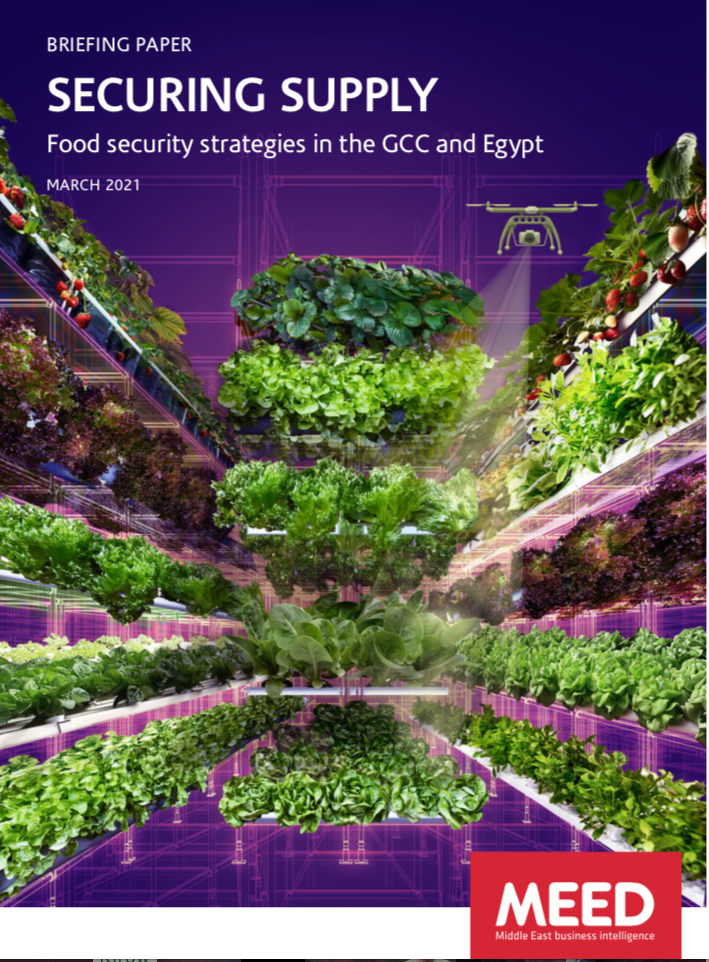
Securing Supply, the latest briefing paper produced by MEED in partnership with Dubai-based Mashreq Bank, discusses the food security strategies underway in the GCC and Egypt, including the shifting focus on self-sufficiency in sectors such as fisheries, dairy, and poultry; enhancing in-country reserves; and growing investments in agricultural technology.
Download the paper here.
29 Mar 2021

Certhon Found In Favor In Proceedings Against Plantlab
Companies receive final decision in patent dispute
Is indoor farming patentable or not? That's the question at stake in a legal battle that has raged for several years between Certhon and PlantLab.
Last week, the Court of Appeal in The Hague confirmed the annulation of PlantLab's Dutch patent on their indoor farming cultivation system. This is a victory for Certhon. As the Court of Appeal has declared that the company has not infringed the patent in any way, Certhon speaks of 'a victory for the entire indoor farming sector'. In the meantime, PlantLab is holding on to the patent and is awaiting the European ruling and therefore the case is not yet closed.
PlantLab has a pending objection against the rejection of its Dutch patent. The decision on this is subject to the Technical Board of Appeal's (TKB) judgment on the validity of PlantLab's European patent. In 2017, the European Patent Office (EPO) declared the patent as valid. Objections by Certhon and others against the ruling were rejected.
Sharing knowledge
Both parties have responded to the recent court ruling. Certhon advocates transparency to push the sector forward. "The judgment of the Court of Appeal is a victory for the entire sector," Lotte van Rijn, General Manager at Certhon noted. "The ruling is a positive stimulus to further develop and optimize indoor farming across the board.
"At Certhon, we take our product development and clients very seriously. If we bring technology and plants together, the growing possibilities for our clients are endless. Optimal growing recipes, extreme water savings, grip on growth, ingredients and quality, combined with yield optimization by autonomous growing systems and robotization; that is where the added value of our systems in indoor farming lies."
John van der Sande, Chief Innovation Officer at Certhon noted, "On the one hand, we are extremely pleased with this ruling. However, on the other hand, it is a shame that these proceedings have cost so much extra effort and energy. Fortunately, with this ruling, we can continue with what we are good at. Namely, developing reliable technology to improve cultivation processes. We are only at the beginning of the enormous potential of indoor farming. We are ready to take the next steps, as this ruling strengthens us tremendously."
LED as a heating component
PlantLab says it is surprised that the court does not consider LED lights as a heating component that can be used to warm up leaves. This leads to the heart of the matter: The patent in question is about a closed environment growing system where the temperature of the cultivation system and substrate is controlled, for example lighting.
PlantLab, therefore, believes that its patent has a broad reach. "The minute you start to control the cultivation by influencing the temperature, the patent applies," they stated in 2017. It is unknown when the ruling of the TKB can be expected. After this ruling or other potential proceedings, Certhon can reinstate the case.

For more information:
Certhon
ABC Westland 555
P.O. Box 90
2685 ZH Poeldijk
The Netherlands
Tel: +31 174 22 50 80
Fax: +31 174 22 50 81
www.certhon.com

For more information:
PlantLab
info@plantlab.com
www.plantlab.com
Publication date: Wed 31 Mar 2021
Author: Rebekka Boekhout
© HortiDaily.com
AeroFarms And Hortifrut Announce R&D Partnership To Advance The Next Generation of Blueberry And Cranberry Production In Vertical Farms
Together, this R&D partnership will identify and optimize blueberry and cranberry plants for indoor growing, allowing both companies to further expand their knowledge in sustainable farming
Multi-Year Partnership Will Optimize Plants
For indoor Growing And Commercialize
Blueberries And Cranberries Are
Grown In Vertical Farms Globally
March 30, 2021
NEWARK, N.J. & SANTIAGO, Chile--(BUSINESS WIRE)--AeroFarms, a certified B Corporation and leader in vertical farming, and Hortifrut S.A., a certified B Corporation in Chile and a global business platform leader in berries marketing, distribution, and production, today announced a multi-year partnership to jointly research and develop blueberry and cranberry production in fully-controlled indoor environments and vertical farms.
“We are very excited to have reached this agreement with such a successful and thriving vertical farming company like AeroFarms”
Together, this R&D partnership will identify and optimize blueberry and cranberry plants for indoor growing, allowing both companies to further expand their knowledge in sustainable farming. The goal of the partnership is to advance the production of the next generation of commercial blueberries and cranberries in vertical farms.
The first phase of the partnership is already underway with blueberry plants arriving this spring at AeroFarms global headquarters in Newark, New Jersey U.S.A. where they have over 100,000 square feet of vertical farming space for R&D and commercial production. Hortifrut, through its state-of-the-art genetic program, has bred compact blueberry plants ideal for vertical farming and AeroFarms has optimized its grow systems for berry production. Both companies envision a long-term partnership working together to formulate the commercialization of blueberries and cranberries grown in vertical farms globally. The teams are focused on delivering the most flavorful, nutritious, fresh blueberries to consumers at any time, anywhere in the world. The agreement considers the experimental site setup, planting of Hortifrut varieties, feasibility, data analysis, and potential further expansion.
“We are thrilled to announce our blueberry partnership with Hortifrut,” said David Rosenberg, Co-Founder and Chief Executive Officer of AeroFarms. “As we started sharing our mission and values with Hortifrut, we found deep alignment between our corporate goals and agricultural technologies. Hortifrut’s legacy of plant breeding and global blueberry production is unsurpassed in the industry, and we are excited to work together with the industry leader in delivering berries to the world every day. We look forward to bringing our mastery of controlled environment growing to commercial blueberry production. New Jersey has a rich history in blueberries dating back to 1910 when blueberries were domesticated for the very first time. Now AeroFarms and Hortifrut will be pioneering the next chapter for blueberries by domesticating them again in New Jersey – this time in a fully controlled environment.”
“We are very excited to have reached this agreement with such a successful and thriving vertical farming company like AeroFarms,” commented Juan Ignacio Allende, Hortifrut’s CEO. “Now we will put the efforts and know-how of both teams to work side by side, allowing us to succeed in growing blueberries and cranberries under this new technology. Responsible farming, high-quality fruit, and a commitment to customer service are in our DNA. We believe this is only the
beginning of a successful partnership focused on growing, supplying, and marketing the best berries, every day all over the world.”
About AeroFarms
Since 2004, AeroFarms has been leading the way for indoor vertical farming and championing transformational innovation for agriculture. On a mission to grow the best plants possible for the betterment of humanity, AeroFarms is a Certified B Corporation Company with global headquarters in Newark, New Jersey, United States. Named one of the World’s Most Innovative Companies by Fast Company two years in a row and one of TIME’s Best Inventions, AeroFarms patented, award-winning indoor vertical farming technology provides the perfect conditions for healthy plants to thrive, taking agriculture to a new level of precision, food safety, and productivity while using up to 95% less water and no pesticides versus traditional field farming. AeroFarms enables local production to safely grow all year round for its commercial retail brand Dream Greens that has peak flavor always®. In addition, through its proprietary growing technology platform, AeroFarms has developed multi-year strategic partnerships ranging from government to major Fortune 500 companies to help uniquely solve agriculture supply chain needs. For additional information, visit: https://aerofarms.com/.
On March 26, 2021, AeroFarms announced a definitive business combination agreement with Spring Valley Acquisition Corp. (Nasdaq: SV). Upon the closing of the business combination, which is expected in the second quarter of 2021, AeroFarms will become publicly traded on Nasdaq under the new ticker symbol "ARFM". AeroFarms is expected to receive approximately $357 million in gross transaction proceeds, enabling the company to fully fund the equity needs of its growth strategy, including expanding retail distribution and market penetration, constructing additional farms, introducing future generations of proprietary farming technology, and entering new product categories. AeroFarms has a platform approach to farming, utilizing its expertise in mechanical design, environmental design, operations, and digitization and genetics to both understand what a plant wants as well as how to influence environmental stresses to optimize plant growth. This data science-driven platform approach enables the company to better understand plants, optimize quality and reduce costs. Using its expertise in leafy greens, AeroFarms has a tremendous amount of data on plant biology to leverage coupled with years of experience with berries, having grown over 50 different types of berries to date. We have developed ways to grow berries with a higher sweetness than industry averages, and we now will be focused on blueberries and cranberries as well. Additional information about the transaction can be viewed here: https://aerofarms.com/investors/
About Hortifrut S.A.
Hortifrut is a global business platform and Certified B Corporation in Chile, that connects dedicated berry producers in the two hemispheres with the most important customers and markets around the world. It stands out for its unique business model based on innovation, varieties breeding, sustainability and digitization. Currently, the company has operations in North America, Central America, South America, Europe, Africa and Asia. Hortifrut is known for having a leading genetic program for berries, sales platforms attending top tier customers around the world, over 4,500 hectares of top-notch berry farms, in order to deliver all berries to more than 35 countries every day. For additional information, visit: https://hortifrut.com/en/
No Offer or Solicitation
This press release does not constitute an offer to sell or a solicitation of an offer to buy, or the solicitation of any vote or approval in any jurisdiction in connection with a proposed potential business combination among Spring Valley and AeroFarms or any related transactions, nor shall there be any sale, issuance or transfer of securities in any jurisdiction where, or to any person to whom, such offer, solicitation or sale may be unlawful. Any offering of securities or solicitation of votes regarding the proposed transaction will be made only by means of a proxy statement/prospectus that complies with applicable rules and regulations promulgated under the Securities Act of 1933, as amended (the “Securities Act”), and Securities Exchange Act of 1934, as amended, or pursuant to an exemption from the Securities Act or in a transaction not subject to the registration requirements of the Securities Act.
Forward-Looking Statements
Certain statements included in this press release that are not historical facts are forward-looking statements for purposes of the safe harbor provisions under the United States Private Securities Litigation Reform Act of 1995. Forward-looking statements generally are accompanied by words such as “believe,” “may,” “will,” “estimate,” “continue,” “anticipate,” “intend,” “expect,” “should,” “would,” “plan,” “predict,” “potential,” “seem,” “seek,” “future,” “outlook,” and similar expressions that predict or indicate future events or trends or that are not statements of historical matters. All statements, other than statements of present or historical fact included in this presentation, regarding Spring Valley’s proposed acquisition of AeroFarms, Spring Valley’s ability to consummate the transaction, the benefits of the transaction and the combined company’s future financial performance, as well as the combined company’s strategy, future operations, estimated financial position, estimated revenues and losses, projected costs, prospects, plans and objectives of management are forward-looking statements. These statements are based on various assumptions, whether or not identified in this press release, and on the current expectations of the respective management of AeroFarms and Spring Valley and are not predictions of actual performance. These forward-looking statements are provided for illustrative purposes only and are not intended to serve as, and must not be relied on as, a guarantee, an assurance, a prediction, or a definitive statement of fact or probability. Actual events and circumstances are difficult or impossible to predict and will differ from assumptions. Many actual events and circumstances are beyond the control of AeroFarms and Spring Valley. These forward-looking statements are subject to a number of risks and uncertainties, including changes in domestic and foreign business, market, financial, political, and legal conditions; the inability of the parties to successfully or timely consummate the proposed transaction, including the risk that any regulatory approvals are not obtained, are delayed or are subject to unanticipated conditions that could adversely affect the combined company or the expected benefits of the proposed transaction or that the approval of the stockholders of Spring Valley or AeroFarms is not obtained; failure to realize the anticipated benefits of the proposed transaction; risks relating to the uncertainty of the projected financial information with respect to AeroFarms; risks related to the expansion of AeroFarms’ business and the timing of expected business milestones; the effects of
competition on AeroFarms’ business; the ability of Spring Valley or AeroFarms to issue equity or equity-linked securities or obtain debt financing in connection with the proposed transaction or in the future, and thehose factors discussed in Spring Valley’s final prospectus dated November 25, 2020 under the heading “Risk Factors,” and other documents Spring Valley has filed, or will file, with the SEC. If any of these risks materialize or our assumptions prove incorrect, actual results could differ materially from the results implied by these forward-looking statements. There may be additional risks that neither Spring Valley nor AeroFarms presently know, or that Spring Valley nor AeroFarms currently believe are immaterial, that could also cause actual results to differ from those contained in the forward-looking statements. In addition, forward-looking statements reflect Spring Valley’s and AeroFarms’ expectations, plans, or forecasts of future events and views as of the date of this press release. Spring Valley and AeroFarms anticipate that subsequent events and developments will cause Spring Valley’s and AeroFarms’ assessments to change. However, while Spring Valley and AeroFarms may elect to update these forward-looking statements at some point in the future, Spring Valley and AeroFarms specifically disclaim any obligation to do so. These forward-looking statements should not be relied upon as representing Spring Valley’s and AeroFarms’ assessments of any date subsequent to the date of this press release. Accordingly, undue reliance should not be placed upon the forward-looking statements.
Contacts
AeroFarms Contacts
Investor Relations:
Jeff Sonnek
ICR
Jeff.Sonnek@icrinc.com
1-646-277-1263
Media Relations:
Marc Oshima
AeroFarms
MarcOshima@AeroFarms.com
1-917-673-4602
Hortifrut Contacts
Investor Relations:
Gabriela Rojas
grojas@hortifrut.com
56-2-2-4792618