

Welcome to iGrow News, Your Source for the World of Indoor Vertical Farming
Farming Fuels A Holistic Approach to End Homelessness at Lotus House
Growing fresh food helps Lotus House residents find their fresh start
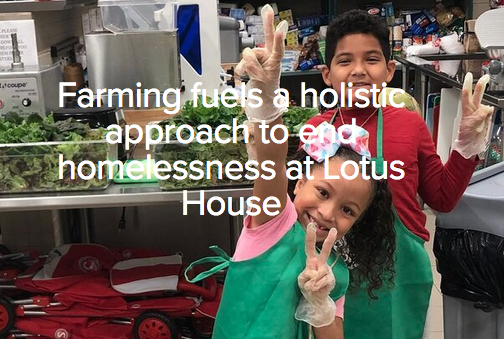
Growing fresh food helps Lotus House residents find their fresh start
At Freight Farms we believe that everyone should be able to participate in the joy of eating fresh, healthy foods regardless of location, climate, or socioeconomic background. Our global Freight Farmer network makes this mission a reality–and none more so than the non-profit organizations that use hydroponic container farms to create meaningful and long-lasting change in their communities.
Today we’re highlighting just one organization: Lotus House in Miami, Florida. Lotus House is what many of us would call a “homeless shelter”, but the term fails to capture the sheer extent of their services. Lotus House refers to itself as a “holistic residential facility and resource center for women and children experiencing homelessness”. The difference is significant. Instead of focusing on providing bare minimum resources–a hot meal, a bed, a shower–Lotus House tries to address the initial cause of homelessness, with the intent of getting women and their families back on their feet. Their services provide up to 500 women and children residents with daycare, employment education, and arts programs, beauty salon, yoga and meditation, and much more.

Meet Farmer Jackie
To learn more about the incredible things happening at Lotus House, we connected with Jackie Roth. Jackie is the ideal person to talk to about the role of farming within the center’s greater holistic model:
“As Project Coordinator, I manage all aspects of the Farm in addition to other specialty health/research projects at the shelter. I lead sessions inside the Farm every day, as well as the cooking demonstrations and outdoor garden work, and oversee all Farm maintenance and volunteers. So I’m basically the resident farmer, and guests know me as such.”
Hear from Jackie and Constance (Lotus House Founder and Director) when you download webinar, recorded on April 30th 2020. Download here.
Good nutrition as a pathway to wellness
For Jackie, Lotus House’s farm is part of a much larger conversation about the essential role health and wellness play in building resiliency and ending the cycle of poverty:
“Our mission is to transform the trauma of homelessness into a window of opportunity, where guests can heal old wounds and build resilience for a brighter future. Rather than provide the temporary support of a bed and hot meal, we work to holistically end the cycle of poverty and abuse that too often leads women and families to our shelter. Health and wellness are essential to this healing, and food and nutrition are essential to that health and wellness. It truly takes a village and lots of moving parts to achieve this multidisciplinary vision, and the food and nutrition education component is no exception.”
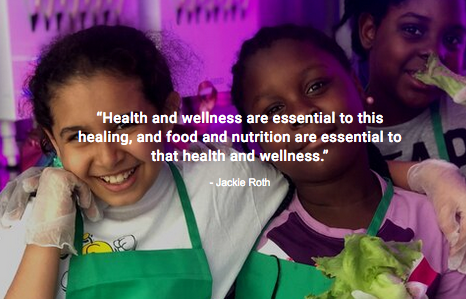
The Lotus House farm works in tandem with the Culinary Center, where over 500 residents and staff members are served three free meals a day. The farm is mostly used to grow a variety of lettuces that go into the Center’s salad bar, along with other specialty greens, root vegetables, and edible flowers. For Lotus House, the Greenery is the perfect intersection of food, nutrition, and education, and it has been deployed accordingly.
“We aim to serve largely plant-based foods and healthful meals that nourish the healing and developing minds and bodies of those who live here. The Culinary Center is home to one of our paid internship programs for guests where they earn their Food Handler’s certification, participate in the inner workings of a commercial kitchen, and hopefully create new career opportunities for themselves in a city with such a prominent hospitality and entertainment industry.”
Furthermore, the farm and the center have a symbiotic relationship. Jackie explains the benefit of the farm for Lotus House, and the greater community:
“Our Farm saves us thousands of dollars a year on produce costs; in addition, we work closely with local nonprofits and businesses who donate reclaimed food that would otherwise be thrown away. And when we have more food than we need for ourselves, we give it back as groceries for people in the neighborhood - because the community’s health is so tightly linked to our own. So there’s lots of internal and external coordination involved in sustaining our own food source, reducing food waste, and bringing real nutrition to the people who need it most.”
Achieving good nutrition through education
Beyond the dining program, the farm serves an important role in educating and engaging many of the organization’s youngest residents (ages 3-12) on weekdays after school. Jackie, who oversees all the in-farm programming overviews the day-to-day:
“The Farm is the home for an innovative after-school program where children witness the seed-to-harvest life cycle and farm-to-table growing. We also do cooking demonstrations where kids can see different hands-on ways to use their vegetables and learn basic kitchen skills like chopping, mixing, blending, etc.”
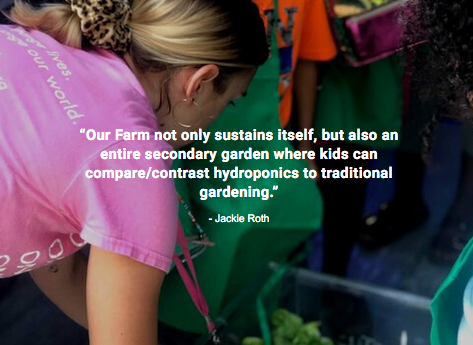
Lotus House’s education farming program doubles as a mini-workforce. During their afternoon sessions, younger kids help Jackie plant seeds and harvest mature plants for delivery to the Culinary Center, where they will be served the very next day. Beyond that, older kids interested in the farm help Jackie with the more detail-oriented tasks, like transplanting and maintenance.
But the farming program doesn’t end there! As with everything Lotus House does, the farming program has a holistic and multidisciplinary approach. In addition to the Greenery, the center has built out a general nutrition and gardening presence at the shelter. The building features an outdoor rooftop garden where the children grow basil, cilantro, beets, mint, broccoli and strawberry sprouts–started in the Greenery–in the soil and learn how to compost waste from the Greenery operations (grow plus, leaves, etc.).
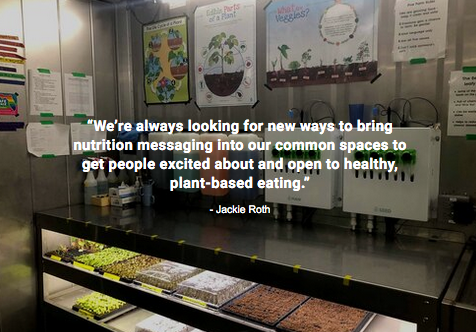
The center runs also smaller events and initiatives about nutrition, such as the ‘Farm Stand’ where the Lotus House staff highlight a Farmer of the Week, share what’s growing, provide samples, and give out nutrition-themed activity sheets.
Changing habits to change lives
Ultimately, the goal of the Lotus House Farm program is to encourage residents to eat more fruits and vegetables by connecting them to their food source.
“With the Farm, we have a really unique opportunity to give guests a transparent lens into how food grows, from seed to plate, and get them excited about eating something cultivated in this high-tech environment. The approach is not to lecture people on what’s good for you or what’s bad for you, but to show them how cool plants are and all the different ways you can enjoy them.”

The opportunity to work with kids from a young age is particularly important in this goal. “It’s best to intervene young so they can build healthy habits early on, and hopefully share what they learned with mom to influence her attitudes and habits...If we can play even a small part in ...getting children excited about eating fruits and vegetables, exposing them to something they’ve never eaten before, or bringing moms and kids together to watch their plants grow and prepare a healthy snack, then it’s a worthy battle.”
Inspiring future farmers
With robust educational programs established and successful, Jackie turned her focus for 2020 on two new initiatives: creating a wider volunteer program and rolling out a hydroponic farming job training program for teens and adults.
The volunteer program sought to engage people all over Miami with the center and the farm, based on their availability: “The volunteers are integral to maintaining a beneficial student-teacher ratio, implementing therapeutic teaching techniques, and ensuring all necessary maintenance work is completed and our Farm stays hyper-clean.”
The job training program would teach residents basic farming skills before they started paid jobs with local container farming community partners, like fellow Freight Farmers at Hammock Greens: “We want every abled person in our shelter to come out with a good paying job, and even with the kids and volunteers there was often lingering Farm work, and we had lots of adults who expressed interest in learning more about gardening.”
Unfortunately, COVID-19 brought both programs to a screeching halt just as they were gaining momentum: volunteers stopped coming in and partnering businesses closed their doors. Jackie remains hopeful, however, making sure that post-COVID, the programs are still viable.
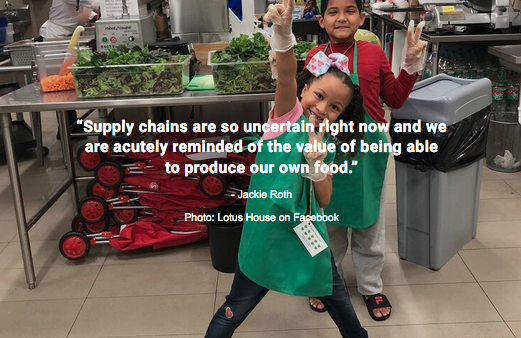
These new programs are not the only ones that had to be re-thought in today’s coronavirus reality. As Lotus House works to protect its residents, Jackie is aware of how the farm is at the center of two competing forces:
“On the one hand, we want to exercise the utmost caution in every regard due to the compact interior of the Farm and the nature of growing fresh, uncooked food for hundreds of people when there are still so many unknowns about this virus and its transmission. But on the other hand, supply chains are so uncertain right now and we are acutely reminded of the value of being able to produce our own food. And, all the kids are off school with extra time on their hands and a deep desire for some semblance of fun and normalcy.”
Luckily, Jackie and her helpers were well-prepared to address public health and safety in the farm. Well before the coronavirus reared its ugly head, Jackie implemented rigorous cleanliness practices to avoid contamination like wearing gloves, sanitizing multiple times daily, “dabbing” when sneezing or coughing, and routine deep cleaning of the farm. Since the pandemic reached Miami, they’ve expanded the precautions:
“Most drastically we’re restricting our attendance to no more than two kids at a time in accordance with social distancing. And because of limited attendance, we have fewer hands to help and are therefore at a reduced capacity. Despite all of this, we’re still going. There’s still interest and definitely still a need. Even if we get to a complete quarantine, our guests still have to eat and we will still strive to serve them nutritious options.”
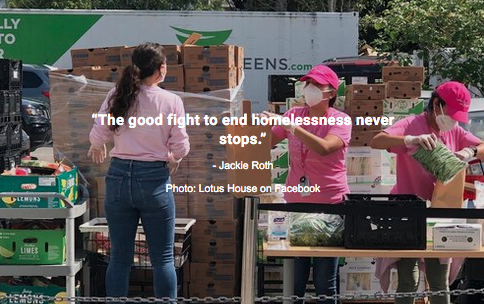
In spite of the increased work and stress of running a farm in the center’s close quarters, Jackie feels that the pandemic situation has reinforced the importance of her work: “The good fight to end homelessness never stops–shelters keep running through even the most unprecedented emergencies, and we are charged with protecting some of society’s most vulnerable people. It’s actually been quite a blessing to grow closer as a team, adapt together, and try to preserve this homey space of healing and sanctuary despite all the madness outside.”
Supporting Lotus House during COVID-19 and beyond
In light of the unprecedented circumstances surrounding the COVID-19 pandemic, we asked Jackie how the greater Freight Farms community can help Lotus House.
“Because of the pandemic, we truly need help now more than ever. If you head to our website, you’ll see a donation link on the homepage. Anything helps. Your support is critical and immensely appreciated! We are taking so many extra measures and expenditures to supply PPE to our staff and guests, to hire additional persons for added sanitation, to ensure our supply stocks are sufficient, to do whatever we can to protect everyone living and working with us. And to prepare for the inevitable spike in homelessness that will result from this economic collapse.”
Looking beyond COVID-19, Jackie also outlined how community support will help support the Lotus House farm in the future: “Our Farm was purchased and funded the first year through some local community grants, but those grant periods ended last month. We are now exploring new funding streams to advance the program. We accept donations, specifically made out to “The Farm” if possible. We also designed our own educational curriculum for the program, and are happy to share this along with technical training if you would like to replicate what we’re doing. And anyone interested in volunteering can reach out to me at jackie1@lotushouse.org!”



Variety of Healthy Foods From Vertical Farming Platform
When talking about technology, it's easy to focus on things like computers, smartphones, apps and the growing number of smart gadgets around the house. But technology is far-reaching and can influence and change traditional sectors quickly, one of them being the agricultural sector.
When talking about technology, it's easy to focus on things like computers, smartphones, apps and the growing number of smart gadgets around the house. But technology is far-reaching and can influence and change traditional sectors quickly, one of them being the agricultural sector.
One company that is looking to take on the commercial agricultural industry is Eden Green Technology, just out of Texas. This company focuses on sustainability in the food industry. Eddy Badrina, CEO of the company tells about what they do, how they use technology, and how they envision the future of the agricultural industry.
Efficient use of space
"Eden Green Technology is a vertical farming platform that grows large quantities of local produce safely, sustainably, and efficiently. We use less land, energy, and water than both traditional farming and other indoor solutions. Our greenhouses are constructed on small footprints, in urban or suburban areas, to provide stable jobs and produce non-GMO, pesticide-free produce, which goes from farm to table in as little as 48 hours, compared to the 14 days it usually takes under the traditional model," Eddy says.
The founders of Eden Green are brothers Jacques and Eugene van Buuren. They came to the US to secure investment, source talent, and experiment with their technological solutions in diverse climates. They started in Texas, with its own extreme range of environmental considerations, agricultural know-how, and business opportunities, and built from there.
Technology company
"Our technical secret sauce consists of a few ingredients, including our patented vertical “vines,” where our produce grows, and the way we create microclimates for each individual plant with temperature-controlled air and nutrient-enriched water. We also designed and built a proprietary mechanical, electrical, and plumbing solution specifically to automate and remotely monitor all our greenhouses. Because of that hardware and software combination, we like to think of ourselves as a technology company that happens to grow produce."


Read more at Vator.
By Horti Daily | May 4, 2020

Vertical Gardens Take The Hudson Valley’s Farm-to-Table Scene to New Heights
“Vertical Field offers a revolutionary way to eat the freshest greens and herbs by producing soil-based indoor vertical farms grown at the very location where food is consumed,” explains Vertical Field’s Chief Executive Officer Guy Elitzur
Sabrina Sucato
Photos by Vertical Field
Vertical Field Makes its Local Debut At a Leading Poughkeepsie Restaurant, With a Monsey Grocery Store Soon To Follow
In the Hudson Valley, farm-to-table is less of a foodie trend and more of a way of life. As an ideal, it’s woven into the threads of the community, crisscrossing its way between farms, artisans, restaurants, and the locals who support them all.
Even during the COVID-19 crisis, when so many in the region struggle to find their footing, the movement lives on through support for farm markets and restaurants, many of which are in new territory when it comes to delivery and takeout.
Yet it’s never gone quite this far. Or, ahem, this high.
Photo by Vertical Field
In a first for the Hudson Valley, farm-to-table takes a vertical turn. It’s all thanks to Vertical Field, an Israel-based agro-tech startup that crafts vertical agricultural solutions that make access to food easier and faster while reducing waste and cutting down on human handling – a major boon during a time of social distancing.
“Vertical Field offers a revolutionary way to eat the freshest greens and herbs by producing soil-based indoor vertical farms grown at the very location where food is consumed,” explains Vertical Field’s Chief Executive Officer Guy Elitzur. “Our urban farms give new meaning to the term ‘farm-to-table’ because one can virtually pick their own greens and herbs at supermarkets, restaurants, or other retail sites.”
While Vertical Field has installed gardens across the Middle East and Europe, it’s recently found a home at Poughkeepsie’s Farmers & Chefs, where chef and owner John Lekic uses it to take the hyperlocal experience at his restaurant even further.
“It’s making a full circle for a chef and restaurateur,” he says. “You get to serve the food you not only prepared or cooked, but you also grew from seed to plate.”
When Lekic first came across Vertical Field during an exhibition at the Culinary Institute of America in late 2019, he was hooked from the start. Knowing that the system would be a perfect fit for his concept, he ordered one for his Hudson River food truck-turned-eatery.
Lekic’s vertical garden arrived two days after Governor Cuomo mandated the closure of on-premise restaurant operations in New York State.
“It was a lot of anxiety and uncertainty,” Lekic recalls. For the safety of his staff, he called for a break in operations to ensure no one was sick. During that time, he dedicated himself to setting up his vertical field. “It kept us busy. We installed our farm and planted about 10 days after. We already had our first crop.”
A rapid turnaround time is one of the pros of Vertical Field gardens, which take about three to four weeks per harvest. According to Lekic, he anticipates he’ll be able to grow about 400 pounds of produce per month. Much of it will be salad greens such as buttercrunch lettuce, kale, and arugula, although he also planted herbs like rosemary, sage, and basil.
While Lekic appreciates the convenience of the garden, which resides onsite at the restaurant for customers to see, he also loves that it’s a bug-free, pesticide-free operation with less need for human contact. With fewer intermediary steps (no transportation from producer to restaurant, for example) and up to 90 percent, less water required than in a traditional garden, Vertical Field urban landscapes are just about as eco-friendly as it gets.
“You can definitely taste that,” Lekic enthuses. “There are no chemicals. That’s a great experience.”
Just as Lekic values the freshness, so too do his customers. Farmers & Chefs is open for delivery and pickup during quarantine, so consumers are able to taste the metaphoric fruits of the garden’s labor for themselves. In fact, the garden has been such a hit that Lekic is brainstorming ways to incorporate the produce into more unique offerings.
“We make housemade ice cream with brown fennel and pistachio,” he says. “We’re playing around with some product that we aspire to take to market.”
Lekic may be the first to install a Vertical Field in the Hudson Valley, but he’s already paved the way for others. In Monsey, Evergreen Supermarket will soon have a sky-high garden of its own.
“I heard about [Vertical Field] through some people from Israel who showed me how some vertical farms are being set up in supermarkets,” explains supermarket representative Menachem Lubinsky. If not for the COVID-19 outbreak, he adds, Evergreen’s vertical garden would already be in place. As it stands now, the market expects the container will be delivered soon.
“I’m very excited about it,” says Lubinsky. “The technology allows it to have constantly changing light and heat. It eliminates the transfer from farm to supermarket and guarantees supplies.”
Lubinsky expects that Evergreen’s clientele, many of whom are already interested in more natural, organic products, will take to the Vertical Field produce immediately. Since Evergreen will set the container up in its parking lot, customers will be able to watch the garden grow during every shopping trip. If all goes well, the store may even purchase a second Vertical Field for its store in Lakewood, NJ.
“Almost everything you want to grow can grow,” Lubinsky enthuses. Fingers crossed, he hopes strawberries will soon be available for Vertical Field gardens, too.
Bowery Farming Hires Rachel Alkon As First Head of Comms
The indoor farm startup says it is seeing a surge in demand amid COVID-19

May 12, 2020, by Diana Bradley
NEW YORK
Whole Foods Market alum Rachel Alkon has joined indoor farming startup Bowery Farming as its first head of communications.
Alkon started at Bowery last week, reporting to CMO Katie Seawell.
The technology-focused company operates indoor farms in New Jersey and Baltimore. Alkon is responsible for building the brand narrative, external storytelling, media relations, community impact and public affairs.
“The company is now at a point where we want to define the narrative and do some more external storytelling,” said Alkon. “The time was right to bring on a comms head.”
Bowery Farming has received communications support from AOR Derris and Gillian Small PR. It is planning to continue to work with both agencies.
Bowery uses zero pesticides, 95% less water, and its farms are 100 times more productive “on the same footprint of land than traditional agriculture,” according to Alkon. Its produce is available at select Whole Foods and Foragers stores and is featured on the menus of Tom Colicchio’s New York restaurants, Craft and Temple Court. Based in New York City, the company has raised more than $170 million from investors including GV, General Catalyst, GGV Capital, First Round Capital, Temasek, and Almanac.
Bowery Farming’s business has more than doubled with some online distributors, and is up between 25% and 50% in stores, Axios reported last month. Indoor farms, which grow produce in warehouses with tightly controlled climate and light conditions, are seeing a surge in demand amid COVID-19 because “people are more concerned about who is handling their food, where it's coming from, how many stops did it have before hitting the shelves," Irving Fain, co-founder, and CEO of Bowery Farming, told Axios.
Alkon worked at Whole Foods Market for two years before she left the role of principal of global policy and public affairs in April. Alkon was also the director of corporate communications at Brunswick.
By Diana Bradley | PR Week | May 12, 2020

Building Resilience Into The Vegetable Supply Chain Using Container Farming
Canada’s food supply chain is robust and reliable - even in times of the COVID-19 crisis - but there is an opportunity to become more self-sufficient. Container farming can provide your food supply with some autonomy and reduced reliance on external food supply chains
Canada’s food supply chain is robust and reliable - even in times of the COVID-19 crisis - but there is an opportunity to become more self-sufficient. Container farming can provide your food supply with some autonomy and reduced reliance on external food supply chains.
THE SUPPLY CHAIN DURING COVID-19
Empty shelves at the outbreak of the pandemic were a shock to many as grocery store retailers have experienced shortages, or delays, in their supply chain during this adjustment period.
The Food and Agriculture Organization of the United Nations (FAO) wrote in a special COVID-19 report that “supermarket shelves remain stocked for now [...] but a protracted pandemic crisis could quickly put a strain on the food supply chains, a complex web of interactions involving farmers, agricultural inputs, processing plants, shipping, retailers and more.” The FAO emphasizes that there is enough supply, but transportation is lacking to help get the crops where they are needed most.
FOOD PRICES ARE RISING
Even before COVID-19 struck, food prices in Canada were predicted to rise between 2 and 4 percent, especially vegetables and bakery items. Now, according to a new forecast by the University of Guelph and Dalhousie University, researchers say the factors contributing to the rise have changed but they still expect prices to rise nonetheless. Plus, grocery stores are now spending more to ensure the proper protection protocols are in place on top of paying their essential workers more. These costs won’t be changing soon, so what ways can more resilience be built into the grocery store model?
Students in Kugluktuk, Nunavut help run their Growcer system which provides produce to the school and community.
EVERYONE IS IMPACTED DIFFERENTLY
It is important to note that not every community’s food supply is going to be impacted the same way. In a Food Secure Canada webinar about Food Policy and COVID-19, the speakers spoke to how rural and Indigenous communities will be impacted differently than cities. One of the speakers, Jessica McLaughlin with the Indigenous Food Circle, said, “What has become very evident to us is the vulnerability of communities on that big industrial food supply chain and the lack of autonomy to self-determine their own food systems.” However, Mclaughlin added that despite this, communities are working together. “In this crisis, communities have been really resilient . . . you really see how communities pull together and they are taking this into their own hands,” McLaughlin said.
WHAT COULD A SOLUTION LOOK LIKE?
Each community has different needs, but one possible solution is container farming. With container farms, communities and grocery stores can grow a variety of produce year-round, no matter the weather, and even customize what’s being grown to match the demand of the community. You’re also not stuck to growing one crop. A grower can grow multiple types of produce at a time and switch out what’s being grown regularly. Having a local, year-round, consistent supply of produce allows the community not to rely solely on external sources and can provide a buffer when the supply chain experiences delays.
The Yellowknife Co-op's Growcer unit is operated by its existing employees who see it as an opportunity to serve their community.
Now, hydroponic growing might sound technical but operating one of Growcer’s systems is extremely simple. It only takes one week of on-site training to have employees comfortable with the system. Justin Nelson, general manager for The Yellowknife Co-op, shared that their employees love working in the Grower unit. “On a cold dark day in Yellowknife there’s no better place to be than inside the Growcer unit,” Nelson said. “When you’re actually harvesting the product that you’re selling it’s a great feeling.” You can read more about The Yellowknife Co-op’s story to see how they integrated a container farm with their store.
Food sovereignty and the ability for communities to decide how their food systems run has been brought to the forefront during COVID-19. It’s impossible to predict what lays ahead, but we do know that this could be a time for a reset for some of us.
April 27, 2020
VIDEO: Babylon Harvested Here - Remotely Managed Micro-Farm
Babylon is often asked how our remotely managed, but locally supported micro-farms work
International Manufacturing and Distribution,
Sales and Marketing Management, Connector.
Babylon is often asked how our remotely managed,
but locally supported micro-farms work
The new video below should answer some of your questions but please contact us for any additional information. (www.babylonmicrofarms.com)

What The Heck Is Farm Management Software?!
You can think of these platforms as “enterprise solutions” from Microsoft, IBM, Oracle, and SAP’s of the world...but for Ag.
By Aaron Magenheim, CEO & Co-Founder of AgTech Insight & Growers Insight
May 2020
Technology specifically built for Agriculture, (commonly known as AgTech or Precision Ag), has become an exciting space with Farm Management solutions leading digitalization. “Farm Management” has also turned into a buzzword many people use broadly and don’t really understand the importance of and details around – especially in our rapidly changing world.
As CEO and co-founder of AgTech Insight, a global advisory and implementation firm specializing in AgTech, I have been monitoring the evolution of this industry for several years, evaluating both existing and new solutions and companies. In 2015 we launched our first AgTech Market Map leveraging our internal solutions database by providing a free, valuable resource for those wanting a better understanding of which companies are leading the market organized by category.
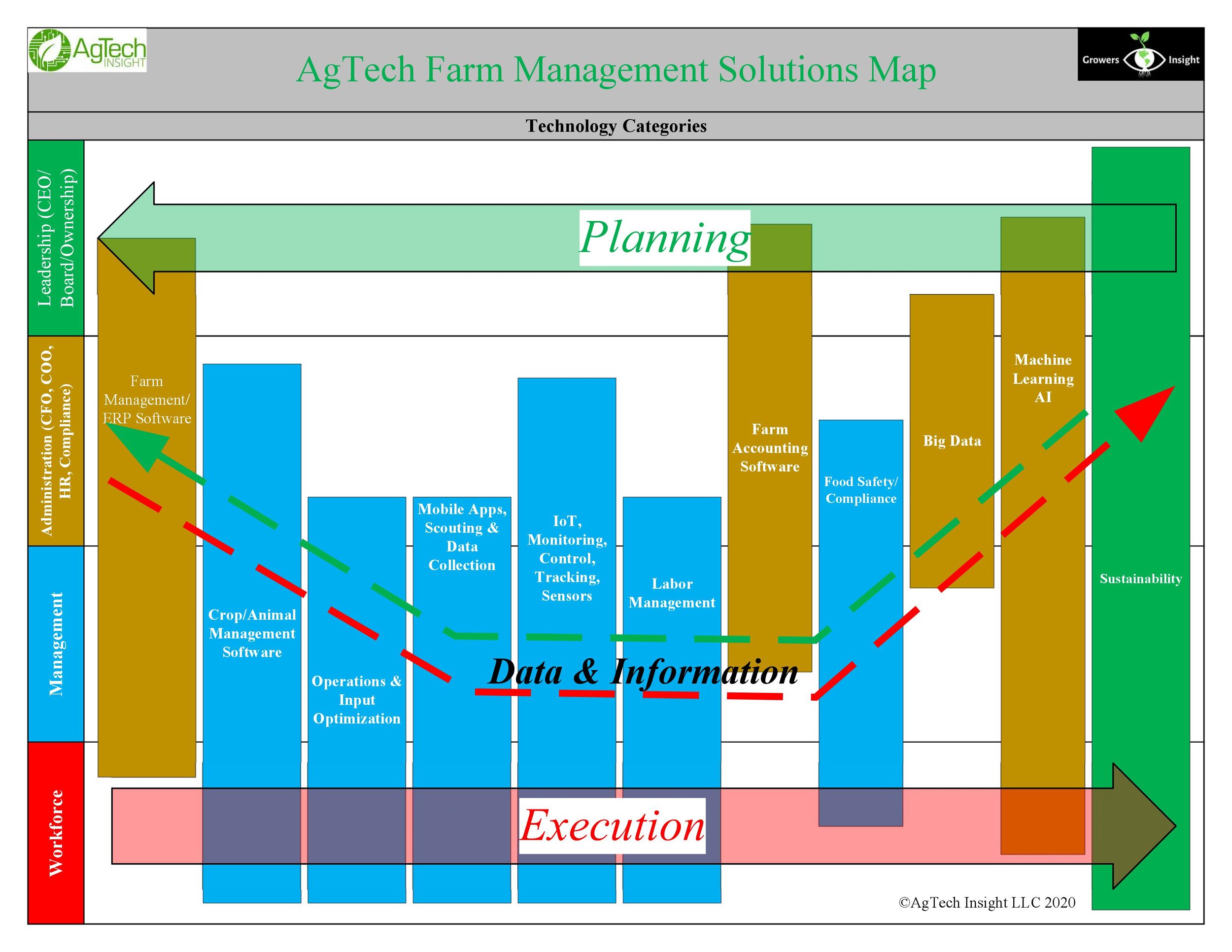
Over the past couple of years, our database of digital AgTech solution providers has grown to over 3,000 companies. Farm Management Software (FMS) has become the largest category, with over 500 listings. As we once again reviewed the details of each company to choose those we feel are leading their sector, it became clear we needed to further break down the FMS category based on core competency. This article explains the industry’s current state and how, as these AgTech solutions work in combination, they become extremely valuable for AgriFood businesses. We’ve also included an infographic illustrating how these technologies work together, who uses them, dataflow processes, and the value they bring throughout the organization.
Five years ago, lots of companies wanted to be the leading “FMS” platform. Today there is still no clear winner, so I think we can all agree it’s too big of a task with too many variables for one technology company. We must focus on user success, adoption, and RoI, therefore, our approach is to piece together many best-in-class solutions and then aggregate them — like they do in almost every other industry — to meet the needs of customers.
As the AgTech industry matures, there are companies who get really good at solving one specific problem becoming their “core technology.” This helps everyone understand where each company can provide the most value, as well as identifying the solution as complementary rather than competitive.
While the industry becomes more collaborative and standardized, each solution will continue to be a very important tool used day-to-day by some people on the farm while also feeding that data into larger farm management systems and platforms. These larger platforms are aggregating a variety of point source data being collected and provide a wider view of what’s happening on the farm for mid-level management. This data will be further shared to a business intelligence platform, which helps leadership make financial and business decisions but will not typically be used by a farm supervisor managing daily activities and production.
Leadership Level Solutions
Farm Management/ERP Software Platforms
You can think of these platforms as “enterprise solutions” from Microsoft, IBM, Oracle, and SAP’s of the world...but for Ag. They work with a variety of integrated software applications and systems to bring these dispersed datasets together and provide a variety of often custom analytic insights to company leadership. These platforms require an administrator and are primarily used to make financial and large business decisions rather than improving the day-to-day production of a specific crop.
Sustainability
Sustainability is an important topic across any organization and (along with agility) drives its future. Most companies and governments are integrating sustainability efforts across their business from soil and animal health through carbon farming and logistics. To meet the United Nation’s Sustainable Development Goals (SDG’s) by 2030, a huge effort needs to be put forth by every person, so this category spans the entire organization.
The following diagram shows the flow of decisions and data including each user group by category:
Upper-Level Management/Administration Solutions Farm Accounting Software
Tracking an Ag company’s financials is more important today than ever, thus feeding granular data from both revenue as well as ops/expenses to count pennies is of utmost importance – not only to keep the company in business, but to be able to calculate real RoI (Return on Investment) for innovation efforts and other expenditures. Many of the other systems being used across the operation will feed financial data into this system.
Big Data Providers
There is a plethora of data being collected from millions of sources, and while it may not always be extremely specific to your exact case/location (as in weather), leveraging Big Data across market pricing, asset values, consumer trends, and even imaging can be used to further support a farmer’s decision- making by finding anomalies, providing a larger data set, and more.
Machine Learning and Artificial Intelligence (AI) Tools
As Ag-focused tools to fill the needs of the sector have not yet emerged, great platforms and developer’s tools prominent in other industries are the solutions we can leverage in the near future. These tools can be used as a front end user interface like Power BI or Tableau, allowing the user to run data into the platform to analyze, build projections, prescriptions, and automate processes. They can also be used in the back end of other solutions, doing the heavy lifting and data crunching before sending the prescriptions and actions back to a software’s user interface or to be carried out autonomously.
Mid-Level Management and Workforce Solutions
Crop/Animal Management Software
This is still the largest bucket in the Ag software world, but we have narrowed it down significantly. These FMS are focused more on the operations side, helping to grow a better crop while reducing inputs. They are typically pureplay software and use API’s (Application Programming Interfaces) to collect and share data from a variety of applicable sources. These solutions are most often used by Ag operations directors through ranch managers to get a high-level view of what’s happening across their operations and highlight potential issues and opportunities for improvement. The workforce also uses these solutions by tracking their activities and receiving recommendations. It can also be a catch-all place to aggregate data and display important KPI’s (Key Performance Indicators) on a dashboard for easy and quick access to what is most important while allowing a deeper dive to further inspect as needed.
Mobile Apps, Scouting and Manual Data Collection
These important tools are typically used by advisors, agronomists, PCA’s (Pest Control Advisors), foremen, laborers, etc. to collect data and verify as tasks are being done. They also create an historic record that can be used in the future to compare and analyze events like pest infestations, animal health, or water usage.
IoT, Monitoring, Control, and Animal Tracking
There are a number of IoT platforms which focus on fixing a certain problem such as collecting soil moisture, irrigation data, and weather, or tracking a cow to alert when it’s becoming sick or ready to be bred. Their intention is to improve profitability and sustainability while also growing a better product. These hardware-centric approaches use real-time sensors (often from 3rd parties) to collect a variety of data on crops, animals, weather, equipment, people, and more before sending it to a database in the cloud. They produce real records and ground-truthing which can be used to trigger alerts, for analytics, modeling, to calibrate machine learning or AI models and more.
IoT Plus Analytics User Interface Similar to the above category, this is a large sector which also focuses on a specific problem. However, these companies have not only built the hardware portion, but they have also built a software user interface including more advanced analytics or modeling to provide actions around the conditions they are reporting. They typically will also pull in data from other sources to support the decision-making for the specific problem they are solving.
Input and Farm Operations Efficiency and Optimization
These solutions concentrate on helping improve the efficiencies around spray, variable rate applications, or energy/water usage. They can also help with logistics and optimization across a farm by having the right people, equipment and other resources at the right place, at the right time. This can reduce harvest costs by not having trucks and trailers waiting around and streamlining trucks arriving at a processing facility.
Labor Management
Ensuring you have the required workforce and staying connected with them has become a constant battle, as has ensuring they are performing the tasks planned at an acceptable level. These solutions can help mitigate labor shortages while collecting valuable insights to be fed into a FMS and enterprise solutions.
Food Safety/Compliance
This sector of solutions have mostly been built to mitigate risk but have a much larger role to play as they are integrated into larger platforms. Many will start using a backbone blockchain technology, allowing for easier data segregation and to provide invaluable insights into both cost and risk evaluation.
Summary
With so many great technology solutions available today, deciding where to start and who to work with is important. The key to success comes through creating a cultural shift into modernization throughout a business organization. Our companies specialize in designing and implementing successful innovation plans for our clients.
Please Click Here to View: Growers Insight - Grower Overview Slides 3.0
For support through your AgTech journey, please contact:
Aaron Magenheim, CEO & Founder AgTech Insight & Growers Insight
AaronM@AgTechInsight.com
+1-831-595-6064 Mobile
+1-855-410-2030 Office
© AgTech Insight LLC 2020
You Must Be Able To Sell Vertically-Farmed Goods At Competitive Prices
Urban Harvest’s owners do see a future in vertical farming but do not believe it will replace ‘normal’ greenhouse cultivation. “It is better to consider vertical farming as a supplement to a greenhouse and full soil farming.
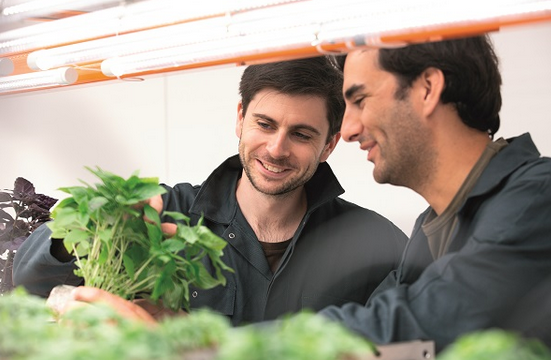
Two years ago, business partners, Alexandre Van Deun and Olivier Paulus, opened one of the very first vertical farms for herbs in Brussels, Belgium. Now, the complete classic herb assortment is grown. Not only for local retailers like Delhaize and Aveve, but also for catering companies and restaurants. The farm's current 1,400m2 has become too small. This duo's next step is, therefore, a new 2,5-hectare farm with 15 cultivation layers.
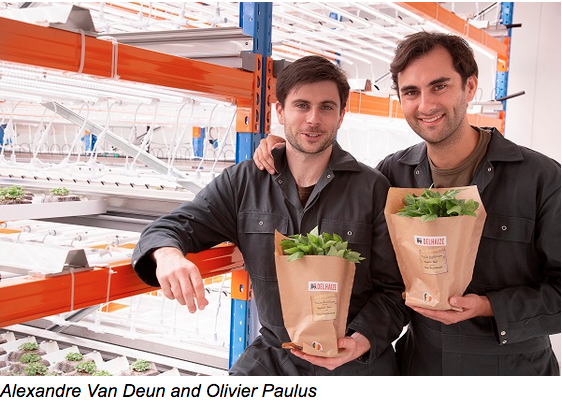
Urban Harvest is currently located in an old meat market in the heart of Brussels. “The building was standing empty, and we wanted to grow our products locally, close to the consumer,” says Urban Harvest’s Alexandre. “At the moment, we cultivate on five or six layers in a 1,400m2 farm. We have all the traditional pot herbs in our range and also grow special herbs per client orders. Our clients are always interested in novelties. So we are always busy testing new products and growing techniques to respond to their demands.”
Herbz“The two largest retailers that buy our herbs are Delhaize and Aveve. Delhaize sells the herbs under their private label, and at Aveve, from May, they will be sold under their house brand, Herbz. The packaging is completely plastic-free, and on it, you can see that the herbs are grown, sustainably, in a vertical farm."
"In stores, there is no surcharge for vertically-farmed herbs. Sustainability is important to consumers, but they will not pay more for a different cultivation method. We deliberately built our system in such a way that we can supply our products at competitive prices,” continues Van Deun.
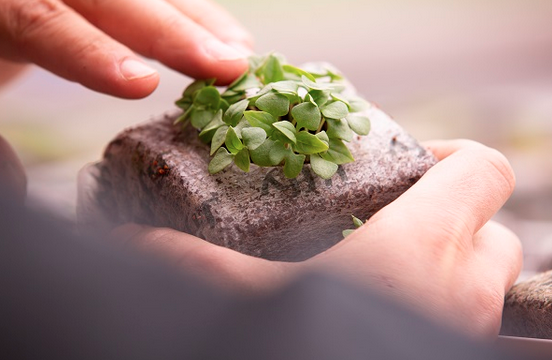
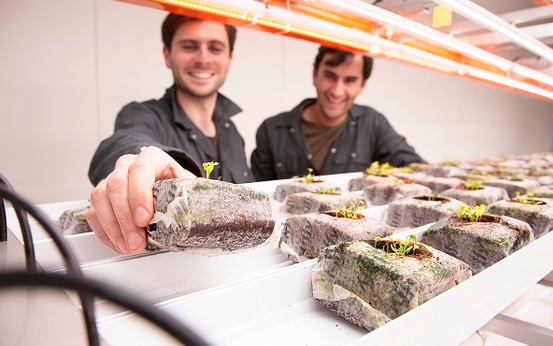
Flavor and shelf lifeUrban Harvest cultivates its herbs on a substrate and, according to Van Deun, this contributes to the herbs’ good flavor and the plant’s resilience. “There are crucial aspects. The flavor must win over consumers, but the herb must also store well. Our herbs can easily last a week in someone’s kitchen,” explains Alexandre. “One of the most difficult herbs to grow is mint. We grow our plants from seeds, but it is almost impossible to find mint seeds. In the business, we mainly work with cuttings, making it hard to find good mint seeds. That is a puzzle we have not yet cracked.”
“Automation equals costs”Alexandre and Olivier developed the entire vertical farm themselves. “We were busy building the farm for 16 hours a day, seven days a week. We are very proud of that. Once we got four investors, we were ready for the next step,” continues Van Deun. “Our current and new farms are not completely automated. There are plenty of textbook examples of vertical farms that are not fully automated. There are costs involved with automation that people are not prepared to pay."
"That is why we decided to only focus on processes that make sense to automate. We, therefore, retain a measure of human interaction. Harvesting is still done by hand, and being able to control the quality is a considerable advantage of this. A harvesting robot would not be able to do so. In contrast, planting is automated. There are machines that do this perfectly, so why do it manually?”
Fifteen cultivation layers“We have since burst out of our seams and so, had to go in search of a new location. We will remain in Brussels, with a site that lies adjacent to the channel. We soon want to use the channel to transport raw materials, rather than using road transportation. We are already busy building the new vertical farm at this new location. It will be 2.5 hectares in size, and ten meters tall, so we can grow on 15 layers,” says Alexandre. If all goes to plan, the new farm will be operational in 2021.
Urban Harvest’s owners do see a future in vertical farming but do not believe it will replace ‘normal’ greenhouse cultivation. “It is better to consider vertical farming as a supplement to greenhouse and full soil farming. That is why, nine times out of ten, an idea like a roof greenhouse fails. Why build a conservatory in the middle of a city, on an expensive site? This can easily be done at the edge of town or in the countryside. If something’s production price is too high, there is no sense in investing in it,” concludes Alexandre.
More info
Alexandre Van Deun
alexandre@urbanharvest.eu
Urban Harvest www.urbanharvest.eu
By Sharon De Ridder | FreshPlaza.com | May 7, 2020


Elevate Farms Executes Agreement to Bring Food Security to The Yukon and Other Isolated Northern Territories of Canada
Elevate and North Star have agreed to develop and construct a series of automated large-scale facilities (“CEF Facilities”) dedicated to the mass production of leafy green plants implementing, among other techniques, the use of patented LED lighting, moving grow boxes and controlled growth environments (“CEF Technologies”)
TORONTO, May 12, 2020
(GLOBE NEWSWIRE)
Elevate Farms Inc. (“Elevate” or “Elevate Farms”) is pleased to announce it has entered into an agreement (“Agreement”) for an initial build-out commitment of US $10,000,000 with North Star Agriculture Corp. (“North Star” or “North Star Agriculture”) to bring Elevate’s proprietary vertical farming, and cost-effective production of leafy green vegetables, to the Yukon and other isolated northern territories of Canada. Elevate and North Star have agreed to develop and construct a series of automated large-scale facilities (“CEF Facilities”) dedicated to the mass production of leafy green plants implementing, among other techniques, the use of patented LED lighting, moving to grow boxes and controlled growth environments (“CEF Technologies”).


The Agreement contemplates the development of CEF Facilities for the production and supply of leafy green plants employing financing, as well as operations and retail expertise, from North Star and industrial and technical support of the CEF Technologies from Elevate. Each element of the process of development of the CEF Facilities are conditional upon the completion of supporting documentation including the settlement of definitive agreements including, but not limited to, shareholders’ agreement, reverse vesting agreement, licensing agreement, and supply agreement. Each CEF Facility, once complete and operational, is expected to produce an estimated 10-tons (9,100 kilograms) of leafy green vegetables per week, which is the equivalent to in excess of 1,000,000 pounds (473,200 kilograms) of leafy green vegetables per year.
Amin Jadavji, Elevate Farm’s Founder and CEO, stated “We are extremely excited to partner with North Star to bring food security and nutrition to a particularly isolated and vulnerable region of Canada. This is Elevate Farms’ second Canadian million-pound facility for which Elevate has secured financing commitments - with significantly larger faculties already financed in New Jersey, USA and in Hamilton, New Zealand. Elevate is making excellent progress in executing our plan on creating a global brand in the area of food security and local sustainability.”
Sonny Gray, CEO of North Star, stated: “North Star Agriculture is committed to #FeedtheNorth by developing a variety of food security based projects and initiatives. Our partnership with Elevate perfectly unites with our goal of developing agriculture ‘north of 60’ with the aid of modern technology and sustainable farming practices.”
Travis Kanellos, Elevate Farm’s Chief Strategy Officer stated: “Food security, as defined by the United Nations' Committee on World Food Security, means that all people, at all times, have physical, social, and economic access to sufficient, safe, and nutritious food that meets their food preferences and dietary needs for an active and healthy life. As we have become aware, broken links in supply chains, at home and abroad, have become all-too-real as communities implement travel and supply restrictions to combat COVID-19. The underlying causes of food insecurity are not only drought and conflict in faraway lands but also distribution and access concerns in the end user’s locality.”
Amin continued, “Our vertical farming solution provides fresh and healthy leafy green vegetables - the only vegetables that cannot be frozen for later consumption - by securing availability, access, use, and utilization, as well as increased general stability with the potential for years-long self-sufficiency during uncertain times which may include events such as government-mandated quarantine and self-isolation. Elevate’s patented food production solution goes a long way to solve the issues facing the North, and other dependant environments affected as they may be difficult to reach regions or fragile ecosystems. ”
ABOUT ELEVATE FARMS
Elevate Farms Inc., previously operating corporately as Intravision Greens Inc., is a technology-driven vertically-stacked indoor farming enterprise focused on a mass scale and cost-effective operations with patent secured and patent-pending technology as well as over a decade of advanced photobiology research deployed.
Amin Jadavji
ajadavji@elevate.farm

Interview With Eddy Badrina, CEO of Eden Green Technology
One company that is looking to take on the commercial agricultural industry is Eden Green Technology, a company based out of Texas that focuses on sustainability in the food industry
Josiah Motley · April 27, 2020 · Short URL: https://vator.tv/n/5018
A look at the vertical farming platform that uses tech to grow a variety of healthy foods
When we talk about technology, it's easy to focus on things like computers, smartphones, apps, and the growing number of smart gadgets found in our homes.
But technology is far-reaching and can influence and change traditional sectors quickly. One sector that may seem immune to the growing use of technology is the farming industry, but a quick look at what farm equipment is becoming can prove that wrong quickly (even if the transition is proving difficult for some).
One company that is looking to take on the commercial agricultural industry is Eden Green Technology, a company based out of Texas that focuses on sustainability in the food industry.
I had the chance to interview Eddy Badrina, CEO of the company, to learn a bit more about what they are doing, how they use technology, and how they envision the future of the agricultural industry.
Check it out below.
Care to introduce yourself and your role with Eden Green?
Sure. I'm Eddy Badrina, and I’m the CEO of Eden Green Technology.
In just a few sentences, what is Eden Green?
Eden Green Technology is a vertical farming platform that grows large quantities of local produce safely, sustainably, and efficiently. We use less land, energy, and water than both traditional farming and other indoor solutions.
Our greenhouses are constructed on small footprints, in urban or suburban areas, to provide stable jobs and produce non-GMO, pesticide-free produce, which goes from farm to table in as little as 48 hours, compared to the 14 days it usually takes under the traditional model.
What inspired the creation of the company?
The founders of Eden Green are brothers Jacques and Eugene van Buuren. They witnessed firsthand the effects of hunger in their native South Africa and thereafter dedicated themselves to helping feed the world.
They came to the US to secure investment, source talent, and experiment with their technological solutions in our diverse climates. They started in Texas, with its own extreme range of environmental considerations, agricultural know-how, and business opportunities, and built from there.
What types of produce can your vertical farms grow?
Our greenhouses can grow 50+ varieties of produce, including herbs, leafy greens like spinach, kale, and arugula, and a sizable array of vegetables, plus other non-produce plants like hemp and research crops.
You call yourself a tech company, can you go into more detail on that?
Absolutely. So, our technical secret sauce consists of a few ingredients, including our patented vertical “vines,” where our produce grows, and the way we create microclimates for each individual plant with temperature-controlled air and nutrient-enriched water.
We also designed and built a proprietary mechanical, electrical, and plumbing solution specifically to automate and remotely monitor all our greenhouses. Because of that hardware and software combination, we like to think of ourselves as a technology company that happens to grow produce.
Eden Green seems extremely relevant right now with coronavirus, are you doing anything to help people and businesses affected by the virus?
We directed our R&D facility to start a unique partnership with a local business that had to pivot from supplying high-end restaurants to starting home deliveries of high-quality poultry, eggs, beef, and produce.
For every pound of our produce they deliver, we are giving one pound away to local food banks, homeless shelters, and other nonprofits. The creative problem-solving of combining how to sell our produce, help another small business grow, and feed the local underserved population all at the same time, was a really valuable experience.
More generally, the coronavirus crisis brings into focus the kinds of problems with traditional farming methods that we help directly address - easy access to local food sources, sustainability, and resiliency.
A more-widespread application of greenhouses like ours would also help defray the market effects of workforce shortages due to sickness, the personal effects of crowded, unsanitary, and otherwise-unsafe work environments, and the problems that come with relying on low-paid seasonal work.
What locations are you currently available in and do you plan on expanding?
We currently have our R&D facility in Texas and are prepping for facilities to be built in two other countries and a number of states.
Through our Texas facility alone, we’ve partnered with local food banks and nonprofit organizations, run pilot tests with two grocery companies, and a research university, with a lot more expansion planned in the coming years.
Do you believe this is the future of farming?
We absolutely believe that this is the future of farming. Not only does our solution make market sense - because global demand for year-round access to a variety of produce is growing, and costs to meet that demand are rising, having a locally-sourced, year-round solution solves for that - it’s also a sort of good on its own.
To be clear, we believe we are reshaping farming, not replacing farmers. We have always believed this will innovate the entire industry and will support farmers in the field to improve their processes and best practices.
The way we grow is more sustainable, environmentally friendly, and efficient (in terms of land, water, energy costs, and chemicals) than traditional farming. It saves time, money, and waste in the transportation of the produce, and it reduces food waste and the decrease in nutritional value incurred by transit as well.
If we can offer an opportunity to develop farms into a more efficient operation that improves not just food security in underserved areas, but also food safety, then we grow our business and help farmers as well.
Anything you'd like to close with?
Without getting too much on my soapbox, I’d just like to say that we have a once-in-a-lifetime opportunity to reassess what’s really important in each of our local communities, to refocus our efforts to care for those around us, and to rethink how businesses can thrive while doing that.
I’m excited to be part of Eden Green at a moment when we can be an example of the potential of the technology itself, and the philosophy underlying it: that we can treat our food, our people, and our environment - locally and globally -with the respect they deserve, and that we can all succeed together.
I'd like to thank Eddy for taking the time to answer some of my questions.

Here's Even More Evidence That Plant Protein Is Better For You Than Animal Protein
One recent study found that those eating the most fruit-and-veg-dense diets had a 31 percent lower risk of dying from cardiovascular disease and a roughly 20 percent lower risk of overall mortality than those eating animal-focused diets
Sorry, steak fans.
By Sara Chodosh
It’d be great if a burger-a-day diet was healthy. Don’t get me wrong—it’s not the worst. You’ve got protein in there and hopefully some veggies on top (and on the side), and even some fiber from the roll (you used whole grain, right?).
Unfortunately, study after study shows that meat as a protein source just isn't that healthy. It's far better to get that necessary protein from plants. Generally speaking, diets heavy on plant matter tend to be healthier. One recent study found that those eating the most fruit-and-veg-dense diets had a 31 percent lower risk of dying from cardiovascular disease and a roughly 20 percent lower risk of overall mortality than those eating animal-focused diets. That study didn't look specifically at protein, but participants consumed the other main animal-sourced food group, dairy, at about equal rates no matter what, so ultimately this comes down to replacing meat with alternative protein sources.
And yes, these associations are correlations, not causations. But there are some legitimate reasons that plant-based protein sources like beans are a healthier alternative to bacon. The researchers aren’t saying you can’t or shouldn’t indulge in a thick Delmonico or a flame-grilled cheeseburger. Rather that you should enjoy them in moderation. Generally, research shows that less animal meat—most especially red meat—is better than more, in terms of long term health. You don’t have to love tofu, either (it’s not the best plant-based protein anyway), as long as you strive to eat more of your protein from the ground and less from animals.
Here’s a deeper dive into why:
Plant protein has more nutrients and fiber (though not all of the amino acids)
Animal meat is known for its many nutrients. If you eat a variety of animal meats (light and dark, not just beef, as well as various organs), you can take in all the amino acids you need to manufacture your own bodily proteins plus vitamins like B12, niacin, thiamine, B5, B6, B7, and vitamins A and K.
But here's the thing: If you swap all that animal protein for an equally diverse diet of plant-based proteins like nuts, seeds, and beans, you are no worse off. That's because these foods are also packed full of a similar spectrum of nutrients. The biggest difference is vitamin B12, which most plants cannot produce on their own. You can get B12 from edible seaweed and in fortified cereals, though the easiest way is through supplementation or by eating animal products.
Given their equal vitamin profile, Andrea Giancoli, a registered dietitian in California says plant-based proteins are far healthier than their meat counterparts. That’s because, pound-for-pound, they pack more nutrients into fewer calories. They also have one thing that animal proteins completely lack: fiber. (Except for things like tofu, which is processed, Giancoli notes.) Let’s not forget the fiber. Fiber aids in digestion promotes a healthy gut microbiome and is strongly associated with lower cardiovascular disease risk.
People who eat plant proteins in part have healthier habits
Meta-analyses that compared people who eat animal versus plant proteins consistently find that, even after adjusting for other influential factors like socioeconomic class, weight, and exercise habits, those who eat plants tend to live longer, healthier lives. They tend to have less cardiovascular disease and fewer cancer cases, though especially the cancer association tends to drop away once other factors have been controlled for. Despite all that controlling, though, there's still an association with living a longer life with fewer heart problems. There are almost certainly some small factors contributing to the association. People who eat plant proteins may see their doctor more regularly and thus get better preventive care. Maybe they tend to live in quieter, less polluted places.
Since correlations still exist between eating plant proteins and overall health, even after controlling for other factors, meta-analyses have generally concluded that lifestyle factors alone can't account for the correlation. One recent such analysis in the Journal of the American Medical Association noted that "Substitution of plant protein for animal protein, especially from processed red meat, may confer a substantial health benefit" and advised that policies promote plant proteins.
Meat has more saturated fats
Another reason that steak isn’t great for you: the fat that often accompanies it. Fat is part of why steaks and burgers are delicious—it adds mouthfeel and flavor. But it also tends to clog up your heart. “[With plant proteins] you get less saturated fat and no cholesterol,” Giancoli explains, “so you’re getting that benefit as well.”
Saturated fats are those that are solid at room temperature and tend to contribute to cardiovascular disease (though not as much as trans fats) because it drives up your total cholesterol levels. That may, in the long run, tip the scales towards the LDL (low-density lipid) side, which is what clogs up arteries. Foods like nuts, avocados, and fish have far less saturated fats than red and other dark meats. As such, they are dubbed healthy fats.
Processed, red meat is carcinogenic, and grilled meat may be too
You probably heard about the massive World Health Organization (WHO) report a few years ago proclaiming that processed, red meats were carcinogenic. Colorectal cancer in particular has been associated with eating red meat, and so have pancreatic and prostate cancer. Processed meats, like bacon and sausage, also contribute to colorectal cancer. Even grilled meat is known to have some carcinogenic compounds in it (those black char marks are where they mostly lie); seared meat has a similar effect.
In the grand scheme of cancer, meat isn't the biggest player. Recent estimates by the Global Burden of Disease Project, a subset of the WHO, put the number of annual cancer cases from red meat at 50,000. That's compared to 200,000 from air pollution, 600,000 from alcohol, and one million from tobacco. But it's not nothing.
If we’re taking an exclusively long-range, zoomed-out, big picture view it’s fairly undeniable that getting your protein from plants would be healthier overall. But dietitians like Giancoli are also adamant about one other important thing: Food should be enjoyable. We shouldn’t spend our lives gorging only on ice cream and pizza, but if you love burgers you should have them. Not every night—just sometimes. The key to a successful diet, as many dietitians will tell you, is balance and moderation. And beans.
Lead Photo: Yum, looks like a brain! Pixabay

May Indoor Science Cafe - Tuesday, May 26th, 11:00 AM EDT - How to Fund Your Indoor Farm
Indoor Ag Science Cafe is an open discussion forum, organized by Chieri Kubota (OSU), Erik Runkle (MSU), and Cary Mitchell (Purdue U.) supported by USDA SCRI grants
May Indoor Science Cafe
Please sign up!
Tuesday, May 26th, 11:00 AM EDT
How to Fund Your Indoor Farm
Presented by
Nicola Kerslake
(Contain Inc.)
Please sign up so that you will receive Zoom link info.
Indoor Ag Science Cafe is an open discussion forum, organized by Chieri Kubota (OSU), Erik Runkle (MSU), and Cary Mitchell (Purdue U.) supported by USDA SCRI grants.
Sign up for May 26th Cafe

The Best Growing Mediums For Microgreens
Growing microgreens is an easy and sustainable process that you can do from the comfort of your home. You can grow all kinds of nutritious microgreens that will enhance the flavor of your foods
Growing microgreens is an easy and sustainable process that you can do from the comfort of your home. You can grow all kinds of nutritious microgreens that will enhance the flavor of your foods. These special vegetable-like plants grow from 1-3 inches and are vibrant additions to your foods. They are also jam-packed with vitamins and antioxidants. We're going to discuss the different growing mediums you can use for your microgreens.
Soil
Using soil as your growing medium is a popular and effective choice. Soil will provide you with the best yields over any other medium. We believe the Sunshine #4 by Sunshine Aggregate is the best, and the Black Gold Potting Mix is a close second. Each of these soils are extremely sterile, which is ideal for indoor growing. While these soils can cost more (about $1 per 10x20 tray), they provide the best results. But, don't worry. You can compost and sterilize your soil to re-use it for future grows.
Burlap
Burlap is another popular growing medium because it's cheap. For .25 cents a tray, you can't beat the price. It is made from the jute plant, which is used to make nets and ropes. But burlap is an incredibly difficult growing medium to use. The perfect growing conditions for burlap include 72 degrees Fahrenheit, 65% humidity, and a good micro-dose fertigation plan (fertilizer + irrigation). If you can populate these results, then you can achieve yields and results that match soil mixes.
But be mindful that this takes a lot of practice and time, which is why using burlap is better for expert growers. If you don't get the growing conditions right, then your yields will suffer. We recommend using larger seeds like Pea Shoots and Wheatgrass when using burlap. These seeds will thrive with a burlap growing medium, and you will get bountiful results.
Coco Coir
This growing medium comes from coconut fiber. It's perfect for holding in moisture and is difficult to over-water. It is cheaper than soil (about .60 cents a tray), but it's just as messy. Coco coir has a better yield average than burlap, about a 25% to 30% better average. You will find this growing medium in dehydrated blocks. When you add water, they will expand way past their original size. You can use coco coir with an ebb and flow hydroponic method.
Jute Pads
This growing medium is derived from jute fiber. It's able to transport water evenly through your microgreens and maintain a near-perfect water/air ratio. It holds in water very well, which means you'll have to feed your microgreens less. Kale and broccoli grow especially well in jute pads.
What's the Best Growing Medium?
This entirely depends on your growing intentions. What are you planning to grow and how much effort are you willing to put in? We're going to cover the main questions you should ask yourself that will help you make this decision.
Feeding Your Plants: If you want to water your plants by hand, then we recommend soil and coco coir. But if you're able to feed your plants on a timer, then go for burlap or jute pads. It can be a better option because it's cost-effective and can still get the job done.
Choosing Your Seeds: What kind of microgreens do you plan to grow? If you're growing broccoli or kale, then we recommend buying jute pads. Do you want to grow a wide variety of seeds? Then choose soil or coco coir as your growing medium.
Messy Vs. Clean: Do you hate cleaning up messes? Then it's best to steer clear of soil and coco coir. Go with jute pads since they're easy to handle and clean.
Choosing your growing medium ultimately boils down to what you're planning on growing and how much effort you want to exert. We hope this list helped you understand what kinds of growing mediums there are and how they can help you yield the best results.

We are the microgreen growing experts. We're even working with NASA to help figure out how to get microgreens safely into space for astronauts to use! We meet once a month to discuss a variety of topics about microgreens. So, keep reading our blogs and watching our informative YouTube videos. There will always be exciting news coming your way.
#growing #medium #growingmedium #growingmedia #microgreeneducation #microgreensfarmer #microgreens #microgreen #bestmediatogrow #SmartNaturals #growmedia #growmedium #growingmicrogreens
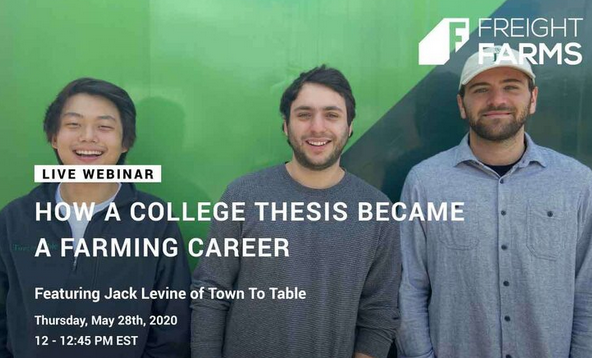
WEBINAR: How A College Thesis Became A Farming Career
WEBINAR: Thurs May 28, 2020 - 12 pm EST. Featuring Jack Levine of Town To Table
Town to Table wants to connect communities
to sustainable farming and local food
When Jack Levine first arrived on campus and saw his university's Freight Farm, he had no idea he was encountering his future career. After graduating in 2019, Jack launched Town to Table, a concept born from a business plan he developed for his undergraduate thesis. At its core, T2T aims to connect communities to farming on multiple levels.
Beyond providing local greens to distributors in the Boston area, Jack and his team work with schools and non-profits to develop interactive school gardens, engaging lesson plans, field trips, job training programs, and more. Hear from this young entrepreneur during our upcoming webinar–RSVP today!


Is Indoor Farming A Solution? UF/IFAS Scientists Explain
As an industry in the early stages, experts indicate that the market has seen more start-ups fail than succeed. Nonetheless, proponents of indoor vertical farming continue to tout it as a food production method with multiple added environmental and social benefits which drives technology in favor of its existence
At one time, the concept of vegetables growing inside a temperature-controlled facility where LED lights and advanced technology set the pace for year-round harvesting, promoted photosynthesis and water use efficiency, and required no pesticides, was considered a scene from the future.
Today, the concept of indoor vertical farming is increasingly becoming a reality. As an industry in early stages, experts indicate that the market has seen more start-ups fail than succeed. Nonetheless, proponents of indoor vertical farming continue to tout it as a food production method with multiple added environmental and social benefits which drives technology in favor of its existence.
Jiangxiao Qiu is an assistant professor of landscape ecology at FLREC
In the latest EDIS publication entitled ‘Indoor Vertical Farming Systems for Food Security and Resource Sustainability’, UF/IFAS scientists give consumers an inside look at the current status of the industry globally.
“The publication explains what we have learned so far about indoor vertical farming, the different techniques and innovations available, as well as the benefits, limitations, and challenges with this young industry,” said Jiangxiao Qiu, Assistant Professor of landscape ecology at UF/IFAS Fort Lauderdale Research and Education Center. “As we seek ways to curb food insecurity and advance sustainability, we also look at the current state of the methods for their economic, environmental, and social viability.”
Indoor vertical farming is the practice of producing food on vertically inclined surfaces. Instead of farming vegetables on a single level, such as in a field or a greenhouse, this method produces vegetables in vertical layers inside structures including skyscrapers, shipping containers, repurposed warehouses just to name a few. The method relies on artificially controlling temperature, light, humidity, and nutrients to promote the growth of food, and uses much less space. Examples of production methods include hydroponics, aeroponics, aquaponics, vegetable towers, modular container systems, and cubic production systems.
“The primary goal of indoor vertical farming is to maximize crop output of healthy organic food in a limited space such as an urban environment, while promoting water and nutrient use efficiencies, eliminating chemicals, and ultimately reducing energy consumption and greenhouse gas emissions through reducing reliance on external food transports,” he said. “One of its goals is to enhance the connection of local food production to consumption.”
The other side of the message for indoor vertical farming systems is that in urban food production, it can be an important piece of the puzzle to finding solutions for global food insecurity and environmental challenges like climate change and sea-level rise, notes Qiu.
“The methods can serve to promote sustainability and community resilience in the face of situations like COVID-19, hurricanes, and environmental crisis,” he adds.
Now that consumers have experienced first-hand the vulnerability of a supply chain when confronted by natural and man-made disasters like hurricanes and COVID-19, Jiangxiao noted, consumers are starting to ask about the potentials of this method. Meanwhile, UF/IFAS Extension office statewide reports an increase in consumer requests for information, webinars, and videos on how to set up indoor gardens.
Contributing scientists to the publication provides some insight into the constraints and challenges that vertical indoor farming currently experiences. For example, production methods limit the range of crops suitable for growing in vertical indoor farms. Those crops include lettuce, tomato, strawberries, peppers, and microgreens. Staple crops, such as corn, soybean, and rice, at least with the current technology, are not ideal for indoor production at present. Costs related to start-up along with a lack of pervasive incentive or policy initiatives, and technical training for workforce development that can facilitate the adoption of vertical indoor farming at a large scale are also barriers to promoting success in the industry.
However, for residents interested in learning about vertical indoor farming, a series of Sustainable Urban Agriculture Workshops is in the works for August at the Fort Lauderdale Research and Education Center. The program, now in its second year, is organized by Qiu, in partnership with UF/IFAS Extensions in Broward and Collier counties. The series covers a variety of sustainable practices through informational and hands-on training on how to establish indoor farming on a small-scale. More information will be forthcoming in the next few weeks as executive orders continue to lift facility lockdowns throughout the state.
Meanwhile, the publication cites environmental and social benefits. For example, indoor farming serves as an enterprise that can create jobs, it can also create a sense of community by providing a variety of urban environments with local places to obtain healthy food.
“This reduces the social inequality among communities targeting food desserts. Having a farm in an urban center revives some of the less developed and neglected neighbors by transforming abandoned warehouses, buildings, and vacant lots into a source of food production and while creating jobs and revenues,” added Qiu. “Ultimately, if the industry gains momentum it will eventually create jobs in sectors of engineering, biotechnology construction, and research and development.”
Publication date: Thu 14 May 2020
Swedish Startup Receives Funding For AI-Run 'NeighbourFood' project
A newly established innovation cluster will develop the groundbreaking service-model for urban farming, AgTech startup SweGreen’s ‘Farming as a Service’, to contribute to a sustainable food supply chain
A newly established innovation cluster will develop the groundbreaking service-model for urban farming, AgTech startup SweGreen’s ‘Farming as a Service’, to contribute to a sustainable food supply chain. The 2MSEK-project called ‘NeighbourFood’ is granted by Vinnova as an initiative to support innovations in the aftermath of the Covid-19 pandemic. The project NeighbourFood aims to upgrade a modern Urban Farming solution to an optimized smart and digital model for system monitoring and remote-control process steering.
Farming as a Service (FAAS)
"We have developed cutting-edge technology with high technical readiness level for food production indoors. With this project we address the last limitation factor towards a remote farming management model: A cloud-based service that enables a physical food production unit to become available as a service to our customers – as we refer to as ‘Farming-as-a-Service’," Swegreen Chief Innovation Officer Sepehr Mousavi highlights. The vision is to create a realistic alternative to the highly global, and to a certain degree fragile and resource inefficient, food production chains that currently dominate the marketplace. The innovation cluster behind the project, besides AgTech company Swegreen, includes also Research Institute of Sweden (RISE), Mälardalen University and high-profile Swedish chefs Paul Svensson and Tareq Taylor’s newly established restaurant Paul Taylor Lanthandel.
Local food
The demand for year-round urban food production has never been more relevant than now, under the crisis of Covid-19. Production of food is down at 50% in Sweden, which shows our society's exposure, Paul Svensson, top-notch chef and founder of Paul Taylor Lanthandel says. Our aim is to contribute to and increase the trust in and desire for locally produced food near our customers, Paul Svensson continues. We see us as a perfect channel for locally produced food at Paul Taylor Lanthandel we provide both a small general store and a restaurant, and thereby nurse a close relationship to producers and our local neighborhood community. The core of the innovation will take place in Swegreen’s production facility, called CifyFarm, which is an indoor vertical farm for production of nutritious leafy greens, salad and herbs, with a yield of approximately 200 times yield/area compared to traditional farming. The CityFarm uses minimal resources all year round and is isolated from the outside environment and is located on floor -3 of Dagens Nyheter tower in central Stockholm.
Digitally monitored farming units
The Farming as a Service concept of Swegreen’s enables Urban Farming technology to integrate with e.g. supermarkets or restaurants by digitally monitored farming units at the customer’s facility, which will produce food with minimal logistics and almost zero human intervention in a plug-and-play format. This farm management system empowers any entrepreneur with little or zero farming knowledge to grow high-quality food in an optimal environment while reducing risks and elevating the decision-making process, using dedicated decision-support systems and process optimization through the use of artificial intelligence, adds SweGreen’s CEO Andreas Dahlin. The NeighbourFood was one of the few selected projects by Swedish Innovation Agency Vinnova, out of 287 applications filed in response to the call ‘Innovation in the track of crisis’.
Innovative business model
The project will also make use of the sharing economy, innovative business models, and digital twins to speed up a coping strategy towards the Covid-19 crisis and addresses the need for climate transition and secure circular and resilient food supply chains. The project is intended to be integrated into a national Shared Economy platform, Sharing Cities Sweden, financed by the Swedish Innovation Agency and the Swedish Strategic Innovation Program for smart and sustainable cities, Viable Cities. Neighbourfood is an example of the green deal and how the sharing economy in cities can trigger innovative business models for resilient food supply chains – a sharing platform for neighbours, by neighbours! mentions Dr. Charlie Gullström, a senior researcher at RISE and head of Sharing Cities Sweden, Stockholm Testbed.
Collaborations
Swegreens Sepehr Mousavi who will be the project’s coordinator and lead also adds: "We are proud of our collaboration with RISE through one of the most prominent researchers in Sweden when it comes to digitalization and use of sharing economy solutions", Dr. Charlie Gullström and the platform of Sharing Cities Sweden alongside Dr. Alex Jonsson from RISE Prototyping Societies. This service introduces FaaS to our national platform for sharing economy as a new vital function. Sepehr Mousavi continues: "Also having Dr. Baran Çürüklü from Mälardalen University, a vibrant academic center for development of AI-related technologies’ and his team of PhD students onboard adds the competence needed for us to be able to hack the query and guarantee the success of the NeighbourFood project." Dr. Baran Çürüklü adds: "Food production can suddenly be a mission-critical factor as we can see now. Orchestration of production facilities through artificial intelligence may be decisive in managing such a crisis."
For more information:
SweGreen
Andreas Dahlin
andreas.dahlin@swegreen.se
www.swegreen.se
Publication date: Mon 11 May 2020
Superior Fresh's Brandon Gottsacker Discusses Future of Leafy Greens
At just 34 years old, Brandon’s journey to the sector is impressive. Taken under the wing of renowned scientist, Dr. Steve Summerfelt, Brandon traveled the world, learning various aspects of aquaculture and hydroponics. Returning to Wisconsin, he quickly began developing Superior Fresh alongside Todd and Karen Wanek
Tue. May 12th, 2020
- by Anne Allen
NORTHFIELD, WI - Although I have only been writing about the produce industry for just over two years, I’ve seen some truly incredible things. The word innovation holds more weight for me now, and I take care when I use it. But nothing quite prepared me for the innovative minds behind Superior Fresh, a one-of-a-kind aquaponics operation in the heart of Wisconsin. Using the nutrients from its Atlantic salmon farm to grow—what I personally can attest to—superior organic leafy greens, this up-and-coming company is about to take the produce industry by storm. I had the opportunity to sit down with Brandon Gottsacker, President, to learn more about how this company is changing the way the world grows food.
At just 34 years old, Brandon’s journey to the sector is impressive. Taken under the wing of renowned scientist, Dr. Steve Summerfelt, Brandon traveled the world, learning various aspects of aquaculture and hydroponics. Returning to Wisconsin, he quickly began developing Superior Fresh alongside Todd and Karen Wanek.
Brandon Gottsacker, President, Superior Fresh, LLC“
Todd and Karen lived overseas for many years and were fortunate to see first-hand how food is grown and how unsustainable certain methods of agriculture can be. They wanted to make a difference in the daily lives of so many people by ensuring a clean and healthy food supply and working to fix our broken food system. My passion for aquaculture and their vision for sustainable food led us to develop Superior Fresh. Our mission is to bring the best products to market. They procured some farmland in Northfield, Wisconsin, with this vision in mind. While they were at it, they wanted to restore the surrounding land to its native habitat of prairie, savanna, and woodlands,” Brandon told me.
Next to Superior Fresh’s organic greenhouse lies its fish house, in which nearly 600,000 Atlantic salmon swim in clean, fresh water being fed a non-GMO organic diet. Through a closed-loop water system, water from the fish is cleaned and filtered to remove impurities while maintaining its nutrient-rich benefits. The water is next circulated to the greenhouse, where plants absorb those benefits and the clean water is returned to the fish house. The two operate in a symbiotic fashion where they act as each other’s cover crop in an extremely efficient model.
Utilizing responsible, sustainable methods, the team behind Superior Fresh grows certified-organic produce that adheres to the highest food safety standards
“We focused on creating value from what otherwise is considered a waste stream in the world of aquaculture,” Brandon explained. “Utilizing the nutrient-rich water from the fish gives us the ability to grow high-quality, certified organic vegetables. We’re using 1/30 the amount of water in comparison to soil farming, growing the healthiest, best-tasting products while restoring the surrounding ecosystem.”
Although Superior Fresh is a relatively new company—its farm was built in 2017—it already has its eyes set toward expansion. Currently, the company has two phases of greenhouses with six acres under glass.
Superior Fresh continues to advance its operations through partnerships, such as its distribution deal with c-store Kwik Trip
“Our phase three greenhouse is an additional seven acres, which will bring us to thirteen acres total and continue to bump our production of certified organic leafy greens,” Brandon noted. “What's nice about our facility is that everything is very consistent. We're harvesting organic product from our greenhouses daily, and we do that year-round. If we're harvesting out of our facility every day, it should be getting to the consumer every day. We want to make sure that the end consumer gets the best quality product possible and get the benefit from a maximum shelf life. That's a huge bonus to being local.”
One of Superior Fresh’s first customers was indeed close to home, as it supplied its products to c-store Kwik Trip.
Superior Fresh has two phases of greenhouses with six acres under glass and is working on its phase three greenhouse, which will add another seven
“There are a lot of small towns in Wisconsin, which means that quite a few people rely on places like Kwik Trip for their food. Being able to provide organic products that are fresh, healthy, and delicious to so many consumers that would normally have to drive many miles to get that opportunity speaks volumes to the mission of Superior Fresh,” Brandon remarked.
Brandon’s enthusiasm for sustainable, organic farming is infectious and led us to a discussion about regenerative ag reimagined and what the company's next steps are. (Hint: We're diving into which new products Superior Fresh is trialing.) Intrigued? Stick around next week for Part Two of our discussion—you won’t want to miss it.
Superior Fresh

IGS Announces Referral Partnership With IREP in Middle East
The agreement will enhance the capacity for IGS to service the Middle East market and bring greater opportunity to secure and deploy vertical farming platforms across the region. IREP’s presence in this market is well established with many existing customers across agriculture, retail, and construction.
Agritech Business Gains A Greater Presence In Middle Eastern Markets
Indoor agritech specialist IGS has today announced a referral partnership agreement with International Real Estate Partners (IREP), the international facilities management firm. The agreement is specifically focused on indoor vertical farming for the UAE and Saudi Arabian markets.
The agreement will enhance the capacity for IGS to service the Middle East market and bring greater opportunity to secure and deploy vertical farming platforms across the region. IREP’s presence in this market is well established with many existing customers across agriculture, retail, and construction. The agreement establishes the opportunity for IREP to refer potential customers and support in the deployment, construction, and management of vertical farms.
The highly sophisticated plug-and-play vertical farming technology developed by IGS assures the efficient production of food in any location in the world. The modular indoor farms offer a highly controllable platform designed to maximize productivity whilst minimizing energy consumption and allowing the production of consistently high-quality produce at scale.
Ole Mygind, Managing Director of IGS Agri business commented: “The signing of this agreement is a very positive step forward for both IGS and IREP in the future deployment of vertical farming platforms in the Middle East. The imperative need for systems such as ours has been highlighted in the last few weeks as global reliance on complex food supply chains has been dramatically impacted.
“Many countries around the world have plans to secure an independent and sustainable food supply chain. Vertical farming can be a key part of that solution, we believe, particularly in areas where arable land is minimal and there is a high reliance on importing food. These systems offer a secure, controlled environment, independent of weather and location to provide a sustainable, secure food supply across a range of crops.”
Christina Porter from IREP commented: “We have been working with IGS since 2018 to enable its entry into the UAE and Saudi Arabian markets. We wholeheartedly believe that IGS’s vertical farming technology is best-in-class, and with an excellent management team behind it, that it can be the solution that many clients in the region are now looking for to address food security and sustainability. Through this agreement, IREP will work very closely with the IGS management team to ensure that its product penetrates the market here and is delivered in a very effective and efficient way.”
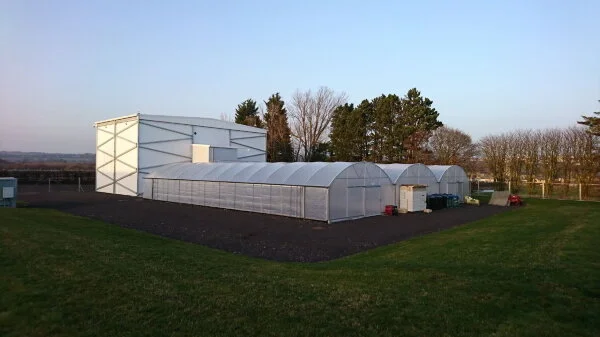
IGS has designed all its products to be highly pragmatic, flexible, modular, and scalable in line with market requirements.
The R&D team at IGS has developed, patented, and productized a breakthrough, IoT-enabled power and communications platform consisting of patented electrical, electronic and mechanical technologies as well as the world’s most sophisticated ventilation system for its Growth platform. All this is managed by a SaaS and data platform using AI to deliver economic and operational benefits to indoor environments across the globe.
Ends
About IGS:
Founded in 2013, IGS brought together decades of farming and engineering experience to create an agritech business with a vision to revolutionize the indoor growing market. Its commitment to innovation has continued apace and it has evolved the applications of its technology beyond agriculture to create solutions for a wide variety of indoor environments that enhance life for people, plants, and animals.
IGS launched its first vertical farming demonstration facility in August 2018.
For more information visit www.intelligentgrowthsolutions.com
About IREP
IREP is a multi-discipline management services firm operating in 25 countries, with its headquarters in Dubai.
We incorporate a high-level structure in all departments that include;
Facilities Management
Asset & Energy Management
Agri-Tech & IoT
Real Estate Advisory
For more information visit www.irepartners.com

VIDEO: "Farmers Bringing Their Field Indoors"
BBC has a series called People fixing the world, in which one episode was called 'The farmers bringing their fields indoors'
BBC has a series called People fixing the world, in which one episode was called 'The farmers bringing their fields indoors'. In this episode about vertical farming, Guy Galonska, Co-founder & CTO of InFarm and Shani Leiderman from Beba restaurant in Martin-Gropius-Bau were featured.
Source and video: Infarm LinkedIn.
Publication date: Thu 30 Apr 2020

Successful CSA Strategies For Small Farms
With grocery store shelves empty in the wake of the COVID-19 pandemic, customers all around the United States are beginning to consider their regional food systems in a new light

BY ALLIE HYMAS
With grocery store shelves empty in the wake of the COVID-19 pandemic, customers all around the United States are beginning to consider their regional food systems in a new light.
“We have never seen this kind of demand,” Vera Fabian of Ten Mothers Farm near Hillsborough, North Carolina, says. “If ever there was a time to be getting into the CSA business, this would be the moment.”
For the last ten years, Fabian and her husband, Gordon Jenkins, have been raising organic vegetables using the Community Supported Agriculture model. Today, Ten Mothers Farm supplies boxes of vegetables on a seasonal subscription basis to 184 households, and they’re pleased with how this format has allowed them to feed their local community, both in good times and bad. “Something that gives me hope in this time is that people are trying to figure out how to have more resilient communities, whether we’re talking about climate change or the coronavirus.”
Ten Mothers Farm’s CSA strategy and offers timely lessons for farmers who wish to build their business around this model and those who simply want to try this approach to reach customers during the stressors of a health crisis. For Fabian, running a CSA is more than just a method of moving her products. “We are more motivated than ever to feed more people and spread the word. If more businesses were run like a CSA then the world would be in a different place!”

Gordon Jenkins, Vera Fabian and Luke Howerter run Ten Mothers Farm. Photo credit: Scott Kelly.
The Ten Mothers Farm Story
The Ten Mothers Farm website explains their name: “there’s an old saying from India that ‘garlic is as good as ten mothers,’ which to us means that food is medicine, as nourishing and powerful as ten whole mothers.” Having met as employees at the Edible Schoolyard in Berkley, a school started by Alice Waters, Fabian, and Jenkins bonded over a mutual love for cooking and an interest in farming, both as a means of social justice and for supplying food.
While Jenkins’ food journey began in the restaurant industry, Fabian discovered gardening with the intent to participate in agricultural relief work in sub-Saharan Africa.
“I wanted to save the world, but simultaneously I found that I loved cooking, which felt like a frivolous thing, and I felt conflicted between the two of them,” Fabian says. “I studied abroad in West Africa in a women’s garden cooperative and I observed these women solving these huge problems of hunger and education through growing food.” Upon her return, Fabian was gripped with the sense that organic agriculture would be her opportunity to make an impact. “I thought maybe my love of food and desire to fix problems could come together.”
The couple took a diligent, methodical approach to begin their farming journey. After working for food-related nonprofits for five years, Fabian and Jenkins took their saved resources and years of research and apprenticed themselves to Bob Cannard at Green String Farm and then to Eliot Coleman at Four Seasons Farm.
“These were two farmers that we really looked up to and knew we would get a great education from. We learned a ton and shook the city life off,” Fabian says.
Having weighed their options between finding land in Jenkins’ home state of California and Fabian’s of North Carolina, the couple chose the more affordable land prices and water accessibility of North Carolina and spent two years working at Maple Spring Gardens, learning how to farm there.
In 2015 Fabian and Jenkins felt prepared to start their own operation and began renting land from a local family. “For our first three years we started really small,” Fabian says. “Farming is definitely an expression of your personality, and we are pretty careful, methodical people. Farming is so risky and we wanted to reduce as much of the risk as possible.” With Fabian working halftime off their farm for a nonprofit agricultural organization serving refugees from Burma, the initial Ten Mothers Farm endeavor was rolled out with the bigger timeline in mind. “We had thought we would be a market farm, but the markets around here are difficult to get into, so we said ‘Okay, I guess we’ll be a CSA!’” Fabian says. Having operated the CSA successfully for five years, she is grateful that circumstances dictated this model for this business. “It’s especially great during this moment in time!”
“We started with 34 CSA families, and we’ve gradually increased it as we felt ready,” Fabian says. Ten Mothers Farms served 54 households the second year, 74 the third year, followed by 125, and this year they will feed 180 families. “We sold a little bit to restaurants too, but the demand for the CSA has felt strong, so over time we’ve focused more on the CSA and less on restaurants.”
Junie with the whole farm and rows of green in early November. Photo credit: Scott Kelly.
Collaborative Land Purchasing Success
The first iteration of Ten Mothers Farm was on a rented quarter acre. “It was really just a big garden,” Fabian says. “Those first three years we stayed at a quarter acre — but we got better, so we were able to grow more food.” Throughout Ten Mothers Farm’s early years Fabian and Jenkins were searching for land in a pricey real estate market. Aware that they could access a more suitable property by joining forces with other buyers of a similar mindset, the couple chose to search for land with several friends. “It was challenging,” Fabian says. “We almost gave up.”
Their search became more heated when the owners of their rented land sold the property. “At the eleventh hour, when our lease was almost up in the summer of 2018, we happened to find a piece of land that was perfect both for us and the friends we were searching with, and we all bought it together!” To make the purchase, Fabian, Jenkins, and their friends formed an LLC through which the purchase was made and then subdivided the land with a parcel for each of them and a parcel held in common. “We’re all folks that want to have a land-based life but also people who want community out there and not be isolated.”
In the winter of 2018, Ten Mothers moved to its new location. “It was a bare field!” Fabian says. “There was no electricity, no water, no infrastructure of any kind. We quickly did the work of turning this field into a farm.” Fabian and Jenkins are currently building a house on the land and hope to move in June. “There are a lot of wonderful things about sharing the land,” Fabian says. “What we were able to afford as just the two of us would have been really small and unsuitable for farming. ”
Fabian says their space-saving strategies at Ten Mothers Farm have come from limited access to land, but their efficiency can actually offer encouragement to others who might never be able to afford a large property. “For our 180 shares, we farm only one acre of land. Being able to farm on such a small footprint means that it’s so much more accessible to people.”
Selecting Varieties to Offer in a CSA
In choosing varieties, Ten Mothers Farm started with what they enjoyed cooking and eating. “For a CSA, we have to grow a ton of different things to keep our customers happy,” Fabian says. “We grow 60 different vegetables.”
Fabian recommends CSAs keep close tabs on what their customers want.
“Every year, towards the end of the year, we send out a survey and use that survey directly to crop plan for the coming year. That way we’re growing more of what people want and less of what they don’t want.” Always mindful to make sure their products pencil out financially, Fabian notes that there are vegetables they can’t offer because the numbers don’t work, or their methods won’t allow them to grow or harvest those offerings. “For example, we don’t grow potatoes because we’re not a tractor farm,” Fabian explains. “The labor just doesn’t work out.”
As long as a vegetable offering can be produced with financial, space, and labor efficiency, it’s just a matter of taste.
“We are into strange vegetables!” Fabian says with a smile in her voice. “One year we tried molokhia, or Egyptian spinach, which does beautifully in the hot, humid summers that we have, but people hated it! It’s just too weird!”
They’ve found at Ten Mothers Farm that customers enjoy experiencing one or two new vegetables occasionally among a steady offering of recognizable staples. “Most of the time people want to see the things they love and know how to cook.”
Amid the changing climate, Fabian thinks about how certain varieties of vegetables offer more resilience and have adapted to their bioregion better than other foods that may enjoy customers’ favor. Using their weekly newsletter, Fabian is constantly working to educate CSA members on how to use new foods or varieties that are particularly hardy to their bioregion.
“We’re constantly explaining why we grow things and when, and as people have that kind of background information they become more open to trying things and more understanding when they don’t have broccoli in July.” They also host events at Ten Mothers Farm to teach their customers about the farming process. “That really brings it all to life; some of our CSA members haven’t been to the farm yet, and it’s our goal to get them all out here.”
Overcoming Challenges
Fabian encourages farmers to consider starting a CSA to be aware of its unique quirks. “It’s a lot of logistics: lots of crop planning and then executing to make sure you have enough vegetables for everybody. It’s a lot of different crops.” Fabian recommends that potential CSA farmers get used to staying aware of details and putting in place good tools to help keep abreast of the various tasks and considerations. “Making sure you’ve packed the right boxes and didn’t pack boxes for people on vacation.”
The second element Fabian brings forward is marketing and customer service. These elements are both critical to this direct-to-consumer, subscription-based model and will either make or break the business. “When we talk to new and beginning farmers we recommend you go with your personality,” Fabian says. “We happened to really like customer service stuff. We like answering our questions and writing the weekly newsletter. But if you don’t like customer service, you probably shouldn’t do a CSA.”
Fabian also recommends that new CSA operators pad their estimated timeline and hold it loosely. “Everything has taken longer than we’ve planned.” She says. “We try to be patient and not too hard on ourselves when things haven’t happened as quickly as we’d hoped.”
Jenkins and Fabian had part-time off-farm work and slowly built up their customer base before making a big land purchase – an excellent example of how being flexible with the timeline is necessary for smart business planning. “Farming and land are so long-term. We’re talking about either the rest of our lives or at least the next 30-40 years. You have to have a long-term vision or else you’ll get frustrated that it’s not all happening in a year or two.”
Collaboration has been another winning strategy of Ten Mothers Farms. While Jenkins’ and Fabian’s landmates are not partners in the farm, they are working on adding another business partner, Luke Howerter. Fabian says adding additional opinions and voices must be done thoughtfully, but such collaborations can make big things happen on the farm. “You have to keep reminding yourself what can we do together that we can’t do alone: it’s a lot of things! We’re more resilient as three people than just as two of us.”
Regenerative Farming is Giving Back
“Farming regeneratively for us means giving back more than you take,” Fabian says. “ We try to think about how we can give back more both in terms of the land and the people. We often leave humans out of the equation when we talk about sustainable agriculture. One doesn’t really work without the other.”
In addition to structuring Ten Mothers Farming practices and land-use strategies around environmental considerations, Jenkins and Fabian are mindful of how their farm can care for those who work there. “A lot of customers ask ‘is this GMO’ or ‘is this sprayed,’ and our methods address those issues, but they might not be asking if the person who grew their food is making a living.”
Given the legacy of extractive agriculture, both of the soil in extensive tobacco farming and of humans in the enslavement of African families, Jenkins and Fabian are hyperaware of how their farming model needs to put nutrients back into the soil and resources into the community. “If you’re going to farm organically in NC you have to be giving back a lot more than you’re taking because you simply can’t grow anything if you’re not giving back a lot.”
In their first year on their current property, the Ten Mothers Farm team amended their soil according to soil test results and found their soil nutrition was still so low that their spring crops would not grow. “We spent the past year doing so much to increase soil fertility.”
No-till farming is another aspect of how Ten Mothers is practicing regenerative agriculture. “We started out no-till for practical reasons: we heard it reduced weed pressure, we didn’t have money for a tractor, we weren’t particularly interested in tractors and we preferred small hand-scale tools. It turns out doing those things is really great for the soil!”
Thanks to their small footprint and their on-the-ground approach, Ten Mothers Farm has been able to improve their soil quickly through major additions of compost and close observation of soil and plant health.
“I think a lot of growers hear about no-till and they’re skeptical. They assume it wouldn’t be too labor-intensive or just wouldn’t work. We’re so used to tillage it’s hard to give it up.” Fabian says. “A turning point for us was when we were able to visit Singing Frogs Farm. They were a small, no-till operation and their soil and vegetables were beautiful and they were making it work. Then, we knew it was possible! Now, so many small farms are switching to no or low-till. We visited Singing Frog Farm in California just to see an example of how it was done, and they have such great soil. It’s so productive. They made it feel totally possible, and now we’re seeing so many farms doing no-till.”
Fabian recommends the No-Till Growers podcast to hear directly from farmers practicing no- or low-till methods.
Building Trust is the Best Strategy
Fabian is always excited to hear about farmers who want to try the CSA model. “Make sure it’s something you’re excited about – you’re asking people to become a member of your farm, and that’s a big commitment,” Fabian says focusing on just one or maybe two sales strategies have worked for them. “We’ve been able to build a loyal customer base through the CSA because we weren’t trying to do a bunch of markets or different income streams. It takes a lot to keep customers engaged each year. If you spread yourself thin, your CSA members will notice and your retention rate will decrease.”
Fabian’s secret sauce for CSA success is gratitude, trust, and sharing. “Your members are making it possible for you to farm,” she says. “Part of them coming back the next year and the next year is giving them the feeling that they’re deeply appreciated members of the CSA. They have to learn a whole new way of meal planning, cooking, and eating, and you have to be their coach. You have to share your love for your produce and the farm with your customers. Part of what they’re buying when they join a CSA is you, your story and your passion for the food and the work.”
To this end, Fabian says it’s tempting to take on too many members at once, but this should be avoided. Doing well with a small batch and working out the kinks in production and distribution will establish the trust that will lead to more customers. “Build a loyal customer base and they will be your marketing; they will get their friends and neighbors on board.”
Having established trust also helps when crises like the COVID-19 pandemic arise. Showing customers online and in a newsletter the additional sanitation practices should be a reinforcement to the work that’s already been done all along in maintaining a good relationship between producer and consumer. Fortunately for Ten Mothers Farm, while farm sales outlets like restaurants and farmers’ markets are drying up, the boxed CSA model is already compliant with increased health restrictions.
Fabian says, “I’m very inspired to see how farmers around here are figuring out ways to cooperate more to sell their goods during these uncertain times.” In addition to their partnership with additional local farms to include a flower and grain share in their boxes, Ten Mothers Farm is working on adding meat and maybe eggs from other local sources, both to help their fellow farmers and to safely provide customers with more local food. Fabian and Jenkins are also working out ways to offer boxes to unemployed members for little to no cost. “Everything’s happening so fast, and we certainly haven’t figured this all out yet, but it’s clear that we’re all going to have to cooperate more and be more generous in the days ahead.”
About Eco-Farming Daily
EcoFarmingDaily.com is the world’s most useful farming, ranching, and growing website. Built and managed by the team at Acres U.S.A., the Voice of Eco-Agriculture, all our how-to information is written by research authors, livestock professionals, and world-renowned growers. Join our community of thousands using this information to build their own profitable, ecological growing systems.