

Welcome to iGrow News, Your Source for the World of Indoor Vertical Farming

Indian Engineer Grows Crops 'Out of Thin Air'
Although aeroponics may have caught on in the West, in India, it is still in a nascent stage. However, a Coimbatore-based agriculture engineer has mastered the technique after over 10 years of research and development
Although aeroponics may have caught on in the West, in India, it is still in a nascent stage. However, a Coimbatore-based agriculture engineer has mastered the technique after over 10 years of research and development.
Meet Prabhu Shankar, who has grown over 18 types of different vegetables using aeroponics. Additionally, by following his version of aeroponics, one can achieve a level of productivity that is 15 times more than conventional agriculture. Also, as for water, his aeroponic setup uses only 10 percent of what is used in traditional farming methods.
“Small farmers do all their work on their own. But, in the case of farmers who are into commercial agriculture, farm size is a problem. Managing different aspects of agriculture in big farms like crop selection, irrigation, applying fertilizers can be a difficult task. Also, these farms need large amounts of water when we are already facing water shortage,” states the 47-year-old.
To make this technique more accessible to commercial farmers, Prabhu launched his startup ‘Neoponics’, under his company Neoponics Projects India Pvt. Ltd, in January 2019. Neoponics provides the services of setting up customized aeroponic farms, known as ‘neo farms’, to commercial farmers.
Read more at The Better India (Angarika Gogoi)
Publication date: Tue 14 Apr 2020

Urban Farms Are Thriving Amid The Pandemic
"More people are thinking about where their food comes from, how easily it can be disrupted, and how to reduce disruptions," Kotchakorn Voraakhom, the architect who designed Asia's largest urban rooftop farm in Bangkok, tells Reuters
April 13, 2020
With much of the world locked down to prevent the spread of coronavirus, most of us are looking for any good news we can get.
Global air pollution has plummeted. Even wildlife seems to be bouncing back.
But let's face it, these developments likely won't last long once humans venture outside again.
We may, however, be able to take lasting comfort from one trend emerging from these viral times: The number of people growing their own food at home or forging a direct relationship with local farmers has surged in recent weeks.
"More people are thinking about where their food comes from, how easily it can be disrupted, and how to reduce disruptions," Kotchakorn Voraakhom, the architect who designed Asia's largest urban rooftop farm in Bangkok, tells Reuters.
"People, planners, and governments should all be rethinking how land is used in cities. Urban farming can improve food security and nutrition, reduce climate change impacts, and lower stress."
To be clear, the coronavirus isn't likely to have an impact on grocery shelves. Lockdowns in both Canada and the U.S. don't include food transportation. And while there may be concerns about some harvests falling short due to a lack of labor, there's still plenty to go around. If store shelves appear empty at a given moment, don't blame the supply chain. Blame the guy who loaded up three carts of produce because he figured the world was about to end. Indeed, in times like these, panic buyers are the real threat to food security.
The rise of urban farming
Urban farming is pretty much what it sounds like: a farm in an urban setting. That setting could be as modest as a window sill or even a rooftop. Some urban farmers even sell their wares to people in their community.
And backyards aren't off-limits either. Why waste all that sunlight on grass when you can have gourds and green peppers and golden potatoes?
In healthier times, community farms — urban spaces shared and tilled by neighbors — would also fit the bill. There's also an even bigger kind of urban farm that has long been building momentum. Community Supported Agriculture operations, known simply as CSAs, are flourishing amid the pandemic, Civil Eats reports.
The definition of a CSA can be broad, but essentially it's a network that connects a community more closely with farmers. That more direct relationship often results in boxes of in-season produce being delivered directly to your doorstep.
As Davida Lederle, a blogger and podcaster for the Healthy Maven describes it, "Each CSA looks a little bit different. Some don't deliver right to your door but you have to pick them up. Others feed 2 people, while some are built to feed a full family. Some pick all of the fruits and veggies for you, while others allow you to pick and choose options."
It should come as little surprise that the number of people relying on CSAs has tripled in parts of America in recent days, as The New York Times reports. After all, who wants to compete with the panic-shopping thongs, risking not-so-sanitary shopping carts and humans in the check-out line? Urban farms all but eliminate fear and loathing at the grocery store.

Even a few tomato-bearing plants can offset what you need to purchase at the store. (Photo: ChiccoDodiFC/Shutterstock)
The thing about urban farming, whether you grow your own food or have a local farmer on speed dial, is that it's always a good thing — even when we're not living in pandemic times.
"Having some extra food coming in this summer sounds like a pretty good idea, rather than having to worry about paying for our next meal," an urban farmer in Ontario, Canada tells Maclean's magazine.
It's the same steady refrain heard across this quarantined continent.
"I decided that I would grow a garden because we're finding in my work-related job that there's going to be some food shortages, so I wanted to prepare for my family," Michelle Casias of Fargo, North Dakota tells KVRR News.
Of course, this wouldn't be the first time a nation has turned to hyper-local farming in times of crisis. During the lean years of World War II, so-called "victory gardens" emerged in yards across the U.S. By the end of the war, America boasted nearly 20 million victory gardens, generating enough fruit and vegetables to feed 40 percent of the population.
If we had built on that homegrown momentum — rather than letting large-scale rural operations almost entirely take over food production — fewer neighborhoods would have become food deserts.
This victory garden was grown in a London bomb crater close to Westminster Cathedral during WWII. (Photo: Office of War Information [public domain]/U.S. Library of Congress)
Urban farms won't feed entire cities. Large-scale operations still do a pretty good job of that. Nor are they necessarily better for the environment. Urban growers probably don't use pesticides and fertilizer as carefully or as efficiently as their big-scale brethren.
In an essay for Gastronomica, Jason Mark sums up the real value of the urban farm:
"Spend a few months taking broccoli from seed to harvest, and you'll soon have a much deeper appreciation for the natural systems on which we depend. Our connection to the earth becomes gobsmackingly obvious when you watch the crops grow (or fail). The garden produces a harvest of teachable moments about what it means to live in an environment."
Lead Photo: Spanning about an acre, New York City's Battery Urban Farm gardening project is the largest educational farm in Manhattan. (Photo: littlenySTOCK/Shutterstock.com)

VIDEO: April Indoor Science Cafe Recording Is Now Available! Photons = Flavor The Case Study of Basil
This presentation 'Photons = Flavor, The case study of basil' was given by Dr. Roberto Lopez and Kellie Walters (Michigan State University) during our 18th cafe forum on April 14th, 2020
This presentation 'Photons = Flavor, The case study of basil' was given by Dr. Roberto Lopez and Kellie Walters (Michigan State University) during our 18th cafe forum on April 14th, 2020. Indoor Ag Science Cafe is organized by the OptimIA project team funded by USDA SCRI grant program.
Is Indoor Farming Sustainable?
Voices all over the world are telling us that we urgently need to transform food production to make it more sustainable. But what is sustainability? What does it mean?
Voices all over the world are telling us that we urgently need to transform food production to make it more sustainable. But what is sustainability? What does it mean?
Natasha George | LettUs Grow
04/07/20
Voices all over the world are telling us that we urgently need to transform food production to make it more sustainable. But what is sustainability? What does it mean? The idea has been thrown around to such an extent this past year, that it sometimes seems more of a buzzword than an achievable goal.
Sustainability is defined as ‘the ability to be maintained at a certain rate or level’. In terms of food production, this means that we need to grow and produce food in a way that does not exhaust our resources, but also provides enough food for our growing population.
Our current food production system is, quite simply, not sustainable. We are growing food on deforested land, smothering our crops in toxic pesticides, killing wildlife, and then flying that produce halfway around the world. Government statistics tell us that last year, the UK produced only 53% of the food that it consumed - the rest coming from overseas.
So how do we produce food in a way that is sustainable? We need to achieve sustainability for ourselves and for the sake of our environment - for our land, wildlife, and soils. Importantly though, we must also protect the welfare and financial security of our farmers - ensuring that their industry is also able to thrive. Indoor farming can achieve both. Here are just some of the ways indoor farming can address sustainability concerns:
Saving resources
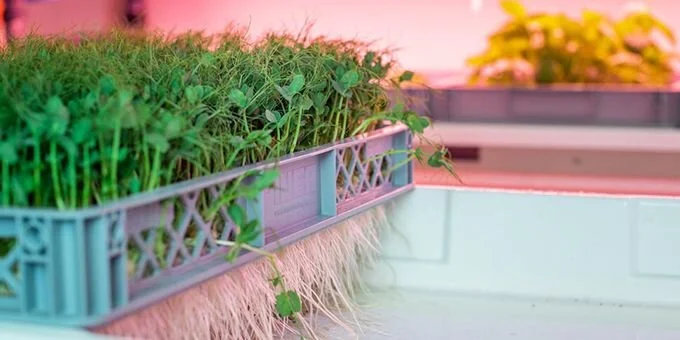
The fewer resources we use to grow food, the more likely it is we can sustain that production. We use aeroponic systems in our indoor farms. This means that we require no soil. Instead, we use a nutrient-dense mist to grow crops - using 95% less water than traditional farming. This is a huge breakthrough, as freshwater shortage on Earth is a huge problem - only 1% of the world’s water is accessible drinking water, and water scarcity is only going to worsen.
Another resource that is currently at risk is our land. Despite the fact that we only produce around half of the food we consume, agriculture accounts for 63.1% of land use in the UK. Growing indoors and vertically will allow us to grow more efficiently, and free up space which could be used for forestry or rewilding projects.
Shorter supply chains
Indoor growing systems can ensure that farmers are able to grow crops all year round, which means that we do not have to rely on buying in produce from overseas. Buying local means you are supporting the local economy, and food does not need to travel as far to reach our plates, which lowers its carbon footprint. It is estimated that 30% of food waste is produce lost in the supply chain, so less travel time means less waste.
Sadly, agricultural industries abroad often provide food to countries like the UK at the expense of their own market. This means their farms are not always feeding the people growing the food. Scholar and environmental activist, Dr. Vandana Shiva calls this a ‘stolen harvest.’ Being able to grow more of our own food in the UK means that our growing demand is not exploiting markets overseas. Importantly, this means that we can maintain fair trade relationships with other countries that are fruitful for all parties.
Pesticides and fertilizers
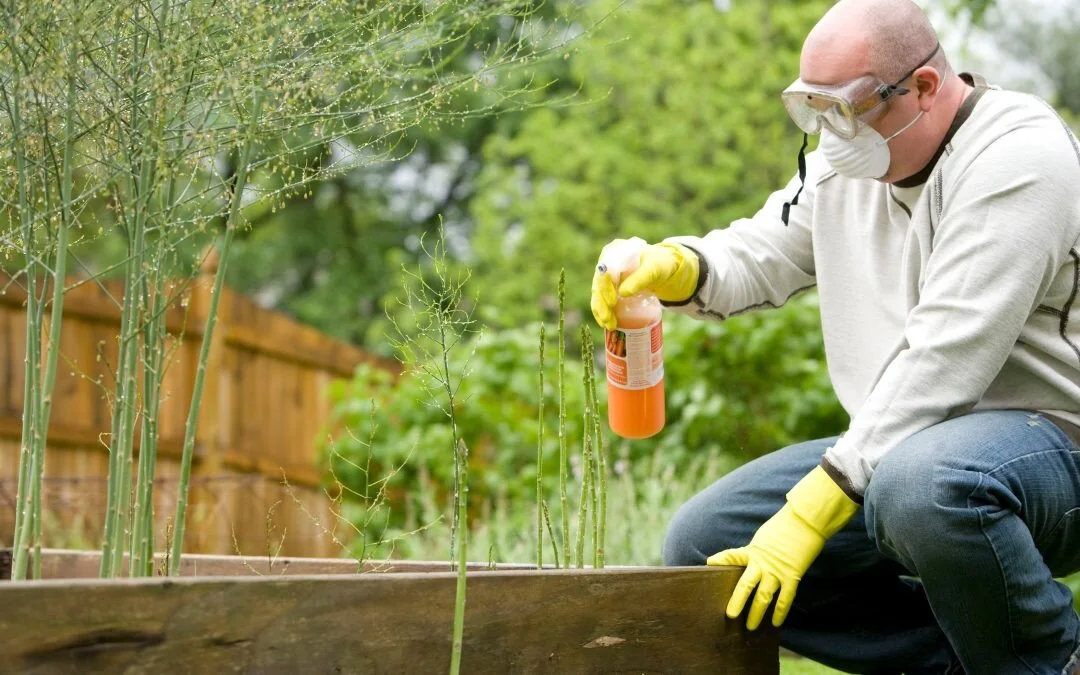
In order to meet the high demand for food and protect their livelihoods, many traditional farms use pesticides to protect their crops from pests, weeds or diseases. However, we now know that the decline of insects and wildlife is a serious threat to our environment and there is a push towards organic farming methods. Indoor farms create a controlled environment, removing the need for toxic pesticides.
Fertilizers are also used in traditional farming to ensure that plants get enough nutrients - our closed system ensures that these fertilizers do not leak into waterways and corrupt ecosystems.
Climate control
Controlled environment agriculture provides farmers protection from worsening weather patterns due to climate change. Providing this food security would mean that we could consistently maintain our food production rates in the UK through the winter months and provide job security for farmers. Whilst artificial lighting consumes more energy than using natural sunlight, we can also make use of renewable energies, which are only going to become more energy and cost-efficient in the future.
Lead photograph was taken by Jack Wiseall
The content & opinions in this article are the author’s and do not necessarily represent the views of AgriTechTomorrow
Indoor & Vertical Farming, Processing & Supply Chain | government policy, sustainable

Are Container Farms The Solution To The Coronavirus Food Supply Problem?
As people run to grocery stores to stock up on food and supplies during a time of quarantine, the $899 billion restaurant industry is collapsing, raising questions about the economic security of the nation’s food supply industry in the time of COVID-19
April 13, 2020
As people run to grocery stores to stock up on food and supplies during a time of quarantine, the $899 billion restaurant industry is collapsing, raising questions about the economic security of the nation’s food supply industry in the time of COVID-19.
Dairy farms are already seeing the effects of nationwide school and restaurant closures in the wake of the coronavirus.
About one half of the normal demand for dairy has disappeared since the start of the United States’ social isolation period.
As a result, dairy farmers have had to throw out thousands of pounds of excess milk.
The agricultural side of the farming industry faces similar threats.
Food distributors and wholesalers are scrambling to redirect products from restaurants and other affected businesses to grocery stores.
But grocery stores desire different things than restaurants and schools, making it difficult to fully solve the problem.
Meanwhile, farm suppliers are racing to ship out fertilizers, seeds, and chemicals before the deadly virus disrupts the truck delivery industry.
Without these essential supplies, agriculture farmers won’t be able to produce enough food to meet demand in the States, especially as trade with other countries decreases.
The result could be a wide-scale food shortage.
Labor is also threatening agriculture as many field workers cannot afford to take time off, increasing potential for rapid spread throughout farms.
It’s a problem threatening to cause a significant labor shortage, lowering production and contributing to a potential food shortage.
Experts predict that our food security this fall and next year will be determined by how well these next harvests go.
With shortages in the food supply comes price gouging, leaving the world’s most vulnerable even more so.
The price of global food staples such as wheat and rice are already rising worldwide. Meanwhile, egg prices reached a record high in the US, as grocery stores reported a demand of six times the normal amount.
With more and more people facing unemployment and economic insecurity due to the effects of the global pandemic, increased food prices can make food insecurity worse.
Food security refers to the ability to obtain affordable, nutritious food.
In 2018, 5.6 million households in the US had very low food security.
Plus, as safety concerns skyrocket, consumers are becoming more conscious of how many hands have touched the food they’re about to take home and eat.
As a result, at-home solutions are seeming more appealing.
Since the beginning of March, Google searches for words related to “gardening” and “hydroponics” have increased.
In this time of uncertainty, small-scale indoor farming, like container farms, could prove to be an emergency solution.
Container farms are small indoor farms built inside of repurposed shipping containers.
They have the potential to easily provide food to urban areas, which tend to have the highest populations of food-insecure households, as they don’t require any farmland, only electricity, water, and internet connections.
Container farms also won’t be too affected by labor problems, as they’re fairly self-sufficient, meaning it doesn’t require too many laborers to ensure a bountiful harvest.
Higher tech containers, like our Pure Greens Container Farms, use controlled environment agriculture technology that’s automated and controllable through a smartphone app.
This allows for a more hands-off approach than traditional agriculture.
It also means the growing environment simulates perfect conditions for crops, resulting in more consistent and reliable yields.
Container farms are also able to yield quite a lot while being compact in size, which could help ease some of the burden of a global food shortage.
We’ll have to wait to see how well the agriculture industry adjusts to the pandemic, but it’s worth it to be proactive by looking into possible solutions as soon as possible.
If you’re interested in learning more about starting your own container farm, visit our website or call us at 602–753–3469 to get started!
WRITTEN BY Pure Greens Arizona LLC
Pure Greens’ container-based grow systems offer a variety of interior layouts, sizes, and options so customers can create a farm that meets their needs.
Tags: Container Farming Farming Covid 19

Abu Dhabi Invests $100 Million In A Plant-Based Indoor Farm
UAE capital Abu Dhabi has put $100 million into agtech companies looking to revolutionize the future of food with techniques like indoor vertical farming

Kat Smith SENIOR EDITOR | NEW YORK CITY, NY | CONTACTABLE VIA: KAT@LIVEKINDLY.COM
Kat has been writing about veganism, environment, and sustainability for five years. Their interests include over-analyzing the various socioeconomic forms of oppression, how that overlaps with veganism, and how the media in all of its forms reflects the current culture.
Due to a lack of arable land, high temperatures, and increasing water scarcity, the government of Abu Dhabi—the capital and second-most populous city in the United Arab Emirates (UAE)—is investing $100 million in indoor farming.
The Abu Dhabi Investment Office is backing four agtech companies.
Vertical farming startup Madar Farms will construct a tomato farm. New Jersey-based company Aerofarms will build an R&D center. Florida’s Responsive Drip Irrigation (RDI) is developing a new irrigation system for growing plants in sandy soil. Abu Dhabi-based startup RNZ is creating more potent fertilizers, reducing the need for resources in farming.
The investment is part of a larger $272 million program supporting the development of agtech projects, such as indoor farming. The government believes that vertical farming will help the UAE—which imports 80 percent of its food—become more self-sufficient.
Vertical farming can provide food in areas with few resources. | Oasis Biotech
The Future Of Farming?
“Agtech will be part of the solution to how we can better utilize water, how we can be more efficient, and how we can drive yield in farms,” Tariq Bin Hendi, the director-general of the Abu Dhabi Investment Office, told Fast Company. “We’re embracing technology because we know it’s the future.”
Abdulaziz Al Mulla, CEO of Madar Farms, explained that traditional farming “draws far too much on our precious water reserves. At the rate we’re going, we might run out of water within the next 50 years.”
A team of more than 60 scientists will study plant science at Aerofarms’ RDI center. According to CEO David Rosenberg, the company will work to develop plants with better yield, flavor, and nutrition.
“We want to grow more plants, know how to grow better, know how to grow with lower capital cost and operating costs,” said Rosenberg “That all stems from an ability to understand plants.”
Hydroponic farms use significantly less land and water than traditional farming techniques. Madar Farms’ system can recycle up to 95 percent of the water it uses. Growing Underground—a company growing greens in an old World War II bunker beneath London—uses 75 percent less water than traditional farming.
Elsewhere in the UAE, Crop One is building a 130,000 square foot facility in Dubai. It will use 320 gallons of water and 100 square feet of land in its hydroponic farm to grow the same amount of leafy greens that 827,640 square feet of land and 250,000 gallons of water would produce on a traditional farm.

The Scalability of Urban Farming
Harvester City: Interview with David Proenza, Founder of Urban Farms Global. David is the founder of Urban Farms Global a company dedicated to developing indoor farms around the world. He is also the president of the “Foundation for the Development of Controlled Environment Agriculture.”
Harvester City: Interview with David Proenza, Founder of Urban Farms Global.
When I first got into Urban Farming, I dreamt of meeting people like David Proenza. David is the founder of Urban Farms Global a company dedicated to developing indoor farms around the world. He is also the president of the “Foundation for the Development of Controlled Environment Agriculture.” A non-profit dedicated to promoting knowledge of Controlled Environment Agriculture (CEA) based on science and research. David has spent over 35 years in the food industry; he is indeed someone who has embraced the future of food while still understanding the importance of a human-centered approach. Technology has continued to redefine all aspects of our everyday life. I wonder what does the role of technology mean for the future of food? Will traditional farmers be a thing of the past? I had the pleasure of asking David all these questions and more in our interview below.
What sparked your interest in the food space?
“I got into this industry by accident; it wasn’t planned. I’ve been in the food business now for over 33 years. It started when a friend of mine asked for some help with a new company that he started that involved marketing for the food business. The job then began to take a life of its own, and it ended up becoming a full-time thing. At the time I was also working at AT&T.
In 3 decades, I have done pretty much everything in food. I have a packaging company and a processing company and a production company. I always wanted to have a restaurant, but I haven’t gotten there just yet.
Around five years ago my company started to experience a lot of different issues due to climate change.
We started having water problems, labor issues and this need to add more pesticides to our food continually. We weren’t happy about this, and it didn’t feel right. Over time the problem just kept getting worse.
I read an article by Dr.Toyoki Kozai in the newspaper. towoki kozi is one of the founding fathers of urban farming. After reading this article, a few of us jumped onto a plane and visited Chiba University to gather some ideas and knowledge. The first thing we did when we got back was to establish our research center and buy some LED lights. We were like little kids in a candy shop when we saw the first batch of lettuce growing.
Urban Farms Global — Growing Facility
We had spent years in the business growing food the traditional way and were amazed that food could grow just from LED lights alone.
We were very systematic from there on and started going step by step. We grew strawberries, watermelons, cucumbers you name it.
We started testing different nutrition and LED lights and other elements. We then thought how are we going to package this food and distribute it, so we started getting involved in those processes. We then thought about how we could compete with traditional farms and greenhouse farms. We didn’t need to worry about competing with urban farms since there were so few. So then we started developing our business model, and all of this came out of research and development. Now we have a pipeline of 10 different food products that we are trying out. Not all of them will be available for the market, but we are getting them ready for a few years down the road.”
What are your views on climate change and sustainability?
“When I grew up food, and social consciousness wasn’t there. That has been introduced through my kids. They were doing projects at school, and this green movement started. So I realized yes I do need to improve on this and we do need to change. Even my 9-year-old and most people here in Panama are becoming super conscious about recycling and saving the planet.
We need to make sure that young people have a healthy world to live on.
The thing about being in farming is that we live through all kinds of change. We see all the chemical runoff that is going into the lakes. It is so much more than just talking points for us. As farmers, we live through all these changes, and we have to be more conscious. I think people do not give enough credit to farmers. However, I ask the question about what happens if we don’t farm? The answer is that nobody eats. Most farmers try to do the best they can.
Soon we will start packaging our food in a material that is made from cassava. So going forward we will be a lot more sustainable. Our packaging will be biodegradable, and therefore it will be a bit more expensive. We will fit this into the production cost and will not raise the price for consumers.
If we are going to develop a better food system, we need to do it in every aspect.
If you are producing healthy produce why would you want to then put it in plastic that harms the planet?”
You don’t see a lot of traditional farmers getting into urban farming. How did you make the switch successfully?
“At that point in the first year, we did nothing in hydroponics. We needed to train people and send them off to be trained over at The University of Arizona. We needed to send people off to learn about controlled environment agriculture. We sent our people out to all different parts of the world to get trained.
We had to go through a learning curve ourselves despite having had this vast experience in the food business.
Growing food indoors and using this type of technology is very different. There are a couple of other things that differentiate us from other indoor farms. One we don’t go public. The second would focus on our work and not the work of others.
There is this quote that I love by Chris Higgens — “When a farmer buys a new tractor he doesn’t go out and post it on social media.”
This can be good or bad because we are not as well known as other indoor farms. However, it is also the attitude we have when we look at indoor farming. Some people think its all about technology. We on the other hand focus on being a food company that uses technology to produce food. You have to grow food, you have to know how to grow food, and you have to have that first-hand experience. If you set a culture in the company, you need to decide what that culture will look like if we are focused on producing high-quality food that is where the focus is.
The other thing is that we are continually training our people because there is always something new to learn.
Four years ago we worked out an agreement between The University of Panama and The University of Chiba and The Technology University of Panama. We negotiated to send three students and one professor from each of the two Panamanian university to train at Chiba University for 30 days or more. Then Chiba sends a group of 8 –10 of their students to Panama. The Japanese students spend some time at our R&D and get to visit several other farms in Panama. While the Panamanian students that return from Chiba continue their development with us at our R&D.
Urban Farms Global — Growing Facility
We need to start training more people in this field because the number of people who are knowledgable in this industry is very few.
We are now negotiating with other universities in The United States and Europe to do the same with us. These initiatives help us to grow a larger pool of people to come and work as we expand the industry. It may be a lot of costs, but it is well worth it.”
What role do you think technology should play in the future of food?
“I believe it should always be a bit human-centric. Many people today think that the algorithms and devices will be the solution to tell you how much nutrients a plant needs. I cannot entirely agree with this; a person needs to be able to understand plants as living things. The plants can tell you more than any algorithm. It is essential to know how to grow food. I believe that human reaction is so important when it comes to growing food. Even if a sensor tells you this is wrong, you have to understand how to correct it.
Although we apply a lot of technology, we will always need a farmer.
It is going back to this statement of companies worrying about indoor farms taking over. A few years ago this was going around peoples minds. This idea is impossible the demands for food are so significant. Indoor farms will not be able to grow apples, mangos, avocados and more. It is just not economically feasible.
One day I was doing a talk, and someone said to me “you are going to be putting farmers out of business.” I said “no way” this is a compliment to traditional farming just like how greenhouses compliment traditional farming. It is not going to take over. Our population is going to grow to over 10 billion in the next few years, and there is no more land to grow food. Wouldnt it be better if we have another system like indoor farming that would be a lot more healthier to help? I think people are begining to wiser up and realize that some farms are going out of business. However, when I hear of new indoor farms, I wish them complete and utter success. Because when an indoor farm goes out of business, it gives all of us a black eye.”
Urban Farms Global — Growing Facility
What would you say to those who doubt the profitability of indoor farming?
“We believe indoor farming is profitable if you do it right. A lot of the doubt has to come from problems with management and the fact that you have to look long term at these business models. Everything for us is about our consumers and intending to create consumer loyalty. It is no different from any other business.
You see a lot of indoor farming companies generating millions of dollars in funds. I know what it cost to start an urban/indoor farm. I know what the cost is and what they are not. I then have to ask “Where exactly are these companies putting these funds?”
What are the three things you advise an urban farming business to watch out for?
“You need to keep your cost low.
You have to keep your yields high.
It would be best if you remembered this is not a dollar business; it’s a penny business.”
What is your favorite food at the moment?
“I am eating a lot of salad, but then again I am eating my product, so that helps.”
Call to Action?
“The world is enormous, and the food industry is massive. I encourage young people to look into the food industry seriously.
Someone very wise once said “you may need a doctor once a year and an attorney once a year, but you need a farmer three times a day”
I encourage all young people to get in and learn.”
If you or someone you know would be interested in connecting, collaborating or supporting David and his mission, please share this article or reach out using the information below:
david@urban.farm
If you enjoyed this piece, you might also like…”The Truth About Packaging When It Comes to Sustainability.”
For more information on Harvester City click here.
WRITTEN BY Alex Welch
Startup Enthusiast: Passionate about all things Plants + Tech + Social Impact related 🌱www.harvestercity.com
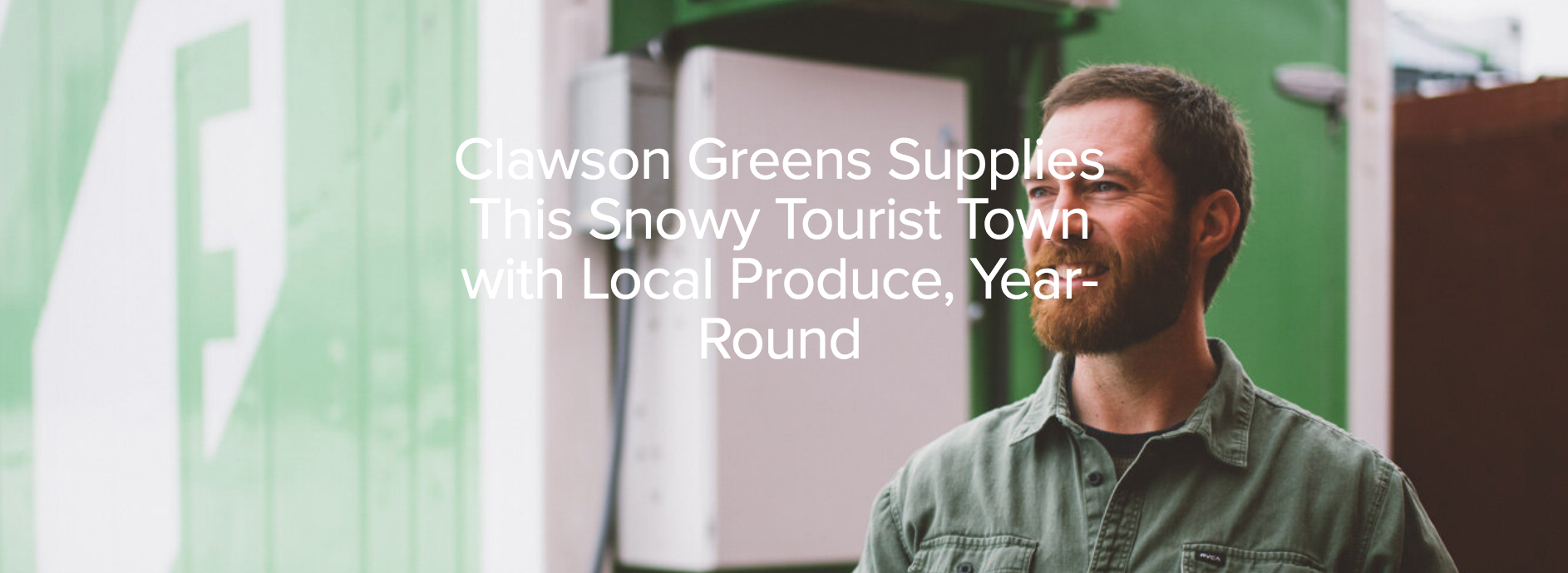
Clawson Greens Supplies This Snowy Tourist Town With Local Produce, Year-Round
Dave Ridill of Clawson Greens shares his farming unique experiences farming in snowy Tetonia, Idaho.
March 17, 2020
Dave Ridill of Clawson Greens shares his farming unique experiences farming in snowy Tetonia, Idaho.
Dave Ridill from Clawson Greens has made the impossible possible: in an area with a growing season that lasts less than three months (and is known for avalanches!), he has created a thriving year-round farming business that keeps surrounding restaurants flush with fresh greens even in the snowiest weather.
Download our interview with Dave to hear about his experiences!
CLAWSON GREENS WEBINAR
Or, keep reading to a re-cap of the webinar and Q&A with Dave.
Photo by Camrin Dengel, Teton Valley Magazine
Freight Farms: What’s the story behind your Freight Farms project?
Photo by Camrin Dengel, Teton Valley Magazine
Dave Ridill: Long story, short–my neighbors discovered Freight Farms while doing consulting work for Yosemite National Park. They were putting together a proposal for Yosemite to cut down on transportation costs and offer a new plan for food options inside the park. Yosemite didn’t end up going with their bid, so they approached me about starting a hydroponic farm business together. At the time, I was in the process of moving to Boston to go to paramedic school. However, after visiting Freight Farms, I decided to leave the Fire Department, where I was working at the time, and become a lettuce farmer.
FF: Who do you sell to and how do you do it?
DR: Our business model was focused on the restaurants in both Teton Valley and Jackson Hole, Idaho. The restaurant industry in our tourist town is booming. Despite highs and lows with seasonality, restaurants were the main focus in the inception of Clawson Greens.
We also tried a direct to consumer route (CSA) and the local natural food store. Due to time and labor increase, the CSA was not as profitable. We also have a very strong farmers market in both Teton Valley and Jackson so there was never a plan to try and compete with our local farmers. With an 85 day growing season, the local organic farmers already have a very short growing/selling season so adding another vendor to that market would just dilute an already competitive and small market. Our focus was on a market that no other local grower could tap into, year-round tourism.
“Our focus was on a market that no other local grower could tap into, year-round tourism.”
— Dave Ridill
FF: Do you find that customers are willing to pay more for your premium product?
DR: This question reminds me of a meeting with the restaurant manager of our local pub. We sat down and looked over a year’s worth of invoices from his distributors and the price fluctuation that the seasons had. We also looked at his total costs after he factored in waste due to buying in bulk to get the best pricing. With price changes and waste, my higher-priced product that I guarantee was not much more expensive than Sysco.
What I’m trying to say, is chefs will choose fresh local ingredients any day over large scale commercial produce. For them, it’s a selling opportunity: They market it by advertising the local farms/producers on their menus and have servers talk about the local products which are used in the specials. Consumers are willing to pay more for quality and to support local businesses.
“Chefs will choose fresh and local ingredients over large scale commercial produce any day. ”
Photo by Camrin Dengel, Teton Valley Magazine
— Dave Ridill
FF: How do you package your crops?
DR: From the start, Clawson Greens has made a point to not use single-use plastic clamshells or plastic bags. We use compostable corn-based bags for all our deliveries. On average, I put about 30 mini heads into 23-gallon compostable bags.
FF: What was the most challenging part of becoming a Freight Farmer and how were you able to overcome it?
DR: Becoming a Freight Farmer has many challenges much like starting any new business. There’s a steep learning curve but I enjoyed that process. The hardest part for me was understanding when to expand and how to grow with the business as it expanded. It was easy to transition from a full-time ski patroller to a part-time patrol/part-time farmer. However, as I added farms to grow the business, I found it hard to dive in and become a full-time farmer and business owner.
Being thrown into the deep end of the pool overnight was the hardest and easiest way to become a business owner. When your only option is to sink or swim, you do everything you can to make it work. Failure was never an option so by taking that off the table, you’ve got one direction, forward!
Implementing the ‘Profit First’ system is what really changed Clawson Greens. I went from a business that had money in the business account and was blindly throwing money around to pay bills, payroll and occasionally paying myself, to a business that knows exactly how much money to put towards operational expenses, taxes, owners’ compensation and most importantly, profit!
Photo by Camrin Dengel, Teton Valley Magazine
FF: What’s the best piece of advice you can give to people interested in becoming Freight Farmers?
DR: My advice is to hire the right people and acknowledge that you (the owner and operator) deserve to be paid accordingly.
“You are the one who puts in the most time, works late, lays awake at night thinking about the business.”
— Dave Ridill
This is where the profit-first system comes into play again. Being a farmer is hard, being a business owner is even harder. Being the owner and operator of a Freight Farm is very challenging and making a living at it can be a huge challenge. You can hire great employees but they will never go the extra mile that you the owner does. Over the past few years as an employer I’ve learned that you can teach people skills and procedures, but you can’t teach someone to care about your business. Only you can do that: you are the one who puts in the most time, works late, lays awake at night thinking about the business and at the end of the day, is the one who answers to whether the business is a success or failure. You need to pay yourself accordingly. Don’t start a business to make a living for someone else until you can make a living for yourself. When you are ready to start hiring, find an employee that’s financially invested in the business. Their effort and quality of work has a direct impact on their income
Interested in learning more about Clawson Greens?
Hear how Dave created his thriving farming business in some of the harshest conditions in the U.S. when you sign up for our upcoming webinar!
SIGN UP

Webinar: Developing A Light Spectrum – A Balancing Act
The webinar is free-of-charge and will be held on May 27th at 15.00 EET. It will be presented by Ms. Stefanie Linzer, Plant R&D Director and Mr. Harri Ekdahl, Product Manager at Valoya
In an ocean of LED companies with conflicting claims, which one can be trusted for their horticultural lighting expertise? How can a grower understand which spectrum his/her plants would mostly benefit from? In this free webinar, we will breakdown the spectrum development process so as to enable growers and researchers to better understand what kind of light is best for them.
Valoya, the research-driven LED manufacturer from Finland, has conducted over 600 plant trials in the past decade in search for the highest quality light for cultivation and research purposes. In this process, it has amassed over 100 patents and developed over 60 spectra of which only 5 were commercialized.
Choosing wavelengths such as blue, red, far-red, UV and manipulating ratios such as red:far-red and blue: green are some of the factors that go into account in the spectrum development process. In the plant trials conducted we observe parameters that are of importance to growers such as plant biomass and morphology, secondary metabolite accumulation, etc. Additionally, growers need lights that achieve their cultivation targets efficiently, so spectrum development always includes economic considerations so that the minimal amount of Watts gets the desired output.
The webinar is free-of-charge and will be held on May 27th at 15.00 EET. It will be presented by Ms. Stefanie Linzer, Plant R&D Director and Mr. Harri Ekdahl, Product Manager at Valoya.
To learn more about the webinar and register for it, please click here.
About Valoya
Valoya is a provider of high end, energy-efficient LED grow lights for use in crop science, vertical farming, and medicinal plants cultivation. Valoya LED grow lights have been developed using Valoya's proprietary LED technology and extensive plant photobiology research. Valoya's customer base includes numerous vertical farms, greenhouses and research institutions all over the world (including 8 out of 10 world’s largest agricultural companies).
Additional information:
Valoya Oy, Finland
Tel: +358 10 2350300
Email: sales@valoya.com
Web: www.valoya.com
Facebook: https://www.facebook.com/valoyafi/
Twitter: https://twitter.com/valoya

Vertical Farm Accelerates Rollout For Covid-19 Crisis
Bristol vertical farm technology developer LettUs Grow is building two LED-based vertical farms to feed vulnerable communities in ten days
April 09, 2020, // By Nick Flaherty
Bristol vertical farm technology developer LettUs Grow is building two LED-based vertical farms to feed vulnerable communities in ten days
Indoor farming technology provider LettUs Grow is building two vertical farm modules in the UK to help feed vulnerable communities during the COVID-19 outbreak.
The company, based in Bristol, UK, has won a number of awards for its ethical practices and is teaming up with the food redistribution charity FareShare South West to ensure the produce gets to those who need it most.
LettUs Grow expects the first of the LED-based aeroponic vertical farm modules to be ready to start producing fresh produce from mid-April, with the first harvests ready to be delivered to FareShare just ten days after the farm’s commissioning. A second, larger module will be following in June.
The farm’s operations are automated and run with only one person on-site at any given time to allow the social distancing of key workers and minimizing strain on an already stretched farm labor force. The food is also produced in a high care environment with few people coming into contact with it. Once up and running, the farms will be able to provide a consistent, predictable and climate-resilient food supply to the local community all year round. A vertical farm is energy-intensive, and the company has a deal with supplier Octopus Energy to use energy from purely renewable wind and solar sources.
The coronavirus outbreak has shone a spotlight on the fragility of the UK’s just-in-time food supply chain. The UK only produces 50 percent of the food it consumes, which leaves it vulnerable to shocks in the global supply chain. The closures and lockdowns enforced due to the pandemic have also created logistical bottlenecks that ripple across these lengthy chains
“When we founded LettUs Grow, we wanted to enable anyone, anywhere in the world, to grow fresh produce near its point of consumption. That mission has hardly ever felt as urgent as it does today. We knew we had to get involved and help in any way we could," said Jack
Farmer, co-founder and Chief Scientific Officer of LettUs Grow. "Because our farm modules can be deployed anywhere with an electricity and water supply, they are uniquely positioned to increase regions’ food supply chain resilience by diversifying local food production.”

UNITED KINGDOM: Liverpool's Underground Urban Farm Producing Greens Boxes For Residents
Since launching its Greens for Good project last year, Farm Urban has been busy delivering boxes and towers to businesses and schools across the city
By Lisa Rand Community Reporter
11 APR 2020
The farm, underneath the Baltic Triangle, produces leafy greens hydroponically in vertical towers


Greens for Good is a project by Farm Urban, based in a tunnel under UTC Life Sciences in the Baltic Triangle
A Liverpool urban farm based in a Victorian tunnel underneath the Baltic Triangle is to provide boxes of leafy greens to Liverpool's isolating residents during the lockdown.
Modern mansion with swimming pool around the corner from Lark Lane
Since launching its Greens for Good project last year, Farm Urban has been busy delivering boxes and towers to businesses and schools across the city.
The social enterprise is based beneath the UTC Life Sciences building on Upper Parliament Street, where it produces leafy greens in vertical towers grown hydroponically under controlled conditions.
Yet, with many of their customers closed during the current crisis, Farm Urban has now "pivoted" its activities to work to keeping Liverpool's residents in good supply of healthy fresh produce during lockdown - and the team have adopted a military-style approach of splitting their team in two for the duration of the pandemic to ensure crop production continues even if team members become unwell.
Managing director of Farm Urban, Dr. Paul Myers told the ECHO: "Before all this, we were mainly focusing on our boxes of greens going into offices, and for every box that we sold into the office that would go towards greens in school kitchens."We also worked with businesses installing large scale systems. and that's now ground to a halt.
Read Entire Article

You Are Invited To Join A GLASE Webinar: Lighting Approaches To Maximize Profits
Supplemental lighting is often necessary for year-round greenhouse production of ornamentals and vegetables
Date: April 16, 2020
Time: 2 p.m. - 3 p.m. EST
Presented by: Marc van Iersel
Register here
Supplemental lighting is often necessary for year-round greenhouse production of ornamentals and vegetables. However, the cost of providing supplemental light is high. It is therefore important that supplemental light is provided in a way that provides the greatest benefits for the crop, at the lowest possible price. To do so, it is important to understand the cost of providing supplemental light as well as how plants use that light. Accurate weather predictions can help minimize the risk of providing more excess light than is required by a specific crop. Learn how to account for these factors to help grow high-quality, profitable crops.
Special thanks to our Industry partners
Join today
If you have any questions or would like to know more about GLASE, please contact its executive director Erico Mattos at em796@cornell.edu
What Are The Hygiene Benefits From The Way We Grow?
Due to the surge in COVID-19 cases around the world, proper hygiene practices such as hand washing have become a more regular part of the daily routine
Due to the surge in Covid-19 cases around the world, proper hygiene practices such as hand washing have become a more regular part of daily routine. However, the importance of maintaining high hygiene standards has always been critical when it comes to food safety. Given the sheer number of restaurants in the UAE, local government regulations prescribe exact procedures and requirements for establishments that handle and serve food. For example, Madar Farms has been a certified member of Dubai Municipality’s FoodSafe initiative since 2018. While we can be confident in the hygiene protocols governing where our food was served, do we really know under what conditions our food was grown and packed?
We’ve all experienced some sort of food contamination at one point in our lives – but did you know that food contamination kills almost half a million people every year? [1] Unsafe food containing harmful bacteria, viruses, parasites, or chemical substances causes over 200 types of disease – ranging from diarrhea to cancers. In 2019 Romaine Lettuce grown in California was recalled twice due to E.Coli contamination, which can cause pneumonia, urinary tract infections, or even kidney failure. The outbreak was found to originate in field agriculture due to contaminated water sources. Madar Farms eliminates this risk by only using municipal drinking water as our indoor farms’ water source, which passes through a 3-stage purification process consisting of a UV-light, a sediment filter, and a carbon filter.
Hazard Analysis and Critical Control Points (HACCP) is a widely recognized food safety certification. Rather than rely on intensive inspections of the final product, HACCP’s approach is to ensure that standard operating procedures are designed to avoid food safety hazards in the first place. Our operations are HACCP certified, but we hold ourselves to a higher standard.
Our hygiene protocols are founded on three principles: education of staff, mitigation of potential risks, and strict adherence to standardized processes. Every single grower in our team holds Basic Food Hygiene certifications, and farm managers are Level 3 Food Safety certified. Potential contamination risks are minimized through structural and procedural practices.
Upon entering our farms, our staff remove their street clothes and put on food handler workwear (white cotton lab coats and trousers). Shoes are changed, hands are washed, and then all workers pass over a shoe disinfection mat. Inside the farm, daily and weekly cleaning routines ensure all critical surfaces are properly cleaned and disinfected with plant-safe sanitizers.
We use steel structures to prevent pest intrusion. In our farms, we use hydrogen peroxide (H2O2) to sanitize all surfaces and growing environments. We chose this because the only byproducts of this formula are simply water and oxygen – things that people and plants love. Even our water and air are treated by UV filters, running 24/7 to ensure that even in the unlikely event that a contaminant enters the farm, it will be neutralized immediately before spreading. Most importantly, access is restricted to only those essential to growing, with a strict visitor policy that restricts physical entrance to the farm (we still have windows that allow you to see our growers at work because we value transparency).
We go above and beyond regulatory requirements by submitting random samples of our produce to screen for all recognized pathogens to third party laboratories that are accredited by Emirates International Accreditation Center (ISO/IEC 17025:2005). Although this extra step is not required by local law or even industry best practice, we choose to do this to ensure our customers are eating the safest food possible coming from our farms.
As we excitedly look forward to building our new facility, we are working to ensure that the highest standards of food safety and hygiene are incorporated into the facility design and layout. We are employing lessons learned in our R&D facility to further minimize the risk of either a plant-based infection or harvested produce contamination. We have benchmarked the industry’s recognized food hygiene leaders and are in consultation with two international food safety consultancies to ensure that this commercial-scale facility delivers not only locally grown, nutritious food, but that food that is safe for you and your families, for decades to come.
Soilless Farming: The Need of The Hour For The Environment
With soilless farming, the lack of gardening space or the lack of knowledge of farming will not be an issue at all. Hydroponic farming is just what the world needs today to counter the rising fuel prices, increases the cost of living and global warming

12 Apr'20
The volume of water that goes into irrigating conventional vegetable farms and fruit orchards is staggering
One of the biggest advantages of growing your own food is that you know what it containsHydroponic farming is especially important in times of crisis
When was the last time you thought how the bunch of kale now lying on the prepping counter came to the marketplace? Have you ever wondered how bell peppers are grown or transported from the farmers to the market?
The truth is – veggies and fruits have always been accessible to us. We don’t have to worry about how the farmer grows his vegetables, or who hauls them from the farm to the supermarket.
Why Should Hydroponics Be The Future Of Farming?
However, we are standing at a crucial point in time where we have to question how much fossil fuel goes into transporting the food we eat. How much carbon and water footprints are you contributing by consuming your protein smoothie? You might be trying to eat healthy and organic, but is your food also eco-friendly?
Water footprint: (and not carbon.) The volume of water that goes into irrigating conventional vegetable farms and fruit orchards is staggering. Many farmers still prefer chemical fertilizers and growth stimulants that flow into the water bodies nearby. It is a vicious cycle that you can stop right now!
Turn Your Terrace Or Balcony Into An Organic Farm
With soilless farming, the lack of gardening space or the lack of knowledge of farming will not be an issue at all. Hydroponic farming is just what the world needs today to counter the rising fuel prices, increases the cost of living and global warming.
When you can produce the food you are going to need, you can confidently say that you do not contribute to the additional consumption of fossil fuel that goes into transporting the food.
Today, some farms have adopted the soilless form of agriculture standardized by the People Adaptation to the Adverse Environment Initiative. Since hydroponic farming requires less space and fewer resources, farms can produce more without compromising the quality of the plants.
The water-based system can be completely automated, so the farmers don’t need to be present 24×7 to ensure the high-quality of their produce and to optimize the productivity.
Find The Missing Link Between Nutrition And Health
It is a sustainable form of farming since the limited use of resources does not compromise the quality of the plants. Hydroponically produced fruits and vegetables are not just safe for consumption, the surrounding environment is also safe for the residents (home farming) and the farmers (commercial farming).
One of the biggest advantages of growing your own food is that you know what it contains. When buying (lets mention something that we grow or can grow) lettuce or spinach from the market, you do not know if the farmer actually used the best grade of organic compost.ADVERTISEMENTHowever, at home, you can rear the plants with care and you know exactly what nutrients you have included in the substrate. Moreover, you will always be sure that there is 0% pesticide or herbicide in the food you serve to your loved ones.
Know Precisely What You Are Eating And Serving
Whether you choose to try hydroponic farming or shift to sourcing your food from a commercial hydroponic farm nearby, you will always be able to monitor and trace their growing process.
If you use a standard hydroponic agriculture DIY kit, or the farm uses a standardized method to grow their soilless plants inside an indoor controlled environment, you can always be sure about the quality of the food you eat and serve.
It is a form of “precision farming” where nothing in excess goes into the substrate. In fact, soilless farming demands purification of the water used for the farming process. The perfectly pH-balanced (5.5) water contains most of the nutrients necessary for a plant’s growth.
Hydroponic farming utilizes 95% less water than traditional farming. Now, isn’t that an additional reason to try soilless farming?
Save Fuel, Save The Environment
If you are thinking about setting up your own soilless farm, then your produce can go directly from the growth system to the tables. If you choose a nearby hydroponic farm, you will still contribute to saving the environment by limiting the water and carbon footprints involved in transporting the produce.
Sustainable agriculture focuses mainly on strategies that reduce dependence on non-renewable or environmentally harmful inputs. These include eco-agriculture, permaculture, organic, ecological, low-input, biodynamic, ecological, community-based, and comprehensive strategies. Soilless agriculture is, in form and in essence, an environmentally friendly- agriculture, sensitive to the environment and based on a community approach.
Apart from ensuring that you serve a healthy and completely organic meal to your family, you can enjoy a guilt-free meal that has contributed to zero or negligible carbon emission in terms of transport.
Why Is Hydroponic Farming Most Necessary Today, In Times Of Crises?
Due to the high supply of pure water at pH 5.5 and the close monitoring of the closed growth environment, the plants grow faster than in the typical agricultural farms. Their growth cycle is much shorter and you can expect a higher frequency of harvesting than traditional farming.
Hydroponic farming is especially important in times of crisis such as these. With the scare of COVID-19 infection and mass lockdowns, your home soilless growth system set up can continue to provide healthy and nutrient-rich food to you and your loved ones.
Note: The views and opinions expressed are solely those of the author and does not necessarily reflect the views held by Inc42, its creators or employees. Inc42 is not responsible for the accuracy of any of the information supplied by guest bloggers.
AeroFarms To Build World’s Largest Indoor Vertical Farm In Abu Dhabi
The Newark-based sustainable indoor agriculture company said it will construct a 90,000-square-foot facility dedicated to the R&D and commercialization of local crops as part of a $100 million AgTech investment by the Abu Dhabi Investment Office
By Emily Bader
Newark | Apr 9, 2020
AeroFarms
Inside one of AeroFarm's indoor vertical farms.
AeroFarms will build the largest-ever indoor vertical farm in Abu Dhabi, it announced on Thursday.
The Newark-based sustainable indoor agriculture company said it will construct a 90,000-square-foot facility dedicated to the R&D and commercialization of local crops as part of a $100 million AgTech investment by the Abu Dhabi Investment Office. AeroFarms indoor vertical farming technology, it said, uses 95% less water and no pesticides.
The facility is expected to employ approximately 60 workers focused on horticulture, engineering, and data science, and will include the following centers of excellence:
Advanced organoleptic research and precision phenotyping laboratory;
Advanced seed breeding center;
Phytochemical analysis laboratory;
Machine vision and machine learning laboratory;
Robotics, automation and drones laboratory.
Since 2004, AeroFarms has grown about 800 varieties of crops and is anticipating expanding its production capabilities into other verticals such as pharmaceuticals, cosmeceuticals, and nutraceuticals.
“Our mission is to grow the best plants possible for the betterment of humanity, and this new cutting-edge R&D facility leverages our agriculture expertise and science-driven roots. We will be conducting leading research in plant science, vertical farming, and automation, accelerating innovation cycles and commercializing a diverse range of products. We will be partnering with major international companies, local universities, and AgTech startups to help solve some of the most pressing agriculture needs of our time, and AeroFarms is proud to play a pivotal role to help establish the Emirate of Abu Dhabi as a global hub for AgTech innovation,” David Rosenberg, co-founder, and CEO of AeroFarms, said.
Last year, the Abu Dhabi Investment office announced a $275 million AgTech invective program. As part of its initial funding round, ADIO will invest $100 million into four companies, including AeroFarms, to build facilities focused on solving regional and global challenges in Abu Dhabi.
“We are delighted to welcome AeroFarms to Abu Dhabi. AgTech is a priority sector for the Abu Dhabi Government, and our long-term goal is to support the development of innovation that will contribute to solving challenges of regional and global importance. We are excited to partner with AeroFarms and enable them to pioneer solutions for agriculture in desert and arid climates. AeroFarms will add significant scale to Abu Dhabi’s growing AgTech ecosystem,” Dr. Tariq Bin Hendi, director-general of ADIO, said.
Coronavirus Is Teaching Us That Our Supply Chain Is Flawed
America’s supermarkets are the tip of an enormous iceberg that represents a complicated logistics network. On a good day, this system works
The world is unpredictable–the past few months have made this abundantly clear. Since January 2020, the global community has had to grapple with the unprecedented COVID-19 pandemic. The virus’s trajectory has been closely followed by drastic and disruptive measures around the world. Words like “social distancing”, “shelter in place”, and “quarantine” are new additions to our common lexicon and everyday reality. Businesses are shuttered, schools are closed, and the global economy is wobbling dangerously.
For many, a trip to the grocery stores represents one of the last ties to normalcy–and a needed break from the cabin fever of lockdown. But even in this essential industry, long-hidden cracks are beginning to show. Panic buying has brought on the near extinction of many familiar products (toilet paper, cleaning supplies, hand sanitizer) and the endangerment of several kitchen staples (chicken, baking goods, and, increasingly, fresh produce).
As the pandemic exacerbates the issues in our global food system, we wanted to understand why the system is failing, and how we can build a more resilient one in the future.
Complete Story Here
YesHealth Group Partners With Nordic Harvest ApS To Open The Largest Vertical Farm In Europe
After months of detailed planning, Taiwan based vertical farming company YesHealth Group has commenced construction of its first international vertical farming project in Copenhagen, Denmark
Taoyuan, Taiwan, 13.4.2020
After months of detailed planning, Taiwan based vertical farming company YesHealth Group has commenced construction of its first international vertical farming project in Copenhagen, Denmark.
In March, construction of the vertical farm in Denmark’s Copenhagen Markets in Taastrup has started. Operations are planned to begin in Q4 of this year with the strategic partner Nordic Harvest ApS taking over local operations. Once the vertical farm reaches full production capacity, it will yield more than 3.000 kg every day making it the most efficient vertical farm in Europe to date.

Lead by YesHealth Group’s Chairman, Tsai Wen-Chin and senior management of Nordic Harvest ApS, today’s event marks not only a decisive day in the company’s history but also in the industry of vertical farming.
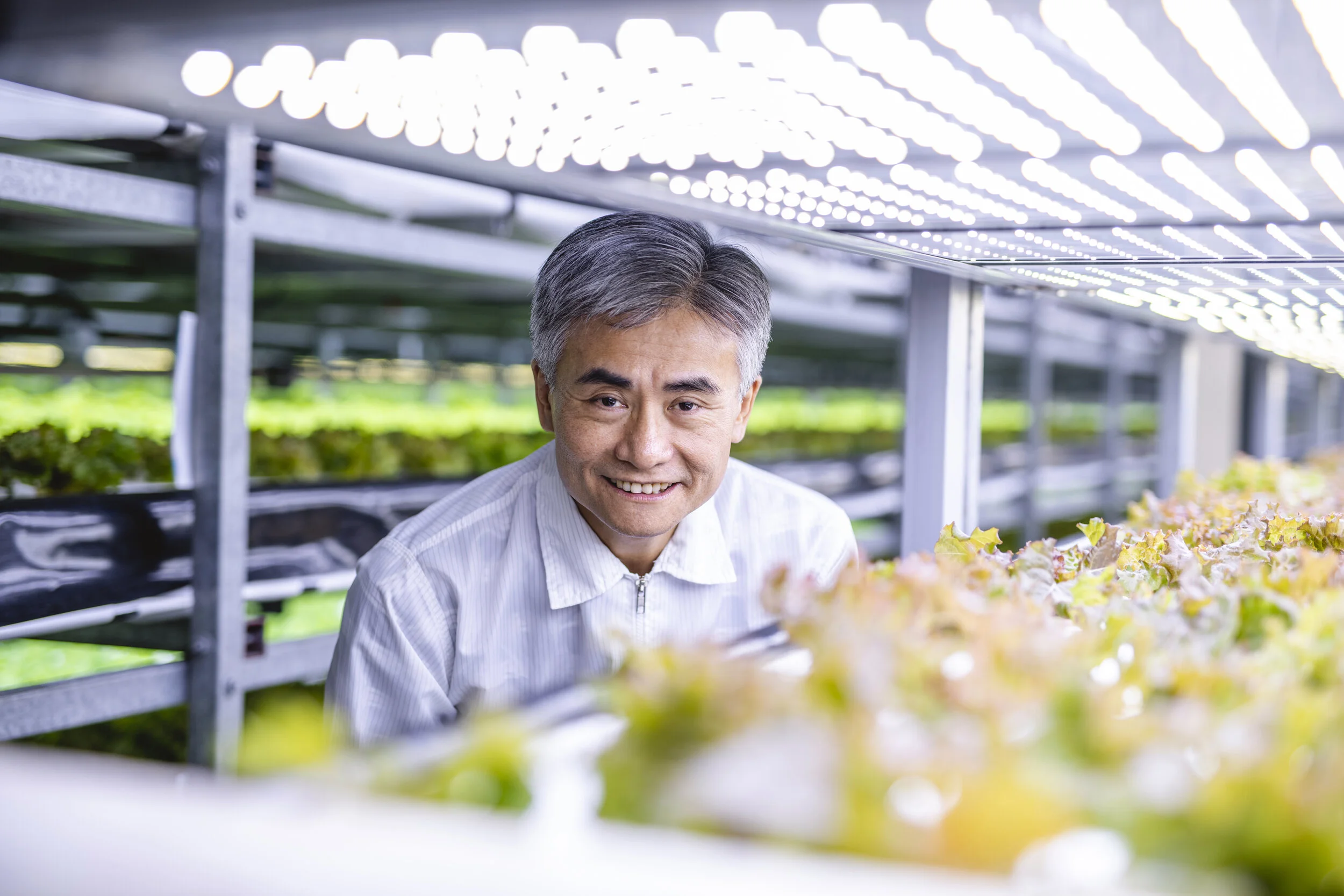
For YesHealth Group, this event represents a crucial milestone in its international expansion and the first step in its elaborate expansion plan. YesHealth Group’s technology will have a proven total yield of 7.500 kg per day, once construction in Denmark is completed. This validation of yield on an international level is unprecedented in the company’s history and in the vertical farming industry.
Therefore, for the industry, this event marks an unprecedented global proof of concept and technology capabilities on a never-before-seen scale.
“With all of our technology in-house, YesHealth Group will now be able to utilize real-world data from vastly different climates and environments and improve our technology at an even greater speed and efficiency”, YesHealth Group’s Chairman Tsai affirms.
Furthermore, according to Director of Business Development at YesHealth Group, Jesper Hansen, “this event also proves that it is now possible to commercialize vertical farming produce on a large scale and that this produce will be able to support the traditional farming sector from now on. Vertical farming is no longer just a theoretical concept for the garage.”
Completion of the first vertical farm in Copenhagen with Nordic Harvest is set to be in November this year with further plans to expand into the other Nordic countries over the next years. “Nordic Harvest ApS is backed by prominent investors and leaders within the business, the food industry, and agriculture making Nordic Harvest the ideal partner for YesHealth Group” explains Jesper Hansen.
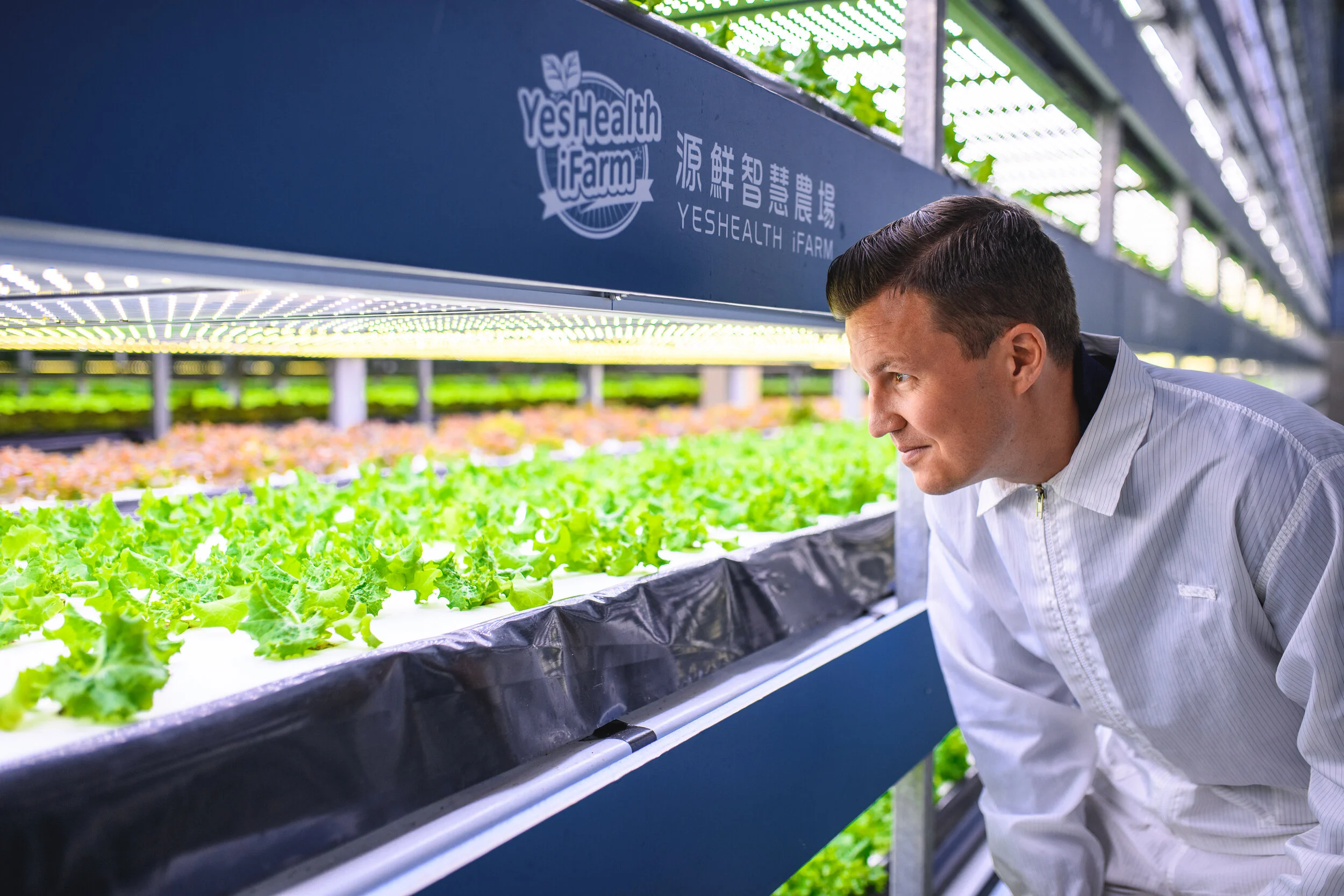
YesHealth Group is a mission-driven company that aims to provide fresh, nutritious, and safe vegetables to the world. YesHealth Group is currently the largest vertical farming company in Asia with plans to expand globally. Its vertical farms address climate change and food security challenges through sustainable and environment-friendly agricultural practices built for the 21st century and beyond.
April Indoor Science Cafe - Tuesday April 14th 12:00 PM EDT Photons = Flavor The Case Study of Basil
Indoor Ag Science Cafe is an open discussion forum, organized by Chieri Kubota (OSU), Erik Runkle (MSU), and Cary Mitchell (Purdue U.) supported by USDA SCRI grants
April Indoor Science Cafe
If you already signed up -- Thank you!
Tuesday, April 14th, 12:00 PM EDT
Photons = Flavor
The case study of basil
Presented by
Dr. Roberto Lopez & Kellie Walters (Michigan State University)
Please sign up so that you will receive Zoom link info.
Indoor Ag Science Cafe is an open discussion forum, organized by Chieri Kubota (OSU), Erik Runkle (MSU), and Cary Mitchell (Purdue U.) supported by USDA SCRI grants.
Sign up for April 14th Cafe
Cafe Q&A Forum
Please visit the Indoor Ag Science Cafe Q&A Forum at Public Good Ag website. OptimIA team is collaborating with Penny McBride to develop an information-sharing site with a lively discussion platform for indoor farmers and scientists.
Submit Your Questions for 'Indoor Ag Sci Queries'!
Please submit your questions (anonymously if you wish) about the sciences and technologies of indoor farming to this submission site. Any questions are welcome! The site is always open for your questions. Selected questions will be discussed in our future Indoor Ag Science Queries series.
Previous café recordings are available on this YouTube channel and OptimIA project website.
Please contact for more info: kubota.10@osu.edu
Upcoming Cafes:
April 14th, 12 PM EST [Dr. Roberto Lopez and Kellie Walters, Michigan State University]
May 26th, 11 AM EST [Nicola Kerslake, Contain Inc.]
Interested in giving a talk to share your thoughts and experiences? Please contact us!
Related Events:
July 10, 2020 - Plant Empowerment Workshop - Advanced learning to optimize crop production (Columbus, OH) [More Information]
July 11-14, 2020 - Cultivate '20 (Columbus, OH) [More information]
July 29, 2020 - OptimIA Annual Stakeholder Meeting (East Lansing, MI) [more information TBA]
September 13-17, 2020 - NCERA-101 Committee on Controlled Environment Technology and Use Annual & International Meeting (Tucson, AZ) [More Information]
May 31-June 4, 2021 - ISHS International Symposium on Light in Horticulture (Malmo, Sweden) [More Information]

Growing Up: Welcome To Vertical Farming
A new word will have to be coined to describe Zhihao Chen. Is he a farmer if there’s no farm? Chen, a chemistry instructor at Arizona State University, has created a new system for growing food. Forget farm to table. Chen has skipped the farm entirely
April 7, 2020
Closed system processes food waste and produces organic produce in record time
A new word will have to be coined to describe Zhihao Chen. Is he a farmer if there’s no farm?
Chen, a chemistry instructor at Arizona State University, has created a new system for growing food. Forget farm to table. Chen has skipped the farm entirely.
In a time when grocery stores are struggling to keep shelves full, Chen’s vertical farm could sit in the corner of a market parking lot, sending lettuce grown from a completely organic closed system to the shelves in as little as three weeks.
The system, which Chen describes as "cleantech," is contained within two standard shipping containers. One contains a system for breaking down food waste — anything from potato peels to rotten carrots to egg shells — and transforming it into fertilizer and methane gas. It’s capable of processing 2,000 pounds of food waste per day – the amount an average grocery store tosses out daily.
The second container hosts shelves of produce grown in a carefully-controlled environment.
Zhihao Chen, inside the digester container, talks about the vertical farming system he and his colleagues have developed at the Laboratory for Algae Research and Biotechnology on the Polytechnic campus. Photo by Charlie Leight/ASU Now
The 160-square-foot space can produce 1,200 heads of lettuce per month — the equivalent of two acres of farmland production. Traditionally, it takes lettuce 30 days to grow to maturity. Chen’s system produces a mature head in three weeks. It also doesn’t depend on climate. And the system uses 95% less water than traditional agriculture.
This could work on an island, in space, at sea — anywhere.
Chen came up with the idea two years ago. An instructor in the College of Integrative Sciences and Arts on ASU’s Polytechnic campus, he assembled a team to work on the project and created a startup called Homer Farms.
He takes food waste from the campus and grows lettuce, which goes back to ASU Dining Services.
“We want to achieve zero waste at ASU,” Chen said. He plans to expand operations to the other campuses. He is also in talks with grocery chains Fry’s and Kroger right now. Fry’s is interested in putting the system in their parking lots to use their food waste.
“The customer can actually see what’s going on,” he said. No pesticides, no chemicals or artificial fertilizers are used. It’s completely organic.
And, he adds, “You pretty much don’t emit any greenhouse gas emissions.”
A lattice of roots float in the fertilizer brine in the racks for the week-old butterhead lettuce at the Laboratory for Algae Research and Biotechnology. Photo by Charlie Leight/ASU Now
The process is called anaerobic digestion. Certain bacteria under a certain temperature with the proper pH will break down the carbon chain in food waste and feed the carbon into the biogas. (Biogas is a mixture of CO2 and methane.) You can combust the methane for energy to run the unit and heat it to keep growing conditions optimal.
“We process the waste, it becomes liquid fertilizer and biogas,” said faculty sponsor and Assistant Professor Taylor Weiss. “Some of the liquid fertilizer is used in algae production and some is used in the vertical farm to feed the lettuce. When the lettuce is mature, we send it to ASU Dining Services to close the loop.”
It saves long-distance transportation. How about using this in a major metropolitan area like New York or San Francisco?
“We’re able to produce on-site, so the lettuce doesn’t have to be transported from Arizona to New York,” said Chad Geelhood, assistant director of Environmental and Resource Management. “We cut down energy costs, we cut down greenhouse gas emissions, and we make the city more resilient.”
Right now, with the supply chain overwhelmed, “if you have something like that on-site, the city can self-sustain,” Geelhood said. “You don’t have to worry about waste and the food will be supplied on time."
Arizona ranks second, following California, in production of lettuce. Lettuce production in Arizona includes head, leaf and romaine lettuces and is the state's leading cash crop, averaging more than $300 million in value.
“If you air condition the container, it can be year-round in a New York environment,” Geelhood said. “Here we don’t have to add as much heat because we’re in the desert.”
The system can grow any type of vegetables.

Instructional professional Zhihao Chen (left) talks with the assistant director of the Environmental and Resource Management Chad Geelhood inside the growing room with racks of week-old butterhead lettuce, at the Laboratory for Algae Research and Biotechnology. Photo by Charlie Leight/ASU Now
“Lettuce and leafy greens are a good target because they’re high-bulk and it costs a lot to transport them relatively, but also growing them in a closed space makes them more nutritious as well,” Weiss said.
The fertilizer is super-concentrated and has to be diluted. Inside the grow container, temperature, humidity, light intensity and plant temperature are all intensely monitored.
“In that way, we can predict the quality we need,” said Yujin Park, an assistant professor in the College of Integrative Sciences and Arts who researches what types of light wavelengths are best for growing. Conditions can be optimized for different crops.
Homer Farms is currently under incubation at the University of Arizona Center for Innovation.
Top photo: Assistant Professor Yujin Park checks the week-old butterhead lettuce plants at the Laboratory for Algae Research and Biotechnology on the Polytechnic campus on March 26, 2020. The plants will be ready for harvest at three weeks. With the goal of creating a circular economy, the lab takes food waste from the university's food services and turns it into a fertilizer by way of a digester. The fertilizer is diluted and used as a hydroponic medium to grow lettuce, which is then returned to the food services. Photo by Charlie Leight/ASU Now
Solutions Polytechnic campus College of Integrative Sciences and Arts Biology Sustainability Innovation Food and Dining Healthy Living Faculty Community

World’s First Vertical Farming Congress
The first Vertical Farming World Congress will be held from 22nd to 24th September at London’s Heathrow Airport
By urbanagnews
April 8, 2020
The first Vertical Farming World Congress will be held from 22nd to 24th September at London’s Heathrow Airport. Eminent industry-leading speakers have confirmed their participation from North America, the Middle East, and Asia as well as Europe. The chosen theme is ‘Shaping Food’s Future’.
“Vertical farming really can help shape the future of food production,” explained Richard Hall, Chairman of the food and drink experts Zenith Global and the event’s organizer. “By being indoors and with completely controlled conditions, there are no floods, droughts, winds or pesticides. You can grow 30 crops a year locally, right next to a supermarket or city distribution centre. Growing to perfection in a stress-free environment means greater freshness, better nutrition and a longer storage life.”
Topics on the program include: market opportunity; an industry leadership panel; strategic alternatives between aeroponic, aquaponic and hydroponic systems; technology briefings ranging from lighting and robotics to overall system design; a nutrition briefing; a funding panel; and key innovator
case studies.
Among the speakers are:
Industry leaders, such as AeroFarms, Intelligent Growth Solutions, Jones Food Company, Root AI and Square Roots
Association heads from Germany and Japan
Investment experts from Ashfords, S2G Ventures and Innovate UK
Technology developers, including GE and Wageningen University.
There will also be a visit to Vertical Future’s vertical farm operation in East London and a reception with vertically farmed fresh produce tasting.
The event has also attracted sponsorship from GE, LED lighting experts, and YesHealth, which has pioneered vertical farming in Taiwan.
Full program details and booking information are available at www.zenithglobal.com/events/vfwc2020 or contact the events team at events@zenithglobal.com.
