

Welcome to iGrow News, Your Source for the World of Indoor Vertical Farming

Could Vertical Farming Meet The Food Needs of Tomorrow's Cities?
The majority of today’s global population lives in cities and by 2050, our population will have reached 9 billion people with 70% - 80% living in cities and urban areas
Five Takeaways
The majority of today’s global population lives in cities and by 2050, our population will have reached 9 billion people with 70% - 80% living in cities and urban areas.
Apart from large scale food security concerns, the world is also facing the loss of arable land and decreased access to fresh water fueled by global warming.
Vertical farming creates the future blueprint for securing the world’s food supply. It refers to growing crops in multiple vertical layers indoors, in controlled-environments, repurposed warehouses, growth chambers and even shipping containers.
Here are Heliospectra's five takeaways:
LED Grow Lights Make Vertical Farming Viable
LED grow lights have been the catalyst for growers looking to grow vertically. With recent developments in technology, growers can now maximize crop yields and standardize production 365 days a year.
The ability to alter light spectra and the quality of light that the crops are exposed to has huge implications on every aspect of production. Growers gain more control than ever by knowing that correct light can influence each variable—from how crops develop, when they bloom, how they taste, and even their chemical compositions.
Vertical Farms Use Less Water for Food Cultivation
Agriculture currently accounts for roughly 70% of our water usage and is also responsible for the vast majority of water runoff and contamination issues that are present today.
In contrast, vertical farming utilizes 70% - 95% less water compared to traditional farming. Some of the largest and most successful vertical farms also incorporate closed-loop water circulation systems to recirculate water to their crops, leading to an even greater reduction in water usage.
Vertical Farming is Less Labour Intensive
Vertical farming enables smart farming with precision technologies and controls to greatly reducing the crop input costs and intense labour of field farming.
The increasing development of Al, automation and robotics will also continue to increase revenue for growers and support even greater resource savings and operational efficiencies.
Vertical Farming Has the Ability to Conserve Land
Simply put, vertical farming produces more food per square meter, using up to 90% less land. This can help promote biodiversity as farmers drastically reduce their environmental footprint by growing more food on less land, encouraging an increase in livestock populations and natural enrichment of arable farmlands.
Arable land is also a valuable resource and as soil health decreases with use, so does the nutritional value of our food. The more we continue to farm through traditional methods, the more we reduce the bare mineral components and quality of soils. Vertical farming changes this by instead using aquaponic, hydroponic and aeroponic growing mediums instead of soil. By using these controlled media, vertical farming has also helped farmers move away from using pesticides in their production.
Vertical Farms Bring Local Food to Consumers and Neighbourhoods
Reducing emissions from transport is one of the most important measures to combat global warming from cars, trucks, aircraft and boats creating almost 20% of manmade carbon dioxide worldwide. Vertical farming addresses these issues by creating a sustainable model for locally grown produce. By growing local, food has to travel less distance and requires less artificial protection (i.e. refrigeration), resulting in produce that is not only fresher, but has a smaller environmental impact across the entire production chain.
All Pictures are Heliospectra’s SIERA Light Bar in different Vertical Farming environments.
For more information:
Heliospectra
info@heliospectra.com
www.heliospectra.com
Publication date: 8/19/2019
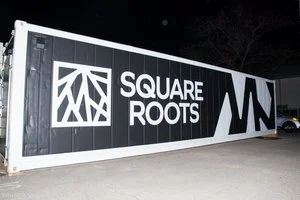
Kimbal Musk’s Goal: Grow Fresh Food In Containers In Every American City
Musk’s newest venture — alongside his co-founder Tobias Peggs — combines food and technology to empower the next generation of farmers. Square Roots is a seed-to-sales urban farm, connecting people in cities to locally grown whole foods. The farm also runs a farmer-training program, which creates opportunities for more people to become urban farmers.
August 22, 2019
Kimbal Musk | SUSAN FRANCE
Standing out in Boulder is not an easy thing to do. From famed world athletes to politicians, the city has its share of notable residents, but when a 6-foot-4-inch man wearing a cowboy hat walks around town, people notice. Some know who he is; some don’t. It’s Kimbal Musk, food entrepreneur and owner of The Kitchen restaurant chain.
Musk’s newest venture — alongside his co-founder Tobias Peggs — combines food and technology to empower the next generation of farmers. Square Roots is a seed-to-sales urban farm, connecting people in cities to locally grown whole foods. The farm also runs a farmer-training program, which creates opportunities for more people to become urban farmers.
Currently, Square Roots farmers grow a variety of fresh herbs in indoor, vertical farms inside containers, right in the heart of Brooklyn. They hand-harvest, self-package and deliver to retail stores across New York City. The herbs are non-GMO and pesticide-free, developed through human-centered farming technology that surrounds farmers with data, insights and tools so they can grow high-quality food, all year-round, using the fewest resources possible.
The system uses a water-efficient hydroponic growing system within vertical modular farms in shipping containers, which means there is no need for pesticides. Plus, Musk says, it requires about one-tenth the amount of water compared to traditional gardening.
Musk started to really think about urban gardening 16 years ago when he opened The Kitchen in Boulder alongside partner and chef Hugo Matheson. According to Musk, they worked with local farmers from the beginning because the food simply tasted better. Along the way, they ended up learning about the sustainability ethos and how much local farmers care about the land, as well as how important it was to have local food production.
The idea behind Square Roots, Musk says, was to create something that would enable the best quality herbs while empowering young farmers to grow food in the city.
“Most of our young farmers are in big cities,” Musk says. “They are not in the countryside.”
But every new technology comes with a cloud of doubts and skepticism, and Square Roots is not immune. Critics have questioned whether or not Square Roots will require more fossil fuel energy to grow food inside, as well as the limits to the type of food that can be produced without soil, and the unrealistic possibility of feeding millions of people with a technology that cannot produce food for the masses.
Musk says that Square Roots’ electricity consumption is mitigated because the containers use electricity at night when power plants have excess energy.
“The energy is being produced anyway,” Musk says. “The farms don’t pull more energy from the grid, which allows us to get electricity at a much lower price.”
For farmer Maxwell Carmack, a Square Roots graduate, the future of vertical farming seems promising. Aware of the critics, he says the carbon footprint of the transportation and refrigeration costs currently in use to move food across the country is worse than the electricity needed to run the indoor farms. Still, he is looking forward to incorporating sustainable energy production technologies to the industry of vertical farming to take it to the “next step.”
While critics may think it will be impossible to feed cities out of containers, Carmack, an engineer who decided to stay on with Square Roots after graduating the program, is excited to prove them wrong.
“I spend my time making all of the marginal gains that can add up,” he says. “In fact, in the past year we’ve doubled the production. I see improvement every day. In the end, as an engineer, I care about what might be possible and not what might not.”
Since its founding two and half years ago, the Square Roots program has graduated 30 people, and many graduates have taken the path of entrepreneurship, from rooftop garden installations to catering. And it’s expanding, as urban farmers in Grand Rapids, Michigan, will soon start producing fresh herbs as well.
Musk says the ultimate goal over the next 10 years is to have Square Roots systems in every U.S. city and to graduate around a thousand new urban food farmers, while continuing to improve the technology. While he’s aware that Square Roots can’t feed America alone, he hopes it’s the start of a vertical revolution with its roots in Boulder.

Artemis, Publisher of State of Indoor Farming Report, Launches First Annual Global Ag Report Survey
The Artemis Global Ag Report will gather industry insights around challenges and opportunities for the farming industry as in past years, however, this next survey will be open to all specialty crop cultivators—across international, enterprise, indoor/outdoor, hemp and cannabis operations
This year, we’re excited to announce a brand new iteration of the State of Indoor Farming Report: the Artemis Global Ag Report.
The Artemis Global Ag Report will gather industry insights around challenges and opportunities for the farming industry as in past years, however, this next survey will be open to all specialty crop cultivators—across international, enterprise, indoor/outdoor, hemp and cannabis operations. We decided to expand the scope of the survey and report to deepen its value and utility as a resource for our industry.
The survey is open for submissions starting today Wednesday, August 21 and will close Tuesday, October 15. The survey takes about 15 minutes to complete, and the 2019 report will be released later this year.
Also, all survey participants have the chance to obtain an audit from the Artemis resident Regulatory Compliance Specialist. (5 participants will be awarded the opportunity after the survey closes on Oct 15th, 2019.)
START SURVEY
We welcome you to join us in building a valuable record of global agriculture insights in an effort to realize a stronger, safer supply chain for our industry. Share this survey with your colleagues and community, the more participation in the Artemis Global Ag Report the better a report for everyone. Trust us—we know data.
Best,
The Artemis Team

CubicFarm® Systems Corp. Announces The Appointment of Chris Ericson As The Company’s Newest Board Member
“I am delighted to welcome Chris to our board”, stated Dave Dinesen, CEO & Director of CubicFarm® Systems Corp. “Chris is a wonderful addition to our company and helps to strengthen the existing bond with Nu Skin, which has invested in our technology in connection with its development efforts for ingredient sourcing
Vancouver, BC--(AccessWire – Aug 19, 2019) – CubicFarm® Systems Corp. (TSXV: CUB) (“CubicFarms” or the “Company”) is very pleased to announce Chris Ericson has been appointed to our board of directors.
“I am delighted to welcome Chris to our board”, stated Dave Dinesen, CEO & Director of CubicFarm® Systems Corp. “Chris is a wonderful addition to our company and helps to strengthen the existing bond with Nu Skin, which has invested in our technology in connection with its development efforts for ingredient sourcing. Chris has enjoyed a diverse business life, spanning a wide range of experiences and responsibilities in a number of countries. As the current VP of Business Development with Nu Skin, Chris is responsible for driving long-term value for Nu Skin through the development of strategic business relationships. CubicFarms looks forward to Chris playing an active role in helping to guide and influence our growth and future development into new markets.”
Since joining Nu Skin in 2015 Ericson has led its Global Internal Audit team as VP of Internal Audit and before that served as the Director of Internal Controls. Ericson also has more than a decade of experience in the professional services group of PricewaterhouseCoopers (PwC), where he advised and worked closely with senior management and leadership teams of multinational, public companies.
Chris earned Bachelor of Science and Master of Accountancy degrees from Brigham Young University with minor degrees in Japanese and Management of Information Systems.
“I am very excited to join the board of CubicFarms as we develop the tremendous opportunities that exist in Automated Controlled Environment Agriculture (CEA). Nu Skin and CubicFarms enjoy an excellent relationship and are working together to drive agricultural sustainability, food security and pure ingredient sourcing”, said Chris Ericson
Neither the TSX Venture Exchange nor its Regulation Services Provider (as that term is defined in the policies of the TSX Venture Exchange) accepts responsibility for the adequacy or accuracy of this release.

BREAKING NEWS: Crop One Holdings And Sananbio Announce Strategic Partnership To Jointly Develop Vertical Farms
Crop One Holdings (Crop One), a leading global vertical farm operator, and Sino-Science North America Photobiotech (SNAP), one of the largest vertical farm technology providers in the world, have formed a strategic partnership to jointly develop future vertical farm projects. SNAP is the owner of SANANBIO®, affiliated and supported by the largest producer of top-quality, ultra-high bright LED wafers and chips
August 20, 2019
OAKLAND, Calif.--(BUSINESS WIRE)--Crop One Holdings (Crop One), a leading global vertical farm operator, and Sino-Science North America Photobiotech (SNAP), one of the largest vertical farm technology providers in the world, have formed a strategic partnership to jointly develop future vertical farm projects. SNAP is the owner of SANANBIO®, affiliated and supported by the largest producer of top-quality, ultra-high bright LED wafers and chips.
For future projects developed jointly, Crop One will lead project development and plant operations, contributing its best-in-class plant science and controls technology, and SNAP will provide LED lighting and its proprietary modular growing systems and next-generation, fully automated vertical farm system, UPLIFTTM (Unmanned Platform of Lean & Intelligent Farming Technology). Crop One will license its plant science and controls technology to projects and both parties will contribute technology, equipment, know-how and financing.
Sonia Lo, Crop One’s Chief Executive Officer, commented, “We are thrilled to collaborate with SNAP in developing our combined pipeline of vertical farming projects. This partnership is a validation of our company and strategy, and significantly expands both Crop One and SNAP’s breadth and reach in the vertical farming sector while leveraging our respective strengths. We are long time, happy users of SNAP’s LED lights and believe its growing suite of best-in-breed hardware solutions is the perfect complement to our software, controls and plant science technology. Importantly, we share the same approach to pursuing an asset-light model to building vertical farms that is focused on scale, cost and energy efficiency.
“Successful vertical farms require a broad array of expertise and capabilities to operate efficiently and effectively, and we expect strategic partnerships between market participants with best-in-class complementary resources will become an increasingly important way for the leaders in the space to accelerate growth. Most vertical farm assets are owned by infrastructure investors, and technology companies such as Crop One and SNAP are enabling those owners to achieve the best return on their assets without the burden of technology development and management.”
Michael Yates, Sananbio U.S.’s Vice President of Technology Sales, added, “On a combined basis, we believe Crop One and SNAP’s pipeline in vertical farms is the largest in North America, with the potential to serve a full range from large wholesale to specialty retail customers across the continent with mega-farms capable of producing three or more tons of crops per day. As a proven leader in the vertical farming sector, Crop One is the ideal partner for us. They have a demonstrated track record of success in operating vertical farms at scale. The company’s partnership with Emirates Flight Catering to build the world’s largest vertical farm underscores the success of Crop One’s model and plant science technology, which address the most critical issue in vertical farming – optimizing plant growth with higher yields, at lower costs.
“Our LED products and growing systems are backed by many years of research in plant physiology and semiconductors and supported by a team of professionals with deep expertise in manufacturing, quality control, and sales and marketing. In combination, Crop One and SNAP will be able to provide a complete suite of solutions, from growing systems and technologies to crop development and production, which we believe is a significant competitive advantage. We are very excited about this strategic partnership with Crop One and look forward to starting our first project soon.”
About Crop One Holdings
California-based Crop One Holdings is a vertical farming technology company that enables fresh produce to be grown in a sustainable manner for its customers. It operates two subsidiaries: FreshBox Farms in Millis, Mass., and a joint venture with Emirates Flight Catering in Dubai South, United Arab Emirates. Crop One has been in continuous commercial production longer than any other vertical farmer in North America. The company’s proprietary technology and plant science put it ahead of its competitors, producing crop yields among the highest of the industry, but at 25% to 50% of the capital cost of other vertical farming companies. To learn more, visit https://cropone.ag/.
About Sino-science North America Photobiotech Inc.
SANANBIO® is a trademark carried and backed by Sanan Sino-Science Photobiotech, a company invested by Sanan Optoelectronics, one of the world’s largest LED chip manufacturers. Supported by an elite R&D team comprised of plant scientists, researchers and engineers, Sananbio utilizes state-of-the-art technology that enables growers worldwide in the horticulture industry to increase the quality and quantity of their yields. Years of extensive research and real-world deployment and operations allow Sananbio to offer its customers proven, scalable, efficient and cost-effective solutions in LED horticulture lighting and Controlled Environment Agriculture vertical farming grow systems. Sananbio empowers growers with the technology and knowledge to achieve unprecedented results in farming operations. To learn more visit: http://sananbious.com/.

Africa: Progressive Farming Developments For The Indoor and Vertical Farming Industry
Urban Agri World 2019 will be taking place in 6 weeks! Don’t miss this international industry event incorporating Vertical Farming, Greenhouses and Controlled Environment Agriculture.
Get your conference ticket now.
Registration details can be found at the link below:
http://www.magentaglobalevents.com/urban-agriculture-verticalfarming-cea-africa-summit/Registration
Featured Speakers of the Week:
5 Key Reasons to Attend UAW 2019
1. Updates on the various forms of Indoor Vertical farming as an innovative methodology for vertical cultivation of agricultural products, which can also realize true zero-mile city food supply.
2. Find out how Vertical farming and Urban Agriculture, when designed and implemented appropriately, could offer sustainable and innovative solutions for improving food security.
3. Get the latest updates on initiatives countries are taking to incorporate Urban Agriculture, Indoor and Vertical Farming as part of a Local, Regional and National Food System.
4. Find out how Urban Agriculture and its various forms are encouraging youth to take-up farming.
5. This year we will also explore Future Markets Opportunities Beyond Produce, with burgeoning interest in the production of medicinal plants in controlled environment farms following the new rulings on cannabis production for medicinal use in several African countries.
PLUS: Farm Visit to Dube AgriZone


Africa’s first integrated perishables supply chain and the most technologically-advanced
future farming platform on the continent. It is host to the largest climate-controlled,
glass-covered growing area in Africa.
Now into its third successful year, Urban Agri World is the region's leading agriculture event focused on Agritech, Controlled Environment Agriculture and Indoor Farming. It brings together Growers, Investors, Produce Buyers, Academics, Policy Makers, Technology & System Integrators and CEA Business Owners.
Featuring practical sessions on the hottest topics, exhibits, lunch table discussions and unlimited networking opportunities, it connects services and solution providers from all over the world to serious local buyers and partners.
About Urban Agri World (UAW 2019)
Many countries and companies are expressing strong interest in vertical farming business & urban agriculture. It is a solution to the weather and pests problems, food security, climate change and environmental preservation challenges. Commercialization of vertical farming is catching on in Asia, Europe, USA, Russia & now Africa. Many private companies are interested in growing crops in hydroponic, aquaponics & aeroponics systems in warehouses, greenhouses, containers & high skyscrapers.
There is also a burgeoning interest in the production of medicinal plants in vertical farms following the new rulings on cannabis production for medicinal use. UAW 2019 will touch on the pressing issues pertaining to progressive farming developments for the Indoor and vertical farming industry.
Join Us At UAW 2019 As We Deliberate On Emerging Technologies
To Unlock The Potential For Agriculture

Eco Convergence Group Announces Corporate Name Change To Kalera, Breaks Ground On Largest Indoor Vertical Farming Facility In The Southeast
Last year, the company opened the first of several planned hydroponics HyCube growing centers with the completion of a facility located on the premises of the Orlando World Center Marriott
GlobeNewswire August 20, 2019
ORLANDO, Fla., Aug. 20, 2019 (GLOBE NEWSWIRE) -- Eco Convergence Group, a leader in indoor vertical farming, announces its official name change to Kalera today. In addition, Kalera also announces that it has begun construction of a state-of-the-art indoor growing facility in Orlando, which will provide an abundance of healthy, tasty greens for the hospitality, grocery, and food service industries.
Last year, the company opened the first of several planned hydroponics HyCube growing centers with the completion of a facility located on the premises of the Orlando World Center Marriott. Kalera is now scaling operations to include a new growing facility, which will be the single largest indoor vertical farm of its kind in the Southeastern United States. Kalera will begin production at the new indoor farm sometime in Q4 of 2019 and is projected to grow over 5 million heads of lettuce annually.
“Our goal at Kalera is to harness plant and data science to deliver new economies of scale in agriculture, making it possible for more people to have access to high-quality, non-GMO, clean, nutritious food, locally grown without the use of pesticides—no matter the season,” said Cristian Toma, CEO of Kalera. “We have proven the technology and refined our production methods to a point where we are ready to scale up.”
Each plant grown in Kalera’s precisely controlled hydroponic facilities receives just the right amount of nutrients, filtered water and air, light, temperature, and humidity to achieve its dense, crisp, colorful, and delectable state. Kalera never uses any pesticides, insecticides, hormones, or GMOs. Unlike traditional farms, Kalera plants aren’t at risk for exposure to contaminants and pathogens in the soil, water, or air.
“Kalera produce is like none other—it’s not just delicious, it’s also clean and beautiful,” said Eric Martinez, Executive Chef, Orlando World Center Marriott Resort & Convention Center. “Having access to Kalera’s exceptional produce year-round opens up limitless possibilities to expand our menu and create new dishes that delight patrons. Many restaurants pride themselves on sourcing ingredients from farms 50 to 100 miles away. We are thrilled to say that we are sourcing our greens from 50 feet away."
Central to Kalera’s business is the idea of good science. The company is planting non-GMO seed, and has perfected over the past years plant and data science driven methods to optimize nutrient mixtures, light recipes, and environmental controls resulting in highly nutritious vegetables with consistent high quality year-round. Kalera is simply working with nature to give plants what they need to thrive, ensuring they reach their full growing and nutritive potential.
By using a closed loop irrigation system, Kalera’s plants grow while consuming 95% less water compared to field farming. Furthermore, the company utilizes cleanroom technology and processes to eliminate the use of chemicals and remove exposure to pathogens. With indoor facilities situated right where the demand is, Kalera is able to supply an abundance of produce locally, eliminating the need to travel long distances when shipping perishable products and ensuring the highest quality and freshness.
The new Orlando facility will deliver this high level of quality in abundance to the local market. The company plans for accelerated growth and will build additional facilities as production capacity is further expanded in the US and internationally.
About Kalera
Kalera is a technology-driven vertical farming company that excels in creating optimal conditions to grow delicious, nutritious, non-GMO produce that is free from pesticides and environmental pathogens. Kalera’s high-yield hydroponic production systems are automated, clean-room standard facilities. By utilizing unique methodologies that leverage plant and data technologies, Kalera creates optimal growing conditions for a variety of micro greens, year-round. The company is focused on reducing environmental impact and supplying produce to customers as close to the source as possible.
Elka Karl
Phone: 510-508-7328
Email: elka@dadascope.com

Meet Tigris, Our Largest Farm to Date
Plenty brought the farm indoors to create a better future for people and our planet. We need to triple the production of fruits and vegetables if we want to provide a healthy diet to everyone on the planet
August 2nd, 2019 By Plenty Farms
PLENTY - TIGRIS FARM
Plenty brought the farm indoors to create a better future for people and our planet. We need to triple the production of fruits and vegetables if we want to provide a healthy diet to everyone on the planet. This is an eye-opening statistic based on a Harvard study and data from the United Nations. Decades of research and development in outdoor farming have solved primarily for calories through yield gains while largely neglecting nutrients and flavor. This has led to the predominant global diet being low in nutrients and high in calories, driving the global pandemics of obesity and diabetes.
Farmers have relatively little control over the crops they grow. They select which seed, when to plant, and when to harvest. They can apply water, fertilizers, and chemicals to encourage growth and fend off pests. For crops to be profitable, they are typically chosen and grown to survive travel on trucks and for easy storage. Crops from different climates are shipped thousands of miles to customers. The end result is expensive, lower quality, and less delicious fruits and vegetables.
Plenty’s goal is to grow the best possible produce and to make it more accessible than ever before. We want to sustainably offer people the healthiest, happiest lives possible. Our new farm, code named Tigris, represents our largest and most ambitious leap forward. It demonstrates our ability to grow delicious produce using less than 5% of the water and less than 1% of the land compared to outdoor farms. By developing reliable, indoor, vertical farms that control everything our plants experience, we can reach people around the world with nutrient-rich fruits and vegetables that consumers will actually crave.
In order to change consumers expectations and to compete with flavorful processed foods, we grow the most delicious version of every crop that we sell. Can kale be decadent? Can mustard greens create the same binge response that we find in a bag of Doritos? Can we do this without genetic modification or pesticides? The short answer is a resounding yes. If you control the growing environment, you can find the world’s most delicious varieties and remove geography and seasonality as limitations.
Strawberries are more delicious in California because California is one of five Mediterranean climates in the world that has the ideal environment in which to grow produce. The Italian tomato isn’t the best because Italian farmers are magical, but because Italian tomatoes benefit from the most perfect tomato-growing environment in nature. Inside the walls of our indoor farms, Plenty is able to create the perfect environment for almost anyfruit or vegetable to create the perfect flavor. We can build local farms and replicate the ideal environment near any city in the world. By eliminating long-distance transportation, we can harvest and put these foods in consumer’s hands the same day.
Most importantly, Plenty can grow produce that people want to eat. The human brain evolved to associate flavor with nutrients. Many processed foods are engineered to have the flavors our brains crave, but lack the nutrients that our bodies need. The intense artificial flavors don’t actually satisfy our bodies and our cravings drive us to eat more calories than we need. There are many communities around the world where there is enough food, but without balanced nutrition the result is excess consumption that leads to obesity and related diseases. Plenty is reestablishing the connection between flavor and nutrients to put an end to this cycle.
Building a new form of agriculture at a scale that can impact people around the world while using fewer resources and delivering mind-blowing flavor and nutrition is incredibly difficult. At Plenty, we have assembled an amazing team of the world’s leading Plant Scientists, Flavor Experts, Hardware and Software Engineers, Growers, Operations experts, and people from many related fields. We have built dozens of farm prototypes to attack this challenge from every angle. We have grown hundreds of varieties of plants to find the highest yielding plants with flavors that will change expectations. Tigris isn’t just a story about robots or climate control or LED lights or hydroponics. It is the first instance of a new way of feeding people that can deliver on the promise of each of these individual technologies when every detail is optimized.
Inside Tigris is the technological opportunity to revolutionize human health. We give plants the perfect environment to be the best and most craveable versions of themselves, so that we can all be the best, most nourished versions of ourselves. I hope people enjoy the photos and videos of Tigris, but I really can’t wait for people to taste our amazing produce.
Nick Kalayjian
SVP of Engineering, Plenty
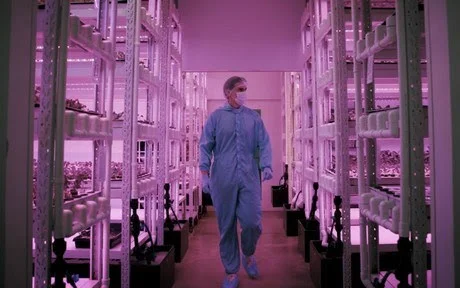
VIDEO: Can Vertical Farming Solve Asia’s Food Crisis?
The video takes an in-depth look at Sustenir agriculture, a vertical farm located in Singapore
Vice Asia released a new video on the vertical farming industry in Singapore. The video takes an in-depth look at Sustenir agriculture, a vertical farm located in Singapore. Only 1% of the land in Singapore is available for farming and as such growers need to look towards different solutions, like vertical farming, for food production.
You can watch the full video below.
Publication date: 8/12/2019
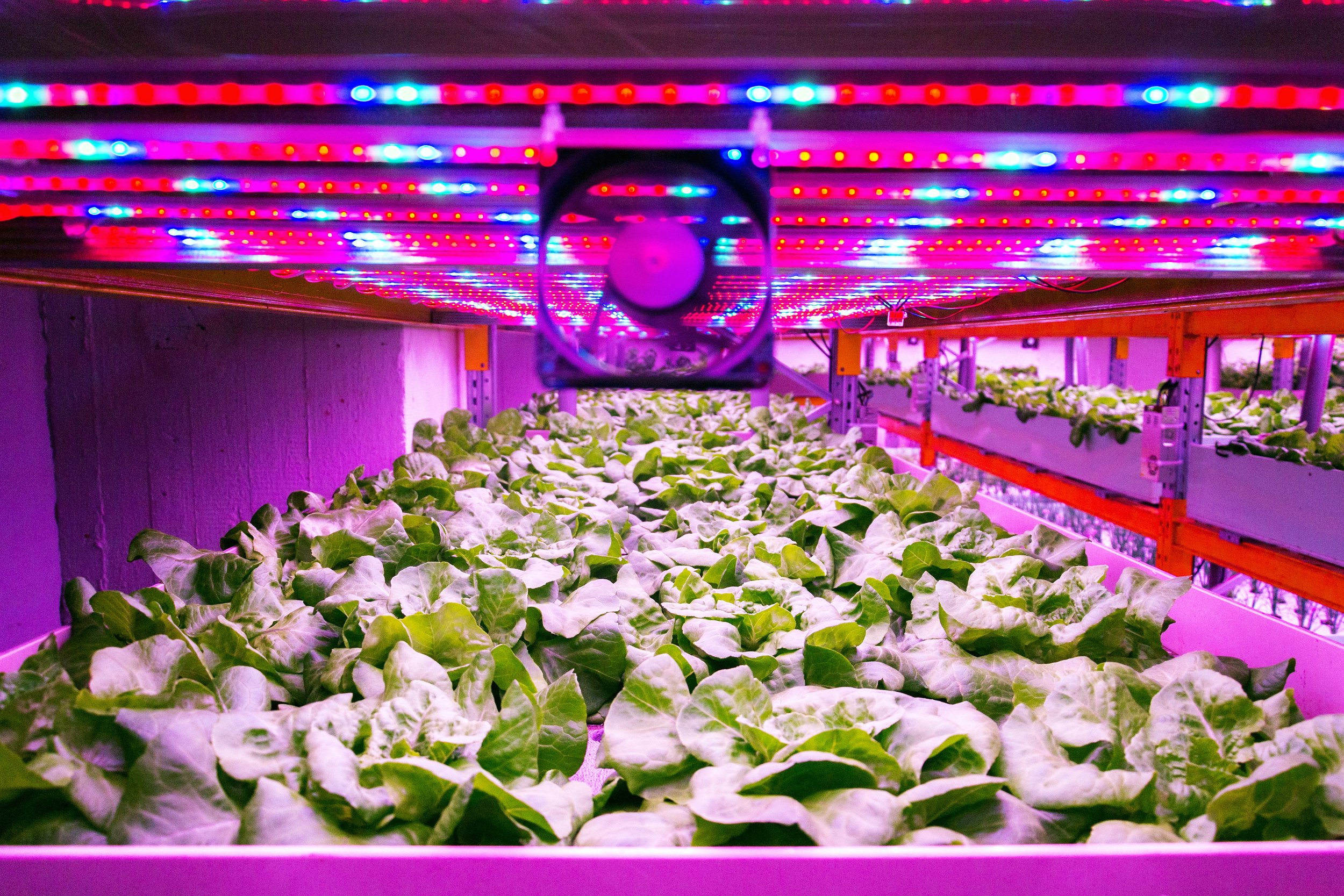
Thriving Needs for New Ways to Cultivate Crops Is Likely To Foster The Controlled Environment Agriculture Market At 16.9% CAGR During 2019 & 2024
Land use across the globe is shifting from agriculture to urban and industrial uses. Changing climate has also resulted in lower production yields, loss of arable land and reduced resilience
Global controlled environment agriculture market accounted for USD 57,656.6 Million in 2018 and is estimated to reach USD 1,42,222.6 Million in 2024, registering a compound annual growth rate (CAGR) of 16.9% between 2019 and 2024.
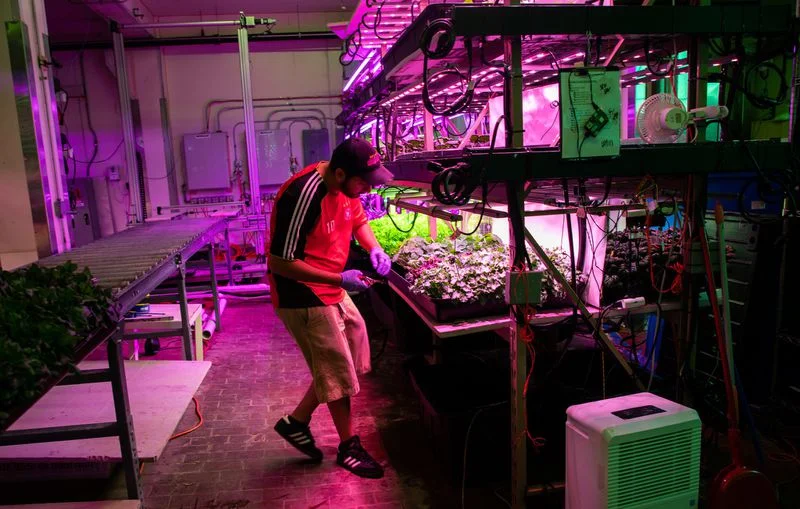
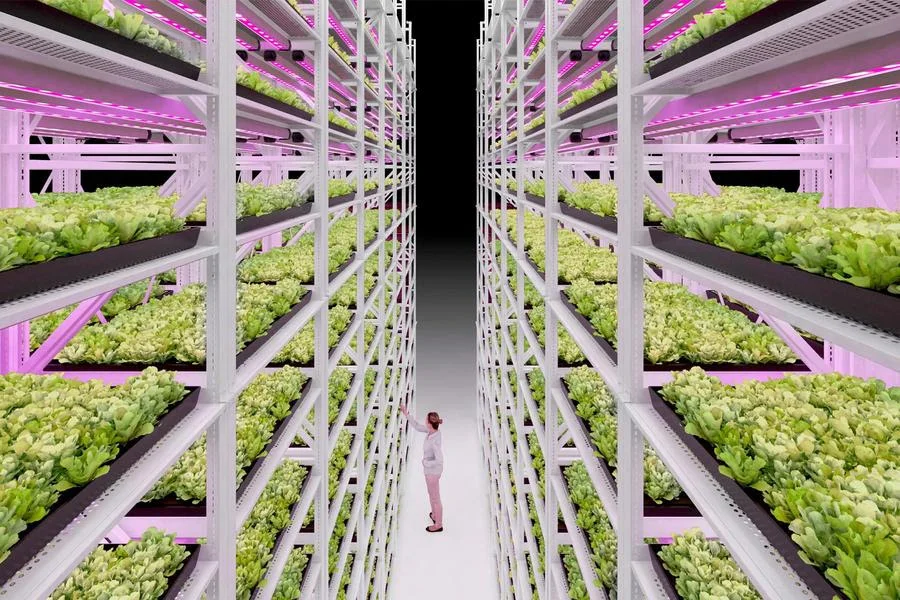
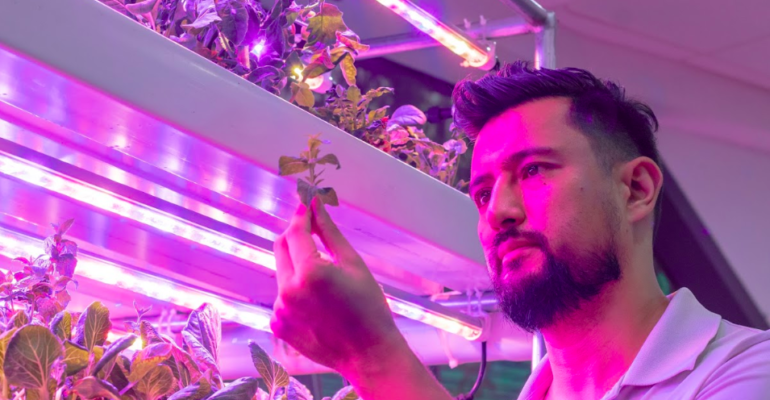
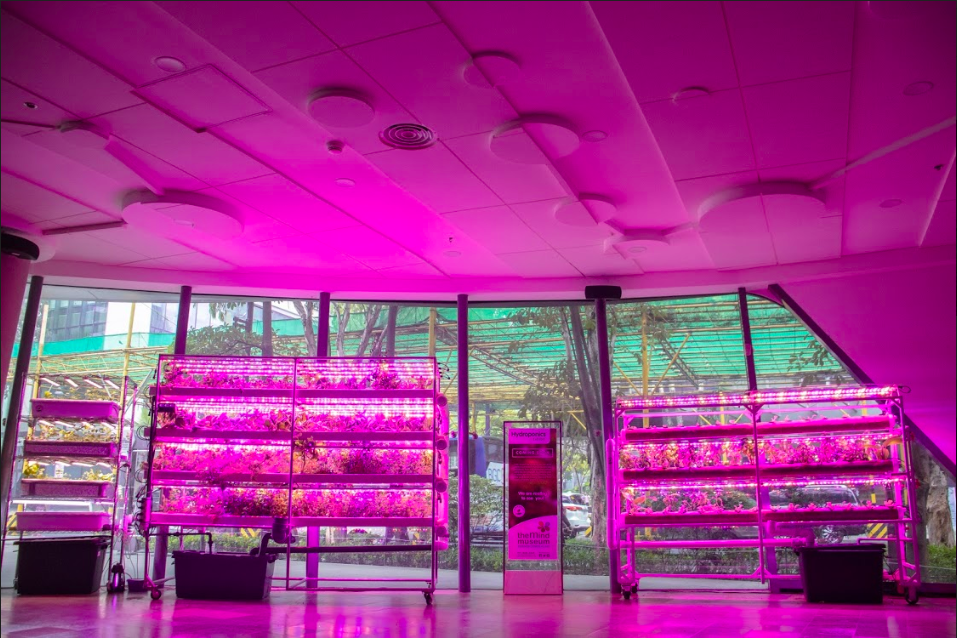
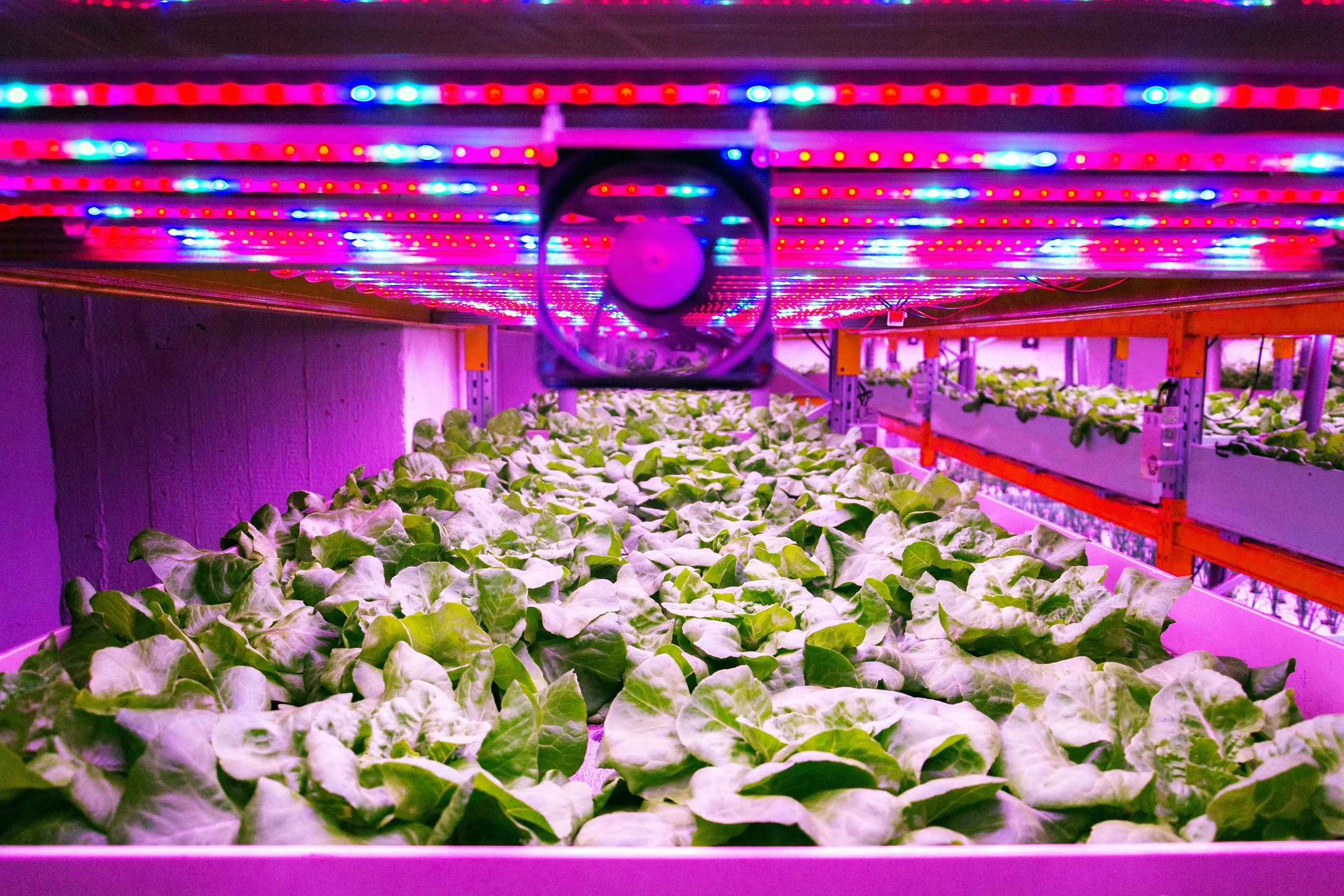
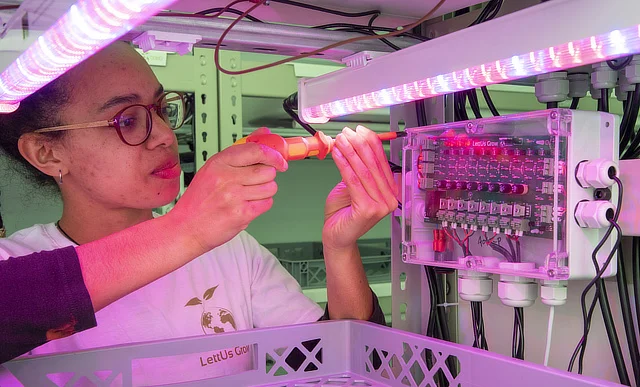



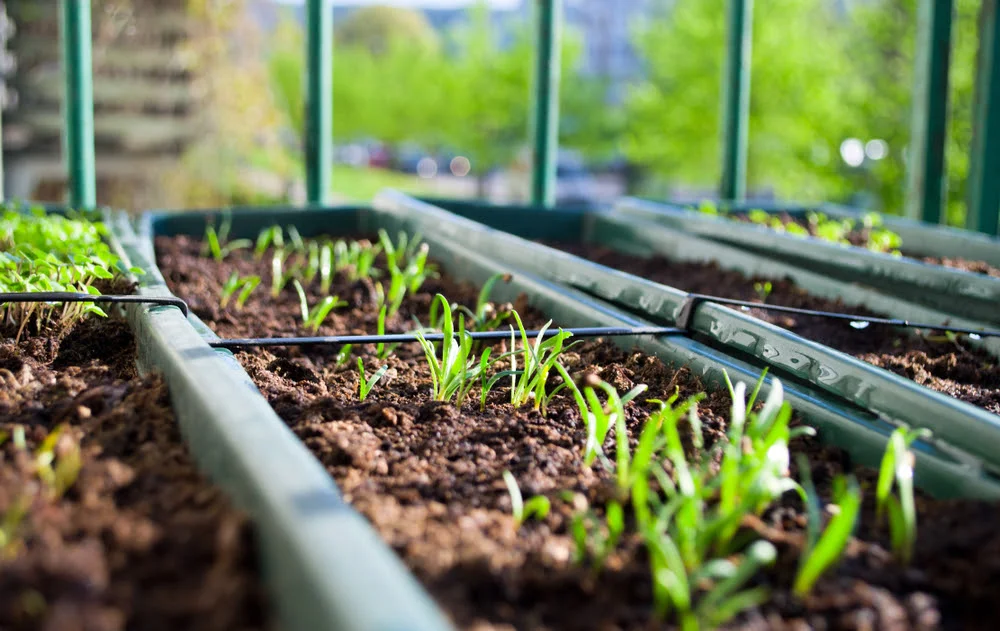
Rising Global Demand for Food
The world’s population is expected to grow to almost 10 billion by 2050. It is becoming increasingly difficult to satisfy the rising global demand for food in a sustainable manner. Due to this, in order to meet the food demand of an increasing population, the government and farmers are adopting more advanced farming techniques such as Hydroponics, Aeroponics, Aquaponics, soiled based and other hybrid methods.
The farmers are majorly growing leafy greens, tomatoes, cannabis, flowers, microgreens, strawberries, herbs, cucumbers, peppers, mushrooms, onions, leeks, hops, figs, sweet corn, eggplant, fish, insects, carrots, and shrimp. This rising popularity of controlled environmental agriculture techniques is resulting in an increase in the number of small and large indoor farms across the globe and these farms are also encouraging the consumption of other supplies such as nutrients, growing media, and others.
Loss of Agricultural Land
Land use across the globe is shifting from agriculture to urban and industrial uses. Changing climate has also resulted in lower production yields, loss of arable land and reduced resilience. Further, growing scarcities of natural resources have been encouraging the adoption of CEA since controlled environment farming an efficient way to produce more food with fewer resources than conventional farming, without being dependent on arable land availability and external climate conditions.
Strong Demand for Local Foods
Today, 55% of the world’s population lives in urban areas, a proportion that is expected to increase to 68% by 2050. Yet, the population living in urban areas are demanding locally grown foods such as fruits, vegetables, meat, etc. CEA producers across the globe are setting up their production centers near to urban consumers to take advantage of this trend due to their proximity to urban centers. Other advantages of CEA such as the requirement of less time and expense in the transportation of crop products and better product quality are also expected to strengthen the growth of global controlled environment agriculture market in upcoming years.
Remarkable Advantages of CEA
Conservation of water and nutrients is one of the many advantages of controlled environment agriculture over conventional farming methods. These advanced farming techniques such as hydroponics, aquaponics, and other soilless farming methods are effectively preventing wastage of water and overuse of nutrients. In a controlled environment, the plants have better health and faster growth, which reduces the need for pesticides and other supplements. Owing to their good health, CEA grown produces are noticeably better in both size and quality then soil-grown crops.
Barriers in CEA Market
The high cost of Nutrients used in Hydroponics
Although, CEA allows faster plant growth throughout the year, allowing larger yields. In order to do this, like any form of agriculture, CEA production is a high-risk, low margin enterprise. Establishing a CEA hydroponic vegetable operation requires considerable capital investment. Depending on the size of the operation and the level of technology involved, the investment can run into the tens of millions of dollars. This high required investment, high operating cost and high risks a huge challenge for growers and for the controlled environment agriculture market.
Lack of Awareness & Low Adoption Rate
The awareness regarding controlled environmental farming methods in underdeveloped countries is other countries which are restricting the growth of global controlled environment agriculture market. The dominance of traditional farming methods in low-income countries such as India is slowing down the growth of CEA market.
The need of skilled labors & Operational Complexity
CEA industry is witnessing a shortage of skilled labors, also the labor cost is considerably high in the case of hydroponics farming. The labor cost accounts for almost 15% of the total operation cost of hydroponics farming. Controlled environment agriculture requires great precision in monitoring. Growing in controlled environments and providing proper plant nutrition requires quality farm education. High level of operating complexity is also a major restraining factor in the growth of CEA market.

The Only Way Is Up: Will Vertical Farms Tackle The World's Growing Food Crisis?
In an unassuming white shed on the outskirts of Dundee lies what could be the most futuristic farm in the world. It’s not reached by trundling down miles of country roads, but by going through a pressurised air lock designed to keep the uncontrolled outside out
David Farquhar inside his vertical farm CREDIT: STUART NICOL/STUART NICOL PHOTOGRAPHY
15 AUGUST 2019
In an unassuming white shed on the outskirts of Dundee lies what could be the most futuristic farm in the world.
It’s not reached by trundling down miles of country roads, but by going through a pressurised air lock designed to keep the uncontrolled outside out.
And the crops - towering stacks of vegetables and fruit grown in metal trays under coloured LED lights - are not tended to by rugged farmers in overalls.
Instead they are overseen by robots, who carefully manage every environmental parameter: from light to temperature to CO2 to humidity, in a totally closed system without a handful of soil or ray of sunlight.
It might sound like a dystopian scene from science fiction, but this demonstration farm, run by Scottish technology firm Intelligent Growth Solutions (IGS), is not a vision of the future. It’s a look inside one of a growing number of indoor vertical farms sprouting up around the world in old factories, skyscrapers, warehouses and disused highway tunnels.
Plants grown under LED lighting CREDIT: STUART NICOL/STUART NICOL PHOTOGRAPHY
But why are we growing upwards rather than outwards? The answer lies mostly in our dwindling natural resources and growing population, particularly in Africa which is undergoing a youth boom.
According to the United Nations, by 2050 the amount of arable land per person could be one third of the amount that was available in 1970. The earth’s population meanwhile will have more than doubled to 10 billion in the same period.
While there’s still more land that could be brought under cultivation doing so would also mean destroying more forests and wild areas.
The farmland that is available is not evenly distributed. That’s why densely-packed places like New York, Hong Kong and Singapore are looking at farming upwards. It’s why China too, which has to feed one-fifth of the world’s population with one-tenth of its farmland, is turning to vertical farms.
The challenge is complicated by an increasingly unpredictable climate that can take out a crop in a matter of days.
“If you can have a system that’s independent of the climate, the weather and availability of land you’ve got a very disruptive new food supply system and that’s what indoor vertical farming can potentially do,” says Professor Colin Campbell of the James Hutton Institute, a Scottish research centre that works alongside IGS to build technology for vertical farms. “It takes the weather and puts it inside a box.”
But it is not cheap and it is why most vertical farms are currently in wealthy countries despite the fact that most of the additional people the planet will need to feed by 2050 will live in the developing world.
According to proponents of vertical farming such as David Farquhar, the serial entrepreneur who runs IGS, while the technology is still at the starting gate, the potential global environmental and societal benefits of vertical farming are huge.
“It can do a huge amount of good. You can help to feed people, improve the quality of produce people get, reduce food miles and reduce the use of chemicals,” he says.
Those in favour of vertical farms argue that if you keep pests and diseases locked out, there’s no need for pesticides and other toxic chemicals.
Vertical farms also use a fraction of the water of conventional farms. It takes just two to four litres of water to grow a kilogram of vegetables in a vertical farm compared to 16 litres in a Dutch greenhouse and 60 litres in a Mediterranean field.
By bringing food production to cities, close to where most of it is consumed, you avoid gas-guzzling transport. And by growing upwards, land is saved.
And the benefits are not just environmental. Taking out the variability of light, soil, rainfall and everything else that can’t be controlled outdoors, also takes out the variability out of the crop.
“All the plants are exactly the same height - there’s no wonky veg in there,” says Prof Campbell.
By experimenting with light scientists can change how a plant tastes and feels without any genetic modification.
“By changing the wavelength of light you can change the chemistry of the plant,” says Prof Campbell. “You can increase things like flavour and taste, and you can increase the concentration of health promoting chemicals.”
Others maintain however, that recreating nature indoors comes at a cost.
Andrew Jenkins, a researcher at Queen's University Belfast believes vertical farming has potential for countries like the UK that import a lot of food, but cautions that the current high energy costs of artificial lighting could outweigh the benefits.
“Growing crops that require four to five times the energy means we [in the UK] are in a worse position than with imports,” says Dr Jenkins.
A technician tends to plants in a vertical growing facility CREDIT: STUART NICOL
Vertical farming’s champions are nevertheless, confident that scientists are already cracking the energy question. Among them is Mr Farquhar, who says IGS’s technology has reduced the typical energy use in a vertical farm by 50 per cent.
Dickson Despommier, emeritus professor of microbiology and public health at Columbia University, is something of a vertical farm visionary. When he published his seminal book on the subject in 2010 there were no such farms in existence.
“Now everyone is into vertical farming,” says Prof Despommier.
Mr Farquhar agrees. He says there’s been more media interest in his vertical farm in the year since it launched than in all the other enterprises in his more than 25-year career in technology.
Leo Marcelis, an expert on indoor farms at Wageningen University in the Netherlands, agrees that interest in vertical farming is global but believes that the high cost is stopping the spread of the technology to poorer countries, where it is needed most.
“In developing countries, there’s a lot of interest in this but it’s too early for them as it’s a relatively expensive system,” says Prof Marcelis. “At the moment high investment and running costs will stop it expanding faster.”

Plants growing under LED lighting at the vertical farm in Dundee CREDIT: STUART NICOL
Although most interest in his technology is from richer countries Mr Farquhar says that in the last few weeks alone he has received inquiries from places including the Ghana, Botswana, Ethiopia and India.
Among the countries pursuing vertical farming with a vengeance is China where a 250-acre district of urban and vertical farms is being planned in Shanghai.
Africa is also growing and rapidly urbanising. Vertical farming advocate, Dr Esther Ngumbi, a Kenyan researcher at the University of Illinois, is pushing the idea of growing upwards in Africa - albeit with smaller, cheaper, lower tech versions that borrow some of the land and water saving principles from vertical farms in the wealthy world.
Although from the point of view of the science almost any crop could be grown in a vertical farm, it’s currently only cost-effective to grow leafy greens and herbs - light, high value crops that don’t need long periods of time under costly artificial lights to mature. They are also short enough to stack in many layers.
Given the energy costs, Prof Marcelis is doubtful that vertical farming will be used to grow the cheap, non-perishable crops such as corn, rice and wheat that form the bulk of our diets.
“I don’t think that staple crops will be grown. That’s just not economically feasible,” he says. “What we see most is fresh vegetables where there is an advantage of having it near consumers”.
Since the leafy greens and herbs on which most commercial vertical farms are focusing only make up a tiny proportion of our daily calorie needs, skeptics argue that such farms will play a limited role in meeting food security needs, particularly in poorer countries.
Others also question the claims that growing fresh produce near urban populations will make us healthier, even for those who can afford it. A recent study of indoor vertical farms in New York found that the typically grown crops of lettuce and basil did little to improve diets and nutritional intake.
Prof Marcelis is however, optimistic that more nutritious crops, even though lacking in calories, will eventually be grown in vertical farms. “More and more initiatives are coming up with growing tall crops like tomatoes and peppers that are grown over a long duration so we’ll see it gradually expanding,” he says.
One way vertical farms might be able to help produce energy dense staples is by allowing quicker production of better seedlings for things like potatoes.
According to Prof Campbell this is one way field agriculture and indoor vertical farms can work together. The Dundee facility is working on “speed breeding” better varieties of basic crops in half the time it would take outdoors.
“Conventional field agriculture will continue to be the main way to provide staple crops for the future but indoor vertical farming can help with that as you can use indoor vertical farms to mass propagate the plants you plant out in the field,” he says.
Growing efficiently indoors what’s grown inefficiently outdoors also frees up valuable land for things like rice and wheat, says Mr Farquhar.
“There’s a lot of land being used inefficiently at the moment. If we can bring that inside and make that land available for growing staple crops then surely that’s a good thing,” he says.
But growing fruit and vegetables indoors is not just a way of helping us grow more energy rich foods outdoors. For Prof Despommier indoor vertical farming is one of the keys to addressing climate change.
“Farming is the worst thing we’ve ever turned loose on nature,” he says. “If you grow your food indoors and grow your trees outdoors it slows down climate change.
“Farming outdoors is failing, so indoor farming has to succeed.”
Protect yourself and your family by learning more about Global Health Security
Related Topics
Many Have Tried And Failed To Make Vertical Indoor Farming Work. One Chicago Entrepreneur Thinks He Can Do It
Leafy greens typically don’t get kids excited. So Jake Counne knew he’d grown something special in his indoor vertical farm when his children, aged 5 and 7, were snacking on fresh spinach “like it was a bag of chips.”
August 07, 2019
Jake Counne, 31, founder of Backyard Fresh Farms, an indoor vertical farming facility located inside The Plant that houses food and agricultural startups in the Back of the Yards neighborhood of Chicago on July 11, 2019. The farm grows lettuce, kale, arugula and and other greens using innovative manufacturing processes to make the operation more efficient and profitable. (Zbigniew Bzdak / Chicago Tribune)
Leafy greens typically don’t get kids excited. So Jake Counne knew he’d grown something special in his indoor vertical farm when his children, aged 5 and 7, were snacking on fresh spinach “like it was a bag of chips.”
Other, more refined palates also have been impressed by Counne’s spicy wasabi arugula, tart red sorrel and horseradish-tinged red mizuna — all grown under the purple glow of LED lights in a windowless office in Chicago’s Back of the Yards neighborhood.
“The flavors coming out of these leaves were unbelievable," said Steve Lombardo III, chairman of Gibsons Restaurant Group, one of Counne’s first customers. "We were talking about them like we were talking about fine wines.”
Counne, a real estate investor before his interest turned to agriculture, is launching Backyard Fresh Farms during a period of heightened consumer and investor interest in produce grown locally in controlled environments that are less subject to contamination, waste and unpredictable weather.
High costs have killed similar ventures attempted in Chicago. But as he prepares for a significant expansion to bring his greens into stores, Counne said he believes his hydroponic farm has the technology to succeed where others have failed to make large-scale indoor vertical farming a profitable business
“The ey to what we’ve done here is being able to scale it to a point that not only can we grow it, we can grow it at an affordable price,” said Counne, 31.
Farm technician Sergio Arroyo tends to the vertical farm at Backyard Fresh Farms on July 11, 2019. (Zbigniew Bzdak / Chicago Tribune)
Counne currently operates a pilot farm in a 250-square-foot space at The Plant, a food business incubator housed in a former meatpacking factory in the shadow of the old Union Stockyards. There, he is testing cameras and artificial intelligence software to improve the quality and quantity of produce grown, as well as robotics to reduce the amount of time workers spend climbing ladders to tend to plants. For example, an automated lift collects trays of ready plants and brings them to an assembly line of workers for harvest.
The process has reduced labor costs by 80% compared with a first-generation vertical farm, Counne said. Combined with lower energy costs from other efficiencies, and a farm-to-retailer model that cuts out the distributor, he said he can price his product to compete with high-quality organic greens grown in the field — which are typically priced at about $3 to $3.50 for a five-ounce package of lettuce, he said.
Counne is in discussions with landlords in Chicago and Calumet City, where he hopes to lease 35,000 square feet in which he says could yield 6 million pounds of produce a year, in towers stacked 21 feet high, with only six laborers. His long-term vision is to open 100-square-foot facilities near major metropolitan areas around the country.
“We wanted to treat this more like a manufacturing process rather than a farming process," Counne said.
A sample of red mizuna greens at Backyard Fresh Farms on July 11, 2019. (Zbigniew Bzdak / Chicago Tribune)
Growing produce in controlled environments, including greenhouses and indoor vertical farms, has gained steam as a sustainable solution to the food needs of a growing population because it uses less land and far less water than traditional farming and can be done year-round near cities, reducing the distance the food travels.
Food safety is another benefit. Controlled environments protect against contaminants from air, runoff or insects that can lead to recalls in field-grown greens, such as the mass romaine recall last year after E. coli exposure sickened more than 40 people. In addition, such produce is pesticide-free, has a longer shelf life and tends to be high quality because growers can control the variables.
Commercial-scale production of indoor- and greenhouse-grown produce has ramped up as growers gain capital and retail distribution, and as technological advancements make it more cost-effective.
More than $300 million in venture capital has been invested in greenhouses and indoor vertical farms during each of the last three years, up from $100 million in 2016, according to CleanTech Group, an industry market research and consulting firm based in San Francisco.
But the farms are expensive to set up and take a long time to expand, so many are unprofitable. In search of viable business models, some growers partner with distribution firms or grow produce inside of supermarkets themselves, said CleanTech associate Chris Sworder.
In Chicago, Gotham Greens grows lettuce and herbs in a 75,000-square-foot rooftop greenhouse in the Pullman neighborhood, while BrightFarms greens and MightyVine tomatoes grow in greenhouses in suburban Rochelle.
Indoor vertical farms, which take up a smaller footprint than greenhouses, don’t rely on sunlight and generally are more expensive to operate, are rarer in the Midwest. Most of the large operations — California-based Plenty, Ohio-based 80 Acres and Bowery and Aerofarms, both based in New Jersey — don’t sell their products in Chicago.
FarmedHere in suburban Bedford Park was the world’s largest indoor vertical farm when it shuttered in 2017 because of high labor costs and inconsistent yields. Its co-founder and former chief operating officer, Steve Dennenberg, is on the board of advisors of Backyard Fresh Farms.
Dennenberg compared the technology his company had to “Gordon Gekko’s phone,” referring to the giant block of a 1980s cell phone carried by Michael Douglas’ character in “Wall Street.” Much has changed in just two years to make indoor farming commercially viable, and he believes Counne can make it profitable.
Farm technician Sergio Arroyo works with red mizuna greens at Backyard Fresh Farms on July 11, 2019. (Zbigniew Bzdak / Chicago Tribune)
“Everybody has the artificial technology now, but Jake (Counne) has the robots,” said Dennenberg, who is working on a medical marijuana greenhouse in Michigan. “We had neither.”
Counne has nine patents pending for the software and hardware he is testing at his pilot space, where he has grown 100 different varieties of vegetables from bok choy to radishes.
Currently, six types of lettuce for a spring mix are stacked on a four-level tower, growing under the watchful eye of mounted cameras that lock into the center of each plant and watch for signs of stress twice per minute. An algorithm analyzes the data the camera has gathered and prompts the environment — temperature, humidity, water nutrients, light intensity, carbon dioxide levels — to automatically adjust to optimize the plants’ healthy growth. A supervisor can watch on a monitor and is alerted when something is wrong.
“Instead of a human looking at the plant and trying to adjust parameters, it’s the plant itself talking to the system, the plant itself becomes the sensor,” he said. “We like to call this plant-based intelligence.”
Counne has developed a roving camera that travels from level to level by itself, which cuts down on the need for multiple cameras, as well an automated lift system that collects trays of ready plants and brings them to an assembly line of workers, who are able to harvest in a fraction of the time it takes where workers must travel to the plants. The empty trays, traveling on a conveyer belt, continue through an automated sanitation tunnel before an another robot transplants new plugs and another lift transfers the newly planted tray to the nursery.
Backyard Fresh Farms is one of six vertical farms operating in The Plant, which houses a variety of businesses including a brewery and a coffee roaster, but it is the most technologically advanced, said John Edel, founder of the incubator. Though several local indoor farms have failed as they tried to scale, Edel thinks technology and lighting have improved to the point where Counne can make it economically viable.
“Oh, I think it will work,” Edel said. “He has a lot of things figured out.”
Sergio Arroyo, a farm technician at Backyard Fresh Farms who used to work at an aquaponics greenhouse, said the efficiencies make a big difference. One worker can produce the same amount of lettuce in the 250-square-foot space as three people could in a 10,000-square-foot greenhouse, in the same amount of time, he said. And unlike greenhouses, which in summer could reach 115 degrees, causing plants to grow too fast, indoor farms can be controlled to a more precise degree, he said.
The high level of control allows Counne and his team of four to grow greens with distinct flavor profiles. For example, they have found that giving arugula more light than it needs makes it spicier.
Eventually Counne expects he can grow exclusive greens like red mizuna and red sorrel, currently available only to chefs, for food stores. He also hopes to create chef-sponsored mixes that play with different flavors.
Bob Mariano, founder and former CEO of the Mariano’s grocery store chain, said Counne’s focus on cutting costs so he can sell the greens at a reasonable price will broaden the appeal of what he said is an “outstanding product.” He is also on the board of Backyard Fresh Farms.
“I’ve tasted a lot of food in my career — it’s difficult to explain,” Mariano said about sampling Counne’s greens. “It was so fresh, refreshing and tasty. It was very unusual.”
“People don’t eat enough greens because they don’t taste very good,” Mariano said. “The process that he has creates such a fresh product that people have never had that taste in their mouth.”
Counne, who has mostly self-funded the seed money for his company and is in the process of raising $10 million, came to indoor farming through his interest in real estate.
A Miami native and orthodox Jew, he was living in Israel when he decided to move to Chicago in 2011 to help areas hit hard by the housing crash by buying homes people had lost to foreclosure, renovating them and renting them back to the community. His company, Medallion Properties, now manages 600 units, mostly single-family homes on the South and West sides of Chicago.
Hoping to invest in commercial or industrial properties, Counne was touring the massive former Libby, McNeill and Libby canning plant in Blue Island when the property owner mentioned a potential tenant had considered opening a small vertical farm inside. Counne researched the idea and it struck him that vertical farms could be a productive use for vacant old buildings in Chicago.
“That (Libby) building was the inspiration for everything we built,” Counne said. “We want to take existing buildings and fit our technology into it.”
Though the goal is to sell in retail stores, Counne’s first step was to prove his product to discerning tastebuds in the restaurant scene.
At Gibsons Restaurant Group, which owns the classic Gold Coast steakhouse as well as Hugo’s Frog Bar, LuxeBar and Gibsons Italia, corporate executive chef Daniel Huebschmann said he was “blown away” by a test run of Backyard Fresh Farm’s lettuces. He left a bag of kale and romaine in his refrigerator for 10 days and it was still high quality at the end. Counne said his greens can last for a month without spoiling.
“To acquire a product of that quality, you have to order from somebody like Chef’s Garden,” said Huebschmann, referring to a specialty grower for professional chefs based in Ohio. “You pay crazy dollars to get the stuff shipped to you.”
Gibsons, which goes through some 30 to 40 cases of romaine a day, only buys such high-end produce for special events because it’s so expensive. The bulk of its lettuce travels some 2,000 miles to its doorstep from California’s Salinas Valley.
“If this can be scaled on a cost effective basis, it is a game changer for the industry, for sure,” said Lombardo, whose restaurants have been serving Backyard Fresh Farm’s microgreens, baby kale and mixed greens in its salads and garnishes for the past six months. “Not just restaurants but the food industry.”
aelejalderuiz@chicagotribune.com
Twitter @alexiaer
Alexia Elejalde-Ruiz
CONTACT
Alexia Elejalde-Ruiz covers the food industry for the Chicago Tribune's business section. Prior beats include workplace issues, the retail sector and lifestyle features, plus stints at RedEye, the Daily Herald and the City News Service. Alexia grew up in Washington, D.C., and has her degree in international relations from Brown University.

Hong Kong Start-Ups Are Using Hydroponic Technology And Vertical Farming To Bring Fresh And Healthy Food To Citizens
The green movement is a growing revolution across the world and particularly Hong Kong. A part of this change is the ground-breaking farming technology that cuts lengthy supply chains to allow easy access to fresh produce rich in nutrients and bursting with flavour
Hong Kong Growing Urban Farming Tech
The green movement is a growing revolution across the world and particularly Hong Kong. A part of this change is the ground-breaking farming technology that cuts lengthy supply chains to allow easy access to fresh produce rich in nutrients and bursting with flavour.
A Hong Kong-based urban farming technology company launched in January 2018, has been offering herbs, microgreens, and edible flowers to restaurants, hotels and home cooks. It will take things to the next level in a couple of weeks with the launch of its first “mobile farm”.
Using hydroponic technology, the greens will grow in-store so that consumers know exactly where their food is coming from – they can actually see their vegetables as they grow. The pilot mobile farm will be launched in mid-August at an organic convenience store in Sai Kung.
Hydroponic basically refers to the way that the plants absorb nutrients, which is through water instead of soil. The start-up uses organic nutrients bought from the United States which has US Federal Drug Administration approval and adds it to water. An advantage of indoor farming is that it is extremely sanitary and water-saving.
Soil-based farming often sees the loss of a lot of water (which goes underground), hydroponic farming saves 90 per cent more water.
Hong Kong imports an astounding 98.3 per cent of its vegetables, with 70 per cent of the imports coming from China and 28 per cent flown in from around the world. All the emissions involved in getting our greens into Hong Kong is a massive black mark in terms of sustainability – and it’s also bad for health.
Another issue is that as soon as produce is harvested, the roots stop supplying water to the leaves and stem and the plant start losing their nutrient content. A benefit of a mobile farm is the ability to buy greens with the roots still intact, take the produce home and use it while it’s still fresh.
The start-up’s team have been using the Causeway Bay operation for research and development and a base in Cyberport to develop the mobile farm technology.
Beyond the hydroponic technology, the team is developing even more sustainable and efficient farming technology, but they’ve taken it slow the first year to develop their understanding of the crops they are growing.
According to an earlier report, a hi-tech vegetable farm in Hong Kong’s Tai Po district is thriving inside a converted factory building and produces four tonnes of lettuce, wild rocket, endive and cabbage for salads each month.
Its workers, most of them in their 20s and 30s, tend to neat rows of racks, each 30cm tall and 10 tiers high, filled with potted greens lit by low-energy light-emitting diode (LED) lamps and connected to fish tanks on the floor.
Instead of shovels and hoes, they work with computers and drones. The farm’s co-founder noted that they farm with technology, not ploughs. This is farming 4.0.
This start-up offers a glimpse of the future of farming by harnessing technology and using less space than traditional, long regarded a sunset industry in Hong Kong.
Primary industries, mainly comprising farming, fishing, mining and quarrying, accounted for HK$502 million last year, a tiny fraction of the city’s total gross domestic product of HK$2.65 trillion.
But the start-up’s co-founder, who is optimistic about the prospects for aqua-farming, said that Hong Kong is a service-based city, but still needs healthy food. This is a viable business in Hong Kong because of the demand for healthy produce and the growing awareness of food safety.

UK: Sausage Making Company Heck Food Plans Vertical Farm
North Yorkshire sausage making company Heck Food has revealed plans for a new vertical farm as part of the latest phase of its innovation programme

Stephen Farrell Senior Digital Staff Writer
2 Jul 2019
HECK FOOD PLANS VERTICAL FARM
North Yorkshire sausage making company Heck Food has revealed plans for a new vertical farm as part of the latest phase of its innovation programme.
The company is aiming to create a 'Silicon Valley of Food in the Vale of York'. The 'Foogle' project, builds on Heck's entrepreneur programme, expanding into agritech and sustainability.
As part of the launch, Heck will build a new vertical farming facility, initially to grow basil and other herbs to be used in its Chicken Italia range.
Heck will also open a new facility alongside its visitor centre, showcasing the latest in food and farming innovation.
Rishi Sunak, minister for communities and MP for Richmond, visited Heck to hear of its plans. He said: "It's companies like Heck that are really putting Yorkshire on the map as a county of excellence for food and growth.
"I was very excited to hear about all their plans for innovation and sustainability and believe that Heck really are at the forefront of food and future farming in the UK, while creating an massive innovation and income boost to Yorkshire.
"The plans for vertical farming is hugely exciting as this method is precise, time-efficient and waste-free method of growing and will provide inspiration for other producers looking for future food innovation."
Debbie Keeble, co-founder of Heck Food, added: "We are farmers turned producers but now we are able to look to the future of agriculture and how we drive our business forward.
"There are huge benefits to vertical farming – no pesticides or herbicides, less water, no transport, less food waste, higher production, better shelf life – the list is endless.
"Our aim is to be able to produce a wide range of leafy veg and herbs that we can use across the range, delivering tasty flavours from farm, to factory, to plate."
Heck is applying for an innovation grant to fund part of the £500,000 needed to set up the project.

Fresh Out of The Box
Shipping containers, the vectors of globalisation that were forged in the first instance to ferry goods thousands of miles around the earth, are now being used to grow fresh produce that will be consumed in their immediate vicinity
Wednesday 14th August 2019, London
As interest in urban farming continues to grow, modular, closed-loop production units could spark a horticultural revolution
A growing phenomenon that is reshaping fresh produce supply chains. Shipping containers, the vectors of globalisation that were forged in the first instance to ferry goods thousands of miles around the earth, are now being used to grow fresh produce that will be consumed in their immediate vicinity. What’s more, having made international markets more accessible to all, the containers now house technology so advanced that even someone with the most basic, rudimentary knowledge of horticulture can control and oversee the cultivation within.
Excitement about the potential of urban farming continues to build, with the idea of producing closer to market – using fewer resources and arguably boosting quality in the process – attracting plenty of interest, not to mention investment. Earlier this year, Italian start-up Planet Farms unveiled a plan to build Europe’s largest and most advanced vertical farm by spring 2020 in Cavenago, halfway between Milan and Bergamo. The farm will eventually extend across 9,000m2 and supply 40,000 packs of residue-free produce per day.
It’s a trend that is by no means confined to Europe or North America. In Shanghai, a group called Orisis is working with joint venture Infinite Acres – comprising British online retailer Ocado, Dutch horticultural tech specialist Priva and US plant science firm 80 Acres Farms – to build what it says will be the city’s first indoor vertical farm, producing lettuce and other leafy greens.
However, it’s the arrival of closed-loop, container-based systems, which theoretically allow anyone to become a grower, that could really revolutionise this area of the fresh produce business. In June 2019, furniture retail giant Ikea revealed it was preparing to harvest its first hydroponically grown lettuces and serve them to customers at two of its in-store restaurants in Helsingborg and Malmö. The vegetables are grown under led lights inside specially retrofitted shipping containers using a so-called circular farming system developed by partner company Bonbio. Days later, Swedish supermarket chain ICA announced a similar venture at its Maxi Högskolan store in Halmstad, between Gothenburg and Helsingborg, using a container system called Greenery configured by Boston-based vertical farming start-up Freight Farms.
In this exclusive interview, fresh focus tech speaks to Freight Farms co-founder Brad McNamara about the company’s recent dramatic growth, about the trends he says are driving that expansion and about a future that might eventually see fresh produce cultivation become something that practically anyone with access to a laptop or smartphone can manage and control.
Brad, can you tell us what inspired you and co-founder Jon Friedman to create Freight Farms?
Brad McNamara: We were originally looking at how we could bring food production closer to the urban centre. We were looking at greenhouses, but really it came down to a better way to create accessibility and transparency in the food system. So for us, the idea was to move away from the constraints of a rooftop greenhouse to a more user-friendly model that allows a wider population to grow locally in a particular place. That’s really where it all came from.
Were you involved in horticulture in any way prior to that?
BM: Not specifically, although I had been growing on my own for some time. I got an undergrad degree from Northeastern University in Boston, then an MBA in sustainability and environmental science. Jon’s background was industrial design, so the two kind of married well. The big thing for us was, when we first started the market potential for local, transparent, sustainable, chemical-free was just at the beginning. Everybody was talking about it, but no-one had a solution for how to produce in those ways while increasing the quality and consistency of the supply chain.
The business you created, was it a fairly large operation from the start?
BM: No, at the start it was Jon and I plus a small team, very much your classic startup, starting in a simple parking lot. We knew we needed to build the technology from the ground up with the market and the farmer in mind, and we knew it had the potential to empower anyone to grow food anywhere. We built our first prototypes in 2012 and went into commercial manufacturing in 2014.
To whom did you show this original proof of concept?
BM: Well, anyone that would look in the early days! What we did was grow a wide variety of crops to test the stability and the flexibility of the system, as well as some of the concepts within it. I was constantly bringing people from the produce industry by, so we made a lot of connections with cold supply chain, produce distributors, regional specialists, as well as some of the markets around us. We talked to a lot of the wholesalers and asked them, ‘Is this product ready? or ‘Is this crop specifically what you would look for, or maybe something different?’ That was really the guiding light, to know what the market would accept. The feedback was phenomenal. Much of the time they would say ‘this is fresher, brighter, crisper than anything I’m getting now’ and they got very excited about that.
Were there any areas in which you needed to improve?
BM: Well, once we got the plants in their mouths, there weren’t really any doubts left. You know when you eat something and it’s really good? I think in the early days it was more about general education in the market, in terms of growing crops indoors, hydroponics and all of the more technical pieces which by now have been more established. On the institutional side, the concept of needing to supply more locally grown food was not something we had to explain. They were getting hammered by their customers to provide higher quality, locally sourced, clean, healthy and consistent produce.
Brad McNamara (left) with Freight Farms co-founder Jon Friedman
Around 2012, there was a lot of talk about vertical farming as a concept that might eventually see production centres constructed as entire buildings in cities. Were you aware of this trend bubbling away?
BM: We were right there at the early stage of vertical farming, so we had the benefit of building systems while seeing those conceptual drawings of space-age technology. That was great, because it was almost like watching a sci-fi movie while you’re doing it in real life. Some of those concepts did apply but we had that functional knowledge we needed to satisfy.
Many people at the time said it was science fiction, but we kept very quiet about the fact that we were already accomplishing it with our unit. That made us feel like we were on to something. We were early enough that we were growing, we had customers and we had market insight. Technology for technology’s sake wasn’t going to serve our customers appropriately.
With any transition to a new technology, there can be resistance from certain quarters. Did you encounter any concerns about bringing traditional horticulture into an urban, indoor environment?
BM: What people want to understand is about traceability – where exactly did it come from, who grew it, how was it grown. That’s been the driving question in the conversation, and less about whether it’s grown in soil or not. Indoor-grown, whether in a greenhouse, warehouse or decentralised module is pretty much mainstream at this point.
The full interview with Brad McNamara of Freight Farms is published in Fruitnet's annual fresh produce technology supplement Fresh Focus Tech.
To order your copy, contact subscriptions@fruitnet.com or +44 20 7501 0311.
Part two of this interview will be published on Monday 26 August.
CIT Gaps Funds Invests In Charlottesville, Va.-Based Babylon Micro-Farms
The provider of an on-demand indoor farming service said it will use the investment to expand operations with new hires in product, sale and marketing.
By Michelai Graham / STAFF
A Babylon Micro-Farms' location at Boar's Head Resort in Charlottesville, Va. (Photo via @BabylonMF on Twitter)
The Center for Innovative Technology (CIT) announced that CIT GAP Funds made an investment in Charlottesville, Va.-based Babylon Micro-Farms, provider of an on-demand indoor farming service.
Center for Innovative Technology - VA@CITorg
Very pleased to announce a new @CITGAPFunds investment in Babylon Micro-Farms! @BabylonMF provider of on-demand indoor farming services https://bit.ly/2KOe0Ky #UrbanFarming #MicroFarms #Cville #innovation
"Tech to inspire a new generation of urban farmers" #sustainability #food
See Center for Innovative Technology - VA's other Tweets
Founded in 2017, Babylon provides small growers and businesses with indoor agriculture modules through on-demand farming services using their patented IoT tech. The financial terms of the investment were not disclosed but Babylon said in a press release that it plans to use this investment from CIT GAP Funds to expand their operations with new hires in product, sales and marketing.
Alexander Olesen, co-founder and CEO of Babylon Micro-Farms, said the startup’s idea was born in a University of Virginia (UVA) classroom when he and co-founder Graham Smith were asked by their professor to develop a high impact, low cost product that could help refugees.
“I quickly discovered and became interested in hydroponics, a way to grow plants without soil, use less water, and grow crops faster,” Olesen said in a statement. “Our mission is to develop technology that will inspire a new generation of urban farmers to grow their own fresh, affordable, sustainable produce at the push of a button. We are grateful for the support of CIT GAP funds at this stage of our development.”
The startup provides 24/7 farming support for the patented IoT system that remotely controls the customizable farming ecosystems. Babylon provides farmers with a guide to take them through the indoor farming process. Some of the startup’s customers include a UVA dining hall, The Boar’s Head’s Resort and Corner Juice.
“Being able to grow any kind of produce year round within our communities, such as for local food service industries, education and assisted living, or community farms to name a few, is a game changer for the state of sustainable urban agriculture. CIT is very confident in Babylon’s future success, and we look forward to being part of their journey,” Thomas Weithman, managing director of CIT GAP Funds and president and CEO of MACH37, said in a press release.
Companies: Center for Innovative Technology
Projects: CIT Gap Funds

CEA Food Safety Coalition Creates Board of Directors, Elects Officers And Seeks Members
The CEA Food Safety Coalition, comprised of leading controlled environment leafy greens producers, recently completed the formation of its governance structure and is taking steps to accept new members
By urbanagnews - August 13, 2019
Press Release – New York, NY – The CEA Food Safety Coalition, comprised of leading controlled environment leafy greens producers, recently completed the formation of its governance structure and is taking steps to accept new members. Controlled environment agriculture (“CEA”) is agricultural food production in environments that are indoors (such as in greenhouses and vertical farms) and controlled, providing crops with ideal growing conditions and protection from outdoor elements (such as weather and animals). The Coalition’s objective is to establish food safety standards, educate, and protect consumer health.
The Coalition, a tax exempt 501(c)(6), recently filed its articles of incorporation, adopted bylaws and elected the following individuals as the initial members of its board of directors: Michele Kubista (Revol Greens), Paul Lightfoot (BrightFarms), Christopher Livingston (Bowery Farming), Daniel Malech (Plenty), Marc Oshima (Aerofarms), Jack Seaver (Plenty), and Paul Sellew (Little Leaf Farms).
In addition, the Coalition elected the following officers:
Board Chairman – Paul Lightfoot (BrightFarms)
Acting Executive Director – Jack Seaver (Plenty)
Board Vice Chairman – Marc Oshima (AeroFarms)
Board Secretary – Christopher Livingston (Bowery Farming)
Board Treasurer – Paul Sellew (Little Leaf Farms)
Until the position is filled permanently, Jack Seaver of Plenty will serve as Acting Executive Director.
“The growing methods in our industry are different as compared to field-grown produce,” said the Coalition’s Chairman Paul Lightfoot. “This coalition provides an opportunity for all brands in the space to collaborate to further protect consumers by establishing standards and sharing insights.” “This is a critically important step in maintaining consumer confidence and supporting the growth of our industry,” he added.
“We frequently get questions from growers and buyers as to what food safety means in a CEA environment” said Dr. Jennifer McEntire, vice president for food safety at United Fresh Produce Association. “We look forward to helping the coalition develop appropriate food safety standards for this growing segment”
The Coalition is developing an enrollment process for admitting new members. All leafy greens growers employing controlled environment methods (including hydroponics, aquaponics and aeroponics), and who are willing to submit to third party food safety auditing, are encouraged to join the Coalition.
Interested parties can contact membership@ceafoodsafety.org. In addition, the Coalition seeks great candidates for a permanent Executive Director, and welcomes applications at info@ceafoodsafety.org.
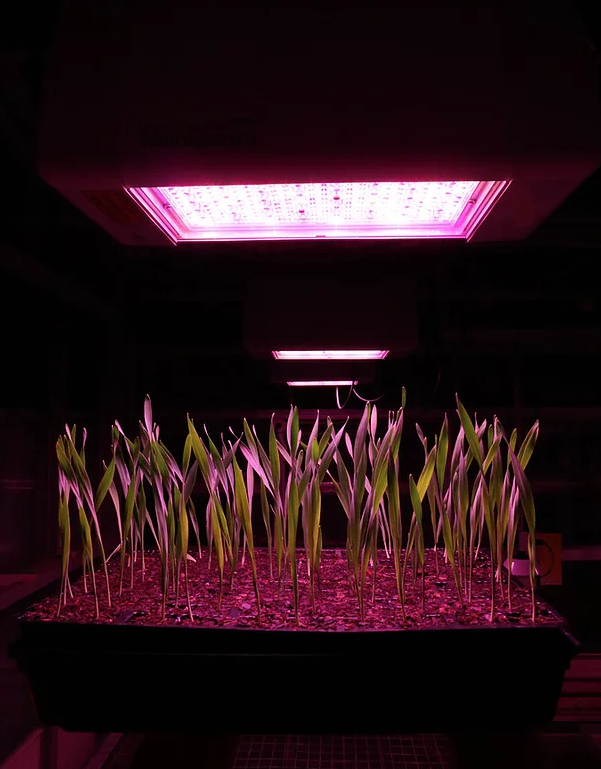
The Urban Agriculture Startup
As consumers grow tired of contamination risk, and their tastes broaden to include fresher produce, the opportunity exists for startups to disrupt their local food supply chain
NFT (Nutrient Film Technique) Hydroponic Vertical Farm
As consumers grow tired of contamination risk, and their tastes broaden to include fresher produce, the opportunity exists for startups to disrupt their local food supply chain.
The age-old job of the farmer has been replaced by a new wave of local small footprint farmers. These farmers are able to grow and deliver to market high-quality food with very little waste. These farmers sell directly to restaurants, grocery stores, or at farmers markets around the world.
Most small footprint growers use a form of hydroponics to grow their product. Hydroponics is simply growing plants in water rather than soil, allowing the farmer to give the plant the perfect conditions for growth.
The return on investment for a crop of herbs can be quite high. For leafy greens like lettuce, it's entirely possible to keep your cost at around $1 while selling retail for $4. Big restaurants and hotels can do 10,000 plates a night or more, supply deals with companies of this size will net a lower price but provide a higher volume. If space is a concern, its best to grow out of your local farmers market and have the ability to get more space before taking on high volume.
There are a variety of places you can grow — from shipping containers to greenhouses. The darker the place the higher the cost of electricity. Greenhouses use less energy, but if you live in the north you will still have to run supplemental lighting and heat.
Most people believe the future of this industry is vertical.
Vericle gardening is growing plants on top of plants in a warehouse. Some are stacked on verticle walls, but most are horizontal systems stacked on top of each other. Many believe that this is the future of farming, particularly for leafy greens. Most real estate is valued by the square footage, the vertical footage provides “free expansion” to the indoor farm.
The most popular hydroponics system for leafy greens is the NFT system (Nutrient film technique). It is a system of pipes typically made of PVC or metal gutters that continuously flow water over the roots of the plant. The water drains into a reservoir where a pump pushes the water back up into the system in a continuous cycle.
There is a massive opportunity in flowering plants, though the equipment can be very specific. If you are interested in growing Tomatoes , your costs will be significantly higher as light and smell usually need to be contained. You may be able to excel at flowering plants — particularly if they are heritage varieties, but they represent a small section of the industry right now. Lighting, ventilation and nutrient formulas can drive up the price of flowering plants and may be why only specific flowing crops like Tomatoes or Cannabis are grown in significant quantity — and nursery plants are largely ignored.
Lettuce grown in a hydroponic system uses 2% the water it would if grown in a field 3000 miles away. It's a great plant to start out with because almost everyone eats it — and there is constantly outbreaks of food born illness related to Romaine and other leafy lettuce which only helps your marketing. It's also easy to grow.
Romaine Lettuce would take a week or two longer than most varieties that finish in about 30 days. On a perpetual system, you can be delivering fresh produce weekly to the farmers market or restaurant.
Indoor agriculture, particularly urban agriculture, is the future of our civilization. Opportunities rarely exist where it is possible to disrupt an industry with relatively little money.
What many farmers lack are branding and marketing strategies. By catering to local markets it's quite possible to establish strong local ties. Many people are making the switch to plant-based diets and ideas like the 50-mile diet are really starting to take hold.
Our food supply is currently at natures mercy. Climate change, draining aquifers, and man-made dams are devastating water supplies in many cities around the world. Crops are wiped out by weather in dramatic fashion every single year. It seems every week there is some new warning about the food we eat.
Getting started with indoor agriculture is as easy as building your own system and feeding your own needs. For those who fall in love with it — every city in the world needs indoor farms providing nutritious local foods. Someone will become a household name because of this industry — if you start now — it could be you.
WRITTEN BY Ryan Geddes
Entrepreneur, Writer, Digital Strateg
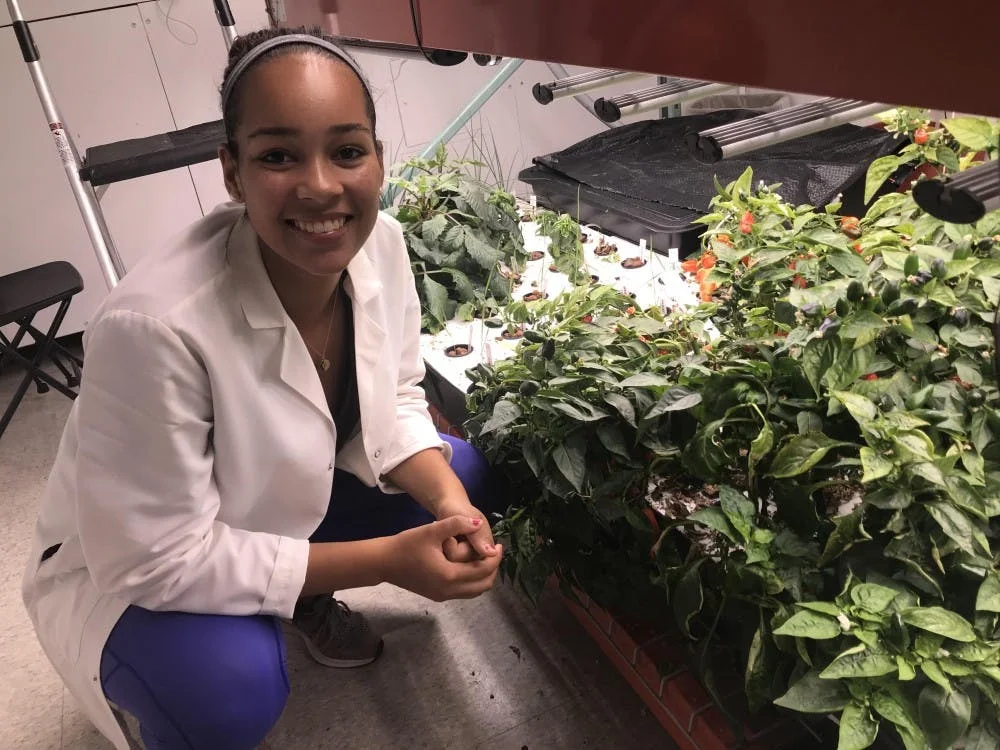
With Founder Gone, U. Vertical Farming Project's Main Farm Closes, But Forbes Offshoot Will Remain
After two years of operation, the Princeton Vertical Farming Project (PVFP), which introduced students to sustainable farming practices and provided fertile ground for research, has come to an end
By Katie Tam | August 12, 2019
A taste test set up at the Forbes College vertical farm for Akiti's thesis project.
Photo Courtesy of Kor Akiti
After two years of operation, the Princeton Vertical Farming Project (PVFP), which introduced students to sustainable farming practices and provided fertile ground for research, has come to an end.
The PVFP was launched in April of 2017 by Paul Gauthier, who served as an associate research scholar in plant physiology and environmental plant metabolism in the Department of Geosciences beginning in 2012, in a windowless room in Moffett Laboratory. With support from the Office of Sustainability, Gauthier and student collaborators built and maintained the hydroponic vertical farm, where peppers, strawberries, herbs, and other plants were grown only with water and nutrient solutions—no soil.
At the end of June, Gauthier left for Delaware Valley University in Doylestown, PA, where he will start an appointment as Professor of Plant Science. Although an offshoot in Forbes College will remain, the main farm has been shuttered, with equipment in Moffett Laboratory dismantled and placed in storage.
As the global population continues to rise, vertical farming has grown in popularity, as the practice requires less water, space, and energy than traditional farms. Vertical farms can yield several harvests of fresh produce a year, which could help to feed growing urban centers.
According to Gauthier, although many start-ups have tried vertical farming, few have succeeded. Many have been forced to close after a few years due to lack of revenue and funding. In addition, he said, little research has been conducted on best practices, such as how water, nutrients, and the environment influence plant growth.
One of the primary motivations of the PVFP was to identify the problems and challenges associated with the technique and learn how to solve them — much like in traditional agriculture.
“People tend to forget that there is a ‘farming’ in ‘vertical farming,’” Gauthier said. “You are a farmer first.”
To that end, the farm experimented with different techniques, seeking to determine how to feed a family of four by quantifying nutrient usage, testing new technologies, and planting a variety of crops.
Another goal of the project was to create an on-campus “food hub,” where students could gain experience with farming and learn about food sustainability. Gauthier said that he wanted students to understand the commitment and responsibility that vertical farming entails.
“We want to train the next generation of vertical farmers,” he said.
Several students have taken on the burdens of both research and responsibility by conducting senior thesis projects with the PVFP. In the PVFP’s first year, projects ranged from a Department of Ecology and Evolutionary Biology (EEB) thesis comparing environmental impacts of vertical and conventional farming to a Wilson School thesis on the economic costs of running a vertical farm.
In her EEB thesis, Kor Akiti ’19 compared the palatability and nutritional quality of crops grown in the Vertical Farm to organic, soil-grown crops from a local grocer.
Akiti performed several “taste tests” in the Forbes dining hall and Frist Campus Center, asking passersby to taste and rank the produce – kale, peppers, and strawberries – on appearance, taste, and texture. She then asked tasters: which would you buy at the supermarket?
Using a technique called mass spectrometry, she was able to conclude that nutrient profiles of vertical farm and soil-grown crops were similar, but the hydroponic crops lacked visual appeal.
“One of the main takeaways was that the appearance of the hydroponic crops was significantly less satisfying than the appearance of the soil-grown crops across the board,” she said. “If vertical farming is going to be competitive, whether it’s in the context of Princeton, on campus, or in the larger urban market, farmers are going to have to find a way to make their produce more appealing, because appearance is such a critical point of purchase.”
Overall, her findings suggested the complexity of consumer choice and preference, hinting at challenges to come in not only growing crops in vertical farms but also in marketing them.
The impact of the PVFP has been considerable, not only in advancing research but also in contributing to outreach and education.
In September 2018, Gauthier partnered with Hopewell Elementary School in Hopewell, N.J., to develop a farm-to-cafeteria program. The initiative provides students with the opportunity to grow their own fresh produce, almost all of which is then used in school lunches.
Gauthier also co-founded his own indoor farming company, Ker Farms (pronounced “care”), in Hamilton, N.J., which grows and sells a variety of fruits and vegetables. According to Gauthier, the company is also training local educators in the hope of bringing vertical farming to more schools in the area.
“There is no question about it,” Gauthier said. “Vertical farming will be part of our lives.” Thus, Gauthier continued, it is essential that young people know how to grow, interact, and experiment with plants from a young age, so they can be prepared for the future.
Similar concerns motivated the establishment of an offshoot of the PVFP in the lobby of Forbes College in the fall of 2018. This mini-vertical farm was intended as a different kind of experiment – to see how farming could integrate into the daily life of a busy Princeton student, as Gauthier put it.
The conclusion, he said, was that taking care of plants was harder than it seemed.
Kaylin Xu ’22 played a leading role in maintenance of the Forbes College farm, changing the water, checking nutrient levels, and making adjustments to optimize conditions for growth. It was a labor-intensive job, Xu admitted, and although other students cycled in and out to help, she was one of the only people to consistently care for the plants. Xu hopes that the maintenance of the Forbes “farm” will become more communal.
“I want to get more of the Forbes community involved in having a hand in creating this green space, because I feel like that is really unique,” Xu said.
“Unfortunately, students are busy,” Xu continued, making it difficult to find dedicated members to join the team.
Gauthier also emphasized how important it was for future farmers to be dependable. “Plants are like babies,” Gauthier said. Just as a parent cannot ignore the cries of a hungry child, so a plant cannot go without water.
This past year, products from the Forbes offshoot and the main farm were featured in several “Meet What You Eat” dinners in the dining halls, where students could sample fresh produce incorporated into pastas, flatbreads, and more. In the fall, the Forbes farm will continue to grow crops for use in the Forbes kitchen and the Pink House food-share.
“I hope [the vertical farm in] Forbes will continue the spirit of sustainability,” Xu said, as the torch is passed from the original farm.
In his new position at Delaware Valley, Gauthier hopes to continue the work he started at Princeton, reproducing the vertical farm model on a larger scale and developing local projects and collaborations.
Although the Hopewell ES program and the Forbes offshoot will continue, the PVFP in its official capacity has ended – much like the start-ups and companies Gauthier was interested in when he began.
“I would have loved to continue,” Gauthier said of the project. “It’s important to start thinking and finding solutions for the future.” The University was a unique place for such an undertaking, he said, as it allowed for cross-pollination from a variety of fields of study.
“All different departments – computer science, MAE [Mechanical and Aerospace Engineering], EEB, business, architecture – students from all these departments were working on the vertical farm,” Gauthier said. “We can tackle the problem from very different disciplines.”
Gauthier did not rule out the possibility of reviving the PVFP.
“If there is demand, maybe the project will come back,” he said.
Lead Photo: Kor Akiti ’19 poses beside plants at the vertical farm in Moffet Laboratory. Photo Courtesy of Kor Akiti

Netled Oy And Astwood Infrastructure Collaborate To Build Industrial Scale Vertical Farms Worldwide
Netled Oy, Finnish specialists in vertical farming systems and greenhouse lighting solutions, have signed a long term frame
7th August 2019 by johannak
Netled Oy, Finnish specialists in vertical farming systems and greenhouse lighting solutions, have signed a long term framework agreement with Astwood Infrastructure to supply equipment for industrial scale vertical farms.
The agreement covers an initial four such farms, based predominantly in the UK, to be delivered over the next three years and provides a framework for serving global customers. The total value of the agreement, including all project options, reaches over 10 million euros. The rapidly growing vertical farming market has been predicted to grow to 10 billion USD by 2025.
Niko Kivioja, CEO, Netled Oy, confirmed: “We have been developing our technology for vertical farming for several years now. During this time the market for vertical farming has developed very fast. Now the technology and the economic figures are in the point, where industrial scale vertical farms beat the traditional ways to grow leafy greens. Green field projects require quite massive design work for infrastructure. We are more than happy to present our partner, Astwood Infrastructure. Together we have possibility to serve global market with an all-inclusive project offering.”
Netled designs, manufactures and sells world leading technology, equipment and related automation and software for vertical farming, where its vertical farm Vera® is the most advanced vertical farming system in the world.
Astwood Infrastructure is a technology company with a focus on sustainable design and engineering. The company has significant know-how in commercialising technologies. For vertical farming, the company has developed its own brand, Vertivore, based on 3 years’ worth of research into the sector. Astwood will be working with specialist technology providers like Netled to build a position as a market leading operator and supplier of vertical farm solutions.
Photo: Niko Kivioja, CEO of Netled (on the left) and Mike Capewell, CEO of Astwood Infrastructure.
A pilot facility, the first under the framework, is built and is in continuous use in Redditch, UK. The long term focus of Netled and Astwood is on industrial scale growing. The production volumes are planned to be millions of heads of lettuces and herbs annually.
Mike Capewell, CEO for Astwood Infrastructure, added: “We are incredibly excited about our new agreement with Netled Oy and the opportunity we now have in building and scaling a UK wide and potentially global vertical farm operation. Our pilot farm has shown some incredibly exciting results and we feel optimistic that we will be able to replicate this success at scale.”
“As issues like rising import costs and climate change continue to advance, vertical farming systems will become critical to production, where, through the Vertivore brand, we will be able to grow sustainable, local and clean produce without being impacted by any external sources such as weather conditions or pollution.”
Closed vertical farming systems, like the one currently being piloted by Astwood, are protected from extreme weather conditions, pollution and lack of freshwater resources as the growing conditions are created artificially. As a result, vertical farming makes cultivation possible in areas where production of traditional vegetables is impossible, and the freshwater resources are limited, whilst also improving quality, production speed and yield.
For more information, visit:
MEDIA CONTACT:
Netled Oy
Niko Kivioja CEO, Netled Oy
+358 50 3608121
niko.kivioja@netled.fi
Astwood Group
Hannah Haffield
hhaffield@makemorenoise.co.uk
0121 312 1177/ 07939 468 567
Editor’s Notes
Netled Oy
Netled offers vertical farming systems and innovative greenhouse lighting solutions. Netled’s vertical farms are sold under the brand name Vera®. The world leading technology has already been delivered to multiple producers for commercial use. Netled was founded in 2007 in Finland. It employs 10 multidisciplinary experts. For more information, please visit our website www.netled.fi.
Astwood Infrastructure
Astwood Infrastructure Limited is operating at the cutting edge of vertical farming technology. It has, along with specialist technology providers, developed, a sustainable, reliable indoor vertical food production facility that can be located virtually anywhere. For more information please visit our website https://www.vertivore.com/