


Welcome to iGrow News, Your Source for the World of Indoor Vertical Farming

Autogrow Appoints New Chief Technology Officer
Autogrow has named Jonathan Morgan as its new Chief Technology Officer responsible for continuing development of their innovation utilizing the latest technology, plant biological science and artificial intelligence


August 13, 2019: Autogrow has named Jonathan Morgan as its new Chief Technology Officer responsible for continuing development of their innovation utilizing the latest technology, plant biological science and artificial intelligence.
“We are very pleased to welcome Jonathan to the Autogrow family and look forward to seeing him put his talents to use to deliver world class products and customer experiences,” says CEO Darryn Keiller.
Jonathan brings to the role more than 18 years of commercial expertise in software and integrated technology solutions for customers. Leading teams in product development, continuous improvement and customer experience.
His previous role was as Ventures VP Engineering at EROAD, a global leader in road charging, compliance and telematics services across NZ, Australia and North America.
“I’m excited to join a progressive team like Autogrow who is leading disruptive innovation within the AgTech space and creating new and exciting solutions to help grow food. It’s an area I’m interested in exploring and seeing how we can make positive impacts in the pockets of farmers and on the planet,” explains Jonathan.
Over the past two years Autogrow has doubled their employee number and launched some of the most cutting-edge solutions for indoor growing including the first API (Application Programming Interface), the first SDK (Software Development Kit), the first indoor agtech hackathon – #CropsOnMars, and most recently the integrated farm management platform FarmRoad.
“It’s been a busy two years and we are only set to become bigger with more innovative solutions for farmers. Jonathan’s appointment will ensure that we continue to push forward within CEA (Controlled Environment Agriculture), an industry that is evolving at a rapid pace,” says Darryn.
Jonathan will begin his role 18 September and will be based at the Autogrow Head Office in Auckland, New Zealand.

Juneau Woman Takes Over Indoor Farming Business
The Farm currently supplies microgreens for the Salt & Soil Marketplace. Ruggles hopes to sell her food to other places in the future — particularly schools and hospitals — as she starts growing a wider diversity of plants
“The Farm” owner Duras Ruggles poses next to trays of microgreens in the back of a moving truck she’s outfitting with growing equipment. (Nolin Ainsworth | Juneau Empire)
Saturday, August 10, 2019
The Farm To Sell Microgreens, Herbs
Duras Ruggles purchased a vehicle last month with few intentions of ever driving the thing.
Ruggles, 25, is the new owner of The Farm, an indoor farming business started last year by Bridget and Jake LaPenter out of their house and garden in the Flats neighborhood.
Ruggles farmed for about five years before moving to Juneau last summer and heard about the business opportunity through an acquaintance at the Salt & Soil Marketplace. In addition to the truck, the purchase of The Farm also came with an abundance of soil, seeds, trays, racks and growing lights. The LaPenters had plans to move part of their operation into the truck but didn’t get around to it before the sale.
“I feel really passionate about growing food,” Ruggles said in an interview with the Empire outside her farm near Tee Harbor. “I think it’s the most empowering thing we can do as people, especially in a politically-dangerous space, to have our independence and our freedom.”
Ruggles declined to say exactly how much the business cost, but called it a “significant investment.” She said an angel investor played a big part in the transaction. An angel investor is someone who invests in a start-up in exchange for debt or ownership stakes in the business.
“It’s definitely pertinent information that there was this nice lady who believes in local food and was able to lend me her money so that I could buy this business,” Ruggles said.
Currently there’s over a dozen trays of cilantro, radishes, peas and other microgreens growing. Ruggles said she hopes to cultivate herbs that other local farms, like Juneau Greens, don’t sell.
“My goal is to fill in the gaps and grow whatever people need,” Ruggles said. “I really love growing mushrooms, so that’s also going to happen.”
The Farm currently supplies microgreens for the Salt & Soil Marketplace. Ruggles hopes to sell her food to other places in the future — particularly schools and hospitals — as she starts growing a wider diversity of plants.
“I would really love it if I could sell food to mostly schools as well as hospitals and elderly homes and other facilities where healthy food is really necessary,” she said.
The LaPenters started the business last year in an effort to address Juneau’s food insecurity. They grew microgreens like lettuce year-round inside their house while also cultivating greens and crops outside in the spring, summer and fall. They stopped their indoor growing operation in March, Bridget said, to prepare for the birth of their second child the next month.
“We quickly realized it was just getting way too chaotic for us, so we knew some time off would be a responsible choice on our part to keep the stress levels low,” Bridget said.
Bridget said she’s excited to see where Ruggles takes The Farm.
“We’re really hoping she succeeds,” Bridget said.
Connecting with The Farm
Email: the.farm.ak@gmail.com
Website: thefarmak.com
Purchase: www.saltandsoilmarketplace.com
• Contact sports reporter Nolin Ainsworth at 523-2272 or nainsworth@juneauempire.com.
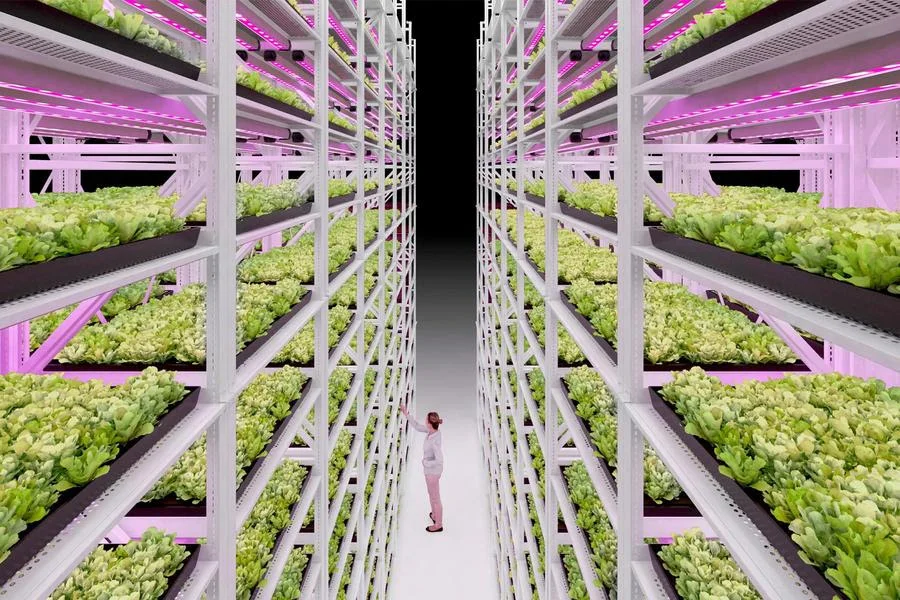
Blue Sky Science: How Do Plants Grow Without Dirt?
The principal purpose of soil is to provide mineral nutrition for the plant. About 20 elements make up the mineral nutrition requirements for plants, and if you can provide those, you’re providing a lot of what soil is giving to the plant
Aug 7, 2019
Q - How do plants grow without dirt?
— Ruby Taggart, Merrimac, Wis.
A - Simon Gilroy, professor in the department of botany at the University of Wisconsin-Madison:
The principal purpose of soil is to provide mineral nutrition for the plant. About 20 elements make up the mineral nutrition requirements for plants, and if you can provide those, you’re providing a lot of what soil is giving to the plant.
A long time ago, plant researchers found out that you can get plants to grow perfectly fine without soil if you provide water and the mineral nutrition. That’s the idea of hydroponics, where we can grow plants in a soil-less environment. We’re providing what they need: water and the minerals that allow them to grow.
Soil also provides structural support, so to replace soil we have to provide support in some other way. The classic way for hydroponics is to have plants growing in a plug, some inert material that provides the support. The roots grow down into a liquid. The liquid provides the minerals that the plant needs. All you need at that point is to power plant growth by photosynthesis, which is providing it with air and sunlight.
You can take that to the extreme. Some of the research being done at UW-Madison is related to figuring out how plants can be optimized to grow in space. Researchers are interested in growing plants in the space station to perhaps sustain astronauts for incredibly long journeys.
But growing in that weightless environment is not how plants evolved. Think about growing plants off the Earth where there is no soil. Think about growing them, for instance, on Mars or on the moon, where you can grow them in the dust that coats the surface of those bodies.
Providing you can balance the unique environment and added stresses, maybe add a little bit of fertilizer, you can grow plants perfectly happily under those conditions.
With minerals, water, sunlight and air, you can make a plant grow.
Blue Sky Science is a collaboration of the Wisconsin State Journal and the Morgridge Institute for Research.

How Tech Is Helping The Agriculture Sector Curb Carbon Emissions
The term vertical farm is relatively new. It refers to a method of growing crops – in Crop One Holding’s case, leafy greens and lettuce – usually without soil or natural light, in beds stacked vertically inside a controlled-environment building
July 29, 2019 by World Economic Forum
(Xavi Moll, Unsplash)
This article is brought to you thanks to the collaboration of The European Sting with the World Economic Forum.
Author: Alzbeta Klein, Director and Global Head, Climate Business , International Finance Corporation (IFC)
UN Deputy Secretary-General Amina J. Mohammed stated that 2018 was a record-breaking year for climate, but 2019 doesn’t look much better. As the list of extreme weather events and climate shocks grows, so does our shared responsibility to act.
For the agricultural sector, these weather events are particularly devastating, with increased cycles of more frequent floods and drought hitting many farmers. The good news is that, two years ago in Bonn, the world’s governments finally acknowledged for the first time that agriculture has a major role to play in our changing climate. Following a series of intense all-night discussions and years of division and deadlock, governments at COP23 finally agreed on the connection between industrialized farming and our warming climate.
The world’s leading climate scientists have concluded that how we farm and use our land (whether for food production, forestry, or other types of land use) is responsible for about one-quarter of global greenhouse gas emissions. If we include emissions caused by the processing, transport, storage, cooling and disposal of the food that we consume, then that figure rises to more than 40% – an unthinkable price for how we farm and eat.
With the global population set to rise from 7.3 billion to 9.7 billion between now and 2050, world governments are faced with an overwhelming dilemma: how to feed the future without putting irreparable strain on our planet’s already overburdened soils and oceans? I believe that technology can get us there.
Agricultural technology – or agtech – approaches like precision farming, drought- and pest-resistant seeds, mobile phones and digital technology platforms are a solution. They boost farmers’ profits by cutting costs and increasing yields and benefiting customers the world over. But more technological innovation is needed. Fortunately, some of the International Finance Corporation’s partners are at the forefront of innovation when it comes to agtech.
Take Planet Labs, an innovative geospatial start-up that uses 149 earth-observing satellites to generate a daily stream of high-resolution images of the earth’s surface for farmers to understand crop and soil changes from pre-season to harvest.
Planet Lab’s goal is to take images of the Earth’s entire surface every day to make climate change visible, accessible and actionable, according to Tara O’Shea, Planet’s director of forestry. Founded in 2010 by three former NASA scientists, the company visualizes daily changes across the Earth’s surface in real time. Until now, satellite imagery data was not frequent enough to react to crop stress in a timely manner. Planet’s daily imagery has been a game changer in the digital ag space – enabling farmers to manage their precision agriculture at scale and farm more efficiently, profitably, and sustainably.
Agriculture isn’t just a rural concern. As urban density increases around the world, and more and more people move to cities, locally sourced food is taking on greater importance. Crop One Holdings is a “vertical farming” company that is transforming the landscape of indoor farming in urban areas.
The term vertical farm is relatively new. It refers to a method of growing crops – in Crop One Holding’s case, leafy greens and lettuce – usually without soil or natural light, in beds stacked vertically inside a controlled-environment building. One of the company’s 320 sq ft units can substitute up to 19 acres of farmland and use 1/2500th of the water usage of field-based growing. In Boston, a Crop One Holding one-acre farm produces yields equivalent to that of a regular 400-acre farm.
Crop One drastically reduces the length of transportation as well as carbon use, due to the farms’ proximity to consumers. There is no soil used in the growing, nor any chemical intervention or pesticides. Competitive field products are usually 12 to 15 days old by the time they are delivered to a store, resulting in significant losses for the retailer.
Vertical farms that rise to the challenge of climate change are still in the early stages of development, but a recent $40 million joint venture between Crop One and Emirates Flight Catering to build the world’s largest vertical farming facility in Dubai suggests that agtech business models are showing potential to scale across markets.
That’s good news for my climate business team at IFC, who are helping existing and potential agribusiness clients acquire and leverage new agricultural technologies for both large scale and smallholder farms. Our “climate-smart” approach targets animal protein, land and crops, and food losses, yielding $1.3 billion in investments since 2017. Agtech can accelerate these investments and help farmers adopt more sustainable agronomic practices.
At this year’s One Planet Summit, IFC signed two agreements with the Kenya Tea Development Agency Power Company Ltd. (KTDA Power): one that enables carbon credits, and another that will support KTDA with various advisory activities such as financial literacy training for farmers, soil testing for productivity improvement and development of a wood-sourcing strategy.
How we farm matters. In addition to record-breaking temperatures, super typhoons and drought, Deputy Secretary-General Mohammed has also spoken about how 5G technology and AI can build smarter agricultural systems. Feeding our growing population requires revolutionary transformations in farming and land cultivation. Adopting pioneering agricultural technologies with the potential to increase yields while limiting greenhouse gas emissions is an essential step. If agriculture is to continue to feed the world, then we must enable technology to shape the farms of the future.

Is Vertical Growing The Future of Cannabis?
In the food sector, vertical growing companies like Plenty, Aerofarms, Gotham Greens, and many more, are revolutionizing agriculture. But in the cannabis industry, which practically invented sunless growing, there has been notably less activity
(Daniel Berman for Leafly)
August 2, 2019
Indoor cannabis grows are expensive operations. Given the real estate costs, massive energy bills, and significant staffing requirements, it’s crucial to find a way to increase profits. Maximizing your grow space is one way to do this and that could mean vertical growing—the practice of producing plants in vertically stacked layers or vertically inclined surfaces.
In the food sector, vertical growing companies like Plenty, Aerofarms, Gotham Greens, and many more, are revolutionizing agriculture. But in the cannabis industry, which practically invented sunless growing, there has been notably less activity.
This is partly because high-pressure sodium lights (HPS), one of the most common lights used to grow cannabis for decades, run so hot that plants have to be many feet away to stay unharmed.
How to Top Cannabis Plants for Bigger Yields
But LEDs run at much lower temperatures, so you can install them inches from the plant canopy. Their decreasing price and increasing ability to equal or exceed HPS yields are making LEDs the standard, finally opening the door to vertical growing for cannabis.
“The main catalyst behind cannabis cultivation going vertical is the improved performance of LED lighting,” says Thomas Rogers, LED engineer of Exact Lux. “Cannabis growers are approaching us wanting the most powerful multi-tier or ‘vertical farm’ lighting systems possible.”
Two Types of Vertical Farming
Stacked vertical (left) and true vertical (right) cannabis grows with LEDs. (Sean Walling/Leafly)
Stacked Vertical
The most common method of vertical farming is a stacked vertical setup—levels of plant racks with LED lights above each rack. Plants are topped and defoliated to keep them short and bud-heavy.
Growers even stack in the flower stage, despite plants being large and top-heavy.
True Vertical
With true vertical growing, plants grow out the side of a column, and water and nutrients drip down from the top—see these examples from ZipGrowand Tower Garden.
Within the column, a hybrid method combines nutrient film technique (NFT), where nutrient water is passed directly over the roots, and aeroponics, a soilless grow method where roots hang in the air.
How to Prune Cannabis Plants for Maximum Yields
Pros and Cons of Vertical Growing
So why don’t all cannabis operations grow vertically, especially in this competitive new industry? Here we’ll look at some of the benefits and drawbacks.
Environmental Conditions Get Complex
Maintaining optimum temperature, humidity, and air circulation is tough for all cannabis grows. But in vertical growing there is even more variability in macro and micro environmental conditions because there are more plants, making control more difficult.
Because of this atmospheric variability, Hugh Gaasch, engineer at STEM Cultivation, recommends sensors to detect data points like moisture changes. “Shockingly, the majority of commercial growers I’ve seen to date use a single temperature/humidity sensor to monitor a room, even large spaces, over 20,000 feet.”
Grow Room Humidity Control: 5 Tips for Indoor Growers
In contrast, STEM Cultivation uses one temperature sensor per 100 cubic feet. STEM collects data on: temperature, humidity, air pressure, CO2 levels, lighting levels, lighting power (kW) and energy (kWh), system air circulation rates, localized air circulation, VOC (volatile organic compounds), and HVAC power and energy, to name a few.
Mike Zartarian, from Zartarian Engineering, builds circulation systems for vegetable and cannabis growers. To decrease chances of mold and fungi, he says: “I recommend systems that push air right in between the racks above the plants, usually with small ducts that take air from the edges of the room to the center of the racks.”
Expensive to Set Up and Maintain
Although vertical growing of any kind will increase yield by maximizing space, when you add up the increased energy usage from more artificial lighting, an upgraded climate control system, the extra infrastructure required (ladders, racks, sensors, and more), and paying high-skilled agro-technicians, it is very costly for many.
Zartarian says: “It’s by no means impossible, but the jury is very much out on whether it’s cost effective long-term. If veggie growers prove it to be a dominant technique, I would expect to see more experimentation on the cannabis side.”
How to Train Your Cannabis Plants for Better Yields and Potency
As it is, licensed operators he works with are struggling to meet demand and prefer to stick to more traditional techniques they know will produce.
Dangerous Conditions
Vertically grown cannabis needs a lot of hands-on attention during the flowering cycle as compared to, say, vertical lettuce crops which are more set-and-forget. The height of a plant must be closely controlled, which requires grow technicians to get up on step stools or scaffolding to reach into the plant canopy. These high-tier tasks may not be OSHA-compliant.
Certain Cultivars Work Better Than Others
The most successful cultivars for vertical growing are short, have big buds, and fewer leaves, so less defoliation is necessary. But if you’re a confident defoliator, the diversity of cultivars you can grow will broaden.
Arthur Brownsey, cannabis cultivation consultant at Four Trees, thinks most strains can grow vertically. “If you have a tight production schedule, group like-cultivars together, and plan accordingly, there are no restrictions to what you can grow.”
Factors That Impact Your Cannabis Strain: Part 3, Growing Techniques
Agro-engineer Aja Atwood of Trella sees value in vertical growing, but the limited cultivars it serves made her determined to find another option. “There is a wide variety of strains out there that prefer longer vegetation periods and have a taller growth structure. In order to diversify, you need to train or trellis those taller varieties to stay within the space.”
To allow for vertical growing with a diversity of strains, she and her partner Andres Chamorro invented a grow unit, TrellaGro LST, that trains plants to grow horizontally. Each unit is vertically stackable and equipped with LED lights that follow it as it grows sideways, allowing for taller strains and less energy use.
Stay Tuned
In these early days, vertical growing has yet to revolutionize the industry, and some operations, focused on supplying a high-demand market, are sticking with traditional growing methods.
However, most operations already know the price of cannabis will likely drop as competition grows. In that climate, the future of cannabis could move up, not out.
Christine Giraud, a freelance writer in Boston, has been writing about cannabis for publications like The Boston Globe, Overture Global Magazine, Dig Boston, Civilized, Her(b) Life, and Foottraffik.

Her Farm’s Mission: Empowering People With Disabilities
Nona Yehia is CEO and Co-founder of Vertical Harvest, a company in Jackson, Wyoming, that cranks out roughly 100,000 pounds of produce each year in a three-story, state-of-the-art, hydroponic greenhouse.
By Claire Elise Thompson on July 27, 2019
Nona Yehia is CEO and Co-founder of Vertical Harvest, a company in Jackson, Wyoming, that cranks out roughly 100,000 pounds of produce each year in a three-story, state-of-the-art, hydroponic greenhouse. Bumble Bee tomatoes, rainbow chard, butterhead lettuce — the company’s 34 employees generate as much bounty as a 10-acre traditional farm while using only one tenth of an acre of land.
And there’s something else: Many of those employees have developmental disabilities. Including this underserved population in such an innovative endeavor “is about empowerment,” Yehia says. “It’s about exposing ability.”
We caught up with Yehia, (who, along with Co-founder Penny McBride, was featured on Grist’s annual list of “Fixers” in 2016) to talk about a new documentary that follows the “tumultuous” first 15 months of Vertical Harvest’s endeavor, and the company’s journey in the years since it was filmed.
Here are some snippets from our conversation.
Yehia on reliving the early days of Vertical Harvest:
I like to call it adventures in sleep deprivation and weight gain. Anyone in the startup world can understand. [The film is] actually very hard for us to watch. But at the same time, it’s great to recognize how hard we’ve worked and how far we’ve come. Where it really shines is in telling the stories of our employees and their role in the startup.
On the origins of the company, and its employment model:
It was three women — myself, Penny McBride, and Caroline Croft Estay. I’m an architect. Penny McBride was a sustainability consultant, and Caroline Croft Estay was working as an employment facilitator, trying to find meaningful work for her clients with disabilities. The project was born out of those interests meeting.
I have a brother with different abilities. This country has come a long way in education, providing an inclusive and supportive environment for people with disabilities in the classroom, but when it comes to employment, the opportunities are few and far between.
On befriending a member of the Tea Party who wanted to kill the project:
This guy had seen our business plan, and he basically said, “You’re using public funding. You’re designed like a nonprofit but you’re not a nonprofit. I’m going to kill your project.” And we said, “Hey, let’s talk.”
We started going to lunch with him every month, and he actually became one of our biggest advocates. He spoke on our behalf many times, and I believe he was really pivotal to our success. I learned from that process to embrace your detractors as much as your supporters, because you’ve got a lot to learn from them.
On being pioneers in vertical farming:
When we started, the Dutch were the only people doing hydroponic farming. We had consultants who were heavily involved in choreographing the building — and we love our Dutch counterparts, but it was really difficult not having domestic support. Our building is a very complex ecosystem. Every part affects a whole. You don’t know what you don’t know, and you have to move forward despite that fact. There were many places where we kind of looked at each other and said, maybe this isn’t going to work.
On the greenhouse design:
We stacked three greenhouses on top of each other, so that each level has a different microclimate. The middle level has a lot of airflow, so it stays cool. Lettuces like a cool environment. The third level gets much hotter, which is a perfect climate for viney crops.
It’s hard to develop multiple microclimates to grow different crops — [that’s why] so much of the [vertical farming] industry is growing microgreens. But we are very invested in growing a diversity of crops. You can’t feed a community on lettuce alone.
On fighting the bad bugs:
We have an integrated pest management system — bug-on-bug warfare. We have parasitic wasps that are right now patrolling to take care of white flies and aphids.
On the future of Vertical Harvest:
This week we received eight requests for facilities in cities around the world, and that’s a pretty common week for us. We are in the midst of developing a plan to own, operate, and develop seven greenhouses in different communities over the next several years. We have also gotten a contract from Fannie Mae to look at the feasibility of including a vertical farm in an affordable housing plan.
On the power of the work they’re doing:
One of our employees, who was washing dishes all her life, is now in charge of creating 200 pounds of lettuce a week, and has learned a vital skill in a new industry. Another employee can now create and repair vertical farming equipment, which is a totally rare and important skill. He will be a teacher in tomorrow’s farms. We’ve been able to expand what their future would look like, by lightyears.
Hearts of Glass has made the festival route, and had its premiere in Jackson at the start of June. It’s not available to the public yet, but you can catch a free screening in Chicago or Wyoming in the coming months.

AUDIO: Mounting Investor Interest In Agricultural Technology
As the earth warms and the world’s population grows, more and more companies are growing food indoors in greenhouses and vertical farms
Carole Zimmer
JulY 31, 2019
Investors are paying close attention to the rapidly growing sector that is agricultural technology, or ag-tech.
As the earth warms and the world’s population grows, more and more companies are growing food indoors in greenhouses and vertical farms.
Although demand is increasing, this segment of the agricultural industry faces high costs of both labor, energy costs and equipment, for things like lighting.
Lead image: Angela Weiss/AFP/Getty Images

3 Ways Technology Is Changing The Food-Growing Industry
It's happening right before our eyes -- robots have submitted their resumes and are taking over human jobs. Robotics is certainly the change that we can neither deny nor refuse, the very next thing in technology
The Phenomenon of Uncontrollable
Weather And Farming Conditions Demand A Solution.
CONTRIBUTOR
Consumer Goods Entrepreneur, Freelance Writer
August 2, 2019
Opinions expressed by Entrepreneur contributors are their own.
It's happening right before our eyes -- robots have submitted their resumes and are taking over human jobs. Robotics is certainly the change that we can neither deny nor refuse, the very next thing in technology.
The effect of this "next level" is not limited to any industry. Apart from the threat it poses to human labor, which might imply job loss for many, these machines serve to ensure efficiency and effectiveness of processes and products, reduce lag time and increase output.
Related: How Visionary Tech Can Help Prevent Climate Change
This is particularly true for the agricultural industry. With vertical farming came the use of controlled-environment area (CEA) technology for growing food. The phenomenon of uncontrollable weather and farming conditions received a solution with this technology-powered innovation. Skyscrapers, hitherto used or abandoned warehouses, and shipping containers were transformed into farmlands.
Within this farmland, the environment is controlled and techniques similar to greenhouses adopted. The augmenting of natural light with artificial lighting is not uncommon here. Most recently, LED lights are made to mimic sunlight for the purpose of growing foods. Call it a sneak peek into the future; below are three ways technology is changing food growing today.
1. Surprise technological advancements
We live in the computer age, and computer-powered machines are the new labor force. Tasks that depend solely on human labor are reducing by the day. We're looking at times when tractors and other farm machines drive themselves, and nothing is done the same way anymore. Over the last twenty years, the agricultural industry has experienced tremendous changes; you would be surprised to learn shocking ways AI is shaping the food growing industry.
This is good news, as machine intelligence is sure to condense the inefficiencies related to human labor. It's amazing how these technological advancements are running on auto-update even in the agricultural sector.
Related: No One Knows It But These 3 Industries Now Depend on AI
With vertical farming, urban areas don’t have to depend on rural farmers for their entire food consumption. While the former lacks the large expanse of land for farming, they can utilize the spaces in her high-rise building, abandoned containers or simply create some, to grow her food.
The lag time wasted on irrigation and fertilization at different times has been collapsed into fertigation, which is a process that combines fertilization and irrigation. Fertilizer is added into an irrigation system, and is most commonly used by commercial growers.
2. Weed control made easy
For small farms, human effort is effective for weed control. This is because of the time given to "seeing" and eliminating weeds across the farmland. Large scale food growing cannot afford the time and resources needed to pull it off. Hence, the use of herbicides and the devising of machines to aid in spraying.
Regular spraying leaves a lot of unnecessary herbicides lying around on the farm, which is both a waste of resources and labor effort squandered. The solution would be a weed-control process that targets the weeds alone, is fast, efficient, and has no effect on the farm yield.
Related: How has Technology Sown the Seeds for Advancements in Agriculture
With the advent of the seed and spray machines, computer vision and machine learning are combined to redefine weed control. The see and spray smart machine is the new way to control weed, as it jettisons 90% of the herbicide used while making sure weeds are eliminated. It comes with a "sense and a decide" function that sees every plant and decides the appropriate treatment for them, while the robotic nozzles target unwanted weeds in real-time as the machine drives through.
3. Robotic plant grafting and agricultural drones
Artificial Intelligence is all about speed, efficacy and convenience. With AI, once-stressful tasks are handled by robots. According to this report, vegetable expert Richard Hassell led a team of scientists at Clemson University's Coastal Research and Education Center who unveiled a robotic system that grafts disease-resistant roots to robust plant tops as quickly as you can say chop-chop.
On the other hand, agricultural drones allow farmers and the drone pilots that operate them to increase efficiency in certain aspects of the farming process, from crop monitoring to planting, livestock management, crop spraying, irrigation mapping and more. These drones are useful for land scouting, spot treating of plants and general farm management.
Related: What Is AI, and Will It Take Over Your Service-Based Business Job?
Precision agriculture seeks to use new technologies to increase crop yields and profitability while lowering the levels of traditional inputs needed to grow crops (land, water, fertilizer, herbicides and insecticides).
In conclusion, we can choose to either focus on the potential human job loss that this future implies, or we can embrace the change. The fact is, this is the future of food growing, and artificial intelligence is driving it.
Lead Image Credit: Sompong Sriphet | EyeEm | Getty Images

OD Greens Helps Vets Re-Assimilate Through Farming
Don Tobul started OD Greens in 2018 to combine hydroponic gardening with his experience as a mental health professional. As a veteran himself, Don saw the opportunity to use container farming as a platform for a business that helps fellow vets gain meaningful work experience and re-assimilate into civilian life through therapeutic farm work
March 12, 2019 Rebecca Shamritsky
11 Questions with Don Tobul of OD Greens
Don Tobul started OD Greens in 2018 to combine hydroponic gardening with his experience as a mental health professional. As a veteran himself, Don saw the opportunity to use container farming as a platform for a business that helps fellow vets gain meaningful work experience and re-assimilate into civilian life through therapeutic farm work.
We caught up with Don to learn more about his mission and big plans for OD Greens.
Freight Farms: Can you tell our readers a little bit about yourself?
Don Tobul: Sure–I grew up on a small farm in Ohio, and always had an affinity for science, education, and agriculture, which were the driving forces behind my early career path as a chemistry and physics teacher. I joined the Ohio Army National Guard in January of 2001 as a way of paying my college tuition. Three years later, I found myself on active duty in Iraq, providing security for convoys as they traveled throughout that country. Upon returning home and finishing my teaching degree in 2006, I found that I had another calling. I wanted to work in the mental health field to specifically address PTSD in combat veterans. I obtained my masters degree in Clinical Mental Health Counseling in 2013 and have been practicing ever since.
I approached Freight Farming with the Army mentality of 'Adapt and Overcome'. If the client doesn’t have a garden, provide one for them. If the area you live in gets a total of 15 days of sunshine annually, create an artificial sun.
Don Tobul, OD Greens
FF: How did your counseling career lead you to start a farm?
DT: I became interested in hydroponics and aquaponics as a hobby and built a home system in my basement in 2013. It was while I was working on the system–under the lights with the plants and the fish–that I would catch myself smiling. I decided to explore this phenomenon more deeply; In talking with several of my clients I learned that many of them experienced the same type of mood shift while gardening. That was the lightbulb moment. There were a couple overarching problems though. Primarily, not everyone has access to land or a garden, which limited their ability to farm. Secondly, I live in Cleveland, Ohio–not exactly a sunny destination spot.
I chose to approach these limitations with the Army mentality of “Adapt and Overcome”; If the client doesn’t have a garden, provide one for them. If the area you live in gets a total of 15 days of sunshine annually, create an artificial sun. This led me to find Freight Farms and the Leafy Green Machine, and OD Greens was created.
FF: Can you explain what OD Green’s mission is?
DT: My mission is to blend my life experiences in teaching, combat, and mental health to help others. OD Greens provides workplace occupational development and training to veterans with service-connected disabilities with the goal of assisting them in their successful transition to civilian life.
FF: Where does the LGM fit in?
DT: I currently work with people who have physical, mental, and emotional disabilities. The motivation to adopt an LGM was primarily the positive effects that farming can have on mental health, but also the adaptability to be able to provide reasonable accommodations for individuals who have physical limitations.
Photo: OD Greens on Facebook
FF: And what are you growing in your farm?
DT: Currently we grow 10 different types of lettuce, and we’re still experimenting with the ones we feel are the best, and which ones are in the highest demand with our clients. We’re also growing Italian large leaf basil, Thai basil, and lemon basil. We had great success with these three types during our pilot, so we thought it would be a good starting place.

Thai Basil Lemon Basil Italian Large Leaf Basil
FF: By becoming a Freight Farmer, you’ve become part of the local food movement. What does local food mean to you?
DT: Local agriculture not only offers a chance to grow local economies, but it also strengthens the bonds between people within communities. I believe that knowing the person who grows your food and where your food comes from should be an important part of the American lifestyle. By shopping local, its easier to relate a story to the food that consumers eat. We begin to understand that food does not come from a store. Food comes from someone’s hard work, tedious and meticulous care, and overall ingenuity. This is the foundation of the American spirit.
I believe that knowing the person who grows your food and where your food comes from should be an important part of the American lifestyle.
FF: Seems like you have some really big plans for OD Greens. Where do you see the business in the future?
DT: Phase 1 is to demonstrate market feasibility and the viability of the growing component as a standalone operation. Phase 2 incorporates workplace training for disabled military veterans using hydroponics as a platform. The observable and measurable tasks associated with the general operation of the LGM creates a perfect environment to assess an individual’s stamina and productivity throughout a work day. Furthermore, individuals who participate may not have any civilian work history. OD Greens will serve as a workplace environment where veterans can strengthen their resumes and develop strong references for when they apply for civilian jobs.
FF: As you grow, what’s one thing you want your customers to know about you and your business?
DT: I want my customers to know that by purchasing produce from OD Greens theyare helping to provide workplace training for disabled military veterans. I emphasize to my customers that, while my prices might be slightly higher, they are helping to support our mission and disabled veterans with each purchase. I try to maintain competitive pricing whenever possible, in order to make sure that produce is going out to the community. The growing component of OD Greens will serve to support the counseling and workplace training components of the business in the future, and vice versa.
I overcame my fears by running a small pilot system out of my home and establishing a small network of followers including restaurants and a few individual clients. Don Tobul
FF: What was the most challenging part of becoming a Freight Farmer and how were you able to overcome it?
DT: As with anything, the fear of the unknown and taking the leap of faith was the most challenging part for me. I’ve never owned a business before, and while I think I have the entrepreneurial spirit, I have no business education or experience. I’ve never worked in sales, and I continue to maintain my day job during the startup phases of OD Greens.
Don with family in the farm
Photo: OD Greens on Instagram
FF: That’s a challenge a lot of prospective farmers face. How were you able to overcome it?
DT: Luckily, I have supportive family and friends who have helped me at every step along the way. I overcame my fears by running a small pilot system out of my home and establishing a small network of followers including restaurants and a few individual clients. During this pilot I grew as many different crops as I could, logged my measurements daily, and sampled out my product to gain rapport with potential clients. The pilot went very well and it was an invaluable learning experience. It gave me the confidence necessary purchase a Leafy Green Machine.
Dont try to do it alone. There are so many people out there with knowledge, experiences, and insights that can help you succeed.
Don Tobul
FF: And finally, what’s the best piece of advice you can give to people interested in becoming Freight Farmers?
DT: I think the best advice I can give is “Dont try to do it alone.” There are so many people out there with knowledge, experiences, and insights that can help you succeed. Alone, we can get caught up in a process that can seem overwhelming and daunting at times, which is why most ideas don’t manifest into true action.
With that being said, my second piece of advice is don’t fully rely on others to provide you with the best information or insights to your business. Take calculated risks. Do what works for you and your business and maintain your sights on your mission.
Get to know OD Greens by following them on Facebook and Instagram!
Learn more about our farmers through our Case Studies.
See this gallery in the original post
Discover more from Freight Farms
Manila's Urban Greens Plans To Bring The Airbnb Model To Urban Farming
Urban Greens is the brainchild of Luxembourg-born entrepreneur Ralph Becker. The man behind the plan went to university in the UK, Paris and Singapore, before taking on a corporate job with Sony Electronics
AUGUST 5, 2019
KYLE BALDOCK
Ralph Becker’s struggle to modernise agriculture in the Philippines
Introducing Ralph Becker of Urban Greens
Urban Greens is the brainchild of Luxembourg-born entrepreneur Ralph Becker. The man behind the plan went to university in the UK, Paris and Singapore, before taking on a corporate job with Sony Electronics. During his 10-year tenure working in business and product development, he crossed the world, working everywhere from Berlin to Barcelona, from San Francisco to Tokyo.
Through all this experience, Becker always had in mind that he wanted to do something more impactful. In March, 2016, he quit Sony Mobile and moved to the Philippines, the birthplace of his mother. There was no concrete plan- he just wanted to get involved in something exciting and meaningful, and Manila’s start-up scene beckoned.
The Struggle to Modernise Agriculture in the Philippines
The Philippines, with a lush tropical climate and soil capable of growing a vast array of crops, has a rich agricultural tradition. But pressures on this tradition are growing: outdated food production methods are failing to keep pace with explosive population growth; climate change is impacting the variability of monsoon rainfall and increasing the severity of droughts; rapid industrialisation is shifting employment to the urban centres; and some within the country are worried that agriculture is being left behind.
Cursory online research alludes to a stagnant industry, struggling with such factors as an ageing workforce; lack of effective training and education; dependency on imported fertilisers and seeds that carry high prices; and poorly developed infrastructure including irrigation, transport and processing centres. The sum result is an overall agricultural system that leaves farmers unsupported, underfunded and de-incentivised.
Becker told me: ‘Other countries in Southeast Asia, especially Thailand, Indonesia and Vietnam, have found success modernising their agricultural systems, but the Philippines has lagged behind.’ There is no doubt that this situation hurts society as a whole: fresh produce is more expensive in the Philippines than in the U.S. or Europe, even compared to the relative dollar or euro price.
This Isolated Island Population Imports as much as 50% of its Fresh Food.
The Philippines has an abundance of fresh fruit but most vegetables are shipped in from afar, including the U.S., Europe, New Zealand and China to reach the commercial centre of Manila. The carbon footprint from transport, warehousing and refrigeration is huge, and the associated costs are passed on to the consumer. It is clear that this island nation, like many others across the world, needs to restore a sustainable system of food production based on local needs. Becker, ever the optimist, looks at these problems and sees opportunities.
Agriculture as a Tool for Urban Transformation
While working in Japan and the U.S., Becker was exposed to hydroponics and the concepts of urban farming. This interest grew into a hobby and he began growing fresh vegetables in his apartment in central Manila, using a custom-built hydroponic system. When he posted his experiments on social media, he noticed there was a lot of interest and friends encouraged him to do it full time.
He started speaking to friends in the Food & Beverage Industry, who told him of their troubles securing high-quality produce throughout the year. He then looked around at Manila’s urban sprawl- it is one of the most densely populated cities in the world- and noticed all the idle space on rooftops and in basements; entire empty buildings seemed to be calling out for utilisation. Becker wondered: what if we could reclaim all those underutilised, un-monetised spaces and turn them into profitable urban farms- a sort of Airbnb of Urban Farming.
The Perfect Island-Based Food Production System
Thus Urban Greens was founded in October 2016 with the mission of revolutionising the Philippines’ food production mentality. They design closed-environment growing systems that are modular and scalable, adapting to the space required. All systems are run with IoT sensor technology, allowing the team to remotely monitor crop growth within each setup, providing maintenance and service only when necessary. They have so far built several growing systems in private buildings including schools and the national science museum; at the time of writing, projects with several major hotel chains in Manila are lined up. They are also in partnership with property developers working on large-scale projects that integrate AgriTech food production from the start.
Outside of Manila, the opportunities are endless. Many of the Philippines’ islands have resorts and hotels that struggle to source their food; produce usually calls in at Manila first, before being shipped to these remote destinations, adding yet another link in the transport chain. Ralph sees the Urban Greens model of modular, scalable systems as being the perfect island-based food production system. Resorts could ideally cut out the middle men by growing a proportion of their food onsite, thus commanding a higher price premium because of the quality and freshness. But before every resort in the Philippines is equipped with its own vertical farm, a systemic change is needed, starting with the way people think about the entire concept of food.
A Culture in Transition
The Filipino diet is traditionally meat-centric, with lower rates of fruit and vegetable consumption than other countries in the region. Partly due to its heritage of American influence, the Philippines have the highest number of fast food chains per square mile in the region; accordingly, it also suffers from high rates of childhood obesity and type-2 diabetes.
But young Filipinos are socially aware and active- they absorb everything on social media, including the current trend of vegan/vegetarianism and healthier lifestyles. As Ralph puts it: ‘there was no questioning before; now the younger generation is questioning everything.’ There is growing demand for fresher food from this younger demographic, but where will this fresh produce come from?
Becker believes that the answer lies in unlocking the potential of urban farming. He and his team are slowly but surely introducing the concepts of cleaner, fresher greens grown locally, with the use of hydroponics. He runs a series of workshops, seminars and programmes to introduce these concepts and get people growing on a small scale in their own homes.
What’s next for Urban Greens?
These are still early days for Urban Greens, as they look to turn their start-up vitality into the bedrock concept for a modern, Filipino agriculture. As they validate this business model, they are actively seeking partnerships and investment to realise their dream.
Read more about Urban Greens: https://www.eaturbangreens.com/
You can contact Ralph Becker by email: ralph@eaturbangreens.com
Support Urban Greens by following them on Facebook: @EatUrbanGreens
EMAIL US AT INFO@VERTICAL-FARMING.NET
TAGS: AVF MEMBERS, VF INDUSTRY

US: Las Vegas, NV - Local Hydroponic Farm Now Offering Items To The Public
Forget what you thought you knew about farming. Quality produce can now be grown anywhere, including the desert
by Gerard Ramalho
July 31st 2019
LAS VEGAS (KSNV) — Forget what you thought you knew about farming. Quality produce can now be grown anywhere, including the desert.
"Primarily in our systems, the leafy greens, microgreens and herbs are what we're focusing on now," said Michell Howell of Oasis Biotech on Annie Oakley Road in Las Vegas.
For the past year, the company has been perfecting their crops and growing methods, to offer the best quality produce available.
A combination of innovation meets necessity. "I'm just going to lift this up here so that you can see that the roots hang down, nutrients are added to the water so that each plant gets exactly what it needs to be able to grow and thrive," said Howell.
From lighting to climate control to, yes, specialized water, the result they say, is the most nutritious, flavorful product you can buy.
"The edible part of the plant never touches soil, the water or the nutrients. So, almost we like to say, if you wash it, you're going to be contaminating it," said Howell.
Altogether there are five large growing rooms at Oasis Biotech. Each can produce approximately ten times that of a traditional acre, partly because they grow and harvest 365 days a year.
While you won't find every vegetable imaginable here yet, offerings are expanding all the time, and just like their product, they say, business is growing.

World’s Largest Vertical Farm To Service Expo 2020 Dubai
Currently under construction, the 130,000 square foot vertical farm will product 2,700 kilos of herbicide- and pesticide-free leafy green every day, using 99% less water than outdoor fields
Will Deliver Fresh Produce For Millions of Meals
Aug 01, 2019
Expo 2020 Dubai has partnered with Emirates Flight Catering to provide fresh produce from the world’s largest vertical farm for the showpiece occasion beginning in October 2020.
Currently under construction, the 130,000 square foot vertical farm will product 2,700 kilos of herbicide- and pesticide-free leafy green every day, using 99% less water than outdoor fields.
Related
Emirates Flight Catering to build vertical farming facility in Dubai
Vertical farming is already underway in Dubai, with Caterer Middle East last year visiting Badia Farms in the Al Quoz area who are currently supplying to F&B establishments in the city.
Gillian Hamburger, senior vice president – programming at Expo 2020 Dubai, said: “With 50 million meals expected to be served during Expo 2020, both quality and sustainability are crucial to our aim of creating an exceptional – and delicious – World Expo, while also contributing to a more sustainable future for us all. Expo 2020 and Emirates Flight Catering share this strong commitment, and we look forward to exchanging knowledge and ideas.”
Emirates Flight Catering is set to launch a series of F&B locations across the Expo site’s three Thematic Districts. Its fine dining restaurants will feature rotating menus and a monthly star chef from its extensive network, while Grains and Greens will offer gourmet sandwiches, bowl creations, and sharing platters. Meanwhile, La Patisserie will provide sweet treats and coffee in an elegant atmosphere, and Deli2Go will serve simple and fresh bites that can be enjoyed on the move.
Saeed Mohammed, chief executive officer of Emirates Flight Catering, said: “At Emirates Flight Catering we are constantly looking at innovation and ways to improve our productivity, product, and service quality. We are committed to bringing our customers the freshest and highest quality food possible by adopting the latest technology into our operations. Our ‘farm to fork’ concept not only secures our own supply chain of locally-sourced, fresh vegetables, but it significantly reduces our environmental footprint as well. We are delighted to collaborate with Expo 2020 to provide millions of visitors with a truly memorable gastronomical experience.”
Expo 2020 will house over 200 food and beverage outlets from around the world, with 50 million meals expected to be served across the 173 days.

Korean Ag-Tech Company Exports Smart Farming Solution To UAE
According to the source, n.thing will grow and sell Romaine lettuce in Abu Dhabi with Planty Cube
31 July 2019
The n.thing will grow and sell Romaine lettuce in Abu Dhabi with Planty Cube. (Image source: Elsemargriet /Pixabay)
South Korea’s Agricultural Technology Startup n.thing Has Started Exporting Indoor Farming Solution Planty Cube To The UAE
As reported in The Investor, the autopilot farm system is expected to allow farmers to grow greens in fully insulated indoor operations in areas with high aridity.
According to the source, n.thing will grow and sell Romaine lettuce in Abu Dhabi with Planty Cube.
Seeing the local market response, the types of greens will be diversified and production volume will rise, stated the company.
A number of smart farming companies in the Middle East is adopting smart methods to grow vegetables as the same in traditional method is very difficult due to hot arid climate, shortage of farmland and shortage of water.

This Startup Wants To Revolutionize 'Farming' In The Arab World
The Middle East is a region of disparity; huge socio-economic gaps within communities have always existed. For years, the region's chasms were overlooked or deemed impossible to improve
Its vision? To empower local economies, families, and inherently improve their quality of life.

2019-07-28
Source: Tulua.io
The Middle East is a region of disparity; huge socio-economic gaps within communities have always existed. For years, the region's chasms were overlooked or deemed impossible to improve. However, things seem to be changing as a tech-driven startup scene focused on creating a better future for upcoming generations emerges.
One of these businesses is Tulua - the Arabic word for "rise" - a startup invested in technologies to help anyone become a micro-farmer. The initiative aims at decentralizing farming in Middle Eastern countries, helping people and communities generate income through the industry.
Tulua's CEO and co-founder Jonathan Reyes has had a diverse career spanning different industries. His background in tech and interest in artificial intelligence (AI), combined with years of experience in Los Angeles, U.S., pushed him to start his current company.
Reyes moved to the Middle East in 2012 — eager to immerse himself in the region's culture. Shortly after his move, Reyes took a role at STEP Group, the parent company of StepFeed, and explained that he "was very passionate about seeing this new voice emerge giving shape to the modern Arab that loves tech, culture, and change."

Disruption In The U.S. Fast Food Sector Creates Prospects For A New (And Lucrative) Market Opening For The Vertical Farming Industry
Plant-based alternative meats are gaining increased traction with customers owing to their smaller environmental footprint compared with traditional meat production
AUGUST 2, 2019
KYLE BALDOCK
By Joel L. Cuello, Ph.D.
U.S. fast food customers’ growing expectations for healthier, ethical and more environmentally sustainable options directly correspond with the values and produce that the Vertical Farming industry provides.
As the vertical farming industry in the United States grows, its market segments correspondingly diversify and widen.
Aerofarms, Gotham Greens and Square Roots, for instance, all deliver their produce to local grocers as well as to Whole Foods Market.
Plenty sells its leafy greens through the online retailer Good Eggs, San Francisco’s Faletti Foods as well as to fine-dining restaurants, including Atelier Crenn and the Michelin-starred Protege in Palo Alto, among others.
New-Jersey-based Greens Do Good, whose entire profits go to helping people with autism through an innovative and socially-responsible business model, delivers the bulk of its produce to a partner golf country club.
Meanwhile, Crop One Holdings has recently and emphatically helped push the market frontiers for vertical farming by forming a joint venture with Dubai’s Emirates Flight Catering to supply 105 airlines and 25 airport lounges at Dubai International Airport with a full array of greens for catering services.
A Great Convergence
In a parallel industry universe, the U.S. fast food sector is in the midst of experiencing arguably its biggest disruption in decades caused by the tectonic shifts in customers’ preferences and expectations. With customers’ growing demand for healthier, ethical and more environmentally sustainable options, the industry’s major players from McDonald’s to Burger King to Carl’s Jr., among others, have taken notice and are promptly strategizing and responding.
McDonald’s, the largest fast food chain in the United States, now exclusively offers antibiotics-free chicken, cage-free eggs, cow milk unadulterated with artificial growth hormones, and buns devoid of high fructose corn syrup, among others.
And in direct response to mounting customer discomfort with the health, environmental and ethical costs of meat, Burger King has introduced its vegetarian burger Impossible Whopper using the plant-protein-based meat supplied by Impossible Foods.
Plant-based alternative meats are gaining increased traction with customers owing to their smaller environmental footprint compared with traditional meat production. It is well known, for instance, that livestock production for meat and dairy accounts for close to 15 percent of the global greenhouse gas emissions annually. That animal ranching also consumes exorbitant amounts of water, feed, land and energy further exacerbates the sustainability deficits of traditional meat production.
Burger King currently sells its Impossible Whopper to 59 restaurants in the St. Louis area, and plans to swiftly make it available in all of its 7,200 locations nationwide.
Carl’s Jr. now also offers a vegetarian burger by the alternative-meat maker Beyond Meat at over a thousand of Carls’ Jr. restaurants, while White Castle has been selling a Slider version of the Impossible burger since last year in its over 380 stores.
Earlier this month, Dunkin’ began serving its meatless Beyond Sausage Breakfast Sandwich in some of its restaurants in New York City with plans to sell it eventually nationwide.
Even KFC is currently exploring adding plant-based fried chicken as part of its standard offerings.
And McDonald’s, while still currently weighing whether to add a meatless burger on its menu in the United States, has now added a vegan burger — called the Big Vegan TS — as part of its permanent offerings in Germany. Nestle sources the meatless burger to McDonald’s restaurants in the country, one of the company’s top five international markets.
For true meat lovers who prefer their burger to be actually animal-derived and non-vegan — but ethical and environmentally sustainable just the same — Memphis Meats is currently at work in perfecting its lab-grown meat constituted from actual beef cells. This innovation is still very much in development, however, that the meat product is not expected to be made available in the market any time soon.
It’s One Small Step for Wendy’s
The rising convergence of AgTech innovations in the U.S. fast food industry — a direct result of the aforementioned customers’ evolving and more enlightened expectations and preferences — certainly received a recent big boost when Wendy’s finally decided to source all of its tomatoes from indoor hydroponic greenhouses located in the U.S. and Canada for all of its 6,000 restaurants in the United States.
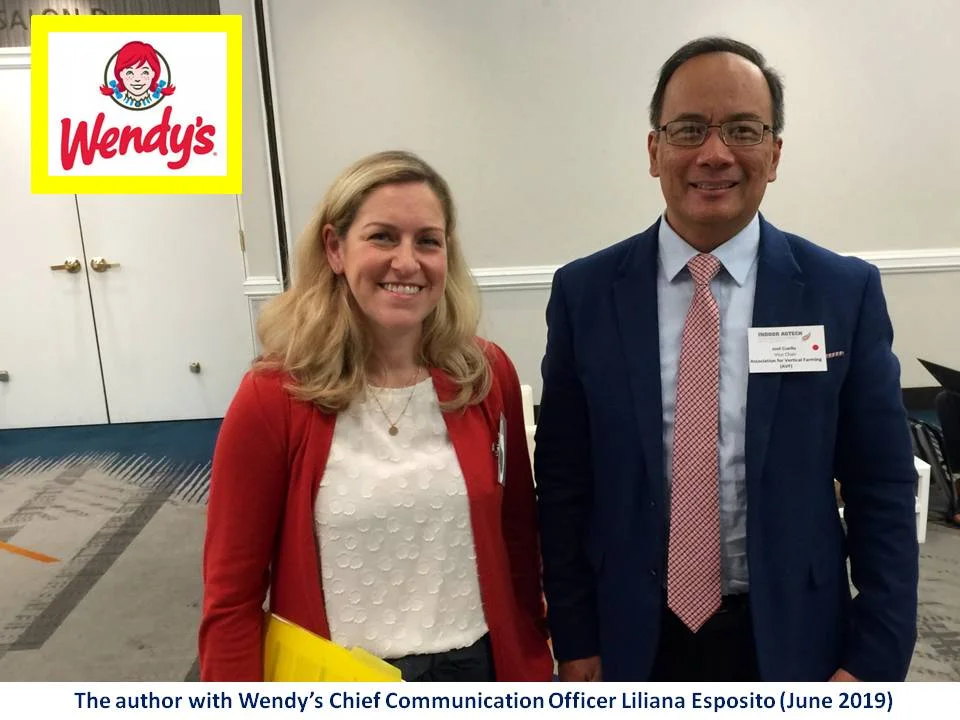
In keeping with Wendy’s motto of Always Fresh, the decision ensures superior quality as well as enhanced food safety, predictability, reliability and product traceability for the American international fast food’s fresh tomato supply.
Wendy’s, the second largest burger fast food chain in the U.S., also has plans over time to source its other fresh vegetable ingredients from similar indoor crop production systems.
One Giant Leap for U.S. Vertical Farms?
Could Wendy’s one small step translate into one giant leap for both the U.S. fast food industry and vertical farming industry?
The likelihood is real in part given their now shared product values and since the economy of scale involved helps provide impetus and cushion to both industries
For U.S. fast food, partnerships with vertical farms would help meet the former’s customer expectations on the health, ethical and sustainability fronts, while also ensuring produce quality, nutrient value, consistency and supply reliability even as they help reinforce local jobs creation.
For U.S. vertical farms, partnerships with U.S. fast food would help effectively reduce their price of produce through the expanded economy of scale even as they also help strengthen local jobs creation.
The size, of course, of the U.S. fast food industry is gargantuan, with approximately 500 million Americans eating at fast food restaurants every day, generating annual sales of about $200 billion at 200,000 fast food locations across the country. Indeed, just the top 10 U.S. burger and chicken fast food chains — namely, McDonald’s, Wendy’s, Burger King, Chick-fil-A, Sonic, KFC, Carl’s Jr./Hardee’s, Jack in the Box, Popeyes Louisiana Chicken, and Whataburger — post a combined annual sales of over $84 billion (2016).
The entry of U.S. vertical farms into the U.S. fast food industry would certainly provide the former a momentous and immense market opportunity that it seeks.
One hopes that the continuing convergence of AgTech innovations in the U.S. fast food industry would help launch both the U.S. fast food and vertical farming industries into a jointly reinvigorated sustainability trajectory for people, planet and proft.
*****
Dr. Joel L. Cuello is Vice Chair of the Association for Vertical Farming (AVF) and Professor of Biosystems Engineering at The University of Arizona. In addition to conducting design and research on vertical farming and cell-based bioreactors, he teaches “Globalization, Sustainability & Innovation” and “Integrated Engineered Solutions in the Food-Water-Energy Nexus”. Email cuelloj@email.arizona.edu.
CO2 GRO Inc. Is Pleased To Present An Interview With John Archibald, President And CEO Conducted At The Recent TSX Venture 50 Conference
John discusses the 2019 outlook and CO2 GRO's significant innovations in the agtech industry
Dear Shareholders, Stakeholders
And Interested Parties
CO2 GRO Inc. is pleased to present an interview with John Archibald, President and CEO conducted at the recent TSX Venture 50 Conference. John discusses the 2019 outlook and CO2 GRO's significant innovations in the agtech industry.
To view the interview please click here www.co2gro.ca/pages/investors.
For more information please contact Sam Kanes, VP Communications at 1-416-315-7477 or sam.kanes@co2gro.ca
©2019 CO2 GRO Inc. | Suite 5800 40 King Street W Box 1011 Toronto Ontario M5H 3S1

Veggies Grown In Nevada's Massive Indoor Farm Are Now On Sale To Las Vegas Locals
Nevada does not have particularly fertile lands, but that didn't stop Oasis Biotech when they opened a 215,000-square-foot indoor farm to the public last July
by Phillip Moyer
July 30th 2019
The facility uses hydroponics and environmental control to reduce environmental impact. (PHOTO: Nathan O'Neal)
Nevada does not have particularly fertile lands, but that didn't stop Oasis Biotech when they opened a 215,000-square-foot indoor farm to the public last July.
Designed to be sustainable and environmentally-friendly, the facility uses hydroponics to use 90 percent less water than traditional farming, and have a completely controlled environment to eliminate the need for pesticides.
Guests had the chance to sample the vegetables after its openings, but until now, the food was only widely available to high-end restaurants in the Las Vegas Valley.
Today, the farm announced that they'll be selling eight-ounce bags of its baby leaf Spring Mix and Romaine Mix blends to consumers under its "Evercress" brand name.
“Over the last year, we have been working hard to perfect our crops and growing methods to bring the community and our customers the freshest salad greens in Las Vegas,” says Michelle Howell, Sales & Marketing Manager at Oasis Biotech. “We had over 1,000 people attend last year’s grand opening and the big question everyone asked us was “When can we buy it?” so we are thrilled to now offer the Evercress salad greens to Las Vegas locals."
The blends can beat Oasis Biotech's farming facility, located at at 6225 Annie Oakley Drive in Las Vegas.
In an effort to stay true to its mission to “Feed the World, Better.,” any product not sold to current customers or purchased by the public will be donated to local charities.
UK: Onwards And Upwards! Vertical Farms Could Come To York Central
In a bid to meet City of York Council’s pledge for the city to be carbon neutral by 2030, Cllr Christian Vassie said creating urban farms is just one of the initiatives the organisation is looking at
July 30, 2019
By Chloe Laversuch - Local Democracy Reporter in Environment, Life
Urban farms to grow food for residents could be built on new developments in York.
The plans could see salad leaves, tomatoes and even more exotic crops grown in greenhouses on major housing schemes like York Central.
In a bid to meet City of York Council’s pledge for the city to be carbon neutral by 2030, Cllr Christian Vassie said creating urban farms is just one of the initiatives the organisation is looking at.
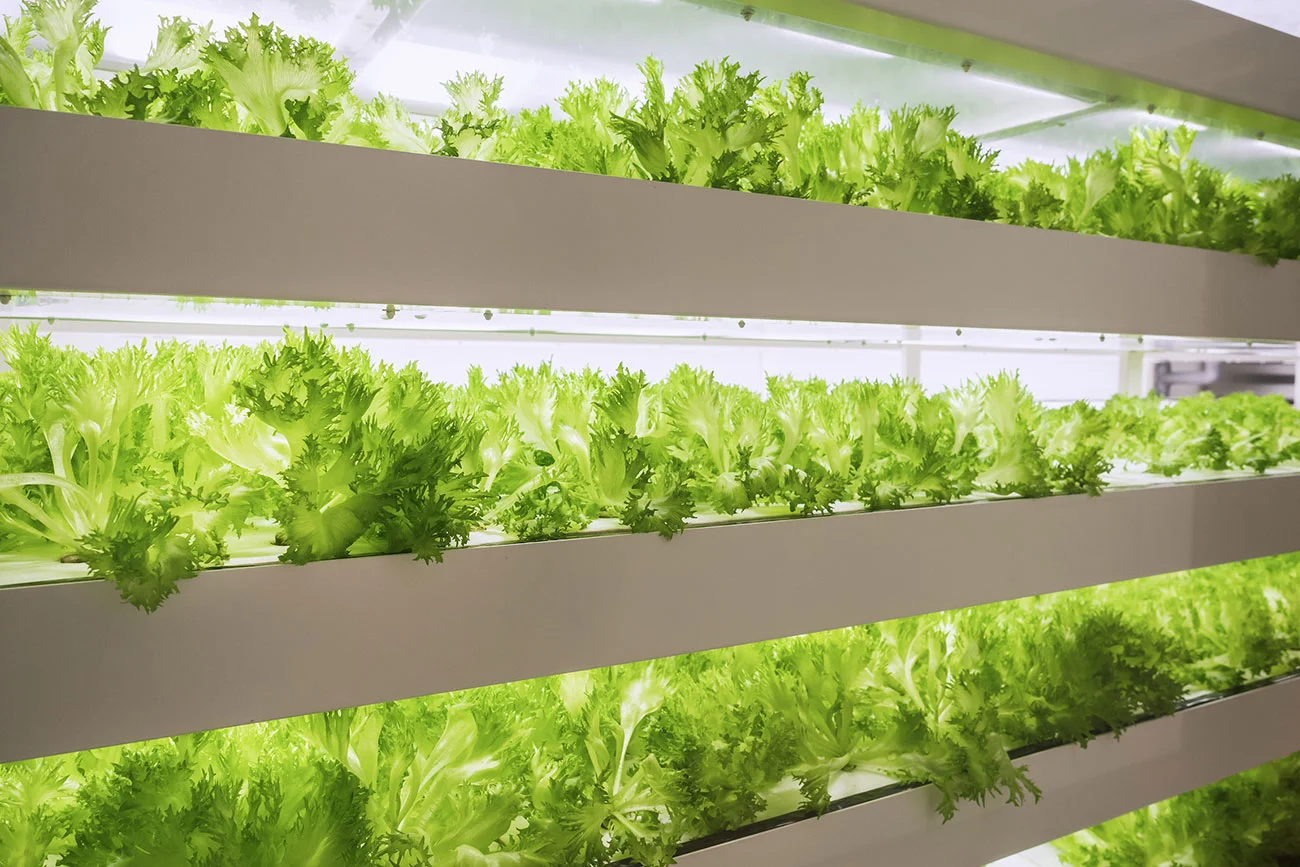
Cllr Vassie, chair of the council’s new climate change committee, said York could follow in the footsteps of the Netherlands, where produce is grown in small vertical farms with six or seven layers of vegetables stacked on top of each other.
He said:
The key is how we can produce our food closer to home.
Food like lettuces may be grown in one part of the country and transported all over the UK before they reach us. It’s not good for the environment.
Vertical farms are innovative. Space to grow food costs a lot more in a city so it’s about making best use of our land.
Surprised by what you can grow
Speaking at a council meeting about the design guide for new council developments, he asked if urban farms could be included in proposals for schemes – including York Central.
He said:
We could have small farms on new developments. We talk about York Central being innovative – this is exactly the kind of thing you would want to see there.
It’s one of many things that the climate change committee is looking at. I’m proud that the council declared an ambition to be carbon neutral by 2030.
But delivering it is going to be really tough, it requires more creative decisions.
Food is just one part of that. I think people would be surprised by what we can grow here that we currently do not.
The climate change committee will have to consider everything. The challenge we face is massive.
While the urban farms would not be able to feed the whole city, he said they would be a good start, adding that it may even be possible to grow exotic crops such as bananas could be grown in the UK.
And that growing food close to where it is eaten is one way to tackle carbon emissions.
The first meeting of the council’s new climate change committee is due to take place on September 10.
Lead photo: Vertical farming makes maximum use of limited space. Photograph: verticalfarming.net
UAE Delegation Visit To Japan Opens Avenues For Environmental Collaboration
A UAE delegation, headed by Dr. Thani bin Ahmed Al Zeyoudi, Minister of Climate Change and Environment, MoCCAE, has concluded its visit to the Japanese capital Tokyo. The agenda included a visit to ‘Techno Farm Keihanna’, the largest automated vertical farm in the world
30-07-2019



TOKYO, 30th July, 2019 (WAM) -- A UAE delegation, headed by Dr. Thani bin Ahmed Al Zeyoudi, Minister of Climate Change and Environment, MoCCAE, has concluded its visit to the Japanese capital Tokyo. The visit aimed to promote collaboration on various environmental fronts and allow the delegation to explore best practices and technologies in Japan’s agricultural and fisheries sectors.
The delegation comprised Salah Al Rayssi, Acting Assistant Under-Secretary for the Biodiversity and Marine Life Sector at MoCCAE, and a host of representatives of private sector companies in the UAE.
Commenting on the visit, Dr. Al Zeyoudi said, "The UAE enjoys deep-rooted economic and environmental ties with Japan. Our visit aimed to build on our strong synergies and identify new opportunities for collaboration in the environmental sector. We also sought to exchange expertise in relevant areas."
"The UAE strives to boost international cooperation and learn from successful experiences of friendly nations with the aim of ensuring sustainable development across all sectors," the minister added.
Al Zeyoudi held multiple bilateral meetings with high-level environment officials, in the presence of Khalid Omran Al Ameri, UAE Ambassador to Japan. Among these was a meeting with Yoshiaki Harada, Japan’s Minister of the Environment, who reiterated the importance of the Comprehensive Strategic Partnership Initiative that will elevate relations between the two countries to new heights.
The UAE Minister also met with Mitsuhiro Miyakoshi, Japan’s Minister of State for Consumer Affairs and Food Safety, who applauded the strong UAE-Japan relations, and highlighted the UAE’s leading role in supplying natural gas and other energy resources to Japan following the Fukushima earthquake.
Dr Al Zeyoudi met with Kohjiro Takano, Japanese Parliamentary Vice-Minister for Agriculture, Forestry and Fisheries, who praised the recent measures taken by the UAE to relax the restrictions on all imports from Fukushima.
He also met with Saito Ken, Chief Secretary of Japan-UAE Parliamentary Friendship Association, to explore ways to enhance the strategic bilateral relationship.
In a meeting with Yuriko Koike, Governor of Tokyo, Al Zeyoudi discussed further boosting bilateral relations through creating investment opportunities in renewables as well as twinning Abu Dhabi and Tokyo.
The agenda included a visit to ‘Techno Farm Keihanna’, the largest automated vertical farm in the world, where Dr Al Zeyoudi and delegates from Madar Farms, the UAE-based vertical farming company, gained insights into the latest developments and technologies in vertical farming that significantly accelerates food production.
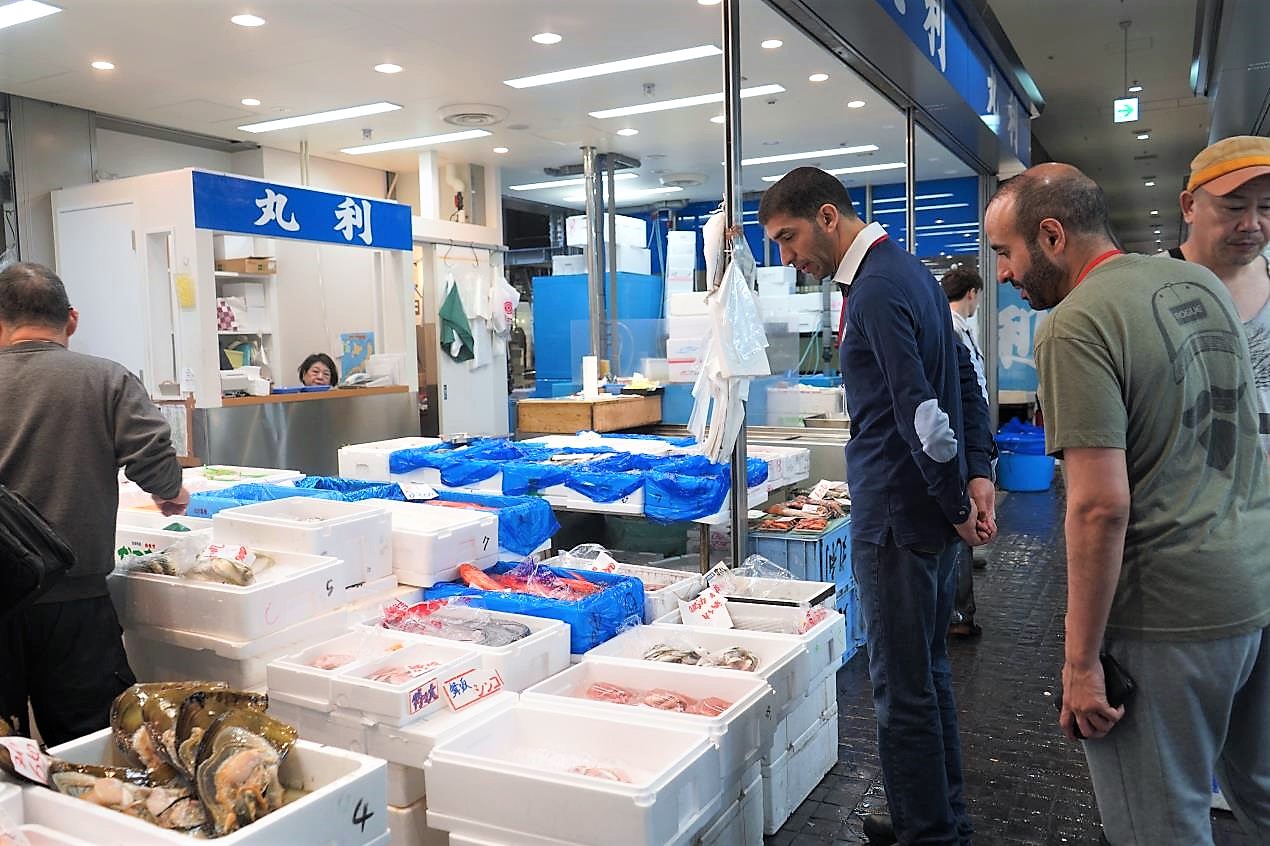
The delegation also visited Toyosu Fish market, the largest wholesale fish and seafood market in the world, the Institute of Energy and Economics, Japan International Cooperation Agency, a governmental agency that coordinates official development assistance for the government of Japan, and Mebiol, a Tokyo-based technology corporation that invented the sustainable agro-tech concept of using films to cultivate plants and ensure zero wastage of water.
On the sidelines of the visit to Japan, Dr Al Zeyoudi attended the second round of the fifth edition of the Abu Dhabi Grand Slam Jiu-Jitsu World Tour that witnessed athletes from 35 countries competing for the top honour.
WAM/Nour Salman/MOHD AAMIR
OId MacDonald Had A Farm…And A Robot, And Racks of plants, And Lots of Plastic To grow Plants In…
How about farms that go up vertically – measured in stories high, instead of in acres wide? How about farms that are inside buildings, instead of outdoors? How about farms that are in a city, instead of out in the country? How about farms that use water, instead of dirt?
The future of farming?
How about farms that go up vertically – measured in stories high, instead of in acres wide? How about farms that are inside buildings, instead of outdoors? How about farms that are in a city, instead of out in the country? How about farms that use water, instead of dirt? How about farms that use plastic, instead of dirt? Not to mention robots and drones working the crops.
All possible. All happening, in fact. And perhaps, the future of farming.
Over the year to come, we’ll tell you more in detail about these innovations, and other changes in how we grow our food. But the future of farming has more in common with the past and the present than you might think. Petrochemicals, for instance. Past, present or future, you can’t farm without the products made from them: from the strong, lightweight plastics used to build the racks (and even the “ground”) plants grow on, to the carbon fiber-reinforced resin used to make many of those drones and robots and other equipment used on the indoor farms of the future – to the fuels that move the tractors, combines and other equipment used on the outdoor farms of today, as well as the fuels that move the food those farms grow to us – farming has deep petrochemical roots.
*****
Today, we’ll start with an introduction, and we’ll start in – in San Carlos, California.
That’s where Iron Ox has turned a warehouse into a grow house: a dirt-free indoor farm growing romaine lettuce, kale and other leafy greens. What replaces dirt at Iron Ox, is water (water supercharged with nutrients) – and racks, rows and rows of horizontal and vertical racks of plants…
(Photo from Iron Ox)
…fresh food grown for people living in cities (like so many of us), grown in the cities where we live, and grown year round (which even in California, isn’t possible outdoors).
And the “Iron Ox”? Much of the work on this farm is done by robots (like the one in that picture, lifting and moving racks of plants). Those robots can move in any direction, so they can place those racks closer together and get the most out of those indoor spaces. The robots move on Mecanum wheels made from a high-tech synthetic rubber derived from petrochemicals like ethylene, propylene and toluene. Even the robot arm that plants seeds and transfers plants? That bends and flexes thanks to polypropylene joints.
*****
In Houston, Moonflower Farms has replaced the dirt with vermiculite that contains a mineral blend. In their mini-warehouse (more of a shack really), their micro-greens are racked vertically…
(Photo from Moonflower Farms)
…under hot pink lights.
That meant, after Hurricane Harvey swept over the Gulf Coast, Moonflower had 10 inches of water on the floor – but almost all of their crop was just fine (since it was up above the ground, and the flood water).
(Those racks, by the way, must be light-weight and strong, which requires engineered polymers like high-density polyethylene, ABS and HIPS. And yes, those high-tech polymers are made from petrochemicals such as ethylene, propylene, butadiene and benzene.)
*****
Also in Houston is Acre in a Box. In this case, the “box” is an old shipping container. And inside that 320 square feet, is an acre (and a half, actually) of produce…
(Photo from Acre in a Box)
…growing hydroponically day and night, come rain or come shine, or even come hurricane.
*****
At Urban Organics, in St. Paul, Minnesota – it’s easy to see one advantage of indoor farming. The average high temperature in January is 23 degrees. And unless you like a hot bowl of pine needle soup (think Euell Gibbons), there’s not much of anything growing fresh in that weather.
Urban Organics is an aquaponics farm – meaning they also grow their plants in a nutrient-rich water – but in this case, the fertilizer comes from fish (fish poop, that is). In turn, the plants filter the water as they absorb those nutrients, the clean water goes back to the fish, and round and round the system goes.
(Photo from Urban Organics)
And this type of advanced agriculture wouldn’t be possible without the engineered plastics made from petrochemicals. Companies like Pentair Aquatic Eco-Systems use polyethene and fiber-reinforced resins, made from the petrochemical ethylene, to make fish tanks and filter tanks. Ethylene is also used in the polyethylene and vinyl liners. And the advanced membrane technology that allows for water recycling depends on petrochemicals as well (like the xylene, that makes the polyamide, that makes those membranes).
*****
But maybe the most far-out farming is going on in Japan – where Mebiol Research and Development is growing tomatoes – indoors – on a plastic sheet.
(Photo from Mebiol)
This plastic (polymer) sheet is a hydrogel called polyvinyl acetate – a material like a super sponge which soaks up water and nutrients. The tomatoes (and there are other plants too), grow ON the polymer, spreading their roots across the surface, and absorbing the nutrient-steeped water. That polymer starts with ethylene, again – which as you know by now, is a critical part of future farming.
*****
Oh, and those drones? Drones nowadays inspect crops – check for plants that are underwatered – spot diseased plants – evaluate smoke contamination after a fire. And after a fire, drones can plant new trees (as seeds), to help restore burned-over wilderness areas (and since they are drones, getting into a wilderness to plant is not a problem).
(Photo from DroneSeed)
The drones, by the way, don’t dig holes and plant seeds – these drones “shoot” seed pods into the ground. The pods are packed with nutrients, and coated with capsaicin (the stuff in chili peppers), to keep animals from eating the seeds.
(These sophisticated, seed-planting drones have to be tough, to withstand a wide variety of weather conditions and constant stress from the multiple blades – so fiber-reinforced resins are used because they are as strong as steel and much lighter in weight. The resins are a special type of plastic called epoxy, and the petrochemical propylene is their foundation.)
*****
All of these methods of farming use far less water (as much as 90 percent less water) as conventional farming – they take up far less land – they can grow food year round – and they can grow food in the same place where most of it is being eaten, our cities. All good, and all important at a time when there is less and less good farmland, and more and more of us needing to be fed. And as we told you at the beginning of this peek at the future, all of this depends on farming’s deep petrochemical roots.
*****
Right after World War I, there was a hit song: “How ya gonna keep ‘em down on the farm (after they’ve seen Paree)?”
Millions of American soldiers came home after the war, having left their home town for the first time, their state for the first time, their country for the first time – and maybe, so the song went, soldiers who’d left small towns across America, might have a taste now for big city life, and wouldn’t want to go home.
That might be different in years to come though. Because “down on the farm” might be very much a part of big city life. And it won’t be “down” on the farm anyhow. Those future farms will go up, up into the air. Skyscrapers filled with vegetables? Stay tuned throughout the year as we follow this story.