

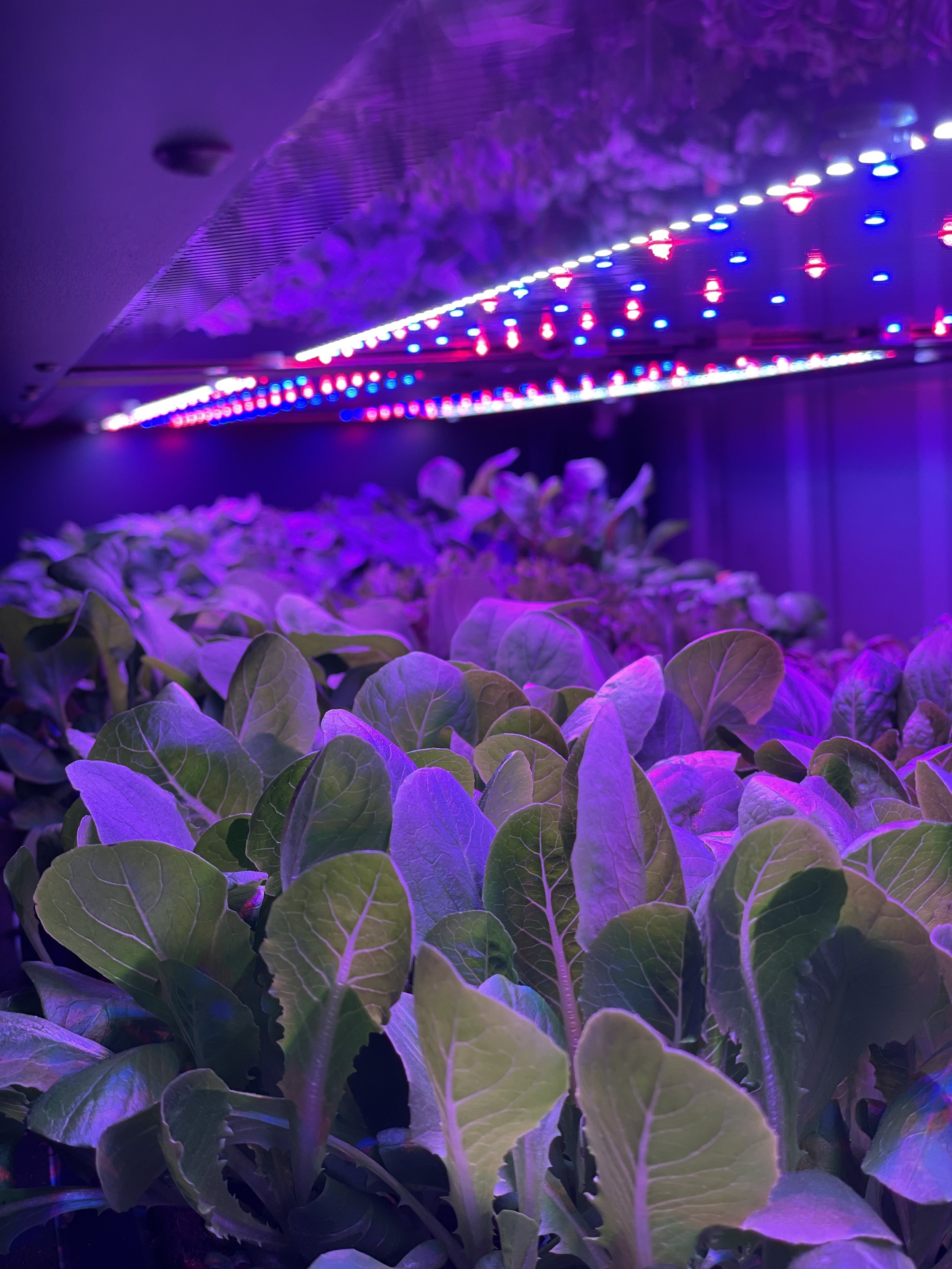
News About Farming in Shipping Containers & Limited Indoor Spaces
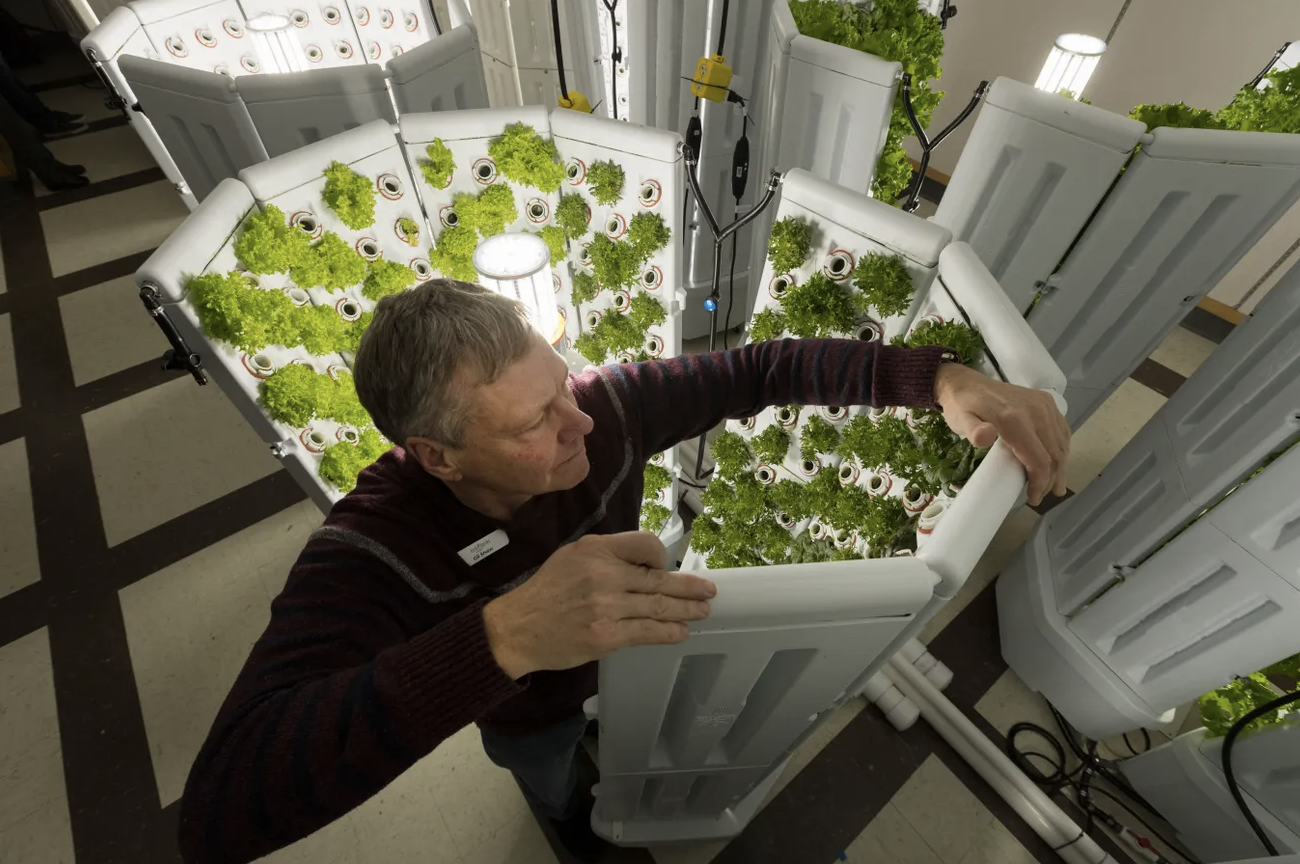
Fork Farms to Bring Hydroponic Farm, Milwaukee-Area Headquarters to Makers Row in West Allis
Makers Row, a food and beverage hub in West Allis, has secured a partnership with a Green Bay-based agriculture technology that will bring one of the largest hydroponic farms to the area.
Fork Farms plans to open a farm within the Makers Row development, at the corner of West National Avenue and 66th Street, Fork Farms said in an Aug. 25 news release. The farm will be able to grow up to 34,000 pounds of fresh produce annually.
This site will also serve as Fork Farms' new Milwaukee-area headquarters and would feature a hydroponic showroom.
The farm will occupy more than 5,000 square feet and will use Fork Farms' vertical growing systems, stacked indoor setups that grow plants with water and nutrients.
USA - WISCONSIN: Southwest Tech Launches Indoor Farming Partnerships
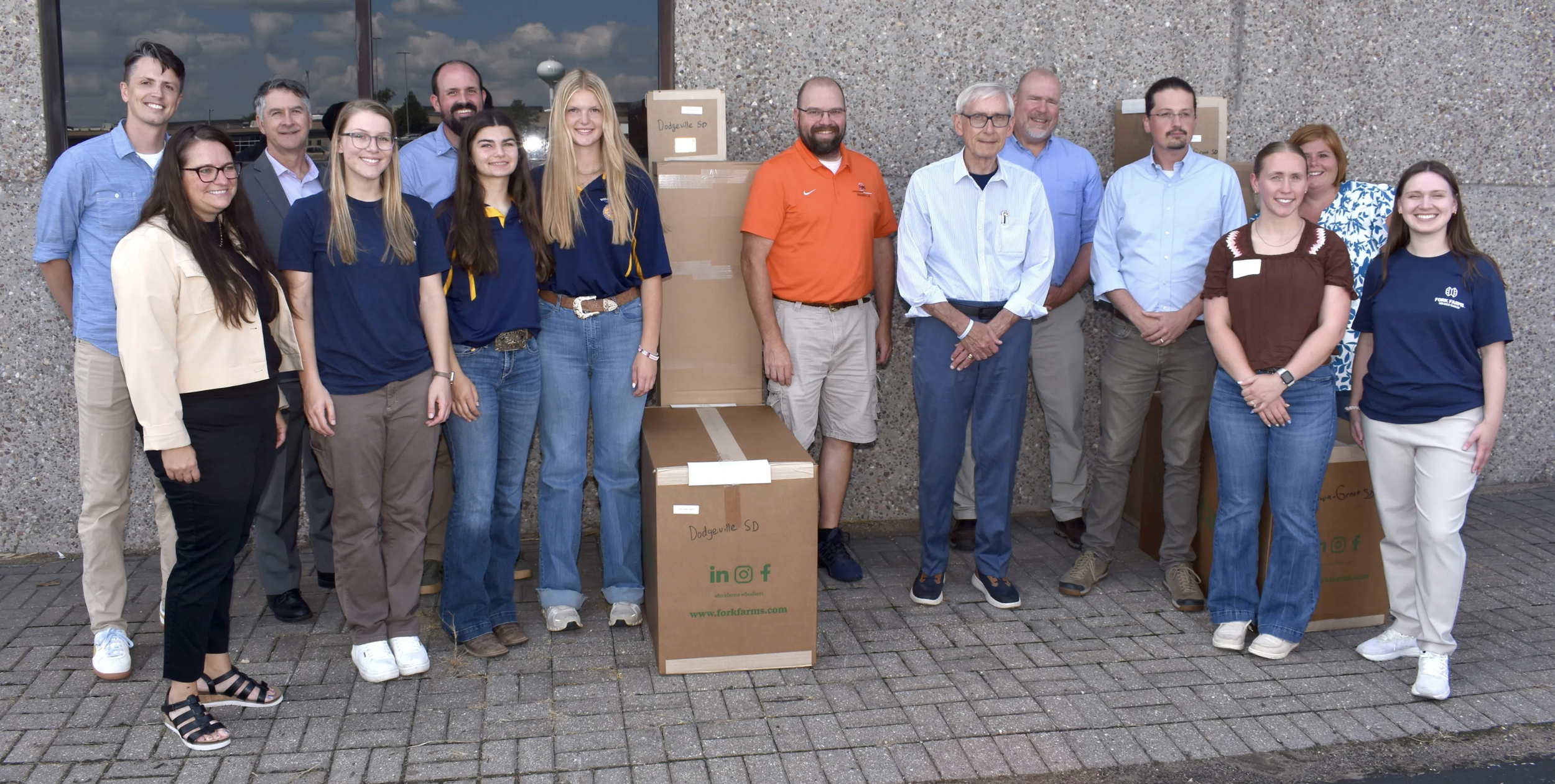
Southwest Wisconsin Technical College is launching a new initiative that places hydroponic indoor farms in 22 K–12 school districts across its five-county region. The project officially kicked off during an event Aug. 13 on Southwest Tech’s campus. Each school district will receive a state-of-the-art indoor vertical farming tower from Fork Farms, valued at $5,000.
The farms were funded, in part, with a grant from Cummins. Southwest Tech provided funding for the remaining farms. In addition, Rockwell Automation is supporting the project’s technological and automation components.

How Fork Farms is Leveraging AI to Increase Food Access
At Fork Farms, we believe everyone deserves access to fresh, nutritious food, no matter their zip code. As a planet-and-people-first company, we’re building a future where food is grown locally, sustainably, and equitably. Our hydroponic growing systems – the Flex Farm and Flex Acre – enable schools, hospitals, nonprofits, and businesses to grow food on-site with 98 percent less water and land than traditional farming. They’re compact, efficient, and built for controlled-environment agriculture, making it possible to grow fresh produce year-round, anywhere.
As we grow our company and continue to innovate on our systems and mission, we are utilizing artificial intelligence (AI) not as a novelty, but as a critical tool to scale impact, remove barriers, and democratize access to fresh food.
Are Micro-Farms the New Water Cooler? CEO Marc Oshima Makes a Compelling Case
What does it take to make the Inc. 5000 list of the fastest-growing private companies in the U.S.? Phenomenal growth for one. A laser focus on your value proposition also helps.
Richmond, Va.-based vertical farming company Babylon Micro-Farms was founded in 2017 and has achieved 423% in revenue growth, making the 2025 list at No. 1,009.
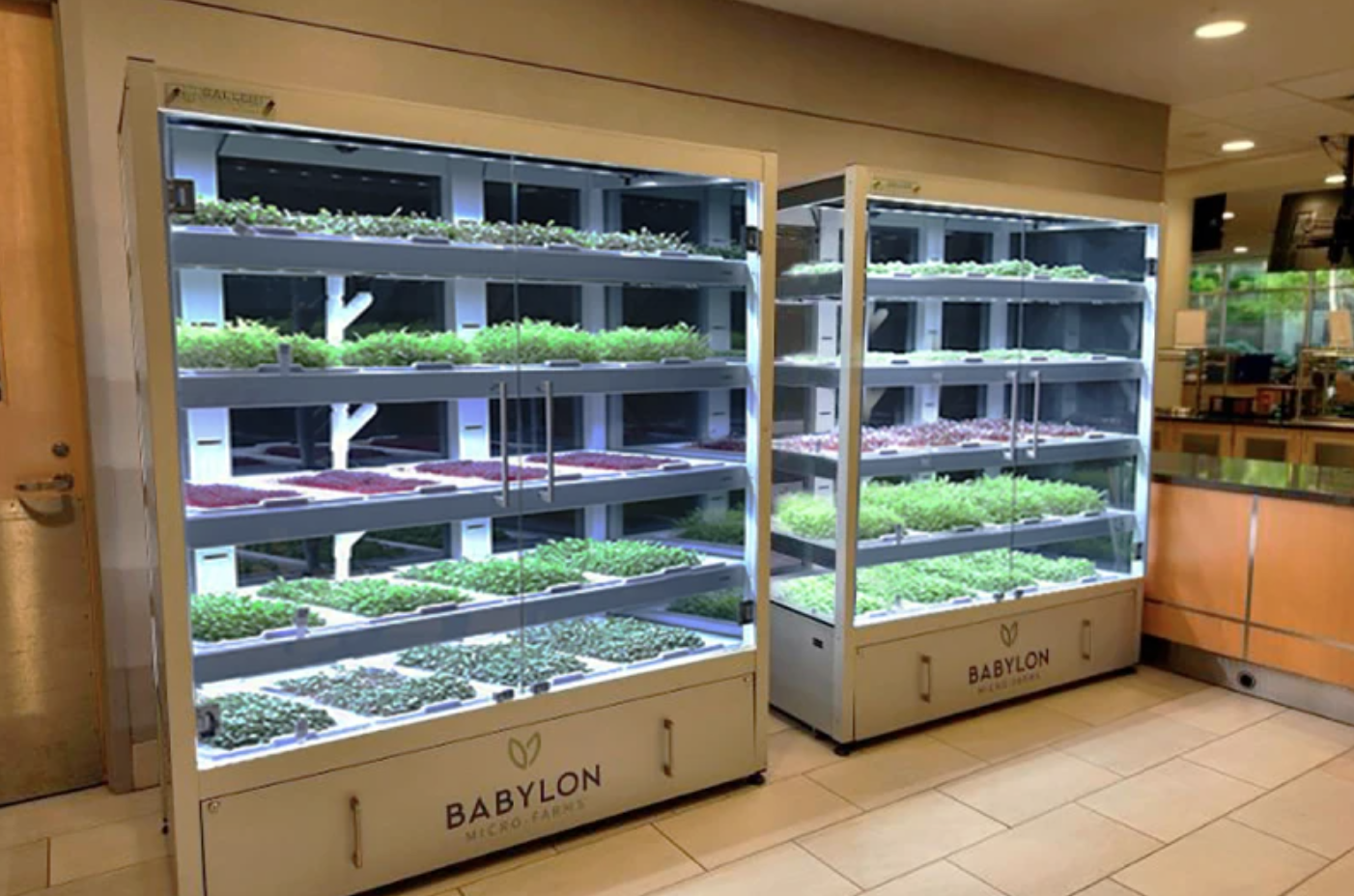
Babylon Micro-Farms offers turnkey, on-site hydroponic farms that allow businesses and institutions from restaurants and hospitality to health care and schools — and even cruise ships — the ability to grow flavorful and nutritious greens indoors, year-round.
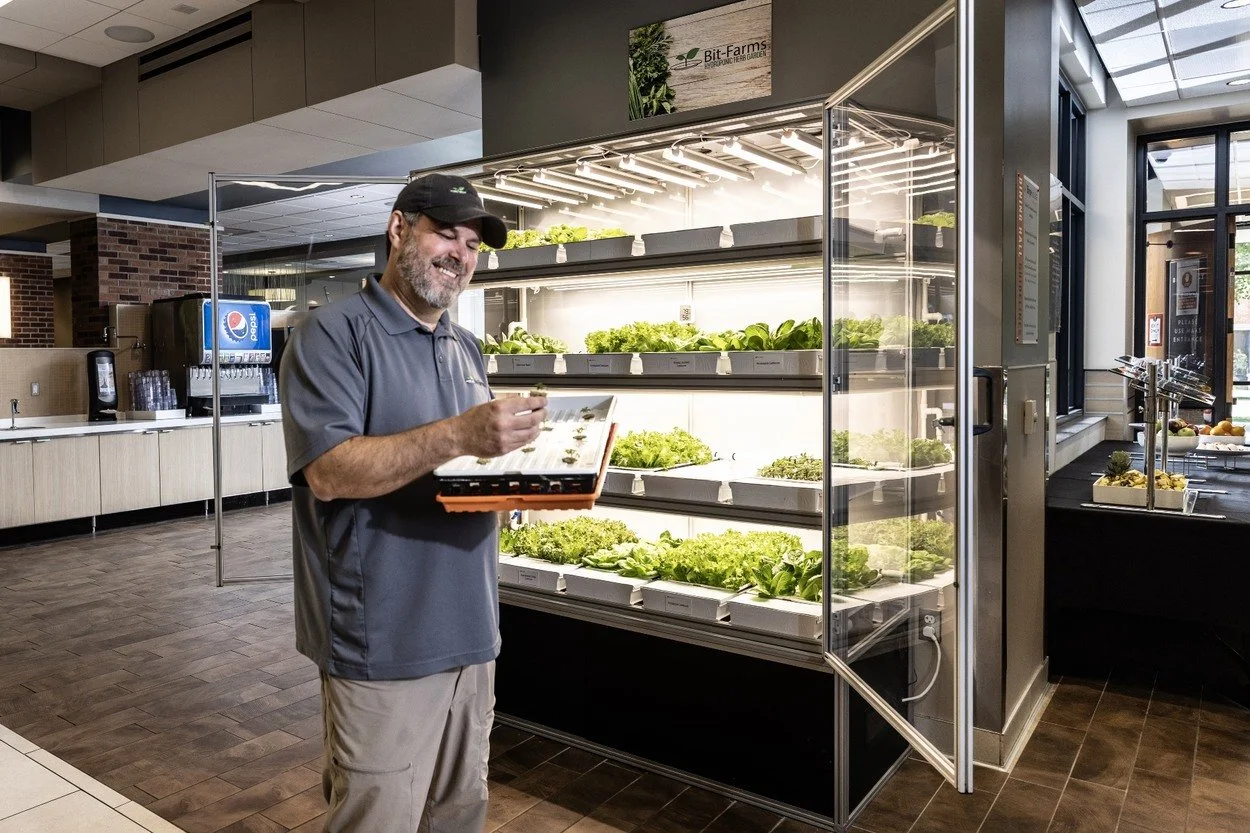
“It's Not Just About Growing Food Anymore; it's About Growing Connection”
"Every time we install a farm, a good number of staff at the location seem a little skeptical at first," says Tyler Blair, CEO and Co-Founder of Bit-Farms in Michigan, USA. "But three weeks later, they're thanking us for what we do. I'm not exactly sure what changes during that time, but they definitely become connected to the farm."
At Pinewood Middle School, a compact hydroponic unit sits between the cafeteria registers. Students watch greens develop under lights, taste what they helped grow, and staff plan around harvests in real time. Bit-Farms' bet is simple: Put small, service-managed farms inside everyday spaces so people can see, taste, and talk about their food. "It's not just about growing food anymore, it's about growing connection, right where people live, eat, and learn."

USA - WISCONSIN - Local Food Pantry In Menasha Uses Flex Farms To Boost Fresh Food Access In Fox Valley
A local food pantry is making a difference in the Fox Valley.
St. Joseph's Food Program in Menasha uses their hydroponic systems or Flex Farms to ensure the community has better access to fresh food.
Flex Farms are mobile vertical growing systems that only require 9 square feet of space and a standard electrical outlet for operation. A single Flex Farm can grow 25 pounds of lettuce every 28 days.
St. Joe's Food Pantry has 20 Flex Farms to held feed people in the community.
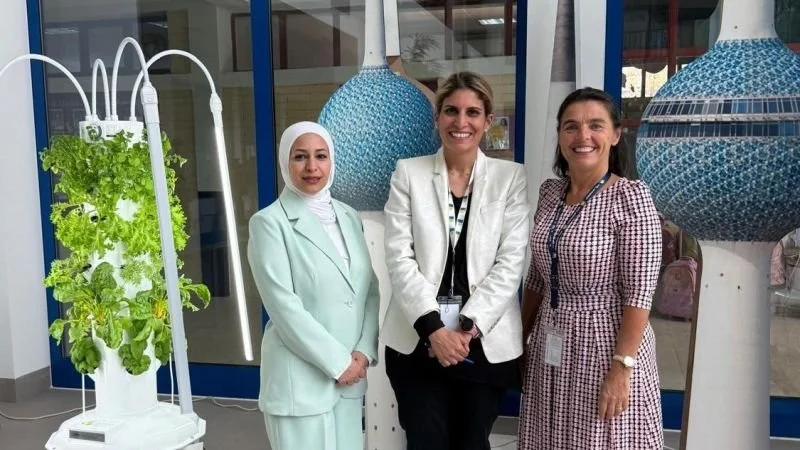
Markaz Sponsors Vertical Farming Facility at The English School to Empower Future Environmental Leaders
Kuwait Financial Centre “Markaz” announces its sponsorship of an innovative educational initiative in partnership with The English School (TES), providing students with hands-on, experiential learning opportunities in sustainable agriculture and its applications through vertical farming inside the school. The sponsorship reflects the ‘building human capacity’ pillar of Markaz’s corporate social responsibility (CSR) strategy by equipping students with future-ready skills, fostering environmental responsibility and developing the knowledge and critical thinking skills needed to confront global challenges through localized solutions.
The initiative offers students the opportunity to explore vertical farming through a school-based facility designed for indoor sustainable agriculture.
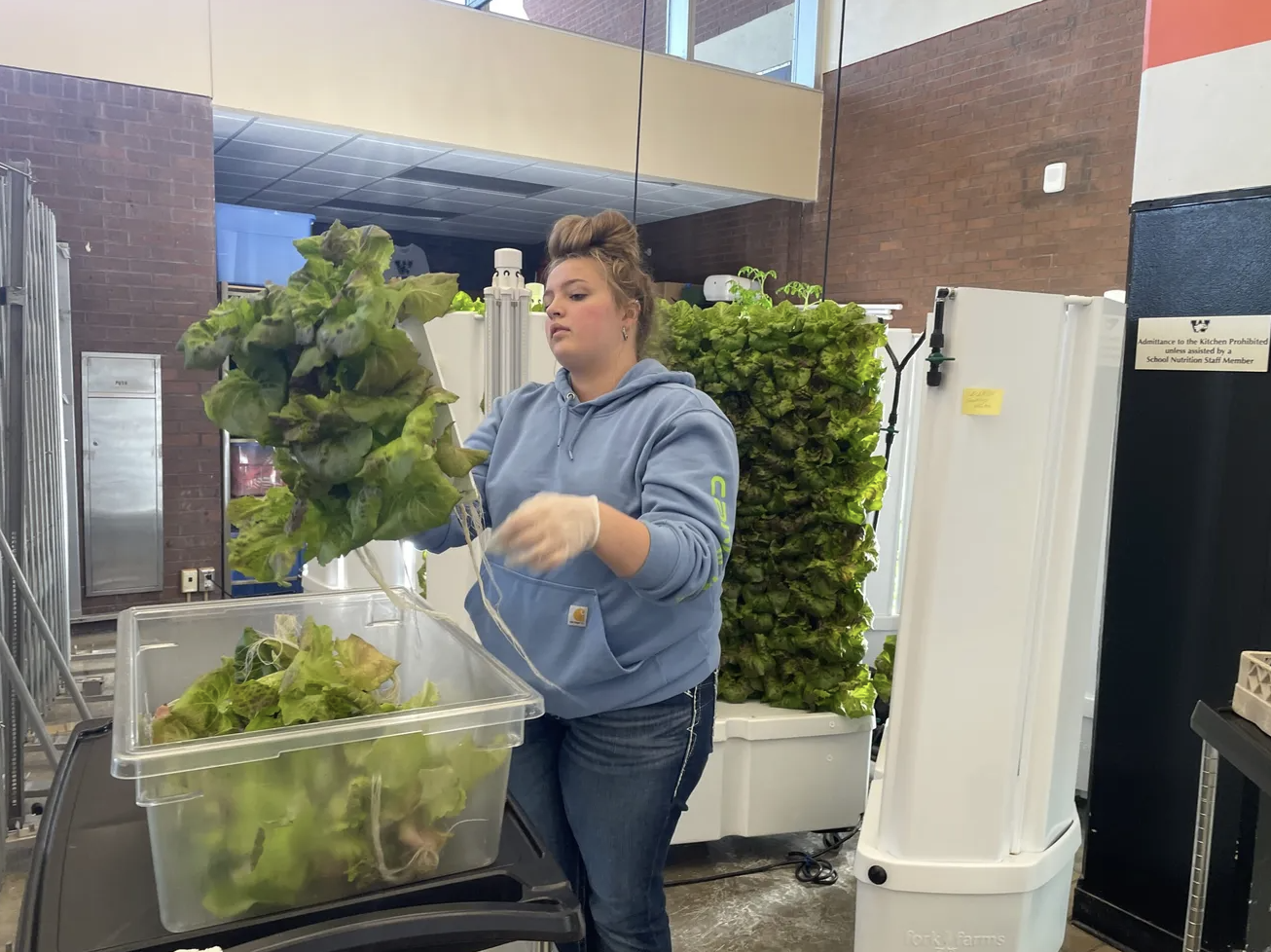
Minnesota School Feeds Their Students Using Hydroponic Flex Farms Designed in Green Bay
Across the Mississippi River on the Wisconsin border, a student at Winona Senior High School in Minnesota is growing up to 200 pounds of lettuce each month for school lunches — right in her school’s cafeteria.
Sophomore Miriam Jackson is in charge of her school’s Flex Farms, which are hydroponic farms developed by Green Bay company Fork Farms for use in educational environments. Under Jackson’s care, the compact indoor growing systems have turned into a significant food source for more than 800 students at Winona Senior High School.
“They really like it. When we serve our Fork Farms lettuce, the students are actually building more salads,” Jennifer Walters, school nutrition director for the district, told WPR’s “Wisconsin Today.”

Urban Agriculture and The Rise of The Vertical Farming Market in Smart Cities
The combination of climate change effects together with urban population expansion demands immediate development of food production systems which are sustainable and space-efficient. Vertical farming leads agricultural progress through its capacity to generate significant amounts of pesticide-free food inside controlled environments, which maximises urban area through vertical stacking.
The agricultural future is being reshaped by vertical farming markets which combine advanced hydroponic, aeroponic and aquaponic systems with sustainable practices and smart technologies.
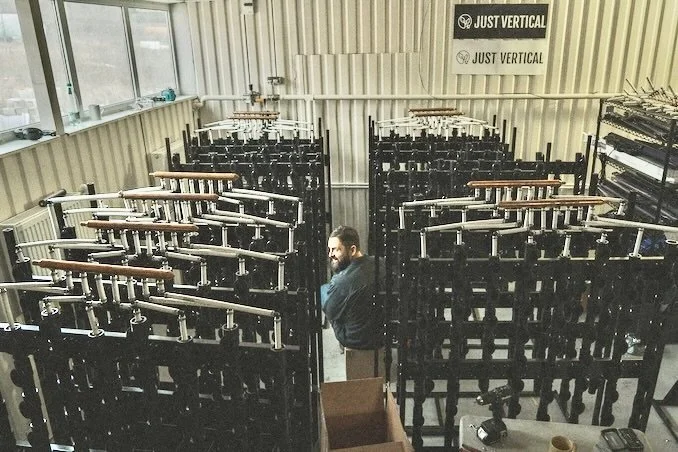
VIDEO: Canadian-Built Vertical Farm Brings Fresh Food—and Hope—to Ukrainian Refugees in Moldova
In a quiet corner of rural Moldova, inside the concrete walls of a former Soviet barn, a new kind of food revolution is quietly taking root—literally. Thanks to an innovative partnership between Canadian ag-tech company Just Vertical and humanitarian organisation GlobalMedic, a fully functional indoor hydroponic farm is now providing hundreds of pounds of fresh produce each month to Ukrainian refugees and local Moldovan families facing ongoing food insecurity.
The farm, capable of growing more than 1,000 plants simultaneously, was completed in just eight months and is already making a meaningful difference in a region under strain. As war continues across the border in Ukraine.
Babylon Micro-Farms Earns Global Recognition For Innovation and Impact in 2025
Babylon Micro-Farms, a leader in on-site vertical farming, is proud to announce a series of awards and recent recognitions that highlight the company’s accelerating momentum and global impact across healthcare, hospitality, education, and corporate dining.
Babylon Micro-Farms was ranked #34 on the 2024 FoodTech 500, marking a leap of over 100 places from its 2022 ranking of #135. This globally respected list celebrates the most promising companies at the intersection of food, technology, and sustainability.
Canadian Shipping Container Farm Manufacturer “Growcer” Acquires Freight Farms’ Assets, Pledges To Support Growers Worldwide
Update: We've won the bid to acquire Freight Farms' assets.
A few months ago, one of our top competitors filed for bankruptcy, and the Growcer team sprang into action to help their community of farmers keep growing.
One of the options we explored was throwing our hat into the ring to purchase substantially all of the company's assets (such as an inventory of complete farms, spare parts, software, all intellectual property, and subscriptions etc.). We rallied a group of key partners, and I'm thrilled to say that we were able to make it happen.
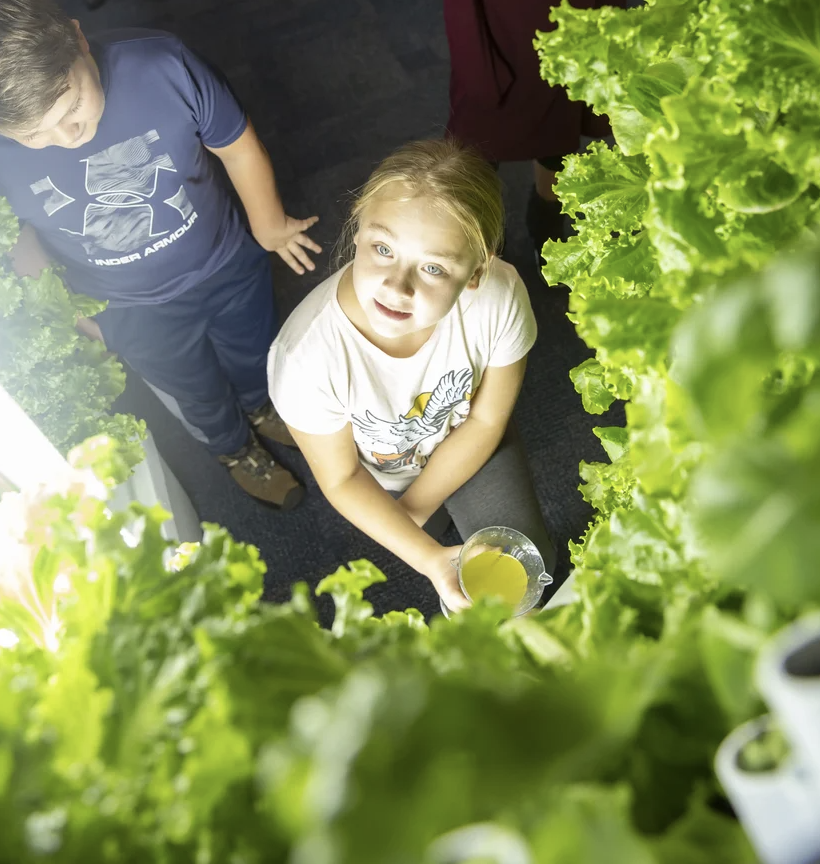
USA - MINNESOTA: Student Grows Greens For School Lunches
At Winona Senior High School in Minnesota, sophomore Miriam Jackson manages six hydroponic Flex Farms that grow up to 200 pounds of lettuce each month. These fresh greens are served in school lunches for over 800 students, making school meals more nutritious and local.
Developed by Wisconsin-based Fork Farms, Flex Farms are indoor hydroponic systems designed for small spaces like schools. Jackson handles seed germination, water monitoring, and pH balancing for the crops, mostly leafy greens like iceberg lettuce. While harvest days require extra help, she manages most tasks independently, spending nearly 15 hours a week on the project.

Nature’s Miracle to Purchase EV Trucks for Mobile Vertical Farming
Nature’s Miracle Holding announced it will purchase five electric vehicle trucks from ZO Motors North America to launch its mobile vertical farm project. The company plans to complete this purchase, financed through California’s electric vehicle rebate program, by Q2 2025. Nature’s Miracle will convert these EV trucks into mobile vertical farms for growing microgreens and herbs. It expects to receive up to 100 trucks by the end of 2025.

VIDEO: New York Sun Works Brings Nature Into NYC Classrooms
Bringing nature into a classroom is one of the missions for an organization called New York Sun Works.
CBS News New York's Erica Lunsford visited a school in the Bronx and shows us how students are learning in a unique way.

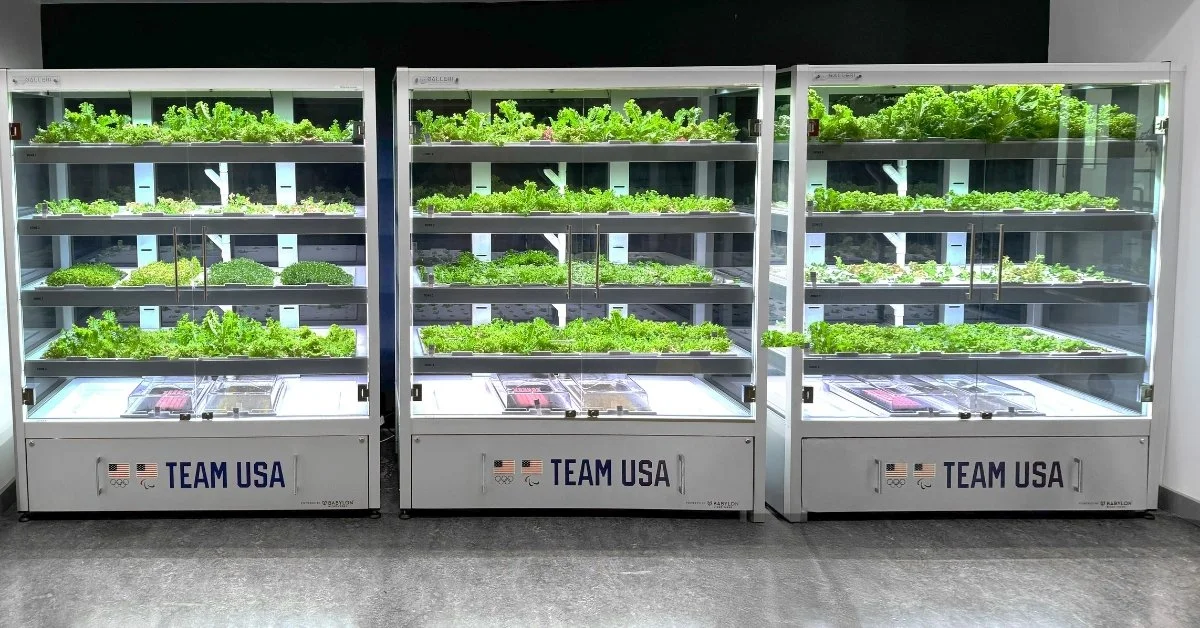
Team USA’s Training Center To Get Fresh Produce by Growing It, on Site, With The Help of Babylon Micro-Farms
The U.S. Olympic and Paralympic Committee (USOPC) training center in Colorado Springs has significantly upgraded its food and nutrition program through a partnership with Babylon Micro-Farms. What began as a single installation has rapidly expanded to three units, providing athletes with a consistent supply of fresh, hyper-local produce.
This collaboration allows the training center to grow nutrient-dense greens and microgreens on-site, taking the guesswork out of traditional farming. Executive Chef Nick Lachman highlights the immediate impact, with produce going "from the farm" directly to the salad bar, enhancing the visual appeal and flavor of dishes. Red sorrel and microgreens for smoothies, particularly raspberry basil, have been singled out as athlete favorites.

USA - MICHIGAN: Lettuce Learn: Redford Union Elementary Students Help Grow School Lunches
With sleeves rolled up and gloves on, young students at Redford Union Schools are growing leafy greens that show up later in the lunchroom as kids learn science, responsibility and even some healthy habits along the way.
Thanks to a new hydroponics program launched this year at both Hilbert and Beech elementary, the district's elementary STEAM classes are growing lettuce without soil – just water, light, curiosity and lots of smiles.
The project began in January with sixth graders planting the first crop of romaine lettuce. Since then, students in first through sixth grade have gotten involved in everything from monitoring the hydroponic system to harvesting.

CAMDEN, NEW JERSEY - Impact of Mastery High School’s New Classroom Extends Beyond its Walls
The high school biology curriculum has changed significantly from what Charles Cooper said he was taught roughly 15 years ago.
“It was pretty much plants, matter and fossils,” Cooper, who is on the verge of finishing the Mastery Charter School’s teaching residency program, told TAPinto Camden. “We never even expanded or talked about growing, farming, or anything of that sort.“
Cooper said a new classroom within Mastery High School of Camden that includes a hydroponics lab, propagation racks for breeding specimens and vertical hydroponic farms for growing plants in sand, gravel, or liquid will be his workspace in the 2025-26 school year and will expand on the ‘that sort.’