

Written by Indoor Ag-Content Q&A Feature

August 17, 2026
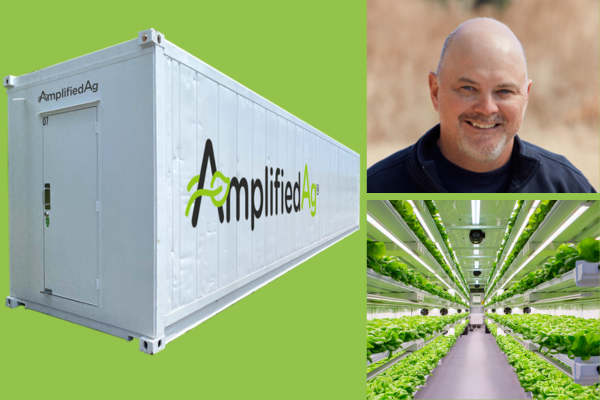
AmplifiedAg CEO David Flynn doesn’t see institutional and commercial agriculture as competing priorities — he sees them as two inputs into the same platform. The institutional side alone ranges from USDA research labs to compliant farm programs inside correctional facilities, part of the company’s Growing Justice initiative. Flynn walks through how those demanding partnerships push the technology further, how commercial growers keep the company focused on real-world economics — and what attendees can expect at AmplifiedAg’s tabletop at CEA Summit East.
AmplifiedAg serves institutional partnerships — universities, government agencies, corrections departments — and commercial operators. How do you balance those two, and does one inform the other?
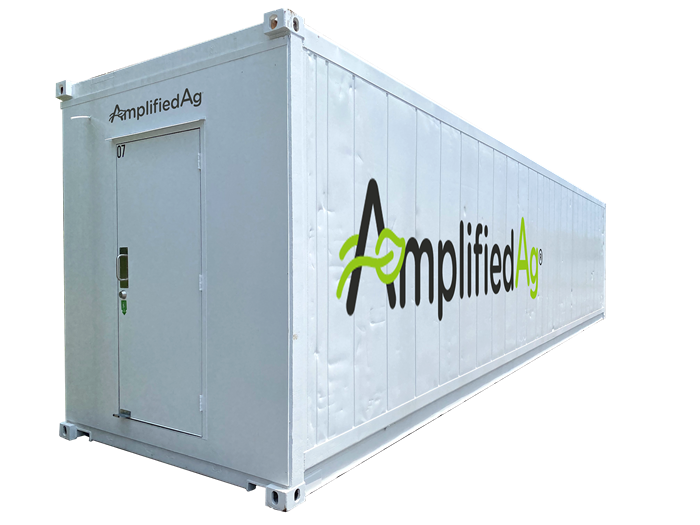
AmplifiedAg serves a diverse customer base, but we don’t see institutional and commercial agriculture as competing sides of the business. In many ways, yes – they inform one another.
Our institutional partnerships — with organizations like USDA, universities, government agencies, and corrections departments — often push us to solve very specific challenges around environmental control, data collection, repeatability, food safety, customization, and operational reliability. Those requirements ultimately make our technology better for every customer.
At the same time, our commercial customers keep us grounded in the realities of operating a farm as a business. Yield matters, but so do labor, crop cycles, market demand, distribution, operating costs, and the ability to scale profitably. Those lessons inform how we design our systems and support programs for institutional customers.
So our approach isn’t to build one platform for research and another for commercial agriculture. It’s to build a flexible CEA platform that can be configured for the customer’s objective — whether that’s conducting a controlled research trial, producing food inside a correctional facility, or building a profitable commercial farm.
Through Impact Justice’s Growing Justice initiative, you’ve built compliant farm programs inside correctional facilities in South Carolina and California. What have you learned, and what does success look like there?
We’ve learned that putting a farm inside a correctional facility is about much more than growing food. The technology is important, but the program has to be designed around the realities of the institution and the people operating it.
Through our work with Impact Justice and the Growing Justice initiative, we’ve seen the importance of integrating the farm with workforce development, education, foodservice, and reentry programming from the beginning. Security, food safety, operational consistency, and staffing all have to be considered alongside the agricultural objectives.
Success is therefore measured in several ways. It’s fresh, nutritious food reaching the people who live and work in the facility. It’s participants gaining real, transferable agricultural and technical skills. It’s a sustainable, economically viable operation for the institution. And ultimately, it’s creating a pathway for individuals to take those skills with them when they return to their communities.
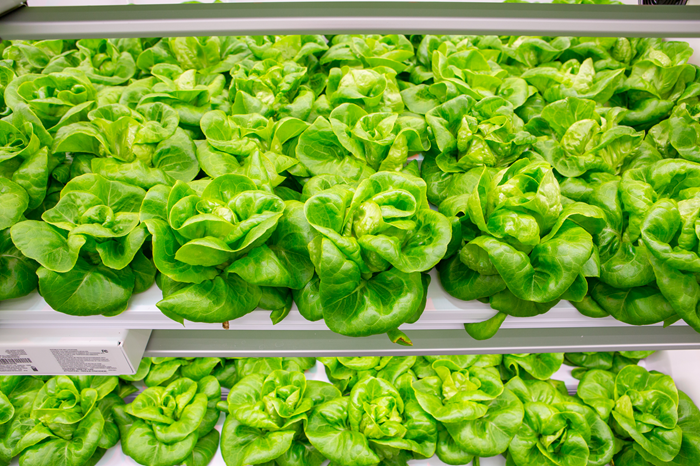
The South Carolina project at Camille Griffin Graham Correctional Institution has demonstrated what that model can look like at scale, with the farm designed to produce approximately 48,000 pounds of lettuce annually while supporting workforce development and reentry objectives. Our work expanding this model into California is helping us continue to refine what an agriculture-based rehabilitation program can look like in different correctional systems.
You’ve noted momentum around microgreens as a high-margin complement to leafy greens. What’s the appeal there, and what does it take for commercial operators to move from pilot to sustainable, scaled business?
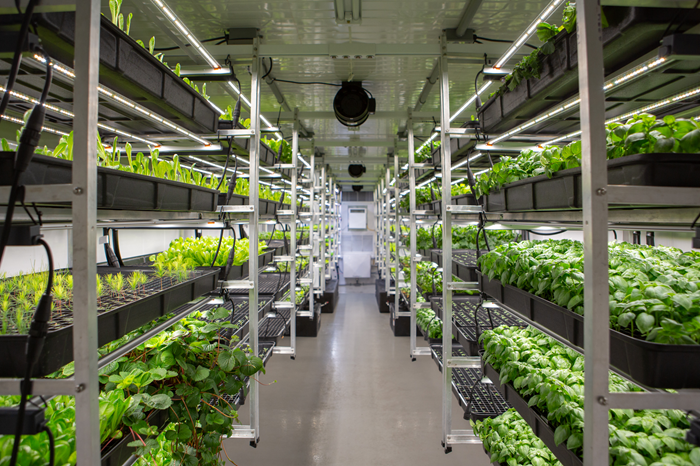
Microgreens are attractive because they can offer commercial growers a very different economic profile from traditional leafy greens. They have short crop cycles, relatively high value per square foot, and strong applications across foodservice, retail, and specialty markets. They can also complement a leafy-green operation rather than requiring a grower to completely change its business model.
But the important question isn’t simply, “Can I grow microgreens?” Most growers can demonstrate that in a pilot. The harder question is, “Can I grow them consistently, sell them consistently, and make money doing it?”
Moving from pilot to a sustainable business requires discipline around market demand, crop selection, production scheduling, distribution, and unit economics. We encourage operators to work backward from the customer rather than growing first and trying to find a market afterward.
That’s a broader philosophy we’re applying across our commercial business. We’re focused on right-sized systems and crop strategies built around actual demand rather than speculative capacity. Our goal is to help growers build businesses that are economically sustainable first — and then scale from a position of strength.
AmplifiedAg’s containers are being used at the USDA’s Agricultural Research Service site in Charleston for work ranging from genetic screening to sweet potato propagation research. What does it mean for the company to have that kind of research-grade validation, and how does what you learn from ARS make its way back into the commercial product?
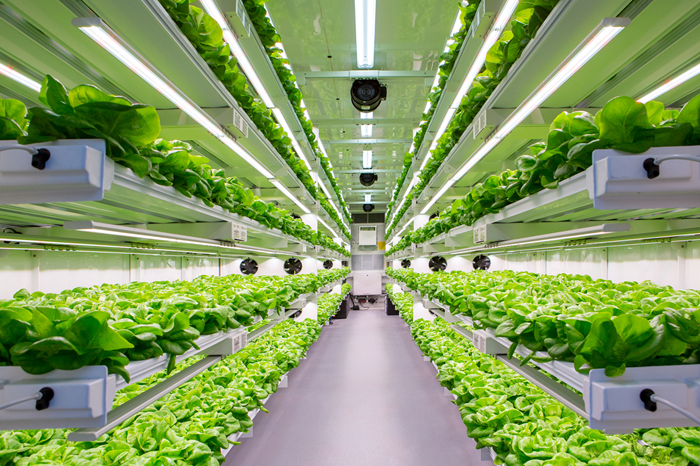
Having USDA-ARS use our technology for research is incredibly meaningful because the requirements for research are fundamentally different from simply growing a crop successfully.
Researchers need precision, repeatability, environmental control, reliable data, and the ability to intentionally change one variable while controlling the others.
USDA-ARS selected AmplifiedAg as its vertical farming platform for its Charleston research program, and the site now includes 16 customized research labs supporting work across areas such as plant pathology, breeding and selection, LED spectrum research, nutrient optimization, automation, and crop production.
For us, that creates a valuable feedback loop. Research environments push our hardware and software to be more precise and more flexible. Those improvements then become capabilities that can benefit commercial growers, while the work we’re doing with USDA-ARS helps demonstrate that our systems can successfully grow crops beyond leafy greens. Not only does that benefit AmplifiedAg, but it expands the possibilities for controlled environment agriculture as a whole.
Ultimately, research-grade validation gives us confidence that we’re not just building equipment that can grow plants — we’re building a platform capable of producing repeatable, measurable outcomes.
What should attendees stopping by your table at CEA Summit East expect to see or hear from AmplifiedAg this year — any specific developments you’re able to preview?
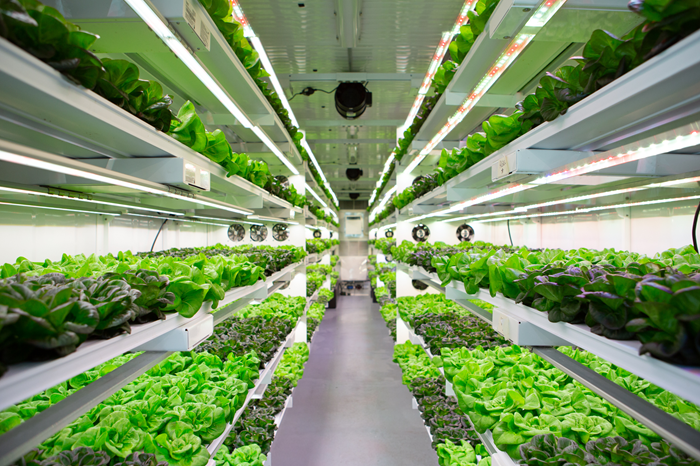
This year, we want to have a very practical conversation about what comes next for CEA. There’s been a lot of discussion in the industry about scale, but we believe the next phase is going to be much more focused on right-sizing technology to the business opportunity.
We’re continuing to expand our commercial offerings around leafy greens, microgreens, and other fast-turn specialty crops, with a greater emphasis on production profiles, labor efficiency, software, and helping operators understand their economics. We’re also expanding our Farm Kit approach and customizable systems so that growers aren’t forced into a one-size-fits-all model.
At the same time, we’re excited to show how our institutional and research work continues to influence the commercial platform. Whether someone comes to our table as a university researcher, a government agency, a correctional institution, or a commercial grower, the conversation is really the same: What are you trying to grow, what problem are you trying to solve, and what does success look like?
That’s where we think AmplifiedAg brings something different to the CEA conversation — we’re not just selling a container. We’re bringing together the growing environment, technology, data, and operational expertise to help our partners build something that actually works for their specific application.

Learn more about AmplifiedAg and make plans now to stop by their tabletop at CEA Summit East, September 15-16, 2026 at the IALR in Danville, VA