

As Texas Debates New Cannabis Laws, Take a Look Inside a Legal Marijuana Farm

May 23, 2025
Marijuana is being grown just six miles from the Texas Capitol.
The operation is fully legal, despite Texas’ strict marijuana laws —the marijuana is medical.
The crops are grown, cultivated and examined for quality control in room-sized shipping containers at Goodblend’s east Austin farm.
The company is one of the Texas’ three licensed of medical marijuana dispensaries, in a state that permits using low-THC medical marijuana for select health conditions.
But now, cannabis businesses and the people who use their products are tied up in recent legislative debates over the extent to which Texans should have access to tightly-regulated medical marijuana and consumable hemp products that are part of the flourishing cannabis industry.
Meanwhile, the day-to-day behind the proposed laws continue down a maze of back roads.
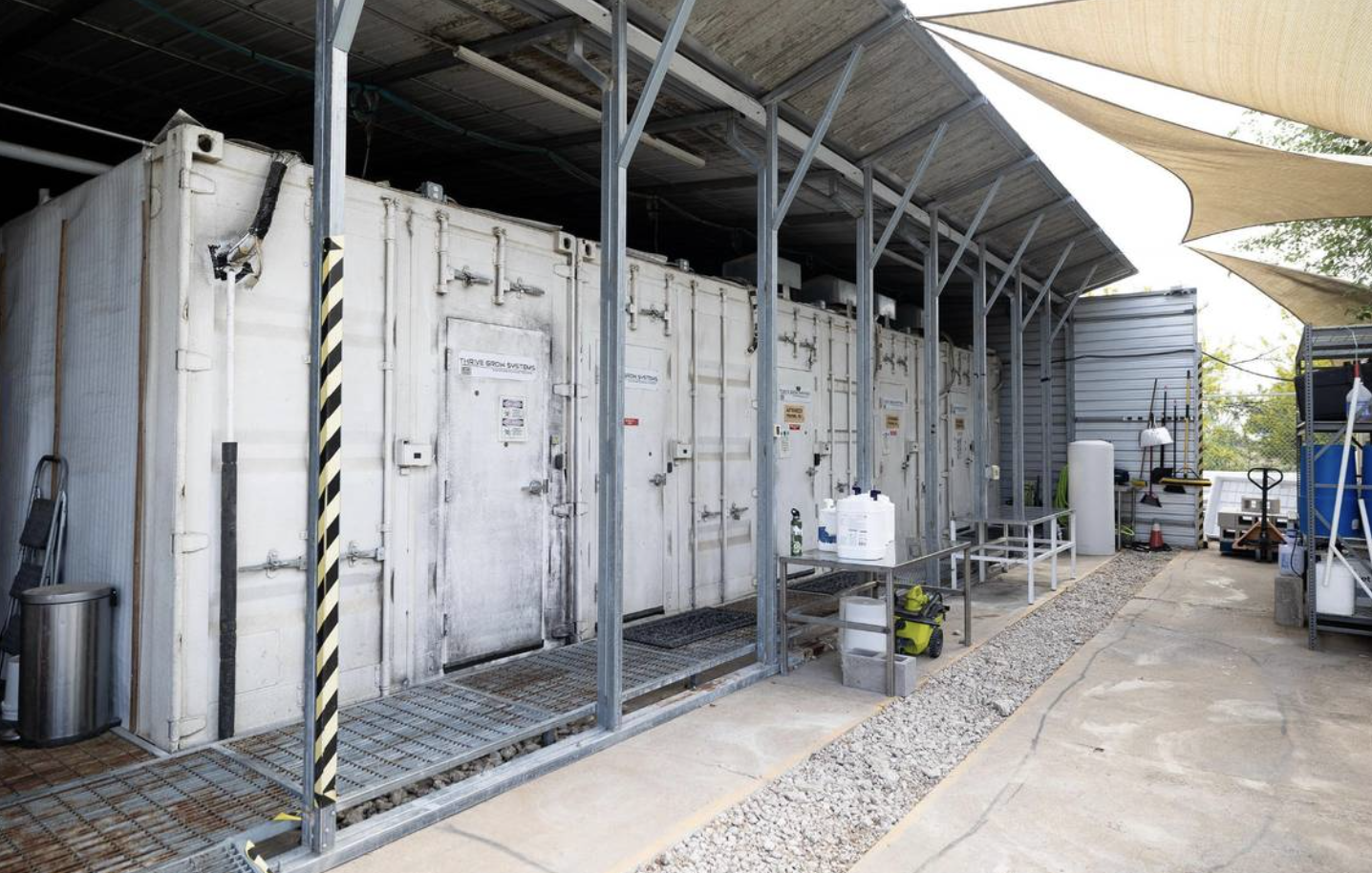
Goodblend in Austin on Thursday, May 1, 2025. Goodblend is one of three licensed medical marijuana dispensaries. Amanda McCoy amccoy@star-telegram.com
Growing medical marijuana in Texas
A coded-gate and long, curved driveway lead to a collection of white shipping containers, several fashioned in a row on the property.
Dillon Dabelgott, the senior manager of cultivation, shows off one of the areas he oversees: A climate controlled pod where medical marijuana is grown. It would be full of cannabis plants, but the latest crops were harvested in the weeks prior. Instead, the container sits mostly empty, with supply outpacing current demand.
Large white buckets of dried cannabis sit in a row on a metal table, each a different strain with names like Black Triangle Kush. They all have their unique differences, from look and smell to their cannabinoid makeup.
The ratio of THC to CBD determines the cannabis’ effect, explains Dabelgott. Users may feel sedated, energized or nothing at all.
The dried plant looks like what most imagine when they think of marijuana: shriveled green leafs, ready for smoking. But medical marijuana in Texas cannot be sold in this form.
Instead, it will be turned into gummies, tincture oil, balm or chocolate, all legal ways of taking medical marijuana in the state.
The products are different from the THC products that can produce a high and are readily available across the state at smoke shops, gas stations and specialty stores. The distinction comes down to the concentration of Delta-9 THC, but the plant that makes hemp and marijuana is the same, Dablegott said.

Dillon Dabelgott, senior manager of cultivation at Goodblend, explains how marijuana is grown at the facility during a tour on Thursday, May 1, 2025, in Austin. Goodblend is one of three licensed medical marijuana dispensaries in Texas. Amanda McCoy amccoy@star-telegram.com
Under state law, legal hemp has Delta-9 THC concentration below 0.3% by dry weight. Anything with a higher Delta-9 THC content is illegal marijuana.
“Like brothers and sisters, they come from the same parents, but they’re very different lots of times,” he said, later adding, “To separate it out, like hemp and cannabis, just by a percentage of their chemical makeup, I’ve never agreed with honestly.”
The “sibling” varieties ignited a legislative fight this session in Austin.
The medical expansion has been slow and faced some resistance in the past but has had wider support this year as lawmakers look to rein in, or more likely, largely eliminate Texas’ consumable hemp industry.
There are two primary cannabis bills before lawmakers in the final weeks of the Texas legislative session.
One — House Bill 46 — deals with medical marijuana, expanding qualifying medical conditions, increasing the number of licensed dispensaries, and allowing for off-site storage, among other changes.
The other — Senate Bill 3, a priority of Lt. Gov. Dan Patrick — bans consumable hemp products including drinks, edibles, vape cartridges and other THC products. The House on May 21 rejected a version of the bill that took a regulatory approach over prohibition, ultimately passing a ban akin to the Senate’s proposal. The bill is on the verge of arriving at Gov. Greg Abbott’s desk.
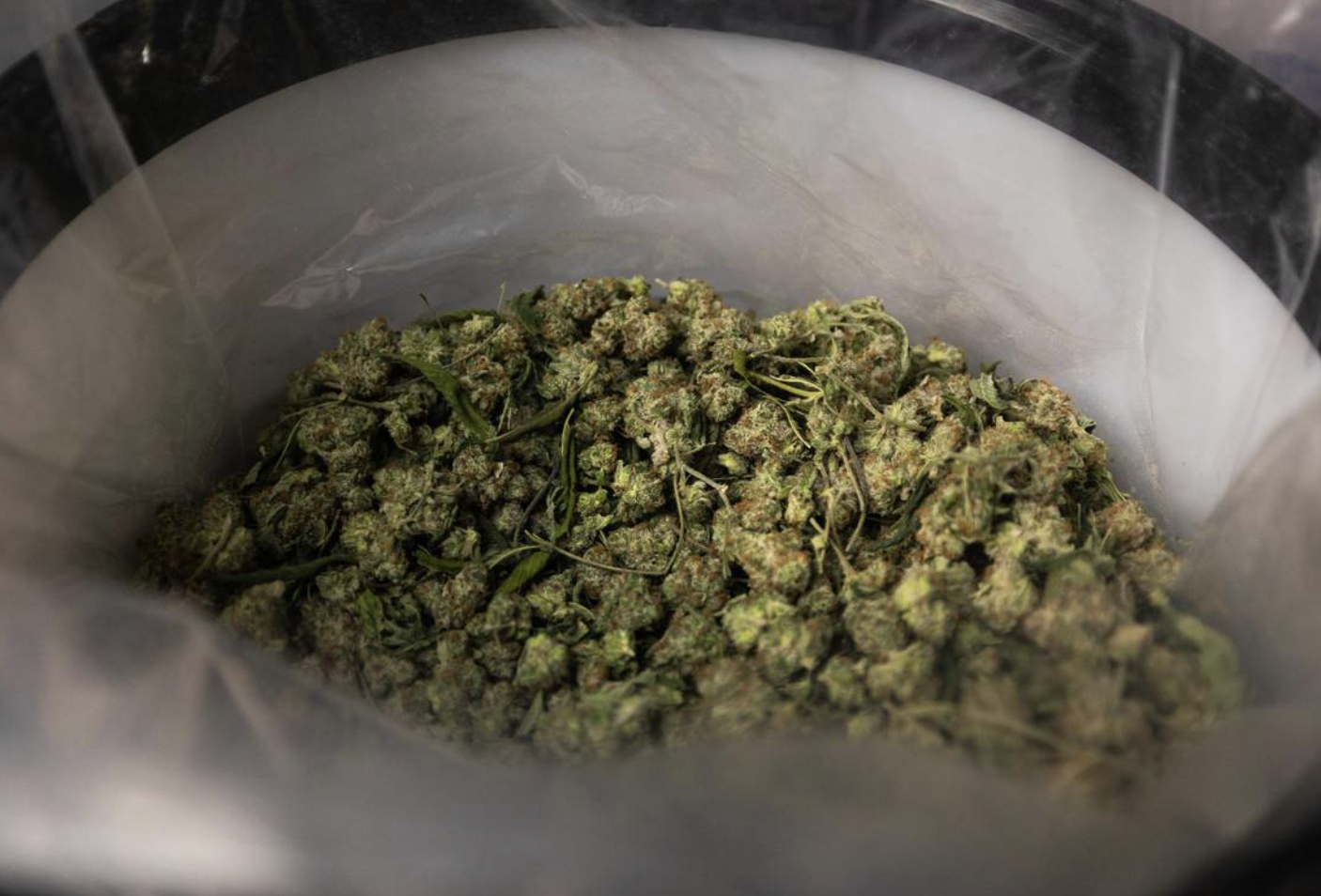
Harvested marijuana at Goodblend in Austin on Thursday, May 1, 2025. Goodblend, one of three licensed medical marijuana dispensaries in Texas, cultivates the plant and then extracts cannabis oil from the flower to be tested and used in products for patients. Amanda McCoy amccoy@star-telegram.com
Jervonne Singletary, the vice president of compliance and government relations, maintains that demand is there. There are thousands of Texans in the medical marijuana program and thousands of hemp stores, she said.
“They’re not apples to apples but, if we look at them together, there is demand across the state,” Singletary said. “What I would say is the impact on our program is, one, that we cannot meet patients where they are.”
She pointed to a lack of overnight storage and the current ban on smoking medical marijuana as barriers to customers.
The House Bill 46 on medical marijuana requires the state to have 15 dispensing organizations, up from three. Like Goodblend, they are licensed by the Texas Department of Public Safety to cultivate, process and dispense medical marijuana to patients.
The bill would also expand the number of qualifying medical conditions to include glaucoma, traumatic brain injury, spinal neuropathy, Crohn’s and other inflammatory bowl diseases, degenerative disc disease, terminal illnesses, veterans who’d benefit from medical marijuana for medical condition, and conditions that cause chronic pain that would usually be treated with an opioid. The bill would also let doctors designate qualifying medical conditions.
Currently, medical marijuana cannot be smoked in Texas, though the legislation would allow the inhalation of an aerosol or vapor if signed into law.
Lt. Gov. Dan Patrick on May 21 signaled support for many of the medical marijuana industry’s asks, which could bode well for House Bill 46 if and when it goes before the full Senate.
“I am in full support of expanding the TCUP (compassionate use) program,” Patrick said in a social media post. “We will expand licenses and have satellite locations for the first time for prescribed products from doctors for our veterans and those in need.”
Testing medical marijuana in Texas
The extraction and quality control area at Goodblend resembles a chemistry lap.
The plant that Dablegott harvested is taken to another shipping container where tools are used extract liquid resembling honey or molasses from the plants. The liquid — either full spectrum cannabis oil or distilled cannabis oil — will eventually be used to make the marijuana products available to the roughly 112,500 patients in Texas’ Compassionate Use Program.
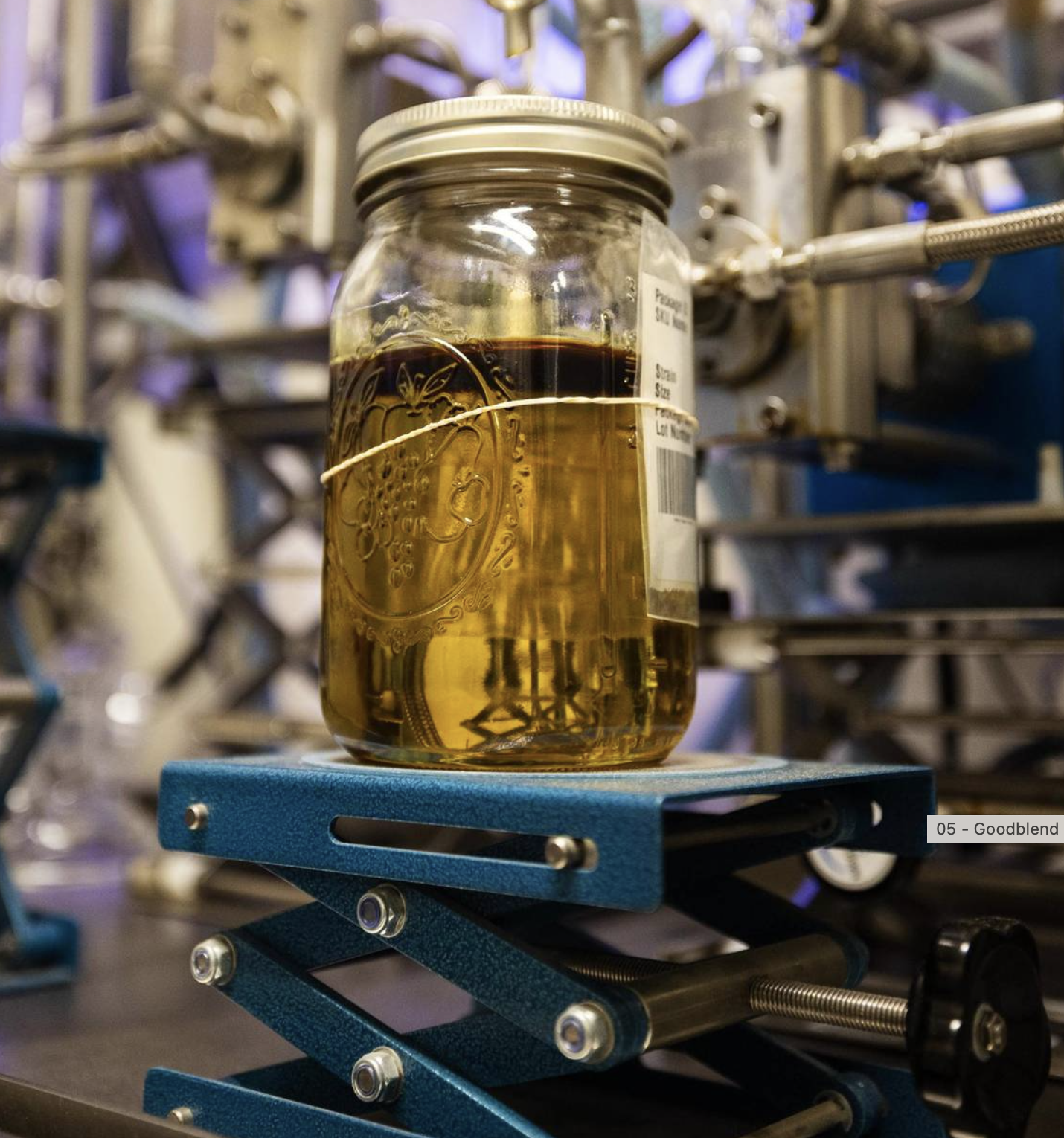
A jar of extracted cannabis oil at Goodblend in Austin on Thursday, May 1, 2025. The Texas Compassionate Use Program does not include inhalable products for patients so Goodblend extracts the oil from the marijuana plants to be used in products such as gummies. Amanda McCoy amccoy@star-telegram.com
A full room of plants is enough to make about three jars of distillate. One jar makes around 60,000 standard marijuana gummies.
Each product is tested for potency and things like pesticides and heavy metals, said lab manager Adam Richardson. An analysis is sent to Texas Department of Public Safety.
“It’s important because you have to build the trust between the patient and the provider,” Richardson said. “Just like when you go to H-E-B and you buy your tomatoes, and you buy your lettuce — you know that they’ve done the due diligence to test it for E. coli and anything that could harm you, so you can go home and have your salad.”
This is the same thing, he said.
“You want to trust that you’ve had everything screened completely, that way you know that everything you’re taking is safe, and it was grown in an environment that’s regulated and gives you a clean product,” Richardson said.
The details over the concentration of Delta-9 THC are central to cannabis policy debate in Texas.
Goodblend has tested third-party products from the hemp market that have come back as having more Delta-9 THC than what’s legally allowed. Others have come back below or as unidentifiable.
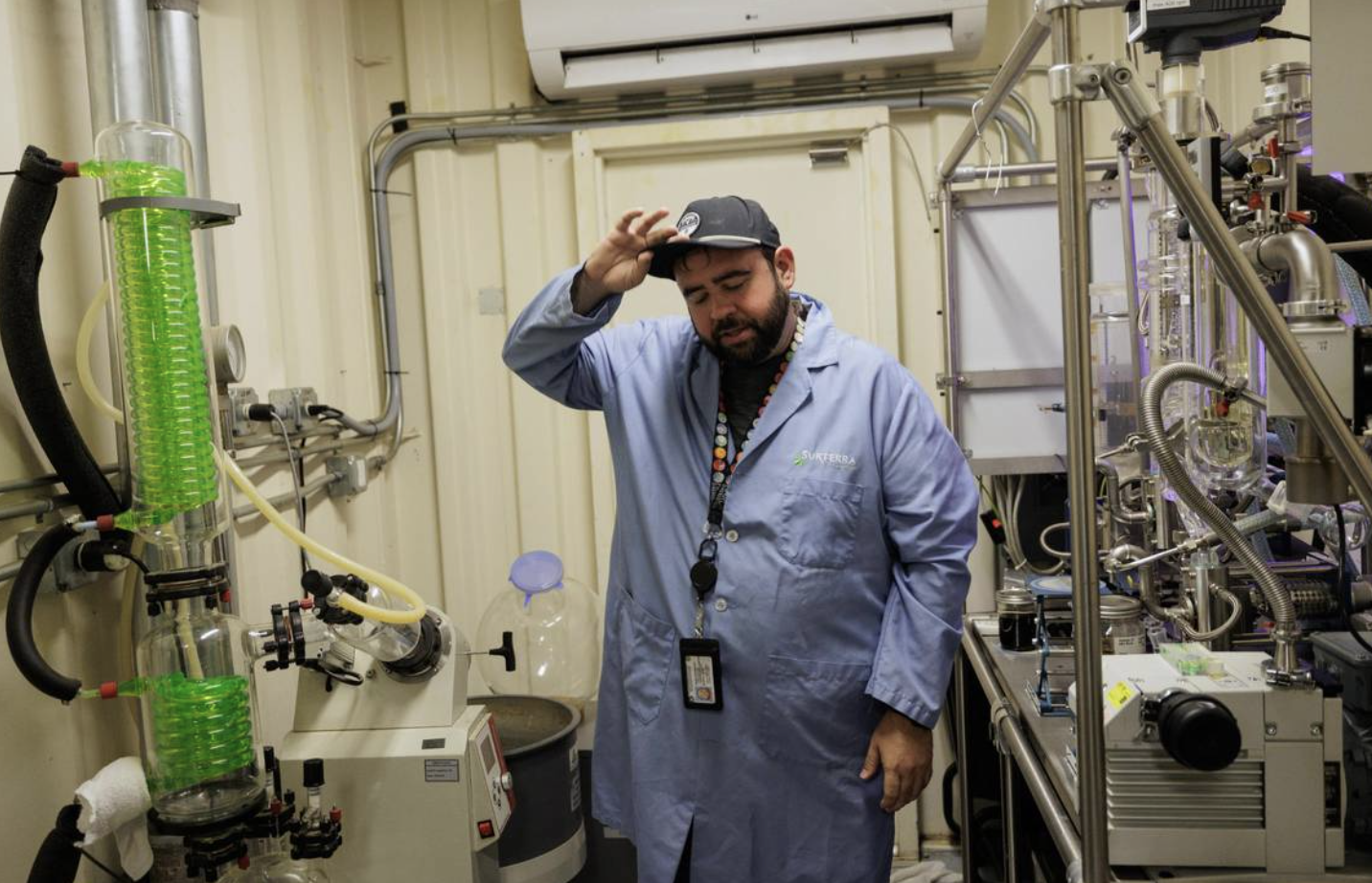
Lab manager Adam Richardson explains how cannabis oil is extracted from the marijuana plant at Goodblend in Austin on Thursday, May 1, 2025. The Texas Compassionate Use Program does not include inhalable products for patients. Amanda McCoy amccoy@star-telegram.com
Patrick has said “we cannot in good conscience leave Austin without banning THC, which is harming our children, and destroying Texans’ lives and families.”
Advocates and many in the cannabis business have called for regulation rather than an outright ban. Supporters of regulation argue the approach would allow the industry to grow while providing safeguards. A ban could push the market underground, supporters say.
Some who’ve weighed in on the debate in Austin point to Texas’ medical marijuana program as an option for those who need it and benefit from THC products. But others said the medical program is more expensive and less accessible than the products readily available at stores across the state.
“I don’t think prohibition worked in 1920,” said Republican Rep. Ken King of Canadian, who carried the bill in the House. “It’s not going to work in the 2020s.”
Goodblend, which has backed Senate Bill 3 and House Bill 46, would like to see “common sense regulations” like serving-size limitations, accurate testing on packages and keeping stores away from schools and places of worship, Singletary said.
“That’s really what we’re looking for is an even playing field,” Singletary said.
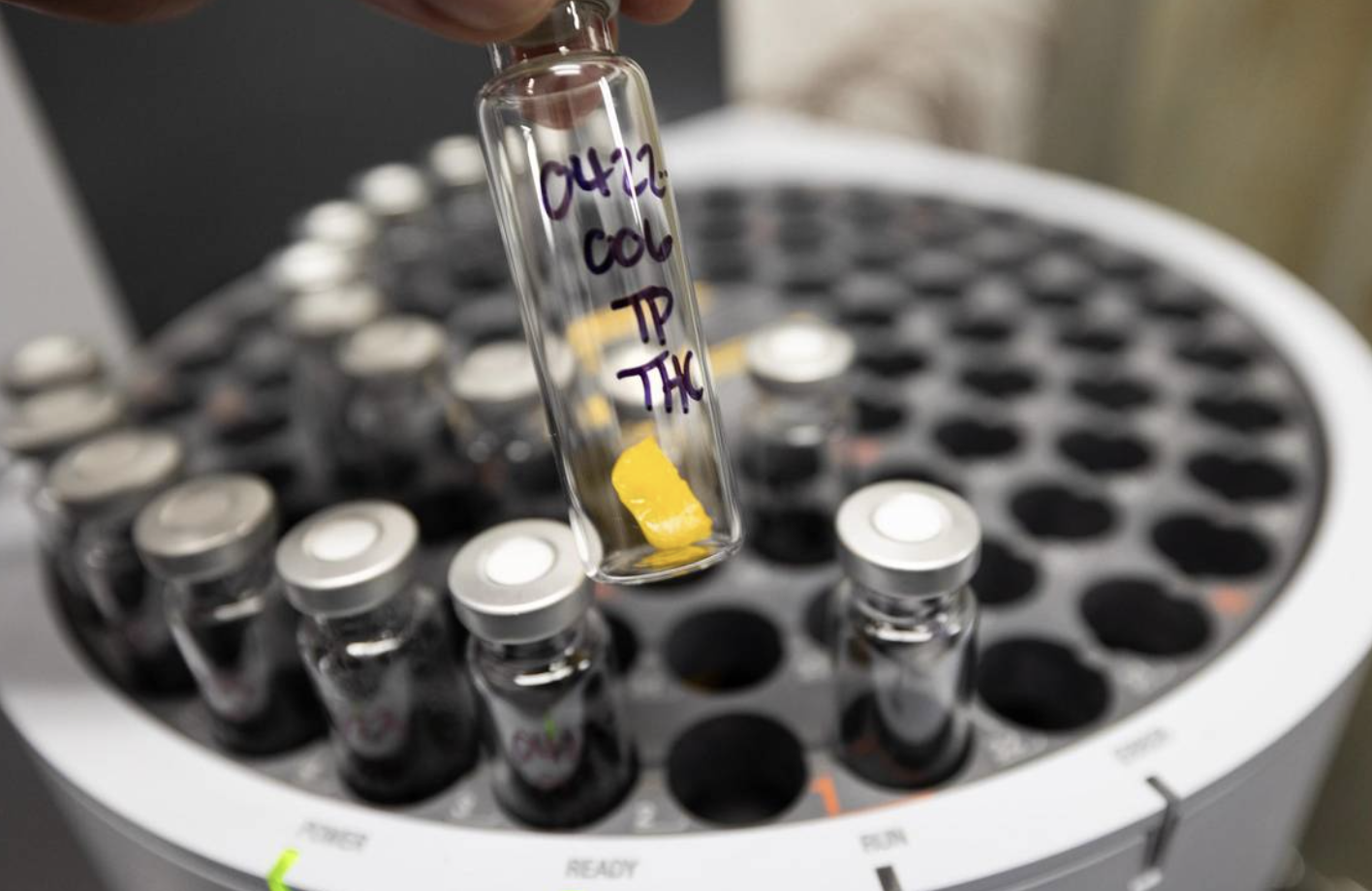
Goodblend tests all their products in a gas chromatograph mass spectrometer to make sure there are no impurities or unknown substances. Amanda McCoy amccoy@star-telegram.com
The ‘Willy Wonka’ phase
A sweet, sugary smell overwhelms the next pod at Goodblend.
Gummies in hues of orange, red, yellow, green and blue sit on parchment paper a metal tray. Next to them is a lavender mold where the edibles are formed. Supplies that could be from a bakery kitchen sit on the counter: a metal bowl, a glass measuring cup, Crisco spray and a small Magic Bullet blender. A dog food-sized bag of Belgian chocolate sits in another area where products are made
Fallon calls it the “Willy Wonka phase,” referencing author Roald Dahl’s fictional candy maker from “Charlie and the Chocolate Factory.”
These spaces are where the edibles and some of the other medical marijuana products are made.
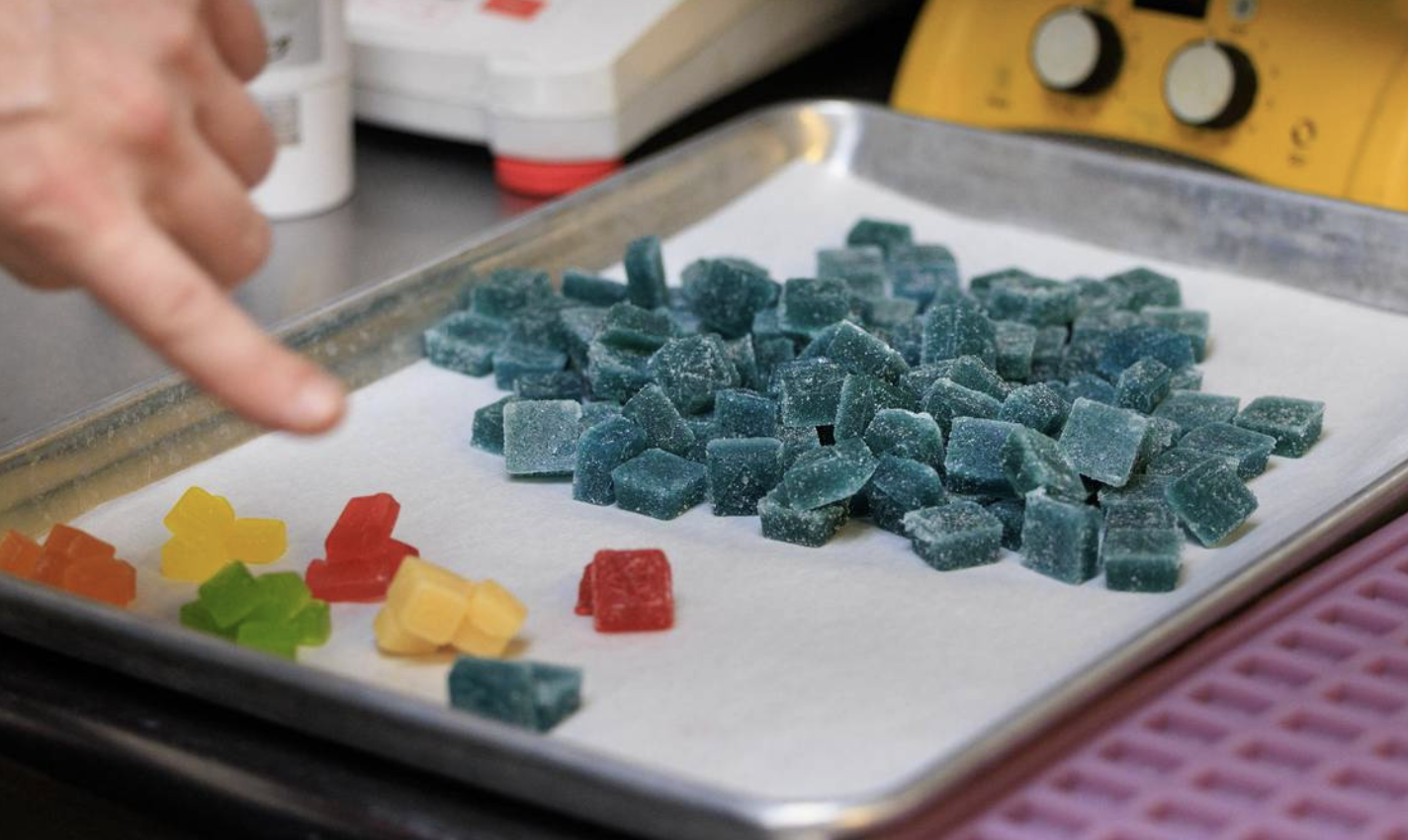
Eric Evans, director of manufacturing at Goodblend, shows the different gummies available to patients during a tour on Thursday, May 1, 2025. Amanda McCoy amccoy@star-telegram.com
Emily Greene’s job title is appropriate: Head chef.
“It’s a little different from some places that have, like, big machines and do it,” Greene said. “We like the hand work, that way we can control the stirring. Can make sure that there’s no burning, nothing like that. We are a little bit smaller of a place than some other cannabis companies.”
They come in flavors like orange, lime and strawberry.
Goodblend also makes chocolates, drinks, a topical salve and tinctures — drops that are often taken by placing a small drop of liquid under the tongue.
The drinks are smaller than many of the THC seltzer-style drinks available in stores.
“Since we’re medical, we are really trying to be conscientious of the amount of sugar, the amount of nutrition quality that these things are,” said Eric Evans, the director of manufacturing. “Whenever we can make it smaller, less sugar, same dose, we try to do that.”
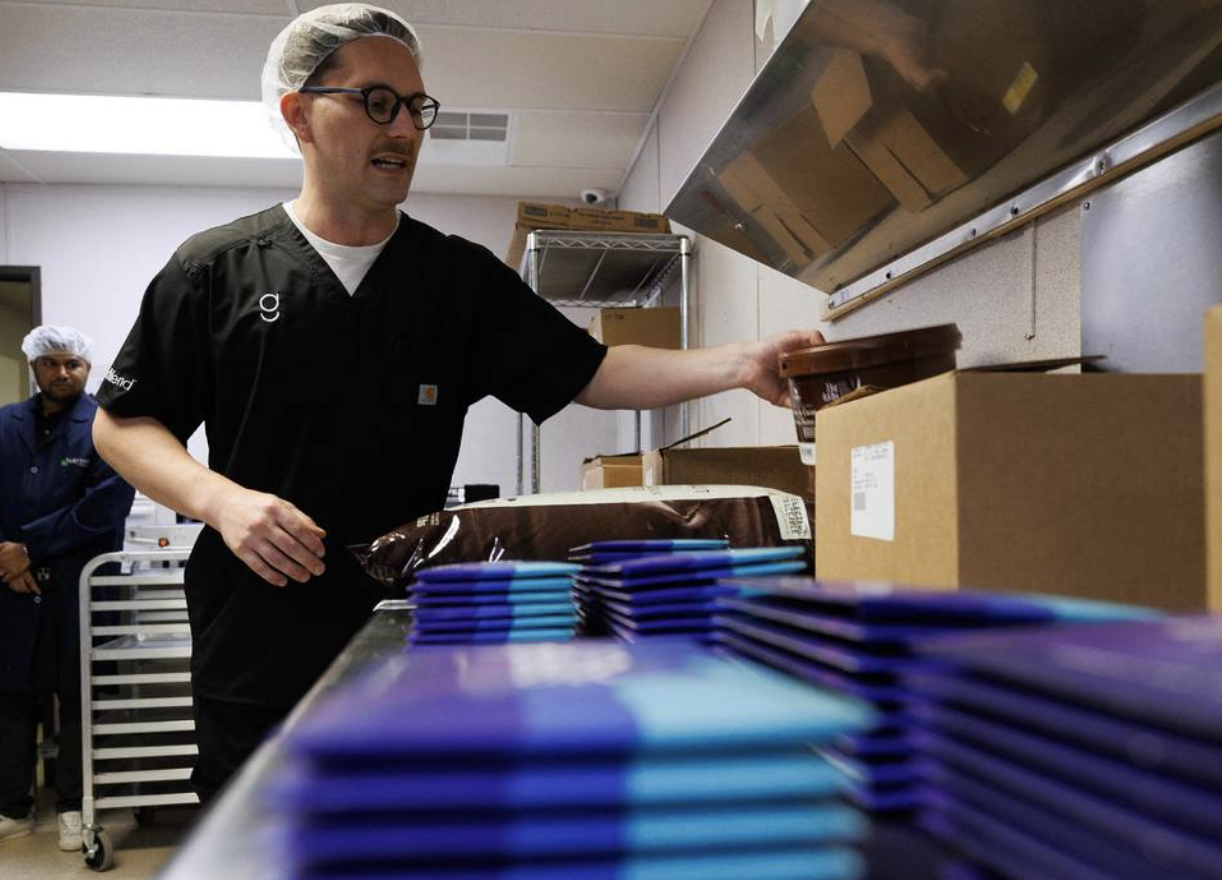
Eric Evans, director of manufacturing at Goodblend, shows the chocolate products available to Texas Compassionate Use Program patients in the during a tour on Thursday, May 1, 2025. Amanda McCoy amccoy@star-telegram.com
Some advocates have called for changes in the way medical marijuana is dosed out to patients.
Currently, products cannot contain more than 1 percent by weight of tetrahydrocannabinols, rather than by milligram, as is common for other medications. That means it can take more of a product to get a necessary dose.
“You don’t get penicillin a percentage of the weight of the pill,” Singletary said. “You actually just get the milligrams that are in the pill for your prescription.”
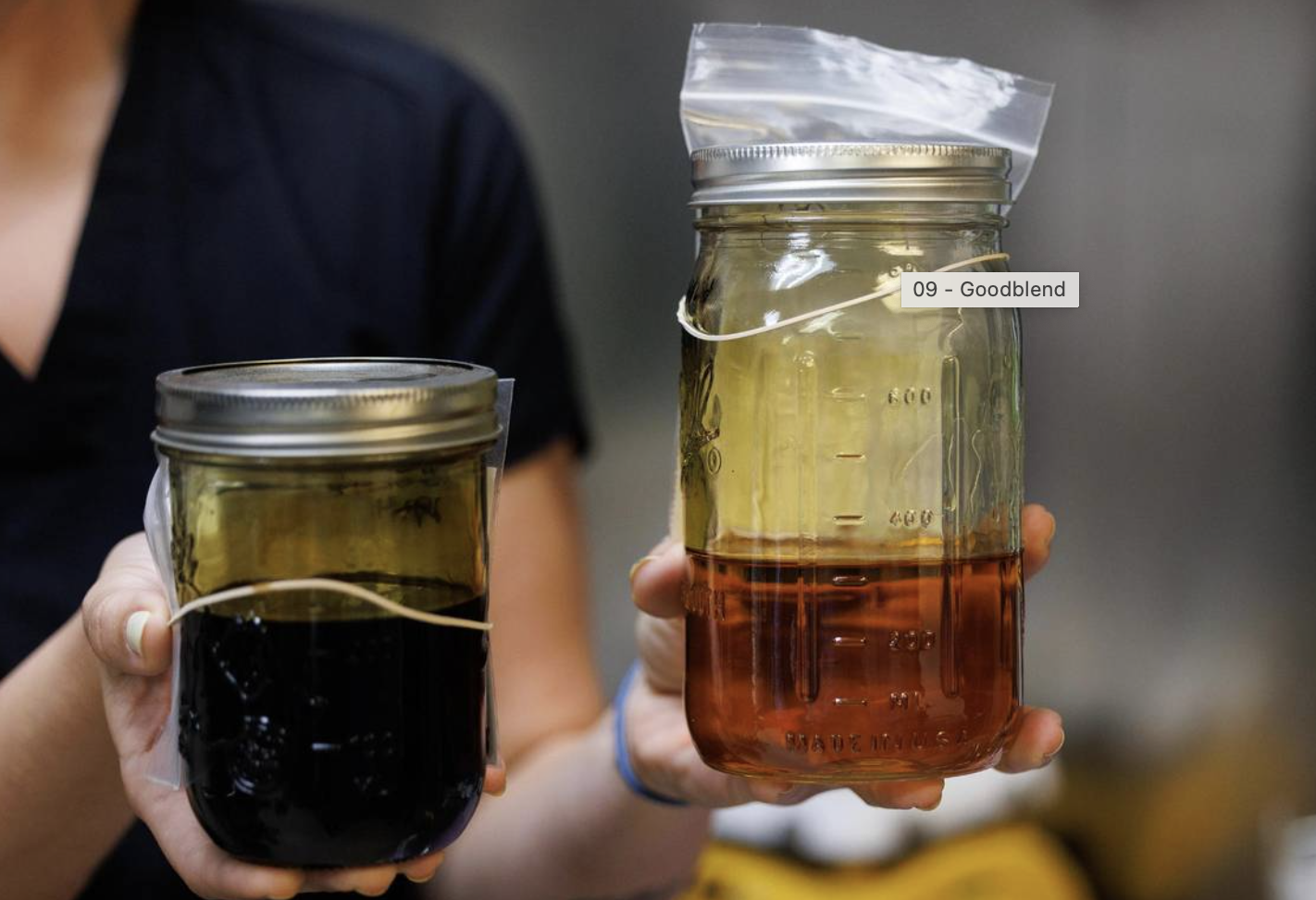
Head chef Emily Greene shows the difference between full spectrum cannabis oil, left, and distilled cannabis oil at Goodblend in Austin on Thursday, May 1, 2025. Amanda McCoy amccoy@star-telegram.com
Driving across Texas
Getting the cannabis products to patients poses an entirely new set of challenges.
“This is where all of the orders that go out to the state originate from,” distribution supervisor Alex Alvarado said, in a room surrounded by rows of boxes on metal shelves. “The two far rooms is where everything gets packed for the state. All the drivers prep here and ... make their way out ever single morning.”
In the early morning hours, drivers come by and pick up their shipments and head out down a dusty driveway. On this particular day, delivery drivers are headed to South Texas, Corpus Christi, Longview, North Texas and Houston.
They’re limited by state restrictions on storing medical marijuana overnight at places other than Goodblend’s East Austin site. Delivery on the border, in West Texas past Sterling City, and in cities like Lubbock and Amarillo are too far for a daily trip, Alvarado said.
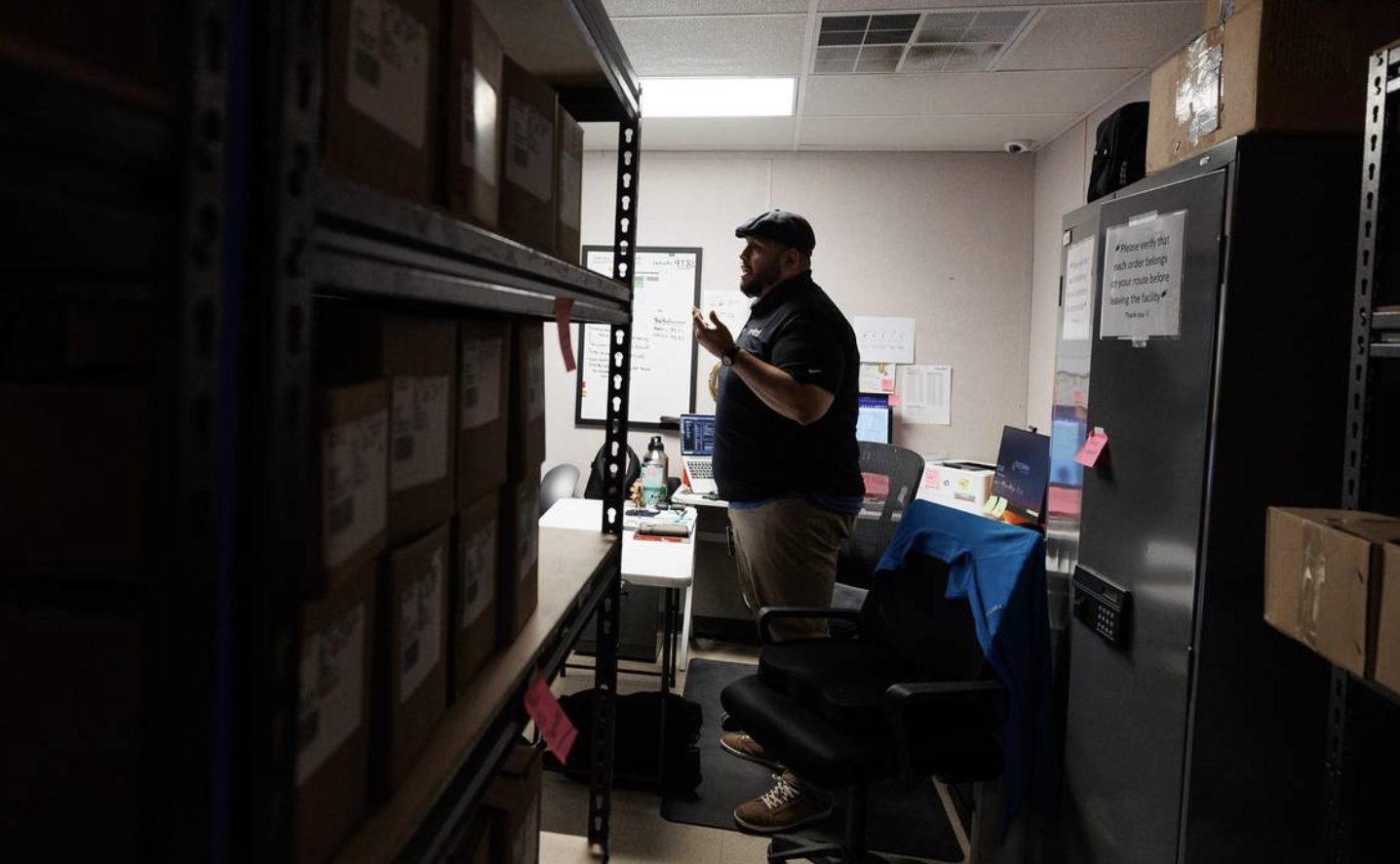
Distribution manager Alex Alvarado explains the process of delivering cannabis products to exas Compassionate Use Program patients that fill their prescription at Goodblend during a tour on Thursday, May 1, 2025. Amanda McCoy amccoy@star-telegram.com
Goodblend offers home deliveries, pop-up pickups at medical offices and has a handful of brick and mortars where patients can pick up their medical marijuana.
The daily drives pose challenges for vehicle wear, limited time with patients and delivery coordination, Alvarado said.
“Managing overall expectations of what we’re doing is difficult too, just because, we have to snap back here,” Alvarado said. “Sometimes it takes us 200 miles just to get to one house, and there’s nobody there, and we’re trying to communicate.”
The state’s medical marijuana bill would allow for satellite locations in additions to a dispensing business’ primary location.
But as it stands now, the drivers would turn around and head home.
The process repeats — grow, harvest, test, make, deliver.
This story was originally published May 23, 2025 at 5:30 AM.

Fort Worth Star-Telegram
Eleanor (Elly) Dearman is a Texas politics and government reporter for the Fort Worth Star-Telegram. She’s based in Austin, covering the Legislature and its impact on North Texas. She grew up in Denton and has been a reporter for more than six years. Support my work with a digital subscription