

Welcome to iGrow News, Your Source for the World of Indoor Vertical Farming

VeggiTech Inspires People To Grow Crops Sustainably
VeggiTech is an agro-tech organization focused on disrupting the agriculture industry to create sustainable and eco-friendly farms
How VeggiTech Is Changing UAE's
Agriculture Sector With Innovative Farming-Tech
November 18, 2020
Hatim Morbiwala, Head of Learning and Development,VeggiTech, controls and monitors eco systems with VeggiTech IoTImage Credit: Supplied
VeggiTech is an agro-tech organization focused on disrupting the agriculture industry to create sustainable and eco-friendly farms. Its tech-enabled solutions are:
VeggiTech digital operating system (V-DOS)
This is a scalable, repeatable set of solutions that are focused on the controlled environment agriculture as well as farming as a service (FAAS) model for its customers and investors.
Grow operating system
VeggiTech deploys the latest technology in terms of grow lights that provide the right amount of spectrum of light frequency to a plant-based on its type and growth cycle. This light is tuned to the grow cycle and creates the optimum environment for it to grow, coupled with the right nutrition and water quality for the plants. Internet of Things (IoT)-based sensors manage the environment and are linked to the data models that track the yield per unit of input resource so that it continually improves the quality of yield per sqm of grow space.
Farm operating system
All of VeggiTech’s business activities are managed in an enterprise resource planning (ERP) solution that provides complete control of the unit economics while creating a unique QR code for every crop being grown on its farms.
Learning Hub
VeggiTech also manages its Learning Hub using a state-of-the-art learning management platform that has online and offline features to interact with the learners. This has proven to be a very useful tool during the Covid-19 times as it continues to enable the future leaders – students – with the knowledge to grow their own food.
New launches
“With our vision to create the next one billion farmers, we are delighted to announce the launch of two new products that have been conceived, designed, and developed in the UAE,” says Hatim Morbiwala, Head of Learning and Development at VeggiTech. “We have developed a mobile app – Grow App – that will enable everybody to grow their own food and they can interact with the VeggiTech agronomist in case they need support with their plants. The app also has the ability to diagnose issues with the plants and recommend solutions using a machine learning database.”
Grow Kit is another unique product, developed by VeggiTech. “This is a physical kit which will inspire everybody to start their journey of growing their own food. We believe this is a life skill and should be part of the curriculum of every citizen on the planet,” says Morbiwala.
For more information, visit Veggitech.com
Call 058 263 1317 and 06 881 1861
email: info@veggitech.com

AppHarvest Plants First Tomato Crop With Harvest Expected In Grocery Stores Early Next Year
The Morehead facility spans 2.76 million square feet, the equivalent of 45 football fields. It’s the first of a series of indoor farms designed to redefine American agriculture by growing non-GMO, chemical pesticide-free fruits and vegetables using 100% recycled rainwater at locations closer to the people eating them
AppHarvest today announced it has planted its first tomato crop at the company’s high-tech controlled environment agriculture facility in Morehead, Ky. The crop is scheduled to be harvested and available at leading U.S. grocery stores in early 2021.
The Morehead facility spans 2.76 million square feet, the equivalent of 45 football fields. It’s the first of a series of indoor farms designed to redefine American agriculture by growing non-GMO, chemical pesticide-free fruits and vegetables using 100% recycled rainwater at locations closer to the people eating them. From its base in Appalachia, AppHarvest can reach nearly 70% of Americans in less than a day’s drive. The company and its mission represent a stark change to the existing American food system, which is increasingly reliant on imports.
The Morehead facility
“Today is an important milestone for AppHarvest as we seek to build a more resilient American food system from within Appalachia,” said AppHarvest Founder & CEO Jonathan Webb. “Our team has built one of the world’s largest and most technologically advanced indoor farms, which means AppHarvest’s tomatoes soon will be on store shelves and in American homes. This is just the first step for us. To transform agriculture in America, we need to do this on a large scale, and we’re already taking steps to do just that with construction underway on two more facilities totaling about 75 acres of growing space.”
AppHarvest’s tomatoes are scheduled to be in grocery stores in the first quarter of 2021, and the company reaffirms its expectations to begin recognizing revenues at that time.
AppHarvest chose tomatoes as its first crop because more than 60% of America’s fresh tomatoes were imported in 2019, an increase of almost 50% over the past decade. By growing closer to where people eat, AppHarvest’s tomatoes will be picked at peak ripeness and delivered quickly to grocers. AppHarvest is providing Americans with tomatoes that are locally grown using only recycled rainwater and no chemical pesticides. AppHarvest’s worker-first philosophy also promotes fair labor practices.
In addition to the Morehead, Ky., facility, AppHarvest is already building two additional high-tech controlled environment agriculture indoor farms. The first will be comparable in size to the company’s flagship operation in Morehead, Ky., and is located outside Richmond, Ky. The third, located in Berea, Ky., will be 15 acres and grow leafy greens. Why leafy greens? American production is concentrated in Arizona and California, which combine to produce 90% of U.S.-grown leafy greens. These states are in the midst of a decades-long drought and are consuming precious water resources. By contrast, Central Appalachia, where AppHarvest is investing in building controlled environment agriculture facilities, has an abundance of rain, so much so that the facilities can be operated on 100% recycled rainwater.
Educational Indoor Controlled Environment Facility
How else is AppHarvest different from traditional agriculture companies?
AppHarvest puts the planet and people first as a Public Benefit Corporation and has also been certified as a B Corp by the nonprofit B Lab. The company is one of only 3,600 certified B Corps and will become one of just a dozen publicly traded public benefit corporations upon the completion of its business combination with publicly-traded special purpose acquisition company Novus Capital Corporation (Nasdaq: NOVS). The B Corp certification process analyzed
AppHarvest’s commitment to forward-thinking initiatives across community, customers, environment, governance, and workers.
The company’s controlled environment agriculture facilities are designed to reduce water usage by 90% due to unique circular irrigation systems connected with large-scale rainwater retention ponds. The closed-loop system runs entirely off 100% recycled rainwater and is designed to eliminate harmful agricultural runoff, which contributes to toxic algae blooms.
Strong relationships with leading AgTech universities and companies in the Netherlands position AppHarvest as a leading applied technology agriculture company. The Netherlands has developed a significant high-tech greenhouse industry, becoming the world’s second-largest agricultural exporter despite having a landmass roughly equal in size to Eastern Kentucky. Earlier this year, AppHarvest led a landmark 17-organization agreement uniting Dutch and Kentucky governments, universities, and private companies, with all committing to building America’s AgTech capital from within Appalachia.
In just over two years, AppHarvest has attracted more than $150 million in investment into Central Appalachia and announced on September 29, 2020, its entry into a definitive agreement for a business combination with publicly-traded special purpose acquisition company Novus Capital Corporation (Nasdaq: NOVS). The combination, which is expected to close late in the fourth quarter of 2020 or early in the first quarter of 2021, is expected to provide $475 million of gross proceeds to the company, including $375 million from a fully committed common stock PIPE at $10.00 per share anchored by existing and new investors – including Fidelity Management & Research Company LLC, Inclusive Capital, and Novus Capital Corporation. Upon closing of the transaction, the combined company will be named AppHarvest and is expected to remain listed on Nasdaq under the ticker symbol APPH.
AppHarvest’s investors include Revolution’s Rise of the Rest Seed Fund, Inclusive Capital Partners, Equilibrium, Narya Capital, Lupa Systems, Breyer Capital, and Endeavor Catalyst. Endeavor selected AppHarvest Founder & CEO Jonathan Webb as an Endeavor Entrepreneur in 2019.
Board members include food icon Martha Stewart, Narya Capital Co-Founder, and Partner JD Vance, Impossible Foods Chief Financial Officer David Lee, and impact investor Jeff Ubben.
About AppHarvest
AppHarvest is an applied technology company building some of the world’s largest indoor farms in Appalachia. The Company combines conventional agricultural techniques with cutting-edge technology and is addressing key issues including improving access for all to nutritious food, farming more sustainably, building a home-grown food supply, and increasing investment in Appalachia. The Company’s 60-acre Morehead, KY facility is among the largest indoor farms in the U.S.
For more information, visit https://www.appharvest.com/.
Vertical Garden Operation Utilizes Shipping Container
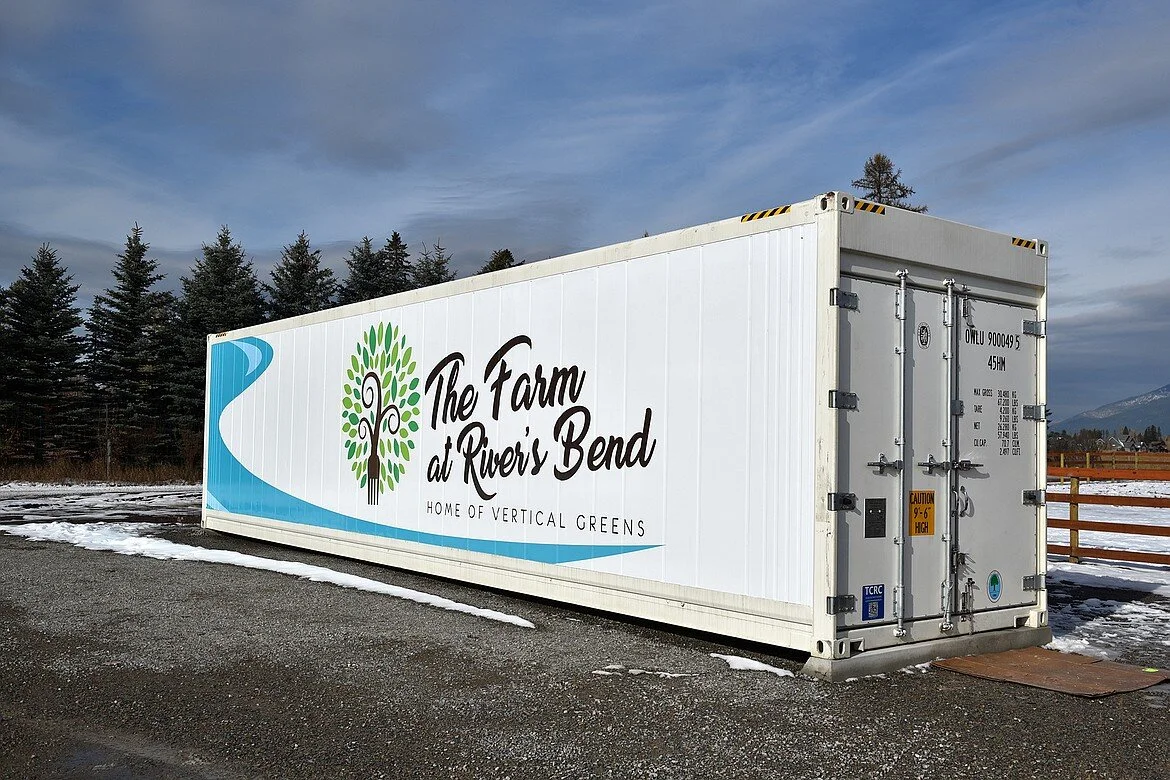
Tim and Harline Moyer, owners of The Farm at River’s Bend, are embarking on a new adventure at their property east of Whitefish. They’re beginning a vertical garden operation aimed at supplying local restaurants with fresh lettuce even in the depths of winter
Harline and Tim Moyer, and Dustin Lang at The Farm at River’s Bend east of Whitefish. The Moyers are beginning a vertical container farm on their property. (Heidi Desch/Whitefish Pilot)

By HEIDI DESCH
Editor | November 18, 2020
On the outside, it looks like a regular shipping container, but inside the promise of a full-fledged garden full of greens is represented by young sprouts.
Tim and Harline Moyer, owners of The Farm at River’s Bend, are embarking on a new adventure at their property east of Whitefish. They’re beginning a vertical garden operation aimed at supplying local restaurants with fresh lettuce even in the depths of winter.
The Moyers moved to Whitefish in the spring after running their own farm in Hawaii. They have a friend who suggested they move here, so they bought 10 acres of land and brought along their plan to operate a vertical garden.
Colored by blue and red lights, young plants begin to sprout inside the vertical container garden at The Farm at River’s Bend. (Heidi Desch/Whitefish Pilot)
“We can operate year-round sustainably because it’s not subject to the weather,” Tim said. “There’s no herbicides and no pesticides.”
Sitting on their property is a Freight Farms container that’s fully equipped to operate as a hydroponic garden. One container can grow as much food as would be produced on 2.5 acres of land and they hope to eventually have four containers, which would grow the equivalent of 10 acres worth of land.
“That will leave us plenty of space for the horses to run around,” Tim said standing beside the container. “We want to provide fresh lettuce and be good stewards of the land, and this will let us do both.”
The Moyers own the Lahaina Family Farms, a sustainable organic educational farm, on Maui. The farm operates with volunteers, and it was one volunteer who owns restaurants in New York City that introduced them to the concept of Freight Farms, a hydroponic container farm.
Tim was intrigued by the idea and knew it worked on some of the same concepts their farm did such as using as little water as possible for the plants, but the cost of electricity in Hawaii made it cost-prohibitive to run such an operation. But when the Moyers moved to Montana they knew they wanted to begin building their vertical greens farm here.
Freight Farms is a Boston-based agricultural technology company that manufactures and sells container farms, which are retrofitted 40-foot freight containers that come with a hydroponic farm system that utilizes technology to create the optimal growing conditions.
Once the vertical farm is fully operational, the Moyers expect to be harvesting 1,200 heads of lettuce per week with 13,000 plants growing at one time.
“We can deliver it at 2 p.m. and then it’s on the table at 5 p.m.,” Tim said. “It’s quick farm to table — the chef orders it, we pick it that day and then deliver it.”
A family friend Dustin Lang runs the container farm monitoring the software that runs the LED lighting and nutrient irrigation system designed to make the leafy greens or potential herbs grow at optimal levels.
Dustin Lang walks between the rows that will eventually be planted with lettuce for the hydroponic vertical garden. LED lights cast blue and red light onto the plants for optimal growth. (Heidi Desch/Whitefish Pilot)
Lang said it was a visit as a child that he took to Disney World’s Epcot and a display on life on Mars that spurred his interest in non-traditional food cultivation.
“I have been interested in garden farming,” he said. “The more I learned about hydroponics, the more I was interested. I was tired of my job, so it seemed like a good time to come here and join them.”
Plants are started in containers and then when ready are moved into a drip irrigation system that allows for vertical growing. The system uses red and blue light at set wavelengths to aid in the optimal exposure for growth, while the container maintains an ideal temperature and humidity to provide plants with the right climate for growth.
The hydroponic system delivers the right amount of water to plants during the various stages of growth.
The Moyers plan to begin selling to restaurants, but as they expand they’d also like to sell directly to customers. In addition, they expect to follow the same model as their farm in Hawaii with education by bringing on volunteers to work in the container farm.
For more information, visit www.thefarmatriversbend.com.
US - FLORIDA: St. Pete Couple Exporting Success To Urban Farmers Around The Country
Brick Street Farms in St. Petersburg is one such operation, turning shipping containers into year-round hydroponic grow houses
Brick Street Farms in St. Petersburg is one such operation, turning shipping containers into year-round hydroponic grow houses. The owners say the system they use has been so successful, they've started selling it to other urban farmers to start similar businesses across the country.
They call their new venture Thrive Containers, which mixes brand new technology with one of mankind's oldest industries: agriculture. They now sell various sizes of ready-to-go indoor farms.
Thrive's shipping container farms are ready to start producing fresh produce with a minimal impact on resources.
And they're making the containers in the Bay Area.
For more information, visit thrivecontainers.com.
What’s Driving Hydroponic Lettuce Breeding?
BASF Vegetable Seeds is developing lettuce varieties that can be grown in controlled environment facilities using supplemental lights.
Leafy greens, including lettuce, are the hottest crop when it comes to controlled environment vegetable production. It seems like every month a new greenhouse or vertical farm facility begins operating or an existing operation expands with increased production space dedicated to leafy greens. Many of the leafy greens are grown using hydroponic production systems including nutrient film technique (NFT) and deep water culture.
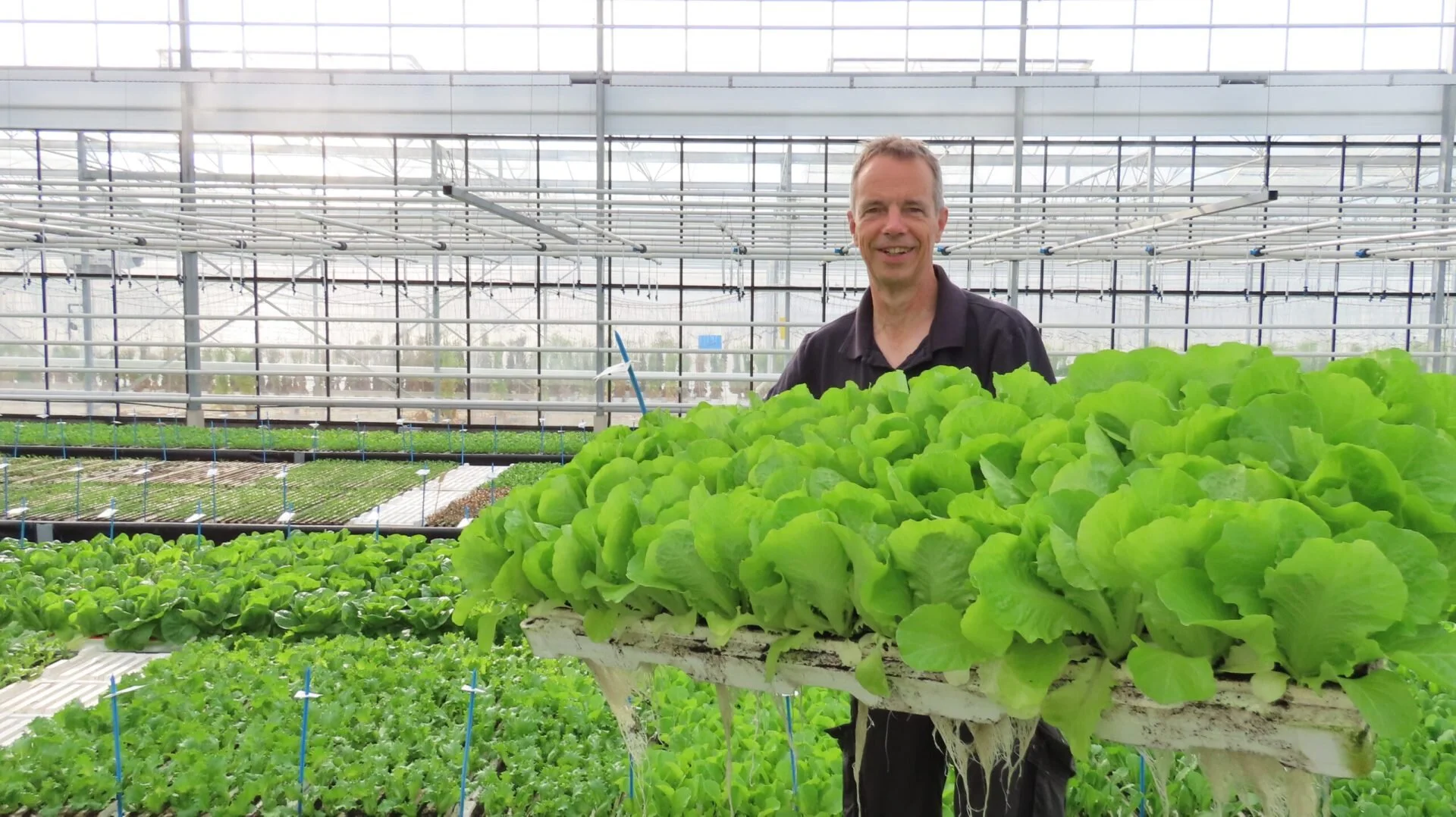
Peter Does, product specialist hydroponic lettuce and spinach at BASF Vegetable Seeds in the Netherlands, has been doing product development with lettuce for controlled environment production for nearly 25 years. The lettuce varieties are sold under the Nunhems brand.
Peter Does, product specialist hydroponic lettuce and spinach at BASF Vegetable Seeds, has been doing product development with lettuce for controlled environment production for nearly 25 years.
“When I started with the company we sold lettuce varieties for hydroponic production primarily in the Scandinavian countries, with some sales in the United States, Canada, Australia, and New Zealand,” Does said. “BASF has been breeding butterhead lettuce varieties for greenhouse production since the 1970s because it is a traditional greenhouse crop in the Netherlands.”
Does said before the development of Rockwool as a growing medium for tomatoes and cucumbers, these crops were grown in greenhouses directly in the soil. Tomatoes and cucumbers were grown in rotation with one or two cycles of butterhead lettuce in winter.
“The change to Rockwool for cucumber and tomato production was a major driver for crop specialization,” he said. “A lettuce crop in the soil in the winter no longer fit in the combined production cycle with tomatoes and cucumbers. This was a push for the development of summer butterhead varieties that could be produced under glass to make year-round lettuce production possible. Previously winter butterhead production was done in greenhouses and summer butterhead production was done in open fields. In standard greenhouses where supplemental artificial light was not an option, this was a form of controlled environment agriculture, but not at the level lettuce growers achieve today.”
BASF has been selling a wide range of lettuce types to hydroponic growers. In 2006 the company built new greenhouses with dedicated breeding and facilities for hydroponic production.
In 2006 BASF Vegetable Seeds built new greenhouses with dedicated breeding and facilities for hydroponic production.
“Basically all the lettuce grown in greenhouses today is produced in some type of hydroponic system,” Does said. “I don’t know of many growers anymore who are producing in soil. Globally the production is changing rapidly. In Europe production in soil has almost disappeared in the last five years.
“In Europe, most of hydroponic lettuce production is with NFT systems. The majority of growers are producing single head lettuce grown in peat pots, which sit in an NFT system.”
Breeding for supplemental light production
Because an increasing amount of lettuce is being produced hydroponically with supplemental light, BASF is focusing its breeding to meet the market demand.
“We look for varieties that perform well under supplemental light,” Does said. “If supplemental light is supplied at a level in the greenhouse starting at 100 micromoles, then the lettuce varieties are potentially suitable for year-round production. If a variety is selected under high supplemental light levels, it normally also performs under lower supplemental light levels but just grows slower.
“Sometimes a variety works year-round. Sometimes a summer and winter variety may be needed based on the specific strengths of a variety, including tipburn resistance, heat tolerance, and growing speed.”
Does said the future for greenhouse lettuce production in areas with low light levels is tenuous if supplemental lighting is not used.
BASF’s lettuce breeding selection occurs under LED supplement light during the winter.
“Traditionally there were butterhead varieties that were produced in the winter under low light levels like in the Netherlands,” he said. “Light levels in some cases were almost zero. These were varieties that were selected specifically to grow at low light levels and low temperatures. Under these conditions, plants grew at a very slow production rate.
“Growing butterhead varieties under winter conditions, it could take five months from seed to harvest. Growers who want to grow lettuce year-round need to go to a certain level of high tech. Growers will have to apply supplemental light if they are in an area where the light levels aren’t high enough during the winter.”
Vertical farm applications
In addition to breeding lettuce varieties for greenhouse production, Does looks at their performance in vertical farm systems.
“For me, vertical farming is just another form of controlled environment production,” he said. “There is a little more control over the production conditions in a vertical farm compared to a modern high-tech greenhouse. What we select for in regards to breeding for greenhouse production is not that different for vertical farming.
“If we select varieties for production in a high-tech greenhouse during winter in the Netherlands, more than 90 percent of the light is coming from LEDs. That isn’t that much different from a growing system where natural daylight is blocked out completely. What I see is a good correlation from the performance of varieties under greenhouse hydroponic winter production compared to the performance in an indoor vertical farm.”
Peter Does said market changes are asking that lettuce be grown at high densities for mechanical harvesting to deliver maximum yields.
Market changes impact lettuce production
Does has seen a marked shift in the way lettuce is being grown in hydroponic production systems.
“Hydroponics was always about growing single heads for the fresh market,” he said. “Traditionally in the United States, almost all greenhouse lettuce produced in hydroponic systems was butterhead for fresh market sales. In recent years, the market is increasingly changing toward convenience. Today fewer people are buying a head of lettuce or a whole cabbage or other vegetables in their original state. Many vegetables now end up in a bag or clamshell for ready-to-eat consumption. If the market continues to go in that direction, more growers will start producing different types of lettuces suitable for mechanical harvesting.”
Does said the challenge for growers will be how to optimize production while maintaining quality.
“Market changes are asking for lettuce that can be grown at high densities, mechanically harvested and delivering maximum yields,” he said. “It is no longer about the number of heads of lettuce. Now growers need to produce as many kilograms as possible per square meter per year. At the same time, the lettuce has to be a good quality product that has good taste, good texture, and good shelf life. This is changing the market. Growers have to find a good balance between density, production cycle, maintaining quality, and optimizing yields.”
For more: Peter Does, Nunhems Netherlands BV; peter.does@vegetableseeds.basf.com.
Carlos Umana, Nunhems USA Inc., (603) 343-4495; carlos.umana@vegetableseeds.basf.com; https://www.nunhems.com/us/en.html; https://www.nunhems.com/us/en/Varieties/LTL_lettuce.html.
This article is property of Urban Ag News and was written by David Kuack, a freelance technical writer in Fort Worth, Texas.

Folium 2.0 Hits The Market Ahead of Schedule
“F2 gives growers that next level microclimate data. Traditionally, microclimates described the farm, then it was the greenhouse, but now with F2 it is down to the level of the plant itself. Each sensor can gather a monumental amount of data making it the most comprehensive sensor network on the market.”
19 November 2020
Autogrow has launched the second generation of its Folium Smart Sensor Network, ahead of schedule to meet customer demand for greater access to data in the cloud.
“Since the initial launch of Folium in February we have had fantastic feedback from customers requesting further features. Because of our focus on usability and our approach to design; we have been able to deliver F2 significantly ahead of our timeline and incorporate the most requested items which is incredibly exciting,” says Chief Technology Officer Jonathan Morgan.
“F2 gives growers that next level microclimate data. Traditionally, microclimates described the farm, then it was the greenhouse, but now with F2 it is down to the level of the plant itself. Each sensor can gather a monumental amount of data making it the most comprehensive sensor network on the market.”
The Autogrow team focused on the most requested features for F2 including the addition of plant temperature readings, substrate moisture readings, and actual VPD (Vapor Pressure Deficit).
“With the release of our Folium public API (Application Programming Interface) in August, we were able to integrate other sensor technology like Plant Temperature sensors and Substrate Moisture Sensors to the platform. Growers don’t need to buy seven or eight different sensors any longer to get all of these readings. Everything is available in F2.”
F2 introduces new features including:
Connecting a Plant Temperature Sensor
Connecting a Substrate Moisture Sensor
Receiving actual VPD (Vapor Pressure Deficit) readings as opposed to estimated.
Dew Point calculation.
As well as delivering the existing readings for:
Climate Temperature
Relative Humidity
CO2
PAR (Photosynthetically Active Radiation)
RAD (Radiation)
Barometric pressure
“All of the readings and microclimate visualization are presented in the cloud on one platform. When you’re looking for precision in agriculture you need to understand the levers you can pull to further increase your yield and F2 is what’s going to get you there.”
For more information on F2 - https://autogrow.com/products/folium-f2
MEDIA QUERIES
Kylie Horomia, Head of Brand & Communications
(e) Kylie.horomia@autogrow.com
(w) www.autogrow.com www.farmroad.io
Sales queries – sales@autogrow.com
About Autogrow
Autogrow leverages the power of technology, data science, and plant biology to provide indoor growers affordable, accessible, and easy-to-use innovation – 24/7, anywhere in the world.
Our hardware, software, and data solutions support growers and resellers in over 40 countries producing over 100 different crop types.
We are the experts in Controlled Environment Agriculture (CEA) and continue to stay ahead of a rapidly evolving landscape.
Autogrow, Building 3, Level 1, 61 Constellation Drive, Mairangi Bay, Auckland, Auckland 0632, New Zealand

VIDEO: This 2-Acre Vertical Farm Out-Produces 750 Acre ‘Flat Farms’
According to Nate Storey, the future of farms is vertical. It’s also indoors, can be placed anywhere on the planet, is heavily integrated with robots and AI, and produces better fruits and vegetables while using 95% less water and 99% less land
John Koetsier Senior Contributor
November 20, 2020 Consumer Tech
John Koetsier is a journalist, analyst, author, and speaker
Farming is going vertical, thanks to startups like San Francisco-based Plenty.
PHOTO BY ALEX WIGAN ON UNSPLASH
According to Nate Storey, the future of farms is vertical. It’s also indoors, can be placed anywhere on the planet, is heavily integrated with robots and AI, and produces better fruits and vegetables while using 95% less water and 99% less land.
But the future of farms is also personal, emotional, and deeply meaningful.
“The objective of all technology really should be to enable human joy, right?” Storey asked me on the recent episode of the TechFirst podcast. “For me, it’s the memory of being a child in the garden and eating a carrot that my grandfather gave me that still has the grit on it, and the snap and the crunch and the flavor and the aroma, or a tomato from my grandmother’s garden.”
Plenty is an ag-tech startup in San Francisco that is reinventing farms and farming. Storey is the co-founder and chief science officer in a time when farming is going high-tech.
Despite getting a bad rep in much of popular culture over the last few decades for lack of education, farmers have always been stealthily technical, fixing tractors, constructing buildings, and innovating new tools to making farming better or easier. Recently drones and robots are invading the world of “flat farming,” as Storey calls it, and the space is legitimately hot, with over 1,600 startups and tens of billions of dollars of investment.
Plenty is one of those startups, but it’s taking a novel path.
Necessity, as per usual, is the mother of invention.
“The reality is, there are five places in the world where you can grow fresh fruits and vegetables really economically, and all of that land is used up at this point,” Storey says. “Vertical farming exists because we want to grow the world’s capacity for fresh fruits and vegetables, and we know it’s necessary.”
Americans are only eating half of the fresh fruit and veggies they should be, and globally it’s even worse: an average of 30%. In richer nations a lack of a healthy diet means increased levels of obesity, diabetes, and other health concerns; in poorer nations, there may not be enough food of any kind to go around.
Plus, some nations with limited land or poor growing conditions such as deserts face existential risks when they can’t control their own food supply.
“If you are a nation in this world that has limited food security, you have to import everything, the value of your food is quite different than it is here in the United States,” Storey says. “Which means that what you’re willing to pay for it is quite different. And what you’re willing to pay for that independence and that control is quite different.”
Indeed.
In fact, one of the lessons Covid-19 has taught us is the fragility of the interconnected global economy.
Listen to the interview behind this story on the TechFirst podcast:
So Plenty takes the flat farm and performs an Inception transformation on it: ripping up horizontal rows of plants and hanging them vertically from the ceilings. Sunlight from above is replaced by full-spectrum LED lights from all sides. Huge robots grab large hanging racks of growing vegetables and moves them where they’re needed. Artificial intelligence manages all the variables of heat and light and water, continually optimizing and learning how to grow faster, bigger, better crops. Water lost by transpiration is recaptured and reused. And all of it happens not 1,000 miles away from a city, but inside or right next to the place where the food is actually needed.
It turns out that growing, while natural, is also hard. At least at scale.
One key: de-stressing plants.
Nate Storey, chief science officer and co-founder of Plenty | NATE STOREY
“Our problem is that we have to push yields and we have to push quality to an extent that we need to eliminate all plant stress,” Storey say. “That’s really hard, it turns out. Anyone can grow plants at low yield levels, that is not hard. Plants are set up to withstand a lot. But trying to grow them at some of these just, I guess unprecedented growth rates, unprecedented qualities … that is really hard, it turns out.”
Storey says, without irony, that it’s like “building a space shuttle.” There are millions of parts, millions of genes, and plants tend to do “all sorts of wild stuff.”
“It’s kind of our modern human arrogance that thinks we’ve got that under control,” he adds.
The potential benefits are massive.
400X greater yield per acre of ground is not just an incremental improvement, and using almost two orders of magnitude less water is also critical in time of increasing ecological stress and climate uncertainty. All of these are truly game-changers, but they’re not the only goals, Storey says.
The key goal: great produce that tastes amazing.
The startup is fairly early in its mission to reinvent how produce is grown. It has a farm in San Francisco, dubbed Tigris, and another under construction in Compton, California. (Just think about that statement: a farm under construction.) Plus, the company has plans for much more expansion, using $400 million in capital injected by investors including Softbank, Amazon’s Jeff Bezos, and former Google chairman Eric Schmidt.
Commercialization is well underway, with a deal inked to supply 430 Albertsons stores in California.
But there’s also plenty of competition, and that’s not just from the flat farms of Iowa, Nebraska, and California. AeroFarms and BrightFarms are two American competitors in indoor farming, while InFarm and Agricool are among the European competitors. Others, like FreightFarms, focus on growing food in shipping containers.
A growing industry can support multiple players, however.
And growing better food in more places with less environmental cost is something that’s positive for everyone.
“The future will be quite remarkable,” Storey told me. “And I think the size of the global fresh fruit and vegetable industry will be multiples of what it is today.”
Follow me on Twitter or LinkedIn. Check out my website or some of my other work here.
I forecast and analyze trends affecting the mobile ecosystem. I've been a journalist, analyst, and corporate executive, and have chronicled the rise of the mobile economy. I built the VB Insight research team at VentureBeat and managed teams creating software for partners like Intel and Disney. In addition, I've led technical teams, built social sites and mobile apps, and consulted on mobile, social, and IoT. In 2014, I was named to Folio's top 100 of the media industry's "most innovative entrepreneurs and market shaker-uppers.” I live in Vancouver, Canada with my family, where I coach baseball and hockey, though not at the same time

Eight Startups Chosen For Indoor AgTech Program
“During the Indoor AgTech program, startups work with the Sente and GrowRay teams using a structured process that better prepares them to attract serious investors and customers and places them in a fast-moving, talented ecosystem of indoor agriculture entrepreneurs,” says spokesperson Jen Peterson
November 19, 2020
By Greenhouse Canada
Sente Foundry LLC, in partnership with GrowRay Lighting Technologies, has selected eight startups to participate in their Indoor AgTech program, which has already begun and will take place virtually through December 2020.
“During the Indoor AgTech program, startups work with the Sente and GrowRay teams using a structured process that better prepares them to attract serious investors and customers and places them in a fast-moving, talented ecosystem of indoor agriculture entrepreneurs,” says spokesperson Jen Peterson. “At the end of the program, at least three startups will be selected to pilot their technologies in a state-of-the-art growing facility and possibly receive additional investment.”
Sente put out a call for applicants this past summer. Eight startups were ultimately selected :
AgEye Technologies (https://ageyetech.com/) – with offices in the US and India, AgEye Technologies develops technology that helps indoor farms become sustainable and scalable through significant reductions in operational costs.
CO2 GRO Inc. (https://www.co2gro.ca/) – uses their patented advanced CO2 Delivery Solutions to accelerate the growth of all value plants safely, economically, and naturally. CO2 GRO Inc. is based in Canada.
FloEnvy (https://www.floenvy.com/) – maker of cannabis cultivation software that captures each decision on the ground in real-time so that growers can manage their cultivation from one place at all times.
Grownetics (https://grownetics.co/) – founded to solve the world’s agricultural inefficiencies, Grownetics’ grow optimization platform leverages the latest sensing and automation tools to make growing the best plants easier than before.
PhenoLogic (https://phenologic.com/) – automates a complex part of plant & crop production, saving money and time while increasing production yields. PhenoLogic is based in Michigan.
iShence AgTech (https://ishence-grow.com/) – an Israeli Agtech company aiming to provide growers with affordable and effective solutions combining agronomic knowledge with cutting edge technology.
R.O.A.B. (https://innovationlabs.harvard.edu/current-team/r-o-a-b/) – Part of Harvard Innovation Labs, R.O.A.B Technologies is building a series of autonomous agriculture devices starting with a solar-powered roving mini laboratory built to provide farmers with analyses that can increase their productive efficiency by more than 50% while at the same time mitigating the ecological damage that farming can create.
Universal Grow Controls (http://universalgrowcontrols.com/) – Denver-based company that helps growers manage their environmental controls, including CO2 enrichment, irrigation, and fertigation from anywhere in the world.
Sente’s Indoor AgTech program features an intense set of activities to analyze and evaluate participating startups, connecting them with indoor and greenhouse customers, and introducing them to indoor AgTech investors and service providers.
Source: Sente
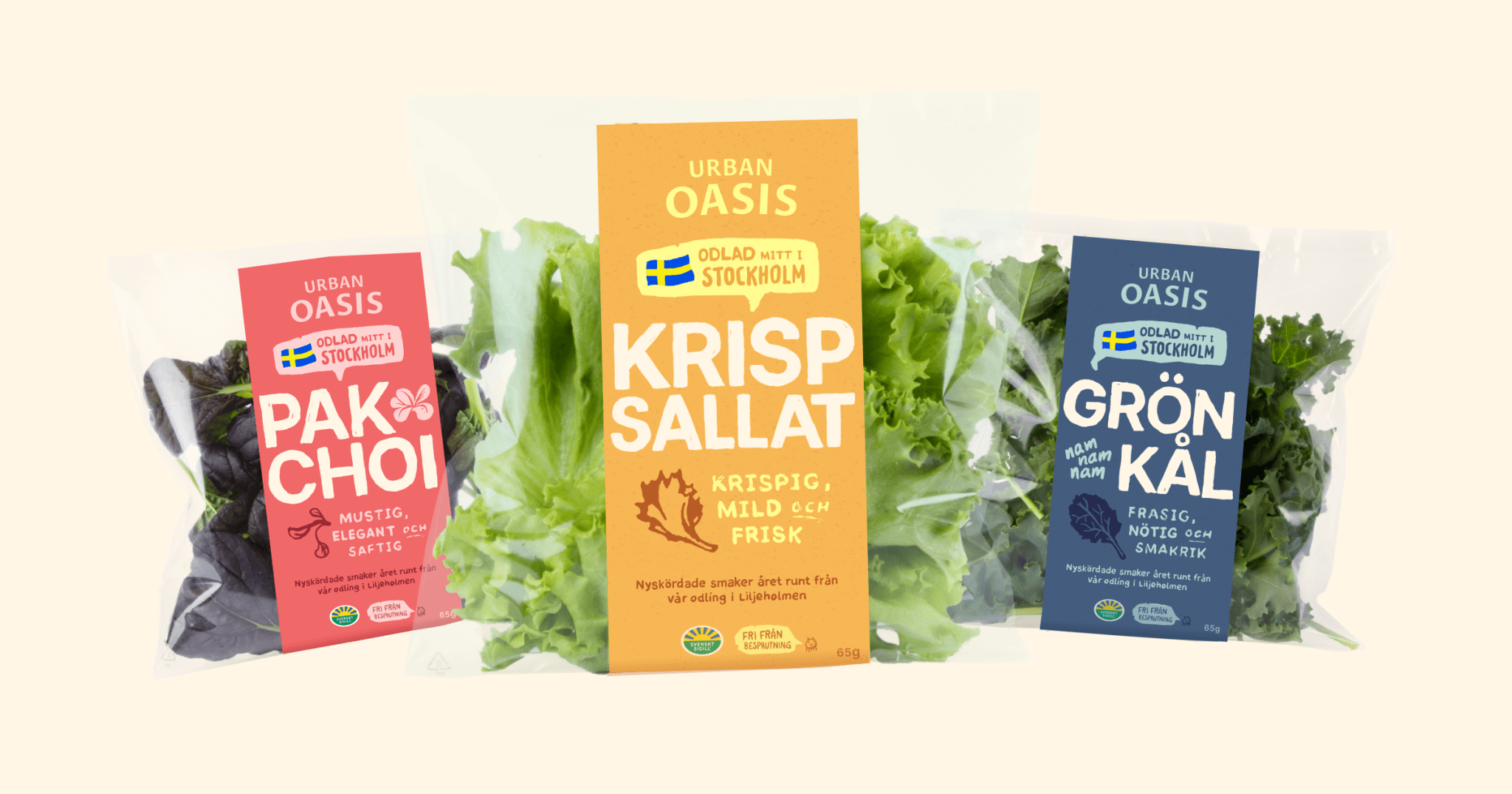
Swedish Vertical Farming Company Urban Oasis Raises $1.2 Million
Founded in 2017, Urban Oasis built its first indoor vertical farm underneath an apartment complex in Stockholm. The company produces a variety of leafy greens, including kale, bok choi, and lettuce, which are sold at Swedish retailers including ICA, COOP, and online grocer MatHem
Urban Oasis, an indoor vertical farming company based in Sweden, announced today that it has raised 10.5 million Swedish Krona (~$1.22M USD). Investors include Family Offices Pelarhuset, Anteeo, and Yobi Partners Ltd.
Founded in 2017, Urban Oasis built its first indoor vertical farm underneath an apartment complex in Stockholm. The company produces a variety of leafy greens, including kale, bok choi, and lettuce, which are sold at Swedish retailers including ICA, COOP, and online grocer MatHem.
With its new funding, Urban Oasis aims to build its first MegaFarm, which will expand its production capacity by 15 to 20 times, according to today’s press announcement. The new facility is controlled by Urban Oasis’ GreenOS automation software and will be operational by the end of this year for growing a variety of crops.
Funding for the controlled-environment agriculture, and vertical farming, in particular, has been downright frothy this fall. Other players in the space getting investment include Plenty, Kalera, InFarm, and Unfold. As my colleague, Jenn Marston explained last month:
Less than one year ago, the vertical farming sector was expanding, but a lot of questions remained around the scalability of the concept and how appealing it could be to investors. The nearly constant stream of funding and product announcements in 2020 has sped up that expansion. Part of this is due to, yep, you guessed it, the pandemic. Disruptions in the food supply chain due to COVID-19 have consumers more interested than ever in where their food comes from, and having it grown closer to home is an increasingly attractive option.
With the pandemic still going strong and a month in a half left in the year, Urban Oasis’ fundraise may not be the last of its kind in 2020.
FILED UNDER: MODERN FARMER VERTICAL FARMING
Urban Oasis, an indoor vertical farming company based in Sweden, announced today that it has raised 10.5 million Swedish Krona (~$1.22M USD). Investors include Family Offices Pelarhuset, Anteeo, and Yobi Partners Ltd.
Founded in 2017, Urban Oasis built its first indoor vertical farm underneath an apartment complex in Stockholm. The company produces a variety of leafy greens, including kale, bok choi, and lettuce, which are sold at Swedish retailers including ICA, COOP, and online grocer MatHem.
With its new funding, Urban Oasis aims to build its first MegaFarm, which will expand its production capacity by 15 to 20 times, according to today’s press announcement. The new facility is controlled by Urban Oasis’ GreenOS automation software and will be operational by the end of this year for growing a variety of crops.
Funding for the controlled-environment agriculture, and vertical farming in particular, has been downright frothy this fall. Other players in the space getting investment include Plenty, Kalera, InFarm and Unfold. As my colleague, Jenn Marston explained last month:
Less than one year ago, the vertical farming sector was expanding, but a lot of questions remained around the scalability of the concept and how appealing it could be to investors. The nearly constant stream of funding and product announcements in 2020 has sped up that expansion. Part of this is due to, yep, you guessed it, the pandemic. Disruptions in the food supply chain due to COVID-19 have consumers more interested than ever in where their food comes from, and having it grown closer to home is an increasingly attractive option.
With the pandemic still going strong and a month in a half left in the year, Urban Oasis’ fundraise may not be the last of its kind in 2020.
FILED UNDER:

Israeli Supermarket Employs Vertical Farm Start-Up For Selling Produce
Vertical Fields, a Ra'anana based agri-tech start-up that creates vertical, sustainable farms using geoponic technology, agricultural expertise, and smart design, teamed up with BIOLED, a Tzuba-based eco-lighting start-up that uses LED lights to create more sustainable, profitable crops in order to erect the growing container
The new technologies eliminate the need to rely on outdoor growers and suppliers while also providing a fresher, more eco-friendly product which needs much less water and land to grow.
NOVEMBER 21, 2020
Produce growing under BIOLED lights. (photo credit: BIOLED)
Rami Levy, one of Israel's largest supermarket chains, has been cooperating with two Israeli agri-tech start-ups to erect large containers to grow fruit and vegetables, which will be sold in the chain's stores.
Vertical Fields, a Ra'anana based agri-tech start-up that creates vertical, sustainable farms using geoponic technology, agricultural expertise, and smart design, teamed up with BIOLED, a Tzuba-based eco-lighting start-up that uses LED lights to create more sustainable, profitable crops in order to erect the growing containers.
According to BIOLED, the first container is already in the process of being set up in Rami Levy's Ayalon Mall branch in Tel Aviv.
Thanks to the rapidly growing worldwide population, the amount of produce must grow by 60% to keep up with demand and overpopulation trends. Current methods of farming require too much water and land to meet that demand.
The new technologies eliminate the need to rely on outdoor growers and suppliers while also providing a fresher, more eco-friendly product that needs significantly less water and land to grow.
BIOLED already produces eco-friendly LED lighting for a wide variety of purposes for companies in Israel and plan to expand to Europe and the rest of the global market. Recently they breezed through their crowdfunding goal, nearly two months before their funding deadline expires in January 2021.
BIOLED also provides agricultural lighting for most of Israel's medical cannabis companies, most famously for the largest cannabis farm in the country, grown by medical cannabis giant INDOOR.
One of the main reasons for this is BIOLED's ability to shorten and stabilize horticultural growth cycles regardless of season, while also eliminating the need for pesticides and the logistical issues that comes with supplying fresh produce to urban areas,
Vertical Fields is a slightly younger company. They recently burst onto the Israeli agri-tech scene with their technology, which allows for produce to be farmed vertically within containers big enough to fit in a parking lot, using only one-tenth the amount of water usually needed.
Tags startup ecology hi-tech israel tech israel technology for agriculture rami levy agriculture Hunger start-up supermarket Farming
SANANBIO ARK, The Mobile Farm For All Climates That Supplies Communities With Fresh Local Food
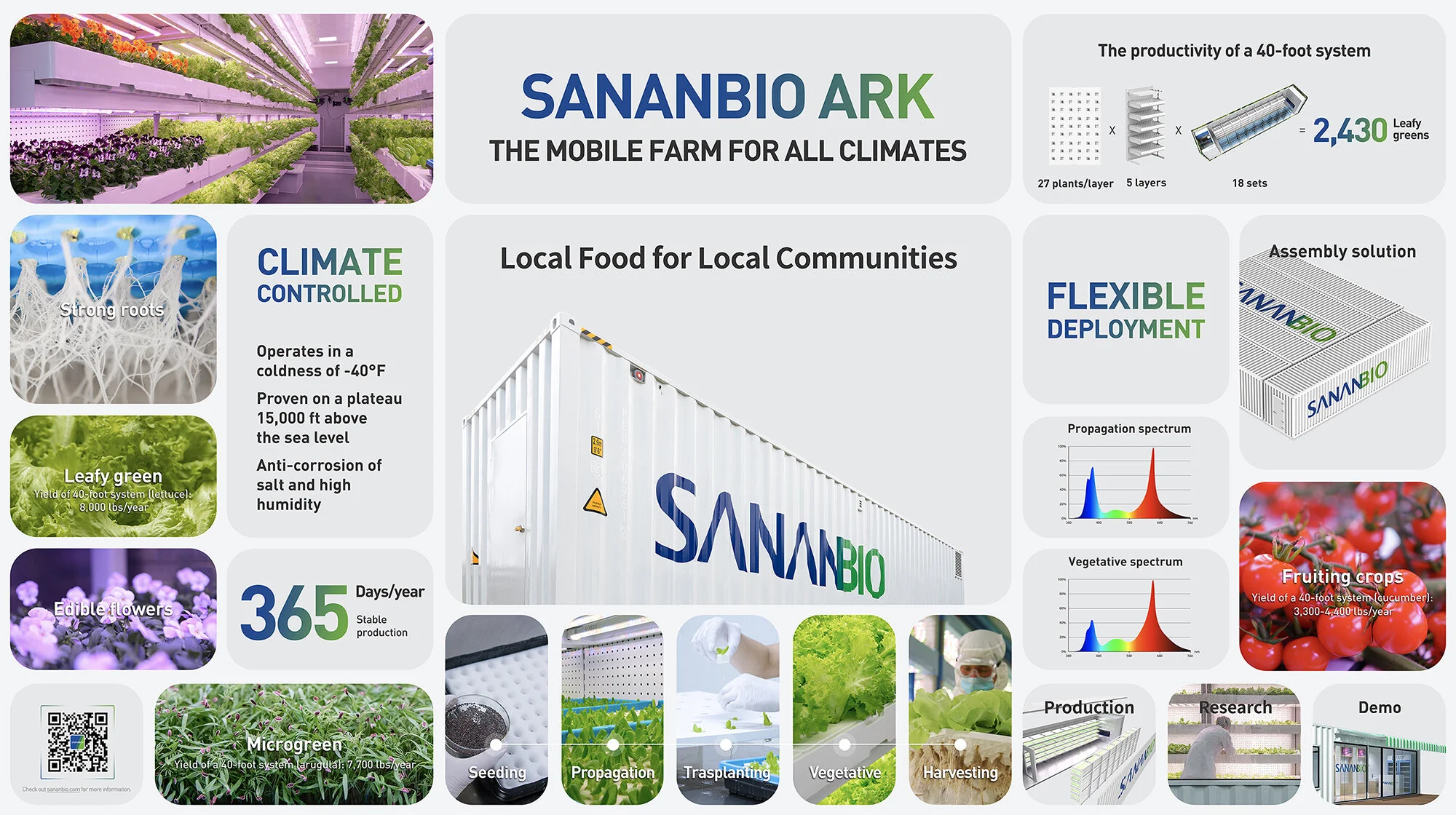
3,300-4,400 lbs of cucumbers, 7,700 lbs of arugula, or 8,000 lbs of lettuce. These are the proven annual yields that we're confident to announce, said Zhan Zhuo, co-founder, and CEO of SANANBIO, We 'produce' turnkey farms and this one is mobile
November 21, 2020
PRN
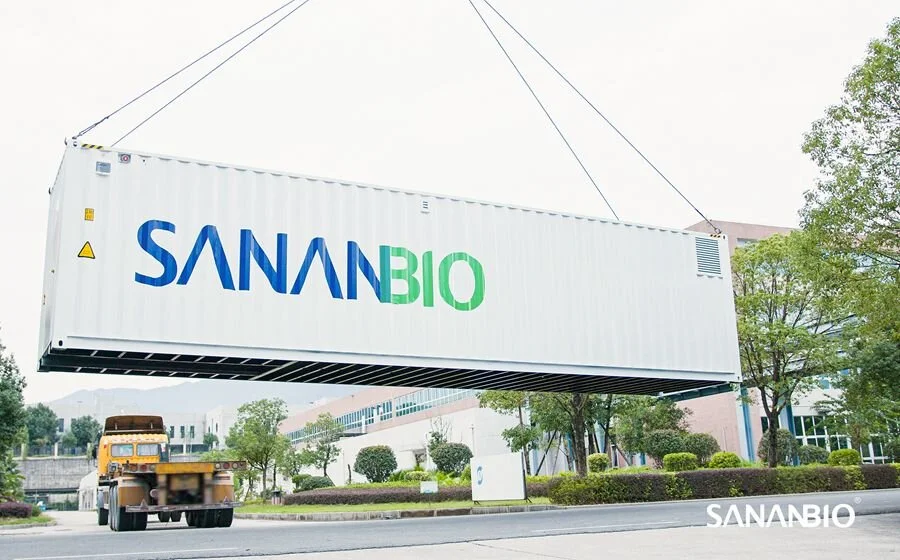
XIAMEN: SANANBIO, a leading vertical farming solution provider announces the availability of its climate-controlled mobile farm for growers globally.
3,300-4,400 lbs of cucumbers, 7,700 lbs of arugula, or 8,000 lbs of lettuce. These are the proven annual yields that we're confident to announce, said Zhan Zhuo, co-founder, and CEO of SANANBIO, We 'produce' turnkey farms and this one is mobile. It adapts to any climate thanks to its thermal insulation system with a thermal conductivity below 0.024w/(m·K). One of the mobile farms operated as usual in the coldness of -40 degrees Fahrenheit in northern China, sustaining local communities with local produces at a reduced carbon footprint.
It is shocking to find that our food travels 1,500 miles on average before reaching our plate. The CO2 generated, and the nutrients lost during transportation, can't be good for the planet or human beings. That's why local food is advocated. The ready-to-use farm is the solution we offer to regions where the environment is too harsh to support stable agricultural production, said Zhan.
To streamline the farming experience, the designer simplifies the start-up procedures to a single plug-in motion power it up through a connector on the exterior and then even hydroponic beginners are set to grow. Moreover, growers can monitor and control farm metrics simply by moving fingertips on their phone.
By simplifying modern agriculture, we offer more farming opportunities for kids and urban dwellers. We have a mobile farm deployed in a Malaysian suburb where kids from the neighborhood frequent the farm for the hands-on hydroponic experience. It's a perfect bonding time when families go there to pick their own salad ingredients. As a Photobiotech company, we're nurturing a new generation of growers, said Zhan.
For more info about the mobile farm, please visit www.sananbio.com/ark.

Want To Eat Healthy? Try Growing Lettuce On Your Kitchen Counter
After years of trying to grow vegetables in my shady backyard, I have finally given up. Feeling the need once again to grow veggies, I invested in a small hydroponic system for my kitchen
BY SHEAH RARBACK
SPECIAL TO THE MIAMI HERALD
NOVEMBER 20, 2020
After years of trying to grow vegetables in my shady backyard, I have finally given up. Feeling the need once again to grow veggies, I invested in a small hydroponic system for my kitchen.
The results are rewarding. It is small but there are edibles there. In addition to herbs, I have a robust little lettuce garden. People often think of lettuce as a low-nutrient food. And that would be wrong.
I am growing Parris Island lettuce, which is in the same family as romaine lettuce. One ounce of this lettuce provides 11% daily requirement of immunity-boosting vitamin C. Romaine also has 10% of the daily requirement of folate, which can help heart health and allergic responses to name just two benefits.
And that one ounce of romaine has 5 calories and 49% of vitamin A requirement. Romaine is for more than just a Caesar salad.
I am also growing Marvel of Four Seasons Lettuce. This is from the family of butter lettuce, also called Boston or Bibb lettuce. The flavor is soft and sweet. Vitamin A is the most abundant nutrient in this type of lettuce. In addition to vitamins and minerals, all varieties of lettuce have phytonutrients.
As a general rule, the darker the color of the lettuce, the greater the nutrition. So romaine contains more nutrients than iceberg. I have had so many clients tell me they don’t eat vegetables but when I would ask if they eat salad, they said yes.
For many people, salads might be the easiest way to reach the goal of 5 cups of vegetables and fruits each day. A spring mix blend provides a variety of greens and nutrients and the ability to easily make an interesting salad. Salad is a terrific base for nutritious add-ons. Throw on pumpkin seeds for fiber and magnesium, quinoa for added protein, or sunflower seeds for a hit of vitamin E.
Lead photo: Sheah Rarback’s small hydroponic system in her kitchen grows beautiful lettuce and herbs. SHEAH RARBACK
Sheah Rarback MS, RDN is a registered dietitian nutritionist in private practice in Miami.
The Little Farm That Could
“Farm By The Quay will serve as a hub to educate the public about urban farming while illustrating how growing food at home doesn’t have to be difficult using HAVVA solutions and technology
16 Nov 2020
Vertical farming systems can maximize use of space in an urban context.
FOR all that pottering about in one’s garden might sound fulfilling, there are many of us who are daunted by the prospect of growing our own plants.
Difficulties such as finding the right type of soil and the optimal amount of sunlight and water, all while fighting off common garden pests, can lead to frustration for those without green thumbs.
Such trials may be a thing of the past thanks to HAVVA Agrotech, as it pioneers an innovative farming solution integrating hydroponic, aquaculture, vertical farming, vermiponic, and aeroponic techniques.
These innovations will be showcased at HAVVA’s Farm By The Quay at Quayside Mall in twenty-five.7, Kota Kemuning, Shah Alam, allowing residents and visitors to experience the next step in urban sustainability.
A new frontier
“Farm By The Quay will serve as a hub to educate the public about urban farming while illustrating how growing food at home doesn’t have to be difficult using HAVVA solutions and technology.
“We will demonstrate how our system is fully scalable, ranging from small 1sqft farms to large-scale commercial farms, ” says HAVVA chief operating officer Kenzo Tan.
Doubling as HAVVA’s flagship outlet, Farm By The Quay is an organic vertical farm facility located at Quayside Mall, a few minutes’ walk from twentyfive.7’s bustling waterfront boulevard.
The vertical farm features a floor area of 195sqm, and visitors can look forward to a comprehensive line-up of activities organized by HAVVA to educate participants on the merits and methods of urban farming.
Farm By The Quay is a 195sqm vertical organic farm at Quayside Mall, twentyfive.7.
Farm By The Quay customers can also get their grocery shopping done, as it features fresh food and produce concept where vegetables can be plucked and fish freshly caught on the spot.
“Typically, urban farms in malls are located on rooftop levels, which reduces their visibility and accessibility to customers.
“However, Farm By The Quay is located at a prime spot on the ground floor within Quayside Mall, inviting exploration from visitors.
“Its design layout and fit-outs cater to the mall’s environment and conditions, and we also took into consideration factors such as safety, public access, and public engagement, ” says Tan.
From humble roots
Established in 2018 by co-founders Philip Loo and Tan, the idea for HAVVA began four years earlier when Loo visited Taiwan to learn about aquaponics, vertical planting, natural farming, and related techniques.
With this knowledge, he rented a 650sqm bungalow in George Town, and in partnership with his brother kick-started Penang’s first vertical aquaponics urban commercial farm – Loo Urban Farm.
Despite an uphill road, Loo persevered. In 2016, the eventual success of Loo Urban Farm encouraged him to submit an accelerator program for social enterprise at MaGIC (Malaysian Global Innovation and Creativity Centre), where he fortuitously met Tan.
“I was quite taken with what Philip was doing.
‘HAVVA’s business model ticked all the right boxes for us. Their operations are a good fit for the chosen space and location in our mall, ’ said Tan.
“To begin with, we had similar views on the necessity for toxic-free and nutrient-rich food.
“As he was working alone in the program without a team, I assisted him in any way that I could.
“By the end of 2016, I joined Philip and we focused on using technology to augment the growth of the business, ” says Tan.
While initial sales were sluggish, factors such as changes in market perception towards urban farming, clean eating, and organic food gave the business a welcome shot in the arm.
The company’s commitment to investing in technological and process enhancement has also paid off, as it has been accredited by organizations such as Cradle Fund Sdn Bhd and MaGIC, in addition to accolades at the Asia-Pacific Information and Communication Technology Alliance Awards (APICTA) and the Hope Awards in 2018.
New center of gravity
Farm By The Quay at Quayside Mall complements twentyfive.7’s cosmopolitan outlook and highlights the placemaking principles and master planning approach of developer Gamuda Land.
A 104ha self-sustained development in Kota Kemuning, twentyfive.7 features a gross development value (GDV) of RM4.2bil.
Its urban aesthetics and lifestyle amenities position it as the new center of gravity in Kota Kemuning and the surrounding community.
Loo (left) and Tan co-founded HAVVA to promote urban farming in Malaysia.
“HAVVA’s business model ticked all the right boxes for us. Their operations are a good fit for the chosen space and location in our mall.
“Despite being a relatively young company, their forward-thinking business plan, which targets both business-to-business (B2B) and business-to-consumer (B2C) activity, is strategically comprehensive with promising growth potential, ” says Gamuda Land director of retail and leasing Herbie Tan.
“Quayside Mall caters to changing consumer demand for open spaces in retail centres following the Covid-19 outbreak.
“Special attention in its design has been given towards spatial quality, natural light and ventilation, and extended functionality of space, along with an emphasis on fostering closer connections with nature, allowing Gamuda Land to adapt a variety of communal programs and planting schemes within the mall.
“In addition, its curated tenant mix emphasizes lifestyle draws, with a diverse range of F&B, entertainment, beauty, and lifestyle retail outlets enhancing Quayside Mall’s appeal as the beating heart of Kota Kemuning in the new norm.
Quayside Mall in twentyfive.7 will house the vertical farm on the ground floor.
“The mall also strategically integrates the outdoor environment into its design. With a promenade leading directly from the mall towards the pet-friendly twentyfive.7 Central Park, featuring lakeside activities and social spaces surrounded by lush trees, visitors to Quayside Mall will experience retail like never before.
“We believe that the introduction of urban farms, whether community-based or as viable business concerns, is vital for our greater good as it will address the problems of logistics and climate change, enhance accessibility to food resources, improve food security in cities and reduce overproduction of food by increasing own-harvested food resources – a direction that has only been reinforced by the current pandemic, ” says Herbie.
Thanks to HAVVA, twentyfive.7 residents and the public can now enjoy fresh, non-toxic, and pollutant-free produce while learning more about the urban farming movement.
Farm By The Quay is scheduled to open its doors in December 2020.
TAGS / KEYWORDS: Branded , Gamuda Land, HAVVA Agrotech, Urban Sustainability

Green Tech Farm Settles On Singapore
Hong Kong-based vertical and urban farming innovator Green Tech Farm has announced it will open a new display and sales center in Singapore. The Singapore site was chosen from a shortlist of five major cities and countries in Asia and the Middle East
BY LIAM O’CALLAGH
19th November 2020, Hong Kong
Vertical farming specialist will construct a new display and sales center in Singapore
Hong Kong-based vertical and urban farming innovator Green Tech Farm has announced it will open a new display and sales center in Singapore.
The Singapore site was chosen from a shortlist of five major cities and countries in Asia and the Middle East.
Green Tech Farm, which manufactures and sells leading-edge hydroponics units with advanced lighting, heating, cooling, and AI-controlled robotics and control systems said that the city-state's geographical location and commitment to sustainable development made it a highly suitable choice.
"We settled on Singapore for a number of reasons, one of which was its own reputation for driving environmental sustainability,” Green Tech Farm said in a release.
“We felt that Singapore would be more inclined to embrace the principles behind what we are trying to achieve given their own efforts over the years.”
The Singapore center will house several fully operational examples of the HydroPod, the company's shipping container-based vertical farming solution while also functioning as a support and learning hub for regional customers.
The site will also showcase a fully operational HydroFactory - Green Tech Farm’s, modular offering which can be expanded to fill any large space - and give visitors the opportunity to see the system perform its many functions on a far larger scale than that available in the smaller, self-contained HydroPods.
According to Green Tech Farm, the center will be operational by the third quarter of 2021.

PODCAST: Joe Swartz & Nick Greens
Our new podcast called Polygreens with Joe Swartz from AmHydro and Nick Greens from Nick Greens Grow Team brings agriculture and technology together in educational episodes. With this episode you'll learn about tips on operating a greenhouse
11/20/2020
Our new podcast called Polygreens with Joe Swartz from AmHydro and Nick Greens from Nick Greens Grow Team brings agriculture and technology together in educational episodes. With this episode, you'll learn about tips on operating a greenhouse.

Farming On Mars Will Be A Lot Harder Than ‘The Martian’ Made It Seem
Growing plants in Red Planet soil will require adding nutrients and removing toxic chemicals. To prepare for a future where astronauts could grow their own food on Mars, researchers are trying to grow crops in the lab with fake Martian dirt
Growing Plants In Red Planet Soil Will Require
Adding Nutrients And Removing Toxic Chemicals
To prepare for a future where astronauts could grow their own food on Mars, researchers are trying to grow crops in the lab with fake Martian dirt.
NOVEMBER 18, 2020
In the film The Martian, astronaut Mark Watney (played by Matt Damon) survives being stranded on the Red Planet by farming potatoes in Martian dirt fertilized with feces.
Future Mars astronauts could grow crops in dirt to avoid solely relying on resupply missions, and to grow a greater amount and variety of food than with hydroponics alone (SN: 11/4/11). But new lab experiments suggest that growing food on the Red Planet will be a lot more complicated than simply planting crops with poop (SN: 9/22/15).
Researchers planted lettuce and the weed Arabidopsis thaliana in three kinds of fake Mars dirt. Two were made from materials mined in Hawaii or the Mojave Desert that look like dirt on Mars. To mimic the makeup of the Martian surface even more closely, the third was made from scratch using volcanic rock, clays, salts and other chemical ingredients that NASA’s Curiosity rover has seen on the Red Planet (SN: 1/31/19). While both lettuce and A. thaliana survived in the Mars-like natural soils, neither could grow in the synthetic dirt, researchers report in the upcoming Jan. 15 Icarus.
“It’s not surprising at all that as you get [dirt] that’s more and more accurate, closer to Mars, that it gets harder and harder for plants to grow in it,” says planetary scientist Kevin Cannon of the Colorado School of Mines in Golden, Colo., who helped make the synthetic Mars dirt but wasn’t involved in the new study.
Soil on Earth is full of microbes and other organic matter that helps plants grow, but Mars dirt is basically crushed rock. The new result “tells you that if you want to grow plants on Mars using soil, you’re going to have to put in a lot of work to transform that material into something that plants can grow in,” Cannon says.
Biochemist Andrew Palmer and colleagues at the Florida Institute of Technology in Melbourne planted lettuce and A. thaliana seeds in imitation Mars dirt under controlled lighting and temperature indoors, just as astronauts would on Mars. The plants were cultivated at 22° Celsius and about 70 percent humidity.
Seeds of both species germinated and grew in dirt mined from Hawaii or the Mojave Desert, as long as the plants were fertilized with a cocktail of nitrogen, potassium, calcium, and other nutrients. No seeds of either species could germinate in the synthetic dirt, so “we would grow up plants under hydroponic-like conditions, and then we would transfer them” to the artificial dirt, Palmer says. But even when given fertilizer, those seedlings died within a week of transplanting.
In lab experiments, lettuce was able to grow in Mars-like soil from the Mojave Desert (pictured) as long as the soil was fertilized with nitrogen, potassium, calcium, and other nutrients. NATHAN HADLAND
Palmer’s team suspected that the problem with the synthetic Mars dirt was its high pH, which was about 9.5. The two natural soils had pH levels around 7. When the researchers treated the synthetic dirt with sulfuric acid to lower the pH to 7.2, transplanted seedlings survived an extra week but ultimately died.
The team also ran up against another problem: The original synthetic dirt recipe did not include calcium perchlorate, a toxic salt that recent observations suggest makeup to about 2 percent of the Martian surface. When Palmer’s team added it at concentrations similar to those seen on Mars, neither lettuce nor A. thaliana grew at all in the dirt.
“The perchlorate is a major problem” for Martian farming, says Edward Guinan, an astrobiologist at Villanova University in Pennsylvania who was not involved in the work. But calcium perchlorate may not have to be a showstopper. “There are bacteria on Earth that enjoy perchlorates as a food,” Guinan says. As the microbes eat the salt, they give off oxygen. If these bacteria were taken from Earth to Mars to munch on perchlorates in Martian dirt, Guinan imagines that the organisms could not only get rid of a toxic component of the dirt but perhaps also help produce breathable oxygen for astronauts.
What’s more, the exact treatment required to make Martian dirt farmable may vary, depending on where astronauts make their homestead. “It probably depends where you land, what the geology and chemistry of the soil is going to be,” Guinan says.
To explore how that variety might affect future agricultural practices, geochemist Laura Fackrell of the University of Georgia in Athens and colleagues mixed up five new types of faux Mars dirt. The recipes for these fake Martian materials, also reported in the Jan. 15 Icarus, are based on observations of Mars’ surface from the Curiosity, Spirit, and Opportunity rovers, as well as NASA’s Mars Global Surveyor spacecraft and Mars Reconnaissance Orbiter.
Each new artificial Mars dirt represents a mix of materials that could be found or made on the Red Planet. One is designed to represent the average composition across Mars, similar to the synthetic material created by Cannon’s team. The other four varieties have slightly different makeups, such as dirt that is particularly rich in carbonates or sulfates. This collection “expands the palette of what we have available” as test-beds for agricultural experiments, Fackrell says.
She’s now using her stock to run preliminary plant growth experiments. So far, a legume called moth bean, which has similar nutritional content to a soybean but is more drought-resistant has grown the best. “But they’re not necessarily super healthy,” Fackrell says. Future experiments could explore what nutrient cocktails help plants survive in the various fake Martian terrains. But this much is clear, Fackrell says: “It’s not quite as easy as it looks in The Martian.”
Questions or comments on this article? E-mail us at feedback@sciencenews.org
CITATIONS
A. Eichler et al. Challenging the agricultural viability of martian regolith simulants. Icarus. Vol. 354, January 15, 2021. doi: 10.1016/j.icarus.2020.114022.
L.E. Fackrell et al. Development of martian regolith and bedrock simulants: Potential and limitations of martian regolith as an in-situ resource. Icarus. Vol. 354, January 15, 2021. doi: 10.1016/j.icarus.2020.114055.
About Maria Temming
Maria Temming is the staff reporter for physical sciences, covering everything from chemistry to computer science and cosmology. She has a bachelor's degrees in physics and English, and a master's in science writing.
Lead photo: OSTAPENKOOLENA/ISTOCK/GETTY IMAGES PLUS
Chicago Proposed Home of Second Second Chances Farm
Garfield Produce, located in the East Garfield Park area in Chicago, is working together with Second Chances Farm to establish the Second Chances Farm Chicago in the Windy City
Garfield Produce, located in the East Garfield Park area in Chicago, is working together with Second Chances Farm to establish the Second Chances Farm Chicago in the Windy City. Garfield Produce is an indoor vertical farm and a licensed wholesale food establishment whose mission, values, and passion closely match ours.
On October 1st and 2nd, Garfield Produce’s co-founders, Mark and Judy Thomas visited Second Chances Farm in Wilmington after hearing about us during an Opportunity Zone seminar in Chicago earlier this summer. They had previously reached out to Ajit to open discussions about expanding the Second Chances Farm model to Chicago and invited him to visit Garfield Produce.
On October 21st and 22nd, Ajit visited Garfield Produce and toured vacant buildings in Opportunity Zones in Chicago. After discovering a strong connection to second chances for both people and neighborhoods, Ajit and Thomas’s pledged to continue the conversation.
Mark and Judy
Mark Thomas spent several days between November 8th and 13th at Second Chances Farm in Wilmington to further discuss the possibilities. He toured the facilities, met the returning citizens, engaged with the management team, and crunched some numbers. Both Ajit and Mark shook hands-on making the idea of establishing a Second Chances Farm in Chicago a reality in 2021-2022.
Mark, a graduate of an Ivy League college with an MBA and a CPA, was a top executive at the Tribune Company in Chicago for most of his career. He and his wife, Judy, a top corporate attorney, lived in the affluent western suburbs of Chicago. To get to work, they had to drive through the under-resourced areas on the west and south sides of the city, many of which still had the ruins of burned-out buildings from the Martin Luther King riots decades earlier.
Judy Thomas, co-founder, Garfield Produce
“I’d drive right through these impoverished landscapes and never give it a second thought,” says Mark. “But the workforce under my direction changed drastically when the Labor Union took over. Our established workforce was primarily older white males who were Italian, Croatian, and Irish. Suddenly, they were asked to manage a workforce that was around 22 years old, from the east and south sides of Chicago, mostly black and half female. This was when I became keenly aware of the problems that exist in inner-city areas of the United States.”
Mark remembers telling his wife the stories he’d heard during the day, and the shocking experiences he’d had. One employee, he says, shot another employee in the break room because they were from rival gangs.
“So, I said, Judy, it would be great if we could ever get to the point that we could create a small company so that we could hire people who lived in these tough areas,” says Mark. After Mark and Judy retired, that’s exactly what they did.
“We had done some volunteer work at an organization called, ‘Breakthrough Urban Ministries,’ which is in Garfield Park, a very tough area about 30 miles west of downtown Chicago,” Mark says. “It started out as a men’s shelter, then moved to a woman’s shelter, and then a flex area where teenagers could come, and then they started preschool programs. Our biggest frustration was that people would emerge from our job readiness programs, only to find there were no jobs. White flight had taken all the jobs and businesses away.”
In 2013, after having done extensive research and attending seminars about indoor vertical farms, Mark and Judy established Garfield Produce.
“We have a lot of experience with growing produce hydroponically, and a very strong brand in the Chicago area,” says Mark. “We look forward to finding a way we can combine our strengths with Second Chances Farm’s to continue to serve the struggling neighborhoods of Chicago by providing both jobs and healthy, nutritious foods.”

For more information:
Second Chances Farm
www.secondchancesfarm.com
16 Nov 2020

Is Your Lettuce Crop Starving For Calcium?
Tip burn is a common problem in lettuce crops lacking calcium. Young leaves can develop In lettuce, calcium deficiency often manifests as tip burn on developing leaves
By Erica Hernandez|
August 12, 2020
Tip burn is a common problem in lettuce crops lacking calcium. Young leaves can develop In lettuce, calcium deficiency often manifests as tip burn on developing leaves. Tip burn gives leaf margins a burned or crinkled appearance and will affect their appearance throughout development.
Calcium, though not a macronutrient, is essential for proper plant development. Plants absorb calcium both through their roots from nutrient solutions and through leaves and shoots during foliar applications. Xylem, the water-carrying network of cells within plants, transports calcium from the point of absorption upward through plant tissue.
Transpiration powers this upward flow as the plant photosynthesizes and releases water molecules into the environment. Calcium serves several important purposes within plants. Strong cell walls require calcium to be incorporated in their structure, with adequate supplies leading to well-formed, healthy leaves and stems. Several biological processes also employ calcium as a signaling molecule, keeping plant development on-track, or responding to changing environments.
Lettuce is a long-cultivated crop; calcium requirements have been well documented and the differences between field and greenhouse production understood. Hydroponic lettuce production calls for 100 to 150 ppm calcium throughout the growth cycle. The calcium must be supplied by the water rather than obtained from field soil. Tap water contains some calcium, but often not enough to hit this target.
Hydroponic producers may incorporate a calcium-nitrate-based fertilizer to provide both calcium and nitrogen to their crops. Calcium chloride at 1 pound per 100 gallons can also be applied as a foliar spray to help deliver calcium to leaves when transpiration is low.
Know the Symptoms
In lettuce, calcium deficiency often manifests as tip burn on developing leaves. Tip burn gives leaf margins a burned or crinkled appearance and will affect their appearance throughout development. The damage continues to affect new leaves until the cause of the deficiency is remedied. Damaged tissue can go on to become necrotic, providing a potential point of entry for secondary Botrytis infection. Overall, tip burn reduces the health, appearance, and shelf-life of lettuce heads and leaves.
Pinpoint the Root Cause
Identifying the cause of calcium deficiency in lettuce can be a tricky topic, as it is not always caused by a lack of applied calcium. Since water carries calcium through the plant as transpiration occurs, calcium movement is dependent solely on transpiration rates. It will not matter how much calcium you supply to the root zone of your crop if you are growing in a humid, low-transpiration environment. Conversely, overly dry conditions causing plants to close their stomates and cease transpiration may also lead to calcium deficiency.
Head lettuce is particularly susceptible to tip burn in humid environments. As lettuce heads develop, they enclose the apical meristem, or growing point, in an envelope of leaves. This creates a pocket of stagnant air, which can be resistant to outside air movement. Stagnant air cuts down on transpiration at the growing point, leading to less calcium being delivered and developing leaves becoming misshapen and tip burned. Alternatively, in high-light, low-humidity environments, lettuce will experience a surge in photosynthesis while closing off stomates to cut down on water loss. Again, the movement of calcium is impeded within the plant even though there may be enough at the root zone.
Remedying calcium deficiency first relies on identifying the cause. Step one is looking at the nutrient solution. Is there a high or low level of calcium in the base water? Is there a calcium source included in the recipe? Calcium is available over a wide pH range, so pH changes are often not necessary. Next, look at the environmental conditions. Appropriate airflow is essential, though it may require different equipment than other crops.
Successful lettuce growers often utilize vertical airflow fans over horizontal airflow. The downward direction of airflow allows air to be forced into and around the protected growing point of head lettuce. A gentle and constant flow is all that is necessary — high airspeeds can lead to stomatal closure and tip burn once more. Finally, make sure photoperiods and light levels are appropriate for lettuce. A daily light integral (DLI) of 17 mols/m2/d is ideal for lettuce production, with a photoperiod between 14 to 18 hours.
Erica Hernandez is a Controlled Environment Agriculture Technical Specialist at Griffin. After obtaining her advanced degree in Horticultural Biology from Cornell University, she came to work with the GGSPro team supporting greenhouse growers across the country. She works to bring proven horticultural techniques to growers and increase production efficiencies through knowledgeable advice.
See all author stories here.
Lead Photo courtesy of Griffin

Seoul Semiconductor Enters The Horticulture Market
"As a world top innovative company we're constantly thriving for optimization and want to offer solutions by our key technologies"
There's a new kid on the block in the horticultural market! Well, new... Seoul Semiconductors was founded in 1992 already, when they rented a small space in a commercial building. By now it is one of the biggest global LED manufacturers. And good news: they are also bringing solutions to the horticultural industry. Recently they became a member of the Association for Vertical Farming
"As a world top innovative company we're constantly thriving for optimization and want to offer solutions by our key technologies", the team says. Based on a differentiated product portfolio, Seoul offers a wide range of technologies, and mass produces innovative LED products for indoor and outdoor lighting, automotive, IT products.
Seoul Semiconductors, also known as SSC, has 4 Production platforms and 6 R&D Labs globally (China, USA, Vietnam, Korea). "We're the only company in the world that can supply all wavelengths UV to IR 200nm – 1000nm," the team says.
SSC pushes forward its expansion of global business with the belief that they can make new history with light. One of the new areas they will engage in with all their knowledge and experience is horticulture and indoor farming by cooperating with other players and supporting R&D for new applications with the sun spectrum LED they have developed.
The Association for Vertical Farming will closely work with SSCs Munich office by connecting them to the fast global network and projects.
All members are welcome to use the AVF MembersHub for direct and easy communication with each other.
For more information:
www.seoulsemicon.com
www.vertical-farming.net
16 Nov 2020

80 Acres Farms Finalist At 2020 Red Herring Top 100 North America
Finalists for the awards are among the continent’s brightest and most innovative private ventures. Red Herring’s editorial team has chosen their place among North America’s tech elite
11.15.2020 (80 Acres Farms) has been selected as a finalist for Red Herring’s Top 100 North America award, one of the technology industry’s most prestigious prizes.
Finalists for the awards are among the continent’s brightest and most innovative private ventures. Red Herring’s editorial team has chosen their place among North America’s tech elite, during the months-long process that takes into account criteria including disruptive impact, proof of concept, financial performance, market footprint, and quality of management.
For over two decades Red Herring’s team has seen through the tech sector’s hype to select brands that have become industry benchmarks. Previous Top 100 finalists have included Alibaba, Facebook, Google, Skype, SuperCell, Spotify, Twitter, and YouTube.
The Top 100 North America has become not only a springboard for some of tech’s biggest names, but a valued and trusted tool for venture capitalists, experts, and analysts predicting trends at the industry’s sharpest edge.
“Selecting finalists for this year’s Top 100 has proved more difficult than ever,” said Alex Vieux, publisher and chairman of Red Herring. “North America has been tech’s beating heart for years–but never have I seen such an exciting, disruptive, and innovative generation as we have in 2020. “
“80 Acres Farms fully deserves its place among our finalists, and I’ve every confidence it will make a significant impact in the tech world,” added Vieux.
"We are thrilled to be recognized by Red Herring for our world-class technology that grows the cleanest and most nutritious fruits and vegetables in our vertical farms for customers in our local communities," said Mike Zelkind, CEO, and Co-founder of 80 Acres Farms.
About Red Herring
Red Herring is a global media company which unites the world’s best high technology innovators, venture investors, and business decision-makers in a variety of forums: a leading innovation magazine, an online daily technology news service, technology newsletters, and major events for technology leaders around the globe. Red Herring provides an insider’s access to the global innovation economy, featuring unparalleled insights on the emerging technologies driving the economy.
About 80 Acres Farms
80 Acres Farms is a vertical farming leader providing customers with the freshest, and most nutritious fruits and vegetables at affordable prices. Utilizing world-class technology and analytics, the Company offers customers a wide variety of pesticide-free food with a longer shelf-life that exceeds the highest standards in food safety.
For further information, please contact us at:
rebecca.haders@eafarms.com | +1 513-910-9089