

Welcome to iGrow News, Your Source for the World of Indoor Vertical Farming

IGS Signs Significant Export Deal With Jungle To Supply French Retail Market
The first growth towers will be in production by early 2021, scaling incrementally to a minimum of 17 towers by the end of 2021
Scottish Technology to Create One of
Europe’s Largest Vertical Farms
Edinburgh, Scotland – 17 September 2020 - Indoor agritech specialist IGS has today announced a significant export deal with experienced French urban agriculturalists, Jungle. The multi-million-pound deal will introduce IGS indoor growing platforms to Jungle’s operations, initially outside Paris, to grow a variety of crops to supply major French retailers.
The first growth towers will be in production by early 2021, scaling incrementally to a minimum of 17 towers by the end of 2021. Jungle will grow a range of herbs and salads to supply select retailers across France. The company will utilize the patented IGS plug-and-play vertical farming platform to widen its portfolio and produce new varieties through an ongoing program of crop trials.
Jungle’s indoor growing operations will also develop a variety of botanicals to provide natural ingredients to a world-leading flavor and fragrance business.


Jungle’s ethos is focused on sustainable food production, with superior quality of crops grown through a more efficient model, re-localizing the supply chain, considerably reducing waste and using no chemicals. With extensive experience in the indoor growing space, the company has achieved recognition in the highly competitive retail market in France for the quality of its produce.
To increase the scale of production sustainably, while maintaining its commitment to high-quality, delicious, and pesticide-free produce, the company conducted an extensive search to identify the best technology partner.
After a thorough and competitive review of the market, IGS was selected as the most economically viable and environmentally friendly system capable of meeting Jungle’s requirements to reach the industrial scale required by its customers. IGS offers its customers a highly controllable platform, designed to maximize productivity whilst minimizing energy and water consumption.
When completed, the nine-meter-high growth towers will be housed alongside a 1,500 m2 service area on Jungle’s site outside Paris. This will provide approximately 5,200 m2 of growing space, producing up to 425 tonnes per annum when fully operational, making it one of the largest vertical farms in Europe.
IGS CEO, David Farquhar, commented: “In recent months, global markets have been challenged considerably and export agreements have become more difficult to fulfill. The announcement of this deal is an exciting one not just for IGS, but also for the UK’s Agri-tech sector as we showcase our international capability to support economic recovery post-coronavirus. The Jungle team has a strong reputation for excellence and sustainability both of its produce and approach.
“Jungle needs a reliable, productized system that can meet its ambitious growth plans in France and beyond and IGS has proven to be exactly that, following a rigorous selection process. This deal is proof that our unwavering commitment to innovative, practical design, based on a deep understanding of delivering optimum growing conditions, is what customers want. The deployment of the system for Jungle begins immediately and I am encouraged by how well our teams are collaborating as we move forward together.”
Gilles Dreyfus, CEO of Jungle commented: “This partnership agreement is a significant step forward for Jungle and our ability to deliver at scale for our customers. We have established Jungle as a grower of superior produce with major French retailers and have plans to build on this reputation as we look at operations in other regions. We are proud to be innovators in our sector and it is important that we find people and organizations that share this same vision.
“We undertook a very serious assessment of the market and IGS was a clear leader in our eyes. What we can offer our customers through the partnership with IGS puts us at a different level in terms of scale, flexibility, and potential to expand and develop our produce portfolio. The IGS approach, both with the technology and the team, is such that we feel completely aligned and able to work collaboratively now and into the future.”
IGS has received recognition from the Scottish Government for the exciting export opportunities it is bringing to the Scottish market. Trade Minister Ivan McKee MSP said: “This significant contract underlines IGS’ standing as a global leader in agricultural innovation which will help everyone farm more sustainably. IGS’ growth has been driven by a focus on quality, innovation and scientific expertise and shows what Scottish companies can achieve with the right support in place.
“International exports have a central role to play in our economic recovery from COVID-19. The Scottish Government has set an ambitious target of increasing the value of exports from 20 percent to 25 percent of GDP by the end of the decade and I look forward to IGS helping us achieve that goal.”
In addition, Scottish Enterprise which has worked closely with IGS since 2018, welcomes this strategic export announcement. Neil Francis, International Trade Director at Scottish Enterprise, said: “We congratulate IGS on securing this export deal, which will ensure the company’s innovative technology is delivered to a global marketplace.
“Scottish Enterprise has worked closely with IGS over the past couple of years, both through our investment arm, the Scottish Investment Bank, and Scottish Development International. We look forward to continuing support IGS as it demonstrates its capabilities in the agritech sector.
“International trade will be key to Scotland’s economic recovery and help deliver the future, sustainable growth we all want to see. Working with our partners, Scottish Enterprise will continue to do all we can to support companies access overseas markets.
Ends
Notes to editors:
For more information: please contact Kate Forster, IGS on kate@intelligentgrowthsolutions.com or call +44 7787 534 999 or Gilles Dreyfus, Jungle on gdreyfus@jungle.bio.
About IGS:
Founded in 2013, IGS brought together decades of farming and engineering experience to create an agritech business with a vision to revolutionize the indoor growing market. Its commitment to innovation has continued apace and it has evolved the applications of its technology beyond agriculture to create solutions for a wide variety of indoor environments which enhance life for plants and people alike.
IGS launched its first vertical farming demonstration facility in August 2018.
For more information visit www.intelligentgrowthsolutions.com or connect with us on Twitter and LinkedIn.
About Jungle:
Jungle originated in Portugal in 2016 and maintains a Research and Development facility in Lisbon. It identified strong demand from the retail market in France and opened operations there in 2019. Further European operations are under consideration as the demand for healthy, sustainable and locally-sourced produce increases.

Valoya Launches Two New Greenhouse LED Grow Lights
Valoya, the research-driven manufacturer of horticultural LED grow lights has expanded its RX-Series line of greenhouse LEDs with two new models – RX500 and RX600
Valoya, the research-driven manufacturer of horticultural LED grow lights has expanded its RX-Series line of greenhouse LEDs with two new models – RX500 and RX600. The new models are higher power, higher efficiency versions of the existing RX400 model, and can be used as true 1-to-1 HPS replacements. RX500 and RX600 produce up to the staggering 1700 µmol/s of uniform light output. They have been designed to be robust and compact, producing minimal shading over the canopy. With an Ingress Protection rating of IP65 (wet location) these luminaires are completely dust tight and can withstand spraying with water jets from any direction. The high light intensity they produce enables them to be positioned high above the canopy, as much as 4 meters above it.
Valoya’s LED technology is proprietary and great efforts have been taken to create LED luminaires that last long and sustain the same light spectrum over their entire lifetime. RX500 and RX600 typically last 50000 hours whereby the intensity drops to 90% after about the 36000-hour mark. The spectrum decays evenly ensuring the grower will be getting the same plant performance and will not have to change the growth protocol over time.
In transitioning from HPS to LED, growers have to develop new growth protocols quickly. This is where Valoya’s team of biologists will provide support and expertise based on over 600 plant trials conducted in over 10 years. This means growers will hit the ground running after their LED upgrade and will see improvements in their plant performance right after it.
The new models are available with most of Valoya’s patented spectra such as SolrayÒ (sunlight replica) and AP673L (vegetative growth). All of Valoya’s spectra can be used as sole source lighting in no sunlight environments as well as together with sunlight. They have been tested on over 300 plant species/varieties and we will gladly share this data with growers to help them get the most out of their plants.
RX500 and RX600 are heavy-duty, greenhouse luminaires designed to produce high and uniform light output over a long period of time. Combined with Valoya’s patented spectra and the support of a team of photobiologists, RX-Series is the way to upgrade to LEDs in your greenhouse.
Contact Valoya today to get your free light plan - sales@valoya.com
To learn more about the RX-Series, please download the brochure.
About Valoya
Valoya is a provider of high end, energy-efficient LED grow lights for use in crop science, vertical farming, and medicinal plants cultivation. Valoya LED grow lights have been developed using Valoya's proprietary LED technology and extensive plant photobiology research. Valoya's customer base includes numerous vertical farms, greenhouses, and research institutions all over the world (including 8 out of 10 world’s largest agricultural companies).
Additional information:
Valoya Ltd, Finland
Tel: +358 10 2350300
Email: sales@valoya.com
Web: www.valoya.com
Facebook: https://www.facebook.com/valoyafi/
Twitter: https://twitter.com/valoya
Emirates Flight Catering Signs MOU To Form Kosher Arabia
In September 2019, the UAE announced the construction of an interfaith complex in Abu Dhabi, which will house a Jewish synagogue, Christian church, and Islamic mosque
Written by: Kim Tormey
September 17, 2020
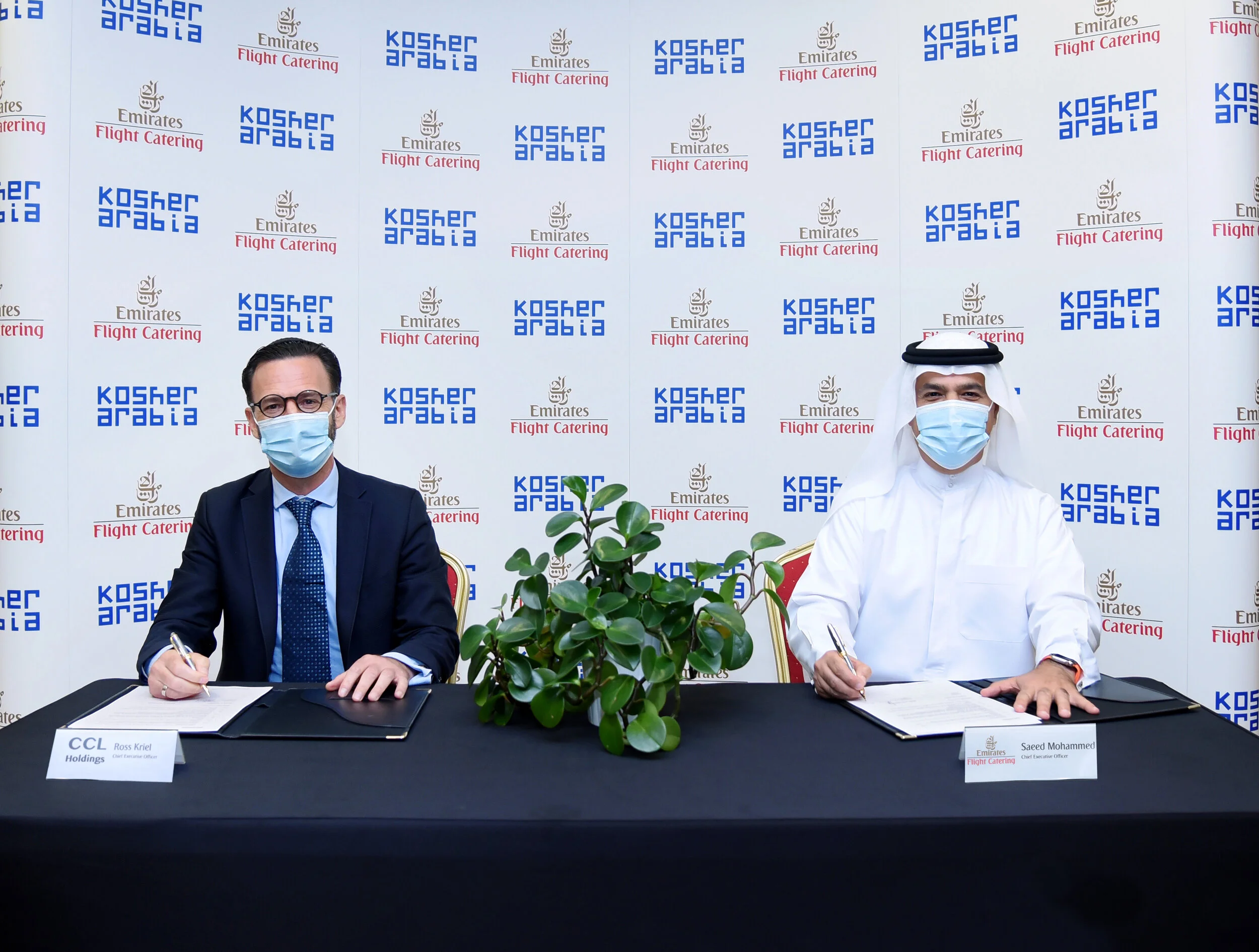
Dubai, UAE, 17 September 2020 – Emirates Flight Catering (EKFC), one of the world’s largest catering operations serving more than 100 airlines, has signed an MOU with CCL Holdings founded by Ross Kriel, entering a partnership to set up a dedicated production facility for kosher food at EKFC’s premises in the UAE. The new partnership will be called Kosher Arabia, and production is expected to begin by January 2021.
Kosher Arabia is certified by the Kashrut Division of the Orthodox Union (OU) which will work in partnership with the South African Union of Orthodox Synagogues (UOS) to provide the highest level of excellence in kosher certification to Kosher Arabia.
The experienced culinary team at EKFC will handle all food production, while CCL Holdings will provide certification and production supervision including support for menu development and foodstuff procurement.
Saeed Mohammed, CEO of Emirates Flight Catering said: “We are delighted to enter into an agreement with CCL to provide Kosher food. For many years, EKFC has been offering kosher meals primarily to our airline customers, via an outsourced supplier overseas. We’ve been watching the global trends for kosher food, and with recent developments, we expect that demand for kosher food in the UAE and region will grow quickly. Our partnership will cover all food channels and we will also explore opening restaurants across Dubai and the GCC.
“By setting up our own capability at EKFC to produce kosher food, we are confident that we can better serve our customers not only in the aviation sector, but also in the hospitality, F&B, and events sector including the upcoming Expo 2020. Making freshly prepared meals here in the UAE gives us better control over meal design and quality assurance.”
Ross Kriel, founder of CCL Holdings, and President of the Jewish Council of the Emirates (JCE) said: “Kosher Arabia was set up to supply kosher food to meet the growing demand in the UAE, not only from the Jewish community here but also from other consumers looking for healthy and halal-compliant options.
“We’re honoured to have received so much support from the UAE and broader global community, including from Rabbi Menachem Genack, CEO of the OU’s Kosher Division, Rabbi Yissachar Krawowski, Rabbinic Coordinator for OU Kosher in Israel, South Africa’s Chief Rabbi Warren Goldstein and Rabbi Dovi Goldstein, Head of Kashrut in South Africa, and Rabbi Yehuda Sarna, Chief Rabbi of the UAE. With their guidance and endorsement, Kosher Arabia was launched and today is signing an MOU with Emirates Flight Catering to set up the UAE’s first kosher food production facility.”
The UAE is home to people from nearly 200 nations and all walks of life, including a thriving Jewish community. In September 2019, the UAE announced the construction of an interfaith complex in Abu Dhabi, which will house a Jewish synagogue, Christian church, and Islamic mosque.
Emirates Flight Catering is one of the world’s largest catering operations. Offering airline, events, and VIP catering as well as ancillary services including laundry, food production, and airport lounge food & beverage, Emirates Flight Catering is a trusted partner of over 100 airline customers, hospitality groups, and UAE government entities. In 2019, the company’s 6,000 dedicated employees prepared over 80 million meals and handled 77,000 tonnes of laundry.

Overcoming The Challenges of Growing Organically In Soilless Farms - Wednesday, September 23, 2020 @ 12 PM EST
Has your soilless farm ever considered that your food waste could be a source of net income? Join us as we show how Re-Nuble can help soilless farms capture and introduce water solution, organic nutrients from your own production waste as a free supplementary and sterile fertilizer source
Are you a soilless farmer or grower that wants to go organic but keeps facing challenges? Join us as we identify ways for you to work with water-soluble organic hydroponic nutrients in a recirculating system in such a way that voids the risk of introducing food safety-related pathogens, labor inefficiencies and additional costs. Based on seven years of research, Re-Nuble's goal is to guide soilless farms towards a cultivation method that is comparable to the yields of conventional, synthetic mineral salts while increasing a farm’s bottom line using food waste as the mechanism.
In this webinar you will learn:
The main challenges soilless farms face when transitioning to organics
How to overcome these challenges
What soilless farms need to be mindful of when transitioning to ensure profitability
We'll see you there!
Register here
On-Site Waste Management:
An Untapped Income Source
Wednesday, 7 October 2020 @ 12 pm EST
Has your soilless farm ever considered that your food waste could be a source of net income? Join us as we show how Re-Nuble can help soilless farms capture and introduce water solution, organic nutrients from your own production waste as a free supplementary and sterile fertilizer source. We then go on to explain the driving science behind our method, Organic Cycling Science, an approach that allows farms to finally use a fully integrated, closed-loop, and self-sustaining fertilizing system capable of reducing input and disposal costs and increasing efficiencies.
In this webinar you will learn:
How to turn a farm's production waste into a free, renewable source of potable water and (optional) nutrients
Opportunities to improve income by reducing the organic hydroponic nutrient cost
Ways to increase a crop's growth and nutritional content
We'll see you there!
Register here
Speaker Profile: Tinia Pina
Founder & CEO, Re-Nuble
Tinia received her B.S. in Business Information Technology from Virginia Tech and studied briefly at Columbia University's Earth Institute. She has seven years of experience in the financial services industry and ten years as a professional within the sustainability and waste management industry.
Tinia launched Re-Nuble with a mission to “Redefine Waste” within urban communities. Re-Nuble quickly evolved into a social enterprise dedicated to changing wasteful habits around the world with the sole intention to help our farming production and food systems to become more resilient, decarbonized, and with an abundance of accessible organic produce options.
Tinia's pioneering business model has earned her a Huffington Post Millennial Impact Grant, the American Express Emerging Innovator award, and a MillerCoors Urban Entrepreneur grant, among other honors. Her experiences related to food waste, systems and policy have fueled her passion to increase our communities’ resilience, prosperity, and knowledge to help us live more conscious lives.

USA (IL): BrightFarms Celebrates Opening of Chicagoland Greenhouse Expansion
The increase in production will support BrightFarms continued growth in the market, including a 34% jump in year over year sales with Mariano’s.
BrightFarms has opened a new expansion to its Rochelle, IL greenhouse. The increase in production will support BrightFarms continued growth in the market, including a 34% jump in year over year sales with Mariano’s.
The 160,000 square-foot greenhouse opened in 2016 to provide retailers with a fresher and more sustainable alternative to leafy greens grown on the West Coast. The company currently supplies over 150 Roundy’s Supermarkets (Mariano’s, Pick ‘n Save, Metro Market) with packaged salads that arrive on store shelves in as little as 24 hours of harvest.
BrightFarms in-store presence, which includes a breakthrough display and references to the Rochelle greenhouse, has become a destination in the Roundy’s produce department.
“For over four years now, BrightFarms has provided consumers in Illinois and Wisconsin with delicious local produce that was grown within a short drive of their local Mariano's and Pick ‘n Save.” said Abby Prior, SVP Sales & Marketing at BrightFarms. “With our increased production, we’re thrilled that we have the opportunity to expand our partnership with Roundy’s and provide more consumers in the region with access to the freshest, cleanest, and most responsibly grown produce.”
Earlier this month, BrightFarms celebrated the 10th anniversary of Mariano’s supermarkets with a series of in-store activations across the Chicago market.
For more information:
BrightFarms
www.brightfarms.com
9 Sep 2020

5 Questions To Answer Before Starting A Vertical Farm
Indoor farming is a science—but that doesn’t mean you have to be a scientist to start one. Plenty of people with diverse backgrounds, from finance and business to hospitality (and yes, agriculture and science) enter the world of indoor vertical farming
Indoor farming is a science—but that doesn’t mean you have to be a scientist to start one. Plenty of people with diverse backgrounds, from finance and business to hospitality (and yes, agriculture and science) enter the world of indoor vertical farming.
Regardless of your past experience, if you are thinking of entering the world of vertical farming, you need to know what to expect. As a starting point, here are five questions to ask yourself before seriously considering launching a vertical farm.
1. What crops should you consider growing?
What are you planning to grow? This decision will have an impact on every aspect of your vertical farm, from setup and spacing to resources, distribution, and lighting, so it’s crucial that you make a choice that best suits you.
It is likely that you already have an idea of what crops you want to grow. But is that crop a good fit for a vertical farm? What’s its harvest cycle? Is there enough demand for it in your area? How does it need to be distributed? You’ll need to conduct an analysis of crops suitable for vertical farming and consider your options before going further into the schematics of your farm.
2. How much space do you have or need?
One of the perks of vertical farming is that growing racks allow you to make very efficient use of very little space. We’ve seen smart vertical farming setups make growing in the middle of a crowded city or a small complex attainable. However, what may seem like the smallest factors (like fixture mounting heights) have the potential to impact your farm’s viability. That’s why working with trusted partners like Current is critical to your success: we can get you started on the right path with a free light plan, amongst other things.
3. Do you have a partner?
Speaking of partners—do you have one? Are you working alone or with a team? Do you have access to plant scientists and researchers who can provide insight on best practices? Is there an expert who can design your lighting for optimum yields? Who will you turn to if a grow light fails?
These questions are the first step to a serious venture as pairing with the right partner means you can tackle all challenges that may come up in one fell swoop. Look for resources or someone in your network who have a reputation of excellence throughout the industry. Bonus points if those prospects also have a strong network of partners in horticulture they can turn to for specific expertise.
4. Who is investing?
Few people can fund a vertical farm on their own. You need investors—and sometimes that means getting banks on board as well. Having a formal business plan backed by industry stalwarts will be critical to presenting a strong front to the financial world and turning your dreams of owning your own vertical farm into a reality.
5. What grow lights will you use?
You have the space, you know what you want to grow and you’ve found your partners—now what? Time to select the grow lights that will power your vertical farm.
The right light is a crucial component to making your operation a success and will get you the yield you need to succeed in this new venture. Choosing the horticulture grow lights to get you there is a decision that marries price, light spectrum, warranty, ease of maintenance, efficiency, and much more. LED lighting may seem like a complex world – and that’s where we come in. We’re here to help you understand the basics of grow lights, figure out how they’ll interact with your farm, and set your farm on the road to success. We see growers pour their hard work and passion into their vertical farms every day. That’s why we think your partners should match your enthusiasm and go above and beyond to help your farm succeed.
Learn more about how Current helps vertical farms get off the ground.

6 Major Microgreen Health Benefits That Will Boost Your Overall Health
These micro plants aren’t just decorative additions to food dishes, but they also pack a nutritious, healthy punch
Microgreens are tiny leafy vegetables that come with a multitude of health benefits. These micro plants aren’t just decorative additions to food dishes, but they also pack a nutritious, healthy punch. Some microgreen species can even be 40 times more potent than their regular, larger counterparts. In this article, we’re going to discuss the 6 major microgreen health benefits that will boost your overall health.
1) Reduce Your Risk for Heart Disease
One of the crucial microgreen health benefits is that these tiny vegetables contain a high number of polyphenols, which are antioxidants that have been linked to lowering the risk for heart disease. Antioxidants are known for their ability to prevent free radicals from growing. Free radicals are reactive compounds that cause cell damage and diseases. Not only are microgreens a carrier of polyphenols, but they also contain a higher number compared to their mature vegetable counterparts.
2) Minimize Risk of Certain Cancers
Since microgreens carry a large amount of polyphenols, they can lower the risk for different kinds of cancer. Vegetables and fruits that are rich in antioxidants can be a fantastic addition to disease prevention.
3) Nutrient-Dense Vegetables
Even though they’re small for their size, microgreens have a vast array of health benefits. These tiny vegetables can have up to 40 times as much nutrients compared to mature vegetables. Knowing this, it can be life changing to incorporate small amounts of microgreens in every meal because they’re packed with nutritional benefits.
4) Can Improve Eyesight
Another wonderful microgreen health benefit is that these leafy greens contain lutein, which is a phytochemical seen in vision health. When you’re staring at your screen for too long, the intense rays can cause headaches, eye strain, and more. Lutein makes it easier for your eyes to absorb any excess light intensity to relieve headaches or other harm caused by excess light.
5) Reduces the Risk of Diabetes
One of the major microgreen health benefits is that they’re packed with antioxidants. These antioxidants can help lower the stress that prevents sugar from entering cells. Fenugreek is a specific microgreen known for its ability to increase sugar uptake in cells.
6) Lowers Chance of Alzheimer’s
Foods that are high in polyphenols may be able to lower the risk of developing Alzheimer’s. Cruciferous vegetables such as broccoli are high in Vitamin B and carotenoids which may lower levels of homocysteine, an amino acid that has been linked to cognitive decline. The microgreen version of cruciferous vegetables will be packed with even more vitamins and nutrients and should be incorporated in a daily diet to prevent disease.
Microgreen health benefits are vast and can not only boost our immune systems but also keep us healthy and safe from certain diseases. If you’ve been wanting to learn how to grow your own microgreen from home but aren’t sure how, subscribe to our weekly blog and YouTube channel for all the newest tips and tricks. You can also sign up to our new microgreens class and join our Facebook group to learn from others wanting to learn!
#microgreenshealthbenefits #microgreenbenefits #healthymicrogreens #microgreens #urbanfarming #locallygrown #healthyliving #benefitsofmicrogreens #nutrition #eathealthy #healthyplate #healthfirst #healthconscious #healthyfood #microgreengoodness #livehealthy

Little Leaf Farms Expands Hydroponic Greens Distribution Across East Coast
Based in Massachusetts, Little Leaf Farms has doubled its hydroponic greenhouse-growing capacity to 10 acres of fields under glass capable of producing more than two million packages of lettuce each month, which will broaden the company's distribution to retailers in New York, New Jersey, Pennsylvania, and South Carolina
15-Sep-2020
By Mary Ellen Shoup
Based in Massachusetts, Little Leaf Farms has doubled its hydroponic greenhouse-growing capacity to 10 acres of fields under glass capable of producing more than two million packages of lettuce each month, which will broaden the company's distribution to retailers in New York, New Jersey, Pennsylvania, and South Carolina.
Read More At: Food Navigator


Why We Believe Vertical, Urban Farming Can Help Save The Planet!
Conventional industrial farming contributes significantly to issues such as deforestation, biodiversity loss and the release of carbon emissions
Sophie | 2020
Our vertical, hydroponic farm based in Paddington, London.
Increasingly, we are all becoming aware of the negative impact of our food system on the environment. As individuals many of us are taking action to reduce the environmental impact of our diets, whether we’re reducing our meat and dairy consumption by trying out ‘meat-free Mondays’ or ‘veganuary’, buying zero waste foods, trying to buy more locally produced food or even growing our own.
Ultimately, we are looking for ways to minimize the negative environmental impacts of our food system. At Square Mile Farms, we believe that urban farming can play an important role in building a sustainable food system. Not only can we reduce food miles and prevent natural habitats from being converted for growing, we can also re-engage people to help them understand how food reaches their plates, which we believe is essential to enact real change going forward.
How does the current food system negatively impact the environment?
Conventional industrial farming contributes significantly to issues such as deforestation, biodiversity loss, and the release of carbon emissions. According to the Food Climate Research Network, the global food system is responsible for around 20-30% of greenhouse gas emissions. The WWF notes that food is responsible for 60% of global biodiversity loss and the UNFAO records that food production accounts for 70% of freshwater withdrawals.
The clearing of forests for livestock or growing crops is doubly concerning: not only do these practices have their own environmental impacts, e.g. methane emissions and issues related to fertilizer run-off, but they are also destroying forests which are important ‘carbon sinks’, absorbing approximately 2 billion tonnes of carbon dioxide yearly according to the UN.
Clearly, our current food system is flawed and this is only set to worsen as demands increase.
Infographic from: FCRN, ‘What is the food system’s contribution to the global GHG emissions total?’
Growing pressures on the food system
By 2050 the UN predicts the world population will grow to 9 billion: this is expected to require 60% more food and increase demand for water by 20% in the agriculture sector alone. So we need to find ways of making the food system more sustainable. We need to increase food production, while minimizing the environmental impact, or ideally making it negligible.
How can hydroponic farming in offices lessen the environmental impact of our food system?
We believe hydroponic, vertical farming is part of the solution to this issue. This method of growing food uses around 90% less water than conventional agricultural systems and can increase crop yields by up to 500%. So we can tackle two key problems in our current food system, the demand for water (by using considerably less) and the spatial impact (growing vertically allows a much more efficient use of space). By using existing urban spaces, such as workplaces, we can grow veg and herbs without converting more land for agricultural purposes.
Growing in offices also has the benefit of reducing food miles. By bringing food production to population centers, and further to that, by bringing it to people’s workplaces we are able to provide fresh produce where people are. If you’re taking home fresh produce once a week from work, there are virtually no food miles involved as you’d be traveling to and from work anyway!
Our office farm installations.
Another important way in which office farming can help improve our food system is by re-engaging consumers in cities. Writing for the World Economic Forum, Ellen MacArthur, a champion of Circular Economy, emphasized the important role cities will have in achieving a sustainable food system, especially because “80% of all food is expected to be consumed in cities by 2050”. She notes that cities should source food locally where possible and that they should avoid being “passive consumers” and instead, use their demand power to reward responsible farming practices. Office farming allows us to bring food production to the forefront of people’s minds, driving engagement, and encouraging conversation around our food system. We believe this is vital in order to educate and to inspire the change that we need to secure a sustainable future.
We believe that individual action is important when it comes to enacting change, but to achieve this we need innovative ideas that make it achievable for consumers to make such changes a reality. That’s why we bring urban farming to offices. We install farm walls and displays to improve employee wellbeing, drive engagement, and of course, provide fresh, nutritious produce. If you’d like to find out more about our offering click here.
You can also sign up for our newsletter to receive weekly tips and advice on sustainable living, as well as a round-up of relevant news.
Sources:
Bradley, P. and Marulanda, C., ‘Simplified Hydroponics to Reduce Global Hunger’, Acta Hortic. 554, 289-296.
Innovate UK, ‘Predictions - The Future of Food’.
MacArthur, Ellen, ‘Our food system is no longer fit for the 21st century’.
FCRN, ‘What is the food system’s contribution to the global GHG emissions total?'
UNFAO, ‘Water’.
UNFAO, ‘Water Use’.
UN News, ‘Climate Change’.
WWF, ‘Why we’re working on food’.
UNESCO World Water Assessment Programme, ‘The United Nations world water development report, 2016’.
Webinar: The State of Vertical Farming In Asia - September 28, 2020
This webinar is designed for vertical farmers, cultivation and operation teams, support technology companies, business executives as well as investors looking to connect with industry leaders to better understand the opportunities and challenges facing the vertical farming industry in Asia during and after the COVID-19 pandemic
AVF Roundtable: Vertical Farming in Asia:
Challenges & Opportunities During and After the COVID-19 Pandemic
(To be held on the 28th of September at 10:00 a.m. CEST)
This webinar has a limited number of tickets available, please register your participation soon
This webinar is designed for vertical farmers, cultivation and operation teams, support technology companies, business executives as well as investors looking to connect with industry leaders to better understand the opportunities and challenges facing the vertical farming industry in Asia during and after the COVID-19 pandemic.
Panelists:
1. Dr. Peng Li, Head of International Sales Department at SANANBIO
Dr. Li has a Ph.D. in Ecology from Peking University and a post-doctorate degree from the same university in Plant Nutrition. Since 2016 he has been working at SANANBIO as a senior engineer in Plant Factory Research Institute, COO in Hutou Produce Center, and now as Head of the International Sales Department.
2. Dr. Joel Cuello, Professor of Agricultural and Biosystems Engineering at the University of Arizona
Dr. Joel L. Cuello is Professor of Biosystems Engineering and Director of the Global Initiative for Strategic Agriculture in Dry Lands (GISAD) at The University of Arizona in Tucson, Arizona, U.S.A. He is also currently Vice Chair of the International Association for Vertical Farming (AVF).
A globally recognized expert in the engineering of sustainable biological and agricultural systems, his technical expertise in both engineering and biology provides the platform for engineering designs in various agricultural and biological systems with an emphasis on optimizing productivities while fostering resource sustainability and environmental protection.
Prof. Cuello has designed, constructed and implemented varied types of engineered agricultural or biological systems, including those applied to bioregenerative space life support, vertical farming, plant tissue culture, micropropagation, industrial mass production of algae and plant cell and microbial cultures for production of biomass, nutraceuticals, pharmaceuticals, etc. He is the Principal Inventor of the patented algae photobioreactor series — the Accordion photobioreactors — as well as the Vertical Farming systems — the Mobile & Modular Vertical Farm and the V-Hive Vertical Green Box
3. Eri Hayashi, Vice President at the Japan Plant Factory Association
Eri is the Vice President of Japan Plant Factory Association (JPFA), a non-profit organization devoted to academic and business advancements in the Plant Factory/Controlled Environment Agriculture (CEA) industry.
Before joining JPFA, Eri worked at a private research/consulting institute in Tokyo as a researcher specializing in the technology advancement for global food production. She has been conducting international field researches on Plant Factory/Vertical Farm and CEA since 2008. She has published multiple research papers and has been a research project manager on AI- and phenotyping- based smart plant factory systems and breeding.
She is also the chief executive officer of E*Green Lab Inc.
4. Yasuhiro Suzuki, General Manager for Asia at Heliospectra
Yasuhiro Suzuki is responsible for Heliospectra’s Product management, Business development and Asian sales. He covers both Sales and Marketing in Asia with his rich experience in Business Development and Sales from his previous carriers. Yasuhiro holds a bachelor’s degree in Sociology from St. Paul’s University in Tokyo. Previous positions include Marketing & Product Management Director at Tetra Pak in Japan.
5. Christine Zimmermann-Lössl, Chairwoman at the Association for Vertical Farming
Christine Zimmerman-Loessl has a background in studying political science, sinology and philosophy at Munich University – which was the starting point for her interest in international work. She has worked in different Asian countries which has given her experience and deeper insight in the culture and people. In Germany, she benefited from this as a project manager for risk analysis and crisis management. Networking was always easy for Christine and she founded the Asia Network Information Center – a research and project organization bridging East and West. Later on, as the representative for the Konrad Adenauer Foundation in China, she took responsibility in different areas and led a German-Chinese Management Institute, initiated environmental protection and poverty alleviation projects, as well as engaged in women’s programs. Christine was inspired by her son’s interests in Vertical Farming and founded with a group of like-minded young people the first nonprofit in the world – the Association for Vertical Farming (AVF) in 2013, since then she is acting as the chairwoman of AVF.
Topics:
1. Key challenges and opportunities in the context of the pandemic
2. Emerging trends and new market opportunities
3. Change in consumer behavior and preferences
4. New retail strategies
5. New technology developments
6. Private and public financing
7. Certification and standardization
8. Educating the next generation of farmers
9. Need for interindustry networking and partnerships
Take-Home Value:
• Deeper understanding of the Asian Vertical Farming industry
• Background and exploration of the Asian Vertical Farming Markets
• Understanding constraints and opportunities in Asia for this industry
• Exploring the continent’s legislative and private financial support for the industry
• Exchange of ideas and solutions
This webinar has a limited number of tickets available, please register your participation soon.
If you cannot attend the live session the recording of this webinar will be sent to you.
Note that AVF members can attend or access the recording of this webinar for free. contact our vice-chair, Ramin Ebrahimnejad at re@vertical-farming.net for more information.
Preventing Diseases Coming Into Your Fresh Produce
“If people don’t make the investment to understand water quality, once they realize the damage to their produce, it might be too late
Sankaran:
“The first thing is to understand the controlling factors. How do you make sure of the soil and the water quality health. Our job is the water quality.” Outside of heavy metals, some micro-nutrients are toxic to plants in moderate concentrations or specific conditions. KETOS looks at water quality as the first aspect in food safety because elements or toxins in water are often filtered and held by soil.
“If people don’t make the investment to understand water quality, once they realize the damage to their produce, it might be too late. One of the most common things, which we haven’t measured yet but actively looking into it, is how we can understand e-coli. We always end up having e-coli outbreaks and product recalls because of e-coli. We need to get ahead of that because there’s millions of dollars of losses and food waste.”
Safety issues
Kris Nightengale, VP Agricultural Sales notes: “If you look at the US data regarding food safety issues and over 80% of the cases had livestock grazing in proximity or higher in the watershed in relation to the produce field. Indoor and vertical agriculture seeks to solve the problem by taking the food out of the open and into a highly controlled enclosed environment.” Some pathogens are known to translocate in plants and become a part of the cell structure. This means that no amount of washing is going to disinfect the produce.
The KETOS shield continuously monitors the pH, ORP, and chlorine, which ensures chlorine can be maintained at the proper level to ensure effective sanitization. Even though indoor production facilities go to great lengths to filter and treat influent and circulating water, pathogens can still be introduced through fertilizer, worker, and pests.
“Healthy plants are not the hosts for pathogens that unhealthy plants are. Because indoor production works on a circulating loop system, nutrient imbalances can move very quickly through a facility. It’s not uncommon for indoor growers to watch a perfectly healthy crop start exhibiting symptoms of changing vigor in a matter of hours. Water tests are generally infrequent and there is a significant lag time from the lab. KETOS is filling in the massive data gap that growers can directly and immediately tie to crop health”, Nightengale affirms.
Keeping the water nutritious
One of the biggest issues that the US is dealing with right now, not necessarily how good the water treatment plants are, but how good the piping across the distribution network. Those pipes could have been laid out 100 years ago and could be contaminated with toxins. Knowing the water quality, both at the source and the destination is very important.
“KETOS is deploying systems to help with irrigation as well as help implement a broader distribution network for leak detection, understanding lead contamination in pipes, so that repairs can be conducted proactively vs. an expensive infrastructure replacement”, Sankaran says. “You cannot act upon what you don’t measure.”
“Agriculture has successfully implemented technology across many facets of its operations and its time for water management to be a more important discussion as this is a precious asset that can impact not just the farmers but of all of the consumers at large .”
Nightengale adds: “KETOS is able to address the gaps in the marketplace today for water intelligence in-depth, and the right kind of data can provide you insights for what’s actually occurring at your fingertips.”
For more information:
KETOS
Meena Sankaran, Founder, and CEO
meena@KETOS.co
Kris Nightengale
kris.nightengale@KETOS.co
www.KETOS.co
Publication date: Tue 15 Sep 2020
Author: Rebekka Boekhout
© HortiDaily.com
Aquaponics Association Presenting The 2020 Aquaponics Conference, "Cultivating the Future", Online Oct. 16-18
The theme, "Cultivating the Future", signifies that the Conference will explore our Vision for the next generation of aquaponics. Live Panel Discussions will convene experts in all fields of aquaponics to discuss overcoming the roadblocks to more aquaponic growing
The Aquaponics Association is presenting The 2020 Aquaponics Conference, "Cultivating the Future", October 16-18, to connect growers from around the world and expand the practice of aquaponics.
Conference Website: https://aquaponicsconference.org/
The theme, "Cultivating the Future", signifies that the Conference will explore our Vision for the next generation of aquaponics. Live Panel Discussions will convene experts in all fields of aquaponics to discuss overcoming the roadblocks to more aquaponic growing.
The Conference will feature four Learning Tracks: Aquaponics in STEM Education; Community Aquaponics; Aquaponics Research; and Commercial Aquaponics. The Conference will feature over 50 sessions including Instructional Lessons; Virtual Tours; Live Panel Discussions; Live Q&A Sessions; Guest Breakout Discussions; Keynote Presentations; and even "Virtual Cocktail Hour"!
The Conference will be held on the Run The World virtual events platform. This interactive platform features live sessions; live breakout discussions, direct messaging, and group chats between all attendees; and live speaker polls so that guests can actively participate in the Conference.
Early Bird tickets are only $149 for the full three-day conference - $100 savings. The ticket includes access to recordings of all conference content and all-conference slide presentations through the end of 2020.
The Aquaponics Association is a nonprofit, Member-based organization that expands the practice of aquaponics through education, advocacy, and connection. The Conference will continue the Association's Mission of expanding the practice of aquaponics.
contact: Brian Filipowich

Virginia Researchers Are Studying ‘The Sound of Plants Dancing’ To Better The Future of Agriculture
Using experimental technology, the scientists are trying to figure out how the sonification of plant movements could be used to assess plant health and aid farmers who need to monitor their greens at an industrial scale
By Katherine Hafner
The Virginian-Pilot 9/7/2020
What Do Dancing Plants Sound Like?
© Virginia Tech/The Virginian-Pilot/TNS Some of the pepper plants being studied by researchers at Virginia Tech. The researchers record the plants' long-term movements  sped up into \"dances\"  then convert those patterns into sound as a way to evaluate plant health based on responses to environmental conditions.
It seems like the start of a philosophical essay question. But researchers at Virginia Tech think the answer could be one tool wielded in the future of agriculture in the commonwealth and beyond.
Using experimental technology, the scientists are trying to figure out how the sonification of plant movements could be used to assess plant health and aid farmers who need to monitor their greens at an industrial scale.
They are focused on indoor or so-called controlled-environment agriculture. Think greenhouses with LED lights and plants in hydroponic systems, using liquid nutrient solutions instead of soil.
“When you grow a plant inside a building, you really control ... introducing any insects or pathogens, minimizing the use of pesticides” and the like, said Bingyu Zhao, the lead researcher and associate professor in the School of Plant and Environmental Sciences. “But you can still have disease problems or sometimes they could have environmental stress.”
Maybe the temperature’s too high, he said, or the nitrogen levels are off. “It’s all not good for the plant growth.”
Imagine a grower using an indoor facility with dozens of rows of plants. Unlike in a small backyard garden, they can’t continuously check on every individual plant to monitor the effects of all those variables.
So Zhao got the idea to set up cameras to do it instead, using a small number of pepper plants for observation.
The high-resolution cameras capture the continuous movements of the plants. Over times, patterns develop.
These “micro movements” are mostly naked to the human eye, Zhao said. But they become apparent when sped up in time-lapse videos.
The even more unconventional part comes next.
The researchers take the data they’ve collected on plant movements and convert it into sound in a process called sonification.
In that way, a human could hear patterns present among the plants. The idea is to eventually be able to link certain sounds to indicators that a plant needs better light, for example.
Computers, analyzing the data at a large scale, could learn “what is a good sound and what is a bad sound,” Zhao said.
He works with professors across other disciplines in engineering and in the School of Performing Arts to bring together the different elements.
The plant movement project is just one part of the university’s new statewide SmartFarm Innovation Network, said Susan Duncan, associate director of the Virginia Agricultural Experiment Station.
Two years ago, the school brought together stakeholders in the agriculture and food processing fields from around Virginia to hear their concerns and interests, she said.
One big takeaway: technological innovation was on everyone’s mind. In order to maintain a future workforce and catch up with evolving needs, they needed to think outside traditional agricultural techniques, she said.
So the decentralized network was born, consisting of 11 off-campus research centers including the Hampton Roads Agricultural Research And Extension Center in Virginia Beach. Though the center in our region isn’t involved in the “dancing plants” project, it has plenty of its own areas of study, including water quality and boxwood blight disease.
There are more than 100 research projects connected to the network delving into the future of agriculture.
With growing plants indoors, for example, “you can’t just say, ’I’m going to put this LED light over my plant and see how it goes,’” Duncan said. “There’s a science behind it.”
In the operating room, surgeons often use sound to be able to keep track of routine measurements such as blood pressure while performing surgery, Duncan said.
Applying that to plants, she said, is “how they can help guide us to make decisions for them.”
“It’s kind of a cool concept. If they start ’screaming,’ whatever that sounds like, we can pay attention.”
©2020 The Virginian-Pilot (Norfolk, Va.)
Visit The Virginian-Pilot (Norfolk, Va.) at pilotonline.com
Distributed by Tribune Content Agency, LLC.

California Wildfires And Food Security
The smoke from these fires are wreaking havoc to nearby farms, especially outdoor farms. The article lists the following negative impacts from poor quality, smoke-filled air
09-17-20
As wildfires ravage through the State of California, we at CO2 GRO offer our deepest sympathies to those who have been greatly affected.
According to this article by Growing Produce, “On the whole, the fires have not invaded growing fields. However, several growing areas lie close to the fires.” Hopefully, the fires can be controlled and farms spared.
However, the smoke from these fires are wreaking havoc to nearby farms, especially outdoor farms. The article lists the following negative impacts from poor quality, smoke-filled air:
With less sunlight reaching crops, crops develop more slowly.
Less sunlight can lead to higher disease loads. Obviously, when ash coats the leaves and fruit, crops have even less access to light.
Protecting workers delays harvest, leading to destroying overly ripe crops.
Some crops absorb enough smoke to change the flavor. During the 2018 fire season, several vineyards were unable to sell their grapes.
Protected Cultivation
While most outdoor growers will experience the negative impacts of smoke, protected cultivation facilities such as greenhouses have the ability to cope. LED lighting, frequent air exchange, protected structures and more environmental control enable greenhouses to provide their plants a more consistent environment for growth, despite the conditions outside. Protected structures also offer a safer environment for workers.
CO2 Gas Supply
CO2 gas supply shortages in California as a result of COVID-19 and now with fires causing several disruptions in the supply chain have hampered sealed greenhouses and indoor cultivation facilities. Supply has significantly slowed and prices have risen. Several cultivation facilities have temporarily stopped using CO2 gas for growing, thus hampering crop yields by up to 30%.
CO2 Delivery Solutions™
CO2 Delivery Solutions™ offers greenhouse and indoor growers the opportunity to supplement their plants with CO2 while using over 90% less gas versus traditional atmospheric enrichment. In difficult times like this being experienced in California, ensuring our food supply with the highest yields possible is paramount. Greenhouses and indoor cultivation facilities with optimal yield enhancing technologies that require minimal resources, such as CO2 Delivery Solutions™, provide food supply security to consumers while protecting growers’ people and profits.
CO2 Delivery Solutions™ also provides a method for sequestering CO2 gas by providing it as an input for plants to grow. Nearly all the CO2 provided to the plants through CO2 Delivery Solutions™ aqueous CO2 mist is sequestered by the plant. Unlike CO2 gassing in which approximately half the CO2 gas that is pumped into the grow room leaks back into the atmosphere.
For more information on CO2 Delivery Solutions™, watch this video and explore our website.

Urban Foods Systems Symposium In October Will Focus on Climate, Community, Security, Production And Distribution
All things food in and for urban areas will be in focus during the 3rd Urban Food Systems Symposium scheduled for virtual delivery on Wednesdays in October and hosted this year by Kansas State University and K-State Research and Extension
By urbanagnews
September 15, 2020
All things food in and for urban areas will be in focus during the 3rd Urban Food Systems Symposium scheduled for virtual delivery on Wednesdays in October and hosted this year by Kansas State University and K-State Research and Extension. 2020 Urban Food Systems Symposium online sessions will be offered from 10 a.m. to 3 p.m. CDT every Wednesday in October. If you’ve got an interest in any aspect of urban food systems there’s a session for you and you are encouraged to attend.
The format for each Wednesday session includes one or more live keynote speakers supplemented by breakout discussions, poster sessions, and live breaks with sponsors.
Before September 18, registration is only $100 ($50 if you are a student). After September 18, registration goes up to $125 and $75 for students. Here’s the really good part about registration – all registered attendees get access to the breakout session presentations starting in September. They also get access to all live and breakout discussions as they occur each Wednesday in October, and they will have 24/7 access to all recordings of presentations through April 2021.
The organizers have lined up a diverse group of breakout session presenters and topics. Check out the UFSS website for all the details on breakouts. Keynote topics, speakers, and dates are:
• Oct. 7 – Urban Agriculture and Food Systems – Building Climate-Resilient Urban and Regional Food Systems, Jess Halliday, associate of RUAF Global Partnership on Sustainable.
• Oct. 14 – Urban Agriculture, Climate Change and Food Security: Potential Solutions and Synergies, Chuck Rice, Kansas State University Distinguished Professor of Soil Microbiology.
• Oct. 21 – The Role of Urban Farming in Nutrition Security, Elizabeth Mitcham, director of the Horticulture Innovation Lab, University of California-Davis.
• Oct. 21 – Food Justice is More than Growing Food and Feeding People, Karen Washington, farmer and activist with Rise & Root Farm and Black Urban Growers.
• Oct. 28 – Fixes That Fail: Using Community-Based Systems Modeling to Diagnose Injustice in the Food System, Jill Clark, associate professor, John Glenn College of Public Affairs, The Ohio State University and Jennifer King, assistant director of training and community education, Department of Population and Quantitative Health Sciences, Mary Ann Swetland Center for Environmental Health, School of Medicine, Case Western Reserve University.
• Oct. 28 – The Hydra-Headed Food System: Imagining the Whole and Connecting the Dots, Mark Winne, food policy expert, former executive of the Hartford Food System.
Register online today at the Urban Food Systems Symposium website. Got questions? Send those to the organizing committee at ufss@ksu.edu.

Earn CEUs With Disease Management Starting September 28, 2020
Learn how to prevent and manage diseases in nurseries and greenhouses. Disease Management is the fourth course of the award-winning Greenhouse Online Training courses offered by the University of Florida IFAS Extension
By urbanagnews
September 2, 2020
University of Florida Greenhouse Training Online Courses
Learn how to prevent and manage diseases in nurseries and greenhouses. Disease Management is the fourth course of the award-winning Greenhouse Online Training courses offered by the University of Florida IFAS Extension.
This intermediate course is designed for growers with some experience and training and offers Continuing Education Units (CEUs) for many states in the United States. Topics covered include disease cycle, how to differentiate between a disease and other issues, organic and conventional disease management options, and how to safely apply and handle fungicides. The course is offered in English and Spanish.
The course is taught by Dr. Carrie Harmon, Director of the UF/IFAS Plant Diagnostic Center in Gainesville, FL, and Executive Director of the National Plant Diagnostic Network. Growers in the course have described her as a “clear, concise and informative instructor” who help them “feel more capable identifying disease problems, and less intimidated by the disease books on the shelf.”
The course runs from September 28 to October 23, 2020, includes a personalized certificate of completion and has been approved for CEUs in several states. The cost is $US199 per participant, with discounts if you register 5 or more. The last day to register is October 5, 2020. Over 4 weeks, there are streaming video lessons, readings, and assignments (about 3-4 hours total commitment per week), which can be accessed at any time of day. Click here to register.
For more information, including discounts for registering multiple staff, email us at greenhousetraining@ifas.ufl.edu, or visit http://hort.ifas.ufl.edu/training/.
Disease Management 2020 flyer Download

Vertical Farming To Shape Food's Future Top Companies To Share Expertise At Online Congress - September 22-24, 2020
The first Vertical Farming World Congress will now be held online on 22-24 September, with numerous innovations to help develop an emerging community of leading producers, funders, suppliers, and customers. Its theme will be ‘Shaping Food’s Future
The first Vertical Farming World Congress will be held online from 22nd to 24th September, bringing together the sector’s top minds and businesses, who believe the coronavirus pandemic will accelerate the industry’s inevitable growth. With the theme ‘Shaping Food’s Future’, the event is sponsored by LED lighting solutions provider Heilux.
“This is a unique opportunity for interested investors, agriculturalists, food producers, suppliers, academics and governments,” commented Richard Hall, Chairman of event organizer Zenith Global, the food and drink experts. “There may never be a better time, because the industry is rapidly establishing itself and an online event gives a ringside seat more affordably, along with all kinds of extra features.
“In addition to the most authoritative speakers ever assembled on the sector, there will be virtual farm tours, round tables on key issues, and extensive social as well as one-to-one networking. There will be ongoing access afterwards to review presentations and continue making new connections.
“It will be difficult to beat the caliber and geographic spread of our speakers:
Our industry leadership panel has the founders and chief executives of AeroFarms and 80 Acres Farms from the United States plus Intelligent Growth Solutions and Jones Food Company from the United Kingdom.
On sustainability, we have the World Wildlife Fund; on retailing, we have Migros from Switzerland.
Investors are represented by AgFunder, Ashfords, Innovate UK, and Virgo.
Other leading contributors range from the global Association of Vertical Farming to Wageningen University.
Other talks include a view of the city of the future, a nutrition briefing, and debate about the relative merit of aeroponics, aquaponics, and hydroponics.
A technology briefing will look in-depth at operational choices, plant growth, lighting, and robotics.
Innovator case studies include growing underground, modular aeroponics, shipping containers, and success in Taiwan.”
Media partners include AgFunder, Agritecture, AOA Chile, Association of Vertical Farming, Eatable Adventures, Farm Tech Society, FoodBev Media, Hortidaily, iGrow, Japan Plant Factory Association, NextGenChef, Urban Ag News, Vertical Farming Consulting, and Vertical Farming Podcast. Full program and booking details are available at zenithglobal.com/events. There is a specially discounted rate for start-ups.
Media partners include AgFunder, Agritecture, AOA Chile, Association of Vertical Farming, Eatable Adventures, Farm Tech Society, FoodBev Media, Hortidaily, iGrow News, Japan Plant Factory Association, NextGenChef, Urban Ag News, Vertical Farming Consulting, and Vertical Farming Podcast.
Full program and booking details are available at zenithglobal.com/events.
There is a specially discounted rate for start-ups.
For further information, go to www.zenithglobal.com/events or contact events@zenithglobal.com.

VIDEO: "Localized Solutions To Food Insecurity In The COVID-19 Era"
This "Localized Solutions to Food Insecurity in the COVID-19 Era" panel discussion was moderated by CEO, Scott Massey hosting fellows Joseph Daliwa, Natacha Agbahoungba Sah, and Mankaah Yvonne
Heliponix has long been involved with the Mandela Washington Fellowship sponsored by the United States Department of State, by sharing our insights for hydroponic farming to Mandela Washington Fellows to adopt the technology, and implement financially and environmentally sustainable businesses in West and Central Africa. This "Localized Solutions to Food Insecurity in the COVID-19 Era" panel discussion was moderated by CEO, Scott Massey hosting fellows Joseph Daliwa, Natacha Agbahoungba Sah, and Mankaah Yvonne Che.
UrbanKisaan Is Betting On Vertical Farming To Bring Pesticide-Free Vegetables To Consumers And Fight India’s Water Crisis
Severe droughts have drained rivers and reservoirs across parts of India, and more than half a billion people in the world’s second-most populous nation are estimated to run out of drinking water by 2030
September 17, 2020
Image Credits: UrbanKisaan
Disrupt Is Happening Right Now!
It's Not Too Late To Get In On The Action!
Severe droughts have drained rivers and reservoirs across parts of India, and more than half a billion people in the world’s second-most populous nation are estimated to run out of drinking water by 2030.
Signs of this are apparent in farms, which consume the vast majority of total water supplies. Farmers have been struggling in India to grow crops, as they are still heavily reliant on rainwater. Those with means have shifted to grow crops such as pearl millet, cow peas, bottle gourd, and corn — essentially anything but rice — that use a fraction of the water. But most don’t have this luxury.
If that wasn’t enough, Indian cities are facing another challenge: The level of harmful chemicals used in vegetables has gone up significantly over the years.
A Hyderabad-headquartered startup, which is competing in the TechCrunch Disrupt Startup Battlefield this week, thinks it has found a way to address both of these challenges.
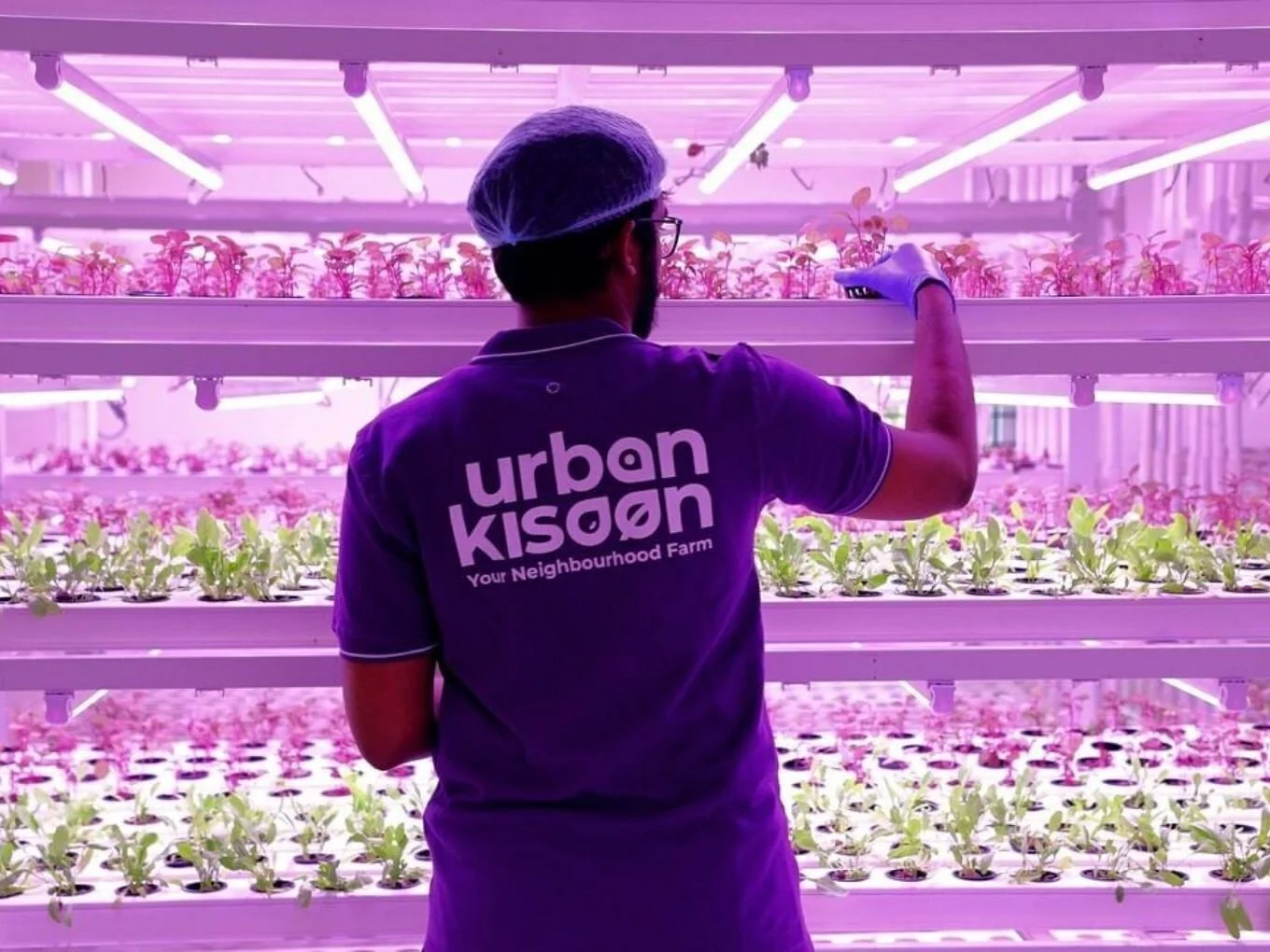
Across many of its centers in Hyderabad and Bangalore that look like spaceships from the inside, UrbanKisaan is growing crops, stacked one on top of another.
Vertical farming, a concept that has gained momentum in some Western markets, is still very new in India. The model brings with it a range of benefits. Vihari Kanukollu, the co-founder and chief executive of UrbanKisaan, told TechCrunch in an interview that the startup does not use any soil or harmful chemicals to grow crops and uses 95% less water compared to traditional farms.“
We have built a hydroponic system that allows water to keep flowing and get recycled again and again,” he said. Despite using less water, UrbanKisaan says it produces 30% more crops. “We grow to at least 30-40 feet of height. And it has an infinite loop there,” he said.Kanukollu, 26, said that unlike other vertical farming models, which only grow lettuce and basil, UrbanKisaan has devised technology to grow over 50 varieties of vegetables.
The bigger challenge for UrbanKisaan was just convincing businesses like restaurant chains to buy from it. “Despite us offering much healthier vegetables, businesses still prefer to go with traditionally grown crops and save a few bucks,” he said.
So to counter it, UrbanKisaan sells directly to consumers. Visitors can check in to centers of UrbanKisaan in Hyderabad and Bangalore and buy a range of vegetables.
The startup, backed by Y Combinator and recently by popular South Indian actress Samantha Akkineni, also sells kits for about $200 that anyone can buy and grow vegetables in their own home.
Kanukollu, who has a background in commerce, started to explore the idea about UrbanKisaan in 2018 after being frustrated with not being able to buy fresh, pesticide-free vegetables for his mother, he said.
Luckily for him, he found Sairam Palicherla, a scientist who has spent more than two decades studying farming. The duo spent the first year in research and engaging with farmers.
Today, UrbanKisaan has more than 30 farms. All of these farms turned profitable in their first month, said Kanukollu.“
We are currently growing at 110% average month on month in sales and our average bill value has gone up by 10 times in the last 6 months,” he said.
The startup is also working on reaching a point within the next three months to achieve $150,000 in monthly recurring revenue.
The startup has spent the last few quarters further improving its technology stack. Kanukollu said they have cut down on power consumption from the LED lights by 50% and reduced the cost of manufacturing by 60% per tube.
Kanukollu said the startup works with five farmers currently and is working out ways to find a viable model to bring it to every farmer.
It is also developing a centralized intelligence atop convolutional neural networks to achieve real-time detection to find more harvestable produce, and detect deficiencies in the farm.
UrbanKisaan, which has raised about $1.5 million to date, plans to expand to more metro cities in the country in the coming quarters.

Signify Expands Philips Horticulture Research Partner Network In China By Adding Yunnan AiBiDa Greenhouse Technology Co., Ltd. To Serve The Chinese Floriculture Business
The partnership will further promote the use of LED applications in floriculture production in greenhouses. "We need high quality products for our customers in China. Philips Horticulture LED lighting technology is what we need for our greenhouse crop production," said Li Qin, founder and CEO of Yunnan AiBiDa."
On Aug. 28, 2020, Signify signed a cooperation agreement with Yunnan AiBiDa Greenhouse Technology Co., LTD, to formally become a research partner using Philips GreenPower LED products as supplementary lighting for its greenhouse floriculture production improving crop growth efficiency and quality in western China.
"We are pleased to welcome AiBiDa to our horticultural network,” said Udo van Slooten, Business Leader Horticulture at Signify. "Yunnan AiBiDa is committed to integrating advanced European Horticulture technology and facilities to China’s developing floriculture market. AiBiDa’s flowers such as cut rose enjoy a high reputation in the Chinese market. Signify will provide AiBiDa with advanced horticulture LED lighting technology and services to improve the quality and yield of their greenhouse crops.”
The partnership will further promote the use of LED applications in floriculture production in greenhouses. "We need high-quality products for our customers in China. Philips Horticulture LED lighting technology is what we need for our greenhouse crop production," said Li Qin, founder and CEO of Yunnan AiBiDa."
Signify and Yunnan AiBiDa have already cooperated in the Linxia International (Sino-Dutch) Floriculture Port project located in Gansu province. In May this year, a three-party joint laboratory (Signify, Baiyi Group, and Yunnan AiBiDa) was officially set up at the project location. Meanwhile, Yunnan AiBiDa was awarded as ambassador of Philips Horticulture LED lighting solutions globally and locally in China’s Floriculture market. Signify will continue to expand its partner network in China to better serve the Chinese Horticulture market with innovative Philips grow lights and services.