

Welcome to iGrow News, Your Source for the World of Indoor Vertical Farming

Lef Farms Keeps Front-Line Workers Happy And Healthy With A Quarter Million Dollars In Food Donations
The whole reason we started Lef Farms was to reduce our community’s reliance on food sources outside our region by offering healthy local alternatives. We feel a healthy community is one that grows and prospers together
(LOUDON, NH) – As the COVID-19 pandemic continues, New Hampshire-based lef Farms continues to do its part by providing hard-working front-line healthcare workers across New Hampshire, Massachusetts, New York, and New Jersey with more than $250,000 in baby greens over the past six months – a total of 50,000 meals.
“We’ve always seen ourselves as community advocates first and foremost”, begins lef Farms founder, Henry Huntington. “The whole reason we started lef Farms was to reduce our community’s reliance on food sources outside our region by offering healthy local alternatives. We feel a healthy community is one that grows and prospers together. Our ability to bring fresh greens to those logging countless hours to fight this pandemic is just another way to keep our community healthy and strong.”
“Front-line heroes are pulling 12- sometimes 16-hour workdays. For weeks!”, exclaims lef Farms Sales Manager, Donald Grandmaison. “When you put in that kind of hours, your meals end up a second thought. Our team felt a strong call-to-action. As our local heroes poured themselves into helping our community, we wanted to give them the fuel to continue their amazing work”, finishes Grandmaison.
What began in March as a casual conversation about the country’s incredible pandemic relief efforts led to lef taking a more aggressive approach in its own region. lef immediately reached out to its business partners to gauge interest in supporting healthcare workers. In a matter of just hours, Lef secured thousands in financial support from key vendors, like International Paper, Macaran Printed Products, Inline Plastic, and its parent company, Pleasant View Gardens – demonstrating the willingness of the businesses community to rally for this cause.
With support from business partners, Lef also contacted one of New England’s top grocers, Stop & Shop, joining forces and providing fresh greens directly to dedicated front-line workers. Through the Stop & Shop’s “Feeding the Frontline” program, lef provided 30,000 servings of fresh baby greens to medical first-responders at Mount Sinai and Long Island Community Hospital in New York, Pascack Valley Medical Center in New Jersey, and Boston Medical Center and Children’s Hospital.
Given the success of the Stop & Shop partnership, lef turned its focus closer to home by inviting local New Hampshire food suppliers to join in. Without hesitation, Pete & Gerry’s added their organic eggs to the mix. And, like a series of dominos, other suppliers fell in line, like Contoocook Creamery, who donated fresh milk. Before too long, a small team of farmers were assembled to lift the spirits of healthcare providers and motivate them to continue their good fight. This local program provided an assortment of local products for 1,000 healthcare professionals at Dartmouth-Hitchcock Medical Centers (DHMC) throughout New Hampshire.
“With several special events throughout the month of August, our dedicated staff was treated to fresh greens, milk, and eggs to keep them going”, notes DHMC media relations manager, Audra Burns. “Plus, lef’s efforts mesh perfectly with the hospital’s own internal wellness and healthy eating. We couldn’t be more grateful”, finishes Burns.
“While the pandemic continues, we’re proud that our farm and other businesses can work together to give back to those who are giving so much. For them, it’s an outward demonstration of community support. A strong message of hope. And that’s exactly what this country needs”, smiles lef’s Henry Huntington.
lef Farms is a 1-acre hydroponic greenhouse growing facility located in Loudon, NH, producing nearly 1.5 million pounds annually of its Crisp, Smooth, Spice, and Fusion baby greens for New England. www.lef-farms.com.
Lead Image Caption:
lef Farms of Loudon, NH, keeps medical first-responders happy and healthy with a quarter of a million dollars in food donations.

VIDEO: It's A 2-Acre Farm, Packed Into A Shipping Container That Doubles As A Farm Building
The Farm From A Box system is designed to feed 150 people per year and includes drip irrigation, all of the tools, and its own renewable energy setup
The Farm From A Box system is designed to feed 150 people per year and includes drip irrigation, all of the tools, and its own renewable energy setup.
This plug-and-play farming system combines water-smart irrigation, renewable energy, and precision farming technology in a single shipping container that is said to be capable of supporting the cultivation of almost two and a half acres, using regenerative agriculture practices.
We've covered a few different approaches to the "farm in a box" concept, but all of them so far have been built around the idea of growing the crops inside a shipping container, using hydroponics or aeroponics, and artificial lighting. The Farm From A Box is quite a bit different in that the farming takes place outside of the box (or shipping container) and after the contents have been unpacked and deployed, the box itself becomes the hub of the farm infrastructure.
According to the company, this is a "turnkey farm kit" that can be used to build a stronger local food system, especially in food deserts and in the developing world, where infrastructure can be spotty and unreliable at best, and possibly even non-existent. The system is described as being “food sovereignty in a box" that can be a “Swiss Army Knife” for off-grid farming, and while there is a basic template, each unit can be customized to fit the particular situation."
We want to develop this as a rapid response transitional food production system. The box is really infrastructure for places that are struggling with a lack of infrastructure." - Brandi DeCarli, co-founder of Farm from a Box. While the units are designed to be complete systems with all of the core components (minus the land and water rights and labor, of course), the company doesn't just stop there, but also includes a training system to help "new farmers tackle the steep learning curve of permaculture technique." To me, this is one of the critical parts of the venture, because if you've ever tried to grow food on a larger scale than your own backyard, without having any formal training or guidelines to follow, it can be a humbling experience that is full of failures learning opportunities."
Based on extensive field research, we found that rural communities often lack the resources and infrastructure needed to access nutritious food. We developed a toolkit that contains all of the core components needed to grow your own food, on a two-acre plot of land, without the need for an existing grid. Imagine the good it can do by growing local, organic food for a school, or helping jumpstart food production after a disaster. ‘Farm from a Box’ enables and empowers communities to provide for themselves." - DeCarli
Currently, Farm In A Box has a prototype unit operating in Sonoma, California, and a second version is in the works for deployment in the Rift Valley of Ethiopia. Basic units will cost about $50,000, which includes a 3 kW solar PV array, a battery storage system, a drip irrigation system and water pump (which can be fitted to a well or to a municipal water supply), basic farm tools, a sensor package, a seedling house, and a WiFi connectivity package, all packaged into a single shipping container. Other options are available as well, including a water filtration system, an advanced sensor suite, remote monitoring capabilities, and more.

This Month's Cafe Will Be Our "BACK to BASICS" Series."Hydroponic Nutrient Management Basics" - Sept 22, 2020 - 11 AM EST
Indoor Ag Science Cafe is an open discussion forum, organized by Chieri Kubota (OSU), Erik Runkle (MSU), and Cary Mitchell (Purdue U.) supported by USDA SCRI grants
September Indoor Science Cafe
September 22nd Tuesday 11 AM EST
Please Sign Up!
This Month's Cafe Will Be Our "BACK to BASICS"
Series
"Hydroponic Nutrient Management Basics"
by Dan Gillespie (JR Peters Inc)
Please sign up so that you will receive Zoom link info.
Indoor Ag Science Cafe is an open discussion forum, organized by Chieri Kubota (OSU), Erik Runkle (MSU), and Cary Mitchell (Purdue U.) supported by USDA SCRI grants.
Sign up here

Indoor Agriculture, Challenges And Innovation
At Verde Compacto we want to share knowledge with you and make you part of the new era of agriculture
At Verde Compacto we want to share knowledge with you and make you part of the new era of agriculture.
That is why we developed a series of webinars where we will talk about the future, the challenges, and innovation in agriculture.
We look forward to your assistance and we invite you to register at the following link:
Greenhouse automation
September 22
18:00 hrs CDMX
Indoor growing systems: The new era of agriculture
24th September
18:00 hrs CDMX
REGISTRY
Our mailing address is:
Compact Green Cañada # 105 Col. Jardines de Moral
Leon De Los Aldama , Gua 37160
Mexico

CANADA: Bringing Local Greens To Ontario Year Round
The state-of-the-art farm is fully automated and equipped to grow microgreens and baby greens 365 days a year, without the use of pesticides, herbicides or fungicides and with dramatically less water consumption
NEWS PROVIDED BY
Sep 15, 2020
Vertical Farm In Guelph Is Now Fully Operational
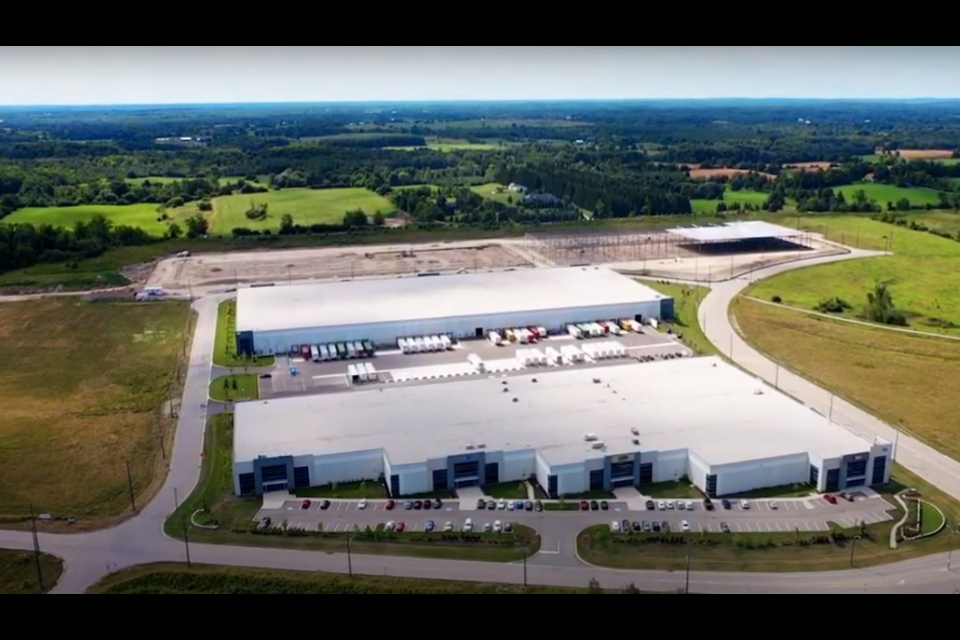
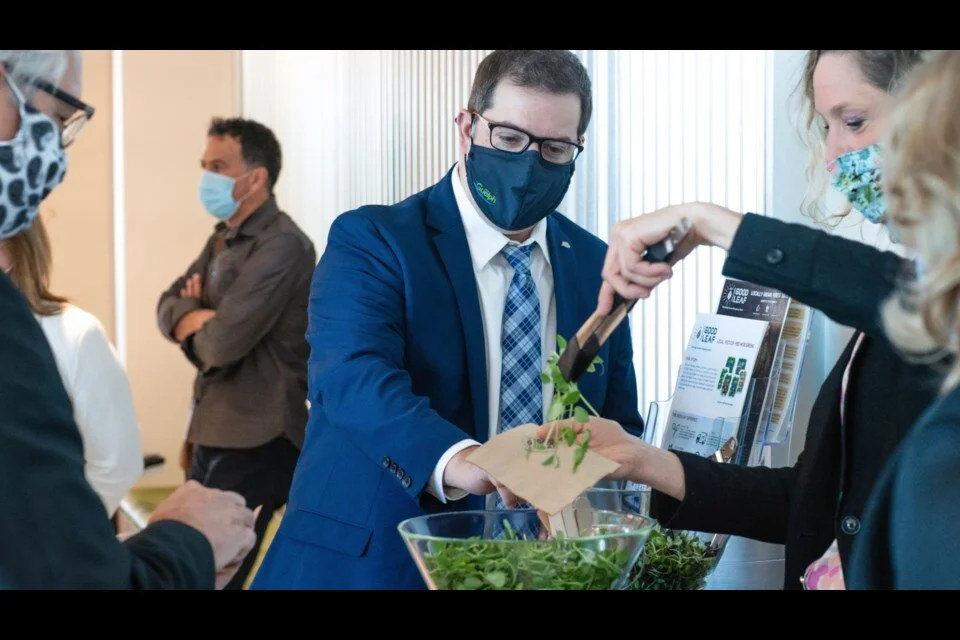
GUELPH, ON, Sept. 15, 2020,/CNW/ - The revolutionary GoodLeaf Farms' 4,000-square-metre indoor vertical farm is now fully operational.
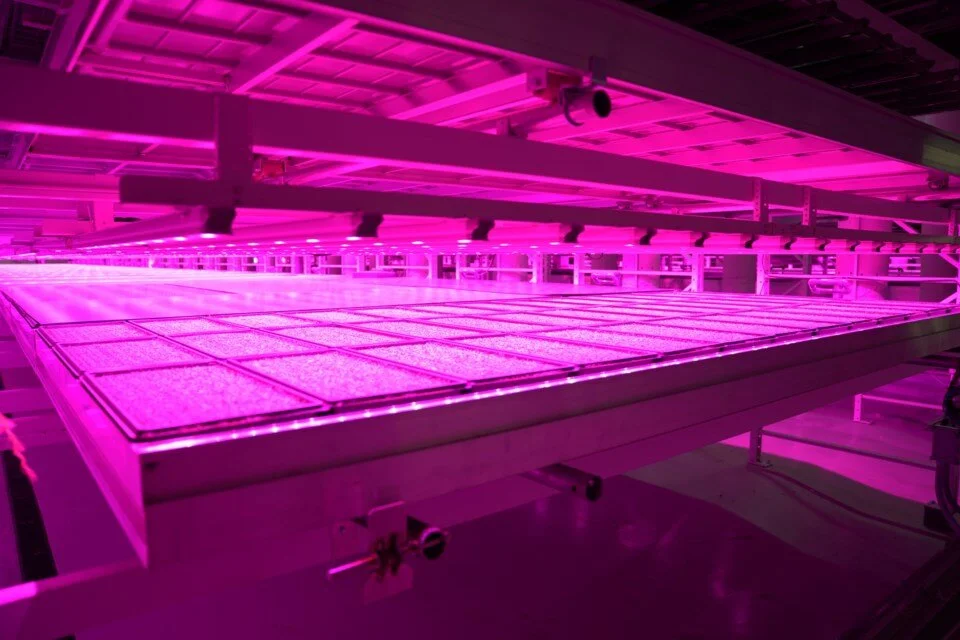
The state-of-the-art farm is fully automated and equipped to grow microgreens and baby greens 365 days a year, without the use of pesticides, herbicides, or fungicides and with dramatically less water consumption. The result is a safer, more nutrient-dense, and sustainably grown food source, providing a domestic alternative in a produce aisle highly dominated by imports from the southern United States or Mexico.





"Knowing where their food comes from is important to Canadians," says Jacquie Needham, Accounts Manager for GoodLeaf Farms. "Our growing system mimics the spring sun without the use of chemicals, releasing farming from the restrictions of the changing seasons. We can grow local, fresh, nutritious, and healthy leafy greens for the Ontario produce market all year long — we do it safely."
Vertical farming is an innovative growing process that naturally grows plants with hydroponics under specialized LEDs that concentrates the waves from the light spectrum that plants need to maximize photosynthesis. This method of farming is cost-effective, uniquely suited for Canadian climate, and scalable. GoodLeaf Farms is a leader in food safety. Every crop is tested for contaminants before it is shipped, ensuring it is safe for consumers.
GoodLeaf Farms is also sustainable. It uses 95 percent less water than a traditional farm, has no run-off issues or potential contamination of nearby water sources, it is local which eliminates thousands of kilometers of transportation from the supply chain and more food can be grown per acre, reducing land-use pressures.
GoodLeaf currently has four microgreens and two baby greens available in Ontario:
Spicy Mustard Medley — Blend of Asian greens create a spicy touch reminiscent of Wasabi or Dijon Mustard. It makes for a perfect peppery finish.
Pea Shoots — Sweet and crisp with a subtle pea flavour, they add a fresh bite to salads, seafood, and summer rolls.
Micro Asian Blend — Mild peppery flavour with a hint of mustard, this makes a great addition to stir fry, soups, or as a crunchy culinary adventure to any dish.
Micro Arugula — Intense spicy flavour that is both peppery and nutty. Use this to elevate the look and flavour of any meat or seafood dish, as an addition to your salad or to garnish your sandwich.
Baby Kale — Earthy and nutty, it is a calcium-rich dark green to add a nutritional punch to any salad.
Baby Arugula — Excite your taste buds by adding this spicy and peppery green to your salad or as a topping for sandwiches or burgers.
"The pandemic has underscored how important it is to have access to local food sources – food that we know is safe, grown responsibly, and immune to border closures," says Ms. Needham. "Compared to a green that was grown thousands of miles away, packed onto a hot truck and shipped across the continent, our process is far superior. Local food is simply better — better for you, better for the environment and better for our economy."
Follow GoodLeaf Farms on Instagram at @goodleaffarms and like it on Facebook at /GoodLeafFarms.
About GoodLeaf Farms:
With a passion for delicious, nutrient-rich greens, GoodLeaf was founded in Halifax in 2011. Using an innovative technology and leveraging multi-level vertical farming, GoodLeaf has created a controlled and efficient indoor farm that can grow fresh produce anywhere in the world, 365 days of the year. The system combines innovations in LED lighting with leading-edge hydroponic techniques to produce sustainable, safe, pesticide-free, nutrient-dense leafy greens. GoodLeaf has ongoing R&D Programs in collaboration with the University of Guelph, Dalhousie University, and Acadia University.
Learn more at goodleaffarms.com.
SOURCE GoodLeaf Farms
For further information: Jacquie Needham, Accounts Manager at GoodLeaf Farms, jneedham@goodleaffarms.com, 416-579-6117

Nine High-Tech Farms In Singapore Awarded Nearly $40 Million To Ramp Up Food Production
The amount was made available through the "30x30 Express" grant launched by the SFA on April 17 this year. The aim of the grant was to meet 30 percent of Singapore's nutritional needs with food produced locally by 2030
SEP 9, 2020
Shabana Begum
SINGAPORE - Nine urban farms have been offered a total of $39.4 million by the Singapore Food Agency (SFA) as part of efforts to support the growth of local agrifood enterprises and ramp up local food production over the next six to 24 months.
The amount was made available through the "30x30 Express" grant launched by the SFA on April 17 this year. The aim of the grant was to meet 30 percent of Singapore's nutritional needs with food produced locally by 2030.
More than 40 proposals were received by May 29, the closing date for proposals, and SFA said that the nine selected incorporated highly productive farming systems that could be constructed and implemented quickly to achieve high production levels.
All the proposals were assessed based on benchmarks such as productivity, project feasibility, economic viability, and the farms' capabilities.
SFA had to increase its original $30 million budget for the grant to close to $40 million to support the nine companies' proposals, said the agency in a press release on Wednesday (Sept 9).
Seven of the nine companies have accepted the SFA offer.
They are vegetable farms ComCrop, Green Harvest, I.F.F.I, LivFresh, Genesis One Tech Farm and VertiVegies, and egg farm Chew's Agriculture.
The funds will go towards projects such as building additional greenhouses, leveraging technology and automation to reduce manpower, and bringing artificial intelligence to high-tech farms.
SFA said the companies awarded the grant will be able to tap it to defray costs while accelerating their expansion.
For instance, I.F.F.I will set up a mega high-tech indoor vegetable farm that depends on AI to monitor the growth of its leafy greens, along with an advanced environmental control system to ensure optimum yield all year round. The farm will also use an innovative water treatment system that reduces the amount of bacteria in the crops and extends the shelf life of its produce.
Ms. Grace Fu, Minister for Sustainability and the Environment, said: "While we continue to plan to tackle our long-term challenges, we also need to respond swiftly to the immediate global food supply challenges posed by the Covid-19 pandemic.
"Supporting our agri-food industry and augmenting their production capabilities remains a key strategy in strengthening Singapore's food supply resilience," she added.
Singapore Food Agency (SFA) has awarded close to $40 million of funding to nine companies to help them adopt technology to ramp up local food production. This marks another significant step towards reaching our goal of fulfilling 30% of our nutritional needs through local sources by 2030.
The “30x30 Express” grant was launched in April this year to accelerate our efforts to strengthen food security. The COVID-19 pandemic and its adverse impact on global supply chains, has underscored the importance of local food production as a buffer against supply disruptions. With Singapore importing more than 90% of our food, we are particularly vulnerable to fluctuations in the global food supply, which can stem from diseases, trade tensions, or climate change.
I visited two of the awarded companies, ComCrop and I.F.F.I, and was impressed by how they have integrated technological innovation into their farming. ComCrop’s vegetables are grown using NFT hydroponics system, which requires 90% less water and nutrients compared to traditional soil-based farming. I.F.F.I leverages AI farming systems integrated with IoT monitoring to achieve optimum growing conditions all year around. The grant will provide them with an added boost to adopt highly productive farming systems to ramp up production over the next 6 to 24 months.
Let us play our part to strengthen food security by supporting our local farmers! Do lookout for the SG Fresh Produce logo and give local produce a try when you go on your next groceries shopping trip!
Farms in Singapore can tap on SFA's existing Agriculture Productivity Fund (APF), which aims to help them modernize and adopt advanced farming systems, as well as co-fund the test-bedding of technologies.
Enterprise Singapore has also set aside over $55 million to help local agriculture and aquaculture companies build new capabilities and innovate to grow more with less.
SFA has also urged consumers to buy local.
"We urge consumers to support our local farms and buy local produce, which can be identified easily by our new SG Fresh Produce logo," said Mr. Lim Kok Thai, SFA chief executive officer.
Lead photo: Minister for Sustainability and the Environment Grace Fu with ComCrop CEO Peter Barber during a visit to the farm
TOPICS: AGRICULTURE AND FARMING MINISTRY OF SUSTAINABILITY AND THE ENVIRONMENT AWARDS AND PRIZES

IGS Senior Team Expands Further As Technology Innovator Welcomes Head of HR
Inverness-born Donald joins IGS following more than 23 years working with Michelin in Dundee where he started out as a Trainee Industrial Engineer before moving through various people management positions
Donald Mackenzie Joins Edinburgh-Headquartered
Firm To Help Build Growing Team
Edinburgh, Scotland – 14 September 2020 – Senior HR leader, Donald Mackenzie, has joined IGS, the Scottish-based agritech and smart spaces business, as Head of HR. His appointment is the latest in a series undertaken to grow the company’s management team as it continues to expand to supply a growing customer base across the world.
Inverness-born Donald joins IGS following more than 23 years working with Michelin in Dundee where he started out as a Trainee Industrial Engineer before moving through various people management positions. He brings a wealth of Human Resources experience, as well as skills across learning and development, community engagement, and communications in a technical environment.
Most recently, Donald was responsible for the social plan that supported 850 employees impacted by the Michelin Dundee site closure, including developing programs to re-train, relocate, and find alternative employment opportunities for all those individuals. On joining IGS, Donald’s role will see him support a rapidly growing team as the company moves onto a global stage, all the while maintaining its ethos of continuous innovation and investment into research and development.
Preparing for his first day in the role, Donald Mackenzie commented: “IGS seems like a natural fit for me. The people, the organization, and the outlook all appeal to me: it feels like a positive environment with loads of exciting opportunities. The whole company is about learning and growth and expansion, ultimately driven by-products that the team is fully behind and that really works.
“Obviously in a field like HR, the people side of a business is always the most important, and for me there’s a real human opportunity which has been created at IGS by the development of products that could fundamentally change the way that society and whole populations live. The possibility of developing solutions able to tackle the whole food security issue is really enticing.”
IGS CEO David Farquhar commented: “Being able to attract an HR professional with Donald’s perspective is a major win for IGS, as we look to employ new people and offer the best possible support to the immensely skilled crew we already have. We are at a very exciting point in our company history right now, and it has never been more important that we are best placed to attract, nurture, and develop highly talented people.
“We are delighted to have the opportunity to welcome someone of Donald’s caliber to join us, and strongly believe that his wealth of experience – particularly with organizational development – is just what we need as we look to the future of the business.”
Ends
Notes to editors:
For more information: please contact Georgia Lea, IGS on georgia@intelligentgrowthsolutions.com or call +44 7897 539 954.
About IGS:
Founded in 2013, IGS brought together decades of farming and engineering experience to create an agritech business with a vision to revolutionize the indoor growing market. Its commitment to innovation has continued apace and it has evolved the applications of its technology beyond agriculture to create solutions for a wide variety of indoor environments that enhance life for plants and people alike.
IGS launched its first vertical farming demonstration facility in August 2018.
For more information visit www.intelligentgrowthsolutions.com or connect with us on Twitter and LinkedIn.

Infarm Raises $170M In Equity And Debt To Continue Building Its ‘Vertical Farming’ Network
That’s likely a testament to the speed of new retail partnerships over the last 12 months. They include Albert Heijn (Netherlands), Aldi Süd (Germany), COOP/Irma (Denmark), Empire Company’s Sobeys, Safeway and Thrifty Foods (Canada), Kinokuniya (Japan), Kroger (U.S.) and Marks & Spencer and Selfridges (U.K.)
September 17, 2020
Image Credits: Infarm
Infarm, the vertical farming company that has built a network of urban farms to grow fresh food closer to consumers, has raised $170 million in new investment in a “first close” of a Series C.
Leading the round — which is expected to reach $200 million and is a mixture of equity and debt — is LGT Lightstone, with participation from Hanaco, Bonnier, Haniel, and Latitude. Existing Infarm investors Atomico, TriplePoint Capital, Mons Capital, and Astanor Ventures also followed on. It brings the company’s total funding to date to more than $300 million.
That’s likely a testament to the speed of new retail partnerships over the last 12 months. They include Albert Heijn (Netherlands), Aldi Süd (Germany), COOP/Irma (Denmark), Empire Company’s Sobeys, Safeway and Thrifty Foods (Canada), Kinokuniya (Japan), Kroger (U.S.) and Marks & Spencer and Selfridges (U.K.).
With operations across 10 countries and 30 cities worldwide, Infarm says it now harvests more than 500,000 plants monthly, and in a much more sustainable way than traditional farming and supply chains. Its modular, IoT-powered vertical farming units claim to use 99.5% less space than soil-based agriculture, 95% less water, 90% less transport, and zero chemical pesticides. In addition, 90% of the electricity used throughout the Infarm network is from renewable energy and the company has set a target to reach zero emission food production next year.
Founded in 2013 by Osnat Michaeli, and brothers Erez and Guy Galonska, Infarm’s “indoor vertical farming” system is capable of growing herbs, lettuce and other vegetables. It then places these modular farms in a variety of customer-facing city locations, such as grocery stores, restaurants, shopping malls and schools, thus enabling the end-customer to actually pick the produce themselves. To further scale, it also installs Infarms in local distribution centers.
The distributed system is designed to be infinitely scalable — you simply add more modules, space permitting — whilst the whole thing is cloud-based, meaning the farms can be monitored and controlled from Infarm’s central control center. It’s also incredibly data-driven, a combination of IoT, Big Data and cloud analytics akin to “Farming-as-a-Service.”
The idea, the founding team told me back in 2017 when I profiled the nascent company, isn’t just to produce fresher and better-tasting produce and re-introduce forgotten or rare varieties, but to disrupt the supply chain as a whole, which remains inefficient and produces a lot of waste.
“Behind our farms is a robust hardware and software platform for precision farming,” explained Michaeli at the time. “Each farming unit is its own individual ecosystem, creating the exact environment our plants need to flourish. We are able to develop growing recipes that tailor the light spectrums, temperature, pH and nutrients to ensure the maximum natural expression of each plant in terms of flavor, color and nutritional quality.”
On that note, I caught up with two of Infarm’s founders to get a brief update on the Berlin-headquartered company and to dive a little deeper into how it will continue to scale.
TechCrunch: What assumptions did you make early on that have turned out to be true or, more interestingly, not panned out as expected?
Osnat Michaeli: When we first chatted about four years ago, we were 40 people in Berlin, and much of the conversation centered around the potential that our approach to urban vertical farming might have for retailers. While for many it was intriguing as a concept, we couldn’t have imagined that a few years later we would have expanded to almost 10 countries (Japan is on its way) and 30 cities, with partnerships with some of the largest retailers in the world. Our assumptions at the time were that retailers and their customers would be attracted to the taste and freshness of produce that grew right in front of them in the produce section, in our farms.
What we didn’t anticipate was how much and how quickly the demand for a sustainable, transparent, and modular approach to farming would grow as we, as a society, begin to feel the impact of climate change and supply chain fragility upon our lives, our choices and our food. Of course, we also did not anticipate a global pandemic, which has underscored the urgency of building a new food system that can democratize access to high-quality, amazing-tasting food, while helping our planet regenerate and heal. The past few months have confirmed the flexibility and resilience of our farming model, and that our mission is more relevant than ever.
In terms of signing on new retailers, based on your progress in the last 12 months, I’m guessing this has gotten easier, though undoubtedly there are still quite long lead times. How have these conversations changed since you started?
Erez Galonska: While lead times and speed of conversations can vary depending upon the region and retailer. In mature markets where the concept is familiar and we’re already engaged, deal conversations can reach maturity in as little time as three months. Since we last spoke we are already working with most of the leading retailers that are well established in Europe, the U.K., and North America. Brands which in each of their markets are both forerunners in a retail industry rapidly evolving to meet the demand for consumer-focused innovation, while proving that access to sustainable, high-quality, fresh, and living produce is not only possible, but can be available in produce aisles today, and every day of the year, with Infarm.
I’m interested to understand where Infarms are installed, in terms of if the majority is in-store and consumer-facing or if the most scalable and bulk of Infarm’s use cases are really much larger distribution hubs in cities or close to cities, i.e. not too far away from places with population/store density but not actually in stores. Perhaps you can enlighten me on what the ratio looks like today and how you see it developing as vertical farming grows?
Erez Galonska: Today across our markets, the split between our farms in stores and in distribution centers is roughly 50/50. However, as you anticipate, we will be expanding our network this year with many more distribution hubs. This expansion will likely lead to an 80/20 split as early as next year, with the majority of our regions being served with fresh, living produce delivered throughout the week from centrally located hubs. This not only offers retailers and restaurants flexibility in terms of volumes of output, and the ability to adapt the presentation of our offerings to floor areas of different sizes, but it also allows us to begin to serve whole regions from our next-generation farms under development today.
Based in our hubs, these farms will deliver the crop equivalent of an acre or more of fresh produce on a 25 m2 footprint, with significant further savings in energy, water, labor and land use. We believe this technology will truly challenge ideas of what is possible in sustainable, vertical farming and we look forward to talking about it more soon.
Lastly, what are the main product lines in terms of food on the shelves?
Osnat Michaeli: We have a catalog of more than 65 herbs, microgreens, and leafy greens that is constantly growing. Our offerings range from the known and common varieties like Coriander, Basil, or Mint, to specialty products like Peruvian Mint, Red Veined Sorrel or Wasabi Rucola.
Because our farms give us excellent control over every part of a plant’s growth process and can imitate the complexity of different ecosystems, we will be able to expand the diversity of Infarm produce available to consumers to include root vegetables, mushrooms, flowering crops, and even superfoods from around the world in the near future. What you see today with Infarm is still only the beginning.

It's Hard To Grow Vegetables In This Mountain Town. Then This Farmer Had An Idea
Operating an indoor farm in the snowy northwest corner of Wyoming wasn't exactly the job Yehia had envisioned for herself years ago. In 2008, after the New York City-based architect moved to Jackson to start a new firm, Yehia wanted to try something innovative in her new community
By Jeremy Harlan, CNN
September 14, 2020
Jackson, Wyoming (CNN) It was a no-brainer when it came to finding the best job for Ty Warner.
"Ty is our tomato guy," said Nona Yehia, co-founder and CEO of Vertical Harvest, an innovative three-story greenhouse in downtown Jackson, Wyoming.
Nona Yehia, the founder of Vertical Harvest in Jackson, Wyoming.
As she watched the slender 6'5" Warner carefully weave his way through a towering canopy of plants, pulling ripe tomatoes hanging above, Yehia smiled with pride. "Ty is good at every part of growing tomato plants. It is really impressive."
Operating an indoor farm in the snowy northwest corner of Wyoming wasn't exactly the job Yehia had envisioned for herself years ago. In 2008, after the New York City-based architect moved to Jackson to start a new firm, Yehia wanted to try something innovative in her new community.
"We really wanted to address the local sustainable source of food," she said.
The idea To Go Up
Jackson sits at an elevation just over 6,000 feet, nestled between Grand Teton National Park, Yellowstone National Park, and the Teton National Forest, and its location means there is very little space and conducive weather for farmers to grow fresh produce for the bustling tourist town.
"We came together to look for an out-of-the-box solution and that's where the idea to go up came from," Yehia said.
"Up" was on a 1/10 of an acre lot abutting an existing parking garage.
In July, Nona Yehia, CEO and co-founder of Vertical Harvest, announced a second vertical farm in Westbrook, Maine. The second Vertical Harvest will be five times larger than the original Wyoming farm and will open in 2022.
In the spring of 2016, Vertical Harvest began growing its first lettuce, microgreens, and tomato plants. The farm's current staff of 40 now grows year-round and cultivates the amount of produce equivalent to ten acres of traditional outdoor farming.
Yehia says all of the produce grown is distributed to 40 local restaurants and four grocery stores.
"Nona has approached it as bringing something unique to chefs that they then can use and feature all year round," said Ben Westenburg, the executive chef and partner of Persephone West Bank in nearby Wilson, Wyoming. "It's just so easy to call up Vertical Harvest and be like, 'I need some salad greens and tomatoes and some really beautiful microgreens.' And they're like, 'Okay, we'll be there tomorrow.'"
'We're pairing innovation with an underserved population'
Ty Warner, a Vertical Harvest employee, is tasked with picking and pruning hundreds of the indoor farm's tomato plants.
While planning for a new greenhouse, Yehia and her design team realized they had to do more with the project than just grow fresh greens for locals.
"There was a bigger problem," Yehia said. "People with physical and intellectual disabilities in our town who wanted to work, who wanted to find consistent and meaningful work, were not able to do so. We're pairing innovation with an under-served population and really creating a sea change of perception of what this population is able to do."
Half of Vertical Harvest's workers have physical or intellectual disabilities. Yehia, whose older brother is disabled, says every single employee, including Warner -- who is autistic -- is critical to keeping Vertical Harvest functioning.
"We can empower the most under-served in our communities just by giving them a chance and giving them something to be able to give back to," Yehia explained.
"It's hard for people with disabilities to find a job," says Sean Stone, who used to wash dishes at several restaurants in town before joining Vertical Harvest as a farmer. "I'm glad to help the community and grown them fresh produce to have."
Growing beyond Wyoming
In July, Yehia announced Vertical Harvest would be expanding to serve a second community. The new farm located in Westbrook, Maine, will open in 2022 and will be five times larger than the original Wyoming greenhouse.
The goal is to grow a million pounds of produce each year for local restaurants, grocery stores, hospitals, and schools.
Mycah Miller, a Vertical Harvest employee, packages lettuce greens to be delivered to one of four grocery stores the vertical farm services in Jackson, Wyoming.
"In moving to Maine and having a much larger space, we're excited to play out the model of providing local produce at an urban scale," she says.
Yehia believes the global pandemic this year has forced consumers and communities around the country to explore new ways to get fresher produce from closer sources.
"COVID has shined a spotlight on what we knew ten years ago when we were looking at this vertical model: We have a centralized food system and it's kept us from getting fresh, local, good-tasting food," Yehia said. "I think Covid-19 has forced people to ask why that is and how they now can get locally-grown food they like in the summertime and get it year-round. It's exactly what Vertical Harvest is about."

Signify and RIAT Pioneer Growing Tomatoes and Cucumbers In A Vertical Farm Without Daylight
Signify (Euronext: LIGHT), the world leader in lighting, and RIAT, an innovative farming enterprise located in Russia, have together pioneered the growing of tomatoes and cucumbers in a vertical farm without daylight.
April 30, 2020
Eindhoven, the Netherlands – Signify (Euronext: LIGHT), the world leader in lighting, and RIAT, an innovative farming enterprise located in Russia, have together pioneered the growing of tomatoes and cucumbers in a vertical farm without daylight. During the research phase in 2019, RIAT achieved a yield comparable to advanced traditional greenhouses using Philips GreenPower LED grow lights.
We already had facilities of sufficient height at our disposal, therefore there was no need to invest in building a glass construction. But as the building had no windows, we needed a high-quality lighting system to fulfill the intensive lighting requirements of tomatoes and cucumbers. In 2019, Signify provided its Philips GreenPower LED grow lighting, helping us to achieve a yield performance comparable to traditional greenhouse operations."
Vladimir Bukharev
Director at RIAT
RIAT’s indoor farm is located in the center of the Ivanovo region, enabling the company to distribute its tomatoes, cucumbers and 19 types of green crops to its own RIAT stores within an hour after harvesting. RIAT has a special technique to fold the long stems, allowing it to grow the 3.5m high plants indoors.
“With a harvest of 2.7 to 3.2 kg of cucumbers per m2 every week, and 1.7 kg per m2 of tomatoes, we started making a profit as of the second year of operation,” Bukharev added. “In addition to that, the quality of the product is very high, there’s hardly any waste and we sell 99% of what is being grown.”
“To mimic nature as much as possible, RIAT has chosen a combination of different kinds of Philips GreenPower LED toplighting and interlighting, bringing light both from the top and right in the canopy where the light is needed the most for photosynthesis. While using different kinds of lights, the light recipe can be adjusted based on the crop that is grown,” said Sergey Khokhrin, business Development Manager CEE/Russia & CIS at Signify.
Signify, in collaboration with several research partners, discovered that the red spectrum in light stimulates growth of plant cells and tissues, while the blue spectrum influences the processes of cytodifferentiation (racemes initiation, bines and root formation, flowering). The combination of red and blue with the addition of white and other colors in Philips LED grow lights creates lighting conditions that are as close to natural daylight as possible. Additionally, RIAT is using bumblebees for pollination, as in traditional greenhouses. The bees don’t experience difficulties due to the absence of natural light.
When choosing a lighting supplier, RIAT tested LED modules from different manufacturers from around the globe. “By using Philips LED lighting modules, we managed to achieve maximum stability and a light output of 18 g/mol. This is why we chose Signify. The area equipped with LED lamps is currently 3,800 m2. Soon, we are going to launch a new area of 700 m2 to grow lettuce which will also be equipped with Philips LED lighting,” Bukharev added.
For further information, please contact:
Global Marcom Manager Horticulture at Signify
Daniela Damoiseaux
Tel: +31 6 31 65 29 69
E-mail: daniela.damoiseaux@signify.com
Signify Corporate Communications and Government Affairs in Russia
and CIS
Natalia Neverskaya
Tel.: +7 (495) 937-93-30; fax +7 (495) 937-93-59
E-mail: natalia.neverskaya@signify.com
About Signify
Signify (Euronext: LIGHT) is the world leader in lighting for professionals and consumers and lighting for the Internet of Things. Our Philips products, Interact connected lighting systems and data-enabled services, deliver business value and transform life in homes, buildings and public spaces. With 2019 sales of EUR 6.2 billion, we have approximately 38,000 employees and are present in over 70 countries. We unlock the extraordinary potential of light for brighter lives and a better world. We have been named Industry Leader in the Dow Jones Sustainability Index for three years in a row. News from Signify is located at the Newsroom, Twitter, LinkedIn and Instagram. Information for investors can be found on the Investor Relations page.
A Thai University Leads The Way In Organic Urban Agriculture
The 7,000sqm rooftop garden at Thammasat University is the largest such green space in Asia
September 14, 2020
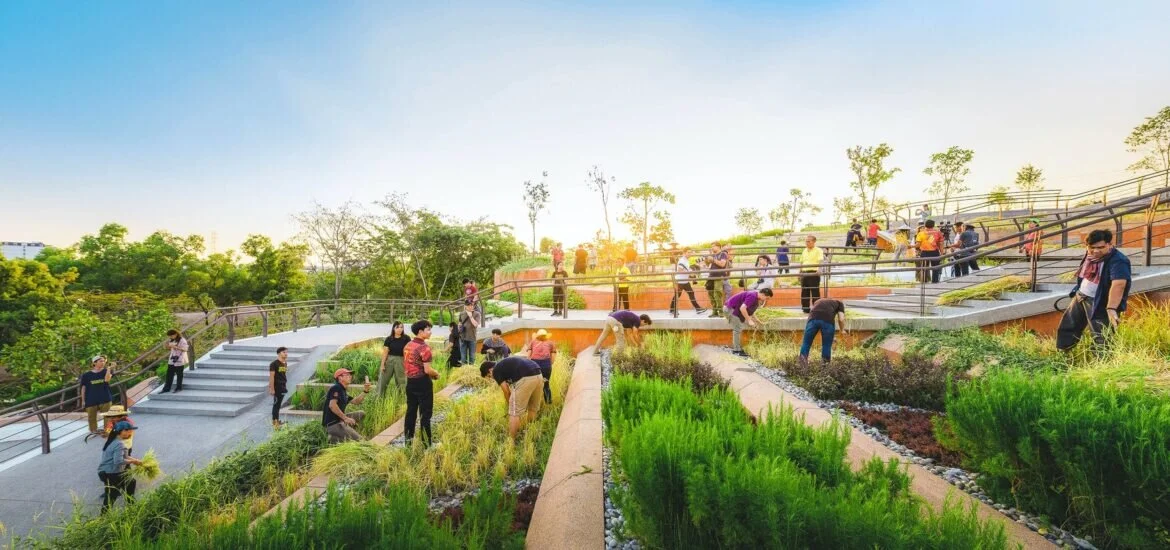
It was on a sunny afternoon recently that teachers and students from Thammasat University in Bangkok, Thailand, set about harvesting organically grown rice.
They gathered on a rooftop urban farm in a bustling metropolis where skyscrapers dominate the landscape. As in many busy capitals, Bangkok is covered in unhealthy exhaust fumes and green spaces are scarce, apart from small city parks.
That is why the rooftop farm project Thammasat University, one of the country’s leading institutions, can point the way forward in greening this sprawling city, which was known in times past as the Venice of Asia thanks to its numerous canals that then still crisscrossed the landscape.
The 7,000sqm rooftop garden at Thammasat University is the largest such green space in Asia. Its design mimics scenic rice terraces on northern Thai hillsides so that rainwater used for growing crops can be absorbed and stored, which means that the farm can function with maximum water efficiency.
“We tend to make a distinction between buildings and green spaces but green spaces can be part of building designs in cities like Bangkok, which has few green spaces,” said Kotchakorn Voraakhom, chief executive and founder of Landprocess, an urban design firm.
The Thai university’s rooftop garden serves several purposes, one of which is the cultivation of chemicals-free crops, including organic rice. The project seeks to help wean Thai farmers off pesticides and insecticides in a country where such chemicals remain widely in use in agriculture.
The intensive use of chemicals at farms across Thailand is posing serious environmental concerns. From 2009 to 2018, Thailand imported vast quantities of agricultural chemicals, such as herbicides, insecticides and fungicides each year. In 2018 alone, more than 156,000 tons of such chemicals were brought into the country.
That same year more than 6,000 locals fell severely ill from exposure to hazardous chemicals and nearly 3,000 people were sickened from exposure to insecticides, according to health officials.
A goal of the sprawling rooftop farm at Thammasat University is to popularize chemicals-free produce like vegetables. And it is not only students and university staff who can grow organic crops: anyone who wishes to grow organic crops is welcome to join. People are invited to grow crops for themselves or else sell them to the university’s kitchens.
Towards the aim of setting up a chemical-free food system, the university is planning to set up an organic canteen and an organic market in the area.

CombaGroup SA, A World Leader In Automated Mobile Aeroponics, Commits to Rigorous Standards of Social and Environmental Performance, Accountability, and Transparency
CombaGroup joins the rapidly growing movement of more than 3,500 B CorpsTM from 150 industries, across 74 countries including companies like Patagonia, Alpro, Alessi, Etsy, Innocent, Too Good To Go, Opaline, and Ben & Jerry’s
Molodin, Switzerland – 17 September 2020 CombaGroup SA today announced that it has officially become a Certified B Corporation®, utilizing the power of business to address society’s greatest social and environmental challenges.
CombaGroup joins the rapidly growing movement of more than 3,500 B CorpsTM from 150 industries, across 74 countries including companies like Patagonia, Alpro, Alessi, Etsy, Innocent, Too Good To Go, Opaline, and Ben & Jerry’s.
CombaGroup has been certified by B Lab as having met the rigorous standards for B Corp Certification that represent its commitment to achieving goals beyond shareholder profit. These include verified social and environmental performance, public transparency, and legal accountability to balance profit and purpose. B Corps are accelerating a global culture shift to redesign success in business and build a more inclusive and sustainable economy.
B Corp certification covers five key impact areas: governance, workers, community, environment, and customers. The certification process is rigorous, requiring a score above 80 and providing evidence of socially and environmentally responsible practices, including energy supply, waste and water use, workers' compensation, diversity, and corporate transparency. To complete certification, the company will legally embed their commitment to a purpose beyond profit in their company articles.
The recent focus on the agro-technology industry has made CombaGroup’s B Corp Certification a milestone and underlines a shift towards greater responsibility and transparency in the sector.
"B Lab is delighted to welcome CombaGroup to the B Corp community,” said Jonathan Normand, Director of B Lab Switzerland. “CombaGroup has been a pioneer in the field of mobile aeroponic growing solutions. CombaGroup has also been acknowledged as one of Solar Impulse’s 1000 Efficient Solutions for its ability to grow crops with minimal environmental impact for maximum profitability. I look forward to seeing CombaGroup inspire other companies to join the B Corp community and use business as a force for good.”
Serge Gander, CEO of CombaGroup stated: “We are proud to be part of the B Corp community with aligned values and ways to change the world through conscious business decisions. By certifying as a B Corp, we have met the highest levels of verified social and environmental performance, transparency and accountability.
“This certification reconfirms our commitment to use our unique automated high-performance culture systems to bring efficiency, consistency, and profitability in the food supply chain with the least possible resources and minimum environmental impact.”
About B Lab
B Lab is a non-profit organization that serves as part of a global movement to redefine the notion of success in business so that one day all companies compete not only to be the best in the world, but also the best for the world.
Located on five continents, B Lab advocates for systemic change by providing a standard and tools to create a community of B Corporation certified companies.
About B Lab Switzerland
B Lab Switzerland is the Swiss branch of a global non-profit organization that supports a community of people using business as a force for good.
About CombaGroup
CombaGroup is a Swiss agro-technology company that provides farmers and industrialists with innovative mobile aeroponic farming solutions for growing fresh, environmentally- friendly, nutrient-rich vegetables.
CombaGroup’s patented technology significantly reduces water consumption and contamination risks while offering maximum productivity per square meter and minimizing environmental impact. Mechanized irrigation and spacing systems produce clean, quality, pesticide-free salads, cabbages, and aromatic plants all year round, thus providing consumers with healthy, responsible products.
For more information
contact@combagroup.com +41 21 545 99 25 www.combagroup.com
Media information online
Media information and images can be downloaded directly from combagroup.com Journalists can subscribe to our media mailings to receive information on CombaGroup’s aeroponic solutions and technology.
For the latest updates on CombaGroup, visit combagroup.com or follow on Instagram @combagroup_sa, Twitter @SmartLettuce, Pinterest, and LinkedIn

Energy Use In Food Production
The U.S. food system uses a massive amount of energy from start to finish. In 2018, the U.S. consumed 101.1 quadrillion Btu (British thermal units) of energy. The food system makes up 10 percent of that total, landing it at about 10.11 quadrillion Btu

By The Choose Energy Team
November 26th, 2019
We use a whole lot of energy to produce our food
The U.S. food system uses a massive amount of energy from start to finish. In 2018, the U.S. consumed 101.1 quadrillion Btu (British thermal units) of energy. The food system makes up 10 percent of that total, landing it at about 10.11 quadrillion Btu.
That number might not mean much at first glance, but put another way, the U.S. consumes as much energy preparing and transporting food as France uses to power the entire country for a year.
Where does that energy come from?
Food systems around the world account for about 30 percent of the world’s total energy consumption. Since most food systems are run primarily on fossil fuels, that means they also account for 20 percent of our global greenhouse gas emissions.
These emissions take place at every step of the food chain. Manure and fertilizer give off nitrous oxide while cattle and other animals produce methane. Machinery requires diesel and gasoline, and the entire process is fueled by coal and natural gas power plants, creating carbon dioxide.
How is that energy used?
The energy in food production can be broken down into four parts: agriculture, transportation, processing, and handling.
Agriculture
Agriculture uses about 21 percent of the total U.S. food production energy. This accounts for everything involved in the growth and cultivation of food crops. 60 percent of this energy is consumed directly in the use of gasoline, diesel, electricity, and natural gas, while the rest is indirect through fertilizer and pesticide production. In total, agriculture consumes roughly 2.1 quadrillion Btu of energy each year, enough to power the entire country of Norway.
Transportation
The transportation of food from farm to table accounts for just under 14 percent of the energy that goes into producing food. Romania could power itself for a year on the 1.4 quadrillion Btu it takes to ship avocadoes from South America (among other tasty imports).
Food Processing
Food processing refers to the transformation of raw ingredients into a food product, in other words, turning raw corn into cereal and the like. This section of the system makes up about 16 percent of the total. This breaks down to about 1.6 quadrillion Btu per year, equivalent to the total energy use of Nigeria.
Food Handling
Food handling is by far the largest sector of energy in producing food, and accounts for nearly half of the energy used in food production – over 49 percent. This piece of the system includes retail, restaurants, packaging, and consumers. The energy used to package milk and keep it refrigerated in the grocery store and at home falls into this category. At 5 quadrillion Btu, the food handling sector’s total energy is more than enough to power a year of life in Taiwan.
Energy-efficient foods
Certain foods require less energy to produce than others, whether because it requires less land and water or because there are fewer industrial processes needed to produce it. The most energy-efficient foods include wheat, beans, fish, eggs, nuts, and other non-resource-intensive products.
The least energy-efficient foods are animal-based products, particularly beef, lamb, and goat. This is because beef requires up to 20 times more resources and emits 20 times more greenhouse gas emission than plant-based protein sources. Poultry and pork use slightly less energy but are still far bigger emitters than plant products.
This doesn’t mean you have to be a vegetarian to cut down energy use. Just reducing the amount of meat and dairy you eat can allow you to have a much lower impact diet. Regardless, both meat-based and vegetarian diets rely heavily on fossil fuels, so neither is sustainable long-term in the current food system.
How to reduce food system energy use
Because so much of the energy used in food production comes from non-renewable resources, it’s important to make the food system more energy efficient. A few key ways to start making a difference at home are:
Buy only as much food as you eat. One of the easiest ways to help conserve energy in food production is to waste less. It’s estimated that 40 percent of food in the U.S. goes uneaten. In 2017, that added up to 38 million tons of food waste. As a comparison, that’s the weight of 38 million polar bears, 5.5 million elephants, or nearly 300,000 blue whales.
Buy food that is locally sourced. Shop at local farmers’ markets instead of buying produce at the grocery store. You’ll be supporting local farmers and saving the energy needed to transport perishable foods from across the world.
Invest in energy-efficient food storage. Get an EnergyStar refrigerator, which use 20%-30% less energy. Also, keep your refrigerator fully stocked. If you don’t have enough food, keep containers of water in there instead. It may sound counterintuitive, but your refrigerator works most efficiently when it’s full.

Pure Harvest Invests In Kuwait
The facility will supply locally grown, premium quality fresh fruit and vegetables all year round to the Sultan Centre (TSC), one of Kuwait's largest independent retailers, which also has stores in Oman, Jordan, and Bahrain
BY TOM JOYCE
8th September 2020
The Abu Dhabi-based agri-tech company has entered into an agreement to supply fresh fruit and vegetables to Kuwaiti retailer the Sultan Centre
Pure Harvest co-founder and chief executive Sky Kurtz
Abu Dhabi-based agri-tech firm Pure Harvest Smart Farms has announced plans to invest over €30m (Dh130m) in the construction of a hi-tech, climate-controlled farm in Kuwait.
The facility will supply locally grown, premium quality fresh fruit and vegetables all year round to the Sultan Centre (TSC), one of Kuwait's largest independent retailers, which also has stores in Oman, Jordan, and Bahrain.
A shared visitor's center will demonstrate Smart Harvest's technology to customers, showing how produce can be cultivated in harsh environments, utilizing up to 90 percent less water than conventional agriculture.
“There has never been a more pressing time to invest in food innovation in the region," said Khadija Oubala, chief executive at TSC. "The region’s longstanding dependence on imports paired with a growing demand for fresh produce highlight the importance of local farming. Pure Harvest is developing a state-of-the-art local farm that can provide organic fruits and vegetables fresh from the farm to TSC stores. We are committed to providing quality, variety, value, and services that customers demand, and investing in homegrown fresh produce is the way forward.”
Even prior to the Covid-19 outbreak, food security had become a major priority for Gulf nations. According to Chatham House, GCC states presently import up to 90 percent of the food they consume.
“We are investing heavily to reinvent our offering to better serve our customers," explained Nicolas Allan, chief operating officer at TSC. "TSC’s commitment to this off-take partnership with Pure Harvest is designed to meet the demands of our customers to deliver premium quality, locally-grown, and pesticide residue-free fresh produce at affordable prices. We are investing before the growing system is built, which enables our partner to scale but also helps to eliminate waste in the value chain, including freight costs, which ultimately benefits our customers in the form of value-for-money."
In 2018, Pure Harvest produced its first greenhouse tomatoes and has since been experimenting with greens and berries.
Sky Kurtz, co-founder and chief executive of Pure Harvest Smart Farms, commented: “Through this partnership, together TSC and Pure Harvest further food security, water conservation, economic diversification and sustainability within Kuwait and the region.”
Pure Harvest recently secured a multi-stage investment commitment worth more than US$100m from Wafra International Investment Company to drive the research, development, and deployment of advanced controlled environment agriculture solutions in Kuwait and across the region. The company is also currently expanding its capacity in the UAE and Saudi Arabia.

Smart Acres CEO On The Latest Addition To The Hydroponic Vertical Farming Industry In Abu Dhabi
The launch of Smart Acres, the UAE’s latest addition to the hydroponic vertical farming industry, this week means that a line of the freshest, most nutrient-dense greens for UAE residents and businesses alike is now being produced in containers on the Armed Forces Officers Club in Abu Dhabi, with the aim to expand across the UAE
Smart Acres is here with lettuce at the helm. In an exclusive interview with Abu Dhabi World, Smart Acres CEO Abdulla al Kaabi reveals what this means to Abu Dhabi and the farming community on the whole.
If you love healthy produce, and who doesn’t, then this news is going to please you and your tastebuds no end. The only drawback at the moment is they’re not for sale in supermarkets just yet, but it won’t be long before they are.
The launch of Smart Acres, the UAE’s latest addition to the hydroponic vertical farming industry, this week means that a line of the freshest, most nutrient-dense greens for UAE residents and businesses alike is now being produced in containers on the Armed Forces Officers Club in Abu Dhabi, with the aim to expand across the UAE.
So we headed over to the St. Regis Abu Dhabi to meet Smart Acres CEO Abdulla al Kaabi to find out more.
Tell us about your background?
I am from a tech and farm background. My father has a passion for farming and gardening; he’s very strict about anybody who messes around with his garden or farm. My father has a few farms across the UAE, where he grows crops and dates. When he heard that I was pursuing a project in the agriculture sector he got excited and actually gifted me a farm, which I am grateful for and will keep. However, Smart Acres, rather than the farm my father gifted me, is an urban farm.
How was Smart Acres first developed?
CEO Abdulla al Kaabi (centre)
Smart Acres was founded in 2017 and local testing began in July 2019. Smart Acres was developed by a team of experts, including myself, Director Sean Lee, and Lead Project Manager, Aphisith Phongsavanh with the aim of improving food security within the United Arab Emirates and developing the country’s farming capabilities, providing a solution to potential socioeconomic threats such as pandemics and climate limitations the Middle East currently endures.
Tell us more
We planted lettuce and after a few harvests, we decided to expand from two containers to eight containers. From the two insulated containers, the yield was 3.5 tons annually, which was our proof of concept. For the proof of concept, our target weight for each lettuce head was 140g. However, we have reached an average of 200g per head. I don’t think any other vertical farm here reached that quality or weight in terms of vegetables at this size.
How would you describe Smart Acres?
It is a one-of-a-kind agriculture system that is designed to produce some of the highest yields of crops within the UAE’s vertical farming industry while introducing a new future for clean foods and allowing both business to business (B2B) and business to consumer (B2C ) sectors to locally sourced produce.
Tell us about the containers
We invested heavily in the containers, not just financially, and it took us a while to partner up with n.thing, a South Korean vertical farming technology company, to bring the best vertical farm here in the UAE. We had talks with other companies before and we decided to go with this one, in terms of risk, in terms of technology they are using. And the system we are using in the containers is hydroponics (growing plants without soil) which has been used by growers for hundreds of years.
Techno advancements mean we were able to implement the Internet of Things for operations, which helps us to monitor the entire farm in terms of humidity, temperature, and even the nutrients that go inside the plants. Now we have our expansion plan from eight to 78 containers, which eventually will produce more than 140 tons of produce annually. We are currently in talks with private and public entities in terms of the expansion. We are also planning to have a research and development center in order to start growing our own potato seeds in a controlled environment.
Will Smart Acres just be growing lettuce?
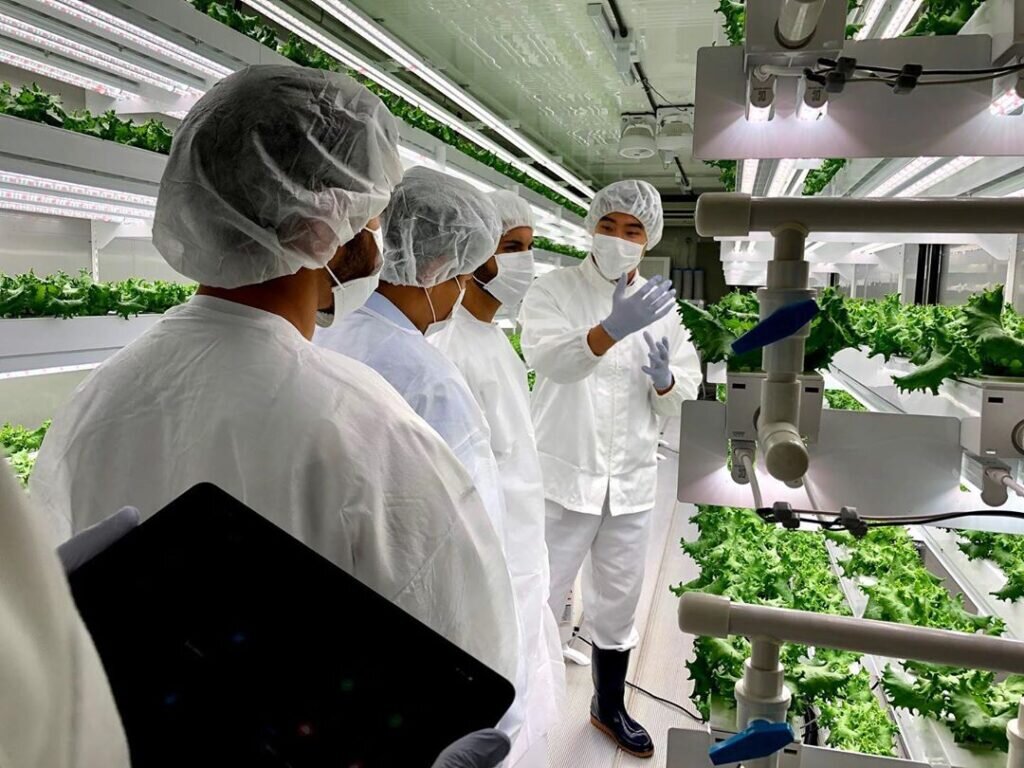
In our current eight containers, we grow four types of lettuce; Lolo rosso , green glace, oakleaf Batavia, but we are able to grow 30 types of lettuce. Currently, we are testing new methods to improve the quality and weight of the existing lettuce. The results of last month’s test resulted in lettuce whose individual heads weighed more than 200 grams on average. However, we aim to grow more than just lettuce. We have plans to eventually grow baby spinach, mature spinach, and baby arugula. Smart Acres’ vision is to expand to meet the demand of popular produce in the region such as strawberries, and, as I previously mentioned, a shift and emphasis on cultivating potato seeds.
Where can we buy your smart lettuces?
We are now supplying restaurants and hotels for free to get ourselves known, and we have had great feedback from them. We have also partnered with several restaurants and cafes around the country including Inked and Fae Cafe, and have plans to have our produce in the kitchen of dozens of other F&B outlets. The recent initiative by HH Sheikh Mansour bin Zayed, Deputy Prime Minister, Minister of Presidential Affairs, and Abu Dhabi Agriculture and Food Safety Authority (ADAFSA), stating that all major grocery stores in the capital must allocate space for local produce mean we are perfectly poised to enter local supermarkets. We have had lots of offers from Abu Dhabi Holding and other government entities that are members in the food security committee to buy our whole produce. Currently, we are focused on our actual produce itself, in terms of quality, weight.
Facebook Twitter Linked In Pinterest Tumblr Reddit Digg Email Print Share
Posted in Features, Food, Life, News
Tagged agriculture system Abu Dhabi, CEO Abdulla al Kaabi, Clean foods UAE, food security UAE, SMART ACRES Abu Dhabi, st regis abu dhabi, UAE Climate Change Risks and Resilience, UAE farms, UAE’s vertical farming industry, vertical farming Abu Dhabi

Hyve Indoor Farming Systems Looking To Hire Indoor Farming Technology Sales And Support Position
By urbanagnews
September 4, 2020
Indoor Farming Technology Sales & Support Position
For The Territory
of North and South America
This is an outstanding opportunity for a person who is willing to learn the
Controlled Environment Agriculture business from the ground up. There is
significant advancement potential for the right person in this rapidly growing cutting-edge company.
For Interest in applying, please send your resume and cover letter to Ron Acorn at racorn@dascom.com
Job Objective:
Develop HYVE Indoor Farming Systems business by Sales and
Support of customers
Responsibilities:
Support HYVE System sales
Take customer calls and inquires
Update and maintain data in CRM system
Proactive phone calls for follow up/appointments/GrowLab tours
Collaboratively develop Quotes and Proposals
Pricing/Availability
Program/Project support for system Implementations
Work with In House Grower to assist in Grow Lab testing and maintenance
Technical Support for customers on growing process
Technical Support for customers on grow system issues
Customer visits as needed to review locations and support projects
Relationships and Roles:
Internal / External Cooperation
Demonstrate the ability to interact and cooperate with all company employees.
Build trust, value others, communicate effectively, drive execution, foster innovation, focus on the customer, collaborate with others, solve problems creatively, and demonstrate high integrity.
Maintain professional internal and external relationships that meet company core values.
Proactively establish and maintain effective working team relationships.
Job Specifications and Requirements:
College degree in Horticulture or related experience
Desire to work in a business environment and culture with customer first attitude
Desire to be part of the future of controlled environment agriculture and a willingness to grow with the company
Demonstrate a “Can Do” attitude in a dynamic environment
Honest, ethical, good sense of humor
Self-starter with excellent communication skills
PC-literate
Logical, business-oriented thinker able to represent the company in a sales capacity as it relates to the quotation of technical equipment in a variety of applications
Willing to assist with hands-on growing and experimentation in a vertical farming environment
Organized and able to handle multiple tasks in a rapidly changing environment
Ability to travel as needed to customer sites, for trade shows, or to represent the company at organizational meetings

USA - (COLORADO) Rooftop Greenhouse Sets Arvada Restaurant Apart
When residents Jaime Miles and Josh Timon opened their first restaurant, the plan was to source their produce as locally as possible — right from the rooftop
At Lot One, Produce Is “As Fresh As It Gets”
July 13, 2020
Casey Van Divier
cvandivier@coloradocommunitymedia.com


When residents Jaime Miles and Josh Timon opened their first restaurant, the plan was to source their produce as locally as possible — right from the rooftop.
On restaurant Lot One's opening day, July 9, 2019, the restaurant's so-called “Roof to Table” operation — growing produce for the restaurant in a greenhouse rooftop — was just a concept. The business-owners had yet to build the greenhouse on top of the building, begin the growing process and find a way to keep their business open during a then-unforeseen pandemic.
But on July 9, 2020, Roof to Table wasn't just a plan anymore; on the restaurant's first anniversary, Timon found himself giving a tour of the rooftop greenhouse to four customers, explaining everything from climate-controlling the greenhouse to sourcing unconventional herbs and greens.
“People want to know where their food is coming from,” he said. “At Lot One, we produce a fresher product. It doesn't sit in a warehouse.”
And he added that the greenhouse is about more than how Lot One's food tastes — it is the restaurant's story.
Located at 13730 W. 85th Dr., Lot One boasts of popular sandwiches, a flavor profile drawing from across the globe, and its Roof to Table efforts.
As of July 9, the greenhouse was not yet at full capacity, Timon said, with the business-owners planning to further fill the greenhouse and expand growing efforts to other parts of the roof.
Timon estimated the plants grown in the greenhouse — which includes a long list of vegetables and herbs, from cherry tomatoes to lettuce to Swiss chard — accounts for about 20-25% of the produce used in Lot One's dishes and some of its cocktails. Eventually, the business owners hope to grow enough produce to donate to community organizations, as well.
The greenhouse operates year-round, with the types of ingredients available to the kitchen rotating throughout the months, said executive chef Ray Clinton.
“It's fun because we get to play with a lot of things you don't normally see,” Clinton said. “With the food trends now, people are getting away from mass-produced food, and this is as fresh as it gets.”
For Arvada residents Lyle and Beth Williams, “the food is what brings you back” to Lot One, Lyle said. But it's many components of the restaurant that have made it a favorite spot for the couple, with both the restaurant's ambiance and greenhouse included on that list.
The couple toured the greenhouse on July 9 with Les and Keri Williams, family members visiting from Tennessee.
“The idea of fresh from the roof, that's an appeal to everyone,” Les said. “And the business's philosophy of wanting to give back to the community is heartwarming.”
This summer, despite health regulations related to the pandemic, the restaurant is now able to operate at 100% of its usual capacity after working with the city and the nearby homeowners' association, Village of Five Parks Master HOA, to set up a tent and other outdoor seating right outside its space.
And it's a good thing, too, Timon said — because even as the pandemic continues, the restaurant has needed all the seating it can get.
“Last night, it was packed here,” he said. “The Arvada community has truly supported us. We were able to survive because of them.”
IF YOU GO
WHERE: 13730 W. 85th Drive
PHONE: (720) 949-0808
WEBSITE: eatatlotone.com
Keywords
Lot One, rooftop greenhouse, Josh Timon, Casey Van Divier, Arvada Colorado
Publix And Its GreenWise Stores Go After Hydroponics In Big Ways
Publix partnered with St. Petersburg-based Brick Street Farms on the initiative, a good fit because of Brick Street’s focus on quality and sustainability
September 9, 2020
by: Grier Ferguson
Sarasota-Manatee Editor
The Lakeland-Based Grocery Giant Is
Targeting Customers
Who Want Fresh, Local Products
There was a time when hydroponic farming seemed almost futuristic, like flying cars or underwater houses. But not anymore. The future is now for hydroponics.
Hydroponics, which involves growing plants without soil, is becoming more prevalent, including with Lakeland-based grocery giant Publix and the company’s GreenWise Market stores that sell organic, natural, and specialty groceries. Publix operates GreenWise stores in Lakeland, Tallahassee, Boca Raton, Ponte Vedra, and Odessa as well as in Mountain Brook, Ala., and Marietta, Ga. It closed two GreenWise stores in South Carolina in late August, citing the locations’ space constraints, but it plans to open a store in South Florida in the fourth quarter.
Publix and GreenWise are biting into hydroponics in some big ways, hoping it pays off with customers seeking fresh, local products.
Courtesy. Lettuce grown in the hydroponic container farm at Publix’s GreenWise Market in Lakeland is sold in the store.
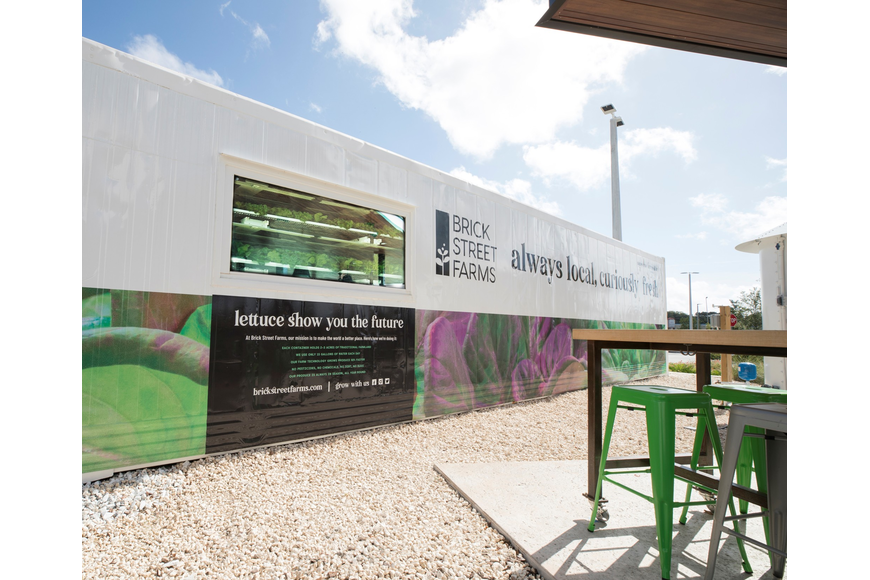
In one major move, the company installed a 40-foot hydroponic container farm in front of its Lakeland GreenWise store. The container, added at the beginning of March, uses mineral-rich water instead of soil to grow lettuce plants. Publix partnered with St. Petersburg-based Brick Street Farms on the initiative, a good fit because of Brick Street’s focus on quality and sustainability efforts, Publix Business Development Director for Produce and Floral Curt Epperson says.
One key feature of the container is a viewing window on the side that allows people to see the plants growing. Along with showing off the growing process to customers and store employees, GreenWise also wants to use it during educational tours for schoolchildren. The image of the fresh product is key, Epperson says. “You have a good visual of farming at its best inside a container,” he says.
The hydroponic farm is near an outdoor sitting area, encouraging people to mingle and see what it's all about. “There’s certainly been some interest in that,” Epperson says. People are also attracted to the system’s sun-emulating lighting. “It really has an iridescent grow to it,” he says. “It draws you into the container. It’s hard to walk by it and not say, ‘What is that?’”
The lettuce, which takes about five weeks to grow, is harvested right in the container. GreenWise has a grower on site who works with Brick Street and harvests the product three days a week, amounting to about 720 heads of lettuce each week. The same day it’s harvested, the lettuce is taken into the store to be sold. “It really brings a new level of freshness and sustainability to the customer,” Epperson says.
Sustainability can be a key selling point for consumers who are becoming savvier and more knowledgeable about where their food comes from. Because the lettuce from the hydroponic container only has to travel mere feet to end up on store shelves, the product uses fewer resources and has a reduced carbon footprint.
Customers are already responding well. The lettuce grown in the container has done well at the store, Epperson says, and currently, all of it is purchased at that location. Once the lettuce is harvested, more is planted, continuing the cycle.
Other GreenWise stores are getting in on the hydroponic action, too. Brick Street, for instance, is providing lettuce for other locations. Publix has also worked with South Carolina-based Vertical Roots on a mobile hydroponic farm that it brought to stores, giving people the chance to walk inside the farm. The mobile educational tool is on hold during the pandemic, but it’s expected to come back. “It’s really just a cool opportunity to bring the farming concept to the customers,” Epperson says.
Courtesy. Publix worked with South Carolina-based Vertical Roots on a mobile hydroponic farm that it brought to stores, giving people the chance to walk inside.
In another hydroponic effort, Publix has partnered with vertical farming company Kalera to distribute the lettuce it grows hydroponically in Orlando.
Other crops might be involved in the future as well; growers are working on expanding beyond lettuce. “Each of these growers are looking at other ways to grow other commodities,” Epperson says. “I think you’ll see more trials into tomatoes, cucumbers, and peppers going forward.”
Epperson says Publix is working with more hydroponic growers, too, in states including Florida, Georgia, South Carolina, and North Carolina. “Every day, we’re outsourcing product,” he says. “It’s a great way to support communities that are supporting the growers and us. It’s great for the customer, great for the grower, and great for Publix.”

Expert Input Can Boost Yields For Vertical Farming
Designing, constructing and integrating new facilities that live up to vertical farming’s many promises calls for the right kind of knowhow, says Ian Hart, business development director at adi Projects
3rd September 2020
Designing, constructing, and integrating new facilities that live up to vertical farming’s many promises calls for the right kind of know-how, says Ian Hart, business development director at adi Projects.
For almost 12,000 years, humankind has found increasingly ingenious ways to convert the natural forces at play on Planet Earth into an ever more bountiful, diverse and predictable source of sustenance.
And, as global and national populations have grown historically and in particular, in recent decades, the issue of food security has always hovered somewhere in the background. Today, although we’re by no means on the brink of a Malthusian catastrophe, the idea that the UK might at some stage struggle to feed itself has taken on a new relevance.
We’ve always been used to the supermarket shelves being full. But the early stages of lockdown betrayed the reality that supply chains are highly sensitive not only to the onset of a pandemic but to economic and environmental shocks.
Imperfect storm
Putting COVID to one side, the UK is staring those other two factors square in the face. We currently import approximately 80% of our food, including real basics, such as carrots, but, in Brexit, we are on the verge of a significant dislocation between ourselves and our biggest and closest trading partners who also happen to supply 30% of the total.
And, while Brexit may cause short-to-medium term disruptions, presupposing an eventual agreement on future trade, the risks posed by the environment seem baked in for decades to come.
High hopes for UK vertical farming startup
Scottish vertical farming startup harvests £5.4m in funding
Extreme weather events, such as significant flooding which has quadrupled since 1980, can harm livestock and spoil crops. On the other side of the coin, water inefficiency and scarcity are issues in many parts of the world, as agriculture competes increasingly with industry and domestic use.
Rising temperatures are playing havoc with growing seasons and sparking ever more wildfires that can devastate farms, even when the flames don’t actually reach them.
So, the commercial risks are there for producers. Supply chains are fragile, meaning that businesses dependent on imported produce may be unable to meet the service levels demanded by the supermarkets – even in the short-term – and then scramble for unsustainable and often very costly workarounds.
Removing risk
Vertical farming facilities are the subject of increased interest in the industry. Climate-controlled facilities enable producers to regulate the variables of the environment and avoid pollution to grow produce of a consistently high standard and at predictably higher yields.
The vertical farm projects we have worked on are very hygienic, removing fungal and bacterial risks and the threat from all manner of pests. And, run on LEDs and recycling very high proportions of the water they use back into their processes, energy costs can be minimized, there is no need for water to be chemically treated and producers can extricate themselves from any sense that the taps might one day dry up.
Locally sited facilities mean the vagaries of geopolitics and international trade agreements are no longer an issue. And, as importantly, locating one close to a waste-to-energy plant would enable you to harness its heat and CO2 to aid the growing process.
The UK currently imports around 80% of its food
So, vertical farming has a real role to play in helping create circular economies at the local level.
While no means a silver bullet, in our experience vertical farms do solve many of the problems of contemporary food production and have the potential to help brands forge solid reputations as innovators and on sustainability.
But, so great are its potential upsides, one might quite reasonably ask why the shift to vertical farming isn’t gathering pace at a steadier rate. The answer, I believe, lies in a perceived lack of expertise in this country at getting such projects off the ground.
A specialist business
For all the simple answers the technology offers, the processes involved are highly sophisticated and capital intensive. Often it is only businesses with the means who go beyond the initial feasibility stages but, even then, they require specialist assistance.
The design and construction of the facilities themselves are highly complex. Different vegetable, fruits, and greens each require their own zoning and specific climatic conditions, and each of the different vertical levels – up to nine in some cases – has to create and sustain its own unique characteristics.
The electrical and robotic systems running the lighting and hydroponics are as innovative as anything in the sector and that’s before one overcomes the challenges of integrating the entire operation.
So, I’d advise companies exploring their options on vertical farming to go back to basics. If you can get those right from the outset and ensure you have continuity throughout the project, you can not only remove risk during planning and construction and for the duration of the facility’s lifecycle but also enjoy certainty on cost and program during the set-up phases.
Ian Hart is business development director at adi Projects
Visit the UK’s dedicated jobsite for engineering professionals. Each month, we’ll bring you hundreds of the latest roles from across the industry.

Vertical Farming Is Coming To A Store Near You
Indoor farms, and even in-store farms, are fulfilling our need for more local vegetables. These semi-autonomous vertical farms offer fresh, healthy food options by bringing food production closer to consumers
September 9, 2020
by Julien Muller, Maxime Cailler
Inadequate consumption of fruits and vegetables is among the top 10 risk factors for our health. Eating fruits and vegetables daily helps prevent major diseases, ensures an adequate intake of most micronutrients and fibers, and can help displace foods high in saturated fats, sugar or salt.
The health benefits of eating more produce can’t be denied, but what about the old adage “fresh is best”? Locally grown fruits and vegetables have distinct advantages. The less time it takes to get to your plate, the better. Once vegetables are picked and harvested, they begin to lose their nutrients. Also, produce that is grown and sold locally has minimal transportation time, which translates to reduced fossil fuel emissions.
It may soon be common for anyone to pluck a farm-fresh tomato from the vine or choose their lettuce while it’s still growing, even if they live in urban areas without gardens. Indoor farms, and even in-store farms, are fulfilling our need for more local vegetables. These semi-autonomous vertical farms offer fresh, healthy food options by bringing food production closer to consumers.
Vertical farms use state-of-the-art technologies, such as specialized LEDs, to help the vegetables grow. Simulation is used to strategically design and optimize indoor farm lighting to create an optimal environment that decreases growing times.
Vertical Farming Lighting Challenges
Engineers designing in-store vertical farms must consider many optical aspects.
First, for a row containing a certain type of plant, it is important to ensure the right illumination value. Different plants need varying amounts of light to grow, and that amount can vary during the growth cycle.
It is also important to ensure illumination homogeneity through a row so all the seeds grow at the same speed. This eases the burdens of plant care during production and allows harvests to be scheduled as needed.
Similarly, when it comes to the light spectrum, plants don’t need all the wavelengths of natural light to grow. Plants respond best to just the red and blue wavelengths, so traditional lamps mimicking sunlight are a waste of energy. Careful optical design can help to optimize LED lighting to target only necessary wavelengths, saving energy in the process.
Lastly, the amount of light absorbed by the plants should be maximized. The less light plants reflect, the faster they grow, which reduces energy consumption.
Vertical Farms Grow with Simulation
LED lights are the most efficient, effective, and customer-friendly way to illuminate plants indoors. They use low energy, produce little heat, and can be color-optimized for growth.
To show how Ansys SPEOS can be used to design grow-light LED array solutions and simulate an indoor farm, we designed a generic light array with 90 LEDs. According to the literature, a diffuse purple spectrum (containing no green light) is optimal for plant growth. Plants reflect much of green visible light and absorb the rest of the spectrum. Consequently, the light array we created has 45 LEDs in the blue spectrum and 45 LEDs in the red spectrum, combining to make purple.
Grow light array for a purple spectrum
Inside our farm, we first designed eight rows of 15 lettuce plants. Each row is illuminated by three of our purple spectrum light arrays.
Vertical farm isometric (left) and side view.
To take the optical properties (light absorption and reflection) of the lettuce into account, we measured some leaf samples using Ansys’ Portable Optical Measurement Device (OMD). The bidirectional reflectance distribution function (BRDF) obtained was applied to all of the lettuce plants in the geometry.
We then used light simulation to measure and visualize illuminance homogeneity, as well as the vegetables’ light absorption. The results obtained for the first design are shown below.
Illuminance sensor (left) and 3D absorption (right)
We could see that the illumination was not homogeneous on the whole row. We then iterated on the LED array’s position, the spectrum of the LED, and the material of the walls of the vertical farm to produce the most efficient solution.
Vertical Farming Simulation Results Are Illuminating
We spaced the luminaires more evenly and gave more space between the LED arrays and lettuce plants. We also changed the materials on the sides and the back from transparent (absorbing) to white (diffusing). The front of the vertical farm was kept transparent so consumers could see the plants as they shopped.
Vertical farm isometric (left) and side view.
Our next simulation showed that the illumination reaching the lettuce plants is more evenly distributed, producing a more uniform light absorption, as shown below.
Illuminance sensor (left) and 3D absorption (right)
However, the lettuce plants in the front and back are a bit less illuminated, so they might not grow as well as the ones in the center. Because the simulation results are so visually striking, it’s easy to determine where the vertical farming design could be improved. One idea for the front lettuce plants would be to apply a partially reflective coating on the inside face of the front glass to reflect more light toward them. The optimized system would then both ensure an optimal harvest yield and optimal energy consumption.
Vertical farming for in-store produce is an idea making its way to the mainstream. Optical simulation helps quantify and visualize the benefits of vertical farms, such as using less energy and water, and growing what is needed in small batches, which wastes less food.