


Welcome to iGrow News, Your Source for the World of Indoor Vertical Farming
Bowery Farming Wants To Make Lettuce Safe, Smart And Tasty
Grown indoors, lettuces, greens and herbs are non-GMO, free from pesticides “and grown with complete transparency,” says Katie Seawell, Chief Marketing Officer
August 12, 2020
For decades, consumers have been on a quest for cleaner, safer produce — and agricultural methods that are good for both the palate and the planet.
Bowery Farming, the New York-based indoor farming start-up, thinks it’s mastered the recipe, especially given increasing safety concerns.
Grown indoors, lettuces, greens, and herbs are non-GMO, free from pesticides “and grown with complete transparency,” says Katie Seawell, Chief Marketing Officer. “We are deeply committed to increasing access to high-quality delicious food. We’re going to build an enduring brand — we hope a generational brand — that emotionally connects with consumers.”
Its main selling point? “Our produce tastes better, too, and that means a lot to our core audience.”
At present, the vast majority of produce isn’t branded, “and highly commoditized, not unlike coffee used to be,” she says. “I spent 15 years at Starbucks before joining Bowery a year ago, and I see a lot of similarities. Starbucks is a very mission-driven company, and so is Bowery. We are committed to disrupting the food-supply vision. And through technology, we want people to think differently about how we grow the food we eat.”
Currently, Bowery is selling its products in retail chains such as Walmart, Giant, and Whole Foods Market. It’s also available on Amazon Fresh and believes e-commerce will be one of its biggest sources of growth. “It’s a great cross-section of retailers, and part of our goal-to democratize access to our produce.”
Seawell says it is preparing ads set to break later this year, based on consumer research that uncovered ongoing concerns about widespread lettuce recalls for problems like E. coli and Cyclospora infections.
Mustache is the ad agency, and it also worked with Red Antler for a brand refresh and a new website.
Seawell says the pandemic has also intensified interest in safer, healthier foods. It’s also accelerated awareness of America’s gaping inequalities and inefficiencies in the food system.
So far, Bowery has two farms in Kearny, New Jersey, and the a outside of Baltimore. With its modular technology, it hopes to expand soon. Providing fresh food for underserved communities is also part of its mission, which translates into partnerships with nonprofits, including DC Central Kitchen and Table to Table.
Correction: An earlier version of this story misspelled CMO Paula Seawell’s name, as well as the location of two of its farms. They are in Kearny, New Jersey.

Albertsons To Bring Plenty Leafy Greens To 400-Plus Stores
Plenty products are already available in some Safeway and Andronico’s locations in the Bay Area, and the plan is for more of the company’s stores in California — Albertsons, Vons and Pavilions locations — to also carry Plenty products as supply increases
August 12, 2020
Boise, Idaho-based Albertsons has entered into an agreement with South San Francisco, Calif.-based Plenty Unlimited to bring its leafy greens to more than 430 California stores.
Plenty products are already available in some Safeway and Andronico’s locations in the Bay Area, and the plan is for more of the company’s stores in California — Albertsons, Vons and Pavilions locations — to also carry Plenty products as supply increases, according to a news release.
Stores plan to carry four Plenty products to start: baby arugula, baby kale, crispy lettuce and mizuna mix.
“We pride ourselves on offering fresh, quality products that surprise and delight our customers,” Geoff White, executive vice president of merchandising for Albertsons, said in the release. “Plenty’s data-driven and sustainable methods are truly innovative, and we look forward to bringing their unique and exciting products to more customers in California as they scale their operations.”
The company’s indoor vertical farm is powered by wind and solar energy, and its operation leverages customized lighting, machine learning and data analytics, per the release. The farm can grow a million plants at a time and process 200 plants per minute.
Lead Photo: Albertsons and Plenty announced a new partnership. ( Albertsons and Plenty )
Related Topics: Produce Retail Sustainability Lettuce
US: Throw Away Your Onions, They're Being Recalled Over Salmonella
It started with red onions, but now the recall has expanded quite a bit
It Started With Red Onions, But Now The Recall
Has Expanded Quite A Bit
Updated on 8/14/2020
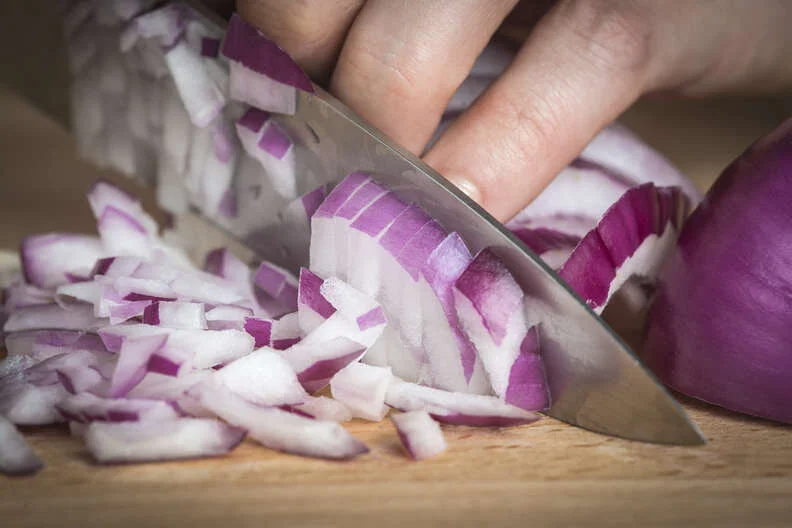
The FDA says you probably need to chuck your onions in the bin. A recall of the delicious tear-inducing vegetable is happening over a "multistate outbreak of Salmonella Newport infections."
The FDA has tracked the outbreak back to Thomson International, Inc. in California, but if you're like me, the onions in your kitchen don't have a label on them. In that case, the FDA says you should throw them out. "If you cannot tell if your onion is part of the recall, or your food product contains recalled onions, you should not eat, sell, or serve it, and should throw it out," the FDA says in its announcement.
Anything from Thomson shipped since May 1, 2020, is part of the recall.
The initial recall was on red onions, which are believed to be the source of the problem. However, the recall has expanded to include red, yellow, white, and sweet yellow onions due to the potential for cross-contamination. Currently, the CDC is reporting cases of Salmonella in 34 states with 396 reported illnesses and 59 hospitalizations. The name of the company may not be familiar, but the products have been distributed in all 50 states, the District of Columbia, and Canada, where there is also a recall. The US recall started on August 1, a day after the Public Health Agency of Canada issued a recall on red onions from Thomson International."
The onions were distributed... under the brand names Thomson Premium, TLC Thomson International, Tender Loving Care, El Competitor, Hartley’s Best, Onions 52, Majestic, Imperial Fresh, Kroger, Utah Onions, and Food Lion," the recall states. You can find a list of label images in the FDA recall.
There are a whole lot of varieties of the recalled packaging, with some having been sold at Kroger and Walmart locations.
The FDA and CDC ask that anyone experiencing symptoms contact their health care provider immediately. Symptoms of salmonellosis include diarrhea, fever, and stomach cramps. If it gets more severe, symptoms may also include a fever, aches, headaches, lethargy, rash, and blood in urine or stool, the FDA says.
So, check the kitchen and don't risk it.
Lead photo: SHUTTERSTOCK.COM
China Says Frozen Chicken Wings From Brazil Test Positive For Virus
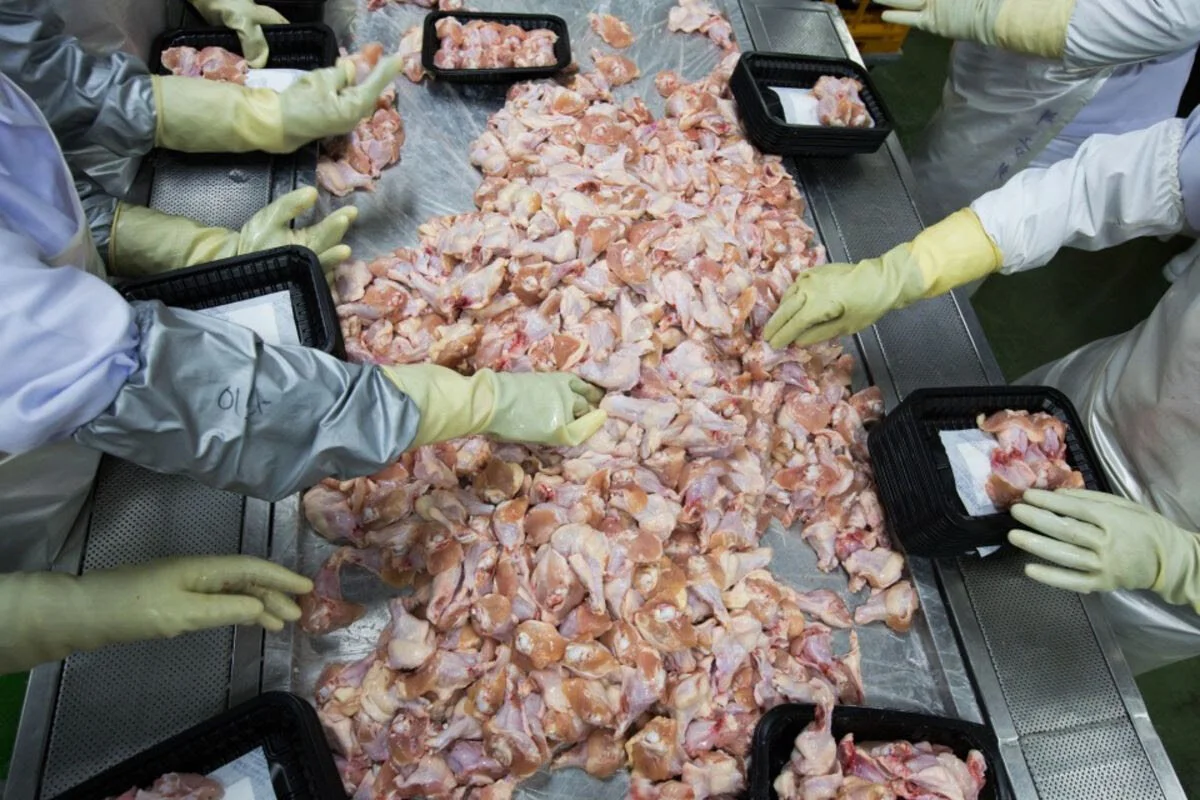
Consumers in the Chinese city of Shenzhen have been urged to exercise caution when buying imported frozen food after a surface sample of chicken wings from Brazil tested positive for coronavirus, according to a statement from the local government
August 14, 2020
Consumers in the Chinese city of Shenzhen have been urged to exercise caution when buying imported frozen food after a surface sample of chicken wings from Brazil tested positive for coronavirus, according to a statement from the local government.
The positive sample appears to have been taken from the surface of the meat, while previously reported positive cases from other Chinese cities have been from the surface of packaging on imported frozen seafood.
The chicken came from an Aurora Alimentos plant in the southern state of Santa Catarina, according to a registration number given in the statement.
Virus tests of people who have possibly come into contact with the product, and tests of related products, all came back negative, the statement said. Consumers should be cautious when buying imported frozen foods and aquatic products, the government added.
The World Health Organization said that there had been no examples proving that the virus could be transmitted as foodborne if it was actually in food.
“The viruses can be killed like other viruses as well, and can be killed if the meat is cooked,” said Maria Van Kerkhove, the organization’s Covid-19 technical lead, at a press conference.
Brazil’s Agriculture Ministry has asked Chinese authorities for information that could help clarify the alleged contamination of the product with Covid-19, it said in a statement. The ministry reiterated that there’s no scientific proof of Covid-19 transmission through food or frozen food packaging, citing the UN’S Food and Agriculture Organization and the WHO. It also reinforced the country’s strict safety protocols.
Closely-held Aurora Alimentos said in a statement Thursday that it follows strict sanitary production protocols and it will provide information as soon it gets notification from national Chinese authorities.
Three packaging samples of imported frozen seafood tested positive for Covid-19 in Yantai, a northern city of Shandong province, the city government said on its official Weibo account Tuesday. State television Wednesday reported that the outside of an Ecuador frozen shrimp package tested positive for the virus in a restaurant in Wuhu, a city in China’s Anhui province. Packaging on Ecuador shrimps has also tested positive in Xi’an, state television said Thursday.
— With assistance by Fabiana Batista(Updates with WHO response from 5th paragraph.)

2nd Annual Global CEA Census Announced: CEA Amidst COVID-19
AgTech leaders Autogrow and Agritecture Consulting have launched their 2nd Annual Global CEA Census, focusing on understanding the impact of the COVID-19 pandemic on controlled environment agriculture (CEA) operations around the world
The 2020 Global Census will run from July 7 2020 until August 10 2020.
8/14/20 UPDATE:
The Global Census has been extended
& will run thru this Weekend
7 July 2020
AgTech leaders Autogrow and Agritecture Consulting have launched their 2nd Annual Global CEA Census, focusing on understanding the impact of the COVID-19 pandemic on controlled environment agriculture (CEA) operations around the world.
“We’re all operating in a unique situation right now and what’s required is a reality check. All of us, including growers, suppliers, distributors, government and financial institutions, need a clear view of what should be implemented, ensuring farm operators address a raft of challenges to continue to feed communities,” explains Autogrow CEO, Darryn Keiller.
“In every major market, media coverage of farms has made clear the high COVID-19 infection rate amongst farm workers, coupled with major challenges in getting their traditional immigration sourced labor across closed borders. Infection rates in food processing plants are another example.”
“It will take accelerated engagement between industry stakeholders to get us through the next 12 months and on into the future. Some farm operators have adapted well, whereas others will require additional financial intervention and modernize their approach to farming. We hope this Census will highlight the true impact of what’s happening and where the priorities lie.”
Last year, the 2019 Census reported on several areas including growth plans, agricultural experience, and profitability. This year, the Census will focus specifically on COVID-19 and whether decisions indicated last year have been affected.
“In 2019, we found 90% of respondents planned to increase their production area. We’re curious as to whether that is still the case, and if not, what other business changes are being implemented due to COVID-19,” says Agritecture Founder and CEO, Henry Gordon-Smith.
“The future is going to be about maintaining the health of workers, alongside the health of the business. Consumers will be looking for transparency around food sourcing, sustainable and local producers, and this is an opportunity for the CEA industry to take a lead in what will be our new normal.”
Recent figures released by the World Health Organization show the rapid spread of COVID-19 that has resulted in countries implementing various lockdown measures. This, in turn, has had a major impact on the entire food supply chain, including CEA farms that are key food producers around the world.
The 2020 Global Census will run from July 7 2020 until August 10 2020.
All completed submissions will go in the draw to win multiple prizes, including tickets to Agritecture Xchange, a speaking spot in the conference, a feature on Agritecture’s blog, and a discount off an annual Folium subscription with every purchase of a Folium Sensor Starter Pack.
TAKE THE SURVEY HERE
READ TERMS & CONDITIONS HERE
MEDIA INQUIRIES
Kylie Horomia, Autogrow Head of Communications
(e) Kylie.horomia@autogrow.com
(m) +6421 733 025
(w) https://autogrow.com/ | www.farmroad.io
Briana Zagami, Agritecture Media Strategist
(e) briana@agritecture.com
About Autogrow
Autogrow leverages the power of technology, data science, and plant biology to provide indoor growers affordable, accessible, and easy-to-use innovation – 24/7, anywhere in the world.
Our solutions support growers and resellers in over 40 countries producing over 100 different crop types.
We are the experts in Controlled Environment Agriculture (CEA) and continue to stay ahead of a rapidly evolving landscape.
About Agritecture Consulting
Agritecture Consulting provides a comprehensive approach to CEA project development.
In operation since 2014, Agritecture has helped more than 100 organizations determine the feasibility of their ideas, validate their business strategies, recruit talent for their projects, and manage operational challenges.
Our job is to jumpstart your knowledge of CEA, help you navigate barriers to entry, make industry connections, and mitigate risk. Our consulting services are backed by several years of operations data and a team of experienced growers, engineers, and sustainability managers.

US: NEW YORK - What If Central Park Were Home To A Massive Urban Farm?
A corner of Central Park was once home to a thriving Black community. Amber Tamm wants to honor the legacy of that neighborhood with a farm to feed New York’s neediest
08-04-20
A corner of Central Park was once home to a thriving Black community. Amber Tamm wants to honor the legacy of that neighborhood with a farm to feed New York’s neediest.
In 1825, downtown New York City was growing crowded. Then, as now, racism made New York an uncomfortable place for Black Americans, so Andrew Williams, a Black shoeshiner, took an opportunity to move north, away from the hubub of lower Manhattan. For $125 he bought three parcels of land between what is now West 85th Street and 86th Street and where once there was just farmland. Shortly thereafter, a church bought up a plot with plans to create a cemetery for African Americans. Other Black Americans soon followed.
That was the beginning of a neighborhood called Seneca Village. Residents there, like Williams, were largely laborers. But land ownership provided an opportunity for upward mobility and Black landowners with property worth $250 or more could vote in elections. By 1850, there was a school, three churches, gardens, livestock, some 50 homes, and roughly 225 residents, the majority of whom were Black.
But the New York Williams had tried to escape was growing too: The city doubled in population between 1845 and 1855, and citizens began clamoring for green space to be set aside for recreation. Though several sites were up for consideration, including a tract of private land along the East River, the city decided on a large swath at the center of the island. Though the media of the time painted the region as a largely empty save for some poor squatters, Seneca Village fell right inside its bounds.
The 1868 plan for Central Park. [Image: Wiki Commons]
The city acquired the land through eminent domain, paying owners “just compensation,” (though letters from the time reveal that Seneca Village residents did not always feel the compensation was actually fair). Seneca Village was razed and subsumed into what is now Central Park. Amber Tamm, a farmer for a nearly six-acre New York rooftop farm called Brooklyn Grange, wants to give part of the park back to that history, by taking 14 acres of the 55-acre Great Lawn and turning it into a community farm that would feed under-resourced Manhattanites, many of whom are Black. It would also serve as an educational resource for teaching New Yorkers about urban farming. Tamm wants to call it Seneca Village Farm. “I think calling out Central Park is powerful because it’s the biggest park in New York City and it has the most flatland,” she says.
Tamm is hoping to reclaim Central Park’s narrative and make it a more inclusive one. Her vision is that one person would farm an acre each and people would apply for one of the 14 spots. Tamm envisions running a training program where she and a small team would teach people how to farm their acre with room for creative innovation. If there is someone interested in herbalism, Tamm says she would find a mentor to teach her how to grow herbs. “But also what does it look like for her to exercise creativity? Does she want to grow in rows? Does she want to grow in circles and spirals? Let her flesh out what her vision is and let her work through what it’s like to revitalize soil while also supporting community through what she yields,” says Tamm. Another example she gives: What would it look like to grow rice in New York City?
Tamm’s introduction to the existence of Seneca Village started young and was driven by her mother’s persistent interest in the village. In 1993, a book about Central Park, The Park and the People: A History of Central Park, spurred archeologists Nan Rothschild and Diana diZerega Wall, a professor at City College, to consider Seneca Village’s old plot as the site of an archeological dig. Seventeen years later, the city approved it. The excavation yielded a small glimpse into a place that captivated certain New Yorkers.
[Photo: Jermaine Ee/Unsplash]
“There would be these excavations where they were finding bones of our ancestors and my mother would always be moved to tears and be investigating how she can go see it, how she can go experience it on her own,” says Amber Tamm, a farmer for Brooklyn Grange, who grew up in East New York. She says her family has lived in Brooklyn for four generations. “Once Seneca Village became a thing and once they started to find the walls and the teapots, she was deeply invested in talking about it.“
The Seneca Village Farm idea was born out of COVID-19. In the early days, food was constrained. Tamm remembers going to the farmers’ market and seeing a bleak array of produce stalls. She and a friend who works on the rooftop garden at Cooper Union began a conversation about what it would look like for New York City to have food sovereignty or sustainable access to healthy, culturally appropriate food grown locally. What kind of food a person can access in New York City depends largely on where they live: Some neighborhoods have big grocery stores with expensive produce trucked in from all over the country. Others have corner stores with selections of packaged goods and small produce sections.
The unequal food distribution in New York has led some food activists to start urban farms that cater to individual communities. East New York Farms, for example, operates a plot and sells to local residents in the Brooklyn neighborhood. The group has also helped others to start their own community-led farms, like the one at the Louis Heaton Pink Houses, a New York City Housing Authority project in Brooklyn.
During the pandemic, food access, at least initially, was even more constrained for those who already have difficulty accessing fresh food. Soup kitchens and groups like Harlem Grown, which uses abandon lots to set up urban farms, stepped in to fill the food void with fresh vegetables and prepared meals. Tamm wonders what such efforts would be like with a bigger piece of land.
The pandemic also provided Tamm with a precedent for converting Central Park to more essential uses: Within the first three weeks of the pandemic, after New York City shut down normal operations, field tents with 68 hospital beds went up in Central Park to support Mt. Sinai hospital as it treated COVID-19 patients. Tamm says, if New York City is willing to set aside land for treating sick New Yorkers, why would it not set aside that same land for ensuring that city residents have access to good nutrition.
“Farmers and doctors are deemed, essential workers. So why couldn’t we have the juxtaposition of on one side of the park they have the COVID hospital and on the other side they have farms, because that would be tackling both sides of health,” she says.
Sam Biederman, systems commissioner for community outreach and partnership development at New York City Parks, works closely with the Central Park Conservancy and also with New York City’s Green Thumb community gardens. He says that given the size of New York City’s population there is physically not enough available land in New York City to grow enough food to feed all its residents. However, he does think community gardens contribute more quality food to certain neighborhoods. Unfortunately, he says, the Central Park Conservancy, in partnership with the city, manages the park with strict rules that may make such a project difficult to undertake.
The Central Park Conservancy is a nonprofit that was founded in 1980 after the park had suffered years of decline, to rejuvenate and manage the park. The city pays about a tenth of the conservancy’s annual $85 million budget, and conservancy raises the rest through private sources. The organization works in tandem with the parks department.
“The undergirding philosophical approach is as much land should be available to all people,” says Biederman. He says that using Central Park as anything other than purely recreational space requires event permitting. The Great Lawn in particular has a lot of limits, he says, because any time an event takes over that space, it is taking it offline for recreational use. The longest a person can get a permit for the Great Lawn is two days and there are only seven permits given out a year. “Turning a significant amount of that space over to agriculture that’s a significantly different use—it’s a tall order.”
However, he also notes that the Central Park Conservancy is very aware of Seneca Village’s history and is trying to honor its legacy in various ways. Last year, the organization put up a temporary installation that highlights the work archeologists have done and their learnings about Seneca Village in the time they’ve been investigating it. It also released a series of materials that help guide teachers who want to use the exhibit to teach students about Seneca Village. Biederman says NYC Parks is also looking into renaming other parks to honor New York’s Black history. “Negotiating what it means to live on and operate and be the custodian of land that once belonged to someone else is a moral responsibility that you have to tend to in perpetuity,” says Biederman. “The way people interact with public spaces evolves from generation to generation—that’s clear.”
Tamm, who has separately recently raised more than $100,000 to start her own farm, is meeting with a member of New York City Parks to discuss the project further and has high hopes for the conversation, she says. “It would be there to pay homage to the ancestors of Seneca Village—that’s the number-one goal.”
Correction: This article has been updated to clarify the Conservancy’s role in managing Central Park.
Lead Photo: [Photo: johnandersonphoto/iStock]
ABOUT THE AUTHOR
Ruth Reader is a writer for Fast Company. She covers the intersection of health and technology.

Choosing Seeds For Microgreens 101: Everything You Need To Know
In this article, you’re going to learn everything there is to know about microgreen seeds so you can start a healthy, thriving garden
When it comes to choosing seeds for microgreens, you’ll want to ensure you pick quality seeds. In this article, you’re going to learn everything there is to know about microgreen seeds so you can start a healthy, thriving garden.
Look for Untreated Seeds
One of the differences between growing microgreens and larger plants is that microgreens need to start from untreated seeds. Gardening seeds are usually treated with fungicides and insecticides, which isn’t harmful since the seeds start small and grow into large plants. But microgreens are 1 to 2-inch plants and treated seeds pose a higher risk, which is why it’s essential to choose seeds of microgreens that are untreated.
When ordering seeds for microgreens, make sure that it explicitly states that the seeds are untreated, and if you aren’t sure, it’s best to clarify with the company before ordering.
Order From Reliable Sources
It’s better to order from garden seed companies than sprout seed sources when it comes to finding quality microgreen seeds. Garden seed companies are more transparent about their seeds and provide a plethora of information. While you can expect a slightly higher cost, you’ll be able to find the right amount of information to guide you in your microgreen journey.
What to Look for From a Seed Packet/Catalog Page
When you purchase microgreen seeds from reliable sources, you can expect to find the right kind of information from the seed packet. If your seed packet/catalog page has the following information on it, then you’ve purchased from a reliable source:
CULTIVAR Name ● When you can spot the cultivar name on a packet, you can identify the specific variety of plant. A cultivar is when there are specific varieties of a single species of a cultivated plant such as broccoli where there’s Purple broccoli, broccoflower, and more. Being able to see the cultivar name will help you continuously find your favorite seeds over and over again.
Date of Harvest ● If your packet includes the date of harvest, you will be able to forecast your seed’s lifespan. If your packet doesn’t include this, the rule of thumb is to use the seeds within five years of purchase.
Germination Rate ● If your seed has a germination rate lower than 90%, then it won’t be suitable for microgreen growing. This is because the errant 10% will rot. When it comes to growing microgreens, the faulty 10% seeds can cause the other seeds to rot since they’re close to each other.
Organic Certification ● Make sure your packet says “organically grown” or “naturally grown” for optimal results.
Botanical Names ● These are the scientific names of each plant and are usually italicized and written in Latin or Greek. Knowing the botanical names of your preferred seeds will help you always identify the seeds you’re wanting to buy.
Choosing seeds for microgreens can be a daunting task if you’re a beginner, which is why we’ve developed these 3 steps to consider when choosing your seeds. We at the Nick Greens Grow Team see the value in growing microgreens at home, and we want to share our knowledge with you. Feel free to subscribe to our blog and YouTube channel to get weekly updates on how to grow microgreens from the comfort of your home!
#seedsformicrogreens #microgreensseeds #microgreenseeds #microgreens #buyingmicrogreensseeds #buyingmicrogreenseeds #seeds #trueleafmarket #buyingseeds #microgreenseed #microgreensseed #microgreensgrower #growingmicrogreensathome #growingmicrogreens #germination
Temasek, Bayer Form Joint Vertical Farming Venture In California
Temasek Holdings is partnering with German multinational pharmaceutical and life sciences company Bayer AG to create a new vertical farming venture headquartered in California, as part of Singapore’s plans to boost the city-state’s supply of sustainable, locally grown produce
Jovi Ho
August 12, 2020
Temasek Holdings is partnering with German multinational pharmaceutical and life sciences company Bayer AG to create a new vertical farming venture headquartered in California, as part of Singapore’s plans to boost the city-state’s supply of sustainable, locally grown produce.
The joint venture between Temasek and Leaps by Bayer, the impact investment arm of Bayer AG, will be a US entity with commercial and research and development operations in both California and Singapore.
The new venture, Unfold, will focus on innovation in vegetable varieties with the goal of lifting the vertical farming space to the next level of quality, efficiency, and sustainability.
Instead of focusing on external infrastructure to support plant growth, Unfold will look within the plant itself.
“By utilizing seed genetics (germplasm) from vegetable crops, Unfold will focus on developing new seed varieties coupled with agronomic advice tailored for the unique indoor environment of vertical farms,” says Bayer.
Unfold has raised US $30 million (S$41.19 million) in its initial funding round and entered into an agreement for certain rights to germplasm from Bayer’s vegetable portfolio.
Global food challenges are forcing countries to rethink traditional farming practices, says John Vaske, Head of Agribusiness at Temasek.
“We need to ensure secure farm-to-fork supply chains in urban settings while we also work to reduce the overall environmental impact of farming. Reducing food waste and improving the safety, traceability and nutritional value of food are all the more important as populations grow and demand for food expands. Investments in companies such as Unfold allow us and our partners to support innovative, sustainable solutions that will benefit all of us over the long term,” says Vaske.
Back in 2018, Temasek acquired a 3.6% stake in Bayer for 3 billion euros (S$4.85 billion), bringing its total stake to about 4% with 31 million new shares. The share sale to Temasek was part of Bayer's efforts to fund its planned US$62.5 billion takeover of seed maker Monsanto.
However, according to the latest Bloomberg data, Temasek no longer appears to own a substantial stake in Bayer.
Unfold’s President and CEO Dr. John Purcell will move from his role as Head of Vegetables R&D, Crop Science at Bayer.
“As a company fully focused on the vertical farming industry, Unfold will combine leading seed genetics with the best agtech experts in order to dramatically advance productivity, flavor, and other consumer preferences,” says Purcell.
“We look forward to serving the market through partnerships with vertical farming operators, technology providers, and others across the produce supply chain.”
Prior to joining the food and agriculture industry, Purcell was a post-doctoral researcher at the United States Department of Agriculture from 1987 to 1989. He earned his Ph.D. in Molecular and Cellular Biology from the University of Massachusetts. Purcell is also part owner of a family ranching operation in Montana.
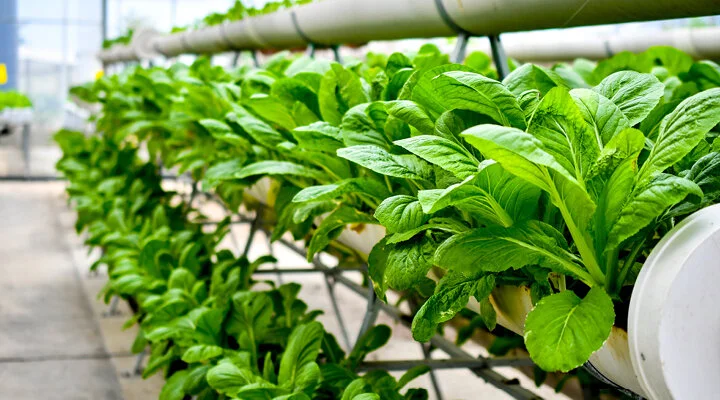
Vertical farms, also known as indoor farms or plant facilities with artificial light (PFAL), help crops grow more quickly while using less space and fewer natural resources.
Investment in the vertical farming market has increased significantly in recent years mainly due to decreasing arable land, increasing market demand for local, sustainable produce, and migration towards mega-cities.
Singapore’s "30 by 30" agriculture goal aims for 30% of our nutritional needs to be produced locally by 2030, though this figure is smaller than 10% currently.
According to the Singapore Food Agency (SFA), the 77 leafy vegetable farms here accounted for 14% of total consumption in 2019.
Lead Photo: Credit: Bayer stock photo

FarmERP Gears Up For The Future As Top Executives From Cognizant And SAP Join Them
FarmERP’s main focus lies in rigorous technology-intensive transformation of agriculture and agribusinesses, through the latest advancements including the Internet of Agricultural Things, AI, Blockchain and Machine Learning
FarmERP’s main focus lies in rigorous technology-intensive transformation of agriculture and agribusinesses, through the latest advancements including the Internet of Agricultural Things, AI, Blockchain, and Machine Learning. To enable revolutionary ease within the management system, FarmERP welcomed Mr. Abhijeet Dange and Mr. Vikram Metkari on board.
The team at FarmERP recently announced the appointment of Mr. Abhijeet Dange as the Associate Vice President for Delivery at the organization. With vast experience in banking and financial services, learning, and talent development for over 22 years while working for organizations like Cognizant and Silverline, he has immense knowledge about handling large offshore customer engagements.
On his appointment, Mr. Dange quoted, “With the knowledge I possess, I aim to help in maintaining FarmERP’s competitive advantage by effectively aiding the growth of agribusinesses through cutting edge technology platforms.”
Mr. Sanjay Borkar, the CEO of the Indian-grown 2001 brand believes that, apart from being a strong leader with excellent people management skills, with his expertise in streamlining digital IT transformations, Mr. Abhijeet will play a crucial role in uncomplicating complex product management for FarmERP.
The team also welcomed on board Mr. Vikram Metkari as the Head of Sales and Marketing, who shares the same passion that the co-founders of the organization do, for transforming the inner workings of agriculture through the use of tech platforms. Mr. Metkari, an MBA and BE professional with rich work experience in marketing, sales, and business strategy, is a self-motivated and confident leader. He is not only a keen planner and strategist, but also an articulate communicator offering high- caliber presentations, negotiations, and analytical skills.
Mr. Santosh Shinde, the COO of FarmERP believes that Mr. Metkari’s extensive experience of working for various companies- both smaller organizations and world leaders like SAP and Vodafone in the IT & Telecom domain will enable him to guide, innovate, build, and provide value to agribusiness' customers by strengthening FarmERP's existing leadership in the domain.
With the valuable addition of both these members to the team at FarmERP, striving to make a difference and create an impact in these testing times, and the immense experience and culmination of expertise that they bring to the table, the management is now stronger than ever.
FarmERP is a leading smart agriculture management ERP technology platform. It was incepted as a part of Shivrai Technologies more than a decade ago and is currently deployed in 25 countries, assisting a variety of agribusinesses.
FarmERP is a pioneered effort by engineers, classmates, and now partners, Mr. Sanjay Borkar and Mr. Santosh Shinde. Both coming from an agricultural background, they were and are well aware of the toils and troubles that the agricultural sector faces on a daily basis. They turned to technology as a helping hand and as a partner.
Due to the connection, both personal and professional that they have towards the agricultural sector, it makes each individual work that much harder towards achieving the long-term goals they stand for. Aiming at the revolutionizing of the practices the agriculture sector follows as of date, FarmERP strives to make considerable progress in the agri-sectors they work with, while actively trying to incorporate their offerings with additional sectors as well since they are a platform which can accommodate the personality of numerous agribusinesses.

CubicFarm Systems Corp. Announces The Appointment of Sandy Gerber As Head of Marketing
As Head of Marketing for CubicFarms, Ms. Gerber is responsible for creating and launching a global marketing strategy that successfully positions CubicFarms in the market and drives lead generations and sales
VANCOUVER, BC, AUGUST 4, 2020 – CubicFarm® Systems Corp. (TSXV:CUB) (“CubicFarms” or the “Company”) is pleased to announce the appointment of Sandy Gerber as Head of Marketing, effective immediately.
As Head of Marketing for CubicFarms, Ms. Gerber is responsible for creating and launching a global marketing strategy that successfully positions CubicFarms in the market and drives lead generations and sales.
Ms. Gerber, an award-winning marketer, and communications strategist, has revitalized marketing and communications programs for companies of all sizes for over 20 years, including some of Canada’s most beloved brands such as Molson Canada, Appleton Estate, BC Lottery Corp, the University of British Columbia, and St. John Ambulance. Her marketing and communications expertise includes differentiation strategy, brand development, customer experience, business development, and digital content marketing.
Ms. Gerber previously held executive and senior marketing leadership positions in a wide range of industries including advertising, consumer goods, heavy equipment, and non-profit.
Her innovative marketing strategies include Molson Canada’s online community, “iam.ca”; Canada’s first e-gaming platform, “PlayNow”; the revitalization of St. John Ambulance’s iconic 900-year-old brand; and Wesgroup Equipment’s successful “G.R.I.T.” customer service program.
She is the author of two books and the founder of three successful companies. As the CEO of NEXT Marketing Agency, Ms. Gerber set a new standard for B2C and B2B innovative marketing, growing the agency into one of British Columbia’s Top 100 Fastest-Growing Companies.
CubicFarms CEO Dave Dinesen commented: “I’m excited that Sandy has joined our team. Her ability to define and refine a company’s message to better connect with customers is exactly what we’re looking for. I’m looking forward to Sandy’s help in telling the CubicFarms story – that we’re leading an industry and we are passionate in helping our grower customers be successful in both the fresh produce and livestock feed sectors.”
Sandy Gerber, Head of Marketing, commented: “I am excited to create a global brand presence and differentiated marketing strategy for CubicFarms to grow exponentially. CubicFarms possesses a winning combination of industry-leading technology and growing expertise, fast-paced culture of innovation, and vision to improve food production efficiencies and food security – to ultimately help farmers feed the world sustainably and profitably.”
Neither the TSX Venture Exchange nor it’s Regulation Services Provider (as that term is defined in the policies of the TSX Venture Exchange) accepts responsibility for the adequacy or accuracy of this release.
About CubicFarm® Systems Corp.
CubicFarm Systems Corp. (“CubicFarms”) is a technology company that is developing and deploying technology to feed a changing world. Its proprietary technologies enable growers around the world to produce high-quality, predictable crop yields. CubicFarms has two distinct technologies that address two distinct markets. The first technology is its patented CubicFarm™ System, which contains patented technology for growing leafy greens and other crops. Using its unique, undulating-path growing system, the Company addresses the main challenges within the indoor farming industry by significantly reducing the need for physical labour and energy, and maximizing yield per cubic foot. CubicFarms leverages its patented technology by operating its own R&D facility in Pitt Meadows, British Columbia, selling the System to growers, licensing its technology and providing vertical farming expertise to its customers.
The second technology is CubicFarms’ HydroGreen System for growing nutritious livestock feed. This system utilizes a unique process to sprout grains, such as barley and wheat, in a controlled environment with minimal use of land, labour, and water. The HydroGreen System is fully automated and performs all growing functions including seeding, watering, lighting, harvesting, and re-seeding – all with the push of a button – to deliver nutritious livestock feed without the typical investment in fertilizer, chemicals, fuel, field equipment, and transportation. The HydroGreen System not only provides superior nutritious feed to benefit the animal but also enables significant environmental benefits to the farm.
Information contact:
cubicfarms.com
Kimberly Lim
VP, Corporate Communications & Investor Relations
Mobile: 236.858.6491
Office: 1.888.280.9076
Email: kimberly@cubicfarms.com
Our mailing address is:
CubicFarm Systems Corp.353 – 19951 80A AveLangley, BC V2Y 0E2Canada

TitletownTech VC Fund Invests in Appleton-Based Agtech Startup Fork Farms
The TitletownTech venture capital fund, a $25 million fund and venture studio led by the Green Bay Packers and Microsoft, is investing in a Wisconsin agriculture technology startup that makes hydroponic systems
TitletownTech is located within the 45-acre Titletown district and is devoted to tech startups, venture capital and offices for the leadership team that manages Titletown operations.
The TitletownTech venture capital fund, a $25 million fund and venture studio led by the Green Bay Packers and Microsoft, is investing in a Wisconsin agriculture technology startup that makes hydroponic systems.
Appleton-based Fork Farms' indoor vertical farming system, called the Flex Farm, was designed to eliminate food transportation costs, consume 97% less water than traditional agriculture practices, and be 40% more energy efficient compared to hydroponic systems currently in the market.
“Low accessibility of fresh food is a huge problem for many people, and Fork Farms is a great example of local entrepreneurs chasing a big opportunity to make positive change," said Craig Dickman, the managing director at TitletownTech, in a statement.
During the last 12 months, TitletownTech has invested in more than a dozen startups. Two of those startups have relocated their headquarters to Green Bay following the investment and including Fork Farm, 10 of TitletownTech’s investments are companies based in Wisconsin.
The fund, which is managed from the Packers' Titletown District in Green Bay, writes checks between $100,000 and $1 million.
“TitletownTech is an incredibly innovative model that will significantly bolster the local start-up economy," said Fork Farms founder Alex Tyink. "It provides an exemplary blueprint that should be followed by other organizations around the country. The depth of support is unprecedented and will provide Fork Farms significant acceleration and lift to our organization's mission of unleashing the power of fresh food production."
Lead Photo by Nick Williams
By Nick Williams, who is a reporter covering residential real estate, transportation and technology for the Milwaukee Business Journal
August 04, 2020


VIDEO: CubicFarms Customer Spotlight: Swiss Leaf Farms
Swiss Leaf is supplying retailers across Western Canada, including Safeway, IGA, Thrifty Foods, Freson Bros. and FreshCo, with fresh lettuce, herbs, and microgreens grown inside a CubicFarms system
We are proud to spotlight our awesome customer – family-owned Swiss Leaf Farms in Busby, Alberta.
Swiss Leaf is supplying retailers across Western Canada, including Safeway, IGA, Thrifty Foods, Freson Bros., and FreshCo, with fresh lettuce, herbs, and microgreens grown inside a CubicFarms system.
Watch our short video on Swiss Leaf here!

The First International AgriVoltaics Conference Will Take Place From October 14-16, 2020 in Perpignan, France.
Agrivoltaics combines the agricultural use of land with the production of electric energy by photovoltaics. It provides solutions for the production of food crops and, at the same time, electricity generation under consideration of soil protection and water-saving
AgriVoltaics 2020
Agrivoltaics combines the agricultural use of land with the production of electric energy by photovoltaics. It provides solutions for the production of food crops and, at the same time, electricity generation under consideration of soil protection and water savings.
AgriVoltaics2020 will cover all aspects, from science to application, reflecting the wide thematic range. The program will comprise of scientific presentations, chosen from a reviewing process, and invited high-level keynote talks. An exhibition, a conference dinner, and a technical tour to installations, from innovative test facilities to best practice, will supplement the program.
Managing Partners:
INRA
PSE Conferences & Consulting GmbH
Fraunhofer ISE
Date
October 14-16, 2020
Venue
Perpignan, France
Language
English
Participants
· Researchers from PV and agriculture (including biology and hydrology) and those working "in-between";
· Companies such as PV module, mounting systems, and tracker manufacturers, EPC companies, renewable energy producers, as well as those providing farm machinery equipment and seed producers;
· Organic farming associations, agricultural federations, and similar stakeholder groups;
· Experts from politics and finance open for innovative and future-oriented ideas.
Deadline for early bird: August 12, 2020
Scientific Topics
Agrivoltaics systems:
· System assessment and performance indicators
· System models and simulation
· Decision support systems and optimization methods
The management of agriculture production under photovoltaic panels:
· Shade tolerance, crop adaptation to agrivoltaics systems
· Plant growth models
· Variety selection
· Plant pathology
· Agronomic monitoring
· Livestock management
· Water management, rain harvest, and water storage
· Soil protection
Technical aspects:
· Data sharing and analytics
· PV panels for agrivoltaics (bifacial, thin-film, organic PV, lead-free perovskite, spectral splitting, CPV...)
· Agrivoltaics mounting systems and geometries (row distances, vertical clearances, PV row width, trackers, etc.)
· Shadowing ratios
· Case studies, best-practice technologies
· Quality assurance and standardization, safety
· Smart farming and artificial intelligence solutions
Social and economic aspects:
· Agrivoltaics in public policies
· Agrivoltaics promotion and dissemination
· Ethics of Agrivoltaics
Other
Venue
Palais de Rois de Majorque
Rue des Archers
66000 Perpignan, France
Contact:
info@agrivoltaics-conference.org
www.agrivoltaics-conference.org
PSE Conferences & Consulting GmbH
Emmy-Noether-Str. 2
79110 Freiburg
Beatrix Feuerbach, Head of Conference Management
T (+49) 761 - 769 918 -20

Precht's The Farmhouse Concept Combines Modular Homes With Vertical Farms
Architecture studio Precht has developed a concept for modular housing where residents produce their own food in vertical farms.
Architecture studio Precht has developed a concept for modular housing where residents produce their own food in vertical farms.
Architects Fei and Chris Precht, who is also the co-founder of architecture studio of Penda, developed The Farmhouse as a way to reconnect people in cities with agriculture and help them live in a more sustainable way.

Precht designed The Farmhouse as populations around the world are increasingly becoming city dwellers who have lost touch with how their food is produced, while food transportation has an increasingly damaging effect on the environment.
The conceptual modular system would allow people to grow food in residential tower blocks to eat or share with their local community.
"I think we miss this physical and mental connection with nature and this project could be a catalyst to reconnect ourselves with the life-cycle of our environment," said Chris Precht.

Prefabricated A-frame housing modules made from cross-laminated timber (CLT) would be stacked to provide flexible living spaces.
CLT is more sustainable than other low-cost building materials such as concrete because it locks in the carbon absorbed by the trees that were grown to make it.

Each of the module's wall would be made of three layers. An inner layer, facing the home interior, would hold the electricity and pipes with the surface finishes.
A layer of structure and insulation would form the middle layer, and on the outside layer would hold all the gardening elements and a water supply.

Different modules would have different types of external systems, such as hydroponic units for growing without soil, waste management systems, or solar panels to harness sustainable electricity.
Single-family users would be able to build their own homes using as many modules as they chose, or taller housing blocks could be formed by arranging the A-frames into stacked duplexes.

Each duplex would have an open plan living and kitchen space on the ground floor, with tent-shaped bedrooms on the upper floors. On the outer edges of the tower residences could have balconies.
Growing gardens would be arranged so they are either private or communal, with the inverted gaps left between modules providing V-shaped buffer zones between apartments and giving the plants natural light and ventilation.

The smallest living configuration available is just nine square metres with a 2.5-square-metre balcony. Hypothetically, Precht said, the tower could be built as tall as a city would allow.
"The system doesn't limit the height of the tower, because it is adaptable to a different thickness of structure," Chris Precht told Dezeen.
"But national regulations can limit the use of wood. In some countries like Japan, Canada, Scandinavia, Austria, UK, you can construct 18 to 30 stories and building codes around the globe are adapting fast to the use of CLT."
An indoor food market would be located on the ground floor of the tower, along with a root cellar for storing food in winter and composting units for turning food waste back into growing material.
The Prechts were motivated to design The Farmhouse system by their own experience. Two years ago they relocated from central Beijing to the mountains of Austria, where they grow their own food.

"Our motivation for The Farmhouse is personal," said Fei Precht.
"We live and work now off the grid and try to be as self-sufficient as somehow possible. We grow most of the food ourselves and get the rest from neighbouring farmers," she continued.
"We have now a very different relation to food. We are aware that this lifestyle is not an option for everyone, so we try to develop projects, that brings food back to cities."
Working as Penda, Chris Precht worked on the design of a hypothetical CLT tower for Toronto with tree-covered balconies, and a concept for a house in Germany with an interlocking green roof.
Renderings courtesy of Precht.
India Block | Dezeen | February 22, 2019


Hydroponic Seedling Propagation Session Joins Indoor Ag-Conversations Series - August 12, 2020 @ 2pm EST
Indoor Ag-Con, LLC will bring together a panel of industry experts to discuss best practices, technology developments and more during the Free Webinar, "Hydroponic Seedling Propagation," on Wednesday, August 12, 2020, from 2-3 pm EST
'HYDROPONIC SEEDLING PROPAGATION' SESSION JOINS
INDOOR AG-CONVERSATIONS WEBINAR SERIES | AUGUST 12, 2020 @ 2 PM
LAS VEGAS (AUGUST 3, 2020) -- Indoor Ag-Con, LLC will bring together a panel of industry experts to discuss best practices, technology developments and more during the free webinar, "Hydroponic Seedling Propagation," on Wednesday, August 12, 2020, from 2-3 pm EST. The latest addition to the Indoor Ag-Conversations webinar series, the panel will be moderated by Joe Swartz, Vice President, AmHydro; and feature John Jackson, CEO, Sustainable Indoor Growing Systems, Inc (SIGS); Dr. Vijay Rapaka, Ph.D, Corporate Research Manager, Smithers-Oasis and Nick Greens, Founder | Agriculture Specialist, Nick Greens Grow Team.
"The only way to achieve high quality, uniform crops is to start with high quality, uniform seedlings," explains moderator Joe Swartz, AmHydro. During the session, Swartz and the Indoor Ag-Conversations panel will take a deep dive into hydroponic seedling propagation, covering areas including “best in class” techniques & methodologies netting outstanding yield results; technology advances from LEDs and NFTs; environmental controls and more.
The Indoor Ag-Conversation webinar is free and attendees can register at www.indoor.ag/webinar Panelists include
Joe Swartz, Vice President, AmHydro, is a master hydroponic farmer. He has more than 55,000 hours of hands-on greenhouse production time. He is a year-round grower for 35 years and a consultant to the hydroponics industry for more than 20 years. His specialties include professional grower training, system design, and crop production methods. Other specialties include biological pest control, greenhouse business management, specialty produce marketing, and food safety protocols. He has consulted for companies, growers, and investors across the globe. He also has successful growing operations in 66 countries around the world.
Dr. Vijay Rapaka, Ph.D., Corporate Research Manager, Smithers-Oasis, is responsible for new product development and technical support. He also leads the efforts to provide technical support to other Oasis Grower Solution units located globally. Bringing 12 years of industry experience to his position, Rapaka plans to continue Oasis Grower Solutions’ growth by developing innovative products and helping the customers to be more successful. Rapaka also is working to expand the Oasis Grower Solutions’ footprint into new markets and countries. Rapaka is an accomplished researcher who is regularly published in scientific journals and industry trade publications
John Jackson, CEO, SIGS, is an award-winning entrepreneur and University of Arizona alum with an MBA from the Eller College of Management and McGuire Center for Entrepreneurship where he serves as an adjunct lecturer. John has successfully launched investor and grant-funded businesses and operated tech-based companies to early stage revenue. Born in Compton, California, John continues his grandfather’s legacy as a sharecropper of tomatoes in rural Oklahoma and looks to empower all growers to be more sustainable, environmentally responsible, and efficient in their operations by providing the best young plant inputs possible. SIGS aims for growers to “Grow Plants not Seeds," ensuring an optimal head start to their production cycle.
Nick Greens, Founder |Agriculture Specialist, Nick Greens Grow Team started his growing career in 2002 as an apprentice grower for a hydroponics shop in San Diego, California. In 2010, Nick moved to his native Chicago to start growing for Blue Star Produce. During his time there, he perfected his compost tea recipes and became a pioneer in organic microgreens and leafy greens production. He worked for and advised many Chicago indoor farms, including Garfield Produce, Bright Farms, Windy City Greens, Plant Chicago, and Closed Loop Farms. Nick also created the microgreens program at FarmedHere in 2014. He built its first NFT systems, creating crop and lighting recipes, and helped improve monthly sales by nearly 20% by 2016.
Indoor Ag-Con LLC, producers of the premier event for the indoor|vertical farming industry, created the new Indoor Ag-Conversations series to share content originally planned for its May 2020 in-person annual conference that has been postponed due to the Covid-19 pandemic.
To learn more about this session, as well as other upcoming programs
on the schedule, visit www.indoor.ag/webinar
ABOUT INDOOR AG-CON LLC
Founded in 2013, Indoor Ag-Con, LLC produces the premier event for the indoor | vertical farming industry touching all sectors of the business — produce, legal cannabis, hemp, alternate protein and non-food crops. In December 2018, three event industry professionals – Nancy Hallberg, Kris Sieradzki and Brian Sullivan – purchased Indoor Ag-Con LLC, setting the stage for further expansion of the events globally. For more information, visit: https://indoor.ag
Indoor Ag-Con, 950 Scales Road, Building #200, Suwanee, GA 30024, United States
Hundreds of Millions Are Being Invested in Vertical Farms Across North America, Europe, The Middle East, Japan And Beyond
This 1st Vertical Farming World Congress will enable you to hear from leading global players and to network with key figures from across the global industry. Bringing together vertical farming operators, investors, suppliers and experts, the event aims is to debate and help advance the sector’s future
Hundreds of millions are being invested in vertical farms across North America, Europe, the Middle East, Japan, and beyond. How big can the industry grow? Will it replace traditional agriculture? Which technology is best – aeroponic, aquaponic, or hydroponic? Which crops are most profitable? Will they boost supermarkets or come directly to our homes?
This 1st Vertical Farming World Congress will enable you to hear from leading global players and to network with key figures from across the global industry. Bringing together vertical farming operators, investors, suppliers, and experts, the event aims is to debate and help advance the sector’s future.
Program highlights include:
Virtual vertical farm tours
1-1 video call networking opportunities
Market opportunity and funding insights
Industry leadership panel
Focus on aeroponics, aquaponics, hydroponics choices
Technology briefing from plant growth to robotics
Key innovator case studies
Plus funding panel, workshops, and one to one meetings.
Zenith Global’s Vertical Farming World Congress is where the world of vertical farming will meet virtually to develop the sector’s future. Make sure you secure your place to stay ahead of your competition.
For full event information and to register, visit: http://www.zenithglobal.com/events/vfwc2020
For information on sponsorship opportunities, visit www.zenithglobal.com/events/sponsorship, or contact Lisa Solovieva on e lsolovieva@zenithglobal.com t +44 (0)1225 327900

CANADA: Local Leaf Farms To Open Vertical Farming Site In Kingston
Purchasing local produce will become easier year-round after Local Leaf Farms opens their newest vertical farming site on Innovation Drive. Their innovative take on farming removes the need for a lot of land, and our Canadian dependency on weather
Credit: localleaffarms.com
Purchasing local produce will become easier year-round after Local Leaf Farms opens their newest vertical farming site on Innovation Drive. Their innovative take on farming removes the need for a lot of land, and our Canadian dependency on weather.
Local Leaf Farms is on a mission to change the way food is produced and distributed in Canada, growing superior quality food that’s safer, fresher, and more sustainable. Using vertical farming technology first invented by NASA, they are able to provide Canadians with pesticide and herbicide-free, hyper-local produce (grown within the city it is sold) year-round. With a model that has them delivering the product directly to store shelves within hours of harvest, they ensure maximal freshness of the product, while reducing both food waste and the carbon footprint of transportation.
Packed in 100% plastic-free, compostable containers, their innovative technology provides retailers & consumers with a fully traceable food source, via a QR code on the package, that allows instant access to all details about how the product in a specific package was grown, when and by whom.
Kingston Economic Development and the City of Kingston are pleased to welcome this new business to our community in the St. Lawrence Business Park. “I’m absolutely delighted to welcome Local Leaf Farms to Kingston,” says Mayor Paterson. “This is a company that brings an exciting and innovative approach to local food that will bring great benefits to our residents, and will further position Kingston as a leader in food security and sustainability.”
The Local Leaf facility will be located in a new development at 800 Innovation Drive and is anticipated to open in late October of this year. This business is a $450,000 investment in the Kingston community in terms of start-up costs and is expected to create seven (7) full-time jobs locally.
“We’re proud to have Local Leaf Farms joining the innovative businesses that will be sharing one roof at 800 Innovation Drive when it opens this fall,” says Ben Pilon, President of BPE Group. “Their focus on sustainability and food security aligns nicely with our business philosophy, making this agreement a natural fit. With tenants like Local Leaf, 800 Innovation Drive, will see job creation, strengthen our local economy, and show the world that good things grow in Ontario.”
“As we scale to build 20 production facilities across the country by 2025, Kingston was an obvious choice. As a gateway to eastern Ontario, Kingston represents the perfect mix of a City whose municipal government understands the importance of both innovation and the food sector, an Economic Development Office that is exceptional in supporting out of town businesses in their relocation and a community that values sustainable, quality food products. It was an obvious choice that we are excited to commence upon,” says Steve Jones, President, and CEO of Local Leaf Farms.
“We are excited that Local Leaf Farms selected Kingston as a new site for their 7,000 sq. ft. facility. Their business mission aligns with the City of Kingston’s vision for innovation, entrepreneurship, and food security making it a great fit in the community,” says Shelley Hirstwood, Business Development Officer, Attraction & Aftercare with Kingston Economic Development Corporation. “The Kingston Economic Development team is looking forward to continuing to work with Local Leaf Farms as they became established.”
While you’re here …
…Can we take two minutes of your time?
More Kingstonians than ever are relying on Kingstonist for their local news. But we need your help to keep it going.
A few years ago, two big media conglomerates, Torstar and Postmedia, “swapped assets” and promptly shuttered one of Kingston’s main newspapers. We saw talented journalists displaced and years of recorded Kingston history destroyed by a decision made in another city, with interests not grounded in what was best for the Kingston community.
And we resolved that we would not permit that to happen again.
That’s when we decided to take the Kingstonist, at that time a popular Kingston community blog, and reimagine it as the dedicated, independent local news provider you see now.
Today, businesses everywhere are struggling under the burdens of COVID-19, and we are no different. So we’re asking you to support us. Help us in our mission to: hold our local governments accountable; provide voices for those fighting against social injustice; fight against misinformation; and provide news not censored by the influence of corporate bias.
We believe that access to news is an integral component of a healthy community. If you believe the same, click here to subscribe to Kingstonist.

Farming Goes Vertical - The New Supermarket Trend For Growing Herbs In-Store
Marks and Spencer is the latest UK retailer to adapt vertical farming into its stores, with a selection of herbs now freshly grown and harvested in stores across London for shoppers to buy
The new supermarket trend for growing herbs in-store could help the environment - how does it work?
Vertical farming works by growing fruits and veg in vertically stacked layers
Claims it can significantly reduce environmental damage
M&S Simply Food is one of the latest UK retailers to introduce vertical farming
By GRACE GAUSDEN FOR THIS IS MONEY
4 August 2020
Top of the agenda for many big firms across Britain and the world in recent years is to find ways to help reduce their environmental footprint and become more sustainable.
This has been driven by consumer demand for change and warnings over irreversible damage by large companies, who can make small improvements to help that add up.
One such way is vertical farming and it has seen one middle-class supermarket favorite get involved at some stores.
Marks and Spencer is the latest UK retailer to adopt vertical farming into its stores, with a selection of herbs now freshly grown and harvested in stores across London for shoppers to buy.
Vertical farming works by growing fruits and vegetables in vertically stacked layers inside
It has partnered with Infarm, a fast-growing vertical farming firm based in Berlin, that also now operates in other supermarket chains across Europe.
Ocado has also invested £17million in vertical farming while John Lewis plans to grow salads in store in the future in a partnership with LettUs Grow.
Aside from Marks and Spencer, Infarm has recently partnered with the online sustainable supermarket Farmdrop, which stocks a selection of herbs and salad leaves.

These 4 Reasons Tell Us Why It’s Time To Shift To Indoor Farming
Though growing indoors can never be a replacement for outdoor agriculture, it can certainly help in growing certain vegetables, herbs, microgreens, and more
By Ecochirp Foundation in Environment
6th August 2020
Traditionally, agriculture was done on large open farms, having a large dependence on external environmental factors. In recent times, there is a new vertical emerging in agriculture, giving promising results i.e., Indoor farming or vertical farming. Particular challenges that were faced in conventional cultivation techniques have been resolved with indoor agriculture. Though growing indoors can never be a replacement for outdoor agriculture, it can certainly help in growing certain vegetables, herbs, microgreens, and more.
Let’s have a comparative study of indoor growing vs. outdoor growing.
Weather Dependence
Traditional outdoor growing is largely dependent on weather conditions. Only seasonal crops can be grown. Weather conditions can be the biggest nightmares for farmers as things like thunderstorms, floods, droughts can damage crops overnight. By growing indoors, we eliminate our dependence on the weather. Instead, growers can control the climate inside the indoor growing system creating the ideal environment for maximum outputs. Using a wide range of sensors, indoor growers can check their plants at all times.
Pesticides And Herbicides Requirement
Do you also wear a mask while consuming those??
The crops are more prone to pests and other animal damage as they are exposed to the outer environment. We recently saw the locust attack that happened; it devastated large areas of crops. We saw how fast they traveled and farmers couldn’t take measures in time. They had to spray large amounts of pesticides to protect the remaining crops that eventually went into our systems. The pesticides and chemical fertilizers used are a root cause of major ailments like cancers, immune disorders, infertility, and cardiovascular diseases.
Indoor grown edibles need fewer chemical additives to grow well. Being indoors, they are not prone to pests. Also, the environment is controlled; therefore, there is no need for pesticides or herbicides. Therefore, the vegetables are pure.
About 70% of the world’s freshwater goes to agriculture. And with increasing populations, this water requirement is expected to go up by 15% by 2050. This is a thing we should be afraid of, as the freshwater resources are declining. If things keep going in the same way, there is a possibility that we might not be able to keep up with the requirements. Taking the case of indoor growing, techniques such as hydroponics take up to 90-95% less water. They use a closed-loop system, where there is no wastage, and resources are optimally utilized.
The Nutritional Content Of Edibles
The current agriculture system is centralized. Therefore, fruits and vegetables have to travel thousands of miles before they reach us. In the meanwhile, they lose a considerable amount of nutritional content. For example, spinach loses about 50-90% of its vitamin C within 24 hours of being harvested, which means the vegetables and fruits we eat at our homes in cities is not as nutritional as it should be.
In the case of indoor growing, which is generally done in cities near our homes, transportation time is less than 5-6 hours. Therefore, they are fresh and highly nutritious.
Pre And Post-Harvest Losses
About 40% of the world’s food is wasted due to the pre and post-harvest losses. Pre-harvest losses occur before harvesting begins, and may be due to insects, weeds, and rusts. Post-harvest losses occur between harvest and the moment of human consumption. Fruits and vegetables are perishable products and tend to get spoiled or degraded with time and unfavorable factors. Indoor growing has very low wastage as they rarely get diseases; they are near to cities and therefore, have lower transportation times. The edibles are consumed soon after they are harvested.
This comparison is just a brief glimpse of how growing indoors is more beneficial as compared to conventional growing. However, this article does not mean that indoor growing can replace proper farming. Outdoor farming can not be eliminated but can be decentralized, and with the help of indoor growing techniques, we can revolutionize the current agriculture system for the better.
About the author: Palak Kumar is an insatiably curious Mechanical Engineering student, passionate about flying, clouds, literature, and plants, working towards revolutionizing Indoor Vertical Growing.

Hydroponic Propagation: A Webinar Event You Don’t Want to Miss
On August 12, 2020, we will be a part of a free, informative event to cover hydroponic propagation for seedlings
On August 12, 2020, we will be a part of a free, informative event to cover hydroponic propagation for seedlings.
This free webinar will cover the best in class techniques and methodologies to use to yield results, technology advances, how to create and deliver environmental recipes, and more! We’ll be partnering with other experts who will talk about all there is to know with hydroponic seedling propagation. Still, want to know more about hydroponic propagation? We’ll help you understand more in this article.
The 3 Life Stages for Seedlings
Before we can describe hydroponic seedling propagation, you’ll need to know about the plant’s life stages first. Since hydroponic plants don't require soil, seeds have to get their nutrients through other methods. When it comes to seeds, there are 3 life stages that you’ll need to pay attention to in order to have successful yields. The three stages are:
Germination: This occurs when a seedling goes from a dormant state to an active one. The radicle breaks out from the outer shell and becomes a root. However, this usually happens during warm and moist conditions, which is why it’s essential to take note of the temperature when growing seedlings. Once you can see the plant expelling from the seed, it’s time to move them to the propagation system.
Propagation: This stage is when the seedlings start to grow roots and true leaves. The propagation stage ends when the roots have nearly fully developed. Once you notice this, you can begin the transplant process.
Transplant: During this stage, you will move the young seedlings into your growing system to watch them reach their full growth.
The Importance of Temperature
One of the main driving forces to your plant’s growth success can boil down to temperature. Depending on the plant you’re growing, you’ll need to ensure that the correct environmental conditions are met per crop type. This boils down to if you’re planting warm or cool weather plants.
Warm Weather Plants: Basil, oregano, thyme. Typical herbs and fruiting crops such as tomatoes, and peppers.
Cool Weather Plants: Lettuce, Kale, Swiss Chard, Spinach, tomatoes, and other greens.
Tips for Hydroponic Propagation Success
In this section, we’re going to discuss a few tips you can use to ensure propagation success.
Do not overexpose your plants to heat. This is because seedlings are especially vulnerable and sensitive to heat. It’s best to keep in mind that seedlings shouldn’t be overexposed to anything from nutrients to pesticides to fertilizers.
Don’t keep your media too wet. This can lead to damping off which can invite various molds and fungi to form, leading to a loss in stem structure.
Give your plants nutrients after you notice the first set of true leaves. Around this stage, the plant will need more external nutrients from things like soil or synthetic fertilizers. It’s best to use the same nutrient mix you’d use during your grow out, just make sure to dilute way more.