

Welcome to iGrow News, Your Source for the World of Indoor Vertical Farming

Publix Grows Hydroponic Produce At Greenwise Store
Publix has partnered with local hydroponics firm Brick Street Farms to grow, pack and harvest hydroponic lettuce in a container farm located outside its Lakeland, Florida Greenwise Market store
Krishna Thakker@krishna_thakker
Aug. 3, 2020
Dive Brief:
Publix has partnered with local hydroponics firm Brick Street Farms to grow, pack and harvest hydroponic lettuce in a container farm located outside its Lakeland, Florida Greenwise Market store.
The 40-foot container farm will grow an equivalent of 2.5 to 3 acres of lettuce and can operate 365 days a year in any weather conditions, Brick Street Farms told Grocery Dive in an emailed announcement. It substitutes soil for mineral-rich water, which means no pesticides are needed. The container farm uses 90% less water than a traditional farm and produces 720 heads of lettuce each week.
Customers can watch the produce grow through a window on the side of the container and purchase heads of lettuce inside the store.
Explore how the current landscape is impacting coffee manufacturers and how organic and fair trade can help ensure long-term success of the industry.
Dive Insight:
Publix has recently stepped up its partnerships in alternative agriculture. Earlier this year, the company began hosting Vertical Roots' interactive mobile hydroponic farm in the parking lots of its grocery stores and Greenwise locations. In March, Publix began selling microgreens from Kalera, a hydroponic farm on top of a Marriott hotel that lost all its business due to coronavirus, at 165 stores.
Hydroponic farming has been plagued by inefficiencies and high costs in the past, but improvements in technology are helping suppliers better meet retailers' demands for pricing and scale. On-site farms also add a bit of theater that can draw curious shoppers to stores.
Publix isn’t the only food retailer exploring this field. Kroger last year installed mini hydroponic farms in a handful of Seattle stores in partnership with Infarm, a start-up based in Germany. Around the same time, Gordon Food Service and indoor farming startup Square Roots opened their first co-located hydroponics farm on Gordon’s headquarters in Wyoming, Michigan. H-E-B and Whole Foods have also experimented with hydroponics in and around their stores.
Having a hydroponic farm at the store removes the need for transportation and storage of lettuce before it hits shelves, according to Brick Street Farms. It also allows Publix to sell the produce in-season all year round, providing some supply stability.
Although omnichannel business is booming for grocers like Publix right now, many are looking for ways to drive traffic to their stores, where they can make the most money per order. Grow farms and other safe, eye-catching attractions could be one way to accomplish this.
Follow Krishna Thakker on Twitter
Lead Photo: Permission granted by Publix
Filed Under: Fresh food Natural/organic
Farming In The Desert: Are Vertical Farms The Solution To Saving Water?
When I told people I was going to grow tomatoes in the desert, they thought I was crazy," Sky Kurtz, founder of Pure Harvest Smart Farms, told DW
Jul. 23, 2020
By Isabelle Gerretsen"
When I told people I was going to grow tomatoes in the desert, they thought I was crazy," Sky Kurtz, founder of Pure Harvest Smart Farms, told DW.
With just an average 12 days of rain a year, less than 1% arable land, a desert location, and an 80% import rate for food, the United Arab Emirates (UAE) seems an unfavorable place to set up a farm.
Kurtz is one of several entrepreneurs using high-tech farming techniques to boost crop production in the Emirates. Pure Harvest built the first climate-controlled greenhouse in Abu Dhabi in 2017.
Prompted by arid conditions and a desire for greater food security, the country is investing millions in technologies — such as vertical farming — that could make it an unlikely agricultural pioneer.
Vertical farms can grow a rich variety of different crops by stacking them in layers under LED lighting in climate-controlled greenhouses and watering them with mist or drip systems. The process is tailored to each crop's specific needs, resulting in high-yield, year-round harvests."
It takes 30 to 40 days to grow leafy greens out in the field. We can grow that same crop in 10 to 12 days," says Marc Oshima, co-founder of Aerofarms. The company received funding from the Abu Dhabi Investment Office to build the capital's largest indoor vertical farm, with 800 different crops, by 2021.
Water Scarcity and Fossil-Fuel Reliance
The technology uses minimal land and up to 95% less water than conventional agriculture.
The hydroponics system places the plants' roots directly into a water-based and nutrient-rich solution instead of soil. This "closed-loop" system captures and recirculates all the water, rather than allowing it to drain away — useful for a country like the UAE suffering from extremely high water stress.
Globally, agriculture accounts for 70% of freshwater withdrawals, and UAE is extracting groundwater faster than it can be replenished, according to the International Center for Biosaline Agriculture (ICBA)."
Water is very expensive over in the UAE, but energy is cheap as it is subsidized," says Jan Westra, a strategic business developer at Priva, a company providing technology to vertical farms.
The artificially controlled environment is energy-intensive because the air conditioning and LED lights need a constant source of electricity.
This bringing forth of life in the desert could come at a high environmental cost. Most of that energy comes from carbon-emitting fossil fuels, even as the Middle Eastern country feel the effects of climate change.
By 2050 Abu Dhabi's average temperature is predicted to increase by around 2.5°C (36.5 F) in a business-as-usual scenario. Over the next 70 years, patterns of rainfall are also expected to change.
Integrating Renewable Energy
Although Pure Harvest is building a solar-powered farm in neighboring Saudi Arabia, its UAE operations get electricity from the carbon-intensive national grid.
Investing more in renewables "is a goal of ours," Kurtz told DW. He said the company has not set a clean energy target but is working on various green power projects, including a plan to integrate solar power generated in UAE into its operations.
However, Willem van der Schans, a researcher specializing in short supply chains at Wageningen University in the Netherlands, says sustainability and clean energy should be "inherent in the technology and included in plans when starting a vertical farm."
He argues that many vertical farming companies are not sustainable in terms of energy as they still view clean power as an optional "add-on."
Ismahane Elouafi, director-general of the government-funded ICBA in Abu Dhabi, acknowledges that vertical farming has some way to go before achieving "real sustainability," but she believes the innovations are "promising."
Improved battery storage, increasingly efficient LED lights, and cheaper solar panels will help, she adds.
Local Solutions
By 2050, the UAE government wants to generate almost half its energy from renewable sources.
Fred Ruijgt, a vertical farming specialist at Priva, argues that it's important to factor transport and refrigeration into the energy equation. Vertical farming uses more energy to grow crops than traditional agriculture, but because crops are grown locally, they do not have to be transported by air, sea, or truck over long distances."
The energy-saving is difficult to calculate exactly, but the advantages of locally grown crops are huge," he says, adding that those grown in vertical farms not only use less water and pesticides but that they also have a longer shelf life due to minimal transportation time.
Food Security and Coronavirus
In 2018, the UAE set out its vision to become a hub for high-tech local food production.
Companies and investors have flocked to the region, attracted by the 0% corporate tax rate, low labor costs, and cheap energy. With their help, the UAE aims to reduce its reliance on imports and make its food system more resilient to shocks like climate change and pandemics.
Oshima from Aerofarms says the coronavirus pandemic has brought "greater appreciation of how fragile the supply chain is and raised questions about food safety and security."
When the UAE went into lockdown in April, imported supplies of perishable goods like vegetables fell and business boomed for local suppliers.
ICBA's Elouafi said they have helped keep the UAE well-stocked during the pandemic."With the help of local food production and adequate imports, there has been absolutely no shortage of food in the UAE," Elouafi told DW.
Climate change, however, poses an altogether more complex threat to the country in the long-term. Given climate change's likely impact on food production, she says vertical farming has shown it is "an economically viable proposition even with harsh climatic conditions."
Reposted with permission from Deutsche Welle.
RELATED ARTICLES FROM ECOWATCH
Vertical Farms: The Future of Agriculture? -
EcoWatch ›Inside the Nation's Largest Organic Vertical Farm - EcoWatch ›
5 Ways Vertical Farms Are Changing the Way We Grow Food ...
RELATED CONTENT AROUND THE WEB
Investing In Vertical Farming: Five Take-Aways ›
This company wants to build a giant indoor farm next to every major ... ›
TAGS: farming farmers water food food security agriculture renewable energy

How Can Crop Production Data Advance The Controlled Environment Agriculture Industry?
The Controlled Environment Agriculture Open Data project aims to advance controlled environment research, machine learning, and artificial intelligence through the collection and dissemination of crop production data
The Controlled Environment Agriculture Open Data project aims to advance controlled environment research, machine learning, and artificial intelligence through the collection and dissemination of crop production data.
by By David Kuack
There is a considerable amount of data being generated by both private companies and university researchers when it comes to controlled environment crop production. This data is being generated for ornamentals, food crops, and cannabis. One of the questions about all this data is whether it is being used to its maximum potential to benefit the horticulture industry.
“Data has become a big topic in the horticulture industry with university researchers and private companies,” said Erico Mattos, executive director of the Greenhouse Lighting and Systems Engineering (GLASE) consortium. “People can identify with the challenges and opportunities with the amount of data that is being generated. However, we don’t yet have a centralized repository and a standard methodology for storage to allow us to explore and exploit this data.”
The formation of the Controlled Environment Agriculture Open Data (CEAOD) project aims to promote crop production data sharing from universities and private companies to accelerate CEA research.
Addressing the data proliferation
In 2018 during the North Central Extension & Research Activity–101 (NCERA-101) meeting members of this USDA-organized committee discussed what should be done with the extensive amount of data being generated by controlled environment researchers. Ohio State University professor Chieri Kubota proposed the formation of a sub-committee to address the need to develop guidelines for sharing data generated by controlled environment agriculture researchers.
“Dr. Kubota initiated the discussion about the need for a centralized platform to store data collected from controlled environment research,” Mattos said. “A task force was formed that included Chieri, Kale Harbick at USDA-ARS, Purdue University professor Yang Yang, Melanie Yelton at Plenty and myself. Since the task force was formed Ken Tran at Koidra and Timothy Shelford at Cornell University have also become members of the task force.
“We started discussing how we could make use of all this data. Researchers in the United States collect a huge amount of data. All of the environmental data such as temperature, relative humidity and carbon dioxide and light levels in controlled environment research is collected. There is also a biological set of data which includes plant biomass and fruit yield.”
Mattos said there is also a great deal of research data generated and collected by private companies that is not shared with the horticulture industry.
“With the advancement in sensors and environmental controls, the capability now exists that this data can be collected,” he said. “With the advancements in computing power, this data can be used to start new applications and new tools that haven’t been available before. However, in order to do this, we have to have access to a large amount of data. That’s why the task force thought it would be good to create a repository where researchers and private companies could share the data following a specific format. This data could then be used in the advancement of machine learning and artificial intelligence applications to optimize crop yields in commercial CEA operations.”
An increasing number of funding agencies and organizations, including USDA, are requiring researchers include information about their data management plans in their grant proposals.
Need for collecting and organizing data
Mattos said university researchers see the value in creating a centralized database.
“There are probably millions of data points when you consider how many researchers are doing research in the U.S.,” he said. “Historically these researchers have not been required to share their data. However, an increasing number of funding agencies and organizations, including USDA, are requiring that researchers share their data. If researchers apply for a grant from USDA, they are required to include information about their data management plans in their grant proposals.
“Researchers see the value of sharing this data, but this is not a common practice which involves allocating time and resources. This means someone on their research team would have to organize and share the data. There are probably millions of data points (big data) when you consider how many horticulture researchers there are in the U.S.”
Creating a central database
Based on the need for collecting and organizing the controlled environment research data that is being generated, the task force established the Controlled Environment Agriculture Open Data (CEAOD) project [https://ceaod.github.io/]. The project aims to promote data sharing to accelerate CEA research.
The CEAOD website provides guidelines on how to upload the data. The task force developed the guidelines, which include three sets of data that can be uploaded to the website.
“One set is environmental data, including environmental controlled parameters such as temperature, carbon dioxide, relative humidity, and ventilation,” he said. “These data points are usually collected automatically by sensors. Another set of data is biological data, which is usually collected by humans. These biomass production yield parameters include shoot and root biomass and plant height and weight. The final document is the metadata which are descriptions of the experimental setups and data sets. It is a file that explains the experiments. It describes how the experiments were done.
“There is a certain format that is recommended to be followed to upload the data on the CEAOD website. The step-by-step process is listed on the website. There are no restrictions on which crops the data can be submitted. Our goal is to establish a platform to host a large number of crop production data sets to allow for the development of machine learning and artificial intelligence algorithms aimed at improving crop production efficiency.”
Leading by example
This winter GLASE will have a student collecting and organizing environmental and biological research data.
“The data will be uploaded to the CEAOD database and we will be documenting these activities,” Mattos said. “We will create a guideline of recommendations. We also plan to work with researchers from other institutions to demonstrate how the data can be organized and uploaded to create awareness and how to use the database.
“We hope this initial GLASE contribution will incentivize other researchers to share their data and will facilitate the uploading process. Access to the CEAOD database is free. It is an open platform and anyone can contribute to the development of this database tool.”
Once research data is collected and available for dissemination, the equipment used to produce controlled environment crops will be able to optimize the environmental conditions for a wide variety of crops, including lettuce, tomatoes, and cannabis.
Benefits to the horticulture industry
Mattos said private companies would also benefit from the collection of data and creating a centralized database.
“These companies need more data because it would allow them to analyze the data to develop new products and identify new markets,” he said. “Unfortunately, many of these companies don’t want to share their data. They are very proprietary about their data. They see that collecting and analyzing this data can put them ahead of their competition.
“Many private companies see the need for more data and how it can be valuable but are unwilling to share their own data. But like in other industries there are early adopters. I believe there will be companies that step up and will share their data with the horticulture industry. Hopefully, industry people will be willing to contribute and work on this database as well.”
Mattos said one of the big applications with this project is related to machine learning and artificial intelligence.
“With these applications, large sets of data are needed in order to create baselines,” he said. “Using the data, machines can be taught. Currently, growers’ production knowledge and opinion are more accurate for growing crops than artificial intelligence predictions. Growers are still more reliable, but it is just a matter of time before the use of big data and artificial intelligence will be able to match the growers in regards to optimizing growth.
“We are trying to develop this platform between the growers and controlled environment researchers and the machine learning/data computer scientists. I’m not sure the controlled environment researchers have grasped the potential that is available. We are not using this technology. Establishing this platform, as we collect and disseminate the data, there is real potential to help the advancement of the horticulture industry.”
For more: Erico Mattos, Greenhouse Lighting and Systems Engineering (GLASE), (302) 290-1560; em796@cornell.edu.
More info on CEAOD
Want to learn more about the Controlled Environment Agriculture Open Data project? Then check out these two upcoming events.
Aug. 4, 2-3 p.m. EDT
GLASE webinar: Controlled Environment Agriculture Open Data project. Presented by Erico Mattos, executive director of GLASE, and Kenneth Tran, founder of Koidra LLC.
Aug. 13, 10:30 a.m.-12 p.m. EDT
American Society for Horticultural Science presentation: The Promise of Big Data and New Technologies in Controlled Environment Agriculture. Presented by Erico Mattos.
David Kuack is a freelance technical writer in Fort Worth, Texas; dkuack@gmail.com.
A New Mobile Farmers' Market Gets Ready To Hit The Streets
A new produce stand is rolling into town—literally. The Woodland-based nonprofit Center for Land-Based Learning (CLBL) will soon launch a mobile farmers’ market to bring fresh produce like heirloom tomatoes and summer squash to food-insecure neighborhoods
AUGUST 5, 2020
BY BRANDON JETTER
Rendering courtesy of Center for Land-Based Learning
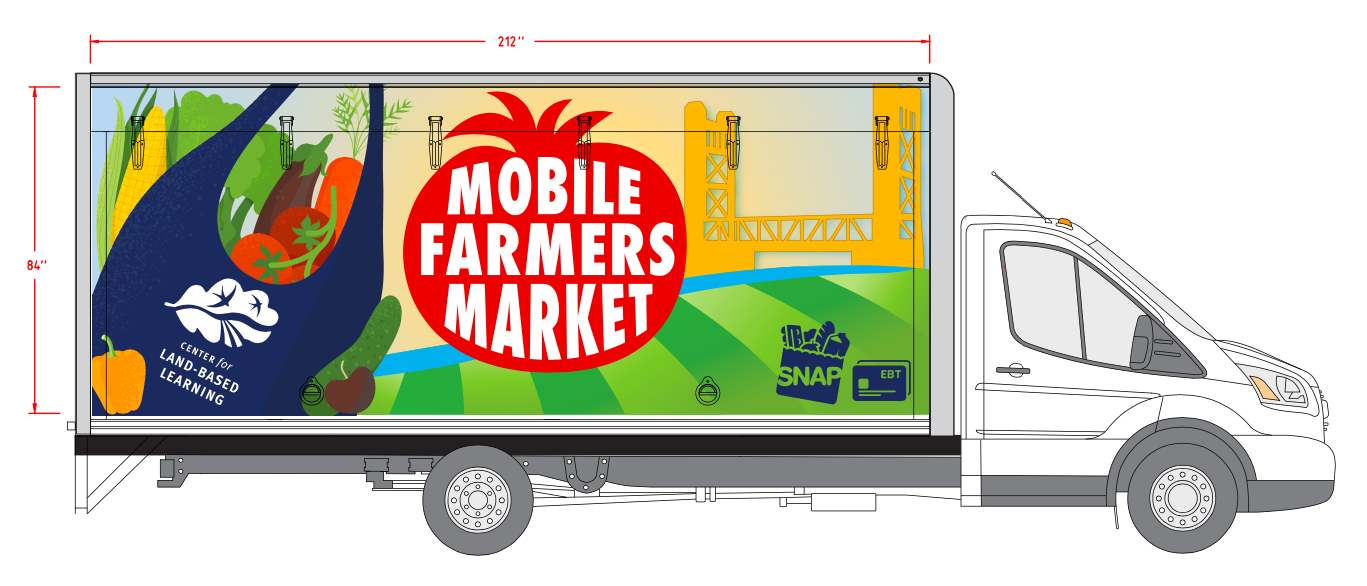
The Center for Land-Based Learning's new mobile farmers' market will resemble this version from The Farmers' Truck, the Canadian company that's building the soon-to-roam produce stand.
A new produce stand is rolling into town—literally. The Woodland-based nonprofit Center for Land-Based Learning (CLBL) will soon launch a mobile farmers’ market to bring fresh produce like heirloom tomatoes and summer squash to food-insecure neighborhoods.
The CLBL plans to conduct a pilot program in September and October and hit the streets for good starting next summer, stopping in “food deserts” (low-income areas with limited access to grocery stores and markets) in West Sacramento, with the hopes of eventually expanding to other parts of the region.
The refrigerated rig, which is currently being built by The Farmers' Truck in New Brunswick, Canada, will be emblazoned with illustrations of colorful produce, rolling green hills and the Tower Bridge, and a large pop-out window will create a shady awning for customers to comfortably pick out bunches of rainbow chard, globe eggplants, and Armenian cucumbers, sourced from half a dozen urban farms in Yolo County, including Bella Vida, Riverfront and Three Sisters Gardens.
A custom wrap depicts the Tower Bridge and a branded Center for Land-Based Learning shopping bag brimming with fruits and vegetables. (Rendering courtesy of Center for Land-Based Learning)
This initiative follows other mobile farmers’ markets that have been popping up in cities around the country, including Atlanta, Boise, and Oakland. Funded by an $84,000 grant from the California Department of Food and Agriculture, the roaming market will primarily offer seasonal fruits and vegetables, but soon after the launch, walk-up customers might find pantry staples like basmati rice or dried garbanzo beans. The truck will also participate in Market Match, a state-run program that matches, dollar-for-dollar, purchases made with CalFresh EBT cards to provide even more produce-buying power at the truck.
“People who aren’t able to access healthy food suffer disproportionately higher from diet-related illnesses—everything from obesity to heart disease to diabetes,” says Sara Bernal, manager of CLBL’s West Sacramento Urban Farms Program, a business incubator for budding urban farmers. “For us, it's about [solving] a public health issue. [We want to] create an opportunity for people to eat better."
Visit landbasedlearning.org for more information.
Lead Photo: (Rendering courtesy of Center for Land-Based Learning)

Local Company Providing Fresh Produce, Tools to Grow It All Year Long
Since opening its doors last July, Cold Acre Food Systems has been perfecting its indoor hydroponic growing systems for greens and herbs that can be harvested continually throughout the year.
August 6, 2020
The Yukon isn’t the place in the world most suited to year-round farming, given its long winters and short, unpredictable summers, but one local company is trying to change that.
Since opening its doors last July, Cold Acre Food Systems has been perfecting its indoor hydroponic growing systems for greens and herbs that can be harvested continually throughout the year.“
Hydroponics is a very old growing system and can be done in different methods,” said Carl Burgess, Cold Acre Food Systems CEO. “It’s essentially nutrient water delivered to roots to grow plants.”
The benefit of it in food production for a community sense is that there is less soil management because there is no soil management and in that way it can stabilize production year-round,” Burgess added.
The company does the majority of its farming in two shipping container-style growing facilities located on Titanium Way in the Marwell industrial area.“
Right now we are operating 6,000 planting spaces,” Burgess said. “One of those (containers) is basically equivalent to an acre of a market garden,” and “one container can give, at minimum, a weekly supply of greens to about 100 to 200 people.”
Denise Gordon, Cold Acre Food Systems lead grower, holds trays of microgreens in front of their growing unit in Whitehorse on July 26, 2020. (Crystal Schick/Yukon News)
Environmentally, the system uses 10 to 20 percent less water than the traditional method of growing, Burgess said. The carbon footprint is also greatly reduced since produce only has to travel a couple of blocks to its destination compared to being shipped on trucks, food waste is almost nonexistent because of the high reliability of growing indoors, the company uses compostable packaging, and there are no storage facilities.“
We harvest and go,” Burgess said. “It’s usually within two hours of harvesting that the produce is in the grocery stores or dropped off at someone’s home.”
What began as some test lettuce crops have turned into a diverse selection of leafy greens, like bok choy, arugula, kale, mizuna, and rainbow chard, as well as several different types of microgreens, which are similar to sprouts in appearance, and basil. The company is also experimenting with growing edible flowers and mushrooms.
Cold Acre Food Systems currently sells the vegetables it grows to several grocery stores in Whitehorse, restaurants, and cafes, and through a subscription box.“
The last year of business has been lots of fun,” Burgess said. “We went from being a very small food producer to a medium-sized food producer (in the Yukon).”
But selling the vegetables it grows isn’t the end game for this company. Building, selling, and installing growing systems is also part of Cold Acre’s business model. The company can build custom growing facilities for just about any client, from smaller at-home units to the larger commercial shipping container-style units.
Right now there are two large units that will soon be providing fresh produce to Yukon communities. The first, in partnership with the University of Calgary, is at the Kluane Lake Research Station near Silver City. Once it is up and running it will provide food to the Haines Junction and Burwash Landing areas. The second, currently still in Whitehorse, is owned by Na-Cho Nyäk Dun Development Corporation (NNDDC) and will be ready to feed people in the Mayo area this spring.
Leafy greens grow under neon lights in a shipping container style facility in Whitehorse on July 26, 2020. (Crystal Schick/Yukon News)“
We are currently fabricating a small-scale unit for demonstration/growing inside the Mayo Foods Store as part of the NNDDC project,” said Burgess.
The objective of Cold Acre Food Systems is to reduce food scarcity in the North and to enable everyone access to fresh produce year-round. “Success will be twofold,” said Burgess. “Our goal is to activate indoor growing. So success will look like a handful of growing facilities around that we either deployed or helped deploy. And success for us looks like a large growing facility that’s displacing a number of food products that right now are coming up the road and doing that cost effectively for consumers.”
Contact Crystal Schick at crystal.schick@yukon-news.com

CEA Success Story About Small Family Farms Using CEA Technologies To Feed Their Local Communities
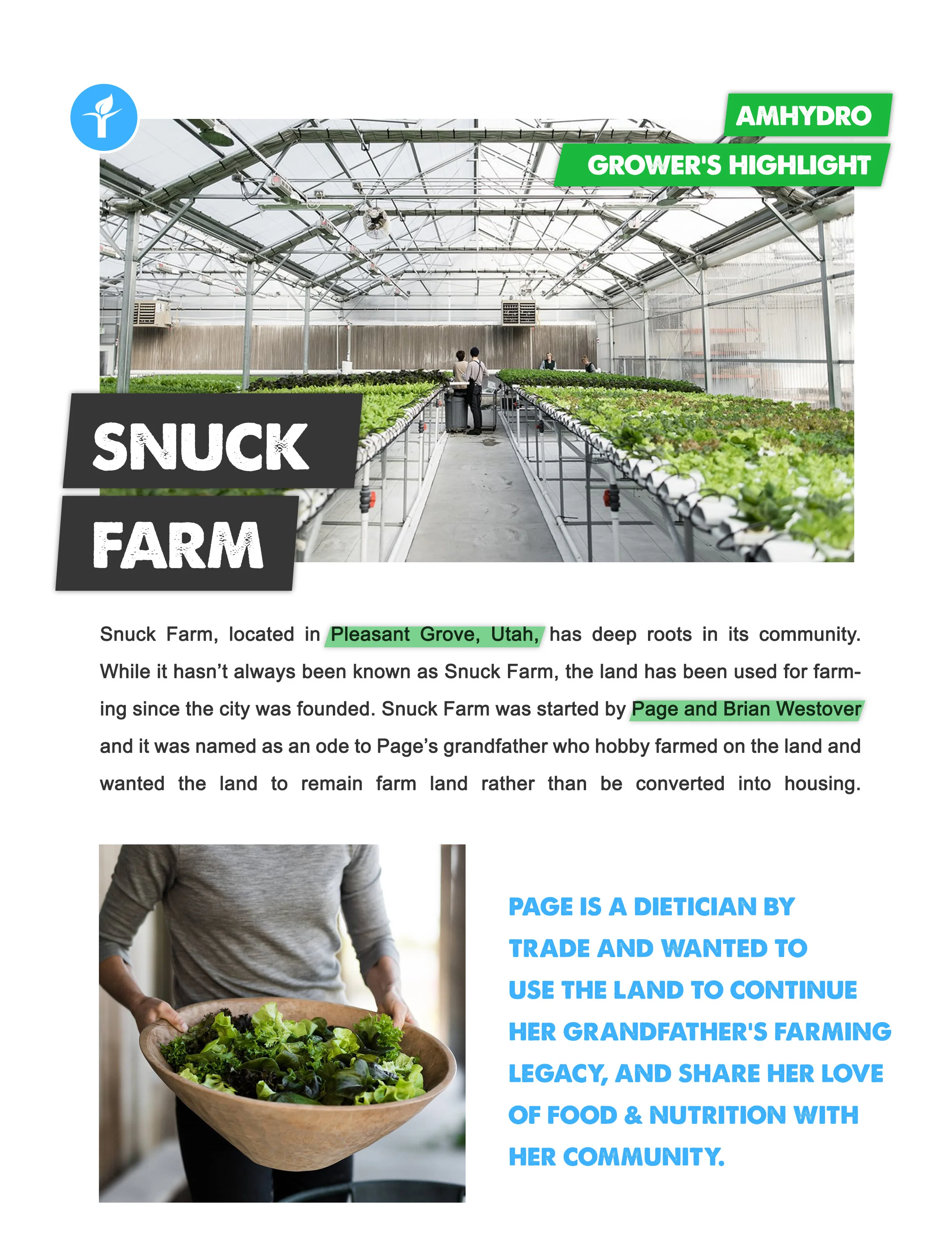
To learn more about Snuck Farm and what they're up to, check out their website and instagram. If you’re near Pleasant Grove, Utah, consider visiting their Farm Stand or ordering a Snuck Share!
To learn more about Snuck Farm and what they're up to, check out their website and instagram. If you’re near Pleasant Grove, Utah, consider visiting their Farm Stand or ordering a Snuck Share!
Would you like to be featured in a Grower's Highlight, or do you know someone who would be a good fit? Let us know!

Virtual Class - GrowNYC Cooks with Chef David Stample - Sunday Aug 9, 16, 23, 30
Join Chef David Stample for a virtual farmers market cooking class and go behind-the-scenes of the world-famous network of GrowNYC's New York City Greenmarkets.
Join Chef David Stample for a virtual farmers market cooking class and go behind-the-scenes of the world-famous network of GrowNYC's New York City Greenmarkets.
Sunday, August 2nd, 9th, 16th, 23rd, 30th
Noon and 6:00pm
Whether you're new to napa cabbage or authority in artichokes, GrowNYC Cooks will provide a fun, interactive, and informative guided cooking experience right in your own kitchen. After registering, participants will receive an ingredient list for shopping at your neighborhood farmers market or farmstand and will prepare the meal together during the class.
Chef David will be teaching how to cook simple and delicious go-to meals so ingredient lists are flexible and can be adapted for dietary restrictions or lack of availability,
Throughout the 1.5 hour class, held via Zoom on your computer, tablet, or mobile device, you will have the opportunity to meet the other 10-20 participants and chime in with cooking questions via video or chat - video participation is optional, but encouraged!
Each class will also be joined by a representative from GrowNYC's Food Access & Agriculture programs so, depending on the class, you will learn more about a number of topics, including how to make the most out of your farmers market shopping trip, tips on going zero-waste, cooking with whole grains and flours from the GrowNYC Grains project, farmers market varieties during peak season, and how to grow your own food.
Get your Mis En Place and let’s get cooking!


Tall Lettuce Farm To Rise in Houston Industrial Building
It will be the fourth facility for the company, which opened a large Orlando location this year after proving the concept with The HyCube, a modular vertical farm built to supply the Marriott Orlando World Center on-site in 2018
July 31, 2020
Kalera, an Olrando, Fla., company, has selected a new industrial building in the northeast Houston submarket for what would be its largest hydroponic farm yet, producing nearly 5 million pounds of artisan lettuces a year as part of a strategy to grow food near where it is consumed in a high-tech, earth-friendly manner.
It will be the fourth facility for the company, which opened a large Orlando location this year after proving the concept with The HyCube, a modular vertical farm built to supply the Marriott Orlando World Center on-site in 2018.
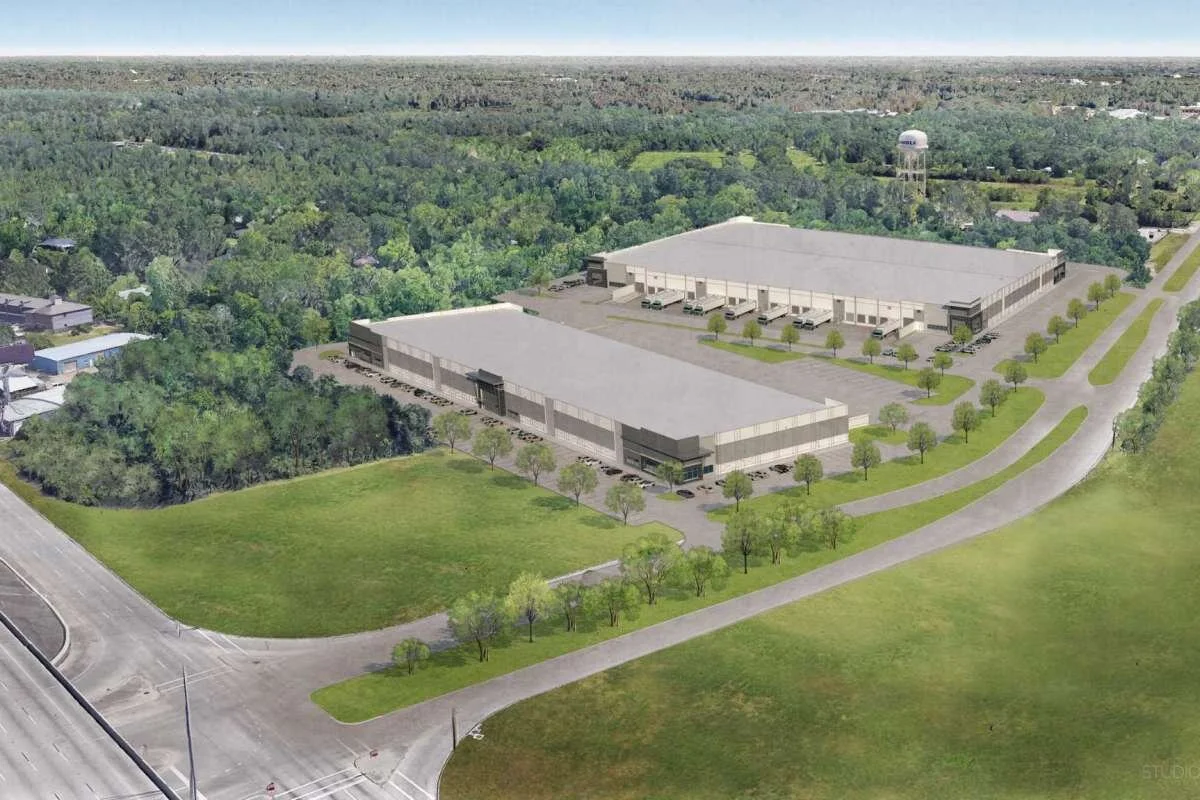
At 83,436 square feet, the building, at 7159 Rankin Road in Humble, will be 2½ times the size of the newest Orlando farm, and about 12 percent larger than one going up in Atlanta. The vertical farms are part of a plan to scale the company across North America and globally.
“What we’re doing is bringing back what used to always be the normal, which is to eat where you are, and to eat produce that is not weeks old,” said Daniel Malechuk, CEO of Kalera.
Kalera wants to take a bite out of the lettuce market, which is concentrated on traditional farms in California and Arizona. Its cleanroom technology process eliminates both the need for pesticides and washing and processing the lettuces to prepare them for shipment up to 1,200 miles or more by truck.
The Kalera farms, which grow lettuces by stacking them in LED-lit warehouses, are designed to use 95 percent less water than traditional farms. It takes six weeks from seed to harvest, shaving about two weeks off the traditional timeline. The process also protects against pathogens such as E. coli.
With COVID-19, consumers have a heightened concern for where products come from and how many people have touched them, said Malechuk.
When it opens in late spring 2021, Kalera will work with local grocers and major food distribution companies to deliver produce to stores, restaurants, schools, hotels, hospitals, and cruise lines the same day harvested. The prices will be in line with traditional artisan lettuces, Malechuk said.
The facility, which will employ 55 to 70 people, will serve Houston as well as markets within a few hours away by truck. Lettuce harvested in the morning could be served at a restaurant in Dallas the same evening.
Kalera is the first tenant in Parc 59, a two-building development of Jackson-Shaw and Thackeray Partners off U.S. 59, just north of Beltway 8. It’s leasing the rear-load building with a clear height of 28 feet. A cross-dock building with 196,064 square feet and clear height of 32 feet is available for lease. The building is suited for warehousing, manufacturing, distribution, and assembly.
“The building’s prime location in Houston was the perfect fit for all of Kalera’s needs to serve its customers seamlessly and deliver high quality, fresh products to the Houston market and regionally,” Grant Pearson, vice president of development at Jackson-Shaw, said in an announcement.
Jason Dillee and Nathan Wynne of CBRE represented the landlord, while Mike Spears and Derek Riggleman of Lee & Associates represented Kalera in the 10-year lease. Terms were not disclosed.
The Parc 59 project team includes Cadence McShane as a general contractor and Powers Brown Architecture.
katherine.feser@chron.com
twitter.com/kfeser
PHOTOS:
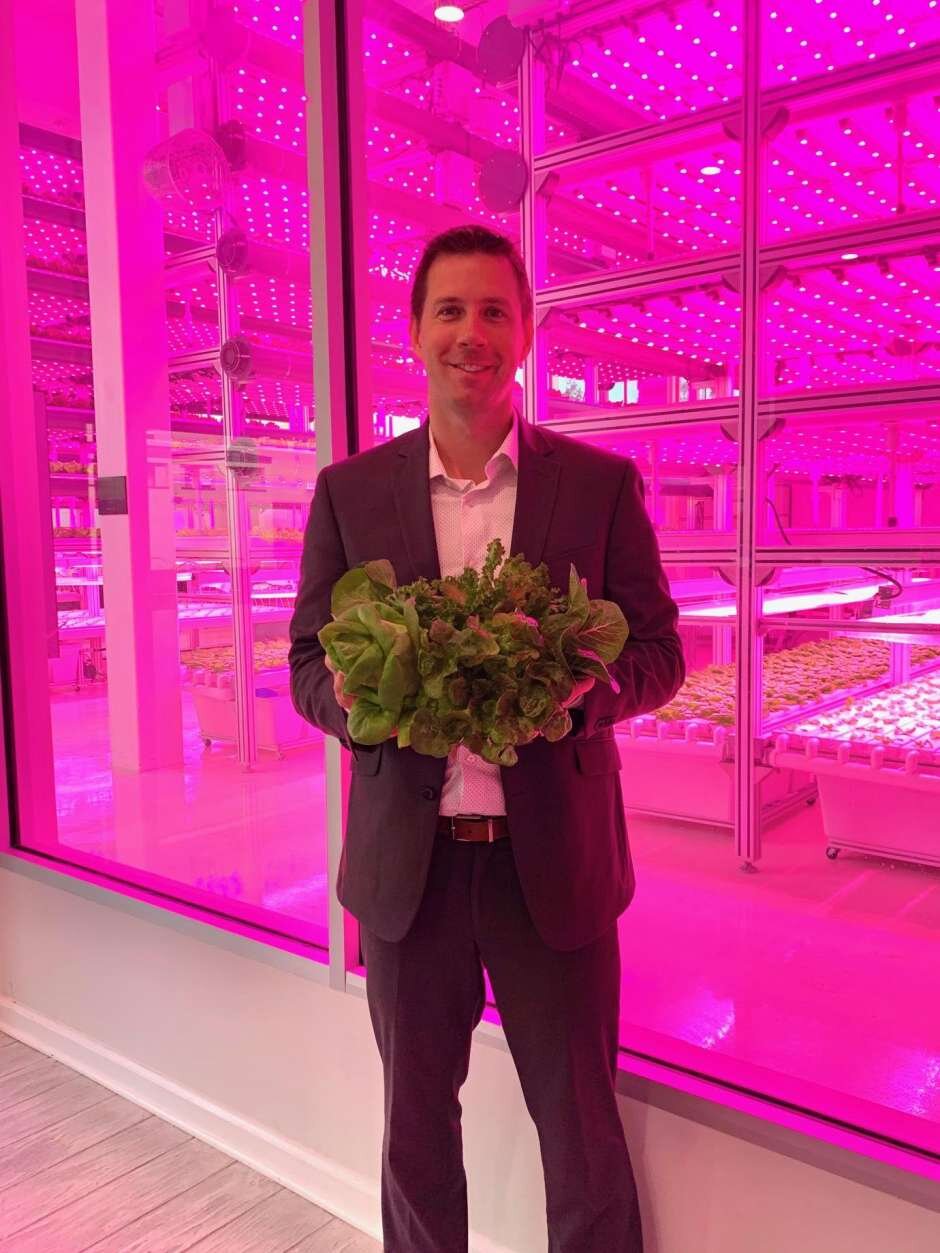
1. Malechuk holds a head of lettuce at HyCube, Kalera’s vertical farm on-site at the Photo: Kalera
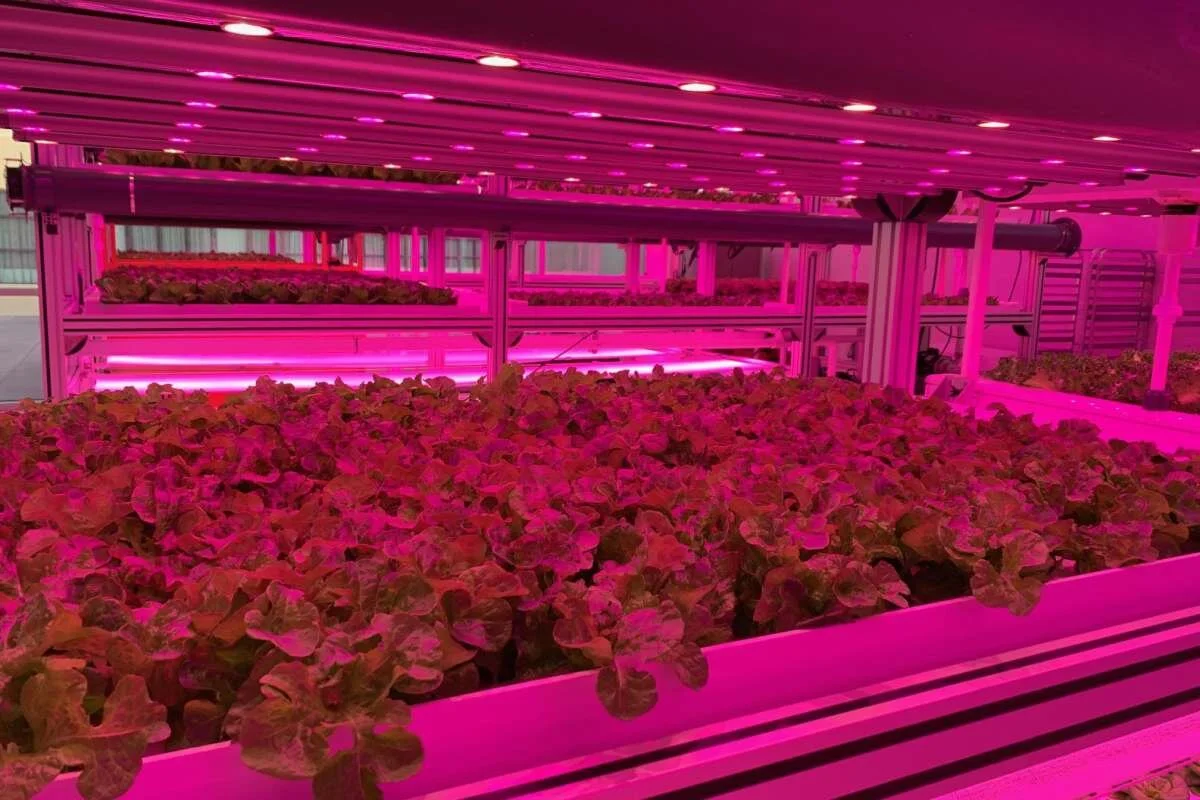
2. Kalera uses cleanroom technology and processes to eliminate the use of chemicals at its vertical farms. The Orlando-based company says its lettuces consume 95 percent less water compared to field farming. Photo: Kalera
3. Kalera, a vertical farming company, leased a new 83,436-square-foot building in Parc 59 at 7159 Rankin Road in Humble. Jackson-Shaw developed the two-building, 279,500-square-foot Parc 59 with equity partner Thackaray Partners . Photo: Jackson-Shaw
Katherine Feser
Follow Katherine on:
http://www.facebook.com/home.php?ref=home#!/katefeserkfeser
Katherine Feser covers a variety of subjects for the Houston Chronicle Business section. She coordinates some of the paper's most popular special sections, including the Chronicle 100, Home Price Survey, and Top Workplaces. She compiles many of the staples of the section, including the daily markets page, People in Business, event listings and real estate transactions.
Past Articles from this Author:

Martha Stewart, J.D. Vance And Impossible Foods’ David Lee Join Board of AgTech Leader AppHarvest
Company adds executives from The Carlyle Group, Impossible Foods and raises new round from sustainability-focused investors such as Jeffrey Ubben and James Murdoch as COVID-19 heightens need for more resilient domestic supply chains
The company adds executives from The Carlyle Group, Impossible Foods and raises new round from sustainability-focused investors such as Jeffrey Ubben and James Murdoch as COVID-19 heightens need for more resilient domestic supply chains
AUGUST 6, 2020 – MOREHEAD, KENTUCKY – AppHarvest announced today that food entrepreneur and icon Martha Stewart, Impossible Foods Chief Financial Officer David Lee, and best-selling author and investor J.D. Vance, have joined the company’s Board of Directors as it prepares to open one of the world’s largest indoor farms this fall in Morehead, KY. Starting with non-GMO tomatoes, AppHarvest’s farms will provide freshly grown American fruits and vegetables for national grocers, meeting the enormous and growing demand for locally grown produce amidst the supply chain challenges created by the current COVID-19 pandemic.
“The future of food will be, has to be, growing nutrient-rich and delicious produce closer to where we eat,” Stewart said. “That means food that tastes better and food that we feel better about consuming. AppHarvest is driving us towards that future and working from within Appalachia to elevate the region.”
Added Vance, “The last few months have taught us that our food system is a little more precarious than we realized. AppHarvest will change that, and it will do so by building a sustainable, durable business in Appalachia, and investing in the people who call it home.”
Added Lee, “AppHarvest’s innovative approach to agriculture has the potential to dramatically change the way we get our produce and the impact our food has on the natural environment. I’m excited to join their mission as they enter this next phase of growth.”
Anna Mason, Partner at Revolution’s Rise of the Rest Seed Fund, the fund led by AOL Co-founder Steve Case to back companies outside of Silicon Valley, will also join the Board. “AppHarvest’s rapid expansion and job creation is exactly what Rise of the Rest envisioned with its focus on helping companies in Middle America grow,” Mason said.
Inspired by the belief that the technology already exists today to grow dramatically more food, with far fewer resources, AppHarvest’s indoor farms reduce the need for acreage, use no harmful pesticides, lessen fuel used in shipping, and are the first of their size that will rely entirely on recycled rainwater for all water needs. AppHarvest’s closed-loop water system eliminates agricultural runoff common in open-field agriculture. This is critical as the U.S. ramps up efforts to secure food systems that can withstand health and climate disruptions.
“It’s time for agriculture in America to change,” said AppHarvest Founder & CEO Jonathan Webb. “The pandemic has demonstrated the need to establish more resilient food systems, and our work is on the forefront of that effort. Eastern Kentucky, with its central U.S. location, provides the perfect place to build AppHarvest’s indoor farms while also providing much-needed jobs to a ready workforce.”
AppHarvest’s 2.76-million-square-foot controlled environment agriculture facility has already created 100 construction jobs and will create more than 300 full-time permanent jobs for residents of Eastern Kentucky, where 44 percent more residents are unemployed than the national average.
With its vision to create America’s AgTech capital in Appalachia, AppHarvest has been recognized for its focus on social good. The company has been certified by the independent non-profit B Lab as a
B Corporation, passing a rigorous audit of its sustainability practices.
AppHarvest is also announcing the hires of Marcella Butler as the company’s first Chief People Officer, Jackie Roberts as its first Chief Sustainability Officer, and Geof Rochester as its first Chief Marketing Officer. Butler joins AppHarvest after serving as Impossible Foods' first Chief People Officer, where she led the tripling of employees to more than 650 individuals. Prior to joining Impossible Foods, she worked at Google, first in People Operations, followed by Corporate Development, where she led global acquisition due diligence and integration activities. Roberts joins AppHarvest from The Carlyle Group, where her roles included Chief Sustainability Officer. Prior to The Carlyle Group, she served in several senior roles at the Environmental Defense Fund. Rochester, who has decades of experience in marketing and corporate social responsibility, previously served as Managing Director and Chief Marketing Officer of The Nature Conservancy with prior work at WWE, Showtime, Comcast, and Procter & Gamble.
AppHarvest’s Board and staff additions come as the company closes its $28 million Series C funding round. Combined with the company’s prior funding rounds, including project financing, AppHarvest has attracted more than $150 million in investment in just over two years.
Narya, the new venture capital firm co-founded by Vance and Colin Greenspon as well as backed by leading entrepreneur and venture capitalist Peter Thiel, led the investment round with participation from existing investors ValueAct Capital’s Spring Fund, Revolution’s Rise of the Rest Seed Fund, and Equilibrium, which has provided nearly $100 million in project financing to date.
New investors include Lupa Systems, the private investment firm founded last year by James Murdoch (who along with the ValueAct Spring Fund and Equilibrium, are leading the way for venture’s expansion into sustainability-focused investments); Breyer Capital, founded by early Facebook investor Jim Breyer; food and agriculture fund S2G Ventures (Seed 2 Growth); Black Capital, led by NBA legend Kevin Johnson; and Endeavor Catalyst, the co-investment vehicle through which Endeavor invests into companies founded by its entrepreneurs. Endeavor selected Webb as an Endeavor Entrepreneur in 2019.
“AppHarvest is poised to be a leader of the modern agricultural transformation, and we’re enthused to be a part of its upcoming launch and growth phases both in the U.S. and internationally,” said Frederic Michel, Partner at Lupa Systems. “The team is developing a compelling model that can respond rapidly to the needs for efficiency, sustainability, quality, and resiliency in the food sector today.”
The Series C funding round will allow the company to continue to recruit top-tier talent from around the globe as it prepares to build additional farms throughout Central Appalachia.
About AppHarvest
AppHarvest is building some of the world’s largest indoor farms, combining conventional agricultural techniques with today’s technology to grow non-GMO, chemical-free fruits and vegetables to be sold to the top 25 U.S. grocers. The company has developed a unique system to reduce water usage by 90% compared to typical farms, as a 10-acre, on-site rainwater retention pond pairs with sophisticated circular irrigation systems. The system also eliminates agricultural runoff entirely. By locating within Appalachia, AppHarvest benefits from being less than a day’s drive to 70% of the U.S. population. That lowers diesel use in transportation costs by 80%, allowing the company's fresher produce to compete against low-cost foreign imports.

Are We Ready For Indoor Wheat Farms?
They Could Feed The World on a Fraction
of The Land Area, But at What Energy Cost?
By Emma Bryce
July 31, 2020
Bread made from high-rise farms may be a thing of the future. Researchers have found that if we started growing wheat in stacked vertical farms instead of the field, we could generate 600 times more of this grain than traditional farming methods do—all while freeing up huge amounts of land from agriculture.
But before this could become a reality, we’d need some serious technological innovation to offset the controversially high energy costs of vertical farms.
Wheat currently supplies 20% of calories and protein for the world’s population, which is projected to grow to 11 billion people by 2100. With that expanding population, we’ll need a 60% increase in the worldwide production of grain. The researchers on the new study wanted to investigate how vertical farming—the production of crops across multiple floors in enclosed buildings—could help to plug that gap.
To find out, they used a crop simulation tool called DSSAT-NWheat, which projects yield based on the simulated field conditions, incorporating inputs like temperature, light, and water. This simulation showed that if wheat were grown inside a 10-floor vertical farm, covering one hectare of ground land, and under optimal conditions, the crop could generate almost 2000 metric tons of grain per hectare. That’s about 600 times more than the current annual world average of 3.2 metrics tons per hectare. Ramping things up to simulate a 100-floor farm, the researchers showed that the vertical farm could generate 19,400 metric tons of grain per hectare —6000 times more than the average hectare of farmland produces every year.
In some countries, vertical farming is already used to produce foods like lettuce and herbs where plenty can be grown at more confined scales. But crops like wheat—which require more space and typically need a lot of sunshine—haven’t yet been commercially produced in this environment. Showing that we could grow staple crops in this way, instead of only niche foods like salad greens, is an important step.
This massively efficient production approach would generate enough food to feed an expanding world population. By growing food vertically on smaller plots of land, it could also drastically curtail farmland expansion, an enormous source of emissions, and a driver of biodiversity decline. Growing food indoors, under perfectly controlled conditions, would shield crops from the vagaries of climate change and therefore bolster food security. It would also reduce pesticide use, and limit the chances that they’d get into soil and water.
But as the researchers caution, we shouldn’t get too swept up by these possibilities: farming wheat in high-rises—such a tantalizing idea—nevertheless comes with one considerable caveat. The cost, both financially and energy-wise, of artificially lighting up the interior of a vertical farm so that crops can photosynthesize, is enormous, enough to draw a question mark around the viability of this farming method. This is a problem that already haunts vertical farming in general: considering that its image depends partly on the idea that it’s better for the environment, the high energy usage—and consequent emissions contribution—makes it somewhat controversial. The researchers also point out that most field-based cereal farming around the world is heavily subsidized to make it financially viable, so the elevated costs of vertical wheat farming would make it difficult to compete with traditional modes of production.
Innovation in energy production could go some way to closing this gap. The researchers highlight the growing potential of renewable energy to provide all the light needed to keep crops growing artificially indoors. But even so, if vertical wheat farming does take off, it’s likely to form only a tiny part of the market at first, until we figure out how to make it less costly. And in the meantime, the researchers acknowledge that there are more urgent agricultural challenges to tackle, and which we already know can improve food security and ease the pressures on our planet—such as reducing food waste, and diversifying our food sources so that we’re perhaps not so reliant on single monocrops.
Yet, it may also be the case that entirely separate forces speed up energy innovation and make vertical wheat farming a reality one day. For example, the association between wheat prices and food riots we’ve seen in the past “could be reason enough to develop and install some indoor wheat production facilities,” the researchers suggest. Climate change in regions already beset by food insecurity might also hasten the arrival of bold new farming approaches like this one.
So, while we might not quite be ready for vertical wheat farming, options like these are likely to become more important in our changing world. “Although it is unlikely that indoor wheat farming will be economically competitive with current market prices in the near future,” the researchers say, “it could play an essential role in hedging against future climate or other unexpected disruptions to the food system.”
Source: Asseng et. al. “Wheat yield potential in controlled-environment vertical farms.” Proceedings of the National Academy of Sciences. 2020.

New Affiliates' Testbeds Project to Build Community Buildings From Discarded Architecture Models
New York City architecture studio New Affiliates has launched an initiative to reuse large-scale models for garden sheds and community spaces in the borough of Queens
July 31, 2020
New York City architecture studio New Affiliates has launched an initiative to reuse large-scale models for garden sheds and community spaces in the borough of Queens.
New Affiliates and architect and historian Samuel Stewart-Halevy created the Testbeds project to repurpose architecture models from luxury real estate projects in the city, which are often built of durable and high-end materials but soon discarded, and turn them into community projects like garden sheds and classrooms.
An architectural model envisioned for a narrow community garden in Manhattan
The concept was developed after they realized the similar sizes between such mockup structures and existing sheds around New York. They wanted to reuse the designs that typically go to waste for projects in underserved communities.
"While mockups often consist of high-end and resilient materials, they are usually discarded after undergoing a series of reviews," the team said. "A significant amount of waste results."
Testbeds has launched a pilot program with a gabled community center in Queens
The program is a way to funnel "architectural resources from New York's luxury real estate market to neighborhoods in the outer boroughs that have been historically disinvested," it added.
A pilot program is currently underway in Queens at Edgemere Coalition Community Garden with New York City Parks' GreenThumb division that supports over 550 gardens in the city.
The mockup model sourced from condominium building 30 Warren in Tribeca will be used to create a multipurpose building for the Queens center.
Renderings of the design show a gabled building with corrugated concrete panel walls and covered outdoor walkways that link a greenhouse, community room, and tool shed. A covered patio overlooks the garden, and a chain-link fence encloses the property.
One part of the building is clad in wood inside
"The idea that you could take a fragment from 100 feet up in the air in Tribeca and put it on the ground in the Far Rockaways and someone can actually walk up to it and access it and inhabit it is exciting to us," said New Affiliates.
The team is currently raising funds for construction for later this fall and is also seeking help to discover more models and build the projects. Another site is proposed for a garden in the East Village neighborhood of Manhattan with a proposal to create a small white volume in a garden between two apartment buildings.
A portion of the model will be a new greenhouse
The Testbeds project provides an example of how to save waste from architectural and design construction. In a similar project in Senegal, a school was built using test facades originally created for a hospital.
Based in Brooklyn, New Affiliates is led by Ivi Diamantopoulou and Jaffer Kolb and in 2020, the studio was awarded the American Institute of Architects' New York New Practices Award. In addition to this project, the studio has also renovated Brooklyn loft with a plywood mezzanine and built an asymmetric cabin in Vermont.
Images are courtesy of Testbeds.

The Underwater Habitat With A Greenhouse
Swiss designer Yves Behar has unveiled his design for French ocean conservationist Fabien Cousteau's underwater pressurised research station that will be "the ocean's equivalent to the International Space Station".

29-07-2020 | Msn News/ India Block
Swiss designer Yves Behar has unveiled his design for French ocean conservationist Fabien Cousteau's underwater pressurised research station that will be "the ocean's equivalent to the International Space Station".
Behar designed the station, which is called Proteus, for the Fabien Cousteau Ocean Learning Center. It will have its own greenhouse to allow scientists to grow their own food 18 metres under the sea near Curaçao, an island in the Caribbean.
Up to 12 researchers and aquanauts – scientists who remain underwater breathing pressurised air for over 24 hours – will be able to live in Proteus at a time.
Like the International Space Station, Proteus will allow scientists to collaborate and make new discoveries in an inhospitable environment.
"The research station will enable the discovery of new species of marine life, create a better understanding of how climate change affects the ocean, and allow for the testing of advanced technologies for green power, aquaculture, and robotic exploration," Behar told Dezeen.
Living underwater in a pressurised environment, rather than just diving in, allows scientists to spend far more time in the water and only decompress at the end of their assignment.
Proteus is the result of Behar's studio Fuseproject being commissioned by Cousteau, and his non-profit the Fabien Cousteau Ocean Learning Center (FCOLC).
"We needed to understand the constraints that come from building underwater and the challenges of living in an underwater structure," Behar said.
"The social isolation, the humidity, the lack of light and lack of exercise all needed to be addressed," he explained. "I learned about these challenges from Fabien, who had the record as the person who lived longest in an underwater habitat."
© Provided by Dezeen Proteus by Yves Behar
Cousteau broke the record, previously set by his grandfather, with a 31-day-long stay in an underwater laboratory off the coast of Florida called Aquarius.
Behar used Cousteau's experience to inform the design of Proteus, which has two levels connected by a curving ramp with pods set around the edges.
Circular-shaped main spaces are designed to encourage teamwork and social interaction for the scientists. Pods around the perimeter are designed to hold specific laboratories, bathrooms and areas for sleeping.
"Both circular floors are offset to allow as much natural light as possible through skylights and portholes, and are connected by a sloping ramp which creates the opportunity for physical activity," said Behar.
Social spaces will be kept separate from the more humid areas of the wet labs and the moon pool – the space in an underwater habitat where occupants can access the water directly in a protected environment.
© Provided by Dezeen Proteus by Yves Behar
An underwater greenhouse will allow occupants to grow their own food, allowing them to stay underwater for longer and cope more comfortably with the confines of a pressurised environment where no open flames for cooking are allowed.
Behar deliberately gave the underwater habitat a retrofuturist vibe in keeping with the way science fiction has traditionally imagined underwater living.
"Fabien and I looked at many exploratory designs from the 60s and 70s, a golden era of interest for the oceans pioneered by the Cousteau family history," Behar told Dezeen.
"We felt that Proteus could incorporate a new visual language based on modern hull and composite building technology, as well as be a state-of-the-art scientific environment while delivering a comfortable social interior space."
In keeping with the Cousteau dynasty's ocean conservation goals, Proteus will be powered by renewable energy. The habitat will use a mixture of wind, solar, and Ocean Thermal Energy Conversion (OTEC), a process that produces electricity using the difference in temperature between warm water on the surface and cold water from the deep ocean.
Cousteau will head to Curaçao to map the site as soon the borders shut due to the coronavirus pandemic open, hopefully in September. Behar estimates it will then take 36 months to build and lower Proteus to the ocean floor.
Behar hopes Proteus will be one of a series of marine habitats dedicated to research and conservation. As well as scientists, the designer hopes the facility will be able to welcome civilian visitors.
"Proteus is designed to be a scientific environment, but also to create that desire in people to want to visit," he said.
"For me, it’s a lot more exciting to visit Proteus than going to Mars."
Behar embraces technology with his designs, which include plans for 3D-printed houses for impoverished farmers and a wearable UV sensor to protect against skin cancer.
The post Proteus is an underwater habitat with a greenhouse designed by Yves Behar appeared first on Dezeen.
Source: Msn News/ India Block
Photo Provided by Dezeen

Soil-Free Farming Could Prevent Future Food Insecurity
Researchers have identified a new method of soil-free farming that can help to improve food security as climate change and soil erosion limit our ability to grow crops
Researchers have identified a new method of soil-free farming that can help to improve food security as climate change and soil erosion limit our ability to grow crops.
The research, which was conducted by scientists at the University of Bristol, John Innes Centre and LettUs Grow, highlights how vertical farming can help to produce consistent crop yields, improve price stabilization and encourage food cultivation in places that are incompatible with certain crops such as the desert or the arctic.
Vertical farming is a type of indoor agriculture where crops are cultivated in stacked systems with water, lighting, and nutrient sources carefully controlled.
The researchers tested aeroponic cultivation methods which use nutrient-enriched aerosols in place of soil that is then applied directly to the roots.
This method is believed to lead to up to 70% greater yields of crops.
There are many environmental benefits of such techniques, including better use of space because vertical farms can be built in disused urban locations, fewer food miles, reduction in soil degradation and nutrient and water recapturing and recycling.
Lead-author of the study, Bethany Eldridge from the University of Bristol said: ‘Given that 80% of agricultural land worldwide is reported to have moderate or severe erosion, the ability to grow crops in a soil-free system with minimal fertilizers and pesticides is advantageous because it provides an opportunity to grow crops in areas facing soil erosion or other environmental issues.
‘We are aware that higher yields can be obtained from plants grown in aeroponic vertical farming set-ups, however, we still have relatively little knowledge about how plants grow and respond to the soil-less growing environment during aeroponic cultivation.
‘This knowledge would be important for fine-tuning the growing environment to encourage the growth of these beneficial microbes or the development of a probiotic mixture, similar to a probiotic yoghurt, that could be added as a supplement to help boost plant performance.’
Photo Credit – Pixaba y
VIDEO: Feeding A Changing World With CubicFarms' Automated Vertical-Farming Technology
What if you could give a plant the perfect day, every day? Give it the optimum level of light, water, temperature, and humidity, so that it grows to be as nutritious, fresh, and delicious as it can possibly be?
We Are Excited To Share Our New Video With You!
What if you could give a plant the perfect day, every day?
Give it the optimum level of light, water, temperature, and humidity, so that it grows to be as nutritious, fresh, and delicious as it can possibly be?
Meet the team at CubicFarms, helping growers around the world do just that, at commercial scale.
US: NEW JERSEY - Will NJ's Million Dollar Investment In Vertical Farming Yield Long Term Growth?
Amidst the growth of urban farming projects in the US, a notable development took place earlier in June with the announcement that Jersey City, New Jersey, is to fund the construction and operation of 10 vertical farms in the city; the first municipal vertical farm program in the country
Written By: Theo Longsdon, Agritecture Intern
Amidst the growth of urban farming projects in the US, a notable development took place earlier in June with the announcement that Jersey City, New Jersey, is to fund the construction and operation of 10 vertical farms in the city; the first municipal vertical farm program in the country.
The city has partnered up with AeroFarms in a three-year contract worth $987,000 - with just over half of this sum funding the construction of the farm units and the rest covering the project’s maintenance. The farms will use aeroponics to grow a range of vegetables and will be situated at senior centers, schools, public housing complexes, and municipal buildings across the city, taking six weeks to install, and the first vegetables being ready just two weeks after.
The principal motive behind the program is the recognition that there is a growing need to enhance access to locally grown nutritious food and improve the diet and overall well being of citizens. This is in part related to the impact of Covid-19, which according to Steve Fulop, the mayor of Jersey City, has had a “disproportionate impact on people with pre-existing heart conditions, high blood pressure, obesity and diabetes which is directly linked to a person’s diet”. The venture will seek to counter these issues and promote a healthy, sustainable lifestyle through producing 58,000 lb of fresh vegetables over three years – roughly equating to 100,000 servings – and through holding dietary workshops and health screenings for participants. The hope is that a surge in awareness about healthy eating practices, coupled with the distribution of fresh, nutritious produce, will drive a change in people’s eating habits that leads to improvements in the wider, long-term health of the community.
The creation of jobs will be a further benefit of the program. AeroFarms are significant job providers; they have created about 120 jobs through their projects in Newark, and their new indoor vertical farming facility in Danville is projected to generate 92 jobs for the area. Whilst there has been no indication about the exact number of jobs that will be created as part of the program, with the introduction of 10 farms across the city it is clear a number of employment opportunities will arise, thus helping to stimulate economic development in the area.
Yet despite these upbeat anticipations, the cost of constructing and maintaining the 10 vertical farms is high, with the contract worth just under $1m. By AeroFarms’ own estimation the 10 farms will produce around 58,000 lb of produce over their 3 years, meaning that it will cost the city about $17 to produce one lb of produce. This is a colossal sum and represents an expensive economic venture in a time when the city faces a $70m budget shortfall as a result of Covid-19.
In such a climate, an alternative option for the city would be to invest money in supporting local farms and promoting the distribution of their produce. A quick look at local farms in the region highlights how this may be a far more cost-effective option: Alstede Farms, a 600-acre farm based in Chester Township retails a wide range of fresh organic vegetables at a significantly lower price – selling a bunch of their spinach for $2.99; a bunch of kale for $2.99; and a pound of beans for $3.99. Another organic farm in the region – Terhune Orchards - offers similarly low prices, retailing a bunch of their kale for $3.25 per bunch, a Romaine lettuce head for the same price, and a head of green cabbage for $2.95. If the city was seeking a more cost-friendly way of promoting healthy consumption patterns, then taking such an approach may have been the more viable option.
But whilst they may represent the more costly option, vertical farms hold a number of advantages over traditional soil farms. Crop yields tend to be higher, as crops can be grown all year round and conditions can be controlled to maximize growth. Having this controlled environment reduces the susceptibility to climate and local weather conditions that is a major drawback of traditional soil farming. The land area needed to cultivate the produce is far lower, as the vegetables can be stacked vertically – a major benefit at a time of increasing pressure on land. Vertical farms also use much less water as they facilitate the production of crops with 70-95% less water compared to traditional cultivation practices. Finally, the generation of local, year-round farmworker jobs is a clear advantage over conventional outdoor farms in the NJ area that depend primarily on seasonal labor. Taking such factors into account may indeed justify the higher cost of produce associated with the program.
One notable stipulation of the program is that those wanting to gain free access to the produce must partake in healthy eating workshops and quarterly health screenings. This entails the obvious risk that the city has overestimated the demand for education and health monitoring amongst Jersey City residents, which could mean that the uptake is lower than anticipated. If the demand does fall short of what the city anticipates, then issues of distribution may arise and the program’s effectiveness may be undermined. Its success will, therefore, depend to a large extent on the willingness of residents to spend time participating in these workshops and regular health screenings.
Jersey City’s newly launched program represents a pioneering attempt to combat deficiencies in access to locally grown, nutritious produce and awareness about healthy dietary patterns. The decision by the municipal body to step in and sponsor the vertical farms is ambitious and unprecedented in the US, but it also throws up some major questions. For example; will the plan of action lead to a long-term alteration in the diets and lifestyles of those involved? Do the associated benefits outweigh the cost of the program? And ultimately, is it a city’s duty to feed people through its own asset, or should it instead focus on policies, incentives, and programs that encourage the growth and support of local farms?
How Leafy Greens Growers Have Turned Food Safety Challenges Into Opportunities
Growing lettuce and other leafy greens in a controlled environment presents its own set of challenges and opportunities
July 30, 2020
Editor’s Note: This article is the second of a three-part series on food safety concerns in the production of leafy greens in a controlled environment.
Click here to check out Part One of the series, which covered the formation of the CEA Food Safety Coalition.
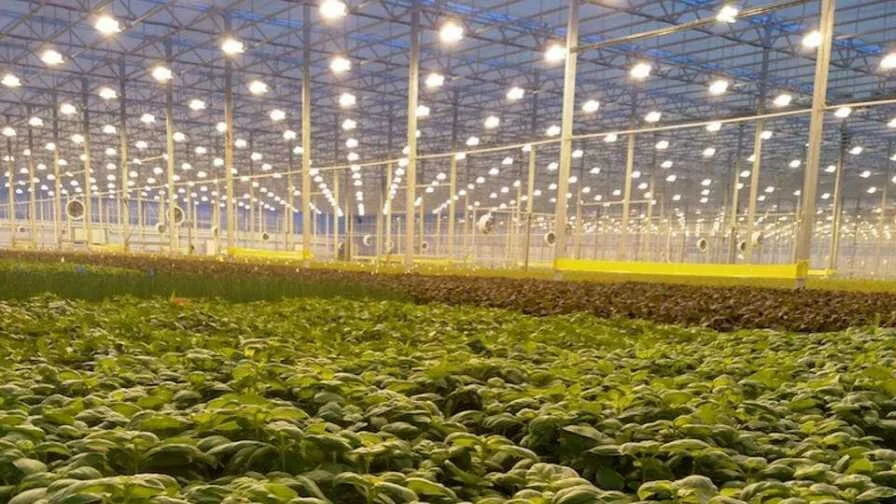
Growing lettuce and other leafy greens in a controlled environment presents its own set of challenges and opportunities. During United Fresh Live in June, Marni Karlin, Executive Director of the CEA Food Safety Coalition, moderated a discussion that outlined how indoor growers who make food safety a priority, rather than dismissing it as a problem unique to field-grown crops, can inadvertently create market opportunities for themselves. The panel featured growers of all types (greenhouses, vertical farms, and warehouses) and sizes. Here are a few insights from the discussion.
Don’t Overlook Irrigation and Growing Media
Jackie Hawkins, Senior Manager of Food Safety at BrightFarms, says irrigation water is likely potable if it comes from municipalities or wells. However, it can still be contaminated, so don’t assume it’s clean and forsake the necessary testing.“Test your incoming water, treat it if necessary, and test it again,” Hawkins says.
Growing media, as well, may not seem like a concern because many leafy greens producers are not growing in soil. “But the seeds might have been grown in media, so it’s important to do routine monitoring of your media as it comes into the greenhouse,” Hawkins says.
From Data Comes Solutions
Michael DeChellis, Co-Founder of Livingston Greens, a small indoor farm in Montana, says it’s critical for greenhouse producers to compile the data they’re able to collect from growing in a controlled environment to create a plan for developing a safer product.“
For small farms, working with other growers in the CEA Food Safety Coalition is a great opportunity,” DeChellis says. “Our members share data, and this culture of collaboration can help us identify ways to overcome challenges.”
For example, DeChellis cites a mold issue at Livingston Greens, which he addressed by using temperature and humidity data to highlight the problem area and the conditions that caused the problem.
Consider Design Upgrades
Simon Yevzelman, Managing Partner and Leader of Biosecurity at Planted Detroit, a vertical farm in the Motor City, says his company saw the concerns of food safety looming, so it opted to temporarily suspend production so it could enhance its production systems with food safety as a guiding principle.“
Thanks to those efforts, we are now in an expansion mode,” Yevzelman says.
Full Company Responsibility
Oscar Camacho, President of Superior Food Safety, a California-based consulting company, says any greenhouse production system should be designed to optimize best food safety practices.“
The system needs to work across the entire company,” Camacho says. “This means communication from one end of the production line to the other is critical.
Retailers and Consumers Care
Chris Livingston, General Counsel at Bowery Farming, a vertical farming company in New York, says the CEA Food Safety Coalition is currently developing a standard specific to controlled-environment production that addresses unique challenges such as water management and infrastructure.“
Our goal is to have a seal that members can use to show their customers they are complying with standards unique to our industry,” Livingston says. “We are also developing a research agenda based on food safety topics.”
Stay tuned for Part 3 of this series, which will focus on how the coronavirus pandemic added value to CEA-grown leafy greens.

Vertical Farming Congress Makes Virtue of Virtual
The first Vertical Farming World Congress will now be held online on 22-24 September, with numerous innovations to help develop an emerging community of leading producers, funders, suppliers, and customers. Its theme will be ‘Shaping Food’s Future.’
By urbanagnews
July 30, 2020
The first Vertical Farming World Congress will now be held online on 22-24 September, with numerous innovations to help develop an emerging community of leading producers, funders, suppliers and customers. Its theme will be ‘Shaping Food’s Future.’
“We already had top speakers confirmed from around the world including North America, the Middle East and Asia as well as Europe,” commented Richard Hall, Chairman of the food and drink experts Zenith Global and the event’s organiser.
“Now, instead of one vertical farm tour, we plan to offer a selection. Beyond chance encounters, it will be possible to contact other delegates and set up meetings beforehand. Questions can also be tabled in advance and sessions will be recorded for later review. Regional welcome receptions will enable introductions to other delegates from the same geographic area.
“When you add the advantages of extra people being able to attend because of no travel, time being used more flexibly and costs being substantially lower, we believe we can deliver even greater value,” Richard Hall added. “I hope attendees will be surprised how virtual can be made to feel real.”
Full programme and booking details are available at www.zenithglobal.com/events. Topics include: market opportunity; an industry leadership panel; strategic alternatives between aeroponic, aquaponic and hydroponic systems; technology briefings ranging from lighting and robotics to overall system design; a nutrition briefing; a funding panel; and key innovator case studies.
Amongst the speakers are:
• Leading producers such as 80 Acres Farms, Aero Farms, Growing Underground, Intelligent Growth Solutions, Jones Food Company, LettUs Grow, Root AI, Square Roots, The Circle, Uns Farms, Vertical Future and YesHealth
• Association heads and academics from Germany, Japan and the Netherlands
• Investment experts from Ashfords, Innovate UK and S2G Ventures. For further information, go to www.zenithglobal.com/events or contact events@zenithglobal.com
![[WEBINAR] Hydroponic Seedling Propagation Headlines August Indoor Ag-Conversations Schedule](https://images.squarespace-cdn.com/content/v1/57c8695d5016e11e71be1d83/1596141943877-ETC5TNW6EC11UVR2JG33/unnamed+%281%29.png)
[WEBINAR] Hydroponic Seedling Propagation Headlines August Indoor Ag-Conversations Schedule
Learn more about these sessions, and be on the lookout for details on other upcoming Indoor Ag-Conversations with industry leaders like the CEA Food Safety Coalition, Greenhouse Grower magazine, Aquaponics Association, American Seed Trade Association, Association For Vertical Farming and more. Join us to see what everyone's talking about!
HYDROPONICS HEADLINES AUGUST CONVERSATIONS
SAVE YOUR FREE SPOT!
From “best in class” techniques to current technology advances join this expert panel as they take a deep dive into hydroponic seedling propagation

REGISTER
Learn more about these sessions, and be on the lookout for details on other upcoming Indoor Ag-Conversations with industry leaders like the CEA Food Safety Coalition, Greenhouse Grower magazine, Aquaponics Association, American Seed Trade Association, Association For Vertical Farming and more. Join us to see what everyone's talking about!
SPECIAL THANKS TO OUR INDOOR AG-CON 2020
EXHIBITORS, SPONSORS, MEDIA ALLIES &
INDUSTRY PARTNERS

Harvesting Microgreens 101: What You Need to Know
Learning when to harvest microgreens is an essential step to the growing process. Since these tiny leafy vegetables tend to grow fast, it’s critical to know when to harvest them
Learning when to harvest microgreens is an essential step to the growing process. Since these tiny leafy vegetables tend to grow fast, it’s critical to know when to harvest them. In this article, we’re going to cover everything there is to know about harvesting microgreens.
Harvesting Microgreens
You can harvest the microgreens during two stages of their growth. Once the seedlings start to grow, you’ll notice the first leaf or pair of leaves which are known as cotyledons. You can harvest your microgreens during this stage, or you can wait until they grow their next set of leaves, which are known as true leaves.
It’s essential to harvest your greens during either of these stages, which can happen within the first two weeks. If you wait too long to harvest, they will start to yellow or have stunted growth. Signs of plant stress can happen from several factors such as soil quality, plant species, and more. This is why it’s best to harvest your microgreens when the cotyledons or true leaves appear.
How to Harvest Your Microgreens
The best times to harvest your microgreens are during the early morning or evening. If you harvest during these times, your microgreens are more likely to be fresh and healthy.
When harvesting microgreens, you’ll need a pair of scissors. Your microgreens should range from about 1 to 4 inches in length. Make sure to cut your microgreens about an inch above the soil. After trimming, wash the ends to remove any unwanted soil or dirt. If you are not cutting above the cotyledons, then the microgreens will not grow any further. You can compost the tray after you’re done harvesting the microgreens.
Washing and Drying
Depending on how you’re growing your microgreens will determine how you’ll wash them. If you’re growing them in soil, it’s recommended to wash the ends to rid them of any leftover soil or dirt so it won’t ruin the taste of your food. However, if your microgreens are growing from other methods, you won’t have to wash them. It’s best to wash your microgreens in cold water to maintain overall freshness. Make sure to remove damaged leaves or other problem areas to avoid an undesirable taste.
Drying your greens is an easy and simple process. Layout the greens in front of a fan and let them dry for a few minutes, and turn them over every so often to ensure they dry completely.
Storing Microgreens
Stored microgreens can last up to several days in the refrigerator. To correctly store your plants, we suggest placing them between paper towers inside a food grade container. This can help extend their shelf life for up to a week or two.
Harvesting microgreens is a simple and easy-to-understand process. Once you’ve harvested your greens, have fun adding them to your salads or dishes of any kind! We at the Nick Greens Grow Team provide useful growing tips to those who want to grow microgreens at home. Make sure to subscribe to our blog and YouTube channel to stay up to date with new at-home growing tips and tricks!
#microgreens #harvestingmicrogreens #harvestingnature #harvestingtime #growmicrogreensathome #growingmicrogreens #storingmicrogreens #harvestyourmicrogreens #washmicrogreens #harvestmicrogreens #dryingmicrogreens #harvestyourgreens

Seeding The Supply Chain
Grocery stores on the cutting edge of providing local produce are nurturing on-site growing spaces to answer consumer demand for locally grown produce. Retailers involved in growing their own hyperlocal produce see benefits
By : Retail Environments Staff
On-site growth of produce benefits enterprising grocers
By Annemarie Mannion
For this Avril store in Laval, Quebec, Canada, on-site growth of produce grew out of a government project that, among other things, sought to find a way to get food to people in northern areas besides having it all shipped by plane. The store’s automated vertical agriculture platform, known as CultiGo, grows organic greens year-round.
Grocery stores on the cutting edge of providing local produce are nurturing on-site growing spaces to answer consumer demand for locally grown produce. Retailers involved in growing their own hyperlocal produce see benefits. They believe that converting cross-country or cross-region shipping miles to mere footsteps makes financial sense because it provides a better-tasting product and reduces shrinkage.
Stores featuring hyperlocal produce are rare, but they reflect a societal trend. According to research firm Packaged Facts, local food sales in the U.S. increased from $5 billion to $12 billion between 2008 and 2014. The study predicted that local food sales would rise to $20 billion in 2019.
Given the demand, Viraj Puri believes more grocery stores will take this approach to provide locally grown produce. Puri is CEO of urban agriculture company Gotham Greens, which operates a 20,000-sq.-ft. greenhouse on the roof of Whole Foods Market’s Gowanus location in Brooklyn, N.Y., U.S. Constructed in 2014, the greenhouse yields produce that is sold and distributed to the market downstairs and to other Whole Foods locations and local restaurants.
“Growing fresh produce in close proximity to city centers means that we can make it available to urban customers within hours of harvest instead of days,” Puri says. He believes grocery stores also benefit when they can provide produce that has superior taste, better shelf life, and fully traceable products.
The superior quality of the hyperlocal produce appeals to both the store and shoppers, agrees Glenn Behrman, founder of CEA Advisors. His company worked with the H-E-B-owned Central Market in Dallas to grow produce on-site in a converted 53-ft.-long shipping container. “It’s in the produce department and on sale 10 minutes after it’s been harvested,” Behrman notes, adding that customers appreciate that it wasn’t trucked over hundreds of miles to get to the store shelves.
The container at Central Market — dubbed a Growtainer — protects the crops from snow, rain, and excessive heat. A 13-ft.-long utility area protects the production area from outside contamination. The 40-ft.-long production area provides environmentally controlled vertical production space, designed for efficiency and food safety compliance, Behrman says. The technology features an ebb-and-flow irrigation system, a water monitoring and dosing system, and “Growracks” equipped with LED systems.
For grocers, on-site growth of produce can reduce shrinkage. “If it takes four days to sell a case of lettuce [produced outside of the store], that last head or two is going to get thrown in the garbage,” says Behrman. Another benefit is the ability to produce small quantities of unique gourmet items. “They can use seeds from France or grow basil with seeds from Italy,” Behrman says.
Behrman believes the most suitable retail stores for on-site produce growth are those in high-income markets where consumers are willing to spend more for fresh, hyperlocal produce.