


Welcome to iGrow News, Your Source for the World of Indoor Vertical Farming

FDA Releases Protocol on The Treatment of Agricultural Water
The Food and Drug Administration has a new protocol for the development and registration of treatments for water used on crops before harvest
July 30, 2020
The Food and Drug Administration has a new protocol for the development and registration of treatments for water used on crops before harvest.
( Courtesy FDA )
The FDA announced the protocol during a July 30 web seminar on its 2020 Leafy Greens STEC Action Plan, referring to Shiga toxin-producing E. coli, which has caused 40 foodborne illness outbreaks from 2009 and 2018, according to the federal agency.
The FDA and Environmental Protection Agency worked on the protocol.“
This new protocol is a huge milestone for produce safety and for the Leafy Green Action Plan released by the FDA earlier this year,” Frank Yiannas, FDA deputy commissioner for food policy and response, said in the agency’s announcement. “Working together, the FDA and EPA have supported the development of this protocol that may ultimately help farmers address contamination issues in their water sources and protect consumers from foodborne illness.”
There are no registered antimicrobial treatment products authorized to control “microorganisms of public health significance” for agricultural fields, or treatment of irrigation water systems or ponds, according to an FDA news release.
The protocol is intended to help companies develop data on the effectiveness of their products on pathogens including E. coli and salmonella in preharvest agricultural water.“
Teams of FDA experts have been working collaboratively with partners in the public and private sectors to help protect agricultural water from the many ways it can be contaminated in the environment or from unsanitary practices on a farm,” according to the FDA announcement. “This effort has included hundreds of farm visits over the past few years.”
The FDA plans to propose a rule late this year that would revise agricultural water requirements in the Food Safety Modernization Act’s Produce Safety Rule, according to the announcement.

Blue Nalu, Aero Farms Highlight Sustainable Food Technology
Entrepreneurs are utilizing new technologies to bridge the gap between where food is grown and where it is consumed
Photo: AeroFarms
08.03.2020
By Sam Danley
NEW YORK — Entrepreneurs are utilizing new technologies to bridge the gap between where food is grown and where it is consumed.
San Diego-based BlueNalu, Inc. is pioneering cellular aquaculture, a process by which living cells are taken from fish and grown using culture media to create seafood.“
(Seafood) is one of the most vulnerable supply chains on the planet,” said Lou Cooperhouse, co-founder and chief executive officer at BlueNalu, during a virtual Town Hall hosted by accounting and consulting group Mazars. “Global demand for seafood is at an all-time high. The problem is that our supply is increasingly diminishing.”
Lou Cooperhouse, co-founder and chief executive officer of BlueNalu, Inc.
A variety of overlapping factors, including illegal fishing and overfishing, warming oceans, plastic pollution, habitat damage, toxins, contaminants, and inconsistent quality of freshness have contributed to the diminishing supply, Mr. Cooperhouse said. Other issues like mislabeling, occupational hazards, and price volatility add to an already stressed system.“
Prices are going higher over time and are anticipated to grow increasingly higher in the years to come,” Mr. Cooperhouse said, adding that BlueNalu has been working to bring down the cost of its formulation to reach price parity with conventional seafood products.
As it scales, the company could potentially offer a price discount, he said.BlueNalu recently expanded its production and R&D capabilities with a new, 38,000-square-foot manufacturing facility in San Diego that includes a pilot-scale production plant. Eventually, it aims to build similar plants around the world, each with the capacity to produce enough cell-based seafood to feed millions of residents.“
Today we might be importing seafood 7,000 miles, 9,000 miles from Southeast Asia to New Jersey, and that's a 30% bycatch with a 60% yield at the foodservice operator level,” Mr. Cooperhouse said. “In our case, we're making a product with no head, no tail, no bones, and no skin. It’s just the filet.”
The pilot plant will help BlueNalu bring its first products to test markets within the next 12 to 18 months. The company currently is focused on several species that typically are imported, overfished or difficult to farm-raise, including mahi-mahi, tuna, red snapper, and yellowtail amberjack
The idea is to complement or supplement rather than disrupt the current supply, Mr. Cooperhouse said.“
Why would we disrupt an industry that’s doing well or focus on a species that currently isn’t an issue?” he said.
A similar mindset is behind Aero Farms, a Newark, NJ-based sustainable indoor agriculture company.“
Seafood is traveling thousands of miles, and it’s the same for produce,” said Marc Oshima, co-founder, and chief marketing officer at AeroFarms. “How can we bring farms closer to where people are and bypass what is a very complex supply chain?”
The company repurposes unused industrial spaces into indoor farms that use 95% less water than conventional agriculture and a fraction of the land space.
Marc Oshima, co-founder and chief marketing officer at AeroFarms“
We're misting the roots with the right amount of water and nutrients in a very targeted way,” Mr. Oshima said. “It leads to a faster-growing process and is much more efficient.”
AeroFarms’ main focus is baby greens, which are supplied to foodservice operators and sold to retailers under the Dream Greens brand.
Because they are grown independent of season and weather, the products offer more consistent quality, price, and year-round availability, Mr. Oshima said.
The company also is collecting data to optimize crops for taste and nutrition.“
We’re thinking about what the consumer is looking for and delivering on a lot of those benefits,” Mr. Oshima said.
Along with keeping transportation to a minimum, increasing yield, and offering more nutritious produce, indoor farming may complement traditional agriculture by accelerating seed development.“
Typical seed breeding is about a seven-year process,” Mr. Oshima said. “With our growing process, we can have up to 30 harvests in a year. Each one is a learning opportunity.”
Future of Food Is Fresh And Green For Manitoulin First Nation
Launched in 2015, The Growcer adheres to other models of container farming that start with a shipping container and add hydroponic growing equipment and LED lights to create a self-contained, closely monitored system that allows for growing year-round
Sheshegwaning First Nation Takes High-Tech Step
Toward Food Security
Jul 22, 2020
By: Lindsay Kelly
Last February, April Folz was attending a conference in Québec with a team from Sheshegwaning First Nation when a tradeshow display caught her eye.
It was unusual to see shoots of fresh, edible greens in amongst the displays, especially at that time of year, but there they were, at an exhibit for The Growcer, an Ottawa-based company that develops hydroponic container farms.“
It was winter, and it was snowing,” recalled Folz, Sheshegwaning’s economic development director. “It was so neat that it was growing in the middle of winter – there were snowstorms.”
The community’s interest in the farming system was piqued but wasn’t given any serious consideration until a few weeks later, Folz recalled.
When COVID-19 arrived in Northern Ontario in March, members of the outlying community, which is situated on the far west end of Manitoulin Island, began to worry about food chains being interrupted and how they would continue to enjoy a supply of fresh produce when the nearest grocery store is about 45 minutes away in Gore Bay.
Fears were further exacerbated with talk of closing off access to the swing bridge at Little Current, which, during the winter months, provides the sole route on and off the island that’s situated in the upper end of Georgian Bay in Lake Huron.“
This pandemic happened and people were complaining that they couldn't get anything at the grocery store, and they couldn't get any of the fresh produce in at the store here (in Sheshegwaning),” Folz said.“We were having a hard time supplying that for our people.”
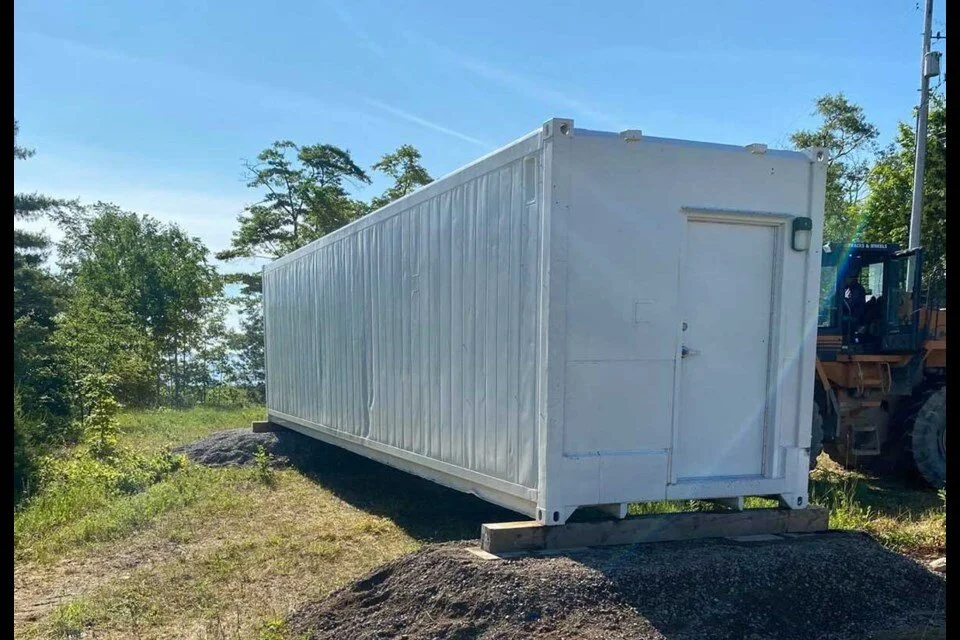
The community of 118 quickly made a decision to take the plunge into container farming, taking out a loan to purchase their very own Growcer farm, and the unit arrived in the community on June 22.
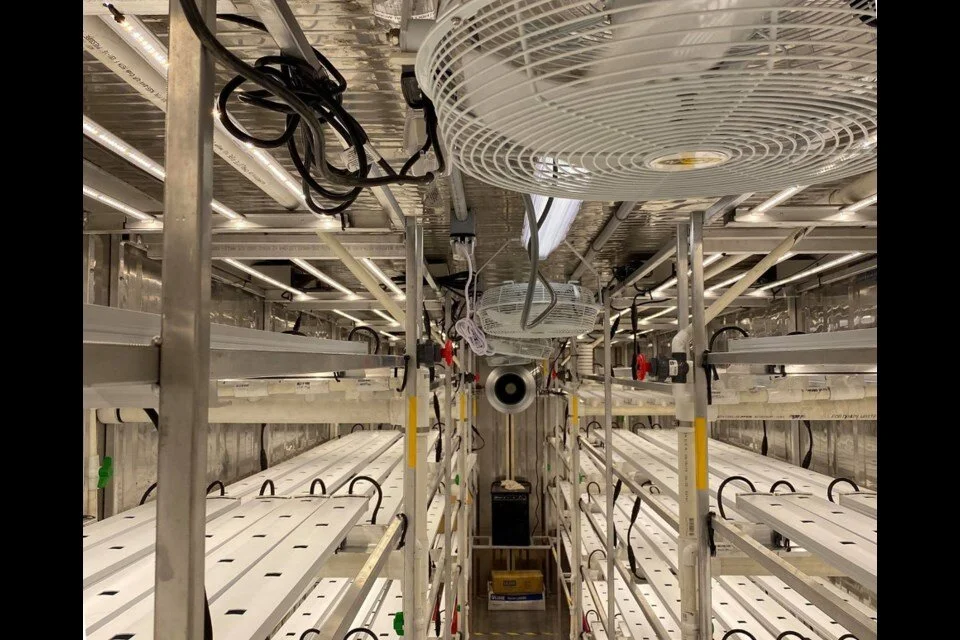
Launched in 2015, The Growcer adheres to other models of container farming that start with a shipping container and add hydroponic growing equipment and LED lights to create a self-contained, closely monitored system that allows for growing year-round.
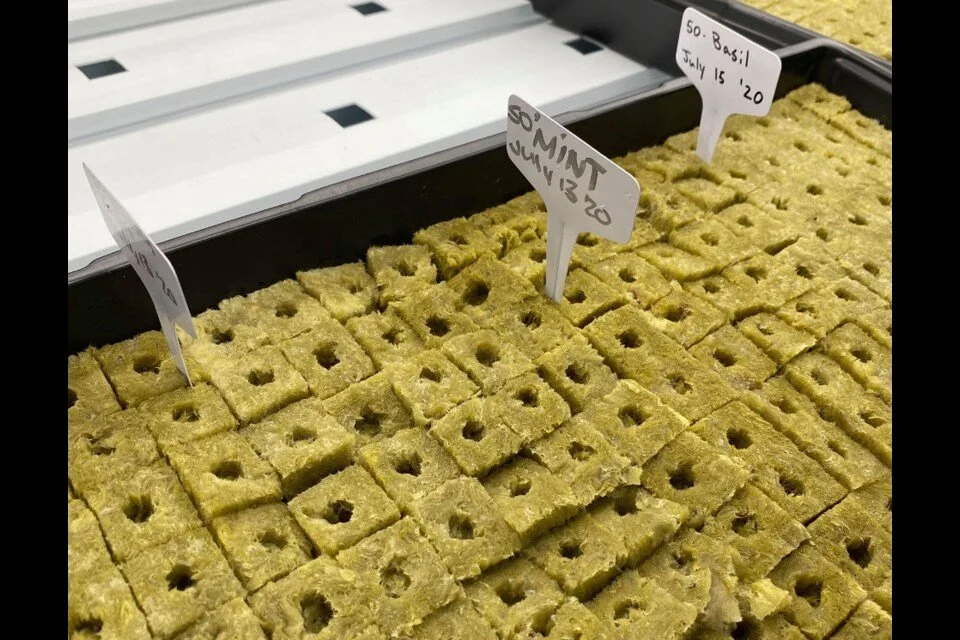
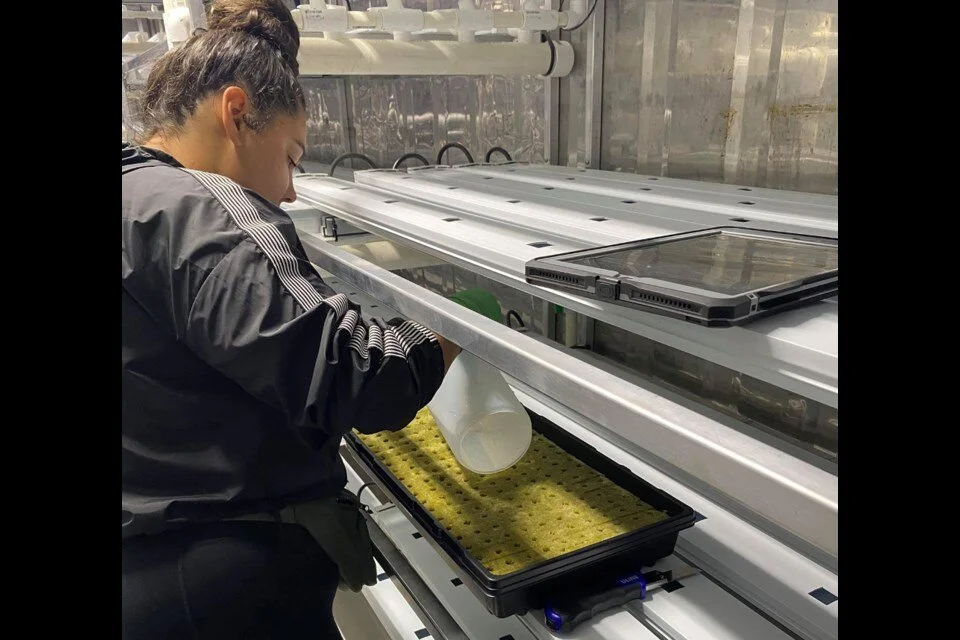
Seeds are nurtured with a tailored combination of nutrients, water, and lighting, and crops are ready to be harvested after about four to six weeks. With a staggered planting system in place, crops are always growing.If something goes wrong – the temperature gets too high, for example – the sophisticated monitoring system will alert staff through their phones so they can visit the farm and adjust accordingly.“
Growcer also has access to our system,” Folz said. “So they get alarms as well, and they can regulate it from Ottawa.”
The company provides full training and ongoing support as part of the purchase agreement.
There are even some job opportunities for those enterprising community members with an interest in agriculture. Folz is currently hiring for a full-time systems manager, who will be responsible for planting and harvesting, cleaning, and calibrating the Growcer system, as well as two part-timers, who will help with monitoring the crops.
Growcer farms are now successfully producing fresh greens every week in communities as far-flung as Kugluktuk, Nunavut, and Churchill, Man.
Conditions in Sheshegwaning aren’t nearly as harsh or rugged as in those more remote regions, but the arrival of their own container farm has generated buzz amongst the many avid salad-eaters in the community.
For $10 a week, residents who want a take of the harvest sign up for a subscription box, which guarantees them five heads of greens of their choice delivered to their door. A portion of the harvest will also go to local business Mkwa Catering for use in their dishes.
The first seeds were planted during the week of July 20, and Folz expects to reap the harvest in mid-August. Products will be marketed under the Odawa Freshwater brand.
She’s calculated that if they sell out weekly, the community will break even on its loan for the project.
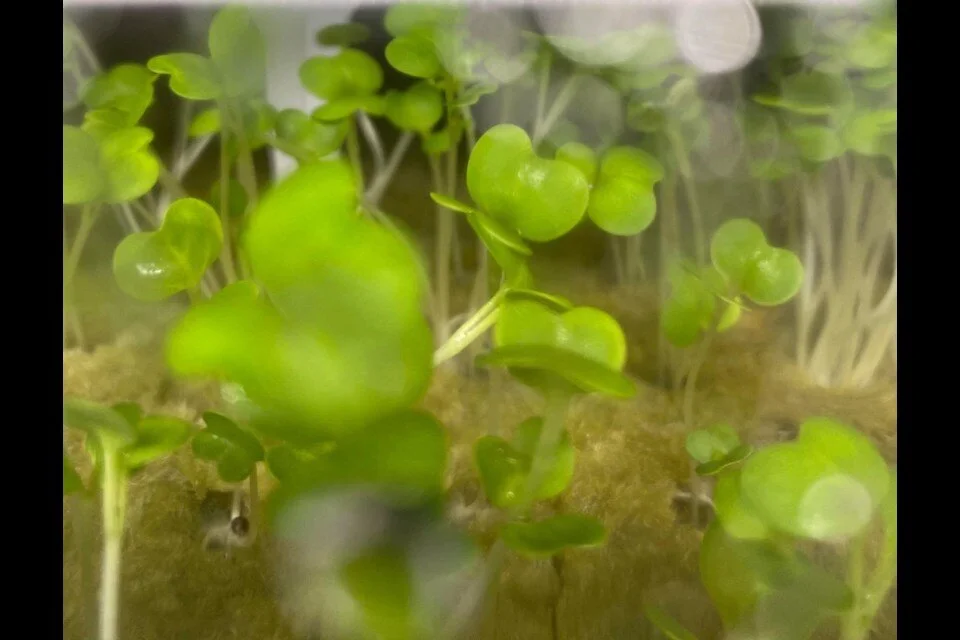
So far, the community has planted Monte Carlo romaine lettuce, red Russian lettuce, Tuscan kale, wildfire lettuce, and win-win choi, along with basil, parsley, and mint.“
People want spinach, so they’re going to send us some spinach seeds and get that going,” Folz noted.
Folz said 450 heads of greens will be harvested weekly, while the herbs can be cut back each week and will self-replenish until they reach the end of their lifecycle, which she estimates will be some time in October.
An ongoing experiment with different lighting and growing conditions aims to see if there's any success with strawberries.
Known in many Indigenous cultures as the “heart berry,” strawberries are celebrated as a marker of spring, help promote health and well-being, and signify friendship and reconciliation.“
Strawberries are very important for Native culture for ceremonies, and it would be fantastic to get them fresh year-round if we could do that,” Folz said.“
This (container) is specific for greens, and it will probably stay that way. Maybe down the road, we’ll get one for strawberries.”
PHOTOS:
1 / 6 Crops being grown by Sheshegwaning First Nation in its new container farm include kale, lettuce, parsley, mint, and basil. (Supplied photo)
2 / 6 Sheshegwaning First Nation took delivery of its Growcer container farm on June 22. Its first crops will be ready in mid-August. (Supplied photo)
3 / 6 Container farms use a customized combination of water, nutrients, and lighting to get the maximum yields per crop. (Supplied photo)
4 / 6 Ottawa-based The Growcer uses a shipping container, outfitted with LED lights and a hydroponic growing system, as the base for its container farms, which allow year-round growing. (Supplied photo)
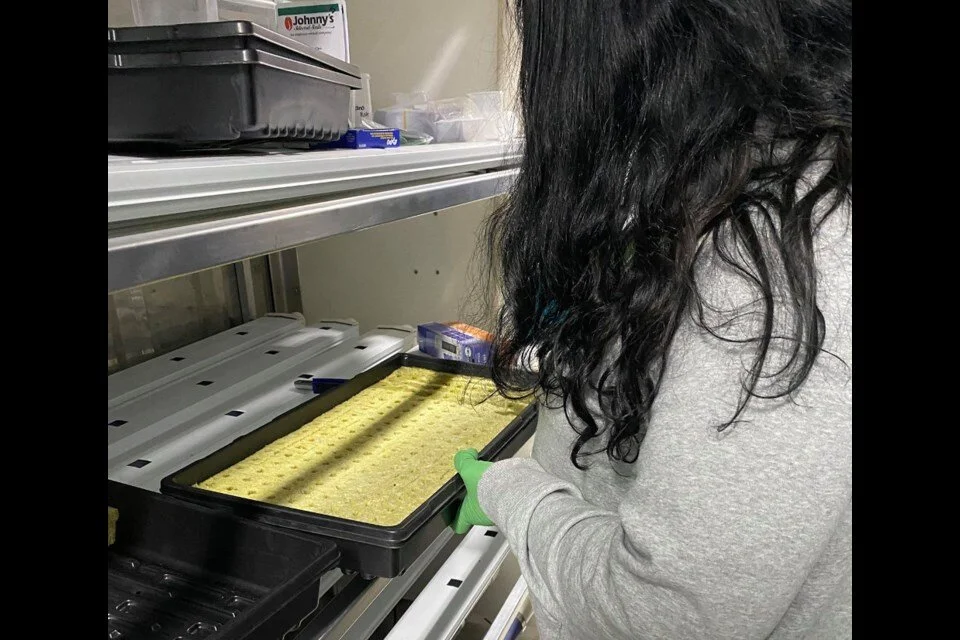
5 / 6 Seeds are put into a growing medium to get started. Crops are ready in four to six weeks. (Supplied photo)
6 / 6 Sheshegwaning's Growcer container farm will create jobs for three community members, who will plant seeds, harvest crops, and clean, calibrate, and monitor the system. (Supplied photo)

Plantlab Uses €20 Million Investment To Open New Vertical Farms In The Netherlands, The U.S. And The Bahamas
"On a surface area the size of only two football fields, it is now possible to produce enough crops to feed a city of 100,000 residents with 200 g of vegetables each on a daily basis"
25 July 2020
Dutch scale-up PlantLab has raised a first external investment of € 20 million from De Hoge Dennen Capital. The company has developed a globally patented technology for ‘vertical farming’, an efficient method for growing vegetables and fruits. It will use the injection of capital to open indoor production sites in various countries, including the Netherlands, the US, and the Bahamas.
Over the last 10 years, PlantLab has succeeded in developing innovative and revolutionary technology for efficient urban farming, which is already being applied in a commercial production site in Amsterdam. The new technology enables growing vegetables on a large scale very close to the consumer, without using any chemical crop protection agents. On a surface area the size of only two football fields, it is now possible to produce enough crops to feed a city of 100,000 residents with 200 g of vegetables each on a daily basis, the company claims.
“This injection of capital will enable us to open up additional production sites and further perfect our technology”, explains Plantlab CEO Michiel Peters. “The increasing population of the planet and the climate crisis are posing new and enormous challenges to the production of food for the world’s population. We have no choice but to grow our food more sustainably and efficiently, and that demands innovative and revolutionary solutions.”
PlantLab’s production sites can be set up anywhere in the world, even on barren land or urban areas. Due to optimized temperature, moisture, and light control, the crops grow to their full potential, while water use is reduced by as much as 95%, Peters says. Light is provided by specially developed LEDs that provide the specific wavelength needed by the plant for photosynthesis.
New CEO, new CFO
De Hoge Dennen is part of the investment company founded by the De Rijcke family, the former owners of Kruidvat. The company has made previous investments in the online supermarket Picnic, the salad producer De Menken Keuken, and the electric bicycle brand QWIC. CFO Jelle Roodbeen says he wants to help PlantLab make a real difference on a global level. “It will make healthy and delicious vegetables affordable and accessible to everyone, in an environmentally friendly and sustainable fashion.”
In addition to the injection of capital by De Hoge Dennen, Frank Roerink and Michiel Peters are joining the scale-up company as its new CFO and CEO, to strengthen the management team. PlantLab has its vertical farming R&D center in Den Bosch and a commercial production site in Amsterdam. PlantLab employs over 60 people.
PlantLab
PlantLab specializes in technology for innovative urban farming and aims to supply the planet with a sustainable source of food for the future. The company was founded in 2010 in Den Bosch with the goal of revolutionizing the production of food for our planet. Over the last 10 years, the company has already invested € 50 million in the development of technology. The goal is to grow healthy, day fresh vegetables close to the consumer anywhere in the world without the use of chemical crop agents, while at the same time reducing water consumption to an absolute minimum.
More on Plantlab at Brabant Brandbox
Lead Photo: © Plantlab

Are Automated Indoor Growing Facilities The Future For Fresh Produce?
Can growing veg in urban units scale up to meet demand, or is vertical farming a cottage industry focussed on leafy greens? Interest in Controlled Environment Agriculture is increasing internationally. Agri-TechE bring together Controlled Environment Agriculture technologists, producers and investors to discuss the current landscape and promising developments
CEA-Lite is an online debate on precisely that question,
taking place on 10th Sept.
Agri-TechE bring together Controlled Environment Agriculture technologists, producers and investors to discuss the current landscape and promising developments
Can growing veg in urban units scale up to meet demand, or is vertical farming a cottage industry focussed on leafy greens? Interest in Controlled Environment Agriculture is increasing internationally. In the UK autonomous growing systems have attracted funding from the Government’s Transforming Food Production program and tens of millions are being invested in a new training and demonstration facility; but the industry still has many challenges.
Agri-TechE is hosting an event “CEA-lite”, which is discussing the drivers for innovation and investment with leading entrepreneurs, producers, and investors on 10th September 2020.
Are new business models emerging?
Dr Belinda Clarke, Director of Agri-TechE says new models of food production are gaining traction. “Year-round intensive cropping of high-value crops becomes economically viable if the technology can scale. The Transforming Food Production call focussed on big, inspirational projects and this will help de-risk the technology, particularly around automating the monitoring and harvesting, which are so problematic for open field production.”
Jock Richardson of Growpura agrees: “A lot of operators have some great technology but to grow bigger means a linear (or worse) growth in costs. Scale-up is vital but there are operational challenges of how we grow plants at scale and at low cost.”
Could scaled-up vertical farms create economic value in vacant retail units?
“I have seen repurposing of buildings for CEA but location remains vitally important”, says Investor Kiryon Skippen of Capital Agri International, “landlords of these buildings need to be realistic in their rent demands and preferably have a real interest in the vertical farming business and work with it, taking the longer term view.”
Jock has seen uplift in interest in localised crop production, but as their system requires cleanroom conditions, refitting an older building could be too costly. “We’ve been talking to major retailers and its clear there is real interest in the use of hydroponics (growing in water) to fulfil the demand for fresh produce but of course it has to be at a competitive cost and offer a reliable supply,” he says.
The company will announce funding for a large training and demonstration facility in the coming days, which may provide over 200 jobs and internships in the South East Midlands area. “A vibrant hydroponics industry is essential in the UK. On the licensing front there has been interest from a number of countries particularly in the UAE and Asia and also for non-food products which we are progressing keenly,” Jock continues.
Can the industry look beyond leafy greens?
This international interest is a trend David Farquar, of Intelligent Growth Solutions, has also seen. He says; “Interest from NW Europe, the Middle East, and SE Asia is increasing the diversity of the food grown under secure conditions to reflect local diets and cuisine; encouraging the CEA industry to look beyond leafy greens and salads. For example, we have seen more demand for roots and fruits over recent months and interest in re-localizing as much of the food supply chain as possible.”
Phytoponics has recently raised £0.5M to develop its next-generation deep-water culture modules that offer a sustainable more profitable alternative to hydroponics substrates, such as rock wool and coir, and the company has started a series of strawberry trials with Total Produce. CEO Andy Jones, says the funding environment is challenging but that investment is there for companies with the right solutions.
He continues: “For growers, costs remain the big issue and one of the biggest is labor. New approaches need to give growers an economic advantage by reducing those costs.”
Are we swapping a labor shortage for a skills shortage?
However Max McGavillray of Redfox Executive says Brexit, and then COVID-19, has resulted in a marked increase in protected cropping roles as the UK adapts to a new normal: “We’re seeing individuals with plenty of cash establishing vertical farms but with very little experience in agriculture and foods, so there’s a real need for those with growth expertise in controlled environment agriculture.”
CEA Lite is an online event being held
on 10th September 2020 15:00 – 17:00.
Register your interest at bit.ly/ATEeEvents
About Agri-TechE – www.agri-tech-e.co.uk
Agri-TechE is a business-focused membership organization that is supporting the growth of a vibrant agri-tech cluster of innovative farmers, food producers and processors, scientists, technologists, and entrepreneurs.
Agri-TechE brings together organizations and individuals that share a passion for improving the productivity, profitability, and sustainability of agriculture. It aims to help turn challenges into business opportunities and facilitate mutually beneficial collaboration.
Photos:
1 – Credit: Growpura / Caption: Growpura is set to create a hydroponic farm, training and demonstration facility in Bedford, UK
2 – Credit: IGS / Caption: IGS has seen more demand for root vegetables and fruits in recent months as vertically farmed crops diversify
3 – Credit: IGS / Caption: Phytoponics has recently won funding and is undertaking commercial trials of its deep-water hydroponics modules

Don't Sell Yourself Short - Each Failure Is A Step Forward
Fear of failure, selling myself short, impostor syndrome, fear of outside judgment, if it won’t be perfect I don’t want to post it/make it/talk about it. The list goes on. Do any of those sound familiar to you? Well, I’ve been battling this mentality my whole life
Published on July 29, 2020
Albert Lin
Founder at VegBed | Startup Operations, Logistics, and Market Expansion Expert
[WARNING: If you have any of these following symptoms, then please read ahead. I hope what I say might help you]
Fear of failure, selling myself short, impostor syndrome, fear of outside judgment, if it won’t be perfect I don’t want to post it/make it/talk about it. The list goes on. Do any of those sound familiar to you? Well, I’ve been battling this mentality my whole life.
I see lots of success within my network and I am genuinely super happy for them as some of these people are my good friends. I want them all to succeed. But then I end up comparing myself and thinking that what I’ve done isn’t as good (or noteworthy).
But you know what? I’m really proud of what I have accomplished working on my business these last 2 years.
Some of you may or may not know, I’ve failed a lot. I tried starting up a vertical farm a few years ago after getting super obsessed with hydroponic growing. The project never came to fruition but I still wanted to start something in the space that I could bootstrap myself.
I started exploring the world of growing mediums and quickly saw that rockwool was the industry standard and dominated hydroponic farming. I wanted to create something better and more sustainable - and thus VegBed was born.
My first ever purchase of microgreen seeds was from True Leaf Market. I remember visiting their website and thinking WOW, they are the Walmart of gardening, seeds and hydroponics. I vowed one day to have my product listed on their site.
My initial attempt actually failed. I reached out to the company with a cold email soon after I had launched the bamboo fiber mats. I touted how a great sustainable alternative they were to what was on the market, sent samples, and got great feedback. I thought for sure I had a chance!
But alas, I was one of thousands of other SKUs vying for valuable stock space. After weeks of back and forth discussion and waiting for a decision, nothing ever panned out.
Fast forward almost 2 years later and through a serendipitous acquaintance, I was able to connect with one of the co-owners of the company. They really liked the product. The demand for at-home growing seemed to skyrocket during COVID and over the next 3 months, we discussed the possibility of them carrying it.
As of five days ago, I am proud to say that VegBed and True Leaf Market have partnered up to offer our bamboo fiber mats to growers everywhere!
The mats are now live on their site and I am still in shock looking at their marketing email with my product featured at the top. To see this all come full circle has been nothing short of amazing and gratifying. Like they say, this is just the beginning.
I’m hoping my story will help others to not be afraid of celebrating their accomplishments. It took me a while to have the courage just to post this, but once I started writing, things started flowing which leads me to these 4 tips:
Don’t give up (obvious, but seriously though, just put your self out there in front of potential customers).
Don’t sell yourself short - You have the ability to step back and judge what you’ve done and what you are capable of.
Do things that don’t scale - All the stuff you hate to do and want to automate, don’t worry about that in the beginning. I used to want to think big and figure out what step #100 looked like before I even made a sale yet. Don’t “play business”. Just see if people are willing to pay for your product/service first.
Celebrate other people’s accomplishments - Get rid of the negativity/jealousy/hatred. Successful entrepreneurs don’t have time to hate on others, they’re too busy trying to build their thing.
I’m hoping these tips and my story can add value to anyone that has made it this far. Until next time, keep on pushing and thanks for reading!

This Week On Green Sense Show: Controlled Environment Agriculture
Featuring innovators that are changing the world with their sustainable ideas
As the Coronavirus touches nearly every aspect of life in nearly every part of the world, how we raise food continues to innovate.
Hear the interview with our longtime correspondent Chris Higgins of Urban Ag news as he talks about the latest developments in indoor farming- greenhouses and vertical farms and how they are presenting a solution to the food supply chain during this pandemic. #verticalfarming #greenhouses #sustainability

US: MAINE - Vertical Greenhouse Coming to Westbrook
The City of Westbrook will soon be growing produce a little differently. Starting in the spring of 2021, a company called Vertical Harvest will begin building a vertical greenhouse on Mechanic Street
29-07-2020 | News Center Maine
US- A 70,000 square-ft vertical greenhouse will produce 1 million pounds of produce per year to the city and surrounding areas.
The City of Westbrook will soon be growing produce a little differently. Starting in the spring of 2021, a company called Vertical Harvest will begin building a vertical greenhouse on Mechanic Street.
The planned 70,000 square ft facility will initially grow a variety of microgreens and lettuce. The company estimates the greenhouse will produce 1 million pounds of produce per year to the city and surrounding areas.
Westbrook will be the company’s second location in the United States. The co-founder said she came up with the vertical idea after realizing the need for fresh produce year-round in an urban setting.
“We want to grow as much food as possible. We want to employ as many people as possible. We want to do both year-round. That’s what gave us the idea to go up. So at its heart, we want to be able for these farms to serve the community in which it sits, so that means being in the heart of our urban centers,” said co-founder Nona Yehia.
Yehia said the greenhouse will bring 50 full-time equivalent jobs to the city. The mayor of Westbrook said the greenhouse is part of a larger project, which will include a parking garage and new apartments.
A documentary about Vertical Harvest called Hearts of Glass was recently released.
Here’s an excerpt from the film.
Source and Photo Courtesy of News Center Maine

US: MINNESOTA: North Market Installs Onsite Vertical Farm
Black-owned and operated by the nonprofit organization Pillsbury United Communities (PUC), the grocery store North Market has installed a hydroponic vertical container farm from Freight Farms onsite
Source: North Market
07.28.2020
By Emily Park
MINNEAPOLIS – Black-owned and operated by the nonprofit organization Pillsbury United Communities (PUC), the grocery store North Market has installed a hydroponic vertical container farm from Freight Farms onsite.
Built-in an upcycled shipping container and controlled by a data-driven IoT platform called farmhand, the 320-square-foot farm is located in the retailer’s parking lot.
Regardless of the season, it will provide the market’s community with fresh produce (all pesticide- and herbicide-free) year-round. Growing at commercial volume, the farm uses less than 5 gallons of water a day.
North Market will start by harvesting 11 flavorful crops: three varieties of mini compact romaine lettuces, green oakleaf, basil, Thai basil, rosemary, thyme, lemon balm, sage, and mint.
“At Pillsbury United Communities, our mission is to co-create enduring change toward a just society in which every person has personal, social, and economic power,” said Kim Pepper, chief engagement officer of PUC. “The closed-loop food ecosystem we have built around North Market is one of the ways we are working to realize this vision. Greens grown onsite in the Freight Farm are sold at North Market ensuring community access to fresh, affordable, local produce year-round. Produce that doesn’t sell is rescued, prepared, and served at our free community café."
Some of the added benefits of the onsite vertical farm include:
Elimination of food miles: the crops only travel steps from the parking lot to the store
Consistent reliability: store can produce its own line of crops for shoppers, with year-round consistency regardless of the weather or changing climate conditions in Minneapolis
Quality and freshness: by being grown hyper-locally (in this case, right onsite), produce stays fresh for far longer, reducing food waste for both the store and consumers
Cost reduction: in removing distribution costs from the equation, PUC is able to pass savings on to the consumer
Traceability & safety: the farm’s integrated IoT platform, farmhand, enables complete traceability of crops from seed to harvest
North Market also sells produce from the PUC’s other soil-based farms in the city. To get those crops to the store, bicycle couriers pick up freshly harvested food from PUC’s Southside gardens and deliver them to North Market to be sold. Completing the cycle, they also pick up surplus food and bring it back to the Southside to be distributed in community delivery meal programs. The remaining food is composted back at the Southside gardens.
Vertical Farms Could Grow All The Wheat We Need - But At A Cost
For years, vertical farming has captured headlines, including on this very website. A new study published in the Proceedings of the National Academy of Sciences on Monday shows the practice could revolutionize the world’s ability to grow wheat

July 27, 2020
For years, vertical farming has captured headlines, including on this very website. A new study published in the Proceedings of the National Academy of Sciences on Monday shows the practice could revolutionize the world’s ability to grow wheat.
The global population eats a lot of wheat. It’s the most widely grown crop in the world, and it accounts for approximately 20% of the calories and proteins in the average human diet. As the global population grows, we’ll need more of it to sustain humanity. With arable land a premium, the new study looks at if vertical farming—a method of growing crops in vertically stacked layers—could help.
To find out, the authors created two growth simulation models of a 10-layer vertical farm set up with optimal artificial light, temperatures, and carbon dioxide levels. They found that the simulation could yield up to a whopping 1,940 metric tons of wheat per hectare of ground per year. For context, the current average wheat yield is just 3.2 metric tons per hectare of land.
It makes sense that the authors would be looking into this now. Globally, one in nine people already face hunger, and the problem could become more acute as the population increases. The world could have to produce more than 60% more wheat to account for population growth. That won’t be easy; rising temperatures and other changes in growing seasons driven by the climate crisis are lowering crop yields around the world.
The new study offers an insight into how to address some of these problems. But right now, scientists are only offering simulations. Actually bringing these massive wheat crop yields to fruition would come with massive challenges.
For one, vertical farming is wildly expensive. It requires massive amounts of energy to work, especially because unlike traditional farming, it requires artificial lighting systems. The authors say their simulated systems would provide a light intensity for the crops 30 to 50% greater than directly overhead sunlight. Watering systems and technology to ensure optimal temperature and air quality conditions in these indoor environments would also be costly—not to mention energy-intensive. Depending on how the systems are powered, that could be a problem for the climate. Previous research shows that powering these systems could require vastly more energy than our current high-emissions food system.
“No one has ever attempted to grow food crops under artificial lighting that’s as strong as sunlight, much less stronger, for the simple reason that it would require too much energy,” Stan Cox, a scientist and plant breeder at the Land Institute in Salina, Kansas, said in an email.
The new study’s authors note that recent innovations in solar energy are lowering the costs of electricity and lighting is becoming more efficient, but note crops grown this way are still not likely to be economically competitive with current market prices of agriculture. Cox found that to be an understatement.
“A decade ago, given the amount of light wheat plants require to produce one pound of grain, I calculated that growing the entire U.S. wheat crop indoors would consume eight times the country’s entire annual electricity output,” he said. “That was before recent advances in lighting efficiency. So, hey, maybe it would now use up only four to five times our total electricity supply! For one crop!”
Innovations in automation, the authors note, could further lower the costs of vertical farming. That may be true, but in our current economic system, that could be a problem for farmworkers, who are already seeing their pay get cut. For these reasons and more, vertical farming has been a controversial topic in agricultural and environmental circles.
The new study’s authors note that there are also many unanswered questions about growing wheat in indoor facilities. It’s not clear, for instance, what the nutritional value and quality of indoor-farmed wheat would be, or what diseases could arise in such facilities.
Though their projected crop yields are exciting, even if vertical farming does work, it can’t be the only solution to our agricultural issues. Other systemic changes, including reducing food waste, moving away from meat-centric agricultural systems, diversifying crops, and improving soil health, should also play a role.
“Under specific circumstances, and if the energy cost and profitability issues can be resolved, indoor vertical wheat farming might be attractive,” the authors conclude. “Nonetheless, the outcomes described here may contribute only a relatively small fraction (yet to be determined) of the global grain production needed to achieve global food security in the near future.”
Staff writer, Earther
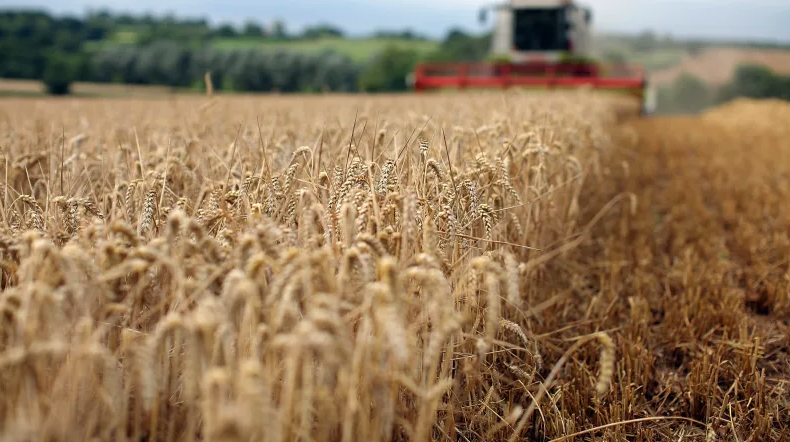
Lead photo: Wheat being harvested in an open field. It could be a thing of the past someday. By, Christopher Furlong (Getty Images)
GERMANY: "Dry-Fog is The Next Generation of Aeroponics"
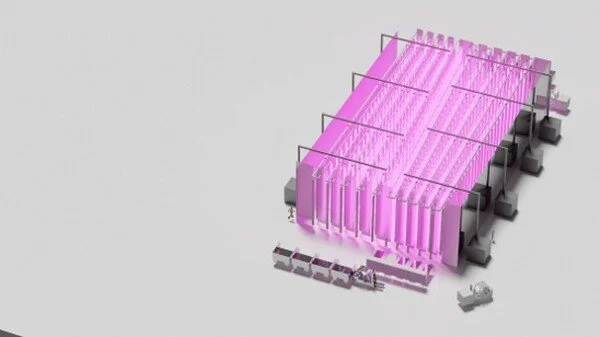
Lite+Fog can replace heavy steel racks with unique fabric, which separates the root zone from the growing zone and allows farmers to grow with any substrate
Lite+Fog, a Berlin-based company, started focusing on dry-fog systems as they noticed many benefits from it. "Dry-fog is the next generation of aeroponics. I started working on indoor farms for more than ten years. Because I did a lot of mushroom farming, I began to work with dry-fog and realized that it is a great way to feed plants. So we are now able to ultimately reduce the typical costs of Vertical Farming by around 80% and even triple the energy efficiency", states Martin Peter, Co-founder, and CEO of Lite+Fog.
Lite+Fog can replace heavy steel racks with unique fabric, which separates the root zone from the growing zone and allows farmers to grow with any substrate. "The system is a realization of work that originally started with urban farming projects, where I built many prototypes and tested a lot of approaches, especially vertical column-based farming technologies. The system as we plan it right now, however, has been developed over the last year."
Efficiency There is a lot of interest from farmers based in Israel, India, and the UK, all with different purposes. Compared to other systems, the Lite+Fog system dramatically reduces the costs in production, maintenance, and labour. The company is planning to have a pilot farm constructed by next year. "We are still on the lookout for potential pilot partners, strategic investors, and research institutes which are interested in joining this new generation of Vertical Farming. Bringing the efficiency up and lowering the costs is the most important thing to transform this vital technology into the mass-market application it has to be", says Martin.
Standardized farms
"We want to become a core technology supplier for indoor farms. As the technique has proven to be successful, we are now upscaling, and engineering the larger versions of our prototype farms. So we're connecting with suppliers and core industries in Germany and elsewhere, to create an important industrial network, able to satisfy the demand we expect in the future.
We plan on delivering at least 60 bigger farms per year during the next five years. Very simply put, we create a big box where seeds enter at one end and plants come out at the other. Eventually, we want to focus on standardizing these farms, as this would significantly improve cost efficiency and comparability. These are both essential factors for research and marketability", Martin states.
The concept design of Lite+Fog's 1000m2 footprint farm creating more than 45.000 m2 of growing surface for greens and berries
Benefits
"Dry-fog enables plants to be better nourished and improves growth by up to 20%. This way of growing is also practically weightless, so you can completely reimagine the architecture of farms - which we make great use of. Improving the efficiency of indoor farms is about how many square meters of growing space you generate in a given volume. Our approach is focusing on that primarily.
In addition to that, with no clogging nozzles, less maintenance, and easier central production, dry-fog is the next step of indoor farming. And that's why we are so much more cost-efficient than other approaches which are not vertical but multilayer horizontal farms anyway. We develop a true vertical "food-reactor".
The state-of-the-art spray nozzles typically used in vertical farms, which directly spray water on the plant roots, are bound to clog up as they are using a salty solution. These now outdated systems need to be cleaned and maintained all the time - and are reliably unreliable in the long run. However, dry-fog does barely weigh anything, doesn't need nozzles, and is therefore much cheaper and easy to use. "
Challenges
However, "fogponics" also has its challenges. As there is no growing medium, you have to be extra aware of the temperature of the root zone and on the complex system delivering the fog to the roots. Also, the droplet size has to be adjusted for bigger nutrients that are essential for some crops. But "these 'difficulties' can easily be mitigated if you adapt a bit - and that's what we are researching currently," says Martin.
For more information:
Lite+Fog GmbH
Martin Peter, Co-Founder, and CEO
Marienburger Str. 8
10405 Berlin
martin.peter@liteandfog.com
www.liteandfog.com
Publication date: Fri 17 Jul 2020
Author: Rebekka Boekhout
© HortiDaily.com

Could Three Bristol Graduate’s LettUs Grow Sow The Seeds For a Second Green Revolution?
LettUs Grow, a Bristol-based company, founded in 2015 by Charlie Guy, Jack Farmer and Ben Crowther, utilizes a unique ‘aeroponic’ irrigation system, which may hold the key to solving the global food crisis
July 25, 2020
By Hana Azuma, Third Year, Biology
LettUs Grow, a Bristol-based company, founded in 2015 by Charlie Guy, Jack Farmer, and Ben Crowther, utilizes a unique ‘aeroponic’ irrigation system, which may hold the key to solving the global food crisis. The three University of Bristol graduates hope to tackle core issues surrounding food security, along with decreasing CO2 emissions and ecosystem collapse in the process.
By 2050, the global population is predicted to reach 10 billion. In order to ensure sustainable and nutritious diets for everyone, we must increase food production by 70%. This proves to be a difficult challenge as, along with the rapid, exponential population growth, agricultural land and resources worldwide are decreasing.
Since the first drop in crop production during the 1950s, followed by the onset of the first ‘Green Revolution’, we are in the midst of another major halt in the growth of food production.
Fortunately, despite the omnipresence of food insecurity and waste, we are currently producing enough food to feed the world. The main challenge is the unequal geographic distribution of adequate agricultural land.
LettUs Grow was founded in 2015 by three Bristol University graduates: Charlie Guy, Jack Farmer and Ben Crowther | Jack Wiseall
Nearly 80% of fertile land has some extent of soil erosion. Due to the changing climate, extreme weather events are predicted to occur more frequently and intensely. Together with population growth, it will be extremely tough to meet the global demand with the current practice.
LettUs Grow hopes to help farmers who are in such situations, to be able to grow their food regardless of the environmental conditions, feeding themselves and earning stable income all-year-around in the process
LettUs Grow were able to reduce water usage by 95%, whilst boosting the crop production by 70%
LettUs Grow has developed aeroponic irrigation systems for indoor vertical farming, which are not only easy to install in cities, but also use zero soil and little water. Crops are grown on a rack, where their roots are exposed to nutrient-rich mist and water spray.
When compared to hydroponics (another soil-free agricultural system), LettUs Grow were able to reduce water usage by 95%, whilst boosting the crop production by 70%. Additionally, neither pesticides nor fertilizers are needed and the whole growth condition is automated by LettUs Grow’s own management software, Ostara.
In June 2020, LettUs Grow, the University of Bristol, and John Innes Centre collaborated on a paper published to the New Phytologist Trust. It revealed the high efficacies of aeroponics and identified the key knowledge gaps that must be explored to accelerate further development. Moreover, the senior author and the former staff at the University of Bristol, Dr. Antony Dodd, mentioned the possibility of using this new system in space.
‘Vertical systems allow us to extend the latitude range on which crops can be grown on the planet, from the deserts of Dubai to the 4-hour winter days of Iceland. In fact, if you were growing crops on Mars you would need to use this kind of technology because there is no soil’, said Dr Dodd.
Aeroponic farming has proved to produce high-quality salads, pak choi, herbs, and more. LettUs Grow is now tackling more challenging crops, such as strawberries and potatoes, as well as the propagation of trees for both fruits and forestry.
It is thrilling to see how this award-winning aeroponic system is evolving as an efficient and sustainable candidate to combat food security. Could this be the start of the Second Green Revolution?
Featured: Jack Wiseall / LettUs Grow

US - CHICAGO - VIDEO: Vertical Farm Wilder Fields Opening Calumet City Location
The anchor of a Calumet City strip mall at 1717 East-West Road left five years ago. Now a local small business plans to turn this red store -- Green
Wilder Fields Plans To Fully Open In 2023
By Leah Hope
CALUMET CITY, Ill. (WLS) -- A vertical farm is coming to the south suburbs.
The anchor of a Calumet City strip mall at 1717 East-West Road left five years ago. Now a local small business plans to turn this red store -- green.
"We'll be growing a whole range of leafy green, many of which may be familiar to the consumer, many of which the consumer has never tasted," Wilder Fields Founder Jake Counne said. "We're really excited to blow people's minds with varieties they've never had."
Wilder Fields operates a vertical farm in Chicago and will open a larger location in the south suburbs, selling produce locally to residents, restaurants, and markets by making use of all the space, floor to ceiling.
"To be able to take big-box space like this and reintroduce jobs that might have been lost, boosting the foot traffic that might have been lost ... to come in and revitalize that corridor is really exciting for us," Counne said.
The red paint was from the previous tenant. Target had been there for 20 years but closed in 2015.
For those in the area, a small business growing produce and adding jobs is welcomed news.
"Twenty four acres of farmland in the 135,000-square-foot building is pretty exciting when you think about it," Mayor Michelle Markiewicz Qualkinbush said.
Calumet City 7th Ward Alderman Anthony Smith agrees.
"We've been a food desert for a number of years so this actually fills that void," Smith said. "(It) allows us to get fresh produce and at an affordable price and bring jobs."
Residents think it's a great idea, too.
"To have an indoor farm that we can come to year-round will be phenomenal," Vicki Brown said
Wilder Fields plans to start production next year and be fully operational in 2023, with not only retail space but an Education Center to show how their organic greens are grown year-round indoors vertically.
RELATED TOPICS:
business calumet city food grocery
As The Pandemic Continues, Urban Gardening Is Growing on New Yorkers
At the start of the Covid-19 pandemic, concerns over the food supply chain began increasing nationwide as popular food items flew off the shelves and grocery store lines grew to alarming lengths
JULY 27, 2020
BY MILI GODIO
Samuel’s Food Gardens (Photo courtesy of Samuel S. T. Pressman)
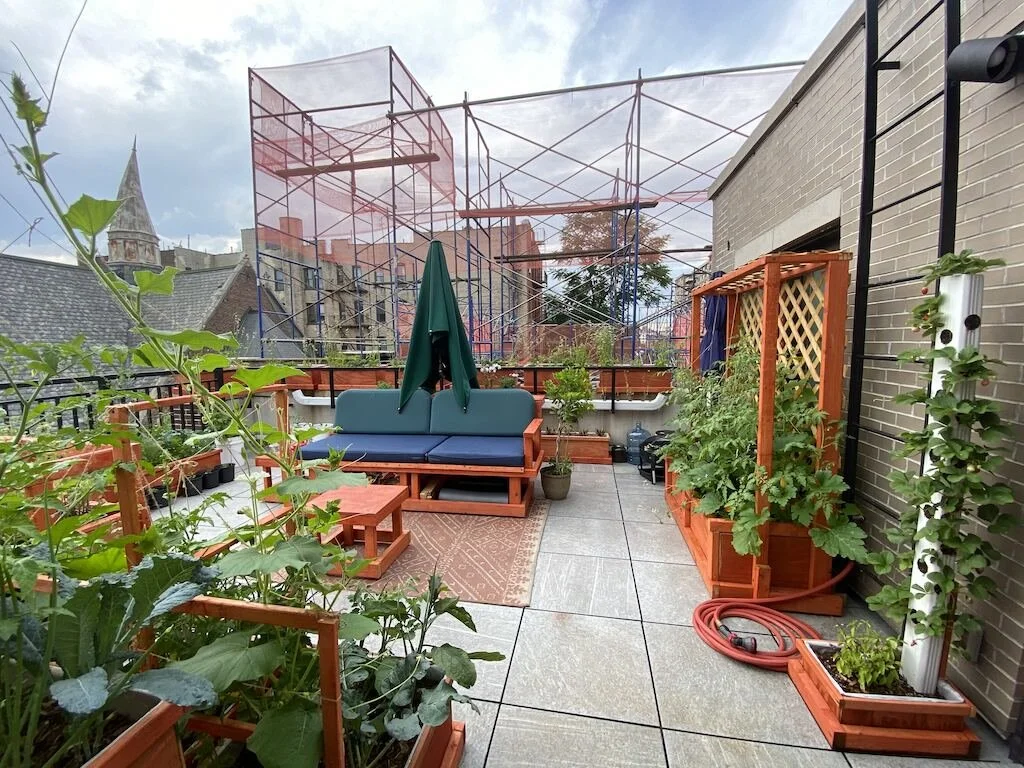
Samuel S. T. Pressman had wanted to build a food garden on the rooftop of his Clinton Hill apartment for years. The artist and sculptor had lived on a farm when he was younger and had studied Sustainable Environmental Systems at Pratt. But in a city with a “time is money” mentality, he never found the right moment to start his passion project.
That changed when New York underwent a statewide Pause order in mid-March. Now, Samuel’s Food Gardens is tackling the city’s food insecurity problem by providing fresh fruits, vegetables, and herbs to community gardens that advocate for food security. “I wanted to explore what most people’s living situation is here,” Pressman said, “where they don’t have any land and have hardly any outdoor space that they own, and how they can still be able to grow some food using a system that is designed to actually make it possible to grow more food than you think per square foot.”
At the start of the Covid-19 pandemic, concerns over the food supply chain began increasing nationwide as popular food items flew off the shelves and grocery store lines grew to alarming lengths. This panic, along with a sudden abundance of time and collective distress over going to crowded supermarkets, contributed to a surge in backyard gardens and private farming initiatives. Even as the apocalyptic anxiety began to settle down, the gardening craze didn’t seem to stop. With at least 10 million more people unemployed in the United States compared to pre-COVID figures, feeding families continues to be at the top of everyone’s priority list.
Samuel’s Food Gardens (Photo courtesy of Samuel S. T. Pressman)
Despite its tiny living spaces and skyscrapers galore, NYC is no exception to the gardening trend. Residents like Pressman have begun to utilize spaces on rooftops, patios, and even the edges of classic Brooklyn-style buildings to create more green space in the area.
Having previously worked with Friends of Brook Park Community Garden in the Bronx and having designed and led construction for Newkirk Community Garden in central Brooklyn, Pressman has always found ways to support underserved communities and advocate for inclusive community food growing. He began Samuel’s Food Gardens not to sell the food that he grows, but to continue his work with community gardens and help individuals with private gardening areas maximize their spaces and get the most out of their crops in the long term.
New Yorkers are engaging with food in new ways. That has led to a spike in produce sales at the three green roofs operated by Brooklyn Grange Rooftop Farm, and an increased demand for their services designing, installing and maintaining private green spaces. “I think that there’s, to some degree, a process of reconnecting with simple pleasures and when it comes to the kitchen, that means really high-quality, fresh ingredients that are good for you,” said Anastasia Cole Plakias, the urban farm’s co-founder and chief operating officer. “I think that there’s this realization that supply chains have a role to play in our recovery here.”
Brooklyn Grange (Photo courtesy of Anastasia Cole Plakias)
In its ten years of operation, Brooklyn Grange has sold over 400,000 pounds of produce through weekly farmers markets located in Sunset Park, Greenpoint, and Long Island City, a CSA program where people obtain the farm’s harvest through a seasonal subscription plan, and a seed-to-plate initiative that provides food to local restaurants and retailers.
Cole Plakias says Brooklyn Grange was set to sell roughly 100,000 pounds of produce this year, but once restaurants began closing across the city and in-person events came to a halt, the farm’s business model had to quickly shift away from restaurant crops and towards feeding and nourishing the community.
“We’re seeing a lot of interest from people in having us convert their outdoor spaces to food-producing spaces, or more habitable green spaces,” said Cole Plakias. “We’re seeing a tremendous amount of interest in garden maintenance services because people are recognizing the value of urban green space.”
The company has managed to secure multiple partnerships that not only keep their farms in business, but also keep restaurants open and ensure food accessibility. Tasmanian footwear company Blundstone funded a full season of produce donations and kept farmers and staff employed. To deliver emergency food relief, Brooklyn Grange partnered with Rethink (their Brooklyn Navy Yard neighbors) and Food Issues Group, both organizations dedicated to providing equitable food systems in NYC and keeping restaurant workers employed, especially during a global pandemic.
With more New Yorkers cooking at home, the demand for fresh produce at farmers markets and through CSA programs has steadily increased during the pandemic, Cole Plakias says. Add to which, there has been a dramatic boost in demand for the farm’s virtual farming and composting workshops.
There have been a variety of online learning opportunities for prospective gardeners in the city. GrowNYC, which has been teaching city folks how to maintain urban gardens for years, offers virtual classes, and the New York Botanical Garden began hosting virtual workshops after it closed in March (the garden is set to reopen on July 28).
Union Street Farm (Photo courtesy of Garrison Harward)
The Union Street Farm, near the corner of Union Street and Rochester Avenue in Crown Heights, also offers free, in-person gardening classes and open volunteering, giving local residents hands-on experience with growing and maintaining a full-functioning garden. “We’ll do some tasks that need to be done in the garden and through that work, we talk about gardening,” said Garrison Harward, who began his work at the Union Street Farm in 2016. “It’s open for whatever anybody wants to learn.”
Harward’s love for gardening was influenced by his own family’s garden in his California hometown. In 2010, as a sustainable agriculture volunteer for the Peace Corps in Senegal, he began investigating regenerative agriculture and different methods of agricultural systems for economic gain and food security. The freelance lighting technician has maintained the Union Street Farm for the past five years, after it was given to him by two fellow neighbors who were too elderly to maintain it.
Harward favors no-till gardening, meaning he doesn’t turn over the soil or disrupt the structure built by bacteria and fungi. Aside from being healthier for plants, it leads to really great water infiltration, according to Harward. “Every drop of water that falls on the plant bed stays exactly where it is – I have zero runoff that goes into New York watersheds, which is environmentally friendly. Not putting nitrates into the watershed, all those ways in which agriculture contributes to algae blooms and fish die-offs.”
Union Street Farm (Photo courtesy of Garrison Harward)
Harward believes there has been a marked increase in gardening since the pandemic, which leads to more people reaching out to him for advice and resources. Initially providing seedlings to neighbors that were interested in growing their own food, he soon began giving them away to people all over the country. So far, he’s sent out eight varieties of seeds to roughly 120 people who reached out to him on Instagram. He even launched a Facebook group titled “NYC Gardening Resources,” where he virtually assists new and experienced gardeners alike.
The Union Street Farm’s harvest is free for anyone that visits or casually stumbles upon its gates. Although Harward holds free farmers markets every Sunday for people to take home the fruits, vegetables, and herbs that he grows, he welcomes people to take as much as they need, whenever they need it.
“I think there’s a lot of realization that we don’t have to tie everything to a financial transaction,” Harward explained. “There’s so many different ways that we can support each other. Like, we’re exchanging goods, we’re exchanging culture, we’re exchanging connections within our neighborhood and if it doesn’t have to be monetized, then why should it?”
This ethos is not uncommon in New York City green spaces, where avid gardeners like Harward and Pressman hope to make their hard work and agricultural talents accessible to all. Pressman and his Circular Communities team are currently developing projects such as the Micro Food Hub, which promotes social equity in the agricultural sphere and facilitates the production and exchange of food by connecting community gardens, food producers, restaurants, and consumers via a digital platform, and he hopes to host school tours at his food garden where he can spark a passion for food growing within students and young people. Pressman also intends to ship out DIY planting kits in the future and provide teaching tools that instruct the basics of utilizing small spaces – including greenhouses during the winter – to maximize food growth efficiently and cost-effectively.
“There’s this special relationship you have to have with the plants to be able to help them and train them,” said Pressman. “It kind of opens up a whole new door for how humans actually emotionally feel around nature and I think people are seeking that out right now, they just might not know exactly how to get it into their home.”
Bejing National Agricultural Science And Technology Innovation Park To Be Expanded
AgriGarden International is a Chinese provider of services covering the entire industry chain of horticulture
AgriGarden International: To Build a Platform of Innovation For global horticultural Industry
The Covid-19 pandemic that has been ongoing for months has affected China's horticulture industry to varying degrees, and many projects under construction had to be suspended. AgriGarden International is a Chinese provider of services covering the entire industry chain of horticulture. Liu, Manager of International Cooperation, said, “Since the outbreak of Covid-19 at the end of January this year, the construction of all of our ongoing projects has been forced to stop. Currently, projects in other provinces and cities have been able to resume, but due to the second wave of cases occurred in Beijing in mid-June, the construction of National Agricultural Science and Technology Innovation Park here had to be once again put on hold and is awaiting approval for the resumption of work.”
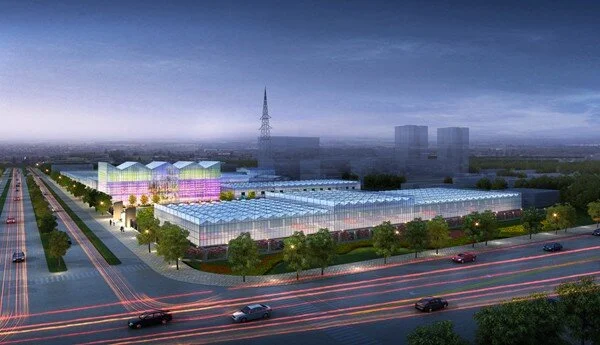
National Agricultural Science and Technology Innovation Park
Liu, Manager of the company’s marketing department, said, “The National Agricultural Science and Technology Innovation Park and the International Facility Horticulture Innovation Center that is to be expanded will serve as an exchange platform for the horticulture industry. By working with internationally renowned horticultural research institutions and companies, they will showcase the latest results of horticultural scientific research, and new technologies and equipment for facility horticulture to visitors at home and abroad, and promote exchanges, cooperation, and joint innovation among enterprises. The Innovation Park will also function as an investor and incubator. Since the establishment of the park, it has received nearly 40 heads of state and leading politicians.
Interior of the National Agricultural Science and Technology Innovation Park
About the Innovation Center
When talking about the International Facility Horticulture Innovation Center, Liu said, “AgriGarden International is an agricultural high-tech enterprise affiliated with the Chinese Academy of Agricultural Sciences. It is a benchmark enterprise for transforming scientific and technological achievements via in-depth integration of production, education, and research handpicked by the Ministry of Agriculture and Rural Affairs. We often receive domestic and foreign leaders with investment intentions. In the future, our Innovation Center can provide office space for domestic and foreign horticultural technology companies, and more importantly, provide a communication platform for these companies and help them open the Chinese market and bring more potential customers. We also hope to facilitate joint innovation of the horticulture industry in this center to create more innovative products for the Chinese market.”
In recent years, more and more companies have transitioned from traditional agriculture to facility horticulture, which shows the huge potential of the Chinese market. However, foreign companies have to face a series of challenges such as the lack of customers and ignorance of local policies, even though they have advanced technologies and concepts. The Innovation Center will provide these companies with localized information and help them expand the Chinese market.
International Facility Horticulture Innovation Center
AgriGarden International
AgriGarden International is an agricultural high-tech enterprise affiliated with the Chinese Academy of Agricultural Sciences. It is a benchmark enterprise for transforming scientific and technological achievements via in-depth integration of production, education, and research handpicked by the Ministry of Agriculture and Rural Affairs. “We welcome companies in the industry that are interested in joining the International Facility Horticulture Innovation Center (Alliance) to contact us." Manager Liu said.
Lead photo: The core part of the National Agricultural Science and Technology Innovation Park
For more information:
Contact: JING (Laurie) LIU
Company: AgriGarden International BD
Tel.: 00491791229249
Email: laurie.liu@agri-garden.com
Publication date: Thu 23 Jul 2020
© HortiDaily.com

CANADA: Space-Age Tech Will Take Farming To New Heights in Welland
Intravision Group has shone a light on everything from cannabis to planet simulators, spanning across Kuwait, McMaster University, and the European Space Agency. Now, through Intravision Greens Niagara, its tech is taking veggies to new heights in Welland
Vertical Farming Facility Aims to Produce 1-Million Pounds of Produce


Intravision Group has shone a light on everything from cannabis to planet simulators, spanning across Kuwait, McMaster University, and the European Space Agency. Now, through Intravision Greens Niagara, its tech is taking veggies to new heights in Welland.
Starting in Norway, Intravision made its progression across the pond to the University of Guelph's Controlled Environment Systems Research Facility. In collaboration with the university, they honed in on how isolated plants in a hyper-controlled environment responded to everything from lighting spectrum, to airflow movements.
While the technology applies to plants grown in space, the fundamentals behind it aren’t rocket science.
Modern farming has drastically evolved to give farmers more control over their crops, but outside in the field, nature still has the upper hand.
Move the entire growing process inside into a controlled environment, and suddenly you have control over everything. For Intravision Greens, it’s a bit like getting to play God.
"It's a low-tech approach to a high-tech challenge," says Nic Keast, a senior project manager with Intravision. "You're growing plants, plants grow themselves, let's give them the right conditions and let them do their thing."
Non-GMO, certified and sterile seeds are planted in-house. Every stage of the plant’s growth, from germination to harvesting, is dialed in; from what spectrum of light the plant gets, to the temperature and amount of air circulated over a plant, to the spacing in a tray.
By the time produce makes its way out the door, there’s a traceable log of its entire journey.
Plants start off on the lower level of a vertical farming system and as they mature, they’re moved up higher. It’s a constant cycle of maturing plants moving up, replaced by seeds below.
Intravision Greens Niagara’s Neville D’Souza, one of the operation’s executive directors, said without insects to worry about, there won’t be pesticides or herbicides used; leafy greens like basil and arugula, are sent out the door ready-to-eat; and the facility will use significantly less land and water than a conventional farm.
Inside the 20,000 square-foot facility, one-acre of leaf cover will be grown, producing around 1-million pounds of plants, according to D’Souza.
Undeniably, there’s a lot of work and money going into only one acre, but Keast stresses it’s all about getting the most out of a bit of space.
The Welland facility, now being built, is based off of a pilot plant in Toronto where the concept was tested on a small scale.
For their produce to compete with commercial-scale productions, they’ll eventually have to scale, says Keast. There’s the potential for an additional two acres — by knocking down a few walls, they can replicate their current setup.
D’Souza says they aren’t trying to compete with local farms though. Their interest lies in the GTA market, where he says most produce is imported.
"What we are going to produce here, represents just two to give percent of what is imported, so that is what we are looking at, and the farmers are growing for three or four months, this is growing the other nine months when stuff is imported ... this is import substitution, and so it compliments what the farmer is growing and not treading on his toes," D'Souza said.
This past Friday, some of Intravision’s 2,340 lighting units were being installed above roller racks that will eventually hold plant trays. Keast and D’Souza point out that robotics, framing, the water system, harvesting equipment, and a future conveyor system are all locally sourced.
D’Souza claims that an operation like theirs will be the first in the world, and believes as the technology becomes more viable, there will be more vertical farms to compliment traditional ones.
It’s still early stages, and D’Souza admits it’s an ambitious goal, but he hopes for the operation to be up and running by the fourth quarter of this year, and sees an expansion within 24 months.
Photo Credits:
A vertical farming system is seen at an upcoming Intravision Greens Niagara facility in Welland on July 17, 2020.
A vertical farming system is seen at the “We the Roots” pilot plant in Toronto, in this undated photo provided by Intravision Light Systems. - Photo provided: Intravision Light
A vertical farming system is seen at an upcoming Intravision Greens Niagara facility in Welland on July 17, 2020. - Jordan Snobelen/Torstar
It’s Not Just Meat: Covid-19 Puts All Food-System Workers in Peril
Stan Cox on Building a More Humane, Robust Way of Putting Food on The Table
By Stan Cox
June 10, 2020
Covid-19 outbreaks are now reaching far beyond the meatpacking industry. Migrant farmworkers in fruit orchards and vegetable fields, long the targets of intense exploitation, are seeing their health put in even greater jeopardy as they’re pushed to feed an increasingly voracious supply chain in pandemic-time.
The crisis has come to a produce farm in Evansville, Tennessee, where every one of the 200 farmworkers has tested positive for the virus, with harvest season about to get underway. With the pandemic rolling on unchecked, the fragility of the entire US food system and the vulnerability of its workforce is coming into stark relief.
Eliminating that fragility—a result of the industry’s single-minded pursuit of profit—will require shifting the priority to the lives of the people who produce our food, the landscapes where they live and work, and, ultimately, to resolving the global ecological emergency.
Southern New Jersey, for example, is seeing hundreds of migrant farmworkers become infected with the virus.
According to WHYY radio in Philadelphia, many of the 20,000 to 25,000 seasonal workers who arrive in South Jersey each year to harvest fruits and vegetables sleep in cramped dormitories and eat in crowded cafeterias. Yet state guidelines allow farm managers, if they find their operations shorthanded, to keep infected workers on the job; they can forget paid sick leave.
As in meatpacking, confined workplaces of all kinds are being hit hard. A complex of hydroponic greenhouses in upstate New York was an early focus of coronavirus spread. A single Southern California city, Vernon, has seen outbreaks in nine food facilities processing coffee, tea, frozen foods, deli meats, seaweed, baked goods, and other products.
A state “pandemic strike team” deployed in mid-May to help long-term care facilities in Washington’s Yakima Valley quickly redeployed when they found even more dire situations on the valley’s farms and in food processing plants. It had gotten bad enough that workers there have been walking out on strike over lack of health safeguards.
The town of Immokalee, which lies at the center of the most intensive winter-vegetable growing area in southwest Florida, now has the densest concentration of Covid-19 cases in the region.
We’ll no longer have access to every type of fresh vegetable and fruit any day of the year. Eating what’s in season will make a comeback.
State officials say that’s largely because of increased testing. But medical researchers beg to differ. They see fertile ground for the coronavirus to flourish in the densely packed buses and vans that take workers to the fields, as well as in worker housing, which consists mostly of mobile homes, each with numerous occupants.
Gerardo Chavez, speaking for the Coalition of Immokalee Workers, which has long pushed for the rights of the area’s migrant labor force, told a local TV station, “This is not something that happened just because. It happened because people there are poor, they live overcrowded. They travel to work under not very safe conditions many times, and that makes them the perfect place for Covid-19 to spread.”
The “farmworker paradox”
The current public-health crisis in food production and processing has grown directly out of the drive for profit. In recent decades, the overriding goal of the agriculture and food industry—a sector whose pace and production were once strictly dictated by the seasons and the weather—has been to turbocharge profits by maximizing output per hour per worker.
It doesn’t have to be like that. In a system motivated by nutritional goals rather than profit, a much more widely dispersed workforce producing at non-exploitative rates of output could easily produce enough food to meet this country’s needs.
Instead, under the protection awarded to businesses producing essential goods, the industry is loosening the screws of exploitation only slightly, further threatening the health and lives of workers and their families.
This treatment of an essential workforce is in keeping with what the economist Michael Perelman has called the “farmworker paradox” in which he asks, “why those whose work is most necessary typically earn the least” (in pandemic-time, we can add, “…and are most compelled to risk their lives and their families’ lives.”)Done right, localizing vegetable production would not reduce the total output.
The paradox exists, observes Perelman, because of the circular logic of capitalism. Economists argue that farmworkers earn low wages because they are not highly “productive”; that is, collectively, they generate low profit per worker. But that’s because everyday food sells cheap, and it’s cheap largely because many of those who produce it earn near-starvation wages.
Now workers are forced to risk infection by a debilitating, often deadly, virus in order to keep production costs down and profits up.In contrast, coronavirus infection rates have been low so far among the older, largely white independent farmers who produce staple foods like wheat, oats, rice, and dry beans. But their protective isolation in sparsely populated areas of the country has come at a terrible price: the decline of small family farms and the consolidation of land into fewer and fewer hands over the past four decades.
Such rural areas—where depopulation of the countryside and small towns has meant a withering of local economies, culture, and health care—are now highly vulnerable to the pandemic when, inevitably, it reaches them.
Reversing the destruction
The changes needed to reduce the vulnerability of the food system and its workers to infectious diseases have already been needed for decades on humanitarian and environmental grounds. Addressing the climate emergency, in particular, requires such deep changes.
The imperatives are clear:
Abolish feedlots and other confined animal feeding operations (CAFOs). Convert the tens of millions of acres now being used to grow dent corn and soybeans (for feeding confined cattle) to pasture and hay production, and eventually, perennial food-grain/pasture crops. Then cattle can eat what they were born to eat: grasses and forage legumes.
Break up the meat-industry behemoths and ban foreign ownership. Decentralize meat production and processing and regulate much more strictly for health and safety.
Such measures would result in better but smaller national supplies of meat and poultry. No problem. Deep reductions in consumption of animal products—especially feedlot- and CAFO-raised meats—have long been needed for nutritional and ecological concerns, most prominently their heavy climatic impact.
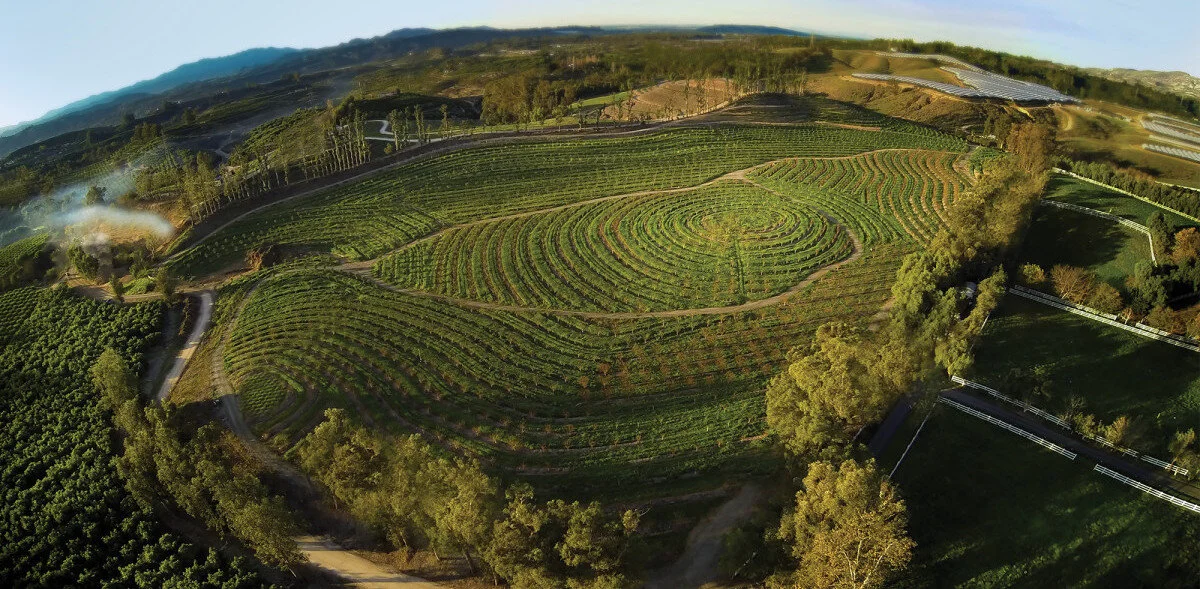
For fruits and vegetables, reduce the velocity of production in fields and factories to a humane, ecologically supportable pace that can meet the highest standards for workers’ rights, safety, and economic security. Grow those crops close to the populations who will be eating them—as much as possible in backyard or community gardens and greenhouses.
Done right, localizing vegetable production would not reduce the total output. Vegetables currently occupy only three percent of national cropland, so they could easily be dispersed among myriad small plots of land in every state, every community.
What we’ll no longer have, however, is access to every type of fresh vegetable and fruit any day of the year. Eating what’s in season will make a comeback.
Adaptation will be necessary. In northerly regions, vegetables can be grown in simple, inexpensive, unheated greenhouses almost year-round (a practical alternative to the fanciful idea of urban “vertical farming,” which envisions raising crop plants indoors without soil, under artificial light—that is, in botanical intensive care units).In summer and fall, home and community canning operations could make locally grown produce available all year, as they did in the war years of the 1940s. That would diversify the northerly vegetable diet in winter and spring.
Supplies of staple grain and bean crops, in contrast, come to us from hundreds of millions of acres across vast swaths of rural America. Only a tiny fraction of that production could be localized, but that’s not a problem. Those crops (and products like flour that are made from them) are dry, have long shelf lives, and can be efficiently shipped to every part of the country by rail.
More near-term policies could come through federal legislation. It has been proposed that farmworkers’ right to organize should be guaranteed, and a path to citizenship should be available for all essential workers who need one; there should be opportunities for farmworkers to become independent farmers; and rural transportation and communication systems need improvement.
Now is the time to build a new, more humane, more robust food system on the ruins of the one that has failed us. This nation can have an ample, nutritious food supply without exploiting and endangering the people who produce and process it
Stan Cox is a research fellow at The Land Institute and the author of The Green New Deal and Beyond: Ending the Climate Emergency While We Still Can (City Lights, 2020).

Salmonella Has Found A Way To Evade Plant Defenses
The invaded plant does not show any obvious signs of infection, and the pathogens cannot be simply rinsed off, which means they can easily jump to people
Earth.com staff writer
Researchers at the University of Delaware have discovered that wild strains of salmonella can evade a plant’s immune defenses by invading the leaves through the stomata. The invaded plant does not show any obvious signs of infection, and the pathogens cannot be simply rinsed off, which means they can easily jump to people.
Stomata are tiny pores that open when there is plenty of sunlight for photosynthesis and close at night. The pores also close upon detection of threats such as drought or microbial pathogens.
Study co-author Professor Harsh Bais explained that some pathogens like fungi can barge into a closed stoma using brute force. Since bacteria lack the enzymes needed to use this type of force, they search for openings in the roots and stomata.
According to Professor Bais, however, bacterial pathogens like salmonella have now found a way to reopen closed stomata and gain entry to the plant.
“What’s new is how the non-host bacteria are evolving to bypass plant immune response. They are real opportunists. They are absolutely jumping kingdoms. When we see these unusual interactions, that’s where it starts to get complex,” said Professor Bais.
The risk of pathogen contamination increases when plants are bred to produce higher yields, or when low-lying crops are grown too close to a livestock field. The researchers have been investigating these issues for about five years.
Companies take various precautions to kill surface bacteria, but they can’t see or treat human pathogens that already have gotten into the leaf.
“The food industry works tirelessly to make the product as safe as they can,” said study co-author Professor Kali Kniel. “But even then, we are growing these products outside, so they’re accessible to wildlife, wind, dust, and water that may transmit microorganisms. It’s a tough situation.”
Graduate student Nicholas Johnson conducted extensive lab experiments to examine how stomata on spinach and lettuce respond to salmonella, Listeria, and E. coli – three human pathogens that leave no trace of infection. He tracked the size of the stomata openings every three hours after the bacteria were introduced.
“He had to sit under a microscope and count the aperture sizes,” said Professor Bais. “And he has to be meticulous.” The tedious work revealed that the salmonella strain was reopening the stomata. “Now we have a human pathogen trying to do what plant pathogens do. That is scary,” noted Bais.
The researchers said it would be particularly scary if salmonella invaded plants on a vertical farm, where plants are grown in vertical rows hydroponically. “If this hits vertical farms, they don’t lose a batch, they lose the whole house,” said Bais.
“This project has mutant Salmonella strains and that allows us another angle on the molecular biology side,” said Professor Kniel. “The individual mutations are important for the salmonella structure and the regulation of stress.”
“When we used mutant strains we saw big differences in the ability to colonize and internalize – and that’s what consumers hear a lot about. You are not able to wash it off.”
“We can also look at which genes or part of the organism might be more responsible for the persistence on the plant – making it last longer and stronger. That is so important when you think of food safety issues.”
The study is published in the journal Frontiers in Microbiology.
By Chrissy Sexton, Earth.com Staff Writer


US: WISCONSIN - City of Ripon Receives $190,000 State Grant To Support Redevelopment of a Vacant Grocery Store
Ripon is home to one of the largest vertical farms in the state since Ernessi Farms moved its operation to Wisconsin in 2015
WEDC Investment to Help Fund Renovation
of a Vacant Building Into An Urban Vertical Farm
By Wisconsin Economic Development Corporation
July 22, 2020
RIPON, WI. JULY 22, 2020 – The City of Ripon is receiving a $190,000 state grant to help in the renovation of a vacant former grocery store into an indoor urban vertical farm produce operation with the potential for retail operations and a future rooftop garden.
The Community Development Investment (CDI) Grant from the Wisconsin Economic Development Corporation (WEDC) will support the expansion of Ernessi Farms’ urban vertical farm produce operation using the vacant space.“
A vibrant blend of businesses is vital to a community’s overall economic success, and the urban vertical farm redevelopment will serve as a catalyst for future development and investment in the Ripon community,” said Missy Hughes, secretary, and CEO of WEDC. “
I congratulate the community for working together on this important project that will serve as a foundation for future economic growth and for the collective good of the local economy.”
Ripon is home to one of the largest vertical farms in the state since Ernessi Farms moved its operation to Wisconsin in 2015. Vertical farming is revolutionizing the agricultural industry by using innovative technology to provide fresh and local produce to urban and rural areas that would otherwise have to transport large quantities of fresh produce over long distances.“
Ernessi Farms has been an excellent member of the Ripon community for many years now,” said Ripon Mayor Theodore Grant. “I am pleased to see them expanding. This new location should be a great fit for Ernessi Farms, and I am intrigued to see the future rooftop garden.” With this expansion, Ernessi Farms is expected to more than double their output of produce in the first phase, with room to expand into new products and markets in the future. This will make Ernessi Farms the largest indoor vertical farm in the state of Wisconsin.“
This WEDC grant will help the City of Ripon redevelop the old grocery store on the corner of Fond du Lac Street and Blackburn Street,” said state Sen. Luther Olsen. “The grant will provide an opportunity for a new and innovative business to become a part of the Ripon community.”
“This is a wonderful opportunity for Ernessi Farms to double their production and create new jobs in the community, as well as aid in the revitalization of downtown Ripon and Fond du Lac County,” said state Rep. Joan Ballweg. “This business is already successful, and this grant will allow for their natural growth in a developing, non-traditional area of agriculture.”
“We are honored to have been selected for this grant. Located in the heart of our downtown, this redevelopment project will create a significant benefit to Ripon’s downtown revitalization efforts and the entire community,” said Lori Rich, city administrator, and treasurer for the City of Ripon. “The project will not only improve the assessed value of the former property but more importantly will add new employment opportunities, particularly for our community’s disabled workforce. WEDC continues to be a strong partner in redevelopment efforts in Ripon, inspiring continued investment in the amenities that Ripon is proud of.”
The expansion of Ernessi Farms has the potential to make a significant impact on the community, county, and region. The project will promote Ripon’s ongoing downtown area revitalization and economic development within the community and beyond. Additionally, vertical farming often utilizes space in vacant buildings that may otherwise become problem areas for communities.“
We’re incredibly excited to move forward with our expansion in historic downtown Ripon. Once complete, we’ll be able to offer our fresh, locally grown produce year-round to an expanded delivery area covering the whole state,” said Bryan Ernst, owner of Ernessi Farms.“
Envision Greater Fond du Lac, Fond du Lac County’s economic development organization, is proud to have supported the City of Ripon’s application and its subsequent approval of a CDI Grant for a Downtown Ripon Development project,” said Jim Cleveland, vice president of economic development for Envision Greater Fond du Lac. “Ernessi Farms started as an entrepreneurial venture for the owner and has since grown into a thriving business in northeast Wisconsin. By receiving this grant, the City of Ripon will be able to support a homegrown business, as they embark on an exciting expansion that will create new jobs and investment in the city.”
Ernessi Farms sells products to local and regional grocery stores and restaurants and utilizes services from several local businesses.
WEDC’s CDI Grant Program supports community development and redevelopment efforts, primarily in downtown areas. The matching grants are awarded based on the ability of applicants to demonstrate the economic impact of the proposed project, including public and private partnership development, financial need, and use of sustainable downtown development practices.
Since the program’s inception in 2013, WEDC has awarded more than $30 million in CDI Grants to over 100 communities for projects expected to generate more than $500 million in capital investments statewide.
Mentioned in This Press Release
People: Bryan Ernst, Jim Cleveland, Joan Ballweg, Lori Rich, Luther Olsen, Missy Hughes, Theodore Grant
Government: Wisconsin Economic Development Corporation

Controlled Environment Agriculture Open Data (CEAOD) Project
The use of Machine Learning and Artificial Intelligence techniques could provide CEA researchers and commercial growers an opportunity to optimize crop production efficiency and unveil new methods to improve production yield
Date: August 4, 2020
Time: 2 p.m. - 3 p.m. EDT
Presented by: Erico Mattos, GLASE Director, and Kenneth Tran, Koidra
Click Here to Register

Controlled Environment Agriculture (CEA) is a data-driven scientific discipline. In CEA operations all the environmental parameters are monitored and controlled to provide optimal conditions for crop growth. Recent technological advancements made the use of sensors and controls more accessible to CEA growers allowing them to precisely adjust these parameters.
The use of Machine Learning and Artificial Intelligence techniques could provide CEA researchers and commercial growers an opportunity to optimize crop production efficiency and unveil new methods to improve production yield. However, there is a lack of a centralized repository and a standard methodology for data sharing.
Join GLASE Director Erico Mattos and Koidra CEO Kenneth Tran on this GLASE Webinar to learn about the Controlled Environment Agriculture Open Data (CEAOD) project. This initiative aims to promote data sharing to accelerate Controlled Environment Agriculture (CEA) research through the establishment of a free centralized platform for the CEA community. Researchers and commercial growers are welcome to join and learn more about it.
Kenneth Tran was part of the winning team at the first International Autonomous Greenhouse Challenge held at Wageningen University in 2018. The team defeated four other international teams, consisting of experts in the field of Artificial Intelligence (AI) and horticulture. Erico Mattos is working with Cornell University and Rensselaer Polytechnic Institute Researchers to develop a guideline for data collection and upload to the CEAOD project.