

Welcome to iGrow News, Your Source for the World of Indoor Vertical Farming
Vertical Farming in LatAm: AgroUrbana Closes $1m Seed Funding
Access to vertical farming technologies is deepening and widening across the world, bringing down the costs and hassle of locally producing anything from Singaporean strawberries to Arctic tomatoes
July 2, 2020
Access to vertical farming technologies is deepening and widening across the world, bringing down the costs and hassle of locally producing anything from Singaporean strawberries to Arctic tomatoes.
In Latin America, however, indoor vertical farms are still largely written off on a continent thought of in terms of its abundant fertile soil and plentiful sunlight. Why pay for artificial light or indoor automation when the sun is free, and labor and land are cheap?
That said, there are early signs of a Latin American vertical farming awakening in Chile, where AgroUrbana has just closed a $1 million seed round, bringing its total capital raised to $1.5 million. The startup has created South America’s first vertical farm, according to the Association for Vertical Farming.
Leading the round by contributing 33% of the cash was the CLIN Private Investment Fund administered by Chile Global Ventures, the VC arm of Fundación Chile, a public-private initiative for innovation and sustainability in the country. Support financing also came from CORFO, Chile’s economic development agency, and private investors like company builder and VC Engie Factory, the country’s largest telecommunications company Entel, and sustainability investor Zoma Capital.
In an interview with AFN, AgroUrbana founders Cristián Sjögren and Pablo Bunster described how the funds would be put to work at their 3,000 square feet pilot facility in the suburbs of Santiago, where testing is ongoing on layered, renewable energy-powered stacks of hydroponically grown, LED-lit leafy greens and fruits. AgroUrbana’s first big offtake deal has just been inked with a major Chilean grocery retailer, they said.
A pre-planned switch from restaurant to retail
“It’s been run, run, run,” Bunster recalls, describing the political turmoil in Chile that brought curfews and shuttered restaurants months before Covid-19 locked down the country. That earlier disruption, he adds, actually had its upsides, as it got them thinking more about e-commerce and direct-to-consumer sales — so when the team’s restaurant deals dried up during the Covid-19 pandemic, the switch to retail was already scoped out.
As to scaling up further, Sjögren envisions an eventual 30,000 square foot facility to be bankrolled by Series A funding they plan to work towards later this year. The design and output would depend on the results of their pilot trials.
This size of farm sets the team somewhere in the middle of the two dominant visions of vertical farming: centralized versus distributed. Proponents of centralized systems argue that large-scale production — and financial viability — depend on ever-bigger and higher farms. These farms — or plant factories as they are sometimes called — are proliferating, aided by huge sums of capital. Plenty scooped up a whopping $200 million in Series B funding back in 2017. AeroFarms raised $100 million in late-stage funding in 2019 while Fifth Season secured $50 million last year.
Although centralized facilities have generally dominated in terms of raising capital, distributed and decentralized business models are gaining pace according to AgFunder’s 2019 industry report. One in particular, Germany’s Infarm, nabbed $100 million last year to deploy its connected growing cabinets in supermarkets.
The theatricality of these cabinets harmoniously glowing in office buildings or hospitals in a post-coronavirus world also holds sway in the popular and corporate imagination of 2020. Companies like Square Mile Farms recently crowdfunding over $300,000 on the promise of re-kitting office spaces like Microsoft’s London premises with fresh produce. In New York, Farmshelf has its own grow cabinets deployed in WeWork FoodLabs.
Learning from cash-heavy first movers
Mention of relative giants like Plenty or InFarm could be daunting for newer entrants such as Square Mile Farms or AgroUrbana and their hitherto modest sums raised. But there is perhaps an advantage in starting late, so long as the team learns from the costly mistakes and hubris of earlier endeavours. Here, both Bunster and Sjögren see parallels with the renewable energy industry — where they worked previously — and see the arrival of cheaper, more sustainable energy and capital in Chile as crucial to making vertical farming competitive.
AgroUrbana is exploring three options for solar going forward: either establish a power purchase agreement, in which they buy renewable energy from an existing plant; finance a power plant which will sell energy to them later; or build their own solar farm. But they acknowledge that the larger the facility, the less feasible it is to have solar on-site.
The pair describe how some Chilean outdoor farming is already lean and competitive, yet much of it has been geared towards high-value crops like avocados – and that stuff is primed for export. For the urbanizing local market, they see gaps for hyper-local fresh produce, where the competition would actually be with low-tech smallholder farmers with less traceable supply chains. In the context of Covid-19 and an ensuing consumer embrace of e-commerce options, better nutrition, less water use, and fewer pesticides, the pair reckon there is much to gain from providing produce that is consistently fresh, 365 days a year.
Any chance of the world’s first vertically-farmed avocados any time soon? Unlikely, replies Bunster. As for gene editing, where South American jurisdictions are known to have more lax regulations than their North American counterparts, Bunster says the plan was to work with what nature already provides, while giving “the conditions of spring every day of the year.”

Rooftop Farming: Another Contribution To The Modern-Day Green Revolution
Green roofs are a growing trend in urban areas because of their unique ability to address several urban challenges at once
This article was written by Camilla Stanley, a guest writer for Green Roofs for Healthy Cities
Green roofs are a growing trend in urban areas because of their unique ability to address several urban challenges at once. These benefits include lowering a building’s energy costs, reducing the urban heat island effect, improving air quality, boosting urban biodiversity, having a positive impact on mental health, and, for businesses, strengthening a company’s marketing and increasing property value. But there is one co-benefit that is rarely taken advantage of… food production! In particular, rooftop farms and gardens provide the added benefit of being a source of locally grown produce.
The demand for locally and sustainably grown food is a growing trend as consumers become more interested in knowing where their food is coming from. There are growing concerns around the distance food travels before it reaches our plates (on average fruits and vegetables travel 1,500 miles / 2500 km), and the usage of hormones, pesticides, and GMOs in meat, dairy products and eggs. What the grocery industry is seeing now is a wave of consumers more willing to ‘vote with their dollar’ to ensure that food companies take the necessary steps to effectively reduce their environmental impact.
Rooftop urban farming is a great way to meet these growing demands as consumers are beginning to understand the importance of reconnecting and taking care of nature and the many ecosystem services that nature provides. Green roofs utilized to produce food present a great opportunity for property managers and community leaders to transform the built environment and better serve their communities. This is why Green Roofs for Healthy Cities (GRHC) has put together an informative course on rooftop farming – Introduction to Rooftop Urban Agriculture – a comprehensive review of the benefits, importance, and potential of rooftop agriculture. GRHC is also hosting an Urban and Rooftop Agriculture Virtual Symposium on Thursday, July 23 from 1:00 to 4:30 pm est. The event is bringing together professionals from diverse backgrounds involved in mainstreaming urban agriculture.
The increase in events and resources are coming at a good time as urban agriculture is one of the fastest-growing sectors of the agricultural industry. Rapid technological innovation in areas like vertical farming is allowing entrepreneurs to take advantage of underutilized spaces in cities for food production. This is great for produce that is not well-suited for long-distance transport like leafy greens. Fruits and vegetables that travel long distances also lose flavor and nutrients the longer they are in transit. Urban agriculture helps reduce food waste along the supply chain, supports the growing demand for local and transparent supply chains, and improves the quality of the food available at supermarkets!
Community leaders seeking to address challenges such as poverty, environmental degradation, air and water quality, waste production and disposal and energy consumption would greatly benefit from integrating urban agriculture into their strategies as it is a proven solution in which communities can improve their ecological footprint while garnering social benefits.
Property managers would be interested to know that rooftop urban farming is a great way to earn LEED credits and maintain peak LEED performance. Sites that have on-site vegetable gardens are eligible for up to 6 LEED credits in the following categories: local food protection (1 credit), social equity within the community (1 credit), heat island reduction (2 credits) and site development: protect or restore habitat (2 credits).
Municipalities are taking initiative and investing in the development of sustainable communities and repurposing unused spaces. For example, in New York City on April 18, 2019, the city council passed The Climate Mobilization Act to reduce greenhouse emissions from buildings and includes a requirement for the installation of green roofs and/or solar panels on newly constructed buildings. A similar by-law was passed in Toronto, Canada back in 2009 where all buildings over 2,000 sq. meters must install a green roof. The city now has over 700 green roofs! Other cities that have adopted green roof mandates in recent years include San Francisco, Portland, and Denver! On a larger scale, initiatives such as the C40 Good Food Cities Declaration where fourteen cities around the world committed to achieving the “‘Planetary Health Diet’ by 2030 which aims to address both environmental and human health through better food choices.
For examples of some rooftop urban farms around North America, check out the list below:
- Brooklyn Grange in Brooklyn, NY
- Ryerson Urban Farm in Toronto, ON
- Boston Medical Center Rooftop Farm in Boston, MA
- Chicago Botanical Gardens in Chicago, IL
- Uncommon Ground in Chicago, IL
- STEM Kitchen Garden in San Francisco, CA
- Top Leaf Farms in Oakland, CA
Tagged: urban agriculture, rooftop farm, Brooklyn Grange, Ryerson Urban Farm, Uncommon Ground, C40 Cities, green infrastructure, urban farming, green roof benefits, Toronto Green Roof By-law, climate mobilization act, LEED

Indian Grower Capitalizes On Market Opportunities With AI
Things are looking up for the greenhouse produce market in India. "We see an increase in demand in the Indian market, especially in many cities where we supply", says Sachin Darbarwar, founder of Simply Fresh
Sachin Darbarwar, Simply Fresh
Things are looking up for the greenhouse produce market in India. "We see an increase in demand in the Indian market, especially in many cities where we supply", says Sachin Darbarwar, founder of Simply Fresh. Last year, the grower invested $30 million in expanding the greenhouse operation, and that investment appears to be paying off.
"With more awareness on hydroponic farming and more emphasis on food safety, consumers today are selective in their buying and prefer produce, which is clean, safe, and traceable", Sachin tells us. "With the current global scenario and special focus on health and immunity, we only see this demand increasing in future."
Sachin and Shweta Darbarwar, founders of Simply Fresh
Simply Fresh not only supplies its produce to the local market, however: "We have exported our produce to the UAE, and will shortly resume our exports to countries like the UK, USA, and South East Asia."
So they look across the border, and not just when it comes to exporting their produce. "Our greenhouse structure was designed and delivered to us by Cravo, a Canadian company that specializes in retractable greenhouses", Sachin tells us. They source their seeds from various domestic and international suppliers as well, like Rijk Zwaan. "Depending on crop type we reach out to different vendors to get the best variety of seeds to have high-quality produce for our consumers."
Nutraceuticals
Under their nutraceutical vertical, Simply Fresh grows varieties of medicinal plants. "These have three times more alkaloid content than field grown plants, and serve as raw material for nutraceutical companies", Sachin explains. "The choice to grow these has been a successful move as we are able to provide medicinal plants which are traceable and with higher alkaloid content, which reduces the cost of extraction. Also, all our fresh produce and medicinal plants are safe, traceable and grown using sustainable farming techniques without any use of pesticides."
It's been a bit of a pioneering project to grow those "non-traditional" greenhouse crops: "They are very challenging as globally there are not many growers who have grown this and can share best practices/knowledge on how to grow them and how they behave without soil", Sachin tells us.
Farm in A Box
Like any modern grower, Simply Fresh also makes use of AI, having implemented it in creating data points and making decisions on data points. "For example, we use AI in forecasting yield, predicting seeding charts, space utilisation, traceability, managing crop workflows and knowledge line."
The Farm in A Box (FiAB) platform, developed by the grower, plays a central role in this strategy. "It helps us track everything from the very initial stage of sending, plant profiling, monitoring plant health and nutrient level requirement at each stage of the plant growth.
"We also use the same FiAB platform to plan and forecast the yield required for future and for our internal CRM management, to collect and process orders received from different vendors from various cities."
The company is constantly developing the platform, and in future FiAB may become available for other growers to use as well.
That's not the only thing they have in store for the future: Simply Fresh will be further expanding, growing to 40 acres on their current site in Phase 2 of the expansion.
For more information:
Simply Fresh
www.simplyfresh.co.in
Publication date: Wed 22 Jul 2020
Author: Jan Jacob Mekes
© HortiDaily.com
BARBADOS: Future of Farming: Push For Aquaponics
“It is a great opportunity for farmers and young people who wish to move forward with an innovative and productive form of agriculture,” she expressed, also revealing that the farm currently produces tilapia, specialty lettuce, sweet peppers, tomatoes and a wide range of herbs
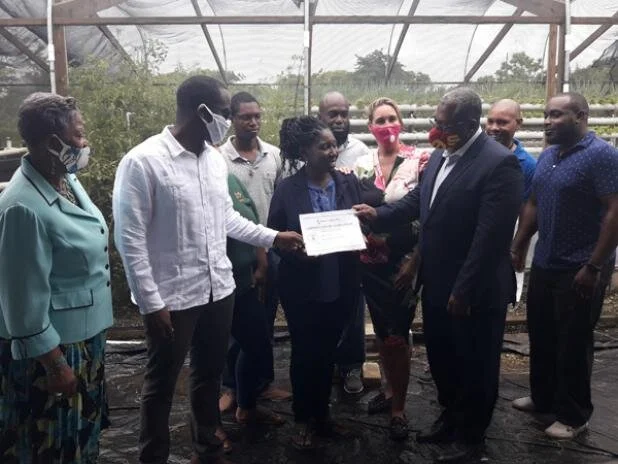
From left: Member of Parliament for St Thomas and Minister of People Empowerment and Elder Affairs, Cynthia Forde; Minister of Maritime Affairs and the Blue Economy, Kirk Humphrey; Daledrey Barrow receiving her Certificate of Completion in Aquaponics from Minister of Agriculture and Food Security, Indar Weir. The first training of ten participants at the Aquaponics Demonstration Farm took place pre-COVID .
07/25/20
Barbados can boast of having its own Aquaponics Demonstration Farm at Adams Aquafarm in Hopewell, St. Thomas.
This has been made possible through the collaborative efforts of the Ministry of Maritime Affairs and the Blue Economy and The Food and Agriculture Organization of the United Nations (FAO).
As part of the FAO’s Blue Revolution Project, Adams Aquafarm, owned by Kristina Adams, received funding and training to develop the demonstration farm.
The funding also supports the training of 30 entrepreneurs who are interested in developing an aquaponics small or medium-sized business in Barbados, as well as the training of ten schoolteachers. Aquaponics is the integration of land-based fish farming (aquaculture) and soil-less plant production (hydroponics) with the fish waste providing nutrients for the plants, while the bacteria and plants help to clean the water for the fish.
During the official launch yesterday, Adams said that the funding has allowed her to showcase a farming system that is 100% suited to Barbados while utilizing local supplies and advanced technology to grow local products.
“It is a great opportunity for farmers and young people who wish to move forward with an innovative and productive form of agriculture,” she expressed, also revealing that the farm currently produces tilapia, specialty lettuce, sweet peppers, tomatoes and a wide range of herbs.
Minister of Maritime Affairs and the Blue Economy, Kirk Humphrey said that the project provides great benefits to the country as it supports new and innovative farming opportunities for small-scale and medium-sized businesses.
“In aquaponics, you have the opportunity to have multiple sources of income – your vegetables and fish. You can grow more in smaller spaces, so in a constituency like St. Michael South where I don’t have a lot of space, my people could have the opportunity to make multiple sources of income in a small space. And I understand that the products grow faster and they are organic and uses less energy,” he pointed out.
“Everything about this project excites me and everything about this project is transformative and it puts power back into the hands of ordinary people.”
Minister of Agriculture and Food Security, Indar Weir said that he was impressed, and recalled that when he launched the Farmers’ Empowerment and Enfranchisement Drive (FEED) that he made it clear that many of the young farmers coming into agriculture would have an opportunity to get involved in aquaponics.
“I strongly believe that with the limited land resources that we have in Barbados it is important that we start to understand that the conversation in agriculture is changing. And so therefore when I see a project like this it demonstrates to me that people are out there doing things and not sitting waiting for them to happen.”
Member of Parliament for St Thomas and Minister of People Empowerment and Elder Affairs, Cynthia Forde said that she is extremely proud of what Adams has been able to accomplish.
“I am so proud to see that she has sought to do training. Sometimes we have our ideas and we hold on to them. And I want to say that there is nobody prouder than I am this morning to see a woman at the helm of this initiative. And we really need to let women in agriculture and other aspects of development get the exposure and the credit they deserve,” she stressed.
This Blue Revolution Project is part of a larger effort of FAO to support aquaculture development in the Caribbean. Under the project and the Climate Change Adaptation of the Eastern Caribbean Fisheries Sector Project (CC4FISH), FAO is funding demonstration farms across the Caribbean and continues to promote the adoption of aquaponics techniques and capacity building exercises in the region.
Regional Project Coordinator at FAO - CC4FISH, Iris Monnereau, further emphasized that the agriculture sector in the region needs to be more resilient, more innovative, and more diverse to attract youth and create employment.
“This was already very important before the challenges of COVID-19, but it is especially important now. We are therefore very happy that this project makes a tiny contribution in creating more resilient, diverse and innovative livelihoods in Barbados,” she expressed.(TL)

'Wall Farm" Allows Shoppers To Pick Their Own Produce in Store
"We are gratified to be the first kosher supermarket in the country to introduce the Vertical farm," said Malki Levine of Evergreen
'Wall farm' allows shoppers to pick their own produce in store
A new vertical field urban farm system at New York-based Evergreen Market makes tasty, healthy, sustainable, and pesticide-free produce available to consumers 365 days a year.
Jul 27, 2020
The world of freshly harvested greens and herbs is looking up—literally—in Monsey, New York. Evergreen Kosher Market is debuting a revolutionary 20-foot-high geoponic (soil-based) wall farm that lets customers choose clean, fresh-picked produce and see exactly where it comes from.
The pesticide-free lettuce, kale, arugula, basil, and cilantro from Evergreen's on-site farm are sold at in individual pots, making the "buying local" experience more convenient than ever. Pesticide-free and grown in soil that is never exposed to bugs, all products are Star-K Kosher Certified for purity.
"We are gratified to be the first kosher supermarket in the country to introduce the Vertical farm," said Malki Levine of Evergreen. "Our customers are very much looking forward to buying fresh produce that is grown in our own backyard rather than being transported on long hauls from farms across the country. They will also appreciate the significantly reduced level of infestation, a major concern of kosher consumers."
Shoppers can visit the vertical farm when they visit the store. The system features a controlled, sterile environment with soil beds containing a proprietary mix of minerals and nutrients. Advanced sensors constantly monitor, irrigate, and fertilize the crops throughout every growth stage.
Evergreen's wall farm is the latest installation from Vertical Field, an Israeli ag-tech company that produces innovative vertical agricultural solutions that help the environment, improve human health conditions, and make fresh produce available all year round.
Geoponic (soil-based) vertical farming yields a new crop every few days, ensuring that fresh greens and herbs will always be in season in Monsey. The sustainable and eco-friendly method produces cleaner, healthier, tastier veggies than those shipped from miles away. And reduced soil-to-plate time means a longer shelf life and fewer hands involved—a welcome benefit in the age of COVID-19. "We are extremely excited about the partnership with Evergreen," said Guy Elitzur, CEO of Vertical Field.
They are precisely the type of supermarket that has the right customer base and will successfully integrate the latest technological advances in geoponic farming."
Source: Evergreen Kosher Market
MarketTAGS: RETAILER AND DISTRIBUTOR
Space To Grow, or Grow In Space – How Vertical Farms Could Be Ready To Take-Off
Vertical farms with their soil-free, computer-controlled environments may sound like sci-fi, but there is a growing environmental and economic case for them, according to new research laying out radical ways of putting food on our plates
JOHN INNES CENTRE
14 JULY 2020
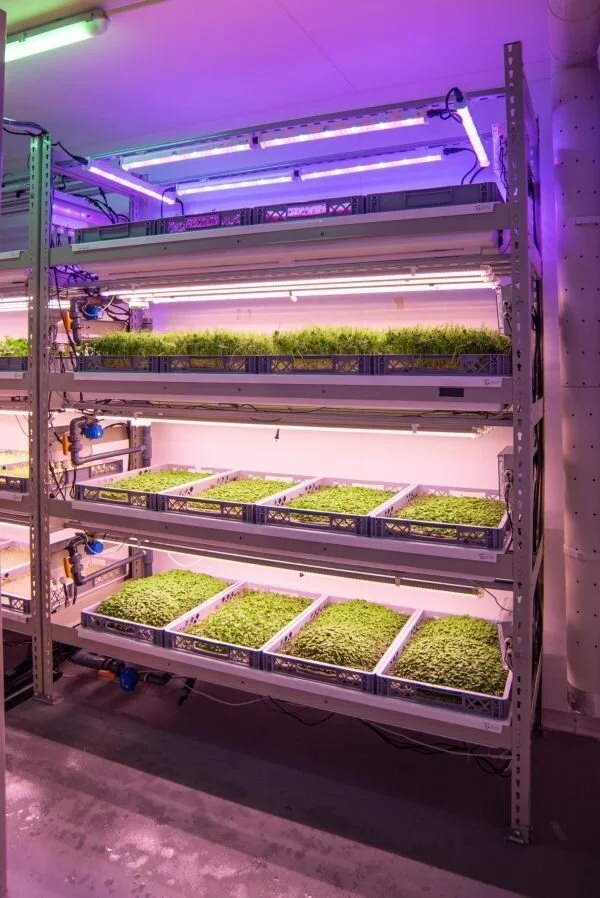
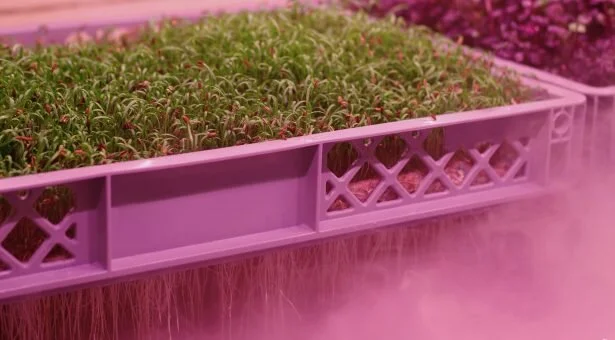
Image: Vertical Farming -- economic and environmental benefits. (Credit: LettUs Grow)
Vertical farms with their soil-free, computer-controlled environments may sound like sci-fi, but there is a growing environmental and economic case for them, according to new research laying out radical ways of putting food on our plates.
Vertical farms with their soil-free, computer-controlled environments may sound like sci-fi, but there is a growing environmental and economic case for them, according to new research laying out radical ways of putting food on our plates.
The interdisciplinary study combining biology and engineering sets down steps towards accelerating the growth of this branch of precision agriculture, including the use of aeroponics which uses nutrient-enriched aerosols in place of soil.
Carried out by the John Innes Centre, the University of Bristol, and the aeroponic technology provider LettUs Grow, the study identifies future research areas needed to accelerate the sustainable growth of vertical farming using aeroponic systems.
Dr Antony Dodd, a Group Leader at the John Innes Centre and senior author of the study, says: “By bringing fundamental biological insights into the context of the physics of growing plants in an aerosol, we can help the vertical farming business become more productive more quickly while producing healthier food with less environmental impact.”
Read more at John Innes Centre

10 Projects From KADK Graduates Offer "Solutions to The Major Challenges of Our Time"

Dezeen staff | July 9, 2020
Students from the Royal Danish Academy of Fine Arts, Schools of Architecture, Design, and Conservation (KADK) are sharing projects that aim to create a healthier, more sustainable, and democratic society as part of their VDF school show.
They were created as part of the school's graduate programmes in Architecture and Design, which are focused on addressing the UN's Sustainable Development Goals as a means of considering "how we should design and build in the future".
The 10 projects showcased below were selected from a pool of 280 students and include a modular timber school, bacteria-dyed textiles, and a "hydroponic cultural landscape".
The Royal Danish Academy of Fine Arts, Schools of Architecture, Design, and Conservation
University: The Royal Danish Academy of Fine Arts, Schools of Architecture, Design and Conservation
Course: MA Architecture and MA Design
KADK Graduation 2020 – Solutions to the major challenges of our time:
"Climate. Health. Democracy. Sustainability. 280 MA Architecture and MA Design graduates have addressed a number of the challenges we face as a global community today. How do we ensure a sustainable cooling of our cities and how can we use carbon-neutral building materials? Or how can design solutions help accelerate a better recovery for the benefit of each individual and society in general?
"The curriculum at the Royal Danish Academy of Fine Arts, Schools of Architecture Design and Conservation (KADK) is rooted in research, practice, and artistic development. For the past four years, KADK has added a strategic focus on the 17 UN Sustainable Development Goals (SDG). We believe that the SDGs can inspire our students to consider how we should design and build in the future, using a holistic perspective to provide new, original, and necessary global solutions to these pressing concerns.
"Their projects demonstrate how architecture, design, and conservation can create visions, new knowledge, and solutions to complex problems in compelling and attractive designs. Future generations of architects and designers – like those we educate at KADK – must be capable of releasing this vast potential."
The Green Structure of Copenhagen by Agnes Josefin Hekla, MA Architecture
"What would Copenhagen look like if the city had to be self-sufficient in terms of its food supply? This project creates solutions for a scenario in which the city is forced to feed itself, due to changed global conditions caused by changing climate and food shortages.
"A hydroponic cultural landscape is established across the city's rooftops, between blocks of flats, across car parks and railway beds for raising vegetables in water without soil. Besides supplying the city with vegetables and collecting large volumes of precipitation, the urban landscape is ideal for movement, recreation, and working together to grow vegetables."
Studio: CITAstudio – Computation in Architecture, Institute of Architecture and Technology
Tutor: Paul Nicholas
Press contact: Inge.Henningsen@kadk.dk or hbay@kadk.dk
READ MORE AT DEZEEN
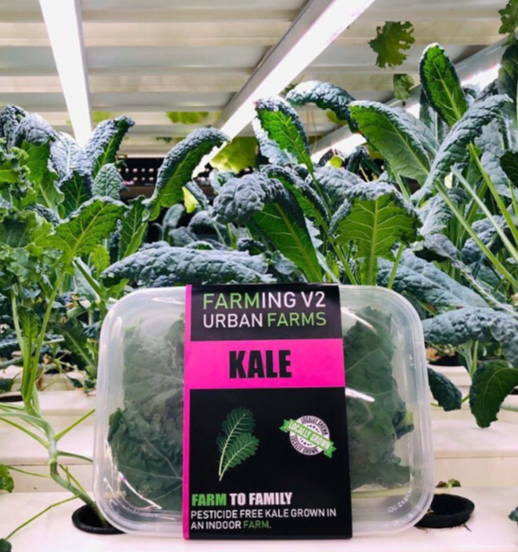
Farming V2 - The New Age of Farming
Hydroponics is a method of agriculture that uses a mineral-rich solvent in lieu of soil. This method uses far less water and allows plants to grow at a much greater speed.

Rags to riches stories fascinate us. We cheer incessantly for entrepreneurs who have beaten the odds, often giving them the stature of a renewed and risen phoenix. Rightly so, the transition from an aspiring entrepreneur to an established one is a challenging peregrination towards a hazy destination.
Amongst the plethora of value-generating activities a business undertakes to stay alive; maintaining cash flow, building a commendable product, keeping costs low, remaining wary of major societal and technological paradigms, the most fundamental challenge for early-stage companies is knowing that the customer exists and convincing the customer you exist. Neglecting the balance between these two essential conditions of success leads many companies towards an early demise.
The fear of failure silently triggers a deep contemplation amongst aspiring entrepreneurs, yet the hope that proclivity will eventually yield success keeps many committed towards their cause.

Kalera Opens Texas’ Largest Vertical Farming Facility in Houston
Houston farm will be the company's newest and largest yet, joins farms in Orlando and Atlanta
Houston farm will be the company's newest and largest yet, joins farms in Orlando and Atlanta
July 13, 2020 | Source: Kalera
The new Houston facility, which will be the largest vertical farming facility in Texas, is the next step in Kalera’s rapid domestic and international expansion plan to bring consumers fresh leafy greens right where they are.
ORLANDO, Fla., July 13, 2020 (GLOBE NEWSWIRE) -- Today, technology-driven vertical farming company Kalera announced that it will open a new state-of-the-art growing facility in Houston, Texas in the spring of 2021. The new Houston facility — which will be the largest vertical farming facility in Texas — is the next step in Kalera’s rapid domestic and international expansion plan to bring consumers fresh leafy greens right where they are. By placing its farms directly in the communities that they serve, Kalera is able to supply national retailers and foodservice distributors without a long haul across the country, guaranteeing that its leafy greens are fresher longer, and much safer than field-grown lettuce.
The new facility is being announced a mere two months after Kalera announced it will be opening a new facility in Atlanta in early 2021—an announcement that took place less than two months after it opened its second Orlando, Florida farm. While Kalera’s Atlanta farm is slated to be the highest production volume vertical farm in the Southeast, the new Houston facility will be even larger and will generate dozens of new jobs for the local Houston community. Kalera’s Houston farm’s lettuce will be available at retailers and foodservice distributors, as well as through the hospitality and travel industry.
Retailers, distributors, and food services facilities interested in carrying Kalera’s lettuce can connect with the sales team at orders@kalera.com.
Kalera is able to quickly open its newest growing facility in Houston as a result of a streamlined design and construction process, further illustrating its ability to rapidly scale and expand its vertical farms. As Kalera accelerates its growth over the next few years, it will continue to open additional facilities, expanding production capacity throughout the US and internationally.
“In light of the global pandemic and seemingly endless food safety recalls, today, more than ever, consumers are demanding food that is local and that they can trust. Kalera is leading the way in the indoor-farming AgTech revolution and we are proud, especially in today’s environment, to bring the safest, purest, freshest, most nutritious, sustainable, non-GMO, pesticide-free lettuce to cities across the country as we continue our rapid expansion plan across America and prepare to open our largest facility to date,” said Daniel Malechuk, CEO of Kalera.
“Houston presents Kalera with a wonderful market for our produce, as it allows us to not only supply one of the largest cities in America, but also service cities throughout the region including Dallas-Fort Worth, Austin, San Antonio, and New Orleans. Since we can easily supply produce within hours of harvest from this location to surrounding cities, Kalera can ensure the highest quality and freshness by delivering product to customers within hours of harvest, rather than days or weeks.”
The company utilizes cleanroom technology and processes to eliminate the use of chemicals and remove exposure to pathogens. With indoor facilities situated right where the demand is, Kalera is able to supply an abundance of produce locally, eliminating the need to travel long distances when shipping perishable products. Kalera's plants grow while consuming 95% less water compared to field farming.
In addition to its R&D center, Kalera opened its first commercial vertical farm, the HyCube growing center, on the premises of the Orlando World Center Marriott to bring fresh, local produce to the hotel’s visitors and customers. In March this year, it announced the opening of its second facility in Orlando, and in April, announced that it will open an Atlanta facility in early 2021. The Houston facility is the fourth farm in Kalera’s portfolio, and will soon be joined by more in the United States and around the world. Kalera also made headlines after pivoting their business strategy amidst the COVID-19 crisis, shifting from a foodservice-focus to land their produce in the aisles of Publix. During this time, Kalera also organized giveaways for the Orlando community, giving away tens of thousands of heads of lettuce to provide access to fresh, local, produce to residents.
About Kalera
Kalera is a technology-driven vertical farming company with unique growing methods combining optimized nutrients and light recipes, precise environmental controls, and cleanroom standards to produce safe, highly nutritious, pesticide-free, non-GMO vegetables with consistently high quality and longer shelf life year-round. The company’s high-yield, automated, data-driven hydroponic production facilities have been designed for rapid rollout with industry-leading payback times to grow vegetables faster, cleaner, at a lower cost, and with less environmental impact.

KOREA: LG Shows Off Blockchain-Powered Farming System at Seoul Metro Station
South Korean electronics giant LG has created a very public showcase for its blockchain-powered food and agriculture traceability platform – at one of Seoul’s busiest subway stations
July 22, 2020
Source: LG U+
South Korean electronics giant LG has created a very public showcase for its blockchain-powered food and agriculture traceability platform – at one of Seoul’s busiest subway stations.
Per Paxnet, LG’s telecoms subsidiary LG U+ and its IT services arm LG CNS have teamed up for the venture, which will see the companies create a “smart farm” within Sangdo Subway Station. The station sits on Line 7 of the capital’s subway system and is located in Dongjak, an affluent south-central region of the South Korean capital.
The smart farm will be kitted out with the latest in high-tech agricultural wizardry, but its true purpose appears to be the promotion of LG CNS’ Monachain blockchain network. The company has developed a platform for agriculturalists, retailers, and customers that makes use of the network – whereby all members of the supply chain feed data into a decentralized ledger, purportedly ensuring traceability at every step.
The agricultural sector in South Korea is worth over USD 7 billion, per Bank of Korea statistics released earlier this year. What is more, the government has shown a keen willingness in subsidizing IT-powered farming innovation drives. Seoul has previously unveiled plans to create 4,300 jobs in the emerging smart agriculture sector by 2022.
Last year, LG CNS stated that it would develop an agricultural goods distribution platform that makes use of the Monachain platform – in association with the government-run National Agricultural Products Quality Management Service and local authorities.
The company has also attempted to extend its blockchain-powered food traceability operations to school lunch programs in the country.
As previously reported, the company is currently testing its own digital token, and has formed partnerships with other major blockchain players in the nation, including chat app giant Kakao’s Klaytn blockchain project.
Visitors to the Sangdo Station-based farm will be able to see how agriculturalists at the site maintain optimum growth conditions day and night using blockchain-powered solutions that help monitor lighting, temperature, humidity, carbon dioxide, pollution and more.
The two LG subsidiary companies have teamed up with an IT firm named Farm8 for the venture, and say that they will extend the reach of the platform to smartphone-powered remote crop cultivation in indoor smart farms. The parties say they will use innovations including monitoring sensors connected to WiFi networks, smart CCTV systems, Big Data, and AI-related technology.

How Vertical Farms Could Be Ready To Take-Off
A new interdisciplinary study combining biology and engineering sets down steps towards accelerating the growth of vertical farming, including the use of aeroponics which uses nutrient-enriched aerosols in place of soil, reports Science Daily
24 Jul 2020
Study identifies future research areas needed to accelerate growth of vertical farming using aeroponics.
A new interdisciplinary study combining biology and engineering sets down steps towards accelerating the growth of vertical farming, including the use of aeroponics which uses nutrient-enriched aerosols in place of soil, reports Science Daily.
Accelerate sustainable growth of vertical farming
The study was carried out by the John Innes Centre, the University of Bristol, and the aeroponic technology provider LettUs Grow. It identifies future research areas needed to accelerate the sustainable growth of vertical farming using aeroponic systems.
Dr. Antony Dodd, a group leader at the John Innes Centre and senior author of the study, says: “By bringing fundamental biological insights into the context of the physics of growing plants in an aerosol, we can help the vertical farming business become more productive more quickly while producing healthier food with less environmental impact.”
Vertical farming is a type of indoor agriculture where crops are cultivated in stacked systems with water, lighting, and nutrient sources carefully controlled.
Seven areas of future research
The study, which appears in the journal New Phytologist and is called Getting to the Roots of Aeroponic Indoor Farming, lays out seven steps – strategic areas of future research needed to underpin increased productivity and sustainability of aeroponic vertical farms.
These seek to understand:
Why aeroponic cultivation can be more productive than hydroponic or soil cultivation.
The relationship between aeroponic cultivation and 24-hour circadian rhythms of plants.
Root development of a range of crops in aeroponic conditions.
The relationship between aerosol droplet size and deposition and plant performance.
How we can establish frameworks for comparing vertical farming technologies for a range of crops.
How aeroponic methods affect microbial interactions with plant roots.
The nature of recycling of root exudates (fluids secreted by the roots of plants) within the nutrient solutions of closed aeroponic systems.
The report argues that a driver of technological innovation in vertical farms is minimizing operation costs whilst maximizing productivity – and that investment in fundamental biological research has a significant role.
Genetically tune crops to grow in vertical farms
John Innes Centre researchers have bred a line of broccoli adapted to grow indoors for a major supermarket and one of the aims of research will be to test how we can genetically tune more crops to grow in the controlled space of vertical farms.
Bethany Eldridge, a researcher at the University of Bristol studying root-environment interactions and first author of the study adds: “Given that 80% of agricultural land worldwide is reported to have moderate or severe erosion, the ability to grow crops in a soilless system with minimal fertilizers and pesticides is advantageous because it provides an opportunity to grow crops in areas facing soil erosion or other environmental issues such as algal blooms in local water bodies that may have been driven by traditional, soil-based, agriculture.”
Aeroponics is associated with very little water, automation, and high tech systems. But what is the current potential of aeroponics technology to grow food or cannabis crops economically?
Hugo Claver
Web editor for Future Farming
Lead Photo: - Photo: ThisIsEngineering
Farming In The Desert: Are Vertical Farms The Solution To Saving Water?
"When I told people I was going to grow tomatoes in the desert, they thought I was crazy," Sky Kurtz, founder of Pure Harvest Smart Farms, told DW
With high temperatures and water scarcity, the Emirates might seem an unlikely place for a farm. Yet, as coronavirus and climate change heightens the desire for food security, could vertical farms be the solution?
"When I told people I was going to grow tomatoes in the desert, they thought I was crazy," Sky Kurtz, founder of Pure Harvest Smart Farms, told DW.
With just an average 12 days of rain a year, less than 1% arable land, a desert location, and an 80% import rate for food, the United Arab Emirates (UAE) seems an unfavorable place to set up a farm.
Read more: World needs 7 planets to eat like a G20 nation, food report finds
Kurtz is one of several entrepreneurs using high-tech farming techniques to boost crop production in the Emirates. Pure Harvest built the first climate-controlled greenhouse in Abu Dhabi in 2017.
Prompted by arid conditions and a desire for greater food security, the country is investing millions in technologies — such as vertical farming — that could make it an unlikely agricultural pioneer.
Read more: Goodbye to fields: What food production may look like tomorrow
Sky Kurtz says people thought he was crazy when he said he would grow tomatoes in the desert
Vertical farms can grow a rich variety of different crops by stacking them in layers under LED lighting in climate-controlled greenhouses and watering them with mist or drip systems. The process is tailored to each crop's specific needs, resulting in high-yield, year-round harvests.
"It takes 30 to 40 days to grow leafy greens out in the field. We can grow that same crop in 10 to 12 days," says Marc Oshima, co-founder of Aerofarms. The company received funding from the Abu Dhabi Investment Office to build the capital's largest indoor vertical farm, with 800 different crops, by 2021.
With vertical farming, crops can flourish year-round, far from traditional regions of production
Water scarcity and fossil-fuel reliance
The technology uses minimal land and up to 95% less water than conventional agriculture.
The hydroponics system places the plants' roots directly into a water-based and nutrient-rich solution instead of soil. This "closed-loop" system captures and recirculates all the water, rather than allowing it to drain away — useful for a country like the UAE suffering from extremely high water stress.
Read more: Blue Gold: The dwindling resource of water
Globally, agriculture accounts for 70% of freshwater withdrawals, and UAE is extracting groundwater faster than it can be replenished, according to the International Center for Biosaline Agriculture (ICBA).
"Water is very expensive over in the UAE, but energy is cheap as it is subsidized," says Jan Westra, a strategic business developer at Priva, a company providing technology to vertical farms.
The artificially controlled environment is energy-intensive because the air conditioning and LED lights need a constant source of electricity.
This bringing forth of life in the desert could come at a high environmental cost. Most of that energy comes from carbon-emitting fossil fuels, even as the Middle Eastern country feel the effects of climate change.
By 2050 Abu Dhabi's average temperature is predicted to increase by around 2.5°C in a business-as-usual scenario. Over the next 70 years, patterns of rainfall are also expected to change.
Aerofarms has received funding from the Abu Dhabi Investment Office to build the capital's largest indoor vertical farm, with 800 different crops, by 2021
Integrating renewable energy
Although Pure Harvest is building a solar-powered farm in neighboring Saudi Arabia, its UAE operations get electricity from the carbon-intensive national grid.
Investing more in renewables "is a goal of ours," Kurtz told DW. He said the company has not set a clean energy target but is working on various green power projects, including a plan to integrate solar power generated in UAE into its operations.
However, Willem van der Schans, a researcher specializing in short supply chains at Wageningen University in the Netherlands, says sustainability and clean energy should be "inherent in the technology and included in plans when starting a vertical farm."
He argues that many vertical farming companies are not sustainable in terms of energy as they still view clean power as an optional "add-on."
Read more: Innovative clean water technologies
Ismahane Elouafi, director-general of the government-funded ICBA in Abu Dhabi, acknowledges that vertical farming has some way to go before achieving "real sustainability," but she believes the innovations are "promising."
Improved battery storage, increasingly efficient LED lights and cheaper solar panels will help, she adds.
Local solutions
By 2050, the UAE government wants to generate almost half its energy from renewable sources.
Fred Ruijgt, a vertical farming specialist at Priva, argues that it's important to factor transport and refrigeration into the energy equation. Vertical farming uses more energy to grow crops than traditional agriculture, but because crops are grown locally, they do not have to be transported by air, sea or truck over long distances.
Vertical farming installations come in all shapes and sizes, meaning food can grow where land and water are scarce
"The energy-saving is difficult to calculate exactly, but the advantages of locally grown crops are huge," he says, adding that those grown in vertical farms not only use less water and pesticides but that they also have a longer shelf life due to minimal transportation time.
Read more: Dubai: Can the city of black gold go green?
Food security and coronavirus
In 2018, the UAE set out its vision to become a hub for high-tech local food production.
Companies and investors have flocked to the region, attracted by the 0% corporate tax rate, low labor costs, and cheap energy. With their help, UAE aims to reduce its reliance on imports and make its food system more resilient to shocks like climate change and pandemics.
Oshima from Aerofarms says the coronavirus pandemic has brought "greater appreciation of how fragile the supply chain is and raised questions about food safety and security."
When the UAE went into lockdown in April, imported supplies of perishable goods like vegetables fell and business boomed for local suppliers.
ICBA's Elouafi said they have helped keep the UAE well-stocked during the pandemic.
"With the help of local food production and adequate imports, there has been absolutely no shortage of food in the UAE," Elouafi told DW.
Climate change, however, poses an altogether more complex threat to the country in the long-term. Given climate change's likely impact on food production, she says vertical farming has shown it is "an economically viable proposition even with harsh climatic conditions."

Is The Future of Farming Indoors?
The global population is predicted to reach 9.7 billion by 2050, and to feed everyone, it’s estimated that global food production will need to increase by up to 70% in the next 30 years
July 14, 2020
Brian Kateman Contributor
I write about sustainable and ethical technology and consumer trends.
The global population is predicted to reach 9.7 billion by 2050 and to feed everyone, it’s estimated that global food production will need to increase by up to 70% in the next 30 years.
There are many challenges to overcome before fears of a worldwide food shortage can be allayed, including rising temperatures and more frequent droughts caused by global warming. These obstacles are making traditional farming methods increasingly inefficient and unpredictable.
Traditional farming has also been hit hard by the COVID-19 pandemic. According to the FAO, border closures, quarantines and disruptions to supply chains are limiting some people's access to food, especially in countries hit hard by the virus or already affected by high levels of food insecurity.
There’s an emerging consensus that the agriculture industry needs to adapt to use less water and chemicals, make crops less vulnerable to changes in the climate, and produce more reliable yields. Part of the answer may lie in the emerging start-ups growing produce in indoor environments, where growing conditions can be better managed.
The indoor farming technology market was valued at $23.75 billion in 2016, and is projected to reach $40.25 billion by 2022. Yields are typically much higher than traditional farming methods. Crops from indoor farming are grown in three dimensions, rather than two – and can be grown all year round, independent of external weather conditions.
Square Roots next-generation farmers growing basil. CRAIG VANDER LENDE
One of Square Roots’ indoor farms, for example, produces the same amount of food as a two- or three-acre farm annually, just from 340 square feet. This yield is achieved by growing plants at 90 degrees, and by using artificial intelligence (AI) to ensure the environment is optimal for each specific plant, including the day and night temperatures and amount of CO2 needed.
“Our indoor farms are living biosystems, constantly adapting to maintain optimal climates for growing specific crops. We’re then able to understand how changes in the climate can impact yield taste and texture,” says Tobias Peggs, Square Roots’ chief executive.
Not only could indoor farming help adapt to a warming planet, but it has the potential to help slow down climate change by being more sustainable – using less water and producing fewer emissions. While estimates vary widely, according to the United States Environmental Protection Agency, agriculture accounted for 10% of all greenhouse gas emissions in 2018; it is also highly dependent on, and a pollutant of, water.
Square Roots’ pop-up farms are built in shipping containers in cities, often in parking lots. They serve local communities, which means reduced emissions compared to traditional agriculture, which often involves transporting food much further. For example, it has 10 farms in Brooklyn that serve 100 retail stores all within five miles of the farm.
At the Plenty headquarters in South San Francisco, leafy greens use up one percent of the land and five percent of the water compared to traditional outdoor farms, says Matt Barnard, the start-up’s Chief Executive Officer, and Co-Founder.
AeroFarms’ indoor farm in New Jersey grows greens including baby kale, baby arugula, and baby watercress using 95% less water than conventional agriculture on just one percent of the land required. The crops grow under LED light with no pesticides and a fraction of the fertilizer used on traditional farms.
AeroFarms environmentally-controlled indoor farms can grow all year round independent of climate and ... [+] AEROFARMS
Marketing director Alina Zolotareva says being able to produce have ready-to-eat produce that doesn’t require rinsing helps to reduce water usage.
“This is a transformational innovation for agriculture at large,” she says, “as access to fresh water for growing food is one of the most pressing challenges of our time.”
As well as fewer miles and less water, indoor farming doesn’t require pesticides. This is better for the environment and human health as it eliminates the risk of water contamination due to run-off, and is in line with increasing consumer demand for non-GMO produce.
Plenty eliminates the need for pesticides with LED lights, which are synced with the crop’s growth, Barnard says, to provide the ideal spectrums and exposure and minimize energy usage.
“Our sensor system ensures each plant gets exactly the amount of purified water it needs, and any excess water is recycled through a closed-loop irrigation system resulting in greatly reduced water consumption and zero waste,” he says.
Nanobubbles super-saturates the water with oxygen, making the plant roots healthier. This promotes ... [+]
MOLEAER
Other farms are using nanobubble technology, such as Moleaer, which has allowed more than 100 indoor farms to connect their irrigation systems to generators that provide oxygen via sub-micron gas-containing cavities to the plant’s roots to provide chemical-free water. These nanobubbles result in healthier roots, more resilient plants, and increasing crop yields, says Nick Dyner, CEO of Moleaer.
“Our oxygen transfer efficiency provides the most cost-effective solution to elevate oxygen levels in the water, which in turn promotes beneficial bacteria and root development,” he says.
The company is also working on a new NASA-approved space farming research project, exploring how astronauts on the International Space Station can grow their own food in microgravity using nanobubble technology.
There are concerns that it’s an expensive investment, but Dyner says Moleaer has various systems so it’s accessible to all sizes of indoor farms, high- and low-tech. Some products do, however, require growers to connect an external source of oxygen, which must come from a gas supply company or an onsite oxygen generator, which Moleaer provides.
“In many cases, traditional farmers may have more to gain by using our technology, since the capital investment is significantly less than the most advanced growing technologies available today, which are often out of a typical farmer’s budget,” Dyner says.
“Nanobubble technology is a cost-effective, chemical-free, and scalable solution that allows growers to increase crop yields and shorten cultivation time - which will be much needed to feed our growing population in the future.”
Peggs says Square Roots is also focused on ensuring its technology makes farming an accessible career path for young people who live in urban areas.
“If you’re a new young farmer at Square Roots, our app will guide you through what to do; what’s growing, what state is in it, what do we need to do today based on where things are in the growth cycle. Through our app and our training program we’re able to bring new people into our team, even folks with zero horticulture experience, and get them ready to go in about six weeks.”
Indoor farming is putting the youth back in agriculture. PLENTY
But despite being an emerging option for youth in the city, Barnard predicts most will remain traditional farmers.
“The world still needs the field and will need the field forever. We support the field by growing in addition to the field. Over time, [indoor] farming systems will become more accessible and affordable. Both field and indoor farming will be necessary to support global food demand.”
Viraj Puri, Co-Founder, and CEO of Gotham Greens, a pioneer in urban indoor agriculture that operates over 500,000 square feet greenhouses in 5 U.S. states, echoes this sentiment: “Growing produce indoors certainly has an increasing role to play in the future of sustainable food production. While indoor farming may not represent the future of all fresh produce production, for certain types of crops such as tomatoes, cucumbers, leafy greens, and herbs, it will become more prevalent. Customers are increasingly recognizing the reliability, consistency, and high quality of greenhouse-grown produce that’s grown in close proximity to large population centers using fewer natural resources. Other agricultural commodities like grains or fruits or root vegetables, however, can’t yet be produced.”
However, Dyner predicts that, eventually, the majority of agriculture will move to indoors, in vertical farms— the practice of growing crops in vertically stacked layers—in urban areas.
“These settings enable traditional farming to shift to controlled growing conditions, using new technology and automation, and reducing the risk of exposure to harsh climate conditions,” he says.
Plenty's goal is to build vertical farms in urban hubs and distribute each farm’s harvest locally ... [+]
PLENTY
Start-ups like Square Roots, Plenty, and AeroFarms currently practice vertical farming, which is a form of indoor farming that relies on artificial lighting such as LEDs instead of drawing on natural sunlight.
Other indoor farming companies like Gotham Greens grow produce in high-tech glass-clad greenhouses that primarily rely on natural sunlight for plant photosynthesis. According to Puri: “vertical farming is a more nascent technology within the indoor farming sector and the costs of running a vertical farm with artificial lighting and air conditioning is currently not as cost-effective as relying on natural sunlight in greenhouses.”
Gotham Greens takes a different approach, relying on natural sunlight rather than the artificial ... [+]
GOTHAM GREENS AND JULIE MCMAHON
“Greenhouse indoor farming technology has been in operation globally for 20 to 30 years and is proven to be commercially viable. That being said, the costs around artificial lighting and other vertical farming technologies have been coming down significantly in the past few years,” he adds.
Nonetheless, indoor farm technology start-ups, broadly speaking, don’t see themselves as disruptive, but as being on the same side of traditional farms, for the wider cause.
“The common enemy is the industrial food system, shipping food from one part of the world to the other, rather than locally produced food,” Peggs says.
Indoor farms don’t work in competition with each other, either; they work collaboratively by forming a network that shares data. For example, AeroFarms is collecting data on a research project with the non-profit Foundation for Food & Agriculture Research to understand the sensory and nutritional characteristics of leafy greens for the benefit of the entire agriculture industry.
However traditional and AI-based indoor farming work together in the future, there’s little doubt that indoor farming is helping to meet the needs of a growing global population and support traditional farming, which is both at the mercy of and exacerbating a warming planet. Only one method will find itself in space – but there’s space for them both.

I am co-founder and president of the Reducetarian Foundation, a nonprofit organization dedicated to reducing consumption of animal products.
Lead Photo: The world’s current agricultural practices are unsustainable, and indoor farming may offer solutions ... [+] PLENTY

CubicFarms Attracts $1.16 Million Investment From Leading Dairy Entrepreneur Harry DeWit and Company Insiders
Harry DeWit is CEO and President of Blue Sky Farms, a Texas and Ohio-based dairy and farming business producing 1.2 million pounds of quality milk per day
NEWS PROVIDED BY
Jul 15, 2020
VANCOUVER, BC, July 15, 2020, /CNW/ - CubicFarm® Systems Corp. (TSXV: CUB) ("CubicFarms" or the "Company") is pleased to announce a non-brokered private placement with Harry DeWit and company insiders, involving the issuance of 1,659,600 common shares of CubicFarms at a price of C$0.70 per share for gross proceeds of up to C$1,161,720 (the "Offering"). Insiders participating in the Offering include Jeff Booth, Chairman; Rodrigo Santana, Chief Operating Officer; and Tim Fernback, Chief Financial Officer.
Harry DeWit is CEO and President of Blue Sky Farms, a Texas and Ohio-based dairy and farming business producing 1.2 million pounds of quality milk per day. He has been lauded as a forward-thinking dairy entrepreneur, having been awarded the International Dairy Foods Association's "Innovative Dairy Farmer of the Year", which recognizes the valuable contributions of progressive dairy producers. His soil conservation efforts were recognized by the USDA's National Resources Conservation Service.
Mr. DeWit commented: "Sustainability, efficiency, and automation have always been at the core of my business endeavors. I have looked to technology to conserve water, reduce labor, and generally improve the efficiency of my daily operations. When CubicFarms' board member John de Jonge introduced me to CubicFarms' HydroGreen system that automates the growth of livestock feed, I had to learn more about the company.
"CubicFarms' HydroGreen technology enables a more sustainable farming operation in that one system displaces thirty acres of land used for livestock forage production, not to mention the cost savings in labor, water, energy, and fertilizers. Providing fresh HydroGreen feed on a daily basis to a herd of cows should bring the herd to a higher production level with health benefits."
CubicFarms CEO Dave Dinesen commented: "Top tier ag-tech investor Ospraie Ag Science has added tremendous value to CubicFarms from day one of becoming a strategic investor just two months ago. We have benefitted from Ospraie's vast network, sector expertise, and vision in our company-building efforts. We are now pleased to welcome Harry to the roster of company supporters. An investment from an industry stalwart such as Harry is a big vote of confidence in CubicFarms and our HydroGreen livestock feed division."
The net proceeds from the Offering are expected to be used for research and development to expand machine capabilities and crop varieties, and working capital.
The Offering is scheduled to close on or about July 28, 2020, and is subject to certain conditions, including, but not limited to, the execution of definitive documentation and receipt of all necessary approvals, including the approval of the TSX Venture Exchange. All securities issued pursuant to the Offering will be subject to a hold period under applicable securities laws, which will expire four months plus one day from the closing date of the Offering.
This press release does not constitute an offer to sell or the solicitation of an offer to buy, nor shall there be any sale of these securities, in any jurisdiction in which such offer, solicitation or sale would be unlawful prior to registration or qualification under the securities laws of such jurisdiction. The securities have not been and will not be registered under the United States Securities Act of 1933, as amended (the "U.S. Securities Act"), or any state securities laws, and may not be offered or sold within the United States unless an exemption from such registration is available.
Neither the TSX Venture Exchange nor it’s Regulation Services Provider (as that term is defined in the policies of the TSX Venture Exchange) accepts responsibility for the adequacy or accuracy of this release.
About CubicFarm® Systems Corp.
CubicFarm Systems Corp. ("CubicFarms") is a technology company that is developing and deploying technology to feed a changing world. Its proprietary technologies enable growers around the world to produce high-quality, predictable crop yields. CubicFarms has two distinct technologies that address two distinct markets. The first technology is its patented CubicFarm™ System, which contains patented technology for growing leafy greens and other crops. Using its unique, undulating-path growing system, the Company addresses the main challenges within the indoor farming industry by significantly reducing the need for physical labor and energy, and maximizing yield per cubic foot. CubicFarms leverages its patented technology by operating its own R&D facility in Pitt Meadows, British Columbia, selling the System to growers, licensing its technology, and providing vertical farming expertise to its customers. The second technology is CubicFarms' HydroGreen System for growing nutritious livestock feed. This system utilizes a unique process to sprout grains, such as barley and wheat, in a controlled environment with minimal use of land, labor, and water. The HydroGreen System is fully automated and performs all growing functions including seeding, watering, lighting, harvesting, and re-seeding – all with the push of a button – to deliver nutritious livestock feed without the typical investment in fertilizer, chemicals, fuel, field equipment, and transportation. The HydroGreen System not only provides superior nutritious feed to benefit the animal but also enables significant environmental benefits to the farm.
Cautionary statement on forward-looking information
Certain statements in this release constitute "forward-looking statements" or "forward-looking information" within the meaning of applicable securities laws, including, without limitation, statements with respect to the use of proceeds of the Offering and the potential benefits of Harry DeWit's investment to the Company. Such statements involve known and unknown risks, uncertainties, and other factors including evolving market conditions, which may cause the actual results, performance, or achievements of CubicFarm Systems Corp., or industry results, to be materially different from any future results, performance, or achievements expressed or implied by such forward-looking statements or information including the Company obtaining the approval of the Offering from the TSX Venture Exchange. Such statements can be identified by the use of words such as "may", "would", "could", "will", "intend", "expect", "believe", "plan", "anticipate", "estimate", "scheduled", "forecast", "predict", and other similar terminology, or state that certain actions, events, or results "may", "could", "would", "might", or "will" be taken, occur, or be achieved.
These statements reflect the Company's current expectations regarding future events, performance, and results and speak only as of the date of this news release. Consequently, there can be no assurances that such statements will prove to be accurate and actual results and future events could differ materially from those anticipated in such statements. Except as required by securities disclosure laws and regulations applicable to the Company, the Company undertakes no obligation to update these forward-looking statements if the Company's expectations regarding future events, performance, or results change.
SOURCE CubicFarm Systems Corp.
For further information: Kimberly Lim, kimberly@cubicfarms.com, Phone: +1-236-858-6491, www.cubicfarms.com

Larry Ellison's Indoor Greenhouse Farm In Hawaii Undergoes Business Changes
The initial farm on Lanai island was separated from Sensei, formerly Sensei Retreats, and Sensei Lanai, a wellness resort operated by hotel management firm Four Seasons
April 12, 2011: Lanai, Hawaii. The long red dirt road of Munrow Trail. (Image: Jenna Szerlag/Design Pics via ZUMA Wire)
HONOLULU - The owner of a hydroponic greenhouse operation in Hawaii has announced changes to the farm operation in Lanai, including a new leader and severance from resort operations.
Owner Larry Ellison and partner David Agus said earlier this week that Sensei Farms has been rebranded as Sensei Ag as part of the change, the Honolulu Star-Advertiser reported.
Sensei Ag began producing vegetables earlier this year on Lanai and is currently supplying hotels, retailers, and chefs on the island. The operation aims to produce more than a million pounds of food annually for distribution beyond Lanai using 90% less water than traditional farming, company officials said.
The initial farm on Lanai island was separated from Sensei, formerly Sensei Retreats, and Sensei Lanai, a wellness resort operated by hotel management firm Four Seasons.
The farm and the resort were previously part of Sensei Holdings, Inc.
Sonia Lo was also named CEO of Sensei Ag, officials said. Lo has more than 30 years of experience in finance and most recently was CEO of Crop One Holdings, a California-based indoor farm operator.
“We are incredibly well-positioned with Larry and David’s guidance, knowledge, and networks to become the leader in our space,” Lo said. “There has never been a better time to rebuild our global food and agriculture supply chains.”
Ellison, the co-founder of Oracle Corp., was ranked by Forbes as the fifth-richest person in the world, with a net worth of $73 billion. He bought 98% of Lanai in 2012, the Star-Advertiser reported.
His partner Agus is a doctor and renowned cancer specialist.

Vertical Farm Opens First of 20 Planned Facilities
The 10,000 square-foot facility contains 6,500 square feet for production. It grows more than 20 cultivars, including leafy greens such as Romaine, arugula, kale, bok choy, and baby spinach, plus more than a dozen herbs, including basil, cilantro, and parsley
June 23, 2020
By Greenhouse Canada
Source: Local Leaf Farms
New Canadian agtech company Local Leaf Farms opened the doors to its new Barrie facility yesterday – the first of 20 planned to open by the end of 2025.
The 10,000 square-foot facility contains 6,500 square feet for production. It grows more than 20 cultivars, including leafy greens such as Romaine, arugula, kale, bok choy, and baby spinach, plus more than a dozen herbs, including basil, cilantro, and parsley.
Local Leaf Farms says they grow local produce that’s fresh, sustainable and fully traceable – addressing concerns by Canadian consumers.
The demand for local
According to an IPSOS study, 68 percent of Canadians say the COVID-19 pandemic has made food safety more important to them, and 47 percent say locally produced food is a top factor driving their purchase decisions. Nearly all Canadians (96 percent) prefer to buy produce grown in Canada, whether in their local community (21 percent), their province (41 percent), or elsewhere in the country (34 percent).
“Canadian consumers are demanding greater transparency about the food they eat. And that demand has never been more urgent,” said Steve Jones, President, and CEO of Local Leaf Farms. “As we begin to consider a post-COVID reality, we need to have real discussions about the stability – and overall future – of food production in this country. Local Leaf is bringing leading-edge technology to the food sector to produce the fresh, safe, and sustainable produce that Canadians are asking for.”
According to Local Leaf, the average package of leafy greens travels 3,000 km before it lands in a shopper’s cart at a Canadian grocery store. The journey can reportedly take up to two weeks, causing produce to lose up to 70 percent of its nutritional value and impacting taste, texture, and flavour.
To reduce the impact, all of Local Leaf Farms’ produce can be found at local grocery stores just hours after it is harvested, not only because of the facilities’ proximity but because it can be delivered directly without passing through distribution centres.
Automated and traceable
Local Leaf also offers a fully traceable food source, with instant access to information about the food from seed to shelf. The company’s proprietary technology and mobile app allow retailers and consumers to know exactly where their produce comes from, including detailed information on how it was grown, when and by whom. With automated technology, Local Leaf is able to employ an entirely local workforce, eliminating the need to rely on migrant labour – a workforce that has faced severe challenges in the face of COVID-19.
Connecting with consumers
“In addition to our year-round production in our vertical farm, our Barrie, Ontario location has converted its 20,000 square foot backyard to an outdoor community garden. This allows identified residents to grow their own food and learn from our agronomist and team in a collaborative environment,” says Local Leaf Farms.
Local Leaf’s facility is also open to the public once every month, allowing local residents to more closely connect with their food.
Eliminating plastic from packaging
In the results of the IPSOS study, more than two in three Canadians (68 percent) say that eliminating plastic from their food packaging is important, and half (51 percent) say they would prefer their leafy greens and herb packages be made of a non-plastic, compostable, plant-based material. In contrast, 21 percent would prefer produce to come packaged in recycled plastic, sometimes referred to as recycled PET.
“That’s why we’re excited to have sourced packaging that is made of non-plastic, compostable, plant-based material for all Local Leaf products,” says the team.
Plans for expansion
Local Leaf’s Barrie location services grocery stores, food service providers, and home meal kit providers within 50km of the farm. All of the produce, which is sold under the My Local Leaf brand, is pesticide- and herbicide-free, non-GMO, and packaged in 100 percent plastic-free compostable packaging. The company is on track to open its next location in Kingston in the coming months – and has a scale goal to launch 20 locations across the country by the end of 2025.
With files from Local Leaf Farms

US - ILLINOIS - Vertical Farm Adaptive Reuse Headed To Former Target location In Calumet City
Wilder Fields will begin construction this fall, repurposing a former Target location located at 1717 W. East Road in Calumet City, Illinois. Once completed, the 135,000-square-foot former big box store will serve as a vertical farm

JULY 21, 2020
Wilder Fields will begin construction this fall, repurposing a former Target location located at 1717 W. East Road in Calumet City, Illinois. Once completed, the 135,000-square-foot former big box store will serve as a vertical farm.
“When I learned about the possibility of acquiring a Super Target store in Calumet City, I knew it would be the perfect choice for building Wilder Fields’ first full-scale commercial vertical farm,” said Jake Counne, founder of Wilder Fields. “From the very beginning, we have developed our system to be flexible enough to fit existing buildings, including anchor retail spaces like this one.”
The majority of space will house 24 separate cleanrooms for growing dozens of varieties of greens. The site will also include a retail store and education center, a research laboratory, and a large loading dock which will serve as a hub for distributing produce to supermarkets and select restaurants within 100 miles of this next-generation vertical farm.
“To my knowledge, converting a big-box space to a farm has never been done before,” Counne said. “We are creating the blueprint for this transformation.”
Construction is planned for two phases. Phase one, to be completed in early 2021, includes building critical infrastructure and an initial group of cleanrooms. Each 105,000-cubic-foot cleanroom will house eight levels of growing space along with the proprietary technology created by Wilder Fields’ experts to provide a safe and efficient growing environment. The second phase will be completed in early 2023.
The enterprise is funded by Counne and a group of strategic private investors. The total cost for the Wilder Farms’ first facility is estimated at $40 million.
“We made vertical farming profitable by looking at industries outside of farming for inspiration to reduce the costs of labor and energy. We have improved the ways plants are grown, harvested, and shipped,” said Counne. “By negotiating mutually beneficial relationships with city leaders, we can convert abandoned big box stores—currently blighting commercial real estate markets—into profitable, tax-paying businesses.”

Dutch PlantLab Raises € 20 Million In First External Investment Round
’This injection of capital will enable us to open up additional production sites and further perfect our technology’, explains Michiel Peters, CEO of PlantLab
Production Sites For Vertical Farming Rolled Out On a Global Scale
Den Bosch (the Netherlands), 22 July 2020 – Dutch scale-up PlantLab has raised a first external investment of € 20 million from De Hoge Dennen Capital. The company has developed a globally patented technology for ‘vertical farming’, a hyper-efficient method for growing vegetables and fruits. It will use the injection of capital to open indoor production sites in various countries, including the Netherlands, US, and the Bahamas.
PlantLab management team: Leon van Duijn (founder), Marcel Kers (founder), Michiel Peters (CEO), John van Gemert (founder) and Frank Roerink (CFO)
Over the last 10 years, PlantLab has succeeded in developing an innovative and revolutionary technology for hyper-efficient urban farming, which is already being successfully applied in a commercial production site in Amsterdam. The new technology makes it possible to grow fresh, healthy, and delicious vegetables on a large scale very close to the consumer without using any chemical crop protection agents. On a surface area the size of only two football fields, it is now possible to produce enough crops to feed a city of 100,000 residents with 200 g of vegetables each on a daily basis.
Innovative solutions
’This injection of capital will enable us to open up additional production sites and further perfect our technology’, explains Michiel Peters, CEO of PlantLab. ‘The increasing population of the planet and the climate crisis are posing new and enormous challenges to the production of food for the world’s population. We have no choice but to grow our food more sustainably and efficiently, and that demands innovative and revolutionary solutions.’
Left: Michiel Peters, right: Plant Production Unit Manager Tobias Glimmerveen pinching tomato plants
PlantLab’s production sites can be set up anywhere in the world, even on barren land or urban areas. Thanks to optimized temperature, moisture, and light control, the crops grow to their full potential, while water use is reduced by as much as 95%. Light is provided by specially developed LEDs that provide the specific wavelength needed by the plant for photosynthesis. ‘Our technology makes it possible to grow crops anywhere in the world very close to the consumer. The crops then no longer need to be transported over long distances. The result: less CO2 emissions, lower cost, and less food waste’, says Peters.
Making a difference
De Hoge Dennen is part of the investment company founded by the De Rijcke family, the former owners of Kruidvat. The company has made previous investments in the online supermarket Picnic, the salad producer De Menken Keuken, and the electric bicycle brand QWIC. CFO Jelle Roodbeen: ‘We are convinced that PlantLab’s technology will make a real difference on a global level. It will make healthy and delicious vegetables affordable and accessible to everyone, in an environmentally friendly and sustainable fashion’.
In addition to the injection of capital by De Hoge Dennen, CFO Frank Roerink and CEO Michiel Peters are joining the scale-up company to strengthen the management team, which also includes the founding partners Leon van Duijn, Marcel Kers and John van Gemert. PlantLab has its vertical farming R&D centre, the biggest of its kind anywhere in the world, in Den Bosch, and a commercial production site in Amsterdam. PlantLab already employs over 60 people.
About PlantLab
PlantLab specializes in technology for innovative urban farming and aims to supply the planet with a sustainable source of food for the future. The company was founded in 2010 in Den Bosch with the goal of revolutionizing the production of food for our planet. Over the last 10 years, the company has already invested € 50 million in the development of technology that makes it possible to grow healthy, day fresh vegetables close to the consumer anywhere in the world without the use of chemical crop agents sustainably and environmentally friendly, while at the same time reducing water consumption to an absolute minimum. Enough crops can be grown on an area no bigger than two football fields to supply a city of 100,000 residents with 200 g of fresh vegetables every day. As the new technology can be used all year all over the world, it also makes it possible to radically rethink and restructure the logistics chain. The benefits: superior product quality, longer shelflife, much less food wastage, and no CO2 emissions or nuisance associated with long-distance transport. PlantLab aims to make its revolutionary technology accessible to everyone and therefore bring fresh and sustainably grown food within reach for everyone.

For more information:
PlantLab www.plantlab.com
info@plantlab.com

Feeding The World With Controlled Environments
The fallout from increasing global temperatures, a worldwide pandemic, and political unrest is causing projection reductions for crop yields in some countries as much as 50% this year, and small-scale farmers are the most affected with crop net revenues falling by as much as 90% by 2100
This case study, written by Gene Giacomelli and Eric Roth for Agritecture, takes a look at how CEA has emerged as a viable, contemporary agricultural practice over the past 50 years. Here’s how it happened!
The fallout from increasing global temperatures, a worldwide pandemic, and political unrest is causing projection reductions for crop yields in some countries as much as 50% this year, and small-scale farmers are the most affected with crop net revenues falling by as much as 90% by 2100. The consumer preference for consistent, year-round availability of produce has expanded because of the Controlled Environment Agriculture (CEA) industry, even surviving the recession of 2008. “That indicates to me, that no matter what the next recession brings, CEA food production systems will be firmly entrenched in U.S. agriculture production practices,” says Gene Giacomelli, Professor of Biosystems Engineering and former Director of CEAC at The University of Arizona.
CEA has emerged as a viable, contemporary agricultural practice over the past 50 years. There have been dramatic improvements in efficiency metrics including overall crop yield per square unit and reduction of wastage due to disease, nutrient deficiency, or damage to the product. From Space to Antarctica; from rooftop greenhouses to rural farms worldwide, CEA has proven itself to be not only a complement to open field crop production, but in some instances, a competitive alternative (or in the case of Space and Antarctica the ONLY) approach. Today, more than 60% of all fresh tomatoes consumed in the U.S. are grown in controlled environments and that number approaches 100% during the North American winter. Here’s how it happened...
In the 1990s, the U.S. greenhouse production shifted from its infancy to a steady supplier of fresh produce. While greenhouses use the sun as their main source of light, they can also make use of supplemental lighting for additional growth. This advantage, along with the ability to control and protect the growing environment, encouraged large farming corporations to enter the space in the Northeast, Arizona, Colorado, California, and Texas. Environmental control enabled these early adopters to produce crops like tomatoes, cucumbers, and lettuces year-round. During the same time, small family farms were often adding greenhouses to complement their traditional open-field production.
During the next decade, the major suppliers of field-grown vegetables in Canada and Mexico also began focusing on greenhouse production. The 2000’s firmly established CEA vegetable production as a viable commercial growing method.
In the 2010’s, vertical farming became more mainstream when Dr. Dickson Despommier published the book, The Vertical Farm: Feeding the World in the 21st Century. Vertical farms are essentially plant factories, with multi-level grow systems in insulated buildings using only electrical light instead of sunlight for plant growth. Although there were most likely small scale vertical farms before it, Sky Greens in Singapore was the first vertical farm to begin large scale commercial operations in 2012. Vertical farming became more commercially viable largely because of the advancing technology of Light Emitting Diodes (LED). These distributed light sources are less energy-intensive than the industry standard high-intensity discharge lamps, but more importantly, allow growers to move lights closer to the crop without burning or overheating. This enabled business developers to stack hydroponic grow systems, producing significantly more greens in increasingly smaller spaces. Now confined urban areas where arable land is very limited, could become producers of locally-grown, fresh food.
Protected cultivation has been in America at some level for two centuries, but what technological advancements made feeding the world with controlled environments possible?
Plastics
Polymer plastics such as polyethylene began providing a low-cost, energy-efficient film covering for greenhouses. This lowered the financial barrier to entry by creating more affordable greenhouses, thereby allowing unestablished growers to gain experience with a much lower investment than traditional glass-covered greenhouses. The plastic films dropped the investment cost significantly, while the more rigid, molded plastics improved operational metrics like production capacity, labor efficiency, and biosecurity.
Molded plastics also provided light-weight,easily-sanitized crop handling with trays, pots/flats, and clamshells for the packaging, among other things. Molded plastics further created light-weight structural channels, containers and benches which supported the plant and its root zone within hydroponic nutrient delivery systems, and even provided transport systems for improved labor and logistics management. Fully outfitted climate-controlled CEA plastic film boxes provided lettuce and greens production for the International Space Station.
Microprocessors
The microprocessor with its accuracy, consistency, data storage and simultaneous interpretation of multiple types and number of sensors has allowed the grower to tend more to plant production and much less to environmental control. No longer must the grower walk the greenhouse each morning to adjust the ventilation openings based on a guess of the day to be sunny, rainy or cold. Sensors are available to determine critical environmental plant needs and to make precise responses to air temperature and humidity for VPD (vapor pressure deficit) which affects plant transpiration and photosynthesis; light intensity with quantum sensors to determine DLI (daily light integral) which is directly related to desired growth or production rates; and, pH and EC which affects plant nutrient availability. When all combined, the grower is provided an improved understanding of the plant response to its environment. All this can be obtained on request in real-time by cellphone or within a report upon early morning arrival of the grower to the greenhouse each day.
Even more valuable is the capability of the computer to save data and further process it into useful information, which directs better grower decisions. Expect additional sensor development and implementation in the future to provide higher quality information about the food products, such as its flavor, sweetness, or nutritional quality.
The automation of information, although critically important, may become second in importance to labor-saving automation. Labor is often a farm’s biggest expense and the agricultural talent pool is limited nearly everywhere, but a high-tech farm’s food safety and security are dramatically enhanced when human contact with the edible product is reduced or eliminated. Production system automation that removes the need for people to work in groups on production lines is becoming crucial within this new world of viral pandemics.
There are still many advancements to be made in CEA. Technologies and experiences were transferred from the established greenhouse industry and applied to the developing indoor vertical farming industry. From LED lighting ‘recipes’ to plant nutrition under those recipes; from materials handling and logistics to labor management, years of R&D are required to reach optimal solutions for the plethora of combinations of plant cultivars, stages of growth, and harvest expectations within each type of CEA system.
The challenges remain for educating the people managing and operating the controlled environments. Educated employees working within a production process that is logistically sound, labor efficient, and task friendly are critical considerations for successful CEA businesses. Even with automation, the required work of skilled employees will remain, but at a higher educational level and a lower quantity.
In the future, it’s entirely possible that a CEA system will be able to autonomously program itself, or modify the plant environment without being directed, but for now, the plant production experience of an educated grower or crop manager is still required even in the most high-tech operations. Additional developments for successful CEA businesses include breeding of plant cultivars optimized for CEA production; emphasizing the importance of marketing; valuing employee education and experience; accepting that growing plants is a skill and an art; and, understanding basic physical principles that follow the laws of physics and biology!
CEA is still in such an early stage of commercial viability, but the blueprints for successful ventures continue to be created by intelligent and increasingly well-equipped entrepreneurs. As we look at the timeline of its commercial origins, to the critical technologies that made it work, we can see how far it's come, but also the potential the future holds for feeding the world with controlled environments.
Have you participated in the 2020 Global CEA Census? Autogrow and Agritecture Consulting have launched their 2nd Annual Global CEA Census, focusing on understanding the impact of the COVID-19 pandemic on controlled environment agriculture (CEA) operations around the world. The 2020 Global Census runs from July 7th to August 10th. Those who complete the census are entered to win different prizes from Agritecture and Autogrow.

Publication date: Fri 24 Jul 2020

Vertical Farms Fill a Tall Order by Emeritus Professor of Public Health and Microbiology at Columbia University, Dr Dickson Despommier
The Covid-19 pandemic has disrupted agricultural production and supply chains around the world. Farmers have often struggled to get their food to distant markets, and sharp shifts in demand have repeatedly forced them to dump crops
Indoor crops grown by high-tech methods are on the rise as the Covid-19 pandemic spurs interest in food security for cities.
Stacked trays of greens growing at the Newark, N.J., facility of AeroFarms.
PHOTO: BRYAN ANSELM FOR THE WALL STREET
By Dickson Despommier
July 25, 2020
The Covid-19 pandemic has disrupted agricultural production and supply chains around the world. Farmers have often struggled to get their food to distant markets, and sharp shifts in demand have repeatedly forced them to dump crops. Avoiding such logistical problems is one of the chief advantages of vertical farms, a new approach to agriculture that aims to grow food closer to population centers.
Over the past 10 years, hundreds of such indoor farms have sprouted up around the globe, mostly in the larger cities of industrialized countries. They occupy multistory buildings in which crops are grown in water or in misted air instead of soil, with LED lights in place of sunlight, in a controlled and largely automated environment.
Building more vertical farms in cities is especially timely because of the expected effects of the pandemic on urban office towers. Moody’s Analytics REIS now projects office vacancies to rise to 19.3% in the 82 largest metropolitan areas by the end of the year, up from 16.8% last year, and then to continue rising. In June, 82% of employers surveyed by market-research firm Gartner, Inc. said that they would allow employees to work from home permanently. Indoor farms can occupy some of the abandoned or underused office space created by these trends.
So far, vertical farms have mostly grown and sold leafy greens and herbs—the easiest food crops to grow indoors and to harvest year-round. They are competitive against conventional farms because their crops don’t have to travel far and are free of pesticides and other soil contaminants.
Strictly controlled conditions enable vertical farms to bypass the unpredictable variations of weather and soil.
As demand rises, however, vertical farms are poised to add a number of other crops that can be grown effectively indoors. These include root vegetables (potatoes, radishes, carrots, celery), vine vegetables (green beans, tomatoes, peppers), and bush fruits (blueberries, blackberries, raspberries). Such an expansion could eventually result in a significant shift of agriculture to cities, where 60% of the world’s population now lives.
Vertical farms are no longer some futuristic fantasy. Well-established, efficient hydroponic and aeroponic methods have been paired with newer technology such as high-performance LED grow lights. Artificial intelligence now often controls the instruments that automatically deliver nutrients and provide optimal lighting for each crop.
The strictly controlled conditions inside vertical farms enable them to bypass the unpredictable variations of weather and soil and to exclude the heavy metals and other elements so common in traditional agriculture. Such control also allows endless experimentation to develop the best-tasting produce and most efficient ways of growing. And when pollination is required, bumblebees do the job quite nicely, just as they do outdoors.
Creating and maintaining that environment takes big startup costs for technology and ongoing costs for energy. But the efficiency of such farms allows nearly 95% of indoor seedlings to be grown to maturity and harvested, according to Gene Giacomelli, professor of biosystems engineering at the University of Arizona. By contrast, the survival rate for outdoor crops, from planting to harvest, vary from 90% in good years to 70% or less in drought or flood years. The latter have been increasing because of climate change, with record-high temperatures often accompanied by extreme weather patterns.
On multiple floors of a single building, layers of vertical fields can be harvested in phases to provide year-round crops. Since the farms are close to their target consumers, spoilage and damage from shipping are greatly reduced. Eventually, such farms could provide healthier produce options in under-served neighborhoods that have been described as “food deserts.”
One of the largest and earliest commercial outfits, AeroFarms of Newark, N.J., was started by an agronomist in a defunct paintball arena in 2004. After several false starts, it flourished in 2014 with the help of $200 million in startup funding from the city and private firms. AeroFarms relocated to 70,000 square feet in Newark’s Ironbound district and won contracts with local restaurants, supermarkets and school lunch programs. It has since added larger facilities of 150,000 square feet in Danville, Va., and 90,000 in Abu Dhabi. The company supplements its 72 staff with local personnel trained to work in various phases of crop production.
Infarm, founded in Israel in 2013 and now based in Berlin, operates differently, exporting its model directly to supermarkets. (I serve, without pay, on its science advisory board and as a paid advisory board member for another firm.) It provides in-store, automated hydroponic growing systems. Each store selects its own mix of greens and herbs, and consumers are encouraged to choose, taste, and harvest from a menu growing right in front of them. The original startup employed a retrofitted 1955 Airstream trailer as its mobile crop production vehicle. Now it employs more than 400 people in 40 countries, mostly in Europe. It sells through, among others, Kroger grocery stores on the West Coast and Marks and Spencer in London.
There are many other vertical-farm startups backed by venture capital and expanding in Europe and the U.S., as well as on the Arabian peninsula, where they can provide an alternative to hot, arid conditions. But other firms have failed, or have canceled expansion plans, as they struggle to manage their costs and compete in local markets. And vertical farms aren’t likely to gain a competitive advantage over conventional farming when it comes to important commodities such as fruits grown in orchards or grains grown in vast fields. Both are possible to raise in vertical indoor settings, but so far, their yields are too low and seasonal to be economical.
Would more food crops grown indoors in cities be a helpful trend in agriculture, or not? Join the conversation below.
The pandemic has sparked new demand for the industry. San Francisco-based vertical farm Plenty says that a significant increase in shipments has sped up its effort to diversify crops. The company has already experimented with strategies to add items such as tomatoes and strawberries.
Covid-19 has been a harbinger of longer-term problems in food security for our cities. One answer may come from growing more of our food just down the street.
—Dr. Despommier is emeritus professor of public health and microbiology at Columbia University and the author of “The Vertical Farm: Feeding the World in the 21st Century.”