


Welcome to iGrow News, Your Source for the World of Indoor Vertical Farming

In Paris, The Pandemic Gave A Boost To Urban Farms
Nature Urbaine’s initial plan was to sell produce to restaurants and local businesses in the surrounding area. When France imposed stay-at-home orders, those restaurants and cafés closed overnight. But lettuce and tomatoes don’t stop growing during a global pandemic
The largest urban rooftop farm in Europe opened its doors to the public at the beginning of July – two months behind schedule. Stretching the length of two football fields, Nature Urbaine sits on top of a convention centre in the south-west corner of Paris. The farm began growing herbs, fruit, and vegetables just weeks before Covid-19 hit Europe.
Nature Urbaine’s initial plan was to sell produce to restaurants and local businesses in the surrounding area. When France imposed stay-at-home orders, those restaurants and cafés closed overnight. But lettuce and tomatoes don’t stop growing during a global pandemic.
“We had to rethink our entire model, just as we were having our first harvest,” says Sophie Hardy, the farm’s site manager.
The farm began instead to sell directly to consumers. The small team of farmers were the only people allowed on the rooftop during the lockdown, and every morning they would harvest fruit and vegetables grown from seeds sown in March. They sold the resulting food baskets to residents in front of the 15th arrondissement’s town hall the same day.
For Hardy, the pandemic actually helped urban farms to find a new relevance.
“The crisis marked a moment when people living in the city wanted to opt for healthy, quality products found locally,” she explains. “There was a boom in producers selling their produce directly, and a new awareness that local producers were in danger – and, in echo of that, that France’s own position as a leader in the food industry was in danger”.
This fact did not go unnoticed by the French government. President Emmanuel Macron said in a speech on 12 March that delegating the nation’s food supply to other countries was “madness” and called to “take back control”.
As Covid-19 spread across Europe that month, European countries re-erected invisible internal borders, slowing down or even halting entirely cross-border food supply chains. Storage vehicles piled up at borders and seasonal farmworkers, hunkered down in lockdown, couldn’t get to fruit-picking jobs. Some lorry drivers refused to drive across a continent in the grip of a pandemic.
Fearing seeing fruit and vegetables rot in the fields, the government told businesses and consumers to focus on stocking and buying French food products.
In Paris, where residents weren’t allowed to go further than 1km from their homes, some local producers thrived.
Paris’s Socialist mayor Anne Hidalgo has long championed urban agriculture. In 2016, Paris’s city hall unveiled Parisculteurs, a call for ecological and agricultural projects that would receive start-up money. Since then, the platform has funded 38 new urban farms, which produce 800 tonnes of fruit and vegetables every year.
One of Hidalgo’s principle ideas in her recent, successful re-election campaign was the idea of the '15-minute city', a way to rethink urban proximity. The concept aims to turn one of Paris’s drawbacks, its density, into its strength: residents should be able to access every conceivable service within 15 minutes of their homes, from health centres to bars, restaurants, and schools. The city wants to make everything more accessible – including locally grown produce.
La Caverne is one local producer that saw a financial benefit from the lockdown. On the other side of the city from Nature Urbaine and ten metres underground, mushrooms and endives flourish in a former car park that has been transformed into an urban farm.
“For the first time people realised the value of local agriculture,” explains La Caverne’s co-founder Jean-Noël Gertz. “Local producers were able to sell their products at a fair price. They didn’t have a problem finding places that would sell their products, nor did they have to compete with tomatoes from Morocco”.
Although the Covid-19 crisis didn’t entirely rupture traditional supply chains, urban agriculture professionals are hoping that the last few months have proved the importance of a diversified local food supply.
“Urban farms are an essential way of rethinking the cities of tomorrow,” says Anouck Barcat, the president of the French Association of Professional Urban Agriculture (AFAUP). “It’s one of the tools to make a city more resilient. They have so many benefits – we don’t make monofunctional farms”.
There are a number of environmental advantages to urban farms, not least of all their carbon footprint. An urban farm can sell fresh strawberries just metres from where they were grown, rather than having them travel hundreds of miles in a refrigerated container.
Another advantage of urban agriculture is its flexibility: it can slot into the negative spaces of the city, like abandoned railways, empty metro stations and even up the sides of buildings.
“We don’t need to be Haussman,” Barcat jokes, referencing Paris’s most notorious urban planner, who sliced up the city in the 19th century to create its wide avenues and tree-lined boulevards. “We’re not cutting through the city to make way for farms. They can go wherever there’s space: on roofs, in polluted areas, in car parks. We already have the solution for these spaces.”
One criticism levelled at urban farms is that the small yields don’t justify their expense. But both Barcat and Hardy are keen to insist that urban farms should not compete with nor try to replace traditional rural agriculture, but exist in parallel with it.
“We can’t cultivate every type of crop, and anyway, we’re not able to produce enough to feed the entire city. But the crisis has shown that urban agriculture has its place in the city and that this model works,” says Hardy.
France began to ease its lockdown on 11 May. Paris’s restaurants and cafés have reopened, and the city’s open-air street markets are once again selling peaches from Portugal and strawberries from Belgium. The farmers at Nature Urbaine now only have to walk a few metres to deliver their produce to Le Perchoir, the chic cocktail bar and restaurant sharing the same rooftop.
Barcat is philosophical about the slow rise of urban farms, but says that France’s capital has already seen a shift in thinking.
“Of course, some people will go back to their old habits. But others won’t. [The pandemic] has opened up new possibilities. My hope is that the ordinary Parisian will start to introduce more food grown locally in their consumption habits. We’re not going back to zero.”
Catherine Bennett is a journalist based in Paris.
Lead Photo: The largest urban farm in Europe, Nature Urbaine, had to pivot its model due to the coronavirus pandemic. (Stephane de Sakutin/AFP via Getty Images)

UAE - iFarm, Palm Co. Win 'The CovHack Virtual Innovation Challenge' on Circular Food Economy
iFarm, from Finland, topped the Start-ups category, while Palm Co. from the UAE dominated the Teams category
(MENAFN - Emirates News Agency (WAM))
DUBAI, 21st July 2020
Innovate4Good, I4G, a purpose-driven sourcing, networking, and innovation platform for the impact start-up and entrepreneurship ecosystem, has announced the winners of "The CovHack Virtual Innovation Challenge" that took place under the theme "Circular Economy for Food".
iFarm, from Finland, topped the Start-ups category, while Palm Co. from the UAE dominated the Teams category.
iFarm is an indoor farming solutions provider of plug-and-play automated vertical farms that can be set up anywhere from stores, restaurants, and warehouses to people's homes and enable people to grow healthy food sustainably. Meanwhile, Palm Co. has developed sustainable, affordable, and compostable food packaging using palm fibers as the main component.
The runner-up in the Start-ups category was Xilinat, an award-winning company from Mexico that makes low-calorie natural sweetener from agricultural residue, while Circa Biotech from the UAE that upcycles food waste into animal feed using insect farming came second in the Teams category.
The challenge ran in collaboration with UN75, the UAE Ministry of Climate Change and Environment, MoCCAE, Khalifa Fund for Enterprise Development, Khalifa Fund, Masdar (A Mubadala Company), Catalyst (A Masdar BP Initiative), Sharjah Research, Technology and Innovation Park, SRTI Park, StartLife, Wageningen University & Research, WUR, and STRATECIS.
Corresponding to the UN's Sustainable Development Goal, SDG, 12: Responsible Consumption and Production, the theme encompassed eight focus areas: Water Efficiency and Alternative Resources; Energy Efficiency in Agriculture; Innovation in Sustainable Growing Media; Sustainable Greenhouse Technologies and Smart Farming; Food Loss and Waste Management; Distribution Channels and Delivery; Sustainable Packaging; and Urban and Indoor Farming.
The challenge received 339 entries. A total of 112 applications 43 in the Teams category and 69 in the Start-ups category from 44 countries qualified for the challenge. A panel of 10 judges selected 12 teams from eight countries and 20 start-ups from 15 countries to proceed to the next round. The UAE had the strongest representation with four teams and four start-ups, followed by Lebanon with two teams and one start-up, and Canada with three start-ups.
The event culminated in The CovHack Virtual Demo Day on 20th and 21st July that saw the finalists present their solutions to the judges on Zoom.
Sheikh Dr. Majid Sultan Al Qassimi, Advisor to the Minister of Climate Change and Environment, said, "The journey food takes is one few of us know but are all affected by. Today, we have become more aware of and sensitized to the origin and journey of our food. The circular food economy is more relevant than ever, and the more these circular principles can be implemented, the stronger our future and economy will be."
Mouza Obaid Al Nasri, Acting CEO of Khalifa Fund, said, "Since its inception, Khalifa Fund has been committed to working in cross-sectoral collaborations with government entities and industry-leading partners to produce initiatives and programs that positively contribute to the UAE and its entrepreneurial ecosystem."
Ara Fernezian, Founder and CEO of STRATECIS and Chief Innovation and Experience Officer at I4G, said, "Today's entrepreneurs, especially the younger generation, are taking environmental and social issues into account more seriously, starting at the ideation stage of their offer and aligning them with their long-term business goals. This is becoming a growing trend and standard business practice."
The winners will benefit from incubation, mentorship, and acceleration support from MoCCAE, Khalifa Fund, and SRTI Park. The winner and runner-up in the Start-ups category iFarm and Xilinat will also have the chance to participate in Catalyst's and SRTI Park's acceleration programs with up to US$240,000 of funding opportunity, subject to eligibility.

Second Chances Farm Secures $1.5M Investment, Eyes Growth
The company, founded and led by the well-known fundraiser and marketer Ajit George, seeks to solve several different societal issues at once, including recidivism, climate change, unemployment, and food insecurity
July 20, 2020
Caleb Brown checks on some of the plantings at Second Chances Farm in Wilmington. The company is receiving increasing investment and attention. | DBT PHOTO BY JACOB OWENS
WILMINGTON – For Second Chances Farm (SCF), what began as a dream just a few years ago has quickly turned into a growing spotlight, increasing financial strength and the hope of one day replicating its burgeoning successes elsewhere.
The company, founded and led by the well-known fundraiser and marketer Ajit George, seeks to solve several different societal issues at once, including recidivism, climate change, unemployment, and food insecurity. It does so through vertical farming, or the indoor, hydroponic growing of plants, and exclusively hiring those leaving prison.
After opening in late 2019, the state’s first vertical farm began tending more than 60,000 plantings in February. To date, it has hired two dozen former inmates, which gained the attention of the Trump administration.
Founder Ajit George wants to address many societal issues through Second Chances Farm. | DBT PHOTO BY JACOB OWENS
Earlier this year, it was featured in a U.S. Department of Housing and Urban Development report on Opportunity Zones, a redevelopment program that focuses on underserved communities through tax-deferred investments. Located in the Riverside community in Wilmington’s northeast, SCF is located in an Opportunity Zone, which has helped it attract investors.
On July 20, two appointed members of the Trump administration attended a showcase for the company that highlighted its journey and growth. More than a dozen of the employees – who include Blacks and whites, men and women, Delaware natives and transplants, high school dropouts and a Harvard University grad – shared their personal stories for Scott Turner, executive director of the White House Opportunity and Revitalization Council, and Pastor John “Tony” Lowden, executive director of the Federal Interagency Council on Crime Prevention and Improving Reentry.
“Being here is not a second chance, it saved my life. It’s a last chance,” said Kalief Ringgold, who served years in prison after falling into Wilmington’s drug dealing and thanked SCF with helping him to turn his life around.
“We have a remarkable group of saints who used to be sinners,” George added, noting that five employees have begun a yearlong, entrepreneurs–in-residence program.

Welcome To Robbinsville, NJ–Home of The First Municipal Freight Farm!
Since Freight Farms sold its first farms in 2013, we have had farmers join our community from all over the world, with a range of backgrounds and business models. Yet, the Robbinsville Farm stands out from all of them because it is the first and only Freight Farm owned by a whole town
A One-of-a-Kind Town Farm
Since Freight Farms sold its first farms in 2013, we have had farmers join our community from all over the world, with a range of backgrounds and business models. Yet, the Robbinsville Farm stands out from all of them because it is the first and only Freight Farm owned by a whole town.
That’s right! The Robbinsville Township of New Jersey came together to bring the Leafy Green Machine™ (the fore-bearer of our current Greenery™) to their town, and the farm operations and distribution has remained a town activity ever since.
We spoke with farm coordinator, Hope Cahill, about her role at the one-of-a-kind Robbinsville farm and how the project gets the entire community–from student to senior citizen–involved.
The Robbinsville Farm on location at the Senior Center.
Image | Robbinsville Hydroponic Farm on Facebook
The town hydroponic farm
A fresh take on a public service.
When the Robbinsville Farm arrived at the local Senior Center in November 2017, Robbinsville became the first municipality in New Jersey (and in the world!) to install a vertical hydroponic Freight Farm. For the town, it was about more than bringing healthy and local food to the community. Robbinsville quickly made their Freight Farm a key piece in education, volunteer, and food access initiatives. The farm’s location on site at the Senior Center was no coincidence either, with a large part of the harvest dedicated to the center’s dining operations and the local chapter of Meals on Wheels.
The initiative was spearheaded by the Robbinsville mayor, Dave Fried, who–upon seeing a similar type of container farm–sent the Robbinsville Recreation Manager a message saying ‘I would love this for the township. Let’s figure out how to do this’. After a long research phase, the town found Freight Farms. For the town, Freight Farms was the perfect choice since they were able to get everything they needed to run the farm–from purchase to supplies, to training, to customer service–in one. To this day, Mayor Dave is one of the farm’s staunchest supporters.
Nearly three years after its installation, the Robbinsville Farm is still serving its community faithfully. The produce goes directly to the seniors at the Robbinsville Senior Center, Meals on Wheels, and the food bank at Mercer Street Friends (a New Jersey non-profit that offers school and employment opportunities and hunger relief programs). In this way, Robbinsville is able to improve food security, increase access to fresh food, and reduce the risk of obesity and obesity-related diseases.
Hope explains the additional value of having a farm directly in Robbinsville
“Because we are distributing so local, we are able to reduce “food miles” that are required to transport nutritious food...Many who volunteer say how relaxing it is therefore we are also improving mental health and promoting relaxation. We also offer field trips to schools, businesses and families to educate people about healthy eating, sustainable agriculture and [hydroponics].”
Town-owned, community-operated
Farm Coordinator, Hope Cahill
It takes a village to raise a farm.
With so many important outlets for the produce, one challenge for Robbinsville was to ensure the farm ran smoothly while also engaging as many community members as possible. For that, Robbinsville hired Hope to manage the operations and the large group of volunteers that run the farm. Unlike many of our farmers for whom hydroponics is their first foray into agriculture, Hope came to the Freight Farm a seasoned expert.
While attending a vocational high school, Hope took courses in Horticulture and Landscape Management which exposed her to a range of plant-related topics, with everything from floral design and landscaping, to pest and greenhouse management. With this experience, she was able to join the Future Farmers of America after graduating; In the years following high school, Hope got certifications from Rutgers University in fields like beekeeping, landscape management, and aquaponics. During that time she served as the New Jersey FFA State Reporter and then State President, which gave her the opportunity to travel the whole state teaching students the importance of agriculture. All this combined experience made her eager to join the Robbinsville Farm team, seeing it as a perfect way to combine her passion for agriculture with her desire to teach and help fight hunger in the local community.
While Hope is the mastermind behind the farm operations, it is the volunteers who really give the farm program life, and capture the whole scope of the Robbinsville community. Volunteers include the seniors who attend the senior center, Meals-on-Wheels recipients, students–and anyone else with the interest and willingness to learn more about hydroponics.
Together, Hope and the volunteers grow a variety of lettuces, such as Butterhead, Bibb, Red and Green Leaf Romaine, Summer Crisp, Oakleaf, Lollo Rossa, and the occasional herbs. The community reaction? They love it.
Hope explains how she manages her large group of volunteers
“Monday and Tuesday are Harvest and transplant days. Wednesday’s, we seed, rotate the towers and do farm maintenance such as cleaning and mixing fertilizers...As Farm coordinator I oversee everything that goes on in the farm and schedule the volunteers. Every Monday I send out the following weeks farm tasks listing jobs to be done and time slots. Then the volunteers will sign up and I will schedule them in.”
COVID-19 had an obvious impact on the volunteer workforce that drives the Robbinsville farm. When the virus reached New Jersey, only Robbinsville Township paid staff were able to run the farm for the purposes of health and safety. This led Hope and her coworkers to change their operations to best meet the needs of a community in crisis. A simple change, like eliminating a Spring Harvest mix, helped them maximize their weekly harvest and reduce time spent in the small space farm.
In spite of all this, Hope believes that the volunteer program will bounce back after the pandemic thanks to the hard work she and her team have done to get the whole community invested in the farm’s success over the years.
Get to know Hope as she shows us how she plants seeds at the Robbinsville farm!
Interested in starting a farm in your town? Get in touch.

UAE: Smart Acres Plans To Open R&D Lab For Local Produce Amid AgTech Growth
Abu Dhabi vertical farming start-up Smart Acres is looking to raise at least Dh20 million to fund a research and development center to produce a local variety of potato as agriculture technology gathers pace in the UAE
Vertical farming start-up aims to raise as much as Dh20m to fund the project
Abu Dhabi vertical farming start-up Smart Acres is looking to raise at least Dh20 million to fund a research and development center to produce a local variety of potato as agriculture technology gathers pace in the UAE.
“The future is green. The Hope probe has headed to Mars, why shouldn’t the UAE be the first to put a container farm on the planet?” Abdulla Al Kaabi, founder and chief executive, told The National.
The entrepreneur is part of a team of three working in partnership with a Korean AgTech platform called N.thing, to adapt the technology to the harsh arid climate of the Emirates on an Abu Dhabi farm gifted to him two years ago by his father.
Smart Acres has designed vertical farms in shipping containers using the IoT-based technology system that monitors water, carbon dioxide, and nutrient levels. The system sends a push notification to one of the team's iPhones or iPads if levels need to be adjusted, but it allows the process to happen largely unmonitored. The farm is empty most of the time, Mr. Al Kaabi said. The growing process also consumes up to 90 percent less water than traditional farming methods and grows premium and cost-competitive lettuces.
Food security and innovation in agriculture is a priority of the Abu Dhabi government, which has earmarked Dh1 billion for an agri-tech incentive program as part of the government’s Ghadan 21 accelerator initiative.
In April, Abu Dhabi Investment Office (Adio) invested $100 million (Dh367m) to bring four agriculture technology companies to the emirate as part of government efforts to attract high-skilled talent and cutting-edge research. The country’s 24,000 farms are set to benefit if new technology can be applied to drive efficiencies in crop yield and water usage.
The Covid-19 pandemic has only underscored the need to achieve greater food security in the UAE. Between 80 and 90 percent of the food in the GCC is imported, according to Chatham House.
While the figure is high, UAE residents are starting to see signs of progress: locally-harvested tomatoes and greens at the market or on dining menus are now a common sight. All of this has sprung up in the last several years as vertical and hydroponic farming ventures and research, as well as cloud-seeding, bear fruit.
Mr Al Kaabi wants the Smart Acres Institute of Food Security & Agriculture “to have Emirati hands” build the project. He is looking to attract recent graduates in environmental sciences and technology to the R&D lab to customize seeds to grow in this region in a controlled environment.
Potatoes, one of the most common crops in the world with consistent growing demand year-on-year, will be his first target. The team also wants to develop robots to help with harvesting and packing.
In addition to the R&D lab, Mr. Al Kaabi is aiming to increase the annual yield capacity at the farm more than tenfold, from the 40 tonnes of lettuces that it currently produces.
Mr. Al Kaabi was well-versed with the food industry even before he struck out on his own. His family owns the exclusive distribution license for a popular Korean ramen brand called Samyang Noodles as well as Tom’s Farm almonds.
While he learned a lot from the family trading business, his father encouraged him to build something on his own. After seeing how difficult the last several months have been on the imported food business, he is glad he did so.
With Smart Acres, Mr. Al Kaabi said, "I'm finally doing something right. Now my father asks me every two weeks what is going on at the farm”.
Updated: July 21, 2020 06:52 PM
Lead Photo: Farming via smartphone in Abu Dhabi. Courtesy Smart Acres
NY’s Bowery Farming Rebrands With New Logo, Packaging
The new packaging will ship to retailers by the end of July and will focus on the taste, type of produce and where each product was grown, according to a news release.“

July 21, 2020
New York, N.Y. based Bowery Farming releases a new logo, package design, and website. (Photo and logo courtesy Bowery Farming; graphic by Amy Sowder). New York, N.Y. based Bowery Farming is redesigning its brand with a new logo, website design, and product packaging.
The new packaging will ship to retailers by the end of July and will focus on the taste, type of produce and where each product was grown, according to a news release.“
This strategy aligns with our commitment to growing flavorful food with a purpose and adds a level of transparency to the supply chain,” Katie Seawell, chief marketing officer, said in the release.
An updated logo and website will offer cleaner, more straightforward communication supporting the indoor grower’s social impact story.
The website will have a recipe section, an enhanced store finder and information on Bowery Farming’s vision, mission, and local community partnerships.
Related news:Indoor growers discuss food safety concerns Bowery Farming introduces crispy leaf lettuce Video: How indoor, vertical Bowery Farming is faring during COVID-19
Related Topics: Northeast (U.S.) New York New York City Greenhouse Packaging Salad MixGreens Marketing Greens
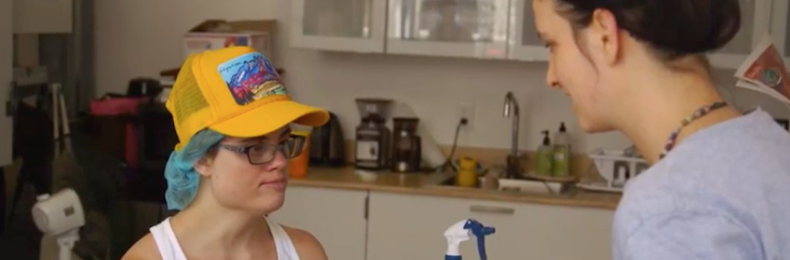
VIDEO: New Documentary ‘Heart of Glass’ Features Urban Farm That Hires People With Disabilities
“Heart of Glass” follows the creation and story of Vertical Harvest — an urban farm in Jackson, Wyoming, that hires individuals with intellectual and developmental disabilities. A state-of-art indoor vertical farm, Vertical Harvest not only can harvest fresh tomatoes all year round, they pay all their employees a competitive wage
July 12, 2020
What happened: After nearly a year on the film festival circuit, “Heart of Glass” is headed to the silver screen. The disability-centric documentary will begin airing on more than 200 television stations later this month, and the broadcasts are slated to coincide with the 30th anniversary of the Americans with Disabilities Act on July 26.
“Heart of Glass” follows the creation and story of Vertical Harvest — an urban farm in Jackson, Wyoming, that hires individuals with intellectual and developmental disabilities. A state-of-art indoor vertical farm, Vertical Harvest not only can harvest fresh tomatoes all year round, they pay all their employees a competitive wage.
The film has been many years in the making. In 2019, director Jennifer Tennican told The Mighty developing a feature-length independent documentary was “a marathon, not a sprint” but she pushed on because the heart of the film was (and is) its people and their stories.
The Frontlines: Vertical Harvest isn’t the only organization that employs members of the disability community. These organizations can be critical because people with disabilities are significantly more likely to be unemployed compared to their typical counterparts. Here are a few other businesses working to change this:
Bitty & Beau’s, a coffee chain in North Carolina, South Carolina and Georgia, is run by individuals with Down syndrome.
Breaking Grounds Cafe in Peabody, Massachusetts, offers paid opportunities and food service training to people with disabilities.
And several large corporations have received recognition for their inclusiveness, including Adobe, Allstate, Capital One, Cigna, HP, Intel and Delta.
Get more on disability: Sign up for our weekly disability newsletter.
A Mighty Voice: Our contributor, Erin Noon-Kay, shared why opportunities like these are so important. “At 20% of the population, people with disabilities are one of the nation’s largest minority groups. Yet the most recent U.S. disability employment statistics show that only 20 percent of people with disabilities are participating in the workforce, compared to 69 percent of people without disabilities.” You can submit your first person story, too.

Temperature is The Biggest Challenge For Cultivation in The Maldives
They currently import 95% of their food. Fruit and vegetables are brought in from afar to provide food for the many tourists as well as the local
A pearly white beach and a vast blue ocean. This is the picturesque location for which many tourists travel to the Maldives every year. However, these islands in the Indian Ocean are tiny and are highly dependent on imports for fresh produce. They currently import 95% of their food. Fruit and vegetables are brought in from afar to provide food for the many tourists as well as the locals.
That could be done more efficiently, according to a group of university students from TU Delft. As part of an assignment, they designed a modern self-sufficient greenhouse in order to produce food locally. And where most study assignments remain a plan on paper, this greenhouse actually might be realized on one of the islands in the near future.

Biggest challenge is temperature
The plans of the Maldives Matter Project are already very advanced, says Carmen Jansen op de Haar of Resilient Island. "It will be a semi-closed greenhouse of one hectare in size. Two-thirds of it will be used to grow lettuce, there will be tomatoes in one-third and possibly strawberries at a later stage. There will be a hydroponic system for lettuce cultivation, for which we collaborate with Van der Hoeven. There is plenty of sunlight and an occasional shower. The biggest challenge for growing in the Maldives is the temperature and the high humidity. On the islands it is between 25 and 30 degrees Celsius all year round, both during the day and at night. Because this temperature difference is so small, many fruits and vegetables cannot grow in that climate, so that the Maldives become highly dependent on imports."
"In order to keep the temperature in the greenhouse at the right level, we need cooling technology. We are also looking at Deep Water Source Cooling, where you use the temperature differences in the water. A new technique that we certainly will not apply immediately, but that is worth investigating.”

Test greenhouse
To investigate the feasibility of the thought out plans, the group will first set up a miniature version of the greenhouse. “We have already done a test with tomatoes. The cultivation results in those circumstances were very positive. With a mini greenhouse, we mainly want to test the techniques.”

Growers from the Netherlands
According to Carmen, so far there is little horticulture to be found on the sun-drenched islands. “There is some cultivation in simple plastic tunnels without cooling or other techniques. The products on the field are sprayed a lot. Agricultural training is available, but currently only six people have completed the university horticultural training. Because there is little work to be found in it, that number will not grow anytime soon."

At the end of last year, Resilient Island made an appeal to find a Dutch grower who, once the greenhouse is completed, will start the cultivation. “We have found two growers who are currently helping us to answer technical cultivation questions and who also give advice on setting up an education program. Eventually, a Dutch grower will head over there to train the Maldivian growers. We are also going to bring local growers to the Netherlands to show them our horticulture here. Ultimately, they will have to manage cultivation independently, with the help of Hoogendoorn climate computers and some advice from the Netherlands.”
Supply to resorts
The choice of crops will be tailored to the demand of resorts. “Our market research showed that there was a great need for lettuce, however, if we would produce only lettuce then it would be too much. Lettuce and strawberries are fragile in transport and therefore very suitable for local cultivation. The intention is to supply various resorts with fresh produce packages."
The exact location for the greenhouse has not yet been determined. “We have selected three islands, each of which has potential in a different way. All three are local islands, which ensures that the local population can easily work in the greenhouse later on. "Although the Maldives have many luxury resorts, not every resort will be supplied." We are looking for resorts that share our vision. Some say that they strive for sustainability, but in practice, nothing much is achieved. It is important that the resorts with which we work support our principles."
Chain reaction
Further in the future, the Resilient Island team hopes to broaden the project. “Our goal is to make the Maldives less dependent on the rest of the world. We are hoping for a chain reaction to other Small Island Developing States, as these countries are called that are highly dependent on the mainland. The corona crisis once again made it very clear that it is important that countries and islands can meet their own needs. Air traffic almost came to a standstill, making it even more evident why it is so important that these kinds of countries can be self-sufficient."
For more information:
Carmen Jansen op de Haar
Resilient Island Foundation / Resilient Island B.V.
info@resilientisland.com
www.resilientisland.com
Publication date: Mon 6 Jul 2020
© HortiDaily.com

How Advanced Nutrients pH Perfect Technology Makes Growing Hydroponically Brain-Dead Simple!
If you are a new hydroponics grower … or even if you have years of experience under your belt … one thing that’s very important for all indoor growers to understand is the importance of pH in hydroponics.
If you are a new hydroponics grower … or even if you have years of experience under your belt … one thing that’s very important for all indoor growers to understand is the importance of pH in hydroponics.
In short, if you don’t understand how to monitor and achieve the best pH level for hydroponics, then you can seriously hurt your results and even drastically reduce your harvests.

What is pH and why is it so important?
pH is the measure of the level of acidity or alkalinity of your entire garden which consists of your nutrient solution and growing medium. It ‘s a scale that’s represented by figure 1 showing pH values from most alkaline to most acidic using common materials.)
To achieve optimal growing conditions, you want to achieve and maintain the best pH level for plants.
Here is why it’s so important to get the perfect ph balance …
Living, growing organisms such as your high-value plants are essentially chemical machines. One of your most important jobs as a grower is to keep those chemicals in balance. This means avoiding a shift in the pH toward either pH extreme: excessive acidity or excessive alkalinity.
The pH level makes the difference between having a grow room full of nutrient-healthy, thriving plants and seeing your time, effort, and money end up as little more than a compost waste pile!
Here’s what happens when pH gets out of balance
When the pH of your hydroponic system gets out of balance—which can happen quickly if some kind of stabilizing agent or mechanism is not put in place—the ability of your plants to absorb macro, secondary, and micronutrients, as well as vitamins, carbohydrates, and other beneficial sources, is limited.
For example, when the nutrient solution has a high (alkaline) pH, iron and manganese are locked out. That’s because they form poorly soluble chemical compounds. Adding chelators to compounds helps to keep them in bio-available form. However, chelation itself is a pH-dependent process.
Another reason why pH is so important for the absorption of nutrients is biochemistry. Nutrients cannot enter the plant roots on their own because plant cells are protected by membranes that are difficult for water soluble ions to penetrate. To overcome this barrier, nutrients are carried inside the plant by special transporters. These transporters are big protein molecules in the cell membranes. They recognize nutrient ions and let them enter the plant cells. Since proteins are rich in ionizable chemical compounds, their function is dependent on pH. Thus, every transporter protein has an optimal pH range where it works best.
In addition, the beneficial bacteria and fungi included in sophisticated hydroponic supplements need a consistent pH. These microorganisms thrive at pH 5.5–7.0 (Perry, 2003). A more acidic pH can foster an environment that allows the growth of pathogenic microorganisms, which may pose a risk to plant health.
Here’s what happens when pH gets out of balance
When the pH of your hydroponic system gets out of balance—which can happen quickly if some kind of stabilizing agent or mechanism is not put in place—the ability of your plants to absorb macro, secondary, and micronutrients, as well as vitamins, carbohydrates, and other beneficial sources, is limited.
For example, when the nutrient solution has a high (alkaline) pH, iron and manganese are locked out. That’s because they form poorly soluble chemical compounds. Adding chelators to compounds helps to keep them in bio-available form. However, chelation itself is a pH-dependent process.
Another reason why pH is so important for the absorption of nutrients is biochemistry. Nutrients cannot enter the plant roots on their own because plant cells are protected by membranes that are difficult for water soluble ions to penetrate. To overcome this barrier, nutrients are carried inside the plant by special transporters. These transporters are big protein molecules in the cell membranes. They recognize nutrient ions and let them enter the plant cells. Since proteins are rich in ionizable chemical compounds, their function is dependent on pH. Thus, every transporter protein has an optimal pH range where it works best.
In addition, the beneficial bacteria and fungi included in sophisticated hydroponic supplements need a consistent pH. These microorganisms thrive at pH 5.5–7.0 (Perry, 2003). A more acidic pH can foster an environment that allows the growth of pathogenic microorganisms, which may pose a risk to plant health.
In fact, pH affects every function of the root zone
For example, carbohydrate transporters in the roots require the right pH in order to perform their job of absorbing carbohydrates. These carbs are assimilated from decaying organic matter or carbohydrate supplements, which the plant uses as food.
Maintaining the normal pH of the nutrient solution and growing medium as close as possible to your plant species’ unique pH “sweet spot” is critical to obtaining a rich harvest.
The sweet spot is the optimal pH range where all the plant essential nutrients are readily available for absorption. For high value plants, the sweet spot is pH 5.5–6.3.
Why is maintaining a stable, consistent pH so difficult?
Three major factors tend to disrupt the pH balance for plants. Learning to control these influences is essential for a successful harvest.
* pH Problem #1: Your Water.
The truth is that there’s no such thing as pH perfect water. Here’s why …
Freshly distilled or deionized water has a pH of 7. However, the pH of the water may fall to as low as 5.5 within hours of preparation because water absorbs carbon dioxide (CO2) from the air.
The behavior of tap water is even more complex. It contains dissolved and slightly alkaline calcium and/or magnesium salts. In this case, absorption of CO2 from the air makes predicting the pH even more challenging.
Because the calcium and magnesium salts in most tap waters (not to mention even more chemically complex well and spring waters) create such serious problems, many hydroponic growers, from hobbyists to huge commercial greenhouses, prefer using treated water.
Although a number of water treatment systems exist, reverse-osmosis (RO) is considered the most economical. Water obtained from an RO system is almost as good as expensive distilled water.
Another option is to adjust the pH of tap water before using it. This can be done with so-called pH up or pH down additives. However, this task is demanding and often done incorrectly—and what’s worse, the acidic and alkaline chemicals used in these products, and the resulting sudden fluctuations in pH when they are added to the reservoir, can be hard on your plants.
* pH Problem #2: Your Nutrients.
Many pH changes are caused by the nutrients themselves. Many growers don’t realize there is a relationship between pH and ppm. Here’s what that means …
The more compounds in the water— measured in parts per million (ppm) or by the nutrient solution’s electroconductivity (EC)—the greater their influence on pH.
For example, the urea used in many fertilizers is broken down by enzymes into one molecule of CO2 (a slightly acidic compound) and two molecules of ammonia (a slightly alkaline compound). This can cause erratic changes in pH.
In addition to urea, any compound containing an amide chemical bond
(e.g., the proteinates used in many fertilizers) can, when broken down, affect the pH in unpredictable ways.
Nutrient absorption also leads to changes in pH. When a plant absorbs a lot of potassium ions, it gives out hydrogen ions in return. The result is a net decrease in pH. The situation reverses when the plant absorbs a lot of nitrate ions and gives out hydroxyl ions to compensate, thus increasing the pH (Bar-Yosef, Ganmore- Neumann, Imas, and Kafkafi, 1997; Ryan, P.R. and Delhaize, E., 2001).
In short, the higher the rate of nutrient absorption, the more dramatic the change in pH.
* pH Problem #3: Your Growing Medium.
The growing medium (also called the substrate) affects pH as well.
For example, coco-based growing media undergo subtle changes during your crop’s life cycle that affect the pH of the nutrient solution.
In fact, every chemical or biochemical process that goes on in the growing medium changes the pH of the nutrient solution. Each additional factor drives it further from the sweet spot.
In nature, the volume of surrounding soil—teeming with microbes, humates, and other pH stabilizing agents—does a good job of offsetting pH changes. Natural soils act as natural pH buffers. That’s why, in outdoor gardens, where the soil itself contributes to a more stable, consistent pH, changes in pH are more gradual than in hydroponic gardens.
In hydroponics, however, pH stability is a challenge. It is an intense gardening method where the concentration of nutrients and their absorption rate by plants are much higher than in soil. As a result, chemical and biochemical processes influence the pH to a much higher degree than in natural soils or traditional agriculture. The natural stabilizers and buffers in the nutrient solution, mainly phosphates, are weak, so indoor gardeners have to constantly be adjusting pH in hydroponics and adjust it when it goes below or above the sweet spot.
What a hassle!
Enter Advanced Nutrients pH Perfect® Technology – Automatically Balances Your pH For You.
The fact is that Advanced Nutrients has spent many thousands of man-hours developing a technology that automatically balances your pH for you — putting it in the “sweet spot” and holds it there for weeks.
And the technology is so “smart” it can account for many of the aforementioned variables in your grow room.
For example, they wanted to find pH stabilizers and buffers that would allow growers to use any source of low-mineralized water. The resulting proprietary pH buffering agents and stabilizing mechanisms became the foundation of a new system aptly called pH Perfect® Technology.
But developing a groundbreaking pH buffer and stabilizer wasn’t the whole answer. It required many years of field testing to determine the proper concentration for pH Perfect base nutrients.
How Does pH Perfect Technology Work?
The general answer is that pH Perfect Technology is a proprietary system, so the exact details cannot be shared with the public at this time.
However, Michael Straumietis, the founder and CEO of Advanced Nutrients has graciously shared detailed information about how the technology works …
First, the technology uses its proprietary and primary mechanism to quickly bring the nutrient solution into the “sweet spot” for growing–which is 5.5 to 6.3 pH (usually holding it at a rock-solid 5.6 pH). And it is able to do this across a wide range of pH ranges.

In addition to this main mechanism that quickly brings your pH into range, you have three chemicals that work synergistically to make sure the pH stays in that “sweet spot”. In lab experiments, Advanced Nutrients scientists have had pH Perfect Technology lock down the pH in this “sweet spot” for 10-14 days.
Then, there are a number of chelates used …
In particular, there is a type of chelate called “Zwitterionic” used — which simply means that this chelate can swing both towards more acidic or more base. That reinforces that stability of the pH column because it can go either way as needed to maintain the proper pH.

Then, heavy ‘cation’ elements are used that–after the plant takes them in–helps the plant to exude acid. This produces a more acidic growing medium.
So now your plants are working for you, not against you … But that’s still not enough …
Because the technology has a built-in “safety net” in the form of the chelates that are used. That’s because the extensive matrix of chelates that are utilized have a theoretical absorption range from pH 1 to pH 10.
Now, at pH 2.5 the plant’s roots are burning back faster than they can produce, and at pH 9.5 your plants are dying too. But the point is that … even if … the entire pH Perfect mechanism were to completely fail …we have this built-in “safety net” with the extensive amount of chelates used to protect the plant and make sure it feeds and stays healthy.
But Does Advanced Nutrients pH Perfect Work?
But the question is “Does it actually work?”
And the answer is a resounding yes!
Check out the YouTube video below for a demonstration of the pH Perfect Technology in action:
pH Perfect Technology VS The Competition
You can also visit the website pHShootout.com to see proof of the technology’s effectiveness. In short, they put pH Perfect Base Nutrients and supplements head-to-head against all the other top hydroponics brands and filmed it live for you.
They set up three diverse pH ranges of 4.5, 6.5, and 8.5 – then tested all the top brands against Advanced Nutrients to answer the ultimate question …
Does pH Perfect Technology really work? And how does it stack up against the competition? You can visit pHShootout.com to see the video results.
What’s the bottom line?
If you use any pH Perfect base nutrient as directed, you will never again have to monitor and adjust your pH. The pH Perfect Technology automatically brings the pH of the nutrient solution into the sweet spot for optimal growth and flowering—and keeps it there for at least one week.
You no longer have to hassle with pH meters and pens. Relax and rest assured that the pH of the nutrient solution and growing medium is right on target, providing optimal growing conditions and nutrient absorption for your plants. pH Perfect lives up to its name, making hydroponics easier and safer for any type of grower.
Here Are The Advanced Nutrients pH Perfect Nutrients lines
There are three main lines of Advanced Nutrients pH Perfect Base Nutrients.
* For 3-Part base nutrients, growers can use pH Perfect® Grow, Micro, Bloom.
* For 2-part base nutrients, growers can choose between The Sensi Series (pH Perfect® Sensi Grow Parts A & B and pH Perfect® Sensi Bloom Parts A & B) …
* Or Advanced Nutrients flagship 2-part base nutrient formulation pH Perfect® Connoisseur Grow Parts A & B and pH Perfect® Connoisseur Bloom Parts A & B.
* And for coco coir growers, Advanced Nutrients has separate Coco Base Nutrients formulations of their 2-part base nutrients made specifically for the challenges of growing with coco.
In short, it’s up to the individual grower as to whether they want to use a 2-part or 3-part base nutrient.
Many times, these days, it comes down to personal preference of the grower and making a fully informed choice is beyoned the scope of this article. Either way, choosing pH Perfect Base Nutrients ensures that you won’t have to worry about balancing and adjusting your pH throughout the process!
The Advanced Nutrients ph Perfect Feeding Chart
It’s important when using any 2 or 3-part base nutrient to follow the correct feeding chart.
If you are looking for the pH Perfect feeding chart then you are in luck because it can be found on this page here:
https://www.advancednutrients.com/nutrient-calculator/
On that page, you’ll find the official Advanced Nutrients ph Perfect Calculator and the official Advanced Nutrients ph Perfect Feeding Schedule can be found on every bottle of pH Perfect Nutrients.
References
Bar-Yosef, B., Ganmore-Neumann, R., Imas, P., and Kafkafi, U., 1997. Release of carboxylic anions and protons by tomato roots in response to ammonium nitrate ratio and pH in nutrient solution. Plant and Soil, 191 (1), pp. 27–34.
Nye, P.H., 1981. Changes of pH across the rhizosphere induced by roots. Plant and Soil,
61 (1–2), pp. 7–26.
Olsen, C., 1958. Iron uptake in different plant species as a function of the pH value of the nutrient solution. Physiologia Plantarum, 11 (4), pp. 889–905.
Perry, L., 2003. pH for the garden. University of Vermont Extension, Department of Plant and Soil Science, [online] available at: http://www.uvm.edu/pss/ppp/pubs/ oh34.htm [accessed 12 January 2012].
Ryan, P.R., and Delhaize, E., 2001. Function and mechanism of organic anion exudation from plant roots. Annual Review of Plant Physiology and Plant Molecular Biology, 52, pp. 527–560.
By Advanced Nutrients | December 2, 2016


Calculating Optimal Equipment And a Settings, Before The Greenhouse is Built
“Our software calculates the best configuration of a closed greenhouse for any crop all over the world,” says Vincent Stauffer, director of Hortinergy, a French technology company
“Our software calculates the best configuration of a closed greenhouse for any crop all over the world,” says Vincent Stauffer, director of Hortinergy, a French technology company. It’s mostly used before the construction of a closed greenhouse to select and size the equipment. It helps to make sure that the right choices for energy-efficient equipment are made to reach the optimal climate with the lowest energy expenditures.
The greenhouse simulation software calculates energy consumption and expenditures (cooling, dehumidification, heating, and lighting). It models the inner climate like a virtual greenhouse, with specific parameters, and allows users to compare different technical solutions. Growers, consultants, and greenhouse designers use the software to know what the best settings and equipment are.
Orange Climate
Orange Climate, a Dutch supplier of climate technique, uses Hortinergy software to calculate the demands for the installation. Jeroen Verhagen, Business Unit Manager at the company talks about how the product works for them. “We have to know how many kiloWatts of heating and cooling we need, to have the requested greenhouse conditions, and we can calculate that with Hortinergy.”
When the company first started using the software, there were some issues and questions. “Vincent really cooperated with us on this, we discussed via Teams. He is very involved in the process.” Sustainable climate solutions for greenhouses and special concepts can be a big save in energy. “With Hortinergy, we can calculate what can be saved.”
For more information:
Hortinergy
contact@hortinergy.com
www.hortinergy.com

Publication date: Fri 3 Jul 2020
Author: Marlies Guiljam
© HortiDaily.com

Tech-Driven Vertical Farming Company Kalera Announces New CFO Fernando Cornejo
Fernando held similar roles at Argo Group (NYSE: ARGO), where he was Segment CFO and subsequently CFO for EXIN Group, a financial services company
Mr. Cornejo’s extensive background in corporate finance, strategic planning, technology, and investment banking will help Kalera rapidly and sustainably expand.
July 20, 2020
Cornejo brings with him an extensive background in corporate finance, strategic planning, technology, and investment banking.
ORLANDO, Fla., July 20, 2020 (GLOBE NEWSWIRE) -- Today, technology-driven vertical farming company Kalera announced the appointment of Fernando Cornejo as Chief Financial Officer. Cornejo brings with him an extensive background in corporate finance, strategic planning, technology, and investment banking. He will be based out of Kalera’s Orlando, Florida headquarters.
Fernando held similar roles at Argo Group (NYSE: ARGO), where he was Segment CFO and subsequently CFO for EXIN Group, a financial services company. Mr. Cornejo oversaw corporate finance, cost management, financial planning and analysis, capital structure optimization, M&A, risk management, accounting, and corporate strategy.
Prior to his role as CFO, Mr. Cornejo was an investment banker for companies such as Citibank, Credit Suisse, and Bear Stearns where he executed several transactions including financings, mergers and acquisitions, and capital raisings including Initial Public Offerings. Mr. Cornejo has a B.S. in Industrial Engineering from ITESM and a Master of Business Administration from Georgetown University.
“I couldn’t be more thrilled to welcome Fernando to Kalera, where he will create value immediately as we continue to expand our operations,” said Daniel Malechuk, Chief Executive Officer of Kalera. “Fernando brings more than 20 years of experience in diverse organizations with core expertise leading finance and accounting operations while enabling companies to achieve fast and sustainable growth.”
Mr. Cornejo stated, “I look forward to joining Kalera’s leadership team and leading its finance operations to contribute to Kalera’s future success as the company accelerates growth and progresses to the next phase of its strategy.”
Mr. Cornejo will lead Kalera’s financial operations, accounting, and investor relations. He will report directly to Mr. Malechuk.
Kalera has experienced significant growth in recent months, with plans of its new growing facility in Atlanta announced only months after opening its facility in Orlando. Kalera also announced last week that it will open a vertical farm in Houston in Spring of 2021. Its Orlando facility is currently the single largest indoor vertical farm in the Southeastern United States, and the Atlanta facility will be even larger. The Houston vertical farming facility will be the largest in Texas.
Central to Kalera’s business is good science. The company is planting non-GMO seed, and over the past several years has perfected plant and data science-driven methods to naturally optimize the factors that make plants thrive. Kalera manages these natural factors in a way that makes plants reach their maximum potential, resulting in the highest quality produce, grown locally with consistent high yields year-round.
By using a closed-loop irrigation system, Kalera’s plants grow while consuming 95% less water compared to field farming. While a head of lettuce grown in a field may use as much as 60 gallons of water, Kalera’s systems result in a healthier plant with less than five gallons.
The company utilizes cleanroom technology and processes to eliminate the use of chemicals and remove exposure to pathogens. With indoor facilities situated right where the demand is, Kalera is able to supply an abundance of produce locally, eliminating the need to travel long distances when shipping perishable products and ensuring the highest quality and freshness.
About Kalera
Kalera is a technology-driven vertical farming company with unique growing methods combining optimized nutrients and light recipes, precise environmental controls, and cleanroom standards to produce safe, highly nutritious, pesticide-free, non-GMO vegetables with consistent high quality and longer shelf life year-round. The company’s high-yield, automated, data-driven hydroponic production facilities have been designed for rapid rollout with industry-leading payback times to grow vegetables faster, cleaner, at a lower cost, and with less environmental impact.
Elka Karl
Phone: 510-508-7328
Email: elka@dadascope.com

US (MI): Detroit Indoor Farm Will Deliver 1000 Ready-To-Eat Salads A Day
Planted Detroit is a controlled environment vertical farm, run by five enthusiastic entrepreneurial growers. “As a team, we’re trying to make the best decisions for the plants, the company, and our community,” Meg Burritt, managing partner of business development, says
Planted Detroit is a controlled environment vertical farm, run by five enthusiastic entrepreneurial growers. “As a team, we’re trying to make the best decisions for the plants, the company, and our community,” Meg Burritt, managing partner of business development, says.
“Planted Detroit’s salads are a unique product, including our own baby greens, microgreens, and herbs. It basically takes salads to another level”, Simon Yevzelman, managing partner of biosecurity, says. The indoor farm produces all kinds of baby greens. “We’re not doing head lettuces just yet. We are in R&D with edible flowers, so hopefully, in a few months we’ll be growing those, too,” said Burritt. The company is aiming to differentiate baby greens from fully grown produce of the same species, through an analysis of the nutritional makeup of the greens Planted Detroit has grown. “We want to differentiate ourselves from the competition, large scale soil growers.”
Planted Detroit’s ‘power lunch salad’
Scaling up
“Our CEO, Tom, started this farm for a number of reasons, one being he saw the lack of variety in fresh produce available in grocery stores and the poor quality of what was available. [Tom] knew that he would be able to deliver better greens, grown in a way that is additive to the food system – not extractive. Soon, we will figure out to scale that effectively,” Burritt says. Planted Detroit is currently constructing new grow rooms in their facility, in part utilizing technology from a long-term partner, AmHydro. “Joe Schwartz, CEO of AmHydro, has been a great help to us.” The company is getting a new automated cultivation system that will be fully automating the production area. “Now is the time to invest in our systems and infrastructure. The new construction will deliver 1000 ready-to-eat salads a day. We’ve taken a pro-active approach since the beginning of the pandemic,” Yevzelman notes.
A full view of the farm
“We are excited about the upcoming months because construction will come to a close. We built a firm consumer base over the past few years, so when launching direct-to-consumer salads we had a good starting market share. The farm is small-scale right now and we sell out everything we grow. Ultimately, there will be more greens to sell and we can satisfy more customers. However, we know the current risks and we’re fully anticipating a second wave [of Covid-19]. Now, we are definitely strategizing, trying to stay sustainable through this time, through direct customer engagement and social media sharing,” Burritt states.
Increase of local demand
There is noticeably more demand for fresh produce in South East Michigan and throughout the state. “The pandemic shut everything down and showed how we are really interdependent on others. Local produce supply keeps us safer and is a more secure food supply. We hope to see more of this demand as our produce is way fresher and more delicious. The great thing is that individual consumers are becoming more aware of that,” Burritt notes. Yevzelman shares, ”we maintained our production capacity throughout the pandemic, so we could continue to sell direct to local Detroit consumers without pause.”
Racks stacked with microgreens
Ups and downs
The past few months have been a rollercoaster for Planted Detroit. Before COVID-19 the company sold its produce to restaurant partners, but when restaurants were shut down they had to make some changes. “All the [Covid-19 cases] going on the East Coast back then, made us pivot the business the model. Thankfully, we had a backup plan in our back pocket as we anticipated on all changes happening,” Burritt says. The company already had strict food safety measures in place, which also work against the virus. “We built the company around food safety and our employees have always been more conscious of hygiene,” Yevzelman says. Production was not scaled back as a result of the pandemic and safety procedures were followed up tightly. The company obtained certifications to sell their fresh produce directly to consumers. A well-known partner of the company, Skidmore Studio, launched a fresh food e-commerce website, MichiganFields.com, during the peak of COVID-19 shutdowns in March. Planted Detroit has been selling the platform ever since.
Back on track
“The sales had been relatively steady, but they really popped up during the pandemic”, Burritt adds. So far, Planted Detroit still sells through MichiganFields.com and directly to consumers, including home delivery. Next to that, their greens are sold at Detroit’s Eastern Market at the Tuesday market and through fresh produce boxes, in combination with other fresh produce, for people who don’t want to be exposed to the virus while grocery shopping. This month, the company is back to normal production. “It’s business as usual for us again. Just this week restaurants started calling us for produce again. [Adding in restaurants again] will be a perfect customer mix for us, especially after the construction,” Burritt notes.
For more information:
Planted Detroit
Megan Burritt, Managing Partner of Business Development
Simon Yevzelman, Managing Partner of Biosecurity
admin@planteddetroit.com
www.planteddetroit.com
Publication date: Wed 22 Jul 2020
Author: Rebekka Boekhout
© HortiDaily.com

"We Want To Raise Awareness On Vertical Farming In Italy"
“As we’re located in Italy, a country with great farming traditions, some people would think that we don’t need indoor farming. But, especially today, this is wrong
“As we’re located in Italy, a country with great farming traditions, some people would think that we don’t need indoor farming. But, especially today, this is wrong. In fact, we import a great part of our food, and while adverse climate events are always more frequent, the fertility of the soil is decreasing rapidly and water scarcity is becoming a real problem in more and more areas”. Guido Medici says. “So, indoor and vertical farming can be a great solution to produce high-quality food close to the market. These are the cases of our friends of Agricola Moderna and Planet Farms, both vertical farms which are located outside of Milan”, Guido states.
Lorenzo Franchini adds, “There is a generational shift taking place in the agricultural sector, as more people are open to innovation. The challenge is to find the right set up to get started. Hopefully, more European governments are going to direct public investments in the sustainable farming sector, so this will definitely become easier-going in the future. Speaking of crops, although they are quite unknown in Italy, microgreens are the most interesting to grow here. We think that people will be immediately convinced by their delicious taste and high nutritional power.”
Sananbio's growing system
Scalable farms
Guido and Lorenzo have worked together as intermediaries, since 2017. They founded the project Vertical Farming Consulting to help customers finding the right set up to start their own farm. “We’re cooperating with SananBio (vertical farming racks), Monti & C (climate rooms), and with Ferriplastic (irrigation and installation). Through these partnerships, we are able to stand by the customer through all the project phases, from the initial idea to the active production.
Together with our partners, we have designed a layout that is easily scalable. Clients seem to like that idea as it allows for expansion. They can start with a small part of the farm, like 60 sq. m., and then increase production once the demand will grow. The aim of VFC is to offer a turnkey vertical farm…”, Franchini adds,“…while our future goal is to create an association for vertical farming in Italy, to bring all indoor farmers together in the country, to obtain a more powerful voice”, Medici states.
The fixed layout of a VFC’s farm
How it all started
“We originally started with a vertical farming blog, visiting farms, and attending important events in the sector. More and more people were requesting information on vertical farming, so we started our own consultancy project” says Franchini. “Together with our partners, we are currently finalizing a vertical farm in Southern Italy for the production of microgreens.”, adds excitedly Guido, “The new facility will be opening its doors at the end of this summer.”
The Vertical Farming Education’s team: (F.l.t.r.) Guido Medici, Alessandro Russo Montecchio, and Lorenzo Franchini
Educating kids through hydroponics Vertical Farming Education (VFE) is an environmental education laboratory. The laboratory was designed in 2019 by Guido and Lorenzo, in collaboration with Alessandro, a psychologist who is extremely passionate about nature and plants. “The goal of VFE is to increase awareness of the water footprint of food among young students. We’ll start with primary and secondary schools, and eventually, we will scale up the project for older students,” Lorenzo states. “We developed a four-week workshop, divided into five lessons. The practical part is carried out by the installation of a small in-class vertical farm rack. This allows students to grow small salad portions by themselves.
The in-class vertical rack
The theoretical part is carried out by providing schools all supporting teaching material, such as exercises, theory, and questionnaires”, Guido adds. The VFE’s Team is now working on the realization of 20 workshops in 10 different schools which will be held at the beginning of 2021.

For more information:
Vertical Farming Consulting
Guido Medici, Co-founder
Lorenzo Franchini, Co-founder
info@vfitaly.com
www.verticalfarmingconsulting.com

Vertical Farming Education
Alessandro Russo Montecchio, Co-founder
Guido Medici, Co-founder
Lorenzo Franchini, Co-founder
info@vfeducation.com
Publication date: Tue 21 Jul 2020
Author: Rebekka Boekhout
© HortiDaily.com

The Largest Urban Rooftop Farm In The World is Now Bearing Fruit (and More) in Paris
The largest urban rooftop farm in the world uses vertical growing techniques to create fruits and vegetables right in the center of Paris without the use of pesticides, refrigerated trucks, chemical fertilizer, or even soil
By Good News Network -Jul 17, 2020
Getting fresh produce into the heart of a major city used to be done by a fleet of rumbling, polluting trucks—now it’s a matter of bringing it down from the roof.
The largest urban rooftop farm in the world uses vertical growing techniques to create fruits and vegetables right in the center of Paris without the use of pesticides, refrigerated trucks, chemical fertilizer, or even soil.
Nature Urbaine uses aeroponic techniques that are now supplying produce to local residents, including nearby hotels, catering halls, and more. For a price of 15 euro, residents can order a basket of produce online containing a large bouquet of mint or sage, a head of lettuce, various young sprouts, two bunches of radishes and one of chard, as well as a jar of jam or puree.“
The composition may change slightly depending on the harvest,” Sophie Hardy, director of Nature Urbaine, tells French publication Agri City. Growing on 3.4 acres, about the size of two soccer pitches, atop the Paris Exhibition Center, they are also producing about 150 baskets of strawberries, as well as aubergines, tomatoes, and more.
Speaking to the Guardian, Pascal Hardy, a sustainable development consultant and member of Agripolis, an urban farming firm, called the Nature Urbaine project in Paris “a clean, productive and sustainable model of agriculture that can in time make a real contribution to the resilience—social, economic and also environmental—of the kind of big cities where most of humanity now lives.”
Farming Currently only a third of the total space on hall 6 of the expo center is utilized for Pascal’s alien-looking garden, and when the project is finished, 20 staff will be able to harvest up to 2,200 lbs (1,000 kg) of perhaps 35 different kinds of fruits and vegetables every day.
Photos by Agripolis
In plastic towers honeycombed with little holes, small amounts of water carrying nutrients, bacteria, and minerals, aerate roots which hang in midair.
As strange as the pipes and towers out of which grow everything other than root vegetables might seem, Hardy, says the science-fiction farming has major benefits over traditional agriculture.“
I don’t know about you,” he begins, “but I don’t much like the fact that most of the fruit and vegetables we eat have been treated with something like 17 different pesticides, or that the intensive farming techniques that produced them are such huge generators of greenhouse gases.”
It uses less space. An ordinary intensive farm can grow nine salads per square meter of soil; I can grow 50 in a single tower. You can select crop varieties for their flavor, not their resistance to the transport and storage chain, and you can pick them when they’re really at their best, and not before.”
Agripolis
Breaking the chain
Agripolis is currently discussing projects in the U.S., the UK, and Germany, and they have finished several other rooftop farms in France including one on the roof of the Mercure hotel in 2016, which cultivates eggplant, zucchini, peppers, tomatoes, and cherry tomatoes, salads, watercress, strawberries, nasturtiums, and aromatics all directly serving the hotel restaurant.
Growing on the roof and selling on the floor can play a big part in the production of carbon-neutral food because, according to Agripolis, fruit and veg on average travel by refrigerated air and land transport between 2,400 and 4,800 kilometers from farm to market.
The global transportation force is the largest of humanity’s carbon-emitting activities, and reducing the number of flights and truckloads of produce is a great place to start cutting the amount of CO2 entering the atmosphere.
For a culinary city like Paris, the Parisian mayor’s proposal to install an additional 320 acres (130 ha) of rooftop and wall-mounted urban farming space could significantly reduce the number of trucks entering the city, easing traffic and reducing pollution.
With rooftop farming being embraced from Detroit to Shanghai, the future is looking up.

They’re Still Growing: Downtown Vertical Farming Company Set To Increase Production After Moving To Former Market Fresh Site
A few years ago, Ernessi Farms was just an up-and-coming hydroponic grower of herbs that utilized the (at least then) little known method of vertical farming — right from a downtown basement. Since then? Well, business has blossomed.
By Ian Stepleton | Ripon Commonwealth Press | July 9, 2020

A few years ago, Ernessi Farms was just an up-and-coming hydroponic grower of herbs that utilized the (at least then) little known method of vertical farming — right from a downtown basement.
Since then?
Well, business has blossomed.
“It’s been pretty intense. From where we started, just messing around with stuff in my basement ... to moving [the business] here, it’s been something else,” said Bryan Ernst, owner of Ernessi Farms in Ripon. “It’s been very humbling, to learn all the things you don’t know as a new business owner, but it’s been great.”
With such growth, Ernessi needed a new home.
Later this year, it will have one.
Ernessi Farms has finalized the purchase of the former Market Fresh property at 111 E. Fond du Lac St.
“That building will give us the ability to more than quadruple our production,” Ernst said, adding that it’s going to enable the business to grow into some cutting-edge farming technologies such as machine learning and robotics.

It’s a project that’s been in the works for some time, with word of the possibility first coming to light before Thanksgiving 2019.
“We’ve been working on this ever since even before we talked at the City Council meeting [in November],” Ernst said, explaining that the current location simply had been maxed out in terms of production space and electrical capacity. “That was part of the reason we [started offering] mushrooms — we couldn’t build any more of our growing racks ... It’s been like this for us for over a year while we planned this expansion.”

Read the full story in the July 9, 2020 edition of the Ripon Commonwealth Press.
Ian Stepleton is the editor of the Ripon Commonwealth Press, and been with the paper since September 2000. Starting with fall 2016, he also is an adjunct professor of journalism at Ripon College, and advisor to the college's newspaper, the College Days.


New Pieces of The 3D-NFT Vertical Barrels
The Aponix vertical barrel system is an alternative vertical NFT solution from Germany that can be used instead of rack systems to use vertical space more efficiently in hydroponic setups and at the same time be able to use natural sunlight better
07-07-2020 | Goedemorgen
GERMANY- The Aponix vertical barrel system is an alternative vertical NFT solution from Germany that can be used instead of rack systems to use vertical space more efficiently in hydroponic setups and at the same time be able to use natural sunlight better. The aim was to enable edible plant production also in smaller farming plots or community spaces and allow for more decentralized urban micro-farming.
The whole concept is based on lego-like ring segment pieces that serve either as spacers or provide differently organized inserts for standard 2-inch netpots. Assembling multiple of these ring segment pieces will result in stackable ring segments or barrel levels to assemble one or multiple such vertical cylinders or ‘barrels’. With more ring segments stacked, the height and the number of grow spaces are increased.
With regard to irrigation, there are multiple options with a pressure line or without pressure. Please visit www.aponix.eu/barrel-irrigation for more details. Apart from configuring for crop size and shape, users also need to plan how they integrate the barrel units. They can be operated as independent single units with their own reservoir in the base or be chained into a larger production context with externally managed liquid nutrients.
Aponix' mission is to facilitate the setup of high density grow spaces for soil-less cultivation by taking the existing 2D NFT concept to the 3rd dimension in a very flexible, simple, and also robust way. It is especially designed for urban farming facilities operating on limited space. The range of available pieces with different functions has been extended continually during the last 2 years of development. In the meantime, many new users started testing or are actively using vertical barrels worldwide in a wide variety of applications.
As of 2020, Aponix changed their market strategy from looking for distributors to working more extensively with product partners who bring in their own engineering and create more specific and distinguishable products from their barrel components. This is based on the definition of the Aponix components as being mere infrastructure parts that always need to be integrated into a greater individual context. Product partners are required to create their own unique solutions based on Aponix pieces adding other external even competitive pieces and/or service and market them independently under their own brand and own product name. As a result of this co-operative type of relation, some new interesting components have been designed that in turn can be used by other existing product partners too. One nice example is the new lid-base that can be used to put a unit on a rotation table or stationary with a standard 40mm PVC pipe to drain the liquid underneath. That way Aponix managed to move the focus from unproductive competition on just commodity pieces and open the door for all sorts of bad copies to the best possible solutions and product creation for the product partners.
For more details please visit www.aponix.eu/product-partners.
For more information on the Aponix vertical barrel please visit http://www.aponix.eu or follow Aponix.eu on https://www.facebook.com/aponix.eu.
Contact: Marco Tidona - hello@aponix.eu.

45 Years Logiqs: From Container Systems to Vertical Farming and Warehouse Automation
Nowadays Logiqs supports most horticulture crops grown in greenhouses as well as a large variety of hydroponic crops
45 years ago, on July 1st, 1975, the Logiqs journey began, together with the founding of Intransit B.V. (the company’s initial name).
And even though the company name and shareholders may have changed since then, they still look back at this date as the very beginning of the company.
"At the start, the main goal of our company was to design and build innovative and reliable benching systems for potted plant growers, that add true value to the customer’s business.
"This initial focus has held up very well throughout the years and has produced amazing results for our customers, with thousands of acres of Logiqs benching systems operational in greenhouses all over the world.
"This success has allowed us to expand our area of expertise to serve a much wider range of growers as well as a couple of new industries."
Nowadays Logiqs supports most horticulture crops grown in greenhouses as well as a large variety of hydroponic crops.
"Our experience working with some of the most successful growers in the world, encouraged us to also apply our know-how and expertise to the Vertical Farming industry. This amazing collaboration with our customers allowed us to quickly become one of the industry leaders and trendsetters in automated vertical farming.
"Beyond greenhouse cultivation systems and Vertical Farming, we have also made incredible steps in warehouse automation by developing the innovative iCUBE Automated Storage and Retrieval System.
"We are grateful to all of our wonderful customers and partners who have influenced us to get better, and we hope that we can continue to repay their trust in the coming decades.
"We would also like to take this opportunity to thank all Logiqs team members that have devoted their time, energy, and passion to our common goals in the past 45 years.
"Without these devoted and talented individuals, Logiqs could have not evolved into the company it is today.
"We are extremely excited to think of the impact that our talented colleagues will have moving forward on the future of Logiqs, and on the future of horticulture, agriculture, and logistics."
For more information:
Publication date: Thu 2 Jul 2020

Indoor AgTech Goes Virtual: Over 300 Industry Leaders Sign Up for Online Summit on July 23, 2020
The Indoor AgTech Innovation Summit, a virtual event on Thursday, July 23, will gather the biggest names in the indoor and vertical farming industries to discuss how the sector is rapidly transforming the agri-food landscape, and redesigning food systems to meet consumer demand for fresh produce
Indoor AgTech Goes Virtual: Over 300 Industry Leaders Sign Up for Online Summit on July 23, 2020
The Indoor AgTech Innovation Summit, a virtual event on Thursday, July 23, will gather the biggest names in the indoor and vertical farming industries to discuss how the sector is rapidly transforming the agri-food landscape, and redesigning food systems to meet consumer demand for fresh produce.
Oscar Brennecke, Conference Producer for the Indoor AgTech Innovation Summit, says: “Three years on from our first event we’ve seen a huge shift in the scale, quality and affordability of indoor-grown produce. As a high-end niche market, fresh produce is now available on supermarket shelves and restaurants, providing a clean, safe, nutritious, local, and resilient food source to millions of people.
“Hosting the virtual event provides a meeting point for the sector and we’re looking forward to facilitating new connections, sharing best practice, and accelerating project developments.”
The Indoor AgTech Innovation Summit has taken place in New York annually since 2018, attended by major farm operators, food retailers, seed companies, technology providers and investors from around the world. The new Virtual Summit will host over 300 participants from the US, Canada, Europe, the UAE and Asia to share knowledge and engage in high-level networking via online roundtable groups and 1-1 meetings.
Key discussion topics on the fast-paced program include:
· Finding Growth in Crisis: Responding to a Rapidly Changing Food Landscape
· Why Diversify? Exploring the Costs and Benefits of Indoor Agriculture
· Optimizing Seeds for Indoor Agriculture: Breeding a Competitive Advantage
· Enhancing Nutritional Value and Yield: Perfecting Plant Recipes
· Lighting and Energy: Driving Efficiency and Economic Viability
· Financing Growth: Can Capital Keep Pace with Industry Demand?
· Investing in Food Security: The Abu Dhabi Model
· Adapting to a New Food Culture: Supplying Restaurants Post-COVID
· Optimizing Consumer Awareness: How to Build a “Holistic” Indoor Brand
Over 40 international speakers include:
· David Rosenberg, CEO, AEROFARMS, USA
· Tessa Pocock, Director of Advanced Lighting & Plant Physiology, PLENTY, USA
· Sanjeev Krishnan, CIO & Managing Director, S2G VENTURES, USA
· Elyse Lipman, Director of Strategy, LIPMAN FAMILY FARMS, USA
· Viraj Puri, Co-Founder & CEO, GOTHAM GREENS, USA
· Susan MacIsaac, Head of AgScience, BOWERY, USA
· David Farquhar, CEO, IGS, UK
· Gretchen Raymond, Managing Director, RIJK ZWAAN, USA
· Tobias Peggs, CEO, SQUARE ROOTS, USA
· Delphine Descamps, Managing Director, CREADEV, USA
· Maximillian Vogt, Director Buying, ALDI SÜD, GERMANY
· Sky Kurtz, CEO, PURE HARVEST, UAE
The full agenda, advisory board, confirmed speakers, and delegate registration are available at www.indooragtechnyc.com
USA - UNIVERSITY of DELAWARE - VIDEO: Leaping Listeria
UD researchers examine how some bacteria find ways around plant immune defenses
Article by Beth Miller Animation and illustration by Jeffrey C. Chase | Photos by Kathy F. Atkinson
June 25, 2020
UD researchers examine how some bacteria find ways around plant immune defenses
As the world wrestles with the coronavirus (COVID-19) pandemic, which arose after the virus jumped from an animal species to the human species, University of Delaware researchers are learning about new ways other pathogens are jumping from plants to people.
Opportunistic bacteria — salmonella, listeria and E.coli, for example — often piggyback on raw vegetables, poultry, beef and other foods to gain entry into a human host, causing millions of foodborne illnesses each year.
But University of Delaware researchers Harsh Bais and Kali Kniel and their collaborators now have found that wild strains of salmonella can circumvent a plant’s immune defense system, getting into the leaves of lettuce by opening up the plant’s tiny breathing pores called stomates.
The plant shows no symptoms of this invasion and once inside the plant, the pathogens cannot just be washed off.
Stomates are little kidney-shaped openings on leaves that open and close naturally and are regulated by circadian rhythm. They open to allow the plant to cool off and breathe. They close when they detect threats from drought or plant bacterial pathogens.
Harsh Bais is an associate professor of plant biology in the University of Delaware’s College of Agriculture and Natural Resources.
Some pathogens can barge into a closed stomate using brute force, Bais said. Fungi can do that, for example. Bacteria don’t have the enzymes needed to do that so they look for openings — in roots or through stomates, he said.
Plant bacterial pathogens have found a way to reopen those closed stomates and gain entry to the plant’s internal workings, Bais said.
But now, in research published by Frontiers in Microbiology, Bais and Kniel have shown that some strains of the human pathogen salmonella have developed a way to reopen closed stomates, too.
“What’s new is how the non-host bacteria are evolving to bypass plant immune response,” Bais said. “They are real opportunists. They are absolutely jumping kingdoms….When we see these unusual interactions, that’s where it starts to get complex.”
Opportunities for pathogens arise as plants are bred to increase yield, often at the expense of their own defense systems. Other opportunities arise when a grower plants low-lying crops too close to a livestock field, making contamination easier.
Together and separately, Bais and Kniel and their collaborators have been looking at this plant problem from several angles for about five years.
They are looking at the “trojan horse” methods bacteria such as salmonella are using to elude plant immune systems and find their way to new human hosts.
They are looking at an assortment of irrigation methods that can carry bacteria from waterways, ponds, and reclaimed water to the surface and root systems of plants.
They are looking at the genetic components that enable pathogens to persist and survive along their passage to a new host.
Bais and Kniel have published multiple articles on these threats to the world’s food supply and have developed recommendations for increasing plant defenses.
Bais’ team, for example, developed and patented a beneficial microbe — UD1022 — to protect and strengthen plant root systems. That microbe has been licensed by BASF and is incorporated into an increasing variety of applications. Testing done as part of their new publication showed that roots inoculated with UD1022 — through watering and irrigation — could provide protection from these opportunistic bacteria.
Kali Kniel is a professor of microbial food safety in the University of Delaware’s College of Agriculture and Natural Resources.
Kniel said she was surprised to see that UD1022 kept some mutants from getting into the plant.
“There is a lot of hope for biocontrols,” she said.
Kniel’s team and collaborators from the U.S. Department of Agriculture and several other universities in the Mid-Atlantic region, recently published new findings in PLOS One analyzing the pathogenic content of irrigation methods that draw from waterways, ponds and reclaimed water.
Those are pre-harvest perils. The post-harvest dangers come more from hygiene practices of workers on the conveyor belts that move these products to market.
Many companies run leafy greens through water treated with appropriate sanitizers and may consider ozone or ultraviolet treatments to address surface bacteria. They can’t see or treat human pathogens that already have gotten into the leaf.
“The food industry works tirelessly to make the product as safe as they can,” Kniel said. “But even then, we are growing these products outside, so they’re accessible to wildlife, wind, dust and water that may transmit microorganisms. It’s a tough situation.”
Nicholas Johnson, a graduate student in Bais’ lab, did painstaking work to examine how stomates on spinach and lettuce responded to applications of salmonella, Listeria and E.coli — three human pathogens that leave no apparent fingerprints, no way to see that they have infected a plant. He recorded the size of the stomate openings — called the aperture — for hundreds of stomates on each sample leaf.
He counted these sizes every three hours after the bacteria were applied.
“He had to sit under a microscope and count the aperture sizes,” Bais said. “And he has to be meticulous.”
He found some troubling results. The salmonella strain was reopening the stomates.
“Now we have a human pathogen trying to do what plant pathogens do,” Bais said. “That is scary.”
It would be especially scary, Bais said, if it were to occur in a “vertical” farm, where plants are grown in vertical rows hydroponically.
“These are wonderful systems,” Kniel said. “But there needs to be a lot of care within the system to control the water and interactions with people. There has to be a lot of handwashing. I work with a lot of growers to make sure they have ‘clean’ breaks and are sanitizing properly. When you do that, you have fewer products to recall.”
But the dangers are real.
“The industry is working hard on this,” Kniel said. “They are some of the most passionate, dedicated people I have ever met. But outbreaks happen.”
“And if this hits vertical farms, they don’t lose a batch,” Bais said. “They lose the whole house.”
The collaboration has drawn on a wide range of expertise, giving researchers insight into many angles of the problem.
“This project [with Bais] has mutant salmonella strains and that allows us another angle on the molecular biology side,” Kniel said. “The individual mutations are important for the salmonella structure and the regulation of stress. We can see the ability of the salmonella to internalize into the plant. When we used mutant strains we saw big differences in the ability to colonize and internalize — and that’s what consumers hear a lot about. You are not able to wash it off.
“We can also look at which genes or part of the organism might be more responsible for the persistence on the plant – making it last longer and stronger. That is so important when you think of food safety issues.”
Among the other questions researchers are asking:
Do these bacteria die off more easily when they are in the sun?
Does a lot of moisture or humidity allow them to grow?
How much do they interact with the plant?
The study of irrigation water in the Mid-Atlantic region of the United States was done in collaboration with “Conserve,” a Center of Excellence that includes researchers from the U.S. Department of Agriculture and the University of Maryland.
“We’re looking at where growers get their water from and what they are doing to make sure it is microbially safe,” she said.
Some of the water is reclaimed after it was used to wash other crops. Some comes from waterways and ponds. The team took a series of samples over a two-year period, testing for salmonella, listeria, E.coli, viruses and protozoa.
“Water has been shown in multiple outbreaks to be a potential risk of contamination,” Kniel said. “This paper is important because it is identifying the risks of ponds, rivers and reclaimed water as well as discussing what growers could do and how to treat water. A lot of growers are happy to use the technology as long as it is cost-effective and reliable and can be used for fresh produce.”
About the Researchers
Harsh Bais is associate professor of plant biology in the University of Delaware’s College of Agriculture and Natural Resources and affiliated with the Delaware Biotechnology Institute. He earned his doctorate in plant biotechnology at the Central Food Technological Research Institute in India and did postdoctoral work in root biology at Colorado State University. Kali Kniel is a professor of microbial food safety in the same college. She earned her doctorate in food microbiology from Virginia Tech University and did postdoctoral work with the U.S. Agricultural Research Service. Also contributing to these publications were recent UD master’s degree graduates Nicholas Johnson, Samantha Gartley and Adam Vanore, postdoctoral researcher Pushpinder Litt and doctoral students Shani Craighead and Brienna Anderson-Coughlin.

US - TEXAS - 5 Reasons To Try Foodscaping Your Lawn
For many Texans tired of driving to the grocery store for their weekly produce, foodscaping is becoming an increasingly attractive alternative. Instead of a yard full of grass, foodscaping is a landscaping technique that covers all usable space with an arrangement of plants that can be eaten
July 1, 2020, By Jenna Careri
For many Texans tired of driving to the grocery store for their weekly produce, foodscaping is becoming an increasingly attractive alternative. Instead of a yard full of grass, foodscaping is a landscaping technique that covers all usable space with an arrangement of plants that can be eaten.
If you own a home, there’s a good chance you have some form of landscaping in your yard, whether it’s shady trees or blooming flowers. But combining your landscaping with foodscapes could provide a visually appealing yard that also produces meals – and will help you cut back on your gas and grocery bills. Without further ado, here are four reasons to give it a go.
1. Fresh produce without a trip to the store.
Foodscaping offers an ultra-convenient alternative to going to the grocery store to buy produce. Instead, fresh produce is just steps from your kitchen. Foodscaping also gives you control over the quality of the food you eat. You’ll have organic, pesticide-free food at your fingertips every day!
2. Reduce your carbon footprint.
Speaking of cutting out trips to the grocery store, foodscaping can help you cut back on your carbon footprint! Fewer trips to the store mean you can avoid the carbon emissions from your car, as well as the emissions from shipping produce across the country to the supermarket. Most of the fruits and veggies at the grocery store travel hundreds of miles in inefficient refrigerated trucks that are environmentally taxing.
3. Cut down on your gas and grocery bills.
Reducing the number of trips you take in your car means you’ll save money on gas. However, foodscaping can also help you save on your grocery bills. The upfront cost is roughly equivalent to landscaping with trees, shrubs, and sod. But over time, edible plants can pay for themselves. The fresh fruits and vegetables harvested from your yard year after year can save you a bundle on groceries. Some have claimed to save more than $1,000 a year by dedicating some yard space to food.
4. Save time and energy with low-maintenance plants.
It may seem like an edible yard is a huge time commitment, but it doesn’t have to be. If you choose hearty plants that are native to your area, they will grow easily with little effort on your part.
In hot climates, such as Texas, look for plants that require little water. Beans, spinach, tomatoes, cabbage, and broccoli do well in drought-like conditions.
In humid conditions, such as those found in Florida or Hawaii, try your hand at tropical fruits such as pineapple, bananas, and mangos.
For colder climates without frost, plant blueberries, strawberries, melons, and rhubarb that will add color to your yard. Plenty of tree varieties do well in this type of climate as well, so you can enjoy fresh cherries, plums, olives, and almonds.
In the extreme cold, you’ll want to grow hardy plants that can withstand the cold. Broccoli, cabbage, carrots, peas, radishes, and chard do well in cold climates. There are also many berries, nuts, and fruits that can survive the bitter cold.
5. Find a creative outlet.
Especially during the ongoing COVID-19 pandemic, many have turned to gardening as a creative outlet while they are working from home. Foodscaping can help you avoid extra trips to the grocery store, and you may find maintaining your yard can become a calming and enjoyable hobby rather than a chore.