

Welcome to iGrow News, Your Source for the World of Indoor Vertical Farming
Vertical Field Changes The Kosher Produce Consumption
Today, Vertical Field announces its Star-K certification so that any company or community in cities around the world can benefit from growing and supplying its own fresh kosher greens locally and easily
Vertical Field Meets Star-K Kosher Certification
Vertical Field's customers can now benefit
from Star-K kosher certified greens
NEWS PROVIDED BY Vertical Field
TEL AVIV, Israel, April 1, 2020, / PRNewswire
Today, Vertical Field announces its Star-K certification so that any company or community in cities around the world can benefit from growing and supplying its own fresh kosher greens locally and easily. Star-K recognizes that Vertical Field's pesticide-free, soil-based urban farming operations lend themselves to producing naturally kosher products, in its highest level.
In fact, the greens are grown indoors in Vertical's Field's Urban farm, entirely free from exposure to insects, and since green agricultural produce is a naturally occurring plant that comes from the earth, they're almost fail-safe kosher after washing.
Vertical Field offers a never-been-done-before approach for supermarkets, restaurants, institutions, and hotels to take complete ownership of the supply chain by growing their own vertical living walls of delicious, naturally kosher greens — at the same time removing transportation expenses, reducing inventory costs, and ensuring year-round food supply regardless of climate or weather conditions.
CEO of Vertical Field Guy Elitzur said, "What Vertical Field offers together with the global kosher organization Star-K is the opportunity for anyone to enjoy kosher produce grown onsite at the local supermarket, restaurant, university, or company. You cannot get fresher greens if you pick it right off the wall once it's ready for harvesting. With Star-K's support and collaboration, Vertical Field is changing the way people think about kosher greens and vegetables."
President of Star-K Dr. Avrom Pollak said, "Vertical Field's revolutionary agro-technology offers the kosher consuming community a healthy, organic, pesticide-free solution for agricultural produce, ensuring peace of mind and promising quality. We are thrilled to be a part of this innovative new food supply initiative that makes kosher-eating communities' lives easy and healthy."
Vertical Field is committed to scaling the urban farm concept as well as exploring collaborations in agro-tech.
About Vertical Field
Vertical Field develops vertical indoor farming and landscaping solutions for urban environments and smart cities. The company was established in 2006, motivated to restore nature in the urban lifestyle. Vertical Field specializes in indoor and outdoor vertical plant growth solutions that improve well-being and environmental conditions in cities.
Additional Resources
Website: www.verticalfield.com
Media Contact: Natalie Ben Shaul
natalieb@verticalfield.com
SOURCE Vertical Field
https://www.verticalfield.com
Related Links
Also from this source
Vertical Field to Participate in the Smart City Expo World...
Vertical Field Recognized With NGBS Green Certification for...

Farming Plenty Is In The Discussion Of Lifting $100M From Softbank Vision Fund
With the new funding, Plenty is aiming to become more efficient compared with traditional farms, and have to produce more plants in a given space with less water. Moreover, the total funding of Plenty has reached $400 million

by StartupWorld Staff
Plenty, a San Francisco-based indoor farming startup, is in the course of negotiation to lift $100 million or more in fresh funding from a Japanese-based multinational conglomerate Softbank Vision Fund. Besides, DCM, Amazon CEO Jeff Bezos and former Google CEO Eric Schmidt, and Data Collective also participated in the funding round.
With the new funding, Plenty is aiming to become more efficient compared with traditional farms, and have to produce more plants in a given space with less water. Moreover, the total funding of Plenty has reached $400 million.
In 2014, Jack Oslan, Matt Barnard, Nate Mazonson and Nate Storey founded Plenty which brings local people and communities together for planting fresh, tasty fruits and vegetables by using less amount of water, less than 1% of the land, and without using chemical pesticides and fertilizers. Besides, all the fruits and vegetables are GMO-free.
Plenty has four key features such as Next Level Freshness, Taste You Can Trust, Nature Meets Nurture and Available Year Round. In Next Level Freshness, Plenty produce fresh and flavorful fruits and vegetables. In Taste you Can Trust, it cultivates crops without using any pesticides or fertilizers. In Nature Meets Nurture, it’s plants are 100% nurtured in an indoor environment. In the Available Year Round, it grows plants indoors and the flavorful crops are always available in the season. Moreover, it also helps plants to live their best lives.
As per reports, Plenty is planning to extend over the Bay Area. Moreover, the next farm place is in Los Angeles and the operation is going to start in the second half of 2020.
This month, SoftBank is trying to get $10 billion funds. So, its Vision Fund portfolio companies can back some of the portfolio companies affected due to the COVID-19.
Some of the Vision Fund’s companies including residential real estate brokerage Compass and the co-working giant WeWork have fired their employees this month.
About Author
StartupWorld Staff
StartupWorld is the destination to learn about new and upcoming startups making waves on the web. Being an entrepreneur is as much hard work as it is fun. No one knows it better than you do. Share your story, send it in and let us showcase it to the world.

VIDEO: Indoor Microfarming: Benefits, Costs, And Profits
Microfarms are versatile. They can be created in any small room like shipping containers, bedrooms, and garages
Indoor microfarming is a trendy alternative to outdoor farming.
Outdoor, or field, farming is declining as land costs and soil erosion make it increasingly harder to start a farm. In its place, small indoor farms are popping up to meet increasing demand for locally produced food.
Did you know small farms produce more than 70 percent of the world’s food?
Microfarms are versatile. They can be created in any small room like shipping containers, bedrooms, and garages.
In this article, you’ll learn all about indoor microfarms including its benefits, costs, and how to profit from one.
Basics of Indoor Microfarming
Indoor microfarming refers to small-scale farms in urban or suburban areas.
The ability to control environmental factors like lighting, humidity, and temperature is the biggest advantage that indoor farming has over outdoor farming.
Indoor alternatives to field farming, like greenhouses, have been around for thousands of years, but it wasn’t until the 1970s that controlled environment farms emerged.
Farmers use a variety of different systems to grow plants indoors. Aquaponics, hydroponics, and aeroponics are a few of the most popular systems after using traditional soil.
Aquaponics refers to using fish to grow plants. In these systems, fish fertilize water that’s fed to the plants. The plants in turn purify the water, which is fed back into the fish tanks.
Hydroponic systems grow crops by watering plants with a nutrient-rich solution. Instead of soil, plants are grown in a nutrition-less growing medium that allows plants to absorb the nutrients from the water easier than if they were grown in soil.
In aeroponic systems, plants are grown with their roots exposed in highly misted environments. The mist is created using a nutrient solution.
We use hydroponic systems to cultivate crops in our Pure Greens container farms, which are made out of shipping containers.
Indoor microfarms are often started using spare space like an unused basement, guest room, or garage in the farmer’s home. But they can also be started in any small, indoor area like a shipping container.
The ability to use a small space to grow produce is only one of indoor microfarming’s many benefits.
Benefits of Indoor Microfarming
Indoor microfarming is beneficial because it fills demand for certain produce while saving money and stress.
As far as selling goes, demand for locally produced food across the United States is increasing.
Nielsen, a data and measurement firm, found that 48% of consumers prefer ingredients and food that have been produced locally.
Indoor microfarming fills this demand by being produced in the center of commercial areas, guaranteeing locality.
Purchasing land or buildings big enough for large-scale operations is expensive. Indoor microfarming allows people to use the buildings they already live in to start growing.
Capital expenses are also lower because you don’t have to purchase new land. Plus, equipment isn’t as expensive for microfarms due to availability of ready-for-installation systems and “Do It Yourself” (DIY) tutorials.
With smaller capital expenses comes a lower stakes environment.
When you’ve put less money into a project, there’s less pressure to succeed. Feel free to experiment with systems and crop types to find what works best for your farm.
Indoor microfarming also allows you to develop a local customer base and specialize in a niche market.
Having already secured customers and perfected a crop will help when you’re ready to expand.
Indoor microfarming also allows restauranteurs to grow their own produce onsite, reducing food waste by being able to harvest only what’s needed rather than buying in bulk. Customers will also appreciate the fresher tasting food!
Another benefit of indoor microfarming systems is that there isn’t just one way to do it.
Microfarming Systems
Because microfarming can be done using virtually any size of space, there’s a wide variety of systems to pick from.
Our Pure Greens container farms are an excellent choice for those with yard space for a 40 foot shipping container.
Our farms come outfitted with a recirculating hydroponic system, providing a low water consumption rate, and an automated controlled environment system that can be monitored via your smartphone.
For farmers with less space to work with, there are a few smaller purchasable and DIY options out there as well.
Ready-to-use hydroponic systems can be purchased online or from a local hydroponic equipment store.
One popular DIY hydroponic system for beginners is the Kratky method.
The Kratky method is easy as it doesn’t require pumps or changing the nutrient solution. In this system, plants are placed in a netted pot with a growing medium, such as coconut coir or clay balls, and then placed into a reservoir filled with water and nutrient solution.
While this method is good for farmers with very little experience, it’s only effective for growing leafy greens. Anything with flowers or fruits will need a more involved process.
The Kratky method also requires close attention to the water’s pH levels because it’s not replaced or adjusted during the grow cycle.
Aeroponic systems are also buildable but require a little bit more expertise with construction. Plants grown in these systems receive maximum nutrients.
But aeroponic systems are less common than hydroponic systems when it comes to home-growing because they require special attention to nutrient ratios and pH levels, making them not very beginner-friendly.
Scott Dekarske of Wet-Werk Hydroponics in Memphis, TN, and Master Gardener, Stephan Leonard, show how to assemble an inexpensive aeroponics system.
Aquaponic systems are a good choice for people interested in fish farming. If you raise healthy enough fish, you can sell them along with your produce.
Keep in mind aquaponic systems require more maintenance than hydroponic or aeroponic systems and they’re a little trickier.
With these systems you have to keep both the fish and the plants happy. Doing so requires finding the delicate balance of water flow between the two.
Deciding on which system to use can be tricky, but your expenses will depend heavily on the system you decide to use.
Indoor Microfarming Costs
Capital and operating expenses of indoor microfarming varies depending on the type of system and size of the operation.
The first expense is going to be buying the system itself or any materials needed to construct it. You may need to purchase tubs, pumps, and pipes.
You’ll also need to purchase light fixtures, so your plants have a light source to use for photosynthesis. During photosynthesis, plants absorb energy from light to produce glucose out of carbon dioxide and water.
There are plenty of LED lights in the market aimed specifically toward growing plants. Look for bulbs with high efficiency to conserve energy usage.
Because indoor microfarming typically relies on artificial light rather than sunlight, energy costs can be high. A 2017 survey of indoor farms found that small farms spent about $3.45 per square foot on energy alone, which was about 12% of the total budget.
Take into consideration water usage as well. Systems like recirculating hydroponics and aeroponics use considerably less water than aquaponic and soil-based systems.
Hydroponic and aeroponic systems typically require 4 gallons of water per square foot per year. Meanwhile, aquaponic systems use about 10 gallons of water per square foot per year.
Be sure to also factor in any fish costs such as a tank, food, and the animals themselves when using aquaponic systems.
Once your indoor microfarm is ready to grow, you’ll need to buy planting materials.
Planting expenses will be recurring so be sure to keep them in mind while budgeting. Purchase seeds, growing mediums, and nutrient solution online or in stores.
Growing mediums and nutrient solutions replace soil in hydroponic and some aeroponic systems. The growing medium acts as support for the plants’ roots while the solution provides essential nutrients for strong, healthy plants.
While indoor microfarming can be costly, there are plenty of strategies for growing your business.
Profiting from your Microfarm
The first step to making a profit from indoor microfarming comes before you even plant a single crop: Research.
Find demand for a product in the local market that isn’t being met. Meet with potential customers like chefs, grocery stores, and farmers’ market patrons and ask what they’d like to be able to purchase fresh.
Focus on growing specialty crops rather than common produce like lettuce.
Specialty crops can be things that are out of season, hard to grow in your climate, or something trendy such as microgreens or adaptogens.
Consider selling your products at farmers’ markets, to vendors, to wholesale distributors, and to local restaurants.
The number of farmers’ markets in the country has tripled since 2000, making it an easy choice for finding customers.
Research popular farmers’ markets in your area and learn how to set up shop. Keep in mind that some markets will charge a fee to set-up a booth.
Alternatively, approach a different produce vendor and let them sample your product. If all goes well, they will sell your product for you!
Find a middleman by selling to wholesale distributors. Distributors will find shops to sell your products for you, giving you more time to focus on growing.
Or sell your produce directly to local restaurants.
Research chefs who focus on crafting dishes using locally sourced greens. Set up an appointment with chefs to pitch your business to them and be sure to bring along your best samples.
Try to establish a rapport with the restaurant. Find out whether they’d prefer a range of products or a specific good.
After you’ve established your clientele, your indoor microfarm will blossom.
Now that you’re familiar with indoor microfarming, it’s time to get started.
Visit our website or call us at 602–753–3469 to learn more about how you can start your own container farm.
WRITTEN BY
Pure Greens Arizona LLC
Tags: Vertical Farming Indoor Farming Farming Farming Technology
Pure Greens’ container-based grow systems offer a variety of interior layouts, sizes, and options so customers can create a farm that meets their needs.

Five Reasons To Go Vertical
The rapidly increasing global population means you can be sure of two things: there’s a never-ending demand for food and a rapid reduction in the availability of land on which you can grow it
The rapidly increasing global population means you can be sure of two things: there’s a never-ending demand for food and a rapid reduction in the availability of land on which you can grow it.
The UN has predicted that the global population will surpass the 9 billion mark by 2050 which leaves government officials and scientists scratching their heads as to how we’ll provide for this colossal amount of mouths to feed. Enter vertical farming. Vertical farming presents itself as one of the answers to our population growth, which in short allows plants, fruit, and veg to grow upwards rather than outwards.
With a booming culinary industry gracing the bustling global hubs such as London, New York, and Tokyo, urban farms provide a controlled and automated climate to grow more delicate niche fruit and veg, as well as mass producing heavily demanded greens and herbs on that were once upon a time confined to their natural habitats.
Although, when it comes to vertical farming the question is not “what you can grow?”, it’s “what should you grow?”. Extensive R&D shows that leafy greens and herbs remain the most profitable and sustainable crops to mass-produce at present. Vertical farming will become a huge part of the agricultural sector in the very near future, but why is it taking off so quickly? Here are 5 reasons why:
Increase your crops per m²
Although it may look smaller than your average outdoor farm, a vertical system can equate to 4-6 X more growth surface than your standard glasshouse or polytunnel area. 1 acre of vertical farm on average produces 4-6 acres depending on the crop density and cycle duration.
Protection from the elements
Vertical farming allows the grower to exploit the advantages of growing in a fully controllable climate, safe from the natural elements such as wind, rain, and frost, meaning post-harvest spoiling and crop wastage becomes significantly less of a problem. Additionally, the secure environment results in zero pests and invasive bacteria, which allows the grower to provide organic pesticide-free produce.
Reduce water consumption
Vertical farming systems allow produce to grow with 70-95% less water required for normal plant cultivation. Taking lettuce as an example: open-field production requires 250L/kg of lettuce and greenhouse systems consume 20L/kg. However, vertical systems come in at a minimal 1L/kg of lettuce, with the only water extracted during the growth cycle being that of the plant’s consumption, with any leftover water being recycled back through the filtering system and reintroduced to the irrigation.
Standardized crop growth and yields
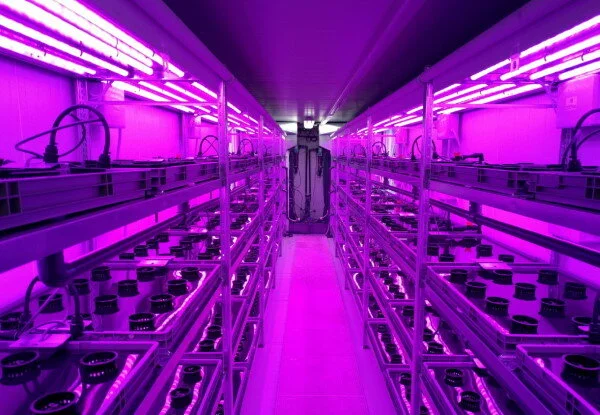
With vertical farming technology constantly improving, the ease of creating a completely controlled environment is increasing by the day. The use of bespoke LED spectrums, automated irrigation, and climate control allows the farm to standardize each growth cycle, producing the same amount, quality and size crop, which in turn results in standardized yields.
Local production
Being a controlled environment, vertical farms can settle wherever they choose, with climates and weather patterns becoming obsolete. Local production means a positive impact on local communities, resulting in an influx of jobs and contribution to smaller economies. Its local production and harvesting of crops reduce the amount of ‘food miles’, meaning a decrease in the global carbon footprint. Research has found that vertical farms lower overall CO2 emissions by 67-92% when compared with greenhouses.
Bridge Vertical Farming partners with Urban Crop Solutions to provide high-tech automated container farms, research facilities, and bespoke vertical farming solutions.
For more information:
Bridge Vertical Farming
Keynor Lane
Chalk Lane
Chichester
PO20 7LL
bridgeverticalfarming.co.uk
bridge@urbancropsolutions.co.uk
01243 641789
Publication date: Tue 31 Mar 2020
How To Grow Microgreens With Children
Microgreens can be taught to everyone, not just adults. Let’s face it, most children stay inside and play video games. What do children know about farming, besides crops and cows?
Microgreens can be taught to everyone, not just adults. Let’s face it, most children stay inside and play video games. What do children know about farming, besides crops and cows? This is the current stigma that has been associated with farming for the longest time. That’s great and all, but along came microgreens. Watching the microgreens sprout is really something that can’t be explained. It’s exciting and might inspire children to be urban farmers or just entrepreneurs. Introducing microgreens to children at a young age is engaging and fulfilling. It’s become a field where innovation is key and the younger generation has plenty of ideas. It’s also a fun and exciting way to connect kids with nature.
Here at Nick Greens Grow Team we worked with Kipp One Academy Charter school and had put in place a program that developed an understanding of where food comes. It was a success as the children and faculty all had to work together to make this work. This made it possible for children to connect with and appreciate the food they eat. They might even want to eat veggies if they see them in the form of microgreens. Having the microgreens program also gave children the fundamentals. The fundamentals are important because children can attempt to grow much more challenging microgreens.
Here are our steps to grow at home with your children:
Grab a 10X20 tray with drainage holes and fill it 1" thick with moist coco coir.
Weigh 14 grams of arugula microgreens Seeds into seed shaker, then broadcast evenly across the 10X20 tray.
Apply an even mist of water to the tray, then cover it with a humidity dome and place it in a dark space.
Germinate for two or three days in a dark location with at least 75% - 80% humidity. Water as described in step three at least once a day.
Remove humidity dome from the tray on day two/three. Then begin feeding plants your favorite fertilizer using a low flood/continuous flow method of irrigation.
Micro Arugula will be ready for harvest around 7-14 days, They will need about 8 to 16 hours of light with a typical fluorescent grow light about 12"-15" from the base of the plant.
It’s a fun process and gets children to get active and appreciate the world. Who knows maybe your child will start a whole urban farm in your backyard or basement.
If you enjoyed this, you might also enjoy these post:"Guide to growing microgreens"
TAGS: #growingmicrogreens #microgreens #organicmicrogreens #microgreen #growathome #growfoodathome #microarugula #arugula #urbanfarming #urbanfarm

The Future Of Farming Might Already Be Here, Inside A Shipping Container
"We are completely protected from any natural disasters, rainstorms, pests, weeds even -- there's no pollution because all of the air is filtered," the CEO of Sprout Stack said
Ali Donaldson
10 News First Senior Reporter, 25 Mar 2020
On Hugh McGilligan's farm, it's a perfect summer's day, 16 hours a day, every single day of the year.
"We are completely protected from any natural disasters, rainstorms, pests, weeds even -- there's no pollution because all of the air is filtered," the CEO of Sprout Stack said.
It's the farming of the future, packed inside converted shipping containers on Sydney's Northern beaches.
Sprout Stack runs five farms at Brookvale -- in five shipping containers --producing as much as five hectares of traditional mainland agriculture. The shipping container farms run as closed circuits, using about five percent of the water.
But it takes just five seconds to walk from one end to the other.
And depending on the crop, they can harvest within a week to five weeks.
"Here we have purple radish," Hugh says brushing his hand across the top of a miniature forest of lush leafy greens. "That's our fastest growing crop and it takes about a week from planting through to harvesting."
"That compares to traditional farming where it takes 40 percent longer to achieve the same results."
And they're not just saving on the environment.
Sprout Stack's Mick Harder has pulled off some amazing farming equipment hacks.
"I made a harvester out of a hedge trimmer from Bunnings and some steel offcuts lying around that only cost us $1000 instead of the industrial machine that's around $100,000," Mick said while feeding his ingenious machine with the latest crop.
They don't even use soil.
Instead, everything is planted into coconut husks, which are mulched in a concrete mixer -- another hack that has saved them thousands of dollars in equipment.
And they've even tinkered with Mother Nature and the precious light she provides.
Plants only use red and blue light -- mixed together it forms a beautiful fuchsia -- for all the protein and nutrients they need. So that's all that's used on these farms.
It's about customizing the best of nature in a box, including cutting out a big chunk of the rainbow.
The farms can even be controlled over a mobile phone.
Nestled in between Sprout Stack's plant beds is its "nervous system".
"It's a farm management system that tracks the environmental conditions of the farm and the computer keeps the CO2, the temperature and the humidity of the farm ideal for growing plants," Hugh said.
"It's all run by a computer so we don't have to make any decisions -- the computer is providing the plants with the ideal growing conditions."
As we talked, the lights inside the container started switching off.
"I just go an alert," he laughs, peering through the dark at his phone.
"We turned off the air-conditioning and because we are in here the farm has got a little bit warmer and shut everything down, to ensure there are no deleterious effects on the plants."
Sprout Stack poses some interesting solutions to the modern plagues on our food bowls.
"We know that we need to provide an awful lot more food and we can't do that just throwing more resources at a strained system," Hugh says.
"We've got to get more efficient about the way that we produce food and use scarce resources like water, and we have got to produce our food closer to where it's consumed."
He then runs through the traditional vegetable supply chain -- or, as he says -- "the reason why the tomato you buy at the supermarket tends not to have very much flavour."
Hugh explains it's generally picked green about a week ago, transported cold chain from the country to the capital city you live in where it sits in a distribution centre for a day.
It then gets redistributed to another distribution centre that sends it out to your supermarket.
"At that point, it's often hit with ethylene to ripen -- basically it turns red -- but in ripening it's not really ripening it's just changing colour and in the meantime the nutritional quality of that product has declined."
He claims Sprout Stack's produce is fresher and tastier because they harvest closer to where it is being consumed.
"On average we take about 16 hours between our harvest to store, which compares to about a week for traditional agriculture."

VIDEO: 5 Herbs And Their Benefits!
In our second educational video, Taisiya introduces 5 herbs and explains their benefits
In our second educational video, Taisiya introduces 5 herbs and explains their benefits.
You’ll learn the benefits of:
Basil
Sage
Thyme
Rosemary
Peppermint
And much more!
Check it out now!
In our second educational video, Taisiya introduces 5 herbs and explains their benefits. You'll learn the benefits of: Basil, Sage and Much More.
WRITTEN BY
Pure Greens Arizona LLC
Pure Greens’ container-based grow systems offer a variety of interior layouts, sizes, and options so customers can create a farm that meets their needs.
And be sure to leave us a comment.

Urban Crop Solutions Appoints Commercial Representative For Asian Market
Urban Crop Solutions and BAF signed a representation agreement for the East and South-East Asian markets
Urban Crop Solutions and BAF signed a representation agreement for the East and South-East Asian markets. The collaboration fits with Urban Crop Solutions' vision for global expansion and allows for local customer service in one of the fastest-growing countries in the Asia-Pacific region.
BAF is an Aggrotech company based in Singapore which has extensive experience and network in the Agri and aqua industry in Asia and beyond. The company has also built a strong network and business track record in the region and will provide as a perfect match to operate as an agent for Urban Crop Solutions in what is called the strategic gateway for Europe to the Southern parts of Asia.
NOSH visiting an Urban Crop Solutions ‘FarmPro’ container
Kenneth Tay, Chief Executive Officer at BAF, explains: “Based on my many years of experience in the aggrotech industry, I can see a great synergy between my business and the state-of-the-art solutions that Urban Crop Solutions provides. I believe that this technology will also play a critical role towards food security goals in the region.”
For a start, BAF has already procured its first customer, NOSH Produce, a high tech start-up in the indoor vertical farming industry who has put in a purchase order for an Urban Crop Solutions ‘FarmPro’ for their very first plant production site in Singapore. This will be Singapore’s first fully automated container farm that sets to grow local herbs for the high-end retail market and restaurants. The container farm will not only have a commercial purpose but will also serve as a demonstration facility for interested buyers.
NOSH & BAF and Urban Crop Solutions closing the deal
According to Brecht Stubbe, global sales director at Urban Crop Solutions: “With this opportunity to work with BAF and NOSH, we can demonstrate the economically viable model of our vertical farming solutions in the Asia-Pacific region”
The collaboration between Urban Crop Solutions, BAF & NOSH Produce came to fruition in the beginning of January 2020. The ‘FarmPro’ is set to be operational in May 2020.
For more information:
Urban Crop Solutions
Grote Heerweg 67, 8791 Beveren-Leie (Waregem), Belgium
800 Brickell Avenue 1100 Suite, Miami (FL 33131), USA
+32 56 96 03 06
info@urbancropsolutions.com
sales@urbancropsolutions.com
urbancropsolutions.com
Publication date: Thu 26 Mar 2020

“Our Ozone Technology Kills Viruses Including Corona, And Keeps Fresh Produce Safe”
Many mitigation tools are being used to stop the spread of the coronavirus, including social distancing, and enhanced personal hygiene
Christian DeBlasio with Purfresh
Many mitigation tools are being used to stop the spread of the coronavirus, including social distancing, and enhanced personal hygiene. In addition, health experts are promoting healthy eating as a way to boost immunity. “Here at Purfresh, we ensure that the fruits and vegetables transported around the globe are safe and virus-free,” says Christian DeBlasio, the company’s President & CEO.
Ozone Sterilizes Cargo And Mitigates VIrus Spread
The company specializes in controlled atmosphere for fresh produce in refrigerated ocean containers. Vessel journeys can be long, varying from seven days up to 50 and during this time, controlled atmosphere stops the fruit from ripening. “It minimizes decay and keeps fruit fresh during transit,” said DeBlasio. “I admit we are not the only company offering CA technology. However, we are unique in the sense that we are the only company in the world that adds ozone into our controlled atmosphere reefer container product.” Ozone has the attribute to mitigate the spread of viruses and protect food. It reduces the threat of foodborne illness as it sterilizes the container and cargo, prevents cross-contamination and can decrease the risk of many types of surface-borne pathogens by as much as 99 percent in a time frame of five to seven days.
Kills Viruses And Bacteria
“Ozone can go anywhere air can go and that’s why it is so effective in disinfecting,” continued DeBlasio. It has been scientifically proven to kill pathogens, including E. coli, salmonella, and listeria. It acts as a powerful, residue-free disinfectant that immediately reverts to oxygen, leaving the product’s natural taste, texture, and smell intact. In general, enveloped viruses, like Covid-19 are considered the least resistant to disinfectants, but several studies, including one from the Thailand Medical News, are demonstrating ozone’s ability to destroy the current coronavirus.
“Our ozone system is the only solution proven effective to minimize decay, control ripening, and enhance food safety without the use of chemicals,” said DeBlasio. “Stopping the spread of COVID-19 is a top priority and we want to do our part in ensuring the food we eat is healthy, safe and tastes great. That is why we are investing more than USD $1 million on new equipment this year.” Like SARS-1, COVID-19 is a respiratory syndrome. They are both viruses that can last on different types of surfaces for days. However, the big difference is that with SARS-1 people showed symptoms sooner and with COVID-19 symptoms can be significantly delayed. “This causes a major spread issue and ozone can play an important role in limiting the virus spread.”
For more information on Purfresh’s ozone system and current research on the technology, go to:
Purfresh Ozone Coronavirus or contact:
Christian DeBlasio
Purfresh
Tel: (+1) 813-546-0274
cdeblasio@purfresh.com
www.purfresh.com
www.intellipur.com
Publication date: Thu 26 Mar 2020
Author: Marieke Hemmes
© FreshPlaza.com
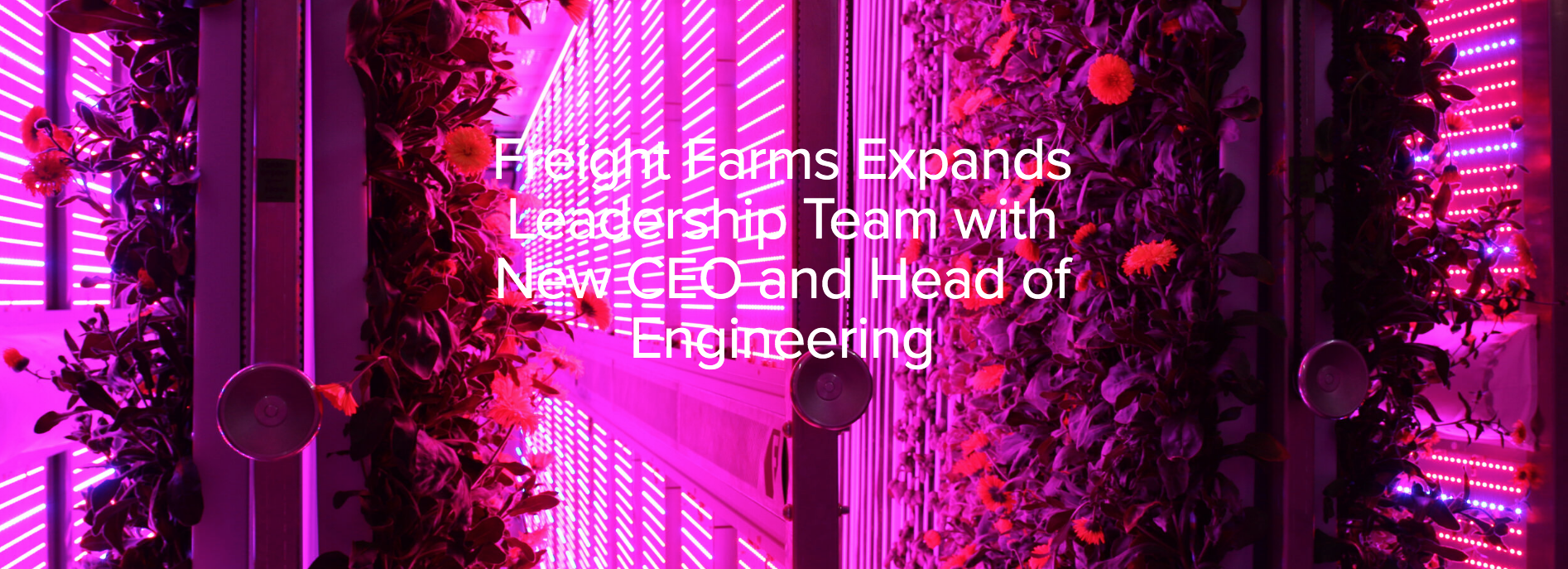
Freight Farms Expands Leadership Team with New CEO and Head of Engineering
Tune in to our webinar on March 31st with Freight Farmer Dave Ridill! Hear how he is growing produce for his snowy mountain town, all year long. Register here.
March 24, 2020
Freight Farms positions for new innovation and deepened market reach; cofounder Brad McNamara remains President
March 24, 2020 -- Freight Farms is thrilled to announce that it has hired veteran consumer brand executive Rick Vanzura as CEO who will also join the company’s Board of Directors, while cofounder Brad McNamara will remain as Freight Farms’ President. The company also welcomes automation and robotics specialist Jake Felser as Head of Engineering.
The need to simplify supply chains and ensure reliable access to healthy, traceable food at a local level has become more crucial for communities worldwide. Expansion of Freight Farms’ team follows a year of strong momentum for the company as forward-thinking organizations, particularly at the institutional level, recognize the benefits of a secure, distributed, and transparent food supply. As the company scales for growing demand at speed, expansion of Freight Farms’ leadership is positioned to quicken new extensions of its technology platform and deepen market reach.
“Freight Farms’ innovation addresses issues like urban land scarcity, traceability and the need for hyper-local solutions with speed to market. The current environment demonstrates more than ever the value of Freight Farms’ offerings.”
— Rick Vanzura, CEO of Freight Farms
“What excites me about Freight Farms is the ability to join a passionate, mission-driven business that is already perfectly positioned to address the growing critical need for sustainable, hyper-local food production,” says Vanzura. “Freight Farms has an incredible technology platform as the originator of container farming, as well as a global footprint driving numerous sources of value. Beyond providing a meaningful solution across industries, Freight Farms’ innovation addresses issues like urban land scarcity, traceability and the need for hyper-local solutions with speed to market. The current environment demonstrates more than ever the value of Freight Farms’ offerings.”
Vanzura has driven value for companies from start-up to Fortune 5 across technology, restaurant, retail, and entertainment sectors. With a focus on leveraging innovation and developing new market channels, he led strategy for Panera, General Motors Information Services and GameStop, and as the original CEO of Wahlburgers, he built the company from a single unit into one of America's fastest-growing restaurant brands. Vanzura’s 20 years in President and C-level roles include a decade in food service working with markets central to Freight Farms’ business. He also brings significant international experience to his role, having run Borders Group’s nearly $1 billion international business.
“As co-founders, Jon Friedman and I have taken Freight Farms from an idea to help decentralize the food system to being the leader in containerized vertical farming that’s truly putting the power of hyper-local food production into people’s hands,” said McNamara. “Rick has amplified growth across interconnected industries, and his international experience lends itself to our ongoing global expansion. His personal alignment with Freight Farms’ mission was crucial for us as well—he’s a welcomed addition to the team as we scale.”
“Rick has amplified growth across interconnected industries, and his international experience lends itself to our ongoing global expansion.”
— Brad McNamara, President of Freight Farms
“The potential is extraordinary,” Vanzura added, “I’m excited to be working with Brad, Jon and the team on the spectacular opportunities ahead, all while doing our part to help build a better, more sustainable food system for all.”
Jake Felser, former VP of Engineering for eatsa (now Brightloom), has also joined the Freight Farms team as Head of Engineering. With teams across hardware and software, Felser led robotics R&D and the development of eatsa’s shelf-style pickup system from conception to deployment across the company’s network of partners. Prior to eatsa, Felser was Senior Engineer and Product Manager at Cooper Perkins and has worked in hydraulics, refrigeration, structural optimization, design for development, and agriculture for companies including Blue Origin, Promethean Power Systems, and AGCO. With a passion for sustainable development, Felser is focused on automation, IoT, and machine learning-based integrations for Freight Farms growing technology portfolio.
Company growth, including ten new roles across all departments in Q1, also follows Freight Farms’ recent launch of the Greenery. Nearly 100 have been adopted by customers in 9 countries to date, bringing Freight Farms’ global footprint to more than 300 container farms around the world. The innovation also spurred interest from Sodexo in a strategic national partnership to grow food onsite at educational and corporate campuses nationwide and new investment from Ospraie Ag Science.

Is Covid-19 Likely To Be At Pandemic Proportions For 2 Years?
Scott Hsieh works at David Geffen School of Medicine at UCLA
Answered March 16, 2020 · Upvoted by Pedro Frank Ferrer Rivera, PhD Medicine and Healthcare, Santiago De Cuba, Cuba (2005) and David Chan, MD from UCLA, Stanford Oncology Fellowship
Here’s The Problem With Covid-19:
If we do nothing, it goes out of control. There is nearly universal agreement on this point. Every week the number of infected people doubles or triples, according to the best estimates of R0 today. Within about two months, hospitals start to collapse under the pressure (Italy) and can survive only by building emergency new facilities using help from the rest of the country (Wuhan). However, if you really are doing nothing, then two months later the rest of the country falls down and no one can help you. At this point, there are no more ICU beds left and the mortality rate goes from 2% to 5-10% because we run out of respirators.
On the other hand, if we declare a state of emergency … schools shut down, airports virtually close, and the country goes on lockdown. All for what, like 3,000 cases?? Then if the disease is successfully suppressed a few months later, everything opens back up and we look around and say, gee, why did we even do that?! Why did the country shut down when the ordinary flu killed 100x more people this year? Didn’t we way overreact?
But the difference between 5,000 cases and 5 million cases is 10 weeks of inaction. That is why governments around the world are taking severe and enormous action now because we are at the edge of the precipice.
To answer the original question — will Covid-19 be considered a pandemic in two years? That depends on us. Please, if you have a cough and/or a fever, stay at home and stay away from others. You probably have a cold, but if you’re a minimally symptomatic carrier, you can do your part by making sure your particular Covid-19 ends at you and doesn’t get passed on to another person.

Sobeys, Safeway To Produce Produce In, In-Store Farms
Empire’s family of brands is partnering with Infarm, one of the world’s most advanced and fastest-growing in-store farming platforms, to grow and harvest a range of fresh produce in select Sobeys, Safeway and Thrifty Foods stores across Canada
MARCH 10, 2020
Empire’s family of brands is partnering with Infarm, one of the world’s most advanced and fastest-growing in-store farming platforms, to grow and harvest a range of fresh produce in select Sobeys, Safeway and Thrifty Foods stores across Canada. Each vertical farming unit is a stand-alone ecosystem, enabled by machine learning and AI technology, that creates the optimum environment required for plants to flourish.“
Our goal at Empire is to be the fastest-growing and most innovative retailer in Canada. As we strive to achieve that goal, we continuously seek out first-to-market opportunities,” said Niluka Kottegoda, vice president of customer experience for Sobeys Inc. “Our partnership with Infarm is unique in Canada and offers our customers a world-leading urban farming solution. The products we will offer in-store are unique to customers in urban communities. We’re excited to test and learn with our customers along the way.”
Launching this Spring, the first fresh produce harvests will include a range of herbs at two Safeway stores in Vancouver. Empire will place farms in stores across seven cities in Canada, (Calgary, Edmonton, Halifax, Toronto, Vancouver, Victoria, Winnipeg) growing millions of hyper-local plants for our customers.“
Our partnership with Empire builds upon our vision to grow a resilient ecosystem that can help feed people living in cities around the world by 2050 while improving the environmental footprint of our food,” said Erez Galonska, co-founder and CEO of Infarm. “For example, through vertical farming, we can introduce plants to markets that were previously unavailable because they were too delicate to be transported. We’re proud to partner with Empire to share the Infarm revolution with Canadians.”
The in-store farms produce fresh, nutritious and flavourful produce all year round without the use of chemical pesticides. The vertical farms use 95 percent less water, 90 percent less transportation and 75 percent less fertilizer than industrial agriculture.
How it works:
Infarm has developed the world’s most advanced, sustainable, easily scalable and rapidly deployable modular farms.
Each in-store farm has a controlled energy-friendly environment designed to bring out the natural flavour and properties of each plant.
The plants are all grown in-store, dramatically reducing carbon emissions that result from transportation.
The individual farms are connected and remotely controlled from a central farming platform that gathers up-to-the-minute information about the growth of each plant and learns, adjusts and improves the growing conditions.
How Greenhouse Yields Compare To Container Farms
As the agriculture industry searches for more sustainable alternatives to field farming, greenhouses remain the most popular solution, making up 47% of the indoor farming industry in the United States
March 10, 2020
As the agriculture industry searches for more sustainable alternatives to field farming, greenhouses remain the most popular solution, making up 47% of the indoor farming industry in the United States.
Greenhouse popularity is also on the rise worldwide.
A 2019 statistical survey found that more than 1.2 million acres worth of vegetable-growing greenhouses were in use globally, an increase of 223% since 1980.
But they aren’t the only indoor farming option out there.
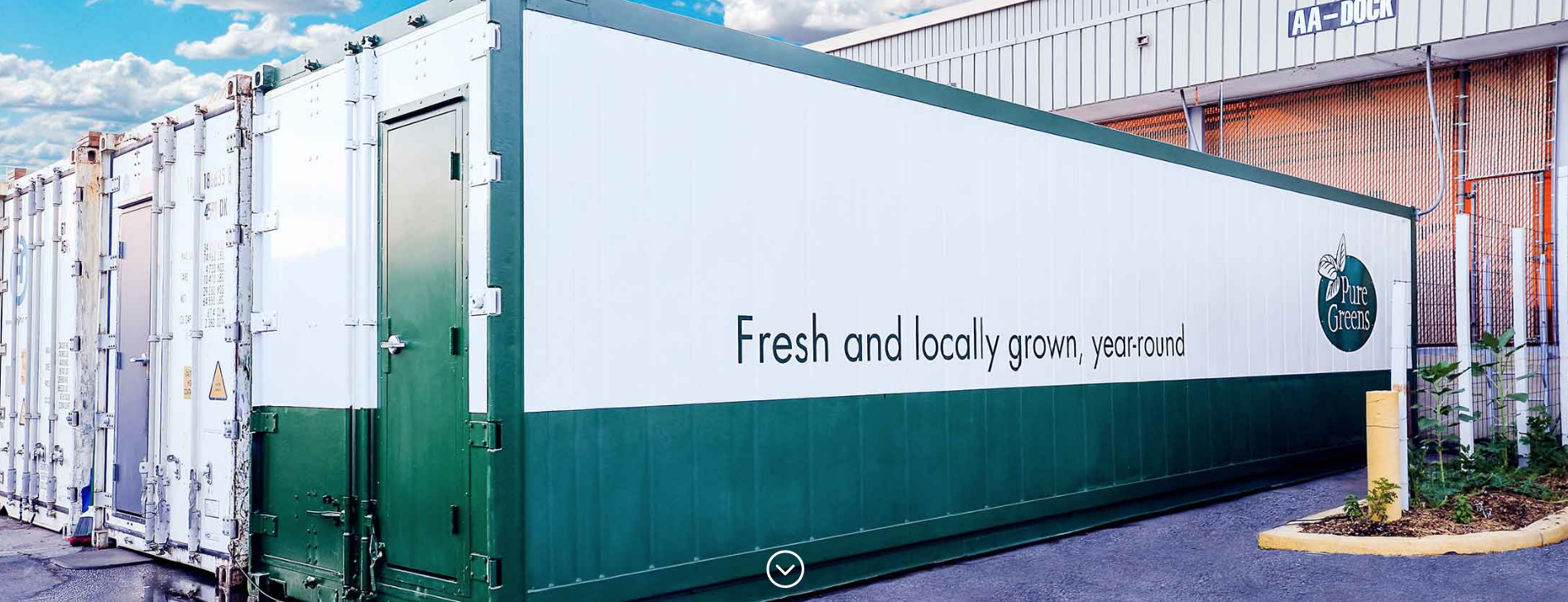
In this article, you’ll learn about how typical greenhouse yields compare to our Pure Greens container farms.
Let’s start with a little bit of background info.
Greenhouses are structures with glass or clear roofs that are used for cultivating plants. They range in size from small backyard sheds to massive commercial farms.
Greenhouses utilize a variety of crop growing systems. Most use typical soil methods planting in boxes, pots, or raised garden beds. Others use soil-less growing solutions such as hydroponic and aeroponic systems.
Other types of indoor farms include vertical, container, and deep water culture (DWC) systems.
What sets greenhouses apart from these other indoor farms is the use of glass or clear plastic roofing and sides to provide plants with natural sunlight. Other indoor farms rely on artificial light.
Growing indoors has plenty of advantages over outdoor farming. For example, indoor farming allows for highly controlled environments, creating near-perfect growing conditions for plants.
Greenhouses and container farms both offer the ability to control factors such as humidity and temperature and help prevent damage from weather, pests, and diseases. As a result, plants are healthier and can be grown at any time, no matter the season.
Our Pure Greens farms made from repurposed shipping containers are fully controllable from your smartphone!
Soil-based greenhouses are subject to similar space restrictions as field farms because plants need to have enough room for their roots to grow.
Hydroponic systems deliver water and nutrients directly to roots so that plants don’t have to spread. Therefore, our hydroponic container farms yield more per square foot than traditional greenhouse yields.
Using traditional soil methods, each lettuce crop would have to be placed 10 to 16 inches apart, meaning only six to 18 lettuce plants would be able to grow in a 16-square-foot row.
Using our hydroponic technology, we’re able to fit 36 lettuce plants in one row! That’s at least three times as many.
But lettuce takes up a lot of space in both types of farms. Herbs like rosemary and sage are much easier to grow in bulk in our hydroponic container farms than they are in soil-using greenhouses.
In soil, rosemary and sage plants need to be spaced a couple of feet apart. If we were to follow that rule in one of our 16-square-foot rows, we’d only be able to grow four plants total.
We grow 90 rosemary or sage plants in one row!
Thai basil crops need to be spaced 12 to 18 inches apart. Like sage and rosemary, we easily fit 90 Thai basil plants in just one of our rows. Farmers who use soil can only grow 16 max in the same space.
This means our hydroponic farms yield at least 5.6 times as much basil per square foot than a traditional soil greenhouse yields in just one grow cycle.
It’s clear that our container farms come out on top when it comes to yield.
If you’d like to learn more about maximizing your production with one of our farms, reach out to us on our website or give us a call at 602.753.3469.
WRITTEN BY
Pure Greens Arizona LLC
Pure Greens’ container-based grow systems offer a variety of interior layouts, sizes, and options so customers can create a farm that meets their needs.
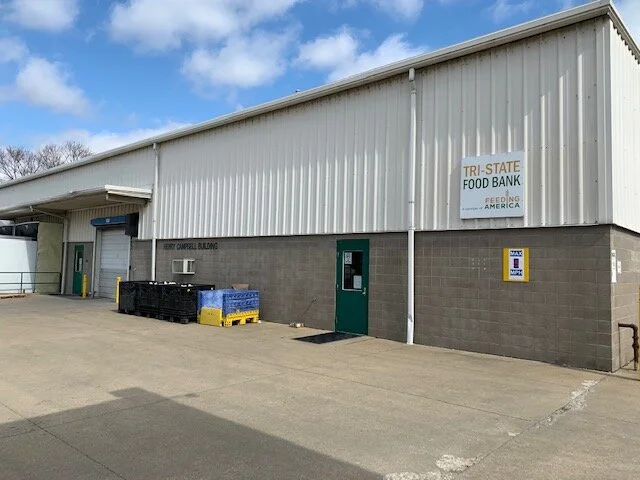
US: Evansville, Indiana - Perfect For Conversion To Vertical Farming Facility Will Soon Be On The Market
Asking price is $500,000 which includes all assets on the property including, but not limited to: the office building, and the industrial building including the climate control chambers
A climate-Controlled, Industrial Facility Will Soon Be On The Market
In Centrally Located Evansville, Indiana.
Evansville is in Southern Indiana, just south of the major logistical interchange of Interstate 69 and 64.
It is within a three-hour drive to Indianapolis, Saint Louis, Louisville, and is about five hours south of Chicago where there are numerous markets for indoor-grown produce.
It’s a strategic location, and existing infrastructure makes it an ideal facility to be converted to an Indoor Vertical Farm.
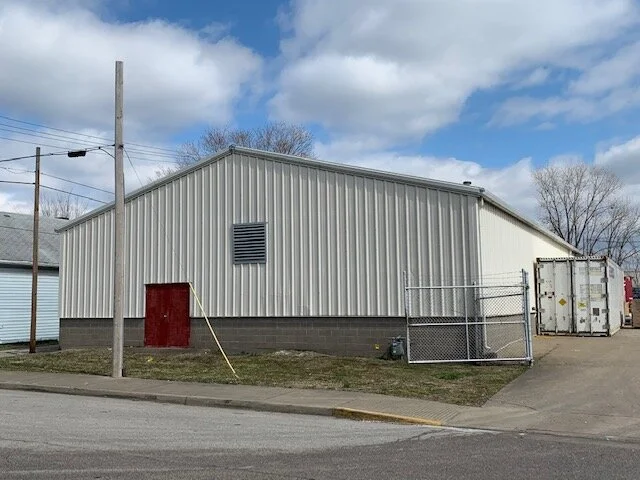
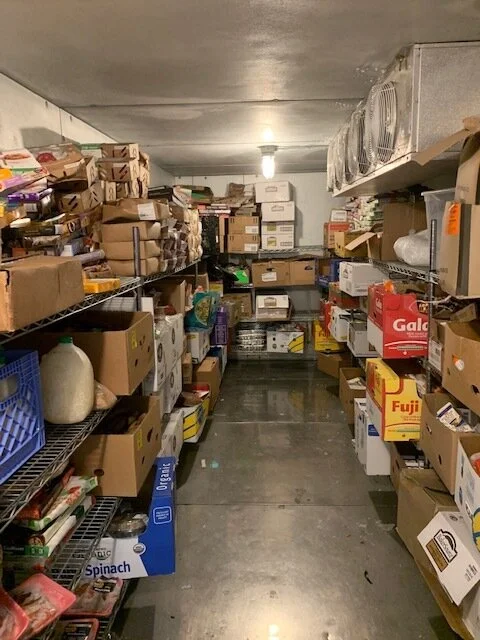
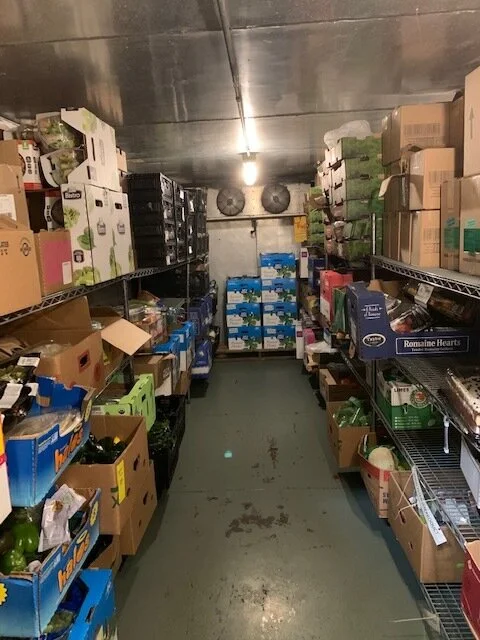

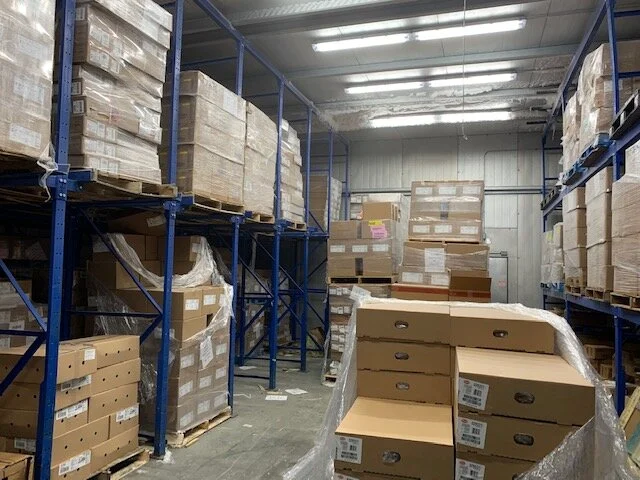
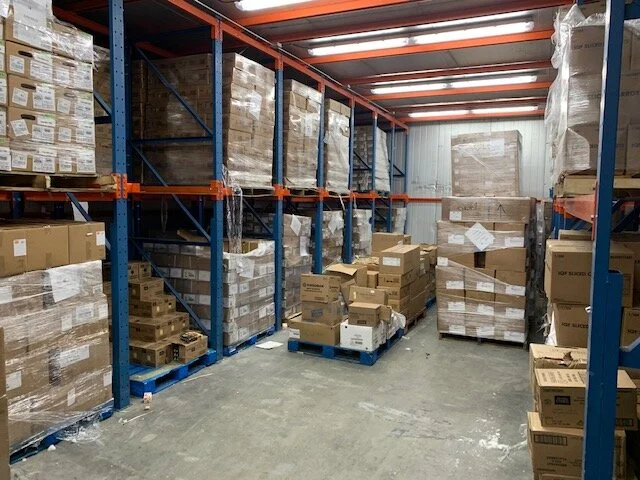
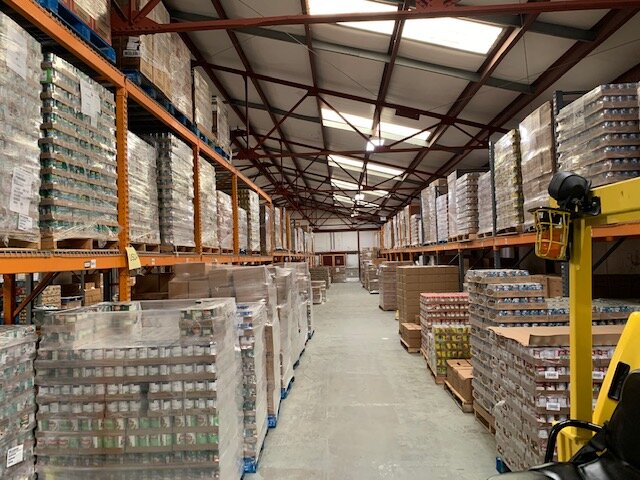
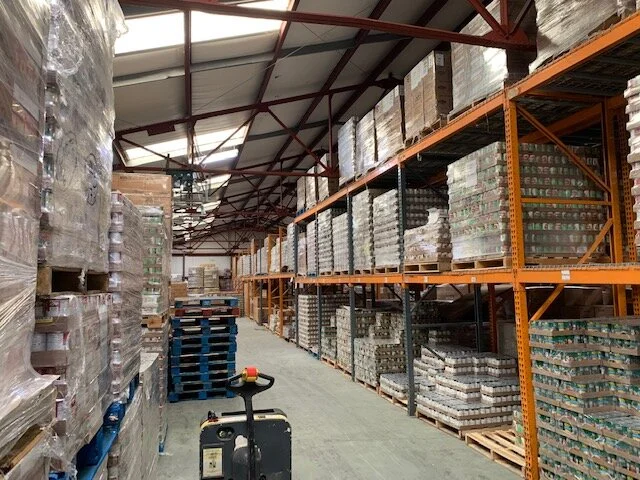
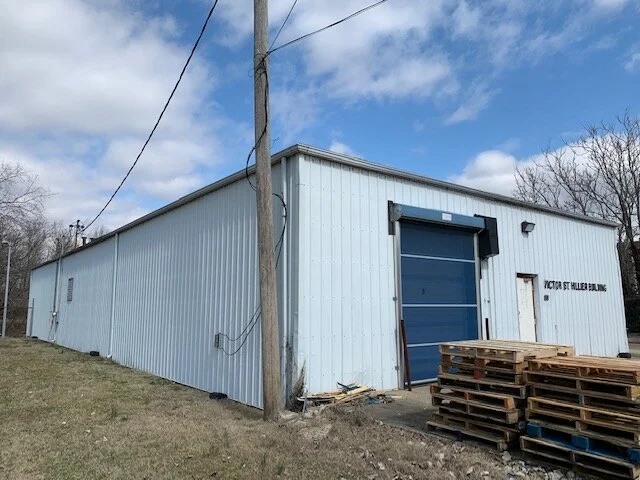
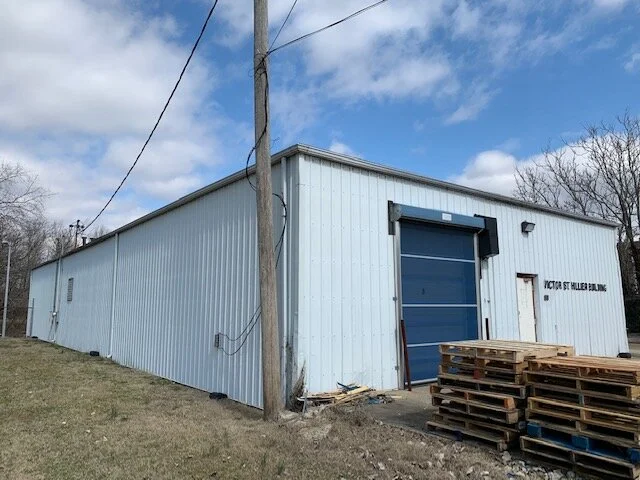
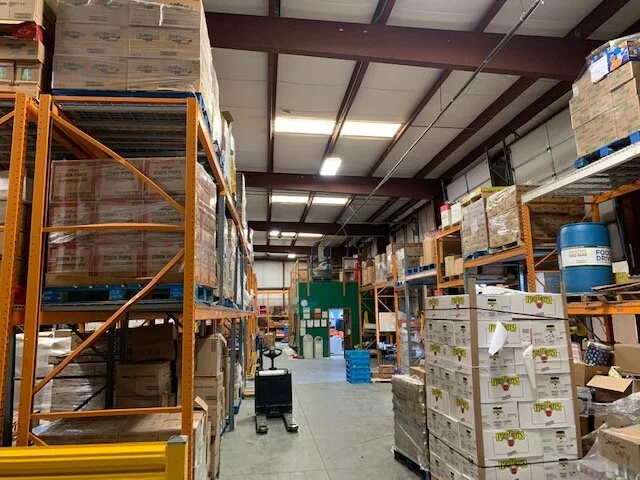
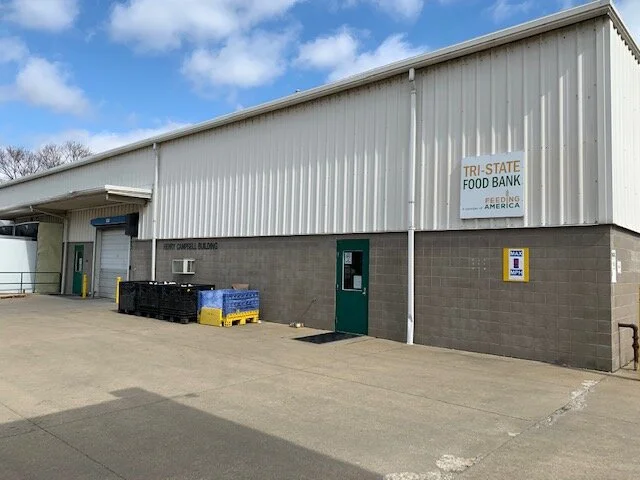
The previous tenants of the building (Tri-State Food Bank, Inc.) have outgrown the facility, and are currently building a larger facility to meet this need.
The building is zoned for commercial use and has been maintained well with little to no repairs required to make it a functional, vertical farm.
In addition to an advantageous location, the city of Evansville and the ISBDC (Indiana Small Business Development Center) is renowned for its support of new business ventures in the area. Local hydroponic appliance startup, Heliponix, LLC, has utilized these resources for grant applications assistance, lines of credit, among many other services provided.
The buildings have the following climate control chamber for storing food:
● Campbell: Heat and air conditioning
● Hoy: Heat only
● St. Hillier: Heat only
● Office: Heat and air conditioning
Asking price is $500,000 which includes all assets on the property including, but not limited to: the office building, and the industrial building including the climate control chambers.
Below is a spec sheet itemizing Tri-State Food Bank's buildings, square footage, and heights for consideration by prospective vertical farming contacts.
Please contact Glenn Roberts at glennroberts@tristatefoodbank.org for any inquiries!

Coronavirus Pandemic Highlights Vital Need For Vertical Farms In World Cities
Although the sources and sourcing of food in North America and Western Europe are currently generally secure, what might soon become a prodigious concern is that their workers in the production, distribution and retail segments of the food supply chain may eventually succumb to coronavirus infection
MARCH 25, 2020
by Professor Joel Cuello, Ph.D.
Image modified from Martin Sanchez/Unsplash
The speed with which the coronavirus outbreaks in Asia, Europe, and North America metastasized into a full-blown global pandemic — catching many world governments by surprise and with little preparation — underscores just how our world today is highly interconnected and how, in order to contain and stem the surging pandemic, temporary disconnection from the physically-networked world by cities, regions and even entire nations has become an urgent imperative.
With confirmed coronavirus cases globally now exceeding 370,000 and the number of deaths surpassing 16,000, many world cities have become throbbing epicenters of the surging pandemic. Accordingly, various countries, states, and cities have enforced lockdown or stay-at-home orders with drastic measures including banning public gatherings, restricting restaurants to take-out and delivery only, and closing schools, bars, theaters, casinos and indoor shopping malls, among others.
Such orders, or their looming possibility, have consequently intensified the panic-buying urges of consumers for food and household essentials particularly in North America and Western Europe, giving occasions for daily photos of empty grocery-store shelves splashed ubiquitously from across news networks to social media platforms. The availability of food in North America and Western Europe during the ongoing coronavirus pandemic, however, remains generally secure, at least in the near term of the pandemic.
Food Sourcing
New York City, for instance, normally has food supply amounting to approximately 8.6 million tonnes (19 billion pounds) annually as purveyed by a network of regional and national food distributors, which then is sold at about 42,000 outlets across the city’s five boroughs, according to a 2016 study sponsored by the city.
Over half of the outlets are made up of approximately 24,000 restaurants, bars, and cafes through which consumers access almost 40 percent of the city’s food by volume annually. The rest of the outlets are chain supermarkets, bodegas, and online grocery stores. The study reported that the city’s annual food supply feeds over 8.6 million city residents, over 60 million tourists plus daily commuters in the hundreds of thousands from the tri-state area of New York, New Jersey, and Connecticut.
With millions of tourists and commuters now staying away from the city, however, and with the city’s hotels at just 49 percent occupancy for the week ending March 14, an excess of the food supply is readily available for diversion into the city’s grocery stores and other retailers to meet the surge in demand by local residents. In the case of Germany, the country imports food that accounts for nearly 8 percent of its US$1.3 Trillion imported goods in 2018. Germany procures from abroad about 3 million tonnes of fresh vegetables annually — with cucumbers and tomatoes accounting for 40 percent of the import volume — at a value of around 3.5 billion Euros, mainly from the Netherlands and Spain. Indeed, approximately 30 percent of the 2.6 million tonnes of exported Dutch-grown fresh vegetables go to Germany.
Meanwhile, approximately 80 percent of the United Kingdom’s food and food ingredients are imported. The U.K. imports approximately 2.4 million tonnes of fresh vegetables each year from Spain (33 percent), the Netherlands (28 percent), France (10 percent) and from various parts the world (29 percent).
Access to Food
Although the sources and sourcing of food in North America and Western Europe are currently generally secure, what might soon become a prodigious concern is that their workers in the production, distribution and retail segments of the food supply chain may eventually succumb to coronavirus infection. In such events, coupled with the potential for lockdown bureaucracies to slow down the flow of cargo between countries and between cities, severe delays in delivery — or real delivery shortages — could well become an actual possibility.
Local Vertical Farms
The coronavirus pandemic lockdowns have laid bare if fortuitously, the crucial importance of partial local food production in or around world cities in the context of urban resilience. The following salient features of vertical farms have become especially significant toward buttressing a city’s resilience in the event of a pandemic lockdown:
(1) Local — production of safe and fresh produce can take place within the lockdown zone, obviating the hurdles and perils of going in and out of the red zone;
(2) Automation-Amenability — impact of severe labor shortage which can be expected as the pandemic surges as well as direct physical contact between workers and fresh produce can be significantly minimized or eliminated;
(3) Controlled-Environment — infection risks to both workers and crops are significantly reduced through clean and controlled operations;
(4) Modular Option — crops may be grown in modular production units, such as shipping containers, which may be conveniently transported to neighborhoods located either farther away or in areas of stricter isolation; and,
(5) Reliability — Dependability, and consistency of high-yield and high-quality harvests throughout the year is virtually guaranteed independently of season and external climate conditions.
Fortunately for New York City, even as it sources most of its fresh vegetables from California and Arizona, the New York greater area now serves as host to the highest concentration in the United States of commercial urban vertical farms — including Aerofarms, Bowery Farming, Bright Farms, Farm.One, Square Roots and Gotham Greens, among others — that operate as controlled-environment farms year-round and independently of the variable effects of climate and geography. While conventional outdoor farming can produce three vegetable harvests per year, some of these vertical farms can achieve up to 30 harvests annually.
New York City and other world cities could certainly use more vertical farms.
Indeed, the urban planning and design of every world city should incorporate vertical farms, in and/or around it, not only for promoting food security — but for fostering disaster resilience as well. During a pandemic when a temporary period of social distancing between cities and nations becomes critically necessary, vertical farms can serve as helping outposts of resilience for cities and regions on lockdown as they brave the onslaught of the pandemic until it runs its course and duly dissipates — at which time the enfeebled ties of cooperation between cities, states and nations across the globe can once again be mended and made even stronger than before. Thus, not only locally, but in fact also globally, vertical farms can serve as helping vanguards of protection for all of our communities.
Dr. Joel L. Cuello is Vice-Chair of the Association for Vertical Farming (AVF) and Professor of Biosystems Engineering at The University of Arizona. In addition to conducting research and designs on vertical farming and cell-based bioreactors, he also teaches “Integrated Engineered Solutions in the Food-Water-Energy Nexus” and “Globalization, Sustainability & Innovation.” Email cuelloj@email.arizona.edu.

Microgrids, Indoor Agriculture Go Together Like Peas And Carrots
In the last year and a half, Schneider has announced deals with Fifth Season and Bowery Farming, two vertical farming startups
Friday, March 6, 2020
Bowery FarmingBowery Farming is one of two vertical farming startups that has signed an energy as a service arrangement with Schneider Electric and Scale Microgrid.
Plant factories may be the technology we need to feed a growing and warming planet.
The operations, which have no access to natural sunlight and grow plants in vertical rows, are designed to be incredibly efficient. They require 95 percent less water and 99 percent less land than conventional farms while growing leafy greens with scientific precision without pesticides. Because of their small physical footprint, vertical farms also can produce food close to the urban areas where it will be consumed, reducing the need for transportation and logistics.
The tradeoff: Indoor agriculture demands a staggering amount of energy. Lights run 16 hours a day and facilities require impressive HVAC equipment, reaching an energy intensity per square foot that surpasses datacenters. The energy load varies greatly depending on the size and type of operations, but it could be between 500 kilowatts and 15 megawatts — more than a retail box store and less than a data farm.
Schneider Electric sees an opportunity here. The international service provider has identified indoor agriculture as one of the four major drivers that will increase electricity consumption in the next decade (the others being the electrification of heat, electric vehicles and data centers).
In partnership with Scale Microgrid Solutions, Schneider is extending its energy-as-a-service model to indoor agriculture companies. Under the arrangement, Scale finances, builds and maintains an onsite microgrid and sells the energy to the off-taker — in this case, indoor farming startups.
In the last year and a half, Schneider has announced deals with Fifth Season and Bowery Farming, two vertical farming startups.
Shutterstock
Three reasons microgrids are well suited to meet indoor farming’s blooming energy demands
1. Microgrids can help grow operations get online faster
Many facilities aren’t equipped to meet the electricity demands of an indoor agriculture operation. Upgrading the facility could take anywhere between six months and a year and a half and could cost millions of dollars, according to Mark Feasel, president of the smart grid at Schneider Electric.
"These are not trivial loads," Feasel said in a phone conversation. "There may or may not be the capacity on the grid to handle these loads, especially as you move towards metropolitan areas where electrical distribution can be constrained."
Not only can the upgrade take a lot of time, it can be really expensive. Depending on the utility, there may need to be ecosystem studies and a grid feasibility assessment, along with a slew of technical and environmental regulations that can slow the timeline and increase costs.
2. It’s on-brand
On-site electricity generation is kind of like harvesting your own energy to grow your own plants. It’s a technological intermediary between the sun and photosynthesis. Because microgrids can run in island mode, this adds resilience to operations.
Microgrids also can provide lower-carbon energy. Running an operation off dirty energy would take a bite out of the startup’s sustainability proposition. After all, it seems silly to burn fossil fuels to create artificial sunlight.
Schneider and Scale’s microgrids use a combination of solar and natural gas, which the company says is cleaner than the grid electricity. The company is exploring ways to have completely clean microgrids, but there are space constraints for the number of solar panels needed for the energy intensity of plant farms, Feasel said. One farm likely would need many multiples of surface area to meet the demand inside the building, which may be difficult in urban areas.
3. Energy-as-a-service offers price certainty
Energy represents a major line item for indoor agriculture, accounting for 30 to 50 percent of the operational expenses at a plant factory. That’s according to unpublished research conducted by Centrica Ventures’ Logan Ashcraft, XENDEE’s Zachary Pecenak, Energy Impact Partner’s Shayle Kann and Kale Harbick from the U.S. Department of Agriculture.
With Schneider and Scale’s energy-as-a-service model, the startup will know the cost of energy in the future, making it easier to create a business plan and attract investors.
"If we can provide a fixed energy price over a long period of time, this could be 10, 15, 20 years, they can optimize their balance sheet," Feasel said. "It provides energy certainty and less risk around the cost of energy."
The cost per kilowatt-hour (kWh) varies from service territory and project, but Feasel said it’s in the range of 10 to 15 cents per kWh, competitive with average industrial energy rates, depending on the region.
Plant factories have a unique energy load profile. They’re incredibly energy-intense for three-quarters of the day, and then shed most of their loads when the lights turn off.
However, it’s unclear if this price for electricity will work for indoor farm operations in the long run. Ashcraft’s analysis shows that a farm would need a price of between 7 to 9 cents per kWh to break even. Matt Barnard, CEO of the vertical farming startup Plenty, pegged the desired cost even lower, saying the company would need 3 to 5 cents per kWH to succeed.
"This question gets to the heart of whether this industry will be able to succeed and scale. It’s a discussion of unit economics," Ashcraft said. "These are growing commodities. And they’re forced to compete with commodity prices at the grocery store. I have not seen any evidence that consumers are willing to pay any multiple of any price for produce."
Still, the market is young, and capital is flowing to technological innovations. The Union Bank of Switzerland predicts food innovation will be a $700 billion market by 2030 a fivefold increase from 2018, meaning financial markets are investing in making rethinking food. Fifth Season has raised $35 million in finance, Bowery has raised $172.5 million and Plenty has raised $260 million, thanks to Jeff Bezos and SoftBank, so the startups may have wiggle room to work on efficiencies and economies.
The unique opportunities and challenges of indoor agriculture
Plant factories have a unique energy load profile. They’re incredibly energy-intense for three-quarters of the day, and then shed most of their loads when the lights turn off and the plants get tucked into their vertical bunks for the night.
Plants don’t care when "night" comes, meaning operators have the opportunity to respond to utility price signals. This flexibility is different from more finicky power loads, such as data centers, which must have constant electricity to function.
For example, if the grid has excess solar capacity in the middle of the day, plant farms could suck that up. Then when peak rates hit, the plants could start their "night" cycle. If done well, and if located in a service territory with a friendly utility and regulator, indoor agriculture operations could achieve lower rates while benefiting the grid.
To hear more about how this works, check out Ashcraft and Kann’s conversation on The Interchange in 2018.
Scale’s microgrids come with Schneider’s energy management software platform "EcoStruxure Microgrid Advisor." This system could be attractive to indoor agriculture startups that are putting its brain power behind getting the plants right, not energy management. The tradeoff is that the startup then would split the upside with Scale and Schneider. Not a bad deal, as long as the economics work.
This article is adapted from GreenBiz's newsletter Energy Weekly, running Thursdays. Subscribe here.
Topics: Renewable Energy Food Systems
Tags: Microgrids urban agriculture

Food Grown Without Dirt Isn’t Organic, Farmers Say in Lawsuit
The Center for Food Safety and farmers from Maine to California say in the lawsuit that the decision “undermines the very integrity” of the country’s organic food label -- “that consumers trust and that organic farmers rely upon.”
Bloomberg by: Robert Burnson
March 3, 2020
(Bloomberg) -- Food activists and farmers sued the Trump administration over its decision to let hydroponic operators use the prized “organic” label.
The Center for Food Safety and farmers from Maine to California say in the lawsuit that the decision “undermines the very integrity” of the country’s organic food label -- “that consumers trust and that organic farmers rely upon.”
Hydroponic operations grow plants that have their roots in water or air and receive nutrients from solutions created by the operators. Under federal rules, organic crops -- aside from being grown without pesticides and other harmful chemicals -- must foster “soil fertility,” according to the lawsuit filed Monday in U.S. District Court in San Francisco.
But how can you foster soil fertility without soil, the farmers asked.
The farmers want a judge to declare that the hydroponic operations don’t meet the soil fertility mandate and to order the U.S. Department of Agriculture to comply with the requirements for organic certification.
The USDA had issued a statement saying certification of hydroponic operations is allowed and has been since the program began, according to the lawsuit.
“USDA offered no supporting rationale for its statement,” the farmers said. “USDA made the statement in a website announcement, without any opportunity for public input.”
To contact the reporter on this story: Robert Burnson in San Francisco at rburnson@bloomberg.net
To contact the editors responsible for this story: David Glovin at dglovin@bloomberg.net, Joe Schneider
For more articles like this, please visit us at bloomberg.com
©2020 Bloomberg L.P.

Copper Kills Coronavirus. Why Aren’t Our Surfaces Covered In It?
Civilizations have recognized copper’s antimicrobial properties for centuries. It’s time to bring the material back.
In China, it was called “qi,” the symbol for health. In Egypt, it was called “ankh,” the symbol for eternal life. For the Phoenicians, the reference was synonymous with Aphrodite—the goddess of love and beauty.
These ancient civilizations were referring to copper, a material that cultures across the globe have recognized as vital to our health for more than 5,o00 years. When influenzas, bacteria like E. coli, superbugs like MRSA, or even coronaviruses land on most hard surfaces, they can live for up to four to five days. But when they land on copper, and copper alloys like brass, they begin to die within minutes and are undetectable within hours. “We’ve seen viruses just blow apart,” says Bill Keevil, professor of environmental healthcare at the University of Southampton. “They land on copper and it just degrades them.”
No wonder that in India, people have been drinking out of copper cups for millennia. Even here in the United States, a copper line brings in your drinking water. Copper is a natural, passive, antimicrobial material. It can self-sterilize its surface without the need for electricity or bleach.
Copper boomed during the Industrial Revolution as a material for objects, fixtures, and buildings. Copper is still widely used in power networks—the copper market is, in fact, growing because the material is such an effective conductor. But the material has been pushed out of many building applications by a wave of new materials from the 20th century. Plastics, tempered glass, aluminum, and stainless steel are the materials of modernity—used for everything from architecture to Apple products. Brass doorknobs and handrails went out of style as architects and designers opted for sleeker-looking (and often cheaper) materials.
Now Keevil believes it’s time to bring copper back in public spaces, and hospitals in particular. In the face of an unavoidable future full of global pandemics, we should be using copper in healthcare, public transit, and even our homes. And while it’s too late to stop COVID-19, it’s not too early to think about our next pandemic.
The benefits of copper, quantified
We should have seen it coming, and in reality, someone did.
In 1983, medical researcher Phyllis J. Kuhn wrote the first critique of the disappearance of copper she’d noticed in hospitals. During a training exercise on hygiene at Hamot Medical center in Pittsburgh, students swabbed various surfaces around the hospital, including toilets bowls and doorknobs. She noticed the toilets were clean of microbes, while some of the fixtures were particularly dirty and grew dangerous bacteria when allowed to multiply on agar plates.
[Photo: Backiris/iStock]
“Sleek and shining stainless steel doorknobs and push plates look reassuringly clean on a hospital door. By contrast, doorknobs and push plates of tarnished brass look dirty and contaminated,” she wrote at the time. “But even when tarnished, brass—an alloy typically of 67% copper and 33% zinc—[kills bacteria], while stainless steel—about 88% iron and 12% chromium—does little to impede bacterial growth.”
Ultimately, she wrapped her paper up with a simple enough conclusion for the entire healthcare system to follow. “If your hospital is being renovated, try to retain old brass hardware or have it repeated; if you have stainless steel hardware, make certain that it is disinfected daily, especially in critical-care areas.”
Decades later, and admittedly with funding from the Copper Development Association (a copper industry trade group), Keevil has pushed Kuhn’s research further. Working in his lab with some of the most feared pathogens in the world, he has demonstrated that not only does copper kill bacteria efficiently; it also kills viruses. (In 2015, he even demonstrated this phenomenon with a precursor to COVID-19, coronavirus 229E).
In Keevil’s work, he dips a plate of copper into alcohol to sterilize it. Then he dips it into acetone to get rid of any extraneous oils. Then he drops a bit of pathogen onto the surface. In moments it’s dry. The sample sits anywhere from a few minutes to a few days. Then he shakes it in a box full of glass beads and a liquid. The beads scrape off bacteria and viruses into the liquid, and the liquid can be sampled to detect their presence. In other cases, he has developed microscopy methods that allow him to watch—and record—a pathogen being destroyed by copper the moment it hits the surface.
The effect looks like magic, he says, but at this point, the phenomena at play is well-understood science. When a virus or bacteria strikes the plate, it’s flooded with copper ions. Those ions penetrate cells and viruses like bullets. The copper doesn’t just kill these pathogens; it destroys them, right down to the nucleic acids, or reproductive blueprints, inside.
“There’s no chance of mutation [or evolution] because all the genes are being destroyed,” says Keevil. “That’s one of the real benefits of copper.” In other words, using copper doesn’t come with the risk of, say, over-prescribing antibiotics. It’s just a good idea.
In real-world testing, copper proves its worth
Outside of the lab, other researchers have tracked whether copper makes a difference when used in real-life medical contexts–which includes hospital door knobs for certain, but also places like hospital beds, guest-chair armrests, and even IV stands.
In 2015, researchers working on a Department of Defense grant compared infection rates at three hospitals and found that when copper alloys were used in three hospitals, it reduced infection rates by 58%. A similar study was done in 2016 inside a pediatric intensive care unit, which charted a similarly impressive reduction in infection rate.
But what about the expense? Copper is always more expensive than plastic or aluminum, and often a pricier alternative to steel. But given that hospital-borne infections are costing the healthcare system as much as $45 billion a year—not to mention killing as many as 90,000 people—the copper upgrade cost is negligible by comparison.
Keevil, who no longer receives funding from the copper industry, believes the responsibility falls to architects to choose copper in new building projects. Copper was the first (and so far it is the last) antimicrobial metal surface approved by the EPA. (Companies in the silver industry tried and failed to claim it was antimicrobial, which actually led to an EPA fine.) Copper industry groups have registered over 400 copper alloys with the EPA to date. “We’ve shown copper-nickel is just as good as brass at killing bacteria and viruses,” he says. And copper-nickel doesn’t need to look like an old trumpet; it’s indistinguishable from stainless steel.
As for the rest of the world’s buildings that haven’t been updated to rip out the old copper fixtures, Keevil has a piece of advice: “Don’t remove them, whatever you do. These are the best things you’ve got.”
ABOUT THE AUTHOR
Mark Wilson is a senior writer at Fast Company who has written about design, technology, and culture for almost 15 years. His work has appeared at Gizmodo, Kotaku, PopMech, PopSci, Esquire, American Photo and Lucky Peach
[Source Images: ekimckim/Blendswap (toilet), blenderjunky/Blendswap (bathroom)]

4 Malaysian Engineers Believe Vertical Farming Offers Answer to Food Sustainability
CityFarm Malaysia was established in 2016. Within six months, they reported impressive sales. In 2017, they were invited to join a United Nations program held in Kuala Lumpur, where they gained a bigger perspective on urban farming, and specifically, vertical farming
06 Mar 2020
By WONG LI ZA
The CityFarm Malaysia team: (from left) Niew Ley Koon, Looi Choon Beng, Koay, Low Cheng Yang and (centre) Chew Jo Han. Photos: CityFarm Malaysia
When Chew Jo Han decided to set up a small hydroponic system in his office because his fashion start-up was not doing well, his friends Jayden Koay, Looi Choon Beng and Low Cheng Yang joked that, if nothing else, he could survive on the vegetables grown!
But, jokes aside, Koay, Looi, and Low were struck by how the plants were grown using artificial light.
With his interest piqued, Koay soon started filling his own balcony at home with hydroponic plants and even converted his bathtub into a germination area for seedlings.
“I started my own system, and my (now business) partners also started to do the same, at home or in their offices, ” said Koay, 32.
They then discovered a common problem – the industry was still in its infancy and materials, equipment like hydroponic fertilizers had to be bought from countries like Japan, Singapore, China, and Taiwan. And, they were expensive.
“We realized that if we needed these materials, more urban farmers in the country would also need them. So, over a mamak session one day, we decided to start up a company to address this issue, ” he said.
CityFarm Malaysia was established in 2016. Within six months, they reported impressive sales. In 2017, they were invited to join a United Nations program held in Kuala Lumpur, where they gained a bigger perspective on urban farming, and specifically, vertical farming.
Vertical farming refers to a large scale, mostly indoor, type of farming where produce is grown vertically in layers of racks.
“We realized we should have a bigger vision of not only solving industry problems but food security (the state of having reliable access to a sufficient quantity of affordable, nutritious food) issues as well.”
“We wanted to play a bigger role and that’s when we decided to start a consultancy services to plant factories in Malaysia, to get the required technology in and to prepare ourselves for the next 30 years, ” said Koay.
In vertical farming, plants like vegetables, herbs, and fruits are grown in a highly-controlled environment.
Vertical farming refers to large scale, mostly indoor, a system where crops are grown vertically in layers of racks.
The United Nations estimates that the world population will reach over 9 billion by 2050, out of which two-thirds will be living in urban areas.
A study recently published in the journal Bioscience estimates that overall food production needs to be increased by 25-70% between now and 2050. However, at present, over 80% of arable land suitable for agriculture are already being used.
The United Nations’ Food and Agriculture Organization (FAO) revealed that one-third of all food produced for human consumption, valued at US$1tril (RM4.2tril), is lost or wasted each year.
That’s where vertical farming – touted as one of the possible answers to food sustainability – comes in.
Employing hydroponics, aeroponics or hybrid systems, this method involves growing plants like vegetables, herbs and fruits in a highly-controlled environment where temperature, humidity, light, air, wind and water levels are strictly monitored.
The benefits are many, ranging from higher yield – experts estimate that a 30-storey farm could feed 50,000 people for an entire year – to no wastage from spoilage due to unfavourable weather. This way of farming also reduces water consumption by up to 70% compared to traditional farming, prevents food-borne illnesses such as E. coli, and reduces the need for pesticides or herbicides.
Seasonal produce can also be harvested all year round since there is no dependence on climate. Produce that reach consumers are also fresher as they do not need to travel from out-of-city farms.
Verticals farms located in cities are also good for the environment in terms of reducing carbon footprint from transportation costs.
However, there are downsides to vertical farming – high start-up costs, constant monitoring required, high power consumption from constant use artificial lights (although energy-efficient LED light technology is used), and power outage problems.
And staple crops like rice and wheat have yet to come under large scale vertical farming projects.
However, the fact remains that more and more vertical farms have been cropping up all over the world, Malaysia included.
The YTL Green Office urban farming project by CityFarm.
To date, CityFarm’s portfolio of customers include those from the commercial, research, education and retail sectors, to individuals. Clients come from Shah Alam, Melaka and Johor Baru to as far as Kuching and Sibu.
A trend that is here to stay“Hydroponic systems – which is basically planting using water – have been around for a while in villages as well as modern households. Before, it’s more like a hobby and trend. But now, hydroponics is part of urban farming, ” said Koay.
Personally, he said he would rather use the term ‘soil-less planting’ as opposed to hydroponics.
“The definition of hydroponics today is different from before, when it was considered hydroponics as long as you used water and not soil. Today, it’s more of a hybrid. In general, as long as water-soluble fertilisers are used, it is considered a hydroponic system.
“What we have is deep water culture (which is done in rectangle boxes), a type of hydroponics. With this system, we enjoy the benefits of using water but also face the challenges that come with it, ” he explained.
All types of leafy vegetables can be grown indoors using soil-less planting methods.
These include issues related to micro-organisms, air quality, temperature control, concentration of nutrients, PH level and so on.
Hence, there is a need to train more urban farmers when it comes to water-based planting, Koay shared.
“They need to know what is inside the water and what are the parts per million (ppm) measurements. For example, tap water has 70-80ppm of chlorine in Malaysia, which is still acceptable to use. Another thing is the PH levels in the water. For example, you need PH6.5 for lettuce and there also needs to be adequate nutrients (nitrogen, phosphorus and potassium), ” he explained, adding that temperature, air quality and wind factor also need to be considered when it comes to indoor farming.
At the moment, three out of four main vegetable groups can be planted indoors – leafy greens, herbs and fruiting plants. Root plants can be cultivated indoors with the aeroponic system, something which Koay and his team will look at in the future.
While there is the perception that hydroponic vegetables can be ‘tasteless’ or ‘watery’, Koay explained that it all boils down to the nutrients added to the plants.
“The taste depends on the nutrients we give it. If we give the same nutrients as in soil planting, it will taste the same, ” he claimed.
The Kuching commercial indoor farm project, set up in 2017, spans 5,000sq ft (464sq m) and has a 12,000 plant capacity.
The future of indoor farming
For now, Malaysia still has enough farmable land on the outskirts, but Koay and his team are looking way ahead.
“Urban farming is a solution to the food security issue and will have a future as long as urban populations continue to grow, which means more people to feed and less farmable land, ” he said.
In the next 10 years, Koay and his team aim to be the backbone of the industry where they will play a supportive role to customers.
“Secondly, we also need to educate people about how food is produced, that it’s not just soil, fertilizer and sunshine but there are other systems. Today, we are even able to manipulate the nutrients in vegetables, for example, lower the potassium content in lettuce.
“By 2050, we are confident that the industry will mature, thus lowering the costs of indoor farming. We also hope that people will be more equipped with the knowledge of urban farming and that it might be part of the syllabus in our education system too.
“The future must include indoor farming. If people are living vertically, our food production will need to grow vertically as well, ” he emphasized.
Related stories:
Malaysian urban farmer grows vegetables in back lane of his house in Puchong
Green spaces in urban centres bring many health benefits
TAGS / KEYWORDS:Vertical Farming , Urban Farming , CityFarm Malaysia , Sustainable Living , Food Security , Urban Population
Indoor Micro Farming: Benefits, Costs, And Profits
Indoor micro-farming is a trendy alternative to outdoor farming. Outdoor, or field, farming is declining as land costs and soil erosion make it increasingly harder to start a farm. In its place, small indoor farms are popping up to meet the increasing demand for locally produced food
March 7, 2020
Indoor micro-farming is a trendy alternative to outdoor farming.
Outdoor, or field, farming is declining as land costs and soil erosion make it increasingly harder to start a farm. In its place, small indoor farms are popping up to meet the increasing demand for locally produced food.
Did you know small farms produce more than 70 percent of the world’s food?
Micro farms are versatile. They can be created in any small room like shipping containers, bedrooms, and garages.
In this article, you’ll learn all about indoor micro-farms including its benefits, costs, and how to profit from one.
Basics of Indoor Micro farming
Indoor micro-farming refers to small-scale farms in urban or suburban areas.
The ability to control environmental factors like lighting, humidity, and temperature is the biggest advantage that indoor farming has over outdoor farming.
Indoor alternatives to field farming, like greenhouses, have been around for thousands of years, but it wasn’t until the 1970s that controlled environment farms emerged.
Farmers use a variety of different systems to grow plants indoors. Aquaponics, hydroponics, and aeroponics are a few of the most popular systems after using traditional soil.
Aquaponics refers to using fish to grow plants. In these systems, fish fertilize water that’s fed to the plants. The plants, in turn, purify the water, which is fed back into the fish tanks.
Hydroponic systems grow crops by watering plants with a nutrient-rich solution. Instead of soil, plants are grown in a nutrition-less growing medium that allows plants to absorb the nutrients from the water easier than if they were grown in soil.
In aeroponic systems, plants are grown with their roots exposed in highly misted environments. The mist is created using a nutrient solution.
We use hydroponic systems to cultivate crops in our Pure Greens container farms, which are made out of shipping containers.
Indoor micro-farms are often started using spare space like an unused basement, guest room, or garage in the farmer’s home. But they can also be started in any small, indoor area like a shipping container.
The ability to use a small space to grow produce is only one of indoor micro-farming’s many benefits.
Benefits of Indoor Micro farming
Indoor micro-farming is beneficial because it fills the demand for certain produce while saving money and stress.
As far as selling goes, demand for locally produced food across the United States is increasing.
Nielsen, a data and measurement firm, found that 48% of consumers prefer ingredients and food that have been produced locally.
Indoor micro-farming fills this demand by being produced in the center of commercial areas, guaranteeing locality.
Purchasing land or buildings big enough for large-scale operations are expensive. Indoor micro-farming allows people to use the buildings they already live in to start growing.
Capital expenses are also lower because you don’t have to purchase new land. Plus, equipment isn’t as expensive for microforms due to the availability of ready-for-installation systems and “Do It Yourself” (DIY) tutorials.
With smaller capital expenses comes a lower-stakes environment.
When you’ve put less money into a project, there’s less pressure to succeed. Feel free to experiment with systems and crop types to find what works best for your farm.
Indoor micro-farming also allows you to develop a local customer base and specialize in a niche market.
Having already secured customers and perfected a crop will help when you’re ready to expand.
Indoor micro-farming also allows restauranteurs to grow their own produce onsite, reducing food waste by being able to harvest only what’s needed rather than buying in bulk. Customers will also appreciate the fresher tasting food!
Another benefit of indoor micro-farming systems is that there isn’t just one way to do it.
Micro farming Systems
Because micro-farming can be done using virtually any size of space, there’s a wide variety of systems to pick from.
Our Pure Greens container farms are an excellent choice for those with yard space for a 40-foot shipping container.
Our farms come outfitted with a recirculating hydroponic system, providing a low water consumption rate, and an automated controlled environment system that can be monitored via your smartphone.
For farmers with less space to work with, there are a few smaller purchasable and DIY options out there as well.
Ready-to-use hydroponic systems can be purchased online or from a local hydroponic equipment store.
One popular DIY hydroponic system for beginners is the Kratky method.
The Kratky method is easy as it doesn’t require pumps or changing the nutrient solution. In this system, plants are placed in a netted pot with a growing medium, such as coconut coir or clay balls, and then placed into a reservoir filled with water and nutrient solution.
While this method is good for farmers with very little experience, it’s only effective for growing leafy greens. Anything with flowers or fruits will need a more involved process.
The Kratky method also requires close attention to the water’s pH levels because it’s not replaced or adjusted during the growing cycle.
Aeroponic systems are also buildable but require a little bit more expertise with construction. Plants grown in these systems receive maximum nutrients.
But aeroponic systems are less common than hydroponic systems when it comes to home-growing because they require special attention to nutrient ratios and pH levels, making them not very beginner-friendly.
Aquaponic systems are a good choice for people interested in fish farming. If you raise healthy enough fish, you can sell them along with your produce.
Keep in mind aquaponic systems require more maintenance than hydroponic or aeroponic systems and they’re a little trickier.
With these systems, you have to keep both the fish and the plants happy. Doing so requires finding the delicate balance of water flow between the two.
Deciding on which system to use can be tricky, but your expenses will depend heavily on the system you decide to use.
Indoor Micro farming Costs
Capital and operating expenses of indoor micro-farming varies depending on the type of system and size of the operation.
The first expense is going to be buying the system itself or any materials needed to construct it. You may need to purchase tubs, pumps, and pipes.
You’ll also need to purchase light fixtures, so your plants have a light source to use for photosynthesis. During photosynthesis, plants absorb energy from light to produce glucose out of carbon dioxide and water.
There are plenty of LED lights in the market aimed specifically toward growing plants. Look for bulbs with high efficiency to conserve energy usage.
Because indoor micro-farming typically relies on artificial light rather than sunlight, energy costs can be high. A 2017 survey of indoor farms found that small farms spent about $3.45 per square foot on energy alone, which was about 12% of the total budget.
Take into consideration water usage as well. Systems like recirculating hydroponics and aeroponics use considerably less water than aquaponics and soil-based systems.
Hydroponic and aeroponic systems typically require 4 gallons of water per square foot per year. Meanwhile, aquaponic systems use about 10 gallons of water per square foot per year.
Be sure to also factor in any fish costs such as a tank, food, and the animals themselves when using aquaponic systems.
Once your indoor micro-farm is ready to grow, you’ll need to buy planting materials.
Planting expenses will be recurring so be sure to keep them in mind while budgeting. Purchase seeds, growing mediums, and nutrient solutions online or in stores.
Growing mediums and nutrient solutions replace the soil in hydroponic and some aeroponic systems. The growing medium acts as a support for the plants’ roots while the solution provides essential nutrients for strong, healthy plants.
While indoor micro-farming can be costly, there are plenty of strategies for growing your business.
Profiting from your Microfarm
The first step to making a profit from indoor micro-farming comes before you even plant a single crop: Research.
Find demand for a product in the local market that isn’t being met. Meet with potential customers like chefs, grocery stores, and farmers’ market patrons and ask what they’d like to be able to purchase fresh.
Focus on growing specialty crops rather than common produce like lettuce.
Specialty crops can be things that are out of season, hard to grow in your climate or something trendy such as microgreens or adaptogens.
Consider selling your products at farmers’ markets, to vendors, to wholesale distributors, and to local restaurants.
The number of farmers’ markets in the country has tripled since 2000, making it an easy choice for finding customers.
Research popular farmers’ markets in your area and learn how to set up shop. Keep in mind that some markets will charge a fee to set-up a booth.
Alternatively, approach a different produce vendor and let them sample your product. If all goes well, they will sell your product for you!
Find a middleman by selling to wholesale distributors. Distributors will find shops to sell your products for you, giving you more time to focus on growing.
Or sell your produce directly to local restaurants.
Research chefs who focus on crafting dishes using locally sourced greens. Set up an appointment with chefs to pitch your business to them and be sure to bring along your best samples.
Try to establish a rapport with the restaurant. Find out whether they’d prefer a range of products or a specific good.
After you’ve established your clientele, your indoor micro-farm will blossom.
Now that you’re familiar with indoor micro-farming, it’s time to get started.
Visit our website or call us at 602–753–3469 to learn more about how you can start your own container farm.
Vertical Farming Indoor Farming Farming Farming Technology
WRITTEN BY