


Welcome to iGrow News, Your Source for the World of Indoor Vertical Farming
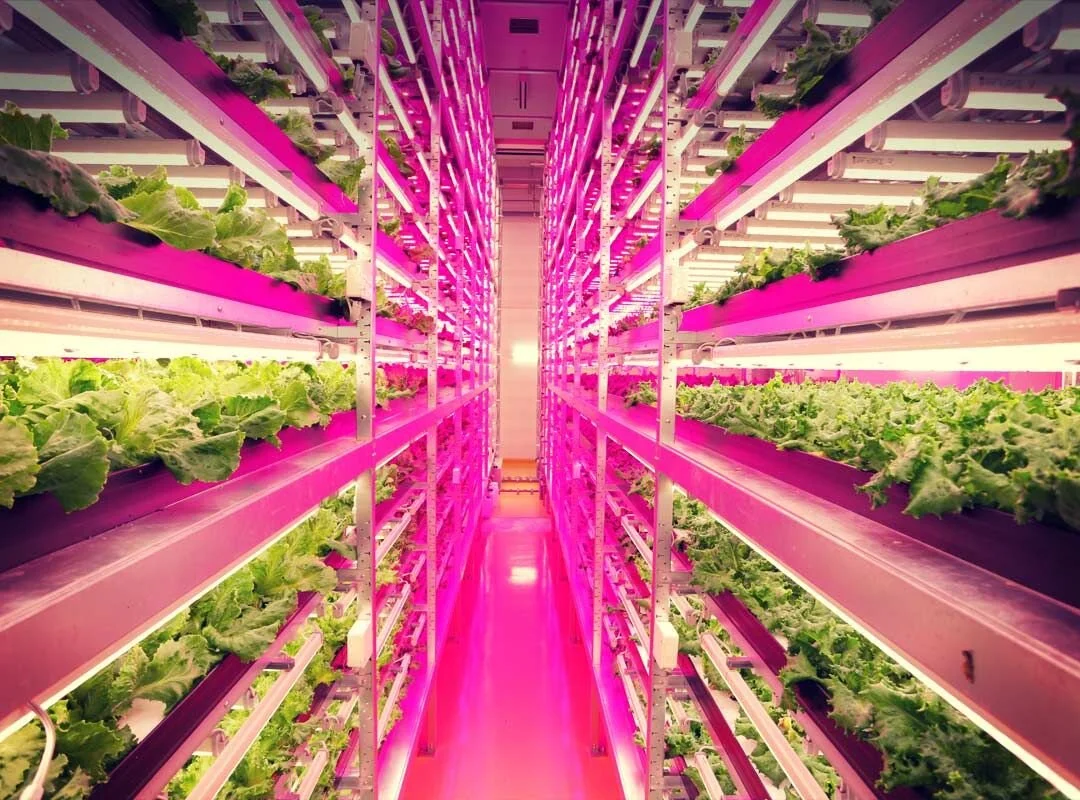
Are Indoor Agriculture and Vertical Farming Growing Up?
In the US alone, the vertical farming market is projected to reach values of around $3 billion by 2024. Globally, the predicted value is $6.4 billion by 2023, with both figures growing at a similar rate of 24% CAGR
About Chris Sworder
Urban agriculture and vertical farming, are they viable? There are question marks on efficiency, availability of useful and reasonably priced real estate, and demand for the leafy greens and herbs that are most often the crop of choice. That said, there are several high-profile companies in the U.S. that have been around for several years, e.g. AeroFarms, Plenty, and Bowery, which have raised a total of over $400M. Alongside these farm developers, we are seeing more indoor agriculture-specific technology (see iUNU’s $7.5M Series A in February for an example).
Indoor farming is attractive
In the US alone, the vertical farming market is projected to reach values of around $3 billion by 2024. Globally, the predicted value is $6.4 billion by 2023, with both figures growing at a similar rate of 24% CAGR.
Vertical farming’s value propositions include; a controlled environment, less water use, no pesticides, controlled fertilizer use, easier automation, optimized growing conditions and high-density output that can be placed in or near urban demand. In an agriculture system that will need to support another 3.25 billion people in urban environments over the next thirty years, the high volume of investment in this sector is understandable. In order to support the investment required these farms have focused on high-value greens and herbs and the ability to provide a consistent predictable volume of produce all year round. Reduced water use is particularly important in markets such as EMEA where this is a more expensive input or in areas with often restricted supply but large demand such as Southern Spain or California.
Food safety is an increasingly valuable part of vertical farming, as food born illness is estimated to cost the US economy $15.6 billion per year. There have been two high profile outbreaks of E. coli in romaine lettuce in the US in the last 12 months related to washing practices. Vertical farms are controlled growing environments, and dirt-free, therefore no washing is required. As a high-value, short shelf-life, leafy-green this is a key market for vertical farming.
Underlying technologies are maturing
There are three technologies used in vertical farming; hydroponics, aeroponics, and aquaponics.
Hydroponics is the most popular method, accounting for around 70% of installed capacity, as it is the least expensive system to build, and the water substrate system is easiest to control.
Aeroponics is next, with a nutrient-rich mist substrate that feeds plants. It is generally a more expensive system to install, but water use is 40% lower than hydroponics and 95% lower than field farming. Leading installers include AeroFarms and Living Greens.
Aquaponics incorporates fish farming into the hydroponic substrate to take advantage of natural feeding and waste cycles to produce nutrients for the crops. Leaders in aquaponics include BIGH and Superior Fresh.
Indoor cultivation systems arranged by commercial development
Many of these companies have either adapted existing components or created their own. New specialized component suppliers such as Inno-3B are developing more complex automation systems, which they describe as having a high ‘unit of production per dollar of automation spent.’ The company also water cools the LEDs, providing a longer expected life.
Beyond technologies – exploring business models
Vertical farms can have many more harvests per year than traditional farming methods. For a leafy green, this can mean up to thirty harvests per year compared to five or six. This lends itself to a subscription-based model. Growing Underground, a vertical farmer based in an old air-raid shelter in south London has this arrangement with high-end restaurateurs as well as selling to retailers like Waitrose and Whole Foods. This can be extended to farming-as-a-service, as fast-growing cycles allow vertical farmers to plant crops at a client’s request, ensuring a buyer for produce before a seed is planted.
Existing food distributors are integrating vertical farmers in their supply chain, the partnership between Square Roots and Gordon Food Service is one example. The startup has agreed to build farming facilities in shipping containers located on or near Gordon Food Service distribution centers. For vertical farms, finding customers for high-value produce and having the logistics network to deliver has been a stumbling block – this partnership solves that problem. Similarly, Bonbio recently teamed up with IKEA to build container farms on IKEA sites to serve produce to the homeware chain’s restaurants.
Getting vertical farm produce to the consumer has also been taken to a logical conclusion – put the farm in front of the customer. Infarm has developed a system that can be installed in grocery stores, shopping malls, and restaurants, while Vertical Harvest has built the market and farm right where fresh produce was hard to come by. Click & Grow (an IKEA portfolio company) has put the hydroponic farm in the home with a smart home-growing kit.
Freight Farms has developed a turnkey hydroponics farm in a shipping container called the Greenery. Twenty have sold so far for $104,000, with price varying according to customization. The company estimates that ROI ranges from 2.5 to 3 years depending on the market. With the company’s hardware in place, it sells Farmhand, it’s farming services platform, offering farm management as well as sales of farm input. Freight Farms are keen to point out that the farmer is not tied to buying inputs from Freight Farms. It is also continuing to sell produce it grows itself in select locations. This model aims to reduce the need for large project financing rounds to build out capacity, creating a hardware + software model for expansion.
Grönska Stadsodling is the operator of one of Europe’s largest vertical farms and has developed the hardware it grows with from the ground-up. The company was born from the work of two engineering-minded founders. Their growing system includes a proprietary LED system which, Grönska claims, out-performs the off-the-shelf options available. The company aims to be cost-competitive with greenhouses, and eventually conventional growers. To get there Grönska believes the cost of automation will be a factor as vertical automation is easier than over the large footprint of a greenhouse. Combined with balancing energy costs, price of land, production scale, and matching product to market demand, there is plenty to balance in defining a vertical farm business model.
In trying to create an effective business model, Grönska Stadsodling has learned a lot about competing with the established brands. The first challenge is to reach cost parity with traditional methods of farming. The next challenge is particular to food; it is difficult to draw customers’ attention from a familiar and trusted branded, even when their product sits side-by-side on the supermarket shelf. The decades of marketing and trust, and associated cost, of establishing that customer base requires large marketing and branding budgets. While this is not insurmountable, another route may be to white label produce and sell to wholesalers to prevent these costs.
Who’s investing?
Investors in vertical farms are not what you would expect. There are the agriculture and food-focused investors, such as Wheatsheaf Investments (AeroFarms) or Finistere Ventures (Plenty, BioLumic), but the majority are generalists, and there is a noticeable lack of food and agricultural industry incumbents. No large agricultural OEM such as a John Deere, CNH, AGCO, or others, have placed a bet in vertical farming. However, IKEA, a food, logistics, and homewares company, has invested in Click & Grow and AeroFarms’ latest round, giving an insight into where food will be grown and who will be growing it in the future. We expect to see more agricultural corporate direct interest into these companies in the coming year.
Keep an eye on
In order to answer the question of long-term viability, we will need to keep up with the market’s response to the following questions:
Will vertical farms stay focused on niche produce and markets?
Do they compete against rooftop farms that have lower energy costs and provide a wider range of produce?
Will they compete against greenhouse farms that benefit from cheaper real estate, but must ship produce long distances to the urban markets and have higher costs of automation?
Famous Italian Tomatoes, Prized All Over The World, Are Soon To Be Available In Mauritius!
This is despite the sharp fall in reputation of fresh locally grown vegetables, a situation that has been worsened by numerous reports of toxicity, high levels of pesticides, hormones and other synthetic compounds, known to be very harmful to our health
Famous Italian Tomatoes, prized all over the World, are soon to be available in Mauritius! This is despite the fall in the reputation of locally grown vegetables, a situation worsened by numerous reports of toxicity, high levels of pesticides, and compounds known to be very harmful to our health.
The biggest hydroponics farm in Mauritius is out to change all that by growing pesticide-free crops in environmentally friendly greenhouses - and getting bees to do the hard work.
(picture: First of Five Units representing phase one of the Project)
Set amidst the lush sugar-cane fields of Morcellement St Andre, in the heart of the Northern Plains Irrigation Scheme, Esprit Vert Ltd was launched in mid-2018 by Eric Le Vieux as a response to the need for flavorsome and nutritious local produce. Produce that is as pure as nature intended. “Our aim is to return the goodness to fresh foods, - and restore faith in eating locally grown produce”, said Mr. Eric Le Vieux, one of the project promoters.
“We are hearing repeatedly that food production must increase not only in Mauritius, but Worldwide, if we are to meet the food demands of 10 billion people in the next 30 years. We are constantly reminded by the UN that we will need to double the amount of land and water to produce food for everyone. Coupled with climate change, what we are witnessing is dramatic changes in the weather and it is having a seriously damaging impact on agriculture. Here, at Esprit Vert, we are imagining new, more efficient ways of farming, harnessing both technology and biotech to produce more food with less resources”, he said.
Improvements in drip Irrigation, state-of-the-art computers, and even a weather station, means that at Esprit Vert – fresh produce can be grown in a controlled environment, using organic mediums, and taking a fraction of the water used in open field cultivation.
“In addition to technology-driven water savings, we aim to satisfy 90% of our annual water needs by harvesting the average rainfall in our area. With over 30,000 square meters of roof we have the potential to harness up to 48 million liters annually”, said Mr. Le Vieux.
These state-of-the-art greenhouses have been equipped to provide substantial amounts of forced air exchange.
“This is aimed at eliminating seasonality issues by attempting to combat the effects of heat and high humidity in the summer months”, says Mr. Eric Le Vieux.
“Our strategy focuses on the use of bumblebees to pollinate the flowers, and we will release a series of beneficial insects who are the natural predators to bugs that eat our fruits and vegetables. To this end, we have received excellent support from our partners at Bio Bee in Israel, and Koppert Biological Systems in Holland, from where these sterile insects are shipped to over 80 Countries. We have also received excellent support from the Entomology and NPPO Divisions of the Ministry of Agro-Industry and Food Security. Our B2G dialogue across many Departments has enabled complex protocols to be put in place, to ensure that the foundations are well laid for future success. The hope is to start the building blocks towards reducing and/or eliminating pesticide use altogether in Mauritius”.
In its first phase, Esprit Vert looks to become the largest producer in Mauritius for fresh tomatoes and is excited to be bringing back to the market, varieties that have been lost along the way, ones that boast real flavor and a higher sweetness.
One emphasis at this modern farming company is that of respecting nature and at Esprit Vert, the commitment to the environment is reflected in further downstream innovations.
“We have co-sponsored a project at a nearby High School to set up a recycling plant and this means we have secured an ecological outcome for the plastic that is discarded annually from the coco grow bags” said Eric Le Vieux.
(picture) Some of the Esprit Vert organic Varieties coming soon!
Looking ahead, Esprit Vert points to other segments of the fruit and vegetable market that appear interesting. “Our plans include culinary herbs, baby leaf salads, fresh mushrooms, as well as the establishment of a large-scale nursery for grafted Maluma variety avocado trees”. Commenting further, Mr. Eric Le Vieux adds, “We have recently signed a joint venture agreement with the Global leaders in the technologically demanding area of Commercial Mico-Leaf production. Project planning for this is almost complete and we are looking forward to seeing this activated in late 2020”.
(picture) Mr. J Le Vieux speaking with the Esprit Vert Master Grower, Mr. Gavin Williams
The first phase of development looks breathtakingly large and is visible on the A4 passing Solitude towards Bon Air.
“As we go into the final lap, towards our first harvests, we have many partners to thank for their amazing support”, says Eric Le Vieux. “Our Project has been made possible thanks to the enormous efforts of the Ministry of Agriculture, the Irrigation Authority, the National Plant Protection Office, as well as the French Government whose backing has been welcomed under the support of the Agence Française de Développement, and not least of all, our finance partners at Mauritius Commercial Bank who have been an amazing support”.
(picture) Some varieties on trial at a special facility in the East of Mauritius.

JAPAN: Largest Indoor Farm: Shigeharu Shimamura's Indoor Farm Sets World Record
Shigeharu Shimamura, a plant physiologist and CEO of Mirai, has constructed a 25,000 square feet of futuristic garden beds nurtured by 17,500 LED lights in a bacteria-free, pesticide-free environment; the farm produces 10,000 Heads of Lettuce a Day
Sillona Gramon | World Record Academy • Jan 29, 2020
TOKYO, Japan--Shigeharu Shimamura, a plant physiologist and CEO of Mirai, has constructed a 25,000 square feet of futuristic garden beds nurtured by 17,500 LED lights in a bacteria-free, pesticide-free environment; the farm produces 10,000 Heads of Lettuce a Day, thus setting the world record for being the Largest indoor farm, according to the WORLD RECORD ACADEMY.
Built in a location devastated by the 2011 Tōhoku earthquake and tsunami, the 25,000 square foot factory farm is more than just a proof of concept.
The unique "plant factory" is so efficient that it cuts food waste from the 30 to 40 percent typically seen for lettuce grown outdoors to less than 3 percent for their coreless lettuce.
Conventional farms can grow 26,000 lettuce plants per acre, and farmers tend to plant two to four crops per season. The indoor farm can produce 10,000 heads of lettuce every day on a much smaller footprint.
Shimamura and his Mirai Co. are planning to build similarly large and less-wasteful produce factories in Russia and Hong Kong.
The farm is located in Miyagi Prefecture in eastern Japan, the area that was badly hit by a powerful earthquake and tsunami in 2011. At 25,000 square feet, it is nearly half the size of a football field, and 17,500 LED lights spread over 18 cultivation racks reaching 15 levels high are a key to the farm’s success.

Peter Lane Resigns As Vice Chairman of Association For Vertical Farming
Peter has set up a new company called Vertical Farming Network, whose purpose is to bring all stakeholders in the UK into the business, and that includes the financial industry and not just urban ag and academia

Peter Lane announced that he resigned his position as vice-chairman of the AVF, stating that "the position is as an unpaid volunteer, and I volunteered for one year only".
He went on to say: "Vertical farming is far more than leafy greens and urban ag, and I want to prove what is possible and to advance the industry.
"I am only interested in the large scale, feed the 9 billion industrial-scale projects."
Peter has set up a new company called Vertical Farming Network, whose purpose is to bring all stakeholders in the UK into the business, and that includes the financial industry and not just urban ag and academia.
"There will be a bi-monthly meeting in London so that growers, engineering firms, academia, and the financial industry can meet to forge alliances and develop projects", Peter commented.
"I am trying in collaboration with the RAU to set up a new 100-acre agritech park near Chippenham to develop the engineering and commercial scale-up of vertical farming. That includes R&D and training. The park will be far more than leafy greens.
Vertical farming can and is used for funghi, algae, fish farming & a variety of livestock from chickens to cattle. It is a major project but there is already a lot of interest.
The vertical farming industry needs to move on to become a food industry, and I want to do not just talk about it."
Ramin Ebrahimnejad has been named Vice-Chair of the Board of the AVF.
Publication date: Mon 10 Feb 2020
Monaco: The Glitzy European City Going Green
With 1,600 sq m of potagers (gardens) that have produced 5 tonnes of organic produce since 2016 and partnerships with chefs of Michelin-starred restaurants, Terre de Monaco is a local success story
Linked by Michael Levenston
Urban gardening has been reclaiming rooftops and concrete spaces throughout Monaco (Credit: vuk8691/Getty Images)
With 1,600 sq m of potagers (gardens) that have produced 5 tonnes of organic produce since 2016 and partnerships with chefs of Michelin-starred restaurants, Terre de Monaco is a local success story.
By Richelle Harrison Plesse
BBC
15 January 2020
Excerpt:
It’s an unlikely spot for an organic fruit and vegetable garden, tucked away between soulless high-rise buildings that dot the most densely populated country in the world. But this 450 sq m sliver of land is where market gardener Jessica Sbaraglia toils away. It’s a lush slice of tranquillity in Monaco’s concrete jungle, lying in the shadow of the 170m-high Odéon Tower, the principality’s tallest building, which is also home to the most expensive penthouse in the world – €300 million (about £255 million), should you have the cash to splash.
Sbaraglia, a 31-year-old Swiss native and former tennis pro and model, launched her urban agriculture business Terre de Monaco in 2016 and she now has five micro-farms on Monaco’s rooftops, balconies and hidden plots of land. At this one, my taste buds are treated to a multitude of flavours from the garden, which grows everything from aubergines and courgettes to strawberries and apricots. “I want people to reconnect with the taste of natural, organic produce, and remind them of its diversity and how it’s grown,” Sbaraglia explained.
Read the complete article here.

Partnership Bringing Vertical Farming Opportunity To U.S. Colleges
Many colleges and universities are getting access to some of the most advanced hydroponic vertical farming technology around, thanks to a partnership between vertical-farming innovator Freight Farms and food/facilities management company Sodexo
January 29, 2020
Many colleges and universities are getting access to some of the most advanced hydroponic vertical farming technology around, thanks to a partnership between vertical-farming innovator Freight Farms and food/facilities management company Sodexo. The collaboration will usher in the implementation of Freight Farms’ 320-square-foot Greenery containers on campuses, enabling the onsite growth of fresh, traceable produce year-round.
The hope is that having food that would travel zero food miles will help reduce these schools’ environmental impacts. In a news release, the companies said the benefits include:
Food miles and waste reduction
Food is harvested steps from the plate, eliminating food miles
Harvested onsite, food lasts significantly longer, reducing spoilage waste
The Greenery uses 99.8 percent less water than traditional agriculture, and in some humid areas, operations can be water-positive
Peak freshness and nutrition, year-round
Unlike food that has to travel great distances between harvest and plate, freshness and nutrient density does not degrade during transit
Pesticides won’t be used
The farms grow at commercial scale and maintain the perfect environmental conditions every day of the year
Safety, transparency, and data-driven traceability
The hydroponic container farms are soil-free and are decentralized from the mass supply chain
Campus communities can get to know their own farmers and witness every growing stage of their food
Proprietary IoT technology, farmhand, tracks produce from seed to plate, even down to the hour
Student and employee engagement
Schools can choose to integrate their farms into interactive curricula across disciplines like science and technology, agriculture, nutrition, business, and social impact
Corporate businesses can integrate their onsite farms into employee wellness and benefit programs
Freight Farms’ customers are located in 25 countries and 44 U.S. states and range from small business farmers to corporate, hospitality, retail, education, and nonprofit sectors. To date, 35 educational and corporate campuses use Freight Farms’ technology, and together with Sodexo, implementation will rapidly expand across the U.S.
Images courtesy of Freight Farms

US (PA): 60,000 Square Foot Vertical Farm To Be Powered By Microgrid
Schneider Electric and Scale Microgrid Solutions will design, build and finance a microgrid for Fifth Season
Schneider Electric and Scale Microgrid Solutions will design, build and finance a microgrid for Fifth Season. Scale Microgrid Solutions will design, build, own, and operate the system for Fifth Season, utilizing its standardized microgrid modules. The microgrid will leverage Schneider Electric battery storage, switchgear, and advanced controls technology to deliver sustainable and dynamic energy management for Fifth Season's newest, highly autonomous vertical farm in Pittsburgh, PA.
The Fifth Season microgrid combines distributed energy resources, including a rooftop solar array, a battery energy storage system, a natural gas generator equipped with advanced emissions control technologies, and Fifth Season's precision agriculture platform to help the company reach its goal of efficiently producing 500,000 lbs. of local produce during the new facility's first year of full operation.
"Our vertical farm in Pittsburgh is reconnecting consumers to locally grown fresh food. This is a first step in solving some of the largest problems facing society caused by the broken food system, however, this industry must achieve long term economic and environmental sustainability," said Grant Vandenbussche, Chief Category Officer at Fifth Season. "This microgrid enables our journey to create a sustainable system that delivers healthier, fresher greens to local communities through both economic and environmental efficiencies."
The microgrid is being financed by Scale Microgrid Solutions' microgrid-as-a-service business model, helping Fifth Season save capital that can be used toward additional operational investments, while also immediately benefiting from more efficient, sustainable and economic energy consumption. Commissioning of the full energy system is scheduled for mid-2020 and it will be the first site of several that are to be constructed for Fifth Season in the next three years.
"Fifth Season is cognizant that vertical farming facilities can be energy-intensive and by pairing solar generation with batteries to work with the grid, they will enable demand response, peak shaving and time of use pricing," said Drew Gravitt, a manager leading microgrid economic optimization business development for Schneider Electric. "We're excited to work alongside Scale Microgrid Solutions to help Fifth Season improve energy resilience and cost while enabling renewable integration to meet its clean energy targets."
For more information:
www.se.com
www.scalemicrogridsolutions.com
www.fifthseasonfresh.com
Publication date: Thu 30 Jan 2020
How Vertical Farming is Part of a "Multi-Agriculturalism" Food System
Vertical farming is often presented as a revolutionary agricultural system of manifold qualities
The climate crisis is happening (as for some time already), and agriculture is a key protagonist. As elegantly explained by Nazim Gruda, professor at the Department of Horticultural Science of Bonn University: “Agriculture/horticulture and climate change have a dual interaction. On the one hand, the environment is affected by activities associated with agricultural food production, which contributes to climate change; on the other, the impacts arising from such activities backfire by changing the environmental conditions, thus affecting agriculture and horticulture.”
by Michele Butturini
Vertical farming is often presented as a revolutionary agricultural system of manifold qualities. It sometimes happens to hear stories of vertical farming vaguely reminiscent of the mythical land of Cockaigne – where no effort was needed to get food since it was falling from the sky.
Will vertical farming break the curse, releasing agriculture from its unsustainable environmental burden?
To be sustainable, vertical farming has to prove itself capable of minimizing the emission of greenhouse gases, such as carbon dioxide (CO2), nitrous oxide (N2O) and methane (CH4), per kg of food produced. However, a sustainable food system is more than just low emissions of greenhouse gases.
As reported by Tessa Naus, the HLPE definition of a sustainable food system is: “a food system that delivers food security and nutrition for all in such a way that the economic, social and environmental bases to generate food security and nutrition for future generations are not compromised”. Therefore, the challenge is far more complex than merely reducing greenhouse gases.
In an interview from the book “Urban Greenhouses and the future of food”, Leo Marcelis, head of Horticulture and Product Physiology Chair Group at Wageningen University, suggests that vertical farming can address some of the urgent challenges posed by the climate crisis, “there’s the problem of growing enough fresh, high quality, sustainable food and making it available to the rapidly growing urban populations in our rapidly expanding cities. To answer this, we need ever-higher production rates, and our production has to be highly controlled. […] They (n.d.r. vertical farms) don’t need much space and are indoors, they are not dependent on solar lighting, they’re independent of outdoor conditions, and can produce 365 days a year.”
Meeting the growing demand for fresh produce from the city is an essential challenge for the sustainable food system we are looking for. As observed by Nona Yehia, CEO at Vertical Harvest “by 2050, 80% of the world’s population will live in cities”. According to Leo Marcelis, vertical farms “can be placed in or near-by urban areas anywhere in the world. [..] you can pick the produce when needed and thereby improve shelf-life: at this moment many vegetables are simply thrown away because they have too short shelf-life”.
Indeed, even if just a fraction of this food loss along the supply chain is due to its distribution, ultra-short supply chains could significantly reduce the global fruits and vegetable loss, currently at 42% of kcal wasted. Furthermore, there is evidence that indoor-grown leafy vegetables can have a longer shelf life thanks to a higher antioxidant level.
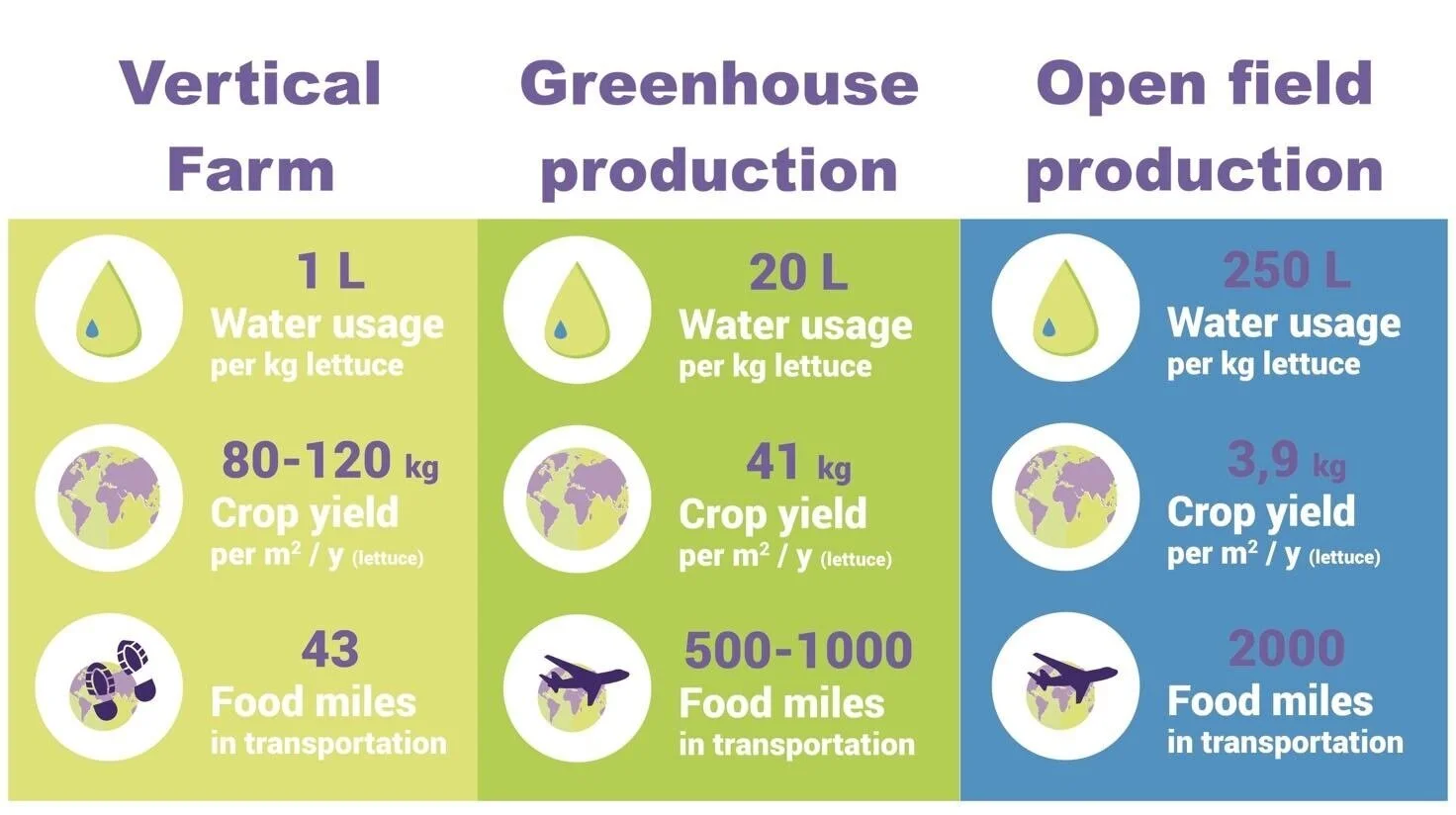
However, even if ultra-short supply chains have very little food-miles, they aren’t always necessarily the most sustainable choice. As reported by Nazim Gruda: “Tomatoes imported from Spain can have two to four times lower global warming potential than those produced locally under intense heating in Austria and in the UK”. Being part of a sustainable food system also implies making efficient use of water and land, and that’s what vertical farming does better than both greenhouse and conventional agriculture.
Thanks to the optimized growing condition and the recirculation of the nutrient solution, not just water, but also fertilizers have the highest use efficiency currently possible for an agricultural system. More in general, the overall use of agrochemicals could be minimized since pesticides and herbicides are theoretically unnecessary.
Lead Photo: Figure 2. (Photo Credit: PlantLab, source “Is vertical farming really sustainable?”)
Read more at Agritecture
29 Jan 2020

For In-Store Farms To Succeed, Finding The Right Balance Is Key
High-tech growing operations promise to efficiently supply retailers with greens. But the bigger payoff may be in offering shoppers a bit of food theatre
High-tech growing operations promise to efficiently supply retailers with greens. But the bigger payoff may be in offering shoppers a bit of food theater.
Credit: Jeff Wells
AUTHOR: Lauren Stine
Feb. 6, 2020
To appeal to consumers' growing desire for transparency and to know where their food came from, retailers across the country have brought local products into their aisles. They've also created informational web pages, integrated with nutrition apps and encouraged suppliers to tell their story to customers.
With 95% of consumers saying they'll pay more for locally grown products and 21% saying they eat local at least twice a week, though, companies are feeling the pressure to up the ante. Some, like Kroger and Whole Foods, have taken that step by bringing high-tech produce farms into their aisles — a budding movement that's made possible by advancements in growing technology.
Discover how to improve engagement among hourly employees by providing predictability and flexibility.
“Across the indoor farming industry, there have been dramatic decreases in cost when it comes to the physical hardware, advanced LED lighting and technology platforms automating a lot of the growth cycle,” Alexander Olsen, founder of automated mini-farm purveyor Babylon Micro-Farms, told Grocery Dive.
As more and more retailers discuss shifting center store operations online and accentuating the store perimeter, miniature produce farms promise to offer a supply line as well as a touch of food theater.
“We are also seeing a lot of traditional goods that grocers stock being purchased online and it’s freeing up a lot of space in-store,” Olsen said.
Retailers have been bringing cultivation to their stores for several years now. As early as 2012, Rouses sought to dazzle shoppers with an aeroponic garden on the rooftop of one of its New Orleans store locations. Hy-Vee and H-E-B's Central Market stores have also experimented with growing operations, with the latter adding a 53-foot modified shipping container full of greens to one of its Dallas stores.
Whole Foods has established a few different store growing operations. In 2018, it added an in-store mushroom growing display inside its Bridgewater, New Jersey store. The system was provided by Smallhold, a Brooklyn-based indoor farming company that also sells its mushrooms to local restaurants. A few years earlier, the chain partnered with urban greenhouse operator Gotham Greens to open a growing facility on top of a Brooklyn store location.
Credit: Kroger
The trend has gained momentum in Europe and Japan. Founded in 2013, Berlin-based InFarm has placed its in-store farms, which grow leafy greens, herbs, and vegetables, in hundreds of European stores, while Amazon Fresh sells its produce in Germany, France, and Switzerland. Last year, the company raised $100 million in Series B funding.
InFarm recently made its U.S. debut with two Kroger-owned QFC stores in Seattle and will bring its sprigs of kale, mint, cilantro, and dill to 13 more banner locations this year. The greens are initially planted at a nearby distribution center before being transferred to the store, where each plant's growth is monitored remotely by the company. The price points for the greens are competitive at $2.99 per bunch.
Grocery Dive reached out to Kroger and Whole Foods for comment but did not hear back by press time.
InFarm has lofty ambitions for its in-store farms, hoping to significantly impact grocery and restaurant supply chains, according to co-founder and CMO Osnat Michaeli.
“By growing produce on-demand and as close to possible to where it’s consumed, retailers are able to reduce food waste and sunk costs typically linked to industrial farming,” Michaeli wrote in an email to Grocery Dive. “We find that when retailers are able to understand the value, quality and flexibility of our business model they are more than enthusiastic to enter into conversations to explore our farms.”
Retail attraction or real action?
Although in-store farm displays and gardens are attractive additions, farming is no small feat even at a micro-scale.
“I think this trend is going to be closer to food theater and closer to a niche that engages the public and excites them about fresh produce,” Neil Mattson, associate professor at Cornell’s School of Integrative Plant Science, told Grocery Dive. Through his research, Mattson specializes in controlled environment agriculture systems such as hydroponics.
Operating an in-store farm is not for the novice beginner, he adds, noting that a retailer or its farming partner will have to allocate employees to monitoring the in-store farm to ensure it’s working properly. This requires intensive training, adds labor hours and could take the employee away from other tasks that still need doing.
If an in-store farm is not operating properly, the plants could fall victim to unsightly mold, disease and other issues that would make the display unappetizing to shoppers. Should a situation like this arise, the plants must be stripped out immediately and all surfaces must be sanitized, leaving an empty display, said Mattson.
Even for high-tech farming systems that are remotely monitored, Mattson has concerns about long-term success.
"Plants are biological systems so sometimes they don’t grow as fast as you think they should or some other factor becomes limiting and you have to adjust," he explained.
Credit: Pixabay
Mattson also questions whether an in-store farm could supply enough produce to be more than just an interesting display for consumers. Produce sales in the U.S. totaled $60.8 billion during 2018, representing a 1.7% increase over the prior year. The input costs for indoor farming systems, namely water, and around-the-clock electricity to power LED lights, are also substantial barriers even for large-scale indoor growing operations.
“It’s hard to foresee this producing the quantities of produce at the price points needed to become the widespread way that most Americans would buy their lettuce," Mattson said. "I think it is an expensive way to grow produce in a supermarket.”
High-tech farming operations have struggled to overcome high costs in the past, but the new crop of companies like InFarm and Babylon claim their systems are much more cost-effective and scalable.
To the extent that a retailer could overcome these challenges, benefits to having an in-store farm would include cutting out distributors and other middlemen, who often hike up the price of produce, and increasing store traffic, Mattson said. He believes the success of in-store farms may depend on balancing production needs and efficiency with the desire to amuse consumers.
Mattson said a larger-scale operation like Whole Foods' rooftop farm in Brooklyn offers the benefits of a customer draw with a more viable supply line. In recent years, retailers have also turned to large greenhouse and vertical farming operations to supply stores. Gotham Greens operates greenhouses in five states while BrightFarms operates greenhouses in four states and supplies to retailers like Giant Food, Acme and Food Lion.
Finding the middle ground
For Brooklyn-based grower and Whole Foods partner Smallhold, providing mushrooms first and in-store farms second has been a recipe for success. The duo behind the operation started out in a shipping container offering locally grown mushrooms to restaurants. They began asking their buyers whether they could fit a mini mushroom farm on-site and were encouraged enough to start modeling a prototype.
Whole Foods Local Forager Elly Truesdell ate lunch at a Vietnamese restaurant where one of Smallhold’s mushroom farms is located and promptly contacted the company to see about locating one at a Whole Foods store, according to co-founder Adam DeMartino.
“We didn’t intend to start a produce brand, it just sort of happened and a lot of that was because of Whole Foods,” DeMartino told Grocery Dive.
Today, Smallhold maintains mini mushroom farms in restaurants and retail locations, including two Whole Foods stores. It also sells mushrooms under a branded label.
Smallhold visits retail locations where its mini-farms are located once a week to swap out materials and harvest mushrooms. To achieve the volume that a retailer like Whole Foods demands, the company breaks up the growth process, completing the final stages, or fruiting, in-store. Mushrooms have an advantage over other crops grown indoors because of the high weight per square foot that mushrooms usually yield, according to DeMartino.
“Is it right for everyone? I’m not sure. That’s why it’s not the only thing we do,” co-founder Andrew Carter added. “How we look at it is we are offering a bunch of different tools to accomplish the task of getting mushrooms into the hands of everyone in the U.S. and hopefully the world. One of these tools is increasing the visibility of farming by growing on-site.”

May 2020 Edition Speaker | Exhibitor Roster Grows Daily
In addition to our top CEO keynote speakers, including David Rosenberg, CEO, Aerofarms; Mike Zelkind, CEO, 80 Acres Farms; Sonia Lo, CEO, Crop One Holdings, we're building a robust schedule covering 3 core tracks – Business, Science| Technology, and Alternative Crops
In addition to our top CEO keynote speakers, including David Rosenberg, CEO, Aerofarms; Mike Zelkind, CEO, 80 Acres Farms; Sonia Lo, CEO, Crop One Holdings, we're building a robust schedule covering 3 core tracks – Business, Science| Technology, and Alternative Crops. You'll find a schedule that offers a mix of panel presentations that bring together different perspectives and steer clear of commercial pitches. We're adding new speakers every day. Here's a sneak peek.
View Growing Speaker List

80 ACRES FARMS CEO TO LEAD KEYNOTE AT INDOOR AG-CON 2020
Indoor Ag-Con is pleased to announce that Mike Zelkind,
Co-Founder and CEO,
80 Acres Farms will kick off the day two conference schedule for our May 18-20, 2020 edition.
Don't miss his keynote presentation from 8:00-8:45 am on Tuesday, May 19 at the Wynn Las Vegas. Make plans now to join us!
Learn More ›
How To Get An Indoor Farm Up & Running Fast
What's The Next Technical Frontier for LED Lighting
Seeds Of The Future
Disaster-Proofing Your Greenhouse
AI & Robotics -What's Economically Viable For Indoor Farms Today
MegaTrends In Indoor Growing.......
The 2020 session list goes on. And on. In addition to our top CEO keynote speakers, including David Rosenberg, CEO, Aerofarms; Mike Zelkind, CEO, 80 Acres Farms; Sonia Lo, CEO, Crop One Holdings, we're building a robust schedule covering 3 core tracks – Business, Science| Technology and Alternative Crops. You'll find topics like these AND many others featuring panelists from indoor farms of all sizes, academics, investors and today's thought leaders. Have a look at our schedule in the works for May 2020 -- and check back regularly as we're adding programs every day! Peek In At Programs In Development Now!
See Sample Of Exhibiting Companies ›
NEW SPEAKERS JOINING THE LINE-UP DAILY!
Hear from 40 PLUS CEOs and leaders from across the industry spectrum during our 3-day program. 80 Acres Farms. Crop One Holdings. AeroFarms. AgEye Technologies. Agrify. Agritecture. AmHydro. Backyard Fresh Farms. Bayer Crop Science. Black & Veatch. Donald Danforth Plant Science Center. Fusion Farms. GLASE. Hort Americas. Nick Greens. Sananbio US. Ship Shape Urban Farms. Smallhold. SSLS Inc. SyNERGE LLC. University of Arizona CEAC. United Fresh Produce Association. Vilmorin North America. And many more!
CROP ONE HOLDINGS CEO SONIA LO LEADS LUNCHEON KEYNOTE -MAY 18, 2020
Indoor Ag-Con is pleased to announce that Sonia Lo will be leading our opening day luncheon keynote presentation on Monday, May 18, 2020, from 12:30 - 1:30 pm.Crop One is building and operating large scale vertical farms globally, including a $40 million joint venture with Emirates Flight Catering. Sonia is also the Founder and Managing Director of Chalsys, LLP, an advisory and direct investment firm that has invested over $120 million in 15 global growth-stage companies. Learn more and make plans to join us!
Other keynote presenters include Mike Zelkind, Co-Founder & CEO of 80 Acres Farms, David Rosenberg, CEO of AeroFarms, AND we'll have another announcement coming soon!
This May you'll find an expanded exhibit floor. Explore the latest innovations from some of the biggest names in the industry and emerging leaders across all sectors. And, don't miss our new Start-Up Showcase, a dedicated showplace on the exhibition floor for early to mid-stage indoor farming and agtech companies.
Show Floor Sneak Preview ›
SAVE UP TO $300 WITH EARLY BIRD REGISTRATION!
$999 Early Bird General Access Pass
($1299 Full Price)
$799 Early Farmer|Grower| Non-Profit | Academic|Government ($1099 full price)
$499 Early Bird Undergraduate Student ($699 Full Price)
$599 Expo Floor Only*(*No Discount)
Register Now & Save, Use code IGROW520 ›
SAVE ON TRAVEL WITH GREAT RATES AT TREASURE ISLAND LAS VEGASWe're excited to head to our new location at the Wynn Las Vegas for our May 18-20, 2020 edition.
And, we've arranged for some great discounted rates at the nearby Treasure Island | TI Las Vegas for our attendees and exhibitors!
Be sure to book early to secure your room. You can call Treasure Island Reservations directly at 888.503.8999 and reference discount code AGCON20 or register online through the link below.
Book Your Discounted Room ›
INSIDE INDOOR AG | INDUSTRY NEWS HARVEST

THE SPOON: CES 2020: The Planty Cube Aims to Make Vertical Farming More Modular and Automated
HORTIDAILY: Southern California Home to New 16 Acre Leafy Greens Greenhouse
AGFUNDER NEWS : 2020 Predictions From Agri-FoodTech's Leading VCs
SPECIAL THANKS TO OUR GROWING ROSTER OF
MEDIA ALLIES & INDUSTRY PARTNERS
In addition, Indoor Ag-Con is proud
to be a member of the Hemp Industries
Association.

The Shipping Container Farm That's The Way of The Future
Recycled shipping containers have been used for many things in their second life, from swimming pools and restaurants to classrooms and emergency hospitals. Now, with a global population hurtling towards almost 10 billion people by 2050, they may also be the farms of the future
CALLAN BOYS
Jan 26, 2020
Sprout Stack CEO Hugh McGilligan inside a shipping container farm. Photo: James Brickwood
Recycled shipping containers have been used for many things in their second life, from swimming pools and restaurants to classrooms and emergency hospitals. Now, with a global population hurtling towards almost 10 billion people by 2050, they may also be the farms of the future.
Founded by Francisco Caffarena and Michael Harder in 2016, Sprout Stack is Australia's only commercial vertical farm. The Brookvale-based start-up utilizes shipping containers to grow greens for independent grocers using methods more productive than traditional farming, says chief executive Hugh McGilligan.
"Vertical farming is also called controlled environment agriculture," he says. "Lighting in the containers is designed to optimize plant growth in vertical stacks, and we have sensors constantly measuring temperature, humidity and carbon dioxide levels which can be adjusted as needed. Because there's no birds, pests or fungus, we don't need to use herbicides or pesticides either."
Salad greens under light optimised to encourage plant growth. Photo: James Brickwood
Instead of soil, Sprout Stack uses the husk byproduct of commercial coconut production to hydroponically grow salad greens such as lettuce, kale, mizuna, and pea tendrils. One shipping container can produce 2500 head of lettuce a week, which is a rate of about 30 percent faster than traditional agriculture.
"Carbon footprint wise, we use 95 percent less water than traditional farming, too," says McGilligan. "By only selling to local businesses, our food miles are also reduced. We're not carbon neutral yet, but we will be at scale."
Sprout Stack supplies Harris Farm Markets and independent grocers including Manly Food Co-Op and Harbord Growers. With an aim to double output by the end of summer, the company moved to a larger warehouse in October and increased its container count from three to five.
Sprout Stack's shipping container farms can produce 2500 head of lettuce a week. Photo: James Brickwood
McGilligan says Sprout Stack is now on track to ship its first container farm to Melbourne in 2021.
"We've spent the past 18 months honing our production techniques so we can clone the business and shift it to other cities around Australia," he says. "We will always be about local food for local communities."
To assist in its expansion, Sprout Stack has partnered with the University of New South Wales. Both are members of the Future Food Systems Co-operative Research Centre, a partially government-funded body that aims to optimize the productivity of food systems.
"The university is helping us look at ways we can introduce robotics and boost production by four to five times over the next year or so," says McGilligan.
Professor Sami Kara of the UNSW school of mechanical and manufacturing engineering says he was excited to work with Sprout Stack after seeing similar farms in Singapore and recognizing their potential to feed a growing population.
"By 2050, 70 percent of the world's population will be living in an urban area," he says. "We will also need to produce 70 percent more food to feed that population.
Coconut husk used to grow Sprout Stack's lettuce. Photo: James Brickwood
"We can keep producing food in large quantities, far away from the majority of people, and shipping it with a massive transportation footprint. Or, we can grow food in the cities where the yield is high, the environmental footprint is low, and customers receive food that's fresher, more nutritious and delicious."
Kara stresses that vertical farming is not trying to compete with traditional farming, but offers an additional solution to the population problem. "In order to provide the world's food requirements by 2050, we're going to need many different types of production models," he says.
McGilligan supports this view and recognizes the importance of Australia's agricultural economy.
"We're not short on arable land in this country, so I understand this kind of venture may look a little bit threatening and odd compared to traditional farming," he says. "However, I firmly believe many more people will be eating vertically grown food in the future."

US: Washington, DC - A Sommelier's Foray Into Urban Agriculture Starts With Mushrooms In Shipping Containers
Barry Farm resident Calvin Hines Jr. launched EightFold Farms to address food deserts and underemployment
Barry Farm resident Calvin Hines Jr. launched EightFold Farms to address food deserts and underemployment.

JAN 29, 2020
COURTESY OF CALVIN HINES JR.
“This started out with me being pissed off that I had to go to the grocery store far away,” says Calvin Hines Jr. The D.C. sommelier and bartender, who has been mixing drinks most recently at Hank’s Oyster Bar in Dupont Circle, grew up in Hillcrest in Ward 7. Later in life, he lived off the U Street Corridor as the neighborhood rapidly developed. Recently, he moved back east of the river and settled in Barry Farm in Ward 8.
“I forgot that you used to have to travel to go get food,” Hines says. “There’s no place we can walk.” He drives to the Harris Teeter on M Street SE for groceries. “The Safeways that are closer to me don’t have great food.” There are only three full-service grocery stores for the more than 150,000 people living in Wards 7 and 8, though others broke ground in 2019.
This got Hines thinking about food deserts and socioeconomics. “What can I do that would be most effective in solving the problem or multiple problems?” he asked himself before diving into urban agriculture research.
Havana, Cuba emerged as a source of inspiration. When the Soviet Union collapsed and Cuba entered a phase known as the “Special Period” in the early 1990s, residents had to work quickly to find new and sustainable ways to feed themselves. “They were able to build urban agriculture in Cuba to help them with their food shortage and also increase employment,” Hines says.
The Cubans did so with great success. As of 2014, Havana, a city of two million people, had dedicated more than 87,000 acres to urban agriculture. “If they’ve been doing it for this long, why can’t we do it in D.C.?” Hines asks. “I live here.”
Hines is launching a for-profit urban agriculture company of his own—EightFold Farms. The name is a nod to Hines' Buddhism practice. The Eightfold Path consists of eight directions, including mindfulness and effort, that are supposed to lead to liberation.
“We can build these small sustainable intensive farms through the city and throughout Wards 7 and 8,” Hines says. “Through these farms, we can sell to restaurants, which I’m linked into. We can start farmers’ markets in Ward 7 or 8 or any other area that lacks food in D.C.”
He’s starting small with one or two shipping containers that he will convert into mobile mushroom farms in partnership with the Phillips Collection, Non-Stop Art, and developer MidCity. The containers will be temporarily housed at 1325 Rhode Island Ave. NE "just until we find space on the other side of town,” Hines says. He went to high school with Non-Stop Art founder Nehemiah Dixon.
“We’re starting with oyster mushrooms and maybe some lion’s mane and shiitake,” Hines says. “Oyster [mushrooms] will be the bulk of it. They’re easy to grow and there’s more of a demand.”
EightFold Farms aims to have an educational component Hines calls “From Farm to Table” that will teach young Washingtonians both practical urban agriculture skills and the business side of restaurants. He hopes to accept them into the program as early as elementary or middle school and keep them through high school when they would potentially be ready to attend the University of the District of Columbia’s College of Agriculture, Urban Sustainability and Environmental Sciences.
“There are not enough people that are into urban ag,” Hines says, noting this is particularly true for people of color. “We’re creating a workforce that can bridge that gap. They’ll already have a good foundation, a practical education.”
Hines has even bigger goals down the line, including launching an all-encompassing space that would have indoor and outdoor farming areas, a market, and food vendors. For now, he’s just hoping to have a quarter to a half-acre of space planted the first year EightFold Farms gets off the ground.
He estimates he’ll need about $125,000 to buy and refurbish the shipping containers and purchase equipment. Omar Hakeem from buildingcommunityWORKSHOP, a Texas-based nonprofit community design center, is helping with the design of the containers. Hines launched a fundraising campaign on GoFundMe today.
“We’re trying to attack the problem through food,” Hines says. He hopes EightFold Farms grows healthy food that can lead to better health outcomes while also creating pathways to employment for his neighbors.

Can Vertical Farming Ever Become Mainstream?
The nascent vertical-farming industry is growing and gaining prominence among investors and governments that recognize the potential in a world where land availability for producing fresh food is fast diminishing, especially in countries with increasing urban populations
By Simon Harvey | 28 January 2020
Infarm's systems deployed in M&S
Amid the growing concerns about climate change and feeding the world's increasing population, especially in urban conurbations in developing countries, Simon Harvey investigates whether vertical farming – growing fresh produce in a controlled environment – can become well-established in the market.
The nascent vertical-farming industry is growing and gaining prominence among investors and governments that recognize the potential in a world where land availability for producing fresh food is fast diminishing, especially in countries with increasing urban populations.
Singapore is a prime example of an economy with a limited landmass for agricultural farming, leaving the city-state reliant on imports to feed its expanding population and turning to new technologies such as vertical farming and cell-grown meat. And with much of Singapore dominated by skyscrapers, it is cultivating fresh food on window ledges and rooftops of commercial and residential buildings in self-contained growing units.
But vertical farming as its name implies may be a bit misleading, which is why it also carries the designation of urban or indoor farming, or, what the chief executive of UK government-backed CHAP (Crop Health and Protection) prefers to call controlled-environment farming. As well as growing produce in stacked shelf-style units, it also takes the form of using redundant shipping containers known as 'cooltainers' and abandoned subway tunnels, employing the most-widely used hydroponics and aeroponics technologies – at least currently – without the need for soil and fields.
And it's not just space that's one of the primary factors driving the interest but also the advantage of being able to produce fresh produce like leafy greens year-round, so avoiding extreme weather events – an important element given the increasing concerns over global warming and the environmental impact of intense farming. And urban-farming methods don't use pesticides either.
Vertical farming is also applauded for using 90% less water – estimates do vary but are at least that level – than conventional techniques because it can be recycled and recirculated. The technology has also been touted as a potential means of cutting retailers' food waste, and, because the growing systems can be located nearer to the consumer, is claimed to potentially reduce the carbon footprint. It also opens the door to cultivating a broader range of crop varieties, many of which have died out due to commercial or viability reasons.
More importantly, perhaps, from a commercial perspective, the technology provides greater yields because the growers can control the nutrient inputs, which, it is claimed, in turn, provides fresher and better quality produce, as well as improved nutrition for the consumer.
Evolving from niche markets
However, a major drawback for many vertical-farming operators revolves around energy use and cost because most of the systems employ LED lighting, although tech firms are investing in NPD and more efficient devices. There's also the aspect of raising the capital to fund the required technology and research and development, and to make it commercially viable and profitable.
Vertical farming is also currently limited to fresh leafy vegetables, soft fruits and herbs, although, that said, it's not regarded by those in the industry as a method destined to replace arable farming. And new food choices such as tomatoes are slowly emerging.
The intensifying interest in the cannabis market – for medicinal, and in some cases, recreational use – might just arguably be the pick-me up to inject more momentum into the vertical-farming sector, an area still difficult to quantify in terms of size because of the split between the companies cultivating the produce and those supplying the technologies, according to CHAP. But can urban farming become mainstream?
"I think it definitely will. I think it will go into niche markets to start with like the micro greens, leafy greens and then the higher-value foods, so there's definitely a market now for high-value nutrition foods coming through," Fraser Black, the CEO of CHAP, tells just-food.
CHAP, which is part of the UK's Agri-Tech strategy, and Innovate UK, a government-backed innovation agency, have teamed up to open a center called The Innovation Hub for Controlled Environment Agriculture (IHCEA), based in Dundee, Scotland.
Black continues: "The consumer view of what they eat and how they eat it is definitely helping fuel this whole area. It's not going to be mainstream arable, it's not going to be cereals, but, as we drive down the price and improve varieties, it will become more mainstream. I think it's going to be a companion rather than a competitor to existing farming.
"A lot of the technology, we suspect, will start to be driven not by salads and leafy greens but by the cannabis boom that's happening in the States and in other places. A lot of the technology that will be used in that will transfer over into the consumable-food market as well. And clearly then driving down the cost.
"You have a combination of entrepreneurs, growers, investors, technologists, biologists, and physicists all working together to see how do we work this effectively and scale-up."
Venture-capital backing
Research from US-based MarketsandMarkets.com suggests the global vertical-farming sector could reach almost US$6bn in value over the next two years, from around $1.5bn in 2016.
There are a myriad of firms already involved around the globe, including in the US, Europe and Asia.
Infarm, based in Berlin, has drawn venture capital for its vertical-farming technology targeted at retail and foodservice channels. UK retailer Marks and Spencer recently installed systems from Infarm for fresh herbs – basil, mint, parsley, and coriander – in seven stores across London, joining other European retailers such as Edeka and Intermache using the company's technology.
Announcing the development last September, M&S said: "Each in-store farm unit uses 95% less water and 75% less fertilizer than traditional soil-based agriculture and is capable of producing the equivalent of 400 square meters of farmland, resulting in a more sustainable use of natural resources and ensuring zero-pesticide use."
M&S declined to comment for this article but Paul Willgoss, director of food technology, said in September: "We operate as part of a complex global food-supply chain and want to understand the emerging technologies that could help provide more sustainable solutions, whilst also delivering fantastic products with exceptional taste, quality and freshness for our customers."
Infarm is seeking to expand its own services across the whole food chain as innovation in the sector accelerates.
"We are sensitive to the fact that the Infarm approach to vertical farming is only one way to tackle the urgent agricultural and ecological challenges of our time," says Osnat Michaeli, co-founder and head of marketing. "Solving these challenges will require innovation and collaboration across the entire industry to generate a lasting impact.
"Over the next several years we are building a farming-as-a-service model that will be capable of delivering the technology, processes and expertise to enable an entire ecosystem of partners – from distribution centres to food manufacturers, from schools to hospitals and beyond – to participate in making cities truly self-sufficient in their food production."
Agricool in Paris has also secured funding from investors, including Danone Manifesto Ventures, the investment arm of the French dairy giant. The company started out growing strawberries in an apartment building in the capital before switching to cooltainers, and is now also present in Dubai, another major food importer.
Guillaume Fourdinier, the founder and CEO of Agricool, agrees with others in the vertical-farming sector that it will take five years before the market becomes more mainstream. However, as an example of the growth potential, he tells just-food Agricool's systems are currently in five supermarkets in Paris, which will increase to 25 in the next three months.
Nevertheless, Fourdinier emphasises the financial cost of getting an urban-farming business going and the efforts that go into R&D, an area in which 50 of the company's 85 staff are engaged. Fourdinier says Agricool has raised EUR30m (US$33.2m) in funding and "we are only just starting".
"It's a lot of effort and money and investment to make it profitable," he says. "We are basically inventing a new industry. This is something that will change the next 100 years of agriculture but it will take time for sure."
"We think we will be able to show that it's really profitable to grow indoors"
In the UK, Saturn Bioponics, located in the city of Birmingham and setting up farms in the local greenbelt area, uses hydroponic technology to grow fruit and leafy salad vegetables such as pak choi, lettuce and strawberries, and also herbs. The company uses natural light, growing produce in greenhouses. It has been backed by Innovate UK through project financing and grants, and is also assisting Shockingly Fresh in Scotland.
Saturn chief executive Alex Fisher says the company is engaged in projects not only in the UK, but also in France, Romania and Japan. He argues main stumbling block in getting vertical farming off the ground is finance because of the cost of technology and R&D, before a venture can get to the commercialisation stage and start delivering profits.
"We do see it going mainstream," Fisher tells just-food. "It's all about money in the end. It's been very much about de-risking it technically, proving it financially and then getting people to adopt it on a large scale. And that's been our journey over nearly ten years. Probably, you will see the market exploding on our end in about five years."
Like Black at CHAP, Fisher says urban farming was never intended to compete with the well-established agrarian sector, which is much larger by comparison Agricool's Fourdinier points out the technology isn't suitable for crops such as cereals and potatoes, which tend to have a longer shelf-life, particularly as the sector is geared toward providing the freshest produce in closer proximity to the consumer.
Fisher adds when asked to quantify the size of the market: "You are talking many tens of billions or even hundreds of billions of dollars per annum in farm-gate crop values. Your lettuce, strawberries, herbs – it's huge – obviously that's a drop in the ocean for agriculture overall but it's still very significant values. As we move into other areas that number will expand."
Major breakthrough in five years
Saturn is also exploring aromatic products, botanical-type products, brassica and other soft fruits.
Black says the main driver behind vertical farming is commercial, although Agricool's Fourdinier tags on the environmental aspect, too. Both believe China and India will embrace the technology to feed their growing populations, especially with vast numbers relocating to the big cities from rural areas. And, with the mistrust among Chinese consumers over the food they eat, greens and herbs grown in indoor and controlled environments might be one solution to quell concerns over pollution, adds Fourdinier.
"I think in the next five years you are going to see some major breakthroughs. You've already got big companies investing in this. You've also got an investment community eager to get involved," says Black. "There's huge interest in making this work and being able to have this combination of what is fresh produce 365 days a year. It has to be in a fashion that is cost-effective and provides value to the consumer, and we are definitely heading in that direction.
"You are going to see the US grow, partly because of the growth in cannabis and the use of medicinal and recreational cannabis. I think you will see the rest of the world follow quickly behind it because of the convenience factor."
Looking at the UK's vertical-farming market, Saturn's Fisher says it's a hard nut to crack when farmers generally in the country are struggling. If they are to venture into the sector, the Government needs to improve access by offering grants or other incentives because farmers are already highly leveraged with debt to take on the extra capital.
"If what you are looking for is for the farmer to progress you need to take the risk out of the adoption of new technologies. That's a huge thing," he says. "Access to finance in general is very difficult for farmers. So it's very hard for them to borrow money for new tech and stuff like that."
Shockingly Fresh is developing five vertical-farming sites, one in Scotland and four in England, using technology from Saturn. Fisher is also part of the company's team.
Garth Bryans, the director at Shockingly Fresh, says the sector needs to compete on price per kilogram with traditional farming to bring in the investment for the industry to expand and suggests the UK government should offer some form of tax incentives for large-scale systems to attract capital.
He says there are benefits, too, in terms of imports with Brexit on the horizon.
"We should note that with Brexit approaching, vertical farming significantly increases the UK season and will reduce reliance on imported leafy veg from mainland Europe in the early spring and late summer 'shoulder months'," he tells just-food. "If tariffs come in, this could make vertical farms even more compelling.
"The UK alone imports over GBP1bn ($1.3bn) of green leafy veg per year, providing a very significant market for systems that can compete with traditional crops on price whilst providing a much better quality crop closer to the point of supply."
More broadly, Fourdinier highlights the benefits to the consumer in terms of the nutritional content of foods grown in a controlled environment in close proximity, and says they need educating to fully understand the advantages.
He adds, for example, that 50% of the vitamins in fruit are lost after five days storage, arguing vertical farming is all about being "fresher, the nutritional value and taste, and also consumers know where their food is coming from".
While the market is limited in terms of product selection, Fourdinier says it's natural to start off with the "easy ones" as other vegetables tend to be more complex and the nascent industry would need to develop the appropriate technologies. However, he sees tomatoes, peppers and courgettes coming through.
"We have to invent a lot of new technologies to make it profitable and you have to be productive to become mass market," Fourdinier explains. "It's the same as electric cars. We think we will be able to show that it's really profitable to grow indoors and that you get more sustainable food by doing so in large cities."

Freight Farms and Sodexo Announce Strategic National Partnership to Grow Food Onsite at School Campuses Across the U.S.
With sustainability and transparency in mind, partnership will enable year-round on-campus food production at university and K-12 educational institutions and other national Sodexo clients
With sustainability and transparency in mind, partnership will enable year-round on-campus food production at university and K-12 educational institutions and other national Sodexo clients
BOSTON, Jan. 29, 2020 / PRNewswire
Freight Farms, the global innovation leader of containerized vertical farming, and Sodexo, the world leader of integrated food, facilities management and organizational quality of life services, have partnered to bring the most advanced hydroponic vertical farming technology to schools and universities across the country. The collaboration will usher in the implementation of Freight Farms' Greenery container farms to campuses across the U.S., enabling the onsite growth of fresh, traceable produce year-round that's pesticide and herbicide-free and sourced with zero food miles.
With Freight Farms’ Greenery onsite, educational and corporate campuses will be able to grow more than 500 varieties of crops, like Salanova Green Butter Lettuce, at commercial scale year-round.
As awareness of key issues in food safety, health and wellness, and environmental sustainability continue to rise with increased urgency, this strategic partnership reflects Freight Farms' and Sodexo's shared vision to enable real, measurable change in food sourcing for educational and corporate institutions.
"Students, institutions, and corporate businesses want healthy, safe, and delicious food, and they want it sourced as sustainably as possible. Sodexo is proud to use and support the latest agricultural technology to create meaningful food system change, said Kenny Lipsman, Director of Produce Category for Sodexo. "Our partnership with Freight Farms allows us to grow nutritious, superior-quality food on-site for our clients, just steps from the kitchens and serveries. As part of Sodexo's Better Tomorrow Commitments, developed in accordance with the United Nations' Sustainable Development Goals, this technology allows for traceability, reductions in food waste, and year-round crop consistency."
Co-founder and CEO of Freight Farms Brad McNamara, continued, "Sodexo's commitment to offer onsite food production to its customers helps accelerate food system decentralization — leading the charge for better sourcing practices at an institutional level. Sodexo's adoption of Freight Farms on-site programming will demonstrate to their customers and client communities the positive impact hyper-local food production can have on priorities from nutrition and food safety to emissions reduction."
With the largest network of connected farms in the world, Freight Farms' customers are located in 25 countries and 44 U.S. states, and range from small business farmers to corporate, hospitality, retail, education, and nonprofit sectors. To date, 35 educational and corporate campuses use Freight Farms' technology, and together with Sodexo, implementation will rapidly expand across the U.S.
By integrating Freight Farms' 320 square foot Greenery onto campus, Sodexo's customers will reap numerous benefits, including:
Food miles and waste reduction
Food is harvested steps from the plate, eliminating food miles
Harvested onsite, food lasts significantly longer, reducing spoilage waste
The Greenery uses 99.8% less water than traditional agriculture, and in some humid areas, operations can be water-positive
Peak freshness and nutrition, year-round
Unlike food that has to travel great distances between harvest and plate, freshness and nutrient density does not degrade during transit
Crops are never exposed to pesticides or herbicides
The farms grow at commercial scale and maintain the perfect environmental conditions every day of the year
Safety, transparency, and data-driven traceability
The hydroponic container farms are soil-free, a common carrier of E. coli, as well as decentralized from the mass supply chain
Campus communities can get to know their own farmers and witness every growing stage of their food
Proprietary IoT technology, farmhand, tracks produce from seed to plate, even down to the hour
Student and employee engagement
Schools can choose to integrate their farms into interactive curricula across disciplines like science and technology, agriculture, nutrition, business, and social impact
Corporate businesses can integrate their onsite farms into employee wellness and benefit programs
About Freight Farms
In 2012, Freight Farms debuted the first vertical hydroponic farm built inside an intermodal shipping container—the Leafy Green Machine—with the mission of democratizing and decentralizing the local production of fresh, healthy food. Now with the Greenery and integral IoT data platform, farmhand®, Freight Farms has the largest network of connected farms in the world, with global customers in 25 countries and 44 U.S. states ranging from small business farmers to corporate, hospitality, retail, education, and nonprofit sectors. To learn more, please visit freightfarms.com, or visit us on Instagram, Twitter, or Facebook.
About Sodexo North America
Sodexo North America is part of a global, Fortune 500 company with a presence in 72 countries. Sodexo is a leading provider of integrated food, facilities management and other services that enhance organizational performance, contribute to local communities and improve quality of life for millions of customers in corporate, education, healthcare, senior living, sports and leisure, government and other environments daily.
The company employs 160,000 people at 13,000 sites in all 50 U.S. states and Canada and indirectly supports tens of thousands of additional jobs through its annual purchases of $19 billion in goods and services from small to large businesses. Sodexo is committed to supporting diversity and inclusion and safety while upholding the highest standards of corporate responsibility and ethical business conduct. In support of local communities across the U.S., in 2018, Sodexo contributed over 159,500 in volunteer hours, and since 1996, the Stop Hunger Foundation has contributed nearly $34.5 million to help feed children in America impacted by hunger.
Founded in 2010, Boston-based Freight Farms has established itself as the leader in the containerized agriculture industry. With its flagship product, The Leafy Green Machine™, the company was the first to integrate smart, hydroponic, vertical farming into an intermodal freight container.
To date, Freight Farms’ global customer base includes individual clients and corporations, universities, non-profits, municipalities, and restaurants.
(PRNewsfoto/Freight Farms)
View original content to download multimedia:
SOURCE Freight Farms
Europe's Largest, Turkey's First Plant Factory Enters Production In Antalya
An Antalya-based firm has established Europe's largest and Turkey's first plant factory with an estimated investment of 2.5 million euros ($2.77 million), as part of its 5-million-euro research and development (R&D) activities
DAILY SABAH WITH DHA
ISTANBUL
-02-20-2019
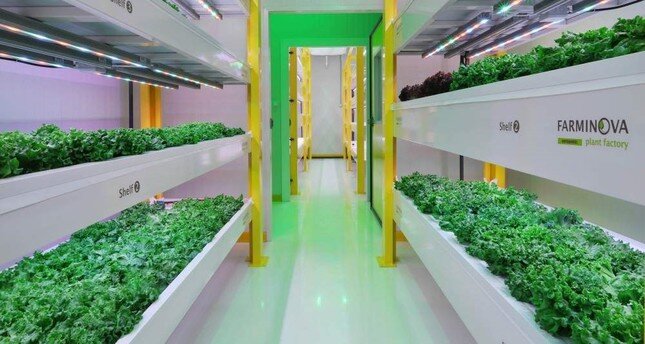
The factory produces plants in a closed area without soil and without sun, using 95% less water. (DHA Photo)
An Antalya-based firm has established Europe's largest and Turkey's first plant factory with an estimated investment of 2.5 million euros ($2.77 million), as part of its 5-million-euro research and development (R&D) activities.
The factory grows plants in a closed area without soil or sun while using 95% less water than conventional farming. In the first stage, it will produce green leafy plants like lettuce, arugula, cress, spinach, thyme and basil.
The factory, Farminova is run by Cantek Group that has operated in the food storage, processing and refrigeration technologies business at the Antalya Organized Industrial Zone for many years.
Company Chairman Can Hakan Karaca said they have launched an innovative initiative, establishing the largest active plant factory in Europe.
Talking to Demirören News Agency (DHA) Sunday, Karaca said providing healthy, continuous and fixed-price food today is critical because the world's population is rapidly growing and agricultural areas are gradually shrinking.
He added that the factory produces plants in a closed area without soil and sun and uses 95% less water. It produces plants without harming nature and living creatures, 24/7 all round the year needing any agrochemicals.
Karaca said the factory uses artificial intelligence (AI) and uses 100% Turkish products. He noted that they will start producing green leafy plants like lettuce, arugula, cress, spinach, thyme and basil in the first phase and strawberry and mushrooms in the second phase. This will be followed by the production of vegetables like tomatoes, peppers, and eggplants.
Karaca added that seedsmen should also develop low-stature plants now. Pointing out that Japan and the U.S. have carried out experiments in plant factories, he said that they are the only Turkish company to participate in the training program run by Professor Kozai, an industry pioneer.
"We have developed the plant factories project step by step, establishing the largest plant factory operating in Europe. What makes the difference here is that we have built this factory using our own products only," he told.
He said the factory in Antalya is an exemplary model. "We aim to establish, expand and share with global investors this innovative development in the world of agriculture, which is a 100% Turkish product from design to software."
Karaca said they are working on establishing factories in seven or eight countries, particularly in Africa. "Our goal is to open two to five factories this year and 100 factories in the next five years, 90% of which will be abroad."
Factory consultants Glenn Behrman and Christine Zimmerman Loessl, who have been working around the world in this area, also elaborated on the factory.
Loessl said the world and its inhabitants have changed. "However, if we continue to treat the world this way, the world is not going to end up anywhere good. We see every day that agriculture has had a huge and dramatic impact on this change. This project will prevent the conversion of natural lands into agricultural lands. We can produce plants completely independent of the weather, the sun and the conditions outside. It provides a healthy and fixed-price guarantee. Vertical farming practices will completely change their perspective. It's not going to happen in a tick, but it is going to happen eventually."
Behrman, on the other hand, said he has set up similar facilities in many countries around the world. "This is the most innovative and largest facility in Europe. It can produce healthy products that are harmless and chemical-free. It is possible to produce essential foods and products, not just edible foods. It is highly effective in seedling production and seed cracking. It can also make healthy and high-quality contributions to the cosmetics industry. Healthy and nutritious products can be produced in shorter harvest time. It is a hyper-efficient system. Production is possible anywhere in the world with minimum energy and labor," he added.

AgroTech Shipping Container Farming Systems For Indoor Organic Farming
Grow Pod Solutions is an AgroTech shipping container farming systems for indoor organic farming. Their desire is to provide sustainable, reliable, and result-oriented modular farming to feed the next generations

February 3, 2020
With this modern farming technology innovation, anyone can farm leafy greens, herbs, and spices for personal consumption and sales. The modular farming also guarantees high yield and no bacteria or disease, in a controlled environment.
As the population of the world grows, food security remains one of the biggest challenges to human survival and proper nutrition. Traditional farming methods alone can’t deliver all the food needed, as it is prone to negative effects that can stunt growth.
Grow Pod Solutions is an AgroTech shipping container farming systems for indoor organic farming. Their desire is to provide sustainable, reliable, and result-oriented modular farming to feed the next generations.
Everything about the farm is automated including soil, water, temperature, humidity, etc. These modular farms are also not affected by disease and there are no pesticides, so the food is 100% of quality and nutrient.
Now, anyone can grow their food for personal consumption or sell the produce for profit.
To learn more, please visit here.
Grow Pods are designed to offer farmers an unmatched yield in a highly controlled farming environment. For each pod, farmers will be able to grow a considerable amount of vegetables like 2,000 heads of lettuce which equates to about 70,000 dollars of yearly revenue.
Leafy greens are in high demand these days because they are rich in nutrients and people are becoming more conscious about living healthy. However, growing them in the open is a pain. They are exposed to too much or not enough water, pathogens, bacteria and diseases, pests, human and animal contamination, and unfavorable weather.
However, with the Grow Pods, farmers don’t have to worry about any such issues. The pods are focused mainly on leafy greens and every 55 days the users can harvest and use or sell. The pods can grow quite a number of leafy green varieties like carrots, lettuce, cabbage, even spice, and herbs.
Grow Pod Solutions is working with universities, farmers, and distributors, local farmers, and outdoor markets, and essentially anyone that sells directly to consumers and interested in getting into farming.
With the help of soil scientists, Grow Pod Solutions has been able to develop its own soil that is pathogen-free and clean. So, they are able to provide both Hydroponic Based farming and soil-based and custom based farming that guarantee quality and high yield.
Existing farming and new entrepreneurs are welcomed to join Grow Pod’s community of growers. They are exposed to try new lines of soil and nutrients, so they can become successful in the indoor environment farming.
Grow Pod Solutions was created out of the desire to deliver quality leafy greens that are free of pesticides and contamination. With their superior and automated technology, they will be able to provide farmers with greater farm yield that promises high profitability.
For more information, please visit https://www.growpodsolutions.com/.
RELATED ITEMS: AGRICULTURE, AGROTECH, CABBAGE, CARROTS, CONTAINER, FARMING, FOOD, GROW POD SOLUTIONS, HERBS, INDOOR, LETTUCE, ORGANIC, SHIPPING, SPICE, SYSTEMS, TECHNOLOGY

Let's Have The Conversation That Needs To Be Had
Why is there a growing perception that something is fundamentally wrong with our food system?
Eating together is a pleasure to be celebrated. No wonder #food is one of the most popular hashtags in social media. But the reality of how food gets on to our plates is quite a different matter.

New York City Startup Called Re-Nuble Turns Food Waste Into Fertilizer
A New York City startup is using potato peels, apple cores, and rotten tomatoes to help farmers grow fresh fruits and vegetables
It Can Be Used To Grow Crops in Indoor Hydroponic Farms.
February 5, 2020
Re-Nuble CEO and founder Tinia Pina. (Image credit: Re-Nuble video)
A New York City startup is using potato peels, apple cores, and rotten tomatoes to help farmers grow fresh fruits and vegetables.
“We take produce waste from food distributors and food processors – anything that can’t go to a food bank or farm,” says Tinia Pina, founder, and CEO of Re-Nuble.
The company converts food waste into organic fertilizer pellets that can be used in indoor, hydroponic farms.
Pina says when dissolved in water, the pellets make the nutrients immediately available to the plant, mimicking the biological nutrient systems found outdoors.
So she says the technology can help make it easier to grow organic food indoors in urban areas, where fresh local food is often scarce.
And it helps the climate. It keeps food out of landfills, where it would otherwise decompose and release methane, a potent greenhouse gas.
It also reduces the need for synthetic fertilizers, which create a lot of carbon pollution when they’re manufactured.
So far, the company has facilities in New York City and Rochester, New York, and plans to expand to the West Coast. Pina hopes to eventually help cities across the country use their food scraps to grow local, organic food.
Reporting credit: Sarah Kennedy/ChavoBart Digital Media.

NYC's Roofs Are Getting A Sustainable Makeover
It's been two months since New York's Sustainable Roof Laws, part of the Climate Mobilization Act, took effect. Now architects and officials must decide: Are green roof systems or solar systems best?
It's been two months since New York's Sustainable Roof Laws,
part of the Climate Mobilization Act, took effect.
Now architects and officials must decide:
Are green roof systems or solar systems best?
AUTHOR: Cailley LaPara
Jan. 22, 2020
While the buzz around the passage of New York City’s Climate Mobilization Act in April 2019 has fizzled, the city’s public officials, property owners, architects, real estate moguls, and financiers are revving up to put new policies into practice.
As of Nov. 15, 2019, Local Laws 92 and 94 are in effect to target a vast, often overlooked and underutilized resource in New York: roofs.
The laws, known informally as the Sustainable Roof Laws, require most new buildings and buildings undergoing major roof reconstruction to include a sustainable roofing zone on 100% of the available roof space.
Cybercriminals are getting more advanced in their attacks and less picky in who they target. Learn why it’s time to rethink your cybersecurity solutions, vendors and how you protect your business.
Sustainable roofing zones are defined as "areas of a roof assembly where a solar photovoltaic electricity generating system, a green roof system, or a combination thereof, is installed." In other words, the roofs must have a solar panel array, green roof or both.
"When you fly into New York City, you see an amazing amount of unproductive roof space," Jonce Walker, senior associate at Thornton Tomasetti, told Smart Cities Dive. Walker and others in the sustainable design community hope Local Laws 92 and 94 are going to change that.
Facing change
The Sustainable Roofs Laws have mobilized several sectors in New York City, from the government to investment, each one grappling with how to manage new regulations designed to drive drastic changes in the city.
"The goal [of Local Laws 92 & 94] is to make sustainable roofs just one of the parts of how you put a good building together," Mark Chambers, director of the Mayor’s Office of Sustainability, told Smart Cities Dive.
Currently, sustainable roofs are far from the norm in New York. According to a mapping project from The Nature Conservancy, there were only about 730 green roofs out of over 1 million rooftops in New York City in 2016.
Solar is much more prevalent, with a total of about 22,000 completed solar projects throughout the city as of 2019, according to the team at Sustainable CUNY. They indicate the number of new solar projects implemented each year in the city has increased dramatically since 2016, due in part to the establishment of Professional Certification (Pro-Cert), which shortened the review period of new solar projects to just 24 hours.
Solar growth in New York City. | Credit: Sustainable CUNY
Not all property owners will be immediately faced with the required adjustments. Buildings dedicated to affordable housing have an alternative compliance timeline of five years during which the New York City Department of Housing Preservation and Development (HPD) will conduct studies on the impact of the law on affordability.
But Jennifer Leone, sustainability officer at HPD, pointed out that the department has "already been leading the charge" when it comes to sustainable roof practices with programs like the Green Housing Preservation Program.
Lead Photo: Credit: Alex Potemkin vis Getty Images

The Booming Indoor Gardening Movement
LG’s indoor farm appliance is an example of how a built-in, columned indoor garden using lighting, temperature and water control can change the way consumers obtain their kitchen ingredients
Sarah Buckley
22/01/2020
The booming indoor gardening movement, prominently explored at CES 2020 earlier this year, is allowing consumers to grow their greens indoors, all year-round.
LG’s indoor farm appliance is an example of how a built-in, columned indoor garden using lighting, temperature and water control can change the way consumers obtain their kitchen ingredients.
LG’s offering of all-in-one seed packages and a growth monitoring app makes the one-stop-shop capable of feeding a family of four with home-grown produce.

The appliance replicates optimal outdoor conditions by matching the temperature inside the insulated cabinet to the time of day.
The LED lights, air circulation, and wick-based water management system allows the produce to quickly grow, alongside the automated gardening solution’s non-circulating water supply technology.
The core technology, which evenly distributes the precise water required for the plant’s to healthily flourish, prevents algae and odors for a hygienic, green enclosure.
Much like LG, n.thing, a South Korean agriculture start-up has developed ‘planty cube’ which is an automated vertical farming system, to a more elaborate effect – allowing consumers to maintain crops from anywhere, at any time.
Cubes, blocks, cells – the hydroponic farm, presented in a shipping container, has each square evenly stacked with rows of shelves of plants.
A computerized system controls the environment by monitoring the plants’ health, adjusting the environment accordingly.
These alternatives to glasshouse production are presenting solutions to production, health, convenience, pollution, water-use, but most notably, are finally brought to the consumer’s arena.