

Welcome to iGrow News, Your Source for the World of Indoor Vertical Farming

US: Montgomery, AL - Local Restaurant Farms Out of Shipping Container For Fresher Produce
They say necessity is the mother of all invention. For a Montgomery restaurant group, a shipping container turned out to be the solution to their problem
Freight Farm Up And Running
In Midtown Montgomery
By Jennifer Horton | January 16, 2020
MONTGOMERY, Ala. (WSFA) - They say necessity is the mother of all invention. For a Montgomery restaurant group, a shipping container turned out to be the solution to their problem.
Eric Rivera is the executive chef for Vintage Hospitality, which runs Vintage Year and Vintage Café. He was struggling to find fresh, sustainable lettuce options for his restaurants.
“We found that importing all the stuff from California or from Florida, we would get these lettuces after they’ve been harvested for days and sometimes almost a week by the time we get to them,” Rivera explained. “The product goes bad really fast costs a lot of money to replace that product with other product, it’s just not that quality that we were looking for.”
Enter the Freight Farm, an unassuming shipping container housed in the heart of Old Cloverdale - only steps from his restaurants. The 320 square-foot farm is equipped to grow up to 4 tons of produce a year, according to the manufacturer. It runs on power and minimal water consumption, a stark contrast to the water needed to farm traditional row crops.
“We can control all the elements and control the growth cycles,” he explained. “No rain, no hail, we’re not exposed to any elements.”
Which means they can grow a variety of greens year-round while decreasing the carbon footprint of cross-country supply chains and the threat of lettuce recalls.
“We feel like that it’s our responsibility in the restaurant industry not only provide healthy, nutritious food; but that is done in a socially conscious way as well,” stated Rivera.
Vertical Farms of The Future Require Genetically Edited Plants, Says Scientist
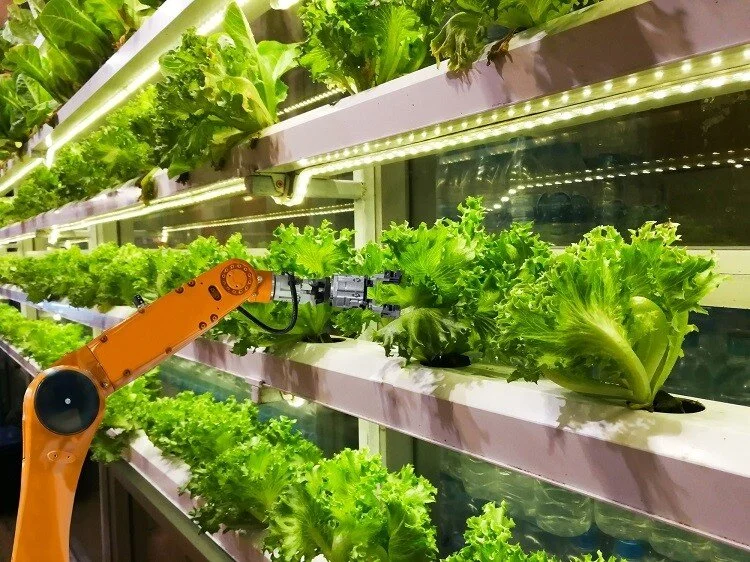
There is an innovation gap in urban agriculture, suggests Aberystwyth University Professor Huw Jones, whereby we have ‘huge innovation’ in vertical farming, yet still use ‘old seeds’ and ‘old plant architecture’
22-Jan-2020 By Flora Southey
There is an innovation gap in urban agriculture, suggests Aberystwyth University Professor Huw Jones, whereby we have ‘huge innovation’ in vertical farming, yet still use ‘old seeds’ and ‘old plant architecture’.
Read the complete article here.
US: Virginia - Babylon Hydroponic Micro-Farm Grows in Centra Lynchburg General Hospital Cafeteria
Centra Lynchburg General Hospital installed a micro-farm unit from vendor Babylon in its cafeteria last November and has already harvested about a hundred pounds of lettuce, primarily for use on its salad bar
Centra Lynchburg Hospital
The Babylon micro-farm units in the Centra Lynchburg Hospital cafeteria grow equal amounts of green leaf, romaine, spring mix, bib, and red butter lettuces.
Mike Buzalka | Jan 15, 2020
Centra Lynchburg General Hospital installed a micro-farm unit from vendor Babylon in its cafeteria last November and has already harvested about a hundred pounds of lettuce, primarily for use on its salad bar
Two hydroponic micro-farm units from vendor Babylon installed in the cafeteria of Centra Lynchburg General Hospital in Virginia have already produced about a hundred pounds of lettuce for use in the salad bar and on patient meal trays. The apparatuses put in the second week of November last year are a high-profile sign of the hospital’s commitment to healthy, fresh food, as the cafeteria is located just off the heavily trafficked main lobby of the facility.“Soon as you walk in, it’s right there,” says Timothy Schoonmaker, system director and executive chef for Centra Culinary Creations, which operates dining at Centra Lynchburg Hospital.
Related: Elementary school teams with Princeton prof on vertical farm project
Photo: Signage explains what the micro-farms in the Centra Lynchburg Hospital cafeteria are and why they are important.
Photo credit: Centra Lynchburg Hospital
“Everything grows at its own rate, so [while] we’re growing equal amounts of green leaf, romaine, spring mix, bib, and red butter lettuce, they have different harvest times—green leaf takes a little longer while spring mix only takes a couple of weeks, for example—so there are times we get more of one kind than another,”
Schoonmaker explains. “We always have new [plantings] going in, so it just depends on where each is in its growing cycle.”Centra Lynchburg is the first hospital client for Babylon, and it came about by chance, Schoonmaker says. “I happened to run into one of my former produce reps who had moved on to Babylon and we got to talking.
The next thing you know, we had put together a proposal.”In addition to the lettuces, the Babylon micro-farm units can produce herbs and edible flowers, but neither is being grown currently at Centra Lynchburg because edible flowers may be too exotic for the venue and the hospital already grows its own herbs in its outdoor garden, which produces cilantro, rosemary, parsley, mint, and basil along with more substantial crops in season such as peaches, squash, cherry tomatoes, jalapeno, and green bell peppers.
The outdoor gardens are maintained by Schoonmaker and some of his managers, but Schoonmaker alone takes care of the indoor micro-garden with the help of some high technology.“I have an app to monitor it that’s pretty user-friendly,” he explains. “Babylon sends us seed packs and all I have to do is put them in the farm. Everything is scanned in [when it’s planted] so I know when it’s to be harvested, [as well as] water and nutrient levels if lights are working [and so forth].”
After a crop is harvested, Schoonmaker logs it, then turns it over to his kitchen staff, who does the washing and chopping. Most of the bounty is slated for the cafeteria salad bar, but some spring mix also has wound up on patient trays.“I also have a special crop reserved for a salad for a board of directors dinner at end of [January], so they can taste and see it,” he adds.
A typical crop will generally be used in a couple of days. The 60 pounds of lettuce Schoonmaker says he harvested on New Year’s Day was used up by the 3rd, he notes.
Customer reaction has been extremely positive, he adds.“I’ve had a lot of comments saying they can taste the difference, that there’s a fresh, crisp taste to the lettuce,” he says. “Of course, there’s also the health value and since we control it, there’s no worry about the lettuce getting a recall.”
TAGS: PRODUCTION

University of Arizona - Controlled Environment Agriculture Center - SHORT COURSE
Join us March 2 - 6 for CEAC’s Short Course! REGISTER HERE!
Join us March 2 - 6 for CEAC’s Short Course! REGISTER HERE!
Get your questions answered and increase your hydroponic growing know-how at the Greenhouse Crop Production & Engineering Design Short Course! Expand your knowledge during a four-day intensive conference including 3 full days of lecture, 1 day of hands-on training workshops at CEAC facilities, and a commercial Arizona greenhouse tour.
This jam-packed event is full of information from experts in research, production and the bottom-line business of controlled environment agriculture. Enjoy face-to-face time with industry experts, as well as networking time with industry leaders!
For more information please call us at (520) 626-9566 or go
to: https://ceac.arizona.edu/events/cea-short-course

Can New Agriculture Technology Grow Food That is Better Than Organic?
New technologies are changing the landscape of food in America. Now, there is the ability to grow food that may be better than organic. How is this possible?
January 28, 2020
Written by: Randy Huft
New technologies are changing the landscape of food in America. Now, there is the ability to grow food that may be better than organic. How is this possible?
It helps to understand that there are some huge misconceptions about organic food.For starters, despite popular belief, organic farms can use pesticides. The difference is that they only use naturally-derived pesticides, rather than the synthetic pesticides used on conventional farms. Natural pesticides are believed to be less toxic, however, some have been found to have significant health risks
Some studies have indicated that the use of pesticides—even at low doses— can increase the risk of certain cancers, such as leukemia, lymphoma, brain tumors, breast cancer and prostate cancer.
Children and fetuses are most vulnerable to pesticide exposure because their immune systems, bodies, and brains are still developing. Exposure at an early age may cause developmental delays, behavioral disorders, autism, immune system harm, and motor dysfunction.
Pregnant women are more vulnerable due to the added stress pesticides put on their already taxed organs. Plus, pesticides can be passed from mother to child in the womb, as well as through breast milk.
The widespread use of pesticides has also led to the emergence of “superweeds” and “superbugs,” which can only be killed with extremely toxic poisons like 2,4-Dichlorophenoxyacetic acid (a major ingredient in Agent Orange).
Rinsing reduces but does not eliminate pesticides. It is important to wash your fruits and vegetables, but in most cases, this will not eliminate all traces of pesticides. Even organic foods can use certain pesticides, and outdoor-grown organic food can pick up pesticide residue from nearby farms.
According to the Environmental Working Group, a nonprofit organization that analyzes the results of government pesticide testing in the U.S., the following fruits and vegetables have the highest pesticide levels:
Apples
Sweet Bell Peppers
Cucumbers
Celery
Potatoes
Grapes
Cherry Tomatoes
Kale/Collard Greens
Summer Squash
Nectarines (imported)
Peaches
Spinach
Strawberries
Hot Peppers
There is also confusion about organic food labels:
Organic foods are described on product labels in a variety of ways, but they mean different things:
100 percent organic. This description is used on certified organic fruits, vegetables, eggs, meat or other single-ingredient foods. It may also be used on multi-ingredient foods if all of the ingredients are certified organic, excluding salt and water. These may have a USDA seal.
Organic. If a multi-ingredient food is labeled organic, at least 95 percent of the ingredients are certified organic, excluding salt and water. The nonorganic items must be from a USDA list of approved additional ingredients. These also may have a USDA seal.
Made with organic. If a multi-ingredient product has at least 70 percent certified organic ingredients, it may have a "made with organic" ingredients label. For example, a breakfast cereal might be labeled "made with organic oats." The ingredient list must identify what ingredients are organic. These products may not carry a USDA seal.
Organic ingredients. If less than 70 percent of a multi-ingredient product is certified organic, it may not be labeled as organic or carry a USDA seal. The ingredient list can indicate which ingredients are organic.
Is there something better than organic?
Yes. Recent developments in agtech provides the ability to grow food without any pesticides or harmful ingredients. Controlled Environment Micro-Farms allow growers to cultivate fruits, herbs, and vegetables in a sealed environment that virtually eliminates the need for pesticides and harmful chemicals.
These tightly managed ecosystems use much less water and fertilizer than on conventional farms and allow growers to cultivate throughout the year, regardless of the season or weather.
A 40-foot Controlled Environment Farm can yield about 3,500-4,000 heads of lettuce every ten days. The greens are priced competitively with traditional produce, yet the process uses 97 percent less water than a conventional farm and no pesticides or herbicides since bugs and weeds are much less likely to get in. In fact, some say that produce grown in a Controlled Environment Farm is actually “better than organic,” noting that organic growers can still use certain pesticides.
Closer to Consumption
The Controlled Environment Farm (CEF) provides higher quality food that’s grown closer to where it will be consumed, which means food arrives ripe and ready to eat, with less cost and environmental impact. CEFs are also resource-friendly and use less water, energy, space, labor, and capital than other methods of farming.
Shipping containers are ideally suited to be repurposed into Controlled Environment Farms. There are millions of shipping containers in the world, but only a fraction of them are in service and used actively. Many of the remaining containers are wasting away in ports and storage yards across the world.
Repurposing these gentle giants into robust farms is not only good for producing clean, healthy food, but it is also good for the environment.
Real-World Uses
When Michael Bissanti opened Four Burgers in Cambridge, Massachusetts, he knew he wanted to create a restaurant with a strong sense of sustainability. Initially, that meant procuring only ingredients deemed natural, as well as sourcing from organic and local farms. But Bissanti quickly realized that the “natural” label wasn’t a panacea for a sustainable food system — and so he went looking for a way to bring sustainable, local ingredients even closer to his kitchen.
Today, those ingredients could hardly be closer — Bissanti only needs to walk out the back door of his restaurant to pick all the fresh lettuce, arugula, mustard greens, and herbs he needs. Even in the cold Boston winters, Bissanti is merely feet away from fresh produce, in spite of the fact that his restaurant is located right in the middle of an urban thoroughfare between Harvard and MIT.
That’s because Bissanti is one of the hundreds of farmers across the country growing produce in Controlled Environment Farms built into repurposed shipping containers.
Companies that manufacture these farms, such as GP Solutions and Freight Farms, say that even traditional greenhouses and rooftop gardens require the expertise of an engineer, a plumber, an electrician, and a horticulturist. And, rooftop greenhouses are also expensive, costing between $1 million to $2 million to get started. A “GrowPod” from GP Solutions or a Freight Farms unit, by comparison, costs only around $48,000-$100,000.
One of the key differences in these Controlled Environment Farms is that everything is included. Everything from water to the LED lights in the units are digitally controlled, and each unit is also connected to the internet so that it can be monitored and managed from anywhere in the world.
“Everything is fully contained within the GrowPod so that it arrives as a turnkey product, ready to grow,” said George Natzic, President of GP Solutions.
These containers allow growers to generate local food production in any location. And manufacturers point out that unlike other indoor growing operations, the shipping container farms are scalable. You can locate the system in a parking lot or the corner of a warehouse and expand incrementally.
Meeting the needs of a changing world
With 54 percent of the world’s population residing in urban areas—expected to increase to about 66 percent by 2050, Controlled Environment Farms allow growers to reduce their agricultural footprint on the environment and address food security of the urban population.
Kimbal Musk (brother of Elon) says that these high-tech shipping container farms are creating “a real food revolution.”
What do you get by growing hyper-local to the end consumer? The answer is that the food you are eating right now at the restaurant was grown right outside and picked minutes ago. This is in stark contrast to traditional agriculture that often supplies produce that was picked when still hard, could sit in a warehouse for weeks, and has chemicals applied that allow ripening just prior to distribution to stores and restaurants.
In summary, there is a great need for controlled-environment agriculture as it allows produce to be grown locally and delivered to the final consumer very shortly post-harvest.
Consumers have a desire for locally-grown clean produce during all periods of the year which they can buy at a competitive price. Controlled Environment Farms are a solution that are sustainable, easy to implement, affordable to acquire, simple to operate, and produce high-quality food that can be considered better than organic.
US (PA): Hydroponic Farm Provides Hunger Relief
The pilot farm, which is now in production, is growing leafy greens, herbs, and microgreens
First Light Project announced the opening of their pilot for a hydroponic vertical farm located at the W. Berks Street warehouse location of the Delaware Valley’s largest hunger-relief organization, Philabundance.
The pilot farm, which is now in production, is growing leafy greens, herbs, and microgreens. These greens are grown using hydroponic technology in a 5-tier vertical racking system that supplies nutrient-rich water to the plant’s roots. High efficiency LED lights mimic optimal sunlight conditions up to 18 hours a day.
The 312 sq.ft. Pilot Farm is the precursor for First Light Project’s full-scale indoor hydroponic farm. The pilot farm is growing:
9 varieties of lettuce
2 varieties of Arugula
Varieties of Mustard Greens, Asian Greens, Kale and Swiss Chard
Genovese Basil
Mild & Spicy Microgreens
Crop cycles vary from 12-17 days for Microgreens, 31 days for lettuce and up to 45 days for Basil. Over the next 6 months, the pilot will grow continuous small batches of leafy greens, microgreens, and herbs to test for growth rate, yield, flavor and visual appeal. This testing enables First Light Project Farm to determine which optimal attributes of taste, size, and texture appeal to the customer base.
The host for the farm pilot is Philabundance who serves 90,000 people each week, 30 percent of whom are children and 16 percent of whom are seniors. A portion of the food grown by First Light Project Farm will be available to the community through Philabundance and its network of 400 member organizations. First Light Project Farm is one of a number of innovative community partners working with Philabundance to end hunger for good.
For more information:
First Light Project
Lois Davidson, Co-Managing Director
ldavidson@firstlightproject.org
www.firstlightproject.org
Publication date: Fri 24 Jan 2020

Monthly Activities of The GLASE Consortium Webinar Series
The GLASE Consortium Webinar Series features the latest technological innovations and best practices in the CEA field providing the audience the opportunity to discover new solutions and to connect with field experts
The GLASE Consortium Webinar Series features the latest technological innovations and best practices in the CEA field providing the audience the opportunity to discover new solutions and to connect with field experts.
January 23, 2020
LED basics applied to horticulture lighting systems presented by Dr. Robert Karlicek
February 20, 2020
Horticultural lighting systems energy-savings calculationspresented by Dr. Neil Mattson and Dr. A.J. Both
March 12, 2020
Influence of temperature and daily light integral on culinary herb production presented by Dr. Roberto Lopez and Kellie Walters
The entire series can be accessed at https://glase.org/resources/webinars/
Technical Article Series
In a series of 10 publications researchers from Cornell University, Rensselaer Polytechnic Institute and Rutgers University will cover a wide range of applied CEA technologies including new LED lighting systems, integrated CEA control systems, measurement standards, energy modeling, and commercial case studies.
Jan. 2020 - Revisiting the measurement of Light - available here
Feb. 2020 – A new greenhouse light spectral acquisition system
Mar. 2020 – Plant responses to integrated light and CO2 control
Apr. 2020 – Horticultural lighting standards
May 2020 – Remote chlorophyll fluorescence detection system
Jun. 2020 – Controlled environment agriculture (CEA) energy modeling
Jul. 2020 – A modified infra red gas analyses for light response curves
Aug. 2020 – GLASE commercial pilots – A case study
The entire series can be accessed at https://glase.org/resources/technical-articles/

"Aquaponics Can Reduce Food Miles"
Long travel distances for our food lead to excessive carbon use, energy use for refrigeration, food spoilage, nutrient depletion, and poorer food security. by Brian Filipowich
Long travel distances for our food lead to excessive carbon use, energy use for refrigeration, food spoilage, nutrient depletion, and poorer food security.
by Brian Filipowich
Aquaponics – and other controlled-environment growing techniques like hydroponics and aeroponics – can greatly reduce the distance food travels from farm to plate.
For the first time ever, researchers recently attempted to map out the entire U.S. food supply chain. The resulting map, above, shows an intricate web of food moving across the country. The full report is public and can be found here: Food flows between counties of the United States (Lin, 2019)
The map illustrates that our food travels long distances before it reaches our plate. “Food miles” is the measurement that tracks the actual distance food travels from farm to plate.
“Studies estimate that processed food in the United States travels over 1,300 miles, and fresh produce travels over 1,500 miles, before being consumed.” (ATTRA, 2008)
One reason for high food miles is because most food requires a large amount of open land and arable soil, and requires a specific climate to be grown at a large scale. Only certain parts of the country meet this criteria, and these areas must transport food long distances to reach all U.S. consumers. The map below shows the nine counties in the U.S. (highlighted in red) from which most food originates.
But aquaponics – and other modern growing methods like hydroponics and aeroponics – are water-based and do not require large amounts of arable soil. Also, these modern growing methods are usually practiced in “controlled-environments” like greenhouses that maintain ideal growing environments for plants throughout the entire year.
Aquaponic systems that raise edible fish can further reduce food miles by cutting down on the distance needed to transport the animal protein in our diets. The demand for animal protein is expected to rise along with world population growth. But farms that raise beef, pork, and poultry need large tracts of land far from population centers. Conversely, aquaponics and other recirculating aquaculture operations can raise fish in urban or suburban areas. And, because fish have a much more efficient feed conversion ratio than land animals, less feedstock needs to be grown and shipped, further increasing efficiency.
To read more about food miles, see Food Miles, Background and Marketing from ATTRA.
One often-overlooked benefit of local food is greater food security. Our complex web of food is susceptible to systemic shocks such as weather or disaster events. In extreme cases, disruptions could make it difficult to get enough food to a certain population. A greater proportion of local food allows areas to be better-prepared in cases of unexpected events.
But, before we assume that all food miles are bad, more research is needed to measure the tradeoffs between local and long-distance. For instance, studies show that it’s often more efficient to import fruits from distant warmer climates than to heat a local greenhouse in the winter.
More needs to be done to evaluate, quantify, and account for the hidden costs of our food system, including food miles. Analytic tools such as True Cost Accounting, Cost-Benefit Analysis, and Life Cycle Assessment (LCA) create a more complete picture of the true cost of a product. LCA takes into account the costs of a product’s entire life cycle: production, processing, packaging, transport, use, and final disposal. LCA uses indicators not traditionally captured in a product’s market price, such as resource depletion, air and water pollution, biodiversity loss, human health impacts, and waste generation.
Analytic tools like LCA can uncover the true cost of shipping foods long distances and incentivize local agriculture. Aquaponic and hydroponic growers will benefit because – without the need for soil – they can get as close to consumers as possible. The result will be fresher food, less strain on the planet, and local economic growth!
For more information:
Aquaponics Association
4531 Airlie Way, Annandale VA 22003
info@aquaponicsassociation.org
aquaponicsassociation.org
Why Vertical Farming Isn't A Miracle Solution To Food Security
Vertical farming is great for growing lots of food in a small space, but productivity comes at a cost: high energy use
Vertical farming is great for growing lots of food in a small space, but productivity comes at a cost: high energy use. We need to consider other, more sustainable, types of urban agriculture, says Andrew Jenkins
Friday 28 September 2018
A company in Scotland has unveiled what it claims is arguably the world’s most technically advanced indoor farm. Intelligent Growth Solutions’ vertical farm uses artificial intelligence and specially designed power and communication technologies. The firm says this reduces energy costs by 50 percent and labour costs by 80 percent when compared to other indoor growing environments, and can produce yields of up to 200 percent more than that of a traditional greenhouse.
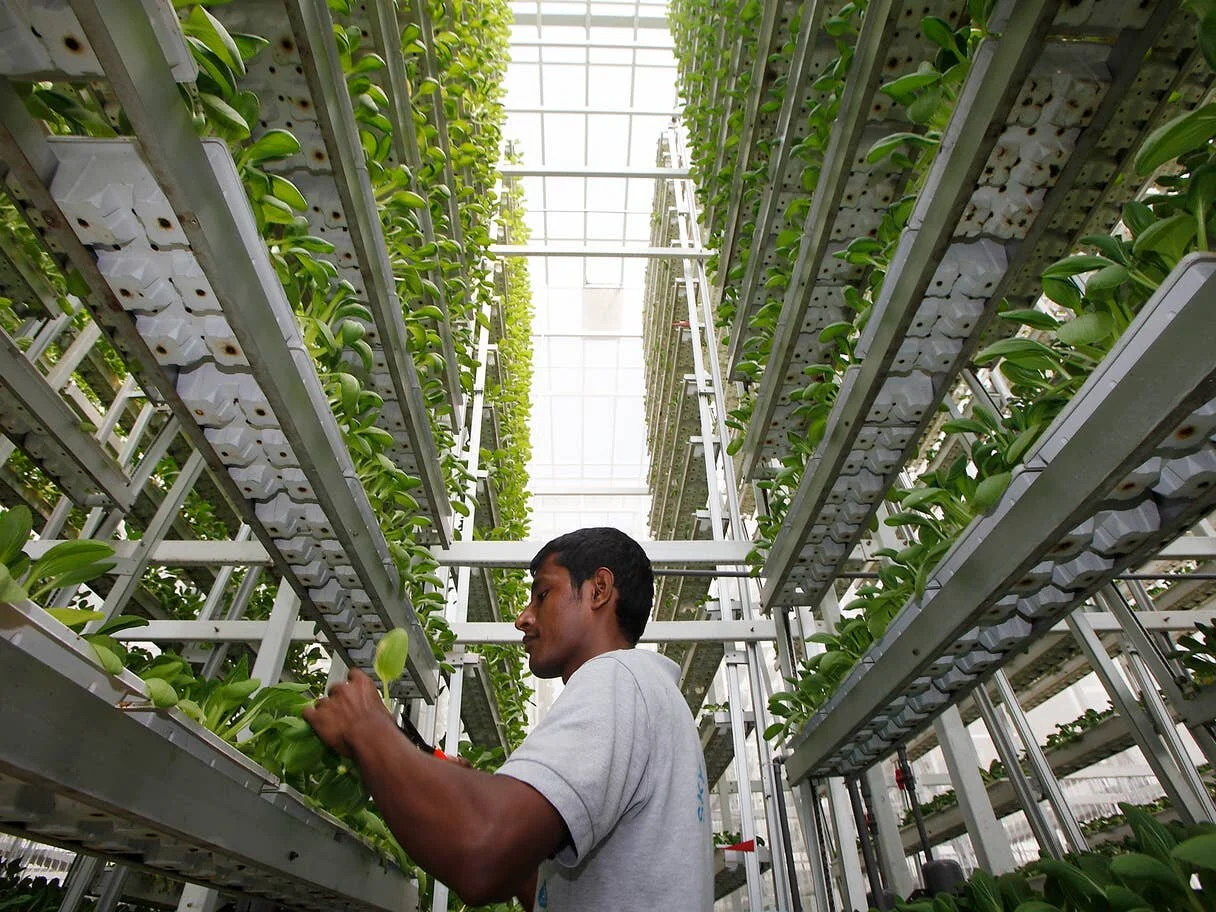
Vertical farms like this aim to minimize water use and maximize productivity by growing crops “hydroponically” in small amounts of nutrient-rich water stacked in a climate-controlled building. But it’s important to recognize that the increased productivity of indoor vertical farming comes at the cost of much higher energy usage due to the need for artificial lighting and climate control systems.
By 2050, global food production will need to increase by an estimated 70 percent in developed countries and 100 percent in developing countries to match current trends in population growth (based on production information from 2005 to 2007). But in countries that already use the majority of their land for farming, this is easier said than done.
The UK, for example, uses 72 percent of its landmass for agricultural practices but imports nearly half of the food it consumes. To improve domestic food security and prevent natural habitats from being destroyed for new farmland, countries such as the UK need to consider new methods of food production.
Urban farming presents a unique opportunity to grow food on already developed land, increase domestic food production and minimize the distance food travels. Since the publication of Dickson Despommier’s 2010 book The Vertical Farm: Feeding the World in the 21st Century, vertical farming has become synonymous with urban farming. Although the agricultural skyscrapers illustrated in Despommier’s book are yet to be realized, the idea of growing food vertically has captured the minds of designers and engineers alike.
Aquaponic systems that grow food with the help of fish are a naturally lit option (Andrew Jenkins)
The energy demand associated with vertical farming, however, is much higher than other methods of food production. For example, lettuces grown in traditionally heated greenhouses in the UK need an estimated 250kWh of energy a year for every square metre of growing area. In comparison, lettuces grown in a purpose built vertical farm need an estimated 3,500kWh a year for each square metre of growing area. Notably, 98 percent of this energy use is due to artificial lighting and climate control.
Even with the reductions promised by Intelligent Growth Solutions, the energy demand associated with most vertical farms would still be very high, which positions vertical farming in a grey area. On the one hand, the world needs to produce more food, and on the other hand, it needs to reduce energy use and the production of greenhouse gases.
Urban alternatives
But indoor vertical farming isn’t the only way to grow food in cities. A plethora of naturally lit methods also exists, from raised beds in communal gardens to rooftop aquaponic systems that grow food with the help of fish. These methods all require less energy when compared to vertical farming because they don’t need artificial lighting.
Lufa Farms makes use of vacant roof space to grow food in naturally lit hydroponic greenhouses (Wikimedia Commons)
When viewing cities from above, it is clear to see just how many flat roofs are left vacant and the agricultural opportunities they represent. In the city of Manchester in the UK, unoccupied flat roofs account for an area of 136 hectares, representing one-third of the city’s inner urban area.
Gotham Greens in New York and Lufa Farms in Montreal, for example, are both commercial farms that use vacant roof space to grow food in naturally lit hydroponic greenhouses. Given the success of such projects and the area of roof space available, it seems strange that so many companies would skip ahead to methods of food production that still need a lot of costly development, as well as more energy to operate. Although they can’t grow as much food, rooftop greenhouses need at least 70 percent less energy for each square metre of growing area than artificially lit vertical farms.
Lead Photo: The method is a tempting solution for city designers low on space... but it’s not the only one out there ( Reuters )

How Stockholm Wants To Be 'The Green Food Tech Hub of The Future'
At Grönska, 1.3 million plants are grown each year in long rows of racks filled with stacked drawers. This hall in Huddinge in Stockholm county is not just a business premise, but a high-tech vertical farm
Lead Photo: Photo: Stina Stjernkvist / TT
In 2017, the Swedish food retail sector was worth 272 billion kronor. But how can the Nordic nation embrace innovation to make the food chain more sustainable? Several startups and business accelerators are investing heavily in sustainable development in the form of foodtech.
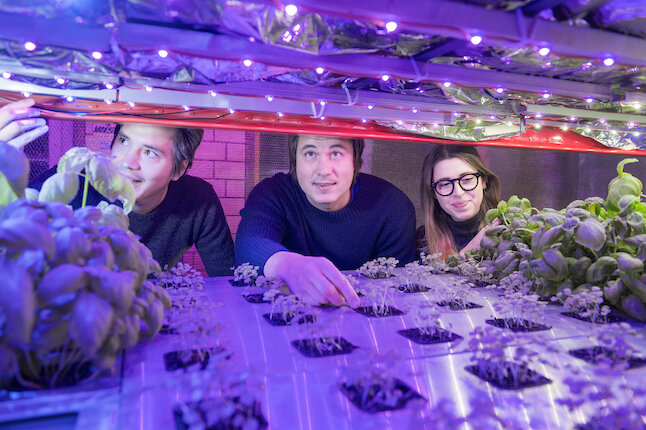
At Grönska, 1.3 million plants are grown each year in long rows of racks filled with stacked drawers. This hall in Huddinge in Stockholm county is not just a business premise, but a high-tech vertical farm. Food is grown locally in a controlled and space-efficient environment.
"Sweden imports 60 percent of its food and a third to a quarter of the emissions in Sweden comes from transporting food," Natalie de Brun, one of the co-founders of the startup, tells The Local.
"Sweden has a short season of three to four months where food can be produced. By producing food in a vertical farm, we do not depend on the climate. We are replicating nature inside and stacking the crops, which is very space-efficient. Each shelf has its own LED lighting and circulating water system. Here we can grow strawberries all year round."
Foodtech is a movement of companies that are trying to change the way we grow, transport and consume food. By combining traditional and innovative technologies, the idea is that food can become more efficient, sustainable and healthier.
Bright LED lights light up the business space in Huddinge. The plants follow an artificial daylight rhythm to grow as efficiently as possible. Delicate plants such as different kinds of herbs and lettuce are growing in stacks of about 20 metres wide and six metres high. Grönska employees are walking around and taking care of the plants.
"Food is something everyone consumes every day, and you can have a direct effect on it yourself," explains de Brun. "We are selling our products to local restaurants, supermarkets and even an airline. Growing the amount of arugula or lettuce we grow in one year would require at least 15 times more space if grown on an open field, and 100 times more carbon emissions from transportation."
The vertical farm located in southern Stockholm is one of Europe's largest. Photo: Lars Pehrson / SvD / TT
In an office in the Söderhallarna building on Stockholm's Södermalm, Sweden Foodtech brings companies together by organizing events and focuses on major themes around the future of food. One of the key questions is simply: How do we manage to feed future generations?
Together with supermarket Coop and impact hub Norrsken, Sweden Foodtech offers support to companies that want to 'reshape the food system'.
"Food is a huge market, from production and transportation to supermarkets and restaurants. But innovation in the sector is very minimal. That's something we would like to change," says Federico Ronca, Innovation Consultant at Sweden Foodtech.
"One-third of all the food in the world is wasted," he adds. "A few big producers are managing the whole food market. We are trying to work with them and convince them to open up to new initiatives and technologies. We're connecting the dots, and creating an 'orchestra of the players'."
The initiative started as a food festival, SMAKA -- Good Food Festival, which grew into one of the biggest food festivals on the planet and developed into Sweden Foodtech. Ronca sees Sweden and Stockholm as perfect places for foodtech projects.
"There is a large tech sector and a great digital infrastructure. Sweden and the Nordics are the best in sustainable development, they are leading in the world. Sweden also doesn't have a strong food tradition, as France and Italy have. That makes that people are very open-minded about food," he explains.
Stockholm as a hotspot for innovative businesses
The same goals are shared by Stockholm Business Region, the Swedish capital's official promotion agency, which is dedicated to creating a good ecosystem for innovative businesses and hopes to turn the Stockholm into a "leading foodtech hub".
"Stockholm truly is an innovation-driven place. It's full of early adopters", says Irena Lundberg, a business manager at Stockholm Business Region.
"These consumers are aware of their responsibility and like to buy eco-friendly products. There is natural support from the city for all kinds of sustainable projects, and Sweden itself is a very steady environment for starting a business."
The public interest, environmental awareness, Nordic culinary traditions and active tech community in the city make Stockholm the place to be for foodtech initiatives, she believes.
But despite strong ambitions, there are not yet any figures or statistics available to fulfill the hopeful expectations. Stockholm Business Region is currently monitoring 300 businesses in the foodtech industry, and according to Lundberg, expects to see results "in about one year".
At Grönska, we walk along the rows of racks where all kinds of herbs and lettuce varieties are grown. The founders of this vertical farm have experienced the opportunities available to startups in Sweden firsthand.
"Stockholm is a great place to start an innovative business. There is a great startup culture, we really feel empowered and encouraged here. There are a lot of facilitators and enablers that help us grow our business," says de Brun.
In the vertical farm in Huddinge, various herbs and lettuce varieties are grown locally and used in supermarkets and restaurants. Photo: Stina Stjernkvist/TT.
Until now, traditional greenhouse production is the norm. This type of production is less energy effective and has higher transportation emissions. But Grönska sees a big technology shift coming up.
"In the near future we can inexpensively build high tech vertical farms and grow food on a large scale," says de Brun. "This way we can grow our food local and more energy-efficient and people can eat better and healthier. There will be more space for other players in the food market."
But she admits that it will take time to change the food industry.
"We are working with a fresh, organic and alive product," explains de Brun. "It's a complex and established industry. Everyone needs food every day, you can't change that system overnight. There's a lot going on, and it's cool to be part of that wave. Food is key."
Are In-Home Vertical Farms The Next Big Appliance For Connected Kitchens?
Whether you’re contemplating your own home grow system or just curious, here’s a look at what’s available and what’s in the pipeline
A little less than a year ago, The Spoon looked at a number of hydroponic farming devices that could fit into the average person’s apartment. These were, for the most part, table-top models or units that could hang on a wall. At the time, the concept of having a grow system in your own home seemed more than a little novel.
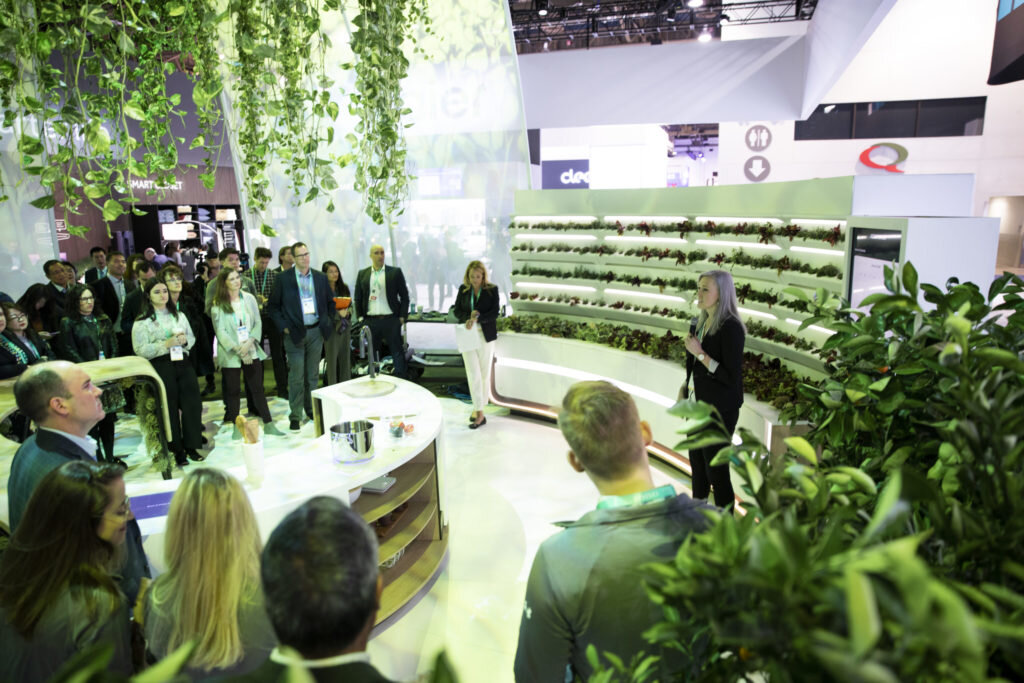
Fast forward to now and things have changed. Putting an indoor vertical farm in the average consumer’s home isn’t yet a mainstream concept, but as more startups and major appliance-makers alike have shown over the last 12 months, the idea is making its way into the Everyman’s kitchen with more speed these days. Now, thanks to a bunch of concepts shown off at this year’s CES, suddenly the idea of having a smart farm in your kitchen doesn’t seem so novel.
Whether you’re contemplating your own home grow system or just curious, here’s a look at what’s available and what’s in the pipeline.
Aspara
If you’re like me, you have minimal space (almost none, really) in the home for adding much in the way of smart farming systems. Aspara’s hydroponic growing device could potentially solve that problem because it’s small — 14 inches high and 21 inches wide — and could reasonably fit on a countertop, shelf, or even on top of the refrigerator. The system uses a combination of LEDs, an auto-watering feature, and sensors that detect nutrient levels, humidity and air, and other factors to create the optimal grow “recipe” for the plants.
After a user does the initial planting of the seeds, the Aspara app manages most of the grow process, notifying the user when it’s time to refill the water tank and harvest the plants. It also includes tips and recipes for growing and lets you monitor multiple Aspara farms at the same time.
The device is currently available in Hong Kong, the United Kingdom, Canada, and the U.S. through online retailers. For U.S. buyers, the device currently goes for $259.99 on Amazon for just the machine and $339.99 with a starter seed kit included.
Rise Gardens
Chicago, IL startup Rise Gardens is one of those companies aiming to make a truly “plug in and go” indoor vertical farming system for the home. This one is a standalone console that can be purchased with one, two, or three “levels” for plants and weighs between 60 and 106 pounds depending on the size.
A user assembles the garden — much as you would a piece of furniture from IKEA, from the looks of it — then downloads the app, which controls the lighting and nutrients schedule and reminds the user when it’s time to water the plants. Each garden comes with a starter pack of 12 plant pods that can be inserted directly into the grow trays.
Price ranges from $549 for a single-level console to $949 for a triple.
Agrilution’s Plantcube
Not to be confused with Plantycube (see below), the Plantcube made headlines at the end of 2019 when its maker, a German company called Agrilution, was acquired by appliance-maker Miele. Less device than full-on kitchen appliance, the Plantcube automates temperature, light, climate, and water levels of the indoor vertical farm, and can be controlled from within the Agrilution app.
The appliance looks like a wine cooler and is about the same size. However, unlike a wine cooler or any of the systems listed above, the Plantcube is meant to be built directly into your kitchen cupboards or beneath a countertop. That would perhaps explain the price point: €2,979 (~$3,300 USD), a figure most consumers wouldn’t spend on an indoor farm right now. Even for those who would, the device is currently only available to those in Germany, Austria, Belgium, Luxemburg or the Netherlands.
Even so, the concept Plantcube pushes is one to watch. It’s entirely possible that appliances like these eventually become as common in the home kitchen as microwaves. The price point would have to come way down for that to become a reality, which is one reason we’re watching Plantcube closely in the future.
GE Home Grow
As The Spoon’s Mike Wolf wrote recently, CES 2020’s standout in the consumer kitchen was GE because, “rather than create product demos designed as show-off vehicles for new technologies, GE illustrated how these technologies could be employed in a cohesive, systematic way to provide consumers answers to some of their biggest problems.”
Among those technologies was Home Grown, GE’s indoor gardening concept that uses a combination of hydroponics, aeroponics, and soil-based grow systems that are built directly into the kitchen design. For each of the three systems, water, nutrient, and light delivery are controlled through an app, which also guides the user through the seeding and harvesting stages of the grow process.
The system also offers consumers information on the health benefits of each plant as well as how to prepare herbs and greens in meals once they are harvested.
Home Grow is purely conceptual at this stage, so there’s no price point on these systems. Like the Plantcube, however, GE is thinking bigger than the just-another-appliance concept and imagining a system that can encourage healthier eating, reduce food waste, and increase consumer education around the foods they’re eating.
Honorable Mentions
We’ve covered these in-depth already, but LG and Plantycube are also at the forefront of bringing vertical farming technology into the consumer kitchen. Both showed off products at CES this year.
LG’s forthcoming appliance is the size of a fridge and, as I wrote recently, “takes many of the functions found in commercial-scale indoor farming and applies them to a device specifically made for the average consumer.”
N.thing’s Planty Cube, meanwhile, is a highly modular indoor farming system that can be small enough to fit on a countertop or large enough to serve cafeterias at schools, offices, and other institutions.
Since things are never as simple as they seem, there are obviously still a lot of questions around these “plug-in-and-grow” systems. Will they raise consumers’ utility bills significantly? What happens if they break? Are they worth the cost if they can only grow leafy greens and not more substantial veggies, like carrots or broccoli?
Many more questions will sprout up as companies introduce new systems to the consumer market, and it’s ok that those questions won’t get answered immediately. The more important point here is that entrepreneurs and corporations both are testing new ways to make food cleaner, more local, and more in the consumer’s control. Right now, we need concepts as compact as an Aspera and as conceptual as GE’s Home Grown right now to help get us there.

Our Current Food System Can Feed Only 3.4 Billion People Sustainably
20 January 2020
Our current food system can feed only 3.4 billion people without transgressing key planetary limits, according to an analysis of the global farming system. However, reorganizing what is farmed where – along with some changes in diets – would enable us to feed 10 billion people on a sustainable basis, suggests the analysis.“We should not go any further in the direction of producing food at the cost of the environment,” says Dieter Gerten at the Potsdam Institute for Climate Impact Research in Germany, an author of the study.
In 2009, researchers identified nine so-called planetary boundaries: limits that we shouldn’t exceed if we want to maintain Earth’s life-support systems. Gerten’s team looked at the four boundaries that are relevant to farming: not using too much nitrogen, which causes dead zones in lakes and oceans; not taking too much freshwater from rivers; not cutting down too much forest, and maintaining biodiversity.
The team’s conclusion is that half of food production today violates these limits. However, this analysis is also the first to provide insights into where, geographically, these limits are being transgressed. By changing what is farmed where the team says it would be possible to feed 10 billion people within the four limits.
This would involve rewilding farms in areas where more than 5 percent of species are threatened; reforesting farmland where more than 85 percent of tropical forest has been cut down; reducing water withdrawal for irrigation and other purposes where too much is taken; and decreasing nitrogen fertilization where levels in surface water are too high. Farms could be expanded in areas where these limits are not being exceeded.It could, for example, mean restricting fertilizer use in parts of eastern China and central Europe, and expanding it in parts of sub-Saharan Africa and the western US.
Read more: Planet Earth has 9 safety limits and we’ve already exceeded 4 of them
Such changes would allow the sustainable production of enough food for 7.8 billion people, roughly the current world population. Reductions in food waste and a shift away from eating meat could increase this to 10.2 billion – slightly more than the projected 2050 world population
.One big caveat is that the team assumes that the planet won’t warm by more than 1.5°C. Future studies will look at the effects of warming beyond this, says Gerten. On the flip side, the team assumes that the world relies only on existing technologies, and not on new approaches such as genome editing and using electricity from solar panels to grow food.
Journal reference: Nature Sustainability,
Lead photo: Crop fields in southern Russia
Leonid Eremeychuk/500px/Getty Images
3 Challenges of Growing In A Vertical Farm
As our world faces challenges associated with population growth, climate variability and the loss of arable land and freshwater, we humans need to find new and efficient ways to grow food
March 25, 2019
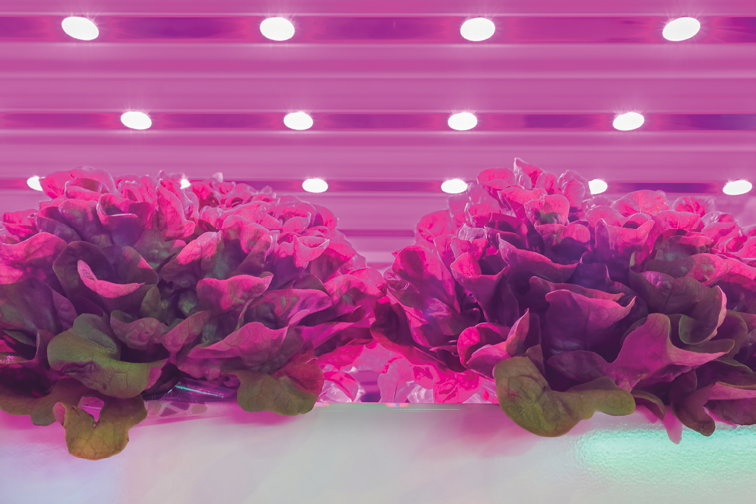
As our world faces challenges associated with population growth, climate variability and the loss of arable land and freshwater, we humans need to find new and efficient ways to grow food. Vertical farming has emerged in the past decade as one of the tools we can implement to face some of those challenges. In most cases, the vertical farm (VF) is characterized by an array of shelves stacked vertically and side-by-side, filling the volume of a warehouse-type space with lettuce greens and culinary herbs that are usually spaced tightly together. Under this configuration, a farm can grow upwards of 5 to 10 times the number of plants for a given footprint as compared to field-grown crops. Theoretically, the number of plants grown is only limited by the height of the building.
This unlimited growth potential is a lucrative proposition and has created a “sky is the limit” mentality for many prospective VF growers and developers who envision a space filled to the brim with plants. Unfortunately, this perspective has led many down an unrealistic path of ”packing them in,” considering only how much space is required between each vertical rack to fit the growing media, the lights, the full-height plant and sometimes even the arms of the automated harvesting machine. The space requirements for HVAC equipment and air circulation around the plants are often overlooked, resulting in the two most commonly identified difficulties when controlling the environment: humidity control and air movement.
Challenge No. 1:
Temperature and humidity
The first climate management challenge that vertical farmers must overcome is figuring out how much cooling, dehumidification, and heating is required to manage the temperature and humidity of the grow space. In a VF, lighting contributes the greatest source of heat, followed by motors used to operate fans, pumps, and automation. Because VFs are often well insulated and designed to operate day and night throughout the year, cooling is usually required 24/7 and year-round to remove the heat generated inside the space.
Dehumidification is also constantly required to remove the moisture added to the air via evapotranspiration (Et) from the plants and irrigation system. The rate and quantity of Et depends on several variables, including light intensity, air temperature and humidity (or vapor pressure deficit), air movement and the irrigation method. Although Et is greatest when plants are mature and the lights are on, Et does not stop when the lights go out. Plants continue to respire and give off moisture when the lights are off, and for continuously recirculating irrigation systems (e.g. NFT and aquaponics), evaporation from these systems can remain constant all day. Therefore, the size and operation of the dehumidification system should take into consideration both the maximum and minimum Et rates expected inside a VF.
Heating systems in the VF are rarely required, due to all the heat generated inside the space by lights. However, if the air conditioning (AC) system is used to both cool and dehumidify the space, then the AC system will create very cold air to remove (or condense) water out of the air. Typically, we don’t want to deliver that cold air (eg. 45° F) back to the plants, so we reheat it before sending it to the room. This is the most common use of heating in a VF.
Challenge No. 2:
Air circulation
The second biggest challenge is figuring out how to deliver the conditioned air everywhere within the vertical farm to create a (hopefully) uniform growing environment. When racks are spaced tightly together — both vertically and horizontally — it is difficult to create uniform conditions everywhere. In the horizontal direction, the plants and lights obstruct the flow of air from Point A to Point B, often resulting in temperature, humidity and airspeed differences from one end of the rack to the other. When the vertical height is very short (say 4 inches or less), this obstruction of air movement is magnified. On top of that, the air moving across the shelf is picking up heat (from lights) and moisture (from plants), causing it to become hotter and more humid along its path. Shorter vertical heights exacerbate this trend, as they limit the volume of air that can be squeezed between the rack levels, thereby restricting the amount of heat and moisture that can be absorbed and causing the air to heat up and humidify even more quickly as it travels from end to end. The result: large differences in temperature and humidity levels from Point A to Point B. And the longer the shelf, the longer the path of air and the greater the difference.
Several strategies can be applied to facilitate air movement in the VF. Many farmers employ the use of small circulating fans, installing them at incremental positions within the racking system and above the plants to help boost airflow from one end to the other. Air movement can also be enhanced by considering where conditioned air is introduced into the space and where it is then removed after loading up with heat and moisture. The type of air diffusers can also help distribute and push air into desired locations, as well as help mix cold air near the floor with warmer air near the ceiling to prevent the stack effect.
Cooling is usually required 24/7/365 in a vertical farm. Photo: Adobe Stock
Challenge No. 3:
HVAC equipment location
Space considerations aren’t limited to moving conditioned air through the racking system; they also include where to put HVAC equipment. Depending on the design, HVAC equipment can include air conditioners, dehumidifiers, circulation fans, ductwork, chillers, boilers, pumps, and pipes. Cooling and dehumidification equipment are best located outside the building, where heat and moisture can be rejected to the outdoor air. Some equipment (air conditioners, dehumidifiers, etc.) are ideally located on the roof of the building or on the ground outside and next to the room it is serving, helping to limit ductwork. Other equipment, such as chillers, need a designated area away from the building to accommodate the larger equipment. Inside the building and the VF itself, better air movement can be realized if adequate space is provided for ductwork, fans, and air delivery and mixing in general.
Conclusion
No matter what crop is grown, managing humidity control and air movement in a vertical farm is essential to plant productivity, harvesting schedules, quality control and, ultimately, profitability. Every developer, designer and dreamer would do well to include climate management as a foremost systems consideration — in line with lighting, racking, irrigation and automation — during the conceptual and facility planning stage. Only then can vertical farming rise to its full potential.
Nadia is the president and founder of Dr. Greenhouse, Inc., an agricultural and mechanical engineering firm that specializes in the design of HVAC systems for indoor plant environments.
Lead photo: Photos: Adobe Stock
Dr. Nadia Sabeh
Vertical farms Aquaponics Lettuce NFT Herbs Temperature Climate control

Malaysian Brothers Cultivate Indoor Farming
Agriculture technology firm Plant Cartridge Sdn Bhd has developed a growing kit to enable sustainable urban farming at home
Agriculture technology firm Plant Cartridge Sdn Bhd has developed a growing kit to enable sustainable urban farming at home. Now, it is utilising its knowledge for the growth of smart industry-scale farms in response to an insatiable demand for safe and sustainable food produce.
By collaborating with Cultiveat Group Sdn Bhd, another innovative agritech company, Liang and his team have been able to industrialise their humble growing kit. It is based on the simple science of hydroponics but refined and upgraded using a one-step soilless growing method.
The current venture with brothers John-Hans and John-Ian Oei of Cultiveat involves the extension of Plant Cartridge’s existing business and the former’s expertise in developing and managing industrial farms. Plant Cartridge provides the technology, which includes its highly successful growing kit — a 2ft-long covered rectangular ultraviolet-coated polyethylene tank that has holes to fit eight pods that contain select seeds and growing medium as well as a hole in the centre for irrigation purposes.
Meanwhile, Cultiveat worked on clearing the land it owns and is in the process of constructing greenhouses on a two-acre plot at the edge of Kapar, which is less than 3km from the coast of the Straits of Malacca. It already has a greenhouse on a plot of land in Klang, where it is growing 18 types of lettuce.
Read more at The Edge (Pathma Subramaniam)
Publication date: Mon 13 Jan 2020

Underground Farms Sprout in Seoul's Subway Stations
Subterranean vegetable farms are cropping up at subway stations in Seoul in a collaboration between Seoul Metro and an agricultural startup to utilize vacant spaces and diversify the subway operator's revenue sources
Consumers give thumbs up to less polluted air
KOTARO HOSOKAWA, Nikkei staff writerJ
ANUARY 14, 2020 JSTSeoul
Metro and startup Farm8 are exploring innovative methods of food production in urban areas. (Photo by Kotaro Hosokawa)
SEOUL -- Subterranean vegetable farms are cropping up at subway stations in Seoul in a collaboration between Seoul Metro and an agricultural startup to utilize vacant spaces and diversify the subway operator's revenue sources.
Seoul Metro is renting idle spaces to Farm8, a startup with about 300 employees which supplies vegetables grown indoors efficiently and safely to retailers and restaurants.Farm8 is also testing farm cafes in three stations and plans to open more outlets in the future, as well as to export longer-life vegetables, including paprika, to Japan.
Passing through a ticket gate at Sangdo Station on Line 7 of Seoul Metro in the central area of the city, passengers can see a glass-walled room filled with leafy vegetables in an underground space. Business people and families are seen relaxing at a cafe equipped with juicer-mixers and coffee machines next to Metro Farm, which opened in September last year.
As South Korea's subway stations contain large underground spaces, most transfer hubs and other big stations have commercial areas with restaurants and shops. However, locations further away from ticket gates are often left unused because they are unattractive to retailers.
Hydroponically grown vegetables at a Metro Farm in Seoul's Dongjak district.
(Photo by Kotaro Hosokawa)
Seoul Metro has been seeking tenants that will help improve the image of subway stations without additional costs as part of efforts to make use of unoccupied spaces, said Kim Seong-jin, a Seoul Metro manager. Farm8, which runs vegetable farms nationwide, grabbed Kim's attention.
Unlike with ordinary tenants, Seoul Metro signed a 10-year contract with Farm8 to cover rents and provide a fixed amount of profit. The store also provides a space next to the cafe in which children can learn about agriculture.
Some 30 types of vegetables, including varieties of lettuce, basil, and edible flowers, are grown in a cultivation room of about 200 sq. meters. The plan is to harvest 30 to 40 kg of vegetables a day on shelves of about 4 meters and sell them as ingredients for the cafe's salads, priced at 5,900 won ($5.04), and 3,000-won vegetable juice. Vegetables that are unsuitable for consumption at the cafes will be sold to outside restaurants.
Growing hydroponic vegetables under light-emitting diodes is 40 times more efficient per unit area than growing them outdoors, according to Yeo Chan-dong, assistant manager of Farm8. The company's hydroponic vegetables are gaining popularity among consumers, particularly parents, who are wary of vegetables grown outdoors because of air pollution caused by PM2.5 -- particulate matter that measures less than 2.5 micrometers in diameter -- which is seen as hazardous in South Korea.
The company will operate stores combining cultivation rooms and cafes depending on locations, including setting up salad box vending machines at subway stations in business districts. Farm8 has already started testing "smart farms" in which artificial intelligence-powered robots will plant and harvest vegetables as well as adjust water quality. It also plans to develop new types of stores so that it can reduce operation costs, and it will open two more outlets in early 2020.
There is still so much to do to improve the profitability of the subway station business, Yeo said, but Farm8 plans to open more Metro Farm stores, betting that opening "plant factories" at subway stations used by several million people per day will have a huge advertising impact. The effort is likely to draw attention as a new method of local food production for local consumption in urban areas.
New Dubai Vertical Farm Set To Start Operations In Q2 2020
Spanning an area of 50,000 sq ft, the facility will have the capacity to produce 3,500kg of high-quality fruits and vegetables on a daily basis
17 Dec 2019
Dubai Industrial City will host Badia Farms' upcoming new large-scale high-tech vertical farm
The Badia Farms facility in Dubai Industrial City is rare as it will combine fruits and vegetables on a commercial large-scale basis.
Dubai Industrial City has announced it will be home to Badia Farms’ upcoming new large-scale high-tech vertical farm.
Badia Farms, a regional AgTech leader, said the vertical farm is expected to start operations in the second quarter of 2020.
Saud Abu Al-Shawareb, managing director of Dubai Industrial City, and Omar Al Jundi, founder and CEO of Badia Farms, signed an agreement formalizing the partnership.
Spanning an area of 50,000 sq ft, the facility will have the capacity to produce 3,500kg of high-quality fruits and vegetables on a daily basis.
From Dubai Industrial City, Badia Farms will grow more than 30 varieties of fruits and vegetables sustainably, it said in a statement.
Vertical farming uses high-tech methods to produce crops in a controlled environment leveraging vertical space, without pesticides, and using fewer resources compared to traditional farming.
The Badia Farms facility in Dubai Industrial City is rare as it will combine fruits and vegetables on a commercial large-scale basis.
The signing ceremony was also attended by Dr. Thani bin Ahmed Al Zeyoudi, Minister of Climate Change and Environment, who said: “Badia Farms is an exceptional example of how the UAE’s agricultural industry can thrive while protecting our environment for future generations.
"This new high-tech vertical farm will contribute to the UAE’s commitment to becoming more sustainable. Hydroponic technology is a major contributor to agricultural sustainability and food diversity, as it improves crop production and lowers its cost. This is evident in the successful production achieved by Badia Farms in the very short time since its inception.”
Mariam bint Mohammed Saeed Hareb Almheiri, Minister of State for Food Security, added: “The UAE has set clear plans to enhance its food security, relying on an integrated ecosystem to produce and manage food – a system that employs advanced modern technologies to develop solutions to the challenges the UAE faces, most notably water scarcity and lack of arable land. Controlled-environment agriculture systems are an important solution for producing food in the UAE and the world. The UAE is now home to several vertical farms equipped with hydroponics and soilless farming technologies.”
Al Jundi said: “As founders of the first vertical farm in the region back in 2016, we are committed to innovation in the AgTech space to achieve our ultimate goal of elevating the UAE and the region from importers to exporters of fruits and vegetables.”
For all the latest tech news from the UAE and Gulf countries, follow us on Twitter and Linkedin, like us on Facebook and subscribe to our YouTube page, which is updated daily.
VERTICAL FARMING VERTICAL FARM IN DUBAI BADIA FARMS DR THANI BIN AHMED AL ZEYOUDI UAE'S MINISTER OF STATE FOR FOOD SECURITY FOOD SECURITY UAE DUBAI INDUSTRIAL CITY TECOM GROUP

SWITZERLAND: Migros Basel And Growcer Launch Joint Vertical Farming Project
Switzerland's first "Robotic Vertical Farm" is currently being built in a hall located on the Wolf site in Basel. From sowing to irrigation and harvesting, machines take over the work fully automatically
“Vertical Farming Meets The Demand
For More Sustainability And Regionality"
Together with the Migros Basel cooperative, Growcer is developing the first "Robotic Vertical Farm" in Switzerland, in order to grow regional foodstuffs there in the future, independent of weather conditions, pesticide-free and water-saving, and - thanks to the shortest transport routes - to deliver them quickly to the Migros branch. The start of production is imminent, and the first products are expected to be available exclusively in the MParc Dreispitz in the summer.
Switzerland's first "Robotic Vertical Farm" is currently being built in a hall located on the Wolf site in Basel. From sowing to irrigation and harvesting, machines take over the work fully automatically. The production chambers are sealed off from the environment, which means that production can take place all year round without soil, without any pesticides and with up to 90 percent less water.
In addition to all this, land consumption is, of course, minimal, as the cultivation beds can be stacked. This creates around 1,000m2 of cultivated area on a surface area of just 400m2. The farm can produce leafy vegetables and herbs all year round and, thanks to the immediate proximity of the sales point in the MParc Dreispitz, these can be delivered absolutely fresh within hours of being harvested.
Regionality and continuity
"Switzerland, like many countries, is dependent on imports. Via Growcer we bring regionality and continuity into it. In addition, pesticides are a problem for the population and nature, which we can solve by doing without them. With Migros Basel we have found a partner who supports our values and goals and is committed to the introduction of a new generation of sustainable products", says Marcel Florian, CEO of Growcer AG.
"Vertical farming is a trend that meets the demand for more sustainability and regionalism", says René Lori, Head of Supermarkets/Catering at Migros Basel. "The cooperation with Growcer gives us the opportunity to invest in an innovative and future-oriented project".
Year-round production
The production facility on the Wolf will be completed next spring, and the first products are expected to be available exclusively at Migros in the MParc Dreispitz in the summer. It is planned to produce further vegetables or fruit all year round at a later date and to supply other branches.
Migros Basel and Growcer are looking forward to the cooperation.
Source: Migros Basel
Publication date: Fri 17 Jan 2020

The Planty Cube is A Vertical Farming System Assembled Like LEGO Bricks
Agriculture IoT startup n.thing has developed ‘planty cube,’ an automated vertical farming system that allows users to maintain crops at any time and from anywhere. the system connects like LEGO bricks with a modular design made up of multiple capsules called pickcells that contain the seeds of each plant
jan 14, 2020
Agriculture IoT startup n.thing has developed ‘planty cube,’ an automated vertical farming system that allows users to maintain crops at any time and from anywhere. the system connects like LEGO bricks with a modular design made up of multiple capsules called pickcells that contain the seeds of each plant.

images courtesy of n.thing
to demonstrate its potential, n.thing has developed a smart hydroponic farm that uses the planty cube design. shaped like a shipping container, it is made of stacked rows and shelves of planters on each wall with each pickcell roughly two inches in width, length, and depth. after seeds are sown through their smart seed capsules, a computerized system controls the environment by monitoring plant health and adjusting the LEDs, temperature, and humidity, accordingly. the planty cube system, which uses sensors to collect data on the plants, can also be controlled via a smartphone, presenting the unique opportunity to farm remotely.
the grow system can work in a number of different settings, from an apartment to a cafeteria, and is automated enough that plants can thrive without constant human attention. the ease of use also makes it simpler for clients who want to start vertical farming businesses, to increase the size of their farm at low-costs, over longer periods of time, and in line with their individual business growth.
a number of companies are developing vertical farming concepts including LG who launched its own indoor vertical farm at CES 2020. unlike glasshouse production, which relies on sunlight, vertical farming makes use of led lighting to provide different wavelengths of light, according to crop and growth stage need. these high-tech units are being presented as the solution to many of the challenges facing traditional production methods, such as pollution and water use.

Farmshelf Takes Growers From Seed to Plate
Kitchen gardens are going high-tech as the development of smart, efficient hydroponic grow systems helps both novice and experienced growers from seed to plate
Farmshelf is A Smart, Automated Farm For Hotels,
Restaurants And Corporate Cafes
BY CORRIS LITTLE ON JANUARY 15, 2020
BROOKLYN, NY—Kitchen gardens are going high-tech as the development of smart, efficient hydroponic grow systems helps both novice and experienced growers from seed to plate. One such company is Farmshelf, based here, which builds smart indoor farms that enable people to grow leafy greens, herbs and flowering crops where they live, work and eat.
“Our bookcase-sized smart, indoor farms are small enough to fit into a restaurant and powerful enough to provide pounds of fresh produce every week. Farmshelf brings the outdoors inside and grows food two to three times faster than conventional farming,” said J.P. Kyrillos, co-founder, Farmshelf.
Farmshelf’s bookcase-style growing system was invented by Andrew Shearer, Farmshelf co-founder, and CEO. He found inspiration through his passion for food, technology, engineering, and community.
“He married his years of volunteering experience to fund education in agriculture in Nicaragua’s food-insecure communities, and professional tech experience in Silicon Valley to build a tool that allows people to grow healthful, flavorful food anywhere, any time and know its source,” said Kyrillos.
As a result, the hospitality industry has taken notice. At HX: The Hotel Experience Powered by AAHOA, Farmshelf was the winner of the Best of Show award. Farmshelf has also captured the attention of hotel chefs and high-profile New York restaurateurs like Marcus Samuelsson of Red Rooster and Jose Andres of Mercado Little Spain, who have entered into partnerships with the company.
“They find as much value in the five to six pounds of leafy greens and herbs the units produce weekly as they do the organic marketing value,” Kyrillos said. “Our partners in the hospitality space share with us that the units add beauty to whatever space they are in. We designed Farmshelf to be eye-catching, and we often see hotel guests and diners in the restaurants that house Farmshelf taking time to really look at the unit, discover what it is and admire what it provides.”
Kyrillos also noted that the chefs at the hotels where Farmshelf is stationed regularly praise the accessibility and freshness of the produce.
“We aim to shorten the distance between farm to plate—a journey that’s often hundreds or thousands of miles—and having fresh herbs and greens right at your fingertips not only allows for speedy and easy access, it provides superior freshness,” he said.
Sustainability is a key facet of the Farmshelf business.
“Farmshelf helps minimize food waste because you know exactly how much produce you are able to harvest at any time, and no food expires in transit,” he said. “Nearly 40% or more of the food we grow in the U.S. ends up in a landfill. That equates to millions of dollars and pounds of food that could have otherwise been used. It’s a solvable problem, and we’re working to lay the building blocks to address it in a scalable way. In addition, Farmshelf uses 90% less water in comparison to traditional soil growing. By enabling you to harvest just what’s needed, Farmshelf also eliminates packaging, environmental impacts from transportation, and food waste.”
Kyrillos noted that the Farmshelf leadership team has seen firsthand the devastation that a lack of access to food causes.
“At Farmshelf, we are passionate about ensuring people have access to fresh, healthful food, anywhere and anytime,” he said. “And, while we are still a young company, we are working to scale our technology so that more people can have access to food.”
Andrew Shearer Farmshelf food waste garden Gardening HX: The Hotel Experience Hydroponic J.P. Kyrillos Sustainability
US: South Dakota - Farm-In-A-Box Means Local Greens Year-Round
Missouri River Energy Services, the Electric Power Research Institute, South Dakota State University and the Children’s Museum of South Dakota are collaborating on a high-tech “farm-in-a-box” built entirely inside a specialized 40-foot container
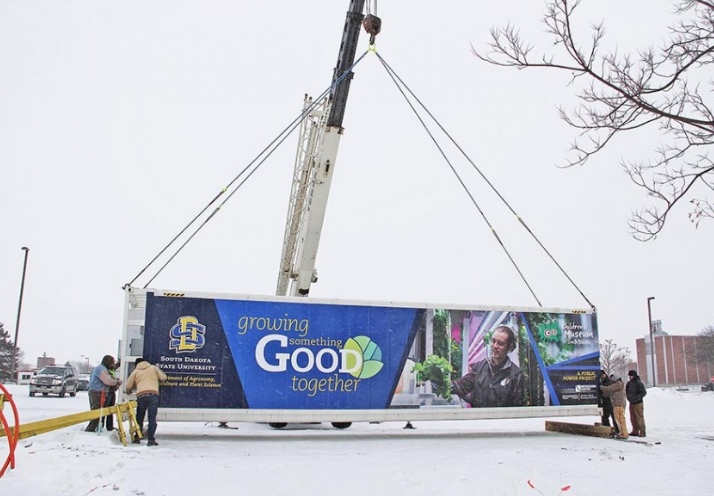
Courtesy photos: Above, a specialized 40-foot container arrives on the South Dakota State University campus Friday. Food grown in the farm-in-a-box will be donated to the Children’s Museum of South Dakota to be used in Café Coteau. Below, the food pod is set into place on the SDSU campus Jan. 10.
By: Missouri River Energy Services Jan 15, 2020
Produce grown in a container on campus to be used at Children’s Museum of South Dakota
BROOKINGS – Missouri River Energy Services, the Electric Power Research Institute, South Dakota State University and the Children’s Museum of South Dakota are collaborating on a high-tech “farm-in-a-box” built entirely inside a specialized 40-foot container.
The container was delivered and installed Friday, Jan. 10, on the SDSU campus in Brookings. It will be operated by graduate students from SDSU’s Department of Agronomy, Horticulture and Plant Science. Production is anticipated to start in the spring.
Unlike traditional farms, plants in the container are grown vertically indoors without soil, getting their nutrition from water and light energy from powerful LEDs. The result is a system that operates independently from land, climate and season. That means fresh greens can be produced locally year-round.
The first crop to be grown in the container will be Red Rosie Romaine lettuce, a variety that is both disease-resistant and tasty. The container is expected to produce up to 110 pounds of produce a week.
Food produced in the container will be donated to the museum’s Cafe Coteau, which focuses on serving locally sourced and healthy foods. Produce that is beyond the capacity of the café will be donated to local organizations with missions to reduce food insecurity in the region.
“This project aligns well with our museum values to promote sustainability and to give back to the community,” said Kate Treiber, executive director of the Children’s Museum of South Dakota. “The research could potentially provide some unique opportunities for us to share information related to sustainable agriculture to our guests as well.”
“Local indoor agriculture has the potential to significantly reduce emissions because less transportation is required,” said Joni Livingston, MRES vice president of member services and communications. Leafy greens, like those that will be growing inside the container, currently travel an average of 2,000 miles before reaching a store, added Livingston. Indoor food production also requires significantly less water and chemicals than traditional agriculture.
“As an agency serving public power utilities, such as Brookings Municipal Utilities, we are excited to be a part of an emerging market that has so many potential benefits for local communities and for society as a whole,” Livingston said.
“We are particularly excited about the opportunity this Food Pod is providing to students for research connected with the long agricultural heritage at SDSU, as well as our recent efforts in the field of precision agriculture,” said Dr. John Killefer, South Dakota Corn Endowed Dean of the SDSU College of Agriculture, Food and Environmental Sciences. “The inclusion of the Food Pod on our campus and our collaboration with the research partners means the SDSU College of Agriculture, Food and Environmental Sciences now has the ability to share agriculture in a learning environment all the way from a highly integrated production system represented by this Food Pod, to our Local Food Education Center which utilizes high tunnels, to multi-thousand-acre food-production systems that utilize no-till and conventional tillage systems in all areas of the land-grant system from teaching, to research, to outreach. Our students are having a chance to experience agriculture throughout the spectrum of these varied production systems.”
The project is co-funded by MRES and a grant from the American Public Power Association’s Demonstration of Energy & Efficiency Development program. It is part of a larger, collaborative EPRI effort involving several other indoor agriculture facilities across the country.
MRES is a not-for-profit joint-action agency that provides wholesale electricity and energy services to 61 member municipalities in the states of Iowa, Minnesota, North Dakota and South Dakota. All MRES members own and operate local electric distribution systems. For more information, go to mrenergy.com.
The Children’s Museum of South Dakota, located in Brookings, promotes learning for children of all ages and abilities through interactive, informal, hands-on exhibits and demonstrations. The museum has welcomed more than 750,000 guests from around the world who make memories while learning through play. More information is available at prairieplay.org.
Café Coteau, located in the museum, serves fresh, healthy food with a focus on local fare, and is open to the public Tuesday through Saturday, 8 a.m. to 5 p.m., and Sunday, 10 a.m. to 5 p.m.