

Welcome to iGrow News, Your Source for the World of Indoor Vertical Farming
Mucci Farms Sponsors Huron Memorial Stadium
“As we start our second harvesting season at our US Headquarters in Huron, we’ve been looking for ways to immerse ourselves into the community by helping out with some local events and projects,” said Bert Mucci, CEO of Mucci Farms
December 3rd, 2019 (Huron, Ohio) – Mucci Farms announces that they have partnered with the Huron Athletic Booster Club to finance a new turf at Huron Memorial Stadium, home of the Huron Tigers High School Football team. The $400,000 (USD) sponsorship includes an 8-year naming rights agreement which will officially rename the venue to “Mucci Field at Huron Memorial Stadium” starting in the 2020 season.
“As we start our second harvesting season at our US Headquarters in Huron, we’ve been looking for ways to immerse ourselves into the community by helping out with some local events and projects,” said Bert Mucci, CEO of Mucci Farms. “As small-town people ourselves, we know how a local sports team can bring communities together so when Andy (White) introduced us to the Boosters and they told us that the turf was past due for replacement, we thought it was a relatable way for us to give back.”
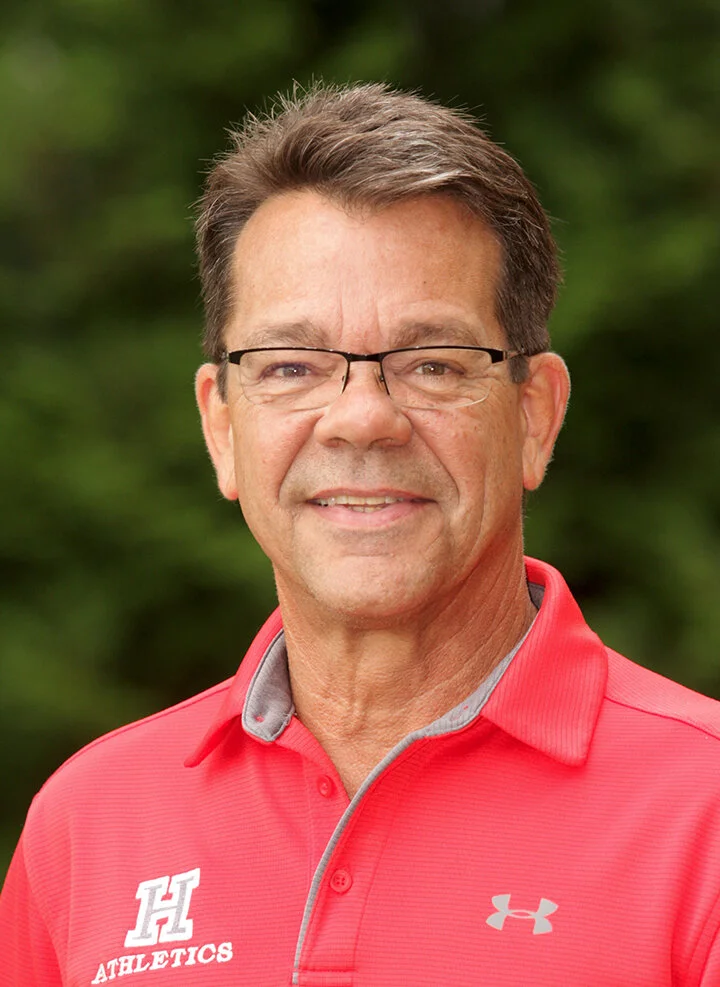


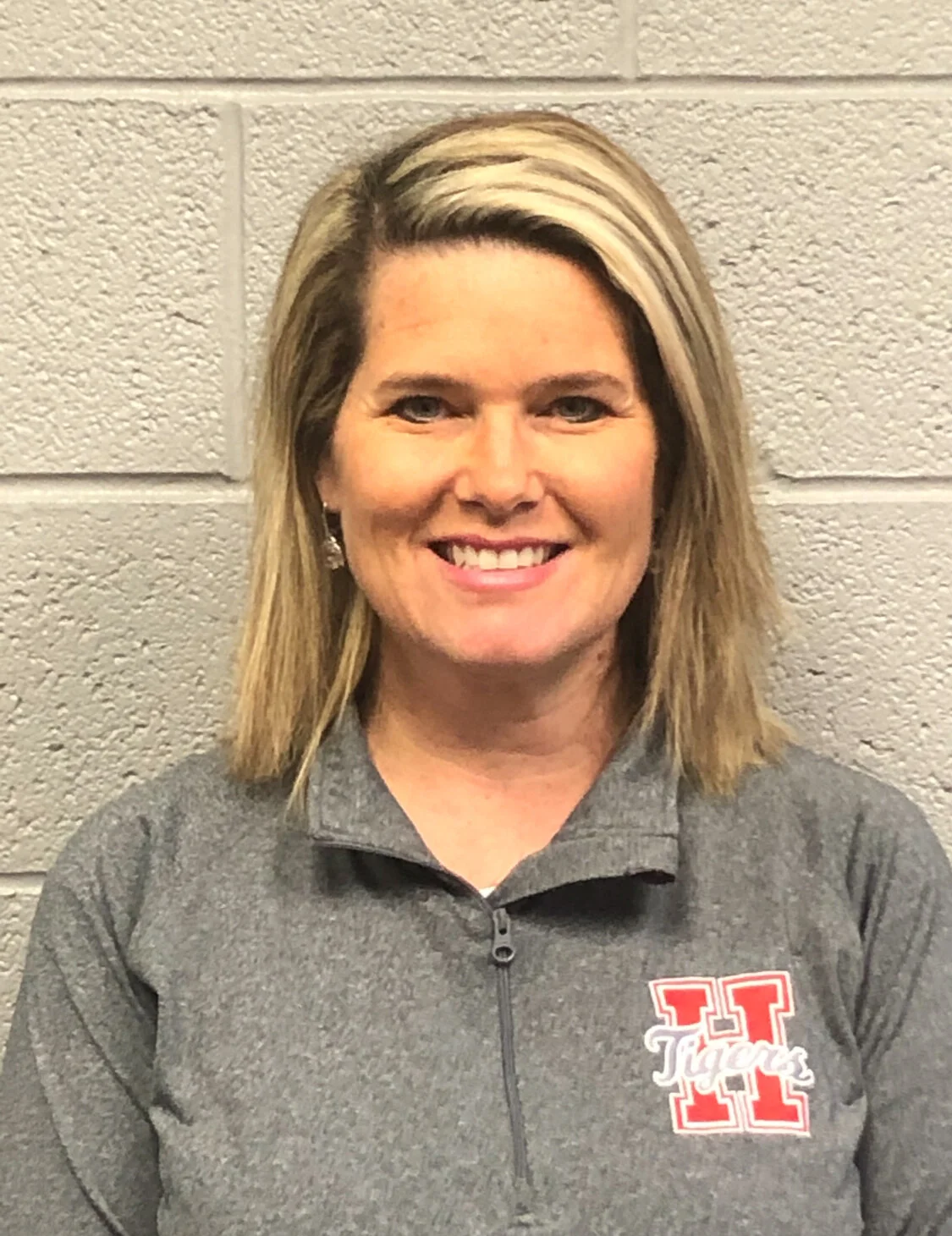

The sponsorship was made possible through an introduction of Mucci Farms to the Huron Athletic Booster Club by Huron City Manager, Andy White. “Since our first meetings with Mucci Farms in 2015 it was clear their intentions were to become a vested member of the community,” he remarked. “Working through the ongoing development of the greenhouse project, a positive, yet indirect, affect on local business and agencies is there, but this specific collaboration and investment by Mucci Farms in Huron Memorial Stadium is huge. I'm very grateful for Mucci Farms being part of our community.”
Focused on strengthening public awareness, enthusiasm, and support for various athletic programs in the community, The Huron Athletic Booster Club is a non-profit organization dedicated to student-athletes in the Huron School District. “We are thrilled to partner with a great local company in Mucci Farms. Our student-athletes, administration, booster club, & community appreciates the generosity of the entire Mucci family,” said Amy Springer, Co-Vice President of the Huron Athletic Booster Club.
“On behalf of the Huron Athletic Department I want to thank Mucci Farms for their generosity for sponsoring the turf replacement at Huron Memorial Stadium,” remarked Stephen Camella, Huron District Athletic Director. “Without Mucci's support, this project would not have been possible.” Maumee Bay Turf Co. has been contracted to install the new turf which will take roughly 20 days to complete shortly after the track season, and it will be updated with the Mucci Farms logo on the sidelines. “We’re looking forward to supporting the Tigers on the new turf with several members of Team Mucci at the home opener in the spring,” concluded Bert Mucci.
Mucci Farms is a vertically integrated greenhouse farming company with over 250 acres of tomato, pepper, cucumber, lettuce and strawberry greenhouses in Kingsville and Leamington, Ontario with aggressive expansion plans underway locally and internationally. Currently harvesting tomatoes on-the-vine from Phase 1 of their Huron, Ohio 25-acre greenhouse, the remaining 50 acres is being built in two additional phases to be completed in 2021. The entire facility is equipped with High-Pressure Sodium grow lights to allow for local production during the winter months.
For Info:
Ajit Saxena
Public Relations & Digital Marketing Manager
(519) 326-8881 Ext 2253

Premier Women In Agribusiness Event Returns To Europe In March 2020; Meet-Up on 10 December
The Women in Agribusiness (WIA) Summit Europe will return to the EU when it convenes in Paris for the 10th Summit on 9-10 March 2020 at Les Salons Hoche
PARIS, 9 December 2019 – The Women in Agribusiness (WIA) Summit Europe will return to the EU when it convenes in Paris for the 10th Summit on 9-10 March 2020 at Les Salons Hoche.
This premier day-and-a-half conference – the perfect complement to International Women’s Day on 8 March – will feature industry knowledge for executive women in the agri-food sector, providing an in-depth examination and comprehensive discussions on the outlook and shifting indicators in the industry.
Topics, presented by expert speakers, will include:
· Reducing Food Waste for European Producers
· Farming 4.0 - Ushering in the Age of Digital Agriculture
· Innovations in Agriculture
· Gene Editing in the EU
· Executive Roundtable: A Spotlight on Senior-Level Women in Ag
“What makes us different is that the Women in Agribusiness team supports women in the ag and food industry 365 days a year. While we do host a large annual event that is known for exceptional content and networking, we also support women-owned businesses, publish a quarterly magazine, post job opportunities, give scholarships to young women, host local networking Meet Ups in over 15 cities, provide leadership training and more,” said Joy O’Shaughnessy, event director, and chief operating officer of HighQuest Group, the parent company of Women in Agribusiness. “Our events are tailored to the needs that are voiced by our women in agribusiness community, as well as the companies that want to support them.”
The annual Women in Agribusiness Summit in the U.S., which started in 2012, is renowned for annually convening close to 1,000 of the country’s female agribusiness decision-makers, with 30 percent at the CEO/executive level and another 25 percent at department management level. The latest Women in Agribusiness Summit U.S. event, held in Minneapolis, Minn., in September 2019, welcomed attendees from eight countries and 43 U.S. states, with representatives from 267 companies.
Women in Agribusiness Summit Europe debuted in Barcelona, Spain, in February 2015, which was an intimate gathering praised by an executive from a food and beverage multinational company in attendance for being “a solutions-oriented event that also brought up current trends in the market” and “a uniquely-focused agricultural event for women”.
Potential attendees can learn more about the event in Paris and start networking early by attending the next WIA Meet Up, which will be held from 17:30 to 19:00 on 10 December in London at the Great Central Bar and Restaurant at the Landmark Hotel London. Attendance is free for WIA Members, and $20 for non-members. Register for the Meet Up or become a member at https://www.womeninageurope.com/events.
Learn more about the Women in Agribusiness Summit Europe at www.womeninageurope.com, or follow us at @Womeninagri, on Facebook and LinkedIn. Register for the event with a 10% discount using promo code: PARIS20.
# # #
About Women in Agribusiness
Women in Agribusiness is a business unit of HighQuest Group, a global agribusiness consulting, events and media firm, based north of Boston, Mass., USA. The Women in Agribusiness initiative took root in 2012, with the first conference held in New Orleans. WIA initiatives have grown to include the WIA Membership, WIA Demeter Award of Excellence, Scholarships, and the WIA Quarterly Journal. Learn more at www.womeninag.com.

Oasis Springs Runs A CSA In Every Season
Sarah and Chris Ward got their start in urban farming in 2016 when they purchased a Leafy Green Machine (the predecessor of the Greenery
7 QUESTIONS WITH SARAH
WARD OF OASIS SPRINGS FARMS
Sarah and Chris Ward got their start in urban farming in 2016 when they purchased a Leafy Green Machine (the predecessor of the Greenery). Although neither Sarah nor her husband Chris had experience in commercial farming, Sarah had over 17 years experience in marketing, public relations, and project management, and Chris had a background in information technology and engineering, so they decided to leverage their professional abilities and mutual love for local food by launching Oasis Springs Farm. Their mission? To provide fresh, healthy, local produce year-round to their community in southern New Hampshire through environmentally friendly practices and high tech resources. We recently spoke with Sarah about operating her container farm and her tricks for maintaining a loyal customer base.
Freight Farms (FF): What, if any was your experience with farming before becoming a Freight Farmer?
Sarah Ward (SW): We did a little hydroponic growing in our home the winter before to have fresh herbs and lettuce throughout the winter months. It was during all the research we did for our home operation that we came across the opportunity to scale up large enough to not only feed ourselves but our community as well.
Sarah's husband Chris learning how to harvest crops during Freight Farms' training camp for new farmers
FF: How did you find customers to buy your produce?
SW: This was one of the scariest parts of the business, trying to find interested people to buy it. We connected with local groups and businesses that have like-minded missions to bring good food to people. And we are always rewarding people with free lettuce and greens when they connect us with new businesses or CSA members. Over time we grew our membership to 50-60 shares a week, and usually have a waitlist too!
“ It amazes me every week how much we can grow. ”
FF: Who do you sell to and how do you do it?
Most of our greens go towards the CSA, although we do still have a few chef customers as well. Our customer base it varied: families, senior citizens, health-conscious shoppers, and locavores. We found this customer base by partnering with local businesses as pick-up points and using them as opportunities for co-marketing.
FF: What kinds of crops do you grow?
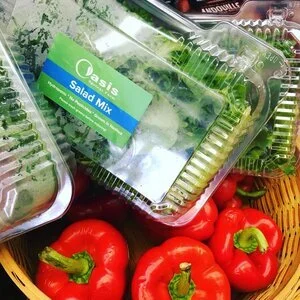
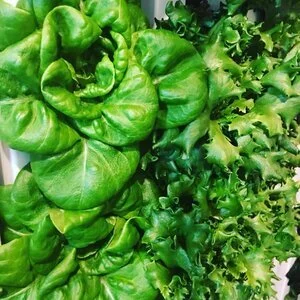
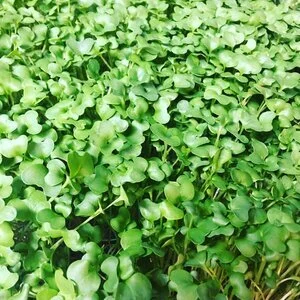
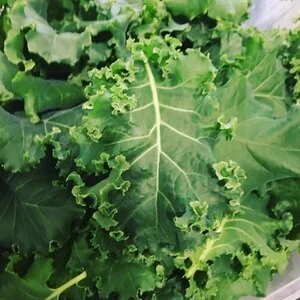
SW: At first we did a lot of experimentation, but ultimately found that we gave customers the best value when we provided them with everyday staples. Today we grow about five lettuce varieties, kale, some herbs, and microgreens.
FF: What’s the best piece of advice you can give to people interested in becoming Freight Farmers?
SW: Be flexible and patient! When we first started we wanted everything handed to us with the perfect formula for success, but we quickly learned that things change and you can’t always count on what you planned for. Be adaptable and open to new ideas.
FF: What was the most challenging part of becoming a Freight Farmer and how were you able to overcome it?
SW: Even with a Freight Farms unit, farming, in general, requires a lot of time. There have been many exhausting early mornings and late nights. Managing a full-time business and raising a family certainly has its challenges. We have worked hard over the last year to find the right work-life balance by trying to create a schedule that works for our family.
FF: What are your plans for the future?
SW: We plan to grow and continue to find new ways that this resource can benefit both us and the community that we live in. Most people are amazed that we do this from our backyard. The support has been amazing. I get called Lettuce Lady a lot.
Want to learn more about how Oasis Springs is operating a successful CSA? Register for our webinar with
Sarah on December 12th, 2019 from 12-12:30 PM EST.
In the meantime, follow Oasis Springs on Facebook and Instagram for updates from the farm!

World Intelligent Farming Summit MARCH 26-27, 2020 BERLIN | GERMANY
This event will bring together agribusiness professionals from global brands to discuss the use of AI and machine learning technologies to improve company performance in the digital era
Join us and global executives for our first annual World Intelligent Farming Summit on March 26th and 27th in Berlin, Germany 2020. The summit will focus on technological advancements and real-world applications of smart sensors, precision agriculture, vertical farming, industrial monitoring, as well as UAV and robotics applications in agriculture.
This event will bring together agribusiness professionals from global brands to discuss the use of AI and machine learning technologies to improve company performance in the digital era. Gain exceptional knowledge on the latest trends in intelligent farming and how other technologies are rapidly changing the farming and agriculture industry.
This is an invaluable 2-day opportunity to network with industry leaders and discuss all of the latest AgriTech solutions to drive your business forward. Request Your Free Brochure Today!
Please Click Here to Register or Request A Brochure
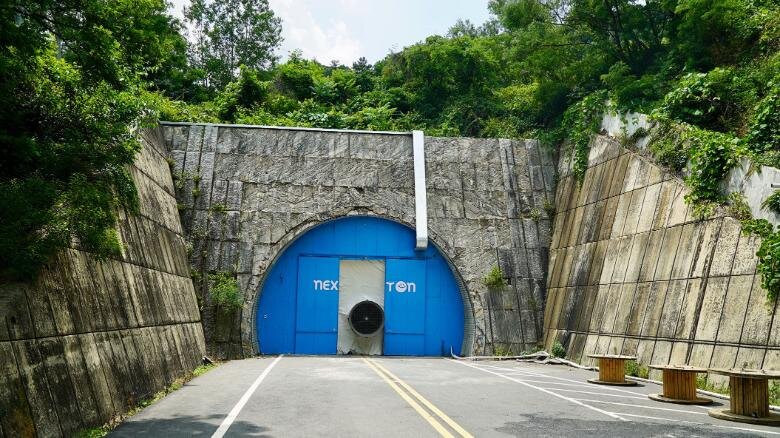
This Farm Is Growing Food Deep Beneath South Korean Mountains
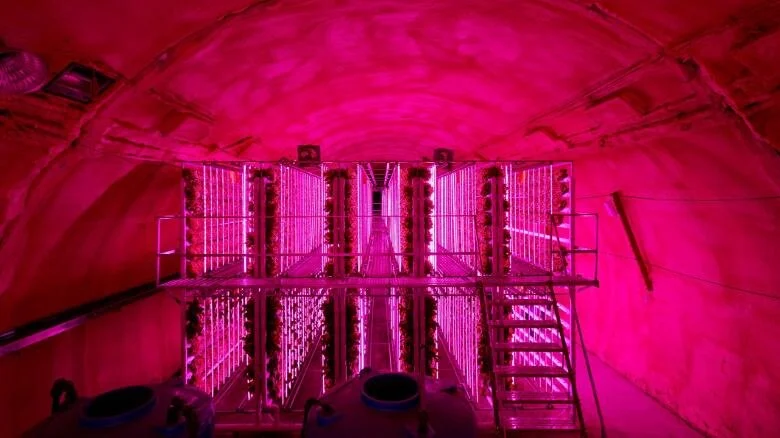
Once a functioning highway in the province of North Chungcheong, the tunnel's sharp curve was deemed dangerous, so in 2002 it was closed and a more gently curved road was constructed nearby. Now this 2,000-feet-long (600 meters) tunnel is being used to grow salads, leafy greens, and strawberries
By Temujin Doran and Katie Pisa, CNN
December 09, 2019
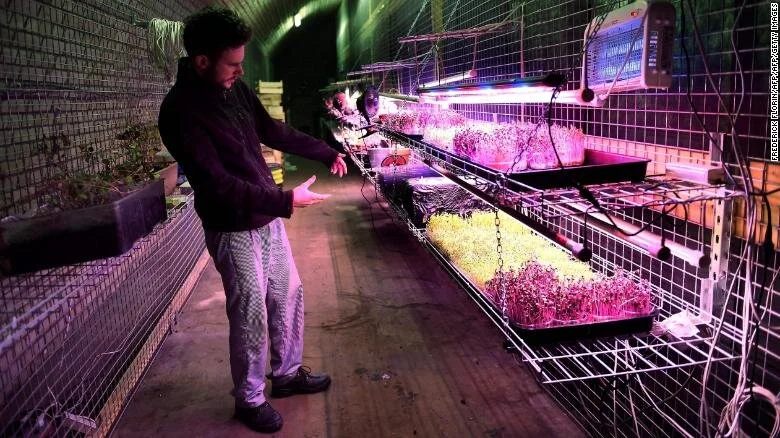
North Chungcheong, South Korea(CNN) It might seem an unlikely place to be growing fruit, but deep beneath a South Korean mountain, a high-tech farm has been built inside an abandoned tunnel.
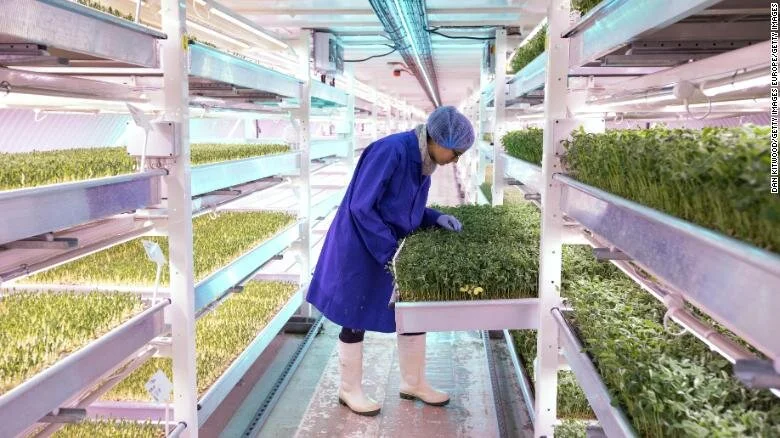
Once a functioning highway in the province of North Chungcheong, the tunnel's sharp curve was deemed dangerous, so in 2002 it was closed and a more gently curved road was constructed nearby. Now this 2,000-feet-long (600 meter) tunnel is being used to grow salads, leafy greens, and strawberries.
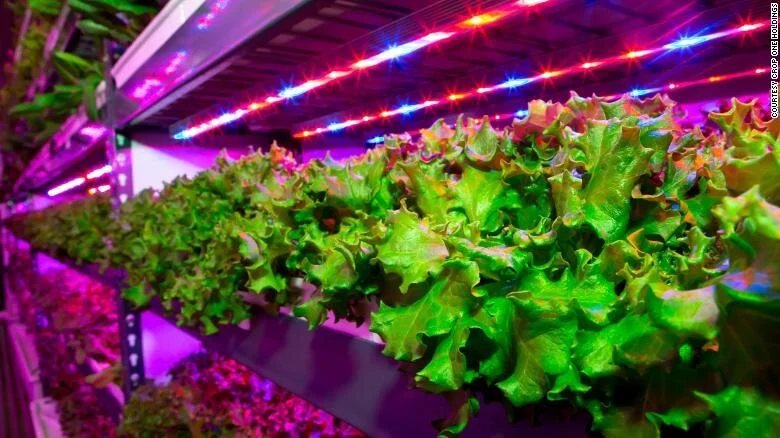
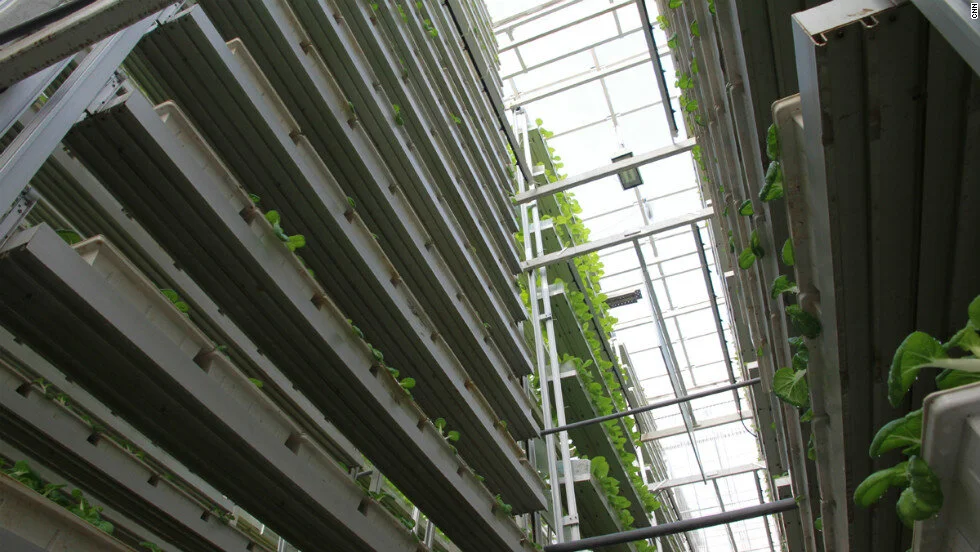
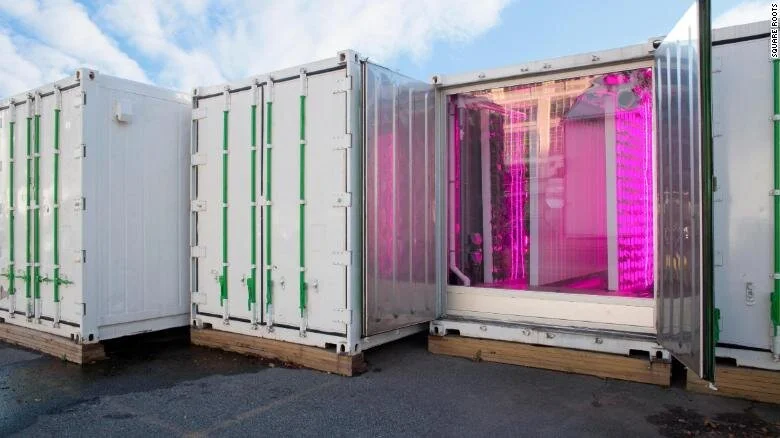
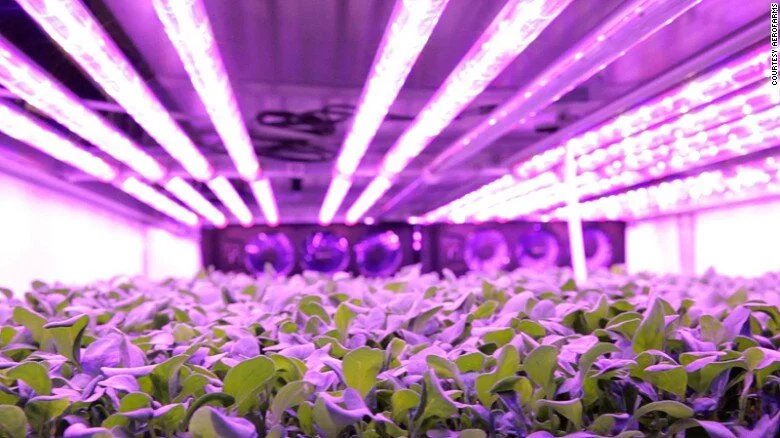
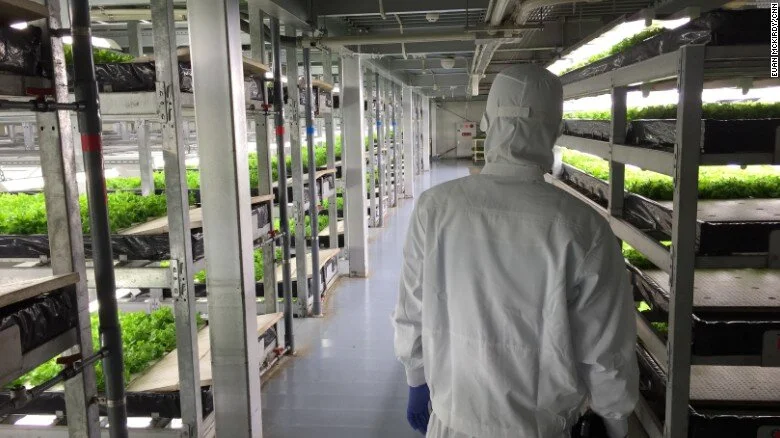
It's an example of "vertical farming" -- a method of growing food without soil or natural light, in vertically stacked beds in a controlled environment. With no natural sunlight, here, LED lights are used to grow crops all year round.
They're also what give the farm its pink glow -- they emit only the spectrum of light that plants use to photosynthesize. More unusually, the music of Beethoven and Schubert is piped into the tunnel, because it encourages the produce to grow, according to Choi Jae-bin, CEO of NextOn, the company that created the farm.
Are vertical farms the future of food?
In Dubai, a joint venture from agri-tech firm Crop One and Emirates Flight Catering plans to build the largest vertical farm in the world.


An appealing concept
With the world's populations predicted to reach 9.7 billion by 2050, and cities predicted to become more crowded, hyperproductive indoor vertical farming built-in unused spaces, or close to the consumer, has become an appealing concept.
Global warming, increasing soil erosion and water shortages are leading to declining yields in crops, but it's hoped new methods of farming can help tackle the challenge of food production.
Traditional farms can take up a huge amount of space, often requiring forests to be cleared, and the vehicles that harvest crops burn even more fossil fuels. Traditional farms also use much more water than vertical farms.
"The world's population is only going to grow but the environment is only getting worse to grow various vegetables, so I think it [vertical farms] will be the only alternative to provide healthy food to our table in the future," said Choi.
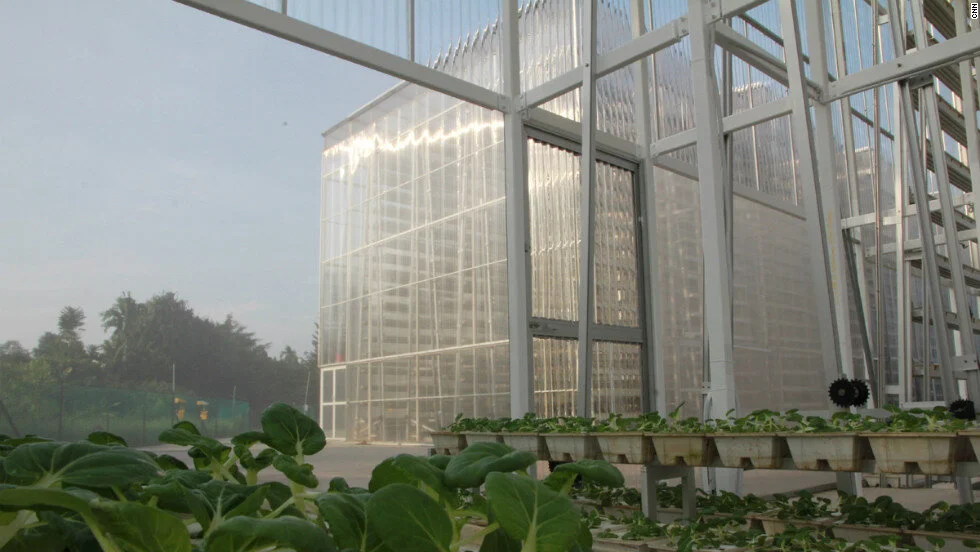
Outside the innovative tunnel farm.
Dickson Despommier -- professor emeritus of public and environmental health at Columbia University, and a pioneer of vertical farming -- agrees.
Find out more about Call to Earth and the extraordinary people working for a more sustainable future
Food derived from indoor farming is more nutritious and safer, he told CNN, as there isn't the same risk of foodborne illnesses, pollution, allergens, and pesticides. Plus, if a traditional farmer were to lose a crop they would often have to wait until the following year for a new harvest. With indoor farming, it's the next week, he said. "The long-term loss is much less."
Challenges for vertical farms
Critics say one of the biggest drawbacks of vertical farming is that maintaining a controlled environment and providing artificial light uses a lot of energy, which can mean a big carbon footprint. But that can be reduced by powering farms using renewable energy, and by increasing the efficiency of their LED lights.
Choi says his underground tunnel system has a naturally steady temperature, which means it needs less energy for cooling or heating.
Another criticism of vertical farming is that it's mostly used to produce leafy greens, rather than higher calorie vegetables or crops. But Despommier says that will change, as more people acquire the expertise to grow different foods.
He says training and education is becoming available at institutions in Rotterdam, Shanghai, and in the US. "As soon as universities catch onto this (teaching indoor farming), they can fill it up with applicants faster than you can sit down to eat dinner," said Despommier.
Other high-profile vertical farms include Berlin-based InFarm, which builds hydroponic modular systems that can be used in supermarkets. California-based Plenty claims for certain crops, it can grow 350-times as much as a field of the same size, while in June, online grocer Ocado announced that it had invested £17 million ($21.5 million) in the nascent industry.
As for NextOn, Choi says his company has plans to build many more farms using the same technology, in urban locations -- reducing the cost and carbon footprint of transporting food to shops.
"Plants easily grown at home, at nearby stores, at hamburger restaurants, or even at metro stations," said Choi. "I think the system to grow crops far away from a city and transporting it will disappear."
Let Them Eat The City, Say The Urban Farmers of Paris
From underground former car-parks to the rooftops of the famous skyline, an agricultural revolution is taking place
From underground former car-parks to the rooftops of the famous skyline, an agricultural revolution is taking place.
by Helen Massy-Beresford 5 Dec 2019
The rooftop farm on top of the Opera Bastille produces fruits and hops, tomatoes, cucumbers, salad leaves, edible flowers and more [Topager]
Paris, France - Parisian mushrooms are reclaiming their space in the dark spaces under the City of Light.
"When cars arrived in Paris in the 1930s they pushed out "champignons de Paris" (known in English as button mushrooms)," explains Jean-Noel Gertz, CEO of Cycloponics, the start-up that has transformed an abandoned car park into La Caverne, an organic underground urban farm.
Huge quantities of button mushrooms used to be grown using the manure of the city's horses, so the rise of the car led to an abrupt drop in production. But things have now come full circle.
"Now, with car use declining, Paris mushrooms are pushing out cars," says Gertz, who is testing the growing of the variety at La Caverne's existing site below the concrete near Porte de La Chapelle, with plans to launch larger-scale production in a new underground site in the city's 19th arrondissement next March.
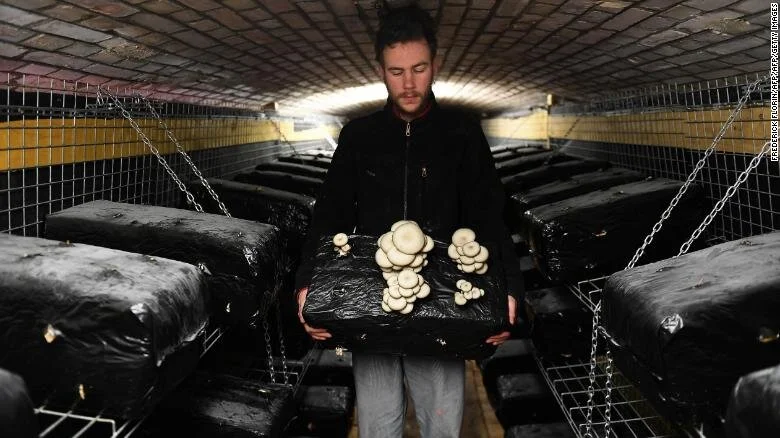
At La Caverne's existing site, under a high-rise neighbourhood in the north of Europe's most densely populated city, shiitake and oyster mushrooms sprout on rows of specially treated bales, while water trickles through huge trays of endives growing in the dark.
The produce, 100kg-200kg of mushrooms per day, is delivered by bicycle to grocery shops and restaurants.
Hundreds of kilograms are harvested each day from this abandoned underground car park and sent to local restaurants thanks to the La Caverne project [ICF La Sabliere Cycloponics]
La Caverne is part of the Parisculteurs project which city authorities launched in 2016, offering would-be city farmers abandoned urban spaces to cultivate.
In spring 2020 in the project's biggest milestone to date, a 14,000sq-metre (150,695sq-foot) rooftop urban farm - the world's largest - is due to open at the newly redeveloped Paris Expo Porte de Versailles exhibition centre, cultivating more than 30 varieties of vegetables and fruits and including allotments for local residents.
Parisculteurs' original aim was to turn 100 hectares (247 acres) green by 2020, in a bid to help cut emissions, slow the decline in biodiversity, give city dwellers access to nature and create local jobs and social links.
Those targets have already been achieved, says Penelope Komites, deputy mayor of Paris in charge of green spaces, biodiversity and urban agriculture, with more than 116 hectares (287 acres) of walls and rooftops "greened".
"When the projects from the first three seasons of Parisculteurs are at full production, they will be producing 1,650 tonnes of fruit, vegetables, mushrooms and herbs, seven tonnes of fish, 1.2 million cut flowers and 1.3 million plants per year - as well as honey, saffron, edible flowers, hops and spirulina, and 250 jobs will have been created," Komites says.
Parisculteurs has come at a time when interest among French consumers in local products is also growing.
"We're seeing a boom in organic food shops in France, particularly in Paris," says Gertz. "In Paris, 75 percent of people eat organic."
Brewery La Parisienne, which started life in the city before moving to bigger premises in the nearby suburb of Pantin, is also taking part in Parisculteurs, growing its own hops at three sites in the city, with another planned for 2022.
La Parisienne brewery uses locally produced hops to offer Parisians 'a truly Parisian beer' [Jean Baptiste Monteil]
"We wanted to be as sustainable as possible, and urban agriculture is just a part of that," says communications manager Lucas Lebrun. "The idea is to brew the most local beer possible and offer Parisians a truly Parisian beer."
La Parisienne harvested around 25kg (55lbs) of city hops this year, using them to brew Intramuros, a light seasonal beer designed to be accessible and to appeal not just to craft beer aficionados. It sold out.
An important part of the project is getting local residents as well as fans of La Parisienne involved in harvesting the hops, Lebrun says.
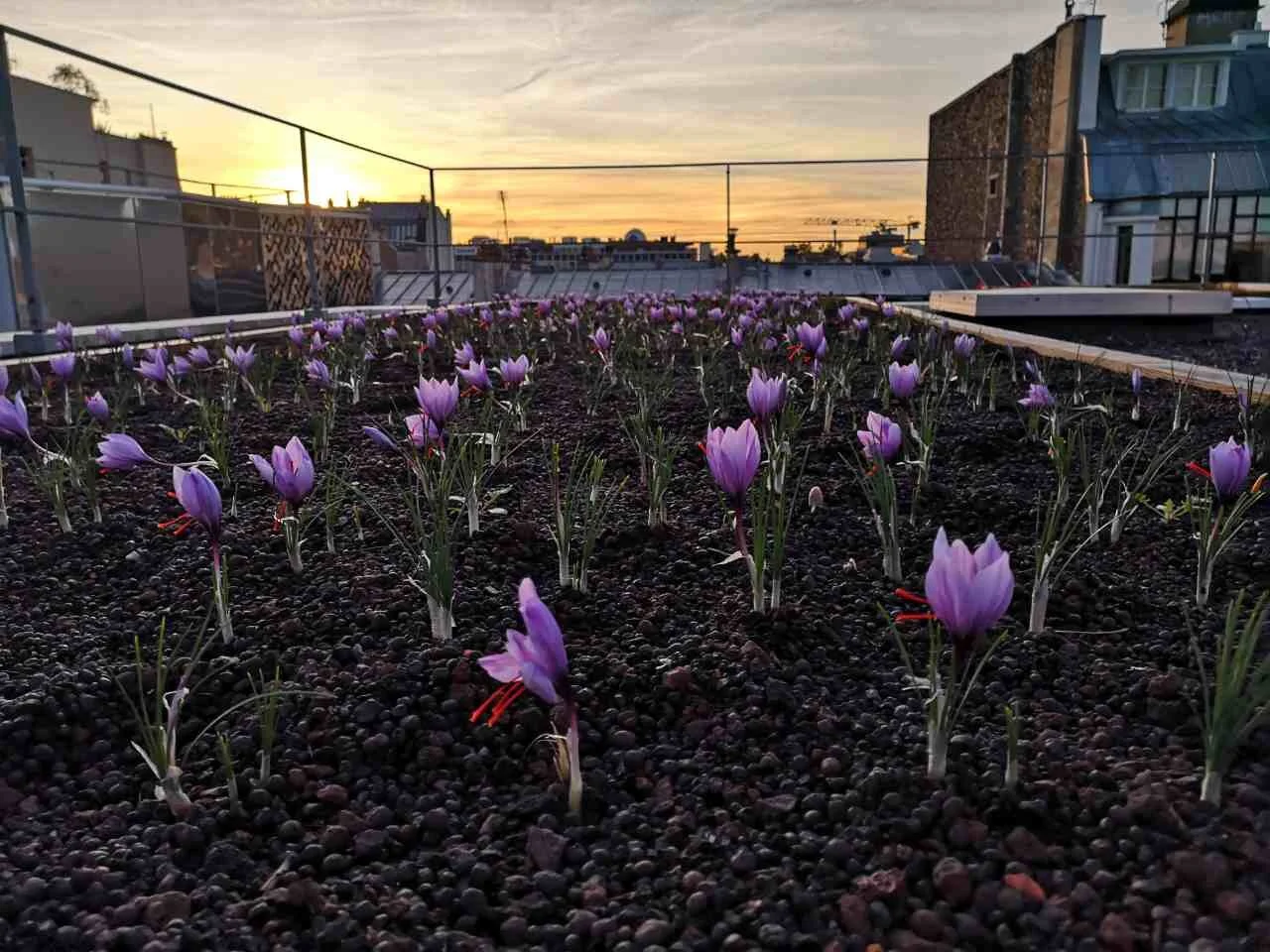
That collaborative approach is something BienElevees also wanted to capitalise on, explains Amela du Bessey, one of four sisters behind the saffron-growing start-up, which has just received the top ISO certification for its 2019 saffron.
"We're very proud of that quality. But it's the human aspect that is extraordinary," du Bessey says: around 500 people visited during this year's three-week harvest, taking part in workshops and helping with the picking and planting. "It brings people together - and that's great."
The Parisculteurs project provided the ideal opportunity for the sisters to try growing saffron, the world's most expensive spice, close to Paris' high-end food shops and Michelin-starred restaurants.
"Saffron is very happy in city conditions and the flowers have to be harvested within a day so there is no risk from air pollution," du Bessey says.
The saffron crocuses must be harvested within one day of blooming, meaning air pollution is no obstacle to city centre rooftop farming [BienElevees]
Their Parisculteurs-backed plantation is on the roof of a Monoprix supermarket in the south of the city, and there are four other Paris sites, including their first, on the roof of the Institut du Monde Arabe (Arab World Institute), in a nod to saffron's Middle Eastern origins.
Pascal Mayol, an expert ecologist at the Nicolas Hulot Foundation, an environmental NGO, and a member of the CESE, an assembly that advises the government on social, environmental and economic matters, also believes that the education and social links provided by urban agriculture may be as important as the production itself.
Re-building social links among isolated city dwellers, re-educating them on how food is grown and increasing cities' food autonomy will be vital in the face of a food production system at risk from the decline of fossil fuels in the coming decades, he says.
"Big cities risk interruptions to their food supply as early as 2050," says Mayol. "We won't be able to feed entire cities with urban agriculture - in a city like Paris, it could produce a maximum of 10 percent of what is needed. But it allows us to reconnect to the agricultural world and realise that a carrot doesn't grow in a supermarket, it grows in a field and for that to happen we need to preserve the land around cities that is used for agriculture."
Fostering a sense of community and cooperation will also help people to navigate the shift from abundance to scarcity, he believes.
La Caverne produces food deep below Porte de La Chapelle, in the north of the city [ICF La Sabliere Cycloponics]
In the shorter-term, urban agriculture projects should also help limit rising temperatures, a growing concern for Paris city authorities after the city recorded an all-time high of 42.6 degrees Celsius (109F) during a July 2019 heatwave.
"We believe that cities are going to become literally uninhabitable by the end of the century," Mayol says. "Temperatures in a city like Paris could reach 50 degrees, and that's not compatible with life as it's organised today. Greening can air-condition cities naturally."
Urban agriculture specialist Topager, the start-up behind multiple urban agriculture projects including a rooftop urban farm growing fruits and hops, tomatoes, cucumbers, salad leaves, edible flowers and more on top of the Bastille opera house also sees urban agriculture as a tool for introducing ecological awareness to city dwellers.
"We think ecology is more efficient with a carrot than a stick, and instead of endless rules, urban agriculture projects that create a desire to favour local production will push people to change their behaviour," says Frederic Madre, co-founder of Topager. "It's utopian to think we will feed cities entirely with local production but it's good to create better links between people and for city dwellers to be better connected with nature."
Parisculteurs is just part of an ongoing drive to make the French capital greener, with more underused spaces set to be transformed into gardens, farms and vineyards as part of broader infrastructure projects in the coming years.
"I think Parisculteurs has demonstrated that cities can have a role as production sites that complement those in rural and peri-urban areas," Komites says. "We are not aiming to be self-sufficient, but we want to raise awareness among Parisians that we need to eat local and seasonal products."
SOURCE: AL JAZEERA NEWS
Have your say.Give us feedback.
What Does Certified Organic Mean
In the U.S., Certified Organic isn’t what it used to be. Organic certification used to be dealt with on a state-by-state (or certifier-by-certifier) basis. The basic concept was common to all, but depending on where a farm was seeking certification, rules could be somewhat different

BY LEAH SMITH
A friend told me how upset she was to discover that when she buys Certified Organic foods, the quality (or authenticity) isn’t always the same as our (no longer Certified) product. In essence, I told her that not all organics are created equal due to variables at many levels.
Farms are as individualized as people. In the arena of natural farming systems, people’s personal beliefs influence how operations are run. Some farmers avoid the use of plastic mulch, greenhouses and plug trays in their system because they wish to use as little plastic as possible on principle.
Although all organic growers seek to reduce reliance on fossil fuels, some practice a complete avoidance, using no-till practices and relying on hand tools. While open-pollinated and heirloom plant varieties have a place in almost all gardens, some choose to limit themselves to such varieties exclusively, while others may include some hybrids.
A final example of differing opinions in the organic ranks is the paper pot debate. Over the past year, their acceptability has been questioned. The paper pots (produced by Small Farm Works) are made out of recycled, biodegradable paper, but are held together by a synthetic binder, a polymer. Although their use was scheduled to be prohibited beginning in 2019, it may be permitted in cases where growers feel they need them. However, some growers will not use them no matter the official ruling. All of these options are within the limits of “Certified Organic.”
BIG BUSINESS
In the U.S., Certified Organic isn’t what it used to be. Organic certification used to be dealt with on a state-by-state (or certifier-by-certifier) basis. The basic concept was common to all, but depending on where a farm was seeking certification, rules could be somewhat different. Due to possible difficulties in transporting product across state lines or using it in processed foods destined for anywhere, standardization is given as the reason for the creation of the U.S. Department of Agriculture-sanctioned set of rules that are uniform across the country.
Some suspect the rules were developed to offer an advantage to larger industrial farms. Suspicions seem to have been confirmed. Organic mega-farms, previously unheard of, are now prevalent. We now see huge “organic” monocultures, factory farms milking 10,000-20,000 head and organic eggs and poultry coming out of confinement operations and organic CAFOs.
UNRULY BEHAVIOR
Even with rules in place, wiggle room seems to allow for un-organic behavior. In factory milking operations, conventional cattle can be continuously “transitioned” to organic production when the operations do not raise their own calves for milk production. Instead, they purchase cheaper, conventional cattle raised on medicated milk replacer, which commonly includes antibiotics and other banned substances. Once weaned, these calves are fed GMO grains and non-organic hay. Approximately one year before freshening, they are switched to organic practices. This is despite there being Origin of Livestock Standards in place. And this is not the only setback for true organic animal husbandry. The removal of the Organic Livestock and Poultry Practices — which outlined rules for the living conditions/care, transportation, and slaughtering of Certified Organic animals — means, for example, that organic poultry no longer require access to the outdoors. This would have seemed fairly elemental at one time.
Another strongly protested amendment to the National Organic Program that recently came to pass is the use of hydroponics. Growth in isolation in massive hydroponic operations means no enhancing of the natural environment through soil building, carbon sequestering or other elements held dear by many in organic agriculture. In fact, as of 2021, the European Union will no longer accept produce labeled “organic” that has been produced hydroponically. However, European hydroponic producers who use approved organic inputs will still be able to export their produce to the U.S. labeled as organic.
This all spells incredible competition and extreme disadvantages for small-scale organic operations whose certification, in theory, has the same weight as that of “big organic.”
THE CERTIFIER’S SAY-SO
Are all of these seemingly incongruous “organic” practices really permissible according to the certification rules? Maybe yes, maybe no. Not all organic certifiers have the same motives, values or aims. In some cases, multi-million-dollar business enterprises (the certifiers) are now certifying multi-billion-dollar corporate agribusinesses (the farms). And the USDA has allowed the interpretation of organic regulations to be left to the certifier, some of whom are very understanding about the difficulties of maintaining an organic operation on such a large scale.
The Cornucopia Institute, an agricultural watchdog, will soon put out another of its “report and scorecard” assessments — this time concerning organic certifiers. They aim to tell us which organizations are certifying operations that are authentically organic and which are giving true organic farmers unfair competition (and organic consumers essentially fraudulent products) by certifying agribusiness operations and enabling them to possess the Certified Organic label.
Additionally, the Organic Farmers Association (OFA, membership of Certified Organic farmers only) and the National Organic Coalition (NOC) are both voicing the concerns, on a national level, of those involved in organic agriculture — concerns ranging from organic integrity to the ability of farmers to maintain their livelihoods. And the Real Organic Project, whose mission is to inform the public on true organic farming values and practices, is working to create an add-on label for Certified Organic to help with transparency.
DIFFERENT CERTIFICATIONS
These days, there is an ever-growing number of certification programs available to farmers. With a seal of certification, your customers can know at once what your brand of farming stands for. But first, you must know: What are the standards, values, and requirements of the principle “natural” farming systems out there today that offer certification?
USDA National Organic Program (Certified Organic)
For a farm operation to be Certified Organic, it must avoid synthetic chemical inputs (such as synthetic fertilizers and synthetic pesticides), sewage sludge as a fertilizer and genetically modified (GMO) seed. Farmland must have been free of these synthetic chemicals for (generally) three years prior to certification.
There are a number of practices advocated in organic farming, including crop rotation and the accompanying use of farm maps, the use of cover crops and green manures, intercropping and companion planting, management that decreases the use of and dependence on fossil fuels, the fostering of natural predators to control insect populations, and more. Soil and water quality have always been important in organic agriculture, and its practitioners stress soil-building practices, erosion prevention, and well-timed fertilization.
There has also been an increasing emphasis on carbon sequestration and the farming practices that encourage this, especially since 2000, as these mechanisms are becoming better understood. Beyond crop production, the care of livestock is also clearly defined regarding housing space, appropriate feed and the avoidance of antibiotics and growth agents, among other things. Yearly certification renewal and farm visits are part of the certification. It is a third-party certification system and certification rates are sufficiently high to maintain such a system.
Many believe that the ethos of organics has changed and continues to change since the establishment of the NOP/NOSB. There have been attempts to water down the rules of organics from the very beginning of the NOP. Some attempts have been successfully rejected, such as the inclusion of “the Big Three” in Certified Organic farming practices — GMOs, sewage sludge and irradiation, which were included in the standards published in 1997.
Other truly non-organic practices that are now permitted in Certified Organic operations are the use of hydroponics (not much soil building or carbon sequestering happening there) and the removal of the Organic Livestock and Poultry Practices (OLPP) from the rules for organic certification. The OLPP outlined rules for the living conditions/care, transportation and slaughter of Certified Organic animals. For example, they specified that organic poultry must have access to the outdoors.
Certified Naturally Grown
The Certified Naturally Grown (CNG) program was founded in 2002 in response to the creation of the NOP. It is very much a grassroots program; its creation was due to dissatisfaction with the appropriation of the Certified Organic label by the USDA. CNG certification is sought by a number of farmers who previously had been Certified Organic. The CNG program offers a growing system with production standards based on the NOP standards but with simpler, less costly administration (and that old, holistic feel). It is especially attractive to farmers who sell locally and focus on direct-to-consumer sales. Yearly inspections for certification can be conducted by CNG or non-CNG farmers, extension agents, master gardeners or even customers (though other CNG farmers are considered ideal). This program certifies produce and livestock operations, as well as apiaries, and CNG farms are subject to random pesticide residue testing.
Regenerative Organic Certified (ROC)
Regenerative Organic agriculture is what one might call uber-organics. While many of the natural farming practices hope to work with nature or employ some of nature’s tactics in farming, Regenerative Organics designs its systems to mimic nature heavily. It aims to improve the resources it relies on (soil, water, air) rather than to deplete them. Increasing soil fertility and farm biodiversity (with an increase in the reliance on perennials over annuals), as well as seed and crop vitality, are among the objectives. It seeks to keep farming and farming solutions low-cost.
However, Regenerative Organics really stands apart from other certifications in that it seems to be equally about food production and carbon sequestration; it aims to reverse climate change by transforming agriculture into a carbon sink instead of a source of carbon in the environment. Regenerative Organics is often seen as borrowing from/integrating agroecology, agroforestry, permaculture, holistic management, and other ecological agriculture practices.
The term “Regenerative Organic agriculture” was coined by Robert Rodale in the ’80s, and the Rodale Institute (headquartered in Pennsylvania) is known as a pioneer of regenerative practices. There are many other organizations at its forefront, including Kiss the Ground (California), the Ecological Farming Association (EcoFarm, California), the Land Institute (Kansas), and the Soil Foodweb Institute (Australia), to name a few, as well as many advocates, including Dan Kittredge of the Bionutrient Food Association (Massachusetts) and Mark Shepard of New Forest Farms (Wisconsin).
A certification program for Regenerative Organics was introduced in 2018. Its “three pillars” for certifiable systems are soil health, animal welfare and social fairness. The USDA Certified Organic Standard is the baseline for the certification standards; additionally, it is required that those seeking certification first work with various existing certifiers in the arena of all three pillars. Then, once ROC-specific guidelines for each pillar are also met, farms are eligible for ROC Bronze, Silver or Gold certification. ROC is overseen by the Regenerative Organic Alliance.
Demeter Biodynamic Certification (Demeter USA)
Demeter USA is the only certifier for biodynamic farms/products in the United States, with produce labeled simply “Biodynamic” or “Demeter.” It is part of Demeter International, which was formed in 1928 and is the oldest ecological certification organization in the world. It requires all of its members to follow NOP standards, but has additional qualifications that make its program much more extensive and stringent. Demeter Certification has stricter requirements regarding imported fertility on farms; a greater emphasis for on-farm solutions of disease, pest, and weed problems; and also has more stringent requirements regarding on-farm water conservation and biodiversity. Biodynamics has always stressed the importance of local food production and distribution systems. Regarding animal breeds and plant varieties, it demands greater use of traditional strains and the development of regional types. Other hallmarks of biodynamic farming are the use of an astrological sowing/planting calendar and specific herbal and mineral additives for compost and field preparations.
Fair for Life Certified (Fair Trade Certified by IMO)
In the past, Fair Trade certification was available only to farmers in certain geographic locations and for limited farm products; no U.S. grower would have been eligible for certification. This changed with the creation of the Fair for Life Certified program, conducted by the Institute for Marketecology (IMO). Developed in 2006, it expanded the Fair Trade system to include a greater number of products for certification, production types, and countries. It is concerned with domestic and regional trade.
Unlike traditional Fair Trade systems, the IMO Fair Trade system believes that even in “developed countries” there can be labor laws that offer only limited protection to farmworkers, that institutional and governmental support to maintain local agriculture/industry may be unbalanced or insufficient, and that some marginalized communities may need support in the face of concentration and internationalization. In other words, farmers within any country may be at a socio-economic disadvantage. IMO (founded in 1989) joined with Ecocert Organic Certifiers of France in 1991. “Fair for Life” works through cooperatives and develops community betterment projects as part of their system (trademarks of Fair Trade).
Furthermore, IMO places particular emphasis on organic production, making their partnership with Ecocert all the more significant. Though they do accept and begin certification with all systems of production, their yearly improvements and recommendations are to continually move all non-organic producers towards organics.
Non-GMO Project Verified
Non-GMO Project verification is just as simple as it sounds. Products labeled as such do not contain genetically modified organisms. This means they do not contain plants whose genetic makeup could not occur naturally. Genetically modified organisms (GMOs) have a genetic code that has had some amount of DNA inserted into it that could not occur there by normal plant reproductive means (a combination of genes that could not occur in nature). In addition to processed products, farmers can have produce certified, as well as animal products such as eggs and meat, which would be a certification of non-GMO feed. It provides third-party verification, of course.
Leah Smith works on Nodding Thistle, her family’s organic farm in mid-Michigan. After graduating from Michigan State University, she returned to the farm to continue with the farming life and to devote time to writing.
About Eco Farming Daily
EcoFarmingDaily.com is the world’s most useful farming, ranching, and growing website. Built and managed by the team at Acres U.S.A., the Voice of Eco-Agriculture, all our how-to information is written by research authors, livestock professionals, and world-renowned growers. Join our community of thousands using this information to build their own profitable, ecological growing systems.
Eco Farming Daily is a publication of Acres U.S.A

Indoor Farming Comes of Age – And it’s Commercial
The company, Sprout Stack, which won the business leadership category at last week’s Green Globe awards, is using abandoned shipping containers to grow chemical-free vegetables in a hydroponic system that is 95 percent more water-efficient than traditional farming and uses 80 percent less fertilizer
Poppy Johnston
3 December 2019
There’s a few ambitious Australian outfits spruiking the benefits of indoor hydronic farming but one company says theirs is the first to do it on a commercial scale.
The company, Sprout Stack, which won the business leadership category at last week’s Green Globe awards, is using abandoned shipping containers to grow chemical-free vegetables in a hydroponic system that is 95 percent more water-efficient than traditional farming and uses 80 percent less fertilizer.
It also uses solar energy where possible to power its operations.
Vegetables are grown under controlled conditions, harvested within one to four weeks, and delivered straight to grocery stores to be sold.
At the moment, the company is selling its product to retailers such as Harris Farm and Harbord Growers Market.
The company is growing its hydroponic vegetables at its indoor farm in Brookvale on Sydney’s northern beaches with a team of about 15. Chief executive officer Hugh McGilligan says scaling up operations is next on the agenda but the company is still working on a blueprint to show investors how it will do this.
Asia next?
The company is currently backed by one “patient” private investor but it will be looking for other investors as it progresses to its next stage of growth.
Eventually, it sees itself expanding internationally with investors from Asia taking an interest in the company. McGilligan says this could still be a while off and the plan is to grow in Australia first.
How it all started
The Sydney-based startup, founded by an agronomist and an electrical engineer, started out with a vision to bring leafy greens to rural communities where fresh produce is hard to come by.
The idea was to create a distributed network of the shipping container farms where there’s plenty of sun for solar power but limited water for irrigation.
The vision has since evolved but its potential is certainly biggest in water-poor and inclement environments, as well as areas with limited land resources.
Starting in 2016, the founders spent about 18 months getting the production right. McGilligan says this was no walk in the park.
“It’s actually quite hard to grow vegetables indoors.”
How the farms work
Not only are the shipping containers portable but the perfect environments for controlled indoor farming, McGilligan told The Fifth Estate.
Shipping container are stripped and fitted out with multiple stacks of trays for growing seedlings, which are filled with a coconut husk byproduct from commercial coconut production. McGilligan says it has no nutritional value but it provides a structure for plant roots to grow.
There are LED lights above each tray and a pump system that floods the trays with a hydroponic solution between one and four times a day.
McGilligan says the tricky part is getting the “growth algorithm” right for each plant – that is, the right temperature, nutrients, light, and CO2 quantity. These formulas are the company’s proprietary information.
The end result is a nearly closed-loop system, even reusing waste material as a medium for growing mushrooms.
Sitting behind the hardware is a technology stack that controls the farms’ systems automatically. In the future, the plan is to leverage machine learning so that the farms can adjust the conditions automatically according to how well the plants are growing – adding a little more water or lowering the temperature as necessary.
The farms can grow “pretty much anything” – strawberries, herbs, kale – but at this stage, the focus has been on leafy greens because the fast growth makes them more economically viable.
It’s not a perfect figure but McGilligan says the farms are capable of outputting an equivalent of about one hectare of traditional farmland.
This is made possible by stacking the hydronic beds. McGilligan says each container produces several thousand units of produce at one time.
People are ready for urban farming
The response to the company’s system has been “universally positive”. McGilligan suspects this is because people are starting to think more about the provenance of their food.
Part of the company’s mission is to bring people closer to the means of production – something that he believes we’re missing in the modern world.
“What we are combating is the disconnect between food and the means of food production.”
Nutritional value of fresh produce “falls off a cliff” during the week it takes to get from harvest to stores
Indoor hydroponic farming under LED lights is big overseas but in its infancy in Australia, but with our cities set to swell in the coming decades, McGilligan says we’ll have no choice but to rethink how we produce fresh food.
He says existing agriculture systems are already “pretty strained” with the situation expected to worsen as populations grow.
With normal agriculture systems, it takes a week to get produce from paddock to plate. But with indoor farming techniques, it’s possible to harvest one day and deliver fresh produce the next morning.
Not only does this lighten the carbon footprint of transporting goods around, this fast turnaround means more nutritious and tasty produce.
McGilligan says the nutritional value of fresh produce “falls off a cliff” during the week it takes to get from harvest to stores. He claims the company’s product is around 50 percent more nutritious than traditional produce.
Much of the flavour disappears during the week-long journey, he adds.
Sprout Stack chief executive officer Hugh McGilligan
He doesn’t see the company’s methods as a replacement for traditional farming but a complementary source of production.
Triple bottom line sustainability
The company is committed to triple bottom line sustainability, with profitability expected to come with scale.
The company is also committed to bringing the community along for the ride through a school education program and employing staff from disadvantaged backgrounds.
He says the energy use is still “quite high” and “not where we want it to be” but the plan is to leverage solar power as part of its expansion.
Tags: hydroponics, indoor farming, urban farming Tweet
Comments
2 Responses to “Indoor farming comes of age – and it’s commercial”
Frank says:
I thought this was the way most green vegs in Singapore and such places were now grown.
I liked an article I saw couple years ago suggesting that Japanese Toshiba company was gearing up to be a complete provider of all the technology for indoor vertical farming – computer-controlled hydroponics, HVAC, LED grow lights – the whole shebang.
As for first folks doing indoors – I’ve seen pix of Spain where most fresh vegs for the UK were grown (at least before Brexit) – from the air all you see are white plastic covered hectares – presumably containing hydroponic vegs growing.
Woof says:
Elon Musk’s brother surprised you didn’t mention him
Leave a Reply
Your email address will not be published. Required fields are marked *
Local Produce for the Masses | The Kalera Vision
The Kalera Vision: Affordable Local Produce For the Masses
The Golden Question: “What’s the price?”
“We don’t want to be exclusive or elitist. We want to deliver fresh & local lettuce at a price where people don’t have to break the bank to buy it.”

Kalera’s CEO, Mr. Daniel Malechuk
Such is the vision painted by Kalera’s new CEO, Mr. Daniel Malechuk, in his exclusive interview with iGrow News.
Mr. Malechuk went further, expounding a vision of food production coming full circle. He spoke of a technological evolution that has enabled humans to enjoy avocados in Michigan, or more generally, to consume massive amounts of food thousands of miles away from where it was produced.
The technology of today however is enabling the return of a simpler, time-tested model. Tersely put: local farms are making a return.
Mr. Malechuk spoke further on Kalera’s undergoing transition. In their past, they helped build the beautiful HyCube at the Orlando World Center Marriott, — in the future he sees the company perfecting their own production processes in their new state of the art facility. His goal: local produce at a price affordable to the masses.
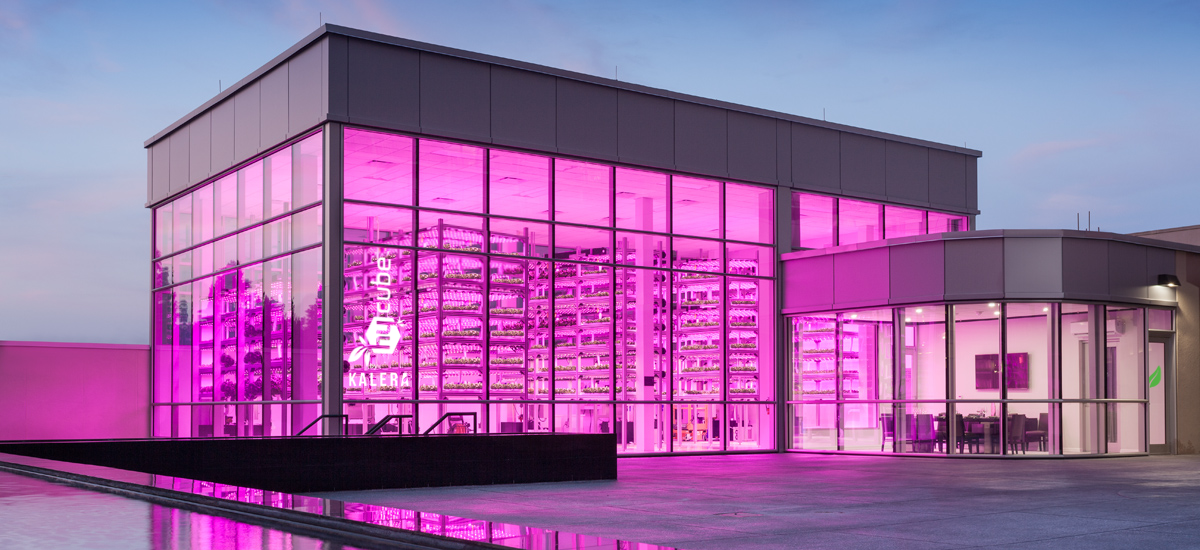
Kalera’s Beautiful Indoor Vertical Farm at the Orlando World Center Marriott
An iGrow News Exclusive
Written by Spencer Hoff
Entrepreneurs And Government Are Teaming Up to Boost Food Security in The United Arab Emirates — And Beyond
Tucked away in Masdar City, a quiet planned neighborhood in the emirate of Abu Dhabi that combines earth-tone Arabic architecture with wind turbines and other innovative technology is a cluster of container-style buildings
Tucked away in Masdar City, a quiet planned neighborhood in the emirate of Abu Dhabi that combines earth-tone Arabic architecture with wind turbines and other innovative technology is a cluster of container-style buildings.
These containers are the site of Madar Farms, co-founded by Abdulaziz Al Mulla, a Kuwaiti entrepreneur based in the United Arab Emirates. Al Mulla began getting interested in food security while at the management consulting firm McKinsey & Co., where he worked with several of the region’s governments addressing a variety of national risk challenges. He left McKinsey after one particular project introduced him to the national security threats food and water challenges will bring to the region. He decided he wanted to do something about it, and ended up purchasing old shipping containers and transforming them into these indoor farms as a way to increase local food production. Today lettuce, basil, kale, and other leafy greens grow without soil in trays that sit under red and blue LED lights, stacked in levels much like floors in a building.
"I was overwhelmed by the numbers: less than 5 percent of land in the Arabian Gulf is arable farmland (PDF). Despite this, over 80 percent of water use in our drier climate is used for agriculture. If we keep going at the same pace, we will deplete a significant amount of our natural resources in the next 50 years," says Al Mulla. "This didn’t make sense to me, and I knew there had to be a better way. A week after this project, I resigned and began Madar Farms."
This approach to indoor agriculture, known as vertical farming, has been gaining popularity in many parts of the world — the business consulting firm Grand View Research, Inc., estimates the global market will reach $9.96 billion by 2025 — but is still an emerging concept in the Middle East. Madar Farms — along with many other innovations attempting to lead to sustainable agriculture in the region — represents the humble beginnings of a new bid the UAE is taking on to end food shortage globally.
With increasing uncertainty around food production in the face of climate change and global political instability, the Middle Eastern country is looking to take on more of its own food production.
Homegrown
Although the UAE currently is not short on food, its harsh climate and limited supplies of water and arable land offer little opportunity for agriculture, and over 80 percent of its food is imported. With increasing uncertainty around food production in the face of climate change and global political instability, the Middle Eastern country is looking to take on more of its own food production.
In November 2018, UAE minister for food security Mariam Al Mheiri launched a national food security strategy that aims to implement resilient agricultural practices that increase productivity and production. This primarily involves increasing investment in research and development of agriculture technologies and facilitating a market that supports agribusinesses.
Hina Kamal, a UAE-based food and nutrition researcher at United Arab Emirates University, explains that much of the focus is on boosting the use of agricultural technology required in both indoor and outdoor farming to increase homegrown produce. Kamal has been studying which produce is best suited for growth in UAE’s climate.
While Madar Farms is one of the first companies capitalizing on this interest, it isn’t the only one catching onto the trend. A growing number of companies, including more traditional outdoor farms, see similar opportunities.
Fruit farms in Abu Dhabi, UAE’s oil-rich capital, and Ras Al Khaimah, another emirate, for example, already have started testing and implementing drones to map farming areas that supply farmers as well as farming researchers with images, from bird’s-eye views of the fields to up-close images of individual plants. According to Fatima Al Hantoubi, head of environmental protection and natural reserves at Dibba Al Fujairah Municipality, a few organic farms in Ras Al Khaimah have started using sensors and artificial intelligence to improve seed selection, determine the amount of fertilizer needed for specific crops in specific soils and detect early signs of diseases.
In the Khor Fakkan area, meanwhile, the Ministry of Climate Change and the Environment has installed artificial caves in the Persian Gulf. The hope is to further contribute to food security by boosting fish stocks and promote sustainable fish farming.
Al Hantoubi explains that the caves were built out of eco-friendly materials and then placed along a stretch of the coast using cranes.
The initiative also includes the establishment of coral gardens over 9,100 square feet along the coast to help rehabilitate natural marine ecosystems in the area and to promote research and studies in marine biodiversity, which also will enhance the fisheries stock.
Food waste
While Al Mulla and others are using agriculture technology to boost food security, other approaches are also helping the UAE become self-reliant with respect to food.
Among them are efforts to address the issue of food waste. On average, each UAE resident wastes an estimated 434 pounds of food per year. Over 30 percent of that waste happens in restaurants, and another 30 percent is leftovers that get thrown out after family and corporate celebrations.
One of the UAE Ministry of Climate Change and the Environment’s newest projects is encouraging the use of artificial intelligence (AI) in kitchens, particularly in hotels and restaurants, to track food waste and guide kitchens on how to minimize it.
Over 100 of the biggest kitchens in the country, including major hotel groups such as Emaar and Majid Al Futtaim, already use AI to reduce food waste.
Huzaifa Waheed, an entrepreneur and a developer for food-waste-tracking software that is to hit the market soon, says that the main reason this technology can prove to be effective is because it is offering businesses a major cost-saving incentive. "And it helps the government meet its sustainability targets, making it a win-win," he adds.
Over 100 of the biggest kitchens in the country, including major hotel groups such as Emaar and Majid Al Futtaim, already use AI to reduce food waste.
The computer vision-based product, launched in the UAE by the government and made by a food tech company called Winnow, uses a camera that sits over the kitchen’s bin to take pictures before and after food is thrown away. It then runs a classification algorithm to identify the discarded food, as well as its weight and cost. That information can be used to identify and address specific sources of food waste, such as spillage or preparation techniques.
The AI program was launched as a proof-of-concept project in 2018. Through this program, the government is encouraging UAE’s lavish hospitality sector to save the equivalent of 2 million meals’ worth of wasted food in 2019 and 3 million in 2020, thanks to better decision making based on data. Several significant public and private entities in the UAE, including Dubai Municipality, Etihad Airways and Hilton Hotels, already have pledged to incorporate the program in their operations.
International cuisines
An issue that the UAE has yet to tackle is how to accommodate the discerning palate for international cuisines in a country that is home to over 200 nationalities and that has a high per capita consumption of staples such as rice, which require acres of tropical land to flourish.
Government bodies, research institutions and commercial ventures need to work together to address the issues of research, technology, human capital and other factors that arise.
"The major emphasis must be in increasing local production by focusing on targeted major staple foods and enhanced efficiency in the agriculture sector through constant investments in agricultural research and development for modern farming techniques," Kamal says.
What this means is that in order to most effectively become self-reliant, the UAE needs to have an accurate sense of what food needs to be grown and how to do it at competitive prices.
According to Kamal, a more "holistic food security" is the only way UAE can proceed toward this goal. Government bodies, research institutions, and commercial ventures, Kamal adds, need to work together to address the issues of research, technology, human capital and other factors that arise through the process.
"And perhaps not keep a specific year as the end-all target that has to be reached because it is not a realistic way to conduct research and development — at least not in a sustainable way," Kamal says.
Overall, while the UAE’s efforts to tackle its food dependence can boost food security in the region and diversify its economy, the success of its strategies will depend on how it tackles the many challenges in a sustainable way.
Editor’s note: Rabiya Jaffery wrote this story as a participant in the Ensia Mentor Program. The mentor for the project was Rachel Cernansky.
Topics: Food & Agriculture Cities
Tags: Food & Agriculture Food Waste Artificial Intelligence

Miele Acquires Consumer Indoor Vertical Farm Company Agrilution
Agrilution’s Plantcubes look like wine fridges that are meant to be built directly into home kitchens. The automated systems regulate the lighting, climate, and water levels plants receive, all key parts of delivering the right “recipe” of nutrients to crops grown in vertical farms
Miele announced today that it has acquired the assets of the German company, Agrilution, makers of the Plantcube indoor vertical farm. Terms of the deal were not disclosed.
Agrilution’s Plantcubes look like wine fridges that are meant to be built directly into home kitchens. The automated systems regulate the lighting, climate, and water levels plants receive, all key parts of delivering the right “recipe” of nutrients to crops grown in vertical farms. Plantcubes cost €2,979 (~$3,300 USD) and are capable of growing a number of different greens including kale, leaf lettuce, basil and more.
According to the press announcement, Miele came on board after Agrilution failed to raise more financing and filed for insolvency on Dec. 1. Agrilution will become a subsidiary of Miele, and almost all of Agrilution’s employees will be transferred over to Miele.
Having an in-kitchen grow system makes a lot of sense for people wanting to reduce their carbon footprint as well as have more transparency into and control over the food that they eat. These small farms could be especially appealing to those that don’t have the space, inclination or talent to grow their greens outside. In fact, building hydroponic grow systems directly into cabinets was a trend predicted during a panel on the future of the kitchen at our recent Smart Kitchen Summit.
The acquisition of Agrilution also seems like a smart play for Miele. Since Agrilution was in insolvency, the assets for the company probably weren’t that expensive. Miele has also shown that it isn’t afraid to shake up the traditional kitchen with new appliances like its solid state RF oven, its own meal delivery service, and investments in digital recipe startups like Plant Jammer and KptnCook.
A big player like Miele could also help push indoor farming systems more into the mainstream. Miele has the market muscle other in-home farming startups like Seedo, SproutsIO, or Ponix just can’t match. The only question remains is whether in a world of on-demand food delivery, people will have the patience to grow their own greens.

Netled Partners Up With Contain Inc.
Netled announced that they have started a financing collaboration with US-based company Contain Inc. Contain Inc. will start offering financing services for Netled’s customers in North America
Netled announced that they have started a financing collaboration with US-based company Contain Inc. Contain Inc. will start offering financing services for Netled’s customers in North America.
Contain Inc. works with private lenders facilitating leases for indoor growers and creating custom insurance solutions. The company organizes financing for all indoor farming, for example, LED, growing systems and greenhouses.
The partnership will further strengthen Netled’s position in the US market and offers new possibilities for their customers. Netled International Sales Manager Niko Kurumaa comments: “Netled offers a fully integrated large-scale vertical farming system Vera, which highlights automation and productivity. We always try to find a comprehensive solution for our customer’s needs, and now with Contain, we can offer a solution for customer financing, which is often a crucial part of the sales process.”
For more information:
Netled
netled.fi
Publication date: Thu 5 Dec 2019

Sales of Organic Products In The US Continue To Grow
Retail sales of organic fruits and vegetables in the US continue to grow, but the way each store assumes their sale and the presentation strategies they use to do so may differ considerably
Retail sales of organic fruits and vegetables in the US continue to grow, but the way each store assumes their sale and the presentation strategies they use to do so may differ considerably.
The five stores of Sunset Foods Inc. in Highland Park, Illinois, usually offer more than 200 green items, said Vince Mastromauro, the stores' product director, who highlighted that the organic product category accounts for 8% to 10% of their product offer.
The main vegetable sales are of bagged salads, romaine lettuce, red and green leaves, kale, and spinach. In fruits, apples, summer fruits, and citrus fruits stand out. Mastromauro stressed that sales of organic berries, grapes, and lettuce had increased in recent years, possibly due to concerns about product safety.
Another example is the Apple Valley stores in Berrien Springs, Michigan, which have 40-50 units of organic produce in the fresh produce department, according to Brandon Easton, Apple Valley's product and supermarket manager. That accounts for at least 10% of the store's products.
The best-selling fruits, the professional stressed, are the bananas, the Gala apples, and the avocados. Meanwhile, the best selling vegetables in the store are the salad mixes. The Apple Valley Market presents one to five organic items in their ads each week.
Another example is Felton's Meat & Produce, from Plant City, Florida. This store's ecological program, however, is still not as advanced as that of other supermarkets.
The store only has three or four organic products, and they rarely have more than a dozen of them, according to their production manager, Ron Marshall. The organic products that have the highest demand there are the bananas, a couple of apple varieties, ripe tomatoes, and peppers packages.
Announcing the ecological offer is key
Positioning organic products in the retail sector is one of the key factors to increase sales of these products.
Sunset Foods stores display the refrigerated organic products in a 16-foot section, and their fresh organic produce is in a 12-foot section with a sign to differentiate it.
The Apple Valley Market of Easton markets most organic products together, but they also place some organic products that are clearly differentiated from their conventional counterparts next to the latter. For example, they can exhibit 2-pound bags of conventional lemons next to the organic versions, as the organic bags are clearly labeled as organic.
Organic avocados, on the other hand, are displayed separately from the conventional ones, as it is difficult to distinguish between the two types. The store uses colored signs so that consumers can distinguish between several items.
In the same way, the organic products at Felton's, Marshall, are marketed together in a 6-foot section and they are identified as organic via a large sign.

"A Number of Vertical Farms Will Disappear, But The Sector As A Whole Will Expand"
Michele Butturini, a researcher at WUR, who together with Leo Marcelis wrote the chapter “Vertical farming in Europe: present status and outlook” for the new Kozai book Plant Factory, can attest to this
Michele Butturini, Wageningen University & Research
Leafing through newspaper reports, you'd think that vertical farming is either the perfect solution to global hunger or a completely failed agriculture system. As with many things, the truth isn't quite as extreme as that. Michele Butturini, a researcher at WUR, who together with Leo Marcelis wrote the chapter “Vertical farming in Europe: present status and outlook” for the new Kozai book Plant Factory, can attest to this.
"We believe that vertical farming producers should focus on higher market segments and that products should be marketed as premium products. There is every reason to do that: lowest water footprint, low food miles, potentially higher food safety, longer shelf life, higher land-use efficiency, fresher products, and potentially higher food safety."
Focus on the people
A lot has already been said about choosing the right business model and choosing the right technology. That's why Leo and Michele prefer to focus on the human factor, namely: the people outside the company (customers, public opinion) and the people in the company (employees).
"Vertical farming, being so novel, is almost an unknown market (except for Japan and some other Asian countries)", Michele says. "Furthermore, it is an industry that makes intense use of technology. The element of 'mystery', due to its novelty, combined with the intense use of technology, can raise enthusiasm but also a lot of skepticism and confusion." Not all consumers may like products not grown in the field or in soil: in the end, it is a personal choice. "However, what is important is that there is an open and honest debate about pros and cons of vertical farming. We believe that a successful vertical farm is able to connect with their consumers, to build a relationship of trust with the customers. Companies themselves should get the consumers involved by making them aware of the pros but also of the cons, namely that vertical farms are not (yet?) perfectly sustainable as they make intense use of electric energy."
And what about the people in the company? "Understanding the growth prospects of a vertical farming company is a hard task, and oftentimes mistakes can be made", Michele says. "Corporate officers should not forget to listen to their employees, those that take care of the daily operation and improvements so that they can build reasonable promises of growth."
Sky High
While it is important to get the word out on the benefits of vertical farming, it all starts with the cultivation itself, of course. That's why the Sky High research program, led by Professor Leo Marcelis of Wageningen University, will study the optimization of the shoot and root environment of plants, to improve growth and energy use efficiency of plant production in vertical farms. Besides optimizing growth they will study in detail how the growth conditions can be used to substantially improve product quality (taste, aroma, appearance, shelf life, nutritional value, safety). This will also include the study of genetic regulation. Furthermore, the climate control will be optimized and algorithms will be developed to optimize the design operation of vertical farms.
Sky High was awarded a €5 million grant, as was announced at the NWO congress. Here, Sander van Delden represents Leo and the Horticulture and Product Physiology department at WUR.
Michele has also been involved with the 2nd edition of the Urban Greenhouse Challenge, supporting Rio Pals and Marta Eggers in the early stage of the preparation, advising them on vertical farming, trying to answer their questions, and helping them present the challenge to potential partners. "Once I had to present the challenge to the senior management of the Chinese Northwest A&F University, that was very cool", he says.
Vertical future
Looking forward, Michele and Leo believe that initially, only a relatively number of crops are likely to be economically profitable, and gradually more crops will follow.
"A large number of vertical farms will start", they say. "This will include established companies as well as small start-ups, large scale as well as small scale. Despite the fact that quite a number of them will disappear again within a few years, the sector as a whole will expand worldwide. As it is a new production system there are still many opportunities for improving the systems and that is what will occur."
For more information on the Sky High project, see the NWO website. Leo and Michele also contributed a chapter to the second edition of the book Plant Factory.
Publication date: Mon 9 Dec 2019
Author: Jan Jacob Mekes
© HortiDaily.com

Colorado School Taps Container Farm for Classroom, Food Stand
A Douglas County High School is using a refrigerated freight container converted into a hydroponic farm as an extension of the classroom. At Mountain Vista High School in Highlands Ranch, students learn how to grow leafy greens and other vegetables
Freight Farms’ hydroponic vertical container farms use nearly 99% less water than a traditional farm, running with as little as zero to five gallons per day, less than the average dishwasher. (Pixabay)
December 9, 2019
HIGHLANDS RANCH, Colo. — A Douglas County High School is using a refrigerated freight container converted into a hydroponic farm as an extension of the classroom.
At Mountain Vista High School in Highlands Ranch, students learn how to grow leafy greens and other vegetables. And David Larsen, who teaches business agriculture at the school, said other learning opportunities branch out from there.
“Then you take all the different aspects of it, like the business side, marketing, branding all those things that we want kids to have practical experience on,” Larsen said. “If you have kids that are interested in the engineering technology side of it, there's a control system and automation in there."
Students package and sell their harvests to local restaurants, students' families and staff, and any extra produce goes to retirement homes and food pantries. Larsen said students also gain soft skills such as how to be a good employee, punctuality, engagement, responsibility, and how to be the public face of a business.
Because the climate is controlled inside the container, food can be grown all school year long with a predictable commercial-scale output. A greenery unit can support 13,000 plants at a time, producing harvests of up to 900 heads of lettuce per week. Larsen said the indoor farm also is resistant to shocks such as extreme weather patterns or drought.
"The taste is incredible. When people eat our lettuces, they're like, 'Oh, wow, I didn't know lettuce could taste like that,’” he said. “There's some very interesting varieties of herbs as well. We do a lot of different arugulas. I think the freshness just really sets it apart."
The high-tech containers are the brainchild of the Massachusetts-based company Freight Farms and are well suited for Colorado. They require a considerable amount of electricity, but use nearly 99% less water than a traditional farm, running with as little as five gallons per day - less than the average dishwasher.
Eric Galatas, Public News Service - CO

Rising Trends In Senior Living Dining: Cloud Kitchens And On-Site Micro-Farms
Senior housing providers are embracing an ever-growing list of unique dining services and amenities in order to attract tomorrow’s residents and save on operating costs — including indoor hydroponic micro-farms and offsite “cloud kitchens.”
To Learn More About Dished, Please Click Here.
By Tim Regan | December 4, 2019
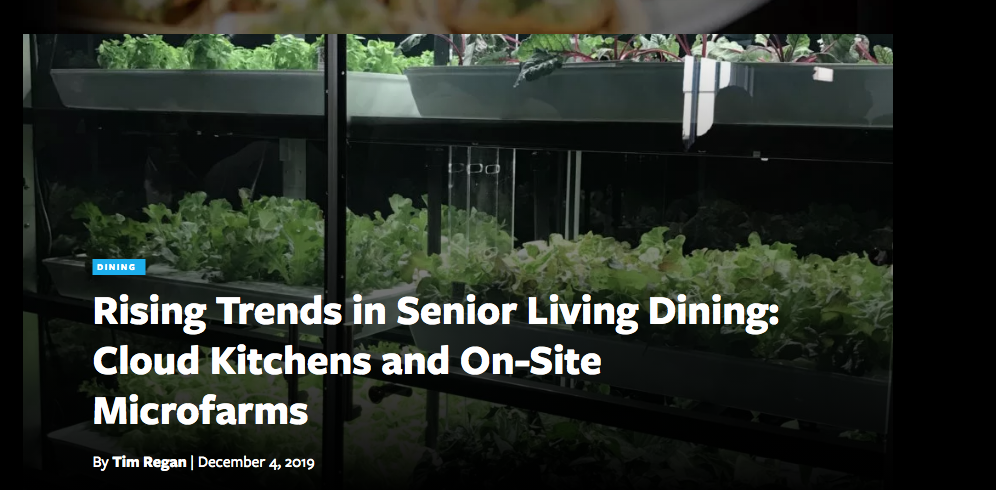
Senior housing providers are embracing an ever-growing list of unique dining services and amenities in order to attract tomorrow’s residents and save on operating costs — including indoor hydroponic micro-farms and offsite “cloud kitchens.”
Two companies leading the way in this regard are Charlottesville, Virginia-based Commonwealth Senior Living, and Priya Living, a senior housing company headquartered in the San Francisco Bay Area. Both companies are shaking up their dining services to include more trends that have gained traction in the consumer-facing restaurant industry.
The practice of adapting consumer dining trends for the senior living world is not new, as evidenced by the growing number of new senior living communities opening with full-service bars, fast-casual eateries, and bistros. Fleet Landing, a continuing care retirement community (CCRC) in Atlantic Beach, Florida, even has its own food truck.
All of this comes as senior living providers search for the right mix of services and amenities to woo millions of baby boomers due to reach retirement age in the next decade while tightening up their operations in a competitive and costly environment.
Hydroponic hopes
At Commonwealth Senior Living, residents are chowing down on fresh leafy greens grown in-house — literally.
The provider recently partnered with Charlottesville, Virginia-based Babylon Micro-Farms to build indoor micro-farms with the capacity to grow up to 5,800 plants a year and 45 different leafy lettuces, edible flowers and herbs. Timed LED lights and formulated nutrients nourish the plants, while 45-gallon reservoirs supply the water they need. The setup requires no soil, pesticides or other additives.
Through an app, Babylon guides Commonwealth’s dining service directors and associates through seeding, planting, harvesting, cleaning and everything between. A growing cycle can last anywhere between 15 and 45 days, depending on the plant, and workers spend just 1 hour and 20 minutes maintaining the setup in that time.
The first such micro-farm opened at Commonwealth Senior Living at Charlottesville in the third quarter of this year, and the company has plans to expand the service to all of its 34 communities early in 2020 at a rate of about three communities per week.
Commonwealth at Charlottesville’s residents and their loved ones first sampled fresh garden salads harvested from the indoor farm in mid-November. In addition to salads, Commonwealth’s chefs also use the produce in wraps and sandwiches, as garnishes and to flavor dishes.
The popularity of the fresh greens has only grown since Commonwealth’s first harvest, according to Bob Raymond, the provider’s vice president of procurement and dining services.
“We can’t keep up on the production,” Raymond told Senior Housing News. “The residents are eating everything we’re cutting and harvesting.”
And residents aren’t just eating their vegetables, they’re helping grow them, too. Already, some have pitched in to aid with the growing process — including a former “master gardener,” Raymond said. Looking ahead, Commonwealth hopes to include the hydroponic gardens in its programming, such as by letting residents pick out what they want to grow.
“We will be engaging the resident for the selection of product,” Raymond said. “So, if a resident wants to grow a specific type of butter lettuce … that will be that resident’s row of lettuce.”
Because the vegetables are grown in-house, they don’t need to be shipped from elsewhere. And Commonwealth has been able to trim the money it spends on fresh lettuce and produce, which can lie anywhere between $750 to $1500 a month for a typical community.
“Based on the overall cost of what we’re purchasing from farms or from mainline vendors, this has reduced our cost probably by about 10% to 15%,” Raymond said. “And, we’ve eliminated a 50- to 60-mile round trip [for deliveries] 52 times a year.”
In the end, adopting the hydroponic setup is aimed at attracting tomorrow’s senior living residents, who will bring with them a slew of new preferences and desires.
“Our resident population will be changing, and it is changing today,” Raymond said. “And what works today may not work tomorrow, so you have to continually look at different opportunities.”
A kitchen in the cloud
For many senior living providers, dining is a cost center, meaning more money goes into culinary budgets than comes out. For larger providers with more comprehensive programs and services, this is often mitigated elsewhere. But smaller providers — especially those that lie on the active adult or “independent living light” side of things — finding the right balance of providing some dining services while also keeping costs low is tricky.
That’s partly why senior housing provider Priya Living uses Shef, an offsite “cloud kitchen” service that makes and delivers food to residents on demand. The provider uses Shef in place of a more traditional commercial kitchen or onsite senior living dining program. Priya’s portfolio includes three open communities, and its focus on Indian culture and customs have made it a provider of choice for this affinity group — although the communities are open to anyone and have even welcomed residents of all ages.
“The cost of running a foodservice operation is substantial,” Priya Living Founder Arun Paul told SHN. “It’s a cost center. Everyone across the board, I would guess, is losing money on food.”
Shef delivers refrigerated, prepackaged meals such as shahi paneer, butter chicken, oxtail stew and pork dumplings to residents three times a week. While residents pay for the service, each meal costs just $8 to $10 thanks in part to a discount Priya Living has with Shef, Paul said.
Cloud kitchens — also referred to as “ghost kitchens” or “dark kitchens” — are restaurants that lack a dining room and don’t have a physical storefront. The food is cooked in the kitchen and then delivered to or catered at other sites. While the cloud kitchen trend is still budding, it is on the rise with help from the likes of major fast-food restaurants and former Uber CEO Travis Kalanick.
Using Shef and other unbundled services has helped Priya Living keep its rates relatively low. The provider’s communities in Fremont and Santa Clara, California, have monthly rates for residents between $2,500 and 3,000 before you add in any other services.
“When you take out food, your base cost for the resident is substantially lower,” Paul said. “In the mind of our residents, we’re viewed as a very affordable option.”
In addition to cost savings, Shef also offers variety and flexibility, he added. And while there are some residents who order most of their meals through Shef, it’s more commonly used by residents who also cook and dine out during the week.
“No matter how good your kitchen is, folks are going to get bored,” he said. “So, what’s great about working with the cloud kitchen is that it gives residents more flexibility over what they’re eating.”
Looking ahead, Paul expects more senior living providers — particularly those in urban markets — to explore using cloud kitchens to supplement or even replace their in-house dining programs.
“I think there’s still going to be a place for in-house food preparation, but I think it will be in much more limited circumstances than it is today,” Paul said. “Unbundling services is critical to addressing affordability and the middle market, and now we have the tools to do it that we didn’t have even a few years ago.”
Companies featured in this article:
Babylon Micro-Farms, Commonwealth Senior Living, Priya Living, Shef

Canadian Food Inspection Agency Issues New Requirements For Romaine Lettuce
On November 22, 2019, the Canadian Food Inspection Agency issued a notice for new requirements for all romaine lettuce products from the Salinas growing region of California and for salad mixes containing romaine lettuce from the United States
On November 22, 2019, the Canadian Food Inspection Agency issued a notice for new requirements for all romaine lettuce products from the Salinas growing region of California and for salad mixes containing romaine lettuce from the United States. The Canadian market remains open to U.S. lettuce, which constitutes nearly all lettuce in the Canadian market at this time of year. The United States exported more than $400 million of fresh lettuce to Canada in 2018.
The Public Health Agency of Canada (PHAC) has advised Canadian consumers to follow the U.S. CDC’s public health advisement to avoid consumption of romaine lettuce from the Salinas, California growing region. Additionally, PHAC has advised that romaine lettuce harvested in Canada is not affected by the outbreak.
The Salinas growing region in California is identified as the counties of Santa Cruz, Santa Clara, San Benito, and Monterrey.
All romaine lettuce exports from California require a Proof of Origin, by means of a letterhead, on a separate page, providing that the lettuce was not harvested in the Salinas growing region along with the exporter signature and date of signing.
All salad mixes from the United States containing romaine lettuce require a Proof of Origin, by means of a letterhead, on a separate page, providing that any romaine lettuce in the mix was not harvested in the Salinas growing region along with the exporter signature and date of signing.
CFIA will update requirements pending any new information from the U.S. FDA.
The term “letterhead” refers to the corporate letterhead of the exporting company. The term “Proof of Origin” refers to the exporter’s written declaration.

For more information:
CFIA National Import Service Centre
Tel: +1 (800) 835-4486 / +1 (877) 493-0468
www.inspection.gc.ca
Publication date: Mon 2 Dec 2019

Lettuce Grown Hydroponically in Northeast Ohio is Essentially ‘E. coli Proof’ So Go Back To Eating Salads
The hydroponically-grown lettuce from Great Lakes Growers is essentially “E. coli proof,” thanks to a series of safeguards put in place by owner John Bonner
Burton Greenhouse Is Growing Virtually “E. coli Proof" Lettuce.
Crunchita lettuce, a romaine hybrid, is grown hydroponically to avoid E. coli contamination. (Source: WOIO)
By Jen Picciano | December 6, 2019
CLEVELAND, Ohio (WOIO) - The hydroponically-grown lettuce from Great Lakes Growers is essentially “E. coli proof,” thanks to a series of safeguards put in place by owner John Bonner.
So while the rest of the country is throwing out lettuce purchased elsewhere, their business is experiencing a massive uptick.
Demand for their products skyrockets amid widespread E. coli scares, like the nationwide one currently being blamed for more than 100 illnesses in 23 states.
“There is this massive swell of demand because everyone had to throw out all their romaine,” said Bonner.
Prices go up because the industry can’t meet the demand. But they’re trying.
“It’s creating a massive growth trend in our industry. We’ve doubled the size of the business since 2015, just doubled it again this year, about to finish up that, and we’re about to double it again this spring. The growth is really incredible,” he said.
Bonner said they’re growing 5 million heads and 4000,000 pounds of cut lettuce every year.
They’ll soon be adding two more acres to grow products similar to romaine, in response to the frequent recalls. All the while, they’re working diligently to ensure safe lettuce.
The nationwide E. Coli scare over romaine lettuce means many are turning to local, and hydroponic grown greens.
@GreatLakesGrowers is expanding to meet the massive demand for safer lettuce.
Story on Cleveland 19 News at 5.
They avoid E. coli contamination, by watering the roots from underneath through aluminum channels, not on the leaves itself which are consumed. And the roots are removed upon shipping, so Bonner said there’s very little chance anything could happen.
He says they closely monitor for bacteria levels in their recycled water.
“We have a system in place that virtually eliminates the risk of it. and we also do testing every week with a third party to verify that,” Bonner said.
They’re working to rise to the occasion, but it can’t happen overnight.
“Seed to sale” takes them 30-45 days.
Stem Cultivation's v2 Stem Box Achieves Production Milestone
STEM Cultivation, Inc. has emerged from stealth today to announce a breakthrough in growing efficiency with its patent-pending STEM Box v2
Las Vegas, December 12, 2019 - STEM Cultivation’s vertical hydroponic agri-tech platform enables leading Nevada cannabis brand to bring new products to market faster, and for less cost, compared to traditional indoor growing methods.
STEM Cultivation, Inc. has emerged from stealth today to announce a breakthrough in growing efficiency with its patent-pending STEM Box v2. The STEM Box is a leap forward with respect to lowering cost, space, operational, and energy requirements and offers commercial operators of any size a faster and more sustainable path to profitability over current methods of indoor cultivation.
“We shipped a STEM Box kit to our partner’s facility and assembled it into a fully-operational hydroponic grow room, isolated and environmentally-perfect, and ten weeks later it produced a cartoonish amount of high-quality cannabis,” said Kyle Moffitt, CEO of STEM Cultivation.
In a recent harvest, the STEM Box v2 yielded 91.9 pounds of dry flower in only 230 ft² of real estate, a 600%+ gain in production efficiency compared to an average harvest using traditional indoor cultivation methods in the same space. Moreover, the STEM Box achieved some of the highest efficiency metrics ever recorded, including:
Grams/ft² 181.4
Grams/watt 2.56
Pounds/light 3.83
Moffitt continues, “STEM Boxes are to commercial growers what Amazon Web Services is to computing: they both offer an easy way for businesses to quickly and incrementally scale capacity and help bake predictability and risk management into operations without requiring a large upfront investment. They allow independent operators of any size to punch well above their weight against larger competitors in cost and quality.”
Working in partnership with an award-winning cultivation and processing company based in Reno, NV, STEM Cultivation demonstrated a STEM Box’s ability to increase production without disrupting existing operations. STEM Boxes allow the client to expand their reach in the notoriously competitive Nevada market by producing more of their best-selling items for a fraction of their current cost.
Moffitt concludes, “We’ve applied lessons learned from the first-generation of indoor farming and made a next-generation solution that provides our clients with a fundamental market advantage within weeks of switching on. The STEM Box offers the fastest way to transition from cannabis growing to cannabis manufacturing.”
To learn more about STEM Cultivation or the STEM Box, visit www.stemcultivation.com or email info@stemcultivation.com to schedule a consultation.

Farmshelf Gets Angel Investment From Singapore’s she1K, Liberty Produce Launches UK Vertical Farming Project
Angel network she1K has syndicated an early-stage investment in Farmshelf, according to an article published today on AgFunder News
Angel network she1K has syndicated an early-stage investment in Farmshelf, according to an article published today on AgFunder News. Singapore-based she1K, which is known for its global female executive leadership, did not disclose financial terms of the deal. Farmshelf is the third company to join its portfolio
Whereas many companies in the vertical farming space right now have massive indoor facilities aiming to produce millions of heads of leafy greens, Farmshelf differentiates itself by staying focused on smaller spaces like supermarkets, offices, hotels, and restaurants. Its bookcase-sized farm grows leafy greens and herbs using a combination of custom LEDs, sensors, and software that deliver water, nutrients, and the optimal amount of light needed for each crop. The system, which can simply be plugged into a wall and connected to WiFi, is already at a number of restaurants, hotels, and other spaces, including NYC chain Tender Greens, Marriott Marquis Times Square, and the Condé Nast offices.
The Farmshelf system is currently available to businesses in parts of Texas and California and will be available to customers “in most major markets” in 2020.
Farmshelf isn’t the only indoor farming initiative kicking off December with big news. Across the Atlantic, agtech company Liberty Produce has finally launched its vertical farming project that looks to improve both crop yield and operational costs for vertical farming through improved, more automated tech.
According to a press release sent to The Spoon, Liberty Produce has partnered with several entities for the project. While most were not disclosed, a major one is Crop Health and Protection (CHAP), a network of scientists, farmers, researchers, academics, and businesses developing new ways to use technology to improve the farming system in the UK. Work on the Liberty Produce project is being done at CHAP’s Fine Phenotyping Lab at Rothamsted Research in the UK, with experts experimenting with plants’ responses to different light intensities and studying the best LED “recipes” for crops.
“There’s lots we don’t know about growing plants in this artificial environment and we’re not giving them optimal conditions,” Liberty Produce founder Zeina Chapman told The Spoon earlier this year. “With lighting, there isn’t an option to control it in a way that maximizes plant growth. So we might be putting plants under stress.”
Liberty also wants to use more automation to make the concept of vertical farming easier for anyone, something Farmshelf also appears to be striving for with its plug-in-and-go system.
It’s an admirable goal to strive for, especially if it can get more locally grown produce into the hands of more cafeterias, universities, local businesses, and, eventually, individual homes.
The test — and something we’ll hear more about in 2020 — will be whether the vertical farming industry can find a way to do this cost-effectively. There’s plenty of hype right now around the promises of vertical farming. As to whether it can actually become an everyday reality for the everyman, the jury is still out.
FILED UNDER: AG TECH BUSINESS OF FOOD FEATURED FOODTECH FUNDING MODERN FARMER