


Welcome to iGrow News, Your Source for the World of Indoor Vertical Farming

US (CO): Ultra Local Denver Farm Grows Using Aeroponics
Fifty-six-year-old Sally Herbert, co-founder, and CEO of Altius, walks through her fields, pausing often to pluck baby kale leaves or fronds of pink-tipped lollo rosso lettuce for sampling
At the intersection of 25th and Lawrence streets in Curtis Park, on the second story of a building—high above the millennials zipping around on electric scooters and the yoga warriors exiting a nearby studio—sits Altius Farms, an 8,000-square-foot aeroponic greenhouse. Inside, small fans whoosh gently overhead and the temperature is always somewhere between 65 and 80 degrees. There’s a slight, almost pleasant humidity to the air and the fresh, clean mineral smell of lettuce. The clear polycarbonate roof diffuses and softens the Colorado sunlight, and glass walls make you feel like you’re surrounded by open sky.
Completing the urban Garden of Eden picture is Altius’ version of fields: 340 columns, each eight feet tall, from which sprout floppy green rosettes of butter lettuce, neon mustard frills, ruffles of baby red Russian kale, and lily-pad-like nasturtium leaves. The plants blanket the white, food-grade-plastic columns so thickly they look like edible topiaries.
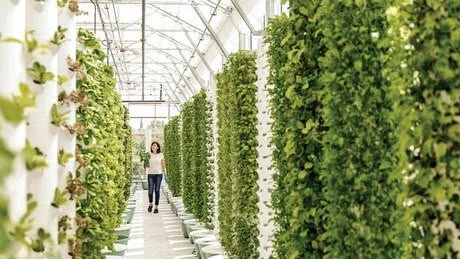
Fifty-six-year-old Sally Herbert, co-founder, and CEO of Altius, walks through her fields, pausing often to pluck baby kale leaves or fronds of pink-tipped lollo rosso lettuce for sampling. The kale is mild and tender, the lettuce juicy and crisp. Nearby, a smiling intern snips baby arugula leaves into bins while farm manager Ethan Page and other staffers wash, dry, and package the day’s harvest. Assistant grower and account manager Brian Adams will soon deliver bags of the greens to Altius’ growing list of clients, which include Uchi (the farm’s downstairs neighbor), Il Posto, Butcher’s Bistro, and Marczyk Fine Foods.
Publication date: Thu 7 Nov 2019
NL: Bankruptcy Filed For AC Hartman
In mid-2017, TFFG took over the 72-hectare Frisian organic grower and there were great plans and expectations. Less than half a year later already, the reality turned out to be different and problems arose that eventually led to this decision
Major shareholder The Fruit Farm Group today filed for bankruptcy of its subsidiary AC Hartman. In mid-2017, TFFG took over the 72-hectare Frisian organic grower and there were great plans and expectations. Less than half a year later already, the reality turned out to be different and problems arose that eventually led to this decision.
A.C. Hartman is one of the premier suppliers to Dutch retailer Albert Heijn.
The Fruit Farm, De Weide Blik
The Fruit Farm is part of holding De Weide Blik, which is 90% property of entrepreneur Hein Deprez, well-known for the publicly listed Greenyard multinational of which he currently owns 49%. When acquiring AC Hartman, Hein Deprez said it takes a family company to make most out of produce growing companies, since maximizing profit is not something that can be done in the fruit-producing industry.
Still, the acquisition of AC Hartman wasn’t a success. Following this news in 2017, the announced expansion was canceled, various lawsuits followed regarding the takeover and dozens of people were fired. Two other locations of the farm were sold. Still, the considerable losses started putting pressure on the figures of The Fruit Farm. Earlier this year they announced plans to sell the facility in Sexbierem.
Now the company filed for bankruptcy. According to the board of directors of The Fruit Farm Group, the decision was inevitable: "We have worked hard to keep this beautiful company in the air, so it is painful to have to acknowledge that, together, we have unfortunately not succeeded in doing so. But everything has a limit and that has, in the recent past, been reached several times and now exceeded. There were no other options for us."
Dutch market of organic vegetables
AC Hartman has about 70 permanent employees, supplemented by seasonal workers. The company is an important player in the Dutch market of organic vegetable production and supplies to renowned companies.
The court will appoint a trustee as soon as possible to investigate possible future scenarios. There are already parties at AC Hartman who are interested in the company.
Update
In response to the bankruptcy petition, Greenyard states that the bankruptcy has no effect on Greenyard itself, because AC Hartman operated independently, also financially. "The Fruit Farm Group is a supplier to Greenyard of exotic fruits as well as local European vegetables and is ultimately owned by the same shareholder as Greenyard", they confirm.
"Greenyard regrets this unfortunate news given the long-standing relationship with A.C. Hartman. Greenyard is not related to the A.C. Hartman nor to The Fruit Farm Group as it is a separately managed group, both operationally and financially. As Greenyard has alternatives for the products concerned, it is not expecting this event to have negative consequences for its customers. Greenyard’s positive recovery will also not be affected by this event."
Publication date: Fri 1 Nov 2019
The Vertical Farming Industry Is Growing Deeper Roots
The urban indoor vertical farm industry is at an important juncture. Automation is taking root, long-term contracts with creditworthy retail and foodservice distributors are in the works and vertical farms are preparing to scale up. Also, the industry is about to get its first trade group, the American Association for Urban and Vertical Farming
November 11, 2019
Plenty plans to build a global network of vertical farms, starting with the west coast of the United States.
The urban indoor vertical farm industry is at an important juncture. Automation is taking root, long-term contracts with creditworthy retail and foodservice distributors are in the works and vertical farms are preparing to scale up. Also, the industry is about to get its first trade group, the American Association for Urban and Vertical Farming.
"The vertical farming industry in the U.S. is at a point where — if provided facilitation in terms of industry coordination, information exchange, innovation, education, training, funding, etc. — ... it can be enabled to reach critical mass," said Joel Cuello, a University of Arizona professor of biosystems engineering and vice chair of the Munich-based Association for Vertical Farming (AVF).
Just as important: a trade association can advocate for the industry and help it secure more funding.
In the 2018 U.S. Farm Bill, an annual allotment of $10 million was established to develop an office of urban agriculture and supporting projects, said Neil Mattson, controlled environment agriculture director and associate professor/greenhouse extension specialist at Cornell University. That’s a relatively small amount that includes everything from vertical farms to urban community gardens.
Whether industry-wide collaboration is needed or wanted at this stage is unclear. Sharing information could accelerate the industry’s development, but it also could dilute the value of a firm’s propriety research and development efforts.
Technology is important to reduce cost and to improve yields and quality, and therefore to provide a better return on investment.
The existence of New York City’s Agriculture Collective — which counts AeroFarms, Bowery Farming, Smallhold and Square Roots as members — illustrates that there are ways for the urban farming industry to share knowledge.
Having a city or regional dimension to collaborative efforts is key, especially when it comes to working in cities, said Henry Gordon-Smith, founder and managing director of Agritecture Consulting. For example, there is often a need for new zoning for indoor farming because it is not a permissible use of a building in an urban area, he added.
The new vertical farm trade association will be affiliated with the AVF, but the exact affiliation has not been negotiated yet.
A compelling story
Vertical farming does a very good job of tapping into customers’ interest in tasty, fresh and locally grown food. "Customers love it," said Chris Manca, Whole Foods Market’s local program coordinator for the Northeast region. "It connects with people who are passionate about local food and the environment."
Since 2014, Whole Foods has cultivated a high-tech Gotham Greens greenhouse farm on the rooftop of its Gowanus, Brooklyn, store. Leafy greens, microgreens and herbs grown in this rooftop greenhouse are sold in its store downstairs, in other nearby Whole Foods locations and at local restaurants. In addition, for the last year and a half, the Whole Foods location in Bridgewater, New Jersey, also has been selling mushrooms grown in an in-store vertical farm unit developed by the Brooklyn-based organic mushroom farming company, Smallhold. More recently, a second Smallhold in-store mushroom growing unit was added in a Whole Foods store in Brooklyn.
Gotham Greens
Gotham Greens operates a network of greenhouses across the Northeast, Mid-Atlantic, Midwest, New England, Mountain West and beyond.
The chief selling points of indoor vertical farm-grown fruits and vegetables are that they are pesticide- and herbicide-free, require only a little water and land to produce, offer flexible supply dynamics, have short grow cycles, offer year-round production and have easy product traceability, according to those interviewed for this article. Grocers or producer purveyors also might be able to claim greater price certainty and a longer shelf life.
"We look at [vertical farms] as a growing trend and a unique opportunity to partner with up and coming brands," Whole Foods’ Manca said.
But some farms need to get their prices in line with traditional produce, and it is becoming clear that vertical farms must start offering a wider variety of produce. Many are experimenting with growing berries and vine crops, such as tomatoes and cucumbers. To date, leafy greens, microgreens and herbs have been vertical farms’ cash crops because they offer more competitive pricing due to high yields and the fact that they require less energy to grow.
The growing appetite for indoor growing
Five Mediterranean climates — including California’s — supply all of the world’s fresh fruit and vegetables, and these climates are dealing with changing weather patterns. That is forcing more scrutiny of the vertical and indoor farming sectors.
"Today, the world can only grow enough fresh fruits and vegetables to feed two-thirds of the global population what is required for a healthy diet. That's with 7.5 billion people on Earth," said Christina Ra, senior director of integrated marketing at Plenty, the San Francisco-based indoor vertical farming company that in 2017 raised $200 million in Series B funding from Softbank, Amazon’s Jeff Bezos and Eric Schmidt, the former chairman of Alphabet.
Already, there is not enough, and the global population is expected to reach almost 10 billion in 2050, Ra pointed out.
Vertical farms alone cannot fill the gap, but new technologies and innovations, including more efficient LED lighting, robotics, machine vision and artificial intelligence, are making vertical farms more efficient and productive.
"Technology is important to reduce cost and to improve yields and quality, and therefore to provide a better return on investment," said Charlie Wang, president and CEO of Oasis Biotech, an Albuquerque-based company that owns vertical farms in Las Vegas, China and Albuquerque. It also develops and sells LED lights and hydroponic grow systems under SANANBIO brand.
During the last three years, LED lighting costs have dropped considerably amid a 20 percent improvement in energy efficiency. Looking ahead, over the next three years, similar advances in energy efficiency are expected, and developments in precision farming and automation are also expected to help the vertical farm industry eke out additional efficiency gains.
"We can do precision agriculture within a precise environment," said Grant Vandenbussche, senior business development strategist at Fifth Season, a fully automated indoor vertical farm company based in Pennsylvania. "This allows us to isolate variables to optimize for specific desired outcomes rapidly. We know how each factor is impacting things like plant growth, coloring, and flavor. … It's a true 'smart manufacturing' system."
Operating a fully-automated vertical farm can put a vertical farm's labor cost on par with field-grown produce, Cornell’s Mattson said.
We have been very forward [about how] energy requirements are a potential limiting factor for the industry.
According to Vandenbussche, automation helped Fifth Season reduce its labor from 40-60 percent of costs to 20 percent of costs. Fifth Season also said that the energy required from its automation processes is negligible within its system.
Indoor vertical farms’ energy needs for lighting and HVAC are considerable, however. For example, leafy greens grown in vertical farms in the Northeast currently have a carbon footprint that is two times higher than the carbon footprint for the same product grown in a field in California and then shipped 3,000 miles across the country, Mattson said.
There is also research and data that points to vertical farming being more energy-intensive than greenhouse-grown produce.
"We have been very forward [about how] energy requirements are a potential limiting factor for the industry," Vandenbussche said. "We're paying very close attention to our energy requirements as we launch our new farm, and we are implementing as many energy savings solutions as possible."
Sourcing all of a vertical farm’s energy needs from renewable sources through local utility providers can be challenging. Microgrids are an obvious alternative, but for some vertical farms, the initial capital cost is prohibitive.
For its farm, Fifth Season partnered with Scale Microgrid Solutions, a firm that provides turnkey microgrids, on a solar-microgrid solution. "[They have] a shared savings solution that allows you to capture the benefits of a microgrid without the upfront capital cost," Vandenbussche said.
Another workaround could involve geothermal energy, which can help control the air temperature. But for indoor vertical farms, the largest energy cost is electricity for lighting, which geothermal cannot address.
Plenty of paths
The indoor vertical farm industry has seen a lot of investment, but the business models are still sorting themselves out.
"There has been a big push on technology, but technology might not be the differentiating factor. The business models matter" said Ian Copeland, managing director at Ultra Capital, a San Francisco- and Philadelphia-based firm that focuses on small to midsize sustainable infrastructure projects in the agriculture, energy, waste and water sectors.
Investors want data-rich businesses that are responding to climate change, Gordon-Smith of Agritecture Consulting said. Consumers and retailers, meanwhile, want produce that they can trust will be clean and local, he added.
According to Whole Foods Market’s Manca, one big driver of the vertical farming trend is people wanting to know where their food comes from. "Especially for people in urban areas, I think that it’s really appealing to know that fresh produce is now being grown nearby and available at local stores at the peak of freshness," he said.
When it comes to vertical farming, venture capital is important, but project financing is critical, Oasis Biotech’s Wang said.
Project finance investors want to see long-term contracts with creditworthy counterparts; cost-competitive products and revenue predictability are also important.
Most vertical farms, including Plenty, initially have focused on leafy greens such as kale. Plenty
"Thanks to our modular platform — where we build farms inside refurbish shipping containers — we can quickly pop up in a new city with relatively little capital vs competitors,” said Tobias Peggs, co-founder, and CEO of Square Roots.
Earlier this month, Square Roots and Gordon Food Service (GFS), North America’s largest privately-owned foodservice distributor, forged a strategic partnership and opened its first co-located farm at GFS’ headquarters in Michigan.
"First, we want to refine and evaluate the proof of concept [at the co-located headquarters farm]. Assuming that we meet or exceed the projections going in, we hope to begin adding more locations next year," said Sean Walsh, GFS’s director of North America category management.
GFS trucks food to more than 100,000 restaurants, schools, hospitals/healthcare facilities, cruise ships and summer camp customers in the eastern half of the United States and Canada. GFS also runs a regional network of stores that service small businesses, caterers and walk-in consumers.
Other indoor farming companies are also in an expansionary mode. For example, Gotham Greens, which operates five high-tech greenhouse farms in New York City and Chicago, is opening new locations in Providence, Rhode Island; Chicago and Baltimore in the coming months. It says its retail presence will have grown to about 2,000 retail doors by the end of this year.
And in late October, Plenty, which concentrates on the West Coast, announced plans for a farm in the heart of Los Angeles. The new facility will create about 50 local jobs, ranging from growers to operations manager.

FarmBox Foods - Container Farming, Differently
We’re taking shipping and truck containers, and breathing life into them, starting with the magical combination of light and water
Rooted In Truth, Our Mission
We’re taking shipping and truck containers, and breathing life into them, starting with the magical combination of light and water. From there, we’ve created 100% self-contained farming units that come with tracking systems, LED lighting, and water purification to ensure your vertical container ecosystem is successful, meeting all requirements of organic, sustainable farming today. These containers can be integrated into any community, with any kind of climate, and provide a natural, beautiful, leafy green product that is the essential of life.
Think Inside The Box
Farm Box Foods provides a complete grow system to be placed anywhere in the world. With future models compatible with solar technology, Plant Force One can we placed anywhere. Plant Force One is capable of growing a variety of lettuces, herbs, and greens at a large scale production anywhere. Our container allows companies, communities, government agencies to grow and produce fresh organic greens.
“Feeding The World, One Container At A Time.”
To provide humanity with high quality, fresh, healthy, nutritionally superior, clean, chemical-free REAL food. While preserving our planet’s limited resources and reducing pollution for future generations. It is our goal to provide you with a direct link between you and the food you and your family is eating. No longer are you going to the supermarket, relying on and trusting your purveyors to provide you with the best greens, you grow them yourselves, knowing exactly what’s going into your body!
“What’s One Man’s Trash Is Another Man’s Treasure.”
Digital Farming Entrepreneurs
Our Story
FarmBoxFoods was founded in 2017 by Tony English, Jake Savageau & Jason Brown, whose singular focus was to develop a way to provide fresh organic nutritionally healthy food while reducing the use of earth’s valuable resources and reducing pollution simultaneously. They envisioned up-cycling unused shipping containers into very efficient greenhouses that could truly alter the way the world grows food.
By up-cycling those unused shipping containers – they could accomplish all of these goals at a lower cost than traditional farming and reduce the environmental impact of pesticides and the pollution of producing/transporting traditional vitamin devoid produce that we have all grown accustomed to consuming.
Introducing “Plant Force One”
Our Commitment
Our initial product is “Plant Force One.” This self-contained greenhouse in a shipping container farm is equivalent to 2 ½ acres of farmland that uses about 95% less water than traditional farming. Crops are grown using the latest technology in a perfect climate-controlled environment. Free of any pesticides, herbicides and any other toxic chemicals that humans should not be ingesting. Our crops are by far the most nutritious and delicious produce available today that also conserve our planet’s resources and reduces pollution associated with the growing, maintenance, and transportation of traditional farming.
FarmBoxFoods is currently developing new ways to supply humanity with other food products that will revolutionize how future generations will produce food forever.
Any Size, Any Location
From warehouse to full-scale farm
As the earth’s fertile soil becomes more scare every day, the importance of fresh foods and proper nutrition becomes paramount. Farmbox Foods’ unique ecosystem allows scalability in any environment. A city warehouse can easily be turned into a mass-producing commerce
FarmBox Foods is Excited to Announce its Partnership with GulfCarib
GulfCarib is the ONLY company dedicated to fulfilling the food security needs in both Jamaica and the Gulf States.
Its Principals and Consultants, all experts in their fields, are award-winning architects and engineers who deliver cutting edge solutions, such as FarmBox Foods, in agriculture, waster to energy and renewables.
The Use of these solutions and ‘best practices’ in agricultural techniques will endure availability of products and also prevent spiking of food prices.
We Are Half Farmers And Half Scientists
It comes down to what’s inside, the “Plant Force One” is built inside of a recycled 40-foot container. Helping the environment and help you change the way your farm
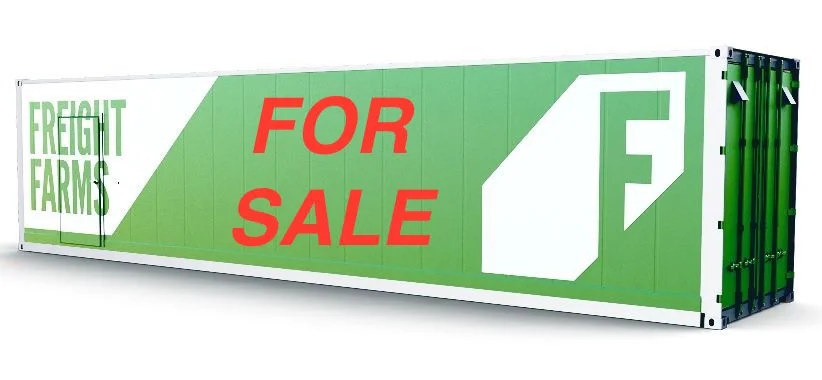
FOR SALE - 2014 Freight Farm - Computer Controlled Hydroponic Grow System - Texas
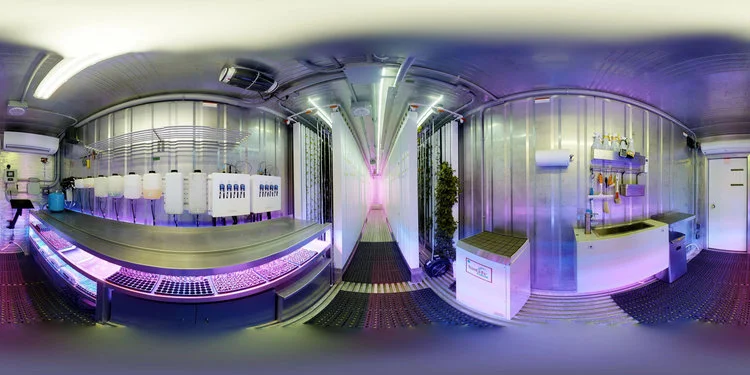
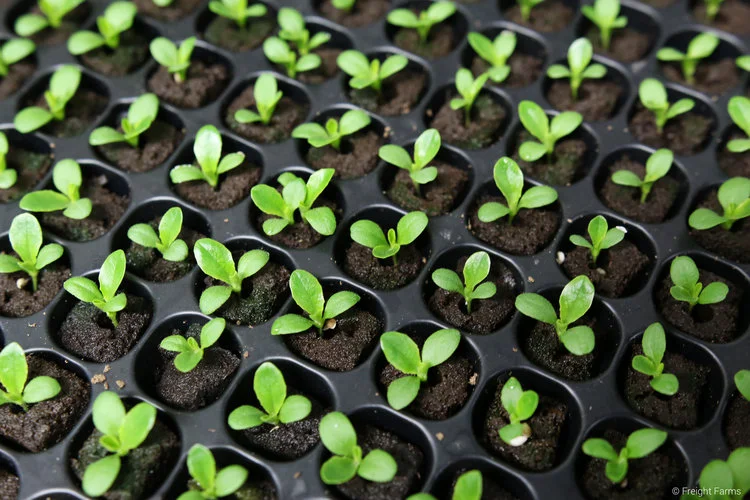
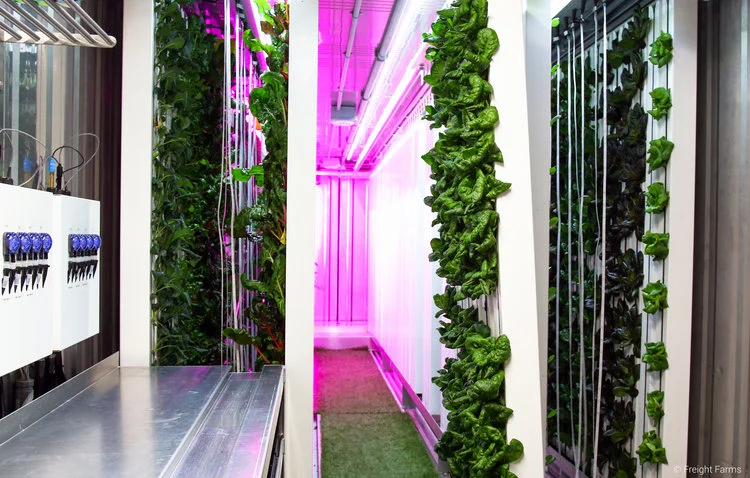
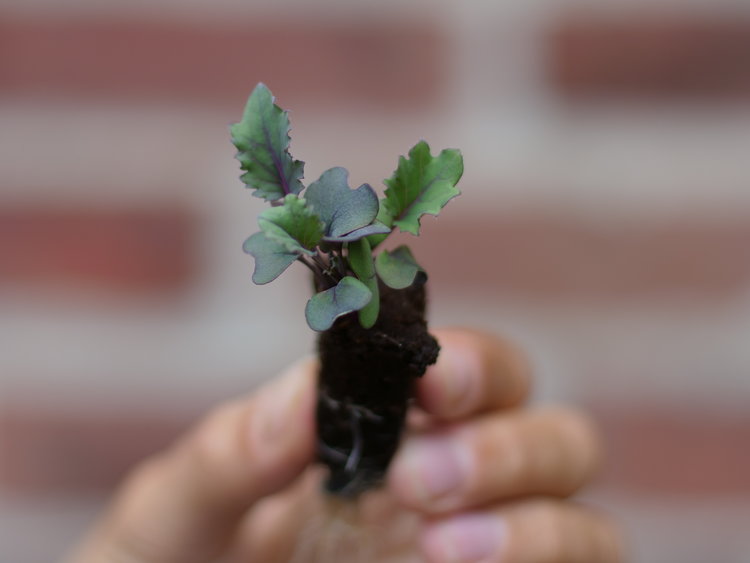
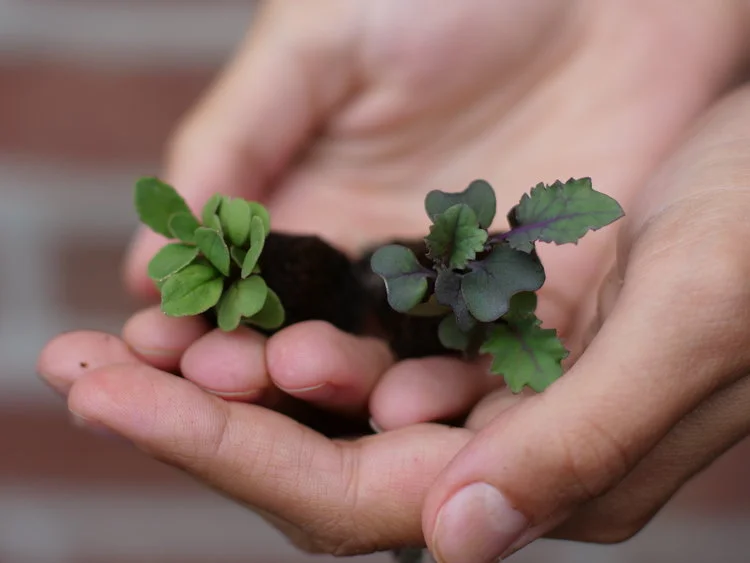
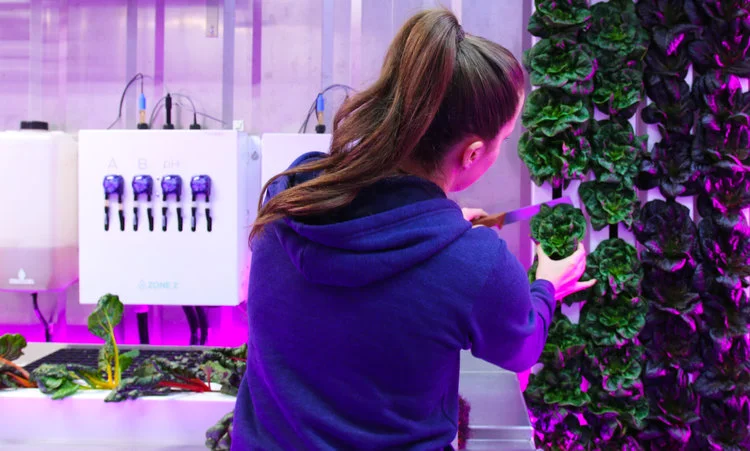
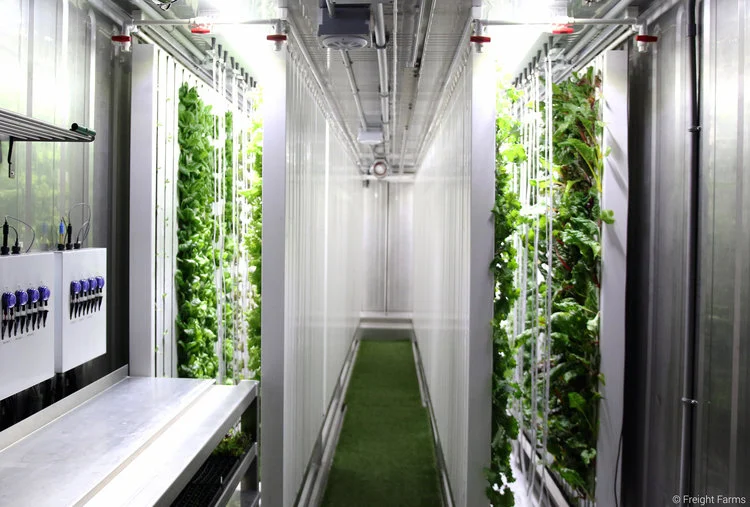
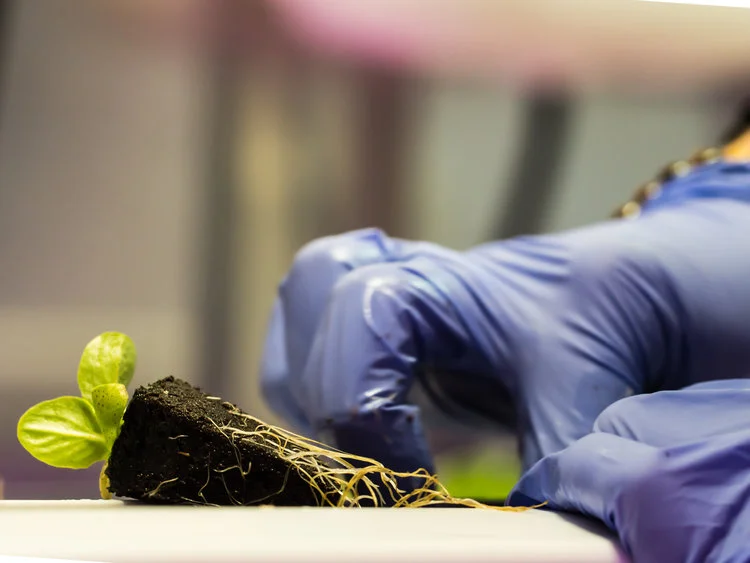
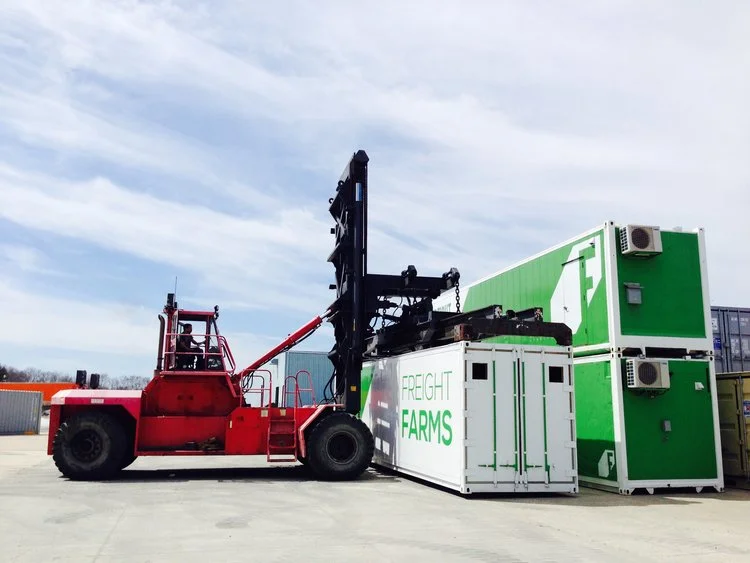
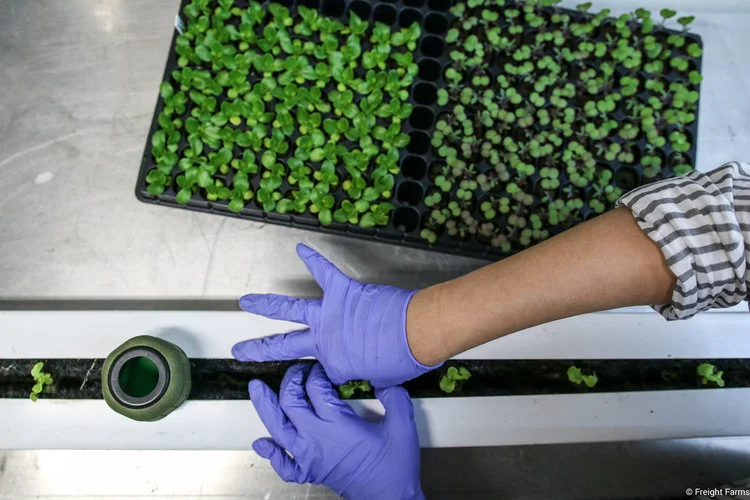
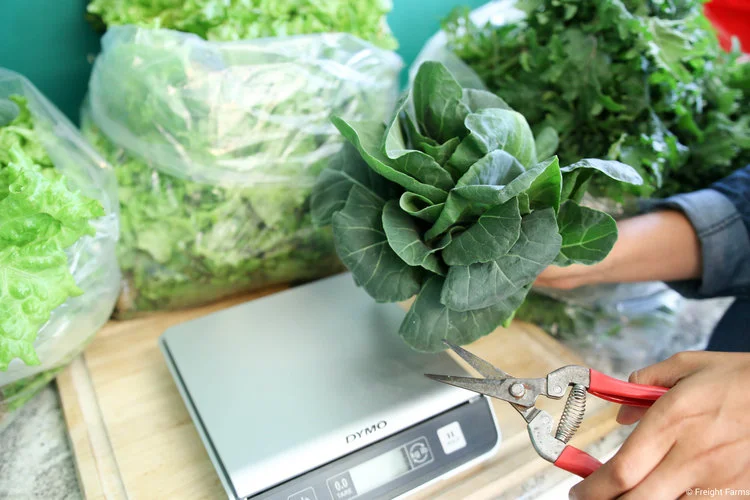
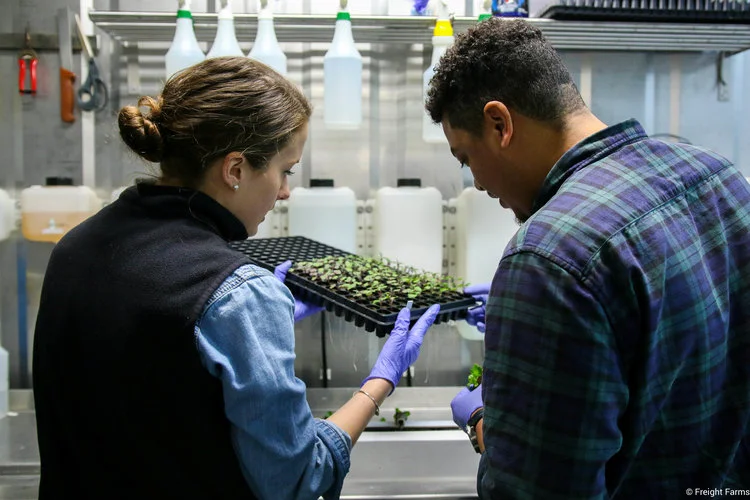
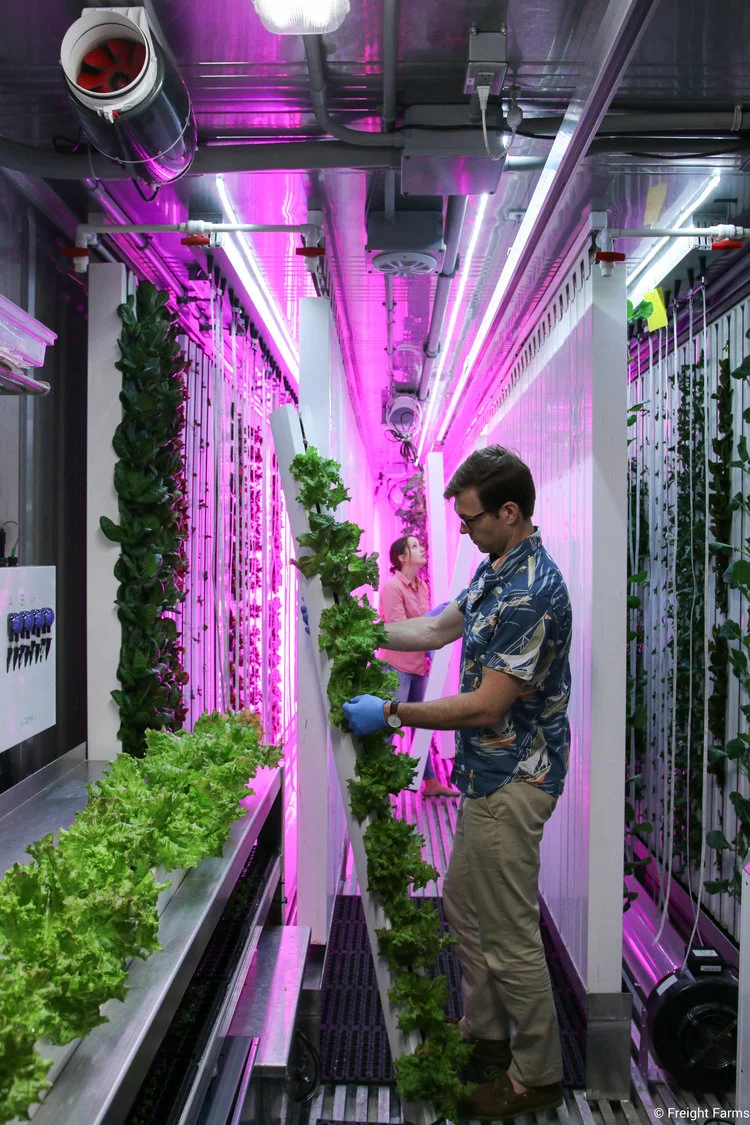
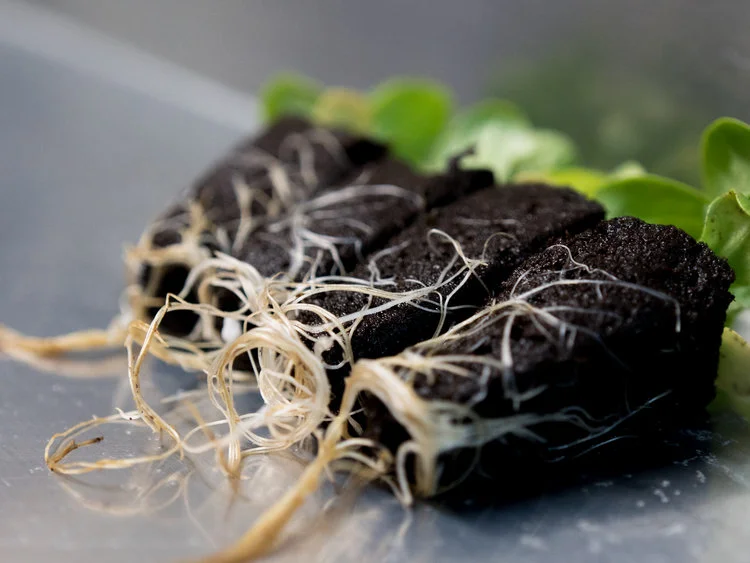
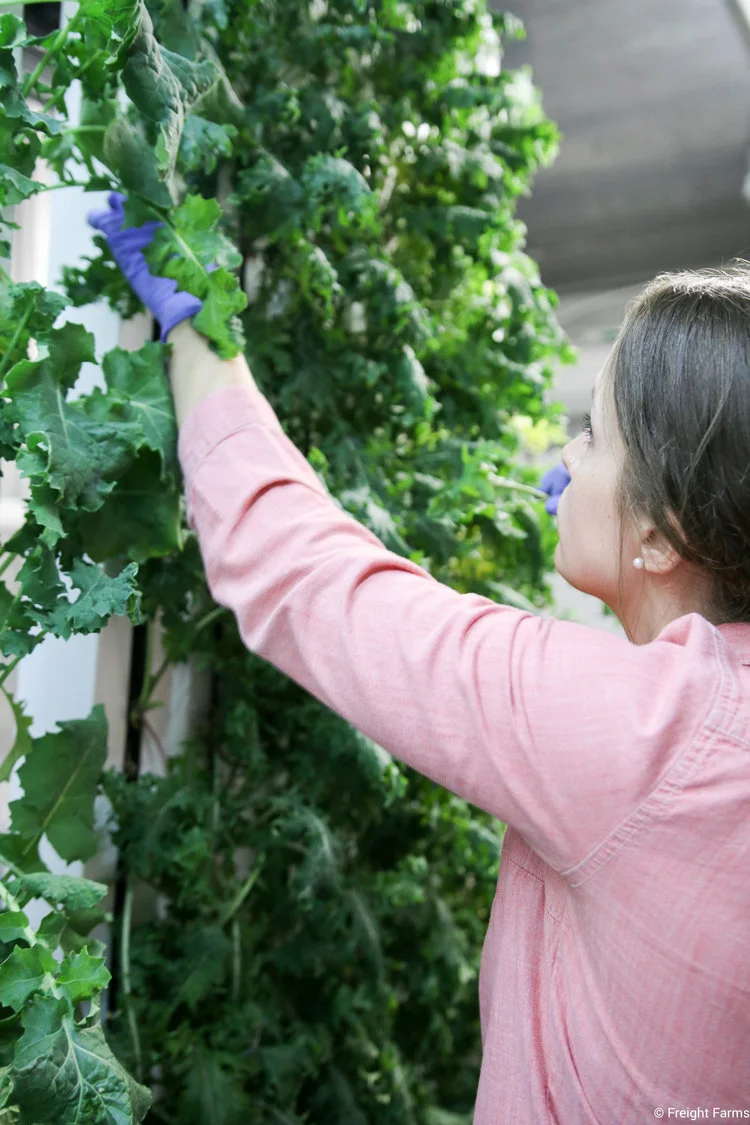
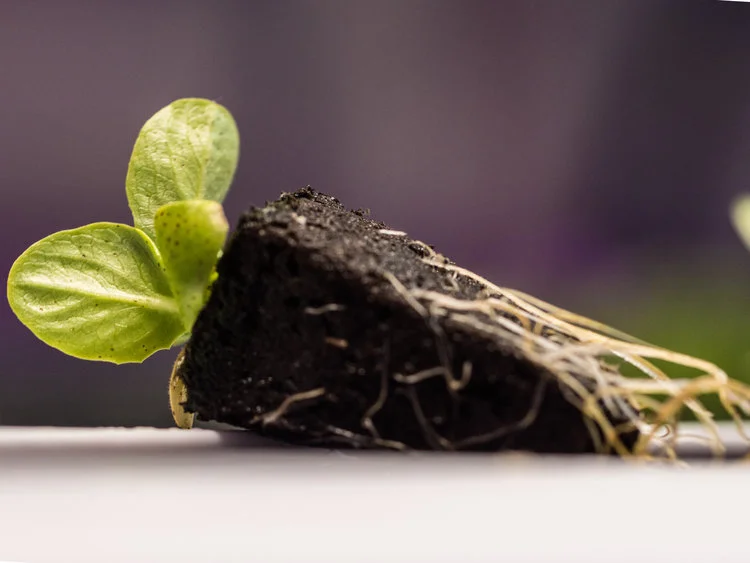
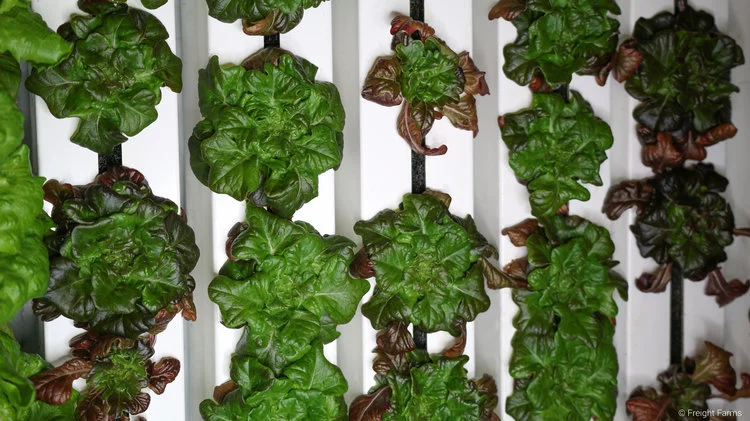
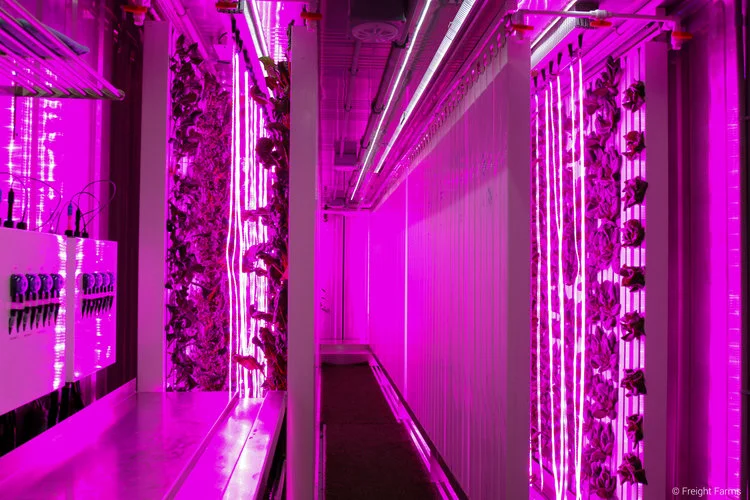
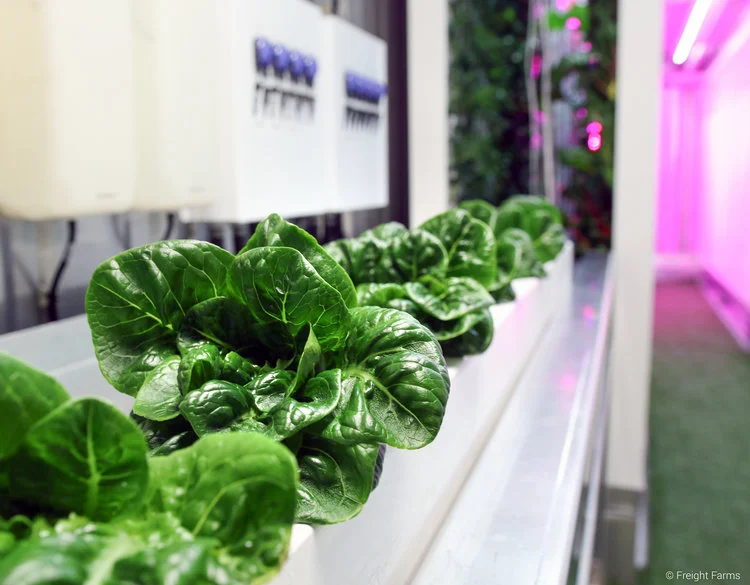
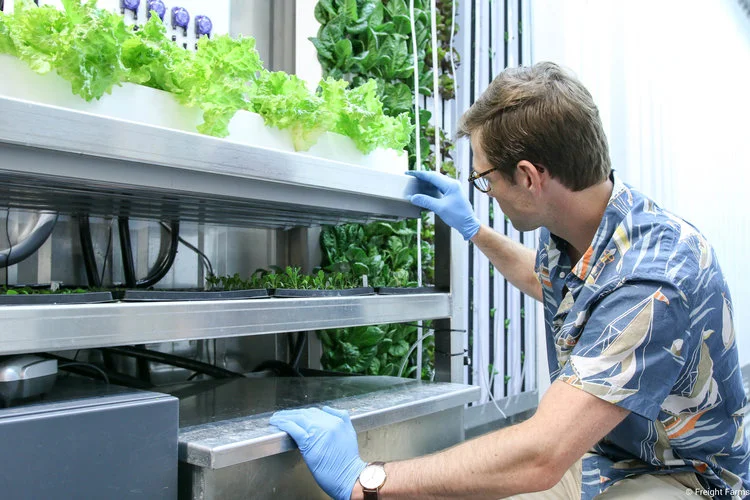
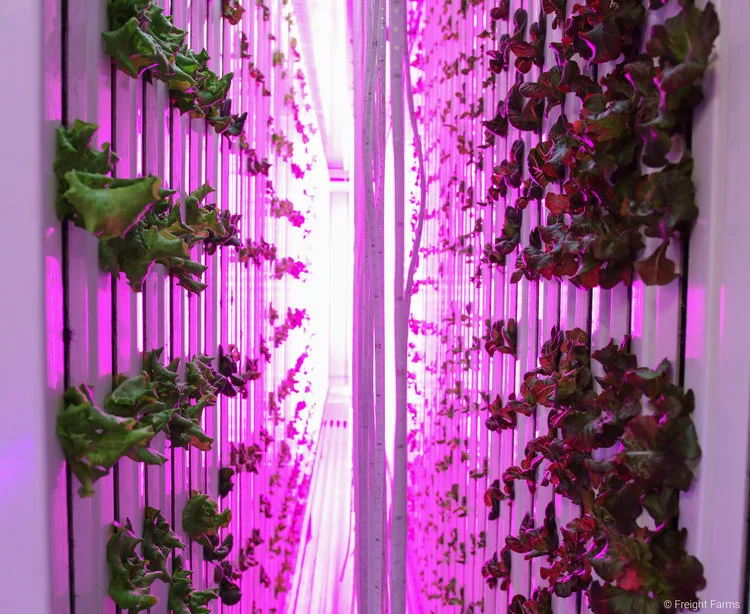
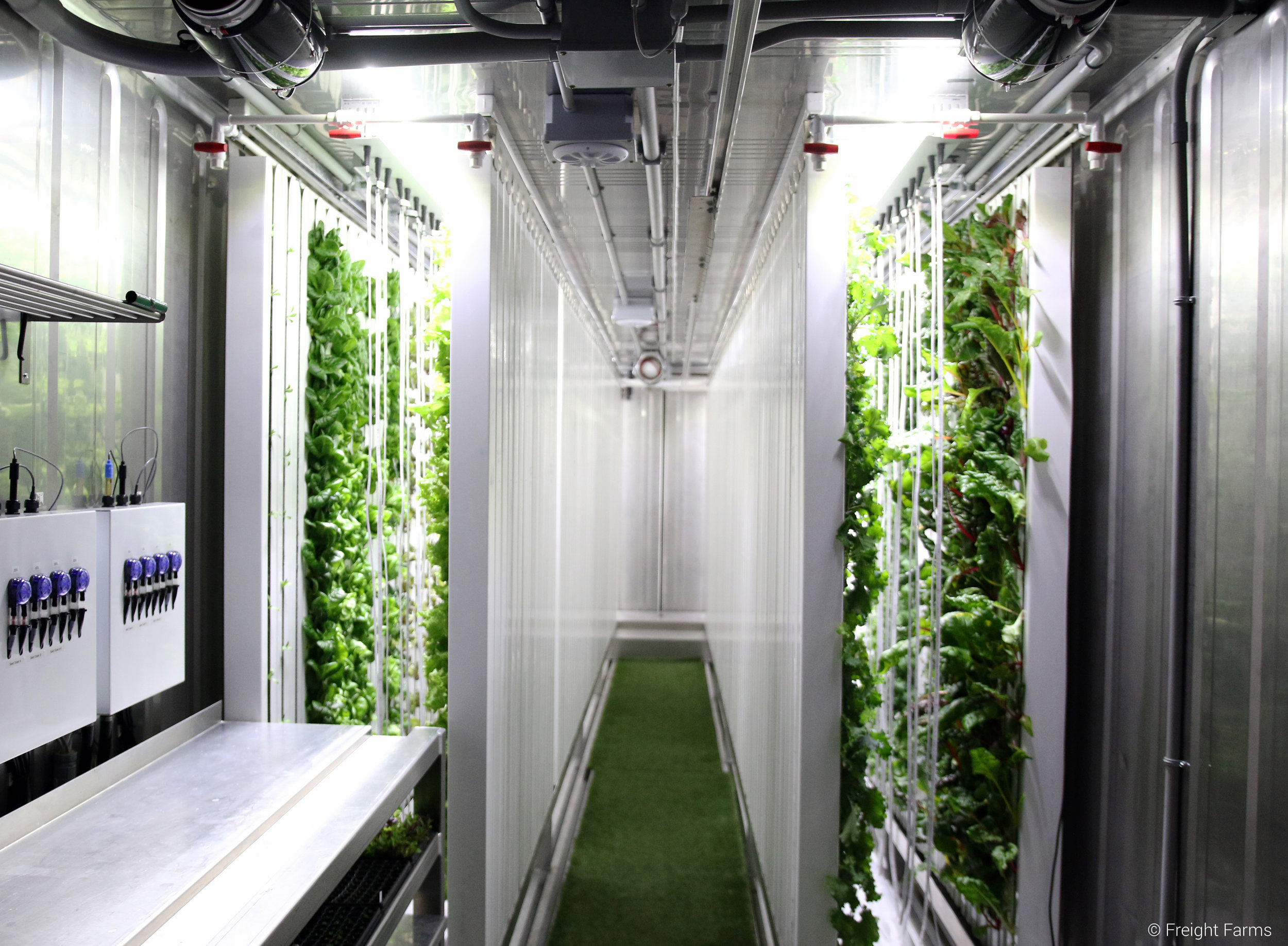
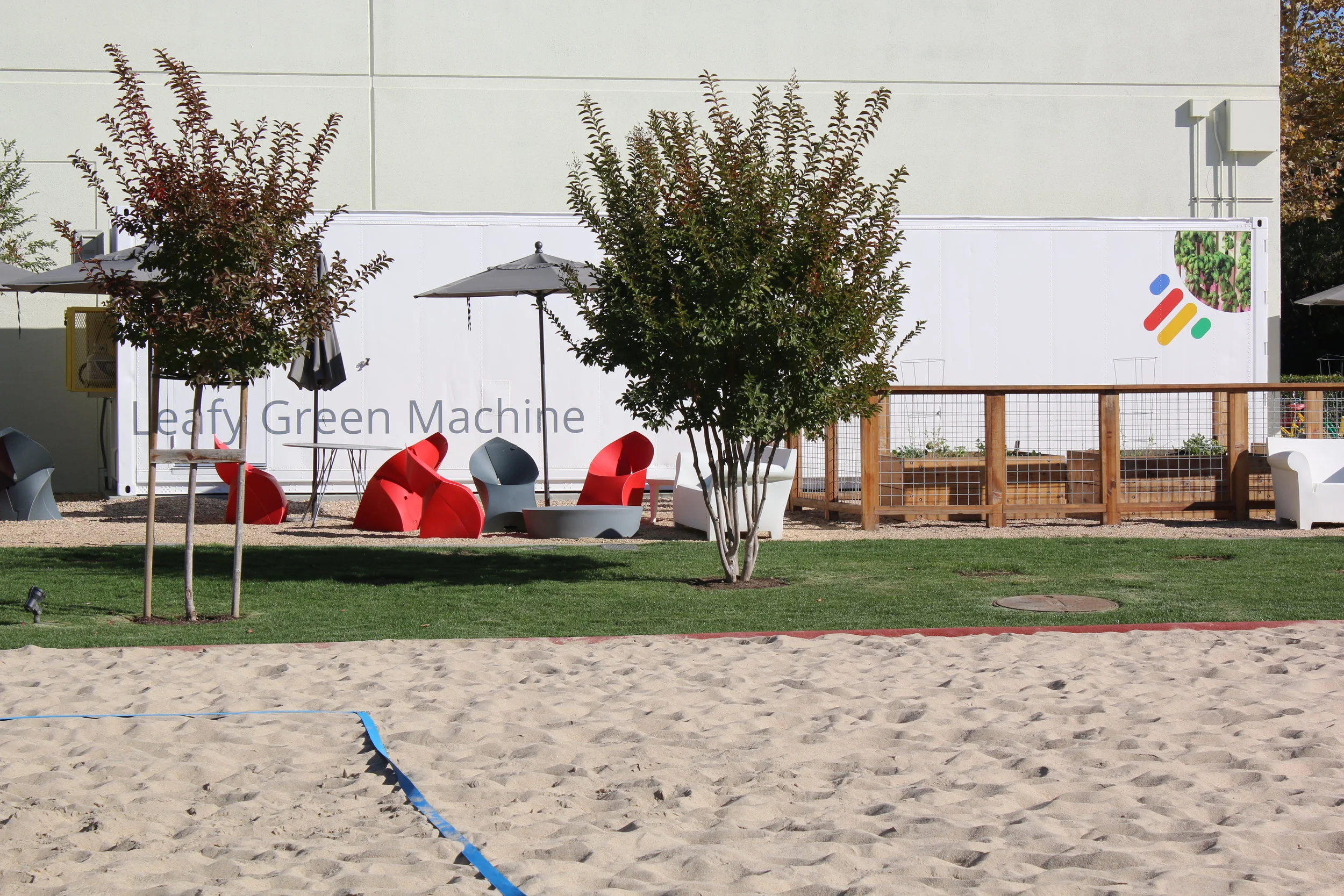
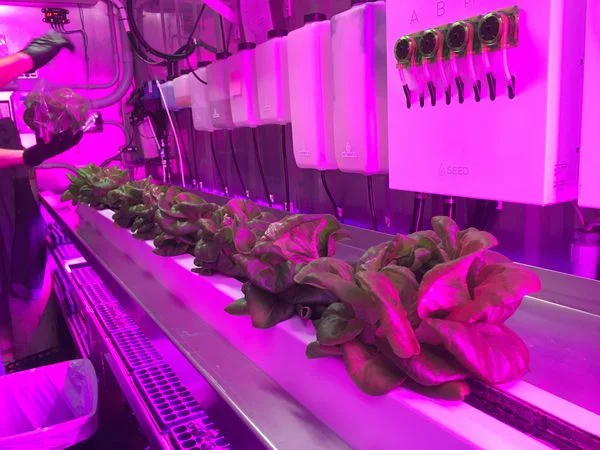
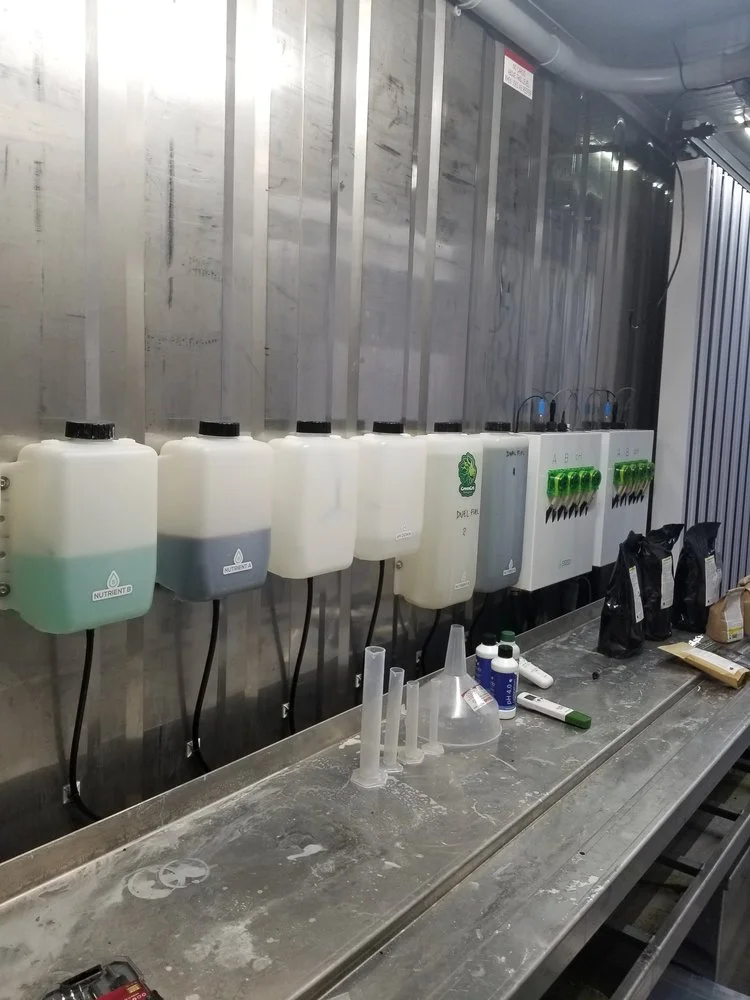
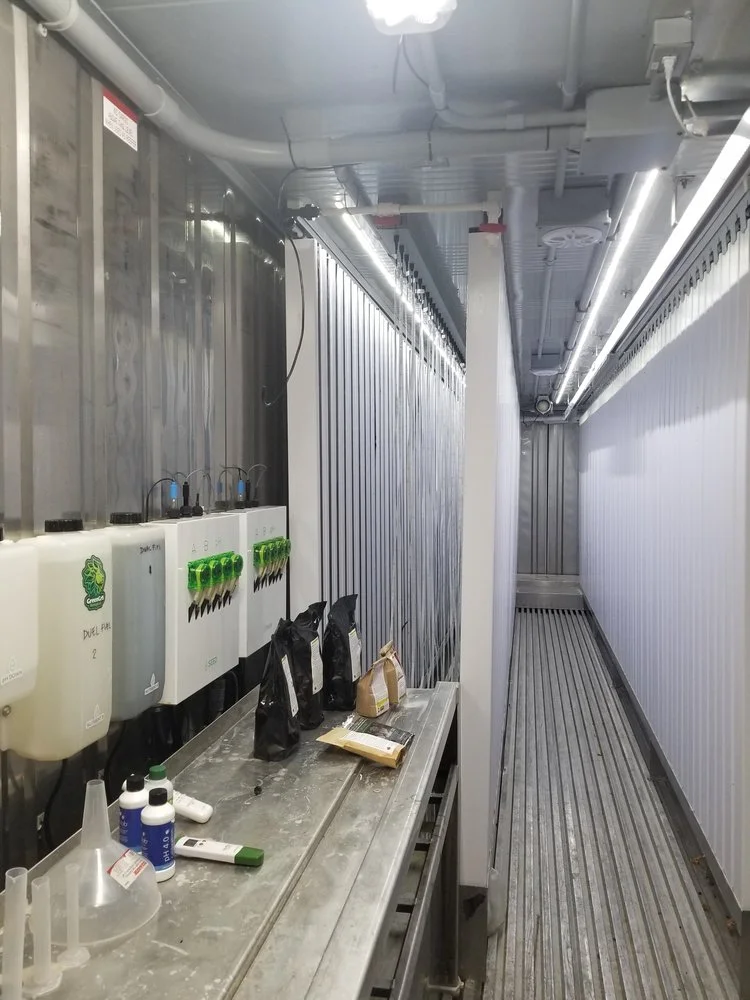
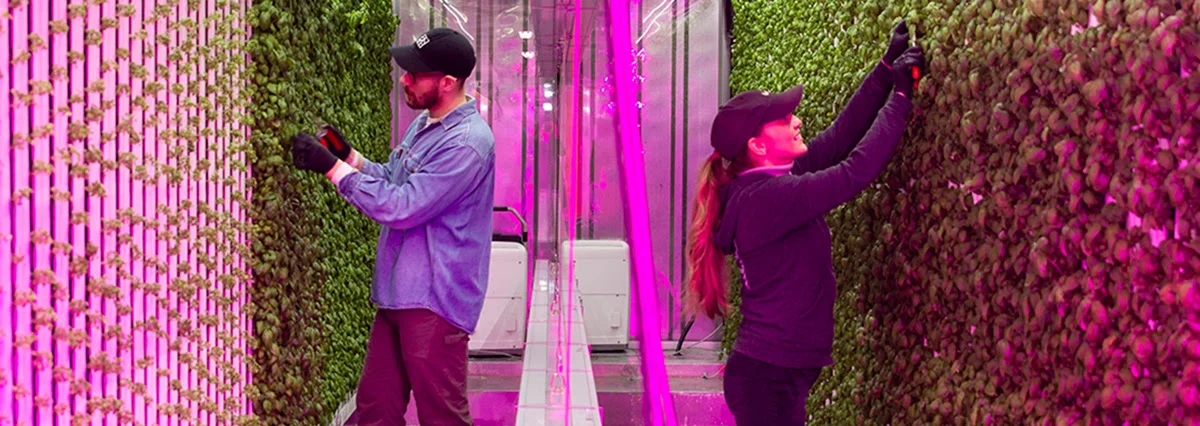
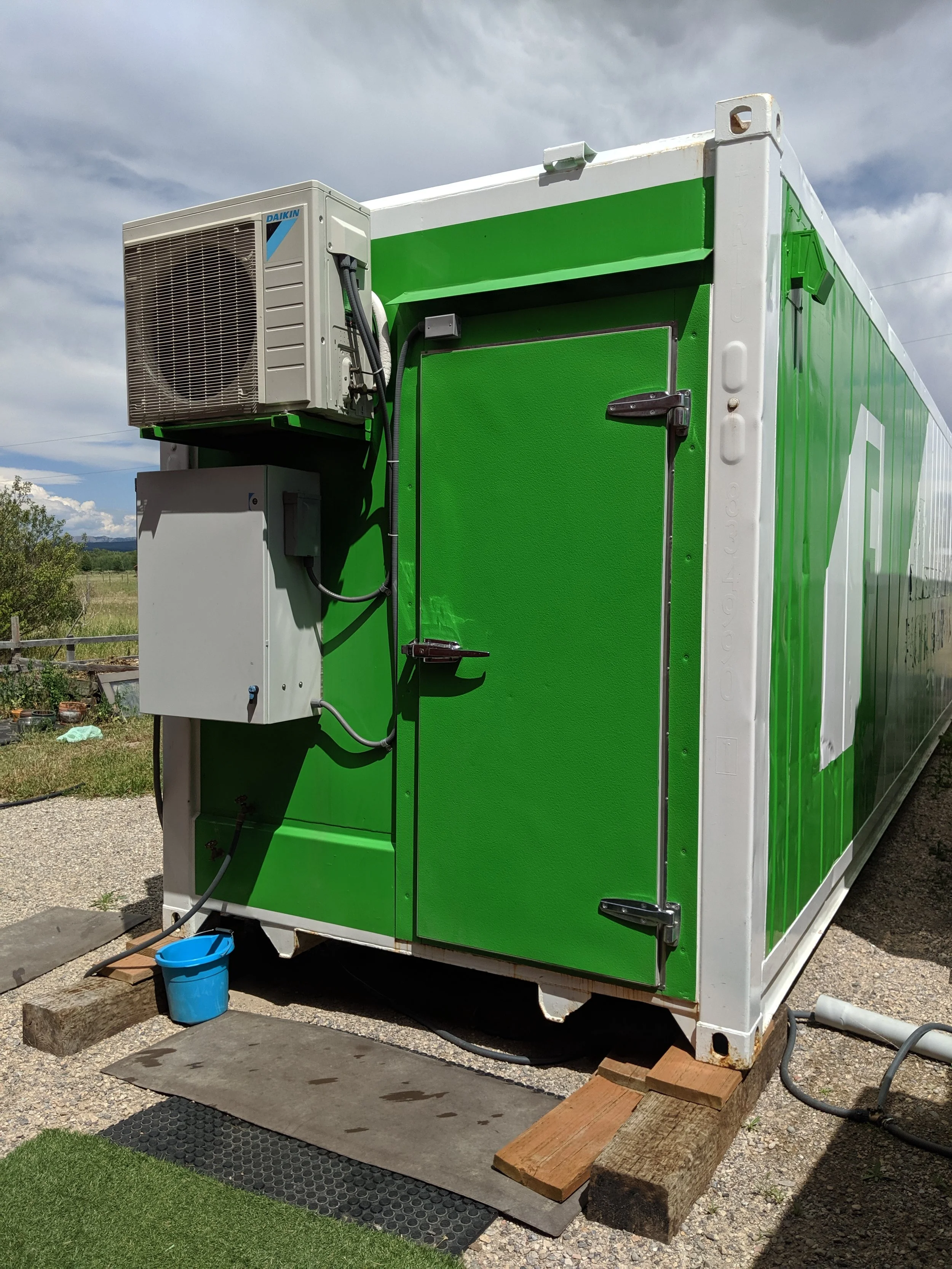
The Leafy Green Machine is a complete hydroponic growing system built entirely inside a shipping container with all the components needed for commercial food production. The system is designed and engineered for easy operation, allowing users of all backgrounds to immediately start growing.


FOR SALE - 2014 Freight Farm - Computer Controlled Hydroponic
Grow System - Texas
Manufacturer - Freight Farms
Model - 2014 Leafy Green Machine (LGM)
Price - $29,950
Location: Texas
The Leafy Green Machine is a complete hydroponic growing system built entirely inside a shipping container with all the components needed for commercial food production. The system is designed and engineered for easy operation, allowing users of all backgrounds to immediately start growing.
Current Uses
• Perfect for starting a small produce business, growing for restaurants or supplementing existing produce production.
• Restauranter who wants to grow custom greens for rotating menus 365 days a year. Farm to Table? How about Parking Lot to Table!
• Universities and schools have created programs for students to learn to grow while supplementing dining facilities with fresh greens.
The Highest Standard in Controlled Environment Agriculture
• Pre-built system designed to maximize operational efficiency and streamline workflow
• Perfect environment is achievable 365 days a year, regardless of geographic location
• Automated scheduling reduces the amount of labor required to operate
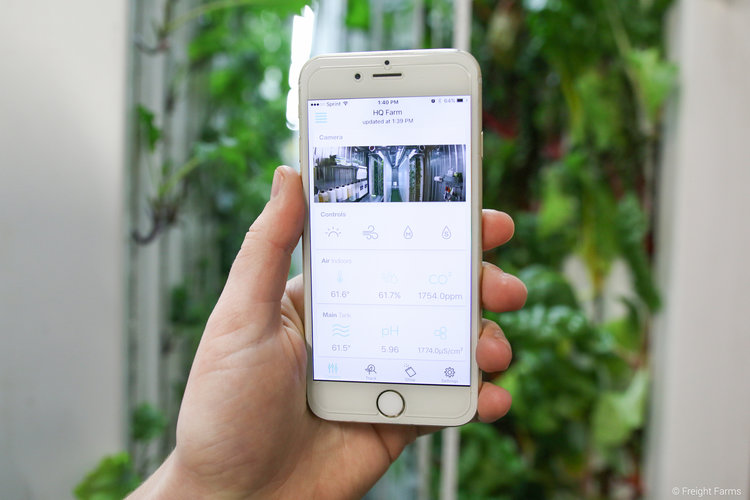
• Remote monitoring & control capabilities through the Farmhand AppTM
Operation Requirements
Space- The LGM dimensions are 40’ x 8’ x 9.5’. We suggest putting the farm on either trap rock or a concrete pad.
Electrical- 60 amp, 120/240-volt single phase or 120/208V three phase connection.
Water- A designated water source is suggested such as a garden hose or hardline water plumbing.
Labor- 15 to 20 hours a week for farming and upkeep.
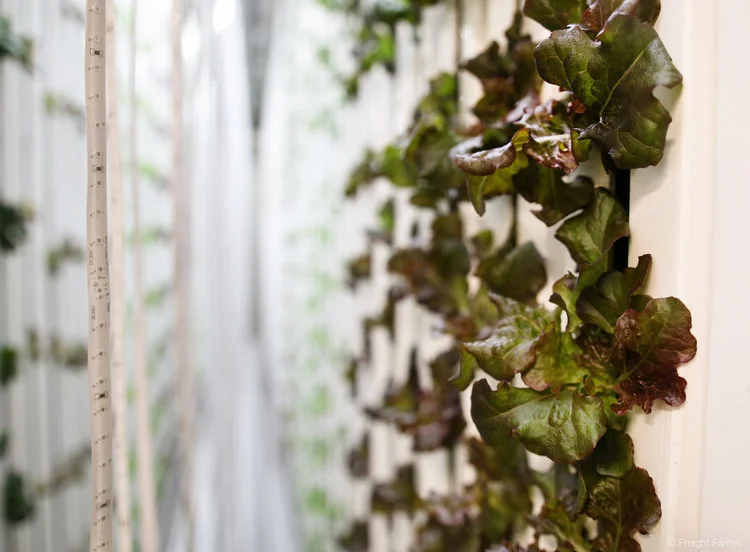
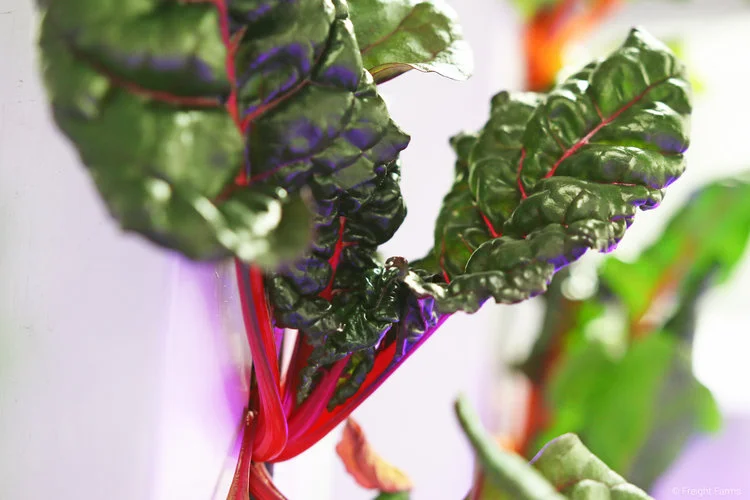
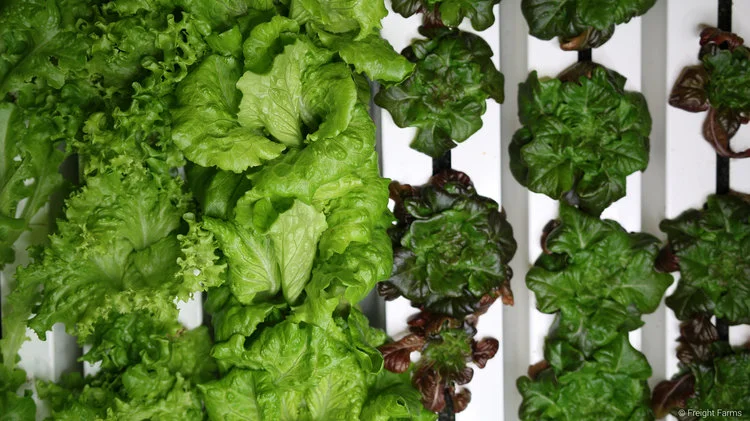
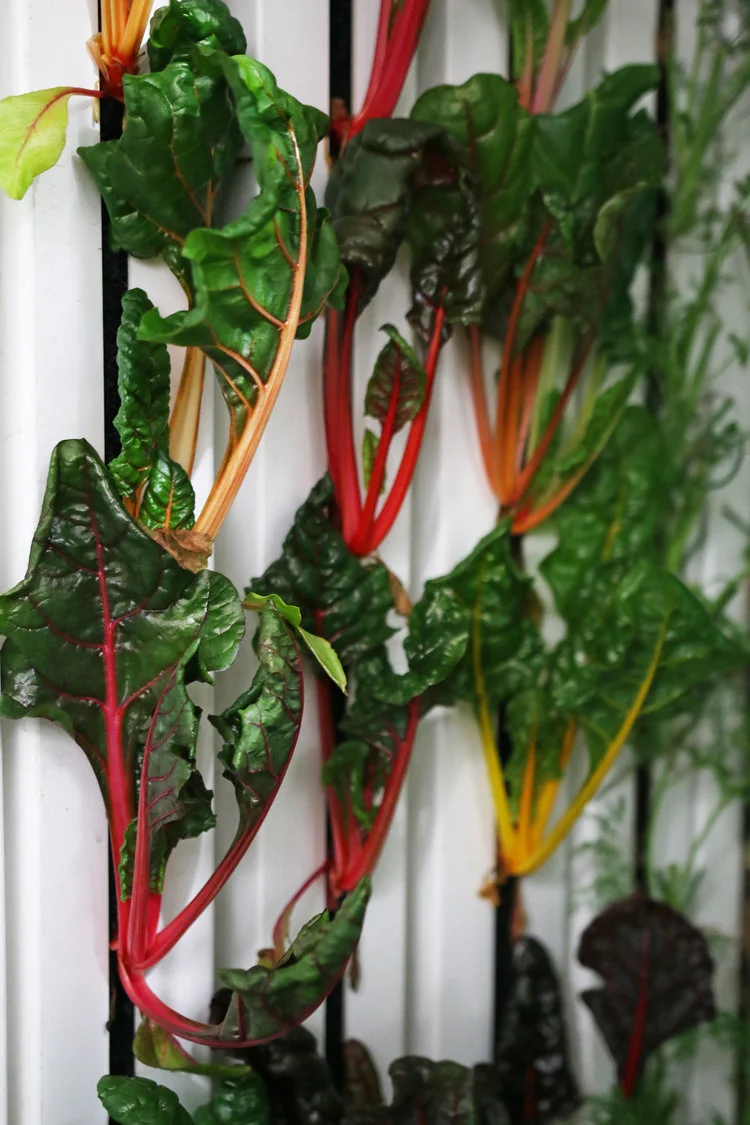
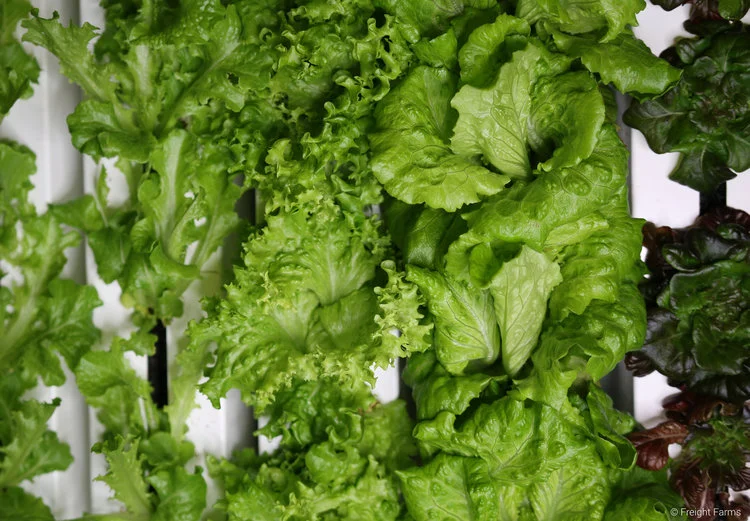
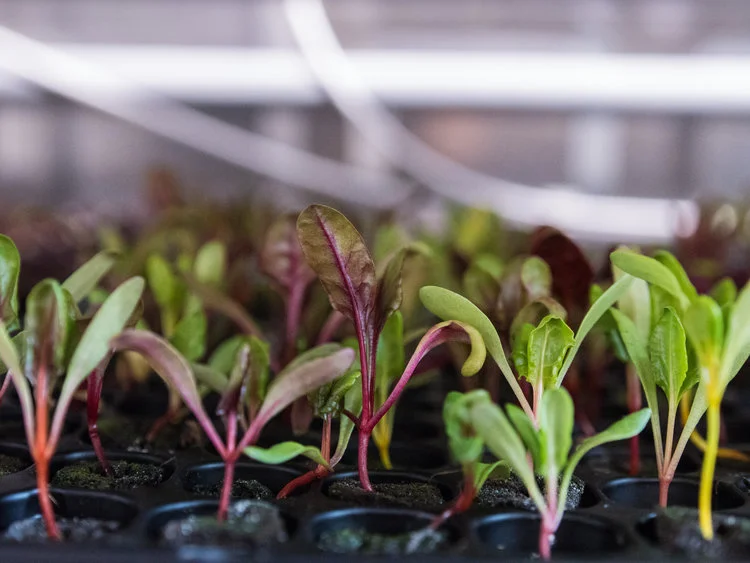
It is recommended growing smaller compact crops with a high turnover rate, like head and loose leaf lettuces, herbs and heartier greens like kale and swiss chard.
Crop Examples
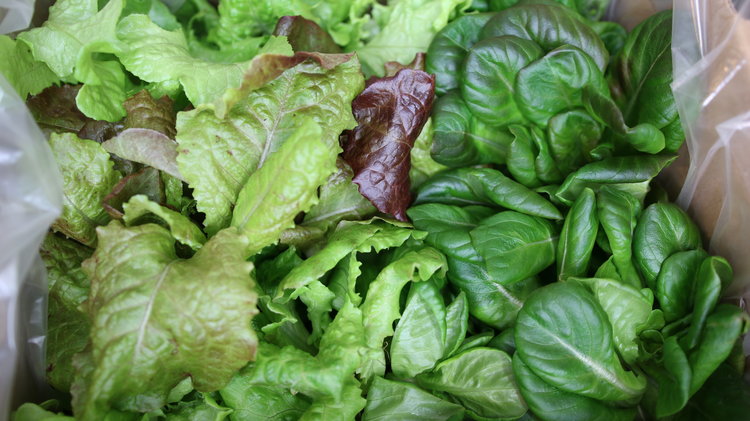
Butterhead lettuce, Oakleaf lettuce, Swiss Chard, Mustard Greens, Cabbage Leaves, Arugula, Cilantro, Mint, Dill, Oregano, Kale, Endive, Basil, Chives and Thyme
Yields
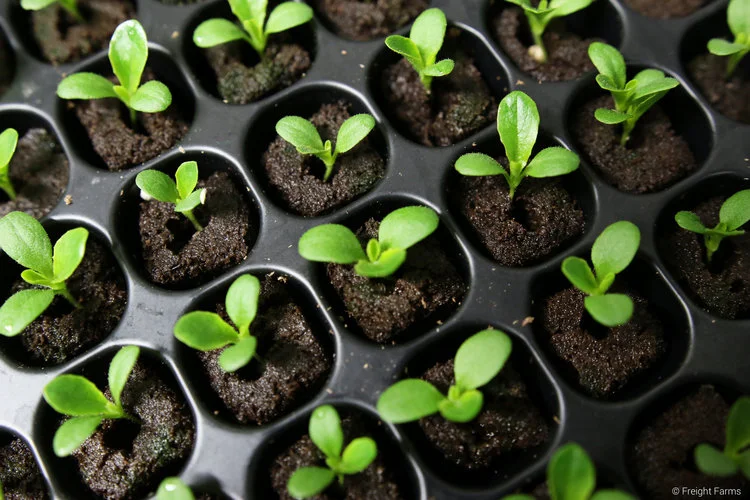
800+ heads of lettuce weekly
12 heads per tower (256 vertical towers)
1 LGM= 1.8 acres
Freight Farms technology makes it easy to bring farming closer to where people live. The result is local, year-round production featuring fresh, sustainably-grown, and flavorful greens.
Freight Farms is exactly what it sounds like–a farm in a repurposed freight container.
These old containers are retrofitted with vertical, hydroponic components to make farming possible anywhere in the world, regardless of the outside climate.
LGM Included Accessories:
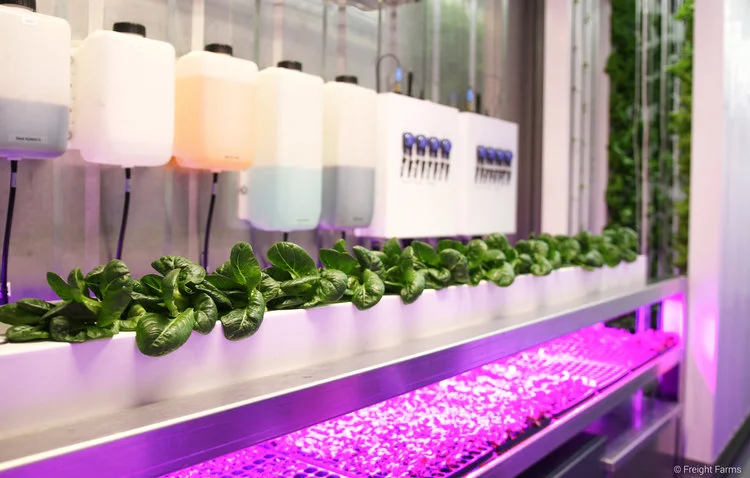
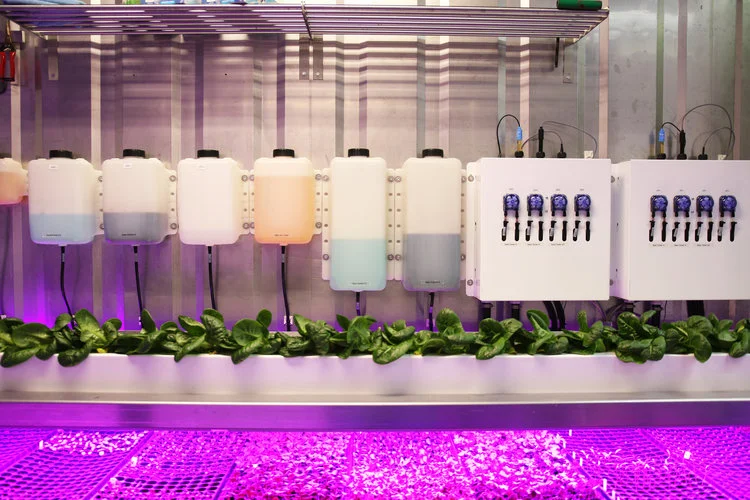
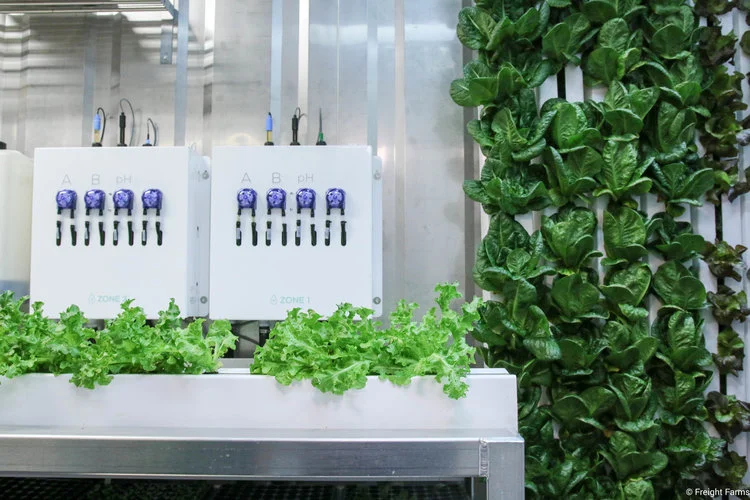
2 (two) new Freight Farm chem panels; with AgrowDose pumps. Pumps where primed with water but never used. New sensors also.
2 (two) A/C units: Unit #1 is Factory the other is a MrCool Oasis ES Series Ductless Mini-
Split Heat Pump System 230V 19 SEER - 24,000 BTU. If you don’t need 2nd A/C unit remove it & reinstall exhaust fan. All tubing, wires where run into the farm through exhaust port hole so as to keep farm integrity.
1 Dehumidifier Model HCWH-90 Whole Home Dehumidifier
1 (one) ClearView pump to manage the condensate.
2 (two) (Floor fan tubes (2ea. for both sides)
2 (two) 800cfm fans; only one installed
4 (four) Westpointe fans not installed
2 (two) Co2 Generators, 1 MiniGen; 1 Autopilot
1 (one) Evolution RO1000 High Flow Reverse Osmosis Water Filter by HydroLogic
1 (one) BIGboy Ultra Violet Sterilizer Kit by HydroLogic.
2 (two) Seedling Doser Panel & Main Doser Panel w/sensors
2 (two) sets pH probe - EC probe - Temp probe -
Seedling & Main delivery tanks; replaced All of them 8 are new
Illumitex - Eclipse Gen2 8 LED Grow lights & Eclipse Gen2 12 LED Grow lights - 3ea. Over the seedlings area NEW
10 LED light strips 7 replacements
Agrowtek – Hydro Transmitter and sensors; (All New)
Cradle Point (AT&T) Cell for Internet into LGM has ??? router that works with Farmhand.
4 port switch
Laptop cradle w/swing arm not installed
Lots of spare parts
Misc. PVC fittings most treaded a few slip on
2 aux pumps, small volume, 2 air pumps,
Training, website and ongoing support available through Freight Farms.
Visit www.freightfarms.com for more information.
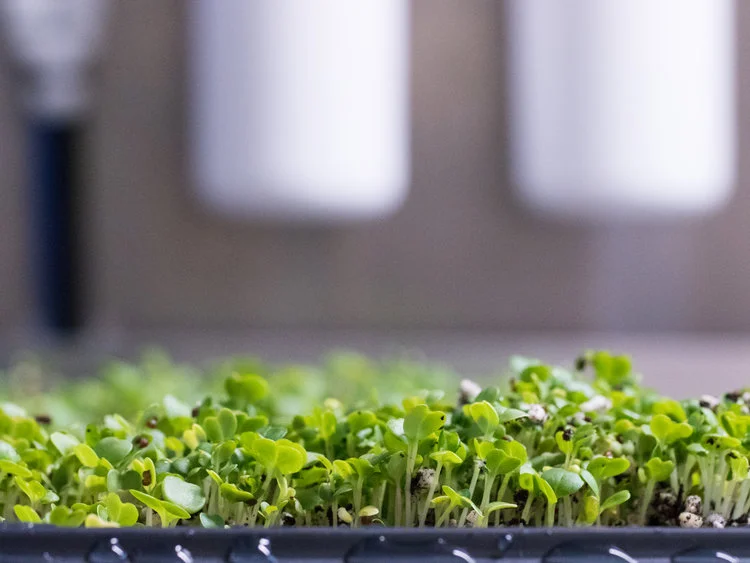
Everything You Will Need To Grow Seedling And Microgreens And Then Some
Materials For Growing Hydroponic Plants - Additional $7,500.00 USD
Seedling Cart & Racks (DIY) 6 trays, 1 sump, lights (mix of LED’s & T5) Bright Agrotech design ($500)
Illumitex - Eclipse Gen2 8 LED Grow lights & Eclipse Gen2 12 LED Grow lights** ($4,000)
20 (twenty) K5 fluorescents lights 4’
Agrobrite 2’x1’ 4 bulbs
Multiponics High-End Cycle Timer in waterproof box ($250)
Multiponics Aquatec CDP 8800 pump w/psi guage in waterproof box ($300)
ProSeries 5 stage Reverse Osmosis Water Filter System 1 ea. w/expansion tank (5gal.); 50GPD ($350)
4 stage Reverse Osmosis Water Filter System 1 ea. w/expansion tank (4.4gal) ($250)
Trays w/holes 50 ea. Trays w/ holes (diamond pattern)
Trays seedling (200ea. cells) 20ea. Trays w/o holes $20 ea.
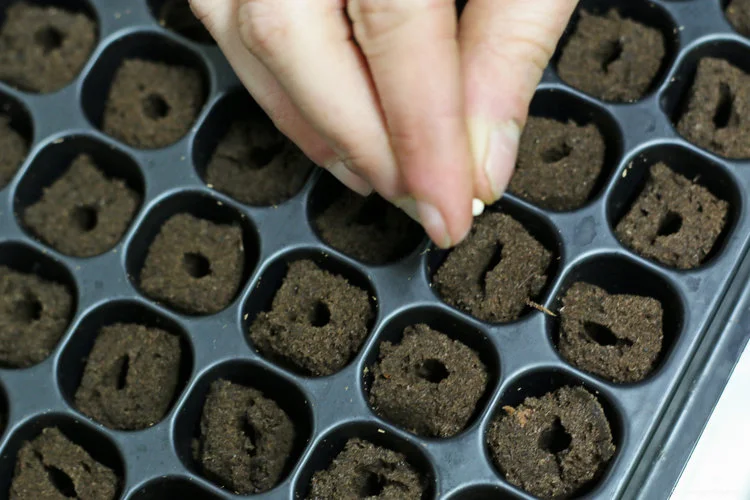
Q Plugs 20/60 4K per case 1ea. case by IHort
Microgreen grow Pads & roll
Propagating Chamber model PC-22 by PRO-GROW ($2,200)
Zipgrow Farm Walls: 2ea. 4’ & 1ea. 8’ complete by Bright Agrotech ($1,500)
Tower Garden growing system ($500)
1ea. 30”x30”x6” tub
Pumps; Aerators; Timers; Tubing and fittings (1/4” / 3/8” / ½”)
PSI gauges
pH & EC probes handheld w/solution
Light Meter (Apogee Instruments) Full-Spectrum Quantum sensor ($500)
** (Seeds Included 1 Year Old)
Attached Documents:
Freight Farm Twitter Feed
LGM Cut Sheets
See All Photos And Videos Here
All information is from sources deemed reliable but is subject to errors, omissions, changes in price, prior sale or withdrawal without notice.
No representation is made as to the accuracy of any description.
All measurements, yields and square footages are approximate and all information should be confirmed by the customer.
Disclaimer of Warranty - The 2017 Freight Farms LGM hydroponic farming container is being sold “as is” and the Seller disclaims all warranties of quality, whether express or implied, including the warranties of merchantability and fitness for particular purpose.

Violet Defense Group Raises $2 Million For Expansion of It's Germ-Killing And Ag Light Businesses
“This infusion of additional capital will enable us to take both companies to their next level of growth, including further build-out of our management team and the product inventory necessary to accelerate the rich pipeline of opportunities that are developing for our products,” added Terrance Berland, CEO of Violet Defense Group
ORLANDO, Fla. – November 5, 2019 - Violet Defense Group announced today that it has raised an additional $2 million in funding for its germ-killing business, Violet Defense and its agricultural lighting business, Violet Gro. This round of capital was led by Kirenaga Partners, an early-stage venture capital firm with offices in New York and Orlando, Florida.
“This infusion of additional capital will enable us to take both companies to their next level of growth, including further build-out of our management team and the product inventory necessary to accelerate the rich pipeline of opportunities that are developing for our products,” added Terrance Berland, CEO of Violet Defense Group.
Violet Defense introduced the first known pulsed Xenon UV disinfection system that could be installed in the ceiling and work automatically to kill up to 99.9% of key pathogens of concern in both healthcare and other commercial spaces, such as athletic facilities, office buildings, food production facilities, hotels, schools, and more. Violet Defense has established an exclusive partnership with Puro Lighting for commercialization of the Violet Defense technology throughout the United States and Canada. Puro Lighting is a Denver-based company dedicated to protecting people’s health and promoting wellness with specialized lighting technologies, which markets its products directly and also through an extensive network of medical and lighting agencies and distributors.
Violet Gro combines cutting-edge design with patented technology to produce LED grow lights that are highly energy-efficient and produce very little heat, thereby lending themselves to substantial cost savings of up to 70% when compared against traditional lighting solutions.
“We have a unique ability with our technology to solve critical issues in the indoor agriculture space from energy savings to improved conditions for growing healthy, vibrant plants,” said Kurt Kucera, President of Violet Gro.
A key commercialization opportunity for Violet Gro is its partnership with Hyperponic, which selected Violet Gro as its primary lighting supplier for its CropTower TM in June of this year. The Hyperponic CropTowerTM is a technologically advanced and fully integrated growing system that provides a complete computer-controlled environment and nutrition management system to facilitate increased quality and consistency, faster production, reduced space requirement and better yields at lower costs.
The Violet Gro team will be showcasing its latest technology, including its next-generation grow light, its UV light prototype and a version of the CropTowerTM at MJBizCon, the preeminent Marijuana Business Conference in Las Vegas, December 11-13, 2019.
###
About Violet Defense Group
Violet Defense Group is an advanced photonics company based in Celebration, Florida helping to leverage its patented technology for solutions that lead to a healthier world. As the parent company to Violet Defense, the germ-killing technology company, and Violet Gro, the agricultural lighting company, Violet Defense Group is committed to harnessing the power of the sun to bring its benefits to indoor environments.
About Violet Defense
Violet Defense uses UV disinfection to protect everyday spaces from harmful pathogens by killing up to 99.9% of bacteria and viruses, including E. coli, Salmonella, MRSA, C. diff., Norovirus, and C. auris. Violet Defense’s technology is the only known Pulsed Xenon solution that can be installed into a room full-time, creating a continuous way to address disinfection needs of all types of settings. For more information, visit www.violetdefense.com or follow us on Facebook (@violetdefense).
About Violet Gro
Violet Gro’s LED grow lights combine cutting-edge design with the patented technology to create cost-effective, long-term solutions to indoor growing, providing plants more light with less heat, leading to substantial energy savings. Violet Gro is uniquely capable of incorporating UV light into grow environments to protect against harmful mold, mildew, and pests, as well as drive increases in medical substances produced by plants. For more information, visit www.violetgro.com or follow us on Facebook (@violetgro) or Instagram (@violet_gro).
Media Contact for Violet Defense Group:
Jessica Jones, Vice President of Marketing
407.433.1104, x1002

Our Latest Webinar Recording Is Now Available!
The Saint Joseph’s College farm supplies the campus with fresh greens year-round and is the backbone for several campus sustainability, student employment, and hands-on education initiatives–including a one-of-a-kind certificate program at the school’s new Institute for Local Food Systems Innovation
On October 21st, we interviewed the farm operators and student farmers from Saint Joseph’s College in Maine. The Saint Joseph’s College farm supplies the campus with fresh greens year-round and is the backbone for several campus sustainability, student employment, and hands-on education initiatives–including a one-of-a-kind certificate program at the school’s new Institute for Local Food Systems Innovation.
Watch The Webinar To Learn More
Don’t have time for the full recording?
Check out our complete summary
on the Freight Farms blog (under 10 minute read!)
JUMP RIGHT IN!
00:00 - Introduction to Freight Farms
05:42 - Meet the speakers
07:18 - Introduction to Saint Joseph’s College
14:49 - Using the farm in the dining hall
20:26 - Student employment at the farm
30:00 - Adding the farm to the curriculum
43:32 - Farmers share some advice!
46:15 - Q&A with audience questions
Space Crunch In Cities? How Rooftop Farming Is Becoming More Than Just A Trend
Founded in 2015, Rooftop Republic has set up more than 50 urban farms so far. Research by ecological and agricultural experts shows rooftop farms not only produce food but also create green spaces and boost biodiversity
Since 2008 more than 60 rooftop farms have sprouted up around Hong Kong, covering 15,000 square metres.
Photo: rooftoprepublic.com
05 Nov 2019, Marianne Bray, Reuters
Founded in 2015, Rooftop Republic has set up more than 50 urban farms so far
Research by ecological and agricultural experts shows rooftop farms not only produce food, but also create green spaces and boost biodiversity
At the top of a three-storey building in Hong Kong, with car horns blasting on the streets below, Jim Fung teaches a dozen students how to thin out choi sum vegetables.
"Always use the resources you have," the instructor said as he placed shredded office paper into soil-filled plastic crates and wound string around bamboo sticks to make support frames.
Fung was coaching the first cohort of students in an academy run by social enterprise Rooftop Republic to teach a new generation of urban farmers as demand for their skills soars.
The organisation is spearheading a movement to turn Hong Kong's idle rooftops and urban spaces into farms to help residents reconnect with nature and make the finance hub more liveable.
Once a cluster of fishing and farming villages, Hong Kong is now one of the most densely packed cities on Earth, with 7.4 million people living on a quarter of its 1,100 square km (425 square miles) of land.
The rest is mainly country parks and rural areas, but living in skyscrapers and working long hours has caused Hong Kongers to lose touch with the nature around them, say students at the academy.
"We've become detached from the history of the sea and land that Hong Kong had," said Jessica Cheng, a Rooftop Republic student who works for a philanthropic organisation.
Andrew Tsui, one of Rooftop Republic's three co-founders, said he wants the academy to be "Le Cordon Bleu" (a famous cookery school) of urban farming.
To him, that means a place where graduates become masters of the practice and at the same time become "stewards of our planet, our wellbeing, and our communities", he said.
Founded in 2015, Rooftop Republic has set up more than 50 urban farms so far.
It launched its academy in March, starting with events and workshops. The organisation's first urban farming course, which began last month, teaches students botany, organic farming and how to manage soil, pests, weeds and water resources.
Their classroom sits atop the headquarters of Hong Kong's Business Environment Council, a non-profit promoting sustainability in the world's second most-expensive city for property after Monaco, according to global realtor Knight Frank.
Since 2008 more than 60 rooftop farms have sprouted up around Hong Kong, covering 15,000 square metres (161,460 square feet), said Mathew Pryor, who heads the University of Hong Kong's landscape architecture division.
He estimates another six square km (2.3 square miles) of rooftop space could be available - about half the size of Hong Kong's airport and just less than the seven square km (2.7 square miles) of agricultural land in the city.
Hoping to expand that potential, Tsui told the Thomson Reuters Foundation that Rooftop Republic has been working with developers to include rooftop farms in their design blueprints.
One day, he predicted, rooftop farmers will be as necessary as facility managers who look after clubhouses and pools.
His organisation will train about 150 urban farmers over the next year, he added.
"We have the power to shape the future city we live in ... through demonstrating how adopting an urban farm lifestyle helps the end consumer become aware of ecology, biodiversity, nature, wellbeing and a circular food system," Tsui said.
SOCIAL VALUE
In the 1,200-square-metre (13,000-square-foot) Sky Garden in Metroplaza Mall - the largest urban farm atop a retail mall in Hong Kong - residents can cultivate edible flowers and fruit trees as they attend lifestyle classes like mindful gardening.
Research by ecological and agricultural experts shows rooftop farms not only produce food, but also create green spaces and boost biodiversity.
They also help mitigate the so-called "heat island" effect in cities, when heat is trapped by dark-coloured roads and buildings.
Just as importantly, Tsui said, the farms build communities among the people who care for the crops.
"There is huge potential for rooftop farming in a high-density city," said Pryor, the landscape architecture expert.
"Particularly if it can be aligned with social issues, like aging-in-place," he added, referring to when people have the chance to grow old in their own homes.
Access to a nearby rooftop farm can help the elderly engage with their community and keep them in good mental and physical health, he explained.
In a study of 108 people using rooftop farms, Pryor found more than three-quarters of respondents said they saw social value as the most important benefit of working on the farms, with socialising topping the list.
They added it was good for their health and for learning about nature.
Such learning is key, said academy student Alyson Hamilton, a teacher who runs her school's micro-garden.
"(My) students have no knowledge about food, where it comes from, how much plastic it comes in," she lamented.
NATURE AND COMMUNITY
Alongside the high cost and scarcity of space in Hong Kong, the main challenge for budding urban farmers is having the right conditions, Tsui said.
The basics that plants need - natural sunlight, fresh water and fresh air - are often in short supply in the city, he added.
"Our big question is, if many of our city spaces are not suitable for plants to survive, then how are they conducive for human beings?" he asked.
With more than half the world's population living in cities, Tsui said he's using what he has learnt from rooftop farming to engage urban planners and shape a human-centric city.
He questions whether the move toward so-called "smart cities" around the world actually allows city-goers to live smarter.
"Are we smarter in getting closer to nature for our wellbeing? Are we smarter in the way we design our neighbourhoods, allowing access to fresh air, direct sunlight and nature?" he asked.
Working with architects, planners and developers allows Rooftop Republic to incorporate some of those factors into the blueprints for new developments.
But rooftop farms - which are legal in Hong Kong - currently exist in a grey area between formal city planning and informal community action, said Pryor, the landscape architecture professor.
Both the city's New Agricultural Policy paper, published in 2014, and the Hong Kong 2030 strategic plan acknowledged rooftop farms as playing a significant part in urban agriculture. Government officials did not respond to interview requests.
Pryor would like to see the city's government include such farms into mainstream building and land policy, in recognition of how important they are for creating sustainable cities.
Tsui agreed, saying urban planners need to create ecosystems to nurture people's connection to nature.
"We want to put nature and community back into where we play, where we work, where we live," he said.
The story is by Thomson Reuters Foundation
This Google Ventures-Backed Indoor Farming Startup Just Opened Its Biggest Farm Yet
The Baltimore farm is 3.5 times as large as Bowery’s formerly largest farm—and is the latest attempt to make indoor farming work as a way to disrupt the agricultural system
11.06.19
The Baltimore farm is 3.5 times as large as Bowery’s formerly largest farm—and is the latest attempt to make indoor farming work as a way to disrupt the agricultural system.
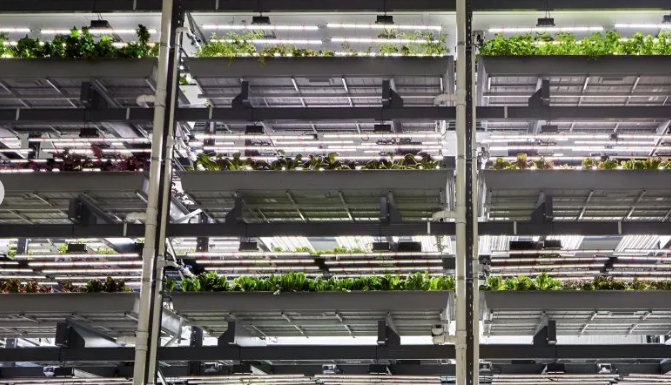
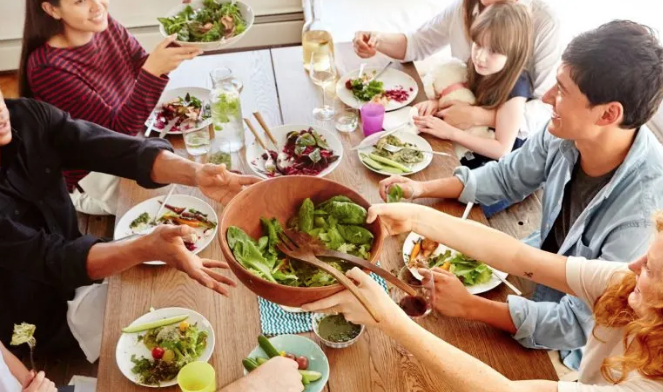
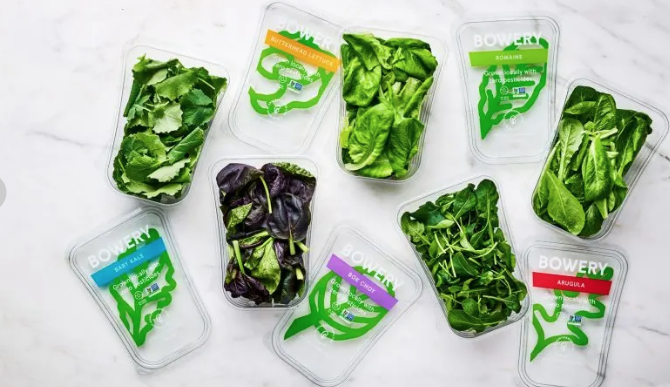
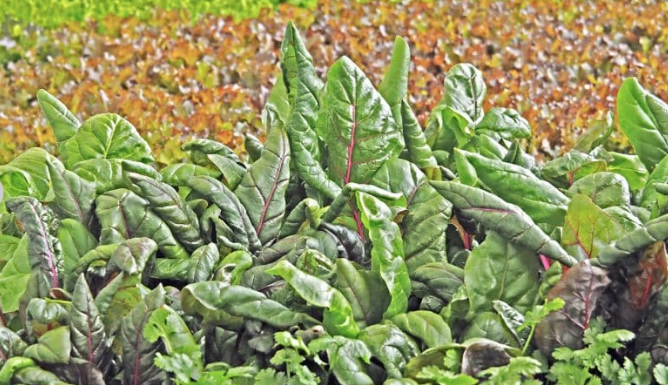
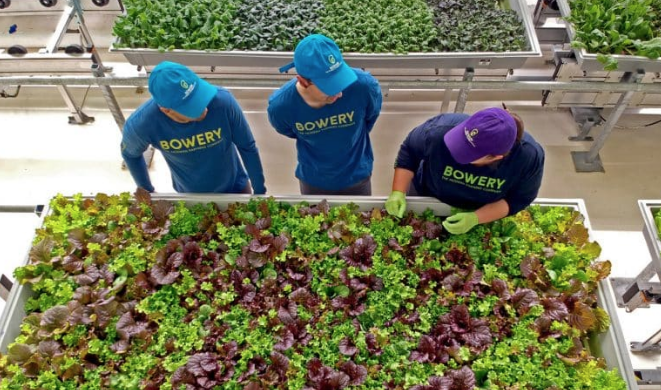
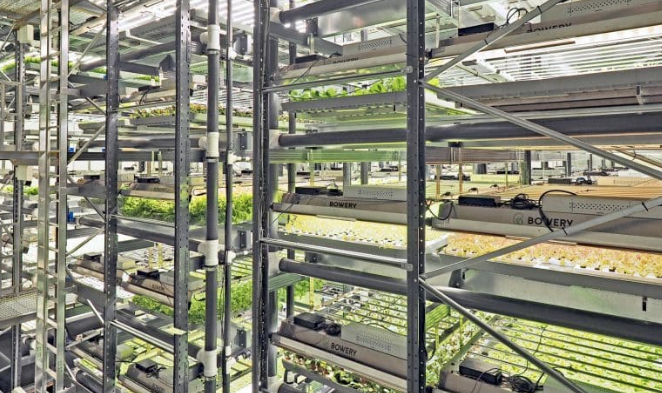
If you live in the U.S., the last time you ate a salad, the lettuce inside it almost certainly came from California or Arizona. But the geography of leafy greens is very slowly starting to change as the trend of indoor farming—growing greens in large warehouses using artificial light and automated technology—expands. The latest farm to open is in Baltimore. It’s the largest, so far, from the New York-based, tech-heavy startup Bowery.
[Photo: Bowery]
The company, which just announced that it raised another $50 million from investors, grows what it previously called “post-organic” produce in sprawling warehouses (it no longer uses the phrase, but the greens are grown without any pesticides). It’s one of a handful of startups trying to make a dent in some of the challenges of traditional agriculture. The industry isn’t moving as quickly as some predicted. Aerofarms, for example, said in 2015 that it hoped to build 25 farms over the next five years; so far, it has two large farms, an R&D farm and a small farm at a school. The same year, FarmedHere said that it planned to expand to 18 farms but went out of business two years later. Boston-based Fresh Box Farms said in 2017 that it planned to expand to 25 farms in five years but still has only one farm. Plenty, a Silicon Valley-based indoor farming startup that has raised $226 million, has one farm.
Bowery, which launched in 2015, opened its first farm in New Jersey in 2017, followed by another farm at the same location, roughly 30 times larger, in 2018. The new farm in Baltimore is around 3.5 times larger than the last (the company won’t disclose specific square footage). The company is ramping up operations in Baltimore this week and planting crops, with the first sales to begin at local retailers early next year. Like others, the startup also hasn’t moved quite as quickly as it has suggested—last year, it said that it planned to open multiple farms in new cities by the end of 2019, though the Baltimore farm will be the only one to open this year—but it offers evidence that the field is continuing to grow. Another large indoor farm, from Gotham Greens, will also open in Baltimore late this year inside a former steel mill. In Pittsburgh, a robot-run farm from another startup called Fifth Season is scaling up in an industrial neighborhood.
“We’ve been really measured and thoughtful at Bowery in the way that we’ve scaled and grown the business, and that’s not just the farms themselves but the development around our technology . . . I think that really is rooted in the recognition that the problem that we’re solving and the opportunity that we’re focusing on is a large one, and ultimately, we’re running a marathon, not a sprint,” says Bowery CEO Irving Fain.
If the business model can succeed, it could help farming become more sustainable. “When you look at the footprint of agriculture globally, it’s the largest consumer of resources in the world by a quite a wide margin,” says Fain. The majority of the world’s water is used for agriculture—often in places like California that struggle with frequent drought and where droughts will increase with climate change. Indoor growing systems can shrink water use by more than 95%.
Because the crops grow in a pristine environment, they also don’t require any pesticides, fungicides, or herbicides. (Growing inside a controlled environment also eliminates the risk of contaminated produce, such as an E. coli outbreak in conventionally grown lettuce in 2018 that made 210 people sick and left five people dead.) Bowery estimates that its system is 100 times more productive than a traditional farm on the same amount of land. And while indoor farming uses a significant amount of energy for climate control and lighting, the technology is becoming more efficient. “I think you’re going to see us really fulfill our energy needs with more and more renewable energy over time,” he says.
[Photo: Bowery]
Like others in the space, Bowery relies heavily on technology. The company uses a custom-built operating system to carefully monitor plants and automatically make changes to improve yield and quality. Cameras track plant growth. “That plant vision system is taking photos of our crops in real-time,” Fain says. “It runs those photos through deep learning algorithms that we’ve developed. It both analyzes and understands what’s happening with the crops today but also predicts what will happen to the crops in the future. And then all that data runs through other machine learning algorithms, which essentially say, these are the adjustments and tweaks and changes that we want to make to this crop.” The software also manages farmers, making it possible, he says, to hire people who have no previous experience in growing food.
As the company expands, it can use the data it has already collected to improve each new farm. “In essence, what we’re doing is we’re building this distributed network of farms, and every new farm comes online with the benefit of all the prior farms that have come before it,” says Fain. “And then that farm itself also is now contributing data into that network and strengthening the network itself. What that means is better produce, more efficiency, new taste and flavors, and new varieties, and all those things are sort of translating from the learning that we’re getting through the Bowery operating system and the systems themselves.”
All of this, he says, can happen at a cost-competitive with growing in the field. Right now, the company’s leafy greens sell through 100 retailers for around the same price as organically grown produce. Fain says that he expects the cost to eventually be at par with any produce. “When I started Bowery, one of the things that was really important to me was really ensuring that we could ultimately democratize access to high quality, fresh produce,” he says. “To get there, we had to be able to sell a product that was already competitive today . . . We’ve spent a lot of time really carefully and meticulously focusing on not only the way we run our farms but the systems inside of our farms, the automation, the technology and the software, and how that directly ties into the unit economics of the farms themselves. And so we can today be at or below field organic pricing with a very healthy economic model for our farms.”
ABOUT THE AUTHOR
Adele Peters is a staff writer at Fast Company who focuses on solutions to some of the world's largest problems, from climate change to homelessness. Previously, she worked with GOOD, BioLite, and the Sustainable Products and Solutions program at UC Berkeley, and contributed to the second edition of the bestselling book "Worldchanging: A User's Guide for the 21st Century."
[Photos: Bowery]

US (MA): MIT Halts Work On The Controversial Open Agriculture Initiative Food Project
MIT has closed down much of its Open Agriculture Initiative following allegations of academic dishonesty and improper dumping of wastewater, according to an article published in the NY Times
MIT has closed down much of its Open Agriculture Initiative following allegations of academic dishonesty and improper dumping of wastewater, according to an article published in the NY Times. Late last week, MIT’s vice president of research, Maria Zuber, closed down all offsite work on the project, though she has allowed researchers to continue doing some design and document work.
The project, often simply referred to as “OpenAg,” is known for its food computers — small, high-tech containers meant to grow plants in controlled environments and without any soil. OpenAg also operated larger farms it called “food servers” in shipping containers housed outside the MIT campus in Middleton, Massachusetts.
Project leader Caleb Harper also had a vision that owners of these food computers would be able to share data on the perfect combinations of light, water, nutrient, and temperature levels with one another, creating a kind of open-source framework for high-tech indoor farming. “As an open-source project, we believe the more Food Computers we all build, the more data we all have to play with, and the more we can radically alter the future of food,” states a page on the Open Ag site.
Read the full article at The Spoon (Jennifer Marston)
Farmer-to-Farmer Harvie Webinars - Managing Customer Friendly Farm Shares And Direct-To-Consumer Marketing Channels
The webinars will occur each Tuesday in November at noon EST / 11 am CST / 10 am MST / 9 am PST
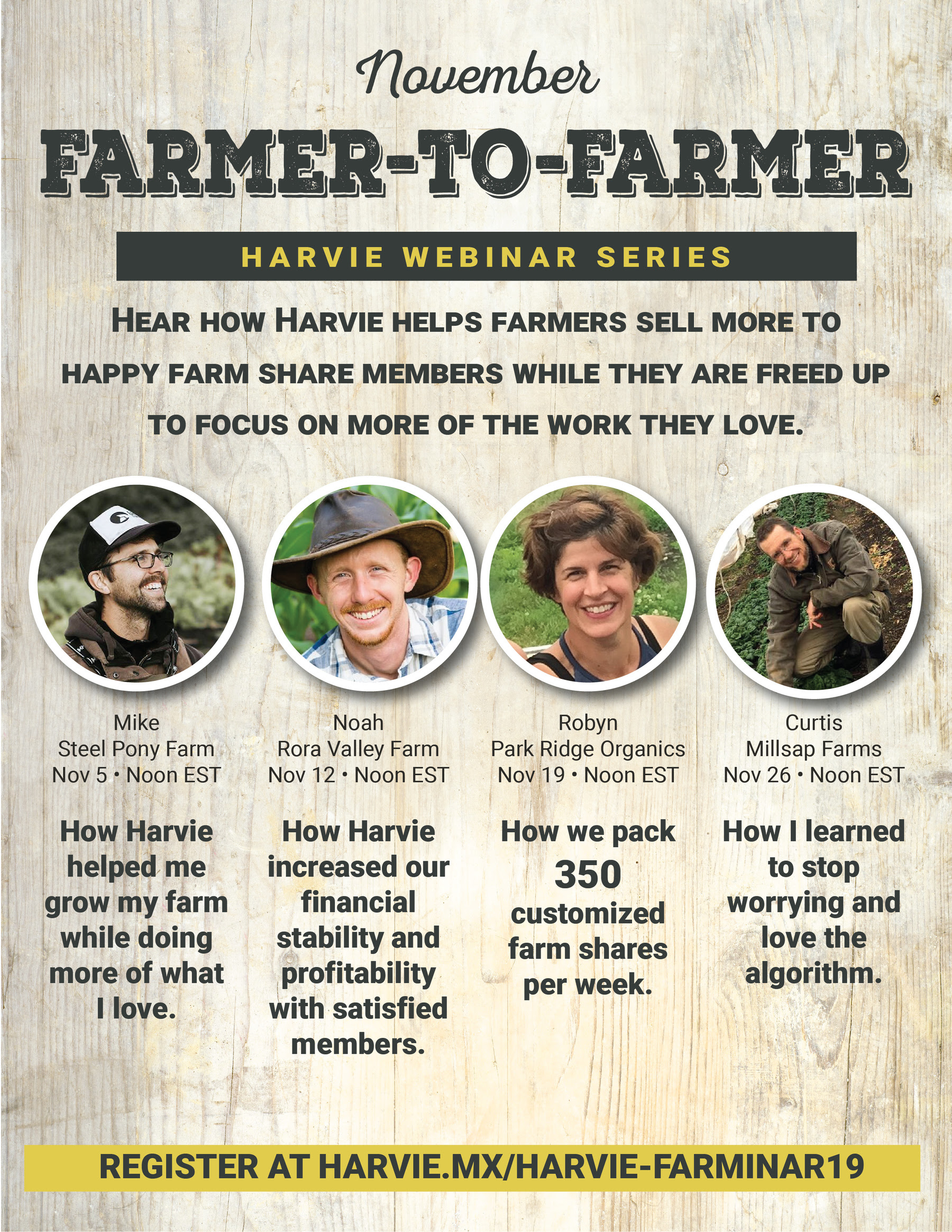
You are invited to a free webinar series - Farmer-to-Farmer Harvie Webinars - managing customer-friendly farm shares and direct-to-consumer marketing channels, brought to you by 3 farmers who use Harvie on their farm.
They will spend about 30 minutes talking about how they use Harvie and how it has benefited their farm business. There will be time for Q-and-A following each webinar.
The webinars will occur each Tuesday in November
at noon EST / 11 am CST / 10 am MST / 9 am PST.
Here is the schedule:
November 12th: Noah from Rora Valley Farm - "How Harvie helps my farm increase financial stability and profitability through selling more product to a highly satisfied membership"
November 19th: Robyn at Park Ridge Organics, "How we pack 350 customized farm shares per week"
November 26th: Curtis from Millsap Farms, "How Harvie Vanquished 'The Dread Of The Empty Box' On Millsap Farm Or "how I learned to stop worrying and love the algorithm..."
You may come to one or all of the webinars in the series.
To register, fill out this form:
https://smallfarmcentral.typeform.com/to/aUX6pT
For more information on Harvie - https://www.harvie.farm/forfarmers/
Contact julie@harvie.farm with any questions!

The Economics of Container Farming In Nauru
You might be excused for not knowing much about the country of Nauru. It’s a small island in the Pacific Ocean that’s only ten times larger than Microsoft’s campus in Redmond with one-fifth the people. The 11,000 citizens of Nauru occupy a footprint of about 8.1 square miles (21.98 sq. kilometers) out in the middle of absolutely nowhere where the waters are so deep they never have to worry about tsunamis
People from countries we refer to as frontier markets must roll their eyes when some people in America talk about how “oppressed” they are. The same people complaining about how bad it is in the States probably think Africa is a country when in fact it’s 54 countries. A lot of Africans actually are oppressed because about half of the continent’s countries are run by dictators. If you can go into your local store and buy some fresh lettuce at any hour of the day, 365 days a year, you’re not oppressed. Most people around the world don’t have access to a large selection of fresh vegetables or the means to purchase them. Take Nauru for instance.
You might be excused for not knowing much about the country of Nauru. It’s a small island in the Pacific Ocean that’s only ten times larger than Microsoft’s campus in Redmond with one-fifth the people. The 11,000 citizens of Nauru occupy a footprint of about 8.1 square miles (21.98 sq. kilometers) out in the middle of absolutely nowhere where the waters are so deep they never have to worry about tsunamis. About once a month, a ship will cruise into the harbor dropping off loads of food and supplies. Vegetables are all flown in by air. With its pleasant island breezes, Nauru is a hidden gem that happens to be the least visited place in the world. As a result of not having to deal with obnoxious tourists, the citizens are some of the kindest people you’ll ever meet. They’re also the world’s most portly. You would be too if you had to pay these prices for vegetables.
Produce prices in a Nauru supermarket in AUD – Credit: Nanalyze
We did the math for you on those numbers. If you want to buy a head of lettuce in Nauru, you can’t. They don’t have any right now. If they did, you would pay $3.29 a pound or $7.25 a kilo in greenbacks. That’s more than three times the retail price of lettuce in the United States which sits at around $1.09 a pound. In order to solve the obesity problem which commonly afflicts island nations like Nauru, we need to make healthy food more affordable. Maybe we can use something Nauru has a whole lot of already – shipping containers.
In a previous article, we wrote about the newly sprouted industry of “vertical farming.” Also called indoor farming, the eleven startups we looked at have collectively raised more than $900 million in venture capital so far. The appeal is in the delicious numbers. Indoor farming uses 95% less water and yields 400 times more output than the same land footprint when compared to traditional farming methods. That’s what it says on the tin, but the experts are skeptical when it comes to indoor farming using shipping containers like the one seen below.
The Greenery from Freight Farms – Credit: Freight Farms
Container Farming Economics
We’re not interested in the “farm to table” marketing spin being put on container farming, we’re solely interested in the economics. For that we can turn to Peter Tasgal, a man who used to work as an investment banker before he managed to turn his life around and became the CFO of a $100 million consumer packaged goods company. Today, he’s an agriculture consultant, and this past February he penned a piece on “What is the Future of Container Farming?” in which he talks about how it’s largely a niche business applicable to applications like “restaurants, traditional farmers seeking to maintain year-round customers, clean rooms, and areas of extreme climate.” This table pulled from his article compares various methods of farming:
Source: Agfunder News
Container farming has the “highest cost per delivered pound” with Mr. Tasgal stating that it’s “at best four times as expensive per pound to grow in a container farm and more likely over 10.0x as expensive as compared to traditional farming methods.” He proposed that either technology can be used to reduce the cost per pound (nothing on the horizon yet) or people can pay a price premium for “better quality produce.” Since the people of Nauru already pay a price premium, this isn’t exactly a showstopper.
Some Initial Concerns
We shipped one of our MBAs over to Nauru to visit with Mathew Batsiua, former Health Minister of Nauru, and someone who has spent the last 4 years of his life fighting his own version of an African dictatorship with the local government. He thinks that container farming might be able to provide the Nauruan people with an alternative to purchasing over-priced greens at the supermarket. Aside from being able to offer cheaper and fresher greens, container farming could be used as part of a school program to get the country’s youth eating healthier. An additional benefit would be creating some local jobs. If the initial implementation works out, Nauru could act as a model for other Pacific Island countries that all have a similar obesity problem for all the same reasons.
Some initial concerns he raised around container farming:
Support and training
Durability of the components in the unique climate of Nauru
Consumption of electricity
The need for solar integration
Availability of consumables required to operate the farm
In order to gauge the suitability of container farming for the country of Nauru, we’re turning to “the world’s leading manufacturer of container farming technology,” a startup called Freight Farms.
Freight Farms
Founded in 2013, aptly named startup Freight Farms hails out of Bahstun Massachusetts and has raised $11.4 million in funding so far to develop “high-volume crop production units made from upcycled shipping containers to support farming in any climate.” Their container farming solution can produce over 500 types of lettuces, herbs, leafy greens, and small root vegetables at a commercial scale. As of January 2019, their hydroponic container farms can be found in 38 U.S. states and 15 countries. Their latest growing platform, The Greenery, costs $104,000.
Credit: Freight Farms
It’s a significant price increase over their previous container solution, The Leafy Green Machine, which ran just $76,000. That’s because The Greenery has over 70% more growing space than the Leafy Green Machine.
If we’re going to deploy The Greenery on Nauru, we need to get it there first. Let’s say that’s an additional $8,000 in shipping costs. With an initial capital outlay of $112,000, we can begin to crunch some numbers. Firstly, let’s look at the operational requirements:
Credit: Freight Farms
Nothing too alarming here. Water is clearly in short supply for Nauru but 5 gallons a day is manageable. One gigabyte of data a month is affordable. We need to consider that electricity in this part of the world is more costly as well. Consumables like peat moss plugs, seeds, and nutrient solutions will all need to be imported by ship. Let’s do some back-of-the-napkin math and see how much time it might take to recoup our initial investment.
Container Farming Yields
According to an article by the University of Saskatchewan on hydroponic lettuce, “all it takes to grow one lettuce is 1 g of fertilizer, 1 L water, 1 seed, and 1 Jiffy-7 peat pellet, at a cost of as little as 10 cents per plant.” Now we have an estimated cost per head of lettuce. “With an average plant success rate of 95%, you can plan on harvesting about 940 plants a week,” says Freight Farms. They’re talking about harvesting lettuce at a 4-week maturity and we’re estimating the weight of each lettuce head to be 4 ounces based on an estimate given from Bright Agrotech in their article on How Much Can Container Farms Really Grow? That gives us 235 pounds of lettuce a week or 12,220 pounds of lettuce a year (just over 6 tons). If we sold that lettuce at $1.64 a pound – about half the price of lettuce on Nauru today – that gives us about $20,040 in revenues a year. For consumables, let’s assume ten cents per plant (48,880 plants = $4,888). For electricity, the company states that power consumption for a Greenery ranges from 150-165 kWh per day. Here’s an idea of electricity rates on Nauru in AUD.
Credit: Nauru Utilities Corporation
Unless we can convince the government to cut us a break, the math works out to $21,900 a year AUD which is $15,064 a year USD in electricity costs. Subtracting our costs ($15,064 + $4,888) from our revenues ($20,040) we get a meager profit of $88 and we haven’t even considered labor or the cost of support. Barring any serious errors in our assumptions, it doesn’t look like container farming would be very economically viable for the country of Nauru. Even with electricity subsidized at the lowest domestic rate, we’re still looking at 10 years before we can receive a return on our initial capital outlay and that’s without considering the time value of money.
Conclusion
Container farming shouldn’t just be about producing better tasting “farm to table” produce for over-priced restaurants to sell at a premium to well-off diners, it should do something better than that for mankind. Our back of the napkin calculations don’t quite add up. Sure, we might be able to negotiate down the price a bit, or the Government of Nauru might subsidize the operation, but as we’ve said before, subsidizing the world’s problems won’t scale. The operation needs to be self-sustaining, generate a profit, and provide an ROI in a reasonable amount of time. If you think your container farming startup can provide a solution to Nauru’s obesity problem, Mr. Batsiua would like to have a chat with you. Just drop us a line and we’ll put you in touch with him. Stay tuned for our next article on container farming where we look at all the players in this space in addition to Freight Farms.

CubicFarm Systems Announces Its First Operational Growing Machine For Hemp and Cannabis
The ZenCube project leverages CubicFarms' patented, undulating-path growing technology to allow hemp and cannabis growers to cultivate significant amounts of product in a smaller footprint by doing so in a completely climate-controlled environment
October 28, 2019
License Agreement with Zenabis to Expand Sales of CubicFarms Systems in New Vertical
VANCOUVER, BC / ACCESSWIRE / October 28, 2019,/ CubicFarm� Systems Corp. (TSXV:CUB) ("CubicFarms" or the "Company") is pleased to announce that ZenCube, its vertical-farming machine for growing hemp and cannabis, is fully operational at a showcase and R&D facility in Langley, Canada.
The ZenCube project leverages CubicFarms' patented, undulating-path growing technology to allow hemp and cannabis growers to cultivate significant amounts of product in a smaller footprint by doing so in a completely climate-controlled environment. The ZenCube helps to address challenges faced by traditional growing methods, by providing a solution that requires less space, labour, water and energy, and is expected to result in a more consistent, higher quality product for farmers and end-users alike.
CubicFarms has developed a pipeline of sales opportunities for its ZenCube-branded growing machines that is expected to be augmented by an exclusive License Agreement signed with Zenabis Ltd. ("Zenabis"), a subsidiary of Zenabis Global, a leading Canadian licensed cannabis cultivator of medical and recreational cannabis, and propagator and cultivator of floral and vegetable products. Under terms of the agreement, Zenabis shall fulfill a minimum sales threshold of 150 ZenCube machines by year 2024 to maintain its exclusive license to operate, sell and sublicense ZenCube machines globally.
The License Agreement supersedes the Joint Venture Agreement between CubicFarms and Zenabis, announced in a Bevo Agro press release dated October 9, 2018. Bevo Agro now is Zenabis Global.
CubicFarms and Zenabis are conducting ongoing R&D on crop growth and quality at the Zenabis-owned-and-licensed Langley facility.
Dave Dinesen, Chief Executive Officer of CubicFarms, commented: "CubicFarms is excited to bring online its first growing machine for the purposes of facilitating yet another vertical in the hemp and cannabis space, and to help farmers grow more produce reliably, 12 months a year, wherever they are on earth. CubicFarms has received numerous enquiries to utilize our technology in this space and we are thrilled to serve this market, in addition to our other verticals, namely fresh produce, animal feed and nutraceuticals."
Leo Benne, Chief Growing Officer of Zenabis, added: "The Zenabis and CubicFarms partnership on the ZenCube project is a culmination of our joint vision of bringing a robust and reliable solution to the global hemp and cannabis market, to ensure we meet consistency and quality in our crop yields."
Neither the TSX Venture Exchange nor its Regulation Services Provider (as that term is defined in the policies of the TSX Venture Exchange) accepts responsibility for the adequacy or accuracy of this release.
About CubicFarm� Systems Corp.
CubicFarm� Systems Corp. ("CubicFarms") is an ag-tech company commercializing large scale, vertical farming solutions for global industrial markets. Founded in 2015, the Company's mission is to provide industries around the world with efficient growing systems capable of producing predictable crop yields. CubicFarms offers turnkey, commercial scale, hydroponic, automated vertical farm growing systems that can grow predictably and sustainably for 12 months of the year virtually anywhere on earth. CubicFarms enables its customers in the fresh produce, animal feed, nutraceutical, and hemp/cannabis industries to grow locally and to provide their markets with safe, sustainable, secure and fresh ingredients that are consistent in colour, size, taste, nutrition and allows for a longer shelf life. Further support and value is provided to customers through the Company's patent-pending germination technology and proprietary auto harvesting and processing methods.
Using its unique, undulating growing system, the Company addresses the main challenges within the indoor farming industry by significantly reducing the need for physical labour and energy, and maximizing yield per cubic foot. The Company has sold and installed systems in Canada and the US, and is currently negotiating with a global pipeline of prospective customers. It also operates one wholly owned facility in Pitt Meadows, British Columbia, and sells its produce in the province to retail and wholesale customers under the brand name Thriiv Local Garden".
Information contact
Kimberly Lim
kimberly@cubicfarms.com
Phone: +1-236-858-6491
www.cubicfarms.com
Cautionary statement on forward-looking information
Certain statements in this release constitute "forward-looking statements" or "forward-looking information" within the meaning of applicable securities laws, including, without limitation, statements with respect to the ZenCube is expected to result in a more consistent, higher quality product for farmers and end-users alike; and CubicFarms' sales pipeline is expected to be augmented by the License Agreement. Such statements involve known and unknown risks, uncertainties, and other factors which may cause the actual results, performance, or achievements of CubicFarm Systems Corp., or industry results, to be materially different from any future results, performance, or achievements expressed or implied by such forward-looking statements or information. Such statements can be identified by the use of words such as "may", "would", "could", "will", "intend", "expect", "believe", "plan", "anticipate", "estimate", "scheduled", "forecast", "predict", and other similar terminology, or state that certain actions, events, or results "may", "could", "would", "might", or "will" be taken, occur, or be achieved.
These statements reflect the company's current expectations regarding future events, performance, and results and speak only as of the date of this news release. Consequently, there can be no assurances that such statements will prove to be accurate and actual results and future events could differ materially from those anticipated in such statements. Except as required by securities disclosure laws and regulations applicable to the company, the company undertakes no obligation to update these forward-looking statements if the company's expectations regarding future events, performance, or results change.
SOURCE: CubicFarm Systems Corp
Pressure To Revoke Certification of Containers Continues At Fall NOSB Meeting
Multiple groups push USDA to revoke certification for organic production systems with containers during most recent National Organic Standards Board meeting cycle
Multiple groups push USDA to revoke certification for organic production systems with containers during most recent National Organic Standards Board meeting cycle
The June 3 USDA memo summarizing the land-use history requirements has not slowed down the efforts of opponents to organic production systems incorporating containers into their farms. Several organizations including retail organizations belonging to the National Organic Coalition in their written and verbal comments for the Fall NOSB meeting continued to call for revocation of certifications of operations using containers. Multiple members of the NOSB went so far as to call for the decertification of seedling facilities that produce transplants for vegetable growers if those facilities rotate greenhouses where raised tables are located during the course of the year between organic and non-organic potting soils in the containers. However, USDA continues to stand firm on the June 3 memo and has not placed the issue of containers on the work agenda of the NOSB nor USDA staff.
CSO reaffirms sensible application of USDA organic standards in Washington and at the NOSB meetings
Members of the CSO met with members of Congress and the USDA as well as testified in front of the NOSB over the last few weeks to reiterate the importance of containers to help meet their obligations as growers under the organic requirements of conserving natural resources. CSO members and staff reminded officials on the importance of organic containers in conserving wildlands by reducing the footprint of fruit and vegetable production, minimizing nutrient runoff from farming operations, increasing the efficiency of water use, enhancing the effectiveness of beneficial insects and generally helping growers properly respond to the site-specific conditions on their farms.
Frankel urged USDA and the NOSB to avoid making false statements regarding the production practices of container growers, especially when making policy decisions. Frankel also presented data showing that the June 3 memo was not raising prices yet was stifling supply increases as growers and marketers are withdrawing investment, promotion, and research necessary to build fresh produce categories as a result of uncertainty surrounding how policy is interpreted and made.

UK Natural Light Growing Centre Opened For Business At Warwick’s Innovation Campus In Warwickshire
Agri-tech innovation centre Crop Health and Protection (CHAP) and its greenhouse innovation partner RIPE Building Services, have officially opened their new high-tech greenhouse facility at the University of Warwick’s Wellesbourne Campus.
7 November 2019
Agri-tech innovation centre Crop Health and Protection (CHAP) and its greenhouse innovation partner RIPE Building Services, have officially opened their new high-tech greenhouse facility at the University of Warwick’s Wellesbourne Campus.
The structure, named the Natural Light Growing (NLG) Centre, has been designed and built by RIPE Building Services, partnered by CHAP with £500,000 funding from Innovate UK. It was officially opened by Professor Janet Bainbridge OBE.
The NLG Centre is the first of its kind and will act as a demonstration facility and experimental hub for horticulture to investigate the effect of full-spectrum growing conditions on crops in a protected environment. The facility will host projects looking in detail at yield and speed of growth as well as traits like taste, health, and vigor.
Rather than being constructed from glass, the NLG Centre uses a new type of ETFE film, which transmits the full spectrum of UV light. The film is inserted into the light-weight frame design and tensioned using patented heat technology. The construction also uses a unique ground anchoring system that allows the structure to be built quickly and efficiently, without the need for traditional concrete foundations, in all weather conditions.
Over the next few months, CHAP will be launching early trials in the facility and holding a number of open-days to invite businesses to explore ideas for projects. As well as the unique light transmission qualities of the facility, the structure is also tall enough to accommodate vertical farming and has been designed with novel automation projects in mind.
Fraser Black, CEO of CHAP, said: “The NLG Centre at Wellesbourne Campus is another vital open-access facility for UK agriculture. We look forward to welcoming British growers to explore some of their key productivity challenges.”
Phillip Lee, Managing Director of RIPE Building Services, said: “We’re incredibly excited to be partnering with CHAP and officially launching our new prototype greenhouse at Warwick’s Wellesbourne Campus. The location is ideal for the facility, being part of Warwick’s innovation community as well as a major growing area in horticulture.”
Simon Swain, Vice-President for Regional and National Engagement at the University of Warwick, said: “The opening of the NLG Centre marks another exciting step in developing our Wellesbourne Campus as a centre for innovation, attracting novel thinkers, companies, and partnerships onto the campus to work alongside our own world-renowned crop scientists and automation engineers.”
-ends-
For further information contact:
Darren Hassall, Head of Marketing, CHAP
Darren.hassall@chap-solutions.co.uk
+44 (0)1904 462062
Or
Andrea Cullis, Media relations manager, University of Warwick
a.cullis@warwick.ac.uk
07825314874
Or
Ripe Building Services
info@ripebuilding.com
Notes for Editors
About CHAP
Crop Health and Protection (CHAP), funded by Innovate UK, is one of four UK Agri-Tech Centres. CHAP’s vision is for the UK to be a global leader in the development of applied agri-technologies, to help secure our future by nourishing a growing population sustainably while delivering economic, environmental and health benefits to society.
CHAP acts as a unique, independent nexus between UK government, researchers and industry, building innovation networks to identify and accelerate the development of cutting-edge solutions to drive incremental, transformative and disruptive changes in sustainable crop productivity and to establish controlled environment agriculture (CEA) as a core competency.
About RIPE
RIPE (The Rapid Installation Process for ETFE) is a spin-out of Evolve, the company where the Natural Light Growing concept originated. Evolve is pretty much the only ‘architectural’ design practice focused on horticulture in the world. We bring together all the appropriate technology in order to achieve optimal growing solutions and long-term profitable operations for our clients, always with a leaning towards sustainability. Our mantra is: It’s only sustainable if everybody can use it.
About the University of Warwick
The University of Warwick is one of the world’s leading research institutions, ranked in the UK’s top 10 and world top 70 universities. Since its foundation in 1965 Warwick has established a reputation of scientific excellence, through the Faculty of Science, Engineering, and Medicine (which includes WMG and the Warwick Medical School). A global university, Warwick was named in the top 25 of the Times Higher Education’s Most International University rankings.
About Professor Janet Bainbridge OBE
A biochemical engineer by training, Janet has worked as a specialist within the investment group of UKTI for 11 years and is currently working with the Northern Powerhouse to scope agri-food opportunities.
She has had a long career as a senior academic, has a Chair in Biotechnology and Food Science and has also been CEO of a private sector company. In 2000 she was awarded an OBE for services to Science and Technology.
The Rise of Urban Farming
Urban farming, or urban agriculture, can be described as the growing of plants and raising of animals in and around towns, cities and urban environments
Urban farming is big news. You may not have heard too much about it but according to the UN Food and Agriculture Organization (UNFAO), urban agriculture is something that is practised by 800 million people worldwide, over one-tenth of the global population. So what exactly is it and how is it changing how we produce and distribute food?
What is urban farming?
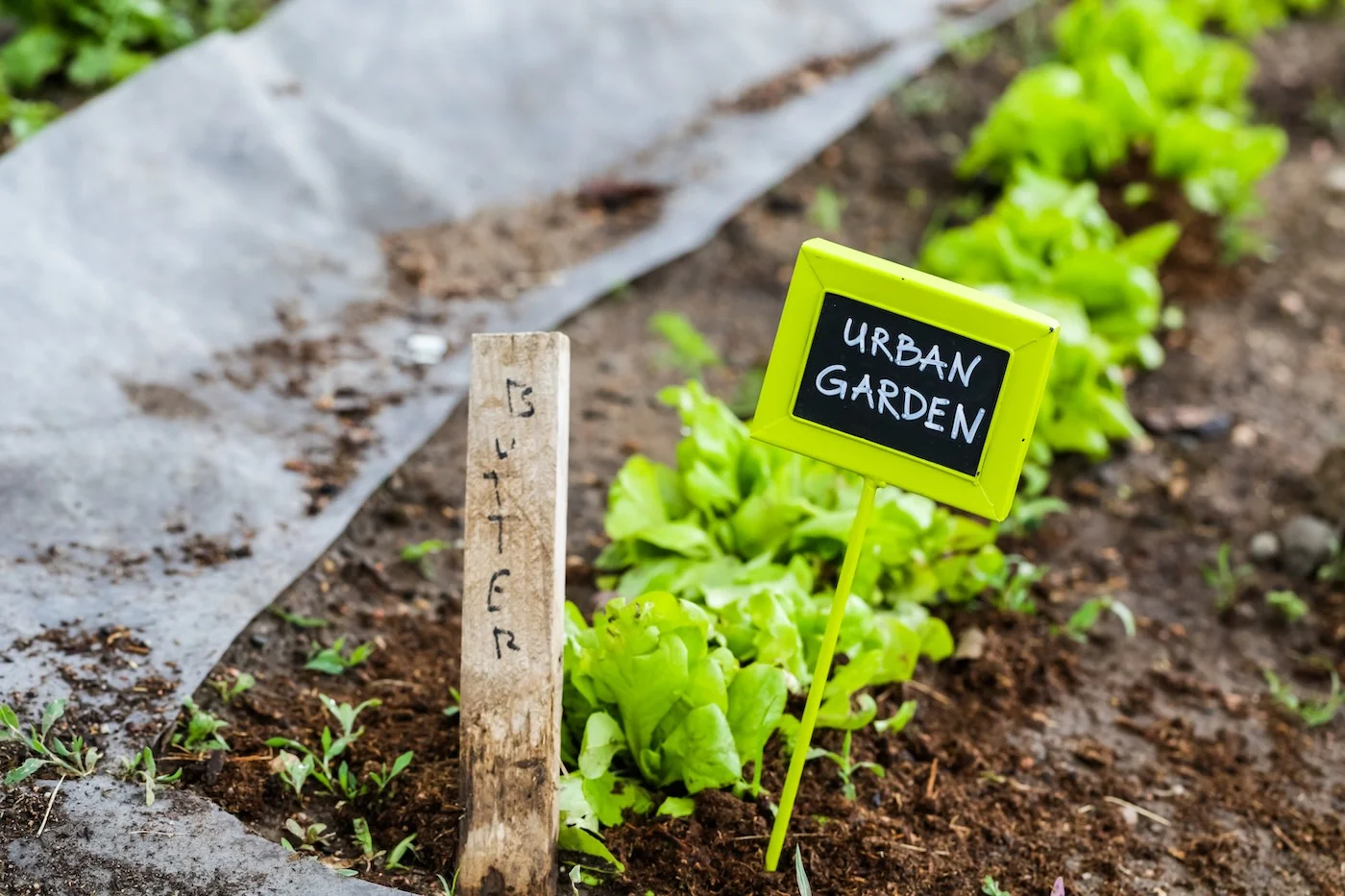
Urban farming, or urban agriculture, can be described as the growing of plants and raising of animals in and around towns, cities and urban environments. Until recently, farming has been a largely rural activity. But the development of technology, together with a pressing need to find more sustainable ways of production and consumption, has led to the adaptation of farming techniques in more built up environments.
There are several different types of urban farms of varying scales that exist in different parts of the world, including commercial city farms, community gardens, community orchards, indoor vertical farms, hydroponic greenhouses, rooftop gardens, urban aquaponic farms (or fish farms), urban beehives and small-scale homestead farms. They produce a range of goods for local consumption or retail, such as grains, vegetables, fruit, meat, poultry, fish, herbs, honey and dairy products.
Urban farms can be small, medium or large-scale commercial enterprises, cooperatives run by community groups or residents, or even individual set ups. The farms have proliferated in both developed and developing countries in recent years, serving slightly different purposes in general in each. Farms in wealthier industrialized nations have largely been in response to the challenge to find more sustainable methods of agricultural production, along with moves towards more localized economies. In poorer countries, they have come about through multi-stakeholder efforts to combat food insecurity and hunger levels.
Why has urban farming become popular?
Urban farming has grown in popularity over the last 10–15 years. In the developing world, it has largely been driven by the rapid urbanization of developing regions. The urban population across the developing world has grown by around 500 million in the last decade and it is predicted that, by 2025, more than half of the developing world will live in urban areas. The main drivers of urban growth in these countries are high birth rates and an influx of rural people trying to escape poverty. Unlike countries where urbanization has been driven by industrialization, in low-income areas it is often accompanied by high levels of poverty, unemployment, and food insecurity. Urban farming has been seen as a way to combat all three of these problems.
In richer nations, the growth of urban agriculture has been in tandem with a return to localism, the growth of localized businesses, social entrepreneurialism and ethically-minded startups. Social good and environmental sustainability are high on the agenda with new businesses, with one study finding that 90% of today’s CEOs and 88% of business students believe that sustainability is an important part of commercial success. Finding new and improved agricultural methods is an important area of sustainability. Studies have found that agriculture uses 38% of the world’s land area and is responsible for over 70% of global freshwater consumption. With more people concentrated in urban areas, farms can be more productive without using up the same level of resources. Warmer urban conditions are also conducive to the growing of crops.
Not all urban farming practices, however, are for a commercial profit. There are many such as community gardens and community orchards that are run by charities, community groups or resident cooperatives and exist for more social purposes such as sharing food, providing for poorer sections of the community, or bringing parts of the community together.
What are the impacts of urban farming?
Impact on businesses and the economy
Urban farming can have many positive effects on the local economy. As well as presenting green-fingered entrepreneurs with opportunities to start new local businesses, it also creates job opportunities for local people. Furthermore, farms can often provide local shops, supermarkets and restaurants with cheaper and fresher produce which has knock-on positive effects. One study has estimated that urban farms have the potential to provide around 10% of global vegetable crops, which could translate into big savings for local economies worldwide. Start up costs, however, are still high. Those involved in urban farming typically work longer than average hours, lose more food than rural farmers due to urban pests, and struggle to find skilled and experienced staff.
Impact on the environment
Urban farming has been championed as a way of improving agricultural environmental sustainability, but in truth it can have both positive and negative effects and it comes down to the way that farms operate and are regulated. Farms can provide a more efficient way of meeting local demand. If operated sustainably, they can reduce both the agricultural energy footprint (through eliminating the need to store and transport imported products) and the water footprint (through sustainable irrigation and water recycling). They can also transform wasteland into productive green space and stop it from becoming polluted. Vertical farms, which are set up inside multi-storey buildings and warehouses, also have the benefit of saving on space.
But studies have shown that urban farms can also increase energy and water use. Indoor farms, such as vertical farms, use energy-intensive artificial lighting and climate control systems. Many farms use the municipal water supply rather than a recycled water system for irrigation. There are also distinct health and safety risks with urban farming. Urban land can be contaminated with pollutants, while wastewater if not treated properly can contain human pathogens. This can compromise food safety if strict regulations are not in place.
Impact on communities
There are a number of positive social impacts associated with urban farming, such as:
improving food security and reducing poverty among the poorest by providing cheaper and more easily available food;
health benefits of providing affordable nutritious fruit, vegetables and organically produced meat;
greater social inclusion by providing local job opportunities and, in the case of community projects, bringing communities together;
educational opportunities for children, e.g. school trips to city farms and community gardens where pupils can learn more about where food comes from
However, urban farming has attracted some criticism in places such as Europe for becoming monopolized by the middle-classes and excluding lower income groups.
Who are the main players in urban farming?
Europe
Urban farming in Europe is not a new phenomenon. In fact, several countries encouraged the production of food in urban environments during both the First and Second World Wars in the 20th century. Today, start up urban agriculture enterprises are cropping up across the continent. At governmental level, individual governments have had limited involvement but the EU-funded Urban Agriculture Europe, a network of over 120 researchers, have been looking into ways in which urban farming can play a key role in future EU agricultural policy. Berlin-based start up InFarm has become the European urban farming leader with over 100 indoor and outdoor city farms in Germany, France and Switzerland. Among the largest urban farms in Europe are Space&Matter in the Netherlands, the Jones Food Company vertical farm in the UK, and the BIGH rooftop farm in Belgium.
America
There has been a growth in urban farming across the American continent in recent decades. In the US, policies and initiatives vary between states but projects ranging from vertical hydroponic enterprises to community gardens flourish across the country. A 2012 study by the United States Department of Agriculture (USDA) identified over 300 urban farms in the US. This includes one of the world’s largest urban farms located across nearly two acres in Chicago. In Canada, there has been more state-level involvement. Toronto in particular has been proactive, setting up a Food Policy Council which has drawn up a GrowTO Urban Agriculture Action Plan. In south and central America, where poverty and food insecurity are big issues in several countries, the UNFAO has been involved in kick-starting urban micro-gardens projects in countries including Bolivia, Colombia, Guatemala, Nicaragua and Venezuela.
Asia
Several Asian countries have invested significant amounts in urban farming technologies as a way of dealing with population growth and combating food insecurity. China, which has industrialized at a rapid pace in recent decades, has become a world leader in indoor vertical farming thanks to state investment. Similarly, Thailand has a community-supported agriculture initiative, led by the Thailand Environment Institute, that has helped create rooftop farms and indoor vertical farms across Bangkok. In India, another country that has urbanized at a pace, urban farming is now being seen as a sustainable food production method. Methods such as rooftop farming have taken off in cities such as Kerala.
Africa
The African continent has also seen wide-scale urbanization in recent years. Urban farming methods in the poorest countries have largely centred around setting up micro-gardening and community gardening projects, overseen by UNFAO, equipping urban locals with skills and resources to produce sustainable and feed the local community. Methods such as vertical farming are starting to take hold in some African countries. Johannesburg has hosted two Urban Agri Africa Summits to date, looking into possibilities of developing urban farming technologies across the continent.
Urban farming is unlikely to replace traditional agriculture any time soon but it will have a vital role to play in addressing challenges such as environmental sustainability and food insecurity in the coming years. As the world continues to urbanize and new technologies emerge, we can expect to see increasing governmental and inter-governmental involvement as urban farming becomes more mainstream. The key stakeholders will need to make sure that business models stay alert to environmental, social and economic challenges so that the farming of the future is a sustainable benefit for all.
Miigle+ is redefining consumerism by using technology to impact consumer behaviors for the benefit of all mankind and the future of our planet. To learn more, visit www.miigle.com

Report: Sea Level Rise To Affect 3x More People Than Anticipated
Rising sea levels will severely impact nearly triple the number of people previously estimated to be affected, according to a new study published in the journal Nature Communications and co-authored by the CEO of Climate Central
AUTHOR: Katie Pyzyk@_PyintheSky
October 31, 2019
Dive Brief:
Rising sea levels will severely impact nearly triple the number of people previously estimated to be affected, according to a new study published in the journal Nature Communications and co-authored by the CEO of Climate Central. The data suggests coastal flooding (at least once per year) will reach levels where 300 million people currently live, and more than 150 million people live in locations that could be permanently inundated by 2050.
Climate Central's interactive map that accompanies the study shows old projections compared with the expanded risk areas. The map indicates that whole cities could be inundated; in the United States, for example, most of New Orleans and large portions of New York are among the numerous communities shown to be underwater or prone to frequent, severe flooding by 2050.
The areas of most concern are concentrated in developing countries in Asia. More than 70% of the world's population currently living on implicated land are in just eight Asian countries: Bangladesh, China, India, Indonesia, Japan, the Philippines, Thailand, and Vietnam. However, the increased flood risk touches every continent.
Electric revolution: How are cities overcoming EV range anxiety?
The number of U.S. electric vehicles is expected to skyrocket in the coming decades. But how are cities and utilities preparing for that influx?
Dive Insight:
Coastal communities worldwide must prepare for more difficult times than previously anticipated, according to the study. Cities with dense populations like New York and Mumbai are projected to experience serious flooding impacts if no actions are taken to prevent the negative consequences. Flooding effects are projected to be widespread, but major global cities could experience particularly harsh consequences that carry to other areas.
Jakarta, Indonesia, is a city projected to face large swaths of permanent inundation. The city has long been known to be sinking, in part due to land management decisions, exacerbating flooding caused by rising sea levels. The Indonesian president announced this year that the multi-island nation's capital would move from Jakarta to a new location on the island of Borneo. Moving an entire governmental hub to an area known for its beaches and rainforests undoubtedly will turn out to be no small feat.
Coastal flooding reportedly will have profound economic and political implications for the affected countries, which could have a ripple effect on other countries. The expense of relocating people away from rising waters — such as the Jakarta case, or otherwise — is incredibly expensive both for citizens and governments. New infrastructures must be built and others reinforced to support an influx of citizens moving to a new area in a short amount of time.
Besides everyday infrastructure such as transportation, utilities or buildings, coastal cities will need to reconsider the integrity of their flood prevention infrastructure. The study suggests that levees, seawalls and other preventative measures already in place will need to be expanded to cover more territory as sea levels rise. In addition, existing coastal infrastructure likely will not protect against the enhanced threats without continued maintenance and upgrades.
"[E]ven in the US, sea-level rise this century may induce large-scale migration away from unprotected coastlines, redistributing population density across the country and putting great pressure on inland areas," the study says.
Beyond the raw expense of moving populations away from a coast, the study warns against social and political instability. Historically, conflict erupts in areas that experience a large-scale migration, especially in resource-constrained areas. The study recommends further research should be performed on the timing, locations, and intensity of global migrations related to flooding.
Photo Credit: Wikimedia
Recommended Reading:

Exploring Cannabis Vertical Cultivation
Conceptually, vertical cultivation is not really easy to visualize. Simply put, vertical farming is the practice of growing cannabis in vertically stacked layers. This growing practice could either use conventional soil, hydroponic or aeroponic growing methods. Vertical farms can help produce cannabis in otherwise challenging environments
Conceptually, vertical cultivation is not really easy to visualize. Simply put, vertical farming is the practice of growing cannabis in vertically stacked layers. This growing practice could either use conventional soil, hydroponic or aeroponic growing methods. Vertical farms can help produce cannabis in otherwise challenging environments.
As some growers have come to know, cultivating cannabis indoors can be a costly affair. Real estate costs coupled with energy bills, significant staffing requirements, and a host of different elements needing to come together in precise tandem are required for an indoor grow to be operational. It then becomes crucial to be consistently profitable. And that can only be achieved by increasing plant yields. Maximizing the grow space is one way to reach this goal and that’s what brings us to the many aspects of vertical growing; the practice of producing plants in vertically stacked or inclined surfaces.
Primarily vertical farming can be done in one of two ways.
Stacked Vertical
The most common method of vertical farming is a stacked vertical setup. Here levels of plant racks have LED lights above each rack. Plants are topped and defoliated to keep them short and bud-heavy. This may lead to growers stacking in the flower stage - despite the plants being large and top heavy.
True Vertical
In true vertical growing, plants are grown out of the side of a column, with water and nutrients dripping down from the top.
The LED and the Ramp
Cannabis cultivation is going vertical in a big way and the primary reason for that is the vastly improved performance of indoor LED lighting systems. This is resulting in more and more cannabis growers investing in powerful multi-tier (or ‘vertical farm’) lighting systems. With fully functional LED system in place one can expect reducing production time on both the retail flower market as well as for oil extraction. More associated benefits include decreased energy consumption, reduced ventilation, air conditioning and heating needs, decreased cycle time, doubled production because of increased crop yield and of course, the overall reduction of the cost per pound of the finished product. It is also known to significantly reduce water and fertilizer usage. Most growers swear by it for the consistent, year-round flower quality and chemotype with denser trichome development in buds.
Environmental Conditions Get Complex Quickly
Maintaining optimum temperature, humidity, and air circulation is tough for all cannabis grows. But in vertical growing there are more variables in macro and micro environmental conditions because there are more plants, making absolute control more difficult. For the atmospheric variability, the use of sensors to detect data points like moisture changes is recommended. Generally, commercial growers use a single temperature/humidity sensor to monitor a room - even for grow areas spanning over 20,000 feet. In such cases, it is prudent to recommend air circulation systems that push air right in between the racks above the plants, usually with small ducts that take air from the edges of the room to the center of the racks.
Expensive to Set Up and Maintain
While growing plants vertically provides several fundamental advantages for cultivators, it also stands to reason that the increased yield comes with some added costs. This may include increased energy usage from artificial lighting, the upkeep and maintenance of state-of-the-art climate control systems, extra infrastructure required to facilitate a logistical equilibrium and of course, paying high-skilled technicians to constant upgrade and modify the equipment.
Certain Cultivars Work Better Than Others
The most successful cannabis cultivars for vertical growing are those that are short but have big buds. They will also need to have fewer leaves, so less defoliation is necessary. But if you are a confident defoliator, you can broaden the range and diversity of the cultivars used.
For more information:
Frontier Botanics
Lindsay Gayman BScN, Medical Cannabis Educator
+44 (0) 203 993 8250
info@frontierbotanics.com
frontierbotanics.com
Publication date: Wed 30 Oct 2019
© MMJDaily.com / Contact

FOR SALE: 2016 Computer Controlled "Modular Farm" - Hydroponic Grow System - Canada
The “Modular Farm” is a complete hydroponic growing system built entirely inside a shipping container with all the components needed for commercial food production. The system is designed and engineered for easy operation, allowing users of all backgrounds to immediately start growing.
Location: Canada
Price: $59,000 USD
Exterior Farm Dimensions: 40' x 10' x 10'.
AutoGrow technology with IntelliGrow support. This allows for remote control of the farm (climate, lights, nutrients, etc.) from anywhere using your mobile phones or computer. Also, gives a history report.
Upstart University, a Facebook group, has been a great resource tool to connect with other hydroponic growers or Upstart personnel, for assistance in whatever it may be.
There are four (4) cameras installed to remotely view the interior of the farm.
240 x 8' zipgrow towers allowing for 2800+ plants. This is in 4 rows (2 sections) with 60 towers in each. As you can see in the picture with the table.
Farm labor is 15-20 hours per week for harvesting and upkeep.
There is a large 9' x 3', stainless steel working table accessible on 3 sides. 4 adults working can work in the farm at one time with plenty of space.
The farm has been able to maintain a healthy climate in the middle of the Alberta winters. The farm’s first winter experienced -40 Celsius for 2 weeks.
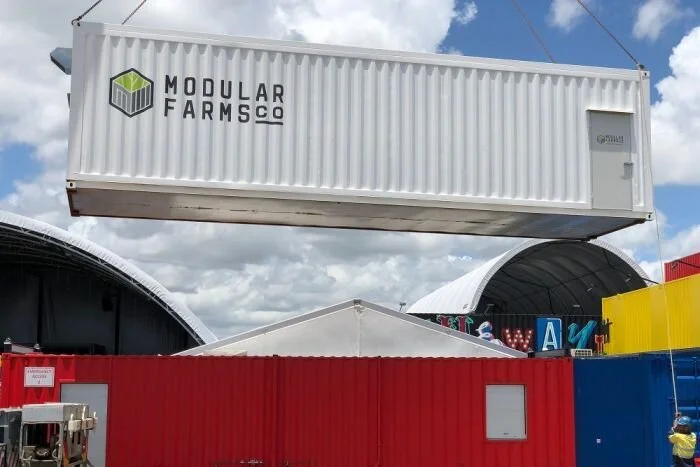

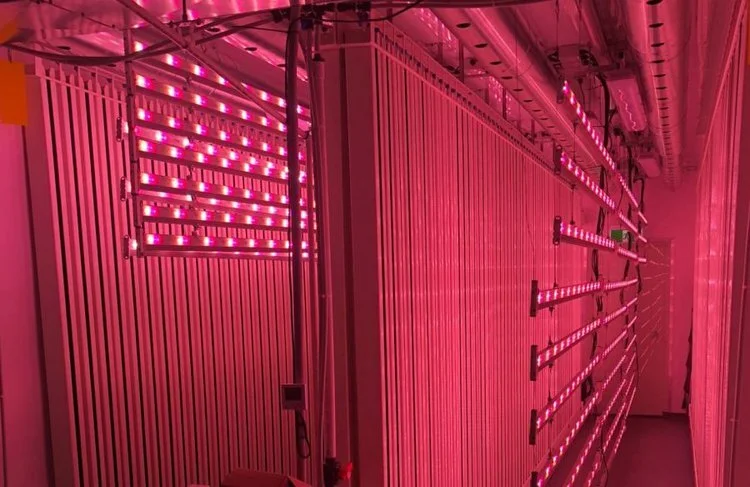
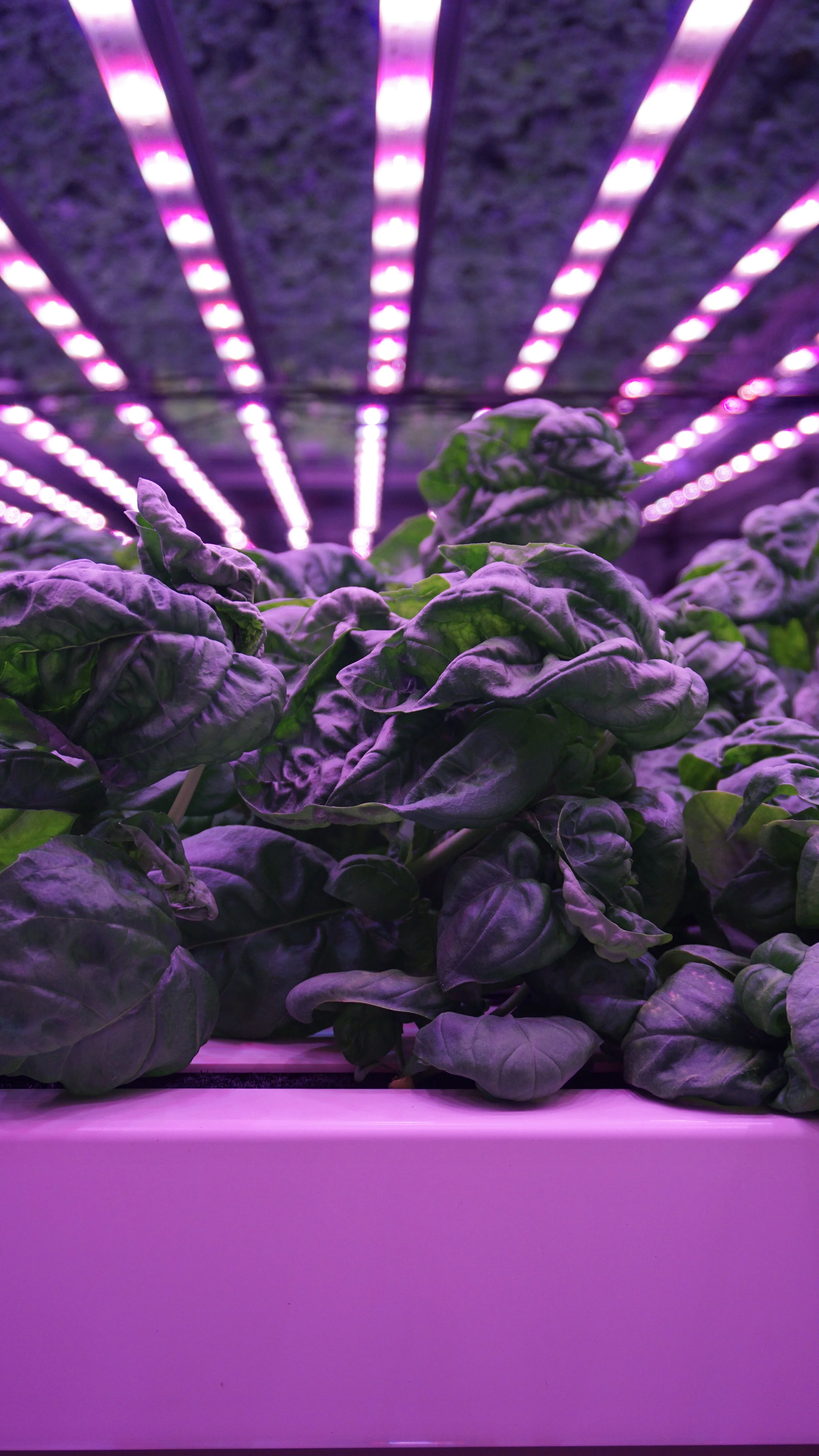
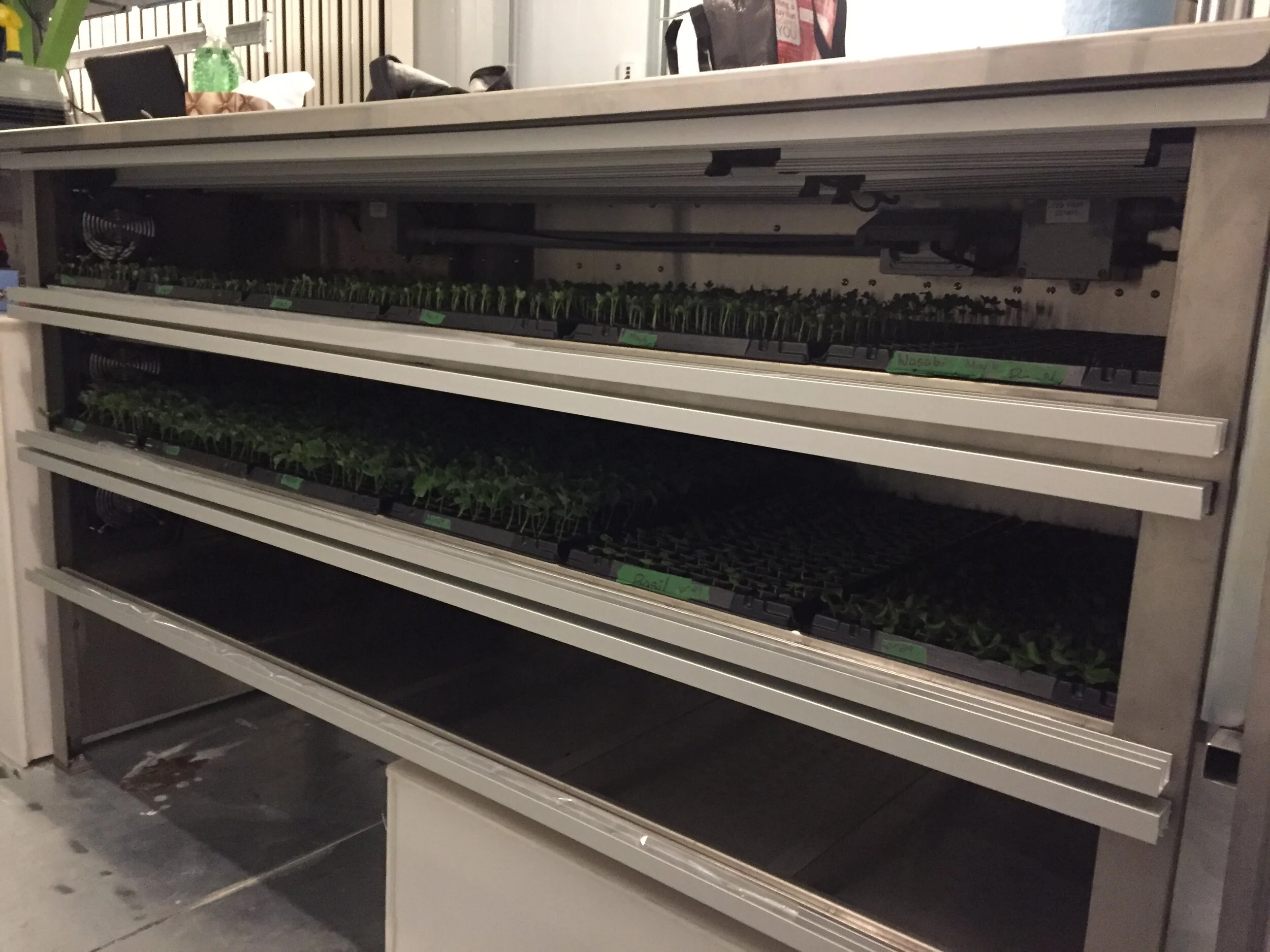
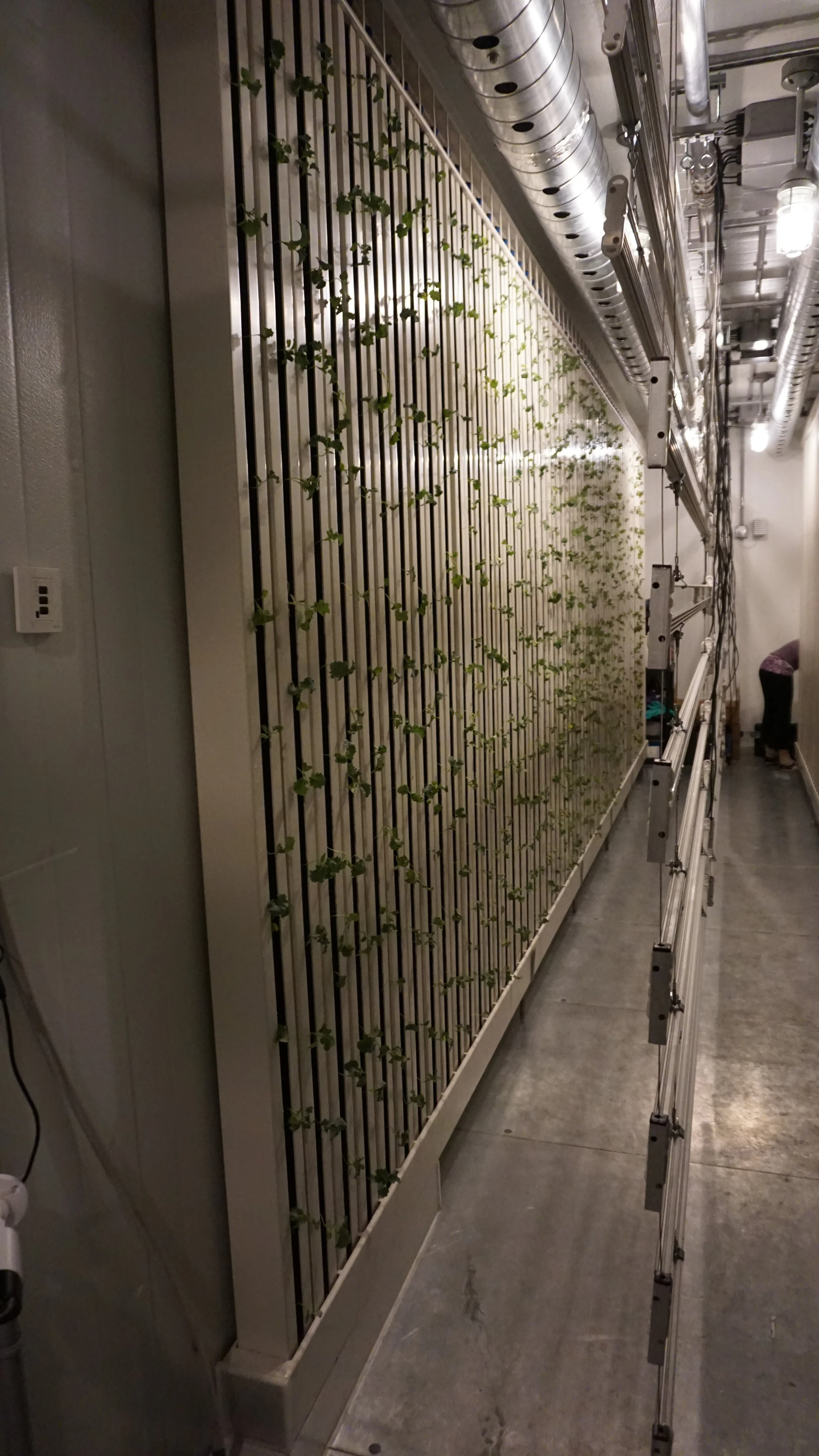
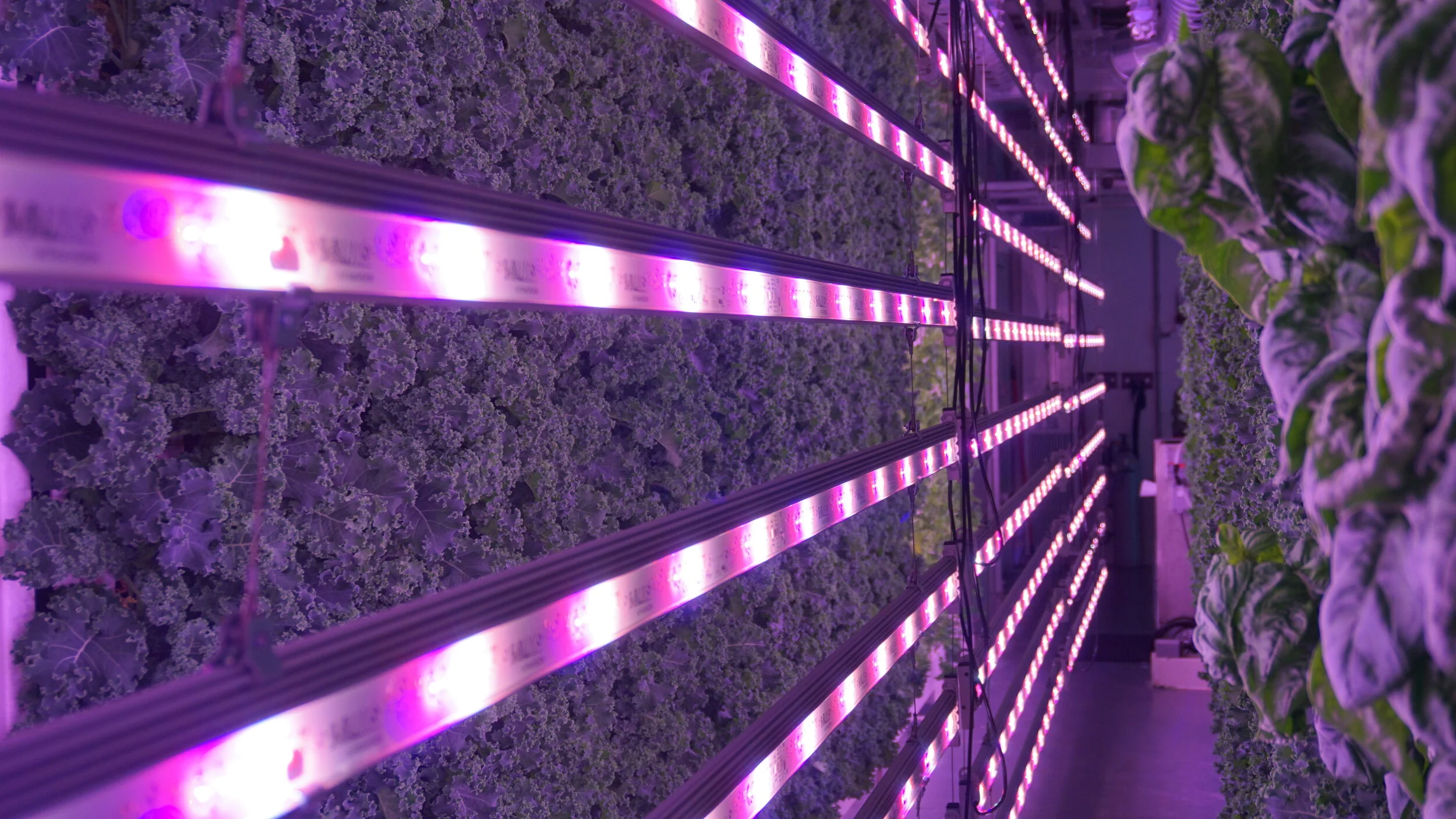
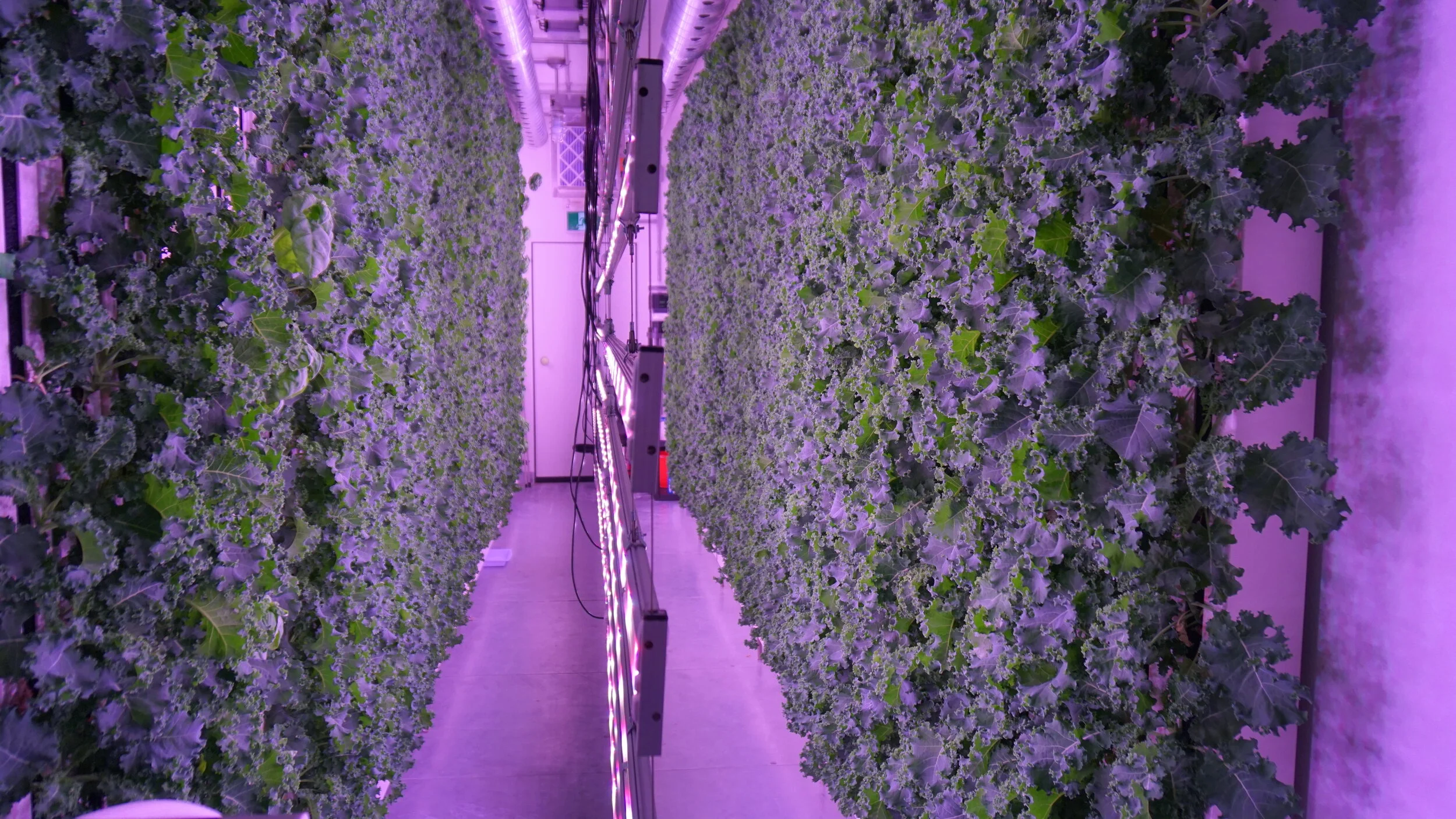
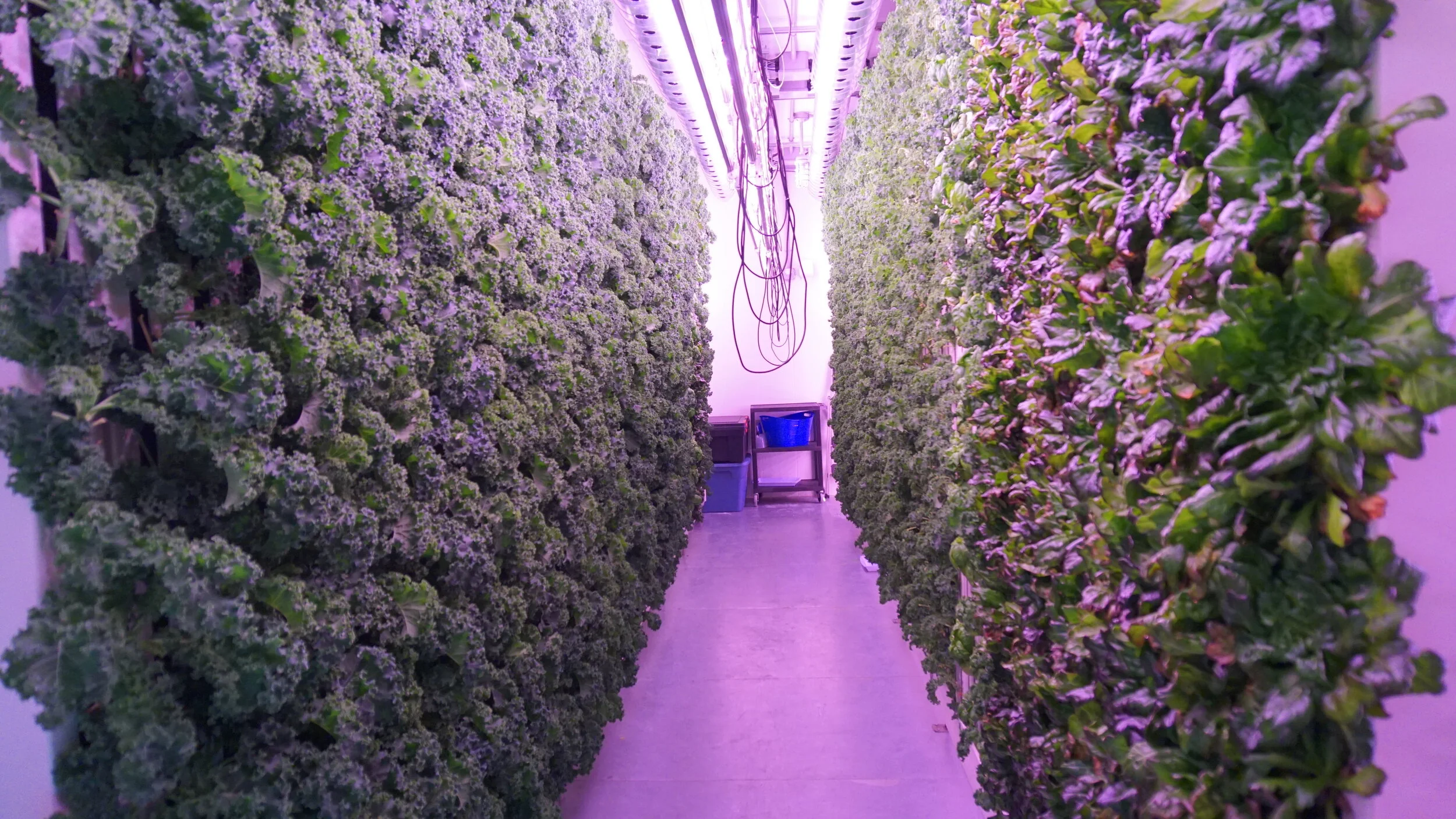

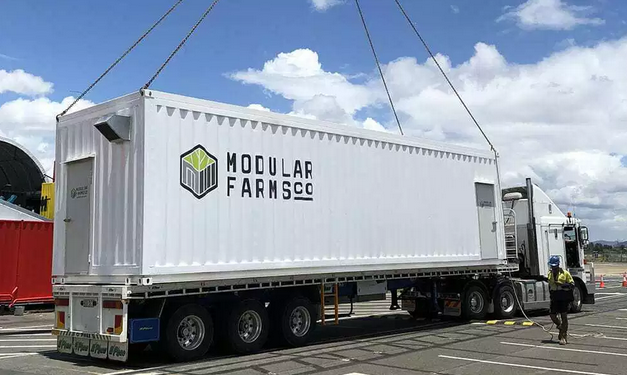

VIDEO: Growing Up: How Vertical Farming Works | The B1M
Shedding the restrictions of seasonal weather patterns, overcoming transportation challenges and enhancing yields - the growing trend of “vertical farming” could herald the future of food production
March 6, 2019
Shedding the restrictions of seasonal weather patterns, overcoming transportation challenges and enhancing yields - the growing trend of “vertical farming” could herald the future of food production. For more by The B1M subscribe now: http://ow.ly/GxW7y
Read the full story on this video, including images and useful links, here: http://www.theb1m.com/video/growing-u...
Images courtesy of Kyodo Via, Ilimelgo Architects, AeroFarms, David Williams, Mandy Zammit, Priva, GreeOx, Grow to Green, GrowUp Urban Farms, Heather Aitken and Studio NAB. The B1M merch store - https://theb1m.fanfiber.com/
View this video and more at - http://www.TheB1M.com
Follow us on Twitter - http://www.twitter.com/TheB1M Like us on Facebook - http://www.facebook.com/TheB1M Follow us on LinkedIn - https://www.linkedin.com/company/the-... Follow us on Instagram - http://instagram.com/theb1m/ #construction #cities #verticalfarming We welcome you sharing our content to inspire others, but please be nice and play by our rules: http://www.theb1m.com/guidelines-for-...