

Welcome to iGrow News, Your Source for the World of Indoor Vertical Farming
US: BrightFarms Investing $21M In North Carolina
November 1, 2019
The packaged salads company will create 54 jobs at a hydroponic greenhouse in Etowah, NC.
(Photo: BrightFarms)
BrightFarms, a packaged salads company, will create 54 jobs in Henderson County, NC. The company will invest $21 million to operate a hydroponic greenhouse in Etowah.
“Today’s consumers are searching for produce that’s fresher, safer and responsibly grown. It’s the reason that locally grown food has become the #1 purchase driver in produce for supermarkets,” said Steve Platt, CEO of BrightFarms. “We are incredibly grateful for the support from Governor Cooper and the North Carolina Department of Commerce and look forward to bringing local, pesticide-free leafy greens to North Carolina and neighboring states.”
BrightFarms grows leafy salad greens and herbs including spring mix, spinach, baby kale, romaine and arugula. The company describes its local greens, which are grown in a safe, secure and clean indoor environment without the use of pesticides, as beyond organic. By growing produce close to its consumers, BrightFarms’ produce is delivered to supermarkets in as little as 24 hours of harvest, about a week faster than leafy greens grown on the West Coast.
BrightFarms’ North Carolina greenhouse will be the company’s sixth and one of its largest locations to date. At full production, the 280,000-square-foot, state-of-the-art greenhouse in Hendersonville could produce up to two million pounds of leafy greens each year.
“Agriculture has always been a strong driver in North Carolina, and BrightFarms’ expansion is good for our state,” said Governor Roy Cooper. “They are committed to conserving water, land and energy resources while growing their business–green economic development that is good for the company, the community and the workers who will support them.”
The North Carolina Department of Commerce led the state’s support for the company’s decision. A performance-based grant of $55,000 from the One North Carolina Fund will help facilitate BrightFarms’s operation in Henderson County. The One NC Fund provides financial assistance to local governments to help attract economic investment and to create jobs. Companies receive no money upfront and must meet job creation and capital investment targets to qualify for payment. All One NC grants require a matching grant from local governments and any award is contingent upon that condition being met.
“North Carolina is a great location for innovators like BrightFarms to do business,” said North Carolina Commerce Secretary Anthony M. Copeland. “The company will join more than 1,000 food and beverage manufacturers in our state and will have their local produce available to a large supply chain along the East Coast.”
In addition to North Carolina Commerce and the Economic Development Partnership of North Carolina, other key partners in the project include the North Carolina Community College System, Agribusiness Henderson County, and Henderson County.
Want to learn more about North Carolina corporate expansion?
Considering North Carolina for your company’s relocation or expansion project? Check out all the latest news related to North Carolina economic development, corporate relocation, corporate expansion, and site selection.
Agricultural Rebranding Could Lead To Caribbean Food Security
Technology-driven solutions such as vertical farming provide an alternative to traditional agricultural techniques that reduce soil quality, promote deforestation and disproportionately expose farmers to climate events
Daphne Ewing-Chow Contributor
Barbados’ Prime Minister, the Honourable Mia Amor Mottley recently challenged the Caribbean to slash its annual US$4 billion food import bill by at least a quarter over the next five years. She argued that in the face of climate change and population growth, Caribbean food security is not just a health and nutrition issue— it is a national security issue.
Given the expected increase in climate-change-induced, severe weather events that place the Miami-Caribbean food supply chain at risk, coupled with the resource pressure of 767.5 million people that are projected to be living in the LAC region by 2058, locally grown and produced food is critical to the region’s future. But with its near-exclusive reliance on food imports, the resurrection and redefinition of the rapidly declining agriculture sector is not just a challenge but also a strategic priority.
Agricultural rebranding might be the answer to the Caribbean's food security issues.
Farming, prior to the introduction of agricultural technology was indeed an arduous profession, and in the absence of innovation, it has historically been a risky business. The region’s youth have, for the most part, deemed agriculture as a non-viable career option, causing employment within the sector to decrease significantly between 2000 and 2018 (International Labour Organization). St. Lucia experienced a significant decline from 21.07% of total employment to 15.3% of total employment and Trinidad experienced a similar decline, from 7.22% to 3.6% during this period.
The “whys” for rebranding agriculture abound. For one, the target market has changed— not only have the demographics of consumers changed but so have the producers. Farmers are no longer old and poor. Technology, science, and fashion have infiltrated the food and agriculture sector and with these changes has come a degree of sophistication that has not only enabled agriculturalists to be resilient in the face of climate change, but to do so profitably. It is no accident that Snoop Dogg and Irish model, Vogue Williams were recently enlisted as agriculture brand ambassadors.
The time has come for the revolution to find its way to the Caribbean. Rebranding techniques that have typically been used in the businesses world should be strategically incorporated in the repositioning of the sector. Repurposed corporate branding tools, as opposed to government policymaking, just might be the answer to the region’s food security issues.
Some possibilities are as follows.
1. Influencer Marketing.
Trinidadian agriculturalist, Alpha Sennon, has become a globally recognized thought leader in the area of “agripreneurship”, securing global support and recognition from the Kirchner Foundation, among many others. International soca artist, Machel Montano has become an active supporter of Trinidad’s cocoa industry, launching his own brand of organic chocolate. Barkha Mossae, a World Economic Forum Global Shaper refers to “agricultural workers, farmers, and labourers the superheroes of the planet, since they will be directly contributing to the survival of humanity by providing food.” Agriculturalists have the potential platform to be the new influencers and thought leaders and regional celebrities must be enlisted as brand ambassadors of the sector.
2. Employ geo-based food branding
“Location or geo-based food branding is big business,” says Ron Johnson, Co-founder of Blueprint Creative, one of the Caribbean’s leading branding agencies. “For countries cashing in on location-based food branding, protecting the integrity of their food crops is serious business.” Geo-based food branding also gives Caribbean nations the added opportunity to shift their focus from just crops to secondary products, opening the door to cottage industries, food innovation and the evolution of local dishes and dining.
3. Include the youth
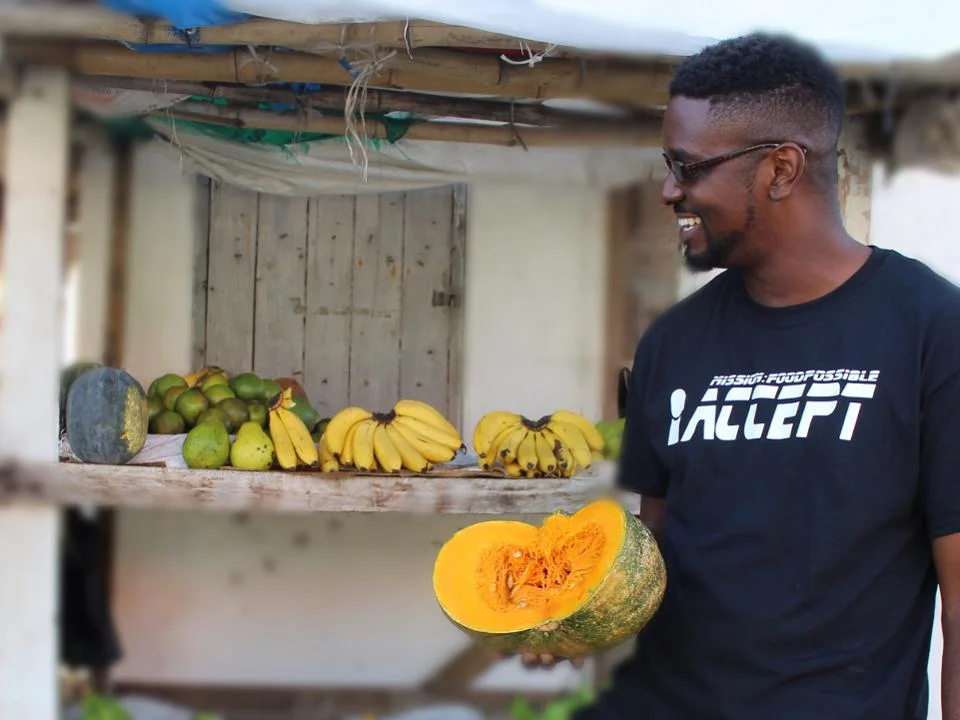
Regional initiatives such as Slow Food, Whyfarm and Mission:FoodPossible provide fun, activity-based agricultural education to students in primary and secondary schools. “An agriculture rebranding must start with the youth,” says Alpha Sennon, the Founder and Executive Director of Whyfarm, a Trinidad-based Agriculture NGO. “The best way of doing this is through the arts. Whyfarm uses ‘edutainment’ to depict agriculture as ‘agricoolture’ and superheroes, Agriman and Photosynthesista, are Whyfarm’s agricultural ambassadors.”
4. Create stronger linkages between agriculture, food experiences and food tourism."Agriculture is one of the most basic expressions of humans' ability to turn spaces into places, and places are where culture thrives,” says Trevor Jonas Benson, Vice President of Destination Development at the Culinary Tourism Alliance. “This means farmers are the original place makers. It also means that tourism experiences that focus on agriculture, or agri-tourism experiences, are the most raw expressions of culture and place and are more frequently sought out by the most sophisticated travelers."
5. Technology. Technology. Technology.
Barbados’ Prime Minister stresses that agriculture must “attract technological solutions and innovation. In a land-scarce country [such as Barbados] our future in agriculture must be based on a vertical yield.” Technology-driven solutions such as vertical farming provide an alternative to traditional agricultural techniques that reduce soil quality, promote deforestation and disproportionately expose farmers to climate events. By enhancing efficiency, raising yields and by reducing risk and exposure, technology improves the value proposition of agriculture, resulting in the obsolescence of the outmoded plantation model of agriculture.
It cannot be overlooked that Caribbean agriculture is historically rooted on the plantation. Given the deep-rooted legacy of slavery, farming and oppression share an ideologically interconnected relationship and modern-day references to agriculture continue to conjure images of cutlasses, hoes and prayers for rain. These associations do not serve the national security interests of the Caribbean region— the time has come for a revolutionary shift in the positioning of the sector. A “corporate rebranding” might just be the solution.
Follow me on Twitter.
Photo Credit: DAPHNE EWING-CHOW
I’m an environmental writer with a focus on food and agriculture, and commute between the Southern Caribbean (Barbados) and the Northern Caribbean (Cayman Islands). I have a Master’s Degree in International Economic Policy from Columbia University and am passionate about Caribbean social, economic and environmental issues. I am intrigued by the resilience of the Small Island Developing States of the region as well as the opportunities for sustainable and regenerative growth through agriculture. I recently headed up communications for a climate change in fisheries project (CC4FISH) at the Food and Agriculture Organization of the United Nations and have worked in development banking, environmental not-for-profits, and in the venture capital industry. My work has appeared in wide cross-section of Caribbean newspapers and magazines, the Sunday Times (of London), Elite Daily, Elephant Journal and other publications. Follow me on Twitter at @daphneewingchow.
Bowery Raises $50M More For Indoor, Pesticide-Free Farms
Indoor farming startup Bowery announced today it has raised an additional $50M in an extension of its Series B round. This comes just nearly 11 months after it raised $90 million in a Series B round
Indoor farming startup Bowery announced today it has raised an additional $50M in an extension of its Series B round. This comes just nearly 11 months after it raised $90 million in a Series B round that we reported on at the time.
Subscribe to the Crunchbase Daily
In a written statement, Bowery said the add-on was the result “of significant momentum in the business.” Temasek led the extension and Henry Kravis, the co-founder of Kohlberg Kravis Roberts & Co., also put money in the “B+ round.” The financing brings the New York-based company’s total raised to $172.5 million since its inception in 2015, according to Bowery.
The startup, which aims to grow “organic, sustainably grown produce,” also announced today its new indoor farm in the Baltimore-DC area. The new farm is 3.5 times larger than Bowery’s last facility, according to the company. Its network of farms “essentially communicate using Bowery’s software.” according to the company, and benefits from the collective intelligence of 2+ years of data.”
How It Works
Bowery’s proprietary software system, BoweryOS, uses vision systems, automation technology, and machine learning to continuously monitor plants and all the variables that drive their growth.
“Because we control the entire process from seed to store, Bowery farms use zero pesticides, 95 percent less water, and are 100+ times more productive on the same footprint of land than traditional agriculture,” the company claims.
Co-founder and CEO Irving Fain said at the time of Bowery’s last raise that in general, the company is focused on creating “scalable solutions for an impending climate and food crisis.”
“And we deeply believe in the power of technology to make drastic, necessary improvements to the food system,” he added.
Since the last raise, Bowery says it has extended its computer vision system and increased automation.
Bowery’s produce is currently available at select Whole Foods, Amazon Fresh, Westside Market and other retailers.
The market for organic food is growing, and so is the number of startups working in the space. Last December, Paris-based Agricool, which has its own take on Agtech innovation, picked up a $28 million round. That company has developed a way to grow produce inside of its “cooltainers,” which are essentially large shipping containers.
Previously, Crunchbase News writer Joanna Glasner reported that funding for venture-backed U.S. agricultural companies spiked in the first half of 2017, with investors seeking to fund companies applying robotics, data, genetic engineering, and other technology to farming practices.
Illustration: Li-Anne Dias

How Urban Farmers Are Learning To Grow Food Without Soil or Natural Light
Growing food in cities became popular in Europe and North America during and immediately after World War II. Urban farming provided citizens with food, at a time when resources were desperately scarce
Mandy Zammit/Grow Up, Author provided
Silvio Caputo, University of Portsmouth
February 13, 2018
Growing food in cities became popular in Europe and North America during and immediately after World War II. Urban farming provided citizens with food, at a time when resources were desperately scarce. In the decades that followed, parcels of land which had been given over to allotments and city farms were gradually taken up for urban development. But recently, there has been a renewed interest in urban farming – albeit for very different reasons than before.
As part of a recent research project investigating how urban farming is evolving across Europe, I found that in countries where growing food was embedded in the national culture, many people have started new food production projects. There was less uptake in countries such as Greece and Slovenia, where there was no tradition of urban farming. Yet a few community projects had recently been started in those places too.
Today’s urban farmers don’t just grow food to eat; they also see urban agriculture as a way of increasing the diversity of plants and animals in the city, bringing people from different backgrounds and age groups together, improving mental and physical health and regenerating derelict neighborhoods.
Many new urban farming projects still struggle to find suitable green spaces. But people are finding inventive solutions; growing food in skips or on rooftops, on sites that are only temporarily free, or on raised beds in abandoned industrial yards. Growers are even using technologies such as hydroponics, aquaculture, and aquaponics to make the most of unoccupied spaces.
Something fishy
Hydroponic systems were engineered as a highly space and resource-efficient form of farming. Today, they represent a considerable source of industrially grown produce; one estimate suggests that, in 2016, the hydroponic vegetable market was worth about US$6.9 billion worldwide.
Hydroponics enable people to grow food without soil and natural light, using blocks of porous material where the plants’ roots grow, and artificial lighting such as low-energy LED. A study on lettuce production found that although hydroponic crops require significantly more energy than conventionally grown food, they also use less water and have considerably higher yields.
Growing hydroponic crops usually requires sophisticated technology, specialist skills and expensive equipment. But simplified versions can be affordable and easy to use.
They grow up so fast. Mandy Zammit/Grow Up
Hemmaodlat is an organization based in Malmö, in a neighborhood primarily occupied by low-income groups and immigrants. The area is densely built, and there’s no green space available to grow food locally. Plus, the Swedish summer is short and not always ideal for growing crops. Instead, the organization aims to promote hydroponic systems among local communities, as a way to grow fresh food using low-cost equipment.
The Bristol Fish Project is a community-supported aquaponics farm, which breeds fish and uses the organic waste they produce to fertilize plants grown hydroponically. GrowUp is another aquaponics venture located in an East London warehouse – they grow food and farm fish using only artificial light. Similarly, Growing Underground is an enterprise that produces crops in tunnels, which were originally built as air-raid shelters during World War II in London.
The next big thing?
The potential to grow food in small spaces, under any environmental conditions, are certainly big advantages in an urban context. But these technologies also mean that the time spent outdoors, weathering the natural cycles of the seasons, is lost. Also, hydroponic systems require nutrients that are often synthesized chemically – although organic nutrients are now becoming available. Many urban farmers grow their food following organic principles, partly because the excessive use of chemical fertilizers is damaging soil fertility and polluting groundwater.
To see whether these drawbacks would put urban growers off using hydroponic systems, my colleagues and I conducted a pilot study in Portsmouth. We installed small hydroponic units in two local community gardens and interviewed volunteers and visitors to the gardens. Many of the people we spoke to were well informed about hydroponic technology and knew that some of the vegetables sold in supermarkets today are produced with this system.
A simplified hydroponic frame in Portsmouth. Silvio Caputo/University of Portsmouth
Many were fascinated by the idea of growing food without soil within their community projects, but at the same time reluctant to consume the produce because of the chemical nutrients used. A few interviewees were also uncomfortable with the idea that the food was not grown naturally. We intend to repeat this experiment in the near future, to see how public opinion changes over time.
And while we don’t think hydroponic systems can replace the enjoyment that growing food in soil can offer, they can save water and produce safe food, either indoors or outdoors, in a world with increasingly scarce resources. Learning to use these new technologies, and integrating them into existing projects, can only help to grow even more sustainable food.
As with many technological advancements, it could be that a period of slow acceptance will be followed by rapid, widespread uptake. Perhaps the fact that IKEA is selling portable hydroponic units, while hydroponic cabinets are on the market as components of kitchen systems, is a sign that this technology is primed to enter mainstream use.
Silvio Caputo
Senior Lecturer, University of Portsmouth
Silvio Caputo does not work for, consult, own shares in or receive funding from any company or organization that would benefit from this article, and has disclosed no relevant affiliations beyond their academic appointment.
University of Portsmouth provides funding as a member of The Conversation UK.

FINLAND: New Chairman of The Board Appointed For Netled
Mr. Rintamäki brings solid key experience to Netled. In his previous career, he has acted in leading financial positions in various operations of Kone Oy and later in Konecranes PLC in Finland and overseas
Netled announced that Teuvo Rintamäki (M.Sc. Econ) has been elected as Netled’s new Chairman of the Board. Mr. Rintamäki brings solid key experience to Netled. In his previous career, he has acted in leading financial positions in various operations of Kone Oy and later in Konecranes PLC in Finland and overseas. Last eight in Konecranes he held a position of CFO.
Rintamäki has also next to 10 years of experience in guiding and leading start-ups as a Board Member and Chairman of the Board. He has a history of successful company listings and sales. Currently he operates as a Chairman of the Board in, for example, companies like Safedo Oyj, PowerProfPartners Oy and Saunaranta Invest Oy, as well as a Board Member and Board Advisor in various companies. In the 2000s, he also served as a member of the Committee on Strategic and Economic Affairs of the Technology in Finland.
Teuvo Rintamäki
”I´m very excited about this new position. Netled is currently in a very interesting growing phase; the company is taking off as an internationally recognised technology provider and notable player in the global market. In addition, Netled operates in a rapidly growing business field. Vertical farming is more efficient compared to traditional ways of cultivation, and it’s also more ecological and sustainable way of farming”, says Teuvo Rintamäki.
Netled’s CEO Niko Kivioja comments: ”We are extremely pleased to have Teuvo Rintamäki as our new Chairman of the Board. He has a vast know-how of globally operating technology companies as well as experience in working successfully with start-ups. We are certain that his professional background will give our company the boost for future growth.”

For more information:
Netled
netled.fi
Publication date: Tue 29 Oct 2019
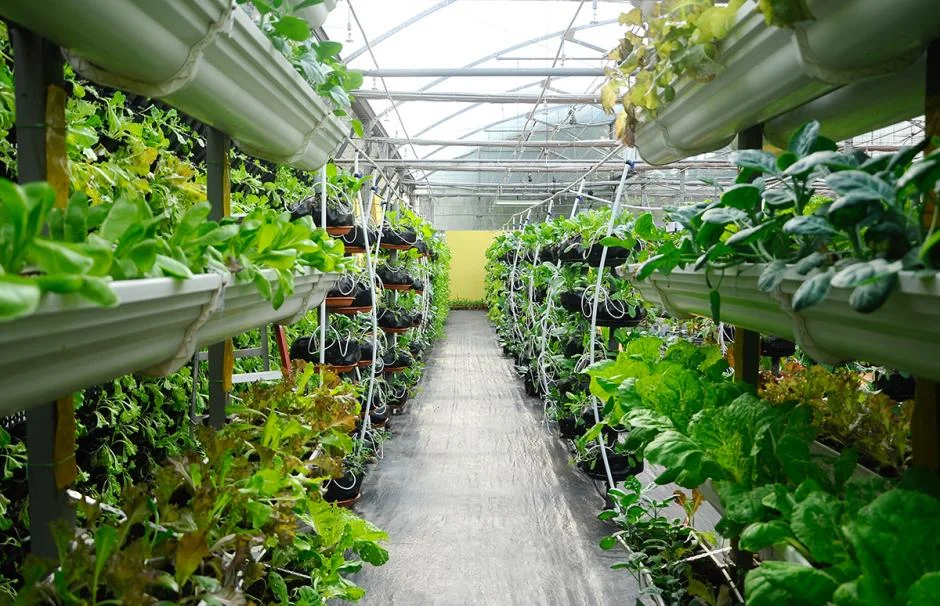
Urban Agriculture
The urbanization of the planet is drawing agriculture and small farms into city centers in both low-income and industrialized economies. Catering to this trend requires more effective use of space, urban-waste recycling and in some cases sophisticated technology, such as that used in vertical farming
The urbanization of the planet is drawing agriculture and small farms into city centers in both low-income and industrialized economies. Catering to this trend requires more effective use of space, urban-waste recycling and in some cases sophisticated technology, such as that used in vertical farming.
Urban agriculture is nothing new. Travelers arriving in Babylon at the beginning of the second millennium B.C.E. described the orchards, vegetable gardens and cultivated fields in the suburbs of the immense Mesopotamian city. Overhead there were the “hanging gardens”, one of the Seven Wonders of the Ancient World, producing fruit for the court of Nebuchadnezzar and offerings for the gods.
In more recent times, the industrial revolution brought about the creation of “allotments”, first in England, then in continental Europe. These often carried with them a certain moral aspect, encouraging the working class to maintain rural and family values in the heart of the city with its many temptations.
Today, innovation and research on agriculture in urban environments are being spurred by the global population growth and rapid urbanization expected over the next decades. Ideas range from micro-gardening targeting the most disadvantaged populations in Africa and South America to highly futuristic vertical farming operations in Japan and North America1.
A Reality in Developing Economies
The Food and Agriculture Organization of the United Nations (F.A.O.) defines urban and peri‑urban agriculture (UPA) as the growing of plants and the raising of animals within and around cities2. UPA already provides for the needs of a quarter of the world’s city-dwellers. Further development of UPA is essential given the growing urban population, which has increased at a rate almost twice that of the overall population in only ten years. According to the F.A.O., more than half of all inhabitants of developing economies, or 3.5 billion people, will be concentrated in cities by 2025.
To feed these new residents, it will be necessary to maintain agricultural zones in peri-urban areas to slow down deforestation and reduce energy costs incurred by the cold chain and transportation from producer to consumer regions. The F.A.O. funds programs that encourage disadvantaged urban populations to grow micro-gardens for their own consumption and also as a source of extra income. With the right care, a one-square-meter micro-garden in a tropical climate can produce either 30 kilograms of tomatoes per year, 36 heads of lettuce every 60 days, 10 cabbages every 90 days or 100 onions every 120 days. This same square meter requires three liters of water per day, which, in certain climates, can be supplied by collecting and storing rainwater off a ten-square-meter roof. According to the F.A.O., kitchen gardens can be up to 15 times more productive than rural farms.
Of course, urban agriculture has obstacles to overcome, such as poor soil quality, air pollution, inappropriate use of pesticides and fertilizers that contaminate water, and biodiversity management.
25: The number of lettuce harvests per year in a high-tech vertical farm.
New Vertical Farms
In high-income economies, two methods have emerged for bringing agricultural production closer to cities. The simpler of the two is to use building rooftops and streamline collection and recycling of household waste. The second and more sophisticated method, deployed in countries such as Japan, South Korea, Singapore, the United States, and Canada, is soil-free vertical farming, which requires much less space.
There are two main forms of soil-free farming:
Hydroponics, the older of the two techniques, in which plants take root in an inert substrate, such as pumice, and are watered with a liquid nutrient solution containing mineral salts rich in nitrogen, phosphates, and potassium.
Aeroponics, in which plants are grown in plastic structures with their roots hanging in the air and exposed to vaporized nutrient solutions.
A variety of systems ensure closed-circuit water use, constant ventilation and exposure to natural or artificial light. The ability to control humidity and temperature ensures that plants grow four- to six times faster than they would using conventional farming techniques.
In the U.S. state of New Jersey, AeroFarms has developed farms where a head of lettuce can be grown in two weeks. Water recycling means the company consumes 95% less of the resource than field farms. Vegetables are grown without the use of any pesticides or herbicides, watched over by employees in cleanroom suits.
In Singapore, where limited space means that almost all food products must be imported, hundreds of nine-meter-high aluminum frames have been installed, around which plants rotate up toward the light, then down into troughs of rainwater.
Urban and peri-urban agriculture already provides for the needs of a quarter of the world’s urban population.
In Japan, which has six-times less farmland than France but double the population, large industrial companies are investing in vertical farming. For example, Toshiba has started a farm near Tokyo that produces 3 million bags of lettuce and spinach a year. The success of this type of agriculture is partly due to the Fukushima nuclear disaster, which led to concerns about vegetables being exposed to radiation. Some restaurants even offer greens grown before the customer’s eyes in miniature greenhouses.
Vertical farming has two drawbacks. First, because plants are grown on vertical shelves, there is an emphasis on smaller species, with grain farming excluded at this stage. Second, energy costs are high due to investment, equipment operations, and lighting.
Nova Scotia: Growing Local For A Greener Campus
Eating local is now easier and greener at Acadia University in Wolfville, Nova Scotia. The Growcer is an out-of-the-box local food solution located steps away from the dining hall
Ilayda Coruk October 23, 2019
Out-of-The-Box Thinking Means
Fresh Produce For Campus And Community
Eating local is now easier and greener at Acadia University in Wolfville, Nova Scotia. The Growcer is an out-of-the-box local food solution located steps away from the dining hall.
Acadia partnered with its food service provider Chartwells to bring the hydroponic, vertical growing system housed inside a repurposed shipping container to campus. It will produce greens and microgreens year-round and employ students. It's the first of its kind for post-secondary institutions in Atlantic Canada.
"This is just one example of out-of-the-box thinking at Acadia in support of our students and greening the campus," says Jodie Noiles, Acadia's Sustainability Coordinator. "This initiative builds on an existing commitment to purchase and use local produce in our food services."
The Growcer is part of an ambitious new Food Services Plan for the campus. Created by a committee of Acadia students, faculty, and staff along with public health experts, the plan focuses on healthy eating, sustainability, and affordability. "It is one of the most comprehensive and progressive plans for food services across Canada," says Noiles.
Green Ideas
Because of its sealed environment, The Growcer can produce 100 kgs of fresh greens each month year-round. It uses 95 percent less water than conventional farming and uses no herbicides or pesticides. By producing food with fewer resources, Acadia lowers greenhouse gas emissions associated with campus operations and there is fresh produce nearby year-round.
“I'm excited to grow a variety of greens to complement the ingredients we get from farms in the Annapolis Valley,” said Executive Chef Peter Welton. "I can’t wait for Acadia and the Wolfville community to try our Growcer harvest."
During official launch week from October 21st to October 25th, Acadia Dining Services will feature lunch specials made with Growcer greens and diners can learn more about the operation.
The mini-hydroponic farm builds on many campus initiatives like the Acadia Community Farm. At the farm, students operate a half-acre educational garden and grow vegetables for the dining hall and local foodbank. There is also a student group, Acadia Food, and Fork, that grows beans, lettuce, and tomatoes in the K.C. Irving Environmental Science Centre to share with students.
Supporting teaching and research is also an important part of the Acadia Food Services Plan. “Acadia students learn the importance of innovation and entrepreneurship as part of their studies, and The Growcer project is a new opportunity for them to put that learning into practice,” Noiles explains.
Acadia’s food service provider, Chartwells, is committed to delivering a student-first experience on campus. Each year, they plan to donate 10 percent of The Growcer crop to on-campus and local food banks. The initiative is part of Chartwells' Thinking Ahead Giving Back vision, which includes tackling food insecurity. The company will also provide volunteer hours for community support of mental health and social issues facing students and create 1,000 jobs through a more focused commitment to student employment.

Resource Innovation Institute To Host Indoor Agriculture Energy Solutions Conference
As California policymakers develop codes for Controlled Environment Agriculture (CEA), Resource Innovation Institute (RII) will convene the inaugural Indoor Agriculture Energy Solutions (IAES) Conference, connecting policymakers, utility program managers, equipment manufacturers and suppliers, researchers, manufacturers, cultivators and investors to shape the future of energy policies and utility programs for CEA
SAN DIEGO, CA, October 2019 – As California policymakers develop codes for Controlled Environment Agriculture (CEA), Resource Innovation Institute (RII) will convene the inaugural Indoor Agriculture Energy Solutions (IAES) Conference, connecting policymakers, utility program managers, equipment manufacturers and suppliers, researchers, manufacturers, cultivators and investors to shape the future of energy policies and utility programs for CEA.
The IAES Conference will be held at the San Diego La Jolla Marriott on February 24-26, 2020.
Expanding on RII’s mission to advance resource efficiency in the rapidly expanding indoor agriculture sector, this first-of-its-kind event arrives at a critical moment in time for controlled environment agriculture.
The urban and vertical farming sector is scaling rapidly for crops of all kinds, accelerated by cannabis legalization across North America. Urban areas and food deserts are looking at indoor farming as a way to access locally grown produce. As a result, the carbon and energy implications of indoor controlled environments are becoming more impactful.
Drawing from the experiences of early models, this conference will explore energy solutions for indoor agriculture without focusing on any one crop.
Conference attendees will access educational sessions presented by experts in the field, connect with leaders in the industry and discuss cutting-edge policies and technologies. IAES will elevate innovative solutions related to energy access, efficiency and sustainability and shape the future of indoor agriculture.
“We have the opportunity to take the lessons learned from initial government, utility and non-profit responses addressing the energy and carbon impacts of regulated cannabis and apply them to the broader world of controlled environment agriculture,” said Derek Smith, Executive Director of RII. “These learnings will inform controlled environment agriculture broadly. This is precisely why we are hosting the Indoor Agriculture Energy Solutions conference. And we look forward to convening top stakeholders to join the dialogue.”
Registration can be secured via
https://www.iaesconference.com/registration
About Resource Innovation Institute
Resource Innovation Institute (RII) is a non-profit organization whose mission is to advance resource efficiency to create a better cannabis future. Founded in 2016 in Portland, OR, USA, RII’s Board of Directors includes the American Council for an Energy-Efficient Economy (ACEEE), a former Energy Policy Advisor to two Oregon governors, a former board member of the US Green Building Council and leading cannabis industry players.
The organization has unique expertise on data, policy, and education related to cannabis energy use. Its Cannabis PowerScore benchmarking survey is backed by the world’s largest dataset on cannabis energy use. RII’s Technical Advisory Council is the leading multi-disciplinary body assessing the environmental impacts and best practices associated with cultivation resource issues. In 2018, RII advised the Commonwealth of Massachusetts on the establishment of the world’s first cannabis energy regulations, and it is now advising other governments. RII’s Efficient Yields cultivation workshops are the only grower-led, non-commercial venues for the exchange of resource-efficient cultivation best practices.
RII is funded by utilities, foundations, governments, and the cannabis supply chain.

FOR SALE - 2017.5 Freight Farm - Computer Controlled Hydroponic Grow System - St. Johns, Newfoundland and Labrador, Canada
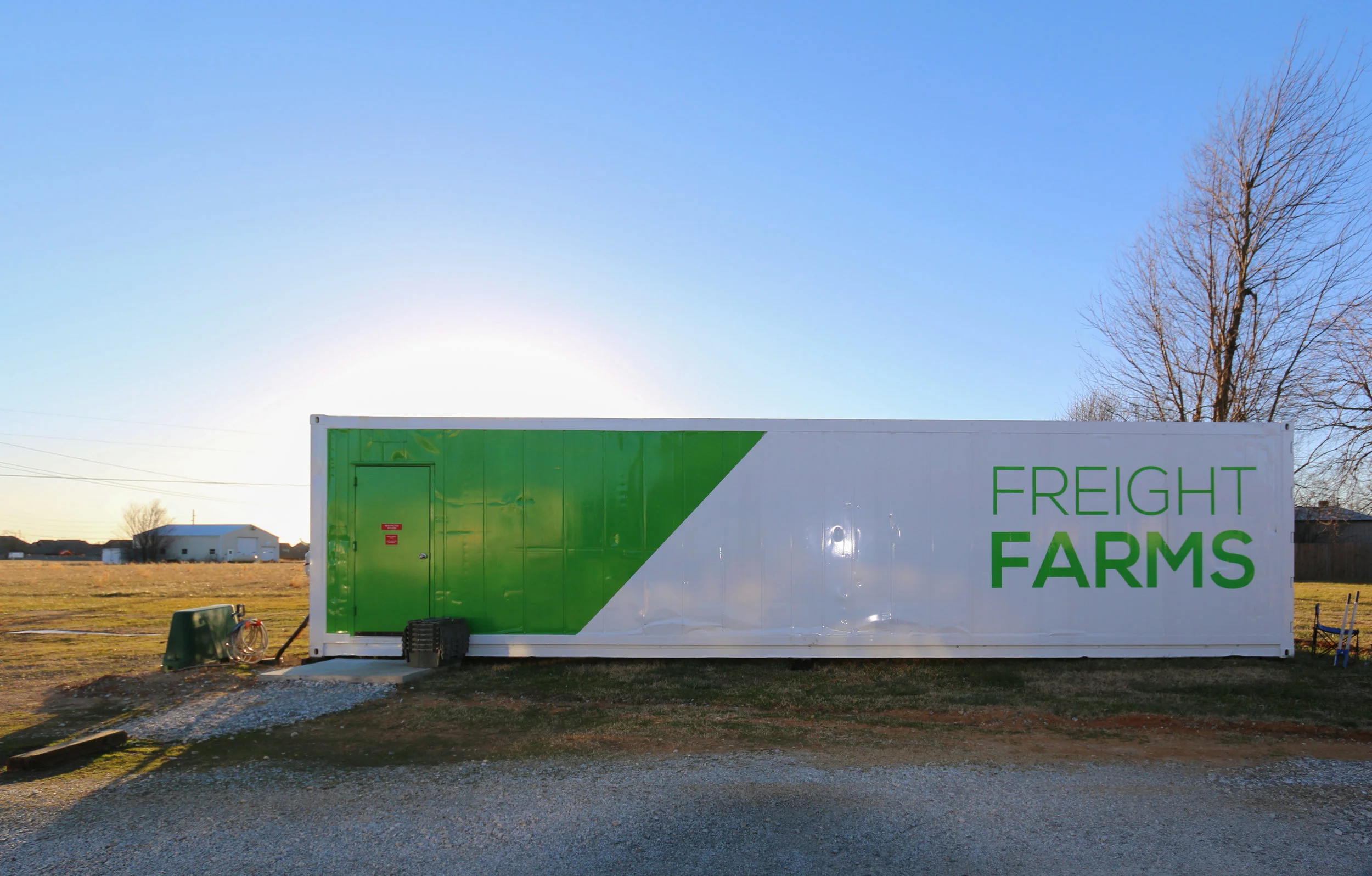
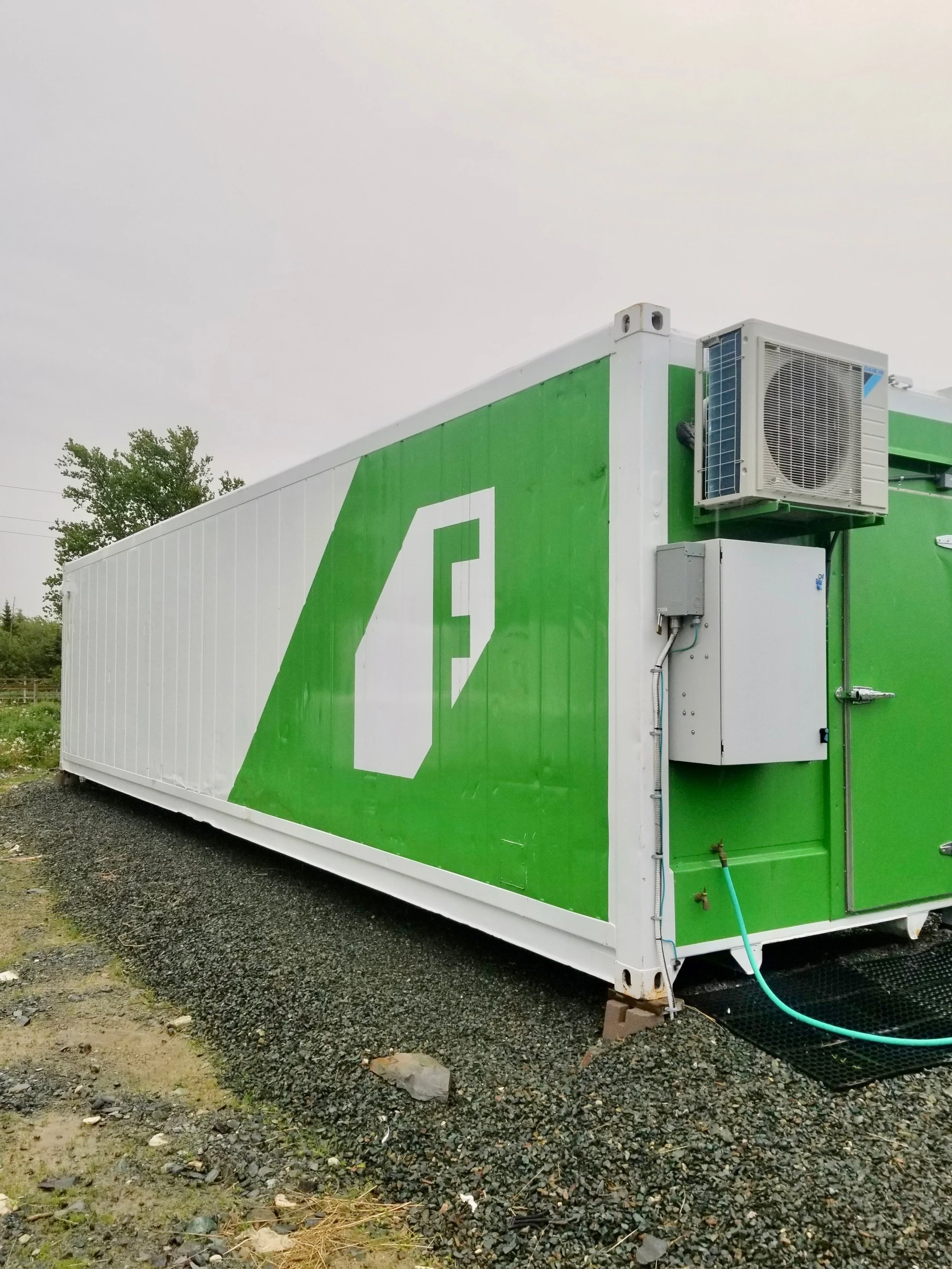
Make & Model - 2017.5 Leafy Green Machine (LGM) - Winterized" for Cold Climates.
Manufacturer - Freight Farms
Location - St. Johns, Newfoundland and Labrador, Canada
Price - $65,000




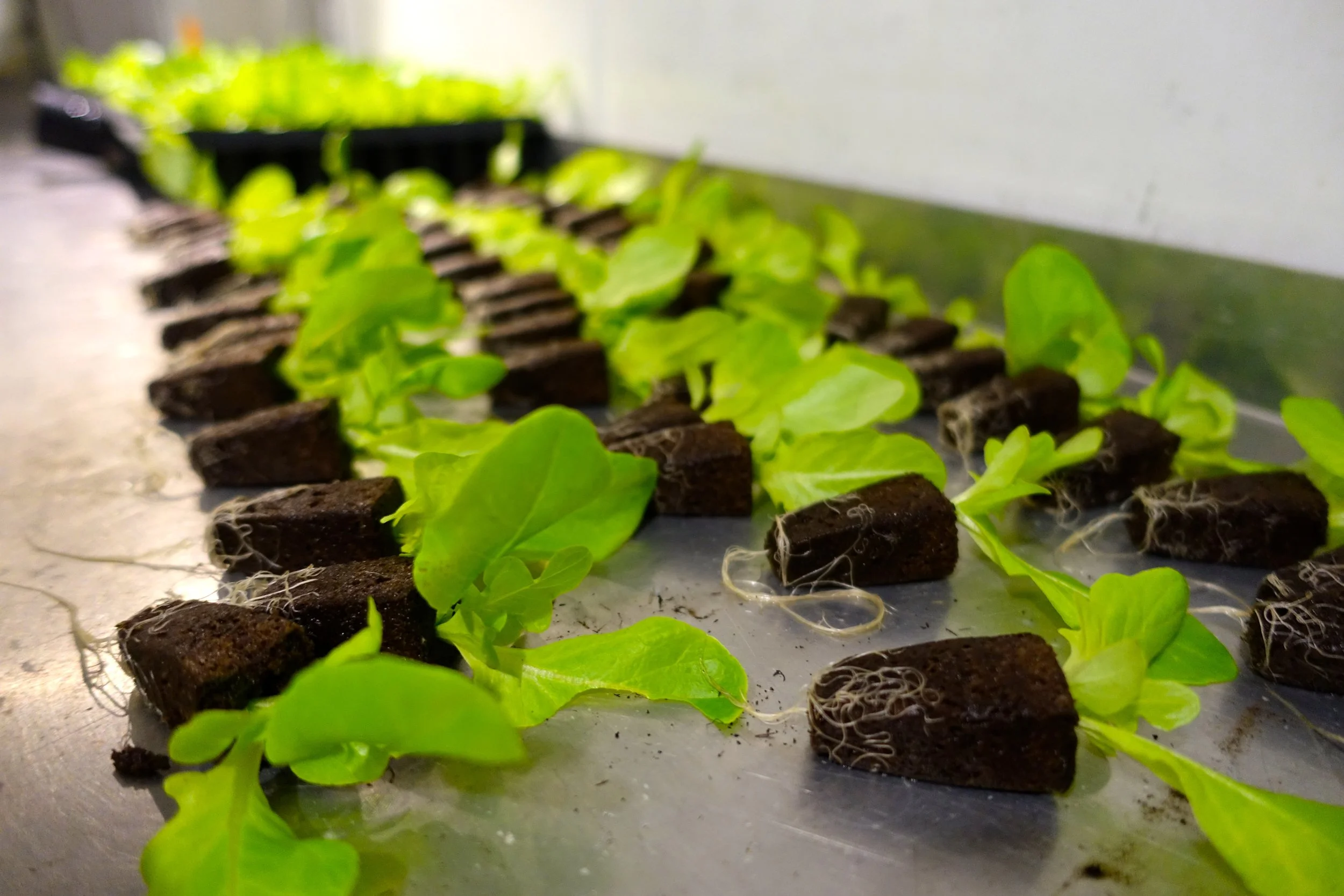
Description
Well maintained 2017.5 LGM purchased from Freight Farms.
This LGM has been a reliable producer of healthy produce.
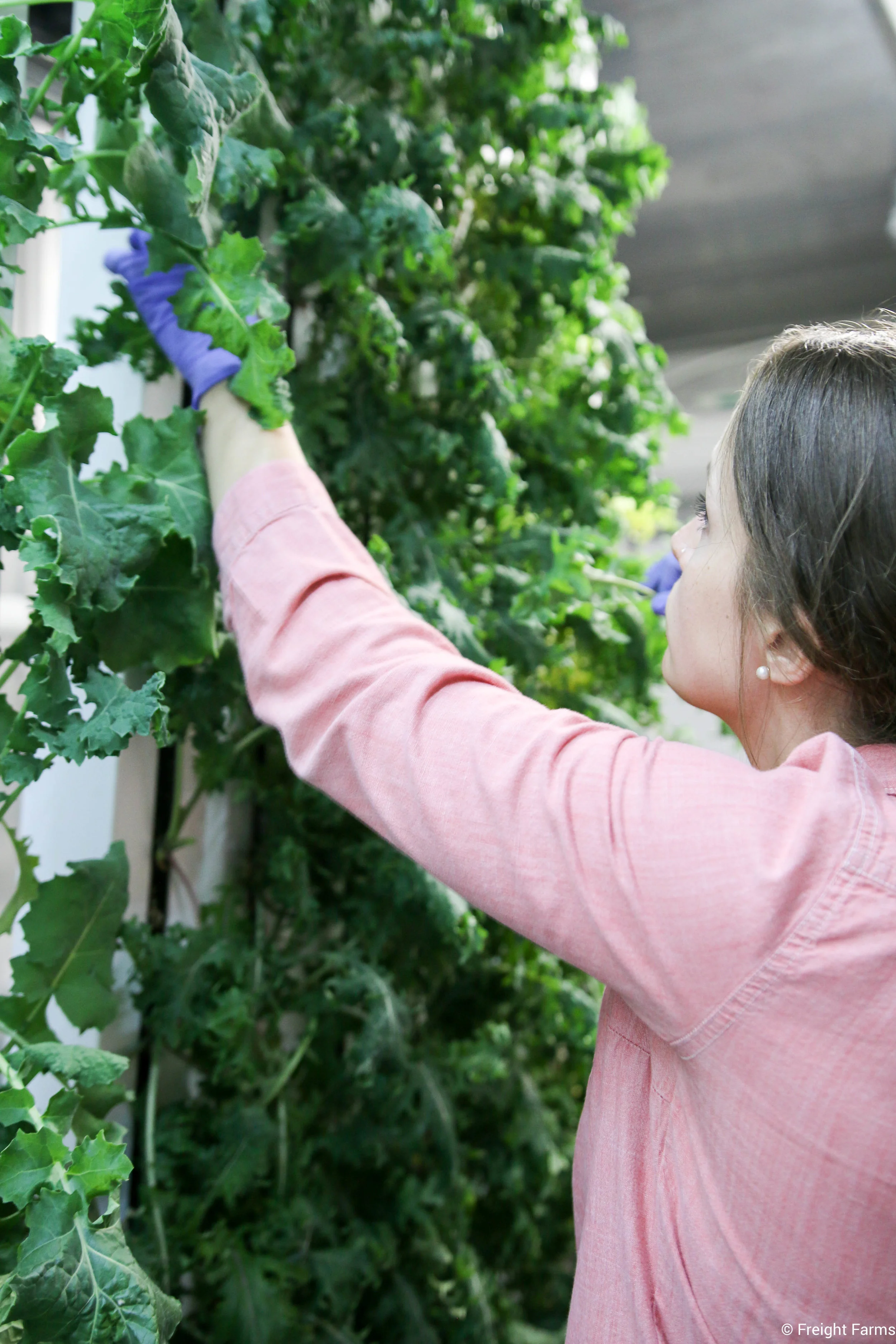
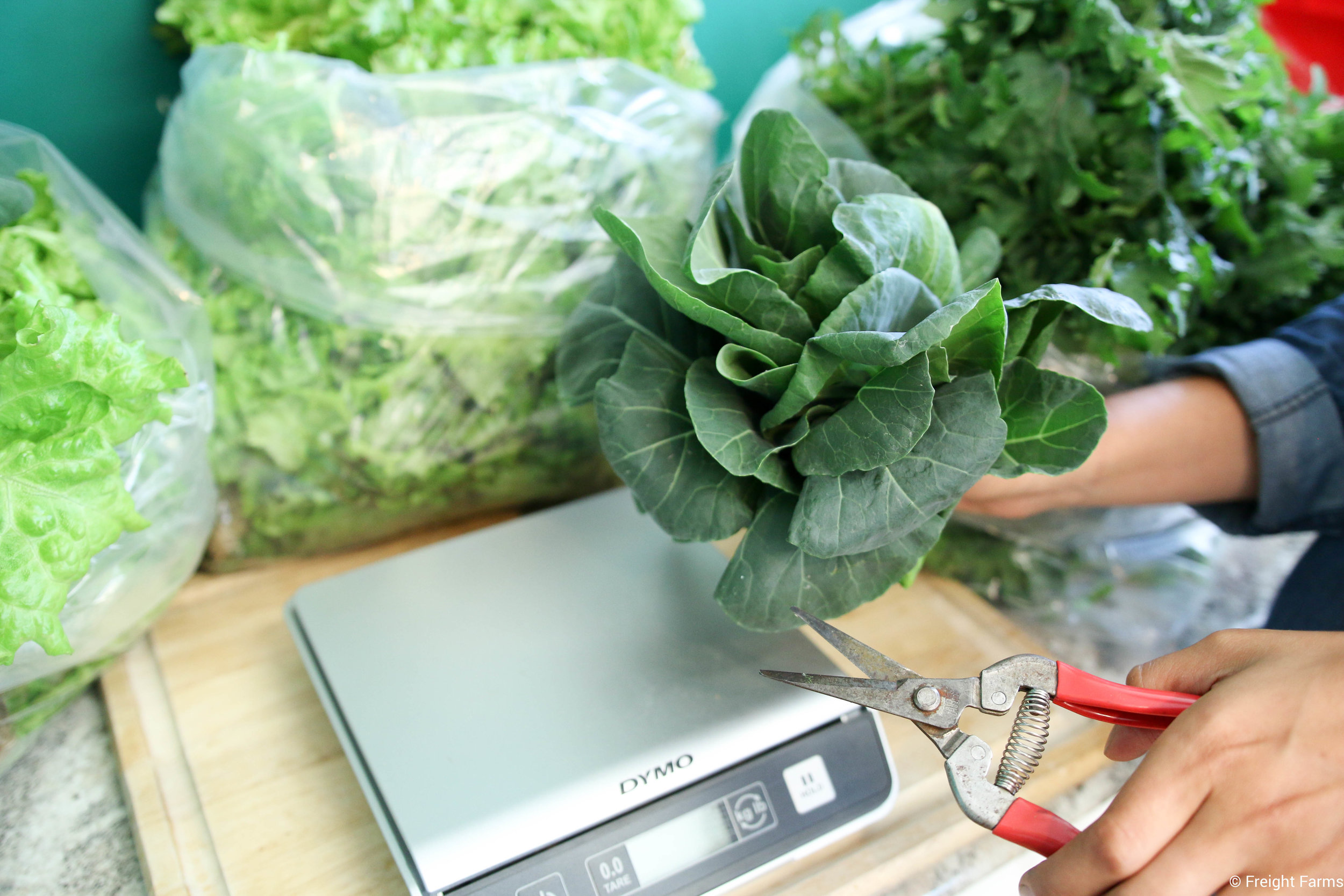
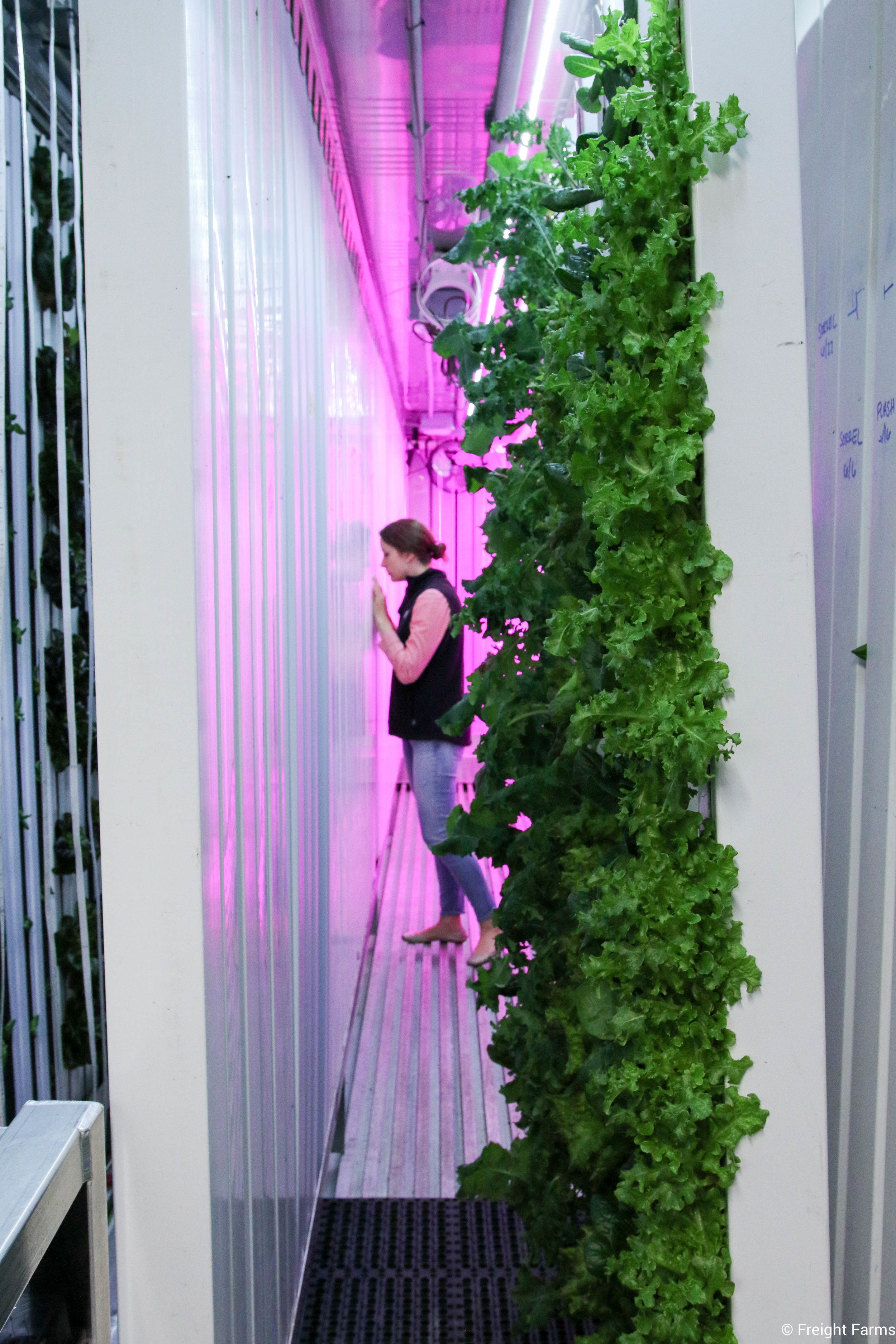
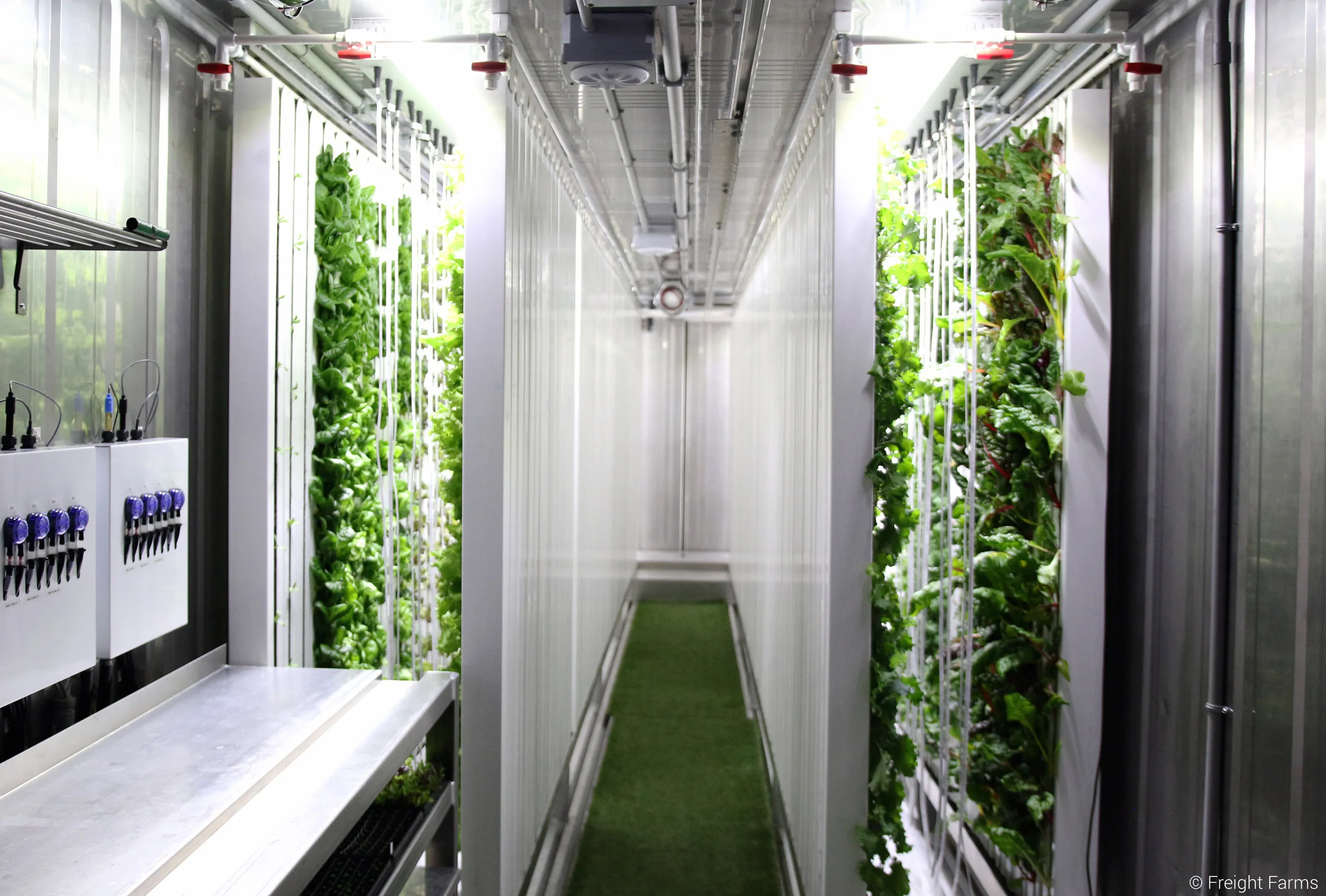
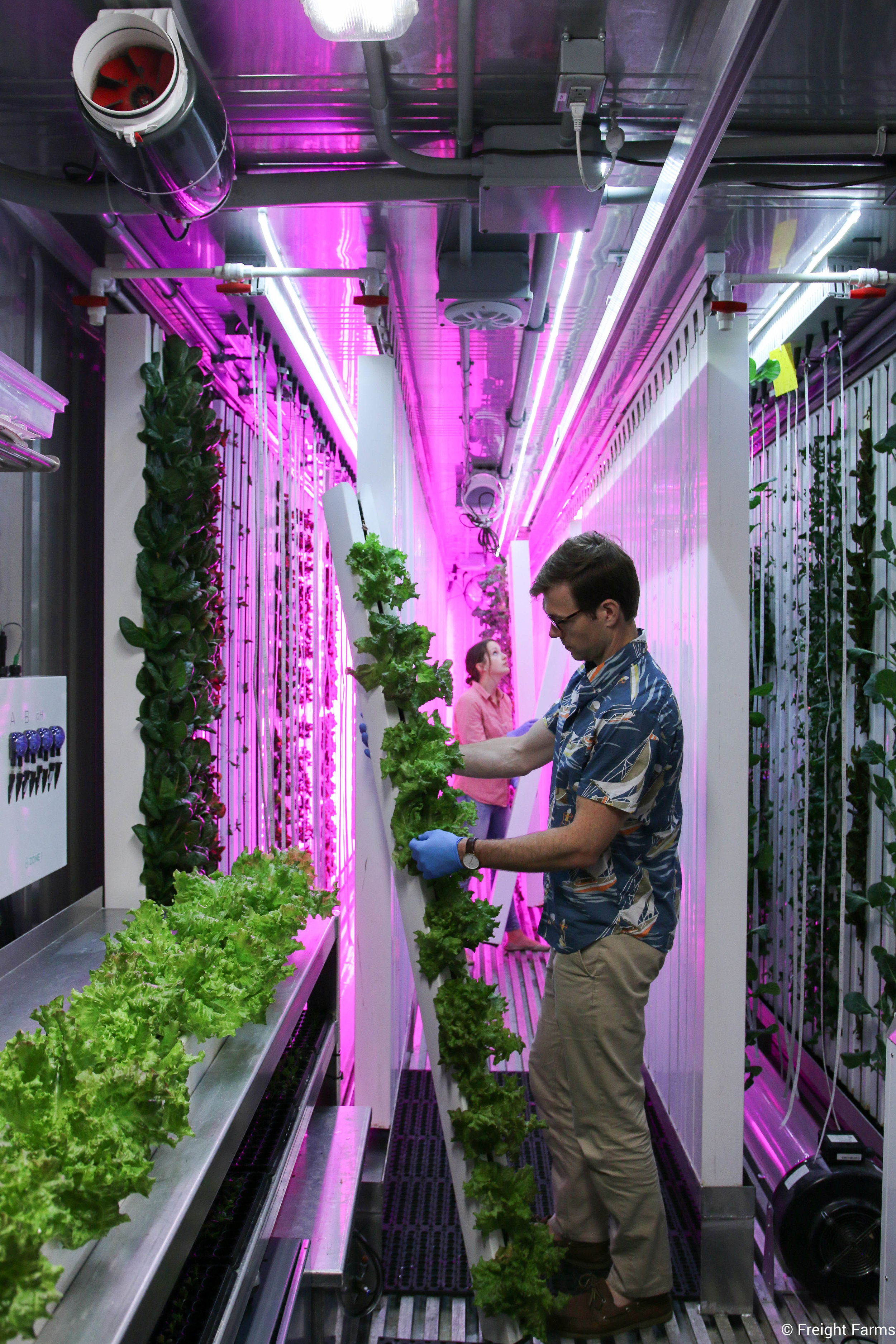
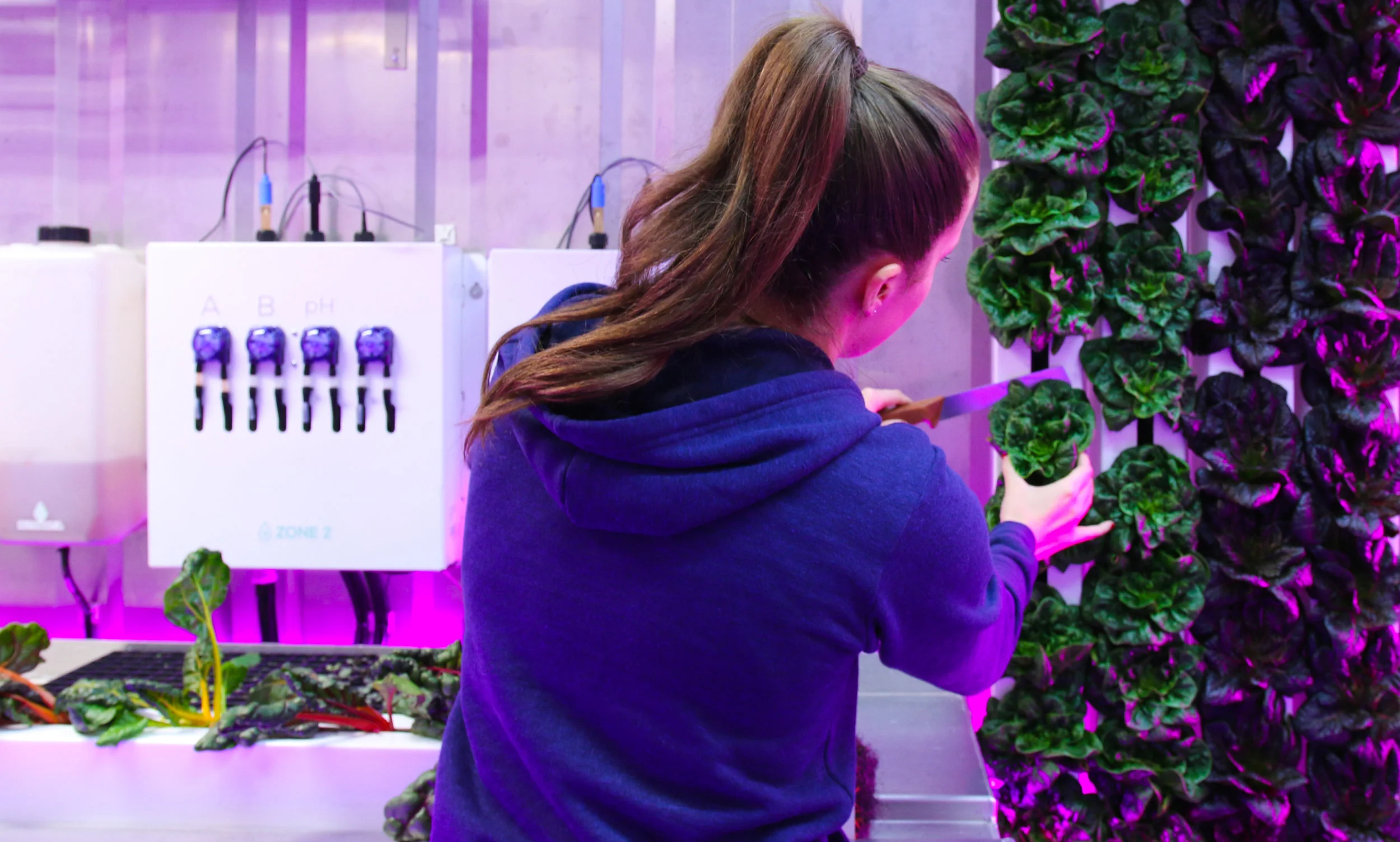
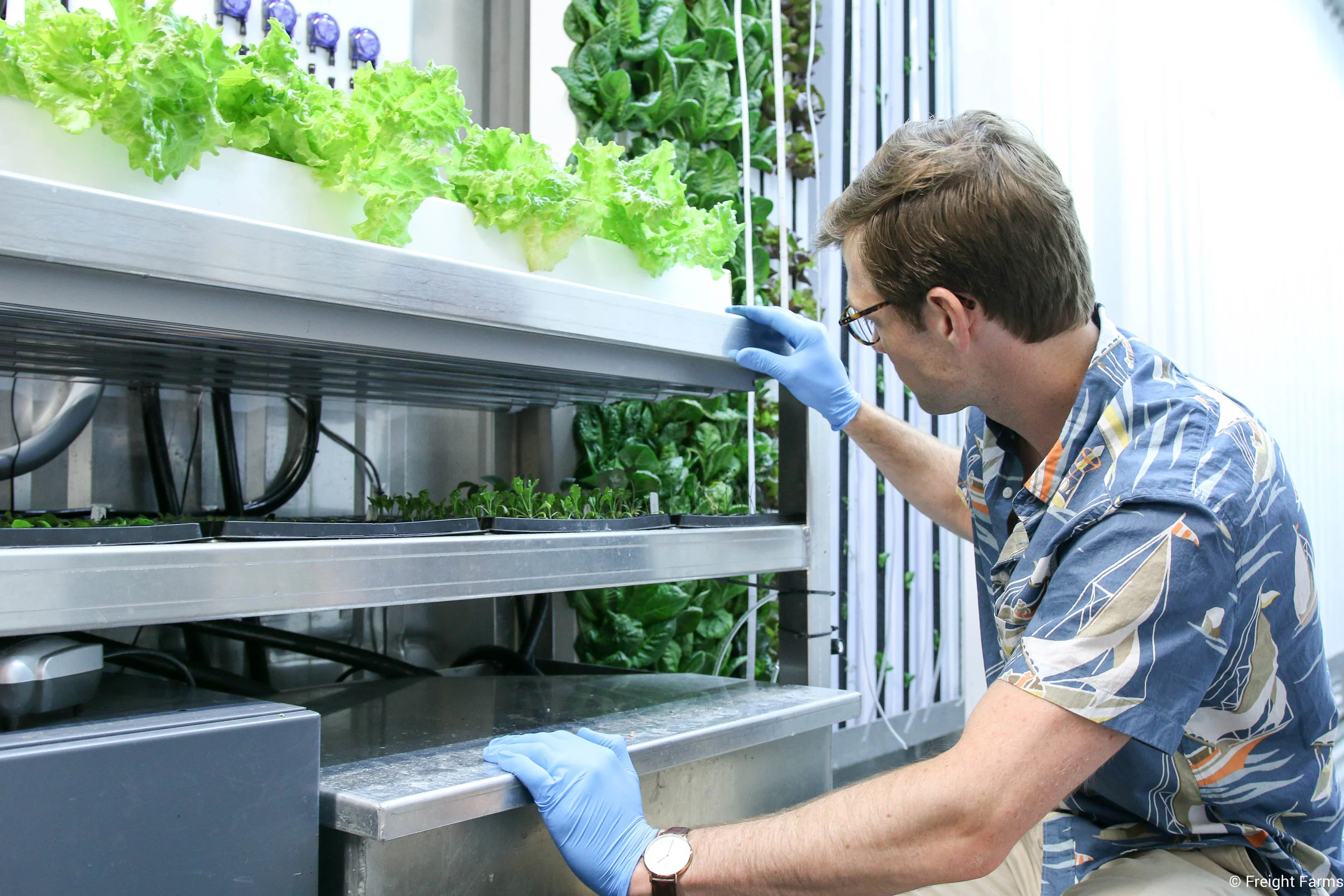
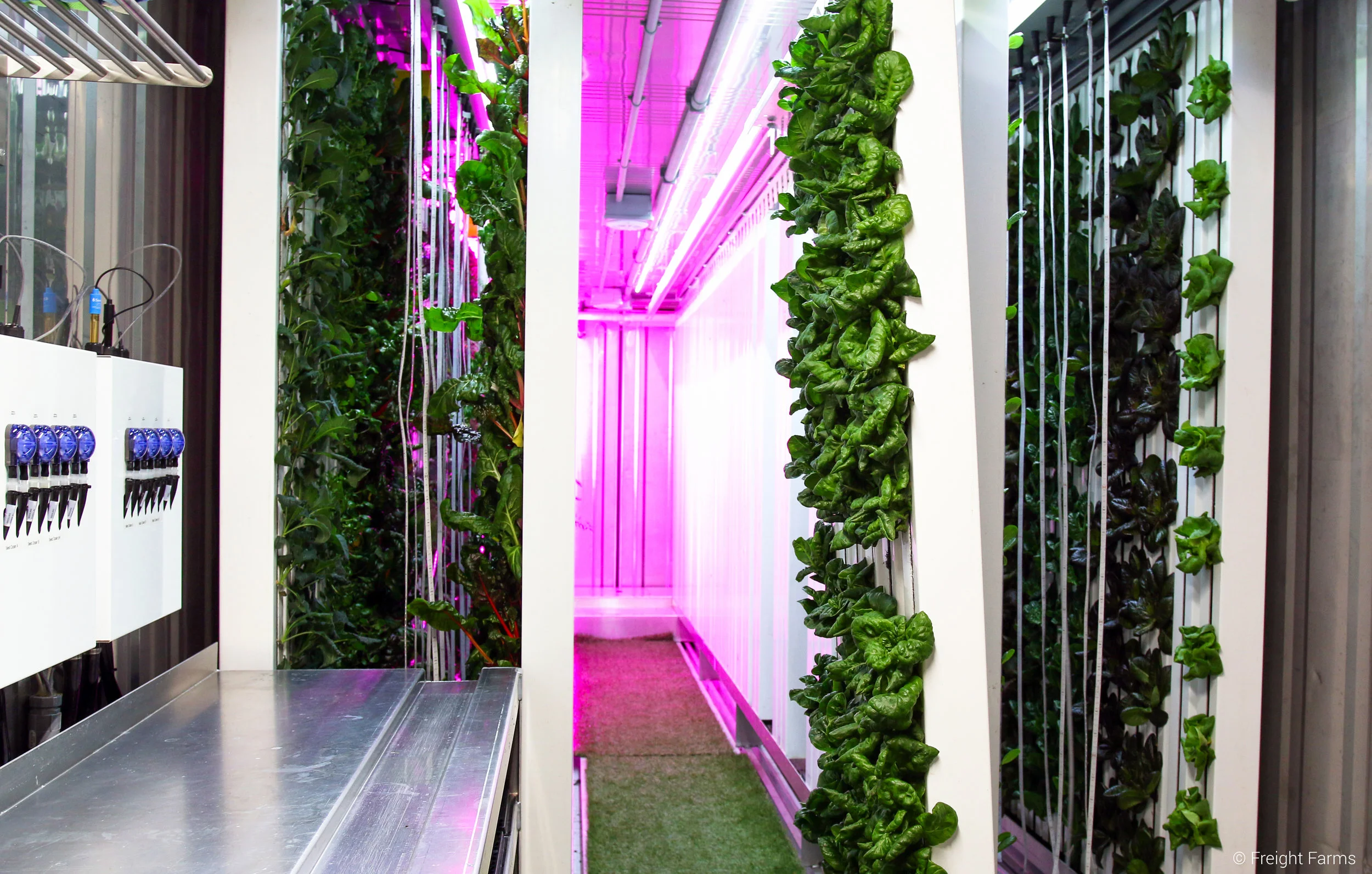
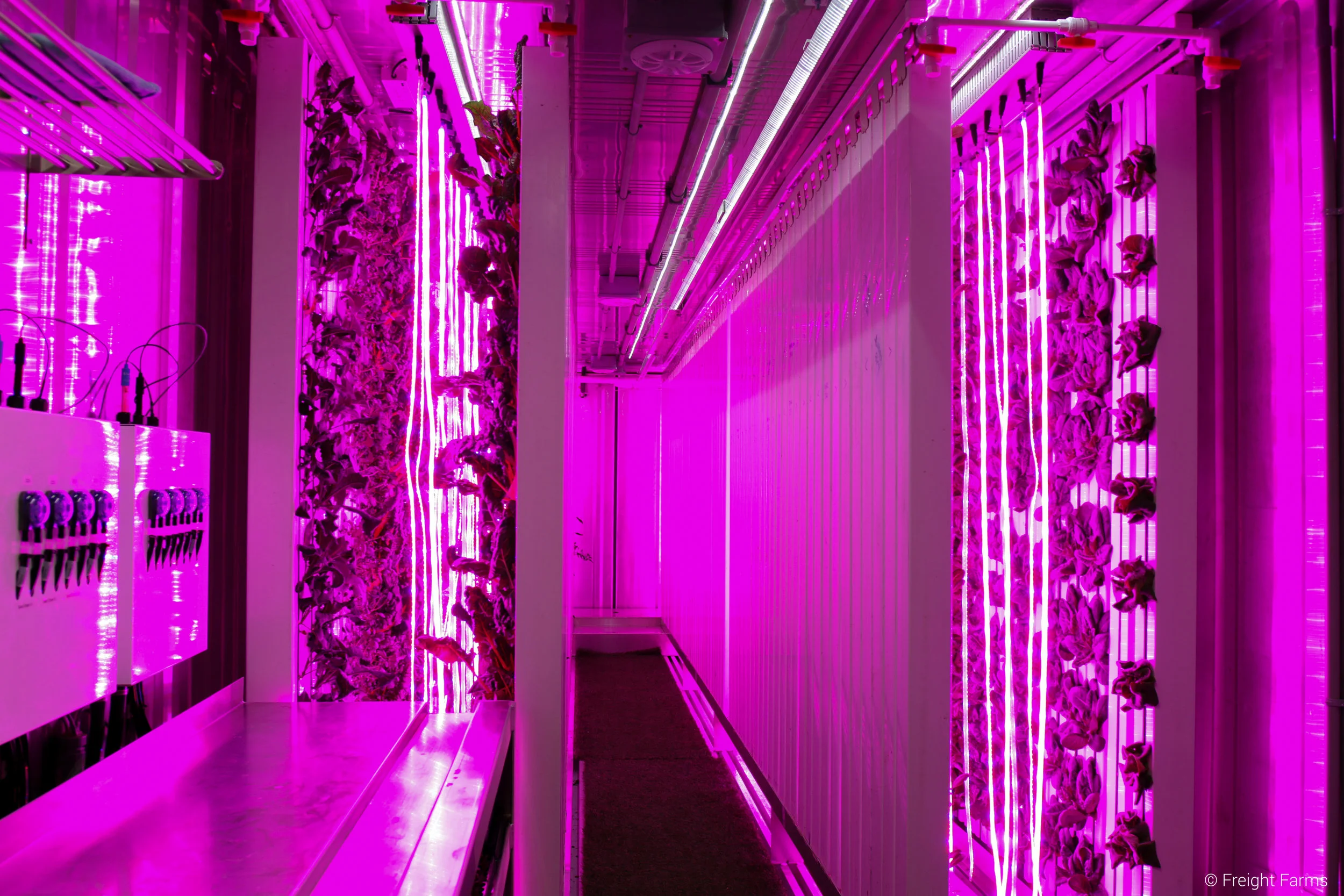
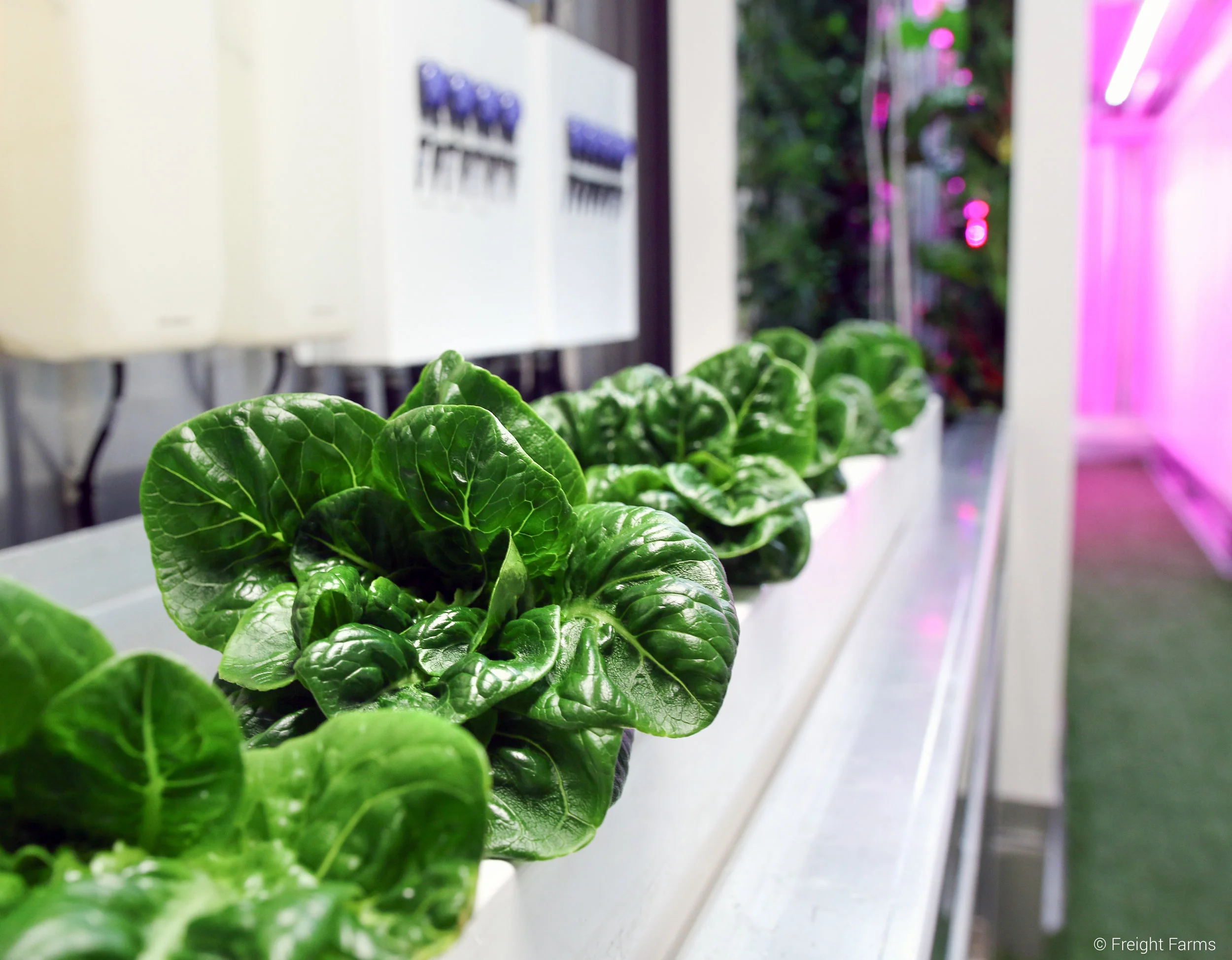
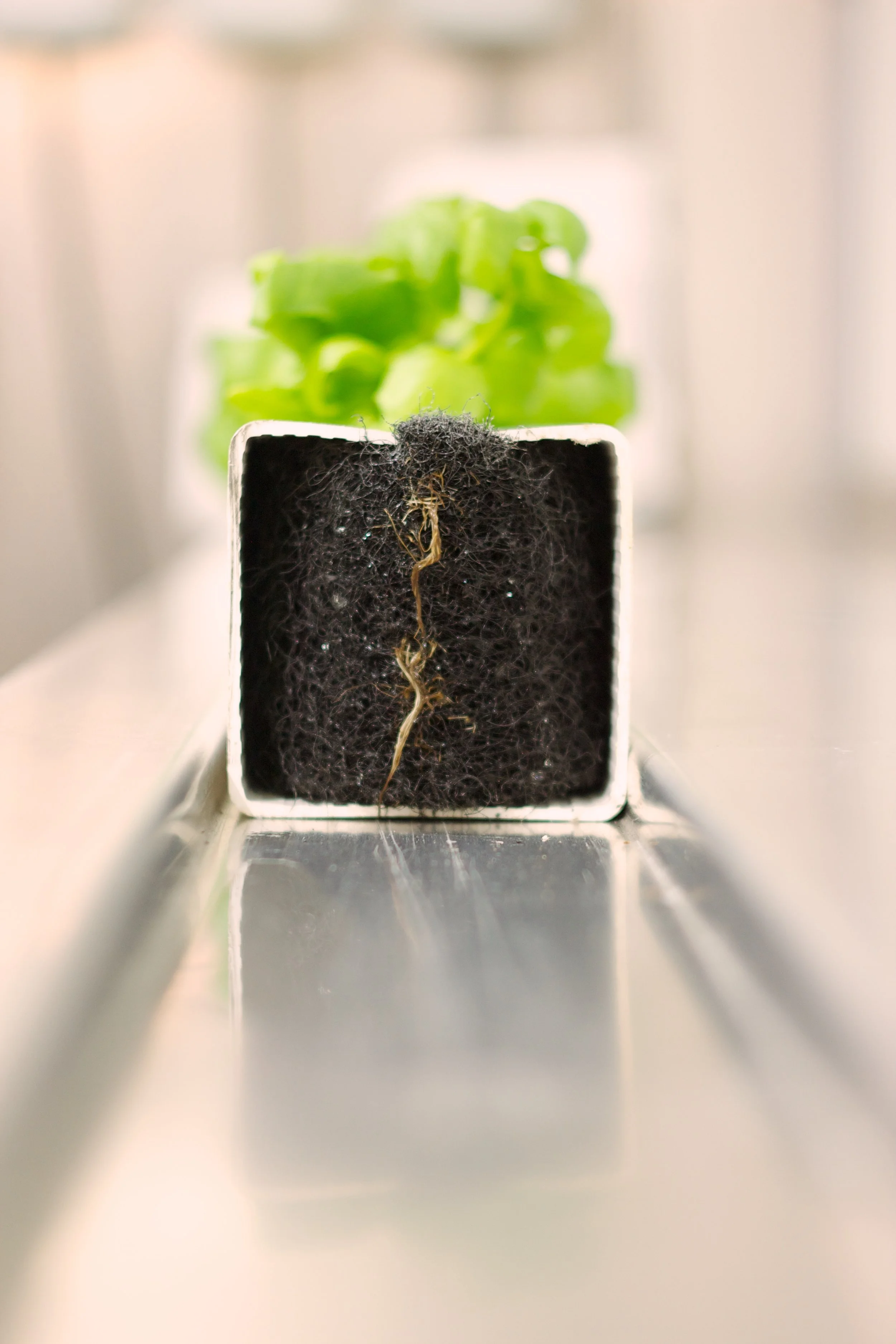
The Leafy Green Machine is a complete hydroponic growing system built entirely inside a shipping container with all the components needed for commercial food production. The system is designed and engineered for easy operation, allowing users of all backgrounds to immediately start growing.
Current Uses
• Perfect for starting a small produce business, growing for restaurants or supplementing existing produce production.
• Restauranter who wants to grow custom greens for rotating menus 365 days a year. Farm to Table? How about Parking Lot to Table!
• Universities and schools have created programs for students to learn to grow while supplementing dining facilities with fresh greens.
The Highest Standard in Controlled Environment Agriculture
• Pre-built system designed to maximize operational efficiency and streamline workflow
• Perfect environment is achievable 365 days a year, regardless of geographic location
• Automated scheduling reduces the amount of labor required to operate
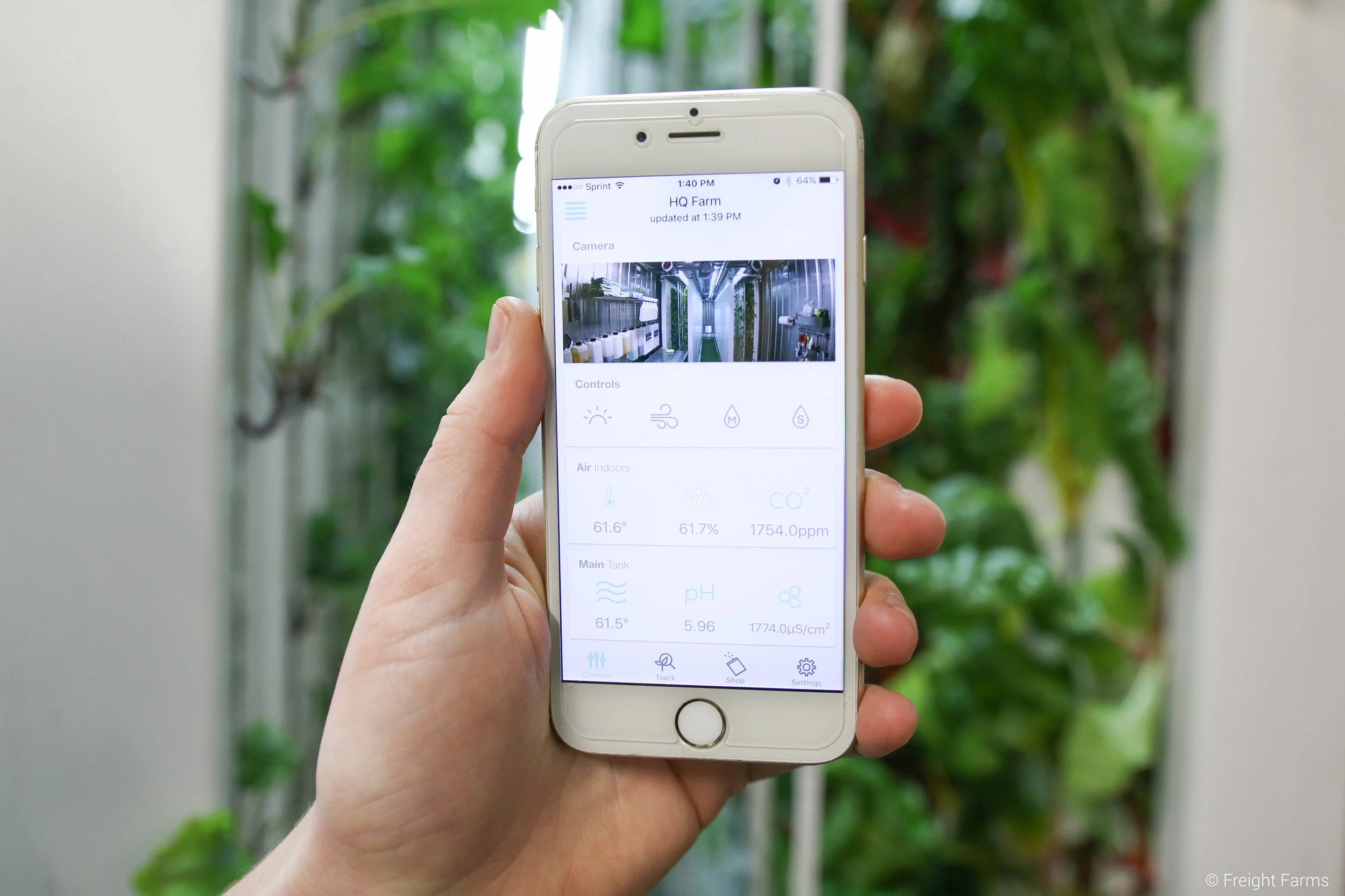
• Remote monitoring & control capabilities through the Farmhand AppTM
Operation Requirements
Space- The LGM dimensions are 40’ x 8’ x 9.5’. We suggest putting the farm on either trap rock or a concrete pad.
Electrical- 60 amp, 120/240-volt single phase or 120/208V three phase connection.
Water- A designated water source is suggested such as a garden hose or hardline water plumbing.
Labor- 15 to 20 hours a week for farming and upkeep.
It is recommended growing smaller compact crops with a high turnover rate, like head and loose leaf lettuces, herbs and heartier greens like kale and swiss chard.


LGM Included Accessories
Upgraded Dehumidifier
1/3 hp main pump
Constant flow drip emitters to prevent the wasting of water
Crop Examples
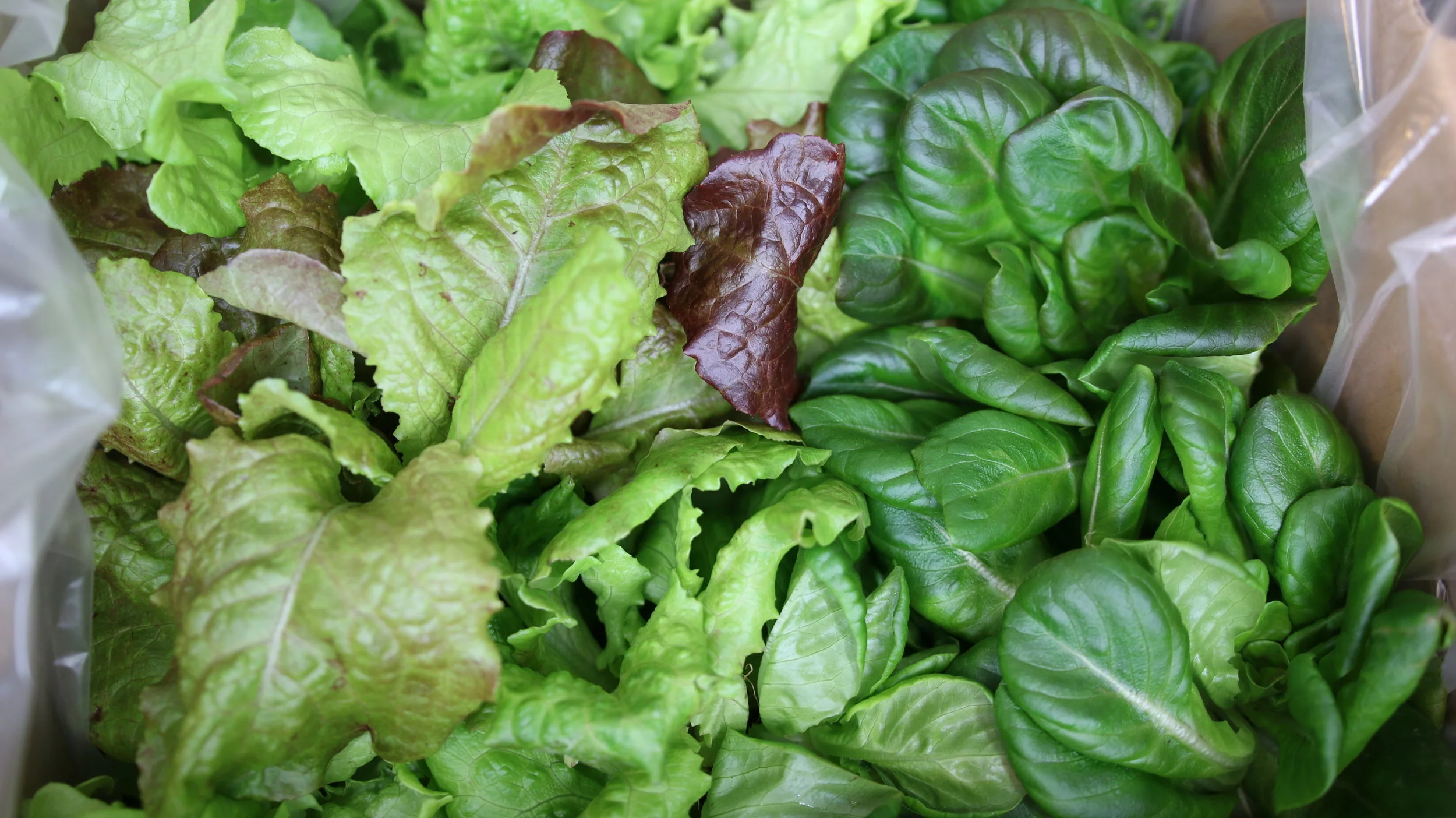
Butterhead lettuce, Oakleaf lettuce, Swiss Chard, Mustard Greens, Cabbage Leaves, Arugula, Cilantro, Mint, Dill, Oregano, Kale, Endive, Basil, Chives and Thyme
Yields
800+ heads of lettuce weekly
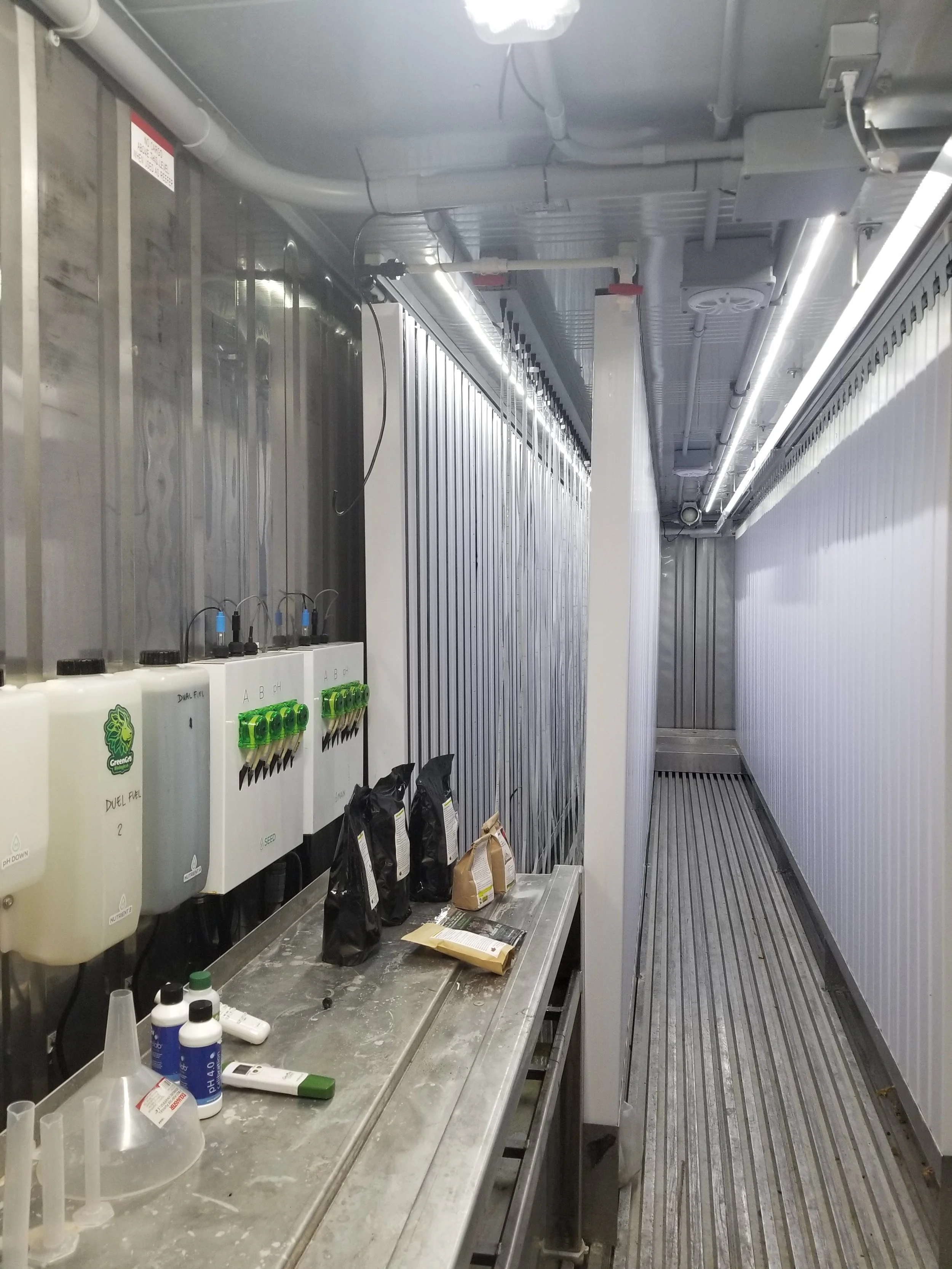
12 heads per tower (256 vertical towers)
1 LGM= 1.8 acres
Numerous additional extras included.
Numerous warranties still in effect
Training, website and ongoing support available through Freight Farms.
Visit Freight Farms (Website) for more information.
1. ALL-WEATHER CONSTRUCTION
Steel frame with stainless interior, 40' x 8' x 9.6' overall footprint.
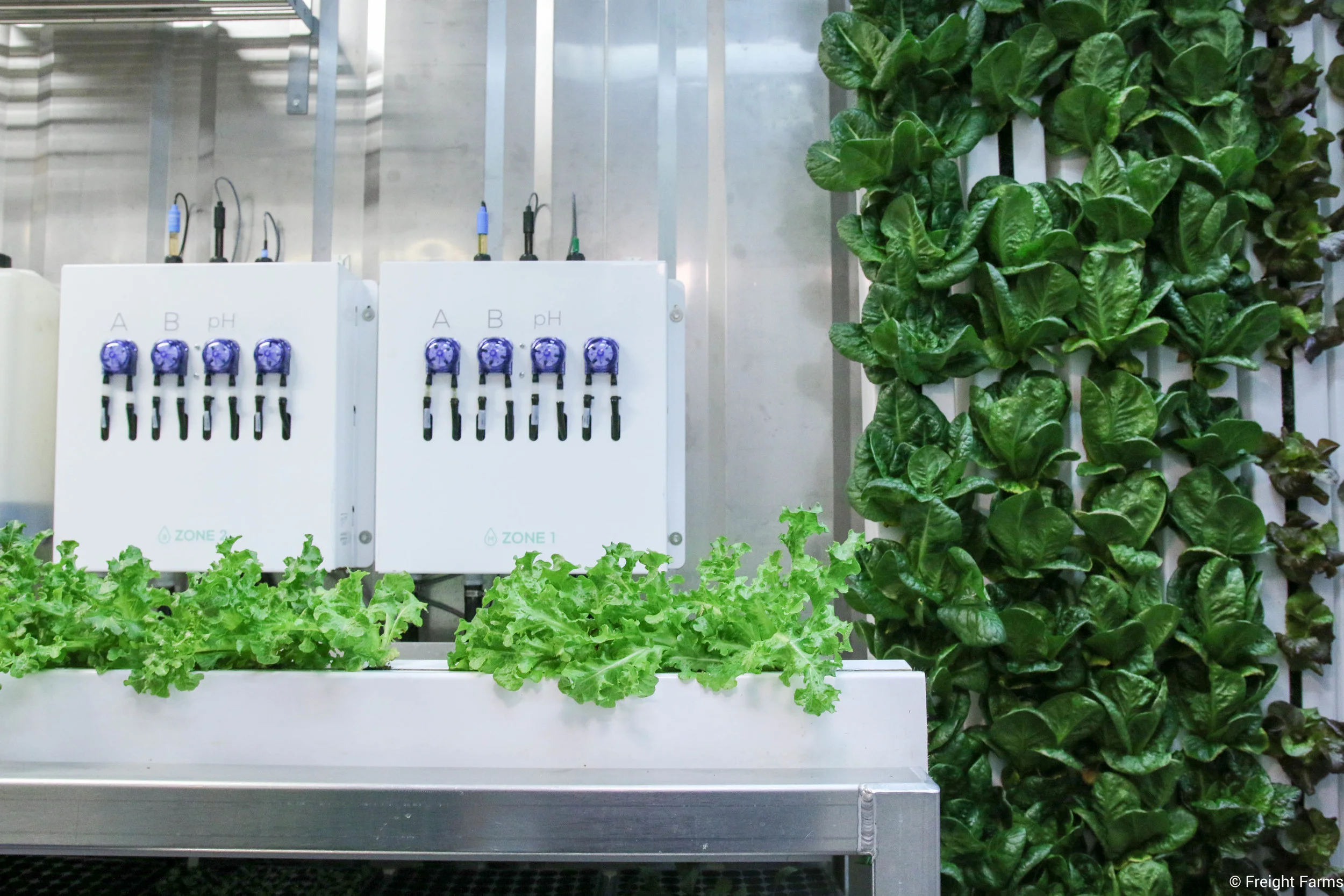
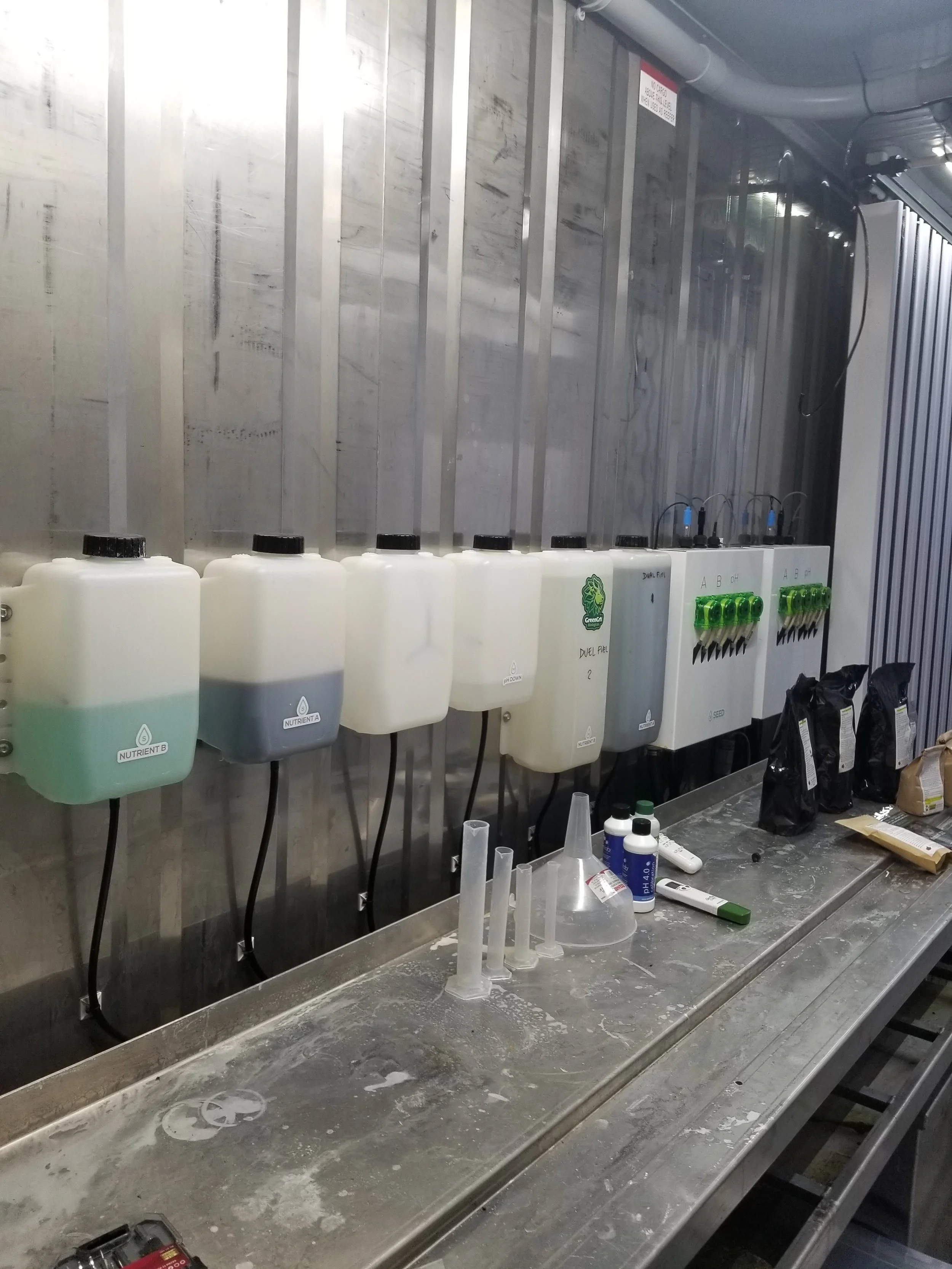
2. AUTOMATIC DOSING
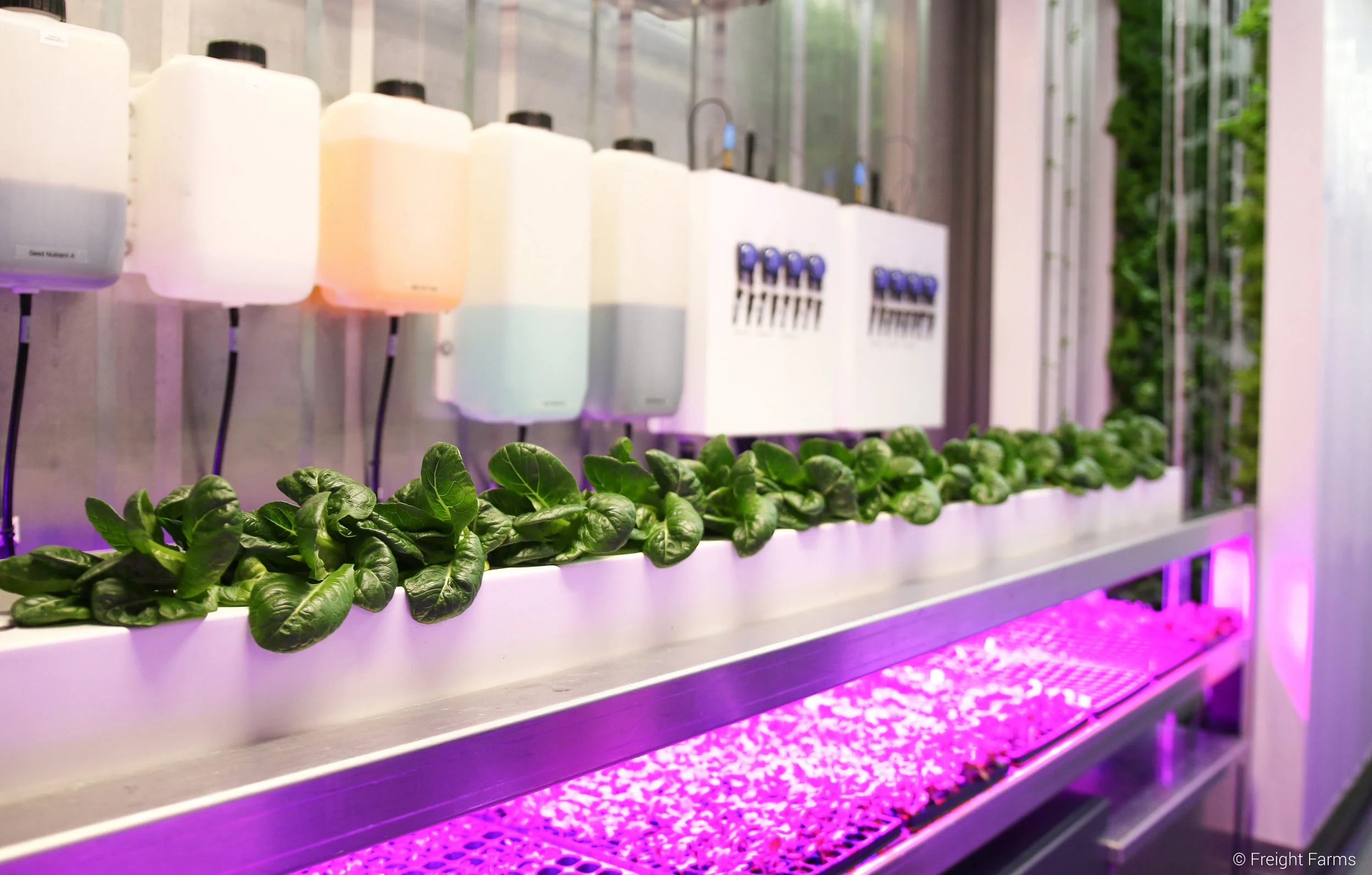
Programmable nutrient & pH dosing for perfect growing conditions.
3. CUSTOM WORKBENCH
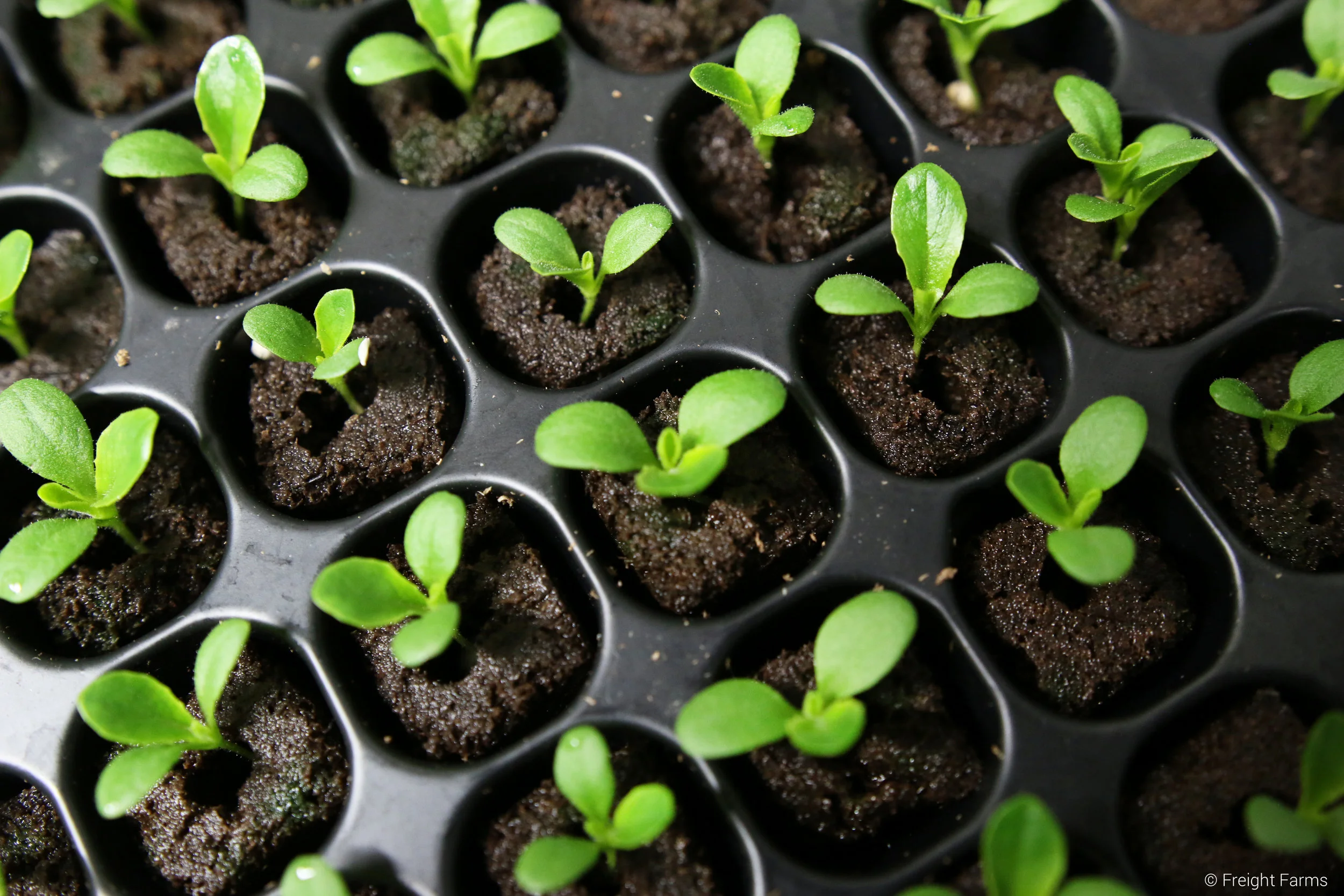
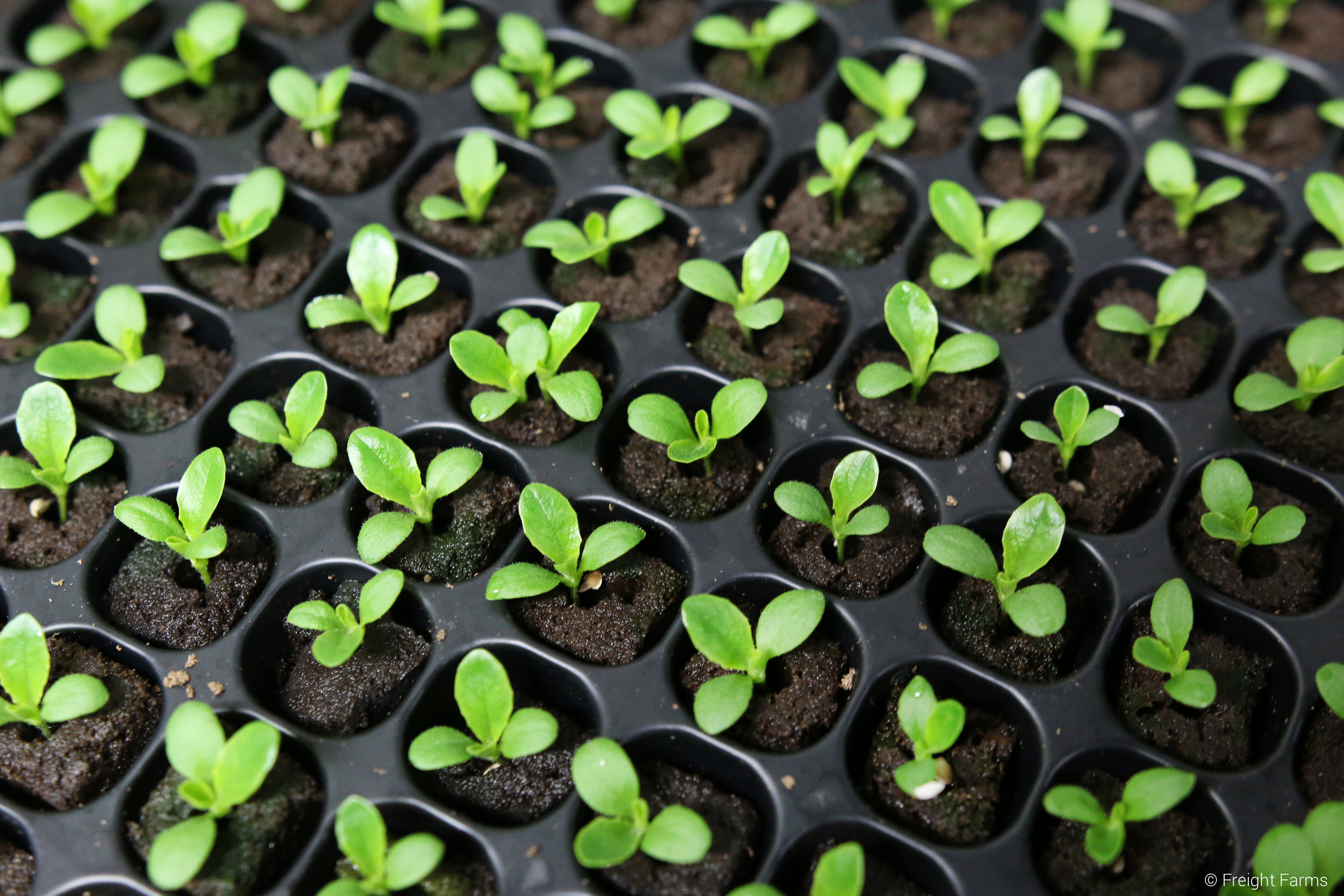
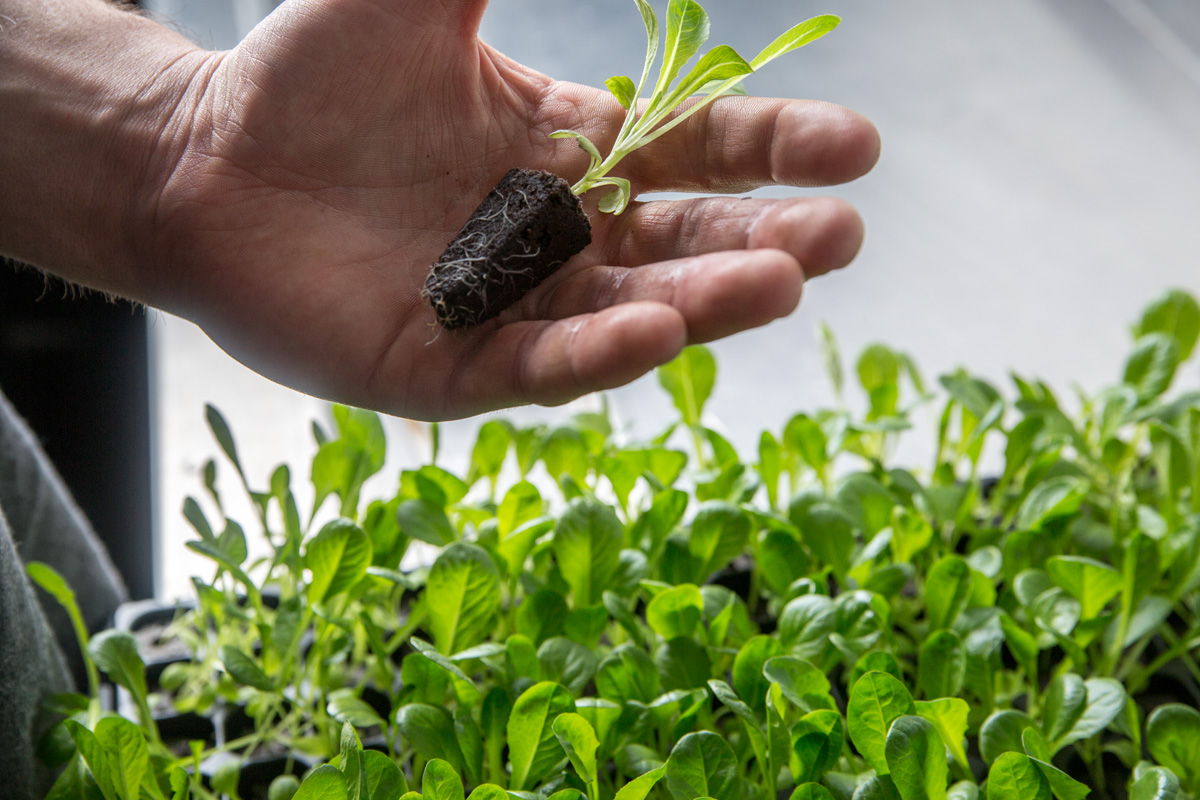
TIG-welded stainless workbench with integrated seedling growth stage.
4. COMMERCIAL VOLUME
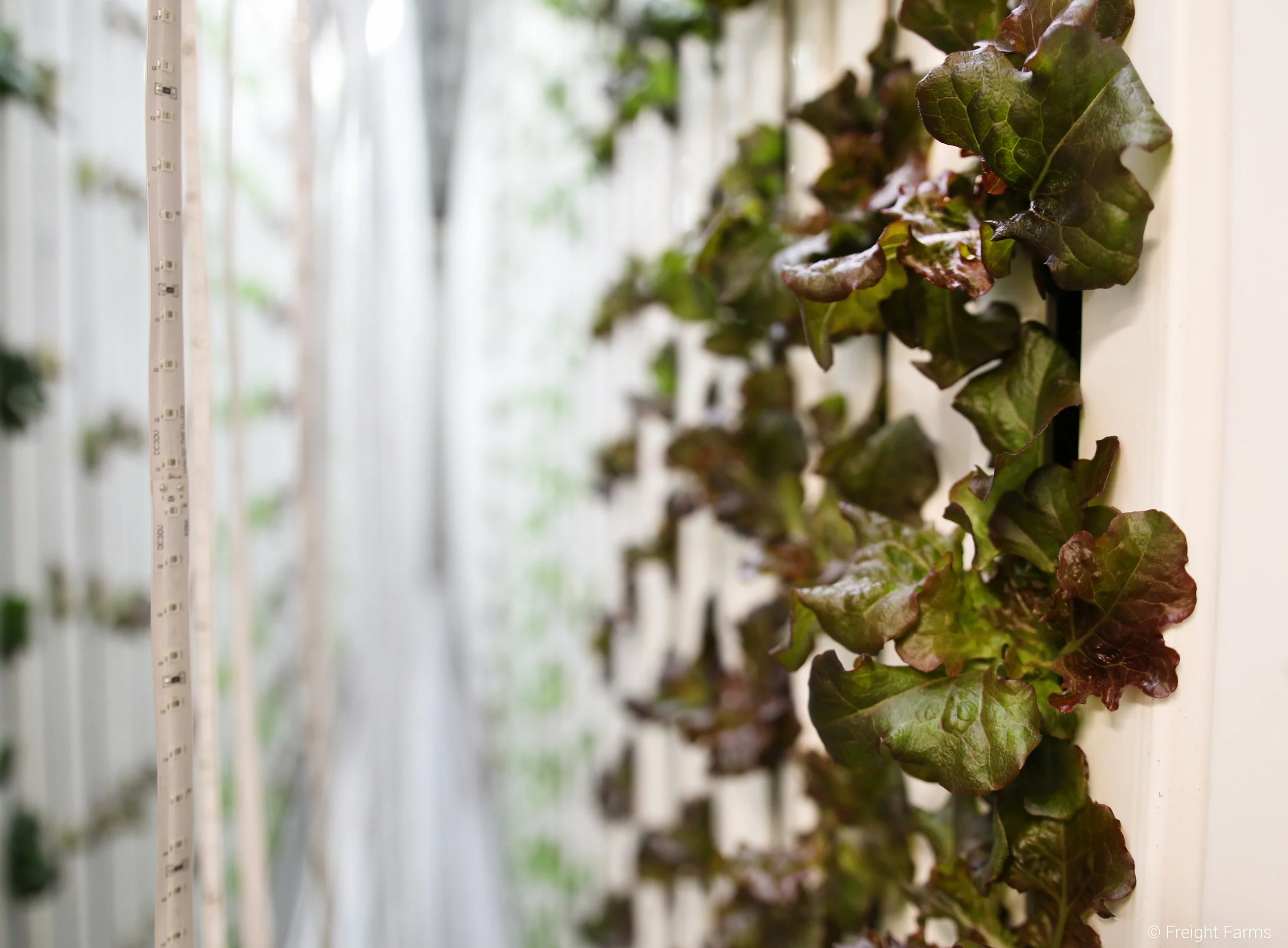
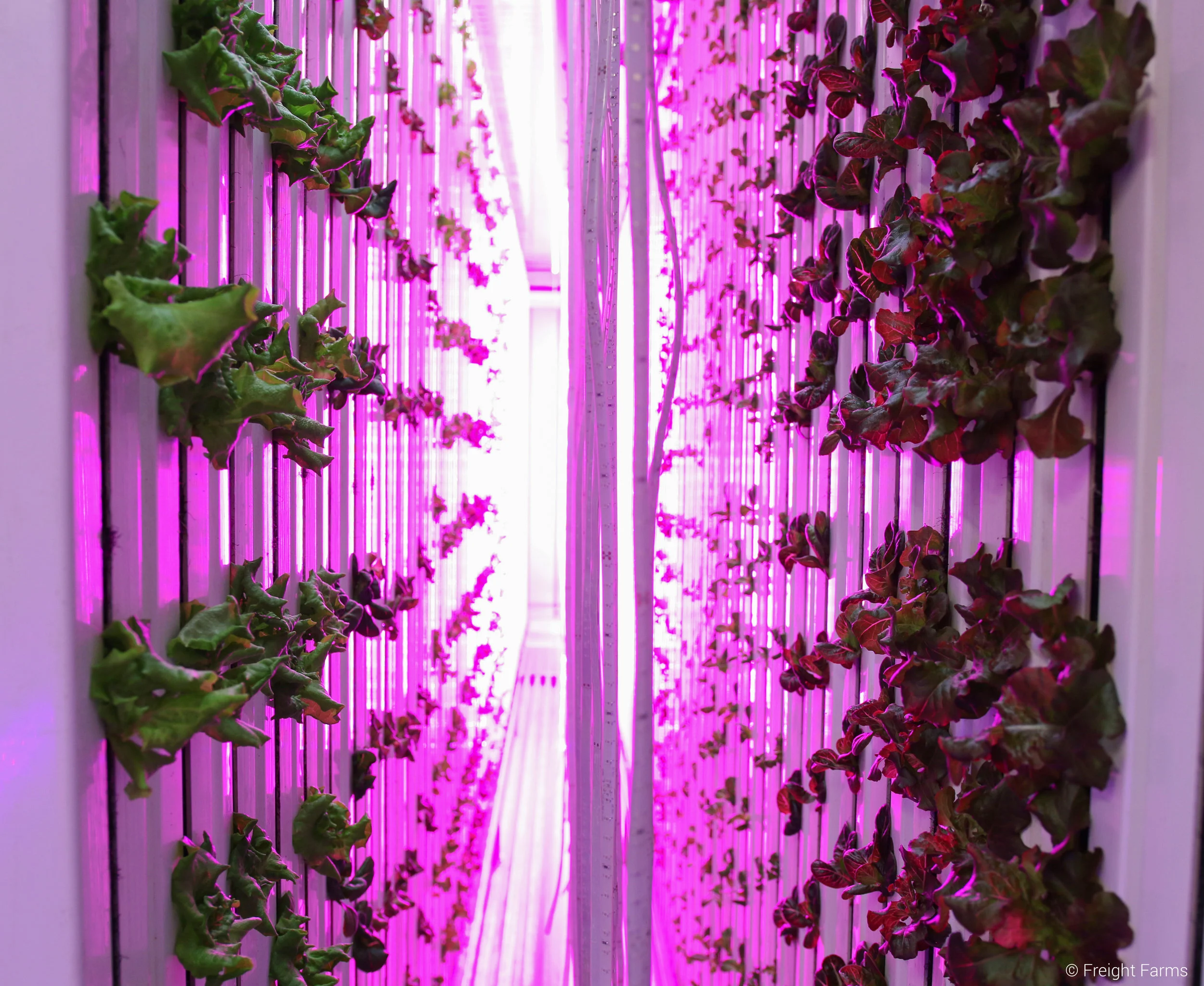
Thousands of growing sites across 256 irrigated vertical towers.
5. HIGH-EFFICIENCY LED ARRAY
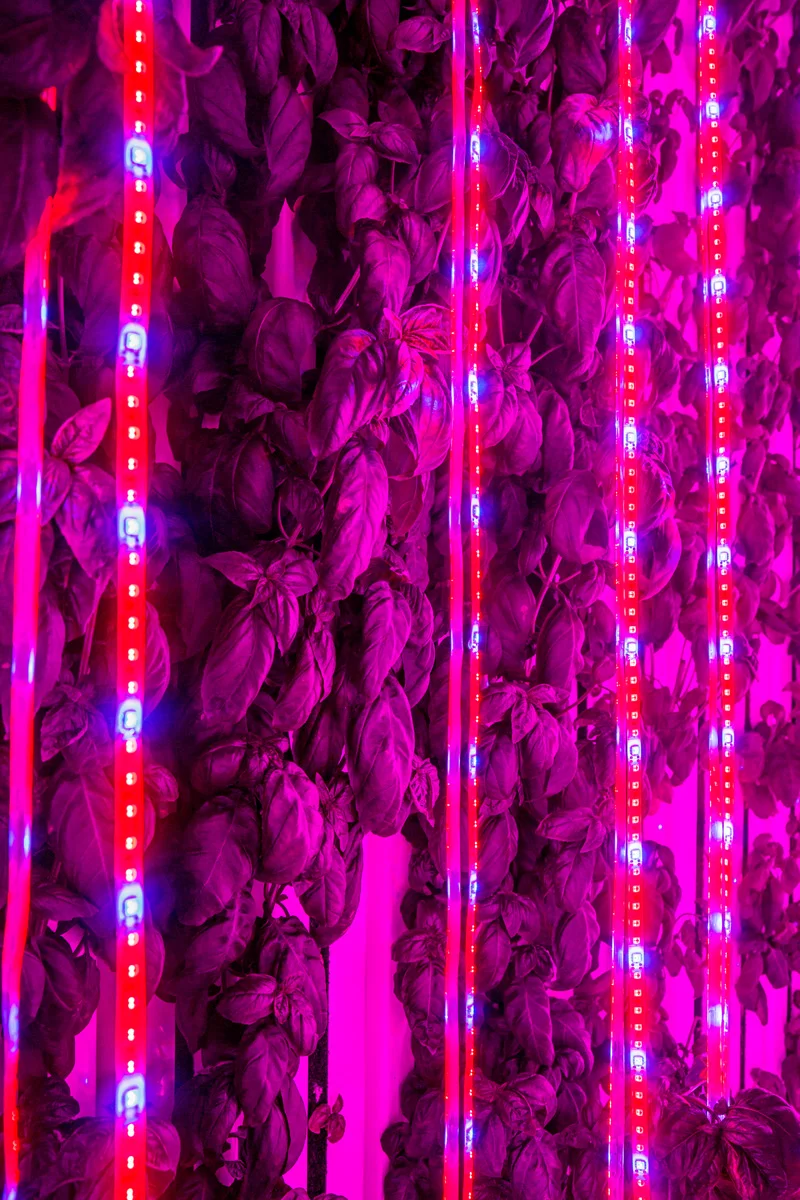
5:1 red / blue LED lighting optimized for green leafy growth.
6. INSULATED ENTRY
Padlock-proof safety door with controlled-environment insulation.
Product Booklet
All information is from sources deemed reliable but is subject to errors, omissions, changes in price, prior sale or withdrawal without notice.
No representation is made as to the accuracy of any description.
All measurements, yields and square footages are approximate and all information should be confirmed by customer.

Farming Goes Underground In Seoul Subway Station
The project is called Metro Farm, and the Sangdo location is the first of five subway farms slated to open by the end of the year in a partnership between the Seoul Metropolitan Government and Farm8, a South Korean agriculture company
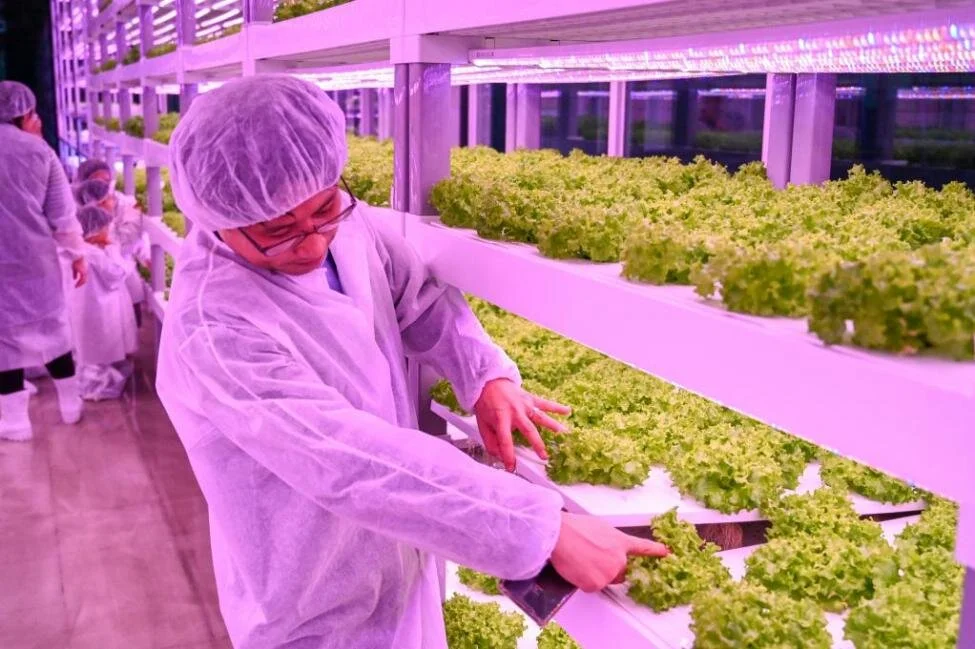
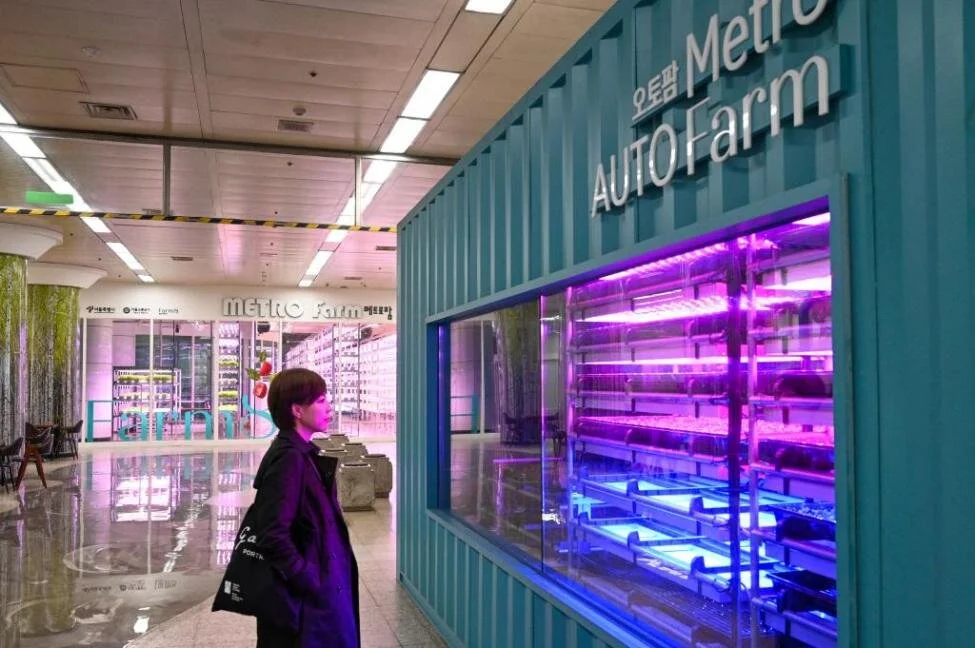

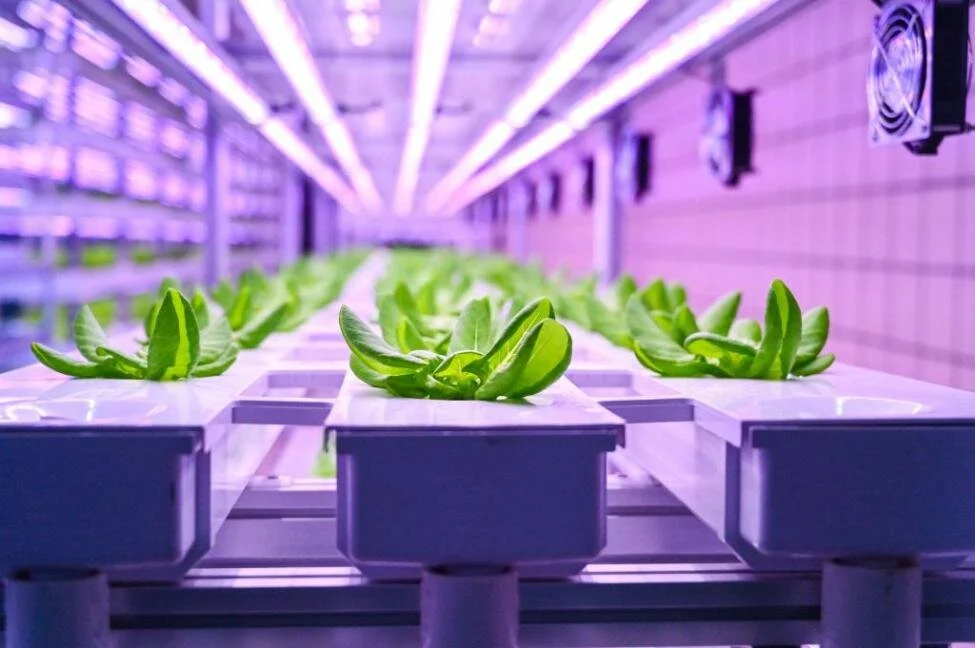
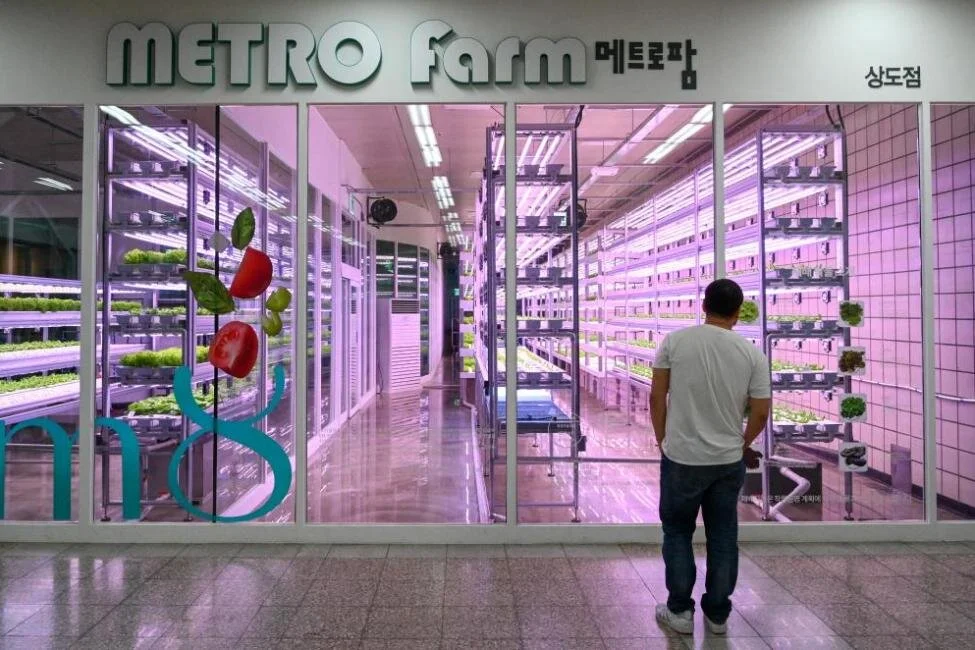
SEOUL, Nov. 1 (UPI) — For the past month, commuters at Seoul’s Sangdo subway station have been met with a surprising sight: a fully functioning farm growing leafy lettuce, sprouts and microgreens.
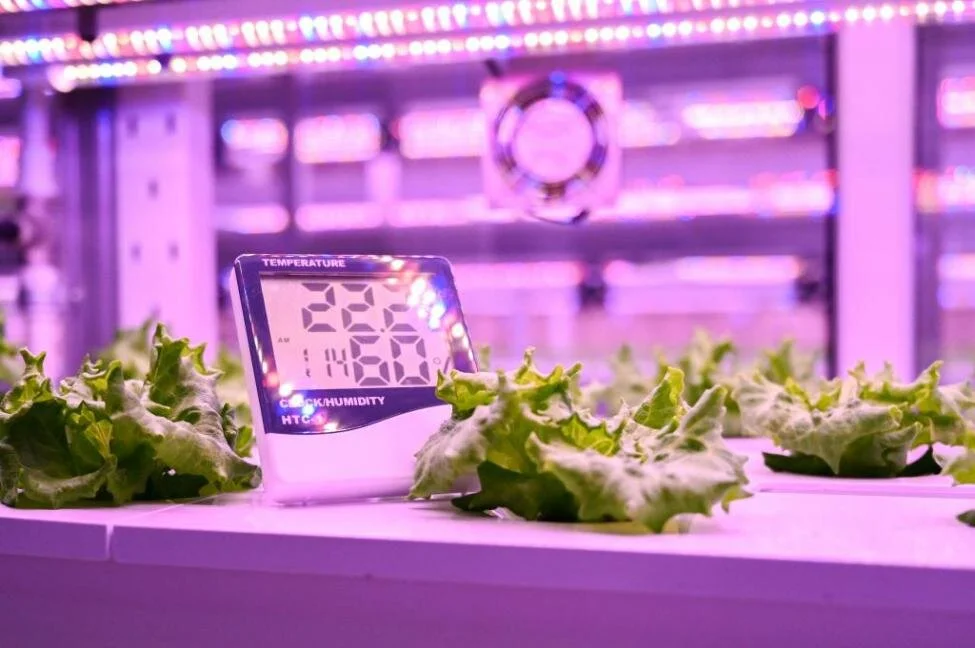
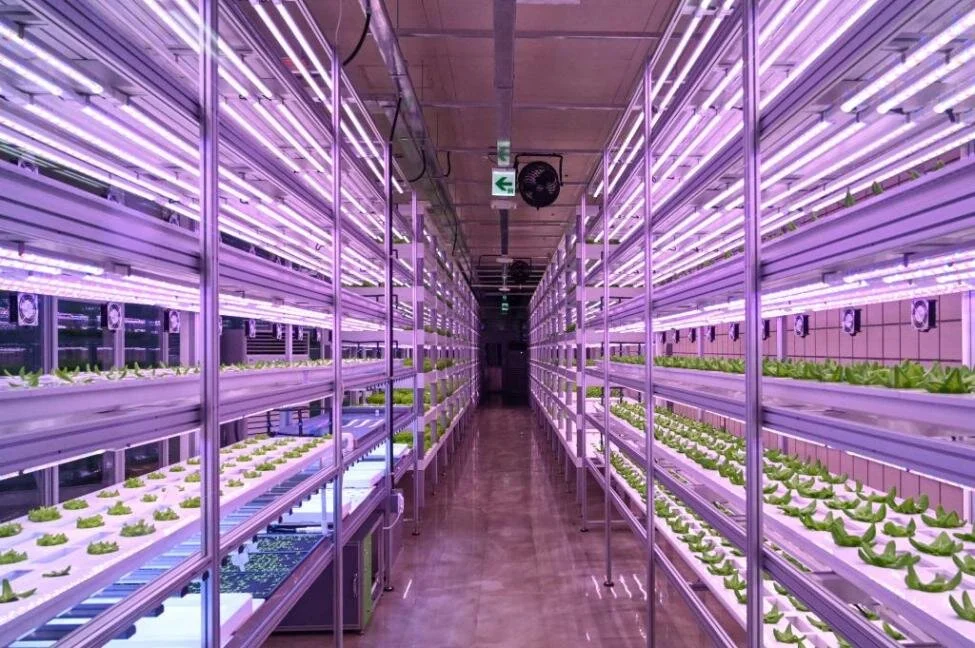
This underground farm doesn’t rely on soil and sunlight but uses special LED lighting, hydroponic growing trays and a smart network that controls factors such as temperature, humidity, CO2 levels and light intensity.
The project is called Metro Farm, and the Sangdo location is the first of five subway farms slated to open by the end of the year in a partnership between the Seoul Metropolitan Government and Farm8, a South Korean agriculture company.
The Sangdo farm opened in late October, and a second branch recently opened in Dapsimni Station.
The farms highlight the changing face of agriculture in rapidly urbanizing societies, said Kim Sung-un, senior manager of Farm8.
“As South Korea is aging and the rural population is rapidly shrinking, this is the future direction of farming,” he said. “These farms use less space and take less time to grow vegetables.”
The operation in Sangdo certainly looks like something from the future, more space station than a subway station.
Lettuce is grown on vertical shelves in the main facility, a brightly lit glass-encased 4,240-square-foot) cleanroom that must be entered through an airlock. The Sangdo farm produces around 66 pounds of greens per day, with seeding and harvesting the only human interaction necessary.
Growing times are reduced in this hydroponic system, taking around 38 days to grow lettuce from seed to harvesting, as opposed to more than 50 days in soil. The farm also absorbs CO2 and pumps out oxygen, contributing to the air quality in the subway station.
A smaller space nearby contains a fully automated robot farm that grows sprouts and microgreens, while a Farm Café sells salads made from the plants at the Metro Farm. The station also hosts an experience center that offers tours and interactive demonstrations of the farm to families and schools.
Kim said that only three employees are needed to maintain the farms across all five subway locations, and these positions are being filled by retirees and disabled workers.
“The best thing about urban farming is that it can improve the lives of people who are socially excluded,” Kim said.
The benefits of the subway farm for Seoul are widespread, said Choen So-young, who heads the Smart Farm initiative in the city government, ranging from minimizing transportation to providing a stable food supply.
“As the vegetables produced in the stations can be distributed right away, we can minimize the cost of distribution and logistics,” she said. “And the farms are located in urban areas so we can have an easy supply of manpower. In addition, as the smart farms are not affected by climate change including fine dust, they can have a stable production to supply clean and safe vegetables.”
While interest in vertical and urban farming has been on the rise in cities around the world, questions remain about its economic viability on a broad scale. One study in Japan last year found that 60 percent of indoor farm operators are unprofitable because of the cost of electricity to run their facilities.
However, South Korea, with limited available land, extreme seasons that make growing year-round difficult and electricity prices that are among the lowest in the world among developed nations, could prove an ideal urban farm market.
“Compared to the traditional outdoor farming, the vertical type of smart farming can maximize the production volume per unit area throughout the year with a stable condition,” Choen said. “So the cost efficiency is the strongest point.”
What is certain is that the coming decades are going to require radical new approaches to feeding the world.
A United Nations report from 2013 predicted that the world will need to sustainably produce 70 percent more food by the year 2050 to feed a population of nearly 10 billion. And an August report from the U.N.’s Intergovernmental Panel on Climate Change warned that arable land, which has been declining globally for decades, is under critical pressure from climate change and human development.
In the meantime, commuters at Sangdo Station are getting a taste of the future.
Kim Jie-eun, a 30-year-old teacher, said she lived nearby and was intrigued by the new addition.
“I come through the station often and I noticed the farm,” she said while eating a salad from the Farm Café with a friend.
“It was the first time I had ever seen something like this and I wanted to try it, especially because I eat a lot of salads. I like the fact that it’s really fresh. And the idea is really new, innovative and creative. I hope more residents will try it.”

US: Study: Organic Farming Is Worse For Climate Change
The MIT Technology Review also highlighted other recent research which has concluded that organic farming produces more climate pollution than conventional practices because of land-use changes
October 22, 2019
According to a study recently published by Nature Communications, organic farming can reduce pollution produced from farming however it takes considerably more land, which means considerably more greenhouse gases would be released in order to clear that land.
The MIT Technology Review also highlighted other recent research which has concluded that organic farming produces more climate pollution than conventional practices because of land-use changes.
"Our study shows that organic peas, farmed in Sweden, have around a 50 percent bigger climate impact than conventionally farmed peas. For some foodstuffs, there is an even bigger difference -- for example, with organic Swedish winter wheat the difference is closer to 70 percent," says Stefan Wirsenius, who was responsible for a similar study in Science Daily. "The greater land-use in organic farming leads indirectly to higher carbon dioxide emissions, thanks to deforestation."
A 2017 Nature Communications study revealed that in the United States, it would require a 16-33 percent increase in land use to switch to all organic farming. However, that number skyrockets in parts of Europe because of particularly high yields.
“Looking at the farm scale doesn’t really tell you what a large-scale transition to organic would look like,” Dan Blaustein-Rejto, associate director of food and agriculture at the Breakthrough Institute, a think tank that promotes technology solutions to environmental challenges, told the MIT Technology Review. “Only a study like this, that takes a system-wide perspective, really does.”

London’s Urban Farms Move Underground
As London-born architect Carolyn Steel points out in her book Hungry City, “The relationship between food and cities is endlessly complex, but at one level it is utterly simple. Without farmers and farming, cities would not exist.”
November 04, 2019
These farmers hope to solve a major problem
of urban food production: space.
Photography courtesy Growing Underground
As London-born architect Carolyn Steel points out in her book Hungry City, “The relationship between food and cities is endlessly complex, but at one level it is utterly simple. Without farmers and farming, cities would not exist.”
In an overcrowded city like London, with its housing shortages and box-flat living, urban farmers are facing an ever-increasing challenge of where to grow their produce; how to withstand the weather and the city’s pollution, and in ways that utilize any and all available space.
When Richard Ballard was completing his degree in film studies, he thought it would lead toward a film career. Instead, it led him down a rabbit hole—or rather, a tunnel. In 2015, Ballard, alongside business partner Steven Dring, founded Growing Underground—the self-described first subterranean urban farm in the world—in an old Second World War bomb shelter below London’s Northern line. Ballard learned about these abandoned tunnels during his studies, and he began to wonder why, in a city desperate for space, no one was making better use of them.
Growing Underground uses the natural insulation of underground tunnels, 100-percent renewable energy to power its LED grow lights and a recycling hydroponic system. The farm produces 1,200 packs of pesticide-free micro-cresses daily, and it looks to solve one of the major concerns of urban food production: space. Currently, the farm uses only 20 percent of the historic tunnels; the small team of 25 make expert use of the 520 square meters. There are plans to expand next year, thanks to the success of operations and additional funding.
Despite their growth mindset, (“Everyday is a school day here,” Ballard says during a recent tour), nothing about Growing Underground’s operation is accidental. Visiting the tunnels requires a clinical sterilization process: Jewelry must be removed. Hairnets, boots and a good hand scrub are required before stepping into the pink-hued, temperature-controlled cave. The wafting smell of radish surrounds the first batch of purple sprouts, precisely stacked in floor-to-ceiling shelves. Other varieties include coriander, garlic chives, sunflower shoots, fennel and more. Seeds are propagated in a separate area before cycling through the corridor’s lights until they are ready to be harvested. For some plants, such as pea shoots, this six-day cycle allows for approximately 60 harvests per year—ten times more than most traditional methods.
Growing Underground’s unusual approach has helped lead the way in reimagining what urban farming looks like, creating room for newcomers such as Harvest London, a company using controlled-environment technologies and vertical gardening to create bespoke “climate recipes.” They hope to dissuade chefs from flying in produce by mimicking the environment locally without compromising on flavor; a timely endeavor given the potential risk to food sourcing in a post-Brexit world.
Growing Underground hosts tours for customers and corporations alike, hoping to inspire the possibility of sustainable practices to all who visit.
Element Farms Unveils New State-of-The-Art Greenhouse
New Facility Will 20x Company’s Current Capacity for Growing
Pesticide-Free, Local, and Sustainable Leafy Greens Year-Round
New York, NY -- October 31, 2019 -- Element Farms, one of the only companies capable of growing pesticide-free, local, and sustainable spinach year-round, has announced that it will begin operations at its new 70,000 square foot Lafayette, New Jersey, greenhouse facility in the coming weeks. The company will outfit its new site, once home to a horticulture company, with proprietary technology and supplemental lighting to produce a wider variety of leafy greens at a higher yield and lower cost than most competitors. At full capacity, Element Farms will produce over half a million pounds each year of pesticide-free baby spinach, arugula, baby lettuces, pea shoots, beet greens, and more.
The new facility is an evolution from Element Farms’ current home: the structure is made entirely of glass, which allows for more efficient transmission of sustainable natural sunlight, and the hilltop location moderates temperatures, bringing heating and cooling costs down during the company’s year-round production.
Most of the operation’s everyday tasks will be automated with Element Farms’ custom machinery, like seeders and harvesters, to increase yield per square foot. The new greenhouse is ideally situated on delivery routes for New York, New Jersey, and Pennsylvania’s population-dense and produce-hungry cities. As before, greens will be delivered directly to retailers within 24 hours of harvest for maximum shelf life.
“We couldn’t be more excited for our new greenhouse. We’re customizing every aspect for operational efficiencies, integrated pest management, and sustainability,” said company founder Serdar Mizrakci. “We’re also thrilled that we’ll be able to meet our ever-increasing demand and bring more pesticide-free, safe, and delicious greens to the retailers and customers who have been clamoring for it.”

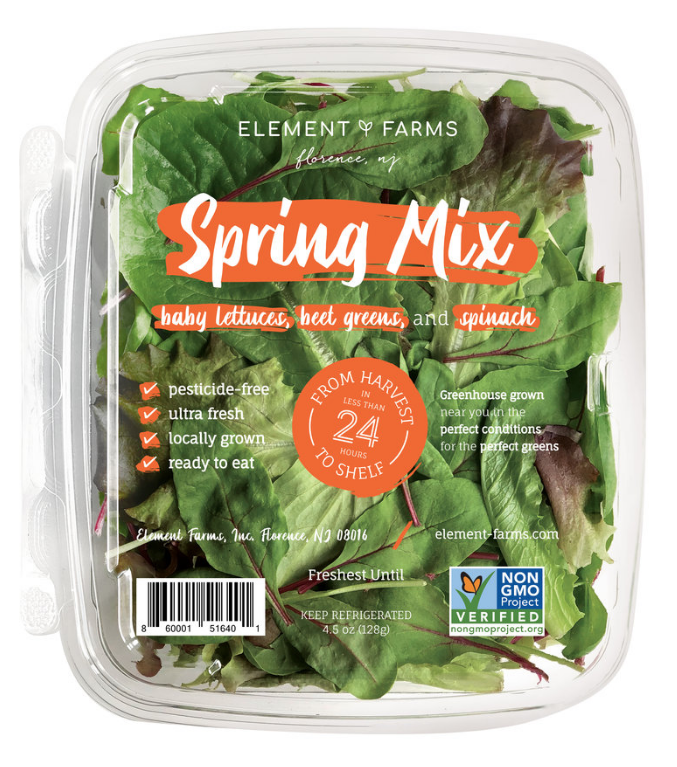
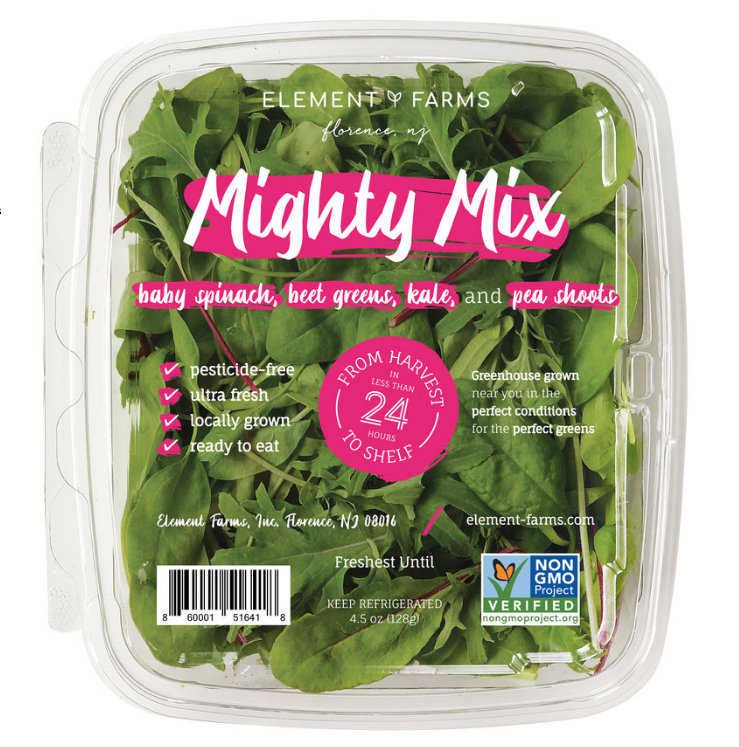
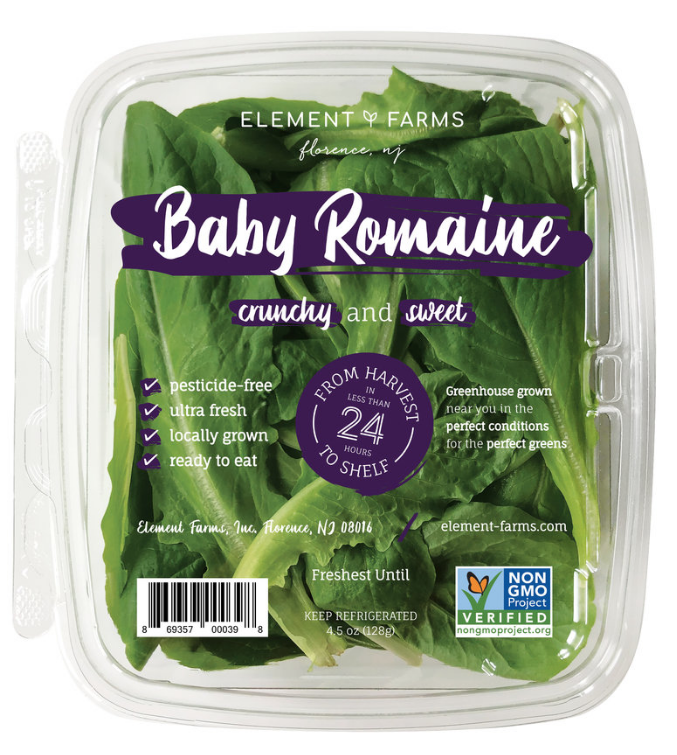
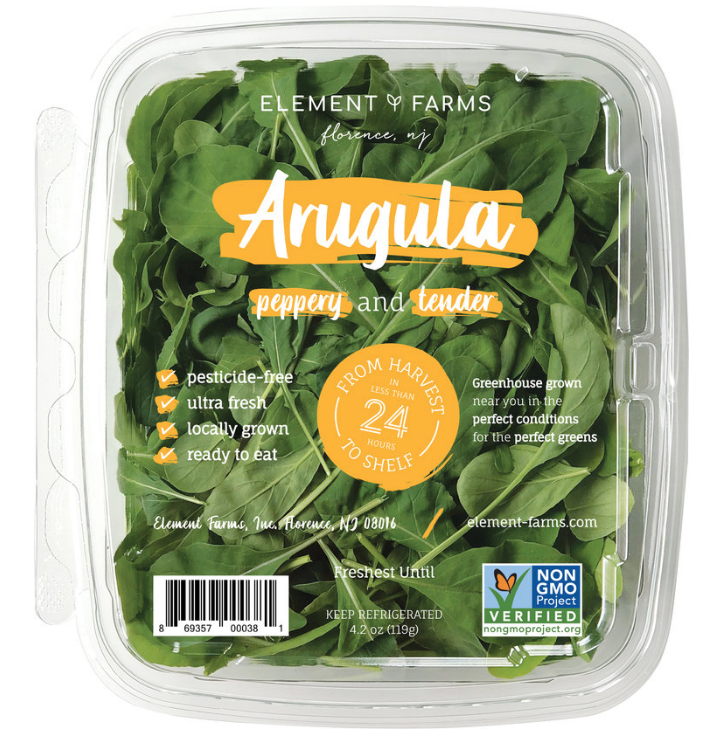
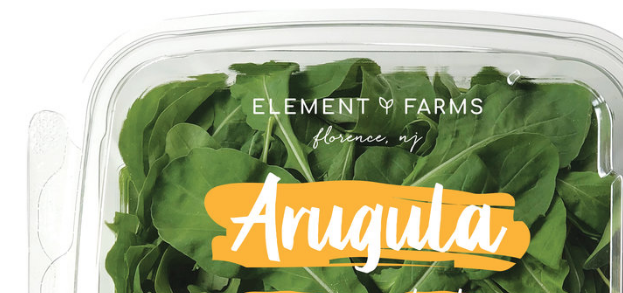
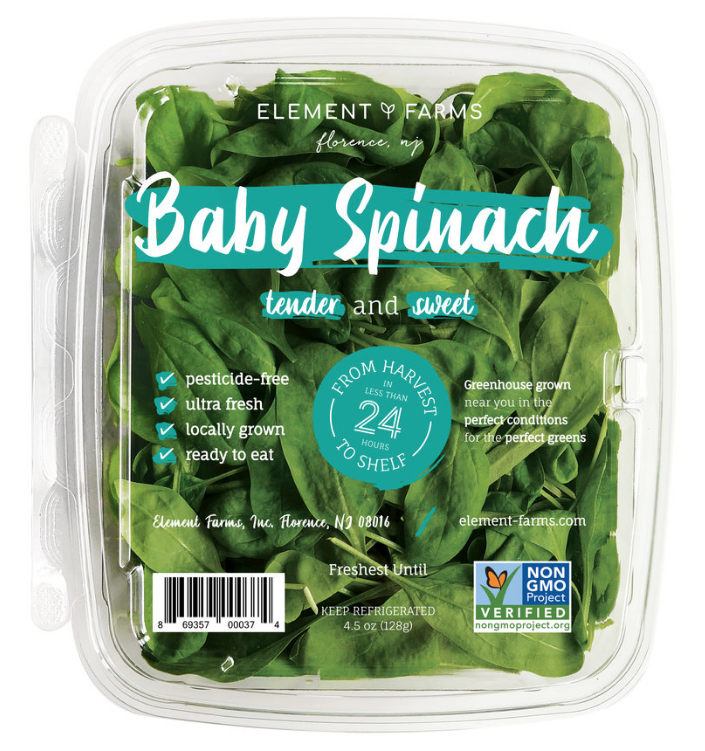
The new greenhouse will have dedicated areas for research and development and fully climate-controlled space for both growing and packing. As the company grows, so will the facility: the rest of the property is similarly zoned for agriculture and can support more acres of greenhouse space. Element Farms expects to double its greenhouse team after launch and bring jobs to the surrounding area.
Mizrakci started Element Farms as an MBA student at Cornell University’s Johnson School of Management after learning that most leafy greens consumed on the east coast make a week-long trek from California and lose freshness and nutrients in transport. He envisioned and executed a better process based on his independent study work with co-founder Danny Janeczko at the College of Agriculture and Life Sciences at Cornell, his own expertise as an industrial engineer, and his passion for good food.
The Lafayette greenhouse is just the first part of Element Farms’ growth plan. The company is currently pursuing greenhouse projects in two other states where the markets for year-round local produce are ripe for disruption. Element Farms expects to announce these projects in the coming year.
About Element Farms
Element Farms launched in 2016 with a single goal: to grow the purest, best-tasting greens for the most people possible. Element Farms is one of the only indoor controlled-agriculture companies that can produce local, pesticide-free, hydroponic spinach at scale year-round.
Founder Serdar Mizrakci has solved the biggest issues in indoor agriculture--inconsistency, plant disease, and high operational costs--by bringing farming back to its most basic elements: the plant, light, nutrients, and water. The company uses proprietary technology and renewable energy to seed, grow, and harvest its produce and higher yields and lower costs than most competitors.
The Element Farms greenhouse is located in Lafayette, New Jersey. The brand’s current product line includes baby spinach, baby arugula, crispy lettuce, salad mixes, and more.
Learn more about the company at www.element-farms.com.
Images by Element Farms
365 Days of Lettuce Growing In Belton, Texas
A new 50,000 square feet greenhouse will be realized in Belton, Texas, by hydroponic lettuce producer TrueHarvest Farms. The greenhouse is equipped with growing automation technology from Green Automation
TrueHarvest Farms Goes For It
A new 50,000 square feet greenhouse will be realized in Belton, Texas, by hydroponic lettuce producer TrueHarvest Farms. The greenhouse is equipped with growing automation technology from Green Automation. Riding on the steadily increasing demand for locally grown produce, TrueHarvest Farms will grow fresh and pesticide-free head lettuce locally in the controlled environment of a greenhouse 365 days a year.
Family farm
Founded in 2017, TrueHarvest Farms is the evolution of a family hay and pecan farm now 40 years old. The company is strategically located in the “Texaplex Triangle”, which is formed between the cities Dallas-Fort Worth, Houston, San Antonio, and Austin. With a population of around 20 million people and having 80% of the state’s population growth since 2000 as well as generating up to 70% of the Texas economy, this area is the ideal location for new, innovative and sustainable production of leafy greens.
“The climate here in Texas makes year-round field growing of leafy greens impossible and the area has so far, as the rest of the USA, relied heavily on having lettuce trucked into the state from California and Arizona for a substantial part of the year”, says Marshall McDaniel, Managing Member at TrueHarvest Farms. “We will be distributing truly fresh, nutritious, safe and locally grown lettuce to stores within a 250-mile radius of our operations. The lettuce will be available to the customer in less than 24 hours of harvesting”.
TrueHarvest Farms, rooted in Belton, TX, is ready to supply fresh, nutritious and safe leafy greens to the Texaplex Triangle.
Increased interest in clean lettuce
Recent food safety scares in the lettuce industry have led to an increased interest in and call for safe and clean lettuce produced in a controlled environment. The greenhouse is a closed system, controlling what comes into the greenhouse, making it possible to not only keep the lettuce clean but also to grow them without using any chemical pesticides. The irrigation water, the air, and the growing medium are controlled, monitored and clean - keeping consumers safe and the environment protected.
“There is an enormous demand for locally grown and safe lettuce today”, confirms Jason Maks, Managing Member, and Grower at TrueHarvest Farms. “Our facility is in the final stage of obtaining PrimusGFS certification and we are dedicated to meeting the highest safety standards in the food industry. TrueHarvest Farms will be a reliable source for locally grown and safe produce for the Texas markets. We are ramping up our production right now and expect to reach full capacity in January 2020. At the moment we are growing Butterhead, Crisp and Romaine varieties”, explains Maks.
TrueHarvest Farms is using the automated growing system optimized for head lettuce production. “When growing leafy greens in tough climates it is imperative to operate the greenhouse with the highest efficiency and to generate the highest yields per square foot, therefore TrueHarvest Farms decided to use the automated growing system from Green Automation”, says Patrik Borenius, CEO, Green Automation Americas. “Throughout the entire growing process maximal space efficiency is achieved through automatic movement and adjustment of gutters, giving the plants as much space as needed, but as little as possible”.
Maximizing yield
In addition to maximizing yield through space efficiency, labor efficiency is an essential key component in a profitable operation. The system has a highly automated and versatile medium filling and seeding line arrangement using stackable trays and supporting both net pots as well as Ellepots. After seeding and germination, the plants are placed onto the automatic growing system, featuring adjustable and movable growing lines, where they will soak up the natural sunlight. As the plants grow, they are moved automatically through the greenhouse toward the harvesting station.
TrueHarvest Farms did multiple trips to reference operators in Europe, including to such remote locations as Joensuu, Finland, before making a decision. “It is a proven system and on par with our earth-conscious commitment. We are looking forward to growing and providing the Texas market with the highest quality lettuce”, says Marshall McDaniel. “This is only the beginning, we have room to grow and our head house as well as the irrigation system are designed for future expansions,” McDaniel explains.
Contact:
Patrik J. Borenius
Green Automation Americas LLC
13833 Wellington Trace, Suite #E4-203
Wellington, Florida 33414
www.greenautomation.com
Publication date: Thu 31 Oct 2019

ROMANIA: Metro Store In Bucharest Grows Its Own Aromatic Plants In Indoor Vertical Micro-Farm
German retailer Metro Cash & Carry, in collaboration with Microgreens Romania, will bring this month a smart indoor vertical micro-farm to its store in Baneasa, in northern Bucharest, that will grow aromatic plants. These fresh plants will then be sold to the store’s customers
30 October 2019
German retailer Metro Cash & Carry, in collaboration with https://microgreens.ro/, will bring this month a smart indoor vertical micro-farm to its store in Baneasa, in northern Bucharest, that will grow aromatic plants. These fresh plants will then be sold to the store’s customers.
The project’s aim is to “provide HoReCa (foodservice industry e.n.) customers with the freshest ingredients possible,” the retailer said in a press release.
The automated farming installation supports the simultaneous growth of 175 pots with micro-plants. The Metro store in Baneasa will thus grow and sell the most common aromatic plants used in restaurant kitchens, such as parsley, basil, coriander or mint.
The plants stay in the tiny greenhouse until they reach a weight of 30-40 g, which takes about two weeks, and then they are put up for sale. Production is controlled through an app that provides specific information on temperature, humidity or brightness, which allows the cultivation of plants under optimal conditions.
Metro plans to install similar in-store vertical micro-farms in five other cash & carry units in Romania.
Metro Cash & Carry entered the Romanian market in 1996 when it opened the first store under this brand in Bucharest. The group currently has 30 cash & carry units in Romania.
newsroom@romania-insider.com
(Photo source: Metro)

Health Check Kids: Leafy Green Machine Planted At West Warwick High School
With permission and funding from the school district, a 40-foot climate-controlled container was planted just outside the cafeteria doors more than a year ago. And that's when the science department got on board
by BARBARA MORSE, NBC 10 NEWS
Thursday, October 31, 2019
A Leafy Green Machine planted at West Warwick High School. (WJAR)
To View The Video, Please Click Here
Sodexo — the school district’s food service company — seeing it in action at a University in Massachusetts.
"And we figured, gee, what a great idea. Local food, right on site. Why don't we just bring it in," said Donna Walker, general manager of Sodexo food services for the West Warwick School District.
With permission and funding from the school district, a 40-foot climate-controlled container was planted just outside the cafeteria doors more than a year ago. And that's when the science department got on board.
"We learned how to run the machine, how to seed and transplant and harvest the lettuce," said Gina Poulos, a science teacher at the high school.
Then they got students involved -- forming the leafy green club.
"I'm super interested in plants and all type of agriculture and it's a nice, relaxing thing to do after school or even in the middle of school when we have advisory and I can kind of just plant stuff and get to learn and talk to other people," said Joshua Dick, a junior at the high school.
"I love salads and I always thought plants were so cool. I always love going to botanical gardens and just thought it was so cool and was like why not," said Gabrielle Dascoli, a senior.
The plants, most leafy green lettuce, are grown -- chock full of nutrients -- vertically, which is a space saver. Special lights are programmed remotely. And the process uses minimal water and electricity.
Harvested and turned into salads within hours.
"I think it tastes amazing. you can taste the nutrients. You can tell it's really thought out. It's great," said Gascoli.
"We're trying different things,” said Walker. "We've done tomatoes, we've done some herbs, we've done kale for soups and stuff."
The leafy green machine can produce up to two acres' worth of greens. The modified shipping containers are re-purposed into green machines by Freight Farms in Boston.

Square Roots Indoor Farm Opens At Gordon Food Service
September 30, 2019
An artist's rendering of the new Square Roots' indoor farm at Gordon Food Service, Wyoming, Mich.
( Courtesy Square Roots )
Square Roots is officially opening its newest indoor farm at the headquarters of Gordon Food Service in Wyoming, Mich.
Link To Facebook Video - Opening of Square Roots New Michigan Farm Campus
At a Sept. 30 ceremony, Square Roots celebrated the beginning of a strategic partnership with the food service company, with similar “farms” planned at or near other Gordon Food Service locations.
Square Roots’ indoor farms are cloud-connected, and the scalable farm-tech platforms allows the company to replicate the modules faster as it plans to expand.
Brian Mitchell, who most recently worked at an 87,000 square-foot indoor aquaponic facility in Minnesota, is the farm manager at the Gordon Food Service site. Assistant farm managers are Lauren Neigarth, a horticulture major from Michigan State University, and Eli Zimmer, from Square Roots’ Brooklyn, N.Y. facility.
Square Roots’ Next-Gen Farmer Training Program is “empowering thousands of next-gen leaders in urban farming,” according to a news release.
Thousands of people have applied to the training program, according to the release.
Related stories:
Square Roots starts farmer training program in September
Square Roots expands indoor farms with Gordon Food Service deal
Square Roots implements “transparency timeline” for greens
Related Topics: Greenhouse Michigan Foodservice Lettuce
Urban Rooftop Farming Is Becoming More Than Just A Trend In Singapore
Whether you’re wandering through a residential area or exploring the recently re-opened Funan mall, you may have noticed new urban farms sprouting up—flourishing with fruit, herbs and vegetables, occasionally tilapia inconspicuously swimming in an aquaponics system
October 29, 2019
Call It A Social Movement or Singapore’s Solution To Sustainable
Self-Sufficiency, But Urban Farming In Our Garden City Is Growing To
New Heights
Whether you’re wandering through a residential area or exploring the recently re-opened Funan mall, you may have noticed new urban farms sprouting up—flourishing with fruit, herbs, and vegetables, occasionally tilapia inconspicuously swimming in an aquaponics system.
Urban farming has become quite a bit more than a fad or innovation showcase for our garden city. “The practice of urban farming has picked up in scale and sophistication globally in recent years,” said an Urban Redevelopment Authority (URA) spokesperson.
“In Singapore, we encourage innovative urban farming approaches such as rooftop farming, which optimizes land, introduces more greenery into the built environment, and potentially enhances our food supply resilience.”
Several companies have taken on the gargantuan task of cultivating the urban farming scene here. Rooftop farming pioneer, Comcrop (short for Community Crop), has been hard at work with its latest commercial farm, an 11-month-old greenhouse in Woodlands Loop. Edible Garden City (EGC) has more than 200 farms across the island and works closely with restaurants to ensure sustainable supply and demand.
(CNA Luxury: How Singapore’s restaurateurs are rising to the challenges of sustainability)
Indoor micro-greens being grown at Noka. (Image: Noka)
Citiponics has made a name for itself building water-efficient aqua organic “growing towers” that can be used to build anything from butterhead lettuce to sweet basil. In April this year, they opened the first commercial farm on the rooftop of a multi-story car park. The farm produces vegetables sold at the Ang Mo Kio Hub outlet of NTUC FairPrice under the brand, LeafWell.
Sky Greens is arguably the most impressive urban farming venture. It is the world’s first low carbon, hydraulic driven vertical farm, and has been recognized globally for its sustainability innovation.
There are several benefits to having our farms so close to home. Through community gardens or access to commercial-scale farm produce, the public has an opportunity to understand how food is grown.
As urban farmers take great care to ensure produce is pesticide-free, while incorporating sustainable zero-waste and energy-saving practices, there is also comfort in knowing where the food comes from and its impact on the environment.
(CNA Luxury: Why this Michelin star chef spends so much time on Singapore farms)
Mushrooms fruiting in a chamber at Noka. (Image: Noka)
“Having food production within the city or heartland [also] brings food closer to the consumers as it cuts transport costs and carbon emissions, and may improve environmental sustainability,” said a spokesperson from the Singapore Food Agency (SFA), the new statutory board created in April this year to develop the food supply and industry.
However, there are also broader concerns of the impact of climate change and food security in Singapore. It is why much is being done by the likes of the SFA to achieve “30 by 30”—“which is to develop the capability and capacity of our agri-food industry to produce 30 percent of Singapore’s nutritional needs by 2030,” said the SFA. “Local production will help mitigate our reliance on imports and serve as a buffer during supply disruptions to import sources.”
Singapore still has a long way to go as the urban farming scene is still a very young one. But there are opportunities for growth given the continued development here. In the URA’s latest phase of the Landscaping for Urban Spaces and High-Rises (LUSH) 3.0 scheme, “developers of commercial and hotel buildings located in high footfall areas can propose rooftop farms to meet landscape replacement requirements.”
Naturally, developers are taking advantage of this. One of the newest kids on the block is the urban rooftop farm run by EGC for new Japanese restaurant, Noka by Open Farm Community at Funan. Noka is putting its money on offering Japanese cuisine that infuses local ingredients, from the butterfly blue pea to the ulam raja flower—ingredients grown and tended to, by the farmers at EGC’s 5,000 sqft urban garden just outside Noka’s windows.
(CNA Luxury: Is green the new glam? How tiny, rich Monaco is tackling sustainable tourism)
Woha Architects’ edible sky garden, at the firm's office in 29 Hongkong Street, is a test bed for urban farming techniques. (Image: Woha Architects)
“The urban farming space is still in the emerging stages of development,” said Bjorn Low, co-founder of EGC. “We are literally scratching the surface of what’s possible. The areas of growth are in the application of urban food production in urban design and city planning, the use of urban farms for deeper community engagement and the role urban farms plays in creating a social and environmental impact in the city.”
While many farmers have found ways to convert existing rooftop spaces into farms or gardens, Jonathan Choe, associate at Woha Architects, says that one of the greatest opportunities to advance urban farming in Singapore is to build an entirely integrated system that not only incorporates growing spaces but also how these farms can interact with the entire building infrastructure—from building cooling measures to water recycling and energy management. The firm, which has their own testbed rooftop garden, is currently working on the upcoming Punggol Digital District development.
Dwarf bok choy being grown at Woha Architects’ edible sky garden. (Image: Woha Architects)
But the greatest challenge for urban farmers is truly economies of scale. “Agriculture on its own is already a challenging industry due to industrialization of farming and our food system,” said Low. “Scale is a limiting factor in the city, and urban farming business models need to be able to adapt to both the challenges of a globalized food system and the availability of cheap food, whilst operating in areas of high cost and overheads.”
It begins with cultivating an awareness of and demand for local produce amongst both consumers and businesses alike. For Cynthia Chua, co-founder of Spa Esprit Group—the people behind Noka—taking an interest in agriculture is more than necessary, as it will have long-term benefits in preparing for the future generation of Singaporeans.
A harvest of white radishes from Woha Architects' edible sky garden. (Image: Woha Architects)
Restaurants like Noka, which choose to highlight local produce are an easy way in for consumers to learn about the benefits of supporting local farming businesses. As a business owner, Chua has also noticed that “travelling chefs from different countries are gaining interest in playing with our tropical produce.” In Chua’s opinion, it is the “right timing” to push innovation and continue to turn this “scene” into a fully sustainable industry.
“As a city-state, the general population is disconnected from farming and the way food is being farmed,” said Low. “Urban farms should become touchpoints for us to learn about sustainable agriculture techniques, and encourage consumers in Singapore to eat more responsibly, locally and ethically.”
Access is a collaboration between Singapore Tatler and CNA Luxury.
TAGS DIGEST ACCESS SUSTAINABILITY URBAN FARMING FARM TO TABLE

Rise Gardens Helps You Grow The Perfect Tomato In Your Living Room
After becoming frustrated with growing fruits and veggies outdoors, Hank Adams tried his hand at building his own in-home hydroponic system, a device that grows plants in a reservoir of moving water and organic materials
October 31, 2019
Maintaining a garden in Chicago is difficult. Not only is the region plagued with a short growing season and unpredictable weather, but figuring out how to provide fruits and vegetables with the perfect amount of water, sunlight and nutrients can be confusing.
After becoming frustrated with growing fruits and veggies outdoors, Hank Adams tried his hand at building his own in-home hydroponic system, a device that grows plants in a reservoir of moving water and organic materials.
“It was a really frustrating experience,” Adams said. “It actually took a fair amount of research to figure it out. And what I ended up with was a system that really belonged in my basement.”
The system was “ugly,” he said. “It was nothing I wanted to show off.”

A Rise Gardens system (Photo via Katherine Davis)
But the experience led to Adams launching Rise Gardens, a Chicago startup creating an indoor, IoT-connected hydroponic system that is attractive enough to put in your living room and simple enough for anyone to grow a perfect head of lettuce.
Adams began making prototypes for Rise Gardens in 2017, working out of Chicago startup incubators 1871 and mHub, and began selling the final product in August. Adams is a board member of 1871 and also the former CEO of Sportsvision, a Chicago-based graphics company best known for inventing the yellow first-down marker in football broadcasts.
Rise Garden systems can be bought online or in the startup’s pop-up shop at 20 W. Kinzie St., which opened in early October.
The modular system is made out of hardwood and heavy-gauge, powder-coated steel. It has a built-in water pump, seed sockets and a programmed LED light system that automatically shifts on and off to give plants the perfect amount of light.
Once consumers purchase their hydroponic system, they are encouraged to subscribe to Rise Gardens’ subscription service, which sends them seed pods every month and gives them access to the company’s mobile app that reminds users when to add water or nutrients. The startup sells seeds for a range of vegetables and herbs, including kale, lettuce, tomatoes, peppers, basil, and rosemary.
“We’ve made it simple,” Adams said. “If you follow the instructions, it grows really robustly.”
Adams said plants grow 20 percent faster in his system than they could in soil or outdoors, adding that users can expect to grow arugula in 14 days and a head of lettuce in 25 days.
A Rise Garden system (Photo via Katherine Davis)
Though small, counter-top hydroponic systems are common, Adams says Rise Gardens’ large size allows for users to actually grow a significant amount of fresh food.
Since launching, Adams said he has sold 70 systems and is now working with retailers to sell the device in more locations. The system starts at $549 for one level and goes up to nearly $950 for three.
In his own Rise Gardens system at home, Adams grows lettuce, carrots, beets, tomatoes, peppers, and strawberries. Often times, he says he uses his produce in homemade salads, pastas and pizzas.
“It’s really nutritious and it tastes great,” Adams said. “Compared to a lot stuff that we’re used to getting in grocery stores, you’re surprised by the taste.”
Hank Adams, founder of Rise Gardens, with his hydroponic system (Photo via Rise Gardens)
Misconceptions About Hydroponics Yield
There are many reasons why gardeners choose to grow their crops using soil-less hydroponic methods instead of traditional soil-based methods. Some of hydroponics key advantages include more space-saving, more energy/water efficient, less weeding, and fewer pests to contend with
Hydroponics Yield
There are many reasons why gardeners choose to grow their crops using soil-less hydroponic methods instead of traditional soil-based methods. Some of the hydroponics key advantages include more space-saving, more energy/water efficient, less weeding, and fewer pests to contend with. Hydroponics also allows the grower more control and creativity their crops so that they may provide the most ideal conditions for plants. However, the single most compelling reason for gardeners to switch to soil-less gardening is its ability to significantly increase crop yield. Let’s review the factors that influence hydroponics yield in order to demonstrate why this type of gardening is better than soil in nearly every respect.
Misconceptions about Hydroponics Yield
Some people are under the impression that hydroponics will produce much larger plants than soil. This isn’t necessarily the case. Each seed has its own genetic code which determines the plant’s size, flavor, and yield potential. In other words, you can’t transform a cherry tomato into a Roma tomato, but you can turn a cherry tomato seed into the genetically best possible cherry tomato plant if you provide the perfect growing conditions. Hydroponics gardening gives plants the best opportunity to reach their full genetic potential. More often than not, this translates into healthier, larger, and more flavorful crops.
Hydroponics Yield vs. Soil Yield
It can be difficult for plants to reach their highest genetic potential in common soil. This is because there are hundreds of variables in soil’s makeup that can influence a plant’s growth. Hydroponics, on the other hand, gives the grower the ability to micromanage and control the growing conditions so there are no surprises from Mother Nature. Soil-based plants use a lot of energy to seek out their food source, while hydroponics plants are given exactly what they need when they need it. Thus, hydroponically-grown plants can direct all their energy into producing higher yields, denser vegetation, faster growth, and more flavorful crops. It is more likely that hydroponic crops reach their genetic potential, and thus, is often considered a superior form of agriculture.
Hydroponics Yield: Lessons from Dr. Howard Resh
In his book “Hydroponic Food Production,” hydroponics pioneer Dr. Howard M. Resh makes a compelling case for ditching the dirt and going soil-less. He discusses the main advantages of hydroponics over soil culture, especially for regions of the world that have non-arable land. Resh outlines the efficiency of regulating the nutrients and water, the low cost and ease-of-use to sterilize the medium, as well as how hydroponics allows for higher density planting and – ultimately – increased yields per acre.
In the table below, Resh compares the yields per acre in soil vs. soil-less culture:
As you can see, his findings are quite dramatic. It is no surprise that urban planners and policymakers are often proponents of hydroponic gardening. Hydroponic gardening has wide implications for the future of practical, efficient, and cost-effective farming across the world. Because crop yields of hydroponically-grown plants can be up to an astounding 100 times higher than crops grown in the field, hydroponics yield is the clear winner.

Hydroponics Yield Factors
So why exactly are the crop yields so much greater for hydroponics? Let’s look at the most important factors of hydroponics yield.
1. Year-Round Gardening Means More Crops Per Year
One of the most important factors influencing hydroponics yield is its ability to grow crops indoors and year-round. Field crops are often limited to one harvest per year because of frost and other weather variations. Since greenhouse and hydroponic crops are grown indoors – away from Nature’s elements – you can cultivate 12 one-month crops, 5 seventy-day crops, or whatever crop harvesting time frame you choose. As a result, you can increase crop yield each year by a factor of 2x to 8x by growing indoors and year-round with hydroponics.
See our Hydroponics System, Best Grow Tent, Grow Tent Kits, and Hydroponic Weed System, pages for the tools to grow successful hydroponic crops.
2. Higher Plant Density Allows for More Crops Per Acre
Hydroponics allows for higher plant density in one or more of the following ways: hydroponic crops can be grown 1. closer together than in soil, 2. grown vertically as opposed to horizontally, 3. in layers, and 4. with much less walking space between rows. Employing any one of these methods can increase crop yields, but incorporating several can result in even more plant density. Overall, you can increase plant density by a factor of 4x to 16x with hydroponics.
3. The Crops you Choose May Increase Yield
Which variety of crops you decide to grow can influence the hydroponics yield. While you can cultivate nearly any crop in a hydroponics system, some will give you better results and a higher yield. For example, leafy crops – like lettuce, chard, kale, and arugula – produce great results, as do herbs like basil, chives, parsley, and sage. Tomatoes, peppers, and cucumbers can also result in high yields with hydroponics. Certain crops present more of a challenge – like watermelons and strawberries – but with special attention, they can also produce great results. On the other hand, root vegetables, corn, and plants that vine are not recommended for hydroponic gardening. Depending on the crop variety you choose, hydroponics can increase yields by 2x – 4x over soil farming.
4. Proper Lighting is Key
Plant growth is dependent on adequate lighting. They tend to do best with a light of wavelengths in the 360 – 760 nm (nanometers) range. Plant photosynthesis responds to blue light (around 430 nm) and red light (around 660 nm). Plant germination, stem, and flower growth thrive when red light is around 660 nm and infrared light wavelength is around 735 nm. White fluorescent lights provide a light spectrum that includes these preferred wavelengths. While field-grown crops depend entirely on the sunlight for their growth, greenhouse or indoor hydroponic crops utilize grow lights to mimic the sun’s natural light. With the proper grow lights, hydroponics plants will receive the optimal spectrum of light throughout the year regardless of what the sun is doing outside. Good lighting can increase hydroponics yield by 1x – 2x.
5. Water Plays an Important Role in Crop Yield
Water is clearly one of the most important factors influencing crop yield. After all, the water-weight of fruits and vegetables is 86% and 90%, respectively. Field-grown crops are susceptible to droughts and inconsistent rain patterns – too much or too little water can wreak havoc on crops. Water can be managed much more efficiently with hydroponic and greenhouse crops. The proper water management can translate to a 1x – 2x increase in yield.
6. The Efficiency of Hydroponic Fertilizer
In hydroponics, a fertilizer is mixed with water to create the nutrient solution. This nutrient solution is typically pumped into the grow bed to feed the plant’s roots. Hydroponics allows plants to get the correct nutrients they need when they need it. Soil grown crops don’t have it as easy. If they don’t get the proper nutrients at the right time, crops will suffer. Hydroponics provides a much more efficient way of delivering nutrients to plants. Yield can be multiplied by a factor of 1x – 2x if greenhouse or hydroponic crops are feed properly.
7. Managing Temperature and CO2 can Increase Yield
Temperature and CO2 are important factors in plant growth. Each crop variety has its own preferred temperature, and this varies depending on its phase of growth. However, most plants respond best when temperatures are kept in the 75F to 85F range. With hydroponics, the yield can be multiplied by 1x – 2x if temperatures are kept within ideal levels.
As for carbon dioxide, the more CO2 in the air, the faster a plant grows. Dr. Howard Resh proposes that two to five-time the normal amount of carbon dioxide may be the optimal amount. He states that tomato and cucumber growth rates can be increased by up to 20% – 40%, while the faster growth rates in lettuce can allow for an extra crop grown each year. Carbon dioxide enrichment can increase yield in hydroponically-grown crops by 1x-2x.
8. Other Factors that Influence Hydroponics Yield
There are several other factors that affect plant growth. These include relative humidity in the growing environment, the amount of oxygen the plant’s roots are exposed to, and the proper pollination. Hydroponics allows you to control all of these things to the ideal levels, but it requires close attention to get it right. Another clear advantage to growing crops indoors and without soil is the protection from storms and bad weather, as well as the near elimination of pests. While insects, mammals, birds, pathogens, and weeds can destroy around 33% of field crops, indoor hydroponic and greenhouse crops experience very few of these problems.
One issue hydroponics gardeners must prevent is waterborne disease, as this can devastate an entire crop. Grow media should be sterilized after each grow so as to prevent diseases from one grow to the next. Certain organic soil fertilizers – like manure and waste – can also introduce disease, whereas a hydroponic nutrient solution mix of water and fertilizer eliminates this risk. In total, all of these “other factors” can increase hydroponics yield by 1x -2x.
Hydroponics Yield – The Clear Winner
When you multiply all of these factors together, the crop yields of hydroponically-grown plants can be up to an astounding 100 times higher than crops grown in the field. The benefit of controlled-environment agriculture and vertical systems have wide implications for not only at-home gardeners and commercial growers, but also for global hunger advocates, policy makers, and urban planners. Since hydroponic farms can be built on low-cost and/or non-arable land, greenhouses and hydroponic farms can be built in areas where conventional soil farming is not possible. Urban hydroponic farms can provide jobs for city residents, a source of healthy, locally-grown produce, and minimize the environmental costs associated with shipping produce around the world.
Hydroponic grown-crops nearly eliminates the problems associated with soil-based agriculture – it is not weather dependent, it’s more space-saving and water/energy efficient, and there are fewer pests to deal with. And most compelling, hydroponics provides higher yields and a more reliable food source due to its year-round growing and frequent harvesting. Make the switch to hydroponics!
Thanks for reading and best of luck with your hydroponics garden! For more helpful articles on hydroponics and aquaponics, feel free to browse through other pages on uPONICS.com.