


Welcome to iGrow News, Your Source for the World of Indoor Vertical Farming

Green Automation Is Bringing Automation And Efficiency To New Greenhouse Operation In Texas
Green Automation Group is proud to announce the latest project realization in the North American market – hydroponic lettuce producer TrueHarvest Farms in Belton, Texas. The 50,000 square feet greenhouse is equipped with growing automation technology from Green Automation
October 24, 2019, Wellington, FL, USA
Green Automation Group is proud to announce the latest project realization in the North American market – hydroponic lettuce producer TrueHarvest Farms in Belton, Texas. The 50,000 square feet greenhouse is equipped with growing automation technology from Green Automation. Riding on the steadily increasing demand for locally grown produce, TrueHarvest Farms will grow fresh and pesticide-free head lettuce locally in the controlled environment of a greenhouse 365 days a year. The farm is strategically located in the “Texaplex Triangle”, which is formed between the cities, Dallas-Fort Worth, Houston, San Antonio, and Austin. With a population of around 20 million people and having 80% of the state’s population growth since 2000 as well as generating up to 70% of the Texas economy, this area is the ideal location for new, innovative and sustainable production of leafy greens.
“The climate here in Texas makes year-round field growing of leafy greens impossible and the area has so far, as the rest of the USA, relied heavily on having lettuce trucked into the state from California and Arizona for a substantial part of the year”, says Marshall McDaniel, Managing Member at TrueHarvest Farms. “We will be distributing truly fresh, nutritious, safe and locally grown lettuce to stores within a 250 miles radius of our operations. The lettuce will be available to the customer in less than 24 hours of harvesting”.
TrueHarvest Farms, rooted in Belton, TX, is ready to supply fresh, nutritious and safe leafy greens to the Texaplex Triangle.
Recent food safety scares in the lettuce industry has led to an increased interest in and call for safe and clean lettuce produced in a controlled environment. The greenhouse is a closed system, controlling what comes into the greenhouse, making it possible to not only keep the lettuce clean but also to grow them without using any chemical pesticides. The irrigation water, the air, and the growing medium are controlled, monitored and clean - keeping consumers safe and the environment protected.
“There is an enormous demand for locally grown and safe lettuce today”, confirms Jason Maks, Managing Member, and Grower at TrueHarvest Farms. “Our facility is in the final stage of obtaining PrimusGFS certification and we are dedicated to meeting the highest safety standards in the food industry. TrueHarvest Farms will be a reliable source for locally grown and safe produce for the Texas markets. We are ramping up our production right now and expect to reach full capacity in January 2020. At the moment we are growing Butterhead, Crisp and Romaine varieties”, explains Maks.
TrueHarvest Farms is using the automated growing system optimized for head lettuce production. “When growing leafy greens in tough climates it is imperative to operate the greenhouse with the highest efficiency and to generate the highest yields per square foot, therefore TrueHarvest Farms decided to use the automated growing system from Green Automation”, says Patrik Borenius, CEO, Green Automation Americas. “Throughout the entire growing process maximal space efficiency is achieved through automatic movement and adjustment of gutters, giving the plants as much space as needed, but as little as possible”.
In addition to maximizing yield through space efficiency, labor efficiency is an essential key component in a profitable operation. The system has a highly automated and versatile medium filling and seeding line arrangement using stackable trays and supporting both net pots as well as Ellepots. After seeding and germination, the plants are placed onto the automatic growing system, featuring adjustable and movable growing lines, where they will soak up the natural sunlight. As the plants grow, they are moved automatically through the greenhouse toward the harvesting station.
TrueHarvest Farms did multiple trips to reference operators in Europe, including to such remote locations as Joensuu, Finland, before making a decision. “It is a proven system and on par with our earth-conscious commitment. We are looking forward to growing and providing the Texas market with the highest quality lettuce”, says Marshall McDaniel. “This is only the beginning, we have room to grow and our head house as well as the irrigation system are designed for future expansions,” McDaniel explains.
Contact:
Patrik J. Borenius
Green Automation Americas LLC
13833 Wellington Trace, Suite #E4-203
Wellington, Florida 33414
About Green Automation Group
Green Automation Group Ltd, headquartered in Finland, and it’s subsidiary Green Automation Americas LLC, based in Florida, develop, manufacture and market the most advanced greenhouse automation systems for lettuce and herb production. The systems are designed for commercial greenhouse operations with a growing area of 1 acre / 0.4 hectares and above. www.greenautomation.com
About TrueHarvest Farms
TrueHarvest Farms, LLC is a controlled environment hydroponic farm specializing in leafy greens. Founded in 2017, the company is focused on rapid growth through the production and distribution of high-quality lettuce and other leafy greens. TrueHarvest Farms is the evolution of a family hay and pecan farm now 40 years old. So, whether it is the “family roots” or the “plant roots,” we are truly “Rooted in Belton, Texas”.
https://www.facebook.com/trueharvestfarms

11 Reasons To Join The “8th Biocomposites Conference Cologne“, 14–15 November 2019, Cologne
World largest conference on biocomposites, markets, technologies, application, and sustainability. Located in the center of Cologne, the largest city of Germany's most populous federal state of North Rhine-Westphalia
Internet | Registration | Conference Leaflet
14–15 November 2019, Maternushaus, Cologne, Germany: https://biocompositescc.com
World largest conference on biocomposites, markets, technologies, application, and sustainability
Location in the center of Cologne, the largest city of Germany's most populous federal state of North Rhine-Westphalia
Final outstanding programme with 40 presentations online
Comprehensive conference journal online for download
Already 140 participants from 18 countries registered - more than 200 are expected
Exhibition with already 19 exhibitors – only 6 booths left for booking
Face-to-Face meetings through the online match-making tool
Cast your vote for the Innovation Award for the „Biocomposite of the Year 2019“ and enjoy the award ceremony
Last time: 72% of the participants came from the industry
Last time: 79% of the participants enjoyed networking success: Our conference - a guarantee for satisfied customers
Meet at the conference leading companies (selection): *** Amorim *** Avantium *** AVK-TV *** BASF *** Bcomp *** Beologic *** BIO-LUTIONS *** Biowert *** Borregaard *** BÜFA *** C.A.R.M.E.N *** Coperion *** CORDENKA *** Covestro *** Der Grüne Punkt - Duales System Deutschland *** Dow *** Fortum *** Fraunhofer *** Gardena *** i-Compology *** ISCC System *** J. Rettenmaier & Söhne *** Japan Polypropylene Corporation *** Kebony *** KNN Cellulose *** Kompetenzzentrum Holz *** Kunststofftechnik Paderborn *** Leistritz Extrusionstechnik *** Lingrove *** Linotech *** Lorenz Kunststofftechnik *** NEN *** nobilia-Werke *** OrganoClick *** Oskar Lehmann *** Papiertechnische Stiftung *** Reed Exhibition *** Sappi *** Scion Research *** STAEDTLER Mars *** Stora Enso *** Sulapac *** Tecnalia *** Trifilon *** UPM *** VDI *** VTT *** Werzalit *** Yanfeng Automotive ***
Final programme https://biocompositescc.com/programme
Check the last few booths for availability https://biocompositescc.com/exhibition-booking
Register now here https://biocompositescc.com/registration
See you at Maternushaus in Cologne.
We look forward to welcoming you at the conference!
Michael Carus
Managing director nova-Institute

Westcore Lands Vertical Farmer Plenty Unlimited at Industrial Asset
Bay Area-based Plenty Unlimited signed a 10-year lease to take Westcore Properties’ entire 94,875-square-foot warehouse development project currently under construction in Compton, CA
October 29, 2019
Bay Area-based Plenty Unlimited signed a 10-year lease to take Westcore Properties’ entire 94,875-square-foot warehouse development project currently under construction in Compton, CA. The vertical indoor farming company will take occupancy at 126 E. Oris St., which is slated for completion next month.
The Class A building’s ceilings soar to 32 feet making the facility a good match for the vertical rows of sustainably grown, leafy greens, like kale, Plenty will cultivate at the property.
Plenty will make a multi-million-dollar investment into the build out and technology for the farm at the Compton property. The farmers growing technique requires a tiny fraction of the water and land of conventional farms, and allows plants to grow independent of seasonal or weather variations through use of hydroponics and LED lights. The controlled environment also eliminates the need for pesticides.
Savills’ Zack Jamail and David Gordon represented the tenant. Kidder Mathews’ Marc Bonando and Brad Connors advised the landlord.

VIDEO: Boys & Girls Club Introduces Kids To Hydroponic Farming
The Freight Farm will allow students to learn about science and agriculture. It will also act as revenue for the BGCCA
by: Justina Latimer
October 30, 2019
TROY, N.Y. (NEWS10) — The Boys & Girls Clubs of the Capital Area are introducing kids to high-tech hydroponic farming.
The Freight Farm will allow students to learn about science and agriculture. It will also act as revenue for the BGCCA.
The farm was donated by SEFCU with CDPHP and Brown’s Brewing Company also partnering to support the cause.
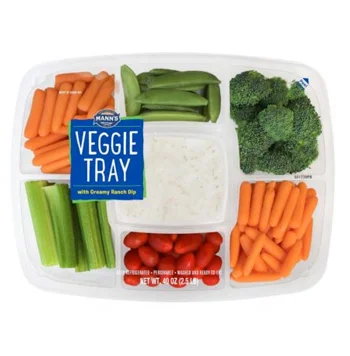
BREAKING NEWS: Listeria Risk Leads To Vegetable Recall In U.S. and Canada
Mann Packing Co. Inc. announced the voluntary recall of a series of vegetable products sold to select retailers in the United States and Canada
November 04, 2019
Mann Packing Co. Inc. announced the voluntary recall of a series of vegetable products sold to select retailers in the United States and Canada. The voluntary recall is a response to a notification by the Food & Drug Administration and the Canadian Food Inspection Agency of potential contamination with Listeria monocytogenes. To date, public health officials have not reported any illness associated with these products.
The recalled products have “Best If Enjoyed By” date of Oct. 11 to Nov. 16. The full list of products and all corresponding product images are available here and here.
Mann Packing is issuing this recall out of an abundance of caution. Listeria monocytogenes is an organism which can cause serious and sometimes fatal infections in young children, frail or elderly people, and others with weakened immune systems. Although healthy individuals may suffer only short-term symptoms such as high fever, severe headache, stiffness, nausea, abdominal pain and diarrhea, Listeria infection can cause miscarriages and stillbirths among pregnant women. Mann Packing will continue to work closely with the authorities to investigate the issue.

Bringing Fresh Produce To The Philippines One Rooftop And Patio At A Time
Ralph, the founder of Urban Greens, is combining technology with sustainability to sell local, pesticide-free, vertical-farm-produced produce to restaurants
Food and diet in the Philippines get a bad rap for good reasons. Like a lot of island nations, there is a growing trend towards obesity-related health problems. Most food there is imported. The Philippines has one of the highest numbers of fast-food restaurants per-capita in the world. But food tech entrepreneurs, like Ralph Becker, are working to change some of this.
Ralph Becker inspecting produce in one of his vertical farms
Ralph, the founder of Urban Greens, is combining technology with sustainability to sell local, pesticide-free, vertical-farm-produced produce to restaurants. Inspired by a stint in Japan where he saw plant factories producing food in the middle of big cities, he built a vertical farm prototype as a side project for fun. He didn't expect a business to blossom from it.
However, he noticed how interested friends and family were in his little "window farm". Concurrently, he saw an abundance of unused outdoor and indoor spaces around him in Manila.
A business opportunity came to mind--he could grow healthy food on underutilized rooftops and basements to help offset the typical imported and processed staples so prevalent in the Philippines. Just the presence of vertical farms on a neighbor's balcony could be an opportunity to help educate people about food.
Publication date: Tue, 22 Oct 2019

Entrepreneurs And Government Are Teaming Up To Boost Food Security In The United Arab Emirates - And Beyond
This approach to indoor agriculture, known as vertical farming, has been gaining popularity in many parts of the world recently — the business consulting firm Grand View Research, Inc., estimates the global market will reach US$9.96 billion by 2025
From vertical farms to fish caves, new
technologies aim to boost food production and vanquish hunger
Photo courtesy of Masdar Farms
WRITERRabiya Jaffery
@rabiyasdfghjkl Freelance journalist
October 29, 2019 — Tucked away in Masdar City, a quiet planned neighborhood in the emirate of Abu Dhabi that combines earth-tone Arabic architecture with wind turbines and other innovative technology, is a cluster of container-style buildings.
These containers are the site of Madar Farms, co-founded by Abdulaziz Al Mulla, a Kuwaiti entrepreneur now based in the United Arab Emirates. Al Mulla began getting interested in food security while at the management consulting firm McKinsey & Co., where he worked with several of the region’s governments addressing a variety of national risk challenges. He left McKinsey after one particular project introduced him to the national security threats food and water challenges will bring to the region. He decided he wanted to do something about it, and ended up purchasing old shipping containers and transforming them into these indoor farms as a way to increase local food production. Today lettuce, basil, kale and other leafy greens grow without soil in trays that sit under red and blue LED lights, stacked in levels much like floors in a building.
“I was overwhelmed by the numbers: less than 5% of land in the Arabian Gulf is arable farmland. Despite this, over 80% of water use in our drier climate is used for agriculture. If we keep going at the same pace, we will deplete a significant amount of our natural resources in the next 50 years,” says Al Mulla. “This didn’t make sense to me, and I knew there had to be a better way. A week after this project, I resigned and began Madar Farms.”
This approach to indoor agriculture, known as vertical farming, has been gaining popularity in many parts of the world recently — the business consulting firm Grand View Research, Inc., estimates the global market will reach US$9.96 billion by 2025 — but is still an emerging concept in the Middle East. Madar Farms — along with many other innovations attempting to lead to sustainable agriculture in the region — represents the humble beginnings of a new bid the UAE is taking on to end food shortage globally.
Home Grown
Although the UAE currently is not short on food, its harsh climate and limited supplies of water and arable land offer little opportunity for agriculture, and over 80% of its food is imported. With increasing uncertainty around food production in the face of climate change and global political instability, the Middle Eastern country is looking to take on more of its own food production.
In November 2018, UAE minister for food security Mariam Al Mheiri launched a national food security strategy that aims to implement resilient agricultural practices that increase productivity and production. This primarily involves increasing investment in research and development of agriculture technologies and facilitating a market that supports agribusinesses.
Hina Kamal, a UAE-based food and nutrition researcher at United Arab Emirates University, explains that much of the focus is on boosting the use of agricultural technology required in both indoor and outdoor farming to increase homegrown produce. Kamal has been studying which produce is best suited for growth in UAE’s climate.
While Madar Farms is one of the first companies capitalizing on this interest, it isn’t the only one catching onto the trend. A growing number of companies, including more traditional outdoor farms, see similar opportunities.
Drones flying over fruit farms in Abu Dhabi provide aerial images researchers and farmers can use to improve food production practices. Photo © iStockphoto.com | ZambeziShark
Fruit farms in Abu Dhabi, UAE’s oil-rich capital, and Ras Al Khaimah, another emirate, for example, have already started testing and implementing drones to map farming areas that supply farmers as well as farming researchers with images, from bird’s-eye views of the fields to up-close images of individual plants. According to Fatima Al Hantoubi, head of environmental protection and natural reserves at Dibba Al Fujairah Municipality, a few organic farms in Ras Al Khaimah have started using sensors and artificial intelligence to improve seed selection, determine the amount of fertilizer needed for specific crops in specific soils and detect early signs of diseases.
In the Khor Fakkan area, meanwhile, the Ministry of Climate Change and the Environment has installed artificial caves in the Persian Gulf. The hope is to further contribute to food security by boosting fish stocks and promote sustainable fish farming.
Al Hantoubi explains that the caves were built out of eco-friendly materials and then placed along a stretch of the coast using cranes.
The initiative also includes the establishment of coral gardens over 850 square meters (9,100 square feet) along the coast to help rehabilitate natural marine ecosystems in the area and to promote research and studies in marine biodiversity, which will also enhance the fisheries stock.
Food Waste
While Al Mulla and others are using agriculture technology to boost food security, other approaches are also helping the UAE become self-reliant with respect to food.
Among them are efforts to address the issue of food waste. On average, each UAE resident wastes an estimated 197 kilograms (434 pounds) of food per year. Over 30% of that waste happens in restaurants, and another 30% is leftovers that get thrown out after family and corporate celebrations.
One of the UAE Ministry of Climate Change and the Environment’s newest projects is encouraging the use of artificial intelligence (AI) in kitchens, particularly in hotels and restaurants, to track food waste and guide kitchens on how to minimize it.
A monitor developed by food tech company Winnow lets restaurant kitchens characterize wasted food as a first step toward reducing it. Photo courtesy of Winnow
Huzaifa Waheed, an entrepreneur and a developer for food-waste-tracking software that is to hit the market soon, says that one of the main reasons this technology can prove to be effective is because it is offering businesses a major cost-saving incentive. “And it helps the government meet its sustainability targets, making it a win-win,” he adds.
Over 100 of the biggest kitchens in the country, including major hotel groups such as Emaar and Majid Al Futtaim, are already using AI to reduce food waste.
The computer vision-based product, launched in the UAE by the government and made by a food tech company called Winnow, uses a camera that sits over the kitchen’s bin to take pictures before and after food is thrown away. It then runs a classification algorithm to identify the discarded food, as well as its weight and cost. That information can be used to identify and address specific sources of food waste, such as spillage or preparation techniques.
The AI program was launched as a proof-of-concept project in 2018. Through this program, the government is encouraging UAE’s lavish hospitality sector to save the equivalent of 2 million meals’ worth of wasted food in 2019 and 3 million in 2020, thanks to better decision making based on data. Several significant public and private entities in the UAE, including Dubai Municipality, Etihad Airways and Hilton Hotels, have already pledged to incorporate the program in their operations.
International Cuisines
An issue that the UAE has yet to tackle is how to accommodate the discerning palate for international cuisines in a country that is currently home to over 200 nationalities and that has a high per capita consumption of staples such as rice, which require acres of tropical land to flourish.
“The major emphasis must be in increasing local production by focusing on targeted major staple foods and enhanced efficiency in the agriculture sector through constant investments in agricultural research and development for modern farming techniques,” Kamal says.
What this means is that in order to most effectively become self-reliant, the UAE needs to have an accurate sense of what food needs to be grown and how to do it at competitive prices.
According to Kamal, a more “holistic food security” is the only way UAE can proceed toward this goal. Government bodies, research institutions, and commercial ventures, Kamal adds, need to work together to address the issues of research, technology, human capital and other factors that arise through the process.
“And perhaps not keep a specific year as the end-all target that has to be reached because it is not a realistic way to conduct research and development — at least not in a sustainable way,” Kamal says.
Overall, while the UAE’s efforts to tackle its food dependence can boost food security in the region and diversify its economy, the success of its strategies will depend on how it tackles the many challenges in a sustainable way.
Editor’s note: Rabiya Jaffery wrote this story as a participant in the Ensia Mentor Program. The mentor for the project was Rachel Cernansky.
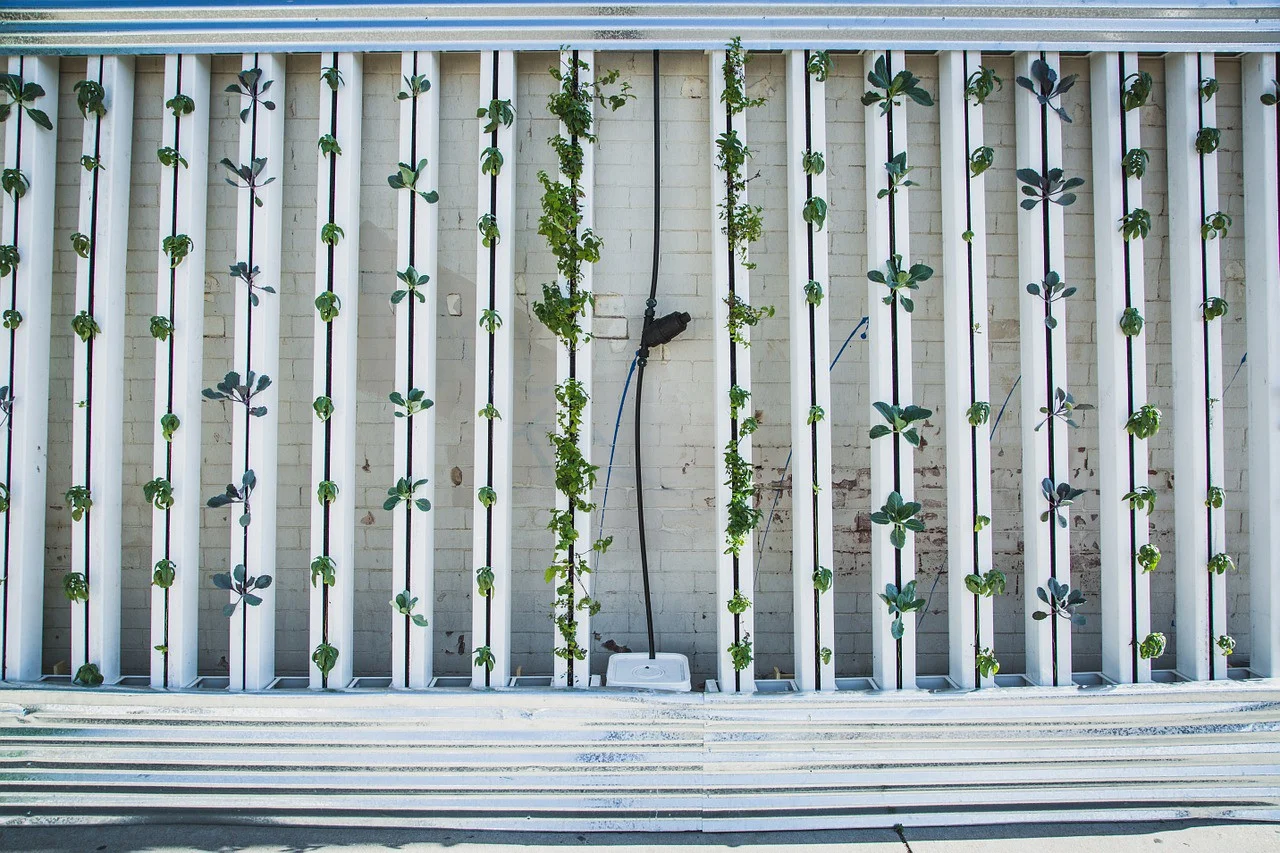
7 of The Best Crops For Vertical Farming
Along with a number of other key factors — including a good location and an appropriate pricing strategy — smart crop choices play an essential role in helping vertical farms keep costs down and ensuring that farmers are able to sell the majority of what they grow
One of the biggest decisions that can make or break a vertical farm is the question of which crops to grow. Along with a number of other key factors — including a good location and an appropriate pricing strategy — smart crop choices play an essential role in helping vertical farms keep costs down and ensuring that farmers are able to sell the majority of what they grow.
According to a recent blog post from ZipGrow, a leading provider of vertical farming equipment and services, the following are two of the most important points to consider when choosing crops for a vertical farm:
Economic viability — ZipGrow and many other experts in the vertical farming industry are quick to remind aspiring farmers that just because something can be grown, this doesn’t necessarily mean it should be grown. With the right resources, it’s technically possible to grow just about anything in a vertical farming facility, but not all crops are economically viable. Some crops just aren’t able to make money when they are vertically farmed because their production costs are too high (for example, the crop requires hotter temperatures or more light relative to other crops), or simply because there is a lack of market demand for the crop. To make smart crop choices, vertical farmers need to be realistic about balancing likely costs with projected profits.
Timing and liability — The time period that elapses between a seedling entering the farm’s system and a mature plant being harvested and sent to market is known as a “turn.” In general, successful vertical farmers find that focusing on crops with fast turns, like salad greens and some herbs, helps to minimize their liability. This is because fast-turn crops mature so quickly that farmers are rarely more than about six weeks away from production, which limits the amount of resources that will be lost in the event that the crop fails. However, this doesn’t mean that there is no place in a vertical farm for slow-turn crops: some of these, like fruiting crops, can offer higher margins than fast-turn crops, potentially making them a good proposition depending on local market conditions (of course, while the profits may be higher, so is the risk).
What are some of the best crops for vertical farms?
While ZipGrow recommends that the process of choosing crops should be part of a comprehensive feasibility study undertaken by aspiring vertical farmers before launching their operations, the company does offer a basic guide to some of the most successful and popular crops currently being cultivated in vertical farms. These include the following:
Lettuce — Lettuce and other leafy greens are by far the biggest crop grown by indoor farmers (according to the Agrilyst 2017 State of Indoor Farming Report, 57% of indoor farms, including vertical farms, produce leafy greens). It’s not difficult to understand the popularity of the humble lettuce: it’s quick and easy to grow, inconsistent demand all year round, and available in dozens of different varieties so that farmers can switch up their product from time to time without having to change to a whole new crop.
Kale — Despite the predictions of some naysayers, the booming popularity of kale is showing no signs of decreasing. Not only is kale a nutrient powerhouse — ounce for ounce, cooked kale is richer in iron than beef — it’s also delicious, incredibly versatile and, like lettuce, available in many different varieties. A great choice for vertical farmers serving health-conscious markets, kale is fairly easy to grow, although farmers must take some care when harvesting in order to get the highest yield.
Chard and collard greens — These dark, leafy green vegetables are not quite as popular as kale, but they come close. Like kale, they can grow quite large in the proper conditions, and they can be partially harvested multiple times, each time growing back with a larger yield.
Basil — In many ways, basil is an ideal crop for vertical farming. Basil is sensitive to cold temperatures — when grown conventionally in soil, basil is only available for a few months each year — so it responds very well to the climate-controlled conditions of a vertical farming facility. In addition, some studies indicate that hydroponically-grown basil is richer in flavor than field-grown basil because it contains 20–40% more oils. Finally, compared to most other crops, basil can command a very high dollar amount per pound, and because it is an important ingredient in a great deal of restaurant cooking, it can often be sold in larger amounts to local restaurants or other institutions rather than by the ounce to individual customers.
Chives and mint — These two herbs are some of the best crops for new vertical farmers to start with. Chives and mint alike are easy to care for, have very quick turns, and are easy to harvest due to their dense, grass-like growing structure. Their distinctive flavors also make them very popular with customers.
WRITTEN BY Mark Crumpacker
Mark Crumpacker is a passionate marketing specialist with years of creative storytelling experience.

3rd International Congress of Controlled Environment Agriculture Event, Held From 06-08 November 2019 Republic of Panama
We have world renowned speakers that are proven scientist, academics, businesspeople, consultants and experts on the specific topics they will impart
The theme of the Congress is: “APPLYING TECHNOLOGY IN FOOD PRODUCTION AND MARKETING.”
This third event of its kind, will continue to be the place to engage with experts from around the world, learn and apply the latest in controlled environment (CEA) for greenhouse and vertical farm owners and operators and establish lasting relationships.
SOME OF THE EXITING TOPICS WILL INCLUDE:
Growing Crops: Strawberries, leafy greens, herbs, micro greens, and more.
The biggest costs facing farms: Labor, climate and illumination.
Issues creating the most confusion: Water, nutrients, pest management and air flow.
Economic Models: How to financially manage your operation and much more!
We have world renowned speakers that are proven scientist, academics, businesspeople, consultants and experts on the specific topics they will impart. From Chiba University, to University of Arizona to Wageningen, from well known companies and in-between, the topics

Indoor Farming Technology Leader SANANBIO (R) Debuts UPLIFT (TM) Vertical Farming System
SANANBIO firmly believes that agriculture technology should be based on science paired with input from farmers
10/02/19
SANANBIO®, a leading provider in LED horticulture lighting and vertical farm technology, announces the commercial release of its fully automated vertical farming system: UPLIFT™ (Unmanned Platform of Lean and Intelligent Farming Technology). Decades of manufacturing and automation experience, combined with successful multi-year vertical farm operations through parent company Sanan Optoelectronics, have given SANANBIO the expertise necessary to design and prove the concept of UPLIFT.
SANANBIO firmly believes that agriculture technology should be based on science paired with input from farmers. Michael Yates, Sananbio VP of Sales, said, "With over one million square feet of commercial vertical farms currently using RADIX, farmers and investors in more than 10 countries believe in our company's highly engineered grow technology. The proof is in the plants as our customers like to say."
Sananbio UPLIFT
Fully automated vertical farming system
UPLIFT is based on RADIX™, SANANBIO's highly successful manual vertical grow system being used in farms today. "Farmers and investors in more than 10 countries and a combined one million square feet of commercial space believe in our company's highly engineered grow technology. The proof is in the plants as our customers like to say," said Yates.
UPLIFT offers a full suite of automation for growing vertically. From seeding and germination to transplanting and harvesting, the high-stack, high-cube configuration offers the latest advancements in vertical farming solutions that reduce labor while achieving higher yields. The UPLIFT farming platform also benefits from an industry-standard production and inventory management system facilitating crop management, farm production planning, and crop traceability.
"Labor costs continue to be a major challenge for vertical farm operators while also maintaining profitability," stated Dr. Charlie Wang, Sananbio U.S. CEO. "The UPLIFT system will help operators significantly reduce labor costs so they can sell more fresh and healthy produce and, therefore, receive better returns on their investment. The system also provides an open platform to integrate technology that enables farms with more intelligence and controls, allowing for maximized yields and profitability."
SANANBIO's is prepared to work with leading farmers and investors in the industry who share the same passion to build ground-breaking projects in controlled environment agriculture using this cutting-edge technology.
ABOUT SANANBIO®
SANANBIO^® is a trademark carried and backed by Sanan Sino-science Photobiotech, a company invested in by Sanan Optoelectronics, one of the world's largest LED chip manufacturers. Supported by an elite R&D team comprised of plant scientists, researchers, and engineers, SANANBIO utilizes state-of-the-art technology that enables growers in the horticulture industry to increase the quality and quantity of their yields. Years of extensive research and real-world deployment and operations allow SANANBIO to offer its customers proven, scalable, efficient and cost-effective solutions in LED horticulture lighting and Controlled Environment Agriculture (CEA) vertical farming grow systems. SANANBIO empowers growers with the technology and knowledge to achieve unprecedented results in farming operations. Learn more at https://sananbious.com/.

History of The Tower Garden®
I applied for a patent on the Tower Garden on August 11, 2004. I also applied for the trademark “Tower Garden” at the same time. I was successful in selling the Tower Garden to the local market, mostly in Greenville, Spartanburg and Anderson, SC
By urbanagnews
October 30, 2019
By Morris Bryan, Inventor of the Tower Garden
In 1974, I graduated from The Georgia Institute of Technology like the majority of the men in my family – my grandfather, father, two uncles, and three brothers – with a diploma I thought would change my life, but it wasn’t until that summer when I visited my mother in Athens, GA that I would stumble upon the beginnings of my true passion.
The very first Tower Garden in 1974
As we reminisced and she congratulated me on my hard-earned degree, I looked through her window into the backyard and saw flowers and vegetables growing out of concrete blocks and pipes and stacked terra cotta pots. Even though I had spent the past four years studying engineering, the landscape appeared entirely alien and almost mystical. My mother credited the growing systems behind her flourishing garden to her friend named Michael Dillon of Flowers, Inc.
Not long after, I met Michael at his nursery and our friendship sparked instantly. In addition to his innovative mind, I admired his foresight and the convictions that fueled his “towers.” Long before climate change and sustainability became a major global concern, Michael believed that the world was running out of usable land for crops and that future human survival depended on growing food differently or as he saw it, vertically. Together we made hydroponic towers from pots, concrete, used tires, garbage bins, and anything we found that we could stack and plant.
It’s important to note that while Michael introduced me to the concept of hydroponic growing, the practice itself was not new. However, what made Michael’s approach unique was the way he utilized existing structures as vessels and modified contemporary fertilizers by crushing them into extremely fine particles and put them into solution. He documented his nuanced approach to hydroponics within “The Dollars and Sense of Tower Gardening,” a text that became my lifeline to a new way of thinking about gardening. Michael passed away in 1987 but I would continue to carry the impact of our intellectual companionship and his vision for the rest of my life.
Although by that time tinkering with towers began to take on a smaller role in my life as I devoted myself to the family business of textiles, I never stopped growing and so too did the hydroponic industry. Companies like American Hydroponics, General hydroponics, and others evolved and released new and exciting growing systems and nutrient solutions that were ready-made for the consumer. The network of hydroponic engineers expanded internationally with the Dutch and Israeli markets leading the way. Hydroponic nutrient quality improved dramatically, and indoor gardening became popular thanks to the equally overwhelming rise in marijuana use.
My daughter picking tabasco peppers from a prototype in 2002
Amidst these swift and vast changes, my life continued to evolve as well. In 1991 my daughter Samantha was born and not long after we moved to Anderson, South Carolina after selling our family textile business. There, I began working on a new type of vertical gardening system and this product would become the Tower Garden as recognized today. Samantha was the creative catalyst I needed. She would wander into the garage to inspect my latest prototype, shake her head with the finicky disapproval of a preteen. I took these rejections, although playful, to heart and stayed focused on improving the Tower until I finally got a nod of her head. With the support of my family, it was then I knew the tower was ready for the market.
I applied for a patent on the Tower Garden on August 11, 2004. I also applied for the trademark “Tower Garden” at the same time. I was successful in selling the Tower Garden to the local market, mostly in Greenville, Spartanburg and Anderson, SC. After selling a few hundred units, I enlisted Bloomington Wholesale Garden Supply or BWGS as the exclusive distributor of the Tower. They gave my invention great exposure and enabled me to participate in the indoor gardening expos held in San Francisco, Tampa, and other cities. It was there that I made many friends in the hydroponic industry and established valuable relationships that I still maintain today.
Shortly after I filed for my patent, J.B. Jones, my friend, fellow hydroponic enthusiast, and technology director at the Fayfard horticultural media company, took some information on the Tower to a seminar he planned to attend at the University of Mississippi in Oxford. When he returned, he informed me that a person from Disney was there and requested additional info on the Tower. That person was Tim Blank. It is important to note that I had filed my patent prior to Tim Blank having knowledge of the existence of the Tower Garden.
In late 2004, I sent a Tower to Tim at Disney World where it was displayed in the entrance to Epcot. This gave me a huge boost of confidence and faith in my idea that propelled me into the next few months as I continued to sell towers with BWGS and through my own personal efforts. I spent several weeks traveling throughout the South selling Tower Gardens to hydroponic retail stores and making numerous invaluable and lasting friendships that reminded me of my time with Mr. Dillon.
After almost 2 years from the 2004 filing date, the Tower Garden patent was issued to me on June 6th, 2006 (patent # 7,055,282).
The first Tower Garden order in 2005 from my distributor Bloomington Wholesale (left), and the our patent (right)
I did not hear from Tim for 2 years. Then, in early 2006, I received a phone call from Tim Blank, and he stated he had left Disney and had started a new company called Future Growing where he would be interested in being a distributor of the Tower. I agreed and Future Growing replaced BWGS as the exclusive selling agent for the Tower Garden. As is the case with most distributor/manufacturer relationships, Future Growing requested that changes be made to the Tower Garden, based on consumer feedback. Several modifications were made, and some were denied due to expense or feasibility. Future Growing continued to be the exclusive selling agent for the Tower Garden and was successful in generating sales and increasing the visibility of the Tower.
My beautiful wife Angela enjoying a Tower Garden in 2006
In 2010, I realized that for the Tower Garden to be a commercial success, I needed either a huge influx of capital or to sell the patent to an entity that could provide higher volume distribution channels than Future Growing was providing. By chance, Future Growing was introduced to the Juice Plus Company located in Collierville, TN and the sale of the patent occurred in 2011. I became the manufacturer of the Tower for Juice Plus at my facility in Anderson, SC and produced 30,000 units until they requested assistance to transfer the manufacturing to their own facility in Memphis, TN.
Now, with tens of thousands of distributors and an established place in the wellness industry, Juice Plus has been able to provide the critical mass necessary to carry the Tower Garden forward into the future driven by the same values that inspired its humble origins.
The long yet rewarding journey of the Tower Garden and the continued encouragement of my family and friends have stayed my inventive spirit and I have now received three additional patents on new hydroponic growing systems: The Solar Salad®, the Solar Salad®Pro series, and a modified Tower Garden for Juice Plus issued in February, 2019. In addition, I have continued to refine and develop the Tower with the additions of the Micropot, the grow clip, and the plastic dolly which I created and designed with Juice Plus.

‘Chaotic’ Culture At SoftBank’s Vision Fund
SoftBank says the culture has improved in the year since that report, but there are more reasons for scrutiny, aside from the fund’s write-downs on its investments in Uber and WeWork. Indoor farming startup Plenty, dog-walking app Wag and robot pizza maker Zume are all worth less than what SoftBank invested
By Cory Weinberg
October 31, 2019
Source: The Wall Street Journal
The Wall Street Journal paints a bleak picture of the inner workings of SoftBank’s Vision Fund, where investment decisions are often made in minutes. Employees told outside consultants last year about a “chaotic” culture where investors are “incentivized to gamble to look good” and build their personal brands.
Another related detail in the story is perhaps more damning: Startup executives seeking money from the Vision Fund were “taking advantage of the fund’s disorganization,” one executive told the consultants.
SoftBank says the culture has improved in the year since that report, but there are more reasons for scrutiny, aside from the fund’s write-downs on its investments in Uber and WeWork. Indoor farming startup Plenty, dog-walking app Wag and robot pizza maker Zume are all worth less than what SoftBank invested, the Journal notes.
As for SoftBanks’s second Vision Fund, key investors like Singapore’s GIC sovereign wealth fund and the investment arm of Koch Industries, have pulled out of their initial commitments.
Trying to right the ship is Vision Fund leader Rajeev Misra, a former Deutsche Bank executive who ingratiated himself with SoftBank boss Masayoshi Son by knowing how to find cash when it needed to buy cell phone carriers and controversial bets. He says the company will spend its money more slowly next time it raises its giant tech fund.

Center of Excellence For Indoor Agriculture Announces Launch of Networking and Marketplace Web Site
The goal of the Center is to accelerate growth and innovation in the industry through leadership, knowledge sharing, marketplace exchange, investment, programs and services, training, R&D, and advocacy.
Media, PA – Sept 24, 2019 – After leading a year-long study of two hundred indoor agriculture stakeholders that confirmed the need for a Center of Excellence, Eric W. Stein, Ph.D., co-founder and Executive Director is pleased to announce the launch of phase one of the Center of Excellence for Indoor Agriculture, which includes a membership-based networking platform and marketplace exchange web site that brings together 21st century farmers, entrepreneurs, technologists, suppliers, communities, universities, and government. The Center’s new features are available at indooragcenter.org
The goal of the Center is to accelerate growth and innovation in the industry through leadership, knowledge sharing, marketplace exchange, investment, programs and services, training, R&D, and advocacy. Phase two of its development includes raising capital and building a COE headquarters and technology demo facility in the greater Philadelphia area.
The Center of Excellence for Indoor Agriculture offers free Individual membership as well as paid Business and Institutional (e.g., university, non-profit, government) annual memberships based on size. Membership benefits include access to the following:
• Social Networking Platform
• Communities of Practice
• The COE Indoor Agriculture Supplier Marketplace
• Discounts on Products, Services, and Events
• Access to Partner Programs for Energy Savings and Job Search
• Access to an evolving library of Best Practices, Cases, Research, and Testing
• Promotion of Products and Brands
All indoor agriculture stakeholders are encouraged to join and discounts on memberships are available through the end of 2019.
“We are really excited to launch the new web site,” according to Eric W. Stein, Ph.D., co-founder and Executive Director of the Center of Excellence. “The site offers an opportunity to create a highly networked community for indoor agriculture that is available to the members throughout the year. We expect it will help investors find farms to invest in, help growers find the products and services they need, highlight key conferences and events, and develop a knowledge base of best practices, solutions, cases, and research. We invite all types of indoor growers to participate regardless of technology or product type; e.g., from greenhouses to plant factories and from leafy greens to mushrooms.”
According to Michael Guttman, co-founder and Director of Sustainable Development for Kennett Township, “The recent launch of the Indoor Agriculture Center of Excellence marks a turning point in the industry’s history. From now on there will be a comprehensive one-stop platform that provides news, education, social networking, and e-commerce for the whole industry - vertical farms, greenhouses, and mushroom farms, as well as facilities builders, equipment manufacturers, and a wide variety of service providers. The possibilities are endless.”
The Center of Excellence for Indoor Agriculture anticipates building its presence in the greater Philadelphia area, which affords proximity to the “Mushroom Capital” of the U.S. in Southern Chester County, PA as well as Philadelphia, Wilmington, Baltimore, Washington, DC and New York. The area boasts advanced cold storage, packaging and distribution, a green-tech workforce, proximity to universities and schools, access to large consumer markets, and availability of land, capital and intellectual capital.
About Indoor Agriculture
Indoor agriculture is a means of growing produce and leafy greens indoors under controlled environmental conditions employing advances in lighting, automation and information management. Nearly $500 million dollars of venture capital has gone into the industry in the past five years (e.g., Hortidaily, 12/4/2017; Forbes 4/5/19). Indoor Ag is predicted to be a multi-billion-dollar industry that alters the way food is grown.
About Eric W. Stein, Ph.D.
Dr. Eric W. Stein is an Associate Professor of Business at Penn State and CEO of Barisoft Consulting Group. Dr. Stein has a Ph.D. in Managerial Science from the Wharton School of the University of Pennsylvania and a BA in Physics from Amherst College. He has published numerous books, articles and academic papers in business. He has served as an advisor to municipalities including Kennett Township and the City of Philadelphia as well as advised businesses interested in setting up indoor farms. Dr. Stein has spoken at conferences including Indoor Ag-Con and FreshTech, and run workshops for the USDA on indoor farming. Dr. Stein designed and operates an indoor vertical farm (e3garden) to conduct applied research on the economics of indoor farms.
About Michael Guttman
Mr. Guttman is Director of Sustainable Development for Kennett Township (PA) and co-founder of the Center. He has been a visionary in the field of indoor agriculture by highlighting the contributions of mushroom farming to indoor agriculture. Mr. Guttman has spoken at several indoor farming conferences including FreshTech, Indoor Ag-Con, and Agtech NYC.
Media Contact Information:
Center of Excellence for Indoor Agriculture
info@indooragcenter.org
Anne H. Stein 484-416-5580
###
Vertical Farming Bootcamp
Want to learn more about Vertical Farming, Aquaponics and the technology behind it? Do you have a business model in mind and need to learn the components to execute it? Were you unable to attend last time? Now is your chance! Sign up for our Vertical Farming Bootcamp
Our VERTICAL FARMING BOOTCAMP is BACK!
We Are Excited To Announce Our Second Vertical Farming Bootcamp In Partnership With Seneca College!
Want to learn more about Vertical Farming, Aquaponics and the technology behind it?
Do you have a business model in mind and need to learn the components to execute it?
Were you unable to attend last time? Now is your chance!
Sign up for our Vertical Farming Bootcamp!
Date: Saturday, November 23, 2019
Time: 8:30 am to 5:30 pm
Location: Seneca College - Newnham Campus
Click the link to sign up:
https://www.eventbrite.ca/e/vertical-farming-bootcamp-tickets-73285576131

The Farmshelf Corridor Dubbed The “Garden of Eden” by Katie Couric At The Next50 Event Celebrating The Work of José Andrés And World Central Kitchen
Farmshelf was honored to play a small part in an event that kicks off the next 50 years of World Central Kitchen and its mission to mobilize chefs after natural disasters to deliver a hot plate of food when it’s needed most
The Farmshelf corridor dubbed the “Garden of Eden” by Katie CouricOctober 4, 2019
Jean-Paul KyrillosFollow
Co-founder/ CRO at Farmshelf
Farmshelf is rolling into new cities and big events.
Next50 at The Shed, Hudson Yards, NY
Last week, guests of José Andrés got to enjoy tapas with Farmshelf greens harvested on-demand as they wandered through the Farmshelf corridor. Farmshelf was honored to play a small part in an event that kicks off the next 50 years of World Central Kitchen and its mission to mobilize chefs after natural disasters to deliver a hot plate of food when it’s needed most.
Stop Food Waste NYC at the Javits Center
Jacob K. Javits Convention Center, New York, NY
Our partners from Cultivated NY had their brand new Farmshelfs on display as part of their larger effort to showcase ways that their parent company Compass Group is fighting food waste. With Farmshelf, no greens or herbs are lost in transit and chefs harvest only what is needed, so food waste from spoilage is virtually eliminated.
Oh hey, CA...
Renaissance Esmeralda Resort & Spa, Indian Wells, CA
As we get ready for our west coast launch, Farmshelf was at the Society for Hospitality and Foodservice Management conference in Palm Springs, CA. While we had some fun being outdoors, this was just a cameo. Farmshelf is designed for onsite growing inside your restaurant, hotel or café.
Wondering when we arrive in your city?
Available Now: NYC, DC, Philadelphia, Texas
October 2019: Chicago, Milwaukee
January 2020: SF Bay Area, Boston, Florida
March 2020: Portland, Seattle
Summer 2020: Top 20 U.S. Markets
Farmshelf connects you to your food by making growing simple and enjoyable. Available now for businesses only.
Subscribe to our newsletter for more live updates on Farmshelf and our partners!

Greenhouses In Southern France Demolished By Extreme Weather
This week’s weather around the Mediterranean caused a lot of damage in the south of France; the French government declared a state of a natural disaster
This week’s weather around the Mediterranean caused a lot of damage in the south of France; the French government declared a state of natural disaster. In Béziers, 6 gallons per square feet fell in 24 hours. Other municipalities in France and in Spain were also severely affected. The episode inevitably has consequences for the fruit and vegetable sector.
“We have not drawn a report yet, but several crops have been affected in France and in Spain,” reports Charles Farran de Ritex, wholesaler based in Perpignan. “In France, it is the season of autumn and winter vegetables like artichokes and lettuce. For those products, water is not necessarily a bad thing, and we hope that there won’t be too much damage. The apple and pear orchards are probably also affected. Other products like the tomatoes are grown in greenhouses so they will not be directly impacted. However, several greenhouses have been destroyed by the storm in the region of Nîmes and Avignon.”
In Spain, the Mediterranean episode also had some impact. “Grapes were severely affected by the water,” explains Charles, who imports a lot of his products from Spain.
Nearly 108,000 square feet of greenhouses blown away
As he was about to pick his lettuce, Eric Vidal saw a small tornado, on the night of Tuesday to Wednesday, blow away 108,000 square feet of his farm located at the heart of the Jardins Saint Jacques. He reported to the newspaper L’Indépendent that “everything is ruined, both the facilities and all the lettuce of course, which is mostly produced for fast food restaurants. We were supposed to harvest in 10 days, it’s a dry loss. Luckily, I have insurance.”
The cause of the damage is a devastating blast limited to one corridor. More minor damage has been reported in the same area. “When I arrived at the greenhouses, I understood right away that something had happened. The greenhouses in the back were completely crushed. It was like a bull ran through, destroying everything. The surprising thing is that the other facilities, right next to them, were not affected at all,” explains Eric.
The farm had already suffered from a similar situation in January 2009 with storm Klaus. “After the expert’s report, we will have to disassemble, clean and rebuild everything. We won’t get any lettuce until next summer.” The farm is likely to lay off part of its staff temporarily.
Source: lindependant.fr
Publication date: Mon 28 Oct 2019
© HortiDaily.com / Contact

Western Dakota Tech Saves The Agriculture Industry By Working Indoors
USDA grants $50,000 to Western Dakota Tech to expand their aquaponics project from a small closet to a bigger facility. With agriculture being one of the leading industries in the state and frequent weather changes, Bryan Mitchell said indoor methods can help preserve the agriculture industry
October 23, 2019
RAPID CITY, S.D. (KOTA TV) - Western Dakota Tech is saving the agriculture industry with controlled environment agriculture indoors. The school receives thousands of dollars in grant money to expand their project.
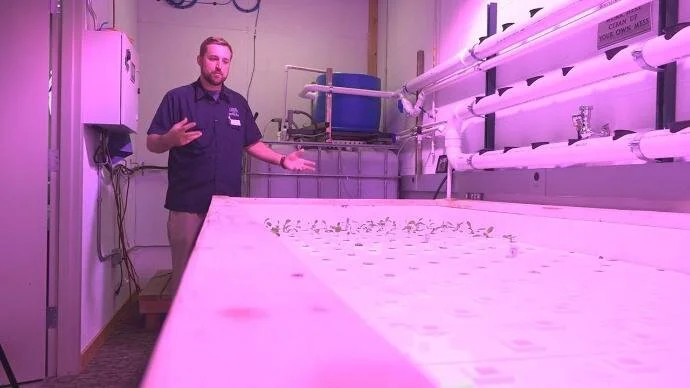
USDA grants $50,000 to Western Dakota Tech to expand their aquaponics project from a small closet to a bigger facility.
With agriculture being one of the leading industries in the state and frequent weather changes, Bryan Mitchell said indoor methods can help preserve the agriculture industry.
"I think this year we've only had 140 days without snow. Well, that leaves quite a few other days where we can be controlling the environment and still producing at least something," Bryan Mitchell, program director of electrical trades at Western Dakota Tech, said.
The school produces specialty crops like tomatoes, cucumbers, and lettuce. The goal is to produce 36 heads of romaine lettuce a week.
About 200 fish, 150 tilapia and the rest being fish for aesthetics, are in a tank ready to start the process.
The students and staff built a pipe system that circulates 800 gallons of water and filters out the nitrogen from the fish's waste. The nitrogen passes through the pipes and nourishes the seeds that lay on the floating rafts.
With pink and blue lights, underwater cameras and an intricate technical system, it's a hands-off method way to produce food.
"It is really impressive and it really shows how capable Western Dakota Tech's faculty and students are in helping to have a big impact in the future of the state," Western Dakota Tech President Ann Bolman said.
The future of putting a fresh salad on every person's plate.
"Ultimately, we want people to be eating healthy. We want to be apart of providing a solution to food insecurity in our community," Mitchell said.
The food will be donated to the Fork Real Cafe and the student food bank on campus.

MIT Media Lab Scientist Used Syrian Refugees To Tout Food Computers That Didn't Work
Media Lab’s Caleb Harper claimed success for a deployment of food computers to a refugee camp in Jordan, but an investigation by IEEE Spectrum reveals that it never happened
Media Lab’s Caleb Harper claimed success for a deployment of food computers to a refugee camp in Jordan, but an investigation by IEEE Spectrum reveals that it never happened
Photos: Left: WFP Innovation Accelerator; Right: Andreas Gebert/picture-alliance/AP
Left: A food computer at the World Food Programme office in Amman, Jordan. Right: Caleb Harper speaks during a panel discussion of the DLD17 Conference on January 15, 2017 in Munich, Germany.
“So we just put these last week in a Syrian refugee camp in Amman, Jordan,” Caleb Harper of MIT’s Media Lab told an audience at the Georgia Technology Summit in late March 2017.
He was referring to machines developed by his Open Agriculture Initiative (OpenAg) at the Media Lab, where he is a principal research scientist. The machines had been delivered to a United Nations World Food Programme project that aimed to give refugees in the Azraq camp—located in the Jordanian desert 90 kilometers from the Syrian border—the means to grow their own food, right inside the camp.
The vehicle for this agricultural miracle is called a personal food computer (PFC): an enclosed chamber the size of a dorm-room refrigerator loaded with LEDs, sensors, pumps, fans, control electronics, and a hydroponic tray for growing plants. PFCs are programmed to control light, humidity, and other parameters within the chamber to create the perfect conditions for growing a variety of plants. It’s a simple yet potentially revolutionary idea: a portable box that can grow practically any kind of plant just by downloading a recipe and planting some seeds.
The refugees fleeing war in Syria, leaving their homes, loved ones and possessions behind, had no idea where or when they would leave this temporary desert encampment or how they would make do while they were there. But what the refugees really needed, Harper contended, was “to be connected to other growers to share knowledge.” He added: “So super proud that that’s happening.”
On its face, the project sounds like one of the most ambitious and altruistic uses of high-tech agriculture you could imagine. In his talk in Georgia and presentations elsewhere as recently as this year, Harper enthusiastically conveyed a vision for the PFC that mimics how regular digital computing is scaled: PFCs would find a home in classrooms and home kitchens; food-computer “servers” would be housed in shipping containers to supply, say, a restaurant; and data center–scale vertical farms would feed entire cities.
As the name of the OpenAg initiative suggests, the food computer’s hardware and software are entirely open-source—that is, the equipment specs and code are available free to anyone with the desire to experiment with indoor agriculture. “Nerd farmers,” the hashtaggable moniker given to members of the OpenAg maker community, build their own machines and then test their “recipes”—consisting of an array of controlled environmental parameters such as nutrient mix, temperature, carbon dioxide and pH levels, and light color and intensity. The recipe’s purpose is to arrive at a specific expression of a given plant’s phenome, which is an organism’s physical and biochemical traits expressed in response to the interaction of its genes and environment. Nerd farmers share their experiences via the OpenAg community forum and wiki, and can even upload their recipes to a Github repository, allowing others to replicate that exact plant phenome in their own machines.
Launched in 2015, OpenAg differed from other indoor farming efforts in both its ambition and its scope. While the operators of urban indoor farms are careful to locate them in areas that have access to water, electricity, and cheap real estate, often using proprietary software and equipment, open-source food computers could be built by anyone and would be deployable virtually anywhere. Data from food computers all over the world would be fed to machine learning algorithms to optimize recipes and help people grow, say, the most flavorful basil (the subject of this peer-reviewed PLoS-One paper authored by Harper et al.) or replicate an Aleppo pepper grown in Syria in a food computer in the Jordanian desert.
It’s a nice idea—if your food computer works.
But the situation on the ground never matched the fantastic claims that Harper made about the WFP project in public appearances during the spring of 2017 and in briefings for corporate patrons of the Media Lab in the spring and fall of 2017. Harper and a colleague also cited the personal food computer’s successful deployment in the Azraq camp in emails to potential partners and patrons for the Open Agriculture Initiative and for Fenome Inc., a spin-off company that Harper founded in 2016.
Even as Harper took the stage in Georgia, it was clear to those working with the food computer at the World Food Programme (WFP) and at Fenome that the project wasn’t progressing as the team had hoped. Indeed, in September 2017, the WFP project officially ended without any of the machines having completed a single grow cycle, according to the official in charge of the project. The WFP’s personal food computers weren’t even deployed at the Azraq camp, home to some 35,000 Syrian refugees, but rather at a facility run by Jordan’s National Center for Agricultural Research and Extension, in Mafraq, an hour’s drive from Azraq.
Harper did not respond to detailed questions about the WFP project sent to him by IEEE Spectrum for this article.
Photo: WFP Innovation Accelerator
May 2017 photograph of two food computers at the World Food Programme office in Amman, Jordan.
Recently, the OpenAg initiative has come under scrutiny following the departure in September of Media Lab director Joichi Ito. He was a champion of the project, which started during his tenure and seemed to exemplify his “deploy or die” approach. (In a 2014 TED talk, Ito announced he was changing the lab’s motto from “demo or die” to “deploy or die,” focusing researchers’ efforts on real-world implementations of the technologies they were developing.) MIT is now investigating OpenAg, following allegations that staff were told to demonstrate food computers with plants that were not actually grown in them. Business Insider and the Chronicle of Higher Education first reported these allegations.
Perhaps the only unqualified success of OpenAg was Harper’s ability to sell his idea. His first big public unveiling of the food computer came in a 2015 TED talk that has been viewed more than 1.8 million times. Audiences and the press alike swooned. Glowing reports about the food computer, including one in Spectrum, quickly followed, and continued right up until the most recent revelations. And Harper helped raise the capital to start up his OpenAg spin-off, Fenome.
Last month, The New York Times reported that four former researchers connected to OpenAg have complained about some of the claims Harper makes in his talks, including that the average age of an apple in a U.S. grocery store is 11 months sometimes and 14 months other times, statements refuted by a U.S. Department of Agriculture official in an email reviewed by the Times.
It’s one thing to get an incidental fact wrong. It’s quite another to repeatedly state that refugees were benefiting directly from food computers and enjoying a taste of home, when they were doing no such thing.
The WFP project started off with the best intentions. According to Nina Schroeder, Head of Scale Up Enablement at the WFP Innovation Accelerator and the World Food Programme official in charge of the Jordanian hydroponics project in 2017, the long-term goal of the project was indeed to deploy food computers at refugee camps. “First we wanted to come up with a concept that we could bring to a larger scale that actually makes sense to deploy. For the early research phase, it wouldn’t have made sense to deploy it inside the refugee camp.”
As Schroeder described it, the pilot program would let researchers evaluate the technology and determine if it was appropriate to install PFCs at the camp. If everything went well with the pilot, then the Azraq camp would receive the food computers.
The project launched at the end of January 2017, when a team from Fenome went to Jordan to assemble and install the food computers. At the time the company was based in Salt Lake City, with a staff of 17 there plus two employees in Boston and one in Seattle. Four food computers were placed at the WFP’s office in the Jordanian capital of Amman and six at the National Center for Agricultural Research and Extension (NCARE) facility at Al-Khalydeha Salinity Research Station in Mafraq, about a one-hour drive from the Azraq refugee camp.
The plan was that after installation, the project would be monitored remotely from Utah via the Internet and by three NCARE staff on site in Jordan. The NCARE experiments focused on testing the technology using local water and changing the light spectrum of the food computers’ LEDs and the nutrient mix of the hydroponic solution, according to a person close to the project who spoke with Spectrum anonymously for fear of retaliation. Plants tested included cucumbers, basil, and baby lettuces. The source confirmed that Fenome’s team communicated regularly by phone with their Jordanian counterparts.
Photo: Joi Ito/Flickr (CC by 2.0)
November 2014 photograph of Caleb Harper (left) and Media Lab director of operations and strategy and Fenome board member Barak Berkowitz, taken by Joi Ito.
According to corporate filings and internal Fenome documents obtained by Spectrum, Harper had helped raise $4 million for his startup, where he was executive chairman and a director. Barak Berkowitz, director of operations and strategy at the Media Lab and Mitchell Baker, chairwoman of Mozilla, also served on the board. Other directors included representatives of two venture capital firms that funded Fenome: Lucas Mann from Campbell Soup’s VC arm Acre Venture Partners and Ignacio Martinez of Flagship Pioneering, founded by Noubar Afeyan, who is also a member of the MIT Corporation, as the school’s board of trustees is known.
Martinez declined to comment on the WFP project or Fenome. Berkowitz, Baker, and Mann did not respond to questions posed by Spectrum.
But despite all this money and brainpower, things soon went awry in Jordan. Schroeder, in a phone interview, told Spectrum that the conditions at the NCARE site were harsh, with a very dry desert climate and high indoor temperatures. The power frequently failed, which shut down the building’s air conditioning and the food computers’ LEDs. When the air conditioning conked out, it sometimes reached 45 °C (113 °F) inside the lab.
Worse, the Wi-Fi was unreliable. A Wi-Fi connection was necessary to remotely monitor some of the parameters inside the grow chambers, which were equipped with cameras and sensors that measured temperature, humidity, and pH levels. Whenever a food computer went down, it had to be connected to Wi-Fi so that the remote team could reboot it. The software was still quite buggy, so not all features could be controlled locally at the NCARE facility. The Fenome team returned a month after the initial deployment to modify the boxes and some functions, and to allow the machines to be rebooted locally, according to our source close to the project.
But while Fenome might have solved some problems, others cropped up, according to Schroeder. Algae grew inside the containers, possibly because of low-quality water and light shining through the food computers’ clear acrylic access doors. The doors also deformed due to the heat, creating gaps that let ambient air into the grow chamber and contaminated what is supposed to be a controlled environment.
In all, the Fenome support team visited NCARE four times to set up the food computers, train local teams, and adjust the personal food computers. The last visit was in May 2017.
In late April, just a few weeks after OpenAg Inc. officially changed its name to Fenome, Inc., 15 of its 17 employees in Utah were dismissed. In the fall of 2017, the company left Utah and relocated to offices at its VC partner Flagship Pioneering, in Cambridge, Mass.
“When they closed down the Utah office, that made it very difficult to continue the experiments that were going on,” says Schroeder. The WFP officially ended the Jordanian project in September 2017. Not a single grow cycle was successfully completed, Schroeder says.
“The food computer we tested there wasn’t ready for our purpose, and it was still in the development stage,” Schroeder says. Her team is now deploying lower tech, locally adapted hydroponic systems to food-insecure communities in Algeria, Chad, Jordan, Kenya, Namibia, Peru, and Sudan.
The concept of the food computer “is so attractive that you have the possibility to grow locally,” she says. “But you need to have the right kind of environment. That food computer version was too early.”
While it may have been the most high profile, the World Food Programme wasn’t the only Fenome partner left high and dry.
Photo: Charisa Moore
Charisa Moore (right) and her students experimented with three food computers.
In the fall of 2016, Charisa Moore, a biology teacher at Bainbridge Island High School in Washington state, watched a recording of Harper’s TED talk. The food computer sounded like just what Moore had been looking for to beef up her curriculum with content centered on ecology. Moore called Harper.
She says Harper told her he could talk about what OpenAg had done in putting food computers into Boston-area schools but warned her that they didn’t work in a lot of the schools where they were deployed.
“Well, I can make it work!” Moore told Harper. Harper invited Moore, another teacher, and a star student to MIT for a week to learn how to build, program, and troubleshoot the food computer and experiment with plant recipes. Fenome would provide Moore’s school with the hardware, help her and her students build the units on-site, and support them free of charge.
When she got home in late April 2017, Moore and her team decided to give a TED-esque talk themselves to about 400 people in the Bainbridge community about the project they were about to embark on with the help of Fenome.
“We did basically Caleb’s presentation using his Fenome team. And then that week we built the computers.”
Students and teachers started running experiments with the food computers. The food computer cameras and sensors sent data to Fenome in Utah, and the Utah team communicated with Moore on what they saw happening in the machines.
“And then it kind of got really weird,” Moore recalls. “We started not hearing very much. We used [the food computers] through the summer. Starting the next [school] year, we started to hear Fenome was going to go out of business. So that team was not able to then really troubleshoot any of our stuff.”
Without tech support from Fenome, software maintenance proved difficult. Moore struggled to push updated software that had been published on Github to the machines. “It’s very complicated,” she told Spectrum. “This is way beyond my expertise. I can only barely code in Python.”
Hardware bugs were even more difficult to fix. “The equipment is really not sustainable,” Moore says. “It corrodes. You have a cooling unit on it, the Freon comes out, it freezes—it just becomes messy. So to clean it, you have to go and order the stuff and replace those items. And good luck finding them.”
Her team did come up with a solution for one glaring, design-for-demo’s-sake specification: the food computer’s clear acrylic door, which let in ambient light and contributed to the algae problems in Jordan.
“The thing about the food computer that sort of didn’t make a lot of sense to me was that it’s open.... It’s not controlled,” says Moore. At her students’ urging, she went to Home Depot and bought some silver wrapping and clad the chassis with it to shut out unwanted light.
Photos: Charisa Moore
The students modified the food computer by wrapping the door. They added a flap on the small rectangle to keep all light out.
Moore says that she and her students continued to experiment with their food computers, uploading plant recipes to the OpenAg open source forum. They also set up an experiment to see which equipment grew microgreens more effectively: a food computer or a basic UV light bank shining down on plants potted in soil. Moore’s team found that the conventional indoor setup grew microgreens at four inches per week—twice the rate of the food computer.
Moore concluded that the food computers “are pretty much not usable, because they just are not user-friendly. They’re too hard to troubleshoot. Any Joe could not just walk up and figure out how to do it. You couldn’t market that to put in your pantry at home unless you knew how to do all that stuff.”
Moore found herself with three food computers on her hands. She gave the “most unusable” one to a student, who took it home and converted the box “into a kind of a simplistic one with [manual controls] instead of electronic ones.” He used it to earn a Boy Scout merit badge.
Even as Fenome and its partners were struggling, Harper continued to enchant audiences with his tales of nerd farmers around the world. Harper, who holds a master’s degree in architecture from MIT and is a member of the World Economic Forum and a National Geographic Explorer, managed to parlay the exposure from his TED talk into a lucrative side gig as a speaker. He earns $20,000 to $30,000 per talk, according to his agent’s website. He also used a version of the TED talk at a pitch meeting with investors in the summer of 2016 to help get his company its first series of funding according to an email obtained by Spectrum.
In May 2017, Harper repurposed his Georgia Technology Summit talk for a Red Hat conference. He again spoke about how a refugee camp in Jordan was using the food computers. He also described what the refugees grew and the significance they attached to the machines: “We didn’t tell them what to grow. They decided to grow things that they missed from home. Things that they can’t get any more.”
“The food computer,” he said, “became a cultural object more than just a manufacturing object.”
Meanwhile, Harper’s startup was laying off staff and planning its relocation to Massachusetts. Just days after the Red Hat appearance, Harper posted about Fenome to the OpenAg Community Forum: “hey guys—the startup (fenome) in its infancy has had a couple gaffes (oops) and obv communications is one of them.” He explained that the Fenome team was working to fix bugs and upgrade these “crazy expensive and not fully functional” “1st run prototypes” so that the company could start selling PFC kits. He told the forum that “after some development we all think its [sic] better to be based in Cambridge and is in the process of moving.”
Trouble at his startup did not derail Harper’s traveling show.
Less than a month after Red Hat, he dusted off his talk and delivered it at the EAT Stockholm Food Forum. He repeated his claim that the food computers at the Azraq refugee camp had created much more than mere plants:
“We’ve deployed in the world with the World Food Programme in Amman in a Syrian refugee camp. We did not tell them what to grow. Turns out they wanted to grow things from home. It became a cultural object for them. They missed the flavor of the place that they were from and that creates their culture and creates happiness for them.”
Harper’s story about Azraq evolved further in an interview earlier this year with science journalist Miles O’Brien at a Purdue University event on 26 February. This time, he revealed how St. John’s Wort plants had been grown by a “person at the camp that happened to be a Ph.D. on St. John’s Wort.” Harper claimed that the person started a business selling the medicinal plant to treat a population “rife with depression”:
Besides these public claims posted to YouTube, documents obtained by Spectrum reveal that Harper and at least one associate also misrepresented the World Food Programme project in email correspondence with potential funders and partners.
In a February 2017 email chain that included Nest cofounder and iPod coinventor Tony Fadell, Harper and his assistant tried to arrange a meeting with Fadell, now principal at Future Shape LLC, an investment and advisory firm based in Paris. Harper sent links to a couple of blog posts, one from 2016 about his lab and another about the “2017 expansion of our ecosystem with a nonprofit and a venture.” He ended his 14 February 2017 email with “Btw we just deployed food computers to a Syrian refugee camp in Jordanon [sic] a contract with the UN. Pretty cool. C”.
And about five months after the project at NCARE had ended, OpenAg was in talks with a group at Google about supporting research at OpenAg, according to another email chain obtained by Spectrum. In an email dated 30 January 2018, Google’s Jess Holbrook, senior staff UX researcher and UX manager, asked several questions regarding food computers, including “Has anyone picked up the design and adapted it to specific use cases like edu, refugee groups (I know you mentioned Jordan), etc.”
Hildreth England, the OpenAg Initiative assistant director at the time and currently co-director of the Media Lab’s PlusMinus program, answered the next day, “...yes, the PFC v2.0 was deployed in a Syrian refugee camp with the World Food Program.” England declined Spectrum’s request to comment, citing “an open inquiry being led by MIT’s Office of the VP for Research.”
Around the same time as the exchange between England and Holbrook, Dr. Babak Babakinejad, then the lead researcher for OpenAg, was testing a food server being set up in a shipping container in Middleton, Mass., at MIT Bates Research and Engineering Center. Babakinejad told Spectrum that he documented several problems with the equipment, including differences in temperatures in various areas inside the food server, in what is supposed to be a controlled environment, and a lack of control over carbon dioxide levels, humidity, and temperature. He told Spectrum that he had reported these issues to the OpenAg team.
Photo: Babak Babakinejad
Food server set up in a shipping container at MIT Bates Research and Engineering Center.
Babakinejad showed Spectrum an email he sent on 16 April 2018 to officials with MIT Environment, Health and Safety to report that OpenAg was discharging nutrient solutions beyond state-permitted limits, a controversy that was examined last month in a joint report by ProPublica and WBUR. Babakinejad also took his concerns about OpenAg and Harper to Media Lab director Ito.
In an email to Ito on 5 May 2018, Babakinejad stated that Harper was making claims in public talks about “implementations of image processing, microbiome dosing, creating different climates and collecting credible data from bots across the world that are not true.”
In addition, Babakinejad wrote, “He [Harper] takes credit for deployment of PFC’s to schools and internationally including a refugee camp in Amman despite the fact that they have never been validated, tested for functionality and up to now we could never make it work i.e. to grow anything consistently, for an experiment beyond prototyping stage.”
Ito responded and asked Babakinejad if he could share these concerns with Harper. That’s the last Babakinejad says he heard from Ito on the matter. Within a month, Babakinejad had taken a leave of absence. He officially left the OpenAg project in September 2018. Two months later, Harper was promoted to principal research scientist at the Media Lab, a position that as of this writing, he still holds.
If you have any information about MIT’s Media Lab or its Open Agriculture Initiative (OpenAg), you can contact Harry Goldstein at h.goldstein@ieee.org or on Twitter (DMs open, ask for Signal number).
2019 Aquaponics Food Safety Statement Sign-On
We believe that the aquaponics community must make a positive statement asserting our food safety credentials to ensure that policy and large-scale decisions that affect our future are based on concrete science, not unfounded concerns
Dear Aquaponics Growers,
At the Putting Out Fruits conference last month, we all agreed that it was important for our community to make a positive statement asserting the food safety status of aquaponics. Part of the motivation was that a major food safety certifier, Canada GAP, recently announced it will revoke certification for aquaponic farms in 2020, citing unfounded concerns.
The withdrawal of aquaponics eligibility from this certifier has already set back commercial operations in Canada.
We believe that the aquaponics community must make a positive statement asserting our food safety credentials to ensure that policy and large-scale decisions that affect our future are based on concrete science, not unfounded concerns.
We are collecting signatures on the 2019 Aquaponics Food Safety Statement from farms, research institutions, schools, and other organizations that stand behind it and would like your voice to be heard.
If you would like your farm or organization to sign on, click the link below. The deadline to sign the statement is November 15, 2019. Once we collect all the signatures we will publish and broadcast the statement, and ask you to do the same.
Click here to read the statement and, if you choose, sign on:
2019 Aquaponics Food Safety Statement
Best regards,
Brian Filipowich, Chairman
Aquaponics Association
info@aquaponicsassociation.org

Controlled Environmental Farming Inc. Guarantees Results For Its Urban Farming, Localized, Food Production Model
CEF's guarantee comes in the form of a complete investment refund for all funds applied to the proposed project, funded by the purchaser of a License
Controlled Environmental Farming Inc, (CEF) through its Licensing Business Model, will guarantee economic results for facilities placed in Urban Farming locations. The economic guarantee comes in the form of a minimum operational margin of at least 40%. In many locations, the operating margin will exceed 40%.
CEF's guarantee comes in the form of a complete investment refund for all funds applied to the proposed project, funded by the purchaser of a License. The CEF License program details (see below) can be obtained by contacting CEF at conenvfarm@gmail.com and requesting the document. Costs for the program are quoted on an individual case by case basis.
CEF intends to address the demand for urban farming facilities, providing year-round nutritious quality food at competitive and consistent pricing through the construction of locally positioned controlled environment agricultural facilities. The facilities will cultivate a wide range of fruits, vegetables, herbs, shrimp and fish, individualized for local demographics and demand. The facility engineered as a kit, can be placed anywhere geographically and integrates a variety of renewable resources to control costs while reducing its carbon footprint.
With CEF facilities, product cultivation occurs through a proprietary closed-loop, aquaponics water flow system that uses the benefits of consolidating and intensifying sustainable product growth while eliminating the risk factors that affect product quality, quantity and pricing. Processing and distribution operations are also contained within the facility which has the benefit of streamlining operations and increasing food safety.