


Welcome to iGrow News, Your Source for the World of Indoor Vertical Farming
Green Life Farms Harvests First Crop In State-of-the-Art Hydroponic Greenhouse
Lake Worth company to begin commercial operations, selling premium baby leafy greens to local customers, later this summer
Lake Worth company to begin commercial operations, selling premium baby leafy greens to local customers, later this summer
Lake Worth, FL (July 18, 2019) – Green Life Farms has harvested its first crop of baby leafy greens at its flagship hydroponic greenhouse in Lake Worth, an important milestone as the company prepares to begin selling to supermarkets, restaurants, cruise ships and other distributors. The facility has recently achieved Substantial Completion, and the team is now harvesting its first crops, which include Baby Arugula, Baby Romaine, and Baby Spinach. Green Life Farms expects to begin growing produce for customers later this summer.
Green Life Farms has harvested its first crop of baby leafy greens at its flagship hydroponic greenhouse in Lake Worth, an important milestone as the company prepares to begin selling to supermarkets, restaurants, cruise ships and other distributors. The facility, pictured above, has recently achieved Substantial Completion, and the team is now harvesting its first crops, which include Baby Arugula, Baby Romaine, and Baby Spinach. Green Life Farms expects to begin growing produce for customers later this summer. Photo credit: Hydronov
“Planting and harvesting our first crop puts us one step closer to delivering produce that is grown locally using sustainable farming practices and free from pesticides and contaminants,” said Mike Ferree, Vice President, Green Life Farms. “We have no doubt customers will be thrilled with the care and dedication we’ve put into the growing process once they smell, touch and taste the baby leafy greens.”
The hydroponic greenhouse, slated to be the largest indoor hydroponic produce grower in the southeast, occupies nearly three acres and will yield approximately 750,000 pounds of premium leafy green produce throughout the year. The greens will be grown, harvested and packaged onsite; they will then be picked-up or shipped directly from the farm. Unlike with conventional farming practices, Green Life Farms’ baby leafy greens are grown without soil, then harvested and packaged hands-free, reducing the risk of contamination and preserving flavor and freshness.
Green Life Farms plans to offer a large selection of products to its customers later this summer, including Baby Spinach, Baby Arugula, Baby Kale, Baby Romaine, Red Romaine Mix, and specialty blends, Southern Style Greens and Gourmet Asian Blend. All Green Life Farms products are free from pesticides and GMOs and grown using sunlight and oxygenated water.
Construction of the Green Life Farms’ flagship facility began in 2018. In preparation for commercial operations, Green Life Farms hired its sales director and head grower earlier this year. The organization is currently hiring a Production Area Supervisor and Growing Area Supervisor. Once those roles are filled, Green life Farms will look to fill out the roster of greenhouse and production staff, totaling 14 additional people in the state-of-the-art facility.
Green Life Farms has harvested its first crop of baby leafy greens, pictured above, at its flagship hydroponic greenhouse in Lake Worth, an important milestone as the company prepares to begin selling to supermarkets, restaurants, cruise ships and other distributors. Green Life Farms expects to begin growing produce for customers later this summer.
Green Life Farms’ hydroponic greenhouse features innovative Deep-Water Floating Raft Technology (FRT) from Hydronov, an industry leader in the hydroponic space with more than 30 years of experience. FRT helps to conserve water, using the oxygenated clean water in which the plants grow as a conveyer system, eliminating the costs and maintenance associated with mechanical conveyers. Green Life Farms will be able to produce 18 harvests each year and use 90 percent less water than conventional farming.
Green Life Farms produce will set new standards for cleanliness, freshness, and taste. Grown locally, using sustainable farming practices, combined with the most advanced AgTech practices, and kept free from pesticides and contaminants, Green Life Farms baby leafy greens are good for the body, family, community, and planet.
For more information about Green Life Farms, visit GreenLifeFarms.ag. Please contact Elayne Dudley at Elayne@GreenLifeFarms.ag for sales and Raymond John at Ray@GreenLifeFarms.ag for investor relations.
About Green Life Farms
Green Life Farms is constructing a 100,000 square foot state-of-the-art hydroponic greenhouse in Lake Worth, Florida, with additional expansion planned in Florida and beyond. By incorporating agriculture with technology, Green Life Farms will provide consumers with premium-quality, fresh, local, flavorful and clean baby leafy greens that are good for their bodies, families, communities and planet – year-round.
Media Contact:
Tessa Ali, Montagne Communications
603-644-3200 ext. 16
tessa@montagnecom.com
Investor Relations:
Raymond John
561-886-7277
Ray@greenlifefarms.ag
Equity Crowdfunding Is Underway To Roll Out A Fully Self-Sustaining Ecosystem To Bring Food From Farm To Table.
Americans today get their food from a supply system that is nearly 100 years old and woefully out of date. That's because much of the food we eat travels hundreds or perhaps thousands of miles from where it was grown to where it is wanted
Investors Are Invited to Explore Lettuce Networks;
Leading the Local Food Revolution in Delivering Very Special Meal Kits
Neighborhood by Neighborhood
Equity Crowdfunding is Underway to Roll Out a Fully Self-Sustaining Ecosystem to bring food from farm to table.
Austin, TX -- (ReleaseWire) -- 07/17/2019 --Americans today get their food from a supply system that is nearly 100 years old and woefully out of date. That's because much of the food we eat travels hundreds or perhaps thousands of miles from where it was grown to where it is wanted. This waste tremendous amounts of energy, compromises its freshness and nutritional quality and creates packaging waste that's filling up our landfills and contaminating our oceans.
Lettuce is a company with a solution that solves these problems simultaneously.
It is creating sustainable, hyper-local, technology-enabled food ecosystems in urban areas that turn unused urban land and resources into productive farms, package the produce into healthy, delicious and convenient products, and deliver them to homes in zero-waste containers, all while increasing awareness and engagement around nutritious, local food. Their evolving social, local, commerce technology platform is connecting and empowering local food participants including growers, artisans, and consumers to do what they do best at every point along the food chain.
Lettuce has reinvented the popular meal kit. Before Lettuce, meal kit services were more expensive, took more time to deliver and were more wasteful resulting in high customer churn among those services. Lettuce meal kits fix all these challenges - local ingredients, near zero-waste packaging and affordable pricing because of more efficient cost structures, resulting in a dramatic drop in the customer churn rate.
Staying true to the nature of equity crowdfunding, the minimum investment is very reasonable and in easy reach of the masses. All funds raised are devoted to rolling out Lettuce on a large scale.
Everyone is invited to carefully consider this investment opportunity - http://bit.ly/2J7xJnF
About Lettuce
Lettuce got its start in Austin, Texas in 2016. Co-founder & CEO Yogesh Sharma, an entrepreneur and avid amateur backyard farmer was on a run, gawking at the ample irrigated space in his new city – almost all of it growing grass. He had always been curious about why local food wasn't a bigger part of the modern food ecosystem. And right there, all around him was part of the solution – plenty of good dirt, sun and water to grow food that could feed cities.
Hal Roberts, who grew up on an urban farm in San Antonio had already been setting up urban farms in Austin. And Ved Prakash was writing software that streamlined hyper-local logistics, enabling digital visibility and commerce across people, products, locations, and millions of other potential nodes.
The three of them got together, and collectively said, "Enough is enough, let's do something about this!" and started Lettuce. Now Lettuce meal kits serve hundreds of thousands of locally sourced meals every year, with a rapidly growing network of farmers, artisans, distributors and consumers.

Netherlands: City of Utrecht Turns 316 Bus Stops Into ‘Bee Stops’
The Dutch city of Utrecht has had a great idea to help bees thrive: turning bus stops into little bee havens. These ‘bee stops’ are basically just standard bus stops with grass and wildflowers on top to encourage pollination
Attempting To Help Bees Thrive
The Dutch city of Utrecht has had a great idea to help bees thrive: turning bus stops into little bee havens. These ‘bee stops’ are basically just standard bus stops with grass and wildflowers on top to encourage pollination.
If our natural pollinators would be exterminated, it would cost £1.8bn a year to employ people to do the work of pollinators like bees in a country like the UK. This makes investing in them make sense.
The 316 bus stops also help to capture fine dust and store rainwater. As well as the green roofs, they are all fitted with energy-efficient LED lights and bamboo benches.
The ‘bee stops’ are cared for by a team of workers who drive around in electric vehicles. And if you want to build your own bee stop, the city also runs a scheme for residents to apply for funding to transform their own roofs. The bee stops aren’t the only great place for city bees to hang out.
Source: metro.co.uk
Publication date: 7/17/2019
Glase Uses Outreach Activities To Inform And Educate Growers, Manufacturers And Suppliers
The goal of the Greenhouse Lighting and Systems Engineering (GLASE) consortium is to create a more sustainable and profitable greenhouse industry
Greenhouse Lighting and Systems Engineering (GLASE) consortium is using outreach activities to provide controlled-environment growers, lighting manufacturers and service companies with pertinent information to increase energy efficiency and improve their products and operating procedures.
By David Kuack
The goal of the Greenhouse Lighting and Systems Engineering (GLASE) consortium is to create a more sustainable and profitable greenhouse industry. The consortium is a partnership between Cornell University in Ithaca, N.Y., and Rensselaer Polytechnic Institute (RPI) in Albany, N.Y. GLASE is supported by the New York State Energy Research and Development Authority (NYSERDA) and by industry partners.
The consortium is conducting research to improve controlled environment agriculture (CEA) operations. Research activities include improving lighting fixtures and systems that synergistically control lighting and developing plant lighting and carbon dioxide control strategies. These strategies would ultimately reduce energy consumption to create a more sustainable and profitable greenhouse industry. Although the focus of GLASE research is on greenhouse production, the findings are expected to have application to other controlled-environment production systems including vertical farms and warehouses.
Information for the CEA industry
In addition to the research being conducted by GLASE, the consortium is also offering a variety of outreach activities to provide growers, lighting manufacturers and service suppliers with information that can assist them in improving their business operations. These activities include webinars, technical meetings and trade journal articles.
“The webinar series is the one activity that GLASE has been doing the longest,” said Neil Mattson, horticulture professor and greenhouse extension specialist at Cornell University and GLASE principal investigator. “The webinars are open to the entire industry. Some have been more oriented towards growers. Others have more application to the supply side, including manufacturers and service providers.”
Improving energy efficiency through benchmarking
“One of the webinar topics we covered is our energy efficiency benchmarking platform, Mattson said. “GLASE worked with sustainability solutions service supplier EnSave Inc.. The company does farm energy audits and also helps farms to apply for grants to make energy efficiency improvements. What the company found working with other agricultural commodities, including dairy farms and poultry producers, is there are more solid benchmarks on how much energy those industries use. The greenhouse industry is highly fragmented in regards to the crops grown and the numerous geographic locations of growing operations. What’s lacking is a unified data bank or benchmarks of typical energy usage numbers for heating and lighting relative to the crops that are grown.”
Neil Mattson at Cornell University said GLASE is using a variety of outreach activities to provide CEA industry members with information that can assist them in improving their business operations.Photo courtesy of Neil Mattson, Cornell Univ.
Because of the diversification of the horticulture industry, Mattson said it has been more difficult to collect energy-use data.
“Through this collaboration with EnSave we are hoping that growers will use this benchmarking database,” he said. “We’ve tested it and we’re trying not to make it too onerous for the growers so it’s as easy as inputting their monthly utility bills. The growers would also input their productivity units, which could be heads of lettuce, pounds of tomatoes or number of 6-inch ornamental plants. We are looking to collect information from both greenhouse vegetable and ornamental plant growers. The data base could accommodate both types of crops.”
“The real strength of this data base would lie in having a critical mass of users. For the individual users of the data base, they would be able to see how their operations compare to other industry benchmarks. Growers would be able to compare their businesses to an anonymous group of similar operations. If growers find they are using more energy per output, they could try to determine why they are using more energy. Nationally this could be useful to growers who are trying to obtain federal funds from grant programs for adopting energy-efficient systems. We would also like to be able to share with the industry some of this anonymous benchmark data that is collected.”
Horticultural lighting label
Another GLASE webinar topic was on a horticultural lighting label. The webinar was presented by A.J. Both, a professor and extension specialist at Rutgers University and member of the GLASE research team.

One of the GLASE webinar topics was the horticultural lighting label which has helped to educate growers about lighting fixtures. Photo courtesy of A.J. Both, Rutgers Univ.
“This webinar was oriented toward greenhouse growers, educating them as to what to look for and what questions to ask lighting manufacturers when they are considering adding lights or looking to make changes to their lighting systems,” Mattson said. “The webinar was also aimed at the lighting manufacturers that potentially would adopt the label.”
Mattson said the lighting label has helped educate growers about lighting fixtures.
“Growers are learning the lighting units to use when comparing lighting fixtures,” he said. “Although lighting manufacturers haven’t adopted the entire label yet, they have incorporated elements of it. Lighting manufacturers have become much better at providing technical specifications. They are talking about lighting units in terms of plant lighting not human lighting. They are talking about micromoles of light instead of lumens of light. Rarely are footcandles used anymore by growers and lighting manufacturers.”
Lighting fixture analysis
Another one of GLASE’s outreach activities is to drive adoption of the horticultural lighting label. GLASE has partnered with Intertek, a total quality assurance provider, to work with its lighting company members.
“Intertek has the specialized equipment for quantifying light output and light distribution,” Mattson said. “Each lighting company that is a GLASE member can submit one lamp a year for testing by Intertek. Intertek conducts a series of measurements with each lamp. GLASE then takes the raw data generated by Intertek and we provide the lighting companies with a lighting label for each lamp that is analyzed.
“There are currently six lighting companies that are GLASE members. This spring we had the first companies take advantage of the lamp analysis. The companies decide whether they want to share the lighting label GLASE provides them. This is a good way to introduce the GLASE lighting company members into the process of what it takes to generate the information that is needed to prepare a lighting label.”
Informational conference calls
GLASE has been offering its members periodic informal conversations on industry-related topics.
“These industry talks enable GLASE members to learn in a more informal setting where there is not a large audience,” Mattson said. “This provides GLASE members more time to have their questions answered by the speakers which could directly help them with their business.”
The first industry talk was a video conference call with lighting researchers Kevin Folta at the University of Florida and Bruce Bugbee at Utah State University who discussed the potential benefits of green light in plants.
“The green light conference call was geared more towards the growers, but GLASE manufacturer and supplier members were also able to participate,” Mattson said. “The informal format for these calls has been conducive to discussion between members and the speakers. There are 20 minutes during which the thought leaders talk about the topic and then that evolves into a question and answer period with the members. The program format enables the participants to have their questions answered.”
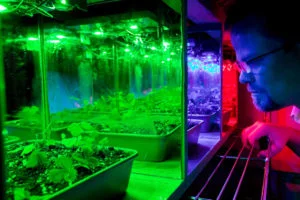
One of the informal industry talks offered by GLASE to its members discussed the potential benefits of green light on plants. Photo courtesy of Kevin Folta, Univ. of Fla.
Another industry talk covered power supply and power distribution options for CEA. This call was geared more to the lighting manufacturers. The speakers included Bahram Barzideh, principal engineer of LED lighting components at Underwriters Laboratories (UL), and Frank Cirolia, systems and application engineer at Artesyn Embedded Technologies.
“For LED lights some of the energy is used by the diode,” Mattson said. “This is the energy used to produce the light. Some of the energy is used by the power supply as well as the driver. There have numerous developments in power supplies, which have helped to improve the energy efficiency of the new generation of lights. Regarding power distribution, there are opportunities for improving energy efficiency related to the way power is delivered to the fixtures.”
Articles on research findings
Technical articles about GLASE research results are the newest outreach activity.
“GLASE will be rolling out these articles this summer,” Mattson said. “Some of these articles will be geared more to the growers. Other articles will have application to suppliers and lighting manufacturers.
“Topics will include the plant research and the lighting control studies that we have conducted at Cornell. There will also be articles on designing more energy-efficient lights, which is what researchers at RPI are working on.”
The following articles will appear in CEA-related magazines in the coming months.
July: Multi-spectrum research LED lights
August: Greenhouse light and shade system implementation controls
September: Light distribution measurements in tall canopies
October: Spectral acquisition systems for greenhouses
November: Plant responses to integrated light and CO2 controls
December: Horticultural lighting fixtures analyses
For more: Neil Mattson, Cornell University, School of Integrative Plant Science, Horticulture Section, Ithaca, (607) 255-0621; NY 14853; nsm47@cornell.edu; http://www.cornellcea.com; http://www.greenhouse.cornell.edu
Editor’s note: Neil Mattson will be doing three educational presentations at this year’s Cultivate’19, July 13-16, in Columbus, Ohio
Biostimulants: Another Tool for the Grower’s Toolbox
Sunday, July 14, 2:45 p.m.-3:45 p.m.
Greenhouse Light and Carbon Dioxide Management to Enhance Crop Yield
This educational session will include information related to GLASE research.
Monday, July 15, 11:30 a.m.-12 p.m.
Lighting Approaches to Maximize Profits (LAMP)
Tuesday, July 16, 9:30 a.m.-10:30 a.m.
David Kuack is a freelance technical writer in Fort Worth, Texas; dkuack@gmail.com
Posted in Interviews

Microgrid At The Center of $630 Million London City Airport Expansion
The London City Airport microgrid, now under development, will nearly double the size of the airport’s electricity distribution infrastructure, from 3.6 MVA to 7 MVA, and help power a major airport expansion and upgrade.
July 8, 2019 By Andrew Burger
The London City Airport microgrid, now under development, will nearly double the size of the airport’s electricity distribution infrastructure, from 3.6 MVA to 7 MVA, and help power a major airport expansion and upgrade.
Photo by Londons Finest Eye/Shutterstock.com
The microgrid is a critical element of the airport’s broader $630.5 million City Airport Development Program, which includes construction of a new terminal four times the size of the airport’s current terminal and the first digital air traffic control tower in the world for an airport of its size, The microgrid is scheduled to come online in phases through 2022 and into 2023.
The airport’s development transformation program “is central to the airport’s plans to help tackle the climate challenge and operate sustainably to achieve their net-zero carbon emissions goal by 2050,” said Tony Blackwell, design & interface manager for UK Power Networks Services (UKPNS), which operates the London City Airport’s existing electricity network.
Blackwell declined to provide the microgrid project’s total cost. He did explain that the cost of the microgrid will be incorporated within UKPNS’ existing Marketspur Agreement with London City Airport, which runs until 2033. UKPNS is designing, building, operating, maintaining and financing the microgrid.
One of most complex and demanding networks
UKPNS’ distribution management system will be the centerpiece of the microgrid and the airport’s new, much larger electricity distribution network, providing full remote control and systems automation and rapid fault response to the high-voltage distribution network.
“UK Power Networks’ ability to provide disaster recovery service from their control center will ensure that the operations are secure,” Blackwell said in an interview with Microgrid Knowledge. “The disaster recovery service is provided by an experienced team which controls the whole of the south east of the UK’s distribution network including London and will provide 24/7, 365 support to the dedicated UK Power Networks Services’ operations and maintenance team.
He added: “This experience is unmatched within our industry, since this network is one of the most complex, demanding and includes one of the most critical cities in the world with a very high availability rate of electrical infrastructure.”
The London City Airport microgrid will incorporate solar and combined heat and power (CHP) and a new, smart SCADA (supervisory control and data acquisition) system. It’s designed to enhance energy security and resilience while at the same time reducing infrastructure costs. The project also is designed to help improve the air quality around the airport and meet London’s citywide decarbonization goals.
The CHP and PV systems will be linked to the airport’s building management system, Blackwell said. Both systems are in their detailed design stages. Plans call for a solar PV system with a capacity of about 140 MWh and a CHP plant of 230 kW, as well as a second CHP unit of the same size in the future.
Microgrids are “Holy Grail”
Sustainable development is an airport priority. The facility has reduced its per-passenger carbon emissions 28% since 2013 and holds Level 3 Airport Carbon Accreditation. Its goal is to be carbon-neutral in terms of emissions by 2020. It is the closest airport to London’s city center and nearly 70% of the airport’s passengers arrive and leave via public transports — the highest proportion among all UK airports and something the airport actively encourages, according to UKPNS.
Airports in the US also have been showing interest in investing and deploying microgrids in recent years, a trend that picked up momentum in the wake of a 90-minute utility grid outage at Reagan International Airport in Washington, D.C. in August 2018 and an 11-hour power outage at Hartsfield-Jackson Atlanta International Airport in February 2018.
For example, AlphaStruxure, a joint venture of Schneider Electric and The Carlyle Group, is developing multiple microgrids as part of the modernization of JFK Airport in New York.
Free Resource from
Microgrid Knowledge White Paper Library
Microgrid Benefits and Example Projects
Microgrid benefits include energy reliability, energy accessibility, energy independence, and energy cost optimization. Download the new white paper from Schneider Electric that explores the benefits microgrids can provide and supplies examples of relevant microgrid projects.
In Pennsylvania, Allegheny County Airport Authority is planning a microgrid for the Pittsburgh International Airport. And in Tennessee, the Chattanooga Electric Power Board and partners are working on a “dynamic boundaries” microgrid with an open-source controller for the Chattanooga Airport that would link into existing automated switch gear and hence to the utility’s smart grid network.
“Microgrids are the holy grail of new sustainable renewable energy networks. Finding ways to make microgrids economically viable and self-funding has challenged global energy markets for decades,” said UKPNS Director Ian Smyth. “We are excited to deliver this turnkey solution for our valued client. Our ability to bring these technologies together delivers triple bottom line benefits for the airport — lower cost, greater resilience and help towards the UK’s decarbonization agenda.”
Track news about the London City Airport microgrid. Subscribe the free Microgrid Knowledge newsletter.
U.S.-Based Indoor Farms Say They Are Prepared To Scale Up
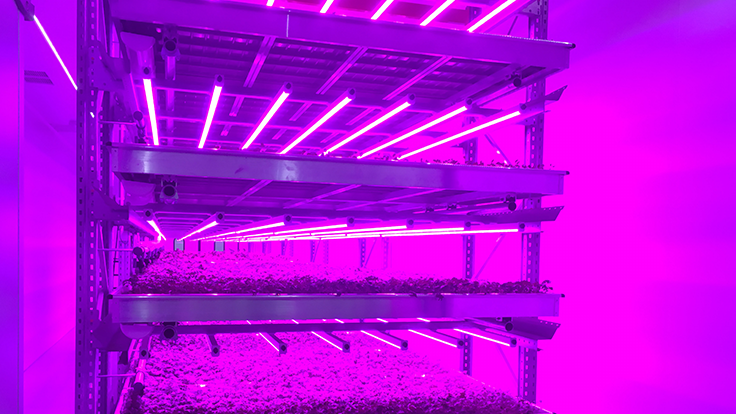
Leafy salad greens grown under banks of LED lights, with mist or drips of water are having their day in the sun. Several top U.S. indoor farms, stacked with plants from floor to ceiling, tell Reuters they are boosting production to a level where they can now supply hundreds of grocery stores
Plenty, Bowery, Aerofarms and 80 Acres Farms say they are prepared to make their crops 'grocery store competitive.'
July 10, 2019
Posted by Chris Manning
Leafy salad greens grown under banks of LED lights, with mist or drips of water are having their day in the sun. Several top U.S. indoor farms, stacked with plants from floor to ceiling, tell Reuters they are boosting production to a level where they can now supply hundreds of grocery stores.
Plenty, Bowery, Aerofarms and 80 Acres Farms are among young companies that see a future in salad greens and other produce grown in what are called vertical farms that rely on robotics and artificial intelligence, along with LED lights. While the first versions of modern vertical farms sprouted about a decade ago, in recent years the introduction of automation and the tracking of data to regulate light and water has allowed them to get out of lab mode and into stores. Now they are trying to scale up.
Continue Reading at CNBC
France: No More Heated Organic Greenhouse Crops Sold In Winter
European organic rules say organic growers have to respect the natural seasons and use energy responsibly and if possible in a renewable way.
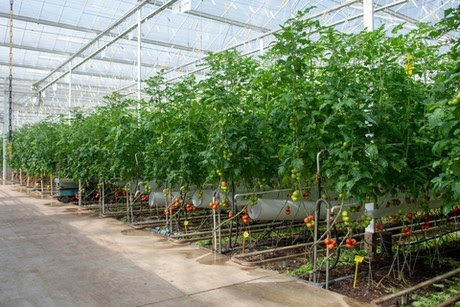
Growing organic vegetables in a heated greenhouse. According to various French organizations this is a complete contradiction, but according to the European organic certification rules there's nothing wrong with it. Today the French decided it will remain possible to grow organic in heated greenhouses - although new restrictions will come into place.
The debate
European organic rules say organic growers have to respect the natural seasons and use energy responsibly and if possible in a renewable way. A not very clear guideline - and therefore currently over 40 French greenhouses are heated and organic. This amount is growing: the demand for organic vegetables in France is currently higher than the supply. However, the heating of organic greenhouses is a thorn in the side of many French.
This week nearly 100 Parliamentarians wrote to Didier Guillaume, Minister of Agriculture, to emphasize their support with an online petition, started by the French organic organization FNAB, Greenpeace France and other organizations. Within 6 weeks this petition was signed by over 80,000 people. "We expect you to listen to these voices on July 11th", they said. "Because it's not only about heated greenhouses - it's also about the future of both agriculture and energy in our country."
They called out to refuse the use of heating in French organic greenhouses. According to Philippe Riffared, organic greenhouse grower and co-president of Grab Bio Center, the shelf life of heated produce is way lower and it's grown in a non-sustainable way. "We don't want the consumer to lose faith in the organic label", he says, pointing out the use of CO2 by heated production is way higher than non-heated production. Other growers point out that during summer, the unheated crops are being pushed out of the market by greenhouse-grown tomatoes.
Only producing three months per year
Of course, there's another side to the story as well. Greenhouse growers try to explain how they need heating. "If we have to stop heating our greenhouses tomorrow, it means the French consumer has to buy Spanish produce in April and May. Our quality is much better though", organic grower Jean-Luc Roux told Europe1. He grows his tomatoes with a biomass boiler and therefore reduces the needed carbon dioxide as well.
Horticultural organization FNSEA points out that greenhouse growing helps nature, limiting the use of chemicals and water and saving the soils, and on top of that limiting import needs for produce from Germany, Poland, Israel or Argentina. They say giving up heating would distort competition within Europe, pointing out currently 78% of the French organic tomatoes are imported.
Also the Minister of Agriculture, Didier Guillaume, said Tuesday to senators, the government was "not opposed" to the heating of greenhouses in organic farming. "We are, and I am, very opposed to the counter-seasonality of fruits and vegetables," he insisted.
Debate
It's clear that the debate over unheated greenhouses has heated up in France. The decision on the rules was postponed twice in the last 8 months since there was no unity to be reached. Now the rules have become clear. The Ministry of Agriculture announced heating will be allowed, but on a restricted schedule: there will be no marketing between 21 December and 30 April of organic fruit and vegetables produced in French heated greenhouses, said the Ministry of Agriculture.
On top of that the government plans to impose the use of renewable energy to feed these greenhouses by 2025, according to the Ministry of Agriculture.
The responses are mixed. "Allowing the sale of organic tomatoes from the first day of spring is equivalent to authorizing the heating of organic greenhouses throughout the winter to more than 20 degrees, the equivalent of 200,000 to 250,000 liters of fuel oil per hectare", said Jean-Paul Gabillard, market gardener and national vegetable secretary at Fnab.
Publication date: 7/11/2019

The Future of Food: Indoor Agriculture
The amount of people facing chronic food insecurity is estimated to be about 821 million (Food and Agriculture Organization of the United Nations).
Anya Aggarwal
8th July 2019
The amount of people facing chronic food insecurity is estimated to be about 821 million (Food and Agriculture Organization of the United Nations). The world’s population is expected to grow to 9 billion people in a mere 30 years (USDA). Effects of climate change due to carbon emissions and unsustainable energy practices are an imminent threat. The United States uses 25% of the world’s energy with less than 5% of the world’s population, and has the second highest carbon footprint (UCSUSA). The people of the world must take action to combat these detriments, but how?
One of the hottest new trends in addressing issues of food security, population growth, and environmental sustainability is through indoor agriculture. Indoor agriculture employs various technologies including hydroponics, aeroponics, and LED Grow Lights combined with a vertical farming model to provide intuitive and sustainable farming methods. The technologies surrounding this practice have the capability to mitigate many imminent global concerns.
Indoor agriculture is a major player in ensuring widespread food security, something of great concern in places where a majority of the population lies below the poverty line. Food security refers to the availability of food and a person’s access to it on a daily basis. Impoverished areas including inner cities, countries in Africa, and other such places are faced with critically low food security that causes great strain on their physical and mental health. The use of LED Grow Lights in indoor agriculture produce much higher crop yields and “create optimum growing conditions for farmers to grow a crop from the seed to its harvesting stages in lesser time” according to Future Farming.
Case studies by Independence LED, one of the leading distributors in LED Grow Lights, have shown that greens produced through indoor farming with the LED technology have significantly greater amounts of foliage and last for over a month after harvest, as compared to the highly perishable outdoor-farmed greens. Additionally, since indoor agriculture allows the grower to control the climate in the greenhouse, food can be grown year-round and in almost any location, making food more accessible in even the most remote places. The levels of sustainability and efficiency that result from indoor agriculture work to increase both the availability and accessibility of food, effectively promoting higher worldwide food security.
In the next 30 years, the world’s population is predicted to grow by at least 2 billion people, if not more. That not only means more people taking up more space, but also indicates an increase in food demand. Some sources say that the demand for food may increase by up to 70%. The USDA also expects two out of three people to live in urban areas by that time. In a world where conventional agriculture already does not satisfy the population’s needs, the predicted rapid increase cannot be contained without new technology and agricultural methods. Indoor agriculture using LED Grow Lights and vertical farming is a promising solution to the impending increase in food demand and urbanization because it allows for food and greens to be produced close to urban areas as it does not require perfect natural conditions. Rather, it uses environmentally-friendly technology to simulate good growth conditions. According to the USDA, indoor agriculture works effectively by
reducing distribution chains to offer lower emissions, providing higher-nutrient produce, and drastically reducing water usage and runoff
making it one of the most efficient, sustainable, and popular new agricultural markets. As more and more farmers turn to indoor agriculture, the practice promotes job creation, environmental stewardship, and economic growth.
For more on LED Grow Lights
Some information in this article came from: https://independenceled.com/led-grow-lights/
https://www.usda.gov/media/blog/2018/08/14/vertical-farming-future
http://www.fao.org/state-of-food-security-nutrition/en/
https://www.ucsusa.org/global-warming/science-and-impacts/science/each-countrys-share-of-co2.html

Cultivate '19 is a wrap
The ninetieth edition of the trade show was one of the biggest ones in the last years and expectations are this is not to change for the next edition
Automation, Biological Crop Control And Mobile Accessibility
Booths are broken down, bags are packed and cars, airplanes and other means of transport have left Columbus. Cultivate '19 is a wrap. The ninetieth edition of the trade show was one of the biggest ones in the last years and expectations are this is not to change for the next edition.
With conditions being favorable for plant growers, the atmosphere at the show was good and that pleased the suppliers - even though some noticed a lesser amount of vegetable and cannabis growers made the trip to Columbus. Still, many suppliers, especially providing biological crop protection for these crops, made it to the show and weren't displeased: the demand for solutions and for knowledge is high and so was the interest.
Feeding your beneficials during the start-up of the population! That can be done with this new Biobee product.
The team with Bluelab showing their Pulse Meter, making it possible to measure the root zone.
Labour and automation
Like for other growers in the industry, labour, more specifically skilled labour, is an issue amongst potted plant growers and investing in solutions for this is of high relevance.
Also LED lights were all over the show - although not as many as earlier this year on GreenTech, where it seemed to be a disco party every now and then. Amongst technical suppliers, accessibility of data found in the greenhouses is an important topic and many more launched solutions to provide better insight and mobile applications for their platforms.
The BioSafe team launched an application making it possible to control your irrigation system remote and on mobile devices. More to follow...

Paul Jaeger and Daphne Brogdon with Micro Grow Systems, showing their MicroCool solutions and sharing insights on creating the best climate in various crops.
Water quality
Then there's water quality. If it's minuscule bubbles added to the irrigation water, solutions for fertilisation or biostimulants to be added to the water - it all could be found at the trade show this year.
Curious to see what solutions we're talking about more specifically? Keep an eye out for Friday's publication, when we'll release our photo report.
If you want to read more about the trends in potted plants, check out our floricultural publication FloralDaily today.

Publication date: 7/17/2019
Author: Arlette Sijmonsma
© HortiDaily.com

‘We Are Right At The Starting Gate’: Vertical Farming Could Change The Food System
Population growth and urbanisation are expected to support the expansion of the ancient vertical farming industry
By Katy Askew
08-May-2019
ntelligent Growth Solutions (IGS) talks vertical farming, demand growth and its unique technological proposition.
Population growth and urbanisation are expected to support the expansion of the ancient vertical farming industry.
The future food system will have to feed more people with finite land and water resources. Climate change is likely to exasperate the issue. This is the perfect storm driving interest in vertical farming.
According to forecasts from market research provider Global Market Insights, the vertical farming sector will grow by around 25% to reach a value of €11 billion in the next five years.
Scottish food tech group Intelligent Growth Solutions wants to leverage its unique IP protected processes to be an important part of this story.
Working alongside the James Hutton Institute for crop research, IGS has already opened its first demonstration indoor farm and orders are coming in from around the world.
We spoke with IGS CEO David Farquhar at The Ingredients Show in Birmingham, UK, last month to hear more about what has been described as ‘the world’s most technically advanced indoor farm’.
“We are right at the starting gate” for where this technology could take us, he suggested.
Watch the video to learn more

How To Afford The Switch To A STEM Career
If you’re unsatisfied with your current career, changing to a career in STEM — which stands for science, technology, engineering and math — might be a solid option
BANKRATE STAFF JUNE 24, 2019
At Bankrate we strive to help you make smarter financial decisions. While we adhere to strict editorial integrity, this post may contain references to products from our partners. Here’s an explanation for how we make money.
Hero Images/Getty Images
If you’re unsatisfied with your current career, changing to a career in STEM — which stands for science, technology, engineering and math — might be a solid option.
Employment in STEM occupations has grown 79 percent since 1990, from 9.7 million to 17.3 million and has outpaced overall U.S. job growth. The thirst for STEM workers hasn’t subsided, either. The demand for STEM professionals creates a huge need for new entrants into the STEM workforce.
Transitioning to a STEM career can come with financial barriers, but it can be worth the initial investment in the long run. Personal loans, grants and other sources of funding can mitigate career-change expenses.
Interested in opting for a STEM career instead of your current nine-to-five? We’ll help you understand the financial benefits, obstacles and how to get around any barriers to your STEM-related future.
Why you should consider changing your career
There are several reasons you might change to a STEM career, and they include high salary potential, job satisfaction, positive impact on society and job flexibility.
High salaries
STEM jobs pay out about 70 percent more than the national average, says StratoStar, an education company. More specifically, data from Pew Research Center states that the typical full-time, year-round STEM worker earns $54,745 and a similarly educated non-STEM worker earns $40,505, or 26 percent less.
Though not an exhaustive list, here are the different STEM sectors and possible opportunities within those sectors:
Science: Physics, chemistry, life sciences, geoscience, astronomy, social sciences, environmental studies and biology.
Technology: Information technology, programming, web development, software development, IT architecture, database administration and security and systems analysis.
Engineering: Mechanical, chemical, civil, electrical, management and geotechnical engineer (and hundreds of subcategories as well).
Math: Applied and theoretical mathematics, statistics, calculus, finance and probability.
Growing field
STEM careers are some of the fastest growing, most in-demand career categories, partially because of technology’s constant evolution.
There’s high demand for diverse, talented individuals to seek careers in these well-paid, future-shaping STEM fields. “By far, the greatest labor shortages of women and minorities will be in information and communication technologies,” says Dani Gehm, who works for ChickTech, which engages women and girls of all ages in the technology industry.
STEM unemployment rate is low, and according to the U.S. Bureau of Statistics, STEM jobs are expected to grow almost twice as much as other jobs, at 21.4 percent. In addition, 80 percent of jobs will require technical skills within the next decade.
Job satisfaction
A Pew survey indicated that 66 percent of those working in a STEM profession or teaching felt their job gave them an identity. Only 43 percent of those working in manual or physical occupations and 37 percent of those working in retail or service jobs said the same.
Impact on society
STEM extends beyond petri dishes and coding on a computer. It includes food production, manufacturing and more than meets the initial eye. Its impact on society and current gaps in U.S. STEM jobs are two reasons why many schools so heavily push STEM education. In total, the Department of Education committed $279 million in STEM discretionary grant funds in 2018.
“You can make a material difference in humanity’s quest to increase our knowledge of the universe,” says Jason Gibson, an electrical engineer who worked for NASA then started an online tutoring company helping students in the STEM field. “Whether you work in a factory, a chemical plant, design computer chips or launch rockets, people who go into STEM fields in a tangible way increase the sum total knowledge of our species on this planet.”
Flexibility
Only 18 percent of Americans believe careers in STEM have more flexibility for balancing work and family compared to jobs in other industries, according to Pew.
From virtual physics teacher to technology marketing manager, there are more flexible STEM careers available than you might think. For example, many registered nurses such as case managers or hotline nurses (who answer patients’ questions over the phone) can telecommute.
Here are a few other ideas of flexible STEM sectors and/or jobs:
Software development
Some engineering careers
Medical science liaison
Technical support representative
Affording your career change
Once you’ve decided to make the leap to a new STEM career, figure out whether your new career will require you to go back to school. If so, can you get the degree online? Or will it require attaining an online certification?
Do your research
Research the salary potential and years of school needed for your anticipated career. This will help you with a financial budget and plan.
Any initial investment could be offset by your high-paying career down the road.
However, the costs depend on what stage of your career you’re in and what degrees you’re going after. Do the math to make sure the cost of an educational program or degree will be recouped in the increased salary you’ll earn.
Always look for any grants or scholarships you can find. Grants and scholarships are free money that you don’t have to pay back for college or career school. Grants are often need-based, while scholarships are usually merit-based. Grants and scholarships can come from the federal government, your state government, the college or career school you’re considering or an organization.
You can also consider getting a student loan. Direct Subsidized and Unsubsidized loans are great options because interest rates are lower than private loans you could get from a student loan lender.
Finally, visit the schools you’re considering and ask for a full breakdown of all of your potential costs, from tuition to transportation to technology costs and more.
Online learning/certifications for specific skills
Not sure you want to fully go back to school or want to prepare before you do? Many classes and certifications are offered online. You can find both free and fee-based programs to advance your career and knowledge base.
You can find course materials, videos and lecture series through the following free and low-cost programs, some at highly-ranked colleges and universities.
You’ll need a blend of technical and professional skills to make a STEM career switch. In addition to training programs offered from colleges, universities, certificate programs, coding academies and more, take advantage of tech-focused meet-up groups and workshops. Networking is just as important as technical skills and can lead to a job, according to the National Center for Biotechnology Information.
Creating a new 529 or using leftover funds
A 529 plan is a tax-advantaged investment vehicle that encourages savings for future qualified higher education expenses such as tuition, fees, books, computers, computer software and other supplies and equipment. The advantage of a 529 plan is that while it’s not tax deductible at the federal level, it may be tax deductible at the state level or you may qualify for a tax credit. Check into your state-sponsored 529 plan.
You may still have money left over in a 529 plan if your child didn’t use it all or if he or she didn’t go to college. You can change the beneficiary to yourself by completing a form found on the plan’s website. Note that the beneficiary cannot be changed to a parent if the 529 plan is a custodial 529 plan.
You can also start a new 529 plan for yourself even though you may not have as much time on your side to build savings as you might have with a child’s account.
Grants and funding for going back to school
Don’t forget to see what educational opportunities your company currently offers — your company may pay for you to go back to school part-time. Visit your current company’s human resources office for more details on the particular back-to-school tuition reimbursement program your company offers.
Once you’ve done that, check out federal opportunities for STEM students based on various STEM sectors.
Minority and female resources
There are fewer females in traditionally white male-dominated STEM fields. The National Science Foundation reported that women’s lowest degree shares are in computer sciences and engineering (S&E).
When it comes to occupations, female and underrepresented minority scientists and engineers were more likely than their male counterparts to work in a non-S&E occupation.
Despite these numbers, female and minority numbers in STEM careers continues to increase each year. In addition to searching for grants and scholarships, it’s important to seek out women or minority mentors already in the STEM industry who can provide guidance on entering a STEM career.
Scholarship and grant opportunities for women include:
Society of Women Engineers Scholarships
Women Techmakers Scholar Program
National Physical Science Consortium’s Fellowships in the Physical Sciences
Women in Engineering and Computer and Information Science Awards
Regent’s Healthcare Scholarship for Medicine and Dentistry
Scholarship and grant opportunities for minorities include:
National Action Council for Minorities in Engineering
Xerox Technical Minority Program
Ford Foundation’s Pre-doctoral Fellowship for Minorities
National Black Nurses Association
National Physical Science Consortium’s Fellowships in the Physical Sciences
Regent’s Healthcare Scholarship for Medicine and Dentistry
Other ways to pay
If you can’t get the assistance or funding you need to go back to school, there are a few other possibilities. Look into the benefits of a personal loan over student loans. Personal loans can be used for any purpose and have less stringent requirements than student loans. You also won’t need to verify that you’re enrolled in college when you apply for a personal loan.
Consider a side hustle or an extra job while you’re going to school — or don’t quit your day job so you can pay for your education. Being a part-time student can be a great way to pay the bills.

Heliospectra Continues Global Expansion With Tokyo Office
General Manager Yasuhiro Suzuki to Lead Installations of Heliospectra’s integrated LED and helioCORE™ Light Control Solutions for Japan’s Plant Factories and Vertical Farms
July 09, 2019
General Manager Yasuhiro Suzuki to Lead Installations of Heliospectra’s integrated LED and helioCORE™ Light Control Solutions for Japan’s Plant Factories and Vertical Farms
(GOTHENBURG, Sweden / SAN FRANCISCO, CA, 9 July, 2019) – Heliospectra AB (publ) (OTCQB: HLSPY, FIRSTNORTH: HELIO), a world leader in intelligent lighting technology for greenhouse and controlled plant growth environments, announces the formation of Heliospectra Japan Co., Ltd. and the opening of a new Tokyo, Japan office in July 2019 under the leadership of General Manager Yasuhiro Suzuki.
“With Yano Research Group forecasting indoor grown vegetable sales from Japan’s vertical farms to reach 27.8 billion yen by 2022, Japan has established itself as the global role model in demonstrating the seamless integration of automation and control systems. Using Heliospectra’s most advanced LED lighting technologies and light controls, these businesses will consistently deliver fresh, locally grown and nutritious produce to retail markets, urban food service and quality-conscious consumers,” said Ali Ahmadian, CEO, Heliospectra.
Over the years, Heliospectra has rapidly expanded their product portfolio to focus on the benefits spectra-controlled LEDs, real-time sensor feedback and dynamic, automated light response bring to growers and commercial food producers. The company has also established strong local market presence and collaborations directly with customers in Europe, Canada, the United States, South America and Oceania.
As Japan’s plant factories and controlled environment farms create new demand for the robust helioCORE™ light control and horticultural LED lighting integrations as well as the complete helioCARE™ plant science and technical services expertise that Heliospectra offers, the company will focus on building customer relationships and strategic partnerships with the Tokyo office and a local Japanese team.
“Heliospectra has created intelligent and highly advanced LED lighting and light controls that provide growers and businesses with a comprehensive, flexible and fully connected system,” said Yasuhiro Suzuki, General Manager for Heliospectra Japan. “I look forward to working with Japan’s highly sophisticated growers and large-scale facilities to improve their profitability through standardizing crop performance and yields with Heliospectra’s customizable business solutions.”
Mr. Suzuki previously served in senior leadership positions with Tetra Pak for 25 years developing strategic partnerships and an extensive business network in Japan and across Asia. He holds a bachelor’s degree in Sociology from Rikkyo University in addition to associated graduate degrees in Marketing, Management and Organizational Leadership from IMD and Ashridge Business Schools.
Investor Relations:
Ali Ahmadian, CEO of Heliospectra | +46 (0)72 203 6344 | ir@heliospectra.com
Redeye is Heliospectra Certified Advisor for Nasdaq First North - www.redeye.se
Certifiedadviser@redeye.se | +46 (0)8 121 576 90
Heliospectra AB (publ) (OTCQB: HLS, FIRST NORTH: HELIO) is the global leader in intelligent lighting technology, light control systems and related services for greenhouse and controlled plant growth environments. With the vision to make commercial crop production more connected and resource-efficient, Heliospectra integrates customized LED spectral strategies with real-time response and artificial intelligence to create predictable and reliable business forecasts and harvest results. Founded in 2006, Heliospectra is committed to helping growers and commercial producers across six continents consistently increase yields and produce crops with quality appearance, superior nutritional or medicinal value and longer shelf life, harvest after harvest. Heliospectra is the recipient of multiple international awards and recognitions. For more information, please visit https://www.heliospectra.com.
Forward-Looking Statements
The statements in this press release constitute forward-looking statements within the meaning of federal securities laws. Such statements are based on our current beliefs and expectations and are inherently subject to significant business, economic and competitive uncertainties and contingencies, many of which are beyond our control. In addition, such forward-looking statements are subject to assumptions with respect to future business strategies and decisions that are subject to change. Potential risks and uncertainties include, but are not limited to, technical advances in the industry as well as political and economic conditions present within the industry. We do not take any obligation to update any forward-looking statement to reflect events or developments after a forward-looking statement was made.
This information was submitted for publication, through the agency of the contact person set out above, at 14:00 CEST / 7.00 AM CDT on July 9th 2019.
Tags:
Heliospectra , LED Lighting Strategies , Heliospectra AB , HLSPY , HELIO , OTCQB , Ali Ahmadian
About Us
Heliospectra AB is the industry’s most proven intelligent lighting technology for greenhouse and controlled plant growth environments. With the vision to make commercial crop production more connected and resource-efficient, growers and commercial producers across six continents use Heliospectra’s holistic and flexible solutions to consistently increase yields while producing crops that achieve quality appearance, superior nutritional or medicinal value and longer shelf life, harvest after harvest. Founded in 2006 and winner of multiple international awards and recognitions, Heliospectra has raised more than $32 million in capital to date. As a publicly traded company, the majority ownership remains with some of Heliospectra earliest investors Weland Steel, Midroc New Technology and Swedish Industrial Fund. For more information, please visit https://www.heliospectra.com.

Literally Growing An Award-Winning Hardware Business Lettus Grow Wins 2019 Hardware Award At The Sparkies
Developing new indoor farming technologies is not just tackling a major problem but also winning awards. LettUs Grow in Bristol is developing aeroponics that allow crops such as strawberries and even trees to be grown indoors under LED lights.
9TH JULY 2019
Developing new indoor farming technologies is not just tackling a major problem but also winning awards. LettUs Grow in Bristol is developing aeroponics that allow crops such as strawberries and even trees to be grown indoors under LED lights.
The company won the Hardware Award at last week’s Sparkies for its technology, to sit alongside a number of awards and deals, including time in the Oracle and John Lewis technology incubators.
The company was set up by three engineers from the University of Bristol, where there is a focus on how to be as green as possible, says said Ben Crowther, co-founder and chief technology officer.
Being in Bristol and the strong ecosystem has been a key part of the success of the company. “We’ve got a really good ecosystem here to bounce idea off along the way,” he said.
You may like: Oracle Startup Cloud Accelerator’s first Bristol-based cohort pitch to top UK investors
“I’m a systems engineer and I was really interested in our food supply chain, primarily in the reduction of food waste, but then also making it more resilient to weather change and freak events to make sure we can all eat as we grow as a population and reduce the carbon footprint while doing it,” he said.
The aeroponics they developed uses 95% less water than hydroponics as it is a closed loop system based around a mist that carries water and nutrients to the roots of the plants and everything is filtered and re-used.
“Our core advantage is we have a completely novel irrigation system – our aeroponics is simple,” he said. “We don’t use high pressure nozzles that are prone to breaking, it’s a really, really simple system that we developed. That means we have increased growth rates compared to hydroponics.”
“We do use more power but the benefit is that you can position production right by the point of consumption or distribution,” he said.
“We don’t think it should replace hectares of fields. Indoor farming, greenhouses and open field farming each have their different roles,” he said. “If you can grow it in a field grow it in a field, it makes much more sense. But in many places its just not possible as it uses too much water and pesticides and the soil is degrading quite rapidly, so having a baseline production of crops that are very sensitive to environmental conditions has significant benefits.”
You may like: LettUs Grow secures £1m to build farms of the future
The company has also done a deal with renewable energy supplier Octopus Energy so that it can use cheap renewable energy, for example at night, to grow the crops. “Vertical forms will be a really important part of the electrical production grid to use the surplus renewable energy so you can use infrastructure projects to smooth out demand,” he said.
The company provides technology to people building vertical farms, and has demonstrated herbs and micro-greens which are popular with indoor farms, but can also grow strawberries and even trees.
“We use specialist horticultural lighting and we partner with LED suppliers for that,” he said. “They are tuned for different types of crops, generally on read an blue with differing levels of green and white. We partner with a world leading researcher at the University of Bristol on circadian rhythms for plants on how we can apply this to our misting technology.”
“The John Lewis one is an interesting opportunity for future collaboration,” he said. “It’s a really exciting opportunity to work with a well known UK brand to do exciting stuff which could be in a number of areas, whether that’s in-store or otherwise.”
This is a key part of the strategy. “We are interested in supermarkets and food producers in general as vertical farming can provide a very stable rate of supply, really reliably for a low carbon cost.”
The company has also developed software called Ostara that logs all the data, automate all the irrigation and lighting schedules to reduce the labour cost and make everything as easy as possible for the farmer. “We provide insights and recipes for growth as aeroponics is a novel technology and our control hardware is tied to our core irrigation technology so we are a distributed IoT system within a confined area. We also provide cloud services such as analysis and insights to our customers – if you buy a farm from us we are invested in the growth of our customers.”
TAGS: Bristol
Nick Flaherty
Nick Flaherty is one of the UK’s leading electronics technology journalists. Based in Bristol, he has been covering the latest developments in semiconductor, embedded software and electronics technology for the last 25 years as a writer, editor, analyst and consultant. His experience at the leading edge of technology has enhanced a wide range of technical trade publications around the world, including EETimes Europe and Electronic Engineering Times in the US, as well as SouthWest Innovation News, Electronics Times, Electronic Engineering and Electronics Weekly. He has edited MicroTechnology Europe and Electronic Product Design magazines and was launch editor of Automotive Electronics magazine.

Hydroponic Farming: Why Soil-Free Agriculture Might Be The Way Forward
Research has but the market value of hydroponics at $8.08 bn in 2019, prompting entrepreneurs to believe that soil-free agriculture might be the way forward. We talk to some of them
By: Isha Arora | Published: July 14, 2019
Research has put the market value of hydroponics at $8.08 bn in 2019, prompting entrepreneurs to believe that soil-free agriculture might be the way forward. We talk to some of them
Farms can be set up in a space as small as a cubicle-sized room fitted with a tech support system that creates an artificial environment conducive for growth.
Think farming and cultivation and even your mind pictures flat expanses of open land pulsating with life — fresh harvest of rice, wheat, paddy or vegetables.
Thick canopy of branches with birds fluttering from one bough to the other on a sun-kissed morning, away from cities’ bustle and haze of smoke, completes the idea of idyllic surroundings. But talk urban farming, and the picture is quite different.
Farms can be set up in a space as small as a cubicle-sized room fitted with a tech support system that creates an artificial environment conducive for growth. These hi-tech, sustainable farms, operate on the science and principles of hydroponic farming — a soil-free farming technique.
In hydroponic farming, plants grow naturally, drawing nutrients out of reservoirs filled with nutrient-rich and water-based solutions, under optimal positioning of lights and regulated temperature conditions. While the technique became an instant hit in the West, where people initially used hydroponics and its farming variants to grow marijuana, it did not take too long to catch the fancy of scientists, entrepreneurs and practitioners of agriculture across the globe. In India, hydroponic farms are omnipresent — found in the arid tracts of Jaipur, landlocked Delhi-NCR, in humid weather conditions of Goa and various places in the southern parts of the country.
“It is a process of fast multiplication of high-quality planting material producing about 35-60 mini-tubers per tissue culture plantlet. Mini-tubers are progeny tubers produced on plantlets and developed artificially. Through this technology, it is possible to produce seven-10 times more mini-tubers from in-vitro plantlets (produced in a test tube or culture dish), as compared to cultivation under net house conditions with multiple mini-tubers of desired size. The technology can also be exploited for other important crops like tomato, strawberry, brinjal, chilli, spinach,” says Tanuja Buckseth, scientist (vegetable science) at Indian Council of Agricultural Research-Central Potato Research Institute (ICAR-CPRI), Shimla.
Somveer Singh Anand, co-founder and CEO of Pindfresh
Under hydroponics, terrestrial plants can be grown in multiple ways. The most common ways involve exposing roots to nutritious liquid, or in some cases, the roots can be physically supported by an inert medium such as perlite or gravel. Hydroponic DIY kits are available aplenty online. These devices enable people to set up equipment within the confines of houses and grow vegetation. The two most commonly deployed systems in hydroponics are Nutrient Film Technique (NFT) and Deep Water Culture (DWC). In NFT, a shallow stream of water containing dissolved nutrients is re-circulated through bare roots in a watertight thick tube, which forms a mat-like layer from which the roots absorb nutrients. An abundant supply of oxygen is provided to the roots through the process.
Under DWC, roots are left suspended in nutrient-rich, oxygenated water. The solution is saturated with oxygen infused by an air pump in the presence of porous stones. The method is touted to be more suitable for plants’ faster growth, given the high level of oxygen that roots receive.
The great traction that the advanced farming technique has received over the years has Dublin-based market research company Research And Markets put the global market value of hydroponic systems at a whopping $8.08 billion in 2019. Going ahead, the market is projected to grow at a compounded annual growth rate of 12.1% to reach $16.03 billion by 2025. The value of crops produced globally through hydroponics is expected to touch $32.13 billion this year at an anticipated growth rate of 5.1% from 2019 to 2025.
Influx of players
There has been a conspicuous rise in the number of “urban farmers”. These are basically entrepreneurs, who didn’t take long to recognise immense growth opportunities lying untapped in the hydroponic farming space. A majority of them did not enter the space with the intention of making profit as hydroponic farming is cost-intensive.
These individuals’ wish to venture into the space stemmed from their eagerness to explore and identify alternative means of agriculture, given unavailability of fertile and mineral-rich soil. “We were inspired by the large number of people around us vying for greenery in their houses and surroundings. But they didn’t know how to go about it, given that the weather conditions aren’t always favourable,” says Somveer Singh Anand, co-founder and chief executive officer of Pindfresh, a Chandigarh-based start-up that makes, uses and sells semi-commercial hydroponic equipment in the form of DIY kits.
“Another issue that struck a chord with us was that in a place like Mumbai, where nearly 30% of the population doesn’t have access to toilets, the muck goes into the soil. Now, if we’re growing fruits and vegetables in the same soil, it is obviously going to be contaminated with toxic substances,” he adds. Started in April 2017 by Anand and his team, Pindfresh has grown in leaps and bounds since inception, even as the hydroponic equipment the firm sells cost anywhere between Rs 50,000 and Rs 3.5 lakh. There are cheaper alternatives available in the form of grow bags and pipes with compartments containing nutrient-rich solution, which boost growth, that cost anywhere between Rs 1,200 and Rs 2,500. The start-up also conducts workshops free of cost to impart knowledge and training on hydroponic farming. “We turned profitable within months of inception and are growing at a consistently lucrative growth rate, generating about Rs 5-6 lakh in revenue per month,” Anand adds.
Delhi-based Triton Foodworks, which started as an experiment in urban farming by four friends — Deepak Kukreja, Dhruv Khanna, Ullas Samrat, and Devanshu Shivnani — in September 2014 deploys NFT, DWC, and media-based hydroponic systems to grow fruits and vegetables. Media-based systems involve the use of mediums like rockwool, coco coir, expanded clay, perlite, gravel and vermiculite for growth of plants. The company has grown seven varieties of lettuce, basils, pok choy, swiss chard, spinach, cherry tomatoes, snack cucumbers, bell peppers, sweet peppers and mint as of now. They plan to add radishes and turnips to their basket very soon.
Goa-based Letcetra Agritech is another market player that grows organic vegetables using hydroponics and sells them across hotel chains, supermarkets and farmers’ markets. Set up in 2016, the firm helps set up commercial hydroponic farms for large-scale growers as well.
“We supply to most restaurants that serve salad greens in north Goa. We also have tie-ups with a few super markets and retail consumers. We started by growing only lettuce and today we grow around 15 different varieties of vegetables. Most of the start-ups in this domain are focusing on consultation and sale of hydroponics units. Our focus is on growing good quality, nutrient-rich, pesticide-free vegetables and making these accessible and affordable to everyone,” says CEO Ajay Naik. Letcetra Agritech plans to replace at least 30% of the traditional farms in India to urban farms in the next five years.
Gurgram-based Barton Breeze is focused on setting up hydroponic farms with a major chunk of investment from the clients. “We grow 28 varieties of crops and manufacture components for hydroponics setups. However, about 65-70% contribution to our topline figure comes from development of new farms that we undertake for our clients,” says Shivendra Singh, who co-founded the start-up in 2016 with the aim of restoring the nutritional value of our produce. The company’s topline grew at a compounded annual growth rate of 300% in FY19 from FY18, signalling the high demand for hydroponic setups in our country.
Comparisons with traditional agriculture
While the modern farming practice is a boon at a time when rampant soil contamination and massive influx of harmful pesticides and insecticides into agricultural fields is increasingly becoming a cause of great health concerns, hydroponic farming suffers from two major setbacks. One, it involves a complex setup and the running and maintenance costs are huge. The technique requires some amount of expertise to be practised from scratch. For instance, the ICAR-CPRI in Shimla has been following aeroponic seed production system since 2011. This is hydroponics in a lot of ways, except that the process doesn’t need a medium like sand, gravel or water. It produces disease-free, quality plantation material to boost yield of potato varieties in the country.
Buckseth says the initial cost to set up an installation for producing one million mini-tubers (area:1500 sqm) was Rs 100 lakh. The expense can certainly not be borne by a traditional farmer, and the technique can hence be only utilised by entrepreneurs and government agencies with ample investment. “Aeroponic technology, standardised by the institute, is being commercialised under an MoU signed between the parties after royalty payments. The technology is essentially for progressive farmers/ firms/ FPO etc. But since the initial cost of setting up the whole process is very high, a number of surveys have to be conducted and prior market knowledge is a must,” Buckseth says. Besides, all the start-ups and agencies involved in hydroponics currently have the backing of an agriculture scientist or expert in the field. This kind of expertise is certainly not commonplace, making the technique cumbersome.
On the flip side, there are multiple pros that hydroponic farming has in comparison to traditional agriculture. For one, it reduces the water requirements of plants by a marked extent, since the medium in which they grow is solvent-based. Secondly, monoculture is not an issue with hydroponic farming and the practice is readily possible in areas where climatic or geographical conditions pose a barrier. “Hydroponics has four big advantages over traditional methods, which made the technology so popular. It uses 80-90% less water, 80-95% less land, harmful pesticides can be avoided and vegetables can be grown all year round,” says Naik.
The yield of hydroponic farming is also substantially higher than that of traditional agriculture. “Yields are almost 2.5 times more than it is through the traditional means. People can claim more, but it is almost 2.5 times in real. That’s primarily because one can grow more number of plants compared to ground agriculture, and the plants grow at a faster pace,” Singh says.
Road ahead
While hydroponics farming does hold the promise of changing the face of urban farming, entrepreneurs fear that lack of knowledge and expertise can play spoilsport in its growth rate. “Every hydroponic expert would say that the minimum investment in a hydroponic farm would be `30 lakh, while the maximum would go up to as high as Rs 4 crore. Who has that kind of money? I sell hydroponic setups for Rs 50,000, and I manage to sell just three in a month. That’s the only negative. People usually don’t have any expertise, and are just wanting to sell,” says Anand. He cautions not without reason. Hydroponic set-ups do entail massive investment and if not treated with care and knowledge, the money can certainly go waste.
In such a scenario, Anand suggests getting the basics right. Go back to the textbooks, get ample knowledge on the subject and then invest in relatively cheaper hydroponic set-ups to produce first for home, and then for the rest. Singh had adopted a similar strategy before he set up Barton Breeze. “We started as a small pilot project in Dubai, where we learned first, did all the R&D, testings and trials at our own cost and then presented the idea to our investors,” he recalls. “Even in India, when we started out, we set up the first farm at our own cost, since we were still experimenting. We didn’t want our clients to incur any expense for us,” he adds.
Buckseth suggests getting trained officials on board before venturing any further into the new technology. “The initial cost in this practice is high, which once invested can only be recovered by the quality produce, which otherwise will be more than the traditional system. Therefore, trained officials may be hired for proper functioning,” she says.
Rest assured, looks like greener pastures and clean produce are finally home.
SOUTH SAN FRANCISCO, California - Plenty Debuts Flavor-First Vertical Farm to Change the Way People Eat
Plenty is on a mission to change the way we eat by growing produce with craveable flavor while increasing availability to a world that long ago ran out of additional fruit and vegetable farmland, said Matt Barnard, CEO and co-founder of Plenty
July 15, 2019
SOUTH SAN FRANCISCO, Calif: Plenty, the vertical farming company that puts flavor first, today debuted its new farm, Tigris, designed for the best possible flavor while producing with extreme efficiency and cleanliness.
Tigris exerts absolute control over variables like climate and light, while using less than one percent of the land and less than five percent of the water compared to an outdoor farm.
Plenty is on a mission to change the way we eat by growing produce with craveable flavor while increasing availability to a world that long ago ran out of additional fruit and vegetable farmland, said Matt Barnard, CEO and co-founder of Plenty. The globe can grow only one-third of the fruits and vegetables required to provide people with a healthy diet,1 and those fruits and vegetables are largely available only to the affluent or people who live near a Mediterranean climate. A farm like Tigris has the potential to improve human and planetary health, and that's exactly why Plenty is here.
With Tigris and future farms, Plenty can not only create an environment that nurtures the perfect flavor in a crop, it can choose crops that have never been grown for grocery stores, due to the whims of climate or seasonality or the many food miles that fruits and vegetables travel today.
There are 70,000 edible fruit and vegetable varieties in the world, and because of the challenges of growing outdoors and putting food on trucks, we've been relegated to eat the few dozen that we find at the grocery store, said Nate Storey, chief science officer and co-founder of Plenty. Plenty has unlocked a future where people across the globe, regardless of income or geography, can experience the joy of incredible, nourishing fruits and vegetables.
Tigris is currently being commissioned and will then undergo a facility-level food safety certification pursuant to internationally-recognized third party standards, guaranteeing that it meets and exceeds the highest levels of cleanliness and safety for its produce. Plenty is available in the Bay Area today online through Good Eggs and in-person at numerous neighborhood markets, and the greens from Tigris will be widely available later this year.
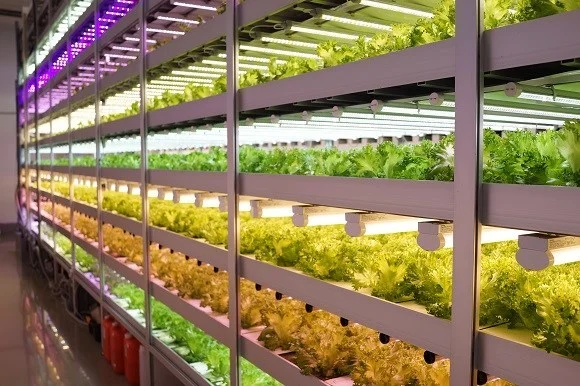
2019 Five-Day Introductory Training Course on Plant Factory With Artificial Lighting (PFAL)
By urbanagnews - July 8, 2019
September 23rd – 27th, 2019
In response to increasing global demands from indoor farmers, researchers and future entrepreneurs in the exciting emerging field of plant factory with artificial lighting (PFAL), also known as vertical farm, this coming September, Japan Plant Factory Association (JPFA) together with Chiba University will host again an intensive five-day introductory training course in English on PFAL.
Since 2010, JPFA and Chiba University have been organizing various in-depth and practical sessions, including introductory to advanced courses. This five-day introductory session in English, held September 23rd – September 27th, covers what you would need to know before or after starting PFAL business or research.
The sessions will be interactive academic and practical classes, covering topics such as structure and function of PFAL, environmental control, lighting, plant physiology, nutrient solutions, seedlings, recent new technologies toward next generation PFALs, and business case studies of commercial large-scale PFALs. In addition to lectures by academic professionals and PFAL representatives, optional excursions to some commercial PFALs on the last day of the course will be organized.
*The curriculm would be the same as the introductory course last year.
1. Objective and Goal
-To offer foundation for theory and experience-based practice, with a view to foster academic and industrial development toward next generation PFAL.
-To facilitate development and dissemination of technically and economically sustainable PFAL, through providing the firsthand technical and conceptual classes by broad-ranging professionals in practice from both academia and PFAL industry.
2. Target group: Who would attend?
Motivated current/potential indoor farmers who plan to start or just started PFAL business or research. They will gain understandings of elementary theory and practice of PFAL, basic knowledge of cultivation and operational management, and keys for business success, etc.
3. Lecturers and program
■Scheduled Lectures: Chiba University / JPFA:
T. Kozai, Y. Shinohara, T. Maruo, S. Tsukagoshi, N. Lu, M. Takagaki, T. Yamaguchi, O. Nunomura and E. Hayashi
Lecturers from the PFAL industry: Representatives from 808 Factory and others(K. Kai and K.Uraisami)
Read the complete article here.

California: Inconsistent Lettuce Production Elevating Market
The California lettuce deal has been a challenge lately as growers battle with varying weather conditions and the consequences related to this
The California lettuce deal has been a challenge lately as growers battle with varying weather conditions and the consequences related to this. Right now prices are high with volume not consistent enough to maintain any decent momentum. Growers say the situation is not likely to be resolved for a few more weeks at least.
"The market has been elevated for the past couple of weeks and looks set to continue for at least the next two to three weeks," observed Mark McBride of Coastline Family Farms. "It's all related to the extremely hot days we had in early to mid June, when we reached 105 degrees here in the Salinas Valley. In addition to it being hot during the day, overnight temperatures were also very warm. So all the lettuce that was harvested and is still being harvested has shown signs of stress."
Small and large sized lettuce
One of the side effects of the heat has been the reaction of the plants. Some have grown "large and wild", as McBride described, while others are producing smaller heads. This is having a direct impact on yields and one of the primary drivers of the market right now. It's also causing a few problems for processors that are sourcing lettuce for salad and other products.
"The heat dramatically affected the plants," McBride said. "Some responded by making smaller heads, while some became large and 'wild'. Neither of these lend themselves well to packing and it has disrupted the pounds per acre measure for some of the processors. Volume has been up and down, with some weeks producing a lot of volume while other weeks are very light."
Prices are high
As mentioned, lettuce prices are quite high at the moment and the expectation is for it to stay that way for a few more weeks. As with most regions in the United States, California has been subject to some unusual weather patterns this year, which has created a challenge for growers.
"Out of all the lettuces, iceberg has probably been the most affected by the variable weather, followed closely by Romaine and also Green Leaf lettuce," McBride shared. "Right now, prices for Green Leaf are between $22 - $26. Romaine is similar, between $24 - $26, and for Icebergs, market prices are between $34 - $37."
For more information:
Mark McBride
Coastline Family Farms
Ph: +1 (831) 755-1430
mark@coastlinefamilyfarms.com
www.coastlinefamilyfarms.com
Publication date: 7/15/2019
Author: Dennis Rettke
© FreshPlaza.com

CAN (AB): Large CubicFarm System Comes To Calgary
On June 29, 2019, CubicFarms signed an agreement for a large scale commercial CubicFarm system in the Calgary, AB area and received a deposit from the customer
On June 29, 2019, CubicFarms signed an agreement for a large scale commercial CubicFarm system in the Calgary, AB area and received a deposit from the customer.
“This agreement and deposit covers the Calgary region where this customer will be the exclusive CubicFarm licensee”, said Dave Dinesen, CEO, CubicFarm Systems Corp. “We are very excited to add another customer to a large Canadian metropolitan area as we continue to build out a national presence. CubicFarms is hopeful that by this winter there will be even more locally grown produce in Alberta from a CubicFarm, in addition to the farm presently operating in the Edmonton area”.
This agreement covers an order for delivery of the largest CubicFarm System to date.
In other news, CubicFarms also announced that the common shares of the company are scheduled to commence trading on TSX Venture Exchange as a Tier One Issuer on Tuesday July 9th, 2019 under the symbol “CUB”.
“The public listing of CubicFarm Systems Corp. shares is a significant milestone for our company and for all of our stakeholders,” said Dave Dinesen, CEO, CubicFarms. “We are tremendously grateful for the support we’ve received so far, and we’re equally excited about the potential growth for the company that we see ahead of us.”
For further information regarding the new listing of Cubic please refer to the Listing Application (Form 2B) dated June 25, 2019 of the company, which is available on SEDAR.
For more information:
CubicFarms
1-888-280-9076
info@cubicfarms.com
www.cubicfarms.com
Publication date: 7/15/2019
City Council Clears Path For Vertical Farm In Wilmington
Wilmington City Council on July 11 unanimously passed an amendment to the City Code that will allow Second Chances farm, LLC to open a vertical farm in Northeast Wilmington.
July 15, 2019
Wilmington City Council on July 11 unanimously passed an amendment to the City Code that will allow Second Chances farm, LLC to open a vertical farm in Northeast Wilmington.
The indoor farm will employ former state and federal inmates from Delaware and produce healthy vegetables for purchase within the community.
Mayor Mike Purzycki’s Office has scheduled a signing ceremony for the ordinance on Wednesday, July 17th at 10 a.m. in his office.
How Hydroponics Work
The amended code permits indoor commercial operations as a matter of right within M-1, C-5, W-1, W-2 and W-3 zoning districts.
In June, Second Chances entered into a Letter of Intent to purchase a 50,000-square-foot warehouse at 3030 Bowers Street. Founder Ajit George is aiming to open the facility this fall.

Power REIT Announces Acquisitions As Part of A New Investment Focus and Publishes Updated Investor Presentation
Power REIT is expanding its focus to include agricultural real estate with a focus on Controlled Environment Agriculture (“CEA”)
New Investment Focus on
Controlled Environment Agriculture (”CEA”)
New Focus For Acquisitions
Old Bethpage, NY, July 15, 2019, Power Reit (NYSE American: PW) is announcing an expanded focus for acquisitions. In addition to its existing high quality real estate related to transportation infrastructure and alternative energy, Power REIT is expanding its focus to include agricultural real estate with a focus on Controlled Environment Agriculture (“CEA”). CEA is an innovative method of growing plants that involves creating optimized growing environments for a given crop indoors. Power REIT intends to focus on CEA related real estate for growing food as well as cannabis.
Controlled Environment Agriculture
Power REIT believes agricultural production is ripe for technological transformation and that we are at the early stages of a boom in agricultural venture capital that, among other things, will shift food production for certain crops from traditional outdoor farms to CEA “food factories.” Since a significant portion of any given CEA enterprise is real estate, Power REIT sees an opportunity to participate in the trend towards indoor agriculture.
CEA facilities are generally greenhouses or industrial properties specifically designed to efficiently grow crops. Power REIT will primarily focus on greenhouses as opposed to other forms of indoor agriculture properties based on a thesis that for many crops, greenhouses should be the most cost competitive producer given the higher capital and operating costs associated with other indoor growing facilities that do not benefit from sunlight for their crops.
Controlled Environment Agriculture for Food Production
CEA for food production is widely adopted in parts of Europe and is becoming an increasingly competitive alternative to traditional farming for a variety of reasons. CEA caters to consumer desires for sustainable and locally grown products. Locally grown indoor produce will have a longer shelf life as the plants are healthier and also travel shorter distances thereby reducing food waste. In addition, a controlled environment produces high-quality pesticide free products that eliminates seasonality and provides highly predictable output that can be used to simplify the supply chain to the grocer’s shelf.
As the amount of productive farmland continues to decline, CEA can provide a sustainable and economic solution to feed our growing population. Climate change is having a negative impact on traditional farming and is making once rich areas for farming arid and inhospitable. Hydroponic growing use 95% less water and can grow more than twenty-times traditional farming in the same area. Simply put, CEA can lower the carbon footprint associated with our food supply.
Power REIT has an active pipeline of CEA projects it is pursuing.
Controlled Environment Agriculture for Cannabis
The legal cannabis industry in the United States is projected to hit $25 billion of revenue by the year 2025.
With the passage of the 2018 Farm Bill, the cultivation of hemp was legalized and regulated across the United States. Hemp is produced from the Cannabis Sativa strain and has properties that contain almost no THC, the federally illegal hallucinogenic compound found in marijuana. Hemp has many industrial uses including textiles, animal bedding and mulch. Hemp is also commonly used to produce CBD which is used in a variety of skincare and homeopathic products ranging from oils and moisturizers to sleep and relaxation aids.
Currently 34 states have legalized marijuana for medical purposes and 11 of those states have also legalized adult recreational use of marijuana. Many other states have decriminalized marijuana use even without formally changing laws and many remaining States continue to evaluate legalization. In addition, there is the potential for federal legalization across the United States at some point in the future given the momentum generated at the State level.
Power REIT is focused on investing in the cultivation and production side of the cannabis industry through the ownership of real estate. As such it is not directly in the cannabis business and also not even indirectly involved with facilities that sell cannabis directly to consumers. By serving as a landlord, Power REIT believes it can generate attractive risk adjusted returns related to the fast growing cannabis industry and that this offers a safer approach than investing directly in cannabis operating businesses.
Acquisition of greenhouse properties in Colorado for cultivation and processing of Cannabis
On July 15, 2019, through wholly owned subsidiaries, Power REIT is announcing that it has completed the acquisition of two greenhouse properties in southern Colorado. One property was acquired for $1,075,000 and is 2.11 acres and has an existing greenhouse and processing facility totaling 12,996 square feet. The other property was acquired for $695,000 and is 5.2 acres and has an existing greenhouse and processing facility totaling 5,616 square feet. The total combined purchase price of $1,770,000 plus acquisition expenses was paid with existing working capital.
Concurrent with the closing on the acquisitions we entered into leases with a tenant that is licensed for the production of medical marijuana at the facilities. The tenant is an affiliate of a company that is active in the Colorado cannabis market and currently has two indoor cultivation facilities and five dispensary locations. The tenant has also received a preliminary approval to operate a dispensary in the town where the properties are located. The leases require the tenant to maintain a medical marijuana license and operate in accordance with all Colorado and local regulations with respect to their operations and also prohibits the retail sale of its products from the properties.
The leases provide that tenant is responsible for paying all expenses related to the properties including maintenance expenses, insurance and taxes. The term of each of the Leases is 20 years and provides two options to extend for additional five-year periods. The Leases also have financial guarantees from affiliates of the tenant.
The rent for each of the leases is structured whereby after a six-month free-rent period, the rental payments provide a full return of invested capital over the next three years in equal monthly payments. After the 42nd month, rent is structured to provide a 12.5% return on the original invested capital amount which increases at a 3% rate per annum. At any time after year 6, the rent level will be readjusted down to an amount equal to a 9% return on the original invested capital amount and will increase at a 3% rate per annum based on a starting date of the start of year seven.
The combined straight-line annual rent will be approximately $331,000 although, as described above, the rental payments are accelerated such that we receive a full return of capital over the first 42 months of the lease. David Lesser, Power REIT’s Chairman and CEO, commented, “These acquisitions represent a starting point for our new focus on greenhouse based Controlled Environment Agriculture projects and will be immediately accretive to earnings. We have an active pipeline of potential acquisitions that we are pursuing. Given the small size of our company, we believe that we can deploy capital for real estate focused on Controlled Environment Agriculture on a highly accretive basis.”
Both properties have plans to expand the greenhouse growing and processing space and the leases provide that we have the right to fund such projects on comparable terms to the original leases. Mr. Lesser commented that “this creates the built-in ability for us to deploy additional capital on risk adjusted terms that should prove to be attractive and on a highly accretive basis.”
The greenhouse properties are located in a very favorable plant-growing environment that benefits from over 360 days of sunlight annually and offers a dry climate. In addition the local communities are supportive of cannabis growing facilities unlike places which are confronted with “not in my backyard” pressures. Both properties have been granted “use by right” authority from the county to grow cannabis which provides long-term stability to allow the facility to grow cannabis. In addition, both properties are located in an Opportunity Zone. Opportunity Zones were created by the Tax Cuts and Jobs Act of 2017 and provide a deferral of and potentially an elimination of capital gains related to qualified investments.
Updated Investor Presentation
On July 15, 2019, Power REIT is announcing that an updated version of its investor presentation is available on its website: www.pwreit.com
About Power REIT
Power REIT is a real estate investment trust that owns real estate related to infrastructure assets including properties for Controlled Environment Agriculture, Renewable Energy and Transportation. Power REIT is actively seeking to expand its real estate portfolio related to Controlled Environment Agriculture and Renewable Energy.
Cautionary Statement about Forward-Looking Statements
This document includes forward-looking statements within the meaning of the U.S. securities laws. Forward-looking statements are those that predict or describe future events or trends and that do not relate solely to historical matters. You can generally identify forward-looking statements as statements containing the words "believe," "expect," "will," "anticipate," "intend," "estimate," "project," "plan," "assume", "seek" or other similar expressions, or negatives of those expressions, although not all forward-looking statements contain these identifying words.
All statements contained in this document regarding our future strategy, future operations, future prospects, the future of our industries and results that might be obtained by pursuing management's current or future plans and objectives are forward-looking statements. You should not place undue reliance on any forward-looking statements because the matters they describe are subject to known and unknown risks, uncertainties and other unpredictable factors, many of which are beyond our control. Our forward-looking statements are based on the information currently available to us and speak only as of the date of the filing of this document.
Over time, our actual results, performance, financial condition or achievements may differ from the anticipated results, performance, financial condition or achievements that are expressed or implied by our forward-looking statements, and such differences may be significant and materially adverse to our security holders.
Contact:
David H. Lesser, Chairman & CEO
(212) 750-0371
301 Winding Road
Old Bethpage, NY 11804
212-750-0371