


Welcome to iGrow News, Your Source for the World of Indoor Vertical Farming

Breaking News: Europe Braces For Peak of A Record Heatwave
Europeans braced Thursday for the expected peak of a sweltering heatwave that has sent temperatures soaring above 40oCelsius (104 Fahrenheit), with schools in France closing and wildfires in Spain spinning out of control
Europeans braced Thursday for the expected peak of a sweltering heatwave that has sent temperatures soaring above 40oCelsius (104 Fahrenheit), with schools in France closing and wildfires in Spain spinning out of control.
Governments warned citizens to take extra precautions, with the high temperatures also causing a build-up of pollution, and emergency calls to hospitals increased. Exceptional for arriving so early in summer, the heatwave will on Thursday and Friday likely send thermometers above 40oC in France, Spain and Greece.
A forest fire in Torre del Espanol in Spain's northeastern Catalonia region raged out of control, devouring land despite the efforts of hundreds of firefighters who worked through the night.
French Health Minister Agnes Buzyn said people had to be prepared for the peak of the heatwave and expressed irritation that some appeared not to be taking the advice on board.
Possible all-time high
The average maximum temperature recorded Wednesday in France of 34.9oC was already a record for the month of June, said state weather forecaster Meteo France. Even higher temperatures are expected on Friday, where areas in the south could see peaks of 42 to 44oC.
Meteo France said France's all-time record could be broken; an August 12, 2003 reading of 44.1oC in Saint-Christol-les-Ales and Conqueyrac in the southern Gard region.
Source: phys.org
Publication date: 6/28/2019

Verdeat Is Launching A Kickstarter For Its Hydroponic Garden System For The Home
Poznań, Poland-based company Verdeat announced this week it will launch a Kickstarter campaign in July for its modular vertical farm meant to fit inside apartments, offices, and other non-commercial spaces.
June 26, 2019
Image via Verdeat.
Poznań, Poland-based company Verdeat announced this week it will launch a Kickstarter campaign in July for its modular vertical farm meant to fit inside apartments, offices, and other non-commercial spaces.
Like other indoor hydroponic grow systems, Verdeat is able to cultivate most plants without the use of soil, though unlike a lot of systems, the 35 cm cylindrical device will still accommodate soil in certain configurations. The modular trays that come with the device can be switched out based on what you’re trying to grow, whether seeds and sprouts, which get planted in a substrate (like coconut fiber), or a potted basil plant you nabbed at the grocery store.
The entire system is controlled by a smartphone app that takes the majority of the guesswork out of the growing process, from knowing how much water to give each type of plant to how to adjust the LEDs to produce the right amount of sun-like light. The user simply fills the grow tray, adds some nutrients, and starts the app, which, according to an email from Verdeat, can run the farm more or less autonomously, only requiring the user to add nutrients every one to three weeks depending on the plants. The company also claims that plants in the Verdeat system grow faster and ripen 40 percent sooner than traditionally grown herbs and vegetables. At the moment, Verdeat’s system can grow the usual selection of herbs and leafy greens found in most vertical farms, as well as strawberries, peppers, blueberries, and other fruits.
Once the Kickstarter campaign launches, backers will be able to choose from a small, medium, or large device, depending on their individual space requirements. Remember earlier this year when The Spoon looked at vertical farms that would fit into closet-sized apartments? Verdeat definitely fits that criteria. It’s also reminiscent of the self-watering, hydroponic farm-in-a-pillar Zooey Deschanel is currently selling via her startup Lettuce Grow, and of Seedo, whose self-contained, airtight farm looks like a mini fridge.
In fact, with the vertical farming market expected to be worth $9.96 billion by 2025, we’ll see many more of these at-home versions of the vertical farm surfacing alongside more industrial-sized, hyper-automated counterparts.
How Verdeat fares amid all this competition will depend largely on some factors the company hasn’t yet released, including the cost of each device unit, how widely available it will be (it’s manufactured in the EU), and how long backers will have to wait before they can actually get their hands on the device and start growing. If they get their hands on it: As we’ve seen with other crowdfunded hardware projects, there is always the possibility that the product might not make it to market as promised. But perhaps manufacturing right there in the EU, will make it easier for Verdeat to keep tabs on the process and avoid those pitfalls.
The Kickstarter campaign will launch at the very beginning of July.

The Hydroponic Threat to Organic Food
In the last 7 years there has been a quiet redefinition taking place in the USDA National Organic Program that oversees organic standards. Large scale industrial producers have insinuated themselves into organic certification to transform what the green and white label stands for
JUNE 26, 2019
by DAVE CHAPMAN
Real Organic Demonstration photo: linley_dixon.
In the last 7 years there has been a quiet redefinition taking place in the USDA National Organic Program that oversees organic standards. Large scale industrial producers have insinuated themselves into organic certification to transform what the green and white label stands for.
Original organic was based on a simple equation:
Healthy soil = healthy plants = healthy animals = healthy planet.
This equation leaves out the discussion of WHY these things are true, but it is a good roadmap for what organic agriculture is all about. The first given is always “healthy soil.” As we look deeper, we cannot study these parts separately, because plants and animals are integral parts of healthy soil system. No plants means no healthy soil. The same is true with animals. Soil and plants coevolved for 350 million years, and neither can be healthy in isolation from the other. The dance between plants, microbial life, and animal life in the soil is necessary for all.
Western soil science got started with the work of Justus von Liebig (1803-1873). From Liebig’s perspective, soil was a passive storage bin for plant nutrients. However, in Charles Darwin’s 1881 book The Formation of Vegetable Mould through the Action of Worms, these ideas were challenged by a vision of the soil as a living ecosystem. But Liebig’s viewpoint dominated Western soil science until the 1980’s when the role of organisms in soil formation became better understood. Liebig himself even turned away from his “storage bin” paradigm in the later part of his life, but our agricultural sciences continued to follow his earlier writings.
If we take away plants, soil can no longer be living. Plants provide the energy via photosynthesis for all animal and microbial life in the soil. These photosynthates are provided first as root exudates that feed the fungi and bacteria in exchange for which they gain the minerals that in turn feed the plants. The visible life forms are as important as the invisible microbial community. Soil animals go from burrowing woodchucks and gophers to snails, slugs and elongate animals such as earthworms, flatworms, nematodes, soil mites, springtails, ants, termites, beetles and flies. All of these species together create a community that is often called the soil food web.
Organic farming is based on protecting and enhancing this web of life. By cultivating the diversity of life, we create a stable ecosystem in the soil. Diseases or pestilence are symptoms of a loss of balance. So the organic farmer’s first job is to enhance the diversity of life in the soil community. This is done by providing materials and techniques to help build a soil carbon sponge.
Conventional agriculture is based on a very different strategy of control and simplification. By making systems that are as simple as possible, it becomes easy to control the inputs and outputs. The inputs are processed offsite to provide plant available nutrients. “Soil” becomes a device for holding roots. It is thus easier to make these systems replicable, much like the model of a McDonald’s restaurant. McDonald’s simplifies their systems as much as possible to serve the same hamburger to every customer around the world. In such a system the expertise is contained in the corporate staff who design the processes and provides the raw materials. The problem is a loss of nutrition in the final product. McDonald’s serves lots of calories that soothe customers’ cravings, but they fail at providing a healthy diet. The end result is the phenomena of customers who are simultaneously malnourished and obese.
Similarly, in a conventional agriculture system, the yields are high per acre, but, as Vandana Shiva has said, the yield of health per acre is low. As it turns out, we are part of that co-evolution of soil and plants and animals. Human nutritional needs are complex and beyond our full understanding at this point. But organic farmers believe that by embracing those natural systems, we can feed ourselves well, even if we never fully understand why.
As Einstein once said, there is a simplicity that comes before complexity that is worthless, but there is a simplicity beyond complexity that is priceless.
These simplified conventional systems have been promoted by an industry that profits by selling remedies to the unintended consequences of such crude simplicity. Their high yields are unsustainable without the liberal use of poisons. Plants grown in a soil devoid of biological complexity are very vulnerable to disease and insect attack. And of course, the more we use such poisons, the less healthy the soil becomes, so more pesticides are needed, and on and on.
In livestock production, the epitome of conventional agriculture is a Concentrated Animal Feeding Operation (CAFO) where animals are isolated from the land. Their food is grown far from where they live, so their manure is lost to the production system. There is no honoring of Albert Howard’s Law Of Return.
In vegetables and berries, the epitome of conventional agriculture is hydroponic production. Hydroponics is a system that relies entirely upon processed inputs to feed the plants. The old organic adage is, “Feed the soil, not the plant.” The guiding principle of conventional agriculture is: “Feed the plant, not the soil.” Obviously, hydroponic production is the most extreme example of this philosophy.
The practices of organic farming are ancient, but not all traditional farming systems could be called organic by the definition of such pioneers as Albert Howard. Some traditional agriculture was not sustainable and ultimately led to the downfall of civilizations. But organic principles have been practiced in the intensive farming of southeast Asia for over 4000 years. They were learned by Howard in India and subsequently taught in the West. Since then, soil science has confirmed Howard’s ideas to an astonishing degree. Every day we learn more and more about how soil communities function and about why such a system need not depend on pesticides to thrive. Every day we learn more about the connections between the soil microbiome and our own microbiome.
From this logic we derive a conclusion that is important to remember: that the absence of pesticides in a successful organic system is the result of how we farm, not the definition of it.
The organic movement has long believed that food grown in a healthy soil is the foundation of human health. In recent years it has become clear that agriculture is also deeply involved in the climate crisis, both as the problem and as the solution. Conventional agriculture contributes directly to the destruction of the living soil, leading to the spread of deserts and the warming of the planet. We have the skills and understanding to farm without chemicals in a way that will build a soil carbon sponge that can cool our warming planet. Our impediment to achieving this is social and political, not technical.
The inclusion of hydroponics in organic certification is thus not an example of innovation and improvement. It is an example of conquest and colonization. It is simply a hostile takeover of organic by economic forces. It has been widely resisted by the organic community, but the USDA continues to embrace hydroponics as organic just as they embrace CAFOs as organic. Their redefinition of organic is in opposition to the law and to international norms. The US once again becomes the rogue nation throwing away our mutual future so somebody can make a buck.
At this time, huge quantities of hydroponic berries, tomatoes, peppers, cucumbers, and greens are being marketed as “Certified Organic” in partnership with the USDA. And there is no way of identifying what is hydroponic in the organic label.
The Real Organic Project was created to challenge this process. Our efforts include the creation of an add-on label so that real organic farmers and eaters might be able to find one another in a deceptive marketplace.
To learn more, please visit us at realorganicproject.org.
This essay originally appeared on Independent Science News.
More articles by:DAVE CHAPMAN

Five Intriguing Questions With Wanjun Gao, CEO Of BiFarm
What would you do if you could control all the variables of precision growing and control all the things that possibly could go wrong directly on an app, anywhere in the world?
June 26, 2019
Warren Bobrow Contributor
I work with cannabis and have done some wild things in life. cocktailwhisperer.com
Precision Growing in an App | BIFARM
I'm lucky to have a green thumb. Give me some seed or a cutting or just about anything and I can grow it. This was probably caused from my growing up on a Biodynamic farm belonging to my family in New Jersey. However, most people have black thumbs. They plant something in the earth and it just shrivels and dies no matter what they do. They can't understand why the plant died, it just stopped being happy, then it turned to brown and said, without much fanfare, good-bye.
What would you do if you could control all the variables of precision growing and control all the things that possibly could go wrong directly on an app, anywhere in the world?
BiFarm is similar to the concept of Seedo and Leaf except neither of them are available commercially.
BiFarm is the only precision controlled high pressure aeroponics system. Most of the home systems are hydroponics.
BiFarm doesn’t provide lights, casing or air filtering, because growers might already have them, and the selection is geared towards what lights to select, as an example.
BiFarm's system is designed for aeroponics working conditions, which is dependant on precision nutrient delivery, and root area temperature stability. But aeroponics works way better if conditions are right.
Other than home use, BiFarm is perfect for R&D purpose, for schools, labs and seed companies. They need tools to repeated testing on different input.
For example, Cornell university’s agritech center likes BiFarm's AeroKit, and we are working on presenting them a solution similar to 'co-location' project. That will enable them to test out generic change testing.
Enter Wanjun Gao, the intrepid CEO of BiFarm
Warren Bobrow=WB: Where are you from? When did you discover cannabis? Where are you producing your product now?
Wanjun Gao=WG: I originally came from China; however, I have been living in Florida for the most of my adult life. BiFarm's activities of research, design, development, and user experience trial are conducted here in the United States. While exploring the sourcing partners around world, we currently work with our suppliers and manufacturers in China for prototyping and initial production for AeroXPS.
WB: Tell me about your company? Why Cannabis instead of practicing law or say, becoming a surgeon? What is your passion?
WG: BiFarm is a technology company. We develop agricultural technologies and provide soil-less solutions that maximize harvest quality and yields. Our focus is precision aeroponics with automated control. We believe precision-controlled cultivation leads to consistent, reliable, and repeatable results. Imagine if we can have agricultural freedom in environments that are traditionally hard to cultivate in: the dry deserts of Middle-east or cold winters of northern Europe and Canada. In our bigger picture, our goal is to improve the future of agriculture for generations to come.
Bifarm's technologies can grow various plants. For example, university agri-tech center and USDA lab purchased BiFarm’s precision aeroponics equipment as genetics research tools for plants like the apple tree. In a sense, BiFarm's equipment is like an iPhone, and users can utilize different apps to grow different plants. If we look back at BiFarm's origin, it is an accidental business. It started with the problem of my inability to keep indoor plants alive for long, and I took it upon myself to automate the gardening tasks. Before long, I had enthusiastic teammates join me. My passion is to create and make things work. It is quite a sense of accomplishment when I see things that I put together, work.
WB: Do you cook? If so, who taught you? What’s your favorite food? What is your favorite local restaurant? Why?
WG: Well, I guess "cook" is a subjective term. I think I can cook. I learned by trial-and-error, like most people. When it comes to food, I don't discriminate. I like it all, as long as it is of good quality.
WB: What is your six-month plan, one year? What is your inspiration for the future?
WG: With the release of the AeroXPS we are now focusing on scaling the technology for commercial facilities. There are two goals:
1. One is to provide clusters of individually controllable habitats powered by AeroXPS grow systems that are ideal for genetic research labs and small cultivation facilities. The habitat environment can be recreated and repeated with the exact settings for benchmark testing.
2. Another one goal is scale up the grow system to be more efficient for the yields & costs and streamline indoor cultivation activities. In other words, we want to make the facilities the farms of future.
WB: If you could be anywhere in the world right now, where would that be? Doing what? With whom?

The Urban Farm With A Global Growth Plan
BY EUGENIO FELICE
Tuesday 18th June 2019, London
Reckoned To Be Europe's Largest, Most Advanced Vertical Farming Site,
Italy's Planet Farms Could Soon Appear Elsewhere
Luca Travaglini pictured at Planet Farms' Milan-based laboratory
Produce more food, of better quality, using fewer resources. Luca Travaglini and Daniele Benatoff’s message to the Triennale exhibition in Milan was crystal clear: their start-up company Planet Farms is planning to build Europe’s largest and most advanced vertical farm, then establish similar projects in other countries around the world.
Work on the new centre begins this month and is due for completion in spring 2020. Located in Cavenago, halfway between Milan and Bergamo, the farm will eventually extend across 9,000m2 and supply 40,000 packs of produce per day. Inside, an innovative growing process from seed to packaged product is set to turn out zero-residue fresh produce that will impress in terms of their taste, long shelf-life and high level of sustainability.
“Vertical farming is to agriculture what Formula 1 is to cars,” say Travaglini, an apt description given the centre is just a few minutes’ drive from Monza’s world-famous race track. Planet Farms will employ state-of-the-art technology to grow babyleaf salads, basil and other aromatic herbs in a completely controlled environment situated right at the point of sale, 365 days a year. A capillary system of sensors allows the entire production process to be monitored constantly and, because the entire process is automated, Planet Farms says the consumer will be the first to touch what is a completely fresh product. Each plant will grow from a traditional seed in pure air and water, without the need for pesticides, with water usage minimised.
The new structure could be just the start as far as Planet Farms’ ambitious global development and growth plan is concerned. In fact, it aims to make Lombardy a vertical farming capital by exporting its model throughout the world, as co-founder Benatoff confirms: “The Cavenago plant represents the starting point on a path that will take us all over the world, a project that speaks Italian and that will soon see new concrete applications both in Italy and abroad.”
An architect's rendering of how the new vertical farm will look
As with any F1 team, lots of other specialists are involved behind the scenes, including architect Studio Dordoni, lighting provider Signify, Travaglini FarmTech, WoodBeton, Sirti, 255, Repower and Netafim. Travaglini, which has years of experience in food production, is helping to plan and construct the farm’s air conditioning systems – with a focus on energy efficiency – and its clean packing rooms, where the aim is to minimise the risk of contamination from outside. Philips spin-off Signify, meanwhile, previously worked with Planet Farms on its research laboratory and is supplying Dynamic Philips GreenPower LEDs that can be fine-tuned to every type of vegetable.
“From 2020, the Cavenago facility will produce 800 tonnes of salads and aromatic herbs a year, which is equal to 40,000 packs per day,” comments Luca Travaglini. “The process, which is completely automated and checked, goes all the way from seed to end product. Air, water, light and soil, these are all variables that can be controlled: we will be the first to use clean rooms to control the air; the water will be sterilised and integrated only with mineral salts, plus we will use 97 per cent less compared with traditional agriculture; the lighting will be high-efficiency LEDs that use only the spectrum of light needed by the plant; and the soil will be substituted by organic substrates designed specifically for each crop.”
The advantages of such a system are clear, Travaglini adds. No longer constrained by weather conditions in the outside world, Planet Farms can in theory grow any product wherever there is consumer demand. “We can even rediscover ancient flavours using seeds that can no longer be used in traditional agriculture,” he suggests. “A few hours after packing, we will deliver a product that is healthy because it is rich in vitamins and antioxidants, and free of pesticides that scare today's consumer. It will also be a taste explosion, which is the paradox of vertical farming: we are rediscovering the real flavours that we no longer find in our dishes. For us, this was the primary goal and our biggest challenge.”
The result, it would seem, is that the end consumer will be the first to touch that chemical-free, crunchy, tasty salad, without needing to wash it before eating. But for Travaglini, vertical farming should not be seen as a replacement for older methods of production. “Our research and innovations can then be transferred to traditional agriculture,” he says. “We cannot and do not intend to replace it.”
High-efficiency Philips lighting will be used in the centre's clean rooms
This article is translated from the original Italian article, which can be found on the Fruitbook Magazine website.

Hamilton’s Large Indoor Growing Operation is So Advanced They Want it Around The World
By: Eric Schwartzberg, Staff Writer
80 Acres Farms is taking steps to broaden the reach of the state-of-the-art vertical farming operation it already employs in Cincinnati and Hamilton.
The company this week launched Infinite Acres, an independent joint venture aimed at providing large-scale indoor farming facilities worldwide.
The venture also includes UK-based online grocery retailer Ocado Group and Netherlands-based Priva Holding BV, a leading provider of technology solutions, services and automation systems to horticultural and other industries.
Infinite Acres will use 80 Acres Farms’ technology-assisted vertical farming techniques to grow clean, pesticide-free vegetables, leafy greens and fruits near population centers throughout the world. That includes places where year-round nutritious produce is in short supply because of adverse climate and growing conditions or locations where food must be transported “considerably long distances.”
The partnership will utilize Ocado’s predictive analytics, automation and comprehensive system development and its Ocado Solutions division’s cutting-edge software and hardware systems, robotics and artificial intelligence.
It also will use Priva and 80 Acres Farms’ “extensive horticulture, engineering, operational and food industry expertise,” according to Mike Zelkind, CEO of 80 Acres Farms.
The Infinite Acres venture is “an amazing combination of best-of-breed companies,” that will provide customers state-of-the-art facilities with “uniquely developed” crop recipes, yield guarantees, product packaging, branding, marketing and distribution, Zelkind said.
Luke Jensen, CEO of Ocado Solutions, told this news outlet Wednesday that vertical farming is “a very exciting area within farming” because it’s a way of growing that is “ecologically incredibly efficient compared with traditional farming in terms of use of water and use of energy.”
“It involves no pesticides, fungicides … so it’s an absolutely great way of growing fruit and (vegetables),” Jensen said.
The joint venture will help grow a model aimed at delivering to the marketplace produce harvested minutes before an order.
“That’s why it’s an area that’s of interest to us, both because our technologies are relevant and because ultimately it could be relevant to the customer proposition, but that’s not an immediate preoccupation,” Jensen said. “It’s part of our vision for the long terms.”
The collaborative venture will have “a considerable impact” on the profitability and competitiveness of food service industry customers everywhere — from growers and distributors to retailers and governments, according to Tisha Livingston, CEO of Infinite Acres.

The EPA Continues To Defy The Science and Deny Glyphosate's Carcinogenic Threat
Now is the time to make your voice heard. The Environmental Protection Agency (EPA) is asking for public comment on its preliminary decision to renew the approval of the herbicide glyphosate, best known as the active ingredient in Monsanto’s Roundup.
Glyphosate is bad news for people and nature. The World Health Organization’s cancer authorities have found that glyphosate is a probable human carcinogen. Their determination is supported by the medical science community, but EPA continues to defy the science and deny glyphosate’s carcinogenic threat.
Tell EPA: Don’t approve glyphosate! Listen to scientists, not Monsanto!
Juries have already found Roundup use implicated in the cancers of four plaintiffs who sued the company. We must stop further suffering from this hazardous herbicide!
And glyphosate also threatens the natural world. 300 million pounds of the herbicide are sprayed every year in the U.S. alone. Glyphosate has played a key role in the disastrous decline of monarch butterflies by virtually eliminating the monarch’s milkweed host plant in corn and soybean fields sprayed with it. And Roundup formulations are also extremely toxic to frogs, and may be contributing to the worldwide decline in amphibian populations.
To make matters worse, EPA is proposing to renew glyphosate before having completed critical elements of its assessment, including its impacts on threatened and endangered species and pollinators! This will effectively deny the public input on these critical issues.
Thank you for standing with us,
Center for Food Safety team
Connect With Us
CFS welcomes your questions and comments.
Please contact us at office@centerforfoodsafety.org, or at one of our offices.
Washington, D.C. Office
660 Pennsylvania Ave, SE, #402
Washington, DC 20003
phone (202) 547-9359 | fax (202) 547-9429
www.centerforfoodsafety.org
CONTRIBUTE

Most Efficient Leafy Greens Farm In The World Delivers Absolute Control And Precision For New Standards of Delicious And Clean Eating
Plenty , the vertical farming company that puts flavor first, today debuted its new farm, Tigris, designed for the best possible flavor while producing with extreme efficiency and cleanliness
SOUTH SAN FRANCISCO, Calif., June 20, 2019 /PRNewswire/ -- Plenty , the vertical farming company that puts flavor first, today debuted its new farm, Tigris, designed for the best possible flavor while producing with extreme efficiency and cleanliness. Tigris exerts absolute control over variables like climate and light, while using less than one percent of the land and less than five percent of the water compared to an outdoor farm.
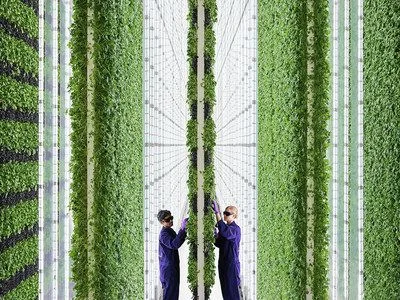

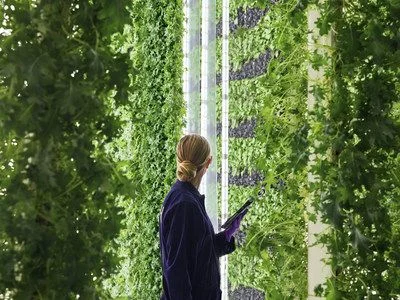
Photo Credit: Spencer Lowell (Photographer)
"Plenty is on a mission to change the way we eat by growing produce with craveable flavor while increasing availability to a world that long ago ran out of additional fruit and vegetable farmland," said Matt Barnard, CEO and co-founder of Plenty. "The globe can grow only one-third of the fruits and vegetables required to provide people with a healthy diet,1and those fruits and vegetables are largely available only to the affluent or people who live near a Mediterranean climate. A farm like Tigris has the potential to improve human and planetary health, and that's exactly why Plenty is here."
With Tigris and future farms, Plenty can not only create an environment that nurtures the perfect flavor in a crop, it can choose crops that have never been grown for grocery stores, due to the whims of climate or seasonality or the many food miles that fruits and vegetables travel today.
"There are 70,000 edible fruit and vegetable varieties in the world, and because of the challenges of growing outdoors and putting food on trucks, we've been relegated to eat the few dozen that we find at the grocery store," said Nate Storey, chief science officer and co-founder of Plenty. "Plenty has unlocked a future where people across the globe, regardless of income or geography, can experience the joy of incredible, nourishing fruits and vegetables."
Tigris is currently being commissioned and will then undergo a facility-level food safety certification pursuant to internationally-recognized third party standards, guaranteeing that it meets and exceeds the highest levels of cleanliness and safety for its produce. Plenty is available in the Bay Area today online through Good Eggs and in-person at numerous neighborhood markets, and the greens from Tigris will be widely available later this year. For more information, people can visit Plenty online .
Contact:
Christina Ra, press@plenty.ag
1 https://journals.plos.org/plosone/article?id=10.1371/journal.pone.0205683
BREAKING: I’m At The EPA Right Now - Join Us In Demanding A Ban on Monsanto’s Roundup Weedkiller!
First, please submit your comments to the EPA before midnight on Friday, July 5. Demand that the EPA heed the World Health Organization’s International Agency for Research on Cancer determination that glyphosate is a “probable human carcinogen.”
Dear Supporter,
I’m here at the U.S. Environmental Protection Agency (EPA) with our allies to deliver the petition signatures we’ve collected so far demanding that the EPA end the use of glyphosate-based herbicides. (Live video here.)
Even if you’re not here with us, you can help!
First, please submit your comments to the EPA before midnight on Friday, July 5. Demand that the EPA heed the World Health Organization’s International Agency for Research on Cancer determination that glyphosate is a “probable human carcinogen.”
Next, sign this petition asking Congress to ban Monsanto-Bayer’s cancer-causing Roundup weedkiller.
TAKE ACTION
There are members of Congress who are ready to join us in pressuring the EPA to conduct an unbiased, scientific review of the evidence that Roundup causes non-Hodgkin lymphoma.
We’ve even heard from some of them that they would consider introducing a bill to ban glyphosate--if they heard from enough of their constituents!
When we learned that members of Congress were considering introducing a bill to ban glyphosate, we decided to postpone our Storm the EPA action until the legislation is introduced. This way, we can coordinate our Storm the EPA action with a lobby day in support of the new bill—and give ourselves time to raise the money needed to make these events a success.
Our plan is to gather Roundup-exposed cancer victims, top-level scientists with the latest research on the pesticide’s harm, successful farmers and ranchers who are living proof that we don’t need Roundup weedkiller to grow food and local leaders who have banned Roundup from their cities.
Our first events will be in Washington, D.C. But then we’ll take the campaign to ban Roundup to St. Louis in October for teach-ins and rallies timed with the next Monsanto trials and World Food Day, the tenth anniversary of the first Global Day of Action against Monsanto.
We can’t do this without you!
1. Tell the EPA: Ban glyphosate! If you haven’t already, please submit your comment to the EPA in addition to signing our petition. Tell the EPA why glyphosate should be banned. Be sure to include your personal story, especially if you or someone you know has cancer or another illness due to exposure to Monsanto-Bayer’s glyphosate-based herbicides. You can attach photos to your submission.
2. Tell Congress: Tell Congress to ban Monsanto/Bayer’s cancer-causing Roundup weedkiller! Your Member of Congress might consider introducing a bill to ban Roundup. All they need is a little encouragement from you!
3. Donate to help us cover the costs of organizing impactful, educational and visually interesting events that bring together Roundup-exposed cancer victims, top-level scientists, successful organic farmers, and local leaders who have banned Roundup, in Washington and St. Louis.
TAKE ACTION
Thank you!
Alexis, for the OCA team.
P.S. To help support this, and other campaigns, please consider making a donation to OCA. Nearly 80 percent of our support comes in the form of small donations from individual donors. Thank you!

LEDs and LED Systems For Horticultural Growth - Horticultural Seminars
University of Lincoln - Tuesday 2nd July 2019
Rothamsted Conference Centre - Tuesday 3rd September 2019
University of Bristol - Thursday 12th September 2019
Join OSRAM Opto Semiconductors, world leaders in LED technology for horticultural and agricultural applications, with Intelligent Horticultural Solutions (IHS), their UK Systems Integration Partner, for a free one-day seminar. We will discuss all the latest Horticultural LED technological advancements and introduce new ranges of Horticultural products for growers and researchers.
IHS was formed to help support the development and manufacture of products in the fast-moving exciting area of horticultural LED lighting, bringing together years of experience and key horticultural LED and optic manufacturers to enable a perfect solution.
There will also be the chance for one-to-one discussions with OSRAM and IHS engineers to discuss any LED technology or product requirements that you may have, whilst networking with key players from the Industry, with hands-on demonstrations of new and existing products. There may also be an opportunity to visit horticultural areas within the venue.
REGISTER ONLINE www.i-hled.co.uk/seminar-registration
HORTICULTURAL SOLUTIONS
40-foot Shipping Container Farm Can Grow 5 Acres of Food With 97% Less Water
The 40-foot containers house hydroponic farms that only draw on five to 20 gallons of water each day to grow produce like lettuce, strawberries, or kale
by Lacy Cooke
Communities that have to ship in fresh food from far away could start getting local produce right from their parking lots or warehouses thanks to Local Roots‘ shipping container farms. The 40-foot containers house hydroponic farms that only draw on five to 20 gallons of water each day to grow produce like lettuce, strawberries, or kale. Popping up all around the United States, these scalable farms “grow far more produce than any other indoor farming solution on the market” according to co-founder Dan Kuenzi. Local Roots is even talking with SpaceX about using their farms in space.
Local Roots’ 40-foot shipping container farms, called TerraFarms, grow produce twice as fast as a traditional farm, all while using 97 percent less water and zero pesticides or herbicides. They can grow as much food as could be grown on three to five acres. They’re able to do this thanks to LED lights tuned to specific wavelengths and intensities, and sensor systems monitoring water, nutrient, and atmospheric conditions.
Related: Pop-up shipping container farm puts a full acre of lettuce in your backyard
The process from setup to first harvest takes only around four weeks. TerraFarms can be stacked and connected to the local grid. CEO Eric Ellestad said in a video 30 million Americans live in food deserts, and their farms could be placed right in communities that most need the food.
Los Angeles is already home to a farm with several shipping containers, and a similar one will be coming to Maryland this year. It could offer local food like strawberries in January.
And Local Roots’ technology could one day allow astronauts to consume fresh produce in space. Their growing systems could offer a food source on long-term, deep space missions. Ellestad told The Washington Post, “The opportunities are global and intergalactic at the same time.”
Images via Local Roots Facebook
Agriculture, carousel showcase, Eat & Drink, Gardening and Plants, News
Organics Clean Up
With “clean eating” gaining momentum as part of the food culture, organic produce provides an easy solution for health-conscious consumers
These fruits and veggies fit right in with “clean eating” movement
By Janice M. Kresin
With “clean eating” gaining momentum as part of the food culture, organic produce provides an easy solution for health-conscious consumers. In fact, 90% of total organic fruit and vegetable sales in 2017—to the tune of $16.5 billion—came from fresh produce sales, according to the Organic Trade Association’s 2018 Organic Industry Survey. Fresh Trends 2019 found that 60% of shoppers said they opted for organics because they wanted to avoid chemicals in their food.
While each person has his or her own motivation for buying organic produce, most people do it to feel good about what they’re putting into their bodies, as the “clean eating” movement suggests. Nearly half of buyers in Fresh Trends 2019 (48%) indicated that “nutrient content/ personal health” was a reason they selected organic produce (although there’s no evidence that organics have more nutrients than conventionally grown product). Roughly a third of shoppers (34%) said they felt an environmental responsibility to buy organics.
Shoppers are motivated by a couple of main factors when it comes to buying organics. Consumers said the No. 1 thing they considered was price—they weighed whether the extra cost for organic was worth the advantage to their health. More than half of consumers (57%) said they would buy organic product if price was no object. Of course, shoppers buy with their eyes too. Thirty-seven percent of shoppers said they picked organic because it looked fresher, cleaner or more ripe than conventionally grown produce.
Buyers want to know where to find organics. Nearly two-thirds of consumers (65%) said they preferred
that organics be displayed in their own section within the produce department, not interspersed among commodities. Consider promoting “clean eating” on signs in the produce department or in newspaper and online ads to draw shoppers to this category. Shoppers were most likely to source organic fruits and vegetables at their regional supermarket or a specialty market like
Trader Joe’s or Whole Foods (24% said so). One-fifth of buyers said they picked up organic produce at a chain discount store like Walmart or Target.
Quite a few of those who opt for organic product are pretty heavily invested in it—31% of buyers estimated that 25%-50% of their produce purchases were organic.
Organic standouts
Some devoted organic fans shop all organic, all the
time. These consumers tend to fall into a few select demographic groups, typically those age 18-39 and those in the top income bracket. Often families with kids were among the most likely to shop exclusively for organic as well, but it depended on the commodity, and there were variances given exact family size.
Kale topped the list as the item that shoppers always bought as organic, followed by specialty mushrooms and blackberries. Blackberries saw the most year-to-year growth when it came to always-organic purchases, up six percentage points from last year. Raspberries and apricots followed close behind.
Asian pears saw the largest decline from last year based on the likelihood of an exclusively organic purchase— down 14 percentage points—but this fruit was one of
the least-purchased overall, so a small sample size likely affected this outcome. Cranberries and eggplant also saw significant dips in the likelihood of shoppers buying them as organic every time they purchased those items.
Many shoppers dabble in organic purchases, even if they’re not committed enough to always buy organic. Consumers were the most likely to buy kale as organic at least some of the time (it topped the list for periodic organic purchases last year, too).
Apricots showed the most year-to-year growth for periodic organic purchases (up 12 percentage points from last year). However, this fuzzy fruit was one of the least purchased overall, so with a small sample size this growth may not be truly representative. More shoppers bought organic honeydew at least some of the time over the past 12 months too, as the likelihood of a melon purchase increased nine percentage points from Fresh Trends 2018.
Blueberries saw the largest drop in the likelihood of a periodic organic purchase, followed by Asian pears and spinach.
Getting shoppers to opt for an organic purchase is not always easy, however. Onions, cantaloupe and bell peppers were the top items that shoppers never bought as organic, with at least seven in 10 buyers of these items saying they always bought these vegetables as conventionally grown.

Investors' Growing Interest In Vertical Farms
These kitchen gardens are increasingly
interesting for retailers and investors alike.
These systems could indeed solve several problems.
Starting with the challenge of feeding 9 billion people by 2050 while
preserving the planet.
One of the advantages of vertical farms is that they no longer exploit farmland, which is already over-stretched in the current food system. Daniel LEAL-OLIVAS / AFP
By Helene Gully
June 6, 2019
With 100 million dollars raised during a new fundraising, the German start-up Infarm will be able to continue its conquest of major cities. Young sprout specializing in vertical farms, Infarm offers its customers the rental of kitchen gardens to enjoy fresh produce all year round.
As a result, the German nugget raised a total of $ 134 million, including a European grant of $ 2.5 million. Its portfolio already has dozens of clients, including 25 retailers such as Casino, Intermarché, but also Metro and Amazon Fresh in Europe. This makes Infarm one of the prodigious children of this emerging and growing industry.
The principle of vertical farms is to grow plants indoors, without using pesticides and consuming as little water as possible - in general, they use 95% less water than their conventional counterparts. At Infarm, for example, the earth is replaced by coconut fiber, immersed in water saturated with nutrients and mineral salts, and the sun with LED lighting.
Multiplication of investments
These systems are attracting increasing interest from investors since they could solve several problems. Starting with the challenge of feeding 9 billion people by 2050 while preserving the planet. One of the advantages of vertical farms is that they no longer exploit farmland, which is already over-stretched in the current food system. But also to be able to cultivate locally and market fresh produce.
"With this technology, we can grow in different places, creating and maintaining an ideal environment for any plant to grow," Osnat Michaeli, one of Infarm's founders, told Echoes. last November. And these indoor farms can be installed anywhere in the city, an invaluable asset at a time when in all major cities, space is becoming scarce.
The Farm.one start-up cultivates its plants in a New York winery
InFarm is of course not the only one to have positioned itself on the sector. This week, the British online retail chain Ocado, which delivers Marks & Spencer products, among others, took a majority share of 58% in "Jones Foods", the largest vertical farm in Europe. The ambition: to provide fresh products to its customers in less than an hour.
On the other side of the Atlantic, the young Californian nugget, Plenty, raised $ 200 million during a roundtable led by SoftBank. Another start-up, Bowery Farming, was able to seduce Google's parent company, Alphabet, and Uber Dara Khosrowshahi's boss, who injected $ 90 million into his business.
Hélène Gully

France: Carrefour Inaugurates A New Urban Farm On The Boulevard de Charonne In Paris
It was at 103-105 boulevard de Charonne in the 11th arrondissement of Paris that the Carrefour Group’s second urban farm was installed
It was at 103-105 boulevard de Charonne in the 11th arrondissement of Paris that the Carrefour Group’s second urban farm was installed.
The 800 M2 store run by Cédric Lobo was opened in August 2018. The store was created on the site of a former biscuit factory. As part of a partnership of the Carrefour group with the start-up Agripolis, the terraces (300 M2) of the store were developed by Agripolis. T
The company headed by Pascal Hardy is specialized in the transformation of roofs or flat surfaces into an urban farm. On the terrace of the Boulevard de Charonne store, two techniques were favoured to grow about fifty varieties of fruits and vegetables.
The first, hydroponics, allows tomatoes to grow on a substrate – in this case, glass wool – and in a closed hydraulic system. The second, the aeroplane, used for leaves (salads, spinach, aromatic, strawberries …) favours a column system. The roots develop in the open air column.
Since last week, the first strawberries grown on the terrace of the store are offered for sale at a price of € 3.90 for a tray of 250 grams. “All our trays left very quickly. Our clients followed the progress of our project on social networks. The promise of these strawberries is clear: they are grown without pesticides and are picked at maturity because they are not transported, “enthuses Cédric Lobo.
The production of strawberries but also salads, herbs, tomatoes, aubergines, peppers are maintained by Camille, a young market gardener from Agripolis who, in close collaboration with the head of the store’s fruit and vegetable department, takes care of the harvest.
In a few weeks, Cédric Lobo has the project to open the terrace of the store to customers to show them closely how these fruits and vegetables are grown. “By next year, we hope to grow melons,” says the store manager. From one day to another, production exposed to climatic hazards can vary. “This is the main difficulty, but as long as you explain it, customers are ready to accept it,” says Cédric Lobo.
Source: lsa-conso.fr

BREAKING NEWS: Keurig Dr Pepper Withdraws Peñafiel Bottled Water From US For High Arsenic Levels
Keurig Dr Pepper announced it was withdrawing Peñafiel spring water products from the U.S. market because sampling by an independent lab found they contained arsenic levels higher than the 10 parts per billion allowed by the FDA. The company did not say how high the levels were.
AUTHOR Cathy Siegner
June 24, 2019
Keurig Dr Pepper announced it was withdrawing Peñafiel spring water products from the U.S. market because sampling by an independent lab found they contained arsenic levels higher than the 10 parts per billion allowed by the FDA. The company did not say how high the levels were.
All unflavored Peñafiel mineral spring water products in PET bottles, which are imported from Mexico, are being pulled back. Keurig Dr Pepper said it had notified retailers, including Walmart, Target and others. Consumers can return products to retailers for a full refund.
The company noted arsenic is found in nature, including in aquifers where mineral water is sourced, and that levels can vary over time. It also said enhanced filtration systems had been installed at its facilities where Peñafiel is produced, and "the product now being produced is well within regulatory guidelines.":
Problematic arsenic levels in Peñafiel spring water became public several months ago. According to a recent Consumer Reports investigation, this brand and five others tested at 3 ppb or higher in a recent sampling of 130 bottled water brands. The report found that it was able to purchase Peñafiel products on Amazon and at retail stores in two states despite an existing FDA import alert issued in 2015 because the product contained arsenic levels above 10 ppb.
After the report came out, Keurig Dr Pepper told the group it had conducted new tests and found average arsenic levels of 17 ppb in Peñafiel samples. The company then suspended production at its bottling plant in Mexico for two weeks and said it was improving filtration. However, it did not issue either a voluntary withdrawal or a recall at that time.
Although arsenic occurs naturally, consumption over time has been linked to cardiovascular problems, lower IQ scores in children and certain cancers, according to the World Health Organization. On June 3, a California man filed a lawsuit in federal court alleging the company "acted irresponsibly and unlawfully" by selling bottled water containing unsafe levels of arsenic. More lawsuits could be coming since it took the company this long to withdraw the product from market. The complaint referenced the Consumer Reports investigation and stated the company had to have known there were high levels of arsenic in Peñafiel products before the report came out.
It's likely the ongoing controversy — and possibly higher arsenic levels in more recent testing — prompted Keurig Dr Pepper to issue the withdrawal. While Keurig Dr Pepper's core businesses include soft drinks, specialty coffee, tea, water and juice drinks, it's taking the time and money to withdraw the "very limited" Mexican products and invest in enhanced filtration systems, so Peñafiel's sales must be worth the effort.
This episode raises troubling questions about Peñafiel and could cause consumers to wonder whether it's safe to drink. Consumer Reports asserted in April that records it obtained through a Freedom of Information Act request show FDA has known about high arsenic levels in the brand's products "since at least 2013." The group is continuing to press the company and the FDA for more action about the problem and is advocating for reducing the federal arsenic level from 10 ppb to 3 ppb.
Meanwhile, Keurig Dr Pepper is working on its consumer-facing image by recently issuing a new corporate responsibility strategy and commitments document. Among pledges involving the environment, supply and communities, the company said it would "partner with leading organizations to accelerate portfolio innovation and transparency for health and wellbeing."
Other manufacturers have faced similar challenges, including Walgreens with acrylamide in cookies and General Mills, Kellogg and Post with acrylamide in cereal. Glyphosate has been found in most wine and beer, Tropicana and Safeway Signature Farms orange juice, Quaker Old Fashioned Oats, General Mills' Nature Valley granola bars and Ben & Jerry's ice cream. These incidents can lead to lawsuits, reformulations, new labeling and tightening up on production processes. But this latest case could also mean bad news for all the bottled water companies named in Consumer Reports' investigation, which may want to increase testing around their products.
Companies typically defend products by noting they meet state and federal standards for chemical residues, which is why Consumer Reports and other groups want to see permissible levels revised downward. Still, continuing negative news and withdrawals tend to leave a bad taste for consumers wanting healthier, untainted products.
Recommended Reading:

Tech Farming Is Making Its Way To Grand Rapids, Michigan
Square Roots, an urban indoor farming company, will bring its Next-Gen Farmer Training Program to Grand Rapids in September. The goal of the program is to train young people in indoor urban farming and grow localized food and herbs year-round in technology-driven environments
Partnering With Gordon Food Service, Square Roots
Aims To Train Young People In Indoor Urban Farming
June 21, 2019
| By Danielle Nelson |
Jacque Kirila and Em Helle harvest sage at a Square Roots indoor farm, which is comprised of repurposed shipping containers. Courtesy Square Roots
One company is hoping to shake up the landscape of farming.
Square Roots, an urban indoor farming company, will bring its Next-Gen Farmer Training Program to Grand Rapids in September. The goal of the program is to train young people in indoor urban farming and grow localized food and herbs year-round in technology-driven environments.
The company will partner with Gordon Food Service to distribute food that is grown by farmers enrolled in the training program to its consumers and retailers across the country.
“Customers want an assortment of fresh, locally grown food all year-round,” said Rich Wolowski, CEO of Gordon Food Service. “We are on a path to do that at scale with Square Roots and are excited to be the first in the industry to offer this unique solution to our customers.”
According to Square Roots, 10 full-time farmers will be chosen through an application process to learn all aspects of farming, from the planting of the seeds to the selling of the produce. They will receive a wage, subsidized health care coverage and other benefits.
The year-long program enables farmers to study the molecular level of the plant as it grows, get hands-on experience with the business side of farming so they can pursue a start-up indoor urban farm and get involved with the community.
Square Roots’ training program was created with advice from experts in farmer education, controlled environment agriculture, regenerative agriculture and urban agriculture, including Glynwood, New York University, Cornell University and the University of Arizona. There will be guest lecturers who will talk about farming and entrepreneurship. There also will be workshops, which will cover a variety of topics, such as pest management practices to real food entrepreneurship frameworks.
The farmers will work in indoor vertical farms that are constructed in 10 specially designed Square Roots shipping containers that will occupy less than 2 acres of Gordon Food Service’s 50-acre headquarters site in Grand Rapids, but it is expected to produce more than 50,000 pounds of herbs annually. Each container will have its own controlled climate that is optimized for growing certain crops. The cloud-connected modular farms will have hydroponic growing systems to water the plants.
“Because we grow in a completely closed environment, we have full control over each climate parameter — from CO2 in the air to the number of hours of light,” Square Roots officials said. “We research the best natural climate for a certain variety of plant, recreate it inside the farm and grow the best tasting produce 365 days a year.”
Gordon Food Service will not only provide a place for urban indoor farms, but farmers from the training program will work with the food service company. The farmers are expected to grow food on a consistent basis to meet the standard of Gordan Food Service and the demand of its consumers.
Additionally, Next-Gen farmers will have the opportunity to represent Square Roots at customer-focused engagements, marketing activities and community events, where farmers can connect directly with customers.
The Next-Gen Farmer Training Program was started in Brooklyn, New York, in 2016. So far, 16 farmers have completed the program, according to Square Roots. Some farmers in the program have either started their own urban farming businesses, taken jobs at companies in urban agriculture or moved into permanent positions on the Square Roots team.
According to the Michigan Department of Agriculture and Rural Development, the food and agriculture industry contributes $104.7 billion annually to the state’s economy and accounts for about 22% of the state’s employment.
Square Roots said its end goal is to be a pathway for future farmers in the urban farming industry in cities around the world. More information can be found at squarerootsgrow.com/program.
Danielle Nelson
Danielle Nelson is a Grand Rapids Business Journal staff reporter who covers law, startups, agriculture, sports, marketing, PR and advertising and arts and entertainment. She is also the staff researcher who compiles the weekly lists.
Email: Danielle at: dnelson@grbj.com
Follow her on Twitter @Dan_Nels
TAGS GORDON FOOD SERVICE / NEXT-GEN /SQUARE ROOTS

Program Provides A Low-Cost Way For Businesses To Obtain The Advanced GrowPod Cultivation System
CORONA, Calif.
June 18, 2019 /PRNewswire/
GP Solutions (GWPD), a leading developer of automated micro-farms, announced it is now offering financing to provide businesses with a quick, low-cost pathway to begin growing profitable herbs and vegetables with the advanced "GrowPod" system.
GrowPods are portable, automated, perfectly-tuned cultivation environments that use significantly less space and water than conventional methods. The proprietary plug-and-play system allows a business to have a sustainable, efficient, and environmentally-friendly farm located virtually anywhere.
GP Solutions' new financing plans offer a variety of options for businesses to enter the highly profitable world of micro-farming.
GrowPods can be customized to provide the perfect environment for a wide variety of cash-crops, herbs and vegetables.
The system features a number of advanced technologies, including optimized photosynthesis, high level security, 24/7 remote control, video monitoring via a cloud-based platform, and precision environmental controls for temperature, humidity, and other vital factors.
Unlike other growing systems that use fixed greenhouses or require enormous capital for large indoor "warehouse farms," GrowPods are modular, scalable, indoor micro-farms that can be placed virtually anywhere. The pods have been shown to outperform other methods of cultivation, providing quicker harvest times with higher yields and greater consistency.
GrowPod farmers are provided with data, insights and other tools to further refine and improve their crops. As a sealed environment, GrowPods give farmers the ability to keep crops and strains separated, eliminating contaminants, pathogens, and pesticides.
For more information on GP Solutions' financing options or the GrowPod system, visit: www.growpodsolutions.com, or call (855) 247-8054.
ABOUT GP SOLUTIONS:
GP Solutions developed "GrowPods" – portable, modular, automated indoor micro-farms that provide optimum conditions for plant cultivation with total environmental control.
Forward-Looking Statements
This release includes predictions or information that might be considered "forward-looking" within securities laws. These statements represent Company's current judgments, but are subject to uncertainties that could cause results to differ. Readers are cautioned to not place undue reliance on these statements, which reflect management's opinions only as of the date of this release. The Company is not obligated to revise any statements in light of new information or events.
Connect:
Email: info@growpodsolutions.com
Website: www.growpodsolutions.com
Facebook: facebook.com/GrowPodTechnology
Twitter: @GrowPodSolution
Media:
hello@inov8.us

A look Inside Balance Farms, Downtown Toledo's Aquaponics Operation
Hidden from prying eyes and tucked beneath a four-story steel and concrete parking garage in the heart of downtown Toledo sits the most unlikely of things — a farm. But this one has no tractors, silos, or scarecrows
JUN 21, 2019
JON CHAVEZ
Hidden from prying eyes and tucked beneath a four-story steel and concrete parking garage in the heart of downtown Toledo sits the most unlikely of things — a farm.
But this one has no tractors, silos, or scarecrows.
Go inside Balance Farms, an 8,168-square foot high-tech “aquaponics” operation located on the first floor of the Tower on the Maumee’s parking garage on Summit Street, and you will find multiple rows of tall racks filled with herbs and leafy greens that are growing robustly in black plastic trays.
Each tray is bathed by ultraviolet light and filled by a three-layer sandwich of nutrient-laden water, shredded coconut husk, and a styrofoam sheet with rows of neatly-spaced holes to hold the hydroponically-grown crops.
“There’s never a rainy day, there’s never a cloudy day in here. We have a controlled light spectrum that gives each plant exactly what they need, and we go from seed to harvest in about four weeks. Every week we’re harvesting about 500 heads of lettuce,” said Prakash “P.K.” Karamchandani, of Balance Pan-Asian Grille, which is the prime beneficiary of Balance Farms’ bountiful and organic harvests.
Mr. Karamchandani and his business partner, HoChan Jang, co-own the Balance restaurant chain, which they founded in 2010 on a premise of tangy and exotic flavors using the freshest ingredients possible.
But Mr. Jang, the chain’s executive chef, menu planner, and in-house foodie, grew increasingly frustrated that his meal planning and menu experimentation was limited by his produce suppliers.
Some items they could not procure, while others could not be obtained regularly or in consistent quantity.
“I’ve experimented with a lot of different peppers. But for some dishes, they’re just not going to have the genuine flavors because I can’t always get what I need,” Mr. Jang said.
So in mid-2016 the two began investigating a way to get the freshest ingredients, in large quantities, and at the exact time when those ingredients would be needed.
Their $715,000 solution was an aquaponics farm adjacent to their downtown Toledo restaurant.
Aquaponics is a self-contained symbiotic system that recirculates waste water from a fish tank through a vegetable bed. The nutrient-rich wastewater feeds the plants, and the plants filter the water to keep the fish healthy.
Neither of the two owners knew much about aquaponics, so they purchased an existing small aquaponics firm in Toledo, Great Greens, which ran an aquaponics farm in the Uptown neighborhood near downtown Toledo and was supplying greens to a small list of area upscale restaurants.
Balance Farms, which is 15 times larger than the operation Great Greens had, went operational in mid-May and already is supplying lettuce and herbs (mostly basil) to Balance Grille’s four Toledo area stores plus a new store in Cleveland. The basil crop has been large enough to sell leftovers at Walt Churchill’s Markets locally and Plum Markets in Ann Arbor.
Plants grow in a multitude of rows inside the 9,000 sq. ft. Balance aquaponics space.(Phillip Kaplan/The Blade)
About 80 percent of the farm will be functioning by July and Mr. Karamchandani expects production levels to hit 100 percent by 2021. A system that will house fruiting plants like tomatoes and peppers hasn’t been set up yet but should be operating by this summer.
Modern aquaponics has been around only since about 1979 and it didn’t really take off until the 1990s.
“We’re now past it being a fad stage and people want it to work long-term. People are committed to it and it has taken hold,” said Allen Pattillo, an aquaculture researcher and a specialist in aquaponics at Auburn University in Alabama.
However, aquaponics still faces some real hurdles, he added. For one thing, it’s expensive on a per-cost basis.
“It’s hard to make money in agriculture just in general terms. The margins are thin,” Mr. Pattillo said.
With aquaponics, “The profitability, that’s the tough part,” he said.
In regular agriculture, the distribution markets available to produce growers have long since been established. But that isn’t the case for produce grown using aquaponics.
“The biggest problem that most (aquaponics) people have is they have a hard time selling the stuff they grow. It’s a big problem finding markets for it,” Mr. Pattillo said. “If (Mr. Karamchandani and Mr. Jang) can take theirs onto the retail side already in their restaurants and sell the rest to whomever, that’s a great start.”
Currently, Mr. Pattillo said he is unaware of any restaurant chains that are using aquaponics to vertically integrate their supply chain into their overall business.
“There’s a fellow with a place close to Minneapolis. He’s got a garden center and an organic farm and a restaurant. It’s not all on site, but he’s kind of vertically integrating,” Mr. Pattillo said.
A company in Wisconsin, Superior Fresh, is using aquaponics to grow produce on an industrial scale, but it functions as a produce supplier with its crop going to restaurants and retailers.
The jury is still out, Mr. Pattillo said, as to whether the public really cares enough to pay a little more to buy produce grown with aquaponics.
“We all say we would like to buy some of that nicer stuff, but when it comes right down to it, we might not,” he said. “But people are more likely to try those new fancy things in a restaurant than in the store,” he added.
The Balance owners might have saved money by using a hydroponic system instead of aquaponics.
In hydroponics, plants are grown in water-fed trays, but unlike aquaponics the water isn’t recovered and fed back into the system and the grower must continually buy nutrients, seeds, and other items.
Mr. Karamchandani said he and Mr. Jang made the decision to spend more for a system that was organic but that also was largely self-sustaining. Once Balance Farms is fully functional, the only large expense will be seeds, and even that expense might be offset by sales of excess produce, mature fish, and other by-products.
“We’ve tried to monetize every aspect of this project,” Mr. Karamchandani said.
For example, a small part of their crop is a fish food called duckweed. And when the waste conversion tanks become too filled, some liquid can be drained off, bottled, and sold as liquid plant food.
So far, the urban farm project has about 600 fish, mostly tilapia and koi, swimming in 650 gallon tanks. But there is room for 1,200 fish. The fish tanks and additional tanks that mix wastewater and bacteria to create nitrates that plants can absorb are located in a separate room from the plants.
Both plant water and fish water eventually meet in a computer-controlled mixing system that pumps water to one system or another to keep it all balanced. Overall, the fish tanks and water system to feed the plants contain about 26,000 gallons of water.
Inside the plant room, a climate-controlled system using triple filters regulates the air quality and humidity.
Even tiny flies that hover around the plants are there for a specific purpose: they eat mold that can damage plants. And the fly population is strictly controlled — all are females.
If building an aquaponics farm seems like an extreme step to have a “farm-to-table” experience at a fast casual restaurant, Balance Grille’s owners say it’s worth it.
On the food side, Mr. Jang said, Balance can claim without exaggeration fresher and better tasting greens.
“The flavors are much bolder but the textures are so much more delicate,” Mr. Jang said. “The lettuce is sweeter and it has a better texture.”
If menu items call for exotic greens or peppers, Mr. Jang said he now can grow as much as needed. “And it’s not just a certain item. I can grow hybrids. Really, this is a way we can put our own mark on everything we sell,” he said.
On the business side, Mr. Karamchandani said the aquaponics farm enhances Balance’s corporate brand and pledge of freshness. It also will eventually cut costs and provide new revenue streams.
More importantly, it gives the owners a greater measure of control they have long desired.
On its website, Balance promises “fresh meals, where every ingredient is prepared from whole form, right here in the restaurant.” But up until last month, that promise was more a goal than reality.
“Restaurants by and large revolve around delivery of their product by a supplier. But say you’re expecting a shipment of greens,” Mr. Karamchandani said. “Those greens could have been prepped on a Monday and been sitting in a (refrigeration truck) waiting for shipment on a Wednesday.
“All that work for a product that sat on a truck for a day,” he said.
At Balance Farms, produce is harvested at 6 a.m., distributed locally and in use by 11 a.m. at the restaurants, Mr. Karamchandani said.
“This was so worth it for us,” he said. “Food is such a commodity and not needing to give up control on how we get our supply was important.
Plants grow in a multitude of rows inside the 9,000 sq. ft. Balance aquaponics space.(Phillip Kaplan/The Blade)
“Look outside the restaurant industry and there’s vertical integration everywhere. Look at ProMedica and their recent acquisition. That was all about being vertical,” he said.
It takes about six to eight weeks in dirt to grow lettuce conventionally. “We need just four weeks to bring it to harvest and we can rotate crops so that we’re harvesting fresh greens every week,” Mr. Karamdanchani said.
Eventually, 70 percent of everything grown in their mysterious space with covered windows will supply Balance restaurants. The remaining 30 percent will be sold at local grocery stores.
And while Balance Farms is low-key for now, it will not stay in the shadows long.
The two owners plan to show off their investment in an innovative way.
They have an arrangement with Imagination Station to eventually turn their urban farm into a kind of exhibit demonstrating how a sustainable aquaponics farm operates.
Mr. Karamchandani said a live exhibit is a natural fit for Balance’s philosophy.
“People want transparency. They want freshness but they want to be assured how that freshness occurred,” he said. “When this is ready you will see every part, see the entire process of how we grow everything that we put on the table.”

Software For Farming Inside A Shipping Container!
Welcome to the world of hydroponic farming – growing vegetables and fruits, using water as the main source of ingredients and nutrition
By SiliconIndia | Tuesday, 18 June 2019, 05:51 Hrs
Agriculture is responsible for more than 25 percent of global greenhouse gas emissions (United Nations Food and Agriculture Organization) About 30 to 40 percent of produce (vegetables and fruits) is lost because of spoilage while transporting (Local Roots, California) Can we do something about this? Is it possible to reduce the emission and spoilage?
Additionally, can water consumption be cut down by 95 percent, yes, startling 95 percent. Above all, in megacities like Boston, Chicago, and New York where outdoor farming is done only during summer months, how nice would it be to garnish your salad with fresh leaves of lettuce in February – in the middle of winter? Welcome to the world of hydroponic farming – growing vegetables and fruits, using water as the main source of ingredients and nutrition.
While this proven technology has been in use for a long time, information technology has given it a big fillip. It has also brought the farms to downtown, gated communities and big commercial complexes. Conventional farming has many disadvantages. It is not possible to maintain uniform soil conditions. The use of fertilizers, pesticides and herbicides is almost inevitable. In the long term, these not only add to the cost, but are also harmful to health. Even the certified organic growers use organic pesticides. Seasons control the produce. Water consumption is high. There could be loss due to drought, floods and high temperatures. Animals can trample and damage the crops. Birds eating the crops will help in crosspollination and dispersion of seeds but may also transmit bacteria.
The supply chain involving fresh produce is time-consuming and expensive. On the average, in USA, a head of lettuce travels about 2000 miles before it is consumed. It results in putrefaction, loss of taste and reduction in nutritional value. One cannot guarantee consistency in quality. Variation in the types of produce is limited. Genetically Modified Plants are not that much welcomed. Container farming is the use of shipping containers (20, 40, 53 feet long) to do farming. Those ‘innocuous looking giant boxes’ can be parked in a corner of the parking lot while lettuce, greens and strawberries are growing inside.
Local Roots is a small company (headquartered in Vernon, California) engaged in hydroponic farming inside a shipping container with extensive use of information technology to maximize when possible and optimize when needed to deliver high quality fresh produce throughout the year. They call these TerraFarms. People can see light across the entire visible spectrum but for photosynthesis, plants need light in the range of 400 – 700 nm wavelengths. The most important ones are blue light (430 to 450nm and red light 640 to 680nm). The company uses custom-engineered LED lights to select the wavelengths and the intensity of light needed. Thus, by altering these early in the growth phase, they can even change the color of the plant. By using wireless sensors to monitor and control the temperature, humidity, lighting and nutrient level, the company increases productivity significantly.
With efficient design, they are able to recycle water up to 99percent, a very significant saving. Using computer vision and deep learning techniques, a neural network based software monitors and diagnoses plant health. Thus, prophylactic measures can be taken very early to ensure good and consistent quality of yield. No herbicides or pesticides are used because bugs and weeds have a very low probability of entering the container. A 40-foot container can produce 4000 heads of lettuce every ten days. In traditional farms, it takes about 55- 70 days to grow lettuce. 2 These containers can be parked anywhere and their numbers increased incrementally. Thus, fresh produce is available almost at or vey near the place of consumption; thereby eliminating transportation costs while ensuring high quality and good taste.
The company intends to use solar or wind power to minimize the use of electricity (generation of which contributes to global warming). Tiger Corner farms in South Carolina is another company specializing in aeroponics type of farming inside a shipping container. Aeroponics refers to the growing of plants in an air or mist environment while in hydroponics, the mist is replaced by water solvent and mineral solutions; both do not use soil. NASA uses aeroponics to grow plants in space station. Tiger Corner Farms has received Good Agricultural Practices (GAP) certification from the U.S. Department of Agriculture for all its operating container farms.
Boxcar central is a company involved in supplying the controls, sensors and the software to monitor and maintain the farm. Light, air temperature, water temperature, water flow rate, pH, CO2 level, nutrients, are monitored. They can be controlled by a Smartphone or a tablet and crops can be viewed on a webcam. Every 10 minutes, mist from hundreds of tiny sprayers is sprayed on the plants’ roots for 3 to 4 seconds. The software tracks all activities from “seed to sale”. Thus, algorithms can specify the amount of nutrients, wavelength and intensity of light, and humidity levels needed for different types of plants. Ritz Carlton Hotel in Naples, Florida uses a container parked in its parking lot to grow lettuce and microgreens.
A company called CropBox manages the container farm. The chef picks the fresh lettuce and greens from the farm. It is the first hotel in US to do so. Freightfarms, Growtainer, and Containerfarm are a few companies that specialize in fitting a shipping container with sensors, and converting it to a farm. Each farm takes approximately 15 working days to build from start to finish. Each container costs about $85000 but it is not high compared to farm equipments that are needed. What can beat garden fresh lettuce for salads and plump strawberries for dessert?
By: Dr. S. Chellaiah, Professor of Systems, Loyola Institute of Business Administration (LIBA)

Direct Delivery
With its fresh delivery service and strategic retail partnerships, Great Lakes Growers is building a business for the modern consumer.
May 28, 2019
Chris Manning | Photos by Allison Krieg
Great Lakes Growers, based in Burton, Ohio, produces leafy greens and herbs hydroponically in glass greenhouses.
Great Lakes Growers wants to change the way people buy and think about salad. The hydroponic greens and herbs operation is capitalizing on changing consumer tastes and sending its products straight to customers’ doorsteps with a new initiative called Great Lakes Growers Express.
Located in Burton, Ohio — a village with a total population of less than 1,500 — the operation was founded in 2011. But through relationships with restaurants and regional grocery store chains such as Buehler’s, Giant Eagle and Heinen’s, the business can reach a customer base in Ohio and neighboring states that would make up several dozen Burtons. And if its home delivery service goes according to plan, the company’s reach will extend even further.
“There’s about 80 million people we can reach,” says John Bonner, owner and founder.
“There are home delivery services out there for food, but we’ve always heard the complaints about, well it’s the produce that is really bad,” says Tim Ward, who does marketing for Great Lakes Growers and helped develop the Great Lakes Growers Express concept. “The other food is fine; the produce doesn’t hold up because they’re really packaging it and shipping it in traditional methods, the way you might find in a traditional grocery store. They’re getting it from out West. Everything’s being shipped directly from the source here.”
Through Great Lakes Growers Express, which officially launched in March, consumers can order combinations of living lettuce, fresh-cut herbs and other leafy greens from the grower online, and have them shipped directly to their home via UPS. Currently, there are four different combinations to pick from and each is available for delivery weekly or every other week for $29.99 per delivery.
According to Bonner, the logic behind the delivery service is two-fold. First, it opens new markets in urban and rural communities that don’t have grocery stores nearby — like inner-city Cleveland or a small town in Pennsylvania.
Second, Bonner believes that by shipping fresh greens directly to the consumer, he can tap into a younger customer base that seeks out instant gratification and is already ordering other goods like pet food, razors and toothbrushes online with pre-determined shipping (and payment) dates. It’s also a customer base, Bonner says, that wants fresh produce and worries about the quality of food they are consuming.
“Even if you’re getting it from a local guy like me, it’s still three or four days old at the store, which there’s probably not much difference in freshness,” Bonner says. “So it had to be fresh, had to be good, and the cost had to be no more money than they’re going to pay when they go the grocery store.”
John Bonner, left, and Tim Ward
Bonner’s beginnings
Bonner grew up in Burton, where his entire family is connected to the horticulture industry. On his father’s side, the main family profession has been traditional field farming. On his mother’s side, his grandfather founded BFG Supply, a greenhouse supply company based in Burton. Additionally, his father founded Dillen Products (later renamed HC Companies), a manufacturer of injected molded pots whose clients included many members of the Van Wingerden family, several of whom own large-scale ornamental operations.
“That’s how I got into farming,” Bonner says.
Additionally, his sister owns Eagle Creek Nursery, a wholesale ornamental producer. Originally, though, horticulture was not the path Bonner pursued. After graduating high school, Bonner attended Capital University in Columbus and earned a bachelor’s degree in finance. From there, he took a job at Merrill Lynch. But according to Bonner, it wasn’t work that fit him.
Bonner worked at Eagle Creek Nursery for a time after leaving Merrill Lynch, gaining notoriety in the industry for implementing sustainable business practices. In 2011, he left the family business and founded Great Lakes Growers.
The business started out small. He tested out his concept with 300 square feet of poly greenhouses and a basic hydroponic system constructed from supplies at Home Depot — but expansion came quick. From there, he was able to get his greens into local restaurants and eventually local grocery chains.
Today, Great Lakes Growers has 80,000 square feet of production space and is currently in the middle of an expansion that will double its size. Down the line, Bonner sees a need to hire growers. (Currently, he’s hands-on with the plants seven days a week.) But he can’t envision a future where he doesn’t spend at least some time in the greenhouse working directly with the crops.
“I cannot see myself not coming in here at least one day a week and watering everything and taking care of everything,” he says. “I can call everybody up in an hour and find out, ‘Hey, where do we want to do this, do that?’ But it’s just got to have more structure as we get bigger. And that’s what we’re doing. We’re expanding as an organization; we’re broadening out. So it’s fun. It’s challenging.”
Great Lakes Growers is in the midst of an expansion but it's already mapping out its next building project.
Fresh deliveries
Bonner and Ward, another Burton native and someone Bonner has known for years, started working on the delivery service about a year ago. According to Bonner, Great Lakes Growers Express and has been rolled out slowly on purpose in order to solve any potential logistical issues. The idea appealed to Bonner as a way to diversify outside of traditional retail methods.
“We told our retail partners we were doing it and they said, ‘Spot on man.’ Because they’re seeing it, too,” he says. “We’re doing meal kits and things for them, but their product development, this whole convenience thing, is what I was seeing when I started. This whole feeling of instant gratification — well it’s getting on steroids now. And I think we see it in all these subscription services and things like that. It’s not going to stop.”
To start, the company sent out greens and herbs via UPS and FedEx to friends and family. When the packages arrived, those friends and family sent back pictures of the greens to see how they held up. Bonner says that they sent out packages in a variety of weather conditions from extreme heat to extreme cold to make sure the greens would remain fresher than what they could buy at the store.
“We were testing so many things and looking at the variables,” Ward says. “I think we got it down to where anything within basically 24 hours is doable. So in any place that UPS can ship within a day is perfect.”
A key to the service is that Great Lakes Growers offers living lettuce with the roots still attached — allowing the lettuce to last longer once its in the customer’s fridge. Each order is also checked by hand in Burton to ensure that the greens are fresh and the order is correct. According to Ward, word-of-mouth and rave reviews from customers on social media are the driving factor as the business continues to grow organically and expand into new areas.
“We want to make sure that we can check every single box and we’ve had zero complaints so far of anything that we’ve shipped out to consumers,” Ward says. “And frankly I expect that to continue.”
Offering fresher products than the local grocery store is the main selling point for Great Lakes Growers Express. Say a customer orders greens on a Sunday. On Tuesday of that week, the greens are harvested, packaged and shipped out. The next day, the greens arrive at the customer’s doorstep via UPS. That’s even faster than the same greens, harvested the same day, would arrive at the local grocery store.
“It’s more units than you might find on a trip on a Monday to a grocery store, but it’s also got a shelf life that’s two weeks plus,” Bonner says. “So that whole process of training people that say, ‘Hey wow, got five heads of lettuce or six heads of lettuce, whatever it is, I can’t eat all that.’ But then if you leave it in your fridge for a week, two weeks, and you look at it, you’re going to go, ‘Damn, that still looks better than anything I’ve put in there.’”
Great Lakes Growers Express launched in April 2019 as part of Bonner's effort to better engage with modern consumers.
A key part of Great Lakes Growers' labor force is workers from the neighboring Amish communities.
Growing into the future
Right next door to the greenhouses filled with greens and herbs in Burton, Great Lakes Growers is in the process of expanding. Walk through one door and instead of greens, you’ll find construction crews building glass greenhouses and setting up the space for a concrete floor to be poured. Each greenhouse will be outfitted with LED lighting, environmental control systems, boom irrigation and other technologies since Bonner believes embracing technology and its possible benefits is key to keeping the business moving forward.
“I’m a big believer that ultimately, we have to get the cost inside the greenhouse down in the space or an area where we’re competitive with the field-grown stuff,” he says.
The plan, Bonner says, is to have enough growing space that products shipped via Great Lakes Growers Express have their own production area. He adds that the additional space is already “sold out” — meaning he already knows what will be grown there. And another expansion in the near future isn’t out of the question either.
There are also plans to continue diversifying the business. In addition to the delivery service — which Bonner and Ward hope to expand to new areas in the coming months — Great Lakes Growers products are now sold at Giant Eagle under the grocery store’s Market District branding. And other retailers are selling the product with the Great Lakes Growers logo on the package.
Outside of that, Bonner says selling greens to the food service sector is the business’ largest growing market share.
The key for whatever comes next, however, is still freshness. Regardless of what is next for Great Lakes Growers, and for Bonner, he says that must remain the core principle of the business.
“I look at it as we need to have stuff there that tastes better, looks better, grows better,” he says. “We need to give our customers the best price, so they can compete with their competitors. But ultimately, we’ve got to give the consumer the best price and the best quality.”
To learn about Great Lakes Growers' Amish workforce, search 'Amish' at producegrower.com