


Welcome to iGrow News, Your Source for the World of Indoor Vertical Farming

The Future of CEA And Urban Farming
Gearing up to the second Indoor AgTech Innovation Summit on June 19-20 in New York, the event organizers found out what the summit’s Research Partner Cornell University has been working on, with insights from Neil Mattson, CEA Director & Associate Professor, School of Integrative Plant Science, Horticulture.
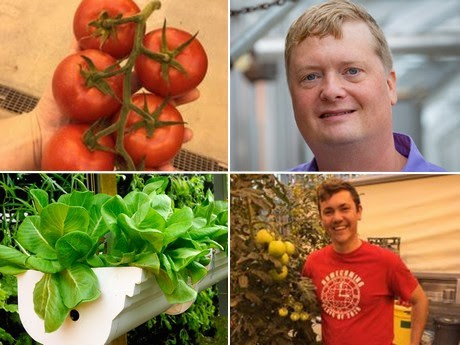
Gearing up to the second Indoor AgTech Innovation Summit on June 19-20 in New York, the event organizers found out what the summit’s Research Partner Cornell University has been working on, with insights from Neil Mattson, CEA Director & Associate Professor, School of Integrative Plant Science, Horticulture.
What’s been your focus this year about CEA and Urban Farming?
A key project has been a collaboration between our FCEA group and Cornell economists Charles Nicholson and Miguel Gómez. Together we’ve produced a report focused on the economic and environmental footprint and viability to scale urban farming.
We looked at scenarios of producing leafy greens locally in New York and Chicago. For each city our three scenarios were:
Field production in CA and shipping to the city
Greenhouse production in a hypothetical facility with 1-acre crop canopy
Vertical farm production in a hypothetical warehouse facility with 1-acre crop canopy
In the New York City scenarios, we considered CEA production in the middle of the city and in the Chicago peri-urban CEA production about 50 miles outside the city.
The comparison led to some interesting discussion points around bottlenecks and priorities for the sector to scale. I’ll share more on that below, and in my presentation at the summit.
Aside from that important study, from a plant-science standpoint, Cornell CALS has also continued its work to improve energy-efficient leafy greens, tomatoes and strawberries using LED lighting strategies and CO2 enrichment to photosynthesize through its Greenhouse Lighting and Systems Engineering (GLASE) research efforts.
We’re also collaborating with Rensselaer Polytechnic Institute (RPI) to understand the nutritional content of CEA-grown kale vs field-grown kale.
How do the Greenhouse and Plant Factory compare economically with open field farming?
In terms of economics, our study found it was cheapest to produce in a field and ship thousands of miles with a landed cost of $3 per kilo of lettuce. The New York city greenhouse scenario cost $8 per kilo, including production and short shipping distance. Plant factory was slightly cheaper. In peri-urban Chicago, with cheaper land rates, greenhouse production gave a cost of $7 per kilo. Again, the plant factory cost came in slightly cheaper.
The lower plant factory cost in both scenarios unlocks potential opportunities in urban areas where a high land cost is a significant contributor to the overall cost. Plant factory is more efficient use of land due to its vertical stacking, with a smaller footprint overall.
Labor costs are a significant 50% of the high cost in our un-automated CEA scenarios. As a follow up to this study we’re looking at a scenario with automated production for seeding plants, moving channels through the greenhouse and harvest. We can reduce labor cost by two thirds to three quarters, bringing us much closer to field production costs overall.
Another option is to move to cheaper land rural production within a couple hundred miles outside the city. In this scenario, we can reduce cost of production by a further $1 per kilo. Taking automation and site selection into account CEA greenhouse production down to $4 per kilo may be possible which is very close field-grown and cuts 2,800 miles from transportation.
In all scenarios, CEA was much more water-efficient than any other field, of course really important in this time of climate change. Hydroponic systems are far more water-efficient by design, with water recapture and reuse.

USA, OHIO: Dilapidated Hamilton Building Transforms Into An Industry-Changing Grow Facility
Photo: Nick Graham
80 Acres Farms is now producing tomatoes in downtown Hamilton. They purchased the former Miami Motor Car Co. building on S. 2nd Street in February 2017 and have renovated it to create an indoor farm facility.
June 16, 2019
Eric Schwartzberg, Staff Writer
HAMILTON, OH
80 Acres is working to transform not only the way food gets grown and delivered, but also Hamilton itself.
The vertical farming business is now reaping the benefits of two years of work it put into a formerly dilapidated historic building at 319 South 2nd Street in the city’s downtown.
While its automated facility on Enterprise Drive, which started operations earlier this year, intends to grow leafy vegetables, herbs and strawberries, the downtown Hamilton location targets the growth of vine crops, including tomatoes, cucumbers and peppers.

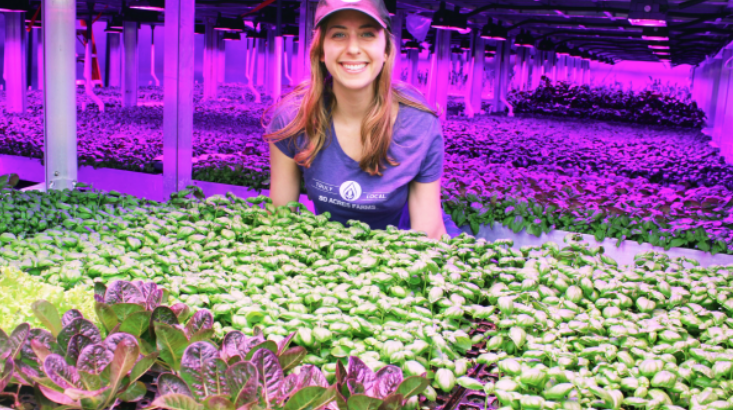
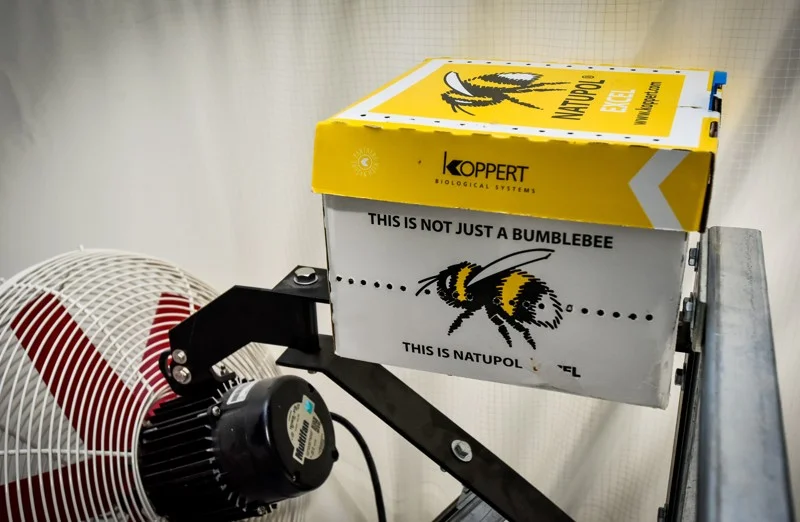
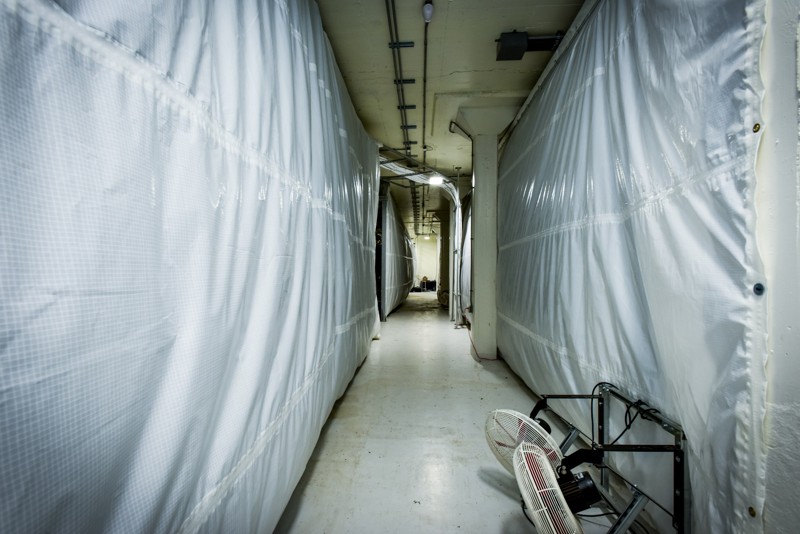
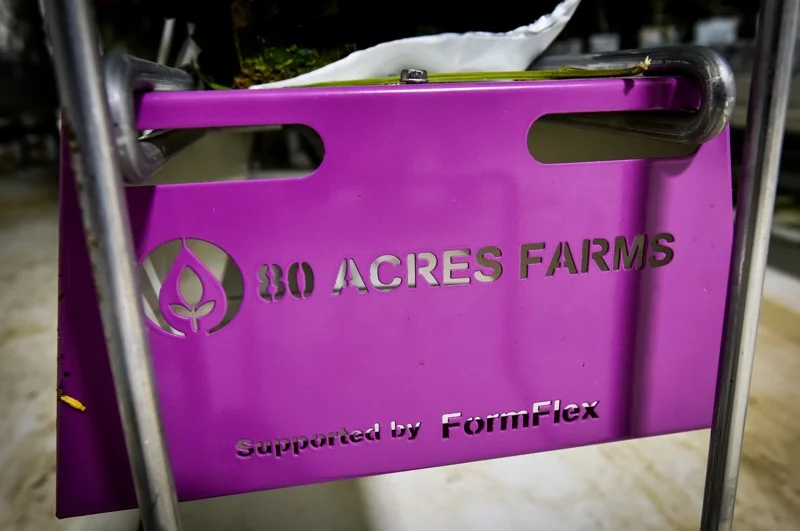
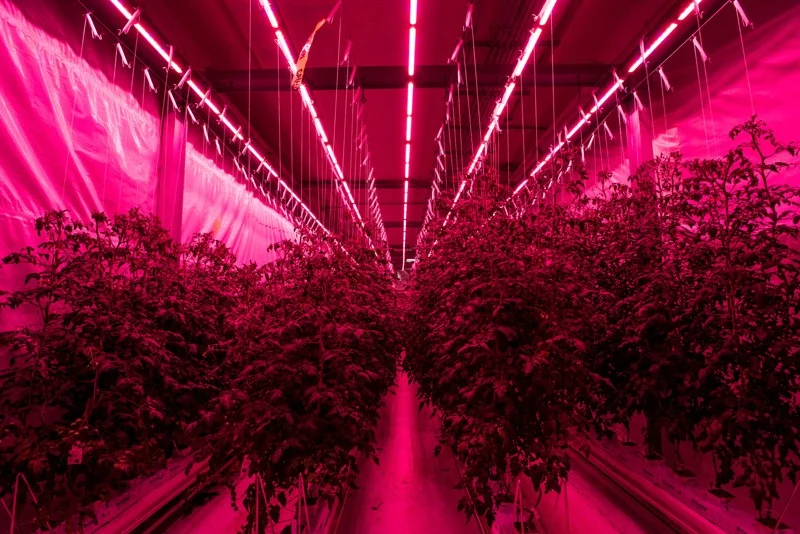
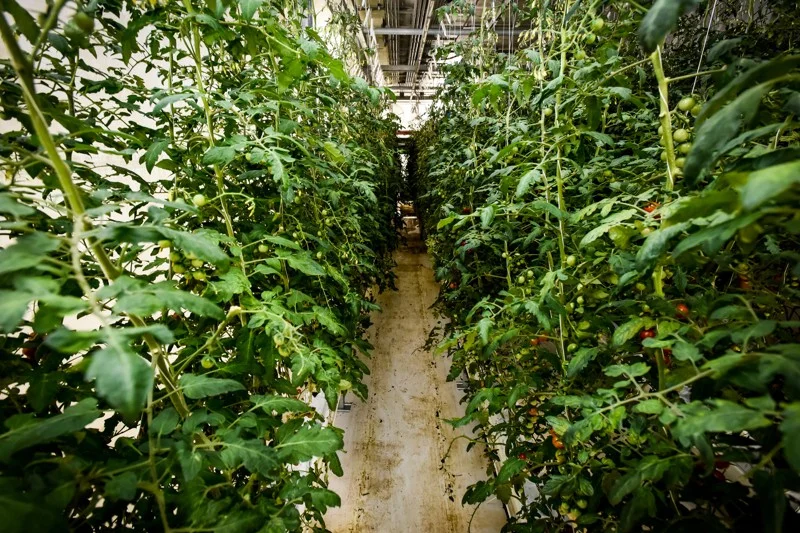
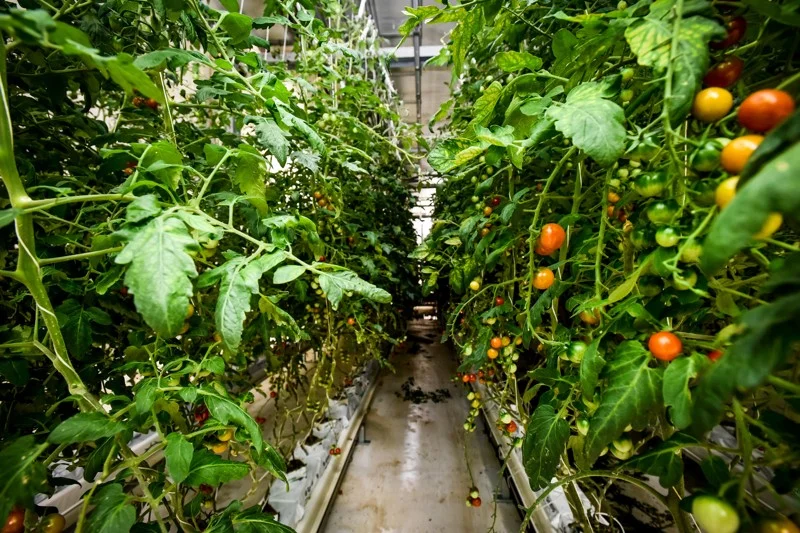
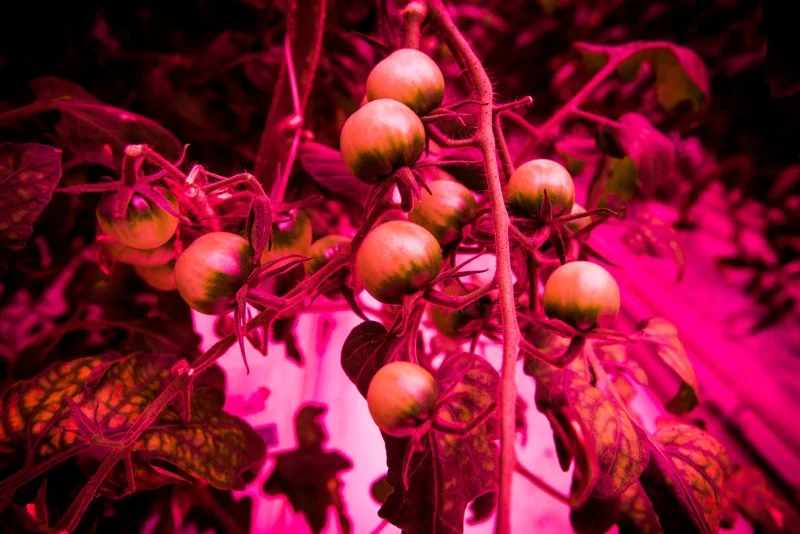
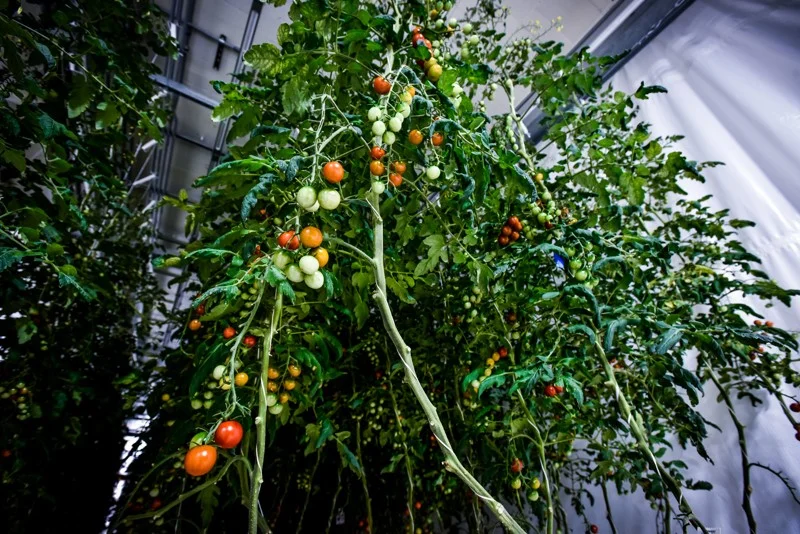
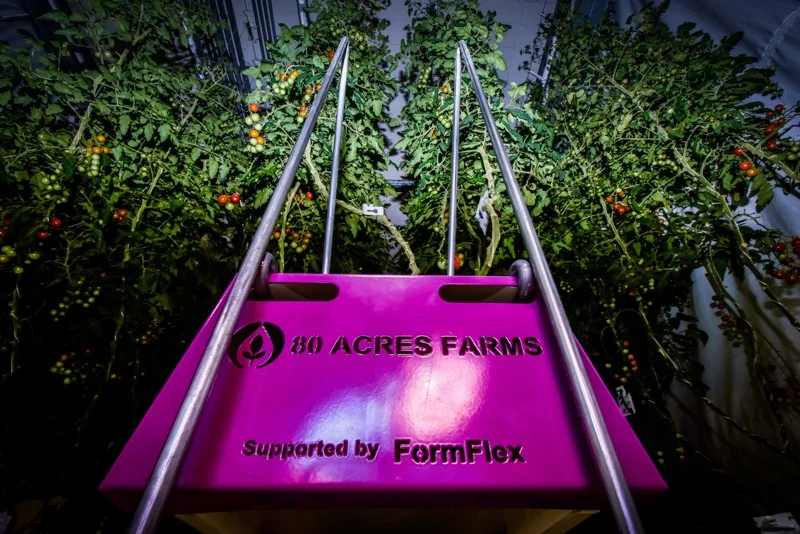
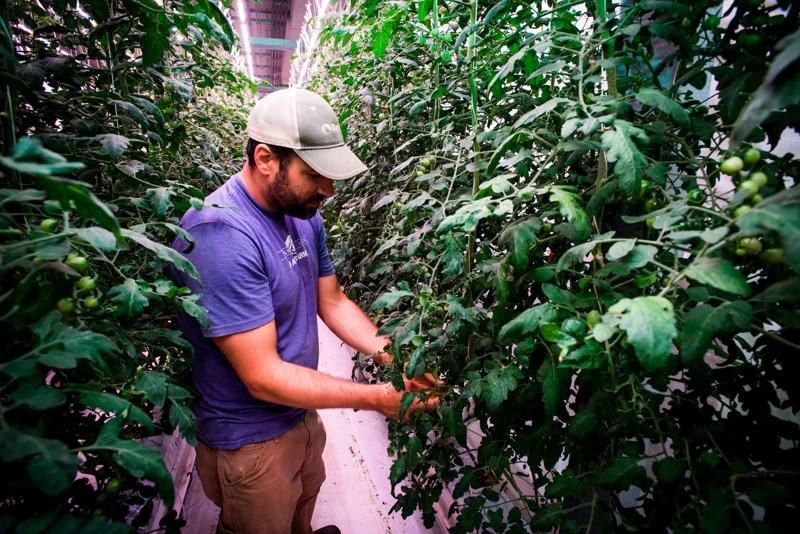
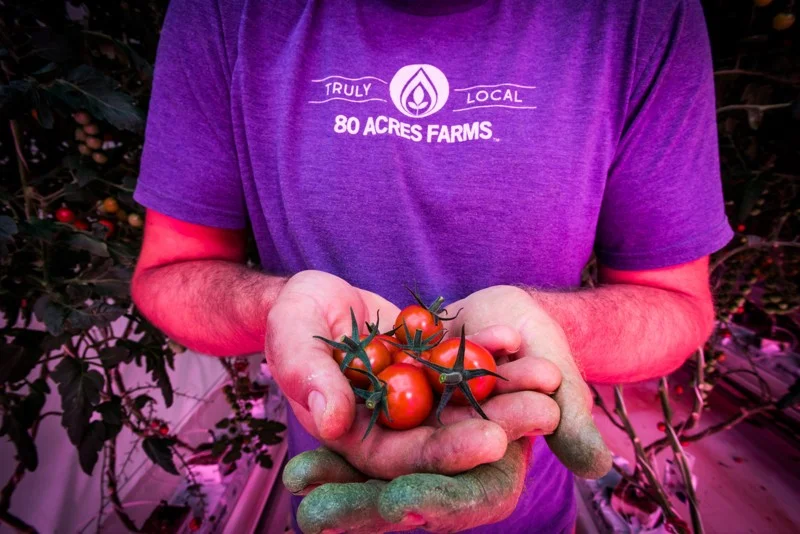
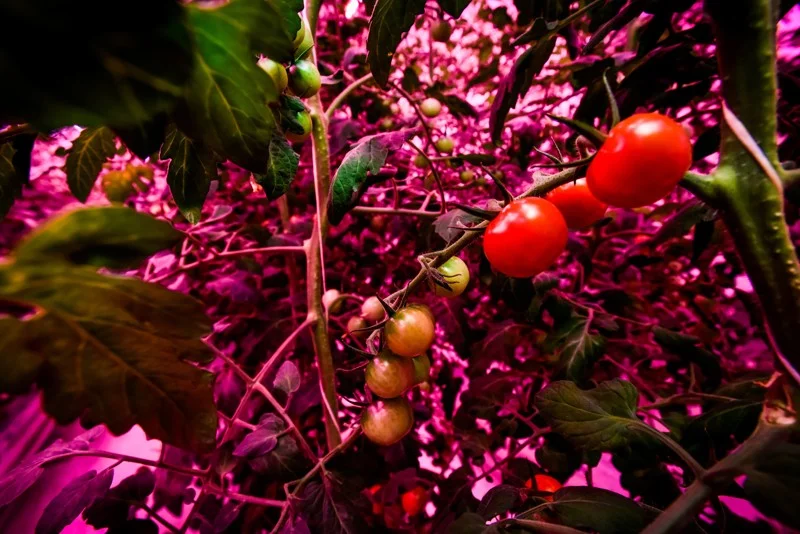
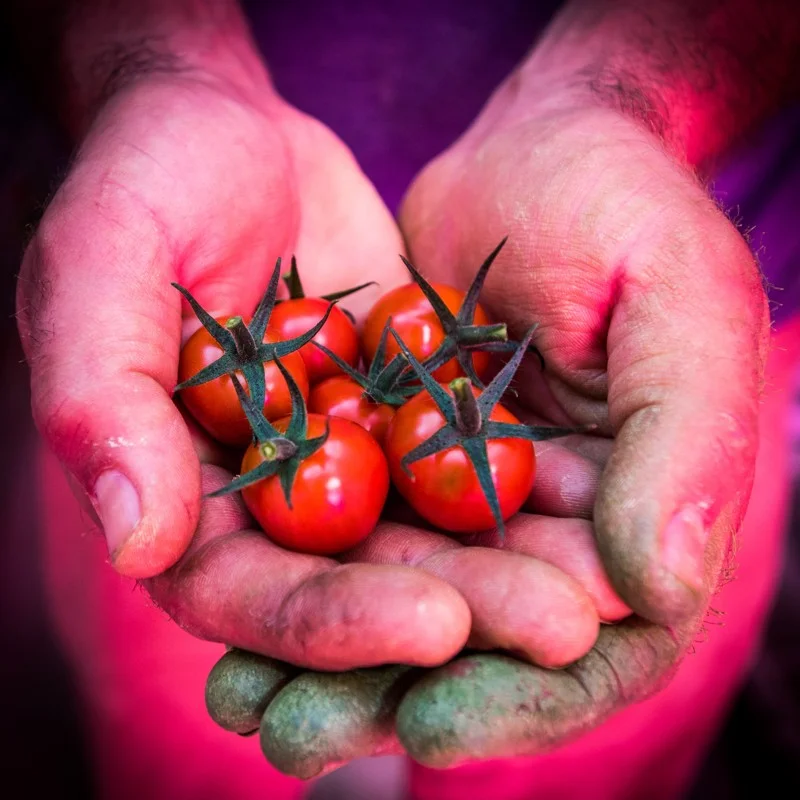

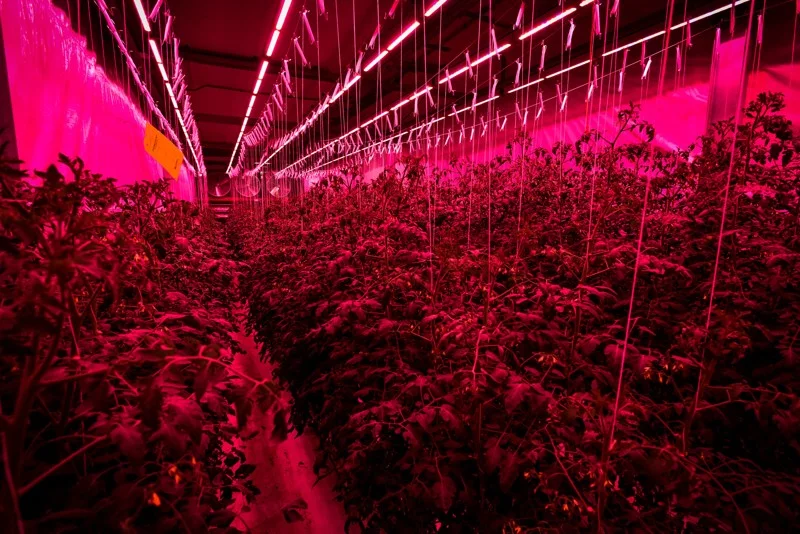
PHOTOS: Inside the huge Hamilton growing facility 80 Acres, the country’s first of its kind Nick Graham
80 Acres Farms harvested its first crop of tomatoes in recent weeks in a space designed to be far more productive that its 12,000-square-foot Cincinnati location, something that was proof of concept, but isn’t at the scale it needs to be to “make a dent” in demand, according to Rebecca Haders, 80 Acres Farms’ vice president of creative and marketing.
While the Cincinnati location has room for one “grow zone” for tomatoes, the downtown Hamilton location has room for 15 such areas. That, Haders said, means the ability to grow and harvest thousands of pounds of tomatoes each week.
Head grower Robert Norris walks through rows of tomato plants at 80 Acres Farms that is now operating in downtown Hamilton. They purchased the former Miami Motor Car Co. building on S. 2nd Street in February 2017 and have renovated it to create an indoor farm facility. The special pink colored lighting is controlled by a timer for optimal growing conditions. NICK GRAHAM/STAFF
“This is really our foray into commercialization,” Haders said during an exclusive first-look tour around the facility provided to this news outlet. “We could service a larger retailer at this point.”
80 Acres Farms’ Cincinnati location sells to Jungle Jim’s International Market in Fairfield and Eastgate, Dorothy Lane Market’s three Dayton-area locations, Clifton Market in Cincinnati and Whole Foods Market locations in Cincinnati, Deerfield Twp. and Dayton. It also distributes to several restaurants, including Hamilton’s Coach House Tavern & Grille and Alexander’s Market & Deli, plus Loveland’s Tano Bistro, which is set to open a Hamilton location this summer.
With 80 Acres Farms now conducting the bulk of its operations in the city, a move of its headquarters there from the Cincinnati area is not far behind, Haders said. That relocation to Hamilton should occur by year’s end, she said.
“This is where the excitement is,” Haders said. “There’s been such a draw to come to Hamilton, and I think the leaders of the city have a great vision. They’re making it happen and creating a lot of excitement and getting the right people in to turn it around and we were excited to be a part of it.”
Haders said it also helps that 80 Acres Farms’ Hamilton employees enjoy working in Hamilton, where they can grab a coffee or lunch in its growing downtown.
“It’s such a great atmosphere and you can feel the energy,” she said.
80 Acres Farms is now producing tomatoes in downtown Hamilton. They purchased the former Miami Motor Car Co. building on S. 2nd Street in February 2017 and have renovated it to create an indoor farm facility.
Photo: Nick Graham
Transforming a historic building
Haders said when 80 Acres Farms co-founders Mike Zelkind and Tisha Livingston toured the building several years ago, “they fell in love with it,” leaving their respective corporate careers to start their brainchild.
Transforming the building, which was constructed in 1920 as the home of the Miami Motor Car Company, has taken two years.
“We wanted to really figure out what we needed from this building but it had a lot of work that needed to be done,” she said. “There were walls inside of walls inside of walls that we were tearing away.”
The building, which most recently served as a furniture store, also had to be sealed to make it a completely food-safe facility. Renovations also included deconstructing and cleaning the interior, redoing the plumbing and electrical and touching up much of its cosmetics.
80 Acres Farms also had the arduous task of having to clear three floors of furniture from the structure.
Tomatoes are being grown on the third floor, but not with the broad spectrum lighting contained in sunlight. Instead, there’s a red and blue lighting system that optimizes photosynthesis and allows the plants exactly what they need to produce the sugars that create phytochemicals and other beneficial plant compounds.
“That’s why you see that pink-purple light for indoor farming because you can grow under broad spectrum, but the plants don’t need all of those light spectrums,” she said.
The company continuously tests the water that is recycled through its irrigation system, relying on state-of-the-art sensors to identify what is or isn’t needed.
“We use a third-party lab to keep us on par on what’s in our water, so you know exactly the nutrient content,” she said. “There’s a lot of fluoride in Cincinnati water, so we have to take out that fluoride. Hamilton water is amazing.”
80 Acres Farms, which uses 97 percent less water than a traditional farm, also opted to locate the bulk of its operations in the city because of the hydroelectric power and the renewable energy it offers, Haders said.
“We always want to be a little bit more sustainable as we move forward,” she said.
While the second floor of the downtown location is expected to start growing vegetables in the near future, the first floor will be dedicated to packing, harvesting, cooling and germination.
A lighted letter sign will be placed in a prominent location on the north side of the building sometime later this year.
“It’ll look really great,” she said.
Head grower Robert Norris holds freshly plucked tomatoes at 80 Acres Farms that is now operating in downtown Hamilton. They purchased the former Miami Motor Car Co. building on S. 2nd Street in February 2017 and have renovated it to create an indoor farm facility. The special pink colored lighting is controlled by a timer for optimal growing conditions.
Photo: Nick Graham
A form of farming on the rise
Indoor farming, which includes hydroponics, aeroponics, aquaponics soil-based and hybrid, has gained significant popularity in recent years as its technology has become more defined. That, industry experts say, has allowed a large amount of fresh and green vegetable produced in city environments, with minimum space and less water utilization than typical techniques on conventional farms.
The global indoor farming technology market accounted for nearly $6.5 billion in 2017, according to a 2018 Zion Market Research report. That number is expected to reach nearly $15.3 billion globally by 2024, growing at an annual growth rate of around 13.2 percent through 2024.
Vertical farming is a form of controlled environment agriculture, or CEA, that consists of fully insulated indoor operations, producing crops of vegetables and other foods on multiple levels instead of on a single level, such as in a field or a greenhouse.
They rely solely using electrical lighting and are touted as a solution to many environmental issues in food production, partially because they are protected from the outside environment, and can be constructed in even the most extreme environments.
Chris Stout, the executive chef at Coach House Tavern & Grille, said using 80 Acres Farms products, which are harvested the day before they are served to customers, has made a tremendous difference for the Hamilton restaurant.
“The flavor of their products is just so much more intense than anything that I’ve gotten elsewhere,” Stout previously told this news outlet.
Thank you for reading the Journal-News and for supporting local journalism. Subscribers: log in for access to exclusive deals and newsletters.
Facts about 80 Acres Farms
• Agriculture start-up got its start nearly three years ago when food executives and co-founders Mike Zelkind and Tisha Livingston left their corporate careers to start their brainchild.
• its indoor, vertical farms use 97 percent less water, with no need for pesticides and no place for pests or GMOs
• produce grows three times faster, with yields 100 times larger, on a tenth of the land, 365 days a year
• 7512 Hamilton Enterprise Drive location in Hamilton is modular farm with state-of-the-art grow centers working to produce specialty greens, including leafy greens, culinary herbs and kale, plus strawberries.
• 319 S. Second St. location in downtown Hamilton aims to produce tomatoes, cucumbers and peppers.
SOURCE: 80 Acres Farms

CO2 Gro Q1 Results + Talk With Management
CO2 Gro Inc. (GROW.V, BLONF) reported their full-year 2018 and Q1 2019 results recently. Neither reporting period provided much excitement but let’s go through the highlights before I dig into the conversation I had with VP Sam Kanes.
Click here for my initial analysis of CO2 Gro Inc.
I own shares of CO2 Gro Inc.
Q1 Results
On May 31st, 2019, GROW reported Q1 2019 results. The highlight of CO2 Gro Q1 results was the completion of the installation of their CO2 equipment with their first two growers under contract. GROW began collecting revenue from their first contract in late March while revenue from their second contract will begin in June. While GROW only generated $6650 in revenue in Q1, their first two contracts will generate $240,000 per year.
Although this is not a huge amount of money, it is a base that GROW can continue to build upon. The contracts are long term, perpetual contracts as long as the systems are still in use.
In February GROW announced positive results from a trial of their dissolved CO2 spray on e.coli and powdery mildew. Their MD&A states that these positive results have lead to increased interested in GROW’s technology from hemp growers in North America. This could be a distinct advantage for GROW. GROW’s dissolved CO2 spray is organic and safe for the plant and humans while also enhancing plant growth.
GROW is now finally collecting revenue from their dissolved CO2 foliar spray technology. Once these growers start to collect harvests with increased yield and quality, the word should spread through the hemp and cannabis industry. GROW is operating at under a $1 million burn rate as they only used $183,000 of cash used in operating activities and investing activities in Q1. With no debt on the balance sheet, $1.6 million in cash and $240,000 in recurring revenue GROW is in a very good position to seek out new contracts.
Discussion With VP Sam Kanes
On June 5th I was fortunate to get some time with VP Sam Kanes. He answered a bunch of my questions and also gave me an update on what might be coming next for GROW.
Management is Very Busy
I caught Mr. Kanes right as he was entering a meeting and was able to talk to him for about half an hour once his meeting wrapped up. GROW has been very busy, but a good kind of busy.
CEO John Archibald and COO Aaron Archibald have been travelling extensively meeting growers and ag tech companies. CEO Archibald has been travelling all over the United States with New Mexico and Texas mentioned while COO Archibald has been travelling in the United States, Canada and Europe.
Technology Advancement
Mr. Kanes briefly mentioned that GROW has developed generation one and generation two equipment. He didn’t provide much detail on the new equipment but did say that the equipment is much more advanced and allows for 24/7 monitoring. A new video with Market One Media Group should be released soon.
GROW has stocked some additional equipment in preparation of new contracts being signed. This equipment will show up as inventory if not deployed during the Q2 reporting period. It took GROW approximately three months from commercial agreement to the installation of their equipment. Mr. Kanes told me that they are working to shorten this timeline to six weeks for future installations.
2019 Projection
Mr. Kanes reiterated that he believes they can achieve a $10 million revenue run rate by Q1 2020. This would equate to contracts of 1 million square feet of cannabis or 10 million square feet of produce.
The growers with the first two contracts were granted a discount for being the first growers to adapt their technology. Future contracts will not receive the same discounting.
Health Canada Regulations
Mr. Kanes explained that the regulations surrounding their technology are still unclear. This is causing Canadian licensed producers to hesitate before adopting GROW’s technology. Health Canada is introducing new language in October 2019 that Mr. Kanes said they are very supportive of.
With some additional clarification, Mr. Kanes believes that growers will be far less hesitant to adopt their technology. When it becomes clear that GROW’s technology can be used on cannabis in Canada this will be a material change for their business. Being based out of Toronto Mr. Kanes said that they are within a forty-five-minute drive of numerous growers in Ontario.
In both my conversations with Mr. Kanes he was very confident in their technology and its safe use on plants and for the humans working in these environments. It seems like only a matter of time before dissolved CO2 foliar spray is approved for use in Canada.
Global Expansion
On April 10th GROW announced that they had attended the GFIA Global Ag Tech Conference in Abu Dhabi. COO Aaron Archibald was fully booked with one-on-one meetings with potential customers.
The news release states that COO Archibald met with growers that are unable to use CO2 gassing due to excessive heat inside their greenhouses that must be vented. When the heat is vented the gas is also vented negating the positive growth effects. This is the type of “low hanging fruit” management has mentioned in the past. GROW’s technology seems to be a perfect fit in these types of situations as they are the only option these growers have to gain the benefits of added CO2 to plant growth.
Additions to the Board
I was able to ask Mr.Kanes how overseas expansion was going. He first mentioned that the two recent additions to their board, Dr. Gord Surgeoner and Rose Marie Gage, were brought on to assist with international expansion. Ms. Gage’s press release is quite impressive with numerous achievements both as a CEO and Director. I especially like that she won the 2018 Outstanding Achievement in Governance Award (Directors’ College). It’s always a benefit to investors to have a strong Board of Directors working for them.
John Archibald, CEO stated “Her deep relationships with greenhouse plant growers,
agriculture industrial companies and Government agriculture organizations will be of great
benefit to GROW’s Board, strengthening its Agri-Tech expertise and ability to successfully
move GROW’s Strategy going forward.”
Back to international expansion, Mr.Kanes explained that they would need to sign an agreement with an ag tech company or hire a bunch of new staff for international expansion to succeed. GROW stated in their GFIA press release that they were in talks with a European greenhouse manufacturer to partner with. Mr. Kanes told me that they expect to announce some new partnerships soon but explained that these types of partnerships take time to finalize.
Conclusion
CO2 Gro Q1 results started to show revenue from their very first commercial installation. Although this revenue is small it is recurring. With a few more contracts GROW will be cash flow positive if they remain at their current low cash burn. Remember that management isn’t being paid a salary until GROW is cash flow positive.
With numerous catalysts on the horizon (Health Canada clarification, Ag tech partnership announcement, future contract announcements, and global expansion) GROW seems to have a lot of good things going for it. In order to meet their projected $10 million revenue run rate by Q1 2020, they will need to get some more contracts signed and equipment installed. The interest appears to be there, hopefully, that interest is turned into revenue.
I continue to own shares of GROW.V and plan to add to my position as management executes.
Continue Reading
Previous PostCO2 Gro Inc: A High Margin Business with Proven Scientific Trials
NatureFreshTM Farms Takes Home Accolades for Best Overall Pepper, Tomato & Cucumber at Leamington Greenhouse Vegetable Awards


Leamington, ON (June 16th, 2019) – The Tomato Capital of Canada, Leamington, Ontario, hosted its annual Greenhouse Vegetable Awards this past weekend at the Leamington Fair. Showcasing the best greenhouse-grown produce from leading North American growers, family-owned NatureFreshTM Farms was awarded many top accolades, including best overall Pepper, Tomato & Cucumber.
NatureFreshTM Farms took home top awards in the following categories:
-Best English Cucumber
- Best Speciality Mini Pepper
- Best Beefsteak Tomato
- Best Cluster Tomato
- Best Speciality Tomato for their TOMZ Orange Cherry Tomato
- People’s Choice Tomato for their TOMZ Tomberry® Tomato
- Kid’s Choice Tomato for their TOMZ Tomberry® Tomato
- Overall Best Cucumber for their Long English Cucumber
- Overall Best Tomato for their TOMZ Orange Cherry Tomato
- Overall Best Pepper for their Red Mini Pepper
Accepting the awards on behalf of NatureFreshTM Farms was Executive Retail Sales Account Manager Matt Quiring, “We have an amazing team who works very hard to ensure our produce has top-notch flavor paired with consistency.
Winning the highest overall honors across the board is a great testament to what our team can accomplish; it is more than just about showcasing the best that we grow, it is about our commitment to continuing to push our categories in the right direction.”
This is the second year in a row that NatureFreshTM Farms has won the Peoples Choice Award for Hottest Tomato and the Kids’ Choice Award for Hottest Tomato for their Tomberry® Tomato, an outstanding accomplishment considering the strong competition from other varieties in the market place. The Tomberry® Tomato, with a unique flavor profile & dubbed the World’s Smallest Tomato is one that has seen great response from consumers & continues to grow in demand.
Done under secret ballot, consumers get a true blind taste test on selecting the best varieties. NatureFreshTM Farms has proven themselves deserving of the awards with their continuous efforts toward perfecting flavor and growing the best vegetables they can. With such strong competition, NatureFreshTM Farms is very proud to be
taking home these meaningful awards voted and judged by the locals of Leamington.
All funds raised from the Greenhouse Vegetable Awards go to R.E.A.C.H International.
This local charity has continuously hosted this annual competition which celebrates Essex County as being the largest greenhouse industry in North America. As a recognized and registered Canadian charity, R.E.A.C.H International’s humanitarian efforts assist the poor all over the world with their main project currently in Uganda.
-30-
About NatureFreshTM Farms
NatureFreshTM Farms has grown to become one of the largest independent, vertically integrated greenhouse vegetable growers in North America. Growing in Leamington, ON and Delta, OH, NatureFreshTM Farms prides itself on exceptional flavor & quality. Family owned NatureFreshTM Farms ships fresh greenhouse grown produce year-round to key retailers throughout North America.
SOURCE: NatureFreshTM Farms | info@naturefresh.ca T: 519 326 1111 | www.naturefresh.ca
Vertical Farm Planned For Warehouse In Northeast Wilmington This Fall
Alex Vuocolo June 18, 2019
Second Chances Farm, LLC has entered into a Letter of Intent to purchase a 50,000-square-foot warehouse at 3030 Bowers St. in Northeast Wilmington and plans to open its first vertical farm by this fall if everything falls into place.
Vertical farming is an industry that can work to supplement traditional agriculture by using a controlled environment to grow food locally while saving space and water, and reducing the carbon footprint of transporting food long distance.
The goal is to help state or federal inmates from Delaware obtain jobs – and futures as entrepreneurs – after they’re released, and to reduce the high rates of recidivism in a city where, on average, about 100 men and women are released from Delaware prisons every month to three Wilmington ZIP codes (19801, 19802, and 19805),” founder Ajit George told the Delaware Business Times in February.
George plans to raise $2.5 million to fund the purchase of the former Opportunity Center building that borders the Riverside neighborhood and set up the first 10,000-square-foot farm. The Opportunity Center, owned by ServiceSource Delaware, provided workshops for disabled people at the location before relocating earlier this year to New Castle
The first step is asking the Wilmington City Council to amend the zoning code to allow for “Indoor Commercial Horticultural Operations.” George says he is on an accelerated timetable and hopes to have approval by the end of July. The City Planning Commission is holding a public hearing tonight to get public comment and City Council will meet on the topic on Thursday and schedule an additional public hearing before voting on the measure.
But there are other hurdles to clear before George can open the doors.
Finalize the crop mix with the help of Jackson, WY-based Vertical Harvest Co-Founder Penny McBride.
Sign a definitive agreement with the property owner that will give George right of entry before the Oct. 31 closing date so that he can set up a prototype farm to show “investors, the media, and government officials” how they work and let them taste some lettuce grown in LED-lit hydroponic towers that do not require soil, pesticides, or even natural sunlight.”
Set up the $2.5 million Opportunity Fund, which allows investors in opportunity zones to defer capital gains.
Work with the Kingswood Community Center at 2300 Bowers St. and other community groups to hire 10-15 workers from the local neighborhood, depending on the mix of crops.
Close on the building purchase by Oct. 31 (“earlier if we raise the capital sooner,” says George) and set up the farm over the next 30 days, with an eye on distributing the first set of crops by Christmas 2019.
“The interesting thing about indoor farming in general is that it has many different business models,” said McBride, who is also the vice-chair of the international FarmTech Society. “It has
the capacity to not only feed people but train different workforce sectors. I’ve seen it work with immigrants and people with disabilities, but this is the first ex-offender population application for this sector.”
Opportunity Zones are census tracts designated by the governor and approved by the federal government for the purpose of economic development and investment in low-income areas. They were created as part of the Tax Cuts and Jobs Act of 2017. Delaware has 25 such opportunity zones, including six in Wilmington.
Approval of Resolution 8-19 would expand the definition of acceptable uses and “facilitate not only plant cultivation but related practices such as harvesting, transportation, packaging, distribution and marketing. These urban farming practices result in the creation of jobs and development of the workforce; increased local food production and supply; the creation of new markets for agricultural producers, consumers, and businesses; the revitalization of abandoned or underused properties and buildings; and community engagement,” according to the planning-meeting agenda.
“With the onset of innovative indoor horticultural production practices in nontraditional urban settings, such as indoor vertical farming and hydroponic farming, Wilmington’s Zoning Code is proposed to be updated to encourage and promote these practices within the City,” the proposal says.
“The mission of Second Chances Farms aligns with what we’re trying to accomplish here,” said Logan Herring, CEO of REACH Riverside, a community development corporation focused on revitalizing the neighborhood. He is also the CEO of Kingswood Community Center and The Warehouse, a “one-stop teen center” that will open next January on the site of the former Prestige Academy charter school. “ I anticipate working closely with them to make sure our residents are both employable and employed.
Ajit George, FarmTech Society, LLC, Logan Herring, REACH Riverside, Second Chances Farm

Intelligent Growth Solutions Attracts £5.4 million Series A Funding to Achieve Global Growth in Vertical Farming
Scottish agri-tech business to
deliver ground-breaking technology to burgeoning
indoor farming sector
Invergowrie, Scotland – 18 June 2019 - Intelligent Growth Solutions Ltd (IGS), the Scottish-based vertical farm technology business, announced today a £5.4 million Series A funding round led by US-based S2G Ventures, the world’s leading agri-foodtech investor.
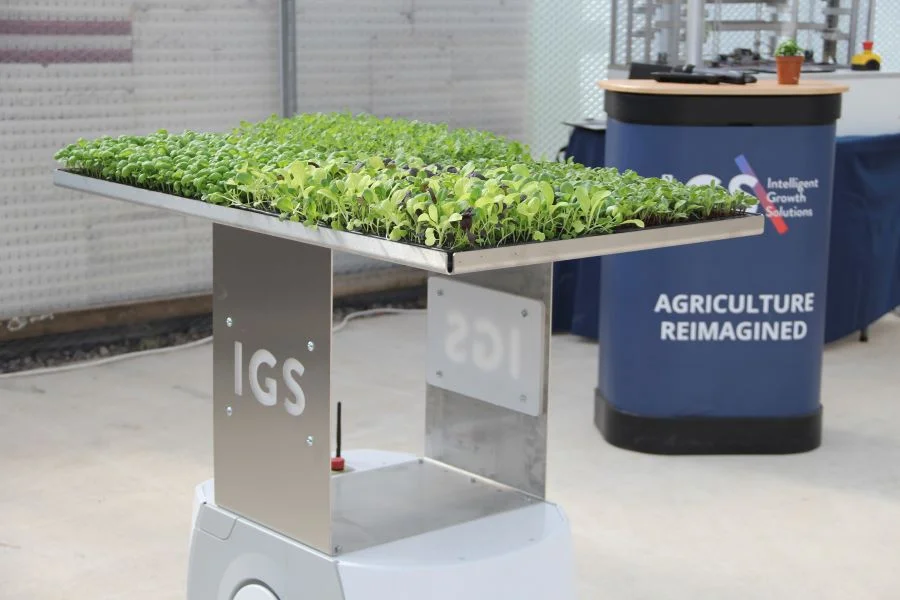
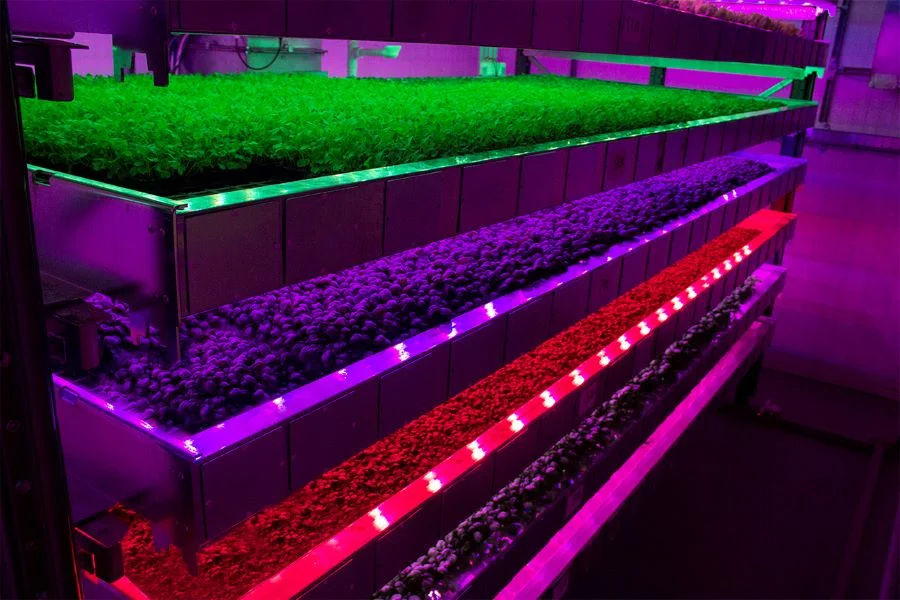
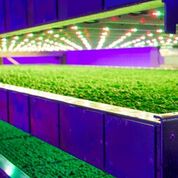
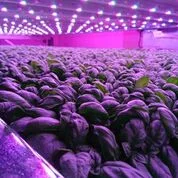



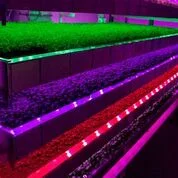

IGS supplies highly sophisticated plug-and-play vertical farming technology to indoor farms to enable the efficient production of food in any location around the world.
To demonstrate the unique technology stack it has developed, IGS opened its first vertical farming demonstration facility in August 2018. Since that announcement the company has received significant interest from around the world with orders mounting for its ground-breaking, patented technologies.
IGS’ unique technology has been designed specifically to address some of vertical farming’s biggest challenges, including the cost of power and labour, as well as the inability to produce consistently high-quality produce at scale. These economic and operational barriers to growth have inhibited the sector’s expansion to date. IGS has designed all its products to be highly pragmatic, flexible, modular and scalable in-line with market requirements.
The £5.4 million investment will allow IGS to create jobs in areas such as software development, engineering, robotics and automation. It will also help IGS to increase its product development, including continued innovation in AI, big data and the Internet of Things. IGS will also be building global marketing, sales and customer support teams in three continents.
This growth is pivotal for IGS to meet significant demand from growers, retailers and governments aiming to address food security issues through alternative methods of production and new business models in their regions. In 2019, IGS will be deploying indoor farming systems for clients in every major territory globally.
With global market growth in vertical farming predicted at 24 percent per annum over the next three years, the opportunities for IGS are substantial, with over 95 percent of its sales expected to be exported either directly or through regional channel partners.
The Series A funding round was led by S2G (Chicago), the most active agri-foodtech investor globally in 2018, with online venture capital firm AgFunder (San Francisco), the second most active and Scottish Investment Bank (SIB).
“Indoor agriculture production is at a tipping point. Grocery and food service firms have never been more interested in adopting this in their future supply chain. Cost and quality of product will be critical to scale this adoption. IGS’s revolutionary technology has proven itself to reduce power consumption, improve ventilation and hence reduce the capital and human costs to deliver fresh and differentiated products to consumers,” commented Sanjeev Krishnan, Managing Director of S2G Ventures. “We are excited IGS will help enable this emerging movement”.
“We see IGS as the perfect foray for AgFunder into the indoor agriculture arena,” said Michael Dean, founding partner at AgFunder. “As a developer of highly sophisticated energy and control system technologies for third-party indoor farms, IGS satisfies our bias for investing in enabling technologies rather than technology-enabled production with the inherent risks associated with building and operating a large asset.”
Kerry Sharp, Director of the Scottish Investment Bank, said: “We are delighted to support the continued development of IGS as it looks to take its technology to the global marketplace. The company has been account managed by Scottish Enterprise since 2014 and has received both financial and non-financial assistance covering innovation and R&D as well as supply chain management and international market entry. The company has made significant progress over the last 12 months and has assembled an impressive team with a clear focus on taking the IGS offering to an international market.”
IGS Chief Executive Officer David Farquhar said “We are thrilled to have the backing of the world’s leading agri-tech investors and the Scottish Investment Bank. We have recruited a world-class international management team, to be announced soon, to drive our plan forward with support from a board of senior international business people bringing industry expertise and best practice governance to the table.
“This industry is just at the starting line and we look forward to working with our customers, partners and colleagues at the James Hutton Institute to enable the highest quality produce to be grown at economically viable prices and help feed the burgeoning global population.”
The Scottish-led R&D team at IGS has developed, patented and productised a breakthrough, IoT-enabled power and communications platform consisting of patented electrical, electronic and mechanical technologies. All this is managed by a SaaS and data platform using AI to deliver economic and operational benefits to indoor growing environments across the globe. This technical solution enables the potential for reduction of energy usage by up to 50 per cent and labour costs by up to 80 per cent when compared with other indoor growing environments. It also can produce yields of 225 per cent compared to growing under glass.
Thorntons’ corporate and commercial team (led by Alistair Lang and with support from Victoria McLaren and wider team) acted for IGS throughout the Series A funding process.
A Shepherd and Wedderburn corporate team (led by Stephen Trombala with support from Christina Sinclair and Cath Macrae) acted for Chicago-based S2G Ventures - the lead investor in the first closing of the series A financing of Intelligent Growth Solutions Limited.
About IGS:
IGS was formed in 2013. Its purpose was to bring indoor horticulture to commercial reality by combining efficient internet-enabled smart lighting with automation and power management. The founders’ experience combined extensive knowledge of horticulture, industrial automation and big data.
IGS launched its first vertical demonstration facility in August 2018 and is now selling a revolutionary controlled-environment growth system. The location of IGS’ facility at the James Hutton Institute, a world leading crop research facility, was deliberately chosen to enhance collaboration opportunities for the benefit of customers. Scientists and researchers at the Institute are working with the team at IGS to better understand how growing indoors can impact different varieties of crop growth, as well as driving increased productivity.
For more information visit www.intelligentgrowthsolutions.com or connect with us on Twitter and LinkedIn.
About S2G Ventures:
S2G Ventures (Seed to Growth) is a multi-stage venture fund investing in food and agriculture. The fund’s mission is to catalyze innovation to meet consumer demands for healthy and sustainable food. S2G has identified sectors across the food system that are ripe for change, and is building a multi-stage portfolio including seed, venture and growth stage investments. Core areas of interest for S2G are agriculture, ingredients, infrastructure and logistics, IT and hardware, food safety and technology, retail and restaurants, and consumer brands. For more information about S2G, visit www.s2gventures.com or connect with us on Twitter and LinkedIn.
About AgFunder
AgFunder is an online Venture Capital Platform investing in the bold and exceptional entrepreneurs transforming our food and agriculture system. Our in-house technology enables us to invest globally and at scale, make better investment decisions, and support our portfolio companies. Through media and research, AgFunder has built a community of over 60,000 members and subscribers, giving us the largest and most powerful network in the industry.
Stay up-to-date with Food Tech and AgTech startup news, and other reports, by signing up to our newsletter here.
About Scottish Investment Bank:
The Scottish Investment Bank (SIB) is the investment arm of Scotland’s national economic development agency, Scottish Enterprise, operating Scotland-wide in partnership with Highlands and Islands Enterprise (HIE). SIB’s activities support Scotland’s SME funding market to ensure businesses with growth and export potential have adequate access to growth capital and loan funding.
SIB manages a suite of co-investment funds including the Scottish Co-investment Fund, the Scottish Venture Fund and the Energy Investment Fund on behalf of the Scottish Government. SIB is also an investor in Epidarex Capital’s Life Sciences Fund and is a participant in the Scottish-European Growth Co-Investment Programme with funding secured from the Scottish Government’s Scottish Growth Scheme alongside the European Investment Fund.
SIB also provides funding into LendingCrowd, Scotland’s marketplace lender providing loans to SMEs, and Maven's UK Regional Buy Out Fund (MBO) that offers financial support for management buyouts (MBOs) and helps existing management teams acquire their businesses from their owners so they can continue to flourish. SIB’s team of financial readiness specialists help companies to prepare for new investment and access appropriate finance.

Farming In The City
Liyana Hasnan
13 June 2019
This file photo shows an employee of urban farming start-up Aeromate checks on vegetables and aromatic herbs growing on the rooftop of a building owned by French public transport group RATP as part of a rooftop farming project in Paris on 24 August, 2017. (Benjamin Cremel / AFP Photo)
Urban farming could help provide a boost to the region’s food security and safety issues.The traditional farming system, though productive, has serious downsides which include food wastage, polluted ecosystems and significant greenhouse gas (GHG) emissions.
According to the United Nation’s (UN) Food and Agriculture Organization (FAO) and NASA, an additional 109 million hectares of new land will be needed to feed the world’s population by 2050. Presently, over 80 percent of arable lands suitable for crops are already in use. The total land used for agriculture in ASEAN currently stands at 30 percent, or 132,953 million hectares.
The current quality of land used for agriculture is being threatened by degradation due to over exploitation, pollution and the shortage of available water. Feeding an estimated 10 billion people in 2050 without further destroying the environment is a tall order indeed.
A tall order
Rapid urbanisation is causing an increase in urban poverty and urban food insecurity. Bringing food production into cities could be a responsible solution towards maintaining a sustainable system.
Urban farms focus more on providing city dwellers with food security and economic diversification. Governments could encourage the use of underutilised land for constructing small farm gardens for communities in the immediate area while increasing environmental awareness among them.
Another non-traditional farming method which takes advantage of urban spaces, especially tall buildings, is vertical farming. Usually found on rooftops or in abandoned buildings, vertical farming has a highly controlled environment with temperature, humidity, light and water levels being closely monitored at all times. It significantly reduces the need for toxic and costly pesticides.

Source: Various
According to the Association for Vertical Farming, by utilising aeroponics or aquaponics, a vertical farming system requires 70-95 percent less fresh water than traditional farming. It also uses less space when the rooftops of offices or supermarkets are utilised.
Traditional farming runs the risk of unpredictable weather which accounts for 50 percent of failed crops during harvest. Vertical farms on the other hand can have a yield of at least 90 percent every harvest. Experts estimate that a 30-story farm could feed 50,000 people for an entire year.
Traditional agriculture accounts for 15 percent of global GHG emissions from machinery and transportation. Because vertical farms are based in urban centres, the distance required for travel is far shorter.
A resilient, local economy can survive catastrophes that would otherwise doom a supply chain-independent system. Dickson D. Despommier, professor of Public Health in Environmental Health Science at Columbia University and author of the book, ‘The Vertical Farm: Feeding the World in the 21st Century.’ says that “the world would be a much better place if we had vertical farming.”
Sky high
Singapore is currently the front runner for vertical farming. Companies like Sky Greens and Comcrops are showing the ASEAN region the effectiveness of the system which has increased the island nation’s food production. There were more than 30 vertical farms in Singapore in 2018.
Singapore produces only 10 percent of its food, importing the rest due to the unavailability of land. With current issues of climate change, a growing population and pressing food security issues, Singapore does not want to depend on imports to feed its 5.6 million people. The government there has called for farmers to answer the call to “grow more with less,” with the hope of raising food production to 30 percent by 2030.
Sky Greens claims to be the first economically viable vertical farm in the world. Jack Ng, entrepreneur for Sky Greens says his products range from Chinese cabbages, bak choi, kai lan, and lettuce, to other leafy green vegetables. The company also guarantees freshness as produce hits the shelves a mere three hours after harvesting.
Although Sky Greens’ vegetables cost slightly more than those from traditional farms, the proximity to consumers reduces transportation costs as well as cuts down on storage and spoiling during transport. Sky Greens was able to get a positive return on investment after just five years in operation.
Comcrop’s Allan Lim believes high-tech urban farms are the way forward for cities. The company builds its farms on shopping mall roofs along Singapore’s Orchard Road, and uses vertical racks and hydroponics to grow leafy greens and herbs.
Regional initiative
Urban farming in Southeast Asia is still limited and scattered. Though it is not without its following.
The Philippines has new laws under the Urban Agriculture Act of 2013 which mandates the Department of Agriculture to promote the use of urban agriculture and vertical farming. Aimed to ensure food security and rejuvenate the ecosystem, these laws also mandate that abandoned government lots and buildings owned by national or local governments should be considered for growing crops.
In Malaysia there are movements such as CityFarm Malaysia which is an organisation whose objective is to inspire city farmers with the ability to grow locally for sustainable food production. Currently, Bangkok is developing rooftop farms and mixed-use skyscrapers with open-air farms.
Despommier has said cost continues to be the major drawback as “it requires a heavy investment and creativity to invent the methods and to create a social buy-in.” Vertical urban farming should not be seen as just a current trend but as a viable alternative to food production. Nor should it be seen as a threat to traditional farming.
Can vertical farming solve the global food security problem? The UN’s FAO certainly thinks so, and wants the trend to prosper and become sustainably embedded within public policy.
Related articles:
Food security a key issue for ASEAN
Your plate of rice is hurting the climate
Tags Urban farming Vertical farming, Agriculture Food tech Sky Greens Singapore Technology

Skyfarm Will Be An “Asset”
City of Melbourne councillors have assured Flinders Wharf residents they have nothing to fear from a 2000sqm “skyfarm” that has been approved for an adjacent car park rooftop at 671-701 Flinders St.
29 May 2019
City of Melbourne councillors have assured Flinders Wharf residents they have nothing to fear from a 2000sqm “skyfarm” that has been approved for an adjacent car park rooftop at 671-701 Flinders St.
Residents expressed fears and concerns to the May 7 Future Melbourne Committee meeting over the proposal.
Owners’ corporation chair Thomas McNair said councillors had not received proper advice from officers and he contended the proposal was about creating an entertainment venue.
“This doesn’t pass the pub test in my view – and in the view of my wife and my granddaughter. The proposal is all about an event space and selling liquor and maybe food,” Mr McNair said. “It’s not about providing green space at all.”
Flinders Wharf resident Alan Wong also objected to the skyfarm.
“Basically, I want to be able to raise my young family in an environment that I selected when I bought into that place six years ago,” Mr Wong said.
“I’m trying to figure out what problem we’re trying to solve with this proposal.”
“My concern around this proposal is essentially noise pollution, visual [and] light pollution and loss of privacy, [and] security concerns,” he said.
But Melbourne Skyfarm proponent Brendon Condon, of Australian Ecosystems, said the enterprise would be “a very classy, demure, respectful good neighbour”.
“We’re looking to transform an underused 2000sqm car park into a thriving rooftop orchard, farm, sustainable cafe, conference space and environmental education centre and to create a beautiful space for nature and biodiversity in the city.”
“We’re part of award-winning projects across biodiversity, stormwater harvesting, urban food, zero-emission communities and we hope Skyfarm is an extension of all those solutions which are absolutely needed and critical for a functioning and healthy climate-adapted city,” Mr Condon said.
“We have a car park at the moment which is a heat-bank and is contributing to the heat island effect in the city. Through good design, we will flip it into a cool zone which is ideal for rooftop farming.”
“We think Melbourne is set to benefit and it will be a great platform for accelerating integrated sustainability in the city.”
Lord Mayor Sally Capp asked Mr Condon: “I guess I’m just looking for some confirmation: Is this a disco (if you call them that, these days) disguised as a farm? Or is this really a farm that has some event space? Is this event space going to operate every night? Is it a rage?”
Mr Condon replied: “Definitely not. It’s a hybrid model and community farms need those revenue streams so they’re sustainable in the long-term.”
“It will be a respectful, sound-proofed set of structures. Because they’re sustainable, they’ll have good insulation and double-glazing very similar to zero-carbon buildings we’re building in regional Victoria,” Mr Condon said.
Cr Arron Wood assured residents Melbourne Skyfarm would become a valued asset for the local area.
“I’ve known Brendan’s work for a very long time. So, what you have here is not a nightclub operator.”
“You’ve got someone who lives, breathes and has the runs on the board in terms of urban sustainability, in terms of environmental developments, huge housing developments – you know, six-star, nine-star, 10-star housing developments – that have food production at their heart – communal gardens and the like.”
“So, although it has to pay for itself, and all of these things need a sustainable business model (as well as being sustainable themselves), that’s certainly isn’t the primary focus of this.”
“This is really about urban greening, urban food production and, hopefully over time, that relationship with local residents will build into something that you can be proud of as well.”
“So, instead of thinking that you’re looking over a tavern or a venue, what you’ve got beside you is actually an urban farm.”
“So, to have on your doorstep somewhere to take your young kids, somewhere where they can explore, to engage and understand food production … I think it going to be a huge asset in the long run.”
In response to resident concerns, planning chair Cr Nicholas Reece said: “I want to express my empathy for many very good points that you raised. If I were [sic] in your situation I could very much see myself making many of the same points.”
But, he said, the council’s role was to apply policies and assess against the planning scheme.
“In that respect I do think that this application is compliant,” he said. “I do think there is some scope to be optimistic about what this will add to this part of the city. In fact, there’s a lot to be very positive about what’s happening.”

Take a Tour of a Hema Supermarket And Experience "New Retail"
Chinese multinational conglomerate Alibaba has reiterated its plan to merge online and offline shopping experiences to better serve customers and improve efficiency, through among other measures, the rapid expansion of its grocery store Hema Supermarkets in China
Published on Jul 16, 2017
Alizila's Tom Brennan offers a tour of a Hema Supermarket, showing how online and offline shopping are merged into a seamless “New Retail” experience.
Winny Tang The Jakarta Post
Shanghai, China / Sun, November 11, 2018
Customers are pictured shopping at Hema Supermarket, part of Alibaba Group, in Shanghai, China. Hema is a digitized retail store that allows shoppers to buy food, eat in or order home delivery. (JP/Winny Tang)
Chinese multinational conglomerate Alibaba has reiterated its plan to merge online and offline shopping experiences to better serve customers and improve efficiency, through among other measures, the rapid expansion of its grocery store Hema Supermarkets in China.
Hema CEO Hou Yi said the group planned to open nine more stores by Dec. 12, from 91 stores it operates at present in 16 cities, including Shanghai, Beijing, Ningbo, Shenzhen, Hangzhou and Guiyang.
“By next month, we will have 100 Hema stores […] Hema is the first retail store where all products can be bought offline and online,” he told reporters during a media briefing in Shanghai on Saturday.
Hou Yi, said the company was currently focusing on expanding to Tier 1 and Tier 2 cities in China.
Hema is an example of a “new retail” model that Alibaba has incubated since 2015. The store provides a retail experience that uses a technology-driven concept for in-store purchases, online delivery and in-store consumption.
Shoppers can purchase products by using the Hema mobile app, which is linked to their Alipay account. Those living within a radius of 3 kilometers from the store can also use its home delivery services.
At Hema’s robotic restaurant in Shanghai, customers are served by robots that deliver dishes right to their table. (dwa)

Weather Woes Cause American Corn Farmers To Throw In The Towel
In the nation's 18 major corn-producing states, there has been one refrain for the past few weeks: To plant or not to plant? There comes a point of no return, where the cost of planting outweighs potential remuneration, where yields dwindle and there just may not be enough days for plants to mature before a hard frost
File photo of a corn field in South Dakota. (Matt Gade / Forum News Service)
Written By: Washington Post
June 18th 2019
In the nation's 18 major corn-producing states, there has been one refrain for the past few weeks: To plant or not to plant? There comes a point of no return, where the cost of planting outweighs potential remuneration, where yields dwindle and there just may not be enough days for plants to mature before a hard frost.
For many American corn farmers, that point is now.
On Monday, June 17, the U.S. Department of Agriculture reported that domestic plantings were at 92% of farmers' total intended acreage, the slowest pace in more than 40 years.
Ohio trailed behind, with only 68% of its corn planted, South Dakota had 78%, and Michigan and Indiana each had 84% of their hoped-for acres planted. Last week, the USDA lowered the projected total yield to 13.68 billion bushels (last year's corn yield was 14.3 billion bushels). And as of Monday, in anticipation of an impending shortage, corn futures continued to trade at their highest level since June 2014.
According to the National Oceanic and Atmospheric Administration's National Centers for Environmental Information, May 2018 to April 2019 was the wettest year on record in the contiguous United States. Already-saturated ground got even more rain in May and into June, said Tyler Urban, 31, who sells crop insurance and farms corn and soybeans near Sioux Falls, South Dakota.
"I know 1993 was another wet year. I've asked the old-timers if this is worse and they're saying yes," he said.
Farmers deal with untenable planting conditions in a range of ways. Urban offers "prevented planting" crop insurance, where farmers who elect not to plant are reimbursed for a portion of what they would have grown (where he farms in southeast South Dakota, farmers are reimbursed 55% of what they would have made for their intended acreage of corn, 60% for would-be soy).
"In my insurance book, 100% of my farmers will have some sort of prevent-plant claim," Urban said. "This year, there are whole farms that haven't been planted. Right now, our ground conditions are finally starting to dry out, but it's too late."
Jonathan Kleinjan is an extension crops specialist, someone who educates farmers about scientific research in agriculture, at South Dakota State University. He describes the current situation as unprecedented. In the southeastern part of the state, he says only 30 to 40% of corn has been planted, with standing water hurting the likelihood of a decent outcome for acreage planted in May.
"The prevent-plant insurance will be enough money to keep you in business for a year unless you were in trouble already," he said. But farmers' decisions to forgo planting will have ramifications for many of the businesses that furnish farmers with equipment and supplies.
"The suppliers who sell seed and herbicides to farmers don't have insurance, so they might be at risk," Kleinjan said.
Erik Gerlach, South Dakota's state statistician, describes other factors affecting farmers: low prices for corn and soybeans, tariffs and uncertainty surrounding disaster and trade relief packages.
In May, President Donald Trump announced a $16 billion bailout for farmers hurt by his trade war with China. Agriculture Secretary Sonny Perdue initially stated that the money would be available only for planted acreage, not acreage forestalled by protracted bad weather. But on June 10, Perdue announced that the administration was "exploring legal flexibilities to provide a minimal per acre market facilitation payment to folks who filed prevent plant and chose to plant an . . . eligible cover crop, with the potential to be harvested and for subsequent use of those cover crops for forage."
On June 6, Trump signed the supplemental appropriations bill that includes disaster aid for farmers and has a provision that would allow payments to farmers for prevented planting. Because details for both the disaster and trade relief packages remain scant, farmers are frequently unsure of which course to chart.
"Each producer's operation in unique to them," Gerlach said. "There are a lot of variables: What's your proven yield, what further costs would you have to expend to plant? In some cases, farmers might plant because they have cattle or hogs to feed."
In northwest Ohio, dairy farmers are likely to keep planting corn until July 1, despite diminishing yields, said Eric Richer, an Ohio State University extension educator in Fulton County. Corn is a desirable crop to feed lactating cows and growing beef cattle. And because the plants don't need to reach full maturity to become corn silage for animal feed, there's a little more wiggle room. Still, Richer said his state's dairy industry, already hard-hit by high farm costs and low sales prices resulting from a milk surplus, will be most affected.
"The level of financial, emotional and mental stress on farmers is significant as a result of late planting in 2019. The spring of 2019 is like no other I've seen in my career," he said. "The new normal for farmers is weather extremes, and that's difficult to manage."
Since 2012, Sam Custer has been an extension educator for Agriculture and Natural Resources in Darke County, Ohio, which produces much of the state's corn and soybeans. Although yields have been strong for the past three or four years, he said it has been a difficult time, with net farm incomes trending downward since 2013. He said that corn and soy already planted this year were planted under poor conditions and that most people anticipate a poor yield.
"As I talked with agricultural lenders last week, they were becoming very concerned there will be some people this fall who will be very financially strapped, they're worried about mental health issues," he said.
Tim Palmer farms 1,000 acres in south-central Iowa, where the majority of corn and soybean acres are typically planted by May 25.
"I have an aversion to seeing acres going unplanted. But we had one of the coolest and rainiest Mays on record, and that's not conducive to healthy corn and soybean planting," he said.
He has planted corn in June several times, he said, but it's a tough decision because a bad yield is averaged into 10-year harvest numbers and negatively affects crop insurance guarantees in the future. He finished planting all the corn he was going to plant last week and is working to get all his soybeans in the ground.
"I've just got a little bit left," he said Monday morning. "I was out there 12 hours a day from Friday to Sunday, planted about 250 acres. I'd take a break for a sandwich. Now it's fertilize, spray and hope Mother Nature takes care of the rest of it."
This is article was written by Laura Reiley, a reporter for The Washington Post.
Related Topics
AGWEEK | AGRICULTURE CORN | USDA FARMING | SOUTH DAKOTA | NORTH DAKOTA

A Message From Our Partner, Manhattan Waste Solid Advisory Board (MSWAB)
TICKETS ARE RUNNING OUT!
You are cordially invited to a free event “Is NYC Ready for the Green New Deal” on June 20 at 6 PM. Abrons Art Center, 466 Grand Street.
Hear a diverse panel of experts discuss the implications for the Green New Deal on zero waste.
Online registration is required. No tickets at the door.
Register at the following link ASAP as we are close to selling out.
Follow our social media pages for updates. See you there!
Learn more.

Controlled Environmental Farming Inc. Advances Urban Farming in Tucson, AZ
We are highly appreciative to the City for their forward-thinking Urban Farming Zoning Regulations. Tucson’s focus on food accessibility aligns well with CEF’s mission to offer healthy, affordable, fresh local food to the community as well as providing purposeful employment,” said CEO Kristen Osgood
Controlled Environmental Farming Inc. (CEF), Carlton, MN is advancing its concept of local, organic product cultivation within the city limits of a municipality through its recent preliminary site plan review success in Tucson, AZ. Making use of the highly progressive Urban Farming Zoning Regulations that the City of Tucson has, CEF presented a site plan that works well with the existing infrastructure, provides a beneficial, sustainable business to the Tucson community and is providing positive development to an odd shaped piece of property, increasing the City’s tax base. “We feel a very strong local connection when we can partner with progressive communities like Tucson.
We are highly appreciative to the City for their forward-thinking Urban Farming Zoning Regulations. Tucson’s focus on food accessibility aligns well with CEF’s mission to offer healthy, affordable, fresh local food to the community as well as providing purposeful employment,” said CEO Kristen Osgood
CEF intends to address the demand for locally grown, year-round nutritious quality food at competitive and consistent pricing through the construction of a new, patent pending, organic food production facility. The facility, engineered as a kit, can be placed anywhere geographically and permits the cultivation of a wide range of fruits, vegetables, herbs, shrimp and fish.
Ric Espiriti, the project’s Site Plan Architect noted, “Tucson’s progressive Urban Farming regulations recognize the nutritional and environmental benefits of local, Urban Farming and the benefit to the community.” In CEF facilities, product cultivation occurs through a proprietary closed loop, aquaponic water flow system that uses fish waste to provide nutrients (food) to the fruits, vegetables and herbs. The system is contained in a controlled environment facility, which has the benefit of consolidating and intensifying sustainable product growth while eliminating the risk factors that affect product quality, quantity and pricing. Processing and distribution operations are also contained within the facility which has the benefit of streamlining operations and increasing food safety.
“This concept, in the City, could be the start of something big for Tucson,” said Barrie Herr, their land Broker, at Long Reality, “I can see business and educational expansion resulting from this concept”. In spring 2020, CEF plans to start building the 40,000-square foot facility which will produce annually, 480,000 pounds of fruits, vegetables and herbs to schools, hospitals, food distributors restaurants and grocery stores. Sales will also be available directly to individuals. The project also calls for a drive – up lane, using on-line ordering and payment methods. CEF will also cultivate 48,000 pounds of tilapia and 10,000 lbs of fresh shrimp.
“I very happy with the results of our first, proposed, large city placement of one of our facilities. The City of Tucson should be commended for their advanced ideology on inner city land usage development,” remarked Bruce Carman, Owner and Director of Technology of CEF.
For more information on Controlled Environmental Farming Inc.
And its Urban Farming Model:
Bruce Carman: conenvfarm@gmail.com

UK: Alvechurch Tech Firm Launches 'Vertical Farm' To Produce High-Quality Greens
05-27-19
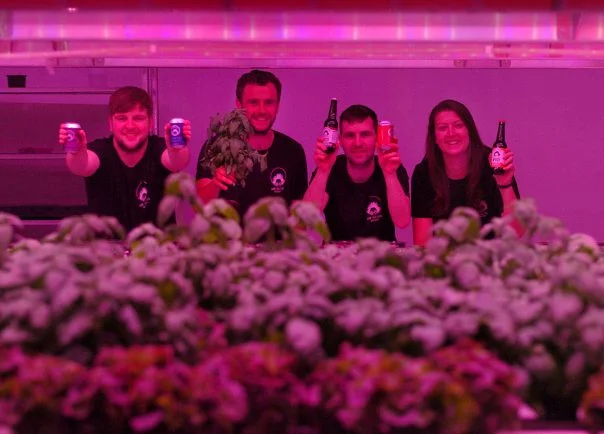
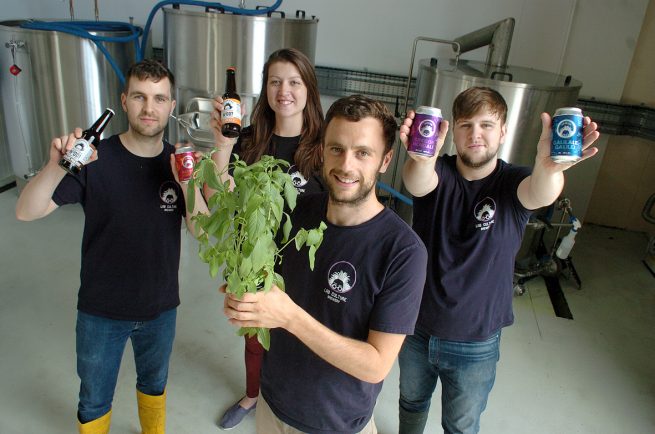
An Alvechurch tech firm has launched a new ‘vertical farm’ designed to produce high-quality, home-grown salads, herbs and greens.
Vertivore Farm, created by Astwood Group, and based at Moons Moat North Industrial Estate, is ideal for large or small-scale food producers who want to source the finest, local ingredients.
The farm itself consists of a climate-controlled chamber with a stream of LED lights to grow ‘beyond organic’ and nutritional produce, which is said to lead to ‘improved quality and taste’.
Michael Capwell, CEO of the Astwood Group and founder of Vertivore said: “Advances in technology have made foods available that were previously seasonal or regional, but with a devastating impact on the planet.
“In developing and launching the farm, we have successfully established an environmentally-friendly way of growing home-grown produce, without the use of damaging pesticides.”
Vertivore conserves natural resources, using 70% less water than soil-based farming and does so with fewer miles involved to travel from pallet to place.
“This could be vital as and when we feel the impact of Brexit,” said Michael.
With its pilot vertical farm successfully up and running, Astwood Group boasts ambitious plans for the Vertivore brand, with an aim to scale through the launch of new sites in strategic locations across the UK.
With produce grown and harvested 365 days a year, without the requirement for good weather, herbicides or pesticides, Vertivore has already received interest from a number of industry stakeholders.
For more information head to – www.vertivore.com
Photos:
1. Jack Gooch, Will Evans, Bert Roelants and Amber Capewell. Picture by Marcus Mingins 2119016MMR1 www.buyphotos247.com
2. Bert Roelants, Amber Capewell, Will Evans and Jack Gooch. Picture by Marcus Mingins 2119016MMR2 www.buyphotos247.com

Connecting Technology & Business To Create Healthier Urban Food Systems
Mission Statement
The Indoor AgTech Innovation Summit will focus on building and investing in more sustainable, profitable and healthy food systems and the role that vertical and indoor agriculture can have in serving the cities of tomorrow.
The Summit will share best practice from around the world and uncover breakthroughs in energy efficiency, AI, automation, lighting, environmental control and yield improvements are set to transform these systems in the future.
Bringing together a unique mix of operators, food producers, technology developers, plant scientists, food buyers, retailers, financiers, utility operators and city planners, the Summit will explore the innovation, business models and partnerships that are needed to scale this emerging industry.
Key Themes
Nutrition and Food Security in the City: The Role of Indoor Farming in the Future Food System
The Power of Restaurants & Retail in Creating Demand for Healthy, Fresh Produce
Streamlining Access to Capital and Partnerships for Growth
What Success is Asia Having in Taking Indoor Farming to an Industrial Scale?
Food Safety and Labelling: The Collective Benefits of Greater Standardization
From Pilot to Mainstream: A.I., Automation and Systems Design to Transform Horticulture
What will it take for Strawberries to be the Next Big Crop?
Capturing Market Value Through Better Breeding, Genetics and Lighting
Industrial Partnerships to Drive Efficiency and Economic Viability
https://indooragtechnyc.com/
Location
New York Marriott at the Brooklyn Bridge
333 Adams Street Brooklyn, New York 11201 USA
Registration
One Summit Pass: Indoor AgTech
Delegate Registration: $1695
Two Summit Pass: Indoor AgTech and Future Food-Tech
Delegate Registration: $2295
https://indooragtechnyc.com/register/
Focused on the role of vertical and indoor farming in local, regional and national food systems, and new opportunities for investment and collaboration - the summit will connect 300 international operators and food producers with technology entrepreneurs and food retailers, financiers and city planners.
We are delighted to share with you the full program for the Indoor AgTech Innovation Summit, taking place in New York on June 19-20.
Download now to discover who's speaking, session topics and how to join.
Focused on the role of vertical and indoor farming in local, regional and national food systems, and new opportunities for investment and collaboration - the summit will connect 300 international operators and food producers with technology entrepreneurs and food retailers, financiers and city planners.
Here's a snapshot of our exciting thought leaders:
Matt Roy, Senior Director, Produce, US FOODS
Sonia Lo, CEO, CROP ONE HOLDINGS
David Rosenberg, CEO & Co-Founder, AEROFARMS
Victor Verlage, Senior Director, Resilient Sourcing, WALMART
"The Indoor AgTech Innovation Summit was my one-stop-shop where business, science and technology converged in the most effective manner. The event was put together impressively well, enabling attendees to interact and build lasting relationships. It’s an A+ from me!"
CEO, ELO LIFE SYSTEMS
REGISTRATION IS NOW OPEN
We look forward to welcoming you to the summit this June.
With thanks to our Partners:
Who is Coming
Platinum Partner:
Gold Partners:
Silver Partners:
Marketing & Media Partners:
Co-located with:
Part of:
Hosted by:

"If You Wouldn’t Be Comfortable Drinking Your Processed Water, You Shouldn’t Be Comfortable Using It On Produce"
On May 22, the Canadian Food Inspection Agency added a Class 1 (high risk) recall for microgreens – due to listeria contamination – to its Food Recall Report.
"Food recalls are serious business", Jim Shubat with SanEco Tec says. "Producers face heavy financial consequences; consumers are exposed to potential health risks; consumers lose trust in products and companies; and litigation follows. It’s a devastating spiral."
Counting the costs
In 2018, there were 708 food recalls in the U.S. A survey by the Food Marketing Institute and the Grocery Manufacturers Association found that direct costs of a food recall can reach $100 million, with indirect costs growing exponentially in the event of health effects.
Along with direct costs comes, of course, the loss of trust. According to Harris Interactive’s survey, after a recall, 15% of consumers would never buy the product again and 21% would not buy any product by the same manufacturer.
"When the consequences are so grave you’d think the best way to keep money in the bank and consumers on your side is to avoid recalls", says Jim. Isn't that an oversimplification? "Perhaps", he states.
"Except that a major cause of food recalls relates to something as simple as water. Many recalls are due to microbiological contamination from water sources or through unsanitary handling along the supply chain."
'It stands to reason that by proactively taking care of your water – making it your first line of defense, you can reduce the risk of recalls."
Start with the source
Where is your water coming from? What could be influencing its quality?
"Farmers and growers especially have to be careful about the quality of their irrigation water. Source water, whether from a surface or well, can be contaminated by animal fecal matter or sewer overflows and run-offs, which greatly increases the risk of E. coli", says Jim.
"Checking your water a few times a year for E. coli isn’t enough to ensure that your water is safe. Frequent and repeated testing, or better yet, treating your water with a system that combines filtration and disinfection is the best way of preventing microbiological risk", says Jim.
Don’t leave it up to Lady Luck
In Ontario, it is required that “water used for washing and cooling of fresh, ready-to-eat fruit and vegetables must be of potable quality” as determined by the Ontario Drinking Water Quality Standards.
"If you wouldn’t be comfortable drinking your process water, then you shouldn’t be comfortable using it on produce", says Jim.
He explains how AVIVE systems, developed by SanEcoTec® Ltd, are engineered water solutions that combine disinfection, a multi-barrier approach and real-time water quality monitoring and process control for clean, safe and dependable water. AVIVE aims to provide water that is free of microbial contamination, like E. coli and listeria.
"Our Smart Water monitoring system, called SPI®, provides real-time monitoring and analysis, ensuring sanitizers are always at the optimal level", he continues. "This way you can keep eyes on your water with real-time water quality monitoring and process control."
Recently, SanEcoTec received a Letter of No Objection (LONO) from Health Canada for the use of its Clean5, Clean25 and Clean50 sanitizers in process water on fresh and minimally processed fruits and vegetables. The LONO is a standard form letter in response to a detailed scientific submission expressly stating that Health Canada sees no reason why the sanitizers should not be used. The line of sanitizers is also recommended by HACCPCanada.
Remember your process water
"Bacteria can enter produce through stem, leaf and root, and contaminated water can promote infection on the inside and the outside of fruit."
"Contamination can still happen along the supply chain due to poor hygiene standards among workers or cross contamination, but adopting sanitation measures for your irrigation and process water gives you a good head start."
For more information:
Joy Knowles
SanEcoTec
Joy.Knowles@SanEcoTec.com
T: +1.613.491.0525 x 2620
www.sanecotec.com
Publication date: 5/27/2019

Parts of India: Heat Wave Causes Vegetable Prices To Rise 40% in one week
The heatwave sweeping through large parts of India has made vegetable prices skyrocket with some areas seeing a 25-40% rise in bills in the past 10 days
June 17, 2017
Source: economictimes.indiatimes.com
The heatwave sweeping through large parts of India has made vegetable prices skyrocket with some areas seeing a 25-40% rise in bills in the past 10 days. Traders said prices are likely to remain volatile until monsoon rain covers the main growing areas in the country. In April, wholesale prices of food rose 3.4%, but fruits and vegetable prices were up 14%.
Kailash Tajne, president of the Vashi Agricultural Produce Market Committee (APMC), said that vegetables were selling for 30-40% more than usual price since the past 10 days. “The heat is immense, and planting has been less due to water shortage in Maharashtra, Gujarat, Karnataka and Andhra Pradesh, leading to a shortage of vegetables,” he said.
He said other vegetables such as bottle gourd, bitter gourd and cabbage have also seen a similar increase. “Vegetables are coming from Gujarat and Delhi, making them costlier,” he said.
In the Delhi’s Azadpur mandi, traders said prices of coriander, lemon, tomato, onions and green vegetables have risen gradually. They said expected arrivals from Himachal Pradesh and Uttar Pradesh should bring some respite in two weeks.
“Farmers will now plant tomato and onion in July. This has led to an increase in prices by Rs 2-3 a kg in wholesale to Rs 14-15 a kg for onion and Rs 20-25 a kg for tomato since the past 7-10 days,” he said.
Gadhave said prices will continue to rise over the next few days, even after the progress of monsoon towards south and western India. “It will take at least two months for the new crop to be harvested.”
US: South Carolina: Hamby Catering And Vertical Roots Team Up To Bring Locally Grown Lettuce To An Event Near You
Jun 12, 2019
Posted by Sara Srochi
As of Mon. June 10, Vertical Roots has partnered with Hamby Catering & Events, Charleston’s oldest local catering company, to be their exclusive lettuce provider in a shared effort to increase the amount of locally grown food consumed in Charleston.
Vertical Roots is a hydroponic farm that produces fresh, chemical-free lettuce year- round in recycled shipping containers. Perhaps the most exciting aspect about this new partnership is the environmental impact it has.
Vertical Roots is only 16 miles away from the catering company's home base in West Ashley. By teaming up with this little new age farm, Hamby is taking steps in being environmentally conscious (goodbye imported products delivered from hundreds of miles away) while improving the quality of their produce at the same time.
The farm is able to produce above average veg because of their high-tech growing method: seedlings grow in automated "growing pods," that are climate controlled, which reduces excess water (in fact, it uses about 98 percent less water than traditional agricultural methods). The pods require no soil and use LED lights to mimic sunlight, so lettuce can grow inside all year long without any interference from mercurial Mother Nature.
“Being part of the Charleston community for 40 years makes it all the more important for us to support the community that has so graciously supported us,” said Hamby Catering President Candice Wigfield in a press release. Vertical Roots lettuce will be used for all Hamby catered-events, as well as the Market at Hamby, located at their West Ashley location.
You can find Vertical Roots lettuce (we love the Bibb) at Harris Teeter, Food lion, Whole Foods, Lowes Foods, Earth Fare, and soon, Publix.

We Are EXCITED To Introduce You To Our Newest Partner! Meet DANI!

A Non-Profit Organization that creates opportunities for adults with physical and/or cognitive challenges so that they can participate fully as valued members of the community and enjoy a meaningful and dignified quality of life! DANI offers vocational training and the partnership with Ripple Farms provides employment to adults with disabilities.
We Have Helped To Create Their Newest Opportunity! A Vertical Hydroponic Microgreen Farm! The Produce Is Now FOR SALE On 100km Foods!
Click the link to learn more about DANI! https://dani-toronto.com/
Our Micrgogreens Are Available Through 100Km Foods!!
Chefs, Restaurants, Caterers! You can now add Ripple Farms Microgreens to your 100KM Foods Order!
Pea Shoots, Radish, Fenugreek, and Kale are available!
Our Vertical Farming Bootcamp was a SUCCESS!
Thank you to all of our participants and supporters!
Interested in participating in future Bootcamps? Send an email to opasut@ripplefarms.ca to make sure you get Bootcamp updates!

GP Solutions Installs State-of-the-Art Growth Chamber at University of California, Riverside
Specially configured “GrowPod” will be used to expand knowledge into advanced agricultural methodologies
Corona, CA – May 14, 2019 – GP Solutions (OTC: GWPD), developer of GrowPod modular automated micro-farms, announced it has installed one of its state-of-the-art Growth Chambers at the University of California, Riverside. The growth chamber will be utilized for agricultural and horticultural research at the University.
Grow Pod Solutions developed the specialized system to meet the need for a large walk-in growing system that offers researchers a precision-controlled environment to conduct sophisticated research at laboratories and universities across the country.
Grow Pod Solutions offers one of the finest walk-in growth chambers available, and features a number of advanced technologies, including optimized photosynthesis, high level security, 24/7 remote control and video monitoring via a cloud-based platform, and precision environmental controls for temperature, humidity, and other vital factors.
The GrowPod system provides an optimum solution for research with a clean environment that is free of contaminants, pathogens, and pesticides.
The University of California, Riverside, College of Natural and Agricultural Sciences, is one of preeminent institutions of its kind in the world. Known for its cutting-edge research, the campus is at the forefront of ag-science and operates several prominent institutions, including The California Agriculture and Food Enterprise, The Citrus Research Center, The Center for Conversation Biology, and The Center for Integrative Biological Collections.
GP Solutions is proud to be a provider of technology and expertise to the University, and looks forward to becoming an integral partner in the ongoing development of advanced cultivation methodologies.
For more information, visit: www.growpodsolutions.com, or call (855) 247-8054.
ABOUT GP SOLUTIONS:
GP Solutions is at the forefront of clean agriculture. The company developed “GrowPods” – innovative indoor clean micro farms that provide optimum conditions for plant cultivation with total environmental control. GrowPods are modular and automated for ease of use and scalability.
Forward-Looking Statements
This release includes information considered “forward-looking” within securities laws. These statements represent Company’s current judgments, but are subject to uncertainties that could cause results to differ. Readers are cautioned to not place undue reliance on these statements, which reflect management’s opinions only as of the date of this release. Company is not obligated to revise statements in light of new information.
Connect:
Email: info@growpodsolutions.com
Website: www.growpodsolutions.com
Facebook: facebook.com/GrowPodTechnology
Twitter: @GrowPodSolution

Could This Ancient Jewish Practice Be A New Tool For Sustainable Agriculture?

Ethan Blake posted April 17, 2019
The practice of letting the land lie fallow after every six years of farming requires a complete reset in sustainable practices—and could gain traction as a way to combat climate change.
The practice of letting the land lie fallow after every six years of farming requires a complete reset in sustainable practices—and could gain traction as a way to combat climate change.
Schoolchildren gather around a seemingly neglected garden bed at Urban Adamah, a Jewish farm and educational center in Berkeley, California. Educator Ariela Ronay-Jinich shows the students that while the plot appears abandoned, it’s actually the farm’s most fertile patch of soil. The children dig their hands an inch beneath the surface and uncover a thriving community of worms and insects, including a foot-long earthworm.
Ronay-Jinich explains that the plot has been set aside for shmita, a Jewish farming practice dating back to Biblical times, that lets the soil rest for one year after every six years of farming (the next shmita year is September 2021–22). Intended to express gratitude for abundance and share one’s fruits of labor with the less fortunate (in accordance with laws that require farmers to forgive debts and leave field corners for the needy to glean), the practice derives from rules laid out in Exodus (23:10): “And six years thou shalt sow thy land, and gather in the increase thereof; but the seventh year thou shalt let it rest and lie fallow, that the poor of thy people may eat; and what they leave, the beast of the field shall eat.”
Many farms leave portions of the land fallow for a season. But, says Lucy Zwigard, a farmer at Urban Adamah who has also practiced agroecology in France, “what sets shmita apart from typical crop rotations is that it invites us to reimagine our fundamental relationship with the land. Winter cover cropping and no-till farming, for instance, are still production-based and ‘business-as-usual.’ Shmita is a full-stop, reset, rethink of cultivation.”
While shmita is not widely practiced on commercial farms, even in Israel, its age-old ideals have gained traction in the United States over the past decade as the field of spiritual ecology—an understanding of environmental degradation as rooted in spiritual malaises such as greed and apathy—has taken off.
“Jewish community farms,” including Philadelphia’s Jewish Farm School, Illinois’ Pushing the Envelope Farm, and San Diego’s Coastal Roots Farm all employ the shmita practice as they follow Talmudic agricultural law. These organizations are part of a modern movement with a reawakened interest in what they call “earth-based Judaism,” which approaches climate change and environmental sustainability through a lens of ancient wisdom.
Even secular farms, such as the Stone Barns Center for Food and Agriculture, incidentally employ shmita-style philosophies in their work; its farm incorporates the idea of rest and follows a seven-year rotation plan in its vegetable fields, based on the seven major plant families.
In light of new research on carbon sequestration, allowing soil to go fallow poses an age-old, no-maintenance way to regenerate soil at any scale. Industrial agriculture and desertification have together depleted global grasslands and prairies to the extent that, according to Rattan Lal, director of Ohio State University’s Carbon Management and Sequestration Center, the world’s cultivated soils have lost 50 to 70 percent of the carbon in the soil as it has entered the air as atmospheric carbon dioxide.
In addition to reducing carbon outputs like burnt fossil fuels, humans can draw carbon back into the ground by restoring organic soil matter as a “natural sink.” Through photosynthesis, plants intake carbon from the air and feed it to deep soil organisms, and the healthier the soil, the greater its holding capacity for carbon. Shmita could complement otherland conservation and carbon sequestration techniques—including agroforestry, holistic planned grazing, and regenerative low- and no-till agriculture—by that simply letting land rest can alone increase soil fertility and thus sequester carbon.
Many manifestations
Shmita dates back thousands of years, to a time when growing food was more central to human life than it is today. Farmers prepared for several years prior to store food and plant enough perennials to eat during shmita. During that year, they only harvested as much as they needed to eat at any time, and otherwise rested from agricultural labor. (Farmers were the first professionals to take a “sabbatical year,” which later extended to clergy and scholars.) However, the financial and operational logistics make whole-farm shmita much less feasible on today’s farms.
Urban Adamah’s main field in Berkeley, California. Photo from Urban Adamah
Few farms practice shmita in Israel today, and when they do, ultra-Orthodox Jews eat domestically grown perennials but import annual produce from non-Jewish farmers abroad. (Observant Jews believe that shmita law only applies in Israel, so while they eat any food grown internationally by non-Jews, they cannot eat Israeli-grown annuals.)
Even though the laws of shmita don’t officially apply in America, many farms—ranging from for-profit farms to urban synagogues’ educational gardens and rural retreat centers—harness its wisdom in creative ways, says Shani Mink, a co-founder of the Jewish Farmer Network and a member of the National Young Farmers Coalition.
“At the Isabella Freedman Center in Connecticut, they designate a plot of their land during shmita year as one without fences, meaning that anyone is welcome to come and harvest,” Mink said. “Maryland’s Pearlstone Center scaled back their farming, took a break from their fellowship program, and spent the full year observing the land and composing a master ecological plan that would both grow the community and nurture the biodiversity of the 180-acre property.”
“We donate 70 percent of our produce, and we sell 30 percent of it as pay-what-you-can.”
Philadelphia’s Jewish Farm School only has one fallow bed, but co-founder Nati Passow says, “we manifest shmita’s values in various other ways.” Their garden started as a vacant lot and they eventually took down the fences, bought the lot, and made it a public space for children as well as for community programs. They also started donating produce to Food Not Bombs, a food justice organization with a location across the street.
“By literally taking down fences, we created inclusive public space,” Passow says. “We have been planting more fruit trees, berries, and perennials, and during the last shmita year, we restricted ourselves from storing surplus harvest—because that creates an accumulation of wealth—so that we could only take what we needed at the moment.” Passow also notes that a couple of years ago, the Jewish Farm School held a forum about shmita and, to his surprise, Christians in particular from around the country were interested in learning about and implementing the practice in their congregations and gardens.
San Diego’s Coastal Roots Farm exemplifies another revised shmita observance. “For what we call ‘above-ground growing,’ we plant seedlings and organic matter into GardenSoxx, place them on top of a small shmita bed, and give them drip irrigation so that the ground below can rest,” says Sharone Oren, the farm’s education manager.
“Our farm relies on continual grants—we donate 70 percent of our produce, and we sell 30 percent of it as pay-what-you-can, so we cannot pause operations for one whole year,” Oren explains. “Instead, we use the shmita plot—half of which [is planted with] perennials—as an educational tool, which we arranged as a meditation labyrinth for visitors to wander through and ponder its principles.”
Listening, engaging, and resting with the land
The Jewish sustainability organization Hazon, headquartered at the Isabella Freedman Center, launched the Shmita Network and the Shmita Project Sourcebook as resources for the next shmita year.
In addition to a history and textual interpretations of shmita, Hazon’s Sourcebook provides an appendix of practical agriculture techniques that combine Jewish law with permaculture design principles. Though permaculture is a relatively new approach—first developed by David Holmgren and Bill Mollison in the late 1970s—many Jewish farmers find its methods compatible with shmita’s principles.
The pay-what-you-can farm stand at Coastal Roots Farm. Photo from Coastal Roots Farm.
The pay-what-you-can farm stand at Coastal Roots Farm. Photo from Coastal Roots Farm.
One section, for example, argues that a “perennial-based food system”—which includes trees, shrubs, mushrooms, and wild (uncultivated) crops—leads to a healthier and more resilient food ecology. Perennial plants “invest more into their own plant body (since they are long-lived), while annuals invest more in producing seed (since they live only through their seed production),” according to the book. They therefore have longer roots that tolerate drought and access more nutrients in the soil, stronger bodies that resist diseases and pests, and single planting that reduces soil disruption.
Yigal Deutscher, a farmer, permaculture designer, and author ofEnvisioning Sabbatical Culture: A Shmita Manifesto, says that shmita is more than just producing food and undoing the shortcuts that industrial agriculture has taken to make unsustainable profits, he says. “It is a whole systematic approach of regenerative agriculture. You cannot just buy a permaculture book and be all set. Every land has its own agreements with the people who tend it, and each has a different mythology and ecological relationship that has taken generations upon generations to learn.”
No matter if a farmer is Jewish or secular, uses crop rotations or no-till methods, harvests wild annuals or only perennials, Deutscher says, they apply shmita if they listen to and engage in a deep ecological relationship with the particular land and its needs.
Perhaps shmita could be the next sustainable agriculture wave, or as environmental psychologist and activist Dr. Mirele B. Goldsmith foresees, “In a world inspired by shmita, there will be no early deaths from filthy air, no oil spills, no devastated mountains and collapsing coal mines, no toxic wastewater from fracking, no contaminated nuclear plants, no oil-fueled wars, and no climate change.” Despite various interpretations, one conviction is ubiquitous: periodic rest is essential for one’s field and, by extension, the planet’s health.
This article was originally published by Civil Eats. It has been republished here with permission.