


Welcome to iGrow News, Your Source for the World of Indoor Vertical Farming

CDC Warns Against Pre-Cut Melon and Tahini Used in Hummus
The melon-linked outbreak was traced back to watermelon, honeydew melon, cantaloupe and mixed fruit from Caito Foods, a manufacturer that distributes nationwide
The Centers for Disease Control had some gloomy warnings to kick off Memorial Day Weekend. Pre-cut melon and a popular type of tahini –used in summer salads and hummus– are responsible for Salmonella outbreaks all over the country. Health officials urge Americans to be cautious as they prepare their sunny spreads for the customary long-weekend garden parties.
The melon-linked outbreak was traced back to watermelon, honeydew melon, cantaloupe and mixed fruit from Caito Foods, a manufacturer that distributes nationwide. The offending fruit, sold in clear packages, was sold in 16 states: Illinois, Indiana, Iowa, Kansas, Kentucky, Michigan, Minnesota, Missouri, Nebraska, New York, North Carolina, Ohio, Pennsylvania, Tennessee, West Virginia and Wisconsin.
In the last couple of months, 137 people fell ill. Officials say there have been no cases in recent weeks, suggesting the outbreak is over.
According to FDA reports obtained by Food Safety News in an FOIA request, the issue at Caito Foods dated back to 2016. Inspectors found evidence of employees in the Indianapolis plant shoving waste deep into a trash can before returning to cutting fruit without washing their hands. They also found listeria on butternut squash, but, reportedly, declined to recall the squash because it was intended to be cooked.
Tahini is a blended, runny sesame sauce, that can be drizzled over snacks, salads or hot dishes, and is a key ingredient in hummus. A couple of decades ago, infected tahini wouldn’t have made any impact on the US market. But, in recent years, Middle Eastern food has become a stable in US supermarkets, restaurants and kitchens, and hummus is a staple of almost every casual social event.
According to brinkwire.com, the recall is tied to Brodt Zenatti Holding LLC in Jupiter, Florida, which manufactures US tahini for two top brands, SoCo and Karawan. SoCo (Seeds of Collaboration) is an Israeli-Palestinian venture, and Karawan hails from Ethiopia. Both have gained sizeable markets in the US, where they are sold as various types of tahini and used for hummus.
In a warning issued on Friday, the CDC urged restaurants and supermarket shoppers not to ‘eat, sell, or serve’ tahini labeled as ‘Karawan Tahini’, ‘El-Karawan Tahini’, or ‘SoCo Tahini’, nor any products made from it.
Publication date: 5/27/2019

Sustainable Sales Is Excited To Announce That GardenSoxx Are Now Available In Both Full Sized Rolls, One Foot Increments, and In Retail Packaging


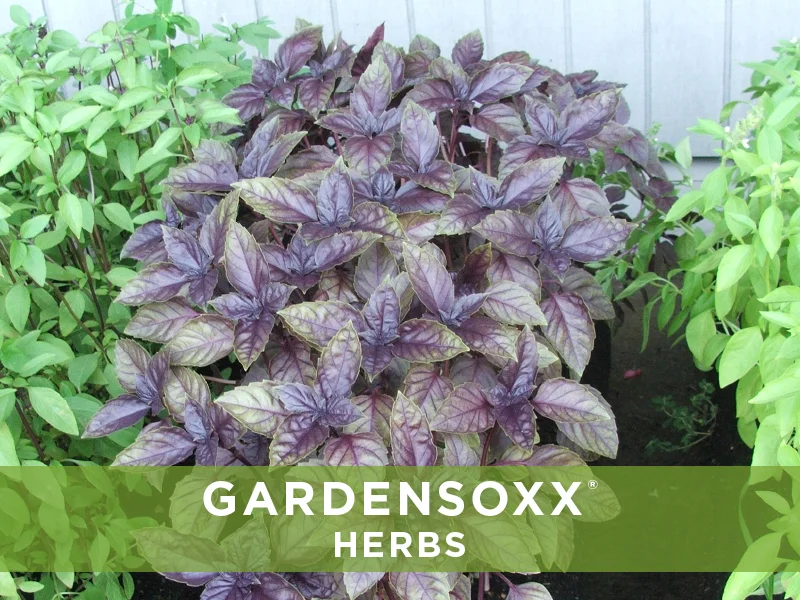
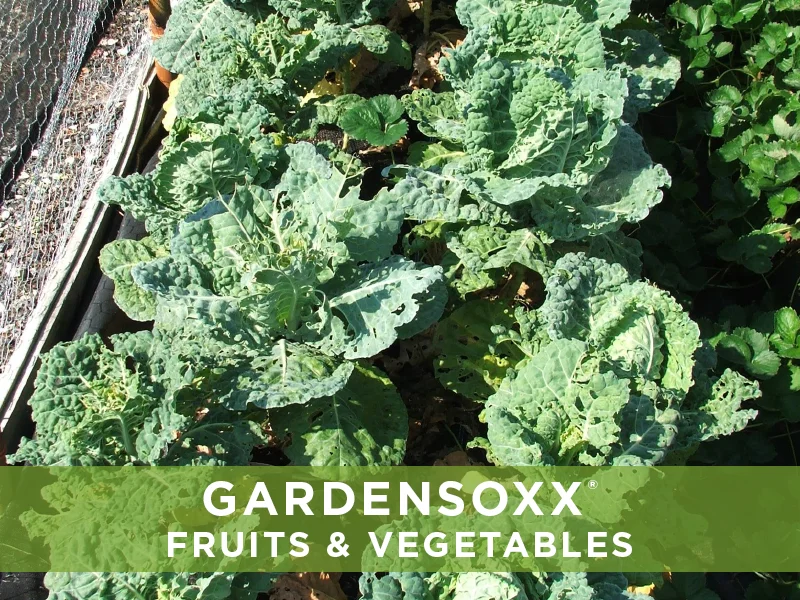
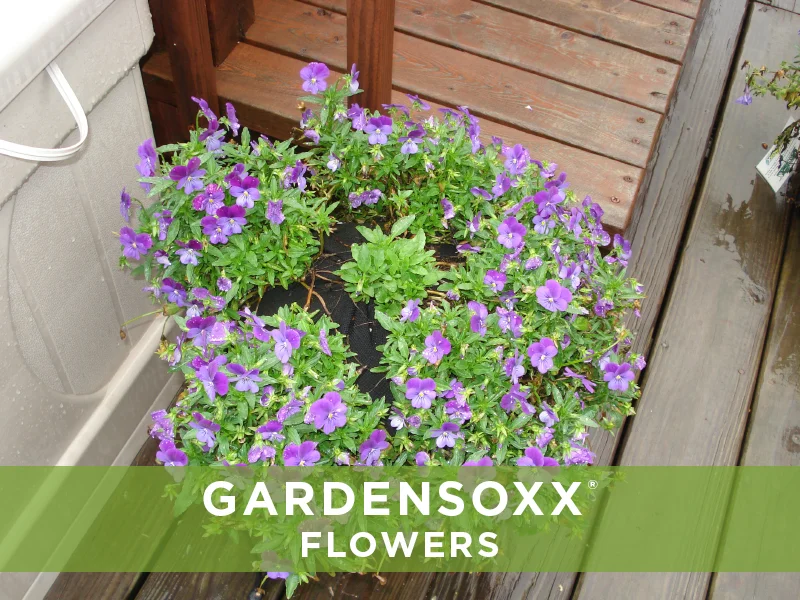
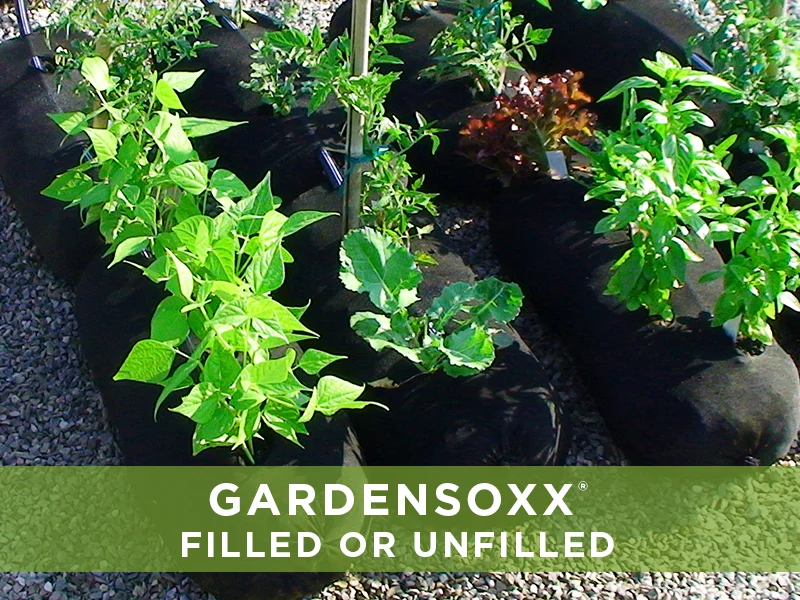


Urban Gardening Made Simple
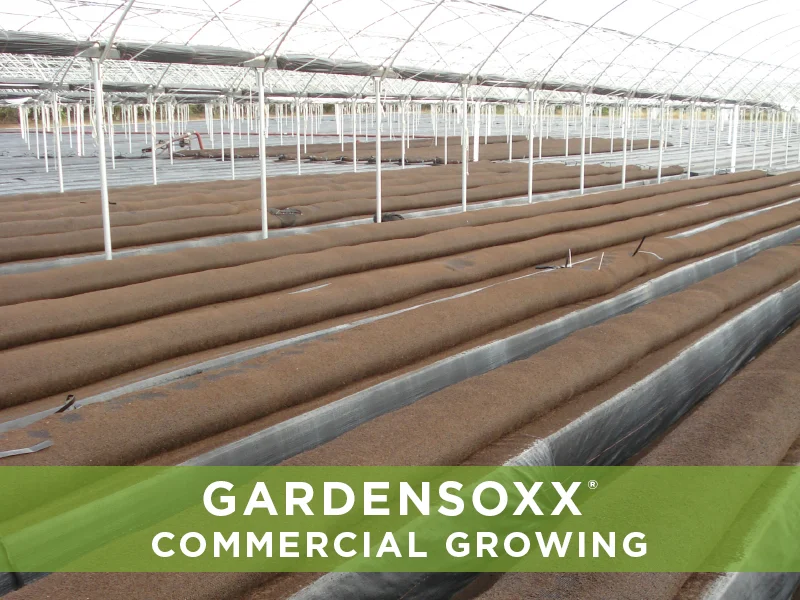
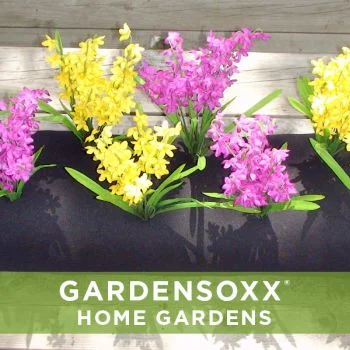
Sustainable Sales is very excited to announce that they are now selling GardenSoxx in both full sized rolls and one foot increments! And for easy resale, you can also purchase the GardenSoxx in retail packaging.
With The Growth of Childhood Obesity, We believe The Best Way To Help Children To Be Healthy Is By Teaching Them To Garden in School.
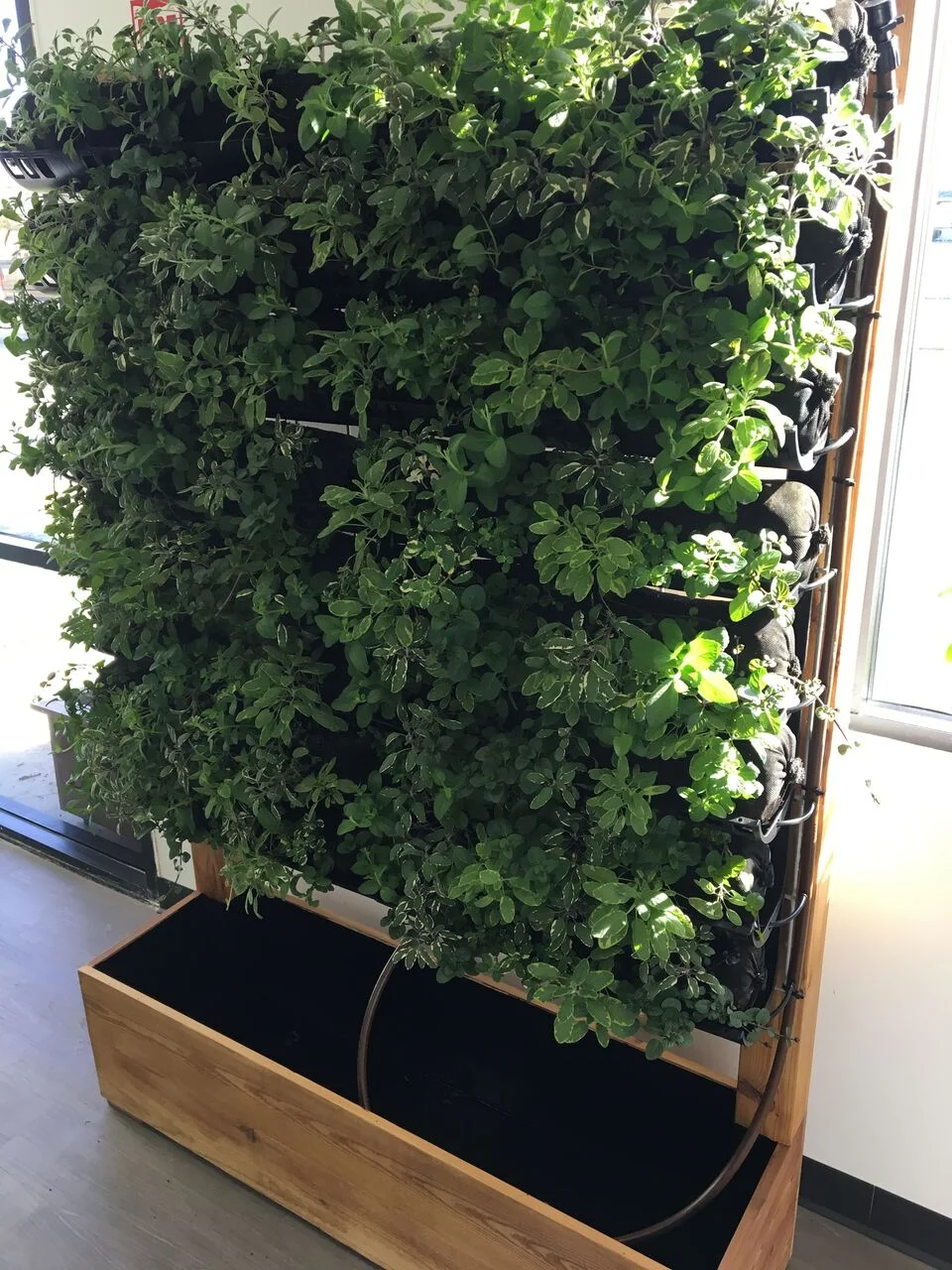
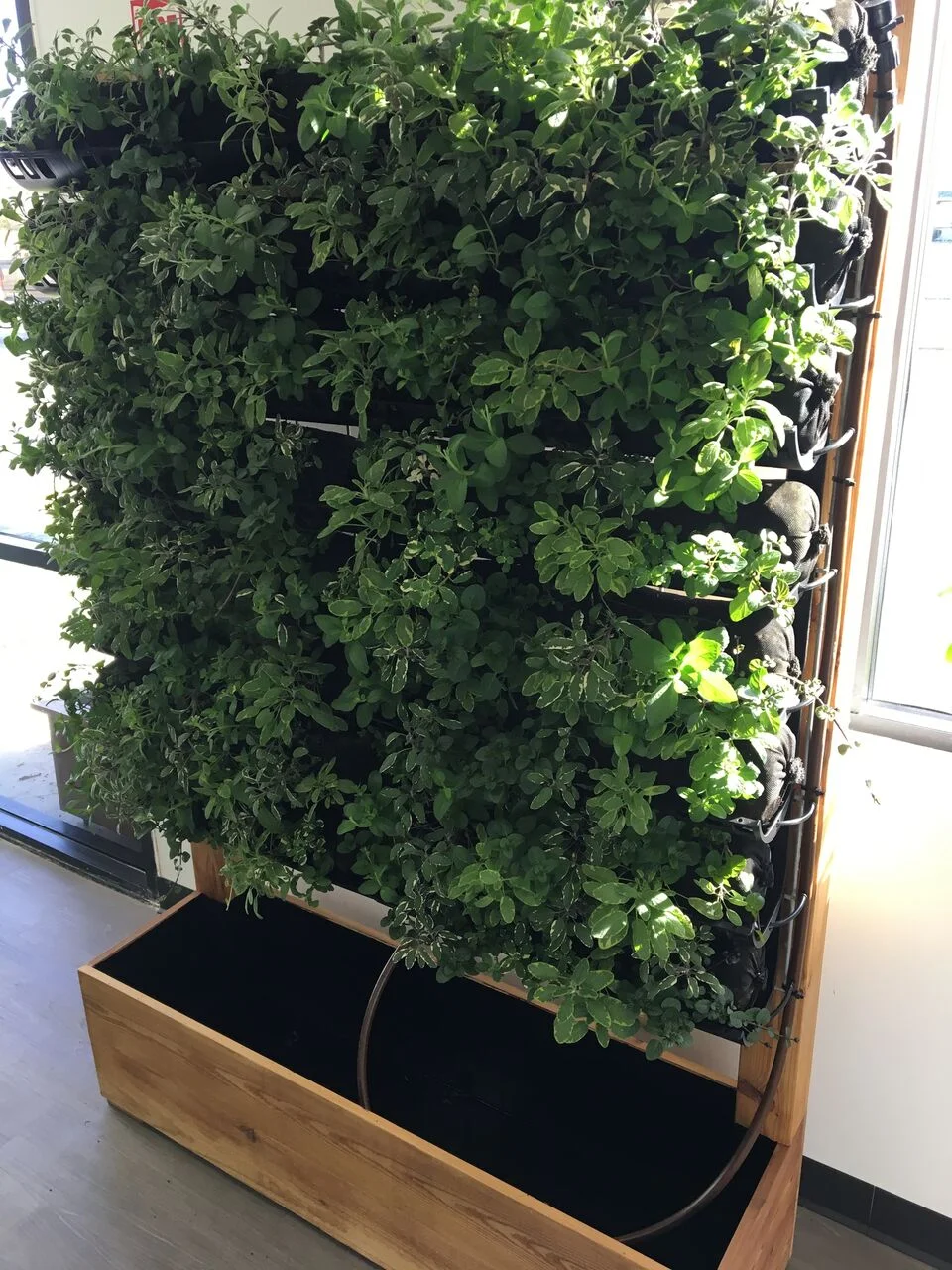
GardenSoxx® is an innovative gardening system that combines our patented mesh technology with high-quality growing media. The mesh provides optimum drainage, aeration, and temperature to grow a healthier root system, and a more productive garden. Excess water can drain through the mesh while essential oxygen flows in. The additional air flow also helps to cool the root zone in hot weather, improving growth.
GardenSoxx are available both unfilled and pre-filled. Unfilled GardenSoxx can easily be filled with local bagged/bulk compost or bagged/bulk planting mix. We recommend using a composted media.
Pre-filled GardenSoxx use a locally-sourced composted Filtrexx® GrowingMedia™ made from recycled green waste. Our GrowingMedia is made from 100% composted green waste. Compost is an extremely nutrient-rich media that acts like a natural sponge to absorb a huge volume of water as compared to topsoil.
Years of product research have gone into making GardenSoxx® the best container for growing vegetables, fruits, herbs and flowers. Filtrexx has designed, tested and manufactured GardenSoxx with Filtrexx GrowingMedia, a compost made from yard trimmings.
Our media is extremely nutrient rich and has specific characteristics that make more suitable as growing media versus a soil amendment.
Agricultural research shows that GardenSoxx can result in a healthier, more productive crop.
For More Information Contact: Barb Wehmer
barb3wehmer@gmail.com www.sustainablesales.net
(217) 653-2513

Tradeoffs In Aquaponics Vs Hydroponics, By The Numbers
Enhanced flavor and higher consumer preference for ecologically grown products make aquaponics better aligned with consumer and operator interests
Part two in our “Lean manufacturing for indoor agriculture” series

Nov 26, 2017
In our previous blog post, we made the case that aquaponics enables better capacity management for indoor agriculture than hydroponics. The basis of our argument is that aquaponics is a “just-in-time” manufacturing system — multiple SKUs with different nutrient requirements can be produced in the same aquaponic system simultaneously without sacrificing quality or yield, whereas multiple hydroponic systems with different nutrient recipes would be required to achieve similar quality and yield.
This is one of the key reasons that we believe aquaponics is the future of indoor farming.
But what if you stripped away all the benefits of aquaponics? Is aquaponics still competitive with hydroponics on cost if you assumed the same yield, quality, and breadth of product with no fish sales? Unwinding this is the purpose of this blog post, and we find that aquaponics is slightly more expensive with costs 2% higher than those in hydroponics as a percentage of revenue. To compensate for this, aquaponic operators will need to utilize the capacity management methods discussed in our previous blog post to achieve throughputs ~2% higher than their hydroponic counterparts. Below, we break down how we got to these numbers.
But first, there are trade offs besides cost in choosing aquaponics over hydroponics. Let’s start with aquaponics’ unique barriers to entry.
Nonstarters
The first two tradeoffs with aquaponics are existential. The inability to overcome these first two tradeoffs will make it highly unlikely the aquaponic farm will get off the ground.
Lack of off-the-shelf systems and expertise. If you want to be a commercial hydroponics operator, there are dozens of top-notch hydroponic design and consulting firms who can construct turnkey, state-of-the-art hydroponic farms anywhere in the world and even bring in an experienced grower to run the operation. If you’re a hobbyist, you can buy an off the shelf hydroponic system, along with the hydroponic bible, Howard Resh’s Hydroponic Food Production, and get yourself 80% of the way there (it’s great — aquaponic hobbyists should buy it too and get themselves 50% of the way there). In short, hydroponic education and expertise is accessible.
In aquaponics, while there are experts who have designed large scale commercial operations, these experts are few and far between. Scaling an aquaponic farm relies on finding these people, most of whom are not in the US. On the education front, while there are books on aquaponics, the true leaders of the movement are PhD-level researchers who have published narrowly focused academic papers as opposed to accessible, comprehensive, authoritative guidebooks. It’s on operators to find the right people, design a stable system, and implement a comprehensive operating plan.
Keeping the fish and plants healthy, at the same time. This is a big one. Each piece of the aquaponic ecosystem — the fish that supply manure, the bacteria that break down the manure into nutrients that are bioavailable to the plants, and the plants that absorb those nutrients and drive revenue — requires slightly different environmental conditions. Optimizing for plant health, as a result, requires monitoring three different systems as opposed to one.
Even if you were to install a well-designed aquaponic system and manage the operational tradeoffs, black swan events happen. If the fish develop an infection, if you develop a fly infestation, or if pythium (a common fungus that wreaks havoc on plants) takes root, the standard remedies of antibiotics for fish or toxic pesticides for crops won’t cut it in a traditional aquaponic design.
Your production is entirely dependent on maintaining a healthy ecosystem and plant microbiome. When you kill the bad microbes through antibiotics or pesticides, they tend to kill the good microbes too. Most pesticides, even organic ones, are not “fish safe” — fish are particularly chemical sensitive. For aquaponic farmers, the ecological approach to farming doesn’t just apply when yields are steady. It applies 24/7, 365 days a year, barring traditional, toxic, pesticidal approaches to solving these problems.
All that said, hydroponic and aquaponic operations are converging towards similar operating constraints due to technology improvements and consumer demand. One of the most sought after labels in produce is “pesticide free”. As a result, many of the latest generation of hydroponic operators have taken up the label, limiting themselves to the same biological and ecological remedies aquaponic operators are inherently restricted too. At the same time, “decoupled” aquaponic systems, where water only flows in one direction — from the fish to the plants (and not back again) — are growing in popularity due to their ability to treat the plants without worrying about the effect on fish. The result is the ability to use the same plant treatments as a traditional hydroponic facility.
Luckily for all camps, there are plenty of ways to remedy these issues in pesticide free facilities that are more cost effective than traditional approaches. In indoor farms especially, the incidence of most issues can be reduced through rigorous standard operating procedures for both day to day practices and early detection of and response to ecological stress.
If you’re confident that you have the expertise to design a stable aquaponic system and to handle both the operating basics and ecological considerations during black swan events, then it’s worth digging into the operating costs of aquaponics and hydroponics.
Comparing operating costs
There are certain added costs associated with aquaponics — there’s no free lunch, so growing all those fish has to be accounted for somewhere. For aquaponics to be a better business than hydroponics, the added costs must be compensated for by either higher throughput of salad greens or fish. In our previous blog post, we showed how aquaponics can achieve higher throughput than hydroponics. In this analysis, assuming fish are never sold, we show that throughput needs to be ~2% higher in order for aquaponics to beat hydroponics on cost, which is well within aquaponics’ potential.
We have put these tradeoffs in a spreadsheet for a more convenient comparison. You can see the spreadsheet here, while reading below for context. The numbers here are not reflective of Edenworks’ designs and projections. We’re basically asking “if we ran our competitor’s farms aquaponically instead of hydroponically, what would the business look like?” For example, Gotham Greens projected an EBITDA for their first facility at “greater than 15%,” and so we’ve targeted a 15% EBITDA margin for the hydroponic facility, then made a few changes based on industry-standard assumptions to back out the aquaponic cost analysis.

source: Edenworks spreadsheet analysis
The following line items are the largest cost differences:
Added expense of fish feed. While hydroponic fertilizer is most often composed of mined mineral salts, fish feed for aquaponics has the fat and protein that the fish need along with the minerals that both plants and fish need. For aquaponics in a recirculating shallow water culture system, we calculate¹ the expense of fish feed to be about 9 cents per pound of harvested greens, a 7 cent premium over synthetic hydroponic fertilizer. Assuming best in class yields for both systems, this comes out to a 1.4% difference in nutrient costs between the two systems, as a percentage of revenue. However, with the world farming more fish than ever before, new technologies are coming online that are expected to substantially lower the price of fish feed, while also making the feed more sustainable.
Added labor. Most indoor farming facilities have a long way to go until they can be considered highly automated. Despite incorporating automation and machine learning techniques for things like climate control and disease detection, modern indoor farms still complete many tasks, such as harvesting, by hand. The biggest labor efficiency gains are fertilizer (i.e. hydroponic / aquaponic) agnostic. Those gains come from automating the movement of plants through the production system, along with the unit tasks of seeding, transplanting, harvesting, packaging, and cleaning. This is where Edenworks has invested substantially in IP, but that’s a story for another post.
All that said, raising fish does require someone who knows how to spot potential health issues, how to harvest fish, and how to maintain aquaculture equipment. None of this is time intensive, but it does require hiring an aquaculture specialist at each facility.
Space for the fish. Aquaponic fish tanks and hydroponic nutrient reservoirs require similar space. However, aquaponic systems require a bit more space overall for the extra pumps, sumps, and biofilters for converting fish waste into nutrition for the plants — an additional 1.7% more space in our analysis of an approximately 70,000 square foot hydroponic facility. Assuming rent for warehouse space is $10 per square foot, this comes out to a difference of 0.1% of revenue.
Quantifying the total trade-off.
Assumptions are based on commonly used designs, equipment, and raw material suppliers, which are noted in the spreadsheet. Furthermore, in order to get close to an apples to apples comparison, we assumed the following:
Both systems sell baby greens for the same price.
Revenue from fish, and the associated costs of selling fish are not included.
Both systems are vertically stacked, indoor farms.
Yields for both hydroponic and aquaponic systems are the same. For the purpose of this study, we use our yield estimate for AeroFarms. AeroFarms has projected yields of 2 million lbs of greens at their Newark facility. Looking at the size of their facility (69,000 s.f.) and their geometry, we estimate their growing space is ~160,000 s.f.² in vertically stacked beds. This gives AeroFarms 12.5 lbs yield / s.f. / year, which is in line with other best-in-class yields for hydroponic and aquaponic indoor leafy greens farm.
Both systems have similar needs, and therefore costs, for the following line items: energy, packaging, growing medium, seeds, delivery, rent, cleaning and other general farm supplies, and merchandising.
This leaves just three significant differences between the costs of the two systems: nutrients (fish feed vs synthetic fertilizer), labor (employing an aquaculture specialist vs. having one less employee), and rent (extra space needed to break down organic nutrients vs. not needing extra space).
Given the assumptions behind these hypothetical facilities, we estimate aquaponic systems’ costs as a percentage of revenue are 2 percentage points higher than hydroponics’. In order to compensate for these added costs, aquaponic facilities need to sell 2% more of their capacity than hydroponic facilities. As explained in our previous post, with typical per-SKU sales swings in packaged salad of up to 20% week on week, hydroponic farms that cannot grow different crops in the same production system suffer from significant capacity constraints. Aquaponics, on the other hand, can grow wide varieties of crops in the same production system, enabling them to sell higher percentage of their capacity (certainly higher than 2% more).
To top it all off, enhanced flavor and higher consumer preference for ecologically grown products make aquaponics better aligned with consumer and operator interests. It is for these reasons, in addition to its competitiveness with hydroponics on cost, that we believe aquaponics will become the primary fertilization technology for indoor operators as the market continues to grow.
¹ This calculation is based on standard aquaponic feed ratios from Dr. James Rakocy and hydroponic feed ratios from Howard Resh’s book Hydroponic Food Production. These calculations are in the third tab of the spreadsheet and are what we used in this analysis. Comparing one “standard” feed rate to another “standard” feed rate seemed apples to oranges to us though, so we also compared feed costs based on nitrogen content of each feed, and came up with very similar cost ratios. These are presented in the fourth tab of the spreadsheet.
² Aerofarms’ bedspace estimation comes from public websites. For bed width and length, see (a) and (b). For number of beds, see (b) and (c).
(a) https://patentimages.storage.googleapis.com/pdfs/US8533992.pdf
(b) http://www.foxbusiness.com/features/2015/07/28/farming-in-sky-inside-wall-street-backed-vertical-farm.html
(c) https://www.nytimes.com/2015/04/08/realestate/commercial/in-newark-a-vertical-indoor-farm-helps-anchor-an-areas-revival.html

How Cannabis Cultivation Has Advanced Farming Technologies
Those same technologies and practices are being brought to other agricultural products in a phenomenon called vertical farming
May 27, 2019
Canada’s newly legal cannabis industry might still be in its infancy but the legacy of illicit growers continues to contribute to greener agricultural practices across the globe.
The once covert operations—meant to keep cannabis cultivation under police radar—can be credited with creating innovative farming techniques that curb agricultural waste and save on natural resources like space and water.
See how cannabis has already helped in making the future a little greener.
Sustainable, environmentally-friendly farming practices may not have been the initial goal, but are among the unintended side effects of cannabis prohibition in this country.
Looking back to the 1970s when cannabis consumption was skyrocketing in Canada, supply simply could not keep up with demand and prices rose accordingly.
The problem was the supply chain. Most cannabis was brought into Canada by tourists, or people posing as them, returning from tropical nations like Jamaica, Mexico or the Bahamas. Law enforcement seized a big chunk of that illicit supply, causing numerous dry periods.
The solution to the problem was for cannabis enthusiasts to grow their own. That was easy for people living in California, but not so much for those in Nova Scotia.
Canadian cannabis consumers, however, persevered.
Growing indoors, they constantly improved their technology to include hydroponics, aeroponics, grow-lights and other devices to promote growth.
Sean Berrigan/Leafly
They selectively bred strains that were not just hardier, more bountiful, and increasingly potent, but used the same care that vintners take with fine wine to ensure traits they desired.
In just more than a generation, Canada went from having virtually no cannabis crop to becoming the No. 8 producer in the world, according to the UN, and a net exporter of what many consider among the world’s best varieties.
How Canada’s West Coast Became World Renowned for Cannabis Cultivation
And now, those same technologies and practices are being brought to other agricultural products in a phenomenon called vertical farming.
Essentially, the legacy concepts pioneered by cannabis growers have been adopted by people and companies growing other produce indoors with outstanding results. Although most of the biggest producers are in Japan, Taiwan and large American cities—where they can take up whole high-rises and warehouses—it’s quickly becoming big business in Canada too.
According to the Food and Agriculture Organization of the United Nations, as much as 20% of the world’s food supply is grown in urban situations. And Allied Market Research predicted in a White Paper that vertical farming will take in nearly six times as much revenue in 2023 as it did in 2016.
It makes perfect sense. More efficient land use, less water used, few if any pesticides, lower fertilizer use, year-round harvests, and availability where people live without refrigeration or trucking are all cost reducers and environment helpers. And because the process is cleaner than traditional farming, yields are huge and even taste can be improved.
Chemical-Free Cannabis: Canadian Growers Turn to Biological Pesticides
“When you do a side-by-side test of the flavour,” said Rob Wing, executive chef for the Eataly gourmet market chain, “the taste isn’t even comparable.”
Leafly spoke with Ricky (not his real name), a veteran Abbotsford grower who started with a single plant in 1985 and 20 years later, was cultivating dozens. “People talk about it like it’s a new idea,” he said. “But we’ve been doing it since forever.”
He explained that cannabis growing was forced inside as much by law enforcement as climate; but acknowledged that by being able to control the farm’s temperature, he could harvest year-round.
Growing Cannabis Indoors vs. Outdoors: 3 Key Differences
Of course, such covert indoor cultivation requires artificial light. “That’s when the cops started looking at everyone’s utility bills,” he told us. Residences that used an inordinate amount of electricity were flagged as potential grow-ops. So, growers like Ricky switched to more efficient LED lights, reducing their electricity use. Business began to boom, and Ricky made cannabis cultivation his full-time job.
To keep up with demand without moving to a bigger, more conspicuous location, he had to become more efficient—and that required serious technology. “I tried hydroponics, but didn’t like all the water usage,” he said. “So, I switched to aeroponics.” That not only increased his output, but allowed him to grow far more potent cannabis.
Sensing legalization over the horizon, Ricky sold his plants and equipment and went into real estate. “I might have made a mistake, though,” he said, after reading some articles about successful urban farmers and noting how similar they are to his old operation. “I just should have switched to tomatoes or something.”
Even now that cannabis cultivation has gone big-scale and corporate, the innovations aren’t stopping. Hamilton’s Green Relief has embarked on an entirely new way to grow cannabis. Called aquaponics, the cannabis plants are grown alongside tanks of tilapia. The fish produce waste that is processed into fertilizer and the plants filter and clean the water for the tilapia.
Introduction to Growing Cannabis With Aquaponics
“Hydroponic cultivators have to drain their tanks every couple of weeks and refill them, starting the process all over again,” said Allan Glanfield, Green Relief’s marketing director. “Ours is closed circuit, from plants to fish to plants again.” The yield, the company says, is ten times as high as traditional methods and requires 90% less water. He likens the process to how lily pads grow in a natural setting.
While Green Relief could turn the tilapia it raises into a revenue stream, Glanfield said that the company donates them to Second Harvest to help feed the needy in the Hamilton area.
Although Green Relief is the only large-scale aquaponics farm in North America, Glanfield said that he is aware of several others in the startup process, and not all for cannabis.
“We’ve worked out the kinks and have an effective system, so it’s no surprise to see others adopt it,” he said. “We don’t feel threatened by them, we just like being reminded that it’s a great idea.”
Green Relief founders Warren and Lyn Bravo are so dedicated to the cause that they are building a smaller version of their farm for their backyard to provide them with fresh vegetables and fish.
Farms are moving indoors not just because they are cleaner, more efficient, and offer better products, but also because of the profit incentive. And it’s not just cannabis.
In many vertical farms, according to a study conducted by Agrilyst, Cornell University, Urban Ag News, foodshed.io, the Association for Vertical Farming, and FarmersWeb, it was determined that similar profits can be made by growing flowers, greens, microgreens, and herbs. And you don’t have to go through an arduous, years-long process to get a license to grow flowers.
So, when your future self is enjoying a big fat salmon steak along with fine fruits and vegetables all grown a few blocks away and harvested fresh that day, raise a glass to the pioneering cannabis growers who made it all possible.
Jerry Langton is a political reporter and author who splits his time between Canada and NYC.
Lead photo: Green Relief

Micro Lab Farms Adds Kyle Kushman to Board as Company Expands in Cannabis Industry
The company’s modular indoor farms allow growers, entrepreneurs and investors to enter or expand in the legal cannabis industry through a variety of options
Corona, CA – May 29, 2019 – Micro Lab Farms, a premier provider of fully automated turnkey systems for rapid production of legal cannabis, announced that noted cultivator, Kyle Kushman, has joined the company’s Advisory Board. Kushman is an internationally renowned legal cannabis cultivator who has earned 13 Cannabis Cups Awards.
Micro Lab Farms has made it possible for farmers, businesses, entrepreneurs and investors to enter or expand in the legal cannabis industry with its “GrowPod” cultivation systems.
GrowPods are modular, indoor micro-farms that utilize a clean, controlled environment to grow robust, fast-turn, healthy crops. The system uses state-of-the-art air and water filtration, proprietary pathogen-free living soils, and automation controls that together provides a highly advanced environment that outperforms other methods of cultivation.
The system eliminates pathogens, contaminants, pesticides and chemicals, and gives growers the ability to harvest clean crops with fast harvest times.
The system can be easily transported, allowing cultivation to take place virtually anywhere.
The GrowPod system from Micro Lab Farms is ideal for growers that want to keep genetics separated, add new strains, expand their operation, or enter the market.
Kushman says that Micro Lab Farms is providing several pathways to get involved in the legal cannabis industry.
“An existing business or farmer can have a Pod shipped to their location and it can be up and running in just days,” he said. “Or for a more hands-off approach, an investor or entrepreneur can have Pods delivered to the new California Cultivation Complex and have the entire process managed by our world-class experts.”
Further details on the California Cultivation Complex are available upon request.
For information on Micro Lab Farms, call: 800-320-0761, or visit: www.microlabfarms.com
Connect:
Website: www.microlabfarms.com
Facebook: facebook.com/MicroLabFarms
Twitter: @MicroLabFarms
Pentair Is Closing Urban Organics, A Pioneering Aquaponics venture That In Six Years Had Become A Darling of Minnesota’s Sustainable-Food Community
The water-filtration company said the fish and greens business didn't meet expectations
The water-filtration company said the fish and greens business didn't meet expectations.
By Kristen Leigh Painter Star Tribune
MAY 14, 2019
Pentair decided to close Urban Organics, an 87,000-square-foot indoor fish and produce farm in a former brewery in St. Paul. File photo of employee Nancy Espinosa placing plants into their pods at the facility in June 2017.Urban Organics raised fish and grew salad greens year-round in a closed-loop system in the former Schmidt Brewery in St. Paul. Fish excrement nourished the plants and the plants cleaned the water for the fish, a process known as recirculated aquaculture.
A Pentair spokeswoman said “the realization of the business model did not meet our expectations,” but declined to explain whether the concerns were financial, operational or both.
The company notified employees last week of the decision to shut it down. The final produce will be harvested this week and the last fish will be removed, killed and sold by late next week, a Pentair spokeswoman said.
The news shocked the Twin Cities food community. Tracy Singleton, owner of Birchwood Cafe in Minneapolis, bought winter salad greens for her restaurant from Urban Organics.
“For us, it’s a disappointment. We don’t know why it is closing,” Singleton said. “It just seems like yesterday we catered their grand opening. Everyone was so excited about the potential to scale this supply. It fit our standards and we felt this was a good addition to our local food shed.”
RICHARD SENNOTT • STAR TRIBUNE
An employee checked a row of cilantro being grown in soil fertilized by nutrients from live fish at Urban Organics. The aquaculture operation is closing.
The company was founded in 2013 in the old Hamm’s Brewery by Dave Haider, Kristen Haider, Fred Haberman and Chris Ames. It was a smaller facility, and well-known local chefs were eager to buy the product from the operation. Pentair approached the Haiders, a husband-and-wife duo, several years ago about a potential partnership.
This led to the massive expansion at the Schmidt Brewery, which was heralded as one of the world’s largest commercial aquaponics systems when it opened in 2017. Pentair bought out the founders, becoming the sole owner, a year ago.
Pentair, based in England but largely managed from Golden Valley, has undergone immense change in the past two years.
Last April, it spun off its electrical business into a new entity, nVent. Like its predecessor, it too is officially based in England but largely run out of its U.S. headquarters in St. Louis Park. Last May, Pentair promoted John Stauch to chief executive.
The company declined to outline specifically how Urban Organics failed to meet its expectations, but the water-filtration company has been working to refocus itself.
Urban Organics was its only food-based business and fell outside its core capabilities. Pentair has an interest in seeing indoor aquaponics and aquaculture succeed. It began supplying Urban Organics’ equipment in 2013.
“Our combined goal was to help incubate an industry, and Pentair invested in the venture through technological and scientific expertise, and financial resources,” a Pentair spokeswoman said via e-mail.
Birchwood Cafe bought tilapia from Urban Organics before Pentair’s ownership, Singleton said. In the new facility, Urban Organics focused on arctic char and rainbow trout, but she saw some problems emerge.
“It doesn’t seem like they were ever able to get their fish program online and we don’t know why,” Singleton said. “We were excited about that option and it didn’t materialize.”
The sudden closure raised questions, though, about the viability of the industry.
“We were very supportive of Urban Organics from day one,” said Mike Higgins, chief executive of the Fish Guys, a key Minneapolis-based distributor of fresh, sustainably grown fish to restaurants and retailers in the Upper Midwest. “Globally, people are pursuing [recirculated aquaculture] at a vigorous rate; the science is indeed there.”
There are large facilities being built around the U.S., he said, including massive indoor farms in Maine and South Florida.
He expects aquaponic companies that farm salmon, like Superior Fresh of Hixton, Wis., will be successful given the high demand. That company is financially backed by the Wanek family, owners of Ashley Furniture.
As a buyer, Higgins said, the feasibility of the business comes down to the quality and the selling price of their products to make it accessible to more than a small niche audience.
Pentair said this decision isn’t an indictment on indoor aquaculture as a whole. “We continue to believe there is a long-term strategy for aquaponics in urban areas, however the realization of the business model did not meet our expectations,” Pentair said in an e-mail.
The company doesn’t yet know what it will do with the $12 million, 87,000-square-foot facility at the old Schmidt Brewery in St. Paul. The operations will be completely shut down by June 14, and 27 employees will be affected. Pentair said it is offering transition resources to those workers.
Dave Haider, who became general manager under Pentair’s ownership, declined to comment.
Kristen Leigh Painter covers the food industry for the Star Tribune. She previously covered growth and development for the paper. Prior to that, Painter was a business reporter at the Denver Post, covering airlines and aerospace. She frequently writes about sustainable food production, consumer food trends and airlines.

BREAKING NEWS: Indoor Farm Sprouts Up In Shanghai
Friday 14th June 2019, London
China-Based Horticulture Company Orisis Has Partnered With A New international Joint Venture to Build An Indoor Vertical Farm
Orisis has signed a contract with Infinite Acres – a joint venture involving three companies, Ocado, Priva Holding and 80 Acres Farms – to build what it says will be the first indoor vertical farm in the Shanghai region.
The farm is set to feature an internal, vertical design consisting of five layers with more than 1,600m2 of grow zone area. It will produce varieties of lettuce and leafy greens to supply food-service distributors, grocers, and consumers in the Shanghai area.
The farm will be located in Pinghu Zhejiang, a new agriculture economic development zone in China located about 100 kilometres southwest of Shanghai.
The Infinite Acres joint venture was announced earlier this week, and farm is the partnership’s first project.
Ocado, a UK-based online retailer, Priva Holding a Dutch horticulture technology company and US plant science firm 80 Acres Farm, each own one third equity in the venture.
Together the three companies aim to custom-design, build, install, and maintain automated indoor growing centres near large population centres.
"We are very pleased to be working with Infinite Acres on this project, which is part of a totally new and innovative horticulture development in the Shanghai region," said Yanwen Huang, chief executive officer of Orisis.
"Orisis is partnering with Infinite Acres to fulfil the rapidly growing requirement of chemical-free and high-quality crops in China. This project will demonstrate to China and the rest of the world the indoor food-growing possibilities in densely-populated urban locations."
Tisha Livingston, chief executive of Infinite Acres, said the company hoped this will be the first of many indoor vertical farms in China, which tackle the problem of a shortage of farmland.
"With its growing mega-cities and shortage of arable farmland, China like other nations, faces the challenges of providing healthy, fresh, just-picked produce to its people," Livingston said.
RELATED ARTICLE
US $100m funding boosts Infarm model

GP Solutions Partners With Soilless Science to Create Premier Brand of “Living Soils”
Product line will heighten company’s brand in $262 billion organic food market
Corona, CA – March 19, 2019 – GP Solutions (OTC:GWPD), a leading developer of modular automated micro-farms, has partnered with Soilless Science to create a proprietary lineup of premium “living soils.”
These unique soil-less mediums contain no dirt and will be certified pathogen free. The mixtures will contain beneficial micro-organisms that form the foundation of highly active “living soils” that will produce abundant, healthy crops of all types.
Soil mixtures will be developed for a variety of crops - each with its own unique, beneficial composition.
The mixtures are vegan based, and use no animal products. Compare this to other products that use fish and animal waste products, which inherently contain harmful pathogens and bacteria, and can contaminate crops and potentially cause widespread illness.
As the public becomes more aware of the dangers of traditional farming and the potential harm from “dirty” soil, consumers will start demanding that their food is grown in controlled environments using healthy soil mediums.
GP Solutions will be providing this proprietary soil-less mixture to its customers of GrowPod automated farms, as well as to the general public within the near future.
GrowPod, by GP Solutions, is a unique, stackable, modular indoor micro-farm that grows clean produce in a controlled environment. By utilizing specialized air and water filtration, and its proprietary pathogen-free living soils, the GrowPod system can deliver some of the highest quality produce in the world.
“The traditional approach was to add chemicals, fertilizers, weed killers and other dangerous additives to soil and crops,” said George Natzic, President of GP Solutions. “Today, we know this can be very harmful to the public. That’s why I’m proud to be developing new living soils that are pathogen free and full of beneficial nutrients to produce high velocity, healthy crops of all kinds.”
For more information, visit: www.growpodsolutions.com, or call (855) 247-8054.
Forward-Looking Statements
This release includes statements considered “forward-looking” within securities laws. These statements represent Company’s current judgments, but are subject to uncertainties that could cause results to differ. Readers are cautioned to not place undue reliance on these statements, which reflect management’s opinions only as of today’s date. Company is not obligated to revise statements in light of new information.
Connect:
Email: info@growpodsolutions.com
Website: www.growpodsolutions.com
Facebook: facebook.com/GrowPodTechnology
Twitter: @GrowPodSolution

Breathing Walls to Rooftop Farms: Cities Get Creative For a Greener Future
From "breathing walls" that recover energy and filter air to urban farms on rooftops, cities around the world are experimenting with creative ways to become carbon-neutral, aiming to make no contribution to global warming
28 May 2019
ZOE TABARY
Oslo, Norway
Thomson Reuters Foundation
From "breathing walls" that recover energy and filter air to urban farms on rooftops, cities around the world are experimenting with creative ways to become carbon-neutral, aiming to make no contribution to global warming.
The C40 network of cities tackling climate change announced the 15 winners of its Reinventing Cities competition last week, judged on plans to transform under-used urban spaces into projects that do not emit more heat-trapping gases than they can absorb.
The winning teams of architects, engineers and entrepreneurs – 14 from Europe and one from Chicago – will redevelop sites such as an abandoned market building in Madrid and historic stables in Milan into green areas.
The cities have offered the sites for redevelopment, and each project will be self-funded by the winning team.
"The challenge [to make cities carbon-neutral] isn't really technological – we know how to build zero-carbon buildings – it's to make that the norm," said Mark Watts, head of C40, at the Urban Future conference in Oslo, Norway's capital.
More than 70 cities worldwide have pledged to become "carbon-neutral" by 2050, meaning they will produce no more climate-changing emissions than they can offset, such as by planting carbon-absorbing trees.
Each is going about achieving the goal in its own way.
As cities account for about three-quarters of carbon emissions, according to the United Nations, and consume more than two-thirds of global energy, their success or failure will have a huge impact on whether the world's climate goals are met.
Houses, offices and other buildings account for more than half of planet-warming gases emitted by urban areas, C40 says.
"Take the construction industry, which is very linear and wasteful - you take, make and you dispose," said Anders Wijkman of EIT Climate-KIC, a European initiative to build resilience to climate change.
"What we've done in the past [to make buildings greener] is incremental change - now we need transformation," he said at the Oslo conference.
The winning projects include l'Innesto (meaning "graft") in Milan, which will turn a former freight terminal into Italy's first carbon-neutral social housing project and aims to cover 60 per cent of the area with greenery.
In Chicago, "Garfield Green" will transform 1.5 acres of vacant land into a mix of open space and affordable housing that will meet 100 per cent of its energy needs with solar panels and drain rainfall from a rooftop garden.
Thomas Berman, co-founder of SoCentral, a Norwegian incubator for social innovation, praised such initiatives but said cities must also strive to be more inclusive, for example by improving transport links in poorer neighbourhoods.
"There's a danger we keep pushing sustainable development and technology but only for those who can pay – so cities and businesses should be incentivised to create profit doing good," he said.
Lead photo: A "green" carpark (not one of the projects in the contest): PICTURE: Unsplash

Can Giant Greenhouses Help Feed Consumers? AppHarvest Wants to Find Out
AUTHOR Christopher Doering@cdoering
May 28, 2019
Jonathan Webb grew up in Kentucky, where coal production once dominated the landscape. But while the region and its economy have fallen on hard times as mines have shuttered and workers laid off, the 34-year old is optimistic that it can rebound through a business typically not associated with the hilly area: agriculture.
Webb's company AppHarvest is expected to start shipping its first crop — tomatoes — to 25 major U.S. grocers in the second half of 2020. It will eschew the outdoor fields typically associated with agricultural production, instead embracing controlled environmental agriculture by working indoors with sprawling glass-enclosed greenhouses using rainwater to grow food that will be non-GMO and chemical-free.
Discover how you can apply real-time, predictive and historical traffic data and leverage location intelligence to improve and optimize your on-demand delivery service.
Its first greenhouse, which will be 60 acres, costs $82 million to build. AppHarvest recently secured funding for the 2.76 million square-foot facility from Equilibrium Capital. It separately raised an undisclosed amount from ValueAct Spring Fund and Revolution’s Rise of the Rest Seed Fund, led by AOL co-founder Steve Case and author J.D. Vance, to run its operations.
The company's location in Appalachia is no accident. AppHarvest is less than a day's drive to more than two-thirds of the U.S. population — including cities such as New York, Philadelphia and Boston — lowering transportation costs by 75% and enabling it to compete against foreign imports. The inspiration for the project came after Webb noticed how high-tech greenhouses in the Netherlands produce much as 10 outdoor acres on just one acre.
As the population around the world increases and many consumers demand healthier foods produced in a more sustainable and transparent way, Webb said companies such as AppHarvest will be ideally positioned to benefit. Webb spoke with Food Dive about AppHarvest's future and how it is planning to tap into these trends while helping the local community and posting a profit at the same time. The interview has been edited for brevity and clarity.
FOOD DIVE: Why did you pick Appalachia to start this business?
WEBB: Building a produce hub from the ground up that we can all be proud of is going to be a lot easier than trying to untangle a mess that frankly some folks in the food business are currently operating. And if you walk into a grocery store and a majority of what's in the grocery store is not real food, you know, that's a problem. And, I mean, if healthcare is bankrupting our country, how do you get to the root of the problem? Well, in many cases, that's food, and it's unacceptable that healthy, fresh food is not accessible and available to everybody.
Jonathan Webb
Credit: AppHarvest
There's a lot of different complexity to our business and our approach and how we're doing this. But in essence, we're building in a region of the country that got walloped on the decline of coal, and we think these are some of the hardest working men and women of the country.
This region has been kind of lambasted by national media. ...We would like to think that our region is well positioned to be a solution in agriculture.
So [we are] going from that transition of an energy economy in this region to hopefully ... a major producer for fresh fruits and vegetables for the U.S. It's an area of the country that powered the country, and we'd like to think it's going to be an area of the country that will be able to feed large segments of the U.S. Being a part of a solution is an important thing for this region and we think growing indoors, growing in a controlled environment, has extreme benefits from a lot of different levels.
What are the benefits of growing fruits and vegetables this way?
WEBB: It uses 80% to 90% less water than open-field agriculture. We're able to use integrated pest management to where we don't need to use the harsh chemical pesticides. And then a big one is the trucking. I mean, it doesn't matter if you're on the left or the right side of the aisle, it's unacceptable that food gets trucked five days in this country to make it to a plate. That's not good for anybody. It's not good for the environment. It's not good for the quality of the food itself. We're blessed by our geographic position, where we can get to roughly 70% of the U.S. population in one day's drive.
Has your unconventional approach made it difficult to convince people to invest?
WEBB: The first investors were Steve Case and J.D. Vance, and since then we've taken on significant follow-on investment over the course of the year. ... Attracting investment is very hard ... but if you look at the macro trends in how we're set up differently than many of the other players in this business, as people peel back the onion, it (conversation) has become increasingly, "Wow, this is a really good strategy and a very good geographic location, both from labor and from how we can get access to markets with transportation."
And then there's the macro trends of 600% more people said they were vegan over the last five years and ... more plant-based foods sold in the U.S. year over year. It's a good time to be in the fresh fruit and vegetable business, and it's a really good time to get into controlled agriculture. I mean, look at the scares with lettuce. ... Look at Wendy's, how they announced all tomatoes need to be purchased from greenhouse production. There's many layers to the business that just are attaching onto these macro trends. ... We think we're in a good segment and we're pretty optimistic on what the next five to 10 years look like in this industry.
"[We are] going from that transition of an energy economy in this region to hopefully ... a major producer for fresh fruits and vegetables for the U.S. It's an area of the country that powered the country, and we'd like to think it's going to be an area of the country that will be able to feed large segments of the U.S."
Jonathan Webb
Founder and CEO, AppHarvest
How did you come up with this idea?
WEBB: I was in D.C. and kept having and hearing conversations about the Netherlands. ... As we peeled back and looked at the Netherlands, it was pretty shocking. I mean, to see a country that is one-third the size of Kentucky in landmass — I can fit the entire country of the Netherlands in eastern Kentucky — and they have the second most agricultural exports in the world is just completely shocking. ... It's a very robust, proven industry in Holland. ... Our planet is at a real peril point on many different places and we need to take the best ideas and deploy those ideas around the world as quickly as possible.
... By 2050, we might need 50% to 70% more food to feed our growing population. You know, people are saying we might need two planet Earths ... to have enough land and water to grow enough food. ... We have one planet Earth, so we have to figure out how to grow significantly more food with significantly less land and significantly less water. And we can do that with all the proven technology that's in the Netherlands.
If you look at the rapid build out in the solar and wind energy industries, I mean, solar was nearly the No. 1 job creator in the U.S. because of the construction jobs. And so, if we're able to replicate that ... and build at scale with controlled environment agriculture, there's no reason why $10 billion to $15 billion of development does not go in the U.S. over the next five to 10 years. There's a market for it. Grocers want regional production. Groceries and food service want food safety with controlled ag. And I think there's an opportunity to bring a lot of these specialty crops indoors, regionalized production, and build out at scale all across the country. ... There's an opportunity for many of us to kind of get together at the table and figure out how we can collectively push the industry.
Your first greenhouse is slated to open next year. What's next and when?
WEBB: We're trying to be somewhat quiet about the strategy in general, but you know, that's a big facility for us. It's a first flagship, one of the largest connected under roof. ... It's actually about 70 acres fully connected with the (area to pack the produce) and everything. ... We have a very, very, very large strategy. I mean, we are looking at sites all across the region. Phase one of development is that first project and we have a phase two development that we're going to be pretty aggressive on.
Credit: AppHarvest
Do you have plans to look outside of Appalachia and maybe consider other parts of the country?
WEBB: We're going to completely focus on central Appalachia. We want it to be the largest indoor produce hub of the U.S. and we think, "Look at what happened with the Netherlands." ... We've tried to, again, just talk to operators, talk to growers. Why is the Netherlands so successful? Why do they get so much efficiency? Because it's such a tight-knit community and they've done it in such a close tight-knit environment.
We're going to leave the West off the table. Let everybody else fight for that 30% of market where you've got a ton of production. We're going to focus on the 70% of the U.S. on the Eastern Seaboard, the Midwest and Southeast. And we can get to all of that in a day's drive from central Appalachia.
What crops are you planning to grow in your facility? Are you going to focus on specialty crops?
WEBB: Wheat, corn, soy, all those row crops will stay outdoors in the U.S. We believe everything else is going to come indoors and it's going to become regionalized. Is it going to take five years, 10 years, 15 years, 20 years? We'll see. We're going to focus on tomatoes, cucumbers, bell peppers, anything on the vine and then the specialty crops, the leafy greens, the herbs, the berries and strawberries. All can be grown inside these facilities. But for us out of the gate, we're going to completely focus on tomatoes. ... People are really paying attention that produce imports from Mexico have nearly tripled in the last 10 to 15 years.
Will the prices for your crops be competitive with other so-called conventionally grown methods?
WEBB: We're going to be selling to the largest ... 25 grocers in the U.S., and we're going to compete with conventional pricing. Our goal is to get fresh, healthy produce to the table of the majority of Americans. But we're bound and determined to make it affordable. Price is important, and we were going to be competitive with everything else that's on the market.
You plan to open the first facility in 2020. When do you anticipate having produce arriving in stores?
WEBB: It'll be in 2020. We'll be breaking ground on this first facility here in the very near future, and then we'll be operational in the second half of 2020, and we'll be on store shelves in 2020. We're going to be able to grow produce all year round, 24/7, 365 (days a year) in a controlled environment. We might go offline some in the summer to clean out the facility, but you know, we'll have the ability to run year round if that's what we choose to.
What do farmers think of your endeavor?
WEBB: We've tried to meet with local farmers and made it very clear that local farmers are not our competition. Our competition is 2,000 miles in the other direction (in Mexico), but we also want to be cognizant of the market in the U.S. ... There's a lot of production that goes online due to seasonality during those (summer) months. And so for us, we see the best price benefit and the best market opportunity in the winter months. ... We want to to situate ourselves best to satisfy market demands where a lot of the produce is not available in those colder fall and winter months.
I think for us there's been some big names that have announced, indoor growers that have gotten a lot of attention in New York and San Francisco and some of those big VC-backed companies. I'm huge fan of what they're doing. I think there's going to be a lot of winners in this market and anybody that can grow fresh food, whether it be hyperlocal or ... urban environments. There's a lot of excitement around indoor growing and controlled environment agriculture. I think there's a lot of opportunity in different segments of the market, but when it comes to production at scale, we don't really think it's going to be one of those companies in New York City or San Francisco ... that's going to feed the country.
"Our goal is to get fresh, healthy produce to the table of the majority of Americans. But we're bound and determined to make it affordable. Price is important, and we were going to be competitive with everything else that's on the market."
Jonathan Webb
Founder and CEO, AppHarvest
At the end of the day, are you a for-profit entity?
WEBB: We're a registered benefit corporation, so I don't just have fiduciary responsibility to our shareholders, but I also am able to do what I think are frankly just smart long-term business decisions. For example, we've made a significant investment at a high school in Eastern Kentucky and we put a container farm there. And why did we do it? We're pre-revenue, we don't even have tomatoes on the shelf.
In Holland, that culture of growing is so ingrained in society. ... You have to start early and have kids dreaming of what this industry can be. So for us, investing in more of these programs. It's not steel and glass or infrastructure that's going to define AppHarvest, it's the people of the region. And so for us, investing in communities in the region to create a culture of growing is critically important.
When do you expect to be profitable?
WEBB: We plan to be profitable in our first year. ... In order to have impact and be mission oriented, we've got to have a return for our investors, and so as long as I can show that this business is profitable, we're going to be able to do all of this other impact work. It's very important to us.
You operation seems to check a lot of the boxes popular with consumers such as chemical-free, non-GMO, less water consumption.
WEBB: Consumers are becoming more aware of what they're buying at the grocery. I think mothers and fathers are becoming more aware of what they're putting on their table. ... A lot of people in the agriculture industry do not want you to know the way your food is produced and they don't want you to know where your food comes from because it is dirty, it is messy.
With what we're doing, we want to be as transparent as possible, and we think the way we farm is going to sell our produce more than anything. I want people in New York City or in D.C., or wherever they're at, to know they're voting with their dollar. And by voting with your dollar, you can put healthy food on the table for your family and you're also supporting very important work in our community.
We want people to know how we're running our operation. And so it's important to us that minimum wage in our greenhouse for even entry-level employees is going to be $13 an hour, plus health benefits. And we're going to have upskilling classes in the nights and weekends. That's the way farming should be.
We've got a farming system in the U.S. where it's messy and we can't be proud of it. And I think you look at some of the labor practices that go on around the country and some of the labor practices south of the border and some of the chemicals. There's harsh chemical pesticides that are legal in the U.S. that are being used on farms and other countries. ... App Harvest is certainly not going to be perfect, but we're going to try our hardest to be very intentional about our growing practices and allow people to be proud of what it is they're putting on the table for their families.
Follow Christopher Doering on Twitter
UK: Octopus Launches Two ‘Vertical Farming’ Tariffs
06/06/2019
Octopus Energy for Business has launched two new tariffs designed to grow the vertical farming industry.
Vertical farming is the practice of producing food and medicine in vertically stacked layers, vertically inclined surfaces and/or integrated in other structures.
According to Octopus the farming method can increase output x100 and reduce food mileage.
The company claims the Vertical Power tariffs “pave the way” for agritech businesses and control-environment farms to bring down energy costs and reduce their environmental impact.
The two new tariffs are:
Vertical Power Tri
This tariff avoids peak pricing between 4pm and 7pm. It delivers the “most efficient savings” when compared against adoption of technologies and changes to farming operations. It provides up to “8 per cent saving annually versus cheapest Economy 7 tariff”.
Vertical Power Agile
When combined with automation, this tariff allows a vertical farm to scale up or reduce energy usage depending on the cost of energy at half-hour granularity. Savings are dependent on site flexibility and crop type, but Octopus says models show this could unlock savings of up to 12 per cent.
Zoisa Walton, director of Octopus Energy for Business, said: “The global farming industry needs to innovate to support a growing population and a planet under threat.
“Octopus Energy for Business is determined to ensure that vertical farms are supported in the UK.
“The fact that energy costs account for up to 40 per cent of vertical farms’ overheads presented a problem – and we developed the Vertical Power tariff specifically to make the sector more efficient.
“Here’s to supporting budding vertical farmers and laying the foundation for a greener future in the UK.”
Meanwhile a National Drought Group (NDG) meeting convened on 4 June to review water resources ahead of summer, following a dry winter and spring which has affected river flows and groundwater levels.
Lower than average rainfall, continuing through April and May – particularly in the East of England – has seen some river flows decline to lower than normal for the time of year. In the south and east, rainfall has not replenished groundwater stores, with levels now declining. “While there is no threat to public water supply, these conditions are putting particular pressure on the environment and agriculture,” the group said.
Farmers in East Anglia, Lincolnshire and Northamptonshire have reported they are facing significant pressures with irrigation. Environment Agency monitoring has shown a decline in water available so there were discussions about how the water companies and the Environment Agency can help farmers during the growing season, particularly in the east of England.
Environment Agency chief executive, Sir James Bevan met with government departments, the Met Office, National Farmers Union (NFU) and water company CEOs to agree the action needed to support farmers and wildlife as well as conserve water supplies if the dry weather persists.
The NFU urged farmers to consider how they could be affected by running out of water and to make plans, where possible, to manage water shortages. The EA set out a number of steps it has taken to support farmers including:
Allowing farmers to flex abstraction licence conditions to take more water, wherever this can be done without damaging the environment, in order to safeguard food production and animal welfare. So far in 2019, the EA has approved 90 per cent of requests.
Extending the licence trading map from East Anglia to Lincolnshire, Northamptonshire, East Midlands and West Midlands, to help abstractors look for opportunities to access other abstractors’ unused water
Working with the NFU, CLA and AHDB to hold advice sessions for farmers since January 2019.
Sir James Bevan said: “Ahead of the summer months, the National Drought Group met to agree action to reduce the risk of drought measures and damage to the environment.
“Some rivers and groundwater supplies are below average so the Environment Agency is ready to respond to incidents over the summer and we are supporting farmers where possible by flexing water abstraction licences and with water trading. We welcome action the water companies are taking to ensure maintenance of supply over the coming months.”
Adam John Company strategy, Customers, Electricity retail, Energy retail, Gas retail, Strategy & management, Technology, News, Octopus Energy,Farmers, renewable energy
How An Aquaponic Vertical Farm Improved Food Safety
Lana Bandoim Contributor
Food & Drink I write about food tech and science.
Food poisoning is a common problem across the globe, and 600 million people become sick after eating contaminated food every year. As the agricultural sector continues to find ways to deal with foodborne illnesses, startups are looking for innovative ways to help. Jason Green, the CEO and co-founder of Edenworks, shared more in an interview.
Edenworks is a Brooklyn startup that designs and operates vertical aquaponic farms to produce a range of foods for grocers. Its products include leafy greens, such as kale and chard, and seafood, such as salmon and shrimp. The company's mission is to become the world’s largest fresh food supplier by replacing globalized supply chains with local products that are sustainable, organic and inexpensive.
"We grow in vertically stacked shelves. Imagine bunk beds full of greens. Each shelf contains a series of rafts floating on water. The water both fertilizes and irrigates the plants, as well as helps move the plants from point A to point B. This system of floating rafts is common in Dutch greenhouses and goes back as far as the Aztecs, who grew on chinampas or rectangular plots of land that floated in shallow lakebeds. It is a simple, robust and ecologically-focused system that has worked for thousands of years. We have taken this technology and automated within a vertical farming context," Green explains.
Fish swim in tanks at the Edenworks aquaponics farm in the Brooklyn borough of New York, U.S., on Tuesday, March 12, 2019. Photographer: Victor J. Blue/Bloomberg
© 2019 BLOOMBERG FINANCE LP
Edenworks recently announced that it has eliminated foodborne pathogens, including E. coli, reduced crop disease incidence from 25% of harvests down to 1% and improved sustainability by more than 50 times compared to conventional farming practices. Its focus on removing foodborne pathogens is important because the CDC shares that leafy greens account for 23% of all cases of foodborne illness in the U.S. In 2018, romaine lettuce experienced three different E.coli outbreaks and was off the shelves for a significant period of time. The most common source of E. coli contamination is irrigation water on farms.
Two Years Later, UK's Apprenticeship Levy Still Provides Valuable Model For Workforce Innovation
"Edenworks improved food safety with safer irrigation via better microbiology. We eliminated the presence of E. coli from irrigation water without the use of sanitizers or other chemicals. By understanding the conditions under which E. coli can and cannot thrive, versus the conditions where beneficial microbes thrive and compete for resources with E. coli, we have engineered a farm that is structurally resistant to the growth of E. coli on the microbial level," Green says.
Edenworks tests for E. coli throughout its system, both in aquaculture and horticulture, three times per week, which exceeds the regulatory standard of five times per year. For over eighteen months, Edenworks has charted zero detectable levels of E. coli, verified by independent laboratory testing.
"Cold chain integrity: Pathogens rapidly develop when temperatures exceed 40 degrees F. As a result, harvesting, washing, drying, packaging and shipping all ideally occur below 40 degrees, which is a sequence of refrigerated steps known as the cold chain. Field farms are not able to maintain refrigeration between harvesting in the field and bringing product in for washing. As an indoor grower, we can, and so we are able to maintain the cold chain all the way until product is delivered to customers," Green shares.
Green also explains that Edenworks relies on automation. Human operators are the largest food safety threat for indoor farms because they are the vectors or the carriers of pathogens. The company has developed automation systems for every step from seed to package, so human hands never need to touch the product.
Lana Bandoim Contributor
I am a freelance writer and editor with more than a decade of experience. My work has appeared on Yahoo! News, Business Insider, The Huffington Post, The Week, MSN Money and many other publications. I have a Bachelor of Science degree from Butler University and graduated summa cum laude with a double major in biology and chemistry. I specialize in science, tech and health content. I have been a judge for the Scholastic Writing Awards from the Alliance for Young Artists & Writers. My work has been nominated for a Best Short form Science Writing award.
Singapore’s Sky Farms Are Transforming The Agriculture Sector
Jun 06, 2019
Apollo Aquaculture Group CEO Eric Ng checks on his fish at his prototype vertical fish farm in Singapore May 17, 2019.(Photo: REUTERS/Edgar Su)
Singapore's cost-efficient sky farms are changing the way people in the city-state view farming and agriculture as a whole. Lab-grown and in-building products are being promoted to help achieve the ultimate goal of producing 30 percent of Singapore's total food by 2030.
According to Voice of America, the basic principle in sky farms is to grow fish, vegetables, and other crops and seafood on top of the city-state's skyscrapers. Singapore has an estimated 5.6 million citizens, but the local agriculture sector only produces 10 percent of food products for Singaporeans.
Among the challenges that the government is faced with are population growth and climate change. With more people moving to the city-state, the biggest dilemma is space for growing crops.
"Whenever I talk about food security in Singapore, I tell folks don't think land - think space. Because you can go upwards and sideways," agriculture professor at Nanyang Technological University, Paul Teng, noted.
The idea of growing seafood outside sea areas emerged after fish farmers complained of algae blooms gradually killing fish and other oceans produce. For Apollo Aquaculture Group, the new project could help propel production for Singaporeans who patronize seafood.
Singapore state investor Temasek has been helping fund agriculture companies interested in sky farms. Among the firms that Temasek assisted is Sustenir Agriculture, a farming company that raised around $16 million in 2018 for expansion purposes.
Sustenir Agriculture utilizes artificial lighting within skyscrapers to grow various crops such as strawberries and kale. The government has been promoting the farming process to other agri-businesses in Singapore as a means of reducing costs and overcrowding in the small city-state.
Founder and CEO of Metabolic, Eva Gladek, said last week that the current food system that many countries around the world have adopted is further pushing the planet to deteriorate. According to TNW, Gladek noted that around 25-30 percent of greenhouse gas emissions have been linked to the world's food habits.
Gladek mentioned Singapore's sky farms in her speech at the TNW Conference, noting that low carbon hydraulic farming systems like the one Singapore Sky Greens utilizes can help reduce the levels of energy that tech-assisted farming demands.
Singapore stepped up its game in food security earlier this year when the government announced that malls are now welcoming various forms of agriculture. The city-state's Orchard Road features a mall where a Comcrop farm measuring 600 square meters is being tended to by expert farmers.
Since agriculture is not among the key sectors in the city-state, the government is hoping that farmers will indulge in vertical farming to reduce supply disruptions that come with excessive importing of food.

Wageningen University Proves Viability of Fluence by OSRAM LEDs
Five-month growing trial on high-wire tomatoes conducted by Wageningen and Vortus demonstrates full-spectrum LEDs from Fluence by OSRAM are a viable solution to replace legacy HPS fixtures
June 11, 2019
ROTTERDAM, Netherlands & AUSTIN, Texas--(BUSINESS WIRE)--Wageningen University and Research (WUR), in cooperation with Fluence by OSRAM and Vortus, has released initial results of a cultivation trial analyzing the viability of full-spectrum LED lighting solutions, using Fluence PhysioSpec Greenhouse™ spectrum, in comparison to legacy high-pressure sodium (HPS) greenhouse lighting fixtures. Preliminary data shows PhysioSpec Greenhouse is up to 11% more effective than HPS in yield for certain tomato cultivars, with the added benefit of being more energy efficient than HPS fixtures.
“The initial results of this trial show growers can cultivate tomatoes as effectively with PhysioSpec Greenhouse as you can under HPS, possibly with a better yield, and with shorter stems,” said Dr. Ep Heuvelink, associate professor, WUR. “Of the tomatoes grown under PhysioSpec Greenhouse, when compared to the HPS control environment, the WUR team saw the crop developed well and fruits had similar dry matter content. In fact, fruit yield is a bit higher in the LED sections for the Tomagino cultivar, which is a welcome benefit when considering the energy reduction LEDs naturally exhibit over HPS technology.”
Dr. Heuvelink, and his team at WUR, tested PhysioSpec Greenhouse in comparison to HPS lighting from a recognized vendor. The research was conducted on Tomagino and Merlice tomato cultivars. WUR will publish the full data set later this year.
“Current practices use HPS technology as the sole source for supplemental lighting in greenhouses and the WUR trial proves this should not be the case,” said Barend Lobker, director and owner, Vortus. “Growers have been reluctant to transition to LEDs because they are uncertain if LEDs can be as effective for cultivation and the WUR trial eliminates any doubts around the capabilities of full spectrum LEDs.”
“This is a very exciting result for the application of full-spectrum LED technology in greenhouse tomato production. It demonstrates that even without any other environment optimization for LED solutions, LEDs can match, or even out-perform legacy lighting fixtures for commercial growers,” said Haris Ouzounis, horticulture service specialist and senior photobiologist, Fluence by OSRAM. “Upcoming studies from Fluence into the influences of light quality, distribution, and intensity, as well as optimizations to the rest of the environment should demonstrate improvements in productivity compared to legacy production practices.”
Further Collaborations in Science and Research
Cooperating with recognized thought leaders around the world is a top priority for Fluence by OSRAM. This initial trial with WUR is the first in a series of results Fluence will release over the coming months. Additionally, Fluence is advancing several other initiatives with research centers, universities, and organizations around the world to further develop best practices and forward-looking applications for the industry.
“Basing our solutions on research and science are fundamental differentiators which sets Fluence apart,” said David Cohen, chief executive officer, Fluence by OSRAM. “We are proud to be working with Wageningen University and to join the WUR Club of 100, to further extend the world’s understanding of critical and fundamental horticultural research. Greenhouses are a significant source of nutritious fruits and vegetables and WUR’s ground-breaking research will empower more countries to cultivate high-quality crops in an energy-efficient way.”
To learn more about the preliminary results, meet with the Fluence team at Green Tech in Amsterdam, or visit https://fluence.science/wageningen for more information.
About Fluence by OSRAM
Fluence Bioengineering, Inc., a wholly-owned subsidiary of OSRAM, creates the most powerful and energy-efficient LED lighting solutions for commercial crop production and research applications. Fluence is the leading LED lighting supplier in the global cannabis market and is committed to enabling more efficient crop production with the world’s top vertical farms and greenhouse produce growers. Fluence global headquarters are based in Austin, Texas, U.S.A., and its EMEA HQ in Rotterdam, Netherlands. https://fluence.science
About Wageningen University and Research
The mission of Wageningen University and Research is “To explore the potential of nature to improve the quality of life.” Under the banner Wageningen University & Research, Wageningen University and the specialized research institutes of the Wageningen Research Foundation have joined forces in contributing to finding solutions to important questions in the domain of healthy food and living environment. With its roughly 30 branches, 5,000 employees and 10,000 students, Wageningen University & Research is one of the leading organizations in its domain. The unique Wageningen approach lies in its integrated approach to issues and the collaboration between different disciplines.
About Vortus bv
Established in 1982, Vortus bv is an independent greenhouse consulting firm which services clients from around the world. The team is comprised of ten consultants, which specializes in providing technical advice regarding climate, irrigation, nutrition, energy management, and labor management for greenhouse environments. The Vortus bv office is based in Honselersdijk, The Netherlands. For more information on Vortus bv services, visit www.vortus.eu.
Veetaste Grows Microgreens With High Nutritional Properties

"Our company was established in 2017 and uses simple and extremely functional systems to produce over 60 varieties of innovative foods defined as microgreens," explains Francesca Palermo, CEO of Veetaste Urban Agriculture, a business located in Puglia that uses vertical farming as an alternative to traditional farming.
Microgreens require sunlight and their growth cycle ranges from 7 to 30 days depending on the species. The edible part is made up of the single stem, the cotyledon leaves and, often, the first real leaves.
"Micro-greens are grown in substrates and develop thanks to 3 essential factors - sunlight, a low humidity level and good ventilation. Veetaste products are grown on organic peat and are not chemically treated. This means the product is more resistant to heat stress and has a longer shelf-life."
"We use a sustainable indoor cultivation system based on the good practices of the American model. The indoor vertical cultivation of microgreens occurs in a controlled environment when it comes to sunlight, humidity level, ventilation and temperature."
"The system guarantees a deseasonalized growth of over 60 plantlet varieties obtained from untreated and/or organic seeds so as to guarantee the maximum microbiological safety. These factors are also monitored remotely through sensors that can be controlled via smartphone applications. The product is part of neither the packed unwashed nor the fresh-cut range, as no harvesting and/or cutting operations are performed before it is commercialized."
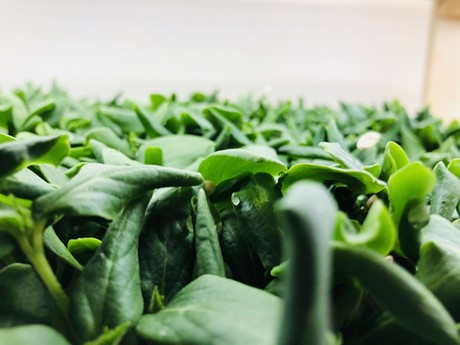
"Microgreens have an explosive flavor (sweet to hot) and high nutritional properties, as they contain up to 40 times the vitamin percentage found in normal vegetables. Recent studies showed how microgreens contain much more minerals (potassium and calcium in particular), vitamins (especially C, E and K) and antioxidants than older plants and vegetables."
Micro-greens are obtained from a large number of species part of various botanical families: Brassicaceae (cabbage, broccoli, red cabbage, purple cabbage, turnip greens, cress, radish, rocket, mustard), Asteraceae (red Batavian lettuce, red Lollo lettuce, curly endive, chicory), Apiaceae (dill, carrot, fennel), Amaryllidaceae (onion, leek), Amaranthaceae (amaranth,Swiss chard, chard from Bari, yellow Swiss chard, red Swiss chard), etc.

"Our market is currently limited to Puglia and the neighboring regions, but we aim at widening our range and destinations. We want to create an entirely automated cultivation system to obtain productions that are more abundant and have shorter cycles regardless of the season. In addition, we want to collaborate with other businesses to strengthen the entire productive sector and involve the common people, final consumers, starting with small suppliers and reaching the retail chains."
Contacts:
Veetaste Urban Agriculture
Corso Umberto I, 79
70127 Bari
Tel.: (+39) 389 954 4624
Email: info@veetaste.it
Facebook: facebook.com/veetaste
Website: veetaste.it
Publication date: 6/7/2019
© FreshPlaza.com

Infarm Gets $100 Million Financial Boost
Urban farming platform Infarm has announced a $100M Series B investment led by Atomico, with participation from existing investors Balderton and Cherry Ventures.
The new funding will be used to scale Infarm’s growth in Europe to the US and beyond, and grow the R&D, operational, and commercial teams.
"Infarm was founded with an ambitious vision to feed the cities of tomorrow by bringing farms closer to the consumer, and with this round of funding we aim to grow our presence further", said Erez Galonska, co-founder and CEO of Infarm.
Infarm has developed easily scalable and rapidly deployable modular farms to grow fresh produce in any retail space or restaurant right in the heart of cities where people live in. Infarm’s technology is specifically designed and built to work anywhere in any available space. There is no need for a centralized warehouse or farm, and no need for special infrastructure or set-up.
infarm was founded in Berlin in 2013 by Osnat Michaeli, Erez Galonska and Guy Galonska.
Since Balderton led Infarm's Series A, it has grown to 250 employees and is on track to book over $100m in contract value this year.
Infarm has partnered with 25 major food retailers including Edeka, Metro, Migros, Casino, Intermarche, Auchan, Selgros, and Amazon fresh in Germany, Switzerland, and France and deployed more than 200 in-store farms, 150 farms in distribution centres, harvesting 150,000+ plants monthly and growing.
Infarm is launching in the U.K. this September with some of the country’s largest online and brick-and-mortar supermarkets and are in advanced discussions with retailers in the U.S. and Japan.
As part of the investment round, Atomico Partner Hiro Tamura will join the company’s board.
For more information:
infarm.com
www.atomico.com
www.balderton.com
www.cherry.vc
GreenTech Continues With Busy Second Day
With the second day of GreenTech being in full swing, it's not hard to be in a good mood in Amsterdam. It's raining cats and dogs outside, but inside climate and water are discussed on a completely different level.
The exhibition had a good start yesterday and exhibitors value the quality talks they've been having. The show unites high-tech horticultural companies from all over the world. On the floor and in the booths, discussions are going on about growing, but also friends catching up.
So what can be found here? A lot of lighting solutions for starters, greenhouse builders are omnipresent, and also technical innovations to solve labor issues. In the current industry it shows how suppliers are doing their best to take operators to the next level: with precise measuring solutions the final percentages of crop optimization are captured. Of course we will keep you posted on these solutions within the next days and weeks - but first, we'll focus on capturing everybody with our cameras!
The Riococo team
There's a big delegation from Canada at the show. Among them Herman Friesen & Alexis Cervini with Lakeside Produce, who re-branded recently. They are photographed with the Ecoation device that they ordered.
The team of Paskal
Netled is also present again
Publication date: 6/12/2019
Author: Arlette Sijmonsma
© HortiDaily.com

Canon Exploring The Vision of Indoor Agriculture
June 12, 2019
AUTHOR: Ivan Ball - Content Contributor to iGrow News
The well known digital imaging company, Canon U.S.A. Inc., attended the 2019 Indoor Ag Con in Las Vegas.
A small team based out of Richmond, Virginia brought a prototype vision system for the indoor vertical farm industry. One of the team members claimed that they were attending the conference just to learn more about the needs and wants of indoor farmers to further develop a fully autonomous plant vision system.
The prototype at the conference utilized a small RGB camera encased in a 3D printed housing that allowed the camera to travel along a rail system throughout a vertical shelf farm on display. This camera would travel over the tops of the plants and snap pictures at different locations to monitor their growth. Once the camera is finished capturing images of the plants, it would travel back to a wireless charging station to fill its battery as well as upload all the images and locations of the plants. One of the engineers explained that this technology would make it cheaper to implement fewer cameras for a larger farming facility.
Each farming shelf could use just one camera that would travel the shelf in an oval pattern. Canon has been developing high quality imaging equipment for over 80 years and could bring a disruptive technology for farms in the near future. This new system combined with artificial intelligence and machine learning could allow indoor farmers to receive quicker growing insights for making operational decisions.
Dennis Riling, Director of Business Development at Illumitex presented on the interaction between light and plants. He explained how Illumitex is using FarmVisionAI to attach cameras to their grow lights to detect pest outbreaks, leaf wilting, growth rate, nutrient deficiencies, and predict yield estimates.
This image feedback combined with the ability to manipulate light spectrums, dose fertilizers, and adjust pH could allow farmers to even change the taste, color, and texture of plants according to Blake Lange, Business Development Manager at Signify, formerly Philips lighting. Blake is doing research with dynamic spectrum LEDs on their GrowWise Control System to find light recipes to change the taste of plants.
Keep an eye out for Canon as they continue to investigate the industry of controlled environment agriculture (CEA). The team is highly aware of the growing indoor agriculture industry and plans to find new innovative ways to join the space as they learn more from the farmers.

Hemp Fibre-Reinforced Plastic, Hemp Protein Powder And Hemp Face Cream Are “Hemp Products of the Year 2019”
nova-Institut GmbH (www.nova-institute.eu)
Hürth, 6 June 2019
With more than 410 participants from 49 countries and a sold-out exhibition, the conference has broken all records and is now by far the world's largest event for the industrial use of hemp
For the second time, the innovation award “Hemp Product of the Year” has been granted to the young, innovative hemp industry for finding suitable applications and markets for industrial hemp-based products.
After a 10-minute presentation from each of the nominated companies, the three award winners were chosen by the expert audience at the “16th EIHA Hemp Conference”, 5 – 6 June 2019 in Cologne, Germany (www.eiha-conference.org). The six nominees were previously selected by a jury from a total of 30 submissions.
Visuals, German version and PDF file available at http://nova-institute.eu/press/?id=125
With more than 410 participants from 49 countries and a sold-out exhibition, the conference has broken all records and is now by far the world’s largest event for the industrial use of hemp. Practically all companies active worldwide in the field of hemp fibres and shives, hemp seeds and oil and cannabidiol (CBD) meet once a year in Cologne to discuss the latest developments, to strengthen business relationships and create new ones.
The demand for hemp products, especially food, cosmetics and CBD, is growing worldwide. In Europe, a record area of 50,000 ha will be cultivated this year. In Canada the goal is to reach a turnover of 1 billion Canadian dollars by the year 2023 and in the USA Kentucky is entering hemp cultivation with big plans: “Make Hemp Great Again”. As for China, a large hemp textile industry is currently emerging.
Continuous innovation is one of the most important drivers of the hemp industry. Therefore, the innovation award “Hemp Product of the Year 2019” plays a very special role. This year, the innovation award was sponsored by HempFlax, the leading hemp company from the Netherlands, and awarded together with the nova-Institute. Michael Carus, managing director of the nova-Institute, was enthusiastic: “This year’s winners not only convince hemp enthusiasts, they also illustrate the broad spectrum of the hemp plant: Hemp fibre-reinforced plastic for trolleys and lightweight construction, high-quality hemp protein in previously unmatched purity and a face cream that combines the advantages of hemp oil and CBD for facial care”.
The winners in detail:
1st place: Trifilon AB (SE) – Trifilon BioLite Trolley Case made of PP Hemp Fibre
With BioLite, Trifilon offers a green alternative to plastics. BioLite is a polypropylene reinforced with 30% hemp fibres. Hemp is one of the strongest natural fibres in the world, which makes BioLite products strong, light and durable. The use of hemp fibres in BioLite optimises the material properties for many applications – the high-quality trolley case is just one example. This technology gives manufacturers the opportunity to make sensible use of renewable raw materials, and an excellent one is hemp. The new material is suitable for lightweight automotive construction and consumer goods.
www.trifilon.com
2nd place: BAFA Neu GmbH (DE): Absolute HempProtein
The innovative hemp protein powder contains over 70% complete protein. It has a nutty taste and white colour. It has a creamy texture, is mixable with liquids and it doesn’t contain insoluble fibre fractions. The hemp protein powder is naturally white which ensures great bright colours in shakes when mixed with fresh fruit such as strawberries, raspberries or mango. This product is 100% natural and is also available in a certified organic version. Hemp protein powder is an ideal protein supplement for athletic vegetarians and vegans. It is allergen free and a complete protein.
www.bafa-gmbh.de
3rd place: Hemptouch d.o.o. (SI): Hemptouch Balancing Face Cream
Hemptouch Balancing Face Cream is a first ever skin care product formulated with a unique trilogy of industrial hemp extracts such as hemp hydrolate, Cannabidiol (CBD) and hemp seed oil. This innovative face cream combats blemished and acne-prone skin, one of the biggest segments in skin care industry. It brings a brand-new approach to the fight against acne and oily skin, proving that hemp is a powerful alternative to over the counter medicine. Hemp hydrolate has antimicrobial properties, visibly tightens pores and smooths skin texture. CBD extract helps to control excess oil production which prevents blemishes and purifies acne-prone skin. Hemp seed oil with its nurturing omega acids restores healthy-looking radiance. This cream is dermatologically tested, proven to reduce the secretion of sebum.
www.hemptouch.com
The nova-Institute would like to acknowledge HempFlax (NL) for sponsoring the renowned innovation award “Hemp Product of the Year”. Agropro (LT), GenCanna Global (US), MH medical hemp (DE) and Hempro (DE) have been supporting the conference as Gold Sponsors, Fundación CANNA (ES) and Gilson International B.V. Germany (DE) as Silver Sponsors and Canah International (RO) as Bronze Sponsor. BAFA Neu (DE) sponsored the hemp beer.
Source: nova-Institut GmbH, press release, 2019-06-06.
Supplier

Timelapse: Scottish Strawberries In A Vertical Farm
Scotland is famous for its strawberries grown mainly in the summer months, but now there is the potential that it could be famous for them all year round. Following the first successful propagation trials which took place in February 2019, Intelligent Growth Solutions have grown a small crop of strawberries in their vertical farm.
David, the CEO, commented: “This is an exciting advance for us, showing that increasingly broad range of produce such as strawberries can be grown economically, right here, all year round. Growing in this controlled indoor environment means that we are better able to guarantee consistency of quality, appearance and flavour.
“Soft fruits are now perennial items on supermarket shelves, but this does mean considerable shipping costs and environmentally damaging food miles. And frankly the imported product is often tasteless and lacks juiciness. We are just on the cusp, but this trial shows that there is the potential to produce delicious, fresh produce all year round much closer to home which is very exciting for growers, retailers and consumers alike.”
For more information:
Intelligent Growth Solutions
c/o The James Hutton Institute
Invergowrie
Dundee
DD2 5DA
T: 0131 202 1050
info@intelligentgrowthsolutions.com
www.intelligentgrowthsolutions.com
Publication date: 5/20/2019