


Welcome to iGrow News, Your Source for the World of Indoor Vertical Farming

DE/EN): Six Candidates Nominated For The Innovation Award “Hemp Product of The Year 2019”
27.05.2019
For the second time, the innovation award “Hemp Product of the Year” will be granted to the young, innovative hemp industry for finding suitable applications and markets for industrial hemp-based products.
Focus of the award is on new developments within these business areas. The winners will be elected at the “16th EIHA Hemp Conference”, 5 - 6 June 2019 in Cologne, Germany (http://www.eiha-conference.org). The conference is the oldest and largest conference on industrial hemp worldwide. Six new materials and products out of 30 applications have been nominated by a jury. After a short presentation of the six candidates, the three winners will be elected by the participants of the conference and honoured with the innovation award, sponsored by HempFlax from The Netherlands.
What to expect – the “Top 6” candidates in detail:
Academy of Design and Crafts Münster (DE): Light Sculptures Monas
The innovative design light sculptures are made of hemp cellulose. For the production of the handmade paper, the artists used hemp cellulose (Cannabis sativa) and potato flour. The round and damp handmade paper sheets dry directly on the wire frame where it is attached. As the damp fibres links together in a natural way, usage of additional glue is not necessary. To improve the stability, certain functional characteristics and for paper finishing, paper pulp is mixed with environmentally friendly wall paper paste. Later the mixture and strips of paper are applied in layers. After the drying process, the wire frame is pressed together and is removed. http://www.akademie-gestaltung.de
BAFA Neu GmbH (DE): Absolute HempProtein
The innovative hemp protein powder contains over 70% complete protein. It has a nutty taste and white colour. It has a creamy texture, is mixable with liquids and it doesn’t contain insoluble fibre fractions. The hemp protein powder is naturally white which ensures great bright colours in shakes when mixed with fresh fruit such as strawberries, raspberries or mango. This product is 100% natural and is also available in a certified organic version. Hemp protein powder is an ideal protein supplement for athletic vegetarians and vegans. It is allergen free and a complete protein. http://www.bafa-gmbh.de
hanfwerk Feinkostmanufaktur UG / haftungsbeschränkt (DE): Hanfling – Hanfling Bombay – Hanfling Chorizo
The Hanfling is an organic, vegan friendly product in three different tastes: Hanfling Nature, Hanfling Bombay and Hanfling Chorizo. These can be eaten raw, but also fried, grilled or toasted, used as a patty for a burger or in a caper sauce (“Königsberger Hanfling”). This product needs to be refrigerated with an expiry date of 6 months. hanfwerk uses hemp seeds as the main ingredient as well as self-made hemp-tofu. The product is available in around 100 organic supermarkets in Germany. http://www.hanfwerk.de
Hempster HB (SE): Raw Vegan Shake
Raw Vegan Shake is a fresh, yummy, organic hemp drink designed to optimize the nutritional benefit of hemp seeds. It is locally produced and comes in four flavours: Chocolate, Chai Latte, Cocos and Vanilla Malt. This shake is ideal for breakfast, as a nourishing snack or as an energy drink and it contains high-quality and valuable essential nutrients. Through a unique production method, Hempster has created a product which ticks all the boxes and gives the customer a pleasant, satisfying drinking experience. http://www.hempster.se
Hemptouch d.o.o. (SI): Hemptouch Balancing Face Cream
Hemptouch Balancing Face Cream is a first ever skin care product formulated with a unique trilogy of industrial hemp extracts such as hemp hydrolate, Cannabidiol (CBD) and hemp seed oil. This innovative face cream combats blemished and acne-prone skin, one of the biggest segments in skin care industry. It brings a brand-new approach to the fight against acne and oily skin, proving that hemp is a powerful alternative to over the counter medicine. Hemp hydrolate has antimicrobial properties, visibly tightens pores and smooths skin texture. CBD extract helps to control excess oil production which prevents blemishes and purifies acne-prone skin. Hemp seed oil with its nurturing omega acids restores healthy-looking radiance. This cream is dermatologically tested, proven to reduce the secretion of sebum. http://www.hemptouch.com
Trifilon AB (SE): Trifilon BioLite – Trolley Case made of PP Hemp Fibre
Trifilon offers with BioLite a green alternative to plastics. BioLite is a polypropylene that is reinforced with 30% hemp fibres. Hemp makes for some of the world’s strongest natural fibres, the products made with BioLite are strong, light and durable. BioLite’s hemp fibres enhance and improve material properties for many applications – the high quality trolley case is just one example. This technology gives manufacturers a way to meaningfully begin working with renewable feedstocks and an excellent one is hemp. http://www.trifilon.com
More than 350 participants from 40 countries are expected to attend the “16th EIHA Hemp Conference”, 5 - 6 June 2019 in Cologne, Germany, the oldest and largest conference on industrial hemp worldwide. The exhibition taking place during the conference includes 27 exhibition stands and is already fully booked.
All information, registration and the conference programme are available at http://www.eiha-conference.org
The nova-Institute would like to acknowledge HempFlax (NL) for sponsoring the renowned innovation award “Hemp Product of the Year”. Agropro (LT), GenCanna Global (US), MH medical hemp (DE) and Hempro (DE) are supporting the conference as Gold Sponsors, Fundación CANNA (ES) and Gilson International B.V. Germany (DE) as Silver Sponsors and Canah International (RO) as Bronze Sponsor. BaFa Neu (DE) is sponsor of the hemp beer.

NASA Testing Method To Grow Bigger Plants In Space
In an effort to increase the ability to provide astronauts nutrients on long-duration missions as the agency plans to sustainably return to the Moon and move forward to Mars, the Veg-PONDS-02 experiment is currently underway aboard the International Space Station
In an effort to increase the ability to provide astronauts nutrients on long-duration missions as the agency plans to sustainably return to the Moon and move forward to Mars, the Veg-PONDS-02 experiment is currently underway aboard the International Space Station.
The present method of growing plants in space uses seed bags, referred to as pillows, that astronauts push water into with a syringe. Using this method makes it difficult to grow certain types of “pick and eat” crops beyond lettuce varieties. Crops like tomatoes use a large amount of water, and pillows don’t have enough holding capacity to support them.
As an alternative to the pillows, 12 passive orbital nutrient delivery system (PONDS) plant growth units are being put through their paces. The PONDS units are less expensive to produce, have more water holding capacity, provide a greater space for root growth and are a completely passive system—meaning PONDS can provide air and water to crops without extra power.
The 21-day experiment is a collaboration between NASA, Techshot, Inc., the Tupperware Brands Corporation, fluids experts at NASA’s Glenn Research Center and Mark Weislogel at Portland State University. As a U.S. National Laboratory, the space station provides commercial companies and government agencies with the ability to test the experiment in a microgravity environment.
NASA astronaut Christina Koch initiates the Veg-PONDS-02 experiment on the International Space Station within Veggie by filling the upper reservoir on April 25, 2019. Credits: NASA/David Saint-Jacques
“There comes a point where you have longer and longer duration missions, and you reach a cost benefit point where it makes sense to grow your own food,” said Howard Levine, chief scientist of NASA’s Utilization and Life Sciences Office at the agency’s Kennedy Space Center.
After Levine developed the PONDS prototype, it was passed on to Dave Reed, Techshot’s Florida operations director, and his team to re-engineer and make it capable of withstanding spaceflight. PONDS tested well on the ground, but when the system first arrived at the space station last year for testing in a microgravity environment, it pumped too much water to the lettuce seeds.
The Veg-PONDS-02 experiment sits in the International Space Station's two Veggie chambers. The 21-day experiment consists of 12 plant growth units in three different design configurations available for testing. Credits: NASA/Christina Koch
“We took a step back, evaluated different aspects of the design, and together with water fluid experts from NASA, we came up with three alternative designs, each of which had a number of components we wanted to test in space,” said Levine.
On April 19, 2019, the Veg-PONDS-02 payload arrived at the orbiting laboratory via Northrop Grumman’s 11th Commercial Resupply mission, containing 12 PONDS units in the three new design configurations. Six of the units have a clear design to allow researchers to observe the performance of water in the units during the experiment. All units contain red romaine lettuce seeds and have been placed in the two space station vegetable production systems, known as Veggie, to test growth performance.
NASA astronaut Christina Koch initiated the experiment by filling the upper reservoir on April 25. Canadian Space Agency (CSA) astronaut David Saint-Jacques filled the PONDS unit lower reservoir on May 2 and documented how water behaved in the system.
Reed and his team worked closely with material scientists and mechanical engineers with Tupperware to design and mold components that make up the PONDS-02 units.
“We needed something that was molded well, molded precisely and molded out of plastics that were compatible with edible material,” said Reed. “They brought all this huge body of knowledge to us.”
This experiment is a way to test the performance of the three alternative design methods in space to see if the water management issue initially discovered during the first PONDS experiment has been adequately addressed.
“I look at this as a normal part of the process,” said David Brady, assistant program scientist in the International Space Station Program Science Office at NASA’s Johnson Space Center. “You find what works and what doesn’t work, and you adapt and change it. The fact that Howard and his team have been able to do that is progress.”
On May 16, the final day of the experiment, the plants will be harvested. Six of the PONDS units will be returned to Earth on SpaceX’s 17th Commercial Resupply Services mission for further analysis. Reed’s team will take the successful components and combine them into one final PONDS design, which will pave the way for the agency to truly begin testing the growth capability of crop varieties beyond leafy greens.
“PONDS was an opportunity to do something that no one else has done before,” said Reed. “People have been growing plants in space since the Apollo era, but not like this.”
The Space Life and Physical Sciences Research and Applications Division (SLPSRA) of NASA’s Human Exploration and Operations Mission Directorate at NASA Headquarters in Washington is sponsoring the Veg-PONDS-02 investigation as part of its mission to conduct research that enables human spaceflight exploration.
Source: NASA (Danielle Sempsrott)

CAN (ON): Video Tour of An Ontario Based Cannabis Operation
James E. Wagner Cultivation Corporation President and CEO Nathan Woodworth gave a tour of the company’s new facility located in Kitchener, Ontario. Woodworth also talks about the company’s GrowthSTORM system and stresses that its high density, low-cost system is the most effective way to control the plant’s growth cycle. GrowthSTORM is a multi-part system that uses aeroponic and hydroponic techniques to optimize yield and plant growth.
“The degree of standardization that we can achieve with this system is proof that we have discovered a way to control the total plant growth cycle,” said Woodworth. “We’ve created a high-density, low-cost growth system which results in a 98 percent success rate after 11 to 14 days.”
Woodworth explained the process behind the system and its advantages. According to Woodworth, the plants are moved into GrowthSTORM baskets once they are fully rooted. The baskets allow the plant to form complex root systems throughout its life. Once the plants have reached full production size, they are moved to a low-density array until the flowering cycle is complete. Woodworth also talked about JWC’s latest innovation, the Dual Droplet system, which distributes a large and a small nutrient droplet. These droplets help KWC optimize the delivery and uptake of nutrients. The cannabis plants are then flat trained, ensuring standardization of yield per square foot and maximizing the quality of the finished product.
JWC’s facility has eight grow rooms that are capable of producing up to 50 kilograms per growth cycle with less than one percent crop loss. The company’s 29 strains, which feature four unique phenotypes, are all being grown using the GrowthSTORM system.
For more information:
JWC
1-888-594-4272
info@jwc.ca
jwc.ca
Publication date: 5/15/2019

US (ME): Student, Aquaponic Farmer With 22 Employees Awarded
At a special luncheon in early May, President Clayton Rose of Bowdoin College presented six seniors with awards to celebrate their personal achievements and contributions to the College.
Inaugurated in 1997 by Bowdoin President Robert H. Edwards, the President’s Award recognizes a student’s exceptional personal achievements and uncommon contributions to the College. The student’s actions demonstrate particular courage, imagination, and generosity of spirit; and they benefit the atmosphere, program, or general effectiveness of the College.
Trevor Kenkel, a biology and economics major, is the founder and president of Springworks Farm in Lisbon, an organic aquaponics business and a model for sustainable agriculture. He runs his farm while pursuing his studies at Bowdoin, earning him this descriptor: "part scientist and entrepreneur, part environmentalist and farmer—and full-time Bowdoin student."
Trevor Kenkel with President Rose
Kenkel has grown Springworks into the largest aquaponics farm in New England, employing twenty-two people and supplying organic lettuce to more than 130 customers, including Bowdoin College, UMaine Orono, Colby, and thirty Hannaford supermarkets.
Biology professor Barry Logan, who has spent time working with Kenkel at the farm, describes his student as a “collaborator” who “works really hard to create an extraordinary balance” between his classes and his impressive business venture. And a former proctor of Kenkel's praised his “warm-heartedness, willingness to welcome others, and his ease with conversation.”
Publication date: 5/10/2019

“Growing In Hydroponics Saves 90% Water”
At MedFEL, the company Les Halles Mandar presented aromatic herbs grown in hydroponics and with the label “Zero Pesticide Residue” (ZPR). “The range currently includes four herbs - basil, chives, cilantro and mint - which we started marketing at large retailers in 2018,” explains Camille Le Large, product manager of the company.
Hydroponics, a cultivation technique with many advantages
According to Camille, the cultivation above ground, where roots are permanently immersed in water, presents many advantages. “Hydroponics has the particularity of being able to reduce water intake by 90% compared to traditional cultivation. Additionally, we grow with pesticides or chemical products, because the plant feeds on mineral fertilizers added to the water.”
The consumer will easily be able to recognize the aromatic plants grown in hydroponics. Everything will be explained on the back of the packaging. “The plant cultivated in hydroponics has roots, which have been preserved and are visible under a small pile of substrate. This gives a significant advantage to the product that will stay fresh longer, on the shelves but also after the consumers bring it back home. They have three options. They can put it in a new pot or replant it directly in the ground, or keep it the way it is in the fridge, or even immerse the roots again in water so the herb can continue to grow.”
Alain Pissavy of Les Halles Mandar, at the booth with Camille Le Large, at MedFEL
About Les Halles Mandar
Les Halles Mandar is a family business created in 1973 and specialized in the selection and distribution of fruits and vegetables, as well as aromatic herbs. The company also started producing more than 10 years ago, thanks to its production site in the Loiret. It markets its range of constantly evolving fresh aromatic herbs to restaurant professionals and large retailers.
For more information:
Serge FARUCH
Les Halles Mandar
20 Avenue de la Villette
94637 Rungis Cedex
serge.faruch@mandar.fr
www.mandar.fr
Publication date: 5/21/2019
© HortiDaily.com

AEssenseGrows Wins Red Herring 2019 Top 100 North America Award
The AgTech Company’s AEtrium System Uses Automation and Precision
to Deliver Superior Aeroponic Quality and Yields
SUNNYVALE, Calif., May 20, 2019 -- AEssenseGrows, an AgTech company specializing in automated precision aeroponic platforms for consistent high-yield plant production, has won Red Herring’s Top 100 North America award, one of the technology industry’s most prestigious prizes. Winners were selected and announced during a Red Herring ceremony last week in Pasadena, Calif.
CEO Robert Chen receiving the award.
Photo provided by AEssenseGrows
"Of course, human hunger strikes the most vulnerable countries and the poorest, and technology would not meet its paramount objective if it was not addressing this issue as well,” said Red Herring Chairman Alex Vieux. Vieux said CEO Robert Chen and AEssenseGrows “have demonstrated that tomorrow, one could put an end to this drama which every year kills millions. Increasing the food supply and multiplying agricultural output, offsetting weather uncertainties--all this combined in one concept deserves utmost attention.
“As a result,” Vieux said, “AEssenseGrows has received the Red Herring Top 100 2019 Award and will continue to expand across the globe."
“We at AEssenseGrows appreciate that Red Herring’s judges see the same value in our products that we see—a unique combination of technology and agricultural sciences that can help feed the world,” said Chen. “We’re extremely proud to stand alongside so many other innovators and game-changers in accepting this award.”
The AEssenseGrows AEtrium system delivers sensor-driven automation to simplify aeroponics and amplify its inherent benefits. The company's Guardian Grow Manager central management software monitors grow conditions 24/7 and, if needed, automatically adjusts key variables such as lighting and nutrients to maintain optimal conditions.
The Top 100 companies were chosen from thousands of entrants, Red Herring said, and the companies were judged by industry experts, insiders and journalists on a wide variety of criteria including financial performance, innovation, business strategy, and market penetration. The complete list of winners can be found on the Red Herring website.
In addition to produce, the AEssenseGrows aeroponics system is increasingly being used to grow cannabis and hemp. Last year, Ackrell Capital selected AEssenseGrows as one of the firm's Top 100 Private Cannabis Companies for 2018.
About AEssenseGrows
AEssenseGrows (pronounced "essence grows"), founded in 2014, is a precision AgTech company based in Sunnyvale, CA. AEssenseGrows provides accelerated plant growth SmartFarm platforms and software automation delivering pure, zero pesticide, year-round, enriched growth to fresh produce and medicinal plant producers globally.
With AEssenseGrows, you can precisely control your production operations at your fingertips from anywhere in the world.

Brooklyn, New York: Spinach Ice Cream: Made With Leafy Greens, Olive Oil And Salt
Spinach, packed as it is with vitamins and fibers, is one of the most popular veggies that's recognized as a superfood. Added to pasta or simply sautéed with garlic, spinach is also an incredibly versatile green.
Now, Van Leeuwen Ice Cream, an artisanal frozen treats shop based in Brooklyn, New York, has launched a spinach-flavored ice cream in honor of cartoon sailor Popeye’s 90th birthday and the annual Fleet Week.
This spinach ice cream doesn't just contain the leafy green, however. It's also a dairy-free ice cream, perfect for vegans to enjoy it as well.
"When we were presented with the opportunity to collaborate with an icon like Popeye, we wanted to make a special flavor that was plant-based since everyone knows he gets his strength from eating lots and lots of spinach," Ellie Zitsman, head of research and development at Van Leeuwen Ice Cream, told TODAY Food via email. "Our vegan ice cream base is rich in nutrients and packed with protein since it’s made with house-made raw cashew milk, coconut cream, raw organic coconut oil, pure cocoa butter and organic cane sugar."


Building a Circular Economy in Charlotte
May 22, 2019
By Amy Aussieker
As the circular economy grows in Charlotte, our dependence on foreign imports would decrease and one area to benefit is local food production.
From growing locally both traditionally and through aquaponics/hydroponics to the reuse of organic waste – this opportunity has the possibility of transforming the food culture in Charlotte to a more sustainable, healthy, and accessible system.
Read Article

The Way We Eat Is Killing The Planet — Here’s How Tech Can Help
by CAMILLE CHARLUET - May 10, 2019
As someone who gets way too excited about delicious food, it really pains me to admit that our modern diets are the largest cause of climate change and biodiversity loss in existence. While it’s usually easier to be blissfully ignorant, yesterday at TNW Conference I received the wake-up call I (reluctantly) needed.
On stage was Eva Gladek, the founder and CEO of sustainability consultancy, Metabolic. Gladek made it clear that the current global food system is killing the planet — and she didn’t shy away from sharing the damage our eating habits have caused.
“25-30 percent of greenhouse gases are linked to the food system, 50 percent of the planet’s surface that can support plant life is devoted to producing food, and we’ve exploited over 90 percent of fish in our oceans,” she explained. And if that wasn’t enough to instill fear, Gladek believes with the population growing, diets changing, and wealth increasing, we’ll have to double the output of food by 2050.
Despite the grim outlook, Gladek is optimistic that we still have time to right our wrongs. “Even though we have very little time left, we still have that window where we can really turn things around and make a change,” she explained. “Technology has to be one of the pathways forward.”
Precision agriculture
The first of three tech categories Gladek believes can help us create a sustainable food future is precision agriculture. By using AI and robotics, you can now deliver exactly the right amount of chemicals to help plants grow.
Satellites and sensing technologies can also tell you exactly when and where you should plant. As Gladek explained: “In some cases, due to weather patterns, planting crops just seven days earlier can increase a crop’s yield by 50 percent.”
Using a drone to control and optimize his harvest.
Vertical farming
Another area of tech that could improve the future of food is vertical farming. Not only can it produce significantly more food per unit of area, feeding more people, but it also can save a substantial amount of precious water.
Gladek was quick to admit that not all vertical farms are good for the environment, though, due to the energy they demand. However, as seen with Singapore Sky Greens — the world’s first low carbon hydraulic commercial farming system — she’s certain of the tech’s potential if applied in the right way.
Credit: https://www.skygreens.com/
Singapore based vertical farming company, Sky Greens
Sustainable consumption and dietary shift
While changing people’s eating patterns is no easy feat, there are lots of technologies emerging to facilitate this. With meat replacements like the Impossible Burger that actually tastes like real meat, (I tried it in New York and was blown away) and lab-grown meat slowly becoming more affordable, Gladek believes it’s not long before there are sustainable solutions around that people actually enjoy.
The Beyond Meat Burger’s patty is made from plant protein-based food products and tastes very similar to meat.
It’s clear that tech will play a big part in cleaning up the mess we’ve created. But as Gladek insisted, it’s our choices that’ll have the biggest influence on our future. We need to get better at considering the long-term effects of our decisions and the technologies we create. “Without that, we’re not going to have a planet that we can share with future generations.”
Top 25 Vertical Farming Companies
The phrase “vertical farming” probably doesn’t need to be explained even though it’s quite new
May 3, 2019 By MAI TAO
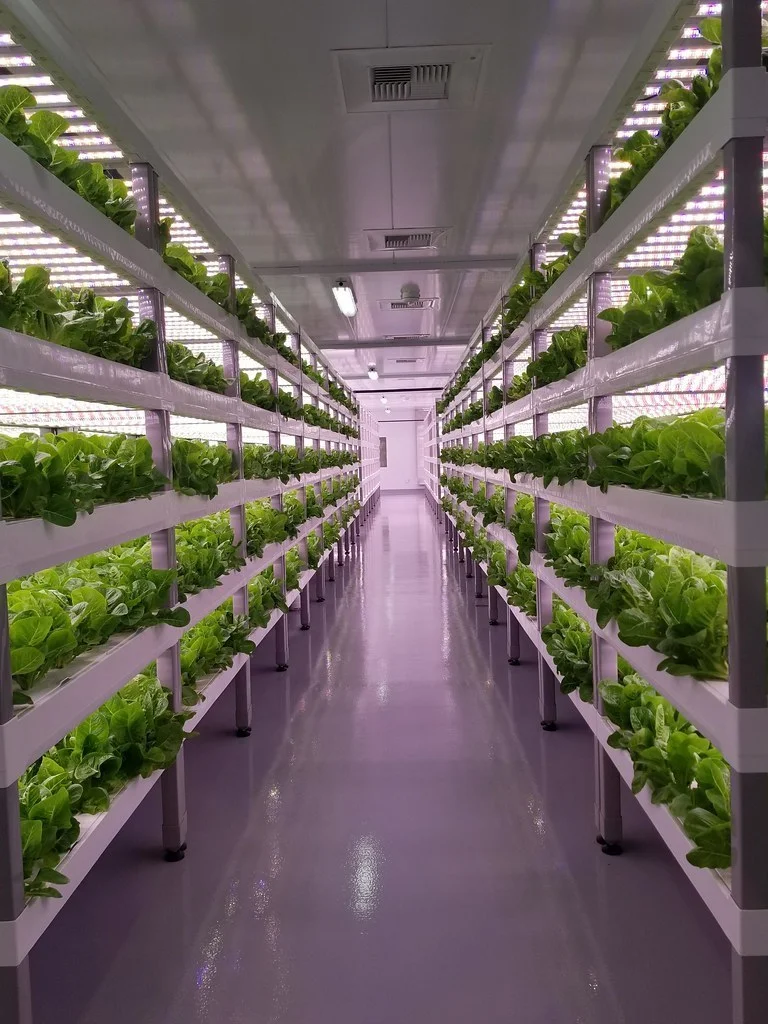
The phrase “vertical farming” probably doesn’t need to be explained even though it’s quite new. But anyway, vertical farming refers to the practice of producing fruits and vegetables vertically, in stacked layers, perhaps on many floors inside a building, using artificial lights instead of the sun, and a whole range of relatively new technologies.
The two main reasons why it’s a much-discussed topic now is because:
there are a number of startup companies emerging in the sector and attracting tens of millions of dollars in investment; and
more people live in cities than do in rural areas, a global trend which seems irreversible, and this means that the demand for fresh produce will increase in urban areas, and bringing the production closer to the consumer would make sense.
The third thing we could have added is that there is the range of new technologies available now that make vertical farming in urban areas cost-effective and possibly profitable. But we already mentioned that.
Some of these technologies have been available for some time, decades even, but they were probably too expensive in the past to make vertical farming a viable business proposition.
The key technologies in vertical farming include:
perception technologies – cameras and other sensors which can monitor for colour and other factors, such as disease;
artificial intelligence – which can process the data from the sensors and formulate solutions;
automated and even autonomous mechatronics – robots and other automated machines which pick the produce when it is ready for market, or apply cures to ailments during their growing.
The above list is a very simple breakdown of the fundamental technologies that will be required to, basically, reduce to a minimum or even eliminate the need for human involvement.
If vertical farms are run like traditional greenhouses, there would be too much human input required and it probably would not be profitable.
It’s the new automation technologies that will make it work.
Carnegie Mellon University is among a number of organizations which have developed integrated systems for vertical farming. CMU’s version is called ACESys, short for Automation, Culture, Environment, and Systems Model for Vertical Farming.
An academic paper probably worth checking out is called Advances in greenhouse automation and controlled environment agriculture: A transition to plant factories and urban agriculture.
In their introduction to the paper, the authors note: “Greenhouse cultivation has evolved from simple covered rows of open-fields crops to highly sophisticated controlled environment agriculture facilities that projected the image of plant factories for urban farming.
“The advances and improvements in CEA have promoted the scientific solutions for the efficient production of plants in populated cities and multi-story buildings.”
So the interest in the field is strong and most people seem to think it’s a viable business proposition.
And to underline the positivity about the sector, Research and Markets forecasts the vertical farming market will grow to a value of $3 billion by 2024, from virtually nothing now.
However, not everyone is convinced, and some people have dismissed the whole idea as a scam. They say it won’t work, will be too expensive and not be able to yield enough to provide adequate returns on investment.
But in some sectors, such as marijuana production, indoor farming is providing a strong foundation for healthy profits, although we are not encouraging that sort of thing – this article is more about produce such as lettuce and other healthy vegetables and fruit, usually found in greengrocers.
Anyway, whatever we or anyone else thinks of the prospects, there are a large number of companies which have entered the field and we thought it would a good idea to make a list of them.
It’s a very new business sector, so this list is not ordered on any scientific basis – just 20 companies that are notable and active.
We’re not going to include Samsung for now even though it’s been on this website recently for demonstrating a home vertical farming product. The reason is that vertical farms are currently not central to Samsung’s business by any stretch of the imagination, although the company may have a contribution to make to the sector going forward.
1. AeroFarms
This company has won many plaudits for its operation and uses its own patented “aeroponic technology… to take indoor vertical farming to a new level of precision and productivity with minimal environmental impact and virtually zero risk”.
The company has raised at least $138 million in funding since launch in 2004, according to CrunchBase. Some of its backers are quite impressive, as this article in Ag Funder News reports.
The term “aeroponic” farming refers to the process of growing plants in an air or mist environment without the use of soil or any earth-like material, which is known as “geoponics”.
Aeroponic systems enable the production of plants using 95 percent less water, which is what AeroFarms says it does.
2. Plenty
Although Plenty doesn’t make seem to mention aeroponics on its website, it’s difficult to see how it can reduce the water consumption of its vertical farms by 95 percent, as it claims to do, without the air-and-mist system as described above.
Like the other big vertical farming companies on this list, Plenty is another one that retails its produce, which include kale and other greens, as well as some exotic herbs.
Plenty is probably the biggest company in terms of the amount of money it has raised in funding – approximately $226 million, according to CrunchBase.
Green Spirit Farms started raising money as early as 2013, but has not disclosed the amounts. Area Development reported that the company was investing $27 million in a vertical farm system in Pennsylvania, which would suggest it’s well financed.
However, given that it doesn’t seem to have a website of its own, it’s difficult to say what its current and future activities are with full confidence. Owler estimates its annual revenues to be $1.2 million.
You’d think any farming startup of any kind would steer clear of everything that’s genetically modified, but the fact that Bowery makes a point of saying it uses “zero pesticides and non-GMO” seeds might suggest that some vertical farming companies don’t have the same ideas.
Having raised more than $140 million in investment since inception in 2015, Bowery has carefully developed a distribution network in the US. Its leafy greens are available to buy in Whole Foods Market and Foragers. It also supplies a number of restaurants and sells online.
It doesn’t look like Bowery supplies its platform to other companies, even though some might be interested in its claims, such as: 95 percent less water usage than traditional agriculture; 100 times more productive on the same amount of land; and from harvest to shelf “within a few days”.
5. BrightFarms
Another of the big-money startups, BrightFarms has so far raised more than $112 million since its establishment in 2010, according to CrunchBase.
But unlike some of the other big companies, it isn’t into aeroponics as much. It seems more interested in hydroponics, which refers to growing plants with water, or, to be more accurate, mineral nutrient solutions in a water solvent.
Neither aquaponics nor hydroponics use soil. How each one compares in terms of quality, efficiency and profitability will probably only become clear a few years from now when we see how well these companies have done. Chances are they’ll all probably use a mix of systems.
BrightFarms has a long list of impressive-sounding partners, including Giant, Walmart and Metro Market, among others.
This company is one of many which have started up in the New York area. Strange to say it about such a new sector, but the market for vertical farming produce may be saturated – in that city at least.
Gotham Greens has so fair raised at least $45 million since its launch in 2011. It has four production-scale facilities, in New York City and in Chicago, and plans for more in several other states.
And, like BrightFarms, it’s more of a proponent for the hydroponic method, although it may well eventually mix it all up and try different approaches in different facilities.
7. Iron Ox
This company appears to use robotics perhaps more than the others, in the picking process at least, and claims to operate fully autonomous indoor farmings. It too is a proponent of hydroponics, and is a retail-oriented company.
Its products are similar to the others’ – leafy greens such as lettuce and kale or things like that. It’s one of the newer startups on the list so a lot might change.
Iron Ox has only recently started supplying its products to local markets in California. The company has so far raised over $6 million in funding, according to CrunchBase.
8. InFarm
Most of the above companies are US-based, but there are also numerous vertical farming startups in Europe and Asia. InFarm is based in Berlin, Germany, and has so far raised approximately $35 million in investment.
The company appears to be going into the exotic herbs market, including Thai basil, Peruvian mint and such like. But it’s also growing fairly common herbs such as dill, basil, sage and so on.
It doesn’t say on its website whether it uses hydroponic or aeroponic systems, but it does claim to use 95 percent less water, which would suggest it uses at least one of those. However, it says it uses 75 percent less fertilizer, which might suggest it mixes earth-based processes into its technology. Most likely, it uses a hydropic system.
9. AgriCool
French vertical farm startup uses an aeroponic system to grow fruit and vegetables. It appears to like strawberries more than other produce. Not a bad idea since strawberries are hugely popular in France, which has a massive traditional agriculture industry.
AgriCool says its aim is to be within 20 km of its customers and offers a program called “Cooltivator”, through which customers can learn how to use its technology and possibly become producers and distributors themselves.
So far, AgriCool has more than $41 million in funding since its launch in 2015, according to VentureBeat. The company also uses shipping containers as “Cooltainers” in which its aeroponic farms can be set up.
10. CropOne
While we couldn’t immediately find how much funding CropOne has raised, we did find that it has signed a $40 million joint venture agreement with Emirates Airlines to build what is described as “the world’s largest vertical farming facility” in Dubai, UAE.
It follows, perhaps, that it will eventually supply a lot of its produce to Emirates Airlines for its flight passengers.
CropOne, founded in 2011, claims to use just 1 percent of the amount of the water required by traditional agriculture, using a hydroponic system. It’s also big on big data, with “millions of data points collected each day” about its plants, which are mainly edible leafy greens.
11. Illumitex
Halfway through this list, and we feel the need to chill out, and what better way to relax than write about Illumitex, which supplies LED lights – light emitting diodes – which are popular among cannabis growers.
Of course, all sort of other companies uses LED lights, but Illumitex’s biggest customers are probably in the dope sector.
LED lights are claimed to use 90 percent less energy than incandescent lighting and 60 percent less than fluorescent lighting. This energy efficiency – and, therefore, lower cost – is a critical factor in the likelihood of making profits in vertical farming being quite high.
Lights supplied by Illumitex, founded in 2005, are installed in some of the world’s largest vertical farms.
12. PodPonics
Not much information is immediately available about this company, but according to the Angel investment website, it raised almost $5 million in 2014, which is a long ago in startup terms.
The company constructed a vertical farming facility in and is said to be doing something similar in the Middle East. However, without being able to find the company’s website, we can’t really say much more.
13. Surna
Getting even closer to the “demon weed”, this company specializes in providing water-efficient solutions for indoor cannabis cultivation, and counts more than 800 grow facilities as clients and partners.
The company appears to use hydroponic systems in the main, but given its long client list, it probably installs a variety of technologies, depending on the customers’ requirements.
Surna is based in Boulder, Colorado, one of the first states to decriminalize cannabis, now at the centre of a flourishing industry. However, the company says it can grow anything anywhere, including “potatoes on Mars”.
14. Freight Farms
Rather like AgriCool, Freight Farms manufactures a product called the “Greenery”. As its name suggests anyway, Freight Farms provides shipping containers modified as hydroponic indoor farms – the Greenery.
In fact, Freight Farms claims to be the world’s leading manufacturer of container farming technology, and provides ready-made or “turnkey” container farms. Or plug-and-play maybe.
As you might expect, these farms can be managed through smartphones. The company has a whole range of tech solutions built around its central product.
Freight Farms has so far raised almost $15 million in funding since its founding in 2010, according to Owler.
15. Voeks Inc
Voeks Inc, a US company, appears to have no connection with a similarly named company, called Voeks, in the Netherlands, Europe – that one seems to be for former employees of Shell.
Voeks Inc provides a range of services including for vertical farms, mostly in the areas of heating and irrigation systems, as well as nutrient delivery.
Its client list includes some big names, such as Monsanto, Syngenta, and Bayer, which is in the process of taking over Monsanto.
16. SananBio
SananBio provides vertical farming solutions which mainly involve the hardware, such as the lights and the platforms.
Backed by a significant scientific research and development unit, the company is one of the leading suppliers of vertical farm systems in Asia and is expanding in the US.
It emphasizes hydroponic equipment on its website, but it’s likely that it customizes its solutions depending on its clients’ requirements.
Interestingly, Sanan claims to be the largest LED chip manufacturer in the world, and we’ve already mentioned how crucial LED lights are to indoor farming.
17. HelioSpectra
Talking about LED lights, which basically replace sunlight, HelioSpectra is one of the leading suppliers in the indoor farming market, with a big client base from the cannabis growing sector.
But HelioSpectra aren’t all into growing cannabis, however. The company’s lights are also used to grow a variety of lettuce types, tomatoes, and peppers, among other fresh produce.
18. Agrilution
Back to a complete vertical farming systems supplier, but with a couple of slight differences. Not only because Agrilution is European – German, to be more precise – but also because it supplies what it describes as a “personal vertical farming ecosystem”.
In other words, its “PlantCube” product can be installed into the average home, taking up a similar amount of space as a dining table or large fish tank.
Perhaps similar to the product being tested by Samsung, Agrilution’s PlantCube uses a hydroponic process.
19. Altius Farms
Specializing in aeroponic systems, Altius provides what it calls “tower gardens” among its products. Just imagine a multi-level plant pot and you’ll get the idea.
The company integrates its farms into a variety of urban spaces, fromschools to urban youth centres and veterans’ homes, sometimes on rooftops, sometimes at ground level.
Altius looks more like a social venture than a private enterprise, and we couldn’t immediately find whether it has raised any equity finance.
20. Badia Farms
Vertical farms are the culmination of emerging technology in a relatively new market, so there’s bound to be many companies claiming to be the “first” or “biggest”, and of course “revolutionary”.
Badia Farms claims to be building the Middle East’s Gulf states’ first indoor vertical farm, in readiness to supply “micro-greens and herbs” to top restaurants in places such as Dubai.
The company’s multi-story greenhouse will use the hydroponic method for growing, and already boasts a prestigious client base.
21. Intelligent Growth Solutions
Another vertical farming specialist, also with an eye on the Middle East, Intelligent Growth Solutions is actually a Scottish company.
Interestingly, IGS claims to be increasing LED efficiency by a further 50 percent, which would give it a big advantage since lighting is probably the single biggest cost in indoor farming systems.
The company also emphasizes automation in its solutions, saying that its towers and overall system uses robotics and is reducing labor costs by up to 80 percent.
22. FarmOne
FarmOne’s main facility is installed in the basement of a posh retaurant in Manhattan, the two-Michelin-starred Atera. The company has used this as a platform to launch across the US and now partners with numerous fine restaurants in many states.
FarmOne uses the hydroponic method and provides smartphone apps for managing the facility, which can either be a ready-made, off-the-shelf solution or tailor-made for the individual customer.
The company has raised at least $5 million since 2017.
23. Sky Greens
This company is headquartered in Singapore, which about the size of Manhattan and yet has huge influence in the South-east Asian economy. The city-state may have one of the busiest seaports in the world, but its residents would probably prefer to buy locally-grown leafy greens and herbs if available.
Sky Greens uses a patented system which integrates a range of hydraulics to build very tall structures – 9 meters with 38 tiers of growing troughs – which can use hydroponic or soil-based processes.
24. Spread
This Japanese company was one of the first vertical farming startups covered by Robotics and Automation News when we started three years ago, and the company’s latest projects include what is described as “the world’s largest plant factory”.
It has big-time partners as well, including telecommunications giant NTT, with which it jointly developed an internet of things platform for its facilities, which inevitably use artificial intelligence as well.
The company actually started in 2007, which makes one of the older vertical farming companies. The financing at the time amounted to just $1 million, which is small in comparison to newer startups.
25. Sasaki
More of a property developer than a vertical farming company. However, this company does at least attempt to negate the effect of taking over arable farming land by constructing buildings that provide indoor farming opportunities.
Among its projects is one called “Sunqiao Urban Agricultural District”, covering an area of approximately 100 hectares, located between Shanghai’s main airport and the city center. The development is said to designed to integrate vertical farming systems which could provide products such as spinach, kale, bok choi, watercress and so on.
This Belgian startup, specializing in “leafy greens”, offers three ready-made solutions for indoor farming: “traditional”, which offers a growth process of 70 days’ duration; “greenhouse”, 40-50 days; and “urban”, just 21 days.
The company hasn’t disclosed how much investment it has received, but there certainly has been enough for it to market and sell its solutions overseas, including its first projects sold in China, Japan and Australia last year.
High on life
We’re not the only ones enthusiastic about vertical farming. The US Department of Agriculture is offering grants to research initiatives in the sector.
We’ve tried to concentrate on companies that provide complete solutions in this list, rather than individual components, such as lighting or watering systems and so on, although some of them are included.
However, it’s difficult to say how the above companies will evolve over the next year or two. Some of them may find that it’s more feasible for them scale down and provide components rather than complete systems.
Hopefully, they won’t disappear completely because it seems like a good idea to have indoor farms in urban areas so that healthy leafy greens are within reach for city dwellers who are currently on a diet of greasy fast food.
Perhaps the availability of fresh produce will provide a platform for new types of healthier fast food joints.
And speaking of joints, dude…

Testing Saffron in Hydroponic Cultivation
Saffron (Crocus sativus L.) is cultivated worldwide. Its stigmas represent the highest-priced spice and contain bioactive compounds beneficial for human health
Saffron (Crocus sativus L.) is cultivated worldwide. Its stigmas represent the highest-priced spice and contain bioactive compounds beneficial for human health. Saffron cultivation commonly occurs in open field, and spice yield can vary greatly, from 0.15 to 1.5 g m-2, based on several agronomic and climatic factors.
A new study evaluated saffron cultivation in soilless systems, where plants can benefit from a wealth of nutrients without competition with pathogens or stresses related to nutrient-soil interaction. In addition, as plant nutrient and water uptake can be enhanced by the symbiosis with arbuscular mycorrhizal fungi (AMF), researchers also tested two inocula: a single species (Rhizophagus intraradices) or a mixture of R. intraradices and Funneliformis mosseae.
After one cultivation cycle, they evaluated the spice yield, quality (ISO category), antioxidant activity, and bioactive compound contents of saffron produced in soilless systems and the effect of the applied AMF inocula. Spice yield in soilless systems (0.55 g m−2) was on average with that produced in open field, while presented a superior content of several health-promoting compounds, such as polyphenols, anthocyanins, vitamin C, and elevated antioxidant activity.
The AMF symbiosis with saffron roots was verified by light and transmission electron microscopy. Inoculated corms showed larger replacement corms (+50% ca.). Corms inoculated with R. intraradices performed better than those inoculated with the mix in terms of spice quality (+90% ca.) and antioxidant activity (+88% ca.). Conversely, the mixture of R. intraradices and F. mosseae increased the polyphenol content (+343% ca.).
Thus, soilless systems appeared as an effective alternative cultivation strategy for the production of high quality saffron. Further benefits can be obtained by the application of targeted AMF-based biostimulants.
Publication date: 5/9/2019

Singapore: High-Rise Building Features Vertical Sky Allotment Gardens
CapitaLand unveiled the design of One Pearl Bank perched atop the verdant Pearl’s Hill. The development comprises two gently curving 39-storey towers linked at the roof by sky bridges. Towering at 178 metres, One Pearl Bank will be the tallest residential development in the Outram-Chinatown district in Central Singapore.
One Pearl Bank will feature a series of sky allotment gardens arrayed vertically at one edge of each tower. With each tower featuring an allotment garden every four storeys and each garden housing 11 plots, One Pearl Bank will have a total of 18 sky allotment gardens with close to 200 plots where residents can grow their own herbs, fruits and vegetables. The allotment gardens not only support urban farming, they offer spaces to promote community bonding.
Mr Ronald Tay, CEO of CapitaLand Singapore, Malaysia and Indonesia, said: “As the one and only development atop Pearl’s Hill, One Pearl Bank offers residents an exclusive opportunity for city living amidst a lush garden setting. Given its unparalleled location, we wanted a design scheme that contributes meaningfully to Singapore’s cityscape and enhances its surroundings.
These include incorporating abundant greenery at different elevations and adding a landscaped path linking One Pearl Bank to the adjacent Pearl’s Hill City Park – a beautiful but hitherto largely underutilised public park. Residents can look forward to the rejuvenation of the City Park, which will be transformed into a playground and social space for the community and linked to Fort Canning Park through the scenic Singapore River, as part of the Urban Redevelopment Authority’s Draft Master Plan 2019.”
For more information:
www.capitaland.com
www.onepearlbank.com.sg
Publication date: 5/20/2019


KropTek Announces Angel Capital Raise of £3 Million
At the recent opening ceremony of KropTek’s new production facility in Shenzhen (China), Wissam Farah, Director and Managing Partner announced KropTek’s capital raise milestone.
KropTek Ltd, one of the UK’s leading LED grow light and grow system providers, has successfully completed its £3 million angel investment round. “The initial target set in Q4 2018 was £2 million. KropTek’s growing activity during the past 6 months allowed the company to adjust the business plan projections and increase the capital raise to meet significant investor appetite at this early stage,” shared Wissam.
The investment included high net worth private angel investors from 13 different countries, highlighting KropTek’s global appeal. The equity raise is eligible for the UK Enterprise Investment Scheme, an HMRC tax incentive for private equity investment in early stage for companies.
On the 4th April 2019, the company held a prestigious Inauguration Ceremony in Shenzhen (China) for its new LED grow light production facility, attended by clients and investors visiting from around the world. KropTek currently supplies LED grow lighting and container farming systems to major clients in North America, Canada, UK, Europe, and Asia.
KropTek’s high-spec container farms, offer a unique environment for the growing of quality plant material in any global location and are proving successful with a number of plant and fruit growers in the UK and Europe. KropTek is developing its container farm range and investing in greater production capabilities to meet the exponentially growing demand in this sector, as well as providing turnkey systems for indoor farms.
“With KropTek’s leading technology, I believe in the business strategy and mission of the company. Over the next few years, indoor farming is going to release enormous market growth in the economy. KropTek’s LED Grow Lights and Container Farm solution has the opportunity to bring more affordable, cleaner and safer food to millions of people around the world”, added Jim Cowles, Non-Executive Director, designate.
To fulfil its global ambitions KropTek’s management team will use the new investment to actively pursue an aggressive growth strategy to meet consumer demand.
UAE: Architects Reimagine Dubai Road With Urban Farm
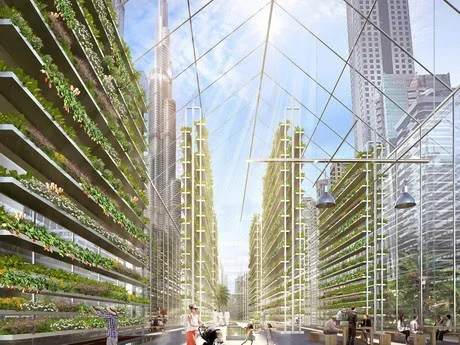
Machou Architects has designed the world's longest urban agricultural park for Dubai, transforming the city's vital Sheikh Zayed Road into an eco-valley.
Developed to increase the city's public space and improve its connectivity, the project proposes to sink the highway underground and convert the above-ground land into 25km of "prime urban agricultural land". The park, called 'Super Park', would be a catalyst for social capital development, said the architects, generating economic value and sustainable growth.
"Recent developments in Dubai are proving that well-designed spaces can offer a viable outdoor leisure option for people, despite the city's notoriously high summer temperatures," the architects said.
They added, "Heat can be controlled with good urban design elements and vegetation placement."
Read more at Middle East Architect (Rima Alsammarae)

The Ups And Downs of Vertical Farming
The term Vertical Farming (VF) can be used to define a variety of concepts. For some, it might conjure up images of tall structures with plants growing on the outside, while others may imagine stacks of shipping containers. In essence, VF refers to the practice of building upwards, or downwards in the case of underground setups, to maximise production area for a given footprint.
by Jon Swain
Vertical farming can offer a practical solution in places where space is limited or land value is high, such as in cities, or where conventional greenhouses would not be viable, perhaps due to space or climate. It may also be possible to create a vertical growing setup within a conventional greenhouse, if an arrangement of layers can be set up adequately, without compromising crop quality, although the height of the structure could limit what is practical.
As vertical farming establishes itself as a viable alternative to traditional methods, sustainability is really the key. Building vertically not only saves space but can also allow unconventional spaces, such as underground tunnels, to be used for growing. Additionally, VF has also been demonstrated to reduce the amount of soil and water required, with many using hydroponics, making it an option in arid regions where conventional glasshouses are not viable.
An important consideration for vertical farms is to ensure sufficient light reaches all layers of the crop. Even if using daylight, shading of the lower layers, especially in built-up areas, will reduce the amount of light reaching the crop. Most VFs will require supplementary lights; a light fitting above each layer of the crop is likely to be necessary.
Growing Underground, a London based setup, uses a hydroponic system to grow microgreens on four levels in 500m2 of tunnels 33 metres underground. With no natural light, high-efficiency LEDs are vital to give the crop the light spectrum it needs, but these still consume a large amount of energy and produce a considerable amount of heat. Chris Nelson from Growing Underground says, “the aim is to become carbon neutral, but it is still an energy intensive business. With closely packed layers, it is easy for a microclimate to form, so it is important to have good, effective climate monitoring and control to ensure sufficient air movement and to maintain an optimum growing environment.”
Fully enclosed farms (i.e. with no windows) demand complete control over the environment. While the number of external factors is reduced, it can also be expensive, as there is no access to free daylight. This could be an interesting option for anyone with access to an underground space, but “a clear business case is crucial” warns Chris Nelson.
The temperate UK climate means conventional glasshouses work well; heating demands can be met easily and light levels are usually acceptable. As such, vertical farms have typically been aimed at supplying niche markets: low volume, high value. Vertical farming may not be the ‘greenest’ solution compared to crops grown under glass in warm, sunny climes, but it does allow produce to be grown close to the market. As such, food miles can be drastically reduced.
A self-contained setup lends itself well to consistent, year-round production with a quick turnover time. A closed system, i.e. with water and nutrient recycling and heat recovery from vented air, can help improve efficiency, but disease control is vital. Careful climate management is necessary. Depending on the location, vertical farms often need a significant amount of heating or cooling, as well as some form of humidity control. Air movement is also important to maintain an active climate. All of these will use energy and contribute significantly towards operating costs, but sustainable, local food production is a benefit in itself and offers a degree of security against the myriad of factors that can adversely affect conventional production methods.
Although VF may not yet drastically reduce the industry’s environmental impact, in the UK at least, it does offer a solution to food production in areas where conventional methods just would not work. This is one of the main drivers behind VF, which can help combat the need to produce more food for an ever-expanding world population.
For more information:
NFU Energy
024 7669 6512
www.nfuenergy.co.uk
How Urban Agriculture Can Meet Its Potential
New York City’s urban agriculture has not been found to provide benefits to either hungry people or the environment. How could city farms work better?
Eagle Street Rooftop Farm, Brooklyn, NY
By: James MacDonald
May 27, 2019
Interest in urban agriculture on both personal and commercial scales has grown in recent years. With land in short supply, and transportation carbon-intensive, why not place more farms in cities? It’s a way to improve land use, the environment, and food security all in one blow. But can it actually help?
According to a recent article in Anthropocene magazine, urban agriculture in New York City has provided few benefits to either hungry people or the environment. The main products are leafy greens for high-end restaurants. Moreover, a glut of indoor farms consume vast amounts of energy. New York, however, is not the only center of urban agriculture.
While the stereotypical city farmer might be a Brooklyn hipster tending to backyard kale, urban agriculture is not a new concept. Sustainability expert Milica Koscica writes in The Journal of International Affairs that cities have been incorporating farms almost as long as there have been cities. Ancient urbanites, from the Maya to the Byzantine Empire, maintained farms in urban centers as a backup in case of supply disruptions. During the world wars, the United States, United Kingdom, Canada, Australia, and Germany encouraged citizens to keep Victory Gardens in order to supplement a food supply that was drained by the war effort.
Today, urban farming is widely practiced in the developing world, mostly by low income, food insecure urban residents. In some places, up to 70% of urban residents supplement their food supply with some form of agricultural. In parts of Africa, for example, a small urban plot can provide up to 60% of a family’s food supply. Urban plots produce everything from eggs to mushrooms, using space-saving methods such as hydroponics. Given the poor transportation in many developing countries, an agricultural side hustle allows access to fresh, nutritious foods that low-income urban residents could otherwise never afford. Surplus can be sold, providing critical income.
But this is difficult to scale up beyond subsistence level. Despite various ingenious workarounds, space is at a premium in urban areas, and vertical farms are mostly experimental. According to horticulturists Leigh J. Whittinghill and D. Bradley Rowe, the use of green roof technology might be the answer. Many areas are trying to encourage so-called green roofs to improve energy efficiency and wildlife habitat. Potentially, roofs could be adapted for urban farming, preventing the energy use problems of indoor farming and the contamination risks of marginal soil. Some analysis is required to make sure that the benefits of green roofs would carry over to a green farm roof.
So while urban agriculture may be off to a rocky start in New York City, it may meet its full potential yet.

What Is Vertical Farming?
Agriculturist and author Gilbert Bailey coined the term “vertical farming”. He was referencing the vertical nature of plant growth. At present, vertical farming refers to growing plants on stacked layers
By Paulo Prieto
May 10, 2019
The age-old notion that farming only happens in distant fields disconnected from residential and urban centers no longer holds true. Over the past several decades, innovative agriculturists have been working to bring farms closer to consumers. Vertical farming is one way used by growers to bring fruits and vegetables closer to your table.
Traditionally, farming has always required vast amounts of space and water to grow produce. Farms are not ideally situated near burgeoning cities for a variety of reasons. Urbanization and changing zoning restrictions can force regular farms near cities to shut down. As a result, most agricultural facilities are built farther from population centers.
The use of space in cities has gravitated towards vertical rather than horizontal. Residential and commercial buildings are built tall to maximize the space requirements of a growing population. Available space is minimal. Vertical farming capitalizes on this reality to produce food within city limits.
What is Vertical Farming?
Agriculturist and author Gilbert Bailey coined the term “vertical farming”. He was referencing the vertical nature of plant growth. At present, vertical farming refers to growing plants on stacked layers.
Vertical farming uses shelves which can be suspended on fences, walls, or stacked to grow produce. Most vertical farms make use of hydroponics, a method of growing where plants are grown in nutrient-rich water. Another common method is aeroponics, where the roots of plants are regularly sprayed with nutrients and water.
These methods are often complemented with artificial or natural light to spur photosynthesis and are implemented with the aid of technology for improved monitoring.
How is it implemented?
Vertical farming is implemented in a variety of ways. A number of which are quite interesting. An example would be the inclusion of vertical farms in the design and management of mixed-use skyscrapers. Developers build these types of high-rise residential buildings to encourage residents to grow their own food based on community and personal requirements. However, these aren’t meant to grow produce on a commercial level.
Companies have also developed innovative ways to implement vertical farming in non-agricultural locations. Agriculturists are now using vertical farming methodologies in used shipping containers. Companies can move and stack the containers in urban locations. Some companies remotely monitor the growth of produce via computer vision and neural networks.
Some problems
Critics of vertical farming systems, however, are quick to point out perceived flaws in this form of production.
Opponents argue that gains from VF logistical advantages are still not enough. They contend that the added costs brought about by the need to use additional power for artificial light, climate control, and monitoring systems. In locations that rely on environmentally unfriendly energy sources, this is said to be a net detriment. This also adds to the idea that VF is cost-ineffective.
What are the benefits?
Aside from decreasing the travel time between farms and dining tables, proponents of vertical farming claim that their method provides other benefits as well.
Produce grown in vertical farming conditions are independent of external weather. This makes them less vulnerable to strong wind, flooding, and heat waves.
Proponents also claim that their methods are environmentally sustainable. They cite the use of modern techniques such as the integration of natural lighting and the use of water recapture methods which significantly decreases water consumption to support their claim.
All of this and more, despite its perceived inefficiencies, may still be worth exploring. The world’s rapidly growing population, scarcity and rising prices of food remain tangible issues. New developments in vertical farming may provide solutions to these problems.
Photo credit: The feature image has been done by CityofStPete. The photo “aquaponic basil” has been taken by Chris Bentley.
Aquaponics Adapted For Africa
Colin Bremner, Kleinskuur Aquaponics
A South African aquaponics grower has tweaked the techniques he has learned from Australia’s Dr Murray Hallam for African conditions and his design is being installed in an increasing number of African locations.
Colin Bremner’s Kleinskuur Aquaponics system in Donkerhoek, outside Pretoria, last year functioned for up to a week without electricity (when their transformer was hit by lightning), exhibiting minimal stress.
The water surface between the floating vegetables is completely covered by duckweed, which retards evaporation and is fed to the fish in the system
Kleinskuur Aquaponics produces greens, microgreens and herbs to packhouses that supply all of South Africa’s retailers and to a few restaurants, around 50,000 plants a month.
“This system has been running for three and a half years, during which we’ve never cleaned the system. It’s still the same water we started with. We just clean the outlet holes every three or four months,” Colin says.
In all respects he has tried to minimise reliance on electricity, using some quite interesting techniques along the way. The water temperature is maintained at 23°C despite winter cold that has dipped to -7°C and summer temperatures into the mid-thirties. In fact, he notes, at one of the Kleinskuur sites in west Africa, daytime temperatures can climb as high as 47°C but the water remains at 23°C.
Geothermal piping, running along the outlines of the beds three metres underground, maintain the water temperature within this narrow band. The piping runs for a length of 160m in the commercial size of his aquaponic design.
Furthermore the system has only one water pump and one air pump. The surface is covered with duckweed, reducing evaporation and removing nitrates from the water, as well as being fed to the fish.
The fish come when he whistles, Colin says, as he scoops a handful of duckweed from the surface of the deepwater beds for them
The fish he uses – and the species that he recommends or provides along with his system design implemented in African projects – are the males of four tilapia species, all highly tolerant to pH and temperatures fluctuations, low oxygen levels and high nitrite levels.
Seedlings are placed in ordinary sponges in which he cuts a slit (“our Pacman system”, he calls it), holding stems upright as the plant is lowered in its hole in the floating polystyrene plate.
The sponges (pictured left) are re-used many times, while plastic seed nets often tear when the plant is removed and besides, can cost up to R2 for one.
His own gravel bucket design
Regarding gravel beds, he solved the problem of anaerobic bacteria proliferating in areas that are not drained, which would usually necessitate a clean-out, with his own patent on a gravel bucket. These buckets house an individual plant (typically a fruiting plant), so that should the plant need to be removed, others are undisturbed.
“The gravel barrels, to which I hold the mould and design patent, is a manageable size, one person can carry it, and it doesn’t have to perfectly fit over a hole, it can be settled over a trench. Water runs in at the top and drains out, five cycles an hour. When the water drains out it takes with it the particles that are not eaten by earthworms. This drainage movement cools the gravel and the water down, from the approximately 28°C at which it leaves the fish to 23°C, the optimal temperature for roots.”
The gravel bucket system needs earthworms in the capillaries between the 20mm gravel pebbles, with other biota like nematodes and fungi also present, making it philosophically very different from the striving for sterile conditions in hydroponics.
“When you work with nature you have none of the problems they have in hydroponics,” opines Colin, who practised hydroponics for a few years in Port Elizabeth. “In hydroponic systems bacteria are removed with UV lights and ozone. We encourage other forms of wildlife, like dragonflies, lady bugs and other beneficial insects. Nature has been doing everything right.”
One drawback to the system is that under current legislation, such produce can’t, despite the complete absence of insecticides and other poisons that would of course be lethal to the fish, be marketed as organic because it does not grow in soil, Colin explains.
Expansion into Africa
His design is being built in Zimbabwe, Botswana and Namibia to provide fresh vegetables within the hospitality sector, while mining countries in remote areas in countries like Burkina Faso are also interested in its ability to produce in harsh environments.
Kleinskuur Aquaponics regularly offers training courses in his system of aquaponics. The next course is on 25 May 2019.
For more information:
Colin Bremner
Publication date: 5/22/2019
Author: Carolize Jansen
© FreshPlaza.com

"By Water-Cooling Our LEDs, We Reduce Heat And Air Conditioning Load"
Cannabis growing facilities are known to generate a great amount of heat which, if not monitored and controlled properly, could result in issues that require a real big effort and a substantial amount of money to fix. One of the components of cannabis greenhouses that create a lot of heat is the lighting system. "The industry is seeing a shift from HPS to LED lights, as the former, although cheap in terms of initial cost produces too much heat, (over 4000 BTU per hour for the most powerful fixtures) forcing growers to resort to expensive HVAC solutions. While LEDs also produce heat, due to their increased efficiency level, they generate on average of 25% less heat than a comparable HPS fixture," Troy Robson with Agnetix points out.
Controlled Environment Agriculture (CEA) is a growing trend that uses technology-based approach toward plant and food production. This includes cannabis indoor and greenhouse grows. Resorting to these kinds of solutions greatly facilitates the management of a cannabis growing facility, but there are things to take into consideration and issues to solve nonetheless.
“The greatest problem that growers have is that current HPS lighting systems require you to purchase 3 watts of cooling for every 1 watt of lighting. This business model requires growers to buy an enormous amount of air conditioning solely for the purpose of controlling the environment they are putting the lights in,” Troy Robson with Agnetix points out. Agnetix is a company that produces an advanced technology horticultural lighting platform that incorporates LED lights equipped with a water-cooling system that precisely addresses the issue that Troy pointed out. Troy not only works for Agnetix, but he also has a long background as a cannabis grower. “The first problem many greenhouses face is a lack of power. Traditionally, greenhouses have been used to grow incremental crops throughout the year. Increased need for more food and more crops has made the implementation of supplemental lights a standard, rather than a luxury or an extra,” he explains.
Water-cooling system solves energy problems
Agnetix designed its water-cooling system, which not only helps growers control the climate in a more efficient manner, but also solve additional business problems, according to Troy. “By water-cooling our lights, we are able to reduce the heat in the room and the air conditioning load required by 50%. Additionally, by providing a far greater amount of usable full spectrum light for the plants, harvest times can be shortened,” he continues.
Two products that Agnetix offers to growers are the A3 single density light and A3DD (double density). Troy noted: “These solutions can be used for indoor grows and greenhouse facilities. The A3DD has double the number of LEDs than the A3 and light output is increased by about 50%. These can be used to cover a 10’ by 10’ area, whereas the A3 single density covers a 6’ by 6’ area.” Troy remarks: “We can typically use 25-30% fewer fixtures than HPS to provide more light to the same amount of area at the same time reducing the grower’s cost and electricity needs."
The challenges to implement a lighting system
Implementing a lighting system can be a real challenge for growers who, according to Troy, tend to underestimate the amount of light they will require. “People misjudge the amount of light that they actually need to run their facility throughout the year.”
He continues, “Usually, growers struggle to have enough daily light intensity in their facility to grow their plants properly during the winter months. Growers assume they can get enough sun, but the reality is that you don’t, as there can be cloudy days, or storms, that inevitably alter the amount of light getting into the growing facility.”
Troy also pointed out that the Agnetix lighting solution can solve additional business problems through the use of the water-cooling system. “For instance, you are producing a large tank of hot water every day from the lights and that hot water can be used for other applications within the facility such as supplementing the hydronic heating system that a lot of these facilities use during winter times or creating hot water to use in the washing areas.”
In summary, cannabis growers have several challenges as they try to optimize their yields. "The truly unique Agnetix water-cooled system offers growers assurance and more profit per plant by delivering a highly efficient energy-saving solution," Troy concludes.
For more information:
Agnetix
agnetix.com
Publication date: 5/1/2019
Author: Andrea Di Pastena
© MMJDaily.com

U.S. Organic Sales Break $50 Billion Mark
May 20, 2019
Organic sales are climbing across the board, and so are organic sales of fresh produce.
( File Photo )
U.S. organic sales hit a record $52.5 billion in 2018, up 6.3% from the previous year.
Organic food sales accounted for $47.9 billion, an increase of 5.9% from 2017, according to the Organic Trade Association.
More than one-third of organic food sales come from fruits and vegetables. Produce sales — including all forms, not just fresh — were $17.4 billion in 2018, up 5.6%.
“Organic is now considered mainstream, but the attitudes surrounding organic are anything but status quo,” OTA executive director and CEO Laura Batcha said in a news release. “In 2018, there was a notable shift in the mindset of those working in organic toward collaboration and activism to move the needle on the role organic can play in sustainability and tackling environmental initiatives.
“Activism is a natural reaction from an industry that is really close to the consumer,” Batcha said. “When we are in an environment where government is not moving fast enough, the industry is choosing to move to meet the consumer rather than get stalled.”
Fresh perspective
The United Fresh Produce Association, in its FreshFacts on Retail report about 2018, provided some context on the growth of organic fresh produce in particular.
Organic sales of fresh produce in 2018 were $5.6 billion, up 8.7%. Organic fresh vegetable sales were up 7.1%, organic fresh fruit sales were up 10.7%, and organic fresh herbs/spices sales were up 7.9%.
Packaged salads are far and away the top organic fresh produce item in terms of dollars, while organic bananas top the list for volume. Other big-ticket fresh items for organic are apples, carrots and strawberries