


Welcome to iGrow News, Your Source for the World of Indoor Vertical Farming

US: Lidl Reveals Plans For 25 East Coast Stores
As part of its continuing growth along the East Coast, Lidl US has revealed plans to open 25 new stores in Maryland, New Jersey, New York, North Carolina, Pennsylvania, South Carolina and Virginia by the spring of 2020
As part of its continuing growth along the East Coast, Lidl US has revealed plans to open 25 new stores in Maryland, New Jersey, New York, North Carolina, Pennsylvania, South Carolina and Virginia by the spring of 2020.
By the end of next year, the deep discounter expects to operated more than 100 U.S. stores and create more than 1,000 new jobs in nine states. “We are committed to long-term growth in the United States and always strive to locate in the most convenient locations for our shoppers”, noted Lidl US CEO Johannes Fiber.
“These new stores are part of the next steps in our U.S. expansion.
Over the next year, we are excited to introduce more customers to Lidl’s award-winning quality, reliably low prices and convenient shopping experience.”
Source: progressivegrocer.com
First Clarke Freight Farm Harvest in Massachusetts Exemplifies the Importance of Fresh Food and Superior Food Preservation
May 7, 2019
MILFORD, MASS. (PRWEB) MAY 06, 2019
Clarke, New England's Official Sub-Zero/Wolf/Cove Showroom and Test Kitchen, innovates again by investing in a 40-foot Freight Farm to grow produce year-round in Massachusetts.
Clarke's Culinary Team will use the produce for cooking demonstrations, events and daily tastings to exemplify the importance of fresh, healthy food and the fact that Sub-Zero refrigeration provides superior food preservation.
Every showroom visitor will enjoy a gift of fresh lettuce and the entire effort is powered by solar atop the Clarke headquarters complex in Milford, MA.
Clarke's 40-foot solar-powered Freight Farm will harvest produce year-round in Massachusetts.
Clarke, New England’s Official Sub-Zero/Wolf/Cove Showroom and Test Kitchen, once again exemplifies kitchen industry innovation with its investment in a 40-foot self-contained hydroponic farm to exemplify the importance of fresh food as part of a healthy lifestyle. “Our farm was delivered outside our Milford, Massachusetts showroom eight weeks ago and our farmer Francesca Mazzilli has been planting and tending to our crops inside the corrugated shipping container ever since,” said Sean Clarke, president of the family-owned company. “We are really excited about our first harvest happening on May 7th.”
“When I learned about Freight Farm I could think of no better way to exemplify Sub-Zero's superior food preservation.”
Built by Freight Farms, an innovative Boston-based company launched in 2010, Clarke’s exciting initiative will allow every showroom visitor to go home with a gift of fresh butter bibb lettuce. The farm will also supply fresh produce (delicately preserved in Sub-Zero refrigerators) to be used by the Clarke Culinary Team for cooking demonstrations, events and daily tastings in all three of its showroom locations (Boston Seaport, Milford, MA and South Norwalk, CT.) In addition, every Clarke employee will enjoy a weekly share of the produce to take home for their own families.
Farmer Francesca’s first harvest will include a lettuce mix, mint, parsley, thyme, swiss chard, mixed radishes, red veined sorrel, sorbet mix viola and arugula. She will continue to add new crops to the mix and harvest fresh vegetables every week throughout the year.
“When I learned about Freight Farms, I could think of no better way to exemplify the Sub-Zero and Wolf mission of superior food preservation and preparation than launching a year-round Freight Farm right here,” said Clarke. “As New Englanders, we crave fresh food year-round and many of our own employees can’t wait to get back into their gardens each year. Now we will have fresh produce all year round to cook with in our showrooms and share with customers and employees.”
The arrival of Clarke’s Freight Farm launched their “Live Deliciously” initiative to encourage all members of the design community and the homeowners they serve to remember that kitchens are about gathering to enjoy fresh, delicious meals. As the icing on the cake, Clarke is powering the farm with the solar panels that provide electricity for their entire Milford complex.
“We achieved net zero electrical consumption in Milford when we installed 2304 solar panels on our Milford headquarters in 2011,” said Clarke. “It makes it all the more satisfying that we are now also able to power a hydroponic farm from this source.”
For more information on Clarke’s “Live Deliciously” campaign featuring Sub-Zero, Wolf and Cove appliances, visit clarkeliving.com.
About Clarke
Clarke is New England's Official Sub-Zero & Wolf Showroom and Test Kitchen, with locations in Milford, MA, Boston Seaport and South Norwalk. Clarke's hallmark is an exclusive Appliance Test Drive, where homeowners can actually cook on Wolf appliances to best select the models that will enhance their lives.
Visitors can see more models of Sub-Zero and Wolf at Clarke than anywhere else in New England. Clarke sells its brands through a network of authorized retail dealers in all six New England states. In addition, the company also offers Clarke Customer Care, a dedicated Sub-Zero, Wolf, Cove and ASKO repair service that has earned them top customer satisfaction ratings in the U.S. For more information, visit clarkeliving.com.
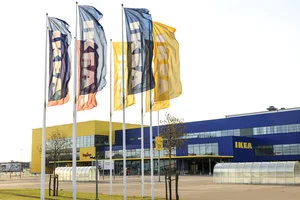
Tom Dixon and IKEA's Urban Farming Solutions Will Be Available as Early as 2021
The two-level garden will feature over 4,000 plants, as well as a horticultural lab that integrates technology into the system
By Emily Engle - May 14, 2019
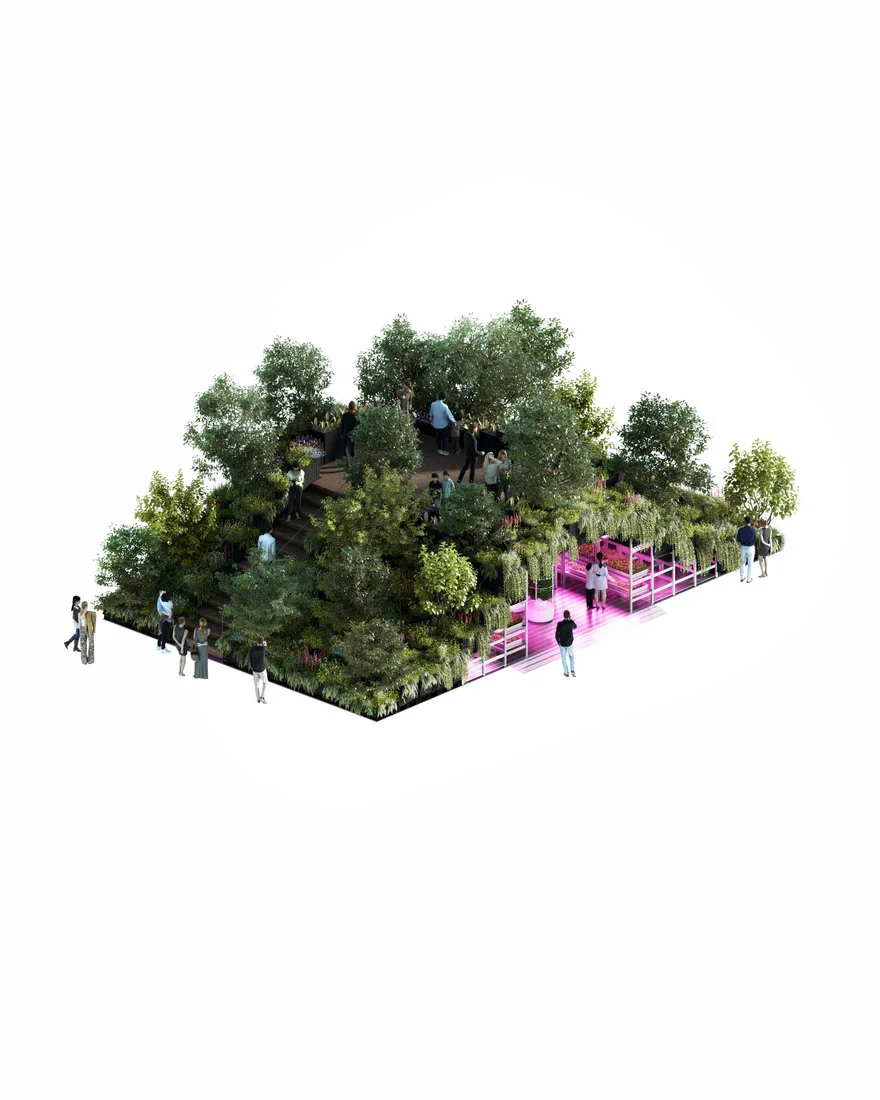
As part of the 2019 RHS Chelsea Flower Show, Tom Dixon and IKEA have designed an experimental model for urban farming. Titled "Gardening will Save the World," the exhibition demonstrates how people can grow food at home and do their best to reduce food waste, through the combination of design and technology.
The two-level garden will feature over 4,000 plants, as well as a horticultural lab that integrates technology into the system. "Aiming to give back to cities and create productive landscapes within urban zones, the garden includes a raised modular landscape with edible and medicinal plants and an enclosed based garden fueled by hydroponic systems and controllable lighting," says Dixon.
IKEA has explored gardening systems in the past, but this is the first time the company is working on a scalable system that can be applied to both large spaces and the individual home. "We want to create smart solutions to encourage people and to make it easier for them to grow plants anywhere they can, whether that's in their community garden, rooftop or in containers on balconies and window sills," says James Futcher, Creative Leader at IKEA Range and Supply.
A few of the solutions for urban growing that resulted from this collaboration will actually be available at IKEA stores globally in 2021. After the Chelsea Flower Show comes to a close, "Gardening will Save the World" will be donated to Participatory City and moved to East London for at least three years.

Emily is Core77's Editor, footwear enthusiast and resident stress baker.
Freight Farms Webinar - Enlightened Crops
WEBINAR | ENLIGHTENED CROPS
SKIP TO YOUR FAVORITE PART!
2m35s Introduction to Freight Farms
5m47s Steve’s Freight Farms Discovery
10m09s Business Planning
15m16s Finding Customers
22m10s Crops, Yields & Pricing
26m34s Marketing
28m49s Site & Operations
40m08s Community & Farming Lifestyle
47m11s Live Q&A
INTERVIEW WITH STEVE HUNTLEY
After 18 years in a successful career, Steve decided it was time to pursue something new. His new career? Hydroponic farmer!
Our 1 hour live webinar with Steve talked all about how he discovered his passion for farming, how he finds customers, and what he grows. Don’t have time for the full recording?
Check out our complete summary (under 10 minute read!).

16th EIHA Hemp Conference, 5–6 June 2019, Maternushaus, Cologne, Germany
Hemp Fibres & Shives for Construction, Biocomposites & Paper
16th EIHA Hemp Conference
++ 200 registered participants from 31 countries - 400 participants and 30 exhibitors expected ++
Industrial hemp is more than hemp food and CBD. Hemp fibres and shives are in demand as raw materials for the construction industry, biocomposites and special papers. Leading international experts present, share and discuss the latest developments at the oldest and largest industrial hemp conference in the world. Presentations will show a broad range of hempcrete applications, energy storage system from hemp materials, hemp fibre plastic granulates for many more applications such as cases and toys and high quality hemp paper for business and beyond.
Candice Meskin, Quintessential Tips (UK):
Hemp Paper for Business and Beyond
Abstract
Steve Allin, International Hemp Building Association (IR):
The Broad Range of Hempcrete Applications Worldwide
Abstract
Carl Martel, Advanced Hemp Technologies (CA):
Building an Integrated Energy Storage from Hemp Materials
Abstract
Jeremiah Dutton, Trifilon (SE):
Trifilon Biocomposites – Advancing Sustainability & Performance with Hemp Fibres
Final programme you will find here.
Book your adverstisement in the conference journal now!
Increase the awareness of your company and place an ad in the conference journal. It reaches thousands of industrial hemp specific recipients in printed and electronic form!
One page (DIN A 4, 3mm bleed) for 1,000 EUR (excl. 19% VAT) and half a page for 500 EUR (excl. 19% VAT) only.
Deadline for submission: 12:00h MEZ, 22 May 2019
Innovation award "Hemp Product of the Year"
For the 2nd time, the Innovation award "Hemp Product of the Year" 2019 will be granted to the young, innovative industrial hemp industry for finding suitable applications and markets for industrial hemp based products. Many thanks to HempFlax for supporting the Innovation Award! All six nominated products will be published soon.
Sponsoring opportunities
All sponsoring opportunities are available for download here.
Call for posters
Want to present a poster? Submit your application here.
About the conference
Specialists from all over the world will meet in order to exchange information regarding the latest developments in hemp applications for fibres, shivs, seeds and oil as well as cannabinoids. Applications are biocomposites in automotive and construction as well as textiles, food, food supplements and pharmaceuticals. We are expecting again 400 international participants from more than 40 countries.
Looking forward to welcoming you at the biggest event on industrial hemp ever!
Your nova conference team

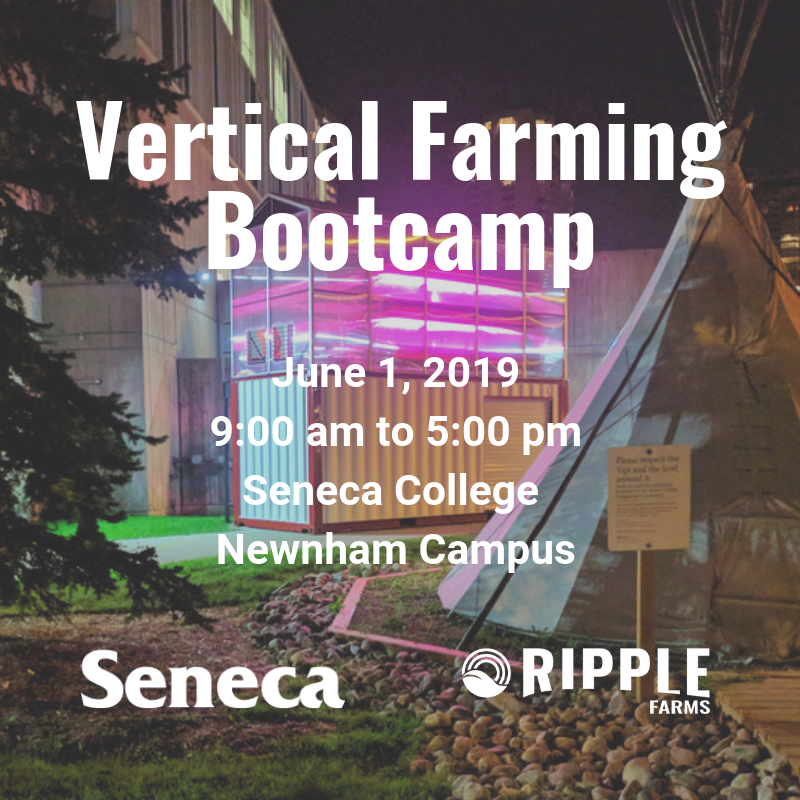
This One-Day Bootcamp Takes A Deep Dive Into The Science, Production And Profitability Of Starting Up An Aquaponics Or Hydroponics Vertical Farm
Want to learn more about Vertical Farming, Aquaponics and the technology behind it? Please Click Here
Want to learn more about Vertical Farming, Aquaponics and the technology behind it? Do you have a business model in mind and need to learn the components to execute it?
This One-Day Bootcamp Takes A Deep Dive Into The Science, Production And Profitability Of Starting Up An Aquaponics Or Hydroponics Vertical Farm. Our Team Is Here To Help The Next Generation Of Farmers And Entrepreneurs Overcome The Hurdles Of Controlled Environment Agriculture And Build A Business Model That Investor's Will Love.
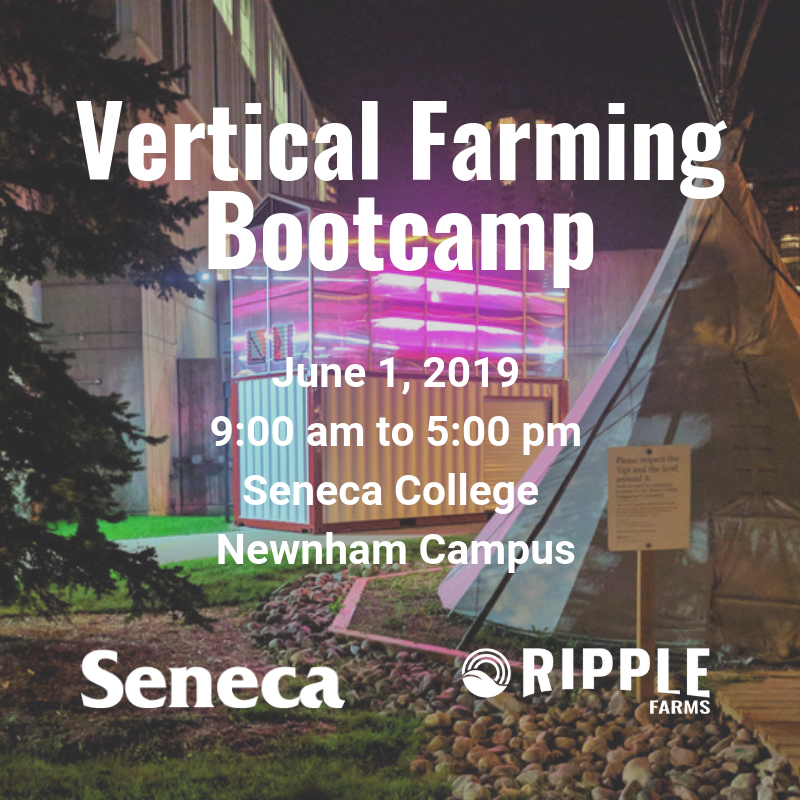
June 1, 2019 - 9:00 am to 5:00 pm
Seneca College Newnham Campus
Sign Up Now! https://bit.ly/2Zzd6Zg
This workshop is in partnership with Seneca College.

Is The French Hypermarché On Its Last Legs?
The sprawling French supermarkets, with their huge selections of fresh fruit and veg and well-stocked wine aisles, have been delighting visitors and locals alike for decades - but are their days numbered?
The sprawling French supermarkets, with their huge selections of fresh fruit and veg and well-stocked wine aisles, have been delighting visitors and locals alike for decades - but are their days numbered?
This month French supermarket giant Carrefour announced a major restructuring of its business, leading to up to 3,000 job losses. That came just weeks after another big name, Auchan, said that it would be selling off 21 loss-making stores, with the potential loss of 700 jobs.
Carrefour, Europe’s largest retailer, says it intends to refocus on food, with restructuring in six sectors (petrol station cash registers, hi-fi household appliances and jewellery departments, in-store revenue processing, management and payroll services).
In total, France has more than 2,000 hypermarchés, which are defined as having at least 2,500 square metres of retail space, and the industry is dominated by four big names - Carrefour, Auchan, E Leclerc and Inter-Marché.
When the first hypermarchés were created in the 1960s the idea was groundbreaking - and at the vanguard of food shopping in Europe.
Visitors from Britain were astounded at the size of the stores and the variety of goods on display - everything from food and drink to household goods and garden furniture. For many locals, a weekly shop became the norm at the giant out-of-town stores that provided everything under one roof. And the stores still hold a special place in many local residents’ hearts. But it seems that changing shopping habits - and competition from online sales - is putting the hypermarché under threat.
In April Auchan announced the latest in several years of financial woes for the company, and revealed that 21 of its stores, including the hypermarché at Villetaneuse in the Seine-Saint-Denis region - were not making a profit.
French retail specialist Frank Rosenthal told magazine Les Inrockuptibles that the main problems for the big stores are in the non-food sector. The biggest stores now sell a dizzying array of products, from clothing and shoes to electrical items, and music, books and DVDs.
But it is this sector that has been hit the hardest by the rise of internet shopping. "The hypermarché has never had so much competition. All sectors have competitors, much more than before," said Rosenthal. "All the large specialised areas like DIY, sports, household appliances, textiles."
A report by market analysis firm Xerfi was already warning in 2017 that hypermarkets were a “symbol of a society of mass consumption that today is largely rejected” and must ”urgently reinvent themselves.”
The report said the big retailers should no longer perceive online shopping as a threat but instead should view it as a chance to “develop new experiences for customers and (re)build traffic.”
They need to transform their commercial centres into attractive places where people come not just to buy things but for leisure or other experiences too, the report said. This would also help what have traditionally been low-cost operations to move upmarket a notch or two.
Last year, Carrefour launched a five-year plan to cut costs, boost e-commerce investment and seek a partnership in China with tech giant Tencent.
The plan notably includes expanding into convenience stores to reduce exposure to the group’s hypermarkets and having a greater focus on organic products and private labels.
Carrefour is often wrongly thought to have created the first hypermarchés in Europe. In fact it was a Belgian group, Grand Bazar, which opened the first mega-supermarkets, in 1961, which can take that claim to fame.
The death of the hypermarché has been predicted by many, but it is likely to remain a part of the French countryside for some time to come, though probably in a much altered form.
Publication date: 5/22/2019
Update On Glyphosate And Organic Certification
The debate on the failing integrity of the National Organic Program has become international, as heard on last night's program on BBC World. Click here to hear Dave Chapman, farmers from Holland and India, and General Mills discuss the controversies in organic
The debate on the failing integrity of the National Organic Program has become international, as heard on last night's program on BBC World. Click here to hear Dave Chapman, farmers from Holland and India, and General Mills discuss the controversies in organic.
I was honored to be a part of this show. It is clear that we are ALL affected by the failures of the USDA organic program, from California to Singapore.
A certified hydroponic organic blueberry "farm."
In my last letter, I quoted NOP director Jenny Tucker as saying that there is no transition period for hydroponics. After reading my letter, some withheld judgment until the Seattle meeting of the National Organic Standards Board. Jenny promised she would address the issue of hydroponics and glyphosate at that meeting. No transition period means that a hydroponic producer could use ANY chemical on their land or greenhouse that is allowed in conventional agriculture. They could do this the week before bringing in new substrate and still qualify for immediate organic certification.
A Driscoll's certified organic blueberry "farm" of coco coir pots.
Substrate is the fancy word for the growing medium in the pot. Hydroponic producers choose materials to grow in like shredded coconut husks (called coir) because they don’t rot. They also don’t provide any nutrition to the plants. The coir holds the roots and the water. All the nutrition is provided as a near-constant liquid feed in the irrigation water. Hydroponics can happen in a container on the ground or on a table. For some crops, it even happens without any container at all. At its most extreme form, called aeroponics, the roots are suspended in the air and sprayed with the nutrient solution. There is no nutritional difference between spraying the roots in the air or watering them in a container of coir or a bucket of water. The difference is in the time the plant can survive if the electricity goes off. With an “aeroponic” system, it is a matter of minutes. With a container system, it is a matter of hours. It is the same nutrition.
Jenny’s comment created quite a stir as the implications became clear. In the new USDA interpretation, “certified organic” no longer defines how the land is farmed. It now only defines how a pot of coco coir is “farmed.”
How twisted will the USDA "new organic" standards become? Will they look something like the political machinations we see in this district map of Maryland?
The new USDA definition of organic is becoming a form of gerrymandering. Gerrymandering is the process by which a group of political officials manipulates the drawing of an election map in a way that benefits them. The result is a complex, illogical map that makes sense only to those who will profit. This principle is applied to many areas of government. When the allowable levels of glyphosate were being crossed in conventional farm products, the EPA simply increased the “safe” level. In the case of "organic" hydroponics, we are ending up with a convoluted set of regulations that look like the latest Congressional district designed to keep one party in power.
Or we are left with no regulations at all, with every certifier making up their own? That is the case until the USDA answers our questions.
Wasn't preventing such a "Wild West" scenario the justification for the NOP in the first place?
Real organic blueberry production. Soil-grown blueberries must be free of prohibited substances for 3 years before being eligible for organic certification. This is referred to as a "3 year transition period."
The reason for this is because hydroponics CAN’T fit into the real meaning of organic. Organic farming is based on the principle of stewarding the life in the soil in order to provide superior nutrition for plants, animals, and humans. I would now add climate to that list of benefits. It is, in fact, the opposite way of farming from “conventional.” This foundation of soil stewardship is well understood in the rest of the world, as clearly defined by IFOAM (The International Federation of Organic Agriculture Movements). The United Arab Emirates has just joined the rest of the world in prohibiting hydroponic from being certified as organic. It is also well understood in our own law, the Organic Food Production Act. And yet, the USDA continues to be the rogue nation embracing hydroponic as organic.
Hydroponic is the opposite way of farming from organic. Being a hydroponic organic producer is like being an illiterate book critic. They just don’t fit together.
Jenny Tucker speaking this winter at an event on organic integrity.
So people came to Seattle ready for answers. They got none. Jenny Tucker has given the seemingly contradictory statements that glyphosate would never be tolerated in organic AND that there was no transition time for hydroponics, thus allowing glyphosate (and hundreds of other pesticides) to be used immediately before certification. And there are no standards prohibiting hydro producers from going out of certification for a week during the crop changeover so they can spray whatever they want, and then being immediately recertified when they bring in new pots.
Laura Batcha of the OTA and Dave after speaking together on a panel in Washington this Spring. We often agree to disagree. Photo courtesy of Charles E. DeBourbon/The Hagstrom Report.
The Organic Trade Association (OTA) delivered a letter to the USDA signed by members, including the leading USDA organic hydroponic producers. It demanded that USDA make clear that glyphosate is not permitted in organic certification. Which of course, it is not. Dr. Tucker was happy to make that clear. The letter briefly mentions the question of whether glyphosate is allowed the week before organic certification. Which it is, in the absence of applying the three year transition period to hydroponic and container operations. Yet the three year transition period is a cornerstone of the Organic Foods Production Act.
Just to be clear, the OTA continues to strongly support certification for its hydroponic members such as Driscoll's and Wholesum Harvest. Although OTA has publicly opposed certifying “hydroponics,” their definition of hydroponics is a perfect example of “rebranding.” In the strange world of OTA, hydroponics is limited to plants growing with their roots in water or in the air. Clearly, this is not what the rest of the world means by that word. No wonder they are so confused. In their private world, “Hydroponic is what we say it is. Organic is what we say it is.”
CCOF President Phil LaRocca at the 2017 Jacksonville NOSB meeting.
Phil LaRocca, President of CCOF, testified in Seattle, where he clearly expressed his genuine outrage that this “no transition period” was being allowed. He said that he had been told by CCOF’s Executive Director that, indeed, no transition time was being required by some certifiers for hydroponics. As the largest certifier in the world, CCOF (California Certified Organic Farmers) would know. Phil asked that Jenny clarify the USDA National Organic Program position.
She would not.
Over and over people, including members of the National Organic Standards Board, pressed Dr. Tucker to respond and clarify the NOP position. Over and over Jenny responded that she would not respond to a question about “hypotheticals.”
It seems to me that when the NOSB and the President of CCOF ask what the USDA policy is on organic transition time, it is not a hypothetical.
I have wondered why Jenny refused to set the record straight and answer a simple question about policy? She did say that she misspoke in answering my question, but she would not disavow her statement! All she had to do was say, “I was wrong. A three year transition period is required for ALL organic production, and always has been.”
That answer would then lead to the decertification of those certified with no transition time. Probably that would lead to lawsuits. But if the USDA continues to allow this, that will also probably lead to lawsuits. It looks to me like the USDA is going to get sued (again), one way or the other.
The final testimony at the meeting came from Lee Frankel, the lobbyist for the misnamed Coalition For Sustainable Organics. They should be called the Coalition For Hydroponic Organics. They just don’t want you to know that. The desire to keep us in the dark seems to be the hallmark of the “hydroponic organic” producers. Lee asked what the logic was of requiring a three-year transition for hydroponics? It is interesting to note that Wholesum Harvest, the leader of the Coalition, is calling on the NOP to enforce a three-year transition in the OTA letter. On the same day, the Executive Director of the Coalition is questioning whether a three-year transition makes any sense.
Is there a logic in requiring a three year transition period for a pot of coco coir? The problem with this whole circus is that it doesn't make any sense certifying hydroponic as organic in the first place. Organic and hydro are opposite systems of growing. Let the hydro producers make their own label. Let them proudly offer their products to consumers.
But that transparency isn’t going to happen, is it? The large hydro growers run from honesty with their customers. The whole reason they want the organic label is to avoid being transparent.
Real Organic dairy at Radiance Dairy in Iowa.
People have said that real organic farmers are afraid of honest competition. I say bring it on. But let’s make sure it is HONEST. Let every hydroponic tomato and berry have an image above of plants growing in buckets of coco coir sitting on black plastic. Let every CAFO (concentrated animal feeding operation) produced container of milk or eggs have a picture of animals in confinement on the front. And real organic farmers will put pictures of our reality on our products, of plants growing in soil and animals eating fresh grass. Then we will see who wins the support of the customers.
Aurora Dairy in Colorado which, according to the Washington Post, is fake organic. For their investigation, the only cows found on pasture were "dry cows," not producing milk. Which milk would you buy? Photo courtesy of Washington Post.
Of course, this would be no contest. The HYDROs and CAFOs would go out of business. The farmers growing real organic would be unable to keep up with market demand. The stores would be falling over themselves to buy locally from real organic farmers. Real organic farmers would multiply.
The whole reason that we shouldn’t allow hydroponics to take over American organic vegetable production is that we want to be honest. We want to protect the customers from fraud. We want to protect the farms and farmers. We want to protect the land.
So I invite all in the organic community to come together.
If you are a consumer, demand that local real organic products are on the shelves of your grocery store.
If you are a member of CCOF, demand that your organization stops certifying hydroponics. Throw out CAFOs while you are at it.
If you are a member of OTA, demand that your organization publicly calls for an end to ALL hydroponic certification, including hydroponic containers. Throw out CAFOs while you are at it.
When that day comes, perhaps we can take back the organic seal in America. Oh, and we will need to elect a new President as well. I never said this was going to be easy.
In the meantime, please support the Real Organic Project.
Greece: Hydroponic Workshops Launched In Corfu
Hydro Fresh Produce Announces The Launch of
Hydroponic Workshops In sunny Corfu, Greece
The workshops will take place at their hydroponic farm in central Corfu, Greece. The farm is located just 5 km from Corfu International Airport and 7km from the historic UNESCO city centre. Accommodation is available just a five minute walk from the farm or select your own.
The workshops last four days and will cover everything from setting up the system, implementation, maintenance, crop types, water and nutrient management and much more. The course will provide all of the information required to enable anyone to start their own hydroponic production, whether on a small scale at home for the family, or on a larger commercial basis. The official launch date for the workshops is Tuesday 4th of June 2019.
Ivor de Lloyd of Hydro Fresh Produce Corfu says about the project that it "started with yet another 'Ivor, don’t even think about it!' And here we are – 3 years into it and proving them wrong yet again.
"Hydro Fresh Produce hydroponic farm is a logical addition to my culinary career. How many chefs can say they grow their own greens, not to mention using innovative technologies? We supply local shops and taverns with the freshest produce in Corfu. If you choose the right restaurant, your salad will still have been growing this morning!
"Now, the next step. Hydroponic Workshops right here in beautiful Corfu.
"Enjoy the beauty of Corfu on a holiday with something extra…
“Learn how Hydroponics works and gain the knowledge to do it yourself!"
Hydro Fresh Corfu believe that this is a valuable addition to the thriving eco/agri-tourism movement and is aimed at individuals, couples or groups interested in learning about hydroponic production, with a view to setting up themselves.

For more information:
Hydro Fresh Produce (Corfu)
Ivor de Lloyd
+30 26610 56226
+30 693 099 7873
idelloyd@yahoo.com
www.hydro-fresh.com
Publication date: 5/22/2019
How To Actually Remove Pesticides From Your Fruit - Assuming That You Should Be Worried About Them In The First Place
By Sara Chodosh October 25, 2017
There’s a lot to worry about when it comes to food—or rather, there’s a lot that people want you to worry about. Every mommy blogger and natural living life coach with a URL to their name is bursting with helpful tips on how to rid yourself of toxins and chemicals. If you google “how to get pesticides off fruit” you’re greeted by a flurry of blogs all promising the solution.
It’s not unreasonable to want to consume fewer of the chemicals we use to kill off bugs and weeds. You should just make sure that what you’re doing is actually effective. Plenty of people wash their chicken before cooking it, even though that method does nothing to kill bacteria, and in fact spreads potentially dangerous pathogens all over your kitchen sink and such. So let’s look at the evidence:
Store-bought veggie washes don’t work, but baking soda does
Water can remove some of the pesticides from a piece of fruit, so a basic scrub under the tap will help at least a little. The extent to which this rather lackadaisical method works will depends on the fruit itself; some skins will more readily release the pesticides contained therein. Others, like apples treated with wax for extra shine, will retain them despite your scrubbing. But water’s occasional ineffectiveness doesn’t mean you should waste money on store-bought veggie washes—they don’t seem to work, either. And even if it worked (which it’s not clear that it does), regular soap is liable to seep into the surface.
A recent study in the Journal of Agricultural and Food Chemistry found one better alternative: baking soda. A solution of sodium bicarbonate and water can remove even more pesticides than water alone, provided you have more than a minute to spare. In the experiments, Gala apples that were allowed to soak in baking soda for eight minutes had significantly reduced pesticide residue on the surface, and at 12-15 minutes there were virtually no pesticides left. This is because sodium bicarbonate can help degrade the two types of pesticides used in this study, thiabendazole and phosmet. Other chemicals might not react the same way, so this solution isn’t a guarantee of a pesticide-free snack. It’s just a lot better than the alternatives.
Even after the long soak time, though, there were some pesticides that the baking soda couldn’t get to. Thiabendazole and phosmet, like many other substances, seep into the skin and flesh of the produce they’re applied to. There’s an upper limit to the amount that the fruit can absorb, since the added chemicals will come to an equilibrium inside the cells, but none of it will come out in the wash.
Buying organic can help, though not much
If you’re hoping to avoid pesticides altogether, you’ll have to look beyond the organic aisle. Produce grown under organic conditions can still have pesticides, it’s just a different—and supposedly less toxic—set of them. But they’re still chemicals that can seep into your fruit through the skin or even leech into the flesh itself via the plant’s water supply, both of which prevent you from washing them away.
The most common piece of advice here is to avoid those fruits that pose more of a pesticide risk, often known as the “Dirty Dozen.” An environmental group called the Environmental Working Group has claimed that switching to the organic versions of those 12 fruits and veggies could substantially improve your health. It’s true that organic versions will generally contain fewer and less harmful chemicals, and there’s certainly no harm in eating organic, but it’s worth noting that EWG’s methodology is far from scientific. Their analysis relied on unproven theories about how pesticides might interact with one another, and thus has skewed results. A rebuttal in theJournal of Toxicology found that EWG didn’t even attempt to estimate pesticide exposure in the first place, and that “substitution of organic forms of the twelve commodities for conventional forms does not result in any appreciable reduction of consumer risks.”
In other words: science does not back up the Dirty Dozen advice. But it’s your money; you can eat organic if you want to.
It’s not clear how worried you should be about those pesticides in the first place
That same Journal of Toxicology analysis also found that the levels of pesticides detected in the so-called Dirty Dozen all fell below the acceptable limit set by the Environmental Protection Agency. And we’re not talking just slightly below the limit. The allowable dose for methamidophos on bell peppers was 49.5 times higher than the actual amount of pesticide, and that was the fruit with the highest exposure. Many of them came 1,000-or 30,000-fold under the legal limit. It is worth noting that legal limits aren’t infallible. Human exposures and their bodily impacts are difficult to study (and oft under-studied), and too often we don’t know exactly how a particular pesticide might affect us. If the EPA bases their acceptable limit on faulty science, it may overestimate how much exposure we can tolerate. And that’s assuming that the EPA is even doing their job properly in the first place.
If you’re still not sure—maybe you don’t trust the EPA, or you think pesticides haven’t been studied well enough (both perfectly fair points)—try going to your local farmer’s market. There, you can talk to the growers and discuss which pesticides they use. Of course, there seems to be an ever-growing trend of farmer’s markets filling up with folks simply reselling wholesale produce. So you might want to do an extra baking soda wash just to be sure.
tags: pesticides epa food health
Urban Agriculture, An Agricultural Model Unlike Any Other
April 26, 2018
The city and the countryside sharing the same space. Jonathan V. Larocca / Flickr , CC BY
Author Lionel Garreau
Lecturer HDR in Strategy & Organization, University Paris Dauphine - PSL
Declaration of interests
Lionel Garreau does not work, does not advise, does not own shares, does not receive funding from an organization that could benefit from this article, and has declared no other affiliation than his academic position.
Partners
Université Paris Dauphine provides funding as a member of The Conversation FR.
See the partners of The Conversation France
Agriculture is undergoing profound changes . Various forms are developing: smart agriculture , permaculture , agroecology, etc. There is today an ideological competition between these forms of agriculture, as evidenced by many works that propose ways of improving agriculture as it is currently practiced, without questioning the foundations of these models. .
The book by Benoît Biteau, resistant farmer, advocates the validity of the model of organic agroforestry. The book shows the benefits of this type of agriculture, both for economic reasons for farmers, and ecological for society. For its part, the work of Xavier Beulin (former president of the FNSEA) persists in a conventional but improved model (what could be called a smart agriculture ) in his book Our agriculture is in danger, what to do . Or the book Organic farming, hope or chimera presenting a debate between two opponents, pro and antibio, who each camp on their positions.
Bio, scandales sanitaires, guerre des prix : l’agriculture française à la croisée des chemins
Practices in "simple loop"
Despite their interest in improving agricultural practices, these forms of agriculture actually offer only "simple loop" learning , that is, an adjustment of practices that improve the way agriculture is implementation, without, however, calling into question the frames of reference in which it is developing.
Therefore, the competition between these various forms is always based on the same arguments: for or against the use of phytosanitary products (the famous pesticides) and its practical consequences, the yields per hectare, respect for the environment, etc. The founding principles are never questioned by their supporters, making the dialogue unproductive.
The single loop and double loop learning model, according to Argyris and Schön (1978). Author provided
Despite their differences, these currents of thought are based on three shared pillars: land would necessarily be needed to produce agricultural commodities; agriculture is practiced "horizontally" in fields; finally, agriculture requires dedicated plots, separated from plots of housing.
The new model of urban agriculture
An agricultural model, however, seems to implement what is called "double-loop" learning; that is, a correction of past mistakes by re-examining reasoning processes, problem-posing ways, underlying values, and goals.
This model is that of urban agriculture. This one is extracted from the foundations evoked above: necessary use of the land, horizontal agriculture and separation of agricultural parcels and dwelling. And, beyond challenging these frames of reference, it incorporates in its reflection other parameters shared by the scientific community: CO 2 consumption related to the transportation of agricultural products; the ever-increasing rate of urbanization; soil depletion or the need to consume less water.
By combining the questioning of certain factors and adding others, based on empirical observations, a new model has emerged with urban agriculture, which proposes a different future. It helps rethink how agriculture can develop today.
This mode of agriculture is also based on various formats: home farming, decentralized agriculture in modules intended for production (premises inside the building, containers, gardens on the ground or on roofs, etc.), vertical farms urban.
Sensitize city dwellers to the problems of food production. artefatica / Flickr , CC BY-SA
What development?
This new model breaks the codes of agriculture ... to the point that a company like Agricool- which produces strawberries in urban containers using no chemical pesticides - can not claim the organic label because it does not use no land!
We see here that the frameworks defined by the public authorities become obsolete. The latter will have to adapt to the new practices that are inventing each day in this sector: because the consumer would not understand that a product of the same quality as another, organic, can not eventually benefit from the same label.
Urban agriculture has, of course, not only advantages: a cost of production currently above the market average, a strong energy requirement, an impossibility to exploit very large plots (although the yield annual strawberries in 30m 2 containers at Agricool is the equivalent of 4 000m 2 in the field), the difficulty of ensuring livestock breeding, etc.
But it contributes to profound changes in the classic frames of reference of modern agriculture. While not forgetting to rely on new resources, using, for example, digital data from sensors to better manage water consumption.
Horticulture + Engineering + Data Science + Nutrition = A New Kind of Farm AeroFarms is passionately working to fundamentally transform our food system, in an environmentally sustainable and socially responsible way. http://aerofarms.com/environmental-impact/ …
The development of urban agriculture will not only go through a niche population and the development of startups such as Agricool , AeroFarms , Topager (realization of vegetable gardens on the roofs) or Roof Green (which will open soon). a vertical farm in Paris).
It will also be of interest to large companies in the real estate construction, energy or data management sector for this type of opportunity. This is also the interest of this new model: developing devices that make it possible to bring together actors who until now met little, while reconnecting the urban population with the problem of food production.
This article is based on the study conducted by the students of the Master's degree "Corporate Policy and Business Strategies" at Paris-Dauphine University as part of the Economic Intelligence Trophy, which took place on the 9th April 2018.
Agriculture town planning food cities farmers urban agriculture organic farming alternative consumption greening farming lands

Sheffield Scientists Launch Soil-Free Urban Farm
May 13, 2019
Posted by: Joanna Jones
A team of scientists have transformed an abandoned school building into a soil-free farm.
The abandoned school in Tinsley has been fitted with hydroponics systems by Jacob Nickles, a Knowledge Exchange Associate from the new Institute for Sustainable Food at the University of Sheffield.
Using a network of pipes, nutrient solutions, controlled growing environments and polyurethane foams, Jacob is growing everything from salad to tomatoes using a soil-free technique.
With 24bn tons of fertile soil lost globally to erosion every year and University of Sheffield experts predicting the UK has fewer than 100 harvests left, PhD student Harry Wright has developed specialist foams that chemically, physically and biologically resemble soil. So far, Harry and Jacob have found that plants in this controlled urban setting grow two to ten times faster than they do in soil.
After an open day this Saturday, the farm will provide fruit and vegetables to the community in Tinsley, as well as training for local unemployed or low-skilled workers and an educational environment for schools.
Involving the local community is a crucial aspect of the project, which was inspired by an initiative to install hydroponics systems at a refugee camp in Jordan, led by Professor Tony Ryan and Professor Duncan Cameron at the Institute for Sustainable Food.
Jacob Nickles said: “The Urban Farm is a physical manifestation of some of the groundbreaking work that happens at the University of Sheffield. Rather than speaking about it and publishing papers, we’ve actually built a working system for growing food.
“This Saturday is a chance for us to start engaging with our local community – learning from them about what food they want to see the farm grow, and talking about how members of the public can get involved.”
Education | Food & Drink | North East | Technology | YorkshireFacebookTwittergoogle_plusLinkedIn

Keep GMO Salmon Off of Store Shelves!
The U.S. Food and Drug Administration (FDA) just lifted the import ban on GMO salmon. Since FDA doesn’t require GMO salmon to be labeled clearly on the package, it could easily sneak onto your plate without you even realizing what you’re eating!
But because Center for Food Safety members (like you!) wrote to grocery stores across the country, more than 80 food companies—including Kroger, Walmart, Costco, Albertson’s, Trader Joe’s, Whole Foods, and many more —have made commitments never to sell this GMO salmon. Now that GMO salmon is available to be sold in the U.S., their commitments not to sell this dangerous product will be put to the test.
If GMO salmon becomes common on store shelves, we’ll all have to face the environmental and public health consequences of the biotech industry’s gamble in developing it. While corporations continue to engineer fish and push for their commercial use, scientific evidence mounts regarding the extraordinary environmental danger these fish pose, including potential extinction of the wild salmon population.
If we don’t nip this GMO salmon in the bud by giving companies this feedback, it’s only a matter of time before the biotech industry launches other GMO animals for human consumption. AquaBounty Technologies, the company that made GMO salmon, is already working on genetically engineered tilapia and trout for commercial approval, while others are developing other genetically engineered catfish and salmon. There are dozens of other genetically engineered animals in development as well, such as chickens, pigs, and cows, engineered to fit within a factory farming model. And why risk the environmental consequences of GMO salmon, especially when poll after poll shows that consumers don’t want to eat it?
Even though this salmon is the first GMO animal to enter our food system, FDA did not approve GMO salmon responsibly. The flawed process FDA used was intended to evaluate the safety of “animal drugs,” not GMO animals meant for human consumption!
This GMO salmon won’t even be labeled on the package. GMO labeling standards allow companies to hide the fact that a product has GMOs under a “QR code,” which are clunky, time-consuming, and require both a smartphone and a broadband internet connection to access.
Tell the stores that pledged never to sell GMO salmon how important that commitment is to you.
Thanks for all you do,
Center for Food Safety team
Connect with Us
CFS welcomes your questions and comments. Please contact us at office@centerforfoodsafety.org, or at one of our offices.
Washington, D.C. Office
660 Pennsylvania Ave, SE, #402
Washington, DC 20003
phone (202) 547-9359 | fax (202) 547-9429
www.centerforfoodsafety.org

Waste Heat From Berlin Biomass Plant Will Help Grow Hydroponic Greens
The biomass power plant in Berlin is getting half a million dollars from the state to build a waste heat recovery system that will soon power a new greenhouse
PHOTO: Wood chips wait to be turned into electricity – and excess thermal energy – at the Burgess BioPower plant in Berlin.
Photo By CORI PRINCELL / NHPR
By ANNIE ROPEIK • 05-17-19
The biomass power plant in Berlin is getting half a million dollars from the state to build a waste heat recovery system that will soon power a new greenhouse.
The Burgess Biopower plant burns wood chips to make steam, which turns turbines and generates electricity.
It also makes a lot of excess heat – 500 million BTUs an hour, enough to keep roughly 10 million square feet warm. Right now, that heat is released to the atmosphere.
Burgess operations manager Dammon Frecker says the new grant, from the state Public Utilities Commission, will help them build a system to harness that waste heat and put it to good use.
"We're very excited about not only the economic development, but in doing something novel with Burgess BioPower,” he says. “Not only producing electrical renewable energy, but thermal renewable energy."
One application for that thermal energy will be a hydroponic greenhouse that’ll grow more than a million pounds a year of baby leafy greens – like spinach, kale and arugula – for sale locally.
"Particularly in a Northern climate, a greenhouse will need heat ... for growing the produce,” he says. “So this thermal energy recovery system has been designed just to meet those heating demands in the cooler weather."
The 4-acre greenhouse is set to be built next year and will be operated by a third party, which Frecker declined to name.
The city of Berlin also wants to use some waste heat to melt snow and ice on its sidewalks. Frecker says these kinds of “synergies” have been one of Burgess’ goals since it was built.
And he says even these two projects combined will only use about 20 percent of the heat the power plant generates.
Burgess has space left on its campus for future businesses that could use the heat. Frecker says it could also theoretically be distributed beyond their facility, with other infrastructure upgrades.
TAGS: BERLIN BURGESS BIOPOWER BIOMASS
RELATED CONTENT
Berlin City Manager Hopes To Harness Steam From Biomass Plant To Melt Sidewalk Snow
By SARAH GIBSON • JAN 18, 2019
SARAH GIBSON FOR NHPR
On cold days, Berlin City manager Jim Wheeler can stand on the steps of city hall and see plumes of steam billowing from the wood chip burning plant Burgess BioPower.
The plant sits on the former site of the city’s pulp mill factory on the Androscoggin River.
“One of the things about biomass plants is that they make a lot of steam, and that's energy that goes to the sky,” Wheeler says.
Now, Wheeler wants to harness the heat that makes this steam for a snowmelt system.

Carrefour Aims To Have 95% French Fruit And Veg In Its Stores By 2020
On February 28, Carrefour CEO Alexandre Bompard made a strong commitment to his customers: "To increase by 10% the volume of fruit and vegetables produced in France on its shelves, so that by 2020, 95% of the products sold will be of French origin".
In April, 65 % of the fruits and vegetables on the shelf at Carrefour were of French origin. However, in July, when the seasonal products arrive, 80 % of them will be stamped made in France.
The brand is focused on two areas:
To offer more and more seasonal products: this means more turnips, pumpkins and sunchoke in winter, and more tomatoes in summer. However, we would have to offer less and less certain products, or even remove them from the shelves if they come from too far away. This decision is risky for consumers: it is therefore essential for Carrefour to educate them. It will be necessary to explain again the natural cycle of fruits or vegetables. In addition, this strategy of buying more products made in France has a cost, estimated at 50 million euros per year.
Encourage the re-establishment of certain cultures, which had disappeared in France. "As soon as a product can be made in France, we manage to have it on the shelf, even if we can offer other origins in parallel," Carrefour explains. The distributor is also pushing the spotlight on organic productions made in France. "We are currently supporting 230 farmers, particularly during the entire conversion phase, during which their incomes are declining.
Source : leparisien.fr
Publication date: 5/13/2019
Hands-Off Farming Is Way of The Future
In most industries, and agriculture is no exception, automation has typically been viewed as a way to gain greater efficiency from traditional methodologies
DAVID PLATT, The Weekly Times
05-14-19
IN RE-IMAGINING food for the future, we must focus on understanding and transforming our food production capabilities — a revolution well on its way.
The capabilities that are becoming standard for anyone in food production are automation that reframes efficiency; new means of production that reshape our thinking about nutrition; and the smart use of data to record immediate feedback and meet customer needs.
In most industries, and agriculture is no exception, automation has typically been viewed as a way to gain greater efficiency from traditional methodologies.
In farming, that has emerged as enhancements to existing technologies. From autonomous machinery and drone-based remote inspection to robotic milking and harvesting — all are accepted as improvements to business as usual.
However, rapidly emerging forms of automation are radically reshaping farming.
RELATED CONTENT
Popular utes recalled over serious flaw
Popular utes recalled over serious flaw
Iron Ox is a start-up in California focused on embedding robotics into hydroponic indoor farming. Its technology has the potential to reduce repeatable human interactions that comprise most current costs of production.
Efficiency in the future is indoor farms producing leafy greens (and more) in perfect climatic conditions, with limited water, pesticide free, in both urban and rural contexts, with limited human interaction.
And all driven by solar energy, which not only powers the food factory, but enables the farmer to on-sell any excess energy.
Until now, the contribution that farming makes to nutritional wellbeing has been taken for granted. Whether livestock, veg or dairy, fresh has generally equated to healthy.
That too is changing.
Whether it’s due to concerns about meat consumption or pesticide exposure, consumers are becoming more selective about what they consume and why. Emerging businesses such as Beyond Meat and Foodini have launched products that are radically reshaping our relationship with food and the nutrition it provides.
Beyond Meat uses plant-based cells to recreate the molecular structure of meat — meaning the meat-substitute looks, feels and tastes just like the real thing — but is from a different source, not livestock.
Foodini is a 3D-printing kitchen appliance designed for both commercial and domestic markets — giving cooks localised control of their processed foods.
In fact, part of Foodini’s core assertion is that all food is processed in some way, so why not have control of both inputs and outputs?
In a world where data is now being created at an exponential rate, knowing what to collect and how to use it is critical.
Indoor vertical farming company Aerofarms is leading the way with its use of “smart” technologies and data to reset business and operating models. In Aerofarms’ case, real-time feedback data supports continuously refining its system to ensure it gets the best results from its pesticide-free leafy greens.
So, whether you’re moving to enhanced automation, rethinking nutrition or embracing the power of data, you need to keep pace with the future of food production, and know what to invest in and when.
To be a part of the ‘thinking food in the future’ conversation, email David at thinkingfood@resilientfutures.com
David Platt is a director and strategist at Resilient Futures. He is an expert facilitator and is the co-author of Disrupted: Strategy for Exponential Change and The Disruption Readiness Test.

Meet the Disruptors at the Indoor AgTech Innovation Summit in New York
Seven dynamic international agtech start-ups will be taking the spotlight at the Indoor AgTech Innovation Summit in New York, (June 19-20), seeking investment opportunities and corporate connections to scale up innovative solutions including machine learning algorithms, A.I., hydroponics technology and indoor farming production.
The summit’s Technology Showcase session will feature a selection of exciting entrepreneurs as they pitch to an audience of 300 indoor operators, food producers, technology developers, investors and retailers from around the world. The TechHub is a dedicated space for start-ups to showcase their breakthrough solutions up close within the exhibition and networking area.
Featured start-ups include:
La Grangette (France): produces fresh, organic and locally grown food that is better for consumers and the environment. With La Grangette the consumer can grow their own vegetables easily at home throughout the year with its autonomous kitchen garden.
Computomics (Germany): unlocks the diversity of biological life to enable data-driven decisions and accelerate sustainable agricultural development using multi-omics datasets. Computomics helps agricultural biotech, breeding and indoor farming companies to unlock genotype-phenotype relationships.
Root AI (USA): is on a mission to create intelligent robots that help growers build the farms of the future. The start-up has introduced its first agricultural robot, dubbed the Virgo 1, which can pick tomatoes without bruising them and detect ripeness better than humans.
Lettuce Lads (Canada): is increasing access to locally grown, quality food through innovation within hydroponics technology. Lettuce Lads will empower farmers to grow more with less, providing year-round access to local food for everyone. The company will build an operational prototype of their design in the Bow Valley this summer.
Grow Computer (USA): is the first of its kind operating system for any indoor agriculture farm or grow. Through its smart, IoT platform ‘GrowOS’ it gives indoor and hydroponic growers advanced monitoring, controls, data tracking and sharing right from a computer or smartphone.
Babylon (USA): has created automated, scalable hydroponic systems that make it simple and cost-effective to grow premium quality ingredients onsite and on demand.
Sustainable Indoor Growing System - SIGS (USA): is designed to produce large numbers of affordable, higher quality grafted vegetable transplants, with fewer resources such as water, fertilizer and pesticides.
The summit will welcome international indoor farm operators, their supply chain and retail/food service clients from across the United States, Canada, Europe, the Middle East and Asia including 80 Acres Farms, Autogrow, AeroFarms, BrightFarms, Bowery Farming, Driscoll’s, Gotham Greens, Fluence by Osram, Ikea, InFarm, International Space Station National Laboratory, MIT Media Lab, Samsung Electronics LED Business, Shenandoah Growers, S2G Ventures, Smallhold, Temple Court, Wells Fargo, Wendy’s, Whole Foods Market, USDA and US Foods.
Co-located with the Future Food-Tech Summit (June 18-19), the Indoor AgTech Innovation Summit is part of the Rethink Agri-Food Innovation Series hosted by Rethink Events, focused on international networking and deal-making for food and agribusinesses, solution providers, entrepreneurs and investors.
For more information about the event program, speakers and delegate
registration, visit www.indooragtechnyc.com
Agtech Startup Agrilyst Is Now Artemis, Raises $8M Series A
May 22, 2019
Artemis, the agtech startup formerly known as Agrilyst, today announced that it has raised an $8 million Series A funding round. The round was co-led by Astanor Ventures and Talis Capital, with participation from iSelect Fund and New York State’s Empire State Development Fund. With this, the company, which won our 2015 Disrupt SF Battlefield competition, has now raised a total of $11.75 million.
When Agrilyst launched, the company mostly focused on helping indoor farmers and greenhouse operators manage their operations by gathering data about their crop yields and other metrics. Over the course of the last few years, that mission has expanded quite a bit, and today’s Artemis sees itself as an enterprise Cultivation Management Platform (CMP) that focuses on all aspects of indoor farming, including managing workers and ensuring compliance with food safety and local cannabis regulations, for example.
The expanded platform is meant to give these businesses a single view of all of their operations, and integrates with existing systems that range from climate control to ERP tools and Point of Sale systems.
Compliance is a major part of the expanded platform.
“When you look at enterprise operations, that risk is compounded because it’s not just that risk across many, many sites and many acres, so in 2018, we switched to almost entirely focusing on those operations and have gained a lot of momentum in that space,” CEO and founder Allison Kopf said. “And now we’re using the funding to expand from mainly focusing on managing that data to help with profitability to using that data to help you with everything from compliance down to the profitability element. We want to limit that exposure to controllable risk.”
With this new focus on compliance, the company also added Dr. Kathleen Merrigan to its board. Merrigan was the deputy secretary of Agriculture in the Obama administration and is the first executive director of the Swette Center for Sustainable Food Systems at Arizona State University . She is also a venture partner at Astanor Ventures .
“Technology innovation is rapidly transforming the agriculture sector. Artemis’ approach to using data as a catalyst for growth and risk management provides the company a significant advantage with enterprise-level horticulture operations,” said Merrigan.
Cannabis, it’s worth noting, was not something the company really focused on in its early years, but as Kopf told me, it now accounts for about half of the company’s revenue. Only a few years ago, many investors were also uncomfortable investing in a company that was in the cannabis business, but that’s far less of an issue today.
“When we raised our seed round in 2015, we were pitching to a lot of funds and a lot of funds told us that they had LPs that can’t invest in cannabis. So if you’re pitching that you’re going to eventually be in cannabis, we’re going to have to step away from the investment,” Kopf said. “Now, folks are saying: ‘If you’re not in cannabis, we don’t want to invest.’ ”
Today, Artemis’ clients are worth a collective $5 billion. The company plans to use the new funding to scale its sales and expand its team.
Image Credits: Ben McLeod / Getty Images

Plenty To Invest In Writing Light Algorithms
"We have to listen to plants in a plant-based industry"
To bridge the gap between fundamental research and applied science, Plenty has hired Tessa Pocock as Director of Lighting Optimization. Bringing over 30 years and over 1,000 spectral experiments on dozens of food and floriculture crops, she shares the newest light knowledge with us. "We’re writing light algorithms that make plants produce the characteristics most desired by consumers."
Plenty is one of the most talked about indoor farming start-ups of the last couple of years. After being founded in 2014 as an ag-tech company focusing on growing produce indoors, they surprised the whole world by raising 200 million dollars to expand their indoor farming business in 2017. Now the company prepares for international expansion and improvements to its vertical growing technology - and they've hired Tessa Pocock to help them with this.
"Tessa represents our leap into the fundamental sciences to bridge the gap between fundamental research and applied science. Indoor ag is one of the most opportunity-rich new industries to apply a lot of this knowledge, and I think that Tessa is the best in the field, and the research she's done is going to drive our efficiency and quality forward by leaps and bounds", Nate Storey, co-founder and Chief Science Officer with Plenty says.
Research
Tessa has been working with light and plants for over 30 years. In 2007, she was hired as Director of Research for a European horticultural LED light company. This required a new way of thinking as she saw how quickly plants responded to the spectral quality of light that LEDs allowed. Before coming to Plenty, sShe moved to academia for many years , where she helped develop the Greenhouse Lighting and Systems Engineering Consortium with Neil Mattson at Cornell.
Algorithms
During a period of research spanning twelve years, with 1,000 spectral experiments on dozens of food and floriculture crops, Tessa certainly learned a thing or two about the importance of light. "Light is one of the most important environmental factors for plants. It performs several roles in a crop’s life. Light provides all of the energy required for growth, and is an information source to direct processes such as height, branching, nutrient density and tolerance to stress", she says.
Of course, this doesn't come as a surprise to the average grower. What may come as a surprise though, is that lighting is not just a matter of putting some lamps over the crop, or even of combining colors in light recipes. "'Recipes' is not an accurate term to describe this work", Tessa explains. "What we’re doing is more complex -- we’re writing light algorithms that make plants produce the characteristics most desired by consumers."
She explains how this touches the base of vertical farming. "The opportunities of indoor farming are many. Indoor farms are perfect for areas that suffer from severe droughts, extreme weather events and lack of arable land. It is possible to maintain freshness by building the farms close to densely populated cities. The closed environment allows absolute control and consistency of crops that meet consumers' demands year-round." The consumers is also taken into account in creating the algorithm. "Algorithms are multi-dimensional and include light intensity, spectrum, duration, and timing. The lighting program at Plenty is unique as it merges applied and fundamental science while working closely with engineers to ensure high energy efficiency."
To create these algorithms, Tessa researches the crop, and the answers to the following questions start the process. "What are the optical properties of the leaves? Where does it come from and where does it grow best? How domesticated is it and where does it fit into the ecosystem? What parts do we consume? What are the nutrients that can contribute to health and under what conditions do they accumulate", she sums up. And then there's the creation of the feedback system for indoor farming. Tessa, holding three patents on remote sensing of crop plants (two pending), continues her work toward the perfect biological feedback system, as it will help to remove a lot of the guesswork that currently is used to set up environments for the different crops. "Sensing the environment and the physiological state of the plants are also beneficial as we will be able to let the plants control their environment. We have to listen to plants in a plant-based industry!"
Applied and fundamental research
Tessa explains how, in her research, she will focus on optimising the Plenty production of leafy vegetables as well as research and developments. "The optimization will be based on applied and fundamental research, carried out by all of the plant scientists at Plenty. This is what separates Plenty from others -- we are encouraged to carry out both applied and fundamental research here. This strengthens our R&D program." This has to do with the company’s long-term focus. "At a high level, universities are doing really good research but they're limited by the LEDs that are available on the market today and the speed of realizing their findings to the market. Government research centers and extension offices also add tremendous value to this field. It is difficult for growers to spend time, money and production space to research as it can be a risk and their livelihoods are dependent on production. Forward-looking farms such as Plenty offer a good place to add value to agricultural research, as we are in this for the long run."
Listening to plants
Then there's more. According to Tessa, both lighting and the regulation of crops will propel Plenty toward the future of vertical farming. "The integration of sophisticated lights and sensing systems into Plenty's farms will solve many of the challenges faced by crops grown under sole-source lighting. We can provide the highest quality crops for people by leveraging light to make them look and taste great, while maximizing nutritional content. Plenty will be using light to take advantage of and push the natural genetics that make veggies so good for us."
For more information:
www.plenty.ag
Publication date: 5/3/2019
Author: Arlette Sijmonsma
© HortiDaily.com

Robot Farming Startup Iron Ox Sells First Produce In California
Robot farming startup Iron Ox has announced that it’s selling robot-reared leafy greens in a single location in California. The firm, which launched last October, is offering three varieties of greens at the San Carlos branch of Bianchini’s Market, a family-owned grocery store that specializes in local and organic produce.
Iron Ox is one of a number of companies trying to automate the human-intensive work of agriculture. It uses a combination of robotic picking arms, hydroponic vats, and self-driving porters to grow vegetables. But despite its repeated claims that its farming is “autonomous,” humans are still needed for a lot of the work. Laborers plant seedlings and package plants when they’re ready to eat: robots just tend them while they’re growing.
One benefit is that robot farms can be located nearer to customers because of their smaller physical footprint. Iron Ox says the greens it’s producing for Bianchini’s travel just 0.6 miles to get there, which is half the distance traveled by a typical head of lettuce. This means lower transportation costs and fewer food miles, a big factor when it comes to the environmental impact of what you put on your plate.
But the scale of Iron Ox’s operation is limited. It’s selling just three varieties of leafy greens and delivering them to Bianchini’s just once a week. The prices aren’t exorbitant, but they are on the expensive side. A two-ounce box of red-veined sorrel will go for $2.49, a two-ounce box of Genevieve basil will cost $2.99, and four heads of baby lettuce will be $4.99.
Source: www.theverge.com
Publication date: 5/3/2019