


Welcome to iGrow News, Your Source for the World of Indoor Vertical Farming

In A Basement in Stockholm, The Inhabitants Grow Their Own Fish and Vegetables - Cycling Cultivation Provides Extremely Grown Food
PUBLISHED FÖR 14 DAGAR SEDAN.
Different forms of urban cultivation are becoming increasingly popular and Dag-Tore Johannessen from the Circulation Company is testing aquaponics in a basement room. Photo: Yle / Linda Söderlund
In a few months the residents of Solberga in Stockholm can go and catch the dinner fish in the basement. At the same time, they can harvest salad, tomatoes and herbs. The cycling plant is tested to get locally produced food in town.
You first go through a bicycle cellar and then you come to a basement room, where the former storehouse was kept. An aquaponic cultivation has now been built, which provides both the fish and vegetables for the needs of the tenants.
THIS IS HOW AQUAPONI WORKS
- I jumped on the project right away. I am interested in food production and I also work with it. It seemed interesting to have friends with neighbors and raise fish and plants in the basement, says Markus Jantunen, one of the tenants in Solberga.
Torbjörn Frisö and Markus Jantunen read about the various hydroponic cultivation techniques. Photo: Yle / Linda Söderlund
The entire plant is a biological system that works with bacteria. The plants get nourishment from the fish bait, and at the same time the plants help to clean the water so that it can return to the fish farm.
In two open tanks, tilapia swims, one of the world's most cultured fish. Tilapia grows fast and thrives on a small surface and one expects to get 200 kg of fish a year from here.
Tilapia is an African fish that is grown a lot in especially Asia and the USA. Photo: Yle / Linda Söderlund
The fishermen sprinkle and swim up to the surface when Torbjörn Frisö pours half a cup of fish feed into the water.
- The only thing we add to the culture is oxygen and fish food, says Frisö.
Frisö founded Kretsloppsbolaget and he and Dag-Tore Johannessen have built the cultivation plant in the basement. Cultivation is part of the EU project Green Solberga and here in southern Stockholm several different climate-smart and sustainable innovations are tested.
The cultivation can provide 1500 basil pots per year
In the basement, three different hydroponic cultivation beds are tested, where one grows in water. Here grow lush basil, tomatoes, sugar peas, fennel and chili.
Basil is the main product right now and one expects 1500 basil pots per year.
The NFT technology with pipes is especially suitable for growing herbs. Photo: Yle / Linda Söderlund
THREE DIFFERENT HYDROPONIC CROPS
The big challenge is to maintain the balance in the biological system.
- Secondly, it is important to raise the level of bacteria, which converts the fish's poo ammonium to nitrite and then to nitrate. The pH value is important, as is the alkalinity, says Torbjörn Frisö.
With climate change, interest in urban cultivation is growing
Markus Jantunen believes that in the future it will become increasingly important that one can also produce their own food in the cities.
- We city dwellers do not have many options, compared to people living in rural areas. Then such solutions are needed to become self-sufficient in food.
He also appreciates the social part, to do something for the climate together with the neighbors.
- We are destroying our soil, we are depleting the soil and surpassing them elsewhere and we are fishing out of the sea. Then it is this that will be the future.
Ebb and river technology are suitable for different types of perennials, such as tomatoes. Photo: Yle / Linda Söderlund
The ecocycle company also believes that interest in urban cultivation continues to grow. People are becoming increasingly aware of climate change and want to influence themselves with active choices.
It is hoped that this type of aquaponic plant will be built in several basements around Stockholm. According to the circuit company, the plant has many advantages.
- This food is extremely popular if you think of the tenants living in Solberga. Water consumption is smaller than in normal cultivation and so we have the premises that are already heated, says Dag-Tore Johannesson.
The cultivation requires supervision a few times a week
Now the inhabitants are learning how to manage the cultivation. It is a group of about ten people who have been allowed to register and eventually they take over the responsibility for the cultivation from the Circulation Company.
- It requires supervision two or three times a week, depending on how the plant has been set up. It takes some time, but at the same time it is fun, so I think it will be fine, ”says Jantunen.
Photo: Yle / Linda Söderlund
Torbjörn shows Markus how to best sow basil. He uses regular seed soil and seeds sold for commercial use, they have much better germination than regular seeds.
- The first pots we put - oh, oh, as soon as it grew! It is amazing !, describes Torbjörn and shows with his hands how quickly the basilica grew.
"So the problem is that it gets so much that you don't know what to do about it?" Asks Markus.
- No, it's just eating it! We usually make pesto at home, it will be fine, Torbjörn tips and laughs.
The Green Solberga project also includes cultivation in pallet collars, a project with water stairs that can take advantage of stormwater and to test a biotechnology that removes bad odor during waste sorting. The project is run by IVL Svenska Miljöinstitutet and Stockholmshem.

Gotham Greens' CEO Joins Conference Line-Up For Indoor Ag-Con
May 22-24, 2019 | Las Vegas
Indoor Ag-Con expands its educational line-up with a new keynote session from Viraj Puri, CEO and Co-Founder of Gotham Greens. Puri joins other keynote presenters, Irving Fain, CEO / Co-Founder, Bowery, and Brad McNamara, CEO / Co-Founder, Freight Farms to headline the educational conference program for the 7th annual edition, May 22-24, 2019, at Red Rock Resort, Las Vegas, NV. Featuring 40+ sessions, panel discussions and keynotes, the comprehensive line-up spans five tracks: Grow Equipment, Crop Selection, Customers & The Supply Chain, Business, Policy & Societal Impact.
The full conference schedule is available at https://indoor.ag/lasvegas/las-vegas-2019-schedule-sessions/
“We are thrilled to welcome Viraj Puri to our program,” explains Jim Pantaleo, Conference Chairman, Indoor Ag-Con. “Our keynote sessions now give attendees the chance to hear the unique perspectives and insights from three of the industry’s top CEOs. We’ve worked to bring together a broad and deep series of programs that promise to arm attendees with the latest innovations, trends, business-building strategies and insights into emerging technologies and industry breakthroughs.”
Puri’s presentation will be held on Thursday, May 23 from 1-1:30 pm. Since its pioneering greenhouse launch in 2011, Gotham Greens has grown from a single urban rooftop greenhouse in Brooklyn to a multi-state indoor farming leader and one of the largest hydroponic salad producers in North America. The company currently operates more than 180,000 square feet of greenhouse in New York and Chicago and has an additional 500,000 square feet of development underway across five U.S. states, including Chicago, Il., Baltimore, MD and Providence, RI. Gotham Greens was founded in 2009 in Brooklyn, New York and was named one of the ‘Coolest Businesses in America’ by Business Insider.
On opening day, Wednesday, May 22, 2019, Irving Fain, co-founder and CEO of Bowery, the modern farming company growing food for a better future by revolutionizing agriculture, kicks off the conference with a presentation from 9:15 – 9:55 am.
In addition, Brad McNamara, CEO and Co-Founder of Freight Farms, the agtech company that first established the hydroponic vertical container farming industry, will lead his keynote session from 9:15 – 9:55 am on Thursday, May 23, 2019.
In addition to the keynotes, attendees can choose from an expansive line-up of sessions and panel discussions led by industry executives and thought leaders. Among them: Bayer Crop Science, Signify, AeroFarms, Shenandoah Farms, MVP Farms, Fluence Bioengineering, Farmbox Greens, Urban Crop Solutions, Sananbio, Vertical Harvest, TapRoot holdings, Pulse Labs Smallhold, Germains Seed Technology, Argus Controls, AgEye Technologies, HSG-AME Certified Laboratories and many others.
For more information:
Indoor Ag-Con
indoor.ag
Publication date: 4/30/2019

Vegetable Tray Recalled at WI, MN Kwik Trip Locations, Four Sick
by FOX 11 News
May 21st 2019
(WLUK) -- The Food and Drug Administration has recalled recalled Del Monte vegetable trays sold at Kwik Trip.
Food officials say three people got sick in Wisconsin and one in Minnesota after eating the trays.
The Centers for Disease Control and Prevention says the outbreak is due to salmonella.
Customers are advised not to buy the following:
Del Monte Vegetable Tray (containing broccoli, cauliflower, carrots, and dill dip) 6 oz.
Del Monte Vegetable Tray (containing broccoli, cauliflower, carrots, and dill dip) 12 oz.
Those who ate the items got sick between April 13 and April 27.
Health officials also say more people could become sick.
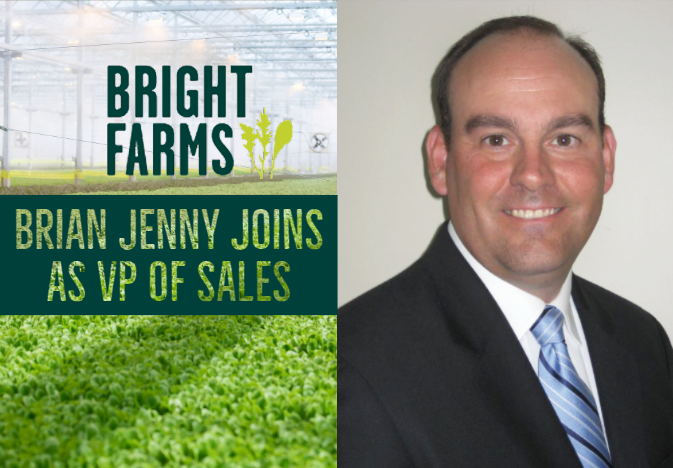
Brian Jenny Joins Vertical Farm BrightFarms
May 21, 2019
Brian Jenny has joined BrightFarms, Irvington, N.Y., as vice president of sales.
Jenny oversees existing retail accounts and leads business development as the company continues to grow, according to a news release. He most recently was vice president and general manager of CC Kitchens, a division of the Castellini Group, Cincinnati.
Before that, Jenny was at Naturipe Farms as vice president and general manager of the value-added division according to the release. He joined Naturipe after seven years at Monterey Mushrooms, in roles that included direct of sales for the Eastern Region.
Jenny has been in the United Fresh Produce Industry Leadership Program, has been chairman of United Fresh’s Fresh-Cut Processor Board, and a member of the executive committee of United Fresh’s board of directors. He has been involved in the Produce Marketing Association, Southeast Produce Council and the Eastern Produce Council.
“Brian has a demonstrated history of growing sales with many of the nation’s largest and best food retailers.” Paul Lightfoot, CEO of BrightFarms, said in the release. “He brings to BrightFarms a wealth of produce industry knowledge and expertise.”
PHOTO: courtesy of BrightFarms

Meet Mexico’s Biggest Producer of Hydroponically Grown Food
When you meet Leo Lobato, co-founder of Karma Verde Fresh, the first thing that you will notice is his charisma and warm-hearted charm
When you meet Leo Lobato, co-founder of Karma Verde Fresh, the first thing that you will notice is his charisma and warm-hearted charm. Leo’s energy for life and his well-earned passion for indoor growing has not only allowed him to start what may prove to become Mexico’s biggest producer of hydroponically grown food but has also allowed him to create some great allies along the way.
by Jens Ruijg
May 17, 2019
I sat down with Leo at NCERA-101, meeting in May to learn more about the newest Farmtech Society member.
Leo grew up in the farming and ranching community of Durango, Colorado, where he learned the balance of life eating produce grown in his Irish grandfather’s garden. His journey took Leo to Jalapa, Veracruz, Mexico in 1974, as a study abroad student from the University of Colorado. In 2004 Leo launched his atmospheric science business which is now a major contractor to the country’s National Weather Service, with exclusive representation of some of the World Meteorological Organization’s largest technology committee members. His post as the President of the Membership Committee for the American Chamber of Commerce of Mexico, and as a founding board member of the Ag-Industry Sector of CANACINTRA (Mexico’s largest industrial chamber) he has fostered many connections; it was a thoughtful conversation with a fellow member that inspired him to begin his exploration into indoor farming.
Beginning in 2015 until 2018, Lobato Kelly headed abroad to understand the landscape of indoor farming. Starting at the agriculture focused Milan World Fair, followed with trips to Rome and Munich, and finally landing at the Japanese Plant Factory Association summit, he consulted with some of the world’s best indoor farming experts. In order to understand the impact of hunger on violence in society Lobato Kelly visited the Peace Institute in Washington.
This long journey resulted in Leo securing a critical location for production in Mexico, a head grower, and essential industry connections that helped him to Karma Verde Fresh’s proof of concept site in 2018.
Truly embodying the spirit of the Farmtech Society, Karma Verde Fresh began collaborating with key universities throughout the region and has donated GrowRacks sourced from Hort Americas to expand educational opportunities. Thanks to the Enterprise-University-Enterprise (E-U-E) Collaboration Model and key industry guidance, Karma Verde Fresh has carried out 5 separate training courses preparing 163 local students, professionals and citizens for indoor growing.
Lobato is marketing lilies grown with his university partners to 10 Home Depot stores to help generate funding for ag school student food and transportation scholarships and for funding further vertical agriculture R&D.
Thanks to the success of the E-U-E at the UANL in Monterrey, and the university interest in further development of Mexico as a thought leader in Controlled Environment Agriculture, in 2019 the team at Karma Verde begins their Proof of Production phase of 10,000 square feet at the Marin Campus, within 30 minutes of the Central Distribution Centers of the major grocery store chains. The company has plans to expand into full production into the first of 2 of 30, 100,000 sq ft facilities between Monterrey and Mexico City beginning in 2020.
With an undeniable knack for creating community, the Farmtech Society is excited to partner with this growing company to help expand Ponics VET, which is based on the Erasmus+ vocational training credentials, and will serve to augment the course materials for certifying students in controlled environment agriculture across Mexico.
FarmTech Society will organize a series of panel discussions during Greentech Amsterdam 2019. On Tuesday June 11, Tom Zöllner will host a discussion on Plant Nutrition – Extra Natura, focusing on how we can grow the best possible plants in a controlled environment with speakers from Rijk Zwaan, Valoya, INTAG and Signify.
On Wednesday the 12th, Daniel Podmirseg of the Vertical Farming Institute will host speakers from The European Commission, Priva, Liberty Produce, Cultinova and Vertimis to discuss Energy and Building Topology for controlled environment agriculture.
Finally on Thursday June 13, Gus van der Feltz will host a discussion on Vertical Farming Business cases and Consumer Acceptance with speakers from Valoya, 80 Acres, Wageningen University, and Innovation Quarter.

For more information:
FarmTech Society
Place du Champs de Mars 5, 1050 Ixelles
+32 487 90 79 54
contact@farmtechsociety.org
farmtechsociety.org
Publication date: 5/16/2019
Puerto Rico Governor Ricardo Rosselló Nevares to Attend Ribbon Cutting Ceremony of Fusion Farms Facility
MAYAGUEZ , PUERTO RICO, USA
May 17, 2019 /EINPresswire.com/
The husband-and-wife team behind Fusion Farms, a hurricane-protected aquaponics farming initiative, are finally celebrating a hard-earned success. This Tuesday, May 21st 2019, Kendell Lang and Lisa Jander together with the island of Puerto Rico will be celebrating the ribbon cutting ceremony at their pilot facility in Mayagüez, and Puerto Rico Governor Ricardo Rosselló Nevares will be attending.
Since their first visit to the Caribbean island of Puerto Rico several years ago, Kendell and Lisa dreamed about moving there to establish a sustainable agricultural initiative that would contribute to the island’s recovery from financial insolvency and hurricane damage.
In 2018, they made the move from San Diego, California and after more than a year of hard toil against the monumental tasks of fund-raising, interpreting government grants and incentives, and completing bank applications, they managed to secure the first Fusion Farms facility in Mayagüez, a municipality in western Puerto Rico. With the help of #PRIDCO, #USDA and the Department of Agriculture, to name a few, Fusion Farms is well on the way to pioneering a sustainable indoor agriculture model for the island.
The Ribbon Cutting Ceremony
The ribbon cutting ceremony is scheduled to take place on Tuesday, May 21st 2019 at 1:30 PM where community members will be able to see the vision for the indoor farm.
“We are pleased to announce that Governor Ricardo Rosselló Nevares is scheduled to come to the Fusion Farms facility in Mayagüez,” says CEO and co-founder Kendell Lang. “He will be doing a site visit, tour of the building, presentation, and ribbon cutting ceremony to officially welcome Fusion Farms to Puerto Rico. Fusion Farms is proud to be at the forefront of what the Department of Economic Development is incentivizing for innovative agriculture solutions, specifically our hurricane-protected aquaponic vertical farm.”
Also in attendance will be the Secretary of the Department of Economic Development and Commerce, who will be discussing their delivery of $9 million USD to the Programa de Hidroponicos (Program of Hydroponics) and Pymes Innovadoras (Innovative Small to Medium Enterprises) in an effort to advance the agriculture sector of Puerto Rico.
“Fusion Farms is excited to create jobs and work with the University of Puerto Rico, Mayagüez, Department of Agriculture. By working together, we can address the needs of the community and begin to establish food security for the island. The current incentives offered to all farmers are making it possible for agriculture to thrive,” says Lisa Jander, co-founder and Director of Operations of Fusion Farms.
“We are incredibly grateful for this opportunity and look forward to welcoming everyone to our ribbon cutting ceremony!”
To attend, please visit the Facebook Event page, click “Number of Spots”, and then “Reserve” to secure a spot at this ground-breaking ceremony.
About Fusion Farms
Cultivando buena comida para buenas personas / Growing good food for good people
Fusion Farms is the first indoor aquaponic farm of its kind on the Caribbean island of Puerto Rico. The concept seeks to transform the unused Puerto Rico Industrial Development Company (PRIDCO) buildings that are scattered across the island into hurricane-protected, vertical #aquaponic farms. Within this contained and controlled environment, vegetables, micro-greens, and herbs can be grown and supplied to the island, greatly reducing its dependence on imported fresh produce. Furthermore, Fusion Farms will be able to supply a fresh, #sustainable source of fish protein, since Tilapia are an essential component of aquaculture.
For more information about Fusion Farms and to become an investor in this opportunity, go to http://www.fusionfarmspr.com
Andrew Braithwaite
Distributed by: Release-News.com
+44 7532285902
email us here
Dutch Aquifers Bank Rainwater to Help Farmers Avoid Going Bust
Climate change is increasing the risk of water shortages across Europe, but researchers in the Netherlands are hoping to ease pressure by generating a steady supply of clean water and heat from deep underground reservoirs known as aquifers
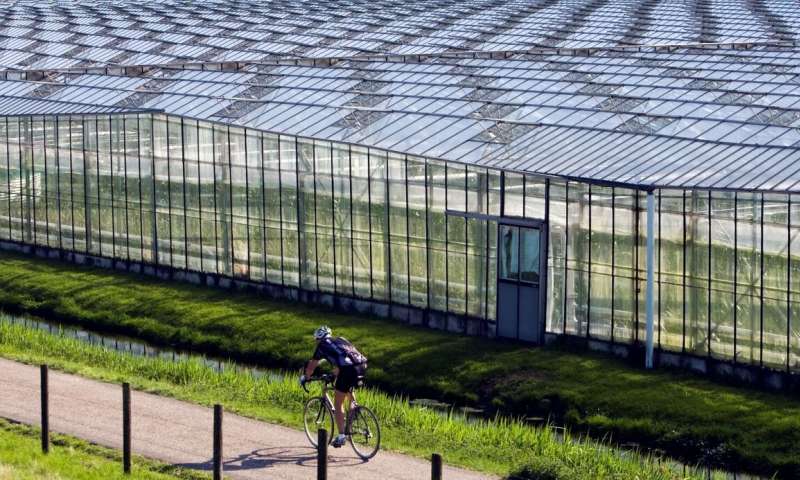
Greenhouses in the Westland Region, NL. Credit: European Science Communication Institute
Greenhouses in the Westland Region, NL. Credit: European Science Communication Institute
MAY 17, 2019
by European Science Communication Institute
Climate change is increasing the risk of water shortages across Europe, but researchers in the Netherlands are hoping to ease pressure by generating a steady supply of clean water and heat from deep underground reservoirs known as aquifers.
In the west of the Netherlands, there is a sea of greenhouses covering 4,500 hectares. Known as the Westland, this indoor farming hub is home to 670 horticulture companies growing a wide variety of flowers and crops, from aubergines and tomatoes to cucumbers. Water is crucial to growing these plants inside, but despite being in a country famous for rivers and canals the region still faces shortages.
"We had a very dry summer," said Klaasjan Raat, a water resource management expert at KWR, a Dutch sustainable water institute. "We had a lack of fresh groundwater which not only poses a risk to farmers, but also damages nature."
Westland pioneers a lot of sustainable water technology and researchers will now trial a new concept known as water banking, which deposits precipitation collected over the area during wetter periods and stores it in aquifers for a not-so-rainy day. The project is led by Raat who says this approach could help Westland balance demand in a climate change future where less rainfall is expected.
"If pumping is balanced over time, and over an area, you maintain the quality and amount of water in that aquifer," he said, but points out that Westland is currently "over-drafting," meaning it withdraws more water from ground reserves than what is put back in. This is a long-term liability for the greenhouse farmers, warns Raat, but water banking could help them break-even; or even make a profit.
"Rainwater that falls on the greenhouses [periodically] is not sufficient, but on average in the whole area [of Westland] over the year it is," he said.
Raat will recruit a group of horticulturists over 100 hectares and incentivize them to pump their excess rainwater into the ground reserve. Together with other local stakeholders, like the regional water authority, he is developing a pricing mechanism that will financially reward the farmers who deposit water into the aquifer and charge those who withdraw too much. He hopes it will be a self-containing system that finances itself.
Aquifers are helping farmers elsewhere in Westland too, but this time in supplying a cleaner source of heat. Industry at the nearby port of Rotterdam produces waste heat that is used to warm water in large pipes before it is pumped into even deeper underground reservoirs where it is stored as thermal energy, ready to be tapped into when the demand is there.
Geothermal energy and 'heat roundabouts'
Martin Bloemendal, a geothermal energy expert at Delft University of Technology and KWR, is developing a way to help optimise the performance of the 'heat roundabout' for Westland, which he says is crucial for the greenhouses because they also need higher temperatures to grow their crops.
"We have different sources of heat that are readily available during the warmer periods, like waste, geothermal and solar heat," he said. "But in winter, there is not enough, so they [greenhouses] need additional heating."
If the greenhouses don't have a renewable source, burning fossil fuels often fills the gap, but storing excess heat during summer diminishes this need because it gives access to thermal energy throughout the year.
The heat storage project for Westland and the water banking pilot will soon act as demonstration sites to inform other European countries about making the most of their water resources.

Student Design for Space Colony Greenhouse Wins NASA Praise
Student-designed inflatable dome folds and collapses for transport, racks plants vertically.
IMAGE COURTESY OF DARTMOUTH THAYER SCHOOL OF ENGINEERING
May 8, 2019
A radiation-shielded, inflatable greenhouse with a hydroponic growing system designed by undergraduate students at Dartmouth College’s Thayer School of Engineering could sustain four astronauts on a 600-day mission to Mars as soon as 2030.
The students’ Deployable, Enclosed Martian Environment for Technology, Eating and Recreation (DEMETER) concept—the acronym is also the name of the Greek goddess of the harvest—won first place in the 2019 NASA Breakthrough, Innovative and Game Changing (BIG) Idea Challenge, the agency announced on April 24.
The team pitched their idea to scientists at NASA and the National Institute of Aerospace (NIA) in competition with four other finalist teams.
NASA and NIA are seeking innovative ideas for the design, installation and sustainable operation of a habitat-sized Mars greenhouse, with the primary purpose of food production, according to NASA. The agency says an efficient and safe greenhouse design could assist with Mars missions and long-term lunar missions.
The 8-meter-high by 16-m-wide DEMETER includes an automated hydroponic growing system that uses a 3-m-tall cylinder inside of a torus, with the cylinder storing the water and nutrient delivery and recycling systems. A running track for astronaut recreation circles the vertically integrated assembly of growing trays.
The team used a 1⁄6-scale prototype to show folding methods for 1.5-m-long hydroponic growing trays, which nest against the central cylinder during transport. It also tested growing crops in a nutrient film technique hydroponic system to refine their design.
Dartmouth edged ahead when scored on the completeness of the proposed design, low system mass, optimization for food production and design simplicity, says Kevin Kempton, NASA program element manager and one of seven judges.
The team used “top-notch systems engineering throughout,” Kempton says. “That began with a systems overview that identified their system of interest relative to external systems, such as sunlight, heat, and water in the Martian environment.”
Kempton says another strength is that the components all appear relatively low risk and are based largely on a habitat design developed in a 2017 NASA feasibility study, which was the basis for the competition. “The team estimates it would take three to four missions to become a cost-effective option,” versus the cost of transporting food from Earth, Kempton says.
The team also scored high marks for innovation for the proposed concept of operations and for system deployment, which begins with robotic transport of the packaged greenhouse payload from the landing site to the deployment site. The design “seemed to have the highest level of technical maturity and it would likely require less technology development effort to get a DEMETER-base design up and running for the initial Martian outpost,” Kempton says.
NASA plans to send astronauts to the moon by 2024, with future missions in the 2030s, when a Mars greenhouse concept would potentially be viable, says Drew Hope, NASA program manager.
MIT placed second for its Biosphere Engineered Architecture for Viable Extraterrestrial Residence (BEAVER) concept. Plans include a spiral hydroponic design track in a multilevel facility featuring an enclosed waterfall for astronaut relaxation. Other finalists included designs from three state universities, California Davis, Colorado Boulder and Michigan Ann Arbor.
The finalist teams receive a shot at five NASA internships, recognition and a $6,000 stipend to travel to NASA’s Langley, Va., research center to present. All original ideas and concepts are credited to the student teams, but NASA has the option to take any portion of the ideas for use in future NASA mission planning, Hope says.
KEYWORDS Greenhouse /Hydroponic / Mars / NASA /Space Colony

Data Center Next To Tomato Greenhouse
BlockHeating Starts Pilot With Data Center For Supply of Residual Heat
A lot of trucks are coming and going all the time, but growers do not often see a data center coming by. Except for last week, because a data center has been placed with a grower in Venlo (Netherlands) to, after some preparations, provide heat for the tomatoes. It involves a data center in a container for a pilot of the start-up BlockHeating.
The set-up placed will contain a maximum of 60 kilowatt of IT, making this test container significantly smaller than the intended 200kW, according to Jeroen Burks of BlockHeating. "This does enable us to try some aspects in the field. The focus is on supplying heat to more than 10 hectares of tomatoes.
Heat directly in buffer tank
The heat is delivered to the grower via water. It is water of about sixty degrees Celsius delivered directly into the grower's buffer tank. This is less warm than residual heat from the industry, but it is more than enough to heat the greenhouses. It is important to limit the distance to the greenhouse, that is why there are flexible data centers.
Growers do not have to fear extra tubing or piping. Jeroen: "With minimal adjustments we realize a reduction in the energy use for the grower, and opportunities to make steps towards cultivation without the use of gas."
2019: first unit operational
After the pilot in Venlo, the intention is to realize a pilot with 200 kilowatt in a larger container. "The goal is to have the first unit, built by a partner specialized in building data centers in containers, operational in 2019.
For more information:
BlockHeating
www.blockheating.com
Jeroen Burks
jeroen@blockheating.com
+31 6 470 41000
Publication date: 5/9/2019
© HortiDaily.com
Russia: Novosibirsk Scientists Grow Strawberries With Aeroponics
A startup from Novosibirsk is entering the international market. Soon the technology will be sold to Arabian agronomists. Until then, the scientists continue experimenting with strawberries in the basement of the campus
A startup from Novosibirsk is entering the international market. Soon the technology will be sold to Arabian agronomists. Until then, the scientists continue experimenting with strawberries in the basement of the campus.
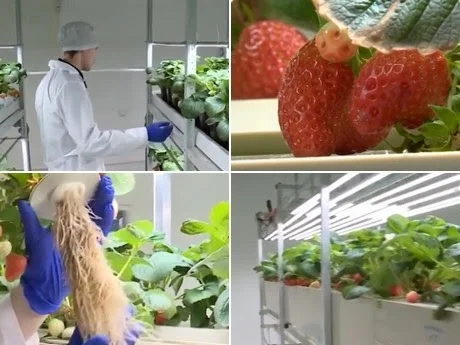
The experimental greenhouse is as clean as an operation room. Special sensors monitor the humidity and the temperature levels. This is where the scientists conduct their experiments with strawberries. Some of the plants are grown in traditional soil, and the rest are grown in accordance with aeroponics.
“This is what the roots look like. As there is no soil, there are no pests either. Just the clean white roots hanging in the air”, shares Mr. Ivan Lapshin, the agronomist.
An automated system delivers all the substances required for plant growth. The agronomist uses switches on the machine: strawberries have much better conditions for growing on the shelves than in the open field.
The first crops grown according to the new technology are 20% taller than the regular ones. The result is due not only to aeroponics, the climate as well as the lighting strength and the length of the artificial light day have been carefully calculated.
The innovators are planning to give access to the technology to a wide audience so that anyone could grow fresh vegetables, berries and greenery in any free room all year round. The shelves are fully automated so no agronomist is required to assist them.
“We would like that people in Magadan have fresh strawberries in winter. And that they don’t fly from Egypt or Lebanon but have a proper flavor and freshness”, noted Mr. Timofey Pavlov, agronomist.
Soon the scientists will start mass production of their vertical farms. The technology raised big interest with representatives of the United Arab Emirates, where vertical farming is most pertinent. The scientists are preparing the equipment for delivery.
Source: www.nsktv.ru
Publication date: 5/9/2019

Vertical Farming ‘Not Feasible’ In Soft Fruit
BY FRED SEA
April 4, 2019
James Hutton Institute dissuades berry producers from growing vertically but says certain technologies can be beneficial in conventional systems
Rob Hancock spoke at the Global Berry Congress 2019
Vertical farming in soft fruit is a sure-fire way to lose money, one of the UK’s foremost fresh produce research organisations has warned.
Delivering a presentation at the Global Berry Congress in Rotterdam last week, Rob Hancock of the James Hutton institute told delegates emphatically that berry production is not feasible in a vertical farm.
“If you want to lose money, start growing your fruit in an indoor farm,” he said.
Following vertical farming trials by the institute, Hancock said that, crucially, growing soft fruit hydroponically using LEDs does not provide enough light intensity, with a negative impact on yields, quality and sugars in the fruit.
Furthermore, the architecture of soft fruit plants is unsuited to vertical growing, and crucially the high cost of installing and running a vertical farm makes it extremely difficult to generate a profit.
“Vertical farming is becoming more commonplace – particularly these indoor vertical farms,” he said. “The number of new openings has increased in recent years, however if you look at whether these guys are making profit, many of them are not.
“The advantages [of vertical production] are optimising nutrition, temperature, humidity, CO2. But you’ll also get many of these benefits in conventional protected cropping.
“The one thing you can control in an indoor farm that you absolutely cannot in an external farm is the light. By messing around with the light spectrum, you can have impacts on the colour and quality of the strawberry. By manipulating the light spectrum, you can massively enhance the concentration of anthocyanins present in the crop.
“The disadvantage is the light intensity. In an indoor farm you’re lucky if you’re getting 200 micromoles of light, so with a product like strawberries or raspberries you’re operating at nowhere near maximal photosynthetic rate – that’s going to impact yields, quality and sugars.
“Another disadvantage is clearly that the architecture of something like a blueberry or raspberry cane is not very well suited to vertical growing.”
Despite these important limiting factors, Hancock stressed that a lot of the individual technologies associated with vertical farming can be “really useful” for advancing berry production using conventional systems.
As such, the James Hutton Institute is trialling some of these technologies at its Advanced Plant Growth Centre in Invergowrie near Dundee – a £27 million project funded by the Scottish and UK governments to enable research, development and innovation in crops grown under cover.
He said vertical production can be “very useful” to propagate soft fruit plants before then planting them in conventional tunnels, and that a lot of the technologies associated with vertical farming can be used to accelerate breeding.
“I think it’s also very important, if vertical farming and berry production are ever going to come to together, that we start thinking about breeding varieties for indoor farms,” he added.
“Crop monitoring and quality are other things that can be impacted using some of these technologies in conventional farming systems.”

Rooftop Garden Takes Urban Agriculture To Another Level
Of all the places on campus you’d expect to find a garden brimming with kale, Swiss chard and collard greens, the second floor of University Crossing probably isn’t one
UNIVERSITY, MILL CITY GROWS PARTNER ON GREEN ROOF GARDEN AT UNIVERSITY CROSSING
Photo by Ed Brennen
PhA student walks past the new Green Roof vegetable garden at University Crossing. Photo by Ed Brennen
04/29/2019
By Ed Brennen
Of all the places on campus you’d expect to find a garden brimming with kale, Swiss chard and collard greens, the second floor of University Crossing probably isn’t one.
But thanks to a collaboration between the university and Lowell-based urban farming nonprofit Mill City Grows, there’s a new rooftop vegetable garden outside the windows of the busy second-floor landing at the student and administrative center.
“It’s such a wonderful use of this space. I love it,” said Senior Vice Chancellor for Finance, Operations and Strategic Planning Joanne Yestramski, admiring the freshly planted crops through the floor-to-ceiling windows during the university’s Earth Day celebration. “It shows our commitment to sustainability right here, front and center, in one of the busiest places on campus.”
The primary purpose of the rooftop garden, according to Director of Sustainability Ruairi O’Mahony, is to educate passersby about the university’s Urban Agriculture Program. A wall sign provides details about the “Green Roof” garden and other urban agriculture sites around campus. Producing fresh, leafy vegetables for the university community is an added bonus.
Photo by Ed Brennen
Macayla Cote of Mill City Grows helps transfer vegetables to growing containers at the new Green Roof garden at University Crossing.
“It helps tell the story about our program and shows people what the campus is about,” says O’Mahony, who notes that the project highlights the important campus-community connection.
The Office of Sustainability and Mill City Grows, working in collaboration with the Student Government Association, designed the 500-square-foot space, which is tucked between a conference room and elevator bay on the south-facing side of the building, overlooking Salem Street.
The modular garden consists of about 180 plants growing in individual milk crates filled with nutrient-rich compost. The compost, which originated from the university’s dining halls, was developed and donated by Casella Organics. The garden is watered by an efficient, on-demand smart drip irrigation system that adjusts to local weather data.
“I’m excited to see how much yield we get in a small space,” says Mill City Grows co-founder and UML alum Lydia Sisson ’12, whose organization will oversee the day-to-day operations of the garden and harvest the produce several times a week. Most of the produce will be made available to the community through Mill City Grows’ Mobile Market.
Mill City Grows manages nearly a dozen community gardens and urban farms around the city, including two others in partnership with UML, the Urban Agriculture Greenhouse on East Campus and the community garden on Dane Street. This is their first rooftop garden.
Photo by Ed Brennen
Student Society for Sustainability President Akbar Abduljalil helps transplant crops at the new Green Roof garden at University Crossing.
“We’ve visited a lot of rooftop farms, but this is our first rooftop experiment. It’s going to be fun,” says Sisson, who notes that there are several advantages to the elevated location. “You get the heat from below, which is good, and it will definitely get a lot of sunlight. There should also be a lot less pests. But we’ll have to be careful with the wind.”
The space is one of three green roofs originally installed on the second floor of University Crossing when the building opened in 2014 (the others still exist over the main entrance and on the Merrimack Street side of the building). Designed to mitigate stormwater runoff and provide a layer of insulation to enhance the building’s energy performance in summer months, the green roofs consist of a thick carpet of sedum, a hardy perennial that holds water well.
O’Mahony says the vegetable garden will make the space even more eye-catching.
“They’re the type of crops that come up like a fountain,” he says. “It’s going to be a beautiful visual.”
Sean Cloran, who completed his biology degree last fall and is now doing an internship with the Office of Sustainability, helped O’Mahony prepare the area for the new garden.
“Hopefully it inspires people to check out the greenhouse and community garden,” Cloran says. “I think it’s going to help break down the barrier between where food comes from and where people think food comes from.”

Hydroponic Farming Systems: Try Before You Buy
NexTech AR Solutions has signed a deal with Just Vertical, a hydroponic farming technology company, to provide augmented reality solutions to enhance the online shopping experience. Just Vertical will utilize NexTech’s ARitize eCommerce platform to create true 3D AR models of its AEVA hydroponic farming system, enabling consumers to ‘place’ it in their home before purchase to assure correct sizing and aesthetic appeal.
“Traditional agriculture is in dire need of disruption, as the current solutions on the market are not cutting it for consumers. We believe we’re on the path to changing that – our AEVA system has already helped to save more than two million liters of water, grown more than 10,000 pounds of fresh local food, and eliminated more than 100 million miles of food transport,” said Kevin Jakiela, co-founder of Just Vertical. “We chose NexTech to ARitize our AEVA system because we know it will provide a better level of education for our product and empower the consumer’s path to purchase as they shop on our website. We’re excited to provide our consumers an AR shopping experience like no other in the agricultural industry.”
Just Vertical’s customers will be able to view the AEVA farming system in high fidelity 3D, with full 360-degree rotation, as if they were walking directly around the item themselves.
“For retailers selling larger-sized items, like Just Vertical’s AEVA farming system, utilizing AR technologies to showcase the product online provides an edge that can push consumers toward purchase. Many are hesitant to purchase a large item online without seeing it first in their living space. Our ARitize eCommerce platform enables them to do just that,” said Evan Gappelberg, CEO of NexTech.
For more information:
www.nextechar.com
www.justvertical.com
Publication date: 5/6/2019

Greenroofs.com Featured Project
Sky View Parc
Flushing, NY, USA
55,000 sf. Greenroof
April 15, 2019
Wow, this awesome project looks like something you’d see in pro-environmental design Singapore with its highrises, beautifully landscaped park, and living architecture, right? But it’s not – the lucky location is in the New York City borough of Queens.
Image: Sempergreen
Due to its undeniable scale and multi-color presence, the distinctive Sky View Parc green roof benefits not only condominium’s residents and the environment, but developers and marketers, too. It’s as a great sales tool for eco-friendly design!
Read the entire article here

Marijuana Prices Have Collapsed, Forcing Growers to Focus on Energy Efficiency
Particularly on the West Coast, prices have imploded as more growers set up shop and 2018 yielded strong harvests. That's good news for a cannabis consumer, but for the industry it means difficulty in turning a profit
Efficiency experts say the biggest opportunities to reduce energy use in the cannabis sector are in the design phase of a new grow operation.
Author: Robert Walton@TeamWetDog
May 1, 2019
As marijuana becomes more mainstream, an increasing number of utilities are seeing growers set up shop in their service territories — at times creating distribution system issues, and in general bringing significant new demand.
With federal legalization now a topic du jour, there is a growing focus on energy efficiency in the cannabis space and how utilities and industry groups can help growers control their demand. Total electricity demand from legal marijuana cultivation in the United States is estimated to rise 162% from 2017 to 2022, according to Research from New Frontier Data, which focuses on analysis of the cannabis industry.
Credit: New Frontier Data
Compared with a typical office building, indoor marijuana growers are about 10 times as energy intensive on a square footage basis, according to Neil Kolwey, industrial program director for the Southwest Energy Efficiency Project (SWEEP).
SWEEP recently hosted a webinar to discuss energy efficiency in the cannabis industry, and Kolwey said it is important to keep the sector's energy use in perspective — it is not particularly large in aggregate, but can have significant impacts in specific areas.
Data centers use two to three times the energy of marijuana growers, again on a square-footage basis, he said, and account for about 1.8% of the United States' electricity consumption. Pot growers, including illegal operations, account for just 0.1% right now.
But cultivation centers are energy intensive: a single one could overload a utility transformer, while an industry can add substantially to a city's power demand.
Utility headaches
Growers account for 4% of Denver's electricity consumption. In Xcel Energy's territory, marijuana cultivation can account for close to 2% of demand and as the legal industry ramped up five years ago, it caused headaches for the utility.
"The issue wasn't meeting the demand," Xcel spokesman Mark Stutz told Utility Dive. But in some areas of its territory, "we often found the systems were not adequate for a 24 hour grow operation. ... There were growing pains in the first couple of years after it became legal."
There are now about 500 grow facilities in Xcel's territory, using between 35,000 MWh and 45,000 MWh annually. "Certain pockets [in the city] became warehouse districts for marijuana growing," said Stutz. Built years ago for different types of industry, transformers had to be replaced in order to deliver enough energy.
Energy consumption in Xcel's Colorado territory from the cannabis industry has since leveled off, Stutz said
Credit: Xcel Energy
Nationwide, however, the trend remains upward.
"We're seeing that electricity consumption increases are just continuing as this market continues to escalate," said Derek Smith, executive director at Research Innovation Institute (RII), a non-profit market-transformation group in the cannabis space. "That's the trend we're on unless we do something about it."
There are now more than 30 states with medical marijuana programs, and nine plus the District of Columbia have legal recreational access. Growing interest in cannabis means higher energy demand. But with the product now legal, markets are responding to typical economic forces — meaning energy efficiency may become vital to turning a profit..
Crashing prices and a focus on margins
Particularly on the West Coast, prices have imploded as more growers set up shop and 2018 yielded strong harvests. That's good news for a cannabis consumer, but for the industry it means difficulty in turning a profit.
"In almost every established market that's been around more than a couple of years, right now we recommend getting production costs down to $300/pound or below to stay competitive. That's a steep curve from where it was a year or two ago," said Jacob Policzer, director of science and strategy at The Cannabis Conservancy, a group that provides sustainability certifications to producers.
"Getting costs down will be the biggest factor moving [the industry] towards energy efficiency and sustainable growing practices," Policzer said.
That's important because of growing carbon emissions associated with the cannabis industry's electric demand.
Credit: New Frontier
"Energy consumption and carbon emission levels have become critical issues among stakeholders in the cannabis industry," according to a New Frontier Data report on the sector's energy use. But in trying to make improvements, stakeholders have "been forced to rely on data and analysis based on research published prior to the deployment of medical and adult-use programs."
Cannabis has typically operated in the shadows, and little information on best practices was shared, said Smith. RII is working to correct this. In 2017 the group developed the Cannabis Power Score, which attempts to give growers an idea of where their energy use stands relative to others, while collecting data on industry best practices.
"We are beginning to have enough data to create benchmarks," said Smith, pointing to grams-produced/kWh as a key metric. In turn, this is allowing the group to validate effective technologies and techniques.
"We really see as a vision, that cannabis is an incubator platform for the way agriculture will be done in the future," said Smith, looking to regenerative farming techniques and hyper-efficient, multi-tiered greenhouses.
"A well-designed and operated indoor grow can save up to 40% per gram of flower, compared to a standard indoor grow," said SWEEP's Kowley. Well-designed greenhouses, which have HVAC, dehumidification and lighting systems properly-sized in the design phase, can save 60% to 70%, he said.
In an environment where prices have fallen and supply is plentiful, energy efficiency can make the difference for producers. Energy is about 20% to 40% of an indoor grower's total operating costs, said Kowley. By comparison, a mid-sized brewery might see energy make up 6% to 12% of its costs.
Renewables and cannabis?
It is somewhat counterintuitive to consider a need for renewable energy in the cannabis space — after all, you could just grow outside. But not all climates can support year-round outdoor cultivation, strict local regulations have kept many growers inside, and some consumers say indoor marijuana is simply better.
Adam Bartini, senior program manager at The Energy Trust of Oregon, has worked with a number of growers on efficiency projects, helping provide rebates and incentives. The Energy Trust offers licensed growers free technical services, along with incentives to install energy-efficiency equipment at new and existing facilities.
Bartini, in his presentation during SWEEP's webinar, pointed to Deschutes Growery in Bend, Oregon, where the Energy Trust helped provide more than $400,000 in incentives. Along with LED lighting, the growers also installed a 56.4 kW solar system — though the total project costs topped $1.1 million.
"It is a very big investment, given how energy intensive it is to grow cannabis," Bartini said, "You need a pretty sizeable investment to offset a large percentage of that usage. So it's not gonna be for every grower. It's going to be someone who really has a lot of capital to investment. But it's obviously something we love to see."
Energy financing solutions are beginning to reach cannabis companies, said Smith, though primarily for efficiency projects. The Energy Trust works with cannabis growers the same as any other Oregon customer looking to reduce their demand. And Smith noted that some smaller growers are "creatively organizing" to take advantage of renewable energy tax deductions.
"The financing solutions are coming to pass," said Smith.
Xcel's Stutz said the utility does not offer programs specifically for cannabis growers, but "the marijuana industry can and does take advantage of programs we have," including general lighting — though not growing lamps.
But according to SWEEP's Kowley, the most affordable way for marijuana growers to embrace efficiency is to consider it from the very beginning.
"The best opportunities are in the design phase," said Kowley. "Once a grow is up and running, retrofits are difficult. ... More utilities should offer the kind of design assistance that Energy Trust does."
Follow Robert Walton on Twitter

Indoor Vertical Farming - Edible Flowers
Sananbio U.S.
Please Click Here to View the Video
Edible flowers are having quite the moment in the culinary scene. A crucial part of being a successful vertical farm is being able to meet the demand of the growing markets and consumer needs.
With the dynamic ability of the Radix, we are giving our grow partners the ability to do just that. Our knowledge of working with hundreds of cultivars gets passed on to our partners.
If we want this industry to grow, we must support its growth.
Let's grow together.

Farm Stores To Open New Locations Constructed From Old Shipping Containers
05/07/2019

Farm Stores rendering
MIAMI — Farm Stores will introduce its latest drive-thru convenience store in Scott, La., next month that will be made from two repurposed shipping containers.
Made from the two repurposed shipping containers melded together and painted to look like a red and white bar, the 640-square-foot store is the first franchised Farm Stores location in the state, CNN reported.
"When I moved to Louisiana, there was a drive-thru everything. To me, a drive-thru store is so convenient, especially when you have kids in the car," commented owner Robert Pressler.
Florida-based Farm Stores opened its first location in Miami in 1957 with a 350-square-foot drive-thru that sold fresh food like milk, butter, bread, eggs and ice cream. Customers would order at the window and an employee would then walk out to their car and deliver the items.
"In the 1950s, Americans were already going to drive-in theatres and drive-in diners. The idea emerged to replicate this model in convenience stores," explained Maurice Bared, Farm Stores owner and CEO, who noted the drive-thru concept was inspired by the pop culture of the time.
Today, the convenience store chain has 65 locations in the Sunshine State and its stores' footprint has nearly doubled over time to maintain its mission to cater to the needs of busy parents by providing dairy goods sourced from local farms, household cleaning products, detergents, pet food, baked goods that are made on-site and freshly squeezed juices.
"This is mom's neighborhood convenience store and we stock it with her in mind. … Speed and freshness is key," Bared said. "From the time a car pulls up and a customer orders bread, it takes less than two minutes to bake it and deliver it to them. Same thing with freshly squeezed orange juices."
Farm Stores was turned into a franchise in 2015, with 28 of the 65 Florida locations franchised. Inspired by his experience in construction, Bared came up with the idea to expand the concept nationwide in a low-cost, environmentally friendly manner by building all new stores in repurposed shipping containers.
"I had this vision of a Farm Store in a container for two reasons. First, the shoebox layout of a container is the same exact size as our stores," he said. "I also grew up in the construction industry with my father having his own business. It's where I saw the foremen had converted shipping containers into their offices."
Over the next seven years, he hopes to have as many as 600 new Farm Stores under development. More than half of those are already underway in New York, New Jersey and Connecticut, according to CNN.
"The majority of new stores are being built in shipping containers, but the local building codes and ordinances won't allow it in some places,” the CEO noted.
Farm Stores outsources the construction to shipping container manufacturers regionally to reduce transportation costs. According to Bared, recycling shipping containers this way is about 40 percent cheaper than building a store from the ground up.
The repurposed store is manufactured using two containers and features tiled floors, sliding glass doors and a canopy over the roof. The inside includes a baking station and employee bathroom.
Once the containers are delivered, the store is welded into place on a concrete foundation.
"The containers are very strong and made to withstand inclement weather, even hurricane force winds," said Bared, adding that the sustainable and eco-friendly building concept is also easy to maintain.
Pressler's Louisiana store will be the first to debut the shipping container model. The owner, who is an area representative for Farm Stores, hopes to open as many as 50 stores over the next few years, CNN reported.

Crop One Holdings, US-based Vertical Farming Company, Will Be Speaking at Urban Future Global Conference
Based in the San Francisco Bay area, Crop One is growing its global footprint
Crop One Holdings, the company behind the successful vertical-farming company FreshBox Farms, is coming to Oslo for the AVF conference, Unlocking the Potential of Indoor Farming in Cities of the Future.
Based in the San Francisco Bay area, Crop One is growing its global footprint.
Back in June, 2018, Crop Once announced that they had secured a $40 million joint venture agreement with Emirates Flight Catering to build the largest vertical farm in the world in Dubai. Construction of the UAE facility is underway and the first products will be delivered to Emirates Flight Catering’s customers, including 105 airlines and 25 airport lounges, by December 2019.
The 130,000 square foot controlled environment facility will produce three US tons (6,000 pounds or 2,700 kg) of high-quality, herbicide- and pesticide-free leafy greens, harvested daily, using 99 percent less water than outdoor fields. Its location will enable quick delivery of fresh produce within hours of harvest, maintaining the food’s nutritional value and reducing carbon emissions associated with transportation.
Crop One announces an exciting new development in the United States
On May 8, Crop One announced that it will sponsor its first "qualified opportunity fund" in an Opportunity Zone in Texas; the fund will support the construction of a vertical farm in the Austin-San Antonio corridor, allowing it to serve some of the US's largest cities including Austin, San Antonio, Houston and Dallas-Fort Worth Metroplex.
Connect with Crop One at Urban Future Global Conference
VP of International Business Development and Strategic Projects, Pitichoke Chulapamornsri, will present a keynote speech on May 22 and participate in the roundtable discussion on May 23.
You can read more about Mr. Chulapamornsri at the AVF Blog here: https://bit.ly/2vRlKEM.
Urban Future Global Conference is the world’s largest event for sustainable cities. The AVF is proud to have Crop One as one of our sponsors for this event dedicated to indoor farming, where we will discuss realistic strategies for implementing food production systems in cities across the globe.
If you would like to join us in Oslo, there are still a few tickets left: https://bit.ly/2JdzbZ4
Student price: €220
Member price €360
We look forward to seeing you there!
Sincerely,
The AVF Team
Find Tickets

Walmart Invests Over $200 Million In Updates
Walmart announced plans to invest over $200 million in its store network, with a focus on refurbishing and refreshing 31 stores across Canada over the next year
May 06, 2019
Walmart announced plans to invest over $200 million in its store network, with a focus on refurbishing and refreshing 31 stores across Canada over the next year. Approximately 3,250 construction jobs will be created to support these upgrades. The company will expand its fresh food Supercentre format to more locations and the investments will also help create a more seamless experience for customers ordering on Walmart.ca and picking up at their local store.
These updates are the latest in a series of store investments, building on the retailer’s $175 million updates to its store network in its last fiscal year. Over the last five years, the company has invested over $1 billion in its Canadian store network.
“Our store network is a key advantage in our ability to best serve the changing needs of our customers,” said Lee Tappenden, president and chief executive officer of Walmart Canada. “1.2 million customers in Canada choose to shop in our stores every day and we are focused on making their experience easy, enjoyable and convenient while seamlessly integrating our eCommerce business. Investing in our stores is critical for the future of our business and to deliver on the changing needs of our customers.”
Walmart has opened more than 20 stores over the past four years. As part of the retailer’s store strategy, it will also close two stores – one in Pincourt, QC, and one in Sault St. Marie, ON.
Enhancements customers can expect to see in their local stores include:
Better experience for customers shopping online and picking up in stores: Updated features include dedicated parking spaces for online grocery pickup and new areas in stores devoted to online orders.
Wider assortment and increased customer offering: Focus on food assortment and fresh, adding in bakery departments and hot food offerings, as well as introducing new licensees to stores for increased customer convenience.
Contemporary updates: Physical updates that provide a refreshed look and feel, including rearranged stores, updated colour palette, new signage, and initiatives to make stores fun and engaging for customer.

Scientists Are Gene-Editing Tomato Plants For The International Space Station
Using CRISPR technology, California researchers have developed a tinier tomato plant for growth in space
Martha Orozco-Cárdenas/University of California, Riverside
Using CRISPR technology, California researchers have developed a tinier tomato plant for growth in space.
May 3rd, 2019
by Sam Bloch
Go tiny or get out. Scientists at the University of California, Riverside, have gene-edited tomatoes to have tinier leaves and stems, which could make them more a productive crop for farmers with limited space to grow food. That could be, for instance, a small-scale farmer who thinks that gene-edited plants are still organic. It could be an indoor, vertical farmer, who’s got a whole lot of height but not a lot of acreage. Or it could be a space farmer—thrusting utilitarian, hearty vegetative matter into the harshest conditions known to man.
And that’s exactly what’s happening. The university announced Thursday that Robert Jinkerson, an engineering professor, and Martha Orozco-Cárdenas, director of the university’s Plant Transformation Research Center, have landed a two-year, $800,000 grant from NASA’s space health wing to make those tomatoes grow in space—specifically, for astronauts on the International Space Station, who subsist on what’s largely a not-so-fresh diet.
“When I first saw those tiny tomatoes growing in Martha’s lab, I just knew we had to get them onto the space station,” Jinkerson wrote.
One astronaut who’d grown zucchini and sunflowers refused to eat his, because he considered them crew members.
So why is NASA keen to get these particular tomatoes in space? Orozco-Cárdenas used CRISPR technology to gene-edit the plants in such a way that the size of the fruit would stay the same, but the overall leaves and stems shrank. Without all that biomass, the tiny tomatoes produce fruit more quickly than a conventional counterpart—or, put another way, they take less time to grow the same amount. Additionally, with real estate at a premium on the space station, you can squeeze in more plants if you reduce their overall size.
Like a lot of innovations in farming technology, a significant part of the project’s goal is to increase efficiency. These days, that impulse is wrapped in climate-friendly rhetoric. The typical line goes something like this: There will be 9 billion people on the planet by 2050, and with only a limited amount of arable land left for farming, farmers need to max out the land they have. In the release, Orozco-Cárdenas said her goal, all along, has been to develop plants that could “feed a growing population on less farmland.”
But plants that grow quickly, on less energy, would be great in space, too. As our Jesse Hirsch reported for Modern Farmer, on the International Space Station, arable “land” consists mostly of a plastic bag shuttled between windowsills. Growing food in space, Hirsch reported, potentially represents major savings for a notoriously underfunded agency. Sending food to the space station costs roughly $10,000 a pound, and there’s a heavy emphasis on densely caloric, shelf-stable foods. Astronauts devour fresh produce upon arrival.
Time was, farming in space was unthinkable. The first space plants—flowers that were related to cabbage and mustard—were grown by Soviet cosmonauts in 1982, but the yield was too small to be food. Thereafter, when American astronauts grew vegetables, they were largely academic experiments that quantified the effects of zero gravity on plant growth, and the viability of different kinds of artificial light. One astronaut who’d grown zucchini and sunflowers refused to eat his, because he considered them crew members.
Using CRISPR technology, California researchers have developed a tinier tomato plant for growth in space.
The first crop of space veggies was harvested in 2014—heads of burgundy-red lettuce that were tucked in grow rooms, officially referred to as Vegetable Production Systems, or Veggies. The greens grew in “plant pillows,” under red, blue, and green LED lights. At 14.5 inches deep, the system was, at the time, the largest farm in the history of space.
More recently, the crew aboard the space station grew batches of mixed greens—mizuna, red romaine, and Tokyo Bekana cabbage—in two Veggies. Some of the harvest was consumed in space, while the rest was brought home for testing, according to NASA. That’s similar to other space farming experiments, like the Tomatosphere, which is an effort to cultivate seeds in space, and let schoolchildren grow them back on earth.
As part of the NASA funding, Riverside scientists will modify the tomatoes to speed up photosynthesis—which, besides helping the plants grow faster, will also replace carbon dioxide in the space station with breathable air. The money will also go towards creating space-like grow rooms back on earth and to conduct more tests. Also? They want to make the plants even tinier.
Gene-engineered tomatoes—even those with less biomass—haven’t yet caught on with vertical farmers, largely because they need more infrastructure, like a trellis or cage, than leafy greens. But for aspiring space farmers, the benefits of growing tomatoes may transcend mere utility. To quote Alexandra Whitmire of the NASA Human Research Program in the Huffington Post, growing plants in space could raise crew morale. “Plants can indeed enhance long-duration missions in isolated, confined and extreme environments — environments that are artificial and deprived of nature.” Buck up, astronaut: You’ve got fresh tomatoes!