


Welcome to iGrow News, Your Source for the World of Indoor Vertical Farming

The Projected Growth in Indoor and Vertical Farming Is Great
CLICK HERE TO SCHEDULE YOUR FREE CONSULTATION NOW
or better yet, just give me a call and let’s talk 323.645.0137
CLICK HERE TO SCHEDULE YOUR FREE CONSULTATION NOW
or better yet, just give me a call and let’s talk 323.645.0137

Swiss Retail Migros: "All Greenhouses To Be Heated Fossil-Free By 2025"
Retailer Migros is serious: From 2025 onwards, the greenhouses supplying the Swiss retail chain are only to be heated with renewable energy. "With this pioneering work, Migros and its producers are showing that it is possible to phase out heating oil and fossil gas," said WWF CEO Thomas Vellacott earlier this year. "We need this kind of joint effort to meet the Paris Climate Agreement and curb climate change, which sets an example for Migros - also for other sectors."
Nowadays, the greenhouses are mostly heated by oil or natural gas. An estimated 100 companies supply the various cooperatives of Migros throughout Switzerland. "In the future, every company should use the optimum mix of renewable energy sources for its location", Migros explained. "Heat pumps, wood heaters, bio-gas, geothermal energy and solar energy are in the foreground."

Heating swiss horticulture
Greenhouses are heated especially at the beginning and end of the Swiss season to extend the domestic season. Since most growers have improved the insulation and energy use of their greenhouses in recent years, they have reduced their emissions. Nevertheless, greenhouse production continues to be one of the most carbon intensive sectors in Switzerland. "With annual savings of up to 75,000 tonnes of CO2 thanks to the use of renewable-heated greenhouses, regional production in cultivation is significantly strengthened",
The schedule to heat all greenhouses from 2025 fossil-free is ambitious. For this reason, the conversion takes place in close cooperation between Migros and the producers. Migros invests one million francs a year in the project. "With the money producers are financially supported in the conversion. In addition, thanks to clear commitments regarding the future scope of supply, producers are given planning certainty. Migros welcomes the commitment of all those involved to work together for a climate-friendly future", the retailer explained.
These energy changes in the glasshouses, however, have their price. There is a rumbling in the vegetable industry. Nobody wants to comment publicly, but behind the scenes, the very short deadline that the largest retailer in the country poses to its producers is being criticized, says SRF.ch.
Climate friendly lettuce
On the other hand, Migros' demand did not catch all producers cold. Patrick Forster, Managing Director and owner of the Forster Group, has already taken all kinds of steps by himself.

Hydroponic lettuce. The vegetable garden of the future?
When he built a modest new greenhouse a few years ago, he installed a waste heat installation instead of a conventional one. According to Forster, the greenhouse emits around 700 tonnes less CO2 per year. That's as many greenhouse gases as about 700 single households emit annually.
Sustainable Hydro Lettuce
In the Forster's greenhouse, lettuces are lined up next to other lettuces. Forster delivers them to the Migros. This so-called Hydro Lettuce production facility is already very sustainable, because it functions with a minimum use of water, pesticides and fertilizer, says Forster. The climate-friendly heating mode completes this sustainable project.
His greenhouse is situated next to a waste incineration plant in the district of Oftringen in the canton of Aargau. A special pipeline transports warm water to the greenhouse, where it creates the necessary temperatures. This heating system was twice as expensive as a conventional heating system, says Forster. However, the vegetable growers will have earned back the investment costs within five years.
After that, the heating system is quite a bit cheaper: "This way, we have realized an economically and environmentally sensible project," says the vegetable grower and entrepreneur. But not everyone can build a greenhouse like him, next to a waste incineration plant. "For some companies it will be almost impossible to find a solution," Forster thinks.
For more information:
A. Trachsel AG - Forster Gruppe
Inh. Patrick Forster
Gewerbe Brunnmatt 7
6264 Pfaffnau (CH)
+41 62 746 93 00
www.trachsel.ch
Publication date: 5/8/2019

Getting The Growing Bug
Adam Green
Photo courtesy of Adam Green
Adam Green took a "winding road" through college, but found his niche growing microgreens and other crops at AGreen Farms.
May 8, 2019
Before he founded his own vertical farm in his apartment building,, Adam Green’s journey through college was, as he calls it, “a winding road.” He started out at Drexel University in his native Philadelphia before he transferred to Syracuse University in Upstate New York, where he changed his major “three or four times.” Green then transferred again — this time to Temple University, back home in Philadelphia — and graduated with a degree in vocational development.
“When I was at Drexel, I was a film major,” he says. “Then I guess it went from being a screenwriter and not falling in love with the film industry so much, so I wanted to be a writer. I wanted to write fiction novels, so I became an English major. Then that didn't work out.” At Syracuse, he got the "science bug" – and switched to geology – before majoring in phycology when he transferred to Temple.
It was at Temple that horticulture got onto Green’s radar. Along with his girlfriend, who majored in horticulture, Green started shopping at farmers markets in Philadelphia and volunteering at Backyard Eats, an urban garden company in the Chestnut Hill neighborhood, in 2017. Today, Green has launched his own business — AGreen Farms — a hydroponic indoor farm in Philadelphia growing microgreens, herbs, edible flowers and more.
“I think that college is kind of now become, for a lot of Millennials, a place where you find what you don't want to do — and that's kind of what it was for me for sure,” Green says. “By finding out what I didn't want to do, I found out what I was most passionate about, and that was food.”
Gaining experience
After he transferred to Temple, Green wanted to switch to horticulture as a major. But due to his previous majors, he was unable to take the requisite sciences classes. When Green graduated last May he sought out any growing experience he could. He says he applied to pretty much “any indoor farm that was a moderate success in the country.” Only one got back to him: Farm.One, a New York City specialty crop producer whose primary customers are restaurants in the Big Apple.
“When I went there I had a really great sales manager in Wilson [Gibbons] and he showed me the ropes of what it's like to walk into a restaurant unannounced with a bunch of rare and exciting products, and I was just totally bitten by the sales bug,” he says. “It was funny that I wanted to be a paid farmhand at Farm.One and they didn't have a position open, so I took what I could."
Green returned to Philadelphia in August and started applying for jobs at different farms in the area, but without a horticulture degree or science background, no opportunities presented themselves. But after a conversation with his dad Bill, a career entrepreneur, AGreen Farms was born. Initial funding came from Bill.
“We had been talking about me starting my own farm for a few years, but we wanted to get, obviously, as much experience before I took such a daring venture on, for sure,” he says. “Things just fell into place; the timing was just kind of right.”
Mapping out a business plan
Philadelphia — like New York — has a burgeoning restaurant scene where chefs crave locally-grown produce for their restaurants, Green says. It helped that the elder Green had helped finance restaurateur Michael Schulson. Schulson had just opened Giuseppe & Sons, an Italian restaurant, and needed microgreens and AGreen Farms had its first customer.
“With my time at Farm.One, the specialty herbs started to excite me, and the edible flowers started to excite me, so it's really the unique flavors and the strong flavors that really interested me the most, and they became items that I was pretty good at selling because they're so hard to access for chefs while also being local and of really high quality,” he says.
Green estimates that were he able to add other notable area chefs and restaurants to this client list — a process that’s already begun — the farm would be set-up for long-term success. As the business begins, professional chefs and some hospitality establishments are the clientele Green is after.
To get the farm itself built, and Brandon Merrill was hired as farm manager. Merrill previously worked for Oasis Biotech, a Chinese-owned corporate growing company, and urban farming company Gotham Greens.
“We're totally giving him a ton of creative freedom, and that's why we got him on board to build this farm and not wait until the farm was built and then him say, ‘You know what? I wouldn't have done it this way,’” Green says.
The 5,000-square-foot growing space — outfitted with “bare bones” technology to keep costs down — is in Green’s apartment building. The company that owns his building, Post Brothers, was willing to lease him the space (and allow the farm to be built) in part because of an existing business relationship with Schulson. Green adds that, as opposed to other potential farm sites that wanted him to sign a five-year lease, Post Brothers allowed him to sign a more flexible lease. The plan is to prove the concept, take on investment and move into a bigger growing space to continue growing the company.
“It's going be a grind for sure, and it's not going to be easy. It's going to be about getting the right people in place, having a really great team, and just hauling ass,” Green says. “We're going to be developing relationships with chefs that we haven't met and have connections with, by walking into their restaurants three days a week and knowing what products they're already purchasing from distributors from across the country, and just bringing it to them more locally, more fresh and with better quality."

Purdue Startup Assists Cameroon With Developing Hydroponic Farming Methods, Entrepreneurship
May 15, 2019
A second visit by Heliponix startup to the African continent strives to develop new agricultural processes, self-reliance for countries.
WEST LAFAYETTE, Ind. - Cameroon, a West African country in the Congo region, has long relied on foreign aid to feed its citizens due to the extreme desert climate in some areas and a continued influx in refugees and orphaned children from neighboring nations.
Through support from the Mandela Washington Fellowship, Scott Massey, a Purdue University graduate and founder of Heliponix, recently completed a workshop to provide Cameroon residents and farmers with practical advice and resources to develop low-cost hydroponic farms to increase the production of agricultural products and encourage entrepreneurship to advance self-reliance while using local materials.
Scott Massey, founder of Heliponix, steps over some pipes at the beginning of a hydroponic farm workshop at the University of Ngaoundéré in Cameroon. Massey, a Purdue University graduate, traveled to Cameroon to teach people about hydroponics and entrepreneurship. He is the co-founder of Heliponix, which makes the GroPod, an innovative appliance that fits under a kitchen counter and grows produce year-round. (Photo provided) Download image
Massey’s company makes the GroPod, an innovative appliance that fits under a kitchen counter and grows produce year-round.
“Organizations providing food for some of the most at risk groups in Cameroon are reliant on nonprofits, which can make it difficult for them to always have a consistent source of quality food ,” Massey said. “We built hydroponic farms at certain locations to allow them to grow their own food, have some degree of independence from foreign aid, and overcome the extreme desert climate that often makes it difficult to grow crops.”
Massey credited the Mandela Washington Fellowship, which seeks to promote business development and civic engagement through the academic and entrepreneurial empowerment of African people, with the advancement of his contributions to the area and other programs to help the country feed its population while fostering independence. The program provides young entrepreneurs and leaders with the chance to travel to the United States for a short period of time for an opportunity to develop their skills and learn from mentors in American colleges and universities.
Massey, a graduate of the Purdue Polytechnic Institute in Mechanical Engineering Technology with a Certificate in Entrepreneurship and Innovation, was accepted into the program in 2017 and was later granted the status of American Professional, which made him eligible for the Reciprocal Exchange Grants. That led to his recent three-week trip to Cameroon.
Joseph Daliwa (left), Bello Mohamadou (center) and Scott Massey (right) work on a hydroponic system for orphans in Cameroon displaced by regional conflict. Daliwa and Massey got involved in helping in Cameroon through the Mandela Washington Fellowship, which seeks to promote agricultural empowerment of African people. Mohamadou is an English and science teacher in Ngaoundere, Cameroon. (Photo provided)Download image
During that trip, modular farms also were built at farm build at the University of Ngaoundéré with the purpose of teaching students how to build and maintain the farms. Massey adapted the GroPod device in these modular farms using the same concept but taking into consideration the availability of different resources. A video about his work is available here.
“There are some concepts from the GroPod that we have incorporated into these designs, but it was important that we design the device with local materials so that they would be able to build it and replicate it themselves,” Massey said.
He also lectured at the University of Yaoundé, teaching students about hydroponic technologies and basic entrepreneurial skills. Through these lectures, Massey was able to share his experiences as an entrepreneur and offer advice that could help guide students in their own entrepreneurial ventures.
Massey’s lectures also focused on teaching the students how to pitch their ideas, an ability he said is essential to attract investors and grow a company.
“For any entrepreneur, the art of pitching is vital. As an entrepreneur, it is important to be able to properly articulate what the problem is that you are solving, what makes your solution unique, and what the opportunity is behind the solution. Having this clear articulate story-telling ability is what we were trying to help the students achieve, and that’s something that the Purdue Foundry does very well. Going through their program was a tremendous help for me and I am sharing this knowledge where I can,” Massey said.
Massey said taking part in programs at the Purdue Foundry, an entrepreneurship and commercialization accelerator in Discovery Park's Burton D. Morgan Center for Entrepreneurship at Purdue, was essential in helping get his company off the ground.
This was Massey’s second trip to Africa through the Mandela Washington Fellowship’s Reciprocal Exchange Grant, which gives recipients the opportunity to travel to different sub-Saharan countries in the continent. In 2018, Massey traveled to Togo, where he assisted in developing sustainable agriculture methods.
About Purdue Foundry
The Purdue Foundry is an entrepreneurship and commercialization accelerator in Discovery Park’s Burton D. Morgan Center for Entrepreneurship whose professionals help Purdue innovators create startups. Managed by the Purdue Research Foundation, the Purdue Foundry was co-named a top recipient at the 2016 Innovation and Economic Prosperity Universities Designation and Awards Program by the Association of Public and Land-grant Universities for its work in entrepreneurship. For more information about funding an investment opportunities in startups based on a Purdue innovation, contact the Purdue Foundry at foundry@prf.org.
Writer: Zeina Kayyali, zmkayyali@prf.org
Purdue Research Foundation contact: Tom Coyne, 765-588-1044, tjcoyne@prf.org
Source: Scott Massey, scott@heliponix.com

Pentair Shutting Down Urban Organics Aquaponics Facility In St. Paul
Urban Organics grows leafy vegetables like Swiss Chard at its aquaponics facility, but the venture will close next month
NANCY KUEHN | MSPBJ
Urban Organics Grows Leafy Vegetables Like Swiss Chard At Its Aquaponics Facility, But The Wenture Will Close Next Month.
By Mark Reilly – Managing Editor, Minneapolis / St. Paul Business Journal
May 15, 2019
Urban Organics, a startup that had established an ambitious fish-and-produce aquaponics venture in the former Schmidt Brewery in St. Paul, has lost the support of corporate partner Pentair and will close next month.
The Star Tribune has a report on the announcement from Pentair (NYSE: PNR), which surprised local restaurateurs who had become some of Urban Organics' biggest evangelists, touting the benefits of sourcing food locally.
Pentair, which is legally based in England but has its operational headquarters in Golden Valley, said only that the aquaponics business "did not meet our expectations."
Urban Organics will close by June 14, laying off 27 workers.
Urban Organics, launched by by Dave Haider, Kristen Haider, Fred Haberman and Chris Ames, opened its first operation in the former Hamm's Brewery five years ago, growing produce and raising fish in a venture designed to showcase the potential of urban farms. The idea behind aquaculture is that both fish and plants can be grown in a nearly closed-loop system, with fish providing fertilizer for plants and plants cleaning the water for the fish.
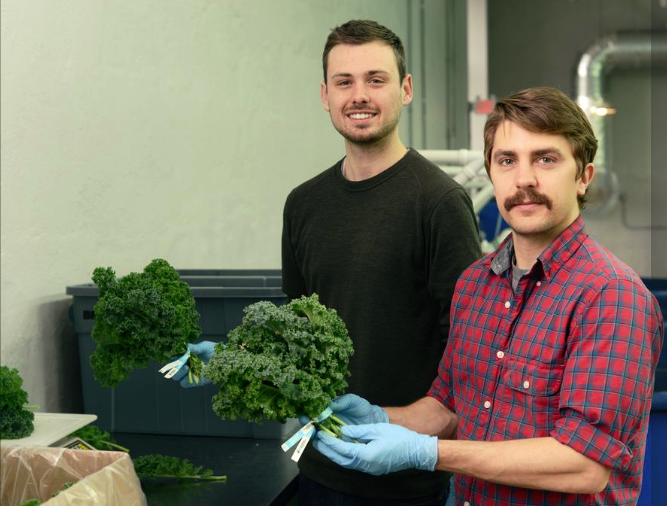
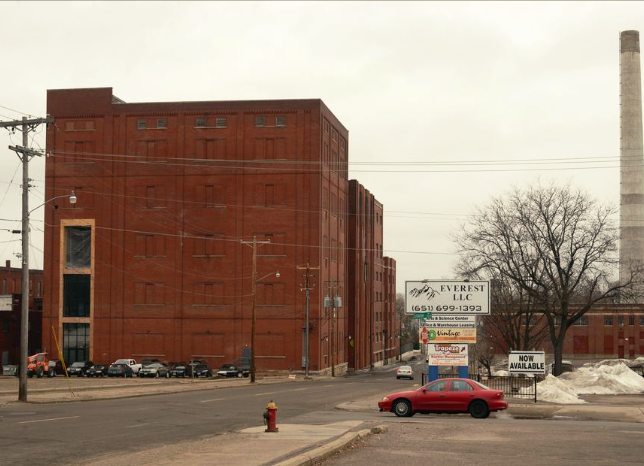

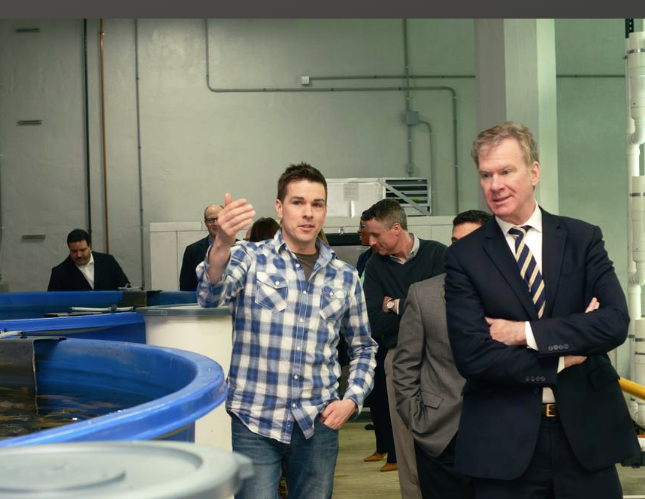
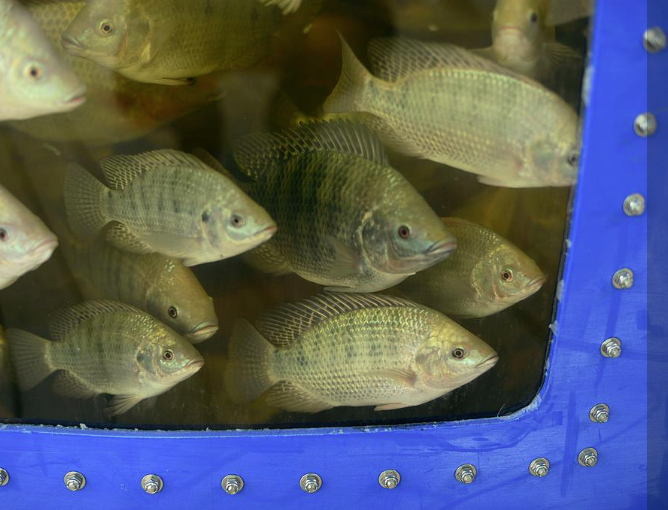
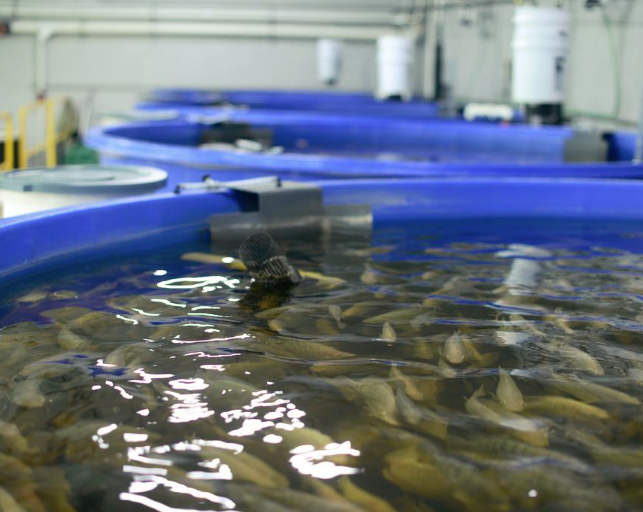
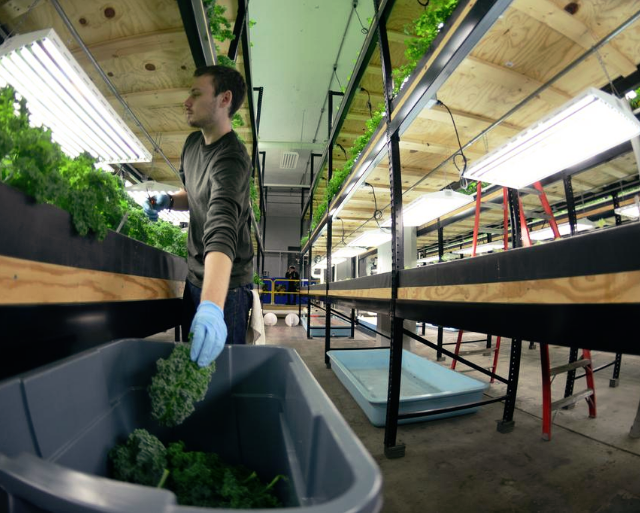
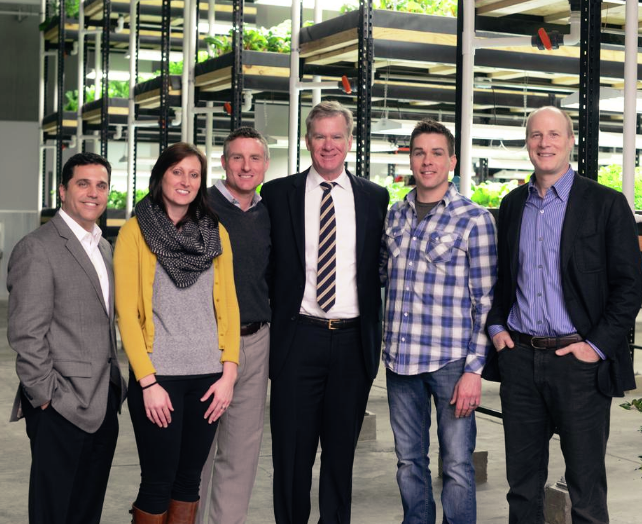
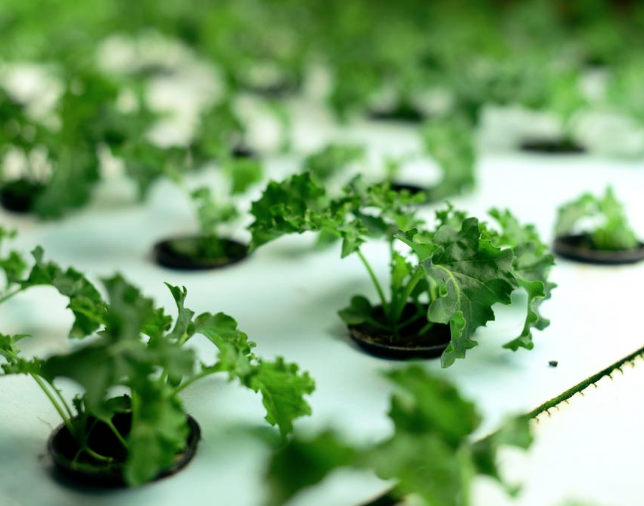
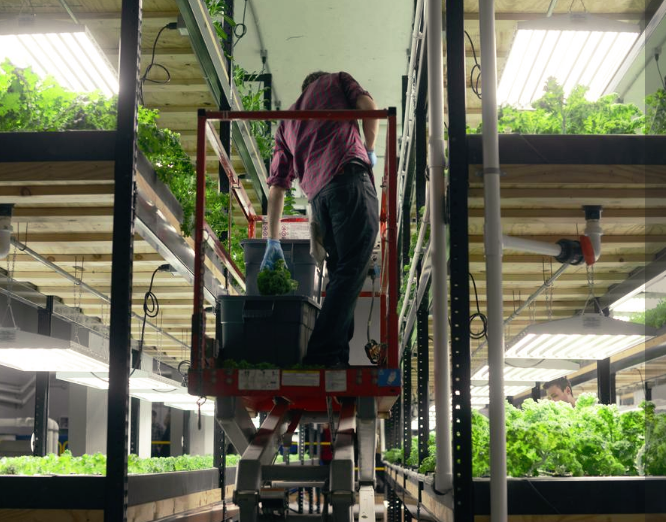
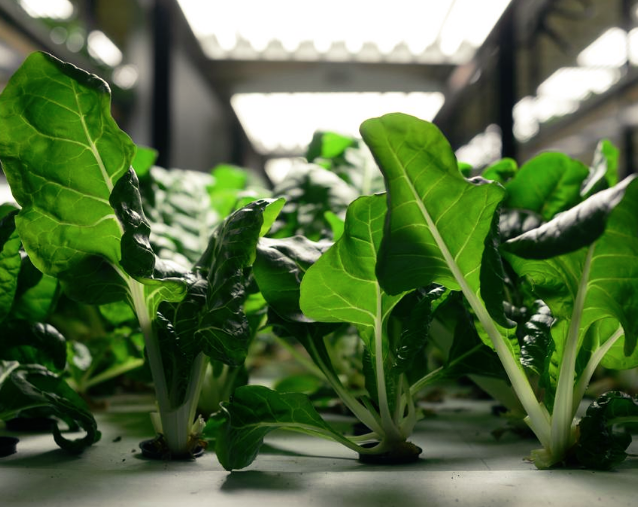
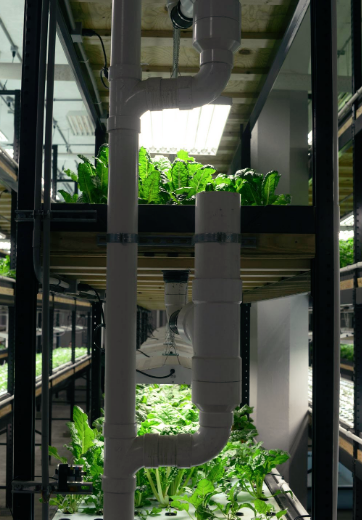

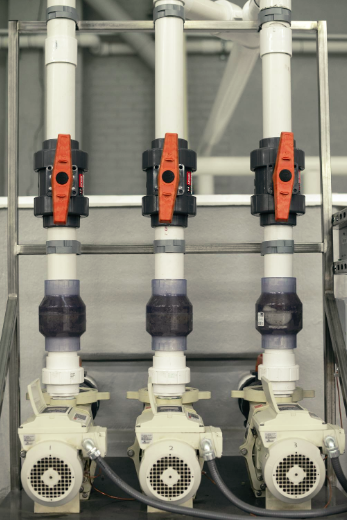
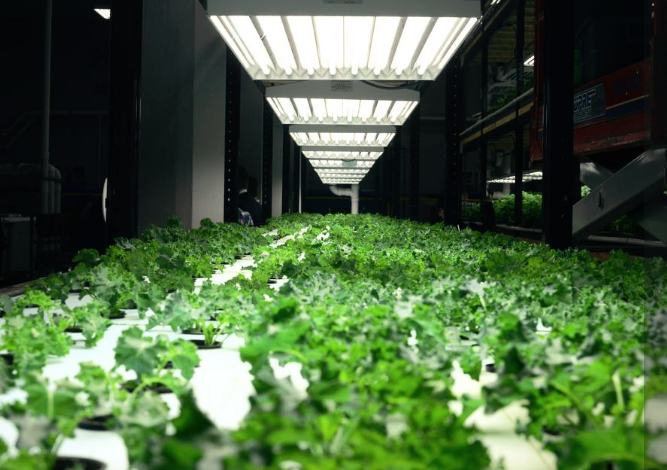
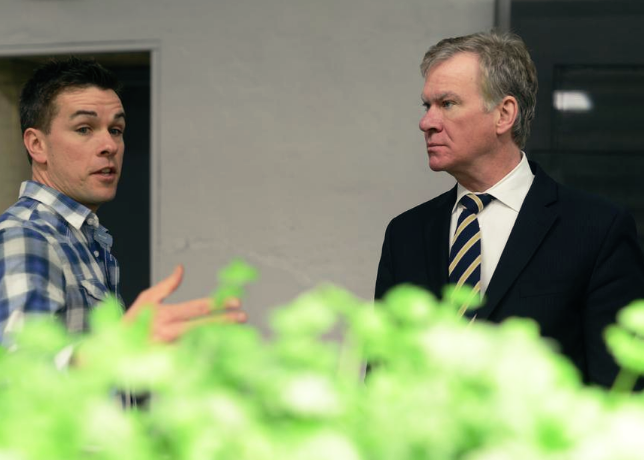
Urban Organics unveils aquaponic fish and vegetable farm in old Hamm's Brewery
Urban Organics unveiled its aquaponics farm in the old Hamm's Brewery. The facility raises fish and grows vegetables.
The Schmidt Brewery location aimed much higher: At 87,000 square feet it was 10 times the size of Urban Organics' first venture, and Pentair's participation, in theory, lent more resources and a bigger name to the concept. Pentair bought out Urban Organics' other owners a year ago, the Star Tribune notes, though Haider stayed on as general manager.
The facility may have encountered production problems. Though it turned out produce, Tracy Singleton, owner of Birchwood Cafe in Minneapolis, said Urban Organics never began harvesting arctic char and rainbow trout as expected in the Schmidt site.
Pentair said it didn't know what it would do with the Schmidt Brewery facility.

CropOne Holdings Joins AVF As Main Event Sponsor At Urban Future Global Conference - May 22nd & 23rd
MAY 9, 2019
KYLE BALDOCK
Crop One Holdings Leads the World in Combining Plant Science and Data Analytics
Crop One is transforming the agriculture industry, using advanced hydroponic technology and proprietary data analytics to provide pure, safe, and consistent produce year-round. This is the company behind the successful container-farming group FreshBox Farms, who grow top-quality produce in controlled environments for retail in the state of Massachusetts.
Crop One Plans to Build the World’s Largest Vertical Farm
Crop One is currently building the world’s largest vertical farm in Dubai, following a joint venture with Emirates Flight Catering. At the core of the company is creating a food system that can sustainably provide nutritious, fresh produce in and for communities, regardless of the geographical location.
Introducing Pitichoke Chulapamornsri of Crop One, Keynote Speaker at Urban Future Global Conference
Pitichoke Chulapamornsri is the Vice President of International Business Development and Strategic Projects at CropOne. Prior to joining the Crop One team, Mr. Chulapamornsri was a founding team member and the Director of Business Development at Neighborly Securities, a FinTech startup platform for investing in “world-positive projects.” Pitichoke was also a Senior Analyst at Goldman Sachs in the Private Equity Group, a fund-of-fund with over $35bn in AUM. He was the youngest appointee to the Risk Management and Analytics oversight committee. Mr. Chulapamornsri earned his BBA in Finance and International Business (cum laude) from University of Washington and Master in Public Policy from Harvard University, where he served as the student body president.
Mr. Chulapamornsri will be presenting a keynote speech and participating in the roundtable discussion at our event: Unlocking the Potential of Indoor Farming in Cities of the Future.
Urban Future Global Conference is the world’s largest event for sustainable cities. The AVF is proud to partner with UFGC to bring a dedicated event for indoor farming, where we will discuss realistic strategies for implementing food production systems in cities across the globe. Crop One joins Ÿnsect as main event sponsors. If you would like to join us in Oslo, there are still a few tickets left: https://bit.ly/2JdzbZ4
Student price (with valid student ID): €220
Member price €360
Please contact re@vertical-farming.net to request a voucher code for either of the discounted prices.
Visit our Facebook event page here: https://www.facebook.com/events/2040058069620579/
EMAIL US ATINFO@VERTICAL-FARMING.NET

Samsung Introduces Benefits of Horticulture LEDs for Vertical Farming
The development of agricultural innovation has become more and more urgent than ever given the factors of increasing world population and global warming. As a result, vertical farming, which serves as a feasible solution to mass produce healthy and safe food, is getting increasingly popular across the world.
Samsung Electronics has launched full-spectrum white-based horticulture LEDs to keep up with the trend of agriculture innovation and underline the advantages of applying LEDs for smart farming approaches such as vertical farm.
Smart farming refers to an intelligent farming system that applies information and communication technologies (ICT) to agriculture. Vertical farming, wherein food is produced in vertically stacked layers, is regarded as a potential future agricultural with several benefits including its economical space and resource usage, environmental-friendly cultivation, and reliable harvesting.
Since Plant photosynthesis, germination and growth all depend on the wavelength of light the plant is exposed to; LED lighting enables optimum lighting conditions for growing any plant with its adjustable wavelength. Different light wavelengths can affect the taste and nutrient content of different types of plants or even the same species, This matching of the right wavelength to the right vegetable is called a ‘lighting recipe’.”
Professor Changhoo Chun, adviser to Samsung’s horticulture LED development and professor at College of Agriculture and Life Sciences, Seoul National University, said that Samsung’s white-based horticulture LEDs which blend RGB colors offered a wide spectrum of wavelengths, making it more effective in indoor framing.
(Professor Changhoo Chun; image: Samsung)
He explained, “Growing plants well comes down to providing the right combination of wavelengths specific to each type of plant – from vegetables to fruits to medicinal plants. However, finding the optimum for each type of produce is often time-consuming and costly – a difficult undertaking for most vertical farms.”
Samsung has worked closely with agriculture research teams to find the optimal combination of light wavelengths necessary for peak plant growth. In order to do this, the most in-demand produce from existing plant factories were documented and then experiments on them were conducted with various combinations of light wavelengths. From the results of these trials came Samsung’s lighting solution lineup, including the full-spectrum white-based horticulture LEDs.

Visions And Global Hemp Industry & Country Reports, 16th EIHA Hemp Conference
16th EIHA Hemp Conference, 5–6 June 2019, Maternushaus, Cologne, Germany
++ Almost 140 registered participants from 26 countries - 400 participants expected ++ 30 exhibitors expected
16th EIHA Hemp Conference, 5–6 June 2019,
Maternushaus, Cologne, Germany
++ Almost 140 registered participants from 26 countries - 400 participants expected ++ 30 exhibitors expected ++
Industrial hemp is becoming a big business worldwide, whether CBD, hemp food or building materials. At the oldest and largest industrial hemp conference in the world, countries such as Australia, Canada, Thailand, India, Greece, Romania, The Netherlands and Great Britain will present their growth scenarios and visions. Don't miss the pioneers of a new billion-dollar industry!
Visions and Global Hemp Industry
Michael Carus (DE)
nova-Institut and member of the EIHA advisory board
Welcome and Introduction to the Conference
Lorenza Romanese (BE)
Managing Director of EIHA: Lobbying Actions in Brussels on Hemp Food, CBD and CAP Reform – an Opportunity for the Hemp Sector
Catherine Wilson (UK)
CannaWellness and EIHA board member: The Future of Hemp
Steve Bevan (US)
GenCanna: Global Hemp Economics
Paul Benhaim (AU)
Elixinol Global: Hemp and Cannabis in a Modern and Changing World
Abstract
Kehrt Reyher (PL / US)
HempToday: Powering the Industry with Modern Media Tools
Abstract
Country Reports
Mark Reinders (NL)
HempFlax and president of EIHA: Update on EIHA and the European Hemp Industry
Ted Haney (CA)
Canadian Hemp Trade Alliance: The Canadian Hemp Industry – A Billion Dollar Blueprint
Abstract
Thiprada Poonsawat (TH)
Kasetsart University: Hemp in Thailand – Current Status and the Coming of Medical Hemp
Abstract
Rohit Sharma (IN)
Indian Industrial Hemp Association: Indian Hemp Techno Commercial & Market Update
Michalis Theodoropoulos (GR)
KANNABIO Hemp Cooperative: Cooperativism in the Hemp Industry – Prospects and Challenges
Final programme you will find here.
Innovation award "Hemp Product of the Year"
For the 2nd time, the Innovation award "Hemp Product of the Year" 2019 will be granted to the young, innovative industrial hemp industry for finding suitable applications and markets for industrial hemp based products. Many thanks to HempFlax for supporting the Innovation Award! All six nominated products will be published soon.
Sponsoring and exhibition opportunities
All sponsoring opportunities are available for download here.
The fee for a booth (6 m2) is 650 EUR (excl. 19% VAT). We provide you with a table, tablecloths, a pin board, a chair and a power connection. You are welcome to use your own booth system. After booking your booth please submit Mr. Dominik Vogt a printable logo and a company profile.
Call for posters
Want to present a poster? Submit your application here.
About the conference
Specialists from all over the world will meet in order to exchange information regarding the latest developments in hemp applications for fibres, shivs, seeds and oil as well as cannabinoids. Applications are biocomposites in automotive and construction as well as textiles, food, food supplements and pharmaceuticals. We are expecting again 400 international participants from more than 40 countries.
Looking forward to welcoming you at the biggest event on industrial hemp ever!
Your nova conference team

Northern Italian Trial Greenhouse To Test Floating Systems In Winter
"Water temperature essential element in growing on floating systems"
"Growers have been using floating systems for years, but not always in the right way. We verified that an essential element is the temperature of water." Speaking is Gian Paolo Menarello with Idromeccanica Lucchini. The company set up a testing area in a company located in northern Italy to grow lettuce using a floating system in winter. "They proved that it is not so much air temperature, but rather the water temperature that determines crop development."
Idromeccanica Lucchini is continuously experimenting with hydroponic cultivation and, specifically, with floating systems.
Non-heated greenhouse
Tests are still being carried out in a non-heated greenhouse (45 meters long, 8 meters wide and 3.5 meters high) protected with a plastic film. A heat exchanger helps maintain the temperature within a suitable range without wasting too much energy, so that the crop can be economically viable.
"Another fundamental aspect is the monitoring of oxygenation. While the floating system technique helps make a better use of the space, it cannot be improvised and all materials must be chosen accurately. For example, supports are made of PVC suitable for young plants."
Lucchini focuses on innovation working alongside entrepreneurs to make sure all steps are verified and all components are checked. For example, while the temperature in tanks must be regulated in winter to obtain sustainable productivity, the environment needs to be cooled down in summer.
"The first winter harvest was excellent and economic results were very positive for growers. Heads were large, weighing around 450 grams each. Thanks to our tests, we proved that, in theory, lettuce could be cultivated throughout the year in northern Italy too, but the cycle becomes too long in central winter months, so it is not worthwhile. Anyway we are also carrying out tests with parsley, celery and endive."
This type of cultivation leads to many advantages: there are no soil fatigue problems, a lot of water can be saved and there is no need to weed or prepare the soil. In addition, producers can make more precise plans and spend less money on labor.
Contacts:
Idromeccanica Lucchini S.p.a.
Via Cavriana 4B
46040 Guidizzolo (MN)
Tel.: (+39) 0376 818433
Fax: (+39) 0376 819498
Email: info@lucchiniidromeccanica.it
Website: www.lucchiniidromeccanica.it
Publication date: 5/8/2019
© HortiDaily.com

CO2 GRO Inc. Is Pleased To Present a Recent MMJDaily Article Outlining The Benefits To Medical Cannabis Growers From Employing CO2 Foliar Spray
Fighting Cannabis Pathogens Through Dissolved CO2 Spray
Medical cannabis growers are terrified of pathogen outbreaks such as powdery mildew that can rapidly wipe out crop cycles once a few plants get infected. According to the team with CO2 GRO, there are not many reliable complete organic solutions for cannabis growers to fight pathogens like powdery mildew or E. coli. You might never guess - but they developed one: dissolved CO2 Foliar Spray.
Less tools than food and non-food growers
The high standards of the pharmaceutical industry and new Government Regulators of legalized cannabis are pushing medical cannabis growers to grow their plants with less tools than traditional food and non-food crop growers have. Traditional food and non-food crop growers can use 100’s of approved chemical-based protection products. In Canada, there are only 23 allowed by the Office of Medical Cannabis to date that are less effective organic based solutions. This is due to the new legal cannabis industry being a combination of both agriculture and medicine.
Bioavailable and natural
The Canadian company CO2 GRO has come up with a patent-pending technology solution that is 100% bioavailable and 100% natural - dissolved CO2 Foliar Spray. According to the company, it strengthens cannabis plant resistance to pathogens as well as increases growth, speed to maturity and size and number of buds per plant with higher THC and CBD concentrations. In recent published pathogen trials using cannabis and pepper plants, CO2 GRO has also demonstrated dramatically lower E. coli and powdery mildew cell growth in both cannabis and pepper plants using its CO2 Foliar Spray technology (99% less).
Alternative to CO2 gassing
“Our technology helps cannabis growers achieve healthier crops that grow faster, larger, and safer, bringing greater profits,” says John Archibald, CO2 GRO’s CEO. “There are some indoor growers using CO2 gassing but most cannot due building porosity, the grow area being too warm, power costs being too high, value of crop too low etc. The ones that do CO2 gas waste a majority of the CO2 gas they buy through required venting before plants absorb it. We can bring CO2 gas via Foliar Spray to all of these less efficient greenhouses, shade houses and hoop houses whether they gas or not plus anywhere outdoors, without material CO2 gas loss, in dissolved format.”
“Our Foliar Spray is just water infused with CO2 without bubbles that works in an extremely efficient way,” John explains. “This dissolved CO2 water is 100% bio-available to plant leaves where almost all plant photosynthesis of CO2 into sugars to grow occurs.”
Fighting cannabis pathogens through dissolved CO2 spray
Medical cannabis growers are terrified of pathogen outbreaks such as powdery mildew that can rapidly wipe out crop cycles once a few plants gets infected. According to CO2 GRO, there are not many reliable complete organic solutions for cannabis growers to fight pathogens like powdery mildew or E. coli.
But how does this spray kill pathogens in cannabis crops? John states “We observed that certain single cell pathogens cannot grow in the presence of sharp pH changes. Our acidic dissolved CO2 (carbonic acid) water is lightly sprayed on leaf surfaces at about 4.5-4.7 pH. That water then rapidly turns alkaline as leaves consume the dissolved acidic CO2. On cannabis and pepper plants, we scientifically measured and observed the near halt (two orders of magnitude or over 99% less) of the growth of unwanted single cell pathogens targeted.”
Post-sprayed water pH
"The post-sprayed water pH on the leaf surface snaps back to the low-to-mid 6 pH area in less than 90 seconds as measured at St. Cloud State University in Minnesota. This 2X pH volatility swing is not dangerous for cannabis."
John continues explaining: “We take CO2 gassing cannabis growers from 5 crop cycles per year of value to a net 6 by adding more bud volume, size of buds and speed to plant maturity but use only half the CO2 gas to do that. That ignores the higher THC and CBD bud concentrations we also get. For cannabis growers not CO2 gassing, our value add is closer to 50% without valuing higher THC and CBD. Our technology is “not a pesticide” as concluded by Health Canada’s Pesticide Management Regulatory Authority nor is it “an additive” as concluded by the Canadian Food Inspection Agency.”
For more information:
CO2 GRO Inc.
Suite 5800 40 King St West
Box 1011
Toronto, Ontario M5H 3S1
(416) 315-7477
sam.kanes@co2gro.ca
co2gro.ca
Publication date: 4/29/2019
Author: Andrea Di Pastena
© MMJDaily.com

Growing The Future: High-Tech Farmers Are Using LED Lights In Ways That Seem To Border On Science Fiction
Mike Zelkind, chief executive of 80 Acres Farms, grows tomatoes and other produce with artificial-light recipes made possible with new LED technology. (Maddie McGarvey for The Washington Post)
By Adrian Higgins Nov. 6, 2018
Mike Zelkind stands at one end of what was once a shipping container and opens the door to the future.
Thousands of young collard greens are growing vigorously under a glow of pink-purple lamps in a scene that seems to have come from a sci-fi movie, or at least a NASA experiment. But Zelkind is at the helm of an earthbound enterprise. He is chief executive of 80 Acres Farms, with a plant factory in an uptown Cincinnati neighborhood where warehouses sit cheek by jowl with detached houses.
Since plants emerged on Earth, they have relied on the light of the sun to feed and grow through the process of photosynthesis.
But Zelkind is part of a radical shift in agriculture — decades in the making — in which plants can be grown commercially without a single sunbeam. A number of technological advances have made this possible, but none more so than innovations in LED lighting.
“What is sunlight from a plant’s perspective?” Zelkind asks. “It’s a bunch of photons.”
Diode lights, which work by passing a current between semiconductors, have come a long way since they showed up in calculator displays in the 1970s. Compared with other forms of electrical illumination, light-emitting diodes use less energy, give off little heat and can be manipulated to optimize plant growth.
In agricultural applications, LED lights are used in ways that seem to border on alchemy, changing how plants grow, when they flower, how they taste and even their levels of vitamins and antioxidants. The lights can also prolong their shelf life.
“People haven’t begun to think about the real impact of what we are doing,” says Zelkind, who is using light recipes to grow, for example, two types of basil from the same plant: sweeter ones for the grocery store and more piquant versions for chefs.
For Zelkind, a former food company executive, his indoor farm and its leading-edge lighting change not just the way plants are grown but also the entire convoluted system of food production, pricing and distribution in the United States.
High-tech plant factories are sprouting across the United States and around the world. Entrepreneurs are drawn to the idea of disrupting the status quo, confronting climate change and playing with a suite of high-tech systems, not least the LED lights. Indoor farming, in sum, is cool.
It has its critics, however, who see it as an agricultural sideshow unlikely to fulfill promises of feeding a growing urbanized population.
Grower David Litvin picks tomatoes at 80 Acres Farms in Cincinnati. The vines grow in a high-tech environment that includes LED lamps with customized light recipes. The plant factory produces 200,000 pounds of leafy greens, vine crops, herbs and microgreens annually in a 12,000-square-foot warehouse. (Maddie McGarvey/For The Washington Post)
Zelkind agrees that some of the expectations are unrealistic, but he offers an energetic pitch: He says his stacked shelves of crops are fresh, raised without pesticides and consumed locally within a day or two of harvest. They require a fraction of the land, water and fertilizers of greens raised in conventional agriculture. He doesn’t need varieties bred for disease resistance over flavor or plants genetically modified to handle the stresses of the field. And his harvest isn’t shipped across the country in refrigerated trucks from farms vulnerable to the effects of climate change.
“We think climate change is making it much more difficult for a lot of farms around the country, around the world,” he says, speaking from his office overlooking a demonstration kitchen for visiting chefs and others.
In addition to shaping the plants, LEDs allow speedy, year-round crop cycles. This permits Zelkind and his team of growers and technicians to produce 200,000 pounds of leafy greens, vine crops, herbs and microgreens annually in a 12,000-square-foot warehouse, an amount that would require 80 acres of farmland (hence the company’s name).
Zelkind says he can grow spinach, for example, in a quarter of the time it takes in a field and half the time in a greenhouse. Growing year-round, no matter the weather outside, he can produce 15 or more crops a year. “Then multiply that by the number of levels and you can see the productivity,” he said.
Zelkind and his business partner, 80 Acres President Tisha Livingston, acquired the abandoned warehouse, added two shipping containers and converted the interior into several growing zones with sophisticated environmental systems that constantly monitor and regulate temperature, humidity, air flow, carbon dioxide levels and crop health. Grown hydroponically, the plant roots are bathed in nutrient-rich water. The moisture and unused nutrients exhaled by the plants are recycled.
But it is the LED lighting that has changed the game. Conventional greenhouses have relied on high-pressure sodium lamps to supplement sunlight, but HPS lights can be ill-suited to solar-free farms because they consume far more power to produce the same light levels. They also throw off too much heat to place near young greens or another favored factory farm crop, microgreens. Greenhouses, still the bulk of enclosed environment agriculture, are moving to a combination of HPS and LED lighting for supplemental lighting, though analysts see a time when they are lit by LEDs alone.
In the past three years, Zelkind says, LED lighting costs have halved, and their efficacy, or light energy, has more than doubled.
Production in the Cincinnati location began in December 2016. In September, the company broke ground on the first phase of a major expansion 30 miles away in Hamilton, Ohio, that will eventually have three fully automated indoor farms totaling 150,000 square feet and a fourth for 30,000 square feet of vine crops in a converted factory. (The company also has indoor growing operations in Alabama, North Carolina and Arkansas, which acted as proving grounds for the technology.)
“We feel the time is right for us to make the leap because the lighting efficiency is there,” Livingston says.
Grower Julie Flickner inspects kale at 80 Acres Farms. Growing year-round, no matter the weather outside, the vertical farm can produce 15 or more crops annually. The produce is sold in Cincinnati-area grocery stores and restaurants. (Maddie McGarvey/For The Washington Post)
The visible spectrum is measured in minuscule wavelengths, shifting at one end from violet-blue light through green to red at the other. For decades, scientists have known that photosynthesis is optimized within the red band, but plants also need blue lightwaves to prevent stretching and enhance leaf color. A barely visible range beyond red, known as far red, promotes larger leaves, branching and flowering. With advances in LED technology, light recipes — determining the number of hours illuminated, the intensity of photons directed at plants and the mix of colors — can be finely tuned to each crop and even to each stage in a crop’s life.
Given the evolving nature of the technology and its enormous commercial potential, light manufacturers and universities, often in collaboration, are actively involved in research and development.
“We have a completely new era of research,” says Leo Marcelis, a horticulture professor at Wageningen University in the Netherlands. Tweaking light recipes has allowed researchers to manipulate crops in a way never seen before. In the lab, chrysanthemums have been forced into bloom without the traditional practice of curtailing their daily exposure to daylight. This will allow growers to produce bigger plants in flower.
“It’s to do with playing around with the blue light at the right moment of the day,” Marcelis says. “Its internal clock is affected differently, so it doesn’t completely recognize it’s still day. There are so many amazing responses of the plant to the light.”
Lettuce, for example, likes as much as 18 hours of light per day, but basil prefers brighter light for 15 hours, says Celine Nicole, a researcher for Signify, formerly Philips Lighting. “Every plant has its own preference,” says Nicole, who conducts research at the company’s high-tech campus in Eindhoven, Netherlands. She has already tested 600 types of lettuce.
Although the permutations are still under study, the sun suddenly seems so analog. “The spectrum from sunlight isn’t necessarily the best or most desirable for plants,” says Erik Runkle, a plant scientist at Michigan State University. “I think we can produce a better plant” with LED lights, he says. “The question becomes: Can you do it in a way that is cost-effective considering the cost of plants indoors?”
“People haven’t begun to think about the real impact of what we are doing.”
Mike Zelkind, chief executive of 80 Acres Farms
The answer seems to be yes. LED light shipments to growers worldwide are expected to grow at an annual average rate of 32 percent until 2027, according to a market report by analysts with Navigant Research in Boulder, Colo. Shipments of LED lights will overtake those of legacy lights starting next year, says Krystal Maxwell, who wrote the report with Courtney Marshall.
Most of the growth will be as supplemental lighting in greenhouses, but vertical farms are seen as an alternative production system that will develop alongside greenhouses, not displace them, Marcelis says.
Runkle estimates there are 40 or more vertical farms in the United States, and new ones are opening every year with the help of deep-pocketed investors. In some of the biggest deals, AeroFarms, headquartered in Newark, last year raised a reported $40 million. Plenty, a grower based in South San Francisco, raised $200 million in 2017 for a global network of vertical farms. (One of the backers is a venture capital firm created by Amazon founder Jeffrey P. Bezos, who also owns The Washington Post.)
Zelkind declined to reveal his capital costs, but for start-up entrepreneurs, LED-driven vertical farms can be one of the most lucrative forms of agriculture. “Based on manufacturers and growers I have talked to, that’s where the money is,” Marshall says.
Critics argue that a lot of the hype around indoor farming is unwarranted, saying it won’t fulfill promises of feeding an increasingly urbanized planet and reverse the environmental harm of industrialized agriculture, not least because most staples, such as corn, wheat and rice, cannot be grown viably indoors.
Also, to build enough indoor farms for millions, or billions, of people would be absurdly expensive.
Runkle says vertical farming “shouldn’t be considered as a way to solve most of our world’s food problems.” But it is a viable way of producing consistently high-quality, and high-value, greens and other plants year-round.
Zelkind says what he’s doing may be novel, but it’s just one component of how we feed ourselves in this century. “We shouldn’t overblow what we do. Eventually it’s going to become more important, but vertical farming alone isn’t the cure-all.”
He adds, however, that “there’s no reason today to ship leafy greens from California to Ohio.”
Livingston likens LED-raised food to the advent of smartphones. “Five years from now everyone is going to be living with indoor farming and wonder how we did without it,” she says.
David Litvin, left, inspects vine crops while farm operations tech Devon Brown prepares labels for retail packaging. (Maddie McGarvey/For The Washington Post)
Additional credits:
Lettering by Craig Ward for The Washington Post; animation by Sarah Hashemi; photo editing by Annaliese Nurnberg; design and development by Elizabeth Hart.
Philly Names First-Ever Farm Czar
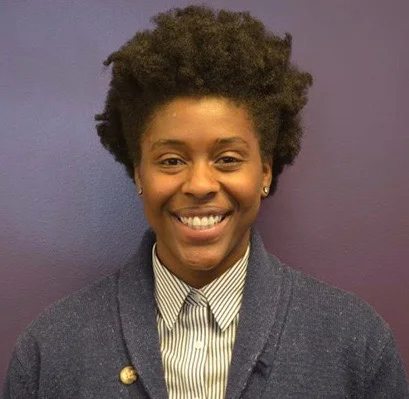
Philadelphia has named city planner Ashley Richards as its first-ever urban agriculture director. Richards will direct the creation and implementation of Philadelphia’s forthcoming urban agriculture plan
The Philadelphia Orchard Project plants at Bartram's Community Farm.
APRIL 24, 2019
Ashley Richards (City of Philadelphia)
Philadelphia has named city planner Ashley Richards as its first-ever urban agriculture director. Richards will direct the creation and implementation of Philadelphia’s forthcoming urban agriculture plan.
Richards got their start as a planner in New York, where they facilitated the creation of an urban farm cooperative led by Black and Latinx Bronx residents. Most recently, Richards was working for the Philadelphia City Planning Commission on development issues in North Philadelphia.
Richards, a graduate of the University of Pennsylvania’s city planning program, also served as co-chair of the city’s Food Policy Advisory Council Urban Agriculture subcommittee. Their new role will be based in the Parks and Recreation Department and linked to its urban agriculture program, FarmPhilly. Richards was unable to comment for this article.
“It’s very exciting,” said Jenny Greenberg, executive director of Neighborhood Garden Trust (NGT), a land trust affiliated with the Pennsylvania Horticultural Society that acquires and preserves community gardens in Philadelphia. “They’re very committed on these issues.”
Greenberg hopes the urban agriculture master plan will produce a better system for gardeners and urban farmers to secure the land they’ve been tending for years, sometimes generations.
The seeds for the plan were planted about three years ago at a city council hearing where residents asked the city to step up with a long-term strategy to support new and long-tenured community gardens and urban farms.
Nearly half of the city’s estimated 470 farms operate on formerly blighted land that the farmers don’t own or control. The squatter farmers often cleaned up vacant eyesore lots and turned them into safe places to grow food. These spaces have become green respites in neighborhoods with little access to fresh food and high rates of crime. Studies have shown such spaces reduce crime, improve health and increase land values.
But as real estate appreciates and some neighborhoods gentrify, many farmers have found themselves locked out of the land they made bloom. One North Philadelphia family recently filed a lawsuit against the city over a community garden behind their home that was sold at a sheriff’s sale, according to the Philadelphia Inquirer. The family transformed the abandoned land into a community space and tended it for nearly 40 years before the city sold it, the Inquirer reported.
For growers who don’t have a clear title to the land they are tending, acquiring rights can be complicated and costly. The planning process Richards was tapped to lead is intended to address this problem, among others.
Christine Knapp, director of the city’s office of sustainability, said she hopes the plan will help the city coordinate between agencies that work with community gardens and those that control public land such as the Philadelphia Land Bank, so the city can expand its urban agriculture practices in a way that works better for everyone.
In addition to creating a framework for expanding urban agriculture in the city, the plan will explore how “to better support those gardens that have been out there for a long time,” Knapp said.
The city expects to select a vendor to begin working on the plan in June and have it ready in 18 months or less for a budget capped at $120,000. A request for proposals closes on April 30.
More land earmarked for gardens
One year ago, Public Interest Law Center attorney Ebony Griffin was frustrated with the city’s process for transferring vacant land into the hands of community gardens.
“The Land Bank is not really responsive,” Griffin said. “It almost feels like it’s a facade.”
In a recent interview, Griffin said things have improved.
“I can tell that they've really put forth some effort into making sure that they're addressing the needs of the growing community. And I do think that a lot of our initial concerns could be attributed to the fact that they were in transition and they were a little short-staffed,” Griffin said.
Griffin’s organization recently updated a website — Grounded in Philly — with information about how to navigate the legal process to secure garden land. The online resource includes tools for growers to communicate and organize online.
It’s not only growers trying to get organized. Between last April and now, a few things have changed at the Land Bank. The staff grew by two, from a team of 15 to 17 — and they’ve begun to hit some of the agency’s internal targets. For instance, the agency acquired 20 properties for community gardens in the last fiscal year, meeting a goal.
But progress remains slow and incremental.
Last year’s goal was to transfer 33 lots to garden groups. Only four made the jump in ownership — all four going to the Neighborhood Gardens Trust.
This year’s goal is 40. But so far only one garden sale has been approved but not yet settled — the formerly at-risk New Jerusalem farm.
“The challenge is that the real estate market is moving faster than the city’s bureaucracy, and politics and policy,” said NGT’s Greenberg.“We are in a race, it feels like, in a lot of neighborhoods.”
The four parcels Greenberg’s group acquired from the Land Bank came in addition to 15 from the Philadelphia Redevelopment Agency and five from the city’s Department of Public Property. Another five tax-delinquent properties will soon be transferred from the Land Bank to the trust, according to Greenberg.
Justin Trezza, director of garden programs at PHS, said the numbers reflect progress.
“I think we're seeing a positive trend right now,” said Trezza, whose group already supports about 150 gardens around the city. “The Land Bank is making a concerted effort to make their processes clear for individuals. And then, beyond that, there has been a lot of other individuals and entities putting pressure on the City Council to be more supportive of community gardens.”
Kirtrina Baxter is with Soil Generation, a Black and Brown-led coalition of growers and the Public Interest Law Center. She said there is still work to be done.
“It hasn't gotten any better,” Baxter said. “The [Land Bank’s] strategic plan wasn't done in 2018 so we still don't have any transparency around how the Land Bank is being used to service gardens. Outside of the work that they do with NGT, there's really nothing to show for that.”
Last year, Baxter and her coalition organized rallies demanding community control of gardens, farms, and green spaces throughout Philadelphia. This year, they’re looking closely at the City Council election. Through Philly’s tradition of councilmanic prerogative, council representatives have a lot of control over how city-owned land is used or sold. Soil Generation is calling its followers to vote only for “green friendly” candidates, or those who have been supportive of gardens.
Baxter also has her hopes on the urban agricultural plan coming up this year.
“Once the city hears back and gets the strategic plan back from the community, saying these are the things and these are the services that we want, these are the supports that we want — then hopefully they'll move in a different way to support gardens better,” Baxter said.
About the author
Catalina Jaramillo, Reporter
Catalina Jaramillo is a part-time reporter for PlanPhilly and StateImpact PA. She covers community development issues, environmental/sustainability stories, and neighborhood narratives. For most of her career, she has worked toward social justice, writing about inequality and creating real and virtual spaces for people to communicate.
She is a freelance correspondent for Chilean newspaper La Tercera, collaborates with Feet in Two Worlds – a news organization that brings the work of ethnic media journalists to public radio and the web – and teaches journalism at the first Spanish-language program at the CUNY Graduate School of Journalism in New York City. She was born and raised in Santiago, Chile, and has lived in Spain, Mexico and the US.
She’s been living in Philadelphia since 2014, in front of Norris Square Park, in Kensington. She tweets as @cjaramillo and you can email her at cjaramillo@whyy.org.
Melbourne Gives Green Light To City Skyfarm
Georgia Clark
13 May, 2019
Melbourne will soon have a new public rooftop farm.
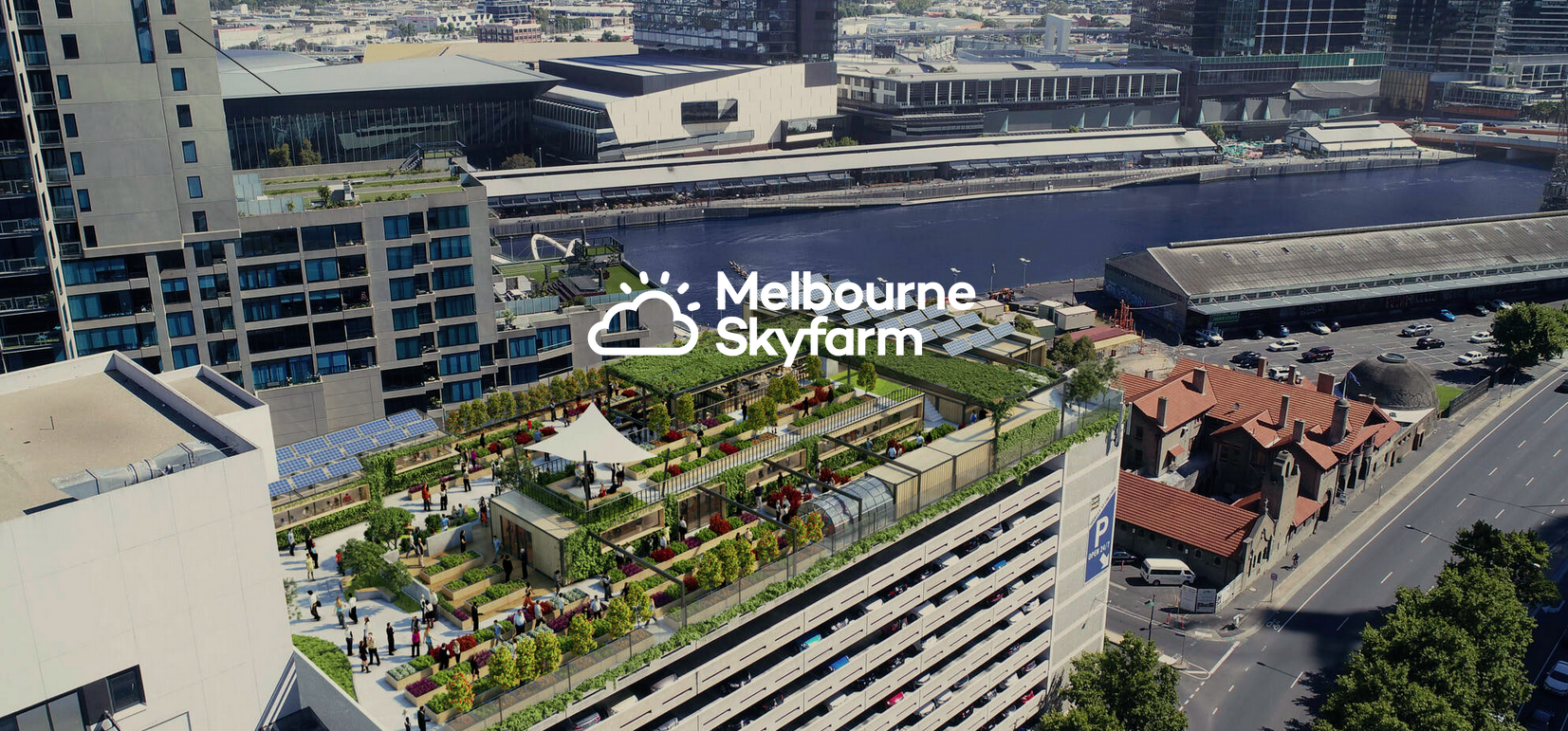
City of Melbourne Council has approved plans to transform a car park on top of a city building into a 2000-square-metre urban farm.
Known as the Skyfarm, the project will sit atop a new $450 million development at Melbourne’s Docklands directly overlooking the Yarra River, with a nursery, beehives, eco education centres, a shop, sustainable café and even a live music venue.
The plans were unanimously approved by council at a Future Melbourne Committee meeting last Tuesday, where a plan to create more ‘urban forests’ across the city was also endorsed.
The farm, funded with $300,000 from Melbourne’s Urban Forest fund, will produce five tonnes of produce each year – which will be used to supply the café and donated to charities like Aus Harvest.
The project, set to be completed as soon as late next year, is a collaboration between urban farm specialists Biofilta, not-for-profit Odonata and the Sustainable Landscape Company.
Commercial and philanthropic space
Brendan Condon from Australian Ecosystems told council that the farm is inspired by New York’s Brooklyn Grange – a community farm which is a hybrid commercial and philanthropic space.
“We believe the proposal represents an exciting opportunity to revitalise the rooftop of an existing building and provide a working example of urban farming in Melbourne central city,” Josh Maitland from Ethos Urban told council.
It’s hoped the farm will act as a cool space in the city to counteract growing carbon emissions.
The approval comes after council last week injected $1.9 million to implement the first year of its Green Our City Strategic Action Plan.
“We will work with the Victorian Government to create a demonstration green roof in the central city and increase the quality of green roofs and vertical greening across the municipality. There are currently around 40 green roofs in the municipality,” environment portfolio chair Clr Cathy Oke said.
Councillors received a number of objections to the proposal, with most citing concerns about noise pollution, light pollution, waste and privacy intrusions.
But the committee was told that the venue will be noise-insulated and equipped with dim lights. There will also be limits on patron numbers to avoid disrupting neighbours.
Nature in cities to become the norm
Director of Skyfarm Nigel Sharp says the project showcases the future of sustainable cities.
“Melbourne Skyfarm represents a fundamental shift in what is means to do business in this day and age. It is a bold and exciting step towards a future where nature in cities is the norm,” he said.
“It is a demonstration of how nature, people and our economy can thrive together and provides a much needed platform in the inner city for interaction, education and story-telling about the wonders of nature.”
The Skyfarm features a number of elements of sustainable design including passive solar design, renewable energy, zero emissions buildings, carbon neutral transport and rainwater harvesting.
The farm will also divert waste produced during the coffee roasting process to a composting system which will be used to grow food.
High-tech classrooms will be used at the farm to educate students and community groups about sustainability.
Marc Noyce, director of Biofilta, said the project is an illustration of the integration of urban landscapes with sustainable design.
“Melbourne Skyfarm is the perfect site to show how cities can build abundant urban farms in any location, and become prolific closed loop food producers.”

The Future of Farming
Darren Handschuh - May 7, 2019
Naomi LaFrance has a vision.
She wants to feed not only people from her first nation in Saskatchewan, but other nations as well.
And she wants to do it all with as little impact on the planet as possible so she turned to the Aquaponics Training Institute in Vernon for help.
Aquaponics is the marriage of hydroponics and aquaculture where the best of both systems are used to grow plants with very little harm to Mother Earth.
“Right now we have a hockey arena that is not being used so maybe we will be able to convert that into a growing operation,” said LaFrance. “I didn't realize how big it can become. I just came here to learn and the more I am learning, the bigger the vision is becoming and it's pretty exciting.”
The Aquaponics Training Institute is located in the BX area and is the brain child of Shawn Bonnough who teaches classes on aquaponics.
One of the big advantages of aquaponics is the food will grow 24 hours a day, 365 days a year with a minimal environmental footprint.
“The fish are fertilizing the water for the plants and the plants are filtering the water for the fish,” said Bonnough. “In between those two living systems is the bacteria that breaks everything down and creates natural fertilizer which is not harmful to the environment. This is the only system that is working on 10 percent of the water of traditional farming but is producing 10 times as much food.”
LaFrance said she will take what she has learned at the institute back her Cree nation in Saskatchewan.
The Aquaponics Training Institute offers courses online as well as at the institute itself.

2018 Saw The Most Multistate Outbreaks of Foodborne Illness In More Than A Decade, CDC Says
Lisa Dennis selects lettuce from the vegetable shelves at the East End Food Co-op Federal Credit Union in Pittsburgh on Nov. 20. (Jessie Wardarski/Pittsburgh Post-Gazette/AP)
By Laura Reiley
April 25, 2019
Foodborne illnesses killed 120 Americans last year and sickened 25,606, the national Centers for Disease Control and Prevention said in its annual report Thursday, acknowledging an increasing incidence of infection caused by eight major pathogens and a sharp uptick in the number of multistate outbreaks.
The CDC logged 23 multistate investigations last year, the most in at least a dozen years, tracking major E. coli outbreaks linked to romaine, a salmonella outbreak in eggs, raw beef products, frozen chicken and canned pork, as well as outbreaks related to individual food products such as Kellogg’s Honey Smacks, I.M. Healthy SoyNut Butter, Lebanon bologna and Hy-Vee Spring Pasta Salad.
Campylobacter, the most commonly identified infection since 2013, was linked to 9,723 cases last year. Salmonella caused 9,084 cases. Despite regulatory programs intended to reduce salmonella in chicken and eggs, infections caused by Salmonella enteritidis, one of the most common serotypes, have not declined in more than 10 years. Shiga toxin-producing E. coli cases were up for the year but still trailed these two, with 2,925 cases.
Foodborne illness results in $3 billion in health-care costs. Nearly half of the illnesses come from produce, according to the CDC. Then, in descending order, it is meat and poultry; dairy and eggs; and fish and shellfish.
“Last year was certainly attention-getting, and it continues this year with problems with produce, ground beef and poultry,” Robert Tauxe, the director of the division of foodborne, waterborne and environmental diseases at the CDC, said in an interview. “We badly need an intervention that could be used on live chickens, either a feed or a vaccine.”
Tauxe said campylobacter, in particular, is tricky. A chicken becomes infected as a young bird in the chicken house (they are not born with it), and it does not make the chicken sick in any way.
“These infections live in food animals and their environment, and the farmer or rancher is not aware that they have a problem. A contamination can go to produce, and the microbes are invisible,” he said.
One reason for an uptick in these reported cases is that the CDC has become quicker to detect and investigate outbreaks. Tests in doctor offices also are getting speedier and more frequent, with diagnostic tools that give a result within an hour and do not require sending out a culture, which takes two or three days.
“There are some organisms that we’ve been tracking for years that are hard to identify, and now it’s just a panel, and the lab looks for 22 kinds of pathogens,” Tauxe said.
Erik Olson, senior director of health and food at the Natural Resources Defense Council, said diagnostic tools may have played a role in the uptick, but a lack of appropriate legislation may contribute to ongoing foodborne illness problems such as the deadly E. coli outbreak in romaine from Yuma, Ariz., that sickened 210 people and killed five. The largest outbreak in 10 years, reported in 36 states, was linked to tainted water in an irrigation canal from a nearby cattle ranch.
In 2011, the Food Safety Modernization Act was signed into law, giving the government new power to control how food is grown and processed. One part of the law that was set to take effect in January 2018, Olson explains, required farmers to test irrigation water, which can be contaminated with feces and bacteria. In September 2017, the Food and Drug Administration suspended those testing and inspection requirements.
Olson also points to recent increases in the allowable speed at poultry-processing plants as worrying developments that might herald further upticks in campylobacter and salmonella.
“They’re trying to look at more than one chicken per second to determine if there’s a problem. We’ve delegated a lot of responsibility of ensuring food safety to the food industry itself. It doesn’t always work well.”
[Pork industry soon will have more power over meat inspections]
Tauxe says there is some progress in precisely that area.
“Produce safety is a subject of a lot of debate. The LGMA [California Leafy Green Products Handler Marketing Agreement] has decided to require that they use treated water. It’s the water they spray on the plants for irrigation or the water they would use to crop dust with. Farmers would have to test it for the 21 days before harvest.”
[Food inspections by the FDA have been sharply reduced, alarming critics]
Most experts agree that, despite new technologies and increased attention to supply-chain transparency, reports like these highlight our increasingly problematic food system. Food production is becoming more centralized just as food sourcing is going global, so foodborne illnesses have changed and become more dispersed across the country. It is hard to trace the source of the problem when tomatoes come from different farms, say, or leafy greens come from different producers and end up commingled in the same bag.

US (AZ): Farming Sustainably With Aquaponic Produce
It began years ago with a pledge from Chef Ken Harvey to provide his guests at Loews Ventana Canyon with food made from the freshest possible ingredients, and Harvey hasn’t cut any corners in sourcing his meats, cheeses, breads and produce from sustainable purveyors.
But it was his first meeting with the founders of Merchant’s Garden, a local aquaponics farm, which put his nearly pathological commitment to the principle of sustainability on an exciting new path. This ultimately resulted in his vow to grow and harvest onsite enough lettuce to serve his tens of thousands of guests per month, year-round, with only one percent of the water that’s used in conventional farming.
Occupying a climate-controlled storage space that wasn’t being fully utilized, the new hydroponic garden is the last stop on the lettuce’s journey before it lands on a guest’s plate. That journey begins aquaponically at Merchant’s Garden, where the lettuce spends its newborn month being fed through its young root system by water enriched by nutrients from biofiltered tilapia waste. It’s then transported live to Loews Ventana Canyon, 7000 N. Resort Drive, in floating containers, with its roots still submersed in the nutrient-rich water, for a subsequent cycle of hydroponic growing prior to harvest.
Harvey is currently growing Bibb and Red Cherokee lettuces, as well as three varieties of Romaine. His garden system’s capacity is nearly 300 heads per harvest, with multiple harvests per month, which equates to a full acre of farming if the lettuce was grown in the ground. And he tells me that he’s only using 200 gallons of water per month in a recirculating system that only loses water through evaporation and transpiration.
Publication date: 5/9/2019

UC Davis Students Present Plan For Mars Greenhouse To NASA
Photo courtesy of UC Davis
Students were asked to design a greenhouse to support four astronauts over the course of a two-year stay on Mars.
April 30, 2019
Edited by Chris Manning
A student team from the UC Davis Space and Satellite Systems club was one of five university teams invited to present their plans for a Mars greenhouse at the NASA Langley Research Center on April 23rd.
“We all had an amazing experience learning from other teams’ ideas and interacting with professional engineers as well as fellow students,” said team member Lucas Brown, a freshman in aerospace engineering.
The UC Davis students entered the Martian Agricultural and Plant Sciences (MAPS) project for this year’s BIG Idea Challenge, organized by the National Institute of Aerospace in collaboration with NASA. Their goal: to design a greenhouse to support four astronauts during a two-year stay on Mars. The design needed to relate to the “Mars Ice Home” concept, an inflatable structure that would arrive on Mars before the crew and be partly assembled automatically. The walls of the ice home and greenhouse would be filled with water, frozen solid in Martian conditions, for structure and protection from radiation.
Dartmouth College placed first among the five finalists with MIT taking second place, NASA announced Wednesday. Unlike most of the other competitors, the UC Davis team was made up entirely of undergraduates, many of them freshmen and sophomores.
Developing the proposal took the team in a wide variety of directions, from soil chemistry and irrigation to interplanetary law.
“We’re all engineers, but we’re all going well outside our scope,” said team lead Duha Bader, a sophomore majoring in mechanical and aerospace engineering.
“It’s cool that it’s an intersection of agriculture and engineering — I never thought I would be studying irrigation systems,” Brown said.
The UC Davis proposal made use of Martian soil for growing plants, while the other competitors used hydroponic systems. The team assessed the pros and cons of both approaches and found that while hydroponics might be easier to set up, a soil-based greenhouse would be more resilient and have other long-term benefits for the mission beyond providing fresh food.
“There is stress relief in growing plants, it has recreational and mental benefits,” said Journey Byland, sophomore in aerospace engineering, who designed the soil-processing system.
Martian soil would be collected, sterilized with an electron beam to remove any Martian microbes — just in case they exist — and treated with water to remove perchlorates, toxic chemicals common in Martian dirt.
Growing soybeans mixed with nitrogen-fixing bacteria would enrich the soil. Plant waste would be burnt to ash and put back into the soil; earthworms (from Earth) would help mix the soil and keep it healthy.
The team considered, but rejected, using human waste to enrich the soil like fictional astronaut Mark Watney did in the novel The Martian by Andy Weir. The potential health problems are too complicated with a multi person crew, they said.
A 1967 United Nations treaty calls on member states to avoid contamination of other planets with Earth microbes, or bringing alien microbes into the Earth environment. The agreements and NASA policies stemming from the “Outer Space Treaty” mean that all the Martian soil coming into the greenhouse has to be sterilized and that at the end of the mission, the greenhouse’s plants must all be destroyed and thoroughly sterilized. Winning competitors are eligible for NASA summer internships.
Additional team members include: Audrey Chamberlin, freshman in aerospace engineering; Isabella Elliot, freshman in aerospace engineering; Jackson Liao, sophomore in aerospace engineering; Cory George, senior in aerospace engineering; and Nancy Juarez, sophomore in international agricultural development. Professor Stephen K. Robinson, chair of the Department of Mechanical and Aerospace Engineering and a former astronaut, was faculty advisor to the team.

The Urban Farming ‘Revolution’ Has A Fatal Flaw
Commercial urban agriculture in New York City has provided questionable environmental gains, and has not significantly improved urban food security
By Emma Bryce
April 15, 2019
Commercial urban agriculture in New York City has provided questionable environmental gains, and has not significantly improved urban food security.
These are the findings of a recent case study of New York City which shows that, despite the fanfare over commercial urban farming, it will need a careful re-evaluation if it’s going to play a sustainable role in our future food systems.
The rise of commercial controlled-environment agriculture (CEA)—comprised of large scale rooftop farms, vertical, and indoor farms—is a bid to re-envision cities as places where we could produce food more sustainably in the future. Proponents see CEA as a way to bring agriculture closer to urban populations, thereby increasing food security, and improving agriculture’s environmental footprint by reducing the emissions associated with the production and transport of food.
But the researchers on the new paper wanted to explore whether these theoretical benefits are occurring in reality.
They focused on New York City, where CEA has dramatically increased in the last decade. Looking at 10 farms that produce roof- and indoor-grown vegetables at commercial scales, they investigated how much food the farms are producing, who it’s reaching, and how much space is available to expand CEA into.
They found that the biggest of these 10 commercial farms is around a third of an acre in size. Most are on roofs spread across New York City, and some are inside buildings and shipping containers. Mainly, these farms are producing impressive amounts of leafy greens such as lettuce, and herbs; some also produce fish.
But while rooftop farms rely on natural sunlight to feed the crops, indoor farms use artificial lights. These farms potentially have a greater energy footprint even than conventional outdoors farms, the researchers say–challenging the assumption that urban farms are less impactful than conventional ones.
Some farms also embraced high-tech systems, such as wind, rain, temperature, and humidity detectors and indoor heating, to enhance growing conditions in environments that aren’t naturally suited to agriculture. These elevate the energy costs of the food produced, and may be giving CEA an unexpectedly high carbon footprint, the researchers say.
Furthermore, the predominantly grown foods—such as lettuce—aren’t of great nutritional value for the urban population, especially those threatened by food insecurity. Most produce from CEAs is sold at a premium, something that partly reflects the cost of the real estate used to grow the food. Consequently, that produce is typically grown for high-end food stores and restaurants, meaning it’s unlikely to reach low-income urban populations who need it most.
The researchers also think it’s unlikely that CEA—which currently occupies just 3.09 acres in New York City—could expand into the roughly 1,864 acres they estimate is still suitable for urban farming in New York City.
The rising cost of real estate might put these urban acres beyond the reach of new farming start ups, they think. These companies also face increasing competition from a growing number of farms springing up on the outskirts of cities—where land is cheaper and there’s space to produce more food, while also benefiting from urban proximity.
With its one-city focus, the research isn’t representative of what might be unfolding in other places around the world. Other cities may be having more success—for instance, Tokyo has gained global attention for its large scale vertical farming efforts. Yet as a case study, it does reveal useful lessons—especially for cities wanting to meet the original twin goals of urban agriculture: equitably increasing access to food, at a lower environmental cost.
The researchers note first of all that CEA is optimal in places where less supplemental heat and light is needed to grow food. More thought might also be given to the nutritional value and cost of foods grown, to generate benefits for all the city’s residents, not just high-income ones. The researchers question whether smaller, community-driven plots of urban agriculture—like community gardens, school, and prison farms—might actually do a better job of providing food to at-risk city residents, compared to commercial urban farms that inevitably have to focus on profits.
Based on the study of New York, the researchers caution: “CEA may be touted as an exciting set of technologies with great promise, but it is unlikely to offer a panacea for social problems or an unqualified urban agricultural revolution.”
It’s easy to be drawn in by the dystopian allure of vertical farms and underground greens nestled into our cities. But until we’ve streamlined its role, we should perhaps not overstate what commercial urban agriculture can do—or, instead be guided by cities where there are stronger signs of social and environmental success.
Source: Goodman et. al. “Will the urban agricultural revolution be vertical and soilless? A case study of controlled environment agriculture in New York City.”Land Use Policy. 2019.
This piece was originally published on Anthropocene Magazine, a publication of Future Earth dedicated to creating a Human Age we actually want to live in.

AMY'S Drive-Thru Restaurant Rohnert Park, CA, USA - 2,650 sf. Greenroof
Everyone loves healthy food (if it tastes good), and the many delicious choices at Amy’s Kitchen are proof. Since we don’t have our own Amy’s Drive-Thru (yet?) in Georgia, we’re very happy to find many of their offerings in the local grocery store.
America’s first all vegetarian organic fast food restaurant’s second drive-thru recently broken ground in Corte Madera, California. And AMY’S just announced on April 26, 2019 they were opening their third vegan friendly drive-thru with living roof within the state in Walnut Creek.
Read The Full Article Here

Vertical Farming Systems Raises $1M For Automated Agtech
April 30, 2019
Image via VFS
Australian agtech company Vertical Farming Systems (VFS) has raised $1 million for its automated indoor farming technology. Terms of the deal were not disclosed, although company co-owner Ashley Thompson told StartupSmart the investment comes from someone with “significant experience in the agriculture industry.”
Based in Queensland, Australia, VFS says its system can take plants from seedling stage to fully grown in just 28 days. Thompson, along with co-owner John Leslie, run the farm out of a warehouse facility divided into three climate cells, or insulated environments where computers control the lighting, water, and humidity levels, to give plants optimal growing conditions. The system automatically plants the seeds in trays of clay pods, then loads those trays onto stackable racks equipped with LEDs, where the plants will grow. Currently, the facility houses about eight acres’ worth of crops.
You can watch a video of the system in action here.
VFS isn’t just growing greens, however. Running with the idea that vertical farming needs to be fully automated to offset labor costs, Thompson and Leslie spent nine years developing their patented XA Series warehouse system to sell to customers around the world. The system comes in 28 different configurations, which can be matched to a customer’s business needs and expanded if need be in the future.
They’re not alone in bringing indoor farming into the spotlight of the agtech space in Australia. A company called Modular Farms sells a variety of expandable container farms, though these require a little more hands-on work from humans than VFS’ system (think Freight Farms in the U.S.) Invertigro, meanwhile, sells a modular system the company says can grow everything from leafy greens to berries.
In addition to further developing the XA system, VFS is also using the new funds to develop other technologies, including an automated fodder machine, which can feed livestock for 14 days without human intervention, and a mealworm farm system.