


Welcome to iGrow News, Your Source for the World of Indoor Vertical Farming

US (CO): Growing More Food Using Less Resources - June 8-9, Denver
June 8-9, Denver
Ceres Greenhouse Solutions, in conjunction with The Aquaponic Source, will be organizing an aquaponics course where participants can learn about a well-designed aquaponic system with the most energy-efficient greenhouse environment possible.
The course is intended for families, the prepared, retirees, the health conscious, non profits, commercial growers and anyone else interested in growing more food using less resources.
What participants will learn:
How to leverage the "greenhouse self-heating" phenomena with the ground-breaking Ground to Air Heat Transfer System (GAHT).
Where to put thermal mass in your greenhouse and why putting it in the wrong place can be catastrophic
A dirt cheap (yet commonly overlooked) step in greenhouse design that is actually KEY in increasing heat retention performance. This applies to simple hoop houses AND 10,000 square food commercial greenhouses alike
How to use "strategic glazing" to optimize light transmission based on climate, crops, and available materials
Exactly when to ventilate your greenhouse throughout the day based on climate and humidity
Which materials take up no greenhouse space and hold 5x more thermal mass than water
How to design and layout your aquaponic system to maximize use of space and energy
Participants will also receive building designs and plans for a backyard energy-efficient greenhouse that can be combined with an aquaponic system.
Details
When: June 8-9th 2019
Times: Sat- 9am-5pm, Sun- 9am-4pm
Where: GeoTech Environmental Center 2650 E 40th Denver, Colorado
Who: Ceres Greenhouse Solutions and The Aquaponic Source
For more information:
www.theaquaponicsource.com/greenhouse-training
Publication date: 5/9/2019
Boston, MA - It Happens Here: Hands-Off, Year Round Farming At Little Leaf Farms In Devens
By Kate Merrill April 26, 2019 Filed Under: Boston News, Devens News, It Happens Here, Little Leaf Farms
DEVENS (CBS) – It happens here in Devens, a region made up of sections of Shirley and nearby Ayer. It’s a decommissioned army base named for Union Army General Charles Devens. It is now a residential and business community that is home to a small company helping New Englanders eat fresh, locally grown greens year-round.
Welcome to Little Leaf Farms. It’s not what most of us picture when we think of farming.
“It’s an automated system,” explained founder and CEO Paul Sellew.
It’s a massive greenhouse where green leaf, red leaf, and arugula are neatly planted in gutters. They are irrigated with rainwater collected from the roof, and an automatic shading system on the roof makes sure it doesn’t get too hot.
Lettuce grows in gutters at Little Leaf Farms in Devens. (WBZ-TV)
Each gutter slowly moves across the massive greenhouse at a pace so slow, you don’t even notice it. After about three weeks, the gutter drops onto a conveyer belt where it heads into the packing room where it feeds through a pair of circular cutters and then through a sorting system before it’s packaged into plastic bins.
While not officially organic, Sellew says there are no chemical pesticides.
“We use something called biological control,” he explains.
Little Leaf Farms uses lady bugs to eat the insects that threaten crops. (WBZ-TV)
They use lady bugs to eat the insects that threaten the crop.
“Because no human hands touch it, there’s no need to wash it. It’s ready to eat,” Sellew said.
With a farming background, (he also created Backyard Tomatoes from Maine) Sellew built a massive greenhouse back in 2015. His goal was to provide New England shoppers with an alternative to produce that’s shipped from the west coast.
“They were relying on stuff that’s grown in California that is trucked across the country and by the time we get it, it’s 10 days old,” he said.
Little Leaf Farms products are boxed at their Devens facility. (WBZ-TV)
The company believes the hydroponic method of growing also cuts down on the risk of disease like the romaine E.coli outbreak last fall.
“What we are doing has nothing in common with that is being done in California where they have cattle ranches and dairy farms next to lettuce fields,” Sewell said.
Greens from Little Leaf are packaged within minutes of harvest and can be at the store that same day.
Sellew says customers are loyal and demand is constantly increasing which is why they are building another massive greenhouse on their Devens campus.
Their next project? A new romaine variety. No word on when you’ll see it in your local supermarket.
KATE MERRILL
Emmy award winning journalist Kate Merrill is a news anchor for WBZ-TV News weekday morning and noon newscasts.

Urban ‘Farmers’ Plant Acres of Field High Above Streets of New York on Rooftops
(Facebook | Brooklyn Grange)
May 1, 2019
The last place you’d expect to see a massive, organic farm is in New York City.
High above the sidewalks in one of the dense metropolis’s outer boroughs, though, a group of sustainable farmers have been cultivating a 2.5-acre plot of greens and goodness for locals to consume. And its success bodes well for the future of big cities—and the planet in general.
Corn! Growing on a terrace in mid-town. Love this shot from one of our design / build clients the architecture firm, CookFox. Learn more about our landscaping services: https://www.brooklyngrangefarm.com/landscaping-services #BGbuilds #BGgrows
Join us for an inspiring workshop from longtime urban farmer and Farm School NYC's Growing Soils teacher Molly Culver as we take a deep dive into the complex world of minerals and living organisms at work beneath our feet.
In this workshop, you'll learn about the basic components of soil, and how soil's natural processes can be supported by us to grow healthy food, flowers and herbs. Some basic concepts to be covered in this introductory class are: soil's physical chemical p...
Brooklyn Grange was founded in 2010 by a former Wisconsinite using loans and local city grants to build a pair of rooftop farms in Astoria and the Brooklyn Navy Yard. They grow everything from vegetables to herbs, providing fresh, local produce to both the Brooklyn and Queens communities while proving that sustainable, green farming is possible in even the most unlikely of places.
It wasn’t easy to create the massive farms. It took six days of using massive cranes to get 3,000-pound (approx. 1,361-kilogram) soil sacks up onto the roof of the building in Astoria, which stretches along Northern Boulevard, and they couldn’t just build the farm up on top of a regular roof. There’s a root-barrier at the very bottom of the farms, preventing the roots from penetrating the top of the roof, then a layer of felt and a series of drainage mats that contain small cups to hold excess water. Finally, the soil was added on top, completing the man-made farm in the middle of America’s most bustling metropolis.
Spring has sprung! It’s always so exciting to see the transplants make their way out of the greenhouses and into the great big world. Sometimes it takes them a few days to find their footing on our windy rooftops but once they do, they thrive. These kohlrabi babes will be ready to harvest by mid-June. #BGseason9 #BGgrows
The drainage cups under the soil store water close enough for the plants to eventually use it, limiting the amount of additional water needed to keep the farms alive, and the soil used to grow the plants isn’t real soil at all—it’s actually a special man-made blend that breaks down into special nutrients to keep the plants thriving.
Since the company was founded a decade ago, they’ve moved on from just farming their own rooftop plots. In addition to hosting weddings and brunches, they also provide a consulting service that helps others learn how to turn their own rooftops into sustainable gardens. The goal is to provide an opportunity for anyone who wants to use nontraditional spaces to grow plants and food, making healthy options more accessible and contributing to the improvement of the environment in the process.
Next Saturday 3/23, Anastasia will be leading her day long Modeling an Urban Agriculture Business class. It’s a really great one, and if you haven’t already checked it out, please do (https://www.brooklyngrangefarm.com/upcoming/muabdaylong). To get her ready for all the great questions the students are bound to ask, we’ll be doing our first ever AMA! Tomorrow morning tune into our instagram stories where we’ll be asking all of you to send us all of your questions and we’ll do our very best to get you answers. See you there. It’s going to be great. 📷@rlespinal
Making ourselves right at home in the new house. #movingin #greengreengreen #bgbuilds#sunsetparkfarm #micromadness
They’ve been able to provide consulting to help building owners grow corn in Midtown, tomatoes in Queens, and have even announced plans to open up a third farm in Sunset Park, a diverse community along the water in Brooklyn.
The world still has a ways to go before the offset of pollution and industrialization is widespread. Industrial processes have proven detrimental to both the ecosystems and ourselves; inventing technological solutions, as good as they are, has always been fraught with obstacles. Yet, returning to the basics—seeds, soil, and sunlight—shall remain a safe place to start.
On the darkest night of the year, we want to wish you all a happy solstice and a reminder that tomorrow the days will start to get longer, little by little.
Cocaine Found In Shrimp, Shocking Study Reveals
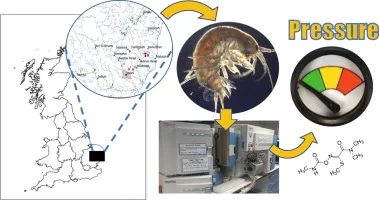
A study looking at freshwater marine life in the U.K. has an alarming conclusion – cocaine and illegal pesticides inside freshwater shrimp
Published May 01, 2019
A study looking at freshwater marine life in the U.K. has an alarming conclusion – cocaine and illegal pesticides inside freshwater shrimp.
The research looked at the exposure of wildlife, including the freshwater shrimp Gammarus pulex, to different micropollutants when the researchers came to the startling revelation.
"Although concentrations were low, we were able to identify compounds that might be of concern to the environment and crucially, which might pose a risk to wildlife," the study's lead author, Dr. Thomas Miller, said in a statement.
Dr. Miller continued: "As part of our ongoing work, we found that the most frequently detected compounds were illicit drugs, including cocaine and ketamine and a banned pesticide, fenuron. Although for many of these, the potential for any effect is likely to be low."
(Credit: Kings College of London)
Ketamine is a powerful drug that has been used to provide pain relief and sedation and is often likened to opioids, but it is not a member of the opiate family.
Samples were tested from 15 different locations across Suffolk and all of them came back positive for cocaine, which Dr. Leon Barron found "surprising."
“Such regular occurrence of illicit drugs in wildlife was surprising," Dr. Barron said in the statement. "We might expect to see these in urban areas such as London, but not in smaller and more rural catchments."
At this time, it's unclear how the cocaine and the banned pesticides entered the shrimp, Dr. Barron added.
Further research is needed to determine if it's an issue only for Suffolk or if the issue is more widespread, Bury said. "Whether the presence of cocaine in aquatic animals is an issue for Suffolk, or more widespread an occurrence in the UK and abroad, awaits further research. Environmental health has attracted much attention from the public due to challenges associated with climate change and microplastic pollution."
"However, the impact of 'invisible' chemical pollution (such as drugs) on wildlife health needs more focus in the UK," Bury added.
The study was published in the scientific journal Environment International.
Follow Chris Ciaccia on Twitter @Chris_Ciaccia

Extraterrestrial Ecosystem
With long-term space missions and a potential colonization of Mars in mind, Dr. Robert Ferl of the UF Space Plants Lab studies how plants grow beyond Earth.
March 26, 2019
Patrick Williams
Dr. Robert Ferl (left) and Dr. Anna-Lisa Paul (right), principal investigators of the University of Florida Space Plants Lab, outside the EDEN ISS growing module in Antarctica Photos courtesy of Dr. Anna-Lisa Paul
In The Future, Plants Could Play A Key Role in Space Exploration
An “earth ship” en route to Mars would need plants to sustain life by recycling air, water and human waste, and producing oxygen and food, says Dr. Robert Ferl, distinguished professor at the University of Florida (UF) and director of the university’s Interdisciplinary Center for Biotechnology Research.
“There is very much a realization that long-term space missions — anything that lasts more than a year or two years — it’s going to be hard to take enough good food,” Ferl says. “Biological reconditioning of all of our waste and nutrients, and production of food, is really a long-term, very realistic goal of the space exploration agenda.”
There is very much a realization that long-term space missions — anything that lasts more than a year or two years — it’s going to be hard to take enough good food."
— Dr. Robert Ferl
As one of the two principal investigators of the UF Space Plants Lab, Ferl, who works alongside the other principal investigator, Dr. Anna-Lisa Paul, focuses on genetically engineering plants and researching them in spaceflight. In February, he and Paul returned from a trip to the EDEN ISS growing module in Antarctica. They have been in parabolic flights in aircraft; sent plants to the International Space Station (ISS) and on the Blue Origin and Virgin Galactic suborbital flights; and, every summer from 2006 through 2012, worked at the Arthur Clarke Mars Greenhouse on the uninhabited, cratered and Red Planet-esque Devon Island in the Canadian Arctic Archipelago.
By sending plants to space and studying outer space’s impact on plants, scientists such as Ferl and Paul are trying to expand our knowledge of how plants can grow in extreme environments. Ferl says understanding how plants grow in space can improve our understanding of how they grow on Earth. And if humans need or choose to colonize Mars someday, it will help with that, too.
A budding interest in sending plants to space
Ferl became intrigued by sending plants to space because of what he calls a “pretty simple” progression of events. Working in molecular biology, he tries to understand how genes work, including which genes make some plants one color versus another, and what makes some plants survive while others die.
In the mid-1990s, Ferl was studying plant tolerance to flooding and flooding gene expression. Plants were being sent into space at the time and coming back, it appeared, stressed, almost as if they had been underwater. That is when Ferl became interested in working with the space program.
“Our proximity to the Kennedy Space Center and our interest in gene expression and plants in strange environments really all coalesced in the middle to late 1990s to suggest that we can learn a lot about plants — plant reactions to environmental conditions and plant productivity — by studying plants in space,” Ferl says. “And conversely, if we learned how to grow plants in space really well, we’d learn how to feed people on extended spaceflight environments.”
Seedlings growing on the International Space Station above EarthPhoto courtesy of Dr. Anna-Lisa Paul
Spaceflight experiments
Ferl is interested in questions addressing the limits of biology, such as if organisms can survive in space without gravity or other environmental conditions on Earth. He says it is a possibility that people will eventually colonize Mars, and by that point, astronauts will need to know how to use plants at their maximum potential.
“I’m really interested in asking the question, ‘How can we make our plants most beneficial to us, using every photon, using every electron of energy that’s produced by the system, every volume, every CO2 molecule and everything at the most efficient way possible?’” he says. “‘What can we do with plants, to plants or around plants to make them the most efficient biological life support system available?’”
In the early 2010s, Ferl and his colleagues used digital photograph imaging to watch Arabidopsis thaliana grow on the ISS, and they made an idiosyncratic discovery. Plant roots do something called “skewing,” where they find their way through soil and avoid objects, Ferl says. In his book “The Power of Movement in Plants,” Charles Darwin wrote that roots skew because of touching other objects. However, watching roots grow on the ISS, Ferl and other scientists found the roots skewing without gravity.
“In a very real sense, although not having to do with evolution, but still in a very real sense, we proved that Darwin was wrong,” Ferl says. “How many people can in their career say that they proved Darwin wrong? So, from a very simple observation of the directionality of root growth in space we changed the way that people have to think about root growth direction choices. I think that’s pretty cool.”
In researching how plants adapt to spaceflight, Ferl and his colleagues study processes such as gene expression in roots and leaves. They consider a stressful environment one where many genes in a plant must be activated, and a less stressful environment one where fewer genes must be activated. Responses to environmental stimuli may differ between plant varieties. “Can we select for varieties that grow well in microgravity?” Ferl asks. “Can we select for varieties that will do well in spaceflight vehicles?”
“What we’re learning, quite honestly, are some really interesting biochemical facts about that adaptive process,” he says. “One of them is, for example, that plants in the absence of gravity still know how to grow their roots away from their shoots. In other words, the shoots still grow to the light but actually the roots still grow down, away from the light, because they activate genes that let them light cues for determining that architecture, instead of gravity as the determinate.”
Inside the Future Exploration Greenhouse, part of the EDEN ISS project in AntarcticaPhoto courtesy of Dr. Anna-Lisa Paul
From ice sheet to orbit
In Antarctica, the German Aerospace Center (DLR) and other public and private organizations are growing produce in a module in Antarctica via the EDEN ISS project. There, agricultural engineers monitor photons of LED lights and amp hours of battery use to determine calorie count and feed people, Ferl says.
“Our role there is to use the kind of imaging and data collection that we use on the International Space Station to monitor plant development, and especially plant health, so that we can, as a remote science backroom, help troubleshoot any issues that the plants might have,” Ferl says. “[We can] help understand how plants might be adapting differently in that environment than they would here, and [figure out] how to maximize plant productivity in that highly closed, highly engineered environment that is truly dedicated to keeping people alive.”
Most of Ferl’s work involves Arabidopsis rather than ornamental crops or produce, but he says there are parallels between greenhouse production and the type of work he does. After all, commercial growers expect a lot out of their crops and need to understand how environment affects plant growth and health. Studying what growers and farmers do, and looking at natural processes on Earth, can influence scientists who research plants in space.
He asks: “What can we learn from the productivity of our farms, our fields, our forests, our ecology, that can help us drive towards a place where we maximize truly every photon of light coming in, every molecule of nutrient, and produce the least wasteful, most beneficial, food, fiber, water and oxygen available?” Greenhouse growers may help push space exploration ahead.

Challenge Accepted: Mini-Makeathon Vertical Farming Recap
On Friday October 5th, sixteen young professionals and students from several Dutch (applied) universities came together at the Design Museum in ‘s-Hertogenbosch, the Netherlands, to think of their own food concept for vertically farmed produce
By Tessa Naus, PlantLab
On Friday October 5th, sixteen young professionals and students from several Dutch (applied) universities came together at the Design Museum in ‘s-Hertogenbosch, the Netherlands, to think of their own food concept for vertically farmed produce. It was our very first Mini-Makeathon event, just in time for the Design Museum’s Food is Fiction exhibition and the 2018 Dutch Agricultural Food Week!
A Mini-Makeawhat?
If you haven’t heard of a mini-makeathon before, it essentially brings together people with different educational backgrounds, to design a new and useful product concept, based on a contemporary (consumer) problem. They typically do this in small groups and within one day’s time.
Our mini-makeathon for vertical farming was organised by the Technical University of Munich (TUM) and PlantLab as part of the Cultivating Engagement project. The participants worked on three different challenges related to (indoor) vertical farming. One challenge focused on the fact that it is difficult to label vertically farmed produce as organic in the market. Organic produce typically has requisites specific to soil usage, however, many vertical farms do not use soil to grow their crops but hydroponics agricultural methods. So, organic certification can be difficult or impossible to obtain for vertical farms.
The Vertical Farming Mini-Makeathon: A Quick Recap
Our vertical farming mini-makeathon was kicked-off with a presentation by the Design Museum. Mascha Gugganig (from TUM) then introduced the participants to the Cultivating Engagement project. Tessa Naus from PlantLab presented the concept of Vertical Farming, its challenges and the purpose of the mini-makeathon: to develop a new food concept around vertically farmed produce in response to one of the vertical farming’s challenges.
The participants were then divided in five multidisciplinary teams, so that each team consisted at least of one person with a business background, one person with food innovation expertise and someone experienced in food technology.
Creation phase
After getting to know each other, each team chose one of the three challenges to include in their new food concept. They were given 2,5 hours to put their minds together to conceptualise and create their concept. Coaches from EUFIC, TUM and PlantLab with expertise in communications, business innovation, marketing, food design and anthropology walked around to help the teams with any questions they had. After the lunch break, the teams had 90 minutes to finalize their product concept and to prepare their pitches.
And the winner is…
The jury consisted of Martine van Veelen from EIT Food, Joke Backx from the Design Museum, John van Gemert of PlantLab and Jan Hoskam, one of the aldermen of the municipality of ‘s-Hertogenbosch.
All teams pitched their concept to the jury. They were each given five minutes to convince the jury that they should win the coveted prize: their own little (indoor) vertical farm.
After a difficult jury deliberation, Jan Hoskam announced the winners: Team VertiMix would take home the prize!
The concepts created by each of the teams build the base for potentially further developing ideas together with the makeathon participants.
Closing of the day
Following the award ceremony, some drinks and final thoughts were shared between the organisers and attendees. We would like to thank the Design Museum, all participants, the jury members and all partners who contributed to the Mini-Makeathon Vertical Farming. It was with your help that we are able to drive our project forward.
Do you have your own food concepts for vertically farmed produce? Let us know below!
About The Author: Tessanaus
https://www.linkedin.com/in/tessa-naus-3a8844116/
Tessa Naus recently graduated with a master’s degree in Health Food Innovation Management from Maastricht University and now works as a Business Developer at PlantLab. She started off university with a bachelor in European Public Health, where a minor abroad in Hamburg got her specifically passionate about the interaction between food, innovation and business. She looks forward to continue working with innovation that can feed the world in a healthy and sustainable way.

Seeds&Chips Launches Goals on Tour: FAO: 821 Million People Worldwide Suffer From Chronic Malnutrition, 672 Million From Obesity
Marco Gualtieri, Seeds&Chips: "Reaching the SDGs is the greatest business opportunity that has ever occurred for humanity"
Milan, 10 May 2019 - On the fourth day of Seeds&Chips, the most important international event dedicated to innovation in the food chain, Goals on Tour was launched as a global campaign to raise public awareness and support for the 17 Sustainable Development Goals of the United Nations (SDGs).
Seeds&Chips 2019 houses 16 containers (the 17th represented by the unity of intent of the community gathered and represented here), which each symbolize an SDG. From here, they will embark on a sustainable journey around the world. The colorful containers, with the symbols of the Goals and full of graphic and interactive content will make stops in the main capitals of the world, functioning as a traveling exhibition that showcases artistic installations and displays of public and private sector initiatives that aim to realize the SDGs. The exhibition content has been provided by the partners of this project and by Elisabetta Lattanzio Illy, journalist and photographer with over twenty-five years of experience in the defense of equality and dignity for all.
The Summit was in fact the first part of this world tour, which immediately saw the participation of large global players like FAO, IFAD, WFP, UNIDO, UNECE, INTERNATIONAL TRADE CENTER, the Republic of San Marino, Deloitte Foundation, Oceana, Robert Kennedy Human Rights, Fondazione Politecnico. It is destined to grow bigger, combining international bodies, institutions and the private sector.
The SDGs were launched in 2015 by the United Nations and were included in the 2030 Agenda. They aim to resolve economic and social development problems in the world such as poverty, hunger, health, education, climate change, gender equality, water, sustainable energy, urbanization, environment and social equality.
Marco Gualtieri, President and founder of Seeds&Chips, commented: "Reaching the SDGs represents the greatest business opportunity that has ever occurred for humanity. We have the honor of launching the Goals on Tour initiative because we must begin to create awareness, make systems and unite the intentions around the SDGs."
In the launch session of Goals on Tour, the major international humanitarian organizations came together at Seeds&Chips to share their initiatives and commitments in achieving the objectives.
According to FAO, 821 million people worldwide suffer from chronic malnutrition, which has steadily increased since 2014, while 672 million people suffering from obesity. In the world 1/3 of available food is wasted:#zerohunger is the campaign that FAO has presented on stage and is committed to supporting in the coming years. It has the same intent as the WORLD FOOD PROGRAM, the United Nations agency that assists over 100 million people.
IFAD (International Fund for Agriculture Development) is working toward increasing the sustainability of agriculture, while INTERNATIONAL TRADE CENTER is at the forefront in achieving gender equality from within and improving the sustainability of exporting goods around the world. UNIDO is committed to sustainably increasing the industrial activities of member countries while aiming to reduce emissions and their impact on climate change.UNECE is active in promoting approaches for greater economic integration and cooperation and sustainable development and prosperity for all.
The Republic of San Marino was the first State to join Goals on Tour, choosing to be part of the global network, "because environmental sustainability must be pursued concretely, the environment is not infinite,” declared Marco Podeschi the Secretary of State for Education and Culture of the Republic of San Marino.
For more information: https://www.seedsandchips.com/
***
Seeds&Chips - The Global Food Innovation Summit, founded by entrepreneur Marco Gualtieri, is the world’s flagship food innovation event. An exceptional platform to promote technologically advanced solutions and talents from all over the world. An exhibition area and conference schedule to present, tell and discuss the themes, models and innovations that are changing the way food is produced, transformed, distributed, consumed and talked about. In 2017, Seeds&Chips’ keynote speaker President Barack Obama participated as a speaker The event hosted over 300 speakers from all over the world; over 240 exhibitors and 15800 visitors. It also garnered 131 million social impressions in 4 days. The 2018 edition saw more than 300 international speakers, among them former US Secretary of State John Kerry, President of IFAD Gilbert Houngbo and Starbucks’ former CEO and Chairman Howard Schultz. The 5th edition of Seeds&Chips – The Global Food Innovation Summit took place at Fiera Milano Rho, from May 6 to 9, 2019.

Photos: The Beauty of High-Tech Horticulture
The Danish magazine Foresight Climate & Energy has something nice to show you. They dove into the Dutch efforts to reduce carbon footprint of their tomatoes and tulips.
"As the world pushes to decarbonise energy systems and the Netherlands aims to end its 50-year-old love affair with gas, greenhouse companies and the municipality of Westland are looking for cleaner heating solutions, such as geothermal heat and heat pumps, to reduce the carbon footprint of their tomatoes and tulips", they write
The attention for the efforts of the horticultural industry to better the world are nice - but there's more.
Take a look at the beauty of horticulture in these photos.
Publication date: 5/9/2019
Author: Arlette Sijmonsma
© HortiDaily.com

The Role of Sensors And Data Collection In A Successful Vertical Farm
It’s widely recognized that vertical farming has many advantages over traditional crop-growing methods. Simply put, despite relatively high setup and operational costs, the production per unit of growth area in vertical farms easily exceeds that in the most advanced greenhouses
It’s widely recognized that vertical farming has many advantages over traditional crop-growing methods. Simply put, despite relatively high setup and operational costs, the production per unit of growth area in vertical farms easily exceeds that in the most advanced greenhouses. But to consistently hit this level of production, you need to ensure growth conditions are continuously at their best. This is where sensors and data play a pivotal role, and why they’re ready to transform the future of vertical farming.
What data do you need to capture?
To use sensors and data effectively, you first need to know what kind of data is valuable and why. The most important values to measure are the following conditions for growth:
Climate (characterized by a combination of air temperature, humidity levels, CO2 levels and air speed)
Plant temperature
The nutrient composition of the irrigation water
The light level and spectrum (as perceived by the plants)
Plant morphology, deficiencies and growth (phenotyping)
These conditions are significant for different reasons. The difference between plant temperature and air temperature, for example, can tell us whether the leaves’ stomata are open. If they aren’t, the plant cannot absorb CO2 and convert it into biomass. Likewise, we can continually measure the pH (acidity) and EC (electrical conductivity) of the irrigation water to ensure optimal plant growth. We are also cooperating with several companies that are developing sensors to measure other parameters of the irrigation water (such as f.e. iron or magnesium).
You might be surprised to see that we measure the light level and spectrum as perceived by the plants, presuming that we can deduce this already from the type and number of LED lighting modules installed. However, our research has found that the plants’ perceived light level can deviate up to as high as a factor of two from the light level installed depending on the optical properties of the materials used between and above the plants. This value largely depends on the degree to which the plants cover the growth area, and with such a high potential deviation rate, is one we need to measure and track to ensure optimal growth conditions.
The value of monitoring every stage of the growth process
Sensors enable us to monitor these growth conditions, recognize anomalies and identify problems as early as possible. By detecting problems at an early stage, we can respond pro-actively instead of reactively. This holds especially true for system-related problems – such as the temperature deviating from an intended setpoint – which can be rectified almost immediately.
In addition to measuring growth conditions, measuring growth results also provides valuable data – using parameters such as plant size, height, weight and color. We can use cameras to capture images of the plants in the growth layer, for example, following growth development over time and gauging whether growth meets expectations or not by comparing it to data captured in previous growth cycles under similar conditions. Like sensors, cameras can also help to prevent problems early by enabling the detection of early-stage growth deficiencies (such as tip-burn) and diseases.
How our sensor and data platform can help
Our sensor platform allows us to measure the conditions most important for plant growth. These conditions include climate parameters and irrigation parameters (including water supplied/drained in addition to pH and EC). At the GrowWise Center in Eindhoven’s High Tech Campus (HTC), we collect about 1,600 unique setpoint and sensor readings every ten minutes from our eight climate cells – valuable ongoing research that helps us to continuously build on our knowledge base and improve the solutions we can offer.
The sensors can be placed anywhere within a growth layer and wirelessly communicate the data they gather to the system backend. Cloud applications then retrieve this data and visualize the information that is most relevant and useful to plant specialists and growers. The development of the sensor platform is part of Horizon 2020 Internet of Food (H2020 IoF), a European Commission (EC) innovation project, in which we are closely collaborating with Staay Food Group.
The future of vertical farming
The benefits of modern sensor technology and data science are already manifold, but technological advancements in areas such as AI promise to be truly revolutionary. Signify is currently researching AI-based algorithms that can train models to couple realized growth conditions with realized growth results, for example, in a process known as ‘supervised learning’. This will ultimately enable us to predict the precise growth conditions to achieve optimal growth – and meet the most specific grower needs. AI techniques like machine learning can also be used to analyze images of plants’ growth to immediately detect any unexpected deviations or growth deficiencies.
Right now, our sensor and data platform combined with cloud applications adds considerable value for our plant specialists and customers – from monitoring the growth process and detecting problems as early as possible to accelerating the development of new optimized growth recipes. It’s clear that sensors and the data they capture play a pivotal role in the continuing evolution of vertical farms. Signify and our customers will not just be a part of this revolution – we will drive it.
Dr. Marcel Krijn is a principal research scientist at Signify and has over ten years of experience in horticulture. His primary interest is the advancement of vertical farming as a mainstream method of food production that is both energy-efficient and commercially beneficial for Signify’s customers. His research efforts also focus on the development of new options for data-driven growth management.

Paper Sleeves Added To Greensleeve Product Range
Earlier this year, Mediane launched their Greensleeve program including a variety of sustainable packaging sleeve alternatives to the herbal plant market. Next to Home Compostable Film, Industrial Compostable PLA and Recyclable Green PE, the Greensleeve program now also includes a paper variant.
Many existing and non-existing customers from different European countries have shown great interest already. First results are to be seen on the shelf at some leading supermarkets in the EU. Given the positive reactions from the market, the expectations are that more supermarkets will follow shortly.
‘’This clearly indicates that the use of plastics in the Agro and Horti-industry is under pressure’’, according to Mike Leistikow, sales manager at Mediane. ‘’The use of paper responds to the growing awareness of the consumer. Paper is seen as a more sustainable option. We are independent converter of packaging sleeves and for us we adjust ourselves to market demand. Obviously there is a lot to be said about the pros and cons of each sustainable alternative, however we are not forced to defend or push through either of these alternatives since we are in the position to produce and offer them all. This is the choice and decision of the retailer”.
For many countries, depending on local legislation on waste management, Home Compostable or bio-based recyclable materials are definitely the preferred option with a lower CO2 footprint. The advantage of the paper/paper variant is that it is produced out of recycled kraft and can be thrown away together with the old newspapers and can be considered to be 100% recyclable. Next to the 100% paper version, Mediane also offers the Paper/Film variant and the Paper/Partly (paper with bio-film).
Just like traditional sleeves, the Greensleeve paper sleeves are supplied on a block and can be packed in the same way.
For more information:
Mediane
P.O. Box 1623
3600 BP Maarssen
The Netherlands
+31 346 285029
info@mediane.nl
www.mediane-flexibles.com
www.greensleeve.green
Publication date: 5/7/2019

CO2 GRO Inc (CVE:GROW) Proprietary Foliar Spray System Boosts Yields By 25 Percent
By MIDASLETTER LIVE | APRIL 24, 2019
CO2 GRO INC
CO2 GRO Inc (CVE:GROW) (OTCMKTS:BLONF) (FRA:4O21) is developing advanced carbon dioxide technologies to accelerate plant growth. COO Aaron Archibald explains that carbon dioxide is beneficial for growth, resulting in larger and quicker-growing plants. The company’s proprietary process dissolves carbon dioxide into water, which is then applied to the foliage of plants using CO2 GRO’s foliar spray system.
Typically, growers use gas deployment systems that result in significant carbon dioxide loss as a result of venting; CO2 GRO’s foliar sprays ensure each plant receives the necessary carbon dioxide. Unlike gas deployment systems, the company’s foliar spray technology can be applied to outdoor grows and greenhouses.
Archibald reveals that using CO2 GRO’s foliar sprays regularly results in yields 25 to 30 percent higher than yields produced by using gas deployment systems. Archibald anticipates that the company’s technology will be adopted by cannabis LPs in Canada, as Health Canada is in the process of reviewing applicable regulations. CO2 GRO currently has licensing agreements in both Canada and the US, and has seen broad interest from the American hemp space since the passage of the Farm Bill.
Transcript:
Narrator: CO2 GRO is a Toronto based, precision agriculture technology company. GRO offers CO2 foliar spray systems to both indoor and outdoor growers for increasing their crop yields, safely and naturally.
The company has over 66 million shares outstanding, with management ownership at 26 percent. CO2 GRO Inc is listed on the TSX-Venture under the symbol GROW.
James West: I’m joined now by Aaron Archibald, Chief Operating Officer of CO2 Grow, trading on the TSX Venture under the symbol GROW. That’s a good symbol.
Aaron Archibald: It is, thanks!
James West: Aaron, so your business is essentially creating foliar CO2 sprays, and so just to refresh the memory of our audience, or to enlighten them for those who might not know, what is the benefit of CO2 as a foliar spray?
Aaron Archibald: Well, any grower knows that adding CO2 to plants is beneficial, and they’ll grow faster and grow bigger; it’s difficult to get CO2 to plants, though. So what we do is, we dissolve CO2 into water and apply it to the foliage of the plant. That makes it 100 percent bioavailable, and it’s driven into the plant by osmotic pressure.
James West: Okay. So interestingly, most greenhouses that beneficiate with CO2 use gas deployment systems.
Aaron Archibald: Absolutely.
James West: And that’s got to be a little bit more wasteful, because obviously the air is being changed in the environment?
Aaron Archibald: Yeah. Most of it gets vented; it’s very difficult to create a homogenic environment and get all the CO2 to every plant. It’s like HVAC systems are extremely difficult in building; most people have a forced air furnace in their home know that they have a room in the winter that’s always colder than the other ones.
James West: Sure.
Aaron Archibald: So by putting it directly into the water and putting that directly onto the plant, every plant gets CO2, and it’s just the most bioavailable means of doing it.
James West: Cool. Then, you guys, when you were last here, we were talking about this issue where Health Canada had not approved foliar-sprayed CO2 for use in commercial gardens by licensed producers in Canada. Has that changed?
Aaron Archibald: Of cannabis. They haven’t changed their regulations necessarily; they have let us know that we’re approved by GFIA, and that we don’t contravene anything. We’re not a pesticide, we’re not a herbicide. I look at it and say we’re just a novel means of applying water and CO2 at the same time. Any LP is allowed to water their plant, and allowed to use CO2.
James West: Okay, so there’s no barrier to any of the LPs using the product.
Aaron Archibald: I think it’s a matter of how you interpret the legislation, and where and when they can use it in their facilities.
James West: Okay, let me ask you this another way.
Aaron Archibald: All right.
James West: How soon till LPs are using your product over gas-delivered CO2?
Aaron Archibald: I’d say very soon. I think that Health Canada is having a long, hard look at some of their regulations, and I think they did it very quickly and did it with a broad brush. You know, you can water or foliar spray cuttings, or clones, right now; it’s just more mature plants you can’t. I think when they recognize that there’s no added pesticides, anything harmful, there wouldn’t be a problem with spraying water on a plant.
James West: Sure. So I’m curious: how do you get CO2 dissolved in water?
Aaron Archibald: We use a proprietal technology that does it very efficiently. I mean, there’s a number of different ways to put dissolved gases into liquids; we just happen to have experience doing it efficiently. We don’t need to chill it, we don’t need to compress it. You know, some of that’s proprietal, so I won’t tell everyone exactly how we do it, but we can do it extremely efficiently, at high, high levels.
James West: Wow. Okay, so then, how often does a greenhouse or a, say, cannabis plant, need to be treated with foliar CO2 in order to optimize the growth cycle?
Aaron Archibald: The more times you can apply it, the better. So what we have worked on with people is applying extremely small volumes of water more times per day, because you get more CO2 delivered to the plant that way.
James West: Okay. So is this something that you could actually create an automated misting system within a environment that would be a beneficial way to approach it?
Aaron Archibald: Absolutely. Some of our customers do that now.
James West: Oh, okay, great.
Aaron Archibald: So you – most overhead booms, you can control the volume of water, the speed of the boom, and the number of times per day that it runs, so it’s easily automatable.
James West: And your process, as you say, is proprietary, but is it patented?
Aaron Archibald: Patent pending.
James West: Patent pending. Great. So at this point, who is using your product?
Aaron Archibald: Well, a number of different growers in the States and Canada.
James West: Okay.
Aaron Archibald: Generally we do sign a non-disclosure agreement; lots of people don’t necessarily want their name put out there, but we –
James West: They don’t want their competitors to know that they’re using this secret weapon.
Aaron Archibald: Exactly, but we currently have commercial operations in Canada and the US.
James West: Uh-huh. Okay, and how much does it cost? I mean, let’s pick a unit of square footage; let’s say, per thousand square feet, is it easy to say, well, this is how much the cost is going to be per month, per thousand square feet?
Aaron Archibald: It is pretty easy. You know, we do a scoping survey with them; we have an engineering group that works with them and looks at whether or not their infrastructure is set up to use the technology, what might need to be tweaked, and then we come to a commercial arrangement. And we usually charge by the square foot per month. We can do it quarterly as well, but it’s a per square foot, or per square metre in Europe, charge.
James West: So unlike software as a service, this is like CO2 as a service, model? [laughter]
Aaron Archibald: Yes it is, yeah. We – it’s a site license/lease model that we’re doing.
James West: Very interesting. And at some point, will you have a retail option available for those growing at home?
Aaron Archibald: I could see that in the future. It would be a matter of engineering it down to a small enough size and a price point where a home grower could use it. Right now, I think it’s not very feasible, but I could see it in the near future.
James West: Really? Okay.
Aaron Archibald: Just from a cost standpoint –
James West: This is me with my hand up. I would like to grow. Heading to my NDI, this is my garden in my own home right now that is growing hydroponically, and I would love the opportunity to treat two plants with foliar spray and two plants without and see how the difference is in a measured basis.
Aaron Archibald: Well, as we talked about before we got on air, I’ll get you some equipment used for a trial. So you just have to share the data with me.
James West: Great! Yeah, of course, I’d be happy to. Okay, Aaron, then how does the revenue model, the business model, of the company work, then? You’re saying you have a per square foot plus a licensing; how does that sort of, what per user, how much – what’s your – I guess I’m babbling now. What is the projected growth of the revenue in the company?
Aaron Archibald: That’s hard to say. The market is so big. You know, the plant for food market is $9 trillion per year; you know, the focus is cannabis right now in Canada, it’s very popular, but we can help all plants grow. So whether it’s peppers or lettuce, it’s almost hard to measure what our revenues are going to be like in two years, simply because we have so much opportunity in front of us.
James West: Sure. What’s to stop me from just spraying club soda on my plants?
Aaron Archibald: You could. Technically, you’d be in violation of the process patent, but also the cost to buy club soda and spray it on your plants would be –
James West: Pretty high.
Aaron Archibald: High. Extremely high.
James West: Interesting.
Aaron Archibald: Extremely inefficient.
James West: And is the carbon content of club soda equal or similar to that, and the bioavailability, does it even apply?
Aaron Archibald: Well, not really. I mean, they chill soft drinks and put it under extreme pressure; that’s why you see bubble nucleation, so you know, if you shake it and open it, it explodes. So that’ll tend to drive the CO2 out of it, and that’s part of the experience of drinking a carbonated drink, is you like the sense of the bubbles in it.
James West: The fizz.
Aaron Archibald: What we do is different in that you won’t actually see bubbles, and bubbles won’t nucleate out; it’s done on a molecular level, and it stays in solution so that it can be utilized. If it comes out of solution, it’s just not bioavailable anymore.
James West: Sure. What kind of increase in yield, in percentage terms, can one expect from applying foliar CO2 relative to not applying any CO2?
Aaron Archibald: I’d say on average we’ve seen between 25 and 30 percent increase versus standard gassing, so 800 to 1,200 ppm in a room.
James West: Then, now with Health Canada reconsidering some of its regulations over foliar applied, let’s call it a nutrient for lack of a better descriptor – is that something that they now have to specifically give you the ability, or an LP the ability, to say, okay, you can use that now without risk of it resulting in a negative test result from your product? Is there any risk of that?
Aaron Archibald: There isn’t. See, plants take in CO2, and they keep the C, which is the carbon, which is a building block for plants, and they respire out O2, much the same way we breathe in air with O2 and respire out CO2. So there’ll be no residual CO2 left in a plant because it becomes carbon, becomes the plant. So there really is no way to test for CO2 in a plant.
James West: Right. I guess as carbon-based life forms, we have no problem dealing with carbon in our cannabis.
Aaron Archibald: Exactly right. And that’s why CO2 makes plants grow bigger and faster and yield more.
James West: Right. So I guess, then, the inflection point for your company is going to be when widespread adoption of foliar-sprayed CO2 at the commercial level takes root – the pun intended – in the cannabis industry broadly?
Aaron Archibald: Yes. Yeah, and you know, like many Canadian technologies, sometimes you go abroad before you get adoption at home. It’s an unfortunate thing, but you see it a lot. We have a phenomenal amount of interest internationally; you know, US hemp growers can’t keep up with the number of phone calls we’re getting right now. Since it’s been legalized federally in the States, they’re really, really interested, especially outdoor growers. It’s the only means to apply CO2 to a plant outdoors, is by putting it in water first and applying it to the plant.
James West: Right. Either that, or putting a coal-fired hydroelectric plant next door!
Aaron Archibald: It’d be pretty inefficient to blow it on, because the wind would just take it away. So by putting it in water, we can supply outdoor growers with CO2, hoop houses, shade houses, things that historically – like, structures that have historically not been able to use CO2 in them.
James West: Right. What about competitors? Do you have – who do you have in the competitive realm?
Aaron Archibald: Touch wood as I say it: Right now, there are no competitors! You know, it’s a novel technology. No one had ever thought to do it before, so we’re first to market with it, and you know, that’s why we’ve gone through the process of getting the IP, but I think more importantly it’s going to be first to market, having some trade secrets and penetrating the market, and becoming the company that’s known as the CO2 foliar spray technology.
James West: Interesting as ever, Aaron. We’re going to continue to follow the story, and I can’t wait to try it out on my own plants. Thanks for joining me today.
Aaron Archibald: Okay! All right, thanks very much.

Could One Parking Lot Feed A City? They're Betting On It
May 3, 2019
VERTICAL FARMING COMPANY SQUARE ROOTS HAS A PLAN TO FEED CITY RESIDENTS WITH LOCALLY GROWN PRODUCE. THE ONLY CATCH IS, CAN WE AFFORD IT?
In a parking lot in the Bedford-Stuyvesant neighborhood of Brooklyn, New York, there’s a 20-acre farm. But there’s no soil or tractors in sight. Instead, 10 bright white shipping containers occupy the asphalt.
The lot is contested space in a major city like Brooklyn. But Square Roots isn’t using it for parked cars. It’s using the space to grow herbs. The company has deliberately chosen the middle of an urban environment, and its goal is to feed the city that surrounds it.
“We’re literally in a parking lot of an old Pfizer pharmaceutical factory. We’re across the road from the Marcy [housing] project. We’re within a subway ride of 8 million people in New York,” Tobias Peggs, a co-founder of Square Roots, told NationSwell.
Square Roots, a vertical farming company, runs its operation out of the refurbished containers. Its goal is to make local food accessible to everyone.
A lack of fresh produce is a major problem for many residents in urban areas like New York, where over 16 percent of the population is food insecure. And for those who do have access to fresh produce, chances are it traveled hundreds of miles before ending up at the grocery store.
This leads to a variety of problems. People living in food deserts generally rely on processed foods and have higher health risks than those who can afford weekly trips to Whole Foods. Transporting vegetables and fruits around the world has a hefty carbon footprint and nutritional values quickly diminish after produce is picked.
And as the world’s population grows to 10 billion by 2050, our food output will need to drastically increase — by an estimated 70 percent, according to the Food and Agriculture Organization.
Square Roots’ founders think they may have found a solution to the aforementioned problems.
“Rather than shipping food from one part of the planet to the next, what if you could just ship environmental data?” Peggs asked. “And recreate climates from all over the world, but recreate those climates in your backyard.”
Square Roots relies on technology to create each crop’s ideal environment in every container. The humidity, temperature, water and light are all controlled. The farms are connected to the “cloud,” which provides accurate, real-time information on each crop.
And the setup is yielding results. When Square Roots first grew basil it took 50 days. Now the growth cycle is just 28 days. By tracking light, heat and water, it can adjust each variable and create the conditions under which each crop grows best.
Tobias Peggs dives into the technology behind Square Roots’ operations.
Photo courtesy of Square Roots
Once a month, Square Roots invites people from across New York’s five boroughs to look inside the business’s operations. Visitors trickle in, and I watch as they munch on the 28-day-grown basil, chives and mint while learning about Square Roots’ operation.
“We picked them yesterday,” a farmer said.
After a quick overview of the program, we head outside for the main attraction — a peek inside the farm.
Peggs commands the crowd. Eager for the big reveal, he opens the heavy, metal doors. A pink glow cascades over us — energy-efficient light that helps the herbs grow.
Peggs dives into the science. “Basically, when you study photosynthesis, plant growth, the plant doesn’t absorb the full spectrum of white light. The plant only absorbs certain spectrums of light. A lot of red and a lot of blue. What we’re able to do in the farm is really control that light spectrum and only give the plant the spectrum of light that it needs.”
Efficiency is at the core of Square Roots’ operations. Besides refurbishing old shipping containers, each farm uses 90 percent less water than a similarly sized outdoor farm. There’s no soil; instead, the plants are fed nutrient-rich water. The containers also boast energy-efficient LED lights, and there are rumors of adding solar panels to power them. The produce is then biked to grocery stores across Manhattan and Brooklyn, which cuts back on emissions from transportation.
The result is a higher yield with fewer resources. Currently, the farms grow herbs, like mint, basil and chives; and greens, like romaine, gem and Tuscan kale. Peggs says the farms can grow practically anything. Strawberries, eggplants, beets, radishes and carrots are on its horizon.
But the catch is that each type of produce has unique energy requirements. One of the main criticisms of vertical farming is its lack of variety. Most vertical farms focus on lettuces and herbs because those greens have the largest output and highest profitability. Denser crops require more sunlight. That means more energy, and therefore, higher costs and more emissions.
Paul Gauthier, an associate research scholar at Princeton and founder of the Princeton Vertical Farming Project, researches vertical farmings sustainability.
“In terms of carbon emission, it’s actually better to have your lettuce transported from California to New York if your [vertical farming] energy is coming from any fossil fuel,” he told NationSwell. “The energy consumption in a vertical farm in New York would be so high that you would produce more CO2 for lettuce than you [would] if you ship it from California.”
But if the energy is coming from renewable sources, then vertical farming is a competitive player.
It comes down to fueling these farms with the right energy and using efficient light.
Gauthier believes that vertical farms and other small, high output farms will be a key factor in feeding the world — but only if the crop variety grows.
“We won’t feed the world with lettuce,” he said.
A farmer harvests basil in Square Roots’ vertical farm.Photo courtesy of Square Roots
But there’s debate on whether these ventures are affordable or realistic.
For example, Square Roots’ lot in Brooklyn cost about $1.5 million to build, which was funded by Peggs, the former CEO of Aviary, a photo-editing program, and Kimbal Musk, Elon Musk’s little brother, who sits on the boards of Tesla and SpaceX. So the idea that shipping container farms are scalable feels a little out of reach for the average person or company.
But the cost hasn’t deterred interest. This year Square Roots partnered with Gordon Food Services, which is the largest food distribution company in North America. This partnership will put Square Roots containers across the country.
Even as the company scales, it won’t reach every demographic. A $3 an ounce, basil isn’t something that’s going to solve America’s food deserts.
Peggs stressed that we’re just not there … yet.
“The reality today is that we’re right at the beginning of the technology road map here. Right at the beginning.”
Square Roots isn’t the only private urban farming company that’s professing scalability. Urban farms, such as AeroFarms and Bowery Farming, are currently attracting lots of attention for their potential to make local food available to everyone. According to AgFunder, agriculture-tech startups raised $16.9 billion in support in 2018. And investors, like Google Ventures and IKEA, have poured millions of dollars into supporting those initiatives.
And urban farming is likely to take root in the coming years. A study published in 2018 on Earth’s Future, found that if urban farming is fully implemented around the world, it could account for 10 percent of the global output of legumes, roots and tubers and vegetable crops — 180 million tons of food every year.
“Not only could urban agriculture account for several percent of global food production, but there are added co-benefits beyond that, and beyond the social impacts,” Matei Georgescu, a co-author of the study, told City Lab.
Peggs and Gauthier agree that there isn’t one clear cut solution. Instead, it’s going to take a combination of urban and traditional farming to feed the world in the future.
“The very clear position here is that the more of us working to get people connected to locally grown food the better,” said Peggs.
Environmental Technology Local Agriculture Local Food Vertical Farming

Climate Heat Mapping For Indoor Growing Environments
A lot goes into designing a good indoor agriculture environment, from selecting the right lights, to ensuring proper irrigation, optimizing airflow, and more. But while the big four – light, water, nutrients, and air – are the major keys to plant growth, the size and quality of a crop is highly dependent on a number of other factors as well. Environmental factors like humidity and temperature have a major impact on plant growth and, as a result, precision climate control has become an increasingly important part of successful indoor growing.
by Ted Tanner, Growlink CEO and Co-Founder
The importance of the perfect climate
As with all living things, plants thrive in some climates and struggle – or die – in others. The impacts of that are obvious out in nature where frigid winter temperatures or scorching desert heat render the landscape all but barren, but even in the relative comforts of an indoor grow space, small swings in temperature and humidity can have big impacts on growth, affecting both quality and yield.
Ideal growth climate
Different types of plants have different preferred climates in which to grow. Those preferred ranges aren’t necessarily static either, and while some plants will grow happily in one climate throughout their entire life cycle, others grow best in one climate during the vegetative stage and another during the flowering stage. Lettuce, for instance, grows best at around 60°F – much too cold for cannabis plants, which prefer temperatures of around 70-80°F in the vegetative stage with a bit of a cool-down when they flower.
Nighttime cooling
In nature, plants get a chance to cool off when the sun goes down, and in an indoor environment, the lights-off period provides the same opportunity. The problem is that just as with day-time temperatures, plants have ideal “lights out” temperatures. The risk of cooling down too much is very real, especially in places where the outdoor nighttime temperature drop is significant. In addition to the growth problems that overly cold temperatures present, colder air also increases the risk of condensation forming on the plants – a haven for damaging molds and fungi. That makes it extremely important for growers to carefully control the temperature drop that comes along with shutting off the lights.
Canopy overheating
Most of the lights used in indoor growing give off a huge amount of heat. As a result, the risk of overheating a crop’s canopy exists even in rooms that are otherwise set to the correct ambient temperature. An overheated canopy leads to all kinds of problems, including sucking moisture out of the plants and reducing their ability to perform photosynthesis – both of which could kill a crop outright in extreme instances. Canopy overheating can be fixed by simply increasing the distance between lights and plants, or by employing LED lighting which gives off very little heat.
Heat mapping – A game-changing climate control tool
As with all indoor climate control, the first step to getting things properly dialed-in is monitoring. Traditional thermostats, while fine for setting a comfortable temperature in a home or office, have major limitations that make them generally unsuitable for serious indoor growing.
The primary drawback is that most thermostat systems only measure part of the room. Dialing in a perfect climate for a grow operation is pointless if that climate isn’t even across the entire environment. Likewise, a simple thermostat only takes into account ambient temperatures – it can’t pinpoint specific trouble areas, like a partially overheated canopy, for instance.
The solution is heat mapping. Heat mapping employs an array of thermal imaging sensors placed across an environment to accurately measure the temperature of not just the ambient air, but of all the surfaces including the canopy. The result is a clear picture of all the hot and cold areas of a room and the gradients in between them – either in the form of a color visual image or as a set of raw data points.
From a growing perspective, the benefit of heat mapping is an unparalleled level of insight into the temperature and other climate variables not just in the room as a whole, but on a plant-by-plant basis (depending on the number of sensors employed). For instance, if bad air flow in a growing environment is causing overheating in one portion of the canopy, a thermostat won’t provide that information, but a heat-map will. That kind of intelligence is invaluable when it comes to maximizing crop health.
The advanced data provided by Growlink's real-time and historical playback heat-map tool can be used to make manual adjustments or, in the case of larger operations, to control an automated climate control system that can automatically adjust room heating, lighting intensity, and humidity as necessary to keep the growing environment at an optimal setting 24-hours a day.
One of the primary goals of growing indoors is maximizing control over the many factors that go into producing the best crop possible. Of those factors, the climate is both one of the most important and the most controllable. However, it’s impossible to tightly control something that can’t be accurately measured, and measurement has long been the weak point in climate control. Thanks to high density sensors and visual heat mapping, indoor growers can now access a real-time picture of the exact profile of their growing environment, allowing them to fine-tune their systems to a level never before possible. The result is perfectly tuned growing environments that boost productivity by increasing yields, reducing losses and cutting down input costs.
For more information:
Growlink
875 Kalamath
Denver, CO 80204
+800-432-0160
info@growlink.com
growlink.com
Food Security In The UAE
With increasing concerns over climate change, urbanization and overpopulation in the Gulf Cooperation Council (GCC), there is a major issue that is on the table of all Gulf countries — food security
WORLD NEWS /06 APR 2019
Theodore Karasik and Maya Yang
With increasing concerns over climate change, urbanization and overpopulation in the Gulf Cooperation Council (GCC), there is a major issue that is on the table of all Gulf countries — food security. For a region that imports upwards of 90 percent of its current food supply, self-sustainability remains a significant challenge. According to Aquastat, GCC countries currently use up to 500 percent of total freshwater resources and as demand is expected to exceed by 40% in the next 30 years, the region’s precipitation is also forecasted to decrease.
Additionally, because one third of the region’s food supply passes through only one maritime chokepoint, asserting control over such chokepoints can become political and quickly result in a food security emergency — the most recent example being the first few days of the 2017 Qatar blockade (note that the import dependency ratio in the Gulf reaches up to 70 percent). Finally, compounding the issue is the region’s food wastage.
In a report released in 2019 by Dubai Industrial Park and The Economist Intelligence Unit, yearly food waste in Saudi Arabia is around 427 kilograms per person and 197 kilograms per person in the UAE. In contrast, food waste in Europe and North America lies between 96 to 115 kilograms per person.
As the region continues to grow rapidly, the UAE has adopted several comprehensive tactics to tackle food security, a few of which this article will seek to highlight. Among these approaches include its comprehensive food security strategy, high tech agriculture, as well as the creation of international platforms to foster dialogue and innovation surrounding food security solutions.
Late last year, the UAE’s Minister of State of Food Security, Mariam Hareb Almheiri, announced the National Strategy for Food Security. According to Almheiri, the plan comes at a pressing time, given that “the UAE’s climate makes it exceptionally critical for us to develop holistic and ambitious plans to ensure our food security.” The plan is based on three main elements: knowledge of domestic consumption volume, production capacity, and processing and nutritional needs.
Furthermore, its long-term initiatives focus on facilitating global food trade, diversifying food import sources, and identifying alternative supply schemes. The National Strategy for Food Security seeks to break the country into the top ten of the Global Food Security Index by 2021, a vision compliant with the country’s Vision 2021 (currently, the UAE ranks 31st). Part of the country’s approach to fulfill these goals is to increase domestic food production, one method being vertical farming. Last year, Dubai allocated 7,600 square meters of land for the region’s first-ever 12 vertical farms, a method employed by Singapore (which ranks 1st on the Global Food Security Index).
Additionally, the country has launched several key programs that can be modeled by surrounding countries, given the similar climate and urbanization transformations they are undergoing. These initiatives include the Food Valley Platform, a database (accessible to interested parties) containing information on research and food security development including resource funding, patent registration mechanisms, and a compilation on global findings. Also, as a way to mobilize the public in addressing food security, the UAE launched the National Governance Structure for Food Security, a policymaking body that includes representatives and stakeholders from all parts of society to discuss and address food security policies. As many argue that climate change, drought, and food security issues were chief causes of the Arab Spring, this platform is an opportune way to ensure public participation in expressing and addressing such concerns.
Another method adopted by the country is high tech agriculture. As mentioned earlier, the UAE models its vertical farming after Singapore; however, this is not the only method. The country has also adopted soilless farming and hydroponics, an alternative to water-intensive methods that has increased from 50 projects in 2009 to 1000 in 2017. Other pillars of the national food security agenda includes aquaculture. A coastal country, the UAE has invested over $27 million to develop controlled farming conditions for fish, mollusks, aquatic plants, and algae, amongst other freshwater and saltwater organisms. Moreover, the country has adopted sensors into both small and large-scale agricultural projects. According to Almheiri, gyroscopes, accelerators, and GPS monitors are used to identify salinity and mineral levels in soil, as well as light and humidity levels. Now the country is able to farm grow Salmon.
Lastly, in attempts to position itself as a worldwide hub of innovation, the UAE has in recent years hosted a slew of international platforms to promote sustainable agriculture and food security discussions. In 2014, Abu Dhabi launched the annual Global Forum for Innovations in Agriculture (GFIA). With attendees from over 120 countries in 2018, the exhibition hosted start-ups, government officials, supply chains, and food producers from various sectors of agriculture including indoor farming, animal, crop, and aquaculture production. Furthermore, Dubai has been the annual host of Gulfood, the world’s largest food and beverage trade exhibition. This year, the festival, which attracted guests from over 120 countries, focused on changing consumer trends towards healthier options, as well as addressing food wastage and international partnerships on agro-product trade. Lastly, with the Dubai Expo 2020 around the corner, sustainability serves as a major subtheme at the international exhibition.
Ultimately, as the region faces increasing aridity due to climate change, as well as the pressing need for economic diversification, the UAE has proven itself as an ambitious pioneer in food security and sustainability. Due to its reputation as an international transit and innovation hub, as well as its massive wealth to acquire and invest in high technologies, it is able to easily develop comprehensive methods to tackle food security. With that said, it should now seek to distribute its methods and technologies to its neighbors, especially to countries with comparatively lower GDPs such as Oman and Kuwait (which face similar climate conditions and food security challenges).
Photo: Aurélie Marrier d'Unienville/IFRC
EDEN ISS Mobile Test Facility Remains In Antarctica
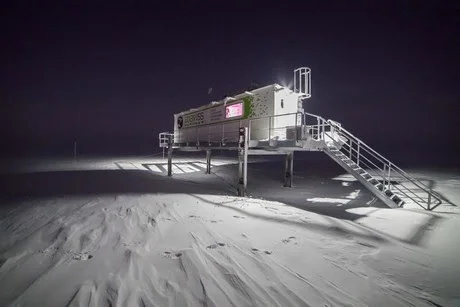
The first EDEN ISS Antarctic mission (February – November 2018) aimed at advancing controlled environment agriculture technologies for plant cultivation in extreme conditions, applicable to both terrestrial earth and space exploration. In April 2019, the EU-funded project comes to a complete close with all research concluded, providing definitive results. Due to the advantages this unique learning platform offers, it has been decided to extend research missions into 2021.
Partner institutions German Aerospace Center (DLR) and Alfred Wegener Institute for Polar and Marine Research (AWI), operators of the German Antarctic research center Neumayer Station III, will keep the analogue facility in operation for a minimum of two years until 2021, enabling two more isolation phases. Between January and February 2019, the facility was updated with repairs made to all subsystems where required. A complete cleaning of the greenhouse was performed preparing the facility for future research and analogue testing.
Researchers interested in taking advantage of the highly isolated conditions of Antarctica, remote monitoring and communication system, and/or the high-functioning systems architecture of the EDEN ISS Mobile Test Facility are invited to contact Dr. Daniel Schubert to submit research proposals.
In April 2019, the EU-funded project comes to a close with first phase research concluded, providing definitive results. During the Antarctic mission, a significant amount of fruits and vegetables were produced in the Future Exploration Greenhouse and were a great benefit to the over-wintering crew at the Neumayer Station III. A large amount of plant and microbiological samples from within the greenhouse have been preserved and are currently being tested by project partners for determining further the quality and safety of the cultivated fruits and vegetables.
The EDEN ISS Mobile Test Facility is comprised of two standard shipping containers fitted-out to accommodate a Future Exploration Greenhouse, a service section, a climatic buffer zone, and all the required subsystems for operating a controlled-environment greenhouse (including an LED Illumination System, Atmosphere Management System & Thermal Control System, a Nutrient Delivery System, and Plant Health Monitoring system, and an all-in-one hardware and software platform for monitoring and controlling all equipment and for communications between the Mission Control Centre in Bremen).
For more information:
EDEN ISS
eden-iss.net
Publication date: 5/2/2019

Crop One Holdings Announces Launch of Vertical Farm Opportunity Fund in Major Farm-to-Table Initiative
Crop One Holdings (Crop One) a leading vertical farm operator through its FreshBox Farms brand, today announced that it will sponsor its first “qualified opportunity fund (QOF)” in an Opportunity Zone
The Fund will build a vertical farm in Texas expected to produce
2 tons of fresh produce per day, create at least 75 new jobs, and reach
17 million potential customers
Oakland, Ca., May 8, 2019 – Crop One Holdings (Crop One) a leading vertical farm operator through its FreshBox Farms brand, today announced that it will sponsor its first “qualified opportunity fund (QOF)” in an Opportunity Zone.
The Vertical Farm Opportunity Fund #1 (the Fund) will invest in building and operating a new vertical farm in Texas (the Farm), to be located in a qualified Opportunity Zone in the Austin-San Antonio corridor. The Farm will primarily serve Austin (the #11 largest city in the U.S.), and will have easy access to San Antonio (#7), Houston (#4) and the Dallas-Fort Worth Metroplex (#9).
Vertical farming produces crops indoors, and ensures pesticide-free, optimal growing conditions. Crop One anticipates locating many of its future farms in Opportunity Zones that have potential for farm-to-table distribution, in locations that may range from rural to urban settings. These farms require that temperature, humidity, light, water and plant nutrients be provided in a controlled environment.
Crop One’s track record and its investment team’s more than 40 years of combined investing experience make it uniquely qualified to manage the building and operation of the Farm through the Fund. Its produce is already sold in over 35 grocery stores in the Northeast U.S through its FreshBox Farms brand. In 2018, Crop One entered into a JV with Emirates Flight Catering to build the world’s largest vertical farm in Dubai, which will begin production early 2020.
For this project, Crop One will be raising capital under a Regulation D 506(c) offering for the development of the Farm’s facilities and to fund business operations.
“With this Opportunity Zone Fund, we are bringing scalable, vertical farming technology to Texas,” said Sonia Lo, Chief Executive Officer of Crop One Holdings. “The new farm will be environmentally conscious and produce fresh, locally-grown food that is healthy and affordable. Our expert staff of farmers, resource conservation specialists, and ag-tech leaders are changing the way we grow and enjoy food, and we are looking forward to providing great, fresh produce to the Austin-San Antonio area."
“With the creation of at least 75 new jobs in its initial phase, the Farm will have a positive economic impact on the local economy,” added Deane Falcone, Crop One Chief Science Officer. “As with all of our farms, the Farm is expected to use 99 percent less water compared to conventional farming. Our products are pesticide-free, non-GMO, nutritious, and delicious, and because our produce can reach more than 17 million people within a 3.5-hour radius, we will be able to reduce food miles and food waste.”
Enacted as part of the 2017 Tax Cuts and Jobs Act, Opportunity Zones were created by Congress to encourage social advancement and private investment in low-income communities to aid job creation and new business formation.
Investors in QOFs such as the Fund are eligible for a range of tax benefits, including deferral of current capital gains, a tax reduction of up to 15 percent on current gains and no capital gains taxes on appreciation of the QOF interest if the interest is held for 10 years or more.
Through the Fund, investors will partner with Crop One and participate in the rapidly emerging vertical farming sector while being eligible for these generous tax benefits.
Qualified accredited investors seeking investment information related to this offering and Vertical Farm Opportunity Fund #1, are asked to contact Crop One at cropone.ag/investors or email investors@cropone.ag for more information.
About Crop One Holdings
California-based Crop One Holdings is a technology-driven vertical farming company that produces fresh, organic, produce in a sustainable manner for its customers. It operates two subsidiaries: FreshBox Farms in Millis, Mass., and a joint venture with Emirates Flight Catering in Dubai South, United Arab Emirates. Crop One has been in continuous commercial production longer than any other vertical farmer in North America. The company’s proprietary technology and plant science put it ahead of its competitors, producing crop yields among the highest of the industry, but at 25% to 50% of the capital cost of other vertical farming companies.
The information contained in this Press Release is not intended to be and should not be taken as investment, tax, legal of any other type of advice. It is not an offer to sell or a solicitation of an offer to buy an interest in the Fund, the Farm or any other entity. No investment shall be offered or sold to any person without such person first being provided with a confidential information memorandum or similar document setting forth the risks associated with any such investment. Investing in funds of this nature are inherently risky and illiquid and shall be limited to persons that are “qualified purchasers” under U.S. securities laws. No investment shall be sold to any person without the Fund taking reasonable steps to verify that such person is an “accredited investor” under the US Securities Act, which steps may include third-party verification by the investor’s financial adviser, broker, accountant, banker and/or counsel. Any such investment involves a high degree of risk and is suitable only for sophisticated and qualified investors.
Mandated Regulation D 506(c) Disclosure Legend
Any historical performance data represents past performance. Past performance does not guarantee future results;
Current performance may be different than the performance data presented;
The Fund and Crop One are not required by law to follow any standard methodology when calculating and representing performance data;
The performance of the Fund and Crop One may not be directly comparable to the performance of other private or registered funds or companies.
The securities are being offered in reliance on an exemption from the registration requirements, and therefore are not required to comply with certain specific disclosure requirements;
The Securities and Exchange Commission has not passed upon the merits of or approved the securities, the terms of the offering, or the accuracy of the materials relating to any offering of equity in the Fund.
Marla Kertzman | Senior Vice President
Financial Profiles, Inc.
Main 310.478.2700 | Direct 209-852-9027| Mobile 408 482-3546
mkertzman@finprofiles.com | www.finprofiles.com

Valoya To Host The LEDs & Innovators Conference At GreenTech Again
At last year’s GreenTech, Valoya hosted its first educational event titled LEDs & Innovators Conference 2018. The event gathered some of the most prominent names in crop science, vertical farming and medical plants industries as speakers. These include Richard Ballard of the infamous Growing Underground farm in London and Dr. Giovanni Minuto, the director of the esteemed agricultural research institute CeRSAA, from Italy.
Valoya announces the second edition of this event, to be held on June 12th, the second day of this year’s GreenTech. The conference is tailored to industry professionals interested in deepening their knowledge in matters of lighting for crop science, medical plants cultivation and vertical farming fields. Additionally, this is an opportunity to hear first-hand cultivation experiences from experts as well as network with industry peers.
LEDs & Innovators Conference 2019
The Program
10:15 – 11:15 Crop Science and Light
Stefanie Linzer, Biologist, Valoya
High Quality White LED Light for Crop Science Applications
11.15 – 11.30 Break
11:30 – 12:30 Hard Science Talk on Medicinal Cannabis
Dr. Gianpaolo Grassi, Head Researcher, CREA-CI, Italy
How Does the Light Spectrum Affect the Terpene Profile of Cannabis?
12.30 – 13.00 Break
13:00 – 14:30 Vertical Farming Innovators Panel
Mark Korzilius, Co-Founder & CEO, Farmers Cut, Germany
Gus van der Feltz, Chairman, Farm Tech Society
Henry Gordon-Smith, Managing Director, Agritecture
Lars Aikala, CEO, Valoya
From last year’s LEDs & Innovators Conference at GreenTech
The conference is free of charge, however the number of seats is limited. Participants need to register on Valoya’s website after which they will go through a selection process and will be notified if they can participate in the conference.
The sign-up form and more information about the event is available here.
Valoya is also to host a webinar titled Transitioning to White LED Light in Crop Science, What You Need to Know on May 24th at 14.00 CET. The webinar is aimed at researchers trying to understand if and why they should to move ahead to LED technology in the coming future. It will be hosted by Valoya’s Biologist, Ms. Stefanie Linzer who has more than a decade of biology expertise and has helped Valoya develop some of its patented spectra which illuminate the chambers of the world’s largest agricultural companies, research institutes and universities. The attendance is free of charge.
To sign up, please click here.
About Valoya Oy
Valoya is a provider of high end, energy efficient LED grow lights for use in crop science, vertical farming and medical plants cultivation. Valoya LED grow lights have been developed using Valoya's proprietary LED technology and extensive plant photobiology research. Valoya's customer base includes numerous vertical farms, greenhouses and research institutions all over the world (including 8 out of 10 world’s largest agricultural companies).
Additional information:
Valoya Oy, Finland
Tel: +358 10 2350300
Email: sales@valoya.com
Web: www.valoya.com
Facebook: https://www.facebook.com/valoyafi/
Twitter: https://twitter.com/valoya
An Aquaponics Pioneer In Cameroon
Flavien Kouatcha, who is almost 30, is an example of youth entrepreneurship in Cameroon. Since he was a child, he’s always wanted to have the best job in the world and, as he likes to say, “feed the planet”. His parents and grandparents are farmers
Flavien Kouatcha, who is almost 30, is an example of youth entrepreneurship in Cameroon. Since he was a child, he’s always wanted to have the best job in the world and, as he likes to say, “feed the planet”. His parents and grandparents are farmers.
He has just been appointed National President of the Cameroon branch of the Junior Chamber International (JCI), an international NGO of young active and enterprising citizens that aims to be the largest global network of young people aged between 18 and 40, who are creating positive change both in their communities and in the business world.
“Save Our Agriculture”, Flavien’s company, has adapted the practice of aquaponics to the African environment, and more specifically to the Cameroonian environment. His goal was to enable Cameroonians, who mostly live in urban areas, to undertake this type of agriculture at home with no major constraints, with the advantage of having a high-quality animal and crop production at home. For Flavien, this is the future of agriculture, and we’re willing to believe him. “Aquaponics results in higher yields than traditional farming, as it requires less input – notably in terms of water – and emits 20% less carbon into the environment”, Flavien explains.
Read more at Société Générale
Publication date: 5/6/2019
Gotham Greens To Open New Greenhouse In Rhode Island
A rendering of Gotham Greens' forthcoming greenhouse in Providence
Photo courtesy of Gotham Greens
The 110,000-Square-Foot
Facility Will Open In Fall 2019
April 25, 2019
According to a press release, urban grower Gotham Greens is opening a new 110,000-square-foot facility in Providence, Rhode Island. The facility, according to Gotham Greens will produce 10 million heads of lettuce and leafy greens annually for customers in Providence and the greater New England region.
The greenhouse, located on the site of a former General Electric facility that has sat vacant for two decades, is set to open in fall 2019.
"We are thrilled to partner with the City of Providence and State of Rhode Island on this project," said Gotham Greens Co-Founder and CEO Viraj Pur, according to the release. "Providence is the perfect location for us, strategically located at the gateway to New England, the city has a rich legacy of manufacturing, world-class institutes of higher education, and a thriving local food culture. Geographically, New England is farthest from the West Coast, where the majority of leafy greens distributed across the U.S. today are grown. Once we're operational, Gotham Greens will be able to supply this region's supermarket retailers and foodservice operators with a consistent and reliable supply of fresh produce grown right here in New England year-round."
Pur announced the new greenhouse alongside Rhode Island Governor Gina Raimondo, Providence Mayor Jorge Elorza, Rhode Island Commerce Secretary Stefan Pryor and other community leaders. An estimated 60 full-time jobs at the greenhouse and 100 construction jobs are expected to be created by the project, which will cost $12.5 million. The Rhode Island Commerce Corporation has committed up to $2.3 million in tax credits, payable over a 10-year period contingent on job created.

The Ups and Downs of Vertical Farming
The term Vertical Farming (VF) can be used to define a variety of concepts. For some, it might conjure up images of tall structures with plants growing on the outside, while others may imagine stacks of shipping containers
The term Vertical Farming (VF) can be used to define a variety of concepts. For some, it might conjure up images of tall structures with plants growing on the outside, while others may imagine stacks of shipping containers. In essence, VF refers to the practice of building upwards, or downwards in the case of underground setups, to maximise production area for a given footprint.
Vertical farming can offer a practical solution in places where space is limited or land value is high, such as in cities, or where conventional greenhouses would not be viable, perhaps due to space or climate. It may also be possible to create a vertical growing setup within a conventional greenhouse, if an arrangement of layers can be set up adequately, without compromising crop quality, although the height of the structure could limit what is practical.
As vertical farming establishes itself as a viable alternative to traditional methods, sustainability is really the key. Building vertically not only saves space but can also allow unconventional spaces, such as underground tunnels, to be used for growing. Additionally, VF has also been demonstrated to reduce the amount of soil and water required, with many using hydroponics, making it an option in arid regions where conventional glasshouses are not viable.
An important consideration for vertical farms is to ensure sufficient light reaches all layers of the crop. Even if using daylight, shading of the lower layers, especially in built-up areas, will reduce the amount of light reaching the crop. Most VFs will require supplementary lights; a light fitting above each layer of the crop is likely to be necessary.
Growing Underground, a London based setup, uses a hydroponic system to grow microgreens on four levels in 500m2 of tunnels 33 metres underground. With no natural light, high-efficiency LEDs are vital to give the crop the light spectrum it needs, but these still consume a large amount of energy and produce a considerable amount of heat. Chris Nelson from Growing Underground says, “the aim is to become carbon neutral, but it is still an energy intensive business. With closely packed layers, it is easy for a microclimate to form, so it is important to have good, effective climate monitoring and control to ensure sufficient air movement and to maintain an optimum growing environment.”
Fully enclosed farms (i.e. with no windows) demand complete control over the environment. While the number of external factors is reduced, it can also be expensive, as there is no access to free daylight. This could be an interesting option for anyone with access to an underground space, but “a clear business case is crucial” warns Chris Nelson.
The temperate UK climate means conventional glasshouses work well; heating demands can be met easily and light levels are usually acceptable. As such, vertical farms have typically been aimed at supplying niche markets: low volume, high value. Vertical farming may not be the ‘greenest’ solution compared to crops grown under glass in warm, sunny climes, but it does allow produce to be grown close to the market. As such, food miles can be drastically reduced.
A self-contained setup lends itself well to consistent, year-round production with a quick turnover time. A closed system, i.e. with water and nutrient recycling and heat recovery from vented air, can help improve efficiency, but disease control is vital. Careful climate management is necessary. Depending on the location, vertical farms often need a significant amount of heating or cooling, as well as some form of humidity control. Air movement is also important to maintain an active climate. All of these will use energy and contribute significantly towards operating costs, but sustainable, local food production is a benefit in itself and offers a degree of security against the myriad of factors that can adversely affect conventional production methods.
Although VF may not yet drastically reduce the industry’s environmental impact, in the UK at least, it does offer a solution to food production in areas where conventional methods just would not work. This is one of the main drivers behind VF, which can help combat the need to produce more food for an ever-expanding world population.
Source: GrowSave
Publication date: 4/25/2019