


Welcome to iGrow News, Your Source for the World of Indoor Vertical Farming
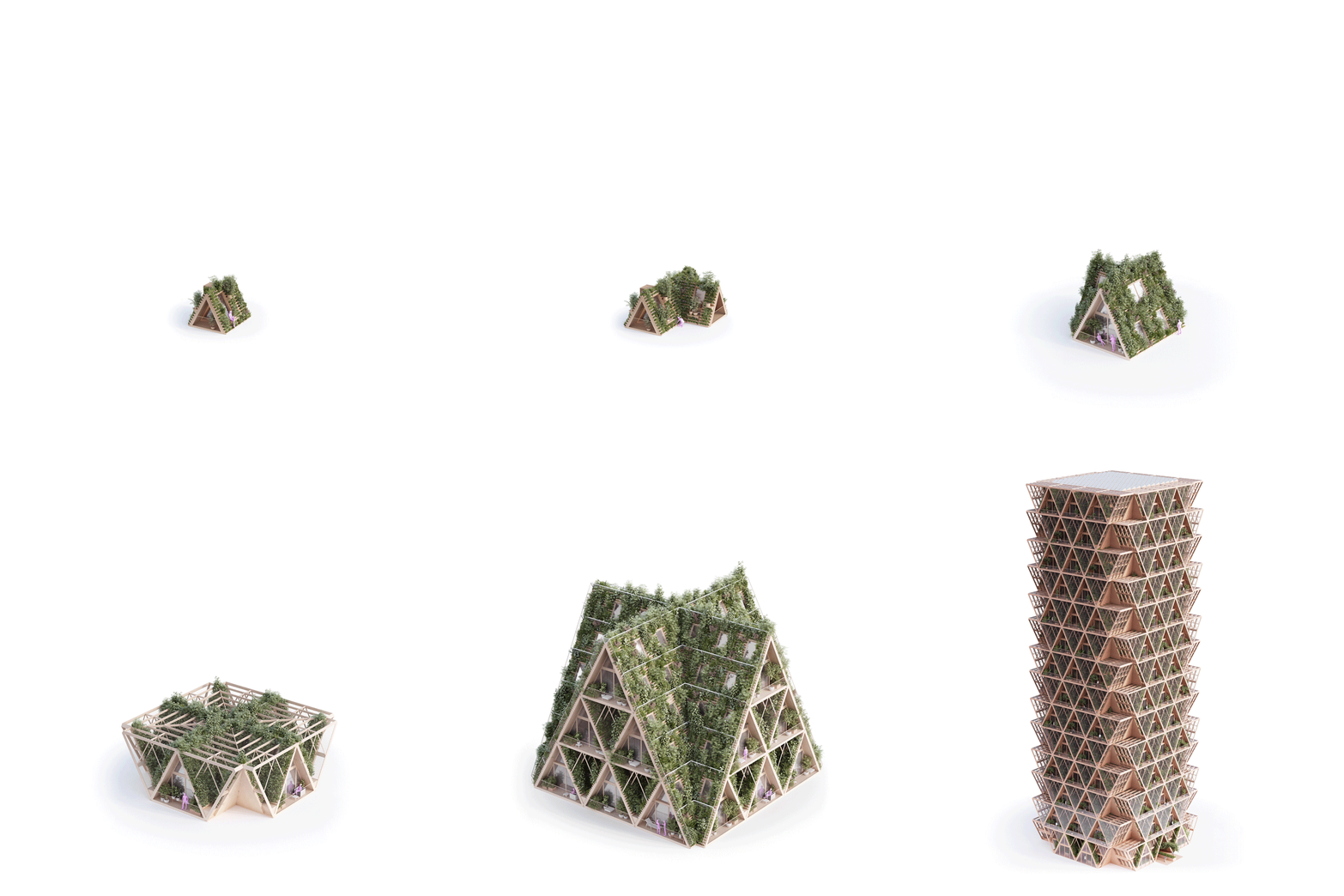
‘We Are Right At The Starting Gate’: Vertical Farming Could Change The Food System
08-May-2019 By Katy Askew
Intelligent Growth Solutions (IGS) talks vertical farming, demand growth and its unique technological proposition.
To Read the Article and View the Video, Please Click Here

What Is The Cost of Vertical Farming?
How can vertical farming contribute to (inter)national food production? This question is more complex than it initially seems. The answer does not only depend on the production, but also on the costs for water, energy and CO2. The Greenhouse Horticulture Business Unit of Wageningen University & Research and TU Delft are investigating the feasibility of this new production system.
Take a head of lettuce for example: how much does it cost to produce one? The answer is fairly well known when it comes to cultivation in greenhouses in the Netherlands. Greenhouse models and growth models can be used to predict the production at a certain consumption of water, energy and CO2. Those models are not suitable, however, for cultivation in a vertical farm. The combination of high-density crop production and a closed construction necessitates a different approach with respect to heat, cooling and dehumidification.
The key question when comparing both cultivation systems is: how much energy does a vertical farm need? The required amount of water and CO2 can be reduced compared to a 'traditional' greenhouse, but this is not the case for the cooling and dehumidification demand. The high internal heat load and the lack of natural ventilation ensure a high cooling demand, which consequently results in residual heat.
Using residual heat in the city
The question is whether this residual heat could be used in the surrounding urban environment. One of the key features of vertical farming is that it can take place in the city, which would allow it to exchange energy with other users. Those other users could become customers of the residual heat from the vertical farm.
Vertical farming. Photo: Guy Ackermans
Feasibility of vertical farms in five steps
WUR and TU Delft have joined forces to calculate the feasibility of vertical farms in five steps. The first step investigates how plants process energy in a closed cultivation system. The second step concerns the total energy demand: how much energy does vertical farming need? Step three focuses on optimising this energy consumption and step four on the integration of the vertical farm into the city. Ultimately, this information is used in step five to calculate the financial feasibility of (urban) vertical farming. The research project will be completed by the end of 2019.
This work was supported jointly by Staay Food Group, Westland Infra and the Top Sector Horticulture & Propagation Materials (EU-2016-01) via EFRO Fieldlab Freshteq.
Source: Wageningen University & Research
Publication date: 4/17/2019

CO2 GRO Inc. Announces The Appointment of Rose Marie Gage To Its Board
TORONTO, ON – April 29, 2019 – Toronto based CO2 GRO Inc. (“GROW”) (TSX-V: GROW, OTCQB: BLONF, Frankfurt: 4021) is pleased to announce the appointment of Rose Marie Gage to its Board of Directors effective as of today subject to TSXV approval.
Rose was the CEO of Ag Energy Co-Operative Ltd. (www. agenergy.coop or “Ag Energy”) for nine years until her recent retirement. She is credited with strategically growing the Co-op with her team to its current level of 500 agriculture, agri-business and rural members of which over 200 are greenhouse owners.
She has advocated for progressive changes in the Energy Consumer Protection Act, the Ontario and Federal Carbon Programs, CHSOP and the Ontario Co-op Act and in other Agri-Food and Agri-Tech sectors.
She currently serves as:
Chair – Agri Technology Commercialization Centre,
Chair – Ontario Agri-Technologies Association,
Vice-Chair of the provincially appointed Agricultural Institute of Ontario
Director and Chair of the Corporate Governance Committee – University of Ottawa Heart Institute Foundation, and
Director Hadrian Inc.
She has also served as:
Vice–Chair, Women in Leadership Foundation,
Vice-Chair, Canadian Heritage Photography Foundation,
Chair – Guelph Energy Co-operative Inc.,
Treasurer and Director – FV Tel Co-operative Ltd., and
Director – Schneider Canada
Ms. Gage is a Chartered Director and has received the following honors: 2018 Outstanding Achievement in Governance Award (Directors’ College), Canadian Inspiring 50 2018 recipient (Canadian & Dutch Government) and the 2016 Diversity 50 (Canadian Board Diversity Counsel). She was also nominated for the Canadian Women’s Network (WXN’s) 2018 Top 100 Powerful Women.
Rose has attended Harvard Executive School and received her Lean-Six Sigma Quality Leader accreditation (General Electric). She is also a graduate of McMaster University with an Hons. Bach. Of Commerce. She is currently a member of the Directors’ College, Institute of Corporate Directors, National Association of Corporate Directors and the Women’s Executive Network.
John Archibald, CEO stated “Her deep relationships with greenhouse plant growers, agriculture industrial companies and Government agriculture organizations will be of great benefit to GROW’s Board, strengthening its Agri-Tech expertise and ability to successfully move GROW’s Strategy going forward.”
About CO2 GRO Inc.
GROW's mission is to accelerate all indoor and outdoor value plant growth naturally, safely, and economically using its patent pending CO2 Foliar Spray technology. GROW’s global target retail plant markets are food at $8 trillion per year (Plunkett Mar 2017), non-food at an estimated $1.2 trillion per year with retail tobacco at $760 billion (BA Tobacco 2017), floriculture at $100 billion by 2022 (MarketResearch.Biz estimate), legal cannabis at $52.5 billion per year by 2023 (Statista) and legal U.S. hemp CBD at $22B per year by 2022 (the Brightfield Group).
GROW's CO2 technologies are commercially proven, scalable and easily adopted into existing irrigation systems. They work by transferring CO2 gas into water and foliar spraying water across the entire plant leaf surface. The dissolved gas crosses the plant leaf’s cuticle and diffuses into the leaf’s tissues where the absorbed CO2 is used to make sugar to fuel plant metabolism. The process is similar to the way oxygen gas is transferred to human bloodstreams once oxygen enters human lungs.
Foliar spraying of water, dissolved nutrients and chemicals on plant leaves has been used for over 60 years by millions of indoor and outdoor growers. To date, outdoor growers have not had any way to enhance plant CO2 gas uptake for faster growth.
Indoor CO2 gassing has enhanced plant yields for over 60 years but 60% of the CO2 gas used is typically lost from ventilation. Current greenhouse CO2 gassing levels of up to 1500 PPM are also not ideal for worker health and safety. GROW’s safer infused CO2 Foliar Spray can be used by both indoor and outdoor plant growers with minimal dissolved CO2 gas lost and much greater CO2 plant bioavailability resulting in higher plant yields than both CO2 gassing and no gassing plant yields.
About Ag Energy Co-operative Ltd.
Ag Energy Co-operative Ltd. was founded by Ontario greenhouses in 1988. The Co-op is an independent, for profit, agriculturally focused co-op specializing in energy solutions for its membership. Its team of 15 staff members are focused on member and customer excellence. The Co-op creates approximately $50 million in revenue. The role of Ag Energy is to commercialize energy policy for the benefit of agriculture: producers, processors, agri-food, agri-tech and all; by minimizing costs and de-risking energy spend. Ag Energy currently has approximately 500 agricultural, agri-business and rural members; approximately 41% of its members are commercial greenhouse growers and 34% agri-processing. The broader reach of Ag Energy (its Members and their businesses) represents over 6,000 employees and in excess of $2 Billion CAD in revenues annually. The recycling of revenue is estimated to be 90% of members’ revenues back into the Ontario economy.
Forward-Looking Statements: This news release may contain forward-looking statements that are based on CO2 GRO's expectations, estimates and projections regarding its business and the economic environment in which it operates. These statements are not guarantees of future performance and involve risks and uncertainties that are difficult to control or predict. Therefore, actual outcomes and results may differ materially from those expressed in these forward-looking statements and readers should not place undue reliance on such statements. Statements speak only as of the date on which they are made, and the Company undertakes no obligation to update them publicly to reflect new information or the occurrence of future events or circumstances, unless otherwise required to do so by law.
Neither the TSX Venture Exchange nor its Regulation Services Provider (as that term is defined in the policies of the TSX Venture Exchange) accepts responsibility for the adequacy or accuracy of this release.
For more information, please visit www.co2gro.ca or contact Sam Kanes, VP Communications and IR at 416-315-7477.

Astronauts Might Soon Grow SPACE Tomatoes
Tiny tomato plants developed at the University of California, Riverside, could one day feed astronauts on the International Space Station
Grant To UC Riverside Could Help Put Tiny Tomato
Plants On The International Space Station
Author: HOLLY OBER
April 25, 2019
Tiny tomato plants developed at the University of California, Riverside, could one day feed astronauts on the International Space Station. The plants have minimal leaves and stems but still produce a normal amount of fruit, making them a potentially productive crop for cultivation anywhere with limited soil and natural resources.
A tomato plant with more edible fruit than biomass could grow on the ISS. Credit: Martha Orozco-Cárdenas/UCR
Now, with a grant from the NASA-funded Translational Research Institute for Space Health, UCR researchers will tweak the tomatoes to make them also uniquely suited to growing in space. Dubbed Small Plants for spACe Expeditions, or SPACE, plants by the researchers, the technology could be applied to other plants to develop a suite of crops for agriculture on the International Space Station and future space colonies.
Robert Jinkerson, an assistant professor of chemical and environmental engineering in the Marlan and Rosemary Bourns College of Engineering and Martha Orozco-Cárdenas, director of the Plant Transformation Research Center in the College of Natural and Agricultural Sciences, will use the two-year $800,000 grant to continue to reduce the size of the miniature plants, engineer them for enhanced photosynthesis, grow them in a container that mimics conditions on the International Space Station, analyze the fruit’s nutritional content, and conduct taste tests.
Orozco-Cárdenas originally used CRISPR-Cas9 gene-editing technology to shrink the size of ordinary tomato plants and reduce the ratio of leaves and stems to fruit.
“For several years I have been studying the family of genes involved in DNA repair, early response to stress, cell division, differentiation, and growth in plants. It was very exciting to see how a single base change in one of the genes can have such an impact on plant growth and development,” she said.
By 2050, there will be nine billion people on the planet, but arable land is decreasing. Global food production will need to double to meet the food needs by then. Climate change complicates the problem more.
“My goal has always been to develop crops that could feed a growing global population on less farmland,” Orozco-Cárdenas said.
Most fruit and vegetable plants produce more inedible leaves and stems, known as biomass, than edible fruit or vegetables. Small plants with more edible parts than biomass could produce large quantities of food on small plots and indoor spaces such as vertical urban farms. However, vertical farming systems tend to grow leafy greens because they have trouble supporting larger fruiting plants like tomatoes.
In addition to their small size, the UC Riverside tiny tomatoes minimize resource and energy consumption by producing fruit more quickly than conventional plants.
The traits that make the tomatoes suitable for growing in vertical urban farms on Earth, with a few small tweaks, could also make them suitable for growing on the International Space Station, where astronauts yearn for fresh fruit and vegetables.
“When I first saw those tiny tomatoes growing in Martha’s lab, I just knew we had to get them onto the space station,” Jinkerson said.
One necessary modification is to increase the rate of photosynthesis which allows the plants to produce oxygen and convert carbon dioxide into food. Enhanced photosynthesis will help replace carbon dioxide in space station air with fresh oxygen, improving the air quality and sustainability of human life in space.
These gene editing approaches can also be applied to many other crops for use here on Earth that could help feed the growing population and also bring humans one step closer to permanent settlements in space.
“Most plant research has already focused on optimizing crops for growth outside in fields, opening up a lot of opportunities to engineer plants for built environments like in space or greenhouses,” said Jinkerson.
(Header photo: The International Space Station. Credit: NASA)

South Africa: AAVF Creates Platform For Vertical Farming Network
The African Association for Vertical Farming (AAVF) recently held its launch and inaugural conference for vertical farming in Africa at the University of Johannesburg’s Soweto campus. The conference spanned three days and featured speakers, workshops and site visits to vertical farming enterprises.
The programme line-up included Dr Naudé Malan from UJ’s Anthropology and Development Studies department, Josephine Favre, president of AAVF, Veronica Shangali Aswani, co-founder of WavuNow and official AAVF representative in South Africa, Thendo Ratshitanga, head of agriculture at Simeka Capital Holdings, and Zandile Kumalo, director of HyHarvest (Pty) Ltd.
According to Josephine Favre, the AAVF is not just another non-profit organisation. They are in fact building a network of individuals, organisations and research institutions in Africa’s urban agriculture sector, and providing a digital platform that connects all stakeholders, helping to enhance coordination and collective action within the industry.
“Our members will be able to organise their efforts, collaborate to overcome problems and form partnerships that will drive individual success and move the industry forward sustainably,” she said.
Food security and sustainability was without a doubt the topic of the day, with many speakers addressing it during their presentations. However, no one was fooled into thinking that vertical farming is the solution to food security. Ratshitanga did however emphasise that it offers an opportunity for people to take charge of their food requirements by growing their own food.

DelFrescoPure Introduces The LivingCube
Our exciting partnership between DelFrescoPure and CubicFarms has resulted in the LivingCube -- a system of automated vertical farming growing machines that continuously produces living lettuce, living basil and microgreens all year long
Our exciting partnership between DelFrescoPure and CubicFarms has resulted in the LivingCube -- a system of automated vertical farming growing machines that continuously produces living lettuce, living basil and microgreens all year long.
LivingCube - Vertical Growing System
LivingCube is powered by DelFrescoPure, which produces power by using an off-the-grid electrical cogeneration system. The growing chambers are all individually climate controlled to optimize the environment for each crop to create an independent growing facility.
"We wanted to offer our retail partners innovative and local commodities and the ideal solution was to partner with CubicFarms," stated Carl Mastronardi, President of DelFrescoPure.
The LivingCube living lettuce, living basil and microgreens are always fresh, nutritious and flavor-filled. LivingCube finally offers you the freshness you love without sacrificing nutrition and flavor!
Living Lettuce
Who says you need to compromise quality for flavor? Our LivingCube allows our living lettuce to be vertically grown without pesticides in multiple varieties. Available in a 3-count lettuce bag, our living lettuce is convenient and delicious; you can grow it in your fridge or on your counter. Lettuce grow for you!
Basil Microgreens
With 12x the nutrients of mature leaves, LivingCube microgreens are a small way you can add health benefits to food! We offer multiple varieties and customized packaging combinations. Our LivingCube machines are flexible -- allowing quick crop changes that adjust seasonally. It's convenience with flavor!
"Our LivingCube microgreens allow you to add flavor, quality and fresh health benefits to your food without having to put in hard work to get it," stated Fiona McLean, Marketing Manager of DelFrescoPure.
Our packaging is made from 100% post-consumer recycled PET and comes in 50g and 100g, making our microgreens versatile and easy to buy, store and use. No need to chop, just sprinkle!

Australia’s First Indigenous Rooftop Farm Opens In Eveleigh
Clarence Slockee with Governor David Hurley at the opening of the Yerrabingin rooftop farm at South Eveleigh.
“You don’t expect to see an indigenous farm in the middle of the city,” she said.
By Heath Parkes-Hupton,
Daily Telegraph
April 10, 2019
Excerpt:
What started as an idea drafted during a comedy gig about 12 months ago has become Australia’s first indigenous rooftop farm, right in inner-city Sydney.
Cultural start-up Yerrabingin opened the working urban farm on top of its headquarters on Wednesday, in the heart of Mirvac’s $1 billion South Eveleigh redevelopment.
The garden, featuring more than 30 native bush foods including finger limes, warrigal greens, native raspberries and sea celery, will be used for cultural education and its products will be sold as fresh produce.
Yerrabingin co-founders, Christian Hampson and Clarence Slockee devised plans for the 2000-plant garden alongside Mirvac to produce a project that recognised Eveleigh’s rich Aboriginal heritage.
Mr Hampson said he hoped it would influence future designs by showing how native plants can integrate a sense of history into new developments.
“What we’re hoping to do with this place is there will be new chapters written at the site,” he said.
“This is a significant step forward in embedding reconciliation into placemaking while harnessing the potential of Aboriginal social enterprise.”
It would be self-funded through 16 monthly workshops, including cultural art and weaving, sustainability classes on permaculture, and food origin and cooking lessons.
Located in Gadigal land, the redevelopment site includes Eveleigh’s locomotive workshops, which were a source of employment for Aboriginal people who worked in the foundry, boiler room and workshops.
Mirvac managing director Susan Lloyd-Hurwitz said the company had paid “careful consideration” to the site’s Aboriginal significance, both in modern times and before settlement.
“You don’t expect to see an indigenous farm in the middle of the city,” she said.
“By working with Yerrabingin we were able to co-create an experience at the precinct that will engage and connect the public to Aboriginal culture and traditions, while educating them on the history of the site.”
NSW Governor David Hurley and his wife Linda Hurley attended Wednesday’s event, while Gardening Australia host Costa Georgiadis did the honour of proclaiming the site open.
Mr Georgiadis said the farm would produce “food for the soul”.

Scientists Made Better-Tasting Basil Through “Cyber Farming”
A better basil exists, but it’s being grown in an environment that resembles something more likely to show up on an episode of Star Trek than in any backyard garden

REUTERS/TOM MIHALEK
By Chase Purdy April 5, 2019
PESTO, CHANG-O
A better basil exists, but it’s being grown in an environment that resembles something more likely to show up on an episode of Star Trek than in any backyard garden.
The team of MIT scientists behind it are calling their process “cyber agriculture,” a method of growing plants in shipping containers retrofitted with lots of high-tech gear that brings crazy levels of precision control to the environment. That entails using complex computers to track a plant’s minor genetic and epigenetic changes over time while searching for the right balance of temperature, humidity, level of ultraviolet light, and light-exposure time, among other things, to create the conditions that will encourage the basil to producer a richer, tastier version of itself. They call it a “climate recipe,” but really it’s using machine learning technology to farm. The details of their work were published April 3 in the journal PLOS ONE.
“We’re really interested in building networked tools that can take a plant’s experience, its phenotype, the set of stresses it encounters, and its genetics, and digitize that to allow us to understand the plant-environment interaction,” said researcher Caleb Harper in a statement.
Most of this research is being conducted in Middleton, Massachusetts, a small town about 20 miles (32 km) north of Boston. It’s there that the MIT team tends to a hydroponic farm of basil plants. They’ve discovered some interesting details: For instance, the plants tend to taste better when they have exposure to light all 24 hours of the day.
“You couldn’t have discovered this any other way. Unless you’re in Antarctica, there isn’t a 24-hour photoperiod to test in the real world,” said John de la Parra, a co-author of the study.
The scientists are making their data available to the public at no charge. Right now, there are companies working on similar high-tech hydroponic farming. Toshiba is churning out lettuce, it’s happening on rooftops in China, and a company called Farm.One is growing food out of basements in Manhattan. But most of these companies keep their techniques under wraps, making it hard for more people to enter the market or for nonprofit initiatives to get off the ground.
“Our tools being open-source, hopefully they will get spread faster and create the ability to do networked science together,” Harper said.
And that could lead to an interesting new era of urban farming, in which cities can more efficiently feed themselves without relying on the costly supply chain networks that currently exist to ship herbs, fruits, vegetables into municipalities from faraway farms.
Photo: Halcyon hydroponics.

The Summit Is HERE - May 6 - 9 - 2019 - Milano, Italy
The Summit Is Right Around The Corner - May 6 - 9 - 2019 - Milano, Italy
Seeds&Chips Global Food Innovation Summit 2019: Sparking Change
The fifth edition of the Seeds&Chips Global Food Innovation Summit May 6-9, 2019 will gather a community of entrepreneurs, innovators, policymakers, leaders, and activists that push for a sustainable future in food and agriculture. Food Tank President Danielle Nierenberg will participate in the summit, held in Milan, Italy, to inspire solutions for feeding the future.
The summit will gather speakers tasked with inspiring attendees to do more for a sustainable food future. Award-winning actor and activist Alec Baldwin will talk about feeding the world and reducing environmental impacts in a keynote presentation. Innovators like Fabrice DeClerck, Science Director at EAT & Bioversity International, and Thomas King, founder and CEO of Food Frontier, will discuss optimizing foodtech sector. Amongst many special guests, HRH Princess Viktória de Bourbon de Parme and Olusegum Obasanjo, Former President of the Federal Republic of Nigeria, will highlight opportunities for sustainable development and agriculture around the world.
On May 6, Danielle will participate in the Opening Ceremony and the session “Hand Made Tale: The Innovative Women Solving Our Global Food Challenges” with women like Susan Rockefeller, Board Member of the Stone Barns Center for Food and Agriculture and Angeline Achariya, CEO of Monash Food Innovation Centre. Danielle will discuss collaborations in the foodtech sector at “Common Ground: Synergy and Solutions for the Next Food System” on May 7, alongside innovative business executives. In the May 8 session “The Food Fight: podcast debates on the food system’s biggest challenges,” hosted by EIT Food, Danielle will explore whether producers or consumers should be responsible for ensuring people eat healthy food with nutritionists and CEOs alike.
Food Tank’s Francesca Tabor will judge the Sustainable Snacking Pitch Competition, co-hosted by Mondelēz International and Seeds&Chips, on May 6. The pitch competition will gather start-ups and entrepreneurs to share their innovative solutions in not only alternative snacks and ingredients, but also food waste reduction, sustainable packaging, sustainable sourcing, responsible supply chain practices, and more. Competition winners, selected by SnackFutures, Seeds&Chips, and Food Tank, will gain access to Mondelēz’s innovation acceleration workshops which will allow Mondelēz teams to help refine the solution’s concepts.
On May 7, Food Tank, Mondelēz International, and Seeds&Chips will co-host an evening panel event at Carlo e Camilla, in Segheria, a renowned restaurant reinventing conviviality around the dinner table. On the backdrop of hors d’oeuvres specially designed by chefs Carlo Cracco and Luca Pedata, Danielle will discuss Mondelēz’s new innovation hub for creating a sustainable food system—SnackFutures—with Brigette Wolf, Head of SnackFutures. Then, Danielle will invite Danielle Gould, founder of Food + Tech Connect and co-CEO of Alpha Food Labs, and Pashon Murray, founder of Detroit Dirt, on stage to talk about the contributions companies play in food and sustainability.
Seeds&Chips will debut a new discussion series “It’s Time for Africa,” focusing on Africa’s potential in growing a sustainable and inclusive economy—and a model for development across the world. Danielle will participate in the inaugural series on May 7 at the session “Bridging the Gap between Surplus and Scarcity: Opportunities of Food Innovation,” offering insight on the opportunities food innovation offers for social and economic development in Africa.
As part of its mission to create a better food system for future generations, the summit will feature food innovators as young as 13 years old on each of the over 30 sessions. With the pressure of the rising population, increasing number of hungry people, and arriving climate change impacts, the young innovators will offer new directions and innovative solutions to sustainably feed everyone.
Over 300 speakers throughout the event will contribute their solutions to improve precision agriculture, traceability, artificial intelligence, investment, open innovation, and more. Exhibitors will include companies and innovations from every part of the food system, ranging from Agtools, data services to help farmers maximize their farms and buyers understand product availability, to Redefine Meat, a 3-D printing plant-based beef company.
Tickets are still available here. Access a 50 percent discount by using the code FOODTANKSAC19.
OUR FANTASTIC SPEAKERS 2019
SEE MORE
ALEC BALDWIN
SUSAN ROCKEFELLER
RAJIV SHAH
RADEK SALI
PASCAL CAGNI
OLUSEGUN OBASANJO
NICOLAS DUFOURCQ
MARIA HELENA SEMEDO
LIAM CONDON
KERRY KENNEDY
KAMEL CHIDA
HRH PRINCESS VIKTÓRIA DE BOURBON DE PARME
HOWARD-YANA SHAPIRO
HEATHER MILLS
DANIELLE NIERENBERG
EREL N. MARGALIT
DAVID BARBER
CRAIG COGUT
BERNARDO HERNANDEZ
ANDY ZYNGA
THE SUMMIT
What we grow from the Earth, and from our minds, can shape the future of food
Seeds&Chips S.r.l. a socio unico - Via F. Ferrucci, 2, 20145 Milano
P.IVA 08798680966
T: +39 02 49796724

Seedo Ramps Up Manufacturing For Its Hydroponic Farm In A Box
April 15, 2019
Indoor farming company Seedo announced it will manufacture more than 1,800 of its indoor grow boxes in Q2 of 2019.
Seedo’s device is a self-contained, airtight box that looks like a mini-fridge and automates the process of growing herbs and vegetables hydroponically. The device pairs with a smartphone app that lets users choose a grow plan or create their own, control and modify the environment in the box, and receive notifications about plant health, harvest times, and any unexpected issues. You can also lock or unlock the fridge door with the app, a feature that seems handy for households with curious pets or small children.
The device will fit inside most homes, clocking in at 40 inches tall and 24.4 inches wide. It has space to grow up to five different plant types at one time. With the aid of the app, users can adjust environmental factors based on what’s being grown. For example, tomatoes require a lot of light and fairly dry conditions for ideal growing, so Seedo users can adjust the “weather” inside the box to get those conditions. Meanwhile, a patent-pending lighting system self-adjusts based on the growth stage of the plants.
Most interesting about Seedo is the types of plants the company says you can grow with the device. The website lists the usual herbs and lettuces most at-home vertical farms can grow, as well as some heartier options: strawberries, cherry tomatoes, bell peppers, and zucchini. You can also grow flowers, edible or otherwise.
The Israel-based company has also filed a new patent that will cover the AI and data analytic algorithms of its agricultural database. According to the press release, these algorithms are built to increase yield, improve nutrient delivery to the plants, and detect issues in real time.
Right now, you can pre-order a Seedo for $2,400. That cost includes the box itself, various filters (water, air), nutrients to get started, and access to the app (iOS and Android). Actual seeds are not included.
That’s considerably more expensive than some other options available for purchase or pre-order: the Herbert farm by Ponix systems is selling for around $553 USD. SproutsIO, which is expected to ship in Q3 of 2019, is going for $799. And the Farmstand, courtesy of Zooey Deschanel’s new startup Lettuce Grow, ranges from $399 to $469 for the farm itself and $49 to $69 for a monthly subscription that includes seeds.
Seedo’s customer base is currently made up of at-home growers and some commercial partners. The company recently announced a partnership with Kibbutz Dan, with whom it will create a fully automated, commercial-scale cannabis farm in Israel. Previously, Seedo had established a medical cannabis farm in Moshav Brosh, Israel. Seedo raised a $4 million post-IPO equity round in April.
Seedo expects to start shipping machines in August 2019. It’s currently available for pre-order in North America, Europe, Australia, New Zealand, and Israel.
Cannabis Tech Topics Connected Kitchen Foodtech Modern Farmer Smart Garden
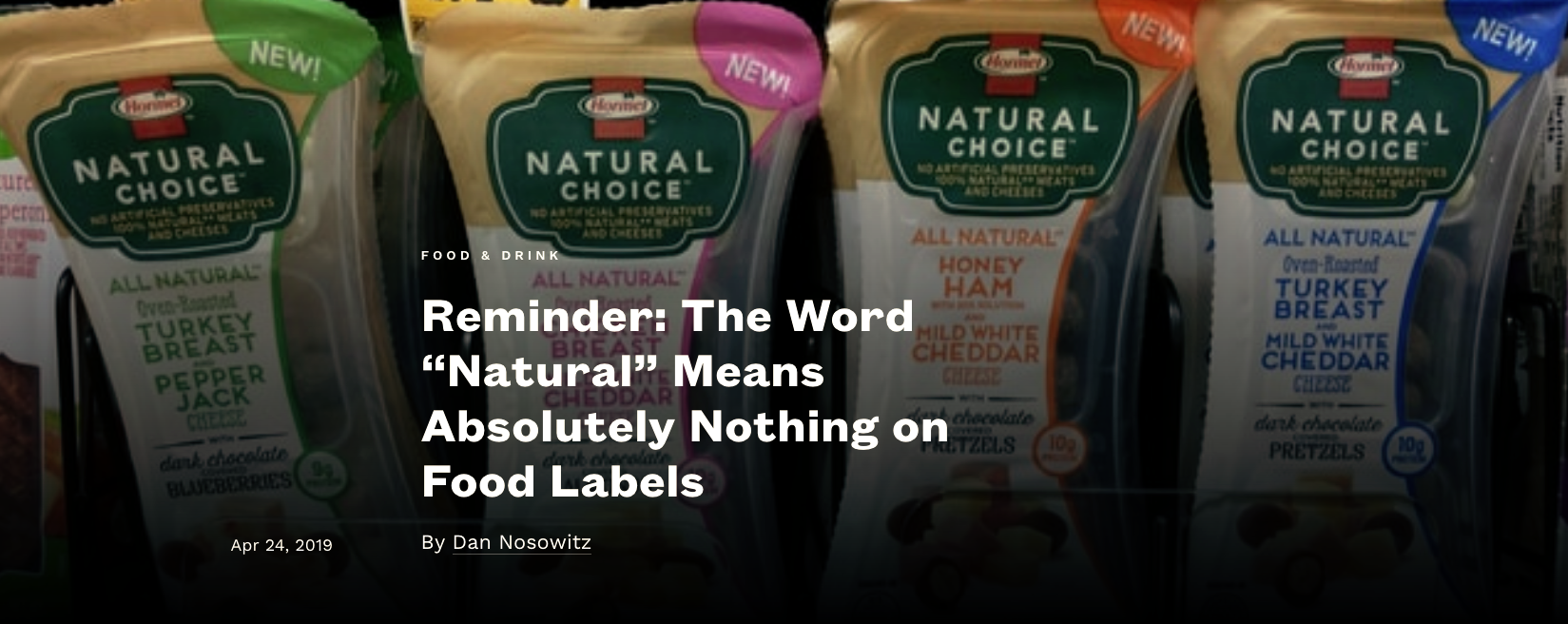
Reminder: The Word “Natural” Means Absolutely Nothing on Food Labels
Of all the meaningless terms in the food labeling world—and there are a lot—”natural” might be one of the worst
By Dan Nosowitz
Of all the meaningless terms in the food labeling world—and there are a lot—”natural” might be one of the worst.
The Animal Legal Defense Fund (ALDF) recently sued Hormel, the company behind brands like Applegate and Dinty Moore, for misleading customers with its “natural” label. The suit was thrown out, but not before, as Bloomberg finds, Hormel was forced to give over documents explaining exactly what’s in its “natural” meats—and even emails from employees concerned about the label.
The USDA is responsible for regulating labeling for meat and poultry, and has struggled in the face of rapidly changing marketing strategies to properly decide what each word means. Many terms that seem to signal something about the way the animal was raised—”farm fresh,” for example—literally have no definition at all. Anyone can just say that.
“Natural” is not completely unregulated, but it’s close. The USDA’s official definition is this:
A product containing no artificial ingredient or added color and is only minimally processed. Minimal processing means that the product was processed in a manner that does not fundamentally alter the product. The label must include a statement explaining the meaning of the term natural (such as “no artificial ingredients; minimally processed”).
The Superior Court of the District of Columbia, which heard the case, found that Hormel had not violated the law with its products. Hormel’s Natural Choice brand does technically follow the law: it states what it means by natural (“no artificial preservatives,” for example). But as part of the hearing, Hormel had to give a massive dump of data, including communication amongst employees, and it gives more insight into what’s really in the Natural Choice meats.
Hormel does not have separate facilities for hogs due for Natural Choice products; in other words, the same hogs, raised in the same way, are used for both Natural Choice Cherrywood-Smoked Uncured Bacon and, well, Spam. That means that those “natural” hogs are given antibiotics, and the meat is spiked with nitrate-heavy preservatives—it’s just that those nitrate-heavy preservatives come from celery juice rather than a lab-crafted powder. For those who assume that “natural” might mean antibiotic-free or nitrate-free? Nope. In fact, some studies have found that nitrate levels are actually higher in “natural” products than not.
Technically, this isn’t illegal, because Hormel does indeed state what’s in their products. The company said in a statement that, “Hormel Natural Choice products are minimally processed and contain no artificial ingredients or chemical preservatives, and that’s clearly stated on the package.” This is true! But it’s deliberately following the letter of the law rather than the spirit; customers have a much higher expectation of a meat labeled “natural,” as multiple studies have shown.
The FDA, which regulates non-meat, egg, and poultry labeling, has already declared that it’s aware that the “natural” label is potentially misleading, and called for public comment back in 2015 to hopefully find some solution to the problem. As it stands, Hormel is innocent—but just barely.
Photography TheImpulsiveBuy / Flickr
Plants Might Thrive Better Than Humans in Space
Today, a half century after Neil Armstrong took one small step onto the surface of the moon, there are just three humans living in space: the crew of the International Space Station
From Algae to Lettuce, Agriculture
as Already Shown Promise Out of Orbit.
NICOLA TWILLEY CYNTHIA GRABER and GASTROPOD
April 28, 2019
Growing plants out of orbit will require a well-balanced "light recipe."THOMAS WHITE / REUTERS
Today, a half century after Neil Armstrong took one small step onto the surface of the moon, there are just three humans living in space: the crew of the International Space Station. But after decades of talk, government agencies and entrepreneurs are now drawing up more concrete plans to return to the moon, and even travel onward to Mars. Getting there is one thing, but if we plan to set up colonies, we’ll have to figure out how to feed ourselves. Will Earth crops grow in space—and, if so, will they taste different? Will we be sipping spirulina smoothies and crunching on chlorella cookies, as scientists imagined in the 1960s, or preparing potatoes 6,000 different ways, like Matt Damon in The Martian? Listen in this episode for the stories about how and what we might be farming once we get to Mars.
Space is harsh. We aren’t suited to the thinner atmospheres and lower gravitational pull of Mars or the moon, and without Earth’s atmosphere to protect us, cosmic rays could damage the structure of our cells, including our DNA. Plants, it seems, are a little tougher than humans when it comes to adapting to the rigors of alien worlds: According to the NASA scientist Ray Wheeler, scientists began sending algae into space in the 1950s, and since 2015, U.S. astronauts on the ISS have been able to enjoy the odd leaf of homegrown lettuce, thanks to the work of Wheeler’s Kennedy Space Center colleague Gioia Massa.
Read: How do plants grow in space?
One of the big leaps forward in space agriculture came little more than a decade ago with the introduction of broad-spectrum, affordable LED lights—these are now powerful, efficient, and cool enough to allow plants to be grown entirely indoors. In this episode, Gastropod visits Wageningen University in the Netherlands, the world leader in indoor farming, where the scientist Esther Meinen drew on her greenhouse expertise to select the crops and design the best “light recipe” for EDEN ISS, a European space-farming prototype that provided fresh herbs and vegetables to the crew of the Neumayer Antarctic station throughout the last polar winter.
Those radishes, celery, and tomatoes were all grown hydroponically, without soil. But plants love soil—and on Mars, the subsurface soil may even offer some water. So can we grow crops directly in Martian or moon dirt? As it turns out, although Apollo astronauts brought nearly a thousand pounds of rocky dust back from the surface of the moon, no one at NASA had ever used it to grow plants. The remaining lunar material is too precious for NASA to hand out, and we don’t even have soil from Mars. But a few years ago, Meinen’s colleague Wieger Wamelink decided to try growing plants using Martian- and lunar-soil simulants. In this episode, we visit his Martian test plot to learn about the challenges of exoplanetary terroir—and taste the results. And whether we get there or not, it turns out that figuring out how to grow plants in space has plenty to teach us about farming here on Earth.
Listen in this episode for the how, what, and why of space agriculture.

US - Pennsylvania - BrightFarms To Open Hydroponic Greenhouse in Snyder County
BY MELINA DRUGA | APRIL 25, 2019
New York-based BrightFarms recently announced plans to open a 250,000-square-foot hydroponic greenhouse in Snyder County.
© Shutterstock
The greenhouse will serve the company’s four primary facilities and will grow leafy greens and herbs. BrightFarms will invest more than $20 million, and the project is expected to create 54 jobs over the next three years.
“BrightFarms is extremely grateful for the support we have received while searching for our next location in Pennsylvania,” Paul Lightfoot, BrightFarms CEO, said. “This is an exciting chapter for our company as we push forward with our mission of providing more Americans access to the freshest, tastiest and most responsibly grown local produce through their supermarkets. Our next step will be recruiting members of the community to fill over 50 ‘green-collar’ jobs at the greenhouse. These employees will receive competitive pay, industry-leading benefits and world-class training from our team members.”
The Department of Community and Economic Development submitted a $24,300 grant proposal to BrightFarms for workforce training.
The Pennsylvania Industrial Development Authority has encouraged BrightFarms to apply for a $2.95 million low-interest loan to assist with the purchase of land, machinery, and equipment.
BrightFarms grows using sustainable farming methods in four states: Pennsylvania, Ohio, Virginia, and Illinois.
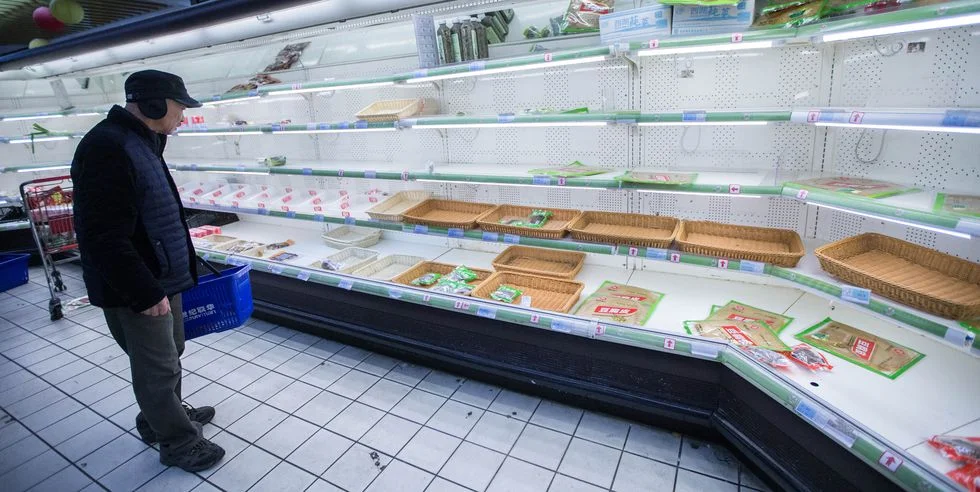
"Healthy Food Is A Basic Human Right"
These Local Initiatives Are Combatting America's Food Desert Issue
By Alex Aronson
Apr 30, 2019
Access to fresh food is not just an issue in third-world countries. It's a problem right here on American soil, and it's affecting millions.
The Centers for Disease Control and Prevention (CDC) defines food deserts as "areas that lack access to affordable fruits, vegetables, whole grains, low-fat milk, and other foods that make up a full and healthy diet." This issue is also compounded by factors like lack of financial resources and an excess of convenience stores rather than large retail markets that stock healthy foods. Due to this problem, many communities in the U.S. struggle with a deficiency of proper nutrition, leading to a significant increase in child and adult obesity.
But not all hope is lost. There are some incredible organizations and individuals who dedicate their time to combatting this widespread issue.
Click here to learn how 11 amazing groups are doing their part to put an end to food deserts.
BARCROFT MEDIA GETTY IMAGES

Swedish Grocery Store Reveals Line of Produce Grown On-site
Posted By: Harriet Jachec
April 16, 2019
Located in Halmstad, Sweden, Maxi Högskolan has harvested a range of hydroponically-grown produce for shoppers from Freight Farms’, a manufacturer of container farming technology, flagship container farm, the Leafy Green Machine.
By reducing the length of distribution time between food source and consumers, the produce grown by Maxi Högskolan is more nutrient dense and retains freshness for longer. This then impacts on the amount of food waste produced by retailers and consumers.
Technological developments have aided in the process, as Freight Farms’ containerised farming technology creates and maintains the optimal growing conditions to harvest produce year-round using less than five gallons of water per day. This also expands on the production capabilities of produce that is not native to the Swedish region, and allows producers to harvest crops without concerns about climatic limitations.
Rikard Hillarp, owner of Maxi Högskolan, said: “We’re excited to be the first ICA Maxi store to implement an onsite farm. By growing crops just steps from our shelves, we’re able to offer our customers what are truly the freshest greens possible.”
He continued: “Freight Farms’ technology is especially helpful in Sweden, where our short growing seasons can limit crop availability throughout the year and increase our reliance on imported produce. We’re now able to shorten the distance food travels to get to our customers from 2,000 kilometers to just 30 meters.”
In: Agriculture, Food, Innovation, Logistics, Technology

INDIA: Roots of Labour: IIM Alumni's Startup Barton Breeze Brings Farms To Your Doorstep
Gurugram-based Barton Breeze sets up fully-automated hydroponic farms using its in-built technologies to grow clean and pesticide-free vegetables.
22nd Apr 2019
We all know that home-cooked food is the best. But what we really don’t seem to consider is the backend process – vegetables grown using chemicals, pesticides, and insecticides to increase their yield. These chemicals get accumulated in the soil, and in turn, increases the plant's uptake of chemicals. As a result, by the time the food reaches our plate, it would have lost half its nutritional value, and we might be consuming vegetables with high pesticide residues.
Solving this pain-point is Gurugram-based Barton Breeze. Started by Shivendra Singh (31) in 2016 in Dubai, UAE, with a mission to bring technology innovation in the farming sector, Barton Breeze focuses on Hydroponics. It is a method of growing plants without soil by making use of mineral nutrient solutions. It reduces water consumption as well as increases yield.
Shivendra Singh, Founder
The company, which started operating in India by the end of 2017, wants to give ‘clean food’ to its customers throughout the year, without being affected by the changing seasons.
At present, Barton Breeze grows 28 varieties of crops, including edible flowers, eight different coloured bell peppers, lettuce, different varieties of tomatoes, and micro-greens at its farms across India.
The beginnings
After graduating from IIM Ahmedabad, Shivendra worked with the Landmark Group in Dubai. Later, in 2016, he started working on a pilot project around hydroponics and set up two container farms in Dubai. Shivendra says, it was then he met Ratnakar Rai (49), an Agro Technologist, in an agri-tech meet.
“We shared our thoughts on the need for hydroponic and clean food in India, and soon he joined me on my second research project,” says Shivendra.
After setting up a branch in India, Ratnakar, who specialises in Controlled Environment Agriculture, joined the company as the Co-founder.
Shivendra and Ratnakar Rai (L-R)
“Ratnakar can do magic in agri-support and operation. But we needed tech support for faster growth, and that’s when Dheeraj joined us,” Shivendra adds.
Dheeraj Joshi (35) has over 14-years of experience working with software and automation companies in India, the UK and Singapore.
While keeping Dubai farms operational, Barton Breeze entered the Indian market by the end of 2017. The company has developed six fully-automated farms within a year in four states namely Haryana, Rajasthan, Uttar Pradesh, and Uttarakhand.
However, “Getting skilled operators was impossible, and we had to train and build our own ground staff team. We are now a team of six core members, supported by 14 field farms,” says Shivendra.
Quality control using tech
Barton Breeze builds farms, operates it, and directly sells the produce to the customer. This end-to-end operation not only reduces the final cost to the consumers, but also ensures total control over quality.
The team claims to have built fully-automated farms using its in-built technology.
“We have built a software where we clip a device on the leaves and stem of each plant. The software is connected to the computers, and informs the user when a particular plant needs more nutrients or minerals,” says Shivendra.
However, the journey wasn’t as easy for the team. “The supplier base was limited, and so we developed products ourselves and encouraged vendors to develop a few,” says Shivendra.
As a result, Barton Breeze has five hydroponic products developed in-house. This includes Nutrient Film Technique channels, home gardening essentials, and consumables like plat nutrition, net pots, and grow media.
Inside a Barton Breeze farm
The startup is now a retail supplier of these products, and this “adds up to 15 percent of our revenue,” Shivendra adds.
Debolina thinks life is all about seeking that one "great
perhaps". She considers herself a foodie and wants to
have her own food and travel column in a magazine someday

How Google Saved Over 6 Million Pounds of Food Waste in its Cafés
Five years ago, Google starting measuring the quantity and value of food being tossed at its facilities. It’s still got a long way to go, but it’s an object lesson in how focusing on a problem can bring solutions
04.24.19
Five years ago, Google starting measuring the quantity and value of food being tossed at its facilities. It’s still got a long way to go, but it’s an object lesson in how focusing on a problem can bring solutions.
[Photo: courtesy Google]
In a kitchen at Google’s headquarters in Mountain View, California, as chefs work on part of the lunch menu for the day–vegan fajitas over sapporo noodles, and a quinoa bowl–any ingredients that can’t be used end up in trays on a scale, where the staff tracks exactly how much food is wasted each day. It’s part of the company’s strategy to cut food waste as much as possible, part of its overall mission to become a more sustainable company. Over the last five years, the company calculates that it has avoided more than 6 million pounds of food going to landfills or compost.
[Photo: courtesy Google]
Each day, the company serves more than 200,000 meals in its office cafés, from pulled pork tacos to lobster, and it recognizes that its operational scale makes food waste a critical problem to deal with both from an economic and environmental perspective. “We know [food waste] is such a massive global problem and even worse in the U.S.,” says Kristen Rainey, the global procurement and resource utilization manager for Google’s food program. Worldwide, around one-third of the global food supply is thrown out. “So we really feel like we have an obligation and an opportunity to take it seriously in everything we’re doing every day.”
[Photo: courtesy Google]
In 2014, Google started working with Leanpath, a company that provides equipment to measure and track food waste, and it coaches chefs on how to use that data. “Most chefs are deeply interested in food waste prevention–they were taught that food had value and you want to avoid wasting it, so that’s an instinct,” says Andrew Shakman, CEO of Leanpath. “But then they get into the day-to-day challenge of running a high-volume food service operation, and they typically don’t have a lot of time to spend analyzing data and understanding some of the trends.”
[Photo: courtesy Google]
Just collecting that data started to change kitchens. “The reality is that the act of measurement is, in and of itself, a very profound intervention,” Shakman says. “The moment that you ask someone to take the time to pay attention to food waste, you are communicating that that is a significant concern and an opportunity.” The dashboard on the equipment that weighs the food automatically displays the value of the wasted food, something that Rainey says gives additional motivation to chefs.
Using the data, teams can adjust how much food they’re ordering or begin to make other changes, including repurposing food for the next meal; leftover risotto might turn into arancini, or the stems from root vegetables might be used to make pesto or chimichurri sauce. Leftover bananas from one of the company’s “micro kitchens,” where employees make snacks, might be used in banana bread or added to other leftover fruit at a DIY crepe bar. At a juice bar, whole carrots go into blenders along with the carrot tops, and dehydrated fruit pulp can become a powder to add to other food.
The company also sources some foods that reduce waste earlier in the system, like a type of nutrient-rich flour made from coffee cherries, the fruit around coffee beans that is normally wasted. “For us, that’s a huge win because it’s providing jobs in a coffee-growing community, it’s using a waste product that might otherwise just have rotted, and then it’s actually making some items more nutritious than they would be otherwise,” says Rainey. Chefs have experimented with using the flour in brownies, tortillas, and other foods. “We’re really trying to think about items that we could scale so that we could actually be using a significant amount of the product and make a difference,” she says.
[Photo: courtesy Google]
At the cafés, chefs cook in batches to avoid preparing too much food, and adjust through a meal. Near the end of lunch, they might change to shallower pans at the salad bar. “It’s still giving an impression of abundance, but it’s actually much less likely to have tons left over,” says Rainey. Many of the changes focus on what happens in the kitchen, but the company is also beginning to work on the problem of employees throwing food out–something that can be even more of a challenge when everything on the menu is free and there’s no financial incentive to eat what you paid for. In some cafés, employees have the choice of smaller plates, something that can also help people eat less. The company serves some foods, like desserts, in smaller portions. In some cafes, it works with Leanpath to measure wasted food, not only in kitchens, but also at the point where employees return plates, and then uses a digital display to track that waste so it’s visible to diners when they order. “We’ve worked with behavioral scientists to optimize the messaging to figure out what is most likely to cause people to pay attention and take only what they need,” Shakman says.
The LeanPath systems are now in daily use in 189 of Google’s cafés, in 26 countries. “We know that this is a daily habit that has to be kept central in people’s minds, and measurement does that,” Shakman says. As menus and staff change, the system keeps the focus on waste. “It’s not just about discovering an insight once and then fixing it and moving on. It’s really about continuous learning and improvement.”
ABOUT THE AUTHOR
Adele Peters is a staff writer at Fast Company who focuses on solutions to some of the world's largest problems, from climate change to homelessness. Previously, she worked with GOOD, BioLite, and the Sustainable Products and Solutions program at UC Berkeley.

Village Farms Says Cannabis Planting On Track At Pure Sunfarms
The Canadian vegetable grower owns 50% of
Pure Sunfarms, a 1.03 million square foot cannabis growing space
April 23, 2019
Village Farms International announced that its 50%-owned joint venture for large-scale, low-cost, high-quality cannabis production, Pure Sunfarms, has, on schedule, completed planting of Quadrants 1 and 4 of its 1.1 million square foot Delta 3 greenhouse operation in Delta, BC. As a result, the entire 1.03 million square feet of growing area at the Delta 3 facility (composed of 16 individual grow rooms) is now in production. Pure Sunfarms remains on track to achieve full run rate annual production of 75,000 kilograms at the Delta 3 greenhouse operation by mid-2019.
"With the support of Village Farms' decades of experience developing and ramping up large-scale growing operations, the Pure Sunfarms team continues to execute on plan," said Michael DeGiglio, Chief Executive Officer, Village Farms. "We have great confidence in the team's ability to replicate the success of the Delta 3 cannabis operation with the nearly identical 1.1 million square foot Delta 2 'sister' facility, which will double Pure Sunfarms' annual production to 150,000 kilograms and support its goal to be the high-quality, low-cost producer in Canada."
As previously announced, Pure Sunfarms is targeting to complete its first harvest at the Delta 2 facility by mid-2020 and achieve full run-rate production at the Delta 2 facility in the fourth quarter of 2020. All targeted production timelines for the Delta 2 facility are subject to the timing and receipt of requisite Health Canada licenses.

What Is The Cost of Vertical Farming?
The Greenhouse Horticulture Business Unit of Wageningen University & Research and TU Delft are investigating the feasibility of vertical farming as a new production system.
25 April 2019
Whether vertical farming can contribute to food production also depends on the costs for water, energy and CO2, says Luuk Graamans of Wageningen University & Research.
The Greenhouse Horticulture Business Unit of Wageningen University & Research and TU Delft are investigating the feasibility of vertical farming as a new production system.
Complex
So, how can vertical farming contribute to (inter)national food production? This question is more complex than it initially seems, according to Luuk Graamans. “The answer does not only depend on the production, but also on the costs for water, energy and CO2‘”, he says.
The combination of high-density crop production and a closed construction necessitates a different approach with respect to heat, cooling and dehumidification when it comes to vertical farming. - Photos: AFP
Greenhouse models
Graamans gives an example: “How much does it cost to produce one head of lettuce? The answer is fairly well known when it comes to cultivation in greenhouses in the Netherlands. Greenhouse models and growth models can be used to predict the production at a certain consumption of water, energy and CO2.”
However, according to the scientist, those models are not suitable cultivation in a vertical farm. “The combination of high-density crop production and a closed construction necessitates a different approach with respect to heat, cooling and dehumidification.”
Energy consumption of a vertical farm
Graamans says the key question when comparing both cultivation systems is: how much energy does a vertical farm need? “The required amount of water and CO2 can be reduced compared to a ‘traditional’ greenhouse, but this is not the case for the cooling and dehumidification demand. The high internal heat load and the lack of natural ventilation ensure a high cooling demand, which consequently results in residual heat.”
A worker checks on baby kale grown in vertical grow towers in Newark, New Jersey (United States). Residual energy coming from vertical farms could be exchanged energy with other users in cities.
Re-use residual heat
Graamans says the question is whether this residual heat could be used in the surrounding urban environment. “One of the key features of vertical farming is that it can take place in the city, which would allow it to exchange energy with other users. Those other users could become customers of the residual heat from the vertical farm.”
Feasibility of vertical farms in 5 steps
WUR and TU Delft have joined forces to calculate the feasibility of vertical farms in 5 steps. The first step investigates how plants process energy in a closed cultivation system.
The second step concerns the total energy demand: how much energy does vertical farming need?
Step 3 focuses on optimising this energy consumption and step 4 on the integration of the vertical farm into the city.
Ultimately, this information is used in step 5 to calculate the financial feasibility of (urban) vertical farming.
The research project will be completed by the end of 2019.
3 Obstacles Facing The Urban Agriculture Industry In New York
APRIL 16, 2019 LAUREN MANNING AgFunder News
Results of a new study in New York suggest that urban agriculture may not be able to provide the bevy of benefits that have excited consumers and enticed investors
Urban farming may not be the panacea for healthier, locally-grown food and bridging consumers’ disconnect from agriculture, according to a new study examining the impact of rooftop and indoor grow houses in New York City. The location has been an epicenter for the urban food movement drawing vertical farming startups like Elon Musk’s Square Roots, GV-backed Bowery Farming, and AeroFarms in neighboring New Jersey.
But in order for it to make good on its promises of providing fresher and healthier produce, as well as greater food security and food education for city dwellers, the industry may need to reassess its approach.
Analyzing 10 urban farms operating at commercial scale, the study looked at how much they are producing, who is consuming the produce, and whether there is more space to expand the operations. For the most part, the farms are churning out considerable amounts of leafy greens and herbs, and a few other items like fish.
Novel farming systems including indoor agriculture attracted 9% less funding during 2018 compared to 2017, raising $596 million across 54 deals, according to AgFunder’s 2018 AgriFood Tech Investing Report.
Did you know that AgFunder is one of the most active agrifood tech investors?
We are democratizing access to venture capital. Learn how you can invest with us.
Criticism of the space is nothing new, with many players pointing out how difficult it would be to feed the masses from indoor farming outlets alone and asking what the future of this space might look like.
Despite the buzzkill, a number of indoor farming startups are still plowing ahead, targeting niches outside the traditional produce mass market. Square Roots has been particularly focused on tackling local food at scale, for example, an inherently difficult proposition. The outfit recently partnered with Gordon Food Services to bring Square Roots’ container farms to more locations throughout the US. And BrightFarms recently expanded its high-tech greenhouse business with three new locations, including New York.
Here are three obstacles facing NYC indoor ag operations, according to the report.
1. Are urban farms really more resource efficient?
Some urban ag operations take place outdoors on rooftops but many others operate indoors under special lights in tightly-controlled environments that control humidity, temperature, and other conditions to create an idyllic growing environment. Some operations also use water-centric hydroponic systems, while promising as much as a 95% reduction in water use.
The report questions the industry’s water use and also it’s energy use, particularly the use of LED lighting in totally enclosed indoor environments. Civil Eats concluded that a 30,000-square-foot grow house in NYC should allocate as much as $216,000 each year for its electricity and another $120,000 for HVAC costs. The report raises the question of whether focusing on small outdoor growing plots like school and community gardens would be a better way to grow food close to home without the big bills.
2. Will they ever produce something other than leafy greens and herbs?
Fresh greens that haven’t been trucked thousands of miles across the country are delicious without a doubt, but in order to provide a sufficient range of calories and nutrients, the indoor ag segment will need to expand into other segments of the produce industry, particularly if it wants to address food security. One of the potential factors driving this narrowness could be the specialized nature of indoor grow houses, where lighting, humidity, temperature, and other factors are orchestrated into “recipes” that produce perfect batches of a specific crop as quickly as possible. Optimizing a container farm for one variety of leafy greens may result in unfavorable conditions for broccoli, strawberries, or carrots, for example.
Restaurants are always pleased to offer locally-grown fresh herbs on their dishes, and indoor ag operations can often charge a pretty penny for them, but this doesn’t exactly scratch the surface of the nation’s food insecurity problem. Roughly 12% of US households were food insecure during 2017, marking a slight increase from roughly 11% in 2016, according to USDA data. And in 2009, some 2.3 million Americans without a vehicle lived over a mile from a supermarket, including 750,000 residents of New York.
Even if indoor ag can expand into other types of produce, there’s still the issue of affordability. So far, many of the products to come from urban operations are priced at a premium due to their locally grown specialty nature. The price premium may also reflect the operation’s attempt to pay those dizzying electrical bills, too.
3. Can they meaningfully expand in a city that only has room to grow upwards?
Snapping up real estate in a place like NYC is no easy feat — financially or logistically. Indoor ag operations will need to expand in order to serve a greater swath of the population, but that means they’ll first have to find more growing space.
One way to put the problem in numbers: the average price per square foot of residential property in the city that never sleeps is about $1,373, according to Trulia, and the average price-per-square-foot of condo space in Manhattan was roughly $934 in 2018.
And as more entrepreneurs get excited about farming within city limits, it will make the availability of appropriately-zoned and conveniently-located space increasingly competitive.