


Welcome to iGrow News, Your Source for the World of Indoor Vertical Farming
Princeton Environmental Institute Urban Challenges Awards $509,000 To New Urban Sustainability Projects
Vertical farms in post-industrial America, origami-based noise-pollution barriers and cement made from burned waste make up the latest round of projects funded by the Princeton Environmental Institute (PEI) Urban Grand Challenges program
Morgan Kelly, Princeton Environmental Institute
January 18, 2019
Vertical farms in post-industrial America, origami-based noise-pollution barriers and cement made from burned waste make up the latest round of projects funded by the Princeton Environmental Institute (PEI) Urban Grand Challenges program. Totaling $509,000, the new awards are active through September 2020 and are described below.
The Urban Grand Challenges program combines the study of the natural and built environments to address the interrelated environmental and social issues facing the world’s rapidly expanding urban areas in a world of increasing environmental volatility. Urban Grand Challenges supports and encourages interdisciplinary faculty and student research at Princeton in the environmental sciences, engineering, architecture, the humanities, policy, the creative arts and the social sciences.
Results from these projects are not only published, but also form the basis of community outreach efforts. In addition, each project includes an educational component — particularly in the form of Princeton courses and PEI internships — that perpetuate the knowledge needed for a sustainable future.
The Princeton Vertical Farming Project was established by Paul Gauthier, associate research scholar in geosciences and the Princeton Environmental Institute, to study how vertical farms can be implemented in communities, particularly in cities.
Photo by Nick Donnoli, Office of Communications
The sustainability of vertical farming in the cities of tomorrow
Paul Gauthier, associate research scholar in geosciences and PEI, is building on the Princeton Vertical Farming Project (PVFP) he established in 2017 to study how vertical farms can be implemented in local communities, particularly in cities. He is working with the nonprofit Isles Inc. based in Trenton, New Jersey, and the 1,200-square-foot Kêr Farms based in Hamilton, New Jersey, to develop a 1,200-square-foot vertical farm and a “food hub” in Mill One, a former industrial building in Trenton. The goals of the project are to prove the feasibility of establishing vertical farms in former industrial buildings, study the social impacts of vertical farming on underserved communities, and better identify the energy and environmental costs of vertical farms. Most importantly, the farm will serve as a source of fresh food for local residents and be used to teach Trenton and Princeton communities about the benefits of vertical farming and the nutritional benefits of “hyper-local” organic food. Gauthier will build on the PVFP’s current partnerships with Hopewell Elementary School and Princeton Public Schools to develop an educational program at Isles Youth Institute designed to help students learn the necessary skills to become a successful farmer.

Farmee Experts: Affordable Crop Consulting Online
German AgTech startup Farmee teams up with leading Dutch consulting company Delphy to support farmers remotely
German AgTech startup Farmee and well-known Dutch crop consulting company Delphy just launched the online platform Farmee Experts.
With their service, both partners provide affordable crop consulting services online. Any farmer in the world having an issue with their plants can post a question on the Farmee Experts website. Within 24 hours, the question is answered remotely by Delphy’s experienced agronomists. Farmers just have to pay for this troubleshooting without any long-term costs. All questions and answers are private and cannot be seen by other users. As a special launch deal, Farmee Experts offers the first answer for a new registered user completely free. After that, any question will be answered for a fixed price of 49 USD during the market entry phase.
“Knowledge still is the biggest challenge in agriculture today”, says Jacco van der Wekken, CEO of Delphy. “With Farmee Experts, we bring the know-how of our experts to new and innovative customer segments worldwide.” Especially innovative owners of small-sized greenhouses, indoor growers or urban farmers will benefit from having access to professional advice through an affordable service.
Florian Hassler, Co-Founder of Farmee, is looking forward to the collaboration: “We are really excited to launch our platform with Delphy as a renowned partner. We believe that sharing knowledge will help many farmers worldwide to grow better food.” In the future, Farmee Experts wants to open up their platform for other partners, becoming the world’s first open marketplace for online crop consulting.
Explainer Video
https://vimeo.com/farmee/farmee-experts-explained-in-90s
PR Contact
Farmee GmbH, Jens Schmelzle (Co-Founder), jens@farmee.io
About Farmee
Farmee is an AgTech startup from Germany. Founded in 2018, the software company develops digital solutions to enable people growing food. Farmee was selected for the Foodstars Accelerator (NL) and the EIT Food Accelerator Network.
About Delphy
Delphy stands for worldwide expertise for food & flowers. The Dutch company with over 220 employees and its own research units is the leading consulting partners, developing and offering knowledge about the cultivation of crops and expertise in all plant sectors, see www.delphy.nl

The Southeast's Largest Urban Agriculture Conference of the Year!
The Southeast's Largest Urban Agriculture Conference of the Year!
Sunday, April 14, 2019 - Monday, April 15, 2019
On April 14-15th, 2019 the AGLANTA CONFERENCE will once again host innovators, business leaders, and AgTech rising stars to celebrate, share, and grow together in the capital of the South.
Over the past two years, the AgLanta Conference has become well known for its informative content, honest conversations, and exceptional networking opportunities. Now, for its third consecutive year, AgLanta 2019 will bring together a wide array of enthusiasts and professionals from across the globe to hear from industry leaders and experience urban agriculture innovation within the City of Atlanta.
The AgLanta Conference 2019
Why Atlanta? The city has emerged as a leading advocate for both community-focused and commercial forms of urban agriculture, with initiatives like the Urban Food Forest at Browns Mill; Grows-A-Lot program; and IoT.ATL Living Labs Challenge.
This year's AgLanta Conference will spotlight Innovation and Entrepreneurship. Attendees will hone in on three crucial stages of development for any endeavor - Create | Pilot | Grow - by participating in tours, networking, speaker sessions, creative workshops, and locally-sourced meals.
A limited number of Early Bird tickets are now on sale! You'll save 15% vs. a full-price ticket when you buy today.
Atlanta, Georgia
Sunday, April 14 - Monday, April 15
Register Today

Uber CEO, Temasek Invest in Urban Farming Startup
The New York-based company plans to announce on Wednesday that it raised US$90 million from investors including Alphabet Inc's GV and Uber Chief Executive Officer Dara Khosrowshahi, said Bowery's co-founder and CEO, Irving Fain.
THU, DEC 13, 2018 - 7:28 AM

The New York-based company plans to announce on Wednesday that it raised US$90 million from investors including Alphabet Inc's GV and Uber Chief Executive Officer Dara Khosrowshahi, said Bowery's co-founder and CEO, Irving Fain. The company declined to provide its valuation.
PHOTO: REUTERS
[SAN FRANCISCO] Bowery Farming Inc, a two-year-old startup that uses robotics to cultivate crops indoors, is on track for more growth. The New York-based company plans to announce on Wednesday that it raised US$90 million from investors including Alphabet Inc's GV and Uber Chief Executive Officer Dara Khosrowshahi, said Bowery's co-founder and CEO, Irving Fain. The company declined to provide its valuation.
Bowery is part of a new crop of agriculture technology startups growing leafy greens in controlled environments near cities. Last year, Plenty, a San Francisco-based vertical farming company, raised US$200 million from the Japanese conglomerate SoftBank Group Corp's Vision Fund.
Bowery grows its veggies in layers of sensor-rich trays that move and react to humidity, carbon dioxide and light. One square foot of Bowery's indoor farm is 100 times more productive than an equivalent plot of arable land, Bowery says. Plenty makes similar claims.
Part of the urgency of Bowery's business plan is the prospect of looming global food shortages. The United Nations says food production will need to double in the next three decades to feed the planet's swelling population. Bowery and its ilk see a business opportunity in building massive indoor farms in and on the outskirts of cities - a costly proposition, but one that could cut down on waste and ensure fresher produce.
"This round is solid validation for the scope of the problem and the opportunity," said Mr Fain. To date, Bowery has raised US$118 million from investors including First Round Capital and General Catalyst.
GV, formerly Google Ventures, led the most recent investment, which includes funding from Singapore's state investment firm, Temasek Holdings Pte.
Mr Fain said Uber's Khosrowshahi became an investor because of his interest in futuristic cities. "Uber is a big believer in cities and the importance of sustainable cities," said Mr Fain.
Bowery currently operates two indoor farms in Kearny, New Jersey. The facilities send greens like kale, bok choy and butterhead lettuce to Whole Foods and salad chain Sweetgreen. Mr Fain said the fresh funding will be used to open new farms in the US and internationally.
Bowery declined to disclose how many new farms are in the works or where they would be located. "There is no question that we intend to have our farms in cities across the world," Mr Fain said.
Andy Wheeler, a Bowery board member and partner at GV, echoed Mr Fain's global expansion ambitions. "The company is poised to have a significant impact on the global produce market," he said.
Bowery is planning to expand its headcount too, Mr Fain said. The company employs 65 people. Some of these employees could come from Amazon, Mr Fain suggested. Though competition for talent will likely be tough as the e-commerce giant ramps up hiring for its new office in New York.
This year, Bowery hired Brian Donato, a former senior operator of Amazon Fresh and Pantry food delivery services; Scott Horoho, a former senior Amazon engineering manager; and Jeff Raines, a former director of data center engineering for Amazon Web Services.

What Bowery’s Latest Funding Round Says About Indoor Farming
The new investment round brings Bowery’s total funding to $117.5 million.
By
December 13, 2018
New Jersey-based indoor-farming startup Bowery announced yesterday that it has raised $90 million in fresh funding. The round was led by Alphabet Inc.’s GV with participation from Temasek and Almanac Ventures, General Catalyst and GGV Capital (Bowery’s Series A investors), and various seed investors.
Bowery produces what founder Irving Fain calls “post-organic produce.” Or to put it more plainly, Bowery produces leafy greens in an indoor environment it controls with proprietary software. The FarmOS system, as it’s called, helps farmers manage crops by collecting data about water flow, light levels, humidity, and other environmental factors that impact the taste of greens. And because the farm is indoors, Bowery can grow its crops without soil, pesticides, or chemicals.
This new investment round brings Bowery’s total funding to $117.5 million. That sounds like a lot until you compare it to Softbank’s $200 million investment in Bowery’s West Coast competitor Plenty, which took place in July of 2017.
Both companies’ raises illustrate the enormous amount of interest in indoor and vertical farming right now. The latter field is expected to have a market valuation of more than $13 billion by 2024, and there are dozens of other companies working on various iterations of indoor farming today.
AeroFarms grows leafy greens inside a 70,000-square-foot facility in New Jersey and has backing from IKEA and Momofuku’s David Chang. Crop One Holdings and Emirates Flight Catering are building what they call “the world’s largest vertical farm.” And Ford Motors operates a farm in Detroit that helps feed the homeless.
Okay, but will leafy greens really feed the homeless? Will butter lettuce and fresh basil help alleviate the global food shortage we’re expected to face as the population nears 9 billion people?
By itself, indoor farming can’t do either of those things, at least not adequately. But that doesn’t render indoor farming an overhyped segment. What it does mean, though, is that we need to start moving beyond the leafy greens and start producing foods with a little more substance. Plenty says cucumbers and strawberries are next on its list. Meanwhile, it’s possible to grow root vegetables like turnips, beets, and sweet potatoes using hydroponics. It’s just more expensive and more challenging than basil.
Bowery says its new capital will go towards “scale its operation in new cities across the country and open multiple farms by the end of 2019.” There’s no word yet on whether those new farms will stick to leafy greens or branch out, though Fain did say Bowery is working on “scalable solutions for an impending climate and food crisis.”
We’ll hopefully see Bowery put those words into action by figuring out how to widen the possibilities of what we can grow with indoor farming.

The 3 Most Important Factors for a Profitable Farm
Regardless of how you grow, the profitability of your farm will depend on three main factors: demand, viability, and profit margin.

by Mia Godfrey | Nov 9, 2018 | Farm Management | 1 comment

Regardless of how you grow, the profitability of your farm will depend on three main factors: demand, viability, and profit margin. Lots of new farmers focus the majority of their efforts on their ability to grow a single crop and forget to do research on the other factors. In this article, learn how to appropriately address questions like the following:
What can you sell a lot of? What does your market want?
What are you good at growing?
What has a good profit margin?
For a profitable farm, you must consider all three. Let’s start with how you know you can sell something well.
What can you sell a lot of?
This is the most important thing: if people don’t want it, you won’t make money off of it. It may seem obvious, but it’s easy to get excited and overlook the importance of demand.
Imagine that you’ve just invested a lot of money in starting up a farm. You’ve tried a few different crops but discovered that you’ve been able to grow cilantro especially well. Since you can grow it so successfully, you decided to overhaul your whole farm and plant tons of cilantro. Then you discover that your market does not want to buy cilantro. Now, your whole farm is taken up by rows and rows of cilantro, and you’ve got nothing to do with it. You’re out of money and have no way to make it back.
This is why market research is so crucial. You need to know what people will buy from you not just once, but many times. You also need to know how much they want to consume on a regular basis so you don’t end up with a lot of wasted produce. This is called market volume. Aim for high market volume—lots of people want to consume lots of what you’re growing.
But market research isn’t just looking at numbers. Spend a little bit of time talking to buyers and looking at what other people are growing. Is there a gap you could fill with your unique product? Could you alleviate customers’ pain points by offering a better product at a better price? Take the Market Research for Farmers course to learn more about effective strategies.
In addition to high market volume, you want to choose a product that has low supply competition. If everybody grows cilantro and sells it at the market, you probably don’t want to depend on cilantro for the success of your farm, even if you can grow it well.
Insider tip: Wholesale retailers—think grocery stores and restaurants—are great places to find information on demand because they’ll have consistent records where you can get an idea of what they’ve had success with in the past. This information is slightly more difficult to find in something like a farmers’ market, where different vendors will have different experiences based on a variety of factors.
Low supply competition means that there are fewer people in your area growing it. This leads us to what you can grow well.

What can you grow well?
In your particular climate, with your particular capabilities, what grows best? Are you good at it? Do you understand it well? Are you excited about it?
Now that you know what people want, you’ll need to successfully execute production. Say you find out that the market in your area has a high demand for spinach. You figure it’s a pretty good bet, and throw everything you’ve got into growing spinach but you just cannot get the little buggers to grow. You are not going to make money.
You won’t know what you’re good at growing—or even if you like it—until you give it a try. You will likely experience some error, so when you’re starting out keep it fairly small in order to minimize cost and risk.
That said, this type of success isn’t just dependent on your personal farming abilities. It will largely be influenced by where you farm, what type of farm environment you have, and what type of system you’re growing in.
Additional factors to consider are the costs and resources that are available to you. Do you have affordable access to the resources you need to build a successful farm? Unreliable or inconsistent availability of resources—like nutrients, plugs, and system repair parts—can throw a wrench in your production as well as your relationships with your customers.
Even if you can get reliable access, think about the total cost. Whether or not you have great profitability, you’ll still need to make sure your costs are as low as possible.
Finally, if you don’t like doing it, even if all the other factors are there, it’s possible that you won’t do it well. Find something that you enjoy!
What has a good profit margin?
First of all, what is profit margin?
Profit margin is the money you have left over after you pay to cover all of your costs. Some crops can provide better profit margins than others. Think of it this way:
When you set up a farm, you pay capital expenses (CapEx) to acquire all of your system components, like media, lights, and structural components. Then, when your farm is running, you have operating expenses (OpEx) like water, electricity, and nutrients. The CapEx plus the OpEx is what you pay to create your product (the plants). You then sell the product, and the money you receive in return should be a larger amount than what you originally paid. The difference (what you sold your product for minus what you paid to create it) is your profit margin. Ideally, you have a positive profit margin.
During your market research process, you should also consider discovering what the possible profit margins are for a variety of crops. Research the nutrient and water demand of the crop in addition to the market demand.
Essentially, you want a crop that is cheap to produce, but that people will pay more for. Fortunately, being a hydroponic or aquaponic grower gives you a unique advantage because your product is likely higher in quality than what your customers have had previously.
All of your profit margins contribute to your net profit, which is the total amount of money you’ll keep as a result of your sales. Much of the profit you make from selling your produce will need to be put back into your farm to keep it running and producing.
Business is about trade-offs and compromises, and you get to play the exciting game of finding the most profitable compromise for your business. For example, you could grow and sell a high volume of produce at a lower price, or more specialized produce at lower volumes and higher prices.
There are ways to make all of these cases work, and it will depend on your business model.

Decide based on your business model
Different markets and market types will provide different pros and cons when it comes to profit margin. Think carefully about the trade-offs between high volume versus high prices, and do your research—which works best for you?
Making decisions
If you do decide to focus your farming efforts on a single crop, ensure that:
your market wants it,
that you can grow it well,
and that you can make money off it.
Say you discover that you are really good at growing hydroponic cucumbers, for example, and you have a lot of market demand for them. You may be able to get away with only growing and selling cucumbers. While these are three critical decisions that can lead your farm to profitable success, there are other factors you’ll need to consider as well, such as inputs, seasons, and environmental controls.
Interested in learning more? Take these courses:

Going To Fruit Logistica? See Motorleaf On Stage And Drop By Our Stand
WILL YOU BE AT THE FRUIT LOGISTICA TRADE SHOW?
See Motorleaf on stage presenting greenhouse automation technology
Fruit Logistica will take place in Berlin, Germany this February 6th to 8th. This event is a great opportunity to rub shoulders with leaders in the agri-food industry, including the team at Motorleaf.

Check out our presentation and exhibition stand
Motorleaf was one of 20 new agriculture technology companies selected from an international pool of applicants to demonstrate our greenhouse technology services on stage
Happening on Friday, February 8th, the theme for the series of presentations is 'disrupt agriculture', where innovative products, projects and ideas will be in the limelight. We will present the application of our artificial intelligence technology to automate greenhouse tasks, such as harvest forecasting and disease scouting.
Republic Polytechnic (RP) Invests In Urban Farming With New Diploma
The Agriculture Technology Laboratory will be equipped with indoor farming systems. PHOTO: LIANHE ZAOBAO
Jan 11, 2019
Republic Polytechnic (RP) is paving the way for the future of Singapore's high-tech urban farming.
Yesterday, the poly launched the specialist diploma in urban agricultural technology - the first full-qualification diploma in the field.
At the launch, Senior Minister of State for Trade and Industry, Dr Koh Poh Koon, emphasised the importance of increasing the margin of safety for Singapore's food supply through agricultural technology.
Dr Koh explained that since Singapore imports more than 90 per cent of its food supply, it is crucial to leverage on technology to minimise challenges like disruptive weather conditions and optimise crops' growth cycles.
To overcome the challenges of unpredictable weather and land scarcity, the agricultural industry has turned to urban agriculture.
Commencing in June with an inaugural batch of 25 students, the part-time diploma in applied science gives students the option of signing up for the associated SkillsFuture Earn and Learn Programme.
Dr Koh also witnessed the opening of RP's Agriculture Technology Laboratory and memorandum of understanding signing with Singapore Agro-Food Enterprises Federation.
The Agriculture Technology Laboratory is a new facility to support students in deepening their skills through hands-on training.
The lab will be equipped with indoor farming systems like vertical plane cultivation,conduit-based horizontal hydroponic nutrient film technique, tray-based horizontal hydroponic growing and substrate growing systems.
According to Mr Yeo Li Pheow, the principal of RP, the motivation behind the new course and lab stemmed from the pressing issue of food security due to Singapore's limited land area.
"In order for Singapore to be more self-sufficient and resilient, we need to increase the amount of food we produce locally and reduce our dependence on food imports," said Mr Yeo.

Future Farming Hub Is Creating A One-Stop-Shop Vertical Farming System For ‘Anyone’
January 15, 2019
The Vertical Farming Development Centre at Stockbridge Technology Centre (a Liberty Produce consortium member)
For a company less than one year old, Liberty Produce has already taken some big strides along its path to make vertical farming a more scalable, economically feasible reality. Specifically, the UK-based agtech company hopes to not just grow food, but also create an end-to-end, automated vertical farm system that, according to founder Zeina Chapman, “anybody” could use.
On vertical farming in the UK, Chapman notes there are “really great things happening . . . but they’re all siloed.” In other words, LED companies aren’t talking to those who make HVAC systems, and thus the development of these products happens independent of one another. As technologies by themselves, they work, but when put together in one environment, are they creating the most energy- and resource-efficient way to grow the best crop yield?
It’s a question Liberty will address with its new project, the Future Farming Hub. For the £1.3 million (~$1,652,000 USD) project, Liberty will lead a consortium of 11 different partners, each focusing on a different capability of the vertical farm. Chapman wouldn’t name specific names over the phone, but she did note there were partners in Taiwan, where vertical farming is a huge industry, a major LED company, as well as companies working on sensors, nutrient delivery (for the plants), and the growbeds themselves. For the latter, a partner will redesign growbeds to reduce the amount of bacterial growth that can sometimes hinder plant growth or damage plants. Sensor technology, meanwhile, would immediately tip the grower off to there being a bacterial problem in the growbed.
Underscore that word “immediately,” as that’s the other point Liberty and the Future Farming Hub are pushing. The project will also focus on a developing a system that gives growers real-time data about the farming operation
All of this rolls up under one goal focused on, according to a press release, reducing operational costs of vertical farms by 25 percent, increasing crop yield by 30 percent, and cutting down the amount of decisions growers themselves have to make when it comes to caring for plants.
“There’s lots we don’t know about growing plants in this artificial environment and we’re not giving them optimal conditions,” says Chapman. She cites lighting as one example: “With lighting, there isn’t an option to control it in a way that maximizes plant growth. So we might be putting plants under stress.”
Chapman also wants to make it easier for virtually anybody to operate a vertical farm. When I asked if that includes an open-source framework for growing, as others have suggested, she noted this project goes a step beyond open source. “If you decide you’re going to grow basil, you just press the button and the system will take care of that,” she said. In theory, at least, Liberty will have already developed the formula for growing optimal basil and programmed it into the system, effectively taking the guesswork out of growing.
Automated vertical farming is slowly gaining momentum around the globe, and other proprietary farm systems abound. Stateside, AeroFarms’ patented system can create light “recipes” to give each plant the exact spectrum and intensity it needs to grow. Bowery, too, uses a mix of hardware, analytics, and proprietary software to produce greens year-round. They also just got a $90 million shot of fresh investment. Over on the West Coast, Plenty more than doubled that figure last year, when Softbank invested $200 million in the company’s system.
But no one’s yet come out with a one-stop-shop system that you need neither an agricultural or engineering background to operate and which relies on real-time data to do the heavy lifting.
The project doesn’t kick off until April of 2019, which makes all of this somewhat abstract at the moment. But Chapman’s optimistic. “One of the greatest things we want to achieve is to pull together a system that’s fully integrated and get all these systems to talk to each other,” she says. “We hope it can reduce the costs, which is a huge barrier to entry and also increase yield. As we increase yield, more and more products become viable.”
Chapman and Liberty aim to have a full product ready for market at the end of the 27-month project, and along with it, a more accessible, scalable approach to vertical farming.

Netherlands: Additional Research Facilities At Delphy
The facility has now been extended with the addition of two climate cells.
For years, Delphy Improvement Centre in Bleijswijk and Certhon have shared the same ambition: to contribute to global solutions in the field of health, food safety and sustainability, through knowledge sharing and knowledge development. This is reflected in the Improvement Centre, which was opened a few years ago and has been used for various research projects since. The facility has now been extended with the addition of two climate cells.
Following the research facilities in the greenhouse, Delphy wanted to make an in-depth study of research and research methods. With the two climate cells realized by Certhon last summer, Delphy can gain more knowledge about daylight-free cultivation and physiological aspects of plants. This knowledge can also be applied in the greenhouse.
The two climate cells can be found in the reception area of the research centre. The doors of the cells are equipped with two small windows, so visitors can see which test set-up with which crops are inside. A few weeks ago, the first tomato and cucumber plants were placed and the research started. During the cultivation process there will be frequent consultation between Delphy and Certhon, to share advice and knowledge.
For more information:
Certhon
www.certhon.com
Publication date : 12/17/2018
Hydroponic Nutrient Management: What Every Grower Should Know
Follow Monica Mansfield’s tips and your plants will think Mother Nature is working her magic.
Monica Mansfield | December 10, 2018
Takeaway: When you choose to grow hydroponically, it becomes your responsibility to ensure your plants are receiving what they need to be healthy and productive. Follow Monica Mansfield’s tips and your plants will think Mother Nature is working her magic.
One of the keys to a successful hydroponic garden is having a solid nutrient management plan. Plants grown hydroponically are much more sensitive to the nutrients you give them simply because they don’t have the soil to buffer any mistakes you may make. You are taking on nature’s role and are responsible for putting together the correct nutrients, in the right amounts, with the right pH, at the right time. You must also manage your water’s quality more strictly and be aware of any chemical incompatibilities that could hurt your plants.
Essential Hydroponic Nutrients
First things first, you must understand the importance of the nutrients you are feeding your plants. They can be broken down into three categories: primary, secondary, and micronutrients. In hydroponics, instead of receiving these nutrients from the soil, plants get these nutrients from the nutrient solution they grow in.
Primary nutrients include nitrogen, phosphorous, and potassium. These are needed in large quantities for plants to thrive. The secondary nutrients are calcium, magnesium, and sulfur. They are needed in smaller quantities than the primary nutrients, but in much larger amounts than the micronutrients. Micronutrients include iron, molybdenum, boron, copper, manganese, sodium, zinc, nickel, chlorine, cobalt, aluminum, silicon, vanadium, and selenium. Plants also need carbon, hydrogen, and oxygen, however, they receive these from the air and water.
If a plant takes in too much or too little of these nutrients, they will suffer from deficiencies or toxicities. Plants will show signs to help you figure out what they need. For example, a nitrogen deficiency will cause yellowing of the older leaves and slowed growth. Too much nitrogen can cause extremely green leaves, excessive vegetative growth, and reduced fruiting.
Understanding Hydroponic Ratios and Formulas
When you go into a hydroponic shop, it is easy to be overwhelmed by the hundreds of fertilizers lining the shelves. There are many different formulas and ratios to choose from.
There will be three numbers on the front of the fertilizer bottles. This is the NPK, which stands for nitrogen, phosphorous, and potassium, respectively. These numbers represent the percentage of each nutrient in the bottle. A 7-9-5 fertilizer will have seven percent nitrogen, nine percent phosphorous, and five percent potassium in that bottle. The back label will tell you the percentage of other nutrients in the fertilizer.
These ratios will vary a little by brand, what kind of formula it is, and what stage of growth it is meant for. Fertilizers formulated for the growth stage of plant development will have more nitrogen, while the bloom stage formulas will have less nitrogen and more phosphorous.
You will also see one-part, two-part, and three-part formulas. One-part formulas have one bottle for the growth stage and one bottle for the bloom stage of growth. While they contain all the nutrients needed, they likely have smaller amounts of calcium to keep the formula stable and will need to be supplemented. One-part formulas are ideal for beginners who don’t yet understand how to adjust recipes for their plant’s specific needs.
Two-part formulas have an A and B formula for growth, and an A and B formula for bloom. By separating some of the chemicals, the manufacturer has created a more stable and complete formula that can be mixed at different rates throughout the growth cycle. Specifically, higher amounts of calcium and phosphorous can be included in the base nutrients by separating them instead of putting them together in one bottle.
Three-part formulas include a separate grow, bloom, and micro formula that will be mixed together at different ratios throughout a plant’s life. This allows for much more flexibility so that the grower can tailor nutrient recipes to their plant’s specific needs and fix deficiencies more quickly.
Water
One of the most important things to consider in a hydroponic nutrient management program is your water. It is essential to test your water before designing your program. You will want to test for alkalinity, electrical conductivity (EC), and contaminants.
Alkalinity is measured from near zero to more than 300 parts per million (PPM). If your water’s alkalinity is high, then the pH will tend to rise in your nutrient solution. Ideally, you want your alkalinity as close to zero as possible, as it is in reverse osmosis treated water. It is important to note that alkalinity is not the same as pH. While pH can be measured at a certain point in time, alkalinity is a measure of your water’s longer-lasting pH effect. Knowing your water’s alkalinity can help you choose the proper fertilizer program. For example, you may want to use a fertilizer with greater amounts of acidic nitrogen to counter the pH rise.
Your water's EC can be a rough measurement of your water’s purity. Electrical conductivity measures the total dissolved salts in your water. If your EC is high, then you will want to use a drain-to-waste hydroponic system. Electrical conductivity should be low, ideally less than 0.25 mS/cm for closed systems. You can also filter your water using reverse osmosis if you would like to use a closed system but have a high EC.
Your lab analysis should tell you what other elements or contaminants are already present in your water. This is helpful when designing your fertilizer program. For example, if your water already has calcium or magnesium then you will not have to add as much to your nutrient solution. If your water has high levels of sodium or chloride, you know that you may need to purify your water or flush your soil more often to prevent salt build-up.
pH
Monitoring and maintaining a proper pH is crucial in a hydroponics nutrient management system. The solution’s pH measures how acidic or basic it is. The scale ranges from zero to 14, with 7.0 being neutral. Different nutrients are available at different pH levels. In general, nutrient solutions for hydroponics should have a pH between 5.0 and 6.0, which will create a pH in the root environment of between 6.0 and 6.5. In this range, more nutrients are readily available to plants.
You can measure pH with either pH strips or a pH meter. If you use a meter, be sure to calibrate it on a regular basis, about once every week or two.
Depending on your hydroponic system and your plant’s stage of growth, you may need to adjust your pH often. A drain-to-waste system does not reuse water, so you will adjust your pH when you mix it initially. However, recirculating systems will need more frequent adjustments. As roots respire, the pH will decrease as carbon dioxide reacts with water to create carbonic acid. This will happen much more towards harvest when roots are their largest.
To adjust your pH, you will add acids and bases to your nutrient solution. Add a little at a time and measure with your meter as you go. Common acids used to decrease pH include sulfuric acid, phosphoric acid, citric acid, and nitric acid. To increase your pH, potassium hydroxide and sodium hydroxide are commonly used. It is important to consider which acids and bases you use to adjust your pH, as they will add nutrients to your solution. For example, nitric acid will add nitrogen and phosphoric acid will add phosphorous.
PPM/EC
When mixing your nutrient solution, you have the option of creating your own program from scratch or following a pre-designed program from a fertilizer company. Commercial operations usually design their program from scratch so that they can adjust their solution as needed. To save money, many commercial operations use recirculating systems and lab-test their nutrient solution regularly so they can add only the elements that have been depleted. For the hobby grower, however, it is much easier to follow a feeding plan that has been designed by a fertilizer company. Most companies have feeding schedules available to go with their products.
Although you can simply follow the measurements on the bottle, your solution will be more precise if you mix it using a PPM or EC meter. Parts per million and EC both measure the total dissolved salts in your solution. While this measurement will not tell you exactly how much nitrogen, phosphorus, or potassium is in your solution, it will give you an idea of the overall nutrient concentration. You can use this number to add nutrients to a recirculating system in between reservoir changes. Most feeding schedules will tell you what the PPM or EC should be at each week’s stage of growth.
If you are a hydro grower, follow these principles to create an effective nutrient management plan for a successful harvest.
(For more on plant nutrients, check out The Essential Plant Nutrients.)

Digestate As Alternative Substrate For Soil-Less Lettuce Farming
Researchers from Modena University and Reggio Emilia University – in collaboration with the Foggia’s CRA – evaluated the digestate as an alternative and sustainable substrate for farming and as a nutritive solution in the hydroponic farming of lettuce.
The consumption of ready-to-eat salad has been growing over the last 20 years in the European market. The annual growth rate is at 4%. That's why this food category is renowned as one of the most profitable horticultural segments.
As a result of a growing trend, the lettuce and chicory are farmed over a 1.2 million hectares surface globally. The global production is of 27 million tons, almost.
Italy occupies the fourth place in the world, with 38.542 hectares farmed with lettuce and chicory (31.7% in the north, 10% in the Centre, and 58,3% in the South) for a total production of 8.1 million tons. Additionally, greenhouse production is important as well, for a total surface of 4.549 hectares (37.3% in the North, 31.9% in the Centre and 30.8 in the South).
Leafy produce is considered to be one of the most exposed to microbiological risks. The ready-to-eat lettuce is often connected to food poisoning. The Escherichia Coli O157: H7 has been often associated with lettuce.

Researchers from Modena University and Reggio Emilia University – in collaboration with the Foggia’s CRA – evaluated the digestate as an alternative and sustainable substrate for farming and as a nutritive solution in the hydroponic farming of lettuce. In three different experiments, nine hydroponic combinations of substrate and fertilization (agriperlite + standard solution, agri-perlite + liquid digestate, solid digestate + standard solution, solid digestate + liquid digestate, soil + standard solution, peat + standard solution, peat + liquid digestate, digested pelleted + standard solution and digested pelleted + liquid digestate) were tested and compared for the cultivation of baby leaf lettuce.
During crop cycles, the yield and other agronomic and microbiological parameters have been studied. In all the experiments, the combination of agri-perlite + liquid digestate, solid digestate + standard solution and pelleted digestate + standard solution improved the plant growth by influencing roots (+ 32%), buds (+ 40%), total dry weight (+ 29%) and SPAD parameters (+ 17%).
As the results illustrate, the digestate represents a nutritive sustainable solution and an alternative for the soilless baby leaf lettuce farming.
Source: Domenico Ronga, Leonardo Setti, Chiara Salvarani, Riccardo De Leo, Elisa Bedin, Andrea Pulvirenti, Justyna Milc, Nicola Pecchioni, Enrico Francia, 'Effects of solid and liquid digestate for hydroponic baby leaf lettuce (Lactuca sativa L.) cultivation', 2019, Scientia Horticulturae, Vol. 244, pag. 172-181.
Publication date : 12/12/2018

5 Lawsuits That Could Change The Food Industry
From unknown ingredients and debatable labels to the spreading of salmonella and E. coli, this year has not been short of litigation that can make a big impact.
Lillianna Byington@lil_byington
Dec. 11, 2018
From unwanted ingredients and debatable labels to the spreading of salmonella and E. coli, food companies have been in the crosshairs of litigation this year with cases that can both change recipes and the way manufacturers do business.
Lawyers told Food Dive they have kept busy with issues ranging from food that caused outbreaks to lawsuits challenging label claims, nonfunctional slack fill and contamination with glyphosate. When it comes to lawsuits associated with foodborne illnesses, attorney Bill Marler — a leader in that space — can attest to the recent increase.
"It's been a bad year for food safety and it's more than anecdotal," Marler told Food Dive. "I've had to hire three more lawyers and two more paralegals in the last six months. It's always a bad sign if Bill Marler is hiring more lawyers. That tells you that in the food system, there's something wrong."
But it hasn't just been foodborne illness lawsuits that have had an impact on the industry. There have also been many labeling lawsuits, challenging product claims including "natural," "healthy" and "nothing artificial."
Kevin Laukaitis, an attorney at Kohn, Swift and Graf who focuses on class action consumer litigation involving defective products, told Food Dive the healthy product trend has led to an increase in mislabeling cases. More companies have been advertising better-for-you claims to attract consumers, and that will likely lead to more lawsuits challenging the validity of those labels, he said.
This year alone, there have been many lawsuits filed and numerous resolved that could factor into future cases and help answer some of the big questions looming over the industry. What makes a valid label claim? Who is responsible for foodborne illness? How much empty space can be used in packaging? Here are five cases moving the industry toward answers.
1.) Is LaCroix "natural"?

Credit: Flickr user Tony Webster
What happened: LaCroix came under fire this year in a lawsuit that claimed it mislabels its water as "natural," though the actual ingredients are non-natural and synthetic compounds — not what its cult fan base wants to hear. The legal complaint, filed Oct. 1, says the product contains items including ethyl butanoate, limonene, linalool and linalool propionate. Linalool is used in cockroach insecticide.
The class-action suit was filed in Cook County, Illinois against National Beverage Corp., the parent company of LaCroix. National Beverage Corp. denies the claims, saying all essences in LaCroix sparkling waters are 100% natural. But this case has already brought the company into a negative light for consumers. The case is ongoing and hasn't reached trial yet, but LaCroix plans to fight, writing on Twitter days later, "please stand with us as we defend our beloved LaCroix."
What it means: LaCroix has advertised its product as a "natural" alternative to soda, but it may be up to a jury to decide whether the compounds found in the sparkling drink indeed come from natural substances, as well as what should be considered "natural." The National Beverage Corporation has said that the ingredients in LaCroix are "derived from the natural essence oils from the named fruit used in each of the flavors" and certified to be "100% natural." The decision could mean that the company may need to change its labeling.
"It is a huge trend now in business where consumers are interested in natural products, and they want to have healthy products, and they might pay a little more for a product that is natural over a product that is not," Laukaitis said. "But when they come to find out that the product ... has synthetic ingredients or is just like all the other products out there, then that is going to anger the consumer and they are going to feel cheated."
Why it matters: There have been reportedly about 300 lawsuits over the use of the word "natural" on food products in the last three years, according to an analysis cited by CBS News. These types of claims about synthetic ingredients are becoming more common. Natural label claims are such a big issue since there's no industry standard for what the word means.
"The 'natural' cases are going to be a continued trend because that is the new wave of marketing," Laukaitis said.
But any precedent this case sets could be overruled if the Food and Drug Administration comes out with a regulated definition. In 2015, the FDA opened public comments on the definition of "natural," and Commissioner Scott Gottlieb has said the agency will come out with one soon.
2.) Impact of JBS' massive meat recall

Credit: Jon Sullivan
What happened: In October, JBS Tolleson, Inc. in Arizona recalled about 7 million pounds of raw beef products because of potential salmonella contamination. Then the company expanded the recall this month to more than 12 million pounds of raw beef. The first lawsuit was filed in Arizona Superior Court on Oct. 5 against JBS Tolleson on behalf of Dana Raab, who contracted a salmonella infection after eating ground beef from the company, experiencing severe dehydration, diarrhea, vomiting and abdominal pain. The case was dismissed last week without prejudice, meaning it could be tried again at a later date or that the case could have been settled out of court. Marler's firm, which was one of the firms handling that case, released a statement last week that they would evaluate any cases related to the recall — which means there could be more filed in the near future.
What it means: When a massive outbreak like this occurs, manufacturers not only have to deal with the immediate clean up and recall of the products but also are open to further scrutiny when lawsuits are filed months later. The company's reputation will likely take a hit again because consumers are reminded of the incident — and the brand may also have to pay the affected consumers. A case like this also means similar manufacturers will closely watch how it unfolds, taking note of what happened and learning from it.
Why it matters: A recall on this scale can bring many lawsuits, especially since the recall was expanded to 12 million pounds. Marler said it's likely similar cases will be filed since many people could have consumed the product.
These cases could also impact what processors do to ensure food safety because the bad publicity and cost of a recall and lawsuit could force change. Contamination in meat seems to be occurring more this year than it has in the past, Marler said.
"I'm worried that because there have been so few outbreaks and recalls linked to hamburger in the last decade, you wonder if perhaps companies were getting a little complacent and not paying attention as they should have," Marler said.
3.) Fewer slack-fill cases

Credit: Windell Oskay
What happened: A man in Missouri filed a federal lawsuit claiming that Hershey intentionally sold semi-full packages of candy like Whoppers and Reese's Pieces that contained too much nonfunctional slack fill. The consumer claimed that Hershey was "misleading, deceptive and unlawful." The lawsuit accused Hershey of only filling a $1-sized box of Whoppers about 59% full. His $5 million class action lawsuit moved forward in May 2017. But on Feb. 16, the case was thrown out. The final ruling said the "unjust enrichment claims" were dismissed and could not be brought up in another court.
What it means: The U.S. district judge on this case ruled that the plaintiff wasn't harmed by partially full packages because he kept buying them. In fact, he purchased more than 600 packages of Hershey candy in a decade. Future rulings could follow this precedent — if consumers are able to see the package and continue to buy it regardless of how full it is, then the consumer can't claim harm.
Why it matters: More courts are shutting down slack-fill cases like this one,according to Laukaitis. Companies have become more transparent about what is in their packages with serving size, product weight, volume or piece count printed on the outside of the product, so the consumer has a better idea of what he is getting. This specific dismissal also shows that there may be a higher burden of proof for the consumer to show he was harmed and/or misled.
4.) A potential change in glyphosate litigation

Credit: Flikr
What happened: A California jury awarded a former school groundskeeper $289 million in August because glyphosate in Monsanto's Roundup weed killer likely caused his cancer. Just a few days later, a Florida woman sued General Mills for failing to reveal the presence of glyphosate in its Cheerios products. After the case was filed, a spokesman for General Mills told Food Navigator that the company's products are safe and meet regulatory safety levels. The suit was filed in the Southern District Court of Florida and most recently, General Mills filed a motion to stay the discovery period Monday in order to hear a resolution of its motion to dismiss.
What it means: This plaintiff may not have a great shot at success given the way previous glyphosate cases in food have concluded. Companies generally prevail by arguing the amount of glyphosate in their products is extremely small and would have no health impact on consumers. But if this case sees a different outcome, it could reverse the trend.
Why it matters: Regardless of how the ruling comes down, the negative publicity could have already done damage to the reputation of any products that contain residual glyphosate. If consumers don't trust products with ingredients that may have been exposed to glyphosate, then recipes and formulation might need to change no matter the legal decision.
"Companies should not wait for a mandate from the federal government to do what's right for their consumers," the Environmental Working Group said in a statement after the Monsanto ruling. "People don’t like to eat pesticides. They don't like to drink pesticides. Despite the benefits they often have, pesticides have no place in people."
This is also not the first time General Mills has faced a lawsuit over glyphosate in its products. In August 2016, consumer groups sued the company for labeling Nature Valley granola bars as "natural" when they contained residues of the chemical. In that case, General Mills settled. A settlement shows the manufacturer is interested in making the case go away, and perhaps other manufacturers will want to go that route. Companies usually don't benefit from a long legal challenge, which can be pricey for them and tends to harm a brand, even if the case ends up being ruled in their favor.
5. E. coli romaine outbreak litigation

Credit: Megan Poinski
What happened: An E. coli outbreak linked to romaine lettuce from Arizona sickened 149 people in 29 states earlier this year. The litigation phase has just begun for many victims who have filed suit from this outbreak. Marler has formally filed about a dozen lawsuits against various suppliers in the romaine supply chain, restaurants and retailers who sold the green. In total there are at least 31 cases tied to the romaine grown in Arizona, the U.S. Centers for Disease Control said. There are several different state and federal jurisdictions involved in these cases, which means there will likely be different rulings. In defense, some restaurants have revealed their suppliers' names to protect themselves and shift the blame and legal responsibility.
What it means: These cases could end up costing those in the romaine business a lot of money in damages depending on the rulings in the various cases and how sick the greens made the individuals.
What could help the plaintiffs even more is that the U.S. Centers for Disease Control and Prevention recently warned consumers again to not eat romaine lettuce — the third time in recent years. With repeated outbreaks like this, consumers have claimed in lawsuits before that the product seems to be prone to contamination and nobody is protecting them. The Lange Law Firm already filed an E. coli lawsuit in federal court against a Florida restaurant in the the current outbreak after a patron got sick from eating a salad.
For the court cases, the repeated occurrence of these outbreaks only shows that this is a continuing issue with romaine and could put more fault on suppliers, grocery stores and restaurants for not finding a solution sooner.
Why it matters: The lettuce outbreaks have already sparked changes. Companies and retailers saw the need to implement better processes to limit food safety issues in the supply chain. Walmart asked lettuce suppliers to trace products using blockchain and an environmental assessment was released on how another outbreak like this could be prevented. Most recently, the FDA and the produce industry have introduced a new voluntary labeling plan for romaine lettuce to help clarify whether the product is contaminated. But even with this new plan, these court cases will continue to put a spotlight on the safety of romaine lettuce, and could bring more change, since the outcome could cost growers, shippers, retailers and restaurants big bucks.

AmHydro Travels to Russia And India
The AmHydro Team was busy in December and early January with two international trips to countries eager to join the controlled environment agricultural movement. As the population continues to rise and resources become more limited, hydroponic farming is gaining huge momentum around the world.
Attendees at the Agro Greenhouse Complexes Russia Forum and Exhibition look on as speakers from various countries discuss and present to a full room about self-sustaining food technologies for the modern world.
An early December night is lit up by the Kremlin Main Tower in Moscow, Russia. With Russia's interest in sustainable ways to feed their population, could there soon be hydroponic growing systems beyond those walls?
AmHydro's Vice President Joe Swartz and CEO/President Jenny Harris both spoke on behalf of North America's contribution to the hydroponic industry. They focused on appropriate agricultural technologies for Russia, a country where average winter temperatures are in the 20s or below. They highlighted the successes of farmers around the world who have embraced hydroponics and specifically, AmHydro systems to feed their local communities.
Next in January, two of our production experts traveled all the way to Bangalor, India to help install a 1.5 acre hydroponic system that will house both leafy greens and vine crops. India is an agrarian country that, in modern times, is very interested in adopting a drought tolerant, consistent and safe way of producing food.
Now, that is a lot of NFT channels!
Bato buckets as far as the eye can see!
If you missed the webinar about Winterizing your Hydroponic Business, check it out on our YouTube page!
Get Growing! Intro to Hydroponic Crop Production Seminar (February 21 & 22 2019) | Learn to Start A Hydroponic Business!
ON SALE NOW FOR $595.00 for 2
Major SALE! $400 off plus two nights stay at the Red Lion Hotel
USE CODE: SEMFEBCOMBO
Reserve Your Spot Now!
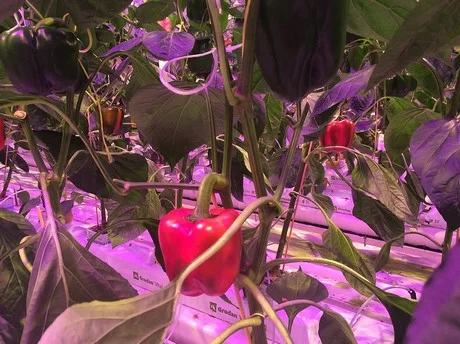
"The Crop is Ready for the Darkest Period"
LEDs for bell pepper cultivation
Only two more weeks and the days will get longer again on the Northern hemisphere, making it quite a challenge for growers these days to keep their crop up and running.
The team at the Delphy Improvement Centre is doing their best as well. They're currently conducting a light test in which the first bell peppers were harvested at the end of November. The plant load is now at around 28 fruits/m2. This is also the maximum plant load calculated for the darkest period with the 200 μmol/m2/s light intensity. The most difficult phase is only just beginning, according to BTO, and the current crop is a good start for the next cultivation phase.
During cultivation they've tried to regulate the amount of light according to the needs of the plant. "This way, we wanted to ensure that the crop did not become too heavy during the period that the supply of assimilates was greater than the demand, so that in the first few weeks light was shielded based on the sum of realized light. Starting in week 42 (4 weeks after planting) the number of exposure hours is slowly increased and from week 47 on we will use the lighting for the maximum 18 hours per day."
Fruit thinning
The challenge of the coming period is that the crop will not experience a dip in fruit production. A plan has therefore been drawn up for the number of fruits that are allowed per week, and fruit thinning is the solution. "The plan is to have a maximum of 3.5 fruits/m2 per week. As bell peppers don't always take every node, thinning is a precision job. But when we look back at the plant load, the plan worked well. We currently have fruit hanging in all stages, which should ensure that we get an even production through the winter."
No difference between departments
There are currently no differences between the two departments (full LED compared to a combination of LED and SON-T lighting). In half of each greenhouse there is extra far-red lighting. So far this provided slightly more stretching and less anthocyanin formation on the stem.
The fruits of the first and second nodes are currently harvested. The fruit weight of the main variety Mavera is around 220 grams and the fruits are very thick-walled. These fruits were harvested within 6 weeks after setting. "Two weeks before the first harvest the setting was somewhat lower, but this week we see this again."
Source: Kas als Energiebron
Publication date : 12/17/2018

A Method To Monitor Indoor Crop Health No Matter What Planet You're On
A user-friendly, cost-effective protocol to use SI-NDVI imaging for early, remote detection of plant stress.
PUBLIC RELEASE: 17-DEC-2018
BOTANICAL SOCIETY OF AMERICA

IMAGE: SINGLE-IMAGE NORMALIZED DIFFERENCE VEGETATION INDEX (SI-NDVI) ANALYSIS ENABLES EARLY DETECTION OF PLANT RESPONSE TO STRESS, PRIOR TO WHITE LIGHT-VISIBLE DETECTION. SI-NDVI IMAGES OF ARABIDOPSIS PLANTS SHOW RESPONSE TO SALT STRESS... view more
CREDIT: NICOLE S. BEISEL, JORDAN B. CALLAHAM, NATASHA J. SNG, DYLAN J. TAYLOR, ANNA-LISA PAUL, AND ROBERT J. FERL. 2018. UTILIZATION OF SINGLE-IMAGE NORMALIZED DIFFERENCE VEGETATION INDEX (SI-NDVI) FOR EARLY PLANT...
As the world urbanizes and technologies such as LED grow lights bring down costs, indoor farming is becoming an increasingly important part of the food supply. Eventually, indoor farming techniques could help humans maintain a healthy diet in space. However, because of the completely closed systems in which indoor crops are grown, imbalances in soil nutrients, salinity, temperature, and other factors must be caught quickly to avoid losing a whole crop. In work published in a recent issue of Applications in Plant Sciences, Dr. Robert Ferl and colleagues at the University of Florida Space Plants Lab developed a light-based tool to assess plant health quickly, accurately, and inexpensively.
Not surprisingly for work coming from the Space Plants Lab, this study was conducted with an eye toward extraterrestrial farming. "Imagine a greenhouse being robotically maintained on Mars," said Dr. Ferl, corresponding author on the study. "The only data we can get back from that greenhouse is electronic. No sample return. Under those conditions it becomes really beneficial to derive as much data as possible from the photons that are coming off the leaves of plants." These photons make distinctive light signatures that can tell quite a bit about how a plant is doing, when analyzed using the normalized difference vegetation index (NDVI).
The NDVI is a widely used metric of plant health and photosynthetic rate that was originally developed for satellite-based monitoring of plant growth. This metric compares the plants' absorption of different spectra of light; healthy plants give off an identifiable light signature, absorbing light in the photosynthetically active region of light spectra, and reflecting near-infrared light. "[NDVI] proved to be an interesting starting point for the project simply because there is a large dataset and collective understanding that underpins the idea of using different spectral components to understand plant health," said Dr. Ferl. They adapted single-image NDVI (SI-NDVI), a low-cost version of this analysis, to see if it would be practical for monitoring crop health in indoor farming conditions.
Dr. Ferl and colleagues assessed the efficacy of this monitoring technique by exposing two different plants (arugula and the model plant Arabidopsis thaliana) to two different stressors (salinity and a high-concentration ammonium nitrate treatment) that create distinctive and well-understood stress responses. "Using these well-controlled stresses that have a well-defined biochemical basis for their responses is allowing us to probe the root causes of NDVI difference detections of stress or health responses," said Dr. Ferl. They were able to detect stress signatures from both treatments well before stress was visible to the naked eye, proving the utility of these techniques as early monitoring systems that can be deployed remotely and relatively inexpensively.
While these authors were primarily motivated by an interest in growing plants in space, the monitoring technique they developed could prove useful here on earth for indoor farmers looking to catch problems in the grow room quickly. "Single-image NDVI offers the opportunity to derive spectral character from a single RGB image. This keeps costs down," said Dr. Ferl. "It also opens the door to a large community of citizen scientists and applications developers that are interested in using SI-NDVI concepts commercially." This means that this method could be adapted to monitor a variety of crops grown under indoor conditions, which could mean less expensive, healthier salad greens on your table, whether that table be here or on Mars.

Why Choosing Automated Dosing Systems Is A Profitable Investment
by Mia Godfrey | Technology, Materials & Equipment
Automated dosing systems can be expensive, which means they’re often an intimidating investment for small farmers. However, many growers note that their upfront investment pays off once they start saving on time and labor costs, especially if they’re beginning to scale their farm or hire employees.
If you’re a hydroponic or aquaponic farmer, you are likely familiar with the time-intensive process of manually testing and dosing nutrients and pH adjustments in your system. As business owners, we know that time is money, and if there’s any way to save on both, we’re likely to jump on it.
We’ll discuss what automated dosing systems are, how they work, and how they can benefit your farm and business. This information will help you decide whether or not you’d like to take the leap and purchase one.
What do automated dosing systems do?
At a high level, automated systems reduce the manual workload of managing your nutrients: measuring, dosing, and testing pH, EC, and temperature*. When done by hand, these tasks can take up a sizeable portion of your highly valuable time, or that of an employee, increasing your labor costs. These systems can also help you reduce human error: you’ll cut down on over- or under-dosing and shocking your plants by accidentally adding an incorrect amount of nutrient.
Now, you might be thinking “I have an aquaponic system, so I don’t need to manage nutrients in the same way, and therefore, I don’t need an automated dosing system.” Don’t be too hasty. These automated systems can benefit aquaponic growers just as much as they benefit others. While aquaponic systems do not require the same inputs, it is often—if not always—the case that you’ll consistently be supplementing chelated iron. You can use automated dosing systems to monitor and adjust pH and iron in aquaponics the same way you would in hydroponics!
*It is important to note, however, that while automated dosing systems will measure the amount of nutrient in your reservoir, they will not measure and mix your nutrients for you. Learn more about this in the next sections.
How does it work?
Depending on the type of automated dosing system you’re looking at, it’ll come with a number ofsensors or probes. These measure water chemistry parameters like pH, EC, and temperature. Some more advanced systems include environmental sensors that will monitor conditions like air temperature, humidity, and CO2 concentration.
These sensors and probes work the same way that your handheld meters do, only they’re all connected to one computing system. Since the system is automated, it allows the user to set determined parameters which the computer will compare to the real-time measurements it’s taking from the reservoir.
In response to those measurements, the computer makes adjustments by operating a series of pumps. These pumps are connected to lines that are placed in buckets, which contain nutrient mixes and pH adjusters.
In our system, we had a series of 3 5-gallon buckets for the nutrient mixes:
part A (N-P-K + CaNO3),
part B (magnesium sulfate),
and a pH adjuster (pH down)
Pay attention to whether your system trends upward or downward in pH—you may want to switch to pH up if there is a consistent downward trend. Read more about pH here.
In small intervals, the system pulls solution from the appropriate bucket into the nutrient water until the readings on the meter meet the programmed target parameters.
Systems like the IntelliDose allow the user to set alarms for when something goes awry and include a host of other useful features. Some auto-dosing systems allow growers to set different parameters for different systems within the same farm.
How much can I save with an auto-dosing system?
Most growers can save upward of 15–30 minutes a day by using an auto dosing system. Multiply that by the wage that you’re paying a system manager, add it all up to the lifetime of the auto-doser, and you’ll see your savings potential.
However, the benefits of an automated dosing system stretch beyond “minutes saved.” Auto-dosing systems can help prevent costly events like crop loss due to human error, and can even lead to more beneficial results, such as increased yield.
Growers have several options for auto-dosing systems. Aquaponic growers may use only pH and iron dosers, for example. Small-scale growers may decide that a monitoring unit serves their purposes just as well as a full auto-dosing system. Whichever direction you decide to go, always balance the price of labor and time against the price of an auto-dosing system.
Monitoring-only units will typically cost between $250 and $400. For instance, an all-in-one handheld meter may run at $280. When you add dosing and remote login capabilities, the price runs closer to $2,000. Systems like Growlink can be customized for your farm, but they’ll likely run you a pretty penny.
Using automated dosing systems
In ZipGrow systems, the sump tank acts as a “collect-all” for system water before it is redirected to the mixing tank and sent to irrigate the towers again.
Here, the tank is equipped with an IntelliDose system. Like most auto-dosing systems, it consists of a controller where the user programs their desired parameters. The EC and pH probes are placed in a small basket-like contraption inside of the reservoir. At the bottom of the reservoir, there is a pump that keeps the water moving so that the probes are always taking an accurate reading. If the water is too still, it is possible for the nutrients to settle along the bottom of the tank. As you can imagine, probes at the top of the tank, in this case, would read differently than if they were at the bottom. It is ideal to have aconsistent concentration of nutrients throughout the reservoir.
We like to hang the IntelliDose controller, pumps, nutrient buckets, and a small electronics box to hold cords on the side of our mixing tank (we use an IBC). This allows us to remove and replace nutrient buckets quickly as well as keep the floor clear for cleaning. The electronics box keeps cords out of the tripping and dripping zones to avoid accidents and improves the safety of the farm.
While this may seem like a “set-it-and-forget-it” type of system, we would like to discourage you from thinking that way. As a part of your daily or weekly farm maintenance, you should take a few moments to ensure that everything is working as it should. Additionally, you will need to calibrate the probesabout once a week and occasionally check the water manually.
Ready to get an auto dosing system?
If you’re ready to take the plunge into auto-dosing, we recommend systems from Hydrofarm, BlueLab, and Autogrow. Begin your exploration with a needs assessment to determine exactly what you need before you purchase a system so you get one that fits your operation.
We chose the IntelliDose System from Autogrow because it is well-made and comes with great customer support.
“I work with four different production facilities, and so I can save quite a bit of time. But that is not the reason I went with an IntelliDose system. I went with IntelliDose out of necessity. I want everything to be done right, and to remove the human error from the system.” -Mark Germino
Learn more about hydroponic farming
Anyone can run a profitable local farm, and at Upstart University, we’re dedicated to unlocking that possibility. At Upstart University, aspiring farmers can learn the tricks of the trade from building a business plan and securing funding, to managing a hydroponic or aquaponic system and achieving high crop yields.
Are Foodborne Illnesses On the Rise? (+ Answers To 5 Other Food Safety Questions)
The Food Safety and Modernization Act is a rude awakening for many farmers. But will it really address the root of the problem?
The food safety blog features such stomach-churning headlines nearly every day – their tagline is “breaking news for everyone’s consumption” – but stories about foodborne illness seem more and more of a staple in mainstream news outlets, as well (just ask Chiptole). But are we really having an increase in outbreaks? Or are we just talking about it more? Well, depends how you crunch the numbers.
I spent a lot of time this summer on foodsafetynews.com (which I don’t recommend before dinner, by the way) while researching a story on the Food Safety and Modernization Act for our fall issue (see: Navigating the FDA’s Food Safety Maze). Proponents of FSMA, which was first passed in 2011 and is only now being implemented, bill it as a once-in-century overhaul of our nation’s food safety system that will drastically reduce the incidence of foodborne illness over time – the FDA expects to avert 331,964 illnesses per year, to be exact. But it gives the FDA unprecedented power to police the food system, which is why its detractors see it as an example of egregious government overreach.
FSMA places particular emphasis on fresh produce, specifically, how a farmer’s cultivation practices affect its safety, an arena in which the FDA was rarely involved in the past, except in the case of an outbreak. In fact, a massive E. coli outbreak that was traced back to a small farm in San Benito County, California is often fingered as the event that set FSMA in motion, and created the political will to get it passed in Congress. But as I learned this summer, there is ample room for debate about whether FSMA will actually prevent outbreaks that originate on farms – and plenty of evidence that it will cause economic distress to small, diversified growers.
Since the article raises as many questions as it answers, here’s a helpful FAQ of sorts.
How common are foodborne illnesses?
While the number of food-related deaths and illnesses are much higher in less developed countries, such as India, most Americans are surprised to learn how common outbreaks are in our hygiene-obsessed society. According the Centers for Disease Control and Prevention, 48 million Americans, or about 1 in 6, get sick from foodborne pathogens each year. Of those, 128,000 are hospitalized and about 3,000 die.
What’s the difference between ordinary “food poisoning” and severe outbreaks that kill people?
Fifty-eight percent of foodborne illnesses are caused by norovirus – a pathogen responsible for the classic symptoms of food poisoning (debilitating, but short lived) – which often doesn’t spread beyond a single household. Extensive, multi-state outbreaks tend to be associated with more virulent pathogens, such as strains of E. coli, Salmonella, and Listeria. There are an average of two multi-state outbreaks each month, and while these are responsible for just 11 percent of all foodborne illnesses, they account for more the half of the deaths.
Which types of food are most associated with harmful pathogens?
Most people assume the answer is meat and dairy, which may be true when it comes to the 48 million total illnesses each year. But the CDC does not have the means to track every individual case of food poisoning and make a determination of whether it was the hamburger you ate or the salad. It does, however, try to determine the source for every major outbreak. When the agency analyzed data from the 4,600 outbreaks between 1998 and 2008, they found that 46 percent of illnesses were traced to produce, but that these rarely resulted in death. Meats are principal culprit in food-related deaths, with the largest number (19 percent) attributed to poultry.
Where do produce pathogens originate?
FSMA places an emphasis on policing produce at the farm level, but it’s unclear whether the bulk of blame lies with farmers or if we just need to make sure we wash our vegetables. The data is spotty, but there are a few clues. First, it must be noted that the CDC is able to determine exactly where in the food chain a pathogen originated only about 40 percent of the time. Between 1998 and 2008, the pathogen was found to originate on a farm about 5 percent of the time. Data from 2009 through 2012 show that number going down to around 1 percent. More detailed data is available for norovirus, which shows that 80 percent of outbreaks between 2001 and 2008 originated in places like restaurants and other commercial food facilities. Between 53 and 81 percent of norovirus outbreaks during this period were thought to stem from sick food service workers.
Are foodborne illnesses really on the rise?
Many headlines of late have suggested as much. The answer depends on exactly which types of illness you’re looking at; and the implications of the various datasets are often hard to parse. The CDC states that illnesses from six of the most common pathogens have declined by roughly one-quarter since the late nineties. But in terms of major outbreaks, the numbers seem to be on the rise. Lately they average about 24 per year, while in the early 2000s there were about 10 per year. When it comes to produce, the CDC claims that outbreaks have increased dramatically over the last several decades – 455 produce-related outbreaks were documented between 1998 and 2008, more than twice the total number for the preceding 25 years.
Why are they on the rise?
That’s the million-dollar question. No one really suggests that farmers have somehow become more negligent with their hygiene practices in recent years, even though the structure of FSMA would seem to imply that. A few theories have been proposed:
Imported food is to blame. Indeed, we import more food than ever before, especially fresh produce, often from countries with less rigorous food safety rules, or at least fewer resources to enforce them. The CDC reports that outbreaks related to imported food have roughly tripled since the late nineties.
Organic produce is unsanitary. It’s true that organic produce is typically grown with manure, a common vector of foodborne pathogens, as a fertilizer. But research has not revealed a correlation between organic produce and increased levels of foodborne illness.
Excessive antibiotic use. In April 2015, 192 people were sickened by pork contaminated with an antibiotic-resistant strain of Salmonella, raising concerns that the overuse of antibiotics in livestock could make meat-related outbreaks more deadly.
Centralized food systems. Critics of industrial-scale agriculture point to the consolidation of farms and food distribution networks as the cause. It’s certainly true that an outbreak on a small farm that supplies produce to 100 families poses a much smaller threat to public health than an outbreak at a distributor that supplies produce to grocery chains nationwide.
In other words, the answers are multi-faceted, and, at this point, unclear. You’d think advances in technology would be driving these numbers down over time, but, in some ways, technology may be what’s driving them up. The ability to collect data on foodborne illness, and to link outbreaks with specific causes, has improved drastically, which may have as much to do with the increase as anything else.
One concrete example is that in 1998, when the CDC switched to electronic reporting for its nationwide Foodborne Disease Outbreak Surveillance System, the total number of reported outbreaks nearly doubled in the following year. Before the switch, the numbers had remained relatively flat from year to year. Following the initial bump after electronic reporting was introduced, the numbers also remained fairly flat, albeit higher overall. Thus, the alleged increase in illnesses may only represent an increase in information.

New York Vertical Farm Aims To Instill Consumer Trust With Transparency
Starting today, consumers can just point their camera app at the QR code, or type in the lot number, found on all Square Roots food packaging to trace their food’s path from seed to sale.
By Laura Drotleff| December 19, 2018


Consumers can simply scan the QR code with the camera on their phones to get the full story on when, where, and how Square Roots’ herbs are produced in Brooklyn, NY.
In the wake of the romaine lettuce recall, Square Roots, a Brooklyn, NY-based vertical farm with famous co-founders, has launched new labeling that will allow consumers to access the full backstory for when, where, how, and by whom their food was grown with a simple scan.
Starting today, consumers can just point their camera app at the QR code, or type in the lot number, found on all Square Roots food packaging to trace their food’s path from seed to sale, with the aim of bringing a “whole new level of transparency” to the food chain.
Co-founded by Tobias Peggs and Kimbal Musk (yes, Elon’s brother), Square Roots is a seed-to-sale indoor urban farm that produces a variety of fresh, pesticide-free herbs that are hand-harvested, self-packaged, and same-day-delivered to retail stores in New York City. The company was built on the premise of reconnecting city dwellers with the “comfort, nourishment, and taste of food and the people who grow it.” In addition to growing and selling herbs, Square Roots has taken it upon itself to groom next-generation farmers and future leaders in urban farming through its training platform that requires a one-year commitment to the company.
The Why Behind Square Roots’ Transparency Timeline
Musk wrote in a blog-post revealing Square Roots’ reason for launching its new scan-able label is that the operation wants to provide consumers with the transparency they’re demanding about where and how their food is grown.
Following the E. coli outbreak that resulted in the recall of all romaine lettuce grown in the U.S., consumers were put at risk, and the complexities and lack of traceability in the agricultural supply chain resulted in it taking weeks for federal agencies to track down the source of the bacteria.
Meanwhile, by growing in controlled environments, indoor food producers can provide advantages to minimizing the occurrence of outbreaks. Musk says by promoting this, Square Roots’ customers can enjoy the operation’s locally grown products “with the comfort and confidence of being able to see exactly how and where your food was grown and who grew it.”
Grown hydroponically inside climate-controlled, refurbished shipping containers, Square Roots’ end-to-end system monitors and controls every aspect of the production process, Musk says. The operation’s technology stack surrounds its farmers with data, tools, and insights to make smart decisions in real time, allowing them to sustainably produce food year-round.
Musk says while there’s a lot of excitement around the possibilities that blockchain offers for food traceability that could improve the current supply chain, consumers are turning to locally grown produce because there are fewer steps and less time involved from farm to fork.
“We, like many local farmers, don’t need to utilize blockchain architecture to give the consumer what they want today – total transparency, without the buzzword BS.”
Read Musk’s full article on the Square Roots blog, and learn about the company on its website. Stay tuned for more stories on how indoor producers are promoting food safety and transparency on GreenhouseGrower.com.

Watch: Canada's First Vertical Mushroom Farm
In just three years, the Grugers went from farming their first mushrooms in a converted shipping container to producing about 12,000 pounds of mushrooms per month in their Nisku facility.
Published on: January 2, 2019
Rachel Gruger is co-owner of Gruger Family Fungi in Nisku, Canada’s first vertical mushroom farm.
The Nisku operation is the only indoor vertical mushroom farm of its kind in Canada. It specializes in tree-loving mushrooms so you won’t see any regular grocery store portobello or button mushrooms growing here.
In just three years, the Grugers went from farming their first mushrooms in a converted shipping container to producing about 12,000 pounds of mushrooms per month in their Nisku facility. The farm grows 10 different kinds of mushroom. Some are to eat and some are medicinal varieties meant to heal.
With files from Lisa Johnson